Cinthie’s Collective Cuts sub-label of her 803 Crystal Grooves label welcomes the UK’s Black Eyes onto its roster this March with his ‘Hydrocity Reflex’ EP, comprised of four original soul drenched House Jams.
Cinthie’s 803 Crystal Grooves Collective Cuts welcomes Black Eyes with a fresh four-track EP that distils the Manchester-born, Berlin-based artist’s signature aesthetic into its purest form. Fusing deep, trippy and soulful house with a raw, Detroit-leaning sensibility, Black Eyes channels the influence of House music’s roots into rolling rhythms and fluid textures alongside shaped by his enduring love of water. Now firmly embedded in Berlin’s underground while carrying the grit of his northern roots, he delivers a release that feels both immersive and driving a natural fit for 803 Crystal Grooves’ dance floor focused sonic vision.
Opening the EP is ‘Can You Dig That Depth’, an emotive slice of House driven by saturated keys, soulful vocal lines, heavily swung drums and a buoyant bassline. ‘Pressure Malfunction’ follows, stripping things back to organic percussion, sweeping filtered funk loops and intricately processed spoken-word chants. The B-side begins with ‘Loyalty To Tha Deep’, living up to its name as it embraces classic Deep House sensibilities through choppy, airy chord progressions, hypnotic breathy vocals, fluttering melodies and slow-slung, crunchy drums. ‘Funky Oxygen’ then brings the release to a close, channelling the spirit of Motor City House with a refined blend of cut-up samples, shuffled percussion, jazzy keys and a snaking bass groove.
Поиск:pe! music
Все
This Record Label is connected to ZEL Events and times to release music from residents and artists around our community.
Livorno based Ducato Driver, 360° dj and producer, comes out with a solo EP, to be the 2nd release on ZEL Records. “The meaning of dé” are 4 tracks travelling across Techno, Progressive, EBM, dark and trippy vibes. Enjoy the listen.
- A1: Love Is Hard To Find
- B1: Did You Notice (My Love Grows)
Soul Direction presents the second instalment of unissued tracks from the writer and composer behind the music of 70s group Legacy.
These two tracks came from two master tapes, and after further conversations with Eddie, he shared: “The lead vocals on Love Is Hard to Find were Delbert Nelson (who also
performed some backing vocals for The Funk Brothers) and me, Eddie Watkins Jr.” Eddie is also the lead vocalist on “Did You Notice” (I Used to Love You.)
- 1: Dee Dee Brave – My My Lover (Tony Humphries Dub)*
- 2: The Brotherhood – Love Will Make It Right (Club Mix)
- 3: Deuce & Satin – Hyper
- 4: Jomanda – Make My Body Rock
- 5: Bobby Harding – Feelin' Happy (The Kiki Club Mix)
- 6: Man Machine – Elektro-Genetik
- 7: Mae-1 – Sweet Feelin’
- 8: Romanthony – Falling From Grace (Tony Humphries Demo Mix)*
- 9: Kerri Chandler – Kerri Kaoz Beat (Acetate Instrumental)*
- 10: Jomanda – Don’t You Want My Love (Street Style Mix)
- 11: Anthony Thomas – You Don’t Love Me
- 12: Jay Williams – Sweat (Dance Track)
- 13: Jay Williams – Sweat
- 14: Precious – Definition Of A Track
- 15: Victor Romeo Presents Leatrice Brown – Love Will Find A Way (Zanzibar Edit)*
- 16: When Worlds Collide – Deep (2263 Mix)
- 17: Mondee Oliver – Make Me Want You (Club Mix, Extended)
- 18: Deskee – Let There Be House (Mix Abcd I)
- 19: Ed The Red Feat. Mj White – Broken Promises (Club Mix)
- 20: Mr. Monday – Appreciate
- 21: How Ii House – Time 2 Feel The Rhythm (Symphonic Mix)
- 22: Romanthony – In The Mix (A Tribute To Tony Humphries)
- 23: Billy “Jack” Williams Presents Utterance – Grant Me Utterance
(*Previously unreleased)
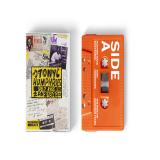
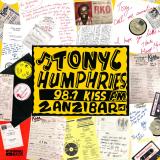
Telling a tale of house music’s early days or roots without mentioning Tony Humphries as a club DJ, remixer and radio disc jockey would make it an incomplete, forged and most of all a bit of a yawn.
Born in Brooklyn in 1957, Humphries’ musical journey is synonymous with New York City’s dance music history and the evolution from uptempo soul music to house: from being a dancer at David Mancuso’s infamous Loft parties to becoming a mobile DJ and getting the call from Shep Pettibone to become his right hand at
the then new Kiss FM radio station, followed by countless remix offers and a legendary residency at Newark’s Club Zanzibar. Next to that one, is was especially his work as a radio disc jockey for said station during most of the 1980s until 1994 that gave him majestic clout. Breaking new records week in, week out,
putting New Jersey acts like Adeva and Jomanda or countless up-and-coming producers from there on the musical map, while simultaneously playing the hottest imports from Europe, trax from Chicago, dance classics and all things straight from New York’s music factory that never seemed to stop.
Going to his vast and almost complete archive of radio shows from way back when he graced those airwaves, we at Running Back Records have pickedNew Release Information original recordings that symbolize his importance as an industry giant and ambassador of this style of music.
„But one thing I would like to point out is that, as a DJ, the music I play is not my music. I want to make it perfectly clear that it is music that is released, and it’s everyone’s music. I do not take any other credit than being the middle person exposing this music.“
(Tony Humphries in: What Kind of House Party Is This?, Jonathan Fleming, 1996)
- A1: Dee Dee Brave – My My Lover (Tony Humphries Dub)*
- A2: Jomanda – Don’t You Want My Love (Street Style)
- B1: R-Tyme – Illusions (Mayday Mix)
- B2: Blakk Society Feat. David Hollister – Just Another Lonely Day (Club Mix)
- C1: Anthony Thomas – You Don’t Love Me
- C2: Victor Romeo – Love Will Find A Way (Zanzibar Edit)*
- C3: Romanthony – In The Mix (Tony’s Classic Mastermix)
- D1: Slam – Eternal
- D2: Mondee Oliver – Make Me Want You (Club Mix, Extended)
- E1: Bobby Harding – Feelin' Happy (The Kiki Club Mix)
- E2: Deskee – Let There Be House (Mix Abcd I)
- E3: Bizzy B – B With U
- F1: When Worlds Collide – Deep (2263 Mix)
- F2: Jay Williams – Sweat (Dance Track)
(*Previously unreleased)
Telling a tale of house music’s early days or roots without mentioning Tony Humphries as a club DJ, remixer and radio disc jockey would make it an incomplete, forged and most of all a bit of a yawn.
Born in Brooklyn in 1957, Humphries’ musical journey is synonymous with New York City’s dance music history and the evolution from uptempo soul music to house: from being a dancer at David Mancuso’s infamous Loft parties to becoming a mobile DJ and getting the call from Shep Pettibone to become his right hand at
the then new Kiss FM radio station, followed by countless remix offers and a legendary residency at Newark’s Club Zanzibar. Next to that one, is was especially his work as a radio disc jockey for said station during most of the 1980s until 1994 that gave him majestic clout. Breaking new records week in, week out,
putting New Jersey acts like Adeva and Jomanda or countless up-and-coming producers from there on the musical map, while simultaneously playing the hottest imports from Europe, trax from Chicago, dance classics and all things straight from New York’s music factory that never seemed to stop.
Going to his vast and almost complete archive of radio shows from way back when he graced those airwaves, we at Running Back Records have pickedNew Release Information original recordings that symbolize his importance as an industry giant and ambassador of this style of music.
„But one thing I would like to point out is that, as a DJ, the music I play is not my music. I want to make it perfectly clear that it is music that is released, and it’s everyone’s music. I do not take any other credit than being the middle person exposing this music.“
(Tony Humphries in: What Kind of House Party Is This?, Jonathan Fleming, 1996)
- A1: Jomanda – Make My Body Rock
- A2: Mae-1 – Sweet Feelin’
- B1: Billy “Jack” Williams Presents Utterance – Grant Me Utterance *
- B2: Precious – Definition Of A Track
- B3: Man-Machine – Elektro-Genetik
- C1: Jay Williams – Sweat (Sweat The Club Mix)
- C2: Kerri Chandler – Kerri Kaoz Beat (Acetate Instrumental)
- D1: Romanthony – Falling From Grace (Tony Humphries Demo Mix)*
- D2: Ed The Red Feat. Passion In Fashion – 1-900 (Instrumental)
- E1: The Brotherhood – Love Will Make It Right (Club Mix)
- E2: A Slice Of Life – You Make Me Feel So (Asol Mix)
- F1: The It – Donnie (Hardy Mix By Ron Hardy)
- F2: Cisco Ferreia – Cisco’s Groove
(*Previously unreleased)
Telling a tale of house music’s early days or roots without mentioning Tony Humphries as a club DJ, remixer and radio disc jockey would make it an incomplete, forged and most of all a bit of a yawn.
Born in Brooklyn in 1957, Humphries’ musical journey is synonymous with New York City’s dance music history and the evolution from uptempo soul music to house: from being a dancer at David Mancuso’s infamous Loft parties to becoming a mobile DJ and getting the call from Shep Pettibone to become his right hand at
the then new Kiss FM radio station, followed by countless remix offers and a legendary residency at Newark’s Club Zanzibar. Next to that one, is was especially his work as a radio disc jockey for said station during most of the 1980s until 1994 that gave him majestic clout. Breaking new records week in, week out,
putting New Jersey acts like Adeva and Jomanda or countless up-and-coming producers from there on the musical map, while simultaneously playing the hottest imports from Europe, trax from Chicago, dance classics and all things straight from New York’s music factory that never seemed to stop.
Going to his vast and almost complete archive of radio shows from way back when he graced those airwaves, we at Running Back Records have pickedNew Release Information original recordings that symbolize his importance as an industry giant and ambassador of this style of music.
„But one thing I would like to point out is that, as a DJ, the music I play is not my music. I want to make it perfectly clear that it is music that is released, and it’s everyone’s music. I do not take any other credit than being the middle person exposing this music.“
(Tony Humphries in: What Kind of House Party Is This?, Jonathan Fleming, 1996)
- A1: Return Of The Knödler Show 2 52
- A2: The Frogs Of Miwa - Cho (1) 4 52
- A3: Waiting (I) 5 38
- A4: An Old Friend Passes By 3 46
- A5: Coco Bolo Strip (1) 5 25
- B1: Peace And Pipe Utopia 3 14
- B2: Unidentified Dancing Object 1 44
- B3: The Call (I) 2 41
- B4: Wenn Das Rohr Dommelt 4 03
- B5: Mariahilf (Live Version) 3 36
- B6: Watching The Shades (I) 2 59
- B7: Playing The Table Music (Ii) 2 43
- C1: Could Be Nice Too 5 29
- C2: Ox Of Inner Depth 4 51
- C3: Ymir Shows Up 3 58
- C4: Could Be Nice 5 24
- C5: Playing The Table Music (I) 4 23
- D1: Coco Bolo Strip (Ii) 4 52
- D2: Locusts Looking Like Men 5 55
- D3: Waiting (Ii) ︎ 3 36
- D4: No Stove 2 29
- D5: An Old Friend Passes By Again 3 00
- D6: Heimkehr Der Holzböcke 3 16
Black Truffle is thrilled to announce Dalbergia Retusa, an extensive double LP selection of the solo guitar music of Hans Reichel, compiled by Oren Ambarchi. Last heard on Black Truffle as one quarter of the joyously anarchic Bergisch-Brandenburgisches Quartett, Hans Reichel (1949-2011) is one of the great figures of experimental guitar music. Though perhaps lesser known than peers like Derek Bailey, Fred Frith and Keith Rowe, Reichel’s rethinking of the instrument was in some ways the most radical of all. Early on, he dispensed with existing guitars to build a series of his own that explored the use of additional strings and fretboards, moveable pickups, extra bridges, special capos, and other innovations documented in the extensive booklet accompanying this release.
Reichel was a long-term resident of Wuppertal, the small Western Germany city that became an unlikely centre of European free jazz in the late 1960s, also home to Peter Brötzmann and Peter Kowald. His solo debut Wichlinghauser Blues was an early entry into the FMP discography and began a relationship with the label that stretched into the 1990s; all the solo performances heard here were first released on FMP. As Reichel says in the charming archival interview with Markus Müller included here, he was ‘always a cuckoo’s egg at FMP’, a label that began as an outlet for roaring European free jazz. What strikes the listener right from the opening selection on Dalbergia Retusa—‘Return of the Knödler show’, from 1987’s The Dawn of Dachsman—is the extraordinary beauty of Reichel’s music, at once alien in the shimmering sonorities and unconventional pitch relationships made possible by his invented instruments, and deeply lyrical, even romantic in its harmonic content. Growing up in West Germany in the 1960s, Reichel’s formative influences were mainly British and American rock bands, a background that shines through in many of the pieces included here: ‘An old friend passes by’ is haunted by the ghost of Hendrix’s rhythm guitar, and the wild closer ‘Heimkehr der Holzböcke’, taken from a rare 1975 7” and the only piece to use overdubbing, layers errant hammer-on and slide tones over a Canned Heat boogie chug.
Reichel was an important source for the development of Oren Ambarchi’s own extended approach to the electric guitar. Appropriately enough, his selection opens with the very first piece by Reichel he ever heard, on a flexidisc included with a 1989 issue of Guitar Player magazine. Though Reichel collaborated with others extensively in many settings and also performed on violin and his other major contribution to instrument invention, the daxophone, his music for solo guitar remains at the core of his oeuvre. Focusing exclusively on solo pieces recorded between 1973 and 1988, the 23 pieces on Dalbergia Retusa showcase the range and consistency of Reichel’s work, allowing the listener to see how his performances developed hand-in-hand with his instrumental inventions. On a piece from his very first LP, played on an 11-string instrument (partly strung with piano strings and using a schnapps glass a slide), we hear his intensive exploration of fret-hammering to create zither-like, chiming tone, which Reichel would hone further in later years with a double fretboard guitar specifically designed to be hammered rather than fretted and picked. On a piece from 1979’s Death of the Rare Bird Ymir, Reichel uses two steel-string acoustic guitars at once, with beautiful results: ‘some even say too beautiful’, he jokes in the interview included here. Many of the pieces from the 1980s make use of varieties of the ‘pick behind the bridge guitar’, instruments of uncanny harmonic richness primarily designed to be played on the ‘wrong’ side of the bridge. At times the unexpected behaviour of attacks, resonance, and decay can almost seem electronic, conjuring up the technology-assisted work of Henry Kaiser or even Fennesz, but realised solely through Reichel’s unorthodox techniques on his invented instruments. Extensively illustrated with photos and Reichel’s own plans and drawings of his instruments, Dalbergia Retusa is an essential introduction to the unique world of Hans Reichel. Rarely has music been at once so strange and so beautiful.
2026 Repress
Here's to a special one..
Ashtar Afterhours is Kenneth Graham - originally from Los Angeles, he has been a defining presence in electronic music ever since the 90s. Buying his first classic synthesizer, a Yamaha CS01, in 1984, he delved into music production at an early stage. Kenneth put out over 40 releases over the years- under his own name as well as stepping up under various aliases- Estelle Montenegro, KG Beat, Exit Strategy and many others. Kenneth also formed some super-groups together with friends, his Sun Children / Sunkiss project- together with David Alvarado- put out highly influential music on legendary Peacefrog Records.
Body Music was originally released on Plastic City in 2001 and it has been a Smallville favourite since a long time, so we are super happy to present this beauty as a repress, as always with a full cover artwork by Stefan Marx.
All tracks written & produced by Kenneth Graham, B3 w&p by Kenneth Graham & Gabriel Ortega
Vinyl cut by Helmut Erler at Lathesville
- A1: We Are Torn Wide Open
- A2: Mirror Deep
- A3: First Red Rays
- B1: Blind
- B2: Seething And Scattered
- C1: Untethered
- C2: In The Waiting Hours
- D1: Last Light
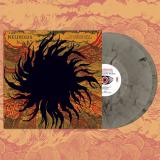
Evolution can be ugly and beautiful, painful and euphoric. An Undying Love For A Burning World is the first new release from Neurosis in a decade, and a potent statement of intent and rebirth - one that marks the first new steps of resolve and resilience.
An Undying Love For A Burning World is an epic album of colossal hypnotism - beautiful, fearsome and utterly compelling in a way that only Neurosis can be. Aaron Turner (Sumac, Isis) joins the band on vocals and guitar, a name whose legacy is intertwined with the band’s own and a true kindred spirit.
“From the moment I first heard Neurosis over 30 years ago, I felt this was the music my heart and mind had been seeking but not yet heard. Now after many years travelling along various musical paths of my own, the singular sound and spirit embodied by Neurosis continues to speak to the depths of my being. It is an honor and a true pleasure to have been welcomed so warmly into a band that not only shaped my perspective on the limitless possibilities of music - but has lived and exemplified the necessity of upholding creative integrity and camaraderie above all else.” - AARON TURNER
Neurosis have never been afraid of change, and here they embrace endless regeneration, surrendering to the emotional exorcism through heaviness and distortion that their music incites. Just as the universe tends towards balance, Neurosis’cacophony of noise, rhythm and dissonance always resolves towards moments of beauty. The addition of Turner's powerful vocals and wildly creative and unhinged approach to guitar proves to be a vital force as Neurosis find themselves again at the mercy of evolution and expression.
On every song in the band’s history, Neurosis shifts restlessly between tension and relief, invoking a feeling both feral and transcendent in listeners. The band describe their songwriting process as an inescapable impulse to create with each other - a need rather than a choice. Indeed, the band insist that their return is “not a reunion - we never broke up.”
The album was recorded by Scott Evans (Kowloon Walled City, Sumac, and Great Falls) at Studio Litho in Seattle during three weekends this winter, and mixed in three days just six weeks before release at Evan's Antisleep Audio in Oakland.
Neurosis will play their first show in seven years on the traditional lands of the Blackfeet Nation in Montana as part of Fire in the Mountains festival by special invitation of Firekeeper Alliance, a non-profit dedicated to reducing youth suicide in Indian Country.
FITM, is a unique festival known for bringing epic music to epic landscapes with the intent of reconnecting and immersing oneself with the natural world, and strengthening our ancestral roots as human beings - an aim which aligns directly with Neurosis’ deep-rooted power.
Oinimod Records proudly presents its first-ever vinyl release, Gravity EP, a statement of intent rooted in deep grooves, timeless house aesthetics, and club-driven energy.
Written and produced by Duccio Lopresto, Gravity EP delivers two original cuts that explore different shades of House music, complemented by a powerful remix from Gearmaster, one of Estonia's most respected House talents.
“Gravity” opens the EP with a deep and groovy House journey inspired by the classic Detroit House legacy. A strong rhythmic foundation drives hypnotic acid lines and rich, expressive synths, creating a track that is both raw and elegant, built for the dancefloor yet deeply musical.
“Mirage” reveals a more dreamy and introspective atmosphere. This Deep House track flows with a timeless rhythm, warm grooves, and relaxing yet melodic elements, offering a soulful and immersive listening experience that transcends trends.
Closing the EP, Gearmaster delivers a pure Club House banger remix of Gravity, reinterpreting the original material with precision and power. Tight rhythms, infectious groove, and a modern club sensibility turn the remix into a peak-time weapon, showcasing Gearmaster’s unmistakable touch and deep understanding of the dancefloor.
Gravity EP marks the beginning of Oinimod Records’ vinyl journey — a release that bridges classic influences and contemporary House music, crafted for DJs, collectors, and true House music lovers.
2026 Repress
Turbotito and Ragz's electrifying Naya Beat label has curated a cultured list of remixers to add their spin to the work of legendary Indian vocalist Asha Puthli. This essential remix album features Yuksek, Maurice Fulton, Psychemagik, Kraak & Smaak, Jitwam, and Turbotito & Ragz.
Naya Beat, which translates from Hindi as 'new beat', is focused on uncovering foundational electronic sounds from the subcontinent and South Asian diaspora through reissues, remixes and compilations. It found quick success with its first release, 'Naya Beat Volume 1: South Asian Dance and Electronic Music 1983 - 1992', followed by a rare 1985 Hindi New Wave album by Pinky Ann Rihal and more recently a ground-breaking compilation ‘Awaaz’ uncovering Bollywood electro and leftfield 80s original soundtrack recordings.
Hot off their highly sought after EP of Dimitri From Paris’ seminal remixes of Asha Puthli’s iconic track ‘Space Talk’, the label now offers up the first of two full-length releases based around her music. Cosmic disco pioneer, Studio 54 icon and jazz improviser Asha Puthli has recorded, sung or shared the stage with the likes of Roy Ayers, Alice Coltrane, Grace Jones, Barry White, Andy Warhol and many more. From David Mancuso's The Loft, to Giorgio Moroder's early work with Donna Summer, to hip-hop where she has been sampled extensively, Asha's musical influence and impact is profound. She was the first artist of South Asian descent to successfully crossover and make a mark on dance, jazz and pop culture in the West.
For this LP, Naya Beat tracked down the long mythologised original stems and recordings of Puthli's most seminal albums, including ‘The Devil is Loose’, and working closely with Asha, they have tasked a series of producers inspired by her work to remix her music.
Yuksek opens up with a pumping disco remix of 'I Am Song (Sing Me)' awash with uplifting synths and big claps next to the original vocals, which soar to the heavens. The seminal 'Space Talk' is remixed by Maurice Fulton into super steamy and late-night territory. The live drums and jumbled percussion are lit up with soulful chords as Puthli's carefully delivered vocals seduce up top. 'Lies' (Kraak & Smaak Remix) rides on fat-bottomed drums and bass that unfold with a dub swagger beneath a nebulous eco-system of cosmic synths and dramatic vocals. Label heads Turbotito & Ragz flip 'One Night Affair' into a leggy disco celebration with sweeping synths and bright effects, and Psychemagik's 'Right Down Here' is a pulsating mix of dark, snaking bass and drums with deep space ambience and raw hits making for a turbulent and tense atmosphere. Lastly, Jitwam closes out with a smooth disco sound laced with dynamic drums and cruising chords next to another sensuous top line from Asha Puthli.
With »News from Planet Zombie«, The Notwist return to view after years of exploration and experiment with an album rich in both melancholy and positivity, sketched across a suite of thrilling, fiercely committed pop songs. It’s an album reflecting a chaotic world, but responding with warmth and generosity, to achieve creative and spiritual consolidation. Recorded in their home base of Munich, it reconnects with the security of the local to explore the troubles of the global: a guiding impulse writ large across this album’s eleven songs. It’s also the first studio album since 1995’s »12« that the entire band recorded together in the studio in its expanded live formation.
A new album by The Notwist is always a curious endeavour; their musical language is as consistent and resilient as the contexts for creativity are unpredictable and ever shifting. For »News from Planet Zombie«, the core trio of Markus and Micha Acher and Cico Beck embraced the plural possibilities of writing together, bringing songs to the collective and then arranging, rehearsing and recording that material live, in the studio.
The result is an album that’s energised, fully in ›the now‹, with spectacular moments where you can hear the magic bubbling up in the dynamic between the Achers, Beck, and fellow members Theresa Loibl, Max Punktezahl, Karl Ivar Refseth, and Andi Haberl. If »Teeth« begins »News from Planet Zombie« quietly and reflectively, by »X-Ray« everyone’s supercharged, blasting out future anthems with the collective energy cranked up high. The chiming keys of »Propeller« skim the instrumental’s surface like stones across burbling water; »The Turning« clangs its way into one of the album’s most heartwarming melodies.
»News from Planet Zombie« was recorded over one week at Import Export, a non-profit space for arts and music. You can tell, too; there are some pleasingly rough edges here, as though The Notwist’s striving for hazy perfection means they’re also confident enough to let the songs breathe and mutate between our ears. That openness to chance also takes in guest turns from friends both local and international, reflective of a cosmopolitan Munich: Enid Valu joins in on vocals, while Haruka Yoshizawa guests on taishōgoto and harmonium, Tianping Christoph Xiao on clarinet, and Mathias Götz on trombone.
The Notwist aren’t best known for cover versions, but »News from Planet Zombie« features two: a gorgeous version of Neil Young’s »Red Sun« (from 2000’s »Silver & Gold«), which the group originally developed for a theatre play directed by Jette Steckel, and a take on Athens, Georgia folk-pop gang Lovers’ »How the Story Ends«. They slot into the album’s narrative perfectly, nestling in like old friends, revealing The Notwist as poetic interpreters. Played well, the cover version is both acknowledgement of fellow travellers and act of generosity, and The Notwist nail both aspects here.
And that narrative, the way the album plays out? »News from Planet Zombie« acknowledges the distress of our current geopolitical impasse, while reminding us there are collective ways forward. Fed through the figure of the zombie, Markus Acher explores our anxieties: »In the title and some lyrics I reference B- and horror-movies, which is a reference to the crazy world at the moment, which seems to be like a really bad and unrealistic B-movie.« But there’s a reminder here not to lose the thread entirely, that these things, too, will pass.
»The river here in Munich I often go to has been there forever and will be there long after us,« Acher reflects, pinpointing an important source of succour for him, »always the same but always changing. Very calming, but also always reminding me that like this river time only flows into one direction and you can’t go back. Every moment is very precious.«
Artwork by Marie Vermont
The Notwist:
Markus Acher: vocals, guitar
Micha Acher: bass, sousaphone, euphonium, trumpet
Cico Beck: electronics, keyboards, guitar, recorder, percussion
Theresa Loibl: bassclarinet, clarinet, piano, harmonium, organ
Max Punktezahl: guitar
Karl Ivar Refseth: marimbaphone, vibraphone, glockenspiel, congas, percussion
Andi Haberl: drums, dulcimer
+
Enid Valu: vocals on 1, 2, 3, 4, 5, 7, 9, 10, 11
Haruka Yoshizawa: taishōgoto on 6, harmonium on 9, 10, 11
Tianping Christoph Xiao: clarinet on 4, 10, 11
Mathias Götz: trombone on 4, 10, 11
- A1: Abundance
- A2: Gecko
- B1: Tangent I
- B2: Tangent Ii
- C1: Perpetuum
- C2: Amazon
- D1: Ginza
- D2: Terminal
Continuing its faithful documentation of the early years of Monolake, Field Records proudly present the first-ever vinyl pressing of seminal 1999 album Interstate. In a kaleidoscopic lattice of micro-rhythms and exquisitely dynamic textural work, Robert Henke and Gerhard Behles fully collaborated for the final time on this record — and created an electronica landmark in the process.
Monolake's evolution from their earlier dub-techno-tinted works saw their exploration of Max/MSP go further out. The duo yielded greater complexity in the behaviour of their sound palette to achieve an organismic quality that remains an enduring influence on so many strands of experimental electronic music today. Interstate is a vivid record that builds up eight different ecosystems of sound and subtly threads elegant grooves through their root structures.
There's a house-like undulation to the low-end driving 'Tangent-I' and 'Tangent-II', but the infinitesimally detailed layers of sound on top swoon from techno synth shimmers to trickling waters, snaking delay trails and pin prick percussion. You can hear the unmistakable, snappy rhythmic thrust of drum & bass driving 'Ginza', but here it's used as an engine for the crispest array of designer percussion and dub-soaked synth chirrups. Across every track, Henke and Behles demonstrate a potent combination, both groovily instinctive and eternally fascinating to try and pick apart.
After Interstate, Behles departed to focus entirely on the development of Ableton Live and Henke steered Monolake towards a leaner — but no less pioneering — sound. Every Monolake record has its own unique context and sound, and the circumstances of Interstate could never be repeated. Capturing the leaps in progress that were being made in digital music production at the end of the millennium, it's an information-rich document of a moment in time that still sounds wildly futuristic 27 years later.
- A1: Innamorata Del Tuo Controllo
- A2: Tempio Senza Luce
- A3: Hasta El Fin
- A4: Danza Dell'equilibrio
- B1: La Nueva Era
- B2: Vivo E Credo
- B3: Quando Mi Dicevi
- B4: A Volte Sembra Stia Per Finire
Hailing from Barcelona they are an eclectic, discerning form of contemporary industrial music, deploying compulsive minimal synth and primal polyrhythms, as well as uniquely reconstrued elements of post-punk & EBM. An artistic identity that embraces influence yet eschews compromise, changing flavors, but not essence, from release to release. Their music has been shared or praised by Iggy Pop, Cosey Fanni Tutti (Throbbing Gristle, Chris & Cosey), Geoff Barrow (Portishead, Beak), among many others.
This LP shows Dame Area most melodic side, bringing back experimentation to the genres of minimal synth, synthpop or EBM: subverting them from the inside, finding new ways to innovate, giving us unexpected twists along the ride. FFO: Chris and Cosey, DAF, Giorgio Moroder, Essaie Pas, Kraftwerk, Liasons Dangerouses.
Detroit original, Terrence Dixon, returns to Tresor Records to kick off 2026 with ‘When Stars Remember’. Despite his thirty-year career, Terrence has always managed to keep a lower profile than his peers; he has given few interviews, preferring instead to speak through his music, with cryptic song titles hinting at the thoughts swirling around their creation.
However, ‘When Stars Remember’ finds him stepping forward. “I wanted to get closer to the dancefloor. I consciously made this one feel louder…made with Tresor specifically in mind.” And the EP does just that: whilst many of the hall marks of a Terrence Dixon production are present, the drums are more forward; the synth arpeggios so bold that ‘monumental’ seems a better descriptor than ‘minimal’.
“I put three or four sounds together on the same track, layering to make something bigger”, he says of opening track ‘Mono Collapse’, though the statement could apply to any of the music appearing on the release as all four pieces fold in sonics to create something hypnotic; more than the individual parts: “If you stick with the same layered tones, and repeat it over, after a while your brain changes it on its own; you hear a lot of things: things that you didn’t notice at first, things that maybe aren’t even there.”
The absence of things is another main theme of the EP, especially what Dixon sees as ‘The Forgotten’, a group of fundamental principles like common sense, trust, loyalty, honesty and respect that are missing from modern life. “This world is different…the love is gone. But I love everybody, man. I think, secretly, everybody love everybody, but they just don’t know it.”
Through her compositions, Oonagh Haines explores nocturnal atmospheres where contemporary electronic music, underground aesthetics and deconstructed pop forms intersect.
Her music is built on a play of opposites: a modified voice performs its antipodal double, while avant-garde techno and sentimentalism coexist, carried by a certain nonchalance and a restrained posture that is not without recalling Anika.
Not Not Pretending is her first album. It will be released by moli del tro on 24 April 2026.
Unheard Music returns with its second release, delivering a hypnotic and club-driven Tech House package by Malandra Jr. and pizzaaftersex.
Built around the infectious pull of Your Retreat, this EP captures that late-night tension where groove, atmosphere, and repetition lock into one fluid movement. The original mix sets the tone with a stripped yet emotionally charged framework, balancing rolling percussion, subtle pressure, and a strong sense of floor-focused depth.
One of the true, undisputed pioneers of Dutch techno, Steve Rachmad appears on Dekmantel for an EP of peerless machine music. On the 3-6-9 EP, the artist also known as Sterac, Parallel 9 and many other names plies a powerful trade in funked up, gritty and soulful techno made the proper way.
The connection between Rachmad and Dekmantel reaches back many years via his frequent appearances at the Dekmantel Festival — he has two performances at the 2026 edition as well as sets at Dekmantel Selectors lined up later in the summer. The 3-6-9 EP lands ahead of an album and world tour that marks 45 years in service to electronic music, nodding to Rachmad's earliest roots in electro funk through to his day-one embrace of house and techno as it made its way across the Atlantic from Chicago and Detroit.
There's a rowdy, rave-spirited energy to the synth hook bucking its way through the centre of '3 Creation Energy', coming on in brassy tones laced with artful distortion while the drums dutifully jack the way they ought to. There's a more linear, pressure cooker quality to the tidal filter work guiding '6 Physical Manifestation' to its own energetic peaks, while '9 Completion and Delivery' surfs on coursing waves of arpeggiated lead lines before breaking through to the oceanic calm of grandiose pad tones.
There's no mystery to unpick here — this is quite simply techno perfection made with the instinct and experience of a master of the form, whose life is synonymous with every inch of the culture.
Dewa Alit, master of radical Balinese gamelan, returns to Black Truffle with Baur Bentur. Genetic (2020, BT063) introduced international listeners to the magical sound-world of Alit’s Gamelan Salukat, who perform on instruments tuned to a unique scale derived from modified versions of two traditional Balinese scales. The two pieces heard on Chasing the Phantom (2022, BT093) further demonstrated his radical fusion of tradition and experimentation, with passages where unorthodox techniques make the acoustic ensemble resemble glitching electronics. Baur Bentur now highlights another aspect of Alit’s work, presenting pieces composed in 2024 and 2025 where Gamelan Salukat performs alongside virtuoso pianist Sri Hanuraga. Alit’s music is grounded in deep reflection on the tradition of Balinese gamelan and its place in the contemporary world. His title, ‘Baur Bentur’, which translates as ‘mixing and smashing’, points to his embrace of the intercultural mixture of Eastern and Western elements in the search for innovation. Against the calcification of Balinese music into tourist entertainment, Alit poses his searching, experimental work, which celebrates the communal values and performance practices of traditional gamelan while pushing into startling new directions.
‘Sukat Tacara’ is a study in layered tempos, meters, and polyrhythms, a constantly shifting dialogue between piano and the instruments of Gamelan Salukat. It begins close to a traditional concerto, pairing a brisk sequence of melodic variations from the piano with a spare but propulsive accompaniment of drums and hanging metallophone tones, punctuated by low gong strikes. The piano builds in volume and density across a rapid succession of fragments, at points recalling George Antheil’s ticking wind-up machinery, though Hanuraga’s jazz background shines through in the fluidity with which he navigates the complexities of the score, where chromatic movement co-exists with bluesy phrases. An abrupt change in the piano to patterns of dense clusters introduces a new episode, during which the metallic instruments of the gamelan enter the foreground. The piece dazzles with its inventive rhythms and dynamics, building to a stunning passage featuring the signature heavy muting technique of the Gamelan Salukat metallophones in kinetic patterns that would be at home on a Príncipe release.
The title piece begins at high intensity and rarely lets up, working through bracing unison ensemble melodies and punctuation points where piano and gamelan together seem to become a single, thudding drum. For much of the piece the piano is tightly integrated into the ensemble, the harmonic extensions of the melodic line subsumed into a moving cloud of complex overtones generated by the gamelan instruments. Wildly kinetic on the rhythmic level, the piece swarms with microscopic movements of beating patterns generated by the ‘blend and crush’ of three simultaneous tuning systems: the equal temperament of the piano and the saih cenik (small scale) and saih gede (big scale) used by the gamelan instruments. Accompanied by the composer’s thoughtful liner notes and images of the musicians, Baur Bentur is a stunning next step in Alit’s radical combination of tradition and innovation.
Ribe & Roll Dann serve up potent techno on Mutual Rytm with 'Virtus Occulta'.
Built around concepts of unacknowledged work and enduring merit, the release marks their first EP on SHDW's widely
respected label.
Based in Toledo and Madrid, Ribe & Roll Dann are exciting residents at Laster Madrid and Lanna Club, two of Spain's leading venues. Emerging as driving forces in their national techno scene, they have also made an impact on the global landscape, making wider moves through collaborative releases on Klockworks, and individual outings on a number of other influential labels. Having previously featured in the label's Federation of Rytm IV compilation, the pair make their full EP label on SHDW's Mutual Rytm imprint to open March with a deep dive into their expansive sound.
Opener 'Sub Terra' is a pure club tool that is direct, physical and rooted in the underground with a seriously heavy low end. 'Extra Lumen' is more restrained but still built on a steady, forceful rhythm with controlled energy that prefers to operate in the shadows. 'Ars Non Placens' stays true to the idea that music is not made to please, but to exist on its own terms with hunched drums and dubby undercurrents. Next, 'Meritum Negatum' fizzes with static electrical charge and minimal drum funk and is a direct reflection on overlooked skill and unacknowledged work, before closer 'Virtus Persistens' delivers a continuity and a steady pulse rather than an explosive ending, keeping you locked throughout.
In addition, three digital bonus cuts come alongside the vinyl package. 'Labor Inauditus' speaks to hours of technique, production and booth experience that remain invisible. Next come the taught, rubbery rhythms and unrelenting atmosphere of 'Silentium Testium', while 'Sine Aplausu' - which means without applause - brings a ghostly late night vibe that you will never want to end.