On Lila, his debut LP, Moroccan artist Karim presents a series of undulating electronic rhythms laser-etched into tessellated form: drumless techno from the pre-Sahara, built for communal psychic expansion.
Drumless, yes, but not percussionless. There are shakers, castanets, stabs, plonks, thuds. There are insistent basslines propelling forward, pulsing with energy, rippling in time. There are tones interlocking, rolling, fluttering, pattering. Dancing within, around, between each other. Considered in terms of sheer geometry, Lila is a techno record, unmistakably. But it sounds quite unlike any other techno record you've heard lately.
To write the album, Karim borrowed from the music of the Gnawa, a religious-spiritual musical tradition descended from West African peoples brought to Morocco as slaves hundreds of years ago. Now integrated deeply into Moroccan culture, the centerpiece of Gnawa music is the lila—or "night," in Arabic—an all-night-long ritual of rhythm designed to induce participants and musicians alike into a healing trance state. Which, if you're a dedicated raver, may sound familiar, yes?
Crafted entirely with modular synthesizers, Lila conjures a range of textures and moods. The show opens with "Bakh," a blissful exercise in beatlessness, clear and crystalline. On "Philipoussis," "Kiyex," and "Sonic," arpeggiated synths approximate Gnawa chants while interlaid percussion keeps time in multiple meters. "La" and "Kille" pulse in half-time, ideal for creative mixing. "Joul à lèvre" bristles with electricity, the sound of a charged lightning rod. "Pamil," woozy and lurching, feels like being shipwrecked on a forgotten island. Last and absolutely certainly not least, on the final track, "Miloir," Karim faces West and unleashes the album's only kick drum for a ten-minute psychedelic techno masterpiece. The mind warps; the body moves.
Lila is released on Tikita, Karim's own record label, founded in 2014. Tikita's discography, spare but tightly curated, features artists from across the globe pushing outwards into techno's deepest reaches. Karim's album pushes even farther. Listen for yourself.
Поиск:peo
Все
Levi Bruce returns to Pacific Rhythm under his Unknown Mobile moniker for the first time since 2019 with a project entitled Field Work. The project is focused around field recordings taken during the winter and spring of 2025.
These recordings come from both his travels abroad while on tour and areas near his home in Whitehorse, Yukon Territory, located on the traditional lands of the Ta’an Kwäch’än Council and Kwanlin Dün First Nation.
Each field recording acts as the basis for a journal entry taken at the location. Raw data was used to reflect on the people, actions, and environmental elements connected to the site through additional production and manipulation.
This record contains six tracks by Freephilipp and Robin — two Bremen-based musicians who meet where the void of digital subculture and experimental electronic music opens up. Freephilipp contributes four glitch-driven pieces that move between IDM-tinged ambient, electro, atmospheric broken beats and junglish fragments. Random Chords Memory is one of the reasons this release needed to be carried out into the nexus: it stands on its own, just like the rest of the EP, yet it may be the signature track of Freephilipp’s nocturnal enthusiasm — mixing between night shifts and sharing production skills with the people around him. Robin (zckr rec / ph17) completes the EP on the flipside. Tau-37 and Omega5, named after two star systems, invite you onto a dub-soaked, drifting flight. The Basic Channel- esque impact of Tau-37 rounds out the journey in combination with Omega5, whose drone-laden soundscape slowly opens and dissolves. This music was never meant to be produced for an audience. It is a document of what it sounds like when you say goodbye to the outer world and begin building landscapes in another.
Luke Alessi launches Coffee Cola with ‘Yes Empress EP’, a crispy first pour that sets the tone for the label’s mischievous, high-energy ethos. Channelling late night momentum with razor-sharp percussion driven grooves, Luke balances playful experimentation with driving, club intent! Built for the peak-time moments and after-hours alike, Yes Empress makes it clear his label isn’t here to play it safe. Coffee Cola is for people who like their music caffeinated and their decisions questionable.
Originally released in 2004, this record now fetches up to 50 euros for a used copy on Discogs. It has recently regained attention and support from current DJs and featured on Paramida’s mix for The Mudshow.
Da Sunlounge handles the A side with a funky, jacked-up track, while the B side features a collaboration with Office Gossip (Winding Road / Urban Tourq) for some deep, twisted tech house music. This release was initially supported in 2004 by Inland Knights, The Lawnchair Generals, Hipp-e, The Littlemen, and David Duriez.
300 pages, 175 x 129mm paperback book w/ french flaps.
DINTE mint their short run book publishing imprint, The End books, with this vast collection of flyers for dances, clashes and blues parties from across the UK between the early 1970s and mid 1990s. Comes complete with intro by David Katz (People Funny Boy: The Genius of Lee 'Scratch' Perry, Solid Foundation: An Oral History of Reggae) and outro by Kevin Le Gendre (Don't Stop the Carnival: Black British Music, Children of the Ghetto: Black Music in Britain). Colour scans sit alongside scuzzy photocopies amassed over several years with the assistance of multiple archivists. The material presented in A Night to Remember is not just valuable musical history, but the story of a community and a culture that revolutionised sound culture in the UK.
"The flyers collected in A Night To Remember speak to the burgeoning sound system underground that flourished in Britain in the 1970s, 80s and early 90s. There are held events on hallowed ground as well as lesser-known sets. Flyers for house parties remind that shebeens remained an important feature of social life in black communities and the many sound clash and cup clash events emphasise the rivalry and camaraderie that has always been at the heart of the culture, as friends go head-to-head with their dub plates, vying for that definitive crown. Dances featuring guest appearances by name-brand artists such as Sugar Minott, Lone Ranger, Barrington Levy and Admiral Bailey, as well as sound systems such as Jack Ruby, King Jammies, Ray Symbolic, Arrows, Black Scorpio and Metro Media remind how closely the local sound systems remained to their Jamaican roots, even as sounds such as Saxon, Unity, Java and Diamonds carved out a distinctly British niche. All hail the enduring sound systems of Britain – long may they reign!" — David Katz
- A1: Another World
- A2: Fleeting
- A3: I’m Bored
- A4: Easy Man
- A5: Killincs
- A6: My Sister’s Loom
- B1: Mountain Song
- B2: Belljar Convenience
- B3: Fated To Pretend
- B4: Waiting Game
- B5: A Light
A Profound Non-Event, the debut album by Sydney-based three piece Daily Toll, comprises 11 songs traversing three years of forged friendships, collaborative experimentation and a shared love of growing through words and song.
Those attuned to the ever-vibrant Australian underground may already be well familiar with Daily Toll, their consistent live presence since their inception in 2021 embroidered by a handful of (mostly) home-recorded, (mostly) digital self-releases that have steadily accumulated an appreciative following. Initially the project of self taught musician, poet & artist Kata Szász-Komlós(they/them) and Jasper Craig-Adams(he/him), and expended to a three piece with the more recent addition of friend Tom Stephens(he/him), Daily Toll represents the union of three unique creative dispositions, of relationships blooming through the push and pull of creative practice. Mapping the band’s existence through their recorded output is to bear witness to the flux of three people learning to respond to one another and gently ossify into a collective vision that at once calls to mind folk song intimacy, post-punk dynamics and the artful poeticism of an adjacent Flying Nun legacy.
If those earlier recordings reflect a band imagining themselves into being in real time, A Profound Non-Event observes a clear shift in both conviction and approach. Recorded in just three days with Alex Bennett at the purely analogue Sound Recordings studio in Castlemaine and holing up at night in the century old cottage situated beside the studio, sheltering from the late-June wind and rain within walls littered with instruments and microphones, lighting fires to stay warm. Kata describes the experience as defined by “candle light and creative camaraderie”, an idyllic account of a collection of songs that glide with an undeniably warm, easy charm, evidenced in particular in the record’s second half as the tone turns increasingly introspective, the very sound of a cold evening’s drift into night. When contrasted with the moody swirl and sing-song bounce of the opening trio of tracks, there’s clear evidence of a band not simply in the process of becoming, but committed to finding their truth in that process.
Still, if Daily Toll display a reluctance to be wholly defined, then album centerpiece ‘Killincs‘ (positioned in the middle for a reason) might just be their Rosetta Stone. A verbose rumination on unsettled feelings of isolation and longing, exploring the challenges in making peace with one's decisions amidst the uncertainty of an often harsh world and the realisation that some things remain best unresolved - “I have the keys still, but I’ve buried the path”.
- 1: Sentimental Value
- 2: The House
- 3: Childlike
- 4: Lighter And Lighter
- 5: Riksarkivet
- 6: Agnes
- 7: Rachel
- 8: Speaking To The Past
- 9: Gustav
- 10: Nora
Recorded between the iconic Abbey Road and Polish Radio studios, Hania Rani"s original music for Joachim Trier"s Cannes and Golden Globe winning, Oscar and Bafta nominated "Sentimental Value" is a deeply intuitive collaboration, composed before a single frame was edited. For Hania Rani composing for the most recent film by Joachim Trier was nothing less than a true joy and a real artistic adventure. As she explains: "It doesn"t happen often that I"m asked to work on a film by a director whose work I know so well and which resonates with me so naturally. What I understood while working with such an intriguing mind and intelligent artist as Joachim is that the role of a film composer is to wander along with the director, hand in hand, rather than follow one another. The collaboration should be a partnership - evenly balanced and able to invigorate people on both ends - otherwise it will always feel superficial, imposed, and timid".
- A1: Kuniyuki Takahashi - Asia
- A2: Brian Eno, Moebius, Roedelius - The Belldog
- A3: Anchorsong - Windmills
- A4: Monde Ufo - Vallee
- B1: Mariah - Sokokara
- B2: Mytron, Zongamin - 08932168
- B3: Liquid Liquid - Scraper
- B4: Five Green Moons - Spider Dub
- C1: Fun Boy Three - Faith, Hope & Charity
- C2: Meat Beat Manifesto - Drop
- C3: African Head Charge - Orderliness, Godliness, Discipline And Dignity
- C4: Cristina - You Rented A Space
- C5: The Cramps - Garbageman
- D1: The Durutti Column - Sketches For Summer
- D2: The Third Bardo - I’m Five Years Ahead Of My Time
- D3: Sordid Sound System - Inanna
- D4: Daniel Avery - Drone Logic
- D5: Spectrum - True Love Will Find You In The End
Two Piers proudly announces the upcoming release of Bridges Towards Open Spaces: Circadian Rhythms 1967–2025.
This new collection brings together a wide range of artists and styles, weaving immersive sonic landscapes that explore a connection between natural cycles and the rhythms within.
Featuring artists such as Brian Eno, Moebius, Roedelius, Meat Beat Manifesto, Fun Boy Three, Daniel Avery, and Spectrum, the compilation moves fluidly between shimmering ambient textures and raw, straight-ahead garage rock.
Bridges Towards Open Spaces: Circadian Rhythms 1967–2025 follows in the footsteps of Two Piers acclaimed previous releases, Night Train: Transcontinental Landscapes 1968–2019 and Music for the Stars: Celestial Music 1960–1979, continuing the label’s exploration of expansive, time-spanning musical journeys.
“I wanted once again to shape a compilation around a time period, this collection is a nod to my days behind the counter of a record shop, the people I met and the styles of music that was played and I was introduced to. Some are from that time, some are of the style/feeling, that I can associate & with the friends I met there; from the early shift to the late shifts as the tempo rose throughout the day and the neons of London started to buzz”
The album will be available on Limited Vinyl and CD in May, arriving just in time for the longer, warmer days and the shifting light of the Seasons Sun.
- A1: Kuniyuki Takahashi - Asia
- A2: Brian Eno, Moebius, Roedelius - The Belldog
- A3: Anchorsong - Windmills
- A4: Monde Ufo - Vallee
- B1: Mariah - Sokokara
- B2: Mytron, Zongamin - 08932168
- B3: Liquid Liquid - Scraper
- B4: Five Green Moons - Spider Dub
- C1: Fun Boy Three - Faith, Hope & Charity
- C2: Meat Beat Manifesto - Drop
- C3: African Head Charge - Orderliness, Godliness, Discipline And Dignity
- C4: Cristina - You Rented A Space
- C5: The Cramps - Garbageman
- D1: The Durutti Column - Sketches For Summer
- D2: The Third Bardo - I’m Five Years Ahead Of My Time
- D3: Sordid Sound System - Inanna
- D4: Daniel Avery - Drone Logic
- D5: Spectrum - True Love Will Find You In The End
Limited Glacier Green[42,23 €]
Two Piers proudly announces the upcoming release of Bridges Towards Open Spaces: Circadian Rhythms 1967–2025.
This new collection brings together a wide range of artists and styles, weaving immersive sonic landscapes that explore a connection between natural cycles and the rhythms within.
Featuring artists such as Brian Eno, Moebius, Roedelius, Meat Beat Manifesto, Fun Boy Three, Daniel Avery, and Spectrum, the compilation moves fluidly between shimmering ambient textures and raw, straight-ahead garage rock.
Bridges Towards Open Spaces: Circadian Rhythms 1967–2025 follows in the footsteps of Two Piers acclaimed previous releases, Night Train: Transcontinental Landscapes 1968–2019 and Music for the Stars: Celestial Music 1960–1979, continuing the label’s exploration of expansive, time-spanning musical journeys.
“I wanted once again to shape a compilation around a time period, this collection is a nod to my days behind the counter of a record shop, the people I met and the styles of music that was played and I was introduced to. Some are from that time, some are of the style/feeling, that I can associate & with the friends I met there; from the early shift to the late shifts as the tempo rose throughout the day and the neons of London started to buzz”
The album will be available on Limited Vinyl and CD in May, arriving just in time for the longer, warmer days and the shifting light of the Seasons Sun.
- A1: Come As You Are 2:40
- A2: Russian Roulette 3:22
- A3: Egyptian Reggae 1:02
- A4: Ramblin’ Rose 2:16
- A5: Johnny Guitar 1:48
- A6: I Love Joan Jett 4:00
- A7: Purple Haze 2:04
- B1: The Sad Skinhead 2:06
- B2: Brown Sugar 3:00
- B3: Sheena Is A Punk Rocker 2:02
- B4: Green Fuz 3:18
- B5: Sunny Afternoon 1:04
- B6: Girl From The North Country 1:36
- B7: Mother Of Earth 2:44
- B8: Dali's Car 1:26
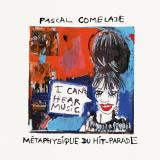
I first encountered Pascal Comelade’s music thirty years ago—and nothing has sounded quite the same since. I was immediately captivated: he is an artist like no other, whose sincere and selfless love of music is always evident, especially in his tender reworkings of other people’s songs.
Comelade seems to work like a watchmaker: meticulous, precise, and obsessive—yet always drifting into something dreamlike. His music opens hidden doors, telling strange and beguiling stories filled with obscurity, kindness, and reserved humour.
Back then, my fascination was instinctive. Today, with a few more words at my disposal, I look to this exceptional 70-year-old French musician and feel exactly the same pull.
Métaphysique Du Hit-Parade is the first vinyl compilation devoted to Pascal Comelade’s favourite cover versions. It spans a forty-year career and traces sixty years of rock and roll history along the way. “Sheena Is a Punk Rocker” becomes a soft, soothing lullaby that may well have made the Ramones weep. Then there are his idiosyncratic tributes to Jonathan Richman (“Egyptian Reggae”) and The Kinks (“Sunny Afternoon”), alongside nods to formative heroes such as The Gun Club, Captain Beefheart, and MC5.
Two exclusive recordings stand out particularly: Bob Dylan’s “Girl from the North Country” and Nirvana’s “Come As You Are”—a song that shaped my early youth. Both were recorded especially for this release.
Jan Lankisch, January 2026
Ataxia return to Planet E with two club-optimized cuts that capture their rolling, characterful approach to the authentic roots of Detroit's electronic culture. Marking the duo's return to Planet E following 2020's Oblivion EP, both tracks deliver energy tapped from a fundamental understanding of house and techno, equally charged with their punk and DIY background.
Immediately establishing a deep, hypnotic beat, 'The Whistles' expands into a collage of unruly samples that tour the club, the street and the true characters between. Playfully hinting at the tension between Detroit's party people and those who would like the music turned down, the track is a steamrolling club cut that finds Ataxia going wild with their most psychedelic studio trickery.
'Hocus On Pocus' is a tightly wound, punchy psychedelic wormhole of analogue FX and rubbery basslines, adding layers of pressure and surprising sonic twists. The result is an offbeat banger in the spirit of Planet E's wildest moments; primed for the dancefloor but with personality to spare.
- A1: Générique 02:46
- A2: Pierre Et Béatrice 01:04
- A3: Nasol 00:42
- A4: Tom 01:15
- A5: Poursuite Dans La Ruelle 00:21
- A6: Ne Chuchote Pas 01:26
- A7: Mambo Dans La Voiture 01:18
- A8: Merlin 00:46
- A9: Juste Pour Eux Seuls 02:26
- A10: Blues Pour Doudou 03:15
- B1: Blues Pour Marcel 04:20
- B2: Blues Pour Vava 03:31
- B3: Pasquier 01:02
- B4: Quaglio 00:47
- B5: La Divorcée De Léo Fall 02:12
- B6: Suspense, Tom Et Nasol 00:40
- B7: Des Femmes Disparaissent 01:03
- B8: Final Pour Pierre Et Beatrice 01:00
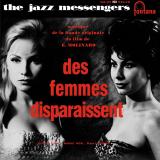
Art Blakey was the new hero on the Paris jazz scene, thanks to his Olympia concert on November 22nd 1958, and his subsequent appearances at the Club St. Germain. People swore by his 'Blues March' and 'Moanin', so why not get him to do the soundtrack for the film Molinaro just finished? The only problem, albeit a major one, was that time was short, so an original score was out of the question: the Jazz Messengers would have to preach the good word by other means. Fortunately, the band's tenor and arranger, Benny Golson, had become an expeet in the art of making somrthing new out of somrthing old, and he did it with equal talent and intelligence.Except for three originals, the musical sequences of the film are actually fragments from the Messengers' book, but in adapted versions; 'Whisper Not', for example, can be discerned underneath 'Ne Chuchote Pas'. It was an extremely hazardous process...but the result turned out to be remarkable!!!
ALTERNATE ART EDITION[29,83 €]
On a Sunday in the early 70s in South LA one could asily find themselves experiencing the Pan Afrikan Peoples Arkestra doing what they do for the community, performing incredible music. "Live at Widney High December 26th, 1971" is a previously unreleased PAPA recording. It finds director Horace Tapscott conducting the band at Widney Career Preparatory & Transition Center, a special-education magnet high school in Los Angeles. The band played shows here between 1970 and "72, often sharing the bill with contemporaries John Carter and Bobby Bradford"s group, and at one point the Sun-Ra Arkestra. These weekend shows were free and meant for the surrounding Black community. On this date the PAPA performed a range of compositions from the Ark"s expansive songbook, including arrangements of tunes by Pharoah Sanders and John Coltrane.
Mole People/Dj Sneak/Wamdue Project/Sole Fusion/Various Artists
30 Years Of Strictly Rhythm - Part Two
- A1: Barbara Tucker - Beautiful People (Underground Network Mix)
- A2: Essence - Moments In House (Full Effect Mix - Dj T Edit)
- B1: Mole People - Break Night
- C1: Dj Sneak - Keep On Groovin' (Fat Bottom Mix)
- C2: Wamdue Project - King Of My Castle (Original Mix)
- D1: South Street Player - (Who?) Keeps Changing Your Mind (The Night Mix)
- D2: Sole Fusion - Basstone (Underground Network Mix)
Repress!
Legendary NYC house label Strictly Rhythm is celebrating a mammoth 3 decades of cutting edge, roof-raising house music. Truly a benchmark.
Originally founded in 1989 by the dynamic pairing of music industry man Mark Finkelstein and A&R expert Gladys Pizarro, Strictly tapped directly into the fertile New York underground and after hours club scene, helping to launch and bolster the recording careers of dance music luminaries like Armand Van Helden, Roger Sanchez, Ultra Nate, Todd Terry, Wamdue Project, DJ Sneak, Louie Vega and many more. Strictly Rhythm is easily one of the most recognisable and respected dance music powerhouses of all time.
Across 3 limited double vinyl offerings, the Strictly catalogue has been expertly picked over to present you with a snapshot of some of the most earth shattering house music to emanate from the streets of New York City. A who's who of producers and artists, all killer and no filler. End to end classics that help to tell the story of one of dance music's most well loved labels. Classic cuts and essentials from DJ Sneak, Wamdue Project, Louie Vega (Sole Fusion), Essence and more all feature on part 2 in their unedited, 12" mix glory.
Fully legit, remastered and selected with love courtesy of Strictly Rhythm and Above Board distribution for 2020. Happy birthday Strictly Rhythm!
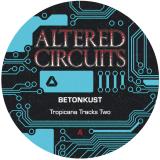
On the 2024 Altered Circuits release Tropicana Tracks Rotterdam-based artist Betonkust paid tribute to the former subtropical pool (now a circular entrepreneurship hub) Tropicana of his hometown. ALT025 is the follow-up: the fallen-from-grace swimming paradise again fuels a club-oriented selection, inspired by, in the artist's words, "the electronic music from 1988 up until now", more specifically "the Benelux-sound". Tropicana Tracks Two kicks off in full gear with the zero swing drums and lately bass rhythms of Don't Think I'll Be Here Too Long setting the stage for intense synth stabs. Its counterpart comes by way of Realxing, which nonetheless uses similar patches. If the A1 is the thrill of the slides, this one feels like blissfully floating in the geothermally heated waters afterwards. Will Support on the reverse side takes on Detroit techno. Minimal in its composition, it is carried by tough, loopy minor fifth synth sections and prominently mixed rides. TV For Lonely People features more big bass catchiness and melancholic, silky melodies, glued together by vintage flanger treatment and chlorine-damp reverb. The production revels in what feels like the quintessential Betonkust sound. Innershades then joins for the encore, and, characteristically, the mood turns a bit darker. Letting Go Of The Dream is an emotional New Beat update, fully equipped with thudding drum works, haunting lo-fi vocals and pivotal 303 programming - a fitting reaffirmation of the long-standing ties between two of Low Countries Electronics's finest ambassadors.
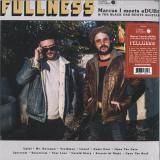
There’s a special kind of feeling when everything falls into place - when the drums bounce easy, the bassline rolls steady, and a bright guitar line cuts through the warmth of tape. That feeling became the heart of the FULLNESS, from Marcus I meets aDUBta. The sound of FULLNESS is built on simple, living elements: real drums, deep bass, a warm sound, and melodies that leave space to breathe. It moves between Early Reggae, Rocksteady, and Roots - sometimes straight and solid, sometimes stretching out into Dub and Echo. With its voice, from singer and lyricist Marcus I, FULLNESS carries the message about gratitude, love, freedom, and the small moments of everyday life. While Marcus’s singing style nods to the great singers, he stays grounded in his own experience, which perfectly complements aDUBta’s production, giving him space to shine. This LP is a complete, warm, balanced, and uplifting experience from start to finish.
FULLNESS grew from a steady musical exchange between Marcus I and aDUBta - two people on different sides of the Alps (Marcus I in France and aDUBta in Germany), finding a shared rhythm. What began in early 2022 with a few Riddims sent back and forth soon turned into a regular flow of songs. Every week brought new ideas, new words, and new melodies. When they finally met in person at aDUBta’s Attic Roots Studio in Bavaria, Germany, it all fell naturally into place. Most of the instruments were played by aDUBta, and the whole LP was mixed live on his Tascam 388, keeping that raw, handmade feel. With several friends helping bring even more color into the music, aDUBta brought in Viti Sanchez to lend his expressive saxophone and horn lines, Michael Salvermoser with his warm trombone tones, and members of the Black Oak Roots Allstars - King HuHa and Jannis Klenke on bass and guitars, along with Morry 'Da Baron' (Dub Inc.) on bass. FULLNESS means the fullness of music, of life, of friendship, of gratitude. It’s what happens when music becomes more than a project - when it turns into a shared space where things just flow.
Since I have announced this repress, originally released in 1993, I have had a few people contact me to say that this was their secret battle record. One thats been under the radar but every track is an absolute Halloween Monster! I think it's time to share how amazing this record is with everyone - plus DJ Sphinx gets to make a few quid too... so win win!
At the core of the creative process behind “HPC” and “Bor3d” lies meta-irony, a quality that permeates much of today’s digital content landscape.
Both tracks are a deliberate attempt to push the sound toward a barely perceptible absurdity and ironic unseriousness in their interpretation of well-familiar styles of dance club music. It is a play with form, expectation, and recognizability — balancing sincerity with sarcastic exaggeration.
Okay
Okay is built around interruption. Voices, fragments of dialogue, yawns, irritation — people seem to step inside the track uninvited. Someone is bored, someone is annoyed, someone tries to stop the flow entirely. Just like in real life, the process is constantly disrupted. The track reflects the experience of being surrounded by opinions, noise, and skepticism — especially the kind that will never be convinced, no matter what you do. “Okay” becomes a quiet, ironic response to this pressure: not agreement, not approval, but endurance. The track continues anyway.
Tripatura
Tripatura is a fictional creature — a warped echo of cryptid mythology. In this narrative, Tripatura doesn’t simply exist, it hunts. Once it finds you, it drags you into an endless trip with no exit point. Time stretches, perception blurs, and the track itself becomes the trap. Its prolonged, unresolved ending mirrors the experience of being stuck inside a loop that refuses closure. Tripatura doesn’t rush. It lingers, slowly pulling you deeper, until the trip no longer feels temporary.