Fresh off their latest VA, The Press Group hand the reins over to up-and-coming Ukrainian producer Sasha Zlykh, here delivering his debut 12" effort. Clocking in with a quartet of club-oriented weapons and off-road house-y pumpers that shall bring dancefloors to a slow but steady simmer, the Kyiv-based producer blends in an avalanche of breaks-strewn rhythms, bleepy melodies and reshuffled UK bass patterns to create his own distinctive hybrids, halfway straight dance functionality and non-formulaic experimentality.
As playful in essence as it is serious in its execution, 'Lie To Your Mom' EP starts off with the title-cut, which works a wonky swagger that proves all the more infectious as bars fly by. Engineering a finely-woven mix of off-kilter drum programming, raucous analogue belches and volatile harp stabs distorted to the max, the track's shadowy intro is eventually offset by overlapping tides of luminous pads, released as one lets the light break through a vampire den. 'RnB Ritual' follows up close in the vein, meshing a brooding late-night-ish atmosphere with playful percussive mechs and sustained rhythmic accidents.
Flip sides and you'll be treated to a choice pair of remixes from in-house groove traders Rupert Marnie and Youthman. First in line, Marnie turns 'Lie To Your Mum' into a straight jacking and shuffling Chicagoan chugger. Going deeper into soulful terrains and lavishly-textured expanses, TPG's main operator exploits the whole melodic potential of Zlykh's original, bringing its anthemic power to further completion beautifully. More on the dubby end of things, Youthman adds his uniquely vibey touch to the main cut, deftly navigating betwixt a classic deep house kinda vibe, post-rave'y electronics and a Basic Channel-esque sound spectrum, which all in all should have people instinctively clapping their hands as their mind begins to sink into a weirdly introspective sense of euphoria.
Buscar:people at night
Smoke Vinly[16,77 €]
Released on CD by Aurora Borealis back in 2010, we're overjoyed to finally see this on vinyl.
- limited edition of 300 copies - 180g black vinyl - reverse board heavyweight sleeve - includes download code and printed insert - mastered for vinyl by James Plotkin - cut at The Carvery, London
An ode to the Lovecraftian lore of Shub Niggurath, 'Black Goat of the Woods' was conceived as "the soundtrack from some lost low budget horror movie, rediscovered on an old and faded VHS cassette found mouldering in a deserted house in the depths of the woods".
The one man project of J.R Moore, Black Mountain Transmitter has released several albums, all to great critical acclaim, and the quality of his work speaks volumes. The original AB 'Black Goat of The Woods' CD version was the first official release and a reissue of the long sold out and much sought after limited CDr.
On describing the recording, Moore said: "The music was certainly very much influenced by that certain breed of 70s horror films. Things like the soundtrack to the original "Texas Chainsaw Massacre", Giuliano Sorgini's atmospheres in "Living Dead At The Manchester Morgue"; Carl Zittrer's soundscapes in "Deranged", "Children Shouldn't Play With Dead Things" and "Dead Of Night", and of course people like Fabio Frizzi in Italian horror and the BBCs Radiophonic Workshop's electronic sounds in something like "The Stone Tape" and countless creepy old TV productions..."
An excellent, macabre and psychedelic release that spans electronica, soundtracks and experimental genres in its 40 minute playing time, 'Black Goat of the Woods' pays perfect homage to the dark denizen of the nocturnal glades, and is a true paean to backwoods horror.
White Shadows In The South Seas is the title of a book written in 1919 by Frederick O'Brien as part of a trilogy he wrote based on his experiences living in the Pacific islands in the early part of the 20th century. His book was taken as the starting point for a film to be directed, initially, by Robert Flaherty (famous at the time for his groundbreaking documentary / fiction film Nanook Of The North) with W.S.Van Dyke as his support. The film, ultimately, apart from the title, had little to do with O'Brien's book and Flaherty left the film after a few months leaving Van Dyke to finish it.
I purchased O'Brien's book, along with many others, from Basement Books, a secondhand bookstore in Melbourne/Australia. Part of my 'Islomania' and on going fascination with all things Pacific. When I discovered there was a 1929 silent film based on the book I sought it out and started to present it as part of my 'Live Music/Silent films' repertoire. Tabu by Frederick Murnau, which coincidently also had Flaherty as co-director originally, was the first film I ever wrote / improvised a score for and presented as a live film/music performance. My repertoire extends to over 23 films now.
My eclectic and diverse musical and artistic interests extend into 'Hawaiian', 'Exotica', 'Ambient' and 'Electronic' Music. I have produced several volumes of so called 'Electronic, Ambient, Exotica' on CD and Vinyl, including Kiribati, Globe Notes, Rayon Hula ( on Vinyl, CD and digital format ) and most recently, New Globe Note on Vinyl and White Shadows In The South Seas on CD.
White Shadows In The South Seas features some of the music presented in my live screenings of the 1929 silent film.
The film is the story of Dr. Matthew Lloyd, an alcoholic doctor who is disgusted by the exploitation by white people of the natives on a Polynesian island. The natives dive for pearls, however, numerous accidents occur and one diver dies. In anger, Dr. Lloyd punches Sebastian, the employer. As revenge and to prevent further interruption of his activities, he tricks Dr. Lloyd onto a ship with a diseased crew (thinking they are ill) and his men rough him up and send the ship off into a storm. Dr. Lloyd survives and is washed ashore on an island where none of the natives have ever seen a white man before. Lloyd is rescued and ultimately falls in love with the chief's daughter, who is Taboo, hence Lloyd is prevented from pursuing his love for her. An incident occurs and a young boy is thought to have drowned but Lloyd is able to revive him, earning him points and permission with the chief's daughter. Lloyd begins to realise that the local islanders have no sense of the value of the black pearls which grow in abundance around their island and he starts to dive for them and collect them. One morning the white man Sebastian unexpectedly turns up on a scooner and starts to offer the islanders trade for their pearls. Llloyd tries to interrupt the encounter and is shot and dies. His wife and the islanders morn for his dead body and, symbolically, the passing of a way of life.
Mike Cooper plays - Electric and acoustic lap steel guitars / electronics / Zoom Sampletrack / Kaos Pad / Casio SK1 / Korg Drum Machine / Self Made Instruments.
It also features field recordings made on Pulau Ubin by Mike Cooper during a month as Artist In Residence for The Artist Village / Singapore.
I would like to acknowledge and thank Lawrence English (Room40 Records) for his assistance and encouragement with the original recordings and the CD version of White Shadows In The South Seas.
All music written and played by Mike Cooper PRS/MCPS - except Po Mahina (trad. Arr. Cooper) and Hilo Hanakahi (trad. Arr. Cooper)
Recorded and Mixed at the Steelworks in Rome 2012/2013.
A White Shadow In The South Seas
In February 2014 'A White Shadow In The South Seas' was the title of an audio-visual installation I made at the Teatro In Scatola in Rome, Italy, presented as part of a series of sound installations titled 'Visitazioni' produced by Proposte Sonore.
The essay below, as well as our collection of Hawaiian shirts, Exotica and Hawaiian vinyl records, was an inspiration for this installation.
'..the transformation and reconstitution of the souvenir commodity as an indigenous ethnic art form and a scarce relic of Hawai'i's romanticized past...' from - Clothing and Textile Reasearch Journal - From Kitsch to Chic by Marcia A. Morgado.
And....
Michael Thompson's Rubbish Theory (1979)
' ...a critical aspect of Western culture is the pre-disposition to see objects in terms of two overt categories: the transient and the durable. Objects identified as transient have finite life spans and lose value over time, whereas those identified as durable have infinite lives and over time increae in value....category assignments are arbitrary, but once assigned a category membership determines relative value. Fashion apparel-by defenition-is assigned to the transient category; paintings commonly are designated durables....how is it that transient objects.. ( e.g. Hawaiian shirts and vinyl records ) ..sometimes become durables.
Objects assigned to the rubbish category are largely invisible, have no value and, ideally, no life span. Fashion for example, no longer worn and relegated to the back of the wardrobe has fallen into the covert rubbish category. But rubbish can be rescued and transformed. Thompson says ' What I believe happens is a transient object gradually declining in value and in expected life span may slide across into rubbish. Here it exists in a timeless and valueless limbo where it has a chance to be re-discovered and be successfully transformed to a durable. Such transferes are radical: objects gradually slide from transcience to rubbish, but the transformation from rubbish to durable involves an all-or-nothing leap across two boundaries, that separating the worthless from the valuable and that between the covert and the overt. Things drift into obscurity but they leap into prominence.
The delightful consequence of this hypothesis is that in order to study the social control of value we must study rubbish.
The rubbish-to-durable transformation is accompanied by the development of highly specialized knowledge derived from the discovery of subtle variations and complex details that went unnoticed in the objects transient stage. The discoveries initiate renewed interest in the object and its market value begins to climb. As prices soar beyond the reach of ordinary people, the object becomes available only in high priced collectors' markets. Furthermore, as market values rise, the aesthetic value of the object undergoes a reassessment as well, and it becomes increasingly apparent that the objects intrinsic beauty has been overlooked. Ultimately the object is re -assigned as a durable and becomes recognized as a timeless classic.
Exotica, Ambience and Pacificism - A dialogue with Mike Cooper & Professor Philip Hayward Deputy Pro Vice Chancellor of Research Southern Cross University, Lismore, Australia.
Duckett returns to Wisdom Teeth with another otherworldly four-tracker of melodic, trippin' house-n-techno. While recent outings on Berceuse Heroique and Solar Phenomena have showcased the more abstract edges of his sound, Corde Raide Vers Nulle Part comprises a collection of the Welsh producer's most melodious work to date. Throughout, the tracks are driven by snaking FM basslines, shimmering video game synths and tonal drums, creating a record that will appeal equally to fans of golden era Night Slugs, bleeping minimal techno, and the compositional electronica of labels like RVNG International and Latency.
In folklore, the witching hour or devil's hour is a time of night associated with supernatural events. Creatures such as witches, demons and ghosts are thought to appear and to be at their most powerful and magic is thought to be most effective at this time.
It is also the time when we are at Underground parties, this is considered the main time of the party before it tapers off into the ethereal realm of translucent soundscapes and marionette dance moves. This is when we feast on sound intoxication and our parallel daywalker skins are shed into ancient dances and rites of sacred drums.
The witching Hour takes our souls back to our ancient pagan rituals of music and dance till the cleansing of dawn, this is where revelations happen and where groups of like minded people form a coven of sorts and bond in non verbal communications thru the expression of movement.
This is a new label project from Jay Tripwire and TJ Mc Au, they will be presenting underground minimal sounds specifically designed for the dancefloor and for the DJ.
This EP features Creepshow and Klangtone. Creepshow is a dark bassy roller with an eerie underground atmosphere that holds the groove but it also designed for mixing and layering. Klangtone features a percussive groove, voices from the Tikuna rainforest tribe and a haunting modular flute line with a massive sub bass that is sure to rattle bassbins. This is classic Tripwire with modern production but still keeping the his roots of his trademark sound.
Part II The title of the project is: "An Intermediary Plane of Existence", an in-between world, a shadow zone, two universes, the place between the entrance and exit of a portal. Most electronic music producers probably know the feeling where they, after producing and recording a track they are extremely content with, are suddenly overcome with a slight fear: "what if my computer crashes, what if the file of the recording gets lost somehow and the music gets lost, it's gone forever...". That feeling and the fact that all music, ever written and even the music that has yet to be written, is "somewhere" when it's not
being played or made. It's either written down in notes, stored in
someone's mind, cut into a piece of vinyl, recorded on tape, converted into 0's and 1's hiding somewhere on a hard drive, a cloud, a CD or a USB stick. It's been taken form the place it was before it was made and stored in another place, in an intermediary plane of existence, waiting to be played, to come back to life and listened to again. We wanted to do this various artists album not with just any talented artist, but with people we've met the past years who became our friends and people we admire for their music and personalities. Friendship is also something that most of the time resides in an intermediary plane of existence. When a friend is not in the same room, city or even country it doesn't mean the friendship is not still there. If you've never even met
someone in person, it doesn't mean you can't be friends. Even if you haven't spoken to your friend for a long period of time, it doesn't mean the friendship doesn't exist anymore. The same goes for love I believe.
Some people you will never stop loving, alive, or dead. Both owners of P-RT-L lost their fathers within a week from each other last year, but I also know people who haven't seen or spoken to their dads or moms in over a year, yet somehow it feels completely different not seeing someone for a long time if you know a person is still alive, even though it's not sure you will ever see him or her again. Their dads went back to the place they were before they were born and they will never come back the way they knew them. Just like all music that went lost before we as humans had the ability to write it down, store it on a medium or pass it on otherwise. That exact music, just like their dads, is lost forever. I know this will probably sound a bit too philosophical for some of you readers, but it's something that keeps me awake at night, sometimes. This albums is a way for us to celebrate the fact that the music on it, will never be lost because we as humans have found a way to store and contain it in a place where we can easily reach it, for ever. We hope you will enjoy the music! P-RT-L Featuring artists: Alex Bau ,AnD,Anouk De Vos, D-Leria, Daniel Kane, Dasha Rush, Frame Six Micol Danieli
Cómeme delivers to you one of the freshest rhythms of 2018, recorded in Johannesburg, the new residency for the renegades of the beat. This is 'Rain' - starring Matias Aguayo and the actress, dj and singer Ayanda Seoka aka Mujaji The Rain. She's resident at the legendary Bar Kitchener's all femme 'Pussy Party', a space for feminist / queer action and dancefloor joy, right in the centre of Joburg.
Cómeme has been since some time in a serious and passionate relationship with that city. Radio Cómeme transmitted shows from there with electronica legend Felix Laband, Mpumelelo Mkatha from BLK JKS, the queer performance duo Faka, Gqom pioneers RudeBoyz and also Kwaito's legacy keeper Spleef McZaul. Matias Aguayo ventured into a beautiful collaboration with DJ Spoko, released two years ago on this label.
'Rain' is a deeply rhythmical track, inspired by the grooves that converged when Cómeme swing crossed the paths with the syncopations people in Joburg were dancing to. It has become quite clear in the recent years that elegantly shuffled triplets are marking a way to the future in dance music, especially in the southern hemisphere, no matter if you're in Durban, Rio or Santiago.
On top of this modern groove we can hear Mujaji the Rain enjoying how she gets wet under a dark and tropical sky. Laughter, joy and ecstasy is what she emanates while hypnotically involving you into this atmosphere of dense drumming and trance. (side note: Cómeme has been consequently evading the description hypnotical in press releases but this time it was unavoidable).
For further jacking fun we generously included a 'Club Mix', including more drum frenzy towards the second half of the track, and a 'Just Drums Mix' for the skilful DJ.
Side B features the jam 'Serious', which comes along with another killer beat, reminiscent of Michael Jackson or Cheri. A late-night track in which Mujaji The Rain turns into a sensual but slightly annoying creature that doesn't want to leave the dancefloor. and for sure doesn't want to go home.
We added an instrumental version to this complexly arranged tracks, which feature pianos, strings, and heavy synth bass stabs.
All tracks on this 12' are written in a 6/8 signature, which some normative DJs might shy away from, but be safe: both tracks are in 120 bpm and carry the seal of official Cómeme dancefloor approval by the label's highly respected DJs.
- A1: Till The World Falls Featuring Mura Masa
- A2: Boogie All Night Featuring Nao
- A3: Sober Featuring Craig David And Stefflon Don
- A4: Do Ya Wanna Party Featuring Lunch Money Lewis
- A5: Dance With Me Featuring Hailee Steinfeld
- B1: I Dance My Dance
- B2: State Of Mine (It's About Time!)
- B3: Queen Featuring Emeli Sandé & Elton John
- B4: Want Your Love Featuring Lady Gaga
- B5: (New Jack) Sober Featuring Craig David And Stefflon Don
The artwork recreates the cover of the band's 1977 debut album with modern fashion icons Duckie Thot and Jazzelle Zanaughtti
'I've had the great privilege of producing some of the greatest artists in the world so when it came time to collaborating for my own record the barometer was shall we say pretty high' explains Nile. 'Nao, Mura Masa and Cosha were important to me and to be able to debut the songs we wrote live with them on Later . . . With Jools before we've even put out recorded versions makes it even more special.'
Nao shares: 'We all grew up on CHIC! No matter who you are or where you're from, they're one of those bands that have sound tracked at least one part of your life. So to now be part of that story and playing in the band - albeit temporarily - is just wild. We've had such great fun making records and playing together, it's been a joy. I'm so glad they're back, the world - especially right now - needs more CHIC!'
'BOOGIE ALL NIGHT' ft Nao is lifted from the long anticipated 10th studio album 'It's About Time'.
Coming this September though Virgin EMI, it's the group's first album in 25 years!!
Inspired by talent, multiple Grammy-winning composer, producer, arranger and guitarist Nile Rodgers is always collaborating, working with musical superstars and breaking artists alike. He amplifies his legacy by constantly traversing new musical terrain and successfully expanding the boundaries of popular music. The new record sees the UK's Nao, Mura Masa, Stefflon Don, Cosha and Craig David share in the journey alongside the likes of California's Anderson .Paak and Chicagoan Vic Mensa, with many more exciting collaborations to be announced.
The album's cover revisits a strong sense of conceptual aesthetics that have run through the bands career since the very start. The artwork of their debut self-titled album (inspired partly by Roxy Music album covers such as 'Stranded' and 'Country Life') featured Valentine Monnier and Alva Chinn, and personified the band's unique style and intent. The 'It's About Time' cover features models Duckie Thot and Jazzelle Zanaughtti. Shot by Britt Lloyd and directed by Greg Foley, co-founder of V Magazine, Duckie and Jazzelle are not only modern fashion icons, but also activists making huge strides for women of colour in fashion.
'When I first came up with the concept for the first CHIC album cover more than 40 years ago it was a deliberate statement that we could all be abundant, we could all be with the beautiful people, we could all be included, we could all have good times. Looking at the world today for the release of 'It's About Time' I felt that it was important to make those statements again for a new generation' Nile explains.
As the co-founder of CHIC, Rodgers pioneered a new musical language with chart-topping hits like 'Le Freak,' (the biggest selling single in the history of Atlantic Records!) and 'Everybody Dance', even sparking the advent of hip-hop with 'Good Times'.
His work in CHIC and his production work for artists like David Bowie, Diana Ross, and Madonna have sold over 500 million albums and 75 million singles worldwide while his innovative, trendsetting collaborations with Daft Punk, Avicii, Sigala, Disclosure, and Sam Smith have kept him in the vanguard of contemporary music.
Nile Rodgers & CHIC have already confirmed several festival performances across the UK this summer, including Isle of Wight and Wilderness, full list of dates below.
Rodgers transcends all styles of music with a catalogue of work that's garnered him plaudits from the Rock & Roll Hall of Fame (2017) and the Songwriters Hall of Fame (2016). More recently, he was appointed as the first ever Chief Creative Advisor for Abbey Road Studios to cap off a year that included 'festival best' performances at both Glastonbury and Coachella and a BBC Music Awards nomination as 'Best Live Performance Of 2017'.
- A1: Markus Gibb - Kuru
- A2: C O N T R A - Taurus
- A3: Ben Shemie - A Million Kinds
- B1: Drvg Cvltvre - Last Rites
- B2: Sutja Gutierrez - Allodoxaphobia
- B3: Théo Muller - Douce Transe
- C1: Dave E Brun Vs Frank Agrario - Grace
- C2: Benedikt Frey - Iaon
- C3: Lauer - Pythor
- D1: Bajram Bili - Restart
- D2: Il Est Vilaine - Fahrenheit 451
- D3: Jonathan Fitoussi - Cercles Polaires
- D4: Lumi - Izerditan
In just a year of existence, Chloé's Lumière Noire has brought emerging artists and promising newcomers together - and this first compilation of 13 brand new tracks expands the roster, exposing the label's eclectic vision in full daylight. When Chloé talks about her label, she puts forward the fundamental values that informed her own musical journey, her trust in her own musical taste - and, of course, the predominance of human relationships: 'I followed
my bliss and only commissioned tracks from artists that I respect and whose music I love. That to me is Lumière Noire's musical palette.' With this 13- track, unmixed compilation, Chloé makes a case for a label aesthetic that is based in open-mindedness. Familiar, elemental Lumière Noire artists are represented, as are new faces, producing a kind of group photo presaging what's next for the fledgling label. Lyon's Markus Gibb leads the track listing with Kuru with a deep chiaroscuro matching the label's ethos, followed by other mainstays Il Est Vilaine's Farenheit 451, which evokes Ray Bradbury's retro-dystopic angst with the
band's usual electro-pop elegance. Sutja Gutierrez, who released in debut EP, The Legend of Time on Lumière Noire in April, pursues his electro Shamanism with the ceremonial Allodoxaphobia, while Iñigo Vontier (whose EP Aluxes came out on the label in late 2017) brings his C O N T R A project
online with track Taurus, a further development in voodoo house. Elsewhere, Suuns lead singer Ben Shemie, who lent his fascinating art-rock croon to Recall, a single from Chloé's Endless Revisions LP, contributes A Million Kinds, a synthy, psych-pop debut that is as brilliant as it is surprising. On to the freshman class: Dutch producer Drvg Cvltvre (who gets personal kudos
from Chloé with each new 12') brings the uncompromising dark electro of his hypnotic and claustrophobic Last Rites. Jonathan Fitoussi's airy, minimalistic Cercles Polaires brings the respite of his recent Versatile Espaces Timbrés LP (a collaboration with Clemens Hourrières): 'I met him at Xavier Veilhan's
Studio Venezia at the Venice Biennale. He's a great guy, and his universe is unique,' says Chloé. Benedikt Frey's deep techno track Iaon, is on par with his smash 2017 album, Artificial, out on ESP Institute. First-timers are also part of the recruits: Bajram Bili with the ten cerebral minutes of Restart, Théo Muller with the ultra-deep Douce Transe, and Lumi, a Basque band that fuses
electronic sounds with acoustic instruments, brings the ompilation to a close with a track commissioned by Chloé. These audacious choices are anchored down with the likes of Permanent Vacation pioneer Lauer's hooky, 80s-infused Pythor ('Just like him, I was a resident of the Robert Johnson, and he was a guest of mine at one of my Lumière Noire nights at the Rex. He is one of these people whose music I highly appreciate'); Aergeworc & Franck Agrario, half of English duo Swayzak David Brown's project, weaves an ethno* mood into Grace's techno. Bringing together different generations, genres, and styles That may not necessarily be Chloé's MO. She invokes a more arbitrary, personal logic: 'I like to mix of-the-moment tracks and more timeless one, but the rule is above all 'do I love this or not'. That was my ethos when I started Lumière Noire.' In that way, the label is definitely in keeping with its time
In the sweltering North-Eastern Brazilian state of Pernambuco lies the coastal city of Recife, where Amaro Freitas is pioneering the new sound of Brazilian jazz. For the prodigious young pianist, the spirit of his hometown runs deep. From the Afro-Brazilian maracatu born on the sugar plantations of slavery, to the high intensity carnival rhythms of frevo and baião, Amaro's heavily percussive approach to jazz is as indebted to these Pernambuco traditions as it is to Coltrane, Parker and Monk.
As with many of the greats before him, Amaro began playing piano in church aged 12, under the instruction of his father, leader of the church band. As his natural talents became obvious, the young prodigy quickly outgrew his father's instruction. He won a place at the prestigious Conservatório Pernambucano de Música but had to drop out as his family could not spare the money for the bus fare. Undeterred, Amaro gigged in bands at weddings and worked in a call centre to fund his tuition. The transformative moment came at age 15 when Amaro stumbled across a DVD of Chick Corea concert, 'he completely blew my mind, I'd never seen anything like it but I knew that's what I wanted to do with a piano'.
Despite not actually owning a piano, Amaro devoted himself to studying day and night - he would practice on imaginary keys in his bedroom, until eventually striking a deal with a local restaurant to practice before opening hours. By the age of 22 Amaro was one of the most sought-after musicians in Recife and resident pianist at the legendary jazz bar Mingus. It was during this time he met and begun collaborating with bassist Jean Elton and the pair went in search of a drummer. 'We kept hearing about this crazy kid who was playing in 7/8 or 6/4, we knew we had to meet him'. Hugo Medeiros joined, and the Amaro Freitas Trio was born.
'I want to show the simplicity of music, to break the stigma that the piano is for a particular social class. Yes, it's a difficult instrument, which many people do not have access to, but with it you can express everything.'
Following his critically acclaimed debut album Sangue Negro (black blood), the title of his sophomore release Rasif is a colloquial spelling of Amaro's home town. A love letter to his native northeast, Amaro explores its traditional rhythms through the jazz idiom, employing complex mathematical patterns reminiscent of some of the most challenging works by fellow Brazilian masters Hermeto Pascoal, Egberto Gismonti and Moacir Santos.
Preferring to see the piano as a though it were a drum with 88 unique tones, Amaro's intelligence and emotion intertwine on every track, from album opener 'Dona Eni': a scorching reconstruction of the baião rhythmic structure, played in seven measures instead of two, to the serene homage to the coastal reef and its ecosystems on the title track 'Rasif'. 'Aurora' is a suite of three parts, representing the sun's journey from the light and soft of the rise, to the aggressive dissonance at its midday zenith and descending chromatic cadences as the sun sets.
Due for an Autumn release on Far Out Recordings, Rasif sees Amaro Freitas take a deserved step onto the world stage. Having already made a name for himself in Brazil, Amaro and his phenomenal band will embark on their first European tour later this year.
Amaro Freitas - Piano
Hugo Medeiros - Drums & Percussion
Jean Elton - Double Bass
Henrique Albino - Baritone Sax, Flutes & Clarinet
All compositions by Amaro Freitas
Produced by Amaro Freitas
Recorded by Bruno Giorgi @ Carranca Studio, Recife, Brazil
Mixed and mastered by Bruno Giorgi @ Quarto Studio, Rio de Janeiro, Brazil
Executive producer and management: Laercio Costa
In 2008, Aaron Dessner sent Justin Vernon an
instrumental sketch of a song called 'Big Red Machine' for
'Dark Was The Night'. This was before they had met in
person. Justin wrote a song to it, interpreting the 'Big Red
Machine' title as a heart. 10 years of friendship later, there
are 10 more songs. 'Big Red Machine'. Each song includes
a large number of collaborators via the PEOPLE platform
and the record was produced by Justin and Aaron with
longtime collaborator Brad Cook and engineered by
Jonathan Low primarily at Aaron's studio Long Pond in
Upper Hudson Valley, NY.
PEOPLE is a steadily growing group of international artists
who have come together to create and share our work
freely, with each other and everyone. It was born out of a
wish to establish an independent and nurturing space in
which to make work (generally around music) that is
collaborative, spontaneous and expressive in nature and
where all unnecessary distractions or obstacles that get in
the way are removed. PEOPLE is for the benefit and
development of the artists involved and just as
importantly, for those who would like to access and enjoy
the output. It is as much about the process of making
work and showing all that openly as it is about the final
outcome.
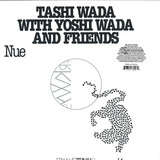
Composer Tashi Wada has performed for years with his father Yoshi Wada—artist, composer, and early member of the Fluxus movement. However, they have rarely appeared together in studio settings. Nue, the fourteenth entry in RVNG Intl.'s intergenerational FRKWYS series, finally brings Tashi and Yoshi, along with an eclectic group of close friends and extended family, together on tape.
Nue draws on aspects of Tashi's background for his widest vision to date—among them the minimalist bagpipe music of Yoshi, who co-composed three of the tracks, the psychoacoustic and perceptual explorations of his mentor, composer James Tenney, and reimagined forms of ancient and devotional music. The album, however, is not a tribute to the past or a recapitulation of familiar sounds. Instead, Nue is an intertwining of people and ideas as a means of growing, of looking inward to move outward, and of looking back to move forward.
To achieve this growth, Tashi assembled a core group of fellow travelers, including Yoshi, composer Julia Holter, producer Cole MGN, and percussionist Corey Fogel, to give life to this multifaceted suite. As an experience, Nue subtly navigates the interactions, intimacy and spaciousness of this group.
The album's title itself is a nod to Tashi's abiding interest in duality and the unknown: nue is a mythological Japanese chimera with the face of a monkey, the legs of a tiger, and a snake for a tail, a composite form, at once disturbing and otherworldly. But, as the composer points out, nue is also French for naked—stripped of complexity, bare and exposed, but also raw and essential.
From the doubling of tones—and the world of harmonic nuances such an action produces—to the rich interplay between individual musicians, all baring their own personalities and experiences through shared performance, Tashi's compositions allow space for these elements to join and grow. The multipartite creature that is an ensemble melds in the simplicity and purity of the music itself.
As explained by Tashi, each part was written with an individual in mind, not simply an instrument. And each individual performer makes their mark, from Holter's vocal performances on the cresting, oceanic 'Mutable Signs' and 'Ondine' with guest vocalists Simone Forti, Jessika Kenney and Laura Steenberge, to Fogel's resonant, precise percussion on 'Bottom of the Sky.' Producer Cole MGN, who has worked extensively with artists like Beck and Ariel Pink, helped to create a world of sound with minimal yet multi-dimensional materials. Like many of its influences, Nue uses deceivingly simple means to create complex, coherent worlds and narratives.
Tashi notes the influence of legendary Brazilian writer Clarice Lispector, whose work looked inward, investigating memory and emotion and dream, to understand the often overwhelming world outside the self. Like Lispector's classic novel Near to the Wild Heart, Nue cleaves these archetypal dualities—world/self, old/new, complex/simple—to create a work that allows them to coalesce into something singular.
As Tashi states in his liner notes: 'My desire was to create something both old and new sounding—ancient and futuristic—and ultimately something of its own world and other. Nue is a vision, an endless night of dreams, and a personal history of sorts, full of joys and demons.'
Matthew Dear's Black City Can't Be Found On Any Map. It's A Composite, An Imaginary Metropolis Peopled By Desperate Cases, Lovelorn Souls, And Amoral Motives. Like Most Literary Gothams, Black City Is A Place To Love And Hate, As Seedy As A Nightclub's Back Room And As Seductive As The Promise Of Power. Matthew Dear, The Musician, May Live In New York City, But The Matthew Dear Of Black City Inhabits A Sound-world Unlike Any Other: A Monument To The Shadowy Side Of Urban Life That Bumps And Creaks, Shudders And Wakes Up Screaming In The Middle Of The Night. Black City Is Matthew Dear's Third Album On Ghostly International, And It's His Darkest And Most Engrossing Work To Date.
From The rst Notes Of Album Opener "honey", It's Clear That The Love-obsessed Matthew Dear Of 2007's Asa Breed Has Given Way To A More Existentially Paranoid Entity, As Creeping Tempos Dominate, Cavernous Atmospherics Envelop The Listener, And Strange Distortions Crackle On The Horizon. In Black City, Nothing Is At It Seems: Leadoff Single "little People (black City)" Is A Nine-and-a-half Minute Disco odyssey, subverting its gleaming electronic lead with eerily giddy backing vocals and cryptic, ominous lyrics ("a frozen wasted heart / has died", "love me like a clown"); "You Put a Smell on Me" is a sordid sex romp set to hysterically chattering percussion and a serrated synth line that will set your teeth on edge; "More Surgery" at rst recalls the barely-there Krautrock of Harmonia in its burbling minimalism, until Dear's chanted chorus of "Alter genetics / to make my body glow / I need more surgery / there's so much more to know" sends the track hurtling into a dystopian future.
And yet, for all the foreboding moods on Black City, it's the album's sweeter moments that illustrate Matthew Dear's growing maturity as a songwriter. "Slowdance" is a futuristic lullaby in which Dear articulates a lover's helplessness ("I can't be the one to tell you everything's wrong") over breathy, Arthur Russell-esque cello swishes; the album-closing "Gem" is an achingly simple, reverb-drenched piano ballad that ends with a long, slow fade. Even in Matthew Dear's Black City, there is hope.
- A1: Gunnar Haslam - Versione Antica
- A2: Minimal Violence - Travel By Night
- B1: Matrixxman & Riccardo Limiti - Inferno
- B2: Russell E.l. Butler - Run Away With My Heart
- C1: D'marc Cantu - Regular People
- C2: Earth Trax X Newborn Jr. - Paradox
- D1: X-Altera - Entry (Jtc's Sparkz Mahlecyul Remix)
- D2: Nigel Caenaan - January's End
For over 18 years, Spectral Sound, the dance music imprint of Ghostly International, has thrived at the forefront of techno and house. It has been a source of support for numerous DJs and producers during that time, from Matthew Dear and Benoit & Sergio to Avalon Emerson and Hieroglyphic Being. Now, Spectral brings the past alongside the present with its latest release, a compilation that offers a vibrant cross-section of the current moment in underground dance music. Despite the wide-ranging selections on Spectral 139, a throughline of classic style and infectious energy emerges from the up-and-coming and established artists alike. Rising talents such as Minimal Violence, Russell E.L. Butler, and Earth Trax x Newborn Jr. bring unique perspectives to their hardware-centric productions. Veteran producers bring their own edge as well: D'Marc Cantu blows the roof off with the outsized funk of "Regularly People," and Nigil Caenaan's "January's End," a low-key Detroit classic from the late '90s, closes Spectral 139 with a whirlwind of manic rhythms and sedate synths. Gunnar Haslam opens the tracklist with his acidic mindbender, "Versione Antica." And Ghostly regulars like Tadd Mullinix, who drops a lush JTC remix of his new X-Altera alias, and Matrixxman, who collaborates with Riccardo Limiti on the cavernous "Inferno," tie everything back to the label's roots. The double-12" compilation, as well as each individual single, features original work by Los Angeles-based artist Nina Hartmann. Her designs have appeared on releases from labels such as Ascetic House and Big Love, and the pieces for Spectral 139 continue to develop her cryptic aesthetic. The marriage of Hartmann's striking, high-contrast symbols with such bold dance music speaks to a collection that aims to stand out.
In the 80s, a Nigerian DJ named Hycentto Junior was notorious for making Onitsha people dance on his grooves. Soon, influenced by U.S hip-hop artists, he began rapping on top of the music he played.
His eccentric style drew the attention of the biggest name, and the famous Nkono Teles decided to work with him on his next LP, Mama Groove. Their project was released in 1991. Due to unfortunate circumstances, the number of copies available was really low, making it very hard to find.
More than 25 years later, working for a motor company, Hycentto met online with French music passionate collective 'Lorem Ipsum', that had randomly found his Mama Groove LP.
The result is a reissue auditioning all the 1991 Mama Groove's tracks and two bonuses selected from his first 1984 album, At A Party Last Night. The unique variety of sounds and genres, covering Electro Hip-Hop, Digi Reggae and Disco-Funk, will carry you from poolside to late night dancefloors!
Le Matin, always rare and uncategorised, following the reissue of his early synthwavepop tunes on « poussière d'époque » and a track on the good Lena Wilikens' Dekmantel Selectors 005 comp, this new EP on Lost Dogs Ent. let you hear some of his last works. Expect an ultra-cold-minimal-electro riddim, a less-mental-nearly-good-for-the-dancefloor tune with depitched haunted r&b vocals, an analog and bassy arpeggio ride ... On the flip side, Oh My God ! This is the peak-time-for-weirdo-nearly-techno tune, a blast, only for craziest DJs that like broken-frustrated-uncomfortable dandefloors and to finish this well balanced 5 trackers : the « are you depressed that much It's the 10th time you're listening to this OST of a dying world, this won't get any better but at least this is good music ! » tune. Le Matin is a good kept secret that prefer to take care of his kids than to travel the world of nightclubbing with drunk teens (ok that's how it is in France, that looks better in some other countries), but sometime you can hear his music on decks of some wise people and DJs like Call Super, Lena Wilikens, House of Traps, Charles Drakeford, Jon K, Bergsonist, Body Motion...
One afternoon in 1975, friend and fellow music traveler, Harold Schroeder, showed up at Poo-Bah Record Shop where Tom Recchion worked selling records and experimental music to people, forcing them to buy albums that he swore would change their lives. Harold asked if Tom wanted to share in a studio space close to the shop. After seeing it Tom immediately said "YES!". They moved in and divided the space in half. On Tom's half he made drawings, paintings, performances, video, sculptures, installations, and music. Harold had his all set up for music with his newly acquired Steiner-Parker synth and guitars and things. At the beginning they played under the name The Two Who Do Duets. Soon the late-night jam sessions that took place in the back of Poo-Bah moved over to the fourth floor of 35 South Raymond. It was pretty beat up and derelict, the way one imagines an artist's studio to look. They could make all the noise they wanted. No one else was on their floor. The music heard on this LP has remained unheard since it was recorded and was created just before and right after the inaugural concert by the Los Angeles Free Music Society (LAFMS) groups Le Forte Four, Doo-Doettes, and Ace & Duce. That concert took place in late January 1976. The sessions on this release feature members of the newly formed and expanded Doo-Doettes, which now included Dennis Duck, Juan Gomez, Harold Schroeder, and Tom Recchion, as well as Ju Suk Reet Meate from Smegma and Ace, of Ace & Duce. 35 S. Raymond eventually became a sort of LAFMS headquarters, with Chip Chapman of Le Forte Four, artist and future Extended Organ vocalist/guitarist Paul McCarthy, and soon to become singer for Nervous Gender, punk/folk artist Phranc, who along with many other artists and musicians, moved into the building. 35 S. Raymond allowed for free expression and explorations of all sorts. Some wild parties ensued, not to mention the luxury of endless hours of experimentation. Parking was free and so was the art and music. Ace found the tapes for side one ("Tom's Studio") in his archive and Ju Suk Reet Meate found the tapes for side two ("50 Of Every American Are Machines") and edited them both for this release. No overdubs or remixing was emplo
At first, it's difficult to pinpoint exactly what makes Our Girl so special, or why the Brighton-formed, London-based trio's music stands out within a busy crowd of fellow guitar-wielding-types. But if an explanation didn't jump out when they first emerged with a debut EP of mighty fuzz-soaked songs in November 2016, it surfaces with 'Stranger Today', a debut album of personal, emotional juggernauts that could have only been made by these three people: Guitarist / vocalist Soph Nathan, bassist Josh Tyler and drummer Lauren Wilson.
Since forming in Nathan and Tyler's Brighton home four years ago - Wilson joining as a late recruit when she was wowed by a demo of their self-titled debut track, and 'Stranger Today''s opener - Our Girl's members have only had pockets of time to work together. A day booked in a local studio here, a soundcheck there, full-time jobs and other projects meant the three rarely had a concentrated, collective patch. This changed in September 2017, when they stayed in Eve Studios in Stockport for a week, recording with Bill Ryder-Jones. Their week in Stockport became a crucial catalyst for what would follow. Ryder-Jones is a guitar virtuoso himself ('He did stuff neither me or Soph had ever seen anyone do before,' Tyler remarks), and he became an unofficial fourth member of the group.
'Stranger Today' is a special debut for several reasons: First, because it's the sound of a band beginning to grasp their own value and place in the world. Secondly, because you can hear the trio's hunger to finally get in the same room and put to tape years' worth of scrapbooks, half-finished ideas, and a slowly-forming feel for how their first album would actually sound. 'What band isn't itching to make their debut But it's quite frightening, knowing you're about to do it,' Wilson remembers.
The real clincher, however, is Our Girl's dynamic, and how it plays out across 'Stranger Today'. Best friends in person, the trio share the same close kinship and chemistry on record. On one side is Nathan's visceral lyricism, which has a habit of detailing and chipping away at precise moments; the first heart-flutter of a new crush; the moment a long-term friendship begins to ebb away. Around her, Tyler and Wilson's rhythm section carefully mirrors each feeling Nathan conveys. When she sings pointedly about love ('I Really Like It'), she's backed by a major-key afterglow. When the subject turns on its head ('Josephine'), out steps a wall of taut, earth-shaking noise. They each 'serve the song,' in Wilson's words, moving in sync but with their own personal slant. Not least on the closer 'Boring', where all restraint is thrown aside and the trio let out one final, violent thrash. They inhabit a space bigger than the first loves, sleepless nights and growing pains that define this record.
Nathan remembers being in Brighton four years ago, shortly after Our Girl formed, and realising, 'I was finally in the band I wanted to be in.' Almost half a decade later, and this eureka moment is sewn up on 'Stranger Today'. It's the sound of three friends totally at ease in their own space, discontent with being anywhere else; a vibrant document of what it's like to be young, invigorated and amongst people who feel the same.
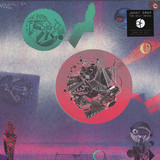
Jonny Drop's debut, Sub Plot, was the very first album release on the fledgling Albert's Favourites label at the beginning of 2016. The initial offering, a 7" of album favourites Mind Field and This Is The One had quickly been picked up on by the good people at BBC Radio 6 Music as well as some of Drop's personal heroes including Kenny Dope, Mr. Thing and Nightmares On Wax.
But when the infectious rhythms and warm production of the beat tape landed, its impact was greater than anyone at the label could have hoped.
Although Jonny never stopped producing beats in the following years, he was also kept busy as a drummer, playing live for Andrew Ashong, The Bongolian and Connie Constance, whose Boring Connie EP he also laid down beats for.
Then in early 2018 his band The Expansions delivered their celebrated Murmuration LP. All the while, with the support of his label family, Drop had been evolving his solo sound too.
'The Only Sound sees a huge progression in my writing direction, as I collaborated with multiple vocalists and musicians, instead of the usual 'one-man band' approach.
The development of these processes make this LP a steady departure from the beat-tape influence of my past releases, and hopefully, showcase the more original sound I've been working to achieve over the past few years.'
The new album is more atmospheric, emotional and expressive. It is filled with beautiful vocal performances, musical contributions from label partners and close friends Deoke and James O'Keefe, and inspirational London jazz composer, flautist and master saxophonist Tamar Osborn (Collocutor/On The Corner).
Voices here include Shea Soul, Grace Walker, former Myron and E soul man Eric Boss with his Lucid Paradise and Pendletons partner Ishtar, plus First Word Records producer/Golden Rules collaborator Sarah Williams White.
While there are thoughtful, down-tempo moments of electronica in abundance here, Drop brings his favourite elements of disco and soul into the picture too.
And there's no shortage of low end throughout. The Only Sound is a welcome next step from Jonny Drop, the sound of a beat maker not just finding his feet as a composer, but thriving in new territory.
Huey Morgan (BBC Radio 6 Music),
Music Is My Sanctuary premiere for All This Trouble, Bonafide Magazine premiere for Looking Glass
'A really talented musician, absolutely loving that" Lauren Laverne on This Is The One, BBC Radio 6 Music
Aussteiger is a Berlin based German DJ / Producer. He runs the Dub Disco label in Berlin and DJ's around the world. Zusammenkunft is his debut album released on Copenhagen's Music For Dreams. Once upon a time a golden boy came back from the shadows. Rumors were told that he once left the big city in a time where the music scene and clubs were dominated by cold music and average beats. He left behind civilisation, living withdrawn in the woody mountains of a covert place. From there on people talked about him as Aussteiger. Connected to the nature and deeply rooted in the harmonic essence, Aussteiger became a part of the great whole. In a full moon illuminated clear night while experimenting with various unique herbs he accidentally found a recipe to create warm and ravishing music. He firmly believes that music is his infinite source to gather strength and positive energy After years of strengthening himself and shaping vibrant sounds Aussteiger decided to share his delightful music with the world. He returned from his retreat in order to enchant the music lovers all over the world with his feel good approach and supernatural sounds. Coming back to the city, he also co-founded the awesome Dub Disco Label with his buddy Serj Nosé.