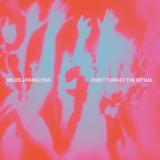
An EP of the darker side of electronic dance music is always a welcome addition to Especial. Up and coming producer / DJ Miles J Paralysis steps away from releasing on his own Crying Outcast label to explore left of centre, new wave and cosmic sounds; songs woven from his own vocals and samples.
A love of Dub, Hip Hop and Electro-Funk led into electronic music. Sampling TV shows, making beats, jamming. Exposed to Leeds and Manchester club cultures, seeking the more experimental. African Head Charge, Muslimgauze, The Rootsman and Weatherall were early influences in forming a no rules philosophy.
Born and raised around West Yorkshire, the beauty and bleakness of the moors have a strong bond on Miles Henry aka Miles J Paralysis and his music. Folklore and the occult link and connect an interest in Northern Hauntology. Unresolved histories, stuck between past glory and phantoms of possible futures.
The EP starts with It’s Only Shadows Talking. A play on the Paralysis persona, the spectral dub house groove meets industrial overtures, encasing his own eerie and unsettling vocals to begin the narrative.
Don’t Forget The Ritual takes a direct link from British folk traditions. Sacred and ceremonial; the laid-back breakbeat, samples and delays are the transition to the evocative embrace of melancholia.
Come On Fleet, the hypnotic Latin (vocal) sample creates a lurking murmuration, rimshot percussion meets gothic sound design for the EPs’ most straight forward and direct club cut.
Surreal and dreamlike soundscape, closing track The Delicate Fairytale is the perfect platform for Miles own phantasm. Inspired by the stories of Dorothy K Haynes and Robert Hickman, the pervading sense of a David Lynch aesthetic, exploring the nostalgic nature of memory.
out of Stock
Last delivered 3 months ago available to reorder, subject to availability
Shrouded in mystery when it first appeared, Tiger & Woods’ debut album quickly took on a life of its own. With little more than whispers surrounding the project, the music spoke loud enough: a set of extended disco constructions carefully tuned, remixed, over-dubbed, sliced and diced by the elusive duo of Larry Tiger and David Woods. What began as a cult phenomenon soon caused a stir across dance floors and record bags worldwide.
Now, for the first time ever, that legendary debut finally arrives on vinyl. Through the Green captures Tiger & Woods at the moment their distinctive language of groove first took shape. Rooted in the spirit of disco edits but already stretching beyond the format, the album blends loop-driven funk, house-leaning propulsion and the unmistakable bounce that would soon become their signature.
It’s the sound of two producers refining a craft that would later blossom on albums like On The Green Again, where their approach expanded into a wider palette of boogie, electronica, Italo and uptempo house. But here is where the story begins.
Before world tours, live sets and the creation of their own T&W Records imprint, there were these tracks: hypnotic, playful and engineered with a dancer’s instinct for tension and release. Each cut unfolds like a perfectly extended club moment, full of warmth, swing and that unmistakable Tiger & Woods sense of fun and function.
Years after its original digital release, Through the Green remains a cornerstone of modern disco-house culture. Pressed to wax at last, it finally receives the physical format it always deserved: grooves built for the turntable, the dance floor and the crate.
The mystery might be gone. The magic, however, remains very much intact.
out of Stock
Last delivered 5 months ago available to reorder, subject to availability
“Future Ruins achieves everything an admirer could ask of the reunited band’s new album…Swervedriver now posses a melancholic, autumnal undertow that suits them like a little distinguished grey in the whiskers…a career-best peak…Future Ruins pulls off a canny trick, perfectly channeling their past, while making sense in the present” – 4 stars, MOJO
“The spacious, Neil Young-ian rumbling of the title track and the bulked-up power-pop of ‘Spiked Flower’ both see co-founders Adam Franklin and Jimmy Hartridge venture beyond the template of Raise and Mezcal Head without making the faithful worry they’ve ditched their distortion pedals” – 7/10, Uncut
“That first song, ‘Mary Winter,’ is a heavy wave of swirling guitar fuzz offset by the soothing balm of Franklin’s voice.” – Stereogum
This release is an act of breaking out of conventional categories for Seismic records. Established boundaries of genres are completely dissolved into an unpredictable flow of sonic associations. It’s an unexpected collaboration, yet it makes perfect sense from the first kick. Two artists from seemingly opposite ends of the musical universe come together to create a project which fearlessly embarks on the synthesis of hypnotic trance-techno and utter sonic chaos. This project is anything but predictable.
The duality is noticeable from the very first moment. One side brings relentless movement forward in the project: a raw, hypnotic pulse based on rhythm and precision, locking the listener in the present moment and not letting go. Unpredictable textures and psychedelic ornaments are constantly weaving through the rhythmic framework.
A dedicated listener may recognize that the whole EP carries the legacy of David Lynch’s work. The sense of peculiar uneasiness and indecipherability, overridden by the desire to find out what comes next, are exactly what the artists manage to capture and what is so characteristic of Lynch himself. At one point, the EP even reveals a moment as if a red curtain parts in the depths of the track and the listener momentarily catches echoes from the town where owls are not what they seem. Hidden within is a playful nod to the iconic Twin Peaks soundtrack.
out of Stock
Last delivered 5 months ago available to reorder, subject to availability
Writings on the topic that go off in all directions, mind-numbing lectures given by academics, and testimonies, most of them heavily doctored, from those who “lived through that era”: so many people today fantasize about the early days of punk in our country… This blessed moment when no one had yet thought of flaunting a ridiculous green mohawk, taking Sid Vicious as a hero, or – even worse – making the so-called alternative scene both festive and boorish. There was no such thing in 1976 or 1977, when it wasn’t easy to get hold of the first 45s by the Pistols or the Clash. Few people were aware of what was happening on the fringes of the fringes at the time. Malcolm McLaren was virtually unknown, and having short hair made you seem strange. Who knew then that rock music, which had taken a very bad turn since the early 1970s, would once again become an essential element of liberation? That, thanks to short and fast songs, it would once again rediscover that primitive, social side that was so hated by older generations? Who knew that, besides a few loners who read the music press (it was even better if they read it in English) and frequented the right record stores? Many of these formed bands, because it was impossible to do otherwise. We quickly went from listening to the Velvet Underground to trying to play the Stooges’ intros. It’s a somewhat collective story, even though there weren’t many people to start it.
The Guilty Razors were among those who took part in this initial upheaval in Paris. They were far from being the worst. They had something special and even released a single that was well above the national average. They also had enough songs to fill an album, the one you’re holding. In everyone’s opinion, they were definitely not among the punk impostors that followed in their wake. They were, at least, genuine and credible.
Guilty Razors, Parisian punk band (1975-1978). To understand something about their somewhat linear but very energetic sound, we might need to talk about the context in which it was born and, more broadly, recall the boredom (a theme that would become capital in punk songs) coupled with the desire to blow everything off, which were the basis for the formation of bands playing a rejuvenated rock music ; about the passion for a few records by the Kinks or the early Who, by the Stooges, by the Velvet mostly, which set you apart from the crowd.
And of course, we should remember this new wave, which was promoted by a few articles in the specialized press and some cutting-edge record stores, coming from New York or London, whose small but powerful influence could be felt in Paris and in a handful of isolated places in the provinces, lulled to sleep by so many appalling things, from Tangerine Dream to President Giscard d’Estaing...
In 1975-76, French music was, as almost always, in a sorry state ; it was still dominated by Johnny Hallyday and Sylvie Vartan. Local rock music was also rather bleak, apart from Bijou and Little Bob who tried to revive this small scene with poorly sound-engineered gigs played to almost no one.
In the working class suburbs at the time, it was mainly hard rock music played to 11 that helped people forget about their gruelling shifts at the factory. Here and there, on the outskirts of major cities, you still could find a few rockers with sideburns wearing black armbands since the death of Gene Vincent, but it wasn’t a proper mass movement, just a source of real danger to anyone they came across who wasn't like them. In August 1976, a festival unlike any other took place in Mont-de-Marsan – the First European Punk Festival as the poster said – with almost as many people on stage as in the audience. Yet, on that day, a quasi historical event happened, when, under the blazing afternoon sun, a band of unknowns called The Damned made an unprecedented noise in the arena, reminiscent of the chaotic Stooges in their early adolescence. They were the first genuine punk band to perform in our country: from then on, anything was possible, almost anything seemed permissible.
It makes sense that the four+1 members of Guilty Razors, who initially amplified acoustic guitars with crappy tape recorder microphones, would adopt punk music (pronounced paink in French) naturally and instinctively, since it combines liberating noise with speed of execution and – crucially – a very healthy sense of rebellion (the protesters of May 1968 proclaimed, and it was even a slogan, that they weren’t against old people, but against what had made them grow old. In the mid-1970s, it seemed normal and obvious that old people should now ALSO be targeted!!!).
At the time, the desire to fight back, and break down authority and apathy, was either red or black, often taking the form of leafleting, tumultuous general assemblies in the schoolyard, and massive or shabby demonstrations, most of the time overflowing with an exciting vitality that sometimes turned into fights with the riot police. Indeed, soon after the end of the Vietnam War and following Pinochet’s coup in Chile, all over France, Trotskyist and anarcho-libertarian fervour was firmly entrenched among parts of the educated youth population, who were equally rebellious and troublemakers whenever they had the chance. It should also be noted that when the single "Anarchy in the UK" was first heard, even though not many of us had access to it, both the title and its explosive sound immediately resonated with some of those troublemakers crying out for ANARCHY!!! Meanwhile, the left-wing majority still equated punks with reckless young neo-Nazis. Of course, the widely circulated photos in the mainstream press of Siouxsie Sioux with her swastikas didn’t necessarily help to win over the theorists of the Great Revolution. It took Joe Strummer to introduce The Clash as an anti-racist, anti-fascist and anti-ignorance band for the rejection of old-school revolutionaries to fade a little.
The Lycée Jean-Baptiste Say at Porte d’Auteuil, despite being located in the very posh and very exclusive 16th arrondissement of Paris, didn’t escape these "committed" upheavals, which doubled as the perfect outlet for the less timid members of this generation.
“Back then, politics were fun,” says Tristam Nada, who studied there and went on to become Guilty Razors’ frontman. “Jean-Baptiste was the leftist high-school in the neighbourhood. When the far right guys from the GUD came down there, the Communist League guys from elsewhere helped us fight them off.”
Anything that could challenge authority was fair game and of course, strikes for just about any reason would lead to increasingly frequent truancy (with a definitive farewell to education that would soon follow). Tristam Nada spent his 10th and 11th unfinished grades with José Perez, who had come from Spain, where his father, a janitor, had been sentenced to death by Franco. “José steered my tastes towards solid acts such as The Who. Like most teenagers, I had previously absorbed just about everything that came my way, from Yes to Led Zeppelin to Genesis. I was exploring… And then one day, he told me that he and his brother Carlos wanted to start a rock band.” The Perez brothers already played guitar. “Of course, they were Spanish!”, jokes their singer. “Then, somewhat reluctantly, José took up the bass and we were soon joined by Jano – who called himself Jano Homicid – who took up the rhythm guitar.” Several drummers would later join this core of not easily intimidated young guys who didn’t let adversity get the better of them.
The first rehearsals of the newly named Guilty Razors took place in the bedroom of a Perez aunt. There, the three rookies tried to cover a few standards, songs that often were an integral part of their lives. During a first, short gig, in front of a bewildered audience of tough old-school rockers, they launched into a clunky version of the Velvet Underground's “Heroin”. Challenge or recklessness? A bit of both, probably… And then, step by step, their limited repertoire expanded as they decided to write their own songs, sung in a not always very accurate or academic English, but who cared about proper grammar or the right vocabulary, since what truly mattered was to make the words sound as good as possible while playing very, very fast music? And spitting out those words in a language that left no doubt as to what it conveyed mattered as well.
Trying their hand a the kind of rock music disliked by most of the neighbourhood, making noise, being fiercely provocative: they still belonged to a tiny clique who, at this very moment, had chosen to impose this difference. And there were very few places in France or elsewhere, where one could witness the first stirrings of something that wasn’t a trend yet, let alone a movement.
In the provinces, in late 1976 or early 1977, there couldn’t be more than thirty record stores that were a bit more discerning than average, where you could hear this new kind of short-haired rock music called “punk”. The old clientele, who previously had no problem coming in to buy the latest McCartney or Aerosmith LP, now felt a little less comfortable there…
In Paris, these enlightened places were quite rare and often located nex to what would become the Forum des Halles, a big shopping mall. Between three aging sex workers, a couple of second-hand clothes shops, sellers of hippie paraphernalia and small fashion designers, the good word was loudly spread in two pioneering places – propagators of what was still only a new underground movement. Historically, the first one was the Open Market, a kind of poorly, but tastefully stocked cave. Speakers blasted out the sound of sixties garage bands from the Nuggets compilation (a crucial reference for José Perez) or the badly dressed English kids of Eddie and the Hot Rods. This black-painted den was opened a few years earlier by Marc Zermati, a character who wasn’t always in a sunny disposition, but always quite radical in his (good) choices and his opinions. He founded the independent label Skydog and was one of the promoters of the Mont-de-Marsan punk festivals. Not far from there was Harry Cover, another store more in tune with the new New York scene, which was amply covered in the house fanzine, Rock News (even though it was in it that the photos of the Sex Pistols were first published in France).
It was a favorite hang-out of the Perez brothers and Tristam Nada, as the latter explained. “It’s at Harry Cover’s that we first heard the Pistols and Clash’s 45s, and after that, we decided to start writing our first songs. If they could do it, so could we!”
The sonic shocks that were “Anarchy in the UK”, “White Riot” or the Buzzcocks’s EP, “Spiral Scratch” – which Guilty Razors' sound is reminiscent of – were soon to be amplified by an unparalleled visual shock. In April 1977, right after the release of their first LP, The Clash performed at the Palais des Glaces in Paris, during a punk night organised by Marc Zermati. For many who were there, it was the gig of a lifetime…
Of course, Guilty Razors and Tristam were in the audience: “That concert was fabulous… We Parisian punks were almost all dressed in black and white, with white shirts, skinny leather ties, bikers jackets or light jackets, etc. The Clash, on the other hand, wore colourful clothes. Well, the next day, at the Gibus, you’d spot everyone who had been at this concert, but they weren’t wearing anything black, they were all wearing colours.”
It makes sense to mention the Gibus club, as Guilty Razors often played there (sometimes in front of a hostile audience). It was also the only place in Paris that regularly scheduled new Parisian or Anglo-Saxon acts, such as Generation X, Siouxsie and the Banshees, the Slits, and Johnny Thunders who would become a kind of messed-up mascot for the venue. A little later, in 1978, the Rose Bonbon – formerly the Nashville – also attracted nightly owls in search of electric thrills… In 1977, the iconic but not necessarily excellent Asphalt Jungle often played at the Gibus, sometimes sharing the bill with Metal Urbain, the only band whose aura would later transcend the French borders (“I saw them as the French Sex Pistols,” said Geoff Travis, head of their British label Rough Trade). Already established in this small scene, Metal Urbain helped the young and restless Guilty Razors who had just arrived. Guitarist for Metal Urbain Hermann Schwartz remembers it: “They were younger than us, we were a bit like their mentors even if it’s too strong a word… At least they were credible. We thought they were good, and they had good songs which reminded of the Buzzcocks that I liked a lot. But at some point, they started hanging out with the Hells Angels. That’s when we stopped following them.”
The break-up was mutual, since, Guilty Razors, for their part, were shocked when they saw a fringe element of the audience at Metal Urbain concerts who repeatedly shouted “Sieg Heil” and gave Nazi salutes. These provocations, even still minor (the bulk of the skinhead crowd would later make their presence felt during concerts), weren’t really to the liking of the Perez brothers, whose anti-fascist convictions were firmly rooted. Some things are non-negotiable.
A few months earlier (in July 1978), Guilty Razors had nevertheless opened very successfully for Metal Urbain at the Bus Palladium, a more traditonally old-school rock night-club. But, as was sometimes the case back then, the night turned into a mass brawl when suburban rockers came to “beat up punks”.
Back then, Parisian nights weren’t always sweet and serene.
So, after opening as best as they could for The Jam (their sound having been ruined by the PA system), our local heroes were – once again – met outside by a horde of greasers out to get them. “Thankfully,” says Tristam, “we were with our roadies, motorless bikers who acted as a protective barrier. We were chased in the neighbouring streets and the whole thing ended in front of a bar, with the owner coming out with a rifle…”
Although Tristam and the Perez brothers narrowly escaped various, potentially bloody, incidents, they weren’t completely innocent of wrongdoing either. They still find amusing their mugging of two strangers in the street for example (“We were broke and we simply wanted to buy tickets for the Heartbreakers concert that night,” says Tristam). It so happened that their victims were two key figures in the rock business at the time: radio presenter Alain Manneval and music publisher Philippe Constantin. They filed a complaint and sought monetary compensation, but somehow the band’s manager, the skilful but very controversial Alexis, managed to get the complaint withdrawn and Guilty Razors ended up signing with Constantin with a substantial advance.
They also signed with Polydor and the label released in 1978 their only three-track 45, featuring “I Don't Wanna be A Rich”, “Hurts and Noises” and “Provocate” (songs that exuded perpetual rebellion and an unquenchable desire for “class” confrontation). It was a very good record, but due to a lack of promotion (radio stations didn’t play French artists singing in English), it didn’t sell very well. Only 800 copies were allegedly sold and the rest of the stock was pulped… Initially, the three tracks were to be included on a LP that never came to be, since they were dropped by Polydor (“Let’s say we sometimes caused a ruckus in their offices!” laughs Tristam.) In order to perfect the long-awaited LP, the band recorded demos of other tracks. There was a cover of Pink Floyd's “Lucifer Sam” from the Syd Barrett era – proof of an enduring love for the sixties’ greats –, “Wake Up” a hangover tale and “Bad Heart” about the Baader-Meinhof gang, whose actions had a profound impact on the era and on a generation seeking extreme dissent... On the album you’re now discovering, you can also hear five previously unreleased tracks recorded a bit later during an extended and freezing stay in Madrid, in a makeshift studio with the invaluable help of a drummer also acting as sound engineer. He was both an enthusiastic old hippie and a proper whizz at sound engineering. Here too, certain influences from the fifties and sixties (Link Wray, the Troggs) are more than obvious in the band’s music.
Shortly after a final stormy and rather barbaric (on the audience’s side) “Punk night” at the Olympia in June 1978, Tristam left the band ; his bandmates continued without him for a short while.
But like most pioneering punk bands of the era, Guilty Razors eventually split up for good after three years (besides once in Spain, they’d only played in Paris). The reason for ceasing business activities were more or less the same for everyone: there were no venues outside one’s small circuit to play this kind of rock music, which was still frightening, unknown, or of little interest to most people. The chances of recording an LP were virtually null, since major labels were only signing unoriginal but reassuring sub-Téléphone clones, and the smaller ones were only interested in progressive rock or French chanson for youth clubs. And what about self-production? No one in our small safety-pinned world had thought about it yet. There wasn’t enough money to embark on that sort of venture anyway.
So yes, the early days of punk in France were truly No Future!
out of Stock
Last delivered 6 months ago available to reorder, subject to availability
10 songs from what is possibly the best anarchopunk band currently in existence. The dynamics of the tracks are refreshingly simple, a powerful yet neutral- sounding recording, with very little embellishment or stylized production to hide behind, approaching filth with distorted guitars, haunting bass lines, and steady drum beats, all elevated by the combination of the three voices perfectly balanced between melody and hatred. In a quantized world, one can perceive an endearing dose of human spirit through their tense and disturbingly melodic expressions. A modern Anarcho Punk classic that is surprising to find 40 years after the wonderful bands that spawned the genre, especially England. Includes poster and insert with lyrics.
Since reviewing Pomegranate Seeds: An International Benefit for Mutual Aid in Gaza, the compilation put out by the DISSIDENTS, I've been hunting for more VAMPIRE material, so when I saw I was assigned this LP I became very excited. VAMPIRE is an Australian band that plays apocalyptic anarcho- punk. A sense of extreme urgency pervades VAMPIRE's sound, and What Seems Forever Can Be Broken is ten songs that combine the demanding hardcore of CONFLICT, with a foundation of CRASS, and the rough-hewn delivery of raw punk. The resulting album is dark, hauntingly mesmeric, but also aggressive with a sense of communal voice. In other words, this is anarchopunk that is of the moment, and articulates exactly what contemporary punk is about without being preachy or elitist. This is that eye-to-eye, in-the-trenches vocalization of criticism that comes off as eye-opening and perspective-altering. What Seems Forever Can Be Broken is by far my favorite release thus far in 2025, but also might be the best album I've heard in a really long time. Like, this is benchmark-level material, so definitely give this a listen.
Bristol's Tara Clerkin Trio return to World of Echo and the EP format for a five song collection of quixotic, emotional redolence. But do not mistake their absence for inertia. If their musical output has been a little sparse during those in-between years, limited to a few solo ventures and an astonishing ten minute long piece as a trio, their time has otherwise been richly spent: continuous writing and recording, extensive live performances across Europe and Japan, a cultivation of local and more far-flung artistic connections (musical and otherwise), and a monthly NTS show that, through the voice of others, speaks most obviously to their own unorthodox interests. It's the conflux of that winding activity that leads indirectly to On The Turning Ground, 26 minutes of probing, thoughtful composition that draws from no one specific source. Their inspirations might be centreless, but the trio still possess a very obvious anchor in the form of their hometown. Bristol stands as a city of multitudes, heterogenous and vibrant in such a way as to allow it to renew and remake time and again. Tara Clerkin Trio drink from that same well, duly reflecting a rich musical heritage built on fwd-facing electronic subcultures and experimental urges.
As such, On The Turning Ground finds them subject to their own subtle internal evolution, the pervasive sense that you've caught them mid-bloom, on their way to becoming but never anything but themselves. The two instrumental pieces that bookend the EP stand as a perfect case in point, displaying an increasing mastery of compositional space. Pensive and restrained, 'Brigstow' and 'Once Around' both emanate an interstitial quality that's not so much after- as in-between-hours, miniature dub-folk symphonies held together by the kind of tacit understanding that remains the preserve of only the closest of family units. If those two tracks are shaped by a sense of shifting temporality, then the three vocal-led pieces that comprise the record's core feel like a gentle ossifying of aesthetic into something approaching their own unique form of avant-pop. 'Pop' is, of course, a broadly subjective concept, but there's no avoiding the overt sparkling melodicism of songs like 'Marble Walls' and 'The Turning Ground', undeniable re-directions of that late 90s impulse to bend pop sensibilities into off-centre terrain, to render the familiar new again. This is what Tara Clerkin Trio do, gently pulling the ground from under your feet, turning you to face something you'd not quite seen before. To view the world as they do: sideways, sometimes, all of the time.
out of Stock
Last delivered 2 years ago available to reorder, subject to availability
The album opens with the ominous guitar-driven Hollow Sky, accompanied by its haunting music video's verdant vistas. The song, with Iceglass ghostly vocals, shimmers with that sounds like an Omnichord flittering like sonic firefly lights and brooding bass. This perfectly scores the less traveled wanderings through the dark wooden path of Dante's perdition, leading to the titular well that graces the album cover. The Crater opens with an unsettling riff and bass, with low, repetitive frequencies on the synth create a sense of unease. Here, Iceglass recounts a fatalistic requiem for the king of romance that is cataclysmic and leaves a scar upon the earth. With Fall Industrial Wall, once again, Iceglass channels a silky and Nico-like emotive deadpan; against a dirgelike melody backed by minimal synth, bass, and drum. Almost medieval and plaintive, with its folk droning horns, deep and shallow in their resonance. This song is anachronistic, setting the scene of ruins centuries-old with crumbling edifices strewn about like memories lost in time. With the poetic lyrics of The Chamber do we find the eponymous abyss. Here, dualities are laid bare; besides love, there is heartbreak, and without this sorrow, what meaning would there be to love if one knows not what it is to lose? This song encapsulates the idea that love is heartbreak, and love lost is reaching the deepest chamber of the heart. This is carried through a sombre horn, minimalist drum machine, and deliberate bassline overlaid with Iceglass german and english lyrics. The Well is led in with a softly distorted bassline overlaid with eerie banshee howls give way to Iceglass otherworld vocal refrain, echoing through time as if emanating from a hole in the ground, and encircling that hole is a garden of woe and despair. The sinfully seductive song The Moor features a captivating SAX SOLO courtesy of Perseas; a welcome shift in tone, juxtaposed well with the intensity of Iceglass tenebrous vocal purr. This hitherto unexplored foray into dark sensuality takes the song into sordid mid 80s territory, bringing to mind a dusky drive along a serpentine road, with equally haunting instrumentations straddling time with icy fire. Broken Characters is an acoustic folk interlude featuring Selofan's Dimitris Pavlidis on guitar. Here we find a more gentle approach with its earnest and romantic lyrics. The song's melodic hook is a soft caress along with the forlorn horn elements highlighting Iceglass at her most Nico-sounding vocal yet, singing the sorrowful truth that most artists are indeed broken characters. Chimerical opens with dirgelike synth organs. The chill of winter has befallen the lamentations sung by Iceglass carried by haunting chord progressions and minimal percussion, plaintively beseeching the song's subject to remain elusive, idealistic, and a dreamer. After an album highlighting more Jill than Jack, our male protagonist finally makes his ascent in the sonorous and breathtaking Dark Hill, a masterful march of sweeping synth horns, and trepidatious drum machine with William Maybelline's bellowing voice cracking like thunder, rattling the atmosphere like his heart against his ribs. Spirals swirls in a cautionary knell of cathedral-esque droning synth dirge, with Icarian lyrics shining like a sombre ray of hope; like the sun's rays creeping into the darkest of places. The song, minimalist in its tight percussion, echoes with the solace of Larissa Iceglass vocal litany; invoking elements of the supernatural, almost like a Casio preset sequenced to the beating of an angel's wings.
Demonic cults getting you down? New Blood Interactive and Laced Records'll help you survive 'til dawn with the soundtrack vinyl for the gloriously gory, critically-acclaimed shooter DUSK.
Few were as perfectly poised as Andrew Hulshult to soundtrack a white-knuckle ride through rural America's satanic underbelly. His atmospheric metal talents were brought to bear on the Rise of the Triad reboot, and later on Quake Champions and Doom Eternal: The Ancient Gods.
The music for DUSK strikes a perfect balance between playful nods to FPS and metal genre conventions, and a distinctive, heavy sound that's recognisably Hulshult.Running all manner of instruments through gnarly pedal chains, he sculpts melodies that soar above churning industrial rhythms. Corrosive ambient soundscapes build a sense of unease before erupting into wrecking-ball grooves and skull-crushing riffs.
Tracks have been selected and sequenced by the composer, and specially remastered for vinyl.
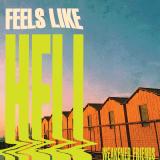
The Portland, ME trio returns with Feels Like Hell, their most self-assured and emotionally charged record yet. Despite the title, the album is a celebration of personal growth, creative freedom, and defiant joy in the face of a chaotic world.
Coming off the burnout and frustration captured in their 2021 album Quitter, Feels Like Hell finds Sonia Sturino (vocals/guitar), Annie Hoffman (bass/vocals), and Adam Hand (drums) leaning into clarity, gratitude, and renewed purpose. Sturino’s lyrics are as raw and honest as ever, but now they reflect strength rather than despair. It’s an album that drags existential dread into the daylight and sets it on fire.
“I decided to stop being such a sad-sap negative person,” Sturino says. “Now I practice being grateful, being proud, being happy, and not being envious.” That mindset shift shapes the tone of Feels Like Hell, which looks at darkness but chooses not to be consumed by it.
The record also marks the band’s first foray into co-writing, with Hoffman playing a significant role in shaping its sound. Embracing a more intuitive recording process, the trio stripped back the excess and focused on what felt right. The result is a record that’s resilient, cathartic, and brimming with creative energy.
While the world may still feel like it’s falling apart, Feels Like Hell pulses with the power of letting go. Letting go of fear, of perfectionism, of the illusion that vulnerability is weakness. With driving guitars, unflinching lyrics, and a renewed sense of purpose, Weakened Friends prove that it’s possible to stand in the wreckage and still find something worth singing about.
Austin Wintory's third collaboration with Giant Squid and creative director Matt Nava, Sword of the Sea, sees it's soundtrack surfing onto vinyl.
The music has been specially mastered for vinyl and is pressed to heavyweight discs, all housed in a deluxe gatefold sleeve. Illustrator Elaine Lee has created original artwork that flows from the front cover to the back.
Nominated for Best Score Soundtrack for Video Games and Other Interactive Media at the 68th GRAMMY Awards, Sword of the Sea is an aesthetic successor to thatgamecompany's Journey and Giant Squid's ABZÛ and The Pathless. The album is a mellifluous musical adventure, resonating immaculately with the game's sense of flow and beauty. Piano, synthesisers, strings, wind, and choral elements collaborate with, and cascade over one another, always with a purposeful momentum. Harmonically, pieces carry the listener along a gently undulating path, punctuated by unexpected chord changes - jagged little musical surprises that hint at the game's deeper mysteries.
Soloists Kristin 'Field of Reeds' Naigus, Tina Guo, Malukah, Paul Cartwright and Tom Strahle elevate the score with soaring performances, while ensembles including London Voices and the Phoenix Boys Choir enrich the texture of the enveloping compositions.
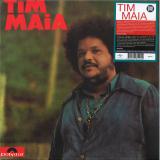
Tim Maia’s self-titled 1973 album is one of those records that hits you from the very first groove and doesn’t let go. Originally released on Polydor Brazil, this was the fourth in a series of Tim’s self-titled albums and many fans and critics still consider it the crown jewel. Packed with irresistible hooks, lush arrangements, and that unmistakable Tim Maia swagger, the album captures the singer at the peak of his creative powers.If you’re new to Tim Maia, here’s the quick story: born in Rio de Janeiro, Tim was a larger-than-life icon whose music married American soul and funk with Brazilian samba and pop long before “fusion” was a buzzword. A true musical polymath, he absorbed everything from Curtis Mayfield to Motown and translated it into a sound entirely his own, gritty, passionate, and full of groove.
He didn’t just introduce soul to Brazil; he made it Brazilian.On this 1973 release, Tim pushes everything up a notch. The arrangements are bigger, slicker, and surprisingly majestic, without losing the raw spirit that earned him a devoted following. From the moment ‘Réu Confesso’ opens the album, you know you’re in for something special—smooth, funky, and heartfelt in all the right ways. The bittersweet ‘Gostava Tanto de Você’ remains one of his most beloved classics, while ‘O Balanço’ bursts with Brazilian flavor that practically dares you not to move. And with tracks like ‘Do Your Thing, Behave Yourself’ and ‘Over Again,’ Tim shows just how naturally the soul idiom fit him, even when he switched to English.This record has everything: deep grooves, soaring strings, magnetic vocals, and that unmistakable sense of joy that Tim Maia carried into every session. It’s a front-to-back winner—one of those albums that deserves a spot not just in Brazilian music history, but in any collection that celebrates great soul, funk, and timeless grooves.If you’re a longtime fan, it’s a reminder of why Tim Maia is legendary. If you’re discovering him for the first time, this is the perfect place to start. Either way: press play, turn it up, and let Tim do his thing.
out of Stock
Last delivered 5 months ago available to reorder, subject to availability
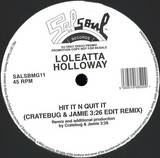
Yet another solid gold modern reimagining of the mighty Loleatta Holloway, this time her infamous 1977 smash 'Hit & Run' goes under the knife and is tweaked to devastating effect by 2 of Chicago's finest modern day editors - Jamie 326 & Cratebug. Anyone with even a passing interest in Disco or House will be more than familiar with these 2 guys names. Having edited and remixed numerous cuts in their own original ways, they take this all-time Salsoul classic and strip it right back to the essence, to the very basics, and in the process create a total dancefloor weapon. This edit originally came out a few years ago (2013) on a compilation that showcased the new wave of contemporary talent emanating from the Windy City and naturally it was one of the cuts that stood out, finding favour with a wide variety of DJ's across the board from Motor City Drum Ensemble, Todd Terry, Jeremy Underground Paris, Theo Parrish and more. Drawing comparisons with Paperclip People's anthemic 'Throw' from 1994 in the way it snatches a killer loop from 'Hit & Run's' bassline, 'Hit It & Quit It' is a monster, a record you'll literally play over and over and over again, a relentless Disco juggernaut that oozes power. It made perfect sense for this legit single-sided reissue 12" to come out on Salsoul Records, the home of Loleatta Holloway's finest material and all of her classics. This limited reissue has been made in conjunction with Jamie 3:26 & Cratebug and Salsoul Records, 100% sanctioned and lovingly re-presented for your dancing pleasure. This one is HOT. Sleep at your peril!
Music From Memory is thrilled to present ‘Aquáticos’, a captivating new record from Los Angeles producer Eddie Ruscha and Brazilian guitarist Fabiano Do Nascimento. Blending Nascimento’s expressive, Afro-samba and choro-inflected guitar with Ruscha’s cosmic, groove-driven sound, ‘Aquáticos’ marks the start of a vibrant musical partnership—an organic, free-spirited collaboration full of interplay and vitality.
Conceived during the early 2020’s, ‘Aquáticos’ grew from a series of recording sessions in which the music unfolded naturally, in a state of effortless flow. Album opener ‘Nascer,’ the very first piece they recorded, captures such a moment perfectly: Nascimento’s 7- and 10-string nylon guitars weave seamlessly with Ruscha’s modular synths, drum machines, and vintage keyboards. Like much of Ruscha’s work under Secret Circuit and E Ruscha V, it is rich in lush, rhythmic textures—pulsing and bubbling with vibrant energy.
The initial session that produced the opening track set the tone for the record, establishing a template of intuitive interplay and musical freedom. Each subsequent session built upon the last, gradually shaping ‘Aquáticos’ across nine tracks, all characterized by melodic richness, rhythmic depth, and an unshakable sense of spontaneity.
‘Aquáticos’ pulls the listener gently into a celebration of musical conversation — a radiant, immersive journey where Ruscha and Nascimento’s instruments breathe together, echoing the joy, curiosity, and playful spirit that define their collaboration.
Sleeve art and design by Michael Willis.
out of Stock
Last delivered 4 months ago available to reorder, subject to availability
Enabilizer is the second full-length album from The Albinos. It’s a focused and emotionally direct record that examines the space between belief and doubt—what it means to hold on to ideals in a world that often doesn’t reflect them. The songs explore themes of connection, disillusionment, and the fragile narratives people use to make sense of things. Sonically, the album moves fluidly between stripped-down garage rock and layered psychedelic arrangements. Built on live, organic instrumentation and a minimal production approach, the sound is raw but intentional—combining driving rhythms, textured guitars, and unpolished vocal performances to create something that feels both grounded and expansive. Formed in Houston, The Albinos have spent the past few years refining their sound, drawing on psych and garage traditions while keeping their songwriting emotionally grounded. Enabilizer marks a step forward for the band—more confident, more cohesive, and more willing to lean into discomfort in search of something honest.
Michel Houellebecq is, of course, well-known for his novels, translated into more than 40 languages, and his Goncourt Prize (The Map and the Territory, 2010), but perhaps less so for his debut album, released exactly a quarter of a century ago on Tricatel label. One can sense the influence of Serge Gainsbourg's L'Homme à la Tête de Chou, a disillusioned Procol Harum and a world-weary Burt Bacharach hovering over Houellebecq's poems in Présence Humaine, a now cult classic album orchestrated by Bertrand Burgalat and the musicians of Eiffel. Twelve thousand copies sold and a few concerts later, the writer decided (or so we thought) to bid farewell to the stage, only to generate more media attention though his literary success. Frédéric Lo is, of course, known as an exceptional lyricist, composer, arranger, and producer, author of a sublime fourth solo album (L'Outrebleu, released last March) and a master of collaborative work, notably with Bill Pritchard, Peter Doherty and Daniel Darc. Initially, Michel Houellebecq and Frédéric Lo met for the tribute album that the latter was planning for the tenth anniversary of Daniel Darc's death, but their recording of "Psalm XXIII" was, to their great disappointment, rejected by the label and therefore did not appear on the final version of Cœur Sacré (2023). Fortunately, every cloud has a silver lining, and the two men decided to take their collaboration a step further. Lo decided to set the writer's words to music, in his studio in Pantin. Raw, stripped-down music draped in electronica, adorned with piano and antediluvian drum machines, often minimalist, sometimes repetitive, provides the perfect backdrop for twelve tracks that question and reflect on humanity's past and future (if indeed there is one). Reflections on the human condition, 21st-century style, a work of speculative fiction conceived by two eternally modern "young lads," Souvenez-Vous de l'Homme (Remember Man) is an album that might occasionally evoke The Stranglers' La Folie, and, given the title, that's probably no coincidence. But above all, it's a hypnotic and melancholic album, uncompromising and captivating. Most importantly, it's an album like no other.
Sundays is the debut full length from Oakland-based Tanukichan, aka multi-instrumentalist Hannah van Loon. At surface level, the album sounds just how the title describes: hazy, dreamy, reflective, just like a lazy Sunday afternoon. Upon second and third listens, the dreamy music unveils a deeper world: an ever present sense of longing, an endless state of summer and a period of instability that plagues us all at one point or another in our lives.
Raised in San Francisco, van Loon started out making classical, bluegrass and jazz music as well as playing in numerous bands in the area before deciding to make something more personal. What started with a few unfocused demos, with van Loon playing all the instruments herself in her house, became a studio experience and viable collection of music after her friend Anthony Ferraro of Astronauts, Etc. introduced her to Company Records founder Chaz Bear (Toro Y Moi, Les Sins). After collaborating on her 2016 EP Radiolove, van Loon and Bear set out to make a much more sonically cohesive release, with both the producer and artist playing all the instruments on the record. The result is a slice of dream pop that could only come from the combination of the laid back atmosphere of California and the nostalgic and often difficult memories that are generally associated with coming of age.
To van Loon, the tracks of Sundays are a form of contemplation and approaching life’s issues from a different and less complicated perspective. “Sometimes for me, it feels easier to write songs about things than to talk. A lot of things in life are layered and paradoxical, but with songs it always seems simpler.”
Opening track “Lazy Love” sets the stage, sonically and lyrically, for the rest of the album, combining vulnerable lyrics with gorgeous, fuzzy tones. Above pummeling synths and guitar tones, van Loon sings “you know I'd do anything/don't you know I try my best/if I could wake up when the sun is rising” showing the album’s constant theme of balancing always wanting to be the best person you can be, while also feeling a low level joy at letting life play out as it wants to. “Natural” is a track that feels perfect for a road trip, a track that hums away with a driving beat, culminating in the sheer excitement of finally having a night alone with someone you’ve loved for a while, among many highs and lows: “a window too bright/it's natural sunlight/grey fades to white lie/kiss you tonight/it's natural delight/help me feel right.” The tracks collectively address a deep rooted sense of yearning for someone, something new, while also feeling content with your life; a realization that maybe the places you’ve always belonged aren’t where you should be anymore, that suddenly you might be looking for something completely different.
“I settled on the name Sundays as the title of the record because it encapsulated how the record felt to me,“ van Loon says. “I was thinking about the laziness, and dreamy clarity that you can feel after a late night, waking up having to face the world with a new perspective.” Sundays encapsulates this feeling, a nostalgic way of looking at the world, waking up feeling like a slightly different person than before, looking back on life, not sure if you can tackle what’s next, but doing your best, day in and day out
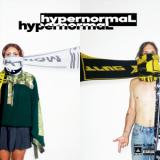
Shelf Lives are an Electro-Bass Punk (a genre that probably doesn’t exist—but somehow makes perfect sense when you hear them). After years of creating, releasing, and caring-ish what people think, the band now operate with zero hesitation and total authenticity. The result of this controlled chaos is their debut album ‘hypernormaL’.
The 11-track album, produced by imdead, reveals that Shelf Lives are once again redefining the boundaries of modern punk and electronic music. It captures the duo at their most uncompromising — blistering, self-aware, and disturbingly danceable. Just when you think you’ve figured them out, Shelf Lives grin, twist the dial, and push the needle into the red.
The album sees the band collaborating with an enviable list of who’s who, from Danio (Fred Again, Joy Anonymous, Jelani Blackman) on 60K, to writing with Pat Alvarez (Blessed Madonna, Joy Crookes, Good Neighbours) and Lola Sam from Hot Wax playing bass on ‘like heR’.
Shelf Lives are an Electro-Bass Punk (a genre that probably doesn’t exist—but somehow makes perfect sense when you hear them). After years of creating, releasing, and caring-ish what people think, the band now operate with zero hesitation and total authenticity. The result of this controlled chaos is their debut album ‘hypernormaL’.
The 11-track album, produced by imdead, reveals that Shelf Lives are once again redefining the boundaries of modern punk and electronic music. It captures the duo at their most uncompromising — blistering, self-aware, and disturbingly danceable. Just when you think you’ve figured them out, Shelf Lives grin, twist the dial, and push the needle into the red.
The album sees the band collaborating with an enviable list of who’s who, from Danio (Fred Again, Joy Anonymous, Jelani Blackman) on 60K, to writing with Pat Alvarez (Blessed Madonna, Joy Crookes, Good Neighbours) and Lola Sam from Hot Wax playing bass on ‘like heR’.
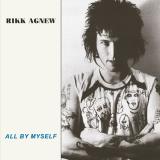
Rikk Agnew's All by Myself is one of those records that feels like a secret you're lucky to stumble upon -- a raw, weird, totally personal snapshot of a restless artist at a pivotal moment. Originally released in 1982 on Frontier Records, the album stands apart from most of what was coming out of Southern California at the time, even though it was born right in the middle of the exploding hardcore punk scene. By 1982, Rikk Agnew was already a big deal underground. As the guitarist for Adolescents, he helped shape the sound of Orange County hardcore with sharp riffs, surf-inflected melodies, and a sense of urgency that became hugely influential. He also played in bands like D.I. and later Christian Death, moving fluidly between hardcore punk, post-punk, and darker, more experimental territory. Agnew wasn't just a fast, aggressive guitarist -- he was a songwriter with range, curiosity, and a strong DIY instinct. All by Myself lives up to its title in the most literal way. Agnew recorded the album largely on his own, playing all the instruments and handling vocals himself. Instead of delivering another straight-up hardcore record, he went inward. The result is a lo-fi, home-recorded collection of songs that blend punk energy with new wave, post-punk, psychedelic touches, and even moments of pop sensitivity. It's rough around the edges, but that's exactly the point -- the album feels intimate, unfiltered, and honest. In the early '80s, Southern California punk was loud, fast, and often confrontational. Bands were pushing against the mainstream and even against each other, racing toward more extreme sounds. While All by Myself shares that DIY spirit, it doesn't fully play by hardcore rules. The tempos shift, the moods wander, and the songs feel more like personal experiments than scene anthems. That made the record a bit of an outlier at the time -- but also what gives it lasting appeal. Frontier Records was the perfect home for a release like this. The label was known for supporting artists who didn't quite fit into neat categories, and All by Myself captured that ethos perfectly. Today, All by Myself is often seen as a cult classic. For fans of early punk, post-punk, or anyone interested in the roots of DIY recording culture, this album is essential listening
At the start of this summer, following a three-year hiatus for Daphni (punctuated only by his first ever collaborative Daphni track ‘Unidos’ alongside Sofia Kourtesis), he dropped ‘Sad Piano House’. The track represented something of a continuation in the Daphni catalogue, its roots growing from Cherry’s ‘Cloudy’ and its subsequent Kelbin remix, something in that song’s makeup having a profound effect when played on dancefloors by Snaith and countless others. ‘Sad Piano House’ deployed more intangibly irresistible bendy piano to equally satisfying effect and continues to achieve similarly rhapsodic dancefloor saturation.
Though a sizeable gap for Daphni releases, between Cherry and Butterfly however of course sits Honey, the latest Caribou album and one that saw the more instantaneous and dancefloor leaning traits of Daphni peaking through the cracks more than ever before. This blurring of the lines leads to an intriguing collaboration in Butterfly’s lead single ‘Waiting So Long (feat. Caribou)’. An unlikely duo - in that both artists are the same man, Dan Snaith - ‘Waiting So Long’ is not so much an identity crisis, ego trip, or the result of a chemical spill in the Snaith laboratory. It’s simply a track that Snaith felt for the first time belongs to both aliases, and might appeal to fans of both. He has never sung on a Daphni track before, and did not set out with the intention to do so this time, and yet this strange billing was born.
Daphni music has always been Snaith’s way of hitting directly to the core of the dancefloors he spends so much of his time playing to, and those dancefloors have been steadily expanding as his name grows, with the music following suit. This album however also draws from further back with a definite kinship to the very first Daphni album, the invigorating bag of ideas that was Jiaolong.
Butterfly is a showcase of the wonderful variety and surprising twists and turns that made that album such an exciting new prospect and that still to this day make Snaith such an intriguing DJ. There are more heavy hitters here, tracks that fill those dancefloors better than anyone, like ‘Clap Your Hands’ which picks up the energy of ‘Sad Piano House’ and flips it, exposing the gritty and intoxicating underbelly of Snaith’s hitmaking side, while retaining the playful urgency that runs through all of his work of late. Meanwhile ‘Hang’’s comic-strip horns are unpinned by gleeful force, unrelenting and thrillingly unshakeable. Elsewhere though comes a clutch of other tunes that might creep out somewhere more off the beaten path, a path Snaith has never stopped seeking in amongst his larger billings. ‘Lucky’ is squirmy and elusively intoxicating, ‘Invention’ skitters down meandering, inviting corridors, ‘Talk To Me’ grumbles and broods in the murk, and ‘Miles Smiles’ could roll on endlessly, so confident in its groove. There are no obvious peaks in these tracks or unifying moments, in fact many of them really have no business being on the dancefloor at all, and yet in the right setting, they could be the most fun to be had all night.
One such club is a good microcosm for the ethos of Butterfly as a whole. “Around the time I was finishing up this album I played a long set in a club called Open Ground in Wuppertal, Germany.” Snaith recalls, “It’s kind of, in one sense, the platonic ideal of the kind of club I’d want to play in. Every single decision has been taken, at great expense, with the aim of making the perfect sounding medium sized club room. But on top of it being the perfect acoustic environment it also is run by an amazing collection of people in a way that gives it a sense of community that dance music at its best provides. It is an absolute pleasure to play in that room to a crowd of people who come from all over. Playing in there you feel like you can play anything, and I played works in progress of pretty much every track on this album in my set there. Don’t get me wrong, I love playing a short set at a festival or in a more raw warehouse kind of club where you bang it out and only really functional music works but on record I guess the point of these Daphni records is to keep in mind a more expansive idea of dance music where the parameters are broad and the church is broad. I think that actually, putting really functional stuff next to weirder tracks (both on an album and in a dj set) might be the thing that’s still most interesting to me.”
This is the feeling that’s most palpable on Butterfly, and in every single time you see Snaith DJ. Right from the inception of the Daphni alias - and even before that – the thrill of trying stuff out, pushing at the boundaries has always been there and on Butterfly is present in all its twists and turns. It leaps all over the place and yet it hangs together, never feeling like a grab bag of dancefloor utilities but rather a distillation of all the strings to Snaith’s bow, exhilaratingly human and unified by one singular concept – simple and joyful exploration.
out of Stock
Last delivered 87 days ago available to reorder, subject to availability
cLOUDDEAD's debut album, compiling six 10" EPs that appeared between 2000-2001, is aurally dense and obscured. A sprawling mass of miniature beat-suites and Dadaist lyrics, this strange and beautiful 3xLP would influence a myriad of sub-genres (cloud rap, hauntology, lo-fi hip-hop, etc.) in the two decades since its initial release.
Only the three members of cLOUDDEAD – Why?, Doseone and Odd Nosdam – can speak to the group's origins, but in the context of underground hip-hop towards the end of the 20th century, their arrival makes perfect sense. Cincinnati had a vital scene; home to Scribble Jam, an annual confluence of MCs, DJs, B-boys and graffiti artists. While the trio soon relocated to the Bay Area where they co-founded the Anticon collective, their Midwestern roots – in ramshackle basements of off-campus hovels, as the "cerberus of Southern Ohio" – would remain the atomic heart of their early recordings.
As Chris Martins writes in the liner notes, "The only reason we know their names today is because of how loudly and curiously they aired their insularity. They rewrote the entire world as they knew it through their own fucked perspective, and when those mysterious 10-inches started popping up in record shops, it wasn't just a puzzle to investigate: there seemed to be a whole cosmology hidden in those grooves."
Each side of the album represents one of those elusive 10-inches, each embodying a universe unto itself. Opening salvo "Apt. A" and "And All You Can Do Is Laugh" are perhaps most emblematic of the cLOUDDEAD experience. Why? and Dose create a new language through boundless non-sequiturs, sing-song non-choruses and call-and-response hooks, while Nosdam's dexterous production shifts from crackling ambience of Flying Saucer Attack to tight Ohio Players drum breaks and oblique film samples.
Taken all together, cLOUDDEAD is an original interpretation of hip-hop in the surreal Y2K glow – a bizarre meeting point between William Basinski's Disintegration Loops and MF DOOM's Operation: Doomsday. All it took was a Dr. Sample SP-202, Tascam cassette eight-track and cheap RadioShack mic. There's truly nothing like it.
This edition has been faithfully restored by Nosdam. European exclusive version comes on clear vinyl, incl. fold-out poster and liner notes insert.
out of Stock
Last delivered 7 months ago available to reorder, subject to availability
Alien Tropical: the perfect title for the second album by Servicio Al Cliente (Customer Service), the project of Colombian-born, Berlin-resident Juliana Martinez. If you were cannily seduced by the debut self-titled Servicio Al Cliente album, from way back in 2021, the wait for a follow-up has felt long, but Alien Tropical was worth the wait. Indeed, it feels like the perfect way for Michael Mayer’s Imara imprint to introduce itself to the new year: an album full of play and spirit, verve and sparkle, rich with pop spirit and with one eye smartly cocked toward the dancefloor.
That first Servicio Al Cliente album was a smart statement of intent, and a wonderful, unexpected turn from Martinez, who’d already been through plenty: being expelled from private music lessons,
training in law, joining a group named Las Palabras Correctas. 2021’s Servicio Al Cliente landed on the turntables of anyone with discerning radar (Ada included “Romántico” on her Connecting The Dots mix for Kompakt, for example). With Alien Tropical, Martinez works the sensual sway of her music even harder, building six luscious songs that twist chant-like repetitions into hypnotic mantras, each song the perfect confluence of melody and mystery.
When asked about Alien Tropical, Martinez pieces together fragments of memory: winter explorations, long road trips, navigating the highways and the heart. “I had been driving a lot at the time on the highway,” she recalls. “I depended on music I played in the car to manage my emotions and my thoughts on those long drives. Everything felt strange and unfamiliar on the highway, and I realised music was so psychological and my only tool to influence my feelings between highways and new places.”
So, the music becomes the narrative for where the body and the heart wants to go. That might explain the gentle yearning in Alien Tropical, and its eternal hypnotic, its sense of forever forward-motion, as though the music is flickering like the highway strip reflected in the rear-view mirror. But there’s also the skyward movement of the melodies, the way their loveliness lifts these six songs up through the clouds, like the helium balloons on the cover. From the sensual swelt
out of Stock
Last delivered 8 months ago available to reorder, subject to availability
Following her compelling debut EP Mending, Frida Touray returns with Homebody, a work of raw emotional clarity, crafted duringa time when her voice was literally fighting back. Diagnosed mid-process with a rare condition that forced her into silence andstillness, Touray chose not retreat, but rebuild. From the quiet corners of domestic life, she’s shaped a collection of songs thatradiate warmth, vulnerability and quiet endurance.Musically, Homebody expands on Touray’s jazz-soul foundations with sparse, atmospheric production that amplifies her voiceand message. There’s a newfound looseness in her phrasing, a deeper sense of presence in every word she sings. You can hearthe letting go, of perfection, of control, and the deepening of purpose in its place. Each track lands with unfiltered intimacy andemotional architecture, a subtle act of defiance wrapped in softness.This is music built on stillness and shaped by resilience. A reflection on self-worth, illness, femininity, community and healing.Songs that speak to the unseen parts of recovery and the small rooms we build ourselves back up in. Homebody is a record foranyone rebuilding from the inside.
out of Stock
Last delivered 8 months ago available to reorder, subject to availability
The Portland, ME trio returns with Feels Like Hell, their most self-assured and emotionally charged record yet. Despite the title, the album is a celebration of personal growth, creative freedom, and defiant joy in the face of a chaotic world.
Coming off the burnout and frustration captured in their 2021 album Quitter, Feels Like Hell finds Sonia Sturino (vocals/guitar), Annie Hoffman (bass/vocals), and Adam Hand (drums) leaning into clarity, gratitude, and renewed purpose. Sturino’s lyrics are as raw and honest as ever, but now they reflect strength rather than despair. It’s an album that drags existential dread into the daylight and sets it on fire.
“I decided to stop being such a sad-sap negative person,” Sturino says. “Now I practice being grateful, being proud, being happy, and not being envious.” That mindset shift shapes the tone of Feels Like Hell, which looks at darkness but chooses not to be consumed by it.
The record also marks the band’s first foray into co-writing, with Hoffman playing a significant role in shaping its sound. Embracing a more intuitive recording process, the trio stripped back the excess and focused on what felt right. The result is a record that’s resilient, cathartic, and brimming with creative energy.
While the world may still feel like it’s falling apart, Feels Like Hell pulses with the power of letting go. Letting go of fear, of perfectionism, of the illusion that vulnerability is weakness. With driving guitars, unflinching lyrics, and a renewed sense of purpose, Weakened Friends prove that it’s possible to stand in the wreckage and still find something worth singing about.
Two years after their debut on Berlin-based Mannequin Records, Parisian duo Leroy Se Meurt returns with their second full-length album, Hier Pour Toujours. Far from any sense of nostalgia, this record offers no illusion of hope—history repeats itself, the future looks bleak, and their brand of electronic punk is the perfect soundtrack to it all.Drum machines dictate the pace while synths saturate the space, looping sequences grind relentlessly, and vocals lead this machine orchestra straight into the heart of the chaos. Drawing from their roots, Leroy Se Meurt pushes their fierce electronics further than ever—experimenting with bold slogans, spoken passages, and powerful sing-along choruses.The album opens with Pas Ma Croix, a commanding anthem built for the stage. It flows into Du Plafond à La Terre, driven by a monstrous electro beat and bassline, flirting with emotional vulnerability in its chorus before exploding into a synth solo. Alevlere Karşı once again taps into the duo’s EBM-meets-Turkish vocals signature style, hitting the mark with dancefloor precision.The title track, Hier Pour Toujours, closes side A with a more intimate, drumless moment—solemn but no less intense.That brief calm is shattered by Déviance, marking the return of guitars and an eruptive chorus brimming with raw energy. From there, the album launches into the furious Révolte Ardente, with its syncopated rhythm and vocals drenched in distortion, and continues with Pro Déclin, a stripped-down rhythmic skeleton carrying anti-growth mantras straight to the point. In a world clouded by confusion, the most direct messages often land the hardest.For a change of scenery, Fütürsüz dives into John Carpenter-esque territory—no drums, eerie night-streaked synths, and, for the first time in the band’s history, nearly clean vocals.Closing the record, Encore crawls at a BPM so slow it’s nearly in reverse. But what it lacks in speed, it makes up for in weight—a crushing incantation capable of toppling sound systems.With Hier Pour Toujours, Leroy Se Meurt isn’t offering optimism, but rather persistence. Nothing is settled yet—and perhaps, just perhaps—there’s still light at the end of the tunnel.
Hercules & Love Affair music has always been about folding past, present and future together – and never more so than in the latest phase, encapsulated by the track that launches things, “Someone Else is Calling.”
If the song-first, ultra-gothic mind-movie of the last H&LA album In Amber was partly motivated by Andy Butler falling out of love with dance culture, this new body of work – an EP titled Someone Else Is Calling – is an unabashed resurgence of the love affair. A co-production with London underground veteran and inspiration to Butler, Quinn Whalley of Paranoid London and Decius, the lead single is a surging, tactile acid track woven around the vocal of Icelandic icon Hips & Lips aka Elín Ey – who hits that new wave disco sweet spot between Grace Jones and Yazoo era Alison Moyet.
Elín’s lyrics work perfectly with the bodily momentum of the sounds, circling around themes of self-possession and the urge to move on to the next experience, the next sensation: hunger for reality. And this taps into Andy’s feelings on escaping New York and moving to Belgium, discovering that dance culture was anything but the hollowed-out, identikit-festival-lineup conveyor belt he’d feared, and still had plenty of outposts where it was still – as he’d first experience it as a teen – about the hot, sweaty reality of diverse people seeking communion, communication and heightened ways of being in the here and now.
The video, filmed by Tatsumi Milori couldn’t be a better expression of exactly this. A love letter to the strange and glorious party scene of Mexico City, it captures people who are both tapping into the eternal verities of those magical dancefloor communions, and thrilling – against all the odds of oppressive forces – at the sense of possibility in the flow of gender and sexuality in the present moment. It’s powered by innocence and experience as intertwined forces, and it amplifies the heartbeat of the song a thousandfold. There will be more, much more, to follow from the partnership of Andy, Elín and Quinn. It digs deeper still into the decades of dance and other underground cultures that feed into this modern moment – but this shining beacon should give you a pretty good hint.
Someone Else Is Calling will arrive on one of Los Angeles’s most exciting new independent labels and creative hubs, StrataSonic, on December 14. The lead single of the same name, along with the music video directed by Tatsumi Milori, is out now. This marks the first collaboration between Hercules & Love Affair and Stratasonic.
out of Stock
Last delivered 8 months ago available to reorder, subject to availability
Follow up to last years 12" on Voyage Direct from this active Amsterdam DJ/Producer. TIP!
.
" Back in December 2014, Elias Mazian debuted on Voyage Direct with a 12' that perfectly encapsulated his open-minded but interconnected approach to electronic music. He'd already showcased this ability to blend sounds and styles by becoming one of the most talked-about DJs on the Amsterdam scene. With Future Times' (and its superb flipside, They Don't Know'), Mazian gave notice of his undeniable production credentials.
Fast forward to the summer of 2017, and Mazian is ready to drop an EP that not only confirms his status as a rising star of Dutch dance music, but also showcases a newfound ability to combine a finely-tuned sense of what works on the dancefloor with the kind of compositional skills that can take a lifetime to perfect.
The Duplicate EP is an altogether more mature proposition than his debut 12', but retains many of the sounds and influences that marked out his first appearance on Voyage Direct - not least his love of spacey electronics, mood-enhancing chord progressions and sparkling synthesizer motifs.
This can be heard in particular on the title track, an ear-catching club jam that wraps chiming melodies, Mazian's own rapped vocal refrains and electro-era synths around a gently jacking, Chicago style house groove. It's deep, poignant and attractive, with subtle nods to the dreamy Windy City deep house of Larry Heard, the retro-futurist boogie business of Moon B and Dam Funk, and the kaleidoscopic electronic funk of Parliament.
Further proof of Mazian's increased musical maturity can be heard in the breathtaking Dream Mix' of Duplicate'. Featuring a yearning, almost melancholic vocal from the producer himself, the remix offers an analogue style deep house interpretation bristling with cascading melody lines, classic Chicago house bass and bubbly, deep space electronics.
The EP closes with superb bonus cut Ride That Shit Baby', an expansive chunk of mind-altering analogue deep house full of restless ride cymbals, crunchy drum machine hits, starburst electronics, delay-laden organ lines and swirling chord progressions. It's as intricately programmed and produced as anything Mazian has released to date, and twice as emotion-rich. In some ways, it's the perfect end to an EP in which Mazian brilliantly showcases the depth and breadth of his emerging talent."
Next up on Fluid Electronics, Irish producer Derek Carr joins up the fold with his “Harvest Time EP”, featuring Dutch techno staple Deniro on remix duty. Carr’s style, stretching from low-slung techno to squelchy electro, via breaks and chiselled IDM, teleports us to a zero-G headspace where shape and substance merge into an effervescing and highly stimulating maelstrom of sound. The very idea of self-reflexive dance music.
Fusing sino-flavoured harmonics with a straight out hi-tech edge, the lead single “Harvest Time” is the perfect balance between body and soul music, as it elegantly bridges the gap between that sense of weightless vaporousness and a more tactile punch. Pace itself feels relative. In the hands of Deniro, the track hatches into an eerily haunting piece of cinematic electronics, stressing further on the contrasting batucada-esque rhythms and slo-scudding synth tapestry.
The Italo-indebted “Dust Yourself Down” takes Moroder on a ride by the seashore, all arps and heavily processed keys blazing. Dipped in acid, “Rhea” pulls out a cascade of pretty aggro snares, prismatic bleeps, bloops, and a healthy dose of post-trancey waves crashing against a glassy sound design.
out of Stock
Last delivered 16 days ago available to reorder, subject to availability
Evolving further with each release, ASC delivers his latest monumental album on Spatial, a varied and memorable journey through stunningly realised fusion of modern and classic atmospheric breakbeats.
A1 - Mystic Street
Setting a murky tone with light cymbals and synthwork flecking the intro, Mystic Street calmly purrs and growls towards a drop of analogue kicks and a sparse, menacing drum pattern to kick off this incredible album. Enveloped by a dense cloud of darkly atmospherics, the track coils with tension, each element rippling through the mix like distant memories as the suitably enigmatic bassline rumbles beneath.
A2 - Convergence
Straight into the beats with a DJ-friendly two step intro, ASC utilises sparse, sci-fi hits and persistent danceable breakbeats with a melodic bassline. As the atmosphere builds, percussive tones punctuate the swirling pads, creating a luscious sense of forward motion with echoing samples and effects combining in the mix to create a dreamlike soundscape perfect for the dancefloor and headphones alike.
B1 - Invisible Borders
No ASC album would be complete without an amen workout, and we certainly have that here as Invisible Borders rushes into view with simmering intent, melodic samples tore from battlegrounds of yesteryear providing a truly epic atmosphere, rippling breakbeat trickery teasing the listener before crushing full contact amens arrive with panache and veracity - twisted across yearning bass with an unflinching fighting spirit.
B2 - Celestial Bodies
Up next a moment of calm as we soak up the charms of the dreamlike Celestial Bodies, a soothing journey of beats, breaks and atmosphere from Spatial's label head. Melodic notes ripple across the mix with old school breaks filtering to and fro, conjuring images of a cosmic journey unfolding, where old school breakbeat rhythms pulse like distant constellations, echoes shimmering in the vast expanse of ASC's versatility.
C1 - Losing Track Of Time
Into an absolute stunner next as ASC unleashes a modern classic which has a wonderfully instant familiarity to it - like it was lifted directly from the golden era of atmospheric drum & bass. The old school breaks have a distinctive feel while a variety of pads teaming with life swirl around above. A myriad of spirited melodies develop and maintain your attention with classic 808 basslines to complete this remarkable composition.
C2 - Slipstream
Switching up the vibe in style, ASC delivers an intense, cosmic intro to Slipstream which builds gradually with whooshing effects and long female vocals before a crisp, crunchy slice of Hot Pants breakbeat heaven tears through the mix, chock-full of excitable edits portrayed in a brilliant clarity. Warm sub bass punctuates the track while a reverberating earworm melody slowly etches itself into your mind.
D1 - Paradigm Shift
A good old fashioned roller up next as Paradigm Shift sees ASC blend a superb 2-step rhythm with a sumptuous smooth bassline - guaranteed to move the dancefloor. Atmospherics take no back seat either as elegant synthwork swirls and washes across the soundscape with subtly used vocal samples adding texture and warmth to an impressively layered mix that maintains its pace right through to an echoing conclusion.
D2 - Transmitter
Sending us back to interstellar space for an inspired mission through vast unexplored star systems, Transmitter sees ASC create a stunningly evocative, ethereal collage of atmospherics with sonar-like beeps punctuating and persisting throughout. Driving the track along are the superbly programmed drums, filtered and layered with twisted, distorted vocal samples to complete this exhilarating album in pure Spatial style.
out of Stock
Last delivered 8 months ago available to reorder, subject to availability
Sometimes, the most beautiful stories begin simply between friends, over laughter, late nights and shared music. That’s how the collaboration between Oscar and the Wolf and Roméo Elvis was born. What started as an unexpected jam session after dinner soon evolved into something much greater: a modern-day Romeo and Juliet where two distinct worlds, North and South, pop and rap, light and shadow, meet and merge effortlessly.
Their first collaboration, “Ceiling”, captures that magic: the perfect balance between intimacy and grandeur, where contrast becomes harmony. Premiered live before 100,000 people during Belgium’s National Day celebrations, the single immediately resonated, becoming a radio hit and surpassing one million streams within weeks.
Now, the duo present JARDIN, an eight-track EP arriving this December. Here, Oscar and the Wolf and Roméo Elvis push each other beyond their comfort zones, exploring new sonic landscapes and blending their unique identities into one sound. From the pulsating energy of “Crocodila” and “Je M’en Balec”, to the tender alternative rock ballad “Lose My Baby”, and the groove-driven “Chargé (Monet)” or the club-ready “Bon Sense”, JARDIN unfolds like a living garden, a vibrant space where every track blossoms into something new.
To celebrate the release, the duo will perform together for the first time on December 15 and 16 at Ancienne Belgique in Brussels. Both shows sold out within hours, a testament to the excitement surrounding this groundbreaking collaboration.
With JARDIN, Oscar and the Wolf and Roméo Elvis don’t just unite genres and languages; they build a bridge between regions, emotions and artistic worlds, a celebration of sound, connection and friendship.
Acclaimed Scottish composer Craig Armstrong releases his new work Pacific via his own label CMA Records. Written for piano, cello, and electronics, the three-movement piece was originally commissioned in December 2024 by Christian Kellersman, a pioneering figure in contemporary classical and jazz music, for his new live event series Berlin Confidential, co-curated with Alexander Szlovák. The series aims to promote innovative new music projects, with a particular focus on emerging musicians and composers.
Armstrong was among the first artists invited to perform as part of Berlin Confidential, premiering Pacific at Berlin’s historic Meistersaal concert hall in March 2025. The concert featured Armstrong on piano alongside cellist Lena Angelina von Almen and producer and musician Guy Sternberg, combining acoustic instruments with live electro-acoustic treatments to create a rich and atmospheric sound world.
Recorded in May 2025 at Lowswing Studios in Kreuzberg, Pacific continues Armstrong’s ongoing exploration of blending acoustic and electronic sound in a natural, seamless way. Over several days in the studio, Armstrong, von Almen and Sternberg developed the work’s intricate textures and dynamic interplay, resulting in a recording that captures both the intimacy and expansiveness of the original live performance.
Speaking about the inspiration behind the piece, Armstrong says: “I wrote this work during a time of great instability in the world, I wrote “Pacific” as an Elegy dedicated to the many suffering in today’s conflicts and in the hope that peace will prevail.”
Across its three movements, Pacific 1 is elegiac in nature, with the main themes stated and developed throughout the piece, punctuated by recurring piano motifs. The movement is reflective and atmospheric, with subtle electronic interventions. The second movement is arrhythmic in nature, following shifting time signatures that reflect a sense of uncertainty - the music is searching and static, ending without resolution but leaving hope for one to come. Pacific 3 moves towards peace and resolution, bringing the work to a close with quiet strength and emotional release.
When speaking about the creative process and his collaborators, Armstrong said: “Lena’s beautiful playing , tone and expression worked so beautifully on Pacific, Lena was also a great collaborator and was always willing to experiment and try new musical approaches. Lena is such a natural musician and she brought so much emotion and beauty to the piece. I wish her all the best in her future musical journey.”
He continues: Guy is a unique combination of being a brilliant engineer and mixer and a prolific very talented musician/composer. I was very fortunate to spend time with Guy in his studio in Berlin. His sensitivity to the project and his electronic programming made a wonderful contribution to the composition. His collaboration and friendship made the days working in Berlin such a great experience I would like to thank Emma Ford for her dedication, enthusiasm and guidance on Pacific”
For both von Almen and Sternberg, the collaboration was equally meaningful. Von Almen reflects on the experience of recording the piece, saying: “As a musician, it is always a great privilege to work on a piece together with the composer, and of course I felt even luckier to go through the process of creating something new with an artist like Craig Armstrong. Figuratively speaking, it felt like knitting a silk scarf: using the finest materials and taking the utmost care during the recording, we have realised another beautiful and touching work by Craig, which will bring us and certainly many others great joy. I feel very honoured to have been part of this and to have experienced this warm encounter.”
Sternberg adds: “Diving into Armstrong’s music while working on this record felt like examining a diamond under a microscope, discovering endless beauty within simplicity. Perfection and complexity emerging from simplicity, where every note, tone, noise, and gesture has meaning. I’m deeply grateful to have been part of this process, and for the freedom Craig gave me to express myself through his music, to let our sonic visions merge into one. It’s been both a lesson in music-making and in setting the ego aside, if only for a moment.”
Reflecting Armstrong’s belief in the role of music as a force for empathy and reflection, proceeds from Pacific will be donated to charities working towards peace: Médecins Sans Frontières and the Red Cross.
The limited-edition vinyl release has been pressed on Eco Vinyl at SeaBass Vinyl, a sustainable plant near Edinburgh. The record features striking cover art by Dirk Rudolph, who has designed several of Armstrong’s previous releases.
out of Stock
Last delivered 10 months ago available to reorder, subject to availability
Straight out of the local mud of the city of Antwerp comes dancing this next Souvenirs from Imaginary Cities slab of free-flowing bits of electronic wonder : Schönen Abend by Simon B. Just in time to ease you out of this endless winter and right into springtime. Like the previous hit by Purple Uncle, this flower takes some time to bloom and fill up your head and body with it's ear wormy fragrance.
It's hazy and cinematic, makes you think of Italian electronic pioneers and their library magic, Patrick Cowley's School Daze and Haruomi Hosono in some kind of gothic manner. It's quite stripped and lush at the same time, rhythms like minimal mechanics make you fly above the river and land just outside reality. It's a nice place where soft jazz tingles right around the dark corner, and that particular mix of exotica and melancholia — the trademark of this port city's best electronic auteurs is definitely in the air. The river still shines, but she’s deeply poisoned. The old town has lost every bit of fresh air but keeps on digging for old gold. This bitter pill is served with delicacy and lightness, the wound is dressed up seductively — feet in the mud, head in the air. Stuff is sensuous, with quiet places reminding of the good side of those times when the big wheel stopped turning ever so madly. A strange quietness whistles through the leaves. Some things take time to unfold. In or out of C.
Four years in the making, this is the solo debut LP of Simon B, a longtime contributor to Antwerp's improvised music scene (Groovecats Deluxe, Wij Blij Trio ). Primarily a double bass player, he also has a deep-felt passion for offbeat electronica and the rainbowy side of American minimalism, which takes front here. The smoky voice on the last track belongs to Nina-Joy Thielemans, Nina-Joy is part of Particals, a trio working with live electronics and field recordings, releasing an lp on Ultra Eczema later this year. Furthermore, you can hear the tenor and soprano saxophone of Adia Van Heerentals on 4 tracks, deepening out Simon's naturally flowing compositions and playing around with his melodies. You may know her from Bodem and her strong presence in the Belgian jazz scene lately.
Simon's electroacoustic experiments — using a clarinet and some outboard effects — were important tools in finding the very specific colour of this record. There's this airy character, like wind blowing through old layers of bricks and over the river, anchored with a deep sense of bass, gathering ages of dust and memories in these eight elegantly wobbling tracks, forming a perfect whole that’s really coming together in one deep listening from A to Z.
The centrepiece is perhaps Come to Me, instrumental and reprise with vocals, but no fillers on this one. Every part of the mystery is needed to come to its end and back again. It's a record that works in the morning, to open up a day and in the quiet corners of the night, with it's sleazy quirkiness, smiling towards you from the right corner of the eye. A perfect compagnon for your long-form wandering habits, light reflections on a wet surface obsessions, coffee slurping in the morning and the forgotten art of beachcombing. Quite essential these days, witnessing a world going apeshit.
out of Stock
Last delivered 10 months ago available to reorder, subject to availability
"The Cream Tape" is a gritty yet stylish showcase from Toronto’s The 6th Letter and Buffalo’s Billie Essco, entirely produced by Raz Fresco and released through his BKRSCLB label. Raz's signature production, which layers vintage soul and jazz samples with dusty drums and atmospheric textures, provides a cinematic backdrop that suits both MCs’ lyrical swagger and contemplative tones.
With sharp verses from Raz Fresco himself on select tracks, the album has a distinct cohesion that blends lyrical dexterity with refined production, and also featurwes Jae Skeese, a rising force from Conway The Machine's Drumwork crew, adding a potent Buffalo flavor.
The artwork by Harvey Dentist perfectly complements the album’s vibe, referencing the bold aesthetics of streetwear and modern art, with nods to BAPE and KAWS that echo the album's sense of style and substance. A project that brings together the best of both cities, "The Cream Tape" fuses grimy lyricism with artful production, creating a polished yet raw addition to the hip-hop landscape.
Step into the world of Parisian flair and lyrical finesse with Clovis Ochin's latest masterpiece: "Sans Souffrance (R)ajoutée", once again entirely produced by Camoflauge Monk.
Picture this: a seamless fusion of hip-hop vibes and the exquisite taste of fine natural wines, served with a side of haute couture swagger. Clovis Ochin, the enigmatic rapper and vintner extraordinaire, invites you on a sensory journey unlike any other.
Following the success of their 2022 debut album "Sans Souffrance Ajoutée," Clovis Ochin returns with a sophomore sensation that transcends boundaries. Produced by the renowned Camoflauge Monk, the sonic architect behind Griselda Records' iconic sound, this album is a testament to musical innovation and artistic evolution.
Known for his captivating presence on "F*ck That's Delicious" alongside Action Bronson, Clovis embodies the essence of a modern-day bon vivant. His passion for hip-hop, natural wines, food, and fashion pulsates through every track, creating a symphony of flavors and rhythms that captivate the senses.
But that's not all. "Sans Souffrance (R)ajoutée" boasts electrifying guest appearances from the likes of Billie Essco and SonnyJim, adding layers of depth and dimension to an already stellar lineup.
So, whether you're a connoisseur of hip-hop or a devotee of fine wine, prepare to be swept away by the intoxicating blend of sound and style that is Clovis Ochin's latest offering. "Sans Souffrance (R)ajoutée" is more than just an album—it's a cultural phenomenon, a celebration of life's pleasures, and a testament to the enduring power of artistic expression. Don't miss your chance to experience the magic firsthand. Cheers to Clovis Ochin, where hip-hop meets the love of natural wine in perfect harmony.
Step into the world of Parisian flair and lyrical finesse with Clovis Ochin's latest masterpiece: "Sans Souffrance (R)ajoutée", once again entirely produced by Camoflauge Monk.
Picture this: a seamless fusion of hip-hop vibes and the exquisite taste of fine natural wines, served with a side of haute couture swagger. Clovis Ochin, the enigmatic rapper and vintner extraordinaire, invites you on a sensory journey unlike any other.
Following the success of their 2022 debut album "Sans Souffrance Ajoutée," Clovis Ochin returns with a sophomore sensation that transcends boundaries. Produced by the renowned Camoflauge Monk, the sonic architect behind Griselda Records' iconic sound, this album is a testament to musical innovation and artistic evolution.
Known for his captivating presence on "F*ck That's Delicious" alongside Action Bronson, Clovis embodies the essence of a modern-day bon vivant. His passion for hip-hop, natural wines, food, and fashion pulsates through every track, creating a symphony of flavors and rhythms that captivate the senses.
But that's not all. "Sans Souffrance (R)ajoutée" boasts electrifying guest appearances from the likes of Billie Essco and SonnyJim, adding layers of depth and dimension to an already stellar lineup.
So, whether you're a connoisseur of hip-hop or a devotee of fine wine, prepare to be swept away by the intoxicating blend of sound and style that is Clovis Ochin's latest offering. "Sans Souffrance (R)ajoutée" is more than just an album—it's a cultural phenomenon, a celebration of life's pleasures, and a testament to the enduring power of artistic expression. Don't miss your chance to experience the magic firsthand. Cheers to Clovis Ochin, where hip-hop meets the love of natural wine in perfect harmony.
Step into the world of Parisian flair and lyrical finesse with Clovis Ochin's latest masterpiece: "Sans Souffrance (R)ajoutée", once again entirely produced by Camoflauge Monk.
Picture this: a seamless fusion of hip-hop vibes and the exquisite taste of fine natural wines, served with a side of haute couture swagger. Clovis Ochin, the enigmatic rapper and vintner extraordinaire, invites you on a sensory journey unlike any other.
Following the success of their 2022 debut album "Sans Souffrance Ajoutée," Clovis Ochin returns with a sophomore sensation that transcends boundaries. Produced by the renowned Camoflauge Monk, the sonic architect behind Griselda Records' iconic sound, this album is a testament to musical innovation and artistic evolution.
Known for his captivating presence on "F*ck That's Delicious" alongside Action Bronson, Clovis embodies the essence of a modern-day bon vivant. His passion for hip-hop, natural wines, food, and fashion pulsates through every track, creating a symphony of flavors and rhythms that captivate the senses.
But that's not all. "Sans Souffrance (R)ajoutée" boasts electrifying guest appearances from the likes of Billie Essco and SonnyJim, adding layers of depth and dimension to an already stellar lineup.
So, whether you're a connoisseur of hip-hop or a devotee of fine wine, prepare to be swept away by the intoxicating blend of sound and style that is Clovis Ochin's latest offering. "Sans Souffrance (R)ajoutée" is more than just an album—it's a cultural phenomenon, a celebration of life's pleasures, and a testament to the enduring power of artistic expression. Don't miss your chance to experience the magic firsthand. Cheers to Clovis Ochin, where hip-hop meets the love of natural wine in perfect harmony.
UK producer Tom Carruthers returns with a scorching 5-tracker for Skylax Records, diving headfirst into the primal roots of jackin’ house, proto-italo, and early machine funk. Known for his raw MPC-driven grooves on L.I.E.S., Clone Jack For Daze, Syncrophone, and Craigie Knowes, Carruthers channels the energy of the underground circa ’86—pure drum machine soul for the dancefloor faithful. Side A kicks off with the title track “Neutralise”, all sharp snares, warped synths and hypnotic repetition—a jack track in the truest sense. “Deep North” follows with ghostly pads and relentless drum programming, while “No More” brings metallic tension and stripped-down funk with a heavy nod to Chicago’s original blueprints. On the flip, “Pascals” weaves cosmic arps through rugged percussion, merging italo sensuality with bleep-era minimalism. The closer, “Cosmic Ride”, is exactly that: a journey through spacey chords, dusty rhythm boxes, and that unmistakable feeling of warehouse euphoria at 4 a.m. Neutralise EP is a raw, timeless record that strips dance music down to its essence—jacking, emotional, physical. To match the sonic purity and timeless aesthetic of the release, we enlisted the iconic H5 studio—a name synonymous with visionary design in music and culture. Known for their groundbreaking work with Daft Punk, YSL, and numerous award-winning visual campaigns, H5 brings a level of artistic sophistication that elevates this EP into a complete sensory object. Their clean, modernist design echoes the stripped yet futuristic vibe of Tom Carruthers’ sound—a perfect fusion of form and function, underground and high art. Vinyl only. No digital. No compromise. For fans of: Virgo Four, Baby Ford, Larry Heard, early Warp, Mr. Fingers, and Beppe Loda.
out of Stock
Last delivered 6 months ago available to reorder, subject to availability
Utilizing only guitar, bass and drums, Papir conjure vast and melodic soundscapes while still maintaining a krautrock drive. One of the most unique bands in the modern European psych rock scene, they continue to innovate as they refine their sound with each album. Copenhagen"s foremost aural travelers are back and bearing new music. True to their distinct sound, Papir return with another chapter in their ongoing sonic journey. Terms like post-rock, ambient rock, psychedelia, and krautrock may circle their sound, but none quite capture its shimmering, elusive magic. IX is a wide-open record in every sense. From the flowing compositions - which linger but never overstay, jam and unfold organically - to the wonderful airy production, you get the sense of being both in studio with the band and simultaneously on the beach with wind blowing through your hair. In addition to the ever free-flowing nature of the band"s live recordings, additions such as synthesizer or extra percussion appear always tastefully right when needed, adding the perfect seasoning on top.
Berlin’s ZentaSkai returns to his Mask Records with the ‘Billie’ EP, collaborating with Palawan, Jeremy Reinhard, and Thomas Grün for release on vinyl only, 2nd November 2025. He kicks off with the solo cut 'A1', which is quick, sophisticated, raw House with a funky clip to the beats that diffuses heat in the grainy sustained pads. It brings serene emotional release through stylish hypnosis and gorgeous vocals that blend seamlessly into the mix. Next, ZentaSkai collaborates with the mysterious Palawan, as he did on one track of his 2023 album The Architecture Of The Mind, on 'A2.' This one suspends you in backlit synth glows while rounded drums and funky claps tap out the supple rhythm. Cautious hope comes from the quiet chord stabs and soft focus melodies in what is a masterclass in deep Techno minimalism. 'B1' reunites ZentaSkai with Cologne's Jeremy Reinhard following previous cuts on that same 2023 album. Reinhard has long been a pillar of his local Berlin scene as a resident DJ, but also the wider underground with his own label Lekker Record. Their track taps into dub depths but ups the pace and allows radiant synths to piece the surface next to muttered spoken word that keep it intimate and perfectly seductive for body and mind. Last of all is a collab with Austrian Thomas Grün, who has been shaping deep and Tech House with his immaculate grooves for decades. Their 'B2' brings US garage snares to buoyant drums and douses them in layers of fuzzy synth warmth. It's meditative yet direct with an ever-rising sense of hope that makes it all the more indelible. ZentaSkai (aka No Mad Ronin, Matt Nowak, and MASK) is a German DJ and producer active since 1997. Based out of his studio in Berlin, ZentaSkai runs the Zaijenroots label and, since 2017, the Mask sub-label, which houses his stunning 2023 ‘Architecture of the Mind’ LP as well as his Cuddling Monsters project with Laura Merino Allue, who has been significantly involved in the label's work since 2023. - with other credits including a release on Jerome Sydenham’s Ibadan Records and support from the likes of Richie Hawtin, Joseph Capriati, Marcel Dettmann, Luke Slater, Laurent Garnier, DVS1, Ben Sims, and Radio Slave.
out of Stock
Last delivered 10 months ago available to reorder, subject to availability