
12
pas en stock
Commandez maintenant et nous commanderons l'article pour vous chez notre fournisseur.
10,88 €
Last In: 23 months ago
Commandez maintenant et nous commanderons l'article pour vous chez notre fournisseur.
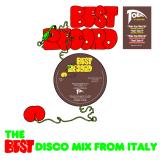
The long-awaited reissue of Toba makes it clear, once and for all, to fans and industry insiders that disco music produced in Italy between the late 70s and early 80s had no chance of success. What was disparagingly called "spaghetti disco", considered a poor imitation of real American disco music, only good for Japanese cartoons. This was the main reason that prompted Italians to record their songs abroad, as Fratelli La Bionda with their pseudonym D.D.Sound in Munich. Luigi Figini, with "Supercool" and "Percussion Sundance" by Edo Martin and Pino Santapaga (the same as "Step By Step" by Koxo), claimed that Kash was a one-off Swedish disco project, a lie that came to light when an Italian test pressing from the previous year, made by GDB, was posted !!! Amin-Peck followed the trend of passing off their songs as foreign music on the intuition of their Roman producers. So ''Love Disgrace'' was released on 7'' by a label called Connection, which never really existed, created for the purpose by Giancarlo Meo, confident that this would bring success to the Bolognese duo who were already creating 'proto Italo-Disco tracks' with a new-wave trend. To make the whole operation seem real, the London agency Ellie Jay Ltd. was involved, contacting Andy Fernbach of Jacobs Studios Ltd. The vinyl was also produced in the UK, otherwise the deception would have been discovered, then imported to Italy by Best Record. Italo-Disco was officially born after this, in 1982, not before! Everything makes sense now ! Real events that actually happened and purely invented names and anecdotes. Just think, even the image of Tony Balch used for the cover of Toba was taken from Grand Theft's 1978 album "Have You Seen This Band?" and reproduced on the new redesigned cover, as were the heads of the other musicians. The idea of a real band called Toba had finally come to fruition and would lead to a second sensational success the following year. Now it all makes sense! Facts and anecdotes that really happened and names and circumstances that are purely fictional. Finally, everything adds up! Real things and invented names of musicians and collaborators. It's important to clarify what we've said above, but we haven't talked about "Make Your Mind Up" and "Don't Take It" and the two masterful remixes performed by Dave Mathmos. In short: with the original versions we'll make Italo-Disco purists happy, with the remix versions we'll please new younger followers with more modern sounds and versions more in line with today's tastes and trends.
Disponible en stock et prêt pour l'expédition

Bringing together the elder statesman of the Zulu guitar Madala Kunene and internationally acclaimed Sibusile Xaba, kwaNTU pulls two generations of South African guitar mastery into a single point of focus. Under-represented on recordings outside of South Africa, Madala Kunene (b. 1951), the ‘King of the Zulu Guitar’, is revered as the greatest living master of the Zulu guitar tradition. Sibusile Xaba, whose collaboration with Mushroom Hour Half Hour reaches back to his first recording in 2017 (Open Letter To Adoniah/Unlearning), has garnered international acclaim for his unique voice and virtuoso guitar stylings, which bring together multiple South African guitar lineages in an original, spiritualised fusion. Collaborating with Mushroom Hour and New Soil for kwaNTU, the two players come together to weave a filigree sonic fabric which reaches down to the heartwood of Zulu guitar music but moves resolutely outward, building on the past to create a deeply rooted statement about present conditions and future travels. kwaNTU – which can be roughly translated ‘the place of the life-spirit’ – is also conclave of teacher and student, as Xaba has been taught by Kunene for the last decade. Meditative, rich and sonically sui generis, kwaNTU finds these two musicians linking up within the inimitable space of sound and spirit that they share through Kunene’s teaching.
The great masters of South African music have not all had equal exposure. For many years the generation of musicians who were exiled during apartheid took centre stage, as the regime made it very difficult for those at home to be heard. More recently, a new cohort of important voices, especially in jazz, has broken through to international consciousness. But for the generation of musicians in between – those who shone like beacons in the most difficult final years of apartheid and immediately afterward – international recognition has been slow in coming.
Madala Kunene, ‘the King of the Zulu Guitar’, is among this number. A revered figure for current generations of South African musicians, Kunene began his recording career in 1990, at the bitter end of apartheid, with a now classic self-titled LP for David Marks’ storied Third Ear imprint. Born in 1951 in Cato Manor, near Durban, he had determined to be a musician from early childhood, and by the time he first entered a recording studio he had already had a long career as a popular performer. His virtuoso absorption and transformation of the venerable Zulu maskanda guitar tradition and his richly spiritualised approach to music immediately marked him out as someone special, and in the years that followed, Kunene cemented his position as one of South Africa’s musical elders. He is without doubt the grand master of the Zulu guitar tradition, but his sound and sensibility ranges far beyond it into varied sonic terrain, and he has collaborated with a wide range of musicians both at home and abroad. Now in his mid-seventies, he remains a shining light for those that are making music in contemporary South Africa.
‘He is really an amazing person,’ says the guitarist Sibusile Xaba, who has been mentored by Kunene for over a decade, and now invites a collaboration with him on kwaNTU. ‘As a mentor, he's really powerful in showing us the way. For us to have this opportunity to make music together and have a project together is really a blessing to me.’
Xaba himself grew up in Newcastle, KwaZulu-Natal, where his mother had been in a band and his father sang in a church choir, and from early childhood Xaba played homemade tin guitars. He only later realised that music was his calling. ‘I just loved music. I was fortunate. My parents loved music. And when it was time for me to leave home and go to study outside Newcastle, I knew that music was what I wanted to do. There was no second option. It was just music.’ Moving to Pretoria to study music formally, Xaba committed himself to his craft, developing a unique style that draws on both US jazz masters such as Wes Montgomery and Jim Hall, and the rich and varied heritage of the South African guitar, from inspirational jazz players such as Allen Kwela and Enoch Mthalane, to the music of the Malombo groups and Dr. Philip Tabane (Xaba has previously collaborated with Dr. Tabane’s late son, Thabang), and the Zulu guitar tradition embodied by Kunene.
‘I was really in love with the jazz guitar, I really admired it, and I was digging a lot in that direction,’ says Xaba, recalling his first encounter with Kunene’s music, over a decade ago. ‘And then one day on my timeline, Kunene popped up, and I was like – “What's this sound?” I was so connected to it. It really touched me deep. I started checking out his records, and then I found out he's from the same region as I am, which is Zululand.’ After Kunene played a show at the Afrikan Freedom Station in Johannesburg, Xaba make contact with him, and visited him at home in Durban. They struck up a friendship, and Xaba became the elder’s student, as Kunene began to pass on his knowledge and his inimitable way of playing.
kwaNTU is a tribute to this relationship and the deep learning that has defined it. The album was recorded in Zululand in the town of Utrecht, at a cultural centre called Kwantu Village, which gives its name to the album. ‘It's such a broad word,’ Xaba says, ‘but the elders teach us that Ntu is basically an energy, almost chi, an energy, a force that all living beings have within them. It's a living energy, so kwaNTU is like, almost the place of this energy.’ The two men sequestered themselves for five days of jamming, improvising and planning, and then the session was recorded in one take over a single night, with Gontse Makhene joining on percussion and backing vocals and Fakazile on vocals. Other voices and overdubs were later added in the studio in Johannesburg.
The result is a rich and meditative recording that finds two generations in a deeply engaged dialogue. Teaching and passing on his knowledge, the elder Kunene has brought Xaba into a space of sound and knowledge that they now share; Xaba’s own practice of deep communion with nature and his dedication to his musical craft make him the perfect interlocutor for Kunene. The result is an album that foregrounds the two musicians engaged at the highest levels of responsive listening, sympathetic unity, and collaborative concentration. Bringing an elder statesman of South African music to an international listening audience for the first time in decades by pairing him with one of South Africa’s most important new voices, kwaNTU is a meeting of generations and a powerful demonstration of musical lineage and continuity.
‘Before music, there is sound,’ Xaba observes, speaking of Kunene’s unique approach to music. ‘And sound is like a common compartment…it's not restricted to particular people or particular geographic places, you know what I mean? It's sound. Everybody can hear it. So when he constructs that sound into music, I think everybody resonates with the energy behind his construction of sound into song. Here at home, we really love him for preserving our history through the guitar, through his stories as well the music, the songs that he writes. We really, really admire him.’
Disponible en stock et prêt pour l'expédition

This is the story of an artist in search of sound and breath: an artist who dares to question the rhythm of silence—an invitation to rethink music, sound, and musical collaboration. This is the story of a journey that, after opening countless paths, has finally found its vessel—and its messengers. Three artists of profound musical truth and radical freedom, merging into an exceptional trio that crosses genres and transcends words in a journey toward pure emotion.
Le Rythme du Silence is the culmination of this long search. Yom delivers it here with violinist Théo Ceccaldi and cellist Valentin Ceccaldi—kindred spirits in sound. “I’ve been working on this idea of the ‘rhythm of silence’ for years,” Yom explains. “I first heard the phrase from a Sufi master, describing the foundation of meditation. It struck something deep in me. I’ve practiced meditation for a long time, and we often think of it as a kind of stillness—opposed to noise and life. But in truth, the rhythm of silence enables meditation. It means accepting that the world continues to move and live around you, even as you try to be still. I wanted to compose from that place. To imagine sound as vibratory matter—the primal substance of creation. That required letting go of fixed structures: forgetting melodies, abandoning the idea of a constructed solo. I needed to leave behind music as a system, and touch sound as a living, breathing entity. It took years. Many projects led me elsewhere. But with the Ceccaldi brothers, I finally found the right resonance. Working with them was simply obvious—it was indredibly powerful.”
Yom first rose to prominence reimagining Jewish traditional music with his 2008 debut New King of Klezmer Clarinet. Since then, his path has led through rock (With Love, 2011; You Will Never Die, 2018), electronic utopias (The Empire of Love, 2013), meditative and sacred soundscapes (Prière, 2018), and countless unclassifiable hybrids (Unue, 2009; Green Apocalypse, 2010). It was inevitable that he would eventually cross paths with the free-spirited Théo and Valentin Ceccaldi—two artists who also place collaboration and genre-blurring at the heart of their artistic development. Their projects are always bold, demanding, and full of life (Kutu, Tricollectif, ONJ, Velvet Revolution, Grand Orchestre du Tricot, Lagon Noir, Constantine, etc.). And so, when the three met within the iXi string quartet, something clicked.
“I was seated between the two of them in the quartet,” Yom recalls, “and I could feel their energy flowing from both sides—it was wild! They’re so tuned into each other, they don’t need words. It’s like they’re connected by musical Wi-Fi. The groove happens instantly. They’re precise when they want to be—thanks to their experience in pop-influenced projects —but they can also let go completely, diving into pure sound. That’s exactly what this project needed.”
Without a single rehearsal, the trio formed instinctively. They began performing Yom’s compositions live, unfolding them into a single continuous piece, where clarinet and strings stretch the limits of sound and breath.
Bowed, plucked, or prepared with clothespins, the Ceccaldi strings engage in a playful and intense dialogue with Yom’s custom B-flat clarinet. Through their imaginative listening and fearless invention, air and space open into a vast new soundscape—one that lies somewhere between meditation and healing music.
“When Yom shared the concept of the rhythm of silence, we were immediately drawn in,” says cellist Valentin Ceccaldi. “There’s a deep intensity and spiritual commitment in his music that really spoke to me. With this trio, we’re trying to dive into the core of sound—but also to create a kind of communion with the audience. It’s like gradually turning up the volume on silence, and realizing it’s made of countless tiny sounds—the music of particles in motion" This stripped-down intensity demands full presence—body and mind—of these three musicians, vibrationally connected in a state close to trance. With them, we enter a journey - not religious, but sacred nonetheless.
The Rhythm of Silence becomes an echo of our most intimate, most distant inner landscapes.
An album—and a trio—to return to without end.
Disponible en stock et prêt pour l'expédition
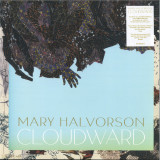
‘One of the finest jazz guitarists of her generation, Halvorson is possessed of a questing, restless spirit.’ – Jazzwise
‘With an album of string quartet music as strong as this one, she is worthy of as much renown in the classical field as she holds in the jazz community.’ – New York Times
‘One of America’s finest guitarists. Halvorson’s musicianship is open-minded, demanding and richly engaging.’ – Uncut
Nonesuch Records releases Cloudward by Brooklyn-based guitarist, composer, and MacArthur fellow Mary Halvorson on January 19. The album features eight new compositions by Halvorson, performed with her sextet Amaryllis, the improvisatory band that performed on her critically praised 2022 albums Amaryllis and Belladonna comprising Halvorson, Patricia Brennan (vibraphone), Nick Dunston (bass), Tomas Fujiwara (drums), Jacob Garchik (trombone), and Adam O’Farrill (trumpet). Labelmate Laurie Anderson also is featured on the album track ‘Incarnadine’. Halvorson and Amaryllis will tour internationally following the release of the new album, including January dates in Europe, as well as at the Big Ears Festival as part of Nonesuch’s 60th anniversary celebration.
Halvorson says, “All of the music on Amaryllis was written in 2020, during the thick of the pandemic, in one of the more bizarre time periods I’ve experienced in my life. While composing for Amaryllis, I expanded upon certain musical concepts I’d developed in my life up until that point—the ones that felt fruitful—and left others behind, hitting the reset button and attempting to build from scratch. Two years later, after the release of the first album, I was still writing music for Amaryllis.
“All the music on Cloudward was written in 2022, mostly in the fall and winter, when things started moving forward. Life felt like a creaky machine starting up again,” she continues. “Air travel, however chaotic, had resumed, and we were once again cloudward. Performances and tours and recordings were happening after a long hiatus and with a renewed sense of gratitude. This band, for me, was quite simply working, both musically and personally, and the main thing I felt while writing the music was optimism.”
The Guardian said Halvorson’s 2022 double release “shows how far this single-minded original has come, and affords a glimpse of how far she may go. Both sessions confirm how years of jaggedly lyrical solo and ensemble improvising and a quirkily subversive affection for mainstream music have now nurtured a composer of unpredictable but warmly expressive character… These are new landmarks in Halvorson’s already inimitable discography.” Pitchfork said, “Amaryllis and Belladonna are distinct statements; one could hear either album on its own without a sense that something is missing. But they are most powerful when taken together, like a landscape and its reflection in rippling water.”
Halvorson has released a series of critically acclaimed albums, from Dragon’s Head (2008), her trio debut featuring bassist John Hébert and drummer Ches Smith, expanding to a quintet with trumpeter Jonathan Finlayson and alto saxophonist Jon Irabagon on Saturn Sings (2010) and Bending Bridges (2012), a septet with tenor saxophonist Ingrid Laubrock and trombonist Jacob Garchik on Illusionary Sea (2014), and finally an octet with pedal steel guitarist Susan Alcorn on Away With You (2016). She also released the solo recording Meltframe (2015), and most recently debuted Code Girl (2018, 2020), a new ensemble featuring vocalist Amirtha Kidambi (singing Halvorson’s own lyrics), trumpeter Adam O’Farrill, saxophonist and vocalist María Grand, bassist Michael Formanek, and drummer Tomas Fujiwara.
One of New York City’s most in-demand guitarists, over the past decade Halvorson has worked with such diverse musicians as Tim Berne, Anthony Braxton, Taylor Ho Bynum, John Dieterich, Trevor Dunn, Bill Frisell, Ingrid Laubrock, Jason Moran, Joe Morris, Tom Rainey, Jessica Pavone, Tomeka Reid, Marc Ribot, and John Zorn. She is also part of several collaborative projects, most notably the longstanding trio Thumbscrew with Michael Formanek on bass and Tomas Fujiwara on drums.
Disponible en stock et prêt pour l'expédition

After dropping several tracks and performing at select festivals throughout the years, Ólafur Arnalds and Janus Rasmussen dedicated the year 2014 to explore the area in-between Ólafur's more acoustic, piano-based solo work and Janus's synth-heavy electro pop, with their collaborative electronic project Kiasmos.
By focusing solely on their self-titled debut album, Ólafur and Janus have been able to combine and further develop their unique sound aesthetics to complete an album driven by their mutual love for electronic music. Made in Ólafur's newly build studio in Reykjavík, Iceland, a majority of the album was recorded using acoustic instruments next to a variety of synthesisers, drum machines and tape delays. It features a live drummer, string quartet and Ólafur performing on the grand piano, producing an ambient, textured sound, which makes it a perfect home listen and equally danceable record. If you listen closely, you can spot them record the thumb piano, finger snapping and even the sound of the metal grinder of a lighter slowly to replace the usual electronic hi-hat sounds, giving the album a far more intimate and unique atmosphere.
We decided to start almost completely over with this record, so most of the material is written this year with the idea of making a record that can stand as one piece rather than a collection of songs. I am very excited to get a proper record out exploring a different territory than I am used to. I touch a lot on electronic genres in my own music but never have the opportunity to go full out electronic like we do here.' - Ólafur Arnalds
The Kiasmos project has been around since 2007, but because of all our other projects we never really got the time to sit down and write all the tracks we always wanted to. So when we early this year finally found the time to sit down and make a full length album there was so much we wanted to try out. The result surprised us a bit, it's deeper and more emotional than we imagined it to be, but that's the beauty of being able to make an album.' - Janus Rasmussen
Long-term Erased Tapes graphics collaborator Torsten Posselt at Feld Studios in Berlin created the cover artwork. Feld Studios was a natural choice for Kiasmos, seeing he also designed the cover for their Thrown EP, released previously.
Kiasmos is made up of Icelandic BAFTA-winning composer Ólafur Arnalds, known for his unique blend of minimal piano and string compositions with electronic sounds, and Janus Rasmussen from the Faroe Islands, known as the mastermind of the electro-pop outfit Bloodgroup. Based in Reykjavík, Arnalds used to work as a sound engineer, often for Rasmussen's other projects, where the two musicians discovered their common love for minimal, experimental music. They eventually became best friends, often hanging out in their studio, exploring electronic sounds.
Disponible en stock et prêt pour l'expédition

Toronto’s Ducks Ltd. (formerly Ducks Unlimited), the bright jangle-pop duo of Tom McGreevy (lead vocal, guitar, bass, keyboards) and Evan Lewis (guitar, bass, drum programming), accomplish the impossible. The pair craft songs that play to very specific inspirations without drowning underneath them—immediately evidenced on their critically acclaimed EP, Get Bleak, and sharpened on Modern Fiction, their debut LP. “The Servants, The Clean, The Chills, The Bats, Television Personalities, Felt,” Evan rattles off. “Look Blue Go Purple is one I reference a lot with our production.” Echoes of ‘80s indiepop abound, but they never overwhelm. This is not a nostalgic record, after all, nor is it a derivative one. Instead, across 10 cheery-sounding songs, Ducks Ltd. explore contemporary society in decline, examining large scale human disaster through personal turmoil (hence the title, taken from a university course called Gnosticism and Nihilism in Modern Fiction, influenced by Graham Greene novels. Bookish indie fans, look no further.)
Writing the album was intimate. Tom drafted the nucleus of a song on an unplugged electric guitar and brought it over to Evan’s apartment, where the pair sat in his bedroom, placing percussive beats from a drum machine under nascent melodies, passing a bass back and forth, adding organs and bridges where necessary. “It’s computer music trying extremely hard not to sound like computer music,” Tom jokes. Fearful that limited and expensive studio time would kneecap the project creatively, eroding their charming naivete, the pair re-recorded the album in a storage space owned by Evan’s boss. Ornamentation through collaboration followed: there’s Aaron Goldstein on Pedal Steel in the Go-Betweens’ “Cattle and Cane”-channeling interlude “Patience Wearing Thin,” Eliza Niemi on cello (“18 Cigarettes,” a song loosely inspired by a 1997 Oasis performance of “Don’t Go Away”), and backing harmonies from Carpark labelmates The Beths (on an ode to friendship at a distance, “How Lonely Are You?,” “Always There,” and on the sped-up Syd Barrett stylings of “Under The Rolling Moon.”) While in his native Australia due to covid-19, Evan worked closely with producer James Cecil (The Goon Sax, Architecture in Helsinki) on Modern Fiction’s finishing touches—at one point, in the mountains of the Macedon Ranges in Victoria, recorded a string quartet (featured on “Fit to Burst,” “Always There,” “Sullen Leering Hope,” “Twere Ever Thus,” “Grand Final Day.”)
It’s danceable, depressive fun, with some relief: in “Always There” and “Sullen Leering Hope,” Modern Fiction’s faithful heart. “There’s a tendency in my writing, because of my world view, to be very bleak.” Tom explains. “A quality I don’t always see in myself and really appreciate in others is the courage to go on.” And yet, the record manages resiliency—enough for pop fans to fall in love with.
il devrait être publié sur 29.05.2026

In the spring of 1971, somewhere between Brussels, Paris and a collective pop fever dream, Le Monde Fabuleux Des Yamasuki landed on vinyl. It sounded like nothing else then and it still does not today. More than half a century later, Sdban Records proudly presents a reissue of this singular cult album, available from April 3, 2026 on vinyl.
The album was produced by Jean Kluger and written both by Jean and Daniel Vangarde (aka Bangalter, later the father of Thomas Bangalter of Daft Punk), who were alreadywell ahead of their time, long before electronic music rewrote the rules of pop culture.
Released under the name Yamasuki, also referred to as The Yamasuki Singers, or The Yamasuki's, the project was never intended as a conventional band. It was a studio-born fantasy, a concept album disguised as a pop record. What began as a standalone single quickly expanded into a full-blown pan-cultural pop opera that ignored genres and common sense with joyful abandon.
Musically, the album sits at a delirious crossroads. Psychedelic pop collides with funk rhythms, samba and bubblegum melodies, full of chants and choruses in a phonetic pseudo-Japanese, written with the help of a dictionary. Kluger and Vangarde famously recruited a children's choir to perform the vocals, and for added spectacle, they brought in a Japanese judo grandmaster, whose ritualistic shouts and battle cries erupt throughout the record.
Several singles were released. One of them, Yamasuki, with accompanying dance move, appeared in the United Kingdom and France on John Peel's Dandelion label, a fitting home for a record that thrived on the margins of pop culture. Its B-side, Aieaoa, proved even more potent. In 1975, the song was reborn as A.I.E. (A Mwana) by Black Blood, an African group recording in Belgium, this time sung in Swahili. That melody would travel even further. Aie a Mwana became the debut single of English pop group Bananarama, and in 2010 it resurfaced once more as Helele, an official song of the FIFA World Cup, recorded by South African singer Velile Mchunu with Danish percussion duo Safri Duo. That version became the most widely known incarnation of the song. With Jean Kluger directly involved, it was less a cover than a continuation of the original idea.
The album's afterlife did not stop there. Over the years, Yamasuki has been quietly sampled, covered, and featured across media far beyond the realm of novelty pop. Kono Samourai was sampled in The Healer by Erykah Badu (2007), produced by Madlib, while Yama Yama has found its way into recent pop culture as well: appearing in the television series Fargo, on Angus Stone's project Dope Lemon, and on the 2008 Late Night Tales compilation curated by Arctic Monkeys drummer Matt Helders. Proof, if any were needed, that this strange little record carries a deeper musical DNA than its playful exterior might suggest.
This new reissue of Le Monde Fabuleux Des Yamasuki proves the renewed interest and respect for this cult album, faithful to the original spirit while finally giving it back the physical presence it deserves. In an era obsessed with genres and algorithmic neatness, Yamasuki still laughs, dances and karate-kicks its way past definitions. It reminds us that pop music can be playful without being disposable, strange without being cynical and joyfulwithout explanation. The world of Yamasuki was always fabulous, we are just lucky it found its way back to us!
Commandez maintenant et nous commanderons l'article pour vous chez notre fournisseur.

The journey through French-speaking pop archives continues with this fifth volume, packed with fuzz, gimmicks, and dissent. Far from the charts, the selected tracks display a great creative freedom, often backed by corrosive humor. Welcome to the surprising, kaleidoscopic, and colorful world of the late sixties and early seventies, Wizzz!
Born in Montauban, Robert Pico stumbled into music by chance when he met René Vaneste, then artistic director at Pathé-Marconi. René brought him to Paris to record his first 45 RPM EP in 1964. A year later, Pierre Perret introduced him to Vogue, where he recorded his second album with Claude Nougaro’s orchestra. Sylvie Vartan then introduced him to RCA, where he recorded four singles, including the astonishing "Chien Fidèle," a track backed by a hair-rising fuzz guitar. Alongside his solo career, he also composed for other artists like Alain Delon (the song was recorded but remains unreleased), Magali Noël, Bourvil, and Georges Guétary. In the Paris of the sixties, he mingled with Mireille Darc, Elsa Martinelli, Marie Laforêt, France Gall, Françoise Hardy, Petula Clark, Régine, Dani, Serge Gainsbourg, Joe Dassin, Franck Fernandel, Charles Level, and Roland Vincent. Despite his efforts and winning a Grand Prix Sacem for his final record, Robert Pico didn’t achieve the expected success in show business and decided to leave Paris and return to the Southwest, where he devoted himself to writing. He is the author of 23 books (including Delon et Compagnie, Jean-Marc Savary Editions 2025, a memoir about his youth and his many encounters). Today, he is relieved to never have become a celebrity and devotes himself to his work with passion.
In 1969, the Franco-Italian movie Erotissimo was released, directed by Gérard Pirès (who later directed Taxi in 1998, written and produced by Luc Besson). This pop comedy features Annie Girardot, Jean Yanne, Francis Blanche, Serge Gainsbourg, Nicole Croisille, Jacques Martin, and Patrick Topaloff. The soundtrack was written by Michel Polnareff and William Sheller, with lyrics by Jean-Lou Dabadie. "La Femme Faux-cils," performed by Annie Girardot. It recounts the feelings of a rich CEO's wife who seeks to develop her sex appeal under the influence of advertisement and magazines. Groovy, sparkling and light, this track, with ITS lush arrangements humorously critiques consumer society and feminine beauty standards.
“Je suis l’Etat” (1967) is the flagship track of the first EP by singer-songwriter Spauv Georges, aka Georges Larriaga, better known as Jim Larriaga (1941-2022). Born into a family of bakers, the young man was initially planning to become a hairdresser when he discovered English-speaking music through Elvis Presley and the Beatles. After this revelation, he decided he would become a songwriter and gave himself five years to succeed. He recorded his first two EP’s independently for RCA under the pseudonym Spauv Georges; meaning “that poor George”, a nickname given to him by the mother of her friend Jean-Pierre Prévotat (future drummer of the Players, Triangle, or Johnny Hallyday). Portraying a depressed and eccentric young man, Spauv Georges created corrosive and amusing songs that didn’t reach a wide audience, despite a TV appearance with Jean-Christophe Averty.
Supported by his loyal friend and fellow songwriter Jean-Max Rivière, Georges Larriaga met the future singer Carlos in the early '70s, then Sylvie Vartan’s assistant. He wrote songs for Carlos, including the popular "La vie est belle," "Y’a des indiens partout," and "La cantine", which went onto become a huge hit in 1972. He also composed for Claude François (“Anne-Marie”, 1971), Charlotte Julian (“Fleur de province”, 1972), helped launch child singer Roméo (who sold 4 million records), and later wrote the hit "Pas besoin d’éducation sexuelle" (1975) for the young Julie Bataille. In 1971, Jim recorded an album for Disc'Az: “L’univers étrange et fou de Jim Larriaga”, which featured pop gems like “La maison de mon père”.
The story of the song "Zoé" began when Pierre Dorsay, artistic director at Vogue Records, asked Swiss singer and musician Pierre Alain to write a song for a new female singer. The inspiration came when he realized that Zoé (the artist's name) was also the name of France's first atomic battery, created in 1948, which consisted of uranium oxide immersed in heavy water! The lyrics reflect a bubbling energy that must be handled with caution, while the instrumentation echoes this atomic theme, notably with the use of a theremin.
Zoé’s career lasted only as long as a single 45 RPM, but it seems Christine Fontane was the vocalist behind this pseudonym, who is known for several EPs, a good "popcorn" album in 1964, and a handful of children’s singles in the '70s. Regardless, the photograph on the cover is of a different girl entirely.
Later, Pierre Alain continued his career, writing songs for himself, Marie Laforêt, Danièle Licari, Alice Dona, Arlette Zola (3rd place in Eurovision 1982), and achieving multiple gold and platinum records in Canada. Also an inventor with several patents, president of the Romande Academy, and head of the French Alliance in Geneva, he now composes atonal music, books, and poetry. Moreover, he is also the host of "Les Mardis de Pierre Alain" at "Le P'tit Music'Hohl" in Geneva.
Filled with oriental choruses and fuzz guitar, "Fou" is from Jacques Da Sylva's only EP released by Vogue in 1967. Despite the quality of this recording, all traces of this singer disappear after this first effort.
Valentin is a baroque pop singer born in Belgium. He is the songwriter and composer of most of the tracks on his three singles released in the late 60s in Canada. A legend says that he reincarnated himself as Jacky Valentin during the 1970s for a rock'n'roll revival career in Belgium, but his older brother sadly debunked this story. Valentin's first two singles were arranged by Claude Rogen, a Parisian session pianist who had come to Canada to promote the song “Mister A Gogo”, a cover of David Bowie’s “Laughing Gnome”, adapted by singer Delphine, his wife at the time. Far from his usual network, Claude Rogen arranged music for Polydor, including the arrangements for “Je suis un vagabond” in 1969, a jerk tune with string arrangements and a furious optimism.
Jacques Malia wrote, composed, and recorded his only 45 EP for Festival in 1966. “Histoire de gitan” is an incredible beat track with bohemian scat that tells the story of a gypsy musician who came to Paris to make it in the Music-Hall, to no avail. The hero of the song and its author probably shared a similar fate, as Jacques Malia faded into anonymity after this remarkable attempt.
Bernard Jamet recorded two EPs for Barclay in the late sixties and co-wrote several songs with Christine Pilzer, Pascal Danel, and prolific songwriters Michel Delancray and Mya Simile. The track “Raison Légale” (1968), his masterpiece, immerses the listener in a courtroom right when a murderer is being judged, with jerk rhythm and free arrangements. A unique, paranoid, judicial, and psychedelic oddity.
Jean-Pierre Lebrot-Millers started his career in show business in 1967 as a singer and songwriter for the Philips label. After three singles, he wrote several songs of a new kind with his friend Pierre Halioche, in the midst of the sexual liberation movement and the democratization of drugs. With provocative lyrics, “Les filles du hasard” and “Barbara au Chapeau Rose” were released on a Philips singles in 1968. The character of Barbara was inspired by a queen of Parisian nightlife during the psychedelic years: model Charlotte Martin, who dated Eric Clapton from 1965 to 1968, then Jimmy Page from 1970 to 1983. Jean-Claude Petit’s arrangements, with a table-filled intro, soul brass, and Hendrixian guitar, emphasize the flamboyance of a hedonistic and sexy character, whose dog is named Junkie because “Junkie est un nom exquis”! The track was recorded live in three takes with a full orchestra.
Upon its release, the record was censored by Europe 1 and RTL due to its references to drug use. Jean-Pierre Lebrot was then banned from the airwaves and later dismissed by his record label. He changed his artist name to Jean-Pierre Millers, while his companion Pierre Halioche became D. Dolby for a new dreamy composition, “Chilla”, which Jean-Pierre produced himself with arrangements by Jean Musy. Once again, the song was immediately censored everywhere. After this setback, he decided to stop singing and started taking on odd jobs to support his Swedish wife and their son until the day he met Jean-Pierre Martin, then production manager at Decca, who had worked with Manu Dibango. Martin offered Jean-Pierre Lebrot-Millers, then employed at Rank Xerox, the position of artistic director at Decca. He accepted and became, a year later, promotion director (radio, press, TV). He worked on Julio Iglesias’s first album for Decca, which became a massive hit and allowed him to meet Claude Carrère. The latter asked him to write new songs and find their performers, much like a “talent scout.” It’s through him that Jean-Pierre discovered Julie Pietri and Corinne Hermès. He composed “Ma Pompadour” for Ringo, Sheila’s husband, and took the microphone again for the syncope hit “Rendez-Vous” in 1982.
That same year, Jean-Pierre Lebrot-Millers tried to release a track for which he had heavily gone into debt: “Si la vie est un cadeau”. Having recorded it in London, he presented it to numerous professionals, all of whom refused to get involved. The same thing happened with Antenne 2 and the Sacem when he proposed the song as France’s entry for Eurovision. He then met Haïm Saban, who was producing cartoon soundtracks and had just launched the Goldorak theme song. Saban, having listened to the song, declared it had the potential to become a hit. He sent Jean-Pierre and Corinne Hermès to meet the CEO of the Luxembourg radio and television network. The latter received them, asked to hear a verse and chorus a cappella in his office, and immediately hired them to represent Luxembourg at Eurovision 1983. They reworked the arrangements and recorded a new version with Haïm Saban as co-producer. The song ended up winning Eurovision 1983, a great comeback for our hero. He continued producing and hung out with the band Nacash in Belgium when a couple came to introduce their daughter for an impromptu audition in a hotel room. The girl sang “Les démons de minuit” while dancing to a radio cassette. Impressed, he had her take singing lessons for a year and composed a song for her (for which he had the melody and title, but no lyrics). This required him to go on the hunt for a lyricist, who ended up being Guy Carlier. They recorded the song, which was initially a ballad, at Bernard Estardy’s CBE studio, and gave the singer a new name: Melody. They showed the song around their industry network without success. Later, Estardy called Jean-Pierre to suggest changing the rhythm and making it pop-rock. Orlando, Dalida’s brother, liked the result and decided to co-produce the track. “Y’a pas que les grands qui rêvent » became a classic hit. The song has since been covered by Juliette Armanet (as a ballad, like the original) and Valentina.
Born into an aristocratic Breton family, Hervé Mettais-Cartier worked as a DJ at Queen Kiss, a nightclub in Poitiers, where he formed the band Les Concentrés with Michel (an actor) and Christian (a radio technician). Together, they created a repertoire of whimsical songs (“Ma bique est morte”, “J’suis un salaud”, “Fils de dégénéré”...) that they performed on stage dressed in white (in homage to “concentrated milk”). They performed at Bliboquet and Olympia in 1968 for the 10th edition of the “Relais de la chanson Française” organized by L’Humanité-Dimanche and Nous les Garçons et les Filles, sponsored by Pepsi Cola. Winners in the author-composer category, alongside Danish singer Dorte, their visibility allowed them to record a 45, and appear on television in Jean-Christophe Averty’s show. The A-side of the disc features Bruno le ravageur, a casatchok dedicated to Bruno Caquatrix, the director of Olympia, nicknamed in the song “Coq Atroce” or “croque-actrices”. The B-side is dedicated to “Fils de dégénéré”, a quirky tribute to Hervé's aristocratic roots, mixing absurdity with sophisticated vocal harmonies.
After Les Concentrés, Hervé Mettais-Cartier formed the duo La Paire et sa Bêtise with his friend Olivier Robert. They performed in Parisian cabarets and toured with Pierre Vassiliu. In the late 1970s, Hervé began a solo career. He recorded two albums for the Motors label in 1978 and 1979, which did not achieve their anticipated success due to lack of promotion. In 1980, he met Bernadette, with whom he started a family and created a “Chansons à voir” (songs to see) show that he performed until his death at the end of 2024.
Publicité comes from the final EP by the Missiles (Ducretet Thomson, 1966), a disc that also includes “La (nouvelle) guerre de cent ans”, featured on Volume 4 of our Wizzz! series. Please refer to the booklet for the story of the band.
“He’s 1.82 meters tall, 28 years old, weighs 135 kg, is black and Belgian”: this is the description of singer Hegesippe on the back of his sole single (Decca, 1967). He appears on the album cover wearing a Greek toga, like a hippie gag – we are at the end of the year 1967. In “Le crédo d’Hegesippe”, this former bodyguard of Antoine and the Charlots plays the delightful card of the thick brute converted to Flower-Power and non-violence, with arrangements by Jean-Daniel Mercier, aka Paul Mille.
“Ethéro-disco” was released on a promotional record for clients of the Maréchal company (Liège, Belgium) for the New Year 1979. Over a funky rhythm, celebrity impersonations (Brigitte Bardot, Jacques Dutronc, Fernandel…) deliver an enigmatic text about pharmaceutical products like ether, bismuth, and aspartate. The track was composed by Dan Sarravah (responsible for Joanna's “Hold-up inusité” featured on Wizzz! Volume 3) and Tony Talado, who was also a singer (one 45 in 1967), songwriter (with over a dozen credits between 1964 and 1985 in various styles from surf music to disco), author (Devenez Végétarien, Dricot Editions, 1985), ad designer, and psychologist.
Décollez-les is on the A-side of Mamlouk's only single, a pseudonym for Marsel Hurten, who is known for his work on several EPs in the late sixties, as well as composing music for Hervé Vilard’s “Capri, c’est fini”, Claude Channes' “La Haine”, Annie Philippe’s “On m’a toujours dit”, and Nancy Holloway’s “Panne de Cœur”.
This strange song, with Afrobeat horns and absurd dialogues between a chef and his kitchen staff, is the result of a collaboration between Marsel Hurten and one of his neighbors, a photographer from Pavillon-sous-Bois (93), where the musician settled after returning from the Algerian War. A music video was shot to promote the record.
Marsel Hurten was born in Tourcoing (59) into a musical family. At a young age, he joined the brass band founded by his grandfather, playing the piston before studying trumpet at the conservatory, as well as teaching himself how to play the guitar. As an orchestra musician, he toured in France, Belgium, Germany, and England. He released a series of solo 45’s between 1965 and 1968 for the DMF and Az labels before stopping recording to focus on working for other artists (Gilles Olivier, Noëlle Cordier…).
“L’amour nu” (Vogue, 1971) is the work of the short-lived Belgian band Mozaïque. The track, written by singer Jacques Albin, closely resembles another of his compositions, “Carré Blanc”, which he recorded in 1969 for Disc’AZ.
Represented by the Lumi Son micro-label based in Marignane (Côte d'Azur), Jean-Marc Garrigues released two 45 RPMs in the late sixties, defending the French jerk sound. The song “Je dis Non” is a short, joyful ode to youth, pop music, and rebellion.
Songwriter and performer Jacques Penuel released three singles. The first one, “Astronef 328” (Fontana, 1969), features a dizzying series of chords punctuated by sound effects, a sci-fi story, and arrangements by Jean-Claude Vannier.
We would like to sincerely thank Pierre Alain, Moon Blaha, Marsel Hurten, Bastien Larriaga, Jean-Pierre Lebrot-Millers, Bernadette Mettais-Cartier, Robert Pico, Olivier Robert, Claude Rogen, Micky Segura.
Commandez maintenant et nous commanderons l'article pour vous chez notre fournisseur.

WRWTFWW Records is thrilled to unveil the limited edition vinyl reissue of Natural Sonic, the groundbreaking 1990 environmental percussion album by Japanese composer and performer Yoshiaki Ochi. Long a hidden gem of the kanky? ongaku movement, Natural Sonic finally returns in its full analog glory, housed in a heavyweight sleeve with obi and carefully remastered from the original archives of Wacoal Art Center / Spiral's visionary NEWSIC label.
Originally released only in Japan at the dawn of the 1990s, Natural Sonic is a mesmerizing exploration of earthly sound and rhythm - a sonic tapestry woven from wood, water, and stone, and skin. Ochi, who at the time was the in-house composer and performer for world-renowned designer Issey Miyake, created a series of elemental pieces that blur the line between avant-garde percussion, ritual music, and environmental sound art. The result is both deeply physical and profoundly meditative - an album that breathes with nature itself.
Echoing the organic minimalism of Midori Takada's Through the Looking Glass and the ecological grandeur of Geinoh Yamashirogumi's Ecophony Gaia, Ochi's compositions open portals into primal landscapes, evoking forests, rivers, and stones in flux. Part of NEWSIC's celebrated experimental catalog - alongside Yoshio Ojima's Une Collection des Chaînons, Motohiko Hamase's #Notes of Forestry, and Satsuki Shibano's Rendez-Vous - Natural Sonic now finds new life for contemporary listeners seeking sound that feels both timeless and vital.
A singular album of resonance and restraint, Natural Sonic is a treasure from the golden age of Japanese environmental music, finally available again over three decades later.
Commandez maintenant et nous commanderons l'article pour vous chez notre fournisseur.

NPVR is the avant garde duo made up of the late Peter Rehberg and Nik Void. Editions Mego is proud to present their second and final release. No this is not some kind of Beatles synthetic AI that raises the dead reconstructed recordings but rather a new album made by the humans and their machines.
The initial meeting of Rehberg and Void was in London in 2016 and despite or due to their mutual awkwardness found solace and compatibility in the fact that they both had a similar electronic modular set up, along with matching cases to transport all. The idea to collaborate was an obvious and organic process as a means to connect their individual gear together and observe the outcome. The fruits of these initial experiments, recorded in London, resulted in the playful experimentation of their acclaimed 2017 release 33 33 (eMego 251).
Now in 2024 Editions Mego presents the logically titled follow up, 33 34. These sessions were recorded six months after the initial recordings at Peter’s home in Vienna. This was planned out as a mirror city release to the original London recordings. With Peter having access to his full studio set up this time around we encounter a rich audio landscape which organically folds together a variety of musical genres blurring any distinction between these forms so the resulting music hovers as a new cloud of sound. Any musical form, be it industrial, electro-acoustic, ambient, drone and techno all coexist and melt into the other as the ensuing result unveils a hypnotic swarm of divergent sounds (music). When active there were no lines or contexts with NPVR, either between sound or genre within these recordings or live where NPVR were at home playing at a techno club one night and an avant garde venue the next.
The initial session of these recordings was edited by Rehberg and sent to Void to further develop. Over time the final versions were agreed on and then shelved as other outside projects took over. The awkwardness had been surmounted and the two had become close friends. NPVR performed at a range of venues such as Tresor, Sutton House, Corsica, Blitz, Paris GRM #Focus2, LEV Festival and Rigas Skanumezs Festival. Following Rehberg’s untimely passing Void had difficulty listening back to the sessions but eventually thought it fit to complete and release this album, of which even the artwork (like 33 33, an image from Zurich photographer, Georg Gatsas) had been decided upon prior to Rehberg parting ways.
There is an unmistakable joy to these recordings. One encounters an enthralling exploration of their chosen machines which conveys the excitement of what can be randomly conjured when people speak through such devices. There is no grand statement or argument here, just the sheer thrill of creation and the recorded results of random encounters. The art of collaboration was always a mainstay of Rehberg’s practice from the advent of the MEGO adventure. Rehberg & Bauer was an initial collaboration with former business partner Ramon Bauer. Even at this stage one can hear a relaxed sense of delight in the sheer discovery of sound.
A mix made for the Wire magazine following the release of 33 33 hints at the freedom that comes with endless urge for exploration and discovery. Abstract tracks from Z'EV. Jérôme Noetinger and Jung An Tagen are included alongside British stalwarts The Fall and New Order. There were no lines between pop / academic / underground or mainstream in Rehberg’s world. All of it sat at the same table. It is just matter in the atmosphere, like the diverse exploration found in these recordings that comprise 33 34.
Towards the end of his life Rehberg was obsessing over the immense output of the German ambient musician Pete Namlook. An artist renowned for not only his sprawling catalogue of ambient masterpieces but one who often said his main inspiration was nature. This is apt with regards to the work of NPVR which also aligns with such thought as the intertwining of the two individual artists and their machines results in a natural symbiotic flow, as it happens, just like in the world around us.
Commandez maintenant et nous commanderons l'article pour vous chez notre fournisseur.

Kee'ahn, whose name is derived from kee’an, the Wik word meaning to dance and to play, is a proud Yalanji, Jirrbal, and Badulaig artist. Her music is steeped in connection to culture, community, Country, and self and with her soulful voice and storytelling, Kee’ahn has had a powerful impact on the Australian music scene, earning her the Archie Roach Foundation Award and Music Victoria’s Best Emerging Artist award. She has since performed at the 2025 AFL Grand Final collaborating with Baker Boy, Thelma Plum, Emma Donovan, Dallas Woods, Alice Ivy and shared stages with the likes of Julia Jacklin, Hiatus Kaiyote, Greentea Peng and Angie McMahon.
Kee’ahn’s debut EP “for me, for you x” is a collection of lush cinematic soul and rnb love letters. Across 5 tracks, Kee’ahn explores the pursuit of hope, compassion, connection, heartbreak, and healing. This project naturally and authentically came together, detailing moments across 5 years of Kee’ahn’s life. Each song begins on guitar and vocals with demo production in Kee’ahn’s Brunswick bedroom - they are diary entries to herself, formed into messages that hit the hearts of its listeners.
Each song is reminiscent of classic 60’s jazz soul to 90’s neo-soul rnb, to early 2000’s inspired soul pop weaving dynamic soundscapes with clear and meaningful catchy lyricism.
il devrait être publié sur 31.10.2025

When Soft Cell played a spectacular, sold-out show before 20,000 fans at The O2 in September 2018, the London concert was seen by all and sundry as a grand finale. It had been billed as One Night: One Final Time, leaving devotees in no doubt that a duo who had done so much to define the sound of British electronic pop in the 1980s were saying hello to wave one last, emotional goodbye. At least that had been the idea. Singer Marc Almond and instrumentalist Dave Ball had originally gone their separate ways in 1984 before reuniting for two years in the early 2000s to make a new album, Cruelty Without Beauty. The intention at The O2 had been to draw a line under a rollercoaster ride that had seen Soft Cell secure three Top Ten albums and six Top Ten singles, including 1981’s all-conquering Tainted Love, while setting a template for synth acts from the Pet Shop Boys to Years & Years.
But such was the reaction – and the sense of purpose the pair rediscovered onstage – that the big adieu ultimately turned out to be a brilliant new dawn. The reality is that Marc and Dave bring the best out of one another as performers, both onstage and in the studio, and the sense that there was still plenty of mileage left in their partnership was inescapable. The latest fruits of a bond that was first forged in the art department of Leeds Polytechnic in 1977 were in the shape of a new studio album, *Happiness Not Included, and a series of live dates in the UK and the US that saw the band treat fans to a mixture of new material, classic hits and their 1981 debut album Non-Stop Erotic Cabaret, which was played in its entirety for the first time to mark its 40th anniversary.
Commandez maintenant et nous commanderons l'article pour vous chez notre fournisseur.

“It’s not often you find yourself recording alone in a churchat 3am. I’m not religious, but I experienced somethingunique while playing through the night as the streetsaround me slept. It felt like the music was telling me whatto play and I was the passenger. Lumen grew out of avariety of compositional seeds - from composed songsthat remain true to the score, leaving little room forfreedom, to wide open improvisations recorded in themoment with nothing predetermined.
“It’s in the space between composition and improvisationwhere the magic happens - and where, if the musiciansare willing, the music can lead. I recorded day and nighton a Yamaha grand and an upright felted piano. It felt likesome sort of solo retreat: sitting in a building of faiththrough the night, delving ever deeper into the music.When I finally resurfaced, I felt profoundly that it was themusic that had led me, rather than the other way around. “As a composer, it’s simplicity that I’m searching for - howto say the most with the least. My previous albums wereabout filling the space, both texturally and dynamically. Butsolo performance is different. There’s unlimited freedom,and while that can be liberating, it also comes with addedresponsibility. Beyond the recording, the music takes on anew life. The piano, the room, the acoustic, the mood ofthe audience, even how much sleep I’ve had - all of itinforms how the music evolves. So, each performance iscompletely unique and unrepeatable.
“The recording of Lumen is just the beginning of itsjourney. Where and how it evolves from here is whatkeeps me searching.” - Bill Laurance
il devrait être publié sur 03.10.2025

A“This album is about what it means to be human, and its creation is my offering. I attempt to tell a tale of the human experience in the reflection of my own.”
‘In the Andean mythology, condors are believed to be immortal. It is said that once they feel old, without energy, and useless, they climb to the highest peak and let themselves fall to death.’
The Allegorist is a visionary, enigmatic, transmedia, and boundary-pushing artist known for crafting deep, immersive dark sonic tales. Embracing a wide array of influences, weaving together the mysteries, art and spirituality, the art project defies categorisation, resonating with those who seek the unconventional.
From Birth Until Death is an introspective and immersive concept album that reflects on the essence of the human experience. Crafted over six years by The Allegorist (aka Anna Jordan), the album traces the arc of life—from its fragile beginnings to its inevitable end—using sound art to explore existential and philosophical terrain. Inspired by the Andean mythology of the condor – a symbol of immortality – the album blends electronic soundscapes with raw field recordings, evoking a deep sense of connection between the natural world and human existence.
The album’s progression mirrors the stages of life, starting with the birth of new beginnings and culminating in death, with each track offering a unique reflection on the moments in between. From the dynamic energy of Momentum, to the ethereal, illusionary world of Fata Morgana, the tracks guide the listener through emotions, perceptions, and experiences that shape the human condition.
A distinctive feature of From Birth Until Death is its intricate production. The album incorporates field recordings from Grunewald Forest, a distant roar of a jet, barking dogs, blending the sounds of nature – footsteps in the snow, birdsong, ocean waves – with layered synthesisers and electronic beats. The bass and ambient textures are crafted using an array of analog hardware, while all vocals, both lead and backing, are performed and recorded by Jordan. Some of the vocal takes were intentionally left raw, capturing the spontaneous energy of early recordings, while others were re-recorded to balance the album’s organic yet polished feel. Each element is meticulously crafted, revealing its deeper meaning as the album unfolds like a multidimensional, living sculpture.
At its core, From Birth Until Death is a meditation on the full spectrum of life. The album’s title track, From Birth Until Death, encapsulates this journey, reflecting on the passage of time and the unique experience of being human. The final track, Death, offers a melancholic yet beautiful exploration of endings, not as finalities, but as moments in the grand cycle of life. With its combination of evocative sound design and deeply personal themes, From Birth Until Death invites listeners to contemplate their own lives, offering a moving experience of reflection, growth, and transformation.
About From Birth Until Death
Words By Robin Rimbaud (Scanner)
From Birth Until Death is a deeply personal and reflective album and beautifully crafted. A detailed listen reveals that Jordan was in search of a profoundly human and authentic expression. In an era when so much around us seems defined by speed, Anna Jordan, aka The Allegorist, stands apart – aware that skimming the surface of life is neither sufficient nor rewarding. She reminds us of the value of deep, authentic listening.
The track Andean Condor seductively draws us into a smoky, blurred rhythmic soundscape, capturing the essence of the darkest Berlin nightclub, while Birth pulses with an almost shamanic transformation of sound, moving from the organic to the musical. It features a recording of Jordan’s footsteps in the snow in Grunewald Forest, Germany.
At times, the music feels almost sculptural in shape and tone – lifting, pushing, lilting, opening, and closing – where each piece is given room to fully develop. Many of the works blend synthetic sound with the natural, incorporating the human voice alongside environmental recordings: the wild waves of the ocean, a jet flying overhead, and barking dogs.
With From Birth Until Death, Jordan, like an alchemical architect revealing in the process of getting lost and relinquishing control, leaves us with a taut, immersive soundtrack in which to lose ourselves.
About the album ‘From Birth Until Death’
words by The Allegorist
“The album From Birth Until Death did not come easily to me. I started working on it in 2019, and it underwent many alterations over the years. I produced multiple versions of the tracks each year, but the album name, the track titles, and the album cover art stayed the same for 6 years. Not everything I did fit into the album’s final form, but I hope the heavy selection just made it better. I played this piece live in my techno live set between 2019 and 2020, and in the years after, I performed different art, ambient, and vocal versions of it, most notably the one at the church St. Marienkirche in Berlin in 2022. It just wanted to live and didn’t want to be finished. As I aged, this album aged with me. And now I’m ready to let it go.”
Commandez maintenant et nous commanderons l'article pour vous chez notre fournisseur.

The debut album from Addy Weitzman, ‘Light Months Will Fly Over Us’ explores new-wave, romantic pop and art rock with elegance and ambition, drawing from Weitzman’s scattered network of collaborators, as well as a “frighteningly vast” personal archive of compositions. Sequenced by Seth Troxler and released on his Slacker 85 label, it represents a pivot in musical direction for the imprint, and a showcase for the songwriting craft Weitzman honed as a member of cult electro duo Footprintz, and Montreal synth-pop projects The Beat Escape and Dawn to Dawn.
The title Light Months Will Fly Over Us is derived from a line in a poem by the Russian writer Anna Ahkmatova. Weitzman was immediately struck by its “hopefulness, its mystery… it gives the feeling of being suspended, hanging in a dream-like state”. This interpretation has been translated to the album, rich in memorable songwriting that nonetheless invites the listener to lean in further. Delicately mixed by engineer Pierre Guerineau, known for his work alongside Marie Davidson, each of the eight tracks gently interrogates life’s greater mysteries; fear, love and salvation, each defining and revealing the human soul.
Opener ‘End of The Line’ invites us into an immediately lush space of lounge lizard existentialism, soft brass and piano helping Weitzman introduce “where the journey begins and the fantasy dies”. Across orchestral arrangements arranged by Adam Wilcox, whose sensitive, ambitious compositions are weaved throughout the album, ‘Beyond The Speed of Life’ brings to mind the laments of Scott Walker. Navigating vulnerability via grandeur, Weitzman’s earnest vocals flourish in wide-eyed call-and-response with the object of a transcendent love affair.
Alongside collaborator, Richard Lamb, the next chapter of the LP plunges into contrasting machine-driven moods; the wry, bubbling ‘Entertainment Is All I Wanted (And I Found It)’ is imbued with the playfulness and experimentation of 80s electronic pioneers such as Fad Gadget, while the tougher, icier ‘Stranger To Your Kind’ shifts in a more instrumental direction, recalling Weitzman’s dancefloor experience, as well as contemporaries such as Matthew Dear.
Album centerpiece and striking first single ‘Running & Returning’ is the first of a suite of three tracks in collaboration with Weitzman’s The Beat Escape and Dawn to Dawn bandmate, Patrick Boivin. Blending lush saxophones and angular guitars with a wistful melodic touch and lyrics, its irresistible art-rock rhythm provides the foundation for one of Weitzman’s most involving vocal performances.
It’s followed by an anthem for existential absurdity: ‘Ice Cream Candle’ provides a driving acceptance that “the more and more you learn, the less you understand”; Weitzman submits to this uncertainty with equal grace on ‘No Man’s Land’, as baroque invocations of “words swept through the fields” and meeting “where the water lilies grow” give way to a blistering guitar solo, humbly riding hypnotic percussion.
For the compassionate finale of Light Months Will Fly Over Us, Weitzman narrates the experience of ‘Gabrielle’, a woman slipping between rooms between shuttered blinds in the towering city, “where cigarettes and roses fill the air.”
As lyrically delicate as it is musically ambitious, Light Months Will Fly Over Us is a sublime debut album, enriched with care, love and much-needed enchantment.
Commandez maintenant et nous commanderons l'article pour vous chez notre fournisseur.

Hampus Lindwall’s Brace for Impact might just be the first album of post-internet pipe organ music. It’s an album of five new contemporary classical compositions, all performed by the composer himself on the 78-stop grand organ at St. Antonius church in Düsseldorf, Germany. Featuring the electric guitar of SUNN O)’s Stephen O’Malley on the title track. A highly visceral forty-five minutes of music with undeniable elemental power.
As 2024 came to a close, in New York and Paris chords rang out from thirty-two-foot pipes for the first time in half a decade. Following twin fires in 2019, the grand organs at the cathedrals of St John the Divine and Notre-Dame, amongst the largest instruments in their respective countries, had finally been restored. The news was justly celebrated in the international press, but the incidents were far from isolated. In England, the city of Norwich hailed the return of its cathedral’s five manual organ in 2023 and just two years earlier York Minster heralded a “once-in-a-century” refurbishment of its own 5,000-plus pipe instrument. Meanwhile, further organ restoration projects are ongoing at churches in Liverpool, Bradford, Bristol, Winchester, and Washington DC. Significant as they are to their respective communities, they’re also emblematic of a wider rebirth for one of humanity’s oldest musical instruments.
The organ is having a moment. Over the last few years, albums by the likes of Kali Malone, Ellen Arkbro, Anna von Hausswolff, FUJI|||||||||||TA, and Áine O’Dwyer, as well as projects in the visual arts by Sollmann Sprenger, Cory Arcangel, Massimo Bartolini and many other talented artists, have given a new prominence to the old ecclesiastical stalwart. The pipe organ bears historical traces which stretch back to the third century BC. But that doesn’t mean it can’t speak to a contemporary moment haunted by algorithms and networked culture. Hampus Lindwall’s Brace for Impact is an album of organ music for today.
il devrait être publié sur 20.06.2025

Inspired by Abba, early AC/DC, Beefheart and the dark heart of outsider pop, The Beyond and the Better Way is a record featuring warped orchestrations, extended autobiographical rants and sumptuous performances by a collection of Glasgow's (and Ireland's) finest musicians and singers The Gorgeous Pouting Mr AR is a pseudonym for Ronan Breslin - a recording studio owner, composer and academic who teaches sound and music at The Glasgow School of Art.
Ronan comes from an Irish family of musicians, with the most notable being his brother Niall Breslin, who helmed the iconic Irish band "The Blizzards" before becoming a highly regarded mental health podcaster and now presenter on BBC Radio 3. Niall's stellar guitar playing features on many of this record's tracks. The recording will be released on the 23rd May via Strength in Numbers Records on vinyl and digital platforms and will be accompanied by an online collection of song- related essays (aka rants). The album is distributed by Last Night From Glasgow. "The songs explore OCD, politics, anxiety, grief, regret, rage, lost love, but also reflect on joyous moments that define the transition from fearful child to fuck- you adolescence and finally reluctant adulthood. The album title song 'The Beyond and the Better Way' is morbidly confessional; however, it is also a statement of resilience, positivity and optimism for the human condition. There is always a better way." - Ronan Breslin
il devrait être publié sur 23.05.2025

Elori Saxl's soundtrack for the VR film Texada is an exploration of the smallness of human existence within the grand scope of geologic time, mirroring the film's exploration of Texada Island's limestone-rich landscape. Saxl, inspired by her own experiences of island life on Madeline Island, assembled a soundscape that captures both the vastness of Earth's ancient processes and the intimate moments of human existence. Using analog synthesizers, baritone saxophone (performed by Henry Solomon), and processed field recordings of water and rocks, she created ambient layers that evoke cycles, waves, and the transformative forces of nature. The score begins with an exploration of Earth's origins and the emptiness of a rocky planet before life emerged. This foundation grows into pieces like "The Quarry," where the central geological feature, limestone, takes on a dynamic presence. As loops and rumbling textures evoke the rise and movement of stone over millennia, as abstracted creatures spiral upwards, full of life. The album concludes with "The Most Special Place," which serves as a final bridge between the cosmic and the intimate, leaving a lasting impression of how deeply human lives are intertwined with the ancient geology beneath our feet. Saxl's compositional process itself mirrors the themes of transformation and cycles. Working with limited time and resources, she recorded Solomon's saxophone parts early in the project, later repurposing fragments through re-pitching, stretching, and digital effects. As she explains, "I experimented with bringing out the human character of the saxophone by highlighting breath and imperfections while also pushing it into an alien/unrecognizable/bigger world through digital processing and effects." The result is a soundtrack that feels both organic and otherworldly, capturing the grand scope of Earth's timeline while remaining grounded in human emotion and connection.
il devrait être publié sur 11.04.2025

180g WHITE Vinyl[29,37 €]
The intense friendship between two thirteen-year old boys Leo and Remi suddenly gets disrupted. Close is a film about friendship and responsibility.
Close premiered at the Cannes Film Festival in 2022 to critical acclaim and won the Grand Prix. Specialized critics praised the performances.
The film was nominated for the Academy Award for Best International Feature Film at the 95th Academy Awards. It also won the André Cavens Award for Best Film by the Belgian Film Critics Association.
At the 12th Magritte Awards, Close received ten nominations, including Best Screenplay for Dhont, becoming the most nominated film of the ceremony and ultimately winning seven awards.
After training at the Music Conservatoire in Lyon, Valentin Hadjadj gained professional experience that led him to collaborate with the likes of Pink Martini and Gérard Corbiau, and compose the score for the feature film Avril et le Monde Truqué, which was nominated at the César and took home an award at the Annecy film festival in 2015. The beautiful score of Close is now finally available on vinyl. This is a limited edition on red coloured vinyl.
il devrait être publié sur 04.04.2025

The intense friendship between two thirteen-year old boys Leo and Remi suddenly gets disrupted. Close is a film about friendship and responsibility.
Close premiered at the Cannes Film Festival in 2022 to critical acclaim and won the Grand Prix. Specialized critics praised the performances.
The film was nominated for the Academy Award for Best International Feature Film at the 95th Academy Awards. It also won the André Cavens Award for Best Film by the Belgian Film Critics Association.
At the 12th Magritte Awards, Close received ten nominations, including Best Screenplay for Dhont, becoming the most nominated film of the ceremony and ultimately winning seven awards.
After training at the Music Conservatoire in Lyon, Valentin Hadjadj gained professional experience that led him to collaborate with the likes of Pink Martini and Gérard Corbiau, and compose the score for the feature film Avril et le Monde Truqué, which was nominated at the César and took home an award at the Annecy film festival in 2015. The beautiful score of Close is now finally available on vinyl. This is a limited edition on red coloured vinyl.
il devrait être publié sur 04.04.2025

The 1998 Norwegian Black Metal classic ‘Soulblight’ re-issued! “Soulblight” is a worthy contender for one of the best Black Metal albums of the 90’s! 1997’s “Witchcraft” wass a challenging album to follow up with its cult status as one of the greatest Black Metal releases owing to its complex compositions and intricate orchestration. Yet Obtained Enslavement did exactly that, as “Soulblight” is a very different release but it maintained the quality and musicianship the band made themselves known for with “Witchcraft”.
This release discards the openness and mystique of the orchestral arrangements in place of a more guitar and drum-oriented sound, but this works for the much darker and aggressive tone of “Soulblight”. The structure of the album is a highlight compared to its predecessor as it feels more conceptual and complete as a whole, rather than just a collection of songs.
This makes sense as the lyrics tell an epic tale of a great war against the ‘soulblight’, a story that can be followed through the music itself too, thus making it a conceptual album in many ways. Speaking of instrumental work, the iconic and untouchable classically influenced composition (it would be insulting to call it songwriting) of guitarists ‘Heks’ and ‘Døden’, with its weaving and developed melodies to the complex chord sequences and intricate structures, is still an aspect that is so unique to this band; the composers truly have a great understanding of music in its high-art form.
The performances delivered by the band are done with terrifying precision and clarity, unusual for the genre where commonly a ‘that will do’ attitude is employed; nowhere on this album can you hear sloppiness of any kind. Pest’s vocals are consistent and hair-raising, nothing about it sounds human and this works in favour of this otherworldly suite. Pytten has once again cemented himself as one of the greats in the Black Metal world and even just knowing this album was recorded in the infamous Grieghallen, adds to its grandeur and appeal. To conclude, “Soulblight” is a worthy contender for one of the best Black Metal albums of the 90’s. The world will likely never again see two Black Metal albums as perfect as “Soulblight” and “Witchcraft”, evil in its intent yet majestic and epic in its final form.
il devrait être publié sur 20.12.2024

Comes with insert and download coupon.
Imagine a Latin remake of Back to the Future. The mad scientist is Arsenio Rodriguez (the godfather of salsa) and the young student who travels through time with him is Eblis Alvarez (Meridian Brothers). This album can only be described as the perfect soundtrack for that movie that never was.
After the massive buzz generated by his first solo album, Mentallogenic, Alex Figueira got back in the studio to work in a more collective fashion this time, carefully assembling the second album of his largest project to date, Conjunto Papa Upa; a team of 6 musicians, spanning 3 generations of some of the best talent in the Latin and avant-garde scenes.
In an era where tropical music is dominated by purely electronic and rhythmically uniform sounds, the ten songs encompassed in “Fruta Madura” (“Ripe Fruit”) wander through the most diverse tempos, rhythms, and motifs effortlessly. A real breath of fresh air that gracefully incorporates soul, funk, jazz, psychedelia, and electronics into a solid tropical, irresistibly polyrhythmic foundation, without ever succumbing to the many genre clichés.
The distinctive production and catchy songwriting of Figueira shine in a very distinctive light on this second full-length. Living up to his reputation (Miles Cleret, founder of Soundway Records, called him “one of the scene's truly authentic and eccentric producers”), he takes the opportunity to show he’s not afraid to keep walking his own path.
Taking the band for a wild ride through the traditions of Africa, America, and the Caribbean; contrasting them with a ridiculously wide plethora of vintage, contemporary, and futuristic sounds, and pivoting on the exuberant musicality displayed by his musicians; the result leaves no doubt: this album is destined to be considered a future classic of the exciting tropical psychedelic music of the 21st century.
Addressing the most diverse themes in this new collection of songs, things take on a much more mature tone, as the title clearly suggests.
The opening track “El segundo es más sabroso” (“The second one is tastier”) sets the tone in the most assertive way imaginable, with the band boldly declaring, through multiple metaphorical references (laid upon a crazy mix of Dominican merengue, Detroit techno, classic and free jazz, dub, and electro), that the bar will be set higher with this second album.
The remaining compositions touch upon the most diverse subjects, with a fair dose of humor, sarcasm, and postmodern “magic realism”. “El Algoritmo” (The Algorithm) is a parranda-cumbia hybrid (for lack of a specific term) about the omnipresence of technology in our lives. The sophisticated Latin soul of the titling track “Fruta Madura” makes a case for the beauty of the maturity process. Some key philosophical teachings of Marcus Aurelius (the role of causality, the impositions of “the logos” and the importance of self-control) get a twisted cumbia treatment on “Reos del Deseo” (Prisoners of Desire). “No le pongas Coca-Cola” (“Don’t put Coca Cola in it”) shows us the most satirical side of the band, accusing those who mix Coca Cola with Rum of committing "sacrilege", on a powerful base of Dem Bow (the grandfather of Reggaeton), intertwined with touches of soul, salsa, and Cuban comparsa.
"Háblame Claro" (“Talk to me clearly”) is a story of heartbreak that evokes in its first part the spirit of the erotic salsa of the 80s (a subgenre deeply despised by purists), and after an unexpected samba interlude, leads to the hardest salsa of the 70s (a subgenre adored by purists), to end up in the surprising form of pure Afro-Cuban ceremonial music.
“Tu mamá tenía razón” ("Your Mom Was Right") is an attempt to exalt the spirit of the Latin American soap opera in the key of “acid bachata”, to recount a real-life case, witnessed by the band on countless occasions: the partying woman who arrives at the show accompanied by her bitter husband, who obviously does not like to dance. A very cheeky song to talk about the very serious and pertinent topic of female empowerment.
“La misma vaina” (“The same thing”) with its indescribable blend of bantú, candomblé, and Mozambique rhythms with abstract synthesizers, is an ode to adventure in favor of the aversion to taking risks and seeking predictability.
“Amigas picadas” (“Salty friends”) is another humorous song recounting another real-life case witnessed by the band on countless occasions: a love encounter sabotaged by the girlfriend's friends, who all happen to fancy the same guy. A jazzy take on the ancient Dominican rhythm of pambiche (grandfather of merengue), with generous psychedelic touches, resembling the classy late 60s releases of Guadeloupe's legendary producer / label owner Henri Debs.
“Vinimos a hablar” (“We came to talk”) takes sarcasm to the highest level, to ridicule the absurdity (also experienced by the band firsthand) seen in live music venues where people pay a ticket to go and have conversations that could be carried out much better on any bar, where no band is playing. The music alternates between a delicate melody with loose, sparse percussion and a full-on, pumping Angolan semba, with a techno kick drum included; bringing things to an apotheotic grooving finale, where the peculiar swing of Venezuelan calypso from the Callao region is thrown on top of all the precedent elements; closing the album in the most uplifting, “end of the carnival parade” feel.
The artwork is a delicate and impactful oil painting by Colombian artist Kevin Simón Mancera, who has collaborated many times with the label before (“Maracas, tambourines and other hellish things” tape and the Lola’s Dice LP).
What the experts are saying:
“Alex (Figueira) dove into this work with a brutal cohesion between lyrics and synths. Timbre poetry, sound poetry (you name it). And that, superimposed on his always impeccable percussive base, confirms the title of “avant-garde visionary of our beautiful Latin music”".
EBLIS ALVAREZ (MERIDIAN BROTHERS)
“Papa Upa's infectious quirkiness is a balm against boredom. A mature album, but without an expiration date”.
GLADYS PALMERA
“Here there is a lot of strength, drum, cadence and psychedelia, lost dance rhythms, united in an intercontinental Latin/African/and Caribbean journey, a unique winning combination that we could consider the new “Ritmo Figueira”.
DISCODELIC
Conjunto Papa Upa are:
Alex Figueira - Timbales, percussion, vocals.
Gerardo Rosales - Congas, percussion, vocals.
Ramón Mendeville - Bongos, percussion, vocals.
Randy Winterdal - Bass.
Andrew Moreno - Guitar.
Nico Chientarolli - Organ, piano, synths.
All songs written by Alex Figueira.
Arranged and performed by Conjunto Papa Upa.
Recorded, produced, mixed and mastered by Alex Figueira at Heat Too Hot, Amsterdam.
il devrait être publié sur 01.08.2024

KEYS has just completed their second album, “The Grand Seduction”. This all-keyboard band is the brainchild of singer Jake E (Cyhra, Amaranthe and others) and keyboardist Mark Mangold (Touch, Drive, She Said, Michael Bolton, Cher, Paul Rogers and others) with Emanuel Bagge (Sweden’s Got Talent Finalist) on additional vocals and keys, Irwan Fabrien (noted keyboard guitar sound designer) with help of drum gurus Alex Landenburg (Kamelot, Cyhra and others).
Featuring live performances with three keyboardists and a huge battery of keyboards, this ambitious band brings keyboard and instrumental prowess to new heights while playing songs that run the gamut from scathing progressive melodic forays to catchy and melodic rock anthems …and Jake’s award-winning voice (Burrn Vocalist of the year 2020). Previous KEYS album also featured guest keyboard additions by Charlie Calv of Angel and others.
Though songs are first and foremost, this band shows the versatility of keyboards in this day and age. These artfully crafted songs are ripe with scathing synth, organ and “guitar” pyrotechnics, dazzling time signatures and drumming, bombastic choruses and “guitar” riffs (played on keyboards with the now available plug in’s that perfectly emulate guitars). As Mark and Jake are first and foremost award winning songwriters, they never lose sight of the composition and melodies, though couched in the very signature and hard to pigeon hole sound (isn’t that the whole point?) of this band and Jake's 4 octave vocal range.
il devrait être publié sur 19.07.2024

Enjoy The Ride Records and Drafthouse Films proudly present Miami Connection. Original Motion Picture Soundtrack. Composed and Produced by Angelo Janotti and performed by Dragon Sound, the soundtrack is finally making its debut outside of the cult classic film. Written and directed by 9th degree black belt philosopher/author/inspirational speaker Supreme Grandmaster Y.K. Kim, the film tells the story of the fearless synth rock band Dragon Sound as they embark on a roundhouse wreck-wave of crime-crushing justice in the streets of Orlando, in order to achieve world peace. Score music by Jon McCallum
Available for the first time on any physical format due to destruction from Hurricane Charley*, Miami Connection is pressed on four colorful vinyl variants, housed in a 400gsm gatefold jacket, featuring art by Garreth Gibson.
il devrait être publié sur 12.07.2024

U.S. Cinematic outfit Whatitdo Archive Group returns to explore the worlds of Mid-Century Exotica and Library Music with "Palace Of A Thousand Sounds," out on May 5th.
From the instrumental cinematic-soul outfit behind 2021's critically acclaimed The Black Stone Affair comes Whatitdo Archive Group's most recent foray into the realms of the esoteric and arcane, and their most adventurous album to date: Palace Of A Thousand Sounds, available May 5th, 2023 on Record Kicks on limited edition LP, CD and digital platforms.
After The Black Stone Affair enthralled record collectors by traversing the cinematic landscape of an imagined 1970s Spaghetti Western, Palace Of A Thousand Sounds finds Whatitdo Archive Group entrenched deeper in the worlds of mid-century exotica and library music—from the Tropicalia-steeped Amazon to the minor key tonalities of the far-out Near East.
When the dust finally settled from their debut album, composer and tireless sound scientist Alexander Korostinsky set out to discover the band's new direction, with the ultimate goal to breathe new life into the mid-century era sound with the compass of modernity as his guide.
From its conception in 2021, Palace has sought to carry on a legacy set in motion by the likes of Martin Denny, Les Baxter and Juan García Esquivel. Korostinsky, guitarist Mark Sexton, and drummer Aaron Chiazza recorded the album in marathon sessions from Korostinsky's Studio "A," in Reno, Nevada—a mysterious sonic laboratory where the year 1970 has yet to happen, and vintage analog equipment interfaces with modern musical perspectives and experimental recording techniques to produce era-defining sounds.
Not content to appeal to the sensibilities of armchair anthropologists, Palace Of A Thousand Sounds finds the band interrogating the genre itself while making studious tributes to the real places and times it draws from. It's in this tension between here and there, fantasy and reality, that Whatitdo Archive Group find their groove.
Drawing from a century of pop and folk sounds from around the world the way only 21st-century crate-diggers can, Palace is rooted in an undercurrent of heavy funk that is decidedly here and now. Whatitdo Archive Group showcase the breadth of their influences with disarming confidence, equally at home behind sweeping harp, loungey vibraphone or Turkish bağlama saz. A lush seventeen-piece orchestra commanded by award-winning composer Louis King (Janelle Monáe, Monophonics) completes the instrumental mélange, enticing listeners to imagine a borderless planet unified by melody and rhythm.
The album is unafraid to explore the strange and uncomfortable in pursuit of an authentic musical identity, subverting expectations in pursuit of forwarding the genre while paying homage to its past. Fans will appreciate the architectural complexity of the record accessible only through multiple listens—each visit to the palace yielding new details to marvel at, curiosities to ponder, grand mysteries to explore.
Once the needle drops, W.A.G carefully guides you from room to room, sound to sound within the walls of the album's sonic palace. Listening becomes an aural journey providing glimpses into different worlds both real and imagined; you are everywhere and nowhere all at once—a guest in the grand halls and hanging gardens of time and sound.
Steeped in obscurity, a cult following of crate-diggers and musical oddity collectors has been brewing over the mysterious releases of the Whatitdo Archive Group. Surfacing in 2009 from the high deserts of Reno, NV USA, this three-piece recording collective(Alexander Korostinsky, Mark Sexton and Aaron Chiazza) focuses solely on curating, performing and preserving esoteric soundtrack, library and deep-groove collections. As an onlooker, it's hard to tell whether the music they are procuring is actually archival, music of their own creation, or both. Their debut LP The Black Stone Affair, the formerly lost soundtrack music of a once-shelved Italian cinematic masterpiece, was released in 2021 and received praise from the likes of Wall Street Journal, Mojo Magazine, Uncut, Shindig, Blues & Soul Magazine, BBC 6, FIP Radio (FR), KCRW (US), JazzFM (UK) and more. Two years later, the Whatitdo Archive Group is back. Get ready for an exotic adventure with their sophomore full-length effort: Palace of a Thousand Sounds.
Commandez maintenant et nous commanderons l'article pour vous chez notre fournisseur.

1STEP Process 180g 45rpm Double LP Pressed on VR900-Supreme Vinyl!
Mastered from the Analogue Mix-Down Tapes of the Original Digital Recording by Bernie Grundman!
Ultra-Luxe "Monster Pack" Jacket with a Deluxe 16-Page Booklet & Striking Outer Slipcase!
New lacquers cut after each run of 500 pressings!
Strictly Limited to 5,000 Numbered Pressings!
Impex 1STEP #5 celebrates Patricia Barber's 1999 "return" to The Green Mill, Chicago's fabled jazz club. Conceived as a "companion" to her Grammy-winning studio album Modern Cool, Companion finds Barber and her touring band in inspired form, playfully and energetically performing hits and deep tracks from her celebrated oeuvre.
The dynamic interaction between the artist and her reverent audience adds a palpable sense of space and community. At the same time, the fans' hushed attention creates a studio-like sense of precision and detail. The snap and crackle of Barber, her grand piano, and her onstage partners practically leaps off the groove into your listening room!
Companion's fan-favorite reputation is enhanced immeasurably by Jim Anderson's jaw-dropping, lifelike recording. Eschewing the crystalline sterility of digital recordings of the time, Anderson's sound is always warm, natural, and lacking unforced "hype."
Like Anderson, Impex aims to present great recordings that are as natural as possible. And we couldn't wait to put our favorite Patricia Barber release, using Jim's analog mix-down master tapes, on 180 grams of VR900 Super Vinyl. The deep, inky black backgrounds and absence of surface noise will pull listeners right into those three evenings in 1999, capturing a seminal modern jazz artist at a creative and professional peak and reveling in a perfectly rendered and joyous audio time capsule.
Finally, our deluxe Impex Treatment packages the whole party with a lovely outer slipcase, a booklet containing a new note from Patricia, and a dazzling array of photographs from the evenings by frequent Barber collaborator Valerie Booth, exclusive to our 1STEP. Heavy paper stock with spot gloss coating and a faithfully recreated exterior design will satisfy original fans and aesthetes throughout the music-loving world.
il devrait être publié sur 31.05.2024
The opening line of Emily Dickinson’s short poem ‘‘Hope’ is the thing with feathers’ inspired the central image of Emily Barker’s new single ‘Feathered Thing’, written while she navigated cumulative grief.
When Barker was first introduced to producer Luke Potashnick (Gabrielle Aplin, Jack Savoretti, Katie Melua) in May 2022, she brought with her a full album’s worth of songs. But after visiting Potashnick’s storied studio, The Wool Hall and hearing his ambitious production ideas, she was inspired to write one more song.
“I also needed to process some heavy news” she comments. Barker and her husband Lukas Drinkwater had been trying to start a family. Following a couple of failed IVF cycles (and other “starts that we’d lost”), they investigated adoption and had decided to relocate to Australia to be closer to Barker’s family.
“It felt like we couldn’t work out what we wanted, but we finally reached a point where we both felt at peace with not having kids,” Barker recalls. “It had been an incredibly intense time, coinciding with a house move and the pandemic.”
And then Barker found she was pregnant. “We’d done all these things to try to make it happen, and then it happened naturally (and against all biological odds). Having previously navigated losses throughout our pregnancy journey, we now had to get our heads around what having this new person in our lives might look like - emotionally and practically.”
Soon after work began on the album, Barker had a miscarriage.
“Songwriting has always been a way of processing throughout my life.” Barker reveals how the new song came quickly as she sat at her piano at home. She shared an early version with Potashnick and remembers him politely asking, “Do you mind telling me what this is about?”
“I think I’d left it too abstract, initially,” she reflects. “It was difficult to open up about the miscarriage, but Luke was very supportive and encouraged me to dig a little deeper without necessarily being specific. I revisited the lyrics, and the result is much stronger.”
“I went to the burnt-out woods/ A tourist with some damaged goods/ Remembered how the trees withstood fires before…”
“The opening line is a metaphor for knowing that I’ll get through this,” Barker clarifies. “It’s about recovery and hope, allowing yourself both the space to grieve and permission to move on”. But Barker’s optimism is never misplaced – she knows the imprint of imagined futures and lost children are carried in hearts and minds forever:
“It’s so hard to let go, wanted to know wanted to know you …”
“I think that it's important to share and normalise these stories, which are all too common, yet not openly spoken about. People hide their pain and don’t want to burden friends and family. I think behind all this anguish, there’s a deep, often untold story.”
Now that Barker is settled back in Western Australia, she’s embracing being an auntie. “I’ve got three younger siblings over here who I’m close to, and they all have kids,” she enthuses. “I look after my brother's kids, aged two and five, one morning a week.”
Recorded - along with the entirety of the new album - at The Wool Hall, ‘Feathered Thing’ begins gently, with oscillating piano and distant drums, until the arrangement gradually transforms into an instrumental dervish of vibrant strings, bass drones and cymbal crashes. Throughout, Barker’s vocals float tantalisingly like a slipstreaming feather.
Watch the video, filmed at The Wool Hall here. The Wool Hall is a studio in Beckington, Somerset, set up by Tears for Fears in the 1980s and used by artists including The Smiths, Pretenders, Joni Mitchell and many more.
Emily Barker is an award-winning singer-songwriter, best known as the writer and performer of the theme to the hugely successful BBC crime drama ‘Wallander’ starring Kenneth Branagh.
Her last album, 2020's ‘A Dark Murmuration of Words’, was produced by Greg Freeman and recorded at StudiOwz, a converted chapel in the Welsh countryside. Lyrically probing, by turns both dark and optimistic, Barker searches for meaning through the deafening clamour of fake news and algorithmically filtered conversation, delivering a timely exploration of the grand themes of our age. It garnered widespread acclaim, with Uncut calling it “…a kind of Australian equivalent of PJ Harvey’s Let England Shake”.
Barker has released music and toured as a solo artist as well as with various bands and collaborations, most notably her long association with Frank Turner, and has written for TV and film, including composing the soundtrack for Jake Gavin’s lauded debut feature ‘Hector’ starring Peter Mullan and Keith Allen.
‘Fragile as Humans’ is scheduled for release on May 3rd 2024 through Everyone Sang/Kartel Music Group. The album will also feature earlier singles: the vast, cinematic ‘Wild to be Sharing This Moment’ and the meditative, crestfallen ‘Loneliness’.
il devrait être publié sur 03.05.2024

Delphine Dora is a prolific composer, improviser and musician who has released on a plethora of labels including Recital, Morc, Sloow Tapes, Feeding Tube, Okraïna and more, and ‘Le Grand Passage’ is her Modern Love debut, a stunning set of songs for piano and voice, recorded in one take without overdubs or edits.
In an act of pure expression, Delphine Dora recorded the 8 songs of ‘The Great Passage’ in a single take, succumbing to a whirlwind of inspiration that transported her beyond the material world. Baroque paradigms bleed into fragile, introspective mantras, expressed through a made up language of existential yearning and channeled through piano and voice. It’s music that caresses the sublime, made without any premeditation.
Delphine was nearing the end of a three-day prepared piano residency when an technician stepped in to tune her grand piano for her final performance. He removed the objects from the strings and fixed the pitch, leaving Dora with a freshly tuned instrument. Mesmerised by its new sound, she proceeded to switch on her recorder and pour out her soul, channeling, in her own words, "something greater than myself".
The result is some of the most unusual but elevated material the prolific composer, improviser and multi-instrumentalist has ever recorded, rooted in a deep understanding of European musical history but willing to push at its boundaries, questioning the earthly logic of life and death, asceticism and impiety. Glistening imperfections lash 'The Great Passage' to the physical world, but Dora - seemingly possessed as she quivers in a fictional dialect - lets her fantasies intensify her spirit, lifting the music towards the heavens. It's not sacred music, per se, but it is unashamedly mystical.
On the luxurious, languid opening, Dora dissolves eerily familiar romantic piano motifs into an attentive ceremony, singing with charged emotion. Her words aren't really decipherable, but their resonance vibrates beyond language; it's striking to hear how confident she is in vulnerability. She lets the piano wrap into her voice, connecting us directly to a unique mode of emotional expression by urging us - the listener - to project our own meaning onto her abstracted words.
Dora refers to the act of improvisation itself as a way to indicate "the fragility of being”, and as her words blur in and out of focus, dipping from a hoarse croak to a choking wail, she places herself at the very edge of musical formality, questioning strictures put in place to suffocate self-expression. Her music has often been labeled "outsider", but here she sounds intimate and interconnected, more self-consciously candid than anything traditional might have allowed. She conjures affecting, plainspoken poetry, like a bedside diary written in a hypnagogic, delirious state: a stream-of-unconsciousness, channelling the beyond.
The album title connects to a book dedicated to French philosopher and activist Simone Weil, who famously pored over global religions to ascertain spiritual truths. To Weil, meditation was a passage to access mystical experience, or a bridge between humanity and divinity. In Dora's hands, this idea is a corridor between herself and the listener, a liminal place where she's able to address feelings without making anything explicit. The title, of course, also refers to life, its impermanence, finitude, and fragility, presenting the complex, multi-dimensionality of being through one of the most undiluted, unbridled set of songs imaginable.
il devrait être publié sur 19.04.2024

In the ever-evolving landscape of the underground music scene, few bands have made an impact quite like Selofan, an immensely talented duo of Joanna Pavlidou and Dimitris Pavlidis, has carved a niche for themselves within the international pantheon of darkwave, post-punk, and '80s synthpop, blending these influences to create a sound uniquely their own. Their journey, marked by a commitment to artistic integrity and evolution, has taken them from the cozy confines of local venues to the grand stages of international festivals, earning them a dedicated following and critical acclaim along the way. Their sixth album, Partners in Hell, released in October 2020, navigated the band through unprecedented times, testing their adaptability and resilience. Despite the hurdles to performing live and the global pandemic's challenges, Selofan emerged stronger, embarking on international tours with a newfound appreciation and connection with their global audience, during this period of introspection and isolation, Joanna Pavlidou embarked on a new venture, GIOVANNA, released under Selofan’s house label, Fabrika Records. GIOVANNA, which places Pavlidou at the helm of vocal and lyrical composition, represents a full on foray into synth-pop. showcasing a different facet of her artistic identity, with lyrics entirely in Greek. In 2023, Selofan hit the circuit hard, lighting up revered festivals with their presence. They stood shoulder to shoulder with heavy hitters like Molchat Doma and Lebanon Hanover at Grey Scale and performed with with the likes of The Sisters of Mercy, VNV Nation, and She Past Away at the Death Disco fest in their hometown of Athens. With each album they have released Selofan made significant strides in their evolution, deepening their engagement with their art. And their forthcoming seventh full length studio release, Animal Mentality, is poised to be their most compelling work yet. Animal Mentality unfolds as a labyrinthine journey through the elemental aspects of human emotion and experience, set against the backdrop of Selofan's signature darkwave sound. Each track on the album delves into different facets of the human condition, from the depths of desire to the pangs of isolation, encapsulating the duo's profound understanding of the intricate spectrum of human emotion and subjective experiences. The album kicks off with "Sticky Fingers," a track that melds cinematic scope with a haunting storyline, reminiscent of Jean-Michel Jarre's icy synths and a lyrical nod to Joy Division. This opening salvo revisits the tragic allure of classic car accident songs, weaving a tale of joy turned to sorrow amidst the snowy Alps. "Love's Secret Game" delves into the depths of forbidden desire, with vocals that echo the melancholy timbre of Xmal Deutschland, Lebanon Hanover, and Nico. It's a tale of passion and ephemeral connection, promising an enduring presence despite the inevitable fracture of time and distance. In "Lucille," sung by Dimitris Pavlidis, the plot is ensnared in the machinations of a tempestuous affair, with gothic undertones evoking the dramatic soundscapes of Ultravox and Clan of Xymox. The lyrics are steeped in danger and desire - a dance with the shadows. "Sacrifice Me" plunges into the abyss of despair, driven by a Bauhaus-esque bassline. It's a plea for release from the chains of alienation, a yearning for a final gesture of solace in the face of overwhelming darkness. "Bluebirds" offers a poignant reflection on solitude, with the fleeting imagery of bluebirds symbolizing the elusive quest for happiness. The song serves as a meditation on the internal struggle to maintain hope in a world shaded by sorrow. The narrative shifts with "Glassplitter," where German lyrics paint a portrait of deceptive allure and toxic entanglement. We are confronted with irresistible danger, masked by a veneer of beauty. "Ignoranz" continues the exploration in German, pondering the universality of misunderstanding. It's a reflection on the subjective nature of truth and the shared human experience of ignorance. "Behind My Eyelids" closes the odyssey, a contemplation on melancholy and metamorphosis. The phoenix rises from the ashes of betrayal to the brighter realm of renewal - a beautiful homage to the resilience of the human spirit amidst the often harrowing cycles of life. More than just an album, Animal Mentality is a milestone in Selofan's career, marking a decade of musical innovation and growth. It's a testament to their enduring spirit and a bold step into new realms of artistic expression. As Selofan continues to evolve, they remain at the forefront of their genre, pushing boundaries and exploring the depths of the human psyche through their haunting melodies and poignant lyrics.
il devrait être publié sur 19.04.2024

In the ever-evolving landscape of the underground music scene, few bands have made an impact quite like Selofan, an immensely talented duo of Joanna Pavlidou and Dimitris Pavlidis, has carved a niche for themselves within the international pantheon of darkwave, post-punk, and '80s synthpop, blending these influences to create a sound uniquely their own. Their journey, marked by a commitment to artistic integrity and evolution, has taken them from the cozy confines of local venues to the grand stages of international festivals, earning them a dedicated following and critical acclaim along the way. Their sixth album, Partners in Hell, released in October 2020, navigated the band through unprecedented times, testing their adaptability and resilience. Despite the hurdles to performing live and the global pandemic's challenges, Selofan emerged stronger, embarking on international tours with a newfound appreciation and connection with their global audience, during this period of introspection and isolation, Joanna Pavlidou embarked on a new venture, GIOVANNA, released under Selofan’s house label, Fabrika Records. GIOVANNA, which places Pavlidou at the helm of vocal and lyrical composition, represents a full on foray into synth-pop. showcasing a different facet of her artistic identity, with lyrics entirely in Greek. In 2023, Selofan hit the circuit hard, lighting up revered festivals with their presence. They stood shoulder to shoulder with heavy hitters like Molchat Doma and Lebanon Hanover at Grey Scale and performed with with the likes of The Sisters of Mercy, VNV Nation, and She Past Away at the Death Disco fest in their hometown of Athens. With each album they have released Selofan made significant strides in their evolution, deepening their engagement with their art. And their forthcoming seventh full length studio release, Animal Mentality, is poised to be their most compelling work yet. Animal Mentality unfolds as a labyrinthine journey through the elemental aspects of human emotion and experience, set against the backdrop of Selofan's signature darkwave sound. Each track on the album delves into different facets of the human condition, from the depths of desire to the pangs of isolation, encapsulating the duo's profound understanding of the intricate spectrum of human emotion and subjective experiences. The album kicks off with "Sticky Fingers," a track that melds cinematic scope with a haunting storyline, reminiscent of Jean-Michel Jarre's icy synths and a lyrical nod to Joy Division. This opening salvo revisits the tragic allure of classic car accident songs, weaving a tale of joy turned to sorrow amidst the snowy Alps. "Love's Secret Game" delves into the depths of forbidden desire, with vocals that echo the melancholy timbre of Xmal Deutschland, Lebanon Hanover, and Nico. It's a tale of passion and ephemeral connection, promising an enduring presence despite the inevitable fracture of time and distance. In "Lucille," sung by Dimitris Pavlidis, the plot is ensnared in the machinations of a tempestuous affair, with gothic undertones evoking the dramatic soundscapes of Ultravox and Clan of Xymox. The lyrics are steeped in danger and desire - a dance with the shadows. "Sacrifice Me" plunges into the abyss of despair, driven by a Bauhaus-esque bassline. It's a plea for release from the chains of alienation, a yearning for a final gesture of solace in the face of overwhelming darkness. "Bluebirds" offers a poignant reflection on solitude, with the fleeting imagery of bluebirds symbolizing the elusive quest for happiness. The song serves as a meditation on the internal struggle to maintain hope in a world shaded by sorrow. The narrative shifts with "Glassplitter," where German lyrics paint a portrait of deceptive allure and toxic entanglement. We are confronted with irresistible danger, masked by a veneer of beauty. "Ignoranz" continues the exploration in German, pondering the universality of misunderstanding. It's a reflection on the subjective nature of truth and the shared human experience of ignorance. "Behind My Eyelids" closes the odyssey, a contemplation on melancholy and metamorphosis. The phoenix rises from the ashes of betrayal to the brighter realm of renewal - a beautiful homage to the resilience of the human spirit amidst the often harrowing cycles of life. More than just an album, Animal Mentality is a milestone in Selofan's career, marking a decade of musical innovation and growth. It's a testament to their enduring spirit and a bold step into new realms of artistic expression. As Selofan continues to evolve, they remain at the forefront of their genre, pushing boundaries and exploring the depths of the human psyche through their haunting melodies and poignant lyrics.
il devrait être publié sur 19.04.2024

The vinyl edition of Klein's 2022 album: »STAR IN THE HOOD« plays like a cracked, tarnished mirror of contemporary numbing music, replacing long-form expression with tighter, more explosive and sometimes completely freeform transmissions that will wake you up from your overly comfortable environmental music slumber. Opening with cycling ghost drones, dialog and piano motifs that blur into heartfelt noise, »black star« is all loping, looping piano and chthonic vocals spiked with cheese-grater noise and chipmunked chirps. It’s Klein’s delirious vocal runs that push the album to the next level though; like her style-defining »Lagata« and the Hyperdub-released »Tommy,« she subverts the raw material that makes up R&B, turning memorable hooks into blurry impressions that will glue to your mind like a diva moment on a Suburban Bass cut.
She keels into longform on »schooled,« fogging organ drones into hazed clouds that gust into imposing shapes over a 10-minute duration, rekindling the dialog between contemporary noise and gospel music. Grandiose classical sounds receive a similar treatment on ‘Friend in the Mirror’, pulled into disorienting shapes that dispel any notions of class gatekeeping; in the final third, Klein’s voice interrupts the mood, before machine-gun percussion reminds us not to get too comfortable. If yr in search of beauty, »postcode wars« finds Klein fuzzing euphoric chords into an afterparty woosh of half-heard voices and dribbling synths. She simultaneously channels rapture and wrath, poignantly torching the contemporary societal skeleton without losing her near-at-hand community in the process.
Midway through the album there’s a thematic pivot signalled by the brief »shorty alert,« a trilling mass of carnivalesque vocal quirks that sound like spiders spitting DMT into yr eardrums. From here, things get darker and more unsettling: there’s doomed subterranean ambience on »signed and delivered«, Disney-esque piano motifs, blown-out lo-fi outsider rawk on »Swerve,« and speaker garbling free eccentric soul on »brand new day,« each struck through with that unmistakable high-vs-low culture posturing. It all brings us to the album’s unsettling one-two punch of ‘haha hehe business’, maybe the foamiest track we’ve heard from her this year, and the zonked »winter« - a piece that’s as crystal clear as Klein gets, an unprocessed heartstring-tugging vocal performance over acoustic guitar twangs.
il devrait être publié sur 26.01.2024

Temple, Bassey, MacLaine and now, Hurt; in a world of Shirleys, the name Sophia Ruby Katz has chosen for her music is perhaps prophetic as it captures her stunningly emotive vocal approach. And whilst Shirley Hurt might be the perfect nom de plume for the creative Toronto-based artist, it’s her self-titled debut album which positions her as protagonist of her own universe.
Traversing sonic landscapes, Shirley Hurt’s vocals ebb and flow like lyrical Ley lines tracking the contours of her own well-travelled map. By the age of 18, Hurt had travelled extensively, having lived in upwards of 20 different apartments and houses, as a result never really feeling “at home” anywhere. At this age was when Hurt found herself in New York, dipping her toes into various scenes and musical realms. The first and only place she ever felt at home, and a partial home-base for her, she travelled between Toronto and New York until the age of 26.When the project she was working on in New York reached a dead-end she returned West, moving in with musicians Harrison Forman (Hieronymus Harry, Zones) and Patrick Lefler (Roy, Possum). Being surrounded by their improvising at all hours, a new approach emerged. “Harrison is a virtuosic guitar player, and I hadn't picked up a guitar in any serious way since I was 16,” she says, “by osmosis I started playing again for fun.” Without agenda, the process grew organically from there.
Hurt and Forman decided to travel across the US and Canada in a trailer for half a year, with the entire album written in the final months of their trip. Hurt had been writing loose ideas here and there but felt blocked creatively. When the pair reached Berkley, they wound up house-sitting for a tuned-in friend who recommended she pray, in a very direct way, to remove the block. “I took her advice and to my surprise it worked. The album was conceptualized and finished within a couple of months.” Shapeshifting in tone and phrasing, Hurt’s music alchemizes the furthest corners of experimental indie folk, pop, and country into a singular sound with elegant unpredictability.
Whilst Shirley Hurt’s lyrical and structural ideas may have emerged on the road, the album was self-produced and recorded at Joseph Shabason (The War on Drugs)’s Aytche studio in Toronto’s West End. It was engineered by Nathan Vanderwielen and Chris Shannon (Bart), and Hurt enlisted collaborators Jason Bhattacharya, Nick Dourado, Patrick Lefler, and Harrison Forman to hone her vision. “I wasn’t sure what was going to happen with the songs until we returned to Toronto,” she recalls. “Joseph and I had been talking about working together after sending across some demos and Jason happened to recommend his studio at the exact same time, so everything came together naturally at that point.”
Whilst her most recent adventures may have seen Shirley Hurt bound for Texas as an official SXSW artist (hand-picked by Gorilla Vs Bear to perform at their own showcase), she currently resides in her native Canada, more specifically rural Ontario, close to friends and family, and is already working on her second album. The ties to lineage are interwoven in the fabric of the music. Hurt’s mother, artist Leala Hewak, instilled a lust for life and innate value of creativity in her from a young age as she explored the role of gallery owner, vintage jewellery show host, mid-century modern furniture expert, real estate agent, painter. Hurt’s father, a civil litigation lawyer and new-wave obsessed music lover with an extensive vinyl collection, introduced Hurt to a wide-range of artists at a young age such as Nina Hagen, Laurie Anderson, Tom Tom Club, and endless others.
In her video for ‘Problem Child’ Hurt’s grandmother walks her through a generationally revered pie-making process. One would be tempted to hear this, and other songs, as autobiographical. Yet, Hurt’s lyrics are rarely pulled from her relationships or personal history––at least not consciously. Rather, they arise from somewhere less tangible or defined. “Lyrics tend to come to me when I am doing non-musical things - washing dishes, brushing my dogs, walking to the grocery store. I have a lot of voice memos on my phone and half-filled notebooks and when I hear something, I have to stop what I'm doing to get the idea down. Usually it’s bits and pieces. It's rare a full song comes to me in one go, but it's great when they do, and those are often my favourites.”
Carving out a space of her own in an all-encompassing universe, Shirley Hurt is the introduction to a long artistic story, and if the journey so far is anything to go by, it will be stippled with evermore unpredictable chapters.
il devrait être publié sur 08.12.2023
Grand River and Sofie Birch are set to unveil their collaborative EP, titled “Our Circadian,” on November 24, through Melantónia.
The two-track release follows Grand River’s final release under the now-discontinued Editions Mego label earlier this year, and Sofie Birch’s two solo albums from 2022. Our Circadian represents the second collaborative release on Melantónia, a platform founded by Hanna Maria & Mattia Onori in 2021, dedicated to music for non-dance environments, featuring early contributions from artists like Polygonia, Plants Army Revolver, and Melantónia co-founders Hanna Maria & Mattia Onori themselves, amongst others.
“Our Circadian” was conceived remotely in 2021 during the lockdown, with the aim of encapsulating two distinct moments of those days – early morning and late afternoon – along with their subtle emotional nuances. The first track of the release – 7PM – conveys dreamy atmospheres that flow into colorful rhythms, recalling the electroacoustic nature of the label’s melancholic sounds. The gloomier 3AM, on the other side of a 7“ record, offers a timeless introspection of a gently intensifying synth sound’s fling.
Grand River, a composer and sound designer, brings her background in linguistics to her work. She draws inspiration from minimalism and ambient music, resulting in atmospheric and rhythmically intricate compositions. Her artistic pursuits traverse the realms of art and electronic music, exploring forms of communication that transcend language, often influenced by nature, scale, and movement. Grand River’s impressive portfolio includes sound installations at 4DSOUND/Monom and Terraforma’s Il Pianeta, as well as performances at prestigious venues like Barbican, Rewire, MUTEK, Le Guess Who?, CTM, Draaimolen, and Atonal’s Kraftwerk. She has also worked on remixes for notable acts like Tangerine Dream. Since 2016, she has curated the label One Instrument, offering a unique creative challenge to artists: creating music using only a single instrument.
Sofie Birch, a celebrated sound artist and producer, is known for her lush ambient releases, art installations, live performances, DJ sets, and her NTS show “Ambient Abracadabra.” Her sonic creations can manipulate space, infuse it with a profound sense of calm, and invite listeners to engage in meditation and introspection through the healing qualities of sound and vibrations. Her music acts as a conduit for understanding the complexities of the mind and body through artistic expression, characterized by a distinct emphasis on stillness, suspension, and sustain. Sofie’s soundscapes open gateways to dream-like states of perception and heightened presence, providing a transcendental journey into an alchemical biosphere. Her extensive repertoire includes performances at renowned events such as Barbican, Roskilde Festival, MUTEK, Unsound, CTM, Rewire, Monom, and Terraforma, as well as award-winning compositions for VR experiences and animated films, in collaboration with artists like Baum & Leahy and animation director Pernille Kjaer.
As Our Circadian takes its final form, it promises a narrative of resilience, creativity, and the indomitable human spirit guided by the artistic mastery of Grand River and Sofie Birch.
Commandez maintenant et nous commanderons l'article pour vous chez notre fournisseur.

REMIXED & REMASTERED REISSUE OF THE PINEAPPLE THIEF'S 2003
STUDIO ALBUM
Kscope present 'Variations On A Dream', the third album from The Pineapple Thief
newly remixed by Bruce Soord & remastered by fellow bandmate Steve Kitch.
The Pineapple Thief are one of the leading lights of Europe's experimental rock
domain, led by post-progressive mastermind Bruce Soord, the band have built an
incredibly loyal fanbase over the past 23 years through extensive touring &
consistently lauded recordings. Founder Bruce Soord started The Pineapple Thief
as an outlet for his music back in 1999 & has since released over 15 studio
albums.
Albums like 'Someone Here Is Missing' (2010) & 'All The Wars' (2012) paved the
way to their recent releases. Multiple headline tours followed, including their
biggest headline performance in the UK at O2 Shepherds Bush Empire & their first
ever tour of North America.
'Variations On A Dream' opens with the timid beginnings of 'We Subside' as they
slowly move into the more progressive leaning 'Vapour Trails' before the delicate
strings of 'Resident Alien' position us toward the grand finale of the 16- minute
epic 'Remember Us'.
While earlier Kscope releases were many people's introduction to the band, The
Pineapple Thief spent the previous ten years building up a dedicated fan base
across the globe, selling over 25,000 records & nurturing their 'bittersweet'
progressive sound. A sound that has recently been revisited in a beautifully
packaged 'How Did We Find Our Way - 1999 - 2005' deluxe book set.
Kscope will be presenting 'Variations On A Dream' as a single black LP.
il devrait être publié sur 30.09.2023

Brotherhood Of Peace (aka B.O.P.) brought the world some of the best breezy power pop, Southern rock and heavy boogie all packed into one brilliant album in 1976, the fittingly titled Cuttin’ Loose. The album is a free-flowing nine song collection of genre blending would-be hits suited for both ’70s AM gold and FM album rock that never received its proper due, until now. The album flows somewhat similar to the way Big Star combined heavy riffs with airy pop sweetness, but B.O.P. brought more of a blues rock groove to the proceedings, resulting in heavier undercurrents to songs with glowing three-part harmonies and impeccable power trio musicianship. By the mid-’70s, rock ’n’ roll was truly anything goes. Experimentation, excess and inventing new genres was all the rage, and the trio of spritely young men—guitarist / vocalist Dennis Tolbert, bassist / vocalist Mike Arrington and drummer / vocalist Ronnie Smith—gamely tackled whatever sound they pleased. Fortunately, the band captured it all on their lone album, released on the small independent label Avanti Records in March 1976. The Mount Airy, North Carolina trio got its start as teens in 1969 as the backing band to a large 20-50 person traveling church choir called the New Americans. By 1970, the band was ready to move on to performing on their own. First as a sextet, the band soon trimmed down to a three-piece, working the local club circuit like madmen, sometimes playing three shows a day. At the height of their live tightness, B.O.P. recorded the album with local musicians Don Dixon and Robert Kirkland of the band Arrogance who worked at Charlotte recording studio Reflection Sound in October 1975. The band laid out the highlights of their live set in the studio, which ran the range of influences from The Raspberries to Deep Purple, Doobie Brothers to Nazareth, Lynyrd Skynyrd and Grand Funk. The initial pressing of 1000 copies was released in March 1976, but without major label machinery for retail distribution, radio and press, the album never took off. The band mostly sold them at live shows, via consignment at local stores and in limited distribution in the Southeastern region. However, to date, the record still occasionally pops up for sale online worldwide at exorbitant collectors’ prices. Until now, finally getting a proper reissue via Riding Easy Records.
il devrait être publié sur 29.09.2023

"If you can imagine a love child between MAC DEMARCO and SPAR-KLEHORSE, then this would be what you're left with." - SO YOUNG MAGA-ZINE
Raised in North Queensland, Australia, Jarrod Mahon is not one to shy away from bold new endeavors. Once parting ways with his previous record label in 2019, Mahon chose to go fully independent, relocating to Berlin in 2019 (where he still resides), despite having no contacts at all in the country. What’s more, having recorded/performed under the pseudonym Emerson Snowe for over a decade - during which time he home-recorded five albums and 13 EP’s, toured with the likes of King Krule or Ariel Pink, played showcases SXSW and the Great Escape, the works - Mahon took that brave, most uncommercial decision to release under his own name and start almost totally anew.
“There was never really a concept to that name Emerson Snowe other than having some kind of separation from who I was as a person,” Mahon explains, “using a moniker gave me that confidence to push myself further mentally and to give myself some kind of a freedom”. And through the process of creating what would become his debut album, Mahon saw that he had outgrown the need for this protective persona. ‘Everything Has A Life’ was meant to be the debut Snowe album”, he admits, “but after I finished mixing it with Syd Kemp, co-producer I realized that I had actually grown a lot and was much more comfort-able with who I am and what my personal beliefs are.”
The choice of ‘Everything Has A Life’ as the album title, pulled from beauteous opening track ‘All I Know’, neatly summarizes this new outlook: moving on from ‘self-pity’ of the past-self by becoming present for the loved ones around you, improving understanding of one’s own self, via the wider world at large.
That track marks the first written during a lockdown stint in LA where Mahon wrote and recorded every day for 2 months, produced nigh on 250 demos and birthed the bulk of the record. It also brought Mahon back to his all-time favorite, Sufjan Stevens’ Ilinois and its blend of widescreen orchestral landscapes and more candid, naked acoustic-leaning variations - an important influence for the album's stylistic contrasts. Another key inspiration for the record too brought Mahon back to his roots - those full-bloom strains of his Mum’s Beloved Neil Diamond, an annual Christmas irritant to Mahon as a child, yet an artist he’s come to respect in adulthood. “Whatever the reason, with age I came to love the big show band sounds,” he says, “the idea of a performer on stage with a mas-sive orchestra with strings was amazing to me.”
With the help of producer Syd Kemp (Ulrika Spacek, Vanishing Twin), such grand designs could be met. - “When we first met, he asked me if I would like real strings on it. I said of course.” Enter Magda Mclean on violin (Caroline/the Umlauts), and Gamaliel Rendle Traynor on Cello (Sweat, Fat White Family), whose strings helped lift the record to romantic new heights.
He continues: “I said to Syd that the only thing I wanted to achieve with this rec-ord was that I wanted it to make me cry at one point. And we got there eventual-ly.” The final culmination of all these strands, ’Everything Has A Life’ is indeed a treasure trove of emotive riches. Locking into that bittersweet, quintessentially ‘pop’ combination of triumphant rhythms and confessional, stream-of-consciousness lyrics plucked straight from the heart, Mahon faces up to years of substance abuse with a series of gorgeous, blushing melodies: “I was using, I was drinking, I was lying to my friends, I was messing up again, I was hiding from myself”, he joyously chants on ‘The Growing’.
A banquet fit for an indie king, Everything Has A Life is loaded with psych-pop lusciousness (‘All I Know’) and anthemic glam fuzz (‘Death Of The Ladies Man’, ‘Deadstar’, or ‘Sonny is my Best Friend’); recalling that foundational Sufjan Ste-vens influence too with shambling flecks of country (‘Charly (Romantic Heart)’). There’s also those lo-fi crepitations of ‘My Man’ and ‘I can’t’ harking back home-recorded demos that lie at the core of Mahon’s creative process.
il devrait être publié sur 15.09.2023

Will Johnson of Centro Matic's ninth solo album. No Ordinary Crown, hums with palpable motion. Travelers, runners and conductors fill its lyrics, and gesticulating storms and emotional highs and lows seep through the instinctual quality of its rock ’n roll performances. It’s also cabled by ephemeral momentum. The songs were conceived in stolen moments and brief windows of time between the responsibilities of family and a multi-hyphenate career. The singer, songwriter, multi-instrumentalist, painter and novelist describes the demo process as “fairly jagged,” a gathering and stitching of audio snippets recorded via cell phone and dictaphone over a year and half. “I finalized the songs on short tours where I could hear my thoughts a bit more clearly,” he says. “Somewhere along the line someone advised me to never be afraid to hurt my characters, that I will always be able to get them out of it,” he says. “I do want there to be these small victories and small portals of hope.” With No Ordinary Crown, people may behave badly, and the road may get rough, but the reward is in the journey. Released via Austin label Keeled Scales (home to Katy Kirby, Buck Meek of Big Thief, Why Bonnie, Twain, Sun June
il devrait être publié sur 13.09.2023

- Panda Bear, Voice of the Seven Woods, Mammane Sanni Abdoulaye. File under: Jazz / Electronic. Titi Bakorta almost didn't make it. Born in and raised in Kinshasa, the Congolese multi-instrumentalist was on his way to Uganda when he fell off the boat as it traversed the mighty Congo River. Unable to swim, Bakorta was saved by a friend who dragged him to the closest city Kisangani, where he was unexpectedly acquainted with local singer Dancer Papalas. Soon they were performing in bands together, traveling across the continents and settling in Tanzania, South Sudan and Dubai - they even appeared in front of General Defao, the beloved Congolese vocalist who fronted legendary soukous bands Grand Zaiko Wawa, Choc Stars and Big Stars. Now based in Kampala, Bakorta offers his own unique take on Congolese pop and folk sounds, weaving traditional elements through a psychedelic lattice of guitar loops, mangled voices and eccentric beatbox rhythms on his debut full-length. He bends woodblock snaps on 'Kop' into stuttered blurs, wailing emotionally over twanging riffs and bizarre, theatrical xylophone twinkles. It's still pop music on some level, but curved around Bakorta's unwieldy personal narrative - there's a sense that everything could unravel at any time but it all hangs together, strengthened by Bakorta's confident, contemporary production smarts. 'Elles Vais' is more airy, with celestial soukous vocals that float above tight, electronic drums. Tangled guitar echoes overlap each other like dense, weaved tapestries, contrasting perfectly with Bakorta's urgent, driving pulse. Occasionally, he transcends completely, like on 'Molende' where his chants and phrases neatly flutter between praise music and contemporary R&B. "Hustling, hustling, hustling, everyday I'm hustling," an angelic voice coos over phased electric guitar plucks and looped, AutoTuned chorals. It makes perfect sense that Bakorta should team up with Metal Preyers' Jesse Hackett on the album's final track, the aptly-titled 'Titis Haunted House'. The two artists share a similar obsession with moonlit, carnivalesque soundscapes, and Hackett's eerie synths provide a suitably eccentric foundation for Bakorta's ghostly wails and fuzzy guitar sounds.
il devrait être publié sur 03.09.2023

5x12"[130,25 €]
The whispers of the underworld told us to give the music of Yakuza: Like a Dragon (Ryū ga Gotoku 7: Hikari to Yami no Yukue) the wax treatment, and so we’re honoured to present this Laced-exclusive Limited Edition vinyl. The complete soundtrack has been specially mastered and will be pressed to heavyweight vinyl.
Yakuza: Like a Dragon’s EDM and rock soundtrack threw up some mighty music moments: few boss battle themes go as hard as dubstep banger “War Maker” (aka “Cold-Blooded”) as your rag-tag team finally get to take on Mabuchi; or “Receive You The Hyperactive” kicking into gear as Majima flips down the stairs with Saejima in tow.
It took an entire family of talent to produce the OST, led by RGG Studio stalwarts Hidenori Shoji and Chihiro Aoki. Other contributors included, among others, Hyd Lunch (YasuyukiMatsuzaki& Hiroaki Watanabe), Yuri Fukuda, 83key (ShunsukeYasaki) and ZENTA; while karaoke songs were created by Shoji-san, Fukuda-san, Kiyo and ZENTA with lyrics by Ryosuke Horii and vocals by Kazuhiro Nakaya, Nobuhiko Okamoto and SumireUesaka (performing as Ichiban, Zhao and Saeko, respectively.)
u D1 Yume Mita Sugata E [ Full Spec Edition]
[v] D2 Akuma No Jigokunabe [ Full Spec Edition]
[w] D3 Harukaze [ Full Spec Edition]
il devrait être publié sur 25.08.2023

2x12"[40,97 €]
The whispers of the underworld told us to give the music of Yakuza: Like a Dragon (Ryū ga Gotoku 7: Hikari to Yami no Yukue) the wax treatment, and so we’re honoured to present this Laced-exclusive Limited Edition vinyl. The complete soundtrack has been specially mastered and will be pressed to heavyweight vinyl.
Yakuza: Like a Dragon’s EDM and rock soundtrack threw up some mighty music moments: few boss battle themes go as hard as dubstep banger “War Maker” (aka “Cold-Blooded”) as your rag-tag team finally get to take on Mabuchi; or “Receive You The Hyperactive” kicking into gear as Majima flips down the stairs with Saejima in tow.
It took an entire family of talent to produce the OST, led by RGG Studio stalwarts Hidenori Shoji and Chihiro Aoki. Other contributors included, among others, Hyd Lunch (YasuyukiMatsuzaki& Hiroaki Watanabe), Yuri Fukuda, 83key (ShunsukeYasaki) and ZENTA; while karaoke songs were created by Shoji-san, Fukuda-san, Kiyo and ZENTA with lyrics by Ryosuke Horii and vocals by Kazuhiro Nakaya, Nobuhiko Okamoto and SumireUesaka (performing as Ichiban, Zhao and Saeko, respectively.)
u D1 Yume Mita Sugata E Full Spec Edition
[v] D2 Akuma No Jigokunabe [ Full Spec Edition]
[w] D3 Harukaze [ Full Spec Edition]
il devrait être publié sur 25.08.2023

GRAMMY NOMINATED AFRO-FUSION SINGER, SONGWRITER, AND PERFORMING ARTISTE The Nigerian singer-songwriter, Burna Boy, was born Damini Ogulu on the 2nd of July, 1991 in Port Harcourt city, Nigeria to Bosede and Samuel Ogulu and he is the only son and eldest of three children.
He started producing music when he was ten years old. After graduating from college, Burna relocated to London to attend university. After two years, he dropped out and moved back to Nigeria to pursue his passion. Coming from a family where music was loved but where a greater premium was placed on education, he spent most of his summer holidays in the UK and in language immersion summer camps in France, Togo and Cote d'Ivoire, before finally moving to the UK where he picked up the Brixton Patois accents which have become a signature in his music.
Young Damini attended Montessori International primary school in Port Harcourt (1993-2002) and Corona Secondary School, Lagos (2002-2008). It has always been music for Burna Boy as observed by his mum when he was still a teenager. She recounts that he was always hanging around his Grandfather, listening to classical music; little wonder his role model later became the man his grandfather managed, Fela Anikulapo Kuti.
His quest for knowledge took him outside the shores of Nigeria to the United Kingdom to study Media Technology at the University of Sussex (2008–2009) and Oxford Brookes University (2009–2010) to study Media Communications and Culture.
Thereafter, he did a one-year internship with Rhythm 93.7 FM Port Harcourt before officially launching his professional music career when he was signed on to Aristocrat records - prompting a permanent relocation to Lagos.
Burna Boy has released a series of EPs, singles, mixtapes, and albums including 2018’s extraordinary “Outside”. The award-winning collection led to Burna’s U.S breakthrough, debuting at #3 on Billboard’s “Reggae Albums” chart, which was partly fueled by the blockbuster single/video, “Ye”. His most recent album, “African Giant”, released in July 2019 has garnered praise from both Nigerian and international media.
Furthermore, the “African Giant” album got nominated for the 62nd Annual Grammy Award in the Best World Album category. Burna is among the contemporary African music’s brightest stars and also the pioneer of an enigmatic genre he simply dubs “Afro-fusion”. The gifted singer-songwriter got featured on American songstress Beyonce's curated Lion King soundtrack, “The Gift”. He also recently took home the 2019 BET Best International Act Award and 2019 MTV Europe Music Award for “Best African Act”.
il devrait être publié sur 15.07.2023

From Elvis in Memphis retains the distinction of being the most cohesive, passionate, mature, and emotionally invested record Elvis Presley ever made. Named one of the 500 Greatest Albums of All Time by Rolling Stone, the white-soul landmark features backing by "The "Memphis Boys" and teems with rhythm-heavy country, gospel, R&B, and blues. Lauded for its natural, open sonics, the 1969 set now comes across with remarkable clarity, presence, and warmth courtesy of a premium restoration befitting a king.
Mastered from the original master tapes, pressed on MoFi SuperVinyl at RTI, and strictly limited to 10,000 numbered copies, Mobile Fidelity's UltraDisc One-Step 180g 45RPM 2LP box set of From Elvis in Memphis unearths the ravishing inner detail, sticky rhythms, and brilliant arrangements of Chips Moman's inspired production. In short, this unparalleled reissue unlocks the spirit and gestalt of the recording and takes you inside American Sound Studio. It also brings you up close and personal with Presley's singing – widely considered by many to represent the finest of his career – located dead-centre amidst the instrumental hurricane. Equally impressive are the contributions of the aforementioned Boys, and how their Southern-brewed playing – a balance of leisure with swiftness, grandiosity with concision, freedom with control – dovetails with Presley's vernacular.
The lavish packaging and gorgeous presentation of the UD1S From Elvis in Memphis pressing befit its extremely select status. Housed in a deluxe box, it features special foil-stamped jackets and faithful-to-the-original graphics that illuminate the splendor of the recording. No expense has been spared. Aurally and visually, this UD1S reissue exists as a curatorial artifact meant to be preserved, pored over, touched, and examined. It is made for discerning listeners that prize sound quality and production, and who desire to fully immerse themselves in the art – and everything involved with the album, from the images to the finishes.
Sharing much in common with the full, rich, orchestrated Stax Records sound, From Elvis in Memphis oozes with choice nuances and distinctive flourishes that on this ultra-hi-fi edition not only arise with previously unheard transparency and sharpness, but complement and serve the whole. Take the specific tonalities and blending of violas, cellos, and horns that communicate mood and serve as counterpoints. Or lively performances of the backing quintet, and how the piano and Hammond organ trace the lines of the melodies and Presley's lead. Listen to the uplifting support provided by the cadre of backing vocalists (more than a dozen credited), unrivalled in Presley's canon and a precursor to the approach he'd soon adopt in Las Vegas.
Of course, From Elvis in Memphis precedes the icon's transition into his glitzy jumpsuit phase – and follows his merciful move away from the hoary soundtrack work that consumed nearly a decade of his creative life and prompted a rebirth that began in 1968. As the bridge between eras, the record seizes on Presley's rejuvenated attitude and commitment to quality, facets that drip from the fervency with which he delivers every word. For the same reasons, and for the fact it traces back to Presley's original roots and hip-shaking guise, the album further remains a cornerstone of American music history.
Writing about the work's 40th anniversary for Rolling Stone, James Hunter correctly observed: "From Elvis in Memphis represented the full-on immersion in the Memphis idea of Elvis Presley, the American singer second only to Frank Sinatra for the ability to conjure a particular sonic universe with his merest vocal utterance. And from the album's first song, in which a bluesy Elvis espies a woman 'Wearin' That Loved On Look,' to its last, in which a more straight-up-pop Elvis regrets the injustices of life 'In the Ghetto,' his fully engaged, newly energized voice finds its most logical album setting in years."
Incredibly, Presley and company completed more than two dozen cuts for From Elvis in Memphis. One, "Suspicious Minds," turned into the vocalist's final chart-topping single and lingers as one of his most beloved rock n' roll numbers. Even though it never formally appeared on the record, the non-album song is included here as a bonus track and attains newfound depth, energy, and swagger. Coupled with the other dozen tracks – including the sultry "Power of My Love," balladic take of Dallas Frazier's "True Love Travels on a Gravel Road," and driving cover of Hank Snow's I'm Moving On" – it makes for the finest Elvis listening experience available.
il devrait être publié sur 30.06.2023

Carole King’s The Legendary Demos will be released April 24th, 2012 via Hear Music / Concord Music Group. A previously unreleased collection of 13 history-making Carole King recordings of some of her most celebrated songs, The Legendary Demos traces King's journey from her days as an Aldon staff writer in the 1960's, where she crafted hit after hit for other artists, to the dawn of her own triumphant solo career in the 1970's, and contains her original recordings of future standards like "(You Make Me Feel Like) A Natural Woman," "It's Too Late," and "You've Got A Friend." Featuring liner notes by acclaimed author and Rolling Stone contributing editor David Browne, the collection brings to light a heretofore missing link in the chain of King's career. Fittingly, The Legendary Demos serves as a companion to King’s long-awaited memoir, A Natural Woman, which is being released April 10th, 2012 via Grand Central Publishing.
Aldon Music used these demos—short for “demonstration records”—to pitch King's material to other artists, from Gene Pitney and Bobby Vee to Aretha Franklin and the Monkees. While the recordings have long been coveted and collected within the industry, they have never before been released to the public.
Whether it was a potential single for the Monkees or a solo performer like Pitney, King’s demos were remarkable in their completeness. “When she sat down to the piano and played a demo of one of her songs, the whole arrangement appeared right in front of your eyes magically,” recalls Brooks Arthur, who engineered a number of these efficient sessions for King at one of several midtown Manhattan studios. “A lot of the smarter producers would adhere to Carole’s demos. If you stuck to that, you’d come home a winner.”
King and then-husband / songwriting partner Gerry Goffin signed with Aldon Music in 1959, and anyone who listened to the radio during the first half of the ‘60s will recognize the songs of teen passion and devastating heartbreak heard in King’s original recordings. “Take Good Care of My Baby” was a No. 1 hit for Bobby Vee in 1961. Goffin’s gift for tapping into teen anguish—in this case, hiding behind a stoic public face—was never conveyed better than in “Crying in the Rain,” which the Everly Brothers took into the top 10 in early 1962. “Just Once in My Life” was the Righteous Brothers’ follow-up to their still-spine-tingling “You’ve Lost That Lovin’ Feelin’,” and King’s demo reveals how she and Goffin were instantly able to tap into the duo’s (and producer Phil Spector’s) dramatic, impassioned sound.
Like many of their fellow songwriters at the time, King and Goffin wrote songs for Don Kirshner’s TV show about a fictional, Beatles-derived pop band that debuted in September 1966. The Monkees turned out to be more credible singers (and musicians) than anyone initially expected, as their high-charting 1967 version of King and Goffin's “Pleasant Valley Sunday” revealed. The Monkees also cut “So Goes Love,” a dreamier ballad heard here, but the track didn’t make their first album and wasn’t released until long after they’d disbanded.
The Legendary Demos includes early takes of six tracks that formed the basis for King’s world-wide solo breakthrough Tapestry. King and lyricist Toni Stern’s ever-poignant “It’s Too Late” is here, along with King’s own “Way Over Yonder,” “Beautiful” and “Tapestry,” all three bursting with the artistic and spiritual renewal infusing King’s life during this period.
Among the collection’s numerous gems is the original 1967 demo for Goffin, King, and producer Jerry Wexler’s “(You Make Me Feel Like) A Natural Woman,” a song that would later appear on Tapestry and of course be famously cut by Aretha Franklin later that same year. King’s version offers several different takes from the Franklin and Tapestry versions. Her delivery in the opening lines is looser (check out the way she stretches out “Lord” in “Lord, it made me feel so tired”), and the bridge is even more imbued with palpable romantic and sexual heat.
And finally, there’s King’s initial take on “You’ve Got a Friend,” a classic entry in the Great American Rock Songbook. Milling around in the Troubadour balcony during soundcheck, her friend James Taylor heard King perform the song on a bare stage and was immediately taken with it; his own version, a massive hit, would arrive the following year.
il devrait être publié sur 31.05.2023

The incongruous, yet glorious, creative partnership between Nancy Sinatra and Lee Hazlewood was well underway when the two singular artists reunited to record 1972’s Nancy & Lee Again, a follow-up to their bestselling duet debut, Nancy & Lee. Nancy, the eldest daughter of Frank Sinatra, had been working with the Oklahoma-born songwriter since 1965, when she topped the pop charts with “These Boots Are Made For Walkin’.” Over the next five years, the two artists forged a prolific relationship in the studio, with Hazlewood writing and producing many of Nancy’s solo hits. Soon, the duo found success with a series of duets, including “Sand,” “Summer Wine,” and “Some Velvet Morning” – all of which appeared on their highly-influential 1968 debut.
Not long after the critical acclaim and chart success of Nancy & Lee died down, however, Hazlewood unexpectedly relocated to Sweden, leaving his musical partner in the proverbial dust. America, meanwhile, was in the midst of a cultural shift, as the Vietnam War waged on. By the turn of the decade, the musical landscape had changed significantly. “Trivial music and not profound music became unimportant,” recalls Nancy, speaking to Hunter Lea. “It was a tough time.” And yet, despite the circumstances, the stars somehow aligned for the duo to record some of their most magnificent music together.
Returning to Los Angeles for the project, Hazlewood – who reprised his role as producer – chose to take a new direction with the duo’s sophomore album. Nancy recalls, “It was more dramatic; it was more fun to do, more challenging to do…. It was more grandiose.” For the lush, orchestral arrangements, they collaborated with Larry Muhoberac (an original member of Elvis Presley’s TCB band, whose early ‘70s credits also included Barbra Streisand, Neil Diamond, and Lalo Schifrin) and Clark Gassman, who had worked on Hazlewood’s 1970 LP, Cowboy in Sweden. Backing vocals from brothers John and Tom Bahler, who remain two of the most recorded singers in history, added additional texture to several songs.
The big sound that Nancy describes above is exemplified in the album’s cinematic opener, “Arkansas Coal (Suite).” Clocking in at nearly six minutes long, the dynamic overture tells the tale of an ill-fated coal miner (sung by Hazlewood), while Nancy adjusts her vocals to sing as both the miner’s daughter and his wife. Hazlewood’s knack for vivid, nuanced storytelling shines throughout Nancy & Lee Again, particularly in “Paris Summer,” which details the conflict that a married woman faces, as she engages in a passionate affair. Another highlight is the country-inspired hit, “Did You Ever,” which was released as the album’s lead single. After it landed at No.2 on the U.K. pop charts, the song served as an alternate title track in several countries, including LP pressings in the U.K., Germany, and Canada.
One of the most emotionally-charged moments on Nancy & Lee Again is a cover of Dolly Parton’s “Down From Dover.” The heartbreaking tune tells the tale of a pregnant teenager, who has been abandoned by her lover and her family and ultimately gives birth to a stillborn baby. While Parton’s 1970 version was sung from the teenager’s point of view, Hazlewood and Sinatra transformed the country song into a duet. Hazlewood, who offers the man’s side of the story, sings in a notably deeper octave than his signature baritone.
Another poignant selection is “Congratulations,” which describes a soldier coming home from Vietnam. “His face has grown old and his eyes have grown cold/And they tell you of where he has been/Congratulations, you sure made a man out of him,” Hazlewood sings, pointedly. Nancy, who performs as the vet’s wife, argues that the song had a deeper meaning for her duet partner. “Lee started out a hawk, he was an army guy, so he was all for the war in the beginning. We didn’t talk about it, but at some point, he changed radically. ‘Congratulations’ was almost like an apology from him. I don’t want to put words in his mouth, but it was as though he was saying ‘I’m really sorry.’”
The song “Friendship Train” could also be interpreted as an apology of sorts – this time to Nancy. “You’ve been hurt and I’ve been hurt/Now we’re living pain,” the tune opens. When Hazlewood moved to Sweden without telling his longtime musical partner, Sinatra was understandably upset. “I felt pretty betrayed. I mean, who does that? Who just up and disappears like that? I’ll never understand it,” she reveals. But the uplifting duet – a slice of ‘70s pop perfection – offers reaffirming words of love between friends. “Lee felt things very deeply and tended to express his feelings in song instead of in real life,” explains Nancy.
The 10-track album closes with the stripped-down “Got It Together.” Backed by an acoustic guitar, the song is equal parts playful and candid, as the duo has an impromptu, spoken-word conversation about their lives. “I wish that we’d quit getting so old,” laments Nancy, who later shares her wish to have children (she would do so in the next few years). Hazlewood, meanwhile, attempts to remedy his past wrongdoings – this time asking his partner, “Can I go back to Sweden?” With that, Nancy gives her blessing.
This definitive reissue of Nancy & Lee Again also includes two bonus tracks. Both are stylistic departures for the duo – but fit right in with the psychedelic pop of the era. The first one, “Think I’m Coming Down,” is a harmony-filled reflection on a toxic relationship. “I think that was one of [Lee’s] drug things. I don’t mean that he used drugs; I mean that he was trying to be part of that culture. Trying to be hip,” explains Nancy, who delivers an emotive vocal performance on the solo track. Also included is “Machine Gun Kelly,” penned by a staple of the 70s singer-songwriter movement, Danny Kortchmar (James Taylor, Carole King, Linda Ronstadt). Recorded several months after the release of the album, the song found Nancy reuniting with Billy Strange, who arranged many of her solo albums, as well as Nancy & Lee. Sinatra and Hazlewood first performed “Machine Gun Kelly” during their residency at Las Vegas’ Riviera Hotel in February 1972 (later released as a concert documentary on Swedish television). While the recording has long remained a career favorite of Nancy’s, it would be decades before it was officially released.
Nancy & Lee Again remains a creative high point in the careers of Sinatra and Hazlewood and, upon its release, garnered rave reviews from Billboard, Record World, and Cash Box, among others. Yet, Nancy & Lee Again never received the spotlight it so utterly deserved. “We didn’t have label support at all in those days,” recalls Nancy. “Without the strength of a label, records die. We were old. We were old-fashioned. We were just not what was happening. It’s a very ageist kind of business.” Nevertheless, she adds, “I think it’s a very good album. I think it’s timeless.” Now, after years of being a sought-after rarity, this gem in the Sinatra-Hazlewood canon can finally get its due.
Five decades later, Nancy’s legacy only continues to grow, as new generations discover her impressive catalog (which boasts nearly 20 studio albums – her duets with Hazlewood among them – and dozens of charting singles, including the theme song to the 1967 James Bond film, You Only Live Twice). In 2020, Sinatra was recognized by her peers when “These Boots Are Made For Walkin’” was inducted into the GRAMMY® Hall of Fame. That same year, Sinatra partnered with Light in the Attic for Nancy Sinatra: Start Walkin’ 1965-1976, a definitive survey of her most prolific period. LITA has also reissued Sinatra’s classic debut, Boots, and her iconic, 1968 album with Lee Hazlewood, Nancy & Lee. The label looks forward to celebrating Nancy over the coming years with a variety of special releases, exclusive merchandise, and more.
il devrait être publié sur 24.03.2023

The incongruous, yet glorious, creative partnership between Nancy Sinatra and Lee Hazlewood was well underway when the two singular artists reunited to record 1972’s Nancy & Lee Again, a follow-up to their bestselling duet debut, Nancy & Lee. Nancy, the eldest daughter of Frank Sinatra, had been working with the Oklahoma-born songwriter since 1965, when she topped the pop charts with “These Boots Are Made For Walkin’.” Over the next five years, the two artists forged a prolific relationship in the studio, with Hazlewood writing and producing many of Nancy’s solo hits. Soon, the duo found success with a series of duets, including “Sand,” “Summer Wine,” and “Some Velvet Morning” – all of which appeared on their highly-influential 1968 debut.
Not long after the critical acclaim and chart success of Nancy & Lee died down, however, Hazlewood unexpectedly relocated to Sweden, leaving his musical partner in the proverbial dust. America, meanwhile, was in the midst of a cultural shift, as the Vietnam War waged on. By the turn of the decade, the musical landscape had changed significantly. “Trivial music and not profound music became unimportant,” recalls Nancy, speaking to Hunter Lea. “It was a tough time.” And yet, despite the circumstances, the stars somehow aligned for the duo to record some of their most magnificent music together.
Returning to Los Angeles for the project, Hazlewood – who reprised his role as producer – chose to take a new direction with the duo’s sophomore album. Nancy recalls, “It was more dramatic; it was more fun to do, more challenging to do…. It was more grandiose.” For the lush, orchestral arrangements, they collaborated with Larry Muhoberac (an original member of Elvis Presley’s TCB band, whose early ‘70s credits also included Barbra Streisand, Neil Diamond, and Lalo Schifrin) and Clark Gassman, who had worked on Hazlewood’s 1970 LP, Cowboy in Sweden. Backing vocals from brothers John and Tom Bahler, who remain two of the most recorded singers in history, added additional texture to several songs.
The big sound that Nancy describes above is exemplified in the album’s cinematic opener, “Arkansas Coal (Suite).” Clocking in at nearly six minutes long, the dynamic overture tells the tale of an ill-fated coal miner (sung by Hazlewood), while Nancy adjusts her vocals to sing as both the miner’s daughter and his wife. Hazlewood’s knack for vivid, nuanced storytelling shines throughout Nancy & Lee Again, particularly in “Paris Summer,” which details the conflict that a married woman faces, as she engages in a passionate affair. Another highlight is the country-inspired hit, “Did You Ever,” which was released as the album’s lead single. After it landed at No.2 on the U.K. pop charts, the song served as an alternate title track in several countries, including LP pressings in the U.K., Germany, and Canada.
One of the most emotionally-charged moments on Nancy & Lee Again is a cover of Dolly Parton’s “Down From Dover.” The heartbreaking tune tells the tale of a pregnant teenager, who has been abandoned by her lover and her family and ultimately gives birth to a stillborn baby. While Parton’s 1970 version was sung from the teenager’s point of view, Hazlewood and Sinatra transformed the country song into a duet. Hazlewood, who offers the man’s side of the story, sings in a notably deeper octave than his signature baritone.
Another poignant selection is “Congratulations,” which describes a soldier coming home from Vietnam. “His face has grown old and his eyes have grown cold/And they tell you of where he has been/Congratulations, you sure made a man out of him,” Hazlewood sings, pointedly. Nancy, who performs as the vet’s wife, argues that the song had a deeper meaning for her duet partner. “Lee started out a hawk, he was an army guy, so he was all for the war in the beginning. We didn’t talk about it, but at some point, he changed radically. ‘Congratulations’ was almost like an apology from him. I don’t want to put words in his mouth, but it was as though he was saying ‘I’m really sorry.’”
The song “Friendship Train” could also be interpreted as an apology of sorts – this time to Nancy. “You’ve been hurt and I’ve been hurt/Now we’re living pain,” the tune opens. When Hazlewood moved to Sweden without telling his longtime musical partner, Sinatra was understandably upset. “I felt pretty betrayed. I mean, who does that? Who just up and disappears like that? I’ll never understand it,” she reveals. But the uplifting duet – a slice of ‘70s pop perfection – offers reaffirming words of love between friends. “Lee felt things very deeply and tended to express his feelings in song instead of in real life,” explains Nancy.
The 10-track album closes with the stripped-down “Got It Together.” Backed by an acoustic guitar, the song is equal parts playful and candid, as the duo has an impromptu, spoken-word conversation about their lives. “I wish that we’d quit getting so old,” laments Nancy, who later shares her wish to have children (she would do so in the next few years). Hazlewood, meanwhile, attempts to remedy his past wrongdoings – this time asking his partner, “Can I go back to Sweden?” With that, Nancy gives her blessing.
This definitive reissue of Nancy & Lee Again also includes two bonus tracks. Both are stylistic departures for the duo – but fit right in with the psychedelic pop of the era. The first one, “Think I’m Coming Down,” is a harmony-filled reflection on a toxic relationship. “I think that was one of Lee’s drug things. I don’t mean that he used drugs; I mean that he was trying to be part of that culture. Trying to be hip,” explains Nancy, who delivers an emotive vocal performance on the solo track. Also included is “Machine Gun Kelly,” penned by a staple of the 70s singer-songwriter movement, Danny Kortchmar (James Taylor, Carole King, Linda Ronstadt). Recorded several months after the release of the album, the song found Nancy reuniting with Billy Strange, who arranged many of her solo albums, as well as Nancy & Lee. Sinatra and Hazlewood first performed “Machine Gun Kelly” during their residency at Las Vegas’ Riviera Hotel in February 1972 (later released as a concert documentary on Swedish television). While the recording has long remained a career favorite of Nancy’s, it would be decades before it was officially released.
Nancy & Lee Again remains a creative high point in the careers of Sinatra and Hazlewood and, upon its release, garnered rave reviews from Billboard, Record World, and Cash Box, among others. Yet, Nancy & Lee Again never received the spotlight it so utterly deserved. “We didn’t have label support at all in those days,” recalls Nancy. “Without the strength of a label, records die. We were old. We were old-fashioned. We were just not what was happening. It’s a very ageist kind of business.” Nevertheless, she adds, “I think it’s a very good album. I think it’s timeless.” Now, after years of being a sought-after rarity, this gem in the Sinatra-Hazlewood canon can finally get its due.
Five decades later, Nancy’s legacy only continues to grow, as new generations discover her impressive catalog (which boasts nearly 20 studio albums – her duets with Hazlewood among them – and dozens of charting singles, including the theme song to the 1967 James Bond film, You Only Live Twice). In 2020, Sinatra was recognized by her peers when “These Boots Are Made For Walkin’” was inducted into the GRAMMY® Hall of Fame. That same year, Sinatra partnered with Light in the Attic for Nancy Sinatra: Start Walkin’ 1965-1976, a definitive survey of her most prolific period. LITA has also reissued Sinatra’s classic debut, Boots, and her iconic, 1968 album with Lee Hazlewood, Nancy & Lee. The label looks forward to celebrating Nancy over the coming years with a variety of special releases, exclusive merchandise, and more.
il devrait être publié sur 24.03.2023
For this uniquely personal retrospective spread over twelve vinyl discs, Sven Väth takes us back to the early days of his DJ career. On What I Used To Play we meet great pioneers of electronic music, gifted percussionists, obscure wave bands, and innovative producers of a bygone 'new electronic' era. Rough beats and irresistible grooves from the identification stage of house, techno, and acid remind us not just how far electronic music has evolved over the past four decades, but how great it was to dance to EBM, techno, and house for the very first time.
If there is one protagonist of the electronic music scene who has remained curious, innovative and at the very cutting edge of music for over four decades, it's Sven Väth. His multi-layered artist albums and Sound of the Season mix compilations have been defining the genre for over two decades, and even today, he is constantly on the lookout for the next top tune to add to the highlights of his next set. At least, that's the case when he's not producing them himself as an artist or remixer. "Actually, it's always been part of my DNA to think ahead," and nothing had been further from his mind than looking back at his past, but when in spring of 2020 the international DJ circuit had to be scaled down to virtually zero, the 'restless traveler' suddenly had time. Time to stop and reflect on "how it actually was back then, at the very beginning of my career..."
"It was a great trip and with every track, beautiful memories came flooding back".
In the London apartment, he had just moved into, Sven has set up a "little music room", where he cocooned himself for several days, "to look way back for the first time and review my musical journey through the eighties, so to speak."
The interim result was six thematically oriented playlists with a grand total of 120 tracks from 'early 80s' to 'Balearic late 80s', together with excursions into afrobeat, European new wave, and EBM sounds and a few epochal techno/house tracks from the USA in between. From these 'Best of Sven Väth's favorites', the project What I Used To Play crystallized. Sven remembers how the Cocoon team reacted to his proposal: "They found the idea of making a compilation out of it MEGA from the beginning and everyone said 'Sven, go for it', but then, of course, the work really started, namely, to clear the rights and to get clean sounding masters of the up to 40-year-old tracks. There was also disappointment, of course. We couldn't clear certain titles because the rights holders in the USA had fallen out with each other or simply disappeared from the scene. In short, it wasn't easy, but now I can safely say we got the most important tracks."
Finally, after two years of research, curation, design, and administrative fine-tuning, the "little retrospective" from 1981 to 1990 is available. The exquisitely packaged, and three-kilo heavy box set is not only physically impressive, WIUTP is also the definitive record of Sven Väth's musical development. On each of the twenty-four sides of vinyl, you can trace track by track, what influenced him during which phase, and how he took off as a DJ from his parents' Queen's Pub straight into the spotlight at Dorian Gray. There and at Vogue (later OMEN), Sven became the style-defining player in the DJ booth that he still is today.
1981 - 1990: Future Sounds of Now
In the early eighties, the crowd in clubs like Vogue and Dorian Gray danced to what nowadays we call 'dance classics' - mainly disco, funk, soul, and chart pop. It was up to a new generation of DJs, including Sven Väth, the youngest protagonist in the Rhine-Main area at the time, to create their own club-ready music mix. Good new tracks and potential floor-fillers were rarities that had to be sought out and found, in order to prove oneself worthy.
Without MP3s, internet streaming, or other digital download possibilities, music didn't just gravitate to the DJ, instead, it had to be tracked down. In well-stocked record stores in Frankfurt and Wiesbaden or even in Amsterdam, London, or New York, Sven and friends sourced the material for countless magical nights. On WIUTP we can follow Sven's very personal journey through this wild, innovative era in which synth-pop, funk, hip-hop, and disco were successively replaced as 'club music' by house, techno, acid, and breakbeat. By the end of the decade, it was clear to see that these once exotic 'fringe' phenomena would soon become 'mass' phenomena.
Early 80s
Dirty Talk by the Italian-American duo Klein & M.B.O. represents the most innovative phase of the Italo-disco genre in the early eighties like no other track. Mario Boncaldo (I) and Tony Carrasco relied entirely on the original synthetic drum and percussion sounds of the Roland TR-808, coupled with the raunchy vocals of Rossana Casale and guitar accents of Davide Piatto. Of course, other tracks from this period were also influential in style, most notably Unit by Logic System, which worked as the perfect soundtrack to the laser lighting system at the legendary Dorian Gray club. With stomping beats and robotic rap interludes, Bostich by Yello also belongs on Sven's eternal playlist - after all, it caught the attention of Afrikaa Bambaataa, who invited the Swiss duo to perform at the Roxy in New York in 1983.
EBM Wave - Mid 80s
From today's point of view, the almost ten-minute-long, downtempo track Giant by Matt Johnson's band project The The, would probably not be considered an obvious club classic. However, a closer (re)listen reveals the rhythmic intricacies of the percussion overdubs by JG Thirlwell (aka Foetus) on Johnson's composition, and it becomes clear why this exceptional piece of music is one of Sven's absolute favorites. Other classics from this phase include Kaw-Liga by the mysterious The Residents, the hypnotic-synthetic Our Darkness by Anne Clark (and David Harrow), and last but not least, the somber, monotonous anthem Where Are You? by 16Bit, one of Sven Väth's projects together with Michael Münzing, Luca Anzilotti from 1986.
US House - Late 80s
You certainly can't talk about Chicago house without mentioning Frankie Knuckles. The resident DJ at the Warehouse not only gave the name to an entire genre, but also produced epochal floor fillers on the Trax label like the timeless Your Love, sung (and moaned) by Jamie Principle. Acid house protagonists Phuture also hail from Chicago, and on We Are Phuture (also released on Trax) we hear the chirping acid sounds of the legendary Roland TB-303 in full effect. Another featured classic is No UFO's by Detroit's Model 500 aka Juan Atkins, who is rightly considered the 'Godfather of Techno' even if the genre-defining track from 1985 still breathes with the spirit of hip-hop and electro from the first breakdance era.
Afrobeat
Le Serpent, by Algerian-born Abdelmadjid Guemguem, is a track that sounds completely different from everything else on WIUTP. Made in 1978, it's a monumental, rousing groove created without bass or synths, just with five congas! Even though Guem sadly passed away in 2021, his immortal, acoustic beats are understood all over the world and will continue to enrich many thousands of DJ sets for years to come. Another classic that not only Sven appreciates beyond measure is Hugh Masekela's Don't Go Lose it, Baby. In addition to being one of the most important jazz pioneers, the trumpeter and freedom fighter from Johannesburg was very experimental, integrating electronic sounds into his music in later years, in a similar vein to Miles Davis and Herbie Hancock. Dutch jazz pianist Jasper van't Hof's afrobeat project Pili Pili has also aged well. The trance-like, almost sixteen-minute-long track of the same name, manages to fill a whole side on the seventh of twelve vinyl discs in the WIUTP box.
UK-US-Euro - Late 80s
Time for a change of scene, in the truest sense of the word, and from a musical perspective, this section is like landing on another planet. First up is Andrew Weatherall's classic remix of Primal Scream's Loaded, featuring the iconic Peter Fonda sample (lifted from the 1966 biker film Wild Angels) that came to personify the mood triggered by the British Second Summer of Love in the late eighties: "We wanna be free to do what we wanna do, and we wanna get loaded...". This period also saw the emergence of M/A/R/R/S whose only single, 1987's Pump Up The Volume, became a club classic with support from DJ legend CJ Mackintosh. In this most eclectic of sections, we also encounter New York house and reggae producer Bobby Konders and his seminal Nervous Acid.
Balearic - Late 80s
Those who know him, know that Sven had already lost his heart to the 'magic island' of Ibiza as a teenager, so with that in mind, the WIUTP project couldn't end without a Balearic chapter. Inspired by Manuel Göttsching's E2-E4, the immortal, eponymously titled Sueño Latino belongs in there without question. Equally popular on the island was, and still is Break 4 Love by Raze, which thinking about it, would also fit perfectly into the house chapter. Last, but not least, there's an overdue reunion with Sven Väth himself, in his role as frontman of the successful Frankfurt trio OFF. Together with Michael Münzing and Luca Anzilotti (later of Snap!) this 'Organization For Fun' created the off-the-wall club hit Electric Salsa in 1986 which incidentally turned into an international chart smash, putting Sven in the enviable position of having to decide between pop stardom and a DJ career. Well, we all know how that decision turned out and the rest, as they say, is history. A not insignificant part of his story is What I Used To Play. Enjoy!
Commandez maintenant et nous commanderons l'article pour vous chez notre fournisseur.

Spanish producer Divorce From New York (AKA Alvaro Granda) returns with his brand new LP ‘Sausalito’ on London’s High Praise. With his previous full-length 2021 offering ‘This Ain’t Jazz No More’ having gained support from Tom Ravenscroft (BBC 6 Music), Jamz Supernova (BBC Radio 1Xtra), Worldwide FM, BBC Radio 1, Errol (Touching Bass), DJ Mag & many more - the stage is set for this heady and potent sophomore release.
Known for his work as one half of San Sebastian based production duo Reykjavik606 (who have previously collaborated with the likes of Tenderlonious and Ishmael Ensemble) Granda creates a rich web of broken beat flavours, uplifting sonics and syncopated rhythms - melding elements of jungle, house and bruk with jazz sensibilities.
Featuring seven brand-new and flavour-packed tracks, ‘Sausalito’ is an uplifting and joyous listen from start to finish. Immersing himself in his extensive collection of Jazz, Soul and Disco vinyl, Alvaro channels golden sunshine-injected influences into a wonderfully cohesive and infectious record. First single ‘Last Ray Of Sunset’ sees Alvaro join forces with long-term collaborator Piek. As its classic disco sounds meet jaunty, MPC- driven drums, and an irresistible bassline - leaving us dreaming of hazy summer terraces, and those last fleeting moments of daytime as evening takes hold.
‘Holly Grove’ evokes a sense of mystery and intrigue with it’s celestial rhodes and flute flourishes, before being joined by syncopated bruk-beats and the alluring vocals of Sarah Zoyaya, who’s tones entwine with some wild synth playing and twisting polyrhythms. Final single ‘I Haven’t Recovered From Last Night With You’ entrances the listener with it’s hypnotic saturated percussion, swirling vocals and reverb-laced key stabs. Creating visions of endless and vast expanses, it shows Alvaro’s ability to weave textures and melody to incredible effect.
With this record, Divorce From New York solidifies his position as one of Europe’s most authentic and original beatmakers. With a range of styles and influences ‘Sausalito’ takes us on a dancefloor leaning journey from sun drenched rhythms through to detroit-techno esque programming. With extensive live performances scheduled for Summer 22 (including a performance at Kala Festival) you can expect to hear this one doing damage on the world’s dancefloors.
Captained by Hugo Mari and Josh Byrne, High Praise is a london-based record label and party. A vessel for uplifting music, made with good energy - they have released music from Yadava, EVM128, Lay-Far, Partner Music & more.
Divorce From New York will release ‘Sausalito’ on 2nd September ‘22 via High Praise.
Commandez maintenant et nous commanderons l'article pour vous chez notre fournisseur.

repress
“Enta Omri” is Om Kalsoum’s most famous song, composed by Mo-hamed Abdel Wahab, who is still rightly regarded as a prominent mu-sician and composer in Egypt. The creation of this song was the first long expected collaboration of two musical giants, which came at the repeated urging of Egyptian President Gamal Abdul Nasser. There was talk in Egypt on the streets and in the media about what was believed to be a cold relationship between the two legends. Finally, after years of estrangement, Mohamed Abdel Wahab took the initiative and of-fered Om Kalsoum a song by poet Ahmed Shafiq Kamel, for which he had just composed a musical score. To his surprise, she responded pos-itively and started to like the theme upon hearing it a few times. After a month of rehearsals, “Enta Omri” was released in February 1964 to critical acclaim and packed performances. The event was so grand it was labeled “The Cloud Meeting”. With “Enta Omri”, Abdel Wahab opened up the traditional repertoire of the diva to a more innovative style, for which the composer was known for. The use of the electric guitar and a long instrumental intro, fusing oriental themes with Western musical elements, made the song particularly special, securing its place in Egyptian musical history. De-spite some criticism from other Egyptian composers from that era, the song was soon recognised as a milestone and opened a path to modern-ise Arabic music for many other musicians and singers. “Enta Omri” is loved by Arab and non-Arab audiences alike. Paying respect to the great diva, dozens of artists around the world have reinterpreted the song, adopting the intro's catchy guitar melody in their compositions. Souma Records thought it was time to re-release this monumental piece of music on a high-quality vinyl format, together with a repress of “Laylet Hob”, another classic song by Souma.
Commandez maintenant et nous commanderons l'article pour vous chez notre fournisseur.

Opening with the buzz of a smartphone on vibrate, First Hate’s sophomore album Cotton Candy launches to life with “Someone New,” a synth-driven statement of intent. The Danish duo’s charged songs are rooted in a recognizable universe, but traverse a wide array of genre experiments and pop detours. Cotton Candy follows the quest of its protagonist stumbling through a crumbling world, winning and losing lovers, swinging from extreme highs to hopeless lows. The title alludes to transience and ecstasy, the surge of a sugar rush before nausea sets in, the way cotton candy dissolves into nothingness leaving only sticky fingers. Throughout, the productions glitter with synthetic detail and hypermodern finesse, effervescent but elusive. “Life is a rollercoaster and we’ve ridden the ups and downs.” During the recording sessions, a collage of Copenhagen musicians flowed through the studio. First Hate is a fixture of the city’s creative community, but ultimately exists in their own sphere, carving a niche as parallel universe pop stars, embracing sweet and bitter, risk and reward: “Sometimes the ones who love you most are the ones who hold you back.” Anton and Joakim grew up in Copenhagen and met when they were 15 through common friends on the street where they lived. “I didn’t enjoy being home so I used to stay at my friend Jakob's basement in an old church on Willemoesgade street,” says Wei. “His mom was the priest. She baptized Anton at age eight during his Jesus phase when he demanded a late baptism from his atheist parents. Jakob was friends with Elias who lived up in Anton’s end and they introduced us to each other. One summer my parents finally married after 20 years of dating. Joakim moved in for two weeks and we accidentally trashed the apartment while they were on their honeymoon. Later on Jakob, Elias, and two other friends, Dan and Johan, formed the band Iceage. Watching our friends’ growing success was a catalyst in creating our own project. At that point everybody in our friend group was making punk music, so the most punk thing we could think to do was start a pop duo.” The First Hate catalog comprises more than nine years of work, including their 2017 cult classic, A Prayer For The Unemployed, a collaborative album Dittes Bog, two EPs and several singles. All of the recordings are self-produced, until they are ready to be finished in the studio. “We have sort of a twin alliance. Like couples finishing each other’s spaghetti at restaurants, we finish each other’s music. Having people enter this sacred mix has been such a pleasure.” On stage Anton and Joakim embody the contrasting yet complimentary energies of yin and yang: Joakim pushing buttons, steering the ship, working synths and samplers with harmonious calm, while Anton’s body bullets around the stage, pounding out his kinetic dance moves. The name Anton means fragile flower, an apt metaphor for his stage presence. A fragile flower shooting through concrete. To behold a performer who consistently delivers such intense live performances is a rare pleasure. “Live means love. When everything is right. When we meet the audience heart to heart. Then the planet spins even faster.” First Hate has performed over a hundred shows across Europe, Asia, the U.S., and Russia, both as headliners and alongside fellow Copenhagen acts Iceage, Lust For Youth, Communions, Soho Rezanejad, Trentemøller and Grand Prix. “We are on a quest of love, yes it’s as cheesy as that.”
il devrait être publié sur 09.09.2022

SONIKKU announces the release of their new album ‘Joyful Death’, via Bella Union. “I love songs that make you want to cry and dance at the same time,” says Tony Donson, the London-based musician who records as SONIKKU. That sense of unfettered release and liberation drives their new album, ‘Joyful Death’. A fluent, fertile and full-colour hybrid of vibrant Italo-house, liquid synth-pop, righteous disco and French philosophical asides, it’s an album that signals the emergence proper of SONIKKU - a fully formed dancefloor artist. It’s also a farewell of sorts, perhaps, but with an emphatic rebirth at its heart. “This album feels like a transformation in the sense that I’m creating the music I’ve always wanted to make. A fully realised, coherent pop record that showcases my craft as a song-writer and producer.” Total control of their craft is swiftly asserted on ‘Let The Light In’, where the
influences of lost-in-music disco and the Pet Shop Boys merge under vocals from immersive, exploratory British singer-songwriter Douglas Dare. The pace accelerates as ‘WKND’ gets into a groove pitched somewhere between Madonna, Daft Punk and Indeep, with LA future-pop singer LIZ primed for dancefloor abandon on vocals. Meanwhile, SONIKKU’s independent intent is firmly asserted on the freestyle-inspired ‘Don’t Wanna Dance with You’, where singer Aisha Zoe coolly brushes off unwanted advances in favour of dancefloor pleasures.
LIZ assumes vocal duties again for ‘Sweat’, a song fully equipped to make dancefloor devotees do as its title suggests. Dreamily melodic evidence of SONIKKU’s dynamism (and love of melancholy Swedish electro-pop queen Robyn) beckons on ‘X Hopeless Romantic’, where Little Boots contributes a sweetly loved-up vocal over a sublimely
infectious chorus. Pummelling synths signal a dramatic shift of pace on the almost electro-darkwave dash of ‘Remember To Forget Me’, where actor/singer Chester Lockhart presides over a summit meeting between Depeche Mode and New Order. Performance artist Tyler Matthew Oyer takes the vocals for the Italo-disco-inspired title-track, a vividly imagined album manifesto - of sorts - inspired to varying degrees by an 1892 poem, French thinker Gilles Deleuze’s concept of the “body without organs” and a 1997 anime called The End Of Evangelion. Finally, that grand piano takes over as Dare returns, presiding over an achingly stripped-back version of ‘Remember To Forget Me’. With help from friends and artists they admires on vocals, ‘Joyful Death’ is a hugely confident and self-contained leap forward for SONIKKU after his time as a feted DJ. Having moved from Derby to London at the age of 18, Donson worked as an intern (at MTV, Dazed & Confused, SHOWstudio and elsewhere) then turned to DJing (from
London to Tokyo, Paris and Berlin) after they were signed to London label Lobster Theremin. Though they continues to DJ regularly at Tottenham’s LGBTQ rave-up Adonis, they have extra ambitions in mind: “I love DJing but I’m more looking forward to developing a live show.” LP pressed on mint green vinyl with digital download.
Commandez maintenant et nous commanderons l'article pour vous chez notre fournisseur.

Following the precursor singles of 2021, Formality Jerne-Site’s unveiling is finally cast upon her already-growing fanbase. Trained classically as a composer and completing a masters at the Royal Danish Academy of Fine Arts, Jura introduces a highly-anticipated playground of carefully sculpted characters, plots and lessons - sometimes charming, sometimes nefarious, always absolute and sincere. A fictional land opens its doors and roof to us. A trio of trans kids run amok in rural suburbia. Various sorcerers of the wild future enter the scene on some songs; on others, the mind is cast to sun-drenched drives and journeys of yesteryear. At the heart is a pop sensibility: yearning, reflections, vanity, guesswork, hope. Jura is adamant about practice and precision. Dead seriously she offers, about making music: ‘Nothing should be half-hearted or an accident.’ There’s a maturity and elegance to her compositions, arrangements that - although at first sound seem abstract - lean away from experimental, somehow. She sing-speaks in English, and somehow not typically theatrically for such a play of a record. The theatrics are all real. It’s a fantasy land for sure, but it's based on hard facts. Like academia subdivided into poetry. It’s that weird-ass specificity she mentioned. Opener ‘Someone’s Lifework’ introduces less a choir of voices, than a choir of personalities. The art of storytelling is at the center of the musical expression. A protagonist relinquishes control of chaos that’s bigger than them on a perilous journey on some vessel: they comfort their co-passengers. There’s a sense that the hero - or anti-hero - might be more canny and cunning than the sweetness they first sell to fellow players. 'Is this our getaway chance?’ sings fellow Copenhagener Ydegirl amongst swelling synths and reverb that become so definitely Jerne-Site as the quest continues. The search? For intimacy, perhaps. ‘Same late Age (dIcK bIfFeReNcE)’ imbibes at once, some further disorientation, perhaps a little hallucinatory feeling which may come over the listener. Through a synthesizing of political themes that work across time ‘Same Late Age (dIcK bIfFeReNcE)’ bears reminiscences of the musical expressions of anti-capitalism in the 1980es, although in a new body and context. “I have a feeling that music reconjures societal morals and ideas from the time in which it was written when we press play or hear a live performance. From the moment at a concert when the symphonic orchestra starts tuning in, the time traveling begins. So I imagined how it would be to be trans sitting there playing the first violin, having the job of producing that first tone that all the other musicians around me tune in ona, ” Jura explains. The listener yearns for more; and subsequent tracks deliver. On ‘How Intimate It Gets,’ Jura meditates on the futility of closeness, begging the audience to enter the blood and guts of their own entanglements, the blueprints of focusing entering. Jura sings richly about fingers being lines, pointing or bending, and we’re reminded of their own wicked ways we can’t control. A history of singing in choirs informs the harmony of myriad inner voices heard across the album. At once prophetic and enigmatic, some of the songs rearrange historical events out of pop musical language. The enormously entertaining ‘Pinot-Botticelli Toast to European Users’ conjures scenes of Cold-War world leaders stuck on a cruise in the Transatlantic vacuum, and the protagonist watches a devastating heartbreaker careen on into the picture, led by his own hips on ‘The Lasceaux Associate’. Finally, on title track ‘Formality Jerne-Site’, American English rises to the occasion like a verdict around the narrative of three trans teenagers in rural Colorado: language turns into something sensual and haptic, playing with the snare and sizzle of syllables. The words twist and bend, while the music follows its own synaesthetic logic: “around us pop culture made a vow to a normative desire, drawing in like water color percussion”. Anyines is a site of play and documentation, with a canon so far quite nice. Their future is one that envisions supporting the galaxies their dear friends embody, be it music, performance, video games or beyond. Highlights from their discerning back catalogue include myriad formats: live and digital, plus releases binded to physical artefacts that enhance the live experience such as sculptures and scents. Their history also includes disappearing time-sensitive shadow-tracked material and cross-disciplinary opportunities that reflect deep professionalism and a totally non-schooled semblance of sound and drama. Recent releases include a dance-theatre soundtrack, a traditional shiny pop record, and the acclaimed ML Buch sophomore, Skinned.
il devrait être publié sur 08.07.2022

Combining power pop and street rock with a sour but raw power, Kiss Disease sign with Svart Records! Kiss Disease’s praised self-titled EP from 2020, together with their fierce performances, sparked a wide interest in the underground circles. Encouraged by the fantastic feedback, the band took a conscious risk and began recording their debut album with no record deal in sight. Soon after hearing about this, Svart Records struck a deal with the band, whose brave blend of power pop, street rock and catchy choruses is only becoming more multifaceted and personal. Kiss Disease’s debut album, titled You Met Me at a Strange Time, is based on the raw and sour force displayed on the garage punk EP from last year. On the other hand, the band wanted to expand their sound to a grander and more versatile direction. The guidelines were sought from the worlds of power pop and protopunk. “The core of our album is formed by a strong group effort. The songs were written both together and by everyone on their own, with the whole band having a say on their final form. This time we took influences from a wider spectrum, and it’s precisely this lack of a clear guideline that made us pursue a more emancipated and personal version of our sound”, says the band’s lead guitarist Alex Stöd. The band’s sound has evolved greatly in the last year. You Met Me at a Strange Time is diverse, fierce, sensitive, and surprising, all at the same time. According to singer/guitarist Ella Laine, an existential transformation of some sort took place amid album’s creation: “For me personally, this album embodies some sort of turning point between adulthood and the craziness of adolescence, a place where you sit up and take notice of first yourself and then the people around you. Difficult and untold situations are squeezed from between the lines in the lyrics, revealing both everything and absolutely nothing.” The first single Season Creep took a while for the song to be born since the band’s style was expanding from straightforward punk songs towards a more melodic expression.
il devrait être publié sur 30.06.2022

For many years now, the comparative of epic has simply been EPICA. Since their formation in 2002 and their quick ascension to stalwarts of symphonic metal noblesse with trailblazing masterpieces “The Divine Conspiracy” (2007) or “Requiem for the Indifferent” (2012), Dutch metal titans only knew one way: Up. Especially with their last three releases “The Quantum Enigma”, “The Holographic Principle” and this years’ “Ωmega”, forming a metaphysical trilogy that’s both alpha and omega of all things symphonic metal, EPICA became rightful monarchs of a genre they themselves helped made become a global phenomenon.
Yet, as every other band, EPICA couldn’t take their latest installment of breathtaking cinematic grandeur to the seven corners of the world as they would have normally done. You know why. Thus, plans have been made and visions fulfilled to produce a once-in-a-lifetime event that couldn’t be further away from yet another streaming show. What EPICA unleashed upon the world on Saturday, June 12th, 2021, was a monument to their music, their career, and their enduring legacy as forebears of a whole genre. Now finally being released on Blu-ray and DVD and various audio formats, “Ωmega Alive” is the EPICA show of your wildest dreams, brought to life by blood, sweat, tears and a healthy dose of megalomania. Think Marvel meeting Cirque de Soleil in a Tim Burton universe.
Celebrating the release of their gargantuan new opus magnum, „Ωmega“, the streaming event saw fans from over a 100 countries flock to the screens to witness a show that has proven to be the defining moment in EPICA‘s concert history. A show that’s nothing short of the band’s most explosive performance to date, brought to life with an enormous production on an ever-evolving stage setting that’s full of visual surprises. For the first time ever, EPICA performed songs like ‘The Skeleton Key’ or the insanely monumental “Kingdom of Heaven Part 3” from “Ωmega”, alongside the band’s most popular songs, rare songs, fan favorites and huge surprises. “What started as a basic idea to do an online release show for “Ωmega” quickly spiraled out of control and became our most ambitious project to date,” creative director and keyboard wizard Coen Janssen says. “As usual, we wanted to push the boundaries, explore the limits, and think outside the box. We found ourselves back in our happy place. This concert film, our ray of light for you in the dark times that we have all been living in.”
For half a year, the band worked tirelessly on a show that’s been setting a new standard for concert films and streaming events. “What we wanted to do was the ultimate EPICA show where we could fulfill every dream we ever had, where there was room for all the ideas, effects and props that are just too big to be taken on tour.” Far from your usual streaming concert, the band developed a trademark feature called a “living backdrop.” Coen explains: “We built another stage right behind our stage where lots of things were going on the whole time. And we meant that very literally,” he laughs. “Every song got something extra, something unique that was fitting its world.”
He can say that again: Elaborate visuals, tailor-made videos and graphic effects, fire, and flames on a Nibelungen level, dancers and actors, artistic performances or fire performers all add to the aura of symbolism and cinematic splendor, setting the stage for a band that can’t be happier to finally bring their new album to life, harmonizing wonderfully and giving their A game for a show to remember. “It was so great finally playing with the band again, actually standing on stage with them. Boy, did we miss this,” Coen emphasizes and adds: “We also built a pretty cool new stage with some fire-breathing snakes and lots of rotating elements. Good thing is, we might also take it on the road when we can finally tour again.”
Until then, “Ωmega Alive” will be a more than efficient remedy against no-concerteritis – for bands, fans, and crew alike who all look back on an extra-long dry spell. Divided into five acts as there are letters in EPICA and “Ωmega”, each part gets a different theme, look, and feel, complemented with references to the history of EPICA, the symbolism of the band and the videos they did. It’s, in short, the best show they ever did, a two-hour spectacle spanning their storied career up to their latest endeavors and graced by Simone Simons’ breathtaking a-cappella rendition of ‘Rivers’ from “Ωmega” complete with choir, easily the most emotional and achingly beautiful moment in their entire career. Frankly, you don’t see this on a normal tour.
What EPICA brought to life here with the help of 75 artists and crew members is a testimony to their burning will to take their band ever higher – even now, in the darkest of times we ever had to endure. Let “Ωmega Alive” be your ray of light as it was theirs, a journey into the heart, body and soul of one of the most passionate and visionary metal bands alive today.
il devrait être publié sur 03.12.2021

The gala evening at the Paris Opera on December 19, 1958 was announced in the press as "the greatest show in the world". Maria Callas, at the height of her glory, performed for the first time in front of a Parisian audience. The diva delivered all the facets of her art through the Italian classics that she loved, with the theatrical genius that is proper to her. Paris gave her a triumphant evening!
The original recording of this evening, broadcast in Eurovision throughout Europe, has been newly restored with the greatest care.
Presentation by Benoît Duteurtre, novelist, essayist and music critic.
Excerpts from Norma by Bellini
Excerpts from Il Trovatore by Verdi
Excerpts from Il Barbiere di Seviglia by Rossini
Complete second act of Tosca by Puccini
il devrait être publié sur 26.11.2021

The story of six soulmate musicians meeting at the intersection of classical composition, pop, electronic and minimal music begins in 2016 with their celebrated performance at the Cologne Philharmonie. After follow-up performances at the Bundeskunsthalle Bonn as well as the Hamburg Elbphilharmonie, Gregor Schwellenbach, Daniel Brandt, John Kameel Farah, Paul Frick, Erol Sarp and Kai Schuhmacher made a guest appearance at the invitation of Radio Berlin Brandenburg in the iconic Haus des Rundfunks in Berlin's Westend on February 2, 2019. "Live im Haus des Rundfunks" documents the first half of this evening, in which the individual composer-pianists introduced themselves to the audience in solos, duos and trios. This carefully choreographed set served as an electrifying prelude to the grand finale, the 20-minute collective mantra of Steve Reich's 1973 composition Six Pianos, a studio recording of which has already been released on the 2016 record Steve Reich "Six Pianos" – Terry Riley "Keyboard Study #1" (FILM LP/CD 002).
Im Jahr 2016 beginnt die gemeinsame Geschichte der Pianisten Gregor Schwellenbach, Daniel Brandt, John Kameel Farah, Paul Frick, Erol Sarp und Kai Schuhmacher, sechs seelenverwandten Musikern, die sich zu einem Kollektiv an den Schnittstellen von klassischer Komposition, Pop, Elektronik und Minimal Music zusammengefunden haben. Nach gefeierten Auftritten in der Kölner Philharmonie (mit Hauschka, ohne Kai Schumacher), der Bundeskunsthalle Bonn sowie der Hamburger Elbphilharmonie gastierte das Projekt am Abend des 2. Februar 2019 auf Einladung des RBB im geschichtsträchtigen Haus des Rundfunks im Berliner Westend. Die damals entstandene Aufnahme des Konzerts im Großen Sendesaal bildet die Grundlage der nun vorliegenden Veröffentlichung. “Live im Haus des Rundfunks“ dokumentiert den ersten Teil des Abends, innerhalb dessen sich die einzelnen Pianisten solo, im Duo oder Trio, dem Publikum vorstellen. Dieser Part stellte das Vorspiel zum großen Finale dar, dem 20-minütigen, kollektiven Mantra von Steve Reich’s Komposition Six Pianos aus dem Jahr 1973. Eine Studioaufnahme hiervon wurde bereits auf der 2016 auf FILM erschienenen Schallplatte STEVE REICH "SIX PIANOS" - TERRY RILEY "KEYBOARD STUDY #1" (FILM LP/CD 002) veröffentlicht.
Commandez maintenant et nous commanderons l'article pour vous chez notre fournisseur.
MILKY CLEAR VINYL.
''The lightness of the C86 Sarah Records guitars come with the significant counterweight of more ominous Factory Records basslines.The lyrics and vocals are stark, sandpapery and sardonic, akin to Jonathan Richman, Kiwi Jr and, Bodega.'' Ducks Ltd. - EP Review - God Is In The TV
Toronto’s Ducks Ltd. (formerly Ducks Unlimited), the bright jangle-pop duo of Tom McGreevy (lead vocal, guitar, bass, keyboards) and Evan Lewis (guitar, bass, drum programming), accomplish the impossible. The pair craft songs that play to very specific inspirations without drowning underneath them—immediately evidenced on their critically acclaimed EP, Get Bleak, and sharpened on Modern Fiction, their debut LP. “The Servants, The Clean, The Chills, The Bats, Television Personalities, Felt,” Evan rattles off. “Look Blue Go Purple is one I reference a lot with our production.” Echoes of ‘80s indiepop abound, but they never overwhelm. This is not a nostalgic record, after all, nor is it a derivative one. Instead, across 10 cheery-sounding songs, Ducks Ltd. explore contemporary society in decline, examining large scale human disaster through personal turmoil (hence the title, taken from a university course called Gnosticism and Nihilism in Modern Fiction, influenced by Graham Greene novels. Bookish indie fans, look no further.)
Writing the album was intimate. Tom drafted the nucleus of a song on an unplugged electric guitar and brought it over to Evan’s apartment, where the pair sat in his bedroom, placing percussive beats from a drum machine under nascent melodies, passing a bass back and forth, adding organs and bridges where necessary. “It’s computer music trying extremely hard not to sound like computer music,” Tom jokes. Fearful that limited and expensive studio time would kneecap the project creatively, eroding their charming naivete, the pair re-recorded the album in a storage space owned by Evan’s boss. Ornamentation through collaboration followed: there’s Aaron Goldstein on Pedal Steel in the Go-Betweens’ “Cattle and Cane”-channeling interlude “Patience Wearing Thin,” Eliza Niemi on cello (“18 Cigarettes,” a song loosely inspired by a 1997 Oasis performance of “Don’t Go Away”), and backing harmonies from Carpark labelmates The Beths (on an ode to friendship at a distance, “How Lonely Are You?,” “Always There,” and on the sped-up Syd Barrett stylings of “Under The Rolling Moon.”) While in his native Australia due to covid-19, Evan worked closely with producer James Cecil (The Goon Sax, Architecture in Helsinki) on Modern Fiction’s finishing touches—at one point, in the mountains of the Macedon Ranges in Victoria, recorded a string quartet (featured on “Fit to Burst,” “Always There,” “Sullen Leering Hope,” “Twere Ever Thus,” “Grand Final Day.”)
It’s danceable, depressive fun, with some relief: in “Always There” and “Sullen Leering Hope,” Modern Fiction’s faithful heart. “There’s a tendency in my writing, because of my world view, to be very bleak.” Tom explains. “A quality I don’t always see in myself and really appreciate in others is the courage to go on.” And yet, the record manages resiliency—enough for pop fans to fall in love with.
il devrait être publié sur 01.10.2021

MILKY CLEAR VINYL.
''The lightness of the C86 Sarah Records guitars come with the significant counterweight of more ominous Factory Records basslines.The lyrics and vocals are stark, sandpapery and sardonic, akin to Jonathan Richman, Kiwi Jr and, Bodega.'' Ducks Ltd. - EP Review - God Is In The TV
Toronto’s Ducks Ltd. (formerly Ducks Unlimited), the bright jangle-pop duo of Tom McGreevy (lead vocal, guitar, bass, keyboards) and Evan Lewis (guitar, bass, drum programming), accomplish the impossible. The pair craft songs that play to very specific inspirations without drowning underneath them—immediately evidenced on their critically acclaimed EP, Get Bleak, and sharpened on Modern Fiction, their debut LP. “The Servants, The Clean, The Chills, The Bats, Television Personalities, Felt,” Evan rattles off. “Look Blue Go Purple is one I reference a lot with our production.” Echoes of ‘80s indiepop abound, but they never overwhelm. This is not a nostalgic record, after all, nor is it a derivative one. Instead, across 10 cheery-sounding songs, Ducks Ltd. explore contemporary society in decline, examining large scale human disaster through personal turmoil (hence the title, taken from a university course called Gnosticism and Nihilism in Modern Fiction, influenced by Graham Greene novels. Bookish indie fans, look no further.)
Writing the album was intimate. Tom drafted the nucleus of a song on an unplugged electric guitar and brought it over to Evan’s apartment, where the pair sat in his bedroom, placing percussive beats from a drum machine under nascent melodies, passing a bass back and forth, adding organs and bridges where necessary. “It’s computer music trying extremely hard not to sound like computer music,” Tom jokes. Fearful that limited and expensive studio time would kneecap the project creatively, eroding their charming naivete, the pair re-recorded the album in a storage space owned by Evan’s boss. Ornamentation through collaboration followed: there’s Aaron Goldstein on Pedal Steel in the Go-Betweens’ “Cattle and Cane”-channeling interlude “Patience Wearing Thin,” Eliza Niemi on cello (“18 Cigarettes,” a song loosely inspired by a 1997 Oasis performance of “Don’t Go Away”), and backing harmonies from Carpark labelmates The Beths (on an ode to friendship at a distance, “How Lonely Are You?,” “Always There,” and on the sped-up Syd Barrett stylings of “Under The Rolling Moon.”) While in his native Australia due to covid-19, Evan worked closely with producer James Cecil (The Goon Sax, Architecture in Helsinki) on Modern Fiction’s finishing touches—at one point, in the mountains of the Macedon Ranges in Victoria, recorded a string quartet (featured on “Fit to Burst,” “Always There,” “Sullen Leering Hope,” “Twere Ever Thus,” “Grand Final Day.”)
It’s danceable, depressive fun, with some relief: in “Always There” and “Sullen Leering Hope,” Modern Fiction’s faithful heart. “There’s a tendency in my writing, because of my world view, to be very bleak.” Tom explains. “A quality I don’t always see in myself and really appreciate in others is the courage to go on.” And yet, the record manages resiliency—enough for pop fans to fall in love with.
il devrait être publié sur 01.10.2021

Black Truffle is pleased to announce Parampara Festival 13.3.1992, a stunning performance by Amelia Cuni captured live in Berlin almost thirty years ago. Milanese by birth and resident in Berlin for many years, Cuni lived in India for over a decade, studying the classical vocal style of dhrupad under masters of the form. Though perhaps known to many listeners primarily through her performances of the vocal music of John Cage and collaborations with Werner Durand and Terry Riley, she is recognised internationally as one of the great contemporary proponents of traditional dhrupad singing. These recordings document her performance at the 1992 Parampara Festival at the Haus der Kulturen der Welt, a landmark event celebrating the global spread of Indian classical music, bringing together Indian teachers with their international students.
Accompanied by Gianni Ricchizzi on vichitra vina (a plucked zither played with a glass ball slide) and her own tanpura, Cuni stretches out for a languorous side-long performance of the late night Raag Bageshri, the limpid tones of her vocal improvisations illuminating the droning strings like flashes of the moon revealed by rushing clouds. Initially working patiently through a series of subtle dialogues between Cuni’s melodic extemporisations and phrases in response from Richizzi’s vichitra vina, the performance builds to a series of strikingly beautiful, virtuosic held notes from Cuni at the beginning of its second half, before picking up some brisker rhythmic articulation on the way to its conclusion.
On Devino Amor, Cuni presents her own composition, a setting of mystical texts by the 13th century Franciscan friar Jacopone da Todi, elaborated through various traditional raags. Like the words used for most dhrupad compositions, the text Cuni has selected from da Todi praises divine love, thus linking her otherwise unorthodox use of Italian text to the dhrupad tradition. The result is a performance of a yearning intensity that communicates across any language barrier. On the final performance, Cuni and Ricchizzi are joined by Helmut Waibl on the two-headed pakhawaj drum for a piece using a 14 beat rhythmic pattern that sets in motion a cycle of tension and release, metrical dissolution and resolution, possessing a subtle grandeur.
Illustrated with archival images of the performance and accompanied by new liner notes from Peter Pannke and Lars-Christian Koch, Parampara Festival 13.3.1992 invites listeners to lose themselves in Amelia Cuni’s unique approach to ancient tradition.
Commandez maintenant et nous commanderons l'article pour vous chez notre fournisseur.

Erased Tapes debut. Wait, what? How? Anyone who has seen
the trail blazing sonic pioneer live will know Nils likes to
deadpan a joke. Graz is in fact the first studio album he
recorded for the label back in 2009, that somehow remained a
secret… until now.
Nils Frahm has quietly changed the musical landscape,
reincarnating the centuries old figure of a pianist-composer for a
new generation of music fans. As Nils’ word-of-mouth popularity
grew and grew, so did the pop-culture profile of his instrument. He
founded Piano Day with a team of like-minded friends in 2015 to
help that process, some years releasing an album of piano
recordings to celebrate one of humankind’s greatest inventions.
Graz is one such record; an unheard snapshot of a young Nils
recorded at Mumuth, the University of Music and Performing Arts
Graz, in 2009 as part of the thesis Conversations for Piano and
Room produced by Thomas Geiger, which received an award in
the Classical Surround Recording category at the 127th AES
Convention in New York.
Whilst at the time it was decided to keep the grand piano
recordings from the Graz sessions locked away and instead focus
on his close mic’ed, dampened piano explorations which would
become his acclaimed studio album Felt in 2011, two of the pieces
— most notably Hammers — lived on as part of his live set, and
were expanded on and re-recorded as part of his breakthrough
2013 record Spaces (a collage of field recordings from concerts
which broke the Fourth Wall and included audience coughs). Over
his mercurial career, Nils has pushed and pulled at the boundaries
and parameters of his prolific work like that. He’s physically
changed his piano (the softened prepared strings of Felt) played
with a modified body (Screws recorded with 9 fingers and a broken
thumb) played with scale (Solo recorded on the 3.7 metre high
Klavins M370) and with the different layers of formats (last year’s
Tripping with Nils Frahm nested his studio setup inside a live
performance, concert film and live album). Now with Graz he has
found the final frontier for play: time itself and his own discography.
Graz is a moment of time at the very beginning of Nils’ quiet
revolution. The essential genius is already evident; the harmonic
language of classical, and the immediacy of jazz. Nils seems to
pull down each idea moment by moment, gently, to not scare away
the muse. He describes: “sometimes when you hear a piano, you
might think it’s a conversation between a woman and a man. At
the same time, it can hint at shapes of the universe and describe
how a black hole looks. You can make sounds that have no relation
to anything we can measure.”
Commandez maintenant et nous commanderons l'article pour vous chez notre fournisseur.

MSG is a legendary name. After two phenomenal records under the guise of Michael Schenker Fest, a true guitar hero is returning to his roots. By forming Michael Schenker Group (MSG) back in 1979, Michael Schenker laid the foundations for one of hard rock’s most glorious solo careers of all times. And while nobody expected anything less from a former guitarist for Scorpions and UFO, it’s close to impossible mentioning everything Michael has built over the past 50 years, or the countless people he influenced or played with. This, truly, is the stuff that hard rocking myths are made of.
“I never looked back,” is how Michael dryly sums up an extraordinary career. Due to this mindset, he only realised much later what a huge impact his playing had made on the world of metal and hard rock. Very few guitarists can be cited as a primary influence for the likes of James Hetfield, Kirk Hammett, Dave Mustaine, Dimebag Darrell, Slash or Kerry King. However, to understand Michael Schenker means to understand one primary thing: he’s not here to be worshipped or adored, he’s not here to get rich, he’s here to play. And at 65, he’s doing it with the same swagger, verve and dizzying artistry as always. “I’m still 16 in my head,” he laughs.
Right in time for his 40th anniversary as a solo artist and his 50th birthday as a musician, he resurrects the immortal Michael Schenker Group. “Immortal” is also the name of his new album, recorded by likely the strongest line-up in his long history. Its a lightning bolt of an album that sounds fresh, bloodthirsty and agile. “Immortal” showcases the gargantuan vocal talents of Chilean hard rock prodigy Ronnie Romero (Rainbow), backed by singers Ralf Scheepers (Primal Fear), Joe Lynn Turner (ex-Deep Purple) as well as Schenker’s brother in arms, Michael Voss (Mad Max) who again produced the record alongside Michael Schenker – flawlessly, punchy and at full steam as if their very lives depended on it.
Next to Michael Schenker caressing his iconic black and white Dean Flying V, we hear bass player Barry Sparks (Dokken), keyboard player Steve Mann as well as the three drummers Bodo Schopf, Simon Phillips (ex-Toto) and Brian Tichy (ex-Whitesnake) pumping gallons of fresh blood through the tracks. And that’s not all, keyboard wizard extraordinaire Derek Sherinian (Dream Theater, Black Country Communion) gives the listener a baptism of fire in the blistering, heavy hitting opener “Drilled to Kill”, powered by Ralf Scheepers’ unbelievable vocal tornado.
Michael Schenker doesn’t live to play, he plays to live, and there’s no better way of summing up his relationship to his music than this – now for half a century and counting. The most emblematic representation of this relationship is the monumental closing track “In Search Of The Peace Of Mind”, a new recording of the very first song he ever wrote. “I composed this track in my mother’s kitchen back when I was 15,” he looks back half a century and smiles broadly: “The solo is just so perfect, I wouldn’t change a single note even today. This is the most important song of the last 50 years for me. It’s what started it all.”
When it finally got released in 1972 on the Scorpions’ debut “Lonesome Crow” Schenker had already moved on to UFO. What followed were several decades of pure hard rock ecstasy on and off stage, featuring a rotating cast of stellar players, always pressing the pedal to the metal. Now, in 2020, he reaps what he sowed. Alongside many of his peers, friends and contemporaries, he is celebrating 50 years of hard rock – fittingly with an album that is something like a zeitgeisty reminiscence of everything he’s ever done. The massive midtempo smasher “Don’t Die On Me Now” sees Joe Lynn Turner going all in, Ronnie Romero works his magic in “Knight Of The Dead” while Michael Voss cuts a grand figure before the microphone as well as behind the mixing desk on the furious second single “After The Rain”.
Towering above them all, Michael Schenker and his guitar prove they’re truly and utterly invincible. The celebrated icon pulls out all the stops – including his legendary “howler”, the fabled magnet he’s used on his fingerboard for a while now. And here’s yet another thing that’s just so archetypically Schenker, when bringing up his fiery and dedicated performance on “Immortal” he nonchalantly shrugs it off: “I simply played from the heart, as always.” This, dear Michael, is the understatement of the year – all the more so for a record that is already one of the top contenders for hard rock/metal album of the year.
il devrait être publié sur 05.02.2021

MSG is a legendary name. After two phenomenal records under the guise of Michael Schenker Fest, a true guitar hero is returning to his roots. By forming Michael Schenker Group (MSG) back in 1979, Michael Schenker laid the foundations for one of hard rock’s most glorious solo careers of all times. And while nobody expected anything less from a former guitarist for Scorpions and UFO, it’s close to impossible mentioning everything Michael has built over the past 50 years, or the countless people he influenced or played with. This, truly, is the stuff that hard rocking myths are made of.
“I never looked back,” is how Michael dryly sums up an extraordinary career. Due to this mindset, he only realised much later what a huge impact his playing had made on the world of metal and hard rock. Very few guitarists can be cited as a primary influence for the likes of James Hetfield, Kirk Hammett, Dave Mustaine, Dimebag Darrell, Slash or Kerry King. However, to understand Michael Schenker means to understand one primary thing: he’s not here to be worshipped or adored, he’s not here to get rich, he’s here to play. And at 65, he’s doing it with the same swagger, verve and dizzying artistry as always. “I’m still 16 in my head,” he laughs.
Right in time for his 40th anniversary as a solo artist and his 50th birthday as a musician, he resurrects the immortal Michael Schenker Group. “Immortal” is also the name of his new album, recorded by likely the strongest line-up in his long history. Its a lightning bolt of an album that sounds fresh, bloodthirsty and agile. “Immortal” showcases the gargantuan vocal talents of Chilean hard rock prodigy Ronnie Romero (Rainbow), backed by singers Ralf Scheepers (Primal Fear), Joe Lynn Turner (ex-Deep Purple) as well as Schenker’s brother in arms, Michael Voss (Mad Max) who again produced the record alongside Michael Schenker – flawlessly, punchy and at full steam as if their very lives depended on it.
Next to Michael Schenker caressing his iconic black and white Dean Flying V, we hear bass player Barry Sparks (Dokken), keyboard player Steve Mann as well as the three drummers Bodo Schopf, Simon Phillips (ex-Toto) and Brian Tichy (ex-Whitesnake) pumping gallons of fresh blood through the tracks. And that’s not all, keyboard wizard extraordinaire Derek Sherinian (Dream Theater, Black Country Communion) gives the listener a baptism of fire in the blistering, heavy hitting opener “Drilled to Kill”, powered by Ralf Scheepers’ unbelievable vocal tornado.
Michael Schenker doesn’t live to play, he plays to live, and there’s no better way of summing up his relationship to his music than this – now for half a century and counting. The most emblematic representation of this relationship is the monumental closing track “In Search Of The Peace Of Mind”, a new recording of the very first song he ever wrote. “I composed this track in my mother’s kitchen back when I was 15,” he looks back half a century and smiles broadly: “The solo is just so perfect, I wouldn’t change a single note even today. This is the most important song of the last 50 years for me. It’s what started it all.”
When it finally got released in 1972 on the Scorpions’ debut “Lonesome Crow” Schenker had already moved on to UFO. What followed were several decades of pure hard rock ecstasy on and off stage, featuring a rotating cast of stellar players, always pressing the pedal to the metal. Now, in 2020, he reaps what he sowed. Alongside many of his peers, friends and contemporaries, he is celebrating 50 years of hard rock – fittingly with an album that is something like a zeitgeisty reminiscence of everything he’s ever done. The massive midtempo smasher “Don’t Die On Me Now” sees Joe Lynn Turner going all in, Ronnie Romero works his magic in “Knight Of The Dead” while Michael Voss cuts a grand figure before the microphone as well as behind the mixing desk on the furious second single “After The Rain”.
Towering above them all, Michael Schenker and his guitar prove they’re truly and utterly invincible. The celebrated icon pulls out all the stops – including his legendary “howler”, the fabled magnet he’s used on his fingerboard for a while now. And here’s yet another thing that’s just so archetypically Schenker, when bringing up his fiery and dedicated performance on “Immortal” he nonchalantly shrugs it off: “I simply played from the heart, as always.” This, dear Michael, is the understatement of the year – all the more so for a record that is already one of the top contenders for hard rock/metal album of the year.
il devrait être publié sur 05.02.2021

MSG is a legendary name. After two phenomenal records under the guise of Michael Schenker Fest, a true guitar hero is returning to his roots. By forming Michael Schenker Group (MSG) back in 1979, Michael Schenker laid the foundations for one of hard rock’s most glorious solo careers of all times. And while nobody expected anything less from a former guitarist for Scorpions and UFO, it’s close to impossible mentioning everything Michael has built over the past 50 years, or the countless people he influenced or played with. This, truly, is the stuff that hard rocking myths are made of.
“I never looked back,” is how Michael dryly sums up an extraordinary career. Due to this mindset, he only realised much later what a huge impact his playing had made on the world of metal and hard rock. Very few guitarists can be cited as a primary influence for the likes of James Hetfield, Kirk Hammett, Dave Mustaine, Dimebag Darrell, Slash or Kerry King. However, to understand Michael Schenker means to understand one primary thing: he’s not here to be worshipped or adored, he’s not here to get rich, he’s here to play. And at 65, he’s doing it with the same swagger, verve and dizzying artistry as always. “I’m still 16 in my head,” he laughs.
Right in time for his 40th anniversary as a solo artist and his 50th birthday as a musician, he resurrects the immortal Michael Schenker Group. “Immortal” is also the name of his new album, recorded by likely the strongest line-up in his long history. Its a lightning bolt of an album that sounds fresh, bloodthirsty and agile. “Immortal” showcases the gargantuan vocal talents of Chilean hard rock prodigy Ronnie Romero (Rainbow), backed by singers Ralf Scheepers (Primal Fear), Joe Lynn Turner (ex-Deep Purple) as well as Schenker’s brother in arms, Michael Voss (Mad Max) who again produced the record alongside Michael Schenker – flawlessly, punchy and at full steam as if their very lives depended on it.
Next to Michael Schenker caressing his iconic black and white Dean Flying V, we hear bass player Barry Sparks (Dokken), keyboard player Steve Mann as well as the three drummers Bodo Schopf, Simon Phillips (ex-Toto) and Brian Tichy (ex-Whitesnake) pumping gallons of fresh blood through the tracks. And that’s not all, keyboard wizard extraordinaire Derek Sherinian (Dream Theater, Black Country Communion) gives the listener a baptism of fire in the blistering, heavy hitting opener “Drilled to Kill”, powered by Ralf Scheepers’ unbelievable vocal tornado.
Michael Schenker doesn’t live to play, he plays to live, and there’s no better way of summing up his relationship to his music than this – now for half a century and counting. The most emblematic representation of this relationship is the monumental closing track “In Search Of The Peace Of Mind”, a new recording of the very first song he ever wrote. “I composed this track in my mother’s kitchen back when I was 15,” he looks back half a century and smiles broadly: “The solo is just so perfect, I wouldn’t change a single note even today. This is the most important song of the last 50 years for me. It’s what started it all.”
When it finally got released in 1972 on the Scorpions’ debut “Lonesome Crow” Schenker had already moved on to UFO. What followed were several decades of pure hard rock ecstasy on and off stage, featuring a rotating cast of stellar players, always pressing the pedal to the metal. Now, in 2020, he reaps what he sowed. Alongside many of his peers, friends and contemporaries, he is celebrating 50 years of hard rock – fittingly with an album that is something like a zeitgeisty reminiscence of everything he’s ever done. The massive midtempo smasher “Don’t Die On Me Now” sees Joe Lynn Turner going all in, Ronnie Romero works his magic in “Knight Of The Dead” while Michael Voss cuts a grand figure before the microphone as well as behind the mixing desk on the furious second single “After The Rain”.
Towering above them all, Michael Schenker and his guitar prove they’re truly and utterly invincible. The celebrated icon pulls out all the stops – including his legendary “howler”, the fabled magnet he’s used on his fingerboard for a while now. And here’s yet another thing that’s just so archetypically Schenker, when bringing up his fiery and dedicated performance on “Immortal” he nonchalantly shrugs it off: “I simply played from the heart, as always.” This, dear Michael, is the understatement of the year – all the more so for a record that is already one of the top contenders for hard rock/metal album of the year.
il devrait être publié sur 05.02.2021

incl. 12 pages booklet
Along with the publishing of the complete soundtrack of Grandia, Wayô Records is trilled to announced this official tribute album celebrating 30 years of music by Japanese video game composer legend Noriyuki Iwadare. From Grandia, Lunar to Langrisser and beyond, get ready to embark on a journey of sounds, filled with nostalgia and discovery!
Wayô Records presents you a brand new album featuring some of his most memorable and iconic melodies, beautifully arranged for violin and piano. Performed by multi-award-winning superstar pianist Benyamin Nuss, international concert violinist Shauno Isomura, and arranged by renowned composers including Michiru Oshima (ICO, Fullmetal Alchemist), Eric Roth (A New World: intimate music from FINAL FANTASY, Distant World: music from FINAL FANTASY) and many more. Also included in the album, a world premiere track Overcome composed especially for this album by Noriyuki Iwadare himself.
il devrait être publié sur 29.01.2021

New full length album by France’s most singular contemporary composer. Reflecting on ancient culture’s use and reverance for emblematic monuments which most often represent myths and stories, the album’s narrative has been infused with such symbolic and depicts an envisioned mythology, unfolding through it’s 10 aural pieces. Franck Vigroux‘s music is unique and comprised of tectonic tension, pulsating rhythms and abrasive analog textures like few can produce. Applying his own calculated personal signature in his sonic explorations his distinctiveness comes not only by his unique approach to sound but also by his incorporation of new media practices and performing arts into his A/V work.
Mastering by Denis Blackham.
Double Vinyl Edition of 500 copies in matt laminated Gatefold Sleeve.
10 Tracks. Running Time 55:10.
Commandez maintenant et nous commanderons l'article pour vous chez notre fournisseur.

Mow Records proudly presents L’enfants De Kita, the third album from a series of five, all produced by label owner Mowgan. Each album features vocalists and performers with African heritage, channeling Mowgan’s passion for the continent’s diverse sounds into vibrant, highly emotive productions. On L’enfants De Kita he teams up with Fanta Sayon Sissoko, a female performer from West African nation Mali. Based in Toulouse, where the album was recorded, Fanta’s musical roots go deep - her father played guitar and ngoni for Baaba Maal and her grandmother is Kandia Kouyaté, one of Mali’s best-known griot singers.
Mowgan always dreamed of working with a female singer from Mali, enchanted by their vocal style. After moving back to France a few years ago he bumped into Eric Diaouré, an old friend who he worked with in his teens. Eric is also a musician and just so happens to be from Mali. Mowgan revealed his ambitions to Eric and a meeting with Fanta was arranged - within a few days they were in the studio together.
Like the other albums in this series, L’enfants De Kita is a fusion of Mowgan’s love for African music and his penchant for electronic sounds. Fanta’s raw, affecting vocals are complemented by Mowgan’s considered production throughout with additional instrumentation from a range of performers, including a group of schoolchildren on ‘Tubani’. Featured artists include Solo Sanou (whose album ‘Soya’ was the second release on Mow Records) playing percussion, Mamadou ‘Madou’ Dembele, a multi-instrumentalist who plays ngoni, Yohan Hernandez on guitar and bass plus Madani Touré aka Chanana (a famous Malian rapper from the nineties) contributing to lead vocals on the album’s title track, with Tim Xavier handling mastering.
Mowgan’s approach to creating albums is to get a vibe going with the singer, produce a batch of songs and then select the best seven for each LP. It’s a pressure-free attitude that has led to some truly heartfelt productions, which encapsulate the purity of the creative process when it’s liberated from rigid constraints. You can hear this freedom of expression throughout L’enfants De Kita, Fanta in her element as she sings with passion and grace across all seven tracks.
The album begins with the title song ‘L’enfants De Kita’, which pays homage to Fanta’s hometown, Kita, in Mali. It is the centre of griotism, the local style of passing on knowledge from one generation to the next via spoken-word storytelling. Chanana joins Fanta on this one, which is the most ‘western’ sounding cut on the LP, Mowgan’s deft touch taking us to the dance floor, while Chanana adds extra depth with his rapid-fire vocal refrain. The glorious ‘Tubani’ tells the story of Djene Tubani, a girl who thought she was a bird. She disobeys her parents and neglects her friends, but eventually learns the error of her ways. Fanta’s vocals are amplified by the voices of a group of schoolchildren, including her own daughter.
‘Mobaya’ is a reminder that we can possess wisdom and deep knowing, but we can also enjoy ourselves; dance, sing and party. This is a club-focused production with 4x4 beats and a traditional house feel, which provide a wonderful accompaniment to Fanta’s uplifting vocals. Next up is ‘Dakan’, a cut which is all about destiny: Everyone has been put on Earth for a reason and by working together we can all achieve our destiny. Layers of percussion skip over the warm low end, with a lively trumpet appearing in the second half.
‘Dounouya’ explores the notion that we live in a world where everyone faces negative criticism. Fanta encourages us to take responsibility and move forward no matter what others think of us with this inspiring guitar-led cut. ‘Djonya’ highlights the fact that slavery still exists in today’s world - modern slavery, hidden from public view but still very much alive. “Our Africa is going to be okay if we all hold hands, if we are all together, all united,” she says. Finally,‘Badeya’, a great outtro which focuses on unity. We are all one family on this planet and this song speaks of people coming together but also respecting ourselves above everything else. The pace is slow and the instrumentation perfectly balanced to allow Fanta’s vocals to flourish.
Commandez maintenant et nous commanderons l'article pour vous chez notre fournisseur.

From "Tomorrow" and back to plus thirty years, more precisely in 1987, a teenager named Thomas, Thomas Barnett the full name, released the track "I Can Feel It" mixed by Juan Atkins, one of the first mix by who became the main DJ and producer from Thomas's hometown, Detroit.
Today "I Can Feel It" is a very hard to find record that finally will be available for an official reissue via Omaggio, after a skillful re-master from the original source by Andy Toth former member of Detroit Grand Pubahs.
History says that the '87 was a lucky year for Thomas Barnett, who also written "Nude Photo" the second ever release out on Transmat, credited to Rhythim Is Rhythim, definitely one of the moment to define the genre. Well, we all agree to consider Mr. Barnett an originator of Detroit Techno. From there Thomas travels across the world as DJ and live performer and when at home he is a busy managing multiple labels and still an illuminated recording artist.
Commandez maintenant et nous commanderons l'article pour vous chez notre fournisseur.

Unprofessional's Debut Featuring Four Unrelenting Tracks That Echo The Golden Years Of Italy's, Everything Goes, Rave Heyday. Her Tracks In This Release Are Characterized By Epic Synths, Jacking Hi-hats, And Lo-fi Hip-hop Style Sampling. Beyond Musical Characteristics, A Fantastical Sense Of Humor Pervades The Release With Self-conscious Samples Embedded In Many Of The Tracks And Overtly In Titles Like civilization At The Bio Store' Or grand Unified Theory.' Before This Release, She Has Been Performing Live The Darker Corners Of Europe's Electronic Music Scene. In The Last Year She Has Been Featured In The Mixes Of Alienata (killekill), Bill Kouligas (pan) Or Pure (praxis Records, Aufnahme + Wiedergabe).
Unprofessional Herself Comes From A Small Town On The East-coast Of Italy. She Began Producing In Her Early 20s In Milan Before She Moved To Berlin And Began Organizing Small Uncompromising Local Parties, Which Featured A Pretty Disparate Group Of Musicians.-
Mastered By Mike Grinser (d&m)
Artwork: Bartosz Zaskorski
Design: Teo Schifferli
Commandez maintenant et nous commanderons l'article pour vous chez notre fournisseur.

Moscow Is Mythologized For Its Grandeur And Gravity But Its Parable Pleasures Offer Splendor And Even Absurdity. Over The Ten, Symmetrical Pieces Of For, Kate Nv Scores Her Native Urban Environment With Just Enough Whimsy To Gurgle Through The City Cracks And Grow Psychotropic Foliage. Each Sound Assumes Its Own Personality, Moving Through The Album Metropolis Like Miniature, Mutating Molecules Viewed From Nv's Apartment Window.
Alternately A Guitar-wielding, Post-punker And One Within The Multitude Of Moscow Scratch Orchestra's Avant-garde, Nv Is A Versatile Artist That Maneuvers Instinctively In Whatever Musical Environs She Finds Herself. Nv's Second Solo Album Is An Even More Abstract Endeavor Than The Hybrid Pop Of 2016's Binasu. Inspired By Casual Moments Of Ephemeral Sound From Within And Beyond Her Apartment Walls, The Record Has A Clarity Arrived Altogether And From Right Under Her Nose. Recorded At Home, Nv Says It Was As If The Music Was Not Written By Herself, But Her Chair.
For Inhabits A Stage That Piero Milesi & Daniel Bacalov, Ann Southam, Or Hiroshi Yoshimura May Have Written Music For And Dresses It With Viktor Pivovarov's Psychedelic Depictions Of Moscow - Contorting Bodies, Flying Pencils, And Multi-dimensional Faces Dance With Subtle Arpeggiations, Conversational Voice Synthesis, And Anthropomorphic Midi. Animating Objects Is Essential To The Album. Like A Surreal Still Life, Each Piece Is An Alien Arrangement Of Common Elements That Extend The Everyday Ritual Into An Eternal Landscape Of Unconscious Activity. Somewhere Along That Landscape, Kate Awaits And Greets With Apples For Hands And Fish For Feet.
Like The Album Title, Each Composition Contained Within Is Represented As A Three Letter Word, In Russian And English. The First Half Of For Was Written In The Spring. Starting With yxo Ear,' Previously Released On The Peaceful Protest Compilation Cassette In 2017, Melodies Meander And Lollygag. a Two' Incorporates Human Breath Played Like Notes On A Pump Organ. Oak' Offers A Warm Tune To Tango. How' Loops Curious Notes That Bump Into Each Other With A Chirpy Acknowledgement. You,' The Only Track On For With Lyrics, Sets A Wassily Kadinsky Poem To Song.
The Second Half Of The Album Was Written In The Autumn. The Feathery Edges Of One' Extend Like Watercolors Bleeding Off A Rubber Scroll. See' Is A Subdued, Shadowy Variation Of How', As If The Same Song Were Played In Different Weather, Dimmer Light, Or By Kate's Devious Doppelganger. The Electronics Unravel And Unwind On Dog' Until The Final Track, Who,' Ends With Vague Solemnity And Rattled Metals.
A Short Online Film Series By Shura Kulak Will Accompany The Release Of For. The Films Follow A Solitary Figure Performing Ordinary Tasks Through A Slow, Warped Lens — Each Song Enacting A Daily Habit: Waking, Dressing, Reading, And So On. In Her Live Performances Around The Album, Kate Nv Will Play Each Song From Memory, Allowing For Variation From The Recorded Tracks, And Scenes From The Films Will Be Re-created And Improvised In The Moment.
Commandez maintenant et nous commanderons l'article pour vous chez notre fournisseur.

Here We Are Releasing The Second Album Of Cologne Born Producer Thyladomid Who Is Familiar To Many Through His Work On Hamburg Label Diynamic Which Has Lead Him To Perform Around The World, Together With Artists Such As: Adriatique, Solomun, Kollektiv Turmstraße, Hosh, David August, Stimming, And Many More. More Then 30 Minutes Playing Time, 6 Tracks And Artwork By Florian Kramer Offer A Lot To Discover. Thyladomid Is Famous For His Forward Thinking Deep Melodic Dance Music Which Earned Him Respect And Support From Many People Of The Scene And Evolved Also In Cooperations With Adriatique And The Singer Mahfoud. You Can Find Two Tracks Featuring Mahfoud On The Album. With His First Album "interstellar Destiny" In 2015 Thyladomid Has Already Changed Towards More Introspective Music And You Will Hear He Has Taken That A Step Further Here. In Comparison To His First Album, "places" Refers To Different Places Which Inspired Him To Write The Album And Offers A Higher Level Of Complexity In The Making Of Music Which Has Helped Thyladomid To Enhance The Moody Quality In A Dazzling Way Sometimes Even Spine Tingling When You Let Yourself Go To Explore The Abundance Of The Trax. As He Said In His Own Words: - the Albums Intention Was That Of An Organic Produced Album With Different Moods. Instruments Such As Piano And And Violin As Well As Field Recording Bring Alive A Special Quality. The Bouncing Of Stones On A Frozen Pond Recorded With Multiple Microphones Suggest For Example An Authentic Spacious Quality. The Self Recorded Percussion, Sometimes Quite Exotic Were Included In All Of The Tracks. The Combination Of Synthetic Sounds With Traditionally Instruments Was One Of The Big Challenges For Me. The Piano And Prophet 6 Und The Moog Sub37 Were The Main Instruments Used For The Album'. Thyladomid Started Working On The Album 2 1/2 Years Ago. His Classical Training On The Piano Helped To Quickly Come Up With A Musical Theme Which Is Based On Different Tonalities Which Were Then Linked To Each Other And Which Actually Helped To Structure The Whole Release. The Good Weather In Summer Was A Good Inspiration And Finally Led To The Idea To Dedicate Tracks To A Certain Place, A Place Which Means A Lot For Him. From That Idea The Title Of The Whole Album Derived: "places ". "a Little Church In Amsterdam" As He Says "is Such A Track Encouraged By The City Of Amsterdam I Love And Respects So Much And Actually Have Spend So Much Time In. It Is A Track I Played Outside In My Garden To Friends And Which Works Perfectly For Me.' "a Little Church In Amsterdam" Is A Track Where Melodies Bloom And Flourish. It Feels Like Zooming In On Nature Grasping A Time Lapse Symphony. "blossoming Limburg Ft Mahfoud" Was Born In The Capital Of Limburg Which Is Located In The South Of The Netherlands And Reflects The Summer Of 2017 And Was Recorded In A Warehouse. It Reflects The Intimacy And Synergetic Level Between Mahfoud And Thyladomid. The Fantastic Deep Vocal Track Is Spiced Up With Lots Of Acoustic Details Which All Happen In The Background But Effectively Surface To Pull The Listener Into His World. "night Owl" Is A Lyrical Dreamy Piano Piece With A Melancholic Note And An Ear For Details. Acoustic Finesse Presented On An Episodic Scale. We Guess The Track Was Influenced By The Works Of Four Tet Or Pantha Du Prince. "kollwitzplatz" Is A Small Park In Berlin's Prenzlauer Berg Which Was Thyladomid's Home For 2 Years . - the Cafes And Restaurants Laced By The Alleys Of The Kollwitz District Resemble A Piece Of Home For Me And Represents The Time Of My Stay In Berlin'. Musically "kollwitzplatz" Is Full Of Life. You Can Hear Children Talking While The Piano Attracts Sounds Like Moths Are Attracted To Light. The Track Offers This Richness Of Percussive Elements And Sound Sources Creating A Stunning Complexity Which Does Not Limiting Itself But Rather Creates This Free Flow Of Acoustic Signals. You Instantly Will Feel: There Is A Lot To Discover At "kollwitzplatz". "underwater Rhapsody", The Title Says It All: It Has That Episodic, Free-flowing Structure, Featuring A Range Of Highly Contrasted Moods, Color And Tonality. What It Actually Means To The Listener Is That Grande Chords Meet Dissonances Of Sound That Fly In Like Drones Cross The Big Time Melodies That Gain A Centrifugal Force At Times... And All This Leaves You Dizzy And Creates Another Big Listening Experience As The Whole Album Is Directed To Entertain You In A Smart And Distinguished Way.
[E b2 | Places Ft. Mahfoud
Commandez maintenant et nous commanderons l'article pour vous chez notre fournisseur.

DELUXE VINYL EDITION!!!
By the time of their performance at the Bizarre Festival on 17th August 1996, Nick Cave and The Bad Seeds were enjoying their most successful era to date. Their latest album Murder Ballads, released in February that year, was their best-selling record yet, having topped the charts in three countries and reached the Top 10 in a further five. This was aided in no small part by Nick Cave's duet with Kylie Minogue on 'Where the Wild Roses Grow', which was a worldwide hit and earned the band two ARIA awards. The video received repeated airplay on MTV, who would later nominate Nick Cave for Best Male Artist at the MTV Awards. Nick and the Seeds toured Europe, Asia and South America in support of the album, and it is their entire performance at the Bizarre Festival that is included here. Recorded and broadcast on FM radio throughout the United States, who had curiously been left off the tour's itinerary, the group captured the dark, brooding nature of Murder Ballads perfectly in their set, which included too classics from their back catalogue such as 'The Weeping Song' and 'The Mercy Seat'. As a grand finale, the band were joined by PJ Harvey - with whom Cave was romantically linked at the time - for a rendition of 'Henry Lee'.
Commandez maintenant et nous commanderons l'article pour vous chez notre fournisseur.
