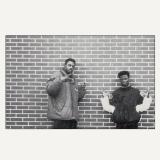
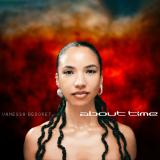
DISCOVER THE BEST TRACKS FROM BARRY WHITE"S CULT PERIOD, FROM 1979 TO 1983, BROUGHT TOGETHER FOR THE FIRST TIME ON A UNIQUE DOUBLE VINYL. Including : "CHANGE" - "GHETTO LETTO" - "I FOUND LOVE" - "LADY, SWEET LADY" "ANY FOOL COULD SEE (YOU WERE MEANT FOR ME)" - "YOUR LOVE, YOUR LOVE" "SHE"S EVERYTHING TO ME" - "DON"T LET" EM BLOW YOUR MIND" - "LET"S MAKE TONIGHT (AN EVENING TO REMEMBER)" -"I"M ON FIRE"
Suche:perio
Siccar Point is the second album release from Intertoto, and is a study of the geographical extremes on the east coast of his native Scotland. The eight pieces of music on the album serve as vignettes portraying this ancient headland, while also acting as an allegorical reference to the pioneering work of Scottish geologist James Hutton, who proposed that geological features are not static but undergo continuous transformation over indefinitely long periods of time.
With this theory — and the striking landscape — in mind, Jamie Coull, aka Intertoto, imagines tectonic forces through tension, space, density, and texture. Divergent and convergent boundaries are realised in different moods throughout. Siccar Point opens with the irregular drift of Raw Lunar Concrete, a track that undulates asymmetrically, pulling you off balance before settling into the pulse of Condor Launch and Cloud Chamber — the more veiled club moments of the album.
Further into the strata, Siccar Point mines deep into the dense textures of Metallic Veins and Redox Dub, before closing with the cascading outro Foraber, shimmering with tones that imagine a view outward from the rocky promontory — beyond the vanishing point.
Following her debut album, I’ll Look for You in Others (Past Inside the Present), earlier this year, Patricia Wolf joins Spain’s Balmat label with See-Through, her second album. See Through finds the Portland, Oregon musician and field recordist continuing to develop her signature style of ambient, balancing radiant soundscaping with a carefully expressive sensibility. But the new album is also marked by an important difference. Where I’ll Look for You in Others was largely written in response to the death of a loved one, See-Through represents a kind of rebirth.
“After a long period of grief, I had been hoping to find my way to a place of lightness, peace, playfulness, curiosity, and sensuality again,” Wolf says. “What I was surprised and pleased to find is that for the most part, I had.”
She wrote and recorded many of the album’s songs quickly, in preparation for an August 2021 broadcast on the online radio platform 9128 Live. Excited for the opportunity to play live after more than a year of the pandemic, Wolf decided to write all new material for the event, working with a lean setup of Octatrack, Roland Synth Plus 10, Make Noise 0-Coast, and Novation Summit. (In fact, Wolf was the first sound designer invited to create patches for the Summit.) She also picked up an acoustic guitar that her brother had loaned her. “I decided to take the surrealist approach of ‘pure psychic automatism’ to see what poured out of me,” she recalls. “Woodland Encounter,” “Under a Glass Bell,” “The Grotto,” “The Mechanical Age,” “The Flaneur,” and “Psychic Sweeping” are all products of those sessions; the through line holding them together is their exploratory spirit and clarity
of vision.
Other songs, like “A Conversation With My Innocence,” “Recalibration,” and “Psychic Sweeping,” wrestle with the traumas of the preceding year. Though they may linger on the heaviness of loss, Wolf says, “What I discovered is that a stronger archetype had grown inside me to steer my emotions and thoughts to a better place.” Likewise, “Wistfulness” and “Upward Swimming Fish”—her first experiments with VST synthesizers—balance the bittersweet embrace of melancholy with the freedom to choose happiness.
“Pacific Coast Highway,” the album’s lone song with drums, might at first seem like an outlier. But it also signals Wolf’s interest in finding a fusion between the introspection of ambient and the togetherness of beat-oriented music. “Experiencing loss and isolation is what drove me into gentler territories of sound,” she says, “but I want to start making more beat-oriented music. After an extended period of loss and isolation, I’m ready to experience more joyous and social things.”
Listeners with keen ears might recognize the album’s closing song, “Springtime in Croatia”: A different mix of the song originally appeared on the 2021 digital compilation secondnature & friends Vol. II, from the Seattle label secondnature. This marks its first appearance on vinyl, however, and its spiritual home is undoubtedly here, at the close of See-Through. As the bookending answer to the opening “Woodland Encounter”—another song in which field recordings play a crucial role—it closes the circle of an album that is itself keyed to the steadily turning cycles of life.
Never-before-heard psychedelic acid techno and ambient compositions from beloved Japanese producer Susumu Yokota. Recovered from a collection of DAT tapes gifted by Yokota to Ray Castle during the period he released some of his most memorable records such Acid Mt.Fuji or Ebi's Zen.
A fortunate meeting between Ray Castle and Transmigration label boss David Fogarty means these works finally see the light of day.
Faitiche welcomes a new artist: Christina Kubisch belongs to the first generation of sound artists. Her practice ranges from performances, concerts, to works with video and visual art, but she is best known for her sound installations and electro-acoustic compositions.
TUNING brings together three pieces by Christina Kubisch from different periods of her oeuvre. What they have in common is the way they transform sound phenomena originally considered “non-music” into compositions.
Jan Jelinek: Gaming in Silence (2024) is the most recent work on this compilation. It’s a collage of electromagnetic waves, voice, and abstract sound textures. How did this combination come about?
Christina Kubisch: Gaming was commissioned as a fixed-media composition for the Sound Dome at ZKM Karlsruhe. Since Resonances: The Electromagnetic Bodies Project (2005), I’ve been making recordings in the old and new server rooms at the ZKM and in their permanent collection of historical computer games. Computer games like Asteroids (Atari, 1979) and Poly-Play (VEB Polytechnik, 1986) have specially generated analogue electromagnetic waves that interest me in particular on account of their density, rhythms and textures. I originally studied painting and to me the work of composition often feels like painting an abstract picture. I alter my source material as little as possible, layering and overlapping until a distinctive sound space emerges. In recent pieces, I sometimes combine magnetic waves with field recordings or live instruments. In Gaming it’s my recording of a Chinese song about silence.
JJ: Two persons walking through a street in Madrid (2004) is a recording from your Electrical Walks series. Here we should give a brief explanation of one of your best known works: participants in an Electrical Walk move through public spaces wearing prepared headphones that allow them to receive electromagnetic waves from their surroundings – for example from security gates, ATMs or neon signs. They discover a situation that normally is inaudible to the human ear and they can actively shape it by choreographing their movements. I really admire this piece, not least because there’s no clear dividing line between participants and artist. What exactly do we hear in Two persons walking through a street in Madrid (2004)?
CK: With this early work, I wanted to understand what is heard by people participating in an Electrical Walk in the same place but moving in different ways. The Spanish composer Miguel Alvarez-Fernàndez and I set off from opposite ends of a major shopping street in Madrid, met briefly in the middle, and then continued to the end. We both recorded our walks and I then layered them over one another. You might call it a work of electromagnetic conceptualism.
JJ: Diapason (2009 version) is an installation that plays a composition based on sounds from fifteen tuning forks. This setting is audible in the recording: there’s no dramatic arc, no beginning or end – instead, it recalls a piece of aleatoric music focussing on the decay phase. How did you come to make this work and could you tell us something about your compositional method?
CK: Diapason is part of a series of three pieces that deal with “non-instruments” or instruments that no longer exist: electrical mine bells used to send signals to the workers underground; a historical glass harmonica originally used for medicinal purposes; and tuning forks that were used by doctors to test people’s hearing. All of these methods are no longer in use. The sound of the tuning forks, audible only if held close to the ear, was recorded at the electronic studio at Berlin’s Technical University in such a way that even their decay remained audible. The frequencies range between 64 and 2048 Hertz and they can be adjusted at micro-intervals using small movable weights. The sequence and the duration of the pauses are dictated by chance and were not defined in advance. The 2009 version was created for an installation in the historic Holy Cross Church (Korskirken) in Bergen. Visitors could enter and leave the space at any time, deciding for themselves where and for how long they wished to listen to the sounds played back over an array of small loudspeakers placed on the floor of the apse.
Credits:
Gaming in Silence: commission of the ZKM/Hertzlab, Karlsruhe 2023
elektronic sound processing: Tom Thiel
sound engineering and mixing: Eckehard Güther
Diapason: produced at Elektronisches Studio of TU Berlin
rearrangement: Eckehard Güther
Christina Kubisch, published by Edition Christina Kubisch / Random Musick Publishing
image front: Transitionen 2021 by C. Kubisch, sonagrams of electronic waves (courtesy: Galerie Mazzoli Berlin)
image back: Diapason Tuning Fork, property of Folkmar Hein, Photo: Archiv Christina Kubisch
design by Tim Tetzner
mastered by Giuseppe Ielasi
Thanks to Miguel Álvarez-Fernández, Folkmar Hein, Dominik Kautz and Mario Mazzoli
In the Summer of 2023, Dans Dans were nearing the end of a two-and-a-half-year-long period of intense creativity, during which they had released two celebrated albums, Zink and 6, and had toured extensively in Belgium and abroad. Feeling it was time for a well-deserved break in activity, they decided to play three final, intimate concerts before going into hiding: two consecutive nights at Trix in Antwerp (hometown of drummer Steven Cassiers and guitarist Bert Dockx) and one at Botanique in Brussels (hometown of bassist Frederic Jacques). 'LIVE!', Dans Dans' first ever full length live record, features highlights from these memorable nights, offering excitingversions of several of the group's most beloved compositions from across their back catalogue. While the band is, at the time of writing, getting ready to start working on new material, these recordings from 2023 are a good reminder of the magic Dans Dans are able to conjur when they get together and play. Here is one of the most original instrumental trios of the last two decades in their natural habitat, on stage, performing for a live audience, speaking through their intensely personal music. Here is Dans Dans at full flight, effortlessly blending different musical genres and painting fascinating sonic landscapes full of energy, mystery and contrast.
The fifth release on Objekt’s Kapsela imprint is (re)weave, an EP of crystalline club tracks from Detroit-born, London-based producer Tristan Arp.
(re)weave was written during a prolonged period of flux for the artist. “When I started making this record, my life and the world felt like a maze,” he recounts. As he routed and re-routed through past and future homes – Mexico to New York to Detroit to Mexico and finally to London – his output bore the marks of this repeated uprooting. “I was thinking about making music that reflected these twists and turns, and the knotty pathways through them. I was also re-reading Borges around this time, which must have influenced my interest in labyrinths.”
Accordingly, the EP is a mycelial puzzle, a tangle of spidery, undulating ostinatos and earthy percussion, stitched through with syncopated kicks. Employing the sounds of multitudinous critters and kin – whales, insects, thunder, water, forests – the arrangements sum to a sentient mesh of organic matter, the compositions living and breathing like earthly beings. Kaleidoscopic tendrils explore in every direction but are always underpinned by a driving, percussive backbone. It’s not easily classifiable: it’s bass-driven, but to simply call it “bass music” would sell it short.
In keeping with the winding geographical paths traced over the EP’s creation, (re)weave saw Tristan Arp revisiting and reinterpreting unfinished sessions and incorporating them into newer ideas. Rhythms and sounds have been transplanted and self-recycled from previous projects and woven into the fabric of the record. In this way, (re)weave also describes a looping back over time, a recalibration of the self from past to present through interlocking rhythms, channeling and communing with versions of oneself from times gone by.
The closing track, Wish Server, slows the EP to walking pace and hints at tentatively emerging from the deepest jungle into a delicate, innocent light. Tristan Arp imagines it as a dialog with a baby-self. “Some of my earliest memories are of sitting at my mother’s loom,” he offers. “The sequence of these tracks traces these feelings and follows the thread back to the primordial soup… through mazes… to a feeling of levitation.”
- A1: Dick Morrissey Quartet - Bang!
- A2: Emcee Five - Mike's Dilemma
- A3: Michael Garrick Quintet - Vishnu
- A4: Vic Lewis & His Bossa Nova All Stars - Last Minute Bossa Nova
- A5: Johnny Burch Octet - Early In The Morning
- B1: Pony Poindexter - 4-11-44
- B2: Terrell Prude - Princess
- B3: Johnny Hartsman - Soppin
- B4: Eddie Kochak & Hakki Obadia - Jazz In Port Said
- B5: Charles Kynard With Clifford Scott - Where's It At
- B6: Gene Ammons - Jungle Soul
Compare the best of British jazz circa 1963 with American sounds from labels such as Prestige, Tangerine and World Pacific. This album captures the period when rhythm and blues is emerging as the dominant club sound, forcing Soho jazz clubs to change their music policy in order to survive. On the British side, you’ve got Ronnie Scott’s arrangement of Last Minute Bossa Nova; Bang!, taken from Dick Morrissey Quartet’s first session for the BBC’s World Service, recorded around the time of the release of their first album Have You Heard? The version here is take two. You can hear take one along with the rest of the eleven-track session on R&B18 Jazz For Moderns.
Early In The Morning is a Ginger Baker/Jack Bruce arrangement of the traditional work song realized as a repeated blues riff, and is the first ever recording that is recognizably British Blues. Graham Bond features on alto sax along with Bruce and Baker together as members of the Johnny Burch Octet heard playing live at a BBC staff party from March 1963. Side Two features Jazz Stateside, such as West Coast guitarist Johnny Hartsman, Gene Ammons veering into proto jazz-funk on Jungle Soul, aka Ca' Purange plus a couple of top notch Hammond workouts from Terrell Prude and Charles Kynard.
"Late '80s and early '90s electronic music has had a steering influence on the Altered Circuits catalog curation, so we are delighted to present an EP by one of the pioneers of that era: Olivier Abbeloos. His 40 years of experience as a producer and DJ translate into a Discogs profile so extensive it reveals his real name alone can be (mis)spelled in 20 different ways. "1993-1994: Rare & Unreleased 1" features five tracks produced under three different aliases, all sourced from the artist's DAT tapes vault, dating back to the prolific two-year period referenced in its title. ALT024 opens with two "Conga Squad" tracks. "Combo" is a high-energy cut driven by a savory staccato chord progression, and "Substitute" works a similar, yet more restrained dynamic, that is, until a boisterous vocal sample enters. The quirky bass lines and moody synth work of "Under The Ground", the first "Holographic Hallucination" inclusion, concludes the A-side. Its twilight atmospherics fit right in amid the B-movie horror electro trending on contemporary dancefloors. The flip opens with "Psychosky", which caters slightly more to a slow-burner vibe and sets the stage for extensive piano work. "Dj Flavour", composed under the "Warp Factor One" alias, closes the EP. Here, the Latin-tinged percussion that runs as a subtle thread throughout the release takes the spotlight, while funky basslines and manipulated vocals add layers of detail. It is the only track on the EP that was already released in 1994, appearing as part of a - by the standards of that era - obscure and very limited 300-copy pressing. Those times sure have changed, but the music still sounds as fresh as ever."
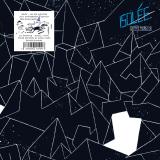
Posh End Music boss Fear-E returns with his second album ‘Descent into Ascension (Snapshots of a Mental State)’ this February. Recorded during a period of withdrawal and isolation, the release serves as a diary of a mental state as the producer worked through a period of challenging mental health. Here, he hones in on his primary love of techno bringing in influences of Bangaltar-ish French house and disco and also pays homage to EBM originators Nitzer Ebb.
Between electronic shadows and cinematic textures, this new album from QUENUM draws its influences from the likes of Massive Attack, Archive, and Burial. Started and produced in London, it reflects a change of time — both in the climate and within.
This project represents a personal and artistic turning point for QUENUM. He wanted to experiment with new ideas, not necessarily music for the club. The album was created in close collaboration with his son Zac, a talented musician who contributed both as a singer and instrumentalist on several tracks. They shared wonderful moments creating this album together.
He also worked hand in hand with his long-time friend Christophe Calpini, who played a key role in mixing and in developing the textures and atmospheres that shape the album’s sound. The result is an intimate, personal, and timeless journey, deeply rooted in the now.
Quenum elaborates: “The idea for my album was born during Covid in London, when concerts, museums, and social activities suddenly stopped. To cope, I started running daily and spending hours in the studio creating music. In our garden cabin I worked alongside my son Zac who was practicing piano, preparing for his entry into Trinity Laban Conservatoire. He listened to my tracks, and eventually contributed vocals with his ex-partner on two songs, ‘Blue Sky’ and ‘Never Like Before’. The album’s dark atmosphere reflects that period. Once it was complete, I asked my longtime friend Christophe Calpini to handle arrangements and mixing.”
A true pioneer of electronic music, QUENUM has been shaping the global techno and house scene for over two decades. One of his most celebrated tracks, “Orange Mistake”, co-produced with Luciano in 2001, became a turning point in his career. The success of this collaboration led them to launch the legendary Cadenza label, which rapidly grew into one of the most recognisable and respected imprints in the scene, known for its vital releases and unforgettable parties worldwide.
Over the years, QUENUM has continued to explore new creative paths and refine his artistic identity, constantly reinventing his sound while maintaining his unique musical signature. His insatiable curiosity and openness to new influences have kept him consistently in demand, from intimate underground venues to the world’s most respected festivals and clubs.
Saxophonist, producer and composer Brian Allen Simon explores darker hues, transposing waking and altered states under his studio veil Anenon. On the deeply evocative new album 'Dream Temperature', he shifts electronic processing to the foreground, introducing digitized wind instruments and unworldly atmospherics, not heard since his innovating mid-late 2010s output.
A longtime Los Angeles resident, born and raised, Brian Allen Simon has expressively operated under the moniker Anenon, releasing the highly revered 'Petrol' (2016), 'Tongue' (2018) and the viscerally beautiful 'Moons Melt Milk Light' (2023), in a line of unwavering musical dialogues. While the penultimate album was a deliberate, reductive, entirely acoustic detour that was born out of a want to unplug, 'Dream Temperature' sees Brian primed with a newly discovered wind synthesizer as his central compositional tool, alongside acoustic piano and tenor saxophone. The entirety of the album's electronics are triggered by Brian's lungs, generating otherworldly synths modulated by expressive breath control, channelled through the laptop as the core processing chamber for added textural components and field recordings.
A free floating and heavy emotional resonance marks 'Dream Temperature' from beginning to end, invoking the feeling of waking up, still heavy from a night of half-remembered dreams, and continuing one's day in this state. Simon maps out the album's spatial voice early on the statement title track, a deep, yet compact cut, generated from digital saxophone rasps that whistle by in close proximity, along with haze filled textures and sub bass. There is a sonic oscillation of urban grit and pastoral drift throughout as tracks pass by like introspective thoughts, fueling both a tense and ethereal quality that underpins the album. Interluding solo and part-solo piano improvisations 'Last Sun 1' and '2' are positioned adjacent to the buffering digital soundscapes. Their softer, still processed timbres pierce the melancholic exterior, offering a contrasting tenderness that could echo the grace of Ry?ichi Sakamoto, the spiritualist rigor of ECM's Keith Jarrett and a touch akin to Aphex Twin's piano miniatures. 'Nulle Part 1+2' signals the first appearance of an acoustic wind instrument, as tenor saxophone flourishes are juxtaposed against noisy drones, all shouting at the void, with notes resurfacing like lost digital data.
The album was recorded at home during either sunset or nocturnal hours between September of 2024 and October of 2025, a period in which Brian found himself craving more lengthy and intimate studio time as he searched for more pronounced textural qualities amidst his new sonic ambitions. 'When The Light Appears, Boy' shows further evidence of this deeper universe, revealing a grittier edge as the album's essential blueprint is sonically inked. A sprawling expanse of wind synths rhythmically encircle the listener before a dreamy, ghostly ambience blankets 'Toyama'. The sound is evocative of the productions of post dubstep era luminaries such as Burial or the productions of HTRK's Nigel Yang. More isolating and enveloping than the previous all acoustic record, this is music both disorienting and yet warmly inviting all at once. A sonic diarist at heart, personal field recordings were also taken from Sardinia, Japan, Big Sur and LA which intersect at unexpected moments throughout the album's 31-minute play time.
'Dream Temperature' is a vital coalescence of both Simon's electronic and acoustic practices with repositioned electronics akin to earlier works, both haunting and elegant, yet still profoundly personal. Simon continuously resonates as an experimental outlier treading an enthralling, non-linear musical path. This music resolutely glows with an unknowing aura, like an untapped energy source waiting to be discharged.
- 1: My Falling Sinks
- 2: Empyrean Flare
- 3: Tesselation
- 4: To Whoever Shall Inherit The Earth
- 5: Smoking Mother
- 6: Att Böja Själarna
- 7: This Will Be My Last Piece For Organ
- 8: Fault Lines
Die XKatedral Anthology Series III ist die dritte Ausgabe einer Reihe von Archivveröffentlichungen, die Musik von Komponisten zeigen, die sich mit langsam sich entwickelnder harmonischer und klanglicher Musik beschäftigen. Die hier vorgestellten Stücke konzentrieren sich auf die Verwendung von synthetischen und akustischen Klängen sowie auf algorithmische Komposition als Werkzeuge für präzises Arbeiten im Bereich der spektralen Erforschung. Dieses Doppel-Vinyl-Set erscheint anlässlich des zehnjährigen Jubiläums des Labels und enthält Werke aus den Jahren 2014 bis 2025. Es wird zusammen mit Neuauflagen der XKatedral Anthology Series I-II veröffentlicht. "My Falling Sinks" von Kali Malone ist eine sparsame, absteigende Melodie für justierte Orgel, Cello und Akustikgitarre mit Lucy Railton und Stephen OüfMalley. Das Stück ist eine kompositorische Skizze in septimaler reiner Stimmung, die 2021 während eines Aufenthalts in La Becque auf einer experimentellen Stimmorgel in La Temple de La Tour-de-Peilz entstanden ist. ,Empyrean Flare" von Maria W Horn wurde 2022 für ,The Dawn Chorus" der Choreografin Stina Nyberg komponiert. Dieses Stück nutzt die von Arvo Pärt entwickelte Tintinnabuli-Technik, um vier Supersaw-Oszillatoren in langsamen diatonischen Arpeggios zu animieren, die um eine Moll-Tonika-Dreiklang kreisen, und destabilisiert das harmonische Gerüst durch Glissandi und verstärkt die Summe seiner Teile durch analoge Bandsättigung. ,Tessellation" von David Granstrom wurde im Sommer 2017 mit generativen Synthesemethoden komponiert. Die musikalische Periodizität und harmonische Bewegung, die in dem Stück zu hören sind, entstehen durch feste synthetisierte Bandschleifen, die einen Raum zwischen gegensätzlichen Welten erkunden. "To Whoever Shall Inherit the Earth" ist das erste Solostück von Jessica Ekomane und entstand laut der Komponistin fast zufällig. Das Werk wurde vor einem Jahrzehnt spät in der Nacht aufgenommen und fängt einen flüchtigen, zerbrechlichen und unwiederholbaren Moment ein, der genau so festgehalten wurde, wie er sich ereignet hat. Smoking Mother von Stephen OüfMalley wurde für Gisele Vienneüfs Der Teich / LüfEtang von Robert Walser geschaffen. Es wurde 2018 während eines Aufenthalts im SMEM-Synthesearchiv in Freiburg komponiert und im August 2020 bei EMS produziert. Das Stück greift auf Werke von Zia Mohuiddin Dagar, Krzysztof Penderecki und Popol Vuh zurück und erkundet gleichzeitig die Wurzeln des Minimalismus. ,Att boja sjalarna" von Mats Erlandsson wurde 2018 komponiert und ist Teil von ,On Eternity", einer Sammlung von vier Texten und vier zehnminütigen Kassettenloops, die 2021 von Irrlicht Forlag als limitierte Box-Set-Edition veröffentlicht wurde. Dieses Werk enthält Darbietungen von Gaianeh Pilossian und Sara Fors, jeweils auf der Violine und mit Gesang. This will be my last piece for organ wurde 2025 von Theodor Kentros komponiert und nutzt Gruppen von Cluster-Oszillatoren durch resonante Rückkopplung, um die schwankenden Frequenzen zu synthetisieren, die beim Verstimmen einer Orgel im physischen Raum zu hören sind. "Fault Lines" wurde von Daniel M Karlsson mit generativen Methoden komponiert, wobei ein deterministischer und endlicher Output für diese Veröffentlichung festgelegt wurde. Dieses Stück enthält Gesangsdarbietungen von Sara Fors, Ansis B.ti. und Art.rs C.ukurs.
- 1: Boustan El Achar
- 2: Fatma
- 3: Samraa
- 4: Telephone
- 5: Messager Aala Ettayper
- 6: Biqalbi N'thab
- 7: Ma Ahla Lilat Samar
- 8: Bouaamrane
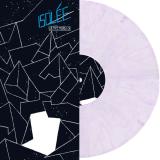
This compilation brings together eight tracks by Yassine Nana and his group, recorded between 1984 and 1989, during a key moment in Mauritania"s musical history. A central figure of one of the country"s most respected musical families, Yassine stands at the crossroads of a long-standing tradition and a period of deep transformation in form, sound and production. Recorded in Mauritania as well as during stays in Paris and Rabat, these songs integrate drum machines, synthesizers and electric guitars into Saharan musical structures. Influenced by reggae, soul and new wave, the group develops a sound that reflects the circulation of music and technology in the 1980s, while remaining firmly rooted in Mauritanian languages, themes and melodic systems. Love, travel, exile and music itself run through lyrics sung in Hassaniya and classical Arabic.
- I Call My Baby Pussycat
- Put Love In Your Life
- Little Ole Country Boy
- Moonshine Heather
- Oh Lord, Whylord / Prayer
- My Automobile
- Nothing Before Me But Thang
- Funky Woman
- Livin' The Life
- The Silent Boatman
Demon Records are proud to present Osmium Deluxe - the first recordings credited to the funk-rock ensemble Parliament-Funkadelic.
Since its re-release in 1990, Osmium has been distributed numerous times by various labels in America, Europe and Japan under alternate titles – including Rhenium and First Thangs. A number of these reissues have featured material that was not included on the original album, such as unreleased tracks and singles that were taken from the same time.
This in-demand, black-vinyl version of the Record Store Day 2024 sell-out compiles together everything from that period 2 LPs and includes; the full Osmium album, the single sides that never made the album, unreleased tracks, demos and jams – all of which made their debut vinyl appearance as one package in 2024.
Many of these recordings are still as far-out as they sounded when first released. However, the tracks here represent the genesis of what would become P-Funk and the entity that would give the world ground-breaking albums Maggot Brain (1971), Mothership Connection (1975), and One Nation Under a Groove (1978). An essential addition to anyone’s collection.
Few French house artists have the canon and credibility of Franck Roger over such a long period of time. It seems hardly a week goes by without a new drop - or a new old drop - of gold, and here he continues his work with Seasons Limited. 'Tapis Rouge' kicks off with the sort of warming depths that have long been his trademark, this time underpinned with dubby swing. 'If I Had' is a more soulful cut with a cheeky bassline and swirling synths that are utterly ageless. 'Love Potion' is a romantic sound with dreamy pads and 'Have I Lost You' has a zoned-out feel for when you want to give yourself over to the groove and gaze at distant chords.
James ‘ReKab’ Baker is a highly regarded British producer who made some of the finest tech-soul, electro & ‘Artificial Intelligence’ style electronic music of recent years. James sadly passed away August 2025 and has been a great loss to the community, his productions on labels such as Distant Worlds, Fourier Transmission, Yore, We’re Going Deep, Moatun 7, Magnonic Signals and Analog Concept were much loved by fans of this music worldwide and all sold out upon release.
Previously, his first 4 albums had only ever been available digitally, initially issued on the Icelandic label Moatun7 and are currently only available on Bandcamp. Now, for the first time, in association with UK electronic label System One, all 4 albums will be issued on vinyl as full length albums, fully remastered by Justin Drake & the digital versions will be once available again on all DSPs worldwide.
The first reissue in the series is ‘Analogue Isolation’, to be released March 27th. Written & recorded in 2020 through the Covid lockdown period, the album is a masterclass in pure home listening electronica. Blissful, emotive and melodic with crisp drums, gently pulsing basslines, lush pads and exquisite melodies, Analogue Isolation heralded the arrival of a truly talented producer who enchanted fans of the genre over the coming years
Analogue Isolation will be a limited initial run of 250 copies through all stores worldwide March 27. A pre-release stream is available on Soundcloud here. The subsequent albums will be released throughout the remainder of 2026 & will be accompanied in December by a strictly limited hardcase for collectors to house all 4 albums. Meanwhile, all 4 albums will be available on DSPs worldwide from March 27.
Call it soulful dream pop, proto-trip hop or downtempo jazz - "Tender Rain" is the follow-up LP to the successful "This Is" album and continues to deliver Ghia's unmistakable sonic magic. On this release, the band shares a selection of previously unreleased vocal songs alongside instrumental pieces, all carried by their trademark chilled and almost meditative atmosphere. Most of the recordings date from the early 1990s, while early demo versions of "New Love" and "Teardrops in Your Eyes" may reach back as far as the late 1980s.
The album opens with the title track "Tender Rain," where smooth vocal jazz harmonies merge effortlessly with soulful pop elements. The track originally appeared only on CD in 1993 on the small Mikado label run by renowned German guitarist Ulli Bögershausen. The band recalls that the piece was first pre-recorded using MIDI equipment and a Tascam 16-track recorder before being completed in the studio with drums by legendary drummer Mickie Stickdorn (Carsten Bohn's Bandstand, Cyklus, Elephant, Lake), percussion by Corinna Ludzuweit, and the final touch-Lisa Ohm's remarkable vocals.
At the time, Mikado was also looking for instrumental material for radio and synchronization use. They selected the track "Tropfstein" for a sampler CD and requested more pieces. In response, "und recken ihre schlanken Glieder" (roughly translated as "and stretching their slender limbs") was composed especially for the project, as Frank Simon remembers. Both tracks appeared on the now rare Mikado sampler CD under the alias z. Zt., short for "zur Zeit" ("at present" or "these days").
Several further pieces in a similar vein were created during this period, including the previously unissued "Auf unserm grünen Sofa," "Reise bei Nacht," and "Was ich Dir noch sagen wollte." These tracks are beautifully crafted downtempo pieces featuring smooth, jazzy piano lines combined with touches of ambient and New Age aesthetics. "Auf unserm grünen Sofa" stands out in particular and will likely resonate with all downtempo enthusiasts. Lutz Boberg recalls that many of these recordings were captured during a single afternoon in the studio, fueled by spontaneous ideas and creative momentum.
On tracks such as "Teardrops in Your Eyes," "New Love," and the haunting Dark Spirits Mix of Ghia's song "What's Your Voodoo?", singer Lisa Ohm delivers soulful pop performances with her clear and captivating voice. "Change Your Sex," the third track previously featured on the Mikado sampler, leans more toward late-1980s funk and was aimed at radio and DJs at the time. Its subject matter was relatively daring for the period, telling the story of someone contemplating a change of sex "to get rid of the troubles."
Together with "This Is" and "Curacao Blue", "Tender Rain" forms another essential chapter in the rediscovery of the band's work. More than thirty years after their creation, these recordings still sound strikingly fresh, reflecting a unique style that in many ways anticipated the rise of trip-hop in the early to mid-1990s.
A deep and sophisticated addition to the catalogue of one of Germany’s oldest House labels. With Rhythm Puzzle, Bass Cab returns to Cabinet Records, one of Germany’s longest-standing and most respected House labels, continuing a legacy that has shaped underground dance music with quiet confidence and unmistakable identity for decades. Few labels have managed to preserve such a clear artistic vision over such a long period of time. Cabinet Records has always stood for depth over trends, substance over spectacle, and a deeply rooted connection to the essence of House music.
- A1: Rigor Mortis
- A2: Drinking Sand
- A3: Neurobeat
- A4: Close Combat
- A5: Cybernetics And Pavlovian Warfare
- B1: Check It Out
- B2: Ballistic Statues
- B3: Burn Out
- B4: Bodycheck
- C1: On Command
- C2: Flesh
- C3: Colonial Discharge
- C4: Taste (The Suburban Whiplash)
- D1: Drinking Sand (Remix)
- D2: Rigor Mortis (Extended)
- D3: Flesh (Remix)
- D4: On Command (Live 89)
- D5: Burn Out (Between The Sheets)
Clear Blue Vinyl[33,82 €]
Belgian electronic body-music pioneers A Split-Second deliver an expanded reissue of their influential 1987 debut Ballistic Statues, a landmark of the New Beat and EBM movement. Blending dark electronics, cold-wave tension and precision-driven sequencing, the album helped define a pivotal moment in the late-80s European underground.
This new edition brings together all tracks from the original album and enhances them with essential recordings from the same era, including the band’s complete 1986 debut EP (A Split-Second), the cult Smell of Buddha, and additional period material.
Pressed in a limited run of 300 copies on black vinyl, the release comes in a gatefold sleeve and includes a reproduction of the original lyrics insert along an exclusive poster and one postcard.
Ballistic Statues remains a defining statement—raw, innovative and far ahead of its time. This reissue brings together the core foundations of A Split-Second in one essential collection making it ideal for both long-time followers and new listeners discovering the band.
- A1: Rigor Mortis
- A2: Drinking Sand
- A3: Neurobeat
- A4: Close Combat
- A5: Cybernetics And Pavlovian Warfare
- B1: Check It Out
- B2: Ballistic Statues
- B3: Burn Out
- B4: Bodycheck
- C1: On Command
- C2: Flesh
- C3: Colonial Discharge
- C4: Taste (The Suburban Whiplash)
- D1: Drinking Sand (Remix)
- D2: Rigor Mortis (Extended)
- D3: Flesh (Remix)
- D4: On Command (Live 89)
- D5: Burn Out (Between The Sheets)
Black Vinyl[28,53 €]
Belgian electronic body-music pioneers A Split-Second deliver an expanded reissue of their influential 1987 debut Ballistic Statues, a landmark of the New Beat and EBM movement. Blending dark electronics, cold-wave tension and precision-driven sequencing, the album helped define a pivotal moment in the late-80s European underground.
This new edition brings together all tracks from the original album and enhances them with essential recordings from the same era, including the band’s complete 1986 debut EP (A Split-Second), the cult Smell of Buddha, and additional period material.
Pressed in a limited run of 500 copies (200 on clear blue and 300 on black vinyl) housed on a gatefold sleeve with a reproduction of the original lyrics insert, an exclusive poster and one postcard.
Ballistic Statues remains a defining statement—raw, innovative and far ahead of its time. This reissue brings together the core foundations of A Split-Second in one essential collection making it ideal for both long-time followers and new listeners discovering the band.
Archeo Recordings is a record label. Old, lost, obscure and forgotten gems and a boundless focus on the new Balearic scene for a wider audience of collectors, DJs and music lovers. All releases are limited edition. This release is a Limited Edition EP (100 on Pink Marbled vinyl). New life and an expanded treatment for the magical Free Disco - You Are My Sculpture with the Original 2010 Heterosexual Mix + the Zion Heat Version (an obscure raw unreleased demo from that period that will light up all the dancefloors on the planet) + 2 special Balearic Remixes by label boss Manu Archeo.
Based in Rennes and founder of the Vives label in 2020, Weever has been exploring the interplay of light and shadow for over 10 years, crafting abstract soundscapes and textured sonic tunnels of unparalleled musical breadth. He elegantly blends industrial and baroque sounds to construct sonic cathedrals. His music is both utterly raw and meticulously crafted.
L’âge de la Galère :
started this EP in 2020. At the time, I had just finished my studies, it was a pretty difficult period and I had made a track, or rather a melody, that I thought was amazing. I held onto it all these years without ever releasing it. 2020 was a tough year overall. The big question was: What am I going to do with my life? Hence the title L’âge de la Galère
The title really started to make sense when I began putting tracks together for Micheal. Around that time, I was reading Those of 1914 by Maurice Genevoix. For those who don’t know it: it’s written as a journal and tells the story of the author and his fellow soldiers in the trenches during World War I.
I’ve always been passionate about the two World Wars, I watch every film, old and new, I listen to the soundtracks, and so on. Same with period films, especially medieval ones. I love drawing inspiration from them.
So naturally, I imagine and create around that. It comes easily because it’s always been my universe. And when I make music, those kinds of images inevitably come out, even subconsciously.
So I created and told an audio story through my 6 tracks.
“It’s 1914. The story of many men who, upon hearing the sound of the bells, are met with the announcement of a war like no other. Most of them are young, some very young, and they are drafted into the French and German armies. They have no military experience, and the first battles are so violent that many won’t make it back. Very few will earn the glory they deserve.
The conditions are appalling, everything is in short supply, and the men are exhausted. Still, they must hold on.
Leaving carelessly from beneath their mothers’ skirts, too few returned. Many were left traumatized, and an entire generation was forever changed.”
- A1: Fast & Delirious
- A2: Limitations
- B1: Music (In My Mind) Feat. Christabelle
- B2: Cane It For The Original Whities
- C1: There's A Drink In My Bedroom And I Need A Hot Lady
- D1: I Feel Space
- D2: Arp She Said
- E1: Further Into The Future Feat. Prins Thomas
- E2: Gentle As A Giant
- F1: Another Station
- F2: The Contemporary Fix
Originally released on CD in 2006, It's A Feedelity Affair marked a formative moment in Hans Peter Lindstrøm's early career, compiling key tracks from his first wave of 12-inch releases between 2003 and 2006. Now, twenty years after the founding of his Feedelity label, the album is presented for the first time as a newly remastered vinyl edition.
"Listening back now, I hear an artist still figuring things out, but with a clear instinct for where I wanted to go. It was a period defined by freedom - no rules, no expectations." - Hans-Peter Lindstrøm
Released at a time when electronic music was shaped by extended runtimes and physical formats, It's A Feedelity Affair captured a club culture rooted in patience, atmosphere, and spatial awareness rather than immediacy. Its long-form approach remains central to the album's lasting appeal and resonates strongly with today's renewed focus on vinyl and immersive listening experiences. The album stands as a document of an era marked by experimentation, expansive club tracks, and an open-ended vision of electronic music.
Upon its original release, the album received widespread international attention, including a Best New Music rating (8.4) from Pitchfork. The track I Feel Space has since become one of Lindstrøm's most enduring and recognizable works. The album also documents some of his earliest collaborations with Prins Thomas and Christabelle, resulting in tracks such as Boney M Down and Lovesick.
Lindstrøm relaunched Feedelity in 2024, with the label returning in 2025 alongside his most recent album Sirius Syntoms and the single Cirkl, marking a full-circle moment for the imprint. A new studio album is currently in progress and expected in autumn 2026.
- A1: The Hardest Climb
- A2: The Good The Bad & The Ugly
- A3: Bonnie And Clyde
- A4: Last Call
- A5: Sos
- A6: Ghost Town
- A7: Wish You Were Here (Far Away)
- A8: Angel's Song
- B1: Ms. Whiskey
- B2: Lake Of The Sky
- B3: Losing My Religion
- B4: Get Out Of My Head
- B5: Raised By Wolves
- B6: Divine Intervention
- B7: The Man Behind The Mask
- B8: Bury Me In Vegas
White Vinyl
The fringes of the desert have a way of changing a man, but the high-altitude chill of the Sierras will strip him down to his soul.
Following the gritty, neon-soaked introduction of his debut, Red Leather returns with his sophomore studio album, TAHOE. If his first record was a desperate sprint through the dark alleys of the soul, TAHOE is the cold morning after—a cinematic, sweeping exploration of isolation, clarity, and the jagged edges of recovery.
Named after the alpine lake that serves as both a sanctuary and a graveyard for secrets, the album navigates the duality of the landscape.
The songwriting dives deep into the "blue" period of his life—tackling themes of sobriety, the weight of sudden fame, and the ghosts of past versions of himself. It is an album about the silence that follows the storm, and the realization that the higher you climb, the thinner the air becomes.
- A1: Can I Live Feat. Precious Okoyomon 02:36
- A2: M32 Riddim 04:06
- A3: One Exists Or Agrees To Exist 05:00
- A4: Don't Panic Feat. Ms. Carrie Stacks 02:58
- B1: Duppy Know Who Fi Frighten 06:31
- B2: Helicopter Hovers Over My Crown Heights Apartment 05:19
- C1: Exorcise The Language Of Domination Feat. Juliana Huxtable 06:12
- C2: B2B Feat. Suutoo 05:32
- D1: Effects Of Resistance Feat. Khanyisile Mbongwa 06:12
- D2: Black Trans Masculine Experience (Instrumental) 08:55
May 2026 marks the arrival of TYGAPAW (aka Dion McKenzie)’s first full-length album on Tresor Records, entitled Together You Gather All Power Applied Worldwide. An acronym of its creator’s name, TYGAPAW’s third studio album is a deeply personal collection of music building worlds where Black queer and trans siblings can thrive, while unifying dancefloors worldwide. A proposition that collective wisdom liberates us from the matrix of domination we live within. The album unfolds as the latest chapter in TYGAPAW’s ongoing techno opera opus, continuing to center the voices of Black women, which surface as layered incantations rather than lyrics - powerful, haunting, sensual, activating.
With the process of creating the album starting in 2023, as TYGAPAW (Dion McKenzie) was in the first year of their transition, the music reflects the intensity of that period, where they were experiencing deplatforming as a response to the shift in their physical appearance: Tracks like ‘M32 Riddim’ and ‘Helicopter hovers over my Crown Heights Apartment’ feature high-paced rhythms intersecting with intense siren-like synths to form demanding compositions echoing a heightened sense of alert. Yet throughout the album, relief comes in the form of TYGAPAW’s vocal features, co-conspirators, and chosen family, whose voices are treated with reverb and echo, a sonic fingerprint that leads back to the pioneers in the legendary studios of TYGAPAW’s native land, Jamaica, an important reminder that the past will always inform the future. It is an album for dancers first and foremost, where joy, defiance, and integration with the natural body coexist, and every drop feels less like a climax than a transformation. Expect a bass that permeates your soul and melodic synthesized sequenced phrases echoing the dancehall eras of TYGAPAW’s youth, reshaped into hypnotic melodies that glow over industrial kicks designed to command attention, reasserting Jamaica's pioneering yet often overlooked contribution to electronic music.
In the opening track, ‘Can I Live’, Precious Okoyomon’s words feel like the beginning of a ritual; setting the intentions for the rest of the proceedings. As McKenzie puts it, their “work is about regeneration, resetting, getting integrated into nature, and about rebirth. That’s the tone I wanted to set at the outset of the album.” Ms Carrie Stacks continues this thread of support in ‘Don’t Panic’ with heavily processed vocals on top of a beat that takes inspiration from another important ingredient in the antidote to the oppression of isolation: Ballroom culture. “ I feel like I found my queerness in Ballroom, that’s why this track is very important to me.”
Echoes of NYC Black queer nightlife scene also permeate in the energetic drums of ‘Exorcise the Language of Domination’, in which Julianna Huxtable’s spoken performance complements the various movements and tones of the music. “My producer brain thought this was the one that Juliana’s vocals would be best suited for. I hinted: ‘what do you think of this one?’ She just went into her notes and picked some passages to go with the first section of the track. From there, it was a year-long process of development. It required time and space for this thing to evolve, but I think it’s one of the most powerful tracks on the album.” London’s SUUTOO contributes the album’s only musical collaboration on ‘B2B’, a track that emerged from sessions in McKenzie’s New York studio where the real objective was to connect and have fun; a time out from the demands of life outside.
The album closes out with a double hit of emotion in the form of ‘Effects of Resistance and Black Trans Masculine Experience’. The former features South African scholar Khanyisile Mbongwa drawing connections that exist between Africa and the Black diaspora, whilst looking to the future and calling for a shared sense of community.
The latter piece, an instrumental version of the piece which featured on the IMMIGRANT E.P. of 2025 is a gentle and deeply affecting end to the record, a place of peace and acceptance. This end-of-cycle tone is mirrored in the sleeve photography, which also ties back to IMMIGRANT by finally revealing what was hidden: a portrait of the artist fully self-actualized; a step towards true inner liberation. TYGAPAW is sonically defiant across this album; bass frequencies feel tactile — less heard than inhabited — infectious lead synth melodies remain with you long after the track ends. An overall sound that leaves asserting an urgent need for connection. From Detroit to New York to Berlin to Jamaica, despite geographic distance, this album reminds us that we remain in solidarity, recognising that meaningful world-building requires collective input and action, both personal and communal, if we are to move toward liberation.
2026 Repress
- Linen Paper, Foil Printed Box Set
- Includes 6 Double LPs + 1 Single LP, 13 Discs In Total
- All LPs Pressed on Coloured Vinyl
-Each Disc is Housed in a Printed Inner with PMS Print, Finished with Spot Gloss Printing. Each Sleeve Features an Abstract of the Original Album’s Artwork
- Also included are a 4 page Insert + Poster
Skintone Edition commemorates the singular talent of this music pioneer with the re-release of all of his albums released via his own Skintone label.
Over a 20 year period Yokota released 30 albums and countless 12s under a variety of aliases, across more than a dozen pre-eminent labels. Yokota received domestic and international acclaim as a house and techno DJ and producer throughout the nineties. Part of the vanguard of the Tokyo scene, his influential release Acid Mt. Fuji inspires techno artists to this day.
In 1998 though, at the height of his success, he established his Skintone imprint, which came to eclipse all of his previous achievements. Skintone shone a light on the diverse new directions in which his creativity had blown, from delicate, cyclical tape-loop meditations to neo-classical compositions. It also gave him the autonomy to combine his visual and music-making practices and, importantly, to create at his own pace. The label was a great success and his experiments proved foundational in the global 00s ambient canon.
Skintone Edition will be available as 2 box sets - the first volume coincides with the 10th anniversary of Yokota’s untimely death and the 30th year of Lo Recordings. All music has been fully re-mastered. This edition is presented with the generous assistance of the Yokota family.
Albums Included:
Magic Thread 1998
Image 1983-1998 [1998]
Sakura [1999]
Grinning Cat [2001]
Will [2001]
The Boy and the Tree [2002]
Laputa [2003]
With Black Koyo, Mattias De Craene enters a sound world at once intimate and vast. Born from journeys in Morocco and Brussels, the project traces the rhythms, chants, and spirits of the Gnawa tradition, revealing a quiet resonance that echoes De Craene's own search for depth and presence. Guibri, qraqueb, call-and-response chants, saxophone, loops, and electronics come together in a trance-induced dialogue - ritualistic, elemental, and dreamlike - creating a space where listening becomes immersion, tradition meets imagination, and music unfolds as a shared act of reflection and wonder.
About Mattias De Craene
Mattias De Craene's artistic path is marked by rare coherence. As a central voice in Nordmann and MDC III, he developed a physical, rock-inflected jazz language driven by propulsion, volume, and trance-like collective energy. Over time, a period of personal rupture - burnout, tinnitus, depression - shifted his focus inward. The saxophone became a breathing, textural presence, and in his solo work, he weaves saxophone, electronics, loops, and minimal forms into a cinematic, hushed world where repetition, resonance, and silence slow perception. Rooted in ambient and introspection, his music prizes attention over impact, precision over excess - a quiet intensity recognized with a nomination as Musician for the Music Industry Awards (MIA's).
About Black Koyo
Black Koyo is a Brussels-based ensemble and one of the most compelling voices of the Gnawa tradition outside Morocco. Led by maalem Hicham Bilali, the group brings guibri, qrraqueb, and call-and-response chants to life with trance-like intensity and ritual precision. Their music is both rooted and contemporary, weaving earthbound rhythms and vocal invocations into ecstatic, immersive soundscapes, creating a space where ancestral resonance meets present-day imagination.
About Jan Bang
Jan Bang is a pioneering Norwegian producer and musician, celebrated for his mastery of live sampling and his ability to merge electronics with improvisation, rhythm, and texture in real time. He mixed the album and occasionally joins live performances, bringing his signature approach to sound as co-founder of the influential Punkt Festivaland collaborator with artists such as Jon Hassell, David Sylvian, Arve Henriksen, and ECM Records' roster. As a performer and sound architect, Bang creates immersive, trance-like sonic textures where silence and sound carry equal weight. Within Mattias De Craene ftBlack Koyo, his live sampling becomes an organic instrument, weaving saxophone, electronics, and Gnawa rhythms into hypnotic, physically charged soundscapes.
Line-up & credits
Mattias De Craene - sax, electronics | Hicham Bilali - guibri, vocals, qraqueb |Ismael Akhraz - vocals, qraqueb | Marwan Abantor - vocals, qraqueb
All tracks are original gnawa traditionals played by Black Koyo and arranged by Mattias De Craene.
Album produced & recorded by Mattias De Craene in Essaouira, Morocco and hometown Ghent, Belgium 2025.
Text by Hicham Bilali.
Mixed by Jan Bang at Punkt Studio
Mastered by Lieven Van Pee
Artwork by Marina Sviridova
Design by Benoit Van Geel
Manufactured and distributed by N.E.W.S.
Executive production by W.E.R.F. records
Supported by Flemish Government, Jazzlab, nona, HA Concerts, Aubergine artist Management,
KAAP, La Bestia (Wout Van Putten) & mdcmu.sic vzw.
2026 (c) W.E.R.F. records
Kreng transports us through the swirling darkness and into the unknown with “Wormhole”, his first album in over a decade.
What does a trip towards another world sound like? We’re about to find out. The master of tension, melancholy, and the deranged is back after a long period working in the worlds of theatre and cinema. Last seen on Miasmah with the grief stricken The Summoner, Kreng now returns with Wormhole, following closer in the footsteps of the cult classics L’Autopsie Phénoménale de Dieu and Grimoire.
Starting with “You Are Here”, the listener travels through a vacuum of spacious minimalism and edge-of-your-seat tension. Within the journey, we are pulled and lured towards a mystic inner core and beyond, encountering drifting fragments of old-world nostalgia on the way: echoes of empty jazz bars sit alongside hellish, Hieronymus Bosch-like scenarios.
Surrendering to the album reveals a surprisingly reflective beauty beneath its darkness; it's a true home-listening gem that unfolds like a Lovecraftian cosmic horror-mystery in the way only Kreng could deliver. Forget everything you know and enter the secret door…
A new release curated by Mystic Jungle, founder of Periodica Records, who - together with a small group of artists - has spent the past decade shaping a distinctive sound in his recording studio based in one of the most remote areas of Napoli.
This second release on the West Hill Music catalogue features the voice of American singer Roxana, alongside guitar contributions by Yugoslavian musician Igor Sekulović.
The A-side, "Can’t Make You Out", unfolds as a crepuscular track with a laid-back, exotic atmosphere, marked by subtle funk-rock influences. On the B-side, a stripped-down mutant-funk track built around electronic drums and a repeated vocal chorus leaves space for minimal arrangements and textured guitar lines to emerge.
Limited vinyl-only release.
Enrico Fierro, known as Milord, a daytime engineer and researcher of human mind states during dreaming, has collaborated for years with Periodica Records and co-produced projects such as Danger Boys and Space Garage. In “Perfect Crime”, he presents a nostalgic vision of twilight synth-pop, capturing an urban landscape alive at night and in constant motion, blending street soul and echoes of classic house with textured synths, 808 patterns, and subtle new wave influences
Specific Objects debuts on Life In Patterns with Helios, a powerful 6-track EP shaped by the pressures, ambitions, and contradictions that define creative work in a hyper-competitive society. The record explores the perpetual pursuit of success - an ever-distant horizon that inspires as much as it consumes.
Named after the sun, Helios symbolizes the personal goals we orient ourselves toward: radiant and motivating, yet capable of overwhelming those who chase them too closely. The EP was written during a period of intense reflection on performance culture, "hustle" mentality, and the rat race of late capitalism - an environment amplified by constant comparison on social media.
Helios is both a celebration and critique of ambition - a techno journey through the heat, pressure, and brilliance of striving. It is scheduled to release on February 6, 2026 on both digital and vinyl formats.
Following on from the November release of the Material Things / Pike album Rain & Cymbals, 12th Isle enter the new year with a limited vinyl edition of Through Global Frequency, a prescient work of ambient synth, electro-acoustic music and voice recordings by long-standing Dutch multimedia artist Michel Banabila (b. Amsterdam, 1961). Structured around a poem largely composed of titles from recordings he has made over the years, and written during a period marked by new Dutch migration policies, the genocide in Gaza, and the rise of the far right across Europe, Banabila enlists the voices of friends and family, each reciting the poem back to him in their native language. These voice recordings are set within a unique composition that works with the tonality, cadence and rhythm of the vocals, encompassing languages such as Arabic, Spanish, isiZulu, German, French, English, Japanese, Turkish, Ukrainian, and Dutch. Contributions come from Scanner (Robin Rimbaud), Ines Kooli, Sebastian Lee Philipp (Die Wilde Jagd), Yuko Kobayashi, Simone Eleveld, Cengiz Arslanpay and more.
“I felt the need to create something warm, something that embraced diversity. Every voice here is uniquely recognisable and reflects how I know them. I truly enjoyed working with these recordings, focusing on their personalities and the distinctive sound of their languages. For me, making music has always been a way to stay sane, and I have always loved working with voice recordings.”
Music, mix and poem by Michel Banabila,
track 3 featuring Robin Schaeverbeke,
track 8 featuring Cengiz Arslanpay,
track 10 featuring Machinefabriek.
Cello on track 9 by Peter Hollo.
When I first started Future Retro London, primarily as a club night, the first event was meant to take place in April 2020, but due to the coronavirus pandemic, the date got pushed to June 2020 in the hopes that venues in the UK would have re-opened by that time. They very much were not re-opened by then and navigating the various lockdown periods that occurred meant the first event didn't actually happen until December 2021.
Dead Man's Chest was part of the original lineup intended for the first event but by the time it was actually able to happen, he had temporarily relocated to Portugal & it meant he wasn't able to make it for it. Various attempts were made afterwards to try & include him in events I was doing but nothing came together until I finally had him play the 2nd joint event I did with Distant Planet in December 2024.
He runs a label called Western Lore which I've featured on previously, with 2 different remixes I did of Plastic Face by Response & Pliskin, as well as a track featured on the first Blunted Breaks compilation. It only made sense to eventually work on a joint label project as his label is a key figure in the current wave of jungle music, plus I hadn't put any music from him on Future Retro London yet so now I can finally tick him off the list!
Big up to Dead Man's Chest for his work on the collaborations & for his involvement in making this release a reality.
Visionary producer Ibrahim Alfa Jr, who's been traversing the rave's farthest fringes since the late '90s, returns with his most focused and concise set to date, an anthology of undulating, bass-heavy experiments that surveys techno and its distorted history, printing fractured pulses and cybernetic synths over vanishing snapshots of jazz, funk, trip-hop, broken beat, dub and ambient music. It's a body of work that coalesced during a difficult time for Alfa.
After returning to Brighton and sobriety in 2022, he was diagnosed with a pulmonary embolism, subsequently suffering two debilitating heart attacks. With his immune system compromised, isolation was the only option, so for months on end Alfa devoted each waking hour to his art, recording samples, building digital synths and effects and meticulously sequencing some of his waviest, most experimental material to date. Over this period he finished over 500 tracks, writing impulsively and constantly challenging himself. "There was nothing to hold me back," he explains. "I just had music, I didn't know if I would see the next day."
Now recovered from his ordeal, Alfa looks back at this prolific period with optimism and fondness. It was a chance for him to reconnect with his art holistically, writing purely for himself without any outside influence. Because, at this stage in his life, Alfa has already been through a series of artistic evolutions. When he was still just a teenager, he penned a slew of grinding, jacking techno 12"s (under a variety of mysterious monikers) in the late '90s before re-emerging a decade ago with the acclaimed 'Hidden By The Leaves', an album made up of deeply personal archival tracks that were thought to have been lost. A few years later, Alfa returned wholeheartedly with a series of records for Mille Plateaux that redrew the boundaries of his "Black political music without words." And on 'Infinite Black Inside', those different strands are muddled with Alfa's profound life experiences and he expresses himself free of any self-imposed boundaries, writing quickly on a hybrid analog-digital setup to document as many ideas as possible.
There's a palpable sense of liberation that drives the album's opening track, 'Subutrax', lubricating polyrhythms that isolate the connective tissue between footwork and Detroit techno as they slip between looped electric piano vamps and vaporous synths. On 'Naked Lunchbreak' meanwhile, the beat generation's excesses are illustrated by mesmeric fast-paced acoustic drums that Alfa balances out with brassy drones and euphoric keys. He captures rubbery hits from a Ghanaian djembe on 'Drum Slinger', re-sequencing them into seismic waves that rumble underneath live woodwind blasts. And on 'Capture', decelerated breaks and garbled voices tumble into humid pads, suspending the album somewhere between the chill-out room and the night sky. It's a record of new beginnings and fresh narratives that collapses the hardcore continuum, revealing a sonic signature that's Alfa's alone.
- 01: La Supériorité Du Nombre
- 02: Magnitude 6.3
- 03: Manivelles
- 04: Rentrer À La Maison
- 05: Henri
- 06: Les Histoires Véritables De Gözen Et Marie
- 07: Une Grande Tragédie Polonaise
- 08: Sans Toi
- 09: Symposium
Following their 2024 debut „La Grande Accumulation“ Anadol (Gözen Atila) and Marie Klock return with „Manivelles“.
Hailed by The Quietus as a duo that pushes each other to "greater heights of oddness" the pair produces an undefinable mix of folk, kraut, and pop nested inside expansive organ-based arrangements. The album‘s nine tracks emerged from intensive improvisations in Paris and Istanbul, brought to life with an odd mix of tools: from Prophet-5 and Jupiter-6 synths to mechanical Pianet clatter and even a salad spinner repurposed as a drone.
Klock‘s French lyrics navigate the miniature and the cosmic, exploring the small tragedies of everyday life - botched holiday gatherings, lingering heartbreak or the absence of a loved one.
Born from a moment of catharsis during an Istanbul earthquake that ended a period of writer‘s block, the record draws its material from lived experience and a lasting friendship.
Its title „Manivelles“ - meaning "cranks" - hints at the musical partners creative penchant for generating songs through friction and playful contradictions. From the shouted pastiche of "Symposium" to the sparse synth pulses of "Une Grande Tragédie Polonaise", it‘s an album with a wonderfully wonky heart that sounds like faint signals from a beautifully failing transmitter.
Celestial Echo returns with a proper UK soul classic — The Cool-Notes “I Forgot How To Love You”, back on 12” and cut loud for the dancefloor.
Hailing from South London, The Cool-Notes were one of the UK’s most consistent soul outfits through the late ’70s and ’80s. While many know them for their chart successes later in the decade, this early period shows the band in a formative state — warm basslines, tight rhythm section, rich harmonies and that unmistakable Britfunk feel.
“I Forgot How To Love You” is one of those records that’s quietly done the rounds for years. A favourite of Frederika’s back in the day, it’s about time it has it’s first ever reissue.
Presented on 12” in a clean company sleeve, this edition gives the record a new lease of life.
Celestial Echo is here to put proper soul records back into circulation — Buy or Cry
With Stronger, her third EP, Mira Ló continues her rapid ascent within the French electronic scene. A cathartic project born from a period of personal upheaval, this EP is both a cry of resilience and a celebration of club culture as a space for healing. The Paris-based queer producer and DJ turns pain into creative force, and the dancefloor into refuge, release, and rebirth. Across four emotionally charged tracks, Stronger traces the contours of a club where one rises through the energy of the beat, the warmth of a caring community, and the affirmation of self through sound and movement. “This EP is my response to a very dark period in my life. I chose to turn pain into strength, to stand back up through music, and to reconnect with joy, intensity, and the collective. Each track follows a movement, of a body rising, a heart beating stronger, a soul regaining its light. Stronger is also a tribute to those who carried me when I could no longer stand on my own. It's proof that even in chaos, we can rebuild together.” Mira Ló The first chapter of this inner journey, “Riser” is a house track filled with enveloping melodies, ethereal pads, and organic chords that create a suspended sonic space. Its steady pulse and warm basslines evoke a rising from within. “I wanted this track to feel like a build-up, like breathing again. It's about that moment when you feel you're ready to rise once more, even after a fall, like a gentle but powerful wave,” says Mira Ló. With its R&B textures, pop-infused touches, and radiant production, “Brighter” glows with warmth. It captures the return of inner clarity, the rediscovery of joy and ease. Made to bring people together, it’s Instagram | Youtube | TikTok | SoundCloudboth immediate and heartfelt. “It’s a song about shining again, after the dark. I wanted something full of light and simplicity, a track that speaks to the heart and makes you want to dance without thinking.” A personal and introspective nod to the French Touch, “Higher” is driven by filtered basslines and hypnotic grooves. It channels a sense of euphoria that builds gradually, almost meditatively, like a joyful vertigo. “This track is about finding euphoria again, that moment when music lifts you beyond yourself. I grew up with the French Touch, and this is my way of coming back to it with my own voice.” Closing the journey, “Louder” is the most assertive track on the EP. Inspired by the UK bassline and garage scene, it bursts with percussive, punchy energy. This is where everything comes into full light, bold, unapologetic, and free. “I wrote Louder as a statement: I’m here, I exist, and I won’t stay silent anymore. It’s about partying as self-affirmation, as a joyful, powerful scream of identity. Meant to be played loud. Very loud.” Mira Ló, born Ana Lopez, is a queer producer and DJ based in Paris. Drawing from the full spectrum of club music, her sets and productions blend melancholic emotion with a unique, high-energy, euphoric touch - inspired by artists like Disclosure, salute, and Sammy Virji. From her early days playing in Parisian bars and intimate clubs, she quickly rose to the lineups of top French venues and festivals such as Peacock Society, Marvellous Island, and Lollapalooza - extending her reach across Europe and even to Chicago. She’s carved out a strong place for herself within the new wave of the French electronic scene, leaving a lasting impression with every appearance. In 2023, she released her debut EP Memories and was featured in Apple Music’s “Women In Electronic” series. That same year, she became a resident at Sacré in Paris, before unveiling her second EP Tribute To Chicago in 2024. She returns in 2025 with her third release, Stronger - once again proving she’s one of the most promising artists shaping the future of electronic music.
2026 Repress
Whether in the studio or the club, Daphni has always been a pursuit where Dan Snaith lets the music find its own path. With Cherry this is more evident than ever, this sense of the tracks as objects with life and desires outside of Snaith’s control has now become a driving force in their creation. "There isn't anything obvious that unifies it or makes it hang together" Snaith says, "I think it was good that it was made without worrying about any of that. I just made it."
Recorded over a prolonged period, Snaith let the music go where it wanted to go. It wasn’t until he put everything he’d been tinkering with together that he realised what he had. "It's weird that when the tracks were put in what felt like the right order it took on a new coherence" he says, "where it pings quickly from one idea to the next and, at least for me, hangs together in way that feels unified. Maybe because it's hard to avoid the musical fingerprints I leave on the music I make, whether I want to or not."
The component parts have this same sense of independence, the essence of Daphni always present over music that is more free-wheeling than it’s ever been, almost escaping Snaith's grasp as it tumbles and spirals. "As is often the case when you're working quickly and intuitively, new pieces of equipment played a part" he says.
New gear and ways of working meant Snaith was able to sit at the centre of the music but let things get away from him a bit more as equipment began to make its own decisions before reeling it back in to suit his purposes, or as he puts it "getting the snake to eat its own tail".