4
Disponible
En el almacen y preparando para el envío
13,87 €
En el almacen y preparando para el envío

Minimalist and Sci-fi sounds with dub touches EP
Matterwave Records is an electronic music label and project focused in techno sounds, biting subgenres.
Influenced by philosophy, literature, science, photography and painting.
Thought by three minds in the south of Madrid. Started in 2019.
En el almacen y preparando para el envío

We’re proud to present Further Reflexions, the new EP from our young striker Roto, featuring a closing B2 collaboration with Nulek.
Across three forward-thinking solo cuts, Roto explores a trance-driven language infused with techno energy and hypnotic textures. The EP moves through tension, transformation, and emotional intensity, balancing dancefloor functionality with introspective atmospheres.
“Evolution and change are part of life. Evolution comes naturally; change is an unavoidable force. You either allow it to reshape you, or resist until you succumb to it. This is the philosophy behind this EP.” — Roto
The release closes with a collaboration that has already become a signature within the label’s identity. Nulek and Roto unite once again to deliver a dark, stomping B2 cut where the electron analog power meets the raw pulse of bass guitar. Together they shape a dense and immersive sonic landscape and a warning whispered from within: avoid the devil.
debe ser publicado en 08.06.2026

BOOH opens the record with a slow subterranean rumble before the machine locks in with full force. Welding Groove is a dense and relentless techno tool, built on a heavy low-end foundation and punctuated by sharp breaks that release tension only to snap back harder. A floor-ready opener that sets the tone for what follows.
Powder wastes no time. The groove hits from the first bar, driving forward with precision and urgency through a series of tightly chopped breaks before the bass reclaims the floor. Physical, direct, and built for the peak hours.
BOOH flips the record with Spectrum, the most patient track of the four. A long, layered intro slowly stacks elements one by one before the groove finally takes over and holds its ground without letting up. Wide and immersive, it carries the energy of a long set deep into the night.
Jackson Poliakov is the most unpredictable of the bunch. Opening with a wide, full-spectrum groove, it shifts midway into darker, more hypnotic territory before a final break brings everything back for the closing stretch. Two faces in one track, and the perfect way to close this chapter.
debe ser publicado en 08.06.2026
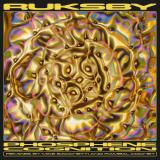
For its eighth release, Distant Gaze welcomes Ruksby with Phosphene Cognition, the artist’s debut EP on the label. Known for his hypnotic acid energy and cold, driving groove, Ruksby has developed a distinct sonic signature resonating with both classic rave devotees and listeners of indie-leaning electronic music.
The EP opens with two original cuts. “Imagination” moves in a trancy and hypnotic direction, where slow pulsating TB-303 lines and drifting acid leads unfold through a dark, steady groove. “Illusion” follows with a sharper, more aggressive edge, pushing acid frequencies and overdriven synths into tighter late-night territory. Both tracks stand as focused dancefloor pieces driven by Ruksby’s balance of tension and intensity.
On the B-side, two remixes expand the release. Long-time label friend Mike Sacchetti delivers an acid-driven dancefloor weapon built around a relentless pulsating bassline. Closing the record, Rambal Cochet offers a Goa-inspired chill-out reinterpretation, providing a calm and spacious conclusion.
En el almacen y preparando para el envío

Back in stock !
First three releases in Ministry Of Sound's new 'Origins Of' series of vinyl releases. Taking it right back to where it all began, Ministry of Sound’s Origins series charts a selection of pioneering records responsible for shaping the sound of modern day dance music. It’s hard to imagine a world without House; this 2x LP release explores the origins of the genre from its early beginnings in 1980s Chicago presenting some of the key building blocks of a sound that went on to change the world. Featuring, Frankie Knuckles&Jamie Principle, “Steve” Silk Hurley, Marshall Jefferson, Farley “Jackmaster” Funk, Ron Hardy, RalphiRosardo, Joe Smooth and many more.
En el almacen y preparando para el envío

Aquasonic Vol.1 marks a new chapter for Afalinas, presenting a carefully selected vinyl compilation featuring Ukrainian producer iO (Mulen), Berlin based Tro, Afalinas founder Olekhar, and Chilean artist Existencia Pasajera. Each track reflects a distinct geographical and emotional perspective, united by a shared focus on depth, groove and immersive sound design. From refined deep and juicy tech house and subtle techno structures to psychedelic textures and spacious rhythms, Aquasonic Vol.1 unfolds as a cohesive listening experience shaped by four individual voices.
El artículo ya está en camino a nosotros y se espera que sea enviado desde 09.06.2026.
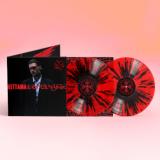
One of electronic music’s most sought-after names, producer and DJ KETTAMA today announces the release of his long-awaited debut album, Archangel, out 3rd of October. The announcement arrives in tandem with new single “Sort It Out” featuring Clouds, and a landmark moment in his career: his biggest ever London headline show, taking over Brixton Academy on Saturday, October 4th, followed by an expansive tour across Europe, North America, and Australia.
A decade in the making, Archangel is the definitive statement from KETTAMA (Evan Cambell), the Galway-born, London-based artist. The 15-track project is a powerful blend of hard-house energy, trance-inflected euphoria, hip-hop sample-based attitude, and unmistakable emotional depth—sonic signatures that have placed KETTAMA at the cutting edge of contemporary dance music.
The album showcases a curated roster of collaborators who reflect KETTAMA’s reach and relevance across today’s underground and mainstream scenes, including Interplanetary Criminal, Fred again.., Clouds, Prospa, DJ HEARTSTRING, Shady Nasty, SØLV and seantommy. Their contributions amplify the project's scope, offering a multi-sided view into KETTAMA’s musical universe.
Among its early singles, the Interplanetary Criminal collaboration “Yosemite” is a high-velocity anthem marrying speed-garage grit with ecstatic rave melodies, while his track “Air Maxes” with Fred again.. And Shady Nasty blends introspective vocal sampling with wide-eyed club emotion. On “If U Want My Heart” with DJ HEARTSTRING featuring KLP, the ensemble channels high-energy trance, breakbeats, and vocal euphoria into a soaring anthem that fuses emotional intensity with peak-time club energy. Meanwhile, his collaboration with Clouds, released today, “Sort It Out” dives headfirst into industrial-techno territory, conjuring a dark, cathartic energy destined for warehouse euphoria. And reigning as one of the undeniable anthems of the summer so far, “It Get’s Better (Forever Mix)” delivers euphoric waves of uplifting synths and relentless rhythm, bringing an irresistible surge of energy that’s become synonymous with this summer’s club moments.
Archangel has already found a home on the world’s biggest stages and radio airwaves, with early support from key tastemakers including Jack Saunders, Danny Howard, Sarah Story, and Tim Sweeney. Simultaneously, a grassroots groundswell continues to bloom across social platforms—where viral snippets and show footage capture the visceral reaction of a fast-growing, global fanbase.
This year, KETTAMA has elevated his status to a full-blown festival phenomenon, performing at major stages including Coachella, Glastonbury, Creamfields, Portola, Seismic, and ARC Festival, to name a few. In June, he played to 20,000 people in Belfast for a b2b with Chris Stussy—one of the UK’s largest DJ events in recent memory—and is currently mid-way through a 16-week Ibiza residency at Amnesia, playing every Monday night throughout summer. Full list of upcoming live dates can be found below.
Perhaps the clearest signal of his surging popularity is the jaw-dropping response to his upcoming Boiler Room live set, with over 15,000 fans signing up to attend— the set’s release is now highly anticipated as a time capsule moment in a breakout year for the artist.
KETTAMA’s rise to prominence has been anything but conventional. Eschewing the traditional gatekeepers of the industry, KETTAMA cultivated an underground following through the likes of SoundCloud and TikTok, where raw uploads, bootlegs, and viral edits generated a tidal wave of grassroots momentum. Over the years, these platforms became launching pads for a fiercely loyal global community, drawn to his unfiltered energy and boundary-pushing sound. This subversive path to recognition has made him not just a fixture of the scene but a symbol of how new-generation artists can forge success on their own terms.
From his humble roots in the Irish underground to the world stage KETTAMA is now pushing the limits of what a next-gen DJ-producer can achieve. With Archangel, he fuses the sound of his native ‘G-Town’ with a futuristic vision that’s unapologetically global—marking a creative milestone that cements his place among electronic music’s most compelling voices.
En el almacen y preparando para el envío

El artículo ya está en camino a nosotros y se espera que sea enviado desde 09.06.2026.
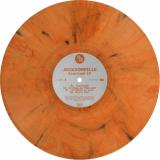
Nightcode EP finds UK deep-house craftsman Jacksonville in full control, lacing warm chords, swinging drums and basslines built for red-lit basements. Across “Nightcode”, “Ecstasy in Starlight”, “Octobers in Love” and “Blind Spot”, he fuses classic Detroit/UK house textures with his own emotional, story-telling touch—timeless deep house for DJs who play past sunrise.
Feedbacks:
Laurent Garnier : Octobers in Love <3 <3 <3
Nick Holder : dope
Gina Breeze (Classic / Get Up / Homoelectric) : Feeling the deepness! Look forward to playing.
Nightmares On Wax (Warp Records) : Ecstasy in starl;ight and Blind spot are my jams !
Josh Wink (Ovum) : Deep, old old school flavored with new school production.
Alexkid (Rawax / FUSE / NG Trax) : Lovely
Lauren Lo Sung (LOLiFE records, e1even records) : Octobers in love is nice!
Dj Hutch (Ambers / Rinse FM) : grooves
Louise Chen (NTS) : This is so so sooo good! Can't wait to play on the radio!
Rob Pearson (Evasive Records / Sine 102.6fm) : Nightcode is the standout for me, will play tonight on Evasive
Eviltron / Paul Donton (Bombis / Triangle) : Blind Spot and Ecstasy in Starlight are the ones on the
D'Julz (Bass Culture) : feeling night code and blind spot . merci!
Junior Sanchez (Strictly Rhythm / Cube Recordings) : Really Cool EP!
DJ Three : this is all very high quality house that feels very much a
nd_baumecker (Ostgut Ton) : Nightcode and Octobers In Love for me. Quality as usual.
Sasha (Last Night On Earth) : Downloading for Sasha
William Kiss (Rekids) : very nice!
Monty Luke (Rekids / Black Catalogue) : thx for this...
Mystic Bill (Classic / Trax / Relief) : Will try some of these out, thanks!
Carista : beautiful
Crackazat (Freerange / Local Talk) : Sick sick sick
Jhobei (Bizarre Trax / FUSE / Felon 5) : Nice smooth deep
Khadija (Rek'd / Rafiki Collective) : Danke
Ben Sims : Now downloading - will check asap!
DJ Bone (FURTHER) : Very nice tunes here, thanks
Bake (All Caps/Rinse FM) : thank you!
Dj Deep (Deeply Rooted) : very nice tracks!
Oliver $ (Classic Music Company / Play It Down) : nice one!
Tripmastaz (Plant 74) : Nightcode is tight
Harvey Sutherland (MCDE / PPU / Voltaire Records) : couple of nice tunes here!
Anthony Collins (Frank & Tony / Scissor & Thread) : super nice deep tunes
Marcel Dettmann : thx
Voigtmann (Subsequent) : Ecstacy in Starlight is the one!
Gerd (4Lux / Clone) : dope house trax from the phonogramme crew once again!
Groove Armada : Great EP - Love Nightcode, Ocotber is love so good too±
Harri (Sub Club) : nice, will play and support
Jorkes (Freeride Millenium) : ecstasy in starlight..yes yes yes yes
DJ Minx (Women On Wax Recordings) : Every one of these...top tier! I'm on 'em!
DJ Rocca (Nang Records, Mantra Vibes) : Great EP. Nightcode is great, super bassline indeed
Jacques Renault : Ectasy In Starlight for me here!
Geir Aspenes (G-Ha (Sunkissed)) : Thank u
Mark Farina : dig it
Âme (Innervisions) : thanks
Djebali ( ( djebali ) / INFUSE / Freak n Chic) : Love it ! thanks for sharing. Blind Spot is my fav
Jaye Ward (Dalston Super Store / Netil Radio) : wicked release!! night code is a belter!!! thx
Iron Curtis (Mule Musiq, Morris Audio) : thank you!
El artículo ya está en camino a nosotros y se espera que sea enviado desde 09.06.2026.

After a year of silence since the last catalog a new record is now coming to life, notes from the imaginary-world played & programmed by So-Fi.
“Mind Migration” is So-Fi’s debut release on Superluminal Recordings, four tracks inspired by unexplored old and modern techno sectors. Tribal rhythms are wildly unleashed in dialogue with obscure-spectral textures, a musical composition within its influences being reflected also by the artist’s prowess as DJ been witnessed in many clubs.
α1 ѕтrαɴɢε ѕyѕтεм
α2 ɴεѕтιɴɢ
в1 voιd ѕυɴ & ѕтorм
в2 ѕwεαтy coɴvεrѕαтιoɴѕ
Written and produced by So-Fi
Master & Cutting by Analog Cut Mastering Studio
Artwork by Cleymoore
Front cover photo by Elena Tredici
Catalog: superluminal02
©+Ⓟ Superluminal
debe ser publicado en 09.06.2026

The latest contribution to Organic Signs’ Monolith vinyl series, Sefarae, unveils the spellbinding collaborative EP debut of Paris-based rising figures Bambi & Forest.
Elephants drifting through subby realms, birds singing across open skies, distant whispers echoing through warm air…
Sefarae unfolds as an ethereal space where the realm of living creatures merges with our own. On the edge of waking life, vast terrains of golden sand stretch endlessly, hidden oases vanish at dawn. Sefarae invites listeners into thisoneiric territory, a space where wild forces intertwine.
Through a shifting lens of perception, the EP evolves across multiple versions of a single track, each mix revealing a unique facet of the same core essence. Blending percussive textures, organic atmospheres, and psychedelic synths, the release moves seamlessly between hypnotic, playful, and introspective phases.
From the gentle emergence of the Oasis Opening Mix to the mischievous energy of the Cheeky Dub Mix, and finally the soft descent of the Dawn Mix, Sefaraetraces a continuous arc – guiding listeners on an esoteric, immersive journey.
debe ser publicado en 09.06.2026

Walter G & Jay Caruso deliver a warm, groove-led Soulful Disco version of “From East To West”, built for DJ’s who appreciate real disco dynamics. Rolling basslines, bright piano chords and lush strings wrap around an emotive vocal, creating a timeless club-ready moment that bridges classic 70s soul-disco with modern dancefloor aesthetics. Ben Liebrand delivers a classic 12-inch reconstruction rather than a modern nu-disco vibe. It leans into Ben Liebrand’s signature extended format philosophy, letting the groove breathe. His is a rhythm-first reconstruction with crisp percussion, dynamic low-end and long instrumental sections. The vocal sits naturally within the groove, while the arrangement allows DJs space to build, ride and transition with ease. Less modern sheen, more heritage authority, a purist disco tool with timeless floor appeal.
En el almacen y preparando para el envío

Phoenix Reimagined (Live) by Lakecia Benjamin, a powerful live studio album capturing an unforgettable performance. Previously available only on CD, it features standout performances from jazz icons John Scofield, Randy Brecker, and Jeff “Tain” Watts, and earned nominations in two Grammy categories—Best Jazz Performance and Best Jazz Instrumental Album.
debe ser publicado en 10.06.2026
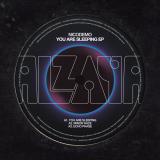
Italian producer Nicodemo returns to Alzaya Records with You Are Sleeping, a five-track EP structured around subtle shifts in perception rather than narrative progression or peak-driven club dynamics.
Across three original tracks and two reinterpretations by Domenico Rosa and Aldonna, the record explores slowed temporal perception, delayed spatial response and the blurred threshold between attention and immersion, using restrained rhythmic pressure and diffused harmonic material.
debe ser publicado en 10.06.2026
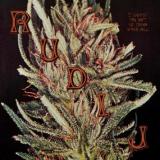
Straight from the weedy fields of swampville Bruxelles we bring you 8 ‘tranches de vie’ of deep zone-hall by weirdtronic bass veteran Michael Crabbé’s best fitting sound costume to date: the mighty Rudi J! You might know him from earlier outfits but that’s not the main issue here. Rudi J is!
When this swamp thing touches the pads, it’s off-road after three seconds, even if you’re in the middle of Europe’s capital. Mixing analog dirt and digital sound bits in a very loose and personal take on dancehall, we’re pretty far away from the dance floor but definitely swinging. It’s a trippy affair wandering around concrete flowers with a deep ambient flavor, but it’s edgy.
A hot summer fever dream following his own lusty path, full of life and wonder but with something sinister hiding around every corner. Often reaching for the stars, a deeper shade of bass keeps things nicely grounded. These sounds are built with a sound system in mind and bass culture at heart. Even if you can definitely surf on it from your couch, picking out all of its ear-pricking details, it will very much come alive on a big sound.
A layered affair with almost jazzy and orchestral elements peeping through the stereo-field, spectral and dissonant but also playful. Like early dubstep, some of these tunes can destroy a clubsound, keeping you skunking out in pedestrian mode and snorting up the atmospherics, finally forgetting about that damn phone.
debe ser publicado en 11.06.2026

Sweden has long had a celebrated techno scene and you'd be hard pushed to find anyone who has contributed to it as significantly as Cari Lekebusch. He has a vast back catalogue dating back to the mid-90s under many different aliases, including this one, Phunkey Rhythm Doctor, which yielded his 'Underground Poetry' EP back in 1995. 'Jazz Maze' is an exceptional start - urgent and punchy with freeform melody that brings the fun. 'Mad Poet' is much darker and has a doom-laden vocal over stiff, crisp drums. 'Sugardaddy' is a dubby bumper with a wobbly bassline and wispy synths, cyborg electronics and a cavernous groove. Don't sleep on this one.
debe ser publicado en 12.06.2026

Holen Sie sich das bahnbrechende Album „Wheels Of Fire“ – so wie Sie es noch nie gehört haben! Entdecken
Sie die verschollenen Aufnahmen und die neu zusammengestellten Raritäten-Sammlungen. Erhältlich als
3-LP-„In The Studio Expanded Edition“ mit 26 unveröffentlichten Aufnahmen und als 5-CD-„Super Deluxe
Edition“ mit 37 unveröffentlichten Aufnahmen sowie einem 24-seitigen Hardcover-Buch.
Die „WHEELS OF FIRE 5CD SUPER DELUXE EDITION“ dokumentiert die gesamte Entstehungsgeschichte
und die Fertigstellung von Creams bahnbrechendem dritten Album.
Das Set enthält eine spezielle, neu remastered Stereo-Version des neunten Titels umfassenden Studio-Teils
von „Wheels Of Fire“. Ursprünglich 1968 unter Verwendung von CSG-bearbeiteten Aufnahmen veröffentlicht wurde, diese remastered Version präsentiert, von CSG befreite Version das Album nun phasenkorrigiert und liefert die Aufnahmen mit größerer Detailtreue und einem klaren Klangbild.
Ebenfalls enthalten ist eine neu zusammengestellte Raritäten-Sammlung mit 15 seltenen Aufnahmen, von
denen neun Tracks bisher unveröffentlicht sind. Diese Sammlung umfasst frühe Versionen, alternative
Mixe und Single-Versionen. Zu den Highlights zählen „WHITE ROOM (EARLY VERSION MONO MIX)“,
„DESERTED CITIES OF THE HEART (MONO ROUGH MIX / NO STRINGS)“ und „CROSSROADS
(MONO SINGLE VERSION)“ sowie sieben weitere alternative Stereo- und Mono-Mixe, drei Single Versionen und zwei seltene Live-Aufnahmen.
Abgerundet wird das Set durch ein Hardcover-Buch mit Begleittexten von Jim Faber und Fotos von Cream
aus dieser Zeit. Die fünf CDs befinden sich in einer Gatefold-Hülle und sind zusammen mit dem Buch in
einem stabilen Schuber mit silberner Laminierung untergebracht.
Creams bahnbrechendes drittes Album wird in dieser speziellen 3LP-Erweiterungsausgabe von WHEELS
OF FIRE: IN THE STUDIO dokumentiert.
Das 3LP-Set enthält eine neu remastered Stereoversion des neun Titel umfassenden Studioanteils von
Wheels Of Fire. Ursprünglich 1968 unter Verwendung von CSG-bearbeiteten Aufnahmen veröffentlicht,
präsentiert diese neu remastered, von CSG befreite Version das Album nun phasenkorrigiert und liefert die
Aufnahmen mit größerer Detailtreue und einem klaren Klangbild.
Ebenfalls enthalten ist eine neu remastered Mono-Version des Studioalbums. Diese Mono-Version, die aus
den persönlichen Referenzbändern des verstorbenen Cream-Produzenten Felix Pappalardi stammt, wurde
noch nie zuvor veröffentlicht.
Das Set enthält außerdem eine neu zusammengestellte Raritäten-Sammlung mit 11 seltenen Aufnahmen,
von denen acht bisher unveröffentlicht sind. Dazu gehören frühe Versionen, alternative Mixe und Single-Versionen. Zu den Höhepunkten dieser Sammlung zählen WHITE ROOM (EARLY VERSION MONO MIX)
und DESERTED CITIES OF THE HEART (MONO ROUGH MIX / NO STRINGS) sowie sechs weitere
alternative Stereo- und Mono-Mixe.
Diese Veröffentlichung auf 180 g schwerem schwarzem Vinyl wird in einem Gatefold-Cover mit metallischem
Pantone-Finish präsentiert
debe ser publicado en 12.06.2026

The Heartbreakers" "D.T.K" ("Down To Kill") is the incendiary live 1977 companion to "L.A.M.F." (Like A Mother Fucker), which is hailed as one of the classic punk albums. Formed by New York Dolls Johnny Thunders and Jerry Nolan in 1975, they influenced the UK punk scene, joining the Sex Pistols, Damned & Clash on the infamous "Anarchy" tour. "D.T.K" was recorded by Track Records on the Maison Rouge mobile studio on 15th March 1977 at the notorious musicians" nightclub and features Johnny infamously abusing the audience. It was a warm-up for the "L.A.M.F." sessions starting the following week. Originally released in 1982 as a 10-track album, it was remixed in 2005 and five more tracks were found on the 2" multi-track tapes. Now the album has the entire two sets played that night, 15 unexpurgated tracks in all. The sleeve has notes by journalist Kris Needs and contemporary photos.
debe ser publicado en 12.06.2026

Grandeza, the debut album by Sao Paulo’s Sessa, points to new, subtle directions for modern Brazilian music – a deep, minimalist, almost insinuated use of the rich textures that define the songwriting history of Brazil, one which Sessa now joins among its most promising new voices. His songs are sung in Portuguese, with visceral, sensual lyrics in the vein of Caetano Veloso, and the melodic flourishes of Tom Jobim and Arthur Verocai.
However, the music gets a deliberate minimalist treatment rarely found in contemporary Brazilian music, more reminiscent of the bareness of Leonard Cohen, with touches of tropicalia, psychedelia, and the mystic jazz of Moondog and Pharoah Sanders. Recorded in various locations between São Paulo and New York City.
debe ser publicado en 12.06.2026
