Eric Clapton’s 'Journeyman: Deluxe Edition' brings new life to the iconic 1989 album with three previously unreleased tracks uncovered from the original recording sessions plus an additional bonus track. The album features classic songs “Pretending,” “Bad Love,” and “Running on Faith,” with guest performances from George Harrison, Phil Collins, Chaka Khan, Daryl Hall, Robert Cray, and more. “Journeyman . . . It’s what I want to be known as; I like to think I’m a craftsman. I think I’m always working on mastering my craft." - Eric Clapton
Поиск:phil b
Все
Das Ich, die Wegbereiter der Neuen Deutschen Todeskunst,
melden sich nach Jahren der Stille mit ihrem lang erwarteten
Album zurück. Das Album, dessen Titel „Fackel“ oder
„Leuchtfeuer“ bedeutet, ist ein brennendes Zeugnis einer
untergegangenen Zivilisation. Aus den Trümmern
menschlicher Errungenschaften und zerbrochener Ideale
zusammengesetzt, warnt vor den Geistern der
Vergangenheit und Gegenwart, die durch die Ruinen unserer
Welt geistern. Mit ihrer einzigartigen Mischung aus
elektronisch-sinfonischen Klängen, expressionistischer Lyrik
und harschen Industrial-Elementen schaffen Stefan
Ackermann und Bruno Kramm ein Werk, das sowohl
musikalisch als auch thematisch tief unter die Haut geht.
ist eine musikalische Reise durch die Asche gefallener
Imperien, digitaler Netzwerke und zerrissener Seelen. Die
Texte, inspiriert von philosophischen und literarischen
Konzepten, greifen Themen wie Verrat, Vergänglichkeit,
Hybris und die Selbstverachtung der Menschheit auf. Die
Flamme des Fanals, zusammengesetzt aus „Knochensplittern
Horace Andy made his debut with producer and mentor Phil Pratt at the age of sixteen. His voice has the soulful influence of artists Otis Redding and Smokey Robinson as well as fellow countryman Alton Ellis.
1975's Get Wise collects a series of singles Including versions of hits like "Money, Money" ("Root Of All Evil") and "Zion Gate" ("I Don't Want To Be Outside"). Recorded between 1972 and 1974, these tracks were record at the legendary studios Channel One, Black Ark, Dynamic Sound and Randy's Studio 17, with house engineers Ernest Hoo Kim, Lee Perry, Carlton Lee and Errol Thompson. The album is also a showcase for The Soul Syndicate Band, the session group that featured Sly & Robbie, Aston Barrett and Earl Smith, among others. Get Wise is available as a limited individually numbered edition of 750 individually numbered copies on orange coloured vinyl.
For his last solo record ‘Through a Room’, Bill Nace shifted his usual saturated guitar sound and added tapes, hurdy gurdy, doughnut pipe, bird calls and the mysterious Japanese taishōgoto. Setting up for the final night of his three day residency at OTO with only the taishōgoto soundchecked, Nace hoped that Parker would arrive with his small soprano as its opposite. “I’ve been interested in state change, you know, playing until there’s a shift in time.” Known for his development of multiphonics to produce a constantly shifting pattern, Evan Parker has evolved an instantly recognizable sound - his work the soprano most distinct. Happily, it was the soprano Evan brought with him and as soon as the two start to play they entwine - taking off in a double helix of keys and reed primed for endless reconfiguration. Space warps under the velocity of playing, the pitch rising unrelentingly. It felt like unending lift off in the room, sheer energy until the last note makes remember your feet have been on the floor the whole time. Total time bending shredding.
–
"They had never played together before. They had never even met each other before this springtime 2024 concert at London’s Café Oto.
Evan Parker, circular breathing maestro of the saxophone, a legend in the universe that is Free Improvisation since the late 1960s and Bill Nace, one of the most intriguing experimental “noise” guitarists of the 1990s/2000s underground scene.
For those of us who have been enamored by the live and documented work of both these gents, this Café Oto duo was a must-hear event. It could have gone anywhere musically and that would have been totally fine. Particularly with Evan having a history of being thrown into a variety of challenging collaborations throughout his career, employing the learned elegance of trust in his own sensitivity to listening, responding, leading, following, sparring, intertwining, dialoguing, creating in the instant and, essentially, dignifying the non-hierarchical grace of chance.
The aesthetics of socialist consideration in Evan Parker’s playing, in his community of expanded and personal technique, for a younger player such as Bill Nace, strikes an exemplary model. This notion of respect would be entirely the reason Nace, when offered a residency at the most critical “new music” room in England, would request to play in duo with Parker.
Bill Nace came to prominence mostly during the apex of experimental music activity in and around Western Massachusetts in the early days of the aughts, with a focus on visual art and free improvisation guitar action. He could be found in the daytime hours, his head hanging down over a notepad, penning fine-tuned illustrations and abstract line drawings, while in the evenings he’d be attending any number of basement noise gigs, many of which he’d be participating in. His guitar style came across as being informed as much as by the physicality of his writing utensils in friction to the page as it was to his hearing and redefining of radical recordings ranging anywhere from the Black Unity Group to Black Flag.
Utilizing various metal files and other small cylindrical objects Bill would allow his guitar and amplifier to be in tandem with the improvisatory movements of his body as the instrument balanced, intentionally and, at times, precariously, upon his lap. The performances came across thrilling and daring and they would be mostly in the context of venues nothing more than a low-ceilinged damp and dank New England basement, a clutch of people hanging onto rusty pipes or sitting up on dilapidated washer/dryer machines, the shards of Bill’s “file guitar” sounds ringing out like the most alive music on Earth.
By the time Bill reached Café Oto in early 2024 he had relocated to Philadelphia all the while releasing a succession of collaborative LPs on his Open Mouth label to present his developing progression of solo and collaborative work. He also would find himself considerably engaged with playing the electric taishōgoto, a keyboard-activated string instrument from Japan which can exist as a one, two, four, five, or six string oblong sound object. Bill’s approach to the taishōgoto would not be too unlike his approach to the traditional electric guitar, though no outboard implements such as files, sticks, and rocks are utilized. The similarity would lie wholly with Bill’s full immersion of high velocity action-playing where, with the taishōgoto, an electric drone beauty occurs. The flurry of sonics and resultant harmonics emanating from the amplifier (which Bill opts to dial into with borderline loud-as fuck volume settings) furthers the meta-mantra properties of the instrument in an astounding display of drone dynamism.
This sound world of Bill’s two-stringed taishōgoto on this Café Oto night worked beautifully with Evan Parker’s improvisatory saxophone conceptions. The duology achieved instant lift off at ground zero only to find it’s eventual finale as if it were organically ordained. Time seemingly morphed from its ancient human construct of control, rendered inconsequential to the torrential transcendence of the room wildly activated by the magic resonance of the multi-directional pan-spatial sonance of the music as if it were some beatific blessing. It was one of those nights where art as a liberating force of spirit gifted the listeners with an offering of exaltation and joy. It was entirely mystical and mind blowing. A night of Total Music."
Thurston Moore, London, 2025
- 1: Heavens That Burn And Eons Divided
- 2: Unending Legions Of Bael
- 3: Flames That Blind And Shadows Cast
- 4: Numeric Portal Ascendency
- 5: Sworn To Their Beheaded King
- 6: Masters Of Eternal Night
- 7: Ghoul Infested Mausoleum
- 8: Lost Within The Astral Crypts
Black Metal. Richly melodious and unsparingly vicious. Extreme Metal heavy on melodic black metal but also shines of death and thrash throughout. Brainchild of Phil “LandPhil” Hall of Municipal Waste (also Cannabis Corpse, Iron Reagan) who writes the music and plays bass/guitar in the studio (and bass live) alongside a power house of sick underground metal musicians including Vreth of Finntroll (Finland) on vocals. Not a studio project, Morbikon spent 6 weeks on the road promoting their debut album “Ov Mournful Twilight” (2022) along side internationally notable extreme metal acts Exhumed and Skeletal Remains. Morbikon also crushed performances at The Decibel Magazine Beer and Metal Fest (in both Philadelphia and Denver) and the Milwaukee Metal Fest.
A year on from Aura Safari and Jimi Tenor's Sensory Blending and DJs and dancers are still lost in its summer charms, but there have also been a series of standout remixes taken from the originals, which now get assembled on one vital 12": Sensory ReBlending features Willie Graff, Reverso 68 Dub, Jazz N Palms and Luminodisco.
First up is Ibiza favourite Willie Graff, who tackles the spellbinding original 'Bewitched By The Sea'. He brings a signature Balearic beat perfect for cruising around the island as the sun blazes with its dubby, swaying drums and more prominent vocal, all brought to life with delicate percussion and gentle synth pulses. Label regular Federico Costantini aka Luminodisco also returns with a mature post-Balearic touch that douses the track in an ocean of dubby echo. Gorgeous Spanish guitars and jumbled percussion form a life raft which floats out to sea under the sultry wind motifs.
Reverso 68 is the studio-based project of Pete Herbert and Phil Mison, and over the last decade-plus, they have mastered the art of making music for swimming pools. Their version of 'Your Magic Touch' is low-slung and deep with a mid-tempo four-four groove sprinkled with tropical percussion. The muted chords are gloriously dreamy and the whole thing is perfect for early evening warm-ups.
Jazz N Palms is Hell Yeah family and is currently riding a wave of acclaim for his See Rodes (Revisades) album on his own Jazz N Palms Recordings. He flips 'Lunar Wind' into poolside perfection with heart-melting sax notes and rippling keys, soothing female tones and dubby breaks. It's a perfect soundtrack to heavenly ascent.
These remixes perfectly extend the soul-soothing pleasures of Sensory Blending with plenty of fresh but sympathetic perspective.
Ohne Musik kein Kino. Ohne Philippe Sarde kein französisches Kino!
Philippe Sarde ist einer der größten Filmkomponisten. Das ist umso bemerkenswerter, als er seine gesamte
Karriere in Frankreich und bei französischen Produktionen verbracht hat. Er ist verantwortlich für die
Musik von „Les choses de la vie“ (Claude Sautet), „Mort d’un pourri“ (George Lautner), „Beau-père“
(Bertrand Tavernier), „La guerre du feu“ (Jean-Jacques Annaud) und „Music Box“ (Costa Gavras). Es
brauchte ein „Best Of“, um die 50-jährige Karriere dieses Giganten zu feiern. In 40 Titeln durchquert er
Epochen, Genres und Atmosphären. Unverzichtbar für jeden großen Musikfan. Dieses Album ist als CD
und Doppel-Vinyl erhältlich und enthält Auszüge aus den 40 Original-Soundtracks der Filme, die 10 Jahre
lang bei BMG digital veröffentlicht wurden, sowie den Titel „La chanson d’Hélène“ aus dem B.O. „Les
choses de la vie“.
Victor Le Masne
Ravel Recomposed by Victor Le Masne LP 2x12"
Mit Ravel Recomposed legt Victor le Masne eine Hommage an einen der größten Meister der französischen Musikgeschichte vor. Nach seinem Erfolg als Komponist und Musikalischer Leiter der Olympischen
und Paralympischen Spiele 2024 in Paris widmet sich Le Masne nun der Musik von Ravel, die ihn seit
seiner Kindheit begleitet. Ravel Recomposed schlägt Brücken zwischen Tradition und Gegenwart: Klassik
und Jazz verbinden sich mit dem Puls des French Touch und verschmelzen zu jenem unverwechselbaren
Klang, der den Grammy®-prämierten Komponisten, Produzenten und Multiinstrumentalisten international
bekannt gemacht hat. Das Album erscheint am 21. November 2025. Die Neuinterpretationen von Boléro,
Jeux d’eau, Le jardin féerique sowie Auszügen aus Daphnis et Chloé, L’enfant et les sortilèges und dem Streichquartett, neben weiteren Werken, erscheinen anlässlich des 150. Geburtstags von Ravel. Zu hören sind
Christine and the Queens (Texte, Gesang), Julius Asal (Klavier) und Camille Thomas (Cello). Das Album
mit seinen zwölf Stücken ist der jüngste Beitrag zur wegweisenden Reihe Recomposed von Deutsche Grammophon. Den Auftakt machte vor 20 Jahren Matthias Arfmann mit seinen Bearbeitungen von Aufnahmen
der Berliner Philharmoniker unter Herbert von Karajan. Es folgten unter anderem Peter Gregsons Neuinterpretation von Bachs Cellosuiten sowie Max Richters gefeierte Neufassung von Vivaldis Vier Jahreszeiten
Mit seinen mitreißenden Soli und umjubelten Auftritten in der Konzertreihe “Jazz at the Philharmonic” übte
der Tenorsaxofonist Illinois Jacquet einen immensen Einfluss auf den Spielweise des Saxofons im Rhythm &
Blues und Rock ‘n’ Roll aus. Für den JATP-Impresario Norman Granz und dessen Label Clef nahm Jacquet 1956 mit “Swing’s The Thing” auch eines seiner besten Alben auf.
Los Angeles-based producer and composer Hayes Bradley returns with his most ambitious work yet, Audience, out now via StrataSonic Records. A departure from his years composing for film and fashion, the 14-track album marks a return to his dancefloor roots by melding breakbeats, trip-hop, and ambient textures into something both nostalgic and forward-thinking.
After two beatless, melodic LPs on Secular Sabbath, Bradley arrives at Los Angeles’ StrataSonic—an independent label celebrated for prioritizing artistic freedom—with Audience, a record defined by moody, churning breaks and rich soundscapes. Across the album, he merges the emotional depth of his scoring work with the kinetic energy of underground dance music, crafting a deeply-layed and adventurous project that exists beyond trends while highlighting his versatility as both producer and performer.
The album features collaborations with Luna on the ethereal “Dear Treasure” (accompanied by a music video with collaborator and partner Luna Blaise) Amtrac on “Be Right With You,” and Oxis on “Wishes,” alongside a range of instrumental cuts that highlight Bradley’s approach to rhythm and sound design.
At its core, Audience is an exploration of embracing personal and musical chaos. Bradley channels moments of anxiety, uncertainty, and raw emotion into tracks that are unpredictable and immersive. The album reflects his philosophy of leaning into disorder—turning moments of anxiety, unpredictability, and chaos into kinetic music that moves both body and mind.
Ambre Ciel is a composer, violinist, pianist and singer who hails from Montreal, Canada and is a purveyor of dreamy, expansive, spacious pop music that draws influence from the contemporary classical influenced artists such as Agnes Obel, Patrick Watson, Sufjan Stevens and Thom Yorke. As well as the impressionist world of Debussy and American minimalists such as Phillip Glass and Steve Reich and in addition mentions "music that breathes" from such artists as Gyoa Valtysdottir, JFDR, or the collaborative work of Jónsi and Alex Somers.
- A1: Well (1 07)
- A2: The World Is My Oyster (10 42)
- A3: Snatch Of Fury (Stay) (1 17)
- A4: Welcome To The Pleasuredome (2 32)
- B1: Relax (Come Fighting) (3 55)
- B2: War (& Hide) (6 12)
- B3: Two Tribes (For The Victims Of Ravishment) (4 03)
- C1: Ferry (Go) (1 51)
- C2: Born To Run (3 55)
- C3: San Jose (The Way) (3 09)
- C4: Wish (The Lads Were Here) (2 50)
- C5: Including The Ballad Of 32 (4 32)
- D1: Krisco Kisses (2 59)
- D2: Black Night White Light (4 00)
- D3: The Only Star In Heaven (3 46)
- D4: The Power Of Love (6 05)
- D5: Bang (1 14)
40 Jahre ”Welcome To The Pleasuredome”!
Diese Jubiläumsausgabe, die erstmals in Zusammenarbeit mit der Band selbst zusammengestellt wurde,
enthält 28 unveröffentlichte Titel und nimmt den Hörer mit auf eine Reise von den frühesten Demos und
BBC Radio One Sessions der Band über die Singles bis hin zum Album und darüber hinaus.
Jede CD enthält seltene und in den meisten Fällen unveröffentlichte Versionen von Songs, die den Goldstandard der Musik der 80er Jahre darstellen.
Der weltbekannte Künstler, Produzent und Remixer Steven Wilson hat einen Atmos-Mix sowie Stereound 5.1-Mixe für die Blu-Ray beigesteuert. Das Booklet wurde von Philip Marshall gestaltet und enthält
seltene Fotos und Erinnerungsstücke sowie eine Zeitleiste zum Aufstieg der Band zum Ruhm mit Beiträgen
aller Mitglieder von Frankie Goes to Hollywood.
Darüber hinaus erscheint ein Deluxe-2CD-Set, welches das neu gemasterte Album sowie Versionen aus der
Session und eine Auswahl von Outtakes enthält. Die beiden CDs werden in einem 8-seitigen Digipak mit
einem 20-seitigen Booklet präsentiert.
Außerdem wird es ebenfalls das Album mit Steven Wilson Mix als Remaster auf 2LP geben.
Ab dem 31. Oktober erhältlich!
Natural Element proudly presents the long-awaited album The Paradigm Shift by one of Amsterdam’s finest and most prolific producers, Kid Sublime. Following on from the 12” single ‘You Got Me Runnin’’ which dropped in the summer, this 8 track, double LP offering is a special piece of work crafted during the pandemic years and Turbulence recording sessions with maestros Beka Gochiashvili and Mishulino.
The album showcases the evolution of Kid Sublime’s sound and the influence of London’s vibrant broken beat scene, with him having connected with some of the artists around the time of the passing of the legendary Phil Asher. It touches on house, bruk and even techno, with his signature soulful touch palpable across the whole record. Features include talented London artist Oliver Night, Sydney-based vocalist Natalie Slade and long time collaborator, flautist Han Litz, amongst others.
The Paradigm Shift takes you on a deep sonic journey straight from the heart, celebrating love, connection, spirituality and human evolution. There’s introspective moments with the jazzy house drifter ‘The Awakening’ and the dubbed out bass of ‘Kingz’, as well as joyful moments such as the uplifting ‘Heaven’s Glory’ and the romantic ‘Stay Over’, which is as soulful as it gets. ‘Bring It Come’ brings some minimal bruk flavours reminiscent of Bugz in the Attic, and the title track takes things a bit darker with a club-ready roller.
Sitting somewhere between the living room and the dancefloor, this album is sure to enliven the spirits of many a discerning listener and bring some much needed radiance and hope into people’s lives.
BRIDGE - WAITING PATIENTLY b/w LOVE’S IN YOUR CORNER
Paul Tillman Smith is a significant figure within in the music community of The San Francisco Bay Area, California. His connections and collaborations read like a who’s who of famous musicians.
As leader of 70s Buddah Records group VITAMIN E and then BRIDGE, the subsequent band cut an album in 1981 for the CBS distributed Bang label that never saw the light of day.
It was released by First Experience Records as a double LP and CD in 1999 and is recognised as being one of the finest unreleased discoveries within its genre.
IZIPHO SOUL revisit the album and release two gems from this magnificent body of work.
WAITING PATIENTLY - Modern Soul with all the right ingredients - lead vocal Derick Hughes, backing vocals courtesy of The Satin Shadows, driven along by Butch Haynes’ conga playing. Presented here as an extended version crafted by Phil Ward.
On the flip - LOVE’S IN YOUR CORNER (Remastered) featuring the supreme voice of Debravon Lewis (RIP) and Larry Sampson. There’s importance in documenting this great song, as this demo paved the way for the Norman Connors’ version.
- A1: Philosopher (Feat Mikael Akerfeldt) (4 33)
- A2: Days Go By (Portal I) (4 12)
- A3: Here You Come Again (Portal Ii) (5 20)
- B1: Current (6 42)
- B2: Give & Take (4 53)
- B3: Crossroads (Portal Iii) (5 09)
- C1: Alone (4 11)
- C2: Freedom (Poral Iv) (4 43)
- C3: Riot (4 14)
- D1: Electrified (5 20)
- D2: My Aurora (Portal V) (3 30)
- D3: This Road (5 42)
Hiroki Tamaki (vocals, violin, mandolin, A.Piano, strings ensemble, Oberheim, vocoder) / Eiji Shimamura (drums) / Yuichi Tokashiki (drums) / Akira Okazawa (bass) /
Kenji Takamizu (bass) / Ken Watanabe (bass) / Ken Yajima (E.Guitar) / Fujimaru Yoshino (E.Guitar) / Toshiaki Fuefuki (A.Guitar) / Koichi Tani (A.Guitar) / Yonosuke Segami (percussion) /
Fumitaka Anzai (A&E.Piano, synthesizer) / Keiko Yamakawa (Harp)
A psychedelic spiritual trip led by multiple vocals and synthesizers
A musical picture scroll of ecstasy depicting a world of harmony on a celestial scale
Violinist, composer and arranger Hiroki Tamaki was inspired by the lectures of Indian religious philosopher Bakwan Shree Rajneesh to create a magnificent musical picture scroll.
Tamaki's own vocals are layered on top of each other, and the music is mysterious and harmonious, woven together by synthesizers by Fumitaka Anzai (TPO, Urusei Yatsura music director).
Includes the progressive rock approach of "Poem of Mahamudra" and "Meditation," as well as "River" and "Beautiful Song," which were selected for "Nippon Acid Folk 1970-1980"
(Time Capsule) and are being re-evaluated as hidden gems of acid folk.
- Fire (Luke 12:49)
- Nature Is A Song
- Springtime (In Australia)
- Mass-Emmanuel
- Messe Du Saint Esprit
- Light (John 8:12)
- O Brother (Matt. 7:1-5)
- Mary Was Here
- Teenager's Chorus
- O Great Mystery (John 6)
- Christ Our King (Col. 1:13)
- Keshukoran
FIRE VINYL[24,79 €]
Fire of God's Love ist das legendäre Album der australischen Nonne Schwester Irene O'Connor aus dem Jahr 1973 - eine aufrichtige, gefühlvolle und unbewusst psychedelische Songfolge, die der Selbstreflexion und dem Erwachen des inneren Geistes gewidmet ist. Das Album ist eine Sammlung von originellen spirituellen Folksongs, die von O'Connor geschrieben und mit Gitarre, E-Orgel, Drumcomputer und ihrer engelsgleichen Stimme interpretiert wurden. Es wurde von ihrer Mitschwester und Toningenieurin Sister Marimil Lobregat auf erstaunlich futuristische Weise aufgenommen und abgemischt. Freedom To Spend bietet die erste autorisierte Neuauflage dieses heiligen Grals seit 1976; das Album wurde mit Sorgfalt und Bedacht aus den besten verfügbaren Quellen restauriert und remastered. Als junge römisch-katholische Nonne im Orden der Franziskanerinnen von Maria begann Schwester Irene 1953 ihre musikalischen Aktivitäten, als sie von Sydney in ein Kloster in Singapur zog und begann, Kinder mit Lernschwierigkeiten zu unterrichten. Nachdem sie sich eine Akustikgitarre zugelegt und drei einfache Akkorde gelernt hatte, blühten Irenes Lieder dank der Begeisterung der Kinder auf. Durch einen glücklichen Zufall arbeitete ein Elternteil eines Schülers bei einem kommerziellen Radiosender in Singapur, und Irene wurde eingeladen, im Studio des Senders aufzutreten und aufzunehmen. Sie ging hin, trug ihre Ordenstracht und hatte ihre Gitarre dabei, und nahm dort 1965 ihren ersten eigenen Song auf. Unter dem Pseudonym Myiriam Frances, um innerhalb ihres Ordens anonym zu bleiben (,Nonnen machten so etwas nicht", bemerkte O'Connor), veröffentlichte Phillips Ende der 1960er Jahre eine Reihe von Platten von Schwester Irene. Im Kloster in Singapur lernte Schwester Irene Schwester Marimil Lobregat kennen, eine Mitbrüderin aus dem Franziskanerorden, die Anfang der 1960er Jahre von den Philippinen auf die Insel gezogen war. Mehr als ein Jahrzehnt später trafen sie sich, wie durch göttliche Fügung, in einem anderen Kloster in Point Piper in Sydney wieder. Marimil, ebenfalls Musikerin und Klangenthusiastin, arbeitete als Audio- und Videotechnikerin beim Catholic Radio and Television Centre in Homebush im Westen Sydneys. Schwester Irene, die treu an ihren musikalischen Fähigkeiten feilte, und Schwester Marimil schmiedeten den Plan, sich an mehreren Sonntagnachmittagen im Zentrum zu treffen und die Lieder zu komponieren, die später auf ,Fire of God's Love" erscheinen sollten. Die Lieder von ,Fire of God's Love" werden von Schwester Irene mit ihrer engelsgleichen Sopranstimme gesungen (mit Texten in Englisch, Latein und Malaiisch) und von Schwester Marimil produziert und auf einem Teac 3340S 4-Spur-Tonbandgerät aufgenommen. Marimil trug maßgeblich dazu bei, die unheimliche Jenseitigkeit zu zaubern, die das Album durchzieht. Die kristallklare Stimme von Schwester Irene wird exquisit von einem schimmernden Mosaik aus Hall und analogen Synthesizer-Klängen umhüllt, während sie wie eine Glocke in der Dunkelheit erklingt und so lange nachhallt, bis die Wahrheit oder das Göttliche erscheint. Themen wie Barmherzigkeit, Gnade, Licht und Geheimnis werden von sanften Akustikgitarrenklängen und ewigen Pianotönen untermalt, die sich langsam auf vibrierenden Fäden drehen. Bei den Songs mit Keyboards spielte Schwester Irene alle Parts live in Echtzeit, einschließlich der Basspedale. Die Drum Machine wurde von derselben Orgel erzeugt, die sie spielte, und gleichzeitig ausgeführt. All dies trägt zu einer Atmosphäre erhöhter Präsenz bei, einem organischen Blitz, der tief aus dem Unterbewusstsein kommt. Entstanden aus Ideen, die in einem ruhigen Kloster und abgeschieden von weltlichen Einflüssen entstanden sind, wird der liturgische Rahmen des Albums durch die innige Hingabe zweier Schwestern gefiltert - ihre eigene Interpretation von Popmusik, befreit von Anmaßung und oberflächlichem Glamour. Der Titel des Albums stammt, wie viele seiner Songs, aus einem Bibelvers, in diesem Fall Lukas 12:49. Aber Schwester Irene und Schwester Marimil haben ihn in einen Raum gebracht, in dem alle spirituell Suchenden die Übertragung oder: ungewöhnliche Hermeneutik schätzen können. Die Texte sprechen universelle Bedürfnisse, Wünsche und Sehnsüchte an: ewige Liebe und Zuneigung, ein Ende der Einsamkeit, eine neue Form der Erleichterung, Befreiung von der Angst vor dem Tod. Anstelle von Hymnenformeln bedient sich Schwester Irene, vielleicht unbeabsichtigt, der damals modischen Folk- und Psychedelic-Musik, um eine Predigt zu halten, die sich wie Liebesbriefe an eine göttliche Präsenz liest und über jede formale Religion hinaus zur Seele spricht. ,Fire of God's Love" ist ein inspirierendes Archiv früher elektronischer Experimente zwischen zwei befreundeten Frauen und Mystikerinnen, eine Dokumentation ihrer göttlichen Energie, die auf disziplinierte Weise kanalisiert wurde. Bei seiner Erstveröffentlichung war es weder ein durchschlagender Erfolg noch ein Misserfolg, sondern wurde vor allem mit Neugierde aufgenommen. Die beiden haben nie wieder gemeinsam Musik gemacht, und in den 50 Jahren seitdem zieht ihre einmalige Zusammenarbeit weiterhin Zuhörer an, die sie in Plattenläden entdecken (sei es die Originalpressung von Phillips oder die klanglich überlegene Neuauflage von 1976 bei Alba House Communications) oder eher über YouTube, als zufällig entdeckter und heiß diskutierter Kultklassiker. Heute lebt Schwester Irene in Sydney, Australien, und freut sich, dass ein neues Publikum in ihrer Musik mit Schwester Marimil einen Sinn findet. Ihre Geschichte ist ein Beweis dafür, dass man nicht viel braucht, um ein visionäres, zeitloses Album zu schaffen: ein Tonbandgerät, Freundschaft und ,The Fire of God's Love", um den Weg in die Zukunft zu ebnen. Das kann ein spiritueller Freund sein oder ein irdischer Begleiter direkt neben einem. Sister Irene O'Connors ,Fire of God's Love" wird am 14. November über Freedom To Spend auf Vinyl, CD und als digitale Ausgabe veröffentlicht.
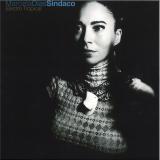
For Marcela Dias Sindaco’s third release on the Oklahoma City label Fixed Rhythms, she delivers a full-length 2xLP of her characteristically magical electro. These songs were recorded in various studios across Brazil, capturing the intangibles of Brazilian city life. You can hear her influences (Detroit techno, kosmische synth travel, electro, etc.), but she distills it all yet again into something completely her own. Whenever you listen to her music, you know it’s her. Hypnotizing electro made on warm machines with her sung/spoken Portuguese woven enchantedly throughout…truly sublime listening. This is a 16 track groove journey that will make you a Marcela fan if you aren’t already one.
The two black 12 “s come housed in a beautiful jacket that offers you a glimpse into Marcela’s world. The background of the artwork on the backside features a wallpaper design that you may find in an old home in Brazil. Inside is an insert written by Italian curator and philosopher Massimo Torrigiani. Only 300 copies pressed…don’t sleep on this one.
Old-time and traditional music stay exciting for their contrasts. Exacting instrumentation honed through mentorships and late-night jams at fiddler's conventions tangles with a community-sourced inventiveness that influences variants and new sounds. Joseph Decosimo is a master of this genre for this very reason, blending deep technique with an openness and curiosity that keep his music crackling with life. A "marvelous fiddler" (No Depression) and banjo player who braids "exultation and veneration" (INDY Week) into his music, on his third solo album Fiery Gizzard Decosimo gathers a close-knit ensemble of friends from his musical career to infuse his interpretations of fiddle and banjo pieces with a contagious communal joy. As an artist working with traditional music from the South and Appalachia, Decosimo chooses songs based not only on historical significance and lineage but also his own sensory approach. For Fiery Gizzard, his ear was tuned to otherworldly tones and mystery, sourcing from field recordings such as Virginia fiddler Luther Davis' hypnotic version of "Shady Grove" while amping up the music's psychedelic potential. On the middle Tennessee banjo composition "Flowery Girls," a VHS of bluesman Abner Jay inspired Decosimo to rig up a pickup inside a fretless banjo and play it thr ough a tube amp to capture some of Jay's edge and funkiness. But to round out the sound and keep it kinetic meant galvanizing a genre-eschewing crew to jam out - and not in a "spaced-out drooly" kind of way, he laughs, but as a sort of "responsive conversation." Decosimo has always been a community-minded artist. He began playing as a seventh graderin Tennessee, fostering relationships with older players at jams and in homes, a learning mode natural to his inquisitive nature and desire for musical connection. A folklorist by intuition, he later became one by profession, studying with old-time legend Clyde Davenport, teaching in East Tennessee State University's renowned bluegrass program, and receiving his PhD at the University of North Carolina with a dissertation titled "Catching the `Wild Note': Listening, Learning, and Connoisseurship in Old-Time Music." In North Carolina, Decosimo kicked about in the verdant environment of Durham and Chapel Hill's folk and indie scenes, collaborating with artists including Alice Gerrard, Hiss Golden Messenger, and Jake Xerxes Fussell. This community has influenced his own music, including his "sublime and strangely heartening" (Bandcamp Daily) 2022 release While You Were Slumbering and Beehive Cathedral, Decosimo's 2024 "Appalachian mountain music treasury" (New Commute) trio album with Luke Richardson and Cleek Schrey for Dear Life Records. Continuing on this path, Fiery Gizzard is home base for a loose outfit of mostly Tarheel-based musicians from within and beyond traditional music. Inspired by a tour with fiddler Stephanie Coleman (Nora Brown), guitarist Jay Hammond, and synth builder and multi-instrumentalist Matthew O'Connell, Decosimo assembled studiomates based on close friendships and comfort. Coleman, O'Connell, and Hammond contribute to Fiery Gizzard, along with bassist and producer Andy Stack (Helado Negro, Wye Oak), horn player Kelly Pratt (Beirut, David Byrne), Mipso and Fust's Libby Rodenbough, Joseph O'Connell (Elephant Micah), and trad/experimental artist Cleek Schrey. Decosimo's fiddle and banjo work is virtuosic, intricate and simple simultaneously, a testament to his many years of study. On some tracks, his playing or lovely, plain-hearted singing is the centerpiece, such as on his interpretations of Texan street preacher Washington Phillips' 1929 recording "I Had a Good Father and Mother" or the Eastern Kentucky fiddle barn-burner "Glory in the Meetinghouse," famously played by Luther Strong for Alan Lomax. But there's also a trusting open-door policy, like where Southern Appalachian tune "Ida Red" relaxes into Coleman's sweet, confident fiddling and Hammond's loping guitar. As a bandleader, Decosimo's confidence and enthusiasm for the music reveal the heart of traditional music and how it can come to life through community. Fiery Gizzard is Joseph Decosimo as a powerful champion of traditional music - a sponge who soaks up as much as he squeezes out, a responsive artist who makes his genre accessible, and a magnet who can bring musicians of all sorts into his orbit with his same passion.