Recorded in 1997, Mountain Top features the commanding vocals of Tony Roots, backed by the legendary Firehouse Crew and produced by the visionary Fada Waz (Clifton Carnegie). This record’s release was driven by the people, evidenced and encouraged by the countless wheel-ups and sing-alongs during King Original’s international tour dates over the last three years whenever this seminal recording was dropped in the set.
Tony Roots, known for his cultural and spiritual themes, delivers a powerful vocal performance, reminding us that life’s most important journey is overcoming obstacles to find ‘Jah Love on the Mountain Top.’ This message is as relevant in today’s fast-paced, easy-come-easy-go consumer culture as it was when recorded three decades ago.
The Firehouse Crew renowned for their work with iconic acts like Luciano and Sizzla—shine brightly on this riddim, with the MPC drum machine-centered sound of 90s Jamaican roots reggae. An up-tempo 4/4 steppers beat layered with rich analogue textures and soulful instrumentation defines this timeless recording.
The first of many collaborations between Studio 55, Before Zero Records, and Footsie, the King Original legacy continues into the future, honouring the enduring contributions of Fada Waz and his collaborators.
Clifton Carnegie aka Ras Wazair aka Fada Waz - Clifton Carnegie, known as Ras Wazair, founded King Original Sound System in 1973, establishing it as East London’s foremost reggae sound. Operating under his Studio 55 moniker, he collaborated with legends like Johnny Osbourne, Barry Brown, Michael Prophet, Cornell Campbell, and Frankie Paul through imprints such as Original Sounds, Studio 55, and Original International. A mentor to many of the UK’s top sound systems and a key figure in London’s RasTafari community, Ras Wazair’s connections with prominent Jamaican artists, bands, and producers like Fattis Burrell ensured that Jamaican music remained an influential force in the UK sound system scene.
King Original
Founded in 1973 by Fada Waz, King Original Sound System shaped East London’s reggae scene for over two decades. Fada Waz and his son Footsie—a UK Grime pioneer who in later years expanded the legacy through his KO LP series and sold-out King Original mixed-genre events at London’s top venues—worked together until Footsie assumed full control following Fada Waz’s passing in 2021. Having worked with artists such as Dizzee Rascal, Arctic Monkeys, The Prodigy, D-Double E, Wiley, and Skepta, Footsie’s dedication to King Original has reinvigorated the legacy that underpins all UK bass music—the reggae sound system. Joining Footsie is his brother, Wazair’s last born Ras D also Jah Model, and long-time collaborator Sir Spyro, producer of two UK number-one hits with Stormzy and son of UK reggae stalwart Nerious Joseph. Armed with cutting-edge QSS sound system technology, King Original continues to set trends, shaping the future of UK bass music.
Tony Roots
Hailing from Manchester, Jamaica, in the 1980s, Tony Roots emerged alongside iconic figures like Garnet Silk and Tony Rebel. While his peers remained in Jamaica, Tony moved to the UK, where he went on to release ten albums and numerous singles, including hits like Grow Your Natty Dread Locks and Hola Zion. A steadfast champion of Rastafari, Tony has collaborated with legends such as the Firehouse Crew, earning worldwide respect and a devoted following within both the reggae community and the UK sound system scene.
The Firehouse Crew
Formed in 1986, The Firehouse Crew became a cornerstone of the 1990s roots-reggae revival. Initially associated with King Tubby’s Firehouse label before establishing their own, the band rose to prominence through collaborations with producer Philip “Fattis” Burrell at Xterminator Records. Their contributions to timeless albums like Luciano’s Where There is Life highlight their extraordinary musicianship. Over the years, The Firehouse Crew has backed iconic artists such as Sizzla, Buju Banton, and Beres Hammond, cementing their legacy as masters of roots reggae.
Search:phil bar
As is the case with fellow 'enforcers'-turned-producers, Henry 'Junjo' Lawes and Philip 'Fatis' Burrell, George Phang had been involved in the internecine street battles that had split Kingston into rival politically-aligned zones during the 1970s, when the broader effects of Cold War politics were played out in Jamaica. Following some encouragement from Sly and Robbie, Phang changed focus, putting the politics aside to concentrate on music production, becoming one of the most important producers of the early 1980s in the process. Phang took over the rhythm twins' Power House label around 1982, and with the duo forming the mainstays of his productions, the result was guaranteed audio dynamite, as this killer devotional track by Barrington Levy from 1983 so amply suggests—a beautiful extended slice of late roots, heading towards the emerging dancehall style.
- A Memory Of Venom
- Ugly House
- Cause & Effect
- People From The Second Way
- Dissolution
- No Sound
- Your Car Has Arrived
- Completely Gone
- Love The Knives
- Fresh Meat
Eco-mix[28,53 €]
Four years have passed since Young Knives’ last studio outing – 2020’s aggressive and philosophical look at humanity’s propensity for hyper-violence, Barbarians – and during this time the band have taken a step to consider the changing of the world around them, their place in it, and the sometimes-futile pursuit of controlling what it is that we leave behind when we’re gone. Music fans will pick-up on the tongue-in-cheek use of the word "landfill" as an album title from a band that emerged during the post-indie-rock-revival of the 00s. But rather than dwelling on the derogatory landfill stick that has sometimes comes to beat them, Young Knives instead use this coming phase of their career to contemplate the nature of existence and how best to catalogue it through song. As lead singer and guitarist Henry Dartnall puts it, “it’s a record is about letting things go before they are taken from you, including the carefully curated images of ourselves. Embracing everything the world throws at you and not taking it to heart.”
Dark Entries celebrates its 15th anniversary with legendary synth-punk deviants Crash Course in Science. Dale Feliciello, Mallory Yago, and Michael Zodorozny formed CCIS in 1979 after meeting at art school in Philadelphia. As a gesture born of equal parts punk irreverence and brute necessity, the band incorporated toy instruments and kitchen appliances into their aggressive, angular sound. Their anthems “Cardboard Lamb” and “Flying Turns” from 1981’s Signals From Pier Thirteen EP have been staples in adventurous DJ sets for over 40 years - yet some of their finest work is to be found on Near Marineland, a full-length LP recorded in 1981 but remained unreleased in its time. Near Marineland shows the band moving into more diverse and polished territory (although it’s still as abrasive as sandpaper). Tracks like “No More Hollow Doors” and “Jump Over Barrels” highlight CCIS’s singular knack for embedding infectiously monotone hooks in their stiff-yet-funky grooves. Elsewhere we see CCIS going fully unhinged, like on the searing “Someone Reads” or the demented “Pompeii Spared”, where a spray of honks is barely glued together by a frantic synthetic pulse. While this masterwork of malfunctioning analog electronics has surfaced on a few occasions - this first time stand alone remaster includes four never-before-released bonus tracks and includes a lyric sheet. Near Marineland is crucial listening for all devotees of synth-punk and minimal electronics.
- A1: 胎児* - Radioactive Ash
- A2: Non Band - Duncan Dancin
- A3: Mannequin Neurose - #¼&¢
- A4: Antena - Drug Patient
- A5: Unknown Artist - Unknown Song
- A6: Coma - Coda
- A7: Sadie Sads - Pair Dog
- A8: G-Schmitt - Future Daze
- A9: C·c·mekka = 爬虫類の脳* - アルゴソの空
- B1: Asylum - 自虐者
- B2: Bardo Thödol - Silver Stug
- B3: Unknown Artist - Unknown Song
- B4: いんど猫* - 水の中
- B5: Mensu - Lura
- B6: Phaidia - 戦略
- B7: The Lautrec - Dark Crystal
- B8: Unknown Artist - Unknown Song
PT I[16,77 €]
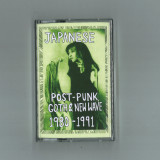
DINTE presents a cassette-only two-part Japanese post-punk, goth & new wave mixtape, the first in a tranche of regionally-focused mixes produced in partnership with Philadelphia's punk archivists World Gone Mad.
Mit ihrem Debütalbum „Pairing Mode“ (2023) schuf Ray Lozano gemeinsam mit ihrem Co-Produzenten Samon Kawamura ein Werk mit Signalwirkung für die deutsch-asiatische Popkultur. Lob gab es unter anderem von Jamz Supernova, WDR Cosmo und Spiegel Online. Die deutsch-philippinische Sängerin und Produzentin wurde seitdem nicht nur mit dem renommierten Holger-Czukay-Preis und dem NICA-Artist-Residency-Programm gewürdigt, sondern begeistere Fans mit Konzerten in ganz Deutschland. Nun erscheint „Pairing Mode“ auch auf Vinyl.
Als ein Zusammensetzung aus zwölf musikalischen Kurzgeschichten, befasst sich „Pairing Mode“ mit dem zentralen Thema „Aloneness“ – Das zelebrierte Alleinesein. Großteils in den Jahren 2020 und 2021 geschrieben, spiegelt es das neu gewonnene Tempo des Lebens während der Pandemie wider. Für die visuelle Umsetzung hat sich Ray Parissa Charghi ins Boot geholt, die neben dem Artwork für Album und Singles einen ästhetisch detailverliebten Kurzfilm zu den Songs von „Pairing Mode“ produziert hat.
- Forever Spoken
- Through Eyes Of Apathy
- Mouth Piece Of Hate
- Panacea
- New Age Fallacy
- Becoming I
- Silver Turns To Rust
YELLOW VINYL[23,11 €]
"Forever Spoken" is a powerful exploration of humanity's quest to leave a lasting legacy. This album delves into the trials, adversities, and struggles that shape our journey and challenge our ability to fulfill our destiny. Musically, it ventures into the realms of southern metal and sludge, featuring intricate riffs and heavy metal double bass rhythms that elevate its intensity and complexity. The album was recorded with the esteemed Phillip Cope (Kylesa, Baroness, Black Tusk), who returns to mix the record after his successful previous collaboration with us. To complement the depth of the music and lyrics, we enlisted the legendary Dan Seagrave (Morbid Angel, Gorguts, Suffocation) for the cover art. His iconic style perfectly captures the complexity and essence of "Forever Spoken," making this collaboration a significant milestone for us.
Yellow vinyl, limited to 400 copies. "Forever Spoken" is a powerful exploration of humanity's quest to leave a lasting legacy. This album delves into the trials, adversities, and struggles that shape our journey and challenge our ability to fulfill our destiny. Musically, it ventures into the realms of southern metal and sludge, featuring intricate riffs and heavy metal double bass rhythms that elevate its intensity and complexity. The album was recorded with the esteemed Phillip Cope (Kylesa, Baroness, Black Tusk), who returns to mix the record after his successful previous collaboration with us. To complement the depth of the music and lyrics, we enlisted the legendary Dan Seagrave (Morbid Angel, Gorguts, Suffocation) for the cover art. His iconic style perfectly captures the complexity and essence of "Forever Spoken," making this collaboration a significant milestone for us.
Who is Isabelle Lewis, anyway?
What kind of music does she make? Is she an opera singer? Does she write pop songs? Does she compose ethereal ambient soundscapes? Does she play chamber music on the violin? Is she producing dark, electronic beats?
Well… yes. But Isabelle Lewis is not so much a person as a project. Isabelle’s debut album, Greetings, credits a trio of composer–performers at its heart: producer Valgeir Sigurðsson, vocalist Benjamin Abel Meirhaeghe, and violinist Elisabeth Klinck. The sound of the elusive Isabelle Lewis is heard most clearly in the push and pull between them, the three-way tension that gives the album its musical and emotional drive.
Each of the three brings more to the collaboration than those epithets might imply. Elisabeth’s solo performance practice incorporates composition, improvisation, live electronics, and a close command of bowing and fingering techniques that make her fiddle sing, whisper or whistle as required. Benjamin is a self-taught countertenor - keening, crooning, and swelling to a voluptuous sensuality—but also an interdisciplinary stage director and performer. Well known for his work as a producer and studio collaborator, and as a composer of scores for film and stage, Valgeir’s solo discography interweaves meticulously crafted electronics, drones, noise, and other digital elements with acoustic instruments and vocals recorded with naked, unflinching clarity.
But the extravagant theatricality Benjamin brings to the aptly titled “Drama”—also featuring a heroic violin solo from Elisabeth—grapples against the thudding bass of the implacable digital backdrop. On “Mother, Shelter Me” Valgeir’s austere and detailed production throws the hushed violin and vocals into stark relief. The result is an exquisitely uncanny juxtaposition of past and present, human and mechanical, like a Rococo treasure viewed under cold fluorescent lights, or an 18th-century automaton slowly opening its clockwork eyes.
Even the lyrics seem somehow out of time. On “O Solitude,” Benjamin goes so far as to quote an entire song by the first great English opera composer, Henry Purcell, verbatim. No stranger to Purcell’s music, which has made its way into Benjamin’s theatrical productions as well, here Isabelle Lewis removes Purcell’s melodies and harmonies and sets the text, Katherine Phillips’s 17th century translation of a poem by Antoine Girard de Saint-Amant, to new music whose heightened, archaic character nevertheless seems haunted by Baroque ghosts.
Throughout the album, the outsized emotions and timeless archetypes of Benjamin’s lyrics feel like relics from some half-forgotten past—from the neatly rhymed couplets of “Fisherman,” a seemingly straightforward (but still somewhat askew) character study, to the abstraction of “Moonshell,” whose words seem like the fragments of some ancient, lost lament. It is just another of many ways in which Isabelle Lewis carefully distorts the listener’s notions of time. On a more micro level, time can stop for a moment of weightless, drifting ambience, and then plunge forward as the cloud of harmonies suddenly lock into tempo with the drop of the bass or the change of a chord. Or else that weightless moment is allowed to be, as in the aptly named prologue and epilogue to these Greetings (“Voicemail”/“…and farewell”), or in the interstitial tracks that bind the album together, connecting its dramatic peaks with expanses of meditative stasis.
The album as a whole is elegantly shaped, swelling from an intimate, interpersonal statement into something deeper and more spacious. The first half of the album leans slightly towards self-contained pop songcraft and ticking beats, while side B jumps off from “O Solitude” into the almost symphonic grandeur of songs like “Moonshell” or the instrumental “Not the water, air, or the dirt.”
But as it progresses, the contrasts only grow more sublime: antique and postmodern, human and machinelike. The ominous weight of the droning sub-bass and trombone (guest player Helgi Hrafn Jónsson) only makes the interplay between vocals and violins (guest player Daniel Pioro joining Elisabeth) seem more delicate and vulnerable. The ethereal string tremolos of “Moonshell” seem to pull against the heavy, shuddering electronics and layers of crooning vocals.
And that, in short, is where you will find Isabelle Lewis. Like an ancient stone archway, or a delicate house of cards, the architecture of Greetings is held together by the tension between opposing forces. Not just in Elisabeth’s playing, Benjamin’s singing, or Valgeir’s arrangements and production but in the conflict and contrast that generates the synergy between them.
Oh—Isabelle says hi, by the way. She’s looking forward to meeting you.
2024 Repress
Fratelli Malibu is an original idea of Andrea De Fazio with the cooperation of Paolo Petrella, drummer and bassist for the “Nu Guinea” live band. Their love for synthesizers and drum machines brought them together to create the shiny world of Ciro Miami.
We could think of Ciro as a neapolitan expat in the american dream, where he discovers a world of excess, flashy cars, cocktail bars, beautiful women, cocaine, gambling, spaceships and videogames that erodes all of his money forcing him to go back to Napoli
completely broke, but with a fistful of wonderful memories.
blauweiß marmoriertes Vinyl m. Download Code. "Transition" (der Übergang) fasst als Titel die Bedeutung des Albums für die Wuppertaler Shoegazer Casino Garden bestens zusammen. Bisheriger Live-Drummer Jonas Schoelen löst Gründungsmitglied Alex Alaimo Di Loro ab, David Burdina ergänzt Sänger Matthias Ballke an der zweiten Gitarre, zur Single "Pretend" wird das erste professionelle Musikvideo gedreht und Jo Philippi (Vandermeer) und die Schall und Wahn Studios sorgen für die erste professionelle Albumproduktion. Mit diesem Album verabschieden sich Casino Garden von ihrem DIY-Image und machen einen großen Schritt in Richtung Erwachsenwerden. Das Soundspektrum reicht auf "Transition" vom grungigen Shoegaze über wuchtigen Postrock bis hin zu lupenreinem Indierock.
Reissue of the Philadelphia group"s gritty psychedelic milestone, "Set And Setting" from 1999. The songs on Bardo Pond"s first two Matador releases - "Amanita" and "Lapsed" - were largely worked up at home and then recorded on the clock at a professional studio. On "Set and Setting," the band chose to work out of its home base, Lemur House, and the end result benefited from the open-ended DIY flexibility. "It was closer to the heart of what we do," says guitarist Michael Gibbons. "There was more improvisation, but also more culling of material. We had more time to find things that jumped out at us, go places we wouldn"t normally go, do investigative work. I think there was a shift. It"s just somehow a more true experience of Bardo Pond."
- A1: Dee Dee Sharp - Comin' Home, Baby
- A2: Chubby Checker - (At The) Discotheque
- A3: Christine Cooper - Heartaches Away My Boy
- A4: Bobby Paris - Night Owl
- A5: Vickie Baines - Country Girl
- A6: The Tymes - Here She Comes
- A7: Orlons - Envy (In My Eyes)
- A8: Jerry Jackson - It's Rough Out There
- B1: Yvonne Baker - You Didn't Say A Word
- B2: Chubby Checker - You Just Don't Know (What You Do To Me)
- B3: Bunny Sigler - Girl Don't Make Me Wait
- B4: Frankie Beverly & The Butlers - Because Of My Heart
- B5: Damon Fox - Packing Up
- B6: Janie Grant - My Heart, Your Heart
- B7: Dee Dee Sharp - Deep Dark Secret
- B8: Evie Sands - Picture Me Gone
For the Northern Soul collector few places rival Detroit as a source for quality, rare records. But Philadelphia comes pretty close and it is the city of brotherly love that produced America's number one independent record label... the mighty Cameo-Parkway. Here, for the first time, we present the very best that that iconic company has to offer.From the Wheel to Wigan, to the Weekender and beyond, the sound of Cameo-Parkway has packed the dance floors across the UK for over 50 years. From the opening bars of Dee Dee Sharp's driving cover of Mel Tormé's Comin' Home Baby' it's easy to see why the label is so highly prized by collectors and dancers alike and why this unique vinyl tribute will touch the hearts of the faithful! All of the classics are here: Chubby Checker, Christine Cooper, Bobby Paris, Yvonne Baker, Bunny Sigler, Jerry Jackson etc etc. The difficulty has been in deciding what to leave out, not what to include, maybe a second volume later in the year One thing is for certain, 1.2 million YouTube viewers just love Cameo-Parkway!
In 2007 an Italian film festival invites Mouse on Mars to score a film of their choice. The organizers claim to be able to clear the rights for any movie the band chooses. Werner Herzog’s fictional documentary Fata Morgana, which merges footage of several desert explorations by Herzog and his team into one continuous association, has long been a band’s favorite. The film comes with a soundtrack by Mozart, Leonard Cohen, Third Ear Band and field recordings. Andi Toma and Jan St. Werner are sent a DVD to Düsseldorf and start working. The idea is to score the film in real time so instrumentation has to be readily at hand: guitar, percussion, electronics, mouth harp, pedals, software, tapes, samplers. Once the arrangement for the three-part film is sorted Mouse on Mars bring their score to stage. Herzog Sessions is performed twice: first when the band still thought the rights had been cleared, and a second time at London’s Southbank Center knowing that Herzog would have never approved a new score.
--
Mouse On Mars – London Queen Elizabeth Hall soundtracking Werner Herzog.
By Mike Diver, 24.04.2009
Filmed in 1971, Fata Morgana is perhaps not one of Herzog’s best-known works (think Grizzly Man, Rescue Dawn, et cetera…), but then Mouse on Mars have never been ones to embrace the mainstream, quietly letting their modern, experimental take on krautrock do the talking over the years, thus producing some quietly brilliant electronica that far outweighs their modest profile.
The film itself is not altogether dissimilar to the wonderful, Phillip Glass-scored Koyaanisqatsi, with sweeping landscape shots and no obvious plot or narrative, though Fata is concentrated purely in one place – in and around the Sahara Desert, switching from images of barren wasteland to desert tribes and dead, skeletal cattle.
The obvious thing to do when soundtracking such powerful imagery is to vie for dreamy electronic soundscapes which can be sustained for a long period, and whilst this ambient shoegaze approach was present and correct (also carefully constructed and highly effective), Mouse on Mars added a human element to the performance, incorporating a live dimension by using and looping guitars, harmonicas, processed vocals and even a live horn player (quite possibly a flugelhorn. Look it up if you don’t believe me) for the final section of the film.
Some of the most interesting points arose when the duo suddenly switched from solemn, ambient tones to glitchy, bouncing electro (reminiscent of their more upbeat work) whilst on the same film shot – causing the audience mood to flick from tripped-out bliss to attentive semi-wired, utterly subverting any idea of a narrative the film may have possessed. Clever stuff.
Ranging from sinister to surreal to humorous, all the moods portrayed in Fata Morgana were successfully matched by Mouse on Mars’ live rescore – no mean feat. The duo also went above and beyond the call of duty with their own soundtrack, adding a fascinating personal signature to an already unique film.
Ohm and Octal Industries debuted on this label to great acclaim back in 2022 and now they're back on Lempuyang with Northwest Passage, a first album-length collaboration. This double 12" continues with their themes of failed arctic explorations and mythological creatures and, after 12 previous outings together, might be their best work yet: the sounds are mature and powerful, bleak yet deep. Dubbed-out chords roll to infinite horizons, frozen tundras are detailed with wispy melodies and pulsing, supple techno both soothes the soul and gets the head nodding. This is more stylish, subversive and superbly executed electronic music.
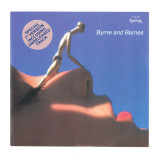
8 years after the official reissue of the LP “An Eye For An Eye” by Byrne & Barnes, Favorite Recordings proudly presents this new single release.
The 7inch first includes the classic “Love You Out Of Your Mind”, extracted from the WestCoast classic LP, which was a one-stop collaboration between Robert Byrne and Brendan Barnes, however both display incredible music career and went on to produce for famous artists such as Pointer Sisters, Patti Austin, Earth Wind & Fire, or Phil Collins to name just a few. The song parades all the elements of the AOR style: a jazzy sometimes fusion approach, with modern soul and groove flavors.
The other side features an exclusive and unreleased track by Robert Byrne, dug by the original executive producer up in his archives for our great pleasure. “Do You Wanna Make Some Love” is also nurtured with Westcoast and AOR vibes, while leering to Boogie and Disco influences. We have no doubt it will delight all the Byrne & Barnes music lovers and many more.
Ardor or Entropy is Nzʉmbe's first album in nine years, following 2015's Titubeo. During this period, philosopher and artist Miguel Prado's sonic output has included synthesizing a sonic Gernika with his band HARRGA alongside Dali de Saint Paul, and crafting a hallucinatory sci-fi mythology for Lucrecia Dalt's latest album, ¡Ay!."
Rewiring the conventions of chamber electronics and postmodern songwriting. Here it is presented A Spanish' song cycle on love and cosmological redshift. The distant echo of Tristan‐and‐Iseult's smoking gun where lovemaking becomes an enactment of entropy, a transformation between the dynamic and the static, the human and the fetish, illustrating the inevitable decline into chaos and stillness.
A beached singing voice (beautifully processed by Rashad Becker) against electro-acoustic backdrops ranging from the caustic, viscous to the bonecrushingly dense worldbuilding shared by HR Giger, Ballard and Pynchon. Transcendental and psychotic vistas that boldly examine human fragility and the surrounding abyss of godlessness.
---------------------------------
Artist: Nzʉmbe Title: Ardor or Entropy Label: Drowned By Locals Catalog Number: DBL31LP Year: 2024
Side A:
Mirror Of TauromachyZone Of AlienationGreat Vitreous TactKarman Vortex Street
Side B:
Serpentine LinesThermocline Anake and EntropyErgosferaAsymptopia
Composed, arranged and recorded by Miguel Prado Casanova
Vocal processing by Rashad Becker Piano on "Anake and Entropy" by Michael PisaroPipes on "Mirror Of Tauromachy" and "Ergosfera" by Wojciech RusinAccordion on "Asymptopia" by Alfredo Costa MonteiroTrumpet on "Asymptopia" by Ruth Barberán Electric bass on "Asymptopia" by Dominic LashElectric guitar on "Asymptopia" by Daniel BennettPercussion on "Asymptopia" by Alex Lázaro
Premixed by Miguel Prado Casanova Mixed, Mastered and Vinyl cut by Rashad Becker
Artwork photos by Lúa Ribeira © all rights reserved, 2024Design by Giovanni Murolo
This album is dedicated to Patricia
Special thanks to Patricia Fraga, Dali de Saint Paul, Mattin, Lucrecia Dalt, Laith Demashqieh, Lúa Ribeira, Rashad Becker
The Intercommunal Free Dance Music Orchestra was created in 1971 by French free jazz pianist legend, François Tusques. Free Jazz, was also the name of the 1965 recording Tusques made along with and other Michel Portal, François Jeanneau, Bernard Vitet, Beb Guérin and Charles Saudrais. Six years later, in 1971 Tusques would go ahead of free jazz.
Wondering if free jazz wasn’t a bit of a dead end together with Barney Wilen (Le Nouveau Jazz) or even solo (Piano Dazibao and Dazibao N°2), Tusques formed the Inter Communal Free Dance Music Orchestra, an association under the banner of which the different communities of the country would come together and compose, quite simply. If at first the structure was made up of professional musicians from the jazz scene it would rapidly seek out talent in the lively world of the MPF (Musique Populaire Française).French Popular Music, ndlt
As with L’Inter Communal a few years earlier, Le Musichien follows on from the group of varying musicians that Tusques had conceived as a “people’s jazz workshop”. In 1981, at the famous Paris address, 28 rue Dunois, the pianist sang with his partner Carlos Andreu “Le Musichien”, an Afro-Catalan tale over an exceptional bass line from Jean-Jacques Avenel backed by percussion from Kilikus, saxophones from Sylvain Kassap and Yebga Likoba and trombone from Ramadolf which presented a myriad of constellations. The sky has no limits, let’s make the most of it.
“Les Amis d’Afrique” is recorded the following year, at the ‘Tombées de la Nuit’ festival in Rennes, bassist Tanguy Le Doré would weave with Tusques the fabric on which would evolve an explosive “brotherhood of breath”: Bernard Vitet on trumpet, Danièle Dumas and Sylvain Kassap on saxophones, Jean-Louis Le Vallegant and Philippe Le Strat on... bombards. With hints of modal jazz inspired by Coltrane or Pharoah Sanders, the Intercommunal Free Dance Music Orchestra is an ecumenical project which speaks to the whole world.
2024 Repress
Seasons are changing - energy is shifting. The next Frenzy release is here, presenting the next-best-local talent on the block: Levzon. This born-to-be gearhead from the outskirts of Amsterdam began experimenting with electronic music as a youngster. Immersing himself in a variety of genres throughout his early years, he decided to take the next step and provide an output for his vision on techno as 'Levzon'. For our next Frenzy adventure, he is going all out for the first time, profiling his sound through a 4-track heavy-hitting EP with old-school-induced cuts and loopy basslines, including two remixes by like-minded associates.
Imagine an era where speed has no limit and the night knows no dawn. That's about the atmosphere 'Mambata' is creating at the start of the A-side. Followed by drum-led 'Bang the Drums', Levzon continues to ride the wave of heat, pressure, and movement. The adventure doesn't end here yet: talent on the rise Phil Berg is providing a perfectly executed dubby remix of 'Bang The Drums' Enter the B-side where a body-heavy peak time experience is awaiting you with 'Baraa'. A true weapon on the dancefloor. At the end of his story, Levzon leaves us with the beautifully composed 'Baila', casting a subtle rhythm of basslines with funk-induced vocals within a more subtle tempo. To close off the record in style, Ruiz OSC1' provides a remix of 'Baila' - throwing her 90s rave techniques into the battle.