Search:phil struck

Styles
All
  • 1
Phil Struck - Der Ferne

Phil Struck

Der Ferne

CassetteMONDOJ22CS
MONDOJ
24.11.2023

On 'Der Ferne', Phil Struck intricately weaves an abstract tapestry of textures, incorporating elements reminiscent of Hassellian-like sounds and multi-textured dubby soundscapes, a testament to the musician's getaways from urban life, journeying in the heart of nature. The music's warm and concise amalgamation of audio fragments lends it an ineffable quality, evoking hazy, sun-drenched memories, while the radiating reminiscences of the natural world invite contemplation of its true essence, remaining captivating for the discerning listener. What enigmatic experiences await discovery, and should the extraordinary always overshadow the ordinary?

„Der Ferne im Nahen. Der Ferne jenseits der Stadt. Der Ferne und den Dingen, die sich einem dort zeigen.“

"Der Ferne" stands as the fourth album by ambient and experimental artist Phil Struck, hailing from Kiel, Germany.

pre-order now24.11.2023

expected to be published on 24.11.2023

9,87

Last In: 2026 years ago
MADALA KUNENE & SIBUSILE XABA - KWANTU

Bringing together the elder statesman of the Zulu guitar Madala Kunene and internationally acclaimed Sibusile Xaba, kwaNTU pulls two generations of South African guitar mastery into a single point of focus. Under-represented on recordings outside of South Africa, Madala Kunene (b. 1951), the ‘King of the Zulu Guitar’, is revered as the greatest living master of the Zulu guitar tradition. Sibusile Xaba, whose collaboration with Mushroom Hour Half Hour reaches back to his first recording in 2017 (Open Letter To Adoniah/Unlearning), has garnered international acclaim for his unique voice and virtuoso guitar stylings, which bring together multiple South African guitar lineages in an original, spiritualised fusion. Collaborating with Mushroom Hour and New Soil for kwaNTU, the two players come together to weave a filigree sonic fabric which reaches down to the heartwood of Zulu guitar music but moves resolutely outward, building on the past to create a deeply rooted statement about present conditions and future travels. kwaNTU – which can be roughly translated ‘the place of the life-spirit’ – is also conclave of teacher and student, as Xaba has been taught by Kunene for the last decade. Meditative, rich and sonically sui generis, kwaNTU finds these two musicians linking up within the inimitable space of sound and spirit that they share through Kunene’s teaching.

The great masters of South African music have not all had equal exposure. For many years the generation of musicians who were exiled during apartheid took centre stage, as the regime made it very difficult for those at home to be heard. More recently, a new cohort of important voices, especially in jazz, has broken through to international consciousness. But for the generation of musicians in between – those who shone like beacons in the most difficult final years of apartheid and immediately afterward – international recognition has been slow in coming.

Madala Kunene, ‘the King of the Zulu Guitar’, is among this number. A revered figure for current generations of South African musicians, Kunene began his recording career in 1990, at the bitter end of apartheid, with a now classic self-titled LP for David Marks’ storied Third Ear imprint. Born in 1951 in Cato Manor, near Durban, he had determined to be a musician from early childhood, and by the time he first entered a recording studio he had already had a long career as a popular performer. His virtuoso absorption and transformation of the venerable Zulu maskanda guitar tradition and his richly spiritualised approach to music immediately marked him out as someone special, and in the years that followed, Kunene cemented his position as one of South Africa’s musical elders. He is without doubt the grand master of the Zulu guitar tradition, but his sound and sensibility ranges far beyond it into varied sonic terrain, and he has collaborated with a wide range of musicians both at home and abroad. Now in his mid-seventies, he remains a shining light for those that are making music in contemporary South Africa.

‘He is really an amazing person,’ says the guitarist Sibusile Xaba, who has been mentored by Kunene for over a decade, and now invites a collaboration with him on kwaNTU. ‘As a mentor, he's really powerful in showing us the way. For us to have this opportunity to make music together and have a project together is really a blessing to me.’

Xaba himself grew up in Newcastle, KwaZulu-Natal, where his mother had been in a band and his father sang in a church choir, and from early childhood Xaba played homemade tin guitars. He only later realised that music was his calling. ‘I just loved music. I was fortunate. My parents loved music. And when it was time for me to leave home and go to study outside Newcastle, I knew that music was what I wanted to do. There was no second option. It was just music.’ Moving to Pretoria to study music formally, Xaba committed himself to his craft, developing a unique style that draws on both US jazz masters such as Wes Montgomery and Jim Hall, and the rich and varied heritage of the South African guitar, from inspirational jazz players such as Allen Kwela and Enoch Mthalane, to the music of the Malombo groups and Dr. Philip Tabane (Xaba has previously collaborated with Dr. Tabane’s late son, Thabang), and the Zulu guitar tradition embodied by Kunene.

‘I was really in love with the jazz guitar, I really admired it, and I was digging a lot in that direction,’ says Xaba, recalling his first encounter with Kunene’s music, over a decade ago. ‘And then one day on my timeline, Kunene popped up, and I was like – “What's this sound?” I was so connected to it. It really touched me deep. I started checking out his records, and then I found out he's from the same region as I am, which is Zululand.’ After Kunene played a show at the Afrikan Freedom Station in Johannesburg, Xaba make contact with him, and visited him at home in Durban. They struck up a friendship, and Xaba became the elder’s student, as Kunene began to pass on his knowledge and his inimitable way of playing.

kwaNTU is a tribute to this relationship and the deep learning that has defined it. The album was recorded in Zululand in the town of Utrecht, at a cultural centre called Kwantu Village, which gives its name to the album. ‘It's such a broad word,’ Xaba says, ‘but the elders teach us that Ntu is basically an energy, almost chi, an energy, a force that all living beings have within them. It's a living energy, so kwaNTU is like, almost the place of this energy.’ The two men sequestered themselves for five days of jamming, improvising and planning, and then the session was recorded in one take over a single night, with Gontse Makhene joining on percussion and backing vocals and Fakazile on vocals. Other voices and overdubs were later added in the studio in Johannesburg.

The result is a rich and meditative recording that finds two generations in a deeply engaged dialogue. Teaching and passing on his knowledge, the elder Kunene has brought Xaba into a space of sound and knowledge that they now share; Xaba’s own practice of deep communion with nature and his dedication to his musical craft make him the perfect interlocutor for Kunene. The result is an album that foregrounds the two musicians engaged at the highest levels of responsive listening, sympathetic unity, and collaborative concentration. Bringing an elder statesman of South African music to an international listening audience for the first time in decades by pairing him with one of South Africa’s most important new voices, kwaNTU is a meeting of generations and a powerful demonstration of musical lineage and continuity.

‘Before music, there is sound,’ Xaba observes, speaking of Kunene’s unique approach to music. ‘And sound is like a common compartment…it's not restricted to particular people or particular geographic places, you know what I mean? It's sound. Everybody can hear it. So when he constructs that sound into music, I think everybody resonates with the energy behind his construction of sound into song. Here at home, we really love him for preserving our history through the guitar, through his stories as well the music, the songs that he writes. We really, really admire him.’
In Stock

On Stock and ready to ship

23,95
Wilson Tanner - Legends (LP)

Wilson Tanner return to dry land with Legends, a wine-soaked agricultural fantasy, made among the grapevines at Manon Farm in South Australia. Where their earlier works settled into the sun-struck torpor of a suburban Perth backyard (69) or drifted off-course on a riverboat on Port Phillip Bay (ii), Legends trades salt air for vineyard sweat, the scrape of boots on dry earth and workers’ radios humming with the summer test cricket season.

Through this agricultural haze an image of a working vineyard emerges - ducks, dogs and plovers intrude; tractors and quads fly-by; stainless steel gleams at the edges. Recorded without mains power, the Manon demos overflow with farmyard ingenuity. Wind, brass, balalaika, balloon, pipe and synth are trained onto the staff with wire, tape and string.

A caricature of Australian viticulture, Legends is packed to the horns with the mythology and manure of natural wine. Swigging and belching in camaraderie, Wilson Tanner press their surroundings into something raw and unfiltered, letting bum notes, leftovers and sediment linger in the bottle. A cornucopia of biodynamic sounds.

In Stock

On Stock and ready to ship

21,81
MOSES BROWN - STONE OVER STONE
  • In The Beginning
  • Demolition
  • Reality Of Living In A Construction Site
  • Water Song
  • Steel I-Beams
  • Taking Out The Trash
  • The First Dinner
  • The New Neighbors
  • House For Sale
  • And Now The Memory

LP comes with 24 page 8.5x11 full color booklet. In the blurred and memorial hallways of bygone time, to remember is to wander between the rooms of our own experiences, to appear and disappear, like a play of overlapping shadows. In music set drifting through the architecture of his own memories, Moses Brown weaves a story that oscillates between the past and the present, like a mason turning over stones to reconstruct his childhood home in this beautiful and disquieting soundtrack to growing up. On Stone Upon Stone, Moses' first solo LP attributed to his given name after several releases under the brilliant and despondent "Peace de Resistance" moniker, he moves sidelong into the realm of soundtracks with this score to the construction of his childhood home in a story spanning 1993-2023. Laid out in lush and provocative minimalist instrumentals, the album unfolds a story about the planning, partial construction, and dissolution of a home in constant state of becoming through the lens of its only child, coming of age under flux. Influenced by the approach of friends and collaborators Straw Man Army's OST to Charles Darwin's Voyage of the Beagle, Stone Upon Stone was originally intended as a soundtrack to a novel of the same name by Wieslaw Mysliwski, an epic set in Poland about a family's construction of a mausoleum. Struck by the story's parallels with his own family's project, he got the idea to complete the work as a personal narrative. Created from layers of different mellotron voices then separated, re-amplified, and recorded as if they were a sitting chamber orchestra, the music eerily blurs the line between human and synthetic, giving way to something akin to a memory with it's blurriness of fact and fiction. In the same spirit of association, this record is certainly influenced by other minimalists working within the confines of "soundtrack", like Philip Glass' North Star and the film work of Michael Nyman. But Brown's soundtrack works within its own peculiar depth of field, living in the listener's imagination, thriving in its own sense of loneliness, aspiration, and confusion that only childhood can evoke. Listeners will feel the entropy of aging in Stone Upon Stone, like a memoir in cascading tones, that sets it apart from so much else in DIY music, and rewards with repeated listens. For Fans of Philip Glass, Kali Malone, Julius Eastman, Mica Levi, Roedelius.

pre-order now22.08.2025

expected to be published on 22.08.2025

22,27

Last In: 2026 years ago
KENNEDY MANN - MAYBE TOMORROW
  • To Myself
  • Campus
  • Unfaithful
  • On Video
  • Struck
  • Lucky Star
  • Falling Into You
  • Phone
  • Tomorrow

Kennedy Mann, indie singer-songwriter and lead singer of dream-pop band Highnoon, is a rising artist from the Philly DIY scene, in which she has become memorable for her poignant lyricism, tender vocals, and sharp melodic skill. Combining the analog sounds of dream pop, indie folk, and slowcore, Kennedy Mann's compositions strike you in the heart and linger like a bittersweet memory. Kennedy's journey as a songwriter began with the debut of Highnoon's first album Semi Sweet, a project consisting of self-written pop-rock tunes. As Kennedy continued to write, she quickly gathered a collection of demos that felt too intimate and singular for the traditional rock band format - a world of music she kept to herself like a secret. Kennedy finally launched her solo project in 2023 as a way to bring some of her most personal musical ideas to life. A prolific songwriter and creative force, she began performing her original acoustic demos on TikTok, quickly building a small devoted following around her vocals and songwriting. Through TikTok, Kennedy began to build her own music community, befriending fellow songwriters Kai Warrior, Tofusmell, and Leith Ross along the way. In recent months, Kennedy Mann embarked on the European leg of Leith Ross' first headline tour, allowing her the opportunity to bring her idiosyncratic talents to the world stage. In July of 2023, she released her debut solo single ?Crooked," a charming Kimya Dawson-inspired slowcore track that finds Kennedy pining over her partner's ?ugliest? and most undesirable traits.

pre-order now18.04.2025

expected to be published on 18.04.2025

26,01

Last In: 2026 years ago
CASSIUS - 1999 DJ TOOL LP 2x12"

Cassius

1999 DJ TOOL LP 2x12"

2x12inchBEC5614293
Because Music
04.04.2025

LINER NOTES BY BOOM BASS
A FIRST ALBUM AFTER SIGNING THE CONTRACT TO RELEASE OUR DEBUT ALBUM, WE WERE SUDDENLY INUNDATED WITH AN OVERWHELMING NUMBER OF TASKS.

TOWARD THE END OF THE 20TH CENTURY,MUSIC PRODUCTION WAS STILL A HEAVILY INDUSTRIAL PROCESS. FACTORIES MANUFACTURED CDS, VINYL RECORDS, AND EVEN AUDIO CASSETTES, WHICH WERE THEN SHIPPED BY TRUCK TO WAREHOUSES BELONGING TO VARIOUS FRENCH MAJOR LABELS. DEDICATED TEAMS BRAINSTOR-MED IDEAS, DEVISED STRATEGIES, AND ORCHESTRATED PLANS TO DISTRIBUTE THESE RECORDS TO SPECIALIZED STORES. AT THE TIME, RADIO, TELEVISION, AND THE PRESS HELD THE KEYS TO SUCCESS.

WITHOUT THEIR SUPPORT, REACHING THE GENERAL PUBLIC, OR EVEN A NICHEA UDIENCE, WAS NEARLY IMPOSSIBLE.OUR FIRST ALBUM AS CASSIUS, SLATED FOR RELEASE IN JANUARY 1999, SPARKED GENUINE EXCITEMENT WITHIN THE VIRGIN RECORDS TEAM. AS A FORMER ARTISTIC DIRECTOR, I KNEW THIS LEVEL OF ENTHUSIASM WAS RARE. FOR PHILIPPE AND ME, STEPPING INTO THE SPOTLIGHT WAS A COMPLETELY NEW EXPERIENCE.

AFTER YEARS OF WORKING BEHIND THE SCENES FOR OTHERS,FOCUSED AND IMMERSED IN THE STUDIO, WE WERE NOW AT THE FOREFRONT, ENTIRELY INCONTROL. THIS SHIFT BROUGHT A WHIRLWIND OF EMOTIONS: AMBITION FUELED OUR FEARS,AND CREATIVE CHAOS OFTEN BLURRED OUR JUDGMENT ABOUT WHEN TO STOP REFINING OURWORK.NAVIGATING DECISIONS AS A DUO, WE QUICKLY DISCOVERED THE COMPLEXITIES OF PARTNERSHIP AND PRODUCTION. WITHOUT MANAGEMENT, WHOSE CRITICAL ROLE IS OFTEN TO SHIELD ARTISTS FROM THEIR OWN TENDENCIES, WE OCCASIONALLY STRUGGLED TO MAKE THE RIGHT CHOICES.

YET, EXCITEMENT AND SHEER JOY ULTIMATELY PREVAILED, AND WE THREW OURSELVES WHOLE HEARTEDLY INTO THE ADVENTURE. AS POSITIVE FEEDBACK ROLLED IN FROM SUBSIDIARIES, MARKETING BUDGETS EXPANDED, AND THE ALBUM'S RELEASE STRATEGY SKYROCKETED TO NEW HEIGHTS.

DAFT PUNK'S GROUNDBREAKING ALBUM HOMEWORK HAD JUST OPENED THE DOOR FOR FRENCH ELECTRONIC MUSIC TO REACH GLOBAL AUDIENCES. FOR ARTISTS ROOTED IN DJ CULTURE,THIS WAS A TURNING POINT. FRENCH ACTS WERE FINALLY BEING INVITED TO PLAY AT BURGEONING FESTIVALS AND ICONIC CLUBS. THE BRITISH AUDIENCE WAS THE FIRST TO EMBRACE US, AND WEEKEND AFTER WEEKEND, WE TOURED THE UK.

INSPIRED BY THOSE NIGHTS BEHIND THE DECKS, WE SUGGESTED RELEASING A VINYL FEATURING EXTENDED VERSIONS OF TRACKS FROM 1999. DESIGNED AS A PROMOTIONAL DJ TOOL, IT CELEBRATED EXPANSIVE, LONG-FORM TRACKS REMINISCENT OF THE ONES WE LOVED TO PLAY, AN HOMAGE TO OUR EARLY EXPERIMENTS WITH NDLESS LOOPS, LIKE DINAPOLY FROM 1996.

THE VINYL WAS PRESSED IN AN EXTREMELY PROMO LIMITED SERIES, ECHOING OUR EARLY MAXI-SINGLES AND THE RARE RECORDS WE USED TO HUNT FOR AS COLLECTORS. FOR FANS, IT WAS A CHANCE TO OWN SOMETHING TRULY UNIQUE; FOR US, IT WAS A FINAL OPPORTUNITY TO RE-EXPLORE THEA LBUM'S MUSIC.PRODUCED IN THE STYLE OF LA FUNK MOB'S EP, WITH THE TWO OF US IN A RECORDING BOOTH SURROUNDED BY FLOPPY-DISK MACHINES AND TWO OR THREE SYNTHS, THE ALBUM'S SONGS WERE STRUCTURED AND MIXED DIRECTLY IN STEREO ON A DAT (DIGITAL AUDIO TAPE).

MOST TRACKS, ORIGINALLY VERY LONG, WERE EDITED INTO A COHERENT, HOUR-LONG LISTENING EXPERIENCE. THE DJ TOOL WAS ASSEMBLED FROM THOSE ORIGINAL MIXES, AS A FINAL, FREE WHEELING VARIATION OF OUR THREE WEEKS OF FUN IN THE STUDIO.HOLDING THAT VINYL TODAY BRINGS BACK VIVID MEMORIES OF THOSE EARLY TRAVELS, THE NIGHTCLUBS AT THE CUSP OF TRANSFORMATION, THE CROWDS GETTING YOUNGER AT NEW PARTIES, AND THE VINYL RECORDS THAT WERE JUST STARTING TO FADE FROM DJ BOOTHS.

I ALSO RECALL BEING 32 YEARS OLD, NAVIGATING THIS EVOLVING WORLD. NOW, AS I PREPARE FOR THE UPCOMING CASSIUS CLUB TOUR, I'M STRUCK BY HOW CLOSELY IT MIRRORS THE ERA OF THE DJ TOOL RELEASE. TWENTY-FIVE YEARS LATER, I FEEL INCREDIBLY FORTUNATE TO STILL BE DOING THIS.

IN THE STUDIO, PHILIPPE ONCE SHOUTED, "CASSIUS IN THE HOUSE !" INTO MY EAR. TODAY, I FEEL LIKE TELLING HIM, "I'M GOING BACK TO OUR ROOTS."BOOMBASS.

'199 DJ TOOL", 2025 UNRELEASED ALBUM BY CASSIUS FEATURING 8 EXCLUSIVE EXTENDED VERSIONS OF THE MOST ICONIC TRACKS FROM THE ALBUM 1999 AND THIS EXCLUSIVE SHORT STORY BY BOOMBASS.

out of Stock

Order now and we will order the item for you at our supplier.

31,05

Last In: 11 months ago
DR. DOG - DR. DOG LP

Dr. Dog

DR. DOG LP

12inchWBGRLP15
WE BUY GOLD RECORDS
19.07.2024

Seit mehr als zwei Jahrzehnten verfolgen Dr. Dog ihre Hingabe an die Alchemie des Musikmachens. Als es an der Zeit war, ihr elftes Studioalbum aufzunehmen, wählte die aus Philadelphia stammende Band einen vielschichtigen Prozess aus, der eine tiefere Synergie zwischen den fünf Mitgliedern (Bassist Toby Leaman, Lead-Gitarrist Scott McMicken, Rhythmusgitarrist Frank McElroy, Keyboarder Zach Miller und Schlagzeuger Eric Slick) erforderte. Diese Reise begann mit einer gemeinsamen Session in einer Hütte in den Wäldern von Pennsylvania, von wo aus Dr. Dog sich nach und nach ihren Weg zu dem fröhlich-unbefangenen Psych-Rock ihrer neuen, selbstbetitelten LP bahnten. McMicken übernahm bei "Dr. Dog" zum ersten Mal in der Geschichte der ausgesprochen egalitären Band das Ruder als Produzent, abgemischt wurde das Album vom mehrfachen Grammy-Gewinner Matt Ross-Spang (Jason Isbell, Drive-By Truckers). Getreu dem eklektischen Geist, der die Band schon immer beseelt hat, wechseln die 11 Tracks auf "Dr. Dog" von Soul über Surf-Rock bis hin zu symphonischem Pop mit einer Ausgelassenheit, die durch die wiederbelebte kreative Energie beflügelt wurde. Ihr erstes komplettes Album seit "Critical Equation" von 2018 zeigt Dr. Dog als eine Band, die noch immer, nach über zwanzig Jahren ihrer Karriere, zusammenwächst und sich weiterentwickelt.

pre-order now19.07.2024

expected to be published on 19.07.2024

23,49

Last In: 2026 years ago
Mike Cooper & Pierre Bastien - Aquapelagos Vol.2 Índico
 
4
also available

Vol.1[20,13 €]

Vol.3[19,29 €]


Presenting the second thematic volume on the “Aquapelagos" series - a collection of split LPs where selected artists offer their own take into water surrounded cultures and communities. After the initial release of the Anthology compilation Aquapelago in 2022 (Discrepant ,CREP91) and the split LP Atlantico by Lagoss & Banha da Cobra (Keroxen, KRXN027) we proudly introduce an unique collaboration in the series in the shape of no other than two improvising giants, Mike Cooper and Pierre Bastien.
This second volume blows the lid wide open with a sound journey inspired by the equally majestic and mysterious Indian Ocean, a wide space of open ocean bounded by Africa, to the west, Asia to the north and north-west and Australia, to the south west.
From Philip Hayward and Matt Hill’s liner notes:
‘’The album opens with Return To Chagos by emphasising human presence in the oceanic space, opening with gentle percussive taps and distant looped male vocalisation that gradually come into sharper focus, layered and thickened, accompanied by thicker percussion and mouth harp. The sense of departure is taken up in Trincomalee, which lifts over the oceanic textures, opening with slow, struck and scraped metallic sounds before thick low pitched wind instrument sounds enter, oscillating around shifting microtonal frequencies. The shore returns on Side 2, with the miniature epic of Nicobar elaborated over looped ‘atmos’ sounds of birds and insects over which tonal, slightly distorted electric guitar lines enter before looped high pitched feedback squeals join the texture. Summoning tropical storms and the disruption to the region caused by western intrusion, strong and startling brass accents appear, melding with the looping guitar feedback, creating eeriness and a sense of alarm. Tuangku is permeated by restrained dynamics and an expressive, breathy, low pitched, animalistic melodic voice that offers intermittent and ambiguous utterances, as if rendered in a language essential to and evocative of a place and time but impossible to precisely comprehend – coming from an ocean-aquapelagic beyond that can only be glimpsed and rendered by affect.’’
Philip Hayward and Matt Hill, March 2022

pre-order now26.01.2024

expected to be published on 26.01.2024

21,89

Last In: 2026 years ago
Scott Seskind - Scott Seskind LP

Scott Seskind

Scott Seskind LP

12inchEBL!!!015LP
Everland
30.04.2023

Ebalunga!!! is thrilled to announce the first official reissue of the self-released, self-produced, and self-titled 1985 LP Scott Seskind. The album is a lo-fi singer-songwriter jewel. Don’t miss it.
“Authentic and personal, at times it reminds this writer of luminaries such as Jackson C. Frank, PF Sloan, Skip Spence, and Phil Orchs while never feeling derivative.

The songs are melodic and haunting, fueled by existential woes, political angst, and good ol’ fashioned love. Scott’s rich voice has an unpretentious gravitas, his simple-yet-effective guitar playing ranging from delicate fingerpicking to angry bashing.
Created at home on a Tascam 4-Track Portastudio, the recording features few frills and is all the better for it. Unlike most mid-80s records it sounds like it could have come from any time since the late ’60s onwards. As a testament to its greatness, and despite the late recording date, it even gets a nod on Patrick Lundborg’s “Acid Archives” compilation website, Lysergiawhere it’s described thus: “Late phase downer-loner folk and singer-songwriter trip, mostly acoustic, some tracks with a small band.” – Andrew Ure for Ugly
Things.Read a long story about the album in the upcoming Shindig! issue: Story about Scott Seskind in Shiding Mag.
The reissue is available on vinyl with a lyric insert.
Mastering (as always) by Jessica Thompson.

Feedbacks and reviews:
“Almost totally inheralded singer-songwriter Scott Seskind gets the reissue treatment, and I couldn’t be happier. About a year ago I pulled Seskind’s sole vinyl release out of the used bin of a Boulder record store, and with its almost Wallace Berman-esque cover art, could immediately suspect it was something special. The first listen didn’t dispel that notion one bit; here was an impressively captivating and moving collection of four-tracked bedroom folk of the highest order, with an out-of-time vibe that didn’t really snyc with its 1984 recording date. Definitely on the loner-ish end of the folk spectrum, with some aspects of the album harkening back to Skip Spence’s iconic Oar, while other moments revealed the urgency of the ’80s lo-fi revolution. But most importantly, the songs were just really, really great and managed to remain haunting long past their leaving.

Here, I thought, is an album that needs to be heard by more people, NOW. I asked around amongst some record collecting friends and discovered it was pretty highly rated by a small circle of people in the know, and that it had even managed to garner a mention in the Acid Archives despite its late recording date, and most excitingly that there was talk that the digital reissue label Yoga had managed to track Seskind down and secure the rights to his LP. (…) So here we have it, the best songs from Seskind’s eponymous LP. (…) I really hope this release continues to garner the listeners that it deserves.” – Michael Klausman

“The one that struck us the most this year was the almost totally unheralded work of singer-songwriter Scott Seskind, who recorded an impressively captivating and moving collection of four-tracked bedroom folk of the highest order, with an out-of-time vibe that doesn’t really sync with its original 1984 release date. Definitely on the loner-ish end of the folk spectrum, with songs that are really, really great and which manage to remain haunting long past their leaving. Truly an album that deserves to be heard by more people immediately. ” – Other Music

pre-order now30.04.2023

expected to be published on 30.04.2023

30,21

Last In: 2026 years ago
Levon Vincent - Silent Cities LP (Tape)

repress

Levon Vincent returns with his fourth full-length studio album Silent Cities a striking departure from his previous records. This, his first release experimenting with the cassette format, Silent Cities is a kind of mixtape through more private moods and personal pitches (literally given Levon’s non-standard tunings).

While Levon has always pro
duced dance floor jams with the intention of raising people’s heart rates, Silent Cities began with 72 bpm: his average resting heart rate, and the concept of tuning the music he was making to his own body rather than increasing anything. This brought the tempos down to 72 bpm or even half of that, at 36bpm. Programming the record during the empty cityscape of Berlin lockdowns, this is the first time Levon’s created an album for the home stereo or for headphone listening whilst navigating through a city. A mixtape specialist in his youth; he was always wanted to play with the cassette format. The results are sure to delight any listener, with the ever-present ambient, krautrock, shoegaze, hip-hop and electro influences coming to the foreground on this work.

“I was expanding further along the lines of a surprise favourite from my previous LP, a song called She Likes To Wave To Passing Boats which was not a 4 on-the-floor piece to play in clubs but a more impressionistic piece of music that I wrote to expound some emotions one day” says Levon. “It was a song written using just intonation. I really love how warm the pure 4ths sound, so when working on the new LP Silent Cities I decided to use my own tunings”.

Historically, the use of just intonation has meant that such instruments could sound "in tune" in one key but at the expense of more dissonance in the other keys. None of the songs on Silent Cities use standard Western equal temperament, Levon created his own scale designs coupled with the ancient ratios found in just intonation.

Born in Houston in 1975, Levon’s life changed dramatically when his parents moved their family to New York in 1981, uprooted from what he knew, the shock, the change from Houston to New York at 6 years old, is referred to constantly in Levon’s Musical output over the years. Levon's family moved houses in and around NYC from 1981 -2010, never more than a mile or two from the WTC. He lived on the Lower East Side during his teenage years and early 20s. This time period and this locale are also a big theme recurrent in his music as he tries to convey how the "downtown" lifestyle and culture-melding affected him so much at a tender age. He cut his teeth working in record shops around lower Manhattan, and while working at the Halcyon Record shop in Brooklyn he (alongside DJ Jus-Ed) was instrumental in creating the wave that came to be known as the "NYC House Renaissance" circa 2010. During the Y2K years he studied 20th C post-minimalism at Purchase college of New York under James McElwaine (who tangentially produced Man Parrish’s Self-Titled proto-hip-hop debt LP). Levon was fortunate to study theory with avant-garde composer Dary John Mizelle and orchestration under conductor Joel Thome. He undertook masterclasses with Philip Glass and also served as intern for John Kilgore, engineer for Steve Reich, where he was present for notable mix sessions such as “Violin Phase.”

Post-minimalism clearly remains an influence not to mention the early sampler stars of 80s freestyle and synth pop. Mixing such far-reaching influences is something Levon executes tremendously well. The first track Everlasting Joy moves at a head nodding 96 BPM tempo, reflecting formative influences like Paul Hardcastle’s Rainforest or Art Of Noise’s Moments in Love. “Those types of songs were a big eye opener for me as a youth, because it was where I realised songs in popular culture didn’t have to be kept to just 3 minutes, and they didn’t require vocals either. So, Everlasting Joy is a song with that intention, one that might be radio-friendly, despite the long arrangement and without vocals. You could say it was inspired by 107.5 in NY because that was a station I listened to a lot in the 1980’s.”

The majority of demos on Silent Cities were recorded before Covid-19 hit the world - when Levon had found a studio space outside of home in his adopted city of Berlin. It was a career first - working on music outside the bedroom. This riding the train or bicycling ‘going to work’ in Berlin opened up a new mood in his music, using the time back and forth to be inspired - commuting as an NYC transplant who still feels as a tourist in Berlin, with a pair of headphones, looking out the window on the train, or stopping on bridges and parking his bike to enjoy Berlin's skyline and horizon. Then, the pandemic struck and “work” came to a halt. Levon had recorded so much material during that year in the studio out of house it seemed like an inflection point for him to lighten the burden of the possessions he was carrying.

“People close to me have watched me give away synths and hardware regularly and I have given away my record collection every few years for my whole life. As a struggling artist in my 20s who had worked in record stores that whole time, I learned that moving constantly with 12k records just wasn't the way to live. So, in light of the pandemic, I set up a shop online, and sold all my music equipment. I also created a separate shop for all my sneakers and clothes. Easy come, Easy go. This provided me with a slow drip type of income that carried me quite well through the pandemic and it allowed me to focus on my own art and music. Getting rid of all my possessions felt like a weight being lifted from my shoulders and I was able to stay the course and remain committed to the music. I needed a further 2 years to mix and arrange the LP. If it weren’t for the pandemic, I would not been able to make this type of LP, so in light of everything, I was able to turn a depressing time in to something lasting and musically very positive.”

You can hear how his approach to a cassette release retains the "Medium is the Message." ethos. Silent Cities is a spooling, warm piece about life memories and embodiment.

out of Stock

Order now and we will order the item for you at our supplier.

16,77

Last In: 18 months ago
RIPPLE - MAYBE IT’S YOU / SWEET LADY

Legendary 70s group RIPPLE migrated from the Mid-West to Atlanta, GA. They signed with the new Atlanta based record label GRC and struck gold with their first single ‘I Don’t Know What It Is, But It Sure Is Funky’.

Two songs that never gained release at the time were ‘Maybe It’s You’ - a jazzy soul masterpiece that lilts along before springing into a falsetto crescendo and ‘Sweet Lady’ - an eclectic hodgepodge of influences - soul, funk, latin… the original demo runs at under 3 minutes, thankfully we have had an extended edit cleared (thanks to Phil Ward’s talents) so you get a double dose of the amazing keyboard solo.

pre-order now17.06.2022

expected to be published on 17.06.2022

13,66

Last In: 2026 years ago
Steve Cradock - A Soundtrack to an Imaginary Movie

Steve Cradock reveals a different side to his music talents with a new instrumental LP drawing on jazz, folk, classical and film soundtrack influences. Conceived during the “most extraordinary” months of lockdown, ‘A Sound track to An Imaginary Movie’ began life one afternoon in summer 2020 when Cradock felt struck by inspiration. The music that poured out in subsequent sessions suggested to Steve an imaginary film soundtrack – hence the album title – with many of the songs exuding a quiet, hymnal grace and a profound sensation of stillness and inner peace. Hints of Eric Satie, Burt Bacharach, Ennio Morricone and Philip Glass can be detected – together with a piquant flavour of the jazz and classical greats. Steve is joined by guests including, his wife Sally, Jess Cox (cello), the Stone Foundation’s Rob Newton (congas), son Cassius Cradock (piano), plus fellow members of The Specials’ touring band Nikolaj Larson (Hammond B-3) and Tim Smart (trombone). Cradock is keen to impress that the record is in his mind, essentially a folk record, despite being amazingly mixed “ultimately, I could play most of these tunes on an acoustic guitar.”

pre-order now17.06.2022

expected to be published on 17.06.2022

25,84

Last In: 2026 years ago
Lou Hayter - Private Sunshine

Lou Hayter

Private Sunshine

12inch4050538687569
Skint
24.09.2021

Effortlessly hopscotching between vintage acid and 80s Rn’B, insouciant Francophone pop and twinkling electro house, Lou Hayter has delivered something at once utterly unique and defiantly timeless with her much anticipated debut solo LP, released on Skint Records. It has been a long time coming for London native Hayter, who first made her mark professionally as keyboardist for New Young Pony Club, one of THE bands at the epicentre of the white hot day-glo nu rave scene alongside the likes of the Klaxons and Test Icicles in 2006. But, to fully place her debut album in context, it is necessary to rewind a little bit – to the very beginning in fact, with Hayter growing up on a diet of Bowie, Prince, Human League and Jellybean-era Madonna while concomitantly learning classical piano from the age of five. The flames of this deliciously varied musical palette were further stoked by trips to record shops in Soho with her brother (Soul Jazz was a particular obsession), but it was while studying in Cambridge that the match was well and truly struck – she used her student grant to buy a set of Technics and started putting on club nights, before moving to London and working at Trevor Jackson’s seminal Output Recordings, placing Hayter smack bang in the middle of all the action, with disco punk fever hitting full force and bands like the Rapture and LCD Soundsystem first breaking out.

The hugely successful, Mercury-nominated New Young Pony Club followed shortly after, but it’s through her subsequent output that she started to distil and refine her idiosyncratic tastes. And certainly, you can hear hints of both the New Sins, the 80’s New Wave duo she formed with Nick Phillips, and Tomorrow’s World, the swooning Gallic pop act she fronts alongside Air’s JB Dunckel, in her remarkable debut. Full to bursting with evocative electro-soul love letters to her home town of London alongside addictive disco torch ballads, it’s like Kylie meeting Mr Fingers or, Jam & Lewis producing Jane Birkin – something beautiful and melancholic yet sharply modern and new. From the warm, woozy, lysergic harmonies of opener “Cherry on Top”, which sound like a beloved old cassette unravelling, to the fizzy, infectious “Cold Feet”, which calls to mind Lisa Lisa & Cult Jam at their most heartworn, taken in toto the album perfectly nails the essence of gorgeously nostalgic synth-pop with a twist; crisp, stylish and sophisticated music which heralds the next chapter of Lou Hayter quite nicely, actually. Her retro-futuristic results will give 2021 the pop fix it so desperately needs.

pre-order now24.09.2021

expected to be published on 24.09.2021

23,66

Last In: 2026 years ago
Kapitan - 30250

Kapitan

30250

12inchCAKE001
Parrot Cake
12.07.2021

As one half of Red Axes, Dori Sadovnik could perhaps already stake a claim as one of the most prolific men in electronic music. A natural artist, Sadovnik is the sort of musician who never stops recording, a creator ahead of a consumer, well-adapted to a frenetic lifestyle.

This particular impulse has been funneled into a project known as Kapitan, an already expansive collection of tracks clocking in anywhere between 130 and 150 beats-per-minute.

As for a home, it just so happened that DJ Tennis, friend, collaborator and founder of Life and Death, was processing similar instincts, borne out of his love and association with the nineties heyday of IDM, pioneered by labels such as Warp and Rephlex.

“I don't really know what led me there but I had a feeling that I needed to be in the mountains”, explains Sadnovik. “I'm not a nature guy, nor do I feel particularly spiritual, but I was always struck by the harmony of it all. Everything is in the mix.”

This all-encompassing, blissful philosophy is deeply felt throughout this journey, a fluid blend of analogue and digital sounds rendered as organic as the landscape that inspires the album. Interlocking rhythms evolve into unexpected chamber pieces and bubbling acid lines blossom into rave psychedelia on opening tracks such as ‘Weird Day’ and ‘Flowers’, progressing to the sound of ‘Takak’, which inspires meditations on enormous bass weight, as mantras creep in from the surrounding forest of sound.

In the album’s second-half, this sincere sense of awe expands further still. Centrepiece tracks ‘In The Valley’ inspires a true sense of wonder and transcendence, complex rhythms blending with wide-eyed reverence. ‘Smile’ is trippy and innocent while ‘Elleven’ crackles with whispering energy over whiplash breakbeats. Concluding with ‘Heart’, Sadnovik reduces the pace to a stepping, heavy rhythm, commanding a deep sense of respect for the untamed wilderness that has served as such a unique muse.

out of Stock

Order now and we will order the item for you at our supplier.

19,29

Last In: 4 years ago
Fitz Gore & The Talismen - Soundmagnificat

Deep spiritual jazz recorded in Germany, performed by Jamaican born saxophone player Fitz Gore and his international group The Talismen, featuring a.o. bassist Gérard Ebbo from Morocco and drummer Philippe Zobda-Quitman from Martinique. This is the first reissue of their second album, released in 1976 by the small private label GorBra from Bonn, including "Delilah" and "Requiem For Julian Cannonball Adderley". The rare LP comes in a newly mastered version with original cover design and sleeve notes. Fitz Gore's music is full of tremendous tension and movement between deep seriousness, inwardness and humility; it affects your life, it liberates and heals.

Original sleeve notes from 1976:

"Soundmagnificat" is the successor to "Soundnitia" (GorBra Records F 665 532), the first release from the Talismen, an international group with Jamaican Tenor saxophonist Fitz Gore (born1935) as founder, spiritual and musical leader, main soloist. "Soundnitia" contained concert performances of June, 1975, including compositions by John Coltrane, Horace Silver and one by Gérard "Prof. Dr. Splüm" Ebbo, bassist of the Talismen.

This second offering from the Talismen is more varied. It has four tracks recorded at four different occasions. It presents Fitz Gore as a singer, a composer, as well as, a tenor saxophonist. The opener, Requiem for Julian "Cannonball" Adderley, is a moving tribute to a great American artist, the late alto saxophonist "Cannonball" Adderley. On this track, Hungarian drummer Janos Sudy is heard with the Talismen, for the first time. The playing by the quartet on this slow lament very adequately illustrates the mood of the composition

For the next piece, a concert performance, Gore selected a gem from the American Negro Song Tradition and he displays a mighty, masculine and soulful voice in Steal Away. An example of a modern artist using an old traditional to express his own inner feelings. Delilah is taken from another concert performance, the same concert as the music on "Soundnitia". It has extensive playing by Gore, a bass solo by Gérard Ebbo, leading into some exciting conga playing by Lamont Hampton.

The final track, A Sinner Kissed An Angel, was recorded by another tenor player, Wardell Gray, in 1950, but this version is all Gore's. After the piano introduction, Gore delivers the melody with authority and with an expressive use especially of the high register of his instrument. In his improvisation, Gore's playing becomes more dissonant. Some of his playing here causes me to think of the way the late Albert Ayler sounded on his first recordings done in Sweden, in the beginning of the 60s. No drums here, but nice accompaniment and solo work of Jochen Paul on vibes.

I met Fitz Gore in Copenhagen in the fall of 1975. We were both listening to the trumpet playing of Harry "Sweets" Edison at the now defunct Café Montmartre. Prior to that time, I did not know Gore and his music, but listening to his playing on this album and the earlier one, has once more widened my musical horizon. His music has struck some chords within me. "Music is communication", John Coltrane once said. I feel sure that as you listen to the music of Fitz Gore and his Talismen, you will get the message.

In these notes, I have mentioned a couple of jazz artists and another one ought to be named primarily, because he has meant a lot to Gore: Sonny Rollins. The two met in Paris in 1966. Gore says of Rollins: "He openend my eyes ...big man … phenomenon … my man". As Sonny Rollins's artistry, the music of Fitz Gore holds many aspects, some being aggressive and even hysterical, others being those of beauty and peace. As life itself … (Roland Baggenaes, June 1976)

The music of Fitz Gore, rooted in the blues, is full of tremendous tension and movement between deep seriousness, inwardness, humility and humor, hardness and tenderness; it affects your life, it liberates and heals - a hopeful, a truly groundbreaking, a timeless, a new music - Newsic!
(Gisela Braasch, 1976)

In memory of Fitz Gore.
Mastered 2020 by Roskow Kretschmann at Audiomoto,
kindly supported by Tom Sky. Vinyl cut at SST.
Producer for reissue: Ekkehart Fleischhammer,
reproduction of original cover design by Gisela Gore:
Patrick Haase aka rab.bit.

out of Stock

Order now and we will order the item for you at our supplier.

21,81

Last In: 4 years ago
Susan Alcorn - The Heart Sutra (Arranged by Janel Leppin)

Legendary pedal steel player Susan Alcorn presents her music as curated and arranged by cellist and composer Janel Leppin. This recording is from a live performance from her residency at Issue Project Room in July 2012. Leppin’s arrangements and curation emotes the brilliance, transparency and resonance of the pedal steel guitar. Through this ensemble, the mastery of Susan Alcorn's compositions shine.

Susan Alcorn has taken the pedal steel guitar far beyond its traditional role in country music. Having first paid her dues in Texas country & western bands, she began to expand the vocabulary of her instrument through her study of 20th century classical music, visionary jazz, and world musics. Struck by the music of Messiaen she began transcribing classical music from recordings and scores on her instrument. Soon, she began to combine the techniques of country-western pedal steel with her own extended techniques to form a personal style influenced by free jazz, avant-garde classical music, Indian ragas, Indigenous traditions, and various folk musics of the world. By the early 1990s her music began to show an influence of the holistic and feminist “deep listening” philosophies of Pauline Oliveros. As her records gained a cult following she moved to Baltimore, MD. She performs internationally and is a key figure in the free improv scene in the US.

Janel Leppin is a core member of the Washington, D.C. experimental, jazz, punk and improvisational scenes and is a celebrated visual artist as a weaver. DownBeat Magazine describes her as “An absolute virtuoso”, NPR Music says “instrumental intimacy swept up in arrangements that cluster around her voice, as delicate and as imposing as a sheet of falling ice.”. Janel leads and writes for her free jazz sextet, Ensemble Volcanic Ash “a rarity..ahhh-vant garde at it’s finest." -Capital Bop. Leppin and Alcorn also recorded the composition “Thick Tarragon” by Eyvind Kang from the album Visible Breath on Ideologic Organ. Leppin appears as a string arranger on many recordings on labels from Dischord Records to Sacred Bones.

pre-order now05.03.2021

expected to be published on 05.03.2021

18,48

Last In: 2026 years ago
Various - Our New Orleans (Expanded Edition)
 
21

Nonesuch releases a remastered, special edition of the 2005 record Our New Orleans for the first time on vinyl. The two-LP set, also available digitally, includes five previously unreleased tracks: ‘Do You Know What It Means’, by Davell Crawford; ‘Let's Work Together’, by Buckwheat Zydeco and Ry Cooder; ‘Crescent City Serenade’, by Dr. Michael White; ‘Walking By the River’, by Dr. John; and ‘Do You Know What It Means’, by The Wardell Quezergue Orchestra featuring Donald Harrison.

The $1.5 million raised from the 2005 release went toward providing housing in partnership with low-income musicians and others through the New Orleans Habitat Musicians’ Village, a concept that was developed by New Orleans Area Habitat for Humanity, working with Branford Marsalis and Harry Connick, Jr. Habitat–built homes in the village now provide musicians and others of modest means the opportunity to buy decent, affordable housing. The centerpiece of the village is the Ellis Marsalis Center for Music, dedicated to celebrating the music and musicians of New Orleans and to the education and development of homeowners and others who live nearby.

For Our New Orleans, many of the Crescent City’s best-known musicians recorded songs that are integral to their lives and that express their feelings about the city and the trauma of Katrina. The album was made swiftly and simply, over the course of a month, in one-day sessions across the country. Nick Spitzer, host of public radio’s New Orleans–based American Routes, contributed liner notes to the record, as did Pulitzer Prize–winning author Richard Ford, also a Crescent City resident. Other producers who made enormous contributions include Mark Bingham, Ry Cooder, Joel and Adam Dorn, Steve Epstein, Joe Henry, Doug Petty, Matt Sakakeeny, and Hal Willner.

Nonesuch’s parent company – Warner Records, part of the Warner Music Group – donated all production costs for Our New Orleans as part of the Group’s larger efforts on behalf of hurricane victims on the Gulf Coast. Many others involved in creating the album also generously donated their time and services.

Nonesuch President David Bither recalls, “What was most remarkable to me was the immediate response of the musicians. Many were in New Orleans when Katrina struck. Many lost everything they owned including even the musical instruments that are their livelihood. Yet they responded within days to the question of whether they might participate in this project. The emotion and the power of Our New Orleans come both from their anguish and from their incredible generosity.”

And the label’s Chairman Emeritus Bob Hurwitz said, “When we pick up a CD booklet, we usually skip over the page that says, ‘Special thanks to…’, but in the case of Our New Orleans, it is, after the listing of the musician’s names, the most important part of this package. Everyone wanted to help – studios that insisted on contributing free time, caterers, photographers and videographers, instrument rentals, producers, engineers – every step down the line, people gave, not only their profits, but absorbed all of their costs. It was an incredible outpouring of generosity.”

“Our New Orleans is a testament to the power of music to heal and provide a sense of community,” said Marguerite Oestreicher, Executive Director of New Orleans Area Habitat for Humanity. “Musicians helped the city heal after Hurricane Katrina, and Musicians’ Village helped them come home. We’re grateful to Nonesuch and everyone who worked on this album. This year has brought new challenges to everyone, but especially to our culture-bearers. This re-release could not be more timely.”

pre-order now05.02.2021

expected to be published on 05.02.2021

27,94

Last In: 2026 years ago
Bélver Yin - Luz Bel

Bélver Yin

Luz Bel

12inchES016
Efficient Space
27.07.2020

Bélver Yin's soul mining odysseys have been unjustly overlooked for three decades. An anomaly in the Spanish alt-pop scene, their forlorn instrumentals and ethereal romanticism would have struck a chord in the British league of Felt, The Chameleons, Cocteau Twins and Dif Juz, leaving their 1991 debut Luz Bel deserving of reappraisal.

While coining their band name from a Jesús Ferrero novel and quoting Laozi philosophy on album sleeves, Bélver Yin create illuminating textures that unlock a wordless language of memory and adolescent emotion. Formed in Salamanca by self-taught musicians Pedro Ortega Sánchez and José María Martín, the guitar-bass duo spent two years crafting their divine interplay with interim drummers before submitting a demo to Noisex Music, their only attempt at label courting. The phone rang mere days later with owner and producer Bernar Marks (The Dust Sessions) offering to cut an album and the band ventured to Valencia with cloud-touching optimism soon after.

Championed by local press, the release fell short of expectation, fueling the mythology of a vanished band known only to the initiated. Varying lineups would, however, continue to work in the shadows under Pedro's direction, recording two spatially arranged follow-ups at their own pace in 1996 and 2005.

A glorious debut that undeniably set a high watermark, Luz Bel is finally available again, faithfully remastered by Mikey Young and featuring bilingual liner notes from John Gómez, the authoritative ear behind Outro Tempo.

out of Stock

Order now and we will order the item for you at our supplier.

18,45

Last In: 5 years ago
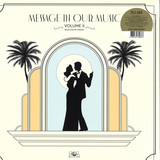
Various - MESSAGE IN OUR MUSIC VOL.2

SOL DISCOS is extremely happy to introduce the second volume of their Message In Our Music compilation series, selected by WAXIST. This album is the result of more than two years of work in researching the original recordings, the artists involved & licensing the different songs. Focusing once again on the Modern-Soul genre, the album brings back to light eight extremely rare songs from the mid-70's to the mid-80's, all officially licensed. From the heavy synth Gospel Boogie of Sharnell Morton's "You Are My Shining Star", to
the magnificent Network & Co private Disco "Spirit Of The Boogie", most of these songs are highly difficult to find on their original format, not to mention at a decent price. Direct Connect Shun’s "He's No Good" records have been destroyed in a flood, and the few
copies which have sold on the Internet reach the 3 figures price tags for example. Also, the album is proud to introduce to a wider audience some lesser known but exceptional recordings such as Janice "Nikki" Harrison's "Magic of Love", which is taken from a Broadway musical produced & composed by Ted Wortham - who also composed for
Philadelphia International Recordings artists such as Teddy Pendergrass, Anthony White or Jean Carn. Message In Our Music Vol.2 has been fully remastered, and features interview based liner
notes, along with never seen before pictures of the artists selected

out of Stock

Order now and we will order the item for you at our supplier.

18,11

Last In: 3 years ago
Mary Lattimore - Hundreds of Days

"It was the most beautiful summer of my life."

Memories — places, vacancies, allusions — are fundamental characters in Mary Lattimore's evocative craft. Inside her music, wordless narratives, indenite travelogues, and braided events skew into something enchantingly new. The Los Angeles-based harpist recorded her breakout 2016 album, At The Dam, during stops along a road trip across America, letting the serene landscapes of Joshua Tree and Marfa, Texas color her compositions. In 2017, she presented Collected Pieces, a tape compiling sounds from her past life in Philadelphia: odes to the east coast, burning motels, and beach town convenience stores. In 2018, from a restorative station — a redwood barn, nestled in the hills above San Francisco's Golden Gate Bridge — emanates Hundreds of Days, her second full-length LP with Ghostly International. The record sojourns between silences and speech, between microcosmic daily scenes and macrocosmic universal understandings, between being alien in promising new places and feeling torn from old native havens. It's an expansive new chapter in Lattimore's story, and an expression of mystied gratitude. A study in how ordinary components helix together to create an extraordinary world.

Awarded a residency at the Headlands Center for the Arts, Lattimore spent two summer months living with 15 fellow artists — writers, playwrights, musicians, poets, painters, activists, curators — in a cluster of old Victorian military buildings on the Northern Pacic Coast. Days offered solitude, Lattimore set up in a spacious barn, able to arrange her instruments at will. Nights welcomed new perspectives. "Hanging out with a lot of accomplished artists with poetic ways of looking at the world was really inspiring. My heart was in a bit of a tangle after leaving Philadelphia. I was holding onto things instead of moving forward. My time there was a nostalgia detox, a way to press reset in a healthy way. Also breathing in the freshest air in America, straight off of the ocean, felt good."

Throughout the shifting locales there is one consistent companion Lattimore engages: a 47-string Lyon and Healy harp. The instrument wires directly into her psyche. Pitchfork's Marc Masters posits, "she can practically talk through it at this point, she's created a language." The space and stillness of the Headlands afforded Lattimore freedom to her expand her vocabulary, to stretch out and experiment with layers of keyboard, guitar, theremin, and grand piano. Lattimore's voice sweeps beneath the plucks and washes of opener It Feels Like Floating,' enraptured by the winding current, and reappearing in the second minute of the immense "Never Saw Him Again." The track elevates towards a shimmering apex of static and percussion before organ drone yields to signature halcyon utters. As with much of Lattimore's work, the track titles are telling, "Baltic Birch" is a somber windswept march that sways gracefully out of step, a remembrance of a recent trip to Latvia where she was struck by the abandoned resort towns along the Baltic Sea. Hello From The Edge of The Earth' is an earnest reection of Lattimore's love of the natural world, recognizing the thresholds of varying terrains.

The album's fth track borrows its name from Lattimore's favorite line in Denis Johnson's short story Emergency' from Jesus' Son. A character, lost in a blizzard, reassesses a disjointed universe, a clash between curtains of snow and angels descending out of a brilliant blue summer: it isn't an apocalypse, it is a drive-in movie, with stars hovering above the lot, off the screen, in the throes of the Midwestern storm. This mix-up is disorienting and existentially tragic, Lattimore's darkly strummed piece is a melancholic parallel, mimicking Johnson's elegant suture attaching two remarkably discontinuous spaces.

Micro-revelations, not quite as bright as torn skies but nonetheless enlightening, were everyday occurrences during Lattimore's residency. Living small days with small tasks — feeling little dramas within the arcadian universe of a national park — rendered her the sense that disjointed spaces can be interconnected no matter the enormity that divides them. It's in this elastic scale of perception that something as simultaneously simple and intricate as Hundreds of Days can ourish.

- Second solo album for Ghostly, past releases on Thrill Jockey
- Recently toured w/ Sharon Van Etten, Jarvis Cocker, Kurt Vile, Steve Gunn, Julia Holter, Iceage
- Mary Lattimore has been featured on Pitchfork, NPR, The Wire Magazine, and more

out of Stock

Order now and we will order the item for you at our supplier.

22,65

Last In: 7 years ago
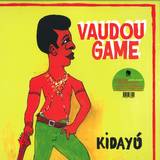
Vaudou Game - Kidayu

Vaudou Game

Kidayu

12inchHC46LP
HOT CASA
21.10.2016

When faced with the decision to take a different direction at the risk of getting lost in a synthetic sound or to further explore the same musical path, Vaudou Game didn't need to consult the oracle for very long when putting together their new album. Since their first acclaimed album, Apiafo and its irresistible single "Pas Contente", these Lyon natives never turned down the heat on over 130 stages across Europe, Africa, America and Asia. Peter Solo has displayed his amulets, charisma and yellow pants around the globe.When time came for them to harness their Afro-Funk sound for the second time, they turned their attention once again to their analog strengths. Vintage material, instruments produced in the 70's and cassette tapes were the "grigris" (or lucky charms) which proved most effective to ward off digital corruption of their music and return them to a tight-knit group with a solid groove.This unbeatable trance rhythm, inherited from James Brown and Fela, icons of Funk and Afrobeat, becomes trident when joined by Mawu, the creative voodoo divinity hidden in each of the group's notes. This inspiration transcends their spirit of communion, plunges them deeply into Mother Earth and results in the telepathic trance which is directly connected to Togo Peter's native Togo.Each song then becomes a celebration where the listener becomes the group's voodoo doll, embraced by the rhythm, submitting itself to the mercilessly metronomic cutting of guitars, struck by the copper-colored flashes of lightning forged by the African voodoo deity Hevioso, pierced by the psychedelic visions generated by the organs and a six-string guitar, cheerful songs, and hypnotic incantations.KIDAYU means "sharing" in Kabye, the language spoken in northern Togo. Sharing, is the philosophy of Vaudou Game - both in their recorded music and on stage.Vintage African funk tinged with voodoo chanting: Togolese Peter Solo and his fellow musicians from Lyon electrify us in a frenzied ceremony" - Télérama

out of Stock

Order now and we will order the item for you at our supplier.

21,05

Last In: 5 years ago
  • 1
Items per Page:
N/ABPM
Vinyl