Disponible
En el almacen y preparando para el envío
Ültimo hace: 4 Meses
11,72 €
En el almacen y preparando para el envío

En el almacen y preparando para el envío

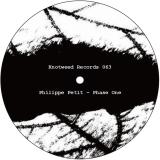
Light Switch: immerse yourself into Philippe Petit's original deeper version, echologist dubbed-out version, Lee Holman trippy version and Myles Sergé's stripped-down version. One track, four interpretations, to be used in dark sweaty basements from opening to closing hours...
2026 Update: while stock last, this coloured vinyl now comes with a coloured cover “Exploring Different Shades of Techno since 2011”
En el almacen y preparando para el envío

En el almacen y preparando para el envío

In October 1974, the first number of “L'Indépendant du Jazz”, a small self-produced magazine DIY -before punk supposedly invented the concept- was launched by Jef Gilson, Gérard Terronès, Jean-Jacques Pussiau and a few other specialists of a different kind of jazz in France, it looked at the already long career of Jef Gilson and in detail at the album with saxophonist Philippe Maté:
“The ‘Workshop’ is, with Philippe Maté (alto-sax), an undeniable success. Maté is genuinely ‘the’ most inventive French saxophonist since Michel Portal burst onto the jazz scene (who has also worked with Jef Gilson on both “Enfin” and “Gaveau”).”
Even though the author of the article is a mysterious I.H. Dubiniou, and it is difficult to know if it is a real person or a pseudonym used by one of the merry bunch, it is also tempting to hear it as what Jef Gilson really thought about his new discovery. Even more so as the two men would work together over a long period, as Maté became one of the key figures of Gilson’s Europamerica orchestra up until the 1980s.
Philippe Maté had started to make a name for himself with the Acting Trio when they released an album on the BYG label in 1969, and he was also one of the regular sidemen for the Saravah studios (he can notably be heard on albums by Higelin, Fontaine or his cult duo album with Daniel Vallancien).
The album was recorded on 4 February 1972, at the Foyer de Montorgueuil, where Gilson had set up his studio, with more or less the same team found on “La Marche Dans Le Désert” by Sahib Shihab + Gilson Unit (recorded ten days later). This was drummer Jean-Claude Pourtier and pianist Pierre Moret (regular Gilson accomplices since “Le Massacre Du Printemps”), alongside Maurice Bouhana and Bruno Di Gioa on various percussions and/or wind instruments. On bass is Didier Levallet, of the now mythical Perception, (Jean-François Catoire would replace him with Shihab) and Philippe Maté who took top billing, rather than the American saxophonist afterwards. The two albums are however quite different. This “Workshop” is more abrasive, more free. Made up of two long improvisations each of over 22mn, “L'Œil” on side A and “Vision” on side B (Gilson specialists would recognise the nod to one of his albums from the 60s), the album plunges you into the depths, attempting to drown you in electronic waves, dragging you back to the surface by the collar, giving you a good shakedown, before showing you the light, leaving you breathless on the shore after 46mn of the most intense music French has to offer. “An undeniable success”, they said. (by Jérôme "Kalcha" Simonneau)
En el almacen y preparando para el envío

En el almacen y preparando para el envío
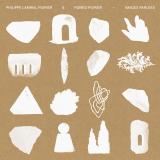
Besides his work as a painter, filmmaker and set designer, Philippe Lamiral Poirier (1951-2025) played guitar and saxophone in the group Kat Onoma, which he co-founded with Rodolphe Burger.
His fifth studio album combines his written texts with music composed by his son, Roméo Poirier, whom he considered to be cut from the same musical cloth as he was. It also confirms what has emerged from his previous albums, namely songs more spoken than sung and whose words evoke images, thus the album’s title – Images parlées.
A book of his paintings, Images traversées, will be published simultaneously with the album.
In this continual back and forth movement between text and image, music has always been present – sensitive and abstract, expressing nothing other than itself. It hollows out a place to tell us where we are. It is life without delay.
Roméo Poirier is working in the field of electronic music, focusing on heavy processing of samples and digital collage. He released albums on the London based record label Kit Records (Plage Arrière), the mancunian record label Sferic (Hotel Nota), and Jan Jelinek’s own imprint Faitiche (Living Room and Off The Record).
Haga su pedido ahora y le encargaremos el artículo en nuestro proveedor.

Somewhere between the sophisticated songwriting of Leonard Cohen and Jacques Brel, the rugged folk of Bob Dylan and Neil Young, the acoustic pop of Simon & Garfunkel, and the haunting melancholy of Nick Drake and Elliott Smith, there is Philippe B, who reminds us of the depth that can be conveyed with nothing more than a guitar and a few words.
debe ser publicado en 13.03.2026

Sonar Kollektiv proudly announces the new album by lo-fi veteran Don Philippe. With its textured production, broken rhythms, and a distinctly analog warmth, Velvet Breaks is a slow-burning, introspective work - a meditation on fragility, erosion, and beauty in decay.
debe ser publicado en 10.10.2025

Louis Philippe und The Night Mail sind zurück mit einem neuen, fesselnden Album, auf dem die Songs wieder einmal makellos sind. Die Reise geht dieses Mal weiter, weg vom Klassischen, hin zum Unerwarteten. Neue Synthesizer und Claps machen das Ganze unmittelbar und plötzlich, während Stimmen wie aus luftiger Höhe und scheinbar spielerisch-furchtlos durch das Album rufen. Neben den üblichen Geschichten, die man sich so erzählt, gibt es eine geheime, parallele Version der Pophistorie, die von den wahren Enthusiasten und Eklektikern geschrieben wurde. Von jenen, für die ein Dauerbrenner wie Pet Sounds nicht nur Anlass zu endlosen Behauptungen über seine Außergewöhnlichkeit war, sondern auch mündete in einer Aneinanderreihung harmonischer Reichtümer, die bis ins einundzwanzigste Jahrhundert reicht. In diesem alternativen Universum ist Philippe Auclair alias Louis Philippe, anglo-französischer Singer-Songwriter sondergleichen, seit vier Jahrzehnten eine bewunderte Größe. Philippes musikalische Anfänge liegen als Pop-Protagonist und Haus-Produzent bei Mike Always legendärem Label él Records. Von hier aus führten ihn seine Ausflüge in den Shibuya-Sound und zur Zusammenarbeit mit Leuten wie Bertrand Burgalat, Dave Gregory von XTC, Sean O"Hagan von High Llamas und Stuart Moxham von Young Marble Giants bis hin zu seinen jüngsten Abenteuern mit The Night Mail. The Night Mail kamen vor zehn Jahren zusammen, um ein Album mit dem unterschätzten Post-Glam-Genie John Howard aufzunehmen. Nach diesem einmaligen Projekt verbrachten sie ein paar Abende in London, um als Begleitband für Robert Forster und Louis Philippe zu spielen, und schlossen dabei eine Allianz mit Letzterem, die 2020 zu ihrem ersten gemeinsamen Album Thunderclouds führen sollte. Angesichts der Komplexität, den reichhaltigen Sound dieses Albums auf der Bühne zu realisieren, holte Philippe seinen langjährigen Partner, musikalische Koryphäe und Multiinstrumentalist Danny Manners an Bord.
Haga su pedido ahora y le encargaremos el artículo en nuestro proveedor.

In den 1970er Jahren wurde Romy Schneider durch ihre französischen Filme mit Regisseur Claude Sautet
ein internationaler Star. Besonders diese Meisterwerke bewegen und begeistern bis heute ihre Fans.
Die wunderbar sentimentale Musik zu den Filmen stammt vom berühmten Oscar-Gewinner Philippe Sarde.
Die Compilation „Romy Schneider, un portrait musical“ versammelt jetzt das erste Mal die Musik aus den
vier Filmklassikern „Die Dinge des Lebens“, „Das Mädchen und der Kommissar“, „César und Rosalie“ und
„Eine einfache Geschichte“. Ebenfalls zu hören ist Romy Schneider als Sängerin des „Chanson d’Hélène”
zusammen mit Michel Piccoli (französische und italienische Version) und “La Lettre de Rosalie”.
debe ser publicado en 22.11.2024

'“Nobody Move!”, so says Philippe Doray and his Asociaux Associés (the Antisocial Associates)! Having dynamited the end of the 70s with two radical albums – Ramasse-Miettes Nucléaires in 1976 & Nouveaux Modes Industriels in 1978, both reissued by Souffle Continu – Doray still hadn’t finished singing. Throughout the next decade he began his Composant compositeur which would document the “second period”, as he calls it, of his Asociaux Associés.
The record includes new schizo-electro songs which make the most of his association with Laurence Garcette, who also plays all sorts of keyboards. A prolongation of the first period of the Asociaux Associés, the duo updates Doray’s poetry: in reaction to the current overcast atmosphere, here are some hallucinatory fantasies to the rhythm of an infernal circle dance (« Le petit géant ») or an ecstatic waltz (“Bombés fluo”) or even coded messages stuffed into bottles and thrown into space (“Secoue le flipeur”, “Choc d’amour”).
On the bonus CD there are further iconoclastic examples: rare recordings (unpublished or even “inaudible”) of the Asociaux Associés but also by Crash, a duo that Doray formed with Thierry Müller (Ilitch, Ruth). At the controls of their experiment- bending machine the musicians multiply the possibilities: peripheral rock, arias in orbit, broken swing, industrial mantras and other joyful falsities. Enough to make you lose your mind? No... as Philippe Doray promised: it is the “jackpot qui frissonne” (the shivering jackpot) which is there to excite.'
debe ser publicado en 01.02.2024

“Nobody Move!”, so says Philippe Doray and his Asociaux Associés (the Antisocial Associates)! Having dynamited the end of the 70s with two radical albums – Ramasse-Miettes Nucléaires in 1976 & Nouveaux Modes Industriels in 1978, both reissued by Souffle Continu – Doray still hadn’t finished singing. Throughout the next decade he began his Composant compositeur which would document the “second period”, as he calls it, of his Asociaux Associés.
The record includes new schizo-electro songs which make the most of his association with Laurence Garcette, who also plays all sorts of keyboards. A prolongation of the first period of the Asociaux Associés, the duo updates Doray’s poetry: in reaction to the current overcast atmosphere, here are some hallucinatory fantasies to the rhythm of an infernal circle dance (« Le petit géant ») or an ecstatic waltz (“Bombés fluo”) or even coded messages stuffed into bottles and thrown into space (“Secoue le flipeur”, “Choc d’amour”).
On the bonus CD there are further iconoclastic examples: rare recordings (unpublished or even “inaudible”) of the Asociaux Associés but also by Crash, a duo that Doray formed with Thierry Müller (Ilitch, Ruth). At the controls of their experiment- bending machine the musicians multiply the possibilities: peripheral rock, arias in orbit, broken swing, industrial mantras and other joyful falsities. Enough to make you lose your mind? No... as Philippe Doray promised: it is the “jackpot qui frissonne” (the shivering jackpot) which is there to excite
debe ser publicado en 01.12.2023

Much has been written about Young Marble Giants' small, perfect catalogue, which contained roughly two-dozen songs, nearly each one a perfect gem. Less is known about his long wilderness years after the break-up of his first professional band. His next project, The Gist, chopped YMG's minimalism into a new sound. This Is Love, Public Girls and Fool For A Valentine showed his songs to be razor-sharp, but the album's fragmented pieces were a step too far for some, though even the strangest, Carnival Headache, when cast in sunlight by Alison Statton's combo Weekend, was as fine a song as any he'd written - and Love At First Sight became a million-seller when covered by Etienne Daho. Then Stuart disappeared. A rmid-90s resurgence led to fine albums done on low budgets, before more silence followed. The Gist's 2018's release Holding Pattern - unexpected and then quickly followed by YMG singer Alison Statton's first new album with her accompanist Spike in two decades, adding fuel to public interest. The Devil Laughs, recorded a few years back, is a compelling addition to the canon of the 21st century songwriting. Stuart's generally unadorned musical presentation does not hinder his appreciation for the skills of Louis Philippe, whose iconic arrangements across an array of Él label albums inspire the fierce devotion of aficionados around the world. Nor does the unvarnished solidity of Stuart's arrangements deter Louis from hearing possibilities for their presentation in styles which take inspiration from the perfection of 1960's studio technology that led to the rise of Brian Wilson, Burt Bacharach, along with less-recognised names such as Bones Howe and Roy Halee. Tidy Away is Young Marble Giants redux, though the backing vocals hint at maturity which band didn't live to see. Fighting To Lose, written with producer Ken Brake, would pass as a worthy b-side to Bridge Over Troubled Water, and although the songs are otherwise Stuart's, Louis fans will delight at several, like Love Hangover and Sky Over Water, which display his style and production genius as succinctly as anything on his own albums. The Devil Laughs is as out of its time as Colossal Youth was - its subtle but immediate beauty, devoid of "rock", is a recording best understood in the light of those obscure groundbreakers who inspired it - the faux barbershop vocals of Smile-era Beach Boys, the studio lustre of Tom Wilson's work with Simon & Garfunkel, a dash of The Swingle Sisters and French chanson - along with enough hints of Young Marble Giant's modernist folk abstraction to satisfy longtime fans. The Devil Laughs is a small masterpiece of pure expression.
debe ser publicado en 27.11.2023

debe ser publicado en 16.12.2022

Five years after "Mort d'un Pourri" (Death of a Corrupt Man) Philippe Sarde finds Alain Delon for this adaptation of a violent thriller by Jean-Patrick Manchette. If "Le Choc" (The Shock) offers a rather watered down vision of the original novel, the composer chooses to give a boost. Sarde explains : “My position was this : to inject singularity into this somewhat smooth story. I get some really good soloists together for an unconventional score balanced between rock, jazz fusion and romanticism. I wanted it to be energetic with a modern drive. To me, "Le Choc" is a direct extension of the great blends in "César et Rosalie" or "Coup de Torchon (Clean Slate)". A jazz-rock rhythm section, musicians from Weather Report with the London Symphony Orchestra, and the great Wayne Shorter. I
asked him if he could play his soprano with a timbre like a bombard, an unexpected transposing of a folk instrument onto a jazz horn..." To director Robin Davis, this magnificent score will be a real lifeline : "With his music, Philippe told a story alongside mine, he brought "Le Choc" back to what it might have and should have been. And I love the invisible link with Lautner. After Stan Getz and "Mort d'un Pourri", we’re still with Delon & Sarde but this time the saxophonist is a black American, Wayne Shorter."
Pressed for the first time from a high definition transfer of the recording tapes, this new album has been mastered without any compression, respecting all the dynamics of the recording produced at Abbey Road.
debe ser publicado en 02.12.2022

In 1968, the future composer of "The Things of Life" (Les Choses de la Vie) seriously considered becoming a director. He wrote and shot "Florence", a short film influenced by the New Wave and composed its soundtrack, under the benevolent eye of Vladimir Cosma. The first spectators of the film are unanimous: failing to have seen a visionary cinematographic opus, they have discovered a real movie musician. From this first attempt, Philippe Sarde imposes his melodic talent on the picture and initiates his sense of counterpoint. This founding soundtrack, however, remained in the boxes for more than 50 years, before finding a place of choice on the B side of our album.
To open the ball, we offer you another forgotten score: the almost unused score of Loulou, Maurice Pialat’s cult classic. In 1980, the naturalist director planned to use original music to accompany the wanderings of his sublime love duo, played by Gérard Depardieu and Isabelle Huppert. He commissioned a bare, impressionistic score from Philippe Sarde, then changed his mind and kept only a
timid end credits. The meeting between the two giants of French cinema did however take place, as evidenced by the first side of this beautiful lp.
debe ser publicado en 11.11.2022

debe ser publicado en 15.07.2022

Haga su pedido ahora y le encargaremos el artículo en nuestro proveedor.

The cult French game is celebrating its 25 years old with Wayô Records! Philippe Vachey, the original compositeur of this game series, achieved this fantastic Symphonic Suite with the Scoring Orchestral, recorded at the Seine Musicale of Paris!
1994-2019. For the 25th anniversary of the Little Big Adventure game series, here come the fully-licensed Symphonic Suite based on the music from these cult games by their composer Philippe Vachey, with the official support of the original team led by Didier Chanfray and Frederick Raynal! This project is, of course, led by the composer himself!
In the mid-nineties, Little Big Adventure (Relentless: Twinsen’s Adventure in USA and Asia) revolutionized the video gaming with an innovative system, a captivating storyline and characters that live in everyone’s memories. The hero, Twinsen, fights evil in a journey that leads him to discover the secrets of his destiny and to explore fantastic places around the world, and beyond!
It is the symphonic music composed by Philippe Vachey which adorns the two opuses of Little Big Adventure, with an extraordinary orchestration and quality of writing. These two titles are two standouts in the action adventure and fantasy genre. 25 years after the creation of the game, Philippe Vachey finally realizes the project of arranging the music of Little Big Adventure 1 & 2 for an exceptional symphonic suite, in collaboration with the best talents of the symphonic production in Europe!
debe ser publicado en 07.05.2021

An exchange between several voices of African artists (the Congolese Flamme on guitar, the late Cameroonian Hilaire Penda on bass, the Beninese Angélique Kidjo on vocals, and the dj singer producer
from South Africa Mo Laudi on the mike) gathered for the dance and celebration of this World Heritage work. The most popular anthem of classical music revisited in Afro Pop mode for crowds around the world. About this project, the producer Philippe Cohen Solal (ex-Gotan Project) tells: « When Mo Laudi, a Paris-based South African DJ, joined me in the studio, he delivered a great rap full of positive energy and geopolitical rhymes, from Patrice Lumumba to Biko and from Congo to São Paolo. Then Queen Angelique Kidjo, like a divine diva, fervently sang her hymn "Lonlon" in the Mina language, where the Afro literally meets the Bolero. We will not forget the fine team that allowed me to concoct this sacred cocktail: Flamme Kapaya,
outstanding Congolese guitarist, the Parisian DJ-beatmaker Lazy Flow and the late Hilaire Penda, Cameroonian bass player who unfortunately left us since. Benin, South Africa, Congo and Cameroon meet in Paname, the capital of World Sound, but the musical adventure did not stop there. The remixes take us straight to London with Poté, to Berlin with Daniel Haaksman and to Johannesburg with the super-group Batuk formed by the godfather of the African electro Spoek Mathambo, the kwaito maestro Aero Manyelo and the Mozambican singer Manteiga. At a time when travel is prohibited or
not recommended, let us be glad that music does not need certificates or passports and knows no borders ».
Haga su pedido ahora y le encargaremos el artículo en nuestro proveedor.

Belgian artist Philippe Petit joins Radio Slave’s imprint with four analogue techno cuts on his Rekids debut. The Chamonix based DJ and producer Philippe Petit is widely respected amongst the techno community for his plethora of rumbling releases such as ‘Venus’ on EarToGround and ‘Scrape’ on his own imprint Decision Making Theory as well as releasing on Involve and Figure SPC to name a few. With a wealth of experience playing at the likes of Tresor, Suicide Circus, La Graviere, Batofar, Weetamix, Corsica Studios, and Berghain, the sophisticated production he showcases was a natural fit for the Rekids’ Special Projects series. ‘Anger’ rolls in with force and bumping sub frequencies, rattling percussion and jarring keys, then ‘Crystal Clear’ keeps things murky with evolving pads, fleeting highs and rolling low-end. On the flip, ‘When We Meet’ jumps in with climbing stabs, tight hi-hats and galloping kicks, when finally, ‘La Floria’ cuts through with chopped highs, washing chords, snappy cymbals and dreamy harp-esque patterns.
Haga su pedido ahora y le encargaremos el artículo en nuestro proveedor.

Philippe Cam is the Thomas Pynchon of the electronic music world. Little is known about him and only a couple of pictures have been put online since he emerged on this planet to write his first and only album18 years ago. We know he worked as a sailor and that’s it. If you dig deeper you might find out that he worked as a DJ in the beginning of the 90ies in Brussels and began to study electronic music there and also began to write music for theaters and ballets.
The American distributor Forced Exposure once wrote that about him: „Philipe Cam is a star in his own field. He is among the few people who have succeeded to write hypnotic dance music without a conventional beat still conveying a thrilling, dramatic feel. Cam has developed an accurate, intense and complex formula of modulation-techno. Starting with music similar to Pan Sonic in 1996, his music turned towards a more elegant form of minimal music. Abstract soundtracks lead to an organic form of music, which was equally influenced by modern techno as Wolfgang Voigt's Studio 1/Gas or Basic Channel/Maurizio. Cam's music corresponds heavily to the Cologne scene, where his music is appreciated and played throughout the clubs by the likes of Michael Mayer, Tobias Thomas and various other DJs as well as experimental djs from the A-musik corner.“
So what’s new with his music? Basically the art of filtering is still his passion. Maybe he can be less associated with techno and the themes of his new tracks emerge in a more distinctive pattern? Well that’s hard to say, we would comment the energy of his early techno days in Brussels have returned here in a fierce way with some oft he tracks. The rhythmic movements are classy and stick with you. Whereas other tracks look for a distinctive relaxation of some kind.
We are releasing the album as a double clear vinyl with cover art by Yvette Klein who also designed the cover for his Philippe Cam’s album 18 years ago. Graphics for "Rotterdam" come from Cologne designer Daniela Thiel. We also would like to thank the cultural department of Cologne for supporting us to finance the album and to see the artistic value in this piece of minimalism.
The album kicks off with the mellow and soothing "Cocoa Beach". A Gentle beat that moves like bodies swaying in the hot summer sun. The clock moves a step forward and then a step backward as evolution takes a rest.
"Manga" feels like an acceleration to the moon, the contemplative moments come in spurts and hide in the intervals of the chords which are on the loose. Philippe Cam is the most energetic person in the world when it comes to core activity, this is head banging stuff for the ambient lounge.
"Short Summer" is a heavy and violent recognition. As intensive as it is it knows when to stop and disappear. In the ear and brain of the listeners it leaves an indisputable echo which lingers on for minutes. We suggest not to make a pause but jump directly into "Vermillions Sands".
What can be said about into "Vermillions Sands"? Be prepared some Terry Riley might lure around the corner to offer you some oranges on a silver plate, but don’t eat them. This is luring and beautiful at the same time. Maybe the best ambient track ever written and yet who can ever venture to say that without making a fool of himself. "Vermillions Sands" comes in waves and they could be longer we think.
"Rotterdam" the home of Philippe Cam for a long time but not anymore. He moved away. So that changes the perspective. But when was the track written? "Rotterdam" seems mechanical and rusty and spooky and divided. This arrangement is very different to all the other tracks so far and is almost dub in style but way more fractured. A steady stop and go emerges. But the longer it runs the better it gets. At minute 6 the brain resets itself and tries to grasp what has happened so far, reconstruction as a result of its own phantasmic imagination and hardly true at all, wonderful. Applause included!
Here comes "Bis", a short episode of a track and before we can comment on it, it is already over.
"The Game" is a mule of a track. It has a quiet stubborn sequence that bites and kicks you in the back without any change in near sight. We can hear a voice whispering, which sounds like a miniature vocoder featuring the voice of a child calling out - never stopping. This is treadmill to some extend but starts to breathe towards the middle of the track and slowly changes perspective. In fact there are some changes taking place here which go beyond a sound design that works heavily on the stereo image. Stick with it and the experience will be a great one.
"Ultimate Fly For Halloway" somehow orchestrates how you might feel after you climbed a 8000 meter high mountain and reached the top. A rejoicing off a special kind. Lava for the ears. No cheerleader murder plot sorry.
"Last Track" is a perfect example of a true minimalistic pice of music that manages to make contact with other genres and does this with elegance, determination and a lot of soul.
key selling points: The key selling point is the fact that Philippe Cam once was referred to as one of the main protagonists of the minimal music scene along with Wolfgang Voigt's Studio 1/Gas and Basic Channel/Maurizio. A true artist with a vision which is very rare.
Philippe Cam has picked up the sound he was famous for but has developed it further without selling out to any genre and expectation that rules our daily business.
Exactly this is the strength of the album to create a vivid world of impressions by using instruments in a whole different way than all software developers would suggest.
"Rotterdam" is a piece of art that can set off a firework when you listen to it and it owes nothing to anyone.
Haga su pedido ahora y le encargaremos el artículo en nuestro proveedor.

Philippe Hallais returns to Modern Love with a new album, the first under his own name following his label debut as Low Jack with Lighthouse Stories in early 2016.
It's by some distance his most important work to date, setting aside the squashed dancefloor productions of his Low Jack Alias for an album of emotive, indefinable ambient pieces.
After working through different subcultural musical languages as Low Jack, this time Philippe takes inspiration from the TV biopics of high-performance athletes for an album of exceptional
emotive impact; somewhere between pastiche, tragedy and electronic futurism.
Fascinated by the sports documentaries mass-produced by the US TV channel ESPN, Hallais transcribed and amplified its dramatic recipes. These form the material of tearful soap operas
which develop the same narrative ad nauseam; the rise to the top, the betrayal, decline, salvation, comeback and, ultimately, nostalgia and regret. The TV formatting reduces the life of these high level athletes to a generic tale, transforming them into impersonators of their own lives through extreme use of editing, slow motion and musical themes.
Divided into four sides (and eleven tracks) acting as parts in a greek tragedy, the album delves into the dislocations of the mythology of sports and its achievement in mass entertainment; whereby the hero becomes a dispensable and mimetic body. Hallais delves into this unusual portrayal of triviality and disaster, naivety and cynicism that make the real life and ordeals of the hero indistinguishable from their scripted form on TV.
This obsession with storytelling and the creation of bigger than life characters forms the narrative of 'An American Hero', a parable for our times.
Haga su pedido ahora y le encargaremos el artículo en nuestro proveedor.

Up and coming Belgium-born activist Philippe Petit, operator of the Knotweed and Decision Making Theory labels, returns to Figure SPC with a delightfully versatile four tracker. Spanning cold-wavesynth electronics, purist club techno and up-building melodic zones, its perhaps Petits strongest effort yet. Capturing a neo-classical, archaic mood in >Mist Solaris Negative Zone Suspended< closes the EP with a joyful, above the clouds journey, lifting up weightlessly into the ether.
Haga su pedido ahora y le encargaremos el artículo en nuestro proveedor.

Long-serving French talent Philippe Petit is welcomed to Figure SPC with this dextrous and inventive four-track EP. Petit is the owner of the Knotweed and Decision Making Theory labels, enjoying a busy schedule as a fine purveyor of edgy, melodic and classic Techno stylings. We look forward to more to come from Mr. Petit!
Haga su pedido ahora y le encargaremos el artículo en nuestro proveedor.

This is France in the Mitterrand years: fashions fleet as fast as governments. In the early eighties, the happy-go-lucky gather the nectar of each and every new release.
Believing in a bright future for videotex, and loosened up by the sexy talks broadcasted on the budding pirate radios, the new generation dreams of dance floors and holiday clubs. French Boogie, which preserves the spirit of these years of boodle and bunkum, is the ideal soundtrack to their dreams.
What the web now refers to as French Boogie is some synthetic funk reflecting the spirit of those days when nothing was impossible, or so it seemed. Its syncopated flow heralded the dawning of French rap. Often considered as some kind of post-disco, inspired as much by black music as by new wave, this carefree pop music with bawdy lyrics indulged in simple pleasures: holidays, swank and sun were recurrent themes. Totally in tune with its time, it incidentally glorified luxury, success, and a certain consumerism embodied, for instance, in Bernard Tapie.
In popular clubs such as La Main Bleue in Montreuil, or L'Echappatoire in Clichy-sous-Bois - where Micky Milan could be seen behind the decks - an enthusiastic audience discovered this new sonic wave, influenced as much by French pop as by Sugar Hill Gang or Kurtis Blow. The artists who first launched the movement engaged in it wholeheartedly, but as often the case with new music trends in France, humour and casualness quickly became a decoy to impose a new style. This explosive mixture, in which startling and typically Frenchy French lyrics go along New-York-style tunes, is sometimes reminiscent of the kinky comedies directed by Max Pécas or Claude Zidi. On this prolific scene, partly originating from the Jewish community, everybody was looking for success, trying to hit the jackpot with what was to hand. Famous media personalities, one-hit wonders or John Does in quest of fame, all had a go at French Boogie - more or less successfully. Apart from « Vacances j'oublie tout » by Elégance, « Un fait divers et rien de plus » by Le Club, or « Chacun fait ce qui lui plaît » by Chagrin d'amour (produced by Patrick Bruel), very few songs became hits: the story of funk in France is that of a half-baked robbery.
In this myriad of new musicians, the very young François Feldman and Phil Barney pioneered a fresh and hybrid style. Other well-known artists like Gérard Blanc from Martin Circus (Attaché Case), Richard de Bordeaux (Ich), or Jean-Pierre Massiera (Anisette, Pirate Scratch Band, Mandrake, Scratch Man...) added an eccentric touch to this sound-wave, making it often entertaining, and sometimes showy.
Capture d'écran 2015-10-26 à 12.55.43Singers like Agathe (the author of 'La Fourmi' and of the hit song 'Je ne veux pas rentrer chez moi seule') were far more than just window dressing. They even tried to give an ironic and subversive twist to this rather harmless genre. The very vindictive rebel Gérard Vincent shared in this spirit, but as a whole, French Boogie became associated with nonchalance and sauciness. Thus, Stéphane Collaro, Gérard Jugnot, Alain Gillot Pétré and other TV clowns would clumsily contribute to this French variation on funky sounds. In a few but intense years, French Boogie gave all the tips to party with style.
If some hits made it possible for the happy few to get a real house under truly exotic palm trees, the wave actually ebbed away very quickly, leaving quite a few musicians stranded on the shore. Whether they were sincerely motivated, or simply opportunistic, they had failed. In 1984, French Boogie was already breathless, and got merged with other genres: on the one hand, rap and breakdance adapted its flow to a more urban world, especially with Sydney's show, H.I.P.H.O.P, and Dee Nasty's broadcasts on Radio Nova; on the other, italo, new beat and house began to rule over dance floors, even more strongly asserting the will to develop music for clubs.
Squeezed in between the age of disco and that of modern electronic music, French Boogie was a transitional phase, but it remains an amazingly refreshing testimony to the intermingling of pop and underground cultures. The genre was hastily categorized as anecdotal in spite of its pioneering synthetic groove and matchless bass lines. An attentive ear will discover the poetry of the ephemeral beyond the eccentricities of the genre, as well as a certain unexpected avant-gardism. At the origin of major music trends, always cheerful and catchy, French Boogie is what you need to party.
Haga su pedido ahora y le encargaremos el artículo en nuestro proveedor.

Haga su pedido ahora y le encargaremos el artículo en nuestro proveedor.

Haga su pedido ahora y le encargaremos el artículo en nuestro proveedor.

Channeling his honed sample craft towards the ominous portent of modern times, Romare returns with his fifth album Oblivion, with the previous 3 out of 4 LP's appearing on Ninja Tune. Across a suite of downtempo, broken beat, bubbling grooves and brooding reveries Archie Fairhurst threads a narrative that wrestles with the big questions of the present moment — the tipping points of the planet and technology, the fight for social justice and the power structures that govern our existence. While his trademark source material continues to cast a long line back through recorded history, this is Romare at his most contextual.
Nothing is placed by accident. 'Machines' hums its throbbing 4/4 pulse along to a German language recital of Johann Wolfgang von Goethe's 'Blessed Longing' — an enduring reflection on the human condition that rings true from way back in the 19th Century when it was written. 'Computer Love' slinks into a sumptuous trip-hop lull laced with sci-fi flourishes sculpted from samples of old computer documentaries — a bittersweet romantic backdrop to our complicated situationship with the devices in our lives. 'Take Us' goes one step further on its hard-stepping boom-bap strut as a subtle tale of possession by screens unfolds around Romare's signature strain of technicolour mutant funk.
There is space for optimism in the message on Oblivion as well — the strength of the suffragettes as a benchmark for social justice and activism amidst the speakeasy slink of ‘Deeds, Not Words', and spring-loaded acid house joint 'Change' pointing to the need for positive action in the face of imminent calamity.
The artwork for the album follows Fairhurst's thought process, drawing on Edvard Munch's iconic 'The Scream' along with Philippe Halsman and Salvador Dali’s ‘Voluptuous Death’ to help render the ideas of the album visually.
The wild ride of Oblivion races towards a final beguiling opiate on 'The Last Lullaby' — the perfect sedative after the rush of information and emotion that comes with a full-length trip through Romare's vivid, uniquely creative world of sound.
En el almacen y preparando para el envío
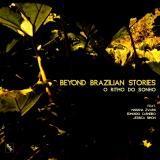
Driven by a lush and irresistible energy, Beyond Brazilian Stories takes you on a musical journey between Brazilian traditions and jazz improvisation.
Introduced to the richness of Brazilian music by Philippe Baden Powell, pianist Mathieu Bélis and double bassist Stéphane Dardour founded BSP PRODUCTIONS and formed the quintet Beyond Brazilian Stories, joined by saxophonist David Florsch, drummer Louis Bao Lao, and Äulne, vocalist and flutist.
Together, they revisit masterpieces by giants such as Milton Nascimento, Airto Moreira, Hermeto Pascoal, Dorival Caymmi, Edu Lobo and Moacir Santos, blending popular melodies with soaring instrumental passages.
The group also brings its own compositions, inspired by the vibrant energy of Brazilian music, creating a sound that is both authentic and innovative.
Their new album O ritmo do sonho has been awarded the “Revelation” distinction by Jazz Magazine!
Album contributors:
Mariana Zwarg - flutist, daughter of Itiberê Zwarg, Hermeto Pascoal’s bassist.
Edmundo Carneiro - Brazilian percussion legend (Tania Maria, De La Soul, Saint Germain, etc.).
Jessica Simon - trombonist, member of the Orchestre National de Jazz.
“An explosive fusion where samba, bossa and jazz become the playground for joyful and virtuosic freedom....” Jazz Rhônes Alpes
“...the brilliant Hermeto Pascoal,
whose spirit is present throughout O ritmo do sonho...” Revelation Jazzmag
debe ser publicado en 09.10.2026
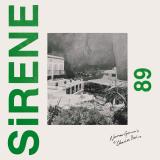
Norman Gervais and Charles Bals return after last year’s Transcoastal compilation with their first project for the Italian label Periodica Records and its newly founded imprint, Periodica International.
The concept behind SiRENE 89 is quite particular and took six years to develop. It is presented as the live recording of one long evening, with different bands taking the stage one after another on the terrace of a Mediterranean holiday resort in 1989, inspired by the places Charles and Norm remember from their summer holidays around that time.
The songs were recorded between 1982 and 1993 and gathered from small-time artists, beach-club vagabonds, local micro-labels, library records and privately released tapes. The music moves lightly between mystical ballads, digital samba and loose, sunburnt dance songs, carried by drum machines, not-quite-tuned guitars and college-band voices.
The audience on the terrace remains quietly present throughout, joining the tracks into one continuous, partly improvised set. By the end, it feels less like a compilation and more like a place where you have spent the night, proving that charm can carry further than perfection.
debe ser publicado en 16.10.2026
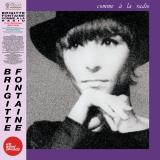
Wewantsounds is delighted to reissue Brigitte Fontaine’s landmark 1970 Saravah album Comme à la Radio, recorded with Areski Belkacem (who sadly died last June), Wadada Leo Smith and the Art Ensemble of Chicago. This deluxe 2-LP edition pairs the original album with a second LP of rare bonus material. The release is accompanied by a lavish 24-page bilingual booklet featuring an introduction by journalist Andy Beta, essays by Wadada Leo Smith, Brigitte Fontaine biographer Benoît Mouchart and Benjamin Barouh, plus a recent interview with Brigitte Fontaine and the late Areski Belkacem. The booklet also includes complete lyrics and a selection of rare archival photographs by Jean-Pierre Leloir and Philippe Gras. The reissue is announced alongside its companion, the deluxe 2-LP set Comme à la Radio "On Air", featuring previously unreleased ORTF live recordings and additional studio rarities.
Wewantsounds pursues its Brigitte Fontaine reissue program with Comme à la Radio, originally released in 1970 on Pierre Barouh’s cult Saravah label, fusing Fontaine’s radical lyricism with Areski Belkacem’s minimalist compositions and the fearless improvisations of the Art Ensemble of Chicago + Wadada Leo Smith. Its title track has since become a cult classic in jazz and groove circles.
The album has been newly remastered from the original tapes and is reissued in a deluxe 2-LP edition featuring 11 bonus tracks. The first LP presents the original album in restored clarity, while the second gathers rare non-album singles, English-language takes, alternate versions and previously unreleased instrumental recordings showcasing the Art Ensemble's artistry, including the elusive English version of Comme à la Radio, and a striking early version of L’été L’été.
Also included is a 24-page bilingual booklet featuring rare archival photographs by cult photographers Jean-Pierre Leloir and Philippe Gras, complete lyrics, and contributions by Andy Beta, Wadada Leo Smith, Benoît Mouchart and Benjamin Barouh, plus a recent interview with Brigitte Fontaine and the late Areski Belkacem. The reissue is announced alongside its companion Comme à la Radio "On Air", a deluxe 2-LP set presenting previously unreleased ORTF live recordings and additional studio rarities.
Comme à la Radio stands as a visionary landmark of French music and a defining statement in Brigitte Fontaine’s career. This expanded edition confirms its enduring influence more than fifty years after its original release.
a A1. Comme À La Radio 8.03
[b] A2. Tanka II [2.04]
[c] A3. Le Brouillard [3.24]
[d] A4. J'ai 26 Ans [3.04]
[e] B1. L'été L'été [3.56]
[f] B2. Encore [1.34]
[g] B3. Léo [3.50]
[h] B4. Les Petits Chevaux [0.43]
[i] B5. Tanka I [1.45]
[j] B6. Lettre À Monsieur Le Chef De Gare De La Tour De Carol [6.04]
[l] C1. Comme À La Radio – English Version [8.08]
[m] C2. J’ai 26 Ans – English Version [3.56]
[n] C3. Le Goudron – 7’’ Single [4.12]
[o] C4. Le Noir C'est Mieux Choisi – 7" Single [5.03]
[p] D1. Les Beaux Animaux – 7’’ Single [3.16]
[q] D2. L'été L'été – Early version [4.38]
[r] D3. L'été L'eté – Instrumental Version [4.23]
[s] D4. Tanka I – Instrumental Version [1.47]
[t] D5. Tanka II – Instrumental Version with Flute [1.40]
[u] D6. Le Brouillard – Instrumental Version [3.57]
[v] D7. Lettre À Monsieur Le Chef De Gare – A Cappella English Version [2.46]
[a] A1. Comme À La Radio [8.03]
[b] A2. Tanka II [2.04]
[c] A3. Le Brouillard [3.24]
[d] A4. J'ai 26 Ans [3.04]
[e] B1. L'été L'été [3.56]
[f] B2. Encore [1.34]
[g] B3. Léo [3.50]
[h] B4. Les Petits Chevaux [0.43]
[i] B5. Tanka I [1.45]
[j] B6. Lettre À Monsieur Le Chef De Gare De La Tour De Carol [6.04]
[l] C1. Comme À La Radio – English Version [8.08]
[m] C2. J’ai 26 Ans – English Version [3.56]
[n] C3. Le Goudron – 7’’ Single [4.12]
[o] C4. Le Noir C'est Mieux Choisi – 7" Single [5.03]
[p] D1. Les Beaux Animaux – 7’’ Single [3.16]
[q] D2. L'été L'été – Early version [4.38]
[r] D3. L'été L'eté – Instrumental Version [4.23]
[s] D4. Tanka I – Instrumental Version [1.47]
[t] D5. Tanka II – Instrumental Version with Flute [1.40]
[u] D6. Le Brouillard – Instrumental Version [3.57]
[v] D7. Lettre À Monsieur Le Chef De Gare – A Cappella English Version [2.46]
[a] A1. Comme À La Radio [8.03]
[b] A2. Tanka II [2.04]
[c] A3. Le Brouillard [3.24]
[d] A4. J'ai 26 Ans [3.04]
[e] B1. L'été L'été [3.56]
[f] B2. Encore [1.34]
[g] B3. Léo [3.50]
[h] B4. Les Petits Chevaux [0.43]
[i] B5. Tanka I [1.45]
[j] B6. Lettre À Monsieur Le Chef De Gare De La Tour De Carol [6.04]
[l] C1. Comme À La Radio – English Version [8.08]
[m] C2. J’ai 26 Ans – English Version [3.56]
[n] C3. Le Goudron – 7’’ Single [4.12]
[o] C4. Le Noir C'est Mieux Choisi – 7" Single [5.03]
[p] D1. Les Beaux Animaux – 7’’ Single [3.16]
[q] D2. L'été L'été – Early version [4.38]
[r] D3. L'été L'eté – Instrumental Version [4.23]
[s] D4. Tanka I – Instrumental Version [1.47]
[t] D5. Tanka II – Instrumental Version with Flute [1.40]
[u] D6. Le Brouillard – Instrumental Version [3.57]
[v] D7. Lettre À Monsieur Le Chef De Gare – A Cappella English Version [2.46]
debe ser publicado en 23.10.2026
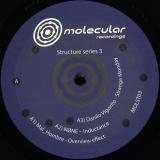
Molecular Recordings – Structure Series 3
The framework expands.
Structure Series 3 marks the next instalment in Molecular Recordings' ongoing vinyl series, bringing together a selection of artists connected by a common language: deep, functional, uncompromising techno.
Forged between machine pressure, hypnotic movement, and warehouse energy, the release continues the label's tradition of spotlighting both respected figures and emerging producers without distinction. The focus remains where it has always belonged — on the music itself.
Across four cuts, Structure Series 3 moves through shifting textures and intensities, balancing raw groove, atmospheric depth, and precise rhythmic architecture. Built for sound systems rather than algorithms, these tracks are designed to reveal their full weight in the physical space of the dancefloor.
Three decades after its foundation, Molecular Recordings continues to operate beyond trends and short-lived cycles, remaining committed to authentic underground techno and the artists shaping its future.
Structure Series 3 is another transmission from the Molecular network: Built from experience, driven by instinct. Structured for the underground
En el almacen y preparando para el envío

Siân Pottok is a citizen of the world.
Born in West Palm Beach, Florida, to a mother of Indian and Congolese heritage and a father of Slovak and Belgian descent, Siân grew up between Belgium and New York before finally letting her travelling wings come to rest in Paris. What could have become a story of fragmentation instead became a source of creative strength. Singer, songwriter, composer and photographer, Siân has always turned borders into bridges.
She first honed her voice in the jazz clubs of Paris and New York, performing alongside renowned artists such as Richard Bona, Jon Batiste and Mike Stern. Yet her path has always extended far beyond the stage. For nearly a decade, she led cultural initiatives with women and children living through exile, violence and poverty across India and Southern Africa, weaving together music, photography and artistic transmission as tools for dialogue and empowerment.
The true turning point came when she discovered the kamele ngoni, the West African harp whose ethereal sound seemed to echo something long buried within her. The instrument became her musical alter ego—the invisible thread binding together her many inheritances. Guided by Malian master Abou Diarra, Siân embarked on an inward journey towards her African roots. Yet this return to her origins was never an act of retreat into identity. Instead, it gave rise to a body of work that remains profoundly open to the world, where Africa enters into conversation with jazz, folk, soul, alternative pop and the rhythms of Brazil.
Along the way, she has crossed paths with remarkable artists including Rogê, Chico César, Fatoumata Diawara, Lokua Kanza, Flavia Coelho, Thomas de Pourquery and Philippe Baden Powell. On stage and in the studio, Siân continues to shape a musical universe that refuses labels. Like artists such as Björk, Joni Mitchell and Laura Mvula, she moves forward as an explorer, guided not by genre but by intuition.
Today, Siân stands as one of the most distinctive voices of the new Francophone music scene an artist capable of uniting musical sophistication with emotional power, introspection with collective celebration, depth with an irresistible urge to dance.
Animal — The New Album
With Animal, produced by British musician Tom Excell (Nubiyan Twist, Africa Express...), Siân delivers her most intimate and assured work to date. Every song feels like a shedding of skin, a quiet metamorphosis, exploring self-acceptance, femininity, the freedom to be oneself, cultural heritage, and the reconciliation of one's own imperfections.
From Stereotype, a fearless manifesto against the expectations imposed on women, to the title track Animal, an anthem celebrating the beauty of imperfection ("I've turned my cracks into a crown"), the album gives a voice to everyone who refuses to fit into predefined boxes. In Terre, je danse sur toi, featuring Fatoumata Diawara, Siân pays tribute to Mother Earth and to the roots that unite us all. Oh! Congo, recorded with Lokua Kanza, reconciles her cultural heritage with an ancestral homeland that feels both distant and intimately familiar. En équilibre, with Flavia Coelho, embraces the exhilaration of risk and the courage to leap, while Put a Mask and I Could Kill confront hidden wounds and the invisible violences that quietly shape who we become.
In ADé, Siân addresses Adenomyosis as though speaking to an unwanted housemate. "My body is your battlefield," she sings, giving voice to an intimate shadow lodged deep within herself. This bittersweet lullaby transforms a pain so often left unspoken into an act of profound tenderness towards oneself.
The album also holds a rare treasure: Reste tel(le), an unpublished text by Pierre Barouh, the founder of the Saravah label. Never before set to music or performed, this elusive poem of free love finds new life through Siân's voice, becoming a dialogue across time between two artists united by the same devotion to freedom, métissage and openness to the world.
Driven by Tom Excell's vibrant Afro-pop pulse, the spiritual breath of the kamele ngoni, organic arrangements and deeply personal songwriting, Animal is an album of liberation. It invites us to lay down our masks, embrace our contradictions and reconnect with the free, instinctive and powerful animal that lies dormant within us all. More than a collection of songs, it is a radiant manifesto for the richness of identity, the passing on of memory, and reconciliation with oneself.
Animal is not simply the title of an album, it is a declaration of independence. An invitation to live fully, unapologetically, and without instructions.
A citizen of the world, travelling freely between continents, languages and memories, Siân Pottok delivers with Animal her most personal, and perhaps her most universal work to date: an album that reminds us that our fragilities, our roots and our differences are, beyond doubt, our greatest strength.
— Christophe Tison
debe ser publicado en 13.11.2026

Desertshore is Nico's third solo album, recorded and released in 1970. It was co-produced by John Cale and Joe Boyd. Like its predecessor The Marble Index, it is an avant-garde album with chamber music elements. The back and front covers feature stills from the film La cicatrice interieure by Philippe Garrel, which starred Nico, Garrel and her son Ari Boulogne. A few of the songs from the album were included on the soundtrack of the film.
El artículo no se ha publicado. Tú puedes reservar ahora el artículo y después de ser pagado se te será enviado.

,In the Grace Of Your Love" kam ursprünglich 2011 raus und war ein Neustart für The Rapture und eine willkommene Rückkehr zu DFA, dem Label, das ihnen zu ihrem sofort erfolgreichen Debüt ,Echoes" verholfen hatte. Der Schwung und Erfolg dieser Jahre führte zu einer Achterbahnfahrt mit einem großen Label, die sie wieder da landete, wo sie angefangen hatten - mit Narben, aber jetzt frei, die Grenzen der Erwartungen zu sprengen. Begleitet wurden sie dabei vom verstorbenen, großartigen Philippe Zdar, einer Hälfte des französischen Dance-Duos Cassius und Produzent von Künstlern wie Phoenix und den Beastie Boys. Zdars Begeisterung und technisches Können sind schon in den ersten 30 Sekunden des Albums zu hören: ,Sail Away" ist The Rapture in voller Pracht und Strahlkraft, ein fünfminütiger Ausatem mit Disco-Drums. Natürlich gibt es auch jede Menge Futter für die Dance-Kids - ,How Deep Is Your Love" rockt immer noch die Tanzflächen der New Yorker Bars, ,Miss You" ist ein unwiderstehlicher kleiner Streich in Moll -, aber insgesamt herrscht das Gefühl vor, dass man langsamer wird, Bilanz zieht und an den richtigen statt an den falschen Orten nach Sinn und Liebe sucht. Daher auch das Finale: ,It Takes Time To Be a Man", ein charmant ehrlicher, von Klavierklängen untermalter Song über Verantwortung übernehmen und anderen helfen. Er klingt wie nichts anderes im Repertoire von The Rapture und rundet es dennoch perfekt ab. Der Abspann läuft, die Zeit vergeht, Platten bedeuten immer noch alles.
En el almacen y preparando para el envío

Bambe welcomes Low Jack — the alias of French producer Philippe Hallais — to the label with his debut single “MARKET,” backed by a remix from Bambe label head Bambounou. Following the dark ambient explorations of his recent album Lacrimosa on Stroom, Low Jack returns decisively to the dance floor, channeling his club instincts while preserving a deep-rooted connection to contemporary art.
Originally conceived as a commissioned composition for Australian visual artist Thomas Jeppe, “MARKET” was created to accompany an immersive installation exploring the hallucinatory rhythms of cosmopolitan life. The work was presented in February 2025 at Circolo UltraFiorucci, a newly launched cultural space in Milan, where sound and image converged to envelop visitors in Jeppe’s vivid, destabilized urban vision.
Recontextualized for the club, “MARKET” bridges installation and dance floor, reinforcing Low Jack’s singular ability to move fluidly between experimental art contexts and forward-leaning club music — now sharpened further by Bambounou’s remix, which pushes the track into electro territory.
En el almacen y preparando para el envío

"Carrycroch'" is the title of the first album by the Alsatian progressive rock band WLUD. This French band is composed of Philippe Wendling on keyboards, Bernard Labroche on guitars, Gigi Untersinger on bass and Gianni Drago on drums. WLUD is the acronym of the musicians' names, W for Wendling Philippe, L for Labroche Bernard, U for Untersinger Gigi and D for Drago Gianni. All compositions are by WLUD. The original vinyl record released in 1978 was as successful abroad (notably in the USA and Japan) as in France. This record is a reissue of the original production at the time but for this reissue, a bonus track has been added on the B-side which did not exist on the original 1978 version. Another vinyl album followed in 1979 under the name “second”, also reissued in its original form.
En el almacen y preparando para el envío

“Second” is the title of the second album of the Alsatian group WLUD This French band is composed of Philippe Wendling on keyboards, Bernard Labroche on guitars, Gigi Untersinger on bass and Gianni Drago on drums. WLUD is the acronym of the musicians' names, W for Wendling Philippe, L for Labroche Bernard, U for Untersinger Gigi and D for Drago Gianni. All compositions are by WLUD. The original vinyl record released in 1979 was as successful abroad (notably in the USA and Japan) as in France. This record is a reissue of the original production at the time. A first album called "Carrycroch'" was released in 1978.
En el almacen y preparando para el envío
