On 'Mirror, Reflect,' Amy O returns to form as she documents her transition into motherhood in the early days of the pandemic. Initially conceived as a lo-fi endeavor to record songs made with friends in those days of uncertainty, 'Mirror, Reflect' is an intimate and exploratory work that weaves collected home and field recordings with shimmering synths and Oelsner's playful lyricism. A stalwart presence in the indie-pop underground since 2012, Oelsner shifted her approach to record making on 'Mirror, Reflect' to emphasize process over product, with the resulting songs born out of a myriad of home sessions, song-a-day projects, songwriting workshops and online collaborations. This kind of patchwork, home-spun approach was familiar to Oelsner, who made her name with her sparkling, homemade pop songs before releasing three studio albums, including her most recent album, 2019's Shell. 'Mirror, Reflect' gently shrugs off the sheen of those studio albums, as an early prenatal recording of Oelsner's daughter's heartbeat opens the record in the near-ambient instrumental prelude of "Honey" -- a wonderfully nuanced dispatch from the dog days of summer that's under-bellied by both the precarity and beauty of the early months of infancy and new motherhood. Oelsner's knack for finding magic in the mundane is also deeply apparent on "Dribble Dribble," where the stick-with-you nature of the playful rhyme schemes of the children's books that became a regular part of her literary intake are worked into a lilting reflection on resilience, destruction and loss. Oelsner's initiation into motherhood is inseparable from the poetic heart of 'Mirror, Reflect', but the album is also largely informed by the shifts in Oelsner's relationship to herself. Through playful and emotionally acute observations, Amy O turns the potentially contractive experiences of motherhood, isolation, family and aging into a freewheeling work where ephemerality and humor collide over her deft lyrical phrasing, musicality and her keen observations turned poetic revelations.
Search:phra
The phrase "Once in a lifetime" is sometimes used carelessly to accentuate the importance of an event. But it was truly a unique occasion when the orchestras of Duke Ellington and Count Basie got together in the studio to record together for the first (and last) time. The Duke Ellington and Count Basie (both playing the piano) orchestras had already been competitors for 25 years but the leaders' mutual admiration (Ellington was one of Basie's main idols) and some brilliant planning made this a very successful and surprisingly uncrowded encounter. The result is almost an embarrassment of riches. Limited edition on solid orange & solid white vinyl. "First Time! The Count Meets The Duke" includes the following tracks: "Take The "A" Train", "Wild Man (Wild Man Moore)", "B D B" and more.
- A1: Goldne Abendsonne, Wie Bist Du So Schön
- A2: Aprilnacht
- A3: Urin Deiner Blüten 1
- A4: Mutter Maria Zwischen Den Himmeln
- A5: Requiem Für Eine Ringelnatter
- A6: Urin Deiner Blüten 2
- B1: Apfelbaum, Kuh Und Backofen
- B2: Nie Kann Ohne Wonne, Deinen Glanz Ich Sehn
- B3: Requiem Für Ein Schwalbennest
- B4: Morgensonne
- B5: Afra Altar Maidbronx
Originally released on tape by SicSic in 2014, Aprilnacht commemorates a decade of music from Brannten Schnüre and marked the spring in a tetralogy of albums about the four seasons when it came out. Back then the Würzburg-based project consisted solely of Christian Schoppik, who later welcomed Katie Rich to take over the vocals. He used to perform as Agnes Beil, but dropped the name when, while making this album realized his music was becoming "much gentler and more fragile". Aprilnacht already captured the particular musical ideas that Schoppik would thoroughly keep exploring, delving deeper and deeper into the use and manipulation of samplers from sources so diverging as to wander between the five continents to post-war German family television and cult cinema. Heir of the ritualistic intensity of Coil, of the intricate sampler assemblies of Ghédalia Tazartès', and of the dusty, dismal old ballads from around the world, Brannten Schnüre manages to make these paths cross in a territory that is as inherent as it is uncanny; sieged by the past and intimate as a hearth. An organic approach to folk, ambient, and sound collage, where ethereal yet thoroughly textured pieces coalesce in enthralling, delicate, and innermost musical rituals.
The album cover paintings reveal the temper: dreary old towns where shadows come to dim the slow passage of crepuscular colors, a soft area of reanimation where wind and light come close and foresee the night of spring. Aprilnacht was inspired by the stories of German philosopher and writer Friedrich Alfred Schmid Noerr, whose work exhaustively examines the conflict between paganism and Christianity, safeguarding myth in a way that Schoppik describes as boldly modern, humorous and unpredictable in its variations of the Germanic folklore motifs. "I wanted to do the same with the music," he states, and the music here could as well be suitable for a night when household deities welcome wandering will-o'-the-wisps, water nymphs, and gyrovagues to discuss Perchta's leadership of The Wild Hunt, but this album is not a folk tale, it's not an elegy to worlds already gone, hidden in years; it's an intersection of routes that open mysteriously before our ears like a congregation of vapors. Aprilnacht is a gathering of voices; "There are too many children, and none of them keeps quiet," reads the last verse of «Requiem für eine Ringelnatter.»
Sensuality drips over the music to celebrate both the voluptuousness and tragic quality of nature; "It's raining on me, urine from your flowers," Schoppik sings in «Urin deiner Blüten» and later on, faced with a snake's erotic features, as if he wanted to be embraced by it: "Your quick, sharp tongue and your warm venom; that's what the pond is missing." Orality is where this profusion of contents thrives. When the voices get closer and condense, the words reveal the saliva employed to pronounce them; we feel the mouth and the tongue, but when breath envelops them in sorrow and softens their edges, they sound distant, diffused in the atmosphere, letting go of the body that held them. These two vocal facets oscillate permanently and interact naturally with the fertile assembly of samplers and instruments that develop throughout the album, which condense and disperse impersonating each other, interweaving to search for a specific syntax. Tangled whisperings of enigmatic phrases, timid voices that stick out to check the scene but hide away quickly, shivering trance chants and monastic ambiances, distant screams and clamors in between chaos and warfare swirl until bursting into subtle songs where even Mother Mary comes forth softly. Soothed by foggy atmospheres and crackling punctuations, these voices shape a vulnerable crowd, an occasion of fragility. Along this swarm of songs thrown into thin air, accordions sound like heavy-breathing lungs; clarinets sigh like curtains shaking; violin solos wander around like bees; Gjallarhorns cries distend like fleeing cattle; glockenspiels evoke remote music boxes and inherited toys; backward emanations emerge like slender waves retreating. On the banks of stretching loops and ember textures is where the songs slowly nest, collecting the words to find their tone.
A poem by Jorge Teillier says, "To talk with the dead you have to choose words that they recognize as easily as their hands recognized the fur of their dogs in the dark. To talk with the dead you have to know how to wait: they are fearful like the first steps of a child. But if we are patient one day they will answer us with a flame that suddenly revives in the fireplace." This may be Brannten Schnüre's main purpose: To find the voice to speak to those of whom we were a vision. Not in mourning, but acknowledging the obscure and volatile nature of spring's regenerative force, searching for the treasure of balance, as evidenced in the lyrics of «Requiem für ein Schwalbennest,» "Its nest was destroyed so many times before it was finished, and despite that, the shallow builds as if it is infatuated." The same idea is here in the words of Schmid Noerr, who made poetry an act of resistance to the horror of Nazism; "Since having seen the ability of a brilliant spirit to die, with a calm mouth that everyone saw, health is true again and we affirm it, even if rivers of blood flow." And as we call for the dusk's kindness, waiting to return home and eat with our kin by the stove, our ears become used to the games of the night. We feel like we're rowing on wetlands, while the "moon musick" keeps us vigilant against the slightest movement of water or sweet moan because eeriness here is imperative for survival. Do not succumb to the insipid howl of death, for nothing may last but mutability. You see, the rock has moved a little during the night; the rest is just wind fleeing from the void.
Glasgow’s Somewhere Press return with their inaugural vinyl release, a new album from Madelyn Byrd aka Slowfoam. Mining the seam between ecology and technology, Byrd offsets syrupy, dissociated electronics with sparse acoustic instrumentation and expressive field recordings.
The polyrhythmic pulse of the natural world surges through Byrd’s productions, and though the sounds are mostly electronic and strictly metered, a landscape teeming with insects, birds, and wildlife fills the horizon. We’re languidly ushered through the gates on the opening 'Enlightened Smudge on the Machine', juxtaposing glassy tones with flute (from Berlin-based sound artist Diane Barbé) and skittering percussion that could have been lifted straight off Björk’s 'Vespertine'. "No traffic, under the stem," a stoic voice muses while sounds dissolve into waterlogged ambience. There are hints of vintage West Coast new age music, but Byrds' over-arching theme is one of a contemporary digital reality slowly harmonising with its distant, bucolic past.
Field recordist Pablo Diserens provides some of the album's most arcane material, handing over environmental recordings of sulphur pools, Arctic terns and glacial streams. The lengthy 'Divine Morpho, Shimmering' deploys a swarm of insects, forming a looped, uneven rhythm that counters Byrd's pulsing electronics. Choral stems mesh with uncanny strings, blurring the line that separates artificial from organic sound sources. Byrd uses mutation and reconstruction as a form of "speculative melting" to bring us closer to utopia. On 'Like Phantom Memories In The Slinking Storm’, one of the album's most levitational moments, they tease twangy harp-lyre plucks into dubbed-out smudges, eventually given a reprise on 'Grief Rituals' where the same riffs are stretched into slower phrases, queered against giddy, xenharmonic drones.
Bird calls and tremulous exotica mark the brilliant 'Fragrant Dusking', and ‘Soft Body Virisdescence' takes us to a gurgling, kaleidoscopic climax, with electronic processes thrust into the foreground. 'Of Data & Delight' distills all the album’s sonic elements into a sort of delirious fever dream, using pitched animal calls to signal sensuality. It's not ambient, exactly, even if it shares space with the 3XL crew's sludgy eroticism, and it's not wholeheartedly electro-acoustic either. The record exists at a place of convergence, as one era wrestles with a new dawn, and real life glimpses high fantasy.
Kee Avil's music is both adventurous and intimate, intellectually challenging and emotionally resonant. The Montréal guitarist and producer's 2022 debut LP Crease garnered plaudits from outlets like The Wire, The Quietus, Mojo and Foxy Digitalis, picking up a Canadian Juno Award nomination and Bandcamp Album Of The Day and Albums Of The Year along the way. Its intricate construction, unnerving atmospheres, and knife-edge take on avant-pop prompted comparisons to early PJ Harvey, This Heat, and Gazelle Twin. A remix EP with work by claire rousay, Ami Dang, Cecile Believe, and Pelada brought collaborative perspectives to four Crease tracks, offering new pathways within those songs. With Spine, Kee Avil strips back her heavily textured compositions, opening up a much rawer sound. She calls it folk—and while traditionalists might scoff, this is urgent music that reflects the precarity of modern life, as well as the jarring mixture of electronic and real-world interactions that have become the fabric of our day-to-day experiences. There's a hypnotic post-punk somnambulance to it all, using the repetition and fracturing of melodic phrases interwoven with delicate electronics to create curious and persistent hooks. While not a concept album, themes of time's passage, remembrance, and decay crop up across multiple tracks. Each track intentionally only has four elements—guitar, electronics, and two other instruments, with Kee's voice and guitar pushed to the front. Within this minimalist framework, the juxtaposition of beauty and discomfort that is key to the Kee Avil sound stands out in skin-prickling relief. "We're shaped by many versions of ourselves," says Avil. "I was looking back at these versions of myself and what could have been, what didn't end up being and what did end up being, and going back like that through time. Seeing the future, the past." Spine was written in Kee Avil's home studio after a lapse in writing while touring Crease and working on other projects. She is a well-known and respected member of the Montréal experimental scene, and formerly ran Concrete Sound Studio with Zach Scholes, who continues to work with her as a producer on Spine. Compared to the three years that went into making her debut, Spine emerged in a matter of months—a process that may also be a factor in its intensity and sharpness: "This record was much harder, like it was really discovering everything from scratch." In her desire to not simply replicate or extend the sound of Crease, she felt she had to rip up the rule book, write in a different way, and pare back songs against her usual instincts. Sometimes, when we work against our ingrained habits, we get to the core of who we really are. Spine is an exercise in that process. Without over-intellectualizing or being didactic, it hits immediately and emotionally, especially if you are a person who has spent much time in the process of self-examination. Kee's voice hisses, whispers, and chants; her guitar bends and rings; electronics skitter and crackle; violin creaks like a door in the wind. There is something so evocative about the atmospheres she creates that it's easy to overlay one's own feelings onto her work, but to do that wholly would be to overlook one of the most important things about Spine: Kee Avil's clear and thoughtful vision. This isn't just the next step forward in her artistic trajectory; it's a stunner of a record that stands on its own, a bracing and thrilling listen that has much to reveal about the contradictions inherent in being human. — jj skolnik.
"In a small room, tilt’s sound rings out like one big voice. Composed of vocalist Isabel Crespo Pardo, vocalist/bassist Carmen Quill, and trombonist/vocalist Kalia Vandever, the Brooklyn-based group writes intricate, viscerally affecting art-pop compositions that blend carefully interwoven motifs with improvisation. Their melodies are chiseled at extremes, vacillating between the angular and the achingly lyrical. All three members are accomplished artists and composers in their own right, coming from strong backgrounds in the jazz world, and featured alongside artists such as Harry Styles, Mary Halvorson, Dave Douglas, Matthew Barney and more. Their stunning debut LP "Something We Once Knew" is in its own class—a record that teaches us how to listen to it as it progresses. Recorded live in the studio without overdubs, its songs chart troubled and surreal journeys toward understanding or acceptance, passing through mystical corners of its members’ singular musical vocabularies. In these pieces, Quill and Vandever move fluidly between handling melodies with their voices and their instruments, harmonizing closely with Pardo’s melismatic lines. Though the band often works in carefully coordinated group gestures, some of the sharpest moments of catharsis on the record come during virtuosic passages highlighting individual members. Often, Crespo steps into the foreground of pieces, their unfettered vocal phrasing and unorthodox technical approaches investing the lyrics with additional layers of meaning. The music on "Something We Once Knew" might be most readily categorized as jazz, but it is hard to focus on anything but its sui generis aspects and its emotional charge."
The fourth full-length record from Atlanta’s Microwave is a trip. It all begins with the misty synth strikes and cosmic transmission warbles of “Portals,” before hazy, dripping-wet guitar chords settle in. The song, an adaptation of the traditional Christian hymn “Softly and Tenderly,” is true to its new name, as liminal and fleeting as it is gripping and emotional. It’s an enormous, gentle, enveloping introduction to what will be explored: life and death, happiness and freedom, the real and unreal. This is Let’s Start Degeneracy, the long-awaited new album from Microwave, releasing on April 26 via Pure Noise. It's an emo record, but perhaps only categorically speaking. It contains multitudes: ambient, pop, R&B, punk, and experimental sounds float in and out of one another as the record moves through scenes, experiences, and feelings, all of them rippling with a purity of intention and translation that mark the best artistic works of “psychedelia.” Vocalist/guitarist/producer Nathan Hardy, bassist Tyler Hill, and drummer Timothy Pittard have created something that resembles a concept record, but it’s the sort of concept that’s impossible to contain in just one phrase or word or sound. The record’s title, taken from a conservative politician’s take on drugs in 1970, captures this liberated spirit. There are no rules, and there is nothing to be ashamed of. “It’s about letting go of attachments and behaviors that aren’t serving you, and trying to shake off your programming and not be motivated by fear and guilt and shame,” says Hardy.
Limited edition - 180g vinyl - deluxe gatefold sleeve, remastered from the original tapes by Rinaldo Donati, Maxine Studio, Milano. Cut and pressed by German audiophile specialist, Pallas Group. 1985 was perhaps the best year of the last phase of Baker's career and his recordings with Philip Catherine and Jean-Louis Rassinfosse are clear proof of this. These, in general, are of great artistic standing and show that the trio, born almost extemporaneously, had turned into a real group, in which the musicians conversed with each other, but also had ample spaces to express themselves as soloists. A trio without piano and drums in which the lyricism of Baker's trumpet, Catherine's nervous guitar phrasing, as well as the solidity of Rassinfosse's constant rhythmic drive, ensured the music a surprising balance based on contrasts.
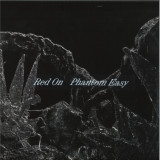
Where does pop start and experimental music end? Instead of drawing lines, Red On keeps on exploring the spaces in between these supposed poles with his latest album Phantom Easy, a record that offers moments of pure beauty as well as unpredictable, uncontrollable wilderness.
The spaces Red On moves in aren’t per se terra incognita, but have been explored in recent years by like-minded musicians such as How To Dress Well, Fever Ray, or Dawuna, as well as artists that are affiliated with Präsenes Editionen, where Red On’s album is published, such as Martina Lussi, Belia Winnewisser, or Magda Drozd. Yet, Phantom Easy is an exploration of its own: The melancholic album, which is informed by pop, electroacoustic music, rhythm-focused jazz, and krautrock, is carried by Red On's voice, which appears in ever-changing stages of alienation. The wistful tone of the twelve tracks is reinforced by single phrases sung by Red On that, through their repetition, develop an urgency that can hardly be escaped. The result is pop music that is brave enough to embrace the adventure; or experimental music that doesn’t shy away from offering catchy hooks and grand melodies.
Daga Voladora's last album came out in 2016. To alleviate such a long wait, only a couple of celebrated singles. Now, finally, Cristina Plaza (identity gracefully hidden under the Daga Voladora name that was before Gran Aparato Eléctrico and also a quarter of Los Eterno and half of Clovis) releases an album and does it, for the first time, in vinyl format. "Los manantiales" is the title of the happy and long-awaited return of an artist that never completely left.
"Los manantiales" ("The Springs") refers to all those sources from which I drink to make my songs: Stereolab, Broadcast, Galaxie 500, Cate Le Bon... And also some of the flamenco language. Flamenco in my own way, of course," explains Plaza. "Los manantiales" will also bring echoes of acts that the artist has not practiced as much such as Esclarecidos, Vainica Doble, Ana D or Kikí d'Akí. Deep voices for songs with substance.
But there is also that other idea of the spring that gushes forth when it can no longer be contained. "It has taken me so many years to make this album because I had a prejudice related to the previous one "Primer segundo" in which there was a coherence. Not finding that concept or thinking that this or that wasn't Daga Voladora, I couldn't get into it. Until I decided that maybe I didn't have to impose such a rigid direction on myself..."
Sketched in a town bordering Ávila where Plaza decided to get lost in the summer of 2022 and then finished off in a basement in Madrid for several months, the nine songs of "Los manantiales" make up a short album, premeditatedly short ("I don't like the songs to be longer than 2:50") but, above all, varied. Because, as can be sensed in the song Quise ser ( "I wanted to be a fictional hero, an expressionist painter, a promising actress"), here are all the imagined Cristinas and their different lives ("The song Lejos de la multitud is that longing of mine to be a vagabond"), an unmistakable sign that, as the artist confesses, "I am my own spring". And all this joyful dispersion comes from the premise with which Plaza approached the album: "I said to myself: 'Let's play'. I set out to have a good time. Suddenly, I wanted to do a dub track and I came up with Fosforito or a rock song like Lou Reed in the 80s and there was 'Me vi penando'. I wanted a rock record, an experimental record, something like Broadcast, and a musical! I wanted to do a thousand things!"
The result is a playful album, very enjoyable; but above all elegant and extremely precise. In both form and substance. Thus, the melodies are so rounded at first listen; the music would work perfectly on its own, stripped of lyrics that respond to the maxim, so often ignored, that there is really only one way to say things. "I have tried to refine the texts a lot. There are some phrases taken from Steinbeck, other things that emerge in a somewhat magical way. There's also Gary Snyder, Kerouac and his Dharma Bums, echoes of California..."
It's an album made, as usual with her, in the most absolute solitude (except for the collaboration of Andrés Arregui on sax and the final mix by Fino Oyonarte). Bareback. "I recorded everything with my computer, with my instruments, my analog keyboards, my rhythm boxes, little noises I make around... I don't make demos. I just do it. In a rough way. What I do do is repeat. The good thing about this method is that many things happen spontaneously and that's where they stay".
An album that, for all of the above, responds to the best notion of caprice. A whimsical whim, signed and finished off by the splendid cover designed by Beatriz Lobo, which feartures a painting ('La chica del King Creole') by the legendary artist Javier de Juan.
In "Los manantiales" there are many possible worlds, as many dreamed ones. Of course, those of Daga Voladora (not in vain, the album opens with a song titled Cristinópolis), but also those of any curious and sensitive listener who, by the way, will find more than one musical wink along the way. You just have to be attentive.
- The Sage
- Deathwill
- 죽음이두려울때까지
- 풀이
- Confluence Loop
- 나락
- Noise And Cries
As part of Subtext's 20th anniversary, Subtext presents the debut album from bela as a co-release with Unsound.
bela was based in Seoul when they began to develop the framework for 'Noise and Cries (굉음과울음)'.Chewed up by a society that's slow to embrace those who exist on the margins, they and their close friends became fixated on the concept of death. "I wanted to cry, I Wanted to die," they recall. "The precariousness of living in South Korea hits different. I thought, let's share what is killing us." bela refused to lose hope, so they inventoried the sounds, experiences and emotions that had formulated their identity and wondered how this might form a different sort of South Korean musical expression. They considered the guttural death metal growls and industrial music they heard when they began to interface with Western culture as a teenager, the idiosyncratic folk rhythms that rattled away in the background of state events, the evocative, euphoric drones that had offered them solace, and the heady, cybernetic maximalism that's come to define contemporary queer club music.If this was going to be an album about death, bela knew wouldn't it be preoccupied with loss, but rooted in a deep desire to regain the will to live.
'Noise and Cries (굉음과울음)' is the first time bela has recorded their voice, and they metamorphose it from moment to moment, embracing a precarious vulnerability. Opener 'The Sage' references Jungtaryeong, two well-known arias from the Korean Pansori tradition - a folk form that is usually performed by a drummer and a singer. Screaming, whispering and rasping, bela twists borrowed words from the original arias, repurposing them to highlight the hypocrisy and brutality of patriarchal wisdom.
These bellowed phrases contrast with an abrasive rhythm that bela based on the eatmore jangdan, an irregular, traditional beat that's been remoulded into a jerky, electro-acoustic call to action. Even if the gargled Korean wordplay can't be fully understood, the mood translate flawlessly. On 'Death Will I', they reassemble the damaged relationship between a queer child and their
Cauthen first earned his reputation as a fire-breathing truth teller with the acclaimed roots rock band Sons of Fathers, but it wasn’t until the 2016 release of his solo debut, ‘My Gospel,’ that he truly tapped into the full depth of his prodigious talents. Rolling Stone called the album “a triple-barreled blast of Texas country, soul and holy-roller rockabilly delivered by a big-voiced crooner,” while Vice Noisey dubbed it “a somber reminder of how lucky we are to be alive,” and Texas Monthly raved that Cauthen “sounds like the Highwaymen all rolled into one: he’s got Willie’s phrasing, Johnny’s haggard quiver, Kristofferson’s knack for storytelling, and Waylon’s baritone.” The album landed on a slew of Best Of lists at the year’s end and earned Cauthen dates with Elle King, Margo Price, Billy Joe Shaver, and Cody Jinks, along with festival appearances from Austin City Limits and Pickathon to Stagecoach.
"Room 41" by Paul Cauthen iincludes the following tracks: "Cocaine Country Dancing", "Big Velvet", "Freak", "Give 'em Peace" and more.
This version of Room 41 is pressedon swirl, orange vinyl.
A playful, funky album, born from the desire to be live again; a playful and funky band that will tour extensively in Belgium and the Netherlands from April. First single 'Walk On Red, Stop On Green' sets the tone of this new album. A simple structure, over which a web of
rhythm is woven using instruments from old drum machines: the Roland CR-78, in dialogue with live drums and percussion. Lots of sax, tenor and baritone! A pumping bass. A frisky pizzicato violin. Vocals based on the 'Boy Scout Trail' principle; the leader sings and the others repeat. And then of course the classic keyboards: the Fender Rhodes, the Hohner Clavinette D6, the L-100 Hammond organ. And many analogue synthesizers: a rippling Juno-106 draws the path to be followed, which is crossed with phrases from other museum
pieces: Crumar's Stratus, Farfisa's Synthorchestra, Sequential's Prophet-10. Or the Casio Club M-100, which is actually a toy, but has been subtly coloring SKC's songs for years! In addition to his own work, also covers of Prince (The Future), Dez Mona and Alain Bashung.
Woodwurk Records brand new 12” ’Toilet Breaks’ enters the scene in the wake of the insanely popular ‘Porta Bill’ and ‘Disc Jock’ scratch 7”s.
The raddest, rudest record in the racks, ’Toilet Breaks’ brings toilet humour to your turntables!
Combining and improving upon the best samples from the ‘Porta Bill’ and ‘Disc Jock’ 7”s, each side contains 10 regular speed skip-proof phrases, 5 ultra-pitch phrases, full sentences and ends with a percussive lock-groove click-track for use in turntables jams.
Pressed on light blue vinyl and mastered at the world renowned, Air Studios, this record sound AND looks dope! It’s stylistic nod to the classic GPK cards features artwork from Dusty Pixels and DJ Woody. ‘Toilet Breaks’ serves up slap-stick samples for your scratch session!
• Light Blue vinyl
• Produced by 2 times World Champion DJ Woody
• Side A programmed at 100 bpm, side B programmed at 83.33bpm
• 30 skip-proof scratch phrases, including ultra-pitch, full sentences and lock-grooves
• GPK parody artwork by Dusty Pixels and DJ Woody
We’re hugely excited to announce the brand new album from Dee C. Lee - ‘Just Something’, out 22 March on Acid Jazz. It follows the incredible response to the new single ‘Walk Away’ and last year’s double-sider ‘Don’t Forget About Love’ / ‘Be There In The Morning’, marking the return of one of the UK’s most revered soul singers. Dee is known for her work with The Style Council, Wham!, Slam Slam and Animal Nightlife, and an illustrious solo career (including the Top 3 hit ‘See The Day’). ‘Just Something’ is her first new record since 1998, and her debut for Acid Jazz. Available on LP and CD, all pre-orders from the Acid Jazz Store will be signed by Dee.
‘Just Something’ features 11 songs: nine originals co-written by Dee, a song penned by her daughter Leah Weller, a successful singer/songwriter in her own right, and two inspired covers. Produced by Sir Tristan Longworth, the album is a soulful collection that frames her instantly recognisable vocals in luxurious horns, percussion and keys, and heritage soul with a disco backdrop. While making the record has been a collaborative process, ‘Just Something’ is nevertheless the sound of a singer in charge of her own style and direction. Her vocal delivery and phrasing steal the show throughout, bright and lilting one moment, passionate and ringing the next. She cites Chaka Khan and Jean Carn as major influences, but Lee’s voice is resolutely her own, the product of a life lived.
Inspired by classic Motown, current single ‘Walk Away’ was written by Dee with one of her ‘brothers from another mother’, former fellow Style Council member Mick Talbot, and features Talbot’s distinctive piano and Wulitzer playing on the track. Talbot also plays on another of the album’s many standouts, the Leah Weller-penned ‘Everyday Summer’.
Three of the album’s songs, opener ‘Back In Time’, first single ‘Don’t Forget About Love’ and ‘How To Love’ were co-written with Michael McEvoy and Ernest McKone, whom Dee wrote with back in the 1980s. All three songs channel her musical past, from the thrill and excitement of those early Wham! days, going out and partying, to The Style Council’s trademark jazzy soul, and expressive balladry and killer choruses, which places Lee in the lineage of classic soul singers.
Elsewhere, on ‘Anything’, co-written with Paul Barry, Dee sings her heart out on a song full of optimism and hope for the future, while ‘For Once In My Life’, the oldest song here dates back to 1998, is effortlessly commercial and has hit written all over it, with Lee empowered and regal sounding over a warm blanket of bassy funk.
The album’s two covers, meanwhile, were both suggested to Lee by Acid Jazz’s Eddie Piller. In Lee’s hands, Renee Geyer’s ‘Be There In The Morning’ is pure celebration, taking its cue from the Norman Connors version from 1979. ‘I Love You’, written by Don Blackman and recorded by Weldon Irvine in 1976, could have been written with Lee in mind. A big club tune, Dee recalls hearing it everywhere she went and I wanted to keep as close to the original vibe as she could.
Dee’s relationship with Acid Jazz the goes back to The Style Council days, and it was the 2019 documentary ‘Long Hot Summers’ that renewed Dee’s friendship with label founder Ed Piller and director Dean Rudland. We’re honoured to release this record and be a part of Dee’s return to the forefront of UK soul music.
- Today Is The Day
- The Dream
- Faded Love
- What Is Real
- Lose More Slowly
- Secret World
- Let's Make Up
- Crystal Blue
- The Ship
- Turquoise Moon
GREEN Vinyl[28,78 €]
Das sechste Album von Still Corners heißt "Dream Talk". Wunderschön arrangiert, elegant und wehmütig, ist "Dream Talks" eine Sammlung von zehn sorgfältig gestalteten klassischen SC Songs. Vom herbstlichen Opener "Today is the Day" bis zum heißen Sommernachtsfinale von "Turquoise Moon" haben Still Corners einen Sound geschaffen, der fokussiert, stilvoll und verführerisch ist. Tessa Murray sagt: "Die Entstehung vieler dieser Songs geht auf Träume zurück. Jede Nacht habe ich die Träume, an die ich mich erinnern konnte, aufgeschrieben. Während der Aufnahmen holte ich mein Buch der Träume heraus und sang über verschiedene geloopte Phrasen, an denen Greg gearbeitet hatte. Die sich wiederholende Natur der Loops und des Gesangs fühlte sich fast wie eine Trance an. Viele der Songs sind aus diesem Prozess entstanden, es hat Spaß gemacht, und was ich für eine Art Geschwafel hielt, hat uns am Ende mit seinen verschiedenen Bedeutungen und Bildern überrascht." Schwarzes Vinyl kommt mit einem Download-Code, die CD ist ein Digipak.
This is tenor saxophonist Hank Mobley’s first release on the Prestige label, after one previous Blue Note release. Here he is joined by Donald Byrd (trumpet), Barry Harris (piano), Doug Watkins (bass) and
Art Taylor (drum) with a guest appearance from Jackie McLean (alto saxophone) on one track. As one might expected, the program is quite « be boppy »,
with the band running through bop standards like Bud Powell « Bouncing with Bud », Monk’s « 52nd Street » and Parker’s « Au Privave ». Mobley’s supremely confident solos are
highlights of these tracks and he swings through the rather plain arrangements of « Bouncing with Bud » and « Au Privave » , with exceptional phrasing and melodic finesse, through Byrd’s and Harris’s solos as satisfying as well.
- The second album of hypnotic primordial music from Berlin-based harper/multi-instrumentalist/vocalist Andy Aquarius that explores the mystical fringes of ambient, folk, and classical music. Hush Hush is honoured to welcome back Berlin-based harper, multi-instrumentalist, and vocalist Andy Aquarius to the label to help present 'Golla Gorroppu,' his second album of hypnotic primordial music that explores the mystical fringes of ambient, folk, and classical music. A follow-up to his acclaimed 2021 debut album 'Chapel,' 'Golla Gorrupu' leans into the emotional natural sentiments of European Romanticism and American Transcendentalism and reveals itself as an animist take on an internal expedition of a mythological mountain range. The album’s title, 'Golla Gorroppu,' is a phrase coined by Andy that stems from his meditations on the Sardinian Gorropu mountain range, a territory he explored in between the autumn of 2020 and spring of 2021. His personal translation of the title is "The Throat of the Mountain.” With this transformative experience as his foundation, Andy found meaning in his latest work. He shares: “At the heart of the mountain range lies a massive gorge (Gola/Goia) which is said to house various creatures of the night, amongst them trolls, the 'mother of Goroppu' and the devil himself. The first half of the record is tuning into the moving forces of the mountain - first the Rains, Groundwaters and Rivers, then the animal kingdom, represented by the goat and inspired by a remarkable meeting with a Sardinian mouflon (a wild sheep) during a solitary hike.
The second half of the record channels the kingdom of rocks - moving from the mountains' murky intestines towards their loftiest peaks, covering all the mossy mysticism and crystalline vistas that lie in between.” Sounding as indomitable and spirited as the landscape it portrays, 'Golla Goroppu' is a wayward epic that cries for you to become the mountain goat you always dreamt to be. Through his lyrical harp expressions and gentle vocal accents, Andy Aquarius’ latest statement traverses a magical terrain full of intrigue, nuance, and beauty.
Feels as if we're stepping outside the known universe of Nigga Fox but simultaneously being invited in. It's not about being hermetic, shutting out followers of his trademark dance beats or making an experimental statement per se. All this music comes effortlessly during sessions such as any other, so don't throw away valuable time searching for a concept.
"Chá Preto" sounds revolutionary but not so much in his discography, accustomed as we are to game-changing compositional solutions in the afro musical continuum but - never forget - also in Dance Music taken as a broad genre. But is it Dance? Certainly a fair amount of suffering and introspection comes clear throughout the album, namely in the sequence made up of "Má Rotina" and "Mutadoree Leonor". "Mutadoree" is a free, alternative spelling of "much pain" and each listener can process the info as s(h)e pleases. The music is also strikingly beautiful, so there's really no final word on this.
Beats come sparse, a very personal phraseology, the dancefloor a memory. Or just something to keep in mind for a future night out. Presently there's no lack of adventure or excitement in these grooves, a uniquely themed one-person show of musical skills and bare emotion. It ends in a snap, not a trace of embellishment. Pragmatic and out of the loop. Rewind and feel it all over again. Any comparison in mind? Flip through History books and you won't find this chapter.
FRN Dancehall might have emerged in Jamaica, but over the last few decades the popular genre's tendrils have stretched out across the globe. In Kampala, Ratigan Era is adding a distinct Ugandan twist to dancehall, fusing it with East African humor and hyper-melodic afrobeats elements imported from Ghana and Nigeria. The versatile MC grew up listening to Jamaican music like Vybz Kartel, Busy Signal and Mavado - in his hometown of Kawempe there was almost no way to avoid it - and it blurred into the background, blending with local church music, US hip-hop and radio pop. He developed this diverse range of influences into a completely unique Afro-dancehall flow that simmers between Luganda, patois, Spanish and English, reflecting the melting pot of cultures and dialects that characterizes contemporary Africa. Ratigan broke out with a memorable feature on Pallaso's Ugandan hit 'Nsaba', a track that echoed throughout the country booming from nightclubs, motorcycle loudspeakers or from convenience stores. Now he's assembled his first album "Era", a furiously inventive interweaving of rubbery vocals and memorable chants backed by futuristic beats from Hakuna Kulala's most boundary-pushing producers. Congolese producer Chrisman takes the reins on 'Gorilla Attack', providing a downtempo groove that echoes recent Jamaican chop deployments from breakthrough artists like Skillibeng and Skeng. For his part, Ratigan ducks and dives between Chrisman's gqom-inspired low end womps and corrosive synths, commanding attention with his smart, dextrous flow and tongue-twisting lyrics.The Modern Institute and Golden Teacher's Richard McMaster handles 'Top Strike Force' leaving space in his wiry, minimal beats for Ratigan to flit between anthemic repetitions and ice-cold AutoTuned wails. On stand-out track 'Badman Style', Ratigan's guttural patois is measured against a dizzy trap-dancehall hybrid beat from HHY & The Kampala Unit's Jonathan Uliel Saldanha, aka Lithium Beats, while on the surreal 'Drop it Down', Japanese mad scientist Scotch Rolex brings out Ratigan's cheeky sense of humor with toytown bleeps and laser zaps. MC Yallah collaborator Debmaster appears on 'Gan Dem', meeting Ratigan's double-time raps with soundsystem destroying rolling subs, and veteran US noisemaker Kush Aurora sprinkles magic dust on 'Cool and Deadly', galvanizing the link between global bass mutations, Jamaica and East Africa.And despite the grab-bag of producers and inspirations, "Ratigan" is a strikingly coherent listening experience that accurately snapshots Kampala's colorful froth of sounds and phrases. Ratigan's outsized personality is welcoming and captivating, providing the sights, sounds and smells of the city with a frenetic rhythm that's as intimate and local as it is far-reaching. It might just be the future we so desperately need.