With Leaving It All to Chance, Roomer don't quite leave everything up to fate. The Berlin outfit's debut album hums with guitar-driven heartbreak, pairing mind-splitting noise with seductive melodies. Capturing the gritty yet emotive energy of their live performances, the album welcomes in the occasional ear-candy, staying true to the raw physicality of a hazy club show all while sharpening its edges-crafted in true DIY spirit and released by Munich's Squama Recordings.
Roomer is the meeting point of four distinct creative forces in the European music scene, united through long-standing friendships and years of collaboration across projects ranging from avant-garde free improv to ethereal folk and ambient electronica. Inevitably-if surprisingly late-the question arose: why not start a band? In their hands, the rock band format became a canvas for their many musical worlds to collide.
Hüma Utku returns to Editions Mego with her new album. The title Dracones makes reference to the mediaeval latin term "Hic sunt dracones" (Here be dragons), marking the unexplored, dangerous places on world maps, expressing the fear of chaos, the unexpected and the unknown.
This new work by the Istanbul sound artist is a sonic journal of an expedition into uncharted territory, one which occupies self and domesticity. Inspired by Utku’s experience of matrescence, Dracones explores the themes of familial demonology, metamorphosis and homecoming as well as human relationship to the experience of love woven layers of euphoria, alienation and consumption.
Musically, Dracones traverses a wide array of sonic tools whereby industrial sounds are imbedded with certain psychological angles, this is an album where, all matter meshes into a sly snapshot of the human experience with a tension and release exposure occurring frequently with dark corners opening up to bright layers of electronic experimentation.
The haunting opening track ‘A World Between Worlds’ tackles pregnancy, of which Utku was experiencing when making this record. The emotional, physical, spiritual and mental experience of this journey is all documented here.. This track features the ‘Lyraei’, an electromagnetic string instrument and modern interpretation of the ancient lyre, that was built and played by Mihalis Shammas. ‘Comfort of The Shadows’ moves from within to without, what was once hidden is now exposed. Utku’s ability to conjure the visual in the sonic is at the forefront as howling electronics give a distinct impression of movement. ‘A Familial Curse’ presents a desire to break the cycle of generational trauma with a creeping sense of dread that rolls into an industrial rhythm prior to landing in a beautiful place represented with shimmering guitar tones. ‘Here be Dragons’ is a rich and dark evocation, a spooked surrender to the themes of the record whereby Utku’s wildly distorted voice beckons all manner of phantasmagoria over cello and recordings of her ultrasound. ‘Care in Consume’ engages in further sonic exploration as a means of conjuring ‘matriphagy’, with its unique psychic energy coursing through electronic veins. ‘A House within a House’ could also be read as a body within a body as the pulse of ultrasound audio rattle amongst a cage of thudding rhythms and swirling electronics, one also ending in optimism as an exquisite melody is born from the prior fire. The striking journey ends with the more soothing ‘Ayaz’a’, a track embracing love and all the hardships that a period of fundamental metamorphosis brings, this is a heartfelt dedication to her son and concludes an album draped in life, experience, joy and pain.
Dracones is a deeply visual journey through inner and outer worlds, a space where symbolic evocation is supreme and passive listening is not an option.
All tracks composed,performed and recorded by Hüma Utku
Buchla 100, vocals, cello, electric guitar performed by Hüma Utku
‘’A World Between Worlds’’ features the ‘Lyraei’ built, played and recorded by Mihalis Shammas
Buchla 100 recorded in EMS Stockholm 2022-2023
Mixed by Enyang Urbiks
Mastered by Heba Kadry, NYC
Cover Artwork by Marco Ciceri
Design by Tina Frank
out of Stock
Last delivered 18 months ago available to reorder, subject to availability
Chris Ryan Williams (trumpet & electronics) and Lester St. Louis (cello & electronics) work together as HxH (H by H). Their skills have seen them move smoothly across various situations, constantly carving out new terrain and working in new configurations of musicians at a rapid pace. While worth reading, their biographies capture only a part of their complex rhizome.
HxH started about three years ago. The project is a direct response to all their activity with others and more importantly all their future leaning sonic desires. Their debut album STARK PHENOMENA is both their first studio recording and their first physical release. The album is appropriately set to be released by KMRU on his growing label OFNOT. It’s an ideal introduction to their sound world and their approach.
HxH describe their music as “electroacoustic,” but until recently the presence of Black musicians in this field has been greatly overlooked and largely ignored, making this phrase only partially appropriate. What HxH do really is to always be unpredictable. Every gig is a new soundscape. Sometimes you might hear echoes of Autechre or Robert Hood but then the sound-field will open up into a new terrain all their own. Chris and Lester bring together techniques from across the sound spectrum of electronic music and also draw on their deep backgrounds in Jazz, Improvisation, Classical and Noise scenes to create a sound that is true to them. After all, these two have worked with the likes of Bennie Maupin and the music of Black Fluxus artist Ben Patterson. Their rhizome is deep.
One of the ways that their unique approach manifests is in their merging of both acoustic instruments and electronic instruments in real time. This is something few have managed to do – but their spontaneous leanings work in both complex and accessible ways because of their deep understanding of landscape crafting. You can hear this clearly on the track “Pyrex Vision.” Their approach makes it tempting to compare their music to Sun Ra jamming with Laurel Halo – a comparison that would be only partly accurate.
Chris and Lester note that the sounds on STARK PHENOMENA are “imbued with such hopeful, gracious care; one that is far flung from obsessive carefulness or fuck the world carelessness, but more a caring embrace without the fuzziness of nostalgia.”
They note that when they began working together, they would “always come back to speaking on our concepts of an architecture of the expanse,” noting that their live sets often take on the joyfully noisy task of “dreaming big.” For HxH it was essential that STARK PHENOMENA have a quality that is “almost sculptural.” They consider the album “an object to be viewed from all sides.” This kind of thinking has resulted in them directly engaging with numerous sculptors and artists including Torkwase Dyson. Shape wise HxH’s sound fields work in a parallel to Dyson’s black architectural works.
They also note that the opening cut “BEACH” (the opening and longest track from the album) was “written weeks after our first gig in a studio session donated to us by our dear friend jaimie branch.” And that Pyrex Vision “was continually being edited months after sending our ‘final mixes’ to KMRU.” Their sound sources and samples come from studio sessions, live gigs, durational installations, 3am improvised downloads and more.
KMRU notes: "I think there is an in-between layer on this record. I was first caught by the Pyrex Vision track which organically flows between monologue, subtle field recording, and instrumentation. It's such a beautiful track, evoking deep emotion through simplicity. STARK PHENOMENA effortlessly glides in between imaginative mosaics of sounds — free yet complex — unlocking memories within its layers."
out of Stock
Last delivered 5 months ago available to reorder, subject to availability
Gianni’s diverse profile is reflected both in his scene-hopping as well as his music. Besides producing Cologne Popbands like “Keshavara,” “Woman” and “Xul Zolar,” Gianni has released a number of EP and LP’s since 2017, culminating most recently with “Filigrani” EP in 2023 on Jakarta. Gianni’s new LP, “Sprechiamo!” is a meditation around Marvin’s relationship with Italian culture accompanied by research into Italian music such as Napoli Exchange, the Periodica label or Giuliano Sorgini. Within the album Gianni was looking less for his roots and moreover for his existing Italian bonds & vivid cultural exchange in his current habitat of Cologne, which he is rediscovering time and again by wandering through his neighborhood Ehrenfeld, Cologne. The quarter hosting a vivid scene of Italians who came in the 1950s, such as Gianni’s grandparents once did. “Sprechiamo! is a timeless release, one that would sit just as well in 1979 as it does in 2025. Vivid Italian references from composers of the 60’s / 70’s to recent Peridoica, allways mixed with a bit of Khrunagbin & Sven Wunder to give it Gianni’s own touch. Jakarta Records is ecstatic to share such a high-water mark of an album, arriving physically and digitally March 28th, 2025.
Credits:
Alt Sax: Johanna Klein & Inga Rothammel
Flute: Connie Trieder
Percussion (Hold The Wine): Gabriel Rodriguez
Piano (Chronos): Dario Bassolino
Piano (Via Xifonia): Simon Below
Percussion (Hold The Wine): Gabriel Rodriguez
Rhodes Piano: Jan Alexander
Synthesizer (Bapha): Eva Sviderski
Tenor Sax: Florian Fries
Violin (Bapha): Florian Meier
Vox (Chronos): Linda Feki
All songs written & produced by Marvin Horsch.
Fine With Me written by Simon Below & Marvin Horsch.
out of Stock
Last delivered 16 months ago available to reorder, subject to availability
After a 30-year interstellar silence, the enigmatic producer Alien Signal—pioneering alias of Italian electronic composer Alex Silvi—reemerges with Whispers from Distant Suns, a transcendent odyssey that bridges retro-futurism and modern electronica. Hailed as a magnum opus, this album transcends genre boundaries, captivating ambient purists, downtempo aficionados, and even experimental listeners with its hypnotic fusion of analog warmth and digital precision.
Cosmic Tapestry of Sound
Drawing comparisons to Vangelis’ Antarctica and Alpha—but reimagined through a 21stcentury lens—Whispers from Distant Suns marries nostalgic synth textures with cuttingedge production. Silvi’s mastery of melody shines through in tracks like “Stardust
Memories” and “Fragile Eden” where shimmering arpeggios and celestial pads drift over robotic, glitch-infused drum patterns and sparse, meditative percussion. The result is a paradox: a retro-futuristic soundscape that feels simultaneously ancient and alien, familiar yet unexplored.
Listener Testimonials
Fans and critics have flooded forums with praise:
“An auditory revelation! It’s like Vangelis met Jon Hopkins in a nebula—vintage soul with a futuristic heartbeat.”
“The textures are gorgeously cinematic. Closing your eyes, you’re adrift in a Tarkovsky film scored for the Andromeda galaxy.”
The Vinyl Experience
Pressed on heavyweight vinyl, the album’s physical release amplifies its immersive qualities. The gatefold sleeve, adorned with surrealist astrophotography and metallic
foiling, mirrors the music’s cosmic ethos. Side A leans into Balearic serenity, with sundappled grooves and aquatic synth ripples, while Side B delves into darker, more
experimental terrain—think Aphex Twin’s Selected Ambient Works colliding with the organic rhythms of Jon Hopkins.
Maturity in Motion
This album is a testament to Silvi’s evolution. Tracks like “Seeds Of Light” and “Message from Andromeda Galaxy” showcase his refined ear for dynamics, balancing silence and sound with surgical precision. Vintage drum machines spar with glitches, while field recordings of crashing waves and interstellar static blur the line between Earth and cosmos. The closing track, “The Star Charts We Shared” crescendos into a 6-minute ambient requiem, leaving listeners suspended in a state of weightless awe.
Final Transmission
Whispers from Distant Suns is more than an album—it’s a transcendent odyssey. Spanning time, space, and the artist’s own creative evolution, this immersive work invites listeners to lose themselves in its ebb and flow. Designed for moments both intimate and expansive, its balearic-tinged atmospheres resonate equally through dawnlit Mediterranean terraces or the solitary glow of headphones in darkness. These are compositions that pulse, morph, and haunt the air long after the final note fades. A living soundscape meant to accompany life’s quiet revelations and clandestine joys—a soundtrack to your most personal moments, crafted as what the artist calls ‘private dance music.’
Tailored for the Discerning Listener
Whispers from Distant Suns is designed with the true connoisseur in mind. This album is a must-have for:
Vinyl Collectors & Audiophiles: Those who value the warmth and tactile experience of heavyweight, limited edition pressings
Electronic Ambient and Downtempo Fans: Listeners who appreciate immersive soundscapes that merge retro analog charm with modern digital innovation.
Retro-Futurism Enthusiasts: Fans of pioneering artists like Vangelis, Boards of Canada, and early Warp Records who seek music that bridges nostalgic synth textures with futuristic experimentation.
Experimental Music Explorers: Individuals drawn to sonic narratives that invite deep, contemplative listening—perfect for both introspective moments and immersive listening sessions.
This release is not just an album; it’s a curated experience for those who desire music as a multidimensional art form, merging the vintage allure of analog sound with a contemporary, cosmic vision.
For fans of: Vangelis, Biosphere, Jon Hopkins, early Warp Records.
out of Stock
Last delivered 16 months ago available to reorder, subject to availability
Four Flies Records is proud to present Paesaggio Bellico, a collection of unreleased music from legendary composer and multi-instrumentalist Alessandro Alessandroni.
Available digitally starting on the centenary of the maestro's birth on 18th March 2025 and on vinyl on 21st March, Paesaggio Bellico is a true gem hidden within the vast treasure trove of Italian film scores and library music.The album brings together themes and atmospheric pieces inspired by the world of war, viewed not just from a military standpoint, but also through a deeply human and existential lens.
The LP version features 18 tracks, while the digital release expands to 29, including alternate takes and thematic variations. These compositions were meticulously unearthed from scores written and recorded by the maestro between 1969 and 1978 for television documentaries and war films.
Alessandroni's war-inspired music masterfully balances action, suspense, and introspection. Expansive, panoramic themes give way to anxious, tormented moments. Horrifying visions are countered by calmer atmospheres, and glimmers of hope soften the intensity of pain.
Each track embodies the unique sound that has made Alessandroni an irreplaceable figure for soundtrack and library music enthusiasts. His signature whistle – so unmistakable for generations of fans of the genre – soars above delicate 12-string acoustic guitar arpeggios. More dramatic pieces feature his iconic Fender Stratocaster, equipped with a fuzz distortion pedal. And, of course, Alessandroni's vocal group, the Cantori Moderni, a constant presence in his arrangements, contribute, this time lending their voices to the more unsettling aspects of military psychology. An elegant string section adds depth and emotional impact to the more orchestral tracks, completing the picture of this monumental work.
The result is a sonic journey that delves into the darkest, most martial sides of war, but also explores its intimate and deeply painful dimensions, creating a powerful dialogue between the atrocities of conflict and the human emotions it evokes.
The release is enriched by original artwork from Eric Adrien Lee, who reimagined the 1970s graphic design of Italian war-themed library albums. The vinyl LP is housed in a tip-on hard cover (the kind used for higher-end productions during the golden age of Italian soundtracks), with an inner sleeve featuring a color-inverted variation on the cover art, which makes the physical record even more unique.
out of Stock
Last delivered 18 months ago available to reorder, subject to availability
Googling “paradise house”, the first results to pop up are an endless list of European b&b’s with whitewashed lime façades, all of them promising “…an unmatched travel experience a few steps from the sea”. Next, a little further down, are the institutional websites of a few select semi-luxury retirement homes (no photos shown, but lots of stock images of smiling nurses with reassuring looks). To find the “paradise house” we’re after, we have to scroll even further down. Much further down.
It feels like yesterday, and at the same time it seems like a million years ago. The Eighties had just ended, and it was still unclear what to expect from the Nineties. Mobile phones that were not the size of a briefcase and did not cost as much as a car? A frightening economic crisis? The guitar-rock revival?! Certainly, the best place to observe that moment of transition was the dancefloor. Truly epochal transformations were happening there. From America, within a short distance one from the other, two revolutionary new musical styles had arrived: the first one sounded a bit like an “on a budget” version of the best Seventies disco-music – Philly sound made with a set of piano-bar keyboards! – the other was even more sparse, futuristic and extraterrestrial. It was a music with a quite distinct “physical” component, which at the same time, to be fully grasped, seemed to call for the knotty theories of certain French post-modern philosophers: Gilles Deleuze, Félix Guattari, Paul Virilio... Both those genres – we would learn shortly after – were born in the black communities of Chicago and Detroit, although listening to those vinyl 12” (often wrapped in generic white covers, and with little indication in the label) you could not easily guess whether behind them there was a black boy from somewhere in the Usa, or a girl from Berlin, or a pale kid from a Cornish coastal town.
Quickly, similar sounds began to show up from all corners of Europe. A thousand variations of the same intuition: leaner, less lean, happier, slightly less intoxicated, more broken, slower, faster, much faster... Boom! From the dancefloors – the London ones at least, whose chronicles we eagerly read every month in the pages of The Face and i-D – came tales of a new generation of clubbers who had completely stopped “dressing up” to go dancing; of hot tempered hooligans bursting into tears and hugging everyone under the strobe lights as the notes of Strings of Life rose up through the fumes of dry ice (certain “smiling” pills were also involved, sure). At this point, however, we must move on to Switzerland.
In Switzerland, in the quiet and diligent town of Lugano, between the 1980s and 1990s there was a club called “Morandi”. Its hot night was on Wednesdays, when the audience also came from Milan, Como, Varese and Zurich. Legend goes that, one night, none less than Prince and Sheila E were spotted hiding among the sofas, on a day-off of the Italian dates of the Nude Tour… The Wednesday resident and superstar was an Italian dj with an exotic name: Don Carlos. The soundtrack he devised was a mixture of Chicago, Detroit, the most progressive R&B and certain forgotten classics of old disco music: practically, what the Paradise Garage in New York might have sounded like had it not closed in 1987. In between, Don Carlos also managed to squeeze in some tracks he had worked on in his studio on Lago Maggiore. One in particular: a track that was rather slow compared to the BPM in fashion at the time, but which was a perfect bridge between house and R&B. The title was Alone: Don Carlos would explain years later that it had to be intended both in the English meaning of “by itself” and like the Italian word meaning “halo”. That wasn’t the only double entendre about the song, anyway. Its own very deep nature was, indeed, double. On the one hand, Alone was built around an angelic keyboard pattern and a romantic piano riff that took you straight to heaven; on the other, it showcased enough electronic squelches (plus a sax part that sounded like it had been dissolved by acid rain) to pigeonhole the tune into the “junk modernity” section, aka the hallmark of all the most innovative sounds of the time: music that sounded like it was hand-crafted from the scraps of glittering overground pop.
No one knows who was the first to call it “paradise house”, nor when it happened. Alternative definitions on the same topic one happened to hear included “ambient house”, “dream house”, “Mediterranean progressive”… but of course none were as good (and alluring) as “paradise house”. What is certain is that such inclination for sounds that were in equal measure angelic and neurotic, romantic and unaffective, quickly became the trademark of the second generation of Italian house. Music that seemed shyly equidistant from all the rhythmic and electronic revolutions that had happened up to that moment (“Music perfectly adept at going nowhere slowly” as noted by English journalist Craig McLean in a legendary field report for Blah Blah Blah magazine). Music that to a inattentive ear might have sounded as anonymous as a snapshot of a random group of passers-by at 10AM in the centre of any major city, but perfectly described the (slow) awakening in the real world after the universal love binge of the so-called Second Summer of Love.
For a brief but unforgettable season, in Italy “paradise house” was the official soundtrack of interminable weekends spent inside the car, darting from one club to another, cutting the peninsula from North to centre, from East to West coast in pursuit of the latest after-hours disco, trading kilometres per hour with beats per minute: practically, a new New Year’s Eve every Friday and Saturday night. This too was no small transformation, as well as a shock for an adult Italy that was encountering for the first time – thanks to its sons and daughters – the wild side of industrial modernity. The clubbers of the so-called “fuoriorario” scene were the balls gone mad in the pinball machine most feared by newspapers, magazines and TV pundits. What they did each and every weekend, apart from going crazy to the sound of the current white labels, was linking distant geographical points and non-places (thank you Marc Augé!) – old dance halls, farmhouses and business centres – transformed for one night into house music heaven. As Marco D’Eramo wrote in his 1995 essay on Chicago, Il maiale e il grattacielo: “Four-wheeled capitalism distorts our age-old image of the city, it allows the suburbs to be connected to each other, whereas before they were connected only by the centre (…) It makes possible a metropolitan area without a metropolis, without a city centre, without downtown. The periphery is no longer a periphery of any centre, but is self-centred”.
“Paradise house” perfectly understood all of this and turned it into a sort of cyber-blues that didn’t even need words, and unexpectedly brought back a drop of melancholic (post?)-humanity within a world that by then – as we would wholly realise in the decades to come – was fully inhuman and heartless. A world where we were all alone, and surrounded by a sinister yellowish halo, like a neon at the end of its life cycle. But, for one night at least, happy."
out of Stock
Last delivered 3 months ago available to reorder, subject to availability
180g black vinyl - limited to 200 numbered copies.
"What is my heart now"is the debut solo album by Ziemowit Klimek, known so far from bands such as Immortal Onion, Hania Rani, and Magda Kuraś Quintet. It is a cycle of five improvised compositions – "What," "Is," "My," "Heart," and "Now" – unified by a unique artistic concept, with each piece created in collaboration with a different musician.
The creative process for each of the five duets began with a conversation between Ziemowit, the guest artist, and the video team. Deconstructing the title word into its fundamental elements through questions like "What does 'What' mean? What emotions and associations does this word evoke in us? How can we capture its essence in sound and image?" became the starting point for artistic exploration.
To preserve the authenticity of the material as much as possible, both sound and image were recorded live, with no cuts or post-production editing. Equally important was the choice of spaces that corresponded to the meaning of each title word. Instead of sterile studios, the recordings took place in a variety of unique locations – "Heart" was captured in Ziemowit's most personal space, his bedroom, while "Now" was recorded inside a car during a dynamic drive, where the physical forces acting on the musicians significantly influenced their decisions while playing.
The album resonates with dialogue – not only musical but also emotional and intellectual. It is a meeting of individualities who, for Ziemowit, are not only inspirations as artists but also significant people in his life."What is my heart now"is an album about defining one's identity and capturing the moment, created in an atmosphere of honesty and trust. Ultimately, the question arises: is it even possible to definitively answer the question posed in the album's title?
Cross Record's new album, Crush Me, is steeped in the pressures and wonders of existence—a profound statement, especially coming from artist and death doula Emily Cross. A two-and-a-half-year gestation period offered challenges, disappointments, and joys reflected in the cramped space of the album, which explores how we handle the weights we carry. Emily Cross had held hundreds of Living Funerals and was as many episodes deep into her podcast, What I’m Looking At. She was five years into serving clients as a death doula and fresh off a tour with Loma, her band with Jonathan Meiburg (Shearwater) and Dan Duszynski, when she began work on her fourth album. After moving from Austin, TX to Dorset, UK, she established the Steady Waves Center for Contemplation (named after a track from her second record, Wabi-Sabi ), where she hosted Living Funerals, met clients, scheduled mindful tea sessions, and showcased experimental music nights. All the while, she was scribbling down song ideas. Cross’s Tascam four-track demos finally reached readiness, and she sent them to an interested major independent label. She was encouraged to push her imagination to the limits of what a record could be. So, unlike her usual process of recording as inexpensively as possible, she prepared a two-week recording session in Germany with a group of skilled musicians from around the world. True to her previous work, Cross left plenty of room in her demos for experimentation, collaboration, chance, improvisation, and complete obliteration, then resurrection when necessary. Comfort and traditional structure were eschewed in favor of unaccountable magic, prayers whispered into The Void. Cross is comfortable with the chaotic and unpredictable, a perspective demanded by her work and writing style. The Berlin Airbnb was packed with people, instruments and luggage. During a ride down in a tiny elevator to the studio, Cross realized how central the sense of being crushed was to the album. “I thought of it later and it dawned on me that ‘Crush Me’ perfectly embodied the record,” says Cross. Yes, the weight of a body laying limply atop yours, or the tight squeeze of a hug, can be pleasant. Go too far, and you’re in the hands of a cruel, adolescent god. Upon leaving Germany, the record was unfinished, and without a roadmap. As passages were recorded as isolated parts, Cross and musician Marcin Sulewski collaborated, facing a haphazard brick pile, waiting to be assembled. Work dipped in and out of view like a buoy bobbing in a violent sea over many months. During that time, the aforementioned interested label went radio silent, suddenly not seeming so sure of a thing. Collaborators disappeared, continuing the themes of abandonment, surrender, and disarray that followed the project. Cross physically felt her entire body go numb: In a twist of fate, the record was rescued by long-time friend and supporter Ben Goldberg at Ba Da Bing Records who was eager to help realize the project. Cross worked for months on the album, all the while nursing a pregnancy and continuing her full-time funeral work. The last minute participation of Seth Manchester of Machines with Magnets, who mixed and mastered, was an essential liferaft. He gave true final form to the abstracted songs. Crush Me has the effect of a spell being cast, with songs balancing heaviness and levity. Vocals, guitars, and keyboards float above, as drums and upright bass (often bowed) lurch beneath. On “Rolling Backwards” percussion wanders about while feedback squeals and persists in the distance. “Dorset Area Of Natural Beauty” starts with a thick, unhinged church organ progression punctuated by the disquieting sounds of laughter reaching the point of hysteria. “God Fax” is a slow-moving panic attack, with shallow breaths in and out framing a guttural cacophony like a wooden freighter encountering increasingly turbulent waters and vocals struck emotionless by autotune. The album ends with “Twisted Up Fence,” a reflection on life from outside the wall--wistful, warm, and comforting. Cross, likely with a smile on her face, sings: “You say it’s an endless abyss” “And I say the abyss is the best”
Pharoahe Monch is one of the most revered and influential emcees in the history of hip-hop, and 2024 marks the 10th anniversary of his fourth studio album "PTSD: Post Traumatic Stress Disorder".
In PTSD, Pharoahe Monch continues the story he began telling in his previous LP, "W.A.R. (We Are Renegades)" from 2011. The Queens emcee narrates, in both literal and metaphoric ways, about the trials and tribulations of an independent artist who is at war with the music industry and the struggle of the black male experience in America.
In 2012, during an interview with Shawn Setaro, host of the podcast The Cipher, the rapper explained the connections between the two projects, beyond their titles. “The W.A.R. album was like, I’m going to battle against the machine, I’m doing this independently. I’m putting some things out that I learned and I’m going to expose about the music industry. PTSD is the result of me doing that, where I am emotionally now. It’s similar to how someone comes back from war and is stricken by re-adjusting to a regular situation.”
Monch told MTV Hive that PTSD is “more mental, emotional and personal” because it came out of the depths of a period of depression. He also gave the internal and external factors that helped him create the album. “I was working on the title track, which took me to a point in between Internal Affairs and Desire, where I was heavily depressed. Through the waiting period, the industry period, and going through a lot emotionally. Then there was the physical problem with asthma. It was the worst. So I started off with that title track and my manager was like, ‘Yo, let’s really dive into that state and how you got to where you are now, and how this follows what people go through to get back to a so-called ‘normal’ situation’.”
The concept album follows a veteran through combat experience, his return home, relationship dissolution, drug addiction, painful depression, and, finally, a triumphant but realistically rendered decision to keep living and struggling.
Glasgow-based producer Conna Haraway returns to Theory Therapy with his first vinyl release, Spatial Fix. Inspired in part by his 2024 tour of Japan and Korea, the album explores new dimensions of his evolving sound.
Since Lusidiq – his debut on Theory Therapy – the co:clear owner has honed his ability to balance introspective atmospheres with crisp, meticulously crafted rhythms, imbuing his music with a physicality that’s as tactile as it is hypnotic.
Spatial Fix expands on this approach in every respect. The record oscillates between ambient abstraction and rhythmic intensity, seamlessly weaving the two together. Tracks like “Freon” and “1702” are anchored by a propulsive low end, woven through with Haraway’s crackling textures and field recordings – including those captured across Asia last year. Even in these deeply immersive moments, there’s always something luminous lurking beneath the surface – snaps, clicks, and micro-shudders ripple throughout in strange and surprising ways. The result is an album that pulls you into a writhing, disorienting space, a psychedelic sonic world where beauty and unease pulse in equal measure.
Spatial Fix is available as a limited edition run of 200 12-inch vinyl records.
Written & Produced by Conna Haraway
Mastered by Ike Zwanikken
Lacquer cut by Henry Rudkins
Artwork & Design by Conna Haraway & Gary Hunter
out of Stock
Last delivered 16 months ago available to reorder, subject to availability
Iconic British band McFly are celebrating their 21st anniversary with the
release of a special live album, marking over two decades of musical success
This landmark release, recorded at the McFly 21 Show at the London O2 Arena, parts
of which was recently broadcast on ITV, offers fans a unique opportunity to
experience the band's journey through their most beloved songs.
The album serves as a time capsule of McFly's evolution, blending their infectious
pop-rock sound with deeper, more mature moments. The tracklisting is packed with
crowd favourites, from early hits like "I Wanna Hold You" and "Bubblewrap" to later
tracks such as "Shine A Light" and "The Heart Never Lies." The band's musical range is
on full display, with upbeat tracks like "Broccoli" and "Party Girl," as well as
introspective songs like "Memory Lane" and "Forever's Not Enough." The anniversary
collection also includes the powerful "Transylvania" and fan-favourites like "Red" and
"I've Got You," showcasing McFly's versatility and timeless appeal.
The ITV broadcast and physical release offer an opportunity for fans to relive McFly's
greatest moments, both on stage and in the studio. This anniversary album is a
celebration of McFly's lasting legacy and their continued relevance in the pop music
world. With an impressive tracklist and the stunning ITV broadcast, this milestone
release is not to be missed.
“Machine Against Rage” is the first release on OAOE - a new experimental music series on Wodawater.
Real and cloned voice becomes intertwined with physical space forming a call and response chain of a spatial imaginary emerging from a certain passage from Philip K. Dick. The machine never stops and enfolds the listener with affective feedback tones, subtle rhythms, disjointed impacts and noise. The record is result of a collaboration between the label’s founder Miko Szatko, also known as the techno producer and performer TRSSX and co-founder of EXIT Glasgow, and Verena Lercher, a Berlin-based media artist and resident at spæs - lab for spatial aesthetics in sound in Berlin. All recorded at Funkhaus Berlin between 2023-24, the six compositions originate from various feedback spatialisations and turntable movements amplified by an IKO, the 20-membrane speaker-instrument developed by spæs lab’s co-founder Gerriet Krishna Sharma and the IEM in Graz.
T. Gowdy returns with a major statement and luminous stylistic expansion on his third album for Constellation. Trill Scan is an exquisite suite of songs literally and figuratively about alchemy, where Gowdy melds his background in choral and medieval music with his trademark analogue electronics. Following the acclaimed Miracles (Bleep Album of the Week / Albums of the Year 2022), Gowdy's bar-raising new LP centers human voice for the first time. Choral set-pieces and solo lead vocals, along with his own lute playing, are novel elements in Gowdy's work, and draw on strains of Middle Ages polyphony and the Baroque "broken style" to further distinguish Trill Scan from anything in his discography to date. Gowdy sees "the modal language of medieval Europe as a less distant cousin to indigenous traditional music practice" compared to a Classical-colonial "patriarchal order of tonality that honours a system of domination." The 12th century Notre Dame School of choral music and 17th century style brisé each carry tonal materiality, heterodox technique, and cultural-historical symbolism central to Trill Scan's conceptual and compositional alchemy. Gowdy coheres these beautifully into his palette of serpentine slowburn electronics, a minimal analogue-driven techno shaped by aleatory strategies and tinged with post-punk grit. Gowdy's sound has been aptly described as "gently transportative, flickering like a busted halogen lamp" and his overriding pursuit of psychoacoustic immanence likened to "getting your brain massaged" and praised as "blissful work that bristles with effervescent energy, like brain waves coming in and out of focus." Trill Scan expands this sonic sensibility with more conspicuous harmonic complexity, stylistic variety, and humanistic narrative arc. Alternately sacramental and intimately personal vocals, sometimes wordless and sometimes lyrical, are worked into superlative instrumental tracks, yielding a warmly immersive concept album that's equally Gowdy's most musical. Gowdy sings explicitly of alchemy on the hypnotic album centerpiece "Novus Lumen" with lyrics that gesture at these medieval processes of material investigation. The tension between the scientific and esoteric is crucial; the separation and synthesis of physical substances in medieval alchemy maps onto his fixation with the interplay between the materiality of sound and psychoacoustics. Gowdy follows the Jungian interpretation of classic alchemical texts as an historical bridge to theories of the psyche, where consciousness itself is treated as materiality and similarly subjected to methodical analysis and experimentation, to deconstruction, dissolution, transformation, reintegration, metamorphosis. Song titles like "Arislei Bone" and "Materiadiscipuli" further reference these mythopoetic throughlines from medieval alchemy to modern psychology. Gowdy chooses disruptive forms from the history of Western music that symbolize and prefigure the modern psychological subject and its struggle for/against order, even as they also evoke liturgy and the Renaissance court. The sacramental adds a potent dimension to his pursuit of psychoacoustic activation, meditation, and transcendence, as choral passages intersperse with electronic drone and pointillism throughout the album. His gorgeous Fennesz-meets-lute rendition of the Baroque composition "Courante" by François Dufault offers idiomatic salon-secular counterpoint. Album closer "Strewn" is bookended by a final recurrence of choral invocation, with pulsing earworm motorik techno in between, over which Gowdy whisper-sings a dreamlike vision quest of mythic-alchemical imagery: "as I washed my eyes they turned to metal / and the memories melted to the metal / the metal of my heart." A mesmerizing final song that explicitly invokes Gowdy's search for materialized abstraction and substantive musical immanence wrought from his own psycho-therapeutic subjectivity, and encapsulates the album's turn towards more harmonic, historicized, and humanistic elements. Trill Scan commingles empyrean and earthly electronic songcraft to genuinely original and absorbing effect. Thanks for listening. RIYL: Coil, Nicolás Jaar, Alessandro Cortini, Pantha Du Prince, Fennesz, Visible Cloaks, Actress,
All The Hits is the speedy follow up to Myriad Myriads’ debut album, Shardcore (released on Trilogy Tapes in September 2024). 200 vinyl pressed. Myriad Myriads was FKA Bass Clef. Wrong Speed Records have released two albums by Bass Clef (the 2020 limited vinyl reissue of 2011 cassette Inner Space Break Free and 2021 album Magnetic Chapters). Both organic and beautiful, both differing takes on electronic dancefloor - from 70's Germany, late 80's UK, and 90's Detroit. Myriad Myriads closed out the 2024 Wrong Speed Fest Weekender in the back room of a rowdy pub in Glastonbury (real Glastonbury, not Pilton). To watch up close and see the physicality was rapturous, to hear this music at volume positively transformative. All The Hits, recorded in Myriad Myriad's hometown of The Hague, Netherlands, is Carl Stone meets Sonz Of A Loop Da Loop Era. Carl Cox meets Harmonia. It's a headphone monster. Through a PA it will destroy. At home it's a living room shuffle, a synapse burster. It's a privilege for us to somehow be in the position to release records by Myriad Myriads / Bass Clef. We've known him for a long time. He's remixed a couple of Hey Colossus tunes. Check out the recent Patrick Cowley/Jorge Socarras covers 12" You Laugh At My Face on State 51 Conspiracy. His 22-minute-long reworking is a masterpiece. We love to be connected. We love Wrong Speed Records switching from Part Chimp to Myriad Myriads and on to Deep Cabaret via Jacken Elswyth. All come from the same place, if you feel it you know. This is our record collection
out of Stock
Last delivered 19 months ago available to reorder, subject to availability
-Lagartijeando is synonymous with pushing the alt-Latin electronic scene forwards along with his contemporaries Nicola Cruz, Chancha Via Circuito and El Buho.
-7 Caminos marks Lagartijeando's 4th consecutive LP with Wonderwheel, following La Tercera Vision (2021), Jallalla (2019) and El Gran Poder (2017)
-The album was recorded between Cholula, Mexico and Tarapoto, Peru - it has the energy of the South American jungle and the volcanoes of the Mexican Altiplano.
-Touring Japan all of October 2024 with winter dates in Mexico and Latin America
-Lagartijeando has been releasing music since 2009 (both under that name and Mati Zundel). He's been associated with labels like ZZK (Nicola Cruz) and Waxploitation (Gnarls Barkley, Danger Mouse)
-His releases have sold over 15,000 physical units (Vinyl and CDs) and over 25 million cumulative streams across all DSPs
-Extensive press and blog coverage from the likes of The FADER, Vice, KCRW, NPR and many others.
-Past tour history includes dates throughout Latin America, Europe and Asia
out of Stock
Last delivered 10 months ago available to reorder, subject to availability
-Lagartijeando is synonymous with pushing the alt-Latin electronic scene forwards along with his contemporaries Nicola Cruz, Chancha Via Circuito and El Buho.
-7 Caminos marks Lagartijeando's 4th consecutive LP with Wonderwheel, following La Tercera Vision (2021), Jallalla (2019) and El Gran Poder (2017)
-The album was recorded between Cholula, Mexico and Tarapoto, Peru - it has the energy of the South American jungle and the volcanoes of the Mexican Altiplano.
-Touring Japan all of October 2024 with winter dates in Mexico and Latin America
-Lagartijeando has been releasing music since 2009 (both under that name and Mati Zundel). He's been associated with labels like ZZK (Nicola Cruz) and Waxploitation (Gnarls Barkley, Danger Mouse)
-His releases have sold over 15,000 physical units (Vinyl and CDs) and over 25 million cumulative streams across all DSPs
-Extensive press and blog coverage from the likes of The FADER, Vice, KCRW, NPR and many others.
-Past tour history includes dates throughout Latin America, Europe and Asia
The follow-up to their eponymous 2022 debut album, ‘What Is Your Definition Of Happiness?’ finds Dubinski broadening their sonic palette with the help of Grammy award winning producers Mike Horner (Franz Ferdinand, Placebo, Hot Chip) and Robbie Nelson (Beck, Royal Blood, The Kooks). Across an album themed around the concept of happiness you’ll find tales of crushed dreams, doomed romance and the perils of trying to survive as a DIY live band, all set to a compelling suite of bulletproof melodies which fuse elements of Franz Ferdinand, Parquet Courts, The Clash, Maximo Park, and even Paul Simon.
“A lot of these songs have something bittersweet to them,” says vocalist Eugene. “It’s a record of love, happiness, pain, sorrow, grief, healing, growth and acceptance. We wanted to tell a story with this album, and it flows similar to the way the seasons change.”
MICHAEL GREGORY JACKSON 'FREQUENCY EQUILIBRIUM KOAN' EXPANDED!
DOUBLE VINYL LP & CD + 2 UNRELEASED TRACKS
Michael Gregory Jackson released "FREQUENCY EQUILIBRIUM KOAN" as a 4 track digital release in 2021. We got in contact with him to make an LP copy, as historic loft jazz recordings like this don't crop up every day, and this recording with Julius Hemphill, Abdul Wadud and Pheeroan aKLaff deserves physical form.
To make it even more irresistable a project, Michael said he had 2 more tracks from the same session that we could add to the collection, making this our first Moved-by-Sound double vinyl release, and our first record that's not a reissue.
Repressed LP on Neon Orange Vinyl, includes download card. It feels like someone left the light on in the studio and it all just ran itself, there had been a funky human input earlier in the day but, by a Darwinian machine-led kind of osmosis, the tracks recorded spent the wee small hours self-reducing and simplifying themselves. Marinated in music. “I believe more in the scissors than I do in the pencil,” said Truman Capote. ”Simplicity is the ultimate sophistication,” opined Leonardo da Vinci much earlier in proceedings. Yes, it’s the space around the object, what you leave out that makes what you leave in so important. ESG know this. Sure they can play the game but it’s the swagger of the groove and the minimal topping – like an anti-cup cake – that makes this unique New York sisterhood so appealing on ‘Keep On Moving’. Sampled on TV ads, lauded by critics and swooned over on the dancefloor, ESG’s post-punk took out the grunge and polished the basics. Cut them open and “less is more” is written all the way through. ‘Keep On Moving’ was released over ten years ago to much praise (Q said it was “even better” than 2002’s much loved ‘Step Off’). ESG had been sparring partners for PiL and early hip hop and four years after the ‘Off’, they were onto something new – rhythm as core, reflective storylines about relationship management, sensuality and insanity gather around the bass fix but they’re much blurrier than the incessant beats. Inadvertently they unmask techno and glitch and leave out any kind of superfluous fluff. It’s hard and temple throbbing. Turn it up. And keep moving. “If there's one tune which sums up ESG's enduring lust for life, it's the beautifully-judged Black Flag/early techno crossover of the closing 'Gimme A Blast'.” The Guardian 5/5 // “This album's every percussive aspect has been honed to impart the maximum amount of pleasure.” The Observer // “Despite their influence on younger bands (you can hear LCD Soundsystem's knobbly grooves on ‘Insane’), ESG still sound like nothing else.” The Guardian
In late 2023, Tokyo-based musician, Daigo Sakuragi, temporarily relocated to London, where he revisited material recorded with fellow Japanese musicians in Tokyo, drawing inspiration from the city’s energy, music, and atmosphere. This new perspective culminated in Togenkyo, a 28-minute work blending early 2000s folktronica and contemporary ambient styles. Sakuragi crafts immersive sonic textures with synthesisers and spatial production, while the organic groove of drums and bass anchors the piece, subtly inviting physical movement. Floating above this foundation, the saxophone weaves through the soundscape, leading the music with an elegant yet exploratory presence.
The session took place at aLive recording studio in Tokyo, with the following personnel:
The lineup reflects a network of notable Japanese artists: Ichikawa, Sakuragi’s longtime collaborator in D.A.N.; Ikeda, known for his work with Maya Ongaku; and Ooi, a drummer for yahyel.
Sakuragi is best known for his band project D.A.N., where he contributes vocals, guitar, and production alongside bassist Jinya Ichikawa and drummer Teru Kawakami. Since its formation in 2014, D.A.N. has gained recognition for their unique fusion of indie rock/pop, dub, and electronic music. Under his solo moniker Daigos, Sakuragi explores electronic dance music through DJing and production, experimenting with Eurorack modules and samples in a refined, microscopic aesthetic. Recently, his creative output has expanded into diverse fields, including advertisements, artist collaborations, and films.
The term Togenkyo resonates with the concept of utopia, yet it diverges—it does not symbolise a flawless paradise but rather an attainable state of peace within oneself. Sakuragi reflects on finding his own Togenkyo in London, far from his hometown of Tokyo. The EP brings a sense of comfort and calm, reminding listeners that such a space exists not far from reach.
out of Stock
Last delivered 19 months ago available to reorder, subject to availability
Dear Life Records is proud to present the physical reissue of the self titled debut of MJ Lenderman. MJ Lenderman is a songwriter born and raised in Asheville, North Carolina. The anatomy of an MJ record might go something like this: warped pedal steels and skuzzed out guitar; a voice reminiscent of the high-lonesome warble of a choirboy; the keen observations and reflections of a front stoop philosopher. Songs snake their way from a lo-fi home recording to something glossier made with longtime friends at Asheville's Drop of Sun studios, but the recording setting doesn't seem to matter much - at its core, a Lenderman song rings true. "MJ Lenderman" was recorded, mixed and mastered for digital in 2019 by Colin Miller in Asheville NC, and was self-released online to quiet but firm acclaim. Now available as a Double LP and remastered for vinyl by Heather Jones, it offers a glimpse into the formative steps of a style; focused and precise, yet expansive and rough around the edges, that remains consistent across MJ's catalogue to date (see also 2021's `Ghost of Your Guitar Solo' (DLR 016) and 2022's `Boat Songs' (DLR 031)). Looking as firmly to the legacy of 90s slowcore as it does to the tenor of Magnolia Electric Co. and sound wall of Neil Young and Crazy Horse, these 9 songs clock in at just over an hour and offer warm, patient worlds of heavy color that blow by breezily. These are songs that wrap mysterious and urgent feeling in layers of patience and clarity that unfold anew with each timeless listen.
WAST unveils a powerful EP, a sonic journey between Indonesian waves and Breton storms. This essential return to his roots - surfing and the call of the open sea - finds him exploring hardware, delivering organic, hardgroove techno. Danceable yet introspective, physical and deep, it's a reflection of a rediscovered identity.
out of Stock
Last delivered 19 months ago available to reorder, subject to availability
Mutant, in partnership with Hollywood Records and 20th Century Films, is proud to present the premiere physical edition of Mark Korven's terrifying score to THE FIRST OMEN. Combining the inventive and dynamic instrumentation he is best known for, Mark Korven (THE WITCH, THE LIGHTHOUSE) has created a truly unsettling and powerful score to this new chapter to the legendary series. Jerry Goldsmith's Academy Award® winning score for the original 1976 classic THE OMEN is a totemic work of horror cinema. The film is the only time a horror film has ever won an Oscar for its score. Korven clearly knows he has big shoes to fill, because he takes his scoring style to powerful new heights with this brilliant work. It helps that Mark Korven is one of our favorite working composers. His score to THE FIRST OMEN is an incredible achievement and a fitting inclusion in one of the most important legacies of Horror filmmaking. A lot has changed since 1976, but one thing that hasn't is that horror scores deserve to be played as loud as possible, on vinyl, from your home stereo. Pressed on two red vinyl 140gram discs, housed in printed inner sleeves, contained within a die-cut jacket.
Introduced by the digital single ‘Deixa Passar’, this 12” EP concretises on physical support the renewed collaboration between the two Schema Records artists Gerardo Frisina and Tomaz ”Toco” Di Cunto, working together again five years after the release of the EP “Frisina Meets Toco” (SCEP 487): the two unreleased songs here included, the aforementioned “Deixa Passar” and “Ilê”, are featured both in their original and reworked versions, and represent an excellent blend of samba jazz and Brazilian popular music. In both tracks, the music composed and arranged by Gerardo backs up the Portuguese language lyrics and melodic lines of Toco, who duets with Luzia Dvorek in an almost surprising contrast between serious and graceful sounds. The instrumental department features Gianluca Petrella on trombone, Eduardo Taufic on piano (Deixa Passar) and Fender Rhodes (Ilê), and Edu Moreno on flute (Ilê), in an excellent ‘union of opposites’, between popular music and modern sounds, between acoustic instruments and electronics, with mystical influences that envelop the songs with a mysterious and attractive aura. Not only musically, but also visually and lyrically, this EP is a tribute to the Brazilian culture and lands, already from a cover that re-imagines the iconic shapes of the famous Copacabana pavement in Rio De Janeiro: while “Deixa Passar” celebrates Rio’s carnival as an opportunity to momentarily free oneself from the burdens of life, “Ilê” recalls the traditions of Salvador De Bahia’s historic ‘bloco afro’ quarter called Ilê Aiyê.
out of Stock
Last delivered 7 months ago available to reorder, subject to availability
Two records came out in 1988 that forever changed the perception of "experimental" or "serious" music produced in Portugal. These were "Plux Quba" by Nuno Canavarro and "Música de Baixa Fidelidade" by Tózé (António) Ferreira. Both were released by the same label - Ama Romanta -, an influential independent imprint closely linked to avantgarde pop band Pop Dell'Arte. Because those records appeared in what could be perceived as an "alternative pop" framework, they rescued this difficult music from Academia. It helps that Canavarro played in a successful new wave pop band (Street Kids) during the period 1980-83. By association, being a friend since 1976, António was in close contact with many of the musicians and bands that were part of the equally celebrated and detested Portuguese Rock Boom (roughly 79-82).
He was not a musician then but through his friendship with Canavarro, who had the means to acquire electronic equipment, António became involved with that equipment and shared Canavarro's passion for experimentation and curiosity for knowledge. They tried to get hold of as many technical magazines as possible and learn while testing ideas. In 1983, Street Kids were about to break up, young lives drafted into the Army and maybe, in Canavarro's case, a whole new passion for challenging music similar to his bandmate Nuno Rebelo, by then in the process of discovering a wide range of "other" music mainly through Jorge Lima Barreto. Barreto, who had started Telectu with Vítor Rua, possessed a huge book and record collection and, like Rua before them, Canavarro, Rebelo and Ferreira became fascinated by the pool of knowledge they now had access to by frequenting Barreto's house in Lisbon. He was roughly a decade older, had published several books and other writings throughout the 1970s, cultivated an anarchic stance and a penchant for cultural indoctrination. Rebelo was the first to be introduced via his contact with Rua (who had invited him to play in his other band GNR).
Overwhelmed, he felt the need to share his enthusiasm with friends and eventually took a few to the house in true pilgrimage fashion. To see the Light. Among the few he led there was even João Peste, founder of Ama Romanta. Canavarro and Ferreira preceded him.
Ferreira recalls an exciting learning process added to his experiments with Canavarro's array of synths such as the Korg Ms 20, Korg polysix, ARP Axxe, Roland SH-01, the Ensoniq Mirage sampler... He read in a magazine article about someone who had studied at the Institute of Sonology (then in Utrecht, Netherlands) and went there during a vacation trip in the Summer of 1983. He became excited by the prospect of studying at the Institute but money was a problem. Canavarro, on the other hand, was admitted there in the following year. Back in Portugal, Ferreira eventually abandoned his Chemical Engineering studies in Lisbon's Technical Institute in favour of a more focused music practice. He collaborated with Telectu during 1984 and 85 as a sort of technical engineer, implementing some recording solutions and background tapes and went to work at a thermoelectric power plant in Sines, hoping to make enough money to fund his musical studies. He did and proceeded with the paperwork for admission at the Institute of Sonology, now based in The Hague. António studied there in 1986-87 and the present album includes two compositions developed at the Institute: "More Adult Music" and "This Is Music, As It Was Expected", both featuring the voice of Rodney Waschka II. Among other activities and talents, Rodney is an expert in computer music and to António his voice sounded similar to Robert Ashley's, whose work he admired.
What happened at the Institute was a systematization of António's self-taught practice. Computer software, Musique Concrète, noise and silence, organisation of abstract ideas and sounds. The original notes on the back sleeve of the LP give some indication of process and thinking, but a more detailed account was given by António in the liner notes of the CD reissue in 2002, which are also included in this 2025 LP reissue.
The music sounds deep and detailed, despite the fact of António calling it low-fi ("Baixa Fidelidade"). It flows like an improvised performance where several musicians might be responding to each other, respectful of their mutual space. Drama occurs, as a natural emotional connection is sought by the listener. Piano, bells, drone, processed voices, even the clear narrative of Rodney Waschka II, contribute to create a sort of alternative perceptual reality. The sounds are almost tangible, more a part of the physical world than ethereal manifestations and thus it would not be correct to invoke "ambient music" as a selling point. But although "physical" and distinct, this music is still alien, more so in Portugal's 1988 environment. In March, helped by Canavarro, António set up a home studio and there he recorded the remaining material for this album: "Algumas Pessoas Olharam O Sul E Viram Deserto", "Um Som, Seguido De Uma Cena Negra E Malva" and "O Verão Nasceu Da Paixão De 1921".
"Música de Baixa Fidelidade" stands not only as a proof of great resilience but as one of those magnificent works of art coming from someone who balanced technical inclination and emotional sensibility. Because of that, Tózé Ferreira is able to decode the phantom world of sound for anyone who cares to experience the sensation of inhabiting a version of the Future. First ever vinyl reissue, reproduction of the original artwork with an additional insert. Made in collaboration with the artist and the support of Paulo Menezes (Plancton Music), who provided valuable assistance. Remastered by Taylor Deupree.
Independent and Double Platinum ARIA-certified artist Ziggy Alberts' eagerly anticipated seventh studio record, New Love, set for release in February 2025, captures the essence of personal growth, reflection and adventure in a year defined by Alberts' return to the road. Written during his 2023 Rewind World Tour and completed in the beautiful Australian town of the Northern Rivers, this album is a return to simplicity, embracing magic and adventure amid life's chaos. With anthemic songs made for the stage and a deep, cohesive narrative, New Love stands as a spiritual sequel to Albert's 2018 album, Laps Around The Sun. Co-produced with Garrett Kato, the new record embraces the warmth of acoustic folk on Side A and the raw energy of rock and country on Side B. New Love is a testament to growth and resilience, choosing joy and doing good, and letting life's journey guide you back to the simple, meaningful moments. As part of the Artists’ commitment to sustainability, all physical albums are produced on 100% Recycled Stock. Main/Standard LPs use Eco-Mix Coloured Vinyls - which are created using recycled offcuts and colours from previous records. Where possible with manufacturers, environmentally conscious alternatives to plastic shrink-wrap will be used. A comprehensive global marketing campaign is in place to drive awareness from its announcement, on the 18th of September.
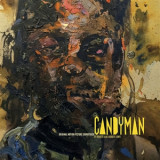
The Complete Film Music Composed by Robert Aiki Aubrey Lowe - 2xLP 180 Gram Colored Vinyl - Old-Style Tip-On Gatefold Jackets with Satin Coating and a Built-In Booklet Page - Composer Liner Notes - 12 Page Art Gallery Exhibit Catalogue // In partnership with Universal Pictures, Metro Goldwyn Mayer (MGM) and Monkeypaw Productions, Waxwork Records is thrilled to present CANDYMAN Original Motion Picture Soundtrack by Robert Aiki Aubrey Lowe. Directed by Nia DaCosta (next year's The Marvels) from a screenplay by Oscarr winner Jordan Peele, Win Rosenfeld and DaCosta, Candyman, currently in theaters nationwide, is a fresh take on the blood-chilling urban legend and a contemporary incarnation of the 1992 cult horror classic. About Robert Aiki Aubrey Lowe: Robert Aiki Aubrey Lowe (b.1975) is an artist, curator and composer who works primarily with, but not limited to, voice and modular synthesizer for sound in the realm of spontaneous music. Along with analog video synthesis works, he has brought forth an A/V proposal that has been a focus of live performance and installation / exhibition. The marriage of synthesis and the voice has allowed for a heightened physicality in the way of ecstatic music, both in a live setting and recorded. The sensitivity of analogue modular synthesis echoes the organic nature of vocal expression, which in this case is meant to put forth a trancelike state. Lowe's works on paper tend towards human relations to the natural/magical world and the repetition of motifs. The deluxe 2xLP vinyl release features 180-gram colored vinyl, old-style tip-on gatefold jackets with satin coating and a built-in booklet page, liner notes by composer Robert Aiki Aubrey Lowe, a 12-page art gallery exhibition catalogue, artwork by Sherwin Ovid and Julian Williams and puppetry art by Manual Cinema.
Superior Viaduct and our new artist label, W.25TH, are proud to continue to be the home for Cindy Lee with the physical release of the celebrated album Diamond Jubilee. Universally praised, shortlisted for the 2024 Polaris Music Prize, and already hailed by Pitchfork as the 3rd best album of the 2020s, anticipation and conversation around the record has been high.
Cindy Lee is the performance and songwriting vehicle of Patrick Flegel (who previously fronted influential indie group Women). Over several albums, Flegel has combined delicate melodies and sheer beauty with moments of experimentation. With Diamond Jubilee, Flegel’s undeniable songcraft comes to the foreground, embracing a more instant connection and accessibility. Timeless tales of love and longing, surrounded by sticky hooks, take the listener on an unforgettable journey. Diamond Jubilee was written and recorded over several years by Patrick Flegel in Toronto, Durham, Calgary and Montreal at Realis- tik Studios. The album was mixed by Steven Lind, who also contrib- utes to several tracks and co-wrote “Baby Blue,” and was mastered by Joshua Stevenson.
Triple LP on black vinyl comes with 24” x 36” poster.
out of Stock
Last delivered 4 months ago available to reorder, subject to availability
2LP - 180 Gram Vinyl Jazz Standards Live is a remarkable collaboration between two iconic jazz musicians: Kenny Wheeler, a legendary trumpeter and composer known for his versatility, and Rain Sultanov, a saxophonist celebrated for his rich tone and innovative style. This album captures an unforgettable performance that has never before been released physically. Blending the expressive power of Wheeler's trumpet and Sultanov's saxophone, the quintet delivers a warm and resonant sound that harks back to the golden era of jazz in the late 1970s and early 1980s. Fans of Herbie Hancock's V.S.O.P. quintet will recognize the vibrant interplay reminiscent of Freddie Hubbard and Wayne Shorter. This double vinyl LP is a treasure trove for jazz enthusiasts, featuring a mix of beloved standards and original compositions by Wheeler. Adding depth and character to the performance is Shahin Novrasli's masterful piano work, which infuses the album with a distinctive mood. Meanwhile, Paul Clarvis on drums and Ruslan Guseynov on bass provide a dynamic and cohesive rhythm section that elevates each track. Jazz Standards Live is not just an album; it is a testament to the boundless creativity and artistry of two jazz maestros, uniting their talents to create an experience that is both timeless and fresh. Whether you're a longtime jazz aficionado or a newcomer to the genre, this album promises to captivate and inspire.
2LP - 180 Gram Vinyl Jazz Standards Live is a remarkable collaboration between two iconic jazz musicians: Kenny Wheeler, a legendary trumpeter and composer known for his versatility, and Rain Sultanov, a saxophonist celebrated for his rich tone and innovative style. This album captures an unforgettable performance that has never before been released physically. Blending the expressive power of Wheeler's trumpet and Sultanov's saxophone, the quintet delivers a warm and resonant sound that harks back to the golden era of jazz in the late 1970s and early 1980s. Fans of Herbie Hancock's V.S.O.P. quintet will recognize the vibrant interplay reminiscent of Freddie Hubbard and Wayne Shorter. This double vinyl LP is a treasure trove for jazz enthusiasts, featuring a mix of beloved standards and original compositions by Wheeler. Adding depth and character to the performance is Shahin Novrasli's masterful piano work, which infuses the album with a distinctive mood. Meanwhile, Paul Clarvis on drums and Ruslan Guseynov on bass provide a dynamic and cohesive rhythm section that elevates each track. Jazz Standards Live is not just an album; it is a testament to the boundless creativity and artistry of two jazz maestros, uniting their talents to create an experience that is both timeless and fresh. Whether you're a longtime jazz aficionado or a newcomer to the genre, this album promises to captivate and inspire.
Somewhat incredibly, this four-piece vocal Soul act are still performing today after 56 years of harmonising, without anything they recorded achieving a physical release until a few years ago. What began as four guys singing together for fun after basketball practice in Portland, took until early 1977 to realise as actual recordings – and that lone tape of four original songs lay unreleased until 2020. From that set we've pulled a bright and lively gem ripe for plays on the Modern Soul scene, backed with stunning, polished slow-jam.
First time ever on 7" 45rpm vinyl, dinked centre hole with picture sleeve, 500 numbered copies only.
out of Stock
Last delivered 20 months ago available to reorder, subject to availability
Welcome to 'Instrumental Dubs #3', the ongoing series that delves into the world of the Dub Version and beyond. Side one explores the axis of UK Street Soul and Reggae with the opening two tracks produced by Howard Hill and originally released on his Passion Enterprises label in the late eighties. Both 'Versions' have a machine lead rhythm section paired with a reggae skank and snippets of soulful vox. The Proto House of Protek's 'I Love to Dance With You' featured on a Jura Soundsystem DJ Mix for Planet Trip, a one off single from the now sadly deceased Errol Parkes that's been re-edited with love by The Nightlark from Edinburgh.
The B side features The Cool Notes 'Natural Energy', which isn't strictly speaking a Dub Version, but it has that vibe with a primarily instrumental backing track featuring sparse vocals and spacey FX. The album closes with a secret weapon of Ilija Rudman 'Dub 4 Love' that pays homage to a famous track from Acid House's heyday.
Pressed on 180g Heavyweight Vinyl with full sleeve jacket design by Bradley Pinkerton.
out of Stock
Last delivered 15 months ago available to reorder, subject to availability
Scanning Backwards, Phase Fatale’s second full-length album originally released on Berghain’s in-house label Ostgut Ton in 2020 is now reissued via his label BITE on limited edition pink marble vinyl after being long sold out and sought after. Using the connection between weaponized sound and psychological manipulation as a conceptual foundation, Hayden Payne explores the ways in which music – and sub frequencies in particular – are used to influence thinking and to synchronize emotions and behavior: from military technology to sound systems and the physicality and sexuality of queer techno culture.
Known for his innovative post-punk takes of dance music as featured on EPs for unterton and Ostgut Ton, the Berghain resident draws on his background as both a guitarist and sound engineer to create a heady mix of broken rhythms, noise-, and shoegaze-inflected techno, often at slower tempos. The result is music with space and pace to expand, highlighting the intense rushes of frequencies found in both sonic warfare and functional dance music. Over eight tracks named after a combination of historical and fictional narratives from literature and science fiction, Payne’s rhythmic excursions explore different manifestations of sound as power – specifically within the context of seeing Berghain as an instrument itself. This is also reflected in the album artwork, taken from an early flyer for the SNAX party series and an obvious ode to the fetishization of power dynamics.
In his own words: “All tracks on the album, no matter the style, were tailored to sound a certain way in Berghain – something I figured out through years of dancing in the middle of the floor, DJing as a resident and investigating what frequencies really penetrate the body. This includes speech and high-frequency, brain-penetrating instrumentation and drilling textures that I had not utilized so often before, but which I think also have an effect on thought and memory. It’s especially true in a space where gay and fetish roots combine with music in unexpected ways, almost in a cultish manner. A musical and physical deprogramming and reprogramming, psychic driving and de-patterning, the erasing and replacing of memories.”
Ultimately, Scanning Backwards surveys not only the manipulative properties of electronic music (mantras, loops, subliminal messages) but also how rhythm facilitates both moving and thinking in synchrony; a pulse of coordinated sound- and brainwaves.
out of Stock
Last delivered 82 days ago available to reorder, subject to availability
So 2020 was going to be the year of Van Weezer -- the big riffs rock album Weezer made as an homage to the metal bands they loved growing up -- until, thanks to the global pandemic, it suddenly wasn't. The entire time, however, Weezer frontman Rivers Cuomo was busy at the piano, writing a very different album that referenced another vital musical touchstone of his youth: The Beach Boys' Pet Sounds.
Throughout the summer of Covid-19, he and the band -- along with a 38 piece orchestra -- chipped away at masked recording sessions until the record was complete. The result is an album called OK Human -- a cheeky nod to Radiohead's technophobic future-trip OK Computer, but sounding nothing at all like that record. Taking the listener bit by bit through parts of Cuomo's every day, it's a Technicolor symphonic spree that meditates on how over-and-under-connected we all are, particularly in a year where we can see each other with greater ease, but actually can't physically be near each other at all.
OK Human is also packed to the brim with some of the best, most personal songs Cuomo has written in the last decade, all of which shine brighter and bolder with splashes of string and horn arrangements courtesy of album producer Jake Sinclair and arranger Rob Mathes. It's hard to imagine any other band who came up in the alt haze of the 90s creating a simply perfect orchestral pop album, but that is exactly what Weezer's done; OK Human is a testament to the excellent, enduring melodies Cuomo has written since Weezer's inception, and the ones he continues to write today.
out of Stock
Last delivered 20 months ago available to reorder, subject to availability
Volume 1 of this expertly curated project of 90s Italian House - put together by Don Carlos.
If Paradise was half as nice… by Fabio De Luca.
Googling “paradise house”, the first results to pop up are an endless list of European b&b’s with whitewashed lime façades, all of them promising “…an unmatched travel experience a few steps from the sea”. Next, a little further down, are the institutional websites of a few select semi-luxury retirement homes (no photos shown, but lots of stock images of smiling nurses with reassuring looks). To find the “paradise house” we’re after, we have to scroll even further down. Much further down.
It feels like yesterday, and at the same time it seems like a million years ago. The Eighties had just ended, and it was still unclear what to expect from the Nineties. Mobile phones that were not the size of a briefcase and did not cost as much as a car? A frightening economic crisis? The guitar-rock revival?! Certainly, the best place to observe that moment of transition was the dancefloor. Truly epochal transformations were happening there. From America, within a short distance one from the other, two revolutionary new musical styles had arrived: the first one sounded a bit like an “on a budget” version of the best Seventies disco-music – Philly sound made with a set of piano-bar keyboards! – the other was even more sparse, futuristic and extraterrestrial. It was a music with a quite distinct “physical” component, which at the same time, to be fully grasped, seemed to call for the knotty theories of certain French post-modern philosophers: Gilles Deleuze, Félix Guattari, Paul Virilio... Both those genres – we would learn shortly after – were born in the black communities of Chicago and Detroit, although listening to those vinyl 12” (often wrapped in generic white covers, and with little indication in the label) you could not easily guess whether behind them there was a black boy from somewhere in the Usa, or a girl from Berlin, or a pale kid from a Cornish coastal town.
Quickly, similar sounds began to show up from all corners of Europe. A thousand variations of the same intuition: leaner, less lean, happier, slightly less intoxicated, more broken, slower, faster, much faster... Boom! From the dancefloors – the London ones at least, whose chronicles we eagerly read every month in the pages of The Face and i-D – came tales of a new generation of clubbers who had completely stopped “dressing up” to go dancing; of hot tempered hooligans bursting into tears and hugging everyone under the strobe lights as the notes of Strings of Life rose up through the fumes of dry ice (certain “smiling” pills were also involved, sure). At this point, however, we must move on to Switzerland.
In Switzerland, in the quiet and diligent town of Lugano, between the 1980s and 1990s there was a club called “Morandi”. Its hot night was on Wednesdays, when the audience also came from Milan, Como, Varese and Zurich. Legend goes that, one night, none less than Prince and Sheila E were spotted hiding among the sofas, on a day-off of the Italian dates of the Nude Tour… The Wednesday resident and superstar was an Italian dj with an exotic name: Don Carlos. The soundtrack he devised was a mixture of Chicago, Detroit, the most progressive R&B and certain forgotten classics of old disco music: practically, what the Paradise Garage in New York might have sounded like had it not closed in 1987. In between, Don Carlos also managed to squeeze in some tracks he had worked on in his studio on Lago Maggiore. One in particular: a track that was rather slow compared to the BPM in fashion at the time, but which was a perfect bridge between house and R&B. The title was Alone: Don Carlos would explain years later that it had to be intended both in the English meaning of “by itself” and like the Italian word meaning “halo”. That wasn’t the only double entendre about the song, anyway. Its own very deep nature was, indeed, double. On the one hand, Alone was built around an angelic keyboard pattern and a romantic piano riff that took you straight to heaven; on the other, it showcased enough electronic squelches (plus a sax part that sounded like it had been dissolved by acid rain) to pigeonhole the tune into the “junk modernity” section, aka the hallmark of all the most innovative sounds of the time: music that sounded like it was hand-crafted from the scraps of glittering overground pop.
No one knows who was the first to call it “paradise house”, nor when it happened. Alternative definitions on the same topic one happened to hear included “ambient house”, “dream house”, “Mediterranean progressive”… but of course none were as good (and alluring) as “paradise house”. What is certain is that such inclination for sounds that were in equal measure angelic and neurotic, romantic and unaffective, quickly became the trademark of the second generation of Italian house. Music that seemed shyly equidistant from all the rhythmic and electronic revolutions that had happened up to that moment (“Music perfectly adept at going nowhere slowly” as noted by English journalist Craig McLean in a legendary field report for Blah Blah Blah magazine). Music that to a inattentive ear might have sounded as anonymous as a snapshot of a random group of passers-by at 10AM in the centre of any major city, but perfectly described the (slow) awakening in the real world after the universal love binge of the so-called Second Summer of Love.
For a brief but unforgettable season, in Italy “paradise house” was the official soundtrack of interminable weekends spent inside the car, darting from one club to another, cutting the peninsula from North to centre, from East to West coast in pursuit of the latest after-hours disco, trading kilometres per hour with beats per minute: practically, a new New Year’s Eve every Friday and Saturday night. This too was no small transformation, as well as a shock for an adult Italy that was encountering for the first time – thanks to its sons and daughters – the wild side of industrial modernity. The clubbers of the so-called “fuoriorario” scene were the balls gone mad in the pinball machine most feared by newspapers, magazines and TV pundits. What they did each and every weekend, apart from going crazy to the sound of the current white labels, was linking distant geographical points and non-places (thank you Marc Augé!) – old dance halls, farmhouses and business centres – transformed for one night into house music heaven. As Marco D’Eramo wrote in his 1995 essay on Chicago, Il maiale e il grattacielo: “Four-wheeled capitalism distorts our age-old image of the city, it allows the suburbs to be connected to each other, whereas before they were connected only by the centre (…) It makes possible a metropolitan area without a metropolis, without a city centre, without downtown. The periphery is no longer a periphery of any centre, but is self-centred”.
“Paradise house” perfectly understood all of this and turned it into a sort of cyber-blues that didn’t even need words, and unexpectedly brought back a drop of melancholic (post?)-humanity within a world that by then – as we would wholly realise in the decades to come – was fully inhuman and heartless. A world where we were all alone, and surrounded by a sinister yellowish halo, like a neon at the end of its life cycle. But, for one night at least, happy.
out of Stock
Last delivered 85 days ago available to reorder, subject to availability
. The idea for the band was originally conceived by singer-guitarist Joe Woodward whilst writing and recording songs in his kitchen on a 4-track recorder, and over time eventually found help from like-minded friends, Elliot Roberts and Cam Wheeler. The three of them would spend their nights experimenting with cassette recording with the admirable if not challenging aim to recreate the symphonic sounds of Phil Spector on a DIY budget. With growing confidence and having amassed a small catalogue of songs, a few aborted attempts were made to get a live band together before they found help from a second guitarist, Eli Allison, who had recently relocated from Cornwall. As necessity would dictate, the first shows as a quartet made use of a drum machine, but the ideal formation for the band wasn’t truly complete until meeting Nia Abraham, whose live drumming would add a more physical quality to the band’s sound. At the beginning of 2024, they began working more purposefully towards an end goal with the writing and recording of the five-song Nowhere Near Today EP. Though retaining some of their home recording practices, they also made use of a studio facility based in a disused shopping centre basement that was made available through SHIFT, a local artist collective connected to the band. The acquisition of an 8-track Tascam 488MKII, along with the natural reverb of SHIFT’s empty concrete space allowed for further opportunity to experiment with both cassette recording techniques and their still developing live sound, the two environments permitting an all-too-rare creative freedom. The process was transformative for the group, their Spector-inspired ambitions now taking on a more defined shape that skirted around the edges of psych, noise-rock and industrial-pop in a way that increasingly became their own. For a debut EP, the results are impressively realised, a confluence of expansive tremolo guitars, a deliberately primordial rhythm section and a contrasting vulnerable vocal performance that’s both melodic and bracing. It’s a record born both of private experimentation and public performance, who they are on stage and what they express on record informing the other but still distinctly each their own thing, shifting then dovetailing like the waves of feedback that wash through Nowhere Near Today. Still a young band, it’s tomorrow they feel a lot closer to.
“JUSTIFIED SINNER” WILL BE OUT ON FRIDAY JANUARY 24TH, THIS IS THE THIRD OF THE FOUR 12” VINYLS THAT ANTICIPATE THE
RELEASE OF THE NEW DEATH SS CONCEPT ALBUM “THE ENTITY”, PRODUCED BY STEVE SYLVESTER WITH TOM DALGETY. TOM IS A
GRAMMY-WINNING ENGLISH PRODUCER, ALREADY AT WORKS WITH RAMMSTEIN, GHOST, THE CULT AND OTHERS.
JUSTIFIED SINNER” IS A POWERFUL AND ANTHEMIC SONG WITH A DARK '80S ATMOSPHERE. LYRICALLY IT IS INSPIRED BY THE 1824
NOVEL “THE PRIVATE MEMOIRS AND CONFESSIONS OF A JUSTIFIED SINNER”, BY THE SCOTTISH WRITER JAMES HOGG, CONSIDERED THE
PRECURSOR TO STEVENSON'S NOVEL “THE STRANGE CASE OF DR. JEKYLL & MR. HYDE”. HERE THE PROTAGONIST, CONVINCED THAT HE
IS CHOSEN BY GOD AND UNDER THE INFLUENCE OF HIS DIABOLICAL DOPPELGANGER, COMMITS ALL SORTS OF EXCESSES AND CRIMES
AGAINST SINNERS, THINKING HE IS JUSTIFIED BY THEM.
THE 12” IS OUT TODAY IN LIMITED DELUXE PHYSICAL FORMAT ON TRANSPARENT ORANGE VINYL WITH A SPECIAL SHAPED COVER AND
CONTAINS THE THIRD PART OF THE BOOKLET WITH THE ENTIRE STORY BEHIND THE CONCEPT ALBUM, ALONG WITH TWO OTHER SONGS
TAKEN FROM THE ALBUM: “THE EVIL PAINTER” AND “THE WHITECHAPEL WOLF”, AVAILABLE ONLY IN THE PHYSICAL VERSION.
Enhancer Dub EP includes 4 tracks playing carefully with elements of Afrobeat, Dub & Techno. As a rare groove connoisseur and vinyl collector, Didier dlb has been delving into essential wax for almost 3 decades, navigating the underground music scene with a disregard for genre boundaries. Forget marketing hype – this is about the scientific exploration of sound, and an existential love for rave culture.
In 1999, armed with a basic setup featuring an Atari, Akai MPC 2000, Yamaha DX, and Korg 770, he ventured into music production. No flashy equipment, just a raw passion for sonic experimentation and analog sound. As a result, releases on Sonar Kollektiv, Get Physical, Klasse Recordings & Rotary Cocktail followed.
Didier dlb's undying dedication to exploration is reflected in his collaborations, residencies, and releases. He doesn't chase the limelight, instead immersing himself in the science of sound, shaping his own sonic universe. This is the story of an artist who has been shaping the underground landscape with a commitment to the art form.
out of Stock
Last delivered 17 months ago available to reorder, subject to availability
Studio, the influential project of Swedish musicians Dan Lissvik and Rasmus Hägg, presents their legendary 2006 debut in remastered form, in partnership with Ghostly International. Available in limited edition "Fog Machine Vinyl", CD, and cassette. "One of the finest pieces of electronic music you'll hear this year.” - The Guardian (2006). Included in year-end best-of write-ups by Pitchfork, FACT Magazine, and Rough Trade. Physical copies have long been out of print for West Coast, and the album has also been notably absent from most streaming services until now.
“Somehow, I knew I wanted to make a conceptual record that, although only imaginary at that point, could represent or define how our city sounded,” says Lissvik of Gothenburg's influence on West Coast. Some called Studio, the project of Swedish musicians Dan Lissvik and Rasmus Hägg, “the missing link between The Cure and Lindstrøm,” Pitchfork heard Durutti Column and Can, as the duo’s story became swept up in a loosely developing scene — adjacent first to the label Service (Jens Lekman, The Whitest Boy Alive) and later Sincerely Yours (The Tough Alliance, jj) — and a precursor to the 2010s boom at the axis of electronic and psychedelic music guided by indie greats like Caribou, Four Tet, and Darkside.
West Coast, their seminal 2006 debut, captured a faraway romanticism of Balearic brushed up against Krautrock, disco, dub, and afrobeat, with pop lyricism lifted from new wave, all made modern by two art school grads in Gothenburg. First pressed in a small vinyl-only run via their own Information label, the album has been notably absent from most streaming services, and the internet’s record of its initial impact is all but fossilized from a bygone blog era, while its sound is simply untraceable to any one moment in music.
Outside of three 7” releases, they’d keep the music to themselves for several more years. In 2005, Hägg remembers, “We got our degrees and were kicked out of our studio spaces so all these recordings were just piled up. A year later we dusted them off and started to deconstruct and assemble them in a more drawn-out fashion.” In the same breadth, they cite DJ Screw, J Dilla, and Joy Division, along with early ‘80s European live DJ sets from the likes of Beppe Loda, Dj Mozart, and Baldelli as reference points.
“The anything-goes mentality was very encouraging and was a big cornerstone to the Studio sound,” says Hägg. “But there’s so much more to the picture, we were not that young then and had lots of musical baggage in our suitcases, the new thing was that we finally let it all come through, not bound by any borders that was often the case with music identity in Sweden during the 90s.” In the afterglow of the record’s 2007 reception, Studio receded from view, clouded behind a mountain of remix requests (including one for Kylie Minogue that saw release) and label bureaucracy. “It’s easy to wish we would have done some proper recordings of our own instead,” Hägg reflects. But both artists, now well into respective careers beyond Studio, have come to peace with West Coast as their most enduring effort together. Lissvik adds, “It serves as a good reminder for me to keep to that decision and promise and to continue exploring and growing