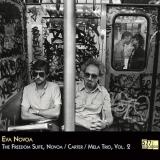
"Brooklyn-based pianist Eva Novoa returns with The Freedom Suite: Novoa / Carter / Mela Trio, Vol. 2 — the second radiant release from her compelling trio with saxophone icon Daniel Carter and celebrated drummer Francisco Mela. This marks Novoa’s sixth album with 577 Records. The trio first came together live in 2021, followed by a series of performances, including appearances in Cambridge (Boston) and later at the Brooklyn edition of the NY Forward Festival.
"The Freedom Suite is an homage to jazz titan Duke Ellington — particularly his masterful big band suites and legendary orchestra featuring Johnny Hodges and other luminaries who helped define an era of jazz greatness. In contrast, Novoa presents her Suite in a more intimate format: the piano trio. The album comprises twelve pieces — mostly brief — with a few extended tracks such as Free to Be Free and Cyborgs.
"For this recording, Novoa also steps in as a vocalist on several tracks, including Mainstream Media, Big Grande, Global, Free to Be Free, Dream, and Cyborgs. These pieces often feature a vocal dialogue between Novoa and Mela, whose expressive, word-infused style draws from rich Cuban traditions.
'Words are powerful,' says Novoa. 'They define who we are, where we come from, and who we hope to become. Without words, there is no conversation — and without conversation, there is no real sense of time, space, or connection.'
The Freedom Suite emerged from deep philosophical and creative conversations — spoken, written, and improvised — between Novoa, Carter, and Mela. In the studio, Novoa introduced printed texts that served as thematic foundations for spontaneous, in-the-moment musical interpretation. The result is an urgent and organic interplay, where instruments speak to one another in a language as fluid as it is fearless.
"Standout track Cyborgs begins with Novoa’s percussive piano, exemplifying the trio’s dynamic, conversational energy. Creative Destruction features Novoa on electric harpsichord in a wild, electric exchange. While Free to Be Free stands out as the album’s leading single, it also captures the essence and message of the entire Suite.
"Recorded in 2021 at New York City’s legendary Sear Sound Studio, the album captures a creative explosion of sound and spirit. Novoa dazzles on piano, Fender Rhodes, electric harpsichord, Chinese gongs — even whistle — showcasing her expansive sonic palette. Together, the trio embodies the power of free improvisation and emotional storytelling.
"Originally from Barcelona, Spain, Eva Novoa has been cultivating her distinctive voice since childhood. Now a staple of the New York creative music scene, she has performed across the globe and collaborated with some of the most adventurous voices in jazz and beyond."
Поиск:pi so
Все
2026 Restocked!
If you've been following the Payfone story over the last 13 years, you'll know that Phil Passera and Jimmy Day's long-running collaborative project has specialised in one-off musical morsels - sublime songs cooked up in cahoots with all manner of guest musicians and vocalists. Never ones to rest on their laurels, Day and Passera have now delivered a full six-track tasting menu in the shape of Lunch, their hotly anticipated debut album.
Recorded over an 18-month period at Passera's Barcelona studio and Day's studio in Brighton, Lunch is an unsurprisingly assured and musically detailed affair that's entirely made up of previously unheard songs. Unlike acid-flecked recent single 'Volt To Volt', which delivered a tweaked take on late 1980s house music, the album's six tracks showcase the trademark sound the duo has been developing since first joining forces 13 years ago.
Trawl back through Passera and Day's high-quality catalogue, which includes outings on Leng, Golf Channel Recordings and Defected as well as their own OTIS imprint, and that distinctive musical recipe becomes clear. Rooted in their love of classic drum machines and their trusty JUNO-60 synthesiser, the Payfone sound combines equal amounts of electronic and organic instrumentation, warm and inviting downtempo and mid-tempo grooves, and pertinent and thoughtful lyrics delivered with panache by an impressive roll call of guest vocalists.
Lunch, then, is a standalone sonic statement - an initially vinyl only album on their own OTIS imprint - that continues this impressive lineage. Like all Passera and Day's collaborative work, it is free of samples, with the pair preferring to create their own sounds from scratch. Opener 'Movin' On', featuring the honeyed vocals of former XL Recordings artist Willis Earl Beal AKA Nobody and slap-bass from Jo Gabriel Harris (who also features on three other songs across the album), is a deep and effortlessly evocative mid-tempo delight that perfectly sets the tone for what's to come.
Brooklyn-born April Pittman and Russian/Armenian vocalist Zara Kian lend their talents to woozy, sun-baked shuffler 'Paperman' before regular Payfone collaborator Ludmilla Rodriguez headlines 'Joan of Arc', a veritable Mediterranean breeze rich in tumbling analogue synth synths, elastic bass and tumbling guitar solos. Those yearning for a touch of lightly disco-flecked dancefloor heat will savour 'Spend The Night', where Los Angeles singer Collette Tibbetts AKA Carmella The Balls, accompanied by virtuoso keys courtesy of Parisian pianist Gabriel Cazes, rises above a sweet, melodious, dub disco-adjacent backing track. In contrast, 'Pamela' is low-slung and hypnotic, with 'Sofian' vocalist Barbara Alcindor ushering us through a deep, heady groove-scape.
Fittingly, Passera and Day round off Lunch via a vibrant and potent sweet treat, 'Pony Bar'. Headed up by the J.J Cale-esque lead vocals of man of mystery Leon Lace, the pedal steel-sporting song joins the dots between dusty Americana, kaleidoscopic Balearic beats and lilting, slow-motion disco. Like the rest of the album, you'll be thinking about it long after you've washed down the last few musical mouthfuls.
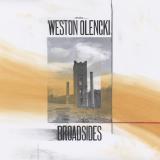
'In 2023, sound artist and composer Weston Olencki toured across the American South. Beginning in their hometown in South Carolina, they snaked a circuitous path from the mountains of West Virginia to the banks of the Mississippi River. As the miles accumulated, so did the initial seeds of new work.
'Instruments and artifacts they acquired hitched a ride in the backseat, while songs and sounds filled their portable recorder: water in its various states, the familiar insectoid buzz of those summer nights, trains cutting through the landscape, the traditional music that lived alongside the communities that kept it. Olencki took it all in, and over time, found ways that these experiences coalesced into a bramble-like perspective of time, where past, present, and future intersect in ways both barbed and beautiful.
'Broadsides, Olencki’s newest solo full-length is the multilayered result of this journey. The album follows their landmark release Old Time Music from 2022, which presented radical interpretations of traditional tunes from Appalachia and throughout the South alongside original compositions that drew significantly on archival recordings. On Broadsides, Olencki rejects delineations between the unmoored avant-garde and the rootedness of one’s cultural heritage, revealing their porous and intertwined nature. “My mother was a quilter. Her mother before that,” they write in the album’s liner notes. “Quilting, like music, is a practice of embedding knowledge and remembrance into the very core of the thing you are making. It’s not just about the materials, but how they’re reassembled, recontextualized, stitched, woven to form new patterns - the minutiae of craft holding significance to those looking to find it. Stories woven from stories, never told the same way twice.”
'Like all great road trips, Broadsides unfolds slowly and continuously, with moments of dramatic reverie punctuating the endless melt of highway in the rearview. We’re immediately confronted by the uncanniness of revisiting old haunts, as Southern storms break through the initial churn of the freight locomotives of Alabama. Olencki’s interpretation of the bluegrass standard “Foggy Mountain Breakdown” captures the euphoria of melancholy in motion. The permutational plucks of banjo are bounced around the frame by a computer, its pitches determined within algorithmic sequences and transcriptions of classic three-finger licks. The tonalities of old-time are smeared and stretched until all that’s audible is the insistence that Heaven might be real.
'In the album’s second half, “Omie Wise,” a murder ballad made famous by Doc Watson, follows an interlude recorded on the river in North Carolina in which the titular character’s body was laid. Ghostly echoes of a dozen other renditions float through the substrata as Tongue Depressor’s Henry Birdsey accompanies them on the pedal steel guitar. The album’s central composition, “all my father’s clocks,” is a profound meditation on entropy and impermanence. The sound of their father’s extensive clock collection ticks away as Olencki pulls a bow across the length of an autoharp sourced from a rural strip mall. The instrument was left as detuned as it was found, the resonance of its deep bass drone and clanging high-end the result of years of neglect and the warping effects of Southern humidity.
'Historically, broadsides were an early form of broadcasting, an often- musicalized telling of current news pasted in the public square. The name was later taken up by Sis Cunningham and Gordon Friesen in the 1960s, whose Broadside magazine published songs and social commentary when American folk music resurfaced as an urgent way of communicating the multifaceted politics of its time.
'Olencki borrows the phrase to recall both this old form of songmaking and that later prominent reexamination of traditional music’s role in modern life, but also to draw attention to the fragmented and machine- mediated way heritage is diffused in this very different, but no less pivotal, moment.
'As a sanitized past is used as justification for current violence and domination, we can turn to these artifacts to better understand the history of ourselves, but only if they are consciously pushed to evolve. Broadsides represents one personal, striking vision of what far-flung futurisms could be respun from = these high, lonesome sounds: a reflection of the unbridled joy and deep sorrow inherent to living together through time, and a desire to push further into the untold and unknown.'
*Cover Picture: Pauline Oliveros
Practitioner, educator, DJ, and researcher, Femke Dekker (also known as Loma Doom) has long been immersed in both sound and education. Across lecture halls, archives, festivals, art galleries, independent radio stations, and dance floors, she orbits a central question: What if listening itself were an artistic practice? What might unfold when listening becomes method, medium, and material?
Open Field Listening takes shape around these ideas. Presented as a collaboration between Page Not Found—an artist-run platform dedicated to publishing and experimental practices—and the record label Osàre! Editions, the text originates from Dekker’s graduation thesis for the Master Education in Arts at the Piet Zwart Institute, Rotterdam.
There, she honed her skills as a pedagogue, inviting students into improvisational jam sessions, radio-making, and exercises that activate new modes of attention and a heightened sense of sonic curiosity.
Drawing on the work of scholars and artists—most notably Pauline Oliveros—Dekker approaches listening as a call to action: a way of tuning into one’s surroundings, one’s body, and the urgencies that contour our political and social worlds. She emphasizes the radical potential of reorienting knowledge toward collective attunement: the we rather than the I (or the eye). Inspired by Oliveros’s concept of Deep Listening—a way of expanding awareness through focused, embodied perception—Dekker acknowledges the composer as a foundational feminist figure whose insights continue to reverberate through the classroom, the studio, and beyond.
~~~
Page Not Found kindly thanks Mondriaan Fonds and the Municipality of The Hague for their generous support. Page Not Found is a centre for artistic and independent publishing, approaching these practices as vital, collaborative forms of cultural exchange.
Osàre! Editions is a music label founded by Elena Colombi. With a passion for diverse and experimental sounds, Osàre! Editions showcases unique artists and performers from around the world.
- Mighty Idy #1
- Bad Attitude
- Baby Boom
- Out Of Our Tree
- From Home
- Shirt Loop (Not Recorded For Sire Lp)
- Boy From Nowhere (Not Recorded For Sire Lp)
- When I Get Off (Not Recorded For Sire Lp)/Destroyer
- He's Waitin' (Not Recorded For Sire Lp)
- Do Not Enter
- I Don't Know When To Stop (Not Recorded For Sire Lp)
- Mighty Idy #2
*13 ripping songs totalling 33 minutes from the original 20-song 65 minute master reel tapes, recorded in early February 1978 for producers Flo & Eddie, the night before DMZ (the raw-assed pre-Lyres outfit that never made it!) spent 3 days trapped by a blizzard recording their Sire album. **4 page insert with info, pics and Rick Coraccio's ultra-detailed journal on how it all went down! ***LP includes DOWNLOAD CODE Kapital Ink zine: "In the annals of R&R history, as far as local American rock'n'roll scenes go, Boston is hardly ever looked upon in the same shining light as, say, NY, Detroit, San Francisco or even Austin or Seattle. Unlike those other towns, there's never even been a definitive book about the scene. Maybe it's because Boston is a perennial hard-luck place (just witness the Red Sox) with a serious New York inferiority complex hanging over its head. Boston is ignored by the industry at large, despite the fact that the city has spawned countless heavyweights in both a commercial (Aerosmith, Boston, the Cars) and aesthetic (Modern Lovers, Real Kids, Mission Of Burma) (Crypt editor note: and DMZ!! and LYRES!!) sense. Boston was the first US city to directly reflect the influence of the Velvet Underground, as epitomized by the Modern Lovers, who've proven to be almost as influential in their own right. Fast forward to the days of hardcore, and Boston was one of the pre-eminent strongholds of shave-head mania, shoring up its rep as an angry, intolerant New England outpost. Naturally the town has produced more than its share of local legends: Willie Alexander (who actually was in the Velvet Underground, albeit when the band was on its Lou Reed-less last legs); Jonathan Richman (geekus supremus no small thing considering the subsequent indie hordes, to whom he's a savior); and most of all, the great Real Kids, (Crypt editor note: and DMZ!! and LYRES!!) who could've been the equivalent of the MC5, Stooges or Flamin' Groovies in the annals of American rock if it hadn't been for a series of bad breaks but let's not get into that because it'll only reinforce Boston's eternal self-pitying plight. The fact is, the scene in Boston was more or less built by a string of bands who are so organically-interconnected that it seems like an act of God."
- 1: Highway Star (Live At Schleyer-Halle)
- 2: The Cut Runs Deep
- 3: Vavoom: Ted The Mechanic
- 4: Ramshackle Man
- 5: A Castle Full Of Rascals
- 6: Perfect Strangers (Live At Schleyer-Halle)
- 7: Truth Hurts
- 8: Solitaire
- 9: Loosen My Strings
- 10: Anyone's Daughter (Live At The Nec)
- 11: A Touch Away
- 12: Black Night (Live At Schleyer-Halle)
- 13: Nasty Piece Of Work
- 14: Slow Down Sister
- 15: Child In Time (Live At Schleyer-Halle)
- 16: Anya (Live At Schleyer-Halle)
- 17: Love Conquers All
- 18: Sometimes I Feel Like Screaming
- 19: Wicked Ways
- 20: The Purpendicular Waltz
- 21: Speed King (Live At Schleyer-Halle)
- 22: The Battle Rages On
- 23: King Of Dreams
- 24: Soon Forgotten
- 27: Fortuneteller
- 28: Lazy (Live At Schleyer-Halle)
- 29: Somebody Stole My Guitar
- 30: Hush (Live At The Nec)
- 31: Smoke On The Water (Live At The Nec)
- 32: Knockin' At Your Back Door (Live At The Nec)
- 33: Fire In The Basement
- 25: Time To Kill
- 26: Cascades: I'm Not Your Lover
"Deep Purple's Greatest Hits, released in 2009, is a comprehensive compilation showcasing the legendary band's most iconic tracks. Spanning their groundbreaking career, the album features classic live versions of hits like ""Smoke on the Water,"" ""Highway Star,"" ""Child in Time,"" and ""Black Night,"" offering a perfect introduction to Deep Purple's influential sound. Known as pioneers of hard rock and heavy metal, the band’s virtuosic guitar solos, soaring vocals, and dynamic keyboard riffs shine throughout this collection. Greatest Hits captures the essence of Deep Purple's heyday while celebrating their timeless appeal. It highlights the band’s ability to blend powerful rock energy with intricate musicianship, making them a cornerstone of the genre. For longtime fans and newcomers alike, this compilation is an essential addition to any rock music collection, solidifying Deep Purple’s legacy as one of the most influential bands in rock history. Greatest Hits is available as a limited edition of 1500 individually numbered copies on purple coloured vinyl."
- 1: Let Us Burn
- 2: Dangerous
- 3: And We Run
- 4: Paradise (What About Us?)
- 5: Edge Of The World
- 6: Silver Moonlight
- 7: Covered By Roses
- 8: Dog Days
- 9: Tell Me Why
- 10: Whole World Is Watching
- 11: Keep On Breathing
- 12: One Of These Days
- 13: Living On Fire
- 14: And We Run
- 15: Silver Moonlight
- 16: Covered By Roses
- 17: Tell Me Why
- 18: Whole World Is Watching
"‘Hydra’ is the sixth studio album by Dutch symphonic metal band Within Temptation. It was originally released on January 31, 2014 in Europe and on February 4, 2014 in North America. The album contains guest appearances by singer Howard Jones (ex-Killswitch Engage), rapper Xzibit, metal vocalist Tarja Turunen (ex-Nightwish) and alternative rock singer Dave Pirner (Soul Asylum). It was the first album by Within Temptation to be recorded with three guitarists, with Stefan Helleblad making his Within Temptation studio debut on ‘Hydra’ since his addition to the band shortly after the release of ‘The Unforgiving’ in 2011. ‘Hydra’ is also the first Within Temptation album to feature Robert Westerholt's growling techniques since the band's debut album, ‘Enter’ in 1997. The band wanted it to be a real Within Temptation record, but heavier, more musically challenging, pushing borders and frontiers with new elements and influences, and at the same time bring back more from their early metal roots “... A bit like the past and future at the same time"" – as stated by the band.
The album title refers to the great variation in musical genres, the band improves on with each new release. Guitarist Robert Westerholt adds: ""Hydra is a perfect title for our new album, because like the monster itself, the record represents the many different sides of our music"". According to the ancient Greek mythology, the Hydra was a giant multi-headed serpent that, for each severed head, sprang forth two more in their place. This new Expanded Edition comes with 8 bonus tracks, never released on vinyl before.
- A1: Autodestrucción
- A2: Tan Solo Lo Hagamos
- A3: Después De La Tristeza
- A4: Tratando De Olvidar
- A5: Caminando Rumbo Al Cementerio
- B1: Genes De Maldad
- B2: Medita Sinceridad
- B3: Crepúsculo
- B4: Rompesueños
- 1: The Rule Of Three
- 2: Egglet
- 3: Kurt Angle
- 4: Lush Life
- 5: Nowhere
- 6: Sheriff Elvin
- 7: Ghosts
- 8: Do Not Forsake Me O My Darling
Building logically on the natural development of their two previous collections, this time the fearless threesome can be heard roaming further than ever before into the uncharted hinterlands where the deep jazz tradition of the classic tenor trio format, laden with melody and swing, ventures into the untamed regions of free improvisation. At the heart of the band is the unmistakable beat of drummer Spike Wells, who this year celebrates his 80th birthday and the 65th year of his extraordinary career at the forefront of jazz in the UK, providing the driving force behind everyone from homegrown heroes Tubby Hayes to Bobby Wellins to visitors like Stan Getz and Roland Kirk and countless others. Riding at his side to represent the current Londonbased millennial cohort is saxophonist Riley Stone- Lonergan , whose intriguing compositions and boundless creative imagination as an improvisor continue to add to his burgeoning reputation.
Representing the diversity of tastes and interests and uncompromising creative stance typical of Gen X, big- toned bassist Eddie Myer rounds up the posse. The trio initially got together through their mutual love of Sonny Rollins' touring pianoless trios of the late 50s and early 60s, but soon found themselves expanding their repertoire to explore the rich and varied territory opened up by their unique combination of individual tastes. This album is their most coherent, wide-ranging and adventurous set of recordings yet. From Ayler to Strayhorn, from be-bop to calypso, from cowboy movie to free-jazz shootout, there's a surprise at every turn, but always delivered with total sincerity and conviction and a driving desire to bring the audience with them every step of the way. 'The Rule of Three' is a bold and confident statement of intent from a real long-term project that's as invested in the music's future as it is inspired by and reverent of its past.
After a few previous edits here and there, the two outsiders are back to add another stop to their endless journey through worldwide funky sounds. Deep disco, Boogie with a capital B (as in Bass or Beat — take your pick), breezy modern soul with an AOR touch, or hypnotic Afrobeat — the purpose of this four-tracker is simple: to bring some heat to any dance floor. Groove is in the heart (of Africa), as somebody once said.
- Then A Valley
- Graze The Bell
- No Deeper
- Offering
- Will We Be There
- All This Has To Give
- Rush Creek
- Being Flowers
0747742387647[30,88 €]
"Graze the Bell" ist eine Sammlung von bewegenden, faszinierenden Solo-Klavierstücken und das bisher reinste Werk von David Moore. Bekannt für seine atmosphärischen Kompositionen mit Bing & Ruth sowie seine Zusammenarbeit mit dem Gitarristen Steve Gunn und Cowboy Sadness, ist dies Moores erstes weit verbreitetes Solo-Klavieralbum. Wie das Albumcover - ein Foto, das Moore von Hand bestickt hat - abstrahiert die Musik persönliche Erfahrungen zu transzendenten Eindrücken. Moore nutzt sein Klavier, um meditativ die Conditio Humana zu erforschen, und macht "Graze the Bell" zu einem Zufluchtsort des Klangs. Im Laufe ihrer zahlreichen Veröffentlichungen haben Bing & Ruth häufig ihre Form und ihren Sound verändert, sich zu einer fünfzehnköpfigen Gruppe entwickelt und sind schließlich zu einer Trio-Konfiguration gelangt. Ihr jüngstes Album ,Species" stellte Moores Farfisa-Spiel in den Vordergrund, während eine nachfolgende EP mit dem gleichen Namen seine Solointerpretationen des Albums enthielt. Dieser lange Prozess der Destillation konzentrierte sich stets auf Moores Kompositionen für das Klavier und sein Verständnis davon. Nach zwei Jahrzehnten gefeierter Ensemblearbeit ist das Erscheinen von ,Graze the Bell" ein Moment, in dem sich der Kreis schließt, eine Heimkehr - nicht einfach zu einem Ort oder einer Zeit, sondern zu einem leuchtenden Zentrum, das beides übersteigt. Einige der Stücke auf ,Graze the Bell" waren ursprünglich für ein Album von Bing & Ruth geplant, wurden aber schließlich als Soloprojekt neu konzipiert. Moore nutzte nur das Klavier und versuchte, die bewährten Methoden, die er im Laufe der Jahre entwickelt hatte, weiter auszubauen. ,Ich möchte mich weiterentwickeln", sagt er, ,und dogmatische Denkweisen hinterfragen." Er öffnete sich aktiv für Experimente und suchte nach einer tieferen Präsenz in seinem Spiel, wobei er seine Beziehung zum Klavier und zum Leben neu bewertete. Moores Musik basiert zwar auf komponierten Noten und schöpft aus Lebenserfahrungen, doch die Quelle seiner Inspiration bleibt eher unbeschreiblich. Indem er Letzteres bewusst pflegte, entwickelte er eine natürliche Fähigkeit, sich in einen tranceähnlichen Zustand zu versetzen. Moore kann sich mit dieser Absicht hinsetzen und ist ,innerhalb weniger Sekunden" ,vollkommen dort". Von der ersten bis zur letzten Note basiert das Album auf dem atemberaubenden Klang eines ,bestialischen" Steinway Model D aus Hamburg von 1987. Dies hängt zum Teil mit seinem subtilen Spielstil zusammen, der manchmal an Stille grenzt. Moores anmutige Herangehensweise gibt dem Klang Raum und offenbart Nuancen des Klaviers, die viele Spieler gewöhnlich ignorieren würden. Solche Nuancen wurden während der Aufnahmen des Albums im renommierten Oktaven Audio in Mt. Vernon, New York, gepflegt. Der Klang des Steinway-Flügels des Studios wurde unter der Produktionsleitung des Grammy-Gewinners Ben Kane mit Unterstützung von Owen Mulholland lebhaft eingefangen. Um Moores experimentellen Ansatz zu unterstreichen, setzten sie Pitch-Correcting-Software kreativ ein, um die verschiedenen Register des Klangprofils des Klaviers zu orchestrieren. Der Ausdruck ,graze the bell" (die Glocke streifen) kam Moore vor Jahren aus heiterem Himmel in den Sinn. Er fand ihn poetisch und blieb ihm im Gedächtnis haften. Moore, der lange Zeit daran geglaubt hatte, dass das Leben eine Reise ist, an deren Ende man etwas erreicht oder ankommt, und dies zunehmend in Frage gestellt hatte, fand zunehmend mehr Sicherheit darin, einfach da zu sein, wo er ist. ,Es gibt keinen Gipfel - und keinen Weg dorthin", schreibt er. ,Nur die Hoffnung, dass wir, wenn wir Glück haben, gelegentlich die Glocke streifen." Und diese Erkenntnis hat er in sein Klavierspiel einfließen lassen. Mit diesem Album hat er sich bewusst dafür entschieden, Eigenheiten, sowohl seine eigenen als auch die des Instruments, voll und ganz anzunehmen. Anmut, subtile Klänge, rohe Gesten und glückliche Zufälle werden hier geschätzt. Die Stickerei auf dem Cover zeigt seine Frau beim Drachensteigen an der Küste von North Carolina. Sie wurde während der Abmischung des Albums über zehn Monate hinweg methodisch mit Kreuzstich gestickt, und viele persönliche Lebensereignisse - traurige und hoffnungsvolle - sind in seine Handwerkskunst eingewoben. Da Moore selbst mit einer bipolaren Störung zu kämpfen hat, dienten sowohl das Album als auch die Stickerei als kathartische Mittel der Meditation für ihn. Moores Klavierspiel enthält eine versteckte Karte persönlicher Erfahrungen, die bezaubernde Wiederholung seiner Melodien navigiert seinen Weg und unseren durch die Skalen des Raums. Moores Musik weckt verborgene Gefühle, erweckt uns und erinnert uns an unser gemeinsames Zentrum. In einer Zeit, in der unsere Menschlichkeit regelmäßig abgelenkt und beeinträchtigt wird, lässt ,Graze the Bell" das Herz erklingen, das wir als unser wahres Zuhause kennen. David Moores "Graze the Bell" wird über RVNG Intl. veröffentlicht - eine spirituelle Heimkehr, wenn man so will.
- 1: Take Good Care Of Her
- 2: Loving Arms
- 3: I Got A Feelin' In My Body
- 4: If That Isn't Love
- 5: She Wears My Ring
- 6: I've Got A Thing About You Baby
- 7: My Boy
- 8: Spanish Eyes
- 9: Talk About The Good Times
- 10: Good Time Charlie's Got The Blues
On Air is the second solo release by Alan Parsons following the split of The Alan Parsons Project. One of the creative forces was APP long-time guitarist Ian Bairnson. The concept of the album revolves around the history of airborne exploration.
The theme of “Too Close to the Sun” is escaping the labyrinth of the Minotaur. “Brother Up In Heaven” is an emotionally driven song, about the unfortunate death of Ian Bairnson’s cousin. “One Day To Fly” is a song about Leonardo da Vinci’s search to design a flying machine.
A who’s-who of lead vocalists are featured on this album; Christopher Cross, Eric Stewart, Neil Lockwood, Steve Overland and Graham Dye. The amazing looking artwork was recreated for this vinyl edition by none other than Peter Curzon of Storm Studios. Although On Air might be the most underrated Alan Parsons albums, many consider this as one of his best albums. The package includes an insert with lyrics and pictures.
- 1: Death Jokes
- 2: Ian
- 3: Joyrider
- 4: What I Want
- 5: Rugby Child
- 6: Boys
- 7: Exodus
- 8: Predator
- 9: Solo Tape
- 10: Purple Land
- 11: I Don't Mind
- 12: Mary Anne
- 13: Round The World
- 14: Poor Cops
Ltd. Coke Bottle Green Vinyl
Die LP-Erstauflage kommt als Sub Pop Loser Edition auf Coke-Bottle-transparent-grünem Doppel-Vinyl im Klappcover mit speziellen Innenhüllen und mit Inlay. Die 14 Songs des Albums verteilen sich auf die ersten drei LP-Seiten, denn Seite 4 des Albums enthält ein Etching. Mit "Death Jokes" wendet sich der in New York City lebende Damon McMahon, zum ersten Mal seit der Gründung des Amen Dunes Projekts im Jahr 2006, mit seinen spirituellen Reflexionen und Meditationen von sich selbst ab und wendet sich direkt der Welt zu. Das Album ist auch musikalisch und thematisch eine drastische Wendung, verwurzelt in der elektronischen Musik der Raves und der Rap-Musik, mit der er aufgewachsen ist, von der er sich aber nie vorstellen konnte, dass er sie machen könnte. Durch Samples und Texte wirkt es wie ein vernichtendes elektronisches Essay über Amerikas Kultur der Gewalt, der Dominanz und des zerstörerischen Individualismus. Die Arbeit an "Death Jokes" begann nur wenige Wochen vor der ersten Nachricht von der Pandemie im Winter 2019; sie wurde drei Jahre später abgeschlossen. Die Bedeutung des Albums wandelte sich mit dem Fortschreiten der Pandemie, zunächst als Reflexion über unsere Verbundenheit mit der Form und mit uns selbst, dann als feierliche Anklage gegen die blinden Flecken unserer Kultur, wenn wir falsch urteilen und angreifen, wenn sich Egozentrik und Selbstgefälligkeit als Moral ausgeben. "Death Jokes" ist das erste Album von Amen Dunes seit "Freedom" aus dem Jahr 2018, das von Pitchfork als ein "bestes Album des Jahrzehnts" bezeichnet wurde.
Technological agitation. Narcissism fatigue. A galaxy of isolation. These are the new norms keeping Weyes Blood (aka Natalie Mering) up at night and the themes at the heart of her latest release, And in the Darkness, Hearts Aglow. The celestial-influenced folk album is her follow-up to the acclaimed Titanic Rising. (Pitchfork, NPR, and The Guardian admiringly named it one of 2019's best.) While Titanic Rising was an observation of doom to come, And in the Darkness, Hearts Aglow is about being in the thick of it: a search for an escape hatch to liberate us from algorithms and ideological chaos. "We're in a fully functional shit show," Mering says. "My heart is a glow stick that's been cracked, lighting up my chest in an explosion of earnestness." And in the Darkness, Hearts Aglow opens with the wistful, winsome "It's Not Just Me, It's Everybody," a song about the interconnectivity of all beings, despite the fraying of society around us. "I was asking a lot of questions while writing these songs. Hyper-isolation kept coming up," Mering says. "Our culture relies less and less on people. Something is off, and even though the feeling appears differently for each individual, it is universal." Other tracks follow in kind. The lullaby-like "Grapevine" chronicles the splintering of a human connection. The otherworldly dirge "God Turn Me into a Flower" serves as allegory about our collective hubris. "The Worst Is Done" is an ominous warning, set against a deceivingly breezy pop melody. "Chaos is natural. But so is negentropy, or the tendency for things to fall into order," she says. "These songs may not be manifestos or solutions, but I know they shed light on the meaning of our contemporary disillusionment."
- 01: Imprevedibile
- 02: Confabulante
- 03: Melissa
- 04: Mais
- 05: Aglio
- 06: Genziana
- 07: Bucaneve
- 08: Papaveri
- 09: Campanule
- 10: Taurus
- 11: Il Diavolo
The Modern Sound Quartet represents one of the most treasured, yet least documented, outfits in the history of Italian library music. An exceptional studio band of session musicians with a formidable groove, they released only a handful of albums under this name in the second half of the 1970s. However, their sound indelibly shaped dozens of "invisible" soundtracks, often without ever receiving an official credit on the back sleeve.
Led by pianist and composer Oscar Rocchi, and featuring Andrea Surdi (drums), Luigi Cappellotto (bass), and Ernesto Verardi (guitar), the quartet embodies the more jazz-funk, cinematic, and irresistibly groovy side of the 1970s Milan scene. They established themselves as a compelling alternative to the already established groups operating primarily out of Rome, such as I Marc 4 or I Gres.
Juggling late-night club jam sessions, tours supporting Italian pop giants like Ornella Vanoni, and creating rhythmically intense library records, the Modern Sound Quartet forged a unique sonic aesthetic: sophisticated, electric, and profoundly metropolitan.
This boxset celebrates their funkiest side—an irresistible combination of incandescent drum breaks, tight grooves, and high-intensity fusion passages—bringing together some of the most sought-after tracks from legendary LPs like Erbe Selvatiche (1977), Floreama (1977), Horoscope (1978), and I Tarocchi (1980). The selection also delves further back to the roots of their sound, including two powerhouse tracks from Pop-Paraphrenia (1973), a project where Oscar Rocchi—backed by a young, lethal Tullio De Piscopo on drums—sowed many seeds that would fully blossom in the subsequent Modern Sound Quartet output.
Created with DJs, beatmakers, and collectors of Italian library music in mind, this boxset deliberately features tracks that were never previously released on 7 inch—an ideal format for maximizing the rhythmic punch of the quartet's sound.
Available in a limited worldwide edition (500 copies), enriched by iconic 70s-style artwork conceived and designed by Eric Adrian Lee.
Waiting is the essence of travel. Patience is its own reward.
Two people. A Telecaster guitar with a few effect pedals. A drum machine. An audio interface is connected to a laptop. The ingredients are simple yet effective.
But any suggestion of four-track cassette machines and vintage bedsit productions is quickly dispelled by digital dubbiness and refined arrangements. A tail of reversed echos. The crystalline flourish of octave-pitched delays. Riddled hi-hats tickle and taunt. A bass drum asserts its space.
Winkler's guitar patterns have a fragmented, almost haphazard connotation. Searching in a shimmer of reverb. Until the beat, the framework, sets in to reveal structure. Intentionality. Reihse's programmed rhythms go just to the point of a groove, holding the moment of tension, knowingly delaying the gratification. Beats that have scratchy patina anda subtly playful edge; their crispness stands in contrast to the contemplative drift of the guitar. Is it a trance? Or a dance? Yes.
There are some apparent references here: a good portion of Les Disques du Crépuscule, some kraut-esque electronica, even a smidgen of Morricone / Spaghetti Western, blending into a kind of Musique Noir – yet these serve as a set of orientational coordinates, rather than quotations.
This is so far the most assured release by Periode, perhaps eschewing some of the naiveté that was wilfully cultivated in earlier output – there is no cheeky cover version this time. And no singing either. The nine pieces have the quality of a series, a variation on a mood, or a subset of moods. What emerges is an inviting swagger in the face of bleakness. There is a profound melancholy, but it is not the darker kind, and does not exclude humour.
First impressions may suggest that this is purely nocturnal music. Yet it equally evokes the harsh sunlight and baking summer heat. Or a rainy day. And transportation: the music suggests the motion of travel, even if that travel only happens within the mind. And waiting. Waiting while doing nothing much. Because that's all you can do. (Alexander Paulick)
We Jazz Records continues their 7" series with a new release by Oaagaada, a fresh quartet from the rural parts of Southern Finland. "Oag-ada / A Swimming Trip" appears on 30 October and presents the band's ability to create fiery and flowing jazz music with strong avantgarde leanings. Think Art Ensemble Of Chicago on their groovy mode and add a strong DIY mentality, four people in a room creating music in the now. The lows are low and the highs are high, with the trumpet firmly on the red, adding just the right amount of blurriness into the picture. Perhaps it's not "lo-fi jazz" per se, but rather music which is more concerned with other things than the cleanest of hi-fi imagery. This is "real jazz for real people".
The quartet includes Tuure Tammi (trumpet), Sami Pekkola (sax), Tero Kemppainen (bass) and Simo Laihonen (drums). Laihonen has recently appeared on We Jazz Records with Stanley J. Zappa and previously with Black Motor, and more Oaagaada can be heard on the recent "We Jazz Live Plates" album "Lonna 2019".
True to We Jazz style, the 7" single comes with old school heat-pressed labels and a plain brown paper sleeve.
Berlin-based Swiss vocalist Lucia Cadotsch returns with her celebrated Speak Low trio for their second album, released by We Jazz Records on 27 Nov. "Speak Low II" features Cadotsch on voice, Otis Sandsjö on tenor saxophone and Petter Eldh on double bass, and introduces guest artists Kit Downes on hammond organ and Lucy Railton on cello. "Speak Low II" picks up where their genre-bending and forward-looking debut album left off, introducing new shades into the band's sound and also diving even deeper into the songs they tackle. What makes Speak Low special is their approach to really get to the heart of each composition with seemingly minimal means, yet generating a sound which is both instantly recognisable and remarkably impactful.
"Speak Low II" comes almost five years after the band's lauded debut, and proves the depth of the band's approach right from the start. At the core of the trio's operation is an openness to their love of the music and to their surrounding scene(s). The album comes across as a unified collection of songs made truly theirs and found through listening to records and spending time with their musician friends, often on the road. The highly evolved band sound and the equality of the musicians shines through on the Speak Low sound, as the group uses their 100+ performances together as a vehicle for the development of their music.
"The first album was filled with pretty famous songs, but that was actually not at all intentional" explains Cadotsch. "Those were just my favourite songs of the previous 10 years and we started working on making them ours, musically. We were playing around with concepts for the second album, but soon realised that we just needed to find the right songs and adapt them organically, which comes through in how we interact with the songs and each other. This time around, we wanted to dig deeper and made finished arrangements of around 20 tracks, half of which we ditched in the process. The ones that made the cut have been through a lot and they just felt right for us."
In a way, the Speak Low approach could be described as archaeological. Three music lovers connecting with songs found at various sources, readily throwing away any ideas that don't seem natural to them, and hanging on tight to the ones that do.
Turns out there is a concept to "Speak Low II". It's the band itself, their shared musical development and their love of music.
"Speak Low II" will be available on We Jazz Records on vinyl (PURPLE and BLACK editions), CD and digitally. The vinyl versions come with a heavy duty tip-on sleeve and a printed inner sleeve. CD in digisleeve with no breaking plastic parts.
,Warmer Than Gold", das neue Album von Ben Cooks Projekt GUV, ist ein Dokument eines Lebens in der Musik, ein kritischer und feierlicher Reisebericht, ein Versuch, die homogenen und statusbesessenen Zustände der heutigen Welt durch den Einsatz von großen Beats, großen Refrains und Verzerrung zu überwinden. Es ist ein Album, das unterwegs entstanden ist und überall Sinn ergibt. Vor allem aber leitet es mit seiner erweiterten Klangpalette und der Betonung von Breakbeats eine neue Ära eines Künstlers ein, der nie aufgehört hat, sich weiterzuentwickeln. Cook, der zwischen Toronto und England aufgewachsen ist, verfügt über eine angloamerikanische Authentizität, die ihn von der wachsenden Schar von Hardcore-Kids mit Windjacken und Pilzköpfen unterscheidet. Zwei der ersten Konzerte, die er im Alter von 12 Jahren besuchte, waren Oasis und Neil Young. Nach dem Konzert, erinnert er sich, dachte er: ,Ja, ich werde für immer Musik machen." Kurz nachdem er Hardcore und Punk für sich entdeckt hatte, ging es los, zuerst mit seiner geliebten Hardcore-Band No Warning (mit der er bis heute spielt), dann als Mitglied der Punk-Experimentalisten Fucked Up, die er 2006 gründete. Er war ein Teil der Underground-Szene, die sich in den 90er Jahren in Kanada Kurz darauf entdeckte er Hardcore und Punk, und schon ging es los, zunächst mit seiner geliebten Hardcore-Band No Warning (mit der er bis heute spielt), dann als Mitglied der Punk-Experimentalisten Fucked Up von 2007 bis 2021 - und währenddessen baute er sich ein umfangreiches und beeindruckendes Repertoire an Soloarbeiten auf, zunächst als Young Governor, dann als Young Guv und jetzt einfach als GUV (,Ich bin nicht mehr so jung, Drei-Buchstaben-Bandnamen sind cool, und ich bin es leid, mit einem Rapper verwechselt zu werden", bemerkt Cook). Warmer Than Gold ist die großformatige Krönung all dieser Stränge. Die Musik des Albums behält den eingängigen Geist von Cooks früheren Alben bei, wie den gefeierten Doppelalben GUVI & II und GUV III & IV, fügt jedoch ein ausgeprägtes rhythmisches Element hinzu, das von klassischem Madchester und Britpop geprägt ist. Es verschmiert und schwebt, es fühlt sich an, als würde man um Mitternacht die Autobahn M1 entlangrasen, angetrieben von einer Dringlichkeit, die in Cooks anderen Werken nicht zu finden ist. Was jedoch von diesen früheren Power-Pop-Veröffentlichungen beibehalten wurde, ist das ausgeprägte Gespür des Künstlers für eingängige Melodien. In Kombination mit einer neuen Produktionssensibilität, die von den Beastie Boys über The Field Mice bis hin zu Primal Scream inspiriert ist, gelingt es Cook, die zentralen lyrischen Themen des Projekts musikalisch zu untermalen: die globale Verflachung der Kultur, das Vergehen der Zeit in der materiellen Welt und die Rolle des Künstlers in all dem.