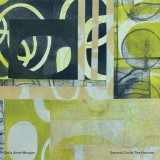
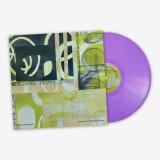
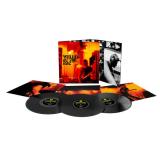
Hatchback is the alias of Samuel Milton Grawe. Sam creates music that sings of the Cosmos, full of deep resonant tones, glistening arpeggios, lush pads and harmonic motifs. ‘Phaser For The Ocean, Chorus For The Moon’ is his magnum opus, a sprawling masterwork that encompasses ambient, new age and environmental music to wondrous effect. Soaked in Californian consciousness, the album is a balm like no other for these troubled times.
When I first was getting into the creative side of music making in my teens, I was heavily influenced by concept albums like ‘Quadrophenia’ and ‘The Lamb Lies Down on Broadway’, as well as epic pieces that took up an entire side of a record: Pink Floyd’s ‘Echoes’, Yes’ ‘Close To The Edge’, Klaus Schulze’s ‘Nowhere Now Here’, Miles Davis' ‘Shhh/Peaceful’ and ‘He Loved Him Madly’. In the extreme, these ideas coalesced in double albums where each side of each record is occupied by a single title - Yes’ ‘Tales From Topographic Oceans’, and Tangerine Dream’s ‘Zeit’ being primary examples. When I returned to making music after moving back to Northern California in 2020, the first piece I recorded landed around the 20-minute mark, and the idea of creating three other long pieces to realize a full album felt like a natural - if indulgent - goal. From there, each new piece followed sequentially. Four songs. My fourth album. - Sam Grawe
‘Phaser For The Ocean Chorus For The Moon’ is a pure expression, informed by a lifetime of deep listening unbound by algorithms or AI.
These are songs for the sunrise and the sunset - and every colour in between.
[a] 01. And The Walls Became The World All Around [18:53]
[b] 02. Phaser For The Ocean, Chorus For The Moon [21:48]
[c] 03. Other Desert Cities [20:19]
[d] 04. Friendship Fountain [18.33]
quête:pieces of a dream
- 1: Quiet Girl
- 2: A Volta
- 3: The Eyes Of Love
- 4: Helen's Song
- 5: The Surest Things Can Change
- 6: Pieces Of Dreams
- 7: How Long?
- 8: Francisco
On "Enduring Sonance," saxophonist and flutist Steve Wilson reflects on a lifetime of lyrical, deeply felt songs drawn from jazz, pop, and film—brought to life by an all-star ensemble featuring Renee Rosnes, Joe Locke, Jay Anderson, and Kendrick Scott. *** Certain songs have a way of lingering in the imagination—resonating long after we’ve last heard them, sometimes for a lifetime. On his breathtaking new album "Enduring Sonance," veteran saxophonist and flutist Steve Wilson celebrates the music that has left the deepest imprint on his musical life. “Some of the tunes on this record have stayed with me for, in some cases, over 50 years from the time that I first heard them,” Wilson says. “I wanted to put some music out there that people can connect with, no matter what kind of music they like.” Originally conceived as a ballads project, Enduring Sonance evolved into something broader and more personal. Rather than focusing on tempo or style, Wilson gravitated toward a sense of lyricism—music whose emotional clarity and melodic resonance endure across genres, decades, and listening habits.
To realize this vision, Wilson assembled a deeply intuitive ensemble featuring pianist and arranger Renee Rosnes, vibraphonist Joe Locke, bassist Jay Anderson, and drummer Kendrick Scott, with special guest Kevin Newton (French horn, Imani Winds) appearing on two tracks. Each musician brings a rare sensitivity to melody, texture, and space, allowing the material to unfold with warmth, restraint, and quiet authority. The repertoire draws from a wide musical landscape, including works by close collaborators and modern jazz masters Billy Childs and George Cables, alongside enduring songs by Michel Legrand, Quincy Jones, Milton Nascimento, Gino Vannelli, Bill Lee, and Eliane Elias. These are not standards in the traditional sense, but deeply personal selections—songs that have accompanied Wilson through different chapters of his life. The album opens with Childs’ “Quiet Girl,” its subtle rhythmic motion enhanced by Newton’s luminous French horn, and travels through cinematic ballads, soulful grooves, and reflective lyricism. The title Enduring Sonance speaks both to the lasting resonance of these songs and to Wilson’s enduring musical relationships—most notably with Rosnes, whom he has known for nearly four decades and whose sensitive arrangements help unify the album’s diverse repertoire. “These songs are the soundtrack of my life,” Wilson says. “I’d love it if listeners came away from this album with the same kind of enduring sound and feeling.”
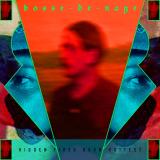
There's a tendency in metal to mistake aggression for honesty, volume for depth. To confuse the performance of darkness with its actual weight. Hidden Fires Burn Hottest, the new album from San Francisco-based post-black metal band Bosse-de-Nage, sidesteps this entirely. It’s the group’s most fully realized work yet, precisely because it refuses to be pinned down.
Bosse-de-Nage have been working with The Flenser for over fifteen years. They were one of the first bands the label ever partnered with and have the longest active relationship in the label's history. But unlike most bands who build momentum through constant touring and visibility, Bosse-de-Nage has largely existed apart from the music world's usual machinery. They've evolved on their own terms, in relative isolation, allowing the work to develop without outside pressure or influence. What began rooted in black metal anonymity has mutated into something that actively defies categorization. The aggression is still there, but it's no longer the point. Hidden Fires Burn Hottest finds the band treating emotions like physical objects, feelings with spatial properties. “No Such Place"" describes a space that can't exist but does anyway, somewhere between thought and location. ""Immortality Project"" examines infinite possibility not as promise but as problem, endless options collapsing under their own weight. These songs don't use metaphor to describe emotion. They make emotion into something you could theoretically touch.
Tracked by Jack Shirley (Deafheaven, Oathbreaker) at Atomic Garden East and mixed and mastered by Richard Chowenhill of Agriculture, Hidden Fires Burn Hottest was years in development, with some tracks beginning in 2018.
The long writing process offered time that most records don't get. Time to live with ideas, revise endlessly, to let structures settle. For the first time, lyricist Bryan Manning wrote everything in advance, creating a surplus to pull from rather than working under deadline pressure. The difference shows.
Coming off Further Still, an album built on constraint and economy, Bosse-de-Nage sought the opposite: sprawl, strangeness, fewer rules. Space for ideas to develop without rushing them. Dynamics that move through quiet as much as noise. Presence earned through atmosphere instead of volume. The record even includes ""Mementos,"" which might be considered the first love song the band has ever written.
Nothing here coheres into a theme. These are pieces pulled from low moments and private feelings made public through sound. The band has never been interested in positivity, in music that resolves cleanly or offers comfort. But bleakness doesn't mean humorlessness. There's something darkly funny running through much of it, even when it shouldn't be.
Hidden Fires Burn Hottest doesn't explain itself. It just insists: what you feel is as real as what you can see."
- 1: Gravity
- 2: What Was I Made For?
- 3: One Bright Star
- 4: That Pleasure
- 5: From The Floorboards Up
- 6: Woo Sé Mama
- 1: Pieces Of A Dream
- 2: Time Of The Season
- 3: That Dangerous Age
- 4: Start!
- 5: Shout To The Top
- 6: Going My Way
- 1: Rise Up Singing
- 2: No Tears To Cry
- 3: Flying Fish
- 4: Wake Up The Nation
- 5: Village
- 6: The Cranes Are Back
- 1: Fat Pop
- 2: Dragonfly
- 3: Around The Lake
- 4: Foot Of The Mountain
- 5: Have You Made Up Your Mind
- 6: The Attic
- 3: Sea Spray
- 4: Days
- 5: Say You Don’t Mind
- 1: I Woke Up
- 2: Burn Out
- 3: Long Time
- 4: These City Streets
- 5: Wild Wood
- 1: Rip The Pages Up
- 2: Cosmic Fringes
Paul Weller releases Weller At The BBC (Vol.2) on Friday 24th April.
This second BBC outing gathers live session and live in concert performances, including intimate stripped back acoustic versions and re-workings of tracks across The Jam, The Style Council and Paul’s extensive solo career.
From timeless classics such as Start!, Shout To The Top and Wild Wood, to deep cuts and covers, like The Zombies’ Time Of The Season and Billie Eilish’s What Was I Made For?
The album also features some beautifully orchestrated tracks with the London Metropolitan Orchestra, arranged and conducted by Hannah Peel, including Aspects, Boy About Town and Have You Ever Had It Blue.
- A1: Horse Steppin' - Sun Araw
- A2: Paris - M.o.o.n
- A3: Miami Disco - Perturbator
- B1: Knock Knock - Scattle
- B2: Hotline - Jasper Byrne
- B3: Crystals - M.o.o.n
- B4: Vengeance (The Return Of The Night Driving Avenger) - Perturbator
- B5: Musikk Per Automatikk - Elliott Berlin
- C1: Silver Lights - Coconuts
- C2: Hydrogen - M.o.o.n
- C3: Daisuke - El Huervo (Feat Shelby Cinca)
- C4: It's Safe Now - Scattle
- C5: A New Morning - Eirik Suhrke
- D1: Flatline - Scattle
- D2: Release - M.o.o.n
- D3: Turf - El Huervo
- D4: To The To - Scattle
- D5: Miami - Jasper Byrne
- E1: Deep Cover - Sun Araw
- E2: Inner Animal - Scattle
- E3: Crush - El Huervo
- E4: Electric Dreams - Perturbator
- F1: Rust (El Huervo Remix) - El Huervo
- F2: Subbygroove - M.o.o.n
- G1: Untitled 2 - The Green Kingdom
- G2: Detection - Prey Growl
- G3: Blizzard - Light Club
- G4: Voyager - Jasper Byrne
- G5: She Meditates - Light Club
- G6: Guided Meditation - Old Future Fox Gang
- H1: Dust - M.o.o.n
- H2: Disturbance - Endless
- H3: Technoir (Feat. Noir Deco) - Perturbator
- H4: Divide (Miami Edit) - Magna
- H5: Simma Hem - Riddarna
- I1: Hollywood Heights - Mitch Murder
- I2: Richard - Life Companions
- I3: Chamber Of Reflections - Sjellos
- I4: Decade Dance - Jasper Byrne
- I5: Interlude - Chromacle
- J1: New Wave Hookers - Vestron Vulture
- J2: Around - Modulogeek
- J3: In The Face Of Evil - Magic Sword
- J4: The Winding Theme #1 - Dag Unenge
- J5: Remorse - Scattle
- K1: Frantic Aerobics - Mitch Murder
- K2: Sexualizer (Feat. Flash Arnold) - Perturbator
- K3: Java - Old Future Fox Gang
- K4: Rust - El Huervo
- K5: We’re Sorry - Life Companions
- F3: Hotline (Analogue Mix) - Jasper Byrne
- K6: Loodline - Scattle
- L1: Delay - M.o.o.n
- L2: Roller Mobster -Carpenter Brut
- L3: Keep Calm - Endless
- L4: Run - Iamthekidyouknowwhatimean
- M1: Ghost - El Huervo
- M2: Hotline Miami Theme - Benny Smiles
- M3: Quixotic - M.o.o.n
- M4: The Way Home - Magic Sword
- M5: Richard Theme - Dubmoo
- N1: Narc - Mega Drive
- N2: The Rumble - Cinimod
- N3: Le Perv - Carpenter Brut
- N4: Ms Minnie - Auto Delta Time
- O1: She Swallowed Burning Coals - El Tigr3
- O2: Acid Spit - Mega Drive
- O3: Slum Lord - Mega Drive
- O4: Future Club - Perturbator
- P1: Fahkeet - Light Club
- P2: Abyss - Lippi Sound
- P3: Abyss Intro - Lippi Sound
- P4: Black Tar - Nounverber
- P5: Escape From Midwich Valley - Carpenter Brut
- P6: You Are The Blood - Castanets
- F4: Angel Dust – Perturbator
To celebrate the 10th anniversary of the iconically brutal-yet-stylish Hotline Miami, the head honchos at Devolver Digital, Dennaton Games and Laced Records picked up the phone and made the call to bring back two killer soundtracks to vinyl.
This Standard Edition of the Hotline Miami 1 & 2: The Complete Collection 8LP box set includes traditional black vinyl.
Every in-game track from Hotline Miami and Hotline Miami 2: Wrong Number is present and correct, including Castanets’ “You Are The Blood” (not previously available via the HM2 Steam soundtrack release.) 76 tracks remastered for vinyl will be pressed to heavyweight LPs that come in spined inner sleeves, contained in a rigid board lift-off lid box with spot UV highlight.
Also included in the box are two 12” art prints of the front and back cover pieces, and a 50 Blessings symbol felt slipmat and metallic sticker.
The box set features brand new eye-exploding artwork by long-time Dennaton collaborator Niklas Åkerblad — aka El Huervo aka Beard — alongside illustrator -IZMA-. El Huervo’s grisly covers depict contradictory accounts of a berserk face-off between Jacket and Biker, replete with entrails. -IZMA-’s disc sleeves explore scenes from the series’ lore, tapping into the violence, psychedelia and nihilism that pervade its characters and themes.
10 years on, neon-soaked indie hit Hotline Miami has become a cultural touchstone in a way that few video games ever achieve — and the electronic soundtracks for both series titles are held up as modern classics that have transcended gaming. At turns brutal and laid-back, pulsating and aimless, coked-up and checked-out, these two ultracool compilations were at the heart of the retro-’80s synthwave scene that swept the Internet over the 2010s.
- A2: Tap The Brakes Twice
- A3: Itt Tech
- B1: Fear Of God (Feat. Conway The Machine)
- B2: Come Back Around (Feat. Dreamcastmoe)
- B3: Cutthroats
- C1: Aspen
- C2: Triple Platinum
- C3: Bag It Up
- C4: Burn In Hell
- D1: It Factor (Feat. El-P)
- D2: Say Less
- D3: Conversational Pieces
LA-based producer Real Bad Man and Detroit rapper Boldy James return with their third collaborative album, Conversational Pieces, out now via Real Bad Man Records. The project features the singles “Come Back Around” featuring DC polymath dreamcastmoe, and “It Factor” featuring El-P. Their creative chemistry has never been clearer: this new album sees the duo pushing into fresh sonic territory through an expanded production palette that Real Bad Man continues to evolve and experiment with.
Recorded immediately after their 2022 album Killing Nothing and revisited in 2023 following Boldy’s serious car accident, Conversational Pieces is a deliberate, reflective body of work. It captures two distinct periods in the artists’ lives—documenting their growth as musicians, fathers, and long-time collaborators. The album’s artwork, along with the accompanying single art, draws inspiration from Rorschach inkblot tests—abstract visuals that invite interpretation and spark conversation, mirroring the album’s introspective nature.
Call it soulful dream pop, proto-trip hop or downtempo jazz - "Tender Rain" is the follow-up LP to the successful "This Is" album and continues to deliver Ghia's unmistakable sonic magic. On this release, the band shares a selection of previously unreleased vocal songs alongside instrumental pieces, all carried by their trademark chilled and almost meditative atmosphere. Most of the recordings date from the early 1990s, while early demo versions of "New Love" and "Teardrops in Your Eyes" may reach back as far as the late 1980s.
The album opens with the title track "Tender Rain," where smooth vocal jazz harmonies merge effortlessly with soulful pop elements. The track originally appeared only on CD in 1993 on the small Mikado label run by renowned German guitarist Ulli Bögershausen. The band recalls that the piece was first pre-recorded using MIDI equipment and a Tascam 16-track recorder before being completed in the studio with drums by legendary drummer Mickie Stickdorn (Carsten Bohn's Bandstand, Cyklus, Elephant, Lake), percussion by Corinna Ludzuweit, and the final touch-Lisa Ohm's remarkable vocals.
At the time, Mikado was also looking for instrumental material for radio and synchronization use. They selected the track "Tropfstein" for a sampler CD and requested more pieces. In response, "und recken ihre schlanken Glieder" (roughly translated as "and stretching their slender limbs") was composed especially for the project, as Frank Simon remembers. Both tracks appeared on the now rare Mikado sampler CD under the alias z. Zt., short for "zur Zeit" ("at present" or "these days").
Several further pieces in a similar vein were created during this period, including the previously unissued "Auf unserm grünen Sofa," "Reise bei Nacht," and "Was ich Dir noch sagen wollte." These tracks are beautifully crafted downtempo pieces featuring smooth, jazzy piano lines combined with touches of ambient and New Age aesthetics. "Auf unserm grünen Sofa" stands out in particular and will likely resonate with all downtempo enthusiasts. Lutz Boberg recalls that many of these recordings were captured during a single afternoon in the studio, fueled by spontaneous ideas and creative momentum.
On tracks such as "Teardrops in Your Eyes," "New Love," and the haunting Dark Spirits Mix of Ghia's song "What's Your Voodoo?", singer Lisa Ohm delivers soulful pop performances with her clear and captivating voice. "Change Your Sex," the third track previously featured on the Mikado sampler, leans more toward late-1980s funk and was aimed at radio and DJs at the time. Its subject matter was relatively daring for the period, telling the story of someone contemplating a change of sex "to get rid of the troubles."
Together with "This Is" and "Curacao Blue", "Tender Rain" forms another essential chapter in the rediscovery of the band's work. More than thirty years after their creation, these recordings still sound strikingly fresh, reflecting a unique style that in many ways anticipated the rise of trip-hop in the early to mid-1990s.
'We Fell In Turn' is the solo debut from Brooklyn-based trombonist, composer, and quartet leader Kalia Vandever. Vandever, who plays with Harry Styles and Japanese Breakfast, “sculpts her trombone’s golden tones into dazzling compositions” (Pitchfork), writing music that tends to “dip you into a feeling or a pattern or a breathing speed, and keep you there” (The New York Times). In 2022, Vandever released Regrowth, an album that “features the ecstatic, brilliant melodies that have become Vandever’s signature sound” (Bandcamp). This spring, Vandever brings contemplative reflection to We Fell in Turn, a brave and understated work from an ascending voice in American jazz.
Recorded over three days in upstate New York, 'We Fell In Turn' is improvisational — a stark palate of solo trombone, voice, effects, and little more. “My solo process has always been heavily rooted in improvisation,” says Vandever. “I wanted the process to feel similar to the way I perform. Lee Meadvin, who engineered and produced the album, had a heavy hand in the creative process as well. He would dictate prompts before I started improvising and those pieces ended up shaping a lot of the imagery that comes up throughout the record.”
Connecting the dots between Jeff Parker’s 'Forfolks', and early releases from Grouper, 'We Fell In Turn' is a study of space and patience, embracing vulnerability in its sparse adornment. At times, the album is reminiscent of Patrick Shiroishi’s 'Hidemi', both in its familial inspiration and solo instrument study, while sharing the ineffable feel of William Basinski’s 'The Disintegration Loops' — the traces of her trombone folding in on themselves in an organic loop. Emotionally generous throughout, Vandever acts as a torchbearer for jazz’s historical yearning for connection.
On 'We Fell in Turn' Vandever draws inspiration from childhood memories — events that shaped her approach to love, community, and partnership, and her maternal homeland of Hawaii. “We were exploring childhood memories, earliest experiences with disappointment and pain, and my Hawaiian roots,” says Vandever. “We Fell In Turn came after I titled the track "We Wept In Turn". Both come from the intangible feeling of waking up from vivid dreams, particularly the experience of falling right before waking up or waking up in tears.”
Through this exploration into her heritage, Vandever also found guidance. “In Hawaiian mythology, ‘aumākua are known as ancestral spiritual guides that manifest in different forms, whether physical or intangible,” says Vandever. “My ‘aumākua visits me in my dreams, usually with a reassuring hug or a reminder of my past. Memories and early experiences seem to escape me, but find their way back in dreams.” And now they’ve found their way into 'We Fell in Turn', Kalia Vandever’s stunning solo debut.
Schatterau’s third album, »Wir gingen durch leere Stunden« (We went through empty hours), sees the German duo blossoms with beauty and sophistication through a broad creative language.
This opus, presented in the form of vivid auditory tableaux vivants, explores the topography of memory as a landscape in constant motion – full of loops, feedbacks, and mirage-like distortions. Sounds climbing like vines over old walls, concealing details only to reveal new ones. Some pieces feel like fragments of a dream whose origin has vanished, others like displaced echoes of a day long gone.
Memories create paths that only become visible in retrospect – detours that somehow always lead back to oneself. Each track draws the listener into a different recollection, as if opening an old door. Inside, time behaves strangely: it jumps, stretches, and repeats.
»Wir gingen durch leere Stunden« ultimately presents Schatterau at their most experimental, complex and measured extremes, channelling ambiguous human emotional resonance ranging from melancholy to pure ecstasy.
- Being Left By Today Feat. Norman Blake
- Feather And A Bird Feat. Norman Blake
- Disinformation Feat. Norman Blake
- El, El, El Feat. Norman Blake
- Secret Of Dead Youth Feat. Norman Blake
- Queen Christina The Second Feat. Norman Blake
- Keep Rest In Thunder (My Dying Day) Feat. Norman Blake
- Is Anybody There? / What Am I Afraid Of? Feat. Norman Blake
- Somethin’ Funny Goin’ On Feat. Norman Blake
- Twenty & Twenty Two / Mealy Tell I Am Feat. Norman Blake
- Warehouse Feat. Norman Blake
- Right / Wrong Feat. Norman Blake
- Beautiful Dream Feat. Aby Vulliamy
- Shirley Brassy / Bushed Feat. Aby Vulliamy
- Leave Me Alone Feat. Aby Vulliamy
- Tie Your Hands Feat. Aby Vulliamy
- Who I’m Married To Feat. Aby Vulliamy
- First Time Feat. Aby Vulliamy
- California Girl Feat. Aby Vulliamy
- High Alone Feat. Aby Vulliamy
- Money Dream Feat. Aby Vulliamy
- Mackenzie’s Return Feat. Aby Vulliamy
- I Found It Feat. Aby Vulliamy
- Altogether Hollow World Feat. Aby Vulliamy
On Dreams ’24 / ’25, Scottish composer Bill Wells turns his nocturnal imagination into a sequence of delicate musical miniatures. The album brings together 24 short pieces, most of them under two minutes, unfolding in just under half an hour like a quietly drifting dream diary.
The album is split into two parts. On the Dreams 2024 side, Norman Blake lends his voice to Wells’ dream-born melodies. Blake, best known as a founding member of Teenage Fanclub, recorded the songs with Wells in a single afternoon at his home, capturing their fragile immediacy in direct and unadorned performances.
For Dreams 2025, Aby Vulliamy — one of Yorkshire’s best kept musical secrets — takes over vocal duties. In mid 2025, Wells sent her a batch of demos; Vulliamy recorded them at home and sent them back to him. The result is a second chapter that feels more introspective, intimate and gently surreal.
The songs themselves are born directly from dreams. Wells wakes from the dream, records it on his mobile and later shapes it into a brief, lyrical composition. One piece, Mackenzie’s Return, was inspired by a dream in which Elvis Costello marched through the streets of a suburban town complaining that he had run out of song ideas, a detail that perfectly captures the album’s blend of humour, strangeness and quiet melancholy.
Dreams ’24 / ’25 is not a collection of fully formed pop songs, but rather a series of fleeting emotional snapshots: soft voices, simple motifs, and melodies that appear and vanish before they can fully settle. It is an album that rewards close listening, inviting the listener into a private, half-lit space somewhere between memory and imagination.
The album is accompanied by a striking cover artwork by Annabel Wright.
- 1: Lille Skotland
- 2: Stevelen
- 3: Along The Low Road
- 4: Letters Melting
- 5: Summer Passing Letting Go
- 6: Tillfrisknandet
- 7: Nine Again
- 8: Along The Low Road (Reprise)
- 9: Quercian Motto
- 10: Here And Not Here
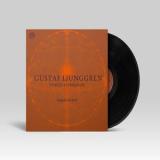
Swedish composer and multi-instrumentalist Gustaf Ljunggren invites listeners into the quiet, reflective world of Along the Low Road , an ambitious solo album that balances delicacy with depth. Following the success of Ljunggren s 2022 release Floreana , this new release offers a gentle, dream dream-like musical journey, shaped by two of the Nordic scene s most imaginative and intuitive musicians. Balancing sparse acoustic instrumentation with sprawling affected soundscapes, the album moves with patience and clarity. Ljunggren s compositions provide a foundation for subtle interplay, where every note and gesture is attentive to the music s unfolding. Featured guest Icelandic bassist Skúli Sverrisson s bass provides warmth and grounding, supporting Ljunggren s guitar, ukulele, and multi multi-instrumental textures. The result is a sound that is at once intimate and expansive, inviting reflection and connection. The tracks draw inspiration from nature, landscapes, and personal experience. Lille Skotland " evokes the rocky coast of Bornholm with gentle, melancholic flow, while Stevelen " captures the quiet power of cliffs and open skies. The title track, Along the Low Road," traces a contemplative path, its cyclical melodies and ambient layers offering perspective and calm. Letters Melting " twists a classical chord progression into a reflective polska, while Summer Passing Letting Go " balances warmth and transition. Brief, hymn hymn-like pieces such as Tillfrisknandet " provide moments of repose, and playful minimalism in Nine Again " captures the wonder of childhood at the cusp of youth. The album closes with Here And Not Here," a meditative reflection on perception and presence, leaving the listener in a quiet, suspended space. Ljunggren and Sverrisson have long been celebrated for their generosity, sensitivity, and courage as collaborators. Their work together on Along the Low Road continues this partnership, offering music that listens as much as it plays. Drawing from jazz, minimalism, Nordic folk, and early music, the duo s sound combines melodic clarity with a sense of freedom, revealing subtle emotional depths in each composition. In concert, Ljunggren and Sverrisson reimagine these pieces in the moment, allowing the music to unfold with a sense of shared discovery. Whether recorded or live, the album is a testament to the duo s enduring musical dialogue and the quiet, immersive beauty of their Nordic sensibility.
Sometimes the title of an album tells you everything you need to know. Laurence Pike’s Possible Utopias for Jazz Quintet is like that: The music within represents a search for freedom, potentiality—liberatory strategies that transcend the ego and the solitary, atomized figure.
But in this case, the album title is also a red herring, because there is no jazz quintet here—just Pike, his drums, and his machines, not so much an ersatz ensemble as a purely notional one, a thought experiment equipped with drumsticks, circuitry, and the desire to go beyond hardwired limits.
And the results, strictly speaking, aren’t really jazz, though they incorporate the vocabulary of jazz, along with that of ambient, electronica, and post-rock. They are some other thing, cognizant of genre but never beholden to it. Again, we’re talking about a search for freedom here.
The Sydney-based musician has a long history of coloring outside the lines, not just in his solo recordings—including four albums for the Leaf label between 2018 and 2024—but also in the trio Pivot (later PVT); Szun Waves (alongside saxophonist Jack Wyllie and Border Community’s Luke Abbott); Triosk, which recorded an album with Jan Jelinek in 2003; and even post-punk titans Liars, whom he joined in late 2018.
Of his first album for Balmat, Pike says, “My loose concept was: What does music sound like when the expectations of late capitalism are removed from it? How might a jazz musician from an idealised culture of the future, or even another world, utilise musical language when the conventions of style and marketing are no longer a factor in music making?”
That inquiry, he says, connects to his “guiding principle: that the purpose of music is to access something bigger than the individual, and reveal a sense of possibility and freedom in the world to the listener. To create an understanding that the future can be something other than what we imagined or expect, even unconsciously.”
Heady ideas, but plug into his stream-of-metaconsciousness flow and you may start to intuit what motivates him. There is a deeply lyrical expression in these pieces—in the ruminative piano of opener “Guardians of Memory,” for example—but also a sense of exploded perspective, of ideas approached from more angles than any one mind could dream up. Of a collectivized consciousness, of mycelial networks branching across tone and rhythm and timbre, of ideas articulated in distributed fashion, nodal points dancing across drum heads.
Pike’s imaginary quintet is hardly without precedent; it’s a continuation of concepts floated across Jan Jelinek’s Loop-Finding-Jazz-Records, Burnt Friedman’s many guises, and much of the recombinant improv of the International Anthem roster, not to mention the far corners of ECM’s catalog in the late 1970s and 1980s, which Pike says have been integral to his development since he was a teenager. Possible Utopias for Jazz Quintet is a point in a continuum, a voice in a conversation, a question with no obvious answer: How can the search for otherness in music manifest something true about ourselves?
- A1: Missing Project - Poisson D'avril (Da' Future Given A Deep Soul Mix) 08:19
- B1: Virgo - First Epilogue (Tek Of 606 Remix) 05:47
- B2: Tensor - Balloon (I.d. Remix) 05:36
- C1: Penance - Cure Of Soul (Fossil Mix) 08:00
- C2: Virgo - Proxima Scope (Zanzibar Mix) 06:12
- D1: Led-M - 713Aw (Dendrobium Remix) 06:19
- D2: Missing Project - Poisson D'avril (Galaxy Dub) 07:41
WRWTFWW Records is thrilled to announce their 5th archival release taken from cult Tokyo label FORM@ RECORDS' catalogue, this time with the first-ever vinyl edition of Re-Form Ver-1.0. The remarkable, yet not widely known, 1999 remix compilation is now available as a limited edition 45rpm cut double LP housed in a heavyweight sleeve, as well as in digital format.
Originally only available on CD in extremely limited quantities, Re-Form Ver-1.0 resurfaces as a fascinating document of FORM@ RECORDS' late-1990s creative peak. Re-imagining key pieces from the label's catalogue, the remix collection offers a rare glimpse into Tokyo's electronic underground, where techno, house, ambient, and IDM breathe freely through FORM@'s soulful and exploratory vision.
Highlights include two remixes of Missing Project's adored gem "Poisson D'Avril" (including its well known ethereal ambient Galaxy Dub which appeared on Music From Memory's Virtual Dreams II) as well as the otherworldly Fossil (aka the legend Virgo) Mix of Penance's "Cure & Soul". Throughout, the compilation balances dancefloor sensibility with introspective listening, embodying the warm human approach to machine music FORM@ RECORDS excels in.
Another essential time capsule from a crucial era of underground music, Re-Form Ver-1.0 echoes the spirit of Warp's Artificial Intelligence era, alongside the forward-thinking energy of Ken Ishii, Carl Craig, The Black Dog, and Ian O'Brien, while keeping its feet and individuality firmly rooted in local context - the magic recipe for creating a universal, timeless language of electronic expression.
Re-Form Ver-1.0 follows the vinyl edition of Virgo's Landform Code (1998) and Remnants (1999), as well as the FORM@ compilations Art Form I (1997) and Art Form 2 (1998), further expanding WRWTFWW's archival series dedicated to uncovering hidden gems of late '90s Japanese electronic music.
The breakout underground star of the past year, the deservedly hyped Thought Leadership returns with another X ideas: the deck this time chooses the suit of Cups. This new collection is closer to the Post-Punk tonality of Pentacles, than the breezy Balearic Jazz of Swords. Gone are the brushed drum samples and airy synths and in their place are BIG guitars, 808 thumps and a decidedly more prominent use of bass as a melodic device.
As the suit of Cups reflects the emotional heart of the Tarot, presented within are a further X pieces, this time displaying the full range and fervour of Thought Leadership.
You know the drill by now. Originally out on cassette only, we present the first ever vinyl issue. It's a hideously limited pressing of 300 for the world, so don't sleep on this.
Side A explores the emotional levels of consciousness; angst, joy, love, sorrow, relief, regret – they are all represented across the first seven tracks, and often within the same piece. XXI kicks us off with a huge tumbling D minor passage, layers and layers of guitar front and centre, whilst the drums pound away in the distance. Release is provided with a gorgeous G Dorian section, where we hear the bass take flight with a high melodic line.
We’re still in familiar Durutti Column meets Dif Juz territory here, but things switch up with XXII. This piece showcases a darker, more angular palette of guitars; think Alan Rankine (The Associates), or Deb Demure (Drab Majesty) in the unexpected harmonic shifts, knotty arpeggiated patterns and heavy, goth-adjacent modulation. A real love letter to 45+ years of darkly inclined guitar heritage.
XXIII enters the fray with tight, thumping 808s and Marr-esque guitar figures; and again, the bass providing heavy melodic counterpoint to the guitars. Enter chiming, lyrical lead phrasing, reminiscent of the eternal opening to "Everybody Wants To Rule The World". Another accidental perfect pop moment from the Thought Leader. Whilst on the topic of Tears For Fears, XXIV comes swinging out of the gate with some serious Sophisti-chug; we’re reminded of "Shout" in the A section, before being beautifully juxtaposed in the B section with more Vini-eqsue patterns, reminiscent of his timeless classic, Another Setting.
XXV gives us welcome pause to take stock midway through the A side. No drums this time, but instead a heartbreaking conversation between two guitars; think Kevin McCormick and David Horridge’s masterful Light Patterns, or perhaps even the early solo-Bill Connors mid-70s cuts for ECM. The moment of quiet reflection passes, and is quickly shattered by the thudding march of XXVI – this piece comes across like The Associates playing "Wicked Game"; heavy, moody, and utterly compelling. XXVII ends our journey across Side A with more Marr-inspired playing; one for the heads and already featured on mixes, this one is real testament to the vision of Thought Leadership.
Side B again takes us on a trip through three long-form semi-improvised pieces. XXVIII is like those classic Jonny Nash, early Melody As Truth releases, slowly unfurling, additional details introduced deliberately piece by piece, this idea builds across 7+ minutes culminating in some utterly joyous ebow fireworks at the end – well Balearic.
XXIX again, like XXV before it, dispatches the drums with a focus purely on melody and mood. The piece feels like a lost Save Room Theme from the Resident Evil series, pure golden age Capcom Sound Team vibes. Unadulterated aural nostalgia for hours spent with a PS1 in haze of hash.
XXX completes this majestic voyage with another Modal exercise; this time the Thought Leader has opted for the Lydian Mode. Beautifully dreamy, undeniably Soundtrack-y, and arguably the most concise distillation so far of everything this project stands for; drum machines, guitars, pedals, one-take improvised solos – XXX has the lot, and is surely destined for greatness.
So, another X epic statements for guitar, homespun with the humblest of means, for all the dreamers out there. The first ever vinyl release of IV Of Cups has been carefully remastered by Be With's engineer Simon Francis to ensure it sounds better than ever after its initial tape release. Cicely Balston's expert skills have made sure nothing is lost in the cut at Abbey Road Studios whilst the records have been pressed to the highest possible standard at Record Industry, in Holland. The original tape cover artwork, so crucial to Thought Leadership's striking visual aesthetic, has been rejigged for vinyl issue here at Be With.
The last 2 LPs flew. You have been warned.
Matryoshka has already built a reputation as a producer for DJ Loser's Magdalena's Apathy imprint as well as work for the Nostalgians, an under-the-radar ambient rap collective featuring Yungwebster, Mdb, tnotsobad, Nopaprr and ogpra1. Her musical roots – dubstep, trance and hard dance – tell some of the story here, but she transmogrifies those influences into haunted, Basinski-esque memories like the gaseous traces and decelerated remnants of the club.
On album opener »Lifelover«, Burial's hazed interludes spring to mind, or perhaps the 4am cityscapes of Space Afrika's now mythical »Somewhere Decent to Live«. Background ambiance simmers below Lawson's pensive FM pads, but once she establishes the mood, things take an unexpected turn with a pitch-bent bassline that might have been lifted straight from a 6LACK loosie, and a rhythmic pulse that traces the thin red line of Shinichi Atobe. If it's dub techno, it's a strand that hasn't been codified quite yet.
»Surface Tension« uses deep, Maybach Music-coded bass womps to twist through her skittering slow rhythms and sadcore pads. But it’s Matryoshka’s harmonic instinct that stands out; if you heard the airy »otr« or »fantasize« from Yungwebster's '»II' you'll know exactly what we mean«, and she takes it even further here, weaving cinematic, languid harmonies that bridge the gap between Steve Roach and Future.
Check »Where the Dancers are Spinning« with its levitational, almost orchestral sweeps that Lawson counterbalances with thudding subs, or the brief title track, an Akira Yamaoka-style save room loop that dissipates into a dreamy, dissociated fog, for further proof. Then there's the second side's centrepiece »Parted by the Sea«, where a ratcheting Chain Reaction-style rhythm builds to a tense crescendo only to get splintered unrecognisably in the second half, its broken pieces pillowed by Lawson's billowing time-stretched chords.
- 1: When Hamlet Left Town 0:32
- 2: Radio Four 05:45
- 3 34: E 03:34
- 4: Solid Ground 0:25
- 5: Arc 04:37
- 6: Aelita 03:12
- 7: All Tomorrows Past Part Ii 04:26
- 8: Interlude 03:26
- 9: Henry & The Ghosts 03:22
- 1: Space Minor 03:22
- 2: Loop D 03:36
- 3: Tomorrows Past Part I 0:11
- 4: Modest Farewell 03:5
- 5: Nordlead 03:3
- 6: Momo 03:12
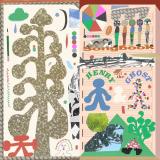
On his new album, Micha Acher rearranged compositions for bands such as Tied & Tickled Trio and Ms. John Soda from previous years.
Why are we interested in ghosts? What fascinates us about the eerie? According to cultural theorist Mark Fisher, the allure that the eerie possesses is not captured by the idea that we „enjoy what scares us“. It has, rather, to do with a fascination for the outside. For that which lies beyond standard perception, cognition or experience, as he writes in his book „The Weird and the Eerie“.
In fact, also none of the 15 pieces from Henry and the Ghost is really scary. On the contrary, they all feel strangely familiar. Like revenants or doppelgängers, which in fact they are. They have all been released before. But in a different form. In different line-ups. With different band projects such as Tied & Tickled Trio, The Notwist or the Alien Ensemble.
With the „Songbook“, Micha Acher's aim was, as he says, to find out how the familiar pieces sound in a chamber music instrumentation. Therefore he met with Theresa Loibl (bass clarinet, piano), Timm Kornelius (bassoon), Markus Rom (guitar, banjo, electronics) and Simon Popp (drums, percussion) in his living room for a musical séance in the summer of 2022. The séance lasted two days. Afterwards, Markus Rom (Oh No Noh), added some haunting electronical ideas.
The mood of most of the pieces is melancholic. There are surprising twists and siren-like melodies. Just as ghost stories should be. However, most of the songs sound very light-footed. With their feet in pop, folk, jazz and classical music. Pieces such as „Johanna“ with its wheezing harmonium and spooky piano, or the dreamy „Modest Farewell“ on the other hand have a cinematic flair. Immediately faces and scenes arise in the mind. But at the beginning, there is „Hamlet“. It starts with ghostly electronics and merges into a calm, almost classical guitar piece. Could it be that the ghost of Hamlet's father is hiding between the strings?
„34E“ begins with a banjo. Then the deep humming of Micha Achers sousaphone and the other brass instruments kick in. In the slow, solemn „Aelita“, the sousaphone starts a dialogue with a children's piano. With the banjo and the other wind instruments acting as mediators. The title of „All Tomorrow's Past“ brings Velvet Undergrounds „All Tomorrow's Parties“ to mind. Another ghost from the past. What connects the two pieces is free-floating percussion, which accompanies the sumptuous melodies.
„Arc“ takes us on an exhilarating voyage at sea, with the sousaphone providing powerful propulsion. Towards the end, things get quite turbulent. With the clarinet stirring up the water, before the sea calms down again. „Henry and the Ghost“ is characterised by a ghostly mood change between major and minor. In „Radio Four“ the banjo with its stoic chords keeps the lively brass section in check. „Solid Ground“ is imbued with melancholy. „Space Minor“ takes us into outer space, with the power of sousaphone and percussion.
„Tomorrows“ is filled with cautious optimism. And the concluding „Nordlead“ turns out to be a revenant of the instrumental „N.L.“ from The Notwist's legendary album „Shrink“ from 1998. In the new version, the piece sounds like a distant echo. One that also brings to mind how Micha Acher's music has evolved. Which new worlds he explored and opened up since the nineties. And yet Acher's signature is recognisable in every single note of this fascinating „Songbook“.
- A1: From Loch Raven To Fells Point
- A2: Calliope Wailer
- A3: Tightroping
- B1: Critical Masses
- B2: Reservoir Drop > The Summer Song
Jeffrey Alexander and the Heavy Lidders return with their best album yet, and a UK tour this August. Press by Silver PR
‘’On the alternate timeline where the Meat Puppets inherited the bulk of the Grateful Dead’s tourheads when Jerry Garcia died in 1995, none of this would be necessary, because Jeffrey Alexander and the Heavy Lidders are a household name for evolving their own musical space that overlays dusty folk, cosmic jazz, deep psych, free improv, and even (gasp!) indie rock, building an audience that ranges from open-eared curiosity seekers to deep committed music weirdos that’s also yielded the Heavy Lidders, an infamous sub-cult of concert tapers that you’re already sick of hearing about. A lot of other things are better over on that timeline, too.
But in this consensus reality (and probably the other one, too), Liquid Donnon catches the Lidders at their heaviest, “heavy” in the Lidderverse being far from a monolithic musical idea. There’s heavy like the album-opening “From Loch Raven to Fells Point,” one of several tracks with elegant and gnarled conversational jams featuring the core Lidders lineup of Alexander alongside guitarist Drew Gardner and bassist Jesse Sheppard (both of Elkhorn) and drummer Scott Verrastro. But there’s heavy, too, like “Calliope Walker” and “Tightroping,” featuring Gardner shifted to dream-space vibraphone, the former with saxophonist Tacuma Bradley, the latter with Christina Carter of Texas noise-psych legends Charalambides on veil-crossing wordless vocals, her first collaboration with Alexander in some 20 years.
But then there’s also heavy like the cover photo of Alexander’s late friend and album namesake Donnon, taken at a Dead show at Rich Stadium in Buffalo in 1989, a spirit threading through the songs and weaving unexpectedly into Alexander’s life decades later, emerging especially when Alexander passed through a near-death experience of his own. But, taken together, the different heavies of Liquid Donnon add up into a state of musical grace, where all the Heavy Lidders from all the universes come together as one. Just, like, imagine.
Convened in 2019 on Alexander’s relocation back to his native east coast, the Heavy Lidders are the latest hard-touring expression for the guitarist’s music, joining a vast and tangled discography (and tape list) that includes the beloved long-running west coast Dire Wolves Just Exactly Perfect Sisters Band and, before them, the Iditarod and Black Forest/Black Sea, as well as a bushel of solo play-all-the-instruments projects, a stint with Jackie-O Motherfucker, sessions with Kemialliset Ystävät and Avarus and others, and you’ll have to keep digging for the rest.
And while it’s not hard to find tapers at Lidders gigs (and they encourage you to be one), or to track themes and songs over Alexander’s many live releases, Liquid Donnon makes a new primary text, the original versions of six new pieces for the repertoire. The album closes with a devastating pairing of “Reservoir Drop” into “The Summer Song,” floating into a duo between Alexander’s guitar and Carter’s voice. Catch a half-dozen Lidders shows this summer, and you might not ever catch them playing it like that again, but you just might open the doorway back to that better place." - Jesse Jarnow (writer, WFMU DJ, producer and host of The Good Ol’ Grateful Deadcast)
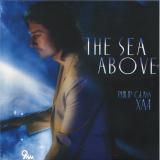
Dutch composer and pianist Xavier Boot, also known as XA4, joins Philip Glass for the second release on the New York-based record label Orange Mountain Music, owned by Philip Glass.
“Xavier is really a wonderful pianist, and I am thrilled by how he now tackles my compositions, with that elegant electronica touch.” – Philip Glass
The Sea Above features not only Glass compositions but also several original pieces by Xavier: “I recorded this album inspired by all the musical influences I’ve experienced in my life, including classical, electronic (club) music, ambient, minimal, and even Indonesian music. The title track of the album is inspired by Philip Glass’s composition Mad Rush. He told me that he wrote this piece for an event with the Dalai Lama, where it was unclear when the Dalai Lama would arrive. That’s why Mad Rush was composed to last either five minutes or an hour. I tried to convey this idea of timelessness in my music, embodying this endless portal of time and space, which was also scientifically described by Albert Einstein. Another track on the album, Train I, is a reworking from Philip Glass’s opera Einstein on the Beach. You can experience the music on this album as a kind of journey, a trip where you are energetically drawn in at the beginning and later enter more of a fantasy world where dreams and unconscious elements of your mind can emerge.”
Credits:
Tracks 1 & 3 are original compositions by Philip Glass remixed by XA4
Tracks 2 & 9 remixed by XA4 and Jaro.
Tracks 4, 5, 6, 8,10 are original compositions by XA4
Track 7 is composed by XA4 and Tenzin Choegyal.
Vocals track 1: Julia Rosenhart.
Remix, production and playing: XA4.
Piano arrangement track 3: Michael Riesman and XA4.
Remix, production track 2 & 9: XA4 and Jaro.
Production assistance track 3: Jaro.
Mixing: Studio Karakterbak.
Mastering: Laura de Rover.
Cover foto: Angelina Nikolayeva.
Graphic design: Yesser Khalefa
Marking his vinyl debut on Lowpass, Berlin-based producer APRS steps forward after a run of striking releases on labels such as Soma, ARTS and Sungate.
“Drift” explores human emotions through drums, melodies and textures with five pieces that refuse to settle into one shape. Each track bends the EP in a new direction without breaking its thread, holding onto a sense of vastness, detail and intimacy. Andy Martin closes the record with a remix that widens the palette even further, pushing the material into heavier terrain while keeping its spirit intact.
LWP001 is less a declaration than a first gesture. Intuition over uniformity; a label shaped by instinct, variation and space; a place for artists to wander and for sound to evolve freely.
The union of Antwerp synthesist David Edren and Tokyo minimalist Hiroki Takahashi is a fit so natural as to feel preordained. Both traffic in subtle shades of contemplative electronics, marked by patience, space, and poetic restraint. And both have rich histories of curation and collaboration – Edren in the duo Spirit & Form alongside Bent Von Bent, and Takahashi as proprietor of the Kankyō record shop, as well as one fourth of cosmic ambient quartet UNKNOWN ME. Mutual fans of one another’s work, they began sharing stems in the latter half of 2020, which slowly blossomed into a collection of multi-hued compositions inspired by notions of connectivity and impermanence, translated for east and west: Flow | 流れ.
Opener “Dusk Decorum | 黄昏 礼節” maps the mood of what’s to come, elegantly pirouetting and percolating through an expanding vista of looming stars and half-light horizons. Takahashi describes Edren’s arrangements as evoking “a strange feel, something we haven't heard much of before.” The sensation is one of “in-betweenness,” a restless current whispering beneath the beauty, like seasons seen in time-lapse footage: flickering but infinite, transience turned permanent. Takahashi’s signature sculpture garden tones plot spiral patterns over which Edren cascades dazzling pointillist synthesizer coloration. The pieces veer between delicate and dilated, micro and macro, their aperture forever softly in flux.
From the oscillating orchestral lullaby of “Stalactime | 鍾乳石時計” to the sweeping, sparkling dream sequence closer, “Shift Register | シフトレジスタ,” the album achieves the elusive goal of being more than the sum of its parts. This is music of rare air, elevated and amorphous, shimmering just out of reach. Though Edren and Takahashi have yet to cohabitate the same room in person (a fact that should be rectified soon by an astute festival booker), their palettes and poise are perfectly paired, twin fragilities woven into seven radiant and regenerative vibrational states. The cover design of a beatific, beaded leaf rippling on the surface of a hidden pond aptly captures the record’s muted majesty. Takahashi’s quiet pride is justified: “We are very happy with this time-consuming and carefully crafted work.”
This third album by Ryo Fukui arrived a full 17 years after Mellow Dream, marking his first and only solo piano recording. Alongside signature pieces like “Scenery” and “Mellow Dream”, the album includes “Voyage” and “Nord”, both written during a trip toward the northern regions, as well as “Nobody’s”, a piece imbued with Fukui’s deep respect for his mentor Barry Harris. The selection is nothing short of a delight for fans.
Here, the depth and weight Fukui cultivated as a bebop pianist blend seamlessly with the profound “Hokkaido sensibility” that had always resided within him. It is a masterpiece that truly deserves to be passed down through time.
On his debut album “Scattered Memories”, the composer, musician and true master on the Iranian spike fiddle kamancheh SABA ALIZADEH blends his instrumental virtuosity with spherical electronics, samples of Persian music instruments and field recordings from his hometown Tehran.
Born in Tehran in 1983 as son of the world renowned Tar and Setar virtuoso HOSSEIN ALIZADEH, SABA ALIZADEH studied the Iranian spike fiddle with SAEED FARAJPOURY and KEYHAN KALHOR plus photography and later experimental sound art with MARK TRAYLE at the California Institute of the Arts, Los Angeles. His musical activities that lead him all around the globe for performances (a.o. at Carnegie Hall) branch into 2 different areas: on the one side ALIZADEH is a highly reputated virtuoso on his traditional instrument, on the other he likes to approach music from a more experimental / technological aspect in his electronic / electro-acoustic pieces. This not being enough, he founded Noise Works in 2014, a platform and label for organizing experimental concerts and for the transfer of knowledge of music technologies among young Iranian musicians which makes him a central figure at the forefront of the current, very vivid Persian music scene that gained a lot of attention through artists like SIAVASH AMINI, PORYA HATAMI and of course SOTE who included a track by ALIZADEH on the compilation “Girih: Iranian Sound Artists” that he had curated.
In 2018, ALIZADEH self-released his debut “Scattered Memories” on CD in Iran which now, in a reworked version, sees its deserved world-wide release as LP and DL. Over the course of 10 tracks ALIZADEH melts his 2 musical worlds into 1: tradition meets modernism, eastern sounds meet western production, folklore meets contemporary electronics. An album that will appeal to an open-minded “world music” audience as well as fans of current streams like ambient or drone in its most subtle forms.
The 12-track record is the first album on SHDW's influential label and explores the past, present, and future of techno.
Planet X label head and 20-year scene veteran Exos, hailing from Iceland, draws on his native country's influences in his work, which explores the interplay between light and dark, warmth and cold. His high-octane sounds over the last 20 years have appeared on vital imprints like Tresor, X/OZ, and, of course, Mutual Rytm, with his releases for
the label having been extremely well received, garnering support from the scene's key DJs. Whether dubby or hard, his techno is always authentic and channels the purity of the 90s style. This new album follows Exos's inaugural X-Release, the Infrared 10", the Icebreaker 12" from last year, and his track on the latest Federation of Rytm IV compilation. It's a real journey through all facets of his sound, including a trip back to his dub techno roots, ambient
explorations, and emotional vocal pieces with lifelong memories fused into sounds that reflect the artist's decades spent in Iceland.
'Sweet Dreams' opens with an atmospheric intro in the form of a 28-year-old collaboration with his father. This full-bodied analogue ambient piece is rich with the mysterious tones of the Nord Modular and was recorded during their shared studio days at D17 in Reykjavik. The title track is a hypnotic, linear groove with icy synth modulations and glistening melodies. 'Hinn Vioforli' then brings dub warmth while 'State of Mind' recalls the spirit of the legendary Reykjavik club 'Thomsen', a cornerstone of Iceland's late 90s underground scene. 'Glaour Og Reifur' and
'Fogur Er Hlioin'pay homage to the echoes of ancient Viking heritage, 'North of January' conveys the cold of Exos's homeland, and 'Hvarvetna' brings textured percussion and darker undertones before '101 After Dark' slows to a bass-heavy broken beat exploration of texture and post-dubstep pressure.
After the heady and atmospheric sound of 'The Dolphin Oracle', another key collaboration comes with 'Freefall', an emotional breakbeat piece featuring vocalist Amelia Rodriguez,' who also lends her voice to 'Shock', a magnificent track that channels Exos's modern techno energy. The album closes with a haunting paradox, 'Paradise Lost,' questioning whether our sweet dreams are truly moments of bliss or simply reflections of what we've already left behind. The three bonus digital cuts offer sleek minimalism, punchy deep techno, and suspenseful ambient.
2026 Repress
Atmospheric Vol 2 is the second single to be taken from Deepchord's latest full length but sees him stray from the album tracks, bringing 3 exclusive pieces to the vinyl, keeping in the same musical vein as Ultraviolet Music.
Exploring the North & Pinewood Lodge see Rod Modell on more Deep Techno excursions as beautifully sweeping pads and glistening synths drift by ever evolving, perfectly processed atmospheres. Deepchord's unique use of subtle field recordings throughout give both of these tracks a real heady/druggy quality and his seamless loops allow you to drift of into his fully developed dream world. Shot Point delves into straight up ambient territory with Deepchord striking an unearthly balance between the natural and synthetic world. Yet more flawlessly collected field recordings wash away on an ocean of reverb soaked pads, drowning the listener within its mesmerising tides.
- A1: After All This Time, Beirut
- A2: To Die On Any Hill (If It_S Easy Enough To Climb)
- A3: Wooden Giants And Mechanical Birds
- A4: In Dandelion Fields
- A5: Of The Always Puzzle Of Living And Doing
- A6: For Now We Leave The Sky To The Tyrants, And Dig
- B1: Everyone I Love Is Sleeping And I Love Them So So Much
- B2: The Familiar Scenography Of Electrons Waltzing Across The Screen In Your Peripheral Vision, You Avoid Its Gaze Like A Tired Husband You Have Outgrown
- B3: There Are Glorious Labyrinths In The Ground For Those With The Claws To Find Them
- B4: You Saw What You Were Looking At And You Touched What You Were Touching
- B5: Sounds From Home
'Yara Asmar’s new album presents 11 pieces recorded over the past year between the small town of Alfred in upstate New York and Beirut. These sometimes fragile and tentative sound sketches reflect the times as Yara steps out, as if onto ice, into a new life on a new continent during a time of tragedy, turmoil and upheaval. She works with unfamiliar instruments, new materials and new sounds to build on her intimate style; homemade mechanical music boxes and a personal archive of family recordings form the backbone of its delicate textures. Asmar explores the peculiar resonance of the metallophone and her collection of deconstructed toy pianos, and guides her music into ever more surreal territories. The result is a work that is dreamlike, fragmentary and strangely timeless.'
Following a string of acclaimed collaborations, including Agua Dulce with percussionist Laura Robles and Mapambazuko alongside Congolese guitarist Titi Bakorta, Peruvian artist Alejandra Cárdenas (aka Ale Hop) returns with her most personal work to date yet, A Body Like a Home. Marking her first album under her birth name, the project is a sonic memoir exploring the tangled realms of trauma, recovery, and love through autobiographical soundscapes.
A Body Like a Home is the artist at her most exposed. Comprising 13 songs and 15 poems, the album sees her set aside collaborative fusions for solo catharsis, channeling years of turbulence - intergenerational scars left by colonialism, racism, domestic violence, and alcoholism - into a work that oscillates between brutality and tenderness. Cárdenas states: “I grew up under Alberto Fujimori’s dictatorship, when a veil of hopelessness seemed to settle over everything. This is the backdrop of the album. The songs and poems trace the inevitable loop between private wounds - addiction, domestic violence, fractured intimacy - and Peru’s national scars, carved by colonialism. It’s not a straight story or a resolution. Writing and composing became a ritual of digging for meaning, into what’s buried, disguised, or renamed, until the body itself became a living archive.
” At the heart of the album is Cárdenas’s own voice - part witness, part confessor - reciting over layers of electric guitars, electronic textures, the haunting violin of Mexican musician Gibrana Cervantes, and a collage of field recordings, from rainfall, muffled whispers, broken glass, to archival protest footage from Peru. The result is a work that resonates like a diary written in sound.
The first single, "Motherland", is a searing testimony where Cárdenas voice cracks under the weight of history and personal loss. Amid a storm of distorted guitars, she traces the cyclical legacies of colonialism, from state massacres branding Indigenous bodies as “terrorists” to the spiral of addiction as an unavoidable future. The lyrics draw parallels between political and domestic violence: a mother’s drunken knife pressed to her chest, and a motherland where racism is currency. She utters: “sacrifice demands a body.” Yet, amid the wreckage, a willful grip on love and faith persists. Ultimately, A Body Like a Home is a document of transformation. Tracks like "Evangelina" and the title piece "A Body Like a Home" hold space for resilience, spirituality, and love, while "Early Road" and "Going South" thread subtle nods to Peruvian folklore, opening up bright vignettes into a sense of belonging.
The poetry chapbook accompanying A Body Like a Home (five of its pieces are also recited on the album) extends the work, building a parallel architecture. Oscillating between the documentary and the mythic, the intimate and the forensic, the profane and the oniric, these poems practice a theology of the ordinary, where everyday objects - cameras, knives, moth-eaten cotton - are charged withspiritual and historical weight. Here, the body is land, house, battlefield, collective pain, geological territory; and trauma is, in contrast, archival, cellular, ritualistic, inherited. Read alongside the music, the stories refract across two mediums: songs give them breath and poems give them bone.
- A1: Prologue (Feat Malik Ameer Crumpler)
- A2: Nighthawks
- A3: Play Dead (Feat Malik Ameer Crumpler &Amp; Mark Millington)
- A4: Queen Of Cats
- A5: The City Is Beautiful (Feat Malik Ameer Crumpler &Amp; Mark Millington)
- A6: Nightbus 3Am
- A7: Organ / Lucid (Feat Malik Ameer Crumpler)
- A8: Apres Minuit (Feat Mark Millington)
- A9: West (Feat Malik Ameer Crumpler)
- A10: Chapter 1 - A Boy
- B1: Ghouls
- B2: North
- B3: Chapter 2 - A Party
- B4: Chapter 3 - A Girl
- B5: A Ghost&Apos;S Lament (Feat Malik Ameer Crumpler)
- B6: Chapter 4 - A Monster
- B7: Moonlight
- B8: Chapter 5 - A Home
- B9: Orca / Burial
First Word Records are very proud to bring you 'Ghouls', the 6th studio album from Bastien Keb.
Through the reflective and introspective multi-mood journey of its 19-tracks, this album spans psychedelic-chamber-funk, warped anti-ballads, cinematic instrumentals, Ethio-jazz & ethereal ambience.
Part soundtrack, part beat-tape, part memoir, this is a dreamlike soundscape sewn together from half-forgotten memories & late night breakdowns.
Entirely sample-free, this album is full to the brim with musical experimentation, with Keb's compulsion to make all the individual pieces of music independently; combining strings, harps, saxophones, theremins, clarinets, flutes and trumpets.
He signals to the fuzzy, nostalgic nebulous of mid '90s skate videos, as well as harking back to the scores & moods of movies like The French Connection, Taxi Driver, The Warriors and La Haine. There are whispers of sounds in the air from jazz clubs, street preachers & Turkish restaurants.
Keb describes the sonic experience of this album simply as this… "You're half awake, and half asleep, but you're warm…"
For this 19-track opus, Keb is joined extensively by Malik Ameer Crumpler; a poet, composer, editor and professor based in Paris, who's been involved in numerous albums while writing for various forms of experimental media.
A multi-instrumentalist originally from the Midlands, Bastien Keb (aka Sebastian Jones) previously released his highly-acclaimed album '22.02.85' on First Word back in 2017; this new album being a very welcome return to the Worldwide Award-winning UK independent label.
His music has been widely supported across BBC Radio in the past by DJs including Gilles Peterson, Huey Morgan, Huw Stephens, Jamie Cullum, Lauren Laverne, Mary Anne Hobbs, Nemone and Tom Ravenscroft. This is in addition to glowing press reviews from the likes of Pitchfork, The Guardian and The Line Of Best Fit.
He's built up a steady fanbase through his extensive catalogue over the years, with material for labels like Def Pressé, Gearbox, One-Handed Music and most recently for Shabaka Hutchings' Native Rebel Recordings imprint, on a collaborative project with South London's Confucius MC (Speakers Corner Quartet).
Keb concludes "this record is for anyone feeling lost in a world that seems to have lost itself without knowing it. It's for the people who know that the world is missing the beauty of the lights in the distance, whilst being distracted by new shoes and flashy phones..."
'Ghouls' is due to be released on vinyl & digital worldwide, November 14th 2025.
After an initial European release in 1976 on the Isadora label Age Of Earth was re-issued on Virgin Records in Summer 1977 and fast became a beacon for electronic music and what was becoming known as ambient - Some cite its very title as helping introduce 'new age' music - This re-issue faithfully replicates the original 1977 Virgin Records release and is pressed on 180g heavyweight vinyl.
Guitarist and synthesiser player Manuel Göttsching formed Ashra after disbanding Ash Ra Tempel, the outfit he had led since 1971. Moving away from the space rock of his previous group, Ashra was a far more electronics-based project. Recorded in Berlin, between March and June 1976, the four pieces on the album represent the very best of what became known as Kosmiche: dreamily repetitive, glancing to the stars while keeping feet firmly on the ground.
New Age Of Earth is a record full of contrasts: the throbbing, techno-predicting Sunrain opens the album; with its waves and crickets sound effects, Ocean Of Tenderness pulses gently like a space-age early Fleetwood Mac; Deep Distance brings elements of surf music into glacial electronica. At 21 minutes long, Nightdust occupies all of the album's second side, a ruminative, slowly unfolding piece that, after its crescendo, gives way to Göttsching's impressively celestial electric guitar solo.
- A1: Domed
- A2: The Beautiful Silence
- A3: Rive Droite
- A4: Mary Of The Woods
- B1: The Way The Land Lies
- B2: The Legend Of Mucklow
- B3: Untitled
- B4: Candace
- C1: Stay Away From The Accordion Girl
- C2: The Saracen's Head
- C3: On This Day
- C4: A Man With A Drum
- C5: Under The Stars
- D1: Fellows (Demo)
- D2: Autumn Girl (Demo)
- D3: Fold & Fold Again (Demo)
- D4: Burn (Demo)
- D5: Keep The Flame (Demo)
- D6: This Way (Demo)
‘(Listen for) The Rag and Bone Man’ - Reissued and available on vinyl for the first time, was the album that marked the renaissance of the band in 2007, bringing them out of the quietest and most hermetic period of their existence and setting them back on course to establishing themselves as the global, underground phenomenon that they are today.
This new, remastered, edition includes six previously unreleased pieces, written during the same period but not included on the original album.
A work that takes us on a dreamlike journey through dark landscapes coloured by a guitar that brings to mind the trademark sound of their formative years and populated by characters as diverse as the nursery rhyme like ‘A man with a drum’ to William Faulkners ‘Candace’.
The vinyl comes as a gatefold, double album. Also available on CD with booklet including lyrics and photographs. ‘And Also The Trees’ are currently writing their sixteenth studio album and will be performing live in numerous European venues throughout 2025.
- A1: You Say I'm Crazy (Feat. Alice Carreri )
- A2: Sign Me Out (Feat. Fanney Osk)
- A3: Bodycodes (Feat. Asbjorn)
- B1: The Song Is In The Drum
- B2: Romano Song (Feat. Annisette Koppel)
- B3: Welcome To My Dream (Feat. Tuco)
- C1: Smoke Through Fire (Feat. Asbjorn)
- C2: Grey Heron Man
- C3: Landscape Of Love (Feat. Fanney Osk)
- D1: Ghost Mosquitoes
- D2: Crazy Epilogue (Feat. Alice Carreri)
Limited, 500 copies black gatefold 2LP...
Originally released in 2013, the long-awaited second album from Lulu Rouge finally returns to vinyl in its first-ever limited repress — revived after years of growing demand.
The Song Is In The Drum captures the duo at their most fearless and immersive. Known for their deep melancholia and anti-traditional pop structures, Lulu Rouge blur the lines between dark dub, cinematic electronica, and left-field songwriting. Intense, soul-cutting vocal pieces unfold alongside towering instrumentals — brooding, beautiful, and unapologetically atmospheric.
The album features standout appearances from Danish indie pop visionary Asbjørn and Icelandic-born vocalist Fanney Osk, adding further depth to an already richly textured sonic landscape.
Across 11 meticulously crafted tracks, producers Torsten “Buda” Jacobsen and Thomas “T.O.M” Bertelsen shape a world that feels both intimate and vast. Every beat is deliberate, every space intentional. This is music that doesn’t simply play — it envelops.
Fifty-three minutes that grip you by the heart and refuse to let go.
Welcome to the brightest dark place you’ve ever been.
Look out for a much anticipated new album coming later this year from Lulu Rouge - making this re-issue a timely reminder of the power of their work.
2024 Repress
The ever-reliant Deepchord kicks off 2014 in his usual stylish way with two deep cuts in the Luxury EP. After last years jaunt into the ambient with 20 Electrostatic Soundfields, Rod Model return to the world of slick beats and even dreamier synths and atmospheres.
Luxury 1 ebbs in majestically as beautifully crafted layers of synths glide across field recorded drops of water that instantly play with your senses. Pumping sub bass fills the rest of the spectrum as Rod does what he does best by creating an unending slick groove, pieced together by crisp percussion.
Yet more atmospherics come into play in Luxury 2 as otherworldly field recordings are brought to life through the use of Rod's unique processing and layers of dream state synths. A perfectly worked groove seems to come out of nowhere and glides gently under the atmosphere; again subtle percussion ties everything together seamlessly.
The master of Deep Techno strikes again with nothing short of 2 elegant works that typify his skills as a producer.
Pan-Pot - Luxury 1 +++++
Alan Fitzpatrick - digging this! excited to play it!
Steve Rachmad - Luv Luxury 2
Joel Mull - Lovely warm music. Timeless pieces right here.
Jonas Kopp - cool vibes over here , thanks.
Tommy Four Seven - thanks!
Markus Suckut - deepchord as I like him!
Martin Landsky - yep...both tracks are brillant..Deepchord never disapoints....
Nadja Lind/Klartraum - what a luxury indeed :) Happy New Year!
John Selway - into Luxury 2
Stacey Pullen - cool thanks
Shlomi Aber - another cool one from soma
Heron - This deepness is more than impressive. Completely mindblowing!
Manic Brothers - Both tracks are super fat ! Thank you :)
Toma Hades - Epic tracks ! it sounds like real film music ! love it ! :)
Daniel Stefanik - follow them from the beginning. i love it! thx.
Vector Lovers - Lovely mixes, really warm production to chase those winter blues away. Great start to 2014!
The Welderz - Great opener tracks !
Master-H - Fantastic release! I Love DEEPCHORD!
Hermanez - love the sound from deepchord, thank you
Kazumi Ihii - Quality release as usual from Deepchord
For this new full-length output, Gil.Barte delivers on Teenage Menopause an 8 tracks LP full of formal strength and psychedelic grandeur. Unlike the vast near-death explorations or trancey adventures he developped on various labels such as Neubau, Big Science Records, Homemade Soundsystem or his own imprint Meth'O'Tapes, the meaningfully-named « Claviceps Purpurea » is a botanist guide to the valleys of the mind.
From the eponym opening to the ending echo, each entry is a glance at magical universal exotica. With an intense emphasis on rhythm, standing quite apart from his former releases, Gil.Barte draws the bouncing steps of a whirlwind dance rooted in western witchcraft.
Raging pieces of club-destroying material (for those who dare) meet sketches of electronic fever-dreams. A full circle that is meant to run on and on, breaking the veil of daylight consciousness.
Gradually, the latest album by Julien Mier, is a sonic journey that delves into the transitions of life, identity, and the blurred boundaries between art and personal growth. With a trilingual brain, Mier reflects on how language shifts have shaped his sense of self throughout his life and the music that he writes. Gradually is his exploration of shapelessness—an urge to break free from rigid musical genres and get closer to his most fundamental expression. The album is composed of nine tracks, each representing a distinct cultural and linguistic influence, all tied together by the theme of gradual evolution.
The first section, Ciel, Soleil, and Espace (French for Sky, Sun, and Space), draws on Mier’s French heritage, evoking the feeling of childhood memories bathed in a warm, nostalgic glow. This fluid, atmospheric section mirrors the soft, ever-changing air, symbolising a time of pure, untainted intention. It feels like a hazy, sepia-toned dream, as fleeting and elusive as the scent of an old friend. The gentle flow of the music mirrors the flow of wind, effortlessly shifting from one element to the next, a reflection of the innocence and clarity of youth.
The second section, Steen, Zee, and Zand (Dutch for Stone, Sea, and Sand), channels the influence of Mier’s childhood in a small Dutch dune village. These tracks are grounded in the hard-edged textures of electronic dance music, a genre that introduced him to a world of rhythm and movement. With a sonic palette of blues, greys, and more defined shapes, this section captures the solid, enduring forces of nature—earth, water, and stone. It’s a sonic landscape rooted in stability, a foundation from which everything can grow. The tracks build from the fluidity of the first section into more structured, rhythmic territories, mirroring the natural transition from childhood innocence to the discovery of deeper, more grounded musical influences.
The final section, Scrap (a collaborative track with the Japanese producer Daisuke Tanabe), Soil, and Spark, dives into the exploration of the world beyond familiar borders. Mier’s relocation from the Netherlands to Australia in 2016 is reflected in these pieces, which grapple with the contrast and complexity of different cultures and environments. These tracks are tinged with rust-red hues and a sense of eroded beauty, evoking a more fragmented, distorted view of the world. The music here is marked by tension, conflict, and the erosion of once-solid forms—symbolic of the digital and ecological storms that shape our modern existence. The closing piece, Spark, signals a new beginning, a hopeful initiation into the cycle of renewal.
The album artwork for Gradually is a conclusive visual representation of this journey, captured in the final frame of an analog film roll that began in the Netherlands and concluded with an image of the streets of Sydney, Australia—a perfect metaphor for the album’s narrative of gradual transition and discovery.
On June 27, 2025, a long-dormant signal reactivates from Hamburg’s hidden places: Helena Hauff and F#X return as Black Sites with R4 on Tresor Records—their first full-length album and the first release under the moniker since 2014. Like a hieroglyphic recently discovered and translated, R4 feels more like a long-awaited resumption than a comeback.
Recorded to tape with minimal editing or post-production the record is a classic example of the symbiotic relationship that can come from the interaction of human and machine. This punk ethos isn’t invoked through distortion alone, but through method; in the album’s breaking from the received wisdom of hardness tethered to speed as most of the tougher pieces are lower BPM and vice versa (with one notable exception in the mind-melting stomp of BLOKK).
Across ten tracks, Black Sites traverse a landscape where genre dissolves into intention. It migrates through electro’s danceability, acid house’s corrosion, and into the liminal realm of machine funk—a genre coined by Andrew Weatherall, which sounds like the results of technology dreaming of soul where the emphasis is on live execution, on immediacy over perfection—a sound forged in the act of creating, not polishing.
In a 2013 interview, around the time of the first Black Sites EP, Hauff was quoted as saying that she wants “things to fit together properly, but on another level, I really want them to make sense together.” That principle animates R4: The album’s form reveals itself in time, with each movement echoing and amplifying the others to create a synergistic whole.
From the opening crawl of C4 (a name that like the music foreshadows the explosions to come) to the end-of-the-night bliss of MOTHERJAM via the intense peaks of BLOKK, 707, and classic acid track 3D it’s clear that R4 is a work made with serious intent; a refutation of a world where streaming has made the two-minute single the dominant musical form again. R4 demands immersion, not just attention. It is not a collection of tracks, but a singular, recursive experience: a mirror in which sound and listener repeatedly rediscover one another.
- A1: Bear Trap
- A2: Clown Of The Class (Work Harder)
- A3: Then We Could Be Free
- A4: Watered Down
- A5: Man In The Mirror
- A6: Artist Of The Century
- B1: What U Bouta Do?/A Star Was Born (Feat. 454)
- B2: Belly 1
- B3: Da Roc
- B4: The Weight (2K20)
- B5: Lost Scribe
- B6: You're The Only One Watching
- C1: Lucky
- C2: #82
- C3: Too Hot (Interlude)
- C4: Pieces Of A Dream
- C5: Strange Feeling
- C6: Zombie Pt.2
- D1: Burning House
- D2: Showbiz! (Intro)
- D3: Spun Out
- D4: Miss U (Feat. Duendita)
- D5: When It Rains
- D6: Diamond Dancing (Broke)
Showbiz! nennt sich MIKEs zehntes Soloalbum, das auf seinem Label 10k erscheint. Pitchfork bezeichnete es als "bisher größte Leistung des jungen Künstlers" und vergab das Prädikat "Best New Music". Es setzt neue Massstäbe für ihn und die teilnehmenden Zeitgenossen (Thelonious Martin, Salami Rose Joe Louis, Jacob Rochester, Anysia Kym, Harrison SURF GANG, ShunGu, Laron, redLee, u.a.), während er das nächste Kapitel seiner Karriere als unverzichtbare Stimme des 2020er-Jahre-Hip-Hop aufschlägt. Zur Unterstützung von Showbiz! startete MIKE seine bisher grösste Tour mit unzählig vielen Gästen, die ihn Anfang 2025 nach Europa führte (mit 6 Daten in DE+AT), von wo aus er über UK & Irland ausgiebig durch Nordamerika touren wird.
"Dylan Hayes' album debut LP, We Don't Own, We Create, released on Futurepast, is a sonic trip balancing club functionality with experimentation. The two-discs project is a bold statement of artistic intent-where minimalism, industrial textures, and introspective loopy moods collide.
As the result of 8 years of research and experimentation, We Don't Own, We Create is an electronic sci-fi odyssey, unfolding across eight tracks balancing structure with unpredictability. Co-produced and mixed by Davy Vandegaer, this album is also the story of a friendship rooted in a shared vision-crafting a signature 'futurepast' sound where old-school techno aesthetics meet fresh, yet edgy, sonic treatments. The first disc unfolds like a waking dream. My Ikigai sets the tone with pulsating, introspective club energy, blending loopy synths and a growling bass. Plastic World plunges into eerie depths, weaving spectral vocals and fragmented rhythms. Silent Reverie in To Memory drifts through textured atmospheres and layered percussive echoes. Remind Me Ridley twists hypnotic techno into a dense, mantra-like piece-its reverbs and delays build an intensity conjuring into a foggy, shifting auditive illusion.
The second disc marks the awakening, shaking off the haze with Beautiful Struggle, where abrasive loops, industrial bass surges, and dissonant synth layers build tension. Echoes of Fate condenses the album's ethos, unleashing pulsating stabs and humming rhythms that slice through the mix with razor-sharp precision. The eponymous We Don't Own, We Create is an electronic ode to the creative process, where haunting vocal loops weave through deep, trippy synth lines, blurring the boundaries between organic and synthetic. Closing on Mizze, the journey dissolves into pure introspection, fading into the ether.
The record balances four club-driven tracks and four experimental pieces, crafting a distorted, explorative soundscape-an immersive journey where dance music meets dark, avant-garde sound design."
Lance Ferguson (of The Bamboos, Menagerie and lately, The Ferguson Rogers Process) releases a newly scored soundtrack for the 1981 French film L'ocean de toi.
The romantic thriller was the debut film by enigmatic French director Leroi Alarie, long thought lost forever, but recently a 35mm print was unearthed that he has agreed to release after many requests and much negotiation.
Ahead of its planned restoration and subsequent re-release, Ferguson was asked to compose all-new music for the film personally by Alarie (now aged 69), as the original score was never to the auteur's liking - cobbled together at the time with a patchwork of sound library pieces imposed upon him by the film's producers in order to save money. He was in so much conflict with the producers throughout the shooting and editing of the film that upon completion he took the only existing finished print and refused to have it released.
Ferguson's score is a collection of languid, dreamy (mainly) instrumental Funk pieces that evoke the hazy, sun-kissed atmosphere of the film. Conceived and imagined to suit the aesthetic of the era, but with an inevitable twist of "la modernité". It's a fitting match for this new addition to the canon of early '80s European arthouse cinema, thankfully rescued from obscurity for 21st-century audiences to finally enjoy.
Zake's Drone Recordings label offers up this heartfelt collection in celebration of the label head's wife on a milestone birthday. Next to the man himself, awakened souls and Beno�t Pioulard also feature with the former offering 'Valleys and Peaks' from Julia's poem which blends Cynthia's ethereal vocals and James Bernard's bass with swirling synths and guitar. Beno�t Pioulard's lo-fi folk-pop 'A Heart Mirrored' and dreamy 'Our Era' reflect his signature style while Zake's cinematic pieces, including 'I Saw An Angel,' pay tribute to the inspiration of his wife. A lovely listen with a great concept
Schlammpeiziger, who had previously only been known to us for his top hits and T-shirts, burst upon us like a wild boar in search of affection in the middle of the coronavirus lockdown. He nested in our fully vaccinated home, drank our Eversbusch, ate from our plates, slept in our bed (wait - wrong fairy tale) and repeatedly urged us to organise egg runs with his testicles (after some contortions, we gave up trying). Childish faecal humour, far-fetched obs(t)enities, juicing, a desire to dissolve, composting of thoughts. In excesses of lack of concentration, the chains of associations curled and meandered like Jo's famous curlicue drawings. Every evening, after we had forcibly levered him out of our flat, he would ‘walk’ home to put together very unique , dreamy pieces. In the blissful brainfog of those days, for example, ‘Handicapfalter’ was created, for which the congenial °Bär° made our flat into the corresponding video. Among other quirks of the little gut-breather, we were fascinated to observe his phobia of literature and books. Just hold a printed page in front of his face for a few seconds and he writhes on the floor crying. A level of phobia that only my own laughable disgust and fear of writing myself can compete with. Jo shudders at the thought of reading sentences that build on each other in a meaningful way, and I shudder at the thought of having to write them down because I have something ‘to say’. A certain affinity cannot be denied. We are much, much more pleased by snatched-up, misunderstood or misheard snippets, hollow but unforgettable phrases, the diamond stoner humour of our ancestors. ‘From one turn/ I stop/ to walk on/ in all directions’ (as it murmurs in “Selten Gesehenes”), describes the process quite nicely. After all, Jo is ahead of me in that he can simply break off every tedious sentence and let it fade into music. Back to the essentials. It's five to 12 for the Schlammpeitzger (scientifically Misgurnus). The shy goby is under threat from climate change, so perhaps this vinyl is the last expression of life of the specimen that we have been allowed to look after sporadically since the lockdown phase of the corona epidemic. And it's turned out pretty. Even the aesthetically gutted like me and my beloved husband can THINK about sex when they see these sublime, silvery fart bubbles! It's tender as a fart. Make love!!!!!
Schamlose Dubtöse: Do you have words. Do you have sounds. Impertinently harmless piano tinkling turns into tugging zounds of increasing severity. It is not dubbed (would be unethical) but dubbed. Sounds dubby, as you can imagine. (Instrumental)
Loch ohne Licht: Possibly vaguely misogynistic. Could also be that there was simply no light in the hole. The sparse snippet of lyrics (‘du biss mir och esu e Loch ohne Licht’) sounds like one of those stroppy Cologne replicas whose anti-charm is hard to resist. Buzzing and grooving.
Selten Gesehenes: Casual. Confident. Soft. Fragrant. Thoughtful but lively.
The Arabian Vietmanese (instrumental) is probably the food we trust in the case of the munchies we get when we watch other people smoking weed. Transcendental and psychedelic states casually permeate the humdrum of everyday life. Klar Knuspermarsch: Marches and floats at the same time. Klebt Runner: Soundtrack to the cult film of the same name. Tyrrell Corporation loosens up. Ungenutzte Sätze: Stinks somehow, because there is dangerous proximity to comprehensible and then also critical statements here. Instead, the sinister electronic cheapness of Carpenter soundtracks can be heard. Parzipan: Actually, the time of origin was not so roaringly funny and simple, but for Jo it was also a gruelling, slow letting go of his brother. Here he sends him off with a gentle nudge into the vastness of a hopefully happy beyond.
Clara Drechsler
Schlammpeiziger, der uns bislang nur durch seine Top-Hits und seine T-Shirts bekannt gewesen war, brach mitten im Corona-Lockdown über uns herein wie ein wilder Eber auf der Suche nach Zuwendung. Er nistete sich in unserem durchgeimpften Zuhause ein, trank unseren Eversbusch, aß von unseren Tellerchen, schlief in unserem Bettchen (Moment - falsches Märchen) drängte uns wiederholt dazu, mit seinen Hoden Eierlauf zu veranstalten (nach Verrenkungen gaben wir den Versuch auf). Kindischer Fäkalhumor, weit hergeholte Obs(t)zönitäten, Entsaftung, Auflösungswunsch, Gedankenkompostierung. In Exzessen der Konzentrationsschwäche ringelten, kringelten und schlängelten sich die Assoziationsketten wie bei Jos berühmten Kringel-Schlängel-Zeichnungen. Jeden Abend, nachdem wir ihn gewaltsam aus unserer Wohnung gehebelt hatten, „ging“ er dann heim, um dort sehr eigene, verträumte Stücke zusammenzubasteln. Im seligen Brainfog dieser Tage entstand z.B. „Handicapfalter“, für das der kongeniale °Bär° aus unserer Wohnung das entsprechende Video machte. Neben anderen Marotten des kleinen Darmatmers beobachteten wir fasziniert seine Literatur- bzw. Bücherphobie. Halt ihm nur sekundenlang eine bedruckte Seite vors Gesicht, und er windet sich weinend am Boden. Ein Grad an Phobizität, mit dem sich nur meine eigene lachhafte Abscheu und Angst vor dem Selberschreiben messen kann. Jo schaudert beim Gedanken, sinnvoll aufeinander aufbauende Sätze lesen, mir wiederum beim Gedanken, sie hinschreiben zu müssen, weil ich irgendetwas „zu sagen“ habe. Eine gewisse Verwandtschaft ist nicht zu leugnen. Viel, viel mehr freuen uns aufgeschnappte, falsch verstandene oder misshörte Fetzen, hohle, aber unvergessliche Phrasen, der diamantene Kifferhumor unserer Vorfahren. „Aus einer Drehung/bleibe ich stehen/ um in alle Richtungen/weiter zu gehen“ (wie es in „Selten Gesehenes“ raunt), beschreibt den Prozess schon ganz schön. Immerhin hat Jo mir voraus, dass er jeden leidigen Satz einfach abbrechen und in Musik ausplempern lassen darf. Zurück zum Wesentlichen. Es ist fünf vor 12 für den Schlammpeitziger (wissenschaftlich Misgurnus). Die scheue Grundel ist von Klimawandel bedroht, vielleicht haltet ihr mit diesem Vinyl also die letzte Lebensäußerung des Exemplars in Händen, das wir seit der Lockdownphase der Corona-Epidemie sporadisch betreuen durften. Und die ist hübsch geworden. Selbst aus ästhetischer Erwägungen Entdarmte wie ich und mein geliebter Mann, können bei diesen sublimen, silberhellen Pupsbläschen DENNOCH an Sex denken! It´s zart as a fart. Make love!!!!!
Schamlose Dubtöse: Hast du Worte. Hast du Töne. Impertinent harmloses Klavierplätschern geht über in ziepende Zounds von zunehmender Strenge. Es wird nicht domptiert (wäre unethisch) sondern dubtiert. Klingt dubtig, wie ihr euch vorstellen könnt. (Instrumental)
Loch ohne Licht. Möglicherweise vage misogyn. Könnte auch sein, dass im Loch einfach kein Licht war. Das sparsame Textfetzchen („du biss mir och esu e Loch ohne Licht“) klingt nach einer jener pampigen kölschen Repliken, deren Anticharme man sich schwer entziehen kann. Schwirrt und groovt.
Selten Gesehenes: Lässig. Souverän. Softig. Duftig. Nachdenklich aber beschwingt.
Beim Arabischen Vietmanesen (Instrumental) gibt es wahrscheinlich die Speise unseres Vertrauens im Falle der Munchies, die wir kriegen, wenn wir anderen Leuten beim Kiffen zusehen. Transzendentale und psychedelische Zustände durchziehen beiläufig den schnöden Alltag. Klar Knuspermarsch: Marschiert und schwebt zugleich.
Klebt Runner: Soundtrack zum gleichnamigen Kultfilm. Tyrrell Corporation macht sich locker. Ungenutzte Sätze: Stinks irgendwie, weil hier gefährliche Nähe zu nachvollziehbarer und dann auch noch kritischer Aussage gegeben ist. Dafür klingt die sinistre elektronische Billigkeit von Carpenter-Soundtracks an.
Parzipan: Eigentlich war die Entstehungszeit gar nicht so brüllend lustig und einfach, sondern für Jo auch ein zermürbendes, langsames Loslassen des Bruders. Hier schickt er ihn mit sanftem Schubs hinaus in die Weiten eines hoffentlich schönen Jenseits.
Clara Drechsler
Downloads
- A1: Documentation
- A2: Block Rocker
- A3: Corals In Space
- A4: Meeting: Palermo
- A5: Astral Snow
- A6: Tooty Cutie
- B1: Coordinates Meeting
- B2: Mars Close Up
- B3: Alarm
- B4: Hammond A Lolo
- B5: Under Control
- B6: Lazer
- B7: Galaxy Fall-Out
- C1: Funky Flower
- C2: Power Boost
- C3: Lobby And Supercomputer
- C4: Schwarze Spinne
- C5: Wings
- C6: The Real Mccoy
- D1: Evening Air A
- D2: International Espionage
- D3: Milky Way
- D4: Electric Cats
- D5: Nightmare On Lsd
- D6: Cruising Crooner
Vol.2[28,78 €]
25 killer library music cuts by the German film music maestro on audiophile pressing in deluxe 2x10" set. Uberrare and never released before material from 1968-1976, sourced from Peter Thomas' personal reel-to-reel tape archive. Limited edition of 500 pieces.
From brassy big band funk, space jazz, krauty synth experiments to proto-hiphop, cosmic schlagers, heavy easy listening, soulful soundtrack moods and absurdly dreamy LSD ballads, this compilation encompasses the composer's most obscure and yet most transcendent work.
Peter Thomas is widely acknowledged as Germany's most inventive film music composer of the 1960s and 1970, best known for his iconic soundtrack work. He scored over 600 films and episodes, from the crime blockbusters of Jerry Cotton and Edgar Wallace to indie arthouse films like Playgirl, Bruce Lee's The Big Boss and the extraterrestrial Space Patrol and Chariot of the Gods.
His recordings for music libraries often provided an even more leftfield approach. Their visionary 'dope beats' appeal provoked a keen interest from vinyl aficionados, beatmakers and rare groove DJs alike. Unavailable for the public, the original "for professional usage only" albums are now sought-after collector's items that fetch astronomic prices on the 2ndhand market.
This double 10" album is the definite selection of Thomas' best library cues from the Golden Ring Records, KPM and DeWolfe catalogues, many of them available publicly for the first time - plus four recently unearthed "lost" tracks from Warner Chappell's CPM Archive series that have never been released on vinyl before. All music was carefully transferred from Peter Thomas' private master tapes and cut in full dynamics, housed in a beautiful fold-out cover with liner notes and private pictures. The compilation was realised in cooperation with Peter Thomas' son Philip who takes care of the Peter Thomas Sound Orchester catalogue after his father's death in 2020.
- A1: Everything Forgotten Flows
- A2: Silicate Tusks
- A3: Learn To Fly (Feat Sabola)
- A4: Segue
- B1: Ruins
- B2: Like It Shouldn’t
- B3: Thick Air
- B4: Eternal (Feat Ex-Terrestrial)
- C1: Wake (Feat James K)
- C2: Grimoire
- C3: Basalt Tones (Feat Jesse Osborne-Lanthier)
- C4: Moonstone (Feat Ben Bondy)
- D1: Frayed
- D2: To See Our Secret Die (Feat Sabola)
Acclaimed Canadian electronic producer Francis Latreille, known as Priori, unveils his new singles "Learn To Fly" and “Segue” today, marking the first releases from his upcoming third album, This But More. "Learn To Fly" offers a taste of the album's lush, dubby techno soundscapes, while "Segue" showcases the album's ambient side. Arriving May 24th via NAFF, This But More marks a sonic departure for the artist, exploring a richly textured landscape of electroacoustic compositions inspired by literature, cinema, and the transformative power of nature.
Priori delved into This But More from September 2023 to March 2024, drawing upon archival recordings and fresh ideas. "This album is about healing," Priori explains. "Not necessarily 'music that heals', but about the process in its ups and downs, its beauty and uncertainty." Themes of protection, healing, sleep, and decay naturally emerged during the creative journey.
To craft this immersive world, Priori collaborated extensively. Writer and musician Devon Hansen penned a series of "Suggested Stories" to accompany the album, adding depth to its lore. Musically, Priori teamed up with James K, Ben Bondy, Sabola, Adam Feingold, and Jesse Osborne-Lanthier, infusing the album with diverse instrumentation, including violin, guitar, software instruments, and field recordings.
This collaborative spirit extends to the album's striking visuals. Jesse Orsborne Lanthier designed the main and single artworks, while Ulysse De Lezenne crafted a unique jewel, both pieces seamlessly connected to the album's narrative.
The intricate world-building sets This But More apart. "It's the biggest collaborative project I have tackled so far," Priori notes. This spirit of exploration extends to the second single, “Wake”, featuring Priori's first vocal collaboration with close friend Jamie Krasner (James K).
Priori's artistic process is grounded in self-awareness and intuition, asking vital questions about how each element serves the greater purpose of the music. Swimming sessions between studio work provided clarity and focus throughout the album's creation. These meditative moments reflect in the music, inviting listeners into a contemplative, dreamlike state.
Beyond music, Priori draws inspiration from the literary worlds of Gene Wolfe, Ursula K LeGuin, China Mieville, Brian Caitlin, the evocative games of Hidetaka Miyazaki and Yoko Taro, as well as the ever-evolving beauty of myths and nature.
2024 Repress
Mariah was a Japanese outfit in the field of art pop, way back in the very late 70s and early 80s with 5 albums up their score from 1980 to 1983. The album from 1979 entitled as “Mariah” was actually made before the band Mariah was formed, and was released as a solo album by Yasuaki Shimizu. The album at hand is the fifth and for the time being last album in this row, released as a double vinyl back in 1983. Original copies, that are at least in very good condition, are hard to find. The brand new reissue on Everland, unlike the original and the first vinyl reissue from 2015, comes housed in a thick and artfully designed gatefold sleeve with OBI, which finally does justice to the progressive spirit of the music you will find here.
The musical basement of Utakata No Hibi is a fusion of dreamy synthesizer pop and haunting new wave music, that could be found all around the globe back in 1983. In the vein of TEARS FOR FEARS or more adventurous DAVID BOWIE stuff, with a touch of KRAFTWERK or even BRIAN ENO here and there, but all this gets spiced up with an atmosphere of Japanese traditionalism, with a few bits and pieces from the old music from this Far East island, which sounds so magic to us Westeners. The progressive, wacky art pop of this project was led by the popular Japanese composer and musician Yasuaki Shimizu, a relentlessly exploratory saxophonist who even dared to rework Johann Sebastian Bach’s cello suites for saxophone.
As brilliant as this man is, the music on „Utakata No Hibi“ turns out to be. And the master himself approved and much appreciated the brandnew remastering of this album by assisting a highly professional team of sound engineers who dusted off the ancient tape reels. For certain the record sounds and feels 80s through and through, electronic to the very rhythmical bone of each song sugar coated with catchy melodies that resemble Japanese classic and Enka music, which is a kind of folksy pop music. The listener gets directly drawn into a feverish dream of steaming Far Eastern cities and their darkest and most depraved corners where you find everything cheap in sleazy bars and unlighted backyards and alleys. The next moment he strolls through a beautiful Japanese park surrounded by a sea of blossoms. This change in mood and style you will experience in the sparsely instrumented tune „Shisen“, which indeed comes closest to classic Japanese folk tunes without any too catchy and pop oriented melodies. But we certainly find these harmonies allover the album. Some tunes even feel like ancient BEACH BOYS compositions and Brian Wilson creations played by a then contemporary electronic pop act and sung in Japanese.
An amazingly colorful album with songs that are based on solid substance rather than cheap pop structures. This is music for the bold listeners and music lovers and this awesome reissue should quickly find it’s way into the record collections of 80s synth and art pop aficionadoes.
Yasuaki Shimizu did what he wanted with MARIAH, pushed the borders of popular music further than anybody would have thought. Listen to a track like „Shonen“ with a repetitive rhythm pattern that hypnotizes you and somehow silky melodylines by saxophone and synth piano upon which a female voice sings in a very spiritual way. Praising pop or whatever this can be called, it is sheer magic put in music. I wonder if this would have made it into the charts back then, but you never know. It is a piece of musical art that shall be listened to.
- A1: Rene & Angela - I'll Be Good
- A2: Zapp - Heartbreaker (P1 + 2)
- A3: Timex Social Club - Rumors
- B1: Mtume - Juicy Fruit
- B2: Sugardaddy Feat. Ronika - Don't Look Any Further
- B3: Meli'sa Morgan - Fool's Paradise
- C1: George Franklin Smallwood & Marshmellow Band - You Know I Love You
- C2: Royalle Delite - I'll Be A Freak For You
- C3: Bits & Pieces - Don't Stop The Music
- D1: Donna Allen - Serious
- D2: Change - Change Of Heart
- D3: The Gap Band - I Owe It To Myself
- E1: 52Nd Street - You're My Last Chance
- E2: Thelma Houston - You Used To Hold Me So Tight
- E3: Alexander O'neal - What's Missing
- F1: Aurra - You And Me Tonight
- F2: Samson & Delilah - I Can Feel Your Love Slippin' Away
- F3: Sharon Brown - I Specialize In Love
It is 1983 and you've just stepped into your Ford Capri with your girlfriend Julie. You live in Harlow, but in your head you're really somewhere near Salou in Spain, next to your yacht. But the thing you really love is soul and they play nothing but at Sups in Loughton. OK, so It's not 1983 at all. It's 2014, but listening to this electrofied soul, will put you back in the zone. Tom Findlay, one half of Grammy-nominated Groove Armada, has put this collection together: a stamp of authenticity in itself. Tom has also put a few of these through the edit wringer, reworking many of the tunes for maximum towelling sockability.
You'll probably recognise a few tunes. There's Mtume's incredible 'Juicy Fruit', still sounding advanced and modern, while 'I Specialize In Love, mixed by disco legend Tee Scott, is even older yet sounds equally perky.
The 1980s was a period that was pretty much owned by Minneapolis thanks to Prince and former cohorts Jam & Lewis and the latter weigh in with a pair of killer productions, Thelma Houston's 'You Used To Hold Me So Tight' and Alexander O'Neal's 'What's Missing'. And since this is Late Night Tales, there is always our exclusive cover version, this time done by Findlay and Tim Hutton's Sugardaddy, who've delivered an ace version of 'Don't Look Any Further'.
Grab yourself a bar stool, order a cocktail, take a sip and make believe you're lying on a shagpile carpet with the soul star of your dreams.
Bill Brewster
Automatic Soul, like my previously compiled Late Night Tales Music For Pleasure, is based very much on a sound. It's a sound that I feel has been overlooked: 80s R&B-infused music, with drum machines, synths and invariably brilliant vocals. It's formed the bedrock of my rare groove sets for all the years I've played. It's not the most fashionable, but to me it's the perfect marriage of technology and soul, hence the title for this album, Automatic Soul. There are plenty of songs I could have included, and no doubt some that I shouldn't, but I've tried to represent what's best to me from this era. It's not a classic Late Night Tales. It's a pretty personal journey, which I hope some of you might be willing to share... Tom Findlay Groove Armada September 2014.
The discography of the phantom Gruppo Sound exceeds over thirty titles published in an undefined time frame between the Eighties and the Nineties. However, there is very little information about this curious pseudonym. it is possible to find a library music album by Gruppo Sound inside the Canopo, Deneb, Flower, Monosound Records and Teams catalogues, all managed by Flipper Music publishing group, but both the creators and the musicians have never been the same. Gruppo Sound is only a collective name, maybe to identify a certain number of 'new' productions characterized by an electronic background And, not by chance, the author of “New York City” is a single artist, the multi-instrumentalist Gabriele Ducros. Son of the prolific composer Remigio Ducros, he first followed his footsteps in the field of music libraries and soundtracks and then become the author of many tracks for television commercials of a certain relevance, winning some international awards.
“Some of these tracks may have been associated with a pornographic film. Others were, however, made as brief comments for a theatrical show, perhaps never made”, remembers Gabriele Ducros. What unites the thirteen pieces is the same musical language, which derives from a widespread funk and jazz matrix. Both genres are thus declined through a different approach and taste, in line with the fusion trends of the time, when the early synthesizers were used by few artists. A handful of electric guitar notes for a 'urban' mood, the acoustic ones from a dreamy morning awakening. Electronic keyboards to arouse a sense of nostalgia in the listener, while flute and saxophone always punctuate different atmospheres. A computer melody, a theme for children and a sophisticated ode to the fusion sound of the Big Apple, perhaps true source of ispiration of the work. “New York City” is not a concept album, but one of the best cross-sections of Gabriele Ducros' great creativity.
Every moment of Skudd offers a place to explore. For his second release on Omen Wapta, Delft-based sound artist, Floid, fuses soundscapes and rhythms in seven tracks that swap peaks and troughs for narrative arcs. Cinematic, immersive, dense and danceable, the new EP, delivers sonic pieces that hypnotically swell and engage brain and body dance. Drop into a snake pit with cavernous moments and unexpected ornaments that rattle and slice. Affected pan flutes, meshed with shamanic vocals and organic percussion conjure a nocturnal fever dream in the jungle. Tempo tricks make high bpms feel stretched. With Skudd, the only thing guiding you through the soundscapes is a certain groove in the constant kicks, rhythms and basslines. Everywhere else it takes your mind is up to you.
It's been 40 years since Michal Turtle released his seminal, ground-breaking album "Music From The Living Room" into the world and promptly disappeared back into the aether.
An extremely obscure cult classic known only to deep diggers and aficionados of the finest order, it wasn't until Music From Memory reissued some of the tracks from it via retrospective compilations of Turtle's unreleased music almost 30 years later that his name become more widely known and a new generation were able to discover the artist's unique and pioneering style of experimental electronic music production, the majority of it very much ahead of its time, and to this day, still timeless.
Invisible Inc contacted Turtle in the summer of 2023 about releasing something else by him and it was during this exchange of emails that ideas were expressed about releasing not simply a straightforward reissue of "Music From The Living Room" to mark its 40th anniversary (the album has never been reissued in full) but rather a re-imagined/re-constructed take on the album bringing contemporary techniques, styles and newly recorded vocal and instrument parts into the mix and breathing new life into these wonderful compositions.
Collaborators old and new were brought into the studio and the songs re-created from the ground up. Familiar songs like "Are You Psychic?" and "Village Voice" get overhauled and echo remnants of their original counterparts but simultaneously sound like completely new tracks. The always mesmerising "Phantoms of Dreamland" is represented through a live recording at Café Oto featuring original album vocalist Lucianne Lasalle and regular collaborator HOVE on electronics. The remaining tracks, however, will be completely new to the ears of most people, never having been reissued or heard in these new forms ever before.
Regardless, whether in some way familiar or not, these hypnotic and repetitive pieces of beautiful sound art, all very different in style from one another, have an entirely new identity that even diehard devotees of the originals will fall in love with.
“Holy shit. This record is amazing. 'Are You Psychic?' is really something” dj_2button Dummy Hand / Weirdos Inc.
“What a record!” Cosmo Vitelli I'm A Cliché
“Amazing release. Probably your best release yet! Does everything an amazing record should and more...” Alexis Le-Tan Oddity Radio / Full Circle / Offen Music
Following up last year’s Acrobatic Thoughts album, Panoram delves even deeper into his own musical universe with Keep Looking Where The Light Comes From. We find the producer in confident form, exploring the fuzzy fringes of beauty and chaos. The result is an album that sounds even more like himself and yet surprising at each turn.
Opening track Feathers sounds like only Panoram can, buzzy arpeggiated distortion takes flight somewhere in the direction of a distant multiverse where Animal Collective and Boards of Canada soundtracked Koyaanisqatsi. But the psychedelic drift is all Panoram’s own, conjuring a stark sense of the uncanny with the repeated phrases. The digital guitar and vocal loops of I Can Only Repeat Your Love are practically on the brink of collapsing in on themselves, to the point where the structure begins to shift like a collapsing monument. Flat Stones nods towards ASMR, as flute and woodwind tones caress the ears and a whispered voice teases out an altered state.
It’s this dreamlike mood that pervades the whole album, a maximal effect that’s wrung from minimalist compositions. The Wide House picks up the baton from Laurie Anderson to trip gently through different states of awareness, while the piano patterns of Blank Sheep float through the synth ambience like ideas entering an empty dream. There Is A Hole Here is another mutant loop that unravels as it proceeds - the rhythms turn into a pulse, and despite what the lyrics say, it does indeed mess around with your brain.
Panoram balances dance tropes, classical composition, ambient drones and a washed out, fuzzy twist on avant garde pop, and manages to transform it all into a uniform whole that fits all those puzzle pieces together. Yet such is the assuredness of Panoram’s production that it sounds effortless. At this point, the music is more like a midwife, manifesting your future self‘s enlightened consciousness with surreal effect.
'After a first album as a duo released on Okraina Records: "Le Corps Défendant", Delphine Dora and Mocke invite us to join them again in listening to a new album. We slip into it as if in a dream, the music carries us away with its floating images.
Heard before on a handful of disturbingly beautiful solo albums and in collaborations such as Midget!, Arlt, Chevalrex, Mohamed Lamouri, Mocke (Dominique Dépret's nom de plume) is a subtle and inventive guitarist, who draws melancholic arpeggios, with a beautiful languor, that walk the line between tensions and tears. Delphine Dora has been heard with Roxane Métayer, Sophie Cooper, Andrew Chalk, Jackie McDowell, Helena Espvall, Valentina Magaletti ... meeting in a moment of improvisation, a solitary sincopated voice blooming between the black and white keys of her piano, tuning betwist these keys, or at other times in the gap of the right note. Here improvisation feeds on melody, or is it the other way round?
Recorded in an old church in the village of Mauzun in the Puy-de-Dôme, by Cyril Harrison, "L'invisible est multiforme" is an invitation to join them, to let these abstract songs erase our obsessive thoughts of the day, to open ourselves to the vibrant poetry of the air and the evening, to finally forget ourselves. Each note played by these four intertwined hands is like a slight break in the fabric of time, sliding one over the other, reminding us of mortality and its beauty. Ritornellas flow out of mechanical clocks, fragile, taking care not to hurt the silence. Both seek to dig and open up new paths to enrich their duet, to open up imaginary landscapes. Sometimes the guitar cuts through the fabric of an organ, fractures the song, just as the rain erases a landscape, redrawing it. But very quickly, both of them continue to follow this new path, improvising what will serve as a framework, a perspective, a language. There is a kind of praise for slowness in this "invisible", a desire to hold back the song, not to let it slip away, to let the listener's ear enter its course, to share the last note, its illumination. Each of these thirteen short sound pieces merge into a common colour, a vibration close to the different tonalities, which inter-penetrate, like a cubist painting. Words cannot take away the mystery of this record, words can only fail to describe the music, you must hear it.'
- Michel Henritzi
Repress!
Originally released in 1973, Black Pearl’s overall sound is the epitome of cool, orchestral funk / dramatic styles of the 1970s (e.g. “Next Stop LA”, “Collect”, “Oh! Militia”, “Choctaw”, “Black Pearl”, and “Blue Shadow”). Also featured are several more romantic, laid-back, emotive pieces such as “Miraculous Dream”, “Tryst”, “Sunny Monday”, “Melody and Lace”, “Monochrome”, “No Return”. Not to mention a couple of surprise solo honky-tonk piano jaunts – “The Vamp” and “Night of the Garter”.An eclectic mix that is sure to pique anyone’s interest. The album was produced by Alan Parker and Alan Hawkshaw, who is perhaps best-known for composing “The Champ”, which has been widely sampled and emulated by hip hop artists.“Library records are a collection of little one-minute pieces for soundtracks recorded by session musicians for movies, TV, student films, whatever. I don’t actually know the story behind when, why, or where they were made but…there were a bunch of different labels that made them and still probably do, and I was on the hunt for any recorded between 1969 and 1976. They all have random song titles like “Bouncy Strut” with descriptions like “hard-driving beat with percussion.” So imagine how much funky shit is on them. For me, De Wolfe Music was the best.”– Adam “Ad-Rock” Horovitz of the Beastie Boys
- A1: Maitreya Kali "One Last Farewell
- A2: Gary Higgins "Thicker Than A Smokey
- A3: Alicia May "Summer Days
- A4: Dan Gillmor & Doug Mcclaran "Ghost Song
- A5: Bobb Trimble "One Mile From Heaven
- B1: Bob Patterson "Friends Of Mine
- B2: Jim Sullivan "Jerome
- B3: Chuck & Mary Perrin "Corrine
- B4: Dan Modlin & Dave Scott "Loser, Lover
- B5: Billy Hallquist "Persephone
- C1: Richard Goldman "Sweethearts
- C2: Olav Rixen & Ulrich Fausten "Pilgrimade
- C3: Jerry And Nancy Stevens "A Little Resolution
- C4: Merrell Fankhauser "On Our Way To Hana
- C5: Michael Angelo "Field Of Lonely Eyes
- D1: Carm Mascarenhas "In The Sun
- D2: Joe & Bing "Daybreak
- D3: Philip John Lewin "Diamond Love
- D4: Michael Yonkers "And Give It To You
- D5: Naomi Lewis "More Beautiful
We couldn't be happier to announce the first Mapache Records compilation after all these years. ONE MILE FROM HEAVEN is a dreamy travel through the 70's and beyond private singer songwriters scene.
There have always been privately-pressed records. Such a "private" LP is an album that has been composed, performed, recorded and edited usually very-DIY style by the very artist or by an amateur label. A private press record is, above all, an act of the artistic urge. It's an act that takes place outiside of the industry out of need, out of a lack of knowledge, out of love, out of a drive, out of ambition... you can choose among the many reasons.
Depending on their genre, origins, time, and above all, quality, some of these efforts have become valuable pieces for the music collector. Having been created behind the "canonical history of music" written by the industry, every now and then an archaeologist will bring to the surface an artifact they have found in some basement or flea market, or that was kept covered in dust in the shell of some old recording studio soon to be torn down.
All these records have their own story, and some are still especially relevant, and others are but small footnotes in the encyclopedia of music that made their way into the margins of the mainstream world. These are the most limited of editions (and mostly locally made ones) of largely unsociable and mostly unobtainable records--and when found, they are often exorbitantly priced. Many of these marginalized and onscure artists have stayed alive only through the wonderful work of tireless song rescuers, music lovers, vocational archivists, collectors, and record labels with an idealistic drive. These romantics have been rescuing and indexing a form of music that very few have showed interest in until recent years. This record is a tribute to all of those who managed to make these songs not be lost to time. Above all, this release is a tribute to all those artists who recorded their songs on their own, mostly because they couldn't keep the music inside themselves.
These recordings weren't intended for release, they aren't even demos, but rather exercises – process tracks in an attempt to mirror the influences of an aspiring artist as they oriented their emerging work. Most of the tracks were constructed in single sittings and recorded to cassette at home in Glasgow through a Philips AW-7694 boombox. That they feel finished, even iconic amid the shortlived confluence between Detroit techno and intelligent dance music, is a testament to what was materialising, but also to our collective nostalgia, revisionism, and thirst to understand how we've arrived here and why. Übungen has that youthful and pre-internet utopian aura, without being tethered to the phony maxed-out optimism ricocheting across the Atlantic in a 4G pollution. That I first came to Dave Clark's earliest work in the anxiety-ripening stage of the pandemic while I was becoming chronically sick – a time when it was all too easy to glide through dystopian nightmares and realities alike – only speaks to the work's presence and its allowance to dream, ahistoricism or splice into the affect of histories, and to dismantle the contemporary, not in an arsy or nihilistic way, but to appreciate (questioningly) the passage of time.
Sitting somewhere between an EP and a full-length, these six pieces predate Dave's other archival release – Sparky's 94Archive2/8 Rubadub, 2015, which also features cassette transfers originally recorded in stereo without overdubs. As a sound archivist myself, it was a welcome experience first listening to Dave's transfers on headphones while walking around the canals of Maryhill rather than handling the digital captures in a studio. I've been enamored with the music ever since and despite the original utilitarian intention, shifting contexts and the chance to listen afresh decades on allows for clearance (dare I say recuperation). It is, for this reason, and the sardonic re-opening of archival material perverted into something on the ground, that's not merely dog shit, that I am very pleased to finally share this collection.
Each of the titles provides the recording year and is initialed by the respective influence: Carl Craig, Aphex Twin (you'll recognise the shimmering hi-hats), Yellow Magic Orchestra, Black Dog, Polygon Window, and Drexycia.
All music was produced by Dave Clark, except "1993CC" produced by Dave Clark & Graeme Slater, and "1992PW" produced by Dave Clark & Roger Elliott.
Montreal duo Bas Relief present a collection of rough-cut IDM and pitch-corrected emo on Insulary, a five-song EP out June 2023 on Brooklyn imprint Quiet Time. Written and compiled long distance from threads of bass music-inspired alt pop and guitar recorded in isolation, Insulary is the duo’s first substantial release since 2018. Granulated microglitches fill out the digital drum arrangements, calling on influences Baths and Loraine James, overlaid with warm piano progressions, melancholic guitar loops, and collaged vocal production.
These self-reckoning, forlorn vocals form a patchwork narrative, hazed like a shapeshifted memory, long reconfigured with each conjuring, coherence inconsistent but still there. Recurring dreams find home among recursive passages, self-referencing lyrically and with samples churned through plugins, recorded on loop until you fall upon the most satisfying aha! moment and lock it to the grid. At certain moments all the pieces combine to reminisce in sentimental shards of Porter Robinson or The Postal Service, while never straying from Bas Relief’s own vernacular.
Visiting the past in person simply by walking the routes you took in a life long past, that reenactment of memory, that attempt to capture that which you can’t – it might even be a future – is a central bolt of Insulary’s lyrical content. It’s sentimental, it longs for some past which might not even have existed, and it’s hopeful too, never capitulating to traditional structures in its embrace of unusual stylistic combinations. Insulary – brim-packed with fragments of drum and bass, uptempo electronica, and emo – is but a preview of Bas Relief’s exciting near future
Richard Lamb’s second and (presumably) final release under this moniker is a bit of a special one. Lamb starts off with ‘Salt Lick’. A track with beautiful, lush, sunny sounds that lure you into an unexpected world of electro, heavy bass and more dance orientated tracks like ‘A Life In Harmony’.
Following up his first EP ‘Automatic Tango’ on his own Montreal based Temple imprint, there’s still hints of early Moog greasiness but overall it’s a more decisive production compared to the previous one. Intricately layered percussion mixed together with dreamy pads take you on a journey to a hidden Utopia where tight arrangements and tribal-esque rhythms dictate the pace. Once more we are shown how versatile Lamb’s productions are and how he juggles genres freely, ranging from dub to electronica, experimental, idm and techno.
The second side of this EP features two remixes by non other than Norwegian DJ and producer DJ Sotofett. A heavyweight in the electronic music scene who needs little introduction takes on the EP’s title track ‘A Life In Harmony’ and turns it into two electro-acid pieces ready to tear up any dance floor, or anything else for that matter. Surrender to the acid and indulge in these masterful tracks.
- A1: Evol - The Dark Dreamquest (Intro)
- A2: Corvus Neblus - Forever I Shalt Dwell In Ravenloft
- A3: Asmorod - Fiat Abyssus (Second Chapter)
- A4: Vindalv - Swærþ Stimma (Excerpt)
- B1: Apeiron - Pan's Journey To The Cosmic Void
- B2: Secret Stairways - Lammas Tide
- C1: Dolch - Tumulus
- C2: Endoki Forest - Ii
- C3: Lunar Womb - Night Towers
- C4: Maelifell - La Dame Du Lac
- D1: Kadotus 609 - The Summoning Through Crimson
- D2: Neptune Towers - To Cold Void Desolation
In the early 1990s, a handful of black metal artists were enticed by the possibility of conjuring new fantastical worlds from the deep isolation of their home setups. Rather than the dense metal sound of their existing projects, this new direction would be centred around intimate synth soundscapes: forlorn organs and otherworldly MIDI theatrics.
The music on ASCEND is predominantly from self-produced, self-distributed releases, typically manufactured in small numbers. Though some artists producing this style of music, most notably Mortiis and Burzum, gained wider recognition outside underground circles, it is only in recent years that the sound and its influence has really been appreciated. This is particularly the case with the late Matthew Davis and his recently reappraised Secret Stairways project, whose song ‘Lammas Tide’ (from the 1997 Enchantment of the Ring album) appears on ASCEND. A simple home recording on a Yamaha KX-W392 manages to be both elegant and tortured, ambiguously devotional and recalling latter years Popol Vuh.
This battle between dark and light is a constant thread through ASCEND, with simple minimal synth lines that can be both delicate and menacing. Compilation opener ‘The Dark Dreamquest’ from Italian black metal group Evol is loaded with occult warning, and Finnish act Kadotus 609’s ‘The Summoning Through Crimson’ is languid, twisted and dark. In spite of the darkness, several pieces of the music on ASCEND have formal similarities with the sometimes saccharine new age music that rose to prominence in that era: but to a rougher, darker ends. The closing song from Darkthrone icon (and past NTS radio host) Fenriz, under his Neptune Towers pseudonym, pulls us further out, with ‘To Cold Void Desolation’ — an astral synth project, akin to ’70s kosmische muzik masters Harmonia.
The gentler side can often amplify an uncannily sinister edge, heard in German act Dolch’s ‘Tumulus’, where orc marching horns contrast against delicate rompler harps and softly whispered chanting. It hammers home a deep loneliness and detachment constant throughout ASCEND, made possible by these unusual contrasts, both unsettling and otherworldly.
SAISEI founder Junki Inoue continues his vital archival work uncovering the riches of Japan’s distinctive electronic music scene and bringing them to new audiences around the world. The Sounds Of Transonic compiles six tracks recorded in Tokyo between 1991 and 1995 and released by the pioneering Transonic label, founded in 1994 by Kazunao Nagata and active until 2004.
Transonic’s catalogue is a glittering roll call of the scene’s major players, whose inventive and genre-blending work established forward-thinking house and techno in Japan in a way that would shape the country’s electronic sound for years to come. Transonic was instrumental in giving exposure to the work of these artists with its emblematic series of CD compilations, released over a short couple of years in the mid 90s. Beginning with 970-1450km/h, Feedback and Range, the series also included The Roots Of Transonic, featuring music from parent label Trigger. Alongside these compilations came much sought-after solo albums each packaged with striking cover art that makes the discs a visual treat for collectors to this day.
The Sounds Of Transonic brings together six tracks from the catalogue into one breath-taking package. The influence of hi-tech jazz and machine funk from Detroit is undeniable in ‘Dream Trance’ (Mind Design) and ‘Blasting Soul’ (Interferon), while ‘Under The Ground’ (Palomatic) and ‘Chelsea’ (Suzukiski) are permeated by the artificial intelligence and trip hop emanating from the UK at the time. The compilation is bookended by two tracks by Nagata himself (as Organization): ‘Space Ball’, a Model 500-worthy chase through the cosmos, and ‘Call’, an eerie echo of Kraftwerk’s telephone, transmitting expectantly out into the void and, finally, receiving its celestial answer.
With The Sounds Of Transonic these formative pieces of music will now be available internationally and, for the first time, on vinyl.
SAISEI is a Japanese word which translates to ‘reproduction’ and ‘to play’ (as in playing records). Japanese culture is widely known for its traditional nature just as much as it is for being forward into the future and this label’s concept does justice to exactly that. Having started digging for records as early as 16 years old, Inoue delved into productions from 1990s Japan to uncover these native gems. SAISEI’s core concept is to recapture and reintroduce unique pieces of Japanese electronic music onto vinyl, to an audience it never reached before as most of this music was only released in Japan.
Limited Edition - Transparent Blue Vinyl
‘Cranes In The Sky,’ was originally written by Beyonce’s baby sister Solange alongside Raphael Saadiq, for her album back in 2016 that was cited by Rolling Stone as one of the most important 500 records of all time. The words exploring a fearless journey inward, pulling up the root of a problem, and the first glimpse of blue sky after the storm has passed.
Fast forward to 2022 - Ross Allen and Andy Thompson’s Foundation Music Productions enlist the expertise of Baltimore club legend, Dj Oji, together with Tracy Hamlin (Pieces Of A Dream), to take Solange’s breakout delivery to the dancefloor. Soulful vocals will heal you, while the mid-tempo moments will mellow the masses, and UK Funky grooves will keep the shuffle moving along way into the early hours. Three remixes come in the form of the ethereal DJ Pope Funkhut Reprise, a signature Joe Goddard groover and the Star One. KDA. Meltdown Dub.
Press:
Gazza Premiere
House Salad Music Premiere
Madoras Premiere
Music Is 4 Lovers Review
Le Visiteur Review
Hot House Picks
Faith In The Defected Basement - Livestream play
DJ Feedback:
FRANCOIS K
Yes! I played the vocal version the other day again.
KAI ALCE
Dope re-interpretation from Baltimore stalwarts OJI, POPE & Tracy!
GREG WILSON
What's not to like? Love the orig Solange jam!
DANNY KRIVIT
Nice, I like a lot of DJ Oji.
SOUL CLAP/ ELI GOLDSTEIN
Fire right here
DAZ I KUE/ BUGZ IN THE ATTIC
Yea I love this one…cool vibes.
THATMANMONKZ
Oh yeah, love the Solange original, and I’m a big Oji fan! That reprise version might come in very useful for the right set!
TERRY FARLEY/ FAITH
Got to be contender for single of the month with that story x
HOT TODDY
Simply beautiful.
CRAIG SMITH/ 6TH BOROUGH PROJECT
Loved the original of this from Solange a few years back, this is a real nice interpretation of it. Liking the reprise and Dub, handy tools
CHARLES WEBSTER
Nice soulful groover. Like this.
FISH GOO DEEP/ GREG DOWLING
Lovely re imagining of one of my favourite tracks of all time
FRANK BOOKER
Love this package. Reprise mix is the one for me. Very cool!
NICK V/ LA MONA
Thanks a lot I actually prefer the dub version :)
JIMPSTER/ FREERANGE
Killer groove on this and really nice to hear a housed up version of Cranes which is such a stunning song in it’s OG form. Def something I’d like to play out.
FELIX JOY/ SWU.FM
Yes ! I flippin love a good reprise mix and this one is doing it for me. Love the original version by Solange and this is a really great rework!
STEVE PARRY / FOR SASHA
Really Smoove love it.
GROOVE ARMADA/ TOM FINDLAY
THIS IS LOVELY!!
RALPH SESSION/ HALF ASSED RECORDS
Wow the dubstrumental really gives it new life.
QUENTIN HARRIS
I love this package.
GRAME PARK/ THE HACIENDA
This is tremendous
HECTOR ROMERO/ DEF MIX
Good to see this one got picked up. I’ve played this a few times since 2018 but will get it back in rotation. Glad to see this song is getting some traction. I look forward to the unreleased versions.
ANDY BUCHAN
What a sun-dappled slice of beauty! Full support on this, what a gorgeous EP. And those drums are ace, really propulsive.
DANIELLE MOORE/ CRAZY P
Yeah I really like this. I mean I love the original but theres something quite interesting about this. Nice yeah x
MARC MEISNERE/ SOL POWER SOUND
Yes please! Can’t wait to play this one!
STEFANO TUCCI/ HELL YEAH
This is one of the best best vocal of recent times, I love It, the crescendo towards half of the track is nothing but gorgeous!
TREVOR FING/ GRAFITTI KINGS
Love these remixes.
MAX P/ HELL YEAH
Yeah, full pack is what I needed !
HORSE MEAT DISCO/ SEVERINO
Really into this!
SEAN JOHNSTON/ ALFOS
I wouldn't play it, but it's a beautiful piece of work
GRAEME PARK/ THE HACIENDA
I’m gonna enjoy playing this its lovely.
NICK V/ LA MONA
Thanks a lot I actually prefer the dub version :)
TREVOR FUNG/ GRAFITTI KINGS
Love this !!
QUENTIN HARRIS
Being a fan of the Original I love everything about this.
ALAN DIXON/ MIDNIGHT MAGIC
Killer!!!!
DAVE JARVIS/ FAITH
This is amazing! Absolutely love xx
NICK V/ LA MONA
This is a fantastic track!
MAX P/ HELL YEAH
Oh yeaahhhh
RICK GILL/ OUTLAWS YACHT CLUB
Beautiful soulful house. Quality production and top draw vocals.
MICKEY JUKES/ 1BTN
Ooof! Such a strong record to step to but i love this. Classy production, vocals are killer. All round winner!
TOMMY TURBO JAZZ/ JAXX MEDICINE
I was a fan of the OG but I really needed this cut!!
RUSSELL FORMAN/ PIKES/ HARRYS KEBABS
This is great .... I'm writing an article on the Coney Island Boardwalk house parties atm.
JIM LISTER/ 1BTN
Loving the reprise and the dub!I'm a big fan of the Solange original, so it's nice to hear a new angle on it
CHRIS DE BEURRE/ THE EAGLE
Gorgeous vocal! And such a deep production - really like this! Infectious x
DAIRMONT/ ROOM WITH A VIEW
Amazing track. Loving it!
STEVE PARRY/ FOR SASHA
Beautiful super smooth.
LES CROASDAILE/ FREIGHT ISLAND
Tune this, reminds of Southport weekender!
Kulør is proud to present My Space – Kasper Marott’s 2nd record for the label following 2019’s luscious, longform Forever Mix EP.
The EP represents the latest addition to a diverse but uniquely crafted discography for the Danish producer, DJ and label owner. After scoring something of a mega-hit in 2018 with ‘Keflavik,’ released on Modeselektor’s Seilscheibenpfeiler label and named by Resident Advisor as “one of the biggest club records of the year,” Marott would use that momentum to launch the community-focused label Axces alongside close friend Alfredo92 and release a string of records representing some of Denmark’s finest producers. At the beginning of 2021 Marott released his debut album Full Circle, allowing a more complete picture of his distinctively melodic sound, one described by Pitchfork as “stimulating the imagination as much as the limbs… This is music for dancing but also music for dreaming.”
The four pieces that make up the My Space EP seem to take that last quote as a jumping- off point, oscillating between the beatless serenity of ‘Mosens Tone’, the unashamed force of ‘NV Laser’ and the shades in between on the opening title track and closer ‘Microfest’. Marott’s influences snake over one another, folding crisp percussion underneath his signature glassy textures and intimate field recordings alongside supersaw riffs. This fluid shape-shifting results in an EP that hints at different genres while confining itself to none.
180g White Vinyl
* Following on from the hugely popular ‘Klavirni’ (Emika’s first solo piano album in 2015) her second installment of piano solos are a magical cluster of melodies, dreamy effects, obscure production mistakes with tape echo’s and other old analog gear.
* The pieces were recorded during the time she was pregnant with her first child Silvy, to whom she has dedicated this record ‘To Silvy who heard it first from the inside’.
* The collection of ‘Dilo’s’ which means moment in Czech, were recorded ‘in a state of ultra hyped up creativity combined with a massive fear about losing my identity or creativity as an artist once I would become a mother’ - says Emika about the album process.
* A truly personal affair and in keeping with the original style of the first Klavirni, all the Dilo’s were recorded improvisations by the composer on her home piano, this time in Berlin.
* Dilo 7 from the first album has been streamed more than 15 million times on Spotify and there will also be a ‘Red Edition’ repress of the album on vinyl.
* This release marks the 5 year anniversary of Emika Records, celebrating 5 years of independence since her days with Ninja Tune.
* Dilo Variations EP (not released previously before on vinyl) will come with the anniversary releases on a cute little 10’’ with updated artwork.
* This is also the final release in her Emika Records catalog before starting a new venture in 2020 with more details to follow later in the year.
* ‘Klavirni Temna’ which means dark piano in Czech, explores the relationship between dark and light, good and evil, death and rebirth.
* ‘Music is a powerful and sometimes unexplainable force.’ - Emika
"Day Of My Death" by Pavel Milyakov, also known as Buttechno, is his 8th release coming out this year. It consists of 6 pieces which were composed for Gosha Rubchinskiy S/S 17 show and performed in a extraordinary place in Florence which is depicted on the front cover. Mostly ambient, overdriving noise soundscapes and spoken word collages referring to the dreamy mood of the show. This work is more serious and mature than Milyakov's previous releases, exploring deeper and sacred images of his world.
- Amaliah - No Way Out
- Call Super - I Love Like Your Men
- Chaos In The Cbd - Orange Blank
- Charlie Dark - Foundation And History
- Dreamcastmoe - In And Out
- Isaac Carter - Take U There
- Joe Armon-Jones Maxwell Owin - Se Discoteque
- Kink Feat. Rachel Row - Its Already Here
- Manami - Scramble Clip
- Marcellus Pittman - #Eastsidechampions
- Mr. Redley Transatlantic Era
- Nat Wendell - Tell Me
- Niks - Lilac Skies
- Suze Ijó - Up There
- Yu Su - Flourish
GALA announce Ten Years of GALA – a compilation marking a decade of independent culture
Ten Years of GALA is both an archive and a horizon: a reflection on where GALA has come from, and a signal of what lies ahead.
Founded in 2016 as a one-day gathering in South London, GALA has grown into a global point of reference for dancers, artists and collectives drawn together by a shared commitment to independence, collaboration and underground music culture. Rather than charting success through scale alone, the festival has consistently prioritised integrity, community and musical curiosity – values that underpin this release.
Spanning fifteen tracks, Ten Years of GALA unfolds as a considered journey. It opens with an intimate spoken contribution from Charlie Dark, grounding the compilation firmly in GALA’s home of Peckham before gradually expanding outward into fuller, club-focused terrain. From there, the record moves between moods and tempos, tracing a path from reflective moments into the physical language of the dancefloor.
The compilation brings together longtime friends of the festival alongside newer voices drawn into its orbit in recent years. Each artist contributes a distinct perspective, but collectively the tracks form a coherent portrait – not of a single sound, but of a shared ethos shaped over ten years of gatherings, collaborations and days spent dancing together.
Rather than a retrospective in the conventional sense, Ten Years of GALA functions as a living document. It captures fragments of past editions, scenes and relationships, while remaining firmly oriented toward the future. These are not museum pieces, but records designed to be played, shared and folded back into the spaces from which they came.
Together, the compilation holds a piece of GALA’s first decade – not as a closed chapter, but as a foundation for what comes next.
Thirty years after its release, Robert Miles' 'Children' remains the most famous instrumental electronic track
in the world. To celebrate this anniversary, a special numbered collector’s reissue is being released.
Dedicated to one of the most iconic pieces in electronic music history, this edition features artwork that stays
true to the original 1996 debut."
The latest in Field Records' run of essential vinyl pressings revisits Stephen Hitchell's 2009 masterpiece under his Variant alias, The Setting Sun. As part of Echospace and also celebrated for his productions as Intrusion and Soultek, Hitchell is considered a leading light in dub techno, with the versatility in his sound to range from rhythmic, physical pulses to purely tonal, abyssal drone. His work as Variant, which debuted with The Setting Sun, capitalises on this scope to deliver a compelling ambient-with-teeth set richly deserving of a proper vinyl pressing.
The Setting Sun first emerged on Echospace as a download-only release. Hitchell was at pains to map out the tools that went into the sound on the album — field recordings of storms in Berlin, Germany and train rides in Narita, Japan, outboard synths and samplers. Crucially, he declared no computers were used, and it shows. When The Setting Sun was recorded, in-the-box production was largely dominating electronic music and the technology had yet to replicate the warmth and character of analogue equipment. Hitchell's looming chords come baked with harmonic overtones, surface noise becomes another essential layer and fragments of distortion add to the narrative of these glacial, monumental pieces.
Hitchell threads his dub techno tendencies in subtle ways, from the kick pattering underneath 'As Time Stood Still' to the quintessential metallic delay ripples that define 'A Silent Storm'. 'Someplace Else' has a defined, albeit delicate, rhythm section guiding its lighter shades of pads and chords. However, drums are never a dominant aspect of the music, simply another layer in an intentionally coagulated whole. At times, flickering tones hint at space where percussion once stood, since muted to leave the wet signal setting a new course for the sound, somewhere far beyond drum duties. The hushed ceremony of tracks like 'Adrift' are the perfect scenario in which to absorb these microfibres of detail, where the genius of Hitchell can truly be savoured.
In line with the limitations of record pressing and Hitchell's proclivity for long-form tracks, 'The Setting Sun' is reserved for the digital edition of this reissue. It's a logical move, as the sound palette widens to encompass tangible, organic instrumentation evolving over the best part of half an hour. The presence of piano keys feels stark in the Variant sound world, but Hitchell ably folds these coded elements into his process bathed in the same curious luminosity that lingers around all his work. Evolving at a painstaking pace, the plaintive humanity in the cascading keys and plucked guitar strings renders one of the most personal expressions in Hitchell's considerable canon — a unique piece that holds its own space comfortably, while also adding to the overall weight of The Setting Sun as a profound benchmark in a stellar discography.
- A1: I Need A Break
- A2: Little Claws
- A3: Kill The Lie
- A4: Set In Motion
- A5: Wrong Shape
- B1: Don’t Gotta Think About U
- B2: No Regular No Chance
- B3: Everything’s Under Control (Feat. Pink Siifu)
- B4: Really Really Right
LA-based producer Real Bad Man and LA musician Genevieve Artadi announce their new collaborative album Everything Is Under Control, out October 3rd via the producer’s own Real Bad Man Records. Alongside the announcement, the duo are sharing two new singles from the forthcoming album, “Don’t Gotta Think About U” and “Little Claws”. The former is an electro pop banger that propels Artadi’s intoxicating vocals to the forefront and arrives with an accompanying visual. With Everything Is Under Control, Real Bad Man is proving his versatility as a producer, crafting intricate and lively electronic-forward foundations for an old friend in Genevieve to explore an eclectic, funky approach to her vocals.
Speaking about the single, Artadi says, "'Don’t Gotta Think About U' is about a person celebrating the explosion of her most recent unhealthy romantic relationship. Her spitefulness and delusion of freedom indicate she’s still inside the pattern she hasn’t yet realized she keeps signing herself up for. The sound is melancholic pop, the thread that has always tied Adam and me together despite our musical differences."
"I love juxtaposing dense drums and a very pretty voice," Real Bad Man says of collaborating with Artadi. "That’s what 'Don’t Wanna Think About U' is. We’re also trying to make something catchy at the same time, that’s what I’ve always been drawn to musically is blending genres and moods and get them to work together. As well as pulling Genevieve away from what she does with Knower and her solo stuff.
Real Bad Man’s collaboration with Artadi is a radical shift in approach for the producer, whose previous full-length projects this year were rooted in the distinct strain of underground hip-hop that he’s amassed an extensive catalog in. Everything Is Under Control marks an entirely different, and unpredictable, sonic approach for the duo, embracing experimentation and synth-led electronica that’s reminiscent of Artadi’s work as part with Pollyn (her former band with Adam/Real Bad Man) as well as current duo KNOWER with Louis Cole. Real Bad Man’s latest project extends his prolific run of collaborations this year, embarking in a new genre and sound entirely after releasing full-length projects with ZelooperZ (Dear Psilocybin), Boldly James (Conversational Pieces) and Willie The Kid (Midnight) in the first half of 2025.
Known for her complex, yet playful writing style, Genevieve Artadi has made a name for herself through four solo albums that stretch the gambit of jazz, dream pop and dance music. The last three albums were released on iconic label Brainfeeder Records and the fourth (Another Leaf) was made as part of her being a composer-in-residence with Sweden’s Norrbotten Big Band. She’s also been an accomplished collaborator with her bands Expensive Magnets, Pollyn and KNOWER, and performing and recording with the likes of Thundercat and Snarky Puppy.
Check out “Don’t Gotta Think About U” and “Little Claws” above, see below for more details on Everything Is Under Control and stay tuned for more from Real Bad Man coming soon.
- 1: Aries
- 2: B E Elzebub S Tales R E Vise D
- 3: The Forge: Rebellowed
- 4: Analog Ue: Sc A L E D
- 5: Resurrection Of Yarak
- 1: K.k. Maximus
- 2: Yarak: R Eforged
- 3: Elster W E Rda N O Cturno
- 4: Sun Lick Revisited
- 5: Bovist
- 6: Fux
Here comes the first appearance on vinyl of Elf Bagatellen, a 1990 FMP classic from the legendary Schlippenbach Trio where the group achieved fever-dream beauty through self-imposed temporal limitations. The trio deliberately shaped the music, opting for more concise pieces rather than concert-length performances that had become standard practice. Those durational limitations clearly inspired them, bringing a jewel-like, compositional flow to many of the works, although even when the trio seems to be playing a tune in a piece like "Analogue: Scaled" the performance moves so rapidly into the next event any such notion is banished. And yet some of Schlippenbach's older themes resurface in abstracted ways, whether it's Pakistani Pomade's "Sun-Luck Night-Rain" appearing as quicksilver line in "Sun-Luck: Revisited" or Globe Unity's "The Forge" sneaking into "The Forge: Rebellowed." The concision of shorter pieces, including several solo works, arrive as a kind of fever dream in the usual context of free jazz. Schlippenbach Trio soon snapped back into its working methodology on its follow up album, Physics, in 1993, which further elevates the singularity of Elf Bagatellen. The album captured a different side of the trio and helped inform the modern classical tilt in European improvised music. Cien Fuegos is delighted to reissue this undeniable classic, making it available on vinyl for the first time ever, freshly remastered by Martin Siewert. Evan Parker - soprano & tenor saxophone - Alexander von Schlippenbach - piano - Paul Lovens - selected drums and cymbals This album was released as a cd on FMP 1990, remastering for vinyl by Martin Siewert 2025
- A1: You Got The Love - The Retrosettes Sister Band
- A2: Onward - Mark Kozelek
- A3: Third And Seneca - Sun Kil Moon
- A4: Des Pas Sur La Neige - Préludes (Book 1) - Claude Debussy
- B1: Cavatina "Figlia, Ti Scuoti" From Virginia (Act I) - Saverio Mercadante
- B2: À Ma Manière - Maria Letizia Gorga
- B3: Reality - The Retrosettes Sister Band
- B4: Can't Rely On You - Paloma Faith
- C1: Ceiling Gazing - Mark Kozelek
- C2: Dirty Hair - David Byrne
- C3: Berceuse - Igor Stravinsky
- D1: Just (After Song Of Songs) - David Lang / Trio Medieval
- D2: Simple Song #3 - David Lang / Sumi Jo (Soprano) And Viktoria Mullova (Violin Solo)
- D3: Mick's Dream - David Lang
- D4: Wood Symphony - David Lang
Youth (original Italian title La Giovinezza) is a 2015 comedy-drama film written and directed by Paolo Sorrentino, starring Michael Caine and Harvey Keitel. Set in a luxurious Swiss Alps hotel, the story follows two lifelong friends: Fred Ballinger, a retired composer who has turned his back on performance, and Mick Boyle, an aging film director determined to finish what he hopes will be his final screenplay. While navigating the quirks of hotel life and revisiting the milestones of their own pasts, the film explores themes of nostalgia, personal legacy, affection, and mortality.
The soundtrack of Youth is a blend of original score by David Lang, and a selection of other carefully chosen pieces, ranging from classical works to contemporary songs. The centerpiece, “Simple Song #3,” performed by soprano Sumi Jo, captures the film’s themes of beauty, loss, and reflection. Alongside Lang’s compositions, the music features “Can’t Rely on You” by Paloma Faith, the classical piece Debussy’s “Préludes: Des pas sur la neige”, and “Third and Seneca” by Sun Kil Moon, amongst others, creating a rich, genre-spanning soundtrack that blends contemporary, classical, and indie influences.
The soundtrack of Youth is available as a limited edition on transparent vinyl and includes a 4-page booklet with liner notes.
- A1: From A Drop, A Flame
- A2: Korunim
- A3: One Drop Remained
- A4: The Veiled Sea
- A5: Unpredictable And Joyous
- B1: Swimming In The Sky
- B2: The Lost Grotto
- B3: Ghost Warriors
- C1: Shadow Tundra
- C2: Dreaming Of Vengeance
- C3: A City Where None Live
- D1: Sacred River
- D2: The Perfect Wave
- D3: Sword Of The Sea
Austin Wintory's third collaboration with Giant Squid and creative director Matt Nava, Sword of the Sea, sees it's soundtrack surfing onto vinyl.
The music has been specially mastered for vinyl and is pressed to heavyweight discs, all housed in a deluxe gatefold sleeve. Illustrator Elaine Lee has created original artwork that flows from the front cover to the back.
Nominated for Best Score Soundtrack for Video Games and Other Interactive Media at the 68th GRAMMY Awards, Sword of the Sea is an aesthetic successor to thatgamecompany's Journey and Giant Squid's ABZÛ and The Pathless. The album is a mellifluous musical adventure, resonating immaculately with the game's sense of flow and beauty. Piano, synthesisers, strings, wind, and choral elements collaborate with, and cascade over one another, always with a purposeful momentum. Harmonically, pieces carry the listener along a gently undulating path, punctuated by unexpected chord changes - jagged little musical surprises that hint at the game's deeper mysteries.
Soloists Kristin 'Field of Reeds' Naigus, Tina Guo, Malukah, Paul Cartwright and Tom Strahle elevate the score with soaring performances, while ensembles including London Voices and the Phoenix Boys Choir enrich the texture of the enveloping compositions.
- 1: Where To Now?
- 2: Mementos
- 3: In The Name Of The Moth
- 4: With A Shrug
- 5: No Such Place
- 6: Triangular Dream
- 7: Underwater
- 8: Frenzy
- 9: Immortality Project
- 10: Leviathan
There's a tendency in metal to mistake aggression for honesty, volume for depth. To confuse the performance of darkness with its actual weight. Hidden Fires Burn Hottest, the new album from San Francisco-based post-black metal band Bosse-de-Nage, sidesteps this entirely. It’s the group’s most fully realized work yet, precisely because it refuses to be pinned down.
Bosse-de-Nage have been working with The Flenser for over fifteen years. They were one of the first bands the label ever partnered with and have the longest active relationship in the label's history. But unlike most bands who build momentum through constant touring and visibility, Bosse-de-Nage has largely existed apart from the music world's usual machinery. They've evolved on their own terms, in relative isolation, allowing the work to develop without outside pressure or influence. What began rooted in black metal anonymity has mutated into something that actively defies categorization. The aggression is still there, but it's no longer the point. Hidden Fires Burn Hottest finds the band treating emotions like physical objects, feelings with spatial properties. “No Such Place"" describes a space that can't exist but does anyway, somewhere between thought and location. ""Immortality Project"" examines infinite possibility not as promise but as problem, endless options collapsing under their own weight. These songs don't use metaphor to describe emotion. They make emotion into something you could theoretically touch.
Tracked by Jack Shirley (Deafheaven, Oathbreaker) at Atomic Garden East and mixed and mastered by Richard Chowenhill of Agriculture, Hidden Fires Burn Hottest was years in development, with some tracks beginning in 2018.
The long writing process offered time that most records don't get. Time to live with ideas, revise endlessly, to let structures settle. For the first time, lyricist Bryan Manning wrote everything in advance, creating a surplus to pull from rather than working under deadline pressure. The difference shows.
Coming off Further Still, an album built on constraint and economy, Bosse-de-Nage sought the opposite: sprawl, strangeness, fewer rules. Space for ideas to develop without rushing them. Dynamics that move through quiet as much as noise. Presence earned through atmosphere instead of volume. The record even includes ""Mementos,"" which might be considered the first love song the band has ever written.
Nothing here coheres into a theme. These are pieces pulled from low moments and private feelings made public through sound. The band has never been interested in positivity, in music that resolves cleanly or offers comfort. But bleakness doesn't mean humorlessness. There's something darkly funny running through much of it, even when it shouldn't be.
Hidden Fires Burn Hottest doesn't explain itself. It just insists: what you feel is as real as what you can see."
There's a tendency in metal to mistake aggression for honesty, volume for depth. To confuse the performance of darkness with its actual weight. Hidden Fires Burn Hottest, the new album from San Francisco-based post-black metal band Bosse-de-Nage, sidesteps this entirely. It’s the group’s most fully realized work yet, precisely because it refuses to be pinned down.
Bosse-de-Nage have been working with The Flenser for over fifteen years. They were one of the first bands the label ever partnered with and have the longest active relationship in the label's history. But unlike most bands who build momentum through constant touring and visibility, Bosse-de-Nage has largely existed apart from the music world's usual machinery. They've evolved on their own terms, in relative isolation, allowing the work to develop without outside pressure or influence. What began rooted in black metal anonymity has mutated into something that actively defies categorization. The aggression is still there, but it's no longer the point. Hidden Fires Burn Hottest finds the band treating emotions like physical objects, feelings with spatial properties. “No Such Place"" describes a space that can't exist but does anyway, somewhere between thought and location. ""Immortality Project"" examines infinite possibility not as promise but as problem, endless options collapsing under their own weight. These songs don't use metaphor to describe emotion. They make emotion into something you could theoretically touch.
Tracked by Jack Shirley (Deafheaven, Oathbreaker) at Atomic Garden East and mixed and mastered by Richard Chowenhill of Agriculture, Hidden Fires Burn Hottest was years in development, with some tracks beginning in 2018.
The long writing process offered time that most records don't get. Time to live with ideas, revise endlessly, to let structures settle. For the first time, lyricist Bryan Manning wrote everything in advance, creating a surplus to pull from rather than working under deadline pressure. The difference shows.
Coming off Further Still, an album built on constraint and economy, Bosse-de-Nage sought the opposite: sprawl, strangeness, fewer rules. Space for ideas to develop without rushing them. Dynamics that move through quiet as much as noise. Presence earned through atmosphere instead of volume. The record even includes ""Mementos,"" which might be considered the first love song the band has ever written.
Nothing here coheres into a theme. These are pieces pulled from low moments and private feelings made public through sound. The band has never been interested in positivity, in music that resolves cleanly or offers comfort. But bleakness doesn't mean humorlessness. There's something darkly funny running through much of it, even when it shouldn't be.
Hidden Fires Burn Hottest doesn't explain itself. It just insists: what you feel is as real as what you can see."
Mononoke is a Berlin band founded by Fabian Rösch and Benjamin Geyer. Their musical passion is improvisation with a sound that moves between experimental electronic music, jazz, beat music and ambient.
This LP combines their two recent EPs which have been released on the Munich based label tunnel.visions,
each on one side.
APARt
APARt was created in the field of tension between spontaneous improvisation and careful studio work, marked
by the lockdowns during covid and social isolation. It was precisely this physical separation that gave rise to a
new experimental approach.
Each track is a puzzle, whose individual pieces were put together, moved around, and placed in new contexts.
Instead of jamming and rehearsing together, musical ideas were exchanged online so that they could be freely
interpreted, altered and redesigned.
modular
Newly found vivid playfulness, fresh approaches and a tilt towards the unexpected marks these songs. Capturing moments in our lives full of challenges, developments and salvation.
The same new and unusual process of working separately, shaped the subsequent second EP modular which
followed the same working structure but with a new component: the modular synthesizer, which decisively reshapes the sound: a collection of analog textures, broken structures and a touch of raw intimacy.
Each song is an episode, each sound a reminder of how music connects us.?
Even when circumstances, such as a pandemic, can threaten to pull us apart.
Scupltures is composer and pianist Derek Hunter Wilson’s third solo album, an ode to the ancient and contested shorelines of the Pacific Northwest. Deeply embedded in place, the six longform pieces that make up the album reflect the artist’s journey through grief (including losing his father) and the passage of time, each one built upon loops created from extended sessions with harpist Joshua Ward. Like the foggy, moss-encrusted locations that inspired the album, Sculptures has a timeless feel to it, shadowed by the rumblings of a colonial system in decay.
Award-winning poet Mathias Svalina composed a poem for the album, entitled “A Dream for Sculptures”. It is reproduced on an insert that accompanies each LP.
Derek Hunter Wilson is a composer and multi-instrumentalist based in Portland. He has released two solo albums on Beacon Sound (Travelogue, 2017; Steel, Wood, & Air, 2019), as well as a collaborative album with Location Services entitled Wake (2022). In 2018 he collaborated with visual artist Gregory Euclide for his Thesis Project label, resulting in a split 10" with Spanish musician Rauelsson. He has additionally worked with poets Zachary Schomburg and Brandi Katherine Herrera for several sound and performance pieces, and has performed live on the West Coast and in Berlin, sharing the stage with artists such as Colleen, Amulets, Patricia Wolf, Pulse Emitter, and Liima.
Pioen is the second album by Elisabeth Klinck & Nils Vermeulen, released on blickwinkel. It was recorded in a small chapel of a monastery in the city center of Ghent. A chapel by nature is a place of contemplation and meditation, which automatically had influence on the music. Movements slow down, attention is sharpened and the overwhelming silence of the space becomes part of the music. Sound and silence are meticulously woven into each other. Even when the music grows at times dense and heavy, there is an ever-present sense of closeness and intimacy. This is reinforced by the use of the voice, which naturally appears throughout the album, not as a separate layer but as an extension of the instruments.
The pieces – this time more curated than on their previous album Pair, Paire – arose from hours-long improvisations where sound became space and space became sound. Bringing together violin, double bass and voice, Pioen unfolds as a serene and honest journey, inviting the listener into a state of contemplation.
Elisabeth Klinck is a contemporary violinist, composer and performer based in Brussels, known or her timeless, deep-listening sound worlds. Her album Picture a Frame (2023) and Chronotopia - selected by The Quietus as one of the best albums of 2025 - were released on the Swiss label Hallow Ground. A big part of her work revolves around tactility, fragility, and a very physical approaches to sound.
Nils Vermeulen is a Belgian double bass player active in all varieties of adventurous music. He has played with Paul Lytton, Martin Küchen, Seppe Gebruers, William Parker, John Dikeman, Luis Vicente, among others. He works across many scenes, from free improv to jazz to contemporary classical music, and in many distinct constellations, such as his own groups Kabas and Jukwaa, a Norwegian free jazz trio with Tollef Østvang and Heidi Kvelvane, a string duo with Elisabeth Klinck, and as the double bassplayer of Nemo ensemble. In 2023, he released his debut solo album on Aspen Edities.
- A1: This Doesn't Exist Anymore
- A2: It Started To Hurt And Then It Just Continued
- A3: Everything You've Ever Dreamt Of And Less
- A4: A Substitute For Experience
- A5: Cyclopentane Fantasy
- A6: Post Sport Principle
- A7: Reverse Nightmare
- A8: 100 Feet To Burn On The Ground
- B1: Dumb Milestone
- B2: I'm Noticing The Blossoms More This Year
- B3: The Extremes
- B4: Terminally Online (For You)
- B5: Underachievers Anonymous
- B6: I Have Been To Heaven Once
- B7: Old Love, Old Fears
Inspired by witnessing the broken tension and renewed possibilities of a laptop breaking down at a gig – not to mention the void left behind by the sudden end of a relationship – Pentu’s latest release is a jump-cut menagerie of musical moments. Sewn together into ‘And I Saw My Devil And I Saw My Deep Blue Sea’, these fifteen tracks continue the London-based producer’s active departure from the soundscapes and song structures that dominated their previous writing style. These disparate pieces slice themselves off into sudden silence, or veer into unpredictable sidebars, hopping from hyperactive instrumentals to beautifully deconstructed YouTube samples. Described by Pentu as “emotionally intuitive to write”, this is music by and for the endlessly scrolling modern mind – “navigating the world alongside the splintered, interruptive emotional hyper realities of social media.”
The sudden silences, drones, and interruptions are perhaps less surprising than the guitar-based textures of metal & shoegaze woven into several vital passages by Pentu. The result is a collage that encapsulates the erratic feeling, not only of a relationship’s end, but simply of navigating online mediascapes.”I found myself realising that my phone, the constant interrupter of nothingness and silence, was both a cause of depression (reliving memories, dating apps) and a relief from it (creating new friendships, distractions, also dating apps)”, says Pentu.
Pentu’s attempt to overcome content overload by actively curbing his setup of laptop-guitar--synth does little to reduce the scope of this album’s sonic palette. YouTube vlog samples (from videos with next-to-no views) are an attempt to recontextualise and dramatise material that “would have otherwise been throwaway moments lost in the internet”, adding staccato moments of reality to Pentu’s beautiful and jarring album-length paean to overstimulation.
- Said The Spirit
- Kool Aid On The Rocks
- Pieces Of Eight
- Failsafe
- Matador
- Split
- Ambient Brain
- Cosmic Circus Escapees
- Dream Catcher In The Rye
- The Psychedellic Shooter
- Blast Radius Blues
- Zero Gravity
SACRED COWBOYS are a moody hard rock band with a dry sense of humor. They started playing in murky Melbourne dive bars in 1982 attracting a rabid following. With the release of their iconic first single, Nothing Grows in Texas, they were catapulted to national TV notoriety on Countdown, Australia's version of Top of the Pops. 2025 saw founders Garry Gray and Mark Ferrie enlist Timothy Deane, Anthony Paine, and Damian Fitzgerald. You will soon be holding in your hands the new album, 'In the Manifesto.' 'In the Manifesto' was mastered by Mikey Young, who worked on the last six Mark Lanegan records and plays in Eddie Current Suppression Ring. All new songs are written by Garry and the band. 'In the Manifesto' shows the Sacred Cowboys do not indulge in one musical style. It's a complex, atmospheric soundtrack with Gray's uber cool delivery over sometimes sparse, sometimes weaving guitars and rich harmonies. Channeling a Sonic Youth ethos and grinding the gears in the engine room of the Cosmos Factory, 'In the Manifesto' is as wide and expansive as the Australian desert skies. Radio 3CR's Paul 'Dr Gonzo' Elliott got a sneak preview and says. "Garry Gray returns with Sacred Cowboys and a brand-new album . a 12-track tour de force titled, 'In the Manifesto'. The Sacred Cowboys have performed intense live shows and transported that energy and mood onto this new album, 'In the Manifesto.' It is all killer and a tour de force. Garnering the attention of Andrew McGee at Torn & Frayed Records, Australia and combining with French allies Seb Blanchais and Romain Michon at BEAST Records, France, the rest is about to become history.
London-based producer Tar Blanche, also known as a member of the dreampop band Yumi Zouma, unveils How to Dance Freely Without Social Anxiety, a 7-track journey through jazz-house, deep house, and chill-out lounge.
With a sound that resonates alongside artists like dublon, Table, and Berlioz, the English producer blends ambient textures, refined guitar riffs, and emotive productions, crafting an intimate yet hypnotic atmosphere. Signed to Délicieuse Records, Tar Blanche continues to push boundaries, cementing his place as one of the most exciting producers in modern electronic music.
"Brooklyn-based pianist Eva Novoa returns with The Freedom Suite: Novoa / Carter / Mela Trio, Vol. 2 — the second radiant release from her compelling trio with saxophone icon Daniel Carter and celebrated drummer Francisco Mela. This marks Novoa’s sixth album with 577 Records. The trio first came together live in 2021, followed by a series of performances, including appearances in Cambridge (Boston) and later at the Brooklyn edition of the NY Forward Festival.
"The Freedom Suite is an homage to jazz titan Duke Ellington — particularly his masterful big band suites and legendary orchestra featuring Johnny Hodges and other luminaries who helped define an era of jazz greatness. In contrast, Novoa presents her Suite in a more intimate format: the piano trio. The album comprises twelve pieces — mostly brief — with a few extended tracks such as Free to Be Free and Cyborgs.
"For this recording, Novoa also steps in as a vocalist on several tracks, including Mainstream Media, Big Grande, Global, Free to Be Free, Dream, and Cyborgs. These pieces often feature a vocal dialogue between Novoa and Mela, whose expressive, word-infused style draws from rich Cuban traditions.
'Words are powerful,' says Novoa. 'They define who we are, where we come from, and who we hope to become. Without words, there is no conversation — and without conversation, there is no real sense of time, space, or connection.'
The Freedom Suite emerged from deep philosophical and creative conversations — spoken, written, and improvised — between Novoa, Carter, and Mela. In the studio, Novoa introduced printed texts that served as thematic foundations for spontaneous, in-the-moment musical interpretation. The result is an urgent and organic interplay, where instruments speak to one another in a language as fluid as it is fearless.
"Standout track Cyborgs begins with Novoa’s percussive piano, exemplifying the trio’s dynamic, conversational energy. Creative Destruction features Novoa on electric harpsichord in a wild, electric exchange. While Free to Be Free stands out as the album’s leading single, it also captures the essence and message of the entire Suite.
"Recorded in 2021 at New York City’s legendary Sear Sound Studio, the album captures a creative explosion of sound and spirit. Novoa dazzles on piano, Fender Rhodes, electric harpsichord, Chinese gongs — even whistle — showcasing her expansive sonic palette. Together, the trio embodies the power of free improvisation and emotional storytelling.
"Originally from Barcelona, Spain, Eva Novoa has been cultivating her distinctive voice since childhood. Now a staple of the New York creative music scene, she has performed across the globe and collaborated with some of the most adventurous voices in jazz and beyond."
- Hasiera 00:50
- 2: Iratzarri 0:37
- Sarrakio 02:10
- Dantza Bihurritua 03:50
- Desagertu 03:18
- Meditazioa I 02:09
- Besarkatu Ninduzun (Cdr Y Basandere Ahotsak) 03:50
- Meditazioa Ii 02:53
- Ametza Iii 02:06
- Oroipen 04:04
- Fallen Gaza 03:09
- Atseginzale Dantza 02:14
- Sua Eta Heriotza 00:59
- Agur Maria (Cdr Y Basandere Ahotsak) 03:55
- Bukaerako Dantza 04:03
- Amaiera 00:36
Una interpretación de Soinuarenbidea II debería partir de esta premisa: todo es posible, nada es aleatorio, y en sí mismo es un imposible de aleatoriedades. El escenario planteado explora la idea de realidad aumentada desde una percepción sonora, ambiental y colectiva. La obra transita hacia adelante y hacia atrás recreando experiencias extintas de porvenir incierto, tratando de facilitar un fin pacificador. Cada pieza sonora se crea, se despliega, se repliega y se destruye, en una torsión permanente de toda la realidad que hace posible cada fragmento musical, cada identidad acústica, cada espacio sonoro. Lo onírico, la ficción, y el viaje están continuamente presentes, y es en el transitar de cada fragmento donde se produce el diálogo de la exposición musical. Los elementos de esta ficción se recrean continuamente, en un continuum donde se entrelazan y se van contorsionando a medida que crecen o decrecen con cada fragmento de síntesis concreta. Los temas explícitamente musicales son el magma que conduce a dar voluptuosidad al disco, siendo la piel un contexto o límite que en sí mismo fluctúa indefinidamente en texturas y configuraciones posibles. Y la urdimbre del silencio es la síntesis que está continuamente presente y que trata de cohesionar los fragmentos en continua colisión expresiva. Las grabaciones de campo proporcionan el material sonoro concreto, y como un fractal sonoro cada una de ellas ofrece diferentes grados de interpretación que a su vez conduce a nuevos fragmentos y nuevas creaciones. Así que se puede pensar que esta es una síntesis de una posible realidad, pero interpretable en infinidad de maneras. Un movimiento y una estaticidad implícitas que generan estructuras y dinámicas acústicas. Lo que se escucha no es real, pero en sí mismo forma parte de la realidad, creando un escenario expectante. Lo cinematográfico, plástico y teatral, danzante y dinámico cobra importancia en este juego, porque se trata de contar una historia, una experiencia recreada desde los puntos de vista del arte visual. Es a su vez hilo conductor y entretenimiento, discurso político y puro divertimento. Es desde este espacio de convivencia artística que tiene sentido la totalidad y justifica el formato sonoro planteado. La contradicción de la obra es patente en el formato, y es a su vez el planteamiento de una accidentalidad en el devenir vital. Contenedor de Ruido recoge todas estas contradicciones y las manifiesta en la obra Soinuarenbidea II. Es una historia sonora, es un cuento acústico. Es un fragmento de vitalidad en imágenes audibles. Es una invitación a la reflexión, a la crítica, al disfrute, a la meditación, a la celebración. Y sobre todo es esperanzadora apreciación de la realidad como algo maleable que confeccionamos colectivamente, que requiere de una paciente observación y la participación colectiva global, en un mundo finito pleno de diversidades y del que ignoramos prácticamente todo, al que deberíamos volver con respeto y devoción.
Soinuarenbidea II-ren interpretazio batek premisa honetatik abiatu beharko luke: dena da posible, ezer ez da ausazkoa, eta, berez, ausazkotasun ezinezko bat da. Planteatutako agertokiak errealitate areagotuaren ideia aztertzen du, soinu-, ingurumen- eta talde-pertzepzio batetik abiatuta. Lanak aurrera eta atzera egiten du, etorkizun zalantzagarriko esperientzia desagertuak birsortuz eta helburu baketsua lortzen saiatuz. Soinu-pieza bakoitza sortu, hedatu, tolestu eta suntsitu egiten da, musika-zati bakoitza, identitate akustiko bakoitza eta soinu-espazio bakoitza ahalbidetzen dituen errealitate osoaren etengabeko bihurdura batean. Onirikoa, fikzioa eta bidaia etengabe daude presente, eta pasarte bakoitzaren joan-etorrian gertatzen da musika-erakusketaren elkarrizketa. Fikzio honen elementuak etengabe birsortzen dira, continuum batean, non sintesi zati zehatz bakoitzarekin hazi edo txikitu ahala elkar lotzen eta bihurritzen diren. Esplizituki musikalak diren gaiak diskoari atsegintasuna ematera eramaten duen magma dira, azala testuingurua edo muga izanik, testura eta konfigurazio posibleetan mugarik gabe aldatzen dena. Eta isiltasunaren irazkia etengabe presente dagoen sintesia da, zatiak etengabeko adierazpen-talkan kohesionatzen saiatzen dena. Landa-grabazioek soinu-material zehatza ematen dute, eta soinu-fraktal batek bezala, horietako bakoitzak interpretazio-maila desberdinak eskaintzen ditu, eta horrek, aldi berean, zati eta sorkuntza berrietara eramaten du. Beraz, pentsa daiteke errealitate posible baten sintesia dela, baina hamaika modutan interpreta daitekeena. Egitura eta dinamika akustikoak sortzen dituzten mugimendu eta estatikotasun inplizitu bat. Entzuten dena ez da erreala, baina, berez, errealitatearen parte da, eta agertoki espektakularra sortzen du. Zinematografikoak, plastikoak eta antzerkikoak, dantzariak eta dinamikoak garrantzia hartzen dute joko honetan, ikusizko artearen ikuspegitik birsortutako istorio bat, esperientzia bat, kontatzea baita helburua. Aldi berean, hari gidaria eta entretenimendua da, diskurtso politikoa eta dibertimendu hutsa. Elkarbizitzarako espazio artistiko honetatik osotasunak zentzua du eta planteatutako soinu-formatua justifikatzen du. Obraren kontraesana nabarmena da formatuan, eta, aldi berean, bizi-bilakaeran istripu-tasa bat planteatzea da. Zarata-edukiontziak kontraesan horiek guztiak jasotzen ditu eta Soinuarenbidea II obran adierazten ditu. Soinu istorio bat da, ipuin akustiko bat. Bizitasun zati bat da, irudi entzungarrietan. Hausnarketarako, kritikarako, gozamenerako, meditaziorako eta ospakizunerako gonbidapena da. Eta, batez ere, itxaropentsua da errealitatea modu kolektiboan egiten dugun gauza xaflakor gisa hautematea, behaketa pazientea eta partaidetza kolektibo globala eskatzen dituena, dibertsitatez betetako mundu mugatu batean, ia guztia kontuan hartzen ez duguna, eta errespetuz eta debozioz itzuli beharko genukeena.
An interpretation of Soinuarenbidea II should start from this premise: everything is possible, nothing is random, and in itself is an impossible randomness. The proposed scenario explores the idea of augmented reality from a sonic, environmental, and collective perception. The work moves back and forth, recreating extinct experiences of an uncertain future, seeking to facilitate a peaceful end. Each sound piece is created, unfolds, retreats, and is destroyed, in a permanent twisting of all reality that makes each musical fragment, each acoustic identity, each sonic space possible. The dreamlike, the fictional, and the journey are continually present, and it is in the transit of each fragment that the dialogue of the musical exposition takes place. The elements of this fiction are continually recreated, in a continuum where they intertwine and contort as they grow or diminish with each fragment of concrete synthesis. The explicitly musical themes are the magma that leads to the work's voluptuousness, the skin being a context or boundary that in itself fluctuates indefinitely in possible textures and configurations. And the warp of silence is the synthesis that is continually present and seeks to unite the fragments in a continuous expressive collision. The field recordings provide the concrete sound material, and like a sonic fractal, each one offers different degrees of interpretation that in turn lead to new fragments and new creations. So one can think of this as a synthesis of a possible reality, but interpretable in an infinite number of ways. An implicit movement and staticity that generate acoustic structures and dynamics. What is heard is not real, but in itself is part of reality, creating an expectant scenario. The cinematic, plastic and theatrical, dance and dynamic aspects take on importance in this game, because it is about telling a story, an experience recreated from the perspective of visual art. It is at once a common thread and entertainment, political discourse and pure entertainment. It is from this space of artistic coexistence that the whole makes sense and justifies the proposed sound format. The contradiction of the work is evident in its format, and it is, in turn, the presentation of an accidentality in the course of life. Noise Container gathers all these contradictions and manifests them in the work Soinuarenbidea II. It is a sound story, an acoustic tale. It is a fragment of vitality in audible images. It is an invitation to reflection, to critique, to enjoyment, to meditation, to celebration. And above all, it is a hopeful appreciation of reality as something malleable that we collectively craft, requiring patient observation and global collective participation, in a finite world full of diversity and of which we know practically nothing, to which we should return with respect and devotion.
Paisajes sonoros, diseño sonoro, drones y música grabada, realizada y arreglada para Contenedor de Ruido por David Aranaz. Coro: Basandere Ahotsak. Producido y mezclado por David Aranaz. Mástering: Estanis Elorza. Fotografía: David Aranaz. Texto: David Aranaz. Traducción: Saioa Aranaz Oreja. Trabajo y Diseño artístico: Cristina Martinez. Edición: Contenedor de Ruido Producciones y Sarbide Music. Distribución: Contenedor de Ruido.
Contenedor de Ruido agradece el apoyo en la realización de Soinuarenbidea II al coro Basandere Ahotsak y en especial a Eva Orbara Goicoa.
Soinuarenbidea II está dedicado al pueblo palestino.
Paisajes y objetos Sonoros, samplers y otras músicas transformadas para Soinuarenbidea II
Burlada: Paseos sonoros matinales por Merindad de Sangüesa, Calle Mayor, Capuchinas, Parque Uranga y varias iglesias y plazas. Pasajes del cotidiano: basura de papel, cristal y plástico.
Pamplona: Cementerio de San José. CEIP Sanduzelai /// Quinto Real: Fábrica de Armas, Puerto de Urkiaga y alrededores. Suite del silencio, bosques en movimiento /// Fábrica de armas de Orbaiceta: regatas, biosques, paseo sonoro hasta regata /// Belate: Puerto de Belate y alrededores. Vacas en pradera junto a las turberas /// Bardenas Reales: Suite de guitarra y Suite del silencio, estepa desértica /// Austria: Tranvías de Graz y Viena. Muchedumbre del metro de Viena.
Voces cinematográficas de: Matanza en Texas, Robocop, Espíritu Sagrado, Solo los Amantes Sobreviven, Voces de Gaza, Yojimbo, Terciopelo Azul, Los 7 Magníficos.
La pista A2 está dedicada a la memoria de David Lynch.
La pista B4 está dedicada a Eva Orbara Goicoa.
Pista A4: Contiene interpretaciones de piano de Three Piano Pieces Op.11 de Arnold Schoenberg.
Pista A5: Es una interpretación expandida con síntesis FM del Concerto Op. 24 - Etwas lebhaft - de Anton Webern.
Pista A7: Contiene la canción Besarkatu ninduzun (Letra de Josune López y música de Josu Elberdin) en interpretación de Basandere Ahotsak en la iglesia de Burutain bajo la tormenta.
Pista B2: Contiene la canción Recuerdos de la Alhambra (Fernando Tárrega) en interpretación torsionada de David Aranaz Sarasa.
Pista B14: Contiene la canción Agur María (Letra y Música de Estíbaliz Robles “Estitxu” y arreglo exclusivo de Alfonso Ortiz para Basandere Ahotsak) en interpretación de Basandere Ahotsak.
Equipamiento para Soinuarenbidea II.
Micros de condensador SE7, configuración XY y ORTF; Micros de cinta ORTIZ LUTHIER configuración XY y Blumlein; Grabadoras MARANTZ y ZOOM; Sintetizadores y samplers Elektron MONOMACHINE SPS-1, MACHINEDRUM SFX6 y MODEL:SAMPLES. Dave Smith MOPHO. Torso Electronics S-4. Sintetizador Modular 333 DIY; Guitarra clásica ALHAMBRA 6P; Esculturas Sonoras tipo Baschet, cristal y metales; Mesa Soundcraft FX16ii; Interface de Audio RME Babyface Pro FS; DAW Logic Pro; Procesamiento de modelado analógico con Acústica Audio, Waves, Softube, Brainworx, Sonible, Analog Obsesion, Tokio Dawn. Metering de Logic y RME DigiCheck . Amplificación Hafler PRO2400. Monitorización BW DM602 S3. Mezcla digital; Mastering híbrido.

Groggy, engrossing new work from Ulla under their newly minted U.e. tag, riffing to the sublime on a set of (mostly) acoustic reveries that tap into the kind of smokey vapours favoured by the likes of Vincent Gallo, Voice Actor, Jonnine.
A new year, label, album and handle for Ulla, a multifaceted artist who has draped our pages with wonder, under numerous aliases and collabs, for almost a decade. On ‘Hometown Girl’ they distill transience and flux into a quiet set of chamber works subtly resembling the room recorded nuance of their ‘Jazz Plates’ side with Perila - here taken a step further into more elusive, low-lit dimensions.
In a mode that’s wistful and melancholic, listening to the album’s dozen discrete pieces feels like leafing thru a journal of hand-written notes, reflecting on the feelings that come with separation from loved ones and displacement from familiarity. Ulla performed and recorded all of the instruments themselves, lending a tangible tactility to layered arrangements of woodwind, keys, strings, drums and voice, lightly speckled with electronics and perfused with open window field recordings.
They locate a crackling frisson of personality in the voice notes and day-dreaminess of their mottled inscapes, gauzily demarcating lines between past and present selves. In that aesthetic and approach we can also hear similarities to Jonnine’s blue-skied ‘Southside Girl’ or crys cole’s poetic sensuality, often leaning into the domestic surreal.
A frayed, opening salutation ‘Good Morning’ signals a delirious half hour in Ulla’s company, variously swaying to the downstroked jazz swing of a ‘Lavender (NF)’ spritzed with clarinet, whilst ‘Froggy Explorer’ stirs the air like Jan Jelinek on a barely-there tip. The Basinski-esque fritz of degraded loops really snags the imagination along with a twinkling nightlight ‘Ball’, as the album opens out into its most fully resolved songs with a closing couplet of disarming wonders ‘Drawing of Me’, and a blurry ‘Mute’ that feels like Ulla 〜almost〜 reveals too much before retreating back into the shadows.
WRWTFWW Records is thrilled to unveil the limited edition vinyl reissue of Natural Sonic, the groundbreaking 1990 environmental percussion album by Japanese composer and performer Yoshiaki Ochi. Long a hidden gem of the kanky? ongaku movement, Natural Sonic finally returns in its full analog glory, housed in a heavyweight sleeve with obi and carefully remastered from the original archives of Wacoal Art Center / Spiral's visionary NEWSIC label.
Originally released only in Japan at the dawn of the 1990s, Natural Sonic is a mesmerizing exploration of earthly sound and rhythm - a sonic tapestry woven from wood, water, and stone, and skin. Ochi, who at the time was the in-house composer and performer for world-renowned designer Issey Miyake, created a series of elemental pieces that blur the line between avant-garde percussion, ritual music, and environmental sound art. The result is both deeply physical and profoundly meditative - an album that breathes with nature itself.
Echoing the organic minimalism of Midori Takada's Through the Looking Glass and the ecological grandeur of Geinoh Yamashirogumi's Ecophony Gaia, Ochi's compositions open portals into primal landscapes, evoking forests, rivers, and stones in flux. Part of NEWSIC's celebrated experimental catalog - alongside Yoshio Ojima's Une Collection des Chaînons, Motohiko Hamase's #Notes of Forestry, and Satsuki Shibano's Rendez-Vous - Natural Sonic now finds new life for contemporary listeners seeking sound that feels both timeless and vital.
A singular album of resonance and restraint, Natural Sonic is a treasure from the golden age of Japanese environmental music, finally available again over three decades later.
Editions Mego presents The Psychologist, the sophomore album by the Istanbul born and raised, Berlin based electronic music composer and sound artist Hüma Utku.
As the title suggests, The Psychologist, is a series of sonic essays based around themes of psychological phenomena and can be read as a musical enquiry into the human condition. With Utku’s background as a graduate of Psychology and her current practice as a conceptual music composer we see the two main threads in her professional career intertwine on this unique and ambitious release.
Including recordings of Buchla 200 from Utku’s Elektronmusikstudion residency in October 2020,The Psychologist is a genre aversive work that embodies elements of synthesiser music, electroacoustic, experimental techno, industrial, modern composition and spoken word. Piano, string compositions and vocals hold weight throughout a number of pieces providing a dramatic acoustic edge to the psychological explorations contained within.
The foreboding mood of much of this release is the product of investigation that lends the unsettling theme of anticipatory grief to the mood of the tracks Light of All Lights and Continuing Bonds. Islands of Consciousness refers to Jungian metaphor for consciousness whilst the unnerving Rüya twists around dream analysis in Gestalt psychology. Fuel For The Flames proceeds as a buzzing and swirling representation of alchemy and psychological symbolism. Dissolution of I is haunted by a strange sensation of dissociation whilst defense mechanisms support the sublime Sublimation. The bright shapes of Chironian Wound represent archetypes and analytical psychology whilst the fried soundscapes and rhythms of Ataxia encapture neurological states.
The results unravel with both the clockwork rhythms of the human body and the unpredictable nature of the psyche, the pieces follow arrhythmic patterns in a harmonious way. It tells the raw and intimate story of the human experience with a new work whereby the predictable operates in parallel with the unexpected and like human experience itself, is dark and complex.
Composed, Written & Produced by Hüma Utku
Piano by Hüma Utku
Vocals by Hüma Utku
Double Bass performed by Adam Pultz Melbye
Cello performed by Florina Speth (aka Schloss Mirabell)
Violin performed by Marta Forsberg
Cover photography & art by Gözde Güngör
Design by Eloise Leigh
»Chronotopia« is the second album by composer-performer Elisabeth Klinck. After collaborating closely with artist Oscar Claus to blend her violin playing with electronic soundscapes and field recordings on her 2023 debut Picture a Frame (Hallow Ground), Belgian electroacoustic artist Elisabeth Klinck now turns inward. On Chronotopia, she takes a more song-oriented approach, embracing her voice as a vital counterpart to her violin, intertwining their sounds like threads in a dynamic, multicolored fabric. The record marks an essential turning point in her artistic evolution and opens up a rich internal world. It is a tapestry of sound, emotion, and curiosity spun from—both literally and figuratively—her growing voice.Klinck, who works as a composer and performer in theater, wrote the pieces between tours and recorded the album in the same place as its predecessor, the Spanish Pyrenees. Though the outside world isn’t as explicitly reflected in the recordings as it was the case on »Picture a Frame,« her sophomore album responds to the outside world by capturing both the expansive serenity of the mountains and the frenetic pulse of life on the road. Eschewing her previous, more atmospheric and abstract approach, Klinck creates a landscape that is built on the song and filled with intimacy. Her music feels at once vulnerable and deeply human, balancing the rawness of improvisation with the careful precision of melody-led composition.Klinck describes »Chronotopia« as a playful exploration of time—its fluidity, its constraints, and its influence on how we navigate the world. These notions reverberate through her melodies and lyrics, which dance between moments of shimmering clarity and messy, beautiful chaos. These contrasts are further accentuated by the cunning interplay of voice and violin, which itself reflects the artist’s fascination with duality and transformation. Recorded in both organic and controlled environments, »Chronotopia« blurs the lines between intuition and design. The »time space« into which Klinck invites her audience is a place where sound becomes touch, time bends like light, and every moment carries the thrill of discovery
- A1: Whole World In My Town 03 05
- A2: Welt In Einer Stadt (2025 Version) 03 59
- A3: Morgen 02 27
- A4: Lilac 03 01
- A5: Gaze Aus Staub 02 29
- A6: Autumn In Paris 04 44
- B1: Gentle Giants 03 42
- B2: Alles Vor Augen 03 47
- B3: Nothing Heavy 03 41
- B4: Ich Sehe Den Blumen Beim Sterben Zu (2025 Version) 04 40
- B5: No More Roses 03 50
»Lilac« is the first Donna Regina album since 2019’s »Transient.« The world has changed considerably since then, which has also left its mark on the Berlin indie pop duo. The songs released as part of the 2021 single »Welt in einer Stadt« (»World in a City«) for Karaoke Kalk had already dealt with the pandemic-induced standstill and its effects on urban space, and also the rest of the album shows that Günther and Regina Janssen have been influenced by recent social and political developments. »In ›Lilac,‹ I imagine good ol’ Earth as a big ol’ bear shaking us off because it can’t stand us anymore,« says Regina Janssen. It has become a serious album, Günther affirms, but he is also adamant that it is not a sad one. Musically, Donna Regina have remained true to the spirit of their early work, recently re-released by Karaoke Kalk: their arrangements are as minimalist as they are emotionally rich.
»The music is always there,« says Regina Janssen about the creation of the tracks on »Lilac.« As always, the two record their music »track by track and without computers,« as Günther notes. Samples play a smaller role this time than on earlier albums, with analogue instruments such as a monophonic synthesiser and, above all, guitars coming to the fore again. This frames lyrics that are being delivered by Regina in German, English, or in both languages. They delve even further into the intricacies of urban life. »Cities are underrated! What a civilisational achievement it is to have so many people living under one sky,« says Regina. »They constantly put you in touch with the unfamiliar. Sometimes they’ll be overwhelming, and they are always alive.« This ambivalence shapes the tone of the album that ponders on the state of the world today.
Starting with the ominous sounds of »Whole World In My Town,« through the dreamscapes of »Autumn In Paris,« to the elegiac conclusion of »No More Roses,« Regina and Günther Janssen move through different timbres and styles with a few select means. Their preference for minimalist electronics becomes evident at times, while elsewhere the pieces open up to balladic arrangements in which the guitar plays a leading role. This turns »Lilac« into a city by itself, the songs forming its soundscape: every neighbourhood looks different, every street has its own character.
Letters Home is the debut full-length on ambient powerhouse Pas tInside The Present from Tennessee-based Slow Blink aka Amanda Haswell. And a fine one it is too with mesmerising routes through hazy soundscapes she calls "tape loop weather patterns." Across two half-hour pieces, bowed guitar, piano, bells, and toy synths dissolve into dreamy loops and create symphonies of colour and memory. Side one, 'The Heart's Docent', feels like a love-struck dance unraveling in slow motion, while 'Laughter at Cascade Park' evokes bittersweet nostalgia for long-lost joys. Handmade, analogue and alive with imperfections, Letters Home is an intimate meditation on memory, nature and impermanence.
2025 Repress!
Recorded in a remote cabin on the Devon coast, STILL OUT is an album-length collaboration between musician-filmmakers – and childhood friends – Will Cookson and Tom Haverly. A reflection on friendship, landscape and the passing of time, it inspired a road trip from North Yorkshire to North Devon they took together in the summer of 2024, and forms the soundtrack to a film of the same name which had its premiere screening as part of Stroud Film Festival in March 2025.
Like the film, STILL OUT is also an oblique homage to The KLF’s iconic 1990 album Chill Out, which the Gloucestershire-based pair revisited after it turned up unexpectedly a few years back in Tom’s dad’s record collection. Inspired to create their own recording using a similarly free-spirited process, Will and Tom relocated to the Devon coast in late summer 2023, splicing together a 40-minute mix from their personal archive of recordings and found sounds in a remote cabin with no electricity or mobile reception.
"It came together using cut-and-paste techniques, with ongoing shifts and tweaks,” says Will. “The final result was an audio collage that felt like something legendary hip hop producers The Bomb Squad might make - if ambient music was the only material in their sample library."
Using ‘ambient’ as a starting-point rather than an end in itself, they took inspiration from across the musical spectrum – classic-period Brian Eno, Philip Glass, Bill Evans, plus outliers such as 80s singer-songwriter Virginia Astley and the late DJ-producer Andrew Weatherall. The connections, though, are anything but obvious as the audio shifts seamlessly from field recordings and spoken-word interludes to mood pieces and snatches of vintage pop.
Edited and assembled using freely available open source programs, the source material was often radically altered using tools such as “PaulStretch”, a digital sound-morphing algorithm that allows users to stretch audio files to extreme lengths.
"When we found ourselves in a creative slump or unsure how to navigate a tricky part, we'd say, ‘Let's put some syrup on it and slow it down,’” says Tom. “That always helped us get back on track during late-night recording sessions at the cabin."
Part-soundtrack, part-meditative experiment, STILL OUT is intended as a reflection on the mental and emotional shift that occurs when stepping away from the routine of daily life – an album that forms a celebration of our ever-changing relationship to the world around us and the mystery of what it means to pass through time and space.
“The true follow up, 35 years later, to The KLF’s ‘Chill Out’”.
JD Twitch (Optimo).
An ambient journey reflecting on friendship, the British landscape - and The KLF’s landmark album Chill Out
"This record and film are just lovely. You need this in your life. Moo-Moo!” Balearic Mike (Down To The Sea & Back)
"The album is a perfect companion to the KLF classic, utilising the British countryside as the setting, occasionally reminding you that Mother Nature is not to be messed with.” Strictly Kev (DJ Food)
"A beautiful ambient journey into the landscape, taking the listener from reality to dream state and back again. A mystical realm full of mysterious chanting, rattling trains and sounds from the very depths of the earth."
Lally MacBeth & Matthew Shaw (Stone Club)
Funnuvojere’s curator and founder, Massimiliano Pagliara, reunites with longtime collaborator Gian to present a new chapter in their shared musical exploration: a full-length album under the moniker Hidden Frequencies. The pair’s creative dialogue began with a 2017 release on LACKREC — itself a tribute to Detroit electro — and this LP continues that sonic discourse, refining and expanding their vision. Hidden Frequencies pays homage to the emotive minimalism of acts like The Other People Place, channeling the melancholic elegance and machine soul of Detroit’s second wave.
It’s a record built on analog textures, brooding basslines, and crisp drum programming — both a reverent nod and a forward-looking reinterpretation. Tracks like “Oscillations Of Us” and “Dreaming In Electric Blue” inject peak-time energy into the atmospheric and almost restrained narrative, with a techno drive built for the dancefloor. “Obsidian Reflections” walks the line — structured around classic electroarchitecture but charged with intense propulsion. Pieces like “Dancing On Data Streams” — the contemplative title track — and “EncodedWhispers” offer more introspective soundscapes, inviting deep listening and emotional immersion.
Together, these tracks form a nuanced body of work that shifts seamlessly between reflective and kinetic, minimal and expansive. Familiar yet exploratory, Hidden Frequencies is the sound of two artists in conversation —not just with each other, but with a musical legacy they continue to honor and reshape. This is a modern electro séance that blends introspection with intention, nostalgia with forward motion.
- You're So Cool
- All In A Day's Work
- Guerilla Warfare
- Joyful Sounds
- Above The Gun
- 4: Hours
- In A Metal Box
- No Emotion
- Inhibitions Run Wild
- Looking For The Hotel 10 Shoot It Down
- 12: Xu
- Saunty Sly Chic
- Why Me
- No Time
- Everything
- Won't Have To See You
- Inja
- Every Five Minutes
- A Cappella
- Beyond Explanation
- Learning Disco
- Echo Loop
- He Dreamed About The Corner
- Don't Turn Back
- America Today
- Don't Put Me In A Guillotine
- Kill The Unborn
Due to demand (and that we zero copies of their vinyl studio album left, and only a few of their live vinyl album), we've compiled all the tracks from both (and more - see below), we're reissuing them both on a 2xCD with a 24-page booklet. Before Suicide had really made it to the West Coast, Grey Factor were working in a similar realm - early post-punk, a little before punk (as such) and proto-industrial music. Here's what the band has to say: The future is tricky - and while we may have been left behind, this is our attempt to catch up with it. We offer a double CD capturing everything we've ever recorded. The Future Arrives Without You includes the previously released vinyl LPs - 1979-1980 A.D. Complete Studio Recordings and A Peak In The Signal: Live 1979-1980_plus a few surprises, including our first new studio tracks in 45 years. Both songs are covers, Wire's 12XU and Campag Velocet's Sauntry Sly Chic, and nine more lost studio tracks. 12XU was a jolt of pure adrenaline_two minutes of perfection from one of the era's best bands, a huge influence on us. Sauntry Sly Chic, from a group few remember but we never forgot, had one of the most infectious grooves we had ever heard. We also loved their lead singer's live getup: a cycling helmet and fencing gear. Perfection. These tracks inspired us to head back into the studio after four decades away. On A Peak In The Signal, we've added nine unreleased pieces we call the In-Betweens. Created out of necessity in 1979-1980, pre-recorded and played between our live performances, these sonic interludes filled the dead space while we reprogrammed our temperamental analogue synths between songs. Absurd, experimental, audience favourites.
Soft Centre is the new album by Iko Chérie, the solo project of French-born, London-based multiinstrumentalist Marie Merlet. She blends dub-inflected textures, pop tinged vocals, reverbdrenched guitars, Casio drones, and warm experimental noises - creating her own intimate, fragile sound. Self-produced and largely performed by Merlet, the album grew from an introspective process, with many sketches recorded in transit between tours. The result is a deeply personal work, balancing light and dark in a Lynchian dream-pop haze. Songs such as We Smoke That Peace Pipe and Bilbao shimmer between vulnerability and resilience, while the single Ghosted Ghosters of the Holy G captures the immediacy of a one-take dub bass. Some pieces retain the quality of improvised snapshots (Intelligent Women, Half a Metaphor) while others reveal her meticulous production process and songwriting craft (Tears in the Sea, Luciférine). Merlet defines Soft Centre as alive in radical tenderness, unguarded, open, and vivid. Influenced by Clarice Lispector"s prose, Diane di Prima"s poetry and Rachel Carson"s environmentalist writing, as well as Marie"s fascination with a vintage Roland Space Echo, the album is an invitation to connection that she describes as "... hopefully a meditation into healing." A versatile musician trained in classical piano, jazz, and electroacoustic composition, Merlet has long moved between different worlds of sound. She has worked with Laetitia Sadier in Monade, performs with Gina Birch (The Raincoats), Malphino, Yama Warashi, and several other groups. She recently appeared as guest singer on the latest Stereolab album. Her debut solo LP, Dreaming On (Elefant Records, 2015), revealed her singular melodic instincts; with Soft Centre she ventures further inward, shaping her own distinctive voice in experimental pop.
- 1: Urchins
- 2: Is It A Kind Of Dream?
- 3: Avenbury Organist
- 4: Half Moon
- 5: The Bitter Withy
- 6: He's Found It
- 7: Spooks!
- 8: Cold Lazarus
- 9: Black Vaughan
- 10: In Flanders, Again
- 11: Buried Treasure
- 12: Sin Eater
- 13: Ariconium
- 14: Lost To The Plough
Autodidactic musicologist and sample collagist U turned his archival eye on the melting pot of ‘80s post-punk with his debut ‘Life Isn’t A Fountain?’ EP for Lex. He follows up with an experimental exploration of regional identity with ARCHENFIELD, a deeply personal collection of ambient music and found sound that examines the relationship between geographical space and aural histories.
To construct this record U mined a wealth of recorded material relevant to the area. With a nod to traditional music, he takes samples from these records and creates beautifully atmospheric sound pieces that are often mixed with painstakingly researched snippets to create a stirring reflection on local history and broader themes of how we interact, or even fail to interact, with English folklore today.
Pressed on 180g vinyl, the album comes with a 24-page visual companion that expands on its themes and folk stories through imagery and narrative, echoing the album’s soundscape. : The Caretaker, Oneohtrix Point Never, JG Bie1berkopf, Maxime Denuc, Leon Vynehall
Shell Company featuring Richie Culver, LINTD, Older Brother. Full artwork sleeves & label design by Ciaran Birch ///
Hazy & dark contemporary pop from Shell Company, drenched in spoken word dreamscapes...
Manchester / Glasgow trio Shell Company debut on Accidental Meetings with a record of dark hued, noise pop adjacent pieces. The trio is spearheaded by poet Rosabella Allen, whose misted balladry pierces through the textured backdrops of Chris and Rob Banks, all three complimenting and melding perfectly.
Following stand out releases for Glasgow imprint Numbers, and Rainy Miller's Fixed Abode, Locket sees the band push the boat out for AM which sees them unite with fellow collaborators Richie Culver & LINTD on the project. A deeply personal record that fuses fractured electronics, post-rock and spoken word, with the end product being a damp, noir masterpiece.
- A1-: Mirror House
- A2-: Djinn Dance
- B1-: The Dictionary Of Lost Meanings
- B2-: The Spell
- C1-: Fragmented Realities
- C2-: Three Dimensional Spirits
- D1-: Ila3Sab
PRAED return to Discrepant, after their 2017’s entry Fabrication of Silver Dreams (CREP44)
Known for their signature blend of Egyptian Shaabi, free jazz and improvisation, the Lebanese duo behind PRAED - Raed Yassin and Paed Conca - now assemble a full orchestra for the second time taking the music to a deeper, rooted level.
Following their 2020 release Live in Sharjah, also under the PRAED Orchestra! moniker, the duo now revisit their unique blend of Arabic heritage and free jazz sensibilities with an album that keeps pushing further into strange and unexpected directions.
The Dictionary of Lost Meanings is just that, seven fully composed pieces and large-scale improvisations, performed by an expanded ensemble of musicians from across the globe. The result is dense and playful, unpredictable but familiar, a record where Arabic rhythms and microtonal melodies collide playfully against electronics, warped vocals and orchestral textures.
It’s less about genre than about memory — like tuning into a radio station broadcasting from somewhere between the past and the future.
PRAED continue to blur the line between popular culture and experimental music in ways that feel both grounded and completely their own.
PRAED ORCHESTRA! are
Raed Yassin: Synthesisers, Vocals, Beats
Paed Conca: Clarinet, Electric bass
Alan Bishop: Alto saxophone, Electric bass, Vocals
Andreas Bral: Harmonium, Electronics
Elisabeth Klinck: Violin
Christian Kobi: Soprano and Tenor Saxophones
Hans Koch: Bass Clarinet
Martin Küchen: Alto and Sopranino Saxophones
Maurice Louca: Synthesizer, electronics
Stan Maris: Accordion
Radwan Ghazi Moumneh: Buzuk, Vocals, Modular Synth
Youmna Saba: Electric Oud, Vocals
Sam Shalabi: Oud, Electric Guitar
Els Vandeweyer: Vibraphone
Khaled Yassine: Drums, Percussion
Michael Zerang: Drums, Percussion
Recorded by Jasper Jan Peeters at the Summer Bummer Festival, DE Studio,
Antwerp August 26, 2022
Mixed by Adham Zidan
Mastered by Mark Gergis
Produced by PRAED
Photos by Geert Vandepoele
- A1: Displacement (Kmru Rework) Feat Kmru
- A2: Reprisal (Penelope Trappes Rework) Feat Penelope Trappes
- A3: Empire Systems (Kevin Richard Martin Rework - Iced Mix) Feat Kevin Richard Martin
- B1: Ausencia (Mabe Fratti Hiatus Rework) Mabe Fratti
- B2: Persistence (Abul Mogard Rework)Feat Abul Mogard
- B3: Secretly Wishing For Rain (William Basinski & Gary Thomas Wright Rework)
A decade after its release, A Fragile Geography returns transformed. This limited edition cassette accompanies the AFG10 anniversary reissue, offering an inspired re-envisioning of Rafael Anton Irisarri’s landmark compositions. Reworks presents distinctive readings of these pieces, with each artist leaving their personal mark on the material. The titles remain unchanged, with the sole exception of “Hiatus,” reborn here as “Ausencia.” Together, these reimaginings extend the emotional cartography of the album into new terrains.
KMRU reframes “Displacement” with expansive, glimmering layers that open into meditative ambient landscapes. Nairobi born and Berlin based, he is known for morphing field recordings into vivid aural experiences, often capturing the texture of footsteps, foliage, and distant city life and weaving them into contemplative soundscapes. In this version he introduces subtle new sounds, including stringlike synths that trace and heighten the piece’s emotional arc. The result invites close listening, offering enveloping tones where the organic and the synthetic gently collide and flow.
Penelope Trappes renders “Reprisal” as a voice-led invocation of the delicate and the intimate. Her wistful vocals bloom with fragile sorrow, rising over shimmering strands of strings to create a sound world at once sacred and shadowed. She is adept at channeling inherited grief into music that is transcendent and otherworldly. The interplay of her voice, the strings, and her use of space and depth draws those qualities into Irisarri’s orbit, imbuing “Reprisal” with the same spiritual weight and clarity that define her most powerful work.
Kevin Richard Martin (a.k.a. The Bug) transforms “Empire Systems” into a cavernous “Iced Mix,” driven by polyrhythmic double bass motifs and sculpted from subterranean pressure and negative space. Known for pushing sound to its physical limits, Martin brings the stark intensity of his dub and noise infused practice into Irisarri’s architecture. The track seethes with harmonic distortion and erupts in white noise rhythms, its brooding low end depth and icy reverberant textures amplifying the tension. Vulnerability and force are set in stark relief, as silences feel as heavy as the bursts of sound themselves. The result is a stark study in atmosphere, restraint and impact, reframed through Martin’s singular lens of sonic mass and low end intensity.
On Side B, Mabe Fratti opens with a cinematic, dreamlike, Lynchian reimagining of “Hiatus” in her native Spanish (“Ausencia”). She threads cello and voice so wondrously that her rendering feels at once hauntingly beautiful and disquieting. Emotionally charged melodies shift in unexpected directions, while her soft, intimate vocals hover above Irisarri’s brooding synth textures. Fratti’s gift for blending experimental and avant pop sensibilities with visceral, emotionally powerful expression shines resplendently here. She gives voice to Irisarri’s reflections on the passage of time and his growing desire to reconnect with his familial roots.
Abul Mogard stretches “Persistence” into a vast drone elegy. A master of patient sound sculpting, Mogard layers evolving waves of analog synths into a dense shroud that radiates its own internal light. Gradual surges of tone and subtle harmonic shifts emphasize the piece’s endurance and inevitability. Irisarri’s original composition, in Mogard's hands, becomes a rumination on time’s unrelenting flow. Melancholy and transcendence coexist in equal measure in this engulfing, cathartic rework.
William Basinski and Gary Thomas Wright close the cycle with a spectral version of “Secretly Wishing for Rain.” Basinski’s field recordings of Reseda rainfall and birdsong, which open and close the rework, add a personal touch and evoke the imagined sound of a grainy film reel flickering to life. The piece suspends Irisarri’s yearning for the Pacific Northwest, lodging it hazily between memory, place and an unreachable dream. It feels like a fading recollection, half forgotten and half felt. A final gesture that dissolves the album into vapor, leaving the listener adrift in its lingering afterglow.
Mastered with great care by Stephan Mathieu and featuring a remixed version of the original artwork by Daniel Castrejón, this edition refracts the language of the original through new prisms. Less a return than a passage, across time, across interpretation, into uncharted emotional realms.
- Anybody
- Hole In The Ground
- Lavender, Raspberries
- God Of Everything Else
- Sleeptalker
- You Will Come Home
- Wednesday
- In A Dream I'm A Painting
- I Got Lost
- Pieces Of Heaven
- Sick Of The Blues
"Clouds In The Sky They Will Always Be There For Me", das vierte Album von Porridge Radio, wurde Anfang 2024 in Somerset vom langjährigen Big Thief- und Laura Marling-Tontechniker Dom Monks aufgenommen und ist ein Moment des Erwachsenwerdens, inspiriert von Burnout, der Musikindustrie, Herzschmerz und der zunehmenden Vertiefung der Bandleaderin Dana Margolin in ihr eigenes Handwerk als Künstlerin. Margolins rücksichtsloser, sich selbst hinterfragender Schreibstil wird auf dem gesamten Album durch die bisher ergreifendste Musik der Band ergänzt, die sich geduldig aufbaut und tragisch intensiv ist. "Alle Songs begannen als Gedichte, ich wollte mich selbst herausfordern", sagt Dana Margolin über das Werk, aus dem "Clouds In The Sky They Will Always Be There For Me" wurde. "In einem Song kann sich der Autor immer hinter den Tricks der Musik und altbekannten Techniken wie Wiederholungen verstecken. In einem Gedicht hingegen sind es nur Worte und das war's." "Vieles auf diesem Album handelt von einer frenetischen und verzweifelten Art von Liebe, es geht um den völligen Verlust meines Selbstbewusstseins in einer Beziehung und um den tiefen Rest von Unsicherheit und Schmerz, der eine neue Beziehung trübte." Lieder, die als Liebeslieder geschrieben wurden - wie "In A Dream I'm A Painting" - bekamen neue Bedeutungen, als Margolin die Lieder mit einer neuen Distanz betrachtete. "Es gab eine Menge Liebe und Verwirrung, alles durchsetzt mit Erschöpfung und Schmerz." Die Clouds-Sessions fanden in Frome statt, als der Winter zu Beginn des Jahres 2024 in den Frühling überging. "Es gab ein paar Zusammenbrüche", grinst Dana, eine faire Einschätzung der Aufnahme solch intimer und persönlicher Songs, "nach einigen Takes brach ich einfach auf dem Boden zusammen, so aufgebracht war ich." Es wurde ein Umfeld geschaffen, in dem Dana sich ausdrücken konnte und in dem sie gefördert wurde. "Wir hatten jeden Abend diese großen gemeinsamen Mahlzeiten", sagt sie, "es fühlte sich sehr eng und fürsorglich und warm und besonders an. Unser kleines Haus lag auf einem großen Hügel, ein Fluss floss hindurch, es war groß und hell und schön", erinnert sich Dana. Das Studio selbst war hell - voller strahlendem natürlichem Licht aus den großen Fenstern, ein Segen für Musiker, die an die abgeschottete Welt der meisten Aufnahmestudios gewöhnt sind, und zum ersten Mal konnten alle im selben Raum wie der Produzent aufnehmen. "Es fühlt sich an, als hätten wir zum ersten Mal etwas gemacht", erklärt sie und freut sich hörbar über das Album, "es hat etwas von unserer Freundschaft eingefangen und von der Art und Weise, wie wir gelernt haben, zusammen zu spielen. Ich liebe die Songs, ich liebe es, sie zu spielen, sie sind nicht alt geworden und es fühlt sich an, als wäre es etwas Besonderes." Eine Pause. "Es hat mich so viel gelehrt. Deinem Bauchgefühl zu folgen, auf deine Freunde und ihre Loyalität zu vertrauen, darauf zu vertrauen, dass du mit Leuten richtig kämpfen kannst. So will ich leben, so will ich Platten machen, denn Platten machen ist mein Leben, denn meine Arbeit ist mein Spiel, mein Job ist mein Leben. Alles ist in dieser Sache miteinander verbunden, und es gibt Wege darin, die mich nicht umbringen."
- A1: Nook & Cranny
- A2: Le Grand Dôme
- A3: Grandiflora
- A4: Black Lamb & Grey Falcon
- B1: Miniature Rock Dwellers
- B2: When I Leave
- B3: Iberia Eterea
- B4: Moistened & Dried
- C1: Algae & Fungi (Part 1)
- C2: Algae & Fungi (Part 2)
- C3: Too Fragile To Walk On
- D1: When I Leave (Finely Tuned Version)
- D2: Algae & Fungi (Candelaria Version)
- E1: Minuarta
- E2: Hoodoo
- F1: Slowly Etching
- F2: B9
Repress!
Biosphere is the main recording name of Geir Jenssen (born 30 May 1962), a Norwegian musician who has released a notable catalogue of ambient electronic music. He is well known for his works on ambient techno and arctic themed pieces, his use of music loops, and peculiar samples from sci-fi sources. His 1997 album Substrata was voted by the users of the Hyperreal website in 2001 as the best all-time classic ambient album.
Cirque - originally released in 2000 - was Biosphere's first album for the UK label Touch. This new re-issue comes with a 6-track bonus album and new artwork.
Mojo (UK): Fourth full album from ambient pioneer. Coming to prominence with 1992's Microgravity - which along with the first couple of Aphex/Polygon Window CDs, defined the genre ambient - Geir Jenssen as Biosphere has made three of the '90s' best albums, culminating with last year's near beatless Substrata. The idea - as it always was thanks to Eno's On Land - is music as environment (reflecting, creating): working from his base in Tromso, Arctic Norway, Jenssen offers a polar, Apollonian exploration of the human psyche. Cirque is a perfectly constructed 47-minute sequence: cold clarity up against real depth of field, synth cycles dissolving into sudden moments of sonic revelation that sound like a waking dream - try the first 20 seconds of Black Lamb and Grey Falcon. (And if you think that's pretentious - your loss). Inspired by the story of a young American, Chris McCandless, who walked alone into the Alaskan wilderness and perished, Cirque balances the tightrope between warmth and unease, resolving into a moon melody that leaves you a peace. What a good record! Jon Savage.
“Is all that we see or seem but a dream within a dream?” This quote from a poem by Edgar Allan Poe sums up the lamenting, primal work that is "All That We See or Seem"; a project conceived between Finland, England and Brazil. The self-titled album consists of two long-form pieces of droning mysticism hailing from the trio of Gruth (concept, production, electronics), Ellen Southern (vocals, field recordings, percussion) and Johanna Puuperä (violin, modular synthesizer, additional vocals).
The album opens straight into a thousand yard stare with “Myrskymielellä", adapted from a 1891 poem by the Finnish national poet, Eino Leino, who wrote it at the tender age of 13. Here a blank distant droning of synths and the sounds of flowing water hover underneath like a dark river observed from the air. This is a sound and feeling that will stay constant for the entirety of the piece´s thirty minute duration. It is a trance-inducing composition that slowly unfolds elements of pagan ancestry into its own life. At first, faint female vocals are introduced as distant spatial elements, which gradually advance into waves of cries and anguish as the piece progresses and moves further into the storm. The tranquility of the first half is slowly morphed into a full blown ceremony as driving ritualistic percussion and a foreboding witch-like presence shifts the piece into a Dead Can Dance-like territory. Here a constant enveloping mixture of violins, modular synths, field recordings and vocal screams creates the feeling of a grande finale. It is an astounding piece of music that develops like a drone symphony for the beginning of time.
With the second piece, “A Dream Within A Dream”, from Edgar Allan Poe´s 1849 poem, you are transported to the shores of an undisclosed island; a place where it´s only you, your thoughts and the endless emptiness. The continual sound of waves is soon brought together with a cloud of synths and mourning violins that will keep a steady dreamlike state during most of the piece´s duration. This time the wordless vocals feel almost angelic in their pageantry. The composition flows like a slow caress of the soul and feels like the spirit twin of Gavin Bryars' “The Sinking of the Titanic” with its lamenting slow movements towards the unknown.
Truly a ghost of a record, “All That We See or Seem” is an experience hard to shake and feels like entering sacred ground. We are in a place surrounded by earth, both ancient and present. "Let loose, Vanha, the rage of an earthly storm! Detach the elements, completely open the sky! In the Earth, let an incessant storm prevail, so that in my chest I would not feel the miserable pain” - Eino Leino
- Liminalty / Dream State Return
At the end of 2024, Elder looked back on an unusual period in their now near 20-year career. A few years ago, the band had dropped their most progressive record yet, 2022"s highly acclaimed Innate Passage, followed by the usual heavy touring schedule (including a 24-show arena tour supporting Tool). The band had then taken a year long sabbatical to recharge their creative batteries, which instead of rest culminated in the release of multiple albums by side-projects. Convening in winter of that year for a 2 week songwriting session at Big Snuff Studio in Berlin, the band set a goal of knocking off the rust and putting together some ideas for the next record. While combing through an archive of old sketches, they hit upon an outline of a song from somewhere between 2020"s Omens and its successor Innate Passage, abandoned then for reasons now inscrutable. Picking up the pieces with fresh ears, Elder fleshed out a new version of the track, which is firmly rooted between those two albums but with an identity of its own. Building on the song"s ending, a swirling tower of synthesizers, chugging guitars and almost tribal drumming was constructed in the course of lengthy in-studio jams. Liminality/Dream State Return can be seen as a bridge between eras in Elder"s creative universe; one foot is planted in the highly melodic and sometimes alternative/grunge tinged riffing of Omens, the other in Innate Passage"s dreamy prog soundscapes, and its head in the clouds looking toward Elder"s upcoming LP 7. The vinyl version comes as a one-sided, 180 gr. translucent LP with etching on the B side (including download).
- A1: Slaughter 03 20
- A2: Dusk 01 50
- A3: Winter Clouds 01 28
- A4: Hollow Tree 01 56
- A5: Still Alive 01 11
- A6: The Cave 02 13
- A7: In Court 01 37
- A8: Hope Through Confusion 01 49
- A9: Not Guilty 51
- A10: Village Ceremony 51
- A11: Road Tension 01 22
- B1: Kneipe 01 18
- B2: Hunt Introduction 01 30
- B3: Rifle, Second Attempt 38
- B4: Hunt Epilogue 01 01
- B5: Confrontation 02 21
- B6: Judenfreund 01 19
- B7: Flashback 41
- B8: A True Friend 57
- B9: False Promises 01 39
- B10: How Do You Suffocate Weeds 01 55
- B11: Under The Masks We All Look The Same 02 58
- B12: Dream 01 32
- B13: Freedom 01 08
Erik K Skodvin's feature-length score to Thomas Roth's thriller "Schächten" feels like the epitome of all his musical projects, conjuring a dark cinematic trip through 1960's post-WWII Vienna in a film that touches on topics such as law, justice & revenge.
Releasing a soundtrack as a stand-alone album can be challenging; and "Schächten" is by no means a typical listening experience. The record contains 24 more or less short pieces evolving through dramatic movements, underlaying menace and deep emotive scenes. One thing that stands out is the linear atmosphere throughout the story which creates a wholeness that keeps your attention to the very end. Set in wintery Austrian landscapes in dimly saturated colours, the film's dramatic events with dark political undertones feels like a perfect situation for Skodvin's atmospheric collages - perhaps sounding closer than ever to his early works as Svarte Greiner or Deaf Center. Cello, violin, piano, analogue synth and plenty of hardly recognizable instrumentation come together in a record that feels very organic in its subdued tones. The score also features percussion by Andrea Belfi as well as a Chopin piano interpretation by Kelly Wyse to the bizarrely schizophrenic piece "Judenfreund".
With the contemporary world sliding into darkness again, listening to the soundtrack feels like coming to terms with ones own anxieties - something that in the end comes through as a cleansing experience. As quoted in the film "Everyone is their own devil. And we make this world our hell".
Short synopsis : "Vienna 1960s - The young Jewish business man Victor has to witness how the prosecution of a Nazi crime against his family fails. The political and legal system is still virtually run by former Nazis with large parts of society being entangled in the past. When Victor also loses his grief ridden father and his girlfriend’s family opposes their relationship and his identity, Victor begins to loose faith in formal justice and takes matters in his own hands."
- In The Beginning
- One Of Us Is Dead
- Wayward Song
- Slow Man's Dream
- 25: Easy Pieces
- Morning Wonder
- The Devil's Country
- Song For #3
- Lows
- Bring It Back Again
- Dead Birds
Names Records in conjunction with Two Piers Editions are delighted to announce the long awaited 21st Anniversary reissue of the debut album from The Earlies.
'These Were the Earlies' was released on Names Records / 679 Recordings in July of 2004 and quickly became one of that summer’s essential albums.
"The Best Debut Album of 2004” – UNCUT
"Insane Pop Genius. Scintillating” - 10/10. NME
NME #1 Top Rated Album 2004
There is much here to love” - The Sunday Times
"This rustic hymn to imperfect pop is a reminder that Britain and the States still have a special relationship.” - The Observer
This Numbered Limited Edition Vinyl (1000) will be issued on Double Cream Vinyl, includes a poster and new refreshed artwork by Rina Donnersmarck. Produced by the band and Tom Knott. Beautifully Remastered by Shawn Joseph (Portishead, Beak, PJ Harvey).
- Sorry We're Closed (Reveal Trailer)
- Main Menu
- Jenny (Underground Station Boss)
- Dying Petals Theme
- Town
- Underground Station
- Apartments
- Open Your Eyes (Car Radio)
- Culture Shock
- Bedroom
- Matilda (Aquarium Boss)
- Aquarium
- Oakley's Diner
- Darrel's Bar
- Toll (Dinner With The Dutchess)
- Crypt
- Church
- The Hotel
- Dream Eater
- Dream Eater's Palace
- Churchyard
- Hotel Ascent
- The Final Battle
- Clarissa (Credits Song)
- Jenny (Underground Station Boss) (Instrumental)
- Open Your Eyes (Car Radio) (Instrumental)
- Matilda (Aquarium Boss) (Instrumental)
- Clarissa (Credits Song) (Instrumental)
- Dream Eater (Palace Boss) (Instrumental)
- Dream Eater (Palace Boss) (Change Version)
- Dream Eater (Palace Boss) (Rebirth Version)
Double LP pressed on transparent neon pink and opaque neon green vinyl Including exclusive unreleased tracks Holographic gatefold sleeve Reversible artwork concept After months of overwhelmingly positive reviews on the game and half a million streams on the digital album, it is finally time to announce the physical release of the original soundtrack for Sorry We're Closed. Akupara Games, à la mode games and Black Screen Records put every effort into the vinyl that lives up to the one-of-a-kind nostalgic, survival horror game with rich lore, deep characters and multiple endings. While players explore unsettling locations in Sorry We're Closed, they're being haunted by the chilling tracks, created by C.Bedford, Okumura, Devix and Catton Arthur. The soundtrack is as diverse as its artists: From the atmospheric and minimalistic electronic pieces by C.Bedford, who involved in the development of the game, to the full-on hip hop tracks by Okumura, Devix is adding a sensible folk track, while Catton Arthur is finally throwing in some heavy guitars to complete this excentric and highly enjoyable mix. For the vinyl release of the Sorry We're Closed soundtrack, the teams of à la mode, Akupara and Black Screen created a package that has its twists and turns. It comes with colourful neon LPs, transparent pink and opaque green, that are housed in a shiny holographic gatefold sleeve that you can turn around to see a second, alternative artwork.
“Tunggak Semi” is the third album from Indonesian musician and producer Bambang Pranoto. Originally released in 2000, it’s an exemplary slice of what has become his signature style, a dream-like meditation on aspects of nature, combining elements of accordion, acoustic guitar, flute and percussion. The compositions cross eastern and western notation to inhabit a world of their own, a world between worlds, where harmonies reflect the beauty and joy of nature.
Bambang had a rather atypical entry into music, and studied electronics and telecommunications, before he took advantage of the wave of computer software like Cubase and Protools in the 1990s that enabled him to set about recording his own compositions and soundscapes. After playing in groups, he developed his own approach to constructing his productions. He invites musicians to record interpretations of his themes, which he then pieces together in Protools like a jigsaw puzzle. “The musicians have never even met!” he chuckled on a Skype call.
“Tunggak Semi” refers to the giant trees that appear all over Bali, and their process of renewal and regeneration. “If you cut the tree, and leave the roots, they will grow again. Everytime we cut, they grow again. It’s limitless. This philosophy means there’s always something new coming, whether an idea or music, anything.” This approach has grown out of Bambang’s studies into meditation, including Indian and Chinese scriptures, also Balinese and Indonesian religions. Music, like meditation, is a daily practice, and acceptance of the music and its ‘unfinishedness’, forms a central part of the process.
“We must not just think, but we must also feel, and we must accept that feeling,” explains Bambang, and that’s a step of opening one’s mind to possibility. It seems in keeping with two of Bambang’s musical inspirations, namely Ryuichi Sakamoto and Peter Gabriel, both known for their love of world folk music, and fusion of musical traditions. That’s mirrored in Bambang’s own collage-like approach, recording elements and piecing them together to make something unimagined. While the acoustic sound palette for “Tunggak Semi” is rooted in live recordings, Bambang is not afraid to put the digital technology to good use.
“We have to use the computer as a tool in the best way we can,” Bambang says. “Sometimes people say music is made by people, not by the computer, but it’s just another piece of equipment. What can we compose from this equipment? It’s technology music!”
Written and produced by Bambang Pranoto at interactive garden studio, Depok, Bogor between September and December 2001. 2025 version remastered by Wouter Brandenburg at Brandenburg Mastering.
Letters Home is the debut full-length on ambient powerhouse Pas tInside The Present from Tennessee-based Slow Blink aka Amanda Haswell. And a fine one it is too with mesmerising routes through hazy soundscapes she calls "tape loop weather patterns." Across two half-hour pieces, bowed guitar, piano, bells, and toy synths dissolve into dreamy loops and create symphonies of colour and memory. Side one, 'The Heart's Docent', feels like a love-struck dance unraveling in slow motion, while 'Laughter at Cascade Park' evokes bittersweet nostalgia for long-lost joys. Handmade, analogue and alive with imperfections, Letters Home is an intimate meditation on memory, nature and impermanence.
London-based producer Tar Blanche, also known as a member of the dreampop band Yumi Zouma, unveils How to Dance Freely Without Social Anxiety, a 7-track journey through jazz-house, deep house, and chill-out lounge.
With a sound that resonates alongside artists like dublon, Table, and Berlioz, the English producer blends ambient textures, refined guitar riffs, and emotive productions, crafting an intimate yet hypnotic atmosphere. Signed to Délicieuse Records, Tar Blanche continues to push boundaries, cementing his place as one of the most exciting producers in modern electronic music.
- A1: Delivery 2:18
- A2: Fluctuation 2:26
- A3: Noratan 4:13
- A4: Peanut 2:58
- A5: Quiet Fear 2:57
- A6: Recollection 2:57
- A7: Lurk In The Dark 2:40
- A8: Soul Chosen 2:17
- B1: Reproach 2:26
- B2: Misogi 3:39
- B3: Roar Of God 3:00
- B4: Blind Spot 3:22
- B5: Shadow Dancing 2:29
- B6: Harmony 2:49
- B7: The One 3:29
- B8: Conversation Heart 2:08
By the composer of JoJo’s Bizarre Adventure Part 2, City Hunter: The Movie, Soul Eater, and Black Butler.
Yato dreams of becoming a famous and respected god, but his reality is far from that dream. One day, his fate takes a turn when he saves Hiyori, a high school girl, from a car accident. In return, he asks for her help to achieve his grand ambition. Together, with Yukine, a spirit who serves as his sacred weapon, they navigate the world of humans and deities, where Yato must prove his worth and divine heritage.
This vinyl record features several BGM tracks from the series. Taku Iwasaki, a renowned composer in the anime industry, has created a vast array of background music, blending numerous styles—from traditional music infused with electronic elements to rap, as well as dark and melancholic piano pieces. Through this musical variety, the composer perfectly captures the anime’s atmosphere: comedic and joyful moments, intense action sequences, and much darker themes that reflect the protagonist’s past.
- A1: The Invisible Gossamer Bridge
- A2: The Apparition Speaks
- A3: I Will Have Language
- B1: Oh, Lovely Oddities
- B2: Libraries Of Love
- B3: Blakey Ridge
- C1: Helios
- C2: Museum Of Childhood
- D1: Shieldmaiden
- D2: A Boy Travelling With His Mother
CATCHY, MESMERIZINGLY BEAUTIFUL, DREAMY CHAMBER POP WITH A FOLKY TWIST
Music can have a multitude of emotional impacts and can create inner worlds out of voices, sounds, and moods.
If you open heart and ear to the mesmerizing, hauntingly beautiful soundscapes of AURI, you might find a beacon of light inside a sonic realm untouched by today’s often scary, grim realities; a dreamscape that can be profoundly uplifting.
On their third studio album, III - Candles & Beginnings’ the stars have aligned yet again. Propelled by the unique and celestial voice of Johanna Kurkela, the magical textures of Nightwish mastermind Tuomas Holopainen and the almost unlimited musical palette of Nigtwish multi-instrumentalist Troy Donockley, Auri have presented a world to be unlocked with the senses, blending folk, progressive and symphonic elements, world music, pop and avantgarde.
Right after completing Nightwish’s 2024 monument Yesterwynde, the songwriting for the third chapter in Auri’s musical adventures started in 2023, with Troy writing in Yorkshire and Tuomas and Johanna working their creative magic in Kitee, Finland. By Autumn 2024, a 10-song demo was complete, setting the stage for what would become another breathtaking Auri journey. The band and their trusted engineer Tero “Teecee” Kinnunen took the mixing process to sunny Spain, letting the Andalucian vibes infuse the music whereas in March 2025 mastering was wrapped up by Tim Oliver at the legendary Real World Studios - a ground-breaking recording complex started by Peter Gabriel in 1989.
The album is a tapestry of emotions - each song a world of its own, touching on childhood memories, vivid life experiences, and even a nod to one of the group’s most beloved places on Earth - The Lion Inn at Blakey Ridge, a historic spot nestled in the North York Moors and one of the most remote pubs you will ever find.
Visually, the cover artwork by Pete Voutilainen, layout and watercolors by Mikko Pankasalo plus calligraphy by Johanna Kurkela provide wonderful illustrations perfectly capturing Auri’s unique musical visions.
With guest musicians like Frank Van Essen (strings), Jonas Pap (cello), Juho Kanervo (basses), and the incredible drumming and percussion courtesy of Nightwish’s Kai Hahto, Auri III - Candles & Beginnings is as lush as it is atmospheric and provides astonishing dynamics.
Having been a studio endeavor in the past, Auri is finally going on tour with their first-ever live European trek kicking off in August 2025, followed by summer festivals in 2026, allowing you to hear, see and feel songs from their previous two albums, as well as brand new pieces from III - Candles & Beginnings.
For five decades, Harold Budd stood on the forefront of the West Coast avant-garde. Born in Los Angeles, he studied with Schoenberg-pupil Gerald Strang and began teaching at CalArts in 1970. While searching for his own voice, he was influenced as much by abstract expressionist painters as by John Cage and Morton Feldman. In his work, Budd brought delicate, slowing-moving melodies to the foreground – creating a new musical language based on “eternally pretty music” and smooth surfaces.
In the early ’70s, Budd started an extended cycle of compositions that would comprise The Pavilion Of Dreams. For Budd, the album was a signpost for a new direction in thinking about music: “The Pavilion Of Dreams erased my past. I consider that to be the birth of myself as a serious artist. It was like my Magna Carta.”
Produced by Brian Eno in 1978, The Pavilion Of Dreams stands toe-to-toe with another minimalist masterpiece also released that year, Steve Reich’s Music For 18 Musicians. Budd’s gorgeous pieces reveal a lightness of touch that draws the listener in, while sublime voices float in and out as if in a recurring dream. Featuring saxophonist Marion Brown and multi-instrumentalists Gavin Bryars and Michael Nyman, The Pavilion Of Dreams remains a master class in exquisite timbre and shimmering texture.
The Pavilion Of Dreams was both the final release on Eno’s Obscure imprint and a transition point towards his seminal ambient series. This first-time reissue is recommended for fans of Ryuichi Sakamoto, Jon Hassell and Mark Hollis.
Penguin Cafe Orchestra’ is the second studio album by the Penguin Cafe Orchestra, released in 1981, and recorded between 1977 and 1980. By this album, the line-up for the band had expanded greatly, with contribution including Simon Jeffes, Helen Leibmann, Steve Nye and Gavyn Wright of the original quartet, as well as Geoff Richardson, Peter Veitch, Braco, Giles Leamna, Julio Segovia and Neil Rennie.
All pieces were composed by Simon Jeffes, except for ‘Paul’s Dance’ (Jeffes and Nye), ‘Cutting Branches’ (traditional), and ‘Walk Don’t Run’ (by Johnny Smith).
The cover painting is by Emily Young.
‘Cutting Branches For A Temporary Shelter’ is based on the traditional Zimbabwean song, ‘Nhemamusasa’, a field recording of which can be heard played on mbira on the Nonesuch Records album ‘The Soul of the Mbira’.
The Boston Globe opined that “this is one of the most eccentric records released this or any year... It’s also one of the most delightful.”
In 2021, ‘Penguin Cafe Orchestra’ was named among The Fifty Best Albums Of 1981 by Spin.
This repress uses the 2008 remaster.
Pressed on apricot vinyl.
- 1: Seedling
- 2: Soaring
- 3: From Dirt
- 4: Small Lives
- 5: Dog Happy
- 6: Oryzae
After years of sonic exploration with guitars and electronics in addition to other projects (Lost Girls, Moon Relay, Jenny Hval), Håvard Volden has returned to his main instrument with renewed curiosity and a new band. On this album, the guitar takes center stage, with alternative tunings and an exploratory approach forming the foundation for a new musical direction. The result is a beautiful album with an honest and organic sound, and the perfect blend of jazz and alternative pop/rock. The music is rooted in jazz but also draws inspiration from early tape music—think Joe Meek, and Luc Ferrari—as well as folk traditions from all over, new age, and the raw energy of experimental rock, likeVelvet Underground. The result is a collection of instrumental compositions where guitar, synthesizers, bass, and drums interweave in dynamic interplay. At times, the pieces are loose and expansive; at others, they are rhythmically precise and compressed—like instrumental pop songs with an open structure. And to add to the pop cultural pallett; the cover photo is taken on tour with Jenny Hval in front of the ”Twin Peaks” mountains. With music that thrives on dynamics and improvisation, most of the album was recorded live in the studio. This album is an exploration of the guitar’s potential, where echoes and tape machines extend the instrument’s rhythm, resonance, and tonality. A playful, dreamlike, and uncompromising record that embraces the power of collaboration.
- 1: Line Check
- 2: Inglish
- 3: Alluvial Groove
- 4: Now U See It
- 5: Prosecco On Ice
- 6: Mr Bellini
- 7: An Imagined Child
- 8: Incident In Torino
- 9: Sheol
- 10: Tragedy
- 11: Sublima
Frontman and bassist Steve Kilbey of the Australian rock group The Church and Frank Kearns, guitarist of the Irish band Cactus World News, had already come together at the end of the 1990s to get some musical pieces off the ground together. However, this material was not captured on any record at the time. Originally released on Red Coral Records & then re-issued by Easy Action in 2023 on vinyl & CD (EARS195 & EARS195LP)
This fourth EP in the Time Crystals series sees Troy returning to the label with a low-key driver, carried by sharp percussion and filtered chords that keep the attention locked in before Ukrainian Svarog and Ma-gooch take over, delivering their signature sound - evolving pads, dreamy soundscapes - resulting in yet another beautiful early hours piece of music.
Wonderchild Luigi Tozzi proves once again that he is a master at blending ambient-influences with dubby atmospheres, resulting in music that fits both dancefloors and living rooms. For the EP's forth track Jonas Korbl, who you might remember from his debut album in 2017 on Dynamic Reflection LTD, combines energetic percussion patterns and synth rhythms.
His Primal Grade is a seemingly perfect successor to Tozzi's Haboob, as both artists obviously take pride in their carefully arranged and modestly performed pieces of techno.
Equilibrium is part of Dynamic Reflection's 15 year anniversary celebration: Time Crystals. This is the fourth of five EP's. Own all five and an all new, visual piece of art will appear.
- A1: Delivery 2 18
- A2: Fluctuation 2 26
- A3: Noratan 4 13
- A4: Peanut 2 58
- A5: Quiet Fear 2 57
- A6: Recollection 2 57
- A7: Lurk In The Dark 2 40
- A8: Soul Chosen 2 17
- B1: Reproach 2 26
- B2: Misogi 3 39
- B3: Roar Of God 3 00
- B4: Blind Spot 3 22
- B5: Shadow Dancing 2 29
- B6: Harmony 2 49
- B7: The One 3 29
- B8: Conversation Heart 2 08
By the composer of JoJo’s Bizarre Adventure Part 2, City Hunter: The Movie, Soul Eater, and Black Butler.
Yato dreams of becoming a famous and respected god, but his reality is far from that dream. One day, his fate takes a turn when he saves Hiyori, a high school girl, from a car accident. In return, he asks for her help to achieve his grand ambition. Together, with Yukine, a spirit who serves as his sacred weapon, they navigate the world of humans and deities, where Yato must prove his worth and divine heritage.
This vinyl record features several BGM tracks from the series. Taku Iwasaki, a renowned composer in the anime industry, has created a vast array of background music, blending numerous styles—from traditional music infused with electronic elements to rap, as well as dark and melancholic piano pieces. Through this musical variety, the composer perfectly captures the anime’s atmosphere: comedic and joyful moments, intense action sequences, and much darker themes that reflect the protagonist’s past.
- A1: Gregory Moore - Excursions
- A2: Talee - Makes Me Wonder
- A3: Cantor Feat New Hook - Achtung! Achtung!
- A4: World Wild Web Feat Rasp Thorne - Scavengers
- A5: H L.m. - Fronde
- A6: New Hook - Unity
- B1: Montessori Feat Vongold - Ad Libitum
- B2: Sx2 - Buttons
- B3: Cantor - Hannett’s Dream (Modular Project Rework)
- B4: Aimes - Carissima
Underground Pacific is back with a new double vinyl compilation titled ‘The Only Good Wave is a Dead One’ that confirms, once again, its uncompromising taste for bold electronic music, psychedelic textures, and raw, electrified rock ‘n roll. This release brings together a varied group of artists, each of them adding something special to the journey.
The trip begins with “Excursions” by Gregory Moore, a piece that floats into a humid sonic world, between the nostalgic tones of vintage video game soundtracks, the Fourth World atmospheres of Jon Hassell, and the shimmering calm of ’90s Japanese ambient à la Takashi Kokubo.
Next comes Talee, the Rotterdam-based regular of the label, with “Makes Me Wonder”. Here, grunge-soaked vocals meet a tight dark disco groove, pierced by crystalline guitar chords that shimmer at the track’s heart. A song with its soul in the past and its feet in the club.
Label founder Cantor teams up once again with German duo New Hook on “Achtung! Achtung!”, an homage to the eponymous track by Italian producer Black Saagan. Fueled by vintage drum machines, punk-infused vocals, and melodies echoing the krautrock minimalism of Cluster, the track channels pure Cold War disco energy.
On “Scavengers”, Berlin based World Wild Web and Rasp Thorne deliver a pure mix of electro-rock noir – Suicide by way of David Lynch. Picture a never seen before episode of the series where Martin Rev and Alan Vega are playing live at the Roadhouse in Twin Peaks, while Laura Palmer slowly moves her head to the music, with a devilish smile on her face.
All the way from Grenoble to Berlin, H.L.M. deliver a dirty bass-driven anthem called ‘Fronde’. French spoken vocals spitfire over layers of distorted drones and hypnotic rhythms. The result is rough, hypnotic, and brings to mind the grooves of Death in Vegas.
New Hook return, this time solo, with ‘Unity’: a blend of groovy downtempo percussions, melancholic guitar riffs, and their signature brand of spoken word, a style that’s quickly become their sonic fingerprint.
Then it’s the turn of mexican-wave exponents Montessori featuring Vongold on “Ad Libitum”: a techy sunrise piece with soft pads, subtle build-ups, and an ecstatic sense of endlessness. After-party music for vast, open spaces.
Next up are SX2 from Ireland with their ‘Buttons’, offering a rolling tech-house banger laced with desert guitars. Psychedelic FX’s and whispered vocals drenched in delay slow the pace in a breakdown full of tension, preparing the floor to an euphoric release.
A dream from the pandemic era reappears: Cantor’s “Hannett’s Dream”, originally released in 2020 by Modular’s Project’s imprint ‘Nothing Is Real’ together with their own reworked version present also in two very limited vinyl-collector editions released by Underground Pacific. The introspection and hypnotic structure of the original cut here is replaced by a more stripped down arrangement, with a four-to-the-floor groove that is perfectly crafted for peak-time ignition.
Closing out the release is “Carissima” by the man behind iconic label Wonder Stories, Aimes – a Moroder-esque bassline and sensual vocals play on top of a warm groove that suddenly fractures into jazz-tinged, breakbeat mood, in the style of early Warp Records, just in time to get back into its disco-ish swing.
Contrary to what the title of this release might suggest, the wave isn’t dead at all. It’s well alive in the underground, reanimated by labels like Underground Pacific who are always ready to welcome artists who aren’t afraid to crash genres together and, above all, who are driven by the desire to make free-form, inspired pieces of music.
- A1: Pharoah Jones
- A2: Ghost Gospel
- A3: Ill Feeling
- A4: Capital Punishment
- A5: Do Not Adjust
- A6: Cool Green Trees
- A7: Chill Scratch
- A8: Poisonous Fumes
- A9: Welcome Aboard The Starship
- B1: Keep On Runnin
- B2: Sounds Impossible
- B3: Painted Faces
- B4: The Knew Style
- B5: Chicken Wing Blues Sauce
- B6: Kool Breeze
- B7: Sexx Bullets
- B8: Soul Child
- B9: Take Off Runnin
- B10: Centurian
- B11: Bozack
- B12: Church
- B13: Splash One
- B14: Hank
- B15: 73 Goatee
"Chasing the funky symphonies that filled my head and my dreams..."
December 25th, 2023 - an Instagram post. Stimulator Jones shared half a dozen FIRE tracks from his beat tape archive. We were immediately drawn to the rough hewn boom bap.
"I'd release that", Rob commented.
Hours of material was shared and the result is this: Cool Green Trees (1999-2005). A collection of beats and loops Stimulator Jones created between the ages of 14-20 at home in his basement, bedroom and computer room in Roanoke, Virginia.
You will not believe the profound soulful genius contained within these naive schoolboy melodies.
December 25th, 1998 - 25 years ago to the day and his much-coveted Yamaha SU10 sampler was finally bestowed upon young Stimmy AKA Sam Lunsford: "I immediately hooked up a CD Walkman to the input jack and looped the beginning two bars of Grover Washington Jr.'s "Mercy Mercy Me". I don't know what exactly was so thrilling about hearing two measures of music repeating over and over but it was so infectious and hypnotizing and enthralling to me. I'll never forget that ecstatic rush of making my first loop - an uncontrollable, gleeful smile plastered all over my face." When you hear the pocket breakbeat symphonies featured here on Cool Green Trees, you'll feel the same sense of frisson.
In the wake of his Stones Throw breakthrough - Exotic Worlds & Master Treasures - Stimulator Jones was pegged by many as a 90s throwback artist. However, he literally IS a 90s artist. He's been recording music most of his life and he's now 40. He created the bulk of Cool Green Trees as a teenager. Everything before 2004 was recorded when Sam was still in school. He was in 8th grade when he made the 1999 tracks - he didn't even have his learner's permit. This album is a snapshot of a young man in a simpler time. Things were still mysterious back then and he was flying blind, relying on his ears and having to figure things out for himself: "I had no road map for becoming a beatmaker. I have been collecting music since I was a kid, I am a lifelong digger and seeker of cool and interesting sounds. I was there in the golden age of Hip Hop, and while I may have been a suburban white kid in Roanoke, Virginia, I was tuned in and I bought so many classic albums when they came out. I was attracted to Hip Hop because of the musical and poetic quality. I was hypnotized by the rhythms, partially because I was a drummer. I didn't brag about collecting my breakbeat records or making beats - it was something I did in isolation. It wasn't something I generally wanted to bring attention to and it didn't really score me any cool points. I certainly wasn't flexing on social media about it."
Hell, he can do that now!
Opener "Pharoah Jones" was inspired by Yesterday's New Quintet and Madlib's ability to capture that classic 70s sound whilst playing all the instruments. Sam created this one stoned afternoon by laying down a 2 bar loop and a shaker loop on his Yamaha SU700 sampler. He hung a microphone from the ceiling and played his Yamaha Stage Custom drum kit over the top before adding ender Rhodes and playing his dad's Selmer tenor sax through an Electro Harmonix Memory Man echo pedal. Yes! Up next, "Ghost Gospel" utilises a dope loop from a gospel record and adds some soul-funk drums overtop, whilst working that filter knob. Says Sam: "The loop reminded me of something Ghostface would rap over. The sample was in 3/4 waltz time but I flipped it for a 4/4 groove, a technique I picked up from RZA. "Ill Feeling" uses sped-up pieces from a dusty old funk record and putting them over a classic NOLA drum loop; gain chopping up a slow, bluesy 3/4 time signature and bending it to a 4/4 groove. Classy shit. "Capital Punishment" features drums tapped in live, inspired by MF Doom's Special Herbs series. "Do Not Adjust" consists loops found on a compilation of 70s French music at Happy's Flea Market, a classic Roanoke digging spot.
The sublime, evocative title track, "Cool Green Trees" was created when Sam was still living at home. He dumped samples off his SU10 into the family desktop and arranged them in a demo version of Pro Tools: "This track was sort of my ode to the DJ Shadow style of sample based production. Super spacey, slow, and moody. The heavily filtered drums were inspired by Alec Empire's 'Low on Ice' album. I later added some scratches and sounds from a Spider Man storybook record." "Chill Scratch" snags the final bit of a bossanova record and pairs it with a drum loop before adding experimental scratching run through an Electro Harmonix Memory Man echo pedal. "Poisonous Fumes" was made using a sampler, mixer and a turntable; a kind of mixtape beat collage with added scratches and sounds from various records. Using dialogue from superhero records was a nod to Madlib. "Welcome Aboard The Starship" is dark, downtempo trip-hop with a spooky bent. Sam paired a slow, hard drum loop with a guitar sample grabbed off a psychedelic rock record. To finish, he added various backwards sounds and weird atmospheric effects and a little scratching. Swoon.
Side B opens with "Keep On Runnin", made on a borrowed Roland SP202 sampler. Having always loved the sound of the Lo-Fi filter on those machines, reminiscent of the Emu SP1200, Sam always imagined Del or another of the Hieroglyphics crew rapping over this beat. You can certainly hear why. "Sounds Impossible" sees Sam experimenting with layering multiple kick samples at different volumes to create patterns similar to those heard by Showbiz and Lord Finesse during their God-level 1995 period. "Painted Faces" was made by chopping up a REDACTED record which he had gotten from Happy's Flea Market and paired it with a REDACTED drum loop. By the time Sam recorded "The Knew Style", he had acquired a shitty old 1960s portable turntable off eBay. It didn't function properly when he bought it but his brother opened it up, cleaned it out and got it working: "I remember he told me that there was a bunch of sand inside of it when he opened it up, as if its previous owner had taken it to the beach. I would take that turntable on my Happy's Flea Market digs so I could preview records...that's how I found this loop."
"Chicken Wing Blues Sauce" loops up a classic blues joint and pairs it with some REDACTED drums. A bit of filtering and arranging et voilà! "Kool Breeze", from 1999, is one of Sam's oldest surviving beats, as is "Sexx Bullets". The Roots sampled the same record, leaving Sam frustrated yet vindicated. "Soul Child" was an early SU10 creation, looping a dusty old Soul Children 45 and pairing it with 70s rock drum loops to great effect. "Take Off Runnin" was another loop found digging with a portable turntable. Paired with some boom bap drums it makes for a hypnotic head-nod groove. "Centurian" was intended to be a little beat interlude a la Pete Rock. The sample is from a sun-dappled soft-psych record and it's paired with a Robin Trower drum loop that just happens to fit perfectly. Sometimes you slap things together kind of haphazardly and magic happens. "Bozack" was the first beat Sam made using Pro Tools, his first foray into using chopped sounds instead of loops, an exciting new world. "Church" is beat interlude using a Phil Upchurch loop with the "Long Red" drums - a favourite break of Dilla et al. Sam was really on a tear in late 2004, probably because he was unemployed and phoneless and able to just make beats all day. He made "Splash One" on a borrowed Yamaha SU700 and again was experimenting with tapping the drums in live with his fingers, instead of using a loop or sequenced pattern. Channeling 9th Wonder, Sam used a water splash sound effect from a Batman record as a percussive element, hence the title (also a 13th Floor Elevators reference). The main loop is a backwards portion of one of his favourite Roy Ayers songs.
"Hank" is another fun little beat interlude thing, created on a borrowed Roland SP202 sampler with the fantastic Lo-Fi effect that resembled the Emu SP1200 at a fraction of the price. "73 goatee", from 99, is another of his oldest surviving beats, created in his bedroom with his Yamaha SU10 and his brother's Vestax MR-300 4-track recorder: "This one will always feel special. I can remember having a feeling all the way back then on the night that I created it that this was a solid beat with a catchy loop. There was something in the Fender Rhodes melody that resonated with me emotionally, and I had never heard a producer sample that portion before. I felt like I had found my own unique sound, my own unique loop. It came from an Ahmad Jamal '73. I actually even recorded myself rapping and scratching over this beat way back then, I still have that version in all its imperfect sloppy glory."
Sam explains just how much these tracks mean to him: "They all have immense historical and sentimental value and I'm proud of them. These beats come from an innocent, simple time when I was just figuring out how to craft these sounds. They're something very personal to me. They are the initial part of a journey that I really was taking *alone*. There was no YouTube. I couldn't Google shit. I didn't even know any other beatmakers, producers or DJs in my town that could teach me anything. It was always just me, alone, in a room with some equipment - chasing the funky symphonies that filled my head and my dreams. What I was doing wasn't cool. Most of my peers thought I was a weirdo and couldn't care less. Creating these sounds was an anti-social endeavour. In a sense, I felt like it was me against the world, and all I had to instruct and assist me were the recordings produced by my heroes - RZA, DJ Premier, Erick Sermon, Beatminerz, Showbiz, Diamond D, Beatnuts, Prince Paul, The Bomb Squad, Pete Rock, Q-Tip, E-Swift, Mista Lawnge, DJ Shadow, Cut Chemist, Peanut Butter Wolf, El-P and so many more...I dedicate this collection to them, and to my older brother Joe who has always been a musical and technical guiding light for me.
This was a time before every kid was a self-described producer and beatmaker, before everyone had a DAW, before Kanye and "chipmunk soul", before Red Bull beat battles, before there was any social media beyond chat rooms and AOL Instant Messenger, before Soundcloud, before SP-404 mania, before lo-fi beats to study to, before Splice, before targeted ads for MIDI chord packs, etc. In 99 when I told people that I had a sampler and made beats I was mostly met with bewildered confusion and indifference. Kids and adults alike would wonder why I got this weird machine for Christmas instead of something worthwhile like a Playstation or a mountain bike or even a guitar for that matter because at least that could be used to make "real music". Back then, sampling was still not widely respected as an art form - it was seen as lazy, talentless and unoriginal at best and outright criminal theft at worst. I had gotten respect for playing drums and guitar and things of that nature but this was a step in the wrong direction in the eyes of many."
The cover photo is a picture of Sam standing on his back porch in the latter part of 1998, just before he got his first sampler. He was 13 years old, in 8th grade. His dad took the picture with his 35mm film camera: "I actually wanted to be pointing my dad's .22 pistol at the camera lens but he wouldn't let me. He gave me an old walking cane to use instead. The Tommy Hilfiger puffer jacket came from the lost and found at William Fleming High School where my mom worked as a secretary. I was thrilled when she brought it home because we never spent money on expensive name brand clothing like that - we were for the most part strictly a sale rack, bargain bin, thrift store, yard sale, flea market kind of family when it came to clothes. My watch is some cheap off-brand fake gold department store watch." Mastering for this vinyl edition was overseen by Be With regular Simon Francis and it was cut by the esteemed Cicely Balston at Abbey Road Studios to be pressed in the Netherlands by Record Industry.
Glasgow-based Effective Dreaming—the solo project of Scottish artist and musician Iain Ross—unveils Dream Catalogue Vol. 1, arriving June 21st, 2025 (Summer Solstice) via Swedish experimental label Fluere Tapes.
Issued as a limited run of 50 cassettes, each adorned with hand-worked, corroded copper sheet inserts and labels, Dream Catalogue Vol. 1 feels less like a release and more like an unearthed artefact: weathered, humming, quietly alive. The materials echo the music’s exploration of fragile impermanence and erosion: oxidised metal, magnetic tape, hiss, hum. A tactile world where sound wears its decay like a patina.
Across its length, the album unfolds in a series of flickering vignettes—drifting, dissolving, reappearing. Shaped by synths, environmental recordings, tape loops, and soft drones, the pieces move like glints of light on water—never fixed, always in motion. Achingly beautiful melodies rise and vanish, tracing fragile pathways through a landscape of shifting sensations. Some moments glow with a gentle warmth, like sunlit glass or breath on a fogged mirror. Others slip into shadow: slow, submerged passages feel closer to memory than music. The album feels loose and weightless, yet dense with feeling—a presence more sensed than held.
There is no fixed narrative here—only fragments and artefacts, half-remembered places, echoes of dreams. Each track hovers just at the edge of clarity, evoking not specific stories, but moods, textures, and the quiet drift of time. It’s music that feels both intimate and remote, like overhearing a distant signal only you can understand.
The name Effective Dreaming is drawn from Ursula K. Le Guin’s The Lathe of Heaven, where a dreamer's visions alter the very fabric of reality—past and present reshaped, histories rewritten, unnoticed by all but the dreamer himself. In a similar spirit, Ross’s music inhabits a space where memory, perception, and matter blur—where each sound carries the residue of something once real, now transformed and dissolving as one drifts through the seams of the world.
Dream Catalogue Vol. 1 is a meditation on texture, transience, and the quiet resonance of what slips away.
For listeners of: Wave Temples, Dolphins Into the Future, Guenther Schlienz"
- Flowers Of Shandihar
- Eye Is The First
- From The Argo
- I Saw A Heron
- Calico Summoning
- Dog's Dream
- Oak Knower
- Night Mint
- Callahan
OPAQUE LAVENDER Vinyl[29,20 €]
Sally Anne Morgan is an artist and naturalist in the purest senses. Raised on old time and Appalachian folk traditions, Morgan"s artistry embodies the rich life of the communities and natural world she surrounds herself with. Based in Alexander, NC on the edge of Appalachia and the Pisgah National Forest, Sally"s blend of traditional technique and distinctly modern compositional approach are infused with the sounds of her garden, surrounding pastures, forests and mountains. Guest synthesis Sean Dunlap (Field Patterns) and hurdy-gurdy player Brian "Geologist" Weitz (Animal Collective) embellish pieces with droning thrums and sonic moss. Second Circle The Horizon is an album built on Morgan"s singular artistic voice as an improviser and composer intertwined with deft intuition. Morgan"s music highlights her bond with nature, and how its beauty and the beauty of artistic creation are interwoven. The album celebrates creation, revels in discovery, and marvels at the complex patterns, intersectional cycles and simple beauty of a creative life intertwined with the natural world.
- A1: Key 1 05
- A2: Door 1 51
- A3: Subwoofer Lullaby 3 28
- A4: Death 0 41
- A5: Living Mice 2 57
- A6: Moog City 2 40
- A7: Haggstrom 3 24
- A8: Minecraft 4 14
- A9: Oxygène 1 05
- A10: Équinoxe 1 54
- A11: Mice On Venus 4 41
- A12: Dry Hands 1 08
- A13: Wet Hands 1 30
- B1: Clark 3 11
- B2: Chris 1 27
- B3: Thirteen 2 56
- B4: Excuse 2 04
- B5: Sweden 3 35
- B6: Cat 3 06
- B7: Dog 2 25
- B8: Danny 4 14
- B9: Beginning 1 42
- B10: Droopy Likes Ricochet 1 36
- B11: Droopy Likes Your Face 2 07
Alpha + Beta - Color Tapes[22,27 €]
Green Sonic Opaque w/ White Ink Cassette. Limited to 150 copies.
Minecraft is a dreamscape, a limitless world where anything is possible. Minecraft is a tool, a means of bringing the imagination to life. Minecraft is a community, a platform on which inventive minds of all ages can share their creations and ideas. Minecraft, of course, is also a game, the most popular and best-selling video game of all time. Created in 2009 by Swedish programmer Markus "Notch" Persson, this cultural phenomenon speaks volumes of our current zeitgeist's love for virtual spaces, but its unprecedented success couldn't be pinned on one factor alone. Countless layers of thoughtful artistry flow through Minecraft's singular experience, not the least of which is its transportive soundtrack by C418, the project of German composer and musician Daniel Rosenfeld. Minecraft Volume Alpha, the first installment of a two-part OST, helped breathe life into the game's voxel-based universe. Upon release, fans and critics were universally enamored with C418's beatless, nuanced electronic pieces. Popular gaming site Kotaku named it among The Best Game Music of 2011, calling the music "remarkably soothing." The Guardian compared Rosenfeld's delicate piano and sparse ambient motifs to legendary artists Erik Satie and Brian Eno. Polygon distilled Volume Alpha to its essence: "It's not bound by the retro aesthetic of Minecraft's graphics. It transcends them. The album is an attempt to uplift the combined game/music experience into the sublime."
- A1: Key 1 05
- A2: Door 1 51
- A3: Subwoofer Lullaby 3 28
- A4: Death 0 41
- A5: Living Mice 2 57
- A6: Moog City 2 40
- A7: Haggstrom 3 24
- A8: Minecraft 4 14
- A9: Oxygène 1 05
- A10: Équinoxe 1 54
- A11: Mice On Venus 4 41
- A12: Dry Hands 1 08
- A13: Wet Hands 1 30
- B1: Clark 3 11
- B2: Chris 1 27
- B3: Thirteen 2 56
- B4: Excuse 2 04
- B5: Sweden 3 35
- B6: Cat 3 06
- B7: Dog 2 25
- B8: Danny 4 14
- B9: Beginning 1 42
- B10: Droopy Likes Ricochet 1 36
- B11: Droopy Likes Your Face 2 07
- A1: Ki
- A2: Alpha
- A3: Blind Spots
- A4: Mutation
- A5: Biome Fest
- A6: Aria Math
- A7: Taswell
- B1: Beginning 2
- B2: Moog City 2
- B3: The End
- B4: Kyoto
- B5: Chirp
- B6: Mellohi
- B7: Stal
- B8: Eleven
- B9: Far
- B10: Intro
Alpha - Green Color Tape[14,08 €]
Green Sonic Opaque w/ White Ink Cassette & Red Opaque w/ White Ink Cassette. Minecraft is a dreamscape, a limitless world where anything is possible. Minecraft is a tool, a means of bringing the imagination to life. Minecraft is a community, a platform on which inventive minds of all ages can share their creations and ideas. Minecraft, of course, is also a game, the most popular and best-selling video game of all time. Created in 2009 by Swedish programmer Markus "Notch" Persson, this cultural phenomenon speaks volumes of our current zeitgeist's love for virtual spaces, but its unprecedented success couldn't be pinned on one factor alone. Countless layers of thoughtful artistry flow through Minecraft's singular experience, not the least of which is its transportive soundtrack by C418, the project of German composer and musician Daniel Rosenfeld. Minecraft Volume Alpha, the first installment of a two-part OST, helped breathe life into the game's voxel-based universe. Upon release, fans and critics were universally enamored with C418's beatless, nuanced electronic pieces. Popular gaming site Kotaku named it among The Best Game Music of 2011, calling the music "remarkably soothing." The Guardian compared Rosenfeld's delicate piano and sparse ambient motifs to legendary artists Erik Satie and Brian Eno. Polygon distilled Volume Alpha to its essence: "It's not bound by the retro aesthetic of Minecraft's graphics. It transcends them. The album is an attempt to uplift the combined game/music experience into the sublime."
2025 Repress
A tale of paramount love for machines and the inextinguishable power of subjugation that lies in these button-studded boxes teeming with cabled bowels that feel so intimidating to the uninitiated, Italo Brutalo's longed-for debut album "Heartware" is a 12-track voyage across 25 years of intense synth collecting, fiddling,
composing and endless loving for audio synthesis and the art of how robots make human bodies jack.
Throughout the twelve cuts that compose "Heartware", a feeling of retro-gazing, candidly playful glee prevails. Looking right in the eye of the era when dazzling flipper visuals and static-filled VHS glitches
reigned supreme, Italo Brutalo invites us to witness first-hand his own textbook smorgasbord of fast-wheeling arpeggios and vocodized hoodoo ("Heartware", "Reach Horizon"), dystopian digital sunsets by the beach ("I Feel Lonely"), early hip-hop-informed whackin' n' thumpin' ("Analog Bars") and the slo but hard churn of a robot heist score ("Nobody Moves").
A lush tapestry of woozy exotic pads set in contrast with a deft and aggro drum programming ("As Above So Below"), followed by a new-beat oriented hammer-drop that shall leave no raver unscathed ("Heat of the Knight"), Italo Brutalo shifts the scope to radical effect whilst maintaining that cohesive headspace flush with the iconic 80s-to-90s-sourced assets. The hardware used in the making of "Heartware" is obviously the star here, and the inner sleeve pays tribute to that: the ideas behind the album have been there waiting to find their way out for over twenty years!
From adrenalin-boosting fractals of keyboard razzle-dazzle ("Chemical Element") to straight out pumping EBM primed for hi-octane mosh pits down the basement ("You Are Welcome"), via polyrhytmic percs-driven assaults and sizzling hot synth-smithery ("Into a Sampler"), the pressure levels never falter. Yet, Italo Brutalo sure knows how to weave further oneiric, softer narratives for your mind to frolic in unhindered ("Dream Machine") and rounds it all off with a total, space-opera'esque epic bound to have you spinning out of orbit into the great unknown ("Eternia").
"Heartware" is released in a neat double-vinyl gatefold package presenting the concept and machines involved in its making, including a twelve-page booklet featuring Italo Brutalo's key pieces of gear.
- 1: Family Dinner
- 2: Clear The Clutter
- 3: Tired
- 4: Guilt And Blame
- 5: Caffeine Od
- 6: Flyblown
- 7: Sydney Sizzles
- 8: Over The Bridge
- 9: Government Flu
- 10: I Still Call This Punk Scene My Home
- 11: Bond Clean
- 12: Explosives In The Headlights
- 13: Chemical Solution
- 14: Cabanossi
- 15: The Scene Expands
- 16: Opinionated Fuck
- 17: Nothing Ever Goes Your Way
- 18: 4 Fatal Collision
- 19: Circular Motion
- 20: Beyond The Pale
- 21: The Executioner
- 22: West Side Story
- 23: S-O-S 75
Black[25,00 €]
Howdy punkè rocke fans, welcome to FORCED COMMUNAL EXISTENCE - the wonderful and frightening world of ALIEN NOSEJOB’s EP’s & singles. Anti Fade and Agitated Records are teaming together to bring you a paint stripping, mind altering, rare collection of EP and compilation tracks recorded in various Australian bedrooms and garages between 2017 and 2022. The sound of goofy obnoxiousness will soon be permeating your bedroom airwaves and perforating your eardrums. Kicking off this long player is an EP that was recorded by Billy from Anti Fade in his childhood bedroom in July 2017. The songs came to fruition while AUSMUTEANTS were on tour in Japan 2016.
There was a lot of ‘WALLABY BEAT’ / ‘MURDER PUNK’ being played in the background while seeing the sites of Mount Fuji and ‘Bar Fuck Yeah’. In between shows Jake was organising the release of DANNY GRAHAM and PLASTIC AND THE EP’S records on the label he co-ran XEROX MUSIC. Both artists played parts in the sound and ethos of the PANEL BEAT EP. The goal was to make the songs sound unapologetically Australian without pretending to be something they’re not. There’s no fake accents or songs about VB and mullets. Instead, there’s songs about every day struggles, like dealing with fickle fashion followers, having too many fucking records, playing PlayStation, resentment and manipulation.
500 copies were pressed and self released, with a photo slipped inside each copy at random. Next is THE DEATH OF THE VINYL BOOM which was self recorded in a shed in November 2017. This is the only Alien Nosejob release (besides this comp, smartarse) to feature a cover - Flyblown by Adelaidean arty weirdo band JACKSON ZUMDISH. The idea behind this EP was to incorporate the simplicity and scrappiness of the late 70’s DIY Australian sound, but give them the complicated structures of prog songs. Scum stats - 500 copies, self released. Several copies were smeared with Jake’s blood and had smashed pieces of vinyl glued to the front cover.
Now we have a cover of the DEAD KENNEDYS. The conspiracy theorist wet dream Government Flu. Recorded September 2020 during lockdown in one-man-band with a tape recorder fashion for a 20 minute unedited ‘live set’ video where all instruments were played one by one, sung and mixed in the space of a couple of hours. The HC45 7” was recorded at the same time as a disco 12” maxi, which I hear were originally meant to come out on the same day. Shit happens I guess? This EP came out in Feb 2020 and sounds somewhere between early GANG GREEN, DIE KREUZEN and the BEASTIE BOYS old bullshit. Self recorded on a 4 track with a broken pinch roller. Lyrically this thing is cynical and choc-a-bloc full of satire and hate. A year later a sequel was recorded the same way, on the same machine.
No fucking disco this time though. Cold Bare Facts is the most recent recording on this comp. Self recorded in Jake‘s bedroom 2022 It has the same mid paced tempo as DYS or SSD when they’re at their slowest (pre-Boston Curse, of course!). Both songs take a stinky shit on the Australian state police. 300 copies. Finishing the record is a cover by THE AINTS. Originally written by ED KUEPPER for THE SAINTS Eternally Yours album, but it sounded too similar to Lost and Found. Originally released on ‘ALTA’ cassette compilation during the lockdown. FORCED COMMUNAL EXISTENCE binds this mouthful of releases into one neat package from June 6th, 2025. Catch the ALIEN NOSEJOB band on tour in Europe & UK from June 13 - July 2nd, 2025.
- 1: Family Dinner
- 2: Clear The Clutter
- 3: Tired
- 4: Guilt And Blame
- 5: Caffeine Od
- 6: Flyblown
- 7: Sydney Sizzles
- 8: Over The Bridge
- 9: Government Flu
- 10: I Still Call This Punk Scene My Home
- 11: Bond Clean
- 12: Explosives In The Headlights
- 13: Chemical Solution
- 14: Cabanossi
- 15: The Scene Expands
- 16: Opinionated Fuck
- 17: Nothing Ever Goes Your Way
- 18: 4 Fatal Collision
- 19: Circular Motion
- 20: Beyond The Pale
- 21: The Executioner
- 22: West Side Story
- 23: S-O-S 75
Red Vinyl[25,00 €]
Howdy punkè rocke fans, welcome to FORCED COMMUNAL EXISTENCE - the wonderful and frightening world of ALIEN NOSEJOB’s EP’s & singles. Anti Fade and Agitated Records are teaming together to bring you a paint stripping, mind altering, rare collection of EP and compilation tracks recorded in various Australian bedrooms and garages between 2017 and 2022. The sound of goofy obnoxiousness will soon be permeating your bedroom airwaves and perforating your eardrums. Kicking off this long player is an EP that was recorded by Billy from Anti Fade in his childhood bedroom in July 2017. The songs came to fruition while AUSMUTEANTS were on tour in Japan 2016.
There was a lot of ‘WALLABY BEAT’ / ‘MURDER PUNK’ being played in the background while seeing the sites of Mount Fuji and ‘Bar Fuck Yeah’. In between shows Jake was organising the release of DANNY GRAHAM and PLASTIC AND THE EP’S records on the label he co-ran XEROX MUSIC. Both artists played parts in the sound and ethos of the PANEL BEAT EP. The goal was to make the songs sound unapologetically Australian without pretending to be something they’re not. There’s no fake accents or songs about VB and mullets. Instead, there’s songs about every day struggles, like dealing with fickle fashion followers, having too many fucking records, playing PlayStation, resentment and manipulation.
500 copies were pressed and self released, with a photo slipped inside each copy at random. Next is THE DEATH OF THE VINYL BOOM which was self recorded in a shed in November 2017. This is the only Alien Nosejob release (besides this comp, smartarse) to feature a cover - Flyblown by Adelaidean arty weirdo band JACKSON ZUMDISH. The idea behind this EP was to incorporate the simplicity and scrappiness of the late 70’s DIY Australian sound, but give them the complicated structures of prog songs. Scum stats - 500 copies, self released. Several copies were smeared with Jake’s blood and had smashed pieces of vinyl glued to the front cover.
Now we have a cover of the DEAD KENNEDYS. The conspiracy theorist wet dream Government Flu. Recorded September 2020 during lockdown in one-man-band with a tape recorder fashion for a 20 minute unedited ‘live set’ video where all instruments were played one by one, sung and mixed in the space of a couple of hours. The HC45 7” was recorded at the same time as a disco 12” maxi, which I hear were originally meant to come out on the same day. Shit happens I guess? This EP came out in Feb 2020 and sounds somewhere between early GANG GREEN, DIE KREUZEN and the BEASTIE BOYS old bullshit. Self recorded on a 4 track with a broken pinch roller. Lyrically this thing is cynical and choc-a-bloc full of satire and hate. A year later a sequel was recorded the same way, on the same machine.
No fucking disco this time though. Cold Bare Facts is the most recent recording on this comp. Self recorded in Jake‘s bedroom 2022 It has the same mid paced tempo as DYS or SSD when they’re at their slowest (pre-Boston Curse, of course!). Both songs take a stinky shit on the Australian state police. 300 copies. Finishing the record is a cover by THE AINTS. Originally written by ED KUEPPER for THE SAINTS Eternally Yours album, but it sounded too similar to Lost and Found. Originally released on ‘ALTA’ cassette compilation during the lockdown. FORCED COMMUNAL EXISTENCE binds this mouthful of releases into one neat package from June 6th, 2025. Catch the ALIEN NOSEJOB band on tour in Europe & UK from June 13 - July 2nd, 2025.
- A1: Dark Side Of The Moon - Shine On You Crazy Diamond (6 20)
- A2: Uk Floyd Division - Time (6 24)
- A3: Mystic Force - Young Lust (3 09)
- A4: Several Pieces - The Final Cut (4 21)
- A5: Bugsy Parker - Julia Dream (2 37)
- B1: Berzon - Comfortably Numb (5 11)
- B2: The Nashville Suns - Learning To Fly (2 18)
- B3: Blacktown Band - Hey You (4 40)
- B4: Monkeysoop - "One Of These Days" (3 41)
- B5: In The Pink - Money (6 15)
- C1: Keith Noble & Rado Klose - Mr Compromise (3 24)
- C2: Clare Torry - Love For Living (3 16)
- C3: Hurricane Smith - Oh Babe, What Would You Say? (3 16)
- C4: Ss 20 - Arnold Layne (3 04)
- C5: The Green Telescope - Scream Thy Last Screa (4 38)
- C6: Norman "Hurricane" Smith - Pink Floyd Interview (Talks About His Recording Sessions With Pink Floyd) (5 10)
- D1: Keith Noble & Rado Klose - Ashes & Silver (5 28)
- D2: The Chemistry Set - See Emily Play (3 00)
- D3: Pink Anderson - The Boll Weevil (3 05)
- D4: Floyd Council - Runaway Man Blues (2 52)
- D5: Keith Noble & Rado Klose - Weather (6 58)
- Reflexion
- One And All
- Undercurrents
- A Game Of Chess, A Game Of Chance
- The Summer Girls
- Her Key Is Minor
- Inflexion
- Into The Woods
Drag City and Yoga Records are delighted to return to the music of Matthew Young. Following Recurring Dreams (1981, reissued 2014) and Traveler"s Advisory (1986, reissued 2010), Undercurrents (2025) collects eight oddly dissimilar pieces that somehow fit together perfectly. Ranging from heady synthesizer experiments to earthy dulcimer meditations, Undercurrents is unique enough to be called outsider while still occupying a musical world accessible to fans of many genres. Composed and recorded over the span of several decades, Undercurrents displays the wide range of Young"s various sonic pallets: similar to Recurring Dreams, the electronic landscapes meander coherently, and much like Traveler"s Advisory, the album skews from the nearly algorithmic computer music of side one to the moving pastoral folk of the second.
- Company
- Downside Of Love
- Visions
- See You In My Dreams
- Someday My Love
- Home Beyond Form
- Who's Left
- Back To Life
- Can't Fall
- Asleep
- I Think I've Seen Your Soul
- Learn To Cry
- How Come
- To Be A Man
Three years after the release of her successful debut album 'Alma', Munichbased singer, pianist, and composer Alma Naidu unveils her long-awaited self-produced new album 'Redefine' She presents 13 original songs that showcase remarkable emotional depth, musical diversity, and intensity. The album features a wide range of arrangements, from classic band settings to string orchestras and intimate voice-and-piano solo pieces. It explores themes such as friendship, love, personal growth, and thought- provoking topics like equality and the redefinition of gender roles. The record is further enriched by collaborations with renowned artists, including Mark Lettieri (Snarky Puppy), Raphaela Gromes, Nils Landgren, Jason "JT" Thomas, Lisa Wulff, and Simon Oslender.
The 1968 debut album from Norwegian guitar legend Terje Rypdal stands as a significant entry in the late 1960s jazz landscape, exemplifying the transition from psychedelic rock to a more intricate, freeform blend of jazz elements. Collaborating with legendary musicians like Jan Garbarek, Rypdal's work on this album showcases his innovative talent.
Recorded during three sessions in Oslo in 1968, Bleak House marks Rypdal’s departure from the psychedelic group The Dream as he ventured into new musical territories. He would go on to become one of the most recognizable instrumentalists in European jazz, with releases on the ECM label filled with his searing, evocative guitar sounds that evoke a future tundra.
Though only 21 at the time, Rypdal was already creating music that was incredibly mature, smooth, and sophisticated. While it undeniably captures the essence of the 60s, it remains enjoyable today. The album, originally released on Polydor, features slight Latin and blues influences, along with big-band arrangements that are both well-crafted and enchantingly loose.
The reissue of Bleak House offers much to unpack. Historically, it represents a bridge in the European transition from jazz-rock to a unique avant-garde/free jazz hybrid. Even at this early point in his career, Rypdal's ability to incorporate post-bop, fusion, and avant-garde elements into a cohesive album was an impressive feat of imagination. Rypdal has always been a bold composer, capable of weaving intoxicatingly discordant melodies, as exemplified in tracks like "Winter Serenade", or evoking an unearthly sadness in his more reflective pieces.
Bleak House is a timeless and important recording, and it is a pleasure to hear it in this 180g virgin vinyl format.
A must-listen for anyone interested in the evolution of modern jazz.
'Quiet Pieces' initiates Abul Mogard’s personal imprint Soft Echoes with a definitive self-portrait of calm, contemplative, and discreet inner landscapes made audible. It is the first solo album on vinyl in four years. RIYL Alessandro Cortini, William Basinski, The Caretaker.
While sifting through archived material left idle from earlier projects, a chance encounter with a late uncle’s trove of beloved 78rpm classical and opera records prompted the reworking and completion of what would eventually become the album. Spinning dusty records at 33 and 45rpm, Abul Mogard recombined their enduring spectres with unfinished sketches from his archive. The resulting soundscape blurs distinctions between his memories and those of another, exquisitely short-circuiting the senses with its waking, dream-like lucidity.
This was a process I hadn’t explored in my earlier works. I began sampling brief moments from these records, altering them with studio effects and playing them at slower speeds. In many cases, I wasn’t entirely sure how the original music sounded. These fragments, once further processed, became a source of inspiration for my new compositions. Over time, I realised that the old pieces from the archive and the new material derived from the samples naturally complemented each other.”
The resulting pieces hover over a threshold, a liminal space that harmonises the old and older material. Voluminous waves of quiet and loud undulate between consonance and dissonance, conjuring imagery of a decaying grandeur that humanity’s decadence has surrendered to the elements. Abul Mogard’s seemingly abandoned yet vast landscapes are nevertheless intimate with timbral frissons of red-lined distortion. Elusive, yet as tangible as sea spray or smog, they affect the olfactory senses with a rarified, synesthetic quality that modestly engages one’s emotional register – a hypnotic, distinguishing feature long hailed as one of the hallmarks of his work. A fidelity to memory and dream recall is sensitively probed in the journey from the stately symphonic stasis of 'Following a dream' to the almost industrial, untethered brutality evoked by a looming silhouette that’s never fully visible in 'Constantly slipping away', culminating in the foreboding coda of 'Like a bird'. Those pieces appear to shield the album’s sentimental core, where the tempestuous play of light and shadow of 'In a studded procession' escalates to breathtaking, panoramic climax, while 'Through whispers' evokes an out-of-body-like experience encountered with visceral poignancy.
Looking back, Mogard notes an unexpected influence: “I realise being inspired by Phill Niblock, whose work I had barely known at the time but explored after his passing in 2024. His album 'Boston Tenor Index' changed the way I approached dissonance. It encouraged me to push my sound further, to the edge of a space where I began to feel uncomfortable.”
The album artwork, created by longtime collaborator Marja de Sanctis, features a photograph taken at the Temple of Jupiter Anxur, an archaeological site overlooking the Mediterranean Sea. Captured with an iPhone, the image traces the residual presence of construction techniques and architectural forms of the Romans, where material history is transcribed through contemporary tools. The convergence of ancient and modern technology aims to reverberate the site’s lasting spiritual presence – an echo persisting in what is now perceived as a quiet, emptied space. The spiral gestures towards infinity and light. Past and present dissolve into one another, reflecting 'Quiet Pieces' meditation on sound, memory, and time.
RIYL Alessandro Cortini, William Basinski, The Caretaker
Originally released in 1987 on a private cassette - this is the first vinyl release of the absolute gem. Comes with obi strip.
Masahiro Sugaya is a Japanese composer with a prolific career in music for film, television, and the performing arts. Renowned for crafting soundscapes that invite deep contemplation, his music blends synthesizers, field recordings, and traditional Japanese instruments, achieving a delicate balance between minimalism, ambient, and folk influences.
In addition to his experimental compositions, Sugaya has been a pivotal figure in Japanese television and cinema. He collaborated with NHK, Japan’s national broadcaster, creating soundtracks for documentaries and educational programs that explored both the everyday and the extraordinary. His ability to translate emotions and landscapes into sound has made him stand out in projects that connect the visual and the musical.
In cinema, Sugaya worked as an arranger for GONTITI, the iconic Japanese guitar duo, and contributed to soundtracks for renowned directors such as Hirokazu Koreeda. His work captures the stillness and subtleties of everyday life, resonating deeply with audiences.
The Pocket of Fever, originally conceived in 1987 as a soundtrack for Pappa Tarahumara’s avant-garde dance company, merges traditional Japanese elements with modern compositional techniques, reflecting the fluid and dreamlike choreography. The album shifts between nostalgia, as in Green of the Future, and the poetic hypnosis of Conversation with the Wind. These pieces invite the listener to explore deeply evocative and intimate sonic landscapes.
Now available for the first time on vinyl, this album was originally released solely on cassette and has been carefully remastered to preserve its delicate textures and vibrant sound. Presented in a limited edition, The Pocket of Fever remains essential for fans of ambient and experimental music. Inspired by figures such as Hiroshi Yoshimura, Midori Takada, and Brian Eno, this timeless masterpiece invites introspection and the appreciation of its serene beauty.
- Creases Of Desire
- Incense Puma At The Foot Of The Staircase
- The Pauper
- Snake Eyes
- Velvete
- Mosquito Boat
- Setanakam Acid
- Elephant
- Cold Sweat
- You Didn’t Hear It From Me
Full page feature in Wire Magazine (March 2025, Issue 493) 'the freak audio series continues with the lysergic You Didn't Hear It From Me which combines dubbed out sampledelia and metallic beats with ghostly saxophone soaked in an acid bath'
Polonius AKA Egyptian-French artist Seif Gaber, whose works spans a decade of “science fiction archeomiragical time travel" explorations and is an important piece of the healthy electronic/far out mosaic in Milan.
With a considerable number of releases under his name, both self released and through such likeminded labels as Ikuisuus, Goaty Tapes or Sun Araw's Sun Ark, Polonius grand vision encompasses a myriad of languages culled from kosmische travelings, exotica's dreamlands, soundtrack psychedelia, spiritual jazz escape routes and transmuted beat science to convey them into a sonic fiction where all these trails intertwine in a cosmological soundscape filled with wonder and speculation.
Building on last year's more beat-centric excursions of his self-titled vinyl debut on Stoned to Death, Polonius' first entry into the Discrepant extended family via Souk finds him dwelling deeper into rhythmic mystic extrapolations through a series of hallucinatory tracks. Conveying jungle's kinetic energy, dubwise meditations on bass weight, collapsing beats, globetrotting percussion accents and synth-driven night drives, 'You Didn't Hear It From Me' finds Polonius with a strong sense of purpose and direction, reconvening bits and pieces from the netherworld into a more urban scenario, not quite any we can stand or dance on. Just dream of.
- A1: オリーブの笛 = Olive's Horn
- A2: 国際スパイ = International Spy
- A3: 新成人 = Neu Adult
- B1: 紙袋 = Paperbag / Orange Laptop
- B2: くっついたガム = Stuck On Gum
- B3: 揚げキノコ = Fried Mushroom
- C1: 何が好き? (キム) = What Do You Want? (Kim)
- C2: レモネード = Lemonade
- C3: 我らは王女 = We Are The Princesses
- D1: 元に戻して = Take Me Back
- D2: ヒットを狙って = Take It To The Hit
"Donald Duck, kill Minnie!" These words, ordered with urgency against a circular series of drum strikes and manipulated guitar/electronic textures, come over three fourths of the way through the album known as SYR 5 (aka "Olive's Horn"). While the words and sounds taken on their own may shock, their appearance within this collaborative effort between Kim Gordon (Sonic Youth, Body/Head, solo efforts), Ikue Mori (DNA, solo) and DJ Olive (We, solo) by this point in the album are not surprising. Taken on whole, SYR 5 sees its creators' respective histories forged in the 80s downtown noise scene, No Wave zone and Marclay-inspired club collide head on to create the audio equivalent of a slow-playing J.G. Ballard novel. Starting from the album's initial impressions where shimmering tones are interrupted by the sounds of winding clocks and bird calls before giving way to a cinematic sweeps of percussion, alien samples and blown out wasteland subs, the listener is constantly taken on a guided journey through a waking dream state where anything is possible. It is a world where dub samples, gurling beats and plaintive vocals (as only Gordon can deliver) fit together like the final locking puzzle pieces, the only elements needed to fully grasp a new reality. Re-appearing on vinyl for the first time in 25 years, these sounds have proven to be jaw-droppingly timeless. - Cory Rayborn, 2025
Every so often an album of such deceptive genius, of such aesthetic clarity, comes across our desk and transfixes us. Thought Leadership's III Of Pentacles is one such work of art. It's an instant classic and glides into the pantheon of timeless guitar-soul totems. Originally out on cassette only, we present the first ever vinyl issue. It's a hideously limited pressing of 300 for the world, so don't sleep on this.
Thought Leadership has already garnered big support from such tastemakers as Ruf Dug, Jason Boardman, Nathan Gregory Wilkins, J Walk, Evan Woodward, Justin Robertson and Heavenly's Jeff Barrett. The first time we heard III Of Pentacles, we nearly wept at the thought that something so beautiful, so bursting with real hope, could even exist in this brutal world. To quote the Quietus, "imagine if Stockport was situated somewhere along the Pacific Coast Highway rather than the M60, and you’ll have some idea of the coordinates to the post-industrial, sunburnt dream space opened up here."
So, who is Thought Leadership? What do we know about them? They reside in Stockport and are obsessed with ethereal guitar records. That’s about it. That and these X ideas shared with you, the listener.
Captured on a multitrack recorder in a terraced house in Stockport, this is as DIY as it gets. Glaringly obvious is a love for classic Factory and early 4AD. Perhaps it is the proximity to the River Mersey where the ideas arrived, and there being but three miles between where this and the Durutti Column’s classic “LC” was recorded, as the two operate across a familiar aural plain. Be it geographic or otherwise, limited by a true economy of means, namely guitar, pedals and drum machine, the fruit borne from these humble tools has been indelibly shaped by the perma-gloom that hangs low over the Manchester and Stockport environs.
Ushered in on 808 kicks, “I” opens the record as a beautiful Sketch for Stockport; a chiming maj7 chord dripping in chorus and delay sets us on our way. The Vini Reilly comparisons are unavoidable. “II” is all John McGeoch, with its trippy goth-psyche arpeggiated pattern cascading across the stereo image. Do those drums swing? But goths don’t swing?! They do here. We’re treated to a bit of crunch on the lead guitar part and some really lush reverb. We even step forth into shoegaze territory, albeit briefly, for the middle eight. “III”, a firm Be With favourite, continues the dreamy psyche leanings of the previous track, with an even bigger melody this time. We’re hearing The Teardrop Explodes on quaaludes here. A proto-dream pop cut soaked in melancholy. But watch out! The coda finds Johnny Marr has gotten into the ‘ludes and gatecrashed the final bars with some incredibly ignorant B minor pentatonic noodling.
“IV” ditches the drum machine for the first in a suite of three beatless electric guitar duets. The first of these semi-improvised rubato ideas is a striking departure from the earlier playful pieces, coming over emo and moody. Greyscale sulking for Stratocaster. Sign us up. “V” contains some really lyrical phrasing; a gorgeous conversation between two guitars. Real Stopfordian Primitive; meditative, crude, rain-soaked. We cycle through the same feels, then end on an alluring chord that breaks the pattern. Sometimes thoughts are like this. “VI” creeps in all plaintive, then a huge reverberating descending guitar line comes tumbling in like something off those classic Dif Juz 12”s. There’s some Maurice Deebank in there too, for sure, and the coda nods to early Meat Puppets.
“VII” rounds out the A Side, and succinctly presents a summary of all ideas explored thus far on our journey. The drum machine is back, this time with some wispy delay, before both guitars enter together playing interlocking lines. As we start, we end, with the delayed 808 guiding us out.
Opening Side B, “VIII” sees us embark on the other side of our journey as we slow down and space out. The drum machine is here, but the guitars are different now. Think Sensations Fix or Göttsching at his most peeled out. Drones, ambient drifts of broken chords and distorted lead lines all swirl round the mix. Side B is one for headphones for sure. “IX” is almost too exquisite for words. A New Age Mixolydian voyage through the cosmos. If you’re unmoved by the end you’ve probably got no pulse. We were left blunted ineffable by this one, such is the smudged elegance radiating from this idea. All hail the Thought Leader.
“X” is a full circle moment, and a fitting end. If you’ve not already elsewhere across the platter, you will be getting heavy Robin Guthrie vibes from this piece. Like the rest of Side B, this improvised jam sticks within a framework of related chords but the celestial energies channelled might invite us to wander “outside”, especially when the Tubescreamer is engaged.
RIYL Durutti Coulmn, Cocteau Twins, Dif Juz, Sensations Fix, Spike and adjacent guitar musicks – but, ultimately, this is just its own thing; such is the strength of ideas presented. "It’s good music to chill out to." (??)
Be With is honoured to present the first ever vinyl release of III Of Pentacles, carefully remastered by Be With's engineer Simon Francisco to ensure it sounds better than ever after its initial tape release. Cicely Balston's expert skills have made sure nothing is lost in the cut whilst the records have been pressed to the highest possible standard at Record Industry, in Holland. The original tape cover artwork, so crucial to Thought Leadership's striking visual aesthetic, has been rejigged for vinyl issue here at Be With. Its stark presentation befits the music contained within. They inform us that they shuffled their tarot deck to ask what the album should be called and the card you see on the cover popped out. The III Of Pentacles tarot card represents teamwork, shared vision and the ability to achieve goals through collaboration. We like to think Thought Leadership and Be With have nailed this one.
- A1: Yves Deruyter - The Rebel (40 Years Yves Deruyter Rework)
- A2: F.u.s.e. Vs Lfo - Loop
- B1: Two Pieces - Magic Bells (Final Mix)
- B2: Channel X - Rave The Rhythm
- B3: Master Techno - My Noise
- C1: Circuit Breaker - Overkill
- C2: Dj Misjah - Karin's Paradox
- D1: Technicida - Purgatorio
- D2: Meng Syndicate - Sonar System
- D3: Epilepsia - Epilepsia
- E1: Insider - Destiny
- E2: Symphony Of Love - Quantum Leap
- F1: Ramin Feat. 2 Stripes - Brainticket
- F2: Peyote - Alcatraz
- G1: A.paul - Juice
- G2: The Effect - Green Angel (Angel Mix)
- H1: Cybersonik - Technarchy
- H2: Dna - La Serenissima
- H3: Tronikhouse - The Savage & Beyond (Savage Reese Mix)
- I1: Yves Deruyter - Back To Earth (40 Years Yves Deruyter Rework)
- I2: Dream Concept - Shy Kid (In Rhythm Mix)
- I3: All In One - Mama's Kick
- J1: F.u.s.e. - Substance Abuse
- J2: Dj Bountyhunter - The Bountyhunter
- L2: The Wavecatcher - Flight Dh2126
- M1: Yves Deruyter - Feel Free (40 Years Yves Deruyter Rework)
- M2: Methadon - Synthetic Fruits
- N1: Edge Of Motion - Set Up 707
- N2: Reese & Santonio - Rock To The Beat
- N3: Mechanical Soul Saloon - Punos
- O1: Plastikman - Panikattack
- O2: Reese - Funky Funk Funk
- P1: The Prodigy - Charly (Alley Cat Mix)
- P2: Phantasia - Inner Light
- P3: Second Chance - In Paradise
- Q1: Final Exposure - Vortex
- Q2: Quazar - Dragonfighters
- R1: Ecstasy Club - Jesus Loves The Acid
- R2: Quadrophonia - Quadrophonia
- S1: Illuminatae - Tremora Del Terra
- S2: Josh Wink - Higher State Of Consciousness (Tweekin Acid Funk Mix)
- T1: Phuture - Rise From Your Grave (Wild Pitch Mix)
- T2: Black Scorpion Aka Steve Rachmad - Empyrion
- J3: Cybersonik - Backlash
- K1: Robert Armani - Circus Bells (Full Length Original Mix)
- K2: Photon Inc. Feat. Paula Brion - Generate Power (Wild Pitch Mix)
- L1: L.s.g. - Netherworld (Dj Randy's Smoke Free Remix)
Celebrating 40th anniversary of Yves Deruyter's musical career with this 10 x 12" Vinyl Box Set. Including tracks from F.U.S.E. vs LFO, Tronikhouse, Robert Armani, L.S.G., Edge Of Motion, Plastikman, The Prodigy, Ecstasy Club, and the master himselfYves Deruyter.
Yves Deruyter - 40 Years at the Pinnacle of the Night
Forty years. A rollercoaster of a musical career, meandering through five decades, leaving timeless marks on the collective dancefloor memory. Yves Deruyter is the exception that proves the rule. An icon behind the decks, celebrated far beyond national borders for his legendary sets, impeccable musical choices, and the anthems released under his name. The result of collective effort, where Yves, with his vision and unique touch, consistently left his mark-transforming good tracks into inescapable bombs that still resonate through time.
If you've spent forty years living to the pulse of music, the night is in your DNA. Yves Deruyter, a DJ to the core-the real deal. The man who bent the night to his will, dragging weekend vibes into the workweek like a warrior, a true master behind the turntables who made his people dance. His beats: the oxygen that generations lived on.
Yves sharpened his musical weapons in the early '90s within the iconic afterparty scene of Barocci and The Globe-places that became sanctuaries in Belgium's endless night. Here, die-hard dancefloor warriors, cutting-edge music lovers, and night owls from the four corners of the globe gathered. They willingly followed Yves' masterful mixing and his razor-sharp set construction. Clubs with a more conventional timeframe were the next step, with the iconic Cherrymoon as his home base for years-alongside endless guest DJ spots and global gigs. From there, the underground pulsed through Yves' hands and crates, reaching ever-larger crowds-without ever compromising for commercial or crossover sounds. Yves stayed true to his choices, lifting his audience to euphoric heights like a craftsman, armed with his hits, hidden gems, and freshly unearthed nuggets.
From the pounding energy of Rave City to the flippy, epic flashes of Calling Earth-tracks that not only captured the spirit of the times but conquered dancefloors worldwide. This isn't just music; it's a time capsule-a connection between generations and a reminder of the energy from a golden era.
With musical partners like Roel Butzen, Frederico Santini, M.I.K.E. Push, and more recently, Insider, Yves forged a sound that etched its place into rave and dance history. From The Rebel to The House of House, parts of Yves' musical taste have become immortal pillars of dance music heritage. In the early rave days, he topped Belgium's DJ rankings year after year, elevating every club he played to the highest echelons of popularity. The same held true for the records where his name appeared like a badge of honor.
From The Globe to the globe itself-it seemed almost written in the stars. Yves, thestar DJ, became one of the instigators of the electronic music storm that put Belgium on the global map-a storm that never subsided. Festivals like Love Parade, Mayday, I Love Techno, Nature One, and Tomorrowland saw Yves as a trusted force, effortlessly commanding crowds and turning dancefloors inside out. Forty years later, that storm still ignites partygoers, vibrates through dancefloors, and keeps entire generations moving.
Even today, Yves still holds a steady residency with Yves Deruyter and Friends at Club Moustache, where his concept always sells out. Here, both fresh talent and seasoned DJs deliver a killer blend of modern electronic dance music and timeless classics, creating an atmosphere that hooks the crowd every single time.
Because partying doesn't need an excuse. But forty years? That deserves the spotlight-not as a mere milestone, but as a showcase of timelessness. Music mutates, reinvents itself for new generations, yet retains the same impact as that very first time. Yves proves that forty is just a number, and relevance isn't about trends-it's about vision, energy, and an unmistakable touch. His sets? Indestructible. His sound? A heartbeat echoing through time.
And Yves? He doesn't live in the past. Today, Yves distills those four decades into a compilation capturing the essence of his career. Belgian beats, interpreted and refined into a sound that powered raves around the world. Ten vinyls featuring not just a fiercely curated selection that contextualizes the magic of his early days, but also new versions of three unbeatable anthems-potent hits designed to turn dancefloors upside down in wonder, without losing a shred of their soul. Yves remains a beacon in the night, a searchlight for that one perfect beat-always relevant, always chasing that magical moment.
Yves Deruyter-a name spoken in the same breath as the greats of the scene. A ten-vinyl compilation is more than a celebration; it's a well-earned trophy. As unique, indestructible, and uncompromising as the man himself.
Pierre Bujeau is an expert at creating temporary escape zones—musical structures to evade the everyday. Sometimes he works collectively as part of the mysterious French groups Omertà and Tanz Mein Herz. But it’s when he’s on his own, performing as Megabasse, that he offers the most complete break from reality. His kit is simple: a few bottles of cheap lager, twin Fender amps, and his double-necked guitar. An instrument like this normally signals maximum rockist excess—think Jimmy Page, Geddy Lee, or that dude from the Eagles. In Pierre’s hands, it becomes more like a zither or a dulcimer, producing soft chiming patterns that build against themselves until the sound of the room, passed back and forth between his two amps, starts to blur everything, and we are away in another world. Wait, though—let down your yoga bun and don’t light the palo santo yet. The new space he creates has nothing to do with smug wellness. It’s a rough, do-it-yourself psychedelia, scuffed but hopeful. Not a perfect blank space to be your best self in, but instead a communal dreaming, an uncanny place where all are welcome.
Until now, without catching him live, the Megabasse experience has been difficult to find: CD-Rs, short-run tapes, and one blink-and-you-missed-it LP. Thankfully, this record on Efficient Space, a reissue of some pieces that were previously only available on a small cassette edition, will put that right. Here are two long, intricate pieces, and something new—a shorter track that hints at a move toward beautiful, burnt-out guitar soli.
Unless you are very lucky, wise, or rich, life imposes its structures on you. Maybe a record of shimmering, tranced guitar is all you need to get out from underneath?
- By The Line
- Casa Di Riposo, Gesu' Redentore
- Seventeen Fabrics Of Measure
- Bruststärke (Lung Song)
- Schloss, Night
- Neither From Nor Towards
Aunes is a rare solo album from peripatetic Australian cellist-composer-performer Judith Hamann, presenting six pieces recorded across several years and countries. Developing the collage techniques and expanded sound palettes heard on their previous releases, Aunes makes use of synthesizers, organ, voice and location recordings alongside the dazzlingly pure, enveloping tones of Hamann's cello. The record takes its name from an old French unit of measurement for fabric, varying around the country and from material to material. Unlike the platinum metre bar deposited in the National Archives after the Revolution as an immovable standard, an aune of silk differed from an aune of linen: the measure could not be separated from the material. In much the same way, in these six pieces_which Hamann thinks of as `songs'_formal aspects such as tuning, pacing, melodic shape and timbre are not abstractions applied universally to musical material but are inextricable from the instruments and sounds used, even from the places and communities in which the music was made. Audible location sound embeds the music in its place of making, as in the delicate duet for church organ and wordless singing `schloss, night', where shuffles and cluttering in the reverberant church space form a phantom accompaniment, gradually displaced by a uneasy shimmer of wavering tones from half-opened organ stops. `Casa Di Riposo, Gesu' Redentore' documents a walk up a hill to an outdoor mass in Chiusure, layering voices near and far with footsteps, insects and other incidental sounds. Like in the work of Moniek Darge or Luc Ferrari, location recordings are folded on themselves in space and time, their documentary function dislocated to dreamlike effect. On other pieces, it is the emphatic presence of the performing body that grounds the music, whether in the intimate fragility of Hamann's softly sung and hummed vocal tones or the clothing that rustles across a microphone on the opening `by the line'. The idea of a music inextricable from its material conditions is perhaps most strikingly communicated on the album's briefest piece `bruststärke (lung song)', composed from layered whistling recorded while Hamann suffered through an asthma flare up, the results halfway between field recordings of an imaginary aviary and the audiopoems of Henri Chopin. More than any of Hamann's previous solo works, a strong melodic sensibility runs through Aunes, even when, like on `seventeen fabrics of measure', the music hangs together by the merest thread. At other points, Hamann's love of pop music is more obvious: the rich synth harmonies of `by the line' could almost be a melting fragment of a backing track from Hounds of Love. The expansive closing piece `neither from nor toward' exemplifies the highly personal musical language that Hamann has developed in recent years through constant solo performance (and a rigorous discipline of instrumental practice), pairing two overdubbed voices with the boundless depth and harmonic richness of just-intoned cello notes, calling up Ockegham or Linda Caitlin Smith in its elegiac slow motion arcs. Hamann's most personal work yet, Aunes arrives in a striking sleeve reproducing a section of a painting made from sewn pieces of dyed wool by Wilder Alison, a friend and fellow resident at Akademie Schloss Solitude, one of the temporary homes where much of this music was recorded.
- I Fall To Pieces
- Foolin' 'Round
- The Wayward Wind
- South Of The Border (Down Mexico Way)
- I Love You So Much It Hurts
- Seven Lonely Days
- Back In Baby's Arms
- Walkin' After Midnight
- She's Got You
- Crazy
- San Antonio Rose
- True Love
- Walkin' After Midnight
- A Poor Man's Roses (Or A Rich Man's Gold)
- Have You Ever Been Lonely (Have You Ever Been Blue)
- Sweet Dreams (Of You)
- Your Cheatin' Heart
- You Belong To Me
The complete LP + 6 bonus tracks - limited edition pressing on 180g vinyl
Widely regarded as the finest female country singer of all time, Patsy Cline achieved
icon status following her tragic premature death at age 30 in 1963. Presented here is
one of Patsy Cline's best albums, Showcase (1961), originally released by the Decca
label. It boasts such important hits as 'Crazy', 'I Fall to Pieces' and 'Walkin' After
Midnight.
Featuring guitar legend Grady Martin, bassist Bob Moore, pianist Floyd Cramer, The
Jordanaires, this special edition of Showcase features six bonus tracks, including the
unforgettable 'She's Got You' and 'You Belong to Me, constituting a true Patsy Cline
greatest hits release.
"Patsy is and perhaps will always be the standard bearer for all female country
singers."- Tammy Wynette
[h] Walkin' After Midnight [first Version]
- Anonymous Iv
- Blest Age!
- Richmond Rd
- Courante
- Anonymous V
- Materiadiscipuli
- Novus Lumen
- Pentaarc
- Flit
- Arislei Bone
- Strewn
T. Gowdy returns with a major statement and luminous stylistic expansion on his third album for Constellation. Trill Scan is an exquisite suite of songs literally and figuratively about alchemy, where Gowdy melds his background in choral and medieval music with his trademark analogue electronics. Following the acclaimed Miracles (Bleep Album of the Week / Albums of the Year 2022), Gowdy's bar-raising new LP centers human voice for the first time. Choral set-pieces and solo lead vocals, along with his own lute playing, are novel elements in Gowdy's work, and draw on strains of Middle Ages polyphony and the Baroque "broken style" to further distinguish Trill Scan from anything in his discography to date. Gowdy sees "the modal language of medieval Europe as a less distant cousin to indigenous traditional music practice" compared to a Classical-colonial "patriarchal order of tonality that honours a system of domination." The 12th century Notre Dame School of choral music and 17th century style brisé each carry tonal materiality, heterodox technique, and cultural-historical symbolism central to Trill Scan's conceptual and compositional alchemy. Gowdy coheres these beautifully into his palette of serpentine slowburn electronics, a minimal analogue-driven techno shaped by aleatory strategies and tinged with post-punk grit. Gowdy's sound has been aptly described as "gently transportative, flickering like a busted halogen lamp" and his overriding pursuit of psychoacoustic immanence likened to "getting your brain massaged" and praised as "blissful work that bristles with effervescent energy, like brain waves coming in and out of focus." Trill Scan expands this sonic sensibility with more conspicuous harmonic complexity, stylistic variety, and humanistic narrative arc. Alternately sacramental and intimately personal vocals, sometimes wordless and sometimes lyrical, are worked into superlative instrumental tracks, yielding a warmly immersive concept album that's equally Gowdy's most musical. Gowdy sings explicitly of alchemy on the hypnotic album centerpiece "Novus Lumen" with lyrics that gesture at these medieval processes of material investigation. The tension between the scientific and esoteric is crucial; the separation and synthesis of physical substances in medieval alchemy maps onto his fixation with the interplay between the materiality of sound and psychoacoustics. Gowdy follows the Jungian interpretation of classic alchemical texts as an historical bridge to theories of the psyche, where consciousness itself is treated as materiality and similarly subjected to methodical analysis and experimentation, to deconstruction, dissolution, transformation, reintegration, metamorphosis. Song titles like "Arislei Bone" and "Materiadiscipuli" further reference these mythopoetic throughlines from medieval alchemy to modern psychology. Gowdy chooses disruptive forms from the history of Western music that symbolize and prefigure the modern psychological subject and its struggle for/against order, even as they also evoke liturgy and the Renaissance court. The sacramental adds a potent dimension to his pursuit of psychoacoustic activation, meditation, and transcendence, as choral passages intersperse with electronic drone and pointillism throughout the album. His gorgeous Fennesz-meets-lute rendition of the Baroque composition "Courante" by François Dufault offers idiomatic salon-secular counterpoint. Album closer "Strewn" is bookended by a final recurrence of choral invocation, with pulsing earworm motorik techno in between, over which Gowdy whisper-sings a dreamlike vision quest of mythic-alchemical imagery: "as I washed my eyes they turned to metal / and the memories melted to the metal / the metal of my heart." A mesmerizing final song that explicitly invokes Gowdy's search for materialized abstraction and substantive musical immanence wrought from his own psycho-therapeutic subjectivity, and encapsulates the album's turn towards more harmonic, historicized, and humanistic elements. Trill Scan commingles empyrean and earthly electronic songcraft to genuinely original and absorbing effect. Thanks for listening. RIYL: Coil, Nicolás Jaar, Alessandro Cortini, Pantha Du Prince, Fennesz, Visible Cloaks, Actress,
Bárbara Salazar aka Barbarelle is an experimental multidisciplinary artist from Buenos Aires, known for her conceptual work as a DJ, creative director, and curator.
‘Celesta’ marks Barbarelle first foray into composing and producing her own music; a debut that reveals the intimate, heartfelt territories of her creative universe. The culmination of years of composing for herself - ‘behind closed doors’ - ‘Celesta’ is a deeply personal, self-guided masterstroke of beguiling, free-flowing ambient soundscapes and DIY electronics. With ‘Celesta’, Barbarelle artfully transitions from ardent music aficionado to fully-fledged artist, unveiling an enchanting sonic world that has quietly matured over time.
‘Celesta’ is an exquisite odyssey of sound, assembled from fifteen tracks recorded between 2022 and 2024 in Buenos Aires and Los Angeles. Conceived as spontaneous and intuitive explorations, many of these tracks were recorded in one take without technically-minded premeditation. The product of organic experimentation rather than concrete intention, ‘Celesta’ is an authentic, candid record of emotions, memories, and profound interiorities.
Over time, the pieces in this tapestry found a common thread: a conversation with the ethereal, defined by emotional intensities and softly spoken utterances. ‘Celesta’ is an invitation to immerse yourself in soundscapes that merge to the point of dissolution, evoking the transparency of water and the lightness of a dreamlike world that transcends matter. Like the song of a siren, the voice becomes just another instrument, beyond language yet full of significance. A collection of songs that feels like opening a secret diary; a direct pathway to the centre of the heart.
In addition to her work as an artist, Barbarelle is the founder of Atlas, a platform dedicated to active listening through radio, live performances, listening sessions and more. She is also known for her radio show of the same name on Dublab, where she shares her unique approach to sound with eclectic selections and interviews with the likes of Air, BADBADNOTGOOD, Lucrecia Dalt, Juana Molina & more.
Sharpening his modernist, hybridised club sound with the restless energy he’s made his name on, Breaka returns with Aeoui. Nodding to the vowel-only vocal samples he scatters throughout his tracks, this much-anticipated second album reaffirms Charlie Baker’s reputation as a many-sided bass music innovator.
Since 2019, Breaka has been primarily shaping his own destiny by self-releasing most of his music, and it’s afforded him the space to evolve his sound on his own terms. In the wake of his 2022 debut LP We Move, the consistently prolific producer had been looking for a fitting window to channel his work into a second full-length. The opportunity arose when he struck on a fit of jet-lagged inspiration in late 2023 and laid down two of the new album’s key tunes, ‘squashy track’ and ‘yolo bass rewind’. Jutting out at a distinct angle from his other work, Breaka knew he’d found the anchor point around which to build out the next phase of his sonic evolution.
This productive period also aligned with a new studio space to work in, leading to the album’s striking double-dose opening of ‘Aeoui’ and ‘Are We There’. With the flavour of his new album established, Breaka was able to comb back through his reams of existing ideas and find the remaining pieces that fit the emerging puzzle. There are enduring influences which bind together the Breaka sound — footwork, techno and dancehall continue to guide the infectious floor-ready pressure of the record, but he worked free of stylistic concerns to find a vibe that remained true to his independent spirit.
It’s clear the Breaka DNA reaches beyond purist club music — his roots as a jazz drummer from an early age guide the expressive flair in his beat programming, while he took a more direct influence from a mind-blowing Sons Of Kemet gig in 2022 to make psychedelic centre-piece ‘Roundhouse’. Elsewhere ‘Cascara’ pays tribute to the Afro-Cuban rhythm of the same name, which he fused with amapiano’s lithe log drums and shakers, Brazilian percussion and edgy sound design to create a maverick soundsystem wrecker.
The collision of organic and synthetic, crisp forms and chaotic energy are captured perfectly in the cover artwork created with Jordan Core. It’s a savvy sum-up of where Breaka is at right now, continually building out with clear intentions while embracing the unpredictable energy of lived experiences and the ideas that get sparked along the way. That’s why Aeoui sounds like no one else out there but Breaka.
Das dritte Album von Pale Blue Eyes ist eine Beschwörung neuer Horizonte, das cremige Devon wird gegen das Synth-Zentrum Sheffield getauscht. "New Place" erscheint nach einer wundervollen Tour mit Slowdive durch 12 europäische Länder und vielen Veränderungen im Leben von Sänger/Gitarrist Matt Board und Schlagzeugerin/Synth-Queen Lucy Board, die den Kern der Band bilden. Es gibt neue Sounds, aber auch einen markanten Krautrock-Einfluss, neben weiteren Lieblingsstimmungen und -aromen der Band, auf die auch zwei Mitglieder der PBE-Livebegleitung, Tom Sharkett (auch Gitarrist bei W.H. Lung) und Lewis Johnson-Kellett, einwirkten. "New Place" spiegelt das Ende einer Ära und einen willkommenen Neuanfang an einem neuen Ort wider.
"The title is a description of what I do - making music in the home studio on a keyboard (real and virtual), reflecting some kind of dream world. Initially I had read in a book the phrase Homemade Pipe Dreams which I changed to Homemade Ivory Dreams - referencing ivory that often describes a piano keyboard."
First released digital only, June 2, 2017
From a review in Classical Ear August 2017:
It carries itself with all the vivid – and here often hallucinogenic – intensity typical of Doyle’s work. Structure and detail, rhythmic propulsion, tonal variation and textural intricacy all reveal his equally characteristic meticulousness. There’s a palpable emotional energy to, a discernible intellectual interrogation of, pieces that are acutely personal, adroitly framed and superbly realised. It’s as if Debussy had collaborated with dance-music duo Orbital.
The Pink Fairies were and English Rock band in the London underground and psychedelic scene of the early 70s. Their first album Neverneverland, from 1971, is a mix of psychedelic, proto-punk (“Do It”), rock (“Teenage Rebel” & “Say You Love Me”) and even American R&B (on “War Girl”) sounds which shows their wide style. Also included is the b-side of their debut single “Do It” which was later covered by The Henry Rollins Band on their 1988 Do It album. The 50th Anniversary edition includes an insert with extensive liner-notes by Mark Powell, credits, cutout pieces and photos.
A special ‘Submerge” 12” EP featuring a bunch of reworks of this pivotal track from Apta's forthcoming ‘The Pool’ album on Castles in Space.
Kicking things off, Apta's own rework of the original sees the shadowy textures and droning wall-of-sound backdrop turned into a static-strewn dreamland of a piece, underpinned by a flickering guitar riff, cracked snare drums and fuzzed-out Odyssey strokes before launching into the euphoric half-time vocal refrain.
The follow-up sees Clay Pipe boss, illustrator and musician step into her Hardy Tree guise for a beautifully hypnotic waft of wistful folk-tinged electronics and shimmering ambient textures. It's warmly nostalgic, and packed full of all the feel of a lovely Clay Pipe release.
Following on from that, modular wizard Polypores takes pieces of the original and stretches them into an organic swell of texture and movement, warping the low basses and flickering modular plinks (and / or plonks) into a beautiful, undulating wall.
Flip over and It's none other than the brilliant Pye Corner Audio, providing an organically blooming suite of saturated percussion and woozy drifting oscillators, in peak PCA fashion. There are few artists that can do as much as with little as Martin Jenkins can, and hearing his audio sunshine underpinning the vocal line is breathtaking.
It's good to get the ears nice and soothed too before the aural assault and hypnotic spirit-cleansing heft of the legendary Gnod. Dubby throbbing bass and cavernous reverb tear the original into shards and piece it together as a churning, industrial powerhouse before shooting the rest into the endless reaches of space.
Closing things out on a space theme is the ideal way to do things too, with Field Lines Cartographer's remix taking things waaay into the outer reaches. Grounding bass churns and stellar synth sweeps float below the modulated vocal line, resulting in a perfectly crafted drone, rich in melody but untethered to the earth.
Free jazz poetry by a spry, 85 year old Joe McPhee, adapting his renowned improvised practice to words - juxtaposed with Mats Gustafson’s sparing brass and electric gestures. It’s an utterly timeless and transfixing salvo, another shiny notch for Smalltown Supersound’s Le Jazz Non Series.
As a common ligature to the OG free jazz scene of ‘60s NYC, with formative binds to its European offshoots and the experimental avant garde, Joe McPhee is a true force of nature who has represented jazz at its freest over a remarkable lifetime. In duo with Swedish free jazz and noise standard bearer Mats Gustafson, he upends expectations with an astonishingly vivid and upfront example of his enduring contribution to freely improvised music. In 11 parts he variously reflects on everything from the neon sleaze and scuzz of NYC to contemporary US politicians and laugh out loud imitations of his previous sparring partners such as Peter Brötzmann, with a head-slapping immediacy that leaves you reeling, spellbound.
McPhee’s flow of rare, organic cadence, ranging from urgent to contemplative and dreamlike, is blessed with a unique turn-of-phrase that surely mirrors his decades of instrumental work. Gustafsson, meanwhile, dextrously takes up the mantle with a multi-instrumental spectrum of sounds, leaving McPhee unbound and able to float and sting on the mic. There’s obvious wisdom in his perceptively penetrative observations, as derived from a rich cultural life well spent, but also a playful naivety and levity in his ability to veer from almost melodic speech to explosive aggression and a knowing, bathetic wit. It’s perhaps hard to believe that McPhee only started incorporating and performing spoken word in his work in the past ten years, a half century since his declaration of “What Time Is It‽” announced his arrival on a legendary debut ‘Nation Time’ (1971), ushering in one of free jazz’s most singular characters in the process.
Oscillating between discordant reflections on life as a touring musician, set to Gustafsson’s skronk and culminating in a snort-worthy imitation of Peter Brötzmann’s gruff German accent, on ‘Short Pieces’ or the glowering growl and noise exhortations of ‘Guitar’, he evokes a more sweetly consonant calm in ‘When I Grow Up’ and eerie threat of ‘The Dreams Book’, and viscerality of ‘Disco Death’, where Gustafson’s tonal versatility comes into hugely mutable play, whilst McPhee’s extraordinary, unaffected voice is a constant. It’s perhaps McPhee’s balance of cool measuredness and wellspring of barbed energies that allows us, at least, to get the most out of this one; not stifling with mannered or manicured enunciation that can trigger certain icks; keeping close to the nature of spoken word in a way that avoids cliche and becomes inherently critical of it within his purposeful, non-hesitant clarity and unflinching approach.
Terra Utopia returns to Emotional Response with a second long-from EP / mini-LP, 10 more tracks that span the ethereal sounds of ambient, atmospheric beats and liquid drum and bass.
Originally intended as a one-off project from French producer Benoit B, Terra Utopia 1 was recorded in 2 weeks while sojourned in an Athens’ Spring. A personal dedication to a specific sound he loved.
Since the original release, a debut LP under his own name followed, before Benoit embarked on his new club orientated project Blu:sh, releasing a series of acclaimed EPs for the likes of esteemed Kalahari Oyster Club and Roza Terenzi’s Step Ball Chain label.
However, the incredibly positive feedback of the first Terra Utopia recordings led to reappraisal and return to the name and here again, a second set of 10 tracks (8 vinyl and 2 digital bonus).
Once more recorded as short pieces – cut loud for DJ play – they interconnect to feelings of intangible expanses, that embracing summer, the warmth, a latent stillness of the azure sea and sky. This invitation, a narrative forever calling, of long days, calm nights, the infinite astral plain in minds eye.
The ambience has progressed, beats crackle and snap, tracks visualise an individuality, names are anointed, with the collaboration with singer dvdv on Shadows Of Memories, a floating, mesmeric highpoint, a dreaming siren.
No fears, the children of the heat embark.
Ocean Moon - alias of producer Jon Tye (MLO).
In addition to running the long-standing label Lo Recordings, Tye has recorded under various names and been involved in numerous projects over the past three decades. Keen fans of the label may also notice that this isn't Tye's first collaboration with MFM; his work during the 1990's as part of UK ambient group MLO captured our attention years ago, leading to the release of their retrospective album 'Oumuamua' in 2021.
Releasing archival work alongside new material from an artist has been a fundamental aspect of Music From Memory's identity since we began the label, and is something that continues to bring us immense joy. With Jon continuing to produce work under a wide range of names to this day, the short step to releasing this new work was organic and natural. Working under the name Ocean Moon Jon carries echoes of his work with MLO into the modern day, weaving an ambient electronic music that radiates gentle positivity.
The title 'Ways To The Deep Meadow' is inspired by the poem 'Universal Solar Calendar' written by poet, mystic, shaman, and visionary Angus Maclise. Maclise began as the percussionist in an early iteration of La Monte Young's Theatre Of Eternal Music and later played with the Velvet Underground before moving to Nepal, where he wrote and published an impressive collection of poetry and music.
Side one of the album was created at a time when Tye had been exploring ideas around artificial intelligence, delving into books such as 'The Physics Of Immortality' by Frank J. Tippler, 'Novacene' by James Lovelock, and '12 Bytes' by Jeanette Winterson, seeking an alternative to the prevalent, negative views of AI. He was also inspired by the Buddhist perspective of AI as an integral part of consciousness evolution, as evidenced by the creation of a Buddhist robot that preaches in the Kodaiji Temple in Kyoto.
Side two consists of two long-form pieces, one composed for Janine Rook's 'Made In Dreams' exhibition and the other for Vix Hill Ryder's 'Wild Edges' film. For 'Made In Dreams', text from the exhibition catalogue was processed via the Holly Herndon Holly + app to create an environment that is simultaneously otherworldly and warm.
As with much of Jon's work, this music seeks to nurture an optimistic outlook in the listener, something he achieves here with subtlety and a truly delicate touch. The immersive ambient music of 'Ways To The Deep Meadow' reaches out to the listener like gentle trails of light, offering it's spells,invocations and enchantments to all who choose to listen.
'Ways To The Deep Meadow' will be released on 31st January 2025 on LP as well as digitally. Sleeve art and design by Michael Willis.
Forever was a record that was written and recorded one track at a time with my husband Coley. After scrapping about 20 songs or so I had written the last few years, I wanted to get to the heart of things. I had a great talk with a friend on the phone and she mentioned she just wasn’t sure where I’d been. I realized I wasn’t really certain of that either. It’d been a foggy few years after 2020, and the pieces seemed to just be starting to be picked up. I had fallen in love, gotten married, had a dog, a house…things I had always dreamed of. But it took my quite some time to accept them as my life. For a bit, I felt like an outsider watching myself stumble though everything, and was constantly critiquing myself, to the point where I could hardly leave the house for a bit. But then I realized my life was passing me by, and the love I was living in required presence to accept. I started to do the little things you have to do to just show up for people: listen, grow, change, write….get outside of my own problems. Time is flying, and I want to be here for it all rather than lost in my thoughts all the time. My love is forever. When I was a kid I used to say to my mom and dad “I love you forever and always” then neurotically changed it to “I love you forever and always and it’s true and I mean it”…because I wanted to make sure they knew how much I wasn’t messing around! I still feel that way when I say “I love you” to anyone and hope it comes across on this record. Love y’all forever!
"Drouillard’s most unfiltered and introspective record yet, an instrumental album drawn from the compelling musical landscapes that inspired him to begin creating music altogether.
Emotion and abstraction being main driving forces behind the work, Dean set out to create recordings that felt like abstract expressionist paintings.
Silence, mistakes and accidents all hold equal value to musical contributions, keeping the music human and vulnerable.
The album begins with more accessible cinematic pieces, incorporating melody and moving harmony. As the album progresses the form becomes more open and abstract inviting the listener into a dreamlike state.
The album was recorded and performed entirely by Drouillard with his atmospheric guitar in the forefront, with layers of pump organ, synth, percussion, bass, organ and voice creating often shapeless textures beneath."
Dienne creates hazy pieces of music full of the melancholy of remembrance and loss combining analogue instruments with reverb-drenched vocals and shimmers of processed electronic sources. Her new album "Conducturis" emerges as a sensory exploration of the human spirit and the boundless horizons of artificial intelligence.
"Abundant in beauty and rich in disturbances" serves as the guiding principle for Belgian composer, Dienne, as she builds songs and soundscapes that portray the images and stories that play behind her eyes.
Combining analogue instruments like the oboe, the piano, and the flute with reverb-drenched vocals and shimmers of processed electronic sources, she creates hazy pieces of music full of the melancholy of remembrance and loss.
Her debut album Addio (2022) was released on Nicolás Jaar's Other People imprint. Addio is a 32-minute study on loss and mourning. Following the death of her grandmother due to Covid-19, and unable to say a proper goodbye due to travel restrictions, Dienne set out to give her "Addio" through musical form. The result is a deeply intimate work that channels classical instrumentation through foggy electronic experimentation.
Memories, biographies, and family histories merge in this simultaneously somber and optimistic work which plays out like a universal and comforting ode to lost loved ones. Her second album, Conducturis, accompanies an immersive film installation delving into speculative fiction, conceptualized by Mira Sanders and Cédric Noël. Conducturis will be released on Cortizona at the end of January 2025.
Conducturis is an immersive film installation project that delves into the realms of speculative fiction, employing the cinematic language of the road movie to envision the ramifications of constructing an artificial brain within the Swiss landscape.
Following their encounters with key figures in the Human Brain Project during an art research expedition in Geneva from 2019 to 2020, conceptualized by Cédric Noël & Mira Sanders, they stumbled upon a remarkable discovery: a hidden fiber-optic cable linking Geneva to Lugano.
Anchored at both ends by the Human Brain Project in Geneva and the CSCS (Centre Suisse de Calcul Scientifique) in Lugano, this conduit facilitated the transmission of intricate brain simulations from the imposing computational hub in Lugano to Geneva via a 'superconductor' cable.
While the nuances of this fiber network eluded the naked eye, Sanders & Noël meticulously pored over maps, gathered endless data, and traversed the terrain. In crafting "Conducturis", they chose to portray an immersive journey along this IT infrastructure connecting Geneva and Lugano, exploring the curious allure of dreaming about artificial landscapes.
The accompanying originalscore by Dienne invites audiences to delve into the intersection of human creativity and machine intelligence. Guided by the principle of being "abundant in beauty and rich in disturbances", Dienne embarks on a sonic exploration of the Swiss landscape, translating its ethereal beauty and technological wonders into evocative musical compositions.
"How can a human sound like a machine?"
This intriguing question lies at the heart of Dienne's artistic endeavor. For her, the soundtrack of "Conducturis'' transcends mere musical notes; it embodies a profound philosophical exploration into the essence of human creativity amidst the rise of artificial intelligence.
Similarly, "How can a human being compose like a machine?" serves as a pivotal inquiry guiding Dienne's creative journey. As she navigates the delicate boundary between human expression and machine cognition, she skillfully intertwines the pulsating rhythms of data transmission with the haunting melodies inspired by artificial landscapes.
Drawing inspiration from the cinematic aesthetics of the road movie genre, as envisioned by Sanders & Noël in their speculation on the construction of an artificial brain, Dienne weaves a sonic tapestry that transports listeners on a contemplative journey through mountains, lakes, and cities.
Each track for "Conducturis" becomes a testament to the fusion of brain and landscape, inviting audiences to ponder the limitless potential of human imagination.
As audiences immerse themselves in the evocative world of "Conducturis", Dienne's soundtrack serves as a guiding force and perfect companion, leading them through a transcendental experience where reality and imagination merge, and the symphony of human and machine harmonizes seamlessly.
"Conducturis" emerges as a sensory exploration of the human spirit and the boundless horizons of artificial intelligence. With Dienne's soundtrack as its heartbeat, this project invites audiences to embark on a voyage of discovery, where the echoes of human creativity reverberate across the digital frontier.
The more you recall a particular memory, the more it distorts and plays on your sense of narrative continuity. In this way, the vividly textured layers of Secret Recess – the debut Dauw LP from Luke Entelis aka Viul – comprise a sacred experience that leaves a unique emotional residue with each listen. Some pieces feature delicate melodies curling over themselves, while others offer gradually evolving loops underpinned by subtle guitar plucking, distant found sounds and obscured voices at half-speed. All are crafted meticulously with analogue sources and sifted through soft-edged tape processes that reward a dedicated headphone session, conjuring the solitary space promised in the album’s title.
From a home studio replete with analog synthesizers, guitars, effects and tape machines, Secret Recess emerged slowly across an era when most of us turned inward by necessity, drawing upon a library’s worth of sketches, recombinations and lightning strikes. Entelis also cites in particular a road trip to the national parks of the southwestern US that significantly informed the hazy, spacious atmospheres of the work that followed; by his account, “the desert wind was too intense for field recording,” but you can still feel it drifting across compositions like “Taurum” and “Eighties”. Such a union of urban huddle and open-sky expanse allows the album to take on new colours anywhere it’s heard.
Whether fully formed in one brief spell or developed over months of revisitation and refinement, each facet of the Viul catalogue conveys a rare, sweet melancholy pulled from thoughtful circuitry and the core artistic impulse to simply document the ephemeral – those moments in existence that you have to accept losing, but which replay endlessly once the day unravels.
“In the depths of the recording process I often feel simultaneously in touch with past and future versions of myself, which is strange, but good, I think.” (Viul)
Viul has been the primary project of Brooklyn’s Luke Entelis for nearly twenty years, but only in the last half-dozen has it come to fruition beyond the ears of friends and family. The albums Bright Decline (Disques d’Honoré, 2019) and Outside the Dream World (Past Inside the Present, 2019) beautifully justified this patient arc, and the collaboration Konec with Benoît Pioulard (A Strangely Isolated Place, 2022) entwined the two artists’ sensibilities into one of the most notable ambient/experimental collections of the year.
- A1: Intro
- A2: 54 Feat. Aqeelion & Juan Arance
- A3: Lies Feat.escandaloso Xpósito, Bubby Lewis & Juan Arance
- A4: Bubi
- A5: Equxtorial Feat. Dora
- B1: About You Feat. Juanito Makandé & Juan Arance
- B2: Purple Dreams Feat. Escandaloso Xpósito
- B3: G-String
- B4: Gema Feat. Pere Navarro
- B5: Outro
From the pure Guinean tribal rhythm mixed with a collection of poems by Justo Bolekia, to the purest traditional jazz, to the hip hop & Neo-Soul that so characterizes the 90’s and 00’s. Omar seeks to mix old with modern, mainstream with underground, carnal with mental and the energy to move the skeleton, mix the relics of black music and transport them to 2022, where even today greater injustices continue to be noticed. and social and racial differences.
On this album, Omar Alcaide chooses to trick very varied collaborations, and take the album from the perspective of producer, composer and lead guitarist, even though there are some songs in which he sings. At his side, Juan Arance helps produce, compose and write most of the pieces that make up this album. It has collaborations such as Juanito Makandé; a flying soul, DORA; young promise, daughter of Bimba Bosé, Bubby Lewis; bassist for Snoop Dogg or Stevie Wonder, among others, Aqeelion; rapper and singer from Los Angeles, he shared with Erykah Badu or Dr. Dre in the 90’s.
- Belt Of Orion
- Vestiges
Belt of Orion by Stockholm-based Isak Edberg is the composer's second solo release on XKatedral, and his first to focus solely on instrumental music in the form of two pieces of extended duration for solo piano. Isak Edberg is a composer of electronic and acoustic music as exemplified by Ondulations from 2017 and Lamé written in 2010 and released in 2022, both on XKatedral. Edberg was also a member of Golden Offense Orchestra, active from 2012 to 2014. Edberg writes that his music is informed by an enchantment of being and a search for holiness, rapture and transcendence through stillness, contemplation, dreaming and an attempt to uphold the present. Edberg regards his music to be an adornment of time. The two works presented here were composed in the south of France and in Stockholm during a period spanning the years 2016-2018. The music was inspired by the cold winds, starry nights and desolate, palely bright landscape of the provençal autumn, as well as reflections during a time of escapism and isolation in the life of the composer. More concretely, this music grew out of hours of improvised playing on an old piano while living alone on the countryside, during which harmonic structures and gestures were slowly worked out by means of performing and listening, assessing and balancing sounds and silences. Stylistically, the music draws on a range of sources, such as Feldman's use of space and resonance as projected through both harmonic and temporal distance, the ritualistic gestural repetitions of Satie, as well as Messiaen's resonant harmony, together with some of the harmonic lushness of Scriabin's late work. Belt of Orion is a piece that explores the contrast of two musical textures, the one being fluid, airy and progressive, the other being static, steady and repetitive. The music sequences through a series of harmonic tensions in search of a place of peace, exposing a rift in the weave of time where everything momentarily stands still. In Vestiges repetitive and rhythmic materials form a major part of the musical structure, while sections of sparse, floating harmonies temporarily interrupt with reflective pauses of stillness. The music thus employs two different and contrasting kinds of musical hypnosis, with the aim of cradling the listener into a dark and perhaps unsettling sleep. The music on this recording was performed by the renowned Swedish pianist Mats Persson, who has for many decades been a legend in the art music scene of Stockholm. Through his languid yet distinct interpretations the delicacy and intimacy of these works are elegantly brought to the fore. The recordings heard here were made over the course of two evenings at Fylkingen in Stockholm. Isak Edberg's music moves slowly through the seemingly endless world that is harmonic sound. In his practice he uses heavily reduced and carefully controlled materials to create states of maximum clarity.
Earquake 1991[22,48 €]
Earquake 1992[22,48 €]
Earquake 1993[22,48 €]
Earquake 1994[22,48 €]
Earquake 1995[22,48 €]
Earquake 1996[22,48 €]
Earquake 1998[22,48 €]
Earquake 1999[22,48 €]
This 7th edition of the "best of" 1990s vinyl edition "Earquake 1991-1999" once again documents Wolfgang Voigt's extremely complex musical work of those years. The subjective compilation, at the first impression only held together by the straight bass drum, results in a strange whole after 25 years.
On “Earquake 1997”, in addition to snotty Mike Ink saw techno, there are also some pieces from the experimental concept album “Massstab 1:5” as well as three versions of the hippie-esque sing-along techno hit “Wassermann – Fackeln Im Sturm” that have never been released on vinyl so far...
„Wir lagen träumend im Gras“ (We lay dreaming on the grass)
Die vorliegende 7te Ausgabe der „best of“ 1990er Jahre Vinyl Edition „Earquake 1991-1999“, dokumentiert einmal mehr Wolfgang Voigts extrem vielschichtiges, musikalisches Schaffen jener Jahre. Dabei ergibt die subjektive Zusammenstellung, im ersten Eindruck nur durch die gerade Bassdrum zusammen gehalten, mit 25 Jahren Abstand ein eigentümliches Ganzes.
So finden sich auf „Earquake 1997“, neben rotzigem Mike Ink Sägetechno, ebenso einige Stücke aus dem experimentellen Konzept Album „Massstab 1:5“ wie gleich drei bisher nie auf Vinyl erschiene Versionen, des hippieesken Mitsing-Techno-Schlagers „Wassermann - Fackeln Im Sturm“...
„Wir lagen träumend im Gras“
- I'll Never Be The Same 05:06
- Barbados 05:13
- You Won't Forget Me 05:11
- Just In Crame 05:51
- Very Early 05:40
- Last Night When We Were Young 05:35
Critically-acclaimed German pianist Pablo Held announces TRIO PLAYS STANDARDS, the seminal new trio album which captures Held and his comrades Robert Landfermann & Jonas Burgwinkel paying tribute to the rich legacy of Jazz.
Reflecting on the album’s theme, Held shares:
"On our previous 14 recordings, Robert, Jonas, and I have explored a wide range of musical realms: my original compositions, classical pieces, works by my father Peter Held, and occasional tunes by some of my favorite artists. Delving deeply into each of these musical environments has played a pivotal role in shaping the trio's sound over these years. Now, we've finally fulfilled a dream: recording an album of standards."
The album showcases Pablo Held’s unique arrangements of broadway classics as I’LL NEVER BE THE SAME, YOU WON’T FORGET ME and LAST NIGHT WHEN WE WERE YOUNG, reworkings of Charlie Parker’s BARBADOS and Bill Evans’ VERY EARLY, alongside Held’s own JUST IN CRAME - a contrafact on the old standard JUST IN TIME - each imbued with the trio's signature improvisational spirit and collective synergy.
Pablo Held, who’s not only known as a revered pianist and composer, but also a musical researcher, knows the value of deep study and cherishes its effect on his work: "The more I study this music, the more it propels me forward," says Held, echoing the sentiment of his personal hero Wayne Shorter about the past being “the flashlight that guides the way into the future”.
The trio recorded the album at Jazz Campus Basel’s pristine studio facilities on October 29th 2023 in front of a live audience of attentive students who witnessed the trio’s explorations first handedly in this intimate setting.
TRIO PLAYS STANDARDS was recorded and mixed by recording engineer Daniel Dettwiler and mastered by Christoph Stickel, who mastered the majority of Pablo Held’s expansive discography as a leader.
Legendary vocalist Norma Winstone penned the liner notes, and its timeless cover design is by Christian Schäfer, featuring captivating photos by Linghuan Zhang.
TRIO PLAYS STANDARDS marks the 6th release on Held’s own label HOPALIT RECORDS.
After the success of the previous trio album WHO WE ARE, Held favors a double-release method for his records going forwards: a 6 month pre-release period, where the album is exclusively available via Bandcamp and on live shows, leading into the official release in stores and streaming platforms.
As an additional incentive every (physical & digital) copy includes the bonus album TRIO PLAYS STANDARDS - LIVE, recorded during Held’s own curated festival STANDARDS WEEK at the LOFT Köln in 2022.
- A1: Heaven, Or Paradise; And Hell (Ft Adrien Soleiman)
- A2: Our Dead Can’t Rest (Old Jugha Flute Dance)
- A3: Miracle
- A4: The Crane Has Lost Its Way Across The Heaven
- A5: Unraveling (Interlude)
- B1: Zephyr
- B2: Far From The Eye, Far From The Heart
- B3: What Solace Can I Give (Ft Adrien Soleiman)
- B4: …Nothing Matters More Than Touching You Although I Haven’t Touched You Yet
Lara Sarkissian’s long-awaited debut full-length, ‘Remnants’ is an ornate patchwork of ancient and modern sonic shapes that uses the vernacular of electronic music to reformulate Armenian traditions and memories. Taking digitally modeled instruments (such as the kanun, a large zither, and the duduk, an ancient double reed woodwind instrument), vocals, davul and dhol drums, tenor saxophone (from acclaimed Paris-based player Adrien Soleiman) and myriad electronic elements and techniques, Sarkissian tangles the old and the new, creating an immersive, narrative-driven experience that’s powered by history, mythology and her own familial connection to the West Asian landscape. It’s an album that’s best absorbed like a film; only multiple encounters can reveal its layered themes and references to industrial music, noise, various club styles, ambient and traditional folk.
Born and raised in San Francisco and currently based in Los Angeles, Sarkissian has developed her unique approach to composition over years of relentless experimentation across various disciplines. Her interest in music production initially stemmed from her filmmaking and video editing work, when she began to sculpt her own sound collages and scores to accompany the visuals. Since then, she’s constantly blurred the boundary between dance and experimental music, DJing around the world, producing AV installations and scoring film and video projects that have been exhibited in Berlin’s Gropius Bau, Montréal’s Musée d’art contemporain, the Music Center Los Angeles and other prestigious institutions, and releasing music with labels such as Tresor, Knekelhuis, All Centre, Silva Electronics and CLUB CHAI, the label and event series she co-founded. In recent years, she’s also been able to advance the theory behind her art, publishing a conversation with ethnomusicologist Sylvia Alajaji in the Journal of the Society of Armenian Studies in 2021, and unveiling her methodology in Norient’s ‘This Track Contains Politics – The Culture of Sampling in Experimental Electronica’ a year later.
‘Remnants’ is a new stage in Sarkissian’s evolution as an artist; not only is it her first proper album, but it’s the inaugural release on her new platform btwn Earth+Sky. She sees the label as a place to encourage collaborations between musicians and producers and prioritize sound in visual arts realms, and ‘Remnants’ is the ideal proof of concept. It opens with ‘Heaven, or Paradise; and Hell’, a track that’s inspired by the layout of the Armenian sharakan (or hymn) ‘Aravot Luso’. Sarkissian imagines the original piece’s harmonies and melodies as parts of a dreamy electronic opera, using digital kanun sounds to punctuate her woozy, evocative synths. Soleimen joins on tenor sax in the third act, while Sarkissian repeats the chant and Jace Akira adds ghostly traces of electric guitar and bass. And on the rousing ‘Our Dead Can’t Rest (Old Jugha Flute Dance)’, Sarkissian chops urgent davul and dhol drum rhythms with spine-chilling shvi woodwind sounds lifted from a documentary about Old Jugha. The title is a reference to the moving of graves by Armenian families; the area initially housed over 10,000 elaborately carved khachkars (cross stones), one of which is pictured on the album’s cover, provided by historian Argam Aivazian’s archive.
On ‘Miracle’, Sarkissian samples atmospheres from the post-Soviet Armenian comedy film ‘Կիսանդրի’ (Kisandri). She takes this opportunity to lighten the mood a little, powdering her smudged samples with tightly edited breaks and bass thumps. It’s not until the album’s middle section that the duduk, perhaps Armenia’s best-known instrument, makes its appearance. Its familiar reedy tones, popularized by Djivan Gasparyan on his many Hollywood soundtrack appearances, emerge on ‘Unraveling (Interlude)’, weaving through the acidic ‘Zephyr’ and ‘Far from the eye far from the Heart’, a post-punk inspired stomper. Sarkissian mutates the instrument almost beyond recognition, pitching and layering it into a voice-like wail that creeps between her woody, dancefloor-primed percussion on the former, and turning it into a gentle, ghostly moan on the latter. And she brings ‘Remnants’ to a close with two of her most cryptic tracks, marrying digital kanun strings with Soleiman’s resonant tenor hums on ‘What Solace Can I Give’, and looping the same saxophone sounds until they dissolve into the air on the beatless closer ‘…nothing matters more than touching you although i haven’t touched you yet’.
It’s an album that ties up Sarkissian’s various interests and experiences, finding a romantic, poetic glimmer of light in history’s darkness. But most of all, ‘Remnants’ is about the optimism of starting anew, and rebuilding a life from the pieces of everything that’s been left behind.
- A1: Aoneko No Torso 02 15 Min
- A2: Dream 01 15 Min
- A3: Bibo No Aozora 03 19 Min
- A4: Blu 02 59 Min
- A5: A Flower Is Not A Flower 03 12 Min
- A6: 20220302 02 42 Min
- A7: Opus 05 21 Min
- A8: Dancing In The Sky 01 04 Min
- B1: Suite For Krug In 2008 Movement I 06:30 Min
- B2: Suite For Krug In 2008 Movement Ii 07:10 Min
- B3: Suite For Krug In 2008 Movement Iii 05:14 Min
Jonathan Bockelmann is a classical guitarist and composer based in Munich who first made waves in 2023 with his debut album ‘Childish Mind’. His entry into composing were arrangements he had made of pieces by Japanese composer Ryuichi Sakamoto. Some of these have been released digitally in three editions and are now available on vinyl for the first time. The record comes in high quality packaging with an embossed art print and features both some of Sakamoto’s lesser-known works like the ‘Suite for Krug’ as well as iconic pieces like ‘Bibo No Aozora’.
- Once Upon A Time
- Come To Me
- Premonition
- Herr Knock
- Ellen's Dream
- Incantation
- Goodbye
- The Inn / Moroi
- Shrine
- A Carriage Awaits
- Come By The Fire
- Destiny
- The Castle
- Covenant
- The Crypt
- Lost
- Hysterical Spell
- Devourance
- The Monastery
- Solomonar
- Increase Thy Thunders
- The Professor
- Dreams Grow Darker
- Possession
- An Arrival
- A Return
- Grünewald
- Despair In My Coming
- A Curious Mark
- Orlok's Shadow
- The Vampyr
- The First Night
- Death, All Around Us
- I Know Him
- The Second Night
- These Nightmares Exist
- A Priestess Of Isis
- Last Goodbye
- Never Sleep Again
- The Third Night
- The Prince Of Rats
- Daybreak
- Liliacs
Oxblood Vinyl[30,04 €]
Robin Carolan's latest soundtrack for Robert Eggers' highly anticipated Nosferatu is a haunting, gothic-infused and meticulously crafted work that draws from a vast palette of sounds, instruments, and inspirations. Following their successful collaboration on The Northman, Carolan reunites with Eggers to bring the legendary tale of Nosferatu to life, infusing the film with a score that is as complex and nuanced as the story itself. With Daniel Pioro, one of Britain's most exciting young classical musicians, at the helm as the orchestra leader and first chair for a vast majority of the recording, the soundtrack features a vast orchestration, including 60 string players, a full choir, various horns and woodwinds, a harpist, and two percussionists. Despite the grandeur of the orchestration, one of the most challenging pieces was the music box used at the film's beginning. Carolan and Eggers struggled to perfect its sound, a process marked by their meticulous attention to detail, which Carolan describes as almost telepathic. Set in the 1800s, Nosferatu allowed Carolan to incorporate contemporary instrumentation, though he made a deliberate effort to ensure the score didn't sound overly modern. Letty Stott, who also worked on The Northman, contributed ancient horns and pipes, enhancing the soundtrack's eerie atmosphere. Additionally, percussionist Paul Clarvis custom-built a toaca-like instrument for added authenticity. Carolan's inspirations for the soundtrack were as eclectic as they were profound. He frequently drew upon the works of Bartok and Coil, while films like The Innocents, Angels and Insects, and Eyes Wide Shut provided cinematic inspiration. Additionally, he explored the more obscure side of Hammer Horror soundtracks and found a deep connection to the music of the Ukrainian film The Eve of Ivan Kupalo, which helped shape the score's otherworldly tone. Carolan intentionally moved beyond the typical horror score, focusing on capturing the tale's melancholy and tragic elements while weaving in a sense of warped romanticism. The result is a soundtrack that not only complements the film but also stands on its own as a testament to Carolan's artistry and the enduring power of collaboration.
- A1: Once Upon A Time
- A2: Come To Me
- A3: Premonition
- A4: Herr Knock
- A5: Ellen's Dream
- A6: Incantation
- A7: Goodbye
- A8: The Inn/Moroi
- A9: Shrine
- A10: A Carriage Awaits
- A11: Come By The Fire
- A12: Destiny
- A13: The Castle
- B1: Covenant
- B2: The Crypt
- B3: Lost
- B4: Hysterical Spell
- B5: Devourance
- B6: The Monastery
- B7: Solomonar
- B8: Increase Thy Thunders
- B9: The Professor
- B10: Dreams Grow Darker
- C1: Possession
- C2: An Arrival
- C3: A Return
- C4: Grunewald
- C5: Despair In My Coming
- C6: A Curious Mark
- C7: Orlok's Shadow
- C8: The Vampyr
- C9: The First Night
- C10: Death, All Around Us
- C11: I Know Him
- D1: The Second Night
- D2: These Nightmares Exist
- D3: A Priestess Of Isis
- D4: Last Goodbye
- D5: Never Sleep Again
- D6: The Third Night
- D7: The Prince Of Rats
- D8: Daybreak
- D9: Liliacs
Black Vinyl[28,78 €]
Robin Carolan's latest soundtrack for Robert Eggers' highly anticipated Nosferatu is a haunting, gothic-infused and meticulously crafted work that draws from a vast palette of sounds, instruments, and inspirations. Following their successful collaboration on The Northman, Carolan reunites with Eggers to bring the legendary tale of Nosferatu to life, infusing the film with a score that is as complex and nuanced as the story itself. With Daniel Pioro, one of Britain's most exciting young classical musicians, at the helm as the orchestra leader and first chair for a vast majority of the recording, the soundtrack features a vast orchestration, including 60 string players, a full choir, various horns and woodwinds, a harpist, and two percussionists. Despite the grandeur of the orchestration, one of the most challenging pieces was the music box used at the film's beginning. Carolan and Eggers struggled to perfect its sound, a process marked by their meticulous attention to detail, which Carolan describes as almost telepathic. Set in the 1800s, Nosferatu allowed Carolan to incorporate contemporary instrumentation, though he made a deliberate effort to ensure the score didn't sound overly modern. Letty Stott, who also worked on The Northman, contributed ancient horns and pipes, enhancing the soundtrack's eerie atmosphere. Additionally, percussionist Paul Clarvis custom-built a toaca-like instrument for added authenticity. Carolan's inspirations for the soundtrack were as eclectic as they were profound. He frequently drew upon the works of Bartok and Coil, while films like The Innocents, Angels and Insects, and Eyes Wide Shut provided cinematic inspiration. Additionally, he explored the more obscure side of Hammer Horror soundtracks and found a deep connection to the music of the Ukrainian film The Eve of Ivan Kupalo, which helped shape the score's otherworldly tone. Carolan intentionally moved beyond the typical horror score, focusing on capturing the tale's melancholy and tragic elements while weaving in a sense of warped romanticism. The result is a soundtrack that not only complements the film but also stands on its own as a testament to Carolan's artistry and the enduring power of collaboration.
imited White Vinyl
Norwegian post punk duo Mayflower Madame return with their 3rd Studio album and we are delighted to welcome them to the Up In Her Room Family!
Norwegian band Mayflower Madame is set to release their highly anticipated third LP Insighton 1st November 2024. The lead singles, "A Foretold Ecstasy" and "Paint It All in Blue," have garnered widespread acclaim and extensive radio support, including airtime on BBC 6 Music. These tracks offer just a glimpse of what the album delivers—an expansive canvas of pulsating post-punk, shimmering shoegaze, and atmospheric psych-noir, masterfully blended with delicate sonic nuances.
Mixed and mastered by Maurizio Baggio (known for his work with The Soft Moon, Boy Harsher, and The Vacant Lots),Insightshowcases the band refining their sound into a sharper and more expansive sonic landscape than ever before. This album sees them exploring greater depths and heights, delivering a hypnotic journey through the shadows, filled with haunting melodies and dreamy melancholia. At the same time, it remains catchy and dynamic, with moments of vibrant brightness.
Insightis dedicated to frontman Trond Fagernes' stillborn daughter and is bookended by two songs—"Ocean of Bitterness" and "Insightfor the Mourning Hours"—that directly address this profound sorrow. Between these somber pieces, the album delves into a wide range of emotions, from nostalgic reflections on lost loves to feverish depictions of escapism and catharsis.
Over the past years, Mayflower Madame have gained a reputation far beyond their hometown of Oslo, Norway. They made their debut with the album ‘Observed in a Dream’ in 2016, which created a buzz in the indie music press and earned them tours across Europe and North America, while 2020s long-awaited sequel ‘Prepared for a Nightmare’ firmly established their position as one of the continent’s leading purveyors of cinematic shoegaze psychedelia swathed in 1980s post-punk and dark romanticism.
Exquisitely compiled by Discrepant head honcho Gonçalo F. Cardoso from three tapes released earlier this year by the tireless mind-body of Spencer Clark through his own Pacific City Sound Visions, 'This Year In Coconuts Vol. 2' is another revelation into the deeply personal soundworld of this true voyager of both ancient, present and forthcoming times. Coming from a truly singular artist, capable of conveying multiple visions into a labyrinthine-esque mythology all of his own, these seven tracks feel as much part of their original setting as connected pieces from this never ending and puzzling netherworld.
Dedicated to the Temple of Isis in Pompei and opening sides A and B, the two tracks from 'Tempio d'Iside' set up a scenario not far from a dream version of the Temple itself, made from crystal clear synth-lines and levitating ambiences, like drifting into ancient memories from days to come. Making up about half of the compilation, the four tracks from 'Kowloon Spider Temple' drip into a feverish mosaic of Clark's by now trademarked cascading rhythms, unhinged alien-vocal samples, phantasmic textures and sparkling synth harmonies projecting a catchy hypnotic oblivion filled with intrigue. The sole title track from 'From the Caves and Jungles of Apulia' tangentially reports back to some lower-fi recordings of the past, with its murkier sound inducing the feeling of willing confinement within such caves and jungles. A brilliant Year in Coconuts, indeed.
Mastered by Rasha
Blake Lee has always been fascinated by the unknown, and space, in its isolating, mysterious vastness, embodies this theme immaculately. The open void, captured so memorably by Stanley Kubrick in '2001: A Space Odyssey', is Blake's far-reaching canvas on 'No Sound In Space', a cinematic meditation on the cosmos that's painted in nuanced, emotionally sincere colors. The Los Angeles-based composer has been contemplating his full-length debut since 2021, using his guitar as a sonic paintbrush rather than find himself snared in its traditional aesthetic constraints. Transforming its characteristics with effects and subtle processes, he layers sustained tones and intimate improvisations, creating richly visual polychromatic utopias teeming with unknown life.
Since 2011, Blake has been most known for being the guitarist and a music director for Lana Del Rey, notching up three songwriting credits on her acclaimed ‘Ultraviolence’ full length. He sees his solo work is a form of escapism, a place where he can experiment and find comfort and catharsis outside of expectations and formal structure. The album was written instinctively, and Blake made sure he didn't force anything, letting go and getting out of his own way, listening intently as sounds and textures materialized organically. "I didn't want to ruin it by being a perfectionist," he laughs. And his collaboration with Kenyan sound artist KMRU, who runs the OFNOT label and contributes to two of the tracks on the album, occurred similarly organically.
Blake was moved to reach out to KMRU when he caught a performance of 'Natur' at Los Angeles' Zebulon in 2022, leading to a prolonged back-and-forth. They didn't meet in person until earlier this year, by which time they'd become firm friends, continuously sharing music and conversation. KMRU had lent a valuable ear to Blake, who sent early playlists of 'NSIS' that, over the months, slowly evolved into the finished album. It's the first release on OFNOT that's not by KMRU himself; the label emerged last year with the release of KMRU's own 'Dissolution Grip', and Blake's debut immediately expands its sonic universe. Alongside the playlists, Blake also provided KMRU with the tracks' raw stems, which KMRU began to edit and expand in his Berlin studio. 'Miura' and 'Waiting' are the result of this process, two sublime abstractions that augment Blake's dreamlike, euphoric tones with KMRU's pebbly distortions and booming low-end rumbles. And this same playful sense of freeness seeps into Blake's other compositions.
On the misty 'In A Cloud', he surrounds cascading string tones with soft-focus pads that swell until they're like crashing waves, and on the two 'Echoplexx' pieces, he uses delay and reverb to smudge his sounds until they're viscous residue, the harmonies obscured by whooshes of white noise and distant chimes. The mood is quieted somewhat on 'Moving Air', as Blake's swirling tones form half-heard lullabies, coalescing into a dense, melancholy crescendo, and he fills out the sound with reverberant airport recordings on 'Pan Am', letting pitchy My Bloody Valentine-esque drones warble beneath the transitory chatter. Each track melts into the next, forming a billowing, cryptic narrative that leaves more questions than answers. Blake is constantly searching, and fills his unoccupied space with warmth, perception and sensitivity.
Blake Lee has always been fascinated by the unknown, and space, in its isolating, mysterious vastness, embodies this theme immaculately. The open void, captured so memorably by Stanley Kubrick in '2001: A Space Odyssey', is Blake's far-reaching canvas on 'No Sound In Space', a cinematic meditation on the cosmos that's painted in nuanced, emotionally sincere colors. The Los Angeles-based composer has been contemplating his full-length debut since 2021, using his guitar as a sonic paintbrush rather than find himself snared in its traditional aesthetic constraints. Transforming its characteristics with effects and subtle processes, he layers sustained tones and intimate improvisations, creating richly visual polychromatic utopias teeming with unknown life.
Since 2011, Blake has been most known for being the guitarist and a music director for Lana Del Rey, notching up three songwriting credits on her acclaimed ‘Ultraviolence’ full length. He sees his solo work is a form of escapism, a place where he can experiment and find comfort and catharsis outside of expectations and formal structure. The album was written instinctively, and Blake made sure he didn't force anything, letting go and getting out of his own way, listening intently as sounds and textures materialized organically. "I didn't want to ruin it by being a perfectionist," he laughs. And his collaboration with Kenyan sound artist KMRU, who runs the OFNOT label and contributes to two of the tracks on the album, occurred similarly organically.
Blake was moved to reach out to KMRU when he caught a performance of 'Natur' at Los Angeles' Zebulon in 2022, leading to a prolonged back-and-forth. They didn't meet in person until earlier this year, by which time they'd become firm friends, continuously sharing music and conversation. KMRU had lent a valuable ear to Blake, who sent early playlists of 'NSIS' that, over the months, slowly evolved into the finished album. It's the first release on OFNOT that's not by KMRU himself; the label emerged last year with the release of KMRU's own 'Dissolution Grip', and Blake's debut immediately expands its sonic universe. Alongside the playlists, Blake also provided KMRU with the tracks' raw stems, which KMRU began to edit and expand in his Berlin studio. 'Miura' and 'Waiting' are the result of this process, two sublime abstractions that augment Blake's dreamlike, euphoric tones with KMRU's pebbly distortions and booming low-end rumbles. And this same playful sense of freeness seeps into Blake's other compositions.
On the misty 'In A Cloud', he surrounds cascading string tones with soft-focus pads that swell until they're like crashing waves, and on the two 'Echoplexx' pieces, he uses delay and reverb to smudge his sounds until they're viscous residue, the harmonies obscured by whooshes of white noise and distant chimes. The mood is quieted somewhat on 'Moving Air', as Blake's swirling tones form half-heard lullabies, coalescing into a dense, melancholy crescendo, and he fills out the sound with reverberant airport recordings on 'Pan Am', letting pitchy My Bloody Valentine-esque drones warble beneath the transitory chatter. Each track melts into the next, forming a billowing, cryptic narrative that leaves more questions than answers. Blake is constantly searching, and fills his unoccupied space with warmth, perception and sensitivity.
"As I'm getting older, chip up on my shoulder..." is the opening line from Mac DeMarco's second full-length LP `Salad Days,' the follow up to 2012's lauded `Mac DeMarco 2.' Amongst that familiar croon and lilting guitar, that initial line from the title track sets the tone for an LP of a maturing singer/songwriter/producer. Someone strangely self-aware of the positives and negatives of their current situation at the ripe old age of 23. Written and recorded around a relentless tour schedule (which picked up all over again as soon as the LP was done), `Salad Days' gives the listener a very personal insight into what it's all about to be Mac amidst the craziness of a rising career in a very public format. The lead single, "Passing Out Pieces," set to huge overdriven organ chords, contains lines like "...never been reluctant to share, passing out pieces of me..." Clearly, this isn't the same record that breezily gave us "Dreamin," and "Ode to Viceroy" but the result of what comes from their success. "Chamber of Reflection," a track featuring icy synth stabs and soulful crooning, wouldn't be out of place on a fantasy Shuggie Otis and Prince collaboration. Standout tracks like these show Mac's widening sound, whether insights into future directions or even just welcome one-off forays into new territory. Still, this is musically, lyrically and melodically good old Mac DeMarco, through and through. The same crisp John Lennon / Phil Spector era homegrown lush production that could have walked out of Geoff Emerick's mixing board in 1972, but with that peculiar Mac touch that's completely of right now. "Brother," a complete future classic, is Mac at his most soulful and easygoing but with that distinct weirdness and bite that can only come from Mr. DeMarco. "Treat Her Better" is rife with "Mac-isms," heavily chorused slinky lead guitar, swooning vocal melodies, effortless chords that come along only after years of effort, and the other elements seriously lacking in independent music: sentiment and heartfelt sincerity. We're only at Part 2 and 1/2 (one EP and two LP's in) into Mac's career. As you read this and as you hear the album on April Fool's Day of this year, he'll probably be on tour, or preparing for one... or maybe already writing new music. A relentless work ethic is something to be admired in today's indie music scene, but when it's of the quality Mac is giving us time and time again, it starts to turn from admiration to awe.