
Cerca:pipe

8
Eight years after its original release in 2015, and sold out upon release, Umor Rex finally presents a vinyl repress of Sirens, by Kara-Lis Coverdale and LXV. This new edition is limited to 500 copies and comes with revised artwork.
Inspired by the link between seduction and violence, Sirens comprises a series of timbrally vast anamorphic pieces that poise the voice as a newly imagined tool of multiplicity. Processes of sample manipulation, signal processing, routing, and source design inform instrumental writing and performance in feedback until intertwined, flickering between states of conflict and consonance. Apparitions of the schizophrenic voice are at one moment fractured and cold and at the next full of warmth and vivaciousness, embodying velvet rituals of romanticism in the digital age.
Ultimately, Sirens is music for ambitious dreamers: surreal sound portraits sound like the warmth of the world laid over an ice cold virtual altar. LXV’s vocal truncations and fleshy sound palettes depict the archivation of the breath and aural fantasies of the flesh which Coverdale sets amongst a vast and unconfined landscape of deeper and unknown force. Harmonically active and dynamic orchestrations underpin post-sacred tonalities while brooding pipe organs, sphinx flutes, and hailstorms of metallic percussion characterize uniquely disjointed discussions between disparate compositional ontologies. At times violent and at others serenely peaceful and seductive, these pieces, at their most powerful moments illuminate a felt space between cybernetic energy and the body.
Composed and recorded by Kara-Lis Coverdale and David Sutton. Mastered by John Tejada. Cover photograph by Cody Cobb. Layout by Daniel Castrejón.

The music heard on this album was originally the result of a commission to score the second half of the film Nico/Nico Crying made by Andy Warhol in 1966. The commission was made by Art Cinema OFFoff in collaboration with B.A.A.D.M for a screening of the film together with a live presentation of the score in September 2021 at Ancienne Belgique in Brussels. The recording presented here was made in the last week of that year and mixed soon after in January 2022. These recordings are essentially live-recordings performed by the composers together in the same room and recorded in a manner reminiscent of the record making process as it was in the late 1960s. The instrumentation used to make the sounds on this album consists of modular synthesis, zither, voice, contaminated field recordings and metal percussion.
Mats Erlandsson is a composer and musician part of the vibrantly re-emerging field of drone music in Stockholm, Sweden, and is associated with practices characterized by the extensive use of sustained sound. Erlandsson presents his work both as a solo artist and in collaborations, most notably together with Yair Elazar Glotman and Maria W Horn. Recent releases include Gyttjans Topografi on XKatedral, Minnesmärke on Hallow Ground and the collaboration Emanate made with Yair Elazar Glotman on the label 13070. In addition to his own artistic practice Erlandsson holds a position as studio technician and was temporarily, from October 2022 to September 2023, the acting studio director at Elektronmusikstudion in Stockholm.
The compositions of Maria W Horn implement synthetic sound, electroacoustic and acoustic instruments and audiovisual components, often devicing generative and algorithmic processes to control timbre, tuning and texture. She employs a varied instrumentation ranging from analog synthesizers to choir, string instruments, pipe organ and various chamber music formats. Acoustic instruments are often paired with digital synthesis techniques, in order to extend the instruments timbral capacities. Often based on minimalist structures, her music explores the inherent spectral properties of sound and their ability to transcend time and space, reality and dream.

When picturing the German techno scene, one likely imagines the concrete monoliths of its capital city Berlin rather than the vineyards and valleys of the enchanting city of Stuttgart in the southwest. But small cities lack the oversaturation and noise of the metropolis, allowing them to develop their own inspired and distinctive subcultural visions. Stuttgart’s David Löhlein exemplifies this potential, manifesting a singular style of sight and sound through his Vision Ektase project and residency at Lehmann Club. Now, Löhlein’s warm-blooded techno is slinking, slithering and seducing its way through BNR, with the upcoming Hotel Pool EP release.
There’s no hesitation before plunging into the EP’s titular track, with its rushing fingered basslines and rolling polyrhythms. Löhlein cites solo travels in Columbia as the source of his Latin influences, and one hears them throughout “Hotel Pool” in vocal and percussive samples. Elements more commonly found in Latin and tribal house feel uncommonly fresh once Löhlein recontextualizes them within a 144 bpm techno foundation. The words “groovy” and “sexy” are usually reserved for the stuff of Buddha Bar compilations, but “Hotel Pool” is exhilarating because it serves both of the former and none of the latter.
A stream of hedonism flows beneath all of the four-tracker, but if the opener is erotic, A2 “La Piscina” is psychedelic. The bass flutters like a mescaline come-up, as infinite loops of chattering voices and deep bamboo pipe notes mesmerize. Again, Löhlein takes certain genre tropes - in this case from psytrance - and transposes them through his own stylistic signature with thrilling results. Ask Löhlein if he likes psytrance and the answer might be “Yes, when it’s techno.”
Leading the flip, “Cuando Vengas” heats up around a dark and sticky loop of ambiguous, organic origin. Here Löhlein’s masterful sample and drum programming is clearly on display, with vocal chops and subtle rhythmic variations leading the dancefloor to shivering bliss. The EP closes with “I Just Want,” a sparse, cold, and bitcrushed stalker of a track that seems to answer Baudrillard’s famed question “What are you doing after the orgy?” That the Hotel Pool EP’s wild romp ends in the Berlin oeuvre perhaps proves the city’s primacy in the German techno scene, but after a few listens one begins to wonder what rare pleasures they’ve been missing in David Löhlein’s Stuttgart.

- 1: I'm Not Getting Excited - Live
- 2: Great No One - Live
- 3: Whatever - Live
- 4: Mars, The God Of War - Live
- 5: Future Me Hates Me - Live
- 6: Introduction
- 7: Jump Rope Gazers - Live
- 8: Uptown Girl - Live
- 9: Bird Talk
- 10: Happy Unhappy - Live
- 11: Out Of Sight - Live
- 12: Thank You
- 13: Don't Go Away - Live
- 14: Little Death - Live
- 15: Dying To Believe - Live
- 16: River Run - Live
16
The anticipation is there in Elizabeth Stokes’ solo guitar riff under the opening lines of “I’m Not Getting Excited”: a frenetic, driving force daring a packed Auckland Town Hall to do exactly the opposite of what the track title suggests.
As the opener of The Beths’ Auckland, New Zealand, 2020 expands to include the full band, the crowd screeches and bellows. It’s a collective exhalation, in one of the few countries where live music is still possible.
The album title, and film of the same name, deliberately include the date and location, lead guitarist Jonathan Pearce says. “That’s the sensational part of what we actually did.” In a mid-pandemic world, playing to a heaving, enraptured home crowd feels miraculous.
In March 2020, everything seemed on track for another huge year for The Beths. Home after an 18-month northern hemisphere tour, they had just finished recording sophomore album Jump Rope Gazers and were primed for more extensive touring. But within days, New Zealand’s lockdown split the band between three separate houses. All touring was cancelled.
“It was existentially bad,” Stokes says. As well as worrying about economic survival, they lost something crucial to the band’s identity: live performance. “It's a huge part of how we see ourselves... What does it mean, if we can't play live?”
The band found an outlet through live-streaming, returning to the do-it-yourself mentality of their early days to connect with a global audience. The album and film have their genesis in that urge to share the now-rare experience of a live show, as widely as possible.
The fuzzy-round-the-edges live-streams pointed the way aesthetically. Native birds, wonkily crafted by the band from tissue paper and wire, festoon the venue’s cavernous ceiling while house plants soften and disguise the imposing pipes of an organ. The presence of the film crew isn’t disguised: much of the camerawork is handheld; full of fast zooms and pans.
With much of the material still fresh, the band was less focused on re-invention than playing “a good, fast rock show”, Pearce says. The tempo is up on crowd favourites “Whatever” and “Future Me Hates Me” (released as a live single on its third anniversary) as both band and audience feed off the mutual energy in the room.
Certain songs have taken on special resonance post-Covid. Pearce has found “Out Of Sight”, a tender rumination on long-distance relationships, hits particularly hard with live audiences.
Album closer “River Run” visibly brings Stokes to tears as a mix of achievement and relief kicks in. “You can finally relax at that point … You play the last note, breathe out a sigh and look up - and you’re in a giant room full of people happy and smiling.”

- A1: The Preacher
- A2: Poinciana
- A3: Watch Your Step – The Steampacket
- A4: The Sidewinder - The Steampacket
- B1: Walkin’ - Sonny Boy Williamson
- B2: See A Man Downstairs - Sonny Boy Williamson
- B3: In& Out
- B4: Red Beans & Rice Live (Ce Soir On Danse, Paris)
- B5: I Wanna Take You Higher
- C1: Indian Rope Man
- C2: Light My Fire
- C3: This Wheels On Fire
- C4: Save Me (Live - Piper Club, Rome)
- C5: Jeanine
- D1: Total Eclipse
- D2: A Better Land
- D3: Fill Your Head With Laughter
- E1: Whenever You’re Ready
- E2: Straight Ahead
- E3: Inner City Blues - Alternative Mix
- E4: Freedom Jazz Dance (Live At Winter Garden)
- F1: Planet Earth Calling
- F2: Night Train To Nowhere
23

11
. It started in a cafe in Chico, California, with a flier, covered in glitter, wires, feathers, and assorted melted items, with a three-word advertisement: “Noise person wanted.” It wasn’t a sign. It was a sample. A tiny piece lifted from the visionary environment that the band XDS would continue building over the next couple of decades, hoarding an eclectic stockpile of collage materials/influences/approaches for assembling psychedelic dance-punk jams played with homemade instruments, blown-out samples, off-kilter drumming and dub baselines. Shoko Horikawa had come from Japan to (the small, music-crazy college town) Chico for school, and responded to Jesse Hall’s mysterious flier and a pitch to collaborate on making interesting sounds. The partnership would end up featuring her syncopated polyrhythmic drums alongside his vocals (through a duct tape-and-PVC-pipe mic) and custom-built Guitar-o-bass, plus synths/samplers and various noise-making devices. The two-piece Experimental Dental School eventually morphed into XDS as the duo moved the operation from Chico to Oakland to Portland and back to Chico, touring the world (playing alongside the likes of Deerhoof and other innovators) and releasing 11 recordings (on Cochon Records, German label TCWGA, etc.) as they went. On the new XDS album, Bicycle Ripper, the band’s genre-bending roots are as deep as ever, but the goal now is to be less “noise” people and more “fun” people. The songs are weird yet cohesive, with jittery grooves and inventive hooks. Throw a dart at the album and hit “Hot Panther, Cold Moon” for one random sample: an unrelenting fuzzed-out bass dances with a insistent drums; a sharp turn into sparse tin-can-guitar break; then a return to the dance floor with a bonus overdriven bass riff and full-throttle drums. The Panther stays hot whether she’s under the “hot hot sun” or the “cold cold moon.” It’s all very irresistible and, yes, really really fun
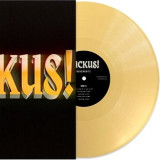
Seit der Gründung 2015 ist bei Movements einiges passiert – der Name ist Programm und somit führt das Post-Hardcore-Quartett seinen Sound auf ihrem dritten Album RUCKUS! einen an expansive und manchmal unerwartete Orte. Das von Will Yip (Circa Survive, Code Orange) produzierte Album vereint Post-Hardcoreund Punk-Einflüsse mit einer gesunden Portion Pop-Songwriting, um ein Album zu erschaffen, das sich über die Konventionen der Szene hinwegsetzt und etwas völlig Einzigartiges schafft. Um dies zu erreichen, begab sich die Band - bestehend aus Sänger Patrick Miranda, Gitarrist Ira George, Schlagzeuger Spencer York und Bassist Austin Cressey - dreimal in das Studio 4 von Yip in Conshohocken, Pennsylvania, um die Songs zu schreiben und aufzunehmen, die schließlich zu RUCKUS! wurden. ”Ich glaube wirklich nicht, dass es einen strafferen Prozess hätte geben können, und ich glaube nicht, dass wir jemals Musik geschrieben haben, die so gut ist wie das, was wir für diese Platte zusammengestellt haben”, erklärt Miranda. Vom verzerrten Grind von ”Lead Pipe” über den synkopischen Groove von ”Killing Time” bis hin zum Pop-Glanz von ”Tightrope” - auf RUCKUS! integriert die Band ganz unterschiedliche Einflüsse wie die Gorillaz und die Strokes in ihren Sound, um die Vorurteile der Leute über ihren Sound herauszufordern.
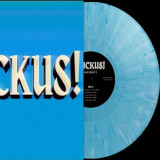
Seit der Gründung 2015 ist bei Movements einiges passiert – der Name ist Programm und somit führt das Post-Hardcore-Quartett seinen Sound auf ihrem dritten Album RUCKUS! einen an expansive und manchmal unerwartete Orte. Das von Will Yip (Circa Survive, Code Orange) produzierte Album vereint Post-Hardcoreund Punk-Einflüsse mit einer gesunden Portion Pop-Songwriting, um ein Album zu erschaffen, das sich über die Konventionen der Szene hinwegsetzt und etwas völlig Einzigartiges schafft. Um dies zu erreichen, begab sich die Band - bestehend aus Sänger Patrick Miranda, Gitarrist Ira George, Schlagzeuger Spencer York und Bassist Austin Cressey - dreimal in das Studio 4 von Yip in Conshohocken, Pennsylvania, um die Songs zu schreiben und aufzunehmen, die schließlich zu RUCKUS! wurden. ”Ich glaube wirklich nicht, dass es einen strafferen Prozess hätte geben können, und ich glaube nicht, dass wir jemals Musik geschrieben haben, die so gut ist wie das, was wir für diese Platte zusammengestellt haben”, erklärt Miranda. Vom verzerrten Grind von ”Lead Pipe” über den synkopischen Groove von ”Killing Time” bis hin zum Pop-Glanz von ”Tightrope” - auf RUCKUS! integriert die Band ganz unterschiedliche Einflüsse wie die Gorillaz und die Strokes in ihren Sound, um die Vorurteile der Leute über ihren Sound herauszufordern.

11
Ramona Lisa is the current alias of Chairlift's Caroline Polachek. Her new album Arcadia is Polachek’s first self-produced solo record and the first release by Pannonica, part of the Bella Union family. Completely composed in MIDI, it is a concept album of love songs that are nature allegories, and vice versa, which Polachek calls "Pastoral Electronic Music". The making of Arcadia was a year¬long process that began and ended in an empty studio in Rome's Villa Medici and while on tour with her band, Chairlift. The record was made entirely on a laptop without instruments or external microphones - all vocals were sung directly into the computer, making use of hotel closets, quiet airport gates, and spare dressing rooms. Although the album was created on a laptop, the result is a lush and uncannily tangible world of warm textures, reminiscent of analog tape processes rather than a hard drive. Virtual oboes and organs interweave with synthetic insects and quivering sine waves, animated by Polachek's vocal at it's most delirious and intimate yet.

- A1: Disconnection - More & More
- A2: Mystic - Disco Love Affair
- A3: Universal Love - Moon Ride
- B1: Bruce Johnston - Pipeline
- B2: Gabor Szabo - Keep Smiling
- B3: Silvetti - Voyage Of No Return
- C1: Decimo - Theme From Shaft
- C2: Leb Harmony - Feeling Love
- C3: The Bear Brothers - Love Is
- D1: The Hearts Of Stone - Losing You
- D2: The Hamilton Affair - How Can I Keep In Touch With You
- D3: Maryann Farra & Satin Soul - Never Gonna Leave You
12
After the white cover of the first volume and the silver one of the second volume, the third new chapter was to be dressed in the golden one.
This brand new "golden edition" double LP includes only rarities and '77/'78 Baia’s heritage hymns.
In the inner case we can find the iconic comics of the "antibaia", made entirely by Andrew Joseph Corsaletti, Andrea for friends. These comics were a regular appointment for all fans of "The Baia's Time", the Baia degli Angeli’s newspaper.

Classic 1987 album is one of the band’s most beloved releases. Includes a cover of Crime’s “Hot Wire My Heart”. “Let’s get something straight. There is no album in the entire corpus of indie rock not Loveless, not Surfer Rosa, not Psychocandy that reaches the heights of invention, joy, and magic of Sonic Youth’s sublime fifth album.... The haunted reveries of Sister remain with you for years, even if you only hear them once” Stereogum // 1987’s Sister was another notch in the band's move away from No Wave, yet still maintained their experimental approach. Gordon, Moore, Ranaldo and Shelley were coming into their own at this point, combining elements of noise, punk and pop. They had also become better songwriters since their previous album, providing better context for their noisier elements and incorporating the dissonance of their earlier releases into more traditional song structures. To quote Stereogum once again, “Sister is the sonic manifestation of refracted light. It’s a record that changes you.”

- A1: Dragon Racing
- A2: Together We Map The World
- A3: Hiccup The Chief / Drago's Coming
- A4: Toothless Lost
- A5: Should I Know You?
- B1: Valka's Dragon Sanctuary
- B2: Losing Mom / Meet The Good Alpha
- B3: Meet Drago
- B4: Stoick Finds Beauty
- B5: Flying With Mother
- C1: For The Dancing And The Dreaming
- C2: Battle Of The Bewilderbeast
- C3: Hiccup Confronts Drago
- C4: Stoick Saves Hiccup
- C5: Stoick's Ship
- D1: Alpha Comes To Berk
- D2: Toothless Found
- D3: Two New Alphas
- D4: Where No One Goes By Jónsi And John Powell
- D5: Into A Fantasy By Alexander Rybak
20
How To Train Your Dragon 2 is the sequel to the massively successful 2010 animated feature film How To Train Your Dragon, and the second film in the trilogy by DreamWorks Animation. The story takes place five years after Hiccup and Toothless united the dragons and Vikings of Berk. While investigating a burnt forest, the pair discover a secret cave that houses hundreds of wild dragons and a mysterious Dragon Rider. The two find themselves at the center of a battle to protect the peace.
Composer John Powell, who earned his first Academy Award-nomination for his music in the original How To Train Your Dragon movie, returned to score the sequel. It was conducted by Gavin Greenaway and recorded at Abbey Road Studios in London with a 120-piece orchestra, a 100-voice choir, and a wide array of ethnic instruments, including Celtic harp, uilleann pipes, tin whistle, bodhrán, and bagpipes.
Sigur Rós-lead vocalist, Jónsi, who wrote and performed the song "Sticks and Stones" for the original movie, provided two new original songs for the sequel in collaboration with Powell. The track "Where No One Goes" that is featured on this release, is not only written, but also performed by Jónsi and Powell. Belarusian-Norwegian artist and Eurovision Song Contest winner Alexander Rybak, who voices Hiccup in Norwegian, also wrote and performs on the song "Into a Fantasy".
How To Train Your Dragon 2 is available as a limited edition of 750 individually numbered copies on flaming coloured vinyl and includes an insert.

Ein Album zur Feier von James’ 40-jährigem Jubiläum. ”Be Opened By The Wonderful” ist ein Album mit 20 Titeln (19 auf Vinyl) mit einigen ihrer beliebtesten Songs, die mit einem 22-köpfigen Orchester und
einem 8-köpfigen Chor neu interpretiert wurden.
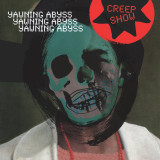
In the five years since Creep Show’s acclaimed Mr Dynamite album was released it’s fair to say that we’ve all been through a fair bit. Sitting here, in 2023, things don’t seem to be getting any better. There’s the cost of living crisis and political meltdowns; we're in deep water with global warming and to top it all there’s a war on our doorstep.
Back in 2018 everything seemed less complicated. Sure, there was stuff to get riled about, but we knew nothing about what was to come. Mr Dynamite was a fairground ride into the dark corners of a world that was on the brink of being blitzed in a blender. It was a record teetering on the edge. Five years down the line you’d expect the follow-up, Yawning Abyss, would double-down and bring the white-knuckled, teeth-gritted fury of the last five years to the boil. And yet….
A quick recap? No problem. Wrangler + John Grant = Creep Show. And Creep Show? “A band of musical misfits who have found a voice or two”, says Wrangler’s Ben “Benge” Edwards, whose Bond villain studio on the edge of a moorland is Creep Show Grand Central as well as home to an analogue synth arsenal that could sink ships.
Wrangler have known each other for a while. Tunng’s electronics wizard Phil Winter and Cabaret Voltaire’s trailblazing, pioneering frontman Stephen Mallinder go way back, while Phil and Benge crossed paths in the 21st century when they seemed to be increasingly in the same venues at the same times. Meanwhile, Mal had been living in Australia since the mid-90s and when, in 2007, he returned to the UK his old pal Phil suggested he meet Benge and the three of them immediately began working together.
Wrangler collectively bumped into Grant at their soundcheck for Sheffield’s Sensoria Festival in 2014 where they were playing with Carter Tutti. A friendship blossomed and when they were invited to perform together for Rough Trade’s 40th anniversary show at London’s Barbican in 2016, well, they jumped at the chance... and Creep Show was born.
Let’s talk about the new album... What is the ‘Yawning Abyss’? You might well ask. According to Mal, it’s “a cosmic event horizon that I can see from my attic window when stand on a chair”. Yeah. Thanks.
“On this album”, offers Benge, feet firmly on the floor, “Wrangler wrangled some vintage synths, mostly Roland, Moog, and the ‘Crystal Machine’ - then John Grant joined in the fun at Memetune Studios where lots of musical experiments were carried out. Then Mal and John ran off to Iceland with the master tapes and recorded a load of madcap vocals. Back at Memetune, me and Phil were left to try and make sense of it all. Which wasn’t hard because what they did in Iceland was totally magnificent.”
Which kind of brings us back to where we began. You’d imagine ‘Yawning Abyss’ would be blowing steam out of its furious ears. Mr Dynamite but kicking a wasps nest. Repeatedly. And yet…
Opener ‘The Bellows’ comes on like a modular ‘Radio Ga Ga’, the singalong ‘Moneyback’ (“You want your money back? / I didn’t think so”) sounds like Godley & Creme’s ‘Snack Attack’ meets Prince Charles And The City Beat Band (“Pennies, pounds, dollar bills, signed agreements, death wills”). ‘Yahtzee!’ is an unhinged electro breakdance party in four minutes and nine seconds.
Where Mr Dynamite was menace, a mélange of mangled voices, with Grant and Mallinder being heavily treated, pitched up or down, rendering their contributions largely indistinguishable, Yawning Abyss takes a more direct approach. You hesitate to say feelgood, but there’s a skip in the step here for sure.
The title track plays John Grant’s vocal straight. Completely. It’s good, so very good. Like ‘Axel F’ covered by Vangelis. The delicious shimmering synths of ‘Bungalow’ also plays those Grant pipes with a straight bat. ‘Matinee’ delves into darker, very funky territory. With Mal upfront it comes on like ‘The Crackdown’. Choice lyric: “You are starting to breakdown / And it’s so fun for me to see / You should have thought of that / You should have come prepared / You can see what’s happening and you look a little scared”.
So, you know, not all feelgood. But it does feel good. It’s probably best to draw your own conclusions... This is Creep Show after all.

9
Rober Nikolajev (Estonia) — a man with many hats: runs lo-fi house projects as Nikolajev (Incienso, Collect-Call, Sad Fun) and DIMA DISK (with Ragnar Rahuoja); runs noise events KONSUM; a co-owner of Tallinn’s IDA Radio. For Muscut, Robert prepared a 7 track (almost dark) ambient album imbued with the melancholy of Estonian autumn with spoilers of the forthcoming eternal winter.

4


Oorsprong is a tube, a line in a forest, a sound sculpture. Acoustics to be revealed. Activated by entering, it becomes a giant flute producing a tone that is so low, the body crashes into waves of pure pressure instead of sound. Untranslatable energy. CERCHI CERCHI by Lukas De Clerck (FKA: Bloedneus & de Snuitkever) is a quest in a forest to find traces of that untranslatable sound, its impact, its imprint, its memory. A hide and seek in which the body is concealed in the instrument, becoming its second voice, hidden but exposed.
I
whistling, organ pipe, voice
A whistle, a whisper, a play of breath. Echoes of a low pulse, colliding into each other.
Party in the background, a coach blows a whistle, a haunting scream echoes the whistling from inside, kids returning from a party.
II
voice, whistling
To give away your voice, a gesture. The initiative for an introduction.
Birds chirping, an F16 piercing through the sky.
III
kaval
A circular breath gently caresses a line of circles, making its surface ringing.
Birds chirping, voices of kids, kids shouting, the door of Oorsprong closes.
IV
oorsprong, two bass recorders
When tuning becomes rhythm, when rhythm becomes a beat of breath. A beat underneath the beating of tones. Feedback of flutes.
The clanging of 2 bass recorders, the ventilator of Oorsprong is turning on.

"Darktown" ist das 1999er Studioalbum des legendären Gitarristen Steve Hackett. Dieses Album wurde noch nie auf Vinyl veröffentlicht und ist das erste in einer Reihe von Veröffentlichungen aus seinem Backkatalog, die zum allerersten Mal in diesem Format erhältlich sein werden. Auf "Darktown" ist Steve zusammen mit Julian Colbeck (Keys), Roger King (Keys, Bass, Drums), Hugo Degenhardt (Drums), Jim Diamond (Vocals), John Hackett (Flute, Pan Pipes), Ian McDonald (Sax), John Wetton (Bass Samples) und vielen anderen zu hören. Enthält die 3 Bonustracks der CD-Wiederveröffentlichung von 2013. Erhältlich als Gatefold 180g 2LP mit 2-seitigem Einleger.
