Suche:pitch black
Our fourth album finally gets the vinyl pressing it so richly deserves.
Originally released in 2007, Rude Mechanicals found us firing on all cylinders. The nine years since our debut had been spent touring our cutting-edge audio-visual show round the world, playing everywhere from Tokyo to Tauranga, Portland to Paris, Leeds to Las Vegas, finding fans and absorbing new sounds along the way.
We successfully combined and refined the stand-out elements of our previous releases to create an album that is alternately danceable and meditative: a genre busting excursion in sound, heaving with warm basslines and complex rhythms, topped up by haunting melodies and immersive soundscapes.
From the evocative opening South of the Line to the stepping 1000 Mile Drift, the dub is strong, as one would expect, and so is the influence of drum’n’bass on the bottom-heavy Bird Soul and the atmospheric Please Leave Quietly; trance on the pulsating Sonic Colonic (Live at Minikami) and slinky Transient Transmission (fig.2); ambient on the burbling Harmonia and softly snarling Fragile Ladders. The title track, meanwhile, finds us addressing climate change and greed, with lyrics by Auckland MC KP.
To create the double-vinyl release, Angus McNaughton re-mastered the original audio files, while Hamish Macaulay polished the source artwork by Tom Quarelle and created a brand new collage for the centrefold using pictures taken at the time.
Rude Mechanicals will be released on 11th April 2025, except in Aotearoa New Zealand, where it will be released on 12th April 2025 as part of Record Store Day.
2024 Repress
Pitch Black’s “Electronomicon”, a landmark album in New Zealand’s electronica scene, finally gets pressed on vinyl.First released in 2000, “Electronomicon” shows Pitch Black developing their deep dubby sound further by creating long and involved song structures that traverse a range of sonic experiences. The resultant album journeys from organic ambience and layered soundscapes to skanking keyboards, cutting acid riffs and thumping rhythmic grooves, with dub being the glue that holds it all together.
“Electronomicon” reached 28 in the New Zealand album charts and led to a sell-out 30-date tour of New Zealand and Australia. It has since gone on to become one of the duo’s most popular albums, regularly finding new fans around the world.
To celebrate the 20th anniversary of the release, the band dug out the original audio files and Angus McNaughton has remastered them for this vinyl release. Hamish Macaulay has also adapted the original artwork, creating a brand new collage for the centerfold out of pictures taken at the time.
They say you should never meet your heroes, but for Mike, meeting the legendary Adrian Sherwood has been a transformative experience, leading to creative collaborations that have benefited both of them.
Nearly 30 years after first being mesmerized by OnU Sound’s releases, a cheeky bit of radio ripping serendipitously led to Mike helping Pats Dokter, the label’s official archivist, with his work restoring master tapes, and eventually to him creating visual content for Adrian’s live shows.
A while after this collaboration began, Adrian offered to remix some of Mike’s music, either by his solo project @misledconvoy or our tunes, and it’s four cuts by us that grace this heavyweight platter.
From the dreamy dub of Transient Transmission to the rolling rhythms of A Doubtful Sound, our originals have been re-arranged and dubbed to $%># in Adrian’s signature style, with fluid melodies, pounding basslines and vocal samples awash in a wall of effects.
Trumpets by David “Ital Horns” Fullwood bookend the release, haunting in the first track and celebratory in the last, while Doug Wimbish (Tackhead) added an extra bassline to the heaving version of 1000 Mile Drift, which also features the voice of the iconic Lee “Scratch” Perry.
Reflecting on the collaboration, Mike says, “the whole experience has been slightly unreal, from working on Adrian’s videos to being in the OnU studio and watching him dub-mixing the tracks I’ve made, something I could never have imagined happening!”
Mike isn’t the only OnU fan, as a pivotal moment for Paddy was “watching Adrian mixing Tack>head at the Powerstation in 1995 and seeing the cause-and-effect of what he was doing and hearing the unbelievable sounds coming out of the speakers. It was the first time I’d ever seen somebody dub mix like that.”
The cover of Echoes of the Night is based upon an original artwork by Hamish Macaulay, while the vinyl has been pressed using a 100% recycled compound known as eco-mix, making each record totally unique as the colours subtly change across the pressing run.
- A1: The Illusionist
- A2: Slaves To The Subliminal
- A3: Mind Machine
- B1: Pitch Black Progress
- B2: Calculate The Apocalypse
- B3: Dreaming 24/7
- B4: Abstracted
- C1: The Kaleidoscopic God
- C2: Retaliator
- C3: Oscillation Point
- D1: The Path Of Least Resistance
- D2: Carved In Stone (Bonus Track)
- D3: Deviate From The Form (Bonus Track)
Gold Splatter Vinyl[45,34 €]
Limitiert auf 1.000 Exemplare!
Die schwedischen Progressive Death Metaller SCAR SYMMETRY haben die Wiederveröffentlichung von vier ihrer klassischen Alben angekündigt. Pitch Black Progress (2006), Holographic Universe (2008), Dark Matter Dimensions (2009) und The Unseen Empire (2011) werden alle am 14. April zum ersten Mal auf Vinyl erhältlich sein.
- A1: The Illusionist
- A2: Slaves To The Subliminal
- A3: Mind Machine
- B1: Pitch Black Progress
- B2: Calculate The Apocalypse
- B3: Dreaming 24/7
- B4: Abstracted
- C1: The Kaleidoscopic God
- C2: Retaliator
- C3: Oscillation Point
- D1: The Path Of Least Resistance
- D2: Carved In Stone (Bonus Track)
- D3: Deviate From The Form (Bonus Track)
Gold Vinyl[45,34 €]
Limitiert auf 1.000 Exemplare!
Die schwedischen Progressive Death Metaller SCAR SYMMETRY haben die Wiederveröffentlichung von vier ihrer klassischen Alben angekündigt. Pitch Black Progress (2006), Holographic Universe (2008), Dark Matter Dimensions (2009) und The Unseen Empire (2011) werden alle am 14. April zum ersten Mal auf Vinyl erhältlich sein.
Frech, wild und ohne Kompromisse: THE HELLFREAKS verbinden modernen Metal mit rotzigem PunkEinschlag!
THE HELLFREKS, Ungarns rebellischster Punk/Metal Export, veröffentlichen am 14. April 2023 das neue Album, Pitch Black Sunset, über Napalm Records. Darauf liefert das Quartett aus Budapest eine packende Mischung aus Modern Metal und Post-Hardcore mit einschlägigen Skate Punk Elementen. Die 2009 gegründete Band kann bereits auf eine spannende Diskografie zurückblicken, die unter anderem Highlights wie den Psychobilly-Punk-Hit „Boogie Man“ enthält. THE HELLFREAKS sind in zahlreichen europäischen Ländern aufgetreten und eroberten die US-amerikanischen Bühnen auf ihrer Tournee im Jahr 2015.
Nun setzen sie mit ihrem fünften Album Pitch Black Sunset einen neuen Meilenstein mit ihrer einzigartigen Mischung aus Metal, Post Hardcore und Punk.
Bereits der Album-Opener „Old Tomorrows” ist ein gelungener Kick Off und erstklassiger Repräsentant, der mit groovigen Metalbeats und den intensiven, frechen Screams von Zsuzsa „Shakey Sue” Radnóti unmittelbar ein Ausrufezeichen setzt und die In-Your-Face-Attitüde der Band hervorhebt. THE HELLFREAKS demonstrieren zudem gekonnt ihre Qualität als individuelle Musiker, während sie mühelos schwere Riffs mit starken Beats und aggressiven Shouts verschmelzen lassen. Dabei liefern bittersüße Gesangslinien den perfekten Kontrast. So beweisen THE HELLFREAKS mit Pitch Black Sunset eindeutig, dass sie bereit sind, ihr nächstes Kapitel aufzuschlagen!
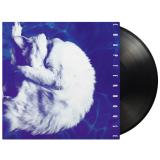
Pitch Black’s Futureproof, a landmark in New Zealand electronica, finally gets a vinyl release 23 years after it first came out.
The album distilled two years of relentless touring of New Zealand into a sweeping colossus full of epic soundscapes and rumbling basslines, pounding rhythms and mind-bending effects, showcasing Pitch Black’s dubwise styles to full, bass-bin busting effect.
After a five year release hiatus, in 2018 Yura Khlop is putting out music under his SE62 alias again. "Jazzed EP" is the second release in the SAFT X series and the Kiev based producer has delivered a class record.
The A-side opening track; "Swing Tool" is built around more jazzed out samples than the other tracks. SE62 cleverly plays original notes together with a hazy sample that serves as the core element. "Jazzed EP" will be available through all specialized retailers in the autumn of 2018. On A2 we find "July". Again a very dance floor oriented record with taints of emotion. The very present chord and bassline dominate the tracks structure until at one point; a beautiful sample is introduced. Positive sounds for lovers of classic deep house.
The title track "Jazzed" is a signature piece of thumping deep house, using swinging MPC style drums and an evolving digital piano riff. This together with some submerged sounding sample shots, create a dance floor worthy ambiance. After "Jazzed", we find "Pitch Black", a sample-heavy jam that is based around a set of characteristic drums. A swinging chord and an infectious chord progression do the trick on this true dance floor record.
Jaar's Other People is pleased to present a new solo record of guitar and live custom electronics artist Patrick Higgins, an American avant-garde composer and producer from New York City. Higgins is known for his work in experimental and contemporary classical music, playing guitar and composing in the mythical avant-noise-jazz ensemble Zs. His solo work as a composer unites European avant-garde forms with the post-minimalist howl of New York. His upcoming release on Other People, 'Dossier,' is a four-movement piece performed live without overdubs or edits. All of the samples and synthetic patches were custom built and specifically engaged to become elements of live guitar manipulation. The sound world is post-apocalyptic in spirit but builds to an intimate and reflective end. The material was developed over a two-year period and finalized at the end of 2016. Cover art is by Alfredo Jaar.
- A1: Lost Youth Of A Prisoner
- A2: Fire And Ice
- A3: Inside
- B1: Doom
- B2: Box Of Steel
- B3: K.n.k.a
- C1: Vietnam
- C2: Message
- C3: In The Year 2525
- D1: Lie On Grass
- D2: 2Nd Step
- D3: Suicide Of The Guardian Angel
35 Years of PROJECT PITCHFORK – The legendary debut ‘Dhyani’ returns! There are albums that make music history. And then there is ‘Dhyani’. For the 35th anniversary of PROJECT PITCHFORK, the debut album of the German electro-industrial pioneers is celebrating its triumphant re-release. Back in 1991, ‘Dhyani’ marked a milestone: a work full of energy, innovation, and dark beauty that revolutionized the scene and forever shaped the sound of PROJECT PITCHFORK. With this album, band founder, creative engine, and visionary Peter Spilles proved impressively that electronic music can be far more than dance beats. It can tell stories, unleash emotions, and connect generations. Now, 35 years later, ‘Dhyani’ returns in new splendor. For this special anniversary, the album has been carefully and expertly remastered by none other than Robin Schmidt (24-96 Mastering). Every tone, every nuance has been meticulously refined to preserve the timeless character of the songs while revealing fresh details that make the album feel even more powerful and vibrant today. ‘Dhyani’ is more than a debut. It is a testament to Peter Spilles’ creative force—an album that created sonic landscapes still captivating to this day. For fans, collectors, and new listeners alike, this re-release is a unique opportunity to experience a piece of music history in its purest form. Immerse yourself in the world of ‘Dhyani’ and feel the power that began 35 years ago and remains unbroken to this day. - Classy black vinyl - 2x180g 12” vinyl - All discs newly remastered for vinyl - Audiophile vinyl – German pressing - Sturdy cardboard sleeve - Printed inner sleeves containing all lyrics
- 01: Hìeratico
- 02: Litho Non-Danse
- 03: Blue Hymne (Feat. Limpe Fuchs)
- 04: Cuerda De Piedra
- 05: Aranha
- 06: Tombal (Feat. Pierre Bastien, Massimo Silverio &Amp; Marco Baldini)
- 07: Boku Ga (Feat. Adele Altro)
- 08: Meridiana (Feat. Giuseppe Ielasi)
- 09: Lode (Feat. Natalia Rogantini &Amp; Jonas Torstensen)
- 10: Sospire (Feat. Roberto Musci)
- 11: Muracetra (Feat. Vipera &Amp; Dròlo Ensemble)
- 12: Vessel (Digital Bonus Track)
Like its cover, Nicolas Remondino's Hìeratico plays in the rich shades of crepuscular spaces. A night-tuned, percussion led album where prepared drums are accompanied by flickers of spoken word, acoustic instruments and muted electronics,
The title translates to 'hieratic', for Remondino a "black and gold" term laden with dualities and complex connotations. A sense of teetering between sparkling light and richly coloured darkness imbues the music, the compositions simulating a sense of heightened acuity as they convey us through a spooky elemental soundworld. The opening title track begins with a metallic shimmer, a drum skin activated in a way that sounds like it's being smelted. A cushioned rhythm enters, a smothered timbre akin to hearing something lurking around the garden. On "litho non-danse", percussion cracks like branches and dried foliage under foot.
Remondino recorded initial outlines for the pieces at Giuseppe Ielasi's studio in Milan, before fleshing out these ideas with his own additional instrumentation and contributions from a globe-spanning network of collaborators. On "blue hymne", chiming percussion equal parts jubilant and sinister heralds spoken word from Limpe Fuchs. "Tombal" opens with Massimo Silverio whispering in the Carnic dialect, a minority language from the Carnic Alps. Around, Marco Baldini, Pierre Bastien and Remondino construct a somber soundscape that cranks and sighs in the crevices.
Hìeratico is an album of hybrids. Diverse voices, accents and dialects deliver its lyrics, the instrumentation underpinning it crosses idioms. The drumkit at its core is modified to amplify its resonant tones and harmonics. Inspired by natural substances and phenomena: stone, wood, wind, earth, metal, grass, rain, clouds and bark, Remondino explores how percussion could evoke their materiality, treating drums as lucid textural instruments as much as rhythmic timekeepers. It gives the album a finely shaded depth and clarity as it conjures the vibrancies that reside in darkened corners. Hìeratico dwells in a sensation that crosses borders, the speckles of light in the oblique night sky. Listening is an aural equivalent to stepping into a pitch black forest and waiting for your eyes to adjust, a lightless void turning into a spectacular tableau of shadows and glows. Daryl Worthington
- 1: Silent Talk
- 2: Autumn Speak
- 3: Archeological Longing
- 4: See Saw Seen
- 5: To The Test
- 6: Buried Way Out
- 7: Person Count
- 8: Song For Mary Black
- 9: Soso
REVIEWS
"Utterly gorgeous. This magnificent album is the gift that keeps on giving. Downright essential"
Electronic Sound (No. 6 Album Of The Year 2022)
"A cosmic swoon that plays with closeness and distance in the realm of revelation"
Pitchfork - 7.6
"Gloriously introspective"
Sunday Times
2022 Album Of The Year
The Thin Air
As Nathan Fake rises from the nocturnal subterranea and rave catharsis of his previous records, on Evaporator, he resurfaces into the domain of daylight, bringing a tangible sense of air rushing against your face, of big skies, and endless landscapes. The idea of pop accessibility that trickled into 2023’s Crystal Vision is refracted here through the prism of sweeping ambient, deep electronica, and trance uplift. Evaporator is Fake’s idea of “airy daytime music”, with each track a different barometer reading across the album’s varying atmospheres, which range from vibrant sunbursts, bracing rainscapes, and fine mists of clement melodics. “It’s not overtly confrontational electronic club music,” states Fake. “It’s quite pleasant, it’s accessible. As I was progressing through making the tracklist, I called it a daytime album. It doesn’t feel like an afterparty album.” For the past decade Fake has been gingerly introducing collaborations with heroes and friends alike into his lone, idiosyncratic working process. Border Community alumni Dextro AKA Ewan Mackenzie transmutes his ferocious drumming for Pigs Pigs Pigs Pigs Pigs Pigs Pigs into the blurred choral thump of ‘Baltasound’. ‘Orbiting Meadows’, meanwhile, is his second collaboration with Clark, an eerily idyllic duet where microtonal 18EDO piano clangs slowly twirl around wailing pads. Evaporator marks the junction point of old technology and ever fresh creativity for Nathan. The trusty “dinosaur” age software, particularly Cubase VST5, that has powered two decades of music is rarely updated. “I used to sort of feel a bit ashamed of using such old software, and then I kind of had an epiphany – that’s just how I work”, comments Fake. “That’s just how I play. I’m very fond of these old tools, and I get the most joy out of them, but now I’ve incorporated new technology too.” When an artist accumulates so much synergy with their instrument, music making becomes instinctual. By Fake’s account, much of Evaporator just fell into place. The album title arrived randomly in his head (“it felt completely perfect. Airy.”), ideas looped and developed until things locked into place and just felt right. ‘The Ice House’ is a fleeting glimpse of the sonic world he taps into in this creative state, its glassy FM synths built around a counterpoint between rough-hewn crystalline arpeggios and sparse yet gravitas-bearing bass. “That riff I just wrote out on the keyboard, I just played it forever and ever and ever. The original track ended up being really short. Here you go, and it’s gone!” These unplanned channellings of sound call forth records from Fake’s past while he looks ahead, perhaps getting at the very essence of his musicianship. The opener ‘Aiwa’ (“the breeziest,” he muses) reminds of the introspection that characterised Providence, excited by the fire and grit of Steam Days’ textural experiments, its chunky slams and clatters surging into a flood of harmonic buzzing as they reach out for old wisdom. ‘Hypercube’ stampedes in a similar chronological confluence, infusing an incessant synth line reminiscent of the golden age of rave with the crackling, ecstatic energy of modern festival anthems. Like the vaporisation of liquid to particles, everything that Evaporator presents has a mutant desire to be amorphous. Sounds rarely settle; the irradiated garage beat of ‘Bialystok’ is pitched downwards to driving, rebounding effect, while ‘You’ll Find a Way’ warps static into shivering energy, cinematic synth strings building anticipation into a gradual gush of chords. This translates into a more expansive stereo field than Fake has explored before. ‘Slow Yamaha’ saves the wildest, most kinetic transformations for last with a cornucopia of crispy melodies and fried drums; a sibilance of cymbals on the left, a susurrus of shakers on the right, and kaleidoscopic lasers pulsing and fizzing all around. Evaporation culminating in pure excited atoms. In a world where music has increasingly become background content, making albums remains lifeblood for Fake: “It makes me realise how long; twenty years is ages! It’s weird to see how much the world has changed. Release day back then you did fuck all, now you spend all day on socials. When I grew up the people who made the electronic music I was into were quite mysterious, and the artwork was very abstract. There was a massive distance between you and that music, and that was a key part of it, really. Now it helps to be an extrovert, and I'm just not, but the album marks the first time my face has graced the cover art. I’ve never wanted to do this before, I'm very shy, and generally I don’t like being seen,” he professes. “But, twenty years in, I supposed I could try something new. I'm very lucky that I'm somehow surviving in this world, where the media world favours extroverts and interesting looking people. It’s not my world but somehow I’m still in it.” Evaporator continues to prove Nathan’s necessary presence, with some of his most engaging, varied, and magical music yet.
- A1: Return Of The Knödler Show 2 52
- A2: The Frogs Of Miwa - Cho (1) 4 52
- A3: Waiting (I) 5 38
- A4: An Old Friend Passes By 3 46
- A5: Coco Bolo Strip (1) 5 25
- B1: Peace And Pipe Utopia 3 14
- B2: Unidentified Dancing Object 1 44
- B3: The Call (I) 2 41
- B4: Wenn Das Rohr Dommelt 4 03
- B5: Mariahilf (Live Version) 3 36
- B6: Watching The Shades (I) 2 59
- B7: Playing The Table Music (Ii) 2 43
- C1: Could Be Nice Too 5 29
- C2: Ox Of Inner Depth 4 51
- C3: Ymir Shows Up 3 58
- C4: Could Be Nice 5 24
- C5: Playing The Table Music (I) 4 23
- D1: Coco Bolo Strip (Ii) 4 52
- D2: Locusts Looking Like Men 5 55
- D3: Waiting (Ii) ︎ 3 36
- D4: No Stove 2 29
- D5: An Old Friend Passes By Again 3 00
- D6: Heimkehr Der Holzböcke 3 16
Black Truffle is thrilled to announce Dalbergia Retusa, an extensive double LP selection of the solo guitar music of Hans Reichel, compiled by Oren Ambarchi. Last heard on Black Truffle as one quarter of the joyously anarchic Bergisch-Brandenburgisches Quartett, Hans Reichel (1949-2011) is one of the great figures of experimental guitar music. Though perhaps lesser known than peers like Derek Bailey, Fred Frith and Keith Rowe, Reichel’s rethinking of the instrument was in some ways the most radical of all. Early on, he dispensed with existing guitars to build a series of his own that explored the use of additional strings and fretboards, moveable pickups, extra bridges, special capos, and other innovations documented in the extensive booklet accompanying this release.
Reichel was a long-term resident of Wuppertal, the small Western Germany city that became an unlikely centre of European free jazz in the late 1960s, also home to Peter Brötzmann and Peter Kowald. His solo debut Wichlinghauser Blues was an early entry into the FMP discography and began a relationship with the label that stretched into the 1990s; all the solo performances heard here were first released on FMP. As Reichel says in the charming archival interview with Markus Müller included here, he was ‘always a cuckoo’s egg at FMP’, a label that began as an outlet for roaring European free jazz. What strikes the listener right from the opening selection on Dalbergia Retusa—‘Return of the Knödler show’, from 1987’s The Dawn of Dachsman—is the extraordinary beauty of Reichel’s music, at once alien in the shimmering sonorities and unconventional pitch relationships made possible by his invented instruments, and deeply lyrical, even romantic in its harmonic content. Growing up in West Germany in the 1960s, Reichel’s formative influences were mainly British and American rock bands, a background that shines through in many of the pieces included here: ‘An old friend passes by’ is haunted by the ghost of Hendrix’s rhythm guitar, and the wild closer ‘Heimkehr der Holzböcke’, taken from a rare 1975 7” and the only piece to use overdubbing, layers errant hammer-on and slide tones over a Canned Heat boogie chug.
Reichel was an important source for the development of Oren Ambarchi’s own extended approach to the electric guitar. Appropriately enough, his selection opens with the very first piece by Reichel he ever heard, on a flexidisc included with a 1989 issue of Guitar Player magazine. Though Reichel collaborated with others extensively in many settings and also performed on violin and his other major contribution to instrument invention, the daxophone, his music for solo guitar remains at the core of his oeuvre. Focusing exclusively on solo pieces recorded between 1973 and 1988, the 23 pieces on Dalbergia Retusa showcase the range and consistency of Reichel’s work, allowing the listener to see how his performances developed hand-in-hand with his instrumental inventions. On a piece from his very first LP, played on an 11-string instrument (partly strung with piano strings and using a schnapps glass a slide), we hear his intensive exploration of fret-hammering to create zither-like, chiming tone, which Reichel would hone further in later years with a double fretboard guitar specifically designed to be hammered rather than fretted and picked. On a piece from 1979’s Death of the Rare Bird Ymir, Reichel uses two steel-string acoustic guitars at once, with beautiful results: ‘some even say too beautiful’, he jokes in the interview included here. Many of the pieces from the 1980s make use of varieties of the ‘pick behind the bridge guitar’, instruments of uncanny harmonic richness primarily designed to be played on the ‘wrong’ side of the bridge. At times the unexpected behaviour of attacks, resonance, and decay can almost seem electronic, conjuring up the technology-assisted work of Henry Kaiser or even Fennesz, but realised solely through Reichel’s unorthodox techniques on his invented instruments. Extensively illustrated with photos and Reichel’s own plans and drawings of his instruments, Dalbergia Retusa is an essential introduction to the unique world of Hans Reichel. Rarely has music been at once so strange and so beautiful.
- 01: Original-E Vocal Mix
- 02: No'west 'Black Market' Vocal Mix
- 01: X-Press 2 Wild Pitch Remix
- 02: X-Press 2 Give Thanks Remix
‘UK House Sermon’ stands proudly alongside many US house fables and its delivery pays homage to the likes of The Streets, ‘Weak Become Heroes’, Ashley Beedle and Earl Zinger’s ‘Ghost Dancers’ and Daft Punk’s ‘Teachers’.
The 'UK House Sermon' trilogy is a behemoth of a project. The original concept of saluting the trailblazing UK House DJs was conceived by producer/remixer/DJ, Dan The Drum. He enlisted the amazing team of Stuart Patterson narrating, Carmy Love on vocals and musical maestro, Darren Morris on co-production and all additional instrumentation.
Legendary remix combo, X-Press 2 have waded in and rolled up their remixing sleeves to deliver two massive slabs of prime time house niceness. The 'Wild Pitch' remix is a dance floor destroyer of epic proportions with the 'Give Thanks' remix creeping up on you like a thief in the night. A magnificent brace of musical interpretations. Hats off to everyone involved.
- 1: Jumpscare
- 2: Star87
- 3: Misery
- 4: Blk Xmas Feat Bruiser Wolf
- 5: Waterproof Mascara
- 6: Counterclockwise
- 1: Corinthians Feat Despot
- 2: Pitchforks & Halos
- 3: All These Worlds Are Yours Feat Elucid
- 4: Maquiladoras Feat Al.divino
- 5: A Doll Fulla Pins Feat Yolanda Watson
- 1: Golgotha
- 2: Cold Sweat
- 3: Blk Zmby
- 4: Make No Mistake
- 1: Born Alone
- 2: Lead Paint Test Feat Elucid & Cavalier
- 3: Dislocated Feat Elucid
- 4: House In The Woods
Vinyl[39,71 €]
GOLLIWOG is billy woods' first album in two years, preceded by 2023's Maps, his second collaboration with producer Kenny Segal. That nimble travelogue has little in common with woods' newest work, despite the fact that Segal shows up a couple times in the credits. GOLLIWOG is a haunting collection that weaves horror, humor, surrealism and Afropessimism into a cinematic tapestry, aided and abetted by a murderer's row of producers. African zombies, time traveling trap cars, malevolent ragdolls and a dying Frantz Fanon are just a few of the revelers in woods' danse macabre. GOLLIWOG features production from The Alchemist, Kenny Segal, EL-P, Conductor Williams, Preservation, Messiah Musik, Sadhugold, Ant (Atmosphere), Shabaka Hutchings, Steel Tipped Dove, DJ Haram, Willie Green, Jeff Markey, Saint Abdullah, and LA-based experimental jazz trio Human Error Club. Meanwhile, woods is joined on the mic by Backwoodz labelmates ELUCID and Cavalier, along with rappers Bruiser Wolf, Despot, Al.Divino, and singer-songwriter Yolanda Watson. GOLLIWOG is another triumph in the woods oeuvre, as layered and compelling as anything he has ever done. A black carnival pitched in a muddy field overnight, empty rides whirring and clattering in the dark.
Wondrous ethereal folk songs by a reclusive pen pal of Maxine Funke, first introduced to A Colourful Storm by Funke while sharing music and ideas during her Australian tour. Ghost faced pansies. A moth coloured cat. Cauliflowers, cabbages undying. I hear the spine of the dictionary crack. Is what they call a creature who only wakes at dusk. And turning backs. My afternoon has turned pitch black. For a trace. For a shape. I wipe the steam from the window like the bloom on a grape. Ghost faced pansies. A moth coloured cat. Light of stars long since died.
Arizona-based producer Kareem Ali returns with Renewal, his second EP on the French label Noire & Blanche, a luminous blend of deep house, jazz, and Afrofuturism that captures both personal and collective transformation. Praised by Rolling Stone, Pitchfork, and Boiler Room for his visionary sound, Ali continues to expand the language of modern electronic music with a project rooted in emotion, movement, and hope.
Across five tracks, Feel Everything All At Once, On My Heart, Procession, Wake Up My People, and Want, Kareem Ali invites listeners to experience the full spectrum of feeling. Opening with the warm, jazz-infused pulse of Feel Everything All At Once, the EP unfolds into the hypnotic rhythms of Procession and the heartfelt refrain of On My Heart. The soaring horns and urgent groove of Wake Up My People capture the project’s spirit of resilience, before closing on Want, a meditative reflection on desire and renewal.
Drawing inspiration from Sun Ra, Miles Davis, and Underground Resistance, Kareem Ali continues his pursuit of what he calls Future Black Music — a sound that merges the spiritual depth of jazz with the cosmic potential of electronic music. With Renewal, he offers not just an EP, but a vision: music as liberation, rebirth, and awakening.
2024 repress
In February 2021, Jan Jelinek's seminal album "Loop-Finding-Jazz-Records" turned 20. The anniversary repress, a double LP with two bonus tracks (B-sides from the Tendency EP, 2000), is a little late to the party.
What the press said about Loop-Finding-Jazz-Records:
“Don’t be misled by the title, though for there isn’t a finger-snapping rhythm c bebop lead anywhere on the album. Instead, Jelinek chooses to explore the visual effect moiré - two shifting patterns creating an implied third dimension - in the audio realm.” (Alternative Press)
“The title acts as explanation for the studio technique that provided the basis for this album, snippets of other people’s arrangements deconstructed through a sampler into loops and then splashed onto an audio canvas.” (ATM)
“Jelinek’s sound evolved out of his dislike for (and inability to play) keyboards.” (RPM)
“Jelinek has abstracted his sources beyond recognition, looping his millisecond samples into flickering patterns of sonic moiré laid atop a dub Techno framework. (...) Jelinek might as well have sampled a horn player’s hissing intake of breath – it would have been ‘jazz’ enough for his purposes.“ (The Wire)
“It’s a perfect inversion of conventional music, a sonic negative. Everything that would typically be foreground is moved back or pushed off the screen altogether, and the flecks of sonic debris that would normally be covered by other sounds are left to carry the melody and rhythm.” (Pitchfork)
“All you need to know is that these onomatopoeic non-specific songs (...) are warm, paradisical creations”. (NME)
“Listen carefully and you’ll hear textures slowly unfolding and mutating. Presuming you’ve not fallen asleep of course.” (iDJ)
“At times, it’s all a bit dripping tap Japanese water torture; so sedentary it drowns in its own motionlessness” (DJ)
“Loop Finding Jazz Records' is a genuine modern classic whose re-release is anything but a cynical mortgage repayment exercise. Consider this a second chance, then pretend you had it all along.” (Boomkat)
PS:
“I’ve been fortunate enough to see Jan Jelinek live once, at Tonic NYC (...). Wearing a black and white striped shirt, he looked like a nihilistic Charlie Brown.” (beachsloth)
Red and Black Galaxy Vinyl. Kmoe is a young Canadian artist who emerged from the 2021 SoundCloud/Discord scene. Kmoe blends hyperpop and glitchy production with catchy indie-pop melodies and pitched up vocals. His sound is characterized as a "modern-day romantic" take on electronic music, heavily influenced by shoegaze, hip hop and experimental pop.
The Rituals series rises again, a fresh strike carved deep into black wax. RITUAL12 summons an international assembly of techno insurgents from the OMEN roster, each delivering their own sonic rite. Across two sides, the intent is absolute: raw, unfiltered power pulled from the shadows and unleashed on the dance floor.
RITUAL12 is not a compilation, it’s a convocation. Forged in analogue heat, drenched in distortion, and aimed directly at the heart of the floor, this record demands full surrender. Step in. There is no turning back.
SIDE A
Swarm Intelligence – Inexorable
Berlin’s Swarm Intelligence ignites the record with precision-tooled percussion and fractured basslines. Polyrhythmic tension winds tighter with every measure, industrial grit locking into a cybernetic march toward total hypnosis.
B.A.R.K – Shikijitsu
A bone-rattling invocation of distorted low-end and ceremonial drums. B.A.R.K drives forward like ancient machinery grinding to life, a Japanese primal energy sharpened to a deadly edge.
Axkan + Duellist – Resilence
Mexico meets Scotland for a brutalist assault: hammering kicks, serrated synth textures, and walls of analogue saturation. No safe passage here, only forward momentum into the heart of chaos.
SIDE B
EAS – Honored One
From Los Angeles, EAS delivers a tense, ritualistic construction where a subterranean EBM bassline pulses through metallic drones. Hypnotic, uneasy, and charged with controlled dissonance.
Ha†elove + Ogmah – Hanged Bodies
A dark ceremonial groove, heavy with ritual percussion and spectral synth chants. The layers rise to a fever pitch, blurring the line between transcendence and collapse.
Crystal Geometry + Axkan – Kratom
France’s Crystal Geometry joins Axkan for a militaristic strike of modular chaos and pummeling drums. EBM infused basslines drive beneath razor-sharp synth fire, rallying the midnight faithful to the front lines.
The black and white hoverbike flew out of the fog at breakneck speed and raced through the neon-lit urban jungle of the Havan metropolis. It manoeuvred steadily between the skyscrapers, trying to throw off the tail of the corporal's convoy, which was getting closer by the moment, preventing it from sneaking away with the seemingly easy-to-get Zero-G prototype. This weapon could create an anti-gravity field with a single shot and disable even the largest battle cruiser. That's why an elite squad of cyber-soldiers equipped with modified implants and gadgets was sent in pursuit not to allow them to ease off for a second.
With a sharp steering wheel jerk, Spacelunch turned off the main street and into a narrow alley. "Your turn!" – He shouted insistently over the engine's roar. Cat rose from the back seat, took aim, and deftly fired his blaster. In a pall of sparks and smoke, the pursuer's hoverbike spun out of control and crashed into the building. Gritting their teeth, the friends raced through the winding maze of obstacles and tight turns. All senses were heightened with excitement. They could see a gap ahead and a way out into the slums.
Suddenly, a heavily armed police drone blocked the road, aiming its red gun lights at them. Spacelunch decisively grabbed Cat and jumped into the so-fortunately spotted sewer manhole, barely managing to dodge the gunfire barrage. After landing in a pitch-dark narrow tunnel, they moved on, with every step feeling the growing tension in the air and realizing that they could be found out at any moment. The darkness seemed endless. The only consolation was that they had the prototype in their hands, and now all they had to do was get to the spaceship and get off this freaking planet.
- A1: Murking Shadows
- A2: Ecto Green Code
- A3: The Preyers Forest
- A4: Scream Dreamer
- A5: Metal Preyers Feat Sockethead - Red Swines
- A6: Crater Creature
- A7: Carpenters Cabin
- B1: Slime Things Accent
- B2: Wasp Faced Invasions
- B3: Metal Preyers Feat Lord Tusk - Metal Mans Revolt
- B4: On Her Way 0
- B5: Metal Preyers Feat Lord Tusk - Gremlin Gurgle
- B6: Shadow Swamps
- B7: Escape - The Sunrise
Black vinyl LP. Following 2019's acclaimed self-titled debut album, Metal Preyers take the left hand path into a gloomy backwater filled with haunted creatures and fraught with peril. "Shadow Swamps" again finds London-based Jesse Hackett handling the music and Chicago's Mariano Chavez fashioning the album's visual identity, which this time includes a short film and book for a fully immersive experience. "Shadow Swamps" is the soundtrack to a pitch-black fairy tale about a father and daughter as they journey through a swamp avoiding gremlins, red swines and crater creatures. Musically, it pivots between the clattering Czech new wave experimentation of "Valerie and her Week of Wonders" composer Luboš Fišer, or the magical, eccentric lounge of Birmingham's Broadcast, and the grinding industrial grot of Italian pioneer Maurizio Bianchi. This time around, Hackett has roped in production assists from his six year-old-daughter wonder Nyasha hackett who used phone memos to record herself singing - veteran Metal Preyers collaborator Lord Tusk, and Manchester-based painter, DJ and producer Richard Harris, aka Sockethead. The crew inks an unsettling, richly textured sonic landscape, with claws of rhythmic smoke curling around chiming otherworldly xylophone, disembodied fiddle drones echoing over screwed 'n chopped beatbox dirt and half-heard magical vocals buried under clouds of white noise. Track listing: 1 Murking Shadows 2 Ecto Green Code 3 The Preyers Forest 4 Scream Dreamer 5 Red Swines 6 Crate Creature 7 Carpenters Cabin 8 Slime Things Accent 9 Wasp Faced Invasion 10 Metal Mans Revolt 11 On Her Way 12 Gremlin Gurgle 13 Shadow Swamps 14 Escape - The Sunrise
Black Truffle is pleased to announce Melopea, presenting two new pieces highlighting the incredible voice of Amelia Cuni (1958-2024), the great Italian singer, based in Berlin in later life, whose mastery of the classical Indian dhrupad developed in parallel with a commitment to contemporary experimental approaches. After two stunning archival releases documenting traditional dhrupad performances in India in the 1990s (BT079 and BT092), the two side-long pieces here embody the freedom with which Cuni explored new contexts and settings for her singing.
Both make use of a long recording of Cuni singing the pentatonic Raag Bhoop (or Bhopali) made in 2012 by her partner Werner Durand in Berlin. ‘Melopea’ began from Cuni and Durand’s superimposition of this recording with violinist Silvia Tarozzi and cellist Deborah Walker’s performance of Éliane Radigue’s ‘Occam River II’. Inspired by the beauty of this chance encounter (and other experiments with non-synchronous collaboration during the pandemic years), Tarozzi and Walker recorded independently, without hearing Cuni’s voice but ‘having her present in memory’. Tarozzi and Walker’s bowed strings places Cuni’s magisterial performance in a new context, emphasising, as Radigue commented upon hearing the initial layering of her piece with Cuni’s voice, a shared ‘searching toward the partials, overtones, these natural constituents of acoustical sounds in their richness’. Beginning with whispered bowed harmonics, the violin and cello swap the stability of dhrupad’s traditional tanpura drone for a slowly evolving, uneasy web of harmonic interactions recalling some of Harley Gaber’s work, sometimes sitting on dissonances for long periods or allowing changing interference patterns to come to the fore. Primarily focusing on her lower register, Cuni’s performance demonstrates her mastery of microtonal pitch subtleties, elegant sweeping glissandi and meditatively unhurried pacing.
The continuation of the same recording by Cuni forms the foundation of ‘Bhoop-Murchana’, with Anthea Caddy on cello and Werner Durand on soprano saxophone. In contrast to the randomised layering of the first piece, here Durand and Caddy have carefully selected pitches based on the raag Cuni sings, using the ‘Murchana’ form, which uses the constituent notes of the raag as tonics of new raags, retaining the same interval structure. Both players who have developed tones of striking depth and harmonic purity on their instruments, Caddy and Durand’s patient long tones are simultaneously rigorously grounded in the physical properties of sound and possessed of an immaterial, floating quality. Combined with Cuni’s voice and, near the piece’s end, her contributions on hammered and plucked tanpura, the effect borders on miraculous. To surrender to this music is like slipping into an onsen pool, feeling the instantaneous release of every tension. Accompanied by liner notes from Durand, Tarozzi and Walker, Melopea is both a moving tribute to the profound art of Amelia Cuni and, for the uninitiated, a perfect introduction to it.
- A1: Powder Pain And Misery
- A2: My Slaughtering
- A3: The Phantom Rider
- A4: Endless Sleep
- A5: We Wanna Wreck Here
- A6: The Cutter Uts While The Widow Weeps
- A7: The Queen Of The Wild Wild Wind
- B1: Shadow Time
- B2: Lie Down
- B3: You Want It
- B4: Black Black Night
- B5: Paradise Lost
Black Vinyl[24,79 €]
Blue Curacao Vinyl[24,33 €]
Red Vinyl[23,95 €]
Black Vinyl[26,85 €]
Pumpkin Orange Vinyl[26,85 €]
The original creators of Psychobilly Music, The Meteors began as a reaction against soft neo-rockabilly music of the late 70’s rock revival era. Since then the loud, sneering lovers of horror, perversion and death have released a few dozen records and are still going strong, 40 years into their career of evil. Svart Records are hellishly excited to bring you an official reissue of The Meteors’ 2007 album Hymns For The Hellbound. Long out of print on physical formats, this authorised reissue comes with a secret bonus track, all pressed on pitch black or blood-dripping red vinyl and wrapped in a gatefold jacket.
- A1: Wolfjob
- A2: King Vlad
- A3: Fuck Like A Beast (Fight Like An Animal)
- A4: Bloodbeat
- A5: Funhouse
- A6: Papa Jude
- A7: I Hate People
- B1: Hellfire
- B2: I Could Kill You (For What You´ve Done To Me)
- B3: The Forsaken
- B4: The Last Bus To Sanity
- B5: U Ain´t Right
- B6: Outro (No One Likes Us)
Green Vinyl[24,79 €]
The original creators of Psychobilly Music, The Meteors began as a reaction against soft neo-rockabilly music of the late 70’s rock revival era. Since then the loud, sneering lovers of horror, perversion and death have released a few dozen records and are still going strong, 40 years into their career of evil. Svart Records are overwhelmed with psychotic joy to present an official reissue of The Meteors’ 2003 album Psychobilly. Long out of print on physical formats, this authorised reissue comes with a secret bonus track, all pressed on pitch black or poisonous green vinyl and wrapped in a gatefold jacket.
Black Truffle is thrilled to announce Spilla, the second album from Nantes-based Ensemble Nist-Nah, 48 minutes of music for Gamelan, drum kits, wood and metal percussion instruments, and plucked strings that will surely count as one of the most electrifying records you hear this year. Founded by the Australian drummer/percussionist Will Guthrie in 2019, continuing the explorations begun in solo form on Nist-Nah (Black Truffle, 2020), the ensemble (eight or nine core members with occasional guests) has been consistently active in the half-decade since: composing, rehearsing, recording and touring Europe (with a mass of equipment in tow) to great acclaim. Spilla tracks the continuing evolution of the project since the recording of their first album, Elders (Black Truffle, 2022). The two sides of this record document two different iterations of the group, and the members' compositional input has increased: each side contains one piece by a member other than Guthrie. It has become clearer than ever that Ensemble Nist-Nah is not an attempt at a European Gamelan ensemble but rather a hybrid percussion ensemble that uses instruments from a Javanese Gamelan alongside other percussion to perform original music informed by a variety of South East Asian music but also by everything from free jazz to contemporary hip-hop: while Nist-Nah and Elders both featured traditional Javanese pieces, on Spilla the only tune not generated by a member of the group is by Guthrie’s long-time musical hero and occasional collaborator Roscoe Mitchell.
The two short pieces that open the record could almost be the two sides of a wild 7” selected to show off what the Ensemble can do. On opener ‘Gerak Maju’, intricately skittering open-snare patterns bounce over clanging metal, chiming bell-like tones and deep gong hits, adapting the rhythm-register connections heard in traditional Gamelan musics—where the lowest pitched sounds are heard least frequently—to a cut-up breakbeat straight off Feed Me Weird Things. ‘Strollabout’ then moves into an entirely different realm of meditative repeating patterns, performed entirely on Chinese, Javanese and Vietnamese gongs. The remaining seven pieces, ranging from three to twelve minutes, offer up a wealth of different percussive, compositional and arrangement possibilities. On ‘Ghostly Klang’, two drumkits mirror each other’s moves, bouncing hats and snares across the stereo field in a way that recalls On the Corner and the jittering hi hat patterns of trap, while slow moving melodies on the tuned instruments add a sense of majesty contrasted by scurrying details in resonant wood. The epic closing track presents a take on Roscoe Mitchell’s ‘Uncle’, performed by the Art Ensemble of Chicago on their classic Urban Bushmen live album. Where the Art Ensemble used Mitchell’s dirge-like melody as a jumping off point for virtuosic improvisational flights, Ensemble Nist-Nah rethink the piece as a near-static dialogue between the monumental, slow-moving sequence of unison tuned percussion notes and a textural cloud that grows in richness and intensity from whispering cymbal rolls into a mass of gong overtones and bowed metal.
Beautifully recorded and mixed, Spilla arrives in a sleeve decorated with core member Charles Dubois’ drawings of cymbals and gongs. Against the backdrop of a wider musical landscape dominated by over-produced electronic slop and bland harmonic wallpaper, Ensemble Nist-Nah stands out as a reminder, vital and unpretentious, of the joys and possibilities of human beings playing instruments together.
- 1: Peace & Purpose
- 2: Safe Room
- 3: Not The Same Thing
- 4: Life On A Farm
- 5: Pick Apart
- 6: Marathon Of Hope
- 7: Stop Cutting Me Down
- 8: Shut The Fuck Up
- 9: Reunion
- 10: Phantom Limb
- 11: Thoughts On My Faith
- 12: Eris On The Run
- 13: Red House
- 14: Truth In Trauma
Can’t go over it. Can’t go under it. Gotta go through it. And somewhere out there in the Pitch black beyond all darkness lies Peace & Purpose. The horizon you never quite crest until the inevitable end. Breathe deep — this fearful moment is the most alive you’re ever gonna feel. For the last decade, Crack Cloud’s vision has grown ever more expansive, more cinematic. Last go around, they dropped from The Heavens and then performed with their bare backs to an endless darkening desert. Now they’ve crammed all that life into some metallic and strange object called Peace & Purpose. All the terror of living. All the helplessness. All the raw human will. All glued and screwed and locked into this impossible tactile shape of dungeon dub; sour milk vox; Avant-protest music. Music arm wrestling itself to the ground. Far afield of beauty. The discordant symphony of factory farming and grim timber of the meat processing plant. The grinding din of the cogs. And yet, never giving up in spite of all good sense. Even in death, we are a coterie of survivors. Look now: There’s Terry Fox on his one-legged Marathon of Hope across The Great White North while cancer spreads through his lungs. A self-annihilating drive to feel alive. Rage against the dying of the light, they say. Well, how ‘bout it then!??! Peace & Purpose is not in any way some art project meditation on Punk Rock. It is Punk Rock. Terrifying, inspiring, vital, invigorating and most importantly, utterly unexpected. Every goddamn stupid day is a sublime slice of fresh hell. That’s the point. Gotta go through it. Wishing you Peace & Purpose — if only in that last big breath.
New London-based label Plasticity Records hits the ground running with a hard-hitting, dancefloor-focused VA featuring four varied tracks, connected by a raw, propulsive sound thread running throughout.
Kicking off the A side is established Barcelona-based duo Nulek & Roto with Eternal Space — a stuttering, pitch-black techno/electro piece featuring an ominous vocal that sends shivers down your spine. Rounding out this side is Study Nights by Uruguayan talent Flhez, leaning heavily into the country’s rich musical tradition with plenty of spooky synths and rough analogue textures.
Over on the B side, Barcelona-based Romanian Mar.C delivers Not Normal — a tough-asnails, EBM-tinged techno number that’s sure to get any dancefloor moving. Last up is the broken and decidedly wonky Nuclear Era from Lima-based Venezuelan purveyor of all things percussive and leftfield, Acid Charlie.
180 G. BLACK VINYL WITH LINER NOTES IN CREOLE, FRENCH, ENGLISH
Originally released in 1979, "Spiritual Sound" lives up to its name, a soaring, triumphant album, six tracks of spirit magic from Guadeloupe.
Telluric, intense, terribly alive, the gwoka drums of Guadeloupe carry the identity of a painful and fervent island. Marked forever by the crime of slavery, Guadeloupe's créolité cherishes the ka drums and their natural environment: the low-pitched boula drum with male goatskin, the high-pitched soloist makè drum with female goatskin, the chacha, ti bwa, triangle, calabash and other percussion instruments that surround them, and the voices - the fiery, proud, timbred, urgent voices of the gwoka.
This album is also a legend for its voices: in his then dazzling youth, singer Lukuber Séjor was one of the first gwoka artists to largely feminize the chorus of répondè, who converse with his text delivered in a straight and powerful voice.
And everything here sets new standards. In 1979, Mizik Filamonik - Spiritual Sound proclaimed a spiritual patriotism of ferocious intensity. The album by Lukuber Séjor - whose spelling alone is a battle - sets out to give Guadeloupe the intangible weapons of self-respect and self-knowledge, through a singular practice of traditional music.
The genesis of gwoka music is less straightforward than one might imagine... The drums performed the servile task of accompanying the work of slaves in the fields and during the “corvées” imposed by the administration, before being freely practiced by the common people after the abolition of 1848. At the heart of the conviviality of the Guadeloupeans furthest from the cities - geographically and socially - the gwoka drums come out for carnival, funeral wakes and neighborhood celebrations, but also during strikes, fits of anger and armed vigils of the riots and revolts that have punctuated the island's history. For generations, governors of the colony and then the prefects of the overseas department of Guadeloupe have been viewing the gwoka as a potential for turbulence and a threat to public order.
But as the Beatlesmania, “chanson engagée” and rock revolutions unfolded in Europe, young people turned to the drums of mizik a vié nèg (“bad negro music”, in Creole), which Guadeloupeans had learned to despise by following the “assimilation” process advocated by the school system and most of the political class. At the end of the sixties, in a Guadeloupe mourning the deadly repression of the May 1967 social movement, they played traditional music, refusing to wrap it up in tourist prettiness and madras folk costumes. Instinctively, they played a rough and contemporary gwoka, led by the incendiary Guy Konkèt. This was the era of decisive 45 rpm records such as Robert Loyson's Kann a la richès, which brought to light the fieriest words of union rallies.
At his home in Sainte-Anne, Lukuber Séjor played with flautist Olivier Vamur and his brother Claude Vamur, who cobbled together a drum kit from tin crockery and became, a few years later, the most influential drummer in Kassav'.
These were the years of the Bumidom program, when young Guadeloupeans were encouraged to emigrate to mainland France. At the age of twenty, Lukuber Séjor embarked on the liner Irpinia, disembarking at Le Havre and taking the train to the Gare Saint-Lazare - the route taken by thousands of young West Indians who went on to study or looked for work, all the while trying to maintain a link with their homeland. In this case, it's at the Antony university residence, where Lukuber played the drum and participated in a thousand gwoka updates and aggiornamentos, while exile reinforced the need for a spiritual link with the native land.
In 1978, Guy Konkèt played at the Salle Wagram, a historic event for West Indian music. After serving as répondè - i.e. backing vocalist - on one of his home-recorded albums, Lukuber joined his live band. Little by little, he became one of the key artists on a circuit parallel to French show business. At a student party in Caen, he met a young woman from Martinique who, at the time, was more motivated by her ambitions as a visual artist than by her vocation as a musician. Her name was Jocelyne Béroard and, a few years before she plunged into the Kassav' adventure and became the greatest West Indian singer of her generation, she designed the cover of Lukuber Séjor's LP.
This ambition was obvious and imposed its will. A more or less regular band was formed, with Roger Raspail, Rudy Mompière and Éric Danquin on ka drums, Claude Vamur on ti bwa, Olivier Vamur and Françoise Lancréot on flutes and Annick Noël on keyboards. Lukuber Séjor is set on wanting to extend the gwoka palette to other instruments, as the jazz-rock revolution opens a thousand new doors. Annick Noël will play a wide range of timbres and textures on electric piano and synthesizer. Another novelty: the répondè are two men and two women, Roger Raspail, Olivier Vamur, Françoise Lancréot and Maryann Mathéus ...
Mizik Filamonik - Spiritual Sound is a self-production in which the singer and leader sank all his savings, allowing him no more than a single day in the studio. The first side is more of a musical manifesto, with the first two tracks, Éritage and Penn é plézi, being instrumentals. The third, Son, forcefully celebrates the need for Guadeloupeans to connect with the gwoka. In fact, Jocelyne Béroard's cover shows a tambouyé in the shadow of a cloudy sky, against which a radiant sun is rising and whose light will soon flood the entire landscape. The silhouette and face of this man strongly evoke the immense Vélo, master of the ka, rejected at the time on the fringes of society.
The second side of the LP is surprising. Formally, three tracks are explicitly linked like the three parts of a triptych. Primyé voyaj evokes the appalling tribulation of Africans deported as slaves to Guadeloupe; dézyèm voyaj speaks of the Bumidom program and the economic, political and social forces driving young Guadeloupeans towards the mirage of prosperity in France; twazyèm voyaj closes the cycle with the emigrants' return from Europe after years away from their island...
This gwoka, obsessed with the need to save Guadeloupe spiritually, appeals far beyond the politicized audience. Mizik Filamonik - Spiritual Sound instantly became a classic, although Lukuber Séjor never really made a career for himself as a musician.
After all, the album was released in 1980, with no promotional resources in France or Guadeloupe - and therefore no concerts. The thirty-two-year-old author, composer and performer made his own third trip back to Guadeloupe. He set up a small woodworking business, which he lost in Hurricane Hugo in 1989. His other activity, teaching in a medical-educational institute, became the core of his professional life. He continued to be an active campaigner - a campaigner for the Creole language, a campaigner for the reawakening of identity, a campaigner for special education, a campaigner for a thousand causes that he ignited with his generous and perceptive enthusiasm, such as the defense of breadfruit fries...
The echoes of his 1979 album have not died down. Of course, the use of Penn é plézi as the theme tune for Radio Guadeloupe's funeral notices from 1980 to 1992 kept him in the collective memory, but he continues to sing and compose sporadically, as with his all-female
vocal group Vwapoulouéka... Still convinced that music is a means of liberating the spirit, he continues the journey of a young man eager to deploy the power of Creole music and language.
Bertrand Dicale
- A1: Yves Deruyter - The Rebel (40 Years Yves Deruyter Rework)
- A2: F.u.s.e. Vs Lfo - Loop
- B1: Two Pieces - Magic Bells (Final Mix)
- B2: Channel X - Rave The Rhythm
- B3: Master Techno - My Noise
- C1: Circuit Breaker - Overkill
- C2: Dj Misjah - Karin's Paradox
- D1: Technicida - Purgatorio
- D2: Meng Syndicate - Sonar System
- D3: Epilepsia - Epilepsia
- E1: Insider - Destiny
- E2: Symphony Of Love - Quantum Leap
- F1: Ramin Feat. 2 Stripes - Brainticket
- F2: Peyote - Alcatraz
- G1: A.paul - Juice
- G2: The Effect - Green Angel (Angel Mix)
- H1: Cybersonik - Technarchy
- H2: Dna - La Serenissima
- H3: Tronikhouse - The Savage & Beyond (Savage Reese Mix)
- I1: Yves Deruyter - Back To Earth (40 Years Yves Deruyter Rework)
- I2: Dream Concept - Shy Kid (In Rhythm Mix)
- I3: All In One - Mama's Kick
- J1: F.u.s.e. - Substance Abuse
- J2: Dj Bountyhunter - The Bountyhunter
- L2: The Wavecatcher - Flight Dh2126
- M1: Yves Deruyter - Feel Free (40 Years Yves Deruyter Rework)
- M2: Methadon - Synthetic Fruits
- N1: Edge Of Motion - Set Up 707
- N2: Reese & Santonio - Rock To The Beat
- N3: Mechanical Soul Saloon - Punos
- O1: Plastikman - Panikattack
- O2: Reese - Funky Funk Funk
- P1: The Prodigy - Charly (Alley Cat Mix)
- P2: Phantasia - Inner Light
- P3: Second Chance - In Paradise
- Q1: Final Exposure - Vortex
- Q2: Quazar - Dragonfighters
- R1: Ecstasy Club - Jesus Loves The Acid
- R2: Quadrophonia - Quadrophonia
- S1: Illuminatae - Tremora Del Terra
- S2: Josh Wink - Higher State Of Consciousness (Tweekin Acid Funk Mix)
- T1: Phuture - Rise From Your Grave (Wild Pitch Mix)
- T2: Black Scorpion Aka Steve Rachmad - Empyrion
- J3: Cybersonik - Backlash
- K1: Robert Armani - Circus Bells (Full Length Original Mix)
- K2: Photon Inc. Feat. Paula Brion - Generate Power (Wild Pitch Mix)
- L1: L.s.g. - Netherworld (Dj Randy's Smoke Free Remix)
Celebrating 40th anniversary of Yves Deruyter's musical career with this 10 x 12" Vinyl Box Set. Including tracks from F.U.S.E. vs LFO, Tronikhouse, Robert Armani, L.S.G., Edge Of Motion, Plastikman, The Prodigy, Ecstasy Club, and the master himselfYves Deruyter.
Yves Deruyter - 40 Years at the Pinnacle of the Night
Forty years. A rollercoaster of a musical career, meandering through five decades, leaving timeless marks on the collective dancefloor memory. Yves Deruyter is the exception that proves the rule. An icon behind the decks, celebrated far beyond national borders for his legendary sets, impeccable musical choices, and the anthems released under his name. The result of collective effort, where Yves, with his vision and unique touch, consistently left his mark-transforming good tracks into inescapable bombs that still resonate through time.
If you've spent forty years living to the pulse of music, the night is in your DNA. Yves Deruyter, a DJ to the core-the real deal. The man who bent the night to his will, dragging weekend vibes into the workweek like a warrior, a true master behind the turntables who made his people dance. His beats: the oxygen that generations lived on.
Yves sharpened his musical weapons in the early '90s within the iconic afterparty scene of Barocci and The Globe-places that became sanctuaries in Belgium's endless night. Here, die-hard dancefloor warriors, cutting-edge music lovers, and night owls from the four corners of the globe gathered. They willingly followed Yves' masterful mixing and his razor-sharp set construction. Clubs with a more conventional timeframe were the next step, with the iconic Cherrymoon as his home base for years-alongside endless guest DJ spots and global gigs. From there, the underground pulsed through Yves' hands and crates, reaching ever-larger crowds-without ever compromising for commercial or crossover sounds. Yves stayed true to his choices, lifting his audience to euphoric heights like a craftsman, armed with his hits, hidden gems, and freshly unearthed nuggets.
From the pounding energy of Rave City to the flippy, epic flashes of Calling Earth-tracks that not only captured the spirit of the times but conquered dancefloors worldwide. This isn't just music; it's a time capsule-a connection between generations and a reminder of the energy from a golden era.
With musical partners like Roel Butzen, Frederico Santini, M.I.K.E. Push, and more recently, Insider, Yves forged a sound that etched its place into rave and dance history. From The Rebel to The House of House, parts of Yves' musical taste have become immortal pillars of dance music heritage. In the early rave days, he topped Belgium's DJ rankings year after year, elevating every club he played to the highest echelons of popularity. The same held true for the records where his name appeared like a badge of honor.
From The Globe to the globe itself-it seemed almost written in the stars. Yves, thestar DJ, became one of the instigators of the electronic music storm that put Belgium on the global map-a storm that never subsided. Festivals like Love Parade, Mayday, I Love Techno, Nature One, and Tomorrowland saw Yves as a trusted force, effortlessly commanding crowds and turning dancefloors inside out. Forty years later, that storm still ignites partygoers, vibrates through dancefloors, and keeps entire generations moving.
Even today, Yves still holds a steady residency with Yves Deruyter and Friends at Club Moustache, where his concept always sells out. Here, both fresh talent and seasoned DJs deliver a killer blend of modern electronic dance music and timeless classics, creating an atmosphere that hooks the crowd every single time.
Because partying doesn't need an excuse. But forty years? That deserves the spotlight-not as a mere milestone, but as a showcase of timelessness. Music mutates, reinvents itself for new generations, yet retains the same impact as that very first time. Yves proves that forty is just a number, and relevance isn't about trends-it's about vision, energy, and an unmistakable touch. His sets? Indestructible. His sound? A heartbeat echoing through time.
And Yves? He doesn't live in the past. Today, Yves distills those four decades into a compilation capturing the essence of his career. Belgian beats, interpreted and refined into a sound that powered raves around the world. Ten vinyls featuring not just a fiercely curated selection that contextualizes the magic of his early days, but also new versions of three unbeatable anthems-potent hits designed to turn dancefloors upside down in wonder, without losing a shred of their soul. Yves remains a beacon in the night, a searchlight for that one perfect beat-always relevant, always chasing that magical moment.
Yves Deruyter-a name spoken in the same breath as the greats of the scene. A ten-vinyl compilation is more than a celebration; it's a well-earned trophy. As unique, indestructible, and uncompromising as the man himself.
Samuel van Dijk steps forward as Multicast Dynamics to present his next full length of mesmerizing deepness on A Walking Contradiction. As ever, when van Dijk puts on his Multicast Dynamics disguise, he abducts his listeners to places where breathtaking soundscapes and pitch black ambience take over. When you are in these imaginary places he creates a compelling story that is both exhilarating and soothing at the same time. Soundtrack for Something That Does Not Exist is nothing less. It's a journey across dark scapes and icy glitches, richly detailed with topnotch sound design that creates a spacious flow throughout. The subtle rhythms that appear once in a while show some overlap with recent VC-118A productions, which makes this a very complete piece of work that shows the excellence of a producer that never stops improving himself.
Anthony Linell's Lundin Oil project suggests a politic and an aesthetic in one swift movement. We may make certain deductions about each, but we must work backwards from where they meet.
Through the brutalising industrial mechanisms to which titles cryptically allude, we are given an exponentially urgent image of devastation. This is projected, pitch-perfectly, into a rapacious and erosive aural demonstration that barely meet metrical demands.
Exploit Divisions, the first Lundin Oil release since 2016, redoubles this threatening realisation. The album pivots between seismic static waves and jagged rhythmic noise, seeking a wider vantage with melodic drone ensembles. A ferocious departure from his primary work, Exploit Divisions is a purposeful reminder of the savagery of brevity.
Recorded by Anthony Linell in Sofia, Sweden 2022-2024
Visual by AL
Mastered by Giuseppe Tillieci at EnissLab, Rome
Technics' SL-1200 turntable is back! This beautiful, matte black MK7 version is a direct-drive turntable with a 'coreless' motor that is lighter and more powerful than before. Thanks to its design, not only is it extremely reliable, but cogging issues should now be a thing of past. That means you can concentrate fully on doing what you do best.
SL-1210 MK7: Classic turntable with a modern look
Apart from its colour, the MK7 SL-1210 may look familiar, but it has a few new additions on board. This includes a microchip that comes from Blu-Ray technology and makes the turntable more accurate, also when scratching. It's possible to adjust the power as well as the braking time of the motor and, if you have a stylus that supports it, you can make use of 'reverse platter play'. Another change is the use of removable cables instead of fixed ones.
Die Technics 1200-Serie
Der originale SL-1200 wurde im Jahr 1972 als direktgetriebener Plattenspieler vorgestellt und erfreute sich sehr schnell einer außerordentlichen Beliebtheit. Er wurde weltweit ungefähr 3,5 Millionen Mal verkauft. Charakteristisch waren von Anfang an das hohe Antriebsmoment, die einfache Bedienung und die hohe Langlebigkeit. Er wurde sowohl von Audio-Enthusiasten als auch von DJs hochgeschätzt. Letztere verhalfen dem SL-1210 zum Kultstatus, gerade im Bereich der elektronischen Dance Music. Auch heute noch wird diese Modellreihe von DJs in aller Welt außerordentlich geschätzt.
Höchste Klangqualität getreu den Maßstäben der Technics Philosophie
Eisenkernloser Direktantriebsmotor für eine stabile Rotation und kräftiges Antriebsmoment
In einem direktangetriebenen Plattenspieler wird ein langsam rotierender Motor verwendet, der direkt mit dem Plattenteller verbunden ist und die Bewegung unmittelbar an diesen weitergibt. Das bringt zahlreiche Vorteile mit sich: Das Gerät erreicht eine beeindruckende Umdrehungspräzision, ein extrem kraftvolles Antriebsmoment, eine hohe Zuverlässigkeit über die gesamte Lebensdauer und ist wartungsfrei. Lange Zeit wurden dem Direktantrieb kleine Unregelmäßigkeiten in der Rotation durch das sogenannte Rastmoment nachgesagt. Für den neuen SL-1210MK7 wurde daher ein neuer Direktantriebsmotor entwickelt, der mit einem eisenkernlosen Stator arbeitet und damit die Ursache für das Rastmoment vollständig behebt. Gleichzeitig erreicht die Antriebskraft der Rotormagnete im SL-1210MK7 ihr Optimum. Der Spalt zwischen dem eisenkernlosen Stator und den Rotormagneten wurde so verbessert, dass es dem Drehmoment des früheren Modells SL-1200MK5 ähnelt. Das gleichmäßige Rotationsverhalten und kräftige Antriebsmoment ermöglichen eine präzise und originalgetreue Klangqualität bei allen Schallplatten.
Der empfindliche Tonarm sorgt für eine hochpräzise Abtastung des Schallplattensignals
Der Tonarm, der die in der Schallplattenrille enthaltenen Musikinformation ausliest, ist eine statisch ausbalancierte Konstruktion in S-Form – typisch für Technics Modelle. Das Tonarmrohr besteht aus leichtem, hochfestem Aluminium, während die Lagersektion der kardanischen Aufhängung über ein gefrästes Gehäuse sowie hochpräzise Lagerelemente verfügt. Dies sorgt für einen hervorragenden Abtastvorgang mit einem Minimum an unerwünschten Nadelbewegungen selbst unter rauen Bedingungen, wie z.B. beim Scratching.
Zweischichtiger Plattentelleraufbau mit verbesserter Vibrationsdämpfung
Der Plattenteller des SL-1210MK7 besteht aus einer zweischichtigen Konstruktion. Vibrationsabsorbierender Kautschuk überzieht die gesamte Unterseite des Tellers, der aus einem Aluminium-Spritzguss gefertigt ist. Diese Verbundkonstruktion verhindert unerwünschte Resonanzen und bietet hohe Stabilität bei überragender Vibrationsdämpfung, wodurch die Schallplatte vor schädlichen Vibrationen gestützt wird. Das Ergebnis ist ein ungestörter, authentischer Klang.
Hochstabiles Gehäuse und effektive Dämpfungsfüße für umfassenden Vibrationsschutz
Das Chassis des SL-1210MK7 besteht aus einem sehr stabilen, extrem vibrationsarmen Gehäuse. Das Aluminium-Spritzguss-Chassis ist fest an einer Konstruktion aus ABS(Acrylnitril-Butadien-Styrol-Copolymer)-Kunststoff befestigt, das mit Glasfasern verstärkt ist. Die somit erreichte Zweischichtkonstruktion bietet eine Festigkeit und Vibrationsdämpfung auf höchstem Niveau und garantiert somit eine originalgetreue, dynamische Soundreproduktion.
Für eine optimale Dämpfung sorgen die Dämpfungsfüße aus einer Feder-Gummi-Konstruktion. Der hohen vertikalen Dämpfung steht ein sehr steifes Verhalten in der horizontalen Bewegung gegenüber. Diese Kombination sorgt für eine unkomplizierte Handhabung besonders beim Scratchen und für eine sehr gute Störfestigkeit – auch bei sehr hohen Schallpegeln.
Abnehmbares Netz- und Signalkabel für höhere Flexibilität
Die Netz- und Phonokabel des SL-1210MK7 sind abnehmbar, sodass sie, z.B. im Falle eines Defektes, schnell ausgetauscht werden können. Die vergoldeten Phono-Anschlussbuchsen sichern dabei beste Klangqualität und Kontakteigenschaften.
Hoher Bedienkomfort trifft auf innovative Funktionen
Anpassung des Start-/Abbremsmoments
Der SL-1210MK7 überzeugt mit innovativen Motorregelungstechnologien, die vor allem bei der neuesten Generation von Blu-ray-Spielern eingesetzt und perfektioniert wurden. Durch einen Microcomputer hält der Regler sowohl dem normalen Abspielvorgang als auch anspruchsvolleren DJ-Anwendungen wie z.B. dem Scratching problemlos stand. Zudem kann der Nutzer das Startmoment und die Abbremsgeschwindigkeit an seine individuellen Vorlieben anpassen.
Pitch-Funktion für eine präzise und stabile Feinregulierung der Geschwindigkeit
Die Umdrehungsgeschwindigkeit des SL-1210MK7 kann auf 33-1/3, 45 oder 78 U/min eingestellt werden.* Der Pitch-Einstellbereich liegt bei ±8%/±16%. Dies ermöglicht eine hochpräzise und stabile Feinanpassung der Geschwindigkeit sowie das perfekte Matchen z.B. zweier SL-1210MK7 Einheiten im DJ-Betrieb.
* Die Verwendung von 78 U/min wird über den Haupt-Ein-/Ausschalter aktiviert.
„Reverse Play” für maximale Kreativität
Werden die Geschwindigkeitstaste und die Start-/Stop-Taste gleichzeitig gedrückt, dreht sich der Plattenteller in die Gegenrichtung. Die Reverse Play-Funktion wird über den Haupt-Ein-/Ausschalter aktiviert. Dies eröffnet dem DJ neue, kreative Möglichkeiten. Dafür muss das Tonabnehmersystem allerdings für den Scratch-Betrieb ausgelegt sein.
Traditionelles Design – perfekt für den DJ-Einsatz
Nadelbeleuchtung dank heller, langlebiger LED
Bei der Teleskop-Nadelbeleuchtung kommen ein neuer Druckmechanismus sowie eine helle, langlebige weiße LED zum Einsatz. Zudem wurden der Beleuchtungsbereich sowie die Belichtungsintensität angepasst. Verglichen mit den Vorgängermodellen ist somit eine bessere Sichtbarkeit der Nadel gewährleistet – selbst in sehr dunklen Umgebungen.
Durchgängig schwarzes Design
Die Bedienelemente sowie der Tonarm des SL-1210MK7 sind in Schwarz gehalten. Gleichzeitig wurde die Form der Bedienelemente der früheren Modelle beibehalten. In Kombination mit der matten Textur des schwarzen Gehäuses strahlt der Plattenspieler einen coolen Chic aus. Die LED-Tastenhinterleuchtung kann individuell in blau oder rot angepasst werden.
Technische Daten SL-1210MK7:
Technologie zur Umdrehungskonstanz
Eisenkernloser Direktantriebsmotor
Hochpräzise Motorregelung
Konstruktion zur Vibrationsentkopplung
Vibrationsdämpfender Plattenteller
Steife Gehäusekonstruktion
Dämpfungsfüße mit Feder-Gummi-Verbund
Hochwertige Bauteile
Tonarm hoher Empfindlichkeit
Vergoldete Anschlussbuchsen
Technics Definitive Design
Aus der SL-1200 Serie entwickelt
Plattenlaufwerks-Sektion
Typ: Direktgetriebener Plattenteller
Umdrehungsgeschwindigkeiten: 33 1/3, 45, 78 U/min
Pitchbereich: ±8%, ±16%
Anlauf-Drehmoment: 2.2 kg・cm
Anlaufzeit: 0.7 s. aus dem Stand auf 33 1/3 U/min
Gleichlaufschwankungen: 0.025% W.R.M.S.
Rumpeln: 78dB (IEC 98A-bewertet)
Plattenteller: Aluminium-Druckguss
Durchmesser:332mm
Gewicht:ca. 1,5 kg (inkl. Gummi-Auflagematte)
Tonarm-Sektion
Typ: Universell, statisch ausbalanciert
Effektive Länge: 230mm
Überhang: 15mm
Spurfehlwinkel:
Innerhalb 2° 32' (an der äußeren Rille einer Langspielplatte (30cm/12")
Innerhalb 0° 32' (an der inneren Rille einer Langspielplatte (30cm/12")
Kröpfungswinkel: 22°
Tonarm-Höhenverstellung: 0 - 6mm
Bereich der Auflagekraft: 0 - 4g (Direkte Abtastung)
Gewicht des Headshells: Ca. 7.6g
Tonabnehmer-Gewichtsbereich:
ohne Zusatzgewicht 5.6 - 12.0g (14.3 - 20.7g (einschließlich Headshell))
mit Zusatzgewicht 10.0 - 16.4g (18.7 - 25.1g (einschließlich Headshell))
Bohrungsabstand der Tonabnehmermontage: JIS 12.7mm
Headshell-Kabelanschlüsse: 1.2mmφ 4-Pin
Anschlüsse
PHONO (RCA) x 1, Erdungs-Schraubklemme x 1
Allgemein
Netzspannung: AC230 V, 50 Hz
Leistungsaufnahme: 11 W (Ca. 0.2W Standby)
Abmessungen (B x H x T): 453 x 173 x 372 mm
Gewicht: Ca. 11.2kg
Zubehör:
Plattenteller, Gummi-Auflagematte, Staubschutzhaube, Single-Adapter, Gegengewicht, Hilfsgewicht, Headshell, Überhangschablone, Schraubensatz f. Tonabnehmer-Befestigung, Phono-Anschlusskabel, Erdungskabel, Netzkabel, Bedienungsanleitung
Belt drive DJ turntable, black
Delivery includes pick-up system and stylus
Adjustable ±10 % speed control
Large start/stop button
Strobe lamp for exact speed adjustment
Delivery includes removable dustcover
Adjustable anti-skating
Shock-absorbing feet
Power supply: 115/230 V AC, 50/60 Hz
Power consumption: 8.00 W
Protection class: Protection class II
Power connection: Fixed Power supply cord with Euro plug
Drive type: Belt Drive
Brushless DC motor
Drive: Start time: 1 sec.
Stop time: 1 sec.
Speed change time: <1s 1khz 5cm/sec
Wow and flutter: <0.25 % WRMS
Rumble: 50 dB DIN B
Speed: 33 RPM, 45 RPM
Tonearm: S-shape with Cardan''s suspension
Length: 220
Overhang: 10 mm
stylus pressure: 0-4 g, adjustable
output level: phono 1.7-3.5 mV/ 1 kHz 5 cm/sec
Color: Black
Connections: Output: phono via Stereo RCA
Pitchrange: ±10%
Material: Plastic
Width: 45 cm
Height: 14.5 cm
Depth: 35 cm
Weight: 3.77 kg
Turntable platter
Material: Plastic
Diameter: 33 cm