Makèz have come a long way since they first sneaked into Amsterdam’s studio 80 at the age of 17 to hand over their demos to Dam Swindle. Those demos led to their debut EP ‘Different planets’ on Heist in 2019 which gained major support from artists like Seth Troxler and Chez Damier. Quickly after, they signed two records on New York based label Let’s Play House. Fast forward two years, and here we are: the release of their debut album “City of all”.
"City of all” shows an admirable level of sophistication and matureness and effortlessly bridges genres across its 13 tracks. You can feel the amount of thought that has been put into this record, with songs happily blending into each other as Makèz submerge themselves in their concept of accidental encounters, inclusiveness and what it means to live in a city like Amsterdam.
On “City of all”, Makèz bring together all the musical influences they’ve picked up in their life as music fans, clubbers and art students. The jazz-funk of opening track “The entrance” feels breezy, casual almost, like the freeform rhythms that are played in a jazz club during soundcheck. That energy also oozes from “Not so different”, which features the smooth vocals of LYMA. There’s a hint of the house-meets-R’n B vibe that made Anderson .Paak the star that he is now. The song is brilliantly funky and shows the songwriting and arrangement talent of Makèz, who cleverly use pop & soul cues to create one of the album’s highlights.
What follows is 4 cuts ranging from the syncopated Balearic funk of “Orbit”, the strings of album title track “City of all”, the organ-led jam “Gonna getya" and the downbeat “Sonder”. Allysha Joy -best known for performing in Melbourne Hip Hop collective 30/70 - is featured on the deep and jazzy cut “Looking up”. If Makèz and Allysha are all looking up, it’s clear they’re seeing the same thing. These kindred spirits perfectly complement each other on this track, where the deep bass, warm harmonies and jazzy percussion prove to be a perfect foundation for Allysha’s rhymes.
Is it an album all about jazz and soulful tracks to listen to at home? Far from that. There’s a nice bit of dance floor-oriented tracks, where the distorted filter funk of “Roselane” featuring Fouk proves to be a highlight along with what is arguably the heaviest cut of the album: “Bent with funk”.
In an EP context, these house tracks would surely do their work, but they really come to life in this album format. No compromise has been made to storytelling and the house tracks all play their part while still standing their ground as powerful club tracks. It’s the expert production and smart arrangement that gives this album its casually funky feel. On “City of all”, Makèz showcase their remarkable talent for writing an album that goes to so many different places, but most of all, just really feels like home.
Enjoy the music,
Maarten & Lars
Search:place 42
- A1: All Ausländer Go To Heaven (Reprise) 05 42
- A2: Deutsche Pässe 02 01
- A3: Professional People 01 53
- A4: The Price Of Teilhabe 03 02
- A5: Automobile Love 02 27
- B1: Bürogebäude In Und Um Frankfurt 04 57
- B2: Dark Boys 01 52
- B3: Freizeit ´20 03 15
- B4: The Good Policeman 03 01
- B5: Proposal For A Worker`s Anthem At Dmu2 Daglfing 02 44
- C1: Doggerland 03 43
- C2: All We'll Ever Need 03 18
- C3: In Every City, In Every Aldi The Blood Of My Brothers And Sisters Taints Your Spargel 03 11
- C4: The Crowd 02 12
- C5: Home 02 59
- D1: Soziokultur 02 10
- D2: Transatlantic Ideology 02 58
- D3: Mjunikcentral Is A Dangerous Place, We Need More Guns To Keep You Safe 3 45
- D4: Wohlfahrt 03 45
In view of the immense Black Lives Matter mobilisation in reaction to the murder of George Floyd and the comparatively meagre societal reaction to the attack in Hanau, the question arises: How come our society does not show the same empathy and solidarity towards its own fellow citizens with Kurdish, Turkish, Bulgarian, Bosnian, Afghan migrant backgrounds or members of the Roma and Sinti?
How limited is our postcolonial discourse if we are unable to address the racist exploitation of those who repair our cars, deliver our parcels or harvest our asparagus?
It’s all a sham. Shake it off like a biometric photograph. Shake off that false consciousness. The Black Diaspora is a transatlantic lie invented by music curators and journalists. Embrace this nuanced return to structures and superstructures, to articulations and historical constellations as analytical tools.
Allow me to dampen your expectations. This is not the sound of decolonisation. This is no compilation of BLM protest songs. This is no celebration of Black emancipatory struggles. You will not be able to play this at your hip post-pandemic house party. This will not go down well with your woke friends. This is music for the square in the room. For that reluctant BAME/Person of Color repelled by your fetishisation of the African-American experience.
This is music for gated communities. This is Fehler Kuti singing of class relations, not of identities and positionalities. This is Fehler Kuti resisting.
Listen to these songs of infrastructure and appraisal of the welfare state. Join me in mourning the broken promises of prosperity for all. Send that “Ausländer“ of your mind to heaven. Colonialism fucked you up. Platform Capitalism is keeping you in chains. Are we to unionise all human and non-human workers at Amazon? Will modernity always have that "forever nigger“? What about those dispossessed field hands harvesting your asparagus?
All is lost. The system is rigged. Because all histories, gestures and identities have been absorbed into this late capitalist apparatus we call diversity. It can integrate anything and anyone. It made me. It is the price of the ticket. And it is unable to challenge its own premise of an atomised society. As if you and I had so little in common.
They will try and help you. They will build a museum for your history and a scholarship program for your future. I warn you. Don‘t let them give you a name. Resist appellation. Don’t get that German passport. Don‘t eat asparagus.
Fehler Kuti, Spring 2021
All songs by Julian Warner. Produced by Markus Acher and Tobias Siegert.
Markus Acher – drums, percussion, backing vocals Micha Acher – sousaphone, trumpet Cico Beck – synthesizer Jenny Bohn – backing vocals Pacifico Boy – vocals Katja Kobolt – spoken word Theresa Loibl – bass clarinet, backing vocals Sascha Schwegeler – steeldrum, kalimba, percussion, backing vocals Tobias Siegert – bass, synthesizers, percussion, backing vocals Julian Warner – piano, memotron, vocals
recorded and mixed by Tobias Siegert at Minga Records, july – december 2020 mastered by Moritz Illner at Duophonic
Cover art and photography by Andreas Neumeister. Layout by Sascha Schwegeler.
Fehler Kuti “Professional People” is part of the same multiverse as “The History of the Federal Republic of Germany as told by Fehler Kuti und die Polizei”. A production by Julian Warner. In cooperation with Münchner Kammerspiele. Funded by the Department of Arts and Culture of the City of Munich. Released by Alien Transistor.
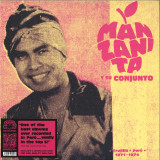
Following the 70s Peruvian cumbia compilation by Ranil last year, Analog Africa returns to Latin America to highlight the work of one of Perú’s undisputed masters of the electric guitar: Manzanita. This 13th release in the Limited Dance Edition Series includes 14 mostly instrumental compositions of electrifying Peruvian cumbia and guaracha. Manzanita's unique guitar lines rest on confident foundations that shifts gears effortlessly. Limited Edition LP in Gatefold Cover pressed on 180g high quality virgin vinyl
"I was in Lima, hanging out with collector-extraordinaire Victor Zela, who had spent the previous few years pouring his passion for Peruvian Cumbia into the blog „la cumbia de mis viejos“, a trove of incredible music. But after the birth of his first child, his priorities shifted and he decided to part with some of his rarest LPs. I was one of the lucky few given an early chance to examine his treasures, and when I picked up the album Manzaneando com Manzanita, Victor said: “Take it! its one of the best LPs ever recorded in Perú … easily in the top five”. That was all the encouragement I needed … two years later many of the songs from that masterpiece have made it onto Manzanita y su Conjunto, a compilation of electrifying Cumbia sides from Manzanita’s golden era.
Berardo Hernández – better known as Manzanita – first surfaced during the psychedelic Cumbia craze. At the head of the scene were the magnificent Los Destellos, whose leader, Enrique Delgado, was such a six-string wizard that other guitarists found it impossible to escape his shadow. But when Manzanita arrived, his electric criollo style sent shockwaves through Lima’s music scene and posed a serious threat to Delgado’s dominance as king of the Peruvian guitar.
Manzanita had come to Lima from the coastal city of Trujillo, five hundred miles up the coast – a place where Spanish, African and indigenous populations had been living and making music together for centuries – and came of age at a time when the first wave of psychedelic rock from the US and UK was starting to sweep the airwaves. But the sounds of Cream and Hendrix disappeared from the radio just as quickly in 1968 when Juan Velasco seized control of the country in a military coup. The new regime, which favoured local traditions over cultural ‘imports’ from the north, was a blessing in disguise for the Peruvian music scene.
Record labels flourished as new bands, raised on a hybrid diet of electric guitars and Cuban rhythms, rushed in to fill the vacuum created by the lack of imported rock. A new genre, known as Peruvian cumbia, was born and Manzanita quickly became one of its most original voices.
Starting in 1969, Manzanita y su Conjunto released a steady stream of singles that used Cuban guaracha rhythms as the foundation for dazzling electric guitar lines. After countless 45s and several years on the touring circuit, the band signed to Virrey, an important Peruvian label, and recorded two LPs acknowledged as masterpieces among aficionados of tropical music. Most of the songs on Analog Africa’s new compilation Manzanita y su Conjunto are drawn from those legendary sessions of 1973 and 74.
Although he scored a few more hits in the later 70s, his dissatisfaction with the music industry caused him to withdraw from the scene for several years; and when he finally retired for good, the golden age of Peruvian cumbia was a distant memory. But when Manzanita was at the top of his game he had few equals. Victor Zela was right: this is some of the best music ever recorded in Perú."
A sonic clash of Tropical, On-U and Eastern proportions, t-woc drops 6 tracks of dope sound system bashment for Strangelove. Informed by Mick's musical wanderlust and prolific digging, Pentangle deftly blends a mélange of influences where Caribbean steel drum, Anatolian melodies and the sounds of the Maghreb all float through the mix.
Like his work for Macadam Mambo/ Emotional Response- its a sound hard to pin down and all woven into a heady brew percolating somewhere in the dance-floor twilight zone. With early works created pre-lockdown at an artist residency in The Dock in County Leitrim, the heads down groove of 'Crazy Bronco' & 'Goddy' don't sound out of place with an early 90's Uk bass culture. Elsewhere the deeper cuts rub against a little sunshine as the late night swing of Midnight Magic riffs off Junior Delgado's roots classic.
With killer artwork c/o Marius Houschyar Strangelove is super stoked to release this collection of outernational rhythms from the Irish vinyl wallah, mix engineer and producer
Vital Sales Points:
Follow up to the labels previous exotic waves of Scribble & Sjunne Ferger,
Be With is delighted to present Jorge López Ruiz’s El Grito (Suite Para Orquesta De Jazz), eternal Argentinian magic released on CBS in 1967 that must be one of the most sought-after South American jazz LPs.
Living in Buenos Aires in the 60s, driven by creative impulse and rage Jorge López Ruiz used music as his platform to protest the Argentine military dictatorship: “I could never stand dictatorships, to be told how you have to think, what you have to do. Nor did I endure discrimination”.
A young López Ruiz had appeared on a television panel alongside writer, politician and philosopher Arturo Jauretche, criticising the Onganía dictatorship. Jauretche told López Ruiz “Now say it with music”. This was the deep inhale that lead to El Grito, literally “The Scream”. As López Ruiz later explained “Jauretche urged me that my protests should not remain in words and acquire the consistency of a work… but it was not so much what he told me but how he told me, what prompted me to make the work take shape, first in a live concert and then in a recording”.
As the police and military began resorting to kidnapping, torture and summary executions to quiet dissent, with depressing inevitability the artist community and their work were a particular target of the increasingly brutal regime. El Grito was banned not long after it was released and the majority of original copies were unceremoniously destroyed.
The work of a genius artist living under an opressive dictatorship, erased by the government of the time, this is buried treasure in every sense and it’s been a rare record for over 50 years. But it isn’t just being hard to find that has pushed up the prices of those few original copies that survived, this is a foundational record in the development of jazz in South America.
El Grito (Suite Para Orquesta De Jazz) is a showcase for Jorge López Ruiz’s skills as a composer and arranger as he leads a virtuoso orchestra of the likes of Mario Cosentino (alto sax), Baby López Furst (piano), Pichi Mazzei (drums), Gustavo Bergalli (trumpet), Oscar López Ruiz (guitar), Arturo Schneider (flute) and Jorge López Ruiz himself plays double bass on the fourth and fifth movements.
As the album’s sub-title explains, The album is a Jazz orchestra concept suite. Five movements, to be heard as a whole, that end where they begin.
“When I wrote it there was no history of a cyclical work in jazz. But I didn't notice that, I needed to express something and I did it. At that time they told me I was crazy, that such a thing was very difficult to do. But hey, I like challenges”.
Yet this is not challenging jazz. There are certainly avant garde, free jazz flourishes, but the hard bop characteristics make this a very accessible album: easy to listen to without being easy listening. López Ruiz’s love of film brings a definite cinematic feel.
The title movement opens the album in bombastic style. “El Grito” grabs you by the lapels and refuses to let go. Raw then controlled, it’s by turns stabbing then soothing, with rage weaved in and out of the elegant styles. “M.A.B. = Amor” is our favourite here. With a tense introduction and a patient build, a gentle sax sweeps in to lift everything up to meet the serene piano and soft drums. Elegantly paced, it moves back and forth between deep contemplation and a more urgent call and response between strings and horns. A near-eight-minute, slow motion marvel.
The second side eases in with the beautifully-titled “Hasta El Cielo, Sin Nubes, Con Todas Las Estrellas” (“Up To The Sky, No Clouds, With All The Stars”) a relatively brief mid-tempo piece featuring López Ruiz’s insistent bass notes high in the mix, and again blending the sublime with the emotive with its wild horns and tight rhythm section.
It’s followed by “Tendré El Mundo” (“I Will Have The World”) which also leads with hypnotic bass, but this time swifter, driven by crashing drums, rapid horn conversations and effortlessly cool piano flourishes. Rounding out the suite, “De Nuevo El Grito” (something like “The Next Scream” or “The Scream Renewed”) is a stylish closer. Whilst López Ruiz’s bass shifts the track along, the horns and piano are more restrained, yet no less stunning.
This Be With edition of El Grito sounds sensational, if we do say so ourselves. Working with audio from the original analogue tapes, the vinyl mastering chops of Simon Francis are on full show here in what he considers to be some of his best ever work for Be With. Pete Norman’s cutting skills have made sure nothing is lost. The tortured artwork has been restored here at Be With HQ as the finishing touch to helping this revered work find a rightful place in every protest art collection.
Freddy Cole's 'The Cole Nobody Knows' is available as digipack-CD & limited vinyl-LP / Holy Grail soul jazz album by Freddy Cole, singer, pianist, Nat 'King' Cole's youngest brother and uncle of Natalie. Privately pressed LP recorded 1976 in Atlanta, including famous version of 'Brother Where Are You' and nine more excellent rare groove tracks, most of them suitable for the jazz dance scene. Outstanding quartet takes throughout with stunning jazz ballad performances of 'Live For Life' and 'Miss Otis Regrets', jazz dance pearls 'Wild Is Love', 'Moving On - Place In The Sun' plus rough blues tracks like 'A Man Shouldn't Be Lonely' and 'Waiter Ask The Man To Play The Blues'. First 1:1 reissue of an extremely rare and highly sought after vinyl LP on the small imprint 'First Shot' from Georgia, remastered and with original first press cover art. Sonorama is proud to release a legendary and sought after soul jazz LP that will send shivers down your spine. 77-year-old singer & pianist Freddy Cole, youngest brother of Nat 'King' Cole and uncle of Natalie Cole, is a truly unique interpreter with an impressive career from 1952 until 2010. This very rare and privately pressed LP was recorded back in 1976 and finally gets its first remastered 1:1 reissue with original cover artwork (First Shot label), including such greats as 'Wild Is Love', 'Brother Where Are You' and 'Live For Life'. The original press album is highly sought after all over the world and fetches ridiculous prices at auctions. Even another LP release of the same set of recordings with different cover art, pressed 1977 on the Audiophile label, is nearly impossible to find today. 'Freddy Cole has had a great career, wether or not you've ever heard of him' (Pittsburgh Post-Gazette 2006) and he is still going strong: His quartet is currently touring the U.S., Switzerland, Germany or Lebanon and will come back to Europe for more shows in May 2010. Check 'freddycole' to find out about the man who 'just might be the most attractively understated jazz singer currently at work' (The Chicago Sunday Times 2000).
2023 Repress
it’s happening again: dj, producer and dial records co-owner lawrence produced his fourth album for mule musiq. and once more, another very special one. the berlin-based artist wrote nine new arrangements specifically for “studio mule”, the new audiophile listening bar that mule musiq's head-honcho toshiya kawasaki recently opened in shibuya, tokyo. it features an exquisite vintage hi-fi sound system, a small record shop, craft liquor and beer as well as an extensive natural wine collection. “toshiya's wine and listening bar was the inspiration for the project. i followed the idea of listening to music in this (for me imaginary) place on a magic vintage sound system, slightly drunk with an always special drink in my hand! the music is therefore also very eccentric and “tipsy”, improvised on acoustic instruments, synthesizers and computer, combined with recordings i did in berlin's central tiergarten park.” lawrence acknowledges the imaginative superstructure above his new album and his mode of operating during the recordings. the records is called “birds on the playground” and features deep pulsating music, that unfolds its true absorbing character when the auditor listens care-fully to the detailed storytelling of lawrence. like always his tunes got a special, radiant pulse, that somehow is a signature sign of most of his productions. playful cosmic grooves, light-hearted, crafted with love and yet freshly unset-tling in some moments. his arpeggiated melodies remind partly on the music of hans-joachim roedelius. in other sec-onds they display a jazzy spiritual character and drift into meditative areas, that sound to a degree like long forgotten japanese folk music spheres. as “birds on the playground” isn’t aimed straight for the dancefloor, the overall coating of the music is a relaxed, cautious one, that goes beyond the average definition of ambient music. each track builds up gracefully, in order to present a mesmerizing musical architecture, that offers new sound dimensions with any fresh listening turn. as the record is made for mule musiq`s latest public space enterprise, everyone who is close-ly connected to the label was involved.
mule musiq’s core artist kuniyuki was in charge for the mastering. and the labels visual draw-er stefan marx painted the cover artwork. “when i saw the record cover for the first time, i had to think a bit of an extremely funny new year's eve party from over 10 years ago, when stefan and i founded the imaginary band “the dead sea”. this record would have been a wonderful soundtrack to the bustle during that night.” lawrence reveals.
it must have been a party beyond hysteric spheres, where all guests dance and talk dearly at the bar, while the music slows down their body functions enough to hear a sound that takes everybody away to a place, that must have been home in that very moment.
Xiu Xiu makes beautiful music for hard times. For nearly 20 years, the band has a track record of crafting experimental music for moments when life’s harsh realities meet its existential mysteries. On the latest album, Jamie Stewart explores a recent revelation and is reminded of the power of the band’s music to surprise and connect. Listening to the songs on OH NO, it is hard to feel truly alone. Instead, it is a reminder that even when we’re alone, we’re alone together.
OH NO, the group’s newest album, is an album of duets, with Stewart sharing the stage with an array of guests who have made an impact on him personally and musically. This is the first Xiu Xiu album where every song spotlights Jamie Stewart and a collaborator. The album features artists across the musical spectrum, including Sharon Van Etten, Circuit des Yeux’s Haley Fohr, Grouper’s Liz Harris, Alice Bag, Chelsea Wolfe, Owen Pallet, and Twin Shadow’s George Lewis Jr., all drift into Xiu Xiu’s distinctive soundworld. The album was born out of anguish and isolation, but exists as it does because of a profound rediscovery of community and friendship. It is the sound of finding one’s place in the world after the destructive powers of jealousy and mistrust make any map seemingly unreadable
They Say: “New directions in contemporary scoring”.
We say: Contempo is one of the best full album listens in the KPM 1000 library. Succinct smoking soul, super tight breaks and string-drenched sleaze composed by the library master, Keith Mansfield.
The creator of the romping tunes that became the iconic themes to the BBC’s Grandstand programme and their televised Wimbledon Tennis Championship coverage, Keith Mansfield was perhaps KPM’s most prolific artist from the mid 1960s right the way through the 1980s. As well as the sort of pop orchestral sound that is all over these classic library records, he could also turn his hand to raw, edgy rock and funk. Quentin Tarantino is a big fan, going as far as including some of Keith’s work on the soundtracks to Kill Bill and Grindhouse.
Many library records are a game of two halves and Contempo is certainly one of those. The first side cooks on a high funk breaks flame whilst the flip is something altogether more tranquil, yet no less groovy. It lays back with dreamier, post-coital grooves.
Rugged funk opener “The Fix” confidently displays its low slung languid grooves with heavy drums, horns and bass. Smokin’ in slow motion. The punchy “What’s Cooking” follows and has a lighter, more whimsical touch. But the drums still roll and the clavs wiggle in fascinating opposition to those horns. The dark and moody intro to “Cut To Music” gives way to a more inclusive, relaxed funk that’s all irresistible bass and stabbing horns. The mid-tempo “Man Alive” signals the time to really get down. A percussive monster jam. If you can’t strut to this then we really can’t help you! Closing out the A side, fresh guitar licks drip all over the slick drums of “Funky Footage”, with a New Orleans piano vibe coming on to really light a fire.
Whilst the dramatic crime funk of the A side is enough on its own to have earned this record its place in the great library record canon, it’s undoubtedly the more smoothed out B side for which Contempo is rightfully adored and celebrated. It’s so chilled and mellow, with beautifully arranged, sweeping strings, sax solos aplenty and a real 70s soundtrack feel. Think Love Boat, CTI label, Bob James, Grover Washington Jr.-type jams.
The super sleek and sexy jazz funk of “Breezin’” is as light and magical as you’d hope. An open-air masterpiece, its indulgent sound is just a taster of the sophisticated funk to follow. The elegant, romantic feels of “Good Vibrations” (used brilliantly by Odd Future’s Mike G for “Swiss Army”) is a string-drenched, wah-wah fuelled ode to living your best life. Nonchalantly. Whilst it keeps a very West Coast feel, the blaxploitation strut is certainly more Blackbyrds than Brian Wilson. “Sun Goddess” will blow your mind with the sensuous sound of glorious horns and beautiful keys. The luxurious “Love De Luxe” and its horizontal grooves have been much sampled, but here it proves that it doesn’t need any help to get you in an intimate mood. Closer “Snake Hips” is a cool mid-pace slouch. Just divine.
Originally released in 1976 but, like the very best KPM records, wonderfully timeless, Contempo is also no mere LP-length collection of loosely related tracks. This is a rare example of a library record that is a genuinely great listen from start to finish.
As with all of our KPM re-issues, the audio for Contempo comes from the original analogue tapes and has been remastered for vinyl by Be With regular Simon Francis. And as usual, the sleeve reproduction duties were handed over to Richard Robinson, the current custodian of KPM’s brand identity.
: Contempo (KPM) (LP)
Tape
Dylan Henner is back on Dauw with his new album "Great Prairie Plains: studies of American Minimalism". The album is a celebration of two pieces of music that he loves and have been hugely important to his musical life and education.
The album starts with an arrangement of Terry Riley's In C. During his school-time, Henner was allowed by his music teacher - with plenty of persuasion, in an environment of mostly much straighter classical music - to study this piece. He not only had a deep familiarity with it, but also the pdf scores that he transcribed for his homework. The arrangement was created mostly with the marimba, as an instrument that can layer very deeply without muddying the frequency range and also includes some synths, piano and a VST choir.
“I tried to balance my boundless admiration for the piece with a personalised arrangement. It would be pointless to copy Riley's original - it's too good - but I can at least try to do well by it.”
Alongside In C is an arrangement of Su Tissue's 2nd Movement, from her near-mythical "lost" album Salon de Musique. After trying to buy a copy of this record for years - they are so scarcely found he suspects he never will – Henner wondered if the next best thing would be - instead of owning a copy - to create his own copy. He started this arrangement with as much faith as he could. According to Henner, Su’s work is too rare to warrant changing, but instead should be honoured with autencitiy.
“It's not until the end of the piece that my arrangement begins to take a different shape to Su's. Once I started playing along on the piano, the rest fell into place.”
Dylan lives in Brighton, works as a photographer's assistant for his day-job and plays analogue synths, tuned percussion and cello. Last year Dylan released well-received albums on Dauw and AD 93 (fka Whities) among others. Even though he is a relatively new name, with these albums he already came to the fore as a promising artist within the electro-acoustic field.
a 01. In C [Terry Riley]
[b] 02. 2nd Movement [Su Tissue]
[a] 01. In C [Terry Riley]
[b] 02. 2nd Movement [Su Tissue]
After the heaviest of years, it should be time to take a little weight off with the playful sounds of The Person. Mapping its own Bermuda Triangle between dub-pop, sugary synthwave and Balearic boogie, ‘Tide Life’ transports Compass Point to Soggy Bottom, providing maximum fun, sun and bitmap escapism.
The eagle-eared may recognise The Person from the aspirational Italo-rockers Steaming Jeans, whose chalet-ready romp on Bordello A Parigi scored a Winter Olympic gold back in early 2020. Now left to her own devices, Minna Wight swaps the slopes for a jet ski and takes a Wave Race from Summer Bay to Monkey Island across 11 cuts of vintage oddball pop.
Whether she’s borrowing Brenda’s Beach Balls for the dubby daydream of ‘Snail Cafe’ and ‘The Place’, serving lost library cues to SNES club scenes on ‘Barry R Reef’ and ‘Elastic Shoes’ or spinning high school slow jams into synth soul ballads like ‘Nice Feeling’, Minna disguises serious musicianship behind a naive aesthetic. Disarmed by charm, we’re powerless to resist her tidal pull.
Patrick Ryder
Krijn Moons aka Alchi emerges as a new voice in instrumental electronic music with his debut 'Full of It' released with Mylja.
Inspired by artists such as Nicolás Jaar, Boards of Canada, Sigur Rós and James Holden, Alchi produces and performs music that is rooted in experiment rather than a single genre, flowing between and weaving through alternative dance, instrumental electronic postrock and neoclassical influences. Playing with imperfections and disarray, Alchi’s work honours emotional ambiguity, cultivating a sound that can be equally euphoric as it can be melancholic, a feeling that words cannot - and do not have to - articulate.
This is also the approach to composition and production for ‘Full of It’, Alchi explains. “More than the sum of its parts, the sound of a song creates a space that it starts to exist in, an intangible context shaped by the details that come from zoomed-in sound design and
production or even working with old or broken instruments. At a certain point, in this space that feels somewhat unknown and familiar at the same time, everything comes to life.”
Within this ambiguity, Alchi finds a place to liberate himself from instrumental boundaries, creating landscapes that value coincidence, playful sound choices and a little bit of chaos.
'Full of It' portrays an uncommon kind of music that, in its abstraction, layers and linear structures, will balance both the familiar and the surreal.
DAUW present the release of What the Fog, the second album of David Allred & Peter Broderick. The album is a follow-up of their first full-length LP Find the Ways, which was released through Erased Tapes in 2017.
The music itself was originally composed as a soundtrack for an 11-hours slow motion journey in the Louvre museum in Paris. The title, #monalisa, can be interpreted as a new way of perceiving art through technology and social media such as Twitter or Instagram. The movie is directed by Jennifer Anderson and Vernon Lott and tries to make us more aware of the presence of technology in our lives as well as the way we experience an exhibition or art itself. The album is a 42-minutes extraction of the 11-hours journey they went through. Each track is built in a way that makes it possible for the listener to travel from one place to the other, as if you were walking in the museum yourself. In that way, the record can even be perceived as a music documentary.
Being completely instrumental, What the Fog distinguishes itself from their first album in which the voices of both artists held a central place. Nevertheless, in line with an earlier observation from Clash Magazine, the music still combines minimalism and serenity to construct intense pieces of music.
“It presents a moment of calm that uses sparsity to create something quietly intense.” (Clash Magazine on their debut album)
Born in Maine, raised in Oregon, Peter Broderick learned to play several instruments such as piano, banjo and violin. In 2007 he joined the Danish ensemble Efterklang on their tour and had numerous collaborations with artists such as Machinefabriek and Nils Frahm. His most recent release Blackberry was released this August through Erased Tapes. It marked his first vocal album in 5 years and once again showed the variety in his ever growing repertoire.
In a relatively short period of time, Portland-based musician and multi-instrumentalist David Allred showed his songwriting capabilities through several releases on Oscarson and Erased Tapes. Besides his own music, he played as a session musician for several artists and ensembles such as Heather Woods Broderick, Masayoshi Fujita and The Beacon Sound Choir. His most recent album Felt the Transition sees the light late December 2020 through Erased Tapes.
"Black vinyl issue - Features 2 x unreleased songs ‘Dark Places (Soundscape)’ and ‘I Am The Cosmos (42420)’
Brand new 2020 mixes of ‘Star’, ‘Hyperspace’, ‘See Through’ and ‘Die Waiting’
+ ‘Uneventful Days’ (St. Vincent Remix)
+ ‘Saw Lightning’ (Freestyle Live)"
Dark Green Marbled Vinyl
One town, three times of the day, a triarchy of Techno music, rolling into the deep – coming as green marbled vinyl with an exclusively designed festival wristband!
Rico Puestel rears a monument to his growing-up-town „Uslar“ with three different approaches on this second part of the home-loving „Solling“ series that dig deep into a downscaled and natural framework of sound (all recorded and produced right at that place).
The initiation ritual on A1 with Uslar at 6'23 in the morning starts off with an actual electric guitar theme, originally recorded back in 2003, that builds the foundation hub to one crisp and point-blank Techno-Electro ceremony. The clean minimalistic sound will showcase all the details of any structure within while one's certainly getting caught by the overall force of melodic attraction like the sun working its path through the misty valleys.
At 13'35 noon, a rising rhythmical and progressive interpretation of the initial morning sounds makes an appearance on the flipside that doesn't allow much time to leap right into the centre of the da(y)nce, immediately creating the guesswork where side AA is leading all along.
The evening hours at 21'55 then take a flying leap into the mystical peak of the whole process, taking the morning sounds from side A into some uneasy realms and sceneries, prevailed by an almost voodoo-like momentum and a dance into the depths of its surrounding woods that will coherently dignify 90's loop Techno par excellence.
This fourth record on Exhibition is and feels right here and right now, paying tribute to the past and many different streams of Techno while cherishing a future that has yet to be written, celebrating the
Let’s go out! A suggestion that might sound like an absurdity in current times, but feels like the true promise of Bella Boo’s debut EP on Running Back. The Studio Barnhus affiliate refines and elevates her bright, genial and dissenting take on deep house into something greater than its parts.
What was supposed to be an album with features and collaborations was turned into an introspective solo-practice by Covid-19 and subsequently into this rich 8-track-EP. A writer’s block and the pitfalls of the aforementioned deep house genre were overcome with the help of Axel Boman’s knowledge of football philosophy and a 140bpm tempo advice. So, everything fell in its right place.
„Let’s Go Out“ is like the gateway into a wonderful coherent musical universe and an entertaining listening experience. Imaginative and sparkling, tender-hearted as well as bouncing when it needs to be. Bella’s EP is as much of a tribute to the UK scene that inspired her over the years as it’s entirely her own and distinctive thing. Like a perfect mixtape, it ebbs and flows, and once you reached its finish, it makes you want to start again – or to go out.
Short version: Bella Boo’s bright and genial debut EP on Running Back. Eight tender-hearted, imaginative and bouncing tracks that are as much of a tribute to the UK Scene that inspired her over the years, as they are the gateway into a wonderful coherent musical universe that is Bella’s own entirely.
- A1: Frank Wiedemann - Dream Hoarding
- A2: Sainte Vie - Hibernation
- A3: Mano Le Tough - Oblivion
- B1: Marc Piñol - Sooner
- B2: Adana Twins -Shadow Of Doubt
- B3: Axel Boman - Anywhere In The World
- C1: Echonomist - Cecil
- C2: Perel - Der Abend Birgt Keine Ruh
- C3: Michael Mayer - Hamstring
- D1: Rebolledo - Twenty Tears
- D2: Frank Wiedemann - Peter Pan Me
- D3: Robag Wruhme - If You Leave
“We have always been very fortunate to meet and know many talented producers. In recent years, we have been exploring those relationships with different remixes and collaborations, and every time something exciting came out. That’s why we started our Synchronicity project. To challenge ourselves making inspiring, fun and beautiful music.‘Synchronicity’ means "the simultaneous occurrence of events which appear significantly related but have no discernible causal connection. This very well describes how our path led to the place we are now – somewhere between the club and indie scenes.” – WhoMadeWho
KOMPAKT welcomes back Copenhagen’s WhoMadeWho. Tomas Barfod’s penchant for electronic music poetically juxtaposed with Tomas Høffding and Jeppe Kjellberg’s respective backgrounds in rock and jazz, gives their music an electrifying combination of sounds, merging a variety of influences to produce a unique sonic fingerprint that is emotive, irresistible and immensely satisfying.
Though we both have yet to strike a note together since the release of their 2012 full length “Brighter” (KOM 254), WhoMadeWho have been remarkably productive. With two full lengths, a DJ mix for Watergate’s series and releasing two of 2019’s most played out club tracks together with Rampa (Innervisions) and Artbat (Watergate Records), the trio have found themselves diving more and more into the world of electronic music, tapping into their goldmine of connections within the scene to spearhead an array of collaborations.
Synchronicity is all about ‘meaningful coincidences’ – bringing interpretation to bear on connections that have no actual causal relationship. It’s a canny concept to pin onto Copenhagen trio WhoMadeWho’s latest album, which sees them return to Kompakt for the first time since 2012’s Brighter.
This re-established connection helps us to understand the synchronicity at play, the way that the WhoMadeWho core ave built an album around collaboration with friends and peers, much as Kompakt is all about cross-connections and family. On Synchronicity, WhoMadeWho call on friends old and new – Michael Mayer, Echonomist, Adana Twins, Alex Boman, Robag Wruhme, Frank Wiedemann, Sainte Vie, Mano Le Tough, Marc Piñol, Rebolledo, and Perel is the cast list; WhoMadeWho direct the material, shaping it into one lovingly flowing gem of dance-pop glory.
There’s something particularly generous about hearing an album as all-inclusive and open-hearted as Synchronicity in the midst of the profound social and cultural shifts we’re currently experiencing. While some songs on Synchronicity were recorded together, in real time, such as the collaborations with Adana Twins and Rebolledo, most of them have taken place via long distance, thanks to the pandemic lockdown. But you don’t need to know who was where to understand either the magnesium-flare melancholy of “Sooner”, recorded with Piñol, which has you holding your breath with the gentle thrill of the song’s lush melody, or the stomping strut of the following Adana Twins collaboration, “Shadow Of Doubt”.
Elsewhere, there’s the stentorian robot voice at the heart of “Hamstring”, where they’re joined by Michael Mayer; the lustrous headsoak of “Twenty Tears”, a tender intervention by Rebolledo; the strip-light, slow-motion disco strut of “Cecil”, produced alongside Echonomist; or the glittering, arpeggio dreamwork that Perel helps sculpt into shape on “Der Abend birgt keine Ruh.”… Really, there’s so much to celebrate here, a panoply of pleasures. From pop revelations to dancefloor delirium to slow-burning brooders, Synchronicity is just that; a space for the joys of the unexpected to collide, and to be given meaning by their coincidental co-existence in WhoMadeWho’s beautiful world.
"Wir hatten immer schon das Glück, viele talentierte Produzenten kennenzulernen. In den letzten Jahren haben wir diese Beziehungen durch verschiedene Remixe und Kollaborationen vertieft und jedes Mal kam etwas Aufregendes dabei heraus. Aus diesem Grund haben wir unser Synchronicity-Projekt gestartet: um uns selbst herauszufordern inspirierte, lustige und schöne Musik zu machen. “Synchronizität” bedeutet das gleichzeitige Auftreten von Ereignissen, die scheinbar in einem signifikanten Zusammenhang stehen, aber keinen erkennbaren kausalen Zusammenhang haben. Das beschreibt sehr gut, wie unser Weg zu dem Ort geführt hat, an dem wir jetzt sind - irgendwo zwischen der Club- und der Indie-Szene". – WhoMadeWho
KOMPAKT freut sich über Rückkehr der Kopenhagener Band WhoMadeWho. Tomas Barfods Vorliebe für elektronische Musik im poetischen Kontrast zu Tomas Høffding und Jeppe Kjellbergs jeweiligem Hintergrund im Rock und Jazz macht ihre Musik zu einem elektrisierenden Konglomerat, in das verschiedene Einflüsse zu einem einzigartigen klanglichen Fingerabdruck verschmelzen: gefühlvoll, unwiderstehlich und immens befriedigend.
Obwohl wir seit der Veröffentlichung von "Brighter" (KOM 254) in 2012 keine gemeinsamen Dinger gedreht haben, waren WhoMadeWho in der Zwischenzeit bemerkenswert produktiv. Mit zwei Full-Length-Alben, einem DJ-Mix für die Watergate-Reihe und der Veröffentlichung von zwei der meistgespielten Clubtracks aus dem Jahr 2019 zusammen mit Rampa (Innervisions) und Artbat (Watergate Records), taucht das Trio mehr und mehr in die Welt der elektronischen Musik ein. Für ihre Kollaborationen greifen WhoMadeWho immer wieder auf ihre Goldgrube an Bekanntschaften innerhalb der Szene zurück.
Bei “Synchronicity” geht es um "sinnvolle Zufälle" - also um die Interpretation von Verbindungen, die keinen tatsächlichen Kausalzusammenhang haben. Es ist ein ausgeklügeltes Konzept, das dem neuesten Album des Kopenhagener Trios WhoMadeWho anheftet: Diese wieder hergestellte Verbindung hilft uns, die Synchronizität im Spiel zu verstehen; die Art und Weise, wie WhoMadeWho ein Album um die Zusammenarbeit mit Freunden und Gleichgesinnten herum aufgebaut hat: schließlich geht es auch bei Kompakt um Querverbindungen und Familie. Auf Synchronicity richten sich WhoMadeWho an alte und neue Freunde: Michael Mayer, Echonomist, Adana Twins, Axel Boman, Robag Wruhme, Frank Wiedemann, Terr, Sainte Vie, Mano Le Tough, Marc Piñol, Rebolledo und Perel stehen auf der Liste. Das Trio führt Regie und sorgt für den Feinschliff. Das Ergebnis: ein echtes Juwel aus Dance, Pop und Glorie.
Inmitten der tiefgreifenden sozialen und kulturellen Veränderungen, die wir derzeit erleben, ist es etwas Besonderes, ein Album zu hören, das so offenherzig ist wie “Synchronicity”. Zwar wurden einige Songs gemeinsam und in Echtzeit aufgenommen – etwa die Kollaboration mit den Adana Twins und Rebolledo – die meisten Sessions fanden aufgrund der Pandemie jedoch über größere Entfernungen statt. Letztlich muss man aber gar nicht wissen wer wo war, um die Melancholie von "Sooner" mit Marc Piñol zu verstehen und im sanften melodischen Rausch des Liedes den Atem anzuhalten. Auch die eher brachiale Energie der darauf folgenden Adana-Twins-Kollaboration , "Shadow Of Doubt" vermittelt sich eingehend über die soziale Distanz hinweg.
An anderer Stelle ertönt die schallende Roboterstimme im Herzen von "Hamstring", wo sich Michael Mayer zu ihnen gesellt; die schimmernden "Twenty Tears", einer zärtlichen Intervention von Rebolledo; der Zeitlupen- Disco-Nummer "Cecil", die zusammen mit Echonomist produziert wurde; oder der glitzernde Arpeggio-Traum, den Perel in "Der Abend birgt keine Ruh" in Form bringt.. Ja, es gibt tatsächlich einiges zu feiern: Von Pop-Enthüllungen über Dancefloor-Delirium bis hin zu Stücken, die sich ihre Zeit nehmen - Synchronicity bietet Platz für all das; das Album spendet Raum, in dem die Freuden des Unerwarteten aufeinanderprallen und durch ihr zufälliges Nebeneinander in der Welt von WhoMadeWho Sinn ergeben.
FILM Recordings will release the debut LP from Denial of Service.
The album follows up EP's Sensou (2015), and more recently Contour & Shape (2017) - but marks the producer's most expansive release on the label thus far by some margin. Clocking in at 15 tracks, the lengthy opus draws from the same palette found on previous work - drum machine driven, heavily mutated Electro and IDM sit alongside low slung Techno cuts and arpeggiated EBM references. As ever, the production is stunning - crisp and plosive, as much a record for the club as it is a tempered headphone experience; whilst the mood channels that same dank, claustrophobic energy found on previous missives.
As a body of work, the LP displays the distinctive touch of a production veteran. The transformative shifts in structure on opener A Fine, New Mother Now belie a kind of boldness found less often across the contemporary electronic music landscape; and the drum programming on IDM-leaning explorations Autoimmune & Supercell bear the hallmarks of a perfectionist with time on his hands and in full control of his art. Space and the placement of sonic components plays a huge role in the artist's work and the 3 Stigmata of Palmer Eldritch displays this canny knack for generating both textural, wide angle soundscapes whilst maintaining that wrought-iron edge to drums and percussive elements - even more fervent, noisy compositions like Dr Manahattan manage to keep hold of this remarkable balance. It's impressive stuff, a fine and well worked meeting point between artistic vision and engineering prowess.
An elongated discussion, no doubt - but worth hearing every word. Each twist and bend, however sharp, remains carefully placed and beautifully recorded. Dryer works Slither & Junkie Foxtrot towards the LP finish offer a less introspective, more hard hitting angle to the work, and by the time the listener arrives at dual closer the Daisy Chain - Adults - they're ready for its heady catharsis.
The debut album from Denial of Service is a trip, and the line between club space and home listening environment is decidedly blurred - an emotive exploration of true psychedelic Electronica, delivered direct from the source.
"Who is this guy? Who is this insane fucking guy? A guy who produced Trap tracks on his last EP and is now paying homage to Neue Deutsche Welle, as if he has never done anything else before and in a way that we never want to hear anything else ever again? To whom the crowds are devoted to in Paris, a guy who sleeps naked in the woods in the middle of Germany, who sings of the shimmering
girls („Schimmerndes Mädchen") and who doesn’t only embrace sadness but takes it to the club and goes wild with it?
I am telling you: It’s the guy who we desperately need right now: He is making music for, as he is putting it „young hipsters with Apple AirPods who wear big white sneakers but also for the 40 year old Goths who are still listening to El Deux“. He is making music for you, you and for you, too. He makes music for German Schlager fans, for the raver descending into the endless night and for next Sunday afternoon’s come down.
Luis Ake is the guy, and he is from Stuttgart of all places, where Germany basically invented its Germanness. And he is releasing this album that's as cold as the winter in which he recorded it. Of course „Bitte Lass Mich Frei“ was born in winter, in a backyard without heating – how could it be any different? Who needs? heating when your heart is broken, shattered even? Yes, the album was written
after a breakup. Obviously it was. And so it describes all forms of that special kind of insanity that comes with a broken heart: Loneliness, shallow sex, blame, longing, all of that, and more.
Vinyl tastes better ...
So here we are with another first – the next vinyl debut on Cheezy Crust Records as well as thefirst ever release for the two-piece project that is CVSO which is their „Basic Cuts EP“.
Comprised of Mainz / Germany-based producers Mint Huus who made his solo debut on Cheezy Crust in 2019 and Get In Touch head honcho Willberg their joint venture project CVSO caters a total of four tracks on limited to 200 copies 12“ vinyl, all aptly named after their individual
placement and position on the actual record itself.
Mastered by electronic music legend and pioneer Thomas P. Heckmann the trademark sound of CVSO presented on this EP is informed by classic early to mid-90s Techno and Intelligent Techno vibes with its ever evolving flow and stripped down aesthetic which fuses subtle harmonic changes, spatial meanderings within the stereo field as well as a hypnotic, time-dissolving attitude for heavy dancefloor abuse.
This said, CVSO are aiming for nothing less than their introduction to the ivy league of Techno with these „Basic Cuts“, providing classy, absolutely timeless and expertly assembled DJ tools which are aiming to perfectly blend in with and match the vibe of all those now classic tunes that have never left a DJs bag for a quarter of a century or more, even though CVSO are tackling their sound design and production approach with a modern contemporary twist.