
Поиск:plata
Стили
Все

Omg, Plata is hosting a colouring contest! Diligently cut out the template, colour it to your best ability and deliver it to the rainbow club in Maastricht (just follow the goddamn rainbow, ok?!). By doing so, you will make a chance at winning a copy of the new slab-o-electro by Perill on Plata Morgana. Stay artsy, stay fab, colour fast and party hard. You know the drill.


8

Senora are Dani & Diego from Barcelona. Their debut release features two ayahuasca journeys into sound plus a remix from island god Black Merlin.

11
Electronica Cumbia, cute and poppy. LTD 200 copies !

Rawbeats Records returns to its main catalog with a heavyweight release from Mar del Plata’s own Juaan. Meticulously crafted between 2020 and 2022, these four tracks are essential peak-time weapons already backed by the scene’s biggest names.
A1. "Decihden" sets a relentless pace right out of the gate. It's built on a foundation of heavy, punchy kicks and a rolling, infectious bassline creating a high-energy, club-ready tool.
A2. "Fui Do Por", which shifts the EP into a slightly more hypnotic and spaced-out territory. Syncopated rhythms layered with dubby, atmospheric chords, create a solid tension that perfectly bridges the gap between warm-up and peak time.
B1. "Knt" goes straight for the business, heavy production, driven by raw drum work, acid-tinged squelches and underground flavor. Mixes into a perfect dark, constant, piece designed to lock the dancefloor into a pure trance-like state.
Closing things off is DC Salas Remix of KNT, Diego steps up to completely reinterpret the original, injecting a distinct percussive bounce and twisting the core stems into a darker, expansive journey. It serves as the perfect cerebral closer to a heavyweight EP.

Following on from Andres aka DJ Dez's well received last outing on David A-P's Hot Pot label, it is now veteran DJ and producer Marc Meistro from DC's Sol Power All-Stars who now brings the class. To kick off he brings his own spin to a Latin funk classic 'Mas Que Nada' and then turns the sunshine up to 112 on the shuffling samba sounds of 'El Platanal De Bartolo'. It's a pure party starter for Latin lovers and then comes some more drum-forward funk on 'I Wanna Go Downtown' with its rolling percussion and funky bass twangs. 'Make Your Mind Up' slows down to dubby disco bliss with leggy riffs teasing and pleasing. Four effective, charming essentials from Meistro.

6
El AMBIE—TÓN is back. The reference #002 is an exercise of Memory (Memoria), it is a place where the water blooms on the earth and the wind in the mountains. It is jungle and city. Mountain and noise. Imbalance and harmony. It is a lake in the sky, a forest between seas. A still cloud in la cordillera, a name that floats. This collaboration between Colombian Drone Mafia and Gibrana Cervantes is the beginning and end of a fragile geography, like the magic and mafia of our platanal.
But who is behind this new combo and bridge between South and Central America? CDM is the new alias of Nyksan, a Bogota-born techno-affiliated deejay and sound artist who is also one of the co-founders of TraTraTrax. From the other side, Mexican composer and violinist Gibrana Cervantes is one of the most outstanding string voices in the daring electronic music landscape in recent times. The duo's cabalistic work creates intricate and dark ambient, all woven around gut-moving sonorities. Colombian Drone Mafia dissolves the boundaries between synthesis and field recordings, crafting experimental yet primitive textures that infect listeners through the layered melodic spaces that Gibrana masters.
We cordially invite you to listen to this journey of immersive drones through vegetation and concrete jungle, music that is at times contemplative and at other times violent. Music framed between deep listening and deep boredom. A glimpse of the sound of the end.
6
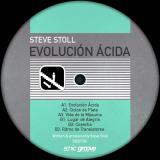
Steve Stoll - Acida Evolucion - Sonic Groove
Two pillars of New York techno finally collide as Steve Stoll makes his debut on Sonic Groove.
Stepping out from a recent low-profile streak, the NYC veteran delivers a superacideferocious 6-track mini-LP. This is Stoll at his rawest: deep, hardware-heavy 303 minimalism designed to melt minds and dancefloors alike.
Pure analog 303 intensity.

7
La Ruka is a prominent artist from Colombia's Pacific Coast. She blends hip-hop, salsa, Afro-Colombian roots and urban Latin genres in her music even though she is now based in Barcelona. Her live shows are always high on energy and tunes of hers like 'No Quiero Marido' and 'Todo Es Plata' are some of many standouts from the last 20 years. Her lyrics often focus on Afro-descendent women and life in Buenaventura and this new EP is another injection of Latin rhythms direct to your soul. Each one is sun kissed and percussive with irresistible production from the likes of JMoney, Village cuts and Lanzapro.

10
Somewhere between Solid State Survivor, Force Majeure and Danzindan-Pojidon you’ll find Shinichi Omata’s Boku ・ Neko ・ Platanus. Or rather you won’t – throughout his captivating debut from 1984, reissued by chOOn!! in 2022, you’ll hear connections to other music but its unique unbridled will keeps pushing those references out of mind.
Shinichi Omata is a fascinating figure – an unsung hero of early Japanese electronic music who between 1981–84 recorded three albums of incredible DIY techno-pop while studying as a student in Tokyo. At University, Omata worked and collaborated as a sitar player and keyboardist with artists such as Hiroko Yoshihara, Takami, DEA and various members of the LLE music circle, where he developed an expressive fusion of minimal synth and psychedelia.
This selection, lovingly extracted from Omata’s unreleased early recorded output, dating from 1981’s Neo Modernism through to 1983's With My Dog Ricky, demonstrates just how closely he clung to the original abstract ideal of moulding 8-bit bleeps and ungainly drum patterns into lo-fi triumphalism. On paper you wouldn’t give this aesthetic clash a pass were it not for the aural evidence of a unique sensibility, precociously openminded and visionary, charmingly transparent in respect of its influences yet possessed of a need for individuality.
Throughout this kaleidoscopic collection, all the ghost plastic in Omata’s head, Kosmische synthesis, synth-funk squiggles, arcade games and early Ambient is thrown together, reimagined and regarded affectionately – through a glass lightly, so to speak. Beneath the pulsing arpeggiated bleeps, Omata’s compositions show a remarkable economy and poise hinting at European classical influences - like a reimagining of Erik Satie’s piano miniatures that swaps 19th century Parisian boulevards for Tokyo’s 1980s technopolis. The music is sheer skin- puckering delight throughout, a delirious, mesmeric collage of dark disco bubblegum and eccentrically enchanting atmospheres that you cannot quite believe you’ve never heard before.
Available for the first time on vinyl, With My Dog Ricky: The Early Works of Shinichi Omata 1981-1983 is a vivid selection of synth miniatures lovingly extracted from Omata’s unreleased early recorded output.
Produced in cooperation with the artist for chOOn!!.
Mastered for vinyl/digital by Josh Bonati. Artwork by the acclaimed book designer Luke Bird

4
Uruguayan Label as it is characterized, introduces the third conceptual 12” album that brings deep roots from Uruguayan culture once again. Unveiling truth bringing to light the hidden past known historical fact of Carlos Gardel "El Mago“ the most prominent figure in the history of Tango genre. One of the trailblazers of the video clip long before this term existed, promoter of the Radio broadcasting in Uruguay, and the first Movie shorts with sound from “el Río de la Plata”.
Gardel was one of the first artists to use “Lunfardo” and show it to the world in his lyrics, and long has been the debate of his nationality, but this time all is left clear.
This is how Lunfardo, brings 4 artists to represent this unique story divided into three nationalities Charlou from France with his track Les infernes tranquilleus, Fakk from Argentina with “Murmullo del chanta”, and the two Uruguayans “Cabanelas - Marivo” and Arturo with “ Bohemio”, the mystery will be unveiled...

- 1: Dame Tu Tormento
- 2: La Muerte De Los Relinchos
- 3: Tierras De Azafrán
- 4: Que Las Campanas Me Doblen
- 5: Una Senda De Pasos Blancos
- 6: Gélida Expiración
- 7: Entregarás Tu Rostro A La Señora
- 8: Vuestra Faz Denegrida
- 9: Cantes De Confesión
- 1: Ten Piedad
- 2: Arpegios En Ocre
- 3: El Quejío
- 4: Taranto A La Hermana Mía
- 5: El Temple De Los Abanicos
- 6: Coplas De Incienso
- 7: Entre Bordados
- 8: Prohibidos Y Cubiertos De Polvo
- 9: Lágrimas De Grana Y Oro
- 1: Al Compás De Tus Contornos
- 2: Y Yo Fuego Te Daré
- 3: Para Un Mártir Del Compás
- 4: Saetas De Altos Balcones
- 5: Su Beso De Plata
- 6: Peldaños Hacia La Santidad
- 7: Mirada De Culpa
- 8: Que En Procesión Marchen
- 9: Por La Vía De Las Procesiones Antiguas
- 1: Baile De Violetas - Guitar Version
- 2: Cinco Miradas Tiene La Aurora
- 3: La Herida Del Ocaso
- 4: Donde La Culpa Obtuvo Su Nacimiento
- 5: Cante De Los Muertos
- 6: Hermana Mía
- 7: Luto Y Estrago
- 8: Manto De Escamas Blancas
- 9: Su Beso De Plata - Redux
- 10: La Marcha Del Retorcido

- Volver
- Tinta
- Pa Lxs Que Se Van
- Nombre De Bienes
- Sudaca Meeting
- Deep Horizon
- Guararapes
- Spit
Argentine pianist Hernán Jacinto and Uruguayan drummer Mateo Ottonello, come together in this boundary-pushing duo album recorded in New York. Blending acoustic and electronic textures, tradition and innovation, this project reimagines South American jazz through a contemporary lens-offering a powerful journey into the evolving sound of the Rio de la Plata. The two shores of the Río de la Plata-Buenos Aires and Montevideo-share a deep and vibrant jazz tradition, one that merges global influences with the region's rich musical heritage. For over half a century, rhythms like tango, candombe, and milonga have intertwined with jazz and other instrumental forms, continually exploring new directions and pushing creative boundaries. Argentine pianist and composer Hernán Jacinto and Uruguayan drummer and percussionist Mateo Ottonello embody this spirit of exploration. Though from different generations, both are among the most innovative voices in the Río de la Plata music scene-artists unafraid to blend past and present in pursuit of something new. Recorded in New York, their duo album offers a journey into the musical soul of the Río de la Plata, reimagined through a contemporary lens. It weaves a rich tapestry of acoustic and electronic textures, tradition and experimentation, groove and introspection. More than a fusion, it's a reinvention-revealing a new dimension of South American jazz musicianship.

- A1: Mbongé 2:58
- A2: Loango With Esther Abrami 3:45
- A3: Intra 2:44
- A4: Résurgence 2:44
- A5: Jour De Pluie 3:06
- A6: Puerto Plata 2:52
- B1: Seuls 2:48
- B2: As It Should Be 2:30
- B3: Amaël With Esther Abrami 2:32
- B4: Rose Bloom With Vienna Radio Symphony Orchestra & Irene D 3:59
- B5: Momentum 3:17
- B6: Umbra 3:13
- B7: The Ascendence 3:07
"Ephemeral Memory" ist das Debütalbum von Hip-Hop-Produzent, Komponist und Multi-Instrumentalist Braths, aka Thomas Horeczko, bei Sony Music. Darauf präsentiert der für seine Zusammenarbeit mit Hip-Hop Stars wie Apache 207, reezy, Nimo und Olexesh, Chapo102, oder Ezhel bekannte Musiker eigene instrumentale Kompositionen. Miniaturen für Soloklavier verbindet er mit gelayerten Streicherklängen und melancholischen Orchesterarrangements zu einer eigenen, atmosphärischen Klangwelt. Viele Instrumente hat Braths dabei selbst eingespielt, als Special Guests sind Esther Abrami und das ORF Radio-Symphonieorchester Wien auf dem Album zu hören. "Ephemeral Memory" ist für den 1998 in Paris als Sohn einer sudanesischen Mutter - einer Cellistin - und eines ukrainischen Vaters - einem Komponisten - geborenen Braths eine Hommage an die Geschichte seiner Familie und Vorfahren. Das Album thematisiert die Migrationserfahrung seiner eigenen Familie und die damit verbundenen, latenten Erinnerungen und komplexen Emotionen, die über Generationen fortbestehen. Erfahrungen wie Sklaverei und die Mühe Grenzen und Nationalitäten zu überwinden, spielen dabei eine Rolle. Braths wurde 1998 in Paris als Sohn einer sudanesischen Mutter, einer Cellistin, und eines ukrainischen Vaters, einem Komponisten, geboren und war von klein auf von Musik umgeben. Sein vielfältiger kultureller Hintergrund, bereichert durch jüdische und muslimische Wurzeln, hat seine mehrsprachige Identität als europäischer Weltbürger geprägt. Als klassisch ausgebildeter Geiger und versierter Musiker begann Braths seine musikalische Reise im Alter von vier Jahren und beherrscht sieben Instrumente, darunter Geige, Gitarre, Saxophon, Fagott und Klavier. Nach seinem Umzug nach Berlin, um Tontechnik und Jazzkomposition zu studieren, machte er sich schnell einen Namen in der europäischen Hip-Hop-Szene und arbeitete mit einigen den größten Künstlern des Genres zusammen, wie Apache 207, reezy, Nimo und Olexesh. In "Ephemeral Memory" kombiniert Braths seine facettenreichen Einflüsse zu einzigartigen, atmosphärischen Instrumentalkompositionen, die die Zuhörer dazu einladen, über ihre eigenen Geschichten und Emotionen nachzudenken.

1
Originally available as a tour only tape for the bands Asian tour 2024 (Japan, Malaysia & Indonesia). Limited retail quantity available.
Plátano Tapes is a collage of unreleased studio recordings and free-flowing jams from the band’s rehearsal space in a banana plantation.
Recorded, mixed and mastered at the bands studio between 2019-2024 in Tenerife, Canary Islands

- Lagoss Side A1. Conan El Barbudo
- A2: Hay Tiempo Pa Comer
- A3: El Burro Salchicha
- A4: La Bandunga
- A5: Conventional Family
- A6: Planeta Palmera Y Su Cabra
- A7: Siempre Nos Quedará Semarang
- A8: Plátano Sauvage
- Babau Side B1. Geoshredder
- B2: Tidal Field
- B3: Stone Cold Thunder Dub
- B4: Dulugu Ganalan
'exclusive tour tapes' limited quantity available for distribution
Limited split tape collaboration between like-minded pranksters Lagoss & Babau. Co-released by Sucata tapes & Artetetra in July 2025.
‘’The chars were emerging as some chunk of makeshift swamp coolers blasted the soil surrounding our motorbikes. Sunburn vapours floating grey all around, licking our necks with heavy hazy tongues. Just oppressive and gross. Blah.
Someone says heat waves are among the most dangerous natural hazards. I guess that the magnetic tides did not help at all. For sure, recreational sleep deprivation aside, it was days of relentlessly documented tipsy headaches, thermometric cicada noises and weird-ass hallucinations. It is what it is. The age of earthquakes. We drink from our black plastic bags with a straw pushing a bit of oxygen thru our reptile brains. Just half a pack of synthetic tobacco for the ride. No internet. Whatever.
She looks at me behind the war metal glasses and the silicone frog mask high on desert dust. Sweaty pools on her shoulders. Eyes purple with adrenaline. Map on the scratched screen. “It says that at this point we should be hearing that fucking flute”. We stop amidst the geysers. We can see the monoliths and stone gods ready to eat up all the solar storms and the thunder. Towards the horizon, second moon is up. Damn. Water rises to our knees, green with bloating sounds. Just what we needed. We’re stuck. "Turn up the radio. Let’s hope it lasts five minutes." After trashing a bunch of fake subtropical signals, the radio plays a flute. She takes off the mask and explodes in a grin: “This is it man, we made it! No man’s land. The real fucking thing.” I light one up and let the sight get blurred: “You betcha.”’’

9
Far Out Recordings continues its reissue campaign of the late Argentinian guitarist Agustin Pereyra Lucena's work with the first-ever vinyl reissue of his singular 1988 private press album, Puertos De Alternativa, now his most sought-after LP. The album features some of Agustin’s most uniquely beautiful compositions, including “Luces de Valeria” and “Preparativos Maritimos,” alongside Baden Powell's “Pequeño Vals” and “O Cego Aderaldo (Nordeste...),” and “Tema Barroco” by his longtime collaborator, Guilhermo Reuter.
By 1988, Agustín had established himself as one of Argentina’s foremost interpreters of Brazilian music. The seventies saw success with his group Candeias, and he gained recognition in Brazil, forming friendships and collaborations with luminaries such as Vinicius de Moraes, Baden Powell, Dorival Caymmi, Toquinho, and Maria Bethania. Following the era of dictatorship in South America, Agustín spent the late seventies and early eighties, living and touring in Norway as part of his European travels with his group Agustín Pereyra Lucena quartet.
Recorded after returning to his native Buenos Aires, Agustin Peyera Lucena’s Puertos de Alternativa emerged from this confluence of diverse experiences and influences, revealing an artist deeply connected to his environment. The album's title, meaning "Alternative Harbours," reflects Agustín's particular affinity for water. He observed that much of his favourite music originated from places with rivers and seas nearby, noting, "There is a flow near water that influences guitar playing for sure."
With a profound connection to both instrument and environment, Agustín’s music is often difficult to place. The album begins rooted deeply in South American soil, drawing clear inspiration from Brazilian guitar masters like Heitor Villa Lobos, Garoto and Baden Powell. But, as it progresses, a sense of journey unfolds, evoking new landscapes and horizons – from the crystalline beauty of glacial Norway to the gentle currents of the Rio de la Plata.
The ensemble on Puertos de Alternativa features notable Argentinian musicians, including drummer Osvaldo Avena, flautist Rubén Izarrualde, and saxophonist Bernardo Baraj.
Mastered by Stuart Hawkes at Metropolis Studios from the original master tapes which had been lovingly kept by Agustin’s nephew José Lucena Perreyra
Tracklist & Credits:
A1. Luces De Valeria (Agustin Pereyra Lucena)
Guitar, Vocals – Agustin Pereyra Lucena
Piano, Bass, Drums, Vocals – Guillermo Reuter
Tamboril – Julio Said
A2. Pequeña Valsa (Baden Powell)
Arranged By Flute – Lucho González
Drums – Osvaldo Avena
Flute – Alejandro Santos
Guitar – Agustin Pereyra Lucena
Tambora – Eduardo Avena
A3. Planicie (El Llano) (Agustin Pereyra Lucena)
Arranged By Flute – Lucho González
Flute – Rubén Izarrualde
Keyboards, Acoustic Bass, Percussion, Arranged By Keyboards – Guillermo Reuter
Guitar – Agustin Pereyra Lucena
A4. Tema Barroco (Guillermo Reuter)
Guitar – Agustin Pereyra Lucena
Percussion – Guillermo Reuter
A5. O Cego Aderaldo (Nordeste...) (Baden Powell)
Guitar – Agustin Pereyra Lucena
B1. Tres Que Quedaron (Agustin Pereyra Lucena, Andrés Laprida)
Drums – Osvaldo López
Flute – Rubén Izarrualde
Piano, Keyboards, Bass, Directed By – Guillermo Reuter
Soprano Saxophone – Bernardo Baraj
Electric Piano, Arranged By – Andrés Laprida
Guitar, Electric Guitar, Vocals – Agustin Pereyra Lucena
B2. Preparativos Maritimos (Andrés Laprida, Agustin Pereyra Lucena, Guillermo Reuter)
Guitar, Vocals – Agustin Pereyra Lucena
Keyboards, Acoustic Bass, Percussion, Arranged By – Guillermo Reuter
B3. Puertos De Alternativa (Agustin Pereyra Lucena)
Guitar, Effects – Agustin Pereyra Lucena
B4. Casi-Numbe (Luis González Cárpena, Agustin Pereyra Lucena)
Bass – Lucho González
Bass Flute – Rubén Izarrrualde
Berimbau – Horacio Veros
Keyboards, Piano, Vocals, Drums, Arranged By – Guillermo Reuter
Guitar, Vocals, Arranged By – Agustin Pereyra Lucena

- A1: Santiago Silva Y Hnos - El Pito
- A2: Ñico Estrada - Salchicha Con Huevo
- A3: Beto Villena - Dejenme Ser Libre
- A4: Nilo Espinosa - Lindo Caballito
- A5: Pancho Acosta Y Sus Guaracheros - Heriberto Boogaloo
- B1: Melcochita Y Karamanduka - Peruvian Boogaloo
- B2: Kintos, Los - Sin Caña Y Sin Platanal
- B3: Joe Di Roma - Bugalú Cornejo
- B4: Santiago Silva Y Hnos - La Batea
- B5: Tito Chicoma - Pata Pata Pelada
- C1: Joe Di Roma - Popurri De Boogaloo
- C2: Melcochita Y Karamanduka - Peruvian Guajir
- C3: Melcochita Y Sus Astronautas - Rumba A Gogo
- C4: Sonora Casino - Guajira De Amor
- C5: Luciano Luciani Y Sus Mulatos - Guajira Cubana
- C6: Mario Allison Y Su Combo - El Boogashake
- D1: Coco Lagos Y Sus Orates - Tumba Coco
- D2: Kintos, Los - Bam Bam
- D3: Laghonia - Bahía O New Juggler Sound
- D4: Otto De Rojas - Soul Limbo
- D5: Sangre Joven - No Se No Se
- D6: Rayos Del Ande - Cadera Contra Cadera
22
These two vinyl records showcase the legacy left by the boogaloo movement in Peru between 1966 and 1975. They comprise twenty-two songs by seventeen artists who recorded on the remarkable local label MAG more than five decades ago and now invite today’s new generations to dance body and soul to these re-releases. You will find outstanding tracks by the likes of Tito Chicoma, Melcochita, Los Kintos, Otto Rojas, Coco Lagos among many others. MAG was one of the most important and prolific labels in Peru and, though it also was involved in releasing a lot of other types of music, its specialty was the tropical variety, which coincidentally, DJs and collectors seem to crave most. Peru developed a major boogaloo scene in the mid-60s, far from the genre’s place of origin, New York, where iconic songs like 'Bang Bang' and 'El Pito', fused soul and funk with Latin sounds, conquering dance halls and winning extensive radio airplay. The music trend soon spread to Caribbean countries and from there made the geographical leap to the city of Lima. 'El Pito', the collective creation of the Joe Cuba Sextet, was particularly popular. Shorn of overelaborate arrangements, the improvisation and spontaneity of the song resonated with the young generation who were avid for new music after the U.S. placed an embargo on the distribution of Cuban music. In July 1966, Rebeca Llave´s label, Disperú, released the 45 RPM of 'El Pito' (and Joe Cuba's LP), promoting the single in the most prestigious newspaper in the country: El Comercio. The press information stated that the record had sold seventy thousand copies in New York and fifty thousand in Los Angeles. That same year local dance versions by the bands of Alfredo Linares (MAG) and Lucho Macedo (El Virrey) were released, followed by another by the band of the Argentinean musician Enrique Lynch who was based in Peru (Sono Radio). These records were a hit with a new generation that embraced Lucho Macedo's band and the garage rock of Los York's with equal enthusiasm. Although Joe Bataan claimed that boogaloo was killed off at the end of the sixties by the labels and their veteran musicians (who conspired against the new generation of singers), Pete Rodriguez, Richie Ray and the Lebrón Brothers continued to release boogaloo records in Peru, but salsa music soon took over.


13
Recorded during a residency in Tenerife powered by Keroxen Festival and Discrepant back in 2020 - amidst the pandemic, no less -, the duo of Carlos Godinho and Mestre André return after their 'Mãe D'Água' debut on Sucata Tapes and an entry on Keroxen's Aquapelago Series through a split with tropical druids Lagoss. Mostly captured in performance through a quadraphonic system placed inside a huge disused fuel tank, with a few tracks recorded out in the open throughout the island, 'Lava Love' evokes the tectonic shifts and motions inherent in their title in 13 tracks.
Based around Godinho's percussive arsenal, from found objects to instruments from all sorts of cartographies, and André's electronic processing, each of these expositions is a point in a map that is created between the island's concrete and fictional existence, discarding any superficial overdubs and crescendos, to focus on the balming and transporting properties of sound itself. From stripped down vignettes like 'Bajamar I' & 'II', 'Chacho' or 'Tangana I' to hypnotic tapestries that confuse the real and imagined like 'Haha No!' or 'La Gomera', Banha da Cobra conjure a collective dream of the island.
All tracks performed and recorded by Banha da Cobra in a quadraphonic system inside an enormous fuel tank (Espacio Cultural El Tanque, Santa Cruz de Tenerife),except Bajamar I and II (recorded outdoors at cantonera de Bajamar, with Lagoss), Taganana I and II (recorded outdoors at Playa de Almáciga) and El Guachinche de Los Realejos (recorded outdoors at Playa de Castro, with Lagoss).

An Avrin returns to Scuffed Recordings with four new originals and a remix from Sonia Calico.
An Avrin has been a firm favourite of the UK label since his 2019 appearance on the Scuffed Presents Vol.3 compilation with the track ‘Cave People’, which saw heavy rotation from DJs like Ross From Friends and rRoxymore. Returning to Scuffed the following year with the ‘Clodhopper’ EP, the London-based producer further developed his wobbly, esoteric sound, which draws extensively from a range of electronic influences.
Since then, An Avrin’s catalogue has become a go-to for under-the-radar club heat, with a string of self-released EPs and an appearance on Bristol’s Slippery Sounds marking him out as a vital name to watch.
The ‘Parisian Pitstop’ EP is his second release on Scuffed, and sees An Avrin building on his previous work while also expanding his horizons into different tempos and styles.
The A-side opens with the one-two of the title track - which is as good a primer on An Avrin’s sound as it’s possible to have - and ‘Stumbler’, both high-impact tracks with raucous breaks bouncing off warped vocals and relentless bass.
On the B-side is ‘Plata’, which builds tension with more melodic elements, before crashing into thunderous kicks and glitchy grooves. An Avrin ups the ante on ‘Is It?’, the last of the four originals on the EP, and the highest tempo of the bunch.
Taiwan-based producer Sonia Calico rounds off the release with her remix of ‘Plata’, a rowdy rework that pits grimey bass up against intense, rolling percussion.
Early DJ support has come from Surgeon, Emerald, Naina, Ciel, and Louise Chen.

Egle Martin enjoyed a long career as a dancer, actress, singer and played an important role in the promotion of Afro roots in Rio de la Plata and in reclaiming Afro-Argentine culture. Her performances were fresh and powerful, showcasing diversity and, later on in her career, her desire to diffuse Afro-Latin American culture. By the time this single was recorded, Egle Martin had already performed in several plays and films; she had already sung with Dizzy Gillespie and the Berlin Symphony Orchestra; she had already released an album with composer and bandoneon player Astor Piazzolla. And she was already beginning to frequent the Casa Suiza, with its gatherings and carnivals in the neighborhoods of San Telmo and San Nicolás in the beautiful Buenos Aires of the 1960s, teeming with happenings and avant-garde galleries. Egle sings in Spanish and her voice dazzles with a very distinctive sound and texture as she performs these rhythms; you can clearly appreciate the freedom and power in her vocals. In 'El Dombe' tenderness permeates the lyrics as she tells the world what this dance and its cadenced rhythm is all about. 'Dombe Bariló' is bolder and more sweeping in scope: the ritual and empowering message is uplifting... Roberto Montiel's arrangements are a prime example of the brilliant fusion of soul, funk and Latin American music, all linked through Afro roots. Originally released in 1970 on Music Hall in Argentina, it has become an elusive and sought-after record over the years, at the top of many collectors wants list due to its amazing dance floor energy. First time 7” reissue. TRACKLIST Side A EL DOMBE Side B DOMBE BARILO

12
While Chicha Libre's second album, Canibalismo was inspired by the Peruvian Chicha explosion of the 70's, it also looked back to the cultural Cannibalism dear to Os Mutantes and other Brazilian tropicalists, as well as the production values of late 1960’s rock bands.
The group still pays homage to amazonian legends Los Wembler's de Iquitos, Los Mirlos and Manzanita, but mixes it up even more by combining mellotron and vintage synths with West African guitars, treated percussion, fuzztone and some R.D Burman-inspired arrangements. Originally released in 2012, this the first european re-release on vinyl.

10
Campo's debut album, released in 2012, was a milestone in the new South American music scene. The brainchild of Juan Campodónico - one of the creators of Bajofondo - combines sophisticated pop, electronica, and South American roots, uniting past and present in a unique way. Neo-cumbia, tango, and candombe shake hands with Britpop, soul, and trip-hop in a timeless album. A place where indie rock intersected with the great Latin bands of the 1950s, fringe genres like cumbia villera were transformed into sophisticated music, tango joined alternative pop, and track music became contemplative and landscaped. Juan Campodónico has a long artistic career (Peyote Asesino, Bajofondo) and extensive experience as an artistic producer on some fundamental records of Uruguayan and South American music (Jorge Drexler, Cuarteto de Nos, No te Va Gustar among others). In 'Campo' is a very heterogeneous group of composers, performers and instrumentalists from different genres and geographical locations (Jorge Drexler, Martín Rivero, Ellen Arkbro, Pablo Bonilla and Verónica Loza, among others). 'Campo' was based on the song format, jumping the limits of the Río de la Plata, immersing himself in rhythms, genres and forms of South American songs from the past and present, seeking the link with pop, rock and electronic music. The album -which received nominations for the American Grammys, the European MTV Awards and the Latin Grammys- broke schemes and prejudices. He brought together opposite worlds such as cumbia and britpop, songwriters and dance music, or bolero and electropop, finding beauty and sophistication in unexpected places.

7
Montevideano: Luciano Supervielle and the Montevideo Philharmonic Orchestra" puts together a collection of pieces which, through a subtle accompaniment of electronic programming and synthesizers, generates a unique merge of orchestral music, Rio de la Plata music and new tendencies in electronic music and hip-hop. Montevideano could be considered a fundamental milestone in the career of Luciano Supervielle, who, together with the Philharmonic, managed to unite the worlds of classical music, hip hop and Montevidean roots with his compositions as never before. But more than a culmination, this album is at the same time the beginning of new paths and the continuation of the constant search for his own style.

6
The superb Philoxenia Records, which is spearheaded by Luigi Di Venere and Neu Verboten, here unveils a coveted addition to its collection with the the super limited Last Place On Earth EP from Vilnius-based Dovydas Platakis aka Jokios Kulturos. It's a cinematic work that immerses listeners in a dystopian realm that blends avant-garde tones with manga-inspired cyberpunk vibes. Each track serves as a gateway to a world where technological progress intertwines with societal decline, which is of course often the focus of classic cyberpunk literature. Di Venere and Verboten also combine under their Affekt Unit alias to deliver captivating remixes and bring trance and tribal techno elements to the party.

- A1: Ficus Carica (Joaquin Joe Claussell's Cosmic Arts Deeper Journey Version) (14 22)
- A2: Colline (Mark E Remix) (5 46)
- B1: Platanes (Gigi Testa Remix) (8 54)
- B2: Ô Zénith (Arno E. Mathieu Re?Version - Alt Disco Dub 1) (9 29)
- C1: Insulae (I Cube Remix) (6:52)
- C2: Colline Au Zenith (Next Evidence Vocal Remix) (6 39)
- C3: Ô Zénith (Gilb'r Remix) (5 24)
- D1: Ficus Carica (Beanfield Remix) (5 25)
- D2: Aurora Baléaris (Julien Jabre Remix - Julien's Arak Edit) (4 25)
- D3: Temps Libre (Max Essa Remix) (7 16)
10
Es zirkulieren wenige LPs, die über die gesamte Albumlänge die Schönheit und Wärme des "Balearic Sound" widerspiegeln. Man kann das auch dem Genre "Cosmic" zuordnen. Arno E Mathieu aus Südfrankreich schafft auf "Contemplation" das einzigartige flimmernde Licht des "Mediterranen" einzufangen, und in einem modernen Sound die Stimmungen der Natur des Mittemeerraumes rüber zu bringen. Die Songtitel und das Cover Image ergänzen das abgerundete Stimmungsbild. Es kommt nicht von Ungefähr, dass DJ Harvey großer Fan von Arno E Mathieu ist und viele seiner Tunes spielt. Wer auch in diesen Kosmos passt, ist Joe Claussell, der neben Franck Roger, I:Cube, Beanfield, Julien Jabre, Mark E, Simoncino, Woolfy, DJ Deep, Gigi Testa, Next Evidence, Max Essa jeder für sich einen tollen Remix abliefert. Fast jeder Track des Albums wurde geremixt.

4

8
Finally a vinyl edition of the first release by Valencian electronic experimental band Mecánica Clásica. Originally released on cassette in 2019. Eight tracks of early electronic experimentation, meandering rhythms, minimal modular ambient passages and bleeping synth sequences. From Cluster to Craig Leon, from K. Leimer to Marc Barreca.
A journey to the inner reaches of the sound modulation.
Recorded, mixed and produced by Mecánica Clásica.
Mastered by José Guerrero at Plataforma Continental.
Artwork by María Gea

10
Es zirkulieren wenige LPs, die über die gesamte Albumlänge die Schönheit und Wärme des „Balearic Sound“ widerspiegeln. Man kann das auch dem Genre “Cosmic“ zuordnen. Arno E. Mathieu aus Südfrankreich schafft auf “Contemplation” das einzigartige flimmernde Licht des „Mediterranen“ einzufangen, und in einem modernen Sound die Stimmungen der Natur des Mittemeerraumes rüber zu bringen. Die Songtitel und das Cover Image ergänzen das abgerundete Stimmungsbild.
Es kommt nicht von Ungefähr, dass DJ Harvey großer Fan von Arno E Mathieu ist und viele seiner Tunes spielt. Wer auch in diesen Kosmos passt, ist Joe Claussell, der neben Franck Roger, I:Cube, Beanfield, Julien Jabre, Mark E, Simoncino, Woolfy, DJ Deep, Gigi Testa, Next Evidence, Max Essa jeder für sich einen tollen Remix abliefert. Fast jeder Track des Albums wurde geremixt.

11
Uruguayan music that sheds light on a new path, guarded by candombe & hip hop. An hypnotic, contemporary and ancestral record. To listen from beggining to end, in a trance. Include contributions of Hugo Fattoruso y Ruben Rada. Txt: Martín Buscaglia . DESCRIPTION Sankofa is the debut album by Avr (Alvaro Silva), a work that takes form through the research and fusion of Candombe and other Afro rhythms from Río de la Plata region with Hip Hop and Black American Music. Avr, the great-grandson of Juan Julio Arrascaeta (one of the first afrodescendant poets to be published in Latin America) writes throughout the album, using several "africanisms" and lost words that date back from colonial and slavery times, giving the lyrics a connection with his great-grandfather's work, introducing himself as a skilfull MC who travels through past, present and future while using several Candombe rhythms in his flow. Highlighting several personalities from the Afrouruguayan culture and from across the American continent, it also presents itself as a valuable work for those interested in researching cultural figures of Black America, especially, Uruguayan. Under the production of Felipe Fuentes, an album knitted with tons of messages, some direct, some to be discovered, came to life. Sankofa means "to look back, to go forward" which is exactly from the beggining what this musical journey is, from a very heavy and dense, ancestral, drum presence, to complex harmonic compositions and arrangments, a work that counts with important contributions of some of the main afrouruguayan artists. A musical "Guiso" (South American stew) Sankofa is the vision of the world of a young black male, his way of feeling and interpreting the past, present and future; and how to transform it in order to generate something new.

11
Zum 10-jährigen Bandbestehen schenken sich die Jungs des Turbo Rock Trios Balls Gone Wild selber ein Album mit 11 Songs voller Power, Melody und vor allem Hooks, Hooks, Hooks.
"Stay Wild“ heißt das neue Album des Turbo Rock Trios BALLS GONE WILD, das am 22.07.2022 das Licht der Welt erblicken wird. Zum 10-jährigen Bandbestehen schenken sich die Jungs selber ein Album mit 11 Songs voller Power, Melody und vor allem Hooks, Hooks, Hooks.Der Hörer merkt sofort, dass hier drei Jungs ans Werk gegangen sind, die wissen wie man sein Instrument hält. Spielfreude und gute Laune tropfen einem aus jeder Pore entgegen, wenn man die Songs auflegt und ordentlich aufdreht.
BALLS GONE WILD – Das ist der Punk und Hardrock Sound der 70er und 80er Jahre mit frischem Wind im Hier und Jetzt! Der Geruch von Bier liegt in der Luft und es klingt nach dem Resultat einer außerehelichen Liaison von Motörhead und AC/DC - Also… LAUT HÖREN!!!

- A1: Guillermo Cazenave - Mandala Fiel
- A2: Adalberto Cevasco - Comparsa Color De Leon
- A3: Litto Nebbia & Mirtha Defilpo - En La Tierra El Sol
- A4: Comedia - Los Dias Antes A Melina
- A5: Cesar Franov - Puma
- A6: Los Musicos Del Centro - Sombras De Ecuador (Feat Daniel Homer)
- B1: Jose Sarten Luis Asaresi - Lluvia De Invierno
- B2: Mate De Luna - Te Conozco De Algun Lado
- B3: Alfombra Magica - Pequeno Y Primitivo
- B4: El Molino - Moliendo Parches
- B5: Quique Sinesi & Cesar Franov - Sudan
11
HIGHLIGHTS: Let yourself go with the overwhelming musical output of Argentina's very own Melopea Discos, in a selection of songs that explore fusion with an air of mystery and a side of exquisite sensitivity across 11 carefully curated leftfield synth pop, experimental folk and ambient tracks. "Viento Sur" has been compiled by Argentine DJs and collectors Bárbara Salazar and Alejandro Cohen (dublab) based in Buenos Aires and Los Angeles respectively. Most of the songs are reissued here for the first time and many of them were previously unavailable on vinyl. Includes a 4-page insert with liner notes and photos. Remastered sound. Further Info: Viento Sur. Experimental Music & Fusion Music from Argentina. A Retrospective from Melopea Discos. Following the success of our 2020 release "América Invertida" (VAMPI 205), a fascinating survey of Uruguay's lesser-covered '80s endeavours in new wave pop, jazz-fusion, ambient folk and electronics, it's now time to cross to the other side of Rio de la Plata and let yourself go with the overwhelming musical output of Argentina's very own Melopea Discos. Born partly out of necessity and partly by a twist of fate, Melopea is a record label from Argentina created at the end of the 80s as a vehicle for the creative curiosity of its founder, Litto Nebbia, to document music not supported by the music industry. The songs that form "Viento Sur" do not provide a comprehensive vision of the different styles of the label but rather an approach to its more experimental side. This compilation puts together a selection of songs that explore fusion with an air of mystery and a side of exquisite sensitivity across 11 carefully curated tracks. From the southernmost latitudes of the American continent, "Viento Sur" brings soft and warm atmospheres that intermingle with more earthly pulses; sounds that reflect the beauty and richness of Argentina, from the jungle to the pampas, the subtlety of the forest, and the effervescence of the Río de la Plata and its neighboring candombe. "Viento Sur" has been compiled by Argentine DJs and collectors Bárbara Salazar and Alejandro Cohen (dublab) based in Buenos Aires and Los Angeles respectively. This release is presented with obi strip and a 4-page insert including liner notes and photos. Most of the tracks are reissued here for the first time and many of them were previously unavailable on vinyl. Remastered sound.

8
CRIMEAPPLE readies another classic by way of his newest album, ’Sancocho,’ with advance single “Throw the Rice” dropping on 11/5. With go-to producer Buck Dudley back in the chair for this track, CRIMEAPPLE invites RLX and Primo Profit to share the mic atop the dark, trippy production and dirty, slamming drums. Upcoming album includes production from Ignorancia Sophisticada, Michaelangelo, Zoomo, Good Food, Brown13, Teyo, and Futurewaves.

8
CRIMEAPPLE readies another classic by way of his newest album, ’Sancocho,’ with advance single “Throw the Rice” dropping on 11/5. With go-to producer Buck Dudley back in the chair for this track, CRIMEAPPLE invites RLX and Primo Profit to share the mic atop the dark, trippy production and dirty, slamming drums. Upcoming album includes production from Ignorancia Sophisticada, Michaelangelo, Zoomo, Good Food, Brown13, Teyo, and Futurewaves.

10
Limited Transparent Magenta Vinyl. Enigmatic pop outsider Tony Gallardo makes music that's perpetually perched on the outskirts of Mexico's fertile electronic underground. Since 2008, he has been releasing music that inhabits its own artistic universe, a cross between Frank Zappa, Daniel Johnston, The Knife, OutKast and Rosa Pistola. He co-founded the Cocobass label, pioneered the fusion of L.A. noise and cumbia known as ruidos6n and has released music under a plethora of monikers: dark techno as Boi Patrol, ramshackle electronic pop as Maria y Jose, experimental surf rock as El Capricho and experimental dembow as La Fiebre X. "Selected Works" assembles some of Gallardo's most crucial material from a run of EPs released between 2008 and 2013. These tracks show the breadth of his output, running through sleazy, neon electro ('Bruja', 'Mi Presa'), neck-snapping tropical dance music ('Kibose', 'La Conquista'), and eerie Mexican trap ('Plata 0 Plomo', 'Ultra'). It's introspective, haunted music from one of Mexico's most original and most under-appreciated artists that paints a picture of a psychedelic musical landscape that's hard to resist. One listen to the album's closer 'Club Negro', originally released in 2013, should tell you all you need to know. This track is the perfect introduction to the world of Tony Gallardo, with screwed 'n chopped Spanish vocals, 7 doomy syncopated beatbox rhythms and wobbly houseparty electronics.

‘Eighteen Movements’ is a collection of recordings captured at live performances between 2017 – 2019. The record’s rich textures combine ambient, tribal rhythms, field recordings, ritualistic vibes, and a meditative feeling that runs through the entire LP. Đ.K. is in full flight mode, illustrating the project’s aptitude for deep transcendence.
Đ.K. is a DJ, composer & producer based in Paris, France. A versatile and prolific artist, D.K. has cultivated an eclectic body of work in recent years, with acclaimed output on renowned labels including Antinote, Melody As Truth, 12th Isle, Good Morning Tapes, Music From Memory’s Second Circle imprint, and L.I.E.S. (as 45 ACP).
Luminous and mesmeric, D.K.’s work combines finetuned traces of house, synth pop, ambient, balearic, minimalism, and fourth world music, creating energies and soundscapes which aim to invoke elevated forms of consciousness.
Prismatic tones exchange space with devotional drums on ‘Clarity’ and ‘Echo Chamber’, as Đ.K. hits a hypnotic stride somewhere between Jon Hassell, HTRK & a Folkways percussion ensemble. With ‘Full Consciousness’ meditation bells ring out across a progression of gleaming new age emanations, conjuring an entrancing spell. Movements of pulse and ether.
On ‘Mirror’, sonorous, elaborate percussive phrases are interwoven with drifting ambient vapours, while ‘The Other Side’ veers into broad, rolling blasts of dub and Antipodean drone, a cavernous trance evoking the early roots of Ras Michael and Yabby You, pared back to resolute drum sequences and infused with esoteric chimes and sultry synthesis.
The finale of ‘Eighteen Movements’ represents one of Đ.K..’s most ambitious recordings. ‘Awakening’ is an epic tone poem of aqueous, outer planetary resonance that completes this mercurial cycle with a poignant, euphoric fadeout. Chronicled in the moment, alternating between rhythm and repose, momentum and aviation, 'Eighteen Movements' sees Đ.K. voyaging further, into vast, uncharted outskirts of sound. A collection of movements for heightened states and new diversions.
Mastered by Jose Guerrero at Plataforma Continental. Graphic Design by Javi Tortosa.
