Produced by Grammy Nominated producer Leon Michels (El Michels Affair, Clairo). Big Crown Records is proud to present Derya Yıldırım & Grup Şimşek’s latest album Yarın Yoksa. The show stopping intensity of Derya backed by the psychedelic soul of Grup Şimşek with production by Leon Michels has yielded a stand out record that challenges genre with a broad appeal and a powerful message. They refer to themselves as “outernational” over international as they say it suggests a sound that’s more inclusive or “beyond borders.” Derya, who sings and plays the bağlama, is German born to Turkish parents. Drummer Helen Wells is Berlin-based by way of South Africa while keyboard player Graham Mushnik and guitar/bass player Antonin Voyant are both French. The collective influences they bring to Anatolian music make for a completely unique and fresh sound that both pushes the genre forward and champions its rich heritage. Yarın Yoksa which translates to If There Is No Tomorrow delves into deeply personal pain and collective resistance with a central thread of loss, longing, and hope for change running throughout. The lyrics are poetic and rely heavily on symbolic language, metaphors, and storytelling while the music shifts track to track making each tune stand out on its own but work together perfectly as an album. “Cool Hand”, the first single released on Big Crown in September of 2024, is a beautiful juxtaposition of intensity and light-heartedness over a thoroughly infectious groove. The message is poetic and complicated, repeatedly declaring “I love you, I’m crazy about you” but ultimately finding a sense of peace through accepting a broken heart. “Direne Direne” is a protest song that embodies the struggle and tireless pursuit of justice encouraging people to resist oppression. Derya’s lyrics soar over the psych-soul musical backdrop as her story of personal struggle transforms to a universal call for resilience and strength. The slow and weighty vibe of “Yakamoz” lets onto the meaning of the lyrics even to those who don’t understand Turkish. It is a deeply moving song that captures the profound emotions connected to displacement and loss without knowing if you will ever return. The steady groove of the band, along with the anguished vocals paint a vivid picture of the devastation experienced by the protagonist who ultimately realizes that her roots are within her and anywhere she goes is her home. Nine of the tunes on the album are original compositions but they also take on three Anatollian folk songs with their own inimitable approach. The acapella introduction of “Misket”, a folk song from Ankara/Türkiye, will stop you in your tracks. The tune deals with death and how the living cope and continue a relationship with those who have passed away. Another traditional tune from Sivas that they put their signature sound to is “Hop Bico”, a tune about a playful character named Bico who is a symbol of vitality and spirit. The synth intro grabs your ear from the first note and the earworm chorus encouraging Bico to lead the group in celebration and embrace life through dance has the same effect on everyone who hears it. The band has taken a big step forward that you can hear on this record. Derya’s passion and authenticity is front and centre and the music is too moving to deny. Yarın Yoksa is sure to captivate the hearts and minds of all those who hear it, and just wait till you hear them play it live… Upcoming Tour Dates (+More To Be Added): 18th March The Deaf Institute, Manchester / 19th The Jam Jar, Bristol / 20th Scala, London / 21st Norwich Arts Centre.
Suche:play out music
There's iconic. Then there's *iconic*.
A MASSIVE speaker-smashing release, decades overdue. It's been bootlegged - shamefully so, many times over the years - but finally we present the first ever officially licensed reissue of this truly special Afro-disco-not-disco LP from 1979. A favourite of Harvey, Antal, Young Marco and, er, every great DJ to ever play deep records ever, basically. It's not hard to see - or, indeed, *feel* why.
Gem after gem of relentless, irresistibly funky gold, it's an incredibly revelatory album with endlessly complex drum patterns and basslines to dive into, throughout. Truly, this is uniquely FIRE music, unlike anything else you've ever heard, based on Gwo ka music from the gorgeous islands of Guadeloupe and Martinique. A thrilling synthesis of primal, hypnotic drums - the most tribal of percussive elements high in the mix throughout - with the loping synth pyrotechnics of, amongst a whole host of other greats, Wally Badarou and bass power of disco funk don Sauveur Mallia (Arpadys, Spatial & Co.)
Originally released on the seminal French label Barclay, you'd be hard pressed to even find an original copy in nice condition anywhere, let alone for a reasonable price, so it's high time an officially licensed, remastered reissue came around. It's just the latest in a long line of Be With reissues where the music sounds like the - drop-dead dazzling - cover. This here is a true drum attack. BUY ON SIGHT!
Tumblack was a short-lived project, produced and arranged by electronic wizard Yves Hayat and it can certainly be regarded as one of the first examples of Zouk, mixing powerful disco-funk arrangements with Gwo ka, traditional music from Guadeloupe. Gwo ka is an Antillean Creole term for "big drum". You can say that again! It refers to both a family of hand drums and the music played with them, which is a major part of Guadeloupean folk music.Whilst the first side is credited to the exceptional Tumblack band, the flip is given over to "Tumblack & Friends". These weren't just any old friends. Oh no, they were the absolute cream of the French scene (think Arpadys, Voyage, Le Club, Giant, CCPP, Synthesis, Swing Family) such as Sauveur Mallia, Wally Badarou, Marc Chantereau on percussion, Slim Pezin on guitar and Jean-Paul Batailley and Pierre Alain-Dahan handling drum duties.
The urgent, frantic "Fracas" gets things moving straight away with a cavalcade of drums and percussive funk before giving way to the stratospheric "Invocation", one of the album's many, many highlights. It's effectively one long heavenly drum break, a really hard, raw, tribal drum workout without a whole lot else going on - and all the better for it! One to make you sweat, no question. Up next, "Jubilé" is announced with a bellowing accapella voice, chanting the titular name before the heaviest of kicks smashes out your system and lulls you into an absolute state of bliss for nearly 6 minutes. Whoooooosh! Rounding out the sensational A-Side, "Vaudou" is a scratchy, funky patterned drum workout which - yep, yet again - absolutely slays your neck muscles, making them snap and contract in extraordinary fashion. TURN IT UP!
Ushering in the B-Side, the brief, fidgety, African chant-funk of "Parlement" segues seamlessly, beautifully into "Waka", an overwhelmingly rich gem of percussive funk. You do not want this to end, once it hits its stride. For maximum heavenly drum pleasure, you'd need to go a long way than the moment "Waka" feels like it's fading out before it kick-drum-blend into the mighty "Caraïba (Intro)". It's just staggeringly good. It's a minute-long layered drum prelude to the gigantic track which follows. Indeed, "Caraïba" is arguably the best loved and most well-known cut off the LP. And with good reason...featuring that Mallia bass, warm Rhodes and clavs, synth magic, memorably alto sax lines and, of course, tribal chanting.
Another mighty super-ahead-of-its-time classic, the bouncing bass heavy synth funk of "Chunga Funk" deploys Mallia and Wally Badarou (on Mini Moog) exceptionally well. I mean, come on, that bassline is just ridiculous. Try not to move to this one. This extraordinary record closes out with the more traditional Gwo ka sounds of "Bateau La Passé", the tribal chorus making the hairs on the back of your neck stand up.
Tumblack really is a gorgeous late-70s disco-not-disco essential. It's an absolute MONSTER that will completely blow you away; and, yes, it's as compelling and trance-inducing as the cover. The audio for Tumblack has been carefully remastered by Be With regular Simon Francis, ensuring it sounds better than ever. Cicely Balston's expert skills have made sure nothing is lost in the cut whilst the records have been pressed to the highest possible standard at Record Industry in Holland. The cover of Tumblack is so iconic and we sought special permission from original artist Hélène Majera to recreate this at Be With HQ. It absolutely zings off the print and serves as the perfect finishing touch to this long overdue re-issue.
Crush of Souls is the musical endeavour of Charles Rowell (Crocodiles, Flowers of Evil, Issue). One foot in early Industrial and the other in 80’s Synth-Pop, Crush Of Souls hold the whip and demand that you submit your soul.
Returning once again to Catacomb Soul studios where he had recently finished recording “(A)Void Love”, Charles Rowell mapped out the next chapter for Crush of Souls, limitations were set in place while new faces appeared to lend a fresh coat of black magic to the album.
The album is a love letter to Paris; all of its beauty and decay. “Lézire” which is a slang mixture of the French words for Lizard and Desire provides a sinister title to an album full of hard hitting, romantic songs.
Harry Howard (These Immortal Souls) provides his signature snarl and profound lyrics to the haunting ballad “You Rose Up”. Long time sax player Stanislas de Miscault colors the dark corners of the record with his unhinged personality and one half of new look COS, Stevan Dinet bangs both the martial beats and the Fairlight sample pads.
An album cover full of chains and S&M can provide enough of an explanation as to the new direction of Crush of Souls. Cronenberg’s “Crash”, David Lynch’s “Lost Highway”, Psychic TV and Sisters Of Mercy are constantly mentioned.
Depthful is the new label runs by Dotan Bibi aka Dot - dedicated to the exploration of the vibrant and immersive worlds of house and techno music. strive to unearth tracks that resonate with both the mind and body, creating an auditory experience that transports listeners to a deeper state of being. You can expect releases from Dot himself and close friends who share the same style & vision.
first release comes from label owner Dot :
A1.'The Setting Of The Sunrise' opens with an ethereal atmosphere, inviting listeners into a world where time seems to stretch and bend striking a perfect balance that encourages movement on the dance floor while also inviting moments of reflection. Along with the vocal pieces that are scattered throughout the section and create a lovely flow.
A2.'That Place' is a vibrant house track that radiates energy and warmth from the very first beat. The pulsating bassline sets a solid foundation, driving the rhythm forward with an infectious groove that invites movement.
From the outset, the track features lush synth chords that create a euphoric atmosphere, transporting listeners to a sun-soaked dance floor.
B1.'Past And Future' is a captivating deep duby track that immerses listeners in a rich, atmospheric soundscape. From the very beginning, the track unfolds slowly, enveloping you in its lush textures and resonant basslines and small pieces of vocals that connect amazingly with the atmosphere of the track. deep, hypnotic rhythms that create a sense of space and time, inviting introspection and exploration.
B2.'Hide & Seek is the closing track of the EP and is a mesmerizing breakbeat deep track that masterfully weaves intricate rhythms with atmospheric soundscapes. From the first beat, listeners are drawn into a world where playful breaks and deep basslines create an engaging and dynamic listening experience.“Hide & Seek” is a standout track that perfectly highlighting Dot’s innovative approach. It’s ideal for both the dance floor and intimate listening sessions.
- A1: Sunrise (Featuring Deadbundy & Chemical Codex)
- A2: Night Funk
- A3: Moment Of Joy
- A4: Chill On A Lotus
- B1: Jazz Addict, Pt 2
- B2: Howling 2 You
- B3: Walker
- B4: Eeels
- B5: Early Morning
- C1: Gaff
- C2: Jazz Addict, Pt 3
- C3: Jazz Addict, Pt 4
- C4: Cogburn
- D1: Jubilee (Featuring Q-Tik)
- D2: Natalie (Featuring Deadbundy & Chemical Codex)
- D3: Rooftop
- D4: Afiona
After forming a friendship with Japanese hip-hop talent DJ Motive, Hell Yeah is releasing his previously CD-only album Sunset Sunrise. After initially being released as a promo to support the 7 inch lead single 'Sunrise,' it now comes on 2 x 12 inch for the first time with fresh mastering by Justin Drake. DJ Motive hails from Gifu, a small and charming city 30 minutes from Nagoya. From there he has built up a cult following for his blend of Latin, jazz and hip-hop beats over a number of albums and EPs in the last 20 years. He is also the producer behind the DeadBundy outfit that was previously remixed by countryman Calm on this label's Calm Reworks EP back in 2020. Thanks to a link from Calm, Hell Yeah founder Marco first hooked up with Motive in the pre-Covid days, twice playing his Alffo event in Gifu and hanging out to chat music. One of the many things that came up was a CD of Sunset Sunrise which has remained on firm rotation on Marco's stereo ever since and is a worldly trip into sample-heavy sounds, indie rock, hip-hop and jazz. Opener 'Sunrise' ft. Deadbundy & Chemical Codex opens with drums that lap like gentle waves on a beach as thoughtful strings and filtered vocals add to the sense of bliss. From there, DJ Motive lays down lazy broken beats and twinkling melodies that take your head above the clouds amongst lush pads and nostalgic samples. 'Chill On A Lotus' sounds like a damaged old tape as vocals, chords and strings all get smudged and smeared into a heavenly ambient soundscape, and there are plenty of loose mixes of dusty drums and jazzy keys, 'Howling 2 You' is a fusion of jazz drums and Balearic energy that slowly sweeps you off your feet and 'Walker' has squelch synth bass and heat damaged keys.
This escapist trip carries on through more broken beats and yacht rock, inquisitive jazz interludes and sunset grooves that all come with a heavy sense of inward reflection. The fragments of vocal are like half-remembered dreams, and the hooks remind of a forgotten lover while the louche beats move things forward with subtle optimism. Sunset Sunrise takes you through a full day in the life of DJ Motive and it makes for a vibrant collage of sound that reveals something new with every listen.
- A1: Mieko Hirota - Soul Lady
- A2: Shinji Maki &Amp; Black Jack - Nabeyoko Soul
- A3: Tan Tan - Happy Day
- A4: Kenji Niinuma - Airenki
- A5: Hatsumi Shibata - Furui Fuku Nanka
- B1: Strawberry Jam - Arimasen
- B2: Mieko Hirota - Anata Ga Inakute Mo
- B3: Akira Yasuda &Amp; Beat Folk - Kaeroka Kaeroka (Single Version)
- B4: Miki Hirayama - Hatachi No Koi
- B5: Masaaki Sakai - Baby, Yuki Wo Dashite
At the start of the 60s, a new wave of gospel-influenced jazz started to emerge, with hits such as Art Blakey & The Jazz Messengers' "Moanin'" and Cannonball Adderley's "Work Song" epitomizing this evolution in the genre. The terms "soul jazz" and "funky jazz" were coined as a way to describe this new sound that was making an impact in the US and also on the other sides of the Atlantic and Pacific oceans.
In 1964, Ray Charles made his first visit to Japan. Then, in 1968, Martha & The Vandellas and Stevie Wonder set foot in the country, followed by Sam & Dave in 1969, Ike & Tina Turner in 1970, and B.B. King in 1971. The TV show "Soul Train" also began airing in Japan in the early 1970s. A watershed moment happened in 1973 when Sammy Davis Jr. was cast in a TV commercial for Suntory whisky — and the influence of the US Black entertainment world had really landed, with soul, jazz, and funk artists becoming household names.
Nippon Columbia played a pivotal role during this turning point. The company had contracts with Buddah Records and Blue Thumb Records, releasing notable works by artists such as Gladys Knight & The Pips, Curtis Mayfield, The Crusaders, and The Pointer Sisters. At the same time, the label was also releasing several Japanese soul, jazz, and funk projects under the lead of music director Jiro Inagaki. Inagaki, a saxophonist who began his professional career in the early 1950s, honed his skills at U.S. military camps, where he shared his love of music with the Black servicemen. In the 1960s, he played with drummer Hideo Shiraki's band, which was widely considered to be Japan's representative group of the funky jazz movement. Later, Inagaki went on to pursue more cutting-edge sounds with his Soul Media project, including being a pioneering figure in the "jazz rock" genre. By working closely with Inagaki and his various musical projects, Nippon Columbia really placed the company at the center of an exciting and important period in Japanese music.
In 1965, Nippon Columbia opened a recording studio in Tokyo's Akasaka neighborhood. Akasaka was also home to the first ever discotheque in Japan, the legendary MUGEN, which ran from 1968 to 1987 and where many acts performed, including Con Funk Shun, the Bar-Kays, Ike & Tina Turner, B.B. King, Sam & Dave, Three Degrees, and Edwin Starr, as well as many local Japanese singers and musicians. This melting pot of creativity in the area led to the recording of many singles and albums by Japanese artists that were infused with the sounds of soul and funk. Most of these recordings were not available outside of Japan and remain rare and unknown musical gems. The selection you are holding in your hands is an explosive collection of 10 essential tracks released by the legendary Nippon Columbia label between 1969 and 1977, capturing the raw, unapparelled energy that was flowing through the air of the Akasaka streets at this electrifying time. Enjoy!
---
180GWALP07 - Manufactured and distributed by 180g.
360 mcn white-white light cardboard paper / one side only hand plasticization / 2 separated parts prints / hand gluing / PVC outers / original artwork / gatefold sleeve / Bandcamp limited edition 30x60 cm insert with extended liner notes by Tony Higgins and Interview with Babs Robert and Sébastien Gorlé with exclusive pictures and self-portrait by Babs Robert himself printed on GF Smith "Takeo Tant Select" Canvas Paper tip-on left jacket panel / Exclusive never released Memorabilia from Babs Robert's vault.
Personnel:
Babs Robert - alt sax, tenor-sax, electric tenor-sax, Bin Recorder, Acme siren, Chinese-bell, sleigh-bells, maracas, tambourine,hand-rattle,claves)
John Van Rymenant - baritone-sax, fluegelhorn, Bala, tambourine, sleight-bells, cowbell, triangle, claves
Johnny Peret - vibes, bongo's, cowbell, maracas, castanets, rattle-snakes, tambourine, drums, woodclock, trinagle
Johnny Brouwers - piano, prepared-piano, triangle, cowbell, sleigh-bells, maracas, caves,hand-rattle, guiro, woodblock, tambourine
Paul Dubois - bass, triangle, cowbell, claves, rattlesnakes, hand-rattle, woodblock, tambourine
Michel Gobbe - bass,Chinese-bell, claves
Robert Pernet - drum, tambourine, seven-notes M'Bichi, guiro, alarm-siren, home-made metal xylophone, African telephone-drum, triangle, sleigh-bells, Siku
Notes:
Despite its modest role on the world stage, Belgium has produced a number of internationally renowned musicians and composers. There is the iconic gypsy jazz guitar maestro Django Reinhardt, whose position remains unassailable, and guitarist/harmonica player Toots Thielemans, who became an internationally renowned artist performing and recording with Bill Evans, Oscar Peterson, Ella Fitzgerald, Peggy Lee, Shirley Horn and Quincy Jones. The other key Belgian figure is composer/arranger Francy Boland, co-leader with US bebop drumming legend Kenny Clarke of Europe's leading big band of the 60s, the Clarke-Boland Big Band.
The Love Planet performed in the main clubs of Brussels, such as Blue Note, Pol's Jazz Place, and Smog as well as in major musical events throughout Belgium including to big festivals in 1969 - the Avant-Garde Festival in Ghent and the First International Jazz Event in Liege – where the Love Planet shared the bill with Miles Davis - and the Bilzen Jazz Festival in 1970. The contrast between the musical architecture of the themes and sonic freedom in the improvised playing perfectly illustrated the polymorphism – an order within disorder – which the Love Planet aimed for.
The initial original quartet line-up was Babs Robert (sax), Paul Dubois (bass), Johnny Brouwers (piano), and Johnny Peret / Robert Pernet (dru- ms). On the album session, the quartet was augmented with the addition of John Van Rjimenant (saxes) and Michel Gobbe (bass). As well as their main instruments, the band members also played an array of unusual instruments, principally percussion. This is the first official re-release
of the 'Babs Robert and the Love Planet'. Original copies of the album fetch many hundreds of Euros on the collecting circuit and it remains a curious and fascinating window into a moment in time that still resona- tes some fifty years later. Come with us to the Love Planet. (Tony Higgins)
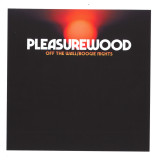
Dive head first into a parallel universe where the facts of music history have been turned into pliable putty and an alternative world where Rod Temperton never met Quincy Jones, never joined Heatwave and never wrote songs for the greatest pop soul artists of the 70’s and 80’s BUT instead, hung out at a West Berlin commune with a cast of trans-continental musicians playing a hybrid of post-psychedelic rock with overtones of Ghanaian funk and early 80s synth experimentation all the while exploring the mystic tundras of the mind and the celestial palisades of the soul...
This is the parallel universe that the Suffolk based studio dwellers, Pleasurewood inhabit. Let them take you on a journey through some of Temperton’s biggest hits in only a way that Pleasurewood’s genre defying style and studio prowess will allow.
Heatwaves kicks off on vinyl, with a tasty 7” Double A side that is dance floor ready...
It’s an off-kilter affair from side one with ‘Off The Wall’ swirling in a dense fog of phased bass guitar and emerging onto the shore with jutting hips to a groove underpinned by a sweating percussion section and early forms of synthesiser soaring above like crazed Pteranodons.
On the flip side is ‘Boogie Nights’ striding slowly and purposefully into frame with an apocalyptic Bass guitar line riding a solitary cowbell before a synthesiser clarion ushers in the break and the familiar hook with Moog thunder-strikes glowering in the distance.
The 7" includes digital download of the 7-tracks album "Heatwaves".
Limited to 200 copies.
Insolate unveils the 'Full Disclosure' album, arriving 7th March 2025 on her Out Of Place Records, released on digital and double record vinyl. It's the Croatian artist's second full-length release, already supported by the likes of Rodhad, Stephanie Sykes, and Nastia, following 2019's 'Order Is Chaos' on the label and its subsequent remix album, which featured reworks by Ben Sims, Pfirter, Sev Dah, Amotik, Under Black Helmet, Volster, ASEC, and Flamina.
"'Full Disclosure' is a reflection of who I am today. It represents the music I love to play, featuring high-energy bangers alongside functional tracks while experimenting with chords, vocals and melodies. As the title suggests, Full Disclosure is about openness, transparency, and revealing the full truth of who I am as an artist" - Insolate
'On Your Knees' starts Insolate's 'Full Disclosure' LP with rolling dub-infused rhythm drenched in a subtle but potent 303, an otherwordly vocal providing a tripped-out vibe. Closing out the A-side is 'Stand Strong', a pacey groove with an effective vocal sample and well-swung drums shot through with razor-sharp stabs.
On the flip, Insolate teams up with Croatian guitarist PEP for 'The Proof', a real banger that marks his debut in Techno production featuring mind-melting arpeggio sequences and a shadowy atmosphere. This is before 'Survival Symphony' strips things back via minimal drum work and electrifying synthlines that build in intensity.
The title track of Insolate's 'Full Disclosure' album, perfect peak-time cut 'Full Disclosure', continues with glitchy sequences, a bass bin-shaking groove, and another high-impact vocal sample. The aptly named 'Playground' then picks up speed with racing drums and rattling percussion while synths wriggle around playfully, followed by 'Big City', which features hauntingly enchanting melodies laid over bubbling arps and a steady beat. Insolate's 'The Biggest Fan' is another rave-ready trip with carefully crafted polyrhythms which won't fail to hypnotise the dancefloor before 'Ocean of Tears' closes out Insolate's stellar long-player via a captivating vocal harmony and acid-soaked 909s.
Since 1997, Insolate has become synonymous with the Croatian Techno scene via her HUSH! and TRAUM event series and her Osijek-based Out Of Place record label that's spotlighted artists like Anne, Francois X, and many more. She has built an impressive international career that's led her play at Berghain, Rex, and Tomorrowland, while her productions have seen her win the support of titans like Laurent Garnier and Ben Klock and join labels such as Luke Slater's Mote-Evolver and Bpitch.
'Full Disclosure' is a masterful body of work that shows the complete wealth of Insolate's talent and two-decade-long experience in Techno.
2025 Repress
Following releases from Dublin’s Fio Fa & naive label head Violet, LA-based Cromie & Timedance affiliate rRoxymore and various artists compilation Visions Vol. 1, Holly Lester prepares the next chapter of dualistic bleeps, bloops and blends from Utrecht producer Tifra on Duality Trax. Re-imagining vintage club sounds through a contemporary lens, Tifra is no stranger to stretching the electronic music template into new forms and ideas. His left-field house and old-school breaks have found their way onto Gestalt Records and Rough Recordings, and here the producer turns in three cuts of blissed-out electronica, hedonistic progressive and jungle-run club with its sights firmly fixated front left, complete with a wicked remix from one of modern dance music's most reliable names Roza Terenzi. ‘Plastic Replicant’ is a vocal-laced electro-house roller that takes inspiration from the golden-era of 90s electronic music and fuses it with the organic, multi-genre blends of the current gen. The ravey continuum is laced with high-frequency vocal stabs and deep basslines designed for a heads-down approach on the dancefloor, before ‘Entomology’ captures the playful side of the club with its shape-shifting acid-lines, trance-licked melodies and kaleidoscopic blend of colour, feeling and mood. Out of the club and onto the beach, ‘International Waters’ is a trip-hop inspired, downtempo dub that will delight ambient and laid-back electronic-revellers with its chirpsing birds and aqua-like aesthetic, before Roza keeps the dualism alive with a stripped-back jungle flip of the original; the perfect score for the perfect daydream.
The album’s title deftly gestures to the sheer vastness of astronomical dimensions, while simultaneously capturing the musical breadth within, where the eight planets are imagined as the eight notes of an octave. The work draws inspiration not only from earlier compositions —most notably Gustav Holst’s The Planets—but also from the rich astronomical and cultural contexts surrounding these celestial bodies. Here, the focus transcends direct citation of melodic motifs, instead embracing an intriguing conceptual approach on a meta level, unfolding in a series of vividly contrasting soundscapes. These contrasts shape a sweeping sonic journey, one that fully embraces the album format with both arms, inviting the listener to venture into realms both strange and wondrous, feeling the immensity of the interstellar space that lies between them. Contrast, after all, is the brushstroke that enriches our world.
Embarking on an auditory voyage, "Astral Guide" establishes the sonic framework that propels us into the boundless expanses of the cosmos. Its ethereal tones evoke the vastness of space, crafting a mood ripe for exploration within the realms of sci-fi. The subsequent tracks unfold like constellations, weaving a rich tapestry of sound that seamlessly marries cinematic soundscapes with pulsating, club-oriented rhythms. This album invites listeners to traverse its immersive landscapes, whether nestled in the comfort of home or dancing under the starlit sky, each note a guide through the transcendent experience of a nocturnal journey.
"Solar Flares" draws its inspiration from the awe-inspiring expanse of solar phenomena, capturing the majestic power of the sun as it reaches into the cosmos. This track resonates with the idea that energy, while vital, can also be a force of destruction when unleashed with overwhelming intensity. The composition beautifully mirrors the sun’s duality, where brilliance and devastation coexist, inviting listeners to reflect on the delicate balance between creation and annihilation. Through its rich textures and dynamic shifts, "Solar Flares" serves as both a homage to the celestial and a poignant reminder of nature's formidable power.
"Mercury – The Winged Messenger" embodies a meticulously crafted soundscape where artistry meets astronomy. The tempo of 173.6 BPM, derived from precise astronomical data, propels the composition into a vibrant realm that resonates with cosmic energy. Synthwave sound design intertwines seamlessly with the fluid rhythms of Drum’n’Bass, imbuing the piece with an uplifting dynamism that evokes the ethereal grace of Mercury itself. In this sonic exploration, listeners are invited to ascend on wings of sound, navigating the celestial tapestry of the universe with each invigorating beat.
"Venus, The Bringer of Peace" strikes a decidedly cozy note, presenting a poignant contrast to the more tempestuous themes often found in cosmic narratives. This composition evokes a nostalgic vision of an optimistic era, one in which humanity transcended borders and embraced the infinite possibilities of space exploration, where no destination felt too distant. The dense, languid atmosphere envelops the listener, creating a tangible sense of serenity that unfolds gradually, allowing for a meditative journey through sound. Each note serves as an invitation to linger in this tranquil embrace, reflecting on the harmonious potential of our collective aspirations and the beauty of connection in a vast universe.
The central theme of „Gaia, The Bringer of Life“ —originally not part of the planetary cycle— is the profound enabler of life on Earth. The arrangement delicately mirrors the slow, tentative unfolding of this potential, marked by an initially sparse orchestration that gradually builds in momentum. This progression crescendos, embodying the explosive dynamism of the Cambrian burst of life, ultimately culminating in a euphoric fanfare—a triumphant, celebratory flourish echoing life’s victorious emergence.
"Blue Moon" unfolds as a contemplative reverie on the tranquil clarity of a night sky, now seldom glimpsed in its natural purity, unclouded by the relentless haze of urban light. The listener is drawn into the vast embrace of the star-strewn firmament, a journey that sways between euphoric awe at nature’s sublime beauty and a profound melancholy for its fragile and imperiled state. Musically, this duality finds expression in the delicate interplay of modal mixtures, while an ever-shifting triplet groove, poised at the intersection of Outrun and melodic house, lends a pulse that is both nostalgic and forward-looking—echoing the beauty and transience of a world on the brink.
Rather than replicating the original composition of „Mars, The Bringer of War“, this interpretation seeks to evoke its profound, foreboding atmosphere. Cyberpunk emerges here as an ideal genre, channeling the dark, relentless march synonymous with Mars, the ancient god of war. The piece reverberates with intensity, as distorted vocalizations rise, embodying the anguish and visceral torment that shadow war’s violent crescendo. This auditory descent into conflict captures the relentless pulse of warfare, where sound itself becomes an embodiment of suffering and fury.
Majestically, "Jupiter, the Bringer of Jollity" emerges on the celestial stage, sweeping away the somber tones with its radiant vigor. Drawing inspiration from the triumphant strains of the original, and borrowing a melodic motif in the refrain, the piece expresses joy and buoyancy through a shift to a major key and the lilting sway of a danceable 12/8 meter. Spirited and exuberant, it leaps boldly from major to minor and back again, playfully shifting time signatures to capture a mood of unbridled festivity and jollity.
Here, a more conciliatory concept is chosen than in the original inspiration. „Saturn“ aligns with the number six, being the sixth planet from the Sun and bearing the iconic hexagonal pattern at its northern pole. What, then, could be more fitting than to render this piece in a 6/8 time signature? The arrangement unfolds with a multifaceted richness, mirroring the countless stones and ice fragments that form the foundations of Saturn’s majestic rings.
„Uranus“ adopts the theme of a light-footed, dancing instrumentation, giving the impression of perpetual motion, never quite settling. This musical choice harmonizes with the planet’s own orbit, as it spins with breathtaking velocity, teetering and swaying, seemingly unable to attain rest or stability.
The chill and vastness of the cosmos find expression in „Neptune, The Mystic“. At its core, an electronic soundscape envelops a classical arrangement, its unreachability intensified by an ethereal, otherworldly choir. Hovering at the outermost boundaries of the solar system, where warmth is but a distant memory, the composition lingers in a slow, contemplative tempo, evoking a realm where space for speculation stretches wide and silence reigns supreme.
Though Pluto may have lost its planetary status, and its companion Charon never achieved one, this shift in classification subtly aligns with the cosmic scale invoked here—one that mirrors the musical tradition of an eight-note sequence. Fittingly, the album closes with „Kuiper Belt“, a composition emblematic of the turbulence and vitality of countless smaller
celestial bodies that, though diminutive, find their rightful place within the vast architecture of the solar system.
They say nature is the greatest composer, shaping the universe with a symphony of chaos and order, beauty and danger. It is this duality that fuels the artistic vision of Edictum—a producer who, armed with a doctorate in chemistry, delves as deeply into the mysteries of molecules as he does into the depths of sound. In the tension between the vastness of the cosmos and the microscopic processes that dictate life’s rhythm, Edictum creates sonic landscapes that dissolve the boundaries between science and art.
His music is a story of contrasts—a sonic tale where the raw forces of nature clash with the intricate structures of human culture. Opposites intertwine to form a harmonious whole: the primal rhythms of the earth meet the celestial melodies of the cosmos, the rigid laws of physics blend with the boundless freedom of art. Edictum explores these polarities with meticulous devotion, each composition an expedition into uncharted soundscapes—a quest to give voice to the unfathomable.
With over 20 years immersed in the realms of electronic music, Edictum has honed a keen sense for rhythm and movement. His driving beats compel both body and mind into a hypnotic flow. Yet beyond the pulse of dance lies a complex framework of conceptual thought. Today, his creative focus revolves around holistic album projects—self-contained worlds with overarching narratives that embrace contrast and complexity. Each track stands alone as a fragment of the whole, but together, they weave a cohesive tapestry, much like the chapters of a novel that guide the listener on an emotional and sonic journey.
Edictum’s distinctive musical signature has earned him international recognition. With over 150 releases, many on prestigious platforms like the iconic *NewRetroWave* label, and collaborations with artists such as Jan Johnston, Azumi Inoue, Powernerd, and Turbo Knight, he has solidified his place in the global electronic music scene. His latest work, *A Cosmic Scale*, marks his seventh vinyl album and is released under his own label, *Echoes of Expanse*. The label’s name is no coincidence—it captures the essence of his art: echoes of infinity, the vibrations of the universe distilled into a singular sonic experience that carries the listener ever further into the boundless expanse of sound and space.

How many artists can boast that their music is played by Aphex Twin, Richie Hawtin and Surgeon alike? Celebrating 25 years of the Gunjack project, the launch of the HOUSE OF JACK imprint is here with a 6 track LP on 180 gram vinyl and mastered by Simon at The Exchange. Featuring new and never before heard versions of Gunjack classics, plus a remix of Ritual48 by Japanese techno icon DJ Shufflemaster, this record is an essential ride down a futuristic lane carved out by the Jack himself ... from relentless and funky, to deep and spacey, and all stops between, over the course of six tracks the album showcases a diversity found only in the hands of mastery and dedication. Commemorating 25 years of Gunjack and tipping off the 3rd season of the House of Jack show on youtube, this is a limited edition, colored 200gr 6 track LP - full of must have tunes for any serious DJ or collector of quality electronic music.
The record captures an expansive performance in Poitiers, France in November 2023. First working together in an unpredictable trio with minimalist legend and eccentric extraordinaire Charlemagne Palestine, Ambarchi and Thielemans quickly established a remarkable musical chemistry that led to an ongoing series of duo concerts, including the performance documented on their LP Double Consciousness (Matière Mémorie, 2023).
Kind Regards finds the duo refining their shared language while continuing to take risks, allowing the music’s gravitational pull to lead them from meditative calm to unexpectedly expressive passages of melodic invention and rhythmic drive.
Recorded in sparkling fidelity and carefully mixed by Ambarchi’s longtime collaborator Joe Talia, the LP contains a single unbroken performance, stretching out for over 45 minutes. Guitar and drums weave together into a symbiotic whole that nevertheless affords us ample opportunity to marvel at the highly personal approaches these two musicians have developed to their chosen instruments through decades of diverse collaboration and prolific performance. The set begins with Thielemans’ hypnotic tom patterns, around which Ambarchi’s wavering, shimmering guitar tones—achieved with the help of the rotating speaker of a Leslie cabinet—flurry and swirl. Thielemans’ drums play subtle tricks with time and perception, adding and dropping beats within repeated patterns to create an effect at once rhythmically insistent and liquified. Growing at first into a rapidly pulsing texture of brushed drums and flickering harmonics, the music builds momentum into an irregular groove over which Ambarchi’s guitar is transformed into haunting, monumental electric organ chords, strikingly recalling the Wurlitzer work of Alice Coltrane, before settling into a section of gentle portamento melody embedded into the tactile clicks and clangs of Thielemans’ percussion.
When Thielemans adopts a more traditional jazz approach to the kit in some of the set’s second half, the results are stunning, demonstrating a feel for shifting accents and sensibility to the touch of the stick on the drum or cymbal that recalls greats like Jack DeJohnette or Billy Hart (one of Thielemans’ mentors). And when Ambarchi turns up the heat, he does so in an unexpected and delightful way, letting loose a swarm of jittering delayed tones straight out of Henry Kaiser’s classic It’s a Wonderful Life, with a more active use of the guitar’s fretboard than his usual approach to the instrument allows. As the performance draws to a close after a climactic episode of distorted harmonic groans and crashing cymbals that manages to be at once thunderous and carefully attuned to detail, it is clearer than ever that, for these two serial collaborators, this is a very special pairing.
Kind Regards shows us the kind of magic that can happen when two masters who have dedicated decades to reimagining their instruments simply begin to play, following the music wherever it goes.
NEW LP PRESSING on Opaque Yellow Wax
Released in September 1978, a mere two months before YMO’s debut, Cochin Moon is a clear precursor to the groundbreaking synth and sequencer-dominated sounds that would come to define the iconic trio. Huge tip!
Credited to Hosono and Pop Art legend Tadanori Yokoo (who created the cover art), Cochin Moon is a fictional soundtrack to a journey into unknown worlds, inspired by Hosono and Yokoo’s trip to India.
The unbelievably prolific Haruomi Hosono is one of the major architects of modern Japanese pop music. With his encyclopedic knowledge of music and boundless curiosity for new sounds, Hosono is the auteur of his own idiosyncratic musical world, putting his unmistakable stamp on hundreds of recordings as an artist, session player, songwriter and producer. Born and raised in central Tokyo, his adolescent obsession with American pop culture informed his early forays into country music, which he would revisit later in his career. Hosono made his professional debut in 1969 as a member of Apryl Fool, whose heavy psychedelia was somewhat at odds with his influences, which leaned towards the rootsy sounds of Moby Grape and Buffalo Springfield. The latter was one of the main inspirations for his next group, Happy End, whose unique blend of West Coast sounds with Japanese lyrics proved to be highly influential over the course of three albums. After the band’s amicable break up in 1973, Hosono began his solo career with Hosono House, an intimate slice of Japanese Americana recorded inside a rented house with recording gear squeezed into its tiny bedroom. Hosono’s solo career would take many twists and turns from this point forward, with forays into exotica, electronic, ambient, and techno, culminating in the massive success of techno pop group Yellow Magic Orchestra (YMO).
Released in September 1978, a mere two months before YMO’s debut, Cochin Moon is a clear precursor to the groundbreaking synth and sequencer-dominated sounds that would come to define the iconic trio. Credited to Hosono and Pop Art legend Tadanori Yokoo (who created the cover art), Cochin Moon is a fictional soundtrack to a journey into unknown worlds, inspired by Hosono and Yokoo’s trip to India. Initially the album was to be a kind of ethnographic musical document, using found sounds and field recordings made by Hosono himself. Instead, after Yokoo introduced Hosono to the sounds of Kraftwerk and krautrock during the trip, Cochin Moon became something much stranger. Created almost entirely on synthesizers and sequencers with the help of future YMO collaborators Ryuichi Sakamoto and Hideki Matsutake, the music on the album is the perfect encapsulation of Hosono’s concept of “sightseeing music,” transporting the listener to an exotic place that may or may not exist. This highly sought-after album sees its first-ever official release outside of Japan.
Here comes a true South American LATIN JAZZFUNK treasure from Argentina!!!
Sound Essence is more than proud to present these lost recordings from 1974 to music lovers again in all their glory.
CARLOS FRANZETTI, who has once again been in the spotlight in recent years thanks to the re-release of his strong late 70s JazzFusion record "Graffiti", was also in charge of this record called DEDOS. The story behind:
In 1974, after CARLOS FRANZETTI was living in Mexico and worked as the musical director of FERMATA International, he returned to Argentina. In Buenos Aires his friend MOCHIN MARAFIOTTI was recently appointed A&R at the local recording label MUSIC HALL . Marafiotti asked Carlos if he wanted to record some of his music and he answered that he had in mind a group playing LATIN JAZZ . After a couple of meetings they came out with the idea of covering the RUBEN RADA tune DEDOS recently recorded in the US by AIRTO MOREIRA along with the OPA TRIO. Carlos contributed his own composition "Doce y Diez" . He selected the group consisting of his friend and member of the uruguayan Band TOTEM, Ruben Rada on percussion, Ricardo Lew on guitar , Emilio Valle on bass and Osvaldo Lopez on drums covering keyboards and vocals himself . This formation recorded tracks and vocals in a three hour session and the next day the track was mixed. Music Hall released "Dedos" and "Doce y Diez" on a single record and after months of discrete airplay and not so good sales the project for an album was draped.
"It is a rewarding experience to see a re-release of this two songs a half century after the original release.
It was hot and it looks and sounds even hotter now. I love it!" (Carlos Franzetti, New Jersey, December 2024).
The story of So-Do is both familiar and completely unique. A classically trained multi-instrumentalist with a poet’s sensibility and a passion for folk music meets a worldly bar owner with a love for psychedelia, post-punk and dub in the small town neither could bring themselves to leave. Over two years, they play dozens of shows in independent live houses across Japan, cut and self-release three singles – two 7”s and a 12” – and leave behind just eight tracks, all of which are set to be reissued for the first time forty years on.
So-Do’s Studio Works ’83-’85 collects the full output of this iconoclastic post-punk phenomenon, whose sparse, syncopated arrangements were infused with a dubbed-out flair that owed more to Dennis Bovell’s productions of Orange Juice, the Jah Wobble basslines of Public Image Limited or Adrian Sherwood’s live dubs of Mark Stewart than even they knew at the time.
Because for lead songwriter Hideshi Akuta, music offered an escape from the existential malaise of small-town life, folding a melancholy nihilism into tracks like ‘Kakashi’ and ‘Hashiru’ (which translates as ‘run’), or taking aim at the inequalities and creeping apathies of the middle classes, as he does on ‘Get Away’ and ‘Nothing’.
And if Talking Heads had CBGBs, Sex Pistols had the Roxy, then So-Do had Buddha. Influenced by Buddha venue owner and amateur producer Atsuo Takeuchi, Akuta turned So-Do’s sound towards dub, crafting playful, ironic and funky compositions that crackle with live energy at the vanguard of Japan’s nascent independent music scene.“So-Do is hard to explain,” Takeuchi says. “It’s been a struggle for years to try to find the words for our music.” The answer perhaps, is just to listen.
Both familiar and completely unique, So-Do extend Time Capsule’s genre-defining exposition of Japan’s reggae-inspired music of the ‘70s and ‘80s, as collected on the label’s two critically acclaimed Tokyo Riddim compilations, and London-based live outfit Tokyo Riddim Band.
Embracing the rip-it-up-and-start-again ethos of the early ‘80s, So-Do burned bright for a short time and then burned out. Their legacy is about to be reignited. Expect it to catch alight once more.
All songs are written & composed by Hideshi Akuta
Produced by Atsuo Takeuchi
Artwork by Ben Arfur
Liner Notes by Anton Spice, Ayana Honma, Kay Suzuki
Curated by Kay Suzuki
Licensed from Atsuo Takeuchi (Oregano Cafe)
Tape Restoration and Mastered by Mike Hillier at Metropolis Studios, London, UK
Time Capsule | TIME023 | 1983-1985 → 2025
- A1: Bluenow1, Out-Of-Tune Piano, St Mary's Hospital Basement, Electriksnippets
- A2: Bluenow2, Virus, Hurricane Bomber
- A3: Derek Jarman Reads White Lies
- B1: Brother James Plays J.s. Bach's 'Erbarm Dich Mein, O Herre Gott' On The Great Rissington Organ, Bertrand Russell Gives Sound Advice
- B2: Brother James Plays J.s. Bach's 'Erbarm Dich Mein, O Herre Gott' On The Great Rissington Organ
- B3: Electriksnippets
- B4: Terre Thaemlitz's Remix Of Shishapangma, Remixed By Simon Fisher Turner
Where to begin with a figure like Simon Fisher Turner? From teenage stage and screen star to illustrious recording artist for Creation and Mute and score composer of Caravaggio, Blue and The Epic of Everest - via a stint with The The and collaborations with Derek Jarman, David Lynch and Tilda Swinton - Turner embodies a distinctly British sensibility and boundless curiosity for sound. For A Colourful Storm, discovering Deux Filles, his mysterious project with Colin Lloyd-Tucker that has since been reissued by Dark Entries, was a significant moment in shaping their identity.
In August 2023, A Colourful Storm presented Simon Fisher Turner and Time is Away at Spanners, London. Performed at the tail end of Blue Now, a series of events celebrating Derek Jarman's last feature film, Blue, the recording reveals a lifetime of significant events and influences. Terre Thaemlitz's remix of Turner's Shishapangma (Comatonse Recordings, 2015) is reworked and appears on vinyl only, Jarman is privately recorded reading White Lies, Bertrand Russell is sampled, and Turner records his brother practising the Great Rissington organ for their father's funeral.
"My wife and I lived in Brixton, near the venue, on Coldharbour Lane, 20 years ago. We were above a takeaway shop. The air extractor was a nightmare and the flat smelled of grease. The market was a great place to buy fish. We adopted a giant snail, who we called Ayrton. I used to take him all over town and he loved lettuce and tomatoes. There was a wonderful small pizza shop too, which was so delicious. But back to the music. Brixton is music and I'm a lucky man."
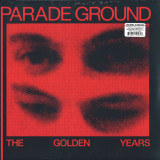
Parade Ground has always been the duo of brothers Jean-Marc and Pierre Pauly from Brussels, Belgium formed in 1981. Taking cues from Post-Punk, Coldwave, Dada and Surrealism, Parade Ground channeled suffering, tension and rage through pulsing synthesizers, skeletal guitar, severe bass and Jean-Marc’s expressive vocals as the most melodic and emotional instrument. The Golden Years is an 11-song, career-spanning collection of Parade Ground’s long out-of-print 7” and 12” singles as well as rare compilation tracks from the pioneers of electronic body music created during 1982-1988.
Parade Ground first appeared on the Nationale Rockmeeting LP in 1982, striking straight to the heart with the passionate plea “I Shut My Eyes.” Later that year the brothers met Daniel B. and Patrick Codenys of Front 242 beginning a collaborative partnership that continues to present day. In 1983 they released their debut 3-song 7” EP Moan On The Sly on the New Dance label, musically a hybrid of Joy Division and Fad Gadget. 1984 brought further explorations into the world of electronic body music with the 3-song Man In A Trance EP and 2 tracks on the live concert compilation Mask Promotion both records released on Front 242's Mask Music label. The following year the single Took Advantage/Moral Support 12” was released incorporating then, state-of-the-art modular synthesizers programmed by Daniel B. and back-up vocals from Flo Sullivan (A Formal Sigh, Shiny Two Shiny). Then in 1987 the brothers collaborated with Colin Newman of British post-punk band Wire, who produced and lent his vocals, guitars and keyboards to two songs ("Moans"/"Action Replay") while Daniel B. produced flipside "Gold Rush" on the Dual Perspective EP that stands alongside 80s anthems from Tears for Fears, Modern English, Echo & The Bunnymen. Finally in 1988 their debut album Cut Up was released on Play It Again Sam Records and featured the singles Strange World and Hollywood. In 1993 the brothers wrote and composed the vocals on two Front 242 albums Up Evil and Off. After 15 years of silence the boys released their second album Rosary in 2007 and continue to write new material and tour with their extensive catalog of dark dance classics. Each LP includes a 6-page press kit with lyrics, discography, photos and liner notes by Daniel B. of Front 242. The history of Belgian electronic music would not be complete without a trip through “The Golden Years” of Parade Ground.
- A1: Myoptik’s Jp Remix Of Kiss Me Quick V4 Noo
- A2: Jp Buckle - Kiss Me Quick
- B1: Jp Buckle - Flex
- B2: Jp Buckle - Flex - Roy Of The Ravers Dont Mean A Fookin Thing Mix
- C1: Jp Buckle - One For Da Laydeez (Crispy Jason Remix)
- C2: Jp Buckle - One For Da Laydeez
- D1: Inkipak - Kiss Me Quick
- D2: Jp Buckle - Heavy Soil
2025 Reissue
Back in the 90s JP Buckle had releases on Aphex Twin’s legendary Rephlex records and Warp. His debut album Flyin Lo-Fi is true classic in the Rephlex cannon.
These JP Buckle originals are from that album, released in 1998 and out of print on vinyl for 20 years, now re-released on vinyl by Ping-discs with 4 exclusive new remixes from Myoptik, Roy Of The Ravers, Crispy Jason and Inkipak.
This is two slabs of wax with bangin tunes on all four sides. The originals remain classic favourites of Rephlex aficionados the world over, and the remixes come from pedigree artists as well. Myoptik has had releases on many labels, including Mighty Force who first signed Aphex Twin over 30 years ago. Everyone knows Roy Of The Ravers, he has even been played in Aphex Twin’s live sets! Crispy Jason’s amazing music has featured on releases by both artists and Inkipak is the new sensation, with all of his first 4 albums selling out rapidly, indeed his debut album Anomaly is on its 3rd re-release on Pingdiscs now, that’s how in demand he is!
Originals taken from the classic 90s Rephlex album Flyin Lo-Fi.
Heavyweight Black Vinyl / Original glued prints on Thick Cardboard 700 gram / 2 Separated parts hand-glued / Glossy lamination / PVC outer sleeve / Insert with 10 pages Booklet 30 x 30 cm printed on Gmund Colro Felt Red Purplea d 90 Gram Favini papers with detailed interview between Tony Higgins and Mustafa's family (his sisters and children are all musicians), as well as an insight into the recording of the album with Gregory Bufford, the drummer for the session, lyrics and exclusive pictures.
Colored Vinyl Details:
Heavyweight "A side - B side solid purple + transparent blue" vinyl / Original glued prints on Thick Cardboard 700 gram / 2 Separated parts hand-glued / Glossy lamination / PVC outer sleeve / Insert with 10 pages Booklet 30 x 30 cm printed on Gmund Colro Felt Red Purplea d 90 Gram Favini papers with detailed interview between Tony Higgins and Mustafa's family (his sisters and children are all musicians), as well as an insight into the recording of the album with Gregory Bufford, the drummer for the session, lyrics and exclusive pictures.
Peronnel:
Mustafa Abdul Rahman - Tenor Saxophone, Percussion, Producer
Ahmed Abdullah - Trumpet
Malachi Thompson - Drums
Gregory Bufford - Bass
Richard Radu Williams - Piano
Rafik Abdur Rahim
Tony Smith - Guitar
Larry Banks - Synthesizer
Khalil Abdullah - Congas
Babafumi Akunyon - Percussions
Odell Grier Backing Vocals – Fred Harley, Hilda "Asia" Richbow , Linda Hall
Notes:
In the course of our deep research, we sometimes discover a hidden thread that unites musicians, songwriters, artists, and poets linked by music. Mustafa's 'Polygamy' is no exception. Apart from the music - the main reason we decided to work on this first ever re-press, a jewel at the crossroads between jazz funk, spiritual jazz and proto rap - are the many other things that make Mustafa an intriguing and fascinating character. For starters, he was a childhood friend of the Ayler brothers with whom he played in different formations. He also played with other beloved figures such as Noah Howard and Charles Tyler, on a still unreleased album recorded for Amiri Baraka's Jihad label, and worked with The Legendary Master Brotherhood and Steve Reid. This and much more will be revealed in a detailed interview between Tony Higgins and Mustafa's family (his sisters and children are all musicians), as well as an insight into the recording of the album with Gregory Bufford, the drummer for the session.