Indian born, UK artist Michael Diamond, co-founder of Vasuki Sound label and club night, announces new EP Placid Wakefulness, featuring single ‘Reverse Entropy’. available on all platforms 5th December via Vasuki Sound.
A uniquely multifaceted talent, Michael Diamond’s unforgettable ‘jazzed electronic’ sound is informed by a spectrum of influences, not least by intersection of the scientific and practical worlds of electronic music. From the music scholarship he won to read Medicine at Oxford where he quickly discovered new ways in which the two worlds can co-exist, his days were spent immersed in academic studies of music perception and cognition, while his nights were spent alongside the likes of Ben UFO, Batu & Ross From Friends, playing at one of UK’s most long-established nights ‘Simple’. A chance encounter there also led him to connect with musical collaborator Alex Wilson – the BBC Young Jazz Musician of the Year semi-finalist and then musical director of Oxford’s Jazz Orchestra – who appears frequently across Diamond’s compositions and on Placid Wakefulness.
No stranger to a concept piece, Diamond’s previous project, the highly personal and critically acclaimed exploration of culture and identity, Third Culture (album of the month/year acknowledgments from Stamp The Wax, Juno and Phonica Records, also earning him a DJ Mag ‘One To Watch’, a Youth Music Awards ‘Rising Star’ nomination and a Gilles Peterson’s ‘Future Bubbler’ accolade) explored the experience of being a ‘third culture kid’ born in Kerala, India and growing up in the UK with a sense of fractured identity.
On Placid Wakefulness, Diamond honours his academic research working alongside world-renowned musicologist Professor Eric Clarke. Specifically how music may affect our sleepfulness and wakefulness, how instinctively we are soothed by some sounds and energised by others - ‘what it is about dance music that makes people go hard all night long?’ and ‘what is it about ambient music that makes people feel the opposite way - to lull them into this sense of calmness or rest?’, mindful of the unconscious ways his findings were already manifesting in his work as an artist. And while his research provides a framework for some of the ideas within the piece, Placid Wakefulness can be viewed as more of an unintentional byproduct, or case-in-point of his findings, rather than a piece consciously constructed in their image.
Across Placid Wakefulness’s four tracks we find the artist unpacking a range of sonic ideas on this theme, from ambient calm to club-adjacent rhythms. The EP opens with hypnotic lullaby of ‘A Way of Listening’ complete with transcendent flutes provided by Alex Wilson, cello by George Lloyd-Own and a mellow groove. On the more energised ‘Reverse Entropy’, rhythmic ambiguity moves to rhythmic disambiguation with a four-to-the-floor beat as the track progresses, releasing tension and inviting an urge to dance as a jazz sax moment transmutes into glorious techno percussiveness.
On ‘Turning and Turning’ the bpm shifts down a gear, a sonic dreamstate where tough textural rhythms create a kind of liminal state tension. Closing out the EP we return to a sense of restfulness with the EP’s title track, where a gorgeous picked guitar loop interplays with vibrating ambient pads and a slow and steady beat. The Placid Wakefulness EP is a captivating testament to Diamond’s singular artistic talent and the fascinating interplay of neuroscience and how we experience and enjoy music.
Поиск:play out music
Все
- A1: Mckennai Beat
- A2: What Wood Feat. Brother Portrait
- A3: Ladybug
- A4: Modern Ifa
- A5: Fm Feat. Max Mckenzie
- A6: Austral Mood
- A7: Slave Cemetery
- A8: Cari And Whales
- B1: Meditation & Heartbreak
- B2: For Nahel Feat. Selina Jones
- B3: Cosmic Psylo
- B4: Norwood Junction
- B5: Ears
- B6: Unrooted Maskossa
- B7: Last Bantu (Outro)
Releasing now for well over a decade - Neue Grafik: known to friends as Fred, has successfully transplanted from Parisian rookie to one- man London Institution. Beginning as a solo producer and DJ,Fred spread his wings upon relocating to South London - at first with his Neue Grafik Ensemble and later with his now iconic twice-weekly Orii Jam - the latter of which has given agency to an entire new generation of musicians; spawning an aesthetic, nurturing a unique sound and becoming a launchpad for countless artists.
Dalston Tape Volume 1 is Fred’s attempt to fall back in love with beatmaking - taking it back to the roots of
where the project began. I say “attempt” because he’s simply learnt too much and made too many friends
along the way to make a mere DIY beat tape. Since his early MPC-led productions on Parisian label, Beat
X Changers, Fred has learnt to play the keys to a concert hall standard, he has become proficient in double bass and built up a dense network of collaborators who he has composed, recorded, engineered and produced for both at home in SE London and in the iconic Total Refreshment Centre Studios in Dalston.
This experience adds unavoidable dimensions to his toolbox - resulting in something more akin to a miniature-magnum-opus than a simple beat-tape.
Yes, we hear the influences of Pete Rock, Mad Lib, J Dilla and Al Dobson Jr but we also hear the musicality of D’Aneglo, James Blake and live contributions from an ever growing army of young graduates of the Orii School.
Debut collaborative album from Troth, the Nipaluna-based duo of Amelia Besseny and Cooper Bowman, and kindred spirit and legendary Mancunian free-form guitarist Jon Collin. A lavish dreamscape conjuring the dramatic beauty of uncharted mountains and streams, it documents both the crystilisation of ideas first shared during an Australian encounter in early 2023 and years of mutual appreciation.
Troth’s sonic universe, a constellation of drifting atmospherics, bedroom pop impulse and modern classical motifs, is deeply intimate and never rushed. Recent sides Forget The Curse and Idle Easel and live performances supporting the likes of Maxine Funke and Treasury of Puppies have seen Besseny’s soaring, celestial voice take centre stage, delicately adorned with Bowman’s synthesiser flourishes and homespun instrumentation. At their heart lies Bowman’s tireless collaborative instinct: his decade-long involvement in the Australian underground and his countless musical outfits (including contemporary trio Th Blisks, with Besseny and Yuta Matsumura).
Summer 2023 saw the duo host two shows for Collin in their former home of Mulubinba, regional New South Wales. Collin is perhaps best known for his playing, deconstructing and reconfiguring of the guitar and other stringed instruments, realised in solo works on his own Early Music and Winebox Press imprints, and collaborations on a trio of albums with Demdike Stare and live sessions with Sarah Hughes and Bill Nace. His unique style of playing, sometimes delicate, at other times frictional, refutes expectations of traditional instruments and fits perfectly within both Troth’s ethos and their lush sonic mise-en-scène.
The objects of devotion perhaps symbolise the group’s devotion towards each other during their music-making process, and the fruits from which they are borne. “I think, any music I have a hand in, is a dialogue with by the people I'm making it with. It's an ongoing conversation between people and sound”, reflects Bowman. The sacredness and ominousness of remote Tasmania is just as affecting, the interplay of Besseny’s haunting vocal washes, Bowman’s sparse instrumentation and Collin’s ritualistic strum evoking the eeriness that lurks beneath the seemingly limitless Australian landscape. “When I think about it, it sounds like being together at the bottom of the Earth. Watching, listening and playing together with no-one else in sight."
- Dexter Main Title
- Tonight S The Night
- Conoci La Paz
- Uruapan Breaks
- Flores Para Ti
- Blood
- Con Mi Guaguanco
- Perfidia
- Sometimes I Wonder
- Born Free
- Dexter Main Title
- Escalation
- Shipyard
- Deborah Loves Rudy/The House
- I Can T Kill
- Voodoo Jailtime
- New Legs
- Photo Albums
- Courting The Night
- Hide Your Tears
- Wink
- Astor S Birthday Party
- Epilogue/Bloodroom
- Blood Theme
- Die This Way
How did Dexter make a TV audience sympathize with a serial killer? No question, it took an ingenious premise, great writing, great direction…and a stellar ensemble cast headed by lead actor Michael C. Hall. But long-time viewers of the show know there was another “character” that played a huge role in the series: the soundtrack. From Rolfe Kent’s unforgettable title theme to the well-chosen Latin-tinged tunes that fit the Miami setting to composer Daniel Licht’s brilliant themes, the score of Dexter commented on the action even as it amplified its emotional power. Special mention must be made of the late Licht’s work, which employed Latin and electronic elements to portray Dexter’s warm and cold sides; among the favorites here are “Astor’s Birthday Party” and the haunting “Blood Theme” that played over the credits in every episode. In 2007, the Milan label put out a CD and a truncated single-LP soundtrack album containing music from the first season; now, for the first time, we at Real Gone Music are offering all of the music that appeared on the CD in an expanded double-LP edition, pressed on blood with white swirl vinyl and housed inside an appropriately gory gatefold. Don’t miss Michael C. Hall’s spoken word pieces, either…perversely pleasurable listening, limited to 1500 copies!
"This is the time that we, who have benefitted from the Last Poets shouldbe able to say, 'it's the Last Poets. It's them we should be honouring, because we did not honour them for so many years_"
KRS One wasn't just addressing the hip hop fraternity when he uttered
those words by way of introducing the video for Invocation - a poem
written thirty years ago, around the time of the Last Poets' last significant comeback. He was speaking to everyone who's been affected by the word, sound and power issuing from the most revolutionary poetry ever witnessed, and that the Last Poets had introduced to the world outside of Harlem at the dawn of the seventies.
In 2018 the two remaining Last Poets, Abiodun Oyewole and Umar Bin
Hassan, embarked on another memorable return with an album -
Understand What Black Is - that earned favourable comparison with theirseminal works of the past, whilst showcasing their undimmed passion andlyrical brilliance in an entirely new setting - that of reggae music. Trackslike Rain Of Terror ("America is a terrorist") and How Many Bullets demonstrated that they'd lost none of their fire or anger, and their essential raison d'etre remained the same.
"The Last Poets' mission was to pull the people out of the rubble o f their lives," wrote their biographer Kim Green. "They knew, deep down that poetry could save the people - that if black people could see and hear themselves and their struggles through the spoken word, they would be moved to change."
Several years later and the follow-up is now with us. The project started when Tony Allen, the Nigerian master drummer whose unique polyrhythms had driven much of Fela Kuti's best work, dropped by Prince Fatty's Brighton studio and laid down a selection of drum patterns to die for. That was back in 2019, but then the pandemic struck. Once it had passed, the label booked a studio in Brooklyn, where the two Poets voiced four tracks apiece and breathed fresh energy, fire and outrage into some of the most enduring landmarks of their career. Abiodun, who was one of the original Last Poets who'd gathered in East Harlem's Mount Morris Park to celebrate Malcolm X's birthday in May 1968, chose four poems that first appeared on the group's 1970 debut album, called simply The Last Poets. He'd written When The Revolution Comes aged twenty, whilst living in Jamaica, Queens. "We were getting ready for a revolution," he told Green. "There wasn't any question about whether there was going to be one or not. The truth was many of us still saw ourselves as "niggers" and slaves. This was a mindset that had to change if there was ever to be Black Power." He and writer Amiri Baraka were deep in conversation one day when Baraka became distracted by a pretty girl walking by. "You're a gash man," Abiodun told him. The poem inspired by that incident, Gash Man, is revisited on the new album, and exposes the heartless nature of sexual acts shorn of intimacy or affection. "Instead of the vagina being the entrance to heaven," he says, "it too often becomes a gash, an injury, a wound_" Two Little Boys meanwhile, was inspired after seeing two young boys aged around 11 or 12 "stuffing chicken and cornbread down their tasteless mouths, trying to revive shrinking lungs and a wasted mind." They'd walked into Sylvia's soul food restaurant in Harlem, ordered big meals, then bolted them down and run out the door. No one chased after them, knowing that they probably hadn't eaten in days. Fifty years later and children are still going hungry in major cities across America and elsewhere. Abiodun's poem hasn't lost any relevance at all, and neither has New York, New York, The Big Apple. "Although this was written in 1968, New York hasn't changed a bit," he admits, except "today, people just mistake her sickness for fashion." Umar is originally from Akron, Ohio, but had arrived in Harlem in early 1969 after seeing Abiodun and the other Last Poets at a Black Arts Festival in Cleveland. That's where he first witnessed what Amiri Baraka once called "the rhythmic animation of word, poem, image as word- music" - a creative force that redefined the concept of performance poetry and stripped it bare until it became a howl of rage, hurt and anger, saved from destruction by mockery and love for humanity. When Umar's father, who was a musician, was jailed for armed robbery he took to the streets from an early age where he shined shoes and raised whatever money he could to help feed his eight brothers and sisters. By the time he saw the Last Poets he'd joined the Black United Front and was ready to join the struggle. Once in Harlem, Abiodun asked him what he'd learnt in the few weeks since he'd got there. "Niggers are scared of revolution," Umar replied. "Write it down" urged Abiodun. That poem still gives off searing heat more than fifty years later. In Umar's own words, "it became a prayer, a call to arms, a spiritual pond to bathe and cleanse in because niggers are not just vile and disgusting and shiftless. Niggers are human beings lost in someone else's system of values and morals." And there you have it. It's not just race or religion that hold us back, but an economic system that keeps millions in poverty and living in fear - a system born from political choice and that's now become so entrenched, so bloated on its own success that it's put mankind in mortal danger. It was many black people's acceptance of the status quo that inspired Just Because, which like Niggers Are Scared Of Revolution, was included on that seminal first album. Along with their revolutionary rhetoric, it was the Last Poets' use of the "n word" that proved so shocking, but it would be wrong to suggest that they reclaimed it, since it never belonged to black people in the first place. There's never any hiding place when it comes to the Last Poets. They use words like weapons, and that force all who listen to decide who they are and where they stand. Umar's two remaining tracks find him revisiting poems first unleashed on the Poets' second album This Is Madness! Abiodun had left for North Carolina by then where he became more deeply enmeshed in revolutionary activities and spent almost four years in jail for armed robbery after attempting to seize funds related to the Klu Klux Klan. Meanwhile, the 21 year old Umar was squatting in Brooklyn and had developed close ties with the Dar-ul Islam Movement. A longing for purity and time-honoured spiritual values underpins Related to What, whilst This Is Madness is a call for freedom "by any means necessary," and that paints a feverish landscape peopled by prominent black leaders but that quickly descends into chaos. "All my dreams have been turned into psychedelic nightmares," he wails, over a groove now powered by Tony Allen's ferocious drumming. Those sessions lasted just two days, and we can only imagine the atmosphere in that room as the hip hop godfathers exchanged the conga drums of Harlem for the explosive sounds of authentic Afrobeat. Once they'd finished, the recordings and momentum returned to Prince Fatty's studio, since relocated from Brighton to SE London. This was stage three of the project, and who better to fill out the rhythm tracks than two key musicians from Seun Anikulapo Kuti's band Egypt 80? Enter guitarist Akinola Adio Oyebola and bassist Kunle Justice, who upon hearing Allen's trademark grooves exclaimed, "oh, the Father_ we are home!" Such joy and enthusiasm resulted in the perfect fusion of Nigerian Afrobeat and revolutionary poetry, but the vision for the album wasn't yet complete. He wanted to create a new kind of soundscape - one that reunited the Poets with the progressive jazz movement they'd once shared with musicians like Sun Ra and Pharoah Sanders. It was at that point they recruited exciting jazz talents based in the UK like Joe Armon Jones from Mercury Prize winners Ezra Collective, also widely acclaimed producer/remixer and keyboard player Kaidi Tatham, who's been likened to Herbie Hancock, and British jazz legend Courtney Pine, whose genius on the saxophone and influence on the UK's now vibrant jazz scene is beyond question. The instrumental tracks on Africanism are in many ways as revelatory and exciting as the Last Poets' own. It's important to remember that the kaleidoscope of styles and influences we're presented with here aren't the result of sampling but were played "live" by musicians responding to sounds made by other musicians. That's where the magic comes from, aided by Prince Fatty's peerless mixing which allows us to hear everything with such clarity. Music fans today have grown accustomed to listening to all kinds of different genres. Their tastes have never been so broad or all- encompassing, and so the music on this new Last Poets' album is as groundbreaking as their lyrics, and perfectly suited to the era that we're now living in. John Masouri
Habibi Funk is excited to announce the release of Samh Almea'ad, a new 7" record by Libyan artist Cheb Bakr, hitting the shelves on December 6, 2024. Recorded in the early 2000s, Bakr’s music fuses the pulse of Libyan pop with R&B and hip-hop influences, bringing the energy of Benghazi to the dance floors of New York in the early 2000s. Cheb Bakr’s sound is a unique blend of styles that captures the essence of two worlds and includes production and vocals by Ahmed Ben Ali.
Our journey with Cheb Bakr’s music began when Yousef Alhoush, whose father Najib Alhoush led The Free Music from Libya, generously lent us boxes of cassettes to digitize. With the help of a journalist traveling from Tripoli to Cairo, we brought the tapes and a high-quality deck to Egypt. For three days in a hotel room on Zamalek island in Cairo, we sifted through nearly 100 tapes, finally landing on several from Cheb Bakr that dated back to the late 1990s and early 2000s. His albums stood out for their fresh, genre-defying sound—Bakr’s vocals flowed effortlessly over R&B and hip-hop beats with touches of jungle and drum and bass percussion, creating a fusion that crossed cultural and musical boundaries.
Returning to Berlin, we took a deeper dive into the digitized tapes, identifying bands, singers, and producers that excited us. In the process, we noticed familiar rap verses on a few of Bakr’s tracks—verses by none other than Ahmed Ben Ali, who was about to release an album with Habibi Funk. When we asked Ahmed about his connection with Bakr, he explained that they’d collaborated closely at Jamaica Studios in Benghazi, with Ahmed even producing some of Bakr’s songs.
Despite having lost touch for years, Ahmed helped us reconnect with Cheb Bakr through mutual friends. Their reunion took place in Bakr’s living room, where we joined them on a video call to discuss Bakr’s career and his influences. He explained how he sought to reinterpret eastern Libyan folk sounds for a new generation, blending them with contemporary genres.
This 45 marks the beginning of our work with Cheb Bakr, offering a glimpse into his unique musical style, with a full album to follow at a later date. The release includes two standout tracks that showcase Bakr’s dynamic range. Side A features “Samh Almea'ad,” a reinterpretation of a 2003 New York classic with Bakr’s signature spin. Since our first listen in that Cairo hotel room, it’s been played at every Habibi Funk set without exception. Side B, produced by Ahmed Ben Ali, features “Rjana Lamta,” a track that hints at American influences alongside a nod to Ahmed’s “Dameek Majeb.” Bakr’s artistry ties these contrasting elements into an original, dancefloor-ready track that remains as captivating today as it was two decades ago. As always, this 7" release comes with a booklet detailing some of the Cheb Bakr story. Samh Almea'ad will be out on vinyl December 6th.
Licensing info: These songs were licensed from Cheb Bakr. We pay the licensing partner 50% of the profits of this release. Only project related costs are deductible from the gross income, research and travel costs come out of our own share. Publishing was not included in our agreement (We feel it’s important to be transparent about these deals, therefore we will include these infos in all future releases).
Cinthie steps up to Aus Music's 200 series with Rave Baby EP.
The popular underground mainstay offers three effective and emotive house weapons Cinthie has been at the heart of the European underground for many years. The Berlin-based artist heads up her cultured 803 Crystal Grooves label and the well-respected Elevate.Berlin recordstore. She has a vast vinyl collection and a deep understanding of house that makes her a favourite all around the world. She has long been a key part of the Aus family and has recently branched out into playing live, all while continuing to serve up timeless sounds that range from rave-ready to deep and driving.
This EP is the third in a run of four releases from different artists to mark the 200th outing of Will
Saul's influential Aus Music. It is an era-defining label that has platformed some of the scene's
brightest stars way before they broke out. Since launching in 2006, the label has remained dedicated to releasing club-ready music with a cultured edge from deep and melodic house to the earliest bass-driven post-dubstep fusions.
Cinthie pushes herself into a more ravey fast-paced direction with her lead single 'Rave Baby'. The well swung kicks are full of warmth as a nimble bassline phrase gets hands in the air and crisp percussion cuts up the beats. It's peak-time fun that completely takes off with the raved-up piano stabs and a steamy female vocal. 'I Warned You Baby' sinks into a deeper groove that harks back to 90s New Jersey with diffuse chords, Nu Groove style vocals and punchy drum programming full of good vibes. Closer 'What's Poppin'' is passionate house music with depth and drive. Raw percussion, turbo-charged retro stabs and another standout bassline make it a high-class weapon.
- When Did I Lay Down And Die
- Cherryade
- Little Piggies
- Let It Burn
- This Is Forever
- Don't Be A Can't (All Your Life)
- A Simple Song
- It's A Scream
- Bad Energy
- Boxes Squares Etc
- Dear Universe
- I'm Alright (Dear Universe Reprise)
- Bad Scenes At The Eyelid Cinema
- Remedy
- Inaction Man
- Man You've Got To Help Yourself
"_Syd Barrett fronting Queens Of The Stone Age- surefooted, inventive and buzzing with surprises." - The Guardian "A refreshingly bold alt-rock sound." Alfitude NJ White - aka WHITEY - explodes out of the shadows with the announcement of his highly anticipated double LP MENTAL RADIO, out on 3rd October 2024. Pulling in influences from across decades of sound and putting it through the Whitey blender to create something musically fresh, MENTAL RADIO is an album that in turn is furious, raw, amused, politically razor sharp and poignant... a satirical take on 21st Century life, a musical pop art collage. As an individual, Whitey prefers to speak via his work, and has eluded all interviews for well over a decade - leading one journalist to describe him as 'the musical equivalent of Bigfoot'. Despite this elusive stance, his music continues to rack up many millions of plays and draw fans from all ages across the globe. Across a string of acclaimed albums, Whitey's music has made its mark, from rock'n'roll clubs to electronic dance floors, fashion catwalks to movie soundtracks, television to computer games, from Breaking Bad and the Sopranos to Grand Theft Auto. Whitey has built a strange home in the shadows between mainstream entertainment and the vanishing underground, an outsider who celebrates his outsider ethos in his work- and yet whose music is embraced by both popular and alternative culture. Whitey is a prominent spokesperson for independent music - his viral letter about 'fair fees for artists' was shared 500,000+ times; and made Newsweek, The Times, BBC Worldwide and the front editorial of Music Week. Whitey's back catalogue has previously received praise from the likes of The Independent, The Guardian, Record Collector, Uncut and Rock Sound to name a few. Available as a Double Vinyl LP, CD and cassette through NO! LABEL, published globally by Mute Song and repped for live by William Morris Entertainment- this is set to be a benchmark album of 2024. Housed in a Gatefold Sleeve (Gloss Finish plus Silver Foil Trim) Including two Printed Inner Sleeves (Gloss Finish).
- Cold Outside
- Nick Of Time
- Lonely One
- It's My Time
- Left Unsaid
- Try Try Try
- Hall Of Mirrors
- Much Too Much
- Your Kinda Thing
- New Questions
- Kill City
- I'm Not Gonna Do It
- Don't Wanna Play
- Nashville Nights
- Today I Shot The Devil
- Tell Me Things
- Live With Me
- Just Another Day
The Fluid are arguably the great unsung band from the fertile underground rock scene of the late '80s and early '90s. The Denver five-piece - John Robinson (vocals), James Clower (guitar), Matt Bischoff (bass), Garrett Shavlik (drums), and the dear departed Ricky Kulwicki (guitar) - fused the fire of '80s hardcore with crunching Detroit protopunk, '60s garage rock, and '70s rock swagger. Think MC5, Faces, '70s Stones, all cranked up and really high on Sex Pistols and Black Flag singles. Rising from the ashes of early-'80s Denver bands Frantix (whose "My Dad's a Fuckin' Alcoholic" is a true gem of American punk) and White Trash, The Fluid were the first non-Seattle band to sign to Sub Pop, and Clear Black Paper was the second full-length album the label ever released. The label honchos were fans of Frantix, and happily got involved with The Fluid when the opportunity arose via the label's European licensing partner, Glitterhouse. Witnessing The Fluid's dominant live presence helped - a particularly fiery early show at Seattle's Central Tavern featured The Fluid, Mudhoney, Mother Love Bone, and Soundgarden all trying to outdo one another on stage. The band fit right in on Sub Pop's nascent roster of acts who, wherever they stood on the spectrum of punk/rock/metal, shared a commitment to thunderous riffs and explosive live shows. Legendary for their ferocious stage presence, The Fluid toured all over the US and Europe, holding their own and then some on bills with Mudhoney, Nirvana, Soundgarden, Dinosaur Jr., and other powerhouses of the era. From 1986 to 1993, The Fluid put out four albums and a number of EPs and singles, including a split 7" with Nirvana in 1991, before doing one album for a major label and promptly disbanding. Yet, while their partners-in-crime bulldozed into the mainstream, The Fluid remained something of a cult band, their audience confined to those who got hip during the band's existence, and crate diggers who nabbed original vinyl or CDs, which had quickly become rarities after selling through their original runs. Why? Record industry machinations? The fickle finger of pop culture? Being from Denver, not Seattle? Who the hell knows_ and who cares! The point is the band ripped, and the world deserves to hear them again. The Fluid took influences they shared with their contemporaries and ran in their own direction, focused on ass-shaking grooves more than misanthropic sludge. Rock anthems like "Cold Outside" sit alongside Stooge-oid rhythmic poundings ("Black Glove"), bluesy romps ("Leave It"), the occasional grungy dirge ("Wasted Time"), and raw punk bangers ("Is It Day I'm Seeing?" from the seminal 1988 Sub Pop 200 compilation). The band wasn't shy about their inspiration, either: scattered through their catalog are covers of The Troggs, The Rolling Stones, MC5, Iggy Pop and James Williamson, and Rare Earth. The Fluid stand out as champions of a feral, urgent, exuberant approach to rock 'n roll. As it turns out, that wasn't a recipe for stardom in the era of hyper-slick pop, boomer dinosaurs crying tears in heaven, and hair-metal power-ballads. But someone had to do it. To set things right, Sub Pop, The Fluid, and producer Jack Endino (Nirvana, Soundgarden, High on Fire, Mudhoney) teamed up to refresh and reissue The Fluid's entire indie-label catalog: their 1986 debut, Punch N Judy; 1988's Clear Black Paper; 1989's Roadmouth; the 1990 Glue EP (produced by Butch Vig, of Nevermind fame); and a treasure trove of rarities and previously unreleased material. All the music has been remastered from original tapes by Endino and JJ Golden, and the bulk of it has been meticulously remixed by Endino and the band, righting some sonic quirks that diminished the impact of the original records. Now, with their definitive material sounding better than ever, it's high time The Fluid get their due.
- Baby B.a.b.y. (Carla Thomas)
- Erotica
- Alguien Para Amar Somebody To Love (Jefferson Airplane)
- Ah Ah Ah Ay
- Rollin' And Tumblin' (Muddy Waters)
- Uno De Estos Dias Some Of These Days (Brenda Lee)
- Carmesi Y Trebol Crimson And Clover (Tommy James & The Shondells)
- Eres Tu Baby It's You (The Beatles)
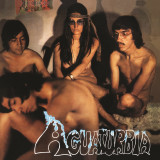
"Aguaturbia" (1970) is an essential album to understand the construction of what we know today as Chilean rock. This very influential album is raw and dynamic, featuring heavy rhythms, distortion, and exceptional phased female vocals reminiscent of Jefferson Airplane. It comprises original compositions and electrifying renditions of songs brought to fame by the likes of Tommy James & The Shondells, The Beatles and, of course, Jefferson Airplane elevating these classics to new heights of intensity and rhythmic allure. We are thrilled to make this outstanding LP available again after many years out of stock. Aguaturbia's debut album was originally released in 1970 and showcases one of South America's most significant psychedelic bands from the late 60s and early 70s. Their influence in their native Chile -and beyond- was groundbreaking. It was played live in 1969 on 3 tracks, and it became an icon of transgression due to its unbridled musical aesthetics and cover art that - for the time of its irruption - meant a clear defiance of the conservative logics lived in Chile, which saw in the nudity of the cover a challenge to morality and good manners. The album is raw and dynamic, featuring heavy rhythms, distortion, and exceptional phased female vocals reminiscent of Jefferson Airplane. Guitarist Carlos Corales shines and when he played solos at the gigs, the effect on the audience was silence and euphoria at the same time, they couldn't believe what they heard. Everything was done with a professional attitude. In fact, Carlos Corales (guitar) and Willy Cavada (drums) were both professional musicians who had made a previous career in rock and roll bands. The LP showcases breathtaking moments, like Willy Cavada's masterful drum solo in 'Ah Ah Ah Ay' captured flawlessly in a single take. Dive into the sensual psychedelic journey of 'Erotica,' where Denise's alluring vocals dance harmoniously with Carlos' electrifying guitar. Plus, don't miss their thrilling renditions of 'Somebody to Love' and 'Crimson and Clover'-each track elevating classics to new heights of intensity and rhythmic allure. This album is more than music; it's an invitation to experience sheer auditory bliss! "Aguaturbia" is an essential album to understand the construction of what we know today as Chilean rock.
Lamina is the moniker of multi-disciplinary French artist Clarice Calvo-Pinsolle. 'Olas Curativas' is Calvo-Pinsolle's first vinyl release. Taking influence from the natural world, works of hydrofeminism, and experiences with hypnotism, Calvo-Pinsolle prolifically performs and records her own refreshing take on ambient music alongside working as an established installation artist. She has previously released two full-length albums on Orila Records & Complex Holidays, as well as a joint LP with Kitchen Cynics, and a collaboration project with Bear Bones Lay Low under the moniker XAXI. Her discography is fleshed out by various contributions to compilations, including the opening track 'Soupire' on Twin System's 'Tendrils Lurched Purple In The Slush' tape series. Radio play of Laminas music includes Graham Dunning / NTS, Emil Mirzoev/ Kiosk Radio, Laura de Diaz / CAMPO BASE, xYsse / Radio Vacarme, Melina Despretz / Kiosk Radio, Chris Penty Alvarez / Noods Radio, Leoni Leoni / Radio Alhara, Laura Connant / Ola Radio, Bravo Tounky / Rootradio. Performances of material from 'Olas Curativas' include shows at Cafe Oto / London, Cosmos / Lisboa, TV Control Center / Athens, Iklektic / London, Braille Satellite / Lithuania, Slug Gallery / Leipzig, Spazio X / Treviso, Krut Festival / Ghent, Schiev Festival / Brussels, Woodblocks Festival / Brussels.
'Olas Curativas' was developed and written in 2022, with these pieces first heard as live jams at shows mainly around Brussels and Portugal, before being honed into this mesmeric full-length LP. Calvo-Pinsolle's effective use of manipulated field recordings and tape loops provide a backdrop for harmony that leans towards the mystical, brimming with melodies equal parts haunting and enchanting. Alongside harvesting a sound library over the past several years, Calvo-Pinsolle has developed an approach to composition using field recordings that informs both her musical and sculptural work. These recordings are transformed much like the ceramics seen in the record artwork; shaped, chiseled, and transformed. These ceramics were crafted and painted by Calvo-Pinsolle herself, and hints at this bridge between her two disciplines of music and sculpture. Although an expansive realm, throughout Calvo-Pinsolle's output there are consistent moods and qualities that are absolutely distinctive to this artist's creative worldview, and of which 'Olas Curativas' is a perfect encapsulation.
- Motion (Feat. Jacob Collier And Seamus Blake)
- Chamego No Salao (Feat. Lenine)
- Nosso Amor Vadio (Feat. Zelia Duncan)
- Banzo (Feat. Omar Sosa)
- Hermanos (Feat. Yamandu Costa)
- Onde Nascem As Ondas (Feat. Ed Motta)
- Paisagem (Feat. Anat Cohen)
- Botero (Feat. Eduardo Farias)
- Nosso Valsa (Feat. Leila Pinheiro)
- Catarina E Teresa (Feat. Hermeto Pascoal)
The album "Plural" celebrates the remarkable encounters and partnerships that have shaped Gabriel Grossi"s 25-year career as a harmonica player, composer, arranger, and producer. Featuring 10 of his own compositions, Grossi"s renowned virtuosity flows with deep sensitivity through various genres, reflecting the solid trajectory of one of the greatest instrumentalists and most creative musicians in Brazilian music. Collaborating with prominent names from both the national and international music scenes, "Plural" showcases Grossi"s music without borders, offering the world a glimpse of his extensive career. For this celebration, outstanding guests were invited to join the musical journey. Including Jacob Collier, Ed Motta, Hermeto Pascoal, Seamus Blake, Omar Sosa and others.
Obscure & outstanding free jazz album reissued for the first time since it’s original release in 1969. Old-style gatefold sleeve LP, with liner notes by Ed Hazell.
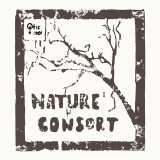
In the late 1960s, young jazz musician Bobby Naughton, a keyboardist and vibraphonist, faced significant challenges as he sought to record his first album. With major record labels and jazz clubs catering only to big names, Naughton and other creative musicians of his generation found themselves sidelined by the mainstream music industry. They turned to self-reliance and self-production, becoming part of a movement of independent musicians. Naughton’s debut album, Nature’s Consort, was a DIY effort in every sense—recorded on home equipment and featuring a hand-printed woodblock cover. The album was distributed independently at concerts and by mail, receiving little attention initially, but over the years it gained a reputation as a rare, sought-after artifact of the period.
Though recorded during an outdoor concert in Connecticut, Nature's Consort reflected the "loft jazz" scene in New York City. This avant-garde jazz movement centered around musicians who lived and played in loft spaces in lower Manhattan. Naughton commuted from his home in Southbury, Connecticut, to play with his bandmates Mark Whitecage, Mario Pavone, and Laurence Cook in New York's lofts. These musicians regularly performed at venues like Studio We, a key gathering spot for free-form jazz, where musicians could experiment and develop their sound, often with no audience present.
Naughton’s journey into jazz was a winding one. Originally from Boston, he played rockabilly and blues-rock before transitioning into free jazz. Inspired by avant-garde artists like Carla Bley and Paul Bley, Naughton sought to explore new forms of music that went beyond traditional jazz structures. His bandmates, Mark Whitecage and Mario Pavone, were both deeply affected by the death of John Coltrane in 1967, which prompted them to quit their day jobs, attend Coltrane’s funeral, and move to New York to pursue jazz full-time.
Nature’s Consort was a collective project, with band members sharing equally in any profits. However, Naughton was the driving force behind the group’s creative direction. He composed much of the original material and selected pieces by Ornette Coleman and Carla Bley for the band’s repertoire. Jazz critic Nat Hentoff praised the album for its “high-risk improvisation” and the musicians' ability to anticipate each other’s moves. Though Nature’s Consort received little press at the time, it has since been recognized as a significant early document of the loft jazz era, representing Naughton’s disciplined, improvisational approach to music.
- Sonores
- Brushstrokes
- Moonfall
- Lifted
- Embrace Before We Forget
- Flutterings
- Encore Elektrik
- Paris-Berlin
- Giving Thanks
- Breve
Black Vinyl[24,58 €]
Breve is the new album by Stefan Paul Goetsch aka Hainbach.
"After a ceaseless amount of work and family struggles, 2023 had left me empty and tired. Instead of the many hats I usually wear, I shifted my focus exclusively on my music. For two weeks every day I sat down behind a few modular synths, a toy piano and an Ondioline, recording tape after tape. I did not lock myself in though - my kids were playing around me, commenting, touching knobs, adding oscillations. What in „deadline times“ can be disrupting, became restorative. I was with my family, just drifting on waveforms. I hope some of that atmosphere shines through, and the album can help you to find peace as it did for me.
Thanks to Forgotten Futures for the loan of the Ondioline and technician Daniel Kitzig for the beautiful restoration work." - Hainbach
Based out of Berlin, Germany, electronic music composer and performer Hainbach creates shifting audio landscapes THE WIRE called "One hell of a trip". His music has been released on Opal Tapes, Seil Records, Spring Break Tapes, Limited Interest and Marionette. He has been fascinated with sine tones, noise and FM since he discovered the dial on the radio. Never losing his childhood wonder, he still searches for the sounds in between on modular synths and other devices.
- A1: Solar Wind 06 23
- A2: White Dwarf 03 48
- B1: Waveform Cascades 04 30
- B2: Dance Of The Celestial Druids 04 40
- C1: The Freak Show 04 41
- C2: Implosive Regions 04 58
- D1: Lonely Journey Of The Comet Bopp 04 38
- D2: Crossing Of The Sun-Ra Nebula 05 05
- E1: Scattering Pulsars 05 09
- E2: Alien Vessel Distress Call 06 57
- F1: Flux 07
2024 Repress
In early 2023, Tresor Records will reissue the sole output from Shifted Phases entitled The Cosmic Memoirs Of The Late
Great Rupert J. Rosinthrope. Initially released in 2002, soon after James Stinson passed away, this LP plays a mysterious and
compelling role in the Drexciya journey. While other records of Drexciya and related projects have received numerous reprints
and editions, The Cosmic Memoirs... has remained out of print since its release. This rarity leaves it more open to
interpretation with its place in the Drexciyan storm series, as it became increasingly hard to find and underexplored.
Track titles Solar Wind, White Dwarf, and Lonely Journey of the Comet Bopp reveal a focus on cosmic realms, suggesting a link
with the Drexciya LP Grava 4 that moves from the underwater to the galactic. As it launches with mechanical blows on a
precise orbit, each repetition entrenches the gravitational pull in the galaxy of Shifted Phases. In many places, it sounds like
the readout of frequencies harvested from outer space, pockmarked with packet loss from the millions of kilometres distance
travelled.
The music is hard to contain, intuitively restless in motion through its unfolding universe and achingly resonant. It shapeshifts
across aectedly melodic sequences such as in Lonely Journey..., to the sparse, hard-hitting timbres found in Alien Vessel
Distress Call and the mangled reverse vocals in The Freak Show, somewhat reminiscent of another Drexciya side-project, Glass
Domain. The mythology of Drexciya is evident in how keenly James Stinson and Gerald Donald created their imaginary worlds.
In Crossing Of The Sun-Ra Nebula, there is an undisputable reference to another Afro-futurist who delved deep into a galaxy of
their own making.
This reissue does not merely close the loop on Tresor's reissue series of the Drexciya catalogue but brings Shifted Phases to
fresh ears more than other records. Accompanied by newly commissioned artwork from Matthew Angelo Harrison, the 3xLP
vinyl reissue also features the tracks Crossing Of The Sun-Ra Nebula and Alien Vessel Distress Call, which were previously only
on the original CD release.
Warehouse Find!
Janeret makes his FUSE debut as the Paris-based talent serves up a selection of cuts across ‘Quasar’.
When it comes to artists at the forefront of France’s rich house and minimal scene, a name at the top of most people’s lists would have to be Janeret. A core figure at the heart of Paris’ electronic landscape and a key part of the Yoyaku family, a flag-bearer of the country’s now globally renowned minimal landscape, the Joule boss has grown and evolved to bring his unique take on the genre to the masses with a selection of diverse releases via the likes of Up The Stuss, Berg Audio and Rutilance Recordings. Having featured on line ups for London mainstays FUSE while also playing for their sister label LOCUS, March welcomes the Frenchman’s first music on the label as he makes his debut with five slick productions across his expansive EP, ‘Quasar’.
Title track ‘Quasar’ is a bumping peak-time affair as skipping drums meet sweeping pads and echoed vocals, while ‘Elevated’ brings a warping, tunnelling bassline accented by breaks-influenced drums and spiralling electronics for yet more energy-charged output. On the flip, vinyl-only effort ‘Murk’ is driving late-hours effort armed with punchy kicks, further vocal interjections and hefty low-ends, with tight drum and fluctuating synths guiding the groove of ‘Spire’. Closing proceedings, digital exclusive ‘Pitch’ showcases signature Janeret sonics old and new, merging snaking grooves with dubby chords for a rich and peppy journey through soundscapes.
- 1: Sinking Like A Stone
- 2: Elvis, I Love You
- 3: When You're Here
- 4: Discomforts
- 5: Girlfriend
- 6: Forget About Us
- 7: User Lost
- 8: Show Me
- 9: If You Ever Change Your Mind
- 10: Hold Your Head Up (Feat. Jack Savoretti)
- 11: Loss
- 12: Josephine (Feat Lissie)
- 13: Mainly Disappointed
Single from Albin, Swedish Grammy Nominee in the Singer-Songwriter category. His single ‘Forget About Us’ went top 40 in the airplay charts. He has won multiple awards: Anchor award at Reeperbahn Festival, Germany, MMETA (Music Moves Europe Talent) Award, EU prize celebrating emerging artists. Upcoming shows include Dauwpop Festival (May), Rotterdam (June), Margate Dreamland with Jack Savoretti (July). Sold out headline arena shows across Scandinavia, including the Avicii Arena in Stockholm, and Berlin. Single “Elvis, I Love You” currently on BBC 2 playlist made record of the week there. Double ‘Ear Candy’ Track of the week on Radio Veronica, the only time this year. +350m career streams. Instagram (66k) | Facebook (36k) | Twitter (1.9k) | TikTok (6.6k) | YouTube (24.6k)
- Isn't She Lovely (Stevie Wonder)
- Wonderwall (Noel Gallagher)
- Ben (Donald Black And Walter Scharf)
- Message In A Bottle (Gordon Summer)
- Smells Like Teen Spirit (Kurt Cobain, Dave Grohl, Krist
- Here, There And Everywhere (John Lennon And Paul Mccart
- Another One Bites The Dust (John Deacon)
- Redemption Song (Bob Marley)
When a musician with the extreme technique, versatility, and immense sensitivity of Gabriel Grossi sets out to rediscover new paths for songs deeply ingrained in the emotional memory of diverse generations, one thing is certain: beyond surprising the audience, he can easily enchant the original artists themselves by revealing musical possibilities they never imagined. That"s exactly what happens when we listen to the Gabriel Grossi Quartet"s album "Re-Disc-Cover" - each track brings a fresh surprise. Internationally recognised as one of the greatest harmonica players in the world, Gabriel and his quartet take us on a completely original journey through absolute classics of pop rock from the "60s, "70s, "80s, and "90s, reinventing true gems of universal music. "Re-Disc-Cover" unfolds across various "R"s": reinterpretation, reinvention, rediscovery, remembering, resignification, reharmonization, rearrangement.
Label and collaborative musical collective, +33JOY announce their debut release, this first one from Bopperson & Bikbaye.
Born out of a meeting at New York’s annual Winter Jazz Festival, back in 2020, this 4 track EP entitled ‘The Wellness Project’ is a very personal project.
Neil Bopperson is a DJ, musician and producer originally from Yorkshire. Having travelled the world working as a DJ and chef, he landed in London for a while where he remixed afrobeat legend Dele Sosimi for Wah Wah 45s. Now residing in Paris, France, a sharer and carer of music in every aspect, he chooses not to follow trends but instead follow his heart, with variety being an essential part of his musical DNA.
Based in Los Angeles, Bikbaye Inejnema works as a cultural activist, writer, teacher, counselor and spoken word artist. He has a bachelor’s degree in Sociology boasting over ten years experience in social work. He works as a A.T.O.D. (alcohol, tobacco & other drugs) prevention specialist for Homeless Healthcare in L.A. He is also the Executive Director of The Conscious Youth Global Network (CYGN)
Bikbaye strives to utilize art to equip the youth with the skills to become positive, productive citizens. Focusing on diverse topics ranging from leadership development to financial literacy to health and nutrition, Bikbaye gives youth the tools they need to create empowered and enlightened content.
As Bikbaye says, “The goal is to flood the airwaves, the media, everywhere with enlightened art.”
This first release on +33JOY comes in the form of a collaborative project, with music coming predominantly from Neil, with a little help from some additional players - Sam Crowe; keys (Lianne La Havas, Little Simz & Native Dancer) and the saxophone of Nick Briggs; (Joel Culpepper, Poté & The Last Skeptik). All words and vocals are from Bikbaye.
After a chance meeting in NYC, where Bikbaye was hosting talks at The Winter Jazz Festival, speaking mainly about mental health and wellness in the music industry. His words really resonated with Neil, they connected and this EP is the outcome.
Sitting somewhere in the alternative hip hop world, music is used as a vessel for Bikbaye’s words to ring out. Upon being presented with Bikbaye’s recordings, Neil composed music and collected sound design accordingly.
Starting out the set is the stripped back ‘Wellness Is A Practice’, as the opener to proceedings the vocals take forefront and the message is clear. Found sound, an old crunchy keyboard and some guitar pulses keep the poem afloat.
‘Who Are You?’ raises important questions, directed at other artists and music industry professionals. Flute, choirs and spacy drums come together for an eerie and dubbed out moment.
Third track ‘Consumption’ conveys perhaps the most important memo on the release. Sam Crowe’s grand piano floats beautifully over the reading, really highlighting Bikbaye’s statements.
Finally, and with a more hopeful feel, ‘Changes’ was the last addition to the recording sessions. A sketch Neil had been sitting on for a while, DJ Bobafatt added some cuts and Nick Brigg’s sax solo opens this track out to a goosebumps inducing ending. The most upbeat of the four tracks serves as a perfect prelude to the club-ready remixes that will follow this release.
Jabu return with ‘A Soft and Gatherable Star’, an LP that sees the Bristol-based trio evolve from a uniquely spectral take on trip hop to proffer a singular vision between cloudy, downered dream-pop, off-kilter ambient, and the warm, low-end throb of sound system culture. This development is aligned with contemporaries like HTRK, Dean Blunt, Tarquin Manek, YL Hooi and Rat Heart Ensemble, whilst also harkening back to the likes of AR Kane (with whom they are set to play shows and release a collaborative single), the languorous drift of 'Victorialand' era Cocteau Twins or The Cure circa ‘Disintegration’. Comprising Jasmine Butt (vocals, guitar), Alex Rendall (vocals, keys) and Amos Childs (production, bass guitar), the trio’s method may have shifted but the feel remains consistent - slow, spatial, sensuous and gently melancholic. With a career arc unlike almost any other current guitar outfit, Jabu sit within a strong lineage of off-centre Bristolian music, and a very British strain of home-spun DIY bands. Self-recorded between Jas and Amos’ home in South Bristol and Amos’ mum’s house in rural North Somerset, the album came together via a process of trial and error - learning to play on borrowed instruments, using the equipment “wrong”, staying up late recording and slipping into strange, semi-conscious sleep deprived/inebriated headspaces. Having captured over 50 tracks, they honed in on those they liked most, shaping them further, whilst carving out space to allow input from people they love and admire - Daniela Dyson’s voice and Will Memotone's clarinet on ‘Ashes Over Shute Shelve’, Birthmark's synth on ‘Gently Fade’ and ‘Sea Mills’, Rakhi Singh (Manchester Collective) and Sebastian Gainsborough (Vessel)’s strings and arrangements on ‘All Night’, Josh Horsley’s cello on ‘If I Asked You, You'd Tell Me’, and Lorenzo Prati’s sax, again on ‘Sea Mills’. The album was mastered by Amir Shoat (HTRK, ML Buch, Dean Blunt, Carla Dal Forno). Influence-wise, the guitar-based material recalls the bands Amos listened to when younger, and Jas’ more folk-leaning inspirations. Deep-lying dub, hip hop and soul influences are also evident in both the way the LP was mixed, and the space ingrained in their subconscious. Tinged with melancholy, the songs cohere as a set of soliloquies and ruminations on love and tenderness. The album’s title comes from a poem by Amos’ late father which hangs on his wall and seeped into the record. ‘Ashes Over Shute Shelve’ is formed of lines from another poem of his. Recited by longtime collaborator Daniela Dyson and with Will Yates (Memotone) playing his mother’s clarinet, the track was imagined as a conversation between his parents. Geography and location also play a big part in the record, with several significant places name-checked in songs. Shute Shelve itself is a hill near Amos’ mum’s house, who explains “There’s a tree at the top with a 360° view of the Mendips, where my dad’s ashes were scattered. We used to go up there when we could first buy booze from the petrol station down the road, get drunk, light a fire, listen to music from my little battery powered CD player and sleep out without tents.” Titled after a Bristol suburb near where Amos’ grandparents lived and where Jas would spend time as a teenager, ‘Sea Mills’ references her being abandoned by friends on the Downs while high on mushrooms, stranded and missing the bus back. ‘Kosiše Flower’ references the city in Slovakia where Amos and Jas holidayed shortly after getting together and a flower he gave her, which she pressed in a book after an argument. ‘Oceanside Spider House’ is a location in Nintendo 64 game The Legend of Zelda: Majora’s Mask, where someone seeks shelter from the falling moon. Genre: Electronic / Ambient / Dream-pop