plum is the debut solo album from josh conway, co-founder, producer and drummer of the Grammy-nominated indie-pop band The Marías.
With plum, josh steps fully into his own artistic voice, offering a more intimate and personal lens into his songwriting and expansive sonic world. Drawing from psychedelic rock, electronic music, and indie pop, the album establishes his range as an artist and the eclectic world he’s building on his own
"Patching", das intime Debütalbum der in Minnesota lebenden Sängerin und Songwriterin runo plum, fängt auf elegante Weise die Kontraktion, Expansion und Befreiung einer intensiven Phase emotionaler Heilung ein, und zwar in sanftem, strahlendem Indie-Rock. "Patching" ist ein üppiges Debütalbum, das aus einem gebrochenen Herzen entstanden ist und reichhaltige Klangmomente enthält, die emotionale Leere ausgleichen und aus einem Ende Expansion schaffen. Die ungezügelte Aufrichtigkeit des Albums ist nichts Neues für runo plum, die seit einem halben Jahrzehnt in ihrem Schlafzimmer ihre komplexen Folk-Songs schreibt und still und leise veröffentlicht. Während der Pandemiejahre erregte sie zunehmend die Aufmerksamkeit eines immer größer werdenden Kreises von Zuhörern und begann, unabhängig eine Reihe von Singles und EPs zu veröffentlichen, während sie sich gleichzeitig als Support für Searows, Angel Olsen und Hovvdy. Das Album dokumentiert die zweischneidige Natur von Liebe und Verlust in einem schmerzhaften freien Fall des Indie-Rock mit derselben unverblümten Offenheit wie die frühen Alben von Julia Jacklin und Big Thief. ,Patching" wurde in einer Hütte im ländlichen Vermont über einen Zeitraum von zwei Wochen aufgenommen. Zusammen mit Lutalo, dem in Minnesota geborenen, in Vermont lebenden Musiker und Produzenten und runos Kollaborateur, der Instrumentalistin und Freundin Noa Francis konzentrierte sich das Trio auf den honigsüßen, zeitgeprägten Klang einer hundertjährigen Akustikgitarre und die angenehme Wärme von runos Stimme. Auf den zwölf Tracks von ,Patching" malt runo melodische Bögen, die sich drehen und taumeln, und schafft Songs, die sowohl die dunstigen Höhen als auch die dunkelblauen Tiefen aller natürlichen Zyklen, die die Welt drehen lassen, einfangen.
"Patching", das intime Debütalbum der in Minnesota lebenden Sängerin und Songwriterin runo plum, fängt auf elegante Weise die Kontraktion, Expansion und Befreiung einer intensiven Phase emotionaler Heilung ein, und zwar in sanftem, strahlendem Indie-Rock. "Patching" ist ein üppiges Debütalbum, das aus einem gebrochenen Herzen entstanden ist und reichhaltige Klangmomente enthält, die emotionale Leere ausgleichen und aus einem Ende Expansion schaffen. Die ungezügelte Aufrichtigkeit des Albums ist nichts Neues für runo plum, die seit einem halben Jahrzehnt in ihrem Schlafzimmer ihre komplexen Folk-Songs schreibt und still und leise veröffentlicht. Während der Pandemiejahre erregte sie zunehmend die Aufmerksamkeit eines immer größer werdenden Kreises von Zuhörern und begann, unabhängig eine Reihe von Singles und EPs zu veröffentlichen, während sie sich gleichzeitig als Support für Searows, Angel Olsen und Hovvdy. Das Album dokumentiert die zweischneidige Natur von Liebe und Verlust in einem schmerzhaften freien Fall des Indie-Rock mit derselben unverblümten Offenheit wie die frühen Alben von Julia Jacklin und Big Thief. ,Patching" wurde in einer Hütte im ländlichen Vermont über einen Zeitraum von zwei Wochen aufgenommen. Zusammen mit Lutalo, dem in Minnesota geborenen, in Vermont lebenden Musiker und Produzenten und runos Kollaborateur, der Instrumentalistin und Freundin Noa Francis konzentrierte sich das Trio auf den honigsüßen, zeitgeprägten Klang einer hundertjährigen Akustikgitarre und die angenehme Wärme von runos Stimme. Auf den zwölf Tracks von ,Patching" malt runo melodische Bögen, die sich drehen und taumeln, und schafft Songs, die sowohl die dunstigen Höhen als auch die dunkelblauen Tiefen aller natürlichen Zyklen, die die Welt drehen lassen, einfangen.
"Patching", das intime Debütalbum der in Minnesota lebenden Sängerin und Songwriterin runo plum, fängt auf elegante Weise die Kontraktion, Expansion und Befreiung einer intensiven Phase emotionaler Heilung ein, und zwar in sanftem, strahlendem Indie-Rock. "Patching" ist ein üppiges Debütalbum, das aus einem gebrochenen Herzen entstanden ist und reichhaltige Klangmomente enthält, die emotionale Leere ausgleichen und aus einem Ende Expansion schaffen. Die ungezügelte Aufrichtigkeit des Albums ist nichts Neues für runo plum, die seit einem halben Jahrzehnt in ihrem Schlafzimmer ihre komplexen Folk-Songs schreibt und still und leise veröffentlicht. Während der Pandemiejahre erregte sie zunehmend die Aufmerksamkeit eines immer größer werdenden Kreises von Zuhörern und begann, unabhängig eine Reihe von Singles und EPs zu veröffentlichen, während sie sich gleichzeitig als Support für Searows, Angel Olsen und Hovvdy. Das Album dokumentiert die zweischneidige Natur von Liebe und Verlust in einem schmerzhaften freien Fall des Indie-Rock mit derselben unverblümten Offenheit wie die frühen Alben von Julia Jacklin und Big Thief. ,Patching" wurde in einer Hütte im ländlichen Vermont über einen Zeitraum von zwei Wochen aufgenommen. Zusammen mit Lutalo, dem in Minnesota geborenen, in Vermont lebenden Musiker und Produzenten und runos Kollaborateur, der Instrumentalistin und Freundin Noa Francis konzentrierte sich das Trio auf den honigsüßen, zeitgeprägten Klang einer hundertjährigen Akustikgitarre und die angenehme Wärme von runos Stimme. Auf den zwölf Tracks von ,Patching" malt runo melodische Bögen, die sich drehen und taumeln, und schafft Songs, die sowohl die dunstigen Höhen als auch die dunkelblauen Tiefen aller natürlichen Zyklen, die die Welt drehen lassen, einfangen.
The Moiss Music label seems to like to drop their EPs two at a time. They did it in February and they're doing it again in May. This eighth outing collects four more lively disco cuts, each with their own subtle influences. Berobreo's 'White Rabbit' for instance has funky undertones with loopy guitar riffs and nice breaks. The Magic Track's 'Jamming With Mom' meanwhile is more sensuous and deep, with late-night synth work and seductive vocals. Oldchap's 'I Want To Show You' has an expressive soul vocal with more low-slung grooves and Alexny's 'Not Bad' then gets quick, clipped and loopy for its lip-pouting disco thrills.
pas en stock
Dernière livraison il y a 3 ans réapprovisionnement sans garantie
The 90’s San Francisco underground electronic scene always commanded a great deal of love and respect here at OCD. It played an important role not only in the development of the global electronic music scene, but also in our personal, never-ending journey of discovery.
Back in 1996, between the early releases of one of the SF’s scene most important and pioneering record labels, Sunburn Records, an EP titled “Plum Pudding EP” by an artist called “Trailmix” appeared. It featured 4 tracks spanning between early hours progressive-house and more gentle, mellow breaks with a hint of electronica.
For many years it has been one of our most favourite record from that scene and era.
27 years later, we’re beyond stoked to have being able to successfully track down that gentleman by the name of Alan Aronoff (Trailmix) who, with no hesitation, allowed us to reissue that special EP on The Secret Sun.
pas en stock
Dernière livraison il y a 3 mois réapprovisionnement sans garantie
Following the April 2022 reissue of the album Shrimp Boats, We Are Busy
Bodies presents companion titles Plum and Cherry and Deeper in Black
to round out a Lionel Pillay and Basil Mannenberg Coetzee trilogy as part
of the label's As-Shams South African jazz archive series
The connection between these three albums is tight as the 1987 release Shrimp
Boats compiled unreleased recordings from both the 1979 session for Plum and
Cherry and the 1980 session for Deeper in Black. These two rare records have
been carefully remastered from their original tapes and are back in print for the
very first time in over 40 years.Shrimp Boats and Plum and Cherry capture the
extraordinary musical chemistry that existed between pianist Lionel Pillay and
tenor saxophonist Basil Coetzee in the late 1970s. The respective album
showpieces Shrimp Boats and Cherry each occupy an entire side of vinyl with
both exquisite musical journeys clocking in at an epic 25 minutes a piece. While
Shrimp Boats was an instrumental reimagining of the popular 1951 song by
American singer Jo Stafford, Cherry drew inspiration from Abdullah Ibrahim at the
behest of producer Rashid Vally, who wanted to emulate the success of the
famous track that had helped launch his independent As-Shams/The Sun record
label in 1974.
Ibrahim's hit Mannenberg had also featured Basil Coetzee and it was this zeitgeist
South African jazz recording that had given rise to his stage name. Capturing the
grace and vitality of working- class township life on the city fringe, Cherry
channels the type of laid-back Cape groove that Abdullah Ibrahim, recording as
Dollar Brand, introduced to South African jazz in the 1970s. On the flip side, Plum
appears to take its own simple chord change in the same direction before
breaking into a chugging 20-minute romp that verges on proto-electronica and on
which Pillay hangs all manner of savage keyboard riffing and experimentation.
The two distinct flavours of Plum and Cherry make for a well-rounded platter with
an iconic cover featuring the work of abstract expressionist painter and AsShams/The Sun collaborator Hargreaves Ntukwana.
The music of Hubur is full of details and small elements that trigger the big picture profoundly. You can call his music electronic. You can say he writes tracks. But then there are some song-ish moments in them - even if there is no singing at all. Not at least because his melodies are tempting. You can also find traces of hip hop. Traces of leftfield electronics. Traces of jazz without jazz. A gentle ride with a story arc that absorbs profoundly and that does not require a commercial value to exist and be meaningful.
Sacred Summits returns after a two-year hiatus with an album of interpretations of the music of Eric Satie by acclaimed composer Morgan Fisher.
Active for over 50 years Morgan's career has moved from 60's number one hit wonders Love Affair, to 70's rock'n'roll keyboardist in Mott The Hoople, before finally on to 80's ambient, improvisation and soundtracks, working with the likes of Yoko Ono, Haroumi Hosono and Dip In The Pool.
Based in Japan since the mid-80s, Fisher's long-standing admiration for Erik Satie (1866-1925) led to these Inside Satie recordings. Satie's unique work as a precursor to artistic movements such as minimalism, surrealism and repetitive music are acknowledged but for long periods he not given the accolades his music warranted.
A strange, eccentric, surreal man, he was never as acclaimed as the established masters, but influenced not only the likes of Debussy but also many of the Dada artists. On this album Morgan played his music freely after just a brief look at the scores. Recorded in just three days, it features piano, melodica, synthesisers, and Morgan's favoured tape delay system.
'INSIDE SATIE is one of the first albums I recorded in Japan shortly after moving here in 1985. In three days I improvised on several of my favourite Satie themes. Mostly I played piano as well as the rich, analog-sounding Yamaha GS-1 (precursor of the DX-7), and sometimes used long tape delays to build layers of sound. All the pieces were recorded in single takes - no overdubs (no time!)'.
Bocal 5 were a No Wave art group composed of Doc Pilot (synths, vocals), Zouka Dzaza (bass), Florian Guillou (synths), Mickey Lepron (electronic drums, bass) and Evy Tinguette (lead vocals). The project was born in November 1980 in Tours, France as the brain child of Doc Pilot. Between 1981 to 1986 Bocal 5 recorded one 7' single and a cassette-only album before taking a year off in 1984 to launch X-Ray Pop. Influenced by Erik Satie, Brigitte Bardot, Suicide and Young Marble Giants, they call their music "minimum naive new wave."
Musique Électronique' is a 19-track compilation of songs recorded across 1983, most of which have never been released on vinyl before. 16 tracks appeared on the From Bocal 5 To X-Ray Pop' album originally released on cassette by Sound of Pig in 1984. Both tracks from their debut 7' originally released in MB5 1984 are included and show a progression in sound as a result of newer recoding equipment and techniques. Also present is a song from the tape compilation Andreas N°3 L'Animal" released by Fraction Studio in 1984. Armed with a Korg 770, MS-10, Prophet Pro-One, Roland TR-707 and TB-808 they crafted their own brand of quirky synthesized electronic pop. Songs are short, concise and well structured, richly textured, moving at a quick speed with hardly a pause. Evy's pouting, tongue-in-cheek vocals (sung in French) come together for a catchy, sensuous, danceable, eccentric psychedelic ride. This collection shows the group's sense of humor, vitality and carefree playfulness.
All songs have been remastered for vinyl by George Horn at Fantasy Studios in Berkeley. Each jacket displays a bright neon green collage of photos and ephemera from the band's archives designed by Eloise Leigh that exudes the project's DIY spirit. Each copy includes a 6-page xeroxed booklet with photos, original artwork and press clippings.
Sublime frequencies from the golden era of ambient electronica.
Plumbing hidden depths beneath a deceptively tranquil surface, MLO's mid-90s masterpiece Io is an overlooked gem from a golden era for ambient electronic music. Originally released in 1994, Jon Tye and Pete Smith's collaborative album responded to the growing chill-out movement by leaning into classical and avant-garde influences from Satie, Debussy and Cage through to Soft Machine, Incredible String Band and Eno. Recorded across various studios stacked with classic and rare synths, Io was patiently composed into slowly unfolding suites punctuated with ripples of arrhythmic interference to arrive at a purist vision of true ambient.
The next instalment in Forever Records' ongoing reissue series shines a light back on this landmark piece of UK electronica with the first official reissue since its original edition on Rising High. As well as the original double LP pressing and a new CD digipak version, there will also be a uniquely numbered, limited edition housed in a gatefold sleeve that comes with a bonus 10" featuring two previously unreleased versions of the album's opening cut, 'Wimborne'.
Press response to Io:
"Not so much ambient, more environmental music, Io lets you bring as much (or as little) of your surroundings in as suits your mood. Every listen can be different. Interactive ambient at last.”
IO is pure ambience. Relying on motif as opposed to melody, MLO have produced a truly evocative album.
Peter McIntyre, Mixmag, UK 1994.
"MLO's influences range from the likes of Eric Satie and the intellectual salon music of his era to the more predictable reference point of dubby, modern techno, though they feel, perhaps rather contentiously, that "ambient music can exist in isolation from the rest of the dance music arena". Can it? Take a trip to Io, and find out."
Generator Magazine, UK 1994.
"If you like your ambient deep and moody with long chords that creep along at approximately the speed of drying paint then check out MLO’s Io."
Mixology, UK 1994.
"MLO set the controls for the heart of headspace for their first full album release. Io is top grade ambient brain… Ace album…"
Select, UK 1994.
Tenuous Links welcomes Torino’s very own VIOLA to the label with his new ‘Wrinkles’ EP. As the label owner of Reflue Records, VIOLA first caught my attention with his debut full-length release, a body of work that showcased a deep, rugged sound and a clear technical prowess shaped by his surroundings rugged coastlines and industrial landscapes of Torino in northern Italy. After speaking with Cristiano for over a year, it felt like a natural progression to bring his music to Tenuous Links. “The music I write almost always functions as a visceral soundtrack to whatever environment surrounds and infects me while I'm creating. Deeply rooted in the architectural contrasts of the places I’ve inhabited.”
‘Wrinkles’ is VIOLA’s second full-length body of work, yet the years of graft and dedication behind it are immediately apparent. Across three original tracks and a remix from London’s Jay Duncan, the EP delivers pure grit and crunch, inhabiting large, cavernous atmospheres grounded by pummelling bass, dynamic drums and intricate rhythmic detail.
The title track ‘Wrinkles’ is an ode to club spaces and the scene that revolves around them. Its broken rhythm channels the dancefloors of Cristiano’s formative years, spent partying in abandoned bunkers and warehouses in and around Torino. VIOLA explains: “Crafting such a raw, gritty bassline felt like an absolute necessity during the writing process, retracing memories of long nights spent dancing in silence.” The track’s cavernous atmosphere mirrors those pitch-black, unlit spaces, drawing us deeper and deeper into the abyss, with only brief glimmers of light offering reprieve from its relentless, all-enveloping bassline.
‘Mon Tom’ draws heavily from VIOLA’s hometown and his complicated relationship with Torino ,a city where tranquillity and beauty sit alongside heavy industry. The calm of the coastline is violently interrupted by vast steelworks and plumes of black smoke, leaving an imposing industrial mark on both the landscape and its people. The track reflects these contrasts. Metallic yet fluid, it moves at a faster pace, built around a driving 4/4 rhythm designed to suspend the listener while skittering percussion creates an increasingly uneasy sense of movement. It’s a meeting point between the beauty and brutality of the environment that inspired it.
‘P Maggiore’ was written between 2019 and 2020 while VIOLA was living in Rome’s chaotic Porta Maggiore district. Surrounded day and night by the grinding noise of trains, screeching tram brakes and beaten metal, he translated those raw auditory memories directly into high-pressure sound design. Yet, in contrast to the intensity of his surroundings, VIOLA deliberately pulls back the tempo.
Rounding off the EP is a skeletal remix of ‘Wrinkles’ from London’s Jay Duncan. She strips the original back into a techy, rolling cut, retaining its atmosphere and darkness while introducing a lighter touch of minimal-esque sound design. The result is a subtly transformed take on the title track that provides a fitting conclusion to the EP.
‘Wrinkles’ EP is a record shaped by place, by architecture, industry, memory and the physical spaces that leave their mark on us. From Torino’s industrial coastline to the chaos of Rome and the darkness of abandoned club spaces, VIOLA turns his surroundings into sound. Coming to vinyl and digital October 16th of October.
Sublime frequencies from the golden era of ambient electronica.
Plumbing hidden depths beneath a deceptively tranquil surface, MLO's mid-90s masterpiece Io is an overlooked gem from a golden era for ambient electronic music. Originally released in 1994, Jon Tye and Pete Smith's collaborative album responded to the growing chill-out movement by leaning into classical and avant-garde influences from Satie, Debussy and Cage through to Soft Machine, Incredible String Band and Eno. Recorded across various studios stacked with classic and rare synths, Io was patiently composed into slowly unfolding suites punctuated with ripples of arrhythmic interference to arrive at a purist vision of true ambient.
The next instalment in Forever Records' ongoing reissue series shines a light back on this landmark piece of UK electronica with the first official reissue since its original edition on Rising High. As well as the original double LP pressing and a new CD digipak version, there will also be a uniquely numbered, limited edition housed in a gatefold sleeve that comes with a bonus 10" featuring two previously unreleased versions of the album's opening cut, 'Wimborne'.
Press response to Io:
"Not so much ambient, more environmental music, Io lets you bring as much (or as little) of your surroundings in as suits your mood. Every listen can be different. Interactive ambient at last.”
IO is pure ambience. Relying on motif as opposed to melody, MLO have produced a truly evocative album.
Peter McIntyre, Mixmag, UK 1994.
"MLO's influences range from the likes of Eric Satie and the intellectual salon music of his era to the more predictable reference point of dubby, modern techno, though they feel, perhaps rather contentiously, that "ambient music can exist in isolation from the rest of the dance music arena". Can it? Take a trip to Io, and find out."
Generator Magazine, UK 1994.
"If you like your ambient deep and moody with long chords that creep along at approximately the speed of drying paint then check out MLO’s Io."
Mixology, UK 1994.
"MLO set the controls for the heart of headspace for their first full album release. Io is top grade ambient brain… Ace album…"
Select, UK 1994.
Since starting Bytes in 2019 we’ve fielded a lot of messages along the lines of, “Is this ever going to be released on vinyl?” The bulk of these requests have concerned remixes of artists on Bytes done by Andy Bell (RIDE/Oasis) under his electronic alter-ego GLOK. And on realising that he has done four for us now (Franz Kirmann, Steve Queralt & Michael Smith, Herrmann Kristoffersen and Seagoth), it seemed silly not to compile them all together on a four-track 12” EP. The super limited edition 12” is on black wax and comes in the original Bytes house bag with a vinyl sticker containing all the release info signed by Andy. Edition of 250. No repress.
A1. SOLITARY (GLOK REMIX) - FRANZ KIRMANN
The first remix Andy ever did for Bytes was a radical reworking of ‘Solitary’, the towering ambient closer to Franz Kirmann’s ‘Madrapour’ album, which was released on Bytes in 2019. Andy’s remix is a heartbreaking, melancholic 3am banger. This is one for fans of Four Tet and Jon Hopkins, a slowburner with billowing plumes of distortion that builds towards an ecstatic rush of a finale.
A2. CHALDEAN ORACLE (GLOK REMIX) - STEVE QUERALT & MICHAEL SMITH
In 2023 Andy took ‘Chaldean Oracle’, a track from the collaboration between his RIDE bandmate Steve Queralt and the writer Michael Smith, down the K-Hole, eschewing Michael’s vocal almost entirely and turning in a Detroit dub-techno monster with echoes of Bandulu and Carl Craig in its shimmering melodies, eerie distortion and pounding drums.
‘Gone Gold’ was the title track of the excellent second album by ambient-techno group Herrmann Kristoffersen (2021). Andy taps deep into the dub at the heart of the original, with echoes of John Carpenter's soundtracks and his own extended electronic excursions under the GLOK moniker.
B2. ETERNITY (GLOK REMIX) - SEAGOTH
It was Andy who brought Seagoth to the attention of Bytes when he played ‘Eternity’ on his Soho Radio show in 2020. It all came full circle when Bytes released ‘Eternity’ as a single in 2021, with a stunning remix by Andy in his GLOK guise on the flip. Andy strips the track back to showcase the resonant vocal in all its glory before the blissed-out outro that makes full use of the track’s dancefloor-friendly drum break.
‘It opens with hypnotic, dubwise low-end pressure; then Guess What pushes into Bristol techno territory. Next up the syncopated bass mutations of You’d Never Know; before Swollows Sunshine drifts into electro, ambient melancholy.’
SELN Recordings is proud to present Sillons, the debut release from French musician Pierre François.
Straight from Nantes with love and sadness; Sillons is the soundtrack to being shut inside and sheltered from all the dread beyond your bedroom door. What may at first appear as a collection of abstract loops unravels into something much greater throughout its entirety.
Underneath a thick atmosphere of tape hiss and crackle, minimal synth explorations emerge and float away while the occasional guitar-esq riff ebbs in and out of the foreground like waves at the shore. Percussive refrains come through with perfect timing, their occasional rudimentary timbre all in the spirit of ‘do it yourself magique’.
Picture the following: it’s been decades and you’ve forgotten how to communicate with the world outside, all you have left are message-songs which leave behind a story of what it was like to be separated from everything you’d ever known during an existential sabbatical. This is very near to the audio experience that Sillons gives and thus makes it so real. On this merit alone François deserves his flowers.
Even the shortest of songs manage to conjure up visceral imagery. For example ‘Abouile’, with an impressive runtime of 51 seconds, dives straight into the eeriest corners of a Cold-War era ‘Numbers Broadcast’ being sent out from malfunctioning military personnel venturing off into the depths of their consciousness.
All in all there is something distinctly ambitious and positive within Francois’ work. It takes you to a place where little else matters except the mood and feeling the music provides, a hopeful and emotive landscape.
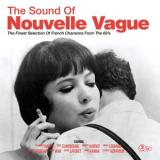
Mit dieser sorgfältig kuratierten Doppel-LP taucht der Hörer in die musikalische Welt des Frankreichs der frühen 1960er-Jahre ein. "The Sound Of Nouvelle Vague" versammelt die Klänge einer Epoche, in der Kino, Popkultur, Mode und Gesellschaft im Aufbruch waren. Zwischen Jazz, Ye-Ye, Chanson, Filmmusik und Bossa Nova entstand ein neues Lebensgefühl, das bis heute mit der Nouvelle-Vague-Ära verbunden wird. Künstlerinnen und Künstler wie Francoise Hardy, Serge Gainsbourg, Jeanne Moreau, Anna Karina, Brigitte Bardot und Jacques Dutronc stehen für eine Generation, die mit Konventionen brach und Frankreich kulturell neu definierte. Die ausgewählten Aufnahmen zeichnen das Klangbild einer Zeit nach, in der Jugendkultur, künstlerische Freiheit und ein modernes Frauenbild die Gesellschaft prägten. Das Ergebnis ist weit mehr als eine klassische Chanson-Compilation: eine musikalische Reise durch das Frankreich des Aufbruchs und den Soundtrack einer außergewöhnlichen kulturellen Bewegung.
Spring Back, Ball Forward is the Soda Gong debut from Jung dj, nom de plume of shapeshifting multi-instrumentalist Randy Riback. Following a series of uniformly great self-releases and cassettes on the dearly missed Lillerne Tapes, this collection observes the spacious and angular dynamics of 1990s Midwestern post-rock through the lens of the bedroom electronic music producer.
Perhaps surprisingly, amp worship lies at the center of the album: a fascination with the grain, pressure, and emotional charge of amplification and gain, refracted through the strange remove of digital amp modeling. Tubes, speakers, sag, and in-the-red textures are a critical part of the album’s expressive vocabulary, imparting density and colorful saturation while lending even its most weightless passages a vital sense of physical presence. Over the course of twelve tracks, wistful ambience gives way to blunt heaviness and roiling catharsis, underpinned by a palpable sense of loss and grief.
The album’s auspicious cast of collaborators further complicates its emotional terrain. Spoken contributions from Natalia Panzer and Angelina Nonaj occupy strikingly different registers: Panzer’s diffuse and oblique, drifting in and out of the music’s contours; Nonaj’s a vivid travelogue, grounding the record in place and lived experience. Elsewhere, Soda Gong veteran Mister Water Wet joins a small constellation of guests whose playing folds naturally into Riback’s arrangements, blurring the boundaries between computer and ensemble music.
For all of its attention to texture, process, and the material qualities of sound, Spring Back, Ball Forward is first and foremost an emotionally potent work, possessed of a directness that can feel rare within experimental electronic music. Riback draws from a rich and idiosyncratic musical vernacular, arriving at something deeply felt and difficult to place: a singular statement whose pathos exceeds the sum of its references.
Celebrating 30 years since ‘Buena Vista Social Club’ was released, this classic will be made available on limited edition pearl vinyl and features the remastered audio and bonus tracks released as part of the album’s 25th Anniversary in 2021.
Masterminded by the trio of Cuban bandleader Juan de Marcos González, American producer and guitarist Ry Cooder, and British producer and label owner Nick Gold, 'Buena Vista Social Club’ is both the name given to this extraordinary group of musicians and the album they recorded in just seven days in 1996 in Havana’s 1950s vintage EGREM studios. It was clear from the atmosphere of the recording sessions that something very special was taking place. However, no one could have predicted that Buena Vista Social Club would become a worldwide phenomenon – awarded a Grammy in 1997 and, at over 8 million copies, outselling any other record in the same genre.
The acclaim of the original album elevated the artists (including Ibrahim Ferrer, Rubén González, Eliades Ochoa, Compay Segundo and Omara Portuondo) to superstar status, inspired an award-winning film by Wim Wenders, a Tony Award-Winning Broadway Musical and contributed to popularising Cuba’s rich musical heritage. Produced by Ry Cooder and Executive Produced by Nick Gold for World Circuit, the timeless quality of the music and the sheer verve of the veteran performers have ensured that this album will go down as one of the landmark recordings of the 20th century.
Cold, Bold & Together (CBT) CBT was founded in Bellingham, Washington in 1971 by percussionist Tony Gable and musicians Solomon Harris, Keith Hooks and twin brothers TC & Jamar Jenkins. It soon became evident that Bellingham was not a particularly welcoming environment for R&B music, so they moved to Seattle to try their luck and plumb the rich supply of venues, which they successfully did until disbanding in 1978. They spent their early Seattle years playing a combination of covers and originals in clubs, later becoming the "go to" opening act for various nationally known artists, such as Ohio Players, Kool and the Gang and Earth, Wind & Fire. While they were paying their club circuit and opening act dues, they squeezed in recording sessions whenever they could and released their own material, which was well-received and got strong regional airplay. However, because of the feudal nature of the music business at the time, they just couldn't break out, and like a lot of Northwest bands with great potential, they inevitably broke up and went their separate ways. Upon disbanding, they left behind a collection of original recordings at Seattle's legendary Kaye-Smith studios.
Unfortunately for CBT, the studio passed through several owners and at some unknown point in time, one of them did the unforgivable and destroyed the storied studio inventory of two-inch tapes and quarter-inch masters. Unknown to the band, a copy of their masters was smuggled out by their producer who added them to his legacy collection of cloned quarter-inch masters. After several years and many moves, he became concerned about the tendency for magnetic tape to deteriorate over time.
He sent the tapes to a Seattle lab to be restored and digitized, with the hope that perhaps, some day, they might be made available for the listening pleasure of R&B fans. The hoped-for day has finally arrived. Russell Paine and Super Disco Edits has pressed two of the Kaye-Smith CBT tracks: "Go For It", a jazz-influenced instrumental, featuring Kenny G, and "Unity", sung by the group en masse with Tony Gable singing lead. The musicians on these tracks are: Tony Gable, leader, vocals and percussion Harry Alexander, drums Kenny Gorelick (now world-renowned "Kenny G"), sax, flute and horn arrangements Chris Ishi, trumpet Michael Young, Trombone Jamar Jenkins guitar, vocals TC Jenkins bass, vocals 1 Philip Woo, keyboards Footnotes: CBT gave legendary saxophonist Kenny G his start in the music business. Kenny was still in high school when he was recruited to play sax and write horn arrangements. Kenny co-wrote, arranged and played sax and flute on the instrumental "Go For It." He rips a smoking tenor sax solo in the middle, which showcases his already masterful technique and solidifies his R&B bona fides. He went on to have a spectacular career recording for Clive Davis and Arista Records. Before his untimely passing in 2016, Tony Gable went on to found contemporary Jazz group, "Tony Gable and 206" (206 being Seattle's then only area code). With songwriting, performance and production help from Kenny G.
Following the release of Haunted House Party, Bradley Thomas Turner was contacted by the Cryptozoological Society of New York City to create music for their museum’s holiday exhibitions. As enigmatic as they are controversial, the secretive society gave the composer free rein to create music that celebrated their profane (and, according to their critics, pseudoscientific) explorations of the darker side of yuletide folklore. The endeavour was denounced by religious groups, the scientific community and even parts of the cryptozoological community as “blasphemous,” “irresponsible”, and “a dangerous topic to make light of” respectively. Not much is known about the pandemonium that broke out on the night of the opening reception, but one journalist (who has been granted anonymity by request) infiltrated the event and captured the recordings that follow. Death cult ritual? Mishandling of cursed artifacts? Elaborate practical joke? Publicity stunt? No one can (or will) say for sure as no person in attendance has been willing to speak on record. Therefore, we present these recordings so the general public can decide for themselves.
Nobody thinks it is strange anymore that an artist changes his nom de plume to reflect a new direction; a metamorphosis of his art. As listeners, we must resist the temptation to compare a new expression with previous works but instead allow the artist the necessary leeway to follow where his muse leads. So it is with Lone Wolf & Friends. There is a departure from his previous work that is his alone to define. We are simply recipients and must let the work wash over us like waves on the beach and be slightly moulded by the force of each one.
By definition, a Lone Wolf has no friends so we are left with the nagging question of why the name has significance. Perhaps Lone Wolf’s friends are his previous artistic incarnations and although he alone created this work, those earlier versions were there to encourage his creative drive. We are never truly loners, are we?
Written, composed and produced in Vancouver, Canada, by Lone Wolf & Friends.
Mastered in Groningen, the Netherlands, by Johanz Westerman at Balyhoo Studio Mastering.
Designed in London, UK, by Irene Fo + Agente Morillas + Positivland.
Now marking eight years in the underground, Blur Records delivers a various artist collection that reflects its sound across always floor-facing cuts across a house and disco spectrum tinged with retro flair. 'Back To The Disco' by Hotmood opens with big loops and a hands in the air grove that is high on funky-disco vibes, while Delfonic keeps things tight on 'Let's Do The Magic' which centres a vocal hook and busy chords. Elsewhere, Crackazat's sultry rework of Scruscru's 'Just House' adds a jazz-leaning touch and 'Touch Me' shifts into a more restrained, late-night mood. Closing with the deep, plump drums of Sven Wegner's sexy, sax-laced 'Chuck The Boom', the collection stays consistently accessible and groovy throughout.
What changed between Av. General Roçadas and Junkeira? Seven years in people's lives — yet the team's commitment remains untouched, and the steady hand on the plumb line that keeps dance music (still) upright holds firm. Years of sustained research and field work from both producers, with their own records, mutually independent and independent too in how they brought them to life. Moreno Ácido has been navigating detours through a conceptual yet grounded underground — in sound and in format (two self-released cassettes since 2019) — while keeping one eye on the floor. His post pandemic reawakening carries a clear message: Call to Action is the label that in 2023 put the still-in-demand Trash/Treasure out on vinyl. Diogo keeps Discos Extendes as his shelter, gathering talent and retreating into it. At the same time, a disseminating vocation — that talent turned outward, on a mission to champion the different sensibilities that can converge in music made for dancing.
Junkeira is direct. It hides nothing in its intent, nor does it conceal the origin of its love, nor the way it exercises its fascination with the source. Geography can define movements, described and echoed countless times outside and then inside the net. The signifiers are known to all — it's a matter of applying them with respect and flow. Perhaps the craft in this production really does come down to love, when it comes to it. What is "WTF" if not a declaration of love — at the very least of closeness — to the sonic essence of the English rave? The piano stab, the breaks defining that hardcore state of mind, the string bed lifting feet off the floor. Closing out the EP, "Freak" gathers different emotions — eyes still shut, body in comedown while still moving. Chill. Everything rounded. Bassline, vibes, vocals woven into the rhythm.
Rewinding, the opening track "100 Planos" is a throwback to Roçadas (2019) — harder on the ground, with a 4/4 beat broken up by claps, a circular structure built for DJs, with mix-friendly entry and exit points. Then "Turbo Love" puts the keys in control, foregrounding them, letting a car alarm ring out and balance the beat — a reverential nod to UK Garage felt as raw material, already part of the lineage that has been the continuous evolution from Disco onwards: an evolution that traces a line and its branches, from which you can isolate any chronological point since at least 1977 and combine whatever elements form a personality. The spirit lives, as summer kicks in.
Audiojack and Kevin Knapp return to Crosstown Rebels with their ‘Get It’ EP. Out on 22nd May 2026, the longstanding collaborators serve up a heavyweight two-tracker on Damian Lazarus’ imprint.
Leeds-born, Ibiza-based duo Audiojack reunite with US mainstay Kevin Knapp for their third Crosstown Rebels collaboration together on 22nd May, adding to 2021’s impressive ‘Under Your Skin’ EP and 2017’s ‘Implications’ EP. Having spent two decades at the forefront of the scene, the Gruuv bosses’ blend of house, minimal, and garage influences has landed on labels such as Hot Creations, Solid Grooves, 8bit, and more. Meanwhile, house music stalwart Kevin Knapp continues to push his own chunky and vibrant take on house music via international performances at venues such as fabric, Circo Loco, and Elrow, as well as releases on labels like Cuttin Headz, Repopulate Mars, Desert Hearts, and his own Plump Recordings. Marking their return to Damian Lazarus’ iconic imprint once more, they serve up two punchy cuts that showcase their ability to balance attitude and authority into a house workout.
“Get It,' is all about momentum! A driving club track with a mantra-like vocal to lift you up and motivate you to go harder at whatever you’re doing in life.” - Audiojack
"I'm just enamoured with the concept of being in charge of our own destiny and the thought of getting out of things what you put into them. I feel like this record sonically presents those sentiments in a way I love and appreciate.” - Kevin Knapp
Title track ‘Get It’ is a rolling floor-focused cut, driven by a tightly wound bassline and rattling cowbells, while a brooding low-end foundation sets the stage for Kevin Knapp’s commanding vocal drops, elevating the cut into a full-throttle peak-time weapon. On the flip, ‘This Frequency’ is an equally potent club tool, built around an unfolding tracking groove and a wobbling melodic synth line, propelled by an electro-tinged bassline that steadily draws listeners further into its spell.
Berlin-based disco don Tobi Schwermann aka Jack Tennis strides into his tenth year making music with a seance on his Art Groupie label. 'Billy's Family' is a heart-sweeping disco sound with sweeping Philly strings and neat guitar lines, golden chords and a nice plump mid-tempo rhythm. 'Lonely Streets' channels Bill Withers gritty soul and moody basslines into an infectious groove, then 'Some Kind Of A Lady' gets lips pouted and hands in the air with unrestrained disco joy. 'VO' closes with a rich ecosystem of whistles, organic percussive sounds and a strident electronic groove with fiery Latin vocals. Eclectic excellence once more.
Isella doesn’t flinch from the horror stitched into the fabric of the feminine experience. Citing writers like Plath Margaret Atwood, and Mona Awad as germinal influences on her lyricism, Isella plunges into the underbelly of expectations of good-girlhood, of valiant womanhood. In her songs she splays out the stakes of it all, plumbing the viscera, unearthing the blood, guts, dirt, and decay lurking beneath. By the time she hit fifteen, Isella’s taste had expanded and grown darker and more mature. Artists like Nine Inch Nails and Tom Waits became a conduit for the kind of raw intensity she’d always been drawn to, and gave her permission to push herself to new depths of expression. This is evidenced on her latest EP; That freedom that Reznor et al. endowed to the songwriter are evidenced on her latest EP; Something is a shell . Isella’s vocals swing from coolly detached to emotional detonation, often in the span of the same song. She brings listeners into a world colored by feminist hyper-realism, challenging listeners to re-define ideas of femininity, and safety; to see that things are not okay.
Once I Was Young and The Airplane Album find the producer taking yet another sonic right turn. "These records were made in the same year with a very similar creative process. I moved almost completely away from sampling, experimented more than ever with ambient and techno elements and used the album format as a way to tell a story about moments in my life." Once I Was Young is a storytelling work that journeys through analogue synth-pop, modulated techno and raw, dusty drums with otherworldly melodies. Moments of beauty come through escapist, naturalistic ambient tracks and fusions of Kraftwerkian sequencing with more classical piano, while stark, clubready grooves keep things moving. Airplane contrasts similar shades of light and dark, synthetic and organic, rough and smooth. Glitchy, imperfect analogue sounds, knackered drum machine grooves and eerie synth phrasing evoke a post-human world with icy atmospheres. Elsewhere, warmth comes from bittersweet melodies and loose, funky drums that ooze retro-future charm.
Once I Was Young and The Airplane Album show a diff erent side to Escobar, one that embraces introspection and experimentation while exploring a whole other world of meaningful machine soul
We present an EP from two house masters Artem Stan & Matpri on Analog Concept records.
This record was born like in the classic 90s from jam sessions in the studio, when musicians caught the groove and connected their deep universes, showing true love for house music. Everything is combined here - the sound of drum machines 909 and not only, atmospheric acid impulses of 303, classic pads that paint these paintings bright and filled with deep meaning, as well as much more. Amazing two sides and four compositions, each with its own story.
The Midnight Seduction track opens the telling of these stories on side A. From the first seconds, immersing in the atmosphere of synthesizer temptation, the analog bass line combined with the default drum section and elements of bright metal claps quickly gain the necessary energy and immerse in the images of a closed nightclub with long corridors and hidden dance floors. The light plume of the classic M1 organ and the accentuating Acid lead maintain balance. Secret nocturnal seduction, light ecstasy and an atmosphere of love.
French Kiss - everything is great here, as soon as you listen to the harmony of accordion-like synthesizers and deeply addictive pads, you are instantly transported to the image of Parisian streets. Elements of bells, a rhythm section filled with unpredictable percussion, acid inclusions and an unexpected immersion into a broken beat in the middle of the composition, a real deep French kiss.
Matpri is known for its sophisticated approach to music and is rightfully the guru of micro and minimal house. Having created the maximum sound quality of the rhythm section and the deep bass that was addictive from the first seconds, mixing old-school vibe, while not losing touch with his minimalistic sound image, he filled the House Template track with the smallest details and percussion, which is confidently based on the B-side.
Four certainly high-quality compositions were created in the studio of Artem Stan in the mountains of Krasnaya Polyana and one of the tracks on the B-side - "Nasha Polyana" - is dedicated to this location, it conveys a certain playful atmosphere of a mountain village with a vibe of complete freedom and daily carefree. A complete release with decent house music.
DJ Support: Adam Auburn, DJ Nova, Norm De Plume (Delusions Of Grandeur), Guy Perryman, Simon 'Palmskin' Richmond, Rocco Rodamaal, Damian Lazarus, Demarkus Lewis, Douglas Arellanes, Craig Smith (Yoruba Affil), Lay-Far, Dr. StrangeDub, Dennis Ruyer, Kono Vidovic, Roberto Rodriguez, Bill Brewster, Chris Read, Richard Earnshaw, Hot Toddy, Handson Family, Dj Pope, Robbie Akbal, Golf Clap, Marques Wyatt, Kiko Navarro, Mr Beatnick, Jamie Jones - Hot Creations, Marcia DaVinyl MC, Mikael Ikalainen/ Dj Lord Fatty, Ian Friday, Mr V, Mathieu Schreyer, Willie Graff, Makossa, Stuart Knight, Timo Maas, Bruce Tantum, Sean Brosnan (Futuredisco), DJ Harri, Vinny Da Vinci, Trevor McNamee, Roger Sanchez, and Dom Servini
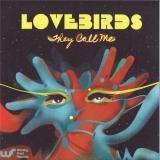
PDD are excited to welcome the return of the legendary Winding Road Records. Originally launched in 2002 by Schmoov! and home to releases by cult artists such as Ron Basejam, Hot Toddy, both of Crazy P fame as well Vincenzo, Rhythm Plate, Spirit Catcher and not to mention Lovebirds and their monster hit, I Want You In My Soul. After a hiatus, the label is back with a bang and teaming up once again with Lovebirds for another classic EP.
Spider Taylor crawls over to Dark Entries with Surge Studio Music, an album of archival gay pornographic soundtracks. James Allan Taylor was born into a working-class family in Los Angeles in 1951. Nicknamed “Spider” by his father due to his frantic energy, Taylor was a natural-born guitarist, gifted with perfect pitch and a voracious musical appetite.
Throughout the 70s, he expanded his musical repertoire, playing in bands ranging from country to post-punk, like his outfit Red Wedding, while always looking for new sounds and styles to explore. During this period, Taylor also partnered with his soulmate and musical collaborator, Michael Ely. They were part of a wave of bold, young, gay couples living openly together in the years immediately following the Stonewall Riots. In the early 80s, while working at the West Hollywood gay sex club Basic Plumbing, Taylor met Al Parker, the legendary pornographic actor and director, who recruited Taylor to produce the soundtrack for a film he was working on. Parker’s partnership with Steve Scott running Surge Studios produced some of the most popular all-male films of the era. Spider’s music was a natural fit for Surge, and throughout 1985 and 1986, he composed the soundtracks for five films produced by the iconic studio. Assisted by engineer Steve Conrad and armed with a drum machine and some synths, Spider’s compositions for film veer from the expansive, reverb-drenched “Rainforest” to the Miami Vice-esque chugger “Tech.”
While Spider thought of this work as little more than a gig, tangential to his real craft, enthusiasts of VHS-era nostalgia and vintage erotica will be brought to bliss. Surge Studio Music will be available on both LP and CD, the latter of which includes a 20-minute version of “Strange Places…Strange Things!” as a bonus track. The album’s cover art was designed by Gwenael Rattke, and features stylish images from Surge Studios releases. Also included is an insert featuring liner notes by Will Lewis, a longtime friend of Spider. The music is released from Spider’s estate by Michael Ely, Spider’s partner of 43 years. The shadow of AIDS lingered over Surge; Steve Scott passed from AIDS-related illness in 1987, and Al Parker succumbed in 1992. In 2014, when it became legal for same-sex couples to marry in Arizona, Spider and Michael finally became wedded. Spider would pass away from liver cancer six months later.
Already in its title, Plume Girl’s debut thoroughly lets things go and takes them in – all at once. “In the End We Begin” is the first solo full-length from Sowmya Somanath, a Hindustani classical singer/composer and half of alt-pop duo Felt Out. Plume Girl’s music takes inspiration from the semi-regular musical form of the rāga (translated as ‘tinting’), invoking mood and atmosphere, each rāga thought to have its own distinct nature and personality, brought to life through improvisation. String swells and Somanath’s searching vocalisations envelop every track’s own blissful chamber. Exploring imagined binaries along the way — eastern vs. western, traditional vs. experimental, acoustic vs. electronic, Sowmya sees music as a curious dialogue between divine Self and an invisible reality. Beneath the illusion of a chromatic world, there remains a blissful oneness.
Plume Girl’s songs sit between ambient Hindustani music and emotionally-encumbered pop. In front of backdrops comprising sundrenched drones or glitches, sketched out beats, and criss-crossing glissandi or flutes, Somanath both murmurs intimately and spirals upwards into soaring choruses. The lyrics ponder innermost thoughts, never more literally than on the blissful emo folk closing track: ‘In my heart I know / what’s in my heart / I know what’s in my…’
“When I began writing this music, I was fresh off of an experience that completely twisted my reality,” explains Somanath. It was the end of a years-long relationship, and the blossoming of a long-buried love hidden in plain sight: “a best friend of a decade, my musical partner, someone who had always seen me completely…At once, I felt grief and loss. At once, excitement and love.”
The Coney Island Rhythm Band join the Sosilly gypsy family with their first track 'Dancing Down The Path' feat. Jerk. Together they deliver a party hands in the air throwback any good disco & house fan should know!
''E.R.M.B'—Contemporary disco that oozes funk thanks to its plump bassline and jaunty, clipped pianos, it's augmented by slivers of classic breakbeat goodness, vibrant strings and an earworm vocal hook and ravey piano chords combine in melancholy fashion to provide a dramatic juxtaposition. BIG!
Parallax explores the shifting boundary between human intuition and algorithmic logic, a space where two perspectives converge and blur until the center is lost. Composed through a hybrid system of voltage-controlled hardware and digital manipulation, the five tracks apply FM synthesis, granular processing, and bit-level degradation to rigid electro structures. Sequences are shaped by modulation instability and clock drift, gradually disrupting pattern integrity and simulating a loss of systemic control. Precise yet disrupted grooves hint at a deeper malfunction, as if something is corrupting the system from within. Parallax is the gap between the human who creates and the algorithm that imitates.
More Rice and Jugaar Records – Two Bangkok-affiliated labels – bring together an assemblage of their mutual friends for a heady, floor-focused VA with moods to soundtrack peak flow, after-hours rabbit holes, and just about everything in between.
Rudoh of Jugaar Records fame kicks us off with ‘Madoh’, a bendy groove that initially bares flex of early 2000s Minimal with its trimmed, rubbery percussion and obscured vocal snippets. As the track progresses, a hefty break and a catchy synth line bolster things before breakdowns unfold like little trippy slumbers rudely interrupted by bold, punchy drops.
Next up is Tokyo legend Gonno who follows up with ‘Rad’, a broad-shouldered banger propelled by a heaving kick and clap combo. A wrought synth is paired with odd shocks of acid and a sequence that flickers like a strobe. All the while a thick, gnarled bass line rumbles underneath, keeping vibes at boiling point throughout.
More Rice’s DOTT follows up with a swampy excursion propelled by a potent kick and nimble submarine tones. Drums are neatly stacked in polyrhythms as an infectious swing unfolds, one that’s decorated with ghostly synths and a generous dose of psychedelic synthesis.
Sarayu – also of More Rice fame, closes things up with ‘Fuijan Groove’, a brilliantly lean cut that lets the subs do the talking. Sharp tonal blobs flesh out a simple but highly effective march as spectral pads expand in plumes of smoke until the conclusion of a rich and varied record that unites two kindred labels perfectly.’
‘More Rice and Jugaar Records – Two Bangkok-affiliated labels – bring together an assemblage of their mutual friends for a heady, floor-focused VA with moods to soundtrack peak flow, after-hours rabbit holes, and just about everything in between.
Rudoh of Jugaar Records fame kicks us off with ‘Madoh’, a bendy groove that initially bares flex of early 2000s Minimal with its trimmed, rubbery percussion and obscured vocal snippets. As the track progresses, a hefty break and a catchy synth line bolster things before breakdowns unfold like little trippy slumbers rudely interrupted by bold, punchy drops.
Next up is Tokyo legend Gonno who follows up with ‘Rad’, a broad-shouldered banger propelled by a heaving kick and clap combo. A wrought synth is paired with odd shocks of acid and a sequence that flickers like a strobe. All the while a thick, gnarled bass line rumbles underneath, keeping vibes at boiling point throughout.
More Rice’s DOTT follows up with a swampy excursion propelled by a potent kick and nimble submarine tones. Drums are neatly stacked in polyrhythms as an infectious swing unfolds, one that’s decorated with ghostly synths and a generous dose of psychedelic synthesis.
Sarayu – also of More Rice fame, closes things up with ‘Fuijan Groove’, a brilliantly lean cut that lets the subs do the talking. Sharp tonal blobs flesh out a simple but highly effective march as spectral pads expand in plumes of smoke until the conclusion of a rich and varied record that unites two kindred labels perfectly.’
Quiet Village collaborate with Vanessa Daou on 'Naked Hunger’ Legendary New York artist and The Daou front-woman Vanessa Daou lends vocals to Matt 'Radio Slave' Edwards and Joel Martin's second release on the ‘The Quiet Village’ imprint.
Matt ‘Radio Slave' Edwards and Joel Martin's critically acclaimed Quiet Village project follow-up, 2024's 'Reunion' with the Vanessa Daou collaboration, 'Naked Hunger' on September 5th, '25. 'Naked Hunger', which comes in 'Vocal Mix' and 'Spoken Word Mix' versions, sees Quiet Village employ their hypnotic sensibilities to one of house music's most tantalising vocal talents in Daou, resulting in a mid-tempo house cut that completely envelops.
While the vocal mix of 'Naked Hunger' leans into the interplay between Vanessa Daou's cosseting song voice and spoken vocals, with the rest of the track embracing a subtly dubby ethereal musicality, Quiet Village ramp up the instrumentation on the' Spoken Vocal' version with bass guitar and piano flourishes accompanying her sultry poetic delivery.
'Naked Hunger', Daou's first collaboration with Quiet Village, marks her first release since 2019's 'Little Black Dress'. Throughout her illustrious career, the acclaimed three-time #1 Billboard Dance Chart topper has collaborated with Danny Tenaglia, David Morales, Mood II Swing, Ralphi Rosario, Terry Farley (Farley & Heller), Charles Webster, Horse Meat Disco's Severino Panzetta, Hifi Sean, and Eli Escobar.
Friends since meeting at Goldie's legendary MetalHeadz sessions at London's Blue Note in the '90s, Quiet Village, aka Matt Edwards and Joel Martin, began releasing their brand of dubbed-out, balearic-and-beyond tracks in 2005 via NYC's Whatever We Want Records. The duo's 2008 'Silent Movie' LP was a critical smash hit that resulted in remix commissions for the likes of Bryan Ferry, The Gorillas, Leftfi eld, Francois K, Massive Attack and many more. After a few years in the wilderness, unable to use their nom de plume due to contractual restrictions, the pair launched The Quiet Village label in 2024 with 'Reunion', a stunning 6/8-time urban jazz odyssey, a favourite of the likes of Luke Una, Gilles Peterson and Ryan Elliott.
Bart Skils and Weska extend their musical partnership, linking for the superb ‘Torn Clouds’. The duo shares a special sonic kinship, collaborating regularly for outstanding results. From ‘Shades of Summer’, to ‘Polarize’ and ‘Something More’, the duo balance rhythmic flair with timeless melodies for euphoric results. Their fourth offering is no less memorable. ‘Torn Clouds’ rides on a wave of rolling grooves and uplifting melodic tension, capturing the moment the storm clears and euphoria rushes in. It’s accompaniment ‘Dusk till Dawn’ is a late-night anthem built for the long haul — hypnotic, wandering, and made to move the night into light. Together, the tracks showcase the duo’s unmistakable synergy: plump, percussive foundations wrapped in crisp synthwork and immersive vocal layers that have ignited dancefloors including Awakenings, Ultra Resistance, Space Miami, Avant Gardner, Amnesia, Factory93.
Plying refracted rhythms with an exacting poise, Aerae arrives on Samurai Music with a fully formed sound that plumbs the depths between techno immersion and D&B beat science.
An accomplished, palpable tension runs throughout Nefanda, Aerae's second solo release. Following up on the meditative pulse of her debut album on Annulled Music last year, the Paris-based artist digs deeper into ominous atmospheres filled with evocative reverb decays and taut, dynamic drum work - tools she wields to Redner tracks with specific meaning, coded by the Latin framing that runs through all aspects of her musical output. Contemplating the ancient language as an inescapable part of her European roots, on Nefanda Aerae ruminates on external trials and inner impulses, and conjures a jaw-clenching soundtrack to match.
'Mons' (translation: 'Mountain') speaks to challenges, strength and spiritual ascent, marked out by an urgent thrum of conga slaps and a 4/4 kick around the 170 BPM mark that finds power in minimalism even at the relatively high tempo.
The title track opts for a more broken framework, pivoting pointed percussion around a deft sub pulse while turning up the intensity with an exacting poise.
'Nefanda' translates as 'unspeakable,' or 'too horrific to name,' and the fraught, synthetic wraiths contorting through the track convey the dread the title implies.
'Fovea' (translation: 'pit') burrows deeper into spatial design with a looming low end rumble and subliminal sound sculpture, shaping out a dark, introspective chasm tipped towards disassociation. It's a powerful statement in any setting, but the all-consuming bass feels especially crafted for full, physical sound system immersion.
'Phrenesis' (translation: 'frenzy') rounds the EP out in fierce form, building up a high-pressure arrangement from ambient beginnings with ruthless control. There's a sense of duality in motion between half-time and double-time rhythmic elements, every incremental shift adding to the intensity of the track with the elegant, impactful touch that has fast become Aerae's calling card.
Finding her own language within the dialogue between techno, D&B and dark ambient, Aerae's music makes a vivid impression thanks to the ideas and intention that drive her in the studio. Nefanda confirms her status as a leading light in deep, psychedelic dance music, making something extremely personal that also reaches out beyond notions of the self like all the best transcendental music.