Suche:point 5 posse

Styles
Alle
  • 1
16 - FORGERIES VOL.1, 1972-1984

There comes a point in every bands life when originality stops being a virtue and honesty takes the wheel. On their 11th long-playing record: Forgeries (72-84)-(16)- return to the impulse that first dragged them into loud rooms and bad ideas: the urge to steal what we love and make it semi-unrecognizable through devotion. We have partnered with Heavy Psych Sounds Records to release a collection of covers that function less as homage and more as a possession to be given away. The artworkrendered by the ever-amazing Maraldcompletes the ritualiconicunsettlingand unafraid. Weve always believed that a great cover is not mimicry but revelation. Its finding a song that's already lived inside you since youth and letting it crawl outbruised and changed. From the early 90s onward-(16)- have treated covers as translations rather than as replicasacts of tribute and emulationfiltered through distortionfatigueand lived experience. These are songs that taught us how to standhow to falland how to keep going. In our collective headthis album exists because these songs demanded it. Because they screamed copy meand we listened. In the endForgeries (72-84) stands as both a thank you note and a thefta reminder that all music worth a damn is borrowedbrokenand passed on between friends. The selections on Forgeries 72-84 span eras and attitudesunified not by genre but by necessity. Each track is a document of obsessionof influence absorbed and re-expressed without permission.

vorbestellen01.05.2026

erscheint voraussichtlich am 01.05.2026

24,58
16 - FORGERIES VOL.1, 1972-1984
  • 1: Can't Get Enough (Scorpions)
  • 2: Nausea (X)
  • 3: Cities On Flame With Rock And Roll (Blue Öyster Cult)
  • 4: Rotten To The Core (Rudimentary Peni)
  • 5: Mother Mary (Ufo)
  • 6: Tragedy (Bee Gees)
  • 7: Bloodstains (Agent Orange)
  • 8: Beat My Head Against The Wall (Black Flag)
  • 9: St. Vitus Dance (Black Sabbath)
  • 10: Foreign Policy (Fear)
  • 11: Rocket Ride (Kiss) (Bonus Track)
auch erhältlich

NEON GREEN VINYL[24,58 €]


There comes a point in every bands life when originality stops being a virtue and honesty takes the wheel. On their 11th long-playing record: Forgeries (72-84)-(16)- return to the impulse that first dragged them into loud rooms and bad ideas: the urge to steal what we love and make it semi-unrecognizable through devotion. We have partnered with Heavy Psych Sounds Records to release a collection of covers that function less as homage and more as a possession to be given away. The artworkrendered by the ever-amazing Maraldcompletes the ritualiconicunsettlingand unafraid. Weve always believed that a great cover is not mimicry but revelation. Its finding a song that's already lived inside you since youth and letting it crawl outbruised and changed. From the early 90s onward-(16)- have treated covers as translations rather than as replicasacts of tribute and emulationfiltered through distortionfatigueand lived experience. These are songs that taught us how to standhow to falland how to keep going. In our collective headthis album exists because these songs demanded it. Because they screamed copy meand we listened. In the endForgeries (72-84) stands as both a thank you note and a thefta reminder that all music worth a damn is borrowedbrokenand passed on between friends. The selections on Forgeries 72-84 span eras and attitudesunified not by genre but by necessity. Each track is a document of obsessionof influence absorbed and re-expressed without permission.

vorbestellen01.05.2026

erscheint voraussichtlich am 01.05.2026

21,81
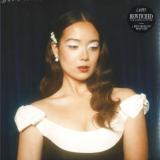
Laufey - Bewitched LP

Laufey

Bewitched LP

12inchLAULP003X
Laufey
29.10.2025

Composer, singer, producer, and multi-instrumentalist Laufey continues her story by writing and recording Bewitched, her second album. Inspired by jazz greats and classical masters while possessing a point of view that could only be conveyed by a 21st-century twentysomething, Bewitched represents an expansion of Laufey’s sonic palette.

Tracks like the breezy bossa nova cut “From The Start” and the smoldering string-assisted ballad “Promise” have classic songcraft and intricate arrangements that make them feel instantly
timeless, while Laufey’s conversational lyrics give her music a relatability to the next generation of jazz, pop, and classical aficionados.

Auf Lager

Bei uns am Lager und sofort versandfertig

35,25
The Buttshakers - Lessons In Love

With their musical roots deeply immersed in the fertile soil of Afro-American music, the Buttshakers have found a new direction for their nostalgia-heavy soul music. With Lessons In Love, their third album on Underdog Records, their early heartaches and furies have faded in favor of a more composed harmony – a sound enveloped in love and soaked in the blues. Guided by their singer Ciara Thompson, the Buttshakers have taken a more intimate path, whose compass, in the chaos of emotions and the modern world, points only in one direction: the light.


Seen from the sky, the view appears limitless. Accentuated by the sun, the ochre and sandy hues of the open road only reinforce this feeling of immensity. The sky stretches and the green stands out in striking contrast. In lighter tones, a road is drawn -- without bends or contours. This is the worn and weary road of soul music, which The Buttshakers explore on each album in new and unique ways. Soul music – a rare place to find a French band.

Vast, the musical direction could have taken them to lighter pastures. Yet the Buttshakers chose to evolve in a different way; to take a heavier load. Two paths – one sparked by social unrest, the other purely sentimental, Lessons In Love explores the deep roots of soul music, in the steps of Curtis Mayfield or Al Green. It is here that the heart and mind cross paths, merge, and become one. A weary road -- that brings together the agitation of a world where good intentions never rise above the level of digital outrage, and a faith in love which, however it manifests and expresses itself, remains the only truth that never loses its power.


Less rage and more compassion, it is through the haunting words and now tempered inflection of Ciara Thompson's voice, which opens to distinct emotions and perspectives, that the listener is guided. With its gaze fixed on the horizon, the acoustic guitar of Gotta Believe invites us on an intimate stroll through the open plains, while Dream On carries us away with a clavinet riff and a possessed saxophone; reconnecting the electric heat and neurosis of a city full of dreams. The senses are moved by the conjuring potion of the guitar which distills throughout Troubled Waters; the body is brought back into a visceral dance by the keys and brass section that are put to the test by Sure As Sin and its irrepressible rhythm. Passing through clouds of dust and sand has left a bluesy imprint on their groove: the miles travelled became hundreds, then thousands.


All of this leaves the listener bewitched by the halo of resilience that now surrounds Ciara's performance, as the ten tracks let the light fade. But certainly not hope in a better day. Like the sunflower that always lifts its head towards the sun’s rays, the Buttshakers continue to resource their sounds in the deep roots of soul music. Into the rich layers of African-American music of the 60s and 70s, The Buttshakers capture the spirit as much as the musical aesthetics of the epoch. A sound that reaches into the meanderings of the soul, bringing light to dark places and hope for all. A sound for the most parched of hearts, living in a damaged world, Lessons In Love confirms that even the tiniest beam of light can illuminate one’s path.

Auf Lager

Bei uns am Lager und sofort versandfertig

23,49
Nicola Cruz - Hybridism

Nicola Cruz

Hybridism

12inchMC048G
Multi Culti
25.07.2025

Originally released following his acclaimed sophomore album, HYBRIDISM finds Ecuadorian producer Nicola Cruz at the height of his exploratory powers. Now reissued on limited editon green vinyl, this expansive EP re-emerges with renewed relevance—blending North African rhythms, ethereal Persian motifs, and vocal fragments that evoke both ancient traditions and imagined worlds. A contemporary take on global exotica, HYBRIDISM is a vital entry in Cruz’s ever-evolving sonic journey.

'Aima’, named after the refrain sung by Igbo girls from Nigeria, creates the illusion that you’ve dusted off a lost LP. The aesthetic details recall expertly produced French exotica from the 70s, an overall feeling of warmth and character rarely pulled off with such panache.

‘Naeku,' in Cruz’s words, is "a sorrowful song in minor tonalities, but with a warrior energy, strength and forward vision: a soul departs, but a new one arrives in the name of Naeku, a maasai child. Not all grief needs to be a suffering; a feeling which I can relate to the place I come from with a Quechua word: Llaquilla - triste, pero feliz (sad, but happy). As always, the 303 adds that heart touching feeling.” If there’s a template for Multi Culti’s ethos, Cruz has synthesized the formula: Masai lamentation filtered through Quechua wisdom with a touch of 303 for the soul.

'Drom Tradisie' is a nostalgic vignette that captures the fantasy of a scenic horizon on a lost beach, a portrait done with the FM domain of synths that somehow associates with tropical imagery.

'Third Eye Dub’ takes things deeper, exploring the fractal realm of concentration, a point where the Oud (played by Nasiri) acts on the pineal gland. This inward journey through the cavernous depths of the subconscious sails on a smooth modular groove that transports the listener across this psychic expanse, a filigree of Persian harmonies (in Shur, to be exact) tracing outlines in the dark.

Finally, 'Kawe’s Dream’ ventures even further into the imaginary spaces of the mind. It is an aural reconstruction of the Tibetan Bardo Thodol, or ‘Book of the Dead’, a sacred text that guides the spirit through the passage out of the body. In Nicola’s words "To paint that depth, I had these Tibetan chants in mind, that I ended up crafting with Ableton's vocoder over a piece of Ayan’s vocals (sung in a made-up language). A few notes, and it gave the gravity I was looking for in the song.” Stuff that only a producer as capable as Cruz could pull off.

Hybridism’s five tracks are sonically diverse, yet all possess an ephemeral quality, a pastoral, transitory feeling that travels through the music - we listen to the sounds pass us by, we might even catch a hook or two, but the feeling is of sand running through our hands, deep, elusive, beautiful.

Auf Lager

Bei uns am Lager und sofort versandfertig

15,92
Dogpatrol - Ya Playing Yaself EP

Still sniffing out the gnarliest bassweight swerves on his rounds in the underground, Dogpatrol makes his way back to Sneaker Social Club for another four cuts of irreverent, misfit rave damage.

Hailing from Offenbach (DE) but with a sound more indebted to UK styles like breakbeat hardcore, dubstep and garage, DogPatrol has been a natural fit on Sneaker. The slanted approach he takes to his influences results in a mutant style that shuffles and slams in all the right places without sounding like anything else out there.

‘1200kcal’ rides jagged, dusty drums that come on like drunken UKG, offset by rubbery bass arps that add a cosmic lick to proceedings. ‘Baby Flame’ has a nastier outlook hinging on a bludgeoning synth splat that calls back to the Control Tower brand of warehouse electro from the early 00s. Making sure no-one is second guessing the scent Dogpatrol is tracking, ‘Ya Playin Yaself’ dips into a dubstep-minded half-step roller with naive keys run through a giddy signal chain. ‘Offgenbach HBF Riddim’ completes the set with a breakbeat cut n’ paste job which tracks back to the source with strong echoes of The Blapps Posse’s raw and funky approach.

The reference points are just slight hints of familiarity, but Dogpatrol comes across as inspired as ever digging up the bones of cult rave signifiers and chewing them into his own unique shapes.

Auf Lager

Bei uns am Lager und sofort versandfertig

15,34
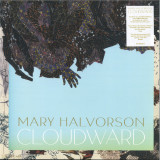
Mary Halvorson - Cloudward LP

Mary Halvorson

Cloudward LP

12inch0075597902334
Nonesuch
28.01.2025

‘One of the finest jazz guitarists of her generation, Halvorson is possessed of a questing, restless spirit.’ – Jazzwise

‘With an album of string quartet music as strong as this one, she is worthy of as much renown in the classical field as she holds in the jazz community.’ – New York Times

‘One of America’s finest guitarists. Halvorson’s musicianship is open-minded, demanding and richly engaging.’ – Uncut

Nonesuch Records releases Cloudward by Brooklyn-based guitarist, composer, and MacArthur fellow Mary Halvorson on January 19. The album features eight new compositions by Halvorson, performed with her sextet Amaryllis, the improvisatory band that performed on her critically praised 2022 albums Amaryllis and Belladonna comprising Halvorson, Patricia Brennan (vibraphone), Nick Dunston (bass), Tomas Fujiwara (drums), Jacob Garchik (trombone), and Adam O’Farrill (trumpet). Labelmate Laurie Anderson also is featured on the album track ‘Incarnadine’. Halvorson and Amaryllis will tour internationally following the release of the new album, including January dates in Europe, as well as at the Big Ears Festival as part of Nonesuch’s 60th anniversary celebration.

Halvorson says, “All of the music on Amaryllis was written in 2020, during the thick of the pandemic, in one of the more bizarre time periods I’ve experienced in my life. While composing for Amaryllis, I expanded upon certain musical concepts I’d developed in my life up until that point—the ones that felt fruitful—and left others behind, hitting the reset button and attempting to build from scratch. Two years later, after the release of the first album, I was still writing music for Amaryllis.

“All the music on Cloudward was written in 2022, mostly in the fall and winter, when things started moving forward. Life felt like a creaky machine starting up again,” she continues. “Air travel, however chaotic, had resumed, and we were once again cloudward. Performances and tours and recordings were happening after a long hiatus and with a renewed sense of gratitude. This band, for me, was quite simply working, both musically and personally, and the main thing I felt while writing the music was optimism.”

The Guardian said Halvorson’s 2022 double release “shows how far this single-minded original has come, and affords a glimpse of how far she may go. Both sessions confirm how years of jaggedly lyrical solo and ensemble improvising and a quirkily subversive affection for mainstream music have now nurtured a composer of unpredictable but warmly expressive character… These are new landmarks in Halvorson’s already inimitable discography.” Pitchfork said, “Amaryllis and Belladonna are distinct statements; one could hear either album on its own without a sense that something is missing. But they are most powerful when taken together, like a landscape and its reflection in rippling water.”

Halvorson has released a series of critically acclaimed albums, from Dragon’s Head (2008), her trio debut featuring bassist John Hébert and drummer Ches Smith, expanding to a quintet with trumpeter Jonathan Finlayson and alto saxophonist Jon Irabagon on Saturn Sings (2010) and Bending Bridges (2012), a septet with tenor saxophonist Ingrid Laubrock and trombonist Jacob Garchik on Illusionary Sea (2014), and finally an octet with pedal steel guitarist Susan Alcorn on Away With You (2016). She also released the solo recording Meltframe (2015), and most recently debuted Code Girl (2018, 2020), a new ensemble featuring vocalist Amirtha Kidambi (singing Halvorson’s own lyrics), trumpeter Adam O’Farrill, saxophonist and vocalist María Grand, bassist Michael Formanek, and drummer Tomas Fujiwara.

One of New York City’s most in-demand guitarists, over the past decade Halvorson has worked with such diverse musicians as Tim Berne, Anthony Braxton, Taylor Ho Bynum, John Dieterich, Trevor Dunn, Bill Frisell, Ingrid Laubrock, Jason Moran, Joe Morris, Tom Rainey, Jessica Pavone, Tomeka Reid, Marc Ribot, and John Zorn. She is also part of several collaborative projects, most notably the longstanding trio Thumbscrew with Michael Formanek on bass and Tomas Fujiwara on drums.

Auf Lager

Bei uns am Lager und sofort versandfertig

33,57
Mabe Fratti - Sentir Que No Sabes LP

A sense of destiny hangs over Sentir Que No Sabes, Mabe Fratti’s fourth solo-credited album released in a five year span. Her work has always possessed a finely tuned sense of drama capable of expressing a range of emotional states, and across this new album, she conveys the struggle to process various relationships or situations–and the actions that come next. Sentir Que No Sabes is urgent and clear, poppy, generous and approachable, while showcasing a considerable emotional hinterland. It is also, as Fratti is quick to mention, “groovy.”

Written and recorded with her partner, multi-instrumentalist, and co-composer Héctor Tosta (I.La Católica, Titanic), Sentir Que No Sabes is the result of an intense, detail-oriented process. Fueled by a new confidence gained in their collaborative project, Titanic, and its critically acclaimed 2023 LP, Vidrio, the two hunkered down in the familiarity of their studio (aka Tinho Studios) to bash out the initial sonic coordinates of her new record. “We talked and talked, and discussed ways of playing and recording, until things became inevitable,” Fratti explains. “We recorded a bunch of demos at our home studio and that meant we had a lot of time to re-edit and experiment. We really dug in. We were super focused on detail.” Tosta also took up the controls as producer and arranger-in-chief for all additional instruments. The album was later completed at Willem Twee Studios in Den Bosch in the Netherlands, and Pedro y el Lobo Studios and Soy Sauce Studios, in Mexico City.

For the final studio recordings, the pair were joined by drummer Gibran Andrade and trumpetist Jacob Wick to fill out and expand on Tosta’s percussion and brass arrangements. This small group of friends were able to work quickly and openly, and without fear: a testament to the exhaustive groundwork put in at Tinho Studios. This can be heard in three short, intermediary tracks that also manage to be the most aggressive on the record: “Kitana” (a scratch-laden instrumental that acts as a strange prelude for the last track, “Angel nuevo”) and a pair of two-minute instrumental interludes, “Elastica” I and II. None are throwaway mood pieces; rather they act as emotional cue cards, and hint at the way Fratti and Tosta created the overall atmosphere of Sentir Que No Sabes.

A strong sense of rhythm irrigates the sound from the jump, as heard on the glorious opening track, “Kravitz.” Here, the brilliant plucked cello line acts as a bassline and props up the steady thump of the kick drum. The cello’s growl serves as a conduit for a set of slightly paranoid lyrics that tell us “Quizás haya oídos en el techo” (“maybe there are ears in the ceiling”), while the song also introduces another staple of the record: the clever brass stabs, whistles, parps, and other interjections that paint a canvas of traffic in a city. It’s a postmodern, widescreen sound that for some might recall The Blue Nile’s Hats.

Sentir Que No Sabes is a record full to the brim with a modern pop sensibility, invoked by the sort of magpie spirit that ensnares anything it can find, repositioning sounds for the here and now. The keys and melody on the melancholy “Pantalla azul” (“Blue screen error”) transport us back to the glossy mid-1980s. “Oídos” (“Ears”) is a beautiful slice of contemporary, hybrid pop, in which Fratti’s vocal lines delicately spin themselves around the lean structures erected by the brass and drums, and the descending “plink” of a set of piano chords. Then we have a gloriously strong ending with the swell of “Angel nuevo” (“New angel”), another cinematic track full of gentle, instrument-rich swells and eddies that manages to be almost endless in its range–and yet intensely personal, as Fratti’s voice is close, almost whispering in your ear. A much needed lullaby for our fractious times.

The lyrics, for their part, have a stop-start quality to them, and hint at the small, incremental emotional taxes we pay through just living our lives. They circle around the music like birds waiting to swoop. There is something of the spiritual in all of Fratti’s work that expresses itself in a form of yearning: she looks to new horizons while personal dramas find themselves internalized, contextualized, and then dealt with through metaphor. Here, she was keen to mention Tosta’s constant encouragement in her finding a path to best sing or phrase her words to impart their maximum effect. “Hector was super inquisitive about my lyrics and asked me questions about what I meant, which sometimes is something you don't wonder so much about in isolation,” Fratti explains. “Besides, he is a great poet, and you can see that in what he did on the Titanic record. This made me go deeper into my lyric writing and definitely transformed it into something that I feel super happy about now.”

Take “Enfrente” (“In Front”), a track that initially comes across as a languid, glossy number, with plucked cello strings standing in for a bass line and brittle synth parts. Soon we catch on to a brilliant minor chord switch, which mirrors the fear and doubt expressed in the lyrics as someone “trembles up to the podium” in a “search for meaning.” There’s also the startling introduction of a vocoder in “Quieras o no” (“Whether you want it or not”); it comes precisely at the point Fratti sings “Quieras o no es un desastre” (“Whether you want it or not, it's a disaster”). Moments like these leave room for interpretation and, over time, create a strong bond between the listener and the record.

In fact, across Sentir Que No Sabes, each phrase–whether instrumental or vocal–becomes at some level emblematic of acts and moods that impart deep emotional significance. We see this best on “Intento fallido” (“Failed attempt”), which could be the score to feeling trapped in self-doubt, only to suddenly be sprung free by the song’s gloriously upbeat ending. On “Márgen del índice” (“Index margin”), the quicksilver switch between initial disharmony and a beautiful melody is breathtaking, all augmented by evocative arrangements, textured production, and the slightly playful, gnomic lyrics. The track’s emotional ecosystem allows another brilliant ending, which uses the simple repeated phrase, “Cómo lo va a ver?” (“How are you going to see it?”).

So what to make of Sentir Que No Sabes? High gloss Pastoralism? The sound of a city-bound, post-post modern soulscape? No matter the emotions evoked, it's the work of an artist coming into their own, and creating a benchmark record.

Auf Lager

Bei uns am Lager und sofort versandfertig

24,58
Bobby Caldwell - Bobby Caldwell LP

Known principally as a smooth titan of blue-eyed soul, Bobby Caldwell transcended genre tags with consummate ease; he was a musical icon of real class and versatility, cherished the world over. Tragically passing away in March 2023 at the too young age of 71, it still feels as if Bobby's true artistry is profoundly under-appreciated. His double platinum self-titled album from 1978 is a timeless masterpiece of sophisticated jazzy soul brilliance and is strictly canonical. Yes, it's perfect, yet it's been out of press on vinyl for years. We're deeply honoured to present the long-awaited reissue this summer.

Whilst Ned Doheny is known in Japan as "Mr California", native New Yorker Bobby Caldwell has always been "Mr AOR" to his Far-Eastern friends. His distinct charm is an irresistible blend of soul, jazz, and pop influences. He possessed phenomenal songwriting prowess, smooth vocal performances, was both a great soul guitarist and dextrous keyboard player and known for genius chord progressions. It all added up to a multi-layered brilliance entering the studio, and the singular sound he landed on was laced with soulful, sweeping strings and funky horns, touching lightly on disco, while allowing his supple voice to carry the stunning tracks he'd crafted.

String-swept opener "Special To Me" immediately sets the tone with its lush instrumentation, rich harmonies, and Caldwell's velvety-smooth vocals. Next up, a huge one. The infectious, mid-tempo bounce of "My Flame" showcases Caldwell's ability to effortlessly blend catchy pop hooks with soulful arrangements. It's an exquisite, emotive ballad that, at the same time, absolutely SLAPS. Game recognise game, and all that, so, accordingly, Notorious B.I.G. memorably ran with “My Flame” for his 1997 single “Sky’s The Limit”. The rolling, disco-very "Love Won't Wait" is a slick, uptempo track containing heartfelt lyrics intertwined with elegant strings and a horn section to die for. Aching - and achingly cool - single "Can't Say Goodbye" is a real fan favourite, and it's no surprise. It's a laconic, slow-mo jazz-funk stepper, with fantastic, very deliberate playing that closes out the A Side quite exceptionally. "Come To Me" slows proceedings down elegantly to open Side B before the universally agreed-upon masterpiece enters proceedings.

"What You Won't Do for Love," the standout hit that became a classic in its own right, perfectly captured Bobby's ability to infuse a contagious groove with introspective and relatable lyrics. With its instantly recognisable horn riff and Caldwell's soulful delivery, this timeless, chiller anthem continues to captivate audiences and define his musical legacy. He scored huge with the track, taking over the pop and R&B airways with this mellow soul stepper. It has remained a perennial favourite and has been heavily sampled, such is its unique allure; Aaliyah sang over snatches of it on "Age Ain’t Nothing But A Number" and you can hear Caldwell’s vocal sample used for the hook on Tupac’s posthumously released “Do For Love”.

Upon submitting the finished album to his label, they requested more material in hope of a big single. As Bobby remembered to Wax Poetics a few years ago: “Now at this point, I’m mentally exhausted...and bear in mind that I got so close to all the songs I’d written. I gave each song a profound amount of thought, and maybe too much. So, in haste, I went in and cut this song, "What You Won’t Do For Love". Wrote it in a day, cut the rhythm track, overdubbed the horns, I sang the song, and literally turned it in three days after. And lo and behold, the one song I gave the least thought to,” Bobby laughed, “ended up being a national anthem.”

The mysterious, magical "Kalimba Song" is a cosmic, kalimba-driven melodic-funk instrumental - short but oh, so sweet. It's followed by the supreme tear-jerker "Take Me Back To Then", Bobby's otherworldly voice deeply longing for a simpler time, "when life was mellow". I think we can all get behind this sentiment. The final cut is arguably its deepest, its low-key finest moment. For us, it is, anyway. The glorious, driving, effortlessly funky guitar-soul jam "Down For The Third Time" is a huge melancholic Be With favourite and has been played by discerning genre-hopping DJs with significant glee for years. Hypnotic, melodic, beautiful. Like the album it elegantly rounds out.

Bobby sadly passed away on 23rd March 2023, after a long struggle with mitochondrial damage and oxidative stress, due to an adverse effect from a fluoroquinolone antibiotic. The reissue of his wonderful eponymous album will be available on vinyl across the globe, ensuring that fans of his incomparable talent - and soul music enthusiasts worldwide - can radiate in the deep beauty of this seminal album. Meticulously remastered and cut by both Simon Francis and Cicely Balston respectively, it has been pressed to the highest possibly quality at Record Industry in Holland.

Auf Lager

Bei uns am Lager und sofort versandfertig

24,79
Myst Milano. - Beyond The Uncanny Valley LP

Crucial Toronto rapper / producer / DJ myst milano. returns with thrilling new album Beyond the Uncanny Valley, an exhilarating ride through hedonistic experimental hip-hop and house music that reinterprets the breadth of Black electronic music with addictive singular energy.

“I offer Beyond the Uncanny Valley as a working anthology of Black electronic music across generational, geographical and genre lines,” myst milano. writes. “I thought a lot about staples of Black art across the world that can be traced back to Africa, and that link the diaspora regardless of where our people end up and throughout all eras.”

A mighty example of this omnivorous and multifaceted awareness of Black creativity, Beyond the Uncanny Valley is a tidal wave, swallowing up Canadian House, Detroit Electro, Chicago Footwork, UK Jungle and Dubstep, Jersey / Baltimore / Philly Club, Southern Hip-Hop and West Coast Funk into the trail of euphoric destruction left by myst milano.’s trademark grimy, sweaty, lusty neo-R&B take on contemporary hip-hop.

Opening with “Thirteen”, the album hits with punch and immediacy. The track’s thumping kick and swirling, haunted synthesis represent myst milano.’s keen ability to nurture perfect symbiosis between production, arrangement and lyrical theme. It is equal parts dreamy, provocative, sexy and powerful, and, together, entirely unique to myst’s creative voice. As with Beyond the Uncanny Valley as a whole, it is evocatively storytelling, mixing vivid imagery with slick wordplay. We are introduced to myst’s groupie (formerly “a hater”), as their crew “causes damage you can’t afford”, while witty threats and erudite posturing flow out over a steadily expanding instrumentation that mimics myst’s breathless, sweatbox DJ sets.

“Ring Ring” is another key track. Glitching nuclear alarms give way to a bulldozing kick drum and in-the-red distortion on myst’s voice. The vocals hit at breakneck speed while the production retains a dirty, dirging stomp. It is formidable, intense, fun, and intimidating in all the right ways.

Underpinning the album is a mechanised female voice that has possessed the record like a replicant ghost. “When we go beyond the uncanny valley, we reach a state of perfect harmony where the robot has mimicked the human to the point of being indistinguishable,” myst says. “Who are we when we become perfect imitations of what the world wants instead of who we really are, which is imperfect and flawed and a little uncanny, anyway?” While the music of Beyond the Uncanny Valley is human, with real emotion and expression, it occasionally flirts with the beyond, reaching into a near future where reality and technology bleed into one.

Beyond the Uncanny Valley is myst milano.’s second full length, following 2021’s rapturously received debut Shapeshyfter, and a monstrously successful accompanying house remix on the UK’s legendary Defected Records.

Auf Lager

Bei uns am Lager und sofort versandfertig

25,17
Caixa Cubo - Agôra LP

Global pointing Brazilian jazz trio releases their new album Agôra, that sparkles with electric funk and Herbie-esque eclecticism. It features a myriad of guest vocalists and musicians including Brazilians Xênia França and Zé Leônidas, Jembaa Groove's Ghanaian singer Eric Owusu and South African artists Bongani Givethanks & Mpho Nkuzo

Re-wiring the concept of 'fusion' for 2023, Agôra is Brazilian trio Caixa Cubo's resurgent new record with the title referring to 'now', based upon the intuitive and fluid nature of the trio's method, and this inspired recording. With shoots to black music culture, from Brazil to Brooklyn, Ghana and South Africa, Agôra is the group's ninth album yet is their first where they've invited guests, mainly singers, onto each track and follows their last, Angela from 2020, released on Heavenly Records, which won a BBC 6 Music Album of the Year (Huey Morgan's selection) granting them much deserved international recognition.

The core musical elements of Caixa Cubo are Henrique Gomide (keys), João Fideles (drums) and Noa Stroeter (bass), all from São Paulo, Brazil and where they met as teenagers and would continue their friendship and musical bond at the Royal Conservatory in The Hague, Netherlands. Now all in their mid thirties, João and Noa live back in the city where it all started but Henrique has settled in Cologne, Germany where the recording of Agôra took place, over the course of 3 days, at the home cum studio of Chris 'Dusty' Doepke, their friend and owner of the label they signed to, Jazz & Milk.

In line with all their creations where flow and energy provide the magic, allowing what the moment provides, the album shines not only for its virtuosity but for its minimalism, the depth of space, and for the first time, the ability to figure in and outside of the jazz fold, as the trio decided, for the first time, to bring in singers and add a new aesthetic to their sound.

"Agôra is a wake-up call to reality, a reminder that the infinite possibilities of technological progress should not disconnect us from the earth, from eye-to-eye relationships, and from moments lived in person" the band are keen to point out. "And that we must not be consumed by greed, for all we truly possess.... is the NOW."

Turning hope and metaphor into music, the debut single Sábado, an electrified future- jazz-fizz reflects perfectly the spontaneity that permeated the entire recording of the album. "When we got to the studio, we had no idea what we were going to record. We started playing a groove, kind of inspired by Gilberto Gil's 80s albums, and our drummer João started singing this funny song 'Sábado Barrigudão' (Big Belly Saturday) alongside the bass groove and that was that". Inspired by their city of birth, São Paulo, it features long time collaborator and vocalist Zé Leônidas, with cuicas, tamborim, agogo and shakers providing the most obvious Brazilian affect from the album.

Dreams is the band's first foray into R'n'B melding the group's simple and sporadic instrumentation of drums, keys and bass into a Jill Scott inspired song that could have been born in Brooklyn yet sung by Brazilian singer and Grammy nominated Xênia França and Zé Leônidas in both English and Portuguese. Xênia recently performed online for hip-to-it website Colors and it's her latest collaboration with Caixa Cubo, having first met in 2009 for a series of live performances.

South African artists Bongani Givethanks & Mpho Nkuzo come to the record with a wholly different approach on Ndiyakhangela, providing spoken word and vocal refrains on top of an Afro-Brazilian percussion jam with a delivery and verse in Xhosa, Zula and Ndebele. Asase is the album opener and features vocals of Eric Owusu who is part of highlife pioneer Pat Thomas's live band and most recently, co-leader of Jembaa Groove, an Afro-soul band from Berlin. It's a synth wig out with djembe grooves and offers a brand new take on Afro-soul-jazz.

Other contributions come from Cologne based jazz singer Rebekka Ziegler (Oblique Sunshine), São Paulo based guitarist Eduardo Camargo (Caio & Eric) and trumpet player Matthias Schriefl on Kismeti, a gorgeous and rolling number that ebbs and flows, exemplifying the group's effortless ability to craft a sound energised by a belief in one-self and the idea of having faith without the need to look at each other for verification.

As drummer and percussionist João Fideles perfectly surmised upon arriving for the recording session, "What drums do you have? Whatever you have, I'll use it". Agôra is testament to nearly 20 years of camaraderie, friendship and most importantly, trust.

Auf Lager

Bei uns am Lager und sofort versandfertig

19,96
Crushed Soul - Family Of Waves

Berlin-based, Dutch-born Steffi possesses near-boundless prowess. As a DJ, she’s proved her effortless mastery of disco, house, electro, and techno; as helm of labels Klakson and Dolly, she’s long maintained her status as tastemaker; as a producer, she has graced us with three solo LPs and numerous 12”s. Dark Entries is now honored to unveil the debut of her project Crushed Soul, a moniker she had used only once in 2013 for an Ostgut Ton compilation track. The mutual esteem of Steffi and DE has been previously fruitful, with Steffi providing a remix for Cute Heels’ 2016 EP on DE, but this is their first full-length collaboration.

The Family of Waves EP represents both familiar and novel pastures for Steffi. While her love of electro and classic Detroit techno have been oft-evident, here we witness the darker shades of new wave and industrial creep to the forefront. This turn for the twisted feels not just natural, but predestined, an inevitable succumbing to morbid forces. But Steffi also views Family as “a playful association...a mix of my past and new modern waves". There is a kernel of whimsy, even joy, lurking within the record’s temporal jumblings. The A-side opens with “Gravitational Field”, which juxtaposes its gnarled bassline with unearthly percussives and a recurrent resonant gong. The wild sonic palette speaks Steffi’s singular voice. “Scalar Property” continues the paranoid propulsion with an unhealthy dose of what can only be described as Metroid-funk, its staccato bass jabs interlaced with ghastly vocal pads. The B-side contains a diptych of slower tracks that juggle reference points both retro and futurist. In “Family of Waves”, a churning EBM-esque bassline battles acerbic yelps. On this track, the collision of past and present is most pronounced, as if A Split Second were covering Mike Parker. “Diffusion of Heat” closes the EP with what feels like a perfect synthesis of Steffi’s musical passions: funky, warbling chord stabs; intricate rhythmic diversions; the ecstasy of repetition. Here, disco, new wave, and techno marry harmoniously, if only to inform us of the disharmony of our present.

All songs have been mastered for vinyl by George Horn at Fantasy Studios. The sleeve and accompanying postcard were designed by Eloise Leigh using video art stills by Goldenliustra.

Auf Lager

Bei uns am Lager und sofort versandfertig

13,87
Foals - Everything Not Saved Will Be Lost Part 1

From playing chaotic house parties in their home city of Oxford to becoming major festival headliners across Europe, Foals' trajectory has been remarkable. They've earned critical acclaim (NME and Q Award wins, plus Mercury Prize, Ivor Novello and BRIT Award nominations) and fan devotion (1.7 million sales of their four Gold-certified albums) in equal measure. And while the majority of contemporaries have fallen by the wayside, Foals continue to hit new peaks.

After more than a decade in the game, Foals again embrace that love for the unconventional with the bravest and most ambitious project of their career: not one, but two astonishing new albums: 'Everything Not Saved Will Be Lost'. A pair of releases, separate but related, they share a title, themes and artwork. 'Part 1' will be released on March 8th, with 'Part 2' following later in the year.

'They're two halves of the same locket,' frontman Yannis Philippakis explains. 'They can be listened to and appreciated individually, but fundamentally, they are companion pieces.

Fundamentally tethered but possessing their own personalities, the two bodies capture the most compelling, ambitious and cohesive creations they've ever produced. Eager to break the traditional pop song structure which they felt they were becoming increasingly tapered to, the 20 tracks defy expectation. There are exploratory, progressive-tinged tracks alongside atmospheric segues which make the music an experience rather than a mere collection of songs. Yet the band's renowned ability to wield relentless grooves with striking power and skyscraper hooks also reaches new heights.

The album's lead single 'Exits' is a case in point, featuring Philippakis conjuring the image of a disorienting world via a contagious vocal melody. It's a fresh anthem for Foals' formidable arsenal, but also an ominous forecast.

'There's a definite idea about the world being no longer habitable in the way that it was,' says Yannis. 'A kind of perilousness lack of predictability and a feeling of being overwhelmed by the magnitudes of the problems we face. What's the response And what's the purpose of any response that one individual can have'

'Exits' signposts what to expect thematically from both instalments of 'Everything Not Saved Will Be Lost'. The title is a warning that anything - from the tiniest fleeting moment of inspiration through to the planet's own biological diversity - can be under threat of being irrevocably erased.

It's a theme that permeates throughout the album's material, as Foal mirror the public neuroses that have been provoked by our current cultural climate. Paranoia of state surveillance Fear of environmental collapse Anxiety over Trump's next potentially cataclysmic move It's all there in these apocalyptic songs.

'Lyrically, there are resonances with what's going on in the world at the moment,' summarises Yannis. 'I just feel like, what's the utility of being a musician these days, if you can't engage with at least some of this stuff These songs are white flags, or they're SOSs, or they're cries for help... each in a different way.'

The new albums' journeys began as the 'What Went Down' era ended. Founding bassist Walter Gervers departed on amicable terms after playing the Festival Paredes de Coura in Portugal in August 2017. Foals felt that he couldn't be replaced - a decision that ushered in a period of recalibration, reorganisation and, ultimately, rejuvenation.

After taking a little time out, Foals - completed by Jimmy Smith (guitar), Jack Bevan (drums) and Edwin Congreave (keys) reconvened - with Yannis on production duties, who, together with Edwin, also covered the bass parts. They began by writing in a rehearsal space before exporting those sketches into the recording phase at 123 Studios, Peckham, with the assistance of engineer Brett Shaw. They'd repeat the cycle between the two spaces, effectively creating an ongoing feedback loop as they sought to push every new idea to the finish line.

1 x 12" black vinyl 180gsm
- label 4/c
- discobag on reverse board with matt varnish
- gatefold on reverse board with matt varnish
- shrinkwrap

Auf Lager

Bei uns am Lager und sofort versandfertig

27,69
B From E - Nintendo Ep

B From E, an uncommon name but surely soon to be know. This young Danish/Mexican talent has already released a successful Ep on Copenhagen Underground Posse, but now heads for 2018 with a rock solid 3 track Ep at Traxx Underground! B From E delivers a classic and very melodic house sound, in a fusion of US Garage and Soulful Deep House. He is pointing for the stars and ready to spread love, all over the world!

Auf Lager

Bei uns am Lager und sofort versandfertig

8,82
Tara Clerkin Trio - On The Turning Ground

Bristol's Tara Clerkin Trio return to World of Echo and the EP format for a five song collection of quixotic, emotional redolence. But do not mistake their absence for inertia. If their musical output has been a little sparse during those in-between years, limited to a few solo ventures and an astonishing ten minute long piece as a trio, their time has otherwise been richly spent: continuous writing and recording, extensive live performances across Europe and Japan, a cultivation of local and more far-flung artistic connections (musical and otherwise), and a monthly NTS show that, through the voice of others, speaks most obviously to their own unorthodox interests. It's the conflux of that winding activity that leads indirectly to On The Turning Ground, 26 minutes of probing, thoughtful composition that draws from no one specific source. Their inspirations might be centreless, but the trio still possess a very obvious anchor in the form of their hometown. Bristol stands as a city of multitudes, heterogenous and vibrant in such a way as to allow it to renew and remake time and again. Tara Clerkin Trio drink from that same well, duly reflecting a rich musical heritage built on fwd-facing electronic subcultures and experimental urges.

As such, On The Turning Ground finds them subject to their own subtle internal evolution, the pervasive sense that you've caught them mid-bloom, on their way to becoming but never anything but themselves. The two instrumental pieces that bookend the EP stand as a perfect case in point, displaying an increasing mastery of compositional space. Pensive and restrained, 'Brigstow' and 'Once Around' both emanate an interstitial quality that's not so much after- as in-between-hours, miniature dub-folk symphonies held together by the kind of tacit understanding that remains the preserve of only the closest of family units. If those two tracks are shaped by a sense of shifting temporality, then the three vocal-led pieces that comprise the record's core feel like a gentle ossifying of aesthetic into something approaching their own unique form of avant-pop. 'Pop' is, of course, a broadly subjective concept, but there's no avoiding the overt sparkling melodicism of songs like 'Marble Walls' and 'The Turning Ground', undeniable re-directions of that late 90s impulse to bend pop sensibilities into off-centre terrain, to render the familiar new again. This is what Tara Clerkin Trio do, gently pulling the ground from under your feet, turning you to face something you'd not quite seen before. To view the world as they do: sideways, sometimes, all of the time.

nicht am Lager

Bestelle jetzt und wir bestellen den Artikel für dich beim Lieferanten.

19,75

Last In: vor 2 Jahren
SHITS - Diet Of Worms LP

SHITS

Diet Of Worms LP

12inchLAUNCH426
Rocket Recordings
03.04.2026

What's the point of the howl of string to speaker, the hammering of stick-on skin? Is it transcendence, elevating the human spirit by catharsis in sound? Or is it summoning chaos, a purgatory in which to bask in all that’s unclean, the better to feel alive?
Why not both? Because that’s what’s on offer on Diet Of Worms, the second Rocket release by The Shits, Leeds via Newcastle’s titans of disgust and deliverance. This is a feast for the senses in the worst way possible - primal rock boiled down to its essence and flung full in your face. Using repetition, tortured vocal invective and heads-down intensity as blunt instruments, these eight tracks are an unprecedented torrent of acidic salvation. Whilst lurking somewhere on the decadence-destruction axis between the nihilism of prime Stooges and the bloody blackout of Braimbombs, Diet Of Worms is possessed of a legitimately uncompromising hostility that both elevates and debases it to co-ordinates unknown.
There are revelations here in the riffage and the rancour, even if they are the kind that occur in the bleary miasma of the lock-in, or witnessing the streetlight blur of the subsequent stagger home. Even more single-minded and remorseless than the band’s Rocket debut ‘You’re A Mess’, this is a record that demands full immersion. Whether it’s ‘Then You’re Dead’ hammering on a pulverising garage-stinking riff until it begs for mercy, or ‘Change My Ways’, whose Creedence-In-Hell swagger and lurch is that of abjection transmuted into joy, this is psychedelia forcibly removed from its comfort zone of pastiche, and thrust into a bad-trip realm of the vivid and nightmarish.
But rarely has the process of making beauty and horror indivisible seemed like so much fun. If Werner Herzog was right, and the only harmony in the universe is that of overwhelming and collective murder, then The Shits are the true music of the spheres.

vorbestellen03.04.2026

erscheint voraussichtlich am 03.04.2026

23,49
AICHER - Defensive Acoustics

AICHER

Defensive Acoustics

12inchDNAR01
Downwards
20.03.2026

AICHER is the work of longtime label veteran Liam Andrews (My Disco, EROS), with additional production from his My Disco spar Rohan Rebeiro – an experimental percussionist and erstwhile collaborator of Roland S. Howard and HTRK. Together, they make resoundingly coarse, bullish industrial musick, distilling fascinations with tone and space through eight gristly and darkly sublime cuts, sharpened by production from Boris Wilsdorf of Einstürzende Neubauten and Swans fame.

Through eight cuts, »Defensive Acoustics« reveals a clammy touch of reverberant buzz and below-the-belt shudder, with a creeping, sensual signature of authority that strongly recalls Alan Wilder’s Blasphemous Rumours-era sound design for Depeche Mode, stripped to absolute skeletal fire. Tectonic plates of sound are pushed to an extreme biting point in a sort of structural stress test that feels like an oil rig in action—or perhaps more acutely, junked at harbour.

We go from the lurching buckle of »Ascertain« and the bilious atonality of »Harness Pleads« to the vertiginous scale of the title piece and the brutal momentum of »An Exhausted Image«—almost collapsing under its own bass weight—while the pranging girders of »Constriction« make us think of that 101 version of »Stripped«: propulsive, full of primal energy, and clanging, clipped reverb. »Possessions« ends the album with a passage of bleakly romantic ambience, a judicious emotive counterweight to the preceding gnarl.

nicht am Lager

Bestelle jetzt und wir bestellen den Artikel für dich beim Lieferanten.

31,05

Last In: vor 27 Tagen
Cistern - Rhizome

Cistern

Rhizome

12inchMM13LP
Meat Machine
07.11.2025
  • A1: Illusion
  • A2: Ephemeral
  • A3: I Cant Wait
  • A4: Apology
  • A5: Green Meadow
  • B1: In It
  • B2: Sink
  • B3: Volcano
  • B4: Silent Seed
  • B5: Stimulants

rhi·zome
/ˈrīˌzōm/ • RIGH-zohm • noun
a somewhat elongated usually horizontal subterranean plant stem that is often thickened by deposits of reserve food material, produces shoots above and roots below, and is distinguished from a true root in possessing buds, nodes, and usually scalelike leaves a network that connects any point to any other point

vorbestellen07.11.2025

erscheint voraussichtlich am 07.11.2025

24,58
DAVID JANEWAY - ENTRY POINT LP
  • Entry Point (9:10)
  • Remembrance (6:35)
  • Only So Far (8:47)
  • A Blues (4:40)
  • Mt’s Mood (7:11)
  • After Listening (4:47)
  • Jasi (5:31)

David Janeway’s 1986 independent release Entry Point is a gathered and stylish offering of fusion jazz, flitting between Latin, modal and spiritual themes. Featuring desirable cameos from the likes of Bob Berg, Steve Berrios and Marcus Belgrave, the album comprises seven tracks, six of which are original Janeway compositions.

Self-released in 1986, Entry Point didn’t initially make a splash and fell into relative obscurity, only to be discovered by rare jazz collectors and dealers many years later. Upon contacting David with a view to potentially reissue Entry Point, he revealed that he had original sealed copies of the release in his possession – a record which has commanded high prices in jazz dealer circles. We have exclusively imported the last of the original stock: what you’ll get here are original, sealed copies from 1986, pressed up on David’s New Direction label. They are all in mint condition, sealed in their original shrink wrapping, and extremely limited in quantity, with only forty copies in stock.

Entry Point is a beautiful album full of outstanding musicianship, dedication, craft and audible passion, informed by the many diverse musical stylings of its time and gathered by the overarching sonic maturity and discipline of jazz. A true classic of its ilk, and a one-of-a-kind album that is an absolute must for any discerning jazz collector, a newly discovered gem that is long overdue recognition for the outstanding piece of work that it truly is.

David Janeway is an extraordinary pianist with a great facility and wealth of ideas. He exhibits maturity and depth in his playing. He has most definitely “ARRIVED”. ~ Eddie Henderson

vorbestellen30.04.2025

erscheint voraussichtlich am 30.04.2025

28,53
Various - ECHOES OF ITALY – THE BIRDS OF PARADISE – EARLY 90S HOUSE VIBES VOL.2 (2x12")

Googling “paradise house”, the first results to pop up are an endless list of European b&b’s with whitewashed lime façades, all of them promising “…an unmatched travel experience a few steps from the sea”. Next, a little further down, are the institutional websites of a few select semi-luxury retirement homes (no photos shown, but lots of stock images of smiling nurses with reassuring looks). To find the “paradise house” we’re after, we have to scroll even further down. Much further down.

It feels like yesterday, and at the same time it seems like a million years ago. The Eighties had just ended, and it was still unclear what to expect from the Nineties. Mobile phones that were not the size of a briefcase and did not cost as much as a car? A frightening economic crisis? The guitar-rock revival?! Certainly, the best place to observe that moment of transition was the dancefloor. Truly epochal transformations were happening there. From America, within a short distance one from the other, two revolutionary new musical styles had arrived: the first one sounded a bit like an “on a budget” version of the best Seventies disco-music – Philly sound made with a set of piano-bar keyboards! – the other was even more sparse, futuristic and extraterrestrial. It was a music with a quite distinct “physical” component, which at the same time, to be fully grasped, seemed to call for the knotty theories of certain French post-modern philosophers: Gilles Deleuze, Félix Guattari, Paul Virilio... Both those genres – we would learn shortly after – were born in the black communities of Chicago and Detroit, although listening to those vinyl 12” (often wrapped in generic white covers, and with little indication in the label) you could not easily guess whether behind them there was a black boy from somewhere in the Usa, or a girl from Berlin, or a pale kid from a Cornish coastal town.

Quickly, similar sounds began to show up from all corners of Europe. A thousand variations of the same intuition: leaner, less lean, happier, slightly less intoxicated, more broken, slower, faster, much faster... Boom! From the dancefloors – the London ones at least, whose chronicles we eagerly read every month in the pages of The Face and i-D – came tales of a new generation of clubbers who had completely stopped “dressing up” to go dancing; of hot tempered hooligans bursting into tears and hugging everyone under the strobe lights as the notes of Strings of Life rose up through the fumes of dry ice (certain “smiling” pills were also involved, sure). At this point, however, we must move on to Switzerland.

In Switzerland, in the quiet and diligent town of Lugano, between the 1980s and 1990s there was a club called “Morandi”. Its hot night was on Wednesdays, when the audience also came from Milan, Como, Varese and Zurich. Legend goes that, one night, none less than Prince and Sheila E were spotted hiding among the sofas, on a day-off of the Italian dates of the Nude Tour… The Wednesday resident and superstar was an Italian dj with an exotic name: Don Carlos. The soundtrack he devised was a mixture of Chicago, Detroit, the most progressive R&B and certain forgotten classics of old disco music: practically, what the Paradise Garage in New York might have sounded like had it not closed in 1987. In between, Don Carlos also managed to squeeze in some tracks he had worked on in his studio on Lago Maggiore. One in particular: a track that was rather slow compared to the BPM in fashion at the time, but which was a perfect bridge between house and R&B. The title was Alone: Don Carlos would explain years later that it had to be intended both in the English meaning of “by itself” and like the Italian word meaning “halo”. That wasn’t the only double entendre about the song, anyway. Its own very deep nature was, indeed, double. On the one hand, Alone was built around an angelic keyboard pattern and a romantic piano riff that took you straight to heaven; on the other, it showcased enough electronic squelches (plus a sax part that sounded like it had been dissolved by acid rain) to pigeonhole the tune into the “junk modernity” section, aka the hallmark of all the most innovative sounds of the time: music that sounded like it was hand-crafted from the scraps of glittering overground pop.

No one knows who was the first to call it “paradise house”, nor when it happened. Alternative definitions on the same topic one happened to hear included “ambient house”, “dream house”, “Mediterranean progressive”… but of course none were as good (and alluring) as “paradise house”. What is certain is that such inclination for sounds that were in equal measure angelic and neurotic, romantic and unaffective, quickly became the trademark of the second generation of Italian house. Music that seemed shyly equidistant from all the rhythmic and electronic revolutions that had happened up to that moment (“Music perfectly adept at going nowhere slowly” as noted by English journalist Craig McLean in a legendary field report for Blah Blah Blah magazine). Music that to a inattentive ear might have sounded as anonymous as a snapshot of a random group of passers-by at 10AM in the centre of any major city, but perfectly described the (slow) awakening in the real world after the universal love binge of the so-called Second Summer of Love.

For a brief but unforgettable season, in Italy “paradise house” was the official soundtrack of interminable weekends spent inside the car, darting from one club to another, cutting the peninsula from North to centre, from East to West coast in pursuit of the latest after-hours disco, trading kilometres per hour with beats per minute: practically, a new New Year’s Eve every Friday and Saturday night. This too was no small transformation, as well as a shock for an adult Italy that was encountering for the first time – thanks to its sons and daughters – the wild side of industrial modernity. The clubbers of the so-called “fuoriorario” scene were the balls gone mad in the pinball machine most feared by newspapers, magazines and TV pundits. What they did each and every weekend, apart from going crazy to the sound of the current white labels, was linking distant geographical points and non-places (thank you Marc Augé!) – old dance halls, farmhouses and business centres – transformed for one night into house music heaven. As Marco D’Eramo wrote in his 1995 essay on Chicago, Il maiale e il grattacielo: “Four-wheeled capitalism distorts our age-old image of the city, it allows the suburbs to be connected to each other, whereas before they were connected only by the centre (…) It makes possible a metropolitan area without a metropolis, without a city centre, without downtown. The periphery is no longer a periphery of any centre, but is self-centred”.

“Paradise house” perfectly understood all of this and turned it into a sort of cyber-blues that didn’t even need words, and unexpectedly brought back a drop of melancholic (post?)-humanity within a world that by then – as we would wholly realise in the decades to come – was fully inhuman and heartless. A world where we were all alone, and surrounded by a sinister yellowish halo, like a neon at the end of its life cycle. But, for one night at least, happy."

nicht am Lager

Bestelle jetzt und wir bestellen den Artikel für dich beim Lieferanten.

28,99

Last In: vor 6 Monaten
Tózé Ferreira - Música de Baixa Fidelidade

Two records came out in 1988 that forever changed the perception of "experimental" or "serious" music produced in Portugal. These were "Plux Quba" by Nuno Canavarro and "Música de Baixa Fidelidade" by Tózé (António) Ferreira. Both were released by the same label - Ama Romanta -, an influential independent imprint closely linked to avantgarde pop band Pop Dell'Arte. Because those records appeared in what could be perceived as an "alternative pop" framework, they rescued this difficult music from Academia. It helps that Canavarro played in a successful new wave pop band (Street Kids) during the period 1980-83. By association, being a friend since 1976, António was in close contact with many of the musicians and bands that were part of the equally celebrated and detested Portuguese Rock Boom (roughly 79-82).

He was not a musician then but through his friendship with Canavarro, who had the means to acquire electronic equipment, António became involved with that equipment and shared Canavarro's passion for experimentation and curiosity for knowledge. They tried to get hold of as many technical magazines as possible and learn while testing ideas. In 1983, Street Kids were about to break up, young lives drafted into the Army and maybe, in Canavarro's case, a whole new passion for challenging music similar to his bandmate Nuno Rebelo, by then in the process of discovering a wide range of "other" music mainly through Jorge Lima Barreto. Barreto, who had started Telectu with Vítor Rua, possessed a huge book and record collection and, like Rua before them, Canavarro, Rebelo and Ferreira became fascinated by the pool of knowledge they now had access to by frequenting Barreto's house in Lisbon. He was roughly a decade older, had published several books and other writings throughout the 1970s, cultivated an anarchic stance and a penchant for cultural indoctrination. Rebelo was the first to be introduced via his contact with Rua (who had invited him to play in his other band GNR).

Overwhelmed, he felt the need to share his enthusiasm with friends and eventually took a few to the house in true pilgrimage fashion. To see the Light. Among the few he led there was even João Peste, founder of Ama Romanta. Canavarro and Ferreira preceded him.

Ferreira recalls an exciting learning process added to his experiments with Canavarro's array of synths such as the Korg Ms 20, Korg polysix, ARP Axxe, Roland SH-01, the Ensoniq Mirage sampler... He read in a magazine article about someone who had studied at the Institute of Sonology (then in Utrecht, Netherlands) and went there during a vacation trip in the Summer of 1983. He became excited by the prospect of studying at the Institute but money was a problem. Canavarro, on the other hand, was admitted there in the following year. Back in Portugal, Ferreira eventually abandoned his Chemical Engineering studies in Lisbon's Technical Institute in favour of a more focused music practice. He collaborated with Telectu during 1984 and 85 as a sort of technical engineer, implementing some recording solutions and background tapes and went to work at a thermoelectric power plant in Sines, hoping to make enough money to fund his musical studies. He did and proceeded with the paperwork for admission at the Institute of Sonology, now based in The Hague. António studied there in 1986-87 and the present album includes two compositions developed at the Institute: "More Adult Music" and "This Is Music, As It Was Expected", both featuring the voice of Rodney Waschka II. Among other activities and talents, Rodney is an expert in computer music and to António his voice sounded similar to Robert Ashley's, whose work he admired.

What happened at the Institute was a systematization of António's self-taught practice. Computer software, Musique Concrète, noise and silence, organisation of abstract ideas and sounds. The original notes on the back sleeve of the LP give some indication of process and thinking, but a more detailed account was given by António in the liner notes of the CD reissue in 2002, which are also included in this 2025 LP reissue.

The music sounds deep and detailed, despite the fact of António calling it low-fi ("Baixa Fidelidade"). It flows like an improvised performance where several musicians might be responding to each other, respectful of their mutual space. Drama occurs, as a natural emotional connection is sought by the listener. Piano, bells, drone, processed voices, even the clear narrative of Rodney Waschka II, contribute to create a sort of alternative perceptual reality. The sounds are almost tangible, more a part of the physical world than ethereal manifestations and thus it would not be correct to invoke "ambient music" as a selling point. But although "physical" and distinct, this music is still alien, more so in Portugal's 1988 environment. In March, helped by Canavarro, António set up a home studio and there he recorded the remaining material for this album: "Algumas Pessoas Olharam O Sul E Viram Deserto", "Um Som, Seguido De Uma Cena Negra E Malva" and "O Verão Nasceu Da Paixão De 1921".

"Música de Baixa Fidelidade" stands not only as a proof of great resilience but as one of those magnificent works of art coming from someone who balanced technical inclination and emotional sensibility. Because of that, Tózé Ferreira is able to decode the phantom world of sound for anyone who cares to experience the sensation of inhabiting a version of the Future. First ever vinyl reissue, reproduction of the original artwork with an additional insert. Made in collaboration with the artist and the support of Paulo Menezes (Plancton Music), who provided valuable assistance. Remastered by Taylor Deupree.

vorbestellen21.02.2025

erscheint voraussichtlich am 21.02.2025

21,22
Pointe du Lac - Les Siphonophores des Eaux Froides et Profondes de l'Arctique

Named after a metro station located in East Paris, Pointe du Lac originated in 2014 as the brainchild of analogue gear enthusiast Julien Lheuillier, joined shortly after by multi-instrumentalist Richard Francés, followed by Quentin Rollet on Saxophone a few years down the line. Les siphonophores des eaux froides et profondes de l'Arctique (“Siphonophores of the cold, deep Arctic waters”) is the project’s third studio album, the first one written as a three-piece as well as their first release on Hands in the Dark.

Like the organisms the album title refers to, Pointe du Lac’s music is highly polymorphic and complex, using a subtle and distinctive blend of Electronica, Krautrock, Jazz and Kosmische as vessels for the band’s fantastic instrumental imaginary voyages. Compared to previous albums and EPs -which tended to suggest cosmic odysseys- this new cinematic outing is diving deep and intends to shed light on fascinating, mysterious and diverse creatures and their habitats. Supported by (paradoxically) warm and impeccable sonic forms, the exploration turns out to be an unsurprisingly expansive one, yet accessible and oddly familiar sounding. There is a sense of assurance and serenity in the French trio’s latest offering, the musicians mastery and open-ended approach to free ambient music lets their ideas flow and never stagnate. The narrative of this expedition is one that will be remembered long after the listening finishes.

nicht am Lager

Bestelle jetzt und wir bestellen den Artikel für dich beim Lieferanten.

22,65

Last In: vor 14 Monaten
Harry Bertoia - Mechanization

Harry Bertoia

Mechanization

12inchFW1040LP
Sonambient
15.11.2024

On this new LP Harry Bertoia shows why he may have been the first industrial musician. Bertoia often referred to his sound sculptures as a "collaboration with industry" and on this LP Bertoia is intentionally creating heavy, rhythmic music he described as "mechanized," "mechanical" and "factory like."

Recorded in 1971, percussion and repetition emulate the pounding rhythms of machinery on this unique pair of conceptual Bertoia compositions. Bertoia utilizes innovative performance techniques to create new sounds unheard in his ouevre. Even in the busy factory of Bertoia's mind, distant stillness rises up as Bertoia exhibits the massive amount of control he possesses over his many looming sculptures.

"Mechanization" is just one of the many sonic directions Bertoia took while composing and recording between the late 1950's and his death in 1978. He documented all of his ideas and directions in notes accompanying the hundreds of tapes discovered in his barn.

Bertoia's recordings are as much a celebration of sustained tones, intervallic relationships, healing vibrations, deep listening and shimmering harmonics as Indian Classical music, singing bowls, The Well Tuned Piano or Benjamin Franklin's glass armonica. Through these rich harmonics and pulsing pure tone, Bertoia was able to more clearly articulate his inner spirit than he could with sculpture alone – a point he made himself many times in interviews.

Harry Bertoia first came into artistic prominence in the late 1930s and his sculptural, ergonomic chairs, produced by Knoll Furniture beginning in 1952, were soon modernist furniture classics. Inspired by the resonant sounds emanating from metals as he worked them and encouraged by his brother Oreste, whose passion was music, Harry restored a fieldstone "Pennsylvania Dutch" barn as the home for this experiment in sounding sculptures which he had begun in the 1950s. Bertoia was an obsessive composer and relentless experimenter, often working late into the night and accumulating hundreds of tapes of his best performances; Oreste, too, would explore and record the sculptures' sounds during his annual visits to his brother's home in rural Pennsylvania.

Learning by experimentation was common for Bertoia and he mastered the art of tape recording, turning the Sonambient barn into a sound studio with four overhead microphones hanging from the rafters in a square formation. He would experiment with overdubbing by performing along to previous recordings, sometimes backwards, constantly improving his methods while also honing his performance skills. Bertoia was a careful editor of his own work and only chosen recordings remained, each with a date and carefully considered observations written on a note included with each tape. Through these pieces of paper a greater logic can be uncovered, a careful approach to composition, ideas, feelings and forms. The story of Sonambient barn collection will slowly be told through the release of recordings from the archive as well as installations and performances built from Bertoia's own recordings, lectures and a book.

vorbestellen15.11.2024

erscheint voraussichtlich am 15.11.2024

26,68
the Men They Couldn't Hang - The Magnificent 40 Vol 2 LP 2x12"

The two separate double vinyl sets are now available that correlate to the triple CD released earlier this year. TMTCH stumbled into existence onstage at the Alternative Country Festival, Electric Ballroom, Camden on Easter Sunday in 1984; after a long afternoon busking and drinking in a Hammersmith subway. They knew three chords and a hundred songs all of which sounded a bit the same, a frenzied skiffle that was exciting to jump around and drink snakebite to. If they thought about longevity at all, a lifespan of 40 days seemed most likely. It's forty years later and they are still running. Since those early days, and without much of a game plan other than always stepping onward, TMTCH have released around 20 albums plus many side projects, bootlegs, curios and an unknown number of T shirts. They've toured constantly, whether in dingy pub backrooms or Grand Ballrooms and Festival Stages. From Cairo to Reykjavik and all points in between, the TMTCH roadshow has shambled and thrilled through the decades, always passionate, always literate, occasionally dishevelled. Forty years of recording has spawned a vast back catalogue, well represented here by songs from each album, style and era; a tapestry of human stories and vibrant characters. So there are the fast sprints like early folk hoedown 'Ironmasters', the frantic shanty 'Raising Hell' and the amphetamine punk blues of 'Going Back to Coventry'. Then there are the waltzing folk ballads, from their impassioned version of the anti war standard 'Green Fields Of France' to the bitter regret of 'The Bells' and the righteous testimony of 'Our Day'. Elsewhere there are anthems galore; 'The Crest' a swirling gaelic chant, 'Rosettes', a fast marching assault of drums, fiddles and mandolins; historical epics such as 'Ghosts Of Cable Street', 'Shirt of Blue' and 'The Colours'; romantic ballads like the wistful 'Parted From You' and 'Island in The Rain'. All the eras are here; from the wiry lo fi of the first album, through the eighties into full blown MTV ready multi trackers with vast charging drums; the initial simplicity of their recipe deepening and darkening. And then on through the nineties, noughties and tens; always the double pronged vocals drifting between harmony and unison, always the celtic, folk and country tones vying for attention, the emotive fiddle, the top end mandolin above the thundering rhythm section. On through bouffant hair, spiky hair, dyed hair, thin hair and hats; on through Grunge, Baggy, Madchester, Rave, Britpop. On through the Miner's Strike, Poll Tax, New Labour, Iraq and Brexit. On through marriage, children, loss and revival. Forty years at the working end of rock and roll is a feat achieved by very few bands. It requires tremendous chemistry, a deep catalogue; both panoramic and miniature, a vital and irrepressible energy, all of which is on resplendent display in this sprawling 3 disc compilation. But most of all it requires an intense resilience, something that TMTCH possess in spades. Forty years on the run; was ever a band so aptly named?

vorbestellen08.11.2024

erscheint voraussichtlich am 08.11.2024

46,18
Lori Goldston & Stefan Christoff - A Radical Horizon (TAPE)

A RADICAL HORIZON is comprised of a series of duets between cellist Lori Goldston and pianist Stefan Christoff, recorded on a late Fall afternoon in Brooklyn, NY. A conversation between friends, these improvised excursions reflect a willingness to be open to the spirits in the space and between the notes; a spirit of communion that, as Stefan writes, "guides and dances with our dialogue together".

Stefan Christoff is a Canadian musician, community organizer, and journalist based in Montreal, Quebec. He has collaborated with artists such as Sam Shalabi and Adriana Camacho, performs with his brother Jordan as a duo in Anarchist Mountains, and has released music on labels such as Moon Villain, Shimmering Moods, and Aural Canyon.

A lifelong community activist, he helped establish the Musicians For Palestine project and has engaged in street-level solidarity work in Lebanon and The Philippines as well as closer to home in Montreal. This is his second appearance on Beacon Sound after 'In Sofia', an album of piano improvisations recorded in Bulgaria, was released on the label in 2023.

Classically trained and rigorously de-trained, possessor of a restless, semi-feral spirit, Lori Goldston is a cellist, composer, improvisor, producer, writer and teacher from Seattle. Her voice as a cellist, amplified or acoustic, is full, textured, committed and original. A relentless inquirer, her work drifts freely across borders that separate genre, discipline, time and geography.

Current and former collaborators and/or bosses include Earth, Nirvana, Mirah, Jessika Kenney, Ilan Volkov, Eyvind Kang, Stuart Dempster, David Byrne, Terry Riley, Jherek Bischoff, Malcom Goldstein, Steve Von Till, Lonnie Holley, Cat Power, Ellen Fullman, Maya Dunietz, Mik Quantius, Embryo, O Paon, Tara Jane O’Neil, Natacha Atlas, Broken Water, Ed Pias, Christian Rizzo and Sophie Laly, Threnody Ensemble, Cynthia Hopkins, 33 Fainting Spells, Vanessa Renwick, Mark Mitchell, Lynn Shelton, and many more.

Her work has been commissioned by and/or performed at the Kennedy Center, Sydney Festival, Cineteca Nacional de México, Tectonics Festival, Frye Art Museum, Time Based Art Festival (TBA), WNYC, The New Foundation, Paris Fashion Week, Northwest Film Forum, On the Boards, Seattle International Film Festival, Seattle Jewish Film Festival, Bumbershoot, Crossing Border Festival, Boston’s Museum of Fine Arts, Joe’s Pub, the Stone, University of Chicago, and venues large and small throughout North America, Mexico, Australia, and Europe.

vorbestellen25.10.2024

erscheint voraussichtlich am 25.10.2024

12,82
Mouse on Mars - Herzog Sessions

Mouse On Mars

Herzog Sessions

12inchSONIG94-LP
SONIG
25.10.2024

In 2007 an Italian film festival invites Mouse on Mars to score a film of their choice. The organizers claim to be able to clear the rights for any movie the band chooses. Werner Herzog’s fictional documentary Fata Morgana, which merges footage of several desert explorations by Herzog and his team into one continuous association, has long been a band’s favorite. The film comes with a soundtrack by Mozart, Leonard Cohen, Third Ear Band and field recordings. Andi Toma and Jan St. Werner are sent a DVD to Düsseldorf and start working. The idea is to score the film in real time so instrumentation has to be readily at hand: guitar, percussion, electronics, mouth harp, pedals, software, tapes, samplers. Once the arrangement for the three-part film is sorted Mouse on Mars bring their score to stage. Herzog Sessions is performed twice: first when the band still thought the rights had been cleared, and a second time at London’s Southbank Center knowing that Herzog would have never approved a new score.

--

Mouse On Mars – London Queen Elizabeth Hall soundtracking Werner Herzog.
By Mike Diver, 24.04.2009

Filmed in 1971, Fata Morgana is perhaps not one of Herzog’s best-known works (think Grizzly Man, Rescue Dawn, et cetera…), but then Mouse on Mars have never been ones to embrace the mainstream, quietly letting their modern, experimental take on krautrock do the talking over the years, thus producing some quietly brilliant electronica that far outweighs their modest profile.

The film itself is not altogether dissimilar to the wonderful, Phillip Glass-scored Koyaanisqatsi, with sweeping landscape shots and no obvious plot or narrative, though Fata is concentrated purely in one place – in and around the Sahara Desert, switching from images of barren wasteland to desert tribes and dead, skeletal cattle.

The obvious thing to do when soundtracking such powerful imagery is to vie for dreamy electronic soundscapes which can be sustained for a long period, and whilst this ambient shoegaze approach was present and correct (also carefully constructed and highly effective), Mouse on Mars added a human element to the performance, incorporating a live dimension by using and looping guitars, harmonicas, processed vocals and even a live horn player (quite possibly a flugelhorn. Look it up if you don’t believe me) for the final section of the film.

Some of the most interesting points arose when the duo suddenly switched from solemn, ambient tones to glitchy, bouncing electro (reminiscent of their more upbeat work) whilst on the same film shot – causing the audience mood to flick from tripped-out bliss to attentive semi-wired, utterly subverting any idea of a narrative the film may have possessed. Clever stuff.

Ranging from sinister to surreal to humorous, all the moods portrayed in Fata Morgana were successfully matched by Mouse on Mars’ live rescore – no mean feat. The duo also went above and beyond the call of duty with their own soundtrack, adding a fascinating personal signature to an already unique film.

nicht am Lager

Bestelle jetzt und wir bestellen den Artikel für dich beim Lieferanten.

22,48

Last In: vor 17 Monaten
Cantoma - See In The Sun LP 2x12"

Cantoma’s new album, “See In The Sun” feels like the welcome return of an old friend. This sensation perhaps reflecting the recording, which found Phil Mison working with a team of trusted talent. More than 20 singers, players and engineers were involved , including Quinn Lamont Luke , Luna Asteri, Robin Twelftree , Justin Drake , Andre Espeut, Robin Lee, Patrick `Dawes, Gizelle Smith and Audun Waage. Collectively they’ve created 10 tracks - joyful jams between accordion, flute, and kalimba, Reeds, orchestral strings, brass, bongos, and Spanish guitar.

The LP possesses fewer introspective moments than its predecessors. The music, on the whole, is moving its feet. Making its way toward a twilight dance floor. There’s also an emphasis on “proper” songs. Lyrics are sung, and spoken, in English, Spanish and Japanese. Their predominate themes are friendship, togetherness and love.

Unashamedly optimistic in its outlook, “See In The Sun” seems to wish only the very best for everyone. Phil says he never planned it that way, it just happened. Perhaps a consequence of all the friends gathered. However, this message comes at a point when the world is poised, hoping, more than ready for positive change.
Robert Harris - Ban Ban Ton Ton.

nicht am Lager

Bestelle jetzt und wir bestellen den Artikel für dich beim Lieferanten.

30,21

Last In: vor 18 Monaten
Mario Castro & Samba S.A - Mario Castro & Samba S.A

The Brazilian composer, pianist and producer, Mário Castro Neves and his group, Samba S. A.'s self-titled album from 1967 is oozing with class. It possesses that archetypal 60's bossa nova, jazz, samba sound. We’d place it up there with Sergio Mendes at his finest, Tambo Trio or Milton Banana. It’s a breezy ride that touches on easy listening at times, but it holds it together with a cool swagger. Biba and Thaís Do Amaral's vocals are on point, with a relaxed delivery that compliments the tracks with the sublime beauty à la vocal groups such as Quarteto Em Cy, who Biba also sang with, as well as with Antonio Adolfo's e A Brazuca. Also appearing on the record is bassist extraordinaire, Novelli who worked with Milton Nascimento, Nelson Angelo E Joyce, Airto, and many of the greats of Brazilian music of the time.

The album has long been a favourite with DJs and collectors over the years, with songs selected for compilations by Gilles Peterson and Nicola Conte. One of the centrepieces of the album, 'Candomblé’, has been sampled by Cut Chemist on his track 'Povo De Santo'. The song 'Naña' is punchy and light with dancefloor-jazz appeal. The gloriously catchy 'Vem Balançar' is a brilliant bossa shuffler. A superb listen throughout, the album sticks to a framework but delivers in spades.

Though released on the major-label RCA Victor, original copies are elusive, sought-after items with a price tag to match. For this reissue, we have opted for the Mono master, mirroring the original 1967 Brazilian pressing. Instantly familiar, the album has a welcoming feeling of nostalgia and is something that stays with you from the first listen.

nicht am Lager

Bestelle jetzt und wir bestellen den Artikel für dich beim Lieferanten.

25,42

Last In: vor 20 Monaten
Turkish Delight - Volume One LP 2x12"

Escape Music are pleased to announce the release date for long awaited Turkish Delight studio album titled “Volume 1" with 500 limited edition double Vinyl “Side A+B Snowy White colour and side C+D Skull Gold colour” all will be numbered 1-500! ‘Turkish Delights Volume One’ celebrates the absolute joy that Escape Music co-owner Khalil Turk has for the kind of music he loves so much and has spent the last thirty and then some years championing. Indeed, his enthusiasm for a new band or a new song today is no different from when I first met him in the mid ‘80’s. I lost count of the number of phone calls he made to me when I was working for ‘Kerrang!’ magazine, where he would excitedly tell me ‘Dave, you just have to listen to this! It’s brilliant! You’ll love it!’ before playing me something over the phone – new and often obscure - he had picked up on his international record buying trips. Nine and a half times out of ten he’d be right!! Khalil’s quality control has been such that the record label he co-founded with fellow melodic rock enthusiast Barrie Kirtley in 1995 remains reliably and solidly in place all these years later. Escape continues to deliver monthly doses of quality hard rock, melodic rock and AOR to a very devoted following. Khalil had first entered the music business in the early ‘90’s, effectively as a talent scout for the German owned Long Island label. However, after the company folded, Turk felt that, rather than look at opportunities with other labels, he had the enthusiasm and now had rather more knowledge of the inner workings of the music business to put something together himself alongside the equally enthusiastic and astute Kirtley. We’ve seen hundreds of solid album releases from a huge variety of acts (including AXE, Steve Walsh (Kansas), John Elefante (Kansas), Lonerider, Shadowman, Alliance, Pinnacle Point, Mass, Heartland, Grand Illusion, Overland, Last Autumn’s Dream, Punky Meadows, ColdSpell, Chris Ousey, Ozone and Touch, to name just a few) as well as reissues (from Aviator, Sugarcreek, Jon Butcher Axis, Franke And The Knockouts, FM, Tantrum and Surrender, Zon, Hanover Fist etc) ever since. So here we are, over twenty-five years since that first Escape Music album appeared hot off the presses (Heartland’s ‘III’ album in November 1995, if you’re asking) and this collection of songs, personally chosen by Khalil, reiterates that pure joy he still possesses for the music he is utterly immersed by. With material from the pens of Steve Overland (FM), Chris Ousey (Heartland), Steve Morris (Export/Ian Gillan/Heartland), Mick Devine (Seven), Steve Newman (Newman/Compass) and Tommy Denander (Radioactive) there’s also a list of musicians culled from Khalil’s contact book that, quite frankly, is VERY impressive. Just a few names appearing on ‘Turkish Delights’ to throw at you include Ronnie Platt (Kansas), Billy Greer (Streets/Kansas), Billy Sheehan (Talas/David Lee Roth/Mr Big), Gary Pihl (Sammy Hagar/Boston/Alliance), Gene Black (Device), Jeff Pilson (Dokken), Jeff Scott Soto, Chris Childs (Thunder), Mike Slamer (City Boy/ Streets/Seventh Keys/ Steelhouse Lane) Joel Hoekstra (Whitesnake/Joel Hoekstra’s 13), Mark Mangold (American Tears/Touch/ Drive, She Said), Mark Stanway (Magnum), Mat Sinner (Sinner), Marco Mendoza (Thin Lizzy/Whitesnake/Journey), Ricky Phillips (The Babys/Bad English/Styx), Robin Beck, Robin Mc Auley (Grand Prix/MSG), James Christian (House Of Lords) Steve Overland (FM), Jerome Mazza (Pinnacle Point/solo), Terry Brock (Strangeways) and Vince DiCola (‘Transformers’/Thread/Storming Heaven). This is a cast of thousands. Well, it at least appears that way! It’s a very interesting package and, as Khalil would surely say, you’ll love it! - Dave Reynolds / August 2022. Produced by Khalil Turk for Turkish Delight Productions / Mixed and Mastered by Stephen DeAcutis at Sound Spa Studio, New Jersey, USA / *Mixed by Andy Zukerman / *Mastered by Fredrik Folkare / **Mixed and Mastered by Brian J Anthony (Vinyl Only) - Artwork Design by Hugh Syme (Rush/Bad English/Elton John) - Turkish Delights: The Musicians are: Ronnie Platt: Lead vocals (Kansas) / Billy Greer: Lead vocals (Kansas/Seventh Keys/Streets) / Jeff Scott Soto: Lead and backing vocals (Talisman/Yngwie Malmsteen/Trans-Siberian Orchestra) / Robin McAuley: Lead and backing vocals (Michael Schenker Group/Grand Prix/solo artist) / Chris Ousey: Lead vocals and Backing vocals (Heartland/Ousey-Mann/Virginia Wolf/Ozone)/ Jerome Mazza: vocals (Pinnacle Point/Steve Walsh) / James Christian: Lead and backing vocals (House Of Lords)Terry Brock: Lead vocals (Strangeways/Kansas) / Lee Small: Lead and backing vocals (Phenomena/Lionheart/Shy) / Mick Devine: Lead and Backing vocals (Devine Intervention/7/solo artist) / Ronnie Romero: Lead and backing vocals (Rainbow/Michael Schenker Group) / Tony Harnell: Lead vocals and backing vocals (TNT/Westworld/Starbreaker/Morning Wood) / Steve Overland: Lead and backing vocals (Lonerider/FM/Shadowman/solo artist) / Robin Beck: Backing vocals (solo artist) / Matt Sinner: Bass (Primal Fear/Sinner) / Joel Hoekstra: Guitars (Whitesnake/Trans-Siberian Orchestra/13) / Mike Slamer: Guitars (City Boy/Streets/Seventh Key/Steelhouse Lane) / Jeff Pilson: Bass (Foreigner/Dokken) / Gary Pihl: Guitars (Sammy Hagar/Boston) / Steve Morris: Guitars and Keyboards (Heartland/Lonerider/Ian Gillan Band/Shadowman) / Gene Black: Lead Guitars (Tina Turner/Rod Stewart/Device) / Billy Sheehan: Bass (Mr Big/The Flood/Talas) / Tracy Ferrie: Bass (Stryper/Boston) / Ricky Phillips: Bass (Baby’s/Styx/Bad English) / Rocky Newton: Bass (Michael Schenker Group/Lionheart) / Josh Devine: Drums (One Direction/Levara/Devine Intervention) / Takeaki Itoh: Bass (Pinnacle Point) / Jim Kirkpatrick: Slide guitar (FM/The Flood/Bernie Marsden Band) / Chris Childs: Bass (Thunder/Lonerider) / Steve Mann: Keyboards (Michael Schenker Group/Lionheart/Ousey/Mann) / Vince DiCola: Keyboards (Rocky4/Staying Alive/Transformers/Storming Heaven/Thread) / Mark Mangold: Keyboards (Touch/American Tears/Drive She Said) / Alessandro Del Vecchio: Keyboards (Revolution Saints/Edge Of Forever/Hardline) / Stevie D: Lead guitar / Marco Mendoza: Bass (Whitesnake/Thin Lizzy/Journey) / Jimmy Nicholas: B3 (Faith Hill/Kenny Loggins/Van Zant/Jim Peterik/Juice Newton) / Tommy Denander: Guitars and keyboards (Radioactive/Steve Walsh/Robert Hart)) / Brain J Anthony: Bass (Steve Walsh/Lonerider/Robert Heart/Robbie LeBlanc) / Brian Tichy: Drums (Whitesnake/Dead Daisies/ Foreigner) / Mark Stanway: Keyboards (Magnum/Grand Slam) / Robin Beck: Backing vocals (solo artist) / Nikolo Kotzev: Lead guitars (Brazen Abbot/Robin Gibb) / Fredrik Folkare: Guitars (Unleashed/Heartwind) / Mikael Rosengren: Keyboards (Heartwind) / Steve Newman: Guitars/keys/backing vocals (Newman/Compass) / Eric Ragno: Keyboards (Baby’s/Joe LynnTurner) / Fredrik Bergh: Keyboards (Talk Of Town/BloodBound) - CD Track listing: Intro; Live Again; Crazy Days; Bad Enough; Never Will Forget; Harder They Fall; Get Out Of Here; Believe; Hangman Blues; State Of Mind; Belly Of The Beast*; Holy Water; Sweet Serenity; Take It Away; Bad To Good. Vinyl Track listing: Intro; Live Again; Crazy Days; Bad Enough; Never Will Forget; Harder They Fall; Get Out Of Here; Believe; Hangman Blues; State Of Mind; Belly Of The Beast*; Holy Water; Sweet Serenity; Take It Away; Bad To Good; The Year 2000; Frozen Rose

nicht am Lager

Bestelle jetzt und wir bestellen den Artikel für dich beim Lieferanten.

34,87

Last In: vor 2 Jahren
Kevin Hays, Ben Street & Billy Hart - Bridges LP

96kHz - 48-bit HD Audio with digital booklet including original photography by Christopher Kayfield and liner notes by Shaun Brady.

Pianist Kevin Hays, bassist Ben Street, and drummer Billy Hart reunite for a second, scintillating trio date, BRIDGES, featuring original compositions by Hays and Hart with classics by Wayne Shorter, Bill Frisell, The Beatles, and Milton Nascimento.

Hays Street Hart, the trio of pianist Kevin Hays, bassist Ben Street, and legendary drummer Billy Hart, recorded their acclaimed 2021 debut, ALL THINGS ARE, under less than optimal conditions. The album began life as a performance in honor of Hart’s 80th birthday in December 2020, live-streamed from an empty Smoke Jazz Club in the final weeks of that grueling pandemic year. Despite those adversities, the music they created that night was spectacular enough to convince all involved that it should be released.

Two years later, the trio has reconvened, this time fully cognizant that they were going to record an album at Sear Sound Studios in NYC. The captivating BRIDGES brilliantly spotlights the unique chemistry and shared spirit of exploration that emerged fully formed on that initial impromptu session. The title succinctly hints at some of the reasons why Hays, Street and Hart work so well together: this is a trio that bridges generations, certainly, as well as a wealth of diverse experience and inspiration. But it also sums up a mutual desire to bring people together through music.

“In this world that seems to be crumbling beneath our feet,” Hays explains, “we sense the need to make allies where there might be adversaries. On the most intimate level, interpersonally and inter-psychically we set out to overcome any number of misunderstandings and adversarial situations.”

Not that there was any antagonism to overcome within the trio itself. More than anything, Hays Street Hart is a mutual admiration society of the highest order. The esteem in which the pianist and bassist hold Billy Hart likely goes without saying. The drummer was ordained in 2022 as an NEA Jazz Master, just one of the many honors he has chalked up over a breathtaking career. He began his career with an apprenticeship under the revered vocalist Shirley Horn and went on to make notable music with such luminaries as Miles Davis, McCoy Tyner, Herbie Hancock, Wes Montgomery, Jimmy Smith, Stan Getz, and as part of the quartet Quest featuring David Liebman and Richie Beirach.

But Hart is if anything, even more laudatory toward his younger bandmates. Street has been a member of the drummer’s stellar quartet for two decades, alongside pianist Ethan Iverson and saxophonist Mark Turner, a tenure that speaks for itself. As for Hays, Hart is quick to place the pianist in the exalted company of some of his iconic former collaborators.

“I’ve been lucky enough to have the chance to perform with Herbie Hancock and McCoy Tyner,” says Hart modestly. “Each generation presents their own equivalent, and Kevin is an example of the latest innovations. There was Herbie and McCoy, then it was Chick Corea and Keith Jarrett, and then you have what's coming next. I think Kevin is definitely part of that continuum.”

Though Hays sticks strictly to the piano on BRIDGES, he is also an accomplished singer whose vocal instincts fuel his inventive and lyrical melodicism. Street points to those facets as key to the connection between the pianist and Hart, who has enjoyed several meaningful collaborations with vocalists.

“It always seems to me that Kevin has the capacity to sing in his mind and then accompany himself on the piano,” Street describes. “That makes for such a nice connection with Billy, who has played with and learned from so many singers. I don't even feel like we're playing as a piano trio most of the time; it feels more like a quartet.”

Those qualities are especially clear on Hays’ “Butterfly,” which opens the album. Though it’s performed here as an instrumental, the pianist has composed lyrics for the piece, and its gorgeous, song-like quality shines through. Hays also contributed the breathtaking ballad “Song for Peace,” highlighted by Hart’s gentle, embracing brushwork and Street’s sturdy, stentorian tone. The pianist’s third original, “Row Row Row,” is constructed on a twelve-tone row, but as the playful title suggests, it has none of the more stringent qualities of the serialist composers.

Hart’s stunning “Irah,” originally recorded on his quartet’s self-titled 2006 debut, is dedicated to the composer’s mother and was recorded at Street’s suggestion. The bassist also brought guitarist Bill Frisell’s reflective “Throughout” to the date, imagining Frisell’s Americana influences would resonate with the similarly inclined Hays, who approaches the tune with a harp-like beauty. Hays’ love of pop and rock music is also reflected by the inclusion of The Beatles classic “With a Little Help from My Friends.”

The trio pays tribute to the late, great Wayne Shorter with “Capricorn,” originally released on the composer’s 1969 Blue Note album SUPER NOVA and later included on the Miles Davis Quintet set WATER BABIES. Hart called Shorter one of a kind. I think of the many times I heard him excel – with the Maynard Ferguson Big Band, with Art Blakey's Jazz Messengers, with Weather Report. And in each case, he was innovative.”

BRIDGES closes with the title track, a dazzling piece by the great Brazilian singer and songwriter Milton Nascimento, which Hays calls “one of my favorite compositions ever, by anybody.”

BRIDGES was recorded under ideal studio conditions by a now-established trio with a weeks-long European tour under their belts. Perhaps what’s most remarkable about the album is not that Hays, Street, and Hart play so masterfully together – with three artists of their caliber, who could expect any less? – but that this second outing maintains the bold spirit of inquisitiveness and spontaneity that its predecessor naturally possessed. Credit that to a trio perpetually determined to discover new bridges worth building.

vorbestellen22.03.2024

erscheint voraussichtlich am 22.03.2024

28,53
Various - Series - 1$ Bin Breaks

$1 Bin Breaks: Sakura (Edit) by Odetta / On The Hill (Edit) by Oliver Sain / Enchanted Lady (Edit) by Milt Jackson With The Ray Brown Big Band b/w Survival (Edit) by Annette Peacock / Sunrise (Edit) by The Originals / A Few More Kisses To Go (Edit) by Issac Hayes / Go On & Cry (Edit) by Les McCann | Galaxy Sound Company — GSC45-041 | Very special hot-off-the-test-presses donut via the always on-point @galaxy_sound_company crew. This will be number 41 in their cop-on-site 45 series, set to be released in 2024. This time out we are treated to 7 “$1 Bin Breaks” &, as with many in the GSC45 series, these are the sources of some of your fav hip-hop jams.

Side A:
1) “Sakura” by Odetta; Sampled in “Tried By 12” by The East Flatbush Posse

2) “On The Hill” by Oliver Sain; Sampled in “Tell Me” by Pete Rock & C.L. Smooth, “Day One” by D.I.T.C., “Young G’s” by Puff Daddy, The Notorious B.I.G., Jay-Z & Kelly Price

3) “Enchanted Lady” by Milt Jackson With The Ray Brown Big Band;
Sampled in “Dinnit” by De La Soul, “Escape” & “Carmel City” by Pete Rock & C.L. Smooth, & “Ijuswannachill“ by Large Professor

Side B:
1) “Survival” by Annette Peacock; Sampled in “Braggin' Writes” by J-Live, “Rules We Live By” by Lord Finesse, “Scientists of Sound” by Brand Nubian, “Kunta Fly Shit “by Ghostface Killah, “Video Game” by J Dilla

2) “Sunrise” by The Originals; Sampled in “Accepte Mon Concept” by 2 Bal 2 Neg' & “Guess Who’s Back” by Scarface, Jay-Z & Beanie Sigel

3) “A Few More Kisses To Go” by Issac Hayes; Sampled in “Tonight's Da Night” by Redman, “Ain't No Fun (If the Homies Can't Have None)” by Snoop Dogg, “Rough Life” by Shabba Ranks, “Is There a Heaven 4 a Gangsta?” by Master P, “B-Cuz I Got a Girl” by Nate Dogg, “The Life” by Alicia Keys

4) “Go On & Cry” by Les McCann; Sampled in “Tha Next Episode” by Snoop Dogg & Dr. Dre, “Runnin' Wit No Breaks" by Warren G, “No Pain” by Lords of the Underground

Mr. Thelonious Edits
File under: HIp Hop breaks , Jazz Funk, Funk, Samples breaks

nicht am Lager

Bestelle jetzt und wir bestellen den Artikel für dich beim Lieferanten.

11,35

Last In: vor 23 Monaten
Go.Soul.Map. - Peaceful Sound For Broken Minds

The debut album by musician and producer GO.SOUL.MAP. is a little gem in which pop and soul intersect and the clichés between
mainstream and underground leap. A sexy and pensive nocturnal journey, immersed in thirteen songs between soft bass and space disco trips, with the voice of Londonbased Derane Obika of Living Sounds.
The selection of songs in this album were made with the hope to bring the listener to deep thought, the lyrics and melodies seamlessly
married to tracks that drive the listener's emotions.
Produced, written and performed by Derane and Salvo, they came together by chance and were inspired to make the album making
sure to balance the sound between the Lyrics, Melody and Music to insure that not only the songs are heard but the experience
remembered and both spirit and soul are touched.
The album is truly "Music From The Heart"
Behind the alias GO.SOUL.MAP. hides one of the most authentic and purest talents of the current Catania music scene. Of which,
moreover, under other guises and names, he has been an indispensable pillar for over a decade. An artist of immediate sensitivity, not only artistic. His training is fairly canonical: as a child, he studied piano. From there, as if following the movements of concentric circles, the passion for synths, drum machines, the world of samples and the recording studio. Above all, an uncommon ability to breathe in music. Accepted and found without prejudice, but always with the need to reveal a distinctive track, a signature. Touring between bars, streets, concerts and clubbing. An experience very consistent with the subject matter of this disc. Which is, in fact, the debut of a nonrookie. An ambitious record, because it possesses a sound that is as sexy as it is thoughtful and a writing style, exemplary, that lies on that borderline that, in the stereotype, defines underground and mainstream. Fields that instead it crosses naturally and between which it moves without any particular problems. After all, the music comes not from the malice of the intellect but from the nuances, tender or vehement, of naivety.
Peaceful Sound For Broken Minds is a pop record, pop soul, of modern urban pop. Yes, labels, even in the sense of tags, are definitely that. Of course, it is the way in which ideas are rendered that makes the difference. The record is about the need to find one's peace, but it is the fall that it shows and not the landing. With honesty and, above all, style. That is, mastery of means and an important file work with which to decline that therapeutic soul pain in which his songs are immersed.
We wait for hours more, the initial Fall Into The Flame and I Am Believe seem to tell us from there we move on. Hold The Line is where trip hop forgets itself, immersing itself, to the point of blurring, with the retro atmospheres of someone like Curtis Harding. Pushing has a space disco cadence that, more pronounced, we also find in the lunar expedition sound of Watergate. The exotic visions of Back In Underwater, between the stardust of Air and the innocence of Plone, become more jazzy in Cat With Camera. Just as in the urban streaks of Don't You Worry, which in upbeat mode would sound like a great reggae song, or Are U Ready, or in the disco funk of Right Of Me, the soulful accent of Derane Obika of Living Sounds emerges, a Londoner of Nigerian origin who grew up listening to gospel, Prince and Stevie Wonder, whose voice guides us through the songs of Peacefull Sound For Broken Minds. Which is a new point for that work of redefining the standards of pop today that Space Echo is doing. Throwing the clock overboard, because the time it wants to capture is nothing more than the movement of its hands.

nicht am Lager

Bestelle jetzt und wir bestellen den Artikel für dich beim Lieferanten.

25,63

Last In: vor 2 Jahren
Various - ON & ON 3x12"
nicht am Lager

Bestelle jetzt und wir bestellen den Artikel für dich beim Lieferanten.

30,21

Last In: vor 2 Jahren
NTsKi - Calla LP

Ntski

Calla LP

12inchEM1210LP
Em Records
31.10.2023

NTsKi, Japan-based vocalist/songwriter/producer; pronounced n-t-s-k-i. Calla is her 2nd album, a unified statement of her musical vision at this point in her development, with all-new songs melding her breathy and intimate voice, singing in Japanese and English, with organic acoustic sounds and distinctive electronic colours. NTsKi possesses a charming melodic gift as well as a distinctive production style, giving Calla a cohesion and subtle momentum, with relaxed tempos, interesting arrangements and intriguing melodies fusing into a focused musical statement that is refreshing, charming and forward-looking, underpinned by a sense of wistfulness, nostalgia and melancholy.

As with her 2021 Orca release, co-released on EM Records and Orange Milk, NTsKi is joined by engineer Illicit Tsuboi and British musician/producer Dan Shutt. The songs here are lovely, concise gems, warmly glowing, gently sparkling, evocative and moving. LP comes with a Japanese and English lyric sheet. Vinyl edition disc is made of environmentally friendly new material BioVinylTM. and includes an insert & download card, shrink-wrapped and stickered.

vorbestellen31.10.2023

erscheint voraussichtlich am 31.10.2023

24,79
Laufey - Bewitched

Laufey

Bewitched

CassetteLAULP003CS
Laufey
27.10.2023

Composer, singer, producer, and multi-instrumentalist Laufey continues her story by writing and recording Bewitched, her second album. Inspired by jazz greats and classical masters while possessing a point of view that could only be conveyed by a 21st-century twentysomething, Bewitched represents an expansion of Laufey’s sonic palette.

Tracks like the breezy bossa nova cut “From The Start” and the smoldering string-assisted ballad “Promise” have classic songcraft and intricate arrangements that make them feel instantly timeless, while Laufey’s conversational lyrics give her music a relataility to the next generation of jazz, pop, and classical aficionados.

vorbestellen27.10.2023

erscheint voraussichtlich am 27.10.2023

10,88
Laufey - Bewitched

Laufey

Bewitched

12inchLAULP003
Laufey
27.10.2023

Composer, singer, producer, and multi-instrumentalist Laufey continues her story by writing
and recording Bewitched, her second album. Inspired by jazz greats and classical masters
while possessing a point of view that could only be conveyed by a 21st-century
twentysomething, Bewitched represents an expansion of Laufey’s sonic palette. Tracks like
the breezy bossa nova cut “From The Start” and the smoldering string-assisted ballad
“Promise” have classic songcraft and intricate arrangements that make them feel instantly
timeless, while Laufey’s conversational lyrics give her music a relatability to the next
generation of jazz, pop, and classical aficionados.

vorbestellen27.10.2023

erscheint voraussichtlich am 27.10.2023

26,47
Indian Askin - Lonely Citizen LP

In 2020, the previous band formation announced its breakup, leaving Nelson at a pivotal turning point musically, and more broadly, in life, to determine what came next.

Over the next couple of years, Ayala grappled with issues of loss, addiction, coping with pain, relationships gone awry, and relationships anew. He also experimented more sonically, spending countless hours in the studio jamming with friends and using (Covid) boredom as an incubator for creativity. The result of this time period is Lonely Citizen, Indian Askin's third album. Lonely Citizen finds Nelson exploring his own personal story in perhaps the band's most intimate work to date.

Musically, he nods to his Latin roots, with a focus on percussion and groove being a thread throughout the record. Simultaneously, the lyrics find Ayala taking a magnifying glass to his personal reflections on his hometown, Amsterdam.

He says on the album, "It's about feeling sick and tired, and maybe even ashamed, of the place I grew up in and what it's become. And especially what I've become while living my life here. I was born in this machine and I will forever be a part of it, yes. I just can't shake the feeling that I need to leave this noise behind."

vorbestellen29.09.2023

erscheint voraussichtlich am 29.09.2023

30,46
Julie Byrne - Not Even Happiness

2023 Repress Blue Vinyl

- Eagerly anticipated follow up to 2014 debut - number 7 in Mojo's best albums of the year.
- LP jacket is gloss laminate with front & back folds on the outside.The back panel is uncoated/matt varnish - 300 gsm card and 180g vinyl. Digital Download included.
- EU tour coming in April with Summer festivals later in 2017.

Sometimes it can take years to find your calling. Not so, for wanderer Julie Byrne, whose power of lyrical expression and melodic nous seems inborn. But often, what comes naturally demonstrates against speed. Julie's second album Not Even Happiness has taken time to evolve, but as it spans recollections of bustling roadside diners, the stars over the high desert, the aching weariness of change, the wildflowers on the coast of California and the irresolvable mysteries of love. Her new album archives a vivid world that would've otherwise been lost to the road and in doing so, Byrne exhibits her extraordinarily innate musicality.

In fact, some of the album's songs took two years of fine tuning to get where they needed to be. And if you were to ask her why the follow up to 2014's Rooms With Walls And Windows has taken so long, you'd only be greeted with a bemused smile as though it's the strangest question she's ever been asked, Writing comes from a natural process of change and growth. It took me up to this point to have the capacity to express my experience of the time in my life that these songs came from.'

Having counted Buffalo, Pittsburgh, Pennsylvania, Northampton, Massachusetts, Chicago, Illinois, Seattle, New Orleans as her home in recent years. For now, Julie has settled in New York City where she moonlights as a seasonal urban park ranger in Manhattan. Whether witnessing the Pacific Northwest for the first time ('Melting Grid'), the morning sky in Colorado after staying up through the night at a house party in the mountains of Boulder ('Natural Blue'), recording the passage of freight trains on the outskirts of Buffalo, New York ('Interlude'), or a journey fragrant with rose water, reading Frank O'Hara aloud from the passengers seat during a drive through the desert of Utah into the rainforest of Washington State ('All The Land Glimmered Beneath'), Not Even Happiness is Julie's beguilingly ode to the fringes of life.

Self-taught on the guitar after picking it up when her father became ill and could no longer play the instrument himself, Julie readily admits she can't read music and doesn't even listen to it all that much - the first vinyl she owned was indeed, her own. Recorded with producer Eric Littmann (Phantom Posse), Julie laid down the new album in her childhood home in western New York state and offers an altogether bigger picture to its predecessor through a wider, yet subtle, exploration of instruments and atmospherics, Not Even Happiness reveals an artist who has grown in confidence over time.

Byrne's debut album was released back in January 2014 on Chicago based DIY label Orindal after initially being as two separate cassettes releases. Rooms With Walls and Windows went onto become a true modern-day word of mouth success story (it would have to be for an artist who shuns all forms of social media) and ended the year being voted number 7 in Mojo magazine's best albums of the year, with the Huffington Post calling it "2014's Great American Album". A collection of hushed intimate front porch psych-folk songs, that unknowingly recalled the greats, but felt very much for our time. It saw her travel to Europe over two summers playing the Green Man festival and End Of The Road, as well as lesser trodden tour paths around Europe.

Julie Byrne will take the songs from Not Even Happiness (the first release on a new record label Basin Rock, based in the Lancashire / Yorkshire border town of Todmorden) on the road throughout 2017.

vorbestellen01.09.2023

erscheint voraussichtlich am 01.09.2023

25,00
Joe McPhee / Mette Rasmussen / Dennis Tyfus - Oblique Strategies

Black Truffle is pleased to welcome free jazz legend Joe McPhee back to the fold with Oblique Strategies, a wild trio recorded in Antwerp in 2018 in the company of Mette Rasmussen’s fire-breathing alto saxophone and Dennis Tyfus’s post-Fluxus antics on tape, voice, and percussion. Rasmussen and Tyfus have previously recorded together as Bazuinschal, and some similar strategies are on display here: mysterious metallic scrapes, extended tones in which voice and sax become indistinguishable, comic explosions of varispeed tape. With McPhee on board, however, proceedings are more sumptuous, with the two horns moving fluidly from expeditions into the extremes of their instruments’ registers to pointillistic note-splatter and Ayler-esque folk melodies; we even get to bask in some of the slow-motion free blues that McPhee has now been playing for half a century. McPhee is heard primarily on tenor, Rasmussen mainly on alto, but with Rasmussen doubling on sundry objects, and the whole trio contributing vocals, certainty about who is doing what becomes nigh impossible.

The recording and production add to this hazy unclarity. Where much contemporary improvised music aims at dryly clinical hi-fi, the lively reverberant space of Oblique Strategies calls to mind the less-than-pristine sonics of classic free jazz artefacts like John Tchicai’s Afrodisiaca or McPhee’s own Underground Railroad. A further dimension of oblique unpredictability is added by subtle changes in the sense of space: at times merely a reverb tail glimpsed between phrases, at other points the whole mix seems to be momentarily swallowed up in slap-back, blurring the lines between acoustic instruments and the decayed fidelity of Tyfus’ tape playback. Spread across four pieces ranging from four to nineteen minutes in length, Oblique Strategies moves with anarchic swagger from explosions of clattering cymbals and bellowing horns to near-silent episodes of mysterious rumble and clunk. ‘Death or Dinner?’ opens the record with a lovely duet of climbing melodic patterns shared between the two saxophones, played with a buzzing oboe-like tone. A long, wavering note sung by Tyfus cues the first of countless changes of direction, eventually leading to a crescendo of watery splutters and duelling saxes. At points Tyfus’ keening resemble the signature moves of his friend and collaborator, Ghédelia Tazartès; at others, his tape-sped huffs and puffs possess a rawness reminiscent of Henri Chopin or Gil Wolman. The dialogue between wailing saxophones and vocal cries, punctuated by percussive thuds and crashes, can at times feel less like a musical performance and more like the calls of some mysterious forest creatures, possessing a primordial energy that might remind some listeners of the outdoor antics of Brötzmann and Bennink’s Schwarzwaldfahrt.

Oblique Strategies can also be delicate at times, as on the beautiful third piece, ‘Destilled Edible’, dominated by a slow, microtonal melody played with a breathy tone resembling a shakuhachi. The closing side-long ‘Light My Fire’ ranges across classic improv call and response, skittering trumpet blurts, inept cymbal clatter, mock-operatic vocals, and crude tape manoeuvres. Momentarily pausing at the ten-minute mark for an interlude of ghostly room sound and crackling texture, its closing moments unfurl a glorious dual saxophone finale, the almost epic tone subtly undermined by Tyfus quietly tapping out swing rhythms. Arriving in a striking sleeve adorned with Tyfus’ drawings, Oblique Strategies is an invigoratingly free-spirited blast of improvisation.
Downloads

nicht am Lager

Bestelle jetzt und wir bestellen den Artikel für dich beim Lieferanten.

21,22

Last In: vor 2 Jahren
Index for Working Musik - Dragging the Needlework for The Kids at Uphole LP

Brian Jonestown Massacre, Velvet Underground, TOY. “Upon the highways of Freedom, where Evil is like a Ferrari… “ Unbeknownst to its members, Index For Working Musik was born on an evening in late 2019 amidst the discovery of a collection of faded b&w photocopies that had been marinating on the floor of a urine-alley in the Gothic Quarter of Barcelona. An assortment of sacred and profane imagery were crumpled amongst an essay on early Christian hermits, entitled Men Possessed by God, the meaning of which was enticingly vague. Received together, they planted the seeds for a new endeavour. Though Max Oscarnold and Nathalia Bruno were already engaged in a creative ping-pong of sorts, the results to this point had only totaled a 30 min long ½ inch tape containing one track and four interludes. They needed a page and they needed ink, and they needed a place and it needed energy. Suddenly by chance or divine intervention, their experimental venture had been given form and direction. Back home in London’s cursed smog, they moved themselves and their 8-track studio into a basement in E8, where the project’s gravitational pull gained strength, quickly developing into an unexpected collective with the incorporation of drummer Bobby Voltaire, double bass player E. Smith and guitarist J. Loftus. As the world shifted around them and the Plague Years followed, it became increasingly clear that they were not going to leave that small basement room. The scarcity of light or outer world presence was less a limitation, instead the main tool at hand, allowing the recording to stretch for boundaryless days in architectural isolation, and forcing them to make straight forward free guitar music, adopting a ‘first thought, best thought’ approach. 35 minutes of repeat phrased guitars, slow-clipped drums and dulcet vocals where the recurring landscape is the desert. Reel-to reel-loops of Afghan music compete with the found sound overlays of voices recorded at the queue of the pharmacy and drum machines borrowed from Spanish heroes, channelling both far-off climes and snippets from a closer reality. It’s a strange psychic brew, built of imagined mysticism and domestic realities, of fever dreams and days that stretched into weeks of months. What was sparked by that discovery in the Gothic Quarter was actually a realisation that what they were looking for was with them all the while, buried as it was in piles of voice memos and recorded guitar feedback. Men Possessed By God they may be not: it was self-possession that was to guide their way in the end. “Life, despite all its destructive changes, remains indestructibly powerful and joyful

vorbestellen30.06.2023

erscheint voraussichtlich am 30.06.2023

25,00
Swamp Children - Taste What's Rhythm

Swamp Children

Taste What's Rhythm

12inchBEWITH019TWELVE
Be With Records
19.05.2023

Manchester's Avant-Jazzy-Funk outfit Swamp Children were enviably eclectic and Taste What's Rhythm is their mini masterpiece. Flitting gracefully through a feast of genres with consummate ease, the band were almost indefinable and, accordingly, nigh-on impossible to market. So whilst this cult EP, originally out in 1982 on Factory Benelux, remains in demand for those in the know, it has also glided under the radar of many otherwise clued-up heads for over 40 years. If you don't know, get to know...

The Taste Whats Rhythm EP was originally released in 1982 on Factory Benelux (an informal partnership between the legendary Manchester-based Factory Records and Belgium-based Les Disques du Crépuscule). With it's kaleidoscopic brightness, silky panache and superb execution, it remains one of the most startling documents of a remarkable time and place.

The EP opens with the oh-so-Balearic title track. "Taste Whats Rhythm" gently unfolds with a Spanish guitar, hazy, drifting vocals and sun-bleached Latin percussion. After this most sumptuous of intros, the tempo is raised, the rhythms grow in complexity as horns jostle amidst the restrained chaos quite wonderfully. And then it winds down again. Proper fluctuating rhythms and tempos throughout. I guess that was the point - taste the variety!

“You’ve Got Me Beat” is a *perfect* piece of post-punk pop-jazz. A mysterious, after dark jazz-dancer, the aching vocals serve as a touching, tender resignation to love. A guitar hook which seems to elegantly reference The Blackbyrds' "Rock Creek Park" and a flowing pulse from New York's No Wave scene. It still sounds so fresh all the years later.

Closing out this most perfect of EPs, the twisted synths and nimble rhythms of bass-heavy roller "Softly Saying Goodbye" combine to create a super-slinky gem; Brit-Funk of the highest order.

Swamp Children formed in Manchester in 1980, around core members Ann Quigley (vocals), Tony Quigley (bass, metalaphone, percussion), John Kirkham (electric & acoustic guitars, metalaphone, percussion), Ceri Evans (keyboards, bass, percussion, background vocals), Cliff Saffer (saxaphone, clarine) and Martin Moscrop (drums, percussion, trumpet). They initially practised at a rehearsal space shared with fellow post-punk funkers A Certain Ratio and Joy Division/New Order. Young and relatively inexperienced upon getting together, the ages of Swamp Children's members ranged from just 16 to 19. Talk about the brilliance of youth.

From the outset, Swamp Children shared DNA with A Certain Ratio. Martin Moscrop was a founder member of Ratio, while Ann provided artwork for them. Although the close association with ACR led some to assume that Swamp Children were simply a splinter group, the new band pursued a more overt latin and jazz tinged direction, at the same time adopting a post-punk attitude towards making music, influenced by the records they were listening to at the time: Miles Davis, Brazilian jazz fusion and heavy funk dancefloor sides.

The band made their live debut at Manchester's infamous Beach Club in May 1980. Thanks to a double-booking blunder another support band turned up and were turned away, having travelled all the way from Dublin for a string of British dates. The name of the unlucky band was U2...

With arrangements that emphasised Tony Quigley’s darkly-coloured basslines (and Ann Quigley’s impressionistic vocals as another instrument in the mix) Swamp Children possessed an easygoing grace and a bubbling energy which indicated that the band's true strength was as an ensemble. The band’s musical sophistication (a fusion of funk, jazz, and bossa nova) would prove to be a strong influence on later UK acts like Sade. Indeed, Swamp Children themselves later mutated into the more known and acclaimed latin jazz outfit Kalima.

Working directly with James Nice, custodian of Factory Benelux, means that the audio for this re-issue of the classic EP comes from the original tapes. Cut at 45 RPM and released in the house Be With disco sleeve, we’ve made sure this record is well up to the job of having a permanent place in every DJ’s bag. As far as we’re concerned, this is essential stuff.

nicht am Lager

Bestelle jetzt und wir bestellen den Artikel für dich beim Lieferanten.

16,43

Last In: vor 2 Jahren
Nick Lowe - At My Age (15th ANNIVERSARY)

There's a certain winking resignation to the title of Nick Lowe's At My
Age, as if it were designed to be spoken with a soft, knowing sigh
Now in his late fifties, Lowe is hardly running away from his advancing years --
quite the contrary, the singer/songwriter is comfortable in his skin and his years.
Certainly, he's comfortable in his music, since At My Age marks the fourth time
that he's mined the intimate, well-worn country-rock vibe of The Impossible Bird,
and if at this point it no longer is a revelation, it's hardly lost its appeal, either. Part
of that lies in Lowe's ever-potent charm, and to overlook an album as exquisitely
crafted as At My Age is to be a fool, because nobody does this kind of relaxed
Americana as well as Lowe, who is still writing songs that stand proudly
alongside his previous classics. For instance, there's "I Trained Her to Love Me," a
song as wickedly witty and bitterly self- loathing as "Cruel to Be Kind" or "The
Beast in Me," a tune that's balanced by the wry new-love anthem "Hope for Us All,"
which has its share of gently funny lines but is nevertheless a ringing, sincere
endorsement of love, worthy of the man who wrote "(What's So Funny 'Bout)
Peace, Love and Understanding?" And that's always been one of Lowe's greatest
gifts, that he is possessed with rare humor but also a big heart, which is what
gives his music great resonance. This 15th anniversary edition of At My Age is
pressed on silver vinyl and limited to 2,500 copies worldwide. This marks the first
time this long- out- of- print classic has ever been available on color
vinyl.Packaging; LP jacket; silver vinyl

vorbestellen11.11.2022

erscheint voraussichtlich am 11.11.2022

30,46
Franco Ambrosetti - Nora

Franco Ambrosetti

Nora

12inchENJA9812
Enja
11.11.2022

All-star group recording led by Swiss trumpeter/composer Franco
Ambrosetti and featuring John Scofield, Scott Colley, Uri Caine and Peter
Erskine, plus strings arranged by Alan Broadbent
Growing up in Lugano, Switzerland, the son of a pioneering bebop alto
saxophonist on the 1940s European jazz scene, a teenaged Franco Ambrosetti
came under the sway of his father's heroes - Charlie Parker, Dizzy Gillespie and
Clifford Brown. They became his heroes too as the aspiring trumpeter began
emulating their blistering chops and visceral abandon. Now, at age 80, Franco is
following a different muse. After nearly 40 albums as a leader, he has reached a
point in his career where caressing each note is more important to him than
showcasing chops. "When you're in your 20s, you want to play as fast as you can
and as high as you can, like Clifford," he said. "But somewhere after turning 50,
then you concentrate on more important things and you try to say something with
just a few notes, but the right ones, like Miles Davis did."
Franco plays all the right notes in typically elegant fashion on 'Nora'. Backed by an
all- world group of pianist Uri Caine, bassist Scott Colley and drummer Peter
Erskine, with a guest turn by guitarist John Scofield, plus Grammy- winning
pianist- arranger Alan Broadbent conducting a 22- piece string orchestra,
Ambrosetti plumbs the depth of emotion on this program of romantic ballads,
delivered with rare intimacy and grace. Possessing a golden tone on flugelhorn,
he ruminates and tells stories on each of these melodic gems.

vorbestellen11.11.2022

erscheint voraussichtlich am 11.11.2022

24,33
Levon Vincent - Silent Cities LP (Tape)

repress

Levon Vincent returns with his fourth full-length studio album Silent Cities a striking departure from his previous records. This, his first release experimenting with the cassette format, Silent Cities is a kind of mixtape through more private moods and personal pitches (literally given Levon’s non-standard tunings).

While Levon has always pro
duced dance floor jams with the intention of raising people’s heart rates, Silent Cities began with 72 bpm: his average resting heart rate, and the concept of tuning the music he was making to his own body rather than increasing anything. This brought the tempos down to 72 bpm or even half of that, at 36bpm. Programming the record during the empty cityscape of Berlin lockdowns, this is the first time Levon’s created an album for the home stereo or for headphone listening whilst navigating through a city. A mixtape specialist in his youth; he was always wanted to play with the cassette format. The results are sure to delight any listener, with the ever-present ambient, krautrock, shoegaze, hip-hop and electro influences coming to the foreground on this work.

“I was expanding further along the lines of a surprise favourite from my previous LP, a song called She Likes To Wave To Passing Boats which was not a 4 on-the-floor piece to play in clubs but a more impressionistic piece of music that I wrote to expound some emotions one day” says Levon. “It was a song written using just intonation. I really love how warm the pure 4ths sound, so when working on the new LP Silent Cities I decided to use my own tunings”.

Historically, the use of just intonation has meant that such instruments could sound "in tune" in one key but at the expense of more dissonance in the other keys. None of the songs on Silent Cities use standard Western equal temperament, Levon created his own scale designs coupled with the ancient ratios found in just intonation.

Born in Houston in 1975, Levon’s life changed dramatically when his parents moved their family to New York in 1981, uprooted from what he knew, the shock, the change from Houston to New York at 6 years old, is referred to constantly in Levon’s Musical output over the years. Levon's family moved houses in and around NYC from 1981 -2010, never more than a mile or two from the WTC. He lived on the Lower East Side during his teenage years and early 20s. This time period and this locale are also a big theme recurrent in his music as he tries to convey how the "downtown" lifestyle and culture-melding affected him so much at a tender age. He cut his teeth working in record shops around lower Manhattan, and while working at the Halcyon Record shop in Brooklyn he (alongside DJ Jus-Ed) was instrumental in creating the wave that came to be known as the "NYC House Renaissance" circa 2010. During the Y2K years he studied 20th C post-minimalism at Purchase college of New York under James McElwaine (who tangentially produced Man Parrish’s Self-Titled proto-hip-hop debt LP). Levon was fortunate to study theory with avant-garde composer Dary John Mizelle and orchestration under conductor Joel Thome. He undertook masterclasses with Philip Glass and also served as intern for John Kilgore, engineer for Steve Reich, where he was present for notable mix sessions such as “Violin Phase.”

Post-minimalism clearly remains an influence not to mention the early sampler stars of 80s freestyle and synth pop. Mixing such far-reaching influences is something Levon executes tremendously well. The first track Everlasting Joy moves at a head nodding 96 BPM tempo, reflecting formative influences like Paul Hardcastle’s Rainforest or Art Of Noise’s Moments in Love. “Those types of songs were a big eye opener for me as a youth, because it was where I realised songs in popular culture didn’t have to be kept to just 3 minutes, and they didn’t require vocals either. So, Everlasting Joy is a song with that intention, one that might be radio-friendly, despite the long arrangement and without vocals. You could say it was inspired by 107.5 in NY because that was a station I listened to a lot in the 1980’s.”

The majority of demos on Silent Cities were recorded before Covid-19 hit the world - when Levon had found a studio space outside of home in his adopted city of Berlin. It was a career first - working on music outside the bedroom. This riding the train or bicycling ‘going to work’ in Berlin opened up a new mood in his music, using the time back and forth to be inspired - commuting as an NYC transplant who still feels as a tourist in Berlin, with a pair of headphones, looking out the window on the train, or stopping on bridges and parking his bike to enjoy Berlin's skyline and horizon. Then, the pandemic struck and “work” came to a halt. Levon had recorded so much material during that year in the studio out of house it seemed like an inflection point for him to lighten the burden of the possessions he was carrying.

“People close to me have watched me give away synths and hardware regularly and I have given away my record collection every few years for my whole life. As a struggling artist in my 20s who had worked in record stores that whole time, I learned that moving constantly with 12k records just wasn't the way to live. So, in light of the pandemic, I set up a shop online, and sold all my music equipment. I also created a separate shop for all my sneakers and clothes. Easy come, Easy go. This provided me with a slow drip type of income that carried me quite well through the pandemic and it allowed me to focus on my own art and music. Getting rid of all my possessions felt like a weight being lifted from my shoulders and I was able to stay the course and remain committed to the music. I needed a further 2 years to mix and arrange the LP. If it weren’t for the pandemic, I would not been able to make this type of LP, so in light of everything, I was able to turn a depressing time in to something lasting and musically very positive.”

You can hear how his approach to a cassette release retains the "Medium is the Message." ethos. Silent Cities is a spooling, warm piece about life memories and embodiment.

nicht am Lager

Bestelle jetzt und wir bestellen den Artikel für dich beim Lieferanten.

16,77

Last In: vor 19 Monaten
Lee Tracy & Isaac Manning - Is it What You Want

As the sun sets on a quaint East Nashville house, a young man bares a piece of his soul. Facing the camera, sporting a silky suit jacket/shirt/slacks/fingerless gloves ensemble that announces "singer" before he's even opened his mouth, Lee Tracy Johnson settles onto his stage, the front yard. He sways to the dirge-like drum machine pulse of a synth-soaked slow jam, extends his arms as if gaining his balance, and croons in affecting, fragile earnest, "I need your love… oh baby…"

Dogs in the yard next door begin barking. A mysterious cardboard robot figure, beamed in from galaxies unknown and affixed to a tree, is less vocal. Lee doesn't acknowledge either's presence. He's busy feeling it, arms and hands gesticulating. His voice rises in falsetto over the now-quiet dogs, over the ambient noise from the street that seeps into the handheld camcorder's microphone, over the recording of his own voice played back from a boombox off-camera. After six minutes the single, continuous shot ends. In this intimate creative universe there are no re-takes. There are many more music videos to shoot, and as Lee later puts it, "The first time you do it is actually the best. Because you can never get that again. You expressing yourself from within."

"I Need Your Love" dates from a lost heyday. From some time in the '80s or early '90s, when Lee Tracy (as he was known in performance) and his music partner/producer/manager Isaac Manning committed hours upon hours of their sonic and visual ideas to tape. Embracing drum machines and synthesizers – electronics that made their personal futurism palpable – they recorded exclusively at home, live in a room into a simple cassette deck. Soul, funk, electro and new wave informed their songs, yet Lee and Isaac eschewed the confinement of conventional categories and genres, preferring to let experimentation guide them.

"Anytime somebody put out a new record they had the same instruments or the same sound," explains Isaac. "So I basically wanted to find something that's really gonna stand out away from all of the rest of 'em." Their ethos meant that every idea they came up with was at least worth trying: echoed out half-rapped exhortations over frantic techno-style beats, gospel synth soul, modal electro-funk, oddball pop reinterpretations, emo AOR balladry, nods to Prince and the Fat Boys, or arrangements that might collapse mid-song into a mess of arcade game-ish blips before rallying to reach the finish line. All of it conjoined by consistent tape hiss, and most vitally, Lee's chameleonic voice, which managed to wildly shape shift and still evoke something sincere – whether toggling between falsetto and tenor exalting Jesus's return, or punctuating a melismatic romantic adlib with a succinct, "We all know how it feels to be alone."

"People think we went to a studio," says Isaac derisively. "We never went to no studio. We didn't have the money to go to no studio! We did this stuff at home. I shot videos in my front yard with whatever we could to get things together." Sometimes Isaac would just put on an instrumental record, be it "Planet Rock" or "Don't Cry For Me Argentina" (from Evita), press "record," and let Lee improvise over it, yielding peculiar love songs, would-be patriotic anthems, or Elvis Presley or Marilyn Monroe tributes. Technical limitations and a lack of professional polish never dissuaded them. They believed they were onto something.

"That struggle," Isaac says, "made that sound sound good to me."

In the parlance of modern music criticism Lee and Isaac's dizzying DIY efforts would inevitably be described as "outsider." But "outsider" carries the burden of untold additional layers of meaning if you're Black and from the South, creating on a budget, and trying to get someone, anyone within the country music capital of the world to take your vision seriously. "What category should we put it in?" Isaac asks rhetorically. "I don't know. All I know is feeling. I ain't gonna name it nothing. It's music. If it grabs your soul and touch your heart that's what it basically is supposed to do."

=

Born in 1963, the baby boy of nine siblings, Lee Tracy spent his earliest years living amidst the shotgun houses on Nashville's south side. "We was poor, man!" he says, recalling the outhouse his family used for a bathroom and the blocks of ice they kept in the kitchen to chill perishables. "But I actually don't think I really realized I was in poverty until I got grown and started thinking about it." Lee's mom worked at the Holiday Inn; his dad did whatever he had to do, from selling fruit from a horse drawn cart to bootlegging. "We didn't have much," Lee continues, "but my mother and my father got us the things we needed, the clothes on our back." By the end of the decade with the city's urban renewal programs razing entire neighborhoods to accommodate construction of the Interstate, the family moved to Edgehill Projects. Lee remembers music and art as a constant source of inspiration for he and his brothers and sisters – especially after seeing the Jackson 5 perform on Ed Sullivan. "As a small child I just knew that was what I wanted to do."

His older brother Don began musically mentoring him, introducing Lee to a variety of instruments and sounds. "He would never play one particular type of music, like R&B," says Lee. "I was surrounded by jazz, hard rock and roll, easy listening, gospel, reggae, country music; I mean I was a sponge absorbing all of that." Lee taught himself to play drums by beating on cardboard boxes, gaining a rep around the way for his timekeeping, and his singing voice. Emulating his favorites, Earth Wind & Fire and Cameo, he formed groups with other kids with era-evocative band names like Concept and TNT Connection, and emerged as the leader of disciplined rehearsals. "I made them practice," says Lee. "We practiced and practiced and practiced. Because I wanted that perfection." By high school the most accomplished of these bands would take top prize in a prominent local talent show. It was a big moment for Lee, and he felt ready to take things to the next level. But his band-mates had other ideas.

"I don't know what happened," he says, still miffed at the memory. "It must have blew they mind after we won and people started showing notice, because it's like everybody quit! I was like, where the hell did everybody go?" Lee had always made a point of interrogating prospective musicians about their intentions before joining his groups: were they really serious or just looking for a way to pick up girls? Now he understood even more the importance of finding a collaborator just as committed to the music as he was.

=

Isaac Manning had spent much of his life immersed in music and the arts – singing in the church choir with his family on Nashville's north side, writing, painting, dancing, and working various gigs within the entertainment industry. After serving in the armed forces, in the early '70s he ran The Teenage Place, a music and performance venue that catered to the local youth. But he was forced out of town when word of one of his recreational routines created a stir beyond the safe haven of his bohemian circles.

"I was growing marijuana," Isaac explains. "It wasn't no business, I was smoking it myself… I would put marijuana in scrambled eggs, cornbread and stuff." His weed use originated as a form of self-medication to combat severe tooth pain. But when he began sharing it with some of the other young people he hung out with, some of who just so happened to be the kids of Nashville politicians, the cops came calling. "When I got busted," he remembers, "they were talking about how they were gonna get rid of me because they didn't want me saying nothing about they children because of the politics and stuff. So I got my family, took two raggedy cars, and left Nashville and went to Vegas."

Out in the desert, Isaac happened to meet Chubby Checker of "The Twist" fame while the singer was gigging at The Flamingo. Impressed by Isaac's zeal, Checker invited him to go on the road with him as his tour manager/roadie/valet. The experience gave Isaac a window into a part of the entertainment world he'd never encountered – a glimpse of what a true pop act's audience looked like. "Chubby Checker, none of his shows were played for Black folks," he remembers. "All his gigs were done at high-class white people areas." Returning home after a few years with Chubby, Isaac was properly motivated to make it in Music City. He began writing songs and scouting around Nashville for local talent anywhere he could find it with an expressed goal: "Find someone who can deliver your songs the way you want 'em delivered and make people feel what you want them to feel."

One day while walking through Edgehill Projects Isaac heard someone playing the drums in a way that made him stop and take notice. "The music was so tight, just the drums made me feel like, oh I'm-a find this person," he recalls. "So I circled through the projects until I found who it was.

"That's how I met him – Lee Tracy. When I found him and he started singing and stuff, I said, ohhh, this is somebody different."

=

Theirs was a true complementary partnership: young Lee possessed the raw talent, the older Isaac the belief. "He's really the only one besides my brother and my family that really seen the potential in me," says Lee. "He made me see that I could do it."

Isaac long being a night owl, his house also made for a fertile collaborative environment – a space where there always seemed to be a new piece of his visual art on display: paintings, illustrations, and dolls and figures (including an enigmatic cardboard robot). Lee and Issac would hang out together and talk, listen to music, conjure ideas, and smoke the herb Isaac had resumed growing in his yard. "It got to where I could trust him, he could trust me," Isaac says of their bond. They also worked together for hours on drawings, spreading larges rolls of paper on the walls and sketching faces with abstract patterns and imagery: alien-like beings, tri-horned horse heads, inverted Janus-like characters where one visage blurred into the other.

Soon it became apparent that they didn't need other collaborators; self-sufficiency was the natural way forward. At Isaac's behest Lee, already fed up with dealing with band musicians, began playing around with a poly-sonic Yamaha keyboard at the local music store. "It had everything on it – trumpet, bass, drums, organ," remembers Lee. "And that's when I started recording my own stuff."

The technology afforded Lee the flexibility and independence he craved, setting him on a path other bedroom musicians and producers around the world were simultaneously following through the '80s into the early '90s. Saving up money from day jobs, he eventually supplemented the Yamaha Isaac had gotten him with Roland and Casio drum machines and a Moog. Lee was living in an apartment in Hillside at that point caring for his dad, who'd been partially paralyzed since early in life. In the evenings up in his second floor room, the music put him in a zone where he could tune out everything and lose himself in his ideas.

"Oh I loved it," he recalls. "I would really experiment with the instruments and use a lot of different sound effects. I was looking for something nobody else had. I wanted something totally different. And once I found the sound I was looking for, I would just smoke me a good joint and just let it go, hit the record button." More potent a creative stimulant than even Isaac's weed was the holistic flow and spontaneity of recording. Between sessions at Isaac's place and Lee's apartment, their volume of output quickly ballooned.

"We was always recording," says Lee. "That's why we have so much music. Even when I went to Isaac's and we start creating, I get home, my mind is racing, I gotta start creating, creating, creating. I remember there were times when I took a 90-minute tape from front to back and just filled it up."

"We never practiced," says Isaac. "See, that was just so odd about the whole thing. I could relate to him, and tell him about the songs I had ideas for and everything and stuff. And then he would bring it back or whatever, and we'd get together and put it down." Once the taskmaster hell bent on rehearsing, Lee had flipped a full 180. Perfection was no longer an aspiration, but the enemy of inspiration.

"I seen where practicing and practicing got me," says Lee. "A lot of musicians you get to playing and they gotta stop, they have to analyze the music. But while you analyzing you losing a lot of the greatness of what you creating. Stop analyzing what you play, just play! And it'll all take shape."

=

"I hope you understood the beginning of the record because this was invented from a dream I had today… (You tell me, I'll tell you, we'll figure it out together)" – Lee Tracy and Isaac Manning, "Hope You Understand"

Lee lets loose a maniacal cackle when he acknowledges that the material that he and Isaac recorded was by anyone's estimation pretty out there. It's the same laugh that commences "Hope You Understand" – a chaotic transmission that encapsulates the duality at the heart of their music: a stated desire to reach people and a compulsion to go as leftfield as they saw fit.

"We just did it," says Lee. "We cut the music on and cut loose. I don't sit around and write. I do it by listening, get a feeling, play the music, and the lyrics and stuff just come out of me."

The approach proved adaptable to interpreting other artists' material. While recording a cover of Whitney Houston's pop ballad "Saving All My Love For You," Lee played Whitney's version in his headphones as he laid down his own vocals – partially following the lyrics, partially using them as a departure point. The end result is barely recognizable compared with the original, Lee and Isaac having switched up the time signature and reinvented the melody along the way towards morphing a slick mainstream radio standard into something that sounds solely their own.

"I really used that song to get me started," says Lee. "Then I said, well I need something else, something is missing. Something just came over me. That's when I came up with 'Is It What You Want.'"

The song would become the centerpiece of Lee and Isaac's repertoire. Pushed along by a percolating metronomic Rhythm King style beat somewhere between a military march and a samba, "Is It What You Want" finds Lee pleading the sincerity of his commitment to a potential love interest embellished by vocal tics and hiccups subtlely reminiscent of his childhood hero MJ. Absent chord changes, only synth riffs gliding in and out like apparitions, the song achieves a lingering lo-fi power that leaves you feeling like it's still playing, somewhere, even after the fade out.

"I don't know, it's like a real spiritual song," Lee reflects. "But it's not just spiritual. To me the more I listen to it it's like about everything that you do in your everyday life, period. Is it what you want? Do you want a car or you don't want a car? Do you want Jesus or do you want the Devil? It's basically asking you the question. Can't nobody answer the question but you yourself."

In 1989 Lee won a lawsuit stemming from injuries sustained from a fight he'd gotten into. He took part of the settlement money and with Isaac pressed up "Saving All My Love For You" b/w "Is It What You Want" as a 45 single. Isaac christened the label One Chance Records. "Because that's all we wanted," he says with a laugh, "one chance."

Isaac sent the record out to radio stations and major labels, hoping for it to make enough noise to get picked up nationally. But the response he and Lee were hoping for never materialized. According to Isaac the closest the single got to getting played on the radio is when a disk jock from a local station made a highly unusual announcement on air: "The dude said on the radio, 107.5 – 'We are not gonna play 'Is It What You Want.' We cracked up! Wow, that's deep.

"It was a whole racist thing that was going on," he reflects. "So we just looked over and kept on going. That was it. That was about the way it goes… If you were Black and you were living in Nashville and stuff, that's the way you got treated." Isaac already knew as much from all the times he'd brought he and Lee's tapes (even their cache of country music tunes) over to Music Row to try to drum up interest to no avail.

"Isaac, he really worked his ass off," says Lee. "He probably been to every record place down on Music Row." Nashville's famed recording and music business corridor wasn't but a few blocks from where Lee grew up. Close enough, he remembers, for him to ride his bike along its back alleys and stumble upon the occasional random treasure, like a discarded box of harmonicas. Getting in through the front door, however, still felt a world away.

"I just don't think at the time our music fell into a category for them," he concedes. "It was before its time."

=

Lee stopped making music some time in the latter part of the '90s, around the time his mom passed away and life became increasingly tough to manage. "When my mother died I had a nervous breakdown," he says, "So I shut down for a long time. I was in such a sadness frame of mind. That's why nobody seen me. I had just disappeared off the map." He fell out of touch with Isaac, and in an indication of just how bad things had gotten for him, lost track of all the recordings they'd made together. Music became a distant memory.

Fortunately, Isaac kept the faith. In a self-published collection of his poetry – paeans to some of his favorite entertainment and public figures entitled Friends and Dick Clark – he'd written that he believed "music has a life of its own." But his prescience and presence of mind were truly manifested in the fact that he kept an archive of he and Lee's work. As perfectly imperfect as "Is It What You Want" now sounds in a post-Personal Space world, Lee and Isaac's lone official release was in fact just a taste. The bulk of the Is It What You Want album is culled from the pair's essentially unheard home recordings – complete songs, half-realized experiments, Isaac's blue monologues and pronouncements et al – compiled, mixed and programmed in the loose and impulsive creative spirit of their regular get-togethers from decades ago. The rest of us, it seems, may have finally caught up to them.

On the prospect of at long last reaching a wider audience, Isaac says simply, "I been trying for a long time, it feels good." Ever the survivor, he adds, "The only way I know how to make it to the top is to keep climbing. If one leg break on the ladder, hey, you gotta fix it and keep on going… That's where I be at. I'll kill death to make it out there."

For Lee it all feels akin to a personal resurrection: "It's like I was in a tomb and the tomb was opened and I'm back… Man, it feels so great. I feel like I'm gonna jump out of my skin." Success at this stage of his life, he realizes, probably means something different than what it did back when he was singing and dancing in Isaac's front yard. "What I really mean by 'making it,'" he explains isn't just the music being heard but, "the story being told."

Occasionally Lee will pull up "Is It What You Want" on YouTube on his phone, put on his headphones, and listen. He remembers the first time he heard his recorded voice. How surreal it was, how he thought to himself, "Is that really me?" What would he say to that younger version of himself now?

"I would probably tell myself, hang in there, don't give up. Keep striving for the goal. And everything will work out."

Despite what's printed on the record label, sometimes you do get more than one chance.
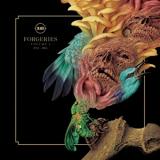
nicht am Lager

Bestelle jetzt und wir bestellen den Artikel für dich beim Lieferanten.

11,72

Last In: vor 3 Jahren
INDIGO SPARKE - HYSTERIA LP

LP + 7". Indigo Sparke's majestic second full-length album Hysteria is a sweeping work, one that possesses a rare, reflective power. On it, she examines love, loss, her history, and the emotional upheaval surrounding those sensations: her words tell the stories, and the sounds act them out. It's a diary built for big stages. Hysteria arrives just a year after her striking, minimalist debut, Echo. Here, though, Sparke offers an expansive body of work_it's a complex collection that expands her sound and outlook. Work on Hysteria began at the start of the COVID-19 pandemic, while Sparke was stranded in quarantine in her native Australia. After moving back to New York in the spring of 2021, Sparke finished writing the album's 14 songs and decamped upstate with producer Aaron Dessner (The National, Taylor Swift). "Originally we were going to co-write, but after he heard my demos he said, `There's so much in here already,'" Sparke recalls on how Dessner, who also contributes instrumentation along with guitarist Shahzad Izmaily and drummer Matt Barrick (The Walkmen, Muzz), got involved in bringing Hysteria to life. Centering Sparke's powerful vocals throughout, Hysteria is packed with big guitars and layered instrumentation that practically acts as the album's lungs, giving every note breath. From the pulsing immediacy of "Infinite Honey" to the soaring "God Is a Woman's Name" and "Hold On"'s towering chorus, this is music that sounds huge even as it zooms in on the trials and turmoils of one's inner life. You can hear Sparke reflecting on reconciliation, grief, hope, and the passage of time on the perpetually building "Pressure in My Chest" and the airy, Joni Mitchell-esque title track, which finds her embracing a gorgeous upper register over gently strummed guitar. "Set Your Fire on Me" builds and bursts not unlike Angel Olsen's own raw folk-rock expressionism_and then there's the stark opener and first single "Blue," which acts as a cosmic road map for Sparke's own journey in life. Sparke observes while reflecting on Hysteria's thematic bent "these songs are about being at the axis point of love - right at the edge of hysteria - and how that transformed me."

nicht am Lager

Bestelle jetzt und wir bestellen den Artikel für dich beim Lieferanten.

27,69

Last In: vor 3 Jahren
INDIGO SPARKE - HYSTERIA LP

LP + 7". Indigo Sparke's majestic second full-length album Hysteria is a sweeping work, one that possesses a rare, reflective power. On it, she examines love, loss, her history, and the emotional upheaval surrounding those sensations: her words tell the stories, and the sounds act them out. It's a diary built for big stages. Hysteria arrives just a year after her striking, minimalist debut, Echo. Here, though, Sparke offers an expansive body of work_it's a complex collection that expands her sound and outlook. Work on Hysteria began at the start of the COVID-19 pandemic, while Sparke was stranded in quarantine in her native Australia. After moving back to New York in the spring of 2021, Sparke finished writing the album's 14 songs and decamped upstate with producer Aaron Dessner (The National, Taylor Swift). "Originally we were going to co-write, but after he heard my demos he said, `There's so much in here already,'" Sparke recalls on how Dessner, who also contributes instrumentation along with guitarist Shahzad Izmaily and drummer Matt Barrick (The Walkmen, Muzz), got involved in bringing Hysteria to life. Centering Sparke's powerful vocals throughout, Hysteria is packed with big guitars and layered instrumentation that practically acts as the album's lungs, giving every note breath. From the pulsing immediacy of "Infinite Honey" to the soaring "God Is a Woman's Name" and "Hold On"'s towering chorus, this is music that sounds huge even as it zooms in on the trials and turmoils of one's inner life. You can hear Sparke reflecting on reconciliation, grief, hope, and the passage of time on the perpetually building "Pressure in My Chest" and the airy, Joni Mitchell-esque title track, which finds her embracing a gorgeous upper register over gently strummed guitar. "Set Your Fire on Me" builds and bursts not unlike Angel Olsen's own raw folk-rock expressionism_and then there's the stark opener and first single "Blue," which acts as a cosmic road map for Sparke's own journey in life. Sparke observes while reflecting on Hysteria's thematic bent "these songs are about being at the axis point of love - right at the edge of hysteria - and how that transformed me."

vorbestellen07.10.2022

erscheint voraussichtlich am 07.10.2022

27,69
INDIGO SPARKE - HYSTERIA LP

LP + 7". Indigo Sparke's majestic second full-length album Hysteria is a sweeping work, one that possesses a rare, reflective power. On it, she examines love, loss, her history, and the emotional upheaval surrounding those sensations: her words tell the stories, and the sounds act them out. It's a diary built for big stages. Hysteria arrives just a year after her striking, minimalist debut, Echo. Here, though, Sparke offers an expansive body of work_it's a complex collection that expands her sound and outlook. Work on Hysteria began at the start of the COVID-19 pandemic, while Sparke was stranded in quarantine in her native Australia. After moving back to New York in the spring of 2021, Sparke finished writing the album's 14 songs and decamped upstate with producer Aaron Dessner (The National, Taylor Swift). "Originally we were going to co-write, but after he heard my demos he said, `There's so much in here already,'" Sparke recalls on how Dessner, who also contributes instrumentation along with guitarist Shahzad Izmaily and drummer Matt Barrick (The Walkmen, Muzz), got involved in bringing Hysteria to life. Centering Sparke's powerful vocals throughout, Hysteria is packed with big guitars and layered instrumentation that practically acts as the album's lungs, giving every note breath. From the pulsing immediacy of "Infinite Honey" to the soaring "God Is a Woman's Name" and "Hold On"'s towering chorus, this is music that sounds huge even as it zooms in on the trials and turmoils of one's inner life. You can hear Sparke reflecting on reconciliation, grief, hope, and the passage of time on the perpetually building "Pressure in My Chest" and the airy, Joni Mitchell-esque title track, which finds her embracing a gorgeous upper register over gently strummed guitar. "Set Your Fire on Me" builds and bursts not unlike Angel Olsen's own raw folk-rock expressionism_and then there's the stark opener and first single "Blue," which acts as a cosmic road map for Sparke's own journey in life. Sparke observes while reflecting on Hysteria's thematic bent "these songs are about being at the axis point of love - right at the edge of hysteria - and how that transformed me."

vorbestellen07.10.2022

erscheint voraussichtlich am 07.10.2022

25,17
Julia, Julia - Derealization

Julia,Julia

Derealization

12inchSSQ195LPC1
Suicide Squeeze
30.09.2022

Debut solo album from Julia Kugel (The Coathangers). Limited edition first LP pressing on heartbeat pink color vinyl, includes DL (1500 copies). If you can’t trust yourself, who can you trust? This is the crucial question at the core of Julia, Julia, the moniker for Julia Kugel, founding member of garage punk icons The Coathangers and the dream pop duo Soft Palms. On her first solo full-length album Derealization, Kugel shifts her focus from collaboration and band dynamics towards a singular artistic vision and private self-discovery. Steeped in the beguiling pop elements of her past work, Derealization is a meditative deep dive into the mind of a person struggling to understand a crumbling internal and external world. The album traverses a landscape of ethereal folk, atmospheric deconstructed pop, and dubbed-out country ballads, all centered around straight forward and direct lyrics. This juxtaposition of nebulousness and lucidity gives the album a sense of clarity emerging from the haze, an apt refection of Kugel's personal growth and journey toward self-acceptance. Derealization is based on weaving the unreal, unsaid, and unknown into an undulating sonic fabric. Vocal layering and abstract instrumentation convey a blurred desperation to connect to an emotional and psychological focal point. Moody, dark, and sumptuous, the record is a flow chart of Julia Kugel coming into herself as an artist and songwriter. The album finds Julia playing almost all the instruments and taking her first stab at engineering at COMA, her and her husband's home recording studio in Long Beach, CA. “You know how touring musicians often speak of whether home is real or tour is real? Well, it can lead you to lose grasp on ‘reality,’ especially when touring is taken away and you are left to wonder if anything was ever real, including yourself. Like you we're just playing a character,” Kugel says of her headspace leading up to the creation of Derealization. “Honestly, I kinda lost it, and through making this record I made peace with it and reconciled myself as a real person. I forgave myself and in turn forgave those around me. The song ‘Forgive Me’ is the apology I wanted to say and to hear. I wrote every song from that place and gained the confidence I was pretending to possess.” This raw and personal approach to the lyrics is present throughout Derealization. On the opening track "I Want You," Kugel creates a woozy sense of space with reverb-soaked drums and spaghetti western guitars while she lists off her desires for a mysterious “you.” Is she actually listing off her desires for herself? For the people around her? As she repeats "do you feel it?" in the song’s chorus, it feels as if she’s conjuring a magical thread by which we are all connected, showing us how our desires are all the same. On "Fever In My Heart" the listener is treated to a lush, acoustic techno track detailing the exhilarating madness of an emotional breakdown. Simple truths percolate to the surface on "Words Don't Mean Much,” as if clearing away the murk of platitudes and empty gestures. The journey continues on the detached and conflicted "Do It Or Don't,” an alluring walk through the winding road of lonely choices. The name for the project Julia, Julia is a look in the mirror, a reflection of what is hidden and unanswered, of what is real and what is transient. The experience of living life not as you planned it but as it unfolded, and the mysterious, magical pain that creates meaning.

Tracklisting 1. I Want You 2. Forgive Me 3. Impromptu 4. Fever In My Heart 5. Words Don’t Mean Much 6. Do It Or Don't 7. No Hard Feelings 8. Big Talkin' 9. Paper Cutout 10. Where Did You Go 11. Corner Town

vorbestellen30.09.2022

erscheint voraussichtlich am 30.09.2022

23,95
Ralph White - Something About Dreaming

Here’s artist Max Kuhn on hearing the new Ralph White recordings for the first time: “I was driving a familiar round trip across the high desert when I first put it on. It immediately spoke to me. In the lyrics there's a familiar geography for me, a familiar emotional landscape for all of us. And maybe it was driving an almost 40 year old truck on sun baked & cracked asphalt in July, but it's like you can hear his songs coming apart- the cadence, the rhymes stumbling & defying expectations, consistency but they just keep moving. You have no choice but to go with it. Probably a good lesson for how to live in this era we're in, cracking up but keeping it all running somehow, trying to make something pretty with the time.” Recorded in Austin, Texas in March of 2020, just days before the city and the rest of the world shut down, Ralph White spent two days with producer, Jerry David DeCicca (Will Beeley, Ed Askew) and recording engineer, Don Cento, capturing a raw and wild set of performances. Ralph, having recently converted his van into a mobile living and touring quarters equipped with a wood-burning stove, left Austin, the city where he was born 70 years ago, and retreated to an Arizona commune where he began building a new house in the desert hills to escape the virus and insanity of daily living. Ralph takes us on a journey through his myriad of travels: from Dock Boggs to Syd Barrett to William Faulkner to Stella Chiweshe to Blind Uncle Gaspard…scratching banjo, rasping train whistle hollers, rolling kalimba, rousing accordion, taut shimmers of guitar, caustic fiddle and lyrics - that could have been hidden amongst the dusty inner groove of a lost Harry Smith 78 - weaving in and out of streams of consciousness, time and place. In addition to his solo work, White has recorded or performed with a diverse group of folk and avant-garde musicians: Thurston Moore of Sonic Youth, Jandek, Jack Rose, Eugene Chadbourne, Michelle Shocked, Sir Richard Bishop, and Michael Hurley. “This is what Ralph White really sounds like. It’s what time passing really sounds like. It’s what a look really feels like. This record is someone touching you all over!” --Bill Callahan “Striking, electrifying acoustic music from an underappreciated legend of the American Southwest. Here, tight song structures meet open, unadorned instrumentation: guitar, banjo, kalimba, accordion, fiddle, and White's elastic voice, unspooling pitches and syllables. White draws listeners in on his terms. Lyrics wind and twist and pull back: "Motel 6, Motel 6, Altoona, Altoona; missing you, missing you so, great big hole in my--..." Brave, beautiful, a high point in White's long career. And this is just Volume 1!” - Eli Winter. "What Ralph White puts on albums and onstage is so mind-boggling and vast, it forces those of us in the description business down a treacherous path." --Darcie Stevens, Austin Chronicle. “White was a member of well-loved punk bluegrass outfit Bad Livers, but his solo work is possessed of a much more lonesome spark, exaggerating the implied drone at the heart of the music of Dock Boggs and The Stanley Brothers…White plays wooden six-string banjo, violin, button accordion and kalimba and his voice has a high, eerie quality to it…extremely psychedelic.” --David Keenan, The Wire Tracklisting: 1. Gun Barrel Polka 2. Misinformation Shuffle 3. El Golfo 4. Something About Dreaming 5. Rye Straw 6. The Stovepipe Blues 7. No Stranger 8. Morning Sickness 9. Lord Franklin

vorbestellen29.09.2022

erscheint voraussichtlich am 29.09.2022

23,95
Lee Tracy & Isaac Manning - Is it What You Want LP

As the sun sets on a quaint East Nashville house, a young man bares a piece of his soul. Facing the camera, sporting a silky suit jacket/shirt/slacks/fingerless gloves ensemble that announces "singer" before he's even opened his mouth, Lee Tracy Johnson settles onto his stage, the front yard. He sways to the dirge-like drum machine pulse of a synth-soaked slow jam, extends his arms as if gaining his balance, and croons in affecting, fragile earnest, "I need your love… oh baby…"

Dogs in the yard next door begin barking. A mysterious cardboard robot figure, beamed in from galaxies unknown and affixed to a tree, is less vocal. Lee doesn't acknowledge either's presence. He's busy feeling it, arms and hands gesticulating. His voice rises in falsetto over the now-quiet dogs, over the ambient noise from the street that seeps into the handheld camcorder's microphone, over the recording of his own voice played back from a boombox off-camera. After six minutes the single, continuous shot ends. In this intimate creative universe there are no re-takes. There are many more music videos to shoot, and as Lee later puts it, "The first time you do it is actually the best. Because you can never get that again. You expressing yourself from within."

"I Need Your Love" dates from a lost heyday. From some time in the '80s or early '90s, when Lee Tracy (as he was known in performance) and his music partner/producer/manager Isaac Manning committed hours upon hours of their sonic and visual ideas to tape. Embracing drum machines and synthesizers – electronics that made their personal futurism palpable – they recorded exclusively at home, live in a room into a simple cassette deck. Soul, funk, electro and new wave informed their songs, yet Lee and Isaac eschewed the confinement of conventional categories and genres, preferring to let experimentation guide them.

"Anytime somebody put out a new record they had the same instruments or the same sound," explains Isaac. "So I basically wanted to find something that's really gonna stand out away from all of the rest of 'em." Their ethos meant that every idea they came up with was at least worth trying: echoed out half-rapped exhortations over frantic techno-style beats, gospel synth soul, modal electro-funk, oddball pop reinterpretations, emo AOR balladry, nods to Prince and the Fat Boys, or arrangements that might collapse mid-song into a mess of arcade game-ish blips before rallying to reach the finish line. All of it conjoined by consistent tape hiss, and most vitally, Lee's chameleonic voice, which managed to wildly shape shift and still evoke something sincere – whether toggling between falsetto and tenor exalting Jesus's return, or punctuating a melismatic romantic adlib with a succinct, "We all know how it feels to be alone."

"People think we went to a studio," says Isaac derisively. "We never went to no studio. We didn't have the money to go to no studio! We did this stuff at home. I shot videos in my front yard with whatever we could to get things together." Sometimes Isaac would just put on an instrumental record, be it "Planet Rock" or "Don't Cry For Me Argentina" (from Evita), press "record," and let Lee improvise over it, yielding peculiar love songs, would-be patriotic anthems, or Elvis Presley or Marilyn Monroe tributes. Technical limitations and a lack of professional polish never dissuaded them. They believed they were onto something.

"That struggle," Isaac says, "made that sound sound good to me."

In the parlance of modern music criticism Lee and Isaac's dizzying DIY efforts would inevitably be described as "outsider." But "outsider" carries the burden of untold additional layers of meaning if you're Black and from the South, creating on a budget, and trying to get someone, anyone within the country music capital of the world to take your vision seriously. "What category should we put it in?" Isaac asks rhetorically. "I don't know. All I know is feeling. I ain't gonna name it nothing. It's music. If it grabs your soul and touch your heart that's what it basically is supposed to do."

=

Born in 1963, the baby boy of nine siblings, Lee Tracy spent his earliest years living amidst the shotgun houses on Nashville's south side. "We was poor, man!" he says, recalling the outhouse his family used for a bathroom and the blocks of ice they kept in the kitchen to chill perishables. "But I actually don't think I really realized I was in poverty until I got grown and started thinking about it." Lee's mom worked at the Holiday Inn; his dad did whatever he had to do, from selling fruit from a horse drawn cart to bootlegging. "We didn't have much," Lee continues, "but my mother and my father got us the things we needed, the clothes on our back." By the end of the decade with the city's urban renewal programs razing entire neighborhoods to accommodate construction of the Interstate, the family moved to Edgehill Projects. Lee remembers music and art as a constant source of inspiration for he and his brothers and sisters – especially after seeing the Jackson 5 perform on Ed Sullivan. "As a small child I just knew that was what I wanted to do."

His older brother Don began musically mentoring him, introducing Lee to a variety of instruments and sounds. "He would never play one particular type of music, like R&B," says Lee. "I was surrounded by jazz, hard rock and roll, easy listening, gospel, reggae, country music; I mean I was a sponge absorbing all of that." Lee taught himself to play drums by beating on cardboard boxes, gaining a rep around the way for his timekeeping, and his singing voice. Emulating his favorites, Earth Wind & Fire and Cameo, he formed groups with other kids with era-evocative band names like Concept and TNT Connection, and emerged as the leader of disciplined rehearsals. "I made them practice," says Lee. "We practiced and practiced and practiced. Because I wanted that perfection." By high school the most accomplished of these bands would take top prize in a prominent local talent show. It was a big moment for Lee, and he felt ready to take things to the next level. But his band-mates had other ideas.

"I don't know what happened," he says, still miffed at the memory. "It must have blew they mind after we won and people started showing notice, because it's like everybody quit! I was like, where the hell did everybody go?" Lee had always made a point of interrogating prospective musicians about their intentions before joining his groups: were they really serious or just looking for a way to pick up girls? Now he understood even more the importance of finding a collaborator just as committed to the music as he was.

=

Isaac Manning had spent much of his life immersed in music and the arts – singing in the church choir with his family on Nashville's north side, writing, painting, dancing, and working various gigs within the entertainment industry. After serving in the armed forces, in the early '70s he ran The Teenage Place, a music and performance venue that catered to the local youth. But he was forced out of town when word of one of his recreational routines created a stir beyond the safe haven of his bohemian circles.

"I was growing marijuana," Isaac explains. "It wasn't no business, I was smoking it myself… I would put marijuana in scrambled eggs, cornbread and stuff." His weed use originated as a form of self-medication to combat severe tooth pain. But when he began sharing it with some of the other young people he hung out with, some of who just so happened to be the kids of Nashville politicians, the cops came calling. "When I got busted," he remembers, "they were talking about how they were gonna get rid of me because they didn't want me saying nothing about they children because of the politics and stuff. So I got my family, took two raggedy cars, and left Nashville and went to Vegas."

Out in the desert, Isaac happened to meet Chubby Checker of "The Twist" fame while the singer was gigging at The Flamingo. Impressed by Isaac's zeal, Checker invited him to go on the road with him as his tour manager/roadie/valet. The experience gave Isaac a window into a part of the entertainment world he'd never encountered – a glimpse of what a true pop act's audience looked like. "Chubby Checker, none of his shows were played for Black folks," he remembers. "All his gigs were done at high-class white people areas." Returning home after a few years with Chubby, Isaac was properly motivated to make it in Music City. He began writing songs and scouting around Nashville for local talent anywhere he could find it with an expressed goal: "Find someone who can deliver your songs the way you want 'em delivered and make people feel what you want them to feel."

One day while walking through Edgehill Projects Isaac heard someone playing the drums in a way that made him stop and take notice. "The music was so tight, just the drums made me feel like, oh I'm-a find this person," he recalls. "So I circled through the projects until I found who it was.

"That's how I met him – Lee Tracy. When I found him and he started singing and stuff, I said, ohhh, this is somebody different."

=

Theirs was a true complementary partnership: young Lee possessed the raw talent, the older Isaac the belief. "He's really the only one besides my brother and my family that really seen the potential in me," says Lee. "He made me see that I could do it."

Isaac long being a night owl, his house also made for a fertile collaborative environment – a space where there always seemed to be a new piece of his visual art on display: paintings, illustrations, and dolls and figures (including an enigmatic cardboard robot). Lee and Issac would hang out together and talk, listen to music, conjure ideas, and smoke the herb Isaac had resumed growing in his yard. "It got to where I could trust him, he could trust me," Isaac says of their bond. They also worked together for hours on drawings, spreading larges rolls of paper on the walls and sketching faces with abstract patterns and imagery: alien-like beings, tri-horned horse heads, inverted Janus-like characters where one visage blurred into the other.

Soon it became apparent that they didn't need other collaborators; self-sufficiency was the natural way forward. At Isaac's behest Lee, already fed up with dealing with band musicians, began playing around with a poly-sonic Yamaha keyboard at the local music store. "It had everything on it – trumpet, bass, drums, organ," remembers Lee. "And that's when I started recording my own stuff."

The technology afforded Lee the flexibility and independence he craved, setting him on a path other bedroom musicians and producers around the world were simultaneously following through the '80s into the early '90s. Saving up money from day jobs, he eventually supplemented the Yamaha Isaac had gotten him with Roland and Casio drum machines and a Moog. Lee was living in an apartment in Hillside at that point caring for his dad, who'd been partially paralyzed since early in life. In the evenings up in his second floor room, the music put him in a zone where he could tune out everything and lose himself in his ideas.

"Oh I loved it," he recalls. "I would really experiment with the instruments and use a lot of different sound effects. I was looking for something nobody else had. I wanted something totally different. And once I found the sound I was looking for, I would just smoke me a good joint and just let it go, hit the record button." More potent a creative stimulant than even Isaac's weed was the holistic flow and spontaneity of recording. Between sessions at Isaac's place and Lee's apartment, their volume of output quickly ballooned.

"We was always recording," says Lee. "That's why we have so much music. Even when I went to Isaac's and we start creating, I get home, my mind is racing, I gotta start creating, creating, creating. I remember there were times when I took a 90-minute tape from front to back and just filled it up."

"We never practiced," says Isaac. "See, that was just so odd about the whole thing. I could relate to him, and tell him about the songs I had ideas for and everything and stuff. And then he would bring it back or whatever, and we'd get together and put it down." Once the taskmaster hell bent on rehearsing, Lee had flipped a full 180. Perfection was no longer an aspiration, but the enemy of inspiration.

"I seen where practicing and practicing got me," says Lee. "A lot of musicians you get to playing and they gotta stop, they have to analyze the music. But while you analyzing you losing a lot of the greatness of what you creating. Stop analyzing what you play, just play! And it'll all take shape."

=

"I hope you understood the beginning of the record because this was invented from a dream I had today… (You tell me, I'll tell you, we'll figure it out together)" – Lee Tracy and Isaac Manning, "Hope You Understand"

Lee lets loose a maniacal cackle when he acknowledges that the material that he and Isaac recorded was by anyone's estimation pretty out there. It's the same laugh that commences "Hope You Understand" – a chaotic transmission that encapsulates the duality at the heart of their music: a stated desire to reach people and a compulsion to go as leftfield as they saw fit.

"We just did it," says Lee. "We cut the music on and cut loose. I don't sit around and write. I do it by listening, get a feeling, play the music, and the lyrics and stuff just come out of me."

The approach proved adaptable to interpreting other artists' material. While recording a cover of Whitney Houston's pop ballad "Saving All My Love For You," Lee played Whitney's version in his headphones as he laid down his own vocals – partially following the lyrics, partially using them as a departure point. The end result is barely recognizable compared with the original, Lee and Isaac having switched up the time signature and reinvented the melody along the way towards morphing a slick mainstream radio standard into something that sounds solely their own.

"I really used that song to get me started," says Lee. "Then I said, well I need something else, something is missing. Something just came over me. That's when I came up with 'Is It What You Want.'"

The song would become the centerpiece of Lee and Isaac's repertoire. Pushed along by a percolating metronomic Rhythm King style beat somewhere between a military march and a samba, "Is It What You Want" finds Lee pleading the sincerity of his commitment to a potential love interest embellished by vocal tics and hiccups subtlely reminiscent of his childhood hero MJ. Absent chord changes, only synth riffs gliding in and out like apparitions, the song achieves a lingering lo-fi power that leaves you feeling like it's still playing, somewhere, even after the fade out.

"I don't know, it's like a real spiritual song," Lee reflects. "But it's not just spiritual. To me the more I listen to it it's like about everything that you do in your everyday life, period. Is it what you want? Do you want a car or you don't want a car? Do you want Jesus or do you want the Devil? It's basically asking you the question. Can't nobody answer the question but you yourself."

In 1989 Lee won a lawsuit stemming from injuries sustained from a fight he'd gotten into. He took part of the settlement money and with Isaac pressed up "Saving All My Love For You" b/w "Is It What You Want" as a 45 single. Isaac christened the label One Chance Records. "Because that's all we wanted," he says with a laugh, "one chance."

Isaac sent the record out to radio stations and major labels, hoping for it to make enough noise to get picked up nationally. But the response he and Lee were hoping for never materialized. According to Isaac the closest the single got to getting played on the radio is when a disk jock from a local station made a highly unusual announcement on air: "The dude said on the radio, 107.5 – 'We are not gonna play 'Is It What You Want.' We cracked up! Wow, that's deep.

"It was a whole racist thing that was going on," he reflects. "So we just looked over and kept on going. That was it. That was about the way it goes… If you were Black and you were living in Nashville and stuff, that's the way you got treated." Isaac already knew as much from all the times he'd brought he and Lee's tapes (even their cache of country music tunes) over to Music Row to try to drum up interest to no avail.

"Isaac, he really worked his ass off," says Lee. "He probably been to every record place down on Music Row." Nashville's famed recording and music business corridor wasn't but a few blocks from where Lee grew up. Close enough, he remembers, for him to ride his bike along its back alleys and stumble upon the occasional random treasure, like a discarded box of harmonicas. Getting in through the front door, however, still felt a world away.

"I just don't think at the time our music fell into a category for them," he concedes. "It was before its time."

=

Lee stopped making music some time in the latter part of the '90s, around the time his mom passed away and life became increasingly tough to manage. "When my mother died I had a nervous breakdown," he says, "So I shut down for a long time. I was in such a sadness frame of mind. That's why nobody seen me. I had just disappeared off the map." He fell out of touch with Isaac, and in an indication of just how bad things had gotten for him, lost track of all the recordings they'd made together. Music became a distant memory.

Fortunately, Isaac kept the faith. In a self-published collection of his poetry – paeans to some of his favorite entertainment and public figures entitled Friends and Dick Clark – he'd written that he believed "music has a life of its own." But his prescience and presence of mind were truly manifested in the fact that he kept an archive of he and Lee's work. As perfectly imperfect as "Is It What You Want" now sounds in a post-Personal Space world, Lee and Isaac's lone official release was in fact just a taste. The bulk of the Is It What You Want album is culled from the pair's essentially unheard home recordings – complete songs, half-realized experiments, Isaac's blue monologues and pronouncements et al – compiled, mixed and programmed in the loose and impulsive creative spirit of their regular get-togethers from decades ago. The rest of us, it seems, may have finally caught up to them.

On the prospect of at long last reaching a wider audience, Isaac says simply, "I been trying for a long time, it feels good." Ever the survivor, he adds, "The only way I know how to make it to the top is to keep climbing. If one leg break on the ladder, hey, you gotta fix it and keep on going… That's where I be at. I'll kill death to make it out there."

For Lee it all feels akin to a personal resurrection: "It's like I was in a tomb and the tomb was opened and I'm back… Man, it feels so great. I feel like I'm gonna jump out of my skin." Success at this stage of his life, he realizes, probably means something different than what it did back when he was singing and dancing in Isaac's front yard. "What I really mean by 'making it,'" he explains isn't just the music being heard but, "the story being told."

Occasionally Lee will pull up "Is It What You Want" on YouTube on his phone, put on his headphones, and listen. He remembers the first time he heard his recorded voice. How surreal it was, how he thought to himself, "Is that really me?" What would he say to that younger version of himself now?

"I would probably tell myself, hang in there, don't give up. Keep striving for the goal. And everything will work out."

Despite what's printed on the record label, sometimes you do get more than one chance.
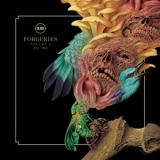
nicht am Lager

Bestelle jetzt und wir bestellen den Artikel für dich beim Lieferanten.

23,49

Last In: vor 3 Jahren
BOBBY OROZA - GET ON THE OTHERSIDE LP

Bobby Oroza puts his desire for the profound on wax with his sophomore album Get On The Otherside. Musically, he has updated the formula we were introduced to on the first record. But lyrically, songs are bravely rooted in the more complicated, ubiquitous inner tangles of life like self-examination and coming to terms with the vastness of the human experience. With Coronavirus bringing the world to a halt, Bobby-a father and husband-had to do something. No tours to play or studio time to fill, Bobby found himself back in the construction yard, doing blue-collar work to provide for his family. "I was super grateful for the work-a lot of my colleagues didn't have an option like that," Bobby admits. More than a few personal hardships forced him to acknowledge and work through some brutal truths. And what came of it? Well, for one, this new record Get On The Otherside which pretty well describes what Bobby's been through: He had to demolish his ego, his old ways of thinking, and his tried approaches to anchor into a refreshed perspective with new understandings. As Bobby tells it, "I had to do some real self-searching, come to terms with what was wrong, and how much of it I was responsible for." So how does this translate to the new album? Moments of clarity as to where the real value in life lies on "I Got Love," encouraging numbers like the title track "The Otherside", and declarations of self actualization on "My Place, My Time." Even the more straightforward love songs are outside the box lyrically like "Sweet Agony" and "Loving Body." If you have never had the pleasure of catching one of Bobby's live shows you may have no idea that he is a maverick on the guitar. He lets us in on a little of that on "Passing Things" with a solo that possesses the same restrained and space that his lyrics do. As we'd expect, the songwriting still has that raw, direct edge to it. But an evolution has taken place. There are new points of view on familiar territory which in Bobby's words "For me to love, I needed to take a bigger view of love. One with less ego and more empathy" really hold true. The result is a record with Bobby's new found humility on full display and a message of encouragement to anyone who is struggling and can't see a way out. It still may be hard to nail down and define Bobby and his sound. He's no one thing more than the other. But what he's showing us now, on Get On The Otherside, is that we can also label him a soulful, philosophical optimist. Someone who can say a lot with a little, and who wants us all to know that it's us that has to do the hard lifting to truly live a life in love-both with the world and with yourself.

nicht am Lager

Bestelle jetzt und wir bestellen den Artikel für dich beim Lieferanten.

21,13

Last In: vor 3 Jahren
Dewa Alit & Gamelan Salukat - Chasing the Phantom

Dewa Alit, Bali’s master of contemporary Gamelan composition, returns to Black Truffle with Chasing the Phantom, presenting two recent works played by the composer’s Gamelan Salukat, a large ensemble that performs on instruments specially built to his designs, using a unique tuning system that combines notes from two traditional Balinese Gamelan scales. Alit explains that the ensemble’s name suggests “a place to fuse creative ideas to generate new, innovative works” and both compositions demonstrate the composer’s ability to wring stunning new possibilities from variations on the traditional Gamelan ensemble. While using familiar elements of Balinese Gamelan music, such as unison scalar melodies and stop-start dynamics, Alit’s music is overflowing with harmonic, rhythmic, and timbral inventions, the latter often facilitated by unorthodox playing techniques.

“Ngejuk Memedi”, an English translation of which gives the LP its title, results from Alit’s reflection on the complex relationship between tradition and modernity in Balinese culture, particularly in the way that belief in the phantoms or spirits known as ‘memedi’ are shared through social media using digital technologies. Embodying this uncanny co-existence, the opening passages of the piece are at once immediately recognisable in their use of the metallophones of the Gamelan ensemble and strikingly reminiscent of electronics in their timbre and movement. At points, what we hear seems to have been fragmented with digital tools, or even to originate in some incessantly glitching DX7. Short melodic figures loop irregularly, with the ensemble splintering into polyrhythmic shards before unexpectedly recombining for intricate unison passages. After several minutes of this manically tinkling metallic sound world, the metallophones are joined by drums for a meditative passage of lower dynamics, as the uniformly high pitch range explored in the opening sections gradually opens up to include resonant low gong hits. Recovering some of the manic energy of the opening, but now enhanced with the full range of percussion, the piece weaves through a series of tempo changes to a stunning passage of rapid-fire melodies and ringing chords that sweep across the metallophones, their unorthodox tuning creating complex clouds of wavering harmonies.

“Likad”, written during Covid-19 lockdowns, channels anxiety and uncertainty into musical form, resulting in a piece that, even by Alit’s standards, is stunning in its complexity and the virtuosity it demands of Gamelan Salukat. Its opening section is perhaps most remarkable for its mastery of texture, with rapid transitions between dry, muted strikes and metallic shimmers calling to mind the use of filters in electronic music. At points, the complex irregular repetitions of short melodic patterns, where the music seems to get stuck or be suddenly interrupted by a skip, recall the mad sampler works of Alvin Curran or the skittering surface of prime period Oval more than anything familiar from acoustic percussion music. Moving through a dizzying series of twists and turns, the piece ends with a majestic sequence of chords possessing an almost hieratic power. A major statement from a radical contemporary composer, one cannot help but agree with Alit when he sees Chasing the Phantom as an answer to the “question of the future of Gamelan music”.

nicht am Lager

Bestelle jetzt und wir bestellen den Artikel für dich beim Lieferanten.

21,72

Last In: vor 3 Jahren
Alex Crispin - Alex Crispin LP

Alex Crispin

Alex Crispin LP

12inchCBDL-0012
Cobblers
11.07.2022

He might be vocalist in bands such as Brighton-based progressive act Diagonal and psychedelic outfit Baron, but when it comes to his solo work Alex Crispin has typically worked in more wordless fields. Last year the songwriter, vocalist and producer released a triptych of ambient albums, consisting of two older albums in 'Idle Worship' and 'Open Submission', as well as new meditative work in 'Resubmergency'. On his new self-titled album, however, Crispin re-emerges from the cavernous soundscapes to – for the first time – put his vocal and song writing stamp on a record under his own name. “I personally find it easier to create more guarded, moody music, but I was at a point where I wanted to embrace a more universal, intimate and open side to what I might say” Crispin says. “Over time I’d got over certain blocks or preoccupations and so wanted to create something accessible and open hearted, which became a big driver for this record.” Pointedly self-titled to reflect the newfound confidence in his song writing away from the collective of a band, the album’s nine tracks are a warm embrace amidst troubled times. Musically there’s nods to everything from tropicalia and Brazilian MPB, to 80’s dusk pop balladeers The Blue Nile and Paul Simon’s explorations into African music. Lyrically aware of the snowballing turbulence that surrounds us, Crispin in reaction tries to see hope and looks around at the relationships and connections in his life that provide him strength. He opens 'Invisible (To Us)' with the words “Before the world did end, there was just one moment when, everybody thought there might be time, to look around again, to laugh to cry to sing.” Elsewhere, 'Listen & Learn' strikes at the heart of other underlying themes of the record, of the rarity of people opening up, taking on new ideas and allowing change. It’s accompanied with a rich, maximal sound palette of flute and sax that play around each other as Crispin’s vocal chips in with gentle encouragement. “One of the main markers on the album that I was aware of from the start, was to let myself express joy and positivity in the music” he says. “I have come to greatly prize the power of accessibility and universality over artistic 'coolness or trend', much in the same way that so often for me, the greatest pieces of art humans make nowadays are things like Pixar movies, with their combination of undeniable human talent and craft, alongside genuinely moving and accessible themes.” Indeed, there is a cinematic feel to much of Crispin’s own music, something brought over from his ambient creations – although his self-titled album possesses a panorama all of its own. Something like 'When I Reach The Ocean' has a hazy, pastoral feel to it like something out of the Canterbury Folk scene; there’s space between the notes though, which in turn pushes the track out to a greater expanse than the comparatively soft-edged and modest sound palette used to create it. Similarly, the likes of 'Effert' revel in the space afforded to them - in the case of the aforementioned in particular, Crispin lets his voice take a back seat and creates an open wash of sound that he allows the guitar to probe and explore within. “In making any music I am definitely conscious of trying to put in only what is effective” Crispin says. “It is so easy to clutter tracks without realising it, just having the ability to add stuff can just become addictive as it’s so easy to do with recording setups now.” The album started coming together at the end of 2020, with Crispin getting most of the songs to a concrete state, before starting recording in May 2021 with Diagonal bandmates Luke Foster (drums) and Daniel Pomlett (Bass), who put down rhythm tracks. Jazz saxophonist Rob Milne then added parts which would become the glue that held the whole organic aesthetic of the album together. There’s no doubt that lockdown played a part in proceedings, with a kind of forced focus resulting in a need for joyful expression. However, Crispin and his partner also suffered a bereavement which led to her travelling for large periods of time. “It was a very intense and difficult time and I think some of the intensity of emotion of that situation coupled with being alone must have inevitably contributed to the work itself” he says. It's perhaps why when even in moments of sheer happiness, such as the 'Sabu’s' breezily euphoric opener, Crispin ponders: “No-one really cares beyond this moment, and even when it's here, it's never here”. It’s the first of several bittersweet moments on the record that give the album its weight. On this new LP, Crispin recognises that sadness doesn’t mean throwing out hope, and that even in moments of joy there’s still a path ahead of you to take.

vorbestellen11.07.2022

erscheint voraussichtlich am 11.07.2022

23,32
BOBBY OROZA - GET ON THE OTHERSIDE LP

Bobby Oroza puts his desire for the profound on wax with his sophomore album Get On The Otherside. Musically, he has updated the formula we were introduced to on the first record. But lyrically, songs are bravely rooted in the more complicated, ubiquitous inner tangles of life like self-examination and coming to terms with the vastness of the human experience. With Coronavirus bringing the world to a halt, Bobby-a father and husband-had to do something. No tours to play or studio time to fill, Bobby found himself back in the construction yard, doing blue-collar work to provide for his family. "I was super grateful for the work-a lot of my colleagues didn't have an option like that," Bobby admits. More than a few personal hardships forced him to acknowledge and work through some brutal truths. And what came of it? Well, for one, this new record Get On The Otherside which pretty well describes what Bobby's been through: He had to demolish his ego, his old ways of thinking, and his tried approaches to anchor into a refreshed perspective with new understandings. As Bobby tells it, "I had to do some real self-searching, come to terms with what was wrong, and how much of it I was responsible for." So how does this translate to the new album? Moments of clarity as to where the real value in life lies on "I Got Love," encouraging numbers like the title track "The Otherside", and declarations of self actualization on "My Place, My Time." Even the more straightforward love songs are outside the box lyrically like "Sweet Agony" and "Loving Body." If you have never had the pleasure of catching one of Bobby's live shows you may have no idea that he is a maverick on the guitar. He lets us in on a little of that on "Passing Things" with a solo that possesses the same restrained and space that his lyrics do. As we'd expect, the songwriting still has that raw, direct edge to it. But an evolution has taken place. There are new points of view on familiar territory which in Bobby's words "For me to love, I needed to take a bigger view of love. One with less ego and more empathy" really hold true. The result is a record with Bobby's new found humility on full display and a message of encouragement to anyone who is struggling and can't see a way out. It still may be hard to nail down and define Bobby and his sound. He's no one thing more than the other. But what he's showing us now, on Get On The Otherside, is that we can also label him a soulful, philosophical optimist. Someone who can say a lot with a little, and who wants us all to know that it's us that has to do the hard lifting to truly live a life in love-both with the world and with yourself.

nicht am Lager

Bestelle jetzt und wir bestellen den Artikel für dich beim Lieferanten.

21,13

Last In: vor 3 Jahren
Wire - Not about To Die (STUDIO DEMOS 1977-1978)
  • A5: French Film
  • A10: Chairs Missing
  • B2: Ignorance No Plea
  • B5: Stepping Off Too Quick
  • A1: Oh No Not So
  • A2: Culture Vultures
  • A3: It's The Motive
  • A4: Love Ain't Polite
  • A6: Underwater Experiences
  • A7: Stalemate
  • A8: Options R
  • A9: Indirect Enquiries V1
  • B1: Being Sucked In Again
  • B3: Once Is Enough
  • B4: The Other Window
  • B6: On Returning
  • B7: Former Airline
  • B8: Two People In A Room

The original Not About To Die was an illegal bootleg, released at some point in the early 80s, by the dubiously named Amnesia Records. The album was made up of selections from demos recorded by the group for their second and third albums: Chairs Missing and 154. These demos had been recorded for EMI, with cassette copies circulated amongst record company employees. However, they were never intended for release. A typically shoddy cash-in, the songs on Not About To Die were taken from a second or possibly third generation cassette, with the album housed in a grainy green and red photo-copied sleeve. Compared with the high standards of production and design Wire have always been known for, it was something of an insult to band and fans alike. Now, in a classic act of Wire perversity, the group have decided to redress the balance and reclaim one of the shadier moments of its history, by giving Not About To Die its first official release on the bands own pinkflag imprint.. All the tracks have been properly remastered, with the relevant recording details in place. As for the sleeve artwork, whilst it strongly references the original, it is decidedly more artful in its execution. Not About To Die emerges as a fascinating snapshot of Wire in transition with embryonic versions of classic songs such as ‘French Film (Blurred)’, ‘Used To’ and ‘Being Sucked In Again’, that the group would develop considerably for their epochal 1978 album Chairs Missing. Later demos such as ‘Once Is Enough’, ‘On Returning’ and ‘Two People In A Room’ would surface in radically altered form on 1979’s 154. Some songs, such as ‘The Other Window’, are virtually unrecognisable from their later iterations but the biggest prizes here may well be the tracks that were omitted from Wire's later studio albums... Highlights include ‘Motive’, which has an undeniable power. Robert Grey’s drumming is crisp and minimal, and Graham Lewis’s bass runs are particularly ear-catching. Despite its distinctly un-Wire title, ‘Love Ain't Polite’ is also something of a gem. Meanwhile, the track which gives the album its title Not About To Die (officially known as ‘Stepping Off Too Quick’) possesses what Colin Newman half jokingly calls “The best intro to any song ever”. The intro is so good in fact, that it takes up a third of the song’s entire time frame. These properly mastered tracks have never been available on vinyl before, and they provide an opportunity to hear Wire at a point in their development when they were bursting with fresh ideas and a will to communicate them. This is post-punk at its very finest.

a A1 Oh No Not So [save The Bullet]


[e] A5 French Film [blurred]


[j] A10 Chairs Missing [used To]

[l] B2 Ignorance No Plea [i Should Have Known Better]


[o] B5 Stepping Off Too Quick [not About To Die]

vorbestellen30.05.2022

erscheint voraussichtlich am 30.05.2022

25,67
Julia Reidy - World in World

Black Truffle is pleased to announce World in World, the latest solo offering from prolific Berlin-based guitarist-composer Julia Reidy. Where the recent trilogy of LP releases – brace, brace (Slip, 2019), In Real Life (Black Truffle, 2019), and Vanish (Editions Mego, 2020) – focussed on increasingly lush electronic settings for Reidy’s propulsive fingerpicking and auto-tuned vocals, arranged into wide-ranging side-long epics, World in World finds Reidy refocusing on the core elements of their approach while simultaneously pushing into challenging new areas. Comprising nine pieces ranging between two and seven minutes in length, the album’s opening title track promptly introduces the distinctive palette of just-intoned electric guitars, subtle electronic processing, and voice that is rigorously explored throughout. Where much of Reidy’s guitar work on previous recordings explored rapidly pulsed cycling figures, here notes often hang in the air in a more spacious, lyrical fashion. The elasticity of rhythm and non-linear repetition of pitches initially suggests improvisation until the listener becomes aware of the precise arrangements of spatialised lines. At times, World in World suggests classic bedroom electric guitar works of the 1990s such as Loren Connors’ Airs or Roy Montgomery’s Scenes from the South Island; like those works, Reidy’s possesses a wonderfully live ambience, with frequent pedal clicks adding to the music’s powerful sense of intimacy. In Reidy’s case, however, the yearning, melancholic mood of Connors or Montgomery is tempered by the unorthodox guitar tuning, which at points produces a unique and uncomfortable effect somewhere between the hyper-precision of Harry Partch or Lou Harrison and Jandek’s slack-stringed descent into the void. While World in World plots out its terrain with a bold single-mindedness that allows some pieces to appear almost as variations on a common theme, subtle changes in emphasis distinguish each track. Tactile percussive interjections skitter across the tremolo tones of ‘Paradise in Unrecognisable Colours’, while ‘Ajar’ ramps up the role played by the electronics, with glitching pitch-shifted and back-masked textures threaded through the guitars and thickly harmonised vocal layers. Ranging from autotuned melodic lines to buried murmurs, Reidy’s voice is a frequent presence throughout these nine pieces, at times creating the impression that a more conventional series of songs lurks underneath the chiming microtonal guitars. On the stunning ‘Poised’, whispers and distant, ghostly wails surround the layers of guitars, at times suggesting the foggiest outer reaches of Liz Harris’ Grouper. Both rigorously experimental and emotive, World in World is undoubtedly Julia Reidy’s finest work yet.

nicht am Lager

Bestelle jetzt und wir bestellen den Artikel für dich beim Lieferanten.

25,00

Last In: vor 3 Jahren
Portable - My Sentient Shadow 2x12"

Following hot on the heels of lead single and recent mind-body tantalizer “I Feel Stronger Now,” we are now truly proud to present you with Portable’s latest full-length My Sentient Shadow. Filled to the brim with all of the inventiveness the sonic auteur has commanded we expect from his sizable and consistent body of work on worldrenown labels such as Perlon, ~scape, !K7, and his own Süd Electronic and Khoikhoi imprints, and dare we say offering us perhaps the most cohesive, emotive, and balanced of his highly-admirable catalog here to date. By using the analogy of a shadow that possesses its own consciousness, the theme of light and its distortion vs balance with the inherent and necessary darkness that surrounds it is in clear vision.
Immediately from the warmly bizarre vibes of opening cut “The Simulacrum”, it’s clear Portable is requesting clearance to other worlds of funk and ingenuity. The delightfully trippy, smoky, back-room of the Tattooine Cantina feel sets the stage just right to curb expectations and let the carefully constructed noise movements wash over us.
Elsewhere amongst the generous set we find tracks like “Cages” and “Ripple Effect” continue in the direction of horizontally-maximized aural tapestries oozing with texture, while at the other end of the energy spectrum pieces such as “The Self-Assembling” and “We Exist..” roll and bounce with all the sci-fi gyrations and slick synth layers hinting at a hypnotic halfway rendezvous point to his Bodycode moniker. And of course, no proper Portable outing would be complete without his own robust tenor vocal tone, which feels right at home front-and-center on the space travel anthem “The Spacetime Curvature” and used in more calculated micro-doses on “Analogue World”, as well as the gorgeous “Foreign to You” whose meta-title features a rare guest starring vocalist NiQ.E, and brings to hearts some of Herbert’s finer moments with dear friend Dani Siciliano, albeit done-up entirely in some distant yet alluring parallel dimension. The LP journey finishes with the frenetically-charged closer “Fractal Distortion” which will no doubt please many-a cosmic techno purist while making percussion masters from the afterlife such as Jaki Liebezeit and Tony Allen proud, and is quite possibly the closest thing to a danceable musical take on the current state of cognitive dissonance in the world that surrounds us, offering us a one-way
ticket out from the not-too-distant future. Please join us in welcoming and celebrating this wonderful album from Portable on Circus Company.

nicht am Lager

Bestelle jetzt und wir bestellen den Artikel für dich beim Lieferanten.

24,16

Last In: vor 4 Jahren
Captain Scarlet  & The Mysterons - DLP

Captain Scarlet&The Mysterons

DLP

2x12inchSILLP1649
SILVA SCREEN
29.12.2021
 
18

After the international success of Thunderbirds, Gerry and Sylvia Anderson turned their attention to a deadly threat from Mars. Seeking revenge for an attack on their home planet,

the Mysterons plot to use their powers to bring Earth to its knees.

Across 32 episodes broadcast during 1967 – 1968, the series is remarkable for moving away from the more caricatured puppets of previous shows –

they have more realistic body proportions and the storylines are much more violent and darker in tone. Something reflected in the music which has a

more militaristic feel to it although, as always, composer Gray offers up occasional lighter tracks to break up the mood.

The opening narration of each episode sums it up –

"The Mysterons: sworn enemies of Earth. Possessing the ability to recreate an exact likeness of an object or person. But first, they must destroy...

Leading the fight, one man fate has made indestructible. His name: Captain Scarlet."

The Captain Scarlet LP will be sixth album in the series which includes UFO, Supercar, Thunderbirds, Fireball XL5 and Space: 1999.

vorbestellen29.12.2021

erscheint voraussichtlich am 29.12.2021

32,48
Galtier - Pulchra Es Elementis

With 10 years in the 'biz' firmly under his belt, Jiah Wells is poised to release the first full-length LP of his Galtier project, Pulchra Es Elementis. Whilst Galtier is arguably one of the originators of the percussive style that would eventually fall under the Hard Drum label, the heightened theatrics of his recent output have seen him channel Blade Runner-styled sonics and move further away from absolute club functionality. Whilst Galtier's output often seems to soundtrack hypothetical, off-planet words, Pulchra Es Elementis turns the focus inwards: towards Wells' own emotional constellation, his evolving spirituality and his attempts to tap into planes of existence beyond the tangible. The album's Latin title translates to 'Elements are Beautiful' and encapsulates the artist's belief that there is grace in all of life's aspects; pushing past what we deem as good or bad, minuscule or massive.

Pulchra Es Elementis begins with Crystalised Larva, a brooding opener of breathy pad synths and expansive kick drums which reverberate through the mix as if the hits originate from the bottom of a valley. There's an indistinct sense of tension on this track, in part due to a central melody, which never resolves but only descends lower in pitch. This tension turns to explorative wonder on Wilfull Saviour, where a mirage of musical ideas come in and out of focus. Although the sonic worlds Galtier explores are internal to him, Wilfull Saviour still possesses that sense of a cosmic journey we've come to expect from Wells; an ardent fan of dystopian films and literature.

Continuing this emotional odyssey, Bruised, But Not Broken sees the artist push deeper into the psychological undergrowth; its murky tonality juxtaposes crisp, Reggaeton-inspired drum patterns with a heavily compressed one-note synth line that modulates wildly - cutting through the mix like a nagging thought that won't leave your mind. Next up is U Were, U Are & What U Will Be, one of the more club-ready tracks of the LP, which gets us moving with a snarling bassline and layers upon layers of percussive hits and inflections.

At Pulchra Es Elementis' mid-point is the LP's title track, a drumless interlude where blissful, shimmering synths create a patchwork of intensities. Galtier's approach to songwriting shines through here; ignoring musical pragmatics, he opts to feel his way through his compositions without knowing where they might end up. Following on from that weightless breather, Phantasiai turns up the freneticism with its head-spinning mix of drum programming and a glitched-out synth line that yo-yos up and down octaves. Things get even more furious on the Superficie-featuring Cavernam, a hollow Hard Drum banger inspired by Eskibeat sensibilities and designed to create a sense of self-implosion.

The album's penultimate track, (U Are) Beautiful, is a tale of two halves: beginning with a moment of serenity as synthesizers swell like an ocean tide before evolving into a marching crescendo of raw energy. Rounding off the album, Shine Forth hurtles through pacey drum work and all manner of strange zaps and klaxons before giving way to a final dose of nebulous ambience.

A musical journey unlike any other 'club music' albums, Pulchra Es Elementis is an LP that demands to be consumed in one sitting. Reflecting on his place within the universe and the musical landscape, the album could be viewed as a musical exorcism which sees Galtier working through and shedding huge chunks of his ego that stuck to him out of fear of the unknown. Pulchra Es Elementis begins on an insecure, overwhelming or, even, existential note before rounding off with a related sense of vastness seen with new, more positive eyes. It's a voyage we hope you will join him on.

nicht am Lager

Bestelle jetzt und wir bestellen den Artikel für dich beim Lieferanten.

21,81

Last In: vor 4 Jahren
Powerwolf - Call Of The Wild

Powerwolf

Call Of The Wild

12inch0840588146031
Napalm Records
16.07.2021

Das Phänomen POWERWOLF: Innerhalb der deutschen Heavy-Metal-Szene findet sich wohl kaum eine
andere zeitgenössische Band, deren Erfolgskurve seit vergleichbar langer Zeit derart steil nach oben zeigt,
was mithilfe der im vergangenen Jahr veröffentlichten opulenten Werkschau „Best Of The Blessed“ zum
15-jährigen Bestehen deutlich sicht- und hörbar unter Beweis gestellt wurde. Nun, nur rund 12 Monate
später, steht das achte Studio-Album unter dem Titel „Call Of The Wild“ in den Startlöchern, von dem
mit Fug und Recht behauptet werden darf, dass es neue Maßstäbe setzt!
Zeitsprung ins Jahr 2005. Bereits auf seinem Debüt „Return In Bloodred“ etabliert das Quintett um den
Lead-Gitarristen und Haupt-Songwriter Matthew Greywolf einen in dieser Form nie dagewesenen Stil, der
klassischen Metal melodischer Spielart mit erhabenen Orgelklängen und orchestralem Bombast vereint.
Alles an POWERWOLF, von den elaborierten Texten - die mal augenzwinkernd humorvoll, mal bitterböszynisch von Phantastischem und Historischem handeln - bis zur omnipräsenten sakralen Symbolik, nährt
die mystische Aura des Fünfergespanns, die über die folgenden Jahre mit jedem weiteren Werk an
Bedeutung gewinnen und auf unzähligen Touren in eine einmalige, nicht von ungefähr als
„Metal-Messe“ bezeichnete Liveshow übersetzt werden soll. Die süßen Früchte der eisernen Treue zu den
traditionellen musikalischen Wurzeln, bei gleichzeitiger konsequenter Weiterentwicklung ihres ureigenen Sounds, ernten POWERWOLF aber nicht nur von den Bühnen ausverkaufter Konzertsäle aus, sondern
auch an der hart umkämpften Chart-Front. Dreimal gelang in den letzten Jahren der Sprung aufs
Treppchen der offiziellen deutschen Albencharts - zweimal davon auf die Pole-Position - und im
europäischen Ausland wurden die jüngeren Veröffentlichungen „Blessed & Possessed“ und „The
Sacrament Of Sin“ mit Gold, die Hit-Single „Demons Are A Girl' Best Friend“ gar mit Platin
ausgezeichnet.
Warum außer Frage steht, dass das am 16. Juli 2021 erscheinende Opus „Call of The Wild“ in Sachen
Popularität einen weiteren Quantensprung bedeuten wird, erklärt sich sowohl langjährigen als auch frisch
gewonnenen Fans schon im ersten Hördurchlauf wie von selbst: Gerahmt vom Eröffnungs-Titel ”Faster
Than The Flame”, der sich pointiert als „POWERWOLF in Reinkultur“ beschreiben lässt, und dem
großen Finale ”Reverent Of Rats” verströmen die elf enthaltenen Songs zwar stets Vertrautes, wagen aber
auf jedem Schritt des Wegs Weiterentwicklung in vielerlei Hinsicht. So mutet etwa das
unverschämt-eingängige ”Dancing With The Dead” regelrecht tanzbar an, während ”Alive Or Undead”
als Power-Ballade allererster Güte den Ruf des Frontmanns Attila Dorn als absolutem Ausnahme-Sänger
endgültig zementiert. „Call Of The Wild“, das sich einmal mehr als heißer Anwärter auf den
Chartstürmer-Titel ins Rennen stürzt, ragt anno 2021 als turmhohes Ausrufezeichen aus der
Musiklandschaft hervor und vermittelt wie kein anderes Werk das leidenschaftliche Credo
POWERWOLFs: Metal is religion!

vorbestellen16.07.2021

erscheint voraussichtlich am 16.07.2021

18,95
Alvin Lucier - Works for the Ever Present Orchestra 2x12"

Black Truffle’s documentation of the prolific recent work of legendary American composer Alvin Lucier continues with Works for the Ever Present Orchestra. This is a very special release for the composer, as it presents pieces written for the thirteen-member Ever Present Orchestra, formed in 2016 exclusively to perform Lucier’s works. At the heart of the ensemble are four electric guitars, an instrument Lucier began composing for in 2013 with Criss-Cross (recorded by two core members of the Ever Present Orchestra, Oren Ambarchi and Stephen O’Malley, for whom it was composed, on Black Truffle 033). Through the use of e-bows, the guitars take on a role akin to the slow sweep pure wave oscillators heard in many of Lucier’s works since the early 1980s, but with added harmonic richness. Like much of Lucier’s instrumental music, the pieces recorded here focus on acoustic phenomena, especially beating patterns, produced by the interference between closely tuned pitches. The work presented here is some of the richest and most inviting that Lucier has composed. Though all of the pieces clearly belong to the same continuing exploration of the behaviour of sound in physical space and make use of related compositional devices, each takes on a strikingly different character. Titled Arc, for the full ensemble of four guitars, four saxophones, four violins, piano and bowed glockenspiel inhabits a world of sliding, uneasy tones, punctuated by a single piano note. Where Double Helix, for four guitars, rests on a pillow of warm, low hum, EPO-5, for two guitars, saxophone, violin, and glockenspiel possess a limpid, crystalline quality. Accompanying the four new compositions are two adaptations of existing pieces for radically different instrumentation, demonstrating Lucier’s excitement about the new possibilities suggested by this dedicated ensemble. Works for the Ever Present Orchestra is an essential document of the current state of Lucier’s continuing exploration, as well as offering a seductive entry-point for anyone who might yet be unacquainted with his singular body of work.

Presented in a deluxe gatefold sleeve with cover artwork and liner notes from Alvin Lucier. Includes a download code featuring hi-res vesions of the LP material. The download code also includes the bonus Adaptions for the Ever Present Orchestra featuring two pieces (“Two Circles” and “Braid”) that are not included on the LP version. Mastered by Rashad Becker. Design by Lasse Marhaug.

nicht am Lager

Bestelle jetzt und wir bestellen den Artikel für dich beim Lieferanten.

21,47

Last In: vor 5 Jahren
Deadbeat & Paul St. Hilaire - Four Quartets Of Love and Modern Lash 2x12"

2x12"

Parisian label Another Moon are pleased to announce the imminent release of the second collaborative album by Scott Monteith aka Deadbeat and Paul St Hilaire aka Tikiman entitled 4 Quarters of Love and Modern Lash. When asked about about the album's motivations and production process, Monteith had the following to say: “I first heard Paul's voice back in 1996 when I stumbled upon the first Burial Mix 10 inch in a local shop, and it would be no exaggeration to say it has echoed in my mind ever since. We began working together in 2008, and it's fair to say the experience of performing and learning from him has left an indelible mark on my artistic process and my outlook on life in general. He is possessed of a truly electrifying spirit. I’ve had a folder on my hard drive called “For Tiki” for 14 years now, for those more often than not late night studio moments when I stumble upon a rhythmic or musical phrase and hear that unmistakable voice bubbling up in my mind. When that folder fills up with enough of those little magic moments I know it's time to call him, though strangely enough, he more often than not ends up calling me around those times. Such is his deep universal awareness.” “I wrote the initial sketches for what would eventually become this new album over the course of last year to a large extent as a way of trying to process what I perceived as a creeping darkness and sickness in both my own life and the world in general that desperately needed exorcising. When I received his initial responses I nearly fell off my chair. It goes without saying that Paul is a lyricist and poet second to none, and anyone familiar with his enormous body of work can attest to that. And yet, there was something in these latest pieces that hammered the proverbial nail clean through the wood. They perfectly captured this sense of rising tension, of a world that was getting almost psychedelically weirder and darker by the day, and both held a mirror up to this and offered some much needed release. Little did we know, nor could we possibly have imagined, that by the time the record actually hit the shelves, things would get exponentially weirder and darker still.” “It is my great hope that at some point in the coming months we will be able to get back on the road and share these new pieces with people in a live setting, as performing with Tiki is truly one of my greatest joys, and I think it’s where the fire in our work together truly burns brightest. In the meantime, it is my great hope that these 4 long form meditations might provide a little solace for people in their isolation, be it quietly, eyes closed lying on the coach, or cranked up, full on raving in their living rooms.”

nicht am Lager

Bestelle jetzt und wir bestellen den Artikel für dich beim Lieferanten.

21,81

Last In: vor 4 Jahren
SRS - Data Fossil

Srs

Data Fossil

12inchBKV029
Bokeh Versions
16.06.2020

Sludge machine music slapped through the infinite mixing desk by SRS - the combined mind of Sunun and Robin Stewart. At any pointData Fossil'sgiddy industrial riddims could collapse under their own weight. There are Sunun inputs and there are Robin Stewart inputs - but everything is offered up to their machines gladly for an output of nu-human-beat. Voices drift through the mix in hushed Italian and Robin's gruff roboticized drawl, floating dub chords left hanging for cavernous subs and rattled bones, distant harps and arps, a sudden blast of trills. 'Spit Fossil' itself is a clipped noise-pop wonder - the aural equivalent of a lights-on Avon dancefloor with only the weirdest left standing.


Recorded on the rooftop of a housing project called Camelot in 2018, the two Bristol locals debuted the live / unplanned collaboration in an inflatable arena called 'Toldo' in the Brunswick Club ballroom (RIP). Then again at Young Echo at the Cube Microplex - a night where it's said anything is possible (Sunun even dubbed Guest's live human heartbeat there recently….). IfData Fossilis hard to describe - it's just the sound of the musical freedom of a city that will never run dry.


It's a high Bokeh honour to welcome Sunun back after we helped release her 2018 debut,Ooid EP. Her live show continues to be the most inspiring re-use of dub principles we've witnessed (again and again). Time only grows her music outwards causing the Young Echo collective to demand she join them. SinceOoid,she's released a 12" of MPC wonders with close Bristol pals Cold Light.


Recently bearing his dub-side to all that didn't know on Trilogy Tapes'Time Travel EP, Robin Stewart is half of world conquering techno-cult Giant Swan. Also a veteran of Rwdfwd stable of imprints (Fuckpunk and NoCorner) - his music DNA is equal parts shoegaze and steppas. In 2020 he was officially recognised for having the largest collection of Bokeh t shirts.

nicht am Lager

Bestelle jetzt und wir bestellen den Artikel für dich beim Lieferanten.

12,56

Last In: vor 5 Jahren
Nils Frahm - Wintermusik

Nils Frahm

Wintermusik

12inchERATP018LP
Erased Tapes
30.04.2020

Nils Frahm, born in 1982, had an early introduction to music. During his childhood he was taught to play piano by Nahum Brodski a student of the last scholar of Tschaikowski. It was through this that Nils began to immerse himself in the styles of the classical pianists before him as well as contemporary composers. Today Nils Frahm works as an accomplished composer and producer in Berlin. In early 2008 he founded Durton Studio, where he has worked with Peter Broderick and Dustin O' Halloran amongst other fellow musicians.

The three instrumentals, which make up his debut release 'Wintermusik' are piano led pieces, coloured with occasional celeste and reed organ parts. The record's equal measures of sorrowful refrains and uplifting passages, combined with a real intimacy that makes for an album you'll want to return to again and again.

The songs were originally intended as a Christmas present for friends and family, hence its winter release via London-based cinematic music label Erased Tapes. As the curator of the Swedish boutique label Kning Disk's Piano Series, Peter Broderick invited Nils to record a new Nils Frahm, born in 1982, had an early introduction to music.

During his childhood he was taught to play piano by Nahum Brodski a student of the last scholar of Tschaikowski. It was through this that Nils began to immerse himself in the styles of the classical pianists before him as well as contemporary composers. Today Nils Frahm works as an accomplished composer and producer in Berlin. In early 2008 he founded Durton Studio, where he has worked with Peter Broderick and Dustin O' Halloran amongst other fellow musicians.

The three instrumentals, which make up his debut release 'Wintermusik' are piano led pieces, coloured with occasional celeste and reed organ parts. The record's equal measures of sorrowful refrains and uplifting passages, combined with a real intimacy that makes for an album you'll want to return to again and again. The songs were originally intended as a Christmas present for friends and family, hence its winter release via London-based cinematic music label Erased Tapes.

As the curator of the Swedish boutique label Kning Disk's Piano Series, Peter Broderick invited Nils to record a new album of piano improvisations the result is 'The Bells', which will now be released on Erased Tapes in the UK, Ireland and North America. Perhaps the most stunning aspect of what on the surface appears to be an entirely pre-planned and composed body of work comes with the discovery that these pieces were in fact improvised.

These two friends share a common affinity in that they both possess an absolute mastery of melody, composition and performance able to deliver with devastating effect. The modest Mr. Broderick states 'I remember thinking to myself as I lay there stunned, that I could spend ten years trying to write an amazing piece of piano music, and still it would never be half as good as these improvisations!'

Recorded in a rented, beautiful old church in the heart of Berlin over two nights, Nils 'just played' with the occasional instruction from Peter 'I spouted "Make a song using only the notes C, E, and G", or "Make a song that you could imagine me rapping over the top of" (Track 8 'My Things'). At one point I was even inside the piano, laying on the strings, asking him to make a song called 'Peter Is Dead In The Piano'. The resultant work 'The Bells' shares the same excitement and air of playfulness.

For a musician this early in his career, Frahm displays an incredibly developed sense of control and restraint in his work. As the recognition continues to grow for both, 'Wintermusik' and 'The Bells', we are pleased to announce that 2010 will also see his next album release on Erased Tapes.

nicht am Lager

Bestelle jetzt und wir bestellen den Artikel für dich beim Lieferanten.

22,06

Last In: vor 8 Jahren
Fatima - Yellow Memories

Fatima

Yellow Memories

12inchEGLO36
Eglo Records
14.04.2020

Eglo Records are proud to present Fatima's highly anticipated debut album 'Yellow Memories'.

Featuring production work from the likes of Floating Points, Theo Parrish, Oh No, Scoop DeVille, Computer Jay, Knxwledge and more... the velvet toned Swede has truly crafted something special.

Offering a modern take on classic Soul and RnB, the album strikes a beautiful balance of cutting edge, contemporary production, soulful expression, melancholic introspection and vibrant, candy coated melody. An accomplished singer /song-writer with a stunning range, her prowess and versatility are a force not to be reckoned with. As powerful and mesmerising on stage as she is in the studio, Fatima possesses a talent heard all to rarely in todays musical climate.

nicht am Lager

Bestelle jetzt und wir bestellen den Artikel für dich beim Lieferanten.

20,13

Last In: vor 5 Jahren
NICE GIRL - Take A Step (10")

Today’s News Flash. Public Possession takes another step forward by signing “Nice Girl” to the label. Their collaboration w/ the New Zealand born, Melbourne based artist is initiated by a two-track 10” featuring one original song by the artist, plus a remix by long-time label affiliate Bell Towers.

The original “Take a step” is an instant party starter (does not take long to make its point). The remix gets all big (room) & techy. Two tracks - maximum spectacle. Right on.

nicht am Lager

Bestelle jetzt und wir bestellen den Artikel für dich beim Lieferanten.

8,61

Last In: vor 3 Jahren
Only Now - Captivity

Only Now

Captivity

12inchSOUK05
Souk Records
31.10.2019

Captivity is the next highly anticipated extended EP by Kush Arora aka Only Now, following a triptych of self-released output in 2019. Continuing the project’s ever evolving engagement with themes of time and existence, Captivity encompasses versatile synthesis, mutant kuduro, widescreen sound design, turbulent cold fronts of power ambient and melodic undertones of black metal.

The product of a two-year period in which Arora was contending with transitional shifts in his personal life, Captivity is a culmination of what the project has explored both in a prolific run of recent material and as a whole, across several years of time dilating, mind altering music.
 
Although shaped by adversity and corresponding sentiments of angst and insignificance, Captivity is pitched at total transcendence. Adopting a meticulous approach to production, a methodology which opens up almost every element to transformation and deconstruction, Arora generates forms which possess a sense of pointillist precision, as well as a keen psychedelic potency.
 
Despite consistency with his earlier output as Only Now, Captivity is nevertheless an indication of Arora’s ability to challenge internal and external assumptions. The introduction of new hardware – namely, the Nord Drum 3P synthesizer – as well as the incorporation of far-flung atmospherics – closing track ‘Clock Lust’ features field recordings from a trip to Kyoto – delivers fresh enterprise and experimentation, contributing to the expansion of a sound signature which remains as unpredictable and compelling as ever.
 
With the eponymous opener, Arora combines fathomless underworlds and riotous breakbeats. On ‘Mutants’ a hyper-kinetic onslaught of percussion, low-end and stray cut-ups of noise break out, building to a panorama of thunderous industrial firmaments. ‘Perpetual Slaughter’ maintains momentum with icy, ricocheting FX and concussive, tribal drums, and then unexpectedly shifts into a poignant outro which brings to the fore the enduring influence of black metal on the project. ‘Bound 2’ is cut with relentless sub-bass and rapid syncopation, resembling an abstracted form of juke music, something that could feasibly have been masterminded by Autechre. With the LP’s finale, ‘Clock Lust’, Arora presents a finale of transfixing 3D ritualism, the lone toll of a bell ringing out into a mesmeric emptiness.
 
Together these form a complete statement from Arora, illustrating the fertile and open-ended territories the Only Now project has arrived at after promising outings on Infinite Machine and Discrepant imprint Sucata Tapes. With Captivity Arora delivers a substantial highpoint and a profound voyage into the world of Only Now.

nicht am Lager

Bestelle jetzt und wir bestellen den Artikel für dich beim Lieferanten.

13,91

Last In: vor 6 Jahren
David Rosenboom - Brainwave Music

Black Truffle is honoured to announce the first ever vinyl reissue of David Rosenboom’s legendary Brainwave Music, originally released on A.R.C. Records in 1975 and here expanded to a double LP with the addition of over 40 minutes of contemporaneous material. Pioneer of live electronics, innovator in music education, collaborator with artists as diverse as Jon Hassell, Jacqueline Humbert, Terry Riley and Anthony Braxton, Rosenboom is renowned for his ground-breaking experiments with the use of brain biofeedback to control live electronic systems.

Each of the three pieces that make up the original Brainwave Music LP integrates biofeedback with musical technology in different ways. In the side-long opening piece “Portable Gold and Philosophers’ Stones”, four performers have electrodes and monitoring devices attached to their bodies to receive information about brainwaves, temperature, and galvanic skin response. This information is analysed and fed into a complex set of frequency dividers and filters, manned by Rosenboom, but essentially played by each of the performers through their psychophysiological responses to the situation. The result is a slowly unfolding web of filtered electronic tones over a tanpura-esque fundamental, possessing the unhurried, stately grandeur of an electronic raga. In “Chilean Drought”, three different variations of a text about a drought in Chile, each read by a different voice in a different style, are associated with the Beta, Alpha, and Theta brainwave bands. Alongside an insistent piano accompaniment, we hear a constantly shifting combination of the three vocal recordings controlled by the relative preponderance of each of the brainwave bands in the soloist whose brainwaves are being monitored. “Piano Etude I (Alpha)”, the earliest piece included here, is based on research into the link between Alpha brain wave production and the execution of repetitive motor tasks. As Rosenboom plays a very rapid, incessantly repeated pattern in both hands – deliberately designed to be difficult to execute without being in an alert, non-thinking state similar to that associated with strong Alpha brainwave production – two filters controlled by monitoring his brainwaves process the piano sound, moving gradually higher in frequency as the average Alpha amplitude increases, resulting in a hypnotic, constantly shifting blur of repeated notes reflected through the shimmering, watery lights of the filters. For this reissue, the original LP is supplemented with an additional LP containing an unreleased 1977 live recording of Rosenboom’s “On Being Invisible”, in which the composer himself performs on an array of electronics that are fed information from his brainwaves. Stretching out over 40 minutes, the piece begins in similar territory to “Portable Gold and Philosophers’ Stones” but eventually becomes far wilder, building up to pointillistic bleeps and dense layers of electronic fizz that unexpectedly cut to near-silence. As Rosenboom explains, the piece creates a situation in which the ‘performer’s active imaginative listening became one of the ways to play their instrument, as well as an active agent in how self-organizing musical forms might emerge.’ Enriched with archival images and new notes from the composer, this expanded reissue of Brainwave Music is essential listening for anyone interested in the history of live electronic music and alive to the possibilities it might still contain.

nicht am Lager

Bestelle jetzt und wir bestellen den Artikel für dich beim Lieferanten.

22,65

Last In: vor 6 Jahren
Various - Eye of the Minotaur - Collage 001

Soft Machine is a surreal wander through the mystical sonic forest. A vision curated and designed by Chicago native Justin Aulis Long. A Cyclopian point of view while gazing through a wide lensed scope, which exists in the liminal spaces where light meets dark and angelic forces bath in the sludge and stardust of unfiltered eroticism.

Eye of the Minotaur - collage 001 is a collection of artists working in varying musical practices that are channeling the solitude of mutantness, strolling through the familiar yet unfamiliar halls of the uncanny, refusing ordinary structures of the mundane, grasping the cold humor of cynicism, basking in the dichotomy of cosmos and chaos, and invoking the energies of Eris and Eros.

Setting the ground is Ciarra Black, a Berlin based New Yorker who makes no apologies for her bare knuckled soundscapes. DuPont Street is a ritualistic unification of discordant entities that summons visions of Pazuzu (lord of the demons) and Inanna (goddess of love) fornicating beneath The Tree of Life. Razor edged synthesizers slice through the atmosphere with the precision of an avenging angel’s flaming sword, while a psychedelic drum code activates ritual movement of the body.

As the needle passes beyond the next threshold it is met by a towering totem, bristling with the illuminated light of the sonic astral plane. Erected from the foundational matter that birthed the Detroit electro punk sound, Eyes Up continues to add to the narrative that is drenched in deranged electronics intuitively mangled in a post punk tradition. Dystopian percussive rhythms generate an unorthodox domain where muffled utterances present an aural Rorschach test. Could this be the riddle of the Sphinx, or an ancient spectral being that possesses secret knowledge? Only its creator, Stallone the Reducer, holds the key.

Fixed at the axis of the journey, Perfect Headache Forever, a mystic operating within the DIY spaces of Chicago, levitates on a transcendental mass that is equally melancholic and optimistic. Her voice hosts a strength equal to a pantheon of titans. Armed with a magical electronic musical box, she weaves narratives that are prophetic. Itself Ecstatic is a voyage through a misty soundscape that begins at one point, but ends in a distant other, in accordance with a system of divination.

Gazing into the murky waters of the oracle’s cauldron, Circling Vultures, (a collaborative effort by Justin Aulis Long and Kenneth Zawacki) channel and evoke the spirits of Antonin Artaud and Geroges Bataille. The poet’s voice, engaged in an act of mutilation and self cannibalization, howls while projecting visions of sacred conspiracies, sensations of vertigo while peaking over the edge of the abyss, and the looming weight acquired from the solitude of the Minotaur alone, sitting silently at the center of the labyrinth. Accompanying the mystical bard’s verbal declaration is a triggered mechanized synth that roars with the vitality of Cold War era Wave music, which is then juxtaposed against applications of loose keyboard playing. The artist’s hand is revealed against the calculated actions of machines.

Bringing the document to its finale, Libby Del Barrio, a multi disciplinary artist based in San Antonio, performs a closing ritual in a manner that only she knows. Setting fire to the Elysium Fields while personified as Moze Pray, Del Barrio rejects plastic narratives that aim to pacify. No Tears, is an unapologetic account of life’s feedback loop around the Wheel of Fortune. Sacrificial actions through ceremonial performance reveals a gateway founded on truth and torment. Moze Pray’s ability to combine musical production, poetic vocalization and ritualistic body performance is charged by chaos and amalgamates into a product of pure expression that defies the rose colored filters aiming to conceal harsh realities.

nicht am Lager

Bestelle jetzt und wir bestellen den Artikel für dich beim Lieferanten.

9,03

Last In: vor 6 Jahren
Column & Friends - Pets II

Column&Friends

Pets II

12inchIRR017
IRR Records
07.09.2018

The keeping of pets marks humans' attempt at taking possession of a part of reality that is not at his disposal. Dressing a piece of the real that lives according to entirely non-human rules and which only in the saddest case does not resist the discipline of the human symbolic order vehemently and in a sustained matter, is a violent act of protection. Because in the non-place of the real, all that which we are helpless in the face of looms: the non-logical and the nameless, the violence and the noise, yet also the unrestrained and unfiltered desire.The innocuous figure of the pet marks a gateway to an investigation of these eerie milieus, while electronic dance music lends itself to this investigation in an outstanding way. This constellation marks the subject of Column's 'Pets II.'

Column is the name of Cologne based renaissance man Jan Philipp Janzen, who, as chief emissary of Cologne's pop internationalism, has been playing the field in various functions for Von Spar, Cologne Tapes, Urlaub in Polen, Owen Pallett, Scout Niblett or The Field, and who has also, in one way or another, been involved in most relevant records coming out of Cologne for the past number of years. After his excellent solo debut 'Pets I' (Areal, 2016), Janzen presents another extraordinary record in 'Pets II,' perfectly complemented by another ghostly oil work of Burkhard Mönnich on the cover.Sonically, 'Pets II' marks a clear development for Column. In its exploration of the thresholds of the real, it sets two points of focus, corresponding with the split in sides A and B.

Side A, on which Janzen teams up with long-time friend myr. (PNN), explores the uncanny as a fissure of the symbolic order, and the subsequent breaking in of the real. It opens with two peaktime rockets that have their wooden, nether-regional groove narrated by grim, down-pitched vocals. The ethereal remix by Leibniz (hundert) seems to be observing the situation from a hiding place, and is the side's clandestine and no less dark closer.

Side B, for which Janzen invited studiomate Marvin Horsch (Dorfjungs/Beats in Space) along, delivers two swaying synthesizer workouts, the second of which, 'Molly and Swerve,' is directed firmly at the dancefloor again. What is at stake here is the transition between a free, undirected jouissance of the real and a more ordered becoming-lust. Here, as in Map.ache's (Kann/Giegling/Altin Village) remix which closes out 'Pets II,' it becomes clear what connections dance music can foster between a free, impersonal desire and the sphere of interpersonal wanting, but also the losses that are negotiated in it. Above all, however, it becomes evident what a courageous daring project 'Pets II' is in all of its conceptual and aesthetic determination; with Von Spar's standout 'Garzweiler' 12' (Altin Village & Mine, 2017), it documents a New Cologne Realism.

nicht am Lager

Bestelle jetzt und wir bestellen den Artikel für dich beim Lieferanten.

9,71

Last In: vor 6 Jahren
BSN Posse - Take Me Back To The South LP

Iberian Juke Is Extremely Proud To Present 'take Me Back To The South', Sophomore Album By Label Founders Bsn Posse And Our First Ever 12" Vinyl Release. After Their Debut Lp 'forever' For British Label Slime Recordings 2015, The Duo From Málaga Has Been On Quite A Strong Form With A Handful Of Powerful Releases Including Several Eps For Iberian Juke, Modern Ruin Records, Below Music And Breaking Bass, The B-sides, Bootlegs And Remixes Project 'summer Madness Series', And Incursions For Label Imprints Sequel One Records, Hyperboloid Records Or Vandal Records.

With This Album Bsn Posse Want To Reflect Their Love, Respect And Passion For The Footwork Culture In General And For The City Of Chicago In Particular, With Its Guetto Suburbs Being The Origin And Starting Point Of The Juke And Footwork Movement. 'take Me Back To The South' Combines Masterfully In Eight Tracks Elements Of Jungle, Drum & Bass, Soul And Funk With The Classic Juke And Footwork Take At 160bpms.

The Lp Is A Sincere 'thank You' From The Duo To All The Humble Artists That Work Extremely Hard To Put Footwork Into The International Electronic Music Scene. Thanks To This Culture We Have Travelled To Incredible Places And Meet New People With The Only Aim Of Sharing Our Passion For The 160bpms.

nicht am Lager

Bestelle jetzt und wir bestellen den Artikel für dich beim Lieferanten.

17,61

Last In: vor 7 Jahren
Brownout - Fear Of A Brown Planet

Twenty-eight Years Ago, Pissed-off Twelve-year-olds Around The Universe Discovered A New Planet, A Black Planet. Public Enemy's Aggressive, Benihana Beats And Incendiary Lyrics Instilled Fear Among Parents And Teachers Everywhere, Even In The Border Town Of Laredo, Texas, Home Of The Future Founders Of The Latin-funk-soul-breaks Super Group, Brownout. The Band's Sixth Full-length Album (out May 25th) Fear Of A Brown Planet Is A Musical Manifesto Inspired By Public Enemy's Music And Revolutionary Spirit.

Chuck D., The Bomb Squad, Flava Flav And The Rest Of The P.e. Posse Couldn't Possibly Have Expected That Their Golden-era Hip Hop Albums Would Sow The Seeds For Countless Public Enemy Sleeper Cells, One That Would Emerge Nearly Three Decades Later In Austin, Texas. Greg Gonzalez (bass) Remembers A Kid Back In Junior High Hipped Him To The Fact That Public Enemy's bring The Noise' Is Built On James Brown Samples, While A Teenaged Beto Martinez (guitar) Alternated Between Metal And Hip-hop In His Walk-man, And Adrian Quesada (guitar/keys) Remembers Falling In Love With Public Enemy's Sound At An Early Age. when I Got Into Hip Hop, I Was Looking For This Aggressive Outlet . . . And I Didn't Even Understand What They Were Pissed Off About, Because I Was Twelve And Lived In Laredo . . . But I Loved It And I Felt Angry Along With Them.'

Joseph Abajian (fat Beats' Owner) Must Have Sensed The Deep Hip-hop Well Lying Beneath The Versatile Band's Latin-funk Veneer. i Thought Their Sound Would Work Covering Public Enemy Songs,' Abajian Says, And, it Was Good To Know They Were P.e. Fans . . . We Came Up With A Track Listing And They Went To Work.' Despite The Band's Eagerness To Work On New Original Material (an Album Of Original Songs Is Slated For Next Year), They Couldn't Pass Up The Opportunity To Pay Homage To This Iconic And Influential Posse.

Translating Sample-based Music To A Live Band Turned Out To Be More Of A Challenge Than They Anticipated. Adrian Tried To Get Inside The Bomb Squad's (public Enemy's Producers/beat-making Team) Head In Order To Find The Inspiration To Reinterpret P.e.'s Songs: imagine The Bomb Squad Going Back In Time And Getting The J.b.s (james Brown's Funky Backing Band) In The Studio And Setting Up A Couple Analog Synths And Then Playing Those Songs.' While Some Songs Closely Follow The Original Musical Blueprint, Others Use The Source Breakbeats As Jumping-off Points Later Sweetened By Trombonist Mark speedy' Gonzales' Horn Arrangements, Synth Wizardry Courtesy Of Friend-of-the-band Peter Stopschinski, And Dj Trackstar's Turntable Scratches. But Don't Listen Expecting To Hear Paint-by-numbers Recreations Of Classic Public Enemy Jams. our Approach Is Never In The Tribute Sense,' Adrian Explains. we've Always Taken It And Made It Our Own, Whether It's The Brown Sabbath Thing Or This Public Enemy Thing.' Coming Off Numerous Tours As Brown Sabbath And Even A Stint Backing The Late Legend Prince, Brownout Is Arguably The Tightest And Funkiest Band On The Road Today And They're Psyched To Bring This Revolutionary Music To The People. For A Band Without An Overt Political Agenda, They Collectively Couldn't Resist The Opportunity To Play This Music Live, Especially Now. if There's Any Way That We Can Use The Already Political And Protest Nature (of P.e.'s Music), We Would Like To Try,' Beto Says. the Album's Title, Fear Of Brown Planet Is Definitely A Relevant Idea Today And We're Not Afraid To Put It Out There, Because We Want To Speak Out.' By Reinterpreting These Hip Hop Classics In Their Unique Style And Channeling The Spirit Of Public Enemy That First Echoed Around The World And Captured Their Imaginations All Those Years Ago, Brownout Is Doing Exactly That.

vorbestellen08.06.2018

erscheint voraussichtlich am 08.06.2018

29,20
Tinfoil - On A Roll

Tinfoil

On A Roll

2x12inchTINFOILLP01
TINFOIL
18.04.2018

2x12"

Tinfoil is the project of DeFeKT and Sunil Sharpe. Initially forged as a studio collaboration in 2014 (and later as a live show), the pair have since racked up an impressive catalogue of 12s on their own self-titled label. Tinfoil's sound is unique in today's scene, reflecting the versatility of both artists, plus a combined know-how of techno and electro. Their music comes primarily from live studio jams, enforced by a desire to get quickly to the point in what they do. This is no surprise given the fast, technical way in which they each perform solo.

For their debut album, Tinfoil provide a varied but cohesive collection of tracks. Following the intro's epic synth blasts, they open with a bang through 'Caravan Life' - a sinister, bassline-driven destroyer that builds and builds over a blend of claps, filter zaps and crying feedback. 'Beads' continues in a heads-down vein, this time with a more musical EBM type bass and knocking rimshots that mark the first appearance of Sunil's role-playing, haunting lead vocals.

'Friendly Safe Fumes' marries playful bass notes to a singing lead line, as fizzling closed hats and busy claps whip things into a frenzy. Next enter the otherworldly mutant electro of 'Meadow Pulse', signaling a well-timed lull in mood to explore a silkier side to Tinfoil's production. 'Every Saturday Night' starts with a taxi conversation about horses and carbolic soap in bygone Dublin days, before launching into a volley of clattering beats and hip-shaking FM sequences.

'Multi-DOMINATION' retains some of the FM wonk and treads a broken-beated path, featuring vocals this time akin to a ritualistic chant or perhaps the murmurings of a possessed baby. 'Both Roads To Triogue' meanwhile, brings us to a short intersection, splicing odd voices with a dense tribal rhythm. 'The Wolves Of Hellfire' is Tinfoil in more minimal dancefloor mode, as drones filter in and out under a resonating bass that detonates at all the right times.

Closing with 'Resting Point', the climax becomes deadly. The beats are stepped and the bass boisterous, while pained screams become quickly uncontrolled, setting up for a crescendo of roughneck rhythms, ricocheting kicks and turbulent modular wails.

Tinfoil have been on a roll since the beginning but maybe 'On A Roll' emphasizes this a little bit more now.

nicht am Lager

Bestelle jetzt und wir bestellen den Artikel für dich beim Lieferanten.

15,92

Last In: vor 2 Jahren
Dharma - Mr. Robinson

Dharma

Mr. Robinson

12inchFFL038
Souffle Continu
26.03.2018

In an interview with Jazz Magazine in the early 1970s, Dharma, as a collective voice, outlined their method: 'we try to reach, within free jazz, the same sort of rhythmic cohesion as in Bop, a cohesion based not exactly on tempo, but something which feels like tempo. A kind of underlying pulse'. Evidence of these ideas can be heard immediately on listening to Mr Robinson, the first album by the Dharma Quintet, for whom community living seemed obvious, in order to add to the aforementioned cohesion. Through this, the group members played together on a daily basis, trying out things which were worked on day in, day out. They were also listening to a lot of records, with of course a preference for free jazz, but not forgetting Miles Davis in his electric period, notably for the keyboards of Keith Jarrett and Chick Corea. To which should be added esthetical-political concerns based on a refusal of hierarchy, and a desire to escape from a restrictive academic approach... It was within this framework that Jef Sicard and Gérard Coppéré (saxophones, flute, bass clarinet), Patricio Villarroel (electric and acoustic piano), Michel Gladieux (bass) and Jacques Mahieux (drums) formed the first version of a collective united by structured intentions. Because, within Dharma, individual improvisation cannot be envisaged outside of a clearly designated framework, even non-tempo. The result is a beneficial cohesion, and moments of great beauty born of a collective excitement and giving rise to ambiances which seemed almost possessed. The use of modes could seem to link Mr Robinson to the spiritual jazz of the past but that is without taking into account the fact that the benevolent spirit of Eric Dolphy seems to watch over this album. In France, a similar desire for cohesion could be found in the Cohelmec Ensemble, who had parallel preoccupations, to the point where their bassist, François Méchali, ended up by joining Dharma: there is unfortunately no recorded trace of this, just the memories. As a quintet, with however some personnel changes, Dharma recorded three albums (there is also one as a trio, under the name of Dharma Trio), which are all of fundamental importance (Dharma would also accompany, and to great effect, the songs of Jean-Marie Vivier and Colette Magny). Individually, the members would record with musicians passing through (notably Anthony Ortega, Dave Burrell) and participated in other key groups including Machi Oul and Full Moon Ensemble.

nicht am Lager

Bestelle jetzt und wir bestellen den Artikel für dich beim Lieferanten.

20,97

Last In: vor 8 Jahren
Bitori - Legend Of Funana LP

In 1997, a quiet, unassuming man of 59 years old named Victor Tavares - better know as Bitori - walks into a studio for the very first time to record a masterpiece which many Cabo Verdean consider to be the best Funaná album ever made. Bitori´s musical adventure had begun long before this point. It was 1954 when he embarked on a journey across the seas to the island of Sao Tomé & Principe. The young man´s hope was to return to Cabo Verde with an accordion.

Following two years of hard labour Bitori had succeeded in saving enough money to acquire what was to become his most valued possession, his cherished instrument. The two month journey back to Santiago, his island of birth, proved time enough to master it. Self taught, Bitori developed his own style, an infectious blaze, that quickly caught the attention of the older generation. Before long Bitori was being asked to share his musical talents, igniting the local festivities around Praia with his music.

But not everybody welcomed the rural accordion-based sound. Perceived as a symbol of the struggle for Cape Verdean independence and frowned upon as music of uneducated peasants, Funaná was prohibited by the Portuguese colonial rulers. Performing it in public or in urban centres had serious consequences - often jail time and torture awaited musicians that were caught in the act'. In light of such persecution the genre of Funaná began to slowly disappear.

In 1975 Cabo Verde achieved independence from Portuguese colonial rule. Along with Cabo Verde's independence came a lifting of the ban placed on Funaná. The musical repercussions in Cabo Verde were plenty - many upcoming artists embraced Funaná, translating and adapting its musical form in new ways. It was not to be until the mid-1990's, however, that Funaná in its traditional form was actually recorded. It was a young singer from Tarafal, Chando Graciosa, who was to play a key role in this event. Upon hearing Bitori, Graciosa immediately felt drawn to Bitori's unique playing style - a raw and passionate sound accompanied by honest lyrics that reflected the harsh reality of the Cabo Verdean working class. He eagerly approached Bitori suggesting they join forces and travel overseas with the objective of taking Funaná beyond its rural roots. The two of them, with others in tow, achieved their goal and travelled to Europe, introducing a receptive European audience to the vibrant energy of Funaná.

Eventually Bitori returned to his beloved Cabo Verde. Graciosa opted to settle in Rotterdam in order to pursue his career - he vowed, however, to bring Bitori across to Holland at a later date to record an album.

In 1997 the time was ripe to immortalise the sound Bitori had shaped over a time span of four decades. Built around a formidable rhythm section, formed of drummer Grace Evora and bass player Danilo Tavares, "Bitori Nha Bibinha" was recorded. The recording catapulted Chando Graciosa to stardom, making him Cabo Verde´s No.1 interpreter of Funaná.

The success in Cabo Verde was phenomenal and Funaná rapidly gained the recognition it deserved, especially in urban dance clubs. Bitori´s songs quickly became standards - classics known and loved throughout the country. The musical success, however, was solely limited to the Cabo Verdean islands - until now!
Analog Africa is proud to contribute to the worldwide promotion of Funaná - the once forbidden sound of the Cabo Verde archipelago - by releasing a worldwide re-issue of Bitori and Chando Graciosa´s legendary recording.

The release will herald Bitori´s first European tour taking place during the summer of 2016. Watch this space! And listen!

nicht am Lager

Bestelle jetzt und wir bestellen den Artikel für dich beim Lieferanten.

31,30

Last In: vor 9 Monaten
Jane Bee / Naram - Careless Lover

Grand Ancestor meets the Jahtari posse on a crisp biscuit with Germany's top ranking rubadub empress Jane Bee issuing a warning to all careless lovers in the area on a dark, heavily dubbed out riddim by New Zealand producer Naram. Jane's smoky tone of voice and enigmatic lyrics provide a compelling point of difference to your garden variety modern reggae artist - and with a hazy, reverbdrenched version on the flip, Careless Lover is bound to ensure things get well spooky in the dance. Vinyl only, limited pressing, no repress.

nicht am Lager

Bestelle jetzt und wir bestellen den Artikel für dich beim Lieferanten.

8,36

Last In: vor 7 Jahren
Anthony Joseph - Caribbean Roots

Strut team up for the first time with respected French label Heavenly Sweetness for the brand new album by the inspired poet, novelist and musician, Anthony Joseph.The Caribbean is an influence that runs through Joseph's discography, obliquely or headon, suggested or on full display. It resonates on each of his albums, from the furious trance of 'Bird Head Son' to the more polished 'Time'. On 'Caribbean Roots', he has now decided to turn a guiding thread and a reference point into a communications cable - a powerful bond that makes light of distance and braves the seas to link his island to that of his friends in the Caribbean arc, dancing to the strains of tumbélé and mendé only a few miles
from Port of Spain where people live it up to rapso and soca beats. Caribbean Roots' represents a return to his roots for Anthony Joseph, who has always remained true to a powerful, deep-seated sense of his Caribbean identity. Having started
out as a joint project with the outstanding percussionist Roger Raspail (Cesaria Evora, Papa Wemba, Kassav), 'Caribbean Roots' swiftly grew into a creative force incorporating
the rhythms, sounds and vibes that rock the Caribbean from San Fernando, Scarborough, Kingston and Les Abymes to Port-au-Prince and Havana. Backed by a band made up
of a blend of local musicians, the album attempts to unite the different islands into a single entity whilst ensuring that the identity of each is in no way diluted by the mix instead creating a richer and stronger alloy. The saxophones of Shabaka Hutchings (The
Heliocentrics) and Jason Yarde, the trumpet of Yvon Guillard (Magma), the bass of Mike Clinton (Salif Keita) and the trombone of Pierre Chabrèle (Creole Jazz Orchestra) all combine to form a group of Caribbean All Stars to which Andy Narrell, the master of the steel pans, brings ringing drum beats. The album features bursts of catchy rhythms and slow percussive riff progressions, as on a film soundtrack, incandescent voodoo funk and rhythmic high-speed frenzies shot through with free-jazz sax. This reunion of the Caribbean diaspora was never meant to come up with a formula divisible into eleven separate tracks - its goal was to explore and discover new sounds. And all of this under Anthony Joseph's guidance, as he spins his lyrical blend of afro-futurism and surrealism, commemorating the Caribbean people's sometimes violent resistance to colonialism. Anthony Joseph, one moment a chronicler reciting his text against a background of simple percussion, the next a storyteller possessed by the power of a hypnotic bassline, then an adventurer chanting among mangroves where the rhythm section and the brass have created an impenetrable thicket. At turns, an MC too, strutting to a fat, throbbing groove in vocal tandem with Sly Johnson or David Rudder to pay tribute to Mighty Sparrow, the undisputed and indisputable king of calypso

nicht am Lager

Bestelle jetzt und wir bestellen den Artikel für dich beim Lieferanten.

19,03

Last In: vor 3 Jahren
T++ - Wireless

T++

Wireless

12inchHJP049
Honest Jons Records
16.03.2015

Since its 2005 debut, Torsten Profrock's T++ project has grown in stature and scope to the point where it's admired by fans of techno, dubstep, d'n'b and experimental electronics alike, and annexed by none. Anchored in the kind of scuffed, sub-heavy atmospherics Profrock developed in his 90s recordings for Chain Reaction, and naturally influenced by his work with Robert Henke as Monolake, the sound of T++ is singular, always evolving, difficult to fix.
Long ago snagged by the rhythmic innovations of the post-jungle underground, here Profrock makes explicit his debt to the radical fringe of UK garage. Snapping 2-step rhythms are at the heart of all four tracks; for all the distress, deconstruction and detournement they undergo at his hands, the spirit and swing of the British soundsystem tradition is unmistakable.
Further, Wireless is a kind of remix, a commission, shot through with the contorted samples of voice and ndingidi from a handful of old East African 78s (collected on the Honest Jon's compilation Something Is Wrong).
The result is a record that sounds at once ancient and modern, possessing a unique tonal language, and with it a curious, almost occult power — his most expressive, energetic and fully-realised work, affirming the enduring fundamentals of the T++ aesthetic even as it steers it into uncharted climes.

nicht am Lager

Bestelle jetzt und wir bestellen den Artikel für dich beim Lieferanten.

19,12

Last In: vor 2 Jahren
  • 1
Artikel pro Seite:
N/ABPM
Vinyl