Cerca:point 5 posse

Generi
Tutto
16 - FORGERIES VOL.1, 1972-1984

There comes a point in every bands life when originality stops being a virtue and honesty takes the wheel. On their 11th long-playing record: Forgeries (72-84)-(16)- return to the impulse that first dragged them into loud rooms and bad ideas: the urge to steal what we love and make it semi-unrecognizable through devotion. We have partnered with Heavy Psych Sounds Records to release a collection of covers that function less as homage and more as a possession to be given away. The artworkrendered by the ever-amazing Maraldcompletes the ritualiconicunsettlingand unafraid. Weve always believed that a great cover is not mimicry but revelation. Its finding a song that's already lived inside you since youth and letting it crawl outbruised and changed. From the early 90s onward-(16)- have treated covers as translations rather than as replicasacts of tribute and emulationfiltered through distortionfatigueand lived experience. These are songs that taught us how to standhow to falland how to keep going. In our collective headthis album exists because these songs demanded it. Because they screamed copy meand we listened. In the endForgeries (72-84) stands as both a thank you note and a thefta reminder that all music worth a damn is borrowedbrokenand passed on between friends. The selections on Forgeries 72-84 span eras and attitudesunified not by genre but by necessity. Each track is a document of obsessionof influence absorbed and re-expressed without permission.

pre-ordina ora01.05.2026

dovrebbe essere pubblicato su 01.05.2026

24,58
16 - FORGERIES VOL.1, 1972-1984
  • 1: Can't Get Enough (Scorpions)
  • 2: Nausea (X)
  • 3: Cities On Flame With Rock And Roll (Blue Öyster Cult)
  • 4: Rotten To The Core (Rudimentary Peni)
  • 5: Mother Mary (Ufo)
  • 6: Tragedy (Bee Gees)
  • 7: Bloodstains (Agent Orange)
  • 8: Beat My Head Against The Wall (Black Flag)
  • 9: St. Vitus Dance (Black Sabbath)
  • 10: Foreign Policy (Fear)
  • 11: Rocket Ride (Kiss) (Bonus Track)
disponibile anche

NEON GREEN VINYL[24,58 €]


There comes a point in every bands life when originality stops being a virtue and honesty takes the wheel. On their 11th long-playing record: Forgeries (72-84)-(16)- return to the impulse that first dragged them into loud rooms and bad ideas: the urge to steal what we love and make it semi-unrecognizable through devotion. We have partnered with Heavy Psych Sounds Records to release a collection of covers that function less as homage and more as a possession to be given away. The artworkrendered by the ever-amazing Maraldcompletes the ritualiconicunsettlingand unafraid. Weve always believed that a great cover is not mimicry but revelation. Its finding a song that's already lived inside you since youth and letting it crawl outbruised and changed. From the early 90s onward-(16)- have treated covers as translations rather than as replicasacts of tribute and emulationfiltered through distortionfatigueand lived experience. These are songs that taught us how to standhow to falland how to keep going. In our collective headthis album exists because these songs demanded it. Because they screamed copy meand we listened. In the endForgeries (72-84) stands as both a thank you note and a thefta reminder that all music worth a damn is borrowedbrokenand passed on between friends. The selections on Forgeries 72-84 span eras and attitudesunified not by genre but by necessity. Each track is a document of obsessionof influence absorbed and re-expressed without permission.

pre-ordina ora01.05.2026

dovrebbe essere pubblicato su 01.05.2026

21,81
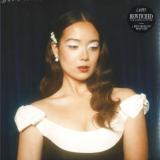
Laufey - Bewitched LP

Laufey

Bewitched LP

12inchLAULP003X
Laufey
29.10.2025

Composer, singer, producer, and multi-instrumentalist Laufey continues her story by writing and recording Bewitched, her second album. Inspired by jazz greats and classical masters while possessing a point of view that could only be conveyed by a 21st-century twentysomething, Bewitched represents an expansion of Laufey’s sonic palette.

Tracks like the breezy bossa nova cut “From The Start” and the smoldering string-assisted ballad “Promise” have classic songcraft and intricate arrangements that make them feel instantly
timeless, while Laufey’s conversational lyrics give her music a relatability to the next generation of jazz, pop, and classical aficionados.

In Stock

Disponibile in Stock e pronto per la spedizione

35,25
The Buttshakers - Lessons In Love

With their musical roots deeply immersed in the fertile soil of Afro-American music, the Buttshakers have found a new direction for their nostalgia-heavy soul music. With Lessons In Love, their third album on Underdog Records, their early heartaches and furies have faded in favor of a more composed harmony – a sound enveloped in love and soaked in the blues. Guided by their singer Ciara Thompson, the Buttshakers have taken a more intimate path, whose compass, in the chaos of emotions and the modern world, points only in one direction: the light.


Seen from the sky, the view appears limitless. Accentuated by the sun, the ochre and sandy hues of the open road only reinforce this feeling of immensity. The sky stretches and the green stands out in striking contrast. In lighter tones, a road is drawn -- without bends or contours. This is the worn and weary road of soul music, which The Buttshakers explore on each album in new and unique ways. Soul music – a rare place to find a French band.

Vast, the musical direction could have taken them to lighter pastures. Yet the Buttshakers chose to evolve in a different way; to take a heavier load. Two paths – one sparked by social unrest, the other purely sentimental, Lessons In Love explores the deep roots of soul music, in the steps of Curtis Mayfield or Al Green. It is here that the heart and mind cross paths, merge, and become one. A weary road -- that brings together the agitation of a world where good intentions never rise above the level of digital outrage, and a faith in love which, however it manifests and expresses itself, remains the only truth that never loses its power.


Less rage and more compassion, it is through the haunting words and now tempered inflection of Ciara Thompson's voice, which opens to distinct emotions and perspectives, that the listener is guided. With its gaze fixed on the horizon, the acoustic guitar of Gotta Believe invites us on an intimate stroll through the open plains, while Dream On carries us away with a clavinet riff and a possessed saxophone; reconnecting the electric heat and neurosis of a city full of dreams. The senses are moved by the conjuring potion of the guitar which distills throughout Troubled Waters; the body is brought back into a visceral dance by the keys and brass section that are put to the test by Sure As Sin and its irrepressible rhythm. Passing through clouds of dust and sand has left a bluesy imprint on their groove: the miles travelled became hundreds, then thousands.


All of this leaves the listener bewitched by the halo of resilience that now surrounds Ciara's performance, as the ten tracks let the light fade. But certainly not hope in a better day. Like the sunflower that always lifts its head towards the sun’s rays, the Buttshakers continue to resource their sounds in the deep roots of soul music. Into the rich layers of African-American music of the 60s and 70s, The Buttshakers capture the spirit as much as the musical aesthetics of the epoch. A sound that reaches into the meanderings of the soul, bringing light to dark places and hope for all. A sound for the most parched of hearts, living in a damaged world, Lessons In Love confirms that even the tiniest beam of light can illuminate one’s path.

In Stock

Disponibile in Stock e pronto per la spedizione

23,49
Nicola Cruz - Hybridism

Nicola Cruz

Hybridism

12inchMC048G
Multi Culti
25.07.2025

Originally released following his acclaimed sophomore album, HYBRIDISM finds Ecuadorian producer Nicola Cruz at the height of his exploratory powers. Now reissued on limited editon green vinyl, this expansive EP re-emerges with renewed relevance—blending North African rhythms, ethereal Persian motifs, and vocal fragments that evoke both ancient traditions and imagined worlds. A contemporary take on global exotica, HYBRIDISM is a vital entry in Cruz’s ever-evolving sonic journey.

'Aima’, named after the refrain sung by Igbo girls from Nigeria, creates the illusion that you’ve dusted off a lost LP. The aesthetic details recall expertly produced French exotica from the 70s, an overall feeling of warmth and character rarely pulled off with such panache.

‘Naeku,' in Cruz’s words, is "a sorrowful song in minor tonalities, but with a warrior energy, strength and forward vision: a soul departs, but a new one arrives in the name of Naeku, a maasai child. Not all grief needs to be a suffering; a feeling which I can relate to the place I come from with a Quechua word: Llaquilla - triste, pero feliz (sad, but happy). As always, the 303 adds that heart touching feeling.” If there’s a template for Multi Culti’s ethos, Cruz has synthesized the formula: Masai lamentation filtered through Quechua wisdom with a touch of 303 for the soul.

'Drom Tradisie' is a nostalgic vignette that captures the fantasy of a scenic horizon on a lost beach, a portrait done with the FM domain of synths that somehow associates with tropical imagery.

'Third Eye Dub’ takes things deeper, exploring the fractal realm of concentration, a point where the Oud (played by Nasiri) acts on the pineal gland. This inward journey through the cavernous depths of the subconscious sails on a smooth modular groove that transports the listener across this psychic expanse, a filigree of Persian harmonies (in Shur, to be exact) tracing outlines in the dark.

Finally, 'Kawe’s Dream’ ventures even further into the imaginary spaces of the mind. It is an aural reconstruction of the Tibetan Bardo Thodol, or ‘Book of the Dead’, a sacred text that guides the spirit through the passage out of the body. In Nicola’s words "To paint that depth, I had these Tibetan chants in mind, that I ended up crafting with Ableton's vocoder over a piece of Ayan’s vocals (sung in a made-up language). A few notes, and it gave the gravity I was looking for in the song.” Stuff that only a producer as capable as Cruz could pull off.

Hybridism’s five tracks are sonically diverse, yet all possess an ephemeral quality, a pastoral, transitory feeling that travels through the music - we listen to the sounds pass us by, we might even catch a hook or two, but the feeling is of sand running through our hands, deep, elusive, beautiful.

In Stock

Disponibile in Stock e pronto per la spedizione

15,92
Dogpatrol - Ya Playing Yaself EP

Still sniffing out the gnarliest bassweight swerves on his rounds in the underground, Dogpatrol makes his way back to Sneaker Social Club for another four cuts of irreverent, misfit rave damage.

Hailing from Offenbach (DE) but with a sound more indebted to UK styles like breakbeat hardcore, dubstep and garage, DogPatrol has been a natural fit on Sneaker. The slanted approach he takes to his influences results in a mutant style that shuffles and slams in all the right places without sounding like anything else out there.

‘1200kcal’ rides jagged, dusty drums that come on like drunken UKG, offset by rubbery bass arps that add a cosmic lick to proceedings. ‘Baby Flame’ has a nastier outlook hinging on a bludgeoning synth splat that calls back to the Control Tower brand of warehouse electro from the early 00s. Making sure no-one is second guessing the scent Dogpatrol is tracking, ‘Ya Playin Yaself’ dips into a dubstep-minded half-step roller with naive keys run through a giddy signal chain. ‘Offgenbach HBF Riddim’ completes the set with a breakbeat cut n’ paste job which tracks back to the source with strong echoes of The Blapps Posse’s raw and funky approach.

The reference points are just slight hints of familiarity, but Dogpatrol comes across as inspired as ever digging up the bones of cult rave signifiers and chewing them into his own unique shapes.

In Stock

Disponibile in Stock e pronto per la spedizione

15,34
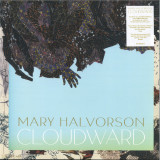
Mary Halvorson - Cloudward LP

Mary Halvorson

Cloudward LP

12inch0075597902334
Nonesuch
28.01.2025

‘One of the finest jazz guitarists of her generation, Halvorson is possessed of a questing, restless spirit.’ – Jazzwise

‘With an album of string quartet music as strong as this one, she is worthy of as much renown in the classical field as she holds in the jazz community.’ – New York Times

‘One of America’s finest guitarists. Halvorson’s musicianship is open-minded, demanding and richly engaging.’ – Uncut

Nonesuch Records releases Cloudward by Brooklyn-based guitarist, composer, and MacArthur fellow Mary Halvorson on January 19. The album features eight new compositions by Halvorson, performed with her sextet Amaryllis, the improvisatory band that performed on her critically praised 2022 albums Amaryllis and Belladonna comprising Halvorson, Patricia Brennan (vibraphone), Nick Dunston (bass), Tomas Fujiwara (drums), Jacob Garchik (trombone), and Adam O’Farrill (trumpet). Labelmate Laurie Anderson also is featured on the album track ‘Incarnadine’. Halvorson and Amaryllis will tour internationally following the release of the new album, including January dates in Europe, as well as at the Big Ears Festival as part of Nonesuch’s 60th anniversary celebration.

Halvorson says, “All of the music on Amaryllis was written in 2020, during the thick of the pandemic, in one of the more bizarre time periods I’ve experienced in my life. While composing for Amaryllis, I expanded upon certain musical concepts I’d developed in my life up until that point—the ones that felt fruitful—and left others behind, hitting the reset button and attempting to build from scratch. Two years later, after the release of the first album, I was still writing music for Amaryllis.

“All the music on Cloudward was written in 2022, mostly in the fall and winter, when things started moving forward. Life felt like a creaky machine starting up again,” she continues. “Air travel, however chaotic, had resumed, and we were once again cloudward. Performances and tours and recordings were happening after a long hiatus and with a renewed sense of gratitude. This band, for me, was quite simply working, both musically and personally, and the main thing I felt while writing the music was optimism.”

The Guardian said Halvorson’s 2022 double release “shows how far this single-minded original has come, and affords a glimpse of how far she may go. Both sessions confirm how years of jaggedly lyrical solo and ensemble improvising and a quirkily subversive affection for mainstream music have now nurtured a composer of unpredictable but warmly expressive character… These are new landmarks in Halvorson’s already inimitable discography.” Pitchfork said, “Amaryllis and Belladonna are distinct statements; one could hear either album on its own without a sense that something is missing. But they are most powerful when taken together, like a landscape and its reflection in rippling water.”

Halvorson has released a series of critically acclaimed albums, from Dragon’s Head (2008), her trio debut featuring bassist John Hébert and drummer Ches Smith, expanding to a quintet with trumpeter Jonathan Finlayson and alto saxophonist Jon Irabagon on Saturn Sings (2010) and Bending Bridges (2012), a septet with tenor saxophonist Ingrid Laubrock and trombonist Jacob Garchik on Illusionary Sea (2014), and finally an octet with pedal steel guitarist Susan Alcorn on Away With You (2016). She also released the solo recording Meltframe (2015), and most recently debuted Code Girl (2018, 2020), a new ensemble featuring vocalist Amirtha Kidambi (singing Halvorson’s own lyrics), trumpeter Adam O’Farrill, saxophonist and vocalist María Grand, bassist Michael Formanek, and drummer Tomas Fujiwara.

One of New York City’s most in-demand guitarists, over the past decade Halvorson has worked with such diverse musicians as Tim Berne, Anthony Braxton, Taylor Ho Bynum, John Dieterich, Trevor Dunn, Bill Frisell, Ingrid Laubrock, Jason Moran, Joe Morris, Tom Rainey, Jessica Pavone, Tomeka Reid, Marc Ribot, and John Zorn. She is also part of several collaborative projects, most notably the longstanding trio Thumbscrew with Michael Formanek on bass and Tomas Fujiwara on drums.

In Stock

Disponibile in Stock e pronto per la spedizione

33,57
Mabe Fratti - Sentir Que No Sabes LP

A sense of destiny hangs over Sentir Que No Sabes, Mabe Fratti’s fourth solo-credited album released in a five year span. Her work has always possessed a finely tuned sense of drama capable of expressing a range of emotional states, and across this new album, she conveys the struggle to process various relationships or situations–and the actions that come next. Sentir Que No Sabes is urgent and clear, poppy, generous and approachable, while showcasing a considerable emotional hinterland. It is also, as Fratti is quick to mention, “groovy.”

Written and recorded with her partner, multi-instrumentalist, and co-composer Héctor Tosta (I.La Católica, Titanic), Sentir Que No Sabes is the result of an intense, detail-oriented process. Fueled by a new confidence gained in their collaborative project, Titanic, and its critically acclaimed 2023 LP, Vidrio, the two hunkered down in the familiarity of their studio (aka Tinho Studios) to bash out the initial sonic coordinates of her new record. “We talked and talked, and discussed ways of playing and recording, until things became inevitable,” Fratti explains. “We recorded a bunch of demos at our home studio and that meant we had a lot of time to re-edit and experiment. We really dug in. We were super focused on detail.” Tosta also took up the controls as producer and arranger-in-chief for all additional instruments. The album was later completed at Willem Twee Studios in Den Bosch in the Netherlands, and Pedro y el Lobo Studios and Soy Sauce Studios, in Mexico City.

For the final studio recordings, the pair were joined by drummer Gibran Andrade and trumpetist Jacob Wick to fill out and expand on Tosta’s percussion and brass arrangements. This small group of friends were able to work quickly and openly, and without fear: a testament to the exhaustive groundwork put in at Tinho Studios. This can be heard in three short, intermediary tracks that also manage to be the most aggressive on the record: “Kitana” (a scratch-laden instrumental that acts as a strange prelude for the last track, “Angel nuevo”) and a pair of two-minute instrumental interludes, “Elastica” I and II. None are throwaway mood pieces; rather they act as emotional cue cards, and hint at the way Fratti and Tosta created the overall atmosphere of Sentir Que No Sabes.

A strong sense of rhythm irrigates the sound from the jump, as heard on the glorious opening track, “Kravitz.” Here, the brilliant plucked cello line acts as a bassline and props up the steady thump of the kick drum. The cello’s growl serves as a conduit for a set of slightly paranoid lyrics that tell us “Quizás haya oídos en el techo” (“maybe there are ears in the ceiling”), while the song also introduces another staple of the record: the clever brass stabs, whistles, parps, and other interjections that paint a canvas of traffic in a city. It’s a postmodern, widescreen sound that for some might recall The Blue Nile’s Hats.

Sentir Que No Sabes is a record full to the brim with a modern pop sensibility, invoked by the sort of magpie spirit that ensnares anything it can find, repositioning sounds for the here and now. The keys and melody on the melancholy “Pantalla azul” (“Blue screen error”) transport us back to the glossy mid-1980s. “Oídos” (“Ears”) is a beautiful slice of contemporary, hybrid pop, in which Fratti’s vocal lines delicately spin themselves around the lean structures erected by the brass and drums, and the descending “plink” of a set of piano chords. Then we have a gloriously strong ending with the swell of “Angel nuevo” (“New angel”), another cinematic track full of gentle, instrument-rich swells and eddies that manages to be almost endless in its range–and yet intensely personal, as Fratti’s voice is close, almost whispering in your ear. A much needed lullaby for our fractious times.

The lyrics, for their part, have a stop-start quality to them, and hint at the small, incremental emotional taxes we pay through just living our lives. They circle around the music like birds waiting to swoop. There is something of the spiritual in all of Fratti’s work that expresses itself in a form of yearning: she looks to new horizons while personal dramas find themselves internalized, contextualized, and then dealt with through metaphor. Here, she was keen to mention Tosta’s constant encouragement in her finding a path to best sing or phrase her words to impart their maximum effect. “Hector was super inquisitive about my lyrics and asked me questions about what I meant, which sometimes is something you don't wonder so much about in isolation,” Fratti explains. “Besides, he is a great poet, and you can see that in what he did on the Titanic record. This made me go deeper into my lyric writing and definitely transformed it into something that I feel super happy about now.”

Take “Enfrente” (“In Front”), a track that initially comes across as a languid, glossy number, with plucked cello strings standing in for a bass line and brittle synth parts. Soon we catch on to a brilliant minor chord switch, which mirrors the fear and doubt expressed in the lyrics as someone “trembles up to the podium” in a “search for meaning.” There’s also the startling introduction of a vocoder in “Quieras o no” (“Whether you want it or not”); it comes precisely at the point Fratti sings “Quieras o no es un desastre” (“Whether you want it or not, it's a disaster”). Moments like these leave room for interpretation and, over time, create a strong bond between the listener and the record.

In fact, across Sentir Que No Sabes, each phrase–whether instrumental or vocal–becomes at some level emblematic of acts and moods that impart deep emotional significance. We see this best on “Intento fallido” (“Failed attempt”), which could be the score to feeling trapped in self-doubt, only to suddenly be sprung free by the song’s gloriously upbeat ending. On “Márgen del índice” (“Index margin”), the quicksilver switch between initial disharmony and a beautiful melody is breathtaking, all augmented by evocative arrangements, textured production, and the slightly playful, gnomic lyrics. The track’s emotional ecosystem allows another brilliant ending, which uses the simple repeated phrase, “Cómo lo va a ver?” (“How are you going to see it?”).

So what to make of Sentir Que No Sabes? High gloss Pastoralism? The sound of a city-bound, post-post modern soulscape? No matter the emotions evoked, it's the work of an artist coming into their own, and creating a benchmark record.

In Stock

Disponibile in Stock e pronto per la spedizione

24,58
Bobby Caldwell - Bobby Caldwell LP

Known principally as a smooth titan of blue-eyed soul, Bobby Caldwell transcended genre tags with consummate ease; he was a musical icon of real class and versatility, cherished the world over. Tragically passing away in March 2023 at the too young age of 71, it still feels as if Bobby's true artistry is profoundly under-appreciated. His double platinum self-titled album from 1978 is a timeless masterpiece of sophisticated jazzy soul brilliance and is strictly canonical. Yes, it's perfect, yet it's been out of press on vinyl for years. We're deeply honoured to present the long-awaited reissue this summer.

Whilst Ned Doheny is known in Japan as "Mr California", native New Yorker Bobby Caldwell has always been "Mr AOR" to his Far-Eastern friends. His distinct charm is an irresistible blend of soul, jazz, and pop influences. He possessed phenomenal songwriting prowess, smooth vocal performances, was both a great soul guitarist and dextrous keyboard player and known for genius chord progressions. It all added up to a multi-layered brilliance entering the studio, and the singular sound he landed on was laced with soulful, sweeping strings and funky horns, touching lightly on disco, while allowing his supple voice to carry the stunning tracks he'd crafted.

String-swept opener "Special To Me" immediately sets the tone with its lush instrumentation, rich harmonies, and Caldwell's velvety-smooth vocals. Next up, a huge one. The infectious, mid-tempo bounce of "My Flame" showcases Caldwell's ability to effortlessly blend catchy pop hooks with soulful arrangements. It's an exquisite, emotive ballad that, at the same time, absolutely SLAPS. Game recognise game, and all that, so, accordingly, Notorious B.I.G. memorably ran with “My Flame” for his 1997 single “Sky’s The Limit”. The rolling, disco-very "Love Won't Wait" is a slick, uptempo track containing heartfelt lyrics intertwined with elegant strings and a horn section to die for. Aching - and achingly cool - single "Can't Say Goodbye" is a real fan favourite, and it's no surprise. It's a laconic, slow-mo jazz-funk stepper, with fantastic, very deliberate playing that closes out the A Side quite exceptionally. "Come To Me" slows proceedings down elegantly to open Side B before the universally agreed-upon masterpiece enters proceedings.

"What You Won't Do for Love," the standout hit that became a classic in its own right, perfectly captured Bobby's ability to infuse a contagious groove with introspective and relatable lyrics. With its instantly recognisable horn riff and Caldwell's soulful delivery, this timeless, chiller anthem continues to captivate audiences and define his musical legacy. He scored huge with the track, taking over the pop and R&B airways with this mellow soul stepper. It has remained a perennial favourite and has been heavily sampled, such is its unique allure; Aaliyah sang over snatches of it on "Age Ain’t Nothing But A Number" and you can hear Caldwell’s vocal sample used for the hook on Tupac’s posthumously released “Do For Love”.

Upon submitting the finished album to his label, they requested more material in hope of a big single. As Bobby remembered to Wax Poetics a few years ago: “Now at this point, I’m mentally exhausted...and bear in mind that I got so close to all the songs I’d written. I gave each song a profound amount of thought, and maybe too much. So, in haste, I went in and cut this song, "What You Won’t Do For Love". Wrote it in a day, cut the rhythm track, overdubbed the horns, I sang the song, and literally turned it in three days after. And lo and behold, the one song I gave the least thought to,” Bobby laughed, “ended up being a national anthem.”

The mysterious, magical "Kalimba Song" is a cosmic, kalimba-driven melodic-funk instrumental - short but oh, so sweet. It's followed by the supreme tear-jerker "Take Me Back To Then", Bobby's otherworldly voice deeply longing for a simpler time, "when life was mellow". I think we can all get behind this sentiment. The final cut is arguably its deepest, its low-key finest moment. For us, it is, anyway. The glorious, driving, effortlessly funky guitar-soul jam "Down For The Third Time" is a huge melancholic Be With favourite and has been played by discerning genre-hopping DJs with significant glee for years. Hypnotic, melodic, beautiful. Like the album it elegantly rounds out.

Bobby sadly passed away on 23rd March 2023, after a long struggle with mitochondrial damage and oxidative stress, due to an adverse effect from a fluoroquinolone antibiotic. The reissue of his wonderful eponymous album will be available on vinyl across the globe, ensuring that fans of his incomparable talent - and soul music enthusiasts worldwide - can radiate in the deep beauty of this seminal album. Meticulously remastered and cut by both Simon Francis and Cicely Balston respectively, it has been pressed to the highest possibly quality at Record Industry in Holland.

In Stock

Disponibile in Stock e pronto per la spedizione

24,79
Myst Milano. - Beyond The Uncanny Valley LP

Crucial Toronto rapper / producer / DJ myst milano. returns with thrilling new album Beyond the Uncanny Valley, an exhilarating ride through hedonistic experimental hip-hop and house music that reinterprets the breadth of Black electronic music with addictive singular energy.

“I offer Beyond the Uncanny Valley as a working anthology of Black electronic music across generational, geographical and genre lines,” myst milano. writes. “I thought a lot about staples of Black art across the world that can be traced back to Africa, and that link the diaspora regardless of where our people end up and throughout all eras.”

A mighty example of this omnivorous and multifaceted awareness of Black creativity, Beyond the Uncanny Valley is a tidal wave, swallowing up Canadian House, Detroit Electro, Chicago Footwork, UK Jungle and Dubstep, Jersey / Baltimore / Philly Club, Southern Hip-Hop and West Coast Funk into the trail of euphoric destruction left by myst milano.’s trademark grimy, sweaty, lusty neo-R&B take on contemporary hip-hop.

Opening with “Thirteen”, the album hits with punch and immediacy. The track’s thumping kick and swirling, haunted synthesis represent myst milano.’s keen ability to nurture perfect symbiosis between production, arrangement and lyrical theme. It is equal parts dreamy, provocative, sexy and powerful, and, together, entirely unique to myst’s creative voice. As with Beyond the Uncanny Valley as a whole, it is evocatively storytelling, mixing vivid imagery with slick wordplay. We are introduced to myst’s groupie (formerly “a hater”), as their crew “causes damage you can’t afford”, while witty threats and erudite posturing flow out over a steadily expanding instrumentation that mimics myst’s breathless, sweatbox DJ sets.

“Ring Ring” is another key track. Glitching nuclear alarms give way to a bulldozing kick drum and in-the-red distortion on myst’s voice. The vocals hit at breakneck speed while the production retains a dirty, dirging stomp. It is formidable, intense, fun, and intimidating in all the right ways.

Underpinning the album is a mechanised female voice that has possessed the record like a replicant ghost. “When we go beyond the uncanny valley, we reach a state of perfect harmony where the robot has mimicked the human to the point of being indistinguishable,” myst says. “Who are we when we become perfect imitations of what the world wants instead of who we really are, which is imperfect and flawed and a little uncanny, anyway?” While the music of Beyond the Uncanny Valley is human, with real emotion and expression, it occasionally flirts with the beyond, reaching into a near future where reality and technology bleed into one.

Beyond the Uncanny Valley is myst milano.’s second full length, following 2021’s rapturously received debut Shapeshyfter, and a monstrously successful accompanying house remix on the UK’s legendary Defected Records.

In Stock

Disponibile in Stock e pronto per la spedizione

25,17
Caixa Cubo - Agôra LP

Global pointing Brazilian jazz trio releases their new album Agôra, that sparkles with electric funk and Herbie-esque eclecticism. It features a myriad of guest vocalists and musicians including Brazilians Xênia França and Zé Leônidas, Jembaa Groove's Ghanaian singer Eric Owusu and South African artists Bongani Givethanks & Mpho Nkuzo

Re-wiring the concept of 'fusion' for 2023, Agôra is Brazilian trio Caixa Cubo's resurgent new record with the title referring to 'now', based upon the intuitive and fluid nature of the trio's method, and this inspired recording. With shoots to black music culture, from Brazil to Brooklyn, Ghana and South Africa, Agôra is the group's ninth album yet is their first where they've invited guests, mainly singers, onto each track and follows their last, Angela from 2020, released on Heavenly Records, which won a BBC 6 Music Album of the Year (Huey Morgan's selection) granting them much deserved international recognition.

The core musical elements of Caixa Cubo are Henrique Gomide (keys), João Fideles (drums) and Noa Stroeter (bass), all from São Paulo, Brazil and where they met as teenagers and would continue their friendship and musical bond at the Royal Conservatory in The Hague, Netherlands. Now all in their mid thirties, João and Noa live back in the city where it all started but Henrique has settled in Cologne, Germany where the recording of Agôra took place, over the course of 3 days, at the home cum studio of Chris 'Dusty' Doepke, their friend and owner of the label they signed to, Jazz & Milk.

In line with all their creations where flow and energy provide the magic, allowing what the moment provides, the album shines not only for its virtuosity but for its minimalism, the depth of space, and for the first time, the ability to figure in and outside of the jazz fold, as the trio decided, for the first time, to bring in singers and add a new aesthetic to their sound.

"Agôra is a wake-up call to reality, a reminder that the infinite possibilities of technological progress should not disconnect us from the earth, from eye-to-eye relationships, and from moments lived in person" the band are keen to point out. "And that we must not be consumed by greed, for all we truly possess.... is the NOW."

Turning hope and metaphor into music, the debut single Sábado, an electrified future- jazz-fizz reflects perfectly the spontaneity that permeated the entire recording of the album. "When we got to the studio, we had no idea what we were going to record. We started playing a groove, kind of inspired by Gilberto Gil's 80s albums, and our drummer João started singing this funny song 'Sábado Barrigudão' (Big Belly Saturday) alongside the bass groove and that was that". Inspired by their city of birth, São Paulo, it features long time collaborator and vocalist Zé Leônidas, with cuicas, tamborim, agogo and shakers providing the most obvious Brazilian affect from the album.

Dreams is the band's first foray into R'n'B melding the group's simple and sporadic instrumentation of drums, keys and bass into a Jill Scott inspired song that could have been born in Brooklyn yet sung by Brazilian singer and Grammy nominated Xênia França and Zé Leônidas in both English and Portuguese. Xênia recently performed online for hip-to-it website Colors and it's her latest collaboration with Caixa Cubo, having first met in 2009 for a series of live performances.

South African artists Bongani Givethanks & Mpho Nkuzo come to the record with a wholly different approach on Ndiyakhangela, providing spoken word and vocal refrains on top of an Afro-Brazilian percussion jam with a delivery and verse in Xhosa, Zula and Ndebele. Asase is the album opener and features vocals of Eric Owusu who is part of highlife pioneer Pat Thomas's live band and most recently, co-leader of Jembaa Groove, an Afro-soul band from Berlin. It's a synth wig out with djembe grooves and offers a brand new take on Afro-soul-jazz.

Other contributions come from Cologne based jazz singer Rebekka Ziegler (Oblique Sunshine), São Paulo based guitarist Eduardo Camargo (Caio & Eric) and trumpet player Matthias Schriefl on Kismeti, a gorgeous and rolling number that ebbs and flows, exemplifying the group's effortless ability to craft a sound energised by a belief in one-self and the idea of having faith without the need to look at each other for verification.

As drummer and percussionist João Fideles perfectly surmised upon arriving for the recording session, "What drums do you have? Whatever you have, I'll use it". Agôra is testament to nearly 20 years of camaraderie, friendship and most importantly, trust.

In Stock

Disponibile in Stock e pronto per la spedizione

19,96
Crushed Soul - Family Of Waves

Berlin-based, Dutch-born Steffi possesses near-boundless prowess. As a DJ, she’s proved her effortless mastery of disco, house, electro, and techno; as helm of labels Klakson and Dolly, she’s long maintained her status as tastemaker; as a producer, she has graced us with three solo LPs and numerous 12”s. Dark Entries is now honored to unveil the debut of her project Crushed Soul, a moniker she had used only once in 2013 for an Ostgut Ton compilation track. The mutual esteem of Steffi and DE has been previously fruitful, with Steffi providing a remix for Cute Heels’ 2016 EP on DE, but this is their first full-length collaboration.

The Family of Waves EP represents both familiar and novel pastures for Steffi. While her love of electro and classic Detroit techno have been oft-evident, here we witness the darker shades of new wave and industrial creep to the forefront. This turn for the twisted feels not just natural, but predestined, an inevitable succumbing to morbid forces. But Steffi also views Family as “a playful association...a mix of my past and new modern waves". There is a kernel of whimsy, even joy, lurking within the record’s temporal jumblings. The A-side opens with “Gravitational Field”, which juxtaposes its gnarled bassline with unearthly percussives and a recurrent resonant gong. The wild sonic palette speaks Steffi’s singular voice. “Scalar Property” continues the paranoid propulsion with an unhealthy dose of what can only be described as Metroid-funk, its staccato bass jabs interlaced with ghastly vocal pads. The B-side contains a diptych of slower tracks that juggle reference points both retro and futurist. In “Family of Waves”, a churning EBM-esque bassline battles acerbic yelps. On this track, the collision of past and present is most pronounced, as if A Split Second were covering Mike Parker. “Diffusion of Heat” closes the EP with what feels like a perfect synthesis of Steffi’s musical passions: funky, warbling chord stabs; intricate rhythmic diversions; the ecstasy of repetition. Here, disco, new wave, and techno marry harmoniously, if only to inform us of the disharmony of our present.

All songs have been mastered for vinyl by George Horn at Fantasy Studios. The sleeve and accompanying postcard were designed by Eloise Leigh using video art stills by Goldenliustra.

In Stock

Disponibile in Stock e pronto per la spedizione

13,87
Foals - Everything Not Saved Will Be Lost Part 1

From playing chaotic house parties in their home city of Oxford to becoming major festival headliners across Europe, Foals' trajectory has been remarkable. They've earned critical acclaim (NME and Q Award wins, plus Mercury Prize, Ivor Novello and BRIT Award nominations) and fan devotion (1.7 million sales of their four Gold-certified albums) in equal measure. And while the majority of contemporaries have fallen by the wayside, Foals continue to hit new peaks.

After more than a decade in the game, Foals again embrace that love for the unconventional with the bravest and most ambitious project of their career: not one, but two astonishing new albums: 'Everything Not Saved Will Be Lost'. A pair of releases, separate but related, they share a title, themes and artwork. 'Part 1' will be released on March 8th, with 'Part 2' following later in the year.

'They're two halves of the same locket,' frontman Yannis Philippakis explains. 'They can be listened to and appreciated individually, but fundamentally, they are companion pieces.

Fundamentally tethered but possessing their own personalities, the two bodies capture the most compelling, ambitious and cohesive creations they've ever produced. Eager to break the traditional pop song structure which they felt they were becoming increasingly tapered to, the 20 tracks defy expectation. There are exploratory, progressive-tinged tracks alongside atmospheric segues which make the music an experience rather than a mere collection of songs. Yet the band's renowned ability to wield relentless grooves with striking power and skyscraper hooks also reaches new heights.

The album's lead single 'Exits' is a case in point, featuring Philippakis conjuring the image of a disorienting world via a contagious vocal melody. It's a fresh anthem for Foals' formidable arsenal, but also an ominous forecast.

'There's a definite idea about the world being no longer habitable in the way that it was,' says Yannis. 'A kind of perilousness lack of predictability and a feeling of being overwhelmed by the magnitudes of the problems we face. What's the response And what's the purpose of any response that one individual can have'

'Exits' signposts what to expect thematically from both instalments of 'Everything Not Saved Will Be Lost'. The title is a warning that anything - from the tiniest fleeting moment of inspiration through to the planet's own biological diversity - can be under threat of being irrevocably erased.

It's a theme that permeates throughout the album's material, as Foal mirror the public neuroses that have been provoked by our current cultural climate. Paranoia of state surveillance Fear of environmental collapse Anxiety over Trump's next potentially cataclysmic move It's all there in these apocalyptic songs.

'Lyrically, there are resonances with what's going on in the world at the moment,' summarises Yannis. 'I just feel like, what's the utility of being a musician these days, if you can't engage with at least some of this stuff These songs are white flags, or they're SOSs, or they're cries for help... each in a different way.'

The new albums' journeys began as the 'What Went Down' era ended. Founding bassist Walter Gervers departed on amicable terms after playing the Festival Paredes de Coura in Portugal in August 2017. Foals felt that he couldn't be replaced - a decision that ushered in a period of recalibration, reorganisation and, ultimately, rejuvenation.

After taking a little time out, Foals - completed by Jimmy Smith (guitar), Jack Bevan (drums) and Edwin Congreave (keys) reconvened - with Yannis on production duties, who, together with Edwin, also covered the bass parts. They began by writing in a rehearsal space before exporting those sketches into the recording phase at 123 Studios, Peckham, with the assistance of engineer Brett Shaw. They'd repeat the cycle between the two spaces, effectively creating an ongoing feedback loop as they sought to push every new idea to the finish line.

1 x 12" black vinyl 180gsm
- label 4/c
- discobag on reverse board with matt varnish
- gatefold on reverse board with matt varnish
- shrinkwrap

In Stock

Disponibile in Stock e pronto per la spedizione

27,69
B From E - Nintendo Ep

B From E, an uncommon name but surely soon to be know. This young Danish/Mexican talent has already released a successful Ep on Copenhagen Underground Posse, but now heads for 2018 with a rock solid 3 track Ep at Traxx Underground! B From E delivers a classic and very melodic house sound, in a fusion of US Garage and Soulful Deep House. He is pointing for the stars and ready to spread love, all over the world!

In Stock

Disponibile in Stock e pronto per la spedizione

8,82
Tara Clerkin Trio - On The Turning Ground

Bristol's Tara Clerkin Trio return to World of Echo and the EP format for a five song collection of quixotic, emotional redolence. But do not mistake their absence for inertia. If their musical output has been a little sparse during those in-between years, limited to a few solo ventures and an astonishing ten minute long piece as a trio, their time has otherwise been richly spent: continuous writing and recording, extensive live performances across Europe and Japan, a cultivation of local and more far-flung artistic connections (musical and otherwise), and a monthly NTS show that, through the voice of others, speaks most obviously to their own unorthodox interests. It's the conflux of that winding activity that leads indirectly to On The Turning Ground, 26 minutes of probing, thoughtful composition that draws from no one specific source. Their inspirations might be centreless, but the trio still possess a very obvious anchor in the form of their hometown. Bristol stands as a city of multitudes, heterogenous and vibrant in such a way as to allow it to renew and remake time and again. Tara Clerkin Trio drink from that same well, duly reflecting a rich musical heritage built on fwd-facing electronic subcultures and experimental urges.

As such, On The Turning Ground finds them subject to their own subtle internal evolution, the pervasive sense that you've caught them mid-bloom, on their way to becoming but never anything but themselves. The two instrumental pieces that bookend the EP stand as a perfect case in point, displaying an increasing mastery of compositional space. Pensive and restrained, 'Brigstow' and 'Once Around' both emanate an interstitial quality that's not so much after- as in-between-hours, miniature dub-folk symphonies held together by the kind of tacit understanding that remains the preserve of only the closest of family units. If those two tracks are shaped by a sense of shifting temporality, then the three vocal-led pieces that comprise the record's core feel like a gentle ossifying of aesthetic into something approaching their own unique form of avant-pop. 'Pop' is, of course, a broadly subjective concept, but there's no avoiding the overt sparkling melodicism of songs like 'Marble Walls' and 'The Turning Ground', undeniable re-directions of that late 90s impulse to bend pop sensibilities into off-centre terrain, to render the familiar new again. This is what Tara Clerkin Trio do, gently pulling the ground from under your feet, turning you to face something you'd not quite seen before. To view the world as they do: sideways, sometimes, all of the time.

non in magazzino

Ordina ora e ordineremo l'articolo per te presso il nostro fornitore.

19,75

Last In: 2 years ago
SHITS - Diet Of Worms LP

SHITS

Diet Of Worms LP

12inchLAUNCH426
Rocket Recordings
03.04.2026

What's the point of the howl of string to speaker, the hammering of stick-on skin? Is it transcendence, elevating the human spirit by catharsis in sound? Or is it summoning chaos, a purgatory in which to bask in all that’s unclean, the better to feel alive?
Why not both? Because that’s what’s on offer on Diet Of Worms, the second Rocket release by The Shits, Leeds via Newcastle’s titans of disgust and deliverance. This is a feast for the senses in the worst way possible - primal rock boiled down to its essence and flung full in your face. Using repetition, tortured vocal invective and heads-down intensity as blunt instruments, these eight tracks are an unprecedented torrent of acidic salvation. Whilst lurking somewhere on the decadence-destruction axis between the nihilism of prime Stooges and the bloody blackout of Braimbombs, Diet Of Worms is possessed of a legitimately uncompromising hostility that both elevates and debases it to co-ordinates unknown.
There are revelations here in the riffage and the rancour, even if they are the kind that occur in the bleary miasma of the lock-in, or witnessing the streetlight blur of the subsequent stagger home. Even more single-minded and remorseless than the band’s Rocket debut ‘You’re A Mess’, this is a record that demands full immersion. Whether it’s ‘Then You’re Dead’ hammering on a pulverising garage-stinking riff until it begs for mercy, or ‘Change My Ways’, whose Creedence-In-Hell swagger and lurch is that of abjection transmuted into joy, this is psychedelia forcibly removed from its comfort zone of pastiche, and thrust into a bad-trip realm of the vivid and nightmarish.
But rarely has the process of making beauty and horror indivisible seemed like so much fun. If Werner Herzog was right, and the only harmony in the universe is that of overwhelming and collective murder, then The Shits are the true music of the spheres.

pre-ordina ora03.04.2026

dovrebbe essere pubblicato su 03.04.2026

23,49
AICHER - Defensive Acoustics

AICHER

Defensive Acoustics

12inchDNAR01
Downwards
20.03.2026

AICHER is the work of longtime label veteran Liam Andrews (My Disco, EROS), with additional production from his My Disco spar Rohan Rebeiro – an experimental percussionist and erstwhile collaborator of Roland S. Howard and HTRK. Together, they make resoundingly coarse, bullish industrial musick, distilling fascinations with tone and space through eight gristly and darkly sublime cuts, sharpened by production from Boris Wilsdorf of Einstürzende Neubauten and Swans fame.

Through eight cuts, »Defensive Acoustics« reveals a clammy touch of reverberant buzz and below-the-belt shudder, with a creeping, sensual signature of authority that strongly recalls Alan Wilder’s Blasphemous Rumours-era sound design for Depeche Mode, stripped to absolute skeletal fire. Tectonic plates of sound are pushed to an extreme biting point in a sort of structural stress test that feels like an oil rig in action—or perhaps more acutely, junked at harbour.

We go from the lurching buckle of »Ascertain« and the bilious atonality of »Harness Pleads« to the vertiginous scale of the title piece and the brutal momentum of »An Exhausted Image«—almost collapsing under its own bass weight—while the pranging girders of »Constriction« make us think of that 101 version of »Stripped«: propulsive, full of primal energy, and clanging, clipped reverb. »Possessions« ends the album with a passage of bleakly romantic ambience, a judicious emotive counterweight to the preceding gnarl.

non in magazzino

Ordina ora e ordineremo l'articolo per te presso il nostro fornitore.

31,05

Last In: 27 days ago
Cistern - Rhizome

Cistern

Rhizome

12inchMM13LP
Meat Machine
07.11.2025
  • A1: Illusion
  • A2: Ephemeral
  • A3: I Cant Wait
  • A4: Apology
  • A5: Green Meadow
  • B1: In It
  • B2: Sink
  • B3: Volcano
  • B4: Silent Seed
  • B5: Stimulants

rhi·zome
/ˈrīˌzōm/ • RIGH-zohm • noun
a somewhat elongated usually horizontal subterranean plant stem that is often thickened by deposits of reserve food material, produces shoots above and roots below, and is distinguished from a true root in possessing buds, nodes, and usually scalelike leaves a network that connects any point to any other point

pre-ordina ora07.11.2025

dovrebbe essere pubblicato su 07.11.2025

24,58
DAVID JANEWAY - ENTRY POINT LP
  • Entry Point (9:10)
  • Remembrance (6:35)
  • Only So Far (8:47)
  • A Blues (4:40)
  • Mt’s Mood (7:11)
  • After Listening (4:47)
  • Jasi (5:31)

David Janeway’s 1986 independent release Entry Point is a gathered and stylish offering of fusion jazz, flitting between Latin, modal and spiritual themes. Featuring desirable cameos from the likes of Bob Berg, Steve Berrios and Marcus Belgrave, the album comprises seven tracks, six of which are original Janeway compositions.

Self-released in 1986, Entry Point didn’t initially make a splash and fell into relative obscurity, only to be discovered by rare jazz collectors and dealers many years later. Upon contacting David with a view to potentially reissue Entry Point, he revealed that he had original sealed copies of the release in his possession – a record which has commanded high prices in jazz dealer circles. We have exclusively imported the last of the original stock: what you’ll get here are original, sealed copies from 1986, pressed up on David’s New Direction label. They are all in mint condition, sealed in their original shrink wrapping, and extremely limited in quantity, with only forty copies in stock.

Entry Point is a beautiful album full of outstanding musicianship, dedication, craft and audible passion, informed by the many diverse musical stylings of its time and gathered by the overarching sonic maturity and discipline of jazz. A true classic of its ilk, and a one-of-a-kind album that is an absolute must for any discerning jazz collector, a newly discovered gem that is long overdue recognition for the outstanding piece of work that it truly is.

David Janeway is an extraordinary pianist with a great facility and wealth of ideas. He exhibits maturity and depth in his playing. He has most definitely “ARRIVED”. ~ Eddie Henderson

pre-ordina ora30.04.2025

dovrebbe essere pubblicato su 30.04.2025

28,53
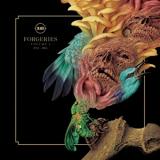
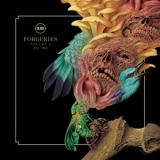
Various - ECHOES OF ITALY – THE BIRDS OF PARADISE – EARLY 90S HOUSE VIBES VOL.2 (2x12")

Googling “paradise house”, the first results to pop up are an endless list of European b&b’s with whitewashed lime façades, all of them promising “…an unmatched travel experience a few steps from the sea”. Next, a little further down, are the institutional websites of a few select semi-luxury retirement homes (no photos shown, but lots of stock images of smiling nurses with reassuring looks). To find the “paradise house” we’re after, we have to scroll even further down. Much further down.

It feels like yesterday, and at the same time it seems like a million years ago. The Eighties had just ended, and it was still unclear what to expect from the Nineties. Mobile phones that were not the size of a briefcase and did not cost as much as a car? A frightening economic crisis? The guitar-rock revival?! Certainly, the best place to observe that moment of transition was the dancefloor. Truly epochal transformations were happening there. From America, within a short distance one from the other, two revolutionary new musical styles had arrived: the first one sounded a bit like an “on a budget” version of the best Seventies disco-music – Philly sound made with a set of piano-bar keyboards! – the other was even more sparse, futuristic and extraterrestrial. It was a music with a quite distinct “physical” component, which at the same time, to be fully grasped, seemed to call for the knotty theories of certain French post-modern philosophers: Gilles Deleuze, Félix Guattari, Paul Virilio... Both those genres – we would learn shortly after – were born in the black communities of Chicago and Detroit, although listening to those vinyl 12” (often wrapped in generic white covers, and with little indication in the label) you could not easily guess whether behind them there was a black boy from somewhere in the Usa, or a girl from Berlin, or a pale kid from a Cornish coastal town.

Quickly, similar sounds began to show up from all corners of Europe. A thousand variations of the same intuition: leaner, less lean, happier, slightly less intoxicated, more broken, slower, faster, much faster... Boom! From the dancefloors – the London ones at least, whose chronicles we eagerly read every month in the pages of The Face and i-D – came tales of a new generation of clubbers who had completely stopped “dressing up” to go dancing; of hot tempered hooligans bursting into tears and hugging everyone under the strobe lights as the notes of Strings of Life rose up through the fumes of dry ice (certain “smiling” pills were also involved, sure). At this point, however, we must move on to Switzerland.

In Switzerland, in the quiet and diligent town of Lugano, between the 1980s and 1990s there was a club called “Morandi”. Its hot night was on Wednesdays, when the audience also came from Milan, Como, Varese and Zurich. Legend goes that, one night, none less than Prince and Sheila E were spotted hiding among the sofas, on a day-off of the Italian dates of the Nude Tour… The Wednesday resident and superstar was an Italian dj with an exotic name: Don Carlos. The soundtrack he devised was a mixture of Chicago, Detroit, the most progressive R&B and certain forgotten classics of old disco music: practically, what the Paradise Garage in New York might have sounded like had it not closed in 1987. In between, Don Carlos also managed to squeeze in some tracks he had worked on in his studio on Lago Maggiore. One in particular: a track that was rather slow compared to the BPM in fashion at the time, but which was a perfect bridge between house and R&B. The title was Alone: Don Carlos would explain years later that it had to be intended both in the English meaning of “by itself” and like the Italian word meaning “halo”. That wasn’t the only double entendre about the song, anyway. Its own very deep nature was, indeed, double. On the one hand, Alone was built around an angelic keyboard pattern and a romantic piano riff that took you straight to heaven; on the other, it showcased enough electronic squelches (plus a sax part that sounded like it had been dissolved by acid rain) to pigeonhole the tune into the “junk modernity” section, aka the hallmark of all the most innovative sounds of the time: music that sounded like it was hand-crafted from the scraps of glittering overground pop.

No one knows who was the first to call it “paradise house”, nor when it happened. Alternative definitions on the same topic one happened to hear included “ambient house”, “dream house”, “Mediterranean progressive”… but of course none were as good (and alluring) as “paradise house”. What is certain is that such inclination for sounds that were in equal measure angelic and neurotic, romantic and unaffective, quickly became the trademark of the second generation of Italian house. Music that seemed shyly equidistant from all the rhythmic and electronic revolutions that had happened up to that moment (“Music perfectly adept at going nowhere slowly” as noted by English journalist Craig McLean in a legendary field report for Blah Blah Blah magazine). Music that to a inattentive ear might have sounded as anonymous as a snapshot of a random group of passers-by at 10AM in the centre of any major city, but perfectly described the (slow) awakening in the real world after the universal love binge of the so-called Second Summer of Love.

For a brief but unforgettable season, in Italy “paradise house” was the official soundtrack of interminable weekends spent inside the car, darting from one club to another, cutting the peninsula from North to centre, from East to West coast in pursuit of the latest after-hours disco, trading kilometres per hour with beats per minute: practically, a new New Year’s Eve every Friday and Saturday night. This too was no small transformation, as well as a shock for an adult Italy that was encountering for the first time – thanks to its sons and daughters – the wild side of industrial modernity. The clubbers of the so-called “fuoriorario” scene were the balls gone mad in the pinball machine most feared by newspapers, magazines and TV pundits. What they did each and every weekend, apart from going crazy to the sound of the current white labels, was linking distant geographical points and non-places (thank you Marc Augé!) – old dance halls, farmhouses and business centres – transformed for one night into house music heaven. As Marco D’Eramo wrote in his 1995 essay on Chicago, Il maiale e il grattacielo: “Four-wheeled capitalism distorts our age-old image of the city, it allows the suburbs to be connected to each other, whereas before they were connected only by the centre (…) It makes possible a metropolitan area without a metropolis, without a city centre, without downtown. The periphery is no longer a periphery of any centre, but is self-centred”.

“Paradise house” perfectly understood all of this and turned it into a sort of cyber-blues that didn’t even need words, and unexpectedly brought back a drop of melancholic (post?)-humanity within a world that by then – as we would wholly realise in the decades to come – was fully inhuman and heartless. A world where we were all alone, and surrounded by a sinister yellowish halo, like a neon at the end of its life cycle. But, for one night at least, happy."
non in magazzino

Ordina ora e ordineremo l'articolo per te presso il nostro fornitore.

28,99

Last In: 6 months ago
Articoli per pagina:
N/ABPM
Vinyl