
out of Stock
Order now and we will order the item for you at our supplier.
Last In: 8 years ago
23,49 €
Order now and we will order the item for you at our supplier.
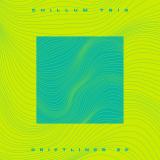
fter 25 years of exploring music from different angles, Chillum Trio lands on Faith In Truth with his third EP on vinyl. Driftlines is a cinematic, multicultural trip through the deeper and dubbier corners of house music, moving freely between hazy atmospheres, broken rhythms, acid lines and warm instrumentation. Across four tracks, eclectic influences blur together and settle into a club-oriented frame.
The EP opens with Dustfire, a deep night-drive cut that slowly draws its scenery around a low-slung beat. A cinematic breakdown gives way to a restless yet understated percussive acid groove, before a Rhodes hook emerges through the dust, carrying a touch of desert heat into the night.
Keeping things mellow and midtempo, Deepskin heads somewhere warmer: a humid tropical beach after midnight, all body heat and salt in the air. What begins loose and sensual gradually turns into ass-shaking garage house, surrounded by cosmic layers, drifting pads and spacious atmospheres.
On the flipside, the tempo picks up while the story continues with Thin Air. A long, lush, phase-soaked horn intro settles into a melancholic dream state, slowly pulling you under. The slow-burning build eventually breaks into a memorable piano line and fractured drums. After a trippy bridge, gentle acid lines lock into place and hold the dancefloor until the wistful finale.
Closing the record, Serotone slips back into downtempo territory with a jazzy, trip-hop-infused groove. Soft vocal fragments, piano and rising arpeggios keep the tension suspended through the middle, before the track mutates into something reminiscent of early-2000s dubby, acid-tinged future jazz and Latin fusion.
Like patterns drawn by wind across desert sand, Driftlines traces the points where different currents meet, overlap and interfere. Rhythms, places and memories crossing paths, briefly forming shapes before drifting somewhere else.
expected to be published on 05.10.2026
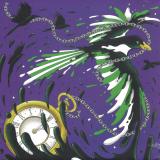
Juxtaposing acid-tipped breakbeats with influences of acoustic behaviour in nature, Sully unveils a debut release for Critical Music with two-track 12” ‘Flux’ b/w ‘Chatter’. Sully says: "‘Flux’ and ‘Chatter’ were another attempt to take the groove and feel of the breakbeats I've been previously working with and build them from the ground up. The aim was to find space for the tonal elements to breathe and end up in a place I'd not been to before." Birdsong became an unexpected reference point during the writing process, with Sully using synthesis to analyse and recreate natural calls as compositional material. The resulting dialogue between acoustic behaviour and digital sound generation forms part of the release's underlying methodology rather than a surface aesthetic. "The contrast and contradiction of the organic world captured by digital processes is always a pull for me," Sully explains. "It never fails to inspire." Jack Stevens aka Sully has spent much of the last two decades developing a body of work that sits slightly outside the obvious cycles of revival that have shaped UK bass music. While his records draw from established rhythmic forms, they rarely settle within a single tradition, instead examining the shared characteristics between them. His releases have consistently explored the points where 2-step swing, breakbeat construction, and jungle's rhythmic vocabulary begin to overlap. Sully’s records retain a relevance that extends beyond the moment of their release, continuing to circulate through DJ sets and specialist record collections. This 12” adds another chapter to a catalogue defined by sustained investigation into rhythm, texture and soundsystem music.
On Stock and ready to ship

On her first Harmony Index album, multi-instrumentalist and producer Nico Leibman spotlights the feelings that are most difficult to express, bringing out the friction between her dreamy hooks and harsher sonics. Written almost like a DJ set, the album shifts intentionally between piano-led trip-hop, lounge, dream pop, 2-step and breakbeat house, not languishing in nostalgia but defining a language that's rooted in desire, surrender and forward motion.
Until now, Leibman has been best known as a touring musician, working alongside artists like Jessica Pratt and Ana Roxanne, while slowly putting together new solo material in-between frequent tours. The album was written in bursts over the course of five long years and provided Leibman with a much-needed outlet - a chance for her to lock into her personal musical preoccupations, like Janet Jackson's 'The Velvet Rope', Everything but the Girl's 'Walking Wounded' and Prefab Sprout's 'Jordan: The Comeback'.
It's this era of pop - when nascent technology collided at force with skillful, soulful songwriting - that provides the album's backbone, fleshed out by Leibman's potent meditations on a spectrum of experiences in Los Angeles. And as the record was evolving, Leibman let long night drives crack her creative world open. Embracing the city's notoriously cinematic romantic side, she used the car as a "little chamber of limerence," in her own words, enabling her fantasies and acting as a test system for each song. "If it wasn't hitting in the car," she says. "It wasn't going to be on the record, period."
This sense of motion is evident almost immediately on 'Recognize', when Leibman's breathy words are carried into the night by choppy, uptempo breaks and resonant pads. So even when she simply coos over chugging guitars and bass on the first half of 'Enough', the drop into a low-slung breakbeat is implied. "Another digression, a break in this tension," she sings. "Was I foolish to believe that this was never your intention?" Leibman's tales of disillusionment are imbued with power, buoyed by her pitch-perfect production, with additional help from co-producer Cesar Maria.
On 'Don't Pretend', she sings softly and soulfully over decelerated Timbaland-inspired beats and a dubwise bassline, aided by additional production from Purelink. And 'If' marks the point where she lets go, infusing her euphoria with melancholy as her voice soars alongside the album's most infectious piano riff. Fittingly, the album concludes with 'Trust', a song about surrendering to the possibilities of love that works as a potent metaphor for the album's evolution. Over the course of five years, Leibman learned to let people in, finally trusting the process. "It's also a fantasy of what it would feel like to finally be in love again," she laughs, accepting that it's still just a fantasy. But it's this hope in unfulfilled longing that gives the album its unique character, defining a bold, unguarded voice in LA's experimental pop landscape.
The item is already on it's way to us and is expected to be shipped from 08.10.2026.

San Francisco electronic pioneers Darwin Chamber and DJ Spun head down the arcade for four tracks of the unmistakable flavour of modified 8 Bit sound chips from the 80s. 'LFO's Are Real' definitely nods to the Leeds duo that kicked the Warp Records revolution off, but that's just a starting point for some rough edged electro machinations and some spooky extra-terrestrial samplings. '8-Bit Phantasy' connects Chicago-style piano magic with acid undertows and gets brought to dancefloor life by a serious injections of funky ass breakbeatery. 'Intruder Alert' is the gnarliest of the lot, the bass end nothing if not speaker threatening, before 'We Gotta Get' is wonderfully disorientating disco dub delirium. Raw and direct, this will set the floor alight quicker than a can of petrol and lit match.
The item is already on it's way to us and is expected to be shipped from 08.10.2026.

GER Erstes Album mit Hopeless der Atlanta Nu-Deathcore-Band LEFT TO SUFFER! Left To Suffer zählen zu den intensivsten und eindringlichsten Acts der modernen Heavy-Musik, eine Band, die mit der Wucht einer Abrissbirne und der Präzision eines Skalpells zuschlägt. Ihr Sound entsteht an der Schnittstelle zwischen Moshpit-tauglicher Brutalität und eindringlicher Melodik; er richtet sich an Hörer, die ihre Katharsis laut, körperlich spürbar und kompromisslos erleben wollen. Von zermalmenden Breakdowns bis hin zu unheimlicher, atmosphärischer Spannung haben sich Left To Suffer eine ganz eigene Nische geschaffen. Hier existieren Wut und Verletzlichkeit unmittelbar nebeneinander, getragen von messerscharfem Songwriting, gewaltigem Tiefenfundament und Hooks, die wie Nachbeben einschlagen. Left To Suffer jagen keinen Trends hinterher. Sie erschaffen etwas, das schwerer, schärfer und unüberhörbarer ist, und dieses Kapitel hat gerade erst begonnen. Oranges Vinyl, Digisleeve CD Hopeless debut from rising Atlanta Nu-Deathcore band LEFT TO SUFFER! Left To Suffer are one of modern heavy music's most visceral acts, a band that hits with the force of a wrecking ball and the precision of a scalpel. Their sound lives at the collision point of pit-starting brutality and haunting melody, built for listeners who want their catharsis loud, physical, and uncompromising. From pulverizing breakdowns to eerie atmospheric tension, Left To Suffer have carved out a lane entirely their own. One where rage and vulnerability coexist in the same breath, anchored by sharp songwriting, massive low-end weight, and hooks that land like aftershocks. Left To Suffer aren't chasing trends. They're building something heavier, sharper, and harder to ignore, and this chapter is just getting started. Orange coloured vinyl, digisleeved CD.
expected to be published on 09.10.2026

Voodoo Glow Skulls are an American ska punk band formed in 1988 in Riverside, California, by brothers Frank, Eddie, and Jorge Casillas and their longtime friend Jerry O'Neill. Voodoo Glow Skulls first played at backyard parties and later started playing shows with the Angry Samoans, The Mighty Mighty Bosstones, Firehose, Murphy's Law, and The Dickies.
Voodoo Glow Skulls' 1995 album Firme has been one of the high points in popularity for the seven-member band. Unlike some more laid-back performers in the genre, Voodoo Glow Skulls are a bit more heavy-handed on the punk part of the mix, resulting in consistently fast-paced and chugging song structures that occasionally erupt into triumphant horn breakdowns and chanted group vocals. The album also includes "Fat Randy," one of the group's more convincing ska-punk hybrids.
Firme is avavilable as limited numbered edition of 400 copies on green vinyl and includes an insert
expected to be published on 09.10.2026
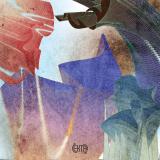
Five years after establishing himself as one of the UK's most distinctive selectors, Bloom marks the beginning of a new chapter for Yung Singh. More than a debut EP, it introduces EKTA his own label and creative world, built around the Panjabi concept of unity and the belief that dance music can be a meeting point for cultures, histories and new ideas.
Rather than treating heritage as something to preserve behind glass, Bloom places it at the centre of contemporary club music. Drawing inspiration from Panjabi folk traditions, Indian classical rhythms and centuries-old musical practices, Singh reimagines these influences through a modern electronic framework without reducing them to nostalgia or tokenism. The visual identity mirrors this philosophy, taking cues from Phulkari embroidery "flower work" passed down through his own family and connecting those traditions with the idea of growth, renewal and the arrival of a new creative season.
Finalised while touring Panjab during Basant, the festival celebrating the arrival of spring, Bloom became both a personal and artistic statement: the first release on a label intended not to represent one culture alone, but to create space for many. As Singh explains:
"EKTA as a name really sums up what I love about music and arts in general: unity and oneness. I want the label to be a sonic universe where artists bring their specific heritage into a modern club framework. It's about merging diverse folk traditions to treat these sounds not as relics, but as the future of dance music."
Across three tracks, Bloom presents different perspectives of that vision. 'NUG46' transforms field recordings captured in New Zealand into a meditative piece built around hypnotic tabla and razor-sharp jungle rhythms. 'Situationz' pays tribute to legendary Panjabi artist Sukshinder Shinda through the driving "Shinda Break", recontextualising a rhythm instantly recognisable to generations of listeners into a high-energy club weapon. Closing the record, 'Tabla Trouble' leans fully into organic instrumentation, layering classical percussion, strings, flutes and vocals into a composition that defines the open-ended musical language of EKTA.
Bloom is not simply the first release on a new label. It is the foundation of a wider vision one that looks to the past not for comfort, but for inspiration, using tradition as a catalyst for imagining the future of dance music.
expected to be published on 09.10.2026
expected to be published on 10.10.2026
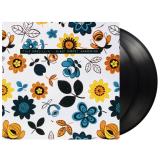
Fila Brazillia is the name of the decidedly singular collaboration between Steve Cobby and David McSherry, born in the coastal town of Hull in the UK. Bending—and often outright breaking—more or less every rule in the book, they've been effortlessly blending deep house, downtempo, breaks, ambient, and wry humour, sampling anything they can get their hands on. Their first outing was the 1990 single-sided white label 12" Mermaids, an airy deep house tune featuring a cheeky sample taken from the theme from Robison Crusoe. Since then, they've released a boat load of singles, seven highly regarded full-lengths, and more than 60 remixes for artists such as Radiohead, Busta Rhymes, and Lamb.
Black Market Gardening is their third full-length and marks a creative high-point for the duo. Over nine tracks, Fila Brazillia guides you through hazy, bass-heavy trip hop, cosmic synth lines, brisk breakbeats, funky guitar riffs, and even touch of drum 'n bass (it's the mid-1990s after all...). There's just so much to take in, leaving the listener wondering where the samples end and the live instrumentation begins. Yes, Fila Brazillia's output fits squarely within the chill-out tradition prevalent in the UK at that point in time, but their unmatched creativity and boundless approach to the studio process makes their music truly timeless.
Black Market Gardening is available as a 30th anniversary edition for the first time since 2001.
expected to be published on 16.10.2026

Verdad Y Error (2026) resides in the tension between the thrashing of external noise and beating centred internal calm. Gibrana Cervantes is known for her work across experimental music and contemporary performance, a practice with focussed intensity and surging physicality, often pushing the limits of endurance, presence, and embodiment. A central axis of her performance practice is her ongoing collaboration with acclaimed choreographer Florentina Holzinger, including composing the music for SEA WORLD (2026), Florentina Holzinger’s critically acclaimed installation for the Austrian Pavilion at the Venice Biennale. Alongside this, she is a core member of the experimental ensemble Amor Muere (Mabe Fratti, Concepción Huerta, and Camille Mandoki). Cervantes maintains an active recording practice that directly informs her live output including her collaboration Memoria (2025), with Colombian Drone Mafia (Nyksan) for Ambie-Tón (Tratratrax),
Verdad y Error is a record of her artistic approach which expands her body and the violin’s horizon of possibility to near breaking point. Cervantes uses a register closely associated with Metal, yet buried deep in the alchemy of these pieces are motifs which hark back to her classical background. Across these pieces the violin is used as an instrument with a fragmented and shifting voice — blurred, repeated, and reshaped through distortion. “Many of these pieces come from images, memories, and sensations that have stayed with me for years. I'm interested in the blurring of what actually happened and what time transforms.” The recordings are built with layers of violin tones which oscillate between recognisable, processed, stretched and shifted, and lay embedded in a frequency stratum of volatile static and noise. “The violin on this album doesn't appear as a clean instrument. I process it, repeat it, distort it, and multiply it until it begins to feel more like memory than melody. Something blurry, shifting, difficult to grasp.” The origins of the album were born at a time when Cervantes was seeking inner calm amidst a relentless external noise, questioning the validity or possibility of memory and its radically changing perception in relation to experience. Subsequent reflection on this contemplative moment allowed her to develop a relational music which moves through memory, erosion, repetition, and emotional ambiguity. Creating a space that feels both intimate and unstable, mercurial with the patina of lived imperfection.
Akin to the unreliable narrator and linguistic instability, each piece functions as an emotional landscape suspended between clarity and confusion. An album which balances melody, brutality, fragility and noise
throughout its sprawling recordings and artwork, which operates as an analogue to the music. The visual world of the album developed in collaboration with Mauro Ventura was compiled across various media with a mix of handwritten texts, burned typography, metallic textures, and fragile physical materials. “I wanted the record to feel tactile and imperfect — something emotionally direct but physically worn.” says Cervantes. More than offering explanations, verdad y error exists as a conversation between memory and disappearance, noise and stillness, truth and error.
expected to be published on 16.10.2026
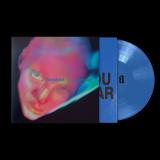
Fontaines D.C. announce their fifth studio album, Dopamine Chamber, released on 16th October via XL Recordings. Produced by James Ford, it is the follow-up to 2024’s UK platinum-certified Romance – and the sound of a band moving decisively away from the guitar language of their early records into something colder, stranger and more synthetic. It arrives today alongside lead single “Marianne” and its accompanying video, directed by Dave Meyers.
Dopamine Chamber arrives like a constellation behind undulating sighs of smog: potent balladry, anthemic melodies glinting through the murk. In a world tipping towards collapse, it asks how pleasure mutates amid peril—and what our pursuit of it reveals about us. Across the album, Fontaines D.C. – Grian Chatten, Carlos O’Connell, Conor Curley, Conor Deegan and Tom Coll – move between gratification and dread until the two meld together, reflecting the overwhelm of artificial intelligence, environmental collapse and political violence all riding the same algorithms as memes, jokes and celebrity culture. “The album itself is a dopamine chamber,” says Chatten. “You step inside and we test these different mind- or mood-altering pieces of music on you.”
Where Romance held its tension in balance, this record tips it. “I think Romance was maybe 60 per cent human and 40 per cent corrupted by automation, and a loss of feeling,” says Chatten, who spent time among the faded grandeur of Venice, Vienna and Sicily in search of lyrical inspiration. “This one feels more like 60 per cent corrupted — the mask is wearing the face a little more.” He resisted any pull towards easy optimism: “I felt it would be more powerful to leave the hope out and reflect the ugliness honestly. This one needed to feel more like a catastrophic warning.”
“Our albums have always questioned a sense of place,” says bassist Conor Deegan. “First Dublin, then being away from Dublin, and then trying to find the romance elsewhere. On this record, the question became: where do you escape to?” Into the self, perhaps – or hedonism, fantasy, cosmetic perfection, eternal youth or the endless refresh of a screen.
Fontaines D.C. have spent five albums refusing to repeat themselves – from Dogrel (2019) through A Hero’s Death (2020), the No. 1 Skinty Fia (2022) and the anarchic, kaleidoscopic Romance (2024). Dopamine Chamber is their most radical turn yet: cold synthesiser tones, marching drums, samples and triggers, several songs with no guitars at all, and the swooning strings of 1960s Italian pop pulled into something synthetic. For guitarist Conor Curley, the aim was to break from the band’s own reference points: “I was trying to find stuff that pointed into the future.” It was made with James Ford between London, the English countryside and Palermo, where Chatten recorded vocals in a makeshift booth built from mattresses and cushions.
“There’s a poignant sense of us being on the brink of some other kind of form of humanity, or non-humanity,” says Chatten. For their fifth album, Fontaines D.C. have built the chamber. What happens to the listener inside it will be the experiment.
expected to be published on 16.10.2026
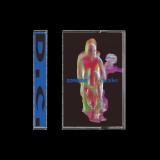
Fontaines D.C. announce their fifth studio album, Dopamine Chamber, released on 16th October via XL Recordings. Produced by James Ford, it is the follow-up to 2024’s UK platinum-certified Romance – and the sound of a band moving decisively away from the guitar language of their early records into something colder, stranger and more synthetic. It arrives today alongside lead single “Marianne” and its accompanying video, directed by Dave Meyers.
Dopamine Chamber arrives like a constellation behind undulating sighs of smog: potent balladry, anthemic melodies glinting through the murk. In a world tipping towards collapse, it asks how pleasure mutates amid peril—and what our pursuit of it reveals about us. Across the album, Fontaines D.C. – Grian Chatten, Carlos O’Connell, Conor Curley, Conor Deegan and Tom Coll – move between gratification and dread until the two meld together, reflecting the overwhelm of artificial intelligence, environmental collapse and political violence all riding the same algorithms as memes, jokes and celebrity culture. “The album itself is a dopamine chamber,” says Chatten. “You step inside and we test these different mind- or mood-altering pieces of music on you.”
Where Romance held its tension in balance, this record tips it. “I think Romance was maybe 60 per cent human and 40 per cent corrupted by automation, and a loss of feeling,” says Chatten, who spent time among the faded grandeur of Venice, Vienna and Sicily in search of lyrical inspiration. “This one feels more like 60 per cent corrupted — the mask is wearing the face a little more.” He resisted any pull towards easy optimism: “I felt it would be more powerful to leave the hope out and reflect the ugliness honestly. This one needed to feel more like a catastrophic warning.”
“Our albums have always questioned a sense of place,” says bassist Conor Deegan. “First Dublin, then being away from Dublin, and then trying to find the romance elsewhere. On this record, the question became: where do you escape to?” Into the self, perhaps – or hedonism, fantasy, cosmetic perfection, eternal youth or the endless refresh of a screen.
Fontaines D.C. have spent five albums refusing to repeat themselves – from Dogrel (2019) through A Hero’s Death (2020), the No. 1 Skinty Fia (2022) and the anarchic, kaleidoscopic Romance (2024). Dopamine Chamber is their most radical turn yet: cold synthesiser tones, marching drums, samples and triggers, several songs with no guitars at all, and the swooning strings of 1960s Italian pop pulled into something synthetic. For guitarist Conor Curley, the aim was to break from the band’s own reference points: “I was trying to find stuff that pointed into the future.” It was made with James Ford between London, the English countryside and Palermo, where Chatten recorded vocals in a makeshift booth built from mattresses and cushions.
“There’s a poignant sense of us being on the brink of some other kind of form of humanity, or non-humanity,” says Chatten. For their fifth album, Fontaines D.C. have built the chamber. What happens to the listener inside it will be the experiment.
expected to be published on 16.10.2026

For any collaborative project to succeed, the artists involved need a creative unifier – a meeting point, if you will, of their disparate interests and experiences. In the case of Mondo Love & Betrayal, the joint project of Nottingham musical mainstays Neil ‘Nail’ Tolliday and Henry Claude Scott, there were two creative unifiers: a mutual love of classic 1980s synth-pop, as well as shared admiration for each other’s work.
Even so, such shared interests and respect for prior mutual endeavours is no guarantee of success. Yet as their eponymous debut album emphatically proves, the duo’s disparate experiences, characteristics and musical strengths have not only dovetailed beautifully, but also resulted in serious sonic gold. Put simply, Mondo Love & Betrayal is a stunning debut album rich in emotive songs, colourful melodies, atmospheric chord progressions and infectious grooves. Throw in the sun-splashed warmth and saucer-eyed, loved-up tactility of late 80s dance beats, and you have a breakthrough album whose timelessness is evident from start to finish.
The project’s roots lie in Tolliday’s desire to work with Scott, a virtuoso guitarist, talented producer and secret songwriter best-known for his work alongside Huw Costin as Torn Sail, and John ‘Ming’ Thompson as Brown Fang – both projects known for prioritising organic instrumentation and sunset-ready soundscapes over dancefloor-rooted beats.
Tolliday, of course, is one of British electronic music’s true polymaths – a long-serving house producer best-known for his long-running Bent project alongside fellow Nottingham resident Simon Mills. He initially approached Scott with the idea of providing vocals on a house track he was working on, but quickly suggested something else: an exploration of a classic synth-pop sound inspired by his love of Pet Shop Boys, New Order, Depeche Mode and the producers who worked with them – the likes of Martin Hannett, Arthur Baker, Stephen Hague and John Robie.
Scott accepted the invitation, seeing it as an opportunity to explore a different side of his musical personality. Their first recording session resulted in the ear-catching and memorable brilliance of ‘Correspondence’ – a tongue-in-cheek breakup song inspired by the death of landlines and the rise of mobile communications – and soon they were working on their debut album.
The resultant 10-track set is simply sublime, with Scott’s expressive delivery of his own lyrics on life, love, heartache and rejection working in perfect union with Tolliday’s kaleidoscopic and pleasingly authentic backing tracks – gorgeous and beautifully rendered instrumentals rich in memorable melodies, bittersweet chords, and subtle nods to ‘80s and early ‘90s dance-pop culture, from Shep Pettibone style remixes and Bernard Sumner guitar licks, to Beloved-esque piano parts and Chris Lowe chord progressions. Some listeners may also draw favourable comparisons with 21st century synth-pop practitioners, particularly Parcels, Private Agenda and the deeply emotive songs showcased by Junior Boys.
For proof, wrap your ears around such album highlights as opener ‘Boo Boo’, where Scott warns that “love and betrayal will haunt you” atop sparkling synths and Vince Clarke style grooves, the Behaviour-era PSB melancholy of recent single ‘Your Latest’, the mid-tempo dreaminess of ‘Beyond The Rainy City’, the early Depeche Mode chug of ‘Whatever Happened To Me’ and the tactile warmth of ‘Across The Plane’.
We could go on. In truth, the whole album is – in Scott’s words – “magical musical alchemy”. Wherever they choose to go next, Mondo Love & Betrayal is a seriously good sonic statement of intent.
On Stock and ready to ship

After almost twenty years of releasing music, Sven Tasnadi finds himself circling back to some of the sounds that first drew him into house music. Explorer was written at home following a longer break from producing and after moving out of his studio, a change of setting that coincided with a shift in priorities. "The tracks on this EP came together at home after a longer break from music and after I moved out of my studio," he explains. "Musically they are very deep and minimal, at times almost meditative. They were inspired by a new chapter in my life as well as my never-ending love and connection to artists like Lawrence from Smallville and Frank & Tony from Scissor and Thread."
That sense of returning to something runs through the whole record. For much of Tasnadi's career, producing and DJing were closely connected, with many releases naturally shaped by the club. Things have changed. "DJing is no longer my main focus, so I can dedicate myself to these deep and minimal sounds again, free from pressure or expectations," he says. "In a way, after almost twenty years of releasing music, things have come full circle for me."
"Atlas (Chapter 1)" and "Atlas (Chapter 2)" grew from the same initial idea but followed separate paths during production. Chapter 2 came first, while Chapter 1 emerged later from a variation Tasnadi discovered while the track was still essentially a loop. "I was still looking for the right theme for the original idea when another version suddenly opened up," he recalls. He saved that variation for later so he could stay focused on the first version. When he returned to it, the two had developed distinct enough identities to stand independently. Their shared DNA is still audible in the restrained rhythms, slowly shifting details and the way small changes carry much of the movement.
The title track moves further into dub techno, another longstanding passion for Tasnadi. "Explorer is almost a classic dub techno track," he says. "Subtle movements within a constantly repeating pattern create a particular atmosphere. It feels like the track could just keep going forever." It is a patient approach to repetition that he connects to artists such as Moritz von Oswald and his friend Daniel Stefanik.
"Megasektor", one of the first tracks Tasnadi made at home with a new equipment setup, brings the EP into deep house territory. "To me it's almost classic deep house, or at least how I define deep house for myself." Warm, compact and gently propulsive, it provides a natural closing point for a record that is ultimately less about changing direction than reconnecting with an instinct that has always been there.
Explorer captures Tasnadi at a point where making music has become more personal again. The four tracks come from following ideas for their own sake and from rediscovering the deeper, more minimal sounds that have stayed with him throughout his career.
expected to be published on 23.10.2026
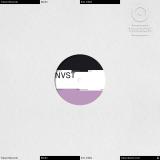
Tresor Records announces GODSPEED, a new EP from NVST, out on October 23, 2026. From its origins in the Motor City and through to the themes of interstellar travel, techno has always been a genre focussed on forward movement, a tradition that GODSPEED continues boththrough music and title.
The EP is a collection that brings to mind the spirit of early, non-conformist releases on Tresor, full of hypnotic synth loops, spacious FX, and breakbeats, yet with a crisp and modern sonic palette. Side A embarks with two tracks that combine a low, buzzing bassline with trippy melodies and percussion that ventures close to breaks and electro, while the B-side moves intothe fast lane with driving acid and more regimented drums. Digital bonus track "Firliner" combines both approaches across its seven-and-a-half minutes, as a buzzy bassline and spluttering beat ignite into a steady trance-induction.
The EP title arrived the way the best ones do: not so much chosen as absorbed from the aether, the word kept popping up during the creative process until it became the ideal name for this collection, given its connotation with setting out on a journey.
"You remember the nights where you've been on the floor for hours without realising how much time has passed, the conversations you can't fully recall, or how unexpectedly open you've been to everything around you. The music speaks the language of substance not as a statement, but as a way of describing perception. It's about experimenting with yourself, your body, your hearing, your emotions. About reaching a point where things that once felt permanent suddenly lose their grip, even if only for a moment. These recordings come from that place. They capture moments where movement replaces thought, memories blur into feeling, and vulnerability becomes part of the process. They're documents of a very
specific time, but also of something much more familiar: trying to lose yourself just enough to find a different version of who you are." NVST
This fast-paced forward travel is implicit in the word speed, but once this word indicated power or prosperity so that godspeed is a wish for success, forming an appropriate double meaning for this first full release of NVST on Tresor.
expected to be published on 23.10.2026

The songs of Jules de Corte are condensed, folky gems with an almost effortless charm. Poised between the intimate and the universal, between lightness and darkness, they touch on religion, love, loss, and the small dramas of everyday life. Yet they resist easy translation. Packed with wordplay, de Corte’s signature alliterations, humor, and local cultural references, the songs inevitably lose something in another language. Still, when a Belgian quartet of improvisers takes them on, joined by American songwriter Bonnie ‘Prince’ Billy, the songs are reborn rather than merely transposed: literal fidelity gives way to interpretation, and what is lost in words is often gained in spirit.
Even without tracing every change, their overall effect is fascinating. Songs are slowed down, often doubled in length, and filled with unexpected musical intrusions. They gain fuller arrangements and are placed in an entirely new context. Replacing de Corte’s piano with guitar can create a radically different vibe, as in “Mariska.” An added solo can heighten the contrast between childlike perspective and the almost matter- of-fact brutality of “Little Anita.” In “The Stranger,” another use of contrast unsettles the everyday harmony, transforming it with a subtle, disorienting twist.
Ultimately, these performances show that interpretation is not successful simply because it is literal. With the groundwork laid by Linus, Bonnie ‘Prince’ Billy further liberated the songs from their original versions. Lyrics and melodies become malleable, shaped by his recognizable cadences, timbre, and personal quirks. Like his collaborators, he allows himself the freedom to bend the material to his own approach. There is no radical break between this performance and his other records. Listeners familiar with the originals may be puzzled at first; for those new to de Corte, it is a wholly different experience.
Does it really matter that the original “Little Jesus, Mighty God” is a 100-second nugget combining playful naivete with biblical fervor? In the hands of these five explorers, the song becomes an intriguing contemplation, with subtle musical shades and a recitation in which every syllable carries a maturity that offers a new perspective. Then there is “The Outsider,” which feels as genuine as any original American folk song. The musicians’ process is more than reinterpretation—it is reimagination, bringing new musical compatibility and emotional depth. Whether that depth was there from the start, waiting to be uncovered, or created in the process is beside the point. What matters is that Linus and Bonnie ‘Prince’ Billy have made the essence of these songs their own, paying homage yet dancing to their own tune.
Linus is the Belgian duo of guitarist and banjo player Ruben Machtelinckx and reedist and synthesiser player Thomas Jillings. Across five previous albums — Onland (2014), Linus + Skarbø / Leroux (2015), Felt Like Old language at the crossroads of folk, jazz, minimalism, chamber music and free improvisation. Their music is adventurous, shaped by a particular sensitivity to texture, timbre and the subtle interaction between musicians.
What began as a duo gradually grew into a flexible musical world, bringing Linus together with musicians such as Nils Økland, Ingar Zach, Niels Van Heertum, Øyvind Skarbø and Frederik Leroux. Yet each new constellation has remained recognisably Linus: music in which carefully considered forms leave space for intuition, interaction and the unexpected.
For their sixth album, Linus takes a new step by moving into the world of song and text. Inspired by a shared love for the late Dutch songwriter Jules De Corte, the album is a reimagining of De Corte’s unique repertoire. More than simply interpreting De Corte’s songs, they absorb and reshape them, bringing them into dialogue with their own musical language. In keeping with this open approach, they are joined by celebrated vocalist Bonnie “Prince” Billy. With albums such as 1999’s I See a Darkness appearing on several greatest album lists, Bonnie “Prince” Billy is a cult figure in the alternative folk scene, and his highly intuitive way of singing seamlessly matches the subtle interplay Linus has developed over more than a decade.
expected to be published on 23.10.2026
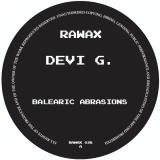
You know the pattern: someone calls their album "Balearic," and you immediately expect chill-out terraces, pan-flute samples, and the umpteenth return of the Café del Mar sunset. Devi G. refuses this reflex almost maliciously. The title is a trick—an invitation to disappointment for those hoping for postcard exoticism. What is actually being negotiated here is erosion, but that of the body itself: the abrasion one inflicts upon oneself in the excess of the night, when partying turns into wear and tear, and a rush becomes a graze that only becomes visible in the morning. No backdrop, then, but a wound one has voluntarily acquired.
Instead of the usual Ibiza xylophones, Devi G. digs into the rift between idyll and wear. The result reads like a séance—less José Padilla, more as if Kevin Martin had re-recorded a Manuel Göttsching record on a dying four-track deck. The target area lies somewhere between the waterlogged ambient sketches of Huerco S. and the faded dub-afterglow of Actress, but Devi G. remains consistently on his own, grainier frequency.
Balearic Abrasions (title track) opens without haste, demanding almost without impatience: no motif, no rhythmic handhold, just a slowly tilting balance between warm texture and rough surface. The grain never feels forced—it is not a lo-fi costume, but an integral part of the statics themselves. Where other ambient producers strive for perfection, Devi G. consciously seeks the breaking point. Rhythm remains a tool, never an ambition. Those expecting quick resolution will be disappointed; those willing to listen will receive a depth effect that is rarely this vivid.
Exit Through Thee Gift Shop tips into harder territory: dub-techno reduction meets industrial edge, carried by a stoic kick drum that knows no mercy. Metallic textures slice through the sub-bass, while repetitive chords hypnotize like a defective loop. Central to this is a rare Terence McKenna recording, which functions less as spoken-word ornamentation and more as a disruptive spirit between memory and media archaeology. The title—Banksy reference included—turns this into a biting punchline: radical electronic abstraction positioned against the hyper-commercialized art world.
Morning Depth pushes the claustrophobia further, somewhere between post-industrial and deep-sea dub. The track refuses any peak-time logic, preferring to disintegrate into itself, subcutaneously, methodically. At the end, a casual, almost banal vocal sample (“i defiantly prefer chocolate”) breaks into the cool machinery—a small, profane fissure that makes the coldness of the rest of the piece all the more apparent.
Desiré Algorithmic is the album's most calculated moment: a stoic, repetitive bassline as a foundation, topped with fragile melody fragments that flash like glitches in faulty code. The title reads like a promise from nightlife—a figure that suggests much and delivers nothing, because behind the façade there is simply nothing, only simulation. The track carries exactly this principle: promise without substance, desire without body, just rendering. Only in the final third does a melancholic saxophone break into the sterile structure—organic, imperfect, and for that very reason more credible than everything before it. It is the moment in which the real briefly flashes through the surface of the dummy before it closes again.
All-inclusive Residue concludes the album as sedimentation rather than dramaturgy: dub-techno remnants, industrial patina, salty ambient surfaces that settle rather than compose. The refusal of consumption as a sonic principle—brittle, stubborn, with a gravity that lingers long after.
Verdict: Balearic Abrasions is not easy listening with a sea view, but an exercise in patience and friction. The restraint with which Devi G. avoids climaxes will frustrate some—for everyone else, that is exactly where the record's strength lies. No sunset. Rather, what remains on the rocks afterward.
expected to be published on 26.10.2026
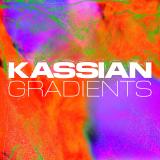
London duo Kassian trade darkness for daylight on Gradients, their third EP for !K7 Records
The EP arrives as a bridge between last year's debut album and a new live show and sophomore LP, due in 2027
As Kassian, Warren Cummings and Joe Danvers continue to sit apart from any one scene. Their fruitful relationship with !K7 has spanned eclectic and global club cuts, including the spatial breaks and bass of 2024's best-selling Supercontinent EP. 2025's debut album, Channels, emerged from lockdown so leaned slow, downtempo and introspective, but this new EP points toward a clubbier, more physical direction that will carry through into album two.
Crucially, the record was written and played live on an array of studio gear rather than assembled piece by piece in the box. It's a way of building towards their first fully live show in 2027 - a hands-on, jam-first approach that leads to "happy accidents" and the unpredictable textures that hardware throws up and no amount of in-the-box planning can replicate.
Gradients is built for the floor without playing to trends and marks some of the duo's most melodic work to date. Rather than sitting purely in heads-down territory, the EP folds in hooks and vocal fragments that lift you out of the smoke and the shadows of the club. The low ends are still rooted in techno with potent drums and bass, but deft vocal hooks and subtle melodies bring a brightness that deliberately steers away from the darker, meaner aesthetic dominating much of dance music right now.
Vocal touches throughout nod to what's going on in the wider underground without tethering to tried and tested tropes. Opener 'Blush' rides warm, soft yet bold melodic riffs, looping in arcs over a hunched, speedy tech house groove. 'Ritmo' is a muscular bouncer with spring-loaded bass, 'Inner Dance' has lurching drums and a cavernous rhythm with vocals that make a playful nod to sound system culture. Last but not least, 'Sweat' is the brightest and most bubbly cut on the EP, with a tight techno low end infused with a velvety whispered vocal.
The Gradients EP is a bright, hardware-built prelude to Kassian's next chapter and a typically well-crafted four-tracker that pairs physical weight with classy emotional release.
expected to be published on 30.10.2026

BATTISTINO, the artistic alias of Marco Battistini, is an Italian musician, songwriter, producer and DJ. His project is rooted in the meeting point between Italo Disco, French Electro, late-’70s Disco Music and Italian pop culture, reinterpreted through a contemporary vision that avoids nostalgia in favor of a distinctive sonic identity. His main influences include the aesthetic vision of Daft Punk, the musical freedom of Daniele Baldelli’s Cosmic Sound, the international disco movement of the late 1970s, and the golden era of Italian Italo Disco, with a special admiration for Righeira. His productions combine driving synth grooves, pulsating basslines and immediate melodies. Gritty electronic drums, saturated synthesizers and subtle harmonic distortion deliberately break away from the polished sound traditionally associated with classic Italo Disco. The result is a more physical and textured sonic palette that preserves the melodic elegance at the heart of the project. BATTISTINO’s visual identity follows the same philosophy. Elegant, reserved and almost bureaucratic, he prefers to remain behind the scenes rather than at the center of attention. More than a performer, he acts as the curator of a sonic archive, where every track represents a fragment of a larger story.
“Il Segreto” is the opening chapter of a conceptual trilogy inspired by an affair that was never revealed, set on the Italian Riviera in the early 1980s. Rather than telling the story itself, the project explores what remains: silence, forgotten details, invisible traces and memories suspended in time. Music, visual design and imagery all become chapters of the same narrative. Every release is a new file, every track a recovered document, every production another fragment of a story that will never be fully disclosed. BATTISTINO doesn’t tell stories. He preserves them. And, from time to time, he allows part of them to surface.
The 12″ includes a N.O.I.A. Remix!
expected to be published on 30.10.2026

New York-based Japanese jazz and electronic music polymath Takuya Nakamura presents his debut album Shape The Future - almost 35 years into his storied musical journey.
An expansive double album, the album’s first LP documents a spellbinding live performance by Nakamura recorded at fabric. A hybrid set combining DJing, live electronics, vocals, and trumpet, the set also features studio versions of special collaborations with Shigeto, Currency Audio and Tim Reaper. The second LP complements the first by assembling studio recordings of select album tracks. Altogether the two volumes make for a definitive display of Nakamura’s exceptional musicianship across jazz, DnB, jungle, broken beat, deep techno and more.
Across his career, Nakamura has played Brazilian music, merengue, salsa and straight-ahead jazz. He’s opened for Sun Ra Arkestra, performed with David Byrne, Laurie Anderson, Lee “Scratch” Perry, Wu-Tang Clan, and Arto Lindsay, appeared on sessions with Terry Riley, ASAP Rocky, Goldie, and TV On The Radio, and remixed the likes of Quincy Jones, Sun Ra, Billie Holiday, and The Streets. He’s also played under director and playwright Robert Wilson.
Although the musical past and present of the Tokyo-born, New York-based DJ and trumpet player is undoubtedly eclectic, Nakamura is abidingly steeped in the sounds of jazz and jungle. This’ll be obvious to casual observers who may have seen any viral videos of him. But there’s more to this. The depth of Nakamura’s engagement with these kinds of music, the way they’ve made him into the person he is, the decades-long path they’ve taken him on; to now arrive at the summit of a solo album is all truly remarkable. Shape The Future resonates with every chapter in this story.
In high school, Nakamura’s friends started listening to jazz and jazz fusion, which piqued his interest, especially when they started going to clubs to see it live, where they managed to see US legends like Sonny Rollins play. Eventually he began to play jazz every day and his musical skill emerged early. He soon became obsessed with getting closer to the source of this music, which led to his studies at the New England Conservatory of Music in Boston with George Russell, an influential figure who had taught Miles Davis and John Coltrane. Nakamura drank it in: not only the technical aspects but the sense of a direct connection to “a music culture where Russell and his friends changed harmony forever. I wanted to know how that was possible!”.
This was a radical experience in itself, but then another revolution happened for Nakamura. He was playing in a venue called The Western Front, near Boston and discovered that the elderly owner had his own soundsystem and was playing what was then - in 1992 - only just becoming known as jungle. This was as freeing a musical revelation as his proximity to the giants of jazz was, and in that instant the two things fused. He understood that using technology to fill a dancehall with sound and a jazz musician’s reflexes are all working to the same ends: “You’re always making decisions,” he says, “but it doesn’t have to be really difficult. It’s the truth of the frequencies, and how they’re affecting people’s minds.”
From that moment on, his life path was set. Moving to New York City, he sought out jungle and its offshoot sounds wherever he could find them, gigging and collaborating relentlessly, and gradually developing his own live and hybrid live/DJ shows. Through regular appearances at New York fixtures Zebulon and CBGBs, and continual shows elsewhere in the city, Nakamura developed his live performance and DJing and it was in these environments that he gradually weaved together his twin loves without compromising either, building an international reputation in the process.
It’s only fitting then that his first album, almost 35 years after he first found his musical direction, should be a live one: a window into this never-ending process. Even here, he had to be persuaded that he should make a record. A member of the fabric team got turned on to his music after their daughter saw him play. Of course, as a jungle lover, Nakamura knew fabric – which has a special place in the history of jungle and drum’n’bass – and “had wanted to play there since I was very young.” You can hear the club in the record: this isn’t just a live show, in keeping with his jungle roots, it’s Nakamura duetting with the soundsystem, and you can feel how the emotions in the room would have ebbed and flowed.
This dynamic translates to a transfixing record. Setting the tone with lushly textured ambient and reverberant jazz, Nakamura segues into cinematic breakbeat and stellar fusion, infusing it all with intoxicating low end and hypnotic rhythms. The LP’s midway point locks into mesmeric percussion heightened by resonant echoes of piano and trumpet. There’s an endless pull to this music. Nakamura adjusts the levels for maximum impact throughout, and the overall effect begins to evoke some harmonious hybrid between a jazz ensemble, a classic Metalheadz 12” and a Theo Parrish DJ set. His electric form continues through surreal jazz, intricate electronics and rolling sub-bass velocity, right up to the subtly devastating final cover of Peter Gabriel and Kate Bush’s ‘Don’t Give Up’, with Nakamura’s fragile vocal sitting in the heart of a huge sound.
From Tokyo jazz nights to formative studies and encounters in Boston to his artistic development in New York, Nakamura reaches another milestone with his monumental debut album. It’s a release that happened just the way a Takuya Nakamura record should. In the same way his instincts led him to musical revelations, taking his own sweet time has led him to make one of the most extraordinary debut albums imaginable, all executed in his own singular style. In Nakamura’s world, the universe finds a way.
expected to be published on 30.10.2026

Landing on the 4th of September via his own imprint Knee Deep In Sound, ‘Obsessions’ is less a traditional dance record and more a reckoning — with where Daley Padley finds himself now, as an artist and as a person. Written across a period of constant movement, touring and introspection, the album holds the push and pull between intensity and stillness that has come to define his world.
This is an artist who started making music in Barnsley — long nights, small rooms, total commitment to sound. Those early marathon sets weren’t a stepping stone to something else. They were the foundation of everything that followed: global tours, chart success, the creation of Knee Deep In Sound, a career built entirely on instinct rather than expectation. Hot Since 82 has never followed a fixed path. He’s carved out a space that sits somewhere between underground credibility and global reach — and it’s that same restless, uncompromising approach that shaped this album.
“Some days feel heavier, some thoughts harder to hold. But music still reaches the places words can’t. It’s therapy and a reset button.”
That sense of release runs through the entire record. While rooted in house music, Obsessions doesn’t sit in one place for long — not to prove a point, but because that’s simply how Padley hears music. It moves between deep house, breakbeat, melodic electronica and full club focus as naturally as a conversation shifts tone. Moments of euphoria give way to reflection and tensions dissolves into release.
The album opens with ‘All That Matters’ — a track that feels immediately both expansive and intimate and sets the emotional register for everything that follows. From there it unfolds like a journey rather than a sequence.
Lead single ‘Shaded’, landing on the 12th June taps directly into classic house lineage while feeling unmistakably current — a bridge between where this music began and where it’s heading. Elsewhere, ‘Life’s Too Short’ and ‘Eternity’ introduce warmth and movement, weaving piano, breakbeat and subtle Afro influences into the album’s wider palette.
As the record progresses, the light changes. ‘Wow’ leans into darker, late-night territory — tension, restraint, a hypnotic centre. The collaborations with Kuuda on ‘State Of Mind’ and ‘Time’ bring the album back into full club focus: driving, physical, built for scale.
On Stock and ready to ship
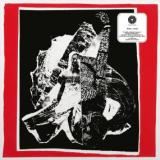
*Originally pressed in 2021 - this is a brand new master and cut.**
In partnership with Analogue Foundation, Oshu Records is proud to present the exclusive vinyl repress of "Laroyê" in a thick cardboard tip-on gatefold jacket on 2x 180g vinyl.
Acclaimed Hungarian, Berlin-based producer, composer and pianist Àbáse (AKA Szabolcs Bognár) returns, sharing a special, 5 anniversary remaster of his breakthrough project 'Laroyê'. Releasing on Friday 1 May via Bridge The Gap & Oshu Records, this sensitive exploration of Afro-Brazilian culture originally began as an audio diary, documenting Szabolcs’ travels and collaborations in Brazil through a collection of voice memos, fragmented beats, sketches and field recordings. As his journey progressed, and his collaborations and research deepened, the music project started to take on its own life:
"Laroyê evolved through weeks and months of research and collaborations into the album that it is now. That means that all the sessions were done in different apartments, small studios, often with borrowed equipment, which all adds to the character, but makes the creation of a coherent sound a challenge. Benjamin Tierney, Erik Breuer and Analogue Foundation did an incredible job with the mixes and with this new remaster. I truly believe that we are able to hear the tracks in a new light, with even more depth and clarity."
Coming from the West African Yoruban language, Àbáse stands for "collaboration" – a key element of the music perfectly encapsulated on 'Laroyê'. Recorded in Rio de Janeiro and Salvador, Àbáse spent five months working with diverse artists, from young talents to veterans of the Brazilian scene including Letieres Leite, Luciane Dom, Dofono d'Omolu, Afrojazz and more. The album explores the rich heritage of afro-brasilian culture through samba, MPB and Candomblé, mixing these with broken beat, hip hop and afrobeat, creating a contemporary homage to the classic Brazilian sound. Szabolcs shares:
"Despite already leading and managing musical projects that are close to my hearth, I always felt that one day I would like to start a solo project, where I could take full responsibility for the artistic direction and the music would reflect a truly personal vision. In 2017, I decided to take five months to fulfil a childhood dream and travel to Brazil to expand my creative horizon and expose myself to new influences."
An album standout is the bass-heavy, afro-brazilian ‘Agangatolú, which Àbáse describes as "best exemplifying the story and concept of Laroye as a collaborative effort - a research project exploring the rich heritage of Afro Brazilian culture through my own lens." The track features singers and percussion players Jadson Xabla and Gabriel Santana - two artists based out of one of the oldest terreiros (houses of worship) in Bahia, whilst drummer Jorge Dubman is an integral part of one of the most famous afrobeat bands from Salvador IFA. The contributions of one of Szabolcsoldest collaborators - Hungarian flautist Fanni Zahar - also made the track a full-circle moment.
On a quest for cosmic grooves of unity, Àbáses music pulls from an eclectic blend of global reference points, including modal jazz, Hungarian folk, West African, Brazilian, hiphop and underground electronic music. His work has drawn widespread critical acclaim from the likes of MOJO, Songlines, Soulection and The Guardian, and been supported by key tastemakers including Gilles Peterson, Jamz Supernova and BAMBII. As a keyboard player, Szabolcs has also collaborated with the likes of Wayne Snow, Dele Sosimi, Patti Smith, Emmanuel Wilkins, Gulty Simpson and Zeitgeist Freedom Energy Exchange.
'Laroyê' (2026 Remaster) will release on Friday 1st May via Bridge The Gap & Oshu Records.
expected to be published on 06.11.2026

Cold, Bold & Together (CBT) CBT was founded in Bellingham, Washington in 1971 by percussionist Tony Gable and musicians Solomon Harris, Keith Hooks and twin brothers TC & Jamar Jenkins. It soon became evident that Bellingham was not a particularly welcoming environment for R&B music, so they moved to Seattle to try their luck and plumb the rich supply of venues, which they successfully did until disbanding in 1978. They spent their early Seattle years playing a combination of covers and originals in clubs, later becoming the "go to" opening act for various nationally known artists, such as Ohio Players, Kool and the Gang and Earth, Wind & Fire. While they were paying their club circuit and opening act dues, they squeezed in recording sessions whenever they could and released their own material, which was well-received and got strong regional airplay. However, because of the feudal nature of the music business at the time, they just couldn't break out, and like a lot of Northwest bands with great potential, they inevitably broke up and went their separate ways. Upon disbanding, they left behind a collection of original recordings at Seattle's legendary Kaye-Smith studios.
Unfortunately for CBT, the studio passed through several owners and at some unknown point in time, one of them did the unforgivable and destroyed the storied studio inventory of two-inch tapes and quarter-inch masters. Unknown to the band, a copy of their masters was smuggled out by their producer who added them to his legacy collection of cloned quarter-inch masters. After several years and many moves, he became concerned about the tendency for magnetic tape to deteriorate over time.
He sent the tapes to a Seattle lab to be restored and digitized, with the hope that perhaps, some day, they might be made available for the listening pleasure of R&B fans. The hoped-for day has finally arrived. Russell Paine and Super Disco Edits has pressed two of the Kaye-Smith CBT tracks: "Go For It", a jazz-influenced instrumental, featuring Kenny G, and "Unity", sung by the group en masse with Tony Gable singing lead. The musicians on these tracks are: Tony Gable, leader, vocals and percussion Harry Alexander, drums Kenny Gorelick (now world-renowned "Kenny G"), sax, flute and horn arrangements Chris Ishi, trumpet Michael Young, Trombone Jamar Jenkins guitar, vocals TC Jenkins bass, vocals 1 Philip Woo, keyboards Footnotes: CBT gave legendary saxophonist Kenny G his start in the music business. Kenny was still in high school when he was recruited to play sax and write horn arrangements. Kenny co-wrote, arranged and played sax and flute on the instrumental "Go For It." He rips a smoking tenor sax solo in the middle, which showcases his already masterful technique and solidifies his R&B bona fides. He went on to have a spectacular career recording for Clive Davis and Arista Records. Before his untimely passing in 2016, Tony Gable went on to found contemporary Jazz group, "Tony Gable and 206" (206 being Seattle's then only area code). With songwriting, performance and production help from Kenny G.
On Stock and ready to ship

DJ Support: Sam Don, Severino Panzetta (Horse Meat Disco), Chris Howler, Sean Johnston, Bill Brewster, For Mankind, Craig Thompson, Andy Taylor, Massimiliano Pagliara, Dean Dixon, Nathan Detroit and many more
Underground Institution Stompa Phunk Re-Launches Vinyl Label with Raw, Chi-House-Inspired Energy. After three decades of defining the UK’s underground club landscape, legendary Brighton party collective Stompa Phunk is officially moving from the dancefloor to the wax with the relaunch of Stompa Phunk Records Inc.
The Heritage: From The Warehouse: The releases will directly honour the roots of house music, a genre born in 1977 at Chicago’s legendary nightclub, The Warehouse. As that scene matured, a grittier, faster, and more experimental counterpart emerged. Defined by an uninhibited, bass-heavy style, it was a movement driven by local innovators who pushed drum machines and synthesisers to their breaking point... It wasn't just a genre; it was a collision between pure imagination and raw machines. A true "sound klash" transformed the local underground subculture into something global...
Release 1: You Had It (Edit) / Music Got (Dub): Capturing the exact spirit of rough, tape-spliced dubbed cuts. The 12-inch from SP resident Sound Klash pairs a vintage production ethos with old hardware pushed to its limits...
The Philosophy: This EP perfectly mirrors the exact philosophy that has fueled Stompa Phunk’s dancefloors since 1996: uncompromising electronic music rooted in heavy sample-delia, jackin' bodies, Acid energy, disco-dub mentality and second-hand technology. Jackinacidiscotech!
On Stock and ready to ship

Sie ist zurück und lässt sich nichts mehr gefallen! Brandneues Studioalbum von Miss Ludella Black! "Niemand hält mich zum Narren Das ist mein viertes Soloalbum. Wir hatten einen Riesenspaß beim Aufnehmen, wie ihr sicher merken könnt! Ich werde wieder von den fabelhaften Masonics begleitet, und die eigenen Songs stammen aus der Feder von Mickey Hampshire. Wir haben das Album mit der lokalen Legende Jim Riley in den Ranscombe Studios aufgenommen, nur einen Katzensprung von meinem Hausboot entfernt. Das Etta-James-Cover (ich weiß, wie kann ich es nur wagen!) spielen wir schon seit einer Weile live, ebenso wie "Why Don't You Smile Now", das auch auf dem Album Delmonas 5! zu finden ist. Das Gänsehaut erzeugende "You Waster You" lässt euch die Nackenhaare zu Berge stehen und ist auch ein Highlight meines Live-Sets. Meine persönlichen Favoriten sind "I Bear the Scars" und "I'll Get Over Losing You" beide ganz unterschiedlich, aber sehr typisch Ludella! Ich freue mich riesig, diese tolle LP wieder bei Damaged Goods Records zu veröffentlichen, und hoffe, ihr liebt sie alle genauso sehr wie ich!"" - MISS LUDELLA BLACK, Rochester, Kent (August 2026)
expected to be published on 13.11.2026
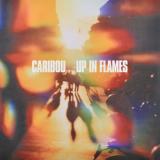
Limited Edition 2026 Black Vinyl Repress.
Up in Flames is Dan Snaith's second album, originally released under the Manitoba moniker on March 31, 2003 .
Made with the same modest home setup as its predecessor, it nonetheless sounds like a different artist entirely - a kaleidoscopic rush of sun-bright melodies, tumbling percussion, and psychedelic pop that traded the hushed intimacy of Start Breaking My Heart for something warmer, bigger, and more joyfully overstuffed, encompassing 1960s psychedelia, Madchaster swagger and shoegaze swoon.
Snaith was later forced to change his artist name after a well-documented lawsuit, and Up in Flames stands as the final album released under the Manitoba name - a high point to go out on. The record was met with widespread critical acclaim, and has since been recognized by Pitchfork as one of the standout albums of the 2000s. It remains, by most accounts, one of Snaith's finest and most beloved records.
expected to be published on 20.11.2026

Nippon Psychedelic Soul 1970-1979 is Time Capsule’s continuation of the deep dive into Japan’s rich history of folk and psychedelic soul music.
Vinyl LP with 4 page insert, original artwork and photos
The kaleidoscopic psychedelia of 1970s Japan captured a fragile and fertile moment as the country sought its future in funk grooves, heavy reverb and lyrical hallucinations.
The follow-up compilation to Time Capsule’s Nippon Acid Folk, Nippon Psychedelic Soul takes myriad pathways into the tripped-out undergrowth of 1970s Japan. Finding their feet at home and looking for inspiration abroad, the musicians featured here were engaged in the communal soul-searching that followed the breakdown of the 1960s protest movements. Some made it big, others drifted into oblivion. The music they left behind shimmers with intensity.
At the core was Happy End, the first project of YMO’s Haroumi Hosono, whose distortion-heavy guitar and crisp back-beat laid the foundations for Japanese lyrics that flipped the paradigm of Japanese rock music on its head. With it came a new found sonic ambition, such as in the bold Philly-soul style arrangements of producer Yuji Ohno, whose work with occult wandered Yoshiko Sai shares some of the bittersweet grandeur of Rotary Connection or David Axelrod.
Then there was Jun Fukamachi, a pioneer of Japanese synthesis, whose debut album was a carnival of orchestral funk, euphoric horn lines and rich production, complete with soaring guitar solos, psychedelic organ and a truly cinematic finale. The first and only time Fukamachi would sing on record, ‘Omae’ rips like the ultimate end-of-nighter.
Influenced by giants of the US soul scene, maverick composer Hiroshi “Monsieur” Kamayatsu (otherwise known as ‘the Brian Wilson of Japan’) went one step further, enlisting Tower of Power to play on ‘Have You Smoked Gauloises?’ The B-side to Monsieur’s biggest-selling single, it coasts with sophisticated cool - a liquid bassline and suave keys comping under a roaring trademark ToP sax solo. No surprise it found favour once more on the Acid Jazz dance floors of ‘90s London.
Such was the spirit of experimentation that big studio productions and private press releases sat side-by-side, with the likes of Momotaro Pink and Kazushi Inamura, taking their hopes of success into their own hands with the resources available to them. More reflective but no less robust, theirs was a heavy, fat-backed drum sound, soaked in dramatic, soulful psychedelia.
If some were dreamers and others space cadets, none were further out than sci-fi writer, musician, activist and self-made scientist Tadashi Goino, who transformed his own fantasy novel Messenger from the Seventh Dimension into an operatic prog odyssey with few discernible musical reference points – a majestic and completely bonkers outlier even among company as strange and brilliant as that which is collected here.
Less a compilation of a scene, as a compilation of a sentiment, Nippon Psychedelic Soul is a wild ride from start to finish, shattering the narratives of the Japanese folk and rock tradition into a million tiny pieces.
On Stock and ready to ship

In the rapidly shifting tectonic plates of the global Afrobeats scene, few arrivals have been as seismic as that of Ahmed Ololade—better known to the world as Asake. With his breakout project Mr. Money With The Vibe, the artist didn’t merely debut; he effectively recalibrated the tempo of the Nigerian pop soundscape. The EP functions as a masterclass in synthesis, pulling from the ornate, percussive history of Fuji music and grafting it onto the driving, bass-heavy architectures of contemporary Amapiano. It is a calculated, deeply rhythmic hybridization that manages to feel both nostalgic and jarringly modern.
From a critical vantage point, Mr. Money With The Vibe is defined by its brevity and density. Asake treats each track as a focused vignette, utilizing a vocal delivery that oscillates between a melodic, almost liturgical chant and the staccato urgency of a Lagos street orator. The production—characterized by sharp, frenetic percussion and deceptively simple melodic loops—creates a high-intensity atmosphere that mirrors the relentless pace of urban life. He avoids the pitfall of bloated experimentation; instead, he doubles down on a "street-pop" ethos, prioritizing accessibility without sacrificing the complex rhythmic interplay that gives the genre its distinctive texture.
Ultimately, Mr. Money With The Vibe stands as a pivotal document of the current era, capturing the transition of Afrobeats from a regional powerhouse to a dominant global force. By blending the aspirational "hustle culture" narrative with an increasingly sophisticated sonic palette, Asake established a blueprint that has since influenced a new wave of artists. The project is a testament to the idea that authenticity, when paired with relentless precision, remains the most effective currency in contemporary music.
On Stock and ready to ship

Following the massive, multi-platinum success of the global hit "A Bar Song (Tipsy)" and his breakout contributions to Beyoncé’s COWBOY CARTER, Shaboozey returns with his most ambitious work to date: the new concept album, The Outlaw Cherie Lee & Other Western Tales. Building on the genre-bending foundation of Where I've Been, Isn't Where I'm Going, this project cements Shaboozey’s status as a pioneer of New Americana through a cinematic outlaw revenge story with a tragic love at its center.
The narrative follows Cherie Lee, who, after witnessing her sheriff father’s murder by the Bootcut Boys, abandons the badge to hunt the gang down one by one. In the heat of her vengeance, she falls for an outlaw—not the killer, but a man guilty by association. While he seeks redemption through her love and she seeks a cure for her darkness, both find that violence is not so easily escaped. When her lover kills the real murderer in her name, he proves that bloodlust doesn’t end; it only evolves. In a devastating final act, Cherie chooses her vendetta over her heart, killing the man who loves her most and fully becoming the very monster she set out to destroy. Gritty, soulful, and narratively daring, The Outlaw Cherie Lee is a bold evolution from one of music's most dominant current forces.
On Stock and ready to ship

Discosabotage Records is an evolution of the collective founded by Luval in Amsterdam in April 2024. Having recently relocated, he felt the need to create something that truly reflected his own vision and the music he loves. What started with selecting records gradually evolved into selecting demos, driven by an increasing desire to shape a distinctive identity and sound.
DSB001 is the label’s first various artists release, featuring Luval, Massi, Two Opposites, and Paradise City Breakers. Each artist brings a unique perspective while remaining connected to the vision behind Discosabotage. The release moves through different shades of electronic music, from deep and hypnotic grooves to darker, more introspective territories, always maintaining a strong sense of definition and purpose. While each track speaks its own language, together they form a cohesive journey rooted in underground electronic culture.
This first VA marks the beginning of a label that is still taking shape, defining its path through dark atmospheres, refined rhythms, and carefully crafted electronic textures. A first statement from Discosabotage, and the starting point of what is yet to come.
On Stock and ready to ship

Younger Than Me announces his debut full length "The Golden Age Of Love", to be released on 90's Wax this coming March 2024. The record is the perfect example of the breadth of his irrepressible and unique sound. Featuring collaborations with Massimiliano Pagliara, Brame & Hamo and Pablo Bozzi. The artist is an Italian native known for a modern interpretation of '90s club music' - a dynamic blend of Progressive House, Trance, EBM, Breakbeat, and Techno ideas. This first album is a love letter to a deep-rooted passion for the idiosyncrasies of rave culture and the crossover points with contemporary electronic music.
Younger Than Me, an artistic project by Francesco Mingrino that is steeped in the nostalgia of ‘90s rave, yet not at all trapped in that past. A project that has cemented a special place in the electronic music scene with a string of records on labels like Bordello A Parigi, Amsterdam-Utrecht based platform XXX, Rotterdam’s Bar and Jennifer Cardini’s Dischi Autunno. To this point Francesco has pushed his fun yet forceful sound, with many releases on his own 90's Wax, and collaborations with people like Skatebård, Francesco Farfa, Timothy Clerkin and Curses (as Y2C).
"The Golden Age Of Love" as a package is curated in Younger Than Me's characteristic style. Opening with "Long Life Death", a track that sets the stage with a cinematic soundscape in a classic Carpenter vibe. Picking up the tempo "Zarathustra Dance" takes you right into the golden age itself, its low slung beat and carefully sequenced lead line pushes an ever building tension designed to crack any dancefloor. The track with Massimiliano Pagliara, "Eternal Sunshine Of Solitary Mind", is one of the highlights, perfectly building around a catchy lead with tight arpeggio and sequenced acid. Leading us into the 2nd half of the record "Sadness Is The Only Way To Happiness" is a proto-trance beast, inspired by that period in the early 90s when Trance was less bright lights and big stages and more dark rooms and smoke filled spaces, an ever building progressive run of haunting vocals, rave stabs and rolling bass.
Whilst YTM is at home presenting dancefloor focussed material, we see him explore the other side too, with "Memory Is A Clock" like the earlier "Vortix", he ditches the 4x4 for breakbeat territory. Whilst the bass keeps the solid metronome you would expect, "Memory Is A Clock" is a track that takes a few moments, contemplative melody and trademark arpeggios take the lead. When it comes to the other collaborations on the record, the appearance of Brame And Hamo on "Raver's Heart Is A Mess" sees them lean into the Progressive nature both artists love so much. Then Pablo Bozzi lends his own unique outlook to "We Don't Know The Way, We Just Stay" in one of the standout tracks, epitomising Younger Than Me’s ability to create profound experiences.
The album concludes with "Music Will Never Stop, Heartbeat Will Never Fade, Party Will Never End", less of a title and more of a personal philosophy – the perpetual essence of rave culture and its timeless impact on music. A rhythmic belter, juxtaposed with incendiary synth-lines and staple catchy sequence work, finishing the record with one of the true highpoints. In addition the release also features four digital bonus tracks, including "The Other Face Of Loneliness" and a Prog Dance Reshape of one of the records more eclectic cuts "Zarathustra Dance" all offering an extended exploration into the creative landscape YTM inhabits.
"The Golden Age Of Love" is a debut album that ticks all the boxes; it's a celebration of a bygone era through the lens of the contemporary. Younger Than Me stands as a testament to the enduring spirit and evolving nature of the music that began in the ‘90s rave scene, with an LP that pushes Love, Progression and Fun to the forefront.
On Stock and ready to ship
On Stock and ready to ship

Sincere yet uninhibited. Powerful yet vibrant. This remarkable debut album captures the breakthrough moment of rising pianist Mikio Masuda.
Mikio Masuda first came to prominence as a member of the Terumasa Hino Group, and this is his debut album as a leader. The musicians are essentially the same lineup that was performing with the Hino Group in 1974, but with Masuda at the helm, the music takes on an especially fresh and energetic character. He plays with remarkable freedom and confidence, as if completely at home in the spotlight.
Four of the album’s six tracks are Masuda originals. At times he moves forward with a light, agile touch; at others, he unfolds beautiful themes with lyrical sensitivity. The variety of the compositions and the freshness of the performances are consistently striking.
Among the highlights is “Prayer”, a powerful, Afrocentric piece that stands as an outstanding example of the post-Coltrane approach. Both compositionally and performance-wise, it ranks among the album’s defining achievements.
This album marks the starting point of Masuda’s career and remains one of his signature works, documenting the emergence of an artist who would later become one of the leading figures of the fusion era.
expected to be published on 11.12.2026

For the 27th instalment of Big Trouble Records, Cryme steps in with a hypnotic overload of house holiness. Thumping, breakbeat-influenced drum patterns attach to Detroit synths, stabs, and pads.
Ziegelstr. is home to the studio and former headquarters of Berlin-based label Seven, run by Cryme and ultimately the meeting point between Cryme and Big Trouble’s head honcho Andre Zimmer, culminating in Cryme’s release on the label. Throughout its length, The EP nods to Detroit and early UK house whilst planting itself firmly in the core of what Berlin stands for today.
On Stock and ready to ship

For the decennial release on Punctuality Warsaw duo W.A.C., aka Private Press step up with their Forever W.A.C EP. Moving away from their more techno-oriented offerings, Forever W.A.C. keeps the tempo and energy of their earlier work but suffuses the mood with warm, glowing trance and prog energy. This is peak-time Punctuality business in its purest form– on time as ever. “No More No Show” comes in hot from the get-go: galloping snare rolls, raved-up breakbeats, uplifting pads, big basslines, acid licks, and the low-end wubs that have become synonymous with the Punctuality sound. One for that point in the night when the dancefloor has melted into sweaty, eyes-closed, hands-up amorphia.
Barely recognisable to its original counterpart, the Rhyw remix strips the A1 down to the bare essentials. Preserving only a few percussive elements, the euphoria of No More No Show is replaced with hazy, cinematic synth washes that drone around a skeletal groove loaded with bassweight, warping the original into a dubbed out psychedelic UK stepper. Shifting to the morning light, “Only Froggerz” is a shimmering roller that ebbs and flows around barreling kick drums, kaleidoscopic synth lines, and vaporous FX, with lustrous chord work driving the emotion dial to 11. Elegant and restrained but relentlessly pummeling, it’s early-morning club gear at its finest.
Rounding out the EP with an essential slice of modern prog, “Close” utilises all the good bits: skippy basslines, filtered squelches, tribal-leaning percussion, and a relentless groove that builds around the subtle interplay between the stabs and the vocals. An epic closer that feels as true to the Punctuality canon as ever.
On Stock and ready to ship

Celebrated British producer O’Flynn presents his highly anticipated 3rd album ‘Kairos’ on his Panthus imprint.
‘Kairos’ comes off the back of some of the biggest success O’Flynn has seen so far in career: his January single ‘Fara’ shot into the top 40 in the UK’s Shazam Dance chart after landing BBC R1 Breakfast Track of the Week and adds to the Radio 1 Dance & Capital Dance playlists, plus a Headliner Mix on BBC R1Dance, with support on over 30 editorial playlists including the cover of Spotify’s key tastemaker playlists ‘Altar’. O’Flynn’s recent single ‘Sekete’ was an instant hit among A-listers, with support from Bonobo, Floating Points, Caribou, Barry Can’t Swim and Gilles Peterson; hitting #1 in the Beatport Bass/Club Top 100 and peaking at #47 in Shazam’s UK Dance Chart; it premiered with a first play by Sian Eleri on BBC R1’s Future Artists before seeing support from Danny Howard, Jack Saunders, Arielle Free and Jaguar as well as X6 Spins from Nick Grimshaw on BBC 6 Music and X3 plays from Jenny Greene on RTÉ 2.
Upcoming events include an exclusive in-person listening event at the Devon Turnbull Room @ 180 Studios, the sold out Cirque du Soul Summer Party (The Cause) and Glitterbox Ibiza on the day of release.
On Stock and ready to ship

A label compilation can be the first sign of a new cycle. After years shaped by individual trajectories, it brings the focus back to what made scenes powerful in the first place: shared language, mutual influence and a sense of collective movement.
For a label built on deep rhythm, organic textures and emotional drive, this carries an even stronger meaning. These musical spaces hold connection, memory and exchange at their core.
In this light, a compilation becomes more than a format: it becomes a statement of identity, a meeting point where different voices contribute to one evolving vision.
Following the previous chapters, “MoBlack presents: COLORS OF INDIA” marks the third instalment in the series. Built around hypnotic percussion, evocative vocals and textures inspired by Indian tradition, the collection moves between organic groove and club energy while maintaining a strong sense of atmosphere.
Rameff – “Ferena” opens the collection with rolling percussion and warm melodic details, establishing a hypnotic atmosphere that naturally sets the foundation for what follows. From there, Bull&Jems – “Asha” brings a brighter sense of movement, introducing expressive vocal textures and rhythmic lift while keeping the groove connected to the same organic pulse. The mood then becomes more immersive with Rameff – “Bondhu”, where repetition and subtle melodic shifts create a steady build in tension without breaking the flow of the journey. Closing the selection, Hefty (CA) – “Taka Dum” injects a more playful rhythmic energy, tying everything together through percussion-led movement and a vibrant late-night spirit.
With “COLORS OF INDIA”, MoBlack adds a new chapter to its compilation series, bringing together cultural references and club-driven energy through a shared rhythmic language. The result is a collection where tradition and contemporary interpretation meet naturally on the dancefloor.
On Stock and ready to ship

What changed between Av. General Roçadas and Junkeira? Seven years in people's lives — yet the team's commitment remains untouched, and the steady hand on the plumb line that keeps dance music (still) upright holds firm. Years of sustained research and field work from both producers, with their own records, mutually independent and independent too in how they brought them to life. Moreno Ácido has been navigating detours through a conceptual yet grounded underground — in sound and in format (two self-released cassettes since 2019) — while keeping one eye on the floor. His post pandemic reawakening carries a clear message: Call to Action is the label that in 2023 put the still-in-demand Trash/Treasure out on vinyl. Diogo keeps Discos Extendes as his shelter, gathering talent and retreating into it. At the same time, a disseminating vocation — that talent turned outward, on a mission to champion the different sensibilities that can converge in music made for dancing.
Junkeira is direct. It hides nothing in its intent, nor does it conceal the origin of its love, nor the way it exercises its fascination with the source. Geography can define movements, described and echoed countless times outside and then inside the net. The signifiers are known to all — it's a matter of applying them with respect and flow. Perhaps the craft in this production really does come down to love, when it comes to it. What is "WTF" if not a declaration of love — at the very least of closeness — to the sonic essence of the English rave? The piano stab, the breaks defining that hardcore state of mind, the string bed lifting feet off the floor. Closing out the EP, "Freak" gathers different emotions — eyes still shut, body in comedown while still moving. Chill. Everything rounded. Bassline, vibes, vocals woven into the rhythm.
Rewinding, the opening track "100 Planos" is a throwback to Roçadas (2019) — harder on the ground, with a 4/4 beat broken up by claps, a circular structure built for DJs, with mix-friendly entry and exit points. Then "Turbo Love" puts the keys in control, foregrounding them, letting a car alarm ring out and balance the beat — a reverential nod to UK Garage felt as raw material, already part of the lineage that has been the continuous evolution from Disco onwards: an evolution that traces a line and its branches, from which you can isolate any chronological point since at least 1977 and combine whatever elements form a personality. The spirit lives, as summer kicks in.
On Stock and ready to ship

Nectax returns to Up Ya Archives with a single that throws three of the most physically demanding genres in club music into the same crucible. Juke’s stuttering vocal chops collide with footwork’s 160bpm grid-locked percussion and jungle’s time-stretched breaks. When asked on his process behind ‘Schematics’, Nectax said:
“I really like how Schematics turned out, it sounds like it was done on an old MPC but in truth was just trusty FL 11. Re-chopping all the breaks into triplets was a meticulous quest, but it’s given the track quite a unique flow & pacing.”
One of modern jungle’s most in-demand producers, Nectax has built a reputation for releases that treat adjacent genres as raw material rather than reference points - as featured on the upcoming EP.
Nectax on the EP:
“Newcastle Juke Party EP taps into the synergy between Chicago Footwork & UK Jungle, two styles I personally love & feel don’t get enough credit for how well they compliment each other.”
Recent output on Over/Shadow, play:musik and Future Retro has cemented him as a key figure in the current wave of UK club music pushing junglism forward.
On Stock and ready to ship