Named after a now-shuttered nightspot that overlooked the beach on Italy's picturesque Tuscan coast, Maxime Denuc's 'Club Imperiale' is a work of speculative historical fiction, a record that imagines a point of creative symbiosis between the Catholic church and the ecstatic dancefloors of the early '90s.
Using a MIDI-controlled pipe organ, Denuc creates dense clouds of impossible-to-play notes that ricochet backwards and forwards through history, from Rome's reverberant cathedrals to the white, sandy beaches of the Balearic Islands.
Two years ago, the Brussels-based French composer was forwarded a surprising video by a Belgian fan. It was shot during a Wedding at a church in Menorca, where the organist was playing 'Infinite End', the lead track from 2022's 'Nachthorn'. Immediately, Denuc knew that this was the thematic backdrop he'd been waiting for; he imagined the aftermath of the event, wandering through small villages and teetering on a cliff's edge, finding a provincial nightclub and retracing his steps back to the beach to witness the
sunrise.
out of Stock
Last delivered 19 days ago available to reorder, subject to availability
Heads down, steady and to the point — Squash returns to Healer Records with 3 understated club cuts, tracing deeper corners of dub, prog and tech house. All function, no excess.
out of Stock
Last delivered 6 days ago available to reorder, subject to availability
Some recordings herald the future in ways that are impossible to see in real time. Teodros Makonnen With His Organ (ቴዎድሮስ መኮንን ከኦርጋኑ ጋር), by the artist Teodros Makonnen, also known as Teddy Mak, is one of those. Today, electronic sounds, synthesizers, and digital production are taken for granted in Ethiopian music, but in the early 1980s, they were novelties that polarized opinion. Even to this day, the story of Teodros Makonnen’s legacy has never been properly told. He played a decisive role in defining the sound of the digital era of Ethiopian music that emerged in the 1980s and beyond, both as a keyboard player and as a producer, songwriter, performer, and sound designer.
Ethiopian music was at a crossroads in the early 1980s. Much like music in the rest of the world, technology and automation heralded either a quantum leap in musical development or the annihilation of musicianship, depending on who you’d ask. The changes were incremental nonetheless, but with the benefit of hindsight one can clearly see that the changes meant different things in different contexts. Drum machines and electric organs came to replace many hotel bands because, all of a sudden, one musician could control drums, melody, and accompaniment. Teodros was one of the first musicians in Ethiopia to explore the possibilities this opened up.
Teodros’ father, Captain Makonnen Beri, was a chief pilot at Ethiopian Airlines and a music enthusiast at that. This would prove important to his development, as Makonnen brought back a piano from Germany, which would lead to the first steps in Teodros’ long musical career. Captain Makonnen’s work as Head of Flight Operations and as a pilot exposed him to the wider world that was far from commonplace for most Ethiopians. In a house where music captivated the whole family, the piano gave Teodros’ talent an outlet. Not only was a piano at home rare in Ethiopian households, his father also brought an Indian teacher to their home to teach Teodros and his brother, Captain Samuel Makonnen, music theory (solfeggio or ear training) and piano. Teodros and his youngest brother, the late great Dereje, a member of both the legendary Ibex Band and the Ethiopian reggae group Dallol, took up music from that point onward, with Teodros beginning to develop his proficiency at the age of eight. His father encouraged him to practice tirelessly at home, and Teodros later received musical schooling at the German School in Addis Ababa. His obvious talent led to studies and formal education at the Yared School of Music, followed by continued studies in American jazz at Northern Virginia Community College in Virginia. Teodros cut his teeth professionally in his mid-teens, not only as a keyboardist, but also as an arranger for the Wabi Shebelle and Dahlak bands in the 1970s. He mastered electronic sequencing early, rising to prominence through the midnight recording sessions held during the military curfew. The pressures imposed by the curfew required precise and disciplined recordings, and Teodros delivered just that. This, in turn, led to collaborations with iconic artists such as Mulatu Astatke, Aster Aweke, Menelik Wossenachew, Tilahun Gessesse, Mahmoud Ahmed, and Alemayehu Eshete. In those days, he sat in as a keyboardist with the Dahlak Band when Dawit Yifru took a hiatus to study in Russia, and also with the Ethiostar Band. He secured a residency at the Wabi Shebelle Hotel with the Shebele Band, together with Zelalem Tadese (drums), later succeeded by Elias Bekele, Mulugeta Hailu (bass), Teferi ‘Bibisha’ Mengesha (guitar), Kumelachew G/Selassie (trumpet), and Teshome Deneke (saxophone). A friendly competition developed between the bands associated with the Ras Hotel (the Ibex Band), Ghion Hotel (the Dahlak Band), and Wabi Shebelle Hotel (the Shebele Band). The music scene at Wabi Shebelle saw teenagers commanding the spotlight in an industry otherwise dominated by musicians of an older generation. At the Wabi Shebelle Hotel, Teodros met a diplomat from Saudi Arabia and later visited him at his home in Addis Ababa, a meeting that had unexpected musical consequences. The man owned a Yamaha double-deck keyboard. That evening, they recorded Teodros Makonnen With His Organ (ቴዎድሮስ መኮንን ከኦርጋኑ ጋር) in one take. This recording, a cornerstone in the early digital sound of Ethiopian music, came about almost by chance, simply because Teodros got the opportunity. Traditional Ethiopian songs were cast in a wholly electronic style. Once freed from backing duties, Teodros’ keyboards could explore dreamlike soundscapes that took Ethiopian music in new directions. Even though the cassette contained well-known Ethiopian songs, they were given highly original arrangements, performed on an electric organ with drum machine backing and rhythm patterns that left the listener with suggestive, lingering sounds. “Libesh Kabashen” (also known as “Anchi Bale Game”) and “Odu Gol Golesa” wrap you in the very stuff that dreams are made of. Originally released on cassette only, this recording exudes a mystique that surpasses even some of the most obscure Ethiopian recordings of the day. It remained more or less unknown outside of Ethiopia until now. Some of the tracks, like “Addis Fikir,” are permeated with an almost naive buoyancy, free-floating sounds that lost contact with the ground the moment they were conceived. Others, like “Meche New Hageren Yemayew” and “Lelitu Alnega Alegn,” carry a moodier, quirkier timbre, with pulsating rhythms in the background. Yet even the darker pieces contain an unmistakable wave, something essentially Ethiopian. If most recordings of Teodros’s contemporaries at the time were teeming with atmosphere, his songs seem instead at home in the stratosphere, almost ethereal. Some of the music here could be filed under “lullabies,” were it not for the recurring, almost brooding feeling that engulfs the listener on the aforementioned tracks. You could easily be forgiven for drifting into a blissful haze as the music washes over you.
Up to the advent of electronic music production, Ethiopia was totally dominated by big bands on the one hand, and small groups on the other. The former were tied to large institutions such as the military, the latter emerged from the entertainment industry, in hotel bars and nightclubs. These groups were commercially driven, and bands ultimately had to foster a mercenary approach to employment, albeit not to the passion for music. In the light of this, Teodros’ musical legacy can be seen in two ways. On the one hand, he is a key player in Ethiopian music from the 1970s onwards, leaving an indelible mark through hundreds of compositions and arrangements, including soundtracks for numerous documentary films and advertisements for different companies. On the other hand, the way he and others employed electronics brought Ethiopian music onto a fork in the road.
The replacement of traditional instruments with electronic equipment was seen as impending doom by some. Others, like Teodros, saw new avenues for performance, production, and creativity. Just as later producers like Abegasu Shiota of Admas, Teodros was a trailblazer who opened paths that it took Ethiopian music as a whole more than a decade to rush into. The hotel scene had already been pushed toward electronic music by financial necessity and cost-cutting. Today’s revived global interest in Ethiopian music from the seventies and eighties, alongside a broader resurgence, has changed the reasons for using digital means of music production. They have become tools for musical dreaming. This is where the dreaming began.
A long-lost Japanese acid folk gem, Niningashi’s 1974 private press debut Heavy Way shimmers with originality, deft song writing and a dream-like groove.
Although he was training as a pharmacist, Kazuhisa Okubo was much more interested in prescribing musical medicine.
A coming-of-age album, Heavy Way captured a turning point in Okubo’s life, and Japanese society more widely as a nostalgia for the pastoral calm of the traditional life, met the cosmopolitan thrill of coffee, sex and cigarettes in the big city.
Intoxicated by Tokyo, driven by a passion for music and surrounded by a thriving acid folk scene, the young student filtered his experiences through a psychedelic cocktail of soulful influences from the US and Japan.
Niningashi was his first band, and Heavy Way was their only album. It was honest and raw, deep and strangely funky, in an off-beat kind of way. Across nine tracks, Okubo and the 6-piece band put their own spin on the new folk sound of Japan, combining witty lyrics with electric guitar-driven solos and crisp, understated grooves.
Melancholy and profound, opening track ‘Ameagari’ feels like a synthesis of Harvest-era Neil Young and Haruomi Hosono’s Happy End. Then there’s the whimsical washboard country sound of ‘Semai Boku No Heyade’; the moody, low-lit charm of ‘Restaurant’; and ‘Hitoribotchi’, a sensitive portrayal of childhood, steeped in memories of rainfall that will resonate with fans of Woo and Mac Demarco.
While Okubo would go on to taste success with psychedelic folk bands Neko and Kaze, the latter of which scored three #1 albums, little is known about his mysterious debut with Niningashi.
Self-released by Okubo in 1974, and featuring album artwork by his brother, it has slowly generated a cult following online, intrigued by its soft and enchanting sound. So few records were ultimately pressed that those remaining have fetched up to £1,500 online.
Featured on Time Capsule’s era-spanning collection Nippon Acid Folk, Niningashi’s Heavy Way is a deep-cut grail of a vibrant time in Japan’s musical history, where even the pharmacists were making jams.
out of Stock
Last delivered 19 months ago available to reorder, subject to availability
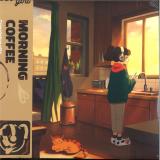
The ultimate Limited Edition double LP repress of "Morning Coffee" is finally here! ☕
Treat yourself to this ultra-exclusive double LP featuring an incredible liquid-filled vinyl. It's the perfect opportunity to acquire an exceptional collector's piece that is as hypnotic to watch as it is to listen to.
✨ Vinyl Features
Ultra-Rare Liquid-Filled Disc 1: much more than just a vinyl record, it's a technical marvel. This first disc contains a moving, coffee-colored liquid that comes alive to the rhythm of your turntable, offering a hypnotic and extremely rare visual experience.
Stunning Coffee-Marbled Disc 2: to perfectly pair with the liquid disc, enjoy a beautiful brown marbled vinyl that captures the warm aesthetic of a freshly brewed cup of coffee.
22 Remastered Tracks: 54 minutes of carefully selected, soothing melodies, remastered to bring a gentle warmth to your morning coffee routines.
Specially designed for fans who couldn't secure the original first pressing due to its instant sell-out, this limited reissue is the missing centerpiece your collection deserves.
out of Stock
Last delivered 30 days ago available to reorder, subject to availability
Tucked in the heart of Koreatown, Los Angeles, lies The Libra Hotel—the titular architecture of Nick Malkin's new album and site of his musical and psychogeographic exploration. Unlike most musical "site-specific" studies, Malkin remains wholly ambivalent to the documentarian approach, instead sharpening an auteur-like focus on the site as a conceptual and highly expressive backdrop. The Libra is musically explored as a space that houses a noir fragmentation of identity—the exhausted trope of a complicated protagonist walking through rain-soaked street corners and fumy neon lights—where an inner monologue is rendered in both miniature and at a cosmic scale. Casting aside stifling tropes around field recording, ambient, and improvised music, Malkin's work finds its own unique fidelity and emotional core through the assembly and reassembly of memory. Nearly every sound on the album—from frayed saxophones, lambent pianos, and dissected jazz drum kits—are multiplied, shattered, and reconstituted into shapes that adorn The Libra in a motion-blurred fog. The narrative of the Hotel suddenly appears as if out of the mist, with intersecting characters interacting within its walls by happenstance. Adminst the languid set pieces, wraith-like sonic grains gravitate around wide subbass beams that give structural form to The Libra, a narrative tension like when a scene is shot from hundreds of different perspectives: an image both luminous and veiled.
Much like Frank Sinatra's own spatial residency immortalized on "Live at The Sands," "At The Libra Hotel" showcases an exuberant view of entertainment, hospitality, and a form of masculinity, one that can quickly detourn into darkness. Knowing this, Malkin extracts a melancholic core out of The Libra locale. The flickering shadows of American decadence are shown in their ephemeral honesty, lines that trace how even in everyday life virtue is tested, sanity is tested, even reality is tested within the confines of desire, within the night. The album is draped in fleeting textures, carefully arranged with a trance-like microtonality, the faint inflections and articulations of a jazz band cascading into dissipated stillness. Voicemails about changed locations and covert eavesdropping on guests' whispered conversations provide an atmosphere of missed connection and voyeurism—a purloined letter of desire receding into a vanishing point. Like the music itself, The Hotel, a chapel perilous at the intersection of desolation row, the center of it all, yet simultaneously at the edge of town, becomes a structure between libidinous virtuality and actuality—our inevitable half-light.
Ultimately, the pensive atmosphere of "At The Libra Hotel," powerfully asserts a plea for the kinds of intimacy only possible in transient spaces. Here, memory cascades into a force that feels like something supernatural, perhaps even religious, yet always subject to the infidelity of our imagination. Here, the album opens into its primary psychodrama, the transient nature of subjectivity itself and how this becomes fractured in the tumult between our commitments and desires. Within this nocturnal space, to quote Louise Bourgeois, "you pile up associations the way you pile up bricks. Memory itself is a form of architecture."
Mit Tove Lo kehrt eine der prägendsten Stimmen des internationalen Pop zurück: Die preisgekrönte Künstlerin und Grammy-nominierte Songwriterin steht für kompromisslos ehrlichen, emotional aufgeladenen Pop zwischen Grunge-Einflüssen und skandinavischer Klangästhetik. Spätestens mit ihrem Multi-Platin-Hit „Habits (Stay High)“ etablierte sie ihren unverfälschten, direkten Stil, der sich durch ihre gesamte Diskografie zieht.
Nun präsentiert sie mit „ESTRUS“ ihr sechstes Studioalbum: ein kraftvolles, stilprägendes Werk zwischen Euphorie und Melancholie, Verlangen und Zweifel. Auf 13 neuen Tracks verbindet Tove Lo pulsierende, körperbetonte Produktionen mit pointierten, persönlichen Texten und fängt so die ganze Bandbreite menschlicher Emotionen ein – roh, intensiv und ungefiltert.
Thematisch steht das Album für Selbstbefreiung und Individualität, visuell untermalt von einer düsteren, kultähnlichen Ästhetik mit emo-chic Einflüssen. „ESTRUS“ ist ein starkes Statement für alle, die Pop mit Haltung, Tiefgang und internationalem Hitpotenzial suchen.
Vinyl in Gatefold Jacket with Printed Inner Sleeves, 8x12 Matte Photo Insert and 12x12 Lyric Insert
Her sound remains vast and yearning, with gut-punch drums pushing through explosions of colored powder; her voice is a chrome-plated sigh, and her agile melodies soar effortlessly. - Pitchfork *BEST NEW MUSIC*
she achieves some serious cinematic grandeur. - Stereogum
Simply too sublimely crafted to ignore. - Consequence of Sound
A catchy ethereal piece of pop - Brooklyn Vegan
Rose's layered, reverb-laden vocals hit like waves of sunlight, warming her lines almost to the point of wordlessness. - Paste Magazine
"Hila. A record about loss. What persists beyond the range of ordinary perception? The place mourning keeps returning to - not quite transcendence, not quite doubt. The edge of what we can see."
Frankie Rose has spent fifteen years building one of the most quietly distinctive bodies of work in American independent music. Bursting out of the shackles of her legacy on 2024's Love As Projection, 2026's Hila builds on the muscular, dance-ready songwriting and transcendent melodies to result on Rose's most exploratory and affecting record of her career. Imbued with yearning melodies and brooding post-punk dynamics, Hila is Frankie Rose at her most impressionistic and expansive.
Self-produced at her home studio featuring collaborations with drummer Justin Welch (Elastica/Lush), Hila was recorded following extensive touring with The Jesus & Mary Chain and Swervedriver. The result is the most confident, searching music Rose has produced; muscular in its production yet emotionally vulnerable in its diffracted neon glow. A record informed by loss and the way grief mutates our senses, it's fitting that Rose channels the nuanced darkness of later Coil, at times the pounding EBM-production of Skinny Puppy and the near-spiritual alien-ness of Cocteau Twins. On Hila, the doors of perception are constantly melting, revealing the porous nature of the seen and unseen. The result is a synesthesia that flips the senses.
If Love As Projection was an outward-looking record looking to embrace the world, Hila brings the dark cosmos into inner space. Rose's love for 80s production and soaring melodies remain, they're cornerstones to her craft after all, but there's something more assured and gothic underneath the massive waves of sound. Opener Olo shimmers into a pulsating, cinematic brooder, Rose's vocal transcending and swan diving between registers in the chorus breakdowns. First single Cant Be Wrong serves as a transition from the optimistic pop of Rose's previous album, introducing a thumping 80s funk rhythm track under the soaring vocal performance. The ebullient Shadow Twin is that song's sibling, recalling major label-era Strawberry Switchblade melancholy mixed with Robin Guthrie's twinkling guitar work.
Hila blossoms darkly from here on in, blowing out into a glacial wide-screen sonic dynamic. On Rainman and the title track the listener is transported to a rain-soaked, nocturnal cityscape ridden with desire, moonlight cutting through blinds, intoxicating chasms without bounds. Rose's use of saxophone and digital synthesis recalls the nightmusic of Hats-era Blue Nile or the more ambient end of Emeralds' catalog. Indeed, in the towering synthetic cello sounds that climb into the mind on Hila, there's a distinct flavour of the instrumentals on Bowie's Low. This is musick to play in the dark, to light the way a little, just enough to trick the senses.
Leading into the strobe-filled haze, single Manifest pounds forward with a massive Industrial 4/4 beat and post-punk/goth musicality, an exercise in unlit ecstasy. For Best Of Times, the liberal saxophone passages feel like a suppressed, 80s Michael Mann soundtrack with Frankie Rose's effortless, melodic vocal performance probing, searching for connection. Navigating through the dry, iced landscape into a rising sun, closer Velvet Refrain flips the melancholy of the preceding passages. With a massive sound dripping with harmony, the clanging guitar and vocal duet feels they're sound-tracking an unexpected happy ending after bouts of darkness."
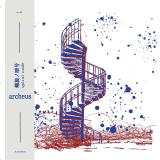
Spiral code is the second album released on An’archives by the Japanese trio archeus, after 2023’s Kusōzu: Nine Death Stages, and their seventh release altogether. It’s also the most staggering evidence yet of the single-minded pursuit of group-sound explored by Keiko Higuchi (voice, drums, percussion, trombone), Shizuo Uchida (4 strings), and TOMO (hurdy gurdy). For two tracks, “awakening, beyond recurrence” and “where points and lines intersect”, they’re joined by Kiyotaka Moriuchi, an improviser who’s played with the likes of Shoko Numao and Ensemble Shippolly, on percussion and darbuka (a goblet-shaped drum played widely across South East Asia).
Always able to scour magic from both their relationships with their instruments, and their non-idiomatic interplay, on spiral code they’ve widened their net further; the results oscillate from humid and claustrophobic blocks of noise to rivulets of tone coursing across post-volcanic landscapes, and on into simple gestures suspended in arctic space. Spiral code was recorded in a single day, on March 20 th 2025, at a studio in Koenji, Tokyo, the morning session with the original trio, and afternoon and evening session with Moriuchi – the first time archeus have played with a guest musician.
When asked about the music archeus makes together, TOMO is quick to isolate the singular characteristics of their collaboration: “we are trying to explore some new, unknown musical vocabulary every time we play. And what we are trying to achieve from every session is something unique, an interesting chemistry or, I should say, alchemical reaction among the three of us.” You can certainly hear that alchemy in the dynamic arc of their performances, the way they seem to be able to switch on a dime and push the music into unexpected terrain, all while sounding intimately archeus. “We have been playing for many years,” TOMO continues, “so I think that among three of us, we can telepathically sense, feel and understand what each of us is trying to express while we are playing.” It’s telling that guest musician Moriuchi fits so effortlessly into the archeus soundworld, able to hitch a ride on the intimate telepathy of Higuchi, Shizuo and TOMO; “I think he gave us some fresh air to our music,” the latter smiles. But that telepathy extends, even, to the name of the album itself, with all members pointing toward spiral imagery when naming the title track, whether TOMO’s evocation of Kundalini serpent imagery and Caduceus, to the spiral shape of DNA, what TOMO calls “the code of life.” It’s certainly deeply entwined music: spiral code is a helix of sound, a cylindrical coiling of possibility.
When Pouya dropped The South Got Something To Say in the summer of 2019, it wasn’t just a title—it was a definitive statement of growth. Nodding to André 3000’s iconic 1995 Source Awards declaration, the Miami pioneer used his third studio album to prove that his raw, independent formula had mutated into something deeper, more mature, and entirely unmatched in the underground rap landscape. Now, for the first time since its digital release, this pivotal moment in Florida hip-hop history is finally available on wax, offering listeners something tangible they have been anticipating for years.
The South Got Something To Say captures Pouya at a lyrical and sonic turning point. While maintaining the blistering flows, heavy bass, and visceral Florida energy that initially put him on the map, the album opens the door to intense themes of mortality, legacy, and the heavy toll of independent success. It bridges the gap between the frantic energy of the SoundCloud era and a mastery of songwriting, offering fans a remarkably transparent look into the mind of an artist surviving the very chaos that birthed him. Standouts like "Cruisin' in the MIA" and "Florida Thang" showcase his signature rapid-fire delivery, perfectly balancing the record's darker, more introspective moments.
The sonic diversity of the project is anchored by a stellar lineup of collaborators who push Pouya into new creative territory. He enlists Three 6 Mafia royalty Juicy J alongside heavy-hitting underground peers like Ghostemane and City Morgue, while seamlessly pivoting into the melodic, hazy soundscapes of indie-pop artist Cuco and longtime producer Rocci on tracks like "Talk to Me Before I Die" and "Mood Swing Misery." This striking balance of aggressive phonk and melodic vulnerability solidifies the album as a cohesive, genre-bending journey rather than a mere collection of singles.
For years, vinyl collectors and die-hard fans have begged for this underground masterpiece to be immortalized on wax. This first-ever vinyl pressing delivers the booming low-ends and intricate, therapeutic bars exactly how they were meant to be experienced. From the opening nostalgic chords to the final fading beats, this release stands as an essential artifact of the modern underground rap movement, finally giving a landmark Southern album the premium physical presentation it deserves.
I’dgained some notoriety as a music producer and DJ but I hit a horrible case of writers block around 2018.
The problem I was finding was that I was trying to shoe horn every smart arsed clever dick musical reference I had into the music I was making, but the function of dance music is to make people dance, not to show people who broad your musical references are, so I was making pretty shitty music that landed in the middle and didn’t achieve either aim.
To tackle this I ended up committing to just trying to make the most expressive and wanky experimental stuff I could. I was immersed in club culture at the time so the whole enterprise started as a joke, hence the name “Bed Wetter”. However when I fully submitted to just naked exploration the really unexpected thing that happened was that I found myself unavoidably having to deal with a lot of my own bullshit. That bullshit turned into the “Billy Mill is Dead” album, which was essentially the sound of me excavating my own life and looking at how I felt about where I was from, where I was headed, my family, my history, my region and all of the things i have conflicting feelings about.
It was partially catharsis and also a bit of deprogramming around being able to call myself an artist after being raised to believe that wasn’t an option for me.
I self released Billy Mill is Dead in the months before the pandemic and it found it’s fair share of love in the places I hoped would connect with it, and just the right amount of being ignored by people who I’m pleased didn’t feel it. This all lead to me being emboldened enough to apply for an artist in residence position at a big regional opera house months later in the middle of lockdown.
My feeling was that if my DJ career was potentially over for the remainder of my lifetime then there was no harm in exploring this alternative method of expression to see where it could take me.
I submitted a ridiculously ambitious plan for what I would like to do as a project, and to my absolute shock I was selected for the position.
I was 40 years old and from a scarcity background so I had a potentially unique response to that kind of validation for the first time and what followed next was a process of me just coming back with bigger and more ridiculous ideas just to find out at whatstage they’d tell me to stop.
The thing is, nobody did. I got as far as suggesting writing a full symphony to be performed by an orchestra before my own nerve gave out and I decided that was probably as far as I should push things.
The problem with people giving you permission to do things is that you then need to go out and figure out how to do those things.
The biggest issue for me, beyond raising the money to pay for everything, was how does a person actually write a symphony?
I was introduced to Fiona Brice, a multi instrumentalist and orchestral arranger. She’s also a recording artist who releases on Bella Union. On top of that she’s a violinist who used to be part of the band Placebo and who used to appear regularly playing for other bands on things like Top of the Pops.
Not only was Fiona uniquely placed to not look down on the strange provenance of someone from an Acid House background wanting to write a symphony, but more to the point we really hit it off from day one.
Fiona coached me in the essentials of writing for an Orchestra, and then I went off and wrote the 8 movements.
I’d love to say I laboured for years over this bit, but it took about 2 weeks in total. I’d also love to say what I wrote was a complete symphony, but the version of this which is solely me feels like looking at something without your glasses on. The shape,feel and borders were all there, but the definition was absent. Fiona taught me the broad language of a symphony, but without her it would have lacked all intonation, nuance and detail. Where I had shaped ideas with a hammer, she brought out my meaning with precision using a scalpel.
I think the prodigiously quick turnaround for the music is as much proof of how conceptually and musically aligned Fiona and I are. I know we’re both incredibly proud of what we’ve created.
It took nearly 2 more years to stage the debut performance in what was potentially the most traumatic period of my life which saw me embroiled in an international crisis with my own family and the death of my father, all with the backdrop of COVID.
The work itself is inspired by the working class experience, but it’s also a comment on how we get to decide what we are and how we’re defined, and we get to choose what we do to prove these things.
The original recording was contractually impossible to ever share again, so we re-recorded it in a working men’s club with jobbing (albeit world class) players. In many ways it’s a record that feels like it shouldn’t exist, which is why we’re all so happy that it does.
For any collaborative project to succeed, the artists involved need a creative unifier – a meeting point, if you will, of their disparate interests and experiences. In the case of Mondo Love & Betrayal, the joint project of Nottingham musical mainstays Neil ‘Nail’ Tolliday and Henry Claude Scott, there were two creative unifiers: a mutual love of classic 1980s synth-pop, as well as shared admiration for each other’s work.
Even so, such shared interests and respect for prior mutual endeavours is no guarantee of success. Yet as their eponymous debut album emphatically proves, the duo’s disparate experiences, characteristics and musical strengths have not only dovetailed beautifully, but also resulted in serious sonic gold. Put simply, Mondo Love & Betrayal is a stunning debut album rich in emotive songs, colourful melodies, atmospheric chord progressions and infectious grooves. Throw in the sun-splashed warmth and saucer-eyed, loved-up tactility of late 80s dance beats, and you have a breakthrough album whose timelessness is evident from start to finish.
The project’s roots lie in Tolliday’s desire to work with Scott, a virtuoso guitarist, talented producer and secret songwriter best-known for his work alongside Huw Costin as Torn Sail, and John ‘Ming’ Thompson as Brown Fang – both projects known for prioritising organic instrumentation and sunset-ready soundscapes over dancefloor-rooted beats.
Tolliday, of course, is one of British electronic music’s true polymaths – a long-serving house producer best-known for his long-running Bent project alongside fellow Nottingham resident Simon Mills. He initially approached Scott with the idea of providing vocals on a house track he was working on, but quickly suggested something else: an exploration of a classic synth-pop sound inspired by his love of Pet Shop Boys, New Order, Depeche Mode and the producers who worked with them – the likes of Martin Hannett, Arthur Baker, Stephen Hague and John Robie.
Scott accepted the invitation, seeing it as an opportunity to explore a different side of his musical personality. Their first recording session resulted in the ear-catching and memorable brilliance of ‘Correspondence’ – a tongue-in-cheek breakup song inspired by the death of landlines and the rise of mobile communications – and soon they were working on their debut album.
The resultant 10-track set is simply sublime, with Scott’s expressive delivery of his own lyrics on life, love, heartache and rejection working in perfect union with Tolliday’s kaleidoscopic and pleasingly authentic backing tracks – gorgeous and beautifully rendered instrumentals rich in memorable melodies, bittersweet chords, and subtle nods to ‘80s and early ‘90s dance-pop culture, from Shep Pettibone style remixes and Bernard Sumner guitar licks, to Beloved-esque piano parts and Chris Lowe chord progressions. Some listeners may also draw favourable comparisons with 21st century synth-pop practitioners, particularly Parcels, Private Agenda and the deeply emotive songs showcased by Junior Boys.
For proof, wrap your ears around such album highlights as opener ‘Boo Boo’, where Scott warns that “love and betrayal will haunt you” atop sparkling synths and Vince Clarke style grooves, the Behaviour-era PSB melancholy of recent single ‘Your Latest’, the mid-tempo dreaminess of ‘Beyond The Rainy City’, the early Depeche Mode chug of ‘Whatever Happened To Me’ and the tactile warmth of ‘Across The Plane’.
We could go on. In truth, the whole album is – in Scott’s words – “magical musical alchemy”. Wherever they choose to go next, Mondo Love & Betrayal is a seriously good sonic statement of intent.
out of Stock
Last delivered 36 days ago available to reorder, subject to availability
Deadbeat & Tikiman's occasional collaborative performances have since blown the minds of many audiences
Deadbeat. Tikiman. Infinity. Dub. A quadrangle of such obvious statement and perfect musical inference may very well never have been uttered for those of the wholly weeded out persuasion. Indeed, when the great book of Dub music is written the names Scott Monteith and Paul St Hilaire will undoubtedly figure highly in its chapters devoted to recent years. Monteith, the last great prodigal son of the doctrine handed down from the Blue Mount of Lord Scratch and King Tubby, St Hilaire the undisputed voice of a generation, those fanatical warrior monks, followers of the most Holy House of Ernestus and Von Oswald incarnate.
Having developed a fast friendship from their very first meeting in Montreal at the premier Micro Mutek event a decade ago, Deadbeat and Tikiman's occasional collaborative performances have since blown the minds of audiences from Berlin to Tokyo and many points in between. No great surprise then that their first album length venture is a Tour de Force of Dub music of the highest order.
Nearly a year in the making, the genetic code of Deadbeat's Infinity Dubs series gets shot through with a Dreader than Dread Kingstonian logic, hi hats dropping back from the three to the one, Tikiman at his most militant, poetic, fierce, and flowing. These are the recordings of two lions uncaged, and none who bare witness shall escape their fiery judgement.
If music is truly eternal, here be two voices which shall echo in infinity with all the weight, reverence, and dire power unleashed with every tectonic bass hit, and every whimsical turn of phrase. And if these eight burnt offerings are any indication of what happens when these two sit down for a session of smoke and reasoning, here's hoping they choose to do it frequently. Dub without end. Ad Infinitum.
out of Stock
Last delivered 34 days ago available to reorder, subject to availability
Oscar Later is the solo project of one half of Once Twice, formerly known as Parallels. The EP takes its premise from the 1967 Outer Space Treaty, which ruled that no nation could claim ownership of the Moon or any other celestial body. Across six tracks, that idea of ownership, distance and free imagination runs through the record, which combines breakbeat and shimmering synths with processed vocals and clips from vintage ads and obscure films.
"I wanted the record to feel like public-domain myths, commercial promises and space-age optimism all colliding," Oscar says, "blurring the line between memory and fantasy."
Opener 'Air Time for Andre' channels chopped-up breaks reminiscent of Skee Mask, combined with processed found audio. 'Wenlocked', named after the East London street where it was written, develops from a downtempo sketch into a heavier club track as the bassline builds, inspired by releases on Voam and Floating Points' live sets. 'It Never Made Sense' steps away from the dancefloor, built around a granulated Orion Sun vocal that, as Oscar puts it, "ties the track into quite a surreal space," leaning towards Burial, Overmono and Radiohead.
The title track, 'The Moon Belongs to You', runs a vocoded 90s ad through a detuned one-note synth. It's the track Oscar says "best encapsulates the intention of the EP as a whole: surreal, wacky and clubby." 'Yaya' keeps the energy up as a straight techno cut, its gated bassline locking in around a chopped vocal and pitched samples. Closer 'That's Quite A Lot Of Zeroes!' expands from a stripped-back Buchla line into something huge, driven by chopped samples and inspired by sci-fi scores like Dune and Annihilation.
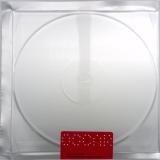
The cover is designed by art director Will Millner with designer Josh Lowe, a homage to space food and 80s industrial design geared to survive life on the moon. It's available as a limited vacuum-packed 12" record.
The EP launches alongside a music video for 'It Never Made Sense', directed by Louis Mackay, telling the story of a group of kids who steal the moon for themselves.
out of Stock
Last delivered 36 days ago available to reorder, subject to availability
Northern Earth is Dean McPhee's sixth full-length album and the second release on his own label, Bass Ritual. Expanding on the low-end focus of 2024's Astral Gold and last year's The Bradford Boar on the Folklore Tapes label, Northern Earth integrates overdriven guitar, a wooden snare drum pedal and a powerful 18-inch subwoofer, pushing his sound further beyond the sparse fingerpicked solo guitar of his earlier releases. Drawing on influences from psychedelic rock, British folk, dub and underground electronic music, the album's three expansive compositions - including the side-long title track - were honed through live performance and recorded live with no overdubs at McPhee's home in Bradford. His solo setup - stacked valve amps, subwoofer, guitar, percussion pedals and expansive pedalboard - now functions as a single self-contained instrument, layering hypnotic basslines, ritualistic loops and fluid melodies with physical weight and a deep sense of space.
“At this point in his career, each new Dean McPhee release feels like a legitimate event” – Brainwashed
“There’s really no one else who can create (and sustain) the darkly seductive mood that’s embedded within his work.” - Aquarium Drunkard
“Dean McPhee stands out as a true one-off in a crowded field.” - Loud & Quiet
Silver Vinyl
Simon Popp is back on Squama with his fourth album Trio.
At its heart, Trio is a work about collaboration, playfulness and unification. It is music as a means of coming together, a sonic equivalent to the Japanese philosophy of Kintsugi, in which broken ceramics are repaired with a visible golden lacquer. Rather than hiding the breaks, Kintsugi embraces them, making them part of the story, a form of delicate transformation. Popp and his collaborators Flurin Mück and Sebastian Wolfgruber take a similar approach: three distinct drummers, three different temperaments, three personal styles. Fused together into a single expressive instrument.
The album is a celebration of timbre, texture, and touch, its sound palette drawn from across continents and traditions. Human beings at all points of time, across all cultures and continents have used music to celebrate, mourn, worship and bond. Along with our voices, creating rhythm with our bodies. Clapping, stomping, hitting with sticks. A celebration of rhythm as both a shared human memory and an audible expression of close bonds.
Trio is a reflection of the beauty of imperfection and the timeless pull of rhythm as a shared human force. The cracks are not hidden. They are filled with gold.
Die Debüt-EP mit vier Songs des bayerischen Quartetts Morgan Pines, besetzt mit (ehemaligen) Mitgliedern von Point Baker, Irish Handcuffs und Worst Advice. Musikalisch bewegt sich die Band irgendwo zwischen Indie, Heartland-Rock, Country und Punk - mit eingängigen Melodien, warmen Harmonien und genau der richtigen Portion Melancholie. Wer Bands wie Limbeck, Chamberlain oder Racquet Club schätzt, sollte hier unbedingt reinhören.
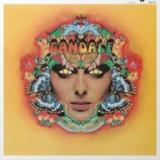
If you’re as obsessed with unfairly unheralded bands as we are, bringing out a proper, well-deserved official re-release to change that course is always an honor. Case in point, Jackpot Records proudly announce GANDALF’s 1969 self-titled release as one of our proudest moments. Working alongside band member Peter Sando from the original master tapes, it is time for the rest of the uninitiated to catch up with this beautifully crafted haunting psych-pop record (fans of THE LEFT BANKE, KALEIDOSCOPE, THE MILLENNIUM, and THE ZOMBIES, take note!). Recorded at Century Sound in Manhattan with Grammy-winning producer Brooks Arthur (who engineered Neil Diamond’s “Sweet Caroline” and Van Morrison’s “Brown Eyed Girl”), the production of the album was created on the spot in the studio with arrangements being thrown about and the incredibly haunted vocals being recorded directly from the band’s PA using a Binson Echorec to make this innovative sound (Pink Floyd later used the same echo unit to great effect). Add to that sitars, vibes, B3 organs, harpsichord, minor tragic guitar chords, and bass drones aplenty, and you’ve got the recipe for an album that bears listening to with eyes closed, music cranked, mind open. So get in on the beauty of this record, and as Sando says on the liner notes: “Put the needle in the groove, sit back, and take the trip with GANDALF.” Enough said.
There is an important difference between "mature" club vibes (leather porkpie hats) and "adult" club vibes (a post-ego-death experience of the world through the eyes of an Eames chair). Extrawelt's Jamborghini EP exemplifies the latter in ways that extend beyond sophisticated wordplay*. Well beyond.
Sophisticated electro-techno hybrids occupy an incredibly dangerous space. One false move and you corner listeners into an unsolicited conversation about "gain staging." The four tracks on the vinyl EP thread the needle in thrilling fashion, and then use that needle to stab at the sweet spot between sentient cell tower admin software vibes and the kind of architecture hot people like.
And with the digital exclusives, we've once again saved you from the depths of "bonus beats" hell by supplying three tracks that are as good as anything that has ever been pressed to vinyl. If your knee-jerk reaction is to doubt this, we would simply point out you haven't even heard them yet, and here you are talking shit. Go push your hateful agenda somewhere else.
Extrawelt are fast becoming a Turbo Recordings staple, and don't think the globalist EDM cabal hasn't taken notice. Jamborghini has already received heavy DJ support from Jumpin' Josh Junior, Monoburglar, Now or Never, Tiga, Never Say Never, Rumpled Glory, Moment of Truth, and the Hamburg Chamber of Commerce.
*Our best guess is that the title is meant to evoke a Lamborghini you can have a musical "jam session" in, and not the striking metallic purple Diablo SE30 driven by Jamiroquai frontman Jay Kay in the 1996 video for "Cosmic Girl."
out of Stock
Last delivered 36 days ago available to reorder, subject to availability
Héritage Mélodies is the meeting point between saxophonist and composer Jean Vernhères and Black Stamp Music, brought together by a shared passion for the warm colors of music, groove, and the beauty of sound.
Nurtured from an early age by jazz and African-American music—from blues and soul to hip-hop—Jean Vernhères also ventured into Highlife, Afrobeat, and Funk, exploring the fertile “Black Atlantic” that runs throughout his musical journey.
For his first album as a bandleader, he brings together Pierre Bauzerand on Steinway piano, Laurent Vanhée on double bass, Guillermo Roatta on drums, and, as a special guest, Alfio Origlio on Fender Rhodes and piano. Six original compositions where Soul Jazz, Latin Groove, Afro-Caribbean rhythms, spirituality, and intimate melodies come together.
Recorded at Bernard Estardy’s legendary Studio CBE and mastered in Berlin at East Side Mastering, Héritage Mélodies embraces a true audiophile aesthetic: from the breadth and spaciousness of Haumea City, a nod to CTI Records, to the delicacy of Marion.
More than a jazz record, Héritage Mélodies is a story of lineage, travel, and transmission: a personal tribute to all those who have carried forward a musical heritage that transcends time.
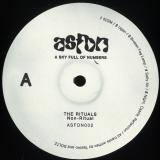
After making waves in the underground with their first release, psychedelic techno explorations from Winkles, A Sky Full Of Numbers head to the shoreline with a five tracker of misty electronica from Japan’s The Rituals, the new collaboration between Tasoko and DOLTZ. Across acclaimed releases on Explore, Bitta, and Delsin, the duo have separately explored deep techno, ambient, acid house and IDM, showcasing innovative sound design and spacious, understated grooves. For AFSON, the duo apply their unique point of view at a lower tempo, pulling away from the peak time to deliver a shadowy journey through dewy electronics.
Opening transmission 503M feels like tuning into a damaged frequency somewhere beyond the cloud line. Misty lead synths slither through blown circuitry while buzzing sequences and short-circuiting percussion crackle against purring bass pressure below.
There’s an eerie electricity in the atmosphere, as if the track’s been exposed to too much heat and left glowing softly in the dark. From the opening bars, The Rituals instantly establish their ability to make techno feel both mechanical and hallucinatory.
Ugan sees the duo descend deeper into the haze. Reverb-drenched synth motifs hover like distant lights through thick fog while a propulsive dub bassline locks into loose electro-funk rhythms beneath. There are echoes of hauntological electronics and early IDM experiments here, but The Rituals avoid nostalgia entirely, steering the track instead towards something crepuscular and alive.
Stepping out of the shadows, Broken Frog Lamp pushes forward on a rolling rhythmic framework as melodies slowly force their way through layers of sea mist and static interference. Atmospheric without losing momentum, the track balances submerged emotional weight with hypnotic forward motion.
The mood softens but never dissipates on Salty Air, a damp and dewy excursion into dubbed-out psychedelia. Rainfall ambience, skittering stone percussion and swelling pads fold around sliding sub bass and filtered stabs, while jazzy cymbals and syncopated hats gently pull the track forward, as the condensation clings to the hardware.
Closing cut “Night, Castle, Reflection” drifts into darker territories, where redlining drums and pulsing low-end pressure throb beneath thick layers of saturated texture. Woozy synth work smears against tightly controlled rhythms, creating an immersive and slightly uneasy atmosphere that closes the EP at its most introspective point.
Taken as a whole, the EP transports you into the midnight hour, when the comforting embrace of stillness can easily nudge you towards hallucination, dissolving the boundaries between dream state and dancefloor hypnosis.
out of Stock
Last delivered 47 days ago available to reorder, subject to availability
More than 25 years after the start of collaboration with Acid Mothers Temple mastermind Makoto Kawabata (including the INUI series and the classic Kawabata/Youngs release) comes the first proper VHF LP by the prolific quintet. One of an occasional series of “minimalism” inspired LPs by the group, “In A Not C” is a not a barely changing drone, but a wild ride with the band in full flight, rushing along in a glorious swirl of psychedelic madness. Like the band’s well-known 2001 version of Terry Riley’s “In C,” the group uses a small cell of repeating sound as a jumping off point and then gradually revs up to maximum velocity. The current AMT lineup has produced a series of fun and unique variants on the band’s longstanding signatures, with the addition of vocalist/guitarist Jyonson Tsu and drummer Satoshima Nani providing a lightness and nimbleness of touch that resets the context of the band’s usual blazing electric guitar and burbling synth. Both sides here build to a multi-layered crescendo, with loops of Tsu’s gentle vocals competing with frenetic drums, whistling electronics, and guitar that alternates trebly feedback and soft arpeggios. Cut by Golden, pressed in Chicago at Smashed, first pressing on clear vinyl.
Layered guitars, synths and wordless vocals set the scenery in this epic, beautiful and introspective solo debut by musical wanderer Lynn Wright.
Wright, who has mostly eschewed developing a fixed artistic identity throughout his already long career, has preferred to remain on the periphery of collaborative projects and behind the scenes. It took until recent times for him to make “Before The Sinking Plains”, which arrives as his first solo recording after decades of traversing underground scenes in New York and beyond. Wright defines the album as “a collection of atmospheric compositions structured as songs or songs masking as atmospheric compositions.”
The album began during a long neurological illness as guitar loops Wright would make each morning in his apartment and let play quietly in the background. At some point he began recording the ones he liked and adding layers of treated guitars, vocals, and synths, and then, eventually, giving them defined structures. The album features none of the aggression of his louder bands and improvisatory projects, but retains the dark hues.
Before The Sinking Plains lives on the familiar peripheries of our post-everything sound world, with elements of everything from washed-out dream pop and atmospheric drone works to sparse noir folk and minimalist vocal composition moving within the linings of Wright's subtle yet grand pieces, creating a perfect backdrop for watching the sky merge with the vast open fields.
Since relocating to Berlin some years ago from New York, he has worked closely with composer Simon Goff, who mixed his current album, as an editor, engineer and composer on various film and recording projects. He also plays lap steel guitar in Swans bassist Dana Schechter’s band Insect Ark. This is just the top of the iceberg when it comes to Wright's collaborations and projects throughout the years.
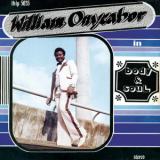
William Onyeabor was born outside Enugu, a small, rural town in Eastern Nigeria, he created his own genre of African electronic funk in the late 70s and early 80s, making music completely unique for his time. Today, he is reaching cult status among a growing list of admirers, including everyone from Damon Albarn and Hot Chip to Carl Craig and Madlib, with some likening him to the Kraftwerk of West Africa, or a precursor to LCD Soundsystem.
Among the crate-digging few that knew of him, he is considered a complete myth. While he has never performed live and almost never given interviews, his fantastical biography is scattered and has to this day not been verified. And he refused to speak about anything regarding the past.
According to various rumors, he left home following the Biafran War and went to study cinematography in the Soviet Union, returning in the mid-70s to start his own film company and record label, Wilfilms. He then self-released eight remarkable records from 1978-1985. He wrote and produced everything on his own, and possibly played every instrument himself. Then, at some point of his life, he became born again and denounced his earlier music, deciding it is something he would never speak about.
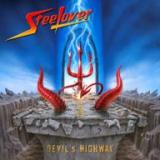
STEELOVER is a Belgian Melodic Rock / Metal band. The band was formed in the early 80's by three friends living in Liege, Belgium, the guitarists Pat Freson & Mel Presti and the bassist Nick Gardi. In search of a drummer, they threw their sights on Rudy Lenners (Scorpions) upon his return from Germany, having left the famous German band Scorpions. Rudy proposed to contact Vince Cardillo, a singer who had already on the one hand good experience and on the other hand he already recorded an album in London, “It will fit perfectly” explained Rudy. They all felt the magic during the first rehearsal. In no time, Steelover recorded their first album "Glove Me” which was released under the Mausoleum label. This album sold over more than 400.000 copies of which more than 76,000 in Poland. They followed with a tour across different countries like The Netherlands, Germany, France and Belgium including Forest National opening for Bon Jovi and KISS. Vince decided to leave the band. Replaced by Dani Klein, the second album was recorded but never released. Dani left the band after a short time with Mel Presti to start a new band under the name Vaya Con Dios.
The band came back in 2017 with a new E.P. (including single "Wild and Free") mixed by the legendary producer and and mixing engineer Tommy Hansen.
In 2019, Rudy Lenners greeted the audience one last time before retiring from his musical career. Vince had returned to the band at this point…after the show Vince, Pat & Nick decided to continue the Steelover adventure and in 2022 released the album “Stainless” on the Escape music label (ESM368). This was a great metal album and fans old and new longed to hear more. It’s now 2026 and Steelover are back with a brand-new recording featuring 11 tracks of hard rock / heavy metal. The band are very much in the style of that 80’s metal sound, a sort of mixture of Scorpions and Saxon if you like. These new songs all hit the mark making “Devil’s Highway” an album that needs to be checked out…
Shoal corrals three original solo productions into ISOTOOP’s fourth record, each demonstrating refinement of the artist’s sound and technique, finished by a fitting retelling of ‘Interlocking’ by Antony Linell.
It begins with helical hypnotism; ‘Strange Blue Knots’ drives directly forward on muscular bass, but pointillistic synthwork creates an aural illusion of a spiral aperture tightening; the landscape remains broad, but focus is drawn down to the loci of motion. All containment is blown away by the incomparable force of ‘Roxellana’. Here, the forward motion is not illusory but the irrefutable command of hurricane tailwinds. Thunder heralds full-band waves of unbridled sound, and though the rudder is surrendered to the billowing storm, no part of the weapon is directionless chaos.
Shoal’s tale concludes with ‘Interlocking’, a step back from the monstrous energy of the preceding track (anything and all would be); attention is built again on guile and quiet magnetism, commonly felt attributes throughout the artist’s repertoire. This concept of restraint as force receives a sharpening by Antony Linell, whose sonic influence is present throughout the record, like fossilised footprints. In the calm, sheltered lee of the mountain, the slope behind the wave’s punching crest, Linell’s calmer, stripped-back version feels like a fireside retelling of a myth; still full of the magnitude of the original events, the space surrounding the action is foregrounded.
Every tale may be reduced to the same core elements: the hand; the knife it holds; vivid silence presaging the moment of action. Fitting that the tale of three parts is summarised by a fourth, wider perspective.
out of Stock
Last delivered 47 days ago available to reorder, subject to availability
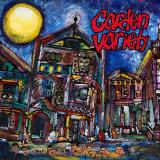
The 1993 split point between pop punk and emo is no better illustrated than by
Garden Variety’s self-titled debut. While Billy and Bivouac flirted with the mainstream, this Long Island trio proposed at the post-hardcore prom. Muscular octave guitar chug with a side of late night zine work at the local diner. Backbeat heartbreak, hold the FX. Thank Charles Maggio for your favorite record next time you see him at the Paramus mall.
“Ruins are the style of our future cities, future cities are themselves ruins.” - Izosaki Arata
A note from Lawrence English: Nostalgia is not an ideology, though in this moment, we could be mistaken for thinking it might be just that. Over the past years, the idea of nostalgia has been filtered through various political and technological lenses and has become a tool used for forgetting, rather than remembering. Instead of embracing histories’ complexities and inconsistencies, this version of nostalgia seeks only singular recollection. This contemporary phenomenon of nostalgia has become a methodology at best, and a weapon at worst, used to erode the past and project forward a collapsed and unimaginably sanitised version of things, places, and ways of being from former times. It’s this projection that sees it playing a mounting role in a social pathology associated with reducing the imagined possibilities of future.
The Rest Is My Ghost is a record that interrogates the manifestations of this reductive futuring and celebrates those that have tried (and failed), and those who continue to push back against decayed and revisionist positions. It’s a record that considers the weaponisation of nostalgia for the purposes of cloaking possible futures.
In recent times, I’ve proposed a term for this weaponised use of nostalgia, something I have called Acid Nostalgia. I offer it as a shorthand to describe the de-contouring of the future through a corrosive fixation on a flatten rendering of the preceding times. It is, in part, a certain type of lazy cultural scripting where tropes of the past are presented in the absolute, as empty pictorials; photocopies without any original from which to draw actual meaning, or useful detail.
Acid Nostalgia describes an increasingly common political projection of nostalgia that exists without any subjective connection to the memory surrounding and contained within it. Like acid poured onto a surface, this use of nostalgia seeks to erodes and smooth out the complexity and texture of lived connection and longing, which has until recently guided contemplations of nostalgia. Acid Nostalgia instead erases the texture of histories and de-contours the past, and in doing so dematerialises the horizon of possibility, which by its very nature marks the beginning point for any (and all) imaginable futures. Acid Nostalgia is a dreamless screen, where uncertainty, restlessness and aspiration are subjected to corrosion, breaking down and neutralising the wellspring of futures which are birthed from within the ambiguously charged, complex and at times chaotic atmospheres of the present.
The Rest Is My Ghost is not however some universal reading of these things and happenings. Rather it draws its breath from a very personal pathway carved through my own fraught experiences of nostalgia and framed through a disparate collage of chance encounters, situations, places and provocations. It takes oblique notes from civic and architectural references such as Japan’s Metabolist movement, Hong Kong’s ‘one line sky’ and Los Angeles’s vanished Sodium Vapour lights. It interpolates texts – factual and fictional – by authors such as Franco Berardi, Kate Crawford, JG Ballard, Katsuhiro Otomo, Mark Fisher and Alexei Yurchak who have each so wonderfully sought to rupture the familiarity of now, and push us towards other ways of imaging ourselves, our surroundings and our very ways of being in this world.
I also owe a debt of thanks to Adam Curtis in helping launch what has become this edition. It was his provocation, in a conversation we shared about an overwhelming and profound sense of uncertainty around being able to predict the immediate future and how to respond to that, which sparked the earliest inklings of this edition.
The Rest Is My Ghost is ultimately a record about the promise of constructions and connections to come, material, social and political. It's a record that accepts the fragility of failure as a source of ultimate potential, and a position from which the deepest freedom of imagination might be sought and summoned forth to conjure even the most unimaginable, (but) possible futures.
out of Stock
Last delivered 49 days ago available to reorder, subject to availability
Manonmars’ 3rd album sees him at his most amorphous and psychedelic, at points sharper and laser focused, and at others more blurred and impressionistic than his previous records. Many of the core players remain the same, all of the production is once again handled by O$VMV$M (the duo of Neek and Amos Childs of Jabu) while Paulina Korobkiewicz (also of Young Echo) makes a return handling both the album’s cover artwork and contributing a series of diaristic field recordings and voice notes.
‘The project references movies, cartoons, fictional characters and video games, among other things. The album title is open to interpretation but all of these elements are forms of visual entertainment which have their own unique ability to transcend things like language barriers and cultural divides. The visual element is key because those details bridge the gap on a communicative level.’ - Manonmars
The album blends abstract, blurred braggadocio with more immediate personal details such as on ‘Volcanic Shield’ a posse cut of sorts featuring Bristol improv luminary Dali de Saint Paul and Franco Franco (½ of cyborg rap duo Kinlaw & Franco Franco) - where Mars recalls;
‘Memories of brighter days, happy meal hit the spot
Mum was spinning vinyl playing Super Ape or Pressure Drop
I would spend the weekend with the Turkish mandem on the block
single parent household, mum was studying or on the job
money came and went always was an on and off
made it back from school time to see what’s on the box’
The beat fades away to leave one of Korobkiewicz’s recordings of Mars’ mum talking about her life in London in the 80s, spending her money on reggae records as an ambient chord fades in like an echo of a jungle intro – stretching out as a link between generations of UK music.
The production by and large is brighter and more kinetic than earlier Manonmars records – with O$VMV$M drawing on everything from modern underground rap and drill through to jazz and acid ambient passages.
London is also a central character here, bustling and constantly shifting, either when bleeding in through field recordings, or as an ever-present backdrop in the lyrics;
‘I’m a fusion of Tippa Irie and Topper Harley
Hit the target like the black Atari
I dropped a tab now shit’s A Scanner Darkly
Got the munchies, Imma yam a sarnie
Pour the Wray and Ting like man at Carni
Exit Peckham Rye and turn left, walk past Hannah Barry
Get your (w)raps up like its January’
‘I've always considered London my home, despite spending some time in the South West of England too. My mum had been living in London for 25 years (...) That was a pretty big deal in some ways because it removed us from multicultural society during the period which overlapped with my teenage years. (...) I never got used to how quiet it was in the countryside (...) Bristol was the closest city to where we lived and it was through travelling there and making connections that I became involved in making music and playing gigs.’ - Manonmars
Mars’ practice as a painter (under his given name Jack Martyn Richardson) and photographer also loom heavy over the album, he cites Paul Verhoeven, Abdul Mati Klariwein and H.R Giger as influences – as well as Miles Davis, Drakeo the Ruler and DJ Rashad.
As with much of Richardson’s work the raps at times feel blurred to a point of almost inscrutability, creating a distance between the audience and himself. A process that ties into his visual work and the way he experiences the world as mainly abstract colour without his glasses. He explores this further in an ongoing visual collaboration with Korobkiewicz, ‘Fun and Games’ which serves as a visual archive of one of London's largest and oldest travelling fairgrounds.
‘I was diagnosed with very severe short-sightedness at the age of seven. I remember my early formative years as visually blurred. Some of my photography reflects this experience of partial vision and uncertainty, referencing memory and perception rather than fixed representation.’
Manonmars’ first public outing as a rapper was at a Young Echo radio event, broadcast shambolically from a practice room just off Jamaica street, Bristol in 2011, as much as things have moved on both stylistically and in terms of focus - strong links back to the city remain a key foundation throughout the collaborations and guest appearances.
‘I have no problem with being an outsider looking in. One of the things I enjoy about London is the anonymity (...) it's easy to be a stranger here when so much is happening. I feel like thats more valuable than people may realise.’
In Walter Benjamin’s seminal essay “Art in the Age of Mechanical Reproduction”, he posits that the aura of art objects is destroyed by the ability to photographically reproduce them. When you had to make a pilgrimage to a work it remained elusive, charged, ever distant; but when you can easily see a reproduction, such aura dissipates. What Benjamin did not anticipate is that in the age of AI and the frictionless fount of digital content, we have imbued mechanical and analog means of media production with aura. Film cameras from the last 100 years are in high demand (the point and shoot Olympus Mju I featured in Wim Wenders film Perfect Days still sells for $200), vinyl sales continue to grow year by year, 35mm and 70mm film screenings have become aura-drenched events people travel across country for, and as to the world of vintage and analog synthesizers, when a friend asked for the price on the Yamaha CS-80 synth used on Toto’s “Africa”, the answer was a cool $60,000.
Despite the ability to simulate almost any synthesizer on a computer, the original physical units retain their mystique. Perhaps this lies in the physical process, many of these synths are temperamental and difficult to fully utilize, and the effort and ingenuity can be felt in ways that will always be absent from easy digital simulacra. Perhaps there is an aura in their imperfection, as Brian Eno wrote: “Whatever you now find weird, ugly, uncomfortable and nasty about a new medium will surely become its signature. CD distortion, the jitteriness of digital video, the crap sound of 8-bit - all of these will be cherished and emulated as soon as they can be avoided.” Some may call this nostalgia, but such sonic imperfections are the sounds of humans interacting with the physical world, and it is understandable to feel a pang of emotion and attachment in a time of exponential alienation.
Marche 22 was recorded over a week at the Museo Del Synth Marchigiano in Macerata, Italy. The museum is filled with rare and obscure synths (especially CRB, GEM & Elka) as well as salvaged materials from a nearby shuttered Farfisa organ factory, including MARS, an unfinished realtime audio processing application developed by IRIS - similar to the now well known MAX/MSP. Kyle Dixon and Michael Stein play a suite of pieces that encompasses the last sixty years of synthesizer music—there are nods to Cluster, Tangerine Dream, Jean Michel Jarre, and Morton Subotnick. Dixon and Stein are like jazz masters playing the American songbook with their own riffs and quotations. What shines through in these varied works that are sometimes rhythmic, sometimes melancholic, and sometimes both, is a soul, a spirit, an emotion vibrating through the tones like the charge of coming rain or the thrum of a distant train on the tracks. - Neil Fauerso
Serial Records unveils the first instalment of it's House Classics series, a vinyl project inviting Dexter Troy to revisit two cornerstones of the label's catalogue.
Lovely Flight (Original Mix) — Didier Sinclair's original, included here as a reference point and a statement: a timeless piece of house music that needed no introduction, only the right setting.
Lovely Flight (Dexter Troy's Acyleg Remix) — A respectful rework that refines the production with a modern touch while preserving the classic, timeless feel of the original.
Lovely Flight (Dexter Troy’s Neon Remix) — A fresh disco-inflected take, sun-soaked and uplifting, built for summer dancefloors.
To You (Dexter Troy Remix) — Muttonheads' French Touch gem revisited with precision and care, the production updated without altering its soul.
Back in 1990 the New Bomb Turks got together as four Ohio State University students who just wanted to rock. 10 years later they are already on their 7th studio album: Nightmare Scenario.
New Bomb Turks return to their snaggle-toothed first mistress — hard-driving, no-holds-barred American punk rock. With the guitar jive of Chuck Berry, the blinding ferocity of Motörhead and the snot of The Dead Boys, singer Eric Davidson and his backing trio fire off a dozen grenades of authentic old-school three-chord riff-rock in little over a half-hour, with nary a pause for breath between tracks. You can’t quibble with the four-on-the-floor intensity of tunes like opening salvo Point To A Point Blank. It was recorded over four days and nights, the only break being a jaunt over to a bar to see a reunited Real Kids, their first show in years, which floored the band and only added more mezcal to the fire.
Nightmare Scenario is available as a limited edition of 500 individually numbered copies on transparent vinyl, and includes an insert.
From São Paulo, Brazil comes CSS, the first South American band Sub Pop has foisted upon the global marketplace. Cansei de Ser Sexy, Portuguese for “Tired of Being Sexy,” is improbably, unbelievably and nearly eponymously their debut. It is a thick, pulsating thing full of haphazard synths (“Alala”) and a come-on of call and response that tears down any attempt at posturing (“Art Bitch,” “Patins”). It is equal parts rock mantra and throwback into something new, transcending boundaries of genre and geography.
It careers full speed into dance territory, into the unknown and untouched, to emerge all hot and bothered with wild electro-rock. Pretension? Absent. Friction? Probable. They are the un-pretension: unfinished, exposed, and throwing all they have right at you. It is quick, tightly-wound, unfastened and supreme. Not a sneer but a giggle. To paraphrase from the Portuguese: “Not only music, but a new way to live with it. An unfinished group that, unlike preserving itself until getting ‘to the point,’ was bravely showing off, turning everything into style.” Fashion. Art. Design. Cinema. Panties thrown and received. Micro shorts and dirty legs. How does it happen? It happens like this…
It’s no disrespect to the man to not believe, in part or in whole, every word that Ray Wylie Hubbard writes, sings, or speaks — and frankly, he’d probably respect you a little less if you did. As celebrated songwriters of the outlaw poet/down-home-country-blues persuasion go, Hubbard’s credibility is unimpeachable. And to be fair, even as a somewhat notorious raconteur, his overall truthiness is a lot more bankable than your average politician or fundamentalist grifter.
But fold your cards every time he goes all in across a table from you, or swallow as fact every nugget of wisdom he sharpens into verse or stretches into a yarn without catching the gleam in his eye or wry tell between the lines, and odds are you’ve been played. But honestly, that’s all just part of what makes Hubbard so damn fun. “You know, a lot of artists when they put out a record, they go, ‘This is the best record I’ve done up to this point,’” the Americana legend considers sagely after a pause when asked how to best sum up Reel 2 Reel 4 Real, his 20th album in a recording career stretching back to the mid-70s. “But I’m not going to say this is the best record I’ve done. I’ll say it’s the best record I’ve ever heard.” No matter how many awards and Hall of Fame inductions others might honor him with (he’s a member of both the Austin Music HOF and the Texas Heritage Songwriters HOF), Hubbard never swaggers or sings his own praises without keeping his tongue planted firmly in cheek.
But after brushing aside his bluff with a chuckle, Hubbard gets real. “I am very proud of it,” he answers sincerely. “Everybody that played on it put a lot of work into it, and it just felt right doing it. I’m very grateful.” Set for release August 21, 2026 (with the first taste, “Cassette Mix Tape,” dropping May 29, followed later this summer by a second single, “Dog or Wolf”), Reel 2 Reel 4 Real marks Hubbard’s return after a two-album major-label joyride on Nashville’s Big Machine Records. “They treated me great, and did everything they could,” he says, “but it was kind of limited because I’m an old guy. I’m no longer a country hunk, you know?”
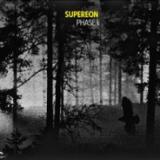
Phase I marks the recorded debut of Supereon , a Norwegian trio formed in August 2024 and rooted in the ever- evolving Scandinavian jazz scene. Consisting of Alexander Hoholm on double bass, Martin Gjerde on piano, and Raymond Lavik on drums, the ensemble brings together three distinct musical voices in a collective pursuit of sound, texture, and rhythmic interplay. Recorded in June 2025 at Studio Martin in Roros, the album was produced by Hoholm in close collaboration with David Aleksander Sjolie .
The result is a recording that captures both clarity and immediacy, allowing the trio's intricate interplay to unfold with a natural sense of space and depth. At the core of Phase I lies a process rather than a set of compositions. The music is entirely improvised, shaped in real time from short rhythmic ideas that serve as points of departure. From these concise impulses, the trio develops expansive sonic landscapes where repetition, variation, and subtle transformation create a sense of forward motion. Drawing on influences ranging from the minimalism of Steve Reich to the textural sensitivity of Nils Frahm and Olafur Arnalds, Supereon crafts a sound that is at once rhythmic, meditative, and hypnotic. As its title suggests, the album stands as the first chapter in an ongoing journey - one that will continue to unfold in future phases.
There are two version of the LP - limited to 100 numbered copies with transparent wax and classic black wax edition. Both 180g with special OBI strip.
Maciej Envee Goliński is an artist who probably needs no introduction. He has been working with U Know Me practically since the label's inception. His last album ("Time & Light") made a huge impact worldwide, but we had to wait eight years for the next vinyl release. In the meantime, Maciej has certainly been busy – he has released numerous club singles under several aliases, and has helped record and mix numerous albums from the world of jazz, soul, and electronica. "Wyszymory" is a carefully crafted concept album, inspired by our roots. "Wyszymory" is an album on which every open-minded listener will find something that has been playing in their soul for a long time...
"Of all things visible and invisible, my life is most filled with music and a fascination with sound. It matters not whether they are natural or artificial, isolated or resonating through space. Sounds that evoke
memories, as well as those entirely new. Some of them have resonated unchanged for thousands of years. Certain resonances and rhythms have remained unaltered for generations so distant that they have left no other trace in human civilization.
This bond with our ancestors truly fascinates me. Ever since I realized it, I have become more attuned to inspiration. Listening to traditional and classical music, I kept finding new anchor points. I was constantly surprised by new invitations to ponder what connects – or divides – the pulse of our region’s traditional music with the rhythms of Africa, the tribes of the vast East, or the frozen North. My great authority, Tomasz Stańko, in interviews conducted by Tomek Michałowski, used beautiful parables of love and creativity to bring me closer to the Cro-Magnon cave artists. The Icelandic literary magician Andri Snær Magnason, in his book On Time and Water, captivated me with the fascinating observation that through emotional contact, words, ideas, or memory, we reach back and forward two or even three generations – spanning a period of about 270 years. Then there is Sam Kowalski, who with his wonderful obereks played on the gitalele, took me on a hypnotic journey, from which one returns with a deep admiration for the art of musical storytelling, passed down from generation to generation. Finally, my own children surprise me with talents, behaviors, and increasingly distinct features of those generations that now dwell only in my hazy memory and on old photographs.
I wanted the protagonists of this album to be the very phenomena that modern humans share with their ancestors, regardless of the level of civilization. Most vital among them is the relationship between humans, nature, and their own emotions. Wyszymory has nothing to do with an academic study, though I did delve into Slavic mythology, archaeology, and history in search of inspiration. Nor is it an album of traditional music, even if such music is present thanks to wonderful instrumentalists. I managed to invite artists who cross boundaries daily, working not only with Polish music but also with Hindu and African traditions, and even jazz, with its long history of blending influences. Naturally, the album became a kind of sonic comic book, where individual scenes and stories – the sounds, pulsations, and ideas on how to use them – came to me over time, often under unique circumstances and in inspiring contexts."
Envee
'Devotional music and its devotees all do a bit of "buying in"; that while one's on the ground reality may appear anything but celestial, through this music, one can reach ecstatic space, ecstatic peace. However, devotional music is not solely concerned with a skyward glance - what does it look like to raise up the rust, look upon fractured branches, gaze at the density of a low fog across a field? Instead of us looking up at the land, what if the land was looking back at us? Old Saw brings together a brigade of New England silt sifters to raise up the land not as excavators, but as preparators. Tending and caring for the simple mess that our world discards. Throughout Country Tropics four pieces, the crew stretches and bends chords to their resting place before setting forth towards a new one. Fiddle drone, wistful tape loops of pedal steel, pipe organ hums, and clattering bells call us to scenes of observation, a water tower, a mechanical bull rental agency, a back porch, a taxidermy shop, a local church choir, a garden with singing vines, voltage hum of the electric fence on Pulp mill bridge road.
'The funny thing about devotion is the absence of sight, of source. We place trust in the guide or guides to bring us to a place of seeing, feeling, and hearing. The music on Country Tropics calls out to those in search of such places, but also doesn't demand we conjure some fantastical, celestial vision of understanding. Rather, Old Saw points our gaze downward towards the terrafirma unconsidered, and guides our hands into the dirt.'
out of Stock
Last delivered 69 days ago available to reorder, subject to availability