In Joe Meek's last months, he produced some of his best, hard-edged mod and proto-psychedelic records - like this one. But still he clung on to the name of the Tornados, like a touchstone, reminding him of his greatest success with the 1962 hit single ‘Telstar’.
This Tornados in 1966 was very different to the original line-up, based around an entirely different group called the Saxons, and had an entirely different sound. ‘No More You And Me’ has blistering guitar lines, and an intense soulful vocal; it's a British popsike monster that drives along like the Eyes or Wimple Winch. On the flip, ‘You Always Did What You Wanted’ is British blue-eyed soul, a terrific beat ballad with hypnotic swirling piano.
Both point to directions Meek could have headed in had he lived, and are A-grade 60s beat. It's the first time on vinyl for both tracks. And it's another brace of dancefloor-friendly tracks from Bob Stanley's Measured Mile label.
out of Stock
Last delivered 6 months ago available to reorder, subject to availability
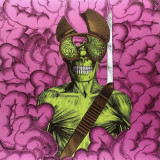
Limited edition – A side brings a noisy Industrial fucked up noise music while B side goes Speedcore Hardcore radical and in a musical way... Big one !
This Raven With A Crown 02 is a new fledgling label materializes in the Violent Cases universe. Corvus Corone - also known as the carrion crow - is stylistically dedicated to true Tribal sounds.This is not chipmunk tribal with laughing gas voices, this is serious stuff as you can expect from Violent Cases because evil forces are invading lala land and we need to gather the tribes. The roadmap for the project covers territory cultivated by the likes of Isotope, LBE and DSP just to name a few reference points.
First in flight is a full release by As’teka Nahuatl who just featured on MSTR 13.
Corvus Corone is styled by TDSiGNZ, whose design skills consistently lend the Violent Cases sub-labels a fresh, disciplined minimalist touch. As he previously created for “Endless Night”... More is forthcoming - because the Violent Ravens nest has another spawn in the breed. Keep an eye out for their upcoming signs!
Mastering by Stefan ZMK.
A1 – Musicō'teka
20k rig in the catacombs of the pyramid of the sun. Join the war dance. 160 beasts
A2 - Tekno Drops (feat. Lil’ Nahuatl)
Serious old school dancefloor vibes under the wings of crows circling above. 170 beasts
B1 – Shaman Children
Inducing a long trancy journey heeding the shaman’s call. 170 beasts
The Black Hole EP continues in the vein of recent Maximum Minimum releases with some hi-octane techno from Ciuciek, Dilks, Luca Pointzero, and Pest Control - all acid artists showing what they can do without their trademark 303 blitzkrieg. Ciuciek pounds the st out on 'Lost In Underground' whilst Dilks and Luca Pointzero create some driving Acid Techno (but without the 303) on their respective tracks 'Blatant Fkery' and 'Virus', whilst Pest Control whips up a stunning old school rave homage on the brilliant 'Nomads Of The Sky'.
out of Stock
Last delivered 12 days ago available to reorder, subject to availability
ADULT. kooperiert nicht. Seit über 25 Jahren verkörpert die dystopische Detroit-Synth-Punk-Institution, gegründet von Nicola Kuperus und Adam Lee Miller, unbeirrbare Frustration, Misstrauen und Beklemmung. Man könnte erwarten, dass sich die Kanten mit der Zeit abschleifen, doch ADULT. hat kein Interesse am Komfort eines Vermächtnisses. Noch nie klang die Musik des Duos so unmittelbar, so dringlich und so unverhohlen wütend wie auf dem abschließenden, kompromisslosen Kissing Luck Goodbye.Mit aufgerüstetem Equipment und einer neuen Klangbibliothek gebaut, ist das Material erdrückend dynamisch, lauter - und zugleich klarer. Kuperus' dominante Darbietung rückt im Mix stärker in den Vordergrund und skizziert ein Arsenal aus lebhaften, ätzenden Rufen, Sprechchören und Gedankensplittern. Lachen - ob in den Texten oder als besessene Präsenz - fungiert als Leitmotiv und verweist auf die bedrohliche Absurdität der modernen Zeit.,THE CHAOS IS WHAT THEY WANT", singt sie in ,R U 4 $ALE" - zugleich eine Absichtserklärung: einer brennenden Welt aus Gier und Unordnung mit trotzigem, meisterhaft zusammengebautem Chaos zu begegnen. ,Du hast in dieser Höllenlandschaft, in der wir gerade leben, zwei Möglichkeiten: kämpfen oder depressiv sein", sagt Miller. ,Beides ist okay. Aber, na ja, die Entscheidung war einfach."ADULT. ist bekannt für hochriskante Katharsis auf der Bühne und griff kürzlich auf seinen Backkatalog an Bassgitarren-Songs aus den 2000ern zurück, wobei sie die vorausschauende Anxiety Always-Ära erneut nachzeichneten - teils aus Notwendigkeit angesichts der heutigen politischen und technologischen Angsttemperatur. Die Reaktion war sofort spürbar: ,Wir waren in Paris, und die Kids sind von der Bühne gesprungen. Und ich dachte nur: Das ist großartig. Das ist irgendwie die Energie, in die ich wieder zurückwill", sagt Kuperus.Diese Erkenntnis fiel mit einer Reihe von Rückschlägen zusammen - Kuperus' Anfällen von chronischem Schwindel, dem Verlust ihres engen Freundes und Kollaborateurs Douglas McCarthy von Nitzer Ebb, dem das Album gewidmet ist - alles unter dem drohenden Regime noch einmal erheblich verschärft. ,Wir dachten nur: Alles zerbricht. Wir zerbrechen. Wir sind kaputt." Dieses Gefühl hielt jedoch nicht an, denn letztlich waren sie viel zu sehr von Wut aufgeladen, um stillzuhalten. Die Stimmung vor Kissing Luck Goodbye waren vier Mittelfinger, die kerzengerade nach oben zeigten.Anstatt sich zurückzuziehen, konzentrierten sie sich auf den Prozess und überarbeiteten ihr Setup - inklusive der ersten neuen Mikrofone seit 20 Jahren. Hält man das Album an irgendeiner Stelle an, zählt man wahrscheinlich ein Dutzend Dinge, die gleichzeitig passieren, in seltsamer, schwindelerregender und dissonanter Harmonie. ,No One Is Coming" attackiert Untätigkeit angesichts des Faschismus - ,NO ONE IS COMING TO YOUR RESCUE". ,None of It's Fun" feuert mit atemloser Dringlichkeit, rasenden Glissandi und pointierten Zeilen wie: ,OH I AM TEARING MY GUTS OUT / LOOK AT ME_ DO YOU THINK THAT THIS IS AMUSING?"Eine geradlinige Basslinie und Kickdrum prallen im Abschlusstrack ,Destroyers" auf pulsierende Mantras, werden dann vollständig gesättigt und kakophonisch. Ihre jüngeren Ichs hätten den Song vielleicht sich selbst zerstören lassen, doch hier gelang es ihnen, die Lautstärke durch alle Extreme hindurch zu stabilisieren und Raum für ein eindringliches, abschließendes A-cappella zu schaffen: WE PAY THE PRICE FOR THOSE IN POWER EXPLOITING YOU EXPLOITING ME CONSUMING YOU CONSUMING ME SICK SICK SICK SICKENING IT IS US THAT ARE DEVOURED BY EVERYTHING I WILL EAT YOUR HATE
out of Stock
Last delivered 6 months ago available to reorder, subject to availability
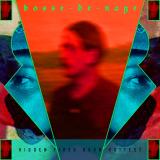
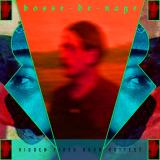
There's a tendency in metal to mistake aggression for honesty, volume for depth. To confuse the performance of darkness with its actual weight. Hidden Fires Burn Hottest, the new album from San Francisco-based post-black metal band Bosse-de-Nage, sidesteps this entirely. It’s the group’s most fully realized work yet, precisely because it refuses to be pinned down.
Bosse-de-Nage have been working with The Flenser for over fifteen years. They were one of the first bands the label ever partnered with and have the longest active relationship in the label's history. But unlike most bands who build momentum through constant touring and visibility, Bosse-de-Nage has largely existed apart from the music world's usual machinery. They've evolved on their own terms, in relative isolation, allowing the work to develop without outside pressure or influence. What began rooted in black metal anonymity has mutated into something that actively defies categorization. The aggression is still there, but it's no longer the point. Hidden Fires Burn Hottest finds the band treating emotions like physical objects, feelings with spatial properties. “No Such Place"" describes a space that can't exist but does anyway, somewhere between thought and location. ""Immortality Project"" examines infinite possibility not as promise but as problem, endless options collapsing under their own weight. These songs don't use metaphor to describe emotion. They make emotion into something you could theoretically touch.
Tracked by Jack Shirley (Deafheaven, Oathbreaker) at Atomic Garden East and mixed and mastered by Richard Chowenhill of Agriculture, Hidden Fires Burn Hottest was years in development, with some tracks beginning in 2018.
The long writing process offered time that most records don't get. Time to live with ideas, revise endlessly, to let structures settle. For the first time, lyricist Bryan Manning wrote everything in advance, creating a surplus to pull from rather than working under deadline pressure. The difference shows.
Coming off Further Still, an album built on constraint and economy, Bosse-de-Nage sought the opposite: sprawl, strangeness, fewer rules. Space for ideas to develop without rushing them. Dynamics that move through quiet as much as noise. Presence earned through atmosphere instead of volume. The record even includes ""Mementos,"" which might be considered the first love song the band has ever written.
Nothing here coheres into a theme. These are pieces pulled from low moments and private feelings made public through sound. The band has never been interested in positivity, in music that resolves cleanly or offers comfort. But bleakness doesn't mean humorlessness. There's something darkly funny running through much of it, even when it shouldn't be.
Hidden Fires Burn Hottest doesn't explain itself. It just insists: what you feel is as real as what you can see."
MEMORIALS jump off the waterslides and head above the clouds with their stunning second album proper, 'All Clouds Bring Not Rain'. The duo of Verity Susman and Matthew Simms (formerly of Electrelane and WIRE) locked themselves away in a studio in a barn secluded deep in the woods in southwestern France and re-emerged with a beautiful, unusual record that is both melodic and unconventional. For such an ambitious album it's striking that it was written, performed, recorded and mixed solely by the two of them. Sounding like an unearthed classic, MEMORIALS twist their influences into their own unmistakable sound. Imagine Nico singing with Can produced by David Axelrod and you're somewhere in the right ballpark. The record draws inspiration from a wide range of music including folk, dub, post punk, experimental tape music, 60s soul, garage rock, 70s spiritual jazz and Canterbury prog. Verity's distinctive, unadorned singing is a focal point of the record, moving from tender to wild. Her vocal melodies quickly become earworms, providing the tuneful heart around which the songs' more unorthodox elements are arranged, which is where Matthew's unconventional approach to recording and production comes to the fore. With their adventurous arrangements, classic songwriting skills and innovative production techniques, MEMORIALS have created another mesmerising listen that's accomplished and compelling in its unique approach yet remains dizzyingly immersive - just like their acclaimed live shows. "Exciting and unpredictable" The Guardian "Everything you'd expect from a duo adept in the strange and esoteric, while also in thrall to pop music's melodic bent." The Quietus "Stunning, kaleidoscopic tunes" Electronic Sound "Engagingly eclectic" UNCUT "Divinely tuneful yet confrontational" The Wire "Kaleidoscopic art-pop and adventurous psych-rock with an immersive, experimental aura." KEXP.
Celebrating the 30th anniversary of Enlace Funk magazine, they present the world's first Flamenco-Jazz compilation, featuring 16 tracks from between 1978 to 2025, released on vinyl for the first time. A musical dialogue between Flamenco and Jazz, unique in the world, a journey through some of the most important artists of this style, starting with the seminal work of the group Dolores in 1978, and continuing to examples of the current sound of this exciting fusion. Includes tracks never before released on vinyl by artists such as Jorge Pardo, Chano Dominguez, Pedro Ojesto, and Marc Miralta. The first volume of Flamenco-Jazz aims to showcase this unique style that has proven to be a bridge of communication and dialogue between flamenco and jazz musicians, creating an inimitable sound that is constantly evolving and transcending barriers. We take as our starting point a 1978 recording by Dolores, featuring Paco de Lucía, which later led to the formation of her legendary sextet with musicians who had participated in this recording. Of course, this first volume wouldn't be complete without other masters like Josemi Carmona, Pedro Ojesto, and Marc Miralta. And of course, a new generation of names that have elevated the genre to its current status, such as flautists Trinidad Jiménez and Sergio De Lope, Juanfe Pérez and Juan Pérez Rodríguez from Huelva, Pablo Martín Caminero from Vitoria, and Miquel Alvarez from Valencia. Not forgetting innovators like Antonio Lizana and Enriquito, who are crossing borders and sharing their unique style. Ltd ed.classic black vinyl double LP in gatefold sleeve
Ruff Kutz presents 'Found Sound', a debut solo album by Pugilist.
At a time where art has become readily reproduced and seemingly disposable, I have made something longer-form to be enjoyed as a complete piece, rather than it's single elements.
Found Sound delves into my internal monologue, which I hope results in a personal and introspective listening experience. Building on my previous discography - you can expect versatile sounds and tempos, with a washy dub-wise feel, intoxicating atmospherics, all in a genre-free structure. The album is floaty, euphoric and perhaps a surprisingly light listen compared to my normal output, but with notably huge bass and intricate percussion throughout.
The album taps into nostalgic reference points without leaning on retrograde tropes. While sculpted by contemporary production and FX, the sound remains raw and not overly polished. The album is best described as a collage of sounds that I have steadily collected over the last decade, which have inspired me, some very cheeky sampling and many a late night working on my studio tan. It is a tribute to the music I grew up with and love the most, from past to the present. It is fitting that this release marks the 10 years since I started the Pugilist alias.
This wouldn't have been possible without Umeya, who the album is dedicated to.
out of Stock
Last delivered 4 months ago available to reorder, subject to availability
Undun is the story of a man, Redford Stevens, dying in reverse, rewinding from the moment he became a statistic and hitting the points in his life where he's at his most self-aware. That he's a criminal who got caught up in the familiar street-hustle trappings that the modern media's documented countless times is a pivotal detail-- it's hit at an angle that seems to emphasize the futile inevitability of it all. His life could be any number of misdirected narratives that ends with a toe tag, and what details listeners learn about him are hazy, buried under archetypal turns of fate and decisive struggles. That this protagonist is a fictionalized composite of a handful of real people, filtered through a matter-of-fact narrative that splits character ambivalence with journalistic impartiality, only makes his lack of direction and the failure of any real closure stand out even more. "Lotta niggas go to prison," Dice Raw states on "Tip the Scale", "how many come out Malcolm X?"
So the Roots' latest album isn't a sprawling, rise-and-fall crime story, not a condemnation or a veneration of a man living outside the law, not a bullet-riddled grand guignol heavy on explicit details of soldiers getting cut down. It's a character study of a man whose existential crisis ends only with his death-- a death gone largely unspecified, the glamor and tragedy washed over with a doomed resignation. That's a hard thing to pull off, even for a band as given to deep-thinking concepts as the Roots are. And when your main lyrical catalyst is Black Thought-- a man more given to allusions than direct statements-- it's likely that it'll take a while for the full scope of Undun to really sink in.
If and when it does, it might strike listeners as a bit skeletal: omit the mood-setting instrumental bookends, including a brief, four-part orchestral suite that builds off Sufjan Stevens' "Redford (For Yia-Yia and Pappou)", and you've got maybe a half hour's worth of material. By ?uestlove's accounts, writing Redford's story introduced the headaches and challenges that come with scriptwriting into their songwriting, and what's left on Undun is the end result of frequent revisions and rewrites that attempt to reconcile character, theme, and continuity. If it comes at the expense of nuance, it's not always obvious: There's an easy-to-trace narrative line from Redford's acceptance of his fate ("Sleep") to his acknowledgement of how close it's approaching ("Make My"), back through declarations of aggravated toughness ("One Time"), and celebratory fatalism ("Kool On"), along ups and downs that juxtapose motivation ("Stomp") and helplessness ("Lighthouse"). When the vocal portion of the album ends with two of the bleakest sets of verses in the Roots discography, peaking with the estrangement of "I Remember" and the desperation of "Tip the Scale", Undun reveals itself as a story where a man's actual death isn't quite as tragic as the circumstances that pushed him to it.
out of Stock
Last delivered 6 months ago available to reorder, subject to availability
Inspired by the concept of the city as a living, complex entity - a feeling Youniss describes as the difference between "living in a city and just being in that city" - Good Effort! is an open-ended narrative drawn from the artist's own experiences, including growing up on the outskirts of Antwerp.
Like a vibrant city itself, the album is a culmination of organic interactions, layered with diverse perspectives from a collective of artists. Good Effort! features a dynamic cast of collaborators, including international heavyweights like Pink Siifu, Petite Noir, and Quelle Chris, alongside celebrated names from the Belgian underground such as Dienne and Porcelain id.
While retaining his critical edge - especially on themes like gentrification, an acute problem in his home city - Youniss explores the full range of his voice across the album's tracks, resulting in a warmer, more texturally diverse sound.
Tracks like “Notice,” “Glass Ceilings,” and “The Sun Is Falling” expand his textural use of distortion, while others, such as “At the Still Point of the World” and “Why Don’t You?”, float at a more tranquil register. The record's energy peaks on “TakeThat” where Pink Siifu and Youniss trade frenetic bars atop jazzy drum freakouts.
Despite the cynicism forged by witnessing his environment change - like the flattening of the beloved venue Onder Stroom for a parking space - Youniss offers a crucial message of perseverance. The album's title, Good Effort!, is a defiant embrace of trying again.
What's the first thing you think of when someone mentions Thee Oh Sees? Probably their riot-sparking live show, right? Visions of a guitar-chewing, melody-maiming John Dwyer careening across your cranium, rounded out by a wild-eyed wrecking crew that drives every last hook home like it's a nail in the coffin of what you thought it meant to make 21st-century rock 'n' roll? Yeah, that sounds about right. But it misses a more important point-how impossible Thee Oh Sees have been to pin down since Dwyer launched the project in the late '90s as a solo break from such sorely missed underground bands as Pink and Brown and Coachwhips. (While Dwyer still records songs on his own, Thee Oh Sees is now a five-piece featuring keyboardist / singer Brigid Dawson, guitarist Petey Dammit, drummer Mike Shoun and multi-instrumentalist / singer Lars Finberg.) That restlessness extends to everything from the towering, thirteen-minute title track of 2010's Warm Smile LP to the mercurial moods of 2008's The Master's Bedroom Is Worth Spending a Night In. Now, Thee Oh Sees chase the home-brewed symphonies of Castlemania with the scrappy, high-wire hooks of Carrion Crawler / The Dream. Originally envisioned as two EPs, it was cut live to tape in less than a week at Chris Woodhouse's Sacramento studio in June, reflecting the battering-ram bent of the band's live show better than any bootleg ever could. "As I'm sure most would agree," explains Dwyer, "Castlemania was more of a vocal tirade. This one's meant to pummel and throb." That it does, whether one blasts the slow, speaker-bruising build of "The Dream," the sunburnt organs and dovetailing guitars of "Crack in Your Eye" or the interstellar instrumental "Chem-Farmer," a perfect example of what happens when one takes a well-oiled machine-a gang of rabid road warriors, really-and adds a second, groove-locked drum set to the mix. To listen is to realize that Dwyer's music is as manic as the underground comic inclinations of his artwork; colorful and confusing in a way that's more than welcome. It's downright refreshing, like a slap in the face at 5:00 in the morning. Or, as Dwyer puts it, "You have to leave a mark somehow."
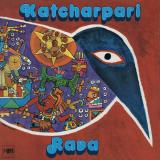
The breakthrough album. Enrico Rava's second solo record, recorded in Milan in January 1973 and released on the German BASF label, is nothing less than a cornerstone of Italian jazz-rock - the record that caught Manfred Eicher's attention and opened the doors to ECM. Rava himself has called it his breakthrough, and history proved him right.
The lineup is killer: John Abercrombie on guitar, Bruce Johnson on bass, Chip White on drums. Four musicians operating at the absolute peak of early seventies fusion energy - electric, cosmopolitan, burning with that particular fire that only existed in that brief window when jazz met rock and nobody knew the rules yet. Abercrombie, already on his way to becoming one of the most distinctive voices in electric jazz guitar, delivers some of his most ferocious early work here. White's drumming is relentless, pushing the music forward with an intensity that never lets up.
If Miles' Bitches Brew-era speaks to you, if Ian Carr's Nucleus gets you moving, if you know Sun Ra's Lanquidity and Don Cherry's Relativity Suite by heart - this is essential listening. Rava's vision was already fully formed: South American rhythms, Mediterranean warmth, free jazz ferocity, rock power - all flowing together without borders or categories. By the early seventies, Rava had absorbed everything - the New Thing, the European free scene, the electric revolution coming out of Miles' studio - and forged something entirely his own.
The seven tracks cover serious ground. "Bunny's Pie" introduces the music with an almost cosmic atmosphere of suspense, hovering in that liminal space before it trails off into the up-tempo vibrant frenzy of "Trial N. 5" - Abercrombie and Rava trading swirling solos at full intensity, the rhythm section locked in tight. "Dimenticare Stanca" moves from Rava's expressive balladic intro into pure funk, guitar and trumpet steering over the rhythmic drive with absolute confidence. The title track carries the lyrical feel and cadence of an Incan-Peruvian folksong - that cosmopolitan spirit made audible. "Fluid Connection" rides a funky bass riff into fusion heaven, with standout trumpet and guitar solos that build and release with perfect tension. "Cheerin' Cherry" pays homage to the great Don Cherry - Rava's spiritual mentor and fellow traveler in world music - exploring a North African soundscape that points toward the global jazz to come. Johnson's "Peace" closes the album with a minute and a half of serene, blissful calm - a moment of stillness after the storm.
This audiophile reissue - cut from the original masters, pressed by Pallas in Germany on 180gm vinyl, housed in a thick laminated hand-glued gatefold - does full justice to an album that remains a collector's holy grail.
"Since their formation in the latter half of 2023, Berlin’s Industry have quickly emerged into the foreground as one of the more exciting groups of the European DIY punk scene. Having released their 2024 debut LP, touring and playing festivals all over the continent, they are now back with a follow up record that’s every bit as bruising and bleak as the first.
Much has been made of how ‘on point’ Industry sound - a mid-paced cocktail of heavy toms and churning riffs recalling ‘No Sanctuary’ era Amebix or classic Killing Joke. But Industry use these sounds as a springboard rather than a template, utilising the form for genuine expression where others are tempted by retro cosplay. Their sound is pared back, pulsing, relentless but danceable. But it’s the words that result in a listen that’s engaging from start to finish, an album that’s both expressive and polemic. Just as people often describe Discharge’s lyrics as Haiku, Industry uses the band’s repetitive grooves as a wide-open canvas on which their exasperated observations are given space to land with precision. The litany of criticisms are familiar to us all - violence exacted on the poor and vulnerable by those in power, the ongoing industrialised slaughter of humans and animals, the disastrous consequences of colonialism, the list goes on… The world in 2025 is fucked, and even though they say they ‘can’t even look’, this band has got their eyes wide open."
The first resonant space Zosha Warpeha played in was the Emanuel Vigeland Museum in Oslo, Norway. Built as a mausoleum, its walls reach up into a gradual archway, creating an environment where sound expands and reverberates for twelve seconds before decaying into silence. Warpeha was greeted only by dim lights when she entered, and it wasn’t until she had spent several minutes listening that she was able to make out the frescoes that covered every inch of the room: graphic depictions of the cycle of life from conception through death. As the sound of her Hardanger d’amore encountered the walls and these slowly emerging scenes, they obscured its point of origin in both time and space, augmenting its own life cycle. The experience sat in the back of her mind over the next several years as she developed her own patient style of composition and performance, one that comes into full bloom on her new album I grow accustomed to the dark.
When Warpeha was selected as an artist in residence at Brooklyn’s ISSUE Project Room in 2025, she saw it as an opportunity to more intentionally explore how her music might fill a room with ample natural reverb. I grow accustomed to the dark documents two single-take solo performances for Hardanger d’amore and voice at IPR, with both pieces composed in a unique tuning system developed to interact with the space itself. Listeners can trace resonance from the contact of the bow on gut strings into the body of the instrument, its five sympathetic strings offering another layer of refraction, before the sound is thrown about the cavity of the room. The echoes emerge like a photographic double exposure, or wisps of smoke that linger in the air, creating ghostly harmonic convergences that blur the line between what is there and not-there. Sound begins to act like light, a synesthetic alchemy that transforms drones into beams and ornamental trills into flickers.
Both side-long compositions, “filament” and “visual purple,” exemplify a duality that animates Warpeha’s music: an expressive, individualistic style that draws on extensive knowledge of her instrument’s history in folk traditions, and an austere, devotional quality maintained by focus and precision. Though very different in character and structure, both pieces evolve slowly through numerous repetitive phrases, passages of stillness, and bursts of intensity. “filament” opens with a cycle of delicate melodic fragments played and sung around a drone before blossoming into an outpouring of swooping arpeggios, harmonics flying from the strings like sparks off a bonfire. The disorienting pulsation of harmonic beating forms the core of “visual purple,” the close-tone dissonance building to a swarm of open strings ringing boldly throughout the space. After the knotty tones reach their climax, the piece collapses into studied quietude, hushed, but without any drop in intensity.
When Warpeha first visited the Vigeland Museum in 2019, she was in Oslo to deepen her relationship to the Hardanger fiddle through the study of Norwegian traditional music, which is primarily passed down aurally. The experience of learning songs by ear, not only internalizing the tune but also absorbing the techniques and tonalities by listening, was a crucial step in her development as a composer. The years since have seen her sharpen those skills as a prolific member of the New York avant-garde and improvised music communities. Warpeha’s music encourages listeners to join her in this journey, to listen closely with each repeated phrase and through each dramatic shift. Like the frescoes on Vigeland’s walls, with time and intention, the depth of I grow accustomed to the dark comes on like a revelation.
out of Stock
Last delivered 7 months ago available to reorder, subject to availability
Born from the dialogue between two distinct yet complementary visions of techno — Orbe’s futuristic and immersive atmospheres, and Psyk’s hypnotic depth, stripped-back minimalism — the record unfolds as a carefully sculpted sonic journey. Tension, space, and texture take center stage, shaping an evolving narrative that progresses seamlessly from track to track.
More than a collection of individual cuts, the album embodies a cohesive and mature concept: a shared identity refined through countless hours of studio experimentation, critical listening, and synthesis. Here, the core essence of the project crystallizes — a point of convergence between atmosphere and impact, abstraction and functionality, introspection and raw dancefloor energy.
This release not only marks the culmination of an intensive creative cycle, but also signals the beginning of a new phase in their ongoing exploration of techno’s expressive potential.
out of Stock
Last delivered 4 months ago available to reorder, subject to availability
Limited to 300 copies. Yellow Vinyl. Approaching Doom is the third album by Monsternaut, a darker and heavier representation of the band's established devotion to groovy riffs and to the point compositions. The songs took shape over several years, during which the arrival of a new drummer opened the door to more adventurous rhythms and riff ideas, pushing the band into new territory while staying true to their roots. Sonically, the album leans toward the grit and weight of early 90s metal rather than polished modern production, giving it a raw and immediate edge. Its lyrics and atmosphere follow a naturally darker direction as well, adding an extra layer of tension beneath the grooves. Recorded entirely the old fashioned way, straight to analog tape with no digital editing, it captures the band playing as they are, relying on performance, chemistry, and feel rather than correction. The result is a record that hits harder, feels more focused, and marks a confident new chapter in Monsternaut's evolution.
Shoreline’s new album Is This The Low Point Or The Moment After? is built around an unanswerable question: when you hit rock bottom, can you tell where things begin to turn? Meant to be heard front to back, the record starts in a subdued, reflective place, grows progressively heavier, and ultimately lands on a more hopeful note. Drawing from the current wave of emo and hardcore while reflecting the collision of Germany’s alternative scenes, the album shows a band with a clear musical vision focused on big melodies, heavy riffs, and an honest DIY punk foundation.
B. Chamber (Stratum A), by B. Close, is the first full length solo release by Los Angeles-based multi-disciplinary artist Brian Close. The first of two volumes assembled from some thirteen hours of music produced by Close while residing in Connecticut from 2021-2025, B. Chamber (Stratum A) offers a vivid, fractal afterimage of a prolific, specific time and space in the artist’s oeuvre.
After leaving New York City early in the pandemic to a farmhouse in the countryside with dedicated spaces for multiple sound stations, Close developed an intensive daily practice of melding with the machines. The vast, pastoral backdrop of rural CT provided inspiration and contrast for his ongoing investigations into dynamic, poly-rhythmic electronic music. The sounds on B. Chamber (Stratum A) range from the machine-modeling of acoustic instruments and natural environments to the utterly unhuman, spinning on the axis between crystalline, pointillist precision and shifty blown-cone distortion. Close’s atypical interpretations of rhythm, noise and other undefined musics land in a hybrid zone of their own.
Throughout B. Chamber (Stratum A), Close’s productions are in perpetual motion. Foxtrot’s shifting hi-hats and disembodied voices rise like cicadas propelled by glitching machines and tangled rhythms, Many Drive draws momentum from dubby stabs and twinkling atmospherics. Character Community’s nimble, drifting snares and erratic static are uplifted by swelling synths, and Mpan’s modular mining forgoes drums but is no less propulsive for it. Acre Voices’ seasick pads and deft drum patterns tap an energizing nerve, and closer 5D Bow’s ambush of pummeling machine gun fire spirals into the tryptamine palace and emerges completely rinsed and refreshed.
Equally powerful in the club as in the outdoors, in the headphones eyes closed or on the move, B. Chamber (Stratum A) grants an immersive temporary trip on B. Close’s unique wavelength, with Stratum B to complete the picture in the summer of 2026.
Brian Close (b. 1979, NYC) uses the cold logic of mathematics to trigger states of total sensory displacement. Close co-founded multiple AV studios to explore the "hypnotic"—a ritualistic practice of motional-graphism and improvisational sound. His work is a study in synesthesia and the architecture of trance, using geometric precision to dissolve the sense of time. It is a digital-visceral experience built on heavy logic, designed for large-scale immersion and timelessness.
Close is one half of Georgia who have released records on Palto Flats, Firecracker Recordings, Meakusma, Youth, OOH-Sounds and EM Records, and have a long-running residency on NTS.
B. Chamber was written, produced and mixed by Brian Close.
Mastered by Rashad Becker.
Artwork by Brian Close.
Daniel Lopatins (Oneohtrix Point Never) Soundtrack für Marty Supreme, gepresst auf schwarzem und transparentem Vinyl. Kommt mit japanischem Obi-Band und doppelseitigem "Koto Endo / Marty Supreme Offizieller Ball"-Poster. Der Film Marty Supreme ist eine Abenteuerkomödie von Josh Safdie aus dem Jahr 2025 und ist lose vom Leben Marty Reismans inspiriert, die in den 1950er-Jahren spielende Geschichte ist jedoch fiktiv. Die Hauptrolle des titelgebenden Tischtennisspielers übernahm Timothée Chalamet. Gwyneth Paltrow, Odessa A'zion, Kevin O'Leary, Tyler Okonma, Abel Ferrara und Fran Drescher ergänzten das Schauspielensemble. Marty Supreme ist der erste Film von Josh Safdie nach Beendigung der kreativen Zusammenarbeit mit seinem Bruder Benny. Das Werk wurde Anfang Oktober 2025 im Rahmen des New York Film Festivals uraufgeführt. Der US-Kinostart war an Weihnachten 2025. Ende Februar 2026 soll der Film in die deutschen Kinos kommen. Die Filmmusik von Daniel Lopatin wurde im Jahr 2025 für einen Hollywood Music In Media Award (HMMA) nominiert. Im Rahmen der Critics' Choice Movie Awards 2026 wurde Marty Supreme in die Shortlists für die Kategorien Casting & Ensemble", Szenenbild", Kamera", Kostüme", Filmschnitt" und Filmmusik" aufgenommen. Im Dezember 2025 gelangte der Film auf die Oscar-Shortlists für das beste Casting, die beste Kamera, das beste Makeup & Hairstyling und die beste Filmmusik. (Quelle: Wikipedia)
out of Stock
Last delivered 7 months ago available to reorder, subject to availability
John Lee Hooker is widely recognised as one of the true giants of the blues, along with Muddy Waters, B.B. King, and Howlin' Wolf. Hooker is often called the "King of the Boogie" and his driving, rhythmic approach to guitar playing has become an integral part of the blues' sound and style that perpetuated the UK's rhythm and blues scene of the '60s. Presented here is one of John Lee Hooker' s finest album, The Big Soul of John Lee Hooker, recorded in Chicago in 1962.
In a career that spanned some forty odd years, a pivotal point of success came with his 1989 album The Healer, which featured collaborations with Carlos Sanatana, Bonnie Raitt, Charlie Musselwhite, and Los Lobas. The album expanded his audience beyond the blues idiom, earning him his highest Billboard album chart success (#62) his first Grammy Award; all of this at the grand-old-age of 73. For those not familiar with Hooker's earlier work, the Big Soul of John Lee Hooker is an excellent starting point.
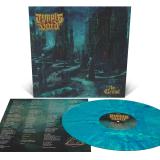
Critically acclaimed Death Metal force TEMPLE OF VOID return with their new album, The Crawl. The caveman brawn of previous albums, namely Summoning the Slayer (2022), remains, but there’s a wider dynamic on the group’s fifth full-length album at play. Now a quartet—featuring guitarist Alex Awn, drummer Jason Pearce, vocalist/guitarist Mike Erdody, and bassist Justin Malek—the Michiganders aren’t shying away from their non-metal influences, seeking greater integration of grunge and post-punk with their brutish signature. Singles “The Crawl” and “Soulburn” demonstrate the proficiency of TEMPLE OF VOID's death-cloaked, spearheaded attack. From the high intensity of opener “Poison Icon” to the granite wall of “The Twin Stranger,” The Crawl isn’t just TEMPLE OF VOID evolved, it’s a harbinger of death metal to come. “The biggest shift for me on this record was not feeling like we had to fly the ‘death-doom banner’ as part of our identity,” says Alex Awn. “Death-doom, as a genre, gave us something to anchor our sound around when we started. It was always a reference and touchstone. At the same time, we always wanted to make sure we had our own spin on it. We’ve always been adding to the conversation, adding to the genre, giving our point of view. A huge part of what makes a Temple of Void record is the non-death-doom influences that make up our DNA. And on album five we never once asked ourselves, ‘Do we have enough death metal? Do we have enough doom metal?’ We simply wrote a heavy-ass record—let the chips fall where they may.” For lyrics, Erdody built on the psychology and fear themes of Summoning the Slayer. The overarching theme of The Crawl is, put rather simply, an “allegory about life, choices, and consequences.” It’s a qualitative view on the horrors of the human condition and the contemplation of our monstrous capabilities. “The Twin Stranger,” for example, is about being stalked by a person’s doppelganger; “Godless Cynic” draws on a short story by sci-fi author Harlan Ellison; and “Poison Icon” tackles the crushing effects of mankind’s intrinsic nature to deceive and control.
Nach fünfzehn Jahren auf Welttournee mit La Femme kehrt Marlon Magnée nun als Solo-Künstler mit seinem Debütalbum Dark Star zurück, das ihn wieder mit seinen frühesten Leidenschaften verbindet. Die Platte spiegelt seinen Geschmack für ungewöhnliche Mischungen und eigenständige Stile wider: eine Kombination aus Rockabilly, Punk, Cold Wave und psychedelischem Psychobilly. Die Stücke, gesungen auf Französisch und Englisch, greifen auf Gitarren der Sechziger zurück, auf eine "Orgie aus Synthesizern" direkt aus den Achtzigern, auf donnernde Drumcomputer, analoge Delays und eine bewusst rohe Energie. Seine Einflüsse ziehen sich durch das gesamte Album: The Velvet Underground, The Stranglers, Motörhead, The Cure, The Stray Cats, JJ Cale, die Nuggets-Kompilationen, aber auch französischsprachige Ikonen wie Gainsbourg, Les Rita Mitsouko, Métal Urbain, Plastic Bertrand und Marc Charlan. Das Ergebnis: ein schnelles, ruheloses Album (Tempi bis zu 240 bpm), manchmal radikal, konzipiert "für diejenigen, die Blut im Herzen und den Drang haben, sich zur Wehr zu setzen". Co-produziert mit Renaud Letang (Feist, Manu Chao, Peaches) im legendären Ferber Studio in Paris markiert dieses erste Solo-Werk eine echte Rückkehr zu Marlons Wurzeln - und kündigt mit Nachdruck das Comeback des Rock in der heutigen Musiklandschaft an.
Following a successful first volume of the newly launched DC4 compilation this summer, Volume 2 arrives featuring four on-point singles from the label’s extended family of artists, alongside a string of label debutants. Heerhorst & PETER PAHN return to the fold following their contribution to ‘Dark Clouds’ with Teenage Mutants, a former Beatport no.1 and highlight of 2023 for the label. Continuing the celestial themes ‘Crystal Sky’ feels like part 2 to ‘Dark Sky’, a lively electro-tinted record driven by dreamy melody lines and chanting vocals that has plenty of peak-time energy. Italian behemoth’s Mind Against debut on Drumcode in collaboration with Tharat, ‘Cloud’ is one of the most interesting releases we’ve heard on the label in recent times, marked by a head-spinning flurry of stuttering, distorted sounds, all the while maintaining a rolling,
intoxicating groove. Rising German artist Kos:mo mints his first release on DC with ‘Samsara', a fierce acid techno cut that takes on a life of its own in the second stanza, equally fit for a film soundtrack as a dancefloor, such is its dramatic arc. OZBEK & Zafer Atabey are mainstays of the Turkish techno and tech house scene, ‘My Culture’ is drenched in attitude, a slick slice of punchy dancefloor grit, with a foot in house, techno and electro, driven by a rapped vocal line.
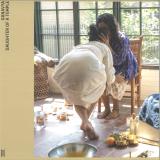
Vom Wall Street Journal als "eine der faszinierendsten Sängerinnen der modernen Musik" beschrieben, hat die in New York geborene und in Tamil Nadu aufgewachsene Sängerin und Multi-Instrumentalistin GANAVYA Details zu ihrem neuen Album "Daughter of a Temple" veröffentlicht, das am 15. November 2024 erscheinen soll. Das Album folgt auf ihren Auftritt bei SAULTs umjubeltem Live-Debüt 2023 in London, bei dem, laut The Guardian, ihre "Stimme eine zarte emotionale Kraft hatte, die selbst Stoiker zu weinenden Wracks machen konnte." Für "Daughter of a Temple" lud ganavya über 30 Künstler*innen verschiedener Disziplinen zu einer rituellen Zusammenkunft nach Houston ein. Dementsprechend sind auf dem entstandenen Album zahlreiche Mitwirkende zu hören, darunter renommierte Musiker*innen wie esperanza spalding, Vijay Iyer, Shabaka Hutchings, Immanuel Wilkins und Peter Sellars. Die Ergebnisse, eine innovative und zutiefst bewegende Mischung aus spirituellem Jazz und südasiatischer geistlicher Musik, wurden zunächst von Ryan Renteria aufgenommen und dann 2024 von Nils Frahm im LEITER Studio in Berlin weiter bearbeitet und abgemischt. ganavya ist die Autorin und Sängerin des ersten tamilischen Textes, der mit einem Latin Grammy ausgezeichnet wurde, sie war Sängerin in Vijay Iyers Ritual Quartet und Solosängerin auf dem von Quincy Jones produzierten "Tocororo", das Platz 1 der Jazz-Charts erreichte. Ihr letztes Album, "like the sky I"ve been too quiet", hat sie mit Shabaka Hutchings aufgenommen und versammelt Gäste wie Floating Points, Tom Herbert, Carlos Niño und Leafcutter John.
out of Stock
Last delivered 7 months ago available to reorder, subject to availability
Another Thought was the first collection of Arthur Russell’s music to be released after his death in 1992. Released in 1993 on Point Music it marked the beginning of nearly 30 years of work to let the world hear the enormous archive of unreleased recordings Arthur left behind. Be With revisits this first compilation for a new gatefold double vinyl version and a triple-fold digipak CD reissue.
Both versions of Be With’s 2021 reissue of Another Thought have been mastered by Simon Francis and the vinyl cut by Pete Norman. The original artwork has been restored and tweaked at Be With HQ for the gatefold sleeve and the triple-fold digipak, with the essential help of Janette Beckman. Each version comes with an insert reproducing the liner notes and lyrics from the original CD release.
Together with Calling Out Of Context, Soul Jazz’s World of Arthur Russell, and much of the ongoing work of Audika, Another Thought is absolutely essential for even the most casual Arthur Russell collection. In fact we’d argue it’s essential for any fan of non-obvious pop music. This is the only place where you can hear some of Arthur’s most recognisable tunes and it’s an album that absolutely deserves to be kept in press.
We’ll assume that by now you’re all at least a little familiar with the story of Arthur Russell, the farm boy from Iowa who moved to 1970s New York. Arthur Russell the genuine musical genius who died just 40 years old, leaving behind a wealth of music that dwarfed the few 12"s and LPs that were released during his short life.
Although Arthur had been working on an album for Rough Trade during his last years, with the label no-longer operating it was Point Music (Philip Glass and Michael Riesman’s label set up together with Philips) who stepped in to help Arthur’s partner Tom Lee start working out exactly what Arthur had left behind.
Tom suggested that Arthur’s friend Mikel Rouse was the right person to make the first catalogue. Working in Tom and Arthur’s apartment he had only two weeks to go through what turned out to be around 800 tapes.
As Tom explained “at the end of each day he would generally wait for me to come home and I would, to the best of my knowledge, name and identify pieces in question from that day’s work. As he worked Mikel compiled about a dozen cassettes that he thought would present the most finished sounding songs for Don/Point to use. As Don listened he would then suggest and ask me and thus we collaborated on the choices.”
Don is Don Christensen, Another Thought’s producer. With a final selection of songs from recordings made between 1982 and 1990, including sessions with some of Arthur’s regular collaborators Peter Zummo, Steven Hall, Mustafa Ahmed, Elodie Lauten, Julius Eastman, Jennifer Warnes and Joyce Bowden, it was then Don’s job to turn these into a finished album.
Another Thought is a little different from the compilations of Arthur’s music that came out since. In our conversations with Steve Knutson (who founded Audika Records and who manages Arthur’s estate together with Tom), he explained that “more than any project released by Arthur during his lifetime or posthumously by Audika, ‘Another Thought’ is the most worked over. The material was significantly edited and rearranged from the original source tapes”.
If the aim was to release a comprehensive exploration of every facet of Arthur’s music, from the most avant-garde of his avant-garde compositions through to the most disco-not-disco of his disco-not-disco tunes then the project was a spectacular failure. But as a coherent album of non-obvious pop music Another Thought is wonderful.
Starting with the sparse voice-and-cello of the title track, A Little Lost adds some guitar along with the sneaking suspicion that we’re listening to something nowhere near as simple as it first sounds. By the time we get to This Is How We Walk On The Moon - it could be the moment you notice the congas, or the percussion that’s been building behind them, or maybe it’s that blast of trumpet and trombone - we realise we’ve gone from splashing around to being completely submerged in the musical world of Arthur Russell.
From here the album heads off on its journey around the sounds of the left-field contemporary classical music of the time, re-directed towards pop ears, with minor detours through the swirling woozy disco of the half-remembered night before on In The Light Of The Miracle and My Tiger, My Timing. Whether it’s just Arthur, his cello and some bleeps on Just A Blip, or whether he has some vocal help as he does on the bounding Keeping Up, this is difficult music made so, so easy. And through it all is Arthur’s voice and cello. Sometimes drowned in distortion and sometimes clear as a bell, but always there somewhere.
A Sudden Chill finally returns us to the calmer waters we started in and this last track closes the album with a melancholy that’s not surprising given how soon after Arthur’s death the album was put together.
Whilst Another Thought holds together with the consistency of a proper album, there’s still no getting away from the fact that this was put together from audio recorded in different ways, in different places, with different people at different times. Those with keen ears will hear traces of tape hiss, the occasional blown-out note and some digital fuzz, all fingerprints of those original recordings as well as of the 1990s digital equipment that was used to piece Another Thought together.
Add to this Arthur’s obvious pleasure in making music from the sort of sounds that can make microphones, speakers and ears uncomfortable, it’s no surprise that Another Thought isn’t glossy and pristine. Don Christensen’s productions have been careful to not scrub up those original recordings so much that they lose their original vibe, understandable given that Arthur wasn’t around as a guide. We’ve applied a similarly light touch with the mastering for these Be With versions, just working to make sure they sound like they should on both the vinyl and the CD.
Despite the Discogs rumours, Another Thought was never originally released as an LP. So when it came to the sleeve for this Be With vinyl version we took the original CD artwork as a starting point to come up with something that looks like it could have been in the record racks back in 1993.
We have to thank Janette Beckman for helping us reproduce her iconic photograph of Arthur in his newspaper boat hat. One of many photographs she took of Arthur, Janette shot this in her New York studio back in 1986 for a short article in the January ’87 issue of The Face Magazine. Those with eagle-eyes will notice we’ve used an ever-so-slightly different shot from the one that appeared in The Face and then again on the original cover of Another Thought. The original has long since been lost so we’ve worked with what is left in Janette’s archives. And we also have to thank Tom Lee for giving us permission to reproduce his liner notes from the original CD booklet, together with Arthur’s lyrics.
out of Stock
Last delivered 4 years ago available to reorder, subject to availability
After decades spent shaping the sound of southern Madagascar and becoming one of the defining voices of tsapiky, Damily returns with Fanjiry, his most intimate and focused record to date. Known for electrifying village ceremonies and carrying the fever of Toliara across continents, he takes a sharp turn — not away from trance, but deeper into its core.
Recorded in just three days at Studio Black Box with analog wizard Peter Deimel, Fanjiry strips the tsapiky band down to a single guitar and a single heartbeat. Damily plays alone, yet fills the space completely — bass, rhythm, melody, pulse, and breath merging into a dense and vibrating sound. Every riff is architecture, every harmonic a door opening onto memory, childhood landscapes, and nights where music heals, binds, and exhausts the dark.
There is no nostalgia here, no museum of tradition. Fanjiry is a new frontier for tsapiky: raw, precise, suspended between earth and sky, born from craft and necessity. The title — the last star before dawn — captures its essence: a quiet moment before the world awakens, where a single guitar can hold an entire history and still point forward.
After decades spent shaping the sound of southern Madagascar and becoming one of the defining voices of tsapiky, Damily returns with Fanjiry, his most intimate and focused record to date. Known for electrifying village ceremonies and carrying the fever of Toliara across continents, he takes a sharp turn - not away from trance, but deeper into its core. Recorded in just three days at Studio Black Box with analog wizard Peter Deimel, Fanjiry strips the tsapiky band down to a single guitar and a single heartbeat. Damily plays alone, yet fills the space completely - bass, rhythm, melody, pulse, and breath merging into a dense and vibrating sound. Every riff is architecture, every harmonic a door opening onto memory, childhood landscapes, and nights where music heals, binds, and exhausts the dark. There is no nostalgia here, no museum of tradition. Fanjiry is a new frontier for tsapiky: raw, precise, suspended between earth and sky, born from craft and necessity. The title - the last star before dawn - captures its essence: a quiet moment before the world awakens, where a single guitar can hold an entire history and still point forward.
Sundays is the debut full length from Oakland-based Tanukichan, aka multi-instrumentalist Hannah van Loon. At surface level, the album sounds just how the title describes: hazy, dreamy, reflective, just like a lazy Sunday afternoon. Upon second and third listens, the dreamy music unveils a deeper world: an ever present sense of longing, an endless state of summer and a period of instability that plagues us all at one point or another in our lives.
Raised in San Francisco, van Loon started out making classical, bluegrass and jazz music as well as playing in numerous bands in the area before deciding to make something more personal. What started with a few unfocused demos, with van Loon playing all the instruments herself in her house, became a studio experience and viable collection of music after her friend Anthony Ferraro of Astronauts, Etc. introduced her to Company Records founder Chaz Bear (Toro Y Moi, Les Sins). After collaborating on her 2016 EP Radiolove, van Loon and Bear set out to make a much more sonically cohesive release, with both the producer and artist playing all the instruments on the record. The result is a slice of dream pop that could only come from the combination of the laid back atmosphere of California and the nostalgic and often difficult memories that are generally associated with coming of age.
To van Loon, the tracks of Sundays are a form of contemplation and approaching life’s issues from a different and less complicated perspective. “Sometimes for me, it feels easier to write songs about things than to talk. A lot of things in life are layered and paradoxical, but with songs it always seems simpler.”
Opening track “Lazy Love” sets the stage, sonically and lyrically, for the rest of the album, combining vulnerable lyrics with gorgeous, fuzzy tones. Above pummeling synths and guitar tones, van Loon sings “you know I'd do anything/don't you know I try my best/if I could wake up when the sun is rising” showing the album’s constant theme of balancing always wanting to be the best person you can be, while also feeling a low level joy at letting life play out as it wants to. “Natural” is a track that feels perfect for a road trip, a track that hums away with a driving beat, culminating in the sheer excitement of finally having a night alone with someone you’ve loved for a while, among many highs and lows: “a window too bright/it's natural sunlight/grey fades to white lie/kiss you tonight/it's natural delight/help me feel right.” The tracks collectively address a deep rooted sense of yearning for someone, something new, while also feeling content with your life; a realization that maybe the places you’ve always belonged aren’t where you should be anymore, that suddenly you might be looking for something completely different.
“I settled on the name Sundays as the title of the record because it encapsulated how the record felt to me,“ van Loon says. “I was thinking about the laziness, and dreamy clarity that you can feel after a late night, waking up having to face the world with a new perspective.” Sundays encapsulates this feeling, a nostalgic way of looking at the world, waking up feeling like a slightly different person than before, looking back on life, not sure if you can tackle what’s next, but doing your best, day in and day out
World Of Echo announces the reissue of two remastered albums by Japanese guitarist and songwriter Naoki Zushi, 1988’s Paradise, and 2005’s III. Two classics of Japanese psychedelia, both Paradise and III were originally released on Org Records, the imprint of Shinji Shibayama of acid-folk group Nagisa Ni Te, with whom Zushi has guested on second guitar for decades. Both intimate and expansive, rich with revelatory songwriting and blasted, sky-scouring guitar, these reissues return these albums to print for the first time since the 2000s. It’s the first time III has been officially released on vinyl, with an extra, previously unreleased track, “Under The June Moonlight.”
Recorded in Kyoto’s Townhouse Studios in mid 1987 and released in limited-to-500 vinyl pressing in 1988, Paradise emerged from a scene in Kansai, Japan that was embracing the idiosyncracies of 1970s singer-songwriters, the soaring solos of early seventies psychedelia, and the DIY impulse of 1980s post-punk. While Zushi’s musical history stretched back to the early eighties – he was a founding member of Jojo Hiroshige’s noise outfit Hijokaidan – he found his feet with groups like Hallelujahs, whose dream-pop collection Niku O Kuraite Chikai Wo Tateyo was recently reissued by Black Editions, and Idiot O’Clock.
Paradise appeared two years after that Hallelujahs album and share much the same membership – Zushi’s backing band on several of the songs includes Shibayama on drums and Ken-Ichi Takayama (aka Idiot) on electric guitar, though just as often, Zushi plays all the instruments himself. The coordinates here are wide-reaching – you can hear the volume and intensity of Neil Young & Crazy Horse (on “Hallelujah: Left Side” and “Paradise: Midday”), the slow-motion magic of Galaxie 500, the idiosyncratic spirit of The Only Ones, all mixed up with tender guitar miniatures and stumbling garage-psych-pop moves.
Seven years later, after the transitional album Phenomenal Luciferin, Zushi released III. Perhaps his masterpiece, it’s already been bootlegged on vinyl, but this reissue is the real deal. The album was recorded at Studio Nemu over seven years, and sees Zushi backed by Shibayama (bass) and Masako Takeda (drums), his erstwhile bandmates in Nagisa Ni Te. By this stage, Zushi had started to really stretch out, and many of the songs on III swoon languorously, taking their sweet time to say what they need to say. It’s rich with lovely, melancholy songs, in a similar realm to bandmates Nagisa Ni Te, of course, but you can also hear traces of everything from Syd Barrett’s The Madcap Laughs, through seventies private press loner folk, to the slow-burn meanderings of the likes of early Low or Damon & Naomi.
When interviewed by Shibayama in the mid-nineties, Zushi said of Paradise, “it was a sort of collection of songs that had meant something to me up to that point… it was my paradise. I wanted to create paradise.” That’s something Zushi achieves on both of these albums – visionary Japanese psychedelia, en route to paradise. - Jon Dale
Cranes is a dream pop/shoegaze band formed by siblings Alison and Jim Shaw who rose to stardom following a world tour with the Cure in 1992. After the influential Dedicated label folded in 1998 they went on a two-year hiatus after which they se up their own label Dadaphonic. Here, they released three studio albums between 2001 and 2008, of which this record is their penultimate. This record, as any other on their label, strikes the perfect balance between their typical 90s alt rock underpinnings and modern electronica. Downtempo beats and swirling effects combined with jangly guitars and Alison Shaw's mysterious vocal presence make for a deep and subdued album, in the best way possible. Fans of the band have been requesting a vinyl release for quite a while now and to them we say: ask and you shall receive. Particles & Waves is available on vinyl for the first time as a limited edition of 1000 individually numbered copies on Crystal Clear, Blue & White Marbled vinyl.
Synthpop, minimal wave, post-punk, goth, new romantic - fans and critics alike have dug deeply into their vintage thesauruses to describe the beguiling work of Nation of Language. And if you can't precisely define the band, that's the point. Frontman Ian Richard Devaney has become prodigious in expanding what synthesizer-driven music can evoke, such that his output is as much an extrasensory journey as it is an all-too-human destination. With that experience in mind, he wrote the band's fourth album - the spectral, spacious Dance Called Memory - in the most humble of ways: chipping away at melancholia by sitting around and strumming his guitar. Nation of Language's first two albums, Introduction, Presence (2020), and A Way Forward (2021), came as pandemic godsends: gorgeous, relatable soundtracks to our collective doldrums. But it was their last LP, Strange Disciple (2023), that catapulted the group from cultural standouts to critical darlings, with the album being named Rough Trade's Album of the Year. With that release, Pitchfork wrote that the band "are learning what it means to get bigger and better." This is Devaney's calling: soulfully translating individual despair into a comforting, collective mourning. The single "Now That You're Gone," which radiates and reverberates with a devastating wistfulness, was inspired by witnessing his godfather's tragic death from ALS, and his parents' role as caretakers for this ailing friend. At its heart, the song is a reflection of how friends can be there for each other, and also highlights a theme throughout the record: the pain and lost promise of friendships that fall apart. On Dance Called Memory, the band once again collaborated with friend and Strange Disciple producer Nick Millhiser (LCD Soundsystem, Holy Ghost!). "What's so great about Nick is his ability to make us feel like we don't need to do what might be expected of us," says synth player Aidan Noell, who, along with bassist Alex MacKay, rounds out the Nation of Language lineup. They imbued Dance Called Memory with a shifted palette - sampling chopped-up drum breaks on "I'm Not Ready for the Change" for a touch of Loveless-era My Bloody Valentine or smashing all of the percussion of "In Another Life" through a synthesizer to cast a shade of early-2000s electronic music. Ultimately, the hope was to weave raw vulnerability and humanity into a synth-heavy album. "There is a dichotomy between the Kraftwerk school of thought and the Brian Eno school of thought, each of which I've been drawn to at different points. I've read about how Kraftwerk wanted to remove all the humanity from their music, but Eno often spoke about wanting to make synthesized music that felt distinctly human," Devaney says. "As much as Kraftwerk is a sonically foundational influence, with this record I leaned much more towards the Eno school of thought. In this era quickly being defined by the rise of AI supplanting human creators I'm focusing more on the human condition, and I need the underlying music to support that_ Instead of hopelessness, I want to leave the listener with a feeling of us really seeing one another, that our individual struggles can actually unite us in empathy."
out of Stock
Last delivered 7 months ago available to reorder, subject to availability
Aspen Edities is pleased to present Aerial, the third album of the experimental quartet Oker.
Whereas their album debut Husene våre er museer (2018) and its follow-up Susurrus (2021) focused on collective and individual compositions, Aerial features two longform pieces of fully improvised music, sculpted from the recognizable acoustic sound palette that the quartet has developed across a decade of extensive touring. The titles, Aerial, Equinoctial Tide and Crepuscular Rays refer to meteorological and planetary phenomena, and in Oker’s interplay we hear light, wind, clouds, and tidal cycles transpire as shimmering, roaring, rubbing, coalescing and diverging environments of sound. The sonic stoicism and minimalism in their expression is challenged by frictioning micro-chaoses, combining to create calm, winding paths of musical detail and form. Echoing our planet and its meteorological reality, Aerial yields both consistency and perpetual change.
Bringing together some of the most compelling musicians from the Norwegian improvised music scene, Oker operates as an acoustic experimental quartet devoted to the amalgamation of improvised and composed modes of expression. Their music combines fine-tuned tonalities, deconstructed grooves, acoustic noise and other sonic events, taking their rather conventional instrumentation as a point of departure. Textures in gradual change coexisting with responsive and spontaneous gestures create a varied but coherent musical ecosystem which can be airy or dense, dry or blooming. A certain minimalist or stoic approach to sound production is an overarching and recurring element in all of Oker’s music, differentiating their sound from the majority of music in the field of improvised music or free jazz.
"On its Various 2 compilation, Altered Circuits returns with a gripping four-track selection by an equal number of distinct-voiced artists. Perrax En La Calle sees tINI merge sturdy drums, arpeggiated basslines, and ominous synth work. She knows what makes the floor tick blindfolded, and keeps the energy high here, channelling electronic body music and Italo into a contemporary club knockout. Up next is Ionic, a fusion of quirky, pointillist hooks that play call and response, driven by 909 kicks and a sub pattern underneath. Mogwaa spellbinds, and often pulls the rug only to reveal more intricate melodic needlework -- it's done so nimbly and enticingly, there's no way not to get drawn in. On the flip side, rising talent Desiree Falessi joins with the peak time Scandal. Statically-charged basslines mesh with reverb-drenched percussion salvos, and as slinky pads and subtle theme variations emerge, the intensity builds toward a tipping point. Closer Flex features a sharp arpeggiated bassline that funnels through misty, LFO-steered synths, scattered alarm-like melodies, muffled vocals, and gated-reverb snares. When classic high-pass modulation intermezzos are introduced, Monile demonstrates how sparse means, when deployed precisely, can sustain considerable tension."
out of Stock
Last delivered 75 days ago available to reorder, subject to availability
Siavash Amini is a composer from Tehran, Iran. He Has worked with labels like Room40, Hallow Ground, Opal Tapes and Umor Rex for the better half of the past ten years. He has performed at festivals like CTM & MUTEK and many other well known international events. Apart from it Siavash is a co-founder of the “SET experimental art events” and “SETfest” in Tehran, Iran. His work ranges from fragile ambient pieces and brittle IDM (incorporating his distinctive style of atmospheric guitar playing) to noisy drones and bleak modern classical pieces. His compositions have been inspired by films such as Andrei Tarkovsky's The Mirror as well as novels by Dostoyesvky and poems by T.S. Eliot.
Saffronkeira is the Sardinian sound researcher Eugenio Caria being active in the electronic music scene since almost two decades. His most recent work - a cooperation with the Italian jazz trumpet legend Paolo Fresu - earned a lot of praise from the international music press for the pure timelessness of the album.
"Upon hearing a small snippet of sound an image is conjured, not a memory but not unfamiliar. A shell of a memory, thousand events superimposed on each other. While trying to extract points of a narrative to ease the discomfort of this recollection, I try to separate and unfold the image and with it the points of the spectrum which make up the sound, a shell of a narrative. Here is an album based upon an almost entirely imagined/ synthesized happening upon hearing a snippet of sound. It sounded like of a whole story that never happened but yet I felt myself amongst it’s participants, a sound triggering a false memory. Each sound in Eugenio’s collection of sounds and ideas guided me a to a point in the narrative and it’s construction. He had handed me a portals of some kind to a few scenes of the whole narrative. This is the soundtrack for that false memory from all the perspectives I can think of."
out of Stock
Last delivered 7 months ago available to reorder, subject to availability
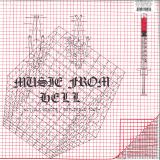
Nervous Gender’s legendary synthpunk LP Music From Hell burbles up from infernal depths to resurface on Dark Entries. Confrontational, unhinged, and unabashedly queer, Music from Hell is an unholy grail for fans of the strangest underbellies of post-punk, minimal synth, and early industrial music, and is presented here newly remastered and on expanded double LP.
Nervous Gender (de)formed in LA in 1978 at the hands of Phranc, Gerardo Velaquez, Edward Stapleton, and Michael Ochoa. Phranc, the androgynous embodiment of the band’s name, left in 1980. Following her departure, a wide cast of LA freaks would find themselves drawn into the band’s orbit, including Alice Bag of the Bags, Paul Roessler of the Screamers, the Germs’ Don Bolles, and an 8-year old drummer named Sven Pfeiffer. In 1980, Nervous Gender appeared on the seminal Live at Target compilation alongside Factrix, uns, and Flipper. With the band’s notoriety cemented, Music from Hell followed in 1981 on Subterranean Records (as no LA label would touch this material).
Side A, dubbed “Martyr Complex”, presents a more punk-forward sound with live drum salvos and slabs of aggressive synth. These twitchy, unsettling shockers ooze with the kind of snotty misanthropy that will endear them to fans of the Screamers or Crass.
Side B, known as “Beelzebub Youth”, is a live performance the band labeled "an electronic bruto-canto dissertation on the banality of spiritual transcendence." Mutant melodies cede way to synthesized clangs, whirs, bleeps, manipulated tapes, and howls of despair.
In addition to all the material from the original LP, we’re treated to a full disc of the band’s demos, the material from the Live at Target compilation, and early live recordings. Included are unrecognizable covers of Carly Simon and Lou Reed, and the Sex Pistols that are so despairingly skewed they fall into the void. This reissue of Music From Hell includes a 36 page lyric booklet, foldout poster, and gatefold sleeve with photos, flyers, and news-clippings designed by Eloise Leigh. Tackling taboo issues like sexual kinks, mental illness, drug use, and childhood molestation, Music From Hell is still surprising – even shocking - over 40 years after the album’s release. Nervous Gender stand as one of the most genuinely anti-establishment outfits in underground music, a colossal fuck you to social norms from religious strictures to gender essentialism.
out of Stock
Last delivered 6 months ago available to reorder, subject to availability