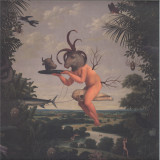
‘Absurd Matter’ is a labyrinthine sonic conundrum that spirals around the two poles of extreme noise and hiphop. It's Berlin-based Italian producer Shapednoise's first album in four years and confidently advances his narrative into the next chapter, building on the groundwork of his prior abstractions to emerge with a coherent genre-warped fusion of urgent rap, crushing bass weight and idiosyncratic sound design. After spending years scrupulously deconstructing club music, Nino Pedone has rebuilt it brick by brick in his image.
The album is the first release on Pedone's brand new imprint WEIGHT LOOMING, a multidisciplinary label platform that's set to explore the depths of bass music, textured noise and abrasive transcendence. It follows a slew of acclaimed releases for Numbers,
Opal Tapes, Type and his own Cosmo Rhythmatic label, and forward thinking collaborations with Kenyan beat alchemist Slikback and Hyperdub-signed Angolan producer Nazar. Pedone's most ambitious project to date, ‘Absurd Matter’ taps into kinetic energy from a hand-picked selection of collaborators, including New York rap duo Armand
Hammer, French DJ/producer Brodinski, Bruiser Brigade's ZelooperZ and vanguard Philly poet, musician, and activist Moor Mother.
On ‘Family’, Billy Woods and Elucid weave a dismal, apocalyptic landscape with their razor-sharp anecdotes. The duo’s macabre imagery is given artificial life by Pedone's industrial scrapes and rattles that curl around their worlds like thick smoke. It's still rap, just about, but lodges itself in the back room of a factory, machines running themselves to an early death. Pairing with techno-rap trailblazer Brodinski, Pedone edges further towards the sound system, spatializing rhythms in four dimensions around Detroit rapper
ZelooperZ's playful expressions. This is the Italian producer's sci-fi tinged liquefaction of radio echoes, a way to fire familiarity into the void and sublime the human voice into weightless mist. When Moor Mother arrives shouting "me me me" on the aptly-titled 'Poetry', it sounds as if all of Pedone's loose threads are being tightened into a knot. His misshapen neo-grime beats sound like a broken jet engine, but smartly cede power to Moor Mother's resonant rhymes. "You can't cancel me" she assures. ‘Absurd Matter’ is a defining personal development for Pedone that not only appraises his career so far, but diverts its logic into frighteningly new sonic territory. From great loss, the producer has determined his work's cardinal themes, and sounds more strident and far heavier than ever before.
Suche:pole pole
Informed by all the sub strains of UK Bass music and the Hardcore Continuum, Analias’s hazy sound straddles both poles between melancholy and euphoria, with an underlying greying hue in the center where all the disparate colors of the underground meld into one. Preferring to let the music speak on his behalf, (You will not find him on social media) Analias’s already substantial discography is an accomplished body of work that deserves all of the attention and praise soon to come his way. LGHPS is incredibly happy to help amplify this phenomenal artist to the world.
Drenched in mournful atmosphere and longing tones, all four cuts hold an emotive, introspective motif with subtle drum work that holds back the bubbling aggression of the punching 808 B lines brooding underneath. “Falling Falling Falling” loops sensual yet familiar vocal chops into a hypnotizing hook while the drums and bass step with enough weight and grit to make this the perfect set opener. “Cardio” up’s the tension to the boiling point with undulating strings churning the waters before unleashing a monster B line tidal wave. The sun ray’s break through the clouds on “Pass Me By” as the pummeling bass is tempered by lively Rhodes keys. The mood ascends further on the playful stomp of “Again n Again” using morphing 303 melodies and upbeat handclaps with Mood II Swing club sensibilities.
Introducing the second release under the Statica imprint “MyCn18: Engraved Hourglass”
STATICA002 comes from Berlin-based artist Johannes Mai aka John Spring. John's productions have gained legendary notoriety over the past decade with his early releases revered for their timeless sound and experimental edge, whilst always keeping to a ritual of dancefloor compatibility. An influential artist who pushed the boundaries of minimalism and helped lay the foundations that have sculpted the sound of the present. It's a great honour to be releasing his first EP in over 13 years with 3 never before heard tracks from the mid 00’s.
“Train Ride” is an energetic A1 with pacey drums and a marching topline, while the A2 “Ravebehave” delves deep into spring reverb mastery and wavering synths. The B1 “Melodic Ten” begins with rolling percussion and uplifts with the whispers of enchanting vocals. B2 comes as a remix of Melodic Ten by Fabric resident and stand out London artist Harry McCanna aka Henry Hyde! stripping it back even further and introducing his own sinister synths, growling bass and groove-led drum patterns. It's a pleasure to have Harry featured on the release.
MyCn 18 is a young planetary nebula in the southern constellation Musca. It was discovered by Romano Coradi and Hugo Schwarz in 1991. MyCn 18's hourglass shape is produced by the expansion of a fast stellar wind within a slowly expanding cloud which is denser near its equator than its poles. The central star of the nebula is unknown.
Credits-:
A massive thank you to John Spring & Harry McCanna for their Contributions. Distributed by Deejay.de. Mastering by Justin Drake. Design and Curation by Alix
- A1: Luca Saporito - Next To Me Ft. Dalma Puskás
- A2: Tommy Raffa - Outta Nowhere
- B1: Az Denar - This Way
- B2: Dimitri Nakov & Limara - W.o.w (Trip Mix) Ft. Natacha Atlas
- C1: Matiramic - The Chant
- C2: Marian (Ar) - Obsidian
- D1: Haums & Wassu - Star Safari
- D2: Jim Rider - Dust Ft. Niicx
- E1: Pole Folder, Gmj & Matter - Voyage Austral
- E2: Nathan Katz & Molac - Magnetic
- F1: Andy Page - Blob And Wriggle
- F2: Lauren Ritter - Form Constant (Lost Desert Remix)
“To Model Phenomena” is a scientific concept that describes a computer’s ability to emulate, regardless of whether the emulated phenomenon exists outside its circuits or is purely imaginary.
Modeling communication platforms enables us to interact with each other or with computers. Modeling behavior patterns, nuclear fusion, or, as in the case of scientists from the Human Brain Project, a virtual human brain, allows us to simulate cognitive processes such as perception, memory, and decision-making, providing insight into the nature of human thought.
In this record, the phenomena modeled are those moments when the mind leaps into the void, confronting new paradigms. For instance, when science, art, or mass media introduces new information, propelling us into a transformed reality.
From this starting point, European musician Shifting Heigo maps a path between realities, evolving his narrative as his music unfolds. This work draws inspiration from Curtis Roads (vice chair of Media Arts and Technology at the UCSB) and his studies on granular synthesis and time scales, where each track on To Model Phenomena evokes a sense of movement, where nothing begins or ends in quite the same way.
A musician with strong ties to new technologies, Shifting Heigo has collaborated with the University of Málaga (Spain) in its PH Degree Program in video game design, composing interactive music, while also singing as part of the tenor section in the Qatar Concert Choir, affiliated with the Qatar Philharmonic Orchestra.
Currently based in Abu Dhabi, he is now part of a circle of electronic musicians surrounding the New York University Abu Dhabi, an institution that supports electronic and experimental music across the Middle East.
To Model Phenomena is the result of his search for a unique voice as a musician, where ternary rhythms, noise, and silence shape the narrative. This is a discourse from a musician’s perspective on the changes that science, technology, art, and the rapid flow of information demand of us. A direct gaze into the fear of change.
The album’s title deftly gestures to the sheer vastness of astronomical dimensions, while simultaneously capturing the musical breadth within, where the eight planets are imagined as the eight notes of an octave. The work draws inspiration not only from earlier compositions —most notably Gustav Holst’s The Planets—but also from the rich astronomical and cultural contexts surrounding these celestial bodies. Here, the focus transcends direct citation of melodic motifs, instead embracing an intriguing conceptual approach on a meta level, unfolding in a series of vividly contrasting soundscapes. These contrasts shape a sweeping sonic journey, one that fully embraces the album format with both arms, inviting the listener to venture into realms both strange and wondrous, feeling the immensity of the interstellar space that lies between them. Contrast, after all, is the brushstroke that enriches our world.
Embarking on an auditory voyage, "Astral Guide" establishes the sonic framework that propels us into the boundless expanses of the cosmos. Its ethereal tones evoke the vastness of space, crafting a mood ripe for exploration within the realms of sci-fi. The subsequent tracks unfold like constellations, weaving a rich tapestry of sound that seamlessly marries cinematic soundscapes with pulsating, club-oriented rhythms. This album invites listeners to traverse its immersive landscapes, whether nestled in the comfort of home or dancing under the starlit sky, each note a guide through the transcendent experience of a nocturnal journey.
"Solar Flares" draws its inspiration from the awe-inspiring expanse of solar phenomena, capturing the majestic power of the sun as it reaches into the cosmos. This track resonates with the idea that energy, while vital, can also be a force of destruction when unleashed with overwhelming intensity. The composition beautifully mirrors the sun’s duality, where brilliance and devastation coexist, inviting listeners to reflect on the delicate balance between creation and annihilation. Through its rich textures and dynamic shifts, "Solar Flares" serves as both a homage to the celestial and a poignant reminder of nature's formidable power.
"Mercury – The Winged Messenger" embodies a meticulously crafted soundscape where artistry meets astronomy. The tempo of 173.6 BPM, derived from precise astronomical data, propels the composition into a vibrant realm that resonates with cosmic energy. Synthwave sound design intertwines seamlessly with the fluid rhythms of Drum’n’Bass, imbuing the piece with an uplifting dynamism that evokes the ethereal grace of Mercury itself. In this sonic exploration, listeners are invited to ascend on wings of sound, navigating the celestial tapestry of the universe with each invigorating beat.
"Venus, The Bringer of Peace" strikes a decidedly cozy note, presenting a poignant contrast to the more tempestuous themes often found in cosmic narratives. This composition evokes a nostalgic vision of an optimistic era, one in which humanity transcended borders and embraced the infinite possibilities of space exploration, where no destination felt too distant. The dense, languid atmosphere envelops the listener, creating a tangible sense of serenity that unfolds gradually, allowing for a meditative journey through sound. Each note serves as an invitation to linger in this tranquil embrace, reflecting on the harmonious potential of our collective aspirations and the beauty of connection in a vast universe.
The central theme of „Gaia, The Bringer of Life“ —originally not part of the planetary cycle— is the profound enabler of life on Earth. The arrangement delicately mirrors the slow, tentative unfolding of this potential, marked by an initially sparse orchestration that gradually builds in momentum. This progression crescendos, embodying the explosive dynamism of the Cambrian burst of life, ultimately culminating in a euphoric fanfare—a triumphant, celebratory flourish echoing life’s victorious emergence.
"Blue Moon" unfolds as a contemplative reverie on the tranquil clarity of a night sky, now seldom glimpsed in its natural purity, unclouded by the relentless haze of urban light. The listener is drawn into the vast embrace of the star-strewn firmament, a journey that sways between euphoric awe at nature’s sublime beauty and a profound melancholy for its fragile and imperiled state. Musically, this duality finds expression in the delicate interplay of modal mixtures, while an ever-shifting triplet groove, poised at the intersection of Outrun and melodic house, lends a pulse that is both nostalgic and forward-looking—echoing the beauty and transience of a world on the brink.
Rather than replicating the original composition of „Mars, The Bringer of War“, this interpretation seeks to evoke its profound, foreboding atmosphere. Cyberpunk emerges here as an ideal genre, channeling the dark, relentless march synonymous with Mars, the ancient god of war. The piece reverberates with intensity, as distorted vocalizations rise, embodying the anguish and visceral torment that shadow war’s violent crescendo. This auditory descent into conflict captures the relentless pulse of warfare, where sound itself becomes an embodiment of suffering and fury.
Majestically, "Jupiter, the Bringer of Jollity" emerges on the celestial stage, sweeping away the somber tones with its radiant vigor. Drawing inspiration from the triumphant strains of the original, and borrowing a melodic motif in the refrain, the piece expresses joy and buoyancy through a shift to a major key and the lilting sway of a danceable 12/8 meter. Spirited and exuberant, it leaps boldly from major to minor and back again, playfully shifting time signatures to capture a mood of unbridled festivity and jollity.
Here, a more conciliatory concept is chosen than in the original inspiration. „Saturn“ aligns with the number six, being the sixth planet from the Sun and bearing the iconic hexagonal pattern at its northern pole. What, then, could be more fitting than to render this piece in a 6/8 time signature? The arrangement unfolds with a multifaceted richness, mirroring the countless stones and ice fragments that form the foundations of Saturn’s majestic rings.
„Uranus“ adopts the theme of a light-footed, dancing instrumentation, giving the impression of perpetual motion, never quite settling. This musical choice harmonizes with the planet’s own orbit, as it spins with breathtaking velocity, teetering and swaying, seemingly unable to attain rest or stability.
The chill and vastness of the cosmos find expression in „Neptune, The Mystic“. At its core, an electronic soundscape envelops a classical arrangement, its unreachability intensified by an ethereal, otherworldly choir. Hovering at the outermost boundaries of the solar system, where warmth is but a distant memory, the composition lingers in a slow, contemplative tempo, evoking a realm where space for speculation stretches wide and silence reigns supreme.
Though Pluto may have lost its planetary status, and its companion Charon never achieved one, this shift in classification subtly aligns with the cosmic scale invoked here—one that mirrors the musical tradition of an eight-note sequence. Fittingly, the album closes with „Kuiper Belt“, a composition emblematic of the turbulence and vitality of countless smaller
celestial bodies that, though diminutive, find their rightful place within the vast architecture of the solar system.
They say nature is the greatest composer, shaping the universe with a symphony of chaos and order, beauty and danger. It is this duality that fuels the artistic vision of Edictum—a producer who, armed with a doctorate in chemistry, delves as deeply into the mysteries of molecules as he does into the depths of sound. In the tension between the vastness of the cosmos and the microscopic processes that dictate life’s rhythm, Edictum creates sonic landscapes that dissolve the boundaries between science and art.
His music is a story of contrasts—a sonic tale where the raw forces of nature clash with the intricate structures of human culture. Opposites intertwine to form a harmonious whole: the primal rhythms of the earth meet the celestial melodies of the cosmos, the rigid laws of physics blend with the boundless freedom of art. Edictum explores these polarities with meticulous devotion, each composition an expedition into uncharted soundscapes—a quest to give voice to the unfathomable.
With over 20 years immersed in the realms of electronic music, Edictum has honed a keen sense for rhythm and movement. His driving beats compel both body and mind into a hypnotic flow. Yet beyond the pulse of dance lies a complex framework of conceptual thought. Today, his creative focus revolves around holistic album projects—self-contained worlds with overarching narratives that embrace contrast and complexity. Each track stands alone as a fragment of the whole, but together, they weave a cohesive tapestry, much like the chapters of a novel that guide the listener on an emotional and sonic journey.
Edictum’s distinctive musical signature has earned him international recognition. With over 150 releases, many on prestigious platforms like the iconic *NewRetroWave* label, and collaborations with artists such as Jan Johnston, Azumi Inoue, Powernerd, and Turbo Knight, he has solidified his place in the global electronic music scene. His latest work, *A Cosmic Scale*, marks his seventh vinyl album and is released under his own label, *Echoes of Expanse*. The label’s name is no coincidence—it captures the essence of his art: echoes of infinity, the vibrations of the universe distilled into a singular sonic experience that carries the listener ever further into the boundless expanse of sound and space.
Repress!
Just six months after her huge Rave On Time EP, Charlotte de Witte is back on her own KNTXT label with another standout release featuring three thrilling new tracks.
Despite the global pandemic, Charlotte did not let up in 2020. Her label continued to serve up techno from the cutting edge, she held down various high profile streams during lockdown and also got voted as the World's Number 1 DJ by DJ Mag's Alternative Top 100 poll. After picking up the Best Producer title at the Red Bull Elektropedia Awards, her Selected EP picked up the silver medal in the Best EP category and she was awarded bronze in the Artist of the Year category. She ended the year with a spectacular set on the virtual Main Stage of Tomorrowland on New Year’s Eve and now races out of the blocks with yet another vital EP.
Says Charlotte, "I've always been fascinated by the high adrenaline racing world. Rapid movements, living in the moment, racing through life, eyes on the future. As far as concepts go for an EP, this is one of my favourite ones so far."
That plays out across the electrifying tracks, starting with ‘Doppler,' a heavyweight techno weapon with shuffling drums and urgent alarm like synths shooting over the bulky groove. It's one to keep you on edge as the strobes flash on a vast dance floor. 'RPM' ups the ante further with blistering acid lines flashing about the mix. Rooted drums roll on in unrelenting fashion and a lead synth takes you down a deep, dark rabbit hole. 'Formula' then rounds out in urgent fashion with the sound of revving engines, hammering hits and haunting melodic loops all making for a vast and vital wall of techno sound.
With this arresting and powerful new EP, Charlotte de Witte once again remains in techno's pole position.
- A1: Vajolet (Feat Lukas Lauermann, Wolfgang Pfistermüller & Flip Philipp)
- A2: Autostrada Del Brennero (Feat Diggory Kenrick)
- A3: Latzfonser Kreuz (Feat Mamadou Diabate & Hamidou Koita)
- A4: Lago Di Garda (Feat Roger Robinson)
- A5: Alfa Romeo 145 (Feat Kwame Yeboah)
- A6: Feltuner Hütte (Feat Osman Murat Ertel)
- A7: Avrupa Köprüsü (Feat Osman Murat Ertel)
- A8: Europabrücke (Feat Susanna Gartmayer)
- B1: Ancient Atoll (Feat Reinhilde Gamper, Martin Mallaun & Flip Philipp)
- B2: Latemar (Feat Reinhilde Gamper & Martin Mallaun)
- B3: Brennerautobahn (Feat Taka Noda)
- B4: Echoes Part I (Feat Flip Philipp)
- B5: Echoes Part Ii (Feat Flip Philipp)
- B6: Transit Tribe (Feat Didi Kern)
- B7: Latemar (Reprise)
12"[23,49 €]
Ulrich Troyer has been producing music now solidly for over twenty years within a largely genre free framework, but whilst navigating forms such as avant-garde, techno, leftfield, field recording, electronica, glitch and ambient it is the aesthetics of dub that guide his creative direction. Not really recognisable in an orthodox form as remixed versions of roots reggae songs but in the way sonics are manipulated with space, the application and layering of delay, reverb and echo that fixes his output well within the scope of what might be called futurist dub.
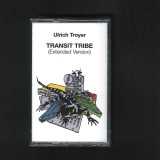
The nearest comparisons to his new album TRANSIT TRIBE can only be established by a synthesis of some of the more adventurous explorations in modern music such as African Head Charge, Jon Hassell, Pole (Stefan Betke), Bill Laswell or even Miles Davis; featuring a diverse selection of artists and friends not only from Vienna and environs but also from around the world, sounds are not so much fused but allowed to float along the continuous flowing tide of warm waves of bass.
Rather than to allow the names of Ulrich Troyer's collaborators be merely listed in the album credits, what they bring to this joyful affair needs to be outlined, albeit briefly: Co-producer credits go to Osman Murat Ertel from Istanbul, who employed a variation on the old foolproof Nick Lowe method for checking out the impact quality of his own sound productions by playing tracks through his car sound system speakers!
Murat is a member of the electro-psych-folk group Baba Zula where he plays electric saz, oscillators and theremin and played a key part in the creative development of the album. Mamadou Diabate, the balafon master originally from Burkina Faso and now resident in Vienna, has developed his own unique technique of playing solos that replicate the sound of three instruments playing in unison; however the multi-talented Mamadou is engaged here on singing and playing the talking drum. From South Tyrol Reinhilde Gamper is a member of the experimental trio Greifer who are bringing the sound of the zither into the twenty-first century using new playing techniques and electronic gadgets. Susanna Gartmayer is an Austrian composer and bass clarinetist specialising in improv and multimedia sound research. Diggory Kenrick has been engaged with creating new dub fusions and also re-energising classic rocksteady and roots reggae classics, renowned for his interventions on flute. Didi Kern is an electronic dance musician and drummer from Vienna with a focus on free improvised music. Hamidou Koita, a singer and multi-instrumentalist, is from a traditional Griot family in Burkina Faso but now resident in Vienna and a regular musical partner of Mamadou Diabate playing drums and calabash. Austrian Lukas Lauermann is both a studio and live musician playing cello, also working on electronic sound design and writing string arrangements. He has recorded extensively and appeared on stage with both Mark Lanegan and Hans-Joachim Roedelius. Martin Mallaun is a Tyrol-born specialist in both the development of the zither in modern music and also as a researcher in the effects of climate change on the vegetation of Alpine ecosystems. Mystica Tribe is the musical alias of Tokyo-based dub/techno producer Taka (Takafumi) Noda. He collaborated with Vienna's own Vegetable Orchestra on 2020's "Transplants (Mystica Tribe Version)". After studying classical percussion Flip Philipp is now a jazz vibraphone player and member of the Vienna Symphony Orchestra. Wolfgang Pfistermüller is a member of the Vienna Trombone Quartet and the developer of the incredible bass-trombone Aurora with its uniquely warm and resonant sound. Roger Robinson is a renowned British poet, winner of many contemporary poetry prizes and member of the experimental music group King Midas Sound. Kwame Yeboah is a Ghanaian born UK based keyboard wizard who tours regularly with Yusuf / Cat Stevens, Ms. Dynamite and Pat Thomas.
So contained on the album is an astonishing mix of musicians and instruments: sounds of cowbells recorded in the South Tyrolean alps processed by modular synthesizers and heavy analogue bass synths combined with instruments such as zither, bass-zither, electro saz, flute, talking drum, trombone, cello, vibraphone, marimba, djembe, contra-alto clarinet, melodica, Farfisa - all bound together by organic live-drums and dub effects.
Liner notes by Steve Barker
- A1: Vajolet Feat Lukas Lauermann, Wolfgang Pfistermüller & Flip Philipp
- A2: Autostrada Del Brennero Feat Diggory Kenrick
- A3: Latzfonser Kreuz Feat Mamadou Diabate & Hamidou Koita
- A4: Lago Di Garda Feat Roger Robinson
- A5: Alfa Romeo 145 Feat Kwame Yeboah
- B1: Feltuner Hütte Feat Osman Murat Ertel
- B2: Avrupa Köprüsü Feat Osman Murat Ertel
- B3: Europabrücke Feat Susanna Gartmayer
- B4: Ancient Atoll Feat Reinhilde Gamper, Martin Mallaun & Flip Philipp
Cassette[14,92 €]
Ulrich Troyer has been producing music now solidly for over twenty years within a largely genre free framework, but whilst navigating forms such as avant-garde, techno, leftfield, field recording, electronica, glitch and ambient it is the aesthetics of dub that guide his creative direction. Not really recognisable in an orthodox form as remixed versions of roots reggae songs but in the way sonics are manipulated with space, the application and layering of delay, reverb and echo that fixes his output well within the scope of what might be called futurist dub.
The nearest comparisons to his new album TRANSIT TRIBE can only be established by a synthesis of some of the more adventurous explorations in modern music such as African Head Charge, Jon Hassell, Pole (Stefan Betke), Bill Laswell or even Miles Davis; featuring a diverse selection of artists and friends not only from Vienna and environs but also from around the world, sounds are not so much fused but allowed to float along the continuous flowing tide of warm waves of bass.
Rather than to allow the names of Ulrich Troyer's collaborators be merely listed in the album credits, what they bring to this joyful affair needs to be outlined, albeit briefly: Co-producer credits go to Osman Murat Ertel from Istanbul, who employed a variation on the old foolproof Nick Lowe method for checking out the impact quality of his own sound productions by playing tracks through his car sound system speakers!
Murat is a member of the electro-psych-folk group Baba Zula where he plays electric saz, oscillators and theremin and played a key part in the creative development of the album. Mamadou Diabate, the balafon master originally from Burkina Faso and now resident in Vienna, has developed his own unique technique of playing solos that replicate the sound of three instruments playing in unison; however the multi-talented Mamadou is engaged here on singing and playing the talking drum. From South Tyrol Reinhilde Gamper is a member of the experimental trio Greifer who are bringing the sound of the zither into the twenty-first century using new playing techniques and electronic gadgets. Susanna Gartmayer is an Austrian composer and bass clarinetist specialising in improv and multimedia sound research. Diggory Kenrick has been engaged with creating new dub fusions and also re-energising classic rocksteady and roots reggae classics, renowned for his interventions on flute. Didi Kern is an electronic dance musician and drummer from Vienna with a focus on free improvised music. Hamidou Koita, a singer and multi-instrumentalist, is from a traditional Griot family in Burkina Faso but now resident in Vienna and a regular musical partner of Mamadou Diabate playing drums and calabash. Austrian Lukas Lauermann is both a studio and live musician playing cello, also working on electronic sound design and writing string arrangements. He has recorded extensively and appeared on stage with both Mark Lanegan and Hans-Joachim Roedelius. Martin Mallaun is a Tyrol-born specialist in both the development of the zither in modern music and also as a researcher in the effects of climate change on the vegetation of Alpine ecosystems. After studying classical percussion Flip Philipp is now a jazz vibraphone player and member of the Vienna Symphony Orchestra. Wolfgang Pfistermüller is a member of the Vienna Trombone Quartet and the developer of the incredible bass-trombone Aurora with its uniquely warm and resonant sound. Roger Robinson is a renowned British poet, winner of many contemporary poetry prizes and member of the experimental music group King Midas Sound. Kwame Yeboah is a Ghanaian born UK based keyboard wizard who tours regularly with Yusuf / Cat Stevens, Ms. Dynamite and Pat Thomas.
So contained on the album is an astonishing mix of musicians and instruments: sounds of cowbells recorded in the South Tyrolean alps processed by modular synthesizers and heavy analogue bass synths combined with instruments such as zither, bass-zither, electro saz, flute, talking drum, trombone, cello, marimba, djembe, contra-alto clarinet, Farfisa - all bound together by organic live-drums and dub effects.
An obscure bit of Brazilian folk rock from the early 70s - recorded with an easygoing, laidback style that's really wonderful! The group's working mostly here in a blend of acoustic guitar and percussion and some of the guitar work is done by Jorge Amiden of O Terco, using a strange three-necked guitar that looks mighty weird in the picture! This instrument seems to be played using a bow at times - creating a "guitar strings" sort of feel that gives the record a bit more class than you might expect from its relatively rootsy setting and there's also some great subtle production on the vocals that compresses them slightly, in a way that links the record to some of the other South American rock of the time. Titles include "O Jogo", "Tributo Ao Sorriso", "Blusa Le Linho", "Voce Pole Ir Alem", "Do Zepo Adiante", "Transe Uma", "Cara Ou Coroa", and "Venha Pisar Na Grama".
Here at Rube Goldberg Series we pride ourselves on having everything you need to complete your ski gear set-up this season. So, whether it's ski bindings, ski goggles, ski poles, helmets, thermals and base layers, or a new 4 track VA record, Trust us. We have it all in our collection.
While you're here, why not check out our stylish new release? Discover tunes from Velvet Velour, Picasso, Bowyer and Kawaii San. Shop our selection online or at your nearest store today and find quality tunes fit for your next adventure to the dancefloor.
As well as increasing cardiovascular fitness and muscle growth, DJing is a thrilling snow sport that allows you to glide across snowy slopes with speed, grace, dexterity. Getting the right records for your build, experience, and terrain type can make all the difference to performance and enjoyment on the dancefloor.
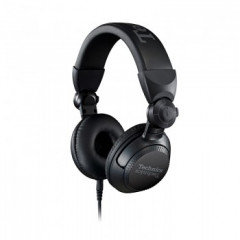
Technics' EAH-DJ1200 DJ headphones have run with the RP-DJ1200 concept and taken it to new heights with more advanced functionality, a better design and superior sound quality that meets all the demands of today's DJs. You'll be able to monitor your beats like never before, even at the biggest clubs and gigs. Extra-large 40mm drivers with CCAW voice-coils deliver clear, detailed sound that stays free of interference thanks to the durable 2,500 mW input and, to match the looks of the SL1200MK7, this robust pair of EAH-DJ1200 headphones are similarly cloaked in black.
For Both Carefree and Careless DJs
Blessed with a lightweight, on-ear design, the Technics EAH-DJ1200 headphones are equipped with a lockable rotating mechanism to suit the style of all DJs, including one-ear monitoring. Because they can be folded up, they won't take up much storage space and Technics agreeably throw in two TRS mini-jack cables plus a TRS jack adapter. It's worth mentioning that these removable cables can be locked into place to prevent them from accidentally coming loose during the set; perfect for both carefree and, dare we say, slightly more careless DJs.
Driver Unit
40 mm
Impedance (with Detachable Coiled Cord)
45 Ω
Sensitivity
106 db / mW
Power Handling (IEC)
2500 mW (IEC)
Frequency Information - Frequency Response (with cord)
8 Hz - 30000 Hz
Operating Temperature Range
0 °C to 40 °C
Weight (without cord)
Approx. 233 g
Weight (with Detachable Straight Cord)
Approx. 251 g
Supplied Accessory
Detachable Straight Cord: Approx. 1.2 m, Detachable Coiled
Cord: Approx. 1.5 m (Extended Length 2.2 mm), Carrying
Pouch, Plug Adaptor (6.3 mm)
Plug
3-Pole 3.5 mm Stereo Plug
Cord - Cord Length (detachable straight cord)
1.2 m
Der DJ1200 begeistert mit einem natürlichen, detaillierten und harmonischen Klang. Auch bei hohem Eingangspegel und den damit verbunden extremen Lautstärken ist der Ton stets verzerrungsfrei. Unabhängig von der Lautstärke sorgt der On-Ear für eine rauschfreie und komfortable Sound-Kontrolle. Der Technics EAH-DJ1200 verfügt über ein sehr geringes Gewicht und ist mit einem 270-Grad-Schwenkmechanismus für beide Ohrmuscheln ausgestattet. Diese sind unabhängig voneinander wegklappbar und variabel arretierbar. Somit kann der EAH-DJ1200 zur Sound-Überwachung auch mit nur einem Ohr verwendet werden und ist flexibel einsatzbereit.Für perfekten Sitz sorgen das gepolsterte Kopfband und die schweißabweisende Kunstleder-Ohrmuschel-Polsterung, welche sich angenehm auf der Haut anfühlt. Darüber hinaus kann der DJ-Kopfhörer für den Transport kompakt zusammengeklappt werden. Zum Lieferumfang gehören ein 1,5 Meter Spiralkabel, ein 1,2 Meter langes gerades Kabel sowie ein 6,3-mm Klinkenstecker-Adapter. Beide Kabel verfügen über einen praktischen Verriegelungsmechanismus, welcher ein versehentliches Ablösen des Kabels effektiv verhindert. Mit seinem modernen Design und der Verwendung hochwertiger Materialien überzeugt der Technics DJ1200 auf ganzer Linie. Durch die matt-schwarze Optik passt der Kopfhörer perfekt zum Technics DJ-Plattenspieler SL-1200MK7 und fügt sich bestens in die Technics DJ-Welt ein.
Treiber
40 mm
Impedanz (mit abnehmbarem Spiralkabel)
45 Ω
Empfindlichkeit
106 db / mW
Frequenzgang
2500 mW (IEC)
Frequenzwerte – Frequenzgang (mit Kabel)
8 Hz – 30.000 Hz
Betriebstemperaturbereich
0 °C bis 40 °C
Gewicht (ohne Kabel)
Ca. 233 g
Gewicht (mit abnehmbarem Spiralkabel)
Ca. 251 g
Mitgeliefertes Zubehör
1,5m Spiralkabel, 1,2m gerades Kabel, 6,3-mm Adapter, Transporttasche
Stecker
3,5-mm-Stereostecker, 3-polig
Kabellänge
1,2m; 1,5m
2024 Repress
The gang of four have a new waxed weapon in their arsenal and as expected, it bites. Three slices of complex futuristic beats with no mercy.
As in previous sound exercises, they have collided in the studio, each one with his preferred tools, recording bites, mutating audios, twisting frequencies, and this is the result:
"MG009" is a mechanical tool constructed over a concrete drum architecture, surrounded with bleeps, distorted drones and cutting hi hats. All the elements come and go wisely creating an obsessive atmosphere.
"SQMD3" follows on similar parameters, fast, distorted, enforced with the essential layers of sound required to make massive damage on a proper sound system.
"SNT0073" closes B side as an extension of the message proposed on the previous cuts: a few elements fighting in a frequency range quest in order to destroy any sign of easyness and vulgarity.
Only for the brave.
To describe an album as "electronic music" has long been an understatement. "Romanticismo siempre" is a good example. Recorded mainly using synthesizers, the album travels a territory that borders on the experimental and the dancefloor, entering at times in both fields.
Andrés Téllez, Delone, states in its title a clear commitment: "an ode to life, to never lose that passion that is the engine that pushes everything, no matter how many obstacles there are along the way, such as love, madness or death". The need to express this is at the origin of the record.
His musical language is rich and varied. Among synthesizers, analog experimentation, drones and psychedelia, many of the subcultures that have shaped what was once called "electronic music" appear. Flashes of trip hop, new age and proto-electronics are amalgamated throughout the album, together with hints of mutant house, breakbeats, IDM and trance. Other genres peripheral to club sounds, such as post-rock or kraut, also appear.
The idea of creating something that could almost be considered a soundtrack is present, but Delone's singularity has taken the album down a different path, using his own musical vocabulary to articulate a narrative that leads him towards his desired destination, keeping experimentation and dance culture, constants in his career, very much in mind.
In 2014 and together with his partner and friend Carlos Trujillo, Andrés created Riverette, a record label that became a record store in the center of Madrid, with his studio in the basement. From there he unleashed his productions as Dos Attack and his first works as Delone. Riverette quickly became a key creative pole in the Spanish electronic underground, and the label has released records by Legowelt, Kornel Kovacs or HAAi.
Throughout the eleven tracks of "Romanticismo siempre", a story materializes in which the protagonism falls on the adrenaline of passion. Through a very personal sound, with a certain introspective vocation, Andrés tells us a wonderful tale with the help of exquisite arrangements and a rich expressiveness.
"Romanticismo siempre" is a polyhedral album that can change with every listen, with every track, and reinterpret itself almost with every playback. It is a complex record, delicate and full of nuances, at the same time charged with a powerful and primitive energy.
repress !
We present you the fifth installment of our white label only vinyl series, Esuoh White 005. Four track V.A. featuring Yann Polewka, Reece Johnson, Ezequiel G & Beaux Arts.
Fresh from their celebrated UK tour, featuring a stand-out performance at London Jazz Festival, Ishmael Ensemble return with ‘Reasons’ the lead single from their forthcoming EP ‘New Era’, a collaborative project with lyricist and MC Rider Shafique.
Ishmael Ensemble’s Pete Cunningham says: “I first came across Rider Shafique about 6 years ago after I heard his piece “I-Dentity” via Bristol’s Young Echo collective & was immediately struck by his powerful way with words. A true master of his craft.This record was an opportunity to lean into the more bass-heavy side of my music taste. I’ve always been a massive fan of dub in all its forms & producers like King Tubby, Adrian Sherwood & Pinch have been a constant source of inspiration over the years. This sound palette coupled with a voice like Rider’s is something I’ve always wanted to make so I’m super happy with what we’ve produced here.
Polish septet EABS apply an innovatve approach to jazz, distlling it
through the prism of hip-hop, blending it with elements of soul, funk and electronic music. ‘Slavic Spirits’ was 2 years in the making and contains 100% original material. They are joined by 22a head-honcho Tenderlonious who lends his exceptonal soprano saxophone and flute playing to all seven tracks.
Afer their very well-received 2017 debut album ‘Repettons (Leters to Krzysztof Komeda)’, focusing on the lesser-known works of the legendary Polish composer, the Wroclaw-based EABS decided to further expand this lead and released two more vinyl records, ‘Live At Jazz Club Hipnoza (Katowice)’ and ‘Kraksa / Svantetc’, the later recorded directly on tape and released via 22a, which crowned the “Kom eda triptych”. The astounding recepton of these releases built up loyal following outside of their natve Poland and whet listeners’ appette for completely new recordings.
For this LP the musicians turned to Slavic mythology and Polish demonology, while pondering upon the contemporary spiritual conditon of Poles. The enigmatc “Slavic melancholy” remains the main inspiraton, as the band tried to extract it from their own DNA. ‘Slavic Spirits’ is an endeavour to get in touch with the world of a long and brutally lost culture which, due to lack of sources, will never be thoroughly explored.
Personnel: Marek Pedziwiatr (piano, synths & vocal), Vojto Monteur (guitar), Pawel Stachowiak (bass), Jakub Kurek (trumpet), Olaf Wegier (tenor saxophone), Marcin Rak (drums), Spisek Jednego (samples, sound fx & percussion), special guest: Tenderlonious (soprano saxophone & flute)
Oliver Rosemann is a DJ and producer from Leipzig, who has been active since the 90’s. During this time, he has made his experience with timeless techno exactly in the time of its creation, which can be seen later in his productions and DJ Sets.
In the Leipzig scene he played numerous live sets in the early 2000s, including at the 1040, one of the legendary clubs of the time. Increasingly, he began to show himself in public not only as a pure live act but also as a track producer. With the collaboration with MasCon called "dualit" he had first big releases on labels like Earwiggle, CLR or Fith Wall Records and also international gigs e.g. in Antwerp.
To date, there are close to 180 tracks and remixes, including 3 LPs, released on labels such as MindTrip, MORD Records, Warm Up Recordings, Pole Group, Stockholm LTD and many more. Pfirter and Oliver started producing together in 2019 and presented their first joint 4 tracker “Alpha EP” in 2020 on MindTrip Music.
Whether as a live act or as a DJ, he knows how to create a dark, driving, ecstatic atmosphere on dance floors. He has already proven this in clubs like Tresor Berlin, Distillery, Institut für Zukunft, About Blanc and also in other countries in Europe. Numerous podcasts recorded by him or live cuts from parties, which were released over the years by renowned crews such as "Reclaim Your City" or "Staub", show this.
And now follows Oliver’s next release on NEXT DOOR with the ND006. The a side is Olivers side with A1-Surface- a track with deep impact and to dance. A2-your highscore- is Olivers remix, grandiosely interpreted to immerse yourself in the universe of patterns. The B side belongs to TC/CM or written out- the computer controlled minds. B1-your highscore- comes in the original danceable and playful at the same time from the turntable. B2-Surface- remix by TC/CM hammers through the PA straight onto the floor.