Suche:police

Styles
Alle
Stephan Eicher - Spielt Noise Boys

2025 Reissue.


Münchenbuchsee, a suburb of Bern, Switzerland. Stephan Eicher is the youngest of three children. His father, a radio and TV repairman, is also a jazz violinist and a sound tinkerer in his spare time. In the family home's converted fallout shelter turned studio, Mr. Eicher experiments with homemade sequencers, tortures handcrafted drum machines, and abuses reel-to-reel tape recorders—all under the fascinated gaze of young Stephan.

The boy quickly develops a musical curiosity, exploring sound through various experiments and wanderings. Alongside his younger brother Martin, Stephan crafts audio plays on a homemade multi-track recorder (essentially several cassette decks hooked together!), which they write, record, add sound effects to, and perform for family and friends. Just a couple of nice kids, really...

Then comes 1972, and Lou Reed's Transformer album changes everything for the Eicher kids. For 13-year-old Stephan, it's a revelation—especially "Vicious", the opening track, which he plays on repeat for months. He convinces his father to buy him an electric guitar. Not stopping there, his father also builds him a tube amp using an old radio.

Then comes adolescence. A rough one. Stephan leaves home at 16 and moves to Zurich. With obvious artistic talent, he persuades his art teacher to help him get into F+F, a radical, alternative art school—despite his young age. Accepted, he starts learning video techniques, determined to become a filmmaker.

At F+F, Stephan organizes Dada-style happenings and concerts with a group of friends known as the Noise Boys. Among them: one of his teachers on bass, Veit Stauffer on drums (who would later found ReR/Recommended Records), his girlfriend Sacha on vocals, and Stephan on guitar. In one of their early performances, they release a remote-controlled mouse covered in dull razor blades into the audience to create panic and chaos. Keeping with this aggressive, confrontational spirit, they once played a concert while wearing headphones blasting Tristan and Isolde, trying to perform their own songs simultaneously—to maximize the cacophony. The goal was always the same: clear the room.

Their “songs,” if you can call them that, followed suit. Take "Hungeriges Afrika", for instance—performed entirely with power drills and some drum feedback.

To make ends meet, Stephan returns to Bern on weekends to work as a waiter at the Spex Club, the city’s main punk venue. On September 16, 1980, during a show by proto-electro group Starter, the police raid the club and arrest everyone. Stephan, who manages to avoid arrest, seizes the opportunity to “borrow” Starter’s gear left behind. He suddenly finds himself in possession of a Roland Promars synth, a Korg MS20, and a gorgeous CR78 drum machine, which he runs through a Big Muff distortion pedal to get that perfect gritty sound.

He then sets out to reinterpret some Noise Boys tracks, reworking them during impromptu sessions recorded on a dictaphone (yes, a dictaphone—now the lo-fi sound makes more sense, doesn’t it?). He ironically titles the resulting cassette "Stephan Eicher spielt Noise Boys" ("Stephan Eicher plays Noise Boys"). This gem features seven tracks, which are the ones reissued here.

Back in Zurich, he visits his friends Andrew Moore and Robert Vogel, who have a DIY cassette duplication setup. They make 25 copies of Stephan Eicher spielt Noise Boys for Stephan and his friends. Robert encourages him to visit Urs Steiger of Off Course Records and play him the tape.

Without much hope, Stephan shows up at Urs’s office. But Urs is instantly hooked and suggests releasing a 7” single. Due to space constraints, they reluctantly drop two of the seven tracks ("Hungeriges Afrika" and "One Second"). As for the musical score featured on the cover—it was randomly chosen and remains a mystery to this day. Calling all music theory nerds!

The 7-inch is pressed in 750 copies and released in the first week of December 1980—a date Stephan remembers well, as it’s the same week John Lennon was killed. Smartly, Urs sends a promo copy to François Murner, Switzerland’s answer to John Peel, who hosts a show on alternative station Sounds. Murner falls in love with the record and starts giving it airtime. To Stephan’s surprise, sales follow—and people actually seem interested in his music.

Even this modest underground success scares Stephan a bit. He stops making music for a year and moves to Bologna, where he works as a programmer at Radio Città, a feminist radio station.

Meanwhile, Stephan’s younger brother Martin, who’s also involved in the punk scene, joins the band Glueams as a singer and guitarist. Glueams, named after the fanzine run by two of its members (drummer Marco Repetto and bassist GT), eventually rebrands as Grauzone. Stephan is invited to their shows to project hacked Super 8 visuals live on stage.

Urs Steiger, now working on a compilation titled Swiss Wave – The Album, asks Grauzone to contribute alongside bands like Liliput, Jack and the Rippers, The Sick, and Ladyshave (Fall 1980).

For the album, Martin tasks Stephan with producing their recording sessions. Under Stephan's artistic direction, two tracks emerge: "Raum" and "Eisbär". During "Eisbär", Martin plays a minimalist bass line borrowed from post-punk band The Feelies (just an open string). Drummer Marco Repetto struggles to keep time. Later that evening, unhappy with the takes, Stephan builds a four-bar drum loop from a ¼-inch tape and uses it instead of the flawed original. He then adds bleepy synths and wind sounds to complete the track’s icy vibe before handing it over to Urs.

The Swiss Wave – The Album compilation is released quietly at first, but things snowball thanks to "Eisbär", which eventually becomes a smash hit—selling over 600,000 singles.

Meanwhile, Stephan plays in a rockabilly band called SMUV (named after Switzerland’s social security agency) and begins producing artists, including the debut album of Starter (1981), which includes a more pop-oriented version of "Minijupe".

By early 1982, Stephan starts spending time with the post-punk girl band Liliput (formerly Kleenex). They’re older than him, and he happily drives them around in his Renault Major, acting as their roadie.

By 1983, Grauzone—signed to the major label EMI, which turned out to be a misstep—is falling apart. Stephan begins to pivot toward a more mainstream pop sound with his debut solo album Les Chansons Bleues.

But that... is already another story.

Auf Lager

Bei uns am Lager und sofort versandfertig

23,11
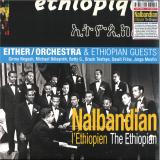
NALBANDIAN THE ETHIOPIAN & EITHER/ORCHESTRA - NALBANDIAN THE ETHIOPIAN (ETHIOPIQUES)

The Éthiopiques series returns! Essential archive recordings from an extremely fruitful period in Ethiopian music.

Before “Swinging Addis” took over the world, there was Moussié Nerses Nalbandian — the Armenian-born composer who shaped modern Ethiopian music. Mentor, arranger, and pioneer, he laid the foundations of Ethio-jazz.

This Éthiopiques volume revives his forgotten legacy, recorded live by Either/ Orchestra First issue ever with new exclusive photos and in depth liner 8-page insert.

“Ethiopian jazzmen are the best musicians that we have seen so far in Africa.
They really are promising handlers of jazz instruments.”

Wilbur De Paris
(1959, after a concert in Addis Ababa)

አዲስ፡ዘመን። *Addis zèmèn* **A new era.**
The time is the mid-1950s and early 1960s, just before "Swinging Addis" bloomed – or rather boomed – onto the scene. Brass instruments are still dominant, but the advent of the electric guitar, and the very first electronic organs, are just around the corner. Rock’n'Roll, R’n’B, Soul and the Twist have not yet barged their way in. Addis Ababa is steeped in the big band atmosphere of the post-war era, with Glenn Miller's *In the* *Mood* as its world-wide theme song, neck and neck with the Latin craze that was in vogue at the same period. Life has become enjoyable once again, with the return of peace after the terrible Italian Fascist invasion of Ethiopia (1935-1941). The redeployment of modern music is part and parcel of the postwar reconstruction. *Addis zèmèn* – a new era – is the watchword of the postwar period, just as it was all across war-torn Europe.
The generation who were the young parents of baby boomers** were the first to enjoy this musical renaissance, before the baby boomers themselves took over and forever super-charged the soundtrack of the final days of imperial reign. Music is Ethiopia's most popular art form, and very often serves as the best barometer for the upsurge of energy that is critical for reconstruction. Whether it be jazz in Saint-Germain-des-Prés or the *zazous* who revolutionised both jazz and French *chanson* after the *Libération*, be it Madrid's post-Franco Movida, or Dada, the Surrealists and *les années folles* that followed World War I, the periods just after mourning and hardship always give rise to brighter and more tuneful tomorrows. Addis Ababa, as the country's capital, and the epicentre of change, was no exception to this vital rule.

**Two generations of Nalbandian musicians**
Nersès Nalbandian belonged to a family of Armenian exiles, who had moved to Ethiopia in the mid-1920s. The uncle Kevork arrived along with the fabled "*Arba Lidjotch*", the** "*40 Kids*", young Armenian orphans and musicians that the Ras Tafari had recruited when he visited Jerusalem in 1924, intending to turn their brass band into the official imperial band. If Kevork Nalbandian was the one who first opened the way of modernism, pushing innovation so far as to invent musical theatre, it was his nephew Nersès who would go on to become, from the 1940s and until his death in 1977, a pivotal figure of modern Ethiopian music and of the heights it. Going all the way back to the 1950s. Nothing less. And it is Nersès who is largely to thank for the brassy colours that so greatly contributed to the international renown of Ethiopian groove. While the younger generations today venture timidly into the genealogy of their country's modern music, often losing their way amidst a distinctly xenophobic historiographical complacency, many survivors of the imperial period are still around to bear witness and pay tribute to the essential role that "Moussié Nersès" played in the rise of Abyssinia's musical modernity.
Given the year of his birth (15 March 1915), no one knows for sure if Nersès Nalbandian was born in Aintab, today Gaziantep (Turkiye/former Ottoman Empire) or on the other side of the border in Alep, Syria... What is certain is that his family, like the entire Armenian community, was amongst the victims of the genocide perpetrated by the Turks. Alep, the place of safety – today in ruins.
Before Nersès then, there was uncle Kevork (1887-1963). For a quarter of a century, he was a whirlwind of activity in music teaching and theatrical innovation. *Guèbrè Mariam le Gondaré* (የጎንደሬ ገብረ ማርያም አጥቶ ማግኘት, 1926 EC=1934) is his most famous creation. This play included "ten Ethiopian songs" — a totally innovative approach. According to his autobiographical notes, preserved by the Nalbandian family, Kevork indicates that he composed some 50 such pieces over the course of his career. This shows just how much he understood, very early on, the critical importance of song as Ethiopia's crowning artistic form. Indeed, for Ethiopian listeners, the most important thing is the lyrics, with all their multifarious mischief, far more than a strong melody, sophisticated arrangements or even an exceptional voice. (This is also why Ethiopians by and large, and beginning with the artists and producers themselves, believed for a long time — and wrongly — that their music could not possibly be exported, and could never win over audiences abroad, who did not speak the country's languages).

Last but not least, one of Kevork's major contributions remains composing Ethiopia's first national anthem – with lyrics by Yoftahé Negussié.
Nersès Nalbandian moved to Ethiopia at the end of the 1930s, at the behest of his ground-breaking uncle. Proficient in many instruments (pretty much everything but the drums), conductor, choir director, composer, arranger, adapter, creator, piano tuner, purveyor of rented pianos,... he was above all an energetic and influential teacher. From 1946 onwards, thanks to Kevork's connexion, Nersès was appointed musical director of the Addis Ababa Municipality Band. In just a few years, Nersès transformed it into the first truly modern ensemble, thanks to the quality of his teaching, his choice of repertoire, and the sophistication of his arrangements. It was this group that would go on to become the orchestra of the Haile Selassie Theatre shortly after its inauguration in 1955, which was a major celebration of the Emperor's jubilee, marking the 25th anniversary of his on-again-off-again reign.

At some point or other in his long career, Nersès Nalbandian had a hand in the creation of just about every institutional band (Municipality Band, Police Orchestra, Imperial Bodyguard Band, Army Band, Yared Music School…), but it was with the Haile Selassie Theatre – today the National Theatre – that his abilities were most on display, up until his death in 1977. To this must be added the development of choral singing in Ethiopia, hitherto unknown, and a sort of secret garden dedicated to the memory of Armenian sacred music, and brought together in two thick, unpublished volumes. Shortly before his death (November 13, 1977), he was appointed to lead the impressive Ethiopian delegation at Festac in Lagos, Nigeria (January-February 1977).

His status as a stateless foreigner regularly excluded him from the most senior positions, in spite of the respect he commanded (and commands to this day) from the musicians of his era. Naturally gifted and largely self-taught, Nerses was tirelessly curious about new musical developments, drawing inspiration from the very first imported records, and especially from listening intensely to the musical programmes broadcast over short-wave radio – BBC *First*. A prolific composer and arranger, he was constantly mindful of formalising and integrating Ethiopian parameters (specific “musical modes”, pentatonic scale, and the dominance of ternary rhythms) into his “modernisation” of the musical culture, rather than trying to over-westernise it. It even seems very probable that *Moussié* Nerses made a decisive contribution to the development of tighter music-teaching methods, in order to revitalise musical education during this period of prodigious cultural ferment. Flying in the face of all the historiographical and musicological evidence, it is taken as sacrosanct dogma that the four musical modes or chords officially recognised today, the *qǝñǝt* or *qiñit* (ቅኝት), are every bit as millennial as Ethiopia itself. It would appear however that some streamlining of these chords actually took place in around 1960. It was only from this time onward that music teaching was structured around these four fundamental musical modes and chords: *Ambassel*, *Bati*, *Tezeta* and *Antchi Hoyé*. A historical and musical “details” that is, apparently, difficult to swallow, especially if that should honour a *foreigner*. Modern Ethiopian music has Nersès to thank for many of its standards and, to this day, it is not unusual for the National Radio to broadcast thunderous oldies that bear unmistakable traces of his outrageously groovy touch.

Auf Lager

Bei uns am Lager und sofort versandfertig
22,06
FAM Disco - Cinematic Travel EP

Multi-Instrumentalist composer and producer Paolo Fedreghini aka FAM Disco is back on Groove Culture with a stellar new four-track EP Titled "Cinemetic Travel". The project, all played live, including the drums, is inspired from 70s movies soundtracks. It's hard to describe in words the atmosphere these tracks create. An EP worth listening to. High-quality music, truly well produced.

Auf Lager

Bei uns am Lager und sofort versandfertig

14,24
Various - Generation V EP

The latest release from the Villains Inc. camp delivers an Italian-made electro gem.

And as the saying goes: Villains do it better! After the soulful "Time To Go Back EP" back in 2022, the "Generation V EP" (limited to 300 copies) marks the arrival of fresh talents joining the collective. This new wave steps in after the tragic loss of some of the label key figures, carrying the torch and keeping the Villains Inc. spirit alive.

Side A opens with "Vaccin", a hypnotic yet funky electro-bass track by Deepvision and Lefka. Despite their young age, the duo U.A.G.L.I.O. shows remarkable musical maturity and delivers a powerful debut. Expect to hear much more from this awesome team in a near future.

Next comes "FM Resistance" by Jack Bags (half of Dr. Boomer). A synthetic ride of swirling URish style sequences, darkened by moody strings. Breakdance moves guaranteed on the dancefloor!

On the flip, Index Case teams up once again with the late X-Beat (RIP) to provide a furious "Against" anthem, calling for "revolution against the government, against the police". The frantic rhythm and unsettling atmosphere push the track into gloomier territory in a powerful way.

Closing the record, Antizer0’s founder Zora Neti concludes the 12" with "Stereocash_(Pt.2)", a downtempo storm built upon eerie voices and mental sororities. A haunting yet masterful finale.

The legacy of the original V members lives on. Special mention to Simonloop aka Urbanmagic, one of the OG Villains, whose artwork on the B-side captures the grit of the music and makes the vinyl worth owning on its own.

From start to finish, Generation V EP is a masterclass. Crafted with the unmistakable Villains Inc. sound by label owner Gab.Gato, it’s pure underground quality. This record is dedicated to the memory of X-Beat and Yo Flava. Once a Villain, forever a Villain. Support the underground!

Auf Lager

Bei uns am Lager und sofort versandfertig

12,82
Havantepe - Zero-G

Havantepe

Zero-G

exclSPCLNCH11
spclnch
02.10.2025

The black and white hoverbike flew out of the fog at breakneck speed and raced through the neon-lit urban jungle of the Havan metropolis. It manoeuvred steadily between the skyscrapers, trying to throw off the tail of the corporal's convoy, which was getting closer by the moment, preventing it from sneaking away with the seemingly easy-to-get Zero-G prototype. This weapon could create an anti-gravity field with a single shot and disable even the largest battle cruiser. That's why an elite squad of cyber-soldiers equipped with modified implants and gadgets was sent in pursuit not to allow them to ease off for a second.


With a sharp steering wheel jerk, Spacelunch turned off the main street and into a narrow alley. "Your turn!" – He shouted insistently over the engine's roar. Cat rose from the back seat, took aim, and deftly fired his blaster. In a pall of sparks and smoke, the pursuer's hoverbike spun out of control and crashed into the building. Gritting their teeth, the friends raced through the winding maze of obstacles and tight turns. All senses were heightened with excitement. They could see a gap ahead and a way out into the slums.


Suddenly, a heavily armed police drone blocked the road, aiming its red gun lights at them. Spacelunch decisively grabbed Cat and jumped into the so-fortunately spotted sewer manhole, barely managing to dodge the gunfire barrage. After landing in a pitch-dark narrow tunnel, they moved on, with every step feeling the growing tension in the air and realizing that they could be found out at any moment. The darkness seemed endless. The only consolation was that they had the prototype in their hands, and now all they had to do was get to the spaceship and get off this freaking planet.

Auf Lager

Bei uns am Lager und sofort versandfertig

13,40
dj sniff - Turntable Solos

dj sniff

Turntable Solos

12inchCREP122
Discrepant
15.09.2025

After the conceptual depth of "Parallel Traces of the Jewel Voice" (2021), dj sniff returns to Discrepant with a more direct and visceral document: Turntable Solos.

Composed from live recordings made during the latter half of 2024, Turntable Solos captures dj sniff’s improvised performances in their rawest form. At the core of his setup is Cut ’n’ Play, a software sampler he originally built in Max / MSP in 2007. Since then, he has continued developing custom tools and instruments that extend what Derek Bailey called the “instrumental impulse” — the tactile, responsive relationship between musician and machine that defines improvisation.

Following a summer 2024 tour of Japan with Gonçalo Cardoso, sniff was encouraged to document and release a selection of his live sets. Not long after, a performance at 20α (Alpha) in Hong Kong would become the emotional and conceptual anchor for the project.

In the liner notes, sniff reflects on the eerie parallels between recent footage of protestors in Los Angeles — assaulted by police using so-called “less-lethal” weapons, and civilians being abducted into detention centers — and the 2019 Hong Kong protests. A place once filled with personal nostalgia began to feel like a grim foreshadowing of what might unfold in Western societies.

In this turbulent context, 20α stands out as a space of resistance and renewal — a beacon for a new generation of experimental musicians, growing in defiance of increasing censorship and surveillance. "Turntable Solos" is both a personal statement and a public act of sonic resilience.

Auf Lager

Bei uns am Lager und sofort versandfertig

19,54
Various - Gabriele Poso presents: Ritmo Italiano 'Unspoken sounds of Italian Tamburo' LP

Mr Bongo proudly presents Ritmo Italiano ‘Unspoken Sounds of Italian Tamburo’ a captivating compilation of percussive-driven, Italian gems curated by Sardinian multi-instrumentalist, percussionist and producer, Gabriele Poso. A journey into the heart of Italian musical history, it celebrates Italy’s rich rhythmic traditions, showcasing a selection of genre-traversing, Italian treasures from the ‘60s to the early ‘90s. Honouring the timeless rhythms of Italian percussion masters, alongside a brand-new exclusive composition by Gabriele, ‘Ritmo Italiano’ shines a light on the universal, primal language of the drum.

A connection sparked from an early age; percussion has always deeply resonated with Gabriele. It led to years of studying percussion traditions across Cuba, Puerto Rico, and Brazil, crafting his own songwriting skills in the process. An acclaimed producer and compiler, his releases on Yoruba Records, BBE and Soundway Records have garnered global support. Yet a growing need to rediscover the essence of his country’s cultural heritage laid the foundations for this new compilation.

In Gabriele’s own words, “Italy has always been a crossroads of civilizations, with influences from the Mediterranean, North Africa, the Middle East, and Europe converging over centuries. Ports like Naples, Genoa, and Venice played a crucial role as gateways for musical exchange, a melting pot of sounds and cultures brought by sailors, merchants and travellers. These influences blended with Italy’s own folk and religious traditions, creating Italy’s unique and emotionally resonant rhythms.”

Across the 12 absorbing tracks, there’s jazz influences, Italian library music aesthetics and experimental beats mixing with Afro-Cuban and Mediterranean rhythms. It’s a broad selection anchored by the drums. The synth-heavy, ‘80s jazz funk flavours of Gegè Munari's ‘Police Man’, sit side-by-side with the samba-infused ‘Napulitano D' 'O Brasil’ by Don Marino Barreto Jr. Tribal, earthly energy radiates from Naco’s ‘Volando Con Milton’, with Tullio De Piscopo serving up cosmic disco brilliance, and blistering jazz funk mastery coming courtesy of Agostino Marangolo. Taking the name of the compilation, a new original track by Gabriele, ‘Ritmo Italiano’, blends traditional rhythms with contemporary energy, Afro-Latin influences with Italian jazz essence. Recorded live in one take, it captures a raw, unfiltered vibe.

“Each track tells a story, connecting the past with the present, and highlighting the deep-rooted traditions that shape Italy’s rhythms. The collection also offers a glimpse into the diversity of Italian music with a variety of styles from the organic, earthy beats to the more experimental and modern takes on traditional rhythms. It’s a reflection of how these rhythms have not only shaped Italian culture but also influenced global music.”

Auf Lager

Bei uns am Lager und sofort versandfertig

25,17
Guido & Maurizio De Angelis - Squadra Antifurto LP

Here at Four Flies, we kind of feel we need a bigger word than 'proud', this time, to present, in collaboration with Beat Records, the first-ever release of the original soundtrack written in 1976 by Guido & Maurizio De Angelis for the legendary Squadra Antifurto, the second chapter of the comedy-infused crime saga directed by Bruno Corbucci and starring Tomas Milian as the iconic Italian Police Marshal Nico Giraldi.

The excitement in this case is nothing short of gigantic, difficult to rein in for those who, like ourselves, grew up adoring the character played by Milian as one of our cult heroes, and dreaming that the soundtracks of the first three films in the saga – the only ones composed by the De Angelis brothers – would one day be released.

Since the launch of our label, Squadra Antifurto has been at the top of the list of film scores we most wanted to release. Until a few months ago, this dream of ours seemed destined to remain just that, so strong was the conviction in all of us that the master tapes were definitively lost, that they had forever vanished into thin air. That's why their recovery, made possible by Maurizio De Angelis himself and the persistence of our friends at Beat Records, is an extraordinary feat.

Nearly 50 years after it was first heard in cinemas, the soundtrack penned by the De Angelis brothers is resurrected in its entirety and can finally shine its incredible power all over us.

Beautifully seeping through this score – like many others composed by the golden duo in the 1970s – are elements from the Italian, and especially Roman, folk tradition, for instance in the warm, heartfelt ballad sung by Alberto Griso, "E nun ce voio sta," which first plays in the opening credit sequence and is then reprised in various forms throughout the film, culminating with the soul-stirring orchestral version that closes the album's tracklist.

But as in any Italian crime film worthy of that name, a different soundscapetakes centre stage: it's the music that accompanies the countless scenes of tension, action, and pursuit that punctuate the film, and which has made us fall madly in love with this score.

The main theme is a prog-funk joyride, drawing inspiration from the traditional tarantella but elevated to irresistible energy thanks to a rock orchestration featuring psychedelic flutes, wild percussion, distorted electric guitars, piano chords, and various feedback and delay effects.

The resulting groove is just mind-blowing, and we almost can't believe it's finally available on a record, completely remastered for vinyl.

We really couldn't be prouder, and dedicate this release to all passionate fans of Italian crime films, the De Angelis brothers, and Tomas Milian aka Nico Giraldi.

Available starting April 12th on standard black vinyl and limited coloured vinyl (transparent amber, limited to 300 copies).

Auf Lager

Bei uns am Lager und sofort versandfertig

33,19
Torn Hawk - Flip To Raw

Torn Hawk

Flip To Raw

12inchFRS031
Fixed Rhythms
14.02.2025

Torn Hawk is no newcomer…he’s been lurking in the corners, creeping in and between various arts worlds for well over a decade: spoken word slice of life narrations as heard on NTS Radio and Trilogy Tapes; more guitar-oriented song structural work on Mexican Summer; extensive videography (PPU Party Volumes One and Two along with music videos for Torn Hawk as well as Bicep, Xosar, and more); and more beat-focused work as seen on Unknown To The Unknown and as is featured here on his 12” for Fixed Rhythms.

Euphoria in a concrete rainforest. The joys of plumbing the depths of your own inner darkness. 80s synth sounds with soaring guitars and police sirens and rhythmic vocal snips. Distorted bass line bombers. S l o w e d down breakbeats. Offkilter, stomping grooves for the seasoned freaks. Mid-tempo heavy hitters fit for those thirsty for slime and hungry for grit. Step inside and get your fill!

Credits:
Mastered by Dietrich Schoenemann.
Design by Nick Owen.
Distributed by One Eye Witness.

Auf Lager

Bei uns am Lager und sofort versandfertig

13,40
Various - A.T.R 0424

Various

A.T.R 0424

12inchART001
Spherart Records
04.12.2024

SPHERART presents A.T.R 0424 V.A 001 a work of art created exclusively to break the dance floor!
This Various Artists has with the participation of great artists like Furz, Stefeano Andriezzi, Agustin Barbei, Desirée Falessi & Rindeau who are giving a lot to talk about in the scene with their sick and powerful sounds to make everyone move the universe of the clubs.

This vinyl has 4 tracks that each of them will take you on a mystical journey with sounds of 90’s house, electro & acid that will take your ears to another dimension entering in 2 dualities of the art sphere.

Auf Lager

Bei uns am Lager und sofort versandfertig

12,40
MARTÍN LOPEZ Y SUS ESTRELLAS - COCINANDO LP

In 1969, singer and police lieutenant Pedro Gregorio López started recording a series of instrumental tracks and songs on the MAG record label in Peru, ranging from guaracha to cumbia, all cooked with musical eclecticism and simmered to appeal to a wide audience. Many of these musical ingredients combined on the 1971 album entitled "Cocinando", in reference to the similarities between Peruvian cooking and tropical music. López began his career as a singer and orchestra conductor many years earlier, when he joined the backing singers for Lucho Macedo's Sonora. After completing his police training, he adopted the stage name Martín López, in order to preserve the anonymity his job required. Between 1969 and 1971 Martín López y sus Estrellas recorded all the tracks comprised on this album, including salsa, guarachas, rumbas, chichas and boleros, proving their knowledge and mastery of the tropical music lexicon. It is not surprising since the orchestra was made up of the most talented label’s session stars: including the double bassist Joe di Roma, singer Pablo Villanueva "Melcochita", percussionists Ñiko Estrada and Coco Lagos, and trumpeter Tito Chicoma. "Cocinando" is an epic historical treasure that captures the explosive impact of the tropical music movement on Peruvian culture.

Auf Lager

Bei uns am Lager und sofort versandfertig

27,69
Alborosie - Soul Pirate

Alborosie

Soul Pirate

12inchEVLP012TY
Evo Sound
17.09.2024

The Soul Pirate album was the result of Italian reggae star Alborosie's six years at Geejam studios in Jamaica and in partnership with local artists. Featuring some of Alborosie's most popular tracks like "Kingston Town" and Herbalist", this is part of the evosound 20th Anniversary special re- release collection.
The album will be available on 180g vinyl Transparent Yellow LP.

Auf Lager

Bei uns am Lager und sofort versandfertig

40,55
Lee "Scratch" Perry - King Scratch (Musical Masterpieces from the Upsetter Ark-ive) 4x12"
 
22

Boxset !

Overview
Arguably the greatest Jamaican record producer of all time, Lee ‘Scratch’ Perry was instrumental in transforming the island’s national sound throughout the Sixties and Seventies, with his unique approach to music making pushing the music beyond previously perceived boundaries.

To mark the first anniversary of his passing, the very best of his work is showcased across a number of products, all of which effectively demonstrate why Perry was widely venerated figure for so long..

The deluxe box set comprises four vinyl LPs and four CD sets featuring his best known and most influential recordings including a previously unreleased mix of Junior Murvin’s powerful ‘Police And Thieves’, UK chart-buster ‘Hurt So Good’ by Susan Cadogan and the Upsetters’ boss reggae classic ‘Return Of Django’, as well as numerous major Jamaican hits.

Aldo included in the set is a 50 page fully illustrated page book, penned by Scratch’s official biographer, David Katz and featuring an array photos by celebrated photographer Adrian Boot, and a newly designed two sided full colour 24” x 24” poster.

The 2x gatefold LP and 2x CD set collection focus upon of the legendary music-maker’s best known productions from the Sixties and Seventies, performed by some of the giants of Jamaican music, with both extensive notes on the man whose talent and imagination took reggae to new heights of excellence.

Auf Lager

Bei uns am Lager und sofort versandfertig

83,99
Various - Funky Chimes: Belgian Grooves From The 70's Part 2 (2x12")

2024 Repress

2LP gatefold with liner notes, 180gr vinyl. 'Funky Chimes' is a two-hour collection of excellent and unique grooves. It contains 27 of the most interesting yet long forgotten Belgian dance tracks from the seventies.

'Funky Chimes' is a two-hour collection of excellent and unique grooves. It contains 27 of the most interesting yet long forgotten Belgian dance tracks from the seventies, when a generation of extremely gifted and versatile musicians experimented with funk, jazz, latin and other grooves.
'Funky Chimes' is in many ways the logical follow up to 2014's highly acclaimed compilation 'Funky Chicken'. Uncovering a blind spot in Belgium's musical heritage and unearthing a diverse collection of hidden treasures. 'Funky Chicken' has induced a renewed interest in Belgium's rare grooves from the seventies, which until then had never been regarded a genre worth mentioning. Having said that, this second instalment is much more than just a fast sequel or a batch of leftovers. The music's quality matches that of its predecessor, but the treasure hunt was even more adventurous, and the stories behind some of the nuggets even more gripping.

Auf Lager

Bei uns am Lager und sofort versandfertig

22,90
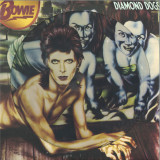
David Bowie - Diamond Dogs LP

David Bowie

Diamond Dogs LP

Pict-Vinyl5054197816413
Parlophone
22.05.2024

On 24th May, 2024, the exact day of its Golden Jubilee, Diamond Dogs will be issued as a limited edition 50th anniversary half-speed mastered LP. The first single from the album, ‘Rebel Rebel’, reached number 5 in the UK and the album would also reach similar heights on both sides of the Atlantic reaching number 1 in the UK and number 5 in the USA.


This new pressing of Diamond Dogs was cut on a customised late Neumann VMS80 lathe with fully recapped electronics from 192kHz restored masters of the original master tapes, with no additional processing on transfer. The half-speed was cut by John Webber at AIR Studios


The writing of the album was influenced by Bowie not being able to secure the rights for a theatrical production of George Orwell’s 1984 and the work of William S. Burroughs, whom Bowie had interviewed for Rolling Stone in November 1973. The songs on the album created an urban apocalyptic scenario with Bowie appearing on the cover as a controversial half-man, half-dog hybrid painted by the Belgian artist Guy Peellaert from photos by the world-renowned photographer Terry O’Neill. Since its release, tracks from Diamond Dogs have been covered by artists such as Beck, Tina Turner, Duran Duran, Def Leppard, Joan As Police Woman, Dead Or Alive and The Struts.

Auf Lager

Bei uns am Lager und sofort versandfertig

35,25
Loradeniz / Kems Kriol - Tegenlicht / Rotterdam in de Jaren 90 LP

Nous'klaer Audio and Sound & Vision's RE:VIVE initiative have teamed up for the third and final LP in their film scoring trilogy. Capping off with a soundtrack made for a progressive, angular take on a color-soaked, geometric educational archival film. Combined with a soundtrack for a film that is a personal intensifier to the city of Rotterdam, which is the home of Nous'klaer Audio. The collaboration invites two musicians to compose for these archival films from the collection of Sound & Vision, the national media archive of the Netherlands. This final instalment features through and through Rotterdammer, Kems Kriol and the Amsterdam based Turkish composer, pianist and DJ Loradeniz. Kems Kriol accompanies the amateur documentary collage film "Rotterdam in de Jaren 90", a dark period of strife, economic and social crisis for the now booming metropolis, with the compassion and empathy of someone who experienced those years first-hand but with enough time removed to reflect with heart. Loradeniz angularly and precisely moves her way through the delicate film "Tegenlicht", a surprisingly colorful and fluid educational film about painting, a bold juxtaposition that propels the film into the 2020s. Extended info: Side A, Tegenlicht (English: back lit) is a 1969 education film by Ton Gramsbergen. The short meditative film, follows stained glass artist Leo Hofman through his entire workflow to create beautifully abstract stained glass window panes. Loradeniz?angularly and precisely moves her way through the delicate Tegenlicht creating a bold juxtaposition that propels the film into the 2020s. Employing processed vocal work, deep dry kicks, and jarring percussion-- reminiscent of scratching glass-- Loradeniz's haunting modernization suits the cinema and the club equally, a testament to the rising composer's fluid versatility and creative prowess as a musical pantomath. Side B, Rotterdam in de Jaren 90 directly contrasts the zoomed in artistry of Tegenlicht. The amateur documentary Super 8 footage captures Rotterdam in one of its most tumultuous times from police brutality, poverty, drugs, violence, racism and the city's ongoing architectural modernization. Kems Kriol, who lived in Rotterdam during this time period, brings a deeply emotional weight to the Ed Millecam amateur documentation, as an artist with the compassion and empathy of who experienced those years first-hand but with enough time removed to reflect with heart. Kems Kriol's influences from modern and avant garde composers, jazz, acid bass lines and field recording Kems Kriol made at different locations featured in the film equate to a musical collage wholly comparable to the city's diverse population. The prior installments in this series featured Nous'klaer Audio staples, Ranie Ribeiro, Mattheis, Thessa Torsing (upsamy) and Tammo Hesselink.

Auf Lager

Bei uns am Lager und sofort versandfertig
12,40
Take Vibe - Golden Brown / Walking On The Moon

2020. Full On Lockdown: Musician LaurenceMasonputs together this off the wall idea meshing together two of his biggest musical heroes, Dave Greenfield of the tough 1970's proto-punk band The Stranglers with the oh so cool 1960's jazz of Dave Brubeck. He puts up his demo on Youtube not really expecting much in the way of feedback. And gets ONE MILLION hits. And hundreds of requests for a release. Jazz Room Records Head Honcho Paul Murphy says "Do you wanna record that and release it?"."Affirmative!" The result is this grooving Soulful and Funky Jazz version of "Golden Brown". We're rush releasing this as when announced we were swamped with requests asking when it will be available.

On the "B" side is a languid and super cool version of "Walking On The Moon", originally by 80's Supergroup The Police.

Each copy of the Take Vibe E.P. will contain a Cut Out and Keep Fully Customizable Front Cover Sticker Sheet

This is just a taster for what we're confident will be a must have album to be readied for 2021 release.

Auf Lager

Bei uns am Lager und sofort versandfertig

15,08
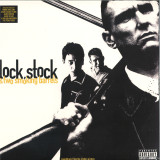
Various - Lock Stock And Two Smoking Barrels 2x12"
 
27

Originally released on Island Records in September 1998, the soundtrack to the box-office smash film, written and directed by Guy Ritchie, quickly became a must-own album, and is frequently cited as one of the best movie soundtracks of all time.

Lock, Stock and Two Smoking Barrels redefined the British gangster film and established Guy Ritchie as one of the greatest directing and writing talents of his generation. Using a frenetic mixture of filmic styles, humour, violence, breakdown of the fourth wall, narration, and vast amounts of swearing, it is hard to imagine a time when this film and its influence was not around. It made a star of the-then unknown Jason Statham, and, amazingly, hard man footballer Vinnie Jones, who as Big Chris, had several scene-stealing moments. Taking his cue from Quentin Tarantino, who had been meticulously curating his film soundtracks since the early 90s, Ritchie made the music to his film tell its own story, complete with memorable snatches of dialogue between many of the tracks.

It offers a beautifully eclectic selection of songs from the preceding three decades, plus then-current artists providing some of their best material, such as Hundred Mile High City by Ocean Colour Scene or E-Z Rollers' drum'n'bass masterpiece Walk This Land. Of the heritage tracks, Dusty Springfield sings her sultry take on Spooky; James Brown appears twice with The Boss and The Payback; The Stooges with I Wanna Be Your Dog, and two versions of Pete Wingfield's masterful one-hit-wonder 18 With A Bullet; in its 1975 original and a contemporary cover by Lewis Taylor and Carleen Anderson. And this is only half of it.

Auf Lager

Bei uns am Lager und sofort versandfertig

40,29
Artikel pro Seite:
N/ABPM
Vinyl