
12
pré-commande13.03.2024
il devrait être publié sur 13.03.2024
20,59 €
il devrait être publié sur 13.03.2024

NYC speed rockers PONS are wound up and hot for skronk on The Liquid Self, a golden spiral into insanity at sea surfacing on cassette and streaming October 6, 2023. Besieged by a lighthouse panopticon of pummeling, engine-room percussion, The Liquid Self rises higher than the tides of destiny. These eleven songs churn like a gluttonous maelstrom consuming everything in its path. The Liquid Self chums indie rock’s murky waters with bloody chunks of Lightning Bolt, Van Halen and King Crimson to lure PONS’ mythical and unhinged rock ‘n roll creation to the surface. Harpoons in hand, the dual drums and guitar trio swing, shuffle and strut across oceanic horizons of playful, unhinged garage-prog-pop inhabited by a cast of unreliable narrators; bottom feeders carrying the entire ocean’s weight on their polyrhythms.
On the single “Coral King,” PONS usurp noise rock’s old guard while pledging fealty to the dystopia under the sea with a foamy, froth-mouthed manic industrial scuzz-prog rant seething with sludgy, dissonant bile oozing from every sour note. Furious violin-fuzz riffs and a chorus of lost souls lead the procession at this brutal coronation of the damned.
“Sinking Feeling” hangs ten with bright and beachy major chords anchored by fleet-flippered guitar solos breaching the surf like suppertime at SeaWorld. Chaos reigns on “Queen Conch,” soaking the splash zone with misty waves of undulating percussion and tsunami force sheets of six-string shredding. Barbed post-punk rager “Hooks” swallows the bait whole—and it turns out PONS fish with dynamite.
il devrait être publié sur 16.02.2024
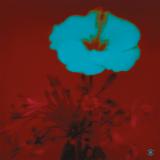
With Sunrise and the Life We Live, John Beltran returns to his ambient techno roots, the sound that garnered him global appeal in the 1990s.
Through ten tracks, the album journeys through lush, aerated textures and beatless expanse. Hypnotic grooves deepen and bloom in a flow of shapes and colors, creating a sound that is both meditative and full of life.
Thirty years after the release of his seminal Ten Days of Blue, Beltran's musicianship, vision and desire to produce remain at a fever pitch. With Sunrise and the Life We Live his gift of extracting emotion from the universe and turning it into
a unique musical experience puts him in a class of his own.
Disponible en stock et prêt pour l'expédition

Danish Subnesia present their debut Vinyl release, combining tracks from their first Album 'The Beginning' (2023) & 'Range of Colors' (2025) assembling a sincere set of homespun pop beats teeming with Balearic soul, funk and jazz flavors. As Subnesia, producer Anders Ponsaing and saxophonist Michael Rune play it by ear. Following intuition rather than fixed genres or styles, the Danish duo have struck upon a creative vein of pop music that is both daring, poignant and wholly unpretentious. Strong grooves, often reminiscent of the hip-hop and r’n’b-tinged chart pop of the 2000’s, adorned with colorful instrumental leads and characteristic guest vocals.
Disponible en stock et prêt pour l'expédition

The debut work by Hekura, the duo formed by Ernest Pipó and Edu Pons, both from Barcelona's impro music scene.
The songs in this LP serve as a voyage that evokes daydreams inspired by the everyday. Daydreams that change in surprising ways, as if they were old slides reflecting long-forgotten objects that once carried significance.
Everything begins with "the single petal of a rose" by D. Ellington in a choral rendition that emulates a dialogue between wind instruments, from which fantasy and memories flourish, starting with the ethereal "vane" and the dampness of "frogs". The first stage comes to an intense climax with a gripping gathering in the desert in "runes".
"Mound" takes us on a beautiful descent into the darkest depths of "calf", from which we emerge with life, but tinged with nostalgia in "wine". The book's cover is sealed with a guitar epilogue, where once again, "the single petal of a rose" brings the journey full circle.
This work was recorded by Uriel Ireland at Can Donzella (Sils, Girona) and mixed and mastered by Ferrán Conangle.
Disponible en stock et prêt pour l'expédition

Duane Pitre's Varolii Patterns was made with an eight-voice synthesizer, tuned in Just Intonation. These consonant pieces explore shifting polyrhythms that slip in and out of rhythmic focus and "Common Rhythmic Pulses" that carry over as the pattern evolves within a piece.
Duane Pitre's statement:
"While experimenting with microtonal electronics for a piece I was writing for Zinc & Copper, which would eventually be titled Pons, I came across a process-based technique that I was quite keen on. Although I wouldn't use this technique on the Zinc & Copper piece, I would later implement said process to make up some of the electronics on Omniscient Voices. During this time I carried out dozens and dozens of instances of this process and recorded them all. Varolii Patterns is composed of a small collection of these recorded takes, ones I felt were stand alone pieces on their own and that worked well together as a whole."
Disponible en stock et prêt pour l'expédition
140 gramms black vinyl edition
“Origen: Una Exploración por el Jazz Modal de los Trópicos” is a celebration of the human bonds that transcend cultural differences to create a shared language beneath the same sky. Asia, the Middle East, Africa, Europe, and the Americas are the protagonists of this sonic diaspora, where Modal Jazz, Spiritual Jazz, Egyptian Jazz, Ethiopian Jazz, Cape Verdean Kriolu, Brazilian Jazz, Latin Jazz, Caribbean Rhythms, and Flamenco Jazz come together, among many other influences, to shape a journey toward healing and a reconnection with our shared origin.
Credits
Anthonius — Composition, piano, keyboards, arrangements, production, and mixing.
Edu Pons — Saxophones, clarinets, and flutes.
Joana Morais — Vocals (B1).
Situasound — Vocals and guitar (A2).
Cet article n'a pas encore été publié. Vous pouvez pré-commander le produit maintenant.

Green Vinyl[29,37 €]
(2LP, limited black vinyl repress) After last year's extroverted and funky album "Be Who You Wanna Be," Stef Kamil Carlens presents a more introspective double album recorded with Nel Ponsaers and Rahmat Emonds.
Featuring 14 songs—some of his own compositions and very surprising covers or reinterpretations—this album emphasizes lyrics, vocals, and a band sound primarily driven by acoustic instruments. Once again, it stands as a key addition to the already very eclectic catalog of one of Belgium’s most versatile and productive artists. Stef Kamil Carlens & The Poem will tour starting in October 2025.
il devrait être publié sur 28.08.2026

Hekura are a Barcelona-based duo that create expansive soundscapes anchored in ritual minimalism. With influences ranging from the ethereal mysticism of Alice Coltrane to the hypnotic pulse of Steve Reich, their music explores the boundary between introspection and bold sonic exploration. Inspired by ethnographic traditions and the raw energy of Julius Eastman, their compositions fuse scattered percussion, shimmering textures, and hypnotic saxophone rhythms for moments of solitude and profound reflection. Hekura's work invites listeners to immerse themselves into a spectral world where tradition meets the avant-garde, offering a unique and evocative listening experience. Ernest and Edu met during their jazz studies at Taller de Musics in Barcelona. Their first conversation was about Charlie Haden Liberation Orchestra's "free jazz" version of the South African anthem, Nkosi Sikelele. That bond quickly translated into a shared world of listening, respect, experimentation, and sound that crystallized in Hekura. Edu Pons is a saxophonist and a music teacher at Taller de Mùsics in Barcelona. His music ranges from jazz to folk or from classical to free improvisation yet with his own distinctive voice. Ernest Pipó is a guitarist and composer from a small town in La Garrotxa. Currently based in Barcelona, he primarily focuses on music production and soundtrack composition. His influences range from jazz, electronica, noise, pop, and, although he dares to admit it, also ambient. For fans of: John Tchicai (with strings), Steve Reich, Arv & Miljö (Discreet Music, 2024)
il devrait être publié sur 24.10.2025

Black Vinyl[29,37 €]
After last year's extroverted and funky album "Be Who You Wanna Be," Stef Kamil Carlens presents a more introspective double album recorded with Nel Ponsaers and Rahmat Emonds. Featuring 14 songs—some of his own compositions and very surprising covers or reinterpretations—this album emphasizes lyrics, vocals, and a band sound primarily driven by acoustic instruments. Once again, it stands as a key addition to the already very eclectic catalog of one of Belgium’s most versatile and productive artists. Stef Kamil Carlens & The Poem will tour starting in October 2025.
Commandez maintenant et nous commanderons l'article pour vous chez notre fournisseur.

LP in printed inner sleeve. With De Wonderen, Donder returns once again to the essence of the trio. The result is a chaotic blend of abstract and melodic work featuring both solos, duos and trios, two covers of pop songs and some occasional whistling and Norwegian lyrics.
The album was recorded on a slow summer day in July 2023 in the old theatre hall of KC Nona in Mechelen. Besides the room's lively acoustics and the conscious choice for an upright piano, the recording is characterised by the usual unorthodox playing techniques and carefully documented imperfections.
In contrast to their previous record Het Verdriet, which emerged from a research project on Flemish (folk) music history, this time the premise was to compose and collect new material without any concepts or limitations. The result is a chaotic blend of abstract and melodic work featuring both solos, duos and trios, two covers of pop songs and some occasional whistling and Norwegian lyrics.
De Wonderen is a testament to the beauty found in the small wonders of everyday life. As Guy Peters writes in the liner notes: «With this album that bubbles with percussive ideas and unpredictable contrasts, you are once again reminded that beauty is more striking when you have to wait for it, or find it in unusual places."
Het Mierenlied and Vader Ademt were released as singles with accompanying video's by respectively 3D and motion designer Robbe Callewaert and visual artist and ceramist Juliette Pons. The full album will be released on W.E.R.F.-records November 22nd, on LP and digital platforms. The artwork was designed by Jelle Martens with photography by drummer Casper Van De Velde.
Casper Van De Velde - drums, percussion
Harrison Steingueldoir - piano
Stan Callewaert - double bass, percussion, voice
All tracks by Donder except for All I Want For Now (Genevieve Artadi) and Oh My Love (John Lennon and Yoko Ono)
Commandez maintenant et nous commanderons l'article pour vous chez notre fournisseur.

Commandez maintenant et nous commanderons l'article pour vous chez notre fournisseur.

Whales are the largest animals the Earth has ever borne. They feed on krill. They sing. Listen to them. Listen to the whale is Kriill's second studio album. Four years of their lives. One twentieth of human life. This album is a tribute to the magical carefree spirit we humans are capable of in our daily lives, despite the perspective of imminent collapse. An elegant, creative alternative-rock album, with a singular, audacious sound, harmonized vocals and sassy guitars. A generous musical expression of vertigo in the face of the work of the Universe.
Kriill is a music group on Earth, made up of Klaar Frankenberg, Richard Pons and Eliott Sigg.
Krill are the trillions of tiny crustaceans that inhabit the world's oceans and represent the planet's largest animal biomass.
il devrait être publié sur 07.02.2025

Following the success of Dance Classics Volume 1, Music On Vinyl, in collaboration with Warner Music Benelux, presents Dance Classics Volume 2.
Once again, all tracks have been newly selected and remastered, offering a broad selection of dance classics and hit songs.
This collection features hidden gems, rare tracks, and deeper cuts, including full-length 12”/album versions. All tracks are un-mixed and DJ-friendly.
Dance Classics Vol. 2 includes floor-fillers from The Trammps, Chic, Rufus & Chaka Khan, Womack & Womack, Michael McDonald, and nine other tracks.
Dance Classics Vol. 2 is available as limited edition on silver coloured vinyl and includes an insert.
Commandez maintenant et nous commanderons l'article pour vous chez notre fournisseur.

INKSWEL proudly presents a “from the vaults†homage to the late great AMP FIDDLER. On this previously unheard club cut, soulful baseline tinges over quirky acidic stabs and AMP's unforgettable falsetto and organ playing. A true soulful house journey. Backed by a remix from LEONARD CHARLES. 5 mixes in all.
Commandez maintenant et nous commanderons l'article pour vous chez notre fournisseur.

Founded in 2012, the Kid Colling Cartel (named in reference to the Colombian origins of the frontman) consists of Kid Colling (vocals and guitar), Alex Logel (organ and keyboard), David Franco (bass), and Florian Pons (drums). Describing their style as "Alternative Rock Blues," the band primarily performs Colling"s compositions and draws inspiration from various genres such as groove, funk, and especially rock-never abandoning its blues roots. The harmony and musical camaraderie of the group on stage are undeniable, with Kid Colling, primarily a guitarist, standing out for his charisma and a recognizable voice that he can modulate at will. It is important to him not to confine the Cartel to a specific style but to address a broad audience that can easily appreciate their music without necessarily being devoted to pure blues. In 2017, the Kid Colling Cartel released its first album, "In the Devil"s Court," and the upcoming album titled "Living on the Wild Side" is scheduled for February 2023.
il devrait être publié sur 22.03.2024

• Following on from the highly successful first two editions
of Dance Masters featuring the classics mixes from
maestros Shep Pettibone and Arthur Baker the spotlight
turns to another remix legend, John Luongo.
• Boston born, John is one of the truly legendary DJ's and
remixers of the Disco era. John got his break at Epic by
overdubbing percussion from salt shakers and spoons
onto a promo and then passing them back the tape. This
resulted in him being flown to New York, and put in a
studio (of his choice) to mix and produce Melba Moore`s
“You Stepped Into My Life”. From this point everything he
touched was a hit. He went onto remix Disco classics by
Jackie Moore – “This Time Baby”, Dan Hartman “Vertigo
/ Relight My Fire” and Patti Labelle “Music Is My Way Of
Life”.
• John, however was not afraid of remixing artists that
didn’t fit into the disco genre and this attitude is borne out
by the tracklisting of this compilation on which Gladys
Knight and The Pips rub shoulders with ZZ Top and Billy
Idol, and Baltimora appears alongside Bill Nelson and ILevel.
• “…if you played this whole thing, just put it on and
didn’t tell anyone it was me, they’d say ‘boy, what a great
group of songs this is!’” - John Luongo
• The collection is housed in a beautiful lift-off-lid box, with
a 16 page booklet featuring foreword by Arthur Baker, an
in-depth essay written by Alexis Petridis (Rock and Pop
reviewer for The Guardian) and complete with rare photos
from John’s personal collection plus a limited signed insert.
• All tracks remastered by Nick Robbins at Sound
Mastering.
• A 43-track 4CD edition is also available, along with a 2LP
vinyl edition featuring 16 highlights.
Commandez maintenant et nous commanderons l'article pour vous chez notre fournisseur.

• Following on from the highly successful first two editions of
Dance Masters featuring the classics mixes from maestros
Shep Pettibone and Arthur Baker, the spotlight turns to
another remix legend, John Luongo.
• Boston born, John is one of the truly legendary DJ's and
remixers of the Disco era. John got his break at Epic by
overdubbing percussion from salt shakers and spoons onto a
promo and then passing them back the tape. This resulted in
him being flown to New York, and put in a studio (of his
choice) to mix and produce Melba Moore`s “You Stepped
Into My Life”. From this point everything he touched was a
hit. He went onto remix Disco classics by Jackie Moore –
“This Time Baby”, Dan Hartman “Vertigo / Relight My Fire”
and Patti Labelle “Music Is My Way Of Life”.
• However, John was not afraid of remixing artists that didn’t
fit into the disco genre and this attitude is borne out by the
tracklisting of this compilation, on which Gladys Knight and
The Pips rub shoulders with Fine Young Cannibals and
Billy Idol, and Baltimora appears alongside Banararama
and Serge Ponsar.
• “…if you played this whole thing, just put it on and didn’t
tell anyone it was me, they’d say ‘boy, what a great group of
songs this is!’” - John Luongo
• This cut down 16 track essential edition in pressed on 140g
black vinyl and features foreword by Arthur Baker and an indepth essay written by Alexis Petridis (Rock and Pop
reviewer for The Guardian).
• All tracks remastered by Nick Robbins at Sound
Mastering
Commandez maintenant et nous commanderons l'article pour vous chez notre fournisseur.

After a year of releases exploring recent musics from the USA, Europe and the southern hemisphere the Horn of Plenty presents a survey of archival private, demo, and live tapes from local avant-anarcho-punks The Apostles. The tapes were (poorly) recorded in Islington & Hackney squats between 1981-1983 and they capture the fledgling band exploring various line-up’s, styles & techniques with limited means and ability. In 1983 The Apostles released their first vinyl EP and switched mainly to a more straight-ahead anarcho-punk style. They gained a strong following then called it a day in 1989. Their vinyl output is still regarded highly by fans and collectors and their ‘official’ demo tapes have become highly sought-after, particularly since being namechecked by Ty Segall in a 2014 interview. In a 2009 article charting the band’s history (frontman) Andy Martin gives these early tapes a mere footnote and states that, in his opinion, they are ‘Best Forgotten’. With respect Andy, I beg to differ. Best Forgotten shows the band grappling with the political, racial and cultural tensions of the time whilst exploring radical politics and issues around homosexuality and mental health. Their sympathies with The Angry Brigade’s ‘direct action’ ethos extended to their involvement with the squatted Centro Iberico and The Wapping Autonomy Centre where they worked closely with Crass, Poison Girls, Flux of Pink Indians and The Mob among others. Viewed retrospectively, it’s easy to draw comparisons with early Fall records, The Door and The Window etc… but also at their melodic best they echo 60’s beat groups and even 70’s blues-rock. A keen interest in tape collage (supplied here by Ian Rawes who later became established with his London Sound Survey project) and the avant garde also inform the mix. Highlights include a bleak reworking of Lemon Kittens’ Chalet D’Amour and a live version of Simon & Garfunkel's I Am A Rock segueing into their take on Alternative TV’s Splitting In Two recorded at The Recession Club in Ponsford Street, Hackney. The short-lived Recession Club, which The Apostles co-ran and where Andy Martin worked the door, also hosted the first ever Coil concert. On that night he refused entry to Death In June on account of their ‘inappropriate attire’. Best Forgotten comes in a hand stamped, stickered and assembled edition of 500 copies and includes an A3 poster and 32 page A4 zine collecting archival photos and images from The Apostles tapes & zines along with liner notes and reflections on the tracks written by Steve Underwood (Harbinger Sound), Chris Low (former Apostles drummer) and The Apostles frontman Andy Martin, who thought this whole thing was daft.
il devrait être publié sur 04.11.2022

Samy Ponsar aka War has been a firm favourite and valued member of the Utopia family, so it was only a matter of time until his first solo body of work for them would surface. It also happens to be the first dubstep / 140 bpm offering from the label, completely taking things away from the drum & bass things for a beat.
An ice-cold body of work showcases Sam's impressive and continuously growing dexterity both in the idea and engineering spheres alike. The EP is laden with his well-known style and distinctive approach to writing music. As the artist harnesses room-shaking low end frequencies and bone breaking beats, we're invited on a trip filled with jazz and noir soundscapes between 110 and 140 bpm, served on a solid White 10” with full colour sleeve designed by War himself.
Commandez maintenant et nous commanderons l'article pour vous chez notre fournisseur.
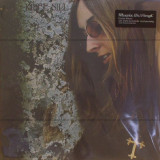
Judee Sill was an American singer and songwriter. She released two albums and partially completed a third album before her death in 1979. Sill encountered Graham Nash and David Crosby and toured with them for a time as their opening act, a year before the release of her debut album. She was hired by the Turtles to write songs, on which a few of them appeared on her debut album, such as 'Lady-O'. Two of Sill's biggest influences were Bach and Ray Charles.
Judee Sill's eponymous debut album of the same name was originally released in late 1971. Backing musicians include John Beck and Jim Pons from the Leaves. The majority of the album was produced by Henry Lewy, noted for his work with Joni Mitchell throughout the 70s. Graham Nash handled the duties for the single 'Jesus Was a Cross Maker' with his production designed to aim for radio airplay before the release of the album. Judee Sill featured Sill's voice in multiple overdubs, often in a four-part chorale or fugue. The songs are delivered in an acoustic style on guitar and, for 'Jesus was a Cross Maker' and 'Enchanted Sky Machines,' on piano. The songs on the album feature elements of folk, country, and gospel, but also strong classical influences.
il devrait être publié sur 28.03.2022

The album features a notable line-up of musician such as: Sami Yaffa (New York Dolls/Joan Jett), Dave Richmond (Serge Gainsbourg/Elton John), Christophe Deschamps (Jean-Michel Jarre), Kath Guifford (Stereolab), Will Crewdson (Adam & The Ants/The Selecters), Danny Ray (Bo Diddley/Brian Setzer)...Mastered at the legendary Abbey Road Studios and cut to vinyl across a 180g LP in a gatefold sleeve with booklet. L'homme de l'ombre immerses you from start to finish in a sonic and lyrical journey that rewards your mind and emotions. Here you will find the glamorous rock attitude of Marc O's musicianship colliding brilliantly with the wise and witty writing of french philosopher Bruno Pons Levy. The result is not so much a double identity, but an intangible and powerful third element, much like the mathematical equation described in the song The triangle squared (Le triangle au carré). This song is emblematic of Marc O's persona: a musician of style and vision, crossing cultures and decades to collaborate with a remarkable team and create this, his most personal album. Press quotes: Ten well realised, vintage aesthetic fantasies ****" MOJO "Singular debut set that lurches from glam-punk to Air-meets-Gainsbourg purr, infectiously Pulp-ish electro-rock and gauche, Bowie-esque panther strut. Formidable! 8/10" UNCUT "Never less than fascinating, this is an important and hugely enjoyable work ****" RECORD COLLECTOR "Propelled by his core rhythm section and lyricist collaborator, they address some weighty subjects with passion ****" SHINDIG! "Blends aggressive and powerful textures and melancholic soundscapes to break down language barriers and deliver a powerful, evocative and stunning album" LOUDER THAN WAR "The music is as strong as Pons Levy's lyrics, mingling melodic rock with chanson in the grand tradition ****" RNR
il devrait être publié sur 09.07.2021

May 28 will see prolific Japanese vibraphonist, multi-percussionist and composer Masayoshi Fujita mark a new sonic direction with his forthcoming album Bird Ambience on Erased Tapes.
Bird Ambience brings several fresh changes for the artist. Until now, Fujita would separate his acoustic solo recordings from the electronic dub under his El Fog alias and experimental improvisations with contemporaries such as Jan Jelinek, Bird Ambience sees him unite all of these different sides to his work for the first time, into one singular vision. He also makes a lateral leap from his signature instrument the vibraphone, on which he created his acclaimed triptych Stories (2012), Apologues (2015) and Book of Life (2018), to the marimba, which takes centre stage on his new album alongside drums, percussion, synths, effectors and tape recorder.
“The way of playing the marimba is similar to the vibraphone, so it was kind of a natural development for me and easier to start with, yet it sounds very different”, explains Masayoshi. “The marimba bars are made with wood and it has a wider range than the vibraphone, which gives me a bigger sound palette with more possibilities. I play the instrument with bows and mallets, and sometimes manipulate it with effects.”
Bird Ambience also marks his liberation from fastidious preparation for past solo releases to new endeavours in improvisation. “I prioritised trying to capture the wonder which happens during those occasional magic improv moments. Sometimes the mic-ing and placement of instruments was pretty rough; things weren’t perfect and everything was done quickly, but it turned out as the final recording. Overall when I
couldn’t decide between two takes, I told myself to go with the first”, Masayoshi recalls.
Arranged with a perfect Kanso-like balance, the unhurried pace of Bird Ambience allows each sound and phrase enough time to be mindfully absorbed and savoured. This subtle but affective work carries ethereal remnants of Midori Takada’s minimalism, the static atmospheres of Mika Vainio, To Rococo Rot’s organics and the bucolic electronics of Minotaur Shock. Fujita vaporises contemporary and classical, ambient and dismantled dub, controlled noise and fragments of jazz into an atmospheric, static mist, which he skilfully coerces into new forms.
After 13 years in Berlin, Masayoshi recently relocated to a new home and studio in the rural Japanese mountain village of Kami-cho, Hyogo, following his life-long dream of creating music in nature. Even though the album was entirely recorded in Germany before he left, it has this palpable sense of reverie found in the natural world. From there we can only imagine the kind of impact his new life in rural West Japan will have on future works.
Commandez maintenant et nous commanderons l'article pour vous chez notre fournisseur.

May 28 will see prolific Japanese vibraphonist, multi-percussionist and composer Masayoshi Fujita mark a new sonic direction with his forthcoming album Bird Ambience on Erased Tapes.
Bird Ambience brings several fresh changes for the artist. Until now, Fujita would separate his acoustic solo recordings from the electronic dub under his El Fog alias and experimental improvisations with contemporaries such as Jan Jelinek, Bird Ambience sees him unite all of these different sides to his work for the first time, into one singular vision. He also makes a lateral leap from his signature instrument the vibraphone, on which he created his acclaimed triptych Stories (2012), Apologues (2015) and Book of Life (2018), to the marimba, which takes centre stage on his new album alongside drums, percussion, synths, effectors and tape recorder.
“The way of playing the marimba is similar to the vibraphone, so it was kind of a natural development for me and easier to start with, yet it sounds very different”, explains Masayoshi. “The marimba bars are made with wood and it has a wider range than the vibraphone, which gives me a bigger sound palette with more possibilities. I play the instrument with bows and mallets, and sometimes manipulate it with effects.”
Bird Ambience also marks his liberation from fastidious preparation for past solo releases to new endeavours in improvisation. “I prioritised trying to capture the wonder which happens during those occasional magic improv moments. Sometimes the mic-ing and placement of instruments was pretty rough; things weren’t perfect and everything was done quickly, but it turned out as the final recording. Overall when I
couldn’t decide between two takes, I told myself to go with the first”, Masayoshi recalls.
Arranged with a perfect Kanso-like balance, the unhurried pace of Bird Ambience allows each sound and phrase enough time to be mindfully absorbed and savoured. This subtle but affective work carries ethereal remnants of Midori Takada’s minimalism, the static atmospheres of Mika Vainio, To Rococo Rot’s organics and the bucolic electronics of Minotaur Shock. Fujita vaporises contemporary and classical, ambient and dismantled dub, controlled noise and fragments of jazz into an atmospheric, static mist, which he skilfully coerces into new forms.
After 13 years in Berlin, Masayoshi recently relocated to a new home and studio in the rural Japanese mountain village of Kami-cho, Hyogo, following his life-long dream of creating music in nature. Even though the album was entirely recorded in Germany before he left, it has this palpable sense of reverie found in the natural world. From there we can only imagine the kind of impact his new life in rural West Japan will have on future works.
Commandez maintenant et nous commanderons l'article pour vous chez notre fournisseur.

Salvador Font studied violin, clarinet, composition and harmony at the Conservatori Municipal de Barcelona, but very soon started to gain notoriety as a saxophonist in the rich jazz scene of 1940s Barcelona. Font would soon be playing tenor sax and clarinet in the Orquesta Gran Casino. He was in his early twenties and his hot swing technique was already praised through the citiy's scene, he would grow to be considered the best saxophonist in Spain by playing in many orchestras and combos, among them: José Puertas', Antonio Vilá's Virgina, Bonet de San Pedro's band, Pierre Michel, El Lirio Campestre, Los Marios, Luis Rovira y su orquesta, Orquesta brasileña Fon-Fon, Jaime Camino, Los Embajadores, Italo Leone's... With these and others, Font toured constantly, visiting many countries and even staying on some for long seasons: Mexico, Morocco, Switzerland, Egypt... Hungarian violinst of Turkish ancestry Kurt Dogan gave him the "Mantequilla" surname - he felt "Mantequilla" (which means "butter") fit Font's mellow yet swinging improvisation style.
Mantequilla y su conjunto
In the early sixties, "Mantequilla" had the chance to lead his own combo, Mantequilla y su conjunto, with which he was to record the three splendid EPs that are compiled on the present album. All these 7" have become elusive collector pieces in the record market, with sellers demanding from 200 to as much as 950 euros per copy.
In 1961 "Mantequilla" was at his best moment, his gigs at the Jamboree Jazz Cava had brought him back to the first line of Barcelona's jazzmen after he had been working abroad for a long time, and was approached by the Belter label to record an EP. On the sessions he was accompanied by Manolo Mercedes on trumpet, Pedro Ferré on piano, Rafael Lizandra on double bass and Rafael Verdura on Drums. The material chosen for the disc were four original compositions by Salvador Font which had a high West Coast flavour all over: "La Tuna Club", "Whisky Jazz" and "Jamboree" named after famous jazz clubs and "Azul Trompeta", dedicated to Manolo Mercedes.
In late 1962, after spending some time in Madrid working as members of the Italo Leone combo, "Mantequilla" and pianist Manuel Gas came back to Barcelona for the recording of the second "Mantequilla" EP, also on Belter. We find again Manolo Mercedes on trumpet, Pedro Ferré on piano and Rafael Lizandra on double bass, the drummer this time was José Farreras. Another news is that Manuel Gas also sat on piano and vibraphone. The songs chosen for the occasion were two tunes from the Art Blakey Jazz Messengers repertoire: Bobby Timmons' classic "Moanin'" and the Jacques Marray track "No Problem" from the soundtrack of the Les liaisons dangereuses film (mispelled "Not Problem" on the sleeve and label), plus the Salvador Font penned "Blue Note" and "Full de ases" - on "Full de ases" "Mantequilla" trades his sax for the violin, which he also mastered under high influence from Stephane Grapelli. The record was released on Belter in early 1963 and showed "Mantequilla" adding a certain aggressivity to his sound, in a soloist style which has been compared to that of tenor saxophonists Barney Wilen or Benny Golson.
1965 was the year of release of Mantequilla y su conjunto's third EP, now on the Discophon label. Mercedes and Farreras are again present in the recording sessions, joined by Ricardo Miralles on piano and Enrique Ponsa on double bass. Four original Font compositions make up the fantastic EP: "Blues 3/4", "Atmósfera", "Vat 69" and "Balada".
There would be a further EP on Belter, released in 1971 as Mantequilla Group it was a cash-in operation to take some redits of the ye-yé discothèque phenomenon, it gets quite afar in style from the jazz works of Mantequilla y su conjunto, so we just left it aside for the present edition.
"Mantequilla"'s career would continue, in 1968 he would settle in Majorca and form a swing band with Bonet de San Pedro and Manuel Bolao. He played in local orquestras and also with first class world acts like Gerry Mulligan, Tete Montoliu, Errol Gardner, a.o. He was even approached by Henry Mancini to play sax on The Pink Panther Theme in a gig Mancini did with his orchestra in Palma de Mallorca in 1975, He also joined his son Salvador Font (a demanded drummer himself who has played with Máquina!, Orquestra Mirasol, Música Urbana, Gary Burton Quartet, Georgie Fame, and many others) and his peers Carles Benavent, Emili Baleriola, Josep Mas 'Kitflus' and Jordi Bonell with whom he recorded his acclaimed "Mantequilla" album in 1987.
Now, for the first time ever, the legendary three ultra rare and imposible to find EPs by Mantequilla y su conjunto are compiled in a lavish vinyl LP with remastered sound, featuring liner notes and photos and a fantastic period inspired, three backflaped, front laminated sleeve. It is a stricly limited edition of only 500 copies and they are expected to sell out very soon, do not miss your chance of getting yours - it may be the last chance of chasing the Mantequilla sound on vinyl at a reasonable price!
l
Commandez maintenant et nous commanderons l'article pour vous chez notre fournisseur.
