JTQ Return to Acid Jazz… At the very birth of Acid Jazz there was the James Taylor Quartet. Hammond player extraordinaire James Taylor was fresh from the split of The Prisoners when he recorded Herbie Hancock’s ‘Theme From Blow Up’ and signed with Eddie Piller’s Re-Elect The President label, the precursor of Acid Jazz. Then, in 1993, after albums for Polydor and Big Life, Acid Jazz and James hooked up again and released ‘In The Hand Of The Inevitable’, for many the finest JTQ album. In March this year James found himself backstage at the Royal Albert Hall - The Brand New Heavies were about to take the stage - with Acid Jazz’s Eddie Piller and Dean Rudland and a plot was hatched... James returns to the label with this brand new 7-inch single: ‘Wildflower’ b/w ‘Guiding Light’.
The A-side is Bossa-nova tinged slice of sunshine pop featuring James’ vocals. It sounds like an old private-press 45, unearthed in a dank warehouse basement in Oregon, and is another JTQ classic. The flip takes us into jazz funk territory. Presented in a one-o^ version of the latest Acid Jazz house-bag, with classic labels.
The 7:45s are an original soul collective from Manchester, UK – the brainchild of songwriter and bassist Sam Flynn. Inspired by the house bands of soul labels from Motown to Big Crown, the young collective spotlights guest vocalists such as Martin Connor and Nicole Battick. Named after 7-inch vinyl, The 7:45s write snappy singles that blend the vintage feel of rare groove with the songcraft of perfect pop.The 7:45s have been played on BBC Radio 6 Music by Craig Charles, Stuart Maconie and Chris Hawkins and on Jazz FM by Simon Phillips.
A concept album for the soul, Spinning is a retro-soul love story. Side A is sunshine soul about the dizziness of an on-off relationship, as heard in the Charles Bradley-inspired opener 'The Way That I Love You'. Side B is nocturnal. Head-spinning heartbreak is the subject of rare groove-influenced 'The Writing's on the Wall' while dancing to a new dawn is the theme of Prince-inspired disco number 'We Will Be Friends'. The album also features a reimagination of The Beatles' 'Don't Let Me Down'.
Skkkrt! Step Ball Chain is officially running redlights and disregarding road rules with Anderson in the driver’s seat. The US born, Berlin based producer and deejay offers up Cut The Breaks, a 5 track EP bursting at the seams with ruff, tuff and techy freakouts, never neglecting the groove. Transcending genre, the low key king of the underground reaches into new realms sprinkling in electro, tech house and bouncy techno with a nod and a wink to hip hop.
Sleek & sexy; the opening title track is as fresh as it gets, a soldering of prize elements from different electronic ecosystems. Whiplash drums and vocal chops that weave their way through the record, also cropping and popping up on the B Side. Pedal to the metal for Giving it All and Visconti Bounce; playfully traversing dancefloors with tongue & cheek turboness and rhythmic exploration that will drive you wild. Smell the rubber burn for STEP15; let Anderson strap you in and take the wheel.
Miss Aranivah was previously released (in 2021) on the Ska Fever vol.1 EP (OGR806). It’s had a slight re-mix / re-master and it’s proved very popular in the live set that I’ve been playing with Junior Dell at Ska and Reggae festivals in Europe.
Likewise, the B-Side has gone down very well live and we re-recorded it with Junior Dell on vocals (he did not appear on the original version which appeared on Reggae Dynamite vol.1 back in 2020).
Planning For Burial is the solo project of Thom Wasluck, emerging from Wilkes-Barre, Pennsylvania. It’s Closeness, It’s Easy is the long-awaited follow-up to 2017’s Below The House. If Below The House was about returning home, following in the footsteps of one’s father and joining a union, and leaving behind youth’s wild days, It’s Closeness, It’s Easy embraces what comes next—the weight of all years, the quiet shifts, the reckoning with what remains. This record is many things. It captures the slow drift of time, the unnoticed shifts in a loved one—the creeping changes in mental health, the quiet pull of addiction, the kind of grief that settles in the bones rather than announces itself.
At its core, It’s Closeness, It’s Easy is about stepping into middle age and taking stock. It confronts the reality of living with the hand that’s been dealt and searching for meaning in what remains. It speaks to loss—the crushing weight of saying goodbye to a beloved 17-year old cat, the slow-motion grief of watching friends self-destruct, the inescapable passage of time as it bears down on aging parents and the self. But it also reflects the warmth of reconnection, the kind of love that never burns out but instead deepens. The feeling of picking up where things left off, untouched by the years in between.
While written over the course of two years, the recording process reflects a sense of immediacy. Rather than assembling songs piece by piece over time, the album took shape in singular, immersive sessions—less an act of construction, more an unveiling of something already waiting to take shape.
Rooted in a staunch DIY ethos, Wasluck handles every aspect of Planning For Burial project himself—recording the music, designing the artwork, and performing live as a one-man band. He books his own tours, ever and independent creative. This hands-on approach has led Planning For Burial to play hundreds of shows solidifying his place in the underground music scene. A defining moment came in 2018 when he performed at the Meltdown Festival in London, curated by Robert Smith of The Cure.
Das dritte Album der äusserst produktiven und genreübergreifenden Musikerin Jane Remover erscheint in einer ersten limitierten Auflage auf dem jungen Indielabel deadAir und enthält ein Danny Brown-Feature ("Psychoboost"). Die in New Jersey aufgewachsene und in Chicago lebende Künstlerin vermengt Hyperpop, Dubstep, Noise, Hip-Hop und Alternative zu einem exzessiven Amalgam, das nicht nur die Kritiker begeistert. "Die experimentelle Künstlerin macht im Vergleich zu ihrem vorherigen Album eine komplette Kehrtwende und entfesselt ein Inferno aus rohen Gedanken, das alles – Rap, Pop, Stimme, ihre künstlerische Persönlichkeit – bis zum Zerreissen treibt." - Pitchfork
In celebration of the iconic film’s 30th anniversary, this is a standard weight vinyl reissue of the platinum-selling original motion picture soundtrack, featuring songs by Radiohead, Supergrass, Beastie Boys and many more!
The writer Max Sebald often pondered over the nature of human memory, specifically, how our thoughts and desires - and their results - overlap and mutate over time. In A Place in the Country, he writes of the significance of what see as “similarities, overlaps and coincidences”. Are they the “delusions” of the self and senses, or manifestations of “an order underlying the chaos of human relationships, ... which lies beyond our comprehension”?
Song of the Night Mists, the new album by post-classical composer Stefan Wesołowski, often feels it draws on Sebald’s premise.
On a simpler plane, the one where the market dictates the neatly ordered information we consume, Song of the Night Mists can be described thus: recorded in the main by Stefan Wesołowski in Gdańsk, both in his studio and in Saint Nicholas' Basilica, the album incorporates acoustic instruments - piano, violin, double bass - and classic synthesizers such as the Roland Jupiter-8, the Soviet Polivoks. A Roland Space Echo RE-150 tape delay was also pressed into service as an instrument. We also hear the basillica’s organ and field recordings from the Tatra Mountains. Other musicians were Maja Miro, who played the flute parts on ‘Glacial Troughs’ and brother Piotr Wesołowski, who played the organ on ‘Wilhelm Tombeau’. Sound engineer was Marcin Nenko, who was also on hand to record the basilica organ parts. The album was mixed in New York by Al Carlson (Oneohtrix Point Never, Jessica Pratt, Zola Jesus, Lady Gaga, and Liturgy) and Rafael Anton Irisarri handled the mastering.
Ostensibly, Song of the Night Mists is the last in a trilogy, following on from albums Liebestod (2013) and Rite of the End (2017). All three deal with existential matters such as love, death, decay and “an ultimate end”; apocalyptic and Promethean in spirit, and betraying very human conceits. The Sebaldian nature of the new record starts to make itself felt when Wesołowski talks of how he used sampling. One element is unexpected, that of sampling himself: “I go back to dozens of my own unused sketches and recordings, treating them as raw material to cut, slow down, reverse, and transform in every possible way.” Memory as sound, to be reemployed by the listener through their own imaginings.
Another set of samples made by Wesołowski plays another role. These are field recordings, originally created for an audio illustration of the formation of the Tatra Mountains, and used in a film by sound designer Michał Fojcik. Wesołowski: “You can hear cracking ice, streams, footsteps in the snow and the wind, and a real avalanche, recorded from the inside.” The “Tatra connection” on the album is also found in samples referencing composer Karol Szymanowski. The album’s title alludes to a poem about the mountains by Polish poet, Kazimierz Przerwa-Tetmajer.
Wesołowski’s Tatra recordings are “about a world without humans - about the fact that the world existed, was beautiful, and had meaning long before people arrived, and for the vast majority of its history, it was a place without us.” Wesołowski, using one iteration of the natural world, plays out in sound Sebald’s idea of another order, underlying the chaos of human relationships lying beyond human comprehension.
These feelings play themselves out on the five album tracks. Sonorous and rich, they illustrate tectonic shifts we have no control over. Wesołowski hints that the overall sound is a “meditation on the metaphysics of the non-human set against the spirituality that human presence has brought into it.” In that light, the opening number, ‘Core’, with its slow build, and crackling and straining sound effects, create an effect of the earth groaning into life in a creation myth. Once the piano part raps out a simple melody and modulated tonguing trumpet samples add to the overall atmosphere, the listener can certainly find a cue in the “spiritual”, or “human” side of the story. Human versus nature: from the strains and harmonic muscle stretches of the second number, ‘Glacial Troughs’, through to the powerful and filmic ‘Stalagmite’ and heart-on-sleeve romance expressed in closer, ‘Wilhelm Tombeau’, we listeners are cast as Friedrich’s wanderer, looking out over a landscape that will appear only if we engage with it.
Formations of melody appear incrementally, almost appearing by chance - like hidden footings in the rock shelves to give us something to grasp onto. Rhythms are used sparsely: the prolonged percussive taps on ‘Glacial Troughs’ are an anomaly and maybe there to give pace to the album to come; essentially to keep the listener strapped in. Elsewhere, percussion is used as an aid to mood, the two thudding, timpani-style passages on ‘Peak’ there to offset the short, beautiful, kosmische passage that splits them.
Elements of the borderline religious spirit that drove German electronic music in the late 1960s and 1970s also find a place on Song of the Night Mists. The swells and recessions of the organ find their emotional climax on ‘Wilhelm Tombeau’, a track which summons up echoes of the “mountain magic” vistas created by Popol Vuh or Tangerine Dream, especially with the slightly atonal wobble of the Mellotron that counters it.
This is a dramatic album, but it does feel a strangely short, or curtailed listen on ending, evoking the feeling one gets when waking from a dream, and, for all its incipient grandeur, a track like ‘Stalagmite’, for instance, ends on a minor note. Wesołowski admits that Song of the Night Mists is born of the all too human process of temptation, doubt and recalibration - Sebaldian overlaps and coincidences forming something that must live another life, away from its creator. In Wesołowski’s words, the album is “a newborn foal must stand up and walk right after birth.” Now it is yours to ponder.
The landscapes of Orlan 19 resembled the dream of a mad cartographer: cliffs were floating above the surface, horizons were bending and vanishing into infinity, and energy vortices were flaring up beneath their feet in psychedelic patterns. The familiar laws of physics didn’t apply here — gravity shifted chaotically, and time flew with unpredictable intensity. As Spacelunch, absorbed in thought, stroked the ground which distorted like a mirage under his touch, Cat’s grumbling echoed simultaneously from the past and future:
— Doc, don’t you think we’re just walking in circles?
— No wonder. That’s how inverse modelling works. Every action we take reshapes the surrounding space.
— Can you explain it in simpler terms? There’s only one genius here.
— Ever heard of the Philadelphia Experiment?
— Of course! You know how much I love sushi rolls!
— Well, I set myself up for this predicament… Back in my university days, we experimented with magnetic fields trying to program them by thought. You get where I’m going, don’t you? The planet is reacting to our intentions. So, focus on visualizing the portal.
The confusion on Cat’s face gave way to a mask of detachment. Clusters of matter began to tremble pulling the threads of reality to their breaking point before finally forming a vortex. Having devoured as much as it could, the vortex snapped shut with a loud pop and dissolved in a blinding flash.
As the scene began to take shape, silhouettes emerged under the soft glow of a desk lamp, evoking an overwhelming sense of nostalgia. A worn desk and a small bed stood by the wall adorned with faded photographs, while the floor let out a gentle creak underfoot. The clearer the interior came to be, the more paralyzing the realization, and the more elusive the explanation for what had happened became.
— Holy…! Cat, are we looking at the same thing?
— Yeah, but… This can’t be real.
Spacelunch slowly approached the window and froze still. A single thought raced through his mind: “The only force strong enough to pull me this far… was love.”
King Street Sounds are back again with their fourth installment in the King Street Sounds Sampler Series. This release unearths four classics from house music heroes such as DJ Romain, Mike Delgado, Dennis Ferrer, 95 North, Sabrynaah Pope and Louie Vega.
The EP kicks off with DJ Romain’s “All Day, All Night”. Originally released on “Nite Grooves” in 1996, a perfect example of New York house with a memorable vocal sure to keep you hooked hopefully all day and all night.
Next up is Mike Delgado with “Get Ready”. This track is a certified dancefloor filler, with those fast hitting highs and catchy keys. It is definitely a secret weapon that any DJ should use in case of an emergency.
Flipping over to the B side, Dennis Ferrer is returning once again in this series with “Dem People Go (DF's Kicked Out Mix)” Featuring Bola Belo. This Tribal House classic emulates being in the sun for the listeners, effortlessly bringing that block-party vibe.
Rounding off the EP is 95 North featuring Sabrynaah Pope with “Hold On” (Louie’s MAW Club). An already great track by its lonesome, but with house music icon Louie Vega’s magical touch it makes it a must have for any DJ who wants to get the dancefloor bumping.
King Street sounds have done it again! All killer and no filler.
Belgian dance label LA MUSIQUE DU BEAU MONDE turns 20, spawning a massive amount of hits spanning two decades. Ranging from commercial hits by DJ Antoine, Laurent Wery, Remady, Jay Santos, to more credible tracks by Phonkers, Merdan Taplak, Les Mecs, and others.
This is the first record in a series of five, and the first one kicks off with a bang. The importance of Pedro Cazanova’s classic Selfish Love in the house scene cannot be underestimated. It grew iconic in the remix by Gregor Salto, as featured on this 12”.
Rock Your Body by Phonkers was one of the most played tracks on Benelux radio stations during the summer of 2011. The track gained massive popularity not only in Belgium and Holland but also in Australia, New Zealand, Poland, and beyond.
Daniel Bovie is undoubtedly one of the best Belgian dance producers of the past four decades. His 2014 masterpiece Way Too Long is included on this record.
In 2014, Ralpheus had a big international club hit with the catchy clubhouse tune Do What? Gospel chants built around a big clubhouse beat, still a floorfiller today!
PawPaw Rod präsentiert seine neue 7-Track-EP "Doobie Mouth". Der auf Hawaii geborene und in LA ansässige Singer-Songwriter ist für seine genreübergeifende Alternative-Fusion aus Rap, Soul, Funk und Pop bekannt, bei der er Sixties-Soul mit Hip-Hop, heiteren Melodien und anspruchsvoller Lyrik kombiniert und so das Erbe Motowns in die zeitgenössische Musik überführt.
Efficient Space honours trailblazing Australian imprint Volition Records with Volition Cuts Vol. 1. Evolving from Andrew Penhallow’s time at GAP Records, which smuggled Cabaret Voltaire, The Fall and the Factory catalogue into the region, Volition shifted focus to homegrown talent over imported sounds. Echoing its precursor’s blend of indie friction and electronic curiosity, the label wired itself into the pulse of club and rave culture, linking city scenes and amplifying them for the mainstream. With retina-scorching design, uncompromising packaging and top-tier remixes, Volition consistently bent the major label machine to its will.
No Volition retrospective would be complete without Sisters Underground’s intergenerational anthem ‘In the Neighbourhood’. Otara teenagers Brenda Makamoeafi and Hassanah Iroegbu brought their Pasifika perspective to Proud (An Urban-Pacific Streetsoul Compilation), a commercial success that platformed NZ rap and R&B with a clarity that outshone its overseas counterparts. The quiet architect of Volition’s sound, producer prodigy Robert Racic flipped the classic as a hip-house dub before his untimely passing in 1996.
Its A-side companion comes from Brisbane synth-pop unit Boxcar, who signed to Volition after frontman Dave Smith handed a cassette to Tom Ellard of Severed Heads during a school newspaper interview. That unlikely handoff led to their 1990 debut Vertigo. Here, their ritual-laced, body-jacking industrial is retooled by Miami freestyle maverick Tony Garcia.
Further cherry-picking from the VOLT vaults, Sexing The Cherry unleash a bleep-addled meltdown from Brisbane’s Edwin Morrow and Cherryn Lomas. ‘This Is A Dream’ was recorded exclusively for High (A Dance Compilation), the first all-Australian V/A to top the ARIA charts, propelling the local movement into national consciousness.
Closing the sampler, Sydney’s Single Gun Theory joined Volition as they moved from post-punk abstraction and electronic collage toward downtempo, sample-based mysticism. Their 1994 ambient-pop reverie ‘Fall’ is reimagined by Stuart Crichton and Apollo 440’s Norman Fisher-Jones as full-throttle Goa trance, a final surge that channels the label’s relentless push into new terrain.
Volition Cuts Vol. 1 is dedicated to the loving memory of Volition’s visionary founder Andrew Penhallow, and key contributors Robert Racic and Edwin Morrow.1
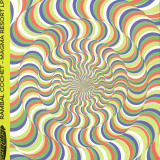
The return of Sengiley Wax with the second part of the Russian series!
Without too much thought, the choice fell on the representative of the unique Russian producer Konstantin Isaev, better known as Volta Cab. However, here we see a completely different side of him, which he is actively developing at the moment - Rambal Cochet.
Magma Resort is the producer's musical spectrum here and now, ranging from canonical Trance to dips into ambient as well as house music sounds.
Konstantin tells us: "This album was created using a Reason DAW, Korg Minilogue and Korg Electribe. It was inspired by the magical atmosphere (in Krasnodar it's always so), my move from St. Petersburg to Krasnodar, as well as nostalgia for something new, but at the same time so familiar".
1. Magma Resort - inspired primarily by the work of Pavel Yesenin and Yuri Usachev and the group "Guests From the Future", as well as progressive dream trance of the early noughties.
2. Amnesia - Ibiza, 1995, sun, beach, dolphins in the sea.
3. Phuture Extravaganza - is the future anthem of summer 2025 in the truest trance sound !
4. Infect Me - proggy hyper pop vibe with sci-fi illusions.
5. Evolving - you wake up from the first rays of the sun, the light hits your eyes, you're finally home..
6. Spaziotempo - Hot summer 2024, you've been walking around Rome for a week, it's a pity that in the morning the plane home to Krasnodar via Istanbul.
Multi-instrumentalist, visual artist, and scene creator, Jonathan Uliel Saldanha, has been releasing music under various guises for two decades. With the successes of his moniker HHY (Nyege Nyege Tapes) whether in symbiosis with The Kampala Unit or the syncopationophilic big band of The Macumbas, Jonathan Uliel Saldanha's sonic signature continues to grow more and more singular. Ever synthetic and digital, Uliel Saldanha's work-ethic never eases—having recently started a label of his own, Horror Vector.
Surface Disorder sees the release of the music from Jonathan Uliel Saldanha's large-scale exhibition of the same name that occurred in Porto & Lisbon, (2024-25). As with much of his work, there is a Ballardian sense of a near-future in dystopia. And since we're already living the apocalypse, there's never a hidden moral to veer away from the torment. Instead, Uliel Saldanha dives into it and catalyzes it further.
Information from Angels feels like a cunty John Dee AI (credited as The Mouth) becoming an oracle of information overload, accompanied by an instrumental bidirectionally that splits into a lush harmonic layer of blissful punctuated pads and another that is a speedy but subdued melodic bassline. The Mouth intones a 15-minute fever dream that flows through themes that have occupied Uliel Saldanha for quite some time.
On Swarming the Pit, the intricacy of Jonathan Uliel Saldanha sonic wizardry is on full display. A constantly moving swarm of granulated particulates of sonic material morph into a variety of textures: coins or gunshell casings hit the floor, engines rev their monstrosity, rubber-like pulses are splayed into spectral blurs and pops. This is clearly an update on music conrète's obsessions.
The Mouth on the closing track, Wolf & Virus Dialogues, has a completely different texture from the first, alerting the listener to the uncanny nature of its genesis. Here the instrumental sounds are all triggered by the articulations of the voice: a weird unison, it serves as its own artificial accompaniment. The reiteration of a self-model (a rabid 'my') creates a greater tension between computational self-certainty and the terror of its inevitable actualization.
Old, lost, obscure and forgotten gems and a boundless focus on the new Balearic scene mostly from Italy but also from all over the world for a wider audience of collectors, DJs and music lovers. All releases are limited edition.
This release is a Limited Edition 12" (100 on Sun Orange Marbled vinyl). New life and an expanded treatment of Feel Fly's epic Balearic / Italo House Sole (Flexi Cuts 2024), with the Extended Versione Tramonto (previously unreleased on vinyl) and 3 new Remixes by none other than Radiomarc (Popcorn Groove), Issam Dahmani and Amarcord.
Danish Subnesia present their debut Vinyl release, combining tracks from their first Album 'The Beginning' (2023) & 'Range of Colors' (2025) assembling a sincere set of homespun pop beats teeming with Balearic soul, funk and jazz flavors. As Subnesia, producer Anders Ponsaing and saxophonist Michael Rune play it by ear. Following intuition rather than fixed genres or styles, the Danish duo have struck upon a creative vein of pop music that is both daring, poignant and wholly unpretentious. Strong grooves, often reminiscent of the hip-hop and r’n’b-tinged chart pop of the 2000’s, adorned with colorful instrumental leads and characteristic guest vocals.
naemi follows last year’s excellent Erika de Casier-starring »Dust Devil« with a genius new album of ultra-catchy, perfectly executed shoegaze diamonds, powered by Ulla on drums and additional vox, flutes and extra vocals by Baptist Goth, and fuzz guitar by Kouhei.
»Breathless Shorn« is the Berlin-based Kansas-born producer's most compelling move thus far, featuring 11 perfectly fuzzed songs that almost completely shake off any electronic remnants in favour of a light-touched act of MBV worship. naemi has long nurtured an obsession with vintage dreampop and shoegaze, but until now they mostly blurred those influences with dubby ambience and delicate, heart-slicing production. On »Breathless Shorn« they completely re-draw their outlines, bristling with a much looser energy in a mode that feels like a big step up - more impactful, full of easy swagger and a bona fide emotional resonance.
Distorted, tremolo-bent guitars, boxy drums, electric bass and delirious multi-tracked vocals are the backbone here, mostly sounding like they could have been lifted off Kevin Shields' »Ecstasy and Wine« sessions. naemi's attention to detail is remarkable; no longer leaning on electronic masking or the influence of '90s British slacker rawk or twee pop, instead deploying the genuine article, with ambient music left as just a faint note wafting in the background.
(3*12”, silver vinyl) We’re thrilled to announce the release of “The Mackenzie - Classics EP 2”, the long-awaited follow-up to the popular EP 1 everyone was excited about. This limited edition pressing comes on stunning silver-colored vinyl, with only 500 copies available worldwide. Housed in a deluxe threefold sleeve, this release is a true collector’s item.
The Mackenzie name is legendary in the Belgian trance scene, and this EP brings together some of their most sought-after classics and overlooked masterpieces. Each track has been carefully remastered for 2025, breathing new life into these timeless anthems. This EP 2 is spanning over more than 2 decades of hit releases, amongst of them are “Falling In Love”, “Walk Away”, “All I Need” and “You Got To Get Up”.
Expect rich melodies, mesmerizing builds, enchanting vocals, and that unmistakable 90s spirit that made “The Mackenzie” iconic in trance. This is not just the successor of EP 1 – it’s the final chapter in a tribute to the golden era of Belgian quality trance music.
This album, “Crystallization,” was released in 1978 as the second release on Vanity Records, a leading indie label in Osaka during the post-punk era.
The epic musical odyssey envisioned by the then 19-year-old musical prodigy known as SAB was 'crystallized' on magnetic tape using electronic music equipment.
It is a masterpiece of pre-New Age music that emerged before the term “New Age” became popular in Japan.
Although he was supported by two musicians on the recording, the majority of the work is so-called “home recording” based, produced by SAB himself with multiple recordings.
In the midst of the new age revival that has emerged in recent years and the rediscovery of Japanese environmental music, the music has taken on an even more brilliant musical value over time.
This definitive edition features AD conversion/the latest high-res mastering from the original masters, plus correct song titles that clear up long-standing misconceptions!
Loose Joints – Tell You (Today): A Rediscovered Classic Reimagined
Loose Joints was the disco brainchild of Arthur Russell - a visionary composer and producer who helped shape the sound of New York’s underground club scene. Unlike many of his contemporaries who chased polished perfection, Russell embraced rawness and spontaneity. A classically trained musician, he mastered the art of crafting “perfect imperfections,” infusing disco with a punk attitude and an intellectual edge.
“Tell You (Today)” emerged from the same legendary Blank Tape Studio sessions that gave birth to the cult favorite “Is It All Over My Face.” Like its predecessor, it features a cast of handpicked studio luminaries and disco outliers, all guided by Russell’s distinct vision. But while the DNA is similar, this track veers more toward leftfield pop, buoyed by Russell’s unmistakable vocals.
On the A-side, DFP presents a masterfully updated take on Larry Levan’s original remix. Blending unreleased outtakes with refined sonic upgrades, this “Special Version” stays true to the source material - making only the most delicate adjustments to optimize it for today’s dance floors.
The B-side is a gem in its own right. It features the elusive New Shoes Mix with Parts I & II edited here for seamless, continuous play. Long shrouded in confusion due to misprints and misattributions - from the 1983 release to various reissues - while labeled as New Shoes it has in most iterations been a variation of the Larry Levan mix.
Now, for the first time, DFP Vaults is proud to present the New Shoes Mix in its full, 15 minutes, intended glory - finally giving this lost version the recognition it deserves.
EURODANCE IS BACK! From clubs to radio stations, the Eurodance sound is everywhere, driven by artists like David Guetta, Upsilone, Gabry Ponte, Boris Way, and Ofenbach. TO MARK THE OCCASION, REDISCOVER THE GREATEST EURODANCE HITS OF THE 90S AND 2000S ON DOUBLE VINYL AND DOUBLE CD!
Swedish italo disco / synthpop duo Sally Shapiro announce their fifth studio album, Ready To Live A Lie. Taking inspiration from synthwave, italo disco, nudisco, indie pop and bossanova, the album becomes their second for Italians Do It Better - again mixed together with label founder Johnny Jewel (Chromatics, Glass Candy, Desire).
Following their mesmerizing debut Tradition, CHO CO PA CO CHO CO QUIN QUIN return with Correspondances—a 7-inch release that drifts effortlessly between organic textures and delicate electronic landscapes. Expanding on their signature blend of dreamy synth work and nylon-stringed warmth, the trio refines their approach with a more mature, immersive sound that feels both nostalgic and forward-thinking.
The A-side, “Adan no Umibe” (Adan’s Seashore), opens with a soft, relaxed vocal delivery reminiscent of Haruomi Hosono’s solo work, floating over a gentle groove of nylon guitars and spacious synths. It captures the essence of a quiet shore, where melodies ebb and flow like waves against the sand, infused with the scent of Okinawa.
The title track, “Correspondances,” embraces an airy, ambient minimalism. Whispered vocals glide over sparse beats, floating basslines, and interwoven birdsong—blurring the lines between nature and sound.
Closing the record, “Koe o Kikasete” (Hear Me Your Voice) introduces a subtle rhythmic pulse, with its soft vocal refrain weaving through a beautiful chord progression, layered with nylon guitar and delicate electronic textures. The birdsong theme resurfaces here, echoing the lyrics and enhancing the immersive, weightless atmosphere.
While rooted in the warmth of vintage Japanese pop experimentalism, Correspondances carries CHO CO PA CO CHO CO QUIN QUIN’s sound into new, refined territory.
This is a record of quiet yet deeply expressive beauty—an invitation to pause, listen, and drift.
The third album by Lucca Leeloo titled “SAKAMOTO” features a unique blend of futuristic and retro-inspired music, drawing heavily from synth-pop and Italo disco influences. Thematically, “SAKAMOTO” explores the concept of searching and navigating life’s challenges, with a particular emphasis on personal growth and self-discovery.
The album was produced in collaboration with Italoconnection, known for their expertise in electronic and Italo-disco music, adding a retro yet futuristic vibe to the work.
Electrodynamique is back with five tracks that fuse past and future into a single, electric pulse. Born in his early years and rediscovered with care, these songs are raw, vivid time machines — bursting with wonder, heart, and unrelenting rhythm.
Rooted in the sounds of early 2000s electro, synth-pop, and breakbeats, this release is a sonic flood of glistening synths, aching melodies, and driving drums. Each track carries its own weight — a story, a feeling, a frame of life caught in sound.
This is in fact a cover of "You'll Lose A Good Thing" a slow 1962 R&B hit written, played and sung by Barbara Lynn. In our humble opinion this cracking 60’s reggae cover is vastly superior to the original with its frantic electric guitar introduction, the cool harmonica solo in the middle and Audrey’s gorgeous vocals set against the up-tempo riddim. "You'll Lose A Good Thing" is a rare early Reggae track that does rock.
An absolute must!
An original Dandy Livingstone composition, “Love Me Tonight” showcases Audrey’s tender, soulful side. Layered horns and bubbling keys back her sensual but restrained vocals. The song sits at the crossroads of lovers rock and early reggae offering a romantic storm of yearning and groove.
Very popular with the Skinhead crowd back then, it is yet another rare great track from Audrey and it complements perfectly You’ ll Lose A Good Thing on the A side!
Tunnel was made in Naples in 1978 by Giorgio Verdelli and Danilo Rustici only on 7inch and it was the theme song for two RAI radio programs. Going through the names of the musicians we begin with the inimitable voice and the splendid guitars of Danilo Rustici, then passing through the saxophones of Enzo Avitabile we arrive at the keyboards of Joe Amoruso, musician-arranger who left a great void with his untimely death. For Joe, who crossed his experience with Premiata Forneria Marconi, Zucchero, Vasco Rossi, Mauro Pagani and was part of that 'dream team' of Pino Daniele - made up of technically extraordinary musicians, but above all gifted with an inimitable sound - this one-off project represented his recording debut. 'Tunnel Lights' and 'Speed Up' have been brought to light by Dario Di Pace and Claudio Casalini, two visionaries who believe that Neapolitan music is a sonic mixture of ancient and modern musical registers even if it sometimes develops a conflict between tradition and modernity as the recovery of popular tradition is strongly opposed to the push for innovation. This therefore is the reason for a 12" reissue in which the evocative original songs - from almost 50 years ago - are reflected in the new versions created by a bevy of talented DJ-arrangers including Massimo Berardi (with the bassist Luca Andreozzi) and by the industrious and passionate Francisco & Malkuth (ed: Francesco De Bellis and Cosimo 'Cosmo' Mandorino in disguise) in turn assisted by other zealous musicians and dee-jays - including the very good and always very collaborative Raffaele Arcella - who took part in a remix of this EP with enormous fervor The 12" reissue of Tunnel was released both on the classic black vinyl and in the very limited red vinyl version, in order to reflect the lips of the extravagant cover, a graphic work by another brilliant and multifaceted artist: Lino Vairetti, legendary singer of the historic prog rock band Osanna. The envelope developed by Best Record is embossed (front and back cover) to further enhance the passion that Neapolitan musicians have always had in knowing how to combine their roots with all the other musical genres of the world.
4 track EP of smokin' hot disco & funk re-edits from Chicago's CRAIGNTHEM. In the same vein as the popular GU "CLASSIQUES" series and just as good. The debut vinyl release soon to be followed by more ripped out of the digital vault. Don't sleep on these. If you know, you know.
Nach ersten EPs & Mixtapes sowie der Produktion von Dijons Debütalbum "Absolutely" erscheint Mike Gordons Erstwerk "Two Star & The Dream Police" als bahnbrechende Fusion aus Pop, Rock und Soul. Der 26-jährige Musiker aus New Jersey definiert bekannte Genres anhand unkonventioneller Töne, Tempi und Texturen neu. Seine verzerrten Gitarrenriffs und gefühlvollen Vocals erinnern an Prince, durchdringen düster-experimentelle Mixe und schaffen eine fesselnde Klanglandschaft, die traditionelle Grenzen überwindet. Trotz experimenteller Tendenzen beweist Mk.gee, dass er Melodien beherrscht und aus scheinbar chaotischen Kompositionen komplexe und einnehmende Popsongs kreieren kann. Seine Debüt-LP ist sowohl innovativ als auch zugänglich und bietet eine frische Sicht auf zeitgenössische Musik, behält aber gleichzeitig eine zeitlose Qualität.
The object appears at close range, triggering neuro-pop circuits that activate deep within a network of dubwise rhythmic traces. their glow begins to pool between the gaps in the wires as we zoom, in four jumps, from a the span of a familiar room to the diameter of a paranoid microscopic twitch. Externalism all the way down. two longtime collaborators re-render: loveshadow’s anya prisk again lends her voice, wrapping a heavy halfstepping throb in her signature panorama of sheer and lace. sean conrad, west coast stargazer and steward of the inner islands label, paints wistful figures with his ewi. moving closer, the arrangements reappear as hollowed-out echoes, shedding their semantic forms as their edges leave view. closer still, the surface becomes a total matrix of vision comprised of countless flickering bits.
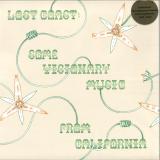
A collection of obscure and unheard metaphysical sounds, 1980-1992
Lost Coast: Some Visionary Music from California assembles little unknown sounds from California’s metaphysical underground. Each recording is stylistically different—dream pop, guitar soli, fourth world, avant-electronic—but they are held together by a regional ethos of the “visionary.” This is music that envisions, seeing through the mind’s eye and conjuring new worlds.
Some people say that California is where “the nuts stop rolling”—where those too eccentric to fit in elsewhere ended up. What was meant pejoratively is easily reclaimed as a celebration of the free-thinking and the freely-freaking. Until the turn of the millennium, all manner of seekers rolled westward until they hit the pacific. Stationed along this edge, music was a way to roll still further: to imagine territories unencountered and wavelengths as yet unheard.
Lost Coast is a commemoration of the people who made these journeys and a resurrection of recordings they made little effort to broadcast. While some of the tracks were originally released on cassettes with modest distribution, others were only shared among friends or never shared at all. Assembled from the personal collection of House Rules operator Zully Adler, these recordings were all found on cassettes in flea markets, barn sales, rural thrift stores, and even stranger places—outside a gem and mineral shop, for example, and on the ranch of a retired mescalin dealer.
Nonetheless, these recordings are eminently listenable. California is a place where the strange and the pleasurable are frequent bedfellows.
Facta returns to Wisdom Teeth with ‘GULP’: a zippy, hi-def mini-album full of scrambled vocals, blown-out basslines, dripping synths and spring-loaded grooves that together map out his playfully psychedelic corner of contemporary club music. Written in a quick creative burst in late 2024, the record brings together a range of the producer’s distinct creative strands into a sharp, cohesive whole. Sitting snugly within the stylistic niche carved out by his A&Ring and DJ sets (alongside label co-founder K-LONE), we hear the influence of 00’s minimal, tech house, UK soundsystem music, ambient electronica, dub and more rubbing shoulders in a way that feels effortless and personal. Many of the tracks began life as sketches penned on the road - dotting between festivals, European club shows, and on tour in Japan - and so the record carries with it a sense of movement and forward momentum, and feels populated by voices, memories, people and places.
The Londoner’s characteristic approach to sound design and genre interplay are on full display here. Generative vocal hooks melt and warp into strange fluid forms, while synths stretch, detune, bend and dissolve into space before snapping back into shape again. Keyboards mirror human vocal formants, forming melodies that feel at once organic and alien. Basslines warp and distort, as if being re-moulded out of different synthetic properties.
Across the record there’s a commitment to expressing simple or familiar ideas in new and unexpected ways, whilst experimentations and innovations are presented clearly and intuitively. Cherished genre references are lovingly deployed as personal touchstones across the record - bleeping minimal- and tech-house; breakbeat dubstep and funky; Chicago house; dub techno - yet sounds and influences are combined and meshed in unexpected ways. Each track is tightly engineered and reduced down to its key elements, which are then manipulated, flipped, warped and pushed to breaking point. As is typical of Facta’s music, uncanny contrasts are worked throughout the music in unexpected ways. Warm, balmy moods come laced with seams of tension or uncertainty, whilst the record’s darker moments are handled with a light, playful touch.
With 15 years experience writing, DJing and A&Ring under his belt, ‘GULP’ is testament to Facta’s love of creation and curation - of seeking out, absorbing, experimenting, and channeling new sounds to create your own sonic world. A record borne of playful experimentation and happy accidents, ‘GULP’ shines bright with a simple, pure energy - a testament to writing quickly and intuitively and, above all else, enjoying the process.
The album’s artwork features photography by award-winning Boston-based photographer, Pelle Cass, whose complex time-lapse composites present hyperreal yet impossible tableaus of seemingly simple everyday scenes - an approach that parallels the record’s blurring of the familiar and the unfamiliar. Cass’s work has been widely exhibited, collected, and published, including solo shows at Gallery Kayafas, Boston, the Photographic Resource Center, Boston, and the Houston Center for Photography, and in collections such as the Fogg Art Museum, the Peabody Essex Museum, and the Museum of Fine Arts, Houston. He was twice a Critical Mass Top 50 photographer and has received two fellowships from Yaddo and one from the Berkshire Taconic Foundation.
Japans kultige Goldgrube DD. Records wurde innerhalb weniger Jahre eröffnet und wieder geschlossen. In dieser kurzen Zeit (1980-1985) erschienen 222 Tapes (und einige Vinyl-LPs) mit der seltsamsten, gewagtesten und süchtig machendsten subversivsten Musik aus ihren sozialen und kreativen Kreisen, die ausserhalb Japans nicht zu finden waren. Jedes Tape enthielt abstrakte, xerografische, oft von Musikern selbst erstellte Grafiken, während sich die inhaltliche Bandbreite von Avant-Punk, kubistischer Ambient-Musik, Soundcollagen, Pop-Concréte, Jazz-Prog bis zu früher Computermusik erstreckte. Zum Abschluss erschien vorliegende Compilation als Abschiedsgeschenk, die 5 fieberhafte Jahre neuer Musik abrundete und die kreative Identität des Avantgarde-Labels unterstrich. Darin befinden sich 13 endlose und merkwürdige Schätze, die jetzt nochmal das Licht der Welt erblicken.
Imagine having a song go viral for 17 years - without even knowing it. That's exactly what happened to the German 1980s band FEX. And this isn't just any song - it's The Most Mysterious Song on the Internet, a track that puzzled music detectives for decades before finally being identified in November 2024. Now, it has been officially released - twice.
The Story in Brief:
Sometime around 1984, a song was broadcasted on NDR Radio. The name of the song was Subways Of Your Mind - only found out 40 years later in November 2024. Back then, a listener recorded the NDR show on cassette, a common practice at the time. Decades later, the tape resurfaced, but while most songs from the recording were identified, one remained an enigma. On March 18, 2007, the track was uploaded to the internet in an attempt to uncover its origins. Due to its now-iconic opening lyric, it was tentatively titled Like The Wind. Over time, the mystery deepened, and the song was given a nickname: The Most Mysterious Song - or simply TMMS.
Starting in 2019, a dedicated Reddit group, TheMysteriousSong, now boasting over 63,000 members, took up the search. They meticulously documented every lead, hoping to solve the riddle of the song's origins. Then, in 2024, the breakthrough: Reddit user marjin1412 reached out to musician Michael Hädrich after discovering a reference to his band FEX in an old newspaper article. Hädrich, FEX's keyboardist, provided a recording from an old demo cassette which included an alternative version of the song. On November 4, 2024, the mystery was officially solved: FEX was the band, Subways Of Your Mind was the title.
What Happened Next:
Since then, FEX has released two singles - both featuring Subways Of Your Mind - through the Berlin-based independent label The Outer Edge. First, the demo cassette version was pressed onto vinyl, as the original NDR radio recording remained lost (see EDGE-028). The Remastered Demo Mix single instantly topped Bandcamp's global charts, holding the #1 spot for several days. By then, it was clear: this was more than just an internet curiosity. A real fanbase had formed. Enthusiastic comments on the sales page ranged from "best post-punk song to ever exist" to "FEX themselves (are) perhaps the most underrated musicians of all time."
But the story didn't end there. A higher-quality version of the NDR radio recording was rediscovered in late december, remastered, and now sent for a second vinyl pressing: the TMMS Version. This new vinyl 7" is backed with Talking Hands another great and unissued song that was found on the demo cassette.
Fame Comes with a Price
Suddenly, time isn't standing still for FEX. The band had to come to terms with the fact that they had become Lostwave super stars. A FEX fan club quickly formed on Reddit, fan-hosted FEX parties are popping up, and the internet is demanding more - an album, merchandise, live performances. But how does a band prepare for a comeback after a 40-year hiatus?
For now, FEX is carefully considering their next steps. Their demo cassette contains six songs - and a few other recordings have resurfaced which probably could be restored and compiled. But foremost, a brand new re-recording of Subways Of Your Mind is in progress.
One thing is certain: The Most Mysterious Song will continue its unstoppable journey around the world. Don't miss this (second) chance to own a piece of music history!
Eko, or Eko Roosevelt, is a Cameroonian composer, pianist & vocalist. He was born in Kribi in 1946, the son of a local Tribal Chief. Eko developed his love for music at church, later pursuing his growing passionwith music studies abroad, first in Dakar and then in Paris. After concluding his studies in France he went on to a recording career and between 1975 - 1982 released a number of full-length LPs, 7" singles and albums on cassette, before returning to Kribi to take over the role of Tribal Chief from his father, a role he holds to this day.
While the name "Eko" may not be immediately familiar to all, his music will be well known to many, from the DJs to the dancers, the heads to the home listeners. Evergreen classics like “Kilimandjaro My Home”, have remained a mainstay in the record bags & USB crates of disco jocks since its release in the late 70s, while numerous of his other crossover Afro-disco gems have been bootlegged, edited and remixed by a seemingly endless number of both greater & lesser-known producers who have all paid tribute to his work. Eko Roosevelt’s position in the ranks of Cameroon’s great musicians cannot be overstated. As a composer, songwriter, pianist and singer he has influenced generations of musicians both in Cameroon and France and further abroad, while he has written & arranged for many of the Cameroonian musical community.
Here Canopy, with the benediction of Eko himself, officially reissues two of his works that have not been rereleased since their first outings. Stylistically the two songs straddle the line between Afro-disco, funk and pop, with a slightly Balearic, almost AOR sensibility.
“Phone Me Tonight” is taken from a 7” record that has barely resurfaced since it was self-released in 1981 on the “Eko Music’ imprint. The song is an uplifting opus that demonstrates Eko’s deftness for creating catchy songs that succeed in their songwriting prowess and melody crafting, both on and off the dance floor. It is a stripped back composition that employs the key elements to great effect. The groovy bass line is underpinned by a tight Afro-disco beat as Eko’s unmistakeable voice draws us in and with a masterful use of repetition and hooks, creates a song that feels familiar from the outset, while being brand new to almost all listeners. As the song develops, the synth lines lift the song higher and higher, culminating in a euphoric transcendence perfect for elevating the mood of any dancefloor.
“Take Me As I am Now”, is sourced from Eko’s first album, “Nalandi” which originally came out in 1975 on Dragon Phenix. Here we have another fine example of Eko’s ability to hone compositions that blend thelines between pop song writing and more loopy dance floor orientated structures. The vocal hook repeats throughout the song, with only minor variations, making the song feel comfortingly familiar from its early bars. An instantly appealing bass line sets the stage for the sleek guitars and taut horn arrangements. The end result is a feel-good balance of melody and groove that makes for a timeless feel with a positive message!"
Dream Log is the latest EP from French producer KX9000, blending electro-funk, space disco, Chicago house, and broken-beat into a captivating journey through diverse musical landscapes. Featuring collaborations with talented artists such as Nic Hanson and Corsica One, the project showcases KX9000's unique ability to merge genres and create dynamic, immersive soundscapes.
From the powerful disco-dub energy of 'Tonight's Ride' to the jazzy intricacy of 'Nuova Zone,' the EP explores a wide range of influences. 'Lost E Shop' blends retro video game nostalgia with electro-funk and city pop, while 'Over Fee' offers a soulful evolution of a years-long work. The EP concludes with 'Deepose Minute,' a deep house track that pays tribute to classic dancefloor sounds with a modern touch.
With Dream Log, KX9000 delivers his most accomplished project to date, a vibrant and emotionally resonant collection that captures the essence of his club performances and studio precision.
It’s been a journey, but thanks to the guys at Universal Music we are very grateful and privileged to bring you this fine piece of modern soul music on vinyl.
Both tracks, on the 7-inch, are taken from the MP3 only 2020 album “Vintage R&B”.
It’s an Anglo-Swedish affair, delivered to you by Swedish songwriters, composers and musicians, Henrik Wikstrom and Anders Lewen, together with UK producer Andrew Stannard.
Side A “Time to Make A Change”, features in Episode One of the 2023 BBC documentary “Fight the Power – How Hip Hop Changed the World”. A track to surely get the dancefloor moving.
After some deliberation of which track to include as a Side B, it was decided as a “Thank you” gesture to invite Universal Music to pick the song of their choice from the MP3 album. “Good, Good Feeling” was the proposal, a song title that is reflected in the composition.
The top side, with its driving beat and the strong vocal ability of Liverpudlian Tommy Blaize, is reminiscent of a Motown track at the peak of its popularity. After listening to the lyrics, it is understandable why this track was used in a “Civil rights” segment within a documentary. A timeless message that can be applied to many social and personal life situations. Listen to the tight musical arrangement. These guys know what they are doing. A track that will surely even get my ageing hips loosened up for the dancefloor. Don’t be tricked by the “paused” ending, a wonderful touch!
The title of the flip side, “Good, good feeling” is exactly that……… A “good feeling” song. Here, the tempo is lowered slightly and the sixties vibe here also leads to a more mainstream direction compared to the A side. Those floaty soulful tones from the UK’s Louise Marshall are very pleasant to the ears, lifting your spirits on any day of the week. Like the A side, get your earlobes in to that musical arrangement. There was no holding back with the broadness of musical instruments in the studio and I especially like the sound of the flute happily skipping throughout. Overall, an enjoyable easy listen.