Since launching her own club night, “Motivation,” back in 2018, B.AI has played a key role in bringing the underground’s club sounds to her home country, China. While introducing some of the scene's most exciting artists to her local audiences, she emerged as one to look out for as well: first as a DJ and quickly thereafter as a producer. Her original takes – a sensitive, highly personal approach to melody and a knack for playing with expectations – crystallized in a slew of A+ releases and a couple of international tours. This trajectory, shaped by taking matters into her own hands and self-empowerment, now sees a logical next step, with the inception of a label that will also operate under the “Motivation” banner and features her own “Hope” EP as its first release.
Sparkling mallets, with synth-pop quality catchiness, open the title track. Rather than further evolving, their two-bar arrangement gets looped over and again, serving as the foundation for a slick FM bass rhythm and a variety of hooks. Although these incline to the bright, the overall vibe is melancholic. In vintage B.AI style, the aptly titled “Hope” is more ambiguous than its patches suggest. Similarly, the vocal this type of palette would call for ultimately comes in the form of aloof, covert musings. A bit buried in the mix, they are most efficient – just like the tension that keeps brooding underneath the surface.
“Murderbot Diaries 1991” turbocharges four-to-the-floor synthetic drums with an arpeggiated rolling bass. The blue note melody on top feels sequenced via a pocket calculator, and the dissonant, electroclash-reminiscent stabs that follow might sound even more angular. The tune is frantic, sinister – and perhaps above all tongue in cheek. It reaches fever pitch with the arrival of a tubular bell theme between the two breaks.
“Once”’s slomo cutoff modulation on the 16th note mid-bass instantly creates a sultry atmosphere that meshes greatly with the pastel cool of the gently delayed DX7 leads. The energy drifts between effortless control and uncertain outcome. These contrasts are amplified as the drums alternate amidst moderation and beat-repeat rendered havoc.
On “Only We Know,” a progressive sine lead lays out the central motif. Yet as briskly as it appears, it makes way for detuned, gliding square waves taking on the same theme. This outlines the track’s structure: as slightly morphed repetitions keep getting introduced almost haphazardly, a dreamlike, mesmerizing ambience unfolds. Techy drum rhythms and a 101-type bass make sure everything stays fuelled. Within the ingenious tapestry of melodies and new twists, it never loses touch with the dance floor. It illustrates B.AI’s club savvy neatly and is therefore a perfect closer for this EP.
1. Watermelon Man
This track version actually came from an improvisation that Allesandro IIona (Keys) made on a live show at RonnieScott's at the start of the year. I think we were were having some issues with one of the monitors on stage and it juststarted making this beeping sound. Then I remember Alleh just came in with that piano riffat the start and the rest was history. This one of thefirst tracks we recorded for the EP and I'm super pleased with how this one turned out. Afterseeing Herbie Hancock live for thefirst time the year before, this felt like the perfect tribute to him!
2. Mandible
The majority of the writing on this album was done at my studio space in Hither Green, where I am every tuesday! I usethis space to record but mainly a space to develop my art. So this EP all came from a few sessions there. We all haveour own creative things going on so it was really great to collaborate as a band and trash out some ideas we had.Mandible is one of my favourite tracks on the EP. It's very simple but leaves us a lot of space to explore some more freeimprovisation. I think in some of my previous recorded music I was more focused on creating well crafted music withgreat melodies and harmony. Whereas here there's a bit more focus on playing as a group and being more explorative inimprovisation. We also didn't have a melody for this track until a week before the recording! Sometimes it just takes awhile tofind that melody or it might just pop into your head one day.
3. Slum
This is a tune that was actually written by myself in 2017/18. Round about that time, I had been playing at a jam night ata warehouse unit in Limehouse called Unit 31. The night was ran by Pianist Raffy Bushman and Drummer Sam Michnikand was focused on hiphop and Jazz fusion. We would usually play a set of instrumental music before it opened up forvocalists and other instrumentalists to come and jam. It was a great place to try out new ideas, so I wrote this tune for itbut we never recorded it. It was really nice to revisit this tune and get it recorded properly at 'That SoundStudios' (Seven Sisters). This track is all about dynamics and a slow build throughout. Descending to more chaos at theend!
4. Red Pistachio
For thefirst two sessions we wrote with a different bass player to Edmondo Cicchetti who is on the recordings. A greatbass player and friend of mine Tom Driessler. This track started kinda exactly how it starts on the record, with that basshook. I'm very influenced by Christian Scott Atunde Adjuah and his melodic writing. Particularly on his album 'StretchMusic'. So this felt really inspired by that album. The chords don't really move around too much until the solo sectionwhere it becomes more like a blues. Then Allesandro get's a bit more loose at the end with the descending sequence.
5. Jerome arrived Late
Quite simply we started writing this tune before Jerome (Drums) arrived late. In the recording session we were a bitundecided about what to do in the solo section. We tried out a few different options before we eventually landed onfeaturing Gabriele Pribetti on Sax. I'm really into his solo on this as it's rhythmically and dynamically really exciting. As Imixed the record it was also a great solo to mess with and run through lots of different plug-ins. There's some weirddelays and phasing going on that and I added some octaves too in places.
A 3rd culture kid immigrant & a half Finnish North Stockholm are join forces to produce an unique electronic sound.
Taking reflections & refractions from late 70s, early 80s and present day analog & digital musicians they mix outré influences with a dark pop sensibility.
London party crew Balearic London are back following their sold-out-and-repressed Macarena-infused Vol. 1 release with another four tasty edits, this time focusing squarely on the '90s after the mostly '80s focus of their debut.
A piano house classic de-cheesed and rearranged for maximum dancefloor effect, a total re-fit of an ambient techno opus beloved by the master Jose Padilla, an all-time pop banger taken in an even sleazier direction and a lesser known piano-powered progressive beauty's outro gets expanded for a dramatic dancefloor moment. Feel Balearic or your money back!
Studio, the influential project of Swedish musicians Dan Lissvik and Rasmus Hägg, presents their legendary 2006 debut in remastered form, in partnership with Ghostly International. Available in limited edition "Fog Machine Vinyl", CD, and cassette. "One of the finest pieces of electronic music you'll hear this year.” - The Guardian (2006). Included in year-end best-of write-ups by Pitchfork, FACT Magazine, and Rough Trade. Physical copies have long been out of print for West Coast, and the album has also been notably absent from most streaming services until now.
“Somehow, I knew I wanted to make a conceptual record that, although only imaginary at that point, could represent or define how our city sounded,” says Lissvik of Gothenburg's influence on West Coast. Some called Studio, the project of Swedish musicians Dan Lissvik and Rasmus Hägg, “the missing link between The Cure and Lindstrøm,” Pitchfork heard Durutti Column and Can, as the duo’s story became swept up in a loosely developing scene — adjacent first to the label Service (Jens Lekman, The Whitest Boy Alive) and later Sincerely Yours (The Tough Alliance, jj) — and a precursor to the 2010s boom at the axis of electronic and psychedelic music guided by indie greats like Caribou, Four Tet, and Darkside.
West Coast, their seminal 2006 debut, captured a faraway romanticism of Balearic brushed up against Krautrock, disco, dub, and afrobeat, with pop lyricism lifted from new wave, all made modern by two art school grads in Gothenburg. First pressed in a small vinyl-only run via their own Information label, the album has been notably absent from most streaming services, and the internet’s record of its initial impact is all but fossilized from a bygone blog era, while its sound is simply untraceable to any one moment in music.
Outside of three 7” releases, they’d keep the music to themselves for several more years. In 2005, Hägg remembers, “We got our degrees and were kicked out of our studio spaces so all these recordings were just piled up. A year later we dusted them off and started to deconstruct and assemble them in a more drawn-out fashion.” In the same breadth, they cite DJ Screw, J Dilla, and Joy Division, along with early ‘80s European live DJ sets from the likes of Beppe Loda, Dj Mozart, and Baldelli as reference points.
“The anything-goes mentality was very encouraging and was a big cornerstone to the Studio sound,” says Hägg. “But there’s so much more to the picture, we were not that young then and had lots of musical baggage in our suitcases, the new thing was that we finally let it all come through, not bound by any borders that was often the case with music identity in Sweden during the 90s.” In the afterglow of the record’s 2007 reception, Studio receded from view, clouded behind a mountain of remix requests (including one for Kylie Minogue that saw release) and label bureaucracy. “It’s easy to wish we would have done some proper recordings of our own instead,” Hägg reflects. But both artists, now well into respective careers beyond Studio, have come to peace with West Coast as their most enduring effort together. Lissvik adds, “It serves as a good reminder for me to keep to that decision and promise and to continue exploring and growing
After a ferocious start to 2020, which saw the band land a top 15 album chart position with their debut Mixtape EP, a #1 spot on the UK vinyl chart, #1 in the Scottish album charts, an appearance and sync in a UK-wide multimillion pound Strongbow ad campaign, FIFA21 soundtrack sync and over 30 million streams, The Snuts have announced their raucous, hook laden debut album, W.L. – out 2nd April on Parlophone Records.
The campaign has gone from strength to strength with the band amassing over 100,000 social followers and daytime support from Radio 1 as well as creating an incredible heartfelt video for single Somebody Loves You in partnership with The Scottish Refugee Council with the video’s production budget and all proceeds from downloads of the track going to the charity.
Adored up and down the country for their uninhibited, sweat-drenched live shows, the band have also announced a UK tour for the end of 2021 – totalling over 30,000 tickets including 3 sold out nights at the legendary Barrowland Ballroom in Glasgow with tickets selling out for that and multiple other dates on the tour in minutes.
Hailing from Whitburn, West Lothian, The Snuts have well and truly found their stride on W.L.. Produced by Tony Hoffer (Beck, Phoenix, M83) and recorded at the Firepit London, the album encapsulates the band’s journey from four working class kids growing up with a dream in Whitburn, to becoming one of the UK’s most exciting and vital bands of the new decade. The album opens with the poignant ‘Top Deck’, winding through a voyage of genres including the raw, rousing, hip-hop driven ‘Elephants, heart-wrenchingly honest ‘Boardwalk’, the undeniable pop banger ‘Somebody Loves You’, the hauntingly heartfelt anthem ‘Always’ and the main stage festival ready hymn, ‘All Your Friends’.
Miles Kane returns with a blistering new album One Man Band, out August 4th on Modern Sky Records. Miles returns to his guitar hero best on One Man Band as he focuses on big hooks and even bigger anthems. Sharp, infectious, urgent and packed to the brim with singalong moments, it’s Miles on the top of his game. A deeply personal record, Miles returned to Liverpool to work on the album. The album’s first offering is the exuberant indie banger ‘Troubled Son’. A raw, pop-driven indie, made for festival stages. “It’s about the struggle we all have in life,” Miles said of the track. “Sometimes we have our shit together and sometimes we don’t. This is me acknowledging my faults and my fears and showing the journey I’m taking as I try to figure it all out.
Wasia Project's 2nd EP 'Isotope' now available on vinyl with a special etched design and exclusive pull out two-sided 584 x 420 mm poster. The collection is an impressive audio-visual concept that applies their classical training to wide-eyed, genre-bending, jazz-pop. The familiar warmth of nostalgia dovetails with the discomfort of the unknown as the duo process experiences of love, anxiety, confusion and hope through a singular voice: "ultimately a universal concept of all of us sharing the same emotions, but leading different lives".
After high demand, Fred again.. releases a repress of Actual Life 3 (January 1 - September 9 2022) on March 31st after almost immediately selling out of vinyl copies upon the original release. the third in his series of Actual Life albums.
Actual Life 3 (January 1 - September 9 2022) is the third in his series of Actual Life albums, which saw Fred again.. resume his diary-esque approach to production using intimate use of voice notes from friends,
videos found whilst scrolling on Instagram and samples from important records in his life. It was an autobiographical
chapter of work that pushed forward the heritage of UK electronic music while standing as testament to the power of music in facilitating catharsis, healing and celebrating the realities of friendship, love and life. The album was
instrumental in his breakthrough as a global artist and debuted at #4 in the UK album charts, becoming the highest-
streaming new release globally on Spotify on its first weekend.
The album features his hit singles Danielle (smile on my face), Delilah (pull me out of this), Kammy (like i do) and Bleu (better with time). The repress remains on a clear vinyl, but this time round the vinyl comes in a black inner bag and the tracklist now mirrors the digital tracklist.
Fred has quickly become one of the most talked about live acts as he transformed his Actual Life records into an immersive, communal real-life experience for the first time, selling out shows across the UK and USA. Fred again.., Skrillex and Four Tet recently did a series of pop up events across New York, culminating in a record breaking sold out, 5 hour b2b set at Madison Square Garden. Also been announced that Fred will be performing the penultimate slot at this year’s Glastonbury Festival.
Fred’s recent Boiler Room performance remains one of the most viewed Boiler Rooms to date, surpassing over 16 million views.
The Alarm 40th Anniversary release History Repeating is new Double CD and LP collection. The CD features 44 of The Alarm’s biggest singles and greatest songs and the double LP features 27.
Spanning all eras of The Alarm Timeline, History Repeating brings together all of the band’s ‘Crown Jewels’, including a brand new and previously unreleased recording of the title track.
History Repeating features all of the keynote tracks that have helped create The Alarm’s phenomenal and loyally dedicated following. The Double CD comes in a replica LP gatefold sleeve configuration and is the most comprehensive ‘Best Of’ ever released by the group since 1998’s Best of The Alarm and Mike Peters.
The Double LP comes in a gatefold configuration and is the first ‘Best Of’ compilation to appear on vinyl since 1990’s Standards. This is the record every single Alarm fan will want to own with its distinctive Red Poppy cover and beautiful depiction of The Alarm family across the inner gatefold.
Upon release, lead singer Mike Peters will be hosting a series of completely SOLD OUT Alarm Rock and Roll Staycations in the band’s hometown while telling the story of The Alarm through thealarms internet broadcast platform
The Big Night In, that will feature weekly shows dedicated to every single year of the band’s history.
In 2022, a major touring itinerary begins with the already SOLD OUT official 40th Anniversary Concert in St. David’s Hall, Cardiff Wales on January 21st 2022 followed by an international 40th Anniversary concert schedule all the way through to 2023.
Originally released on 13th September 1994, Ready To Die is the debut studio album from hip-hop legend, The Notorious B.I.G. Upon release, the album was met with widespread critical acclaim, with Pitchfork giving it a 10/10 rating along with various other critics praising it for its brutally honest depiction of gang violence and conflict as opposed to the often-glorified portrayal in the genre and the wider media. The album has cemented its place in hip-hop history and has since gone on to achieve 6x platinum certification in the US, selling over 3.5 million copies, and has achieved platinum status in the UK as well.
This x2LP re-issue featuring the iconic artwork of an infant bearing a resemblance to the rapper has been out of the marketplace for over a decade and also features all 19 tracks from the Ready to Die Sessions.
The album cover is often cited as one of the greatest of all time, with Billboard magazine placing it no.4 on its list of “The 50 Greatest Album Covers of All Time” stating that juxtaposition of the music with the “innocence of a child” on the cover illustrates how “a cruel world imprints on unmoulded minds”. NME has also placed it no.12 on its list of “Timeless Hip Hop Album Covers” and Complex Magazine have placed it at no.16 on its list of “Greatest Album Covers”.
As always Kling Klong gives space for new artists and supports upcoming talents. This time Martin Eyerer & Rainer Weichhold had no doubts signing this debut release from Stuttgart's dj/producer Ninetoes as 'Finder' is obviously a massive stand-out track which has the words 'summer hit' written all over it. So it was just easy to convince Leon and Re-UP from Italy to do the remixes and help to make this release even more oustanding.
Support from:
Matthias Tanzmann, Loco Dice, Adam Beyer, Nick Curly, Butch, Riva Starr, Popof, Kaiserdisco
DJ Feedbacks:
Adam Beyer: like the leon mix!
Loco Dice: Will try. Please send me the WAV. Thanks
Nick Curly: schöner release....leon remix gefällt mir am besten, danke!
Matthias Tanzmann: woher kenne ich denn die Melodie Coole Tracks auf jeden Fall.
Davide Squillace: Nice one..
Monika Kruse: der leon remix rockt.
Tiefschwarz (Ali): nice nice :) re-up rmx is my favorite.
Butch: leon rocks
Riva Starr: leon rmx for me thx
Claptone: supersonniger tune das original
Ramon Tapia: Leon mix is cewl !
Gregor Tresher: Leon mix sounds cool.
Chus: Leon and Re-Up mixes for me.
Popof: Great remix from re up ! love it
Kaiserdisco: Original mix is nice, will try it out.
Wally Lopez: Leon remix are huge!! Support
Shinedoe: I'll try it out.
As the tenth candle flickers atop the torta alla panna, Archeo Recordings play the Uno reverse card, breaking with tradition to give us a gift in celebration of its birthday: the first in a series of exquisite EPs on which the label's favourite contemporaries pay homage to past masters. Each re-polished gem is plucked either directly from the beatific back catalogue of the fine Florentine label or is at least Archeo-adjacent, perhaps a sign of future wonders to come. Like a musical version of Janus, who can be found at the heart of Bertoldo di Giovanni's frieze in the Medici villa, Archeo Recordings will continue to look forwards and backwards to provide sublime sounds for us all.
Pepe Maina officially joined the Archeo family in 2019 with the much-needed reissue of his 1979 masterpiece Scerizza (AR015), but his astounding music has been a constant companion to label head Manu for much longer. An inter-dimensional, multi-instrumental maverick, Maina weaves the frayed edges of prog rock, new age, organic jazz and global minimalism into a shimmering tapestry all of his own. The results are spread across fifty years and almost as many albums, largely self-released and always absolutely untarnished by commercial concerns.
Based in a small village in the hills of Brianza, just north of Milan, Maina translates the beauty of his surroundings into transformative tone poems, and the folkloric fusion of "The Infinite", originally released on his 2014 CD Tales From The Hill, is the perfect example of his practice. It opens with a recitation of Giacomo Leopardi's 1825s poem "L'Infinito" by famed Italian actor Vittorio Gassman. A leading figure in the romantic movement, Leopardi explores the idea of time and space within the natural world, and the peace that comes with an appreciation of the immensity of eternity. Manu, longtime digger and now a burgeoning producer, expands upon the original with tribal percussion, chirping electronics and a spheric bassline, folding Maina's elegant strings and gossamer pads into a new arrangement suited for a slow dance under the stars.
Unless you had a well-trained ear tuned to Italy's avant-jazz scene, chances are your first encounter with innovative flautist Roberto Aglieri came via the 2017 Archeo reissue of hisalmost untraceable LP Ragapadani (AR011). It's a true testament to Manu's digging credentials that he snatched this masterpiece out of the esoteric atmosphere and brought it attention it so richly deserved. A delicate union of digital synthesis and versatile flute - be it soft and silvery or
brilliant and clear - the 1987 album was a shapeshifting masterpiece, replaying scenes from Virgil, Verdi, Visconti and Pasolini with a neon glow. Quintessentially Italian, but uncanny and previously unimagined - Penthouse and Portico perhaps. Powered by a percolating prototechno sequence, cascading keys, hallucinogenic vocal snippets and a variety of tonal timbres from Roberto's reed, "Danza N. 1" long deserved the praise reserved for Jean-Luc Ponty's pinnacle, so many thanks to Manu for our collective introduction. The tall task of reinterpreting this particular paragon falls to Perugian polymath Daniele Tomassini AKA Feel Fly, whose peerless skills as both producer and musician have delighted DJs and dancers alike. Hot on the heels of his diverse and definitive remixes of Tony Esposito for AR027, Daniele delivers a radical rework of "Danza N. 1" perfect for both day rave sunshine and full moon party alike. Enhanced by snapping breaks and a rattling kick, the bassline gurgle emerges as a progressive powerhouse, laying the foundation for the trilling flute and circular keys to cast a psychedelic spell. As the slow-Goa revival picks up pace, this one is way ahead of the pack.
Archeo take us all the way back to the start of its story here - well almost. Though it bore the stamp AR001 (2015), this Radio Band reissue actually hit shelves months after Tony Esposito's "Je-Na' / Pagaia"; a false start perhaps but a true classic all the same. Radio Band were a group of DJs from Florence who all sailed the airways of Radio Fantasy in 1984 and whose one and only release was this super groovy slice of Italo-boogie. Following the example of Milanese DJs Band of Jocks but far surpassing their formulaic funk fizzle, Radio Band employed an intergalactic bassline, cosmic keys and that undeniably Italian style of rapping to deliver a sophisticated party-starter which even found its way to disco deity Ron Hardy. Back to the here and now, and if you've found yourself pumping an ecstatic fist to a supercharged Italian epic of late, chances are its from the mind of the mysterious Radiomarc. Operating on the ascendent Popcorn Groove imprint, this shadowy figure steers his country's lost classics into peaktime territories, finding a sweet spot between late Italo-disco, early Italo-house and contemporary cool. Pushing the tempo with a club-ready 4/4, setting the sequencer to stun and supplementing the original melodies with a series of synth riffs, the mystery producer send this one into orbit. Radio Band - Radio Rap - Radiomarc, the circle is complete.
Few have done more to develop cross-cultural musical exchange than Futuro Antico. A collaborative venture from musician, archeologist and ethnomusicologist Walter Maioli, keyboardist and tonal theoretician Riccardo Sinigaglia and multi-disciplinary artist and composer Gabin Dabiré, Futuro Antico formed in Milan in 1979, combining ancient international folkloric traditions with otherworldly electronics. The result is an arresting melange of Mediterranean, African and Asian instrumentation, mimicked by esoteric synth tones and hypnotic minimalism, which the group perfected on their acclaimed 1990 LP Dai Primitivi All'Elettronica. The meditative and transportive "Pan Tuning" belongs to their largely overlooked 2005 CD only release Intonazioni Archetipe, and has been amongst Manu's most loved tracks from the first moment he heard it. Who else is better placed to reshape this evocative opus into an immersive, transcendental dance floor journey than label favourites Mushrooms Project? The duo sows the original elements into a sprawling fifteen minute fusion of séance and science, at times propulsive with a ritualist rhythm of tuned percussion and crunching drum machine at others drifting off into ethereal ambience. Mushrooms Project continue to push the boundaries of the Afro-cosmic style, and this remix marks a new zenith.
Proudly presenting, ‘Калі ты запытаеш (If You Ask)’, a brand new, blissed-out pop production with a ‘70s AOR touch, by the ever-on-point SOYUZ (СОЮЗ). Coming at a period between albums, the single features guest appearances from the sensational musicians, Biel Basile (O Terno, Sessa) and Anthony Ferraro (Toro Y Moi, Astronauts, Etc.). Friends of the band, they add their signature touch on the drums and synth respectively. To complete the package, SOYUZ back the title track with a short but sweet, Wurlitzer-laden, MPB-tinged number, ‘Tenório’.
‘Калі ты запытаеш (If You Ask)’ tells the story of lost dreams. A track that can be interpreted either as a bittersweet longing for childhood times, or for a native place you can’t return to. For the writer Alex Chumak he suggests, "In my case, as in the case of many Belarusians, it’s both".
For this song, Alex chose to sing in his native Belarusian tongue. As he explains this language "to me feels underrepresented in pop music, also it’s a beautiful legacy and sonority that I wanted to share with the listeners of our project around the world". One of the key inspirations was a Belarusian band “Песняры” (“Pesniary”), who produced a host of great progressive folk, jazz fusion and AOR, from the ‘70s to the ‘90s, predominantly sung in Belarusian.
Another key influence was the music coming out of the Brazilian state of Minas Gerais in the ‘70s, drawing inspiration from the sentimental and harmonious music of Beto Guedes, Lô Borges, Fernando Oly and Wagner Tiso.
Having parted ways with their drummer Anton, SOYUZ needed to find a new way to produce songs. The answer was to go remotely. Alex contacted the brilliant Biel Basile, who had recorded Sessa's contemporary classic ‘Estrela Acesa’, in which Alex also participated. Utilising Biel and Sessa’s newly built studio in São Paulo, SOYUZ had Biel record the drums directly to tape to get the rich sound they were after. Adding the final magic into the mix, California’s Anthony Ferraro provided a beautiful Solina String Ensemble synth arrangement, with drummer/recording engineer Albert Karch expertly assisting with the production.
To capture the essence of the single visually, Alex and the Brazilian one-man-industry visual artist Gabriel Rolim, spent a blazing sunny May day in Berlin shooting film and stills – one of which became the perfect cover image. We hope you enjoy this little nugget of SOYUZ mastery, a sweet taster to savour while the new album is recorded.
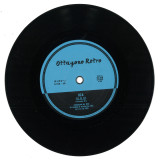
Claudio Mate introduces from the Italian headquarters a new label from the Ottagono family. Influenced by his sister Vala, which she introduced Claudio in the early 90s, in club music and club culture. Ottagono Retro is a new fashion retro vintage outlet record label, inspired by Vala’s fashion, vintage clothing, and handmade accessories shop called Ottagono Retrò. You can visit the physical store on the first floor of Ottagono’s historic place in Nocera, close to the beauties of Naples, Sorrento, Pompei, Salerno, and the Amalfi Coast in southern Italy .
Hansol Oh is a South Korean singer, songwriter, and multi-instrumental electronic musician, currently living between South Korea and Germany, proudly representing Gyeonggi (State) Province as its promotional ambassador. She first captured the spotlight as the Korean representative in the 2017 MTV Aloft Star competition, marking the beginning of her journey as an electronic musician and also becoming a Korean Ableton testimonial under the name Uza. In the last few years, during the COVID-19 era, she earned international attention as one of the most interesting indie solo K- wave artists. She is renowned for its robust philosophy and a distinctive, hard- hitting sound rooted in synthesizers with a retro analogue feeling. More recently, she introduced to the music world her new figure as Tova Oh.
A side: S.O.S club extended, for the fans of k-wave music since the COVID-19 has been a true sensational song. Club extended mix is exclusive for this vinyl release, keeping the original sounds which are a crossover mixture between 80s new wave, electro-pop, techno, house music, playing like a club anthem from deep to dark rooms to Balearic dance floors.
B side: Suitable Kimchi mix sounds like music coming from Netflix, Stranger Things show as the perfect soundtrack for any late-night party. It strikes the perfect harmony between EBM, new wave, electro, and techno, converging with disco soul music. The outcome is a cosmic journey reminiscent of the ’80s, both fiery and flavourful like Kimchi !!!
Parsley Sounds was the glorious debut album for Mo Wax by Parsley Sound. The album was one of the iconic label’s final releases before it closed in 2003 and locating a clean copy has been extremely tricky of late, unless you're flush enough to drop 150 notes on it. Mercifully, the Be With reissue, put together with invaluable assistance from the group, should remedy this situation. It's a lo-fi, bass-heavy, blunted beat treat, warped with heat haze and dreamy soft-psych and has been criminally under-heard for far too long.
As with most cult-like records, Parsley Sounds has many influential fans, far and wide. From Four Tet and Caribou to NTS's modern day breakfast hero Flo Dill, its reputation has only grown in stature. At the time, the notoriously hard-to-please Pitchfork garlanded it with a scarcely achievable 8.8 whilst, just recently, the Numero Group's Rob Sevier described it as a "visionary bit of proto-Salvia Palth (or Steve Lacy)" via a Ghostly International missive.
Parsley Sound comprised super-talented duo Preston Mead and Dan Sargassa. They released an early single (the perfect "Twilight Mushrooms", featured here) on Warp Records as Slum, before signing to Mo Wax. Hidden behind a wall of sound - fuzzy layers of beats, bleeps and symphonic synths - they were convinced they made mainstream pop music. And, in many respects, Parsley Sounds really is a beautiful pop album. It overflows with memorable, gorgeous melodies and inspired songcraft. As the contemporaneous Pitchfork review correctly had it: "Parsley Sounds is one of those rare records that manage to sound modest while frequently pushing the sonic envelope."
Killer opener "Ease Yourself And Glide" is a thing of aching, soft-psych, wonky beat-beauty. A melodic masterpiece, part Crosby, Stills & Nash, part proto-Koushik, it presents a melancholy falsetto, surging bass and blunted lead guitar. As it climaxes, gorgeous strings are ushered in to see us out. Sublime. "Twilight Mushrooms" is up next and it's an acid-drenched, strung-out acoustic-led campfire wonder. Amid layers of tape-hiss and beautiful, sun-dappled strings, its understated vocal track provides a haze of wistful innocence.
The breezy "Spring's Near" is a krautrock-inspired chiming instrumental of heavenly excellence, its warm, skipping, motorik groove and dreamy synths completely infectious. Another total highlight, the technicolour "Yo Yo" initially presents itself as a more abstract, bleepy offering but as it organically swells into ever more beautiful places, with the addition of a choppy insistent drum loop, flute bursts, horns and sweeping strings, it puts one in mind of early Manitoba and Four Tet releases. Shimmering, blissed-out greatness.
The celestial harmonies and glistening harps of the wonderfully beatless, serenely sullen "Ocean House" are very much in conversation with late-60s meditative psych whilst, closing out Side A, the jaw-dropping, lushly experimental effort "Find The Heat" comes on like Arthur Russell meets Brian Wilson. Yep, *that* good.
Side B opens with the warped, bleepy "Stevie", a brief but beautifully wonky, soulful and intricate instrumental. The more upfront vocals that propel the fuzzy "Platonic Rate" have a refreshing swagger to them, the heavy bass and neck-snapping in-the-red beats too much for any system to deal with whilst the guitars and strings have a sweeping, cinematic feel which just beguiles. The slow, urbane soul of "Candlemice" will stop you in your tracks, no matter what you're doing. It carries a delicate sadness, as does much of the album in that classic "down lifting" style we so love here at Be With.
The fuzzing, buzzing "Templechurchmansions" is a searing, soulful dubwise detonation. Heavily stoned with slow-burning jazzy snatches and a tense, moody atmosphere, it's a Tricky-adjacent gem. The album rounds out brilliantly with the ominous instrumental "Neon Breeze" before giving way to the propulsive, almost incongruous punk-funk / disco-dub of secret "untitled" track "Caution", a scratchy, smacked-out groove-fuelled workout with a female vocal dripping with 'tude. Just sensational.
Under the watchful eye - and attentive ears! - of Parsley Sound themselves, the audio for Parsley Sounds has been carefully mastered by Be With regular Simon Francis, with a few much needed tweaks here and there, according to the artist's wishes. Cicely Balston's expert skills have made sure nothing is lost in the cut whilst the records have been pressed to the highest possible standard at the always stellar Record Industry in Holland.
Preston and Dan always thought the colours on the first vinyl pressing looked a bit "washed out" vis-a-vis the original artwork which was way more vibrant. We feel we've got it popping back to the original intention with the restoration work here at Be With HQ. So with the audio and artwork now approaching completeness after 20 years, this long overdue re-issue could be considered its definitive vinyl release.
DJ Support: Chicken Lips, Kelvin Andrews, Bill Brewster, Eric Duncan, Wrekin Havoc, Alice Palace, Andy Taylor & Mind Fair
Hot from his Magic Wand releases Baz Bradley gets busy on the edit block for Vol 3 taking in Proto house boogie, obscure European chanting pop, and punk funk freak-outs, plus a tasty MF bonus cut with new wave funk leanings. Don’t miss the boat with this one limited vinyl only folks!
We’re teaming up with ELUCID and Fat Possum for a limited edition of 300 copies of a Rush Hour black ice coloured edition.
E L U C I D, one half of the illustrious duo Armand Hammer, is here with the full-length follow-up to 'I Told Bessie'. Further experiments in the sonic, expanding on the 'live' side of music paired with the embracing of chaos. Something you haven't heard, or not so for a very long time. E L U C I D is here to reveal the bleakness of reality.
''There is never time in the future in which we will work out our salvation. The challenge is in the moment; the time is always now.''
James Baldwin
A raw, crackling urgency runs through rapper-producer ELUCID’s new album REVELATOR like an underground power line. There is no space here for sepia-toned reminiscences or indulgent self-mythologizing. Intellectual rabbit holes have been filled in with concrete and rebar ; there is nowhere to hide and no off ramp from the audio Autobahn that ELUCID has fashioned—a renegade Robert Moses with gold fronts, bulldozing the homes of the powerful and the complicit. REVELATOR brims with the energy of now, with a refusal to look away. Carpe diem in a murder one mask.
Born in Jamaica, Queens, ELUCID has been on the cutting edge of New York’s underground scene since the mid-2000s. From the beginning, he has defied both convention and expectation. He ran with Okayplayer darlings Tanya Morgan, but his own music eschewed their throwback charm for glitchy noise experiments and bass-swamped culture jamming. His 2016 debut studio project Save Yourself (re-released in a deluxe edition last year) announced him in earnest. But in recent years, his Armand Hammer releases with partner-in-crime billy woods have received significant attention and acclaim. Serving as a followup to his last solo album—2022’s comparatively balmy I Told Bessie—ELUCID hoped to “re-distinguish” himself with REVELATOR, setting himself apart amidst the increasing attention around the music he and his friends are making together.
For ELUCID, this meant setting bold new challenges for himself. One of these was diving further into live instrumentation than ever before—”getting my Quincy Jones on,” as he puts it. The testing ground for this approach was Armand Hammer’s most recent project, 2023’s We Buy Diabetic Test Strips’ Möbius strip soundscapes, warmed with instrumental flourishes and skin-shedding beat progressions. With REVELATOR, though, ELUCID strove to create an atmosphere of chaos, embracing experimental electronics and atonal sample bursts. He worked on much of the album with co-producer Jon Nellen, who comes from a background in avant-garde and Indian classical music. “I wanted to get as freaky as I could at this moment. I wanted people to hear things, maybe for the first time, or in a way they haven’t for a long while,” the rapper explains.
ELUCID arrived at the studio with a collection of noise sources: non-referential samples, glitches and noises. Together he, Nellen, and others created forms out of them and, as ELUCID recalls, “just started playing drums with it.” Their fried, distorted sound was directly inspired by Miles Davis at his most uncompromising—specifically, the tone-clustering funk track “Rated X” from his 1974 double LP Get Up With It. At times, the pairing of rap with avant-fusion sounds also brings Emergency! from The Tony Williams Lifetime to mind, perhaps in an alternate timeline where the late drummer was listening to Ice Cube’s AmeriKKKa’s Most Wanted.
“The World is Dog,” REVELATOR’s lead single, functions as the album’s aesthetic thesis statement. Like the Davis track, the textures are punishing, the tonality is in free-fall, and the driving breakbeat of a groove cuts in and out unceremoniously. Avant-jazz bassist Luke Stewart, who appears throughout the record, holds the whole thing together just long enough for ELUCID to tightwalk over the beat. This tension is exactly where REVELATOR sets itself apart; in a time of drumless loops, and safe soul samples, this is a high-wire act with no safety net. Similarly, the song announces the themes of the album within just a few phrases, evoking the way societies accept and adjust to new levels of debasement and brutality while suffocating under the weight of history: “Can’t clock the kill, all a mystery/Forced past will eating everyone eventually/The world is dog.”
Many of the songs on REVELATOR grapple obliquely with dissolution and disenfranchisement in America and across the world—the grim realities of our domestic sociopolitical climate and our involvement in foreign conflicts. “Much of my artistic and political sensibility comes from the Black arts movement here in New York,” ELUCID explains. “Recognizing the interconnected global struggles against oppression, artists and thinkers created works and actions in solidarity with freedom movements in South Africa and Palestine.” ELUCID cites intellectuals like Amiri Baraka, Kwame Nkrumah, Audre Lorde, Sonia Sanchez, and Nikki Giovanni among his heroes. (One track on the album is specifically inspired by Lorde’s work, “SKP,” citing the scholar’s paper “Uses of the Erotic: The Erotic As Power.”) Songs like REVELATOR’s insistent closer “ZIGZAGZIG,” find ELUCID applying up-to-the-minute messaging, making explicit reference to the conflict in Gaza: “Feed a war machine…from river to sea, in lieu of peace.”
Despite ELUCID’s preference for cacophonous system overload here, the rapper also provides moments of respite. Recorded at The Alchemist’s Los Angeles studio, the laid-back, wheezing “INSTANT TRANSFER” is a collaboration with billy woods, which crystallizes their shared sense of creative determination. “With much momentum behind us and even more on the horizon, I knew a purpose, and that every step was ordered to that purpose,” ELUCID said of the experience. Meanwhile, the jittery “HUSHPUPPIES” is a playful anomaly on the track list, providing a snapshot of ELUCID watching his grandparents in the kitchen while preparing for Friday night fish fry dinners.
“Love still rules over on this side,” ELUCID says. ”I’m raising a family. We are making meaning and finding joy in the midst of all the fucked up-ness of everything around us because the alternative is cowardice and slow death. We remain rooted. We celebrate our people and our wins. Struggle is necessary.”
“IKEBANA” is one of ELUCID’s strongest statements of purpose on the record, blending the record’s heaviest themes with its most hopeful sentiments. supported by a shoutalong refrain and an urgent prog-funk groove. Breaking away from images of dissolution and crumbling societal systems that populate REVELATOR, ELUCID notes that the only way to navigate life’s bleakest landscapes is to cling to love and believe in those around you—to look forward toward something better that may or may not be possible. For the rapper, one of the album’s most trenchant lines comes during a centerpiece of a beat drop: “Being alive/I must look up.”
“The lyric ‘being alive I must look up’ is important especially in the context of this album. Much of the album imagery is harsh and reflects the actual doom some of us experience. But still I/we exist,” ELUCID explains.
Every artist is, in one way or another, the product of their time, bound by life’s leaden gravity to operate within the space of that which is already known. But there are some who are able to shake free of these ties, to shape the culture as it unfolds, to make the present their own.
Revelation, as a concept, points to the scales falling from people’s eyes—something that has been hiding in plain sight becoming clear. “The revelator relates to things that have been talked about, things that have been forecasted,” ELUCID adds. “And now they’re really here, and everyone sees it. And there’s no escaping.” REVELATOR plays out with the unmitigated power of those storms, laying waste to any genre conventions in pursuit of a certain physicality. Here, ELUCID develops a wholly distinctive musical language to explore our fractured modernity.
REVELATOR's packaging was designed by longtime Armand Hammer / Backwoodz art director, Alexander Richter.
Michael Mayer albums don’t come round too often, which is one of many reasons why his fourth collection, The Floor Is Lava, is a genuine event. It’s been eight years since his last one, the collaborative & released on !K7; its predecessors, Mantasy (2012) and Touch (2004), took their sweet time, too. It’s no real surprise, given the many hats Mayer wears – globetrotting DJ, revered remixer, inveterate collaborator, and boss of both Kompakt and Imara – that his solo productions are relatively sparing. But this also speaks to their quality: Mayer’s name on a record sleeve is a sign of quality, of music that’s both looking to the future and calling back to the past, that balances the imperatives of the dancefloor and the loungeroom, that’s as exploratory as it is functional.
On The Floor Is Lava, Mayer seems to be taking the temperature of both the music that surrounds him (past and present), and the ides of the industry he works within. There’s that iconic album title, for a start. “The album’s mindset,” he says, reflecting on those four words together. For Mayer, it’s partly a critique of the way the industry boxes in both producer and listener, focuses them on genre, on market, on the next new thing: “Being a free minded spirit that transcends genres has become an uphill battle.” A battle worth fighting, though, and with The Floor Is Lava, the result is an album that’s varied, quixotic, idiosyncratic, charming, and deeply, addictively listenable.
Throughout, Mayer finds thrills in exploration and juxtaposition, allowing unexpected things to blossom and giving them their life, their platform, throwing the listener exciting curveballs: “It’s a DJ album by a DJ that’s easily bored.” Either easily bored, or endlessly curious, The Floor Is Lava is rich with ideas. It opens with “The Problem”, which looks back to look forward, embracing the rickety way early house productions threw samples together with gleeful abandon. Mayer mentions Pal Joey, and the scene around Rockers Hi-Fi and their Different Drummer imprint, as reference points, and you can hear that freewheeling spirit throughout.
It’s followed by “Vagus”, a slinky, sensual minimal house number that Mayer describes as his “musical catnip”. The flow of these two opening cuts defines the dynamic of The Floor Is Lava, defining the dialectical drive at its core: thesis and antithesis leads to synthesis, but with a welcome prickliness that means you’re always excited, always engaged. It’s also productive in the way it derives energy from rubbing genres and sounds against each other, in unexpected ways, for maximum musical frisson. There’s psychedelic techno on “Feuerstuhl”, more minimal techno with “Ardor” (Mayer mentions ‘Immer 1’ era 90s minimal as inspiration), slippery, Shepard-tone breakbeat through “Sycophant”, a lovely, lush vocal turn on the poppy “The Solution”.
The album closes with the melancholy “Süßer Schlaf”, where Mayer sets a poem by Goethe to one of his most haunted, moving pieces of music yet, in abstract tribute to a lost friend. It’s one of the most affecting moments on The Floor Is Lava. There’s also an update on 2020’s wild Brainwave Technology EP, with the surrealist glitter-stomp of “Brainwave 2.0” (check out those handclaps!),where Mayer’s thinking about the socio-political precipice of the now: “I’m reading with great interest about this whole complex of how humanity is about to cross so many lines and the implications that the resulting financial and educational inequality will bring.”
That’s The Floor Is Lava: then and now, brainwaves and nerve structures, problems and solutions, genres on fire; the real, the unreal, and the surreal. An album for the easily bored and the endlessly curious. Mayer has the last word, telling us all you need to know about the album’s spirit: “Burning for the cause, being zealous, being addicted to the heat of the night, the exuberant powers of music.”
Michael Mayer veröffentlicht nicht oft Alben, was einer von vielen Gründen ist, warum ‘The Floor Is Lava’ ein echtes Ereignis ist. Es sind acht Jahre vergangen seit seinem letzten Werk, dem Kollaborationsalbum &, das auf !K7 erschien; seine Vorgänger, Mantasy (2012) und Touch (2004), ließen ebenfalls auf sich warten. Es überrascht nicht wirklich, da Mayer viele Rollen gleichzeitig erfüllt – weltreisender DJ, vielbeschäftigter Remixer, unermüdlicher Kollaborateur und Chef von sowohl Kompakt als auch Imara – weshalb seine Solo-Produktionen eher sparsam ausfallen. Doch das spricht auch für deren Qualität: Ein Album mit Mayers Namen auf dem Cover steht für Qualität, für Musik, die sowohl in die Zukunft blickt als auch auf die Vergangenheit verweist, die das Gleichgewicht zwischen den Anforderungen des Dancefloors und des Wohnzimmers hält, die genauso erforschend wie funktional ist.
Auf The Floor Is Lava scheint Mayer sowohl die Musik um ihn herum (vergangen und gegenwärtig) als auch die Strömungen der Branche, in der er arbeitet, zu reflektieren. Da wäre zunächst der ikonische Albumtitel. „Die Grundhaltung des Albums“, sagt er, drückt sich in diesen vier Worte aus. Für Mayer ist es teilweise eine Kritik daran, wie die Industrie sowohl Produzenten als auch Hörer in Schubladen steckt, sie auf Genres, auf den Markt und auf das nächste große Ding fokussiert: „Ein freier Geist zu sein, der Genres überschreitet, ist zu einem steinigen Weg geworden.“ Ein Kampf, der sich jedoch lohnt, und mit The Floor Is Lava ist das Ergebnis ein Album, das vielfältig, eigenwillig, charmant und tiefsinnig, aber auch süchtig machend ist.
Im gesamten Album findet Mayer Freude an der Erforschung und Gegenüberstellung von Stilen, lässt unerwartete Dinge erblühen und gibt ihnen Raum, überrascht den Hörer mit spannenden Wendungen: „Es ist ein DJ-Album von einem DJ, der sich schnell langweilt.“ Entweder langweilt er sich schnell oder er ist unendlich neugierig – The Floor Is Lava ist reich an Ideen. Es beginnt mit „The Problem“, das in die Vergangenheit blickt, um nach vorne zu schauen, und die wilde Art, wie frühe House-Produktionen Samples mit fröhlicher Unbekümmertheit zusammenwarfen, aufgreift. Mayer nennt Pal Joey und die Szene um Rockers Hi-Fi und ihr Label Different Drummer als Referenzpunkte, und dieser freie Geist zieht sich durch das gesamte Album.
Es folgt „Vagus“, eine sinnliche Minimal-House-Nummer, die Mayer als seine „musikalische Katzenminze“ beschreibt. Der Fluss dieser beiden Eröffnungstracks definiert die Dynamik von The Floor Is Lava und den dialektischen Antrieb im Kern: These und Antithese führen zu einer Synthese, jedoch mit einer willkommenen Schärfe, die dafür sorgt, dass man immer aufgeregt und engagiert bleibt. Zudem gewinnt das Album Energie, indem es Genres und Klänge auf unerwartete Weise aneinanderreibt, um maximalen musikalischen Nervenkitzel zu erzeugen. Es gibt psychedelischen Techno in „Feuerstuhl“, mehr Minimal Techno mit „Ardor“ (Mayer erwähnt ‘Immer’ Ära Minimal als Bezugspunkt), gleitenden Shepard-Ton-Breakbeat in „Sycophant“ und einen lieblichen, üppigen Vocal-Auftritt im poppigen „The Solution“.
Das Album schließt mit dem melancholischen „Süßer Schlaf“, in dem Mayer ein Gedicht von Goethe vertont und eine seiner bisher eindringlichsten und bewegendsten musikalischen Kompositionen schafft, als abstrakten Tribut an eine verschiedene Freundin. Es ist einer der ergreifendsten Momente auf The Floor Is Lava. Ebenfalls gibt es ein Update der wilden Brainwave Technology-EP von 2020, mit dem surrealistischen Glitzer-Stampfer „Brainwave 2.0“ (hör dir diese Handclaps an!), in dem Mayer über den sozio-politischen Abgrund der Gegenwart nachdenkt: „Ich lese mit großem Interesse über diesen ganzen Komplex, wie die Menschheit dabei ist, so viele Grenzen zu überschreiten und welche Auswirkungen die daraus resultierende finanzielle und bildungstechnische Ungleichheit haben wird.“
Das ist The Floor Is Lava: Damals und heute, Gehirnwellen und Nervengeflechte, Probleme und Lösungen, brennende Genres; das Reale, das Unreale und das Surreale. Ein Album für die schnell Gelangweilten und die unendlich Neugierigen. Mayer hat das letzte Wort und sagt uns alles, was wir über den Geist des Albums wissen müssen: „Brennen für die Sache, leidenschaftlich sein, süchtig nach der Hitze der Nacht, den überschwänglichen Kräften der Musik.“
Paddan's Sigtryggur Baldursson and Birgir Mogensen are lifelong friends from Kópavogur, Iceland, who started as mates on the local football team, then graduated to making music together as teenagers, and even later as young men doing time in the experimental punk collective KUKL, from 1983 - 1986.
KUKL was populated by survivors of the post-punk scene in Iceland in the early 80s, which is well documented in the film Rock in Reykjavik from 1982. The band was released by the Crass collective in London and featured members, apart from Birgir and Sigtryggur, like Guðlaugur Óttarsson, Einar Melax, Björk and Einar Örn, some of whom would become better known later in outfits like the Sugarcubes and their respective solo work and other collaborations.
Sigtryggur has a long career in music, having worked with among others, Emiliana Torrini, Howie B, Les Negresses Vertes, Tomas R. Einarsson, Petur Ben, KK, Kaktus Einarsson, and many many others. He also produces an award-winning documentary music show for RUV called Hljómskálinn.
Birgir Mogensen is a classically trained classical guitarist and bass player who has worked through the years with artists ranging from KUKL to Killing Joke to Spilafifl and Inferno5.
Birgir and Sigtryggur formed Paddan during the 2010s, and are now preparing to release their EP Fluid Time, which has been inspired by their perception of time and space. Birgir Mogensen says, "As a duo, we trusted our musical intuition and were guided by allowing the first idea to remain unchanged during the recording process"Recorded, produced, and arranged by the pair, Sigtryggur and Birgir play basses and drums along with various other instruments.
All recordings are played on live instruments except a modular synth which is programmed in the background of two tracks The duo is joined by the great harmonica and lap steel player Gaukur Davidsson on "Vaguely" and "Bug," and trumpet player Eirikur Orri Ólafsson on "Splash," not to mention the mixing expertise of Vaccines bassist Arni Hjörvar Árnason on "Bug," "Splash," and "Kokka," and sound-mixer Albert Finnbogason on "Vaguely."
Barkley Bandon’s debut album “Love Machine” is a sexy concept album, perfect pop record and an experimental look at club music all in one.
Hard to pin down stylistically, it’s visiting multiple spaces on a colour spectrum, with hues of Sophie’s hyperpop, Hudson Mohawke’s cheek, the nostalgic shades of Oneohtrix Point Never, a nod to Dean Blunt’s DIY aesthetic and maybe flirting a little with the of Teaches of Peaches. But really, it’s carving out a sound all for itself that is like nothing else out there.
The mysterious London producer recently contributed a song on CASISDEAD’s chart topping, Brit Award winning debut album ‘Famous Last Words’ and has worked with London RnB vocalist Gloria on her release Metal, which came out on Gaika’s label The Spectacular Empire.
Working here, on in his own playpen, he shows off his pop production skills on tunes like ‘Green Light’ and ‘Nails’ (collaborations with rising artist Kaleab Samuel from Aurora, Colorado) and ‘You Decide’, a collab with pig$ - the incredible producer from LA who makes up the other half of their joint project Parking Big. Then he flips the approach, stuffs a bunch of percussion sounds in a box, shakes it and lets clanky club bangers like ‘Vertigo’ and ‘Eye Candy’ tumble out.
Fronting the cover we see Barkley’s real life wife as a teen dream - his ultimate Love Machine.
The album will be released on 25.10.2024 on his own label Laterhosen Records on digital and limited cassette tapes.
“That bass… absolutely filthy” Tom Ravenscroft, BBC Radio 6
A sonic portal to a parallel universe where neon-soaked dreamscapes transform the stark realities of a post-pandemic world. Music for a forgotten future, where echoes of the 80s cast long, enigmatic shadows through a rich tapestry of emotion that charts a journey from isolation and fear towards healing and hope. This is the journey of Season One and Season Two, the debut companion albums for the solo project of Italian composer Battaglia, both out this fall on Four Flies Records.
In 2020, as the world retreated onto itself due to the COVID-19 pandemic, Battaglia entered the recording studio. Driven by a desire for experimentation, she decided to focus on the classic synths that have made history to create a sonic and emotional alchemy that reimagines the 80s to resonate with our current experiences and sensibilities.
Drawing inspiration from the cinematic magic of iconic early-80s films, and especially the haunting soundtracks of Tangerine Dream and John Carpenter, she crafted a soundscape that goes beyond nostalgia to capture the spirit of a generation navigating uncertain times.
Season One and Season Two explore the complexities of a world grappling with lethal pandemics, climate catastrophes, and nuclear disasters through themes such as longing, fear, and hope, set against a scenario that blends elements of dystopian and post-apocalyptic science fiction and, at times, horror.
Season One delves deeper into the darker aspects of this new reality, evoking a sense of unease and uncertainty, occasionally interspersed with soothing flashes of light. In Season Two, while darkness still lingers, the sonic landscape is infused with a sense of optimism and determination, offering glimpses of a possible salvation.
With Battaglia's signature blend of dark wave, synth-pop, suspenseful electronica, and cinematic vibes, Season One and Season Two create a sonic world that is at once hauntingly familiar and utterly captivating -- the perfect soundtrack, one is tempted to say, for the countless sci-fi/horror-fantasy series that have been flooding streaming platforms in the last decade.
The covers of both albums were designed by Eric Adrian Lee, who conceived them as two sides of the same image, two versions of a world in crisis but whose ruins contain the potential for rebirth.
Battaglia's Season One and Season Two will be available on black vinyl LP starting from October 25th. Digital versions of both albums will also be released on the same date, featuring five bonus tracks (two on Season One and three on Season Two).
A sonic portal to a parallel universe where neon-soaked dreamscapes transform the stark realities of a post-pandemic world. Music for a forgotten future, where echoes of the 80s cast long, enigmatic shadows through a rich tapestry of emotion that charts a journey from isolation and fear towards healing and hope. This is the journey of Season One and Season Two, the debut companion albums for the solo project of Italian composer Battaglia, both out this fall on Four Flies Records.
In 2020, as the world retreated onto itself due to the COVID-19 pandemic, Battaglia entered the recording studio. Driven by a desire for experimentation, she decided to focus on the classic synths that have made history to create a sonic and emotional alchemy that reimagines the 80s to resonate with our current experiences and sensibilities.
Drawing inspiration from the cinematic magic of iconic early-80s films, and especially the haunting soundtracks of Tangerine Dream and John Carpenter, she crafted a soundscape that goes beyond nostalgia to capture the spirit of a generation navigating uncertain times.
Season One and Season Two explore the complexities of a world grappling with lethal pandemics, climate catastrophes, and nuclear disasters through themes such as longing, fear, and hope, set against a scenario that blends elements of dystopian and post-apocalyptic science fiction and, at times, horror.
Season One delves deeper into the darker aspects of this new reality, evoking a sense of unease and uncertainty, occasionally interspersed with soothing flashes of light. In Season Two, while darkness still lingers, the sonic landscape is infused with a sense of optimism and determination, offering glimpses of a possible salvation.
With Battaglia's signature blend of dark wave, synth-pop, suspenseful electronica, and cinematic vibes, Season One and Season Two create a sonic world that is at once hauntingly familiar and utterly captivating -- the perfect soundtrack, one is tempted to say, for the countless sci-fi/horror-fantasy series that have been flooding streaming platforms in the last decade.
The covers of both albums were designed by Eric Adrian Lee, who conceived them as two sides of the same image, two versions of a world in crisis but whose ruins contain the potential for rebirth.
Battaglia's Season One and Season Two will be available on black vinyl LP starting from October 25th. Digital versions of both albums will also be released on the same date, featuring five bonus tracks (two on Season One and three on Season Two).
Due to popular demand, DJ B's 2023 'Acid Rain EP' is finally available on wax. 4 mouth watering hardcore jungle techno tracks built on tracker software, oozing of DJ B's unique and modern approach at production.
Sorry my Gmail account ran out of storage if you guys sent me any other emails in recent days it is likely that I haven't received them so please send again!
Have you ever been to Miyazaki? It’s a prefecture on Japan’s southern island of Kyushu, facing the Pacific. Palm trees. Humid subtropical climate. This is the home of Maple Fyshh, a musical artist whose late-80s/early-90s recordings have been collected and reissued here. Liberated by the advent of 4-track cassette home recording technology, inspired by a love of 60s pop oddball production mavens like Phil Spector and Joe Meek, as well as American hot rod and surf music, these Maple Fyssh songs glow with an outsider’s love of the transformative power of newly-available sound technology, allowing him to pull his inspirations across decades and oceans to his 1990s Miyazaki home studio. The tracks here are a d.i.y. dream-pop wonderland, compiling songs from his first LP “Mariko” and second LP “Dokitto Station!!”, both self-produced, both released in 1995. The A-side of this release features tracks from the concept album “Mariko”, a masterpiece of daydream pop introspection, recorded in 1994-95, inspired by a poem submitted to a manga magazine. The B-side features tracks from “Dokitto Station!!”, slightly earlier recordings that draw inspiration from a range of 60s pop including girl groups, surf music and acid folk. All the music here demonstrates Maple Fyshh’s deep understanding and appreciation 60s pop moves, and also his mastery of the limited technology at his disposal.
Remastered in 2024, the sound of Miyazaki has been reborn for a new audience. Available on Vinyl LP and download, with a DL card, English/Japanese lyrics and entertaining and informative English/Japanese liner notes by the artist.
Music From Memory is thrilled to introduce Dead Sound, the collaborative project of Marco Sterk (aka Young Marco) and Berlin-based pop-auteur John Moods. Both artists are no strangers to the label; Sterk forms one third of the trio Gaussian Curve, while Moods released the 2022 album ‘Hidden Gem’ with The Zenmenn.
Their collaboration was both planned and spontaneous; Sterk initially reached out in 2022 expressing his desire to work with Moods. The pair finally got together in 2024 to produce ‘Into The Void’, an album that burst into life over the course of a few creatively charged days in each other’s company.
Moods’ dream-like, emotionally charged music wears its heart on its sleeve; its very human vulnerability makes it a perfect match for Sterk’s strong sense of melody and textural sonic visions.
‘Into The Void’ carries these psychedelic traits in its DNA, but they exist layered deep amongst the shadows. Painting on a wide canvas that effortlessly skips between genres, the pair weave anything that inspires them into a truly unique tapestry; a bold attempt to touch at the beyond.
Exploring the space between perception (level of the mind) and the nature of the universe (actual level of reality) seems traditionally like an impossible task. But there’s gotta be a time and a space for the profound and this album invites the listener to go deep, letting go of concepts such as love and opening oneself up to one’s own authentic journey. This transformative force of healing is a central theme of ‘Into The Void’, a path that is lined with light and darkness in equal measure. But, as Moods says, “do not skip the darkness, let that door open and swallow you. And maybe you’ll find, it's not as dark as you perceived at first."
A New Musical Portal for Latin America: ROCK THA HOUSE TRAXX.
Born from the iconic Rock Tha House party, which celebrates 20 years this year, the brand now evolves into a vinyl-only label led by legendary Chilean DJ and producer Camilo Gil, alongside Mario Flores in Mexico City. Their mission is to focus on musical culture, recreating soundscapes that have left a lasting impact on time and influence.
For the first release, they bring together a fusion of styles and global sounds, featuring artists like Mihai Popoviciu from Romania, Swiss legend Quenum, seasoned Ibiza-based producer Nima Gorji, and Australia’s own Carlo Gambino.
This is not just about the party—it’s about creating and celebrating musical schools, styles, and artistic vision. ROCK THA HOUSE TRAXX is born today, bringing Chilean talent to the world.
This October Jamiroquai celebrates the 30th anniversary of ‘The Return Of The Space Cowboy’. Their second album, it will be reissued as a double-LP set on 140g “moon grey” vinyl and includes Michael Gray’s Good Vibe Zone edit of ‘Space Cowboy’ - which has never been released on a physical product. The packaging has also been re-designed for this anniversary release including foil enhancement of the original cover design.
‘The Return Of The Space Cowboy’ is the follow up album to the band’s huge 1993 debut, ‘Emergency On Planet Earth’. Selling over 3 million copies globally, ‘Emergency On Planet Earth’ put the band on the map with their distinctive sound standing them apart from other popular acts of the time.
‘The Return Of The Space Cowboy’ was released just one year later and was met with great critical and public acclaim. Certified Platinum in the UK, Japan and France, it achieved chart success in multiple countries and spawned the single ‘Space Cowboy’ which remains one of their biggest tracks to date. Critically the album was lauded with Rolling Stone saying "Jamiroquai parlay jazzy soul pop so tight it crackles… Nowadays, when most funk comes out of cans, Jamiroquai's live spark glows", The Guardian said “... this second album sounds like vintage Stevie Wonder and Johnny 'Guitar' Watson, but Kay's vocals are as snappy and engaging as his extrovert persona" and Q magazine said it “combines intricate arrangements with several long, free-form workouts crammed with virtuoso performances".
For many, this album is defined by some of the most complex songwriting the band have ever produced and Jay Kay called it “one of our most creative and accomplished albums”. The process of making the album came with many challenges. Having to recruit a new drummer (after Nick Van Gelder failed to return from holiday), the band were met with second-album syndrome with Kay proclaiming since that lyrics weren’t coming "... because suddenly I wasn't homeless, I had everything I needed. So I found myself creating problems to write about." The songwriting process was complex for the band as Jay Kay was often dissatisfied with the results, leading songs to be scrapped or rewritten, but half-way through recording Kay wrote ‘Space Cowboy’, a song which reflects darker times during the recording session, and it became the catalyst of creative inspiration helping them finish the record. On this 30th anniversary edition of the album Space Cowboy gets a modern dance makeover courtesy of DJ Michael Gray, shedding new light on the track and emphasising it’s already infectious groove.
The album built on the success of ‘Emergency On Planet Earth’ and Jamiroquai have become one of the UK’s most pioneering and ground breaking bands of the past 30 years. Pushing boundaries and bringing jazz and funk to a mainstream audience, their sound is not only unique, but immediately recognisable.
'Brat and it’s the same but there’s three more songs so it’s not' is the deluxe album of Charli xcx groundbreaking album 'BRAT' The CD & Vinyl will be out 11th October and available for pre-order from 9th August with the full tracklist available.
‘BRAT’ is shortlisted for the Mercury Prize 2024 and has already reached Gold certified status in the UK with over 100k sales since June 7th. Charli has just landed her first lead #1 single in the UK with ‘Guess’, which features on the deluxe album.
Avant-pop and electronic superstar Charli xcx has become an iconic figure in the arts, having
helped expand the landscape of popular music over the last decade by seamlessly traversing the underground and mainstream with her artistic output. Over the course of a trailblazing career, the multi-hyphenate creative has earned critical acclaim for her innovative style and
entrepreneurial spirit and seen her forward-thinking approach reshape pop culture in the process.
Her lasting impact was cemented last year when Charli was honoured with the Visionary Award at the annual Ivor Novellos in London, while she also received the Powerhouse Award at Billboard’s Women In Music ceremony in Los Angeles in March.
A sense of destiny hangs over Sentir Que No Sabes, Mabe Fratti’s fourth solo-credited album released in a five year span. Her work has always possessed a finely tuned sense of drama capable of expressing a range of emotional states, and across this new album, she conveys the struggle to process various relationships or situations–and the actions that come next. Sentir Que No Sabes is urgent and clear, poppy, generous and approachable, while showcasing a considerable emotional hinterland. It is also, as Fratti is quick to mention, “groovy.”
Written and recorded with her partner, multi-instrumentalist, and co-composer Héctor Tosta (I.La Católica, Titanic), Sentir Que No Sabes is the result of an intense, detail-oriented process. Fueled by a new confidence gained in their collaborative project, Titanic, and its critically acclaimed 2023 LP, Vidrio, the two hunkered down in the familiarity of their studio (aka Tinho Studios) to bash out the initial sonic coordinates of her new record. “We talked and talked, and discussed ways of playing and recording, until things became inevitable,” Fratti explains. “We recorded a bunch of demos at our home studio and that meant we had a lot of time to re-edit and experiment. We really dug in. We were super focused on detail.” Tosta also took up the controls as producer and arranger-in-chief for all additional instruments. The album was later completed at Willem Twee Studios in Den Bosch in the Netherlands, and Pedro y el Lobo Studios and Soy Sauce Studios, in Mexico City.
For the final studio recordings, the pair were joined by drummer Gibran Andrade and trumpetist Jacob Wick to fill out and expand on Tosta’s percussion and brass arrangements. This small group of friends were able to work quickly and openly, and without fear: a testament to the exhaustive groundwork put in at Tinho Studios. This can be heard in three short, intermediary tracks that also manage to be the most aggressive on the record: “Kitana” (a scratch-laden instrumental that acts as a strange prelude for the last track, “Angel nuevo”) and a pair of two-minute instrumental interludes, “Elastica” I and II. None are throwaway mood pieces; rather they act as emotional cue cards, and hint at the way Fratti and Tosta created the overall atmosphere of Sentir Que No Sabes.
A strong sense of rhythm irrigates the sound from the jump, as heard on the glorious opening track, “Kravitz.” Here, the brilliant plucked cello line acts as a bassline and props up the steady thump of the kick drum. The cello’s growl serves as a conduit for a set of slightly paranoid lyrics that tell us “Quizás haya oídos en el techo” (“maybe there are ears in the ceiling”), while the song also introduces another staple of the record: the clever brass stabs, whistles, parps, and other interjections that paint a canvas of traffic in a city. It’s a postmodern, widescreen sound that for some might recall The Blue Nile’s Hats.
Sentir Que No Sabes is a record full to the brim with a modern pop sensibility, invoked by the sort of magpie spirit that ensnares anything it can find, repositioning sounds for the here and now. The keys and melody on the melancholy “Pantalla azul” (“Blue screen error”) transport us back to the glossy mid-1980s. “Oídos” (“Ears”) is a beautiful slice of contemporary, hybrid pop, in which Fratti’s vocal lines delicately spin themselves around the lean structures erected by the brass and drums, and the descending “plink” of a set of piano chords. Then we have a gloriously strong ending with the swell of “Angel nuevo” (“New angel”), another cinematic track full of gentle, instrument-rich swells and eddies that manages to be almost endless in its range–and yet intensely personal, as Fratti’s voice is close, almost whispering in your ear. A much needed lullaby for our fractious times.
The lyrics, for their part, have a stop-start quality to them, and hint at the small, incremental emotional taxes we pay through just living our lives. They circle around the music like birds waiting to swoop. There is something of the spiritual in all of Fratti’s work that expresses itself in a form of yearning: she looks to new horizons while personal dramas find themselves internalized, contextualized, and then dealt with through metaphor. Here, she was keen to mention Tosta’s constant encouragement in her finding a path to best sing or phrase her words to impart their maximum effect. “Hector was super inquisitive about my lyrics and asked me questions about what I meant, which sometimes is something you don't wonder so much about in isolation,” Fratti explains. “Besides, he is a great poet, and you can see that in what he did on the Titanic record. This made me go deeper into my lyric writing and definitely transformed it into something that I feel super happy about now.”
Take “Enfrente” (“In Front”), a track that initially comes across as a languid, glossy number, with plucked cello strings standing in for a bass line and brittle synth parts. Soon we catch on to a brilliant minor chord switch, which mirrors the fear and doubt expressed in the lyrics as someone “trembles up to the podium” in a “search for meaning.” There’s also the startling introduction of a vocoder in “Quieras o no” (“Whether you want it or not”); it comes precisely at the point Fratti sings “Quieras o no es un desastre” (“Whether you want it or not, it's a disaster”). Moments like these leave room for interpretation and, over time, create a strong bond between the listener and the record.
In fact, across Sentir Que No Sabes, each phrase–whether instrumental or vocal–becomes at some level emblematic of acts and moods that impart deep emotional significance. We see this best on “Intento fallido” (“Failed attempt”), which could be the score to feeling trapped in self-doubt, only to suddenly be sprung free by the song’s gloriously upbeat ending. On “Márgen del índice” (“Index margin”), the quicksilver switch between initial disharmony and a beautiful melody is breathtaking, all augmented by evocative arrangements, textured production, and the slightly playful, gnomic lyrics. The track’s emotional ecosystem allows another brilliant ending, which uses the simple repeated phrase, “Cómo lo va a ver?” (“How are you going to see it?”).
So what to make of Sentir Que No Sabes? High gloss Pastoralism? The sound of a city-bound, post-post modern soulscape? No matter the emotions evoked, it's the work of an artist coming into their own, and creating a benchmark record.
Leya Touch & soFa elsewhere aka Dream Baby Dream combine their left-of-centre musical perspectives on an otherworldly new self-titled album that arrives on Hell Yeah this September and will get a Japanese domestic release on CD. The duo's beguiling mix of occult synths and treated vocals ride dubbed-out mid-tempo rhythms on a retro-futurist record that blends cold wave, cosmic disco, dub and trance.
Dream Baby Dream describes themselves as "two children who refused to grow up" and now they offer a glimpse into their very own fantastic land of dreams. This journey into diverse flavours spontaneously started after a cosy dinner and after just three sessions resulted in the album presented here. Playful yet sometimes gloomy, this music echoes life, both imaginary and real - the highs, the lows, the dark moments and the joy, trance-inducted love zones, daydreams and everything in between. It is a coherent hole but one filled with surprising turns, moments of deja vu and plenty of outsider dance floor delights.
Leya Touch is a rising voice and live act on the Brussels alternative scene. Together with soFa, a veteran DJ and producer who released on many forward-thinking labels worldwide, they provide signature vocals and synths that challenge typical genre categorisations.
Opener 'Love Zone' sets a strangely seductive basic channel vs dreamy pop vibe with wispy cosmic melodies and oodles of echoes as Touch's vocals draw you in. Lose limbed percussive jumbled and sci-fi motifs define 'Badalamenti On Fries', 'Curry Con Sax' has an avant-guard sense of soul and melodic curiousness and 'Diskoteka' is a jittery mix of retro synth sounds and whispered vocal coos that shimmer like stars in the night sky. Elsewhere there's the malfunctioning Kraftwerkian electronics of 'Körperkonsum', goa-filter madness of 'Banana Trance' and the eerie interplanetary dub of 'Carpenter On The Beach' while 'Whale Rider' and 'The Rude Red Lady' bring warped lines and enchanting vocalisations that sound like nothing you have heard before.
This is an exultant album of new musical rituals, tiny soundscapes, dehumanised words and combinations of the past, present and future that never fail to excite and intrigue.
“Artifact” by Novo Line makes a departure from his Atari ST fueled FM synth journeys, here reimagining the soundtrack of our collective memory. Born from a live performance at a listening festival in Berlin by the Camp Cosmic crew, this LP transforms universally recognized pop anthems, beckoning listeners into a kaleidoscopic realm of sound, where familiar melodies fracture and our brains attempt to reconstitute them.
Using era-consistent equipment – turntable, 12″ maxi singles, classic samplers, and iconic drum machines – Novo Line deconstructs and reassembles songs etched into our cultural DNA. From the soaring emotions of “I’ve Had the Time of My Life” to the disco beat of “Heart of Glass,” these are melodies that have scored countless lives, now reborn in startling new forms.
Recorded live to tape, ‘Artifact’ doesn’t just play; it unfolds like an auditory hallucination. It taps into the deep emotional reservoirs these songs have built over decades, twisting familiar refrains into new shapes. One festival goer recollected that it uncovered “the dark inner universe of Kenny G, suddenly splayed out into a whole new cosmos.”
As the needle traces its path, ‘Artifact’ peels back layers of shared musical experience. It’s an aural alchemy that transmutes the known into the profoundly strange, yet achingly familiar. Listeners may find themselves adrift in a sea of frequencies, where every warped note triggers a cascade of personal and collective memories.
Rooted in the “copyriot” tradition of 1980s punk and industrial scenes, “Artifact” challenges notions of authorship while celebrating the universal language of pop. It doesn’t merely suggest a trip – it becomes a journey through the very fabric of our shared musical consciousness.
Mastered by Rude66, cut by Helmet Erler, and pressed at Objects Manufacturing.
Open Space is proud to present our first ever full-length LP by LA’s newest 3-man band, Puli. Some words from our dear friend Matt McDermott below:
In recent years, a cadre of musicians from the east side of Los Angeles have reestablished the city of angels as the first city of Balearica. Alex Ho’s “Move Through It” followed in the lumbering footsteps of Project Sandro’s “Blazer.” Now, there’s a new landmark for the floating west coast sound. Swirling, the first album from LA supergroup Puli.
If you’ve got your ear to the ground you know the names involved here. Drummer and producer Damon Palermo’s pedigree stretches back a good 15 years or so, starting off with dub punks Mi Ami. Phil Cho is one of the busiest DJs, musicians and advocates for the deep stuff in LA, throwing legendary hillside parties under the Third Place banner. John Jones, the preternaturally talented guitarist and electronic tinkerer, records as AV Moves, is a key member of the Suzanne Kraft and Baba Stiltz live configurations and plays in The Trilogy Tapes-affiliated act Geo Rip.
But this listing of personnel and credentials puts too fine a point on it. Puli are three close friends who go to parties, DJ and get tacos together, repairing to their Chinatown studio a few times a week and coming out with remarkably textured, idiosyncratic downtempo jams. Building off the solid foundation of their 7-inch of heavyweight dubs for Melbourne’s Constant Delay, Swirling is an exploration of new horizons in chill out.
“Ramona” acts a statement of purpose—with halftime/double-time dub-tinged rhythms, hazy yet bright synth motifs and atmospheric guitar from Jones, not terribly far from the expansive approach of Japanese dub aesthetes Pecker. “Cloudy,” meanwhile, is a sort of deconstructed and bittersweet Balearic pop featuring Cho’s ethereal vocals. “Bongo Springs” is steppers’ house not far from close LA peer Benedek or the Mood Hut crew up north.
But what truly sets this record apart is the space and layers in the production—while it’s nominally an electronic record, Puli is a band that has slowly crafted these songs in the rehearsal space. “Havana Jam” cruises along a sliding roundwound bass guitar take with dubby chords and textural guitars. Palermo’s hand drums and live percussion enmesh perfectly with icy pads on “Leech Seed Dub.” Cho is back on the mic for the gorgeous closer, “C.S.B.”, underpinned by breakbeat and trunk-rattling sub bass. Puli doesn’t sound like anyone else, and is ultimately reflective of the city itself. Listening to Swirling feels like navigating a warren of side streets in the eternal sunshine. Take the drive and dive.
“Django” and “Japanese Funk Machine” are 2 mid80s outstanding avant-garde dance tracks released by UnknownmiX, a Swiss avant-experimental group with unique vocal, punkish/art-pop/minimal wave atmosphere, solid synth and percussions in an anarchic world.
At the center of the project were the very talented vocalist Magda Vogel and the well-known experimental composer Ernst Thoma, who with this radical project sought to push boundaries and explore extremes with sounds that moved between tribal and distorted far ahead of their time.
The remixes were made by cosmic wizard Daniele Baldelli, assisted by the faithful Marco Dionigi, and Delphi (half of Tiger & Woods).
TrioRox is a project born from the meeting of three protagonists of the Italian music scene (and not only): pianist Giovanni Guidi, bassist Joe
Rehmer and electronic musician DJ Rocca (Luca Roccatagliati). Three characters who boast an eclectic and consistent curriculum. Guidi, enfant prodige of Jazz piano, has published several albums for the prestigious ECM label, and has collaborated with the best jazz and electronic musicians, from Enrico Rava to Matthew Herbert, from Joe Lovano to Ricardo Villalobos. Joe Rehmer, an American transplanted to Italy, is one of the most sought-after bass players, sharing stages and recording studios together with authorities such as Bob Mintzer, James Moody and Danny Gottlieb.
DJ Rocca is a DJ and musician active since the nineties, and boasts numerous albums, singles and remixes with, and for key protagonists of the alternative dance scene (Andrew Weatherall, Dimitri From Paris and Howie B), as well as a militancy in the jazz scene with several albums together with Franco D’Andrea.
The music that the trio proposes is a mix of electronic, dance, Jazz and pop, with groove impulses in the field of house and techno music, without neglecting mixes between electro, classical and minimalism. A melting pot of styles between Keith Jarrett and Carl Craig.
Album to be released by IRMA Records in October 2024, with guests Luigi Di Nunzio, Gianluca Petrella, Dan Kinzelman and Jacopo Fagioli.
“Moods” is the debut album of Triorox that represents the photograph of the ‘Here and Now’. All the music was born from a studio session that lasted a few days, in which the mood of the three musicians gave the album its sound imprint. What came out of it became incandescent material to elaborate the musical flow of the entire work, which had three different phases.
The first, in which the tracks were born from the recordings, some developed as creations with a common denominator (the three moments of Mood), some as thematic suggestions (Angels, Corea and Next To Canada), and others as a stylistic challenge (the techno of Space Rain, or the drum and bass of Sax & The City).
The second phase, where the compositions were subjected to the test of live concerts, in which it was understood how the tracks could be better arranged, optimizing them and keeping the best ones. The last phase was the choice and insertion of the guests, reasoning according to the type of suggestion that we wanted to give to the specific song. So we gave free rein to Luigi Di Nunzio, who also participated in phase two, playing with us on stage on some occasions. In the same way, Gianluca Petrella chose the piece where he felt most at ease, also contributing to the arrangement.
Dan Kinzelman, a historic collaborator of both Guidi and Rehmer, was included because we wanted his bass clarinet in a specific suggestive situation. Finally, we wanted Jacopo Fagioli (the Tuscan reincarnation of Don Cherry), we wanted him in a specific episode of Mood, for his particular style, impeccable in determining the mood that the piece needed.
They’re Only Chasing Safety is the fourth studio album by American melodic hardcore band Underoath. It was released on June 15, 2004, through Solid State Records. Following the release of their third studio album, The Changing of Times (2002), half of the band's members were replaced. After finalizing the line-up with vocalist Spencer Chamberlain, the band recorded They're Only Chasing Safety with producer James Paul Wiser (Dashboard Confessional, Further Seems Forever, Paramore). In the heavy and punk music scene, the album is considered a watershed moment.
The blend of heavy metal and hardcore influences with a strong pop/punk sensibility spawned a new branch of heavy music. The sound eventually became synonymous with the scream scene of the mid-2000s. The record went gold in 2011
The big pop orchestra is back! Ten tracks – both familiar and unfamiliar – that burst with excitement from this aggregation of brass and strings. Some of the best musicians in London brought together with arrangers Callum Au, Richard Niles, Gavin Sutherland and the late Johnny Harris for a session that was as much fun as it sounds! Echoing the swinging orchestral albums released by Pye in the 70s, there’s music by Johnny Scott, Tony Hatch, Johnny Pearson, Brian Fahey, and Sidney Bechet. Recorded to a standard impossible 40 years ago, this is especially of interest to hi-fi buffs for its outstanding reproduction.
Exploration, collaboration and curiosity define the rhythm at the beating heart of Mehmet Aslan’s exemplary compositions. The Swiss-born producer of Turkish heritage has already forged a singular path through production, DJing and full-band performances, navigating the more esoteric corners of Berlin’s club culture without sacrificing his musical heritage or innate creativity.
A conceptual new LP ‘Auguri’ follows on from 2021’s gnomic, ornate ‘The Sun Is Parallel’, which saw Aslan musically associate with the likes of Valentina Magaletti and Niño De Elche. ‘Auguri’ also has its foundations in collaboration, born out of a musical lab at Lyon’s annual
Nuits Sonores, the forward-thinking festival with whom Aslan has maintained a lengthy creative relationship.
The resulting audio-visual performance, ‘Bird Signals For Earthly Survival’ introduced Aslan, to the Greek filmmaker Stratis Vogiatzis. Drawing on the philosophy of Donna Haraway and envisioning new ways of being, of living on earth, Aslan and Vogiatzis crane their necks to the sky to witness flocks of birds performing spectacular movements in unison. Fluid and ancient, their organic waltz provides inspiration for Aslan’s extension of the project, spanning sonic shades of electro, ambient and modern folk psychedelia.
On the coastline of Vogiatzis’s home country of Greece, as in many places across the world, climate change threatens to effect the ancient migration pattern of millions of birds, just as their fellow beings on terra firma become increasingly entangled in a man-made disaster of their own creation. In unison, ‘Auguri’ is adorned by artwork from designer Xavi Bou. Known for his ‘ornithographies’, this striking visual captures avian life not only as a force, but a wry observer.
“We need to transform our connections with other living beings to protect the Earth and live together harmoniously”, reflects Aslan. “Personally, this project has made me more sensitive to this issue. I wanted to give back in return for the inspiration I've received."
Perhaps upending expectations of a more traditional ‘ambient’ album, Aslan commits some of his finest compositional work and understated songwriting to this urgent imperative, creating original music that nonetheless, has nature flowing through it. ‘Critters’ presents a spectral sound collage on which Aslan himself speaks from the texts composed at the residency, conjuring visions of “the birds flying… shape of the future”. Meanwhile, the undulating, psychedelic ‘Pigeon Blinks’ takes inspiration from more domestic scenes, charting the unexpected roosting and hatching of an egg on a kitchen window, while ‘Auguri’ gives the album it’s title in connecting to a higher plain, demonstrating Aslan’s ability to lure melody and catharsis from looping hypnosis.
Opener ‘Spectra’ provides a forceful, almost industrial breakbeat that establishes the exigency of the album as well as its sense of wonder, while ‘Euphoria’ reaches the potency of its promise slowly, with Aslan’s modular melodies meeting the flourishing percussion of guest player and multi-instrumentalist, POPP. Finally, ‘Aura’ delivers a cinematic conclusion, mixing an elegiac organ motif, haunting guitar chords and the prophetic sense of a scorched earth. Here, with patience and soaring production, Aslan once more makes the abstract and the unthinkable somehow tangible, mixing in sampled birdsong.
Accordingly, ‘Auguri’ is being released in accordance with EarthPercent, the music industry’s climate foundation, co-founded by Brian Eno. A portion of the album’s publishing will be credited as part of ‘The Earth As Your Co-Writer’ initiative, allowing artists to directly credit The Earth in their new compositions. Here, streaming and publishing from Aslan’s recorded sounds are automatically paid back to a number of vital initiatives worldwide.
Leaning into some of the most vital questions and anxieties of our time, ‘Auguri’ is not a project without a sense of hope. From studio to sea, Mehmet Aslan continues to look to the skies and beyond.
This formidable double A- side single is comprised of two stern, industrialised workouts functioning in the murky, under- explored area where gothtronica combines with authoritative EBM. Slicing samples from an untapped musical realm where electronically tinged postpunk segued into new wave, experimental pop and, eventually early rudimentary house. Both of these tracks carry hints of that era's melodic archetypes and employ merciless rhythms to hammer them into the psyche. The standalone release acts as a companion to upcoming 8-track EP on Lex, and follow's March's expansive 'Parade/ Watchers' 12" on Erol Alkan's Phantasy Sound and 2020's acclaimed 'Lowlands' EP and 2016's 'Why Did I Pick Vienna To Use As A Metaphor For Rest of Your Life?' LP released on Where to Now? All of U's sonic output is consistently unexpected and exciting. U's work is constantly morphing and takes listeners on journey into the unknown.
Theme: collaboration. Or how to remain creative in the modern world. Nanocluster started as a bespoke one off pop up gig that turned into an album series. Built around Colin Newman from acclaimed UK post-punk band Wire and his partner in life and sound Malka Spigel from Minimal Compact with various guests, they define collaboration. Colin met Malka when he produced her band in 1985.The collaboration started there. They became a couple and created their own projects like the instrumental electronic duo Immersion in 1994 and Githead in 2004 - spaces where they both 'feel really comfortable.' Growing out of Immersion, Nanocluster was birthed as a series of one-off gigs at the Rosehill in their new hometown of Brighton in 2017 with an added cast of influential and cutting edge musicians. These were not ad hoc jams. The songs had been written and rehearsed prior to each performance. This adventure led to a debut album, Nanocluster Vol 1, released in 2021 with Stereolab singer/guitarist Laetitia Sadier, German post-rock duo Tarwater, electronic musician Ulrich Schnauss and experimental artist Robin Rimbaud (Scanner). Released again as double 10 inch with each collaboration taking up each disc, the new album Nanocluster Vol 2 has further developed this idea with a stark beauty that sounds like a future pop with sleek lines and unexpected great melodies. Disc one is built around Thor Harris, the charismatic percussion player from Swans and many other projects, who they met and performed with at South By South West in Austin, Texas in 2023. Thor adds ideas, his tuned percussion instruments, clarinet and trumpet to the sessions. Disc two is built around Cubzoa (Jack Wolter from the band Penelope Isles) who brings his musical craft, beguiling voice, guitar and much more. Meanwhile Matt Schulz from Holy Fuck plays drums across both combinations helping the resulting music become a third entity. What results is a true collaboration that, enhanced via Immersion's production, merges its elements to develop a new harmony. Key to the process is Colin and Malka's radio show for Slack City radio, 'Swimming In Sound' with its entertainingly diverse playlist that has widened their horizons. It's also helped build relationships not only with these collaborators but also musicians like ambient country masters SUSS, with whom they plan an extended Nanocluster tour in the USA with in 2025 and Brighton via Falmouth's "jangly pop punk" Holiday Ghosts with whom they will perform the next Nanocluster event in their hometown, as well as many more in the pipeline. Malka: 'Nanocluster is collaboration but in a very specific form. We don't have rules. It's a series of creative snapshots. We start as the gig with our collaborators with tracks that we rehearse because this is not a jam and where it stops is an album.' Colin: 'It's chemistry & music. Malka & I operate as a team and now we've taken it to another level. Malka comes from a band where they would stand in a room together and work out the material. In Wire, I would present the songs, so when Malka and I first started working together, we had to find a third path, and that was the concept behind our collaboration.' Nanocluster Volume 2 is a 21st century collusion of shared ideas, creating a momentary extended musical family. It's about musical and personal relationships and the meeting place in the middle. A temporary band of house guests. The place where Immersion happens.