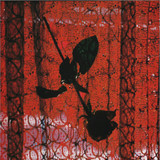
Vinyl only. New Continue Records emerge from the mists of the unknown with an EP wrapped in sorcery and stardust by the not so new Romanian producer Stoi. Insular EP represents travel through a portal between underworld and overworld with one extended track on each side. A-side packs a haunting 4x4 journey. B-side with a darker hypnotic stepper.
Search:port
With their 2013 debut single "Vintage Voudou," Conjunto Papa Upa cemented themselves as the torchbearers of a rare breed of Afro-Caribbean psychedelic soul, a clear delineation from the wonderful world of Venezuelan poly rhythms. That original song, named after the short lived but heavily influential Amsterdam brick and mortar record shop that band leader Alex Figueira founded, was a perfect clue into the deep exploration that Papa Upa would begin to take on their musical journey. Like the store itself, known for its solid connection to the musical footprints put down in relatively undiscovered places like Suriname, Curacao, Cabo Verde, Portugal and of course Figueira's native Venezuela, Papa Upa has captured a sound that is entirely unique, a new concoction of influences that at once sound strange, yet totally familiar. Perhaps because Venezuela shared such a rich & diverse mix of sounds from the Atlantic, Caribbean & US, a kindred spirit to their neighboring country, Colombia, an equal in terms of their industry output from the 60's & 70's, yet not nearly as publicized and compiled in recent years. Like many places in the greater Afro-Caribbean nexus, they were musically ahead of their time.
This futuristic mélange of sounds is reflective of Papa Upa itself, made up of musicians from Venezuela, Uruguay, Cuba & The Netherlands, all living, practicing & recording at Figueira's Amsterdam studio, Barracão Sound. With such a wide range of tropical influences, in a cosmopolitan and diverse city like Amsterdam, it's no wonder that Papa Upa's first extended project would find kinship in a collaboration with New York's Names You Can Trust.
Their lead single for the label, a preview of an upcoming full-length project in 2020, features "El Secreto Del Metalero" & the 45-only bonus B-side, "Chicharrón Pelúo." Metalero, or "The Metalhead's Secret" is a fitting anecdote for Papa Upa, with Figueira's synthesized vocals leading the way. It's an allegorical exorcism of a debauched headbanger on a discreet dance floor of a tropical rave. The shedding of a gruff & gothic exterior for the buckle-to-buckle bliss of the changa. Similarly in the music itself, under the cloak of vintage synths and a woofer exploding bassline, lies a frenetic fusion of afro-latin percussion that is highlighted by the intense rhythms of Angola's giantguacharaca (or scraper), thedikanza. At its heart is a sugary sweetness that is capable of converting the roughest of rockers into a tropicalista on the dance floor.
- A1: Sarah Davachi - Untitled (Live In Portland - Excerpt)
- A2: Carlos Walker - Via Lactea
- A3: The Rationals - Glowin
- A4: William S Fischer - Chains
- B1: Max Roach - Equipoise
- B2: Abu Talib - Blood Of An American
- B3: Sweet & Innocent - Express Your Love
- B4: Robert Vanderbilt & The Foundation Of Souls - A Message Especially From God
- C1: A Message Especially From God - A Message Especially From God
- C2: Alain Bellaiche - Sun Blues
- C3: Alain Bellaiche - Sea Fluorescent
- C4: Kara-Lis Coverdale - Moments In Love (Excerpt)
- D1: Azimuth - The Tunnel
- D2: Kaitlyn Aurelia Smith - Milk (Excerpt)
- D3: Toshimaru Nakamura - Nimb#59
- D4: Floating Points - The Sweet Time Suite (Part 1 - Opening - Exclusive Kenny Wheeler Cover Version)
- D5: Lauren Laverne - Ah! Why, Because The Dazzling Sun (Exclusive Spoken Word Piece)
Floating Points' personal collection of global soul, ambient, jazz and folk treasures form the latest in the warmly revered Late Night Tales series.
Sam Shepherd aka Floating Points' music taste is notoriously tricky to define, ranging from ethereal classical at one end to coruscating techno at the other, united only in a firm belief in the transcendental power of music to move hearts, minds and - yes - feet. Similarly, his production career has ranged from early experiments in dance music with breakout records such as the 'Shadows EP' and collaborating with legendary Gnawa master Mahmoud Guinia to his expansive album 'Elaenia', which met with critical acclaim upon its release in 2015.
This Late Night Tales excursion into the depths of the evening reflects his broad tastes. The globally-travelled producer has collected untold treasures on his travels from dusty stores in Brazil to market stalls near his hometown. There's the gorgeous 'Via Làctea', culled from Carlos Walker's debut album, Abu Talib's (Bobby Wright) plaintive 'Blood Of An American' and Robert Vanderbilt's gospel reworking of Manchild's 'Especially For You'. Raw soul and feeling oozing from each song's pores.
At the other end of the music scale are the modernists, such as Québécoise Kara-Lis Coverdale who weighs in with the indelible 'Moments In Love', Kaitlyn Aurelia Smith whose 'Milk' is an exercise in tranquility, while Sarah Davachi's meditative mix-opener offers respite from a weary world.
We have some exclusive tracks for Late Night Tales; alongside Davachi's offerings there is also Toshimaru Nakamura's 'Nimb #59', as well as the now traditional cover version. hepherd delved into his childhood
memory for this one, a track taken from the first album his parents bought him, Kenny Wheeler's 'Music For Large & Small Ensembles': Sam offers up his interpretation of 'Opening Part 1'. Wheeler also contributes horns to Azimuth
track The Tunnel, written and performed by Norma Winstone and John Taylor who, coincidentally, are the parents of Floating Points' drummer Leo Taylor. Closing the album, Lauren Laverne reads the suitably nocturnal poem 'Ah! Why, Because The Dazzling Sun' by Emily Brontë.
'I tried to find music that reflects the stillness of night. And because my musical interests lie all over the place, it's quite difficult to distil that notion down to just a few songs. I was quite keen to have some electronic music in there but I also really wanted to have some soul music mixed in, so I had to try and find a pathway between all of this different music.' - Sam Shepherd (Floating Points) March 2019
"Portico Quartet stake claims to territory occupied by Radiohead, Cinematic Orchestra and Efterklang". The Guardian *****
Portico Quartet return with Memory Streams, their fifth studio album and one that continues the journey that first started with 2008's Mercury nominated debut Knee Deep in the North Sea. It's a creative path that has seen the band embrace new technology and explore ambient and electronic influences alongside minimalism, jazz and beyond. It is a process that has encouraged change. Each album has seen the band expand its palate or explore new trajectories. From the gentle charm of their breakthrough's inimitable mix of jazz, world and minimalist influences, to the tight-knit brilliance of Isla, the electronic infused eponymous Portico Quartet to 2016's return Art in the Age of Automation (the band's most electronic statement to date) they have never been a band to look backwards. Each record has been its own world, its own statement and offered its own meaning. It's the mark of a band that has always both stood apart from any scene and been prepared to challenge its self and find new things to say and to push the limits of what they could do.
It is an approach that has encouraged the band to plough their own furrow. Drummer Duncan Bellamy notes that "For better or worse I think we have always been quite an isolated band. Perhaps that comes from never feeling like we really belonged to or fit in to a scene when we first started making music" While for saxophonist Jack Wyllie " I feel more connected to other musicians these days and those relationships influence the sound we have in some way. But I wouldn't say we feel a part of scene, it still feels quite out on its own, which is cool, because it helps the music feel unique".
With its fourth catalogue number, Steinlach returns to the vinyl format with a remix EP. On board are international friends of the label, who layed hands on Wice's originals with outstanding re- interpretations. While the A-side contains two groovy and club-oriented remixes of "Just kiddin", the trippy flipside focuses on the second outcome of the label and refers to the two pieces "Absent" and "Hertz".
The record opens with a fast-paced and jacking "Just Kiddin" version by Deep'a and Biri. The two guys from Tel Aviv re-interprate the clubby aspect of the piece, furnish it with a portion of percussions and accompany it with a volatile beat. Discharging the track with a big bang, they're leaving the listener with no chance but to move energetically to the groove patterns while cherishing the original lead melody.
Just like Deep'a and Biri, Jon Hester bets on the energy and the recognition value of the original synth line. As typical for Jon, he gives a more Chicago-style housey and bouncy touch to the composition. The lead is getting chopped, re-interpreted and re-arranged into a new groove and melody pattern, sure to inspire the floor to shake and to catapult everyone around into a frisky dancing mood. Suddenly, the well-known arpeggio of the original comes in and makes for the climax of this brilliant remix.
With side B, the club aspect of the record might not be left behind, but moved into more stripped and trippy terrains. The B1 track is fashioned as a ruthless "Absent" version, unmistakably having Refracted's writing all over it. The smallest variations of the synth line, drones, and pads, without resorting to typical drum rack aspects, find their way deep inside the listener's head, and draw them into their subtle rhythm. The unapologetic roughness of the interpretation is striking and makes it a brilliant peaktime weapon.
Rounding up the whole EP, the last remix of the record is a wonderful re-interpretation by the talented Australian that is Mosam Howieson. He ministered to Wice's personal favourite piece and crafted a loving and deep version of "Hertz", which translates the magic of the original into own words and emotions, adds a subtle groove to it, then invites to listen more carefully. One quickly dives into a hopeful world in which a certain magic seems to be present, and where everything seems to be alright. Be it as a perfect last piece after a long fulfilling evening, or as the outstanding means to make the sun rise in the morning-Mosam's interpretation sure hits the spot.
Special thanks go out to our close friends Simon Sandleitner who is always in charge of the great artworks and Roger Reuter (Roger23) for having always an open ear, his helpful advises and his thought-out criticism.
Mais Alors !!?... c’est à l’envers is the first release of new French Label ICI BIENTÔT (Here Soon ...), launched by Paris Fleamarket’s Record Shop, Geminicricket. On the Menu... Suspended Time,
Unsung Heroes, Hidden Records and Next Door Marvels.
In 1983, NEF released their first and only album, Mais Alors !!?... c’est à l’envers. At that point, the band already had a long history, interwoven with that of various musical trends and alternative
movements from the late sixties to the early eighties. That’s certainly what makes this record so special and able to conciliate such different worlds as Electronic Prog, Film Score, New Wave …
The band’s destiny was most certainly tied to their native region, the South of France, an idyllic environment that attracted a number of musicians during the 1970s, allowing the group to attend many
concerts or share the bill with several groups that have gone on to become well known: Can, Ash Ra Tempel, Magma, Catherine Ribeiro, Zao, Chêne Noir, Art Zoyd …
Founded in 1975 by Richard Lorenzi, NEF started as a kind of Free Rock band with multiple influences, going from Prog to Musique Concrete, in which any method of making sound, any way of
bringing out sounds was good … 2 musicians and a photographer, full member of the band who was projecting slides over the music and influenced their dreamlike universe. In 1978, Vincent Tronc came on board with his keyboards and synths. While the group had been influenced by electroacoustic techniques until then, Vincent broadened NEF’s horizons, bringing in a host of new influences: Ash Ra Tempel, Kraftwerk, Klaus Schulze … the beginnings of electronic music. When the album is recorded in 1983, new directions were taken and changed NEF’s usual sound.
First, the idea of playing the accordion, clearly not a common thing and a new Drum Machine, the Roland CJ-5000. Pressed the day a figure of French Chanson died, NEF’s pressing is botched up, a
good part of the records were unusable since the records came out totally warped. Then, at the end of the eighties the small stock of remaining records is lost in the sadly famous flood of Nîmes. 2000
records had been pressed, but very few survived! All the more reason to reissue Mais Alors !!?... c’est à l’envers, an unsung record, free and multifaceted, a quirky and daring musical ovni, transcending eras and genres, between synthetic
Krautrock and Film Score, reminiscent of NEU! (with a red nose), François de Roubaix and Pascal Comelade.
Matasuna Records is thrilled to reissue another musical jewel from Peru on vinyl for the first time. The songs were recorded by the band Bossa 70 and released on a 7inch EP and the self-titled album in 1970. Both are much sought-after collector's items and impossible to find. The songs were transferred from the original master tapes and got a new mastering.
Nilo Espinoza Vascones or better known under his artist name Nilo Espinosa is without doubt a Peruvian saxophone and flute legend. After a classical musical education he entered the music scene in the early 1960s. In 1966 he founded the band Los Hilton's with some of the best Peruvian musicians including the gifted piano player Otto de Rojas. In 1967 they recorded the first and only LP of the group, which was released in a small edition in Peru.
Their concerts were more and more influenced by Jazz and Bossa Nova, so in 1968 they changed the band's name to Bossa 70. In the record label's office Nilo met the Afro-Peruvian Carmen Rosa Basurco, who also loved Bossa Nova and could sing in Portuguese and English. From then on she was the main singer of the band.
Bossa 70 recorded four songs for a 7-inch EP in an edition of only 100 copies, which was given away for promotional purposes at concerts and to friends & family. In 1970 they recorded their self-titled LP which reflected a mixture of Bossa Nova, Latin Jazz and Funk. The label pressed only 300 copies, which were sold out very quickly. This LP was the band's only album and is a rare piece of Peruvian music history.
Si Voce Pensa on the A-side is a great cover version of the same named song by famous Brazilian musician Roberto Carlos from 1968. Bossa 70 adapted the song for the dancefloor, which is driven by an uplifting rhythm and the expressive voice of the singer. Of course, the great interplay of the other musicians must not go unmentioned. A fantastic track that will heat up everywhere!
Birimbao on the flipside is another fantastic Brazilian cover version. The song was written in the 1960s by Baden Powell, one of the most important Brazilian guitarists and one of the pioneers of Bossa Nova. Bossa 70 set their own stamp with a new instrumentation with brass, wah wah guitars, piano, flute parts and trumpet solos. The percussion section is also a brilliant backup for this one. Another winner!
FETISH features legendary POISON IDEA members Steve “Thee Slayer Hippy” Hanford and Eric “Vegetable” Olson, and later-era Poison Idea guitarist Brandon Bentley.
Engineered by legendary producer Billy Anderson (Melvins, Neurosis, Cattle Decapitation, Sick of it All, High on Fire, etc.)
It also includes 3 of the members of the Portland punk rock machine that is LONG KNIFE, Colin Jarrell, Scott Goto, and Chris Reid.
With a single already out and a vicious onslaught of new material put together, we here at Blackhouse are honored to be putting out their debut full length album, “WORLD EATER” in its entirety in physical form.
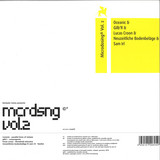
Microdosing is a series of compilation 12”s selected by Julienne Dessagne aka Fantastic Twins, and designed in collaboration with French visual artist Geff Pellet. Microdosing is a collective experiment aimed at helping you fighting back your modern obsession with happiness. You may deserve a nice day but the day does not need a nice you, nothing should be forced, everything is permitted. Microdosing will provide you with sonic healing weapons on regular basis and at irregular dosage. Those doses will favour psychedelic social techniques against self help tyranny, creation over soma, provoking over numbing, our outer-selves over our inner-selves. Microdosing refuses the fatality of the pleasure principle. Life is a struggle, time to embrace it. —— "My battery is low and it’s getting dark” We at Microdosing will make Opportunity’s famous last words fully ours. Some would see these as an epitaph on a black screen, we embrace them as a reclaimed fragility. Are we grains of sand wandering in space, hoping for a goal? No. We are the cosmos, the cosmos is us, unafraid of the end, unafraid of the void. Before the rise of the infinite silence, Microdosing brings you new guiding lights, white sun or black hole being a simple permutation of the kinetic rainbow. Oceanic’s “Parallel Lines Of Stripes” is a meandering mantra, an synthesised Moebius ring, a mission to your heart, that furthest star in the sky. Gilb’R’s “Cosmogonie” simply reminds us of the profound relation between spatial systems and the holy act of birth (cosmo, world and gon, conceive). The universe is a body, your body is your universe. Lucas Croon’s “Threshold Stimulus” is the soundtrack of a never ending voyage, the man is on a trip to the core sanctum. Imagine Space as a reverberation room cladded with bakelite. Losing yourself in delay repeats sometimes is the shortest way. Neuzeitliche Bodenbeläge & Sam Irl’s “Faeden” is another hymn to the umbilical chords joining us to the outer world, a black monolith of kraut acid, a pagan dance as portal to a destination only you can choose. Microdosing will be back soon with more enablers, helping to turn your petty struggles into a search for a meaning of life. The Quest lives on.
Strangelove’s latest release turns left somewhere near the edge of the Atlantic, with Electricidade Estética” documenting a vibrant window into the musical landscape of 1980’s counter-culture Portugal. Compiling early un-issued works, DWART’s organic Ash-Ra Balearics meld with spikey Iberian electronics, coalescing around the floating beauty of ‘Mate’, reissued for the first time on vinyl. With emergent music technologies of the era enthusiastically adopted by Lisbon’s avante-garde, there was a collective desire by DWART and their contemporaries to push existing sonic boundaries;- Post new wave sounds melded with distinctive local sensibilities. Vítor Rua & Jorge Lima Barreto of the legendary Telectu (whom Antoñio currently tours with) were regular collaborators while composer/ guitarist Nuno Rebelo and guitarist/singer Bernardo Devlin feature throughout. Antoñio & Manuela Duarte’s search for an artistic language melded a continuing curiosity with aural and physical dualities: experimental pop integrated with performance art, mathematics sound-tracked on canvas, organic found sounds at ease alongside synthetic drum machines. The 9 songs found here document the early emergence of their own ‘Electricidade Estética’ (Big shouts to Invisible Cities & Steele Bonus- early champions of ‘Mate’) Vital Sales Points: Follow up to the labels previous releases - Frank Harris & Maria Marquez ‘Echoes’ and previous Portuguese release Lena d’Água ?- Jardim Zoológico
“Bandiera Di Carta” represents the ongoing collaboration between instrument builder and composer Pierre Bastien and the
London based experimental duo Tomaga (Valentina Magaletti and Tom Relleen).
Bastien has been called a “mad musical scientist with a celebrity following” by The Guardian (UK) having collaborated with the
likes of filmmaker Pierrick Sorin, fashion designer Issey Miyake, singer and composer Robert Wyatt as well as Aphex Twin,
who released three of his albums on his label Rephlex.
Tomaga have made more than a dozen records since forming in 2014, pursuing a path of fearless experimentation and sonic
brinksmanship that has won them fans and plaudits from far and wide, including Thurston Moore, with whom they collaborated
on the CAN Project with Malcolm Mooney, Deb Goodge and others in 2017, as well as Wire, Silver Apples and Stereolab, with
whom they toured extensively in summer 2019.
The artistic collaboration between Pierre and Tomaga began with two commissions: from Fructose Festival in Dunkirk and the
revered underground festival Supersonic in Birmingham UK. Recording initially at a studio in the industrial port of Dunkirk, the
uneasy bond between borders and states seems to have been a theoretical motor to the collaborative sessions, as well as the
bleak landscape of the seaport frontier. This inspiration found further manifestation in the cover image for ‘Bandiera Di Carta’.
Resembling a white paper flag, it is, in fact, a photograph of Bastien’s paper and air sound machine installed on stage at
Teatro Carignano in Turin as part of the trio’s performance there. This charged, ambivalent image of a blank flag evokes the
transcendence of the national, a prescient visual motif that meditates on the contemporary uncertainty around notions of
national identity and borders but perhaps also a ‘carte blanche’ for the artists involved, in which they can deviate from the
confines of their usual practice into new and strange territories.
For each piece, Bastien’s unique sonic style: by turns his kinetic mechanoid motors, capriciously arrhythmic pipes, or the
peculiar susurrus of paper, creates a world in which Tomaga introduce their musical palette. Magaletti’s percussion anchors
these sometimes chaotic forces into beguiling syncopations, with Relleen’s synthesizer and organ work creating harmonic
counterpoints and interruptive provocations, to which Bastien responds with lyrical turns on prepared trumpet, rubber band, tin
foil and bass ocarina.
The results are curiously evocative of free jazz by the likes of Sun Ra or Art Ensemble of Chicago paired with the percussive
sound worlds of artists like Francis Bebey or Muslimgauze along with unique and sometimes bizarrely exotic tonal landscapes
of composers like Catherine Christer Hennix, Carl Stone, or Egisto Macchi. All three musicians seem to find space to bloom in
ways that are markedly different from their individual work and the resulting album is a strikingly original and powerfully bold
affirmation of what can happen when venturing beyond the normal in pursuit of the other.All tracks written & produced by Tomaga (Tom Relleen & Valentina Magaletti) & Pierre Bastien.
Mixed and mastered by Rashad Becker.
Sometimes you know it’s coming, sometimes it’s unexpected, but the time to hang your boots will always come. It’s better when you have total control, even better if you end up on a high (or on a low). After seven years of sonic interferences, calibrating the soundscape of field recordings and helping to recreate the old sounds of today, Gonzo is retiring from music. It’s a goodbye, yeah, and a well-crafted one.
But “Ruído(s)” doesn’t sound like an intentional one. You won’t listen to it on any of the thirteen tracks that scavenge for a solution in the space between ambient music and field recordings. You won’t feel it in the intense connection between human and natural sounds and how sometimes everything oscillates in opposite states of mind. You won’t even read it in the intense, but subtle, humor present in some of the pieces. You won’t, because it’s not an intentional goodbye. You only know it is, because you’re reading this.
What is it then? It’s a celebration of random sound. How can you experience something scholastic and, simultaneously, deeply hilarious? Just think about the amazing triad formed by “A Fuga dos Grilos”, “Degredado(s)” and “Cantiga Parva”. First, you’re blessed with six minutes that build up on the idea that sound can be an intense religious experience, echoes going back and forth to create a fantastic Boiler Room feeling (one populated with raving Gonzos doing dabs in front of the camera) that eventually ends up with a cinematic touch: someone saying the title of the song out loud. One second after we are into the Flying Lizards world, with two songs that shake any pretentious seriousness of the previous track.
Is it serious or not? It is. But it doesn’t have to be. In “Ruído(s)” Gonzo recounts pop/electronic history through field recordings and weird-soft beats. More than compiling his seven-year history, Gonzo is more worried to understand where he’s leaving his ideas, Caretaker style. Speaking of Caretaker, Leyland Kirby should think about reviving Caretaker and do a whole album around “Brilhante Cortejo”: it’s haunted ballroom in a ‘cracked’ nutshell.
As the album progresses and the need to revisit it grows, it becomes clearer(?) that “Ruído(s)” is more than an artist self-indulging on his work – in a very good manner. It’s also a condensed catalog of Portuguese music and its sounds, a circular trip down the memory lane of a forgotten country and its landscape. “Ruído(s)” is a goodbye to a country and its traditions. It does it without sulking but with the most respectful loud laugh - the Gonzo way.
- A1: (Da Le) Yaleo
- A2: Love Of My Life (Feat Dave Matthews)
- A3: Put Your Lights On (Feat Everlast)
- A4: Africa Bamba
- B1: Smooth (Feat Rob Thomas)
- B2: Do You Like The Way (Feat Cee-Lo & Lauryn Hill)
- B3: Maria Maria
- B4: Migra
- C1: Corazon Espinado (Feat Mana)
- C2: Wishing It Was (Feat Eagle-Eye Cherry)
- C3: El Farol
- D1: Primavera
- D2: The Calling (Feat Eric Clapton)
Double vinyl LP pressing housed in gatefold sleeve. Includes digital download. Supernatural is the eighteenth studio album by Latin rock band Santana, released on June 15, 1999 on Arista Records. After the group found themselves without a label in the mid-1990s, founding member and guitarist Carlos Santana began talks with Arista president Clive Davis, who first signed the group in 1969, which led to a new record deal. The pair collaborated with A&R man Pete Ganbarg on the production of Supernatural as Santana wanted to focus his musical direction towards pop and radio friendly material and proceeded to do so by collaborating with various contemporary guest artists, including Eric Clapton, Rob Thomas, Eagle-Eye Cherry, Lauryn Hill, Dave Matthews, Maná, KC Porter and Cee-Lo Green. Supernatural became a significant commercial success worldwide. It reached # 1 in eleven countries, including the US for 12 non-consecutive weeks where it is certified 15× Platinum. The first of six singles from the album, "Smooth" featuring Matchbox Twenty singer Rob Thomas, was a number one success worldwide and topped the Billboard Hot 100 chart for 12 weeks.
Singer, lyricist and composer Nirox Romão aka Diron Animal was born and raised in Cazenga, Angola. Diron Animal's involvement in the music world began early: he was part of a traditional Angolan music band and capoeira group, followed by a hip hop project. 12 years ago he moved to Portugal to study, but music became more than just a passion when he landed in kuduro.
For over 6 years, he sang, danced and traveled the world with Afro Portuguese act Thoes + The Shine, mixing rock and kuduro, becoming an explosive ensemble. At one moment, Diron wanted to record a solo album to show a bit more of his own personality and in late 2017 his debut album ‘Alone’ appeared on Soundway Records, where he himself worked out the melodies, rhythm, vocals and even the guitar parts between classic funk to afrohouse and kuduro bass. Through that album he explored major festivals in Europe during 2018, such as at Paléo Festival Nyon, Trans Musicales Festival, Amsterdam Dance Event and others.
On ‘Pair’, his 2nd album and released on Brussels outernational label Rebel Up Records, he has worked hard to enhance his special formula. Inspired by the cruel death his nephew, it became a testament against oppression via the mixed sounds of afro boogie, disco, funk, afrohouse, coupé décalé and kuduro, with English and Portuguese lyrics.
The first single of the album, ‘You and Me’, is an English sung afro boogie disco song and produced by Diron with the support of musician and producer Moullinex, actor André Cabral and video made by director Vasco Mendes. In the video, featuring dancer and actor André Cabral, Diron Animal takes on the role of a gay man to express that a homosexual is a normal person who loves, feels desire, dreams, conquers, wants to be loved and desired, wants to live next to a being that completes him. With “You and Me”, Diron Animal above all wants to appeal to society, respect for the choice of people and non-discrimination of sexual choices. For in life we all deserve to be happy regardless of our sexual choice.
'Mantra Moderne' is a stunning, contemporary masterpiece that fuses Anatolian Psychedelia, Brazilian Tropicalia, 60’s European pop and American jazz. A must for fans of Khruangbin, Portishead, Arthur Verocai, Goat, Caetano Veloso, Tom Zé, Os Mutantes, Cortex and co.
The duo is formed of Kit Martin, who lives between London and France and plays all instruments on the album, and Merve Erdem, vocalist and multi-disciplinary artist from Istanbul, now based in London. This is their debut album.
The album explores universal themes such as love, loss, decay, language and ideology, mixing three different languages: English, Turkish and French. Written and recorded by the duo - Kit composed all the songs and Merve wrote the lyrics - in rural France during 2018, each song was completed within a 12-hour window, pawning contemplation for spontaneity.
Dubbed by Kit and Merve as ‘lo-fi-hi-fi’ in reference to the high-end tube equipment that helped it find its way to 8-track cassette tape. The style owes its sound to narrow tape width, valve distortion, spring reverb, the mixture of high end gear with lo-fi equipment as well as a disregard to the norms of hi-fi studio techniques. All instruments were analogue and no samples were used. The instruments that are used range from tablas to darbukas, balalaikas to ouds, MS20 synths to Farfisa organs and a lot of cuica. The mixing techniques were done on-the-fly, tracking immediately to tape: compression, EQ, delay and reverb; meaning mixing could not be revisited!
Occasionally prodigal, but ever-prodigious, Elliot Thomas AKA Etbonz weaves an 80-s/early 90's sci-fi cinema sound into a total recall of scattered memories.
Childhood play with starcom and Gobots. Soaking in cult classics like Robocop, Predator, and Big Trouble in Little China on VHS. DJing in spacey laser-lit rooms draped with sound-dampening curtains.
Side A leads with 'Blue Drink,' which is carried perfectly on melodic motifs designed for trance inducing, with a steadily crescendoing & irresistible rhythmic mantra.
Following this, 'Curtainbox Space World' flips the 'Jerry Garcia finds a 303' switch and accidentally opens a portal to some deep shamanic release.
Inner space centurion and local star command operative Tommy Walker III returns with a new mission directive this DATE...
Hardwiring to the Red Laser network and initiating an advanced, beta-tested programme of futuro-manctalo cybernetics, TWIII's meta-level hybridisation of Italian synth disco & northern English rave styles, combined with an expert deciphering of modernised club dynamics has resulted in a faultless system capable of withstanding the most extreme sonic test environments. RL30's eight tracks are RL Corp. operation-certified to work alongside Human2.0's electrostatic discharge profile. Universally approved usage for sentient earth dwellers offering portals into dancefloor ecstasy and inter-dimensional transcendence. This programme begins with 'Pocsy', and sees euphoric holograms burst through galloping Italo mechanics, fusing retro-tinged optimism with a nu-age release. 'Shoiab' (named after a fellow starship captain tasked to MCR and in alliance with RL Corp...) unleashes red shifted synths and carnal cowbells for the cyberotic lap-dancers to get jizzy too. 'Autopilot' allows the on-board crew to reassemble, a well automated array of arpeggios guiding the shuttle during the first phase, until reconsolidating in the latter stages for full-on interdimensional 5-D funk jam. 'Lightwork' is pure RL endorsed synth-jizz, erupting out of Tommy's arsenal like a mis-timed giant alien cumshot; minus any Manga references.
'Astral Projectile Vomit' address a common problem endemic to protectors of our star cluster; then channels a shiny, serpentine chrome sequence and thrusts it down the rainbow road for maximum belly aches.
More hydraulic collisions between electronic disc-boogie and newly mined atomic particles from passing asteroids ensures Srg. Walker has enough mainroom material to keep the Sharons and Traceys of the main hub dancing in between injections of dimethyltryptamine. Closing with a trio of humanoid hits that'll have Jonny5 ordering kryptonite margaritas for the entire ship, Tommy Walker celebrates with the cosmic conge, 'Gary Blast'.
RL Corp is confident RL30's internal algorithm is a future-proofed, cross-species platform for auditory excitement, and will continue to stimulate listeners across a multitude of environments.
Heady, deep dive into techno's more psychedelic spaces, true to form, "Dimensions Doors" EP kicks off with the rolling kicks of "Portal Opening", a trippy exploration of shifting ambiances and rhythmic noise, punctuated by a siren tone. AWB steps up with a broken beat remix of "Portal Opening", layering Clotur's ambiances over low-slung percussion. "Hyperspace Travel" brings up the energy with galloping kicks and rippling resonant synths. BLNDR follows up with a pounding remix, building Clotur's sweeping textures into trippy loops circling over a monolithic kick. "Irregular Frequencies" pulls even further into the portal, with a relentless, rubbery synth squelching along over driving, percussion. Clotur lays a gentle, but uneasy atmosphere over this trippy tool. He brings us back down with "Forbidden Level", another complex rhythmic track featuring glitchy percs and robotic warping over a tough low-end workout.
The Brazilian singer-songwriter and guitarist Joyce Silveira Moreno was born and raised in the middle of Copacabana, a short beach stroll from the epicentre of the bossa nova universe.
Her father was a Dane that had settled in Brazil, but she was raised by her mother and step-father in a typical Portuguese-Brazilian household. Since her older brother was friendly with
leading lights of the bossa nova movement such as Roberto Menescal and Eumir Deodato, she was steeped in the form at an early age and witnessed its key evolution first-hand. At the
age of 16 in 1964, she was taken to the studio by Menescal to contribute to the coveted debut album by the mythical group Sambacana, assembled to record the work of composer Pacífico
Mascarenhas when the meagre budget would not allow the vocalists he preferred. Knowing that a full-time career in music was certainly not guaranteed, she began studying journalism
in 1967, shortly before her controversial song “Me Disseram” reached the finals of Rio’s second International Song Competition. The following year, her self-titled debut album was
released by Philips, produced by Armando Pittigliani, with orchestration by Dorival Caymmi and arrangements by Gaya; along with her own compositions, the album also featured songs
by her rising-star friends, including Caetano Veloso and Marcos Valle.