House Of Lucy is a special project by three friends and music producers from Warsaw, Poland (TAMTEN, Ivan Bayor & FOPA) who also happen to organize a mysterious event called “Lucyna” on Half Year’s Eve (sunny New Year’s Eve in summer). It is a local thing with lineups consisting of DJ’s and bands with very different musical backgrounds. This genre bending and melting situation, together with an utterly open-minded audience, creates some of the most unexpected encounters. This is the place where dub meets new wave, post punk meets house, electro meets jazz… This is the place where House Of Lucy comes from. Following the lyrics on the opening track:
“…welcome to house of Lucy
you can do anything at house of Lucy
anything at all
the only limit is yourself…”
Dark 80-ish synths, guitar riffs, dubby basslines, aggressive percussion, haunting vocals, and some soft cozy spots seem a bit much for one record? This is House Of Lucy after all, the only limit is yourself.
out of Stock
Last delivered 4 years ago available to reorder, subject to availability
Imperfect Stranger is the pseudonym of Glasgow based soundtrack composer and producer Kenny Inglis. “Everything Wrong is Right” is his debut solo album for Castles in Space.
Born in 1975, Kenny didn't listen to much music, unless it was the opening credits to a TV show or a film score that had caught his ear. "I loved the pre-title music on a lot of those 80's U.S. TV shows. From the family orientated stuff like The A-Team, to darker dramas such as The Equalizer. My mother would let me stay up to watch the opening sequence of the latter then send me to bed because the story would be too heavy for a kid. That left me with this hanging sense of ambiguity as to what would happen in that hour after the titles came up.”
Exposure to a work colleague’s tiny project studio in a kitchen cupboard was a lightbulb moment for him and the experience of utilising music technology as a way of writing and producing entire tracks stirred a wave of determination to chase a career in music using the opportunities that technology could offer. Kenny figured the best way to move forward was to start a small project studio and learn his craft as a recording engineer. "It was a bit of a shock to the system. I literally had no idea how to work any of the equipment. Kenny focused on learning as much about the craft as he could whilst winging his way through recording and mixing everyone from the likes of singer/songwriters to bands, to voiceovers artists and anything in between. "Eventually, I stopped writing the music I thought people would want to hear, and started writing the music I wanted to make. I didn't come from a music loving background, but I was always obsessed by the way music and film would interact - how music brings this atmosphere and tone to even the most mundane visual stuff. I wanted to capture that. I wanted to grab some of that ambiguity I felt from the TV shows of my childhood and make it into a project of some sort". That project was Spylab. A dark, downtempo project with a cinematic edge. The initial demo consisted of three tracks, with the melancholic 'This Utopia' leading the playlist.
"At the time you did demos on normal cassette tapes. I remember having this endless battle with the bias control to try and get the best sound I could on these little tapes. Ten went in the post one Monday morning, and the following Monday there were three offers from three different labels. Studio K7 were interested in a singles deal, as was Flying Rhino in London. But then there was an offer from a Chicago based label by the name of Guidance Recordings. They wanted an album, and were offering a $15,000 advance. It wasn't a difficult decision to make"
Writing and recording Spylab 'This Utopia' began in 1999. The album took a whole year to produce. The album was to catch the attention of Mary Anne Hobbs at Radio One. At the time Mary Anne was presenting The Breezeblock - a late Sunday night show with an eclectic playlist of alternative electronic music. Picking out the album's title track 'This Utopia', Mary Anne would go on to play it no less than 8 weeks in a row. A request for Spylab to DJ on the show was to follow. "I had never DJ'd before. I think I had a week to figure out how to do that and put a playlist together. I'm not entirely sure how I pulled that off.” In March 2001 the Spylab album was finally released to a hoard of excellent reviews. A North American live tour would follow. From the launch party in Los Angeles, to a sell out show at SXSW in Austin. "I then started a new project under the name Cinephile. It had some of the core elements of the Spylab sound but it was deeper, more cinematic.” Kenny received news that a track from the previous project Spylab had been requested by HBO for the first episode of a new TV drama called Six Feet Under. This was to become a major turning point in Kenny's career. The Spylab track 'Celluloid Hypnotic' dropped during a poignant party scene of the first Six Feet Under episode. Within a couple of days Kenny was getting requests for music from other music supervisors. "It was a chain reaction. The Six Feet Under sync was like the tip of an iceberg. One day I called CBS in America and they put me on to the CSI music supervisor and I managed to get on a call with him. I sent the Cinephile stuff out and within a few months I got this fax through from CBS - a quote request for one of the tracks for a potential use on CSI. It changed my life."
The tone and style of Kenny's music sat perfectly with the CSI score requirements. So much so he found himself part of a pool of incidental writers who worked on all three aspects of the franchise - CSI, CSI: NY, and CSI: Miami. This would continue until 2013, when the last of the series would come to an end.
"I was juggling a bunch of stuff for those ten years. Writing material for CSI, whilst releasing new Cinephile stuff and playing live. As Cinephile continued to gather pace, one of the tracks from Kenny's efforts on CSI was chosen for the Hollywood trailer for the Samuel L. Jackson film 'Lakeview Terrace'. Further trailers would follow, from Gangster Squad to Dead Man Down, Spike Lee's Undisputed Truth, to Fifty Shades Freed.
At the same time, Kenny picked up his first factual commissions in the UK, and this too would be the beginning of a regular run of fully scoring factuals and documentaries. By 2021, six of these had won BAFTAs. He also would find himself soundtracking adverts for the likes of Nike, Audi, and American AirlinesIn early 2020, Kenny made a return to focusing on his own music under the pseudonym Imperfect Stranger. A tweet from Colin Morrison from Castles In Space regarding a charity compilation album 'The Isolation Tapes' caught his eye. Kenny had made a start on his debut album as Imperfect Stranger and submitted the track 'Hymn To The Sun' (which would become the lead track on the album). Further discussions ensued, and the album found a home on CiS. "I had been doing TV and film stuff for almost ten years. It paid the bills and was as close to a 'real job' as I'd had, but I yearned to get back to writing for myself, so doing an album for Castles in Space was a joy.
“The music I write is like a diary. There's an authentic narrative to everything i do. I don't write tracks for the sake of writing. I write tracks to diarise and process the stuff that I've lived through, and the experiences that have come along with the passing years. That's what makes me tick. It's a very public and vulnerable way of expressing myself. If people want to know the real me, all they have to do is listen."
The trance blues stylings of Otha Turner and his Rising
Star Fife And Drum Band should be a music classification
unto itself, a whole new primitive take on drum and
bass. This music is the oldest still-practiced post-colonial
American music, and Turner was one of its greatest artists
of the 20th century. Blowing the cane fife with a band
of drummers as back up, The Rising Star Fife And Drum
band was legendary in the hills of Tate County, Mississippi,
where they would perform during the yearly goat picnics
on Turner’s farm. These tracks were recorded by Luther
Dickinson during such picnics and released when Turner
was ninety years old. Everybody Hollerin’ Goat shows
first hand the hypnotic and rhythmic style of fife and drum
music at its best—raw and beautiful.
It is every bit as essential a document of America’s folkmusic
heritage as anything Harry Smith or Alan Lomax ever
offered up for posterity. Turner’s band included some of his
children and grandchildren that have gone on to continue
the fife and drum tradition since his death in 2003.
This first ever vinyl release of Everybody Hollerin’ Goat
contains a whole side of unreleased recordings from one
night of the picnic and is intended to bring the experience
of hollerin’ for goat in Senatobia, Mississippi to the living
room. Dancing around the plants is recommended (but
don’t eat the pickled eggs). The entire album is remastered
by legend Gary Hobish.
Famous present their first vinyl release, a double EP comprising their lauded 2021 EP The Valley on side A, and their equally acclaimed 2019 debut England on side B. The Valley is an intense, engrossing body of work from a band firmly stepping into their own space, foregoing the easy route, whilst interrogating themselves and everything around them. References to Soundcloud rap stand side-by-side with Greek Tragician Euripedes, along with the white noise of endless Simpson’s repeats colliding with daydreams of settling down and one day owning a gilet. It’s both complex and accessible, the sound of a silver-lining appearing from a dark cloud. England presents a distinctively hyperbolic, mythic re-imagination of urban life; using theatricality and the emotional authority of art to navigate the chaos of anxiety. The music is, nonetheless, thoughtful and surprising, as shown by the six self- contained yet interconnected tracks that make the whole. Opener ‘England 2’ is a rumbling call to arms that ushers in the haywire ‘Surf’s Up!’. The heart of the record is the two-punch of tainted-pop cut ‘Forever’ and the skittish paranoia of ‘Jack’s House’. All that remains is the expansive, circling ‘2004’ before the most tender moment ‘My Crumpet’ closes the show. Famous live shows are intense brash affairs. Alternating between the pathetic showmanship of Vegas-era Elvis and the controlled experimentations of post punk, the band has built a reputation as one of the best live acts on the London underground circuit. Playing shows with Black Midi, Sports Team, Jockstrap and supporting Black Country, New Road on their full UK tour, Famous has undeniably placed itself at the centre of that new generation of English bands. 2022 sees the band playing major festival dates and venues across Europe, alongside supporting Los Bitchos on tour in France, in April.
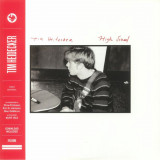
Produced by Heidecker, Drew Erickson, Eric D. Johnson and Mac DeMarco, High School sees Heidecker emerging as an increasingly playful and poignant story teller, infusing childhood tales with new gravity. In conjunction, he announces Tim Heidecker Live! Featuring Tim Heidecker and The Very Good Band, his first two-act tour of comedy and music. Since 2016, Tim Heidecker has chronicled the annals of adulthood on a series of supreme singer-songwriter albums. The crushing devastation of divorce and the existential malaise of middle-age, the minutiae of home ownership and the ritual of family vacation, child rearing and global warming: Heidecker has handled it all with humor and heart. But, there’s one pivotal lodestar of human development he has yet to mine that’s right, High School. First single “Buddy” is a composite of a few woebegone friends, which finds Heidecker reminiscing on the familiar tragedy of the adolescent stoner, manifesting the destiny of undiagnosed depression and parents who didn’t care much. The song itself is a jangly delight, but it’s hard not to mourn for “Buddy,” then re-count whatever blessings you may have. After initial and fruitful sessions with Jonathan Rado, Heidecker started recording tunes with DeMarco and Erickson, who had also worked on 2020’s collaboration with Weyes Blood, Fear of Death. At DeMarco’s studio, they added drum machines and synths and sidewinding solos to Heidecker’s big strummed chords. Johnson (Bonny Light Horseman, Fruit Bats) helped Heidecker finesse the tunes even more, making the music as rich as the feelings. Kurt Vile contributed to one song, as well. Through all those sessions, it slowly became clear: Heidecker was writing not only about the adventures and misadventures of life as a Pennsylvania teen in the early ’90s, but also how it felt to lose a juvenile sense of mystery and possibility as an adult. He was writing about high school and, really, the way it helped shape everything else. Back at Pennsylvania’s Allentown Central Catholic High School, Heidecker dreamed of making it with one of his many rock bands — Time and Other Things, Shaggy’s Beltbuckle, and (incredibly) The Pulsating Libidos. Two years shy of his graduating class’ 30th anniversary, Heidecker admits he had little of substance to say when he was 17, like all but the rarest of precocious minds. In college, though, he found the friends with whom he built his comedy career, largely apart from music and without much thought for his time back at Central Catholic. He was focused on his future. It is fitting, then, that as Heidecker has become such a delightful singer-songwriter and collaborator, he returns to the first scene of his time as a musician. Maybe he’s right — he didn’t have anything to say or sing about life back then. But across the earnest and amusing High School, he finds plenty to say about those weird and wonderful and ordinary times.
Felicia Atkinson’s music always puts the listener somewhere in particular. There are two categories of place that are important to »Image Langage«: the house and the landscape. Inside and outside, different ways of orienting a body towards the world. They are in dialogue, insofar as in the places Atkinson made this record—Leman Lake, during a residency at La Becque in Switzerland, and at her home on the wild coast of Normandy—the landscape is what is waiting for you when you leave the house, and vice-versa. Each threatens—or is it offers, kindly, even promises? —to dissolve the other. Recognizing the normalization of home studios these days, she revisited twentieth-century women artists who variously chose, and were chosen by, their homes as a place to work: the desert retreats of Agnes Martin and Georgia O’Keefe, the life and death of Sylvia Plath. Building a record is like building a house: a structure in which one can encounter oneself, each room a song with its own function in the project of everyday life.
At times listening to »Image Langage« is immediate, something like visiting a house by the sea, sharing the same ground, being invited to witness Atkinson’s acts of seeing, hearing, and reading in a sonic double of the places they occurred. In an aching moment of clarity in »The Lake is Speaking,« a pair of voices emerge out of the primordial murk of piano and organ, accompanying the listener to the edge of a reflective pool that makes a mirror of the cosmos. "I open my feet to fresh dirt, and the wet grass. I hold your hand. You hold his hand. In the distance without any distance. The comets, the stars." At other times, listening to »Image Langage« is more like being in a theatre, the composition a tangle of flickering forms and media that illuminate as best they can the darkness from which we experience it. On »Pieces of Sylvia,« a noirish orchestra drones and clatters beneath and around a montage of vocal images, stretching the listener across time, space, subjectivities. Atkinson says that "Image Langage" is like the fake title of a fake Godard film. There is indeed something cinematic about Atkinson’s work—not cinematic in the sense that it sounds like the score for someone else’s film, but cinematic in the sense that it produces its own images and langage and narratives, a kind of deliberate, dimensional world-building in sound.
»Image Langage« is built from instruments recorded as if field recordings, sound-images of instruments conjured from a keyboard, instruments Atkinson treats like characters, what she calls “a fantasy of an orchestra that doesn’t exist.” And then, speaking of Godard, there are the monologues, operating as both experimental-cinematic device and a literary style of narration. Voice can be a writerly anchor or a wisp of a textural presence. Atkinson’s capacious and slippery speech plunges into and out of the compositional depths, shifting shapes, channelling the voices of any number of beings, subjectivities, or elements of her surroundings—not unlike her midi keyboard, able to speak as a vast array of instruments.
»Image Langage« is an environmental record, in the vastest sense of the world. It is about getting lost in places imagined and real; it registers, too, the dizzying feeling of moving between such sites. It puts forth a concept of self that is hopelessly entangled with the rest of the world, born of both the ache of distance and the warmth of proximity.
For Félicia Atkinson, human voices inhabit an ecology alongside and within many other things that don’t speak, in the conventional sense: landscapes, images, books, memories, ideas. The French electro-acoustic composer and visual artist makes music that animates these other possible voices in conversation with her own, collaging field recording, MIDI instrumentation, and snippets of essayistic langage in both French and English. Her own voice, always shifting to make space, might whisper from the corner or assume another character’s tone. Atkinson uses composing as a way to process imaginative and creative life, frequently engaging with the work of visual artists, filmmakers, and novelists. Her layered compositions tell stories that alternately stretch and fold time and place, stories in which she is the narrator but not the protagonist.
The Logic of Chaos is the latest release of Elisa Batti for the label One Instrument that gathers music composed over a period of 3 years. Fascinated by the idea of developing pieces with strict and limiting guidelines, the confined environment gave her the possibility to explore and expand the creativity and the freedom of composing. Each single piece has a specific story and is recorded with a different instrument.
“Asa” is produced together with Sebastian Josef Brunnlechner while composing the sound design for an installation. The piece comprises repetitions of a few simple loops layered and arranged over a carpet of long notes played with a bow. The bow has been intentionally played slowly in order to obtain as many overtones as possible. The short pizzicato melodies consist in small and simple repeated loops that appear and disappear dissolving with the other sounds. The intention behind this track is to let the beautiful sound of the instrument speak for itself evoking a dreamy atmosphere.
“Slow Fall” sees the collaboration with the pianist Marko Ivic and has an improvised approach. While Ivic was playing the piano Elisa Batti was processing the sounds on the fly. The piece is based on a minimalistic procedure, where continual loops create a scenographic effect.
“Taiga” includes different patches of the Moog Mother-32 and is an emotive landscape where sounds rise and disappear again, leaving space to thoughts and images.
The EP ends with “Ecstatic” created with the Korg Minilogue. It was part of a commissioned dance piece that afterwards has been readapted for the release. The final outcome sees a more complex and erratic behaviour.
Elisa Batti’s work induces a state where time stands still whilst simultaneously being in motion. Her sound palette is broad and expresses a high artistic achievement.
Überfall" erscheint am 08.07. in optimierter
Soundqualität als Doppel-LP auf 180g schwerem
schwarzem Vinyl im 45rpm-Schnitt. Wie dem
Original-Vinyl liegt auch der Wiederveröffentlichung ein
Reprint des Posters der Erstauflage bei. Es erschien
erstmals im April 1999 über das Label EastWest und
stieg wenig später bis auf Platz 6 der deutschen Charts.
Die Massiven Töne glänzten auf dem Album nicht nur als
Rapper, sondern produzierten obendrein selbst und waren
ausführende Produzenten der insgesamt 13 Tracks.
Bemerkenswert - gerade für diese Frühphase des
deutschen Rap-Booms - waren auch die internationalen
Features des Albums.
For "Spectres", a 6-track split release, Buttechno teams up with DJ SPEEDSICK, a Chicago-based artist, famous for his raw and uncompromising approach to sound. Together they explore sonic and textural possibilities of the extreme forms of dancefloor music employing distinct ways of sound manipulation. Buttechno's side features highly saturated textures being torn out, dissected and sewed back together with a wicked use of spectral processing. On the other side, Dj Speedsick, known for reamping his material with guitar amplifiers and cabinets, puts out tracks that bear unique sonic qualities and transform the usual sense of space and distance. The underwordly sounds and high-speed beats presented on this split go beyond the common bounds of dancefloor music, exposing the spectres that dwell between the genres.
out of Stock
Last delivered 4 years ago available to reorder, subject to availability
It's hard to believe it's taken this long for a proper retrospective of legendary Los Angeles collective CVE. "We Represent Billions" is a crucial portrait of one of the West Coast's most low-key influential crews - a hydra-like collective of rappers, producers, designers and engineers who were key members of the Good Life Cafe's open mic scene, going on to inspire artists like Jurassic 5, Kendrick Lamar amongst many other. Initially called Chillin Villain Posse before morphing into Chillin Villain Empire in the late 1980s, they eventually centered around the core trio of Riddlore, NgaFsh and Tray-Loc. The crew were years ahead of their time, self-producing music without samples and pioneering a stream of consciousness lyrics that still sound fresh and innovative. CVE were self-sufficient and motivated from the beginning, named "Chillin Villains" because that's how they were perceived by white America. This social motivation was channeled into their groundbreaking performances at Good Life Cafe, the South Central session that evolved into Project Blowed and later on came to influence LA club night 'Low End Theory'. It was chronicled by Ava Duvernay, herself an MC in short-lived duo Figures of Speech, in her "This is the Life" documentary, where she interviewed CVE alongside Jurassic 5, Freestyle Fellowship, Abstract Rude and Busdriver. On "We Represent Billions", we're treated to a snapshot of the CVE sound from 1993-2003, their most prolific era. The retrospective collects music from the handful of albums the crew released on their own Afterlife Recordz label (mostly as limited edition CD-R's) plus many previously unreleased tracks and highlights their untethered eccentric creativity and sheer breadth of influence. Whether twisting twitchy West Coast electro on 'All Over Da Globe' or free associating over horror synths and foley sounds on 'Made in Chillz Ville' there's a sense that their music was just too future for its time. Assembled from heaving industrial samples and graced by back-and-forth tongue twisting flows, 'Thugs and Clips' is as eerie and hard-hitting as anything 2Pac's "The Don Killuminati: The 7 Day Theory" full-length. Fuzzed-out and unsettling, 'Calistylics' welds an ambient synth loop and bone-rattling percussion to Tricky-esque percussion, while the flickering closer 'Unicycle' is a cross between Dr. Dre's icy G-gunk pressure and Three 6 Mafia's pitch black lo-fi funk. In many ways, 2022 is the perfect time to rediscover this music: an urgent, creative fusion of spine-tingling pre-grime electronic minimalism and mind bending wordplay that still sounds completely idiosyncratic and utterly alien. Tracks: 1 All Over Da Globe 2 Thugs and Clips 3 C.V. Vault 4 Made in Chillz Ville 5 Bring It On 6 Calistylics 7 No Feelins 8 Let's Get It On 9 Today Was A Fucked Up Day 10 Untitled (Freestyle) 11 Unicycle
It's hard to believe it's taken this long for a proper retrospective of legendary Los Angeles collective CVE. "We Represent Billions" is a crucial portrait of one of the West Coast's most low-key influential crews - a hydra-like collective of rappers, producers, designers and engineers who were key members of the Good Life Cafe's open mic scene, going on to inspire artists like Jurassic 5, Kendrick Lamar amongst many other. Initially called Chillin Villain Posse before morphing into Chillin Villain Empire in the late 1980s, they eventually centered around the core trio of Riddlore, NgaFsh and Tray-Loc. The crew were years ahead of their time, self-producing music without samples and pioneering a stream of consciousness lyrics that still sound fresh and innovative. CVE were self-sufficient and motivated from the beginning, named "Chillin Villains" because that's how they were perceived by white America. This social motivation was channeled into their groundbreaking performances at Good Life Cafe, the South Central session that evolved into Project Blowed and later on came to influence LA club night 'Low End Theory'. It was chronicled by Ava Duvernay, herself an MC in short-lived duo Figures of Speech, in her "This is the Life" documentary, where she interviewed CVE alongside Jurassic 5, Freestyle Fellowship, Abstract Rude and Busdriver. On "We Represent Billions", we're treated to a snapshot of the CVE sound from 1993-2003, their most prolific era. The retrospective collects music from the handful of albums the crew released on their own Afterlife Recordz label (mostly as limited edition CD-R's) plus many previously unreleased tracks and highlights their untethered eccentric creativity and sheer breadth of influence. Whether twisting twitchy West Coast electro on 'All Over Da Globe' or free associating over horror synths and foley sounds on 'Made in Chillz Ville' there's a sense that their music was just too future for its time. Assembled from heaving industrial samples and graced by back-and-forth tongue twisting flows, 'Thugs and Clips' is as eerie and hard-hitting as anything 2Pac's "The Don Killuminati: The 7 Day Theory" full-length. Fuzzed-out and unsettling, 'Calistylics' welds an ambient synth loop and bone-rattling percussion to Tricky-esque percussion, while the flickering closer 'Unicycle' is a cross between Dr. Dre's icy G-gunk pressure and Three 6 Mafia's pitch black lo-fi funk. In many ways, 2022 is the perfect time to rediscover this music: an urgent, creative fusion of spine-tingling pre-grime electronic minimalism and mind bending wordplay that still sounds completely idiosyncratic and utterly alien. Tracks: 1 All Over Da Globe 2 Thugs and Clips 3 C.V. Vault 4 Made in Chillz Ville 5 Bring It On 6 Calistylics 7 No Feelins 8 Let's Get It On 9 Today Was A Fucked Up Day 10 Untitled (Freestyle) 11 Unicycle
“V I N C E N T” is FKJ’s second album and signals a new dawn, not just as a go-to producer and remixer for artists like PinkPantheress and Moses Sumney but as an artist in his own right, continuously selling out headline tours across the globe with his acclaimed ‘one-man-band’ live shows, and having a billion plus streams across all platforms for his music.
The concept for “V I N C E N T” came about during a solo trip to Los Angeles before 2020. “I just stayed in this house totally on my own, turned my phone off and had some time away from everything to figure out what I wanted to do.” He realised he wanted to tap into the freedom of being a teenager: “back then, I was making music strictly for playfulness, without overthinking it,” he says. “V I N C E N T’s” opening and closing songs underline the sentiment of the new album: the future-jazz of ‘Way Out’ (a playful mini soundtrack in one; a dainty piano motif underscored by a skittering trap beat and serene strings) and the lullaby-styled “Stay A Child”. “I wanted to get back some of that lost innocence of making music purely for pleasure,” he says.
Back in his home studio in the Philippines, with no wifi and an impending global lockdown, FKJ was quite literally cut off from the world, able to explore music’s endless possibilities. “Sometimes I would get into it for the whole night and go to bed when the sun came up.” Out of this freedom comes an expressionistic, touching album that’s impossible to pin down. There’s no more hiding behind a branch of leaves, as he did on the cover of his 2017 debut: “V I N C E N T” marks FKJ out as a crucial new voice. He’s redefining chillout music with his bursts of late-night jazz sax and piano, coupled with his wood-cabin whispery vocals, recalling Bon Iver’s early work, and those Santana-styled guitar flourishes.
Much of “V I N C E N T” is wilfully romantic, sometimes super sexy, and often with its head in the clouds, as on tracks like “Us”, a dreamy ode to his wife June, or “IHM”, which has a 90s hip-hop flavour slowed right down to lights-out tempo. Not entirely a solo record, ((( O )))) appears on ‘Brass Necklace’ – which has the soft power of The Internet and Stevie Wonder’s keys. It’s no wonder that lead single ‘A Moment of Mystery’, featuring Toro Y Moi, has a spacey vibe: while recording in San Francisco together, FKJ, Toro and his keyboard player Tony took some of what Tony called “holy water” – “we shared this bottle and took a bit of a trip,” laughs FKJ. The result is a gentle electronic ode to long-term love that could rival Tame Impala for melodic progginess.
Little Dragon’s Yukimi Nagano vocal, meanwhile, laces its way through the stunning “Can’t Stop”, and there is a call back to FKJ’s dancier beginnings with “Let’s Live”, a galvanising techno-pop number that blends piano, handclaps and soulful vocals to dazzling effect. Each of FKJ’s songs glistens, lambently, with a myriad of ideas but it never sounds overblown or too dizzying.
“V I N C E N T” is a marvel – and testament to the magic that can happen when you dig deep. “This was a challenging record,” he says. “I’m a perfectionist and it’s hard to shake that off. But once I did, and I let the music take over, I felt totally free.”
out of Stock
Last delivered 3 years ago available to reorder, subject to availability
Matmos are one of the most prominent experimental electronic artists working today, crafting work by creating new conceptual frameworks & immediately testing those frameworks absolute limits. For Regards / Uklony dla Boguslaw Schaeffer they've focused on another artist known, in large part, for doing the same. Boguslaw Schaeffer was one of the first Polish artists creating electronic music. In step with American contemporaries like John Cage and Morton Feldman, he worked across the boundaries of classical composition, electronic experimentation, and radical theater in playfully form-breaking ways. Matmos are not the first ones to recognize the power of his catalog, from Solo (a 2008 documentary that garnered numerous international awards), to the annual Shaeffer's Era Festival (most recently celebrated simultaneously in Warsaw and Los Angeles) his work continues to inspire. Regards.. however, was not just inspired by his work, Matmos were given access to the entirity of Schaeffer's recorded works to use as they saw fit, commissioned by the prestigious Instytutu Adama Mickiewicza. They re-assembled & re-combined these recorded works with modern instrumentations in a way that only Matmos could, and what emerges is a composite portrait of the utopian 1960s Polish avant-garde and the contemporary dystopian cultural moment regarding each other across a distance. To facilitate the transcultural exchange that is the album's essential premise, all song titles and liner-notes are provided in both English and Polish. The album was mastered by Rashad Becker and features illustration and design by acclaimed artist Robert Beatty (Tame Impala, Osees, Mdou Moctar). Like the anagrams of the letters of Boguslaw Schaeffer's name that were re-assembled to create some of the song titles, the album itself is a musical re-assemblage of component parts into possible but unforeseen new shapes. Adding harp from Irish harpist Una Monaghan, erhu, viola and violin from Turkish multi-instrumentalist Ulas Kurugullu, and electronic processes from Baltimore instrument builder Will Schorre, and Horse Lords wunderkind Max Eilbacher, the resulting arrangements constantly toy with scale as they move from the close-mic-ing of ASMR and the intimacy of chamber music to the immensity of processed drones and oceanic field-recordings that close the album. Offering a "life review" of production styles, Regards / Uklony dla Boguslaw Schaeffer builds temporary shelters out of the panoramic wreckage of modernist composition, sixties tape music, seventies dub, eighties industrial music, nineties postrock and dark ambient, 2000s era glitch fetishism, and contemporary post-everything collage sensibilities.
out of Stock
Last delivered 4 years ago available to reorder, subject to availability
The Remix Machine has been pumping through Nickodemus’ studio since the late 90’s with over 100 remixes as far & wide. In this special vinyl selection of 8 remixes, Nickodemus chose some rare unreleased on vinyl remixes including Preservation Hall Jazz Band uptempo driving Jazz stomper, to the funky afro-latin dance-floor main stays of Gabriele Poso, Pernett & Vieux Farka Toure afro-latin mid tempo sure-shots, to the Colombian dubbed out Empresarios, Quantic & Atropolis.
Here we have 4 songs on each side, a very limited edition for the DJ’s & vinyl collectors.
out of Stock
Last delivered 4 years ago available to reorder, subject to availability
After two UK #1 albums, 2 million album sales and an array of international acclaim, you might’ve thought you knew what to expect from Royal Blood. Those preconceptions were shattered when they released ‘Trouble’s Coming’ last summer. Hitting a melting pot of fiery rock riffs and danceable beats, they delivered something fresh, unexpected and yet entirely in tune with what they’d forged their reputation with.
The reaction was phenomenal, with highlights including 20 million streams, a premiere as Annie Mac’s Hottest Record and a run on Radio 1’s A-list and earned alternative radio support and media attention across the globe. In short, Royal Blood are primed to be bigger than ever before. That feat is set to be realised when they release their eagerly anticipated third album ‘Typhoons’ on April 30th via Warner Records.
When Mike Kerr and Ben Thatcher sat down to talk about making a new album, they knew what they wanted to achieve. It involved a conscious return to their roots, back when they had made music that was influenced by Daft Punk, Justice, and Philippe Zdar of Cassius. It also called for a similar back-to-basics approach to what had made their self-titled debut album so thrilling, visceral and original.
“We sort of stumbled on this sound, and it was immediately fun to play,” recalls Kerr. “That’s what sparked the creativity on the new album, the chasing of that feeling. It’s weird, though - if you think back to ‘Figure it Out’, it kind of contains the embryo of this album. We realised that we didn’t have to completely destroy what we’d created so far; we just had to shift it, change it. On paper, it’s a small reinvention. But when you hear it, it sounds so fresh.”
Those traits pulsate throughout the new single and title track. Kerr’s spiralling bass riff casts an hypnotic allure as it grows in intensity, while his vocals switch at will between a raw rock roar and a soulful falsetto. It’s underpinned by Thatcher’s thundering beats, his taut rhythms infused with groove-laden hi-hats.
After setting the tone with ‘Trouble’s Coming’, the album opens in breathless, take-no-prisoners style with the fierce metallic grooves of ‘Who Needs Friends’ hitting an early visceral peak. Royal Blood further reference their fresh array of influences by deploying vocodered vocals on ‘Million & One’ before dynamically switching between the biggest contrasts of their sound with ‘Limbo’. Already a fan favourite having been a regular during the duo’s 2019 shows, ‘Boilermaker’ lives up to its reputation and is more than matched by ‘Mad Visions’, which evokes a hyper-aggressive Prince. It ends with a final surprise in the shape of the stark piano ballad ‘All We Have Is Now’, a vulnerable and revealing reminder to live in the moment.
That song’s unguarded sentiments gives the album a redemptive finale. Whether directly or allusively, the album focuses on exploring the flipside of success that they’ve experienced. It comes from the realisation that success is much more complicated than it seems and that having the time to regain perspective is a precious commodity which becomes ever more elusive. The situation called for reflection and change, which Kerr addressed in Las Vegas. He downed an espresso martini and declared it to be his last drink, and soon discovered that his new-found sobriety would have a positive impact upon his creativity and life as a whole.
That new approach manifested itself in the duo’s decision to produce the majority of ‘Typhoons’ themselves. ‘Boilermaker’ was produced by Queens of the Stone Age frontman Josh Homme, the two bands having first connected when Royal Blood supported them on a huge North American tour. Meanwhile, the multiple Grammy Award winner Paul Epworth produced ‘Who Needs Friends’ and contributed additional production to ‘Trouble’s Coming’.
out of Stock
Last delivered 4 years ago available to reorder, subject to availability
We can't think of many other performers like the singer/songwriter/dancer/actress Asha Puthli who have excelled in such a broad range of genres. From 60s psych, Classical Indian music, Free Jazz, Pop, Soul, Disco, to Rock, the list goes on. A 'best-of' or an 'essential collection' is always going to be a subjective thing, but for what is unbelievably the first official compilation covering the full breadth of Asha's illustrious career, we aimed to provide a snapshot into her ever-evolving musical journey and a tribute to the vast richness of her catalogue.
Some singers want to be famous, others are pop star icons, and some are artists; Asha is the latter. Asha is a true force of nature, regardless of the genre she explores, she fully commits, moves on, and reinvents herself, always progressing. Looking back on Asha's career, it is evident what a trail-blazer she was, opening doors for her contemporaries and those who came later to step through. Whether it was conscious or not, you can recognise Asha’s influence in aspects of Kate Bush's ethereal image and performance, in Donna Summer’s high-smooth vocal sound and disco stylings, and in the gumption and power of Grace Jones.
Kick-starting the compilation is ‘Pain’, the Indian psychedelic garage rock sounds of The Savages featuring Asha. We have to admit, we had to strongarm Asha into letting us include this track at first; also due to its rare nature (and lack of any master tapes) the recording we present here is raw and low-fi. However, we felt its inclusion was important to fully represent the journey of Asha's career, the same consideration was also applied to two of the Asha & The Surfers’ songs that we have included in this collection.
Asha saw a link between jazz and classical Indian music "the improvisation, the minor chords, the free form, the liberalness of the art" we showcase her love of jazz here with seminal works with the legendary Ornette Coleman, taken from the revered 'Science Fiction’ album. Asha's 'CBS years' are represented here, how could we not include 'Space Talk' on this collection, and how these years progressed into her amazing disco offerings such as 'I'm Gonna Dance' & 'Music Machine'. The bizarre 'We're Gonna Bury The Rock With The Roll Tonight' from 1980 has also won us over. A pseudo-50s throw-back song that sounds not un-similar to the post-modern, leftfield, pop of an MIA production to come years later. Rounding off the compilation we have Asha's interpretation of a Michael Jackson classic that sat lost on a cassette-only released in India.
out of Stock
Last delivered 20 months ago available to reorder, subject to availability
Air, Nico, St Etienne, Kid Loco, Young Marble Giants, Sandy Denny, Vashti Bunyan, Andrew Weatherall, Robert Wyatt and Serge Gainsbourg. Limited edition first pressing of 500 copies on "Mock Turtle" Blue. International collaboration between artists in Glasgow, London, Paris & New York. Mastered by Shimmy-Disc founder Kramer. Accompanying visual art work by Film and art director Tim Saccenti. Inspired by the intensity of lockdown, the self-titled debut album by electro-pop project Gates of Light, is the result of a collaboration between five artists across four cities, three time zones and two continents. Hailing from Glasgow, singer-songwriter Louise Quinn and producer Bal Cooke teamed up with London-based DJ and producer Scott Fraser; Parisian musician, DJ and producer Kid Loco; and film director and photographer, New York’s Tim Saccenti - who has previously worked with Run The Jewels and Pharell- to create a sublime, electro-pop reflection on the grief, insularity and peculiar highs of lockdown. Immediately after hearing the album, revered post-punk musician and producer Kramer offered to release the vinyl edition on his iconic cult label Shimmy-Disc, which boasts an impressive back catalogue of artists including Daniel Johnson, Low and Galaxie 500. A project grounded on collaboration - born from a period of disconnect - Gates Of Light perfectly amplifies the longing, confusion, lucid dreams and appreciation of the outdoors that the pandemic ignited in so many over the last couple of years. Originally written and recorded by Louise and Bal from their bedroom studio in Glasgow whilst their one-year-old twins slept, the tracks were then sent to Scott and Kid Loco who remixed the tracks from home studios in London and Paris before Tim created the artwork and a video for the track ‘When The Leaf Falls’. Gates Of Light is the latest project from Louise and Bal who have released music in the past as A Band Called Quinn and DAWNINGS. Louise and Scott Fraser have also previously collaborated following a chance encounter at a nightclub in Glasgow. Their single ‘Together More’ was released on Andrew Weatherall’s renowned Birdscarer vinyl imprint in 2019 and featured a remix by the Guv’nor himself who described the track as “sublime magik”.
out of Stock
Last delivered 4 years ago available to reorder, subject to availability
Debut vinyl outing for Valentina Magaletti and Pino Montecalvo's Avvitagalli project. Variegated percussion + wtf jams inspired by an abandoned & torched palazzo somewhere in southern Europe. None Corsa explores presence and absence, purpose and chance. The push-pull between Pino's toys, records, radio & instruments with Valentina's arsenal of percussion and production techniques takes in elements of modern composition, jazz, dub and post punk. The Wire magazine will run a multi-page feature on Valentina Magaletti, mentioning this release, in their May or June '22 issue.
out of Stock
Last delivered 4 years ago available to reorder, subject to availability
The wiggy wanderings of Oog Bogo wind up on the same island of lost joys all at once, manufacturing a virtual jukebox of singles and side flips that won’t unplug, and just keeps reeling and raging on instead. A bright metallurgy of guitar pop, psych, post-punk and apocalypse disco embosses the sleek, multicoloured flash of ‘Plastic’.
Oog Bogo are a four-piece rock band from Los Angeles and their new album is ‘Plastic’, an electrifying set of songs and sounds that just don’t stop, working like a machine that makes joy and endless flips and repetitions, whether in front of the turntable or out in the real world.
In the past several years, Oog Bogo dropped two records that previewed this explosion in wildly divergent ways: 2019’s ‘Oogbogo’ EP, with wigged-out production, its contorted fun house mirror images pulling punk, psych and new wave in and out of focus in a chaotic procession of mutant tunes. 2021’s ‘EP2’ radiates a starkly different vibe, as chilled-out guitar-pop tunes conjure a flowing medley of plaintive echoes and atmospheres in a mellow mist of hiss.
Kevin Boog recorded these records in a largely hermetic state: at home on 4-track, playing all the parts, slowly drawing out the sounds. The songs for ‘Plastic’ were demoed this way too, as a starting point for a group interpretation - but when, for obvious reasons, logistics prevented everyone from getting in the same room to even rehearse, the planned recording session at Ty Segall’s Harmonizer Studios took on a different shape.
Starting off with only drummer Thomas Alvarez (Audacity) to accompany him, Kevin
realized that any obstacles to getting the record made were also opportunities, for
something else that was also right to happen. Rather than reach for the design of the
demos, he kept himself in the present moment, approaching every passage as fluidly
as possible, playing what he needed to play, staying open to what he needed to
know. It didn’t hurt that the laptop with all his songs crashed right after he walked into
the studio! There was no way possible but forward.
The direction was right on with the guys at Harmonizer - Ty Segall’s sense of
imagination made him the ideal production counterpart to walk together with Kevin
into this world, psyched to experiment and ready to get weird at any time. Ty and
engineer Matt Littlejohn met all requests and requirements in the form of sounds, with
gear and approaches that amazed and delighted, and an eternally ebullient spirit.
As this was Oog Bogo’s first time recording away from home, Kevin was a kid in a
candy store - where the store owner turns out to be a Wonka-esque philanthropist.
As band members Mike Kreibel (Dirty & His Fists) and Shelby Jacobson (Shannon
Lay) joined the session, there was a synchronicity and community with everyone
involved, finding an unexpected road to realizing the songs, with all the colours and
hues they added making everything pop that much harder.
Fluidity was key: ‘Plastic’’s tunes depict a polymorphic cast of characters. As in life,
they leap avidly from style to style; from pretty psych rock to new wave apocalypse
disco and harsh post punk bleakness, sometimes in a verse and a half. Corkscrewing
over and over like a riff-driven space-coaster, morphing in and out of each
successive moment with increasing momentum and gravity, ‘Plastic’ defines and
redefines Oog Bogo, with sweet tunes, barely-controlled intensity and sharp
production moves - a killer first album and an equally killer evolving state of mind.
Leicester born Kevin Hewick is still considered a truly representative force of the post-punk counterculture. His first ‘proper’ gig was on a bill with Joy Division, A Certain Ratio and Section 25. He released a couple of records on Factory in the early 80's, then moving to Cherry Red in 1982. His collaboration with The Sound stands truly as his own masterwork. Recorded and mixed at Elephant Studios, Wapping, London on November 3rd, 4th & 5th 1983, this EP still is a refreshing example of their combined effort. The four tracks move along a sort of outsider folkish post-punk, being perhaps his most accessible work ever.
Far Out Recordings proudly presents Milton Nascimento's Maria Maria. Recorded in 1974 and unreleased until almost thirty years later, the album was written as the soundtrack to a ballet which dealt with the legacy of slavery in Brazil. Raw, atmospheric and emotionally charged, Maria Maria reveals one of Brazil's greatest ever songwriters at his creative peak. Featuring an all-star cast of fellow Brazilian legends including Nana Vasconcelos, Joao Donato, Paulinho Jobim, and members of Som Imaginario, Maria Maria holds what Milton considers to be the definitive versions of some of his classic songs, including 'Os Escravos De Jó' and 'Maria Maria'.
Originally released in 2003 as a double CD package, with Milton Nascimento's 1984 follow up ballet soundtrack Ultimo Trem, Maria Maria will be available on vinyl for the very first time from December 2019, with Ultimo Trem set for vinyl release early 2020.
Milton Nascimento possesses one of the most immediately recognizable voices in Brazilian music: high and sweet and as breathtakingly sublime as that of any soul singer. It was this voice that the legendary Brazilian singer Elis Regina fell in love with back in 1964, having heard Milton perform his song 'Canção do Sal (Sultry Song)' at a private party in Sao Paulo. Ellis went on to record the song in 1967 -giving Milton his first hit in Brazil and beginning a career that has spanned over 50 years.
Born in Rio on the 26th October 1942, Milton moved with his adoptive parents at the age of 18 months to Tres Pontas, a rural town in the state of Minas Gerais, 500 miles north of Rio. He began his musical career as a young teenager, singing in a crooner style he learnt from listening to Brazilian singers and US groups such as The Platters on the radio. Hungry for more opportunities to perform, Milton moved to Belo Horizonte, the capital of Minas Gerais, at the age of twenty. By the beginning of the 60s Milton had made a name for himself both as an accomplished singer and guitarist.
Milton became part of a local network of musicians, film makers, dancers, theatre directors and writers that included the journalist and song writer Fernando Brant as well as lyricist Marcio Borges and his younger brother Lo Borges. Together these four wrote and produced what would become Milton's milestone album, 'Clube da Esquina (Club on the Corner)'. The originality of 'Club da Esquina' shaped the local scene, and it reflects the essence of 'the Nascimento Sound'. Milton's religious upbringing as an Afro-Brazilian Catholic saw him exposed to church choral music from an early age. His love of this genre of music is apparent in both his celestial falsetto and vocal choral arrangements. This collection also displays his early fascination with evocative, non-verbal, scat-style singing, spare, harmonic guitar work and local folk music, jazz and rock.
In 1976, Milton and Fernando Brant teamed up with a new contemporary dance company called Grupo Corpo, whose Argentinian choreographer Oscar Araiz, would become a collaborator with the two musicians. Together, they conceived a show based on the composite life story of the daughter of a black slave called Maria. Nascimento wrote music to Brant's lyrics and "Maria Maria" was premiered in the main theatre of the Belo Horizonte Palacio das Artes that year. "Fernando wrote the lyrics for the ballet, but there were originally no lyrics for the theme song, "Maria Maria'". Milton and Fernando worked on the lyrics together, basing them on folk stories about black women of the countryside. Adds Milton "These memories are mostly things that we witnessed – Fernando and I – rather than what we experienced ourselves.
Milton's music is impressionistic, emotional and romantic. Relying on songs without lyrics as well as evocative vocalizing and choruses, Milton experimented heavily with Afro-Brazilian percussion and taped jungle sounds. His composing method for these recordings was highly unconventional: "I wrote the music for 'Maria Maria' in a tiny Rio apartment with friends and their kids running around and having fun! I love to be in noisy places, surrounded by people", he says.
The music on 'Maria Maria' was performed by an impressive group of young musicians who are today household names in Brazilian music, including Naná Vasconcelos (percussion and effects), Toninho Horta (guitars) and Paulo Moura (sax). Several vocalist including Naná Caymmi, Fafá de Belém, Beto Guedes, and Milton himself, had hits in years to come with reworkings of these songs.
Milton says his compositions follow his visions "like a movie", and he believes that reflects his long love affair with cinema. "I only began composing because of enjoying the movies so much," he says. "I wrote my first song "Peace for the Coming Love" after seeing 'Jules et Jim' (the cult 60s French film directed by François Truffaut), with my friend Marcio Borges. We went early in the morning and watched it four or five times in a row, then went to Márcio's home and wrote the song."
The songs also include solo spoken passages set to music, clearly influenced by this style of French art cinema. On the title track, Maria's story is narrated and translated to music through the use of African Percussion, drums and metal signifying the field slave tools of the day. 'Trabalhos (Works)' runs to work rhythms and whipcracks: no words, just pain. 'Lília' documents the beating of the slave woman. After 'A Chamada (The call)' and the triumphant 'Era Rei e Sou Escravo (I was a king now I am a slave' things begin to turn and Milton employs tropical jungle cries to symbolize freedom. 'Santos Catholicos x Candomble (Catholic Saints vs Candomble)' represents the battle between African and European religions through the music of both sides. Milton's heavenly falsetto pours into 'Francisco' and 'Pai Grande (Great Father)' and the outstanding 'Eu Sou Uma Preta Velha Aqui Sentada no Sol (I'm an old black lady, sitting under the sun)' conjures images of an old woman sitting deep in the forest, her memories painted in drums, piano and voices.
out of Stock
Last delivered 6 years ago available to reorder, subject to availability
While awaiting the release of Dignity Of Labour, The Ex headed back into the studio in early 1983; this time with a new friend – The Mekons' Jon Langford – helping produce.
Originally released in April 1983 (only a month after Dignity Of Labour), Tumult marks a major evolution in Ex-sound. Opener "Bouquet Of Barbed Wire" emerges snarling out of post-punk atmospherics with Terrie Ex's glacial guitar, Bas Masbeck's loping bass and cascading tom-toms from new recruit Sabien Witteman, while "Fear" and "Survival Of The Fattest" bring to bear the rhythmic core of the band, their signature angular style.
Lyrically, the songs on Tumult cycle through a series of familiar concerns: animal rights, squatters, the working class, punk's penchant for radical chic and the creeping fascism of nationalist sentiments. G.W. Sok's voice is squalling and perfectly wry throughout.
Tumult remains a high-water point of early Ex, serving as both developmental guide and way-station. The next 18 months would see the departure of Bas and Witteman and the arrival of long-serving bassist Luc Klaasen and drummer Kat Bornefeld (whose supple rhythms propel the group to this day). The album stands as one of the most compelling and unique documents of early '80s DIY exploration. If Mark E. Smith had only one favorite Dutch punk band, then it would undoubtedly be The Ex.
This first-time vinyl reissue comes with 28" x 39" full-color poster
out of Stock
Last delivered 4 years ago available to reorder, subject to availability
Introducing Cutcross, created to champion the melting pot of bass-centric sounds teetering around 140 bpm. Heading up the concept is Sicaria Sound, a DJ duo who since their inception set out to explore and expand on the possibilities of these sounds whilst spotlighting underground artists. Cutcross is therefore their next step in supporting the forward-thinking music that they've drawn for when curating sets.
For CXT005 we've curated another compilation EP - "With The Sonant" - stitching together a collectively hazy set of tracks yet each with their own vocal deviations. Epoch's long coveted "2-Door Subaru" is the explosive opener, followed by two distinct approaches to trappier terrains via Woven Thorn's "Loveless" and "Try Me" by zns before descending into the dub-diving murky waters of Soukah's "Don't Care".
out of Stock
Last delivered 3 years ago available to reorder, subject to availability
When words trail off at the beginning of claire rousay’s »everything perfect is already here«, ornate instrumentation is waiting to fill a void left by the breakdown of language. Yet it becomes clear as we trace rousay’s collaged sonic pathway that breakdown, of meaning and also of melody, is also a place to rest. everything perfect… is made up of two extended compositions that cycle between familiarity and unknowing. There are seemingly infinite ways to feel in response to these pieces of music, which shift tone across their languid duration, earnest like a familiar song but unbound from the emotional didacticisms of lyrical voice and pop form.
rousay builds a fluid landscape around the acoustic contributions of Alex Cunningham (violin), Mari Maurice (electronics and violin), Marilu Donovan (harp), and Theodore Cale Schafer (piano), whose respective melodies weave gently in and out, sometimes steady, sometimes aching, sometimes receding altogether in deference to less overtly musical sounds. That is, percussive texture in the form of unvarnished samples and field recordings: the rattle and rustle and the stops and starts of life unfurling, voices sharing memories nearly out of reach, doors closing, wind against a microphone. Everything comes from somewhere in particular, possessing the veneer of the diaristic, but sound’s provenance is secondary here and so these details become tangled and fused. On this release I hear such details not as individual ornaments or stories but the collective architecture of the greater composition. It’s an architecture that is not quite formed and thus full of openings out to the world unfolding.
“The world unfolding,” that’s a kind way of saying change, movement, loss, transformation. Things rousay here indexes, not without shards of desire or pain, still somehow what I hear is coarse peace in the in-between. These two pieces sweep you away and then bring you to earth, but which is which, anyway? Where am I now? What is different outside of me? What is different inside of me? Um. I think. everything is perfect is already here, like the answers to these questions, is loose and beautiful in surprising ways.
The music guides a certain experience of the world around. In claire’s music there is this marriage—not just a pairing or juxtaposition but an interrelationship, an eventual confusion—of song/texture, narrative/abstraction, figure/ground. Everything comes from somewhere in particular but not just the voices, the field recordings, the what is being said or meant, what matters is the where you are now. There are so many ways of anchoring oneself in the present, some have to do with fantasy or storytelling and some with accepting what is.
These two compositions find peace between these modes. They sweep you away and then bring you to earth, but which is which, anyway? Their mode of feeling is inquisitive. Where am I now? What has changed outside of me? What has changed inside of me? The music, like the answers to these questions, is loose and beautiful in surprising ways.
out of Stock
Last delivered 4 years ago available to reorder, subject to availability
High Roller Records, reissue 2022, red/ blue bi-color with white splatter vinyl, ltd 250, lyric sheet, poster, specially mastered for vinyl by Patrick W. Engel at Temple of Disharmony
High Roller Records, reissue 2022, red/ blue bi-color with white splatter vinyl, ltd 250, lyric sheet, poster, specially mastered for vinyl by Patrick W. Engel at Temple of Disharmony
Inspiriert von der Black Lives Matter Bewegung formuliert der britische Pianist und Komponist Alexis Ffrench seine Lebensaufgabe: Mit klassischer Musik möchte er für eine Gesellschaft der Vielfalt, Gleichheit und des gegenseitigen Respekts eintreten. Auf seinem Album "Truth" bringt er seine Vision zum Erklingen. "Was ist meine Aufgabe in der Welt" - diese grundlegende Frage versucht der britische Pianist und Komponist Alexis Ffrench mit seinem Album "Truth" für sich zu beantworten. Die Frage geht für den Sohn jamaikanischer Einwanderer auf den Tod von George Floyd zurück. Schockiert sah Alexis Ffrench das Video von Floyds Ermordung durch einen Polizisten am 25. Mai 2020. Ungläubig und überwältigt setzte er sich an sein Piano und begann zu komponieren. Musik zu schreiben, war der Weg für Alexis Ffrench mit den Bildern umzugehen. "Nach der Trauer kam die Wut, dann die Hilflosigkeit", erklärt er, "Ich fragte mich, wie ich als Musiker an den Protesten teilhaben könne, weil ich in dieser Zeit in der Pandemie isoliert war. Ich begann auf meine eigene, kleine Weise am Klavier. Es war Aktivismus für mich selbst, denn ich musste mich beteiligt fühlen, und es war mir wichtig, mit meiner Musik die Hoffnungen und Ängste zum Ausdruck zu bringen und andere zu ermutigen, ihre eigene Stimme zu erheben." Alexis Ffrench verfolgte die Berichterstattung über die weltweiten Demonstrationen der entstehenden Black Lives Matter Bewegung und untermalte die Szenen protestierender Menschenmassen mit Musik. Das Stück "Walk With Us (For Black Lives Matter)" veröffentlichte er bereits 2020 als Single. Andere Kompositionen aus dieser Zeit bilden die Grundlage für sein Album "Truth".Sein Engagement für mehr Vielfalt und Chancengleichheit durchzieht die Karriere von Alexis Ffrench wie ein roter Faden. Zusammen mit dem Princes Trust unterstützt er ein Programm, das Kindern aus besonders benachteiligten Familien Zugang zu Musikunterricht ermöglicht. Zudem hat Alexis Ffrench, der selbst aus finanziell bescheidenen Verhältnissen kommt, zusammen mit dem Sony Music UK Social Justice Fund ein jährliches Stipendium für People of Color an der Royal Academy of Music ins Leben gerufen. Auch er konnte nur dank eines Stipendiums dort studieren und war damals einer von nur zwei Schwarzen Studierenden in seinem Jahrgang. Alexis Ffrench vergleicht sich jedoch nicht mit einem Politiker, der Kraft seines Amtes Veränderungen herbeiführt. Sein Medium ist die Musik und sein Ziel, Menschen über alle Vorurteile hinweg zusammenzubringen, schlägt sich in seiner ganz eigenen Art des Komponierens nieder. "Meine Kompositionen sind kurz und wie ein Popsong strukturiert, weil ich so mit meinen Melodien die größte Wirkung erzielen kann", erklärt er. Seiner Vision, möglichst viele Menschen mit seiner Musik zu verbinden, ist er seit seinem Sony-Debütalbum im Jahr 2018 in großen Schritten nähergekommen. In Großbritannien ist Alexis Ffrench nicht nur ein Medienstar und kann Top 30 Charts-Erfolge feiern, er ist auch einer der meist-gestreamte Pianisten weltweit. Mit "Truth" hat Alexis Ffrench seine künstlerische Vision nun weiter gefasst. Das Album mag zwar aus Gefühlen der Trauer, Verzweiflung und Wut geboren sein, es ist jedoch von einer ungebrochen positiven Vision für eine Gesellschaft der Gleichheit, Vielfalt und des gegenseitigen Respekts getragen, die Alexis Ffrench mit den sanften Tönen seines Pianos in den Raum malt.
Minru is the project of Caroline Blomqvist, a Swedish musician based in Berlin. Woven from light and shadow, the interplay of her folk and indie-rock blend appears from a personal space of finding life after death. On her debut LP »Liminality« she paints melody in soft tones, whispering secrets to navigate feelings of loss.
Built around winding layers of acoustic guitar, piano, and strings, Minru is a surprisingly uplifting and stirring testament to Blomqvist’s own suffering from the passing of someone close to her. Returning to Berlin from Sweden feelings of grief, confusion, and pain travelled with her, and these emotions prompted the journey both of and within the album, heard as a dreamlike actualisation of wandering lost between them. "I read that Carl Jung used the word "»Liminality«” to describe the psychological process of transitioning. I instantly felt seen; it reflected my own experience and the feelings I carried whilst making the album – a sense of the old certainties being gone, but the new not being quite there yet,” she says.
Defined as "the threshold separating one space from another" »Liminality« moves between feeling the ground beneath your feet fall away, fighting through the darkness and the doubt, and the emerging shades of hope and light as you painstakingly make peace with mortality and find yourself as a person again. "I am happy to have encapsulated this moment of time in sound," Blomqvist says, "it will always be there as a memory."
Flourishing from a preferred position of solitude, »Liminality« sees Blomqvist’s vision radiate with intensity from her home-based studio in Neukölln - a small, 2-room apartment with squeaky old wooden floors. Capturing the intimacy of the space, she recorded vocals and synth on gear partly borrowed from friends (to swiftly reunite it with its owners), and the songs flow with a stream of consciousness as feelings become entwined with melody. Time-restraint drew the process to a natural close, preventing Blomqvist from losing herself to experimentation. “Maybe I would have been stuck in »Liminality«, trying out sounds forever,” she suggests of the way ‘Into the well’s instrumental swims into a warm stream of synth pads. "It’s the cosiest moment on the album,” she says, “Cosy is a feeling I always strive for in life."
Finished and self-produced at a Berlin-Lichtenberg recording studio alongside musical friends (Povel Widestrand, Tobias Blessing, Sunniva Lilian Shaw Of-Tordarroch, Marlene Becher and Liv Solveig Wagner), the result is beautifully detailed and rich like the folk of her Swedish roots. First picking up a guitar as a kid and becoming obsessed with it, she would skip school to spend extra hours mastering the instrument, grappling to perfect the ‘Stairway to Heaven’ intro. “As a child I was fascinated by my dad’s acoustic guitars around the house and would hit the strings to make them sound,” she recalls. After attending music high school in Gothenburg and playing in bands during her teens, Blomqvist later moved to Germany. As well as enjoying walks at Tempelhofer Feld and coffee at Leuchtstoff café, she performed with Tuvaband, Adna, and Tara Nome Doyle and played in Berlin venues Loophole and Schokoladen, where music became her world. With the passing of time she felt a growing urge to find an outlet for her own songs; Minru was the answer along with her first »Yearnings« EP.
Now writing whenever she returns to Sweden, within the calm and stillness of her family’s mountainside cabin, her skilfully constructed arrangements summon the comforting atmosphere of home. “I hope listeners will feel inspired to slow down a bit, create, draw, cook something. Just be in the moment that is now.” »Liminality« is the kind of record that rewards attention. Give this album your time, it will give you its soul.
BURNING HEAT is a potent tincture, a focused distillation now years in the making. Carefully chosen from over 20 new productions and extensively play-tested at parties across New Orleans and beyond, BURNING HEAT is the latest collaborative effort by locals Quickweave (Jalen Dilosa) and Redance (David Yaconi); a split EP forthcoming on Hiatt dB’s New Orleans-based Mystery Zone Records July 1st 2022.
The 180-gram 12 inch features 2 tracks from each artist along with a pair of remixes split evenly between the “WHITE HOT” and “RED HOT” sides courtesy of Toronto’s Nick Holder and NYC’s AceMo, respectively. Its sound draws inspiration from the lessor-dug House stylings of the early 00s. With BURNING HEAT, Quickweave and Redance have repositioned the era’s lush textures and sensual atmosphere against heavier rhythms and more circular, hypnotic arrangements. The result? Deep club workouts focused on fostering connection, joy and romance on the dancefloor.
These hard-hitting, DJ-friendly productions were made in part to power the duo’s post-lockdown come-back party venture, Mercy. Early demos and updated edits became part of the sound of our collective reconnection as lockdowns relaxed and infection numbers fell in Summer 2021. On BURNING HEAT you’ll hear late-night New Orleans in the dead of Summer – warm and inviting club cuts to soundtrack a low-lit, neighborhood backroom disco-dive. Polished from a trove of DJ tools made for the artists’ personal sets, this selection features nothing but guaranteed party-starters, vetted both in the studio and behind the booth.
out of Stock
Last delivered 2 years ago available to reorder, subject to availability
“Oberst and company have eectively crafted a searing punk fueled half-hour funeral march for both small-town life and the days when you were more likely to hear the words mom and pop than multinational corporation. At the record's core, there is a sense of great disillusionment with watching the cold, calculated displacement of human interaction and community while the world tries to fill the void with money and chain stores.” - Tiny Mix Tapes
“Desaparecidos is like nding gold when you're looking for silver.” - Exclaim!
2022 nds us releasing the 20th Anniversary Edition of Desaparecidos' Read Music/Speak Spanish into a world in which the dread and disenfranchisement detailed throughout the album feel as pertinent today as they did then. The characters and settings may have changed, but the startling narrative has not.
In late 2001, Conor Oberst, Denver Dalley, Landon Hedges, Ian McElroy, and Matt Baum spent a week at Presto! Recording Studio in Lincoln, NE recording a punk album. That debut album, released in the post-9/11 fog of early 2002, screamed out observational commentary on urban development, the sacrice of human value for the dollar bill, and the new American Dream in a way that felt distinctly out of sync with the hyper-patriotic atmosphere of peak G.W. Bush-era America.
Saltern’s latest offering marks the first-ever release of “lost minimalist” Terry Jennings’ visionary 1960 composition, Piece for Cello and Saxophone, as arranged in just intonation by legendary composer La Monte Young for renowned cellist Charles Curtis. Born in Los Angeles in 1940, Jennings was a close associate of Young, Terry Riley, and Dennis Johnson, and an early adopter of minimalist tendencies, creating slow, sustained music, influenced by jazz, modalism, and late romantic classical music. Jennings died tragically in his early forties, most of his work lost to a chaotic life; however, his forward-looking music quietly exerted a lasting influence on composers including Young and Harold Budd. Composed over sixty years ago, Piece for Cello and Saxophone, foreshadows a number of movements in postwar avant-garde music.
Despite the title, there is no saxophone on this album. At over eighty minutes, La Monte Young’s justly tuned realization of Piece for Cello and Saxophone for cello alone unifies and extrapolates Terry Jennings’ dense harmonies, creating an extended field of complex sonorities in motion, all brought to life by the immaculate playing of Charles Curtis. The recording captures Curtis in a performance from 2016 reflecting more than twenty-five years of dedication to the piece.
Highlights:
• Saltern latest offering marks the first-ever release of “lost minimalist” Terry Jennings’ visionary 1960 composition, Piece for Cello and Saxophone, as arranged in just intonation by legendary composer La Monte Young for renowned cellist Charles Curtis.
Midland are an American country music trio. Having released an EP last summer en route, Midland’s Cameron Duddy, Mark Wystrach and Jess Carson are on the verge of arriving at their ultimate destination with The Last Resort: Greetings From on May 6 via Big Machine Records. The trio spent the pandemic exploring their creative depths, from progressive Country that grew out of “Urban Cowboy” through Dwight Yoakam’s post-traditionalism and arrive with their third studio album. As Midland’s “Sunrise Tells The Story” rises at Country radio, the two-time GRAMMY® nominees dial in their Laurel Canyon-cum-Bakersfield sound for a tension that also promises release. Falling harder than the singer imagined throughout the spicy hook-up song, melting harmonies lean into a more erotically charged proposition. RADIO: BBC Radio 2, BBC local stations (session on BBC Radio Ulster), CountryLine's 'Artist Of The Month', Absolute Radio Country, Downtown Country, Smooth Country PRESS: Entertainment Focus (5* review), Building Our Own Nashville (5* review), Maverick, Americana UK, RNR Magazine, SW London Magazine, country specialist outlets Socials: TW: 62.3K, FB: 307.9K, IG: 276K, TikTok: 91.5K
No global pandemic can dull the drive of musicians to create. At the onsetof the Covid-19 crisis artists everywhere found themselves ponderingwhat music making looks like under quarantine. In the absence of touringand in-person recording New York’s Ben Pirani and Evolfo - members ofwhom play in Ben’s backing band The Means Of Production - prove thespirit of collaboration can still flourish under social distancing with the helpof file sharing. And so the idea to exchange remixes of existing materialrevealed itself. Each musician recording their parts from home andzapping them across the city to be assembled. Peachy, from Evolfo’s 2017 LP Last Of The Acid Cowboys released onBrooklyn’s Royal Potato Family is given a solemn reharmonization byPirani. Jumping off with cacophonous strings and horns it then shifts to awinter’s day post-bop groove with Matt Gibbs original vocal swirlingabove. Cacophony returns and bookends the track leaving the listener toponder the poetic lyric. Try Love, from Ben Pirani’s 2018 Colemine LP How Do I Talk To MyBrother is stripped to it’s vital elements and built up again. Evolfo’sreimagining unfolds with a searing sunshine fuzz guitar. As the uniquegroove heats up Matt and Raff stack Ben’s original vocals getting to themessage of the tune we, together. After two big key changes the tunepours into a psychedelic zone’s unknown punctuated by sheets ofdelayed saxophone.
A' mutant wave' solo project from Fukuoka, Japan, that combines minimal synth, coldwave with ’50s/‘60s primitive and obscure R’n’R sounds, while using vintage synthesizers and drum machines by KORG.
South American Jazz & Bossanova flavours from 60s & 70s in Liguria, north west Italy. Melody sounds really close to Brazilian Portuguese and instrumental tracks smells of South American Jazz.
Nonetheless, the sound landscape clearly reflects the Italian Library Music of the time. This mingling was made possible by the commercial and cultural interconnections during the discovery of the New World: the local Ligurian language was influenced by new stimuli from the new territories and vice-versa. Moreover, from the end of the Nineteenth Century, a strong migration of Italians involved South America, with numbers comparable to the Italian migration in the USA, but less known because less represented in films or narrative.
As a result of these connections, these songs sound mellow, carioca and exotic, based on the phonetics of one of the most musical, folkloric and peculiar Italian dialects.
The artwork project is a homage to lithographs and ADV that were inspired by the first tourist and migration trips departing from Genoa towards Rio De Janeiro. The lithographs were recovered by “L’Image” an existing art gallery in Alassio, a small town in Liguria.
"Bossa Ligure" can be seen as a micro-genre and a different form and aesthetic of Brazilian music, which is unknown to many, but that we would like to make available with this collectanea. A musical and a
cultural expression which reveals a strong influence and connection to the Brasileiro sound in an unexpected territory.
out of Stock
Last delivered 3 years ago available to reorder, subject to availability
On Halfway to Eighty, riff-heavy anthems like "Helping Hand" are courtesy
of Wachtel, while art-rock thrashers like "Slacker" are Shaheen's
handiwork, and smirking punk numbers like "False Equivalent" are
Michicoff's
("What good can it bring now? / We're barely evolved" sings Michicoff on that last
song, a squall of guitars swirling around his trembling tenor.) When you keep an
ear out for them, you can hear each distinct personality in the songs, but taken as
a whole, it's yet another primo Panthers set of post-Cramps, post-DEVO outsider
rock and roll. Taken at full, Halfway to Eighty is an embrace of much more than
just a band. It's a statement of dedication to the calling of music - to sticking with
making art as long as you want to, age be damned.
Ever since the release of his first solo album more than 20 years ago, German musician and producer Christian Kleine has experimented with blending and contrasting the varying textures and approaches of post-rave IDM, breakbeats, shoegaze and punk. His latest album offering, Touch & Fuse, shows he's continued to refine and perfect that combination, which is less a conscious concoction and more of a natural outcome of the music he likes. From the edgy Aphex-isms of 'Val 2' and the heavily filtered breaks of 'Reverse Angle' to the slowed down grunge meets pure electronics of 'Return of the Underground', this is unique, accomplished stuff.
out of Stock
Last delivered 45 days ago available to reorder, subject to availability
The complete aural presence that is Oshkosh, Wisonsin's Cavernlight
returns with "As I Cast Ruin Upon the Lens That Reveals My Every Flaw ",
an all-encompassing journey that could very well be one of the best postmetal / sludge releases of the last 5 years
Recorded at Electrical Audio in Chicago and mixed Scott Evans (Kowloon Walled
City, Yautja, East of the Wall) and features the artwork of vocalist / guitarist Scott
Burns.
Graeme Martin and Liam Karima made the new pet deaths album to be
both explored and sat with
In age of dull disconnection and constant refreshing, unhappy ending, the London
duo's second full- length effort, was deliberately and acutely considered to be a
journey of its own; nine new songs but one whole immersive piece for the listener
to climb inside, in the quiet of reflection, in the sobering commute to and
from.Following on from the sparkling celestial folk of the band's 2019 debut To
the Top of the Hill, unhappy ending is the next step in pet deaths' somewhat
remarkable journey. Setting out to make their new album, the band had one
question in the forefront of their collective mind: Is life an unhappy ending, or do
we become part of a bigger movement to more positive things?
Across the album's nine tracks, this conundrum is explored in many and
meaningful ways, their subtle take on melancholic folk- pop conjuring a
bewitching atmosphere that hangs over every inch of the album. unhappy ending
thrives within the world it creates for itself, one of distinctive colours and shapes
that feel intimate and familiar but always slightly off- kilter, as if you've
momentarily stepped into someone else's dream. It sings of love and loss and the
unwieldy connection between those two things, in ways that feel quietly radiant
and beguiling, caught in an alluring contrast. Recorded at a residential studio in
Oxfordshire which they used as a retreat from the business of London – fleshedout and toyed with over time with their acclaimed producer Ian Davenport
(Slowdive, Gaz Coombes, Radiohead's Philip Selway) who encouraged the duo to
lean into the wilder parts of their creativity. Inspired, musically, by the spiritual
moments of Alice Coltrane, the freeness of Miles' 'Bitches Brew', with a sprinkling
of Talk Talk's 'Spirit Of Eden' in its colourful unravelling, unhappy ending is an
enveloping experience, touching upon universal themes but all shone through the
lens of Karima's signature perspective.
Tour in May & June in support of the release - dates in Newcastle, London, Bristol,
Manchester & Sheffield.
Pet Deaths previously supported the likes of Elbow and Arab Strap.
Support from So Young Magazine, Chris Hawkins (BBC 6 Music), DIY Mag, Clash,
Huw Stephens (BBC Radio 1)