Avant-garde cosmic sounds from Senegal, Wau Wau Collectif's "Yaral Sa Doom" is a groundbreaking album spanning borders and musical scenes. Inspired from West African tradition, Sufi praise songs, spiritual jazz, and dub rhythms, the effect is a genre defying entry in outernational sound. Hypnotic percussion loops across sweeping pads, call and response chants echoes layer over electronic beats, and children's voices sing out to recordings of crashing waves. In 2018, Swedish music archeologist and leftfield musician Karl Jonas Winqvist traveled to Toubab Dialaw, Senegal, a small fishing village turned hub of Senegal's bohemian art scene. Over the next weeks, local musicians, percussionists, poets, and beat makers came together, sketching out ideas and recording free improvisation. Winqvist returned to Sweden, trading recordings back and forth over WhatsApp with Senegal based collaborator and studio engineer Arouna Kane. "Yaral Sa Doom" is a Wolof phrase that means "educate the young." Central to the album is this theme of education, with songs that directly address social issues facing contemporary Senegal, education, and immigration. "Today you must educate children with an instrument and art, when you teach them an instrument you teach them to use their spirit," says Djiby Ly. With over 20 contributing performers from Senegal and Sweden, Wau Wau Collectif's debut is layered and complex, yet maintains a central vision. "It's like diving into the sea," explains Kane. "There are all different species of fish swimming around, but together they make the ocean." Nonetheless, it's also a geographic anomaly, made possible only by exchange of the internet age. An exceptional recording on its own, "Yaral Sa Doom" is a visionary entry in the future of transglobal collaboration
out of Stock
Last delivered 4 years ago available to reorder, subject to availability
Bunny Lee as producer. Prince Jammy as engineer. The Aggrovators making the tracks. A Holy Trinity of Jamaican Music. Throughout the years, recorded music has been shaped by some enduring partnerships between producer and engineer, such as Teo Macero and Fred Plautt for Miles Davis, Jerry Wexler and Tom Dowd for Atlantic Records, and George Martin and Geoff Emerick for the Beatles. But possibly none were as prolific as the collaboration between Bunny 'Striker' Lee and Prince Jammy at King Tubby's Studio between 1976 and 1982.
In 1977 and 1982 respectively, Conflict Dub and Dubbing In The Front Yard were released in London as white labels in extremely limited quantities. The two LPs found the triumvirate of Lee, Jammy and The Aggrovators on perfect form, with driving instrumentals, flashes of vocal beauty, and mixes that ripped apart and rebuilt traditional notions of sonic structure. Due to the nature of their limited release (not to mention the lack of artwork and even titles) the two dub LPs quickly disappeared into that mythic realm of records whispered about by only the most hard-core reggae collectors. This release is the first-ever reissue of these sought after LPs, and contains all the original songs in both vinyl form (double LP set with both albums on the original labels) and a lush double pack cd with 3 extra bonus tracks. The sleeve notes are by Diggory Kenrick with amazing photos by Howard Johnson, director of the influential Channel 4 documentary 'Deep Roots Music'.
The 3 CD bonus tracks are all remixes. Two from Paolo 'Dubfiles' Baldini for the Dubbing in the Front Yard set. One for Conflict Dub by Diggory Kenrick.
In 2018, Pressure Sounds celebrated its 100th album release since it's founding in 1995. In that time, the label has been responsible for unearthing and celebrating some of the rarest, most influential and unique Jamaican records ever cut.
out of Stock
Last delivered 5 years ago available to reorder, subject to availability
Oliver Torr is about to release his first full length solo album. The album features many moods and colours, with Oliver exploring the use of his voice and lyrics as a new form of his expression. Successfully mixing electronic avant-garde/experimental forms with pop-like harmonic structures is the main theme of the record.
The idea of recontextualisation and themes of observation are mainly inspired by the philosophical literature and ideas of John Berger, Marshall McLuhan, and many others was a driving force during the creation of the album. The lyrical and sound design content is mainly inspired by panic attacks and depression, and serves as a therapeutic tool to aid in personal psychological healing.
Tracks make use of creative sound design by utilising field recordings and various experimental instruments and sources of sound, such as the Radical Chip, designed by John Richards (one of Oliver's mentors) and Max Wainwright. Tracks like 'Deià' which create a chaotic sonic palette are the author's representation of his mind under the siege of an intense panic attack, experienced in the seaside town of the same name that is located on the island of Mallorca.
Oliver feels like the album has been writing itself for the past 5 years, and in the past few months it has decided to finally show its form. With the help of Aid Kid, who is mixing the album and providing additional production, Oliver has put together a 14-track rollercoaster record, with the help of some special guests. Guests on vocals include Chrysalism, BCAA's Bilej Kluk, and sci fi RnB newcomer LVCIFER. Other sonic collaborators include Sunnbrella (guitars on two tracks), Bastl Instruments' David Strobach (distorted samples in intro), Peter Kutin, and Radio Laude's DeSteffan and R.A. (distorted samples/vocal on one track).
The record's sonics are a combination of Oliver's conscious influences, including experimental music, classical avant-garde, shoegaze, IDM, EBM, electronica, hints of modern club music, as well as PC music influences.
Oliver Torr is known as a composer, music producer, performer and installation artist. Outside of his solo projects, he has worked with many prominent musicians and creative companies/film makers worldwide. He is the founder of XYZ project, a music label concentrating on electronic music and audiovisual art (xyzproject.bandcamp), and a member of the noise.kitchen crew (a music and synth shop run by Bastl Instruments in Prague). Oliver is also a part of the 2020 SHAPE Platform roster (shapeplatform.eu), and the 2021 Gravity Network roster (gravitynetwork).
Oliver releases the album prior to the release of his 'Trans Europe Postal Express' project (supported and arranged in collaboration with SHAPE Platform) and gallery exhibition at MeetFactory art space Prague, that will take place in March, and will further the sonic palette of the album.
The album's artwork is directed and designed by Kristyna Kulikova and photographed by Lukas Havlena (VICE, National Gallery of Prague).
The album's pre-release sees a teaser trailer shot and directed by Tereza Halamova and Filip Kettner that will be released 1st of February. A short movie music video with the same crew is scheduled a month after the album's digital release.
A remixed version with reworks from established European electronic musicians (including Peter Kutin, Fausto Mercier, Wim Dehaen, Natalie Plevakova, Evil Medved, NobodyListen, David Herzig, Ancestral Vision and Trauma), will be coming in the next few months after the release.
out of Stock
Last delivered 5 years ago available to reorder, subject to availability
Chrystabell’s smooth as silk vocals transcend the aether as she reinvents classic Cure songs in Strange As Angels.
Post-Punk, New Wave, Goth - for over four decades The Cure created alternative music so powerful that it redefined the mainstream. They didn’t just master genres, they transcended them. Throughout these varied styles the group maintained an aesthetic continuity, creating a world so vast and mysterious that there’s room for other artists to explore it.
And explore it he does on Strange as Angels, Marc Collin’s new collection of reinvented Cure songs, sung by the ethereal Chrystabell. Produced, arranged and conceived by Nouvelle Vague co-founder Marc Collin, he has again woven repertoire, performance, and his uniquely forged arranging aesthetic into something authentically new.
out of Stock
Last delivered 4 years ago available to reorder, subject to availability
A1 Carsten Meyer in the Plaid remix The Black Dog remix of Lalo Schifrin’s “Bullitt": That was the wishful thinking directed at Plaid and what comes from England without customs? A Groovy Shizzel ;) A2 quadratschulz in the Lowfish remix Everything from Suction / Canada is THE nerd shit! Richard D. James likes to borrow something analog from them, e.g. a Yamaha cs5, see SAW2 album cover. B1 Cosmic Cars in Thee Church Ov Acid House remix. Since the cosmic highway was tarred by 47IN4 & RVDS, a freeway church had to be built. A mysteri-ous sect from Frankfurt took pity and acidjunglete the exit. B2 Rosaceae in the John T. Gast remix Visit Europe, this is possible there. Cover: Alex “Alex Solman“ Solman
out of Stock
Last delivered 3 years ago available to reorder, subject to availability
The music that would become Conversation Peace began with a trip to KPM’s London HQ in late January of 2020. I had just finished wrapping up post production on my album Ocean Bridges with Archie Shepp and Raw Poetic. I actually received the invitation during the summer of 2019 during studio sessions for Ocean Bridges and scheduling for the top of 2020 made the most sense. So I packed up a few records and a few drum machines then embarked on my first trip to England. We had a quick meeting about expectations, then it was time to see the archive. As a record collector, I’m very familiar with the legacy of the KPM brand. I had been lucky enough to find a few over the past decade during my digging trips up and down the east coast, but looking at the complete vinyl catalogue was a great privilege. I anxiously began combing through records from morning to night looking for the right sounds. The whole experience was surreal.
Listening to the entire catalogue was a history lesson and the amount of great composers and compositions in the recordings was endless. I’d be lying if I said it wasn’t somewhat overwhelming. As a producer looking for textures, inspiration and grooves, the abundance of those things made it extremely difficult to narrow down what I wanted to use. From drums to sound fx to orchestras to small rhythm sections to ambient noises, I heard a wide variety of things and they were all so well produced and recorded. Every instrument you can think of was there! I spent a little over a week capturing sounds knowing that my work was cut out for me when I returned to my home in DC. Once I got home, I got to work. I captured so much, that it took me about a month just to organize all those ideas. Little did I know the world would drastically change in the next month following my return. My flight to and from London would indefinitely be my last time traveling for a while. I worked diligently with the material and took my time making sure I had strong ideas. The history of KPM and the opportunity to collaborate with the prestigious lineage made the stakes very high for me and I knew I needed to deliver a quality product. It’s an honor to be the first artist to release a KPM Crate Diggers title. - Earl Davis (Damu the Fudgemunk)
out of Stock
Last delivered 5 years ago available to reorder, subject to availability
With a music career spanning more than 40 years, David Ferguson has engineered landmark albums for Johnny Cash, opened a recording studio with John Prine, and shared a Grammy win with Sturgill Simpson. Now the Nashville native has become a compelling recording artist in his own right with Nashville No More , his debut album on Fat Possum Records. The self - produced project gathers an exceptional cast of friends from the city’s Americana and bluegrass community, while the track listing is simply a reflection of songs he likes. Ferguson has won Grammy Awards for engineering the Del McCoury Band’s The Streets of Baltimore and Sturgill Simpson’s A Sailor’ s Guide to Earth .
‘The Ultra Vivid Lament’ is the 14th studio album from Manic Street Preachers. It is both reflection and reaction - a record that gazes in isolation across a cluttered room, fogged by often painful memories, to focus on an open window framing a gleaming vista of land melting into sea and endless sky.
Musically ‘The Ultra Vivid Lament’ is inspired by a formative years record box (ABBA, post-Eno Roxy, the Bunnymen, Fables-era REM, Lodger) though the end result could only be the unique union of James Dean Bradfield, Nicky Wire and Sean Moore, collectively one of the UK’s most consistently brilliant rock’n’roll bands for over three decades.
Tour-Maubourg & Christophe Salin are kicking off Salin Deep, Salin Records' sublabel dedicated to raw and dub- influenced house music. Every Record Sleeve is handprinted by Daria Salin (limited edition of 300). Ever since they met at Fête de la Musique in 2018, Tour-Maubourg and Christophe Salin have had a soul-mate kind of relationship.
Their first collaboration took place with the release of Tour-Maubourg’s Duophonie EP on Salin Records (March 2020). Following this, both were keen to take the collaboration to the next level by creating a mutual EP which was initially planned to be made in the Autumn of 2020 at the Villette 45 Studio in Paris. Following a worldwide turn of events, this was no longer possible - as the EP's title 'From A Distance' suggests.
However, both parties found alternative ways to create, write and mix tracks together despite the 1000 km distance between Paris & Lübeck. Salin Deep gave both artists the freedom to discover new musical territories. Their mutual influences and inspirations culminated in an EP intended to take the listener on a deep journey, something we love to do with all our releases. Daria Salin encompassed the sublabel's vibe as well as the concept of 'distance' into her artwork by aggressively zooming into her portraits of Tour-Maubourg & Christophe Salin. This way, the beholder is forced to keep a certain distance if they wish to see the two faces printed on the vinyl sleeve....
out of Stock
Last delivered 3 months ago available to reorder, subject to availability
Blending screamo and metalcore seamlessly, the three-piece drop their debut full length filled with blistering hardcore as well as slower, expansive and epic post-hardcore. Misery Never Forgets is a crimson slice of emotional violence, whose attack is both frenetic and draining, a maelstrom of vulnerability frought with pain and aggression that calls to mind such stalwarts as Pg. 99, Majority Rule and Zao. Born as an outlet for trauma, Wristmeetrazor toes the duplicitous line of suffering and salvation. This paradigm flickers brighter than ever through the cloak of darkness that is the band’s debut LP “Misery Never Forgets”, nine tracks of blinding, chaotic emotion. Conceived in the bedroom of guitarist and vocalist, Jonah Thorne, Wristmeetrazor started as a solo project influenced by the likes of screamo bands Neil Perry and Kodan Armada in Spring of 2017. Shortly after releasing a demo, Thorne enlisted help from bassist and vocalist, Justin Fornof. After releasing two EPs in the Fall of 2017, and touring across the southeast, the band rounded out their line up by adding drummer and vocalist, Bryan Prosser.
Midsommar is a folk horror film written and directed by Ari Aster. It follows a couple (played by Florence Pugh and Jack Reynor) and their friends who travel to Sweden for a festival that occurs only once every
90 years, only to find out that it’s part of a Scandinavian pagan cult. The film was released in 2019 to positive reviews. Music plays a key role in the film. The score was created by Bobby Krlic, a.k.a. the Haxan Cloak, who has also produced for Father John Misty, Goldfrapp, Troye Sivan, Björk and many more. Rather than creating a typical horror score, Krlic made beautiful and harmonious compositions that complement the film’s setting in rural Sweden, while still maintaining an unsettling sense of terror.
The music that would become Conversation Peace began with a trip to KPM’s London HQ in late January of 2020. I had just finished wrapping up post production on my album Ocean Bridges with Archie Shepp and Raw Poetic. I actually received the invitation during the summer of 2019 during studio sessions for Ocean Bridges and scheduling for the top of 2020 made the most sense. So I packed up a few records and a few drum machines then embarked on my first trip to England. We had a quick meeting about expectations, then it was time to see the archive. As a record collector, I’m very familiar with the legacy of the KPM brand. I had been lucky enough to find a few over the past decade during my digging trips up and down the east coast, but looking at the complete vinyl catalogue was a great privilege. I anxiously began combing through records from morning to night looking for the right sounds. The whole experience was surreal.
Listening to the entire catalogue was a history lesson and the amount of great composers and compositions in the recordings was endless. I’d be lying if I said it wasn’t somewhat overwhelming. As a producer looking for textures, inspiration and grooves, the abundance of those things made it extremely difficult to narrow down what I wanted to use. From drums to sound fx to orchestras to small rhythm sections to ambient noises, I heard a wide variety of things and they were all so well produced and recorded. Every instrument you can think of was there! I spent a little over a week capturing sounds knowing that my work was cut out for me when I returned to my home in DC. Once I got home, I got to work. I captured so much, that it took me about a month just to organize all those ideas. Little did I know the world would drastically change in the next month following my return. My flight to and from London would indefinitely be my last time traveling for a while. I worked diligently with the material and took my time making sure I had strong ideas. The history of KPM and the opportunity to collaborate with the prestigious lineage made the stakes very high for me and I knew I needed to deliver a quality product. It’s an honor to be the first artist to release a KPM Crate Diggers title. - Earl Davis (Damu the Fudgemunk)
Underground rock festered and splintered as it spread through the U.S. in the mid-’90s, the alternative boom giving rise to microcosmic regional scenes singularly focused on feral powerviolence or screamo songs about breakfast. Boston’s Karate emerged as a force that could grip a national youth movement whose disparate tastes still commingled in the inky pages of fanzines overflowing with florid prose and on concert calendars for volunteer-run DIY spaces, community centers, and bowling alleys. In this world, Karate’s music was an enigma, one equally inviting to sneering punks and highfalutin indie-rock aficionados.Their 1996 self-titled debut, issued on Southern Records, set the standard.
Lasooing together white-knuckle posthardcore tension, sharply focused slowcore serenity, and resplendent jazz complexity, Karate eschewed settling in any one definiable style. But they certainly used the language of punk to get their point across; occasionally, guitarist Geoff Farina abandons his warm, hushed cadences for a hoarse shout that made him sound ragged, intensifying an aggression that burst out with every snaggletoothed guitar riff or drum snap that went off like canonfire.
Few followed their path—but who could keep up? Karate could make pensive moods blossom into feverish rollicking (“What Is Sleep?”), gracefully tip-toe around aggressive punk explosions without getting bent out of shape (“Bodies”), and stretch out
slowcore’s quietest reveries till their reflective notes sound ripped from an improvisational jazz session (“Caffeine or Me?”). Karate formally introduced the trio as a vital part of an independent U.S. punk scene stubbornly flowering in the face of the major labels’ ’90s harvest.
THE NIGHT FLIGHT ORCHESTRA is back! The band that formed as an idea of friends from several well known rock/metal bands (SOILWORK, ARCH ENEMY, MEAN STREAK) back almost a decade ago and has been dropping jaws ever since. With 5 albums already under their belt, 2 nominations for the Swedish Grammies, countless live shows and praises from fans and media alike, TNFO have steadily upped their game when it comes to paying tribute to a decade that influences all sorts of people and even industries to this day - the 80s. With hits like ‘Domino’, ‘Lovers In The Rain’, ‘West Ruth Ave’, ‘Divinyls’ or ‘This Time’, the band manages to maintain a variety of vibes and emotions within every album. From hard rockers, poppy digressions to progressive epics, disco-esque songs and almost cheesy yet loveable ballads.
Enter 2020, TNFO had just released their recent record, ‘Aeromantic’, and kicked off their European tour in support of it, when the Covid-19 pandemic hit. Björn Strid, the AOR dictator helming this exceptional collective called NFO, recalls “We made it one week into the tour after some absolutely amazing shows and then it all went south and we had to go home. Just about everyone on the tour got sick when they came home, with varied conditions.”
The band didn’t step back and accept the situation but decided to do what they do best instead: “It was pretty clear after some months into the Covid madness, that it was here to stay and that we weren’t gonna be able to tour for quite some time. So we made the best out of it. The remedy was simply to hit the studio again as soon as everybody was well again. It ended up being an incredibly creative 1,5 years and so many amazing songs came out of it.”
That being said, the second part of the ‘Aeromantic’ saga really captures what this band is all about: being in motion and romanticizing traveling, sometimes even with a broken heart - accompanied by the good things in life. Namely with songs like ‘White Jeans’, yet another jaw dropping classic rock gem about hot young love, cramped with nostalgia, or ‘Change’, which encompasses all the vibes you know from your favorite decade: Urgency, emotion, warmth and excitement. But also groovy danceable songs like ‘Chardonnay Nights’, a groovy, dreamy, yet uplifting homage to parties and hot love, or ‘Burn For Me’, a true feel good anthem for the summer - driving people to dance in the streets, all worries aside, to a brighter future.
On the other hand there are tracks like the almost progressive ‘Amber Through A Window’. A little throwback (at least titular) to the NFO’s epic 2017 album ‘Amber Galactic’: “Amber is with us wherever we go and I think she’ll keep coming back. She’s our mascot of escapism. The song was very interesting to compose. It takes you on quite a journey with key changes and goes from minor to major when you least expect it and throws you between different set of emotions. At the same time it feels pretty direct and operates like a mini epos. Really happy with how it turned out“, cites Strid.
Besides all this, the band has also stepped up their game when it comes to music videos for their timeless anthems. “White Jeans” for instance features Swedish TV personality Fredrik Lexfors and is a sweet little homage to the LGBTQIA+ community. “Fredrik is a good friend of mine and has loads of experience in the musical/theatre world and is super creative. He created this character called ”Kantorn” (The Cantor) some years ago and became a hit on YouTube. He has a very twisted and unique way of singing and acting, which is very funny. He was a part of Sweden’s Got Talent TV Show and went really far and became a crowd favorite. Fredrik has a lot of friends in the LGBTQIA+ community and I also have quite a few. We saw it as a joyful tribute and we’ve only gotten really good response. It’s of course also humorous but has a very nice balance and a very positive message.”
The bold and jovial video for “Burn For Me” on the other hand maybe among the biggest and best productions, the NFO ever recorded for the depths of the internet: “I’ve had this idea to film a ”Dancing in the Streets” video, where curious people come out of the woodworks and join the party in the streets. It’s a very classic 80’s scenario and very common in videos back then. Sort of the video to IRENE CARA’s ”Fame”. You don’t see it very often these days. We felt that it was needed and after “Burn For Me” was done I immediately envisoned it being the perfect ”post corona dancing celebration in the streets-song”.”
Those two videos are by far not everything the band will have to offer visually, but we won’t tell any more just for now. To be continued…
With all that new greatness up their sleeves, NFO are ready to take the world by storm – again! Even though coming up with a setlist for their scheduled tour starting in September may prove to become problematic according to the AOR Dictator: “Making a setlist might end up being a nightmare haha… I would be up for doing only songs off »Aeromantic I« and »Aeromantic II« since that’s really where we’re at right now, but I think most of our the Midnight Flyers would like to hear some old stuff, too. Maybe we could get away with it as long as we play “West Ruth Ave” as the ending song and create the good old conga train?”
‘Concordance’ is Susan Howe’s and David Grubbs’s fifth album in the
fifteen years of their unexpected and richly satisfying collaboration. Here
they’ve pared down their materials to voice and piano, aspiring to the
hushed intensity of their live performances. What had previously resulted
from Grubbs’s recomposition of recorded materials now arrives as
unadorned duo performance.
“Howe is a poet who has spent her career reminding us that our
experiences of meaning and sound are synchronous.” - Tess Taylor, The
New York Times
‘Concordance’ is Susan Howe’s and David Grubbs’s fifth album in the
unexpected and richly satisfying collaboration that began with ‘Thiefth’
and includes ‘Souls of the Labadie Tract’, ‘Frolic Architecture’ and
‘WOODSLIPPERCOUNTERCLATTER’. Where these works feature the
fragmentation and multiplication of Howe’s recorded voice - in a style
akin to her celebrated text collages - with ‘Concordance’ they’ve pared
down their materials to voice and piano, aspiring to the hushed intensity
of their live performances. After fifteen years of working together, the
subtleties of inflection and interaction that previously resulted from
Howe’s nuanced delivery and Grubbs’s composition using recorded
materials now arrives as unadorned duo performance.
One of America's greatest living artists, Bollingen Prize-winning poet
Susan Howe’s text for ‘Concordance’ originates in a collage poem of the
same name published by Grenfell Press, which then became the title
work in her most recent book, published to acclaim by New Directions in
2020. She has continued to rework the text for this performed version,
incorporating material from her 2015 book of essays, ‘The Quarry’. Her
source material is scissored from print concordances of the poetry of
Milton, Herbert, Arnold, Browning, Dickinson and Coleridge, as well as
old field guides to birds, rocks, trees, moths and mushrooms; Howe’s
fiery commitment to placing these echoes of the past in dialogue with the
present speaks to her position as one of America’s essential artists.
David Grubbs is Professor Of Music at Brooklyn College and The
Graduate Center, CUNY. He is the author of ‘The Voice in the
Headphones’, ‘Now that the audience is assembled’ and ‘Records Ruin
the Landscape: John Cage, the Sixties, and Sound Recording’ (all
published by Duke University Press) and, with Anthony McCall,
Simultaneous Soloists (Pioneer Works Press). Grubbs has played in
Gastr del Sol, The Red Krayola and Squirrel Bait and performed with
Tony Conrad, Pauline Oliveros and Will Oldham, among many others.
Was zur Hölle ist Country Funk? Eine berechtigte Frage. Die Antwort ist kompliziert, was zum Teil daran liegt, das Country Funk ein trotziges Genre ist, das sich allen Bemühungen einer Klassifizierung erfolgreich entzieht. Der Stil umfasst die positive Attitüde des Gospel und vereint sie mit der sexuellen Forschheit des Blues; die Harmonie des Ländlichen (=Country) trifft auf die harten Seite des Urbanen. Country Funk ist abwechselnd spielerisch und melancholisch, zwischen langsamen Jams und zündenden Arschwacklern. Er ist zugleich im Studio poliert und an der Theke gegrölt. Und während diese Kombinationen unmöglich erscheinen, macht bei näherem Hinhören alles Sinn. Light In The Attic präsentert ,Country Funk 1969-1975", einem Schmelztiegel mit der Musik von Dale Hawkins, John Randolph Marr, Cherokee, Johnny Adams, Mac Davis, Bob Darin, Jim Ford, Gray Fox, Link Wray, Bobby Charles, Tony Joe White, Dennis The Fox, Larry Jon Wilson, Bobbie Gentry, Gritz und Johnny Jenkins. Dazu gesellen sich extensive Linernotes von Jessica Hundley (MOJO, The New York Times, Vogue), Originalartwork der ursprünglichen Alben und neue Illustrationen von Jess Rotter. Dieses Paket ist nicht nur Balsam für die Ohren, sondern auch ein Fest für die Augen. Stellt Euch ein Wunderland vor, in dem die METERS aus der Josie-Ära die Backing Band eines jungen ELVIS sind, der von KRIS KRISTOFFERSON geschriebene Melodien über das bäuerliche Leben in Amerika singt. Hier beginnt das Territorium des Country Funk. Alle Tracks sind neu gemastert. Mit 24-seitigem Booklet und raren Tracks von Bob Darin, Gray Fox, Dennis The Fox, Cherokee, Gritz und vielen anderen.
Though the hallowed halls of Berlin’s nightlife excess now sit cold, the sounds that once haunted their depths beat ever onward, and colder still. Birthed in these hushed plaguelands, XTR HUMAN’s new full-length G.O.L.D evokes the frozen melancholy of a post-pandemic city, driven ever onward by the impetus of night’s primary currencies: sweat, release and change. The latest full-length from Johannes Stabel, G.O.L.D finds the German producer evolving as much as the rest of the world has had to. Taking his political and socially conscious lyrics into his native tongue brings a deeper and more powerful thrust to their weight—particularly at a time when Germany is weighing its own social consciousness after years of being seen as a leading world figure. Across G.O.L.D’s ten tracks, Stable brings our zeitgeist into a new realm, where the anger and frustration at our current existence is refined into the energy that fuels our engines, that primal desire always amplified during times of social upheaval—the desire to move your body. Many of the songs delve into Stabel’s own experiences as a German, from explorations of the Deutsch mentality of persistent fear to tackling the fake news, jingoism, racists and coronavirus deniers on hypnotic bangers ‘Dark Germany’ and ‘Dieser Klang’; issues just as prevalent in Germany as in the USA and UK. Yet each song carries just as much weight on to the dance floor, melding driving EBM bass with soaring synthlines and coldwave atmospheres that dispel the tenseness that such heavy topics imbue, in favor of intensity and beauty. Influenced by the pop hooks of Austrian New Wave legend Falco, G.O.L.D never neglects its danceability and HD club accessibility, no matter how heady the lyricism. ‘Starker Junge’, a dissection of toxic masculinity, drops down onto the listener with sparkling synths and razor-sharp guitar, while capitalist critique ‘Fleisch’ is a pogo synthpop anthem that could send any floor into a twirling frenzy. Wrapped in darkened beats and political ideals, G.O.L.D can’t hide the light that emanates from within its glistening, imminently catchy hooks and groove-laden rhythms. In a time where the dance floor sometimes seems like a distant memory, it’s the perfect philosopher’s metal to transmogrify your existence. All songs written and recorded by Johannes Stabel Mixing by Andrew Wiseman Arwork by Nicolas Zupfer Mastering at Dadub Studio
out of Stock
Last delivered 5 years ago available to reorder, subject to availability
Porcupine is Echo & The Bunnymen’s most profound and personal album from their early period. Weathering band turmoil, rejections from their record company and spans of songwriting drought, the group emerged with a passionate and compelling set of songs described by vocalist Ian McCulloch as “coming to terms with the opposites in me.” Following their fourth Peel session in early 1982, the band chose Ian Broudie, leader of The Lightning Seeds and co-producer of Echo’s 1980 album Crocodiles, to produce Porcupine. While the album includes both “The Back of Love” and “The Cutter” (two of their most upbeat and successful singles), most of the material was fairly introverted and autobiographical.
Unfortunately suffering negative reviews upon release (including a misguided hate-piece in the NME), Porcupine has since become a gold standard for both the band and British underground rock from the ’80s. It’s also simultaneously their most retro album and their most forward-looking. The production is full of guitar effects that must have set the mind of Kevin Shields onto the path to My Bloody Valentine’s own masterpiece, Loveless.
In addition to the “The Cutter” and “The Back of Love”, Porcupine includes songs such as “My White Devil,” “Heads Will Roll,” and “Porcupine” that transcend and enlighten to this day. It’s an essential album from one of the most influential bands of the post-punk movement.
“This is another new one off the greatest album ever made. It’s called ‘My Kingdom.’” Rock and roll arrogance has never hemmed so close to the truth as this Ian McCulloch introduction to “My Kingdom” during the 1983 A Crystal Day concert special. Not only were Echo & the Bunnymen aware of the instant classic status of their latest LP, but the grand, majestic and fluid nature of Ocean Rain made it clear that the band had indeed set out to make “the greatest album ever made.” Ironically, despite all of their work and focus, this masterpiece sounds like it was simply handed down from the gods. Following the more rock-oriented material on their first albums, the songs on Ocean Rain were a departure. The aim was to make something “conceptual with lush orchestration, but with a twist.” With their success using strings on tracks like “The Back of Love” and “Never Stop” providing confidence, the band employed a 35-piece orchestra for Ocean Rain. Guitarist Will Sergeant would later describe the finished recording as “windswept; dark and stormy.” The Scott Walker / Love inspired string arrangements, unusual instrumentation, inventive recording techniques and McCulloch’s abstract and bewildering mysticism all added to the unique and timeless quality of the album. A statement of purpose by one of the elite bands from the ’80s underground, Ocean Rain includes several of the Echo & the Bunnymen’s most adored recordings and some of the best songs from the era. “The Killing Moon,” “Silver,” “Seven Seas,” “Crystal Days” and the aforementioned “My Kingdom” continue to mesmerize a new generation of post-punk romantics, and the band’s influence can be heard in the grandiose spectacle of groups such as Arcade Fire and British Sea Power.
The Jesus & Mary Chain picked the perfect time to make this record. Their sonic assaults and industrial pop could’ve only taken them so far. Proving that they were capable of making more intuitive and subtle art, Stoned & Dethroned positions the underlying desperation of the Reids’ music in a different light. Previously known for feedback-drenched pop songs and gothic surf / blues storms, The Jesus & Mary Chain followed a successful year of touring in 1992 (including a slot on the second Lollapalooza tour) by entering the studio to record an acoustic album. The sessions were the first time that principal members Jim and William Reid had embarked on a recording with a full band since their incendiary debut, but the results could not have been different. Though the hooks were still there, Stoned & Dethroned emerged with a calmer, almost folk / country-tinged sound. Any feedback appears as hazy atmospherics rather than pain-inducing squeals. The sound of the album nobly approximates the drugged swagger of the classic early-’70s Rolling Stones records, but with The Jesus & Mary Chain’s uniquely foreboding lyrical perspective.
super rare psychedelic folk lp from 1969, which with Shide & Acorn and Parameter is one of only three genuine Psychedelic Folk lp privately issued in england in that authentic era. only 70 copies were made by Hollick and Taylors custom pressing plant. very little was known about this lp and until this edition and it had been thought of as a solo folk lp, very very WRONG, its a band, and completely in the hallucinogenic and magical english Incredible String Band and Donovan style, with mystical lyrics, flutes, and a serene vibe throughout. the original 48 page booklet of lyrics and poems is reproduced, and errors by the original printers, such as the use of the wrong font on the cover, have been corrected according to the bands original wishes. for any fans of ISB, classic Donovan (Gift From A Flower era), Dr Strangely Strange and Shide & Acorn this lp is manna from heaven. Their unusual name was inspired during a train trip on magic mushrooms when a band member saw a poster from the train window depicting a lion and three similar words, emblazoned above the image, the lion appeared wreathed in flames and spoke to him as he passed.
out of Stock
Last delivered 5 years ago available to reorder, subject to availability
SABA developed ‘world music’ beyond its jazz label remit, the eclectic ‘Jazz Meets The World’ series brought together artists from Japan, India, Tunisia, Indonesia and Brazil. Producer Joachim-Ernst Berendt travelled to Rio in 1966 to create SABA’s first Brazilian release with a giant of the scene, guitarist Baden Powell. The resulting album, one of Baden’s greatest, bore two deeply rhythmic, spiritual titles found on this 45. ‘Sarava’ is a trance-like ritualistic number designed to whip dancers into frenzied possession. ‘Canto De Ossanha’ is another offering to the gods and an equally hypnotic dancer.
out of Stock
Last delivered 5 years ago available to reorder, subject to availability
Dublin rising star Sputnik One lands on Facta and K-LONE’s Wisdom Teeth with his most accomplished record yet: a flawless four-tracker of mutant dancefloor gear that draws on broken UK techno, psychedelic tribal, footwork and ravey post-hardcore. Fans of his standout outing on Well Street Recordsearlier this year will have a good idea of what to expect here: uniquely voiced and refreshingly forward-thinking bass-heavy club tracks at a range of tempos, all unified by a distinct sonic palette that pits glossy digital synths against raw organic samples and found sounds. There are echoes of Shackleton and Olof Dreijer in ‘Love From Above’ and ‘Michael Cera’, whilst ‘Microbead’ and ‘Powder’ offer refreshed and refined takes on modern post-dubstep / post-hardcore club styles. Across the record the tempo creeps from 130 to 150, keeping all bases covered as late summer ravers migrate towards darker autumn dancefloors.
out of Stock
Last delivered 2 years ago available to reorder, subject to availability
Mannequin Records is elated to present for the first time on vinyl the reissue of Giovanotti Mondani Meccanici’s first video soundtrack, originally released in 1984 as an audiotape in less than one hundred copies. Giovanotti Mondani Meccanici (literally Mundane Mechanical Youth) or GMM was one of the most unclassifiable audiovisual experiences to emerge from Italy in the 1980s. Maurizio Dami a.k.a. Alexander Robotnick, a pivotal member of GMM, was responsible for the group’s music output.
Founded in 1984 by Antonio Glessi and Andrea Zingoni in Florence, GMM was an art collective whose production represents the quintessential expression of postmodern transmedia hybridity. GMM pioneered the genre of computer comics, created video installations, developed “multiple identity” performances, and was involved in fashion, media, and music productions, and later on produced cyberdelic environments, artificial reality projects, and proto-memes.
Alexander Robotnick’s first contribution to GMM was this soundtrack for the group’s eponymous first video, the animated version of a computer comics they coincidentally published on legendary Frigidaire magazine. Restored by Dami and reissued here for the first time by Mannequin Records, the composition was also split into two “suites” and released as an audiotape distributed by Materiali Sonori, also responsible for other releases by both Robotnick and GMM.
Determining in this work is Dami’s adoption of the alphaSyntauri, also known as the first affordable digital synth (priced less than $2000 when it was released in 1980), which was playable through its own software, “alphaPlus,” on the Apple II computer. The same computer was used by Glessi to “draw” the 3-bit strips scripted by Zingoni recounting the joyrides of the Giovanotti Mondani Meccanici, three merciless cyborgs in black suit and sunglasses dividing their time between nightclubs, rapes and murders.
As Robotnick, Dami developed an innovative formula of Italo disco that was attractive to the dance floor yet at the same time highlighted the expressive properties of the instruments he used, notably Roland drum machines and Korg synthesizers. For the soundtrack of GMM’s videos and installations, he left aside the danceable synth rhythmics in favor of ambient sounds that produced rarefied atmospheres, psychological tensions, and enhanced states of consciousness.
Dami’s scores for GMM’s artworks could be associated with Italian avant-garde music of the 1970s and 1980s, ranging from composers who adopted electronics flirting with pop and songwriting to minimalist musicians exploring seriality and drones, including Franco Battiato, Roberto Cacciapaglia, Francesco Messina, and Riccardo Sinigaglia. Analogies could also be traced with the playful and humanizing approach to personal computers that characterizes the music output of Marcello Giombini and Doris Norton.
The futuristic escapism of minimal synth and ambient music’s psychological nature is infiltrated by drifting harmonics typical of new age, as if in search of a spiritual dimension of technology. Characteristic of the postmodern ethos of GMM Suite, in line with the humanizing approach to technology that is at the base of GMM’s computer comics, is the melancholic take at speculative dystopias in which human beings would find themselves increasingly trapped into identity crises: a true cyborg’s melodrama.
out of Stock
Last delivered 9 months ago available to reorder, subject to availability
A double album of sumptuous, expansive downbeat luxury written by Pete Woosh - one half of the celebrated duo Digs & Woosh and Nottingham's DIY collective - with Andy Riley (Toka Project, Inland Knights) during the illness which would eventually claim Pete's life. Given the background of its creation, it's a blissfully peaceful and optimistic sounding collection.
The chilled disco/house hypnotism of 'Keep Yr Shape' and 'For Your Love', all slinky, hazy vocals and headnodding back room hedonism, are obvious highlights, but more reflective moments like 'Piano Fades' make this into a varied and enduring 'proper album' listen rather a mere collection of tracks.
All profits will go to the Spirit Wrestlers foundation, founded in honour of Pete's memory and devoted to good causes in his hometown of Nottingham.
out of Stock
Last delivered 5 years ago available to reorder, subject to availability
Emerging from the Toronto warehouse scene, Tush is a rising electronic music act powered by Kamilah Apong and Jamie Kidd. Taking inspiration from electro funk, early disco, post-punk and '90s house; their debut album 'Fantast' embodies the rawness, vulnerability, and intimacy of the dancefloor.
'Fantast' kicks off with the slow burning 'Wavy Baby', an invitation to get close, get intimate and submit to the groove: "Vulnerability is the key to us getting to that next step of intimacy". Up next is lead single 'Chrysalis', a high octane ride through a technicolour fantasy world of heady synths and driving rhythms that propel Kamilah's voice into an erotic stratosphere.
'Don't Be Afraid' is about having the courage to love defiantly, urgently, and with intention. Driven by Jamie's infectious bass lines and FX blasts, it smoothly transforms into an uplifting gospel-infused track.
Two high points of the album, 'Jessica F***' and 'Marathons', highlight Tush doing what they do best. These tracks are the sound of the warehouse scene that birthed the project in the first place and the late night jam sessions that were full of possibility pre-pandemic. Here, Tush really stretch their improvisational muscles - the interplay of raw soulful vocals, hypnotic basslines, synth pads, and heavy disco rhythms is at the core of what makes them so invigorating.
'Fantast' closes with the uplifting sunrise energy of 'My Joy', the light at the end of the tunnel. "This song is enchanted by the backing vocals of my friends and chosen family, who are my cornerstones to working through the wonderful mess that I am". Kamilah adds "The track gives me this feeling that - no matter how hard the world tries to beat it out of me - I can and I have had to work hard to cultivate my own happiness in my own sacred spaces - one of those being Tush. Ultimately, this is all I really need".
out of Stock
Last delivered 5 years ago available to reorder, subject to availability
In My Sleep is the debut vinyl release from French producer Margee. Having gained a loyal following last summer with a remix for Tommy Guerrero, released on Music For Dreams, this EP showcases his natural ability at creating low-slung, densely layered productions, perfectly aimed at the dancefloor.
The release also features two heavyweight remixes. The first of these comes courtesy of underground House legend DJ Nature, who takes the title track and gives it a completely new twist with his inimitable ‘ruff disco’ stylings. Hailing from Bristol (via New York), recent years have seen Nature release on Futureboogie, Golf Channel and Jazzy Sport.
The second remix on the release comes from Hardway Bros (AKA Sean Johnson). Having been an early champion of Margee’s work on his regular ALFOS streaming marathons, Sean took the second track on the release, Wrong Dream, and went into heavy-dub mode. The resulting remix clocks in at just over 11 minutes and is everything you’d expect from him, and more…
Margee said of the release ‘In My Sleep started while taking a shower. The bassline popped up in my mind and I ran out as quickly as possible to record it. From there, I got pulled into a deep emotional trip with groovy tones and dirty sounds. Wrong Dream is actually a lost project that I had to start over again. It turned out to be more fierce than the first one, experimenting with arps and fuzzy synths, while keeping a certain groove that was easier to reproduce.’
In My Sleep is the second release from London based label Other Goodness, following on from Bawrut’s ‘Divergent Emotions’ EP last year, which quickly became a mainstay of the live-streams and a DJs favourite.
out of Stock
Last delivered 2 years ago available to reorder, subject to availability
The core tenets of Morgan Wright's music have long tested club music's context; the rituals and customs that define it, and how each of those genres change once removed from their traditional settings.
It's a space Morgan Wright feels at home in; one where he's constantly asking questions of the structure club music resides within, and what it means to create a new space for familiar sounds. And over the course of his debut album, Class Tourist, Morgan has found new ways to elevate those same questions - whether by way of intention, or a pandemic-induced coping mechanism.
In Class Tourist, Morgan again borrows from familiar strains of the subgenres which have come to form his musical identity. This time, he fuses sounds of post-punk, IDM and breakbeat, hopeful they converge to form a bastardised rendition of the latter, with "Australiana" at its core.
It's a sound that was made possible by a change to his songwriting approach, after pivoting from a loop-based production style - one which he has applied to a slew of other projects, for the better part of five years - to one which lends itself to a more standardised, contemporary format.
Moving through the record, Morgan toys with musical tropes of contrast with a calculated refinement unheard throughout his previous work. The coalescence of melodic optimism and bleak, mournful soundscapes feature on Class Tourist again, as you would expect. But this time, contemporary structure - with the exception of a few songs - along with the features of label-mate, Purient, and frequent collaborator, ENDL355, breathe new life, and even a new genre, into Morgan's work.
out of Stock
Last delivered 5 years ago available to reorder, subject to availability
Released on CD and digital on the 21st May 2021, this eagerly anticipated LP from I Grade Records immediately soared to the number one position in the iTunes reggae charts. The LP is now being released on 12" vinyl and cassette tape courtesy of Before Zero Records.
Polarities is the 13th and final full album of new material from Vaughn Benjamin and I Grade Records, the culmination of a 20 year working relationship that began with 2001's Nemozian Rasta album, which was Midnite's 4th album released to date at that time.
Polarities was produced jointly by the Zion I Kings production team, with Tippy I of I Grade at the production helm, alongside Vaughn Benjamin himself.
The album also includes two notable guest features: Tiken Jah Fakoly of Ivory Coast on "Everything Bless" and Chronixx of Jamaica on "Black Carbon", which were both released in 2020 as the first singles off of Polarities.
out of Stock
Last delivered 5 years ago available to reorder, subject to availability
Jimmy Tamborello returns with a collection of 10 pop-infused vocal hymns – simultaneously perfect dance floor fillers and lullabies. "Away" is the second of two Dntel albums to be released in 2021 by Morr Music in collaboration with Les Albums Claus. While "The Seas Trees See" showcased Tamborello's more intricate and quiet side, "Away" embraces his love for pop music. A genre which like no other has been resonating the advancements of technology from the very beginning. Songwriting was sequenced and computerized on such a large scale that it would change the sonic aesthetics of the charts forever.
Dntel is a musician who changed pop music forever – and still works in this never-ending labour of love, both effortless and highly focused, constantly tweaking the universe of our musical perception. Whether beatless or uncompromisingly embracing the limelight of collective ecstasy with one of his most remembered tunes "(This Is) The Dream Of Evan And Chan", his almost forgotten anthem "Don’t Get Your Hopes Up" or his work as James Figurine. "Away" features 10 of these extravaganzas – uniting his audience once more in hope and future-bound optimism.
"I grew up with 80s techno-pop – these influences always come through in my music", Jimmy writes from Los Angeles. For this album, though, "I was thinking more of 80s indie pop or labels like 4AD. It is a mix of those influences along with trying to figure out what elements of my own discography I still connect with. I wanted it to reflect old Dntel records as well as the techno-pop band Figurine I used to be in. I have always considered my music basically being techno-pop, but not referring to pop as popular music – I just like pretty melodies. But with the Dntel moniker, I never had the ambition to produce music for a really big audience.”
It is exactly that looseness in approaching music which makes Tamborello’s style of composing so unique. On "Away" he combines a healthy dose of distortion with the most-sticking melodies, vocals and bitter-sweet lyrics he ever came up with – performing all vocals himself, with the help of technology. "My voice has a limited range. When I applied this vocal processing it seemed to bring out the emotions more. I don’t see it as the same as the more artificial, autotuned style of modern pop music. I think it still sounds like it could be a real person singing, just not me."
Using this technique, Dntel disembodies himself from his own art, welcoming all kinds of interpretations re. his current state as an artist. "Somehow this processed voice feels closer to how I see myself than my normal voice, for better or worse…", he writes. Pop music is a fragile entity, making its kingpins vulnerable. Many emotions reveal a lot of the originator’s personality –this is something one has to be prepared for. On "Away", Jimmy Tamborello finds the perfect way of marrying his unique musical personality with both the demands and possibilities of pop music. Just listen to "Connect" and you’ll know what we’re talking about. A perfect, yet timeless album for less than perfect times.
out of Stock
Last delivered 5 years ago available to reorder, subject to availability
70s Soul perfection, both previously unreleased on 45 so should keep collectors and DJs smiling as we head back into the clubs. We released the crazy rare Rivage LP last year, but felt it was time to drop them on our favourite format for the first time.
'I Need You Baby' was my go to spin on the LP (apart from 'Strung Out' Obviously) A positive 70s floater with a vocal that just holds it together.
On the flip 'Answer' It's Mid-tempo Jam time, kind of has a feel it out as you go vibe which I like, the backing holds it together and love the guitar solo.
out of Stock
Last delivered 5 years ago available to reorder, subject to availability
For over a year one of the most watched ‘YouTubers’ and internet sensations has been Toyah Willcox. Toyah’s ‘Sunday Lunch’ performances with Robert Fripp and weekend broadcasts have been seen by 38 million. Simultaneous to creating consistently unique online videos, Toyah made the album Posh Pop with her long-term songwriting partner Simon Darlow. Posh Pop is a strong collection of infectious and affirmative pop songs that are as joyous as they are
reflective, from the cosmic groove of “Space Dance”, to the sun kissed anthem of unity “Summer Of Love”. The album is crafted with evocative storytelling and musicianship from Toyah, Simon Darlow
(guitars, keyboards, cello), Bobby Willcox (guitar) and Jeremy Stacey (drums). Posh Pop opens with the energy-burst of “Levitate” and leads the listener on a journey that climaxes in the soaring, intergalactic-tinged “Take Me Home”. The album was inspired by the world we find ourselves in today and touches on the ever-present desire to be ‘famous for fifteen minutes’ a la Andy Warhol, escaping the everyday, but above all staying connected to humankind beyond computer screens and geography. Produced by Simon Darlow, Posh Pop is Toyah’s first brand new studio solo album since 2008 and twenty-fifth album since 1979.
Only Up is the second Breeze album by producer and artist Josh Korody
(Nailbiter, Beliefs).
Enlisting a whirlwind of performances from Tess Parks, Cadence Weapon and
an array of the Toronto music scene, including members of Orville Peck, Tallies,
Vallens, Zoon, Sauna, Fake Palms, Rapport, Praises, Civic TV, Moon King, Blonde
Elvis, For Jane, Ducks Ltd, TOPS and Broken Social Scene. Only Up sees Korody
digging through and channelling three decades of anthemic British bands.
From the angular guitars of late 70”s post-punk (Gang Of Four, Wire), to the
lush gloom of 80’s electro-pop (Tears for Fears, OMD), with the dance floor
psychedelia of the Manchester sound (Primal Scream, Happy Mondays), and
through the late ‘90s and early 2000s post-punk / new wave revivalists.
When originally tasked with making this album, Korody and his long time music collaborator Kyle Connolly (Orville Peck, The Seams) quickly threw down
ideas in a session, however with Connolly embarking on a world tour, and with
Korody’s demanding schedule at his Candle Recording Studio, the project sat
unattended.
Somehow, by the time of the album’s delivery deadline, Korody not only orchestrated a creative ensemble of friends and collaborators, he wrote, recorded and mixed the entirety of the album in two weeks without a single regret
or compromise.
“It was the best way I could have done it. A strict deadline to make decisions,
move on and focus on things that matter the most. Every decision was made in
that headspace. The ease of technology to endlessly tweak with, it sometimes
can end up destroying records until there is no soul in it, no happy accidents
and it’s completely sterile. You can have a well produced record without going
down that dark rabbit hole.” Only Up is out via Hand Drawn Dracula.
Black Truffle is pleased to announce Parampara Festival 13.3.1992, a stunning performance by Amelia Cuni captured live in Berlin almost thirty years ago. Milanese by birth and resident in Berlin for many years, Cuni lived in India for over a decade, studying the classical vocal style of dhrupad under masters of the form. Though perhaps known to many listeners primarily through her performances of the vocal music of John Cage and collaborations with Werner Durand and Terry Riley, she is recognised internationally as one of the great contemporary proponents of traditional dhrupad singing. These recordings document her performance at the 1992 Parampara Festival at the Haus der Kulturen der Welt, a landmark event celebrating the global spread of Indian classical music, bringing together Indian teachers with their international students.
Accompanied by Gianni Ricchizzi on vichitra vina (a plucked zither played with a glass ball slide) and her own tanpura, Cuni stretches out for a languorous side-long performance of the late night Raag Bageshri, the limpid tones of her vocal improvisations illuminating the droning strings like flashes of the moon revealed by rushing clouds. Initially working patiently through a series of subtle dialogues between Cuni’s melodic extemporisations and phrases in response from Richizzi’s vichitra vina, the performance builds to a series of strikingly beautiful, virtuosic held notes from Cuni at the beginning of its second half, before picking up some brisker rhythmic articulation on the way to its conclusion.
On Devino Amor, Cuni presents her own composition, a setting of mystical texts by the 13th century Franciscan friar Jacopone da Todi, elaborated through various traditional raags. Like the words used for most dhrupad compositions, the text Cuni has selected from da Todi praises divine love, thus linking her otherwise unorthodox use of Italian text to the dhrupad tradition. The result is a performance of a yearning intensity that communicates across any language barrier. On the final performance, Cuni and Ricchizzi are joined by Helmut Waibl on the two-headed pakhawaj drum for a piece using a 14 beat rhythmic pattern that sets in motion a cycle of tension and release, metrical dissolution and resolution, possessing a subtle grandeur.
Illustrated with archival images of the performance and accompanied by new liner notes from Peter Pannke and Lars-Christian Koch, Parampara Festival 13.3.1992 invites listeners to lose themselves in Amelia Cuni’s unique approach to ancient tradition.
out of Stock
Last delivered 5 years ago available to reorder, subject to availability
Ephat Mujuru exemplifies a unique generation of traditional musicians in Zimbabwe. Born under an oppressive colonial regime in Southern Rhodesia, his generation witnessed the brutality of the 1970s liberation struggle, and then the dawn of independent Zimbabwe, a time in which African music culture - long stigmatized by Rhodesian educators and religious authorities - experienced a thrilling renaissance. Under the tutelage of his grandfather, who was a respected spirit mediumand mbira master, Ephat showed an early talent for the rigors of mbiratraining, playing his first possession ceremony when he was just ten years old. By then, guerilla war was engulfing the country and his grandfather Muchatera tragically became a victim of the violence, a devastating blow to the young musician. In the midst of the liberation struggle, mbira music became political. Eventually, the Rhodesians were defeated, but rather than return to the past, the nation of Zimbabwe was born and a new future unfolded. Ephat threw himself into the spirit of independence, singing of brotherhood, healing, and unity: crucial themes during a time when the nation's two dominant ethnic groups, the Shona and the Ndebele, were struggling to reconcile differences. Ephat's band would eventually follow the popular trend and add electric instruments. But before that, he and Spirit of the People released two all-acoustic albums, and they may well be the most exciting and beautiful recordings he made in his career. Mbavaira, the second of these albums, was released in 1983. As the independence years moved on, there would be fewer and fewer commercial mbira releases. But for the moment, Ephat had the required stature and reputation. Also, with the energy and drive we hear in these recordings, the album could easily rival the pop music of its day. Within a few years after the release of Mbavaira, it and albums like it became harder to find in Zimbabwean record stores. Ephat adapted to the times and formed an electric band. They recorded more albums over the years but none of them have the particularly delicious energy of Spirit of the People in the first years of Zimbabwe's independence.
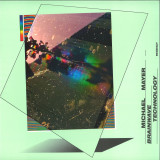
Michael Mayer’s latest EP, Brainwave Technology, comes at you purposeful, stealthy and sly. It’s a glorious left turn for the redoubtable producer, one that sees his typically lean and lithe productions buffed to a metallic, futurist sheen. There’s a gleam in the eyes of tracks like “Brainwave Technology” and “Alpha” that speaks of serious fun, of the intersection of the pleasure zone and the frontal lobe.
“Brainwave Technology” itself is informed by Mayer’s deep dive into the thorny terrain of artificial intelligence, transhumanism and posthumanism. Inspired by reading German philosopher Richard David Precht, Mayer found himself heading down the “proverbial rabbit hole,” as he describes it, “watching hours of YouTube material by self-proclaimed prophets of these ‘inevitable’ changes to come.” Never one to be taken in by the egotist’s dance, Mayer’s cynicism about the whole endeavour is tempered, a little, by the deeper questions that these figures gesture towards: “Is it really an evolutionary step that man and machine become one? Or is it rather a marketing plot by Silicon Valley billionaires?”
On “Brainwave Technology”, Mayer plays the charlatans at their own game, turning their logic against them by exposing the fruitiness of their ‘visions’. “I chose irony as my sword with which I chopped off some quotes from some of those batshit crazy prophets and self-promoters,” he explains of the drooling psychobabble he drops in the track’s lacuna. There’s a sense of humour here – how could you not laugh at these hungover egotists? – but there’s levity too, a sense that Mayer’s using sound to expose the contradictions and double-speak at the heart of these half-formed ideas. It’s a Burroughsian tactic, to slice into the heart of the voice to see what hidden truths surface.
It was Burroughs, too, who once said that “when you cut into the past, the future leaks out”; Brainwave Technology cuts into the logic of the futurologist to leak out the messiness of modern reality. On “Alpha” and “Gamma”, Mayer seems to conjure up the stark, ominous music that’d soundtrack a science fiction reinterpretation – or preinterpretation – of our modern malaise, all funereal wreaths of electronic noise and clatterboxing beats. As the EP resolves with “Device For The Young At Heart”, Mayer’s questions are piling up: “Do we want to become immortal and live on as a download? Do we really give up on Earth and put all our effort into colonising Mars?” There are no answers, of course, but plenty of imaginings-to-be. Brainwave Technology soundtracks both dystopian and utopian possibilities of what could come next.
out of Stock
Last delivered 5 years ago available to reorder, subject to availability
Bram Weijters' Crazy Men is a thrilling take on Belgian jazz-rock and fusion from the 1970s.Consisting of musicians from a wide array of contemporary jazz bands including Lucid Lucia (ex BRZZVLL), Dans Dans, STUFF. and Cargo Mas, the ensemble is led by Antwerp based piano and keyboard player, Bram Weijters.
First-ever vinyl issue of this killer comp from 94 (Cherry Red)
Side A/B oxblood, Side C/D milky clear. Comes with 18x24 folded poster. Spanning 4 sides of vinyl you'll hear one of the finest deathrock/goth/new wave bands of all time with songs from EPs/12"s/demos from 1983-1985. It's a release not to miss.
Formed in Keighley, West Yorkshire, during the Post Punk of early 1980’s out of the band ‘The Elements”, took their name from the title of the song “Chant of the Ever Circling Skeletal Family” from the 1974 David Bowie album, Diamond Dogs.
Something unique was brewing up a dark and broody storm in West Yorkshire at the time with bands like The Sisters Of Mercy, The March Violets, Red Lorry Yellow Lorry, Southern Death Cult (later became The Cult) forming the basis of what became the soundtracks to the Goth Subculture.
Skeletal Family soon gained popularity in the UK Independent Charts and furiously gigged the length and breadth of the UK and Europe, recorded tracks for the John Peels Sessions, supported The Sisters of Mercy during their 1984 Black October tour, released 2 studio albums ‘Burning Oil’ (1984) and ‘Futile Combat’ (1985) of which saw the release of Skeletal Family’s most successful single ‘Promised Land’ on Red Rhino record label.
Anne-Marie left Skeletal Family in 1985 to form Ghost Dance with Gary Marx, former guitarist of The Sisters Of Mercy.
After the release of ‘Kuarahy’ concurred with the blast of the worldwide pandemic and all the consequences it has generated, WHITE STONES - Martín Mendez’s project (OPETH’s bass player) - are ready to launch their second record.
When WHITE STONES released ‘Kuarahy’ they became the first Spanish band signed to Nuclear Blast Records, cementing their first album as an unprecedented milestone. Now, with ‘Dancing Into Oblivion’, the band returns with a more compact sound, having been hard at work ensuring the utmost attention to every detail for a result that is even better than the first record.
The topics covered on this second album draw on the feelings that Martín himself affirms he has lived through during the lockdown imposed by the covid-19 pandemic. “I started it very calmed in March when »Kuarahy« was released and the lockdown started. I wrote the new record and it just flowed so well. It’s my point of view, of the feelings I had during the lockdown period, in this weird year. I took advantage of the moment and I feel excited about it”, reveals the musician.
The most outstanding musical elements on this new record are the disparate genres that manage to co-exist. There is an element of aggression, that can be seen rearing its head in an instrumental frenzy, as well as soft and delicate intricacies that develop an atmosphere which surrounds the listener. There are distinct dynamics among the songs, with interludes allowing the listening to take a breath and appreciate what they’re hearing.
The writing process of ‘Dancing Into Oblivion’ has been pretty similar to the previous ‘Kuarahy’ but with some clear changes. Martín composed all of the instrumentals for the album but, as he says, “I’ve left sections open to the interpretation of each of the other musicians, both in the drums and in the vocals. Eloi wrote the lyrics this time and we then workshopped them together whilst working out the vocal parts to get the final result in the studio”.
WHITE STONES once again recorded at Farm Of Sounds Studios (Barcelona), owned by their singer Eloi. They were satisfied with the sound of ‘Kuarahy’ and the experience of the recording of that album and the comfort of making everything with their own tools made it all easier. “Everything has been ‘homemade’ because it’s a way of working and a philosophy I like. You have more control and you can better enforce your ideas”, Méndez explains -who also created the cover for ‘Dancing Into Oblivion’ together with Sandra, his partner for many years.
The final mix and mastering of this second album was done by Jaime Gómez Arellano at Orgone Studios (UK) because the band were more than satisfied with the work he did on ‘Kuarahy’ and they wanted to repeat that great experience. Eloi, as the singer and also the guy who recorded the music sent to Orgone Studios, acknowledges “the recording had more experience and a better sound quality because we made better decisions during the pre-production thanks to a higher level of self-awareness of ourselves as a band. Jaime knew us better too, so that simplified the process and in turn helped to make »Dancing Into Oblivion« as good as it can be”.
The line-up has been enhanced with the participation of the multifaceted Joan Carles Marí Tur on drums (who also plays in other bands like FACE THE MAYBE). The guitar solos were the job of Joao Sassetti (who was already a member of the touring line-up of WHITE STONES). Sassetti lives in Portugal and he couldn’t be in the studio in Barcelona, so he recorded his solos and digitally sent them over for integration into the final songs. The recording of the instruments has been more organic and as Boucherie says. “The original sound has been retained as much as posible in each and every element” and it has brought a natural/raw touch for ‘Dancing Into Oblivion’ just as the band had hoped and expected.
New Kscope CD Edition Of 1997 Top 30 Album This Strange Engine
“Atmospheric, melodic music that played to all of that band’s strengths... Marillion’s finest album of the last 15 years” - Classic Rock Marillion formed in 1979 and have sold over 15 million albums worldwide.
Rightly regarded as legends of progressive rock, the band have continued to evolve and have been keen to embrace the possibilities of the internet, using innovative ways to interact with listeners resulting in an incredibly loyal legion of fans around the world.
Originally released in 1997, ‘This Strange Engine’ was a top 30 hit in the UK and reached #10 in the NL album charts. The album features the singles “Man Of A Thousand Faces” and “80 Days” and shows the band exploring a revitalized sound featuring more acoustic elements.
‘This Strange Engine’ is the first of three recordings that Marillion made on a contract with Castle between departing EMI in 1995 and eventually going independent in 2000. Widely regarded as one of the most well produced Marillion albums, it finds the band in transition, ditching some of the lengthier compositions of previous albums in favour of a more succinct, commercial sound.