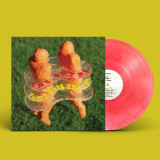
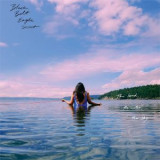
Under the alias The Rodeo, French artist Dorothée has been curating her discography since 2010. An exercise in self-exploration that her fourth album, Arlequine, refines and reveals with the confidence of someone who has cast doubt aside. With these nine baroque, complex and catchy French pop tracks, the singer-songwriter reveals her many faces. Truly multi-faceted, she is as much a performer on stage as she is an artist in real life. She toys with appearances instead of falling victim to them. Backed by a group of loyal virtuoso musicians, Arlequine marries melancholy and melodic clarity, anger and orchestral density, loss and pop idealism, in ambivalent songs with powerful choruses that paint a portrait of "a battle-hardened woman with a smile (...), a woman warrior with makeup" ("Arlequine"): resilient, resolute, reborn. The Rodeo has played all over the world (Europe, USA, Canada, Brazil, South Korea, Taïwan) and shared the stage with many artists (Salif Keita, Stereophonics, Villagers, Nada Surf, The Do, Kazu...). She"s involved in the European program Keychange for increased parity in the music industry.
Buscar:pow pow
Another powerful release from the Exist Dance catalogue, pioneering and shaping the sound of the US early 90's rave scene. A 4 track EP by High Lonesome Sound System - yet another project by Tom Chasteen and Mike Kandel - with a collection of different mixes of “Waiting For the Lights”. Overall a mighty rollercoaster ride in breaky prowess, playful sample wealth and driving synth riffs. Putting the Amen break to unprecedented monumental grandiosities on the dancefloor. Especially with the meticulous mastering on behalf of Manmade mastering. Can't go wrong, buy on sight.
Renaldo Domino
Chicago Soul Legend
Born March 27th 1950) from “The Valley” around 49th & Forestville.
He was nicknamed Domino because his voice was sweet as sugar, Domino being an American sugar brand name.
Renaldo Domino blasted onto the fertile Chicago soul scene of the late 60's with a voice as sweet as sugar and deep grooves that sound just as fresh five decades later. Releasing singles on Mercury subsidiaries Smash and Blue Rock, and later Twinight records, Renaldo’s all-too-brief career has still managed to leave an impact to all those lucky enough to hear it.
He had a relatively short recording career releasing only 7 singles between 1967-1971. His first 45 was recorded whilst he was still attending high school on a tiny label Arnell on a low budget.
The Arnell 45 did well enough for him to get signed to Smash (a Mercury subsidiary) where he released two 45s, re-recording 'I'm Hip To Your Game' for his second Smash single, as it's a different version to the one released on Arnell. His third 45 was released on another Mercury subsidiary, the now revived Blue Rock which had been 'suspended' since 1966 and reacivated in 1968. The records sold reasonably well locally but Dominio left to join Twinight, feeling that his material wasn't being promoted by Mercury, where he released a further three singles between 1969-71. Twinight released him in 1971 and despite trying to get another recording contract he was unsuccessful and left the music business to pursue another career.
He was managed by William Sandy Johnson who also managed LaShawn Collins and Wendy Woods who recorded on Johnson's Sincere label, the only 2 releases on the label. He also wrote Renaldo Domino's first 4 A sides: 'I'm Getting Nearer To Your Love', 'Just Say The Word', 'Not Too Cool To Cry', 'Let Me Come Within'. In addition he wrote 'Do It Now' for Wendy Woods and the flip to LaShawn Collin's classic 'What You Gonna Do Now', 'Girl Chooses The Boy'.
Renaldo returned to the spotlight in 2007 when the Chicago reissue powerhouse Numero Group put him on the cover of their deluxe box set Eccentric Soul: Twinight's Lunar Rotation (which included other greats Syl Johnson, The Notations, and many more). Renaldo’s performing career began to flourish once again with shows around country.
In early 2019 Renaldo teamed up with producer Jeremy Kay and arranger JB Flatt and set out to record new tracks that would live up to Renaldo’s great early records. Assembling a crack team of Brooklyn’s best they pulled out all the stops, creating a mix between the lush arrangements of Chicago’s early soul style and the hard-hitting beat of current Brooklyn soul. The new single “No Laggin’ & Draggin’” / “Give Up The Love”, released Feb 2020, is now available on Colemine Records.
Backed by The Heavy Sounds, Renaldo’s live performances continue to deliver with passion and precision, making new fans young and old.
- A1: Sexy Ways (Recloose Disco Flip)
- A2: You Can't Miss What You Can't Measure (Alton Miller Mix)
- A3: Get Your Ass Off And Jam (Marcellus Pittman Remix)
- B1: Cosmic Slop (Moodyman Mix)
- B2: Music For My Mother (Andres Wo Ahh Ay Vocal Mix)
- B3: Super Stupid (Dirtbombs Version)
- C1: Music 4 My Mother (Underground Resistance Mix)
- C2: Undisco Kidd (Gay Marvine Edit)
- C3: Take Your Dead Ass Home (The Fantasy Version)
- D1: Let's Take It To The Stage (Amp Fiddler Laughin @Ya Mix)
- D2: Standing On The Verge (Anthony Shake Shakir & T Dancer Remix)
- D3: You And Your Folks (Claude Young Jr Club Mix)
- E1: Be My Beach (Mophono & Tom Thump)
- E2: You And Your Folks (Claude Young Jr Dub)
- E3: Let's Make It Last (Kenny Dixon Jr Edit)
- F1: Looking Back At You (Ectomorph Stripped And Dubbed)
- F2: Maggot Brain (Bmg Dub)
Funkadelic have created an enduring legacy, and the power of their impact is visceral in Detroit. Their records not only played with genre, but possessed a diabolical sense of humour that led to music domination by the late 70s with Parliament, Funkadelic, Parlet, Bootsy's Rubber Band and the Brides Of Funkenstein all releasing albums the same year for two years in a row.
The music itself is beyond stereotype, but equally huge is that they were a black band not allowing themselves to be limited by anyone else's notions of who they could be, having a massive impact on the next generation of Detroit music, Detroit Techno.
But more than just Techno, it is a freedom of thinking that extends beyond boxes, so we included all sorts of today's generation of Detroit musicians and producers to show the wide range of music that was Funkadelic and how these ideas are still contemporary, they endure and inspire.
On 25th August 1975, Father Yod took the Source Family to the top of a cliff on the eastern shore of Oahu, Hawaii. Despite having no previous airsports experience, he leapt off a 1300 ft cliff using a hang glider and he crash landed on the beach below.
The Source Family rejected all forms of conventional medicine; Father Yod died from his injuries nine hours later, surrounded by The Source Family.
Papir's majestic third album back in print on vinyl for the first time in eight years! On this album, produced by Causa Sui's Jonas Munk, the band really found their sound, blending powerful semi-improvised psychedelia with jazz and atmospheric post-rock. At this point the Copenhagen trio had become masters of their craft, mixing together new and old, heaviness and ambience. Now, ten years after its original release, it stands as one of the highlights of post-millennial psychedelia. When Mojo writer Kieron Tyler visited Denmark's renowned SPOT Festival in the summer of 2012 he was blown away by Papir's performance as an experience that clearly stood out compared to the rest of the bill: it takes a lot to stand out at SPOT...but Copenhagen's Papir are arresting. Their guitar, bass and drums mesh powerfully in an intense, jazz-inflected instrumental rock. Voyaging through post-rock Tortoise terrain, it nods towards Hawkwind's freak outs and employs liberal dollops of wah-wah pedal. The pieces - not songs - twist and turn like Dark Star Grateful Dead. From these jumping off points, Papir scurry off on their own path. These guys are certainly on their own path and Papir III is one of their most fully realized albums to date. It encompasses everything the band represents in a single piece of heavy vinyl - from explosive, guitar-solo driven peaks through motoril krautrock grooves to peaceful and atmospheric soundscapes.
- A1: Intro (Feat Father Guido Sarducci)
- A2: If It Wasn't For You (Feat De La Soul & Starchild Excalibur)
- A3: Are You Down With It (Feat Mike Patton)
- A4: The World's Gone Mad (Feat Del The Funky Homosapien, Barrington Levy & Alex Kapranos)
- B1: Breakdown (Feat Jack Johnson)
- B2: It's Like That (Feat Casual)
- B3: I Am Complete (Feat Tim Meadows)
- B4: I've Been Thinking (Feat Cat Power)
- B5: Dating Game (Feat Tim Meadows, Hines Buchanan & Introducing Neelam)
- C1: Rock & Roll (Could Never Hip Hop Like This) (Could Never Hip Hop Like This)
- C2: Knockers (Feat Tim Meadows)
- C3: The Hours
- C4: Class System (Feat Pharrell Williams & Julee Cruise)
- D1: First & Then (Feat Dres From Black Sheep)
- D2: A Day In The Life (Feat Rza, The Mars Volta & Ag)
- D3: Good Hygiene (Feat Tim Meadows)
- D4: Greatest Mistake (Feat John Oates & Jamie Cullum)
- D5: Dating Game (Feat Tim Meadows, Hines Buchanan & Neelam - Part 2)
Limited 12" from Pete Cannon - 4 tracks produced on the Amiga 1200!
2023 Repress
In between the re-releases of the two legendary Drexciya albums released on Tresor in '99 and '01, the Berlin techno institute is proud to re-present Transllusion's 'Mind Over Positive and Negative Dimensional Matter' the 12' single which originally accompanied the album 'The Opening Of The Cerebral Gate'.
Produced by the late James Marcel Stinson and released in 2001 via Supremat, a short-lived sub-label Tresor dedicated to a more abstract and experimental electro sound, both releases were conceived as the second part of the so-called Drexciyan Storms - a whopping stack of seven albums by the Detroit pair released under different monikers within a single year (the Tresor album 'Harnessed The Storm' being the rst).
This phase marks a groundbreaking time for the duo, their cosmos breaking wide open, right at the dawn of a new technological era in electronic music production. All this is deeply reected in Transllusion's rst album and single.
Thematically, 'The Opening Of The Cerebral Gate' and 'Mind Over Positive and Negative Dimensional Matter' saw Stinson shift away from the grand narrative of the Drexciyan saga, instead exploring a sub-plot of esoteric concepts revolving around internal, mental and psychedelic tropes. Musically, it presents the electro genius at the height of his game.
Clear Vinyl
Dutch singer and songwriter Caroline Van der Leeuw is back - with a new name, a new sound, a new mission. Emphasising the depth and breadth of her artistic transformation, Nowhere Near The Sky (produced By David Kosten - Bat For Lashes, Everything Everything) is The Jordan"s extraordinary, game-changing debut album, a new chapter that comprehensively rewrites Caroline"s story as former singer of Dutch pop group Caro Emerald. Gone is the jazz, the swing, the Latin rhythms, the rockabilly, the heavily stylised wardrobe. In their place: total candour and unvarnished truth, vocals purer and more powerful than anything she has recorded before, trip-hop and folktronica textures that wrap her voice in magic and mystery, and songwriting that, after years of doubt and repressed feelings, finally pulls back the veil.
It seems fitting that a trilogy of albums celebrating nature should conclude some eight years after its second chapter. Manchester-via-Todmorden based instrumental trio Plank’s first two LPs – 2012’s kosmiche-inspired Animalism and 2014’s more expansive and structurally disruptive follow-up Hivemind – enjoyed relatively quick gestation periods. However, Plank are firm believers in letting nature run its course, and so it is that their third LP Future of the Sea arrives early in 2023. “I always knew I wanted to make three albums inspired by nature” says Plank main-man David Rowe (synths / guitar). “Future of the Sea is another exploration into odd time signatures and traditional rock instruments alongside synths and electronics.”
“Future of the Sea is a celebration of the power and majesty of our oceans and how humankind has been destroying them through industrial scale fishing and global warming” says Rowe. “Rachel Carson put it more eloquently in her book The Sea Around Us: ‘It is a curious situation that the sea, from which life first arose should now be threatened by the activities of one form of that life. But the sea, though changed in a sinister way, will continue to exist; the threat is rather to life itself.’” A post apocalyptic underwater city scape adorns the cover in an illustration by Jake Blanchard, whose work you'll also see on Richard Dawson's latest album 'The Ruby Cord'.
The synthetic nature of Plank’s sprawling rock odysseys feel at their most pronounced on Future of the Sea which leans to the band’s love of Pink Floyd era Meddle, Camel, film score composers like John Carpenter and Vangelis, 70s experimentalists Harmonia, 1980s King Crimson and 90s post-rock adjacent group Tortoise. In polyrhythmic dexterity if not heaviness, Plank also take some influence from Meshuggah, and it’s in their movement between the 16 minute final album track’s sections that it feels most prominent. They swerve from crunching stoner rock jams to more ambient spatial explorations, crescendoing progressive peaks, 80s synth pop and finally a crushing riff-laden finale.
Samuel Rohrer - drums, percussion, electronics, keys, modular synths Music produced, recorded and mixed by Samuel Rohrer
Samuel Rohrer’s newest solo album, Codes of Nature, shows the artist making yet more refinements and additions to an already rich catalog of musical ideas. Though he has excelled in collaborative projects with Ambiq, Ricardo Villalobos, Max Loderbauer, Tobias Freund, Dark Star Safari, Nils Petter Molvaer, Oren Ambarchi and
many others, it is fascinating to experience him also working in a field completely his own, yet managing to still give the impression of being fully integrated or connected with a larger musical universe.
A strange, intriguing ambiguity between the specific and the universal is indeed what makes Rohrer’s music worth playing on a loop – the cool, downtempo, yet energized constructions on Codes are powered by subtle atmospheric and tonal changes, and work like a camouflage adaptable to any environment. This is a record whose strength derives from its versatility. It’s clear that this versatility of sounds has been inspired by a commitment to positive differentiation that is not just a musical one, and that’s where this work will inspire others in turn.
— Total playing time: 50:04
RED APPLE MARBLE VINYL REPRESS.
Everything changed for The Beths when they released their debut album, Future Me Hates Me, in 2018. The indie rock band had long been nurtured within Auckland, New Zealand’s tight-knit music scene, working full-time during the day and playing music with friends after hours. Full of uptempo pop rock songs with bright, indelible hooks, the LP garnered them critical acclaim from outlets like Pitchfork and Rolling Stone, and they set out for their first string of shows overseas. They quit their jobs, said goodbye to their home town, and devoted themselves entirely to performing across North America and Europe. They found themselves playing to crowds of devoted fans and opening for acts like Pixies and Death Cab for Cutie. Almost instantly, The Beths turned from a passion project into a full-time career in music.
Songwriter and lead vocalist Elizabeth Stokes worked on what would become The Beths’ second LP, Jump Rope Gazers, in between these intense periods of touring. Like the group’s earlier music, the album tackles themes of anxiety and self-doubt with effervescent power pop choruses and rousing backup vocals, zeroing in on the communality and catharsis that can come from sharing stressful situations with some of your best friends. Stokes’s writing on Jump Rope Gazers grapples with the uneasy proposition of leaving everything and everyone you know behind on another continent, chasing your dreams while struggling to stay close with loved ones back home.
"If you're at a certain age, all your friends scatter to the four winds,” Stokes says. “We did the same thing. When you're home, you miss everybody, and when you're away, you miss everybody. We were just missing people all the time.”
With songs like the rambunctious “Dying To Believe” and the tender, shoegazey “Out of Sight,” The Beths reckon with the distance that life necessarily drives between people over time. People who love each other inevitably fail each other. “I’m sorry for the way that I can’t hold conversations/They’re such a fragile thing to try to support the weight of,” Stokes sings on “Dying to Believe.” The best way to repair that failure, in The Beths’ view, is with abundant and unconditional love, no matter how far it has to travel. On “Out of Sight,” she pledges devotion to a dearly missed friend: “If your world collapses/I’ll be down in the rubble/I’d build you another,” she sings.
“It was a rough year in general, and I found myself saying the words, 'wish you were here, wish I was there,’ over and over again,” she says of the time period in which the album was written. Touring far from home, The Beths committed themselves to taking care of each other as they were trying at the same time to take care of friends living thousands of miles away. They encouraged each other to communicate whenever things got hard, and to pay forward acts of kindness whenever they could. That care and attention shines through on Jump Rope Gazers, where the quartet sounds more locked in than ever. Their most emotive and heartfelt work to date, Jump Rope Gazers stares down all the hard parts of living in communion with other people, even at a distance, while celebrating the ferocious joy that makes it all worth it -- a sentiment we need now more than ever.
This land runs through Katherine Paul’s blood. And it called to her. In dreams she saw the river, her ancestors, and her home. When the land calls, you listen. And KP found herself far from her ancestral lands during a time of collective trauma, when the world was wounded and in need of healing. In 2020 she made the journey from Portland back to the Skagit River, back to the cedar
trees that stand tall and shrouded in fog, back to the tide flats and the mountains, back to Swinomish.
It is a powerful thing to return to our ancestral lands and often times the journey is not easy. Like the salmon through the currents, like the tide as it crawls to shore this is a story of return. It is the call and response. It is the outstretched arms of the people who came before, welcoming her home. The Land, The Water, The Sky is a celebration of lineage and strength. Even in its deepest moments of loneliness and grief, of frustration over a world wrought with colonial violence and pain, the songs remind us that if we slow down, if we listen to the waves and the wind through the trees, we will remember to breathe.
There is a throughline of story in every song, a remembrance of knowledge and teachings, a gratitude of wisdom passed down and carried. There is a reimagining of Sedna who was offered to the sea, and a beautiful rumination on sacrifice and humanity, and what it means to hold the stories that work to teach us something.
Chord progressions born out of moments of sadness and solitude transform into the islands that sit blue along the horizon. The Salish Sea curves along her homelands, and when the singer is close to this water she is reminded of her grandmother, how she looked out at these same islands, and she’s held by spirit and memory.
The Land, The Water, The Sky rises and falls, in darkness and in light, but even in its most melancholy moments it is never despairing. That is the beauty of returning home. When you stand on ancestral lands it is impossible to be alone. You feel the arms and hands that hold you up, unwilling to let you fall into sorrow or abandonment. In her songs Katherine Paul has channeled that feeling of being held. In every note she has written a love letter to indigenous strength and healing.
There is a joy present here, a fierce blissfulness that comes with walking the trails along the river, feeling the sand and th stones beneath her feet. It is the pride and the certainty that comes with knowing her ancestors walked along the same land, dipped their hands into the water, and ran their fingertips along the same bark of cedar trees.
This is a story of hope, as it details the joy of returning. Katherine Paul’s journey home wasn’t made alone, and the songs are crowded with loved ones and relatives, like a really good party. And as the songs walk us through the land it is important we hover over the images and the beauty, the moments that mark this album as site specific. The power of this land is woven throughout, telling the story of narrow waterways, brush strokes, salmon stinta, and above all healing.
Let it take you. Move through the story and see the land through her eyes, because it is a gift, a welcomed sʔabadəb.*
*The word “gift” in Lushootseed, the language of the Coast Salish people“
Early in his career as a child star during the late 1960s, reggae singing legend Dennis Emmanuel Brown, received the nickname of "boy wonder of Jamaican music." In 1981, reggae fans unanimously ordained Brown with a new title, "Emmanuel, the Crown Prince of Reggae" and the undisputed heir apparent, following the death of reggae "king" Bob Marley. Brown, with his extremely powerful tenor and distinctive singing voice, established himself easily as one of the most impressive reggae artists of the twentieth century. A happy and friendly man, Brown amassed a loving and loyal following throughout his career, and upon his death at the early age of 42, he was widely eulogized for his outgoing personality. He recorded more than 100 records, including over 50 albums, from the time he was in his teens. The world of reggae music lost a "towering talent," noted Billboard magazine, when Brown passed away on July 1, 1999.
Emo-Deutschpunk in den Neunzigern, Indierock-Experimente in den 2000ern und mittlerweile im queeren Power-Pop zu Hause: SCHROTTGRENZE Synthesizer, orchestrale Arrangements und klassische Chöre - die musikalische Reise, die hinter der einstigen Punkband aus dem niedersächsischen Peine liegt, ist erstaunlich. "Wir haben uns nie von der Musikindustrie, einer bestimmten Szene oder kommerziellen Erfolgsansprüchen abhängig gemacht und sind stets unseren gemeinsamen thematischen und musikalischen Vorlieben gefolgt", erklärt Sängerin* Saskia Lavaux, die SCHROTTGRENZE 1994 gemeinsam mit Gitarrist Timo Sauer gegründet hat. Bassist Hauke Röh und Schlagzeuger Lars Watermann vervollständigen das Quartett, das seit 20 Jahren in Hamburg ansässig ist. Als die Band 2017 - nach einer mehrjährigen Schaffenspause - mit dem Album "Glitzer auf Beton" ihr Comeback feiert, wird der Anspruch an die eigene musikalische Unabhängigkeit besonders deutlich. "Damals nahm die queere Trilogie ihren Anfang, die wir 2019 mit "Alles Zerpflücken" fortgesetzt haben und nun mit "Das Universum ist nicht binär" abrunden", fasst Saskia zusammen, die mittlerweile auf ihre ganz persönliche queere Transformation zurückblickt. Produziert wurden die besagten drei Platten, die eindeutig eine neue SCHROTTGRENZE-Ära markieren, allesamt gemeinsam mit Kristian Kühl. Neu hingegen ist die Zusammenarbeit mit Oliver Zülch, der in der Vergangenheit bereits Bands wie Die Ärzte, Sportfreunde Stiller und The Notwist tontechnisch supportet hat. Das Ergebnis: Ein neuer, klarer und empowernder Sound, der dem unabhängigen Bandkollektiv sehr gut steht.
Solaire, Siegfried Kessler, that is the least we can say! Aged 4: learns piano. Aged 6: his first concert. After this: studies classical music like everyone else... until the jazz of Jack Diéval and Stan Kenton turned everything upside down. So it was goodbye to Bach...
...And hello to Dexter Gordon, Joe Henderson, Ted Curson and Archie Shepp (who he would accompany over a long period). In 1969, with Yochk’o Seffer, Didier Levallet and Jean-My Truong, he formed a group which would mark history and create a sensation: Perception. If French free jazz exists, its thanks to Kessler (and company).
The following year, the pianist recorded his first album: Live at the Gill’s Club. On this one-night concert date can also be heard Barre Phillips and Steve McCall. But it was in 1971 that Kessler would record his greatest album; still in a trio setting, but this time with bassist Gus Nemeth and percussionist Stu Martin: Solaire. Five tracks of extraordinary music, moving back and forth between modal jazz and contemporary music.
Let’s begin at the end, with the title track Solaire, on which Kessler plays a melody on flute and piano which resists all onslaughts. It sends out powerful waves, Kessler’s jazz, bubbling like hot oil (Persécution, Drum), shaking modal jazz to its roots (De l’Orient à Orion) or upsetting the memory of a cantata (Bach Hcab). The piano is an instrument which can provide a tendency towards, demonstrative technique; with Kessler, it is something else: a joyful persecution!
Red Vinyl
Ghost In The Machine make their long awaited return to Perc Trax with their first full release for the label since their debut album 'Breaking The Seal' was unleashed at the start of 2020. Since then they've released multiple EPs on their own Genosha Basic label, remixed Marc Acardipane, Dahryl and Torque and given their remix of Paula Temple the vinyl release it always deserved. As DJs they have toured Europe and South America, tearing down dance floors with their powerful kick driven sound. From small intimate clubs to huge festival stages their depth of musical knowledge and razor sharp mixing have made them the highlight of any line-up.
For this first Perc Trax release of 2023 Ghost In The Machine take their sound and production to the next level. EP opener 'Come One' is a tour de force of giant kick drums, distorted breakbeats and the kind of drops most techno acts can only dream of. 'Ensnared' takes a more groove based approach with rolling snares over a classic Ghost In The Machine kick assault. Lastly 'Break' gives us a chance to breathe (at least in comparison to the first two tracks) with droning tones layered over an assortment of classic drum breaks brought up to date by Ghost In The Machine's untouchable production skills.