8

3LP limited deluxe edition of Beastie Boys’ platinum-selling 2004 To the 5 Boroughs album, featuring 11 bonus tracks, including remixes and B-sides., pressed on 180-gram vinyl and housed in a triple gatefold jacket with pop-up elements and an NYC map lithograph, inside a rigid slipcase.

A1 Dawn Razor x Electrosoul System - Hiper Dob. Progressive breaks in the best traditions of Layo & Bushwacka! Atmospheric, fiery, harmonious.
A2 Electrosoul System - #electrobidon. Powerful electro breaks with paranoid melodic harmonies and an original, memorable voice sample by the 46th President of the USA.
B1 DJ Brix - Under Attack (Electrosoul System Remix). Crisp breakbeat with an old-school touch, echoing early Chemical Brothers and Prodigy, acid house and the acid revolution.
B2 Dissident - Alter Samadhi (Eklektika Remix). Gloomy, mesmerizingly hypnotic future garage remix of a drum'n'bass classic by Dissident.
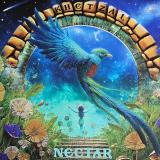
Five years after his previous album, Khetzal returns with Nectar, a brand-new digital double album accompanied by a limited physical vinyl EP. Matthieu Chamoux, a name that needs little introduction, is the creator of Corolle, still considered a milestone of 21st-century Goa-trance. With Nectar, he once again delivers his unmistakable signature: spiritual, Eastern-influenced, blissful Goa-trance. With Nectar, he dives back into his signature world of spiritual, Eastern-tinged, blissful Goa-trance. The first CD weaves a brand-new fairytale-like journey, with four standout tracks also pressed onto vinyl. Alongside these, you'll find a second bonus cd, set of unique live remixes, complete with violin, breathing fresh energy into classics like Ganesha Pramana and Listening Winds. Enjoy the journey

To celebrate the year anniversary of its first release, Erin LeCount launches a limited edition transparent vinyl of her 2025 EP I Am Digital, I Am Divine. The tracklist includes viral hit Silver Spoon which amassed 300K Soundcloud streams before it had even been released, since amassing 21M streams in less than 12 months.
Available for pre-order on the 24th March and set for release on the 17th April 2026.
Erin LeCount is a 23-year-old self-taught artist and producer. A visionary sonic architect and the sole writer and producer of her music, her sound ranges from luscious baroque-pop arrangements to alluring gothic-pop. At the foreground of her music are diaristic lyrics and captivating synths which offer an enchanting interplay of vulnerability and power. The themes within her music explore everything from identity to relationships and the meaning of life. Erin’s influences include Fiona Apple, Kate Bush, Lorde, Imogen Heap, Charli xcx, and Sampha.
In May 2026, Erin LeCount will embark on her biggest run of shows to date with her new UK tour, entitled the ‘PAREIDOLIA Tour’, which will see her play dates in Manchester, Glasgow, Bristol, and London, the latter of which will take place at the Roundhouse in what is Erin’s largest headline show so far. This month, Erin was also announced on the line-up for Lorde’s All Points East date on Saturday 22nd August.

Death Is Not The End collaborate with Uzbek label Maqom Soul to deliver an LP counterpart to last year's mixtape of the same title, compiling specially picked & fully licensed individual belters from the ex-soviet studios of Central Asian republics between 1978 and 1989 - incl. Uzbek, Tajik, Kurdish & Uyghur artists pulling traditional folk motifs together with pop & rock and psych elements.
"These recordings do not form a smooth or coherent history. They feel more like a sequence of discoveries made at different moments and in different circumstances. Songs and instrumental pieces that once lived inside specific contexts radio broadcasts, philharmonic programs, touring routes now sit side by side, revealing hidden connections as well as clear fractures between them.
Nasiba Abdullaeva appears here as a voice from the end of an era. Trained within a conservatory system, she worked inside the format of the Soviet pop song while filling it with melodic logic that did not come from Moscow or Leningrad. Her voice is soft and sustained, shaped by Eastern melisma, and it never functions as decoration. Even in tightly structured songs there is a sense of resistance, an effort to preserve a musical language rooted in Uzbek tradition rather than fully adapted to an all Union standard.
The ensemble Sintez, later renamed Navo, represents a different path. Beginning as a student rock group, the band was gradually absorbed into the official VIA system with all its limitations and compromises. Yet it was precisely within those boundaries that Sintez and Navo developed a recognizable sound. Electric guitars and jazz rock harmonies do not overpower the folk material but remain in tension with it. Their recordings feel like negotiations between what the musicians wanted to play and what they were allowed to perform.
The Tajik ensemble Gulshan reflects an institutional approach carried to a high professional level. Formed under television and radio structures, the group treated folk material almost as a written score. Carefully constructed arrangements, close attention to orchestration, and restrained use of pop techniques define their sound. There is less spontaneity here, but a strong sense of discipline and structure, where national melody becomes part of a carefully controlled sonic framework.
Koma Wetan occupies a very different space. Formed in the 1970s, this Kurdish rock group approached poetry and folklore as tools of cultural assertion. Their psychedelic rock never feels like a stylistic borrowing. Instead it functions as a contemporary vessel for language and themes that might otherwise have remained unheard. Even today these recordings sound fragile and stubborn at the same time.
The Uyghur ensemble Yashlik, closely connected to a musical drama theatre, operated somewhere between stage performance and popular music. Their songs are built on folk melodies but shaped for wide audiences. What emerges is a constant attempt to preserve the recognizability of Uyghur musical identity without freezing it in a folkloric frame. Yashlik's music exists in a state of balance between representation and development.
Digging Central Asia does not attempt to establish hierarchies or offer a single wayof listening. Names and dates matter less than the sound itself. Tape noise, abrupt transitions, and unexpected timbres remain part of the material rather than flaws to be corrected. This music existed at the crossroads of multiple routes geographic, cultural, and ideological. Heard today in a new context, it no longer feels peripheral. Instead it stands as a reminder that the history of popular music is far more fragmented, layered, and polyphonic than it is usually allowed to be."
For some vinyl records you look for and some will find you. A future classic back then and a timeless classic now, Dav’s 100 up EP got generations of people dancing to it’s rhythm.
Remastered from the Original Files, Cut with precision on 45rpm, this record will once again shake the dancefloors!

Akio Nagase joins Especial with an EP of global acid tracks. Centred around his heritage, Osaka based Nagase infuses his sounds with a mixture of dub and ethno-dance, wrapped in 303 infused mid-tempo 4/4 grooves.
Making music for over 20 years, as well as running his Makedub parties, Nagase has released for Sound Channel, Darker Than Wax and cult Japanese digital label Chillmountain. It is here, on the latter, that the connection was made and his tracks unearthed.
Rearranged, re-edited and remixed especially for vinyl, Jurassic Shanghai Acid starts, fusing sound effects, dialogue and samples atop squelching acid beats. Following is Mongol 303, as Khoomii throat singing and acid vibrations loop and flow across the Altai Mountains down to Steppe Plains - Madrugada Eterna.
Okinawa Yunta crosses the South China Sea to home, perfectly mixing unique folk song from Taketomi Island reconstructed with Nagase's gentle, wiggling acid accompaniment. The incessant repetitive groove an Acid mantra, flowing through consciousness to move mind and body.
The bpm's rise for the close. Saigon Acid mixes tradition and Acid House for fun, a 3AM basement jam where Dan Nhi meets 808 and Nagase presents his ethno-acid love in.
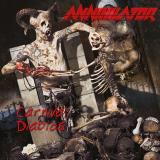
Carnival Diablos is an album of red-blooded metal that connected Annihilator’s legacy to their present-day and re-established Jeff Waters’ place in the thrash pantheon. From the frenzied call-and-response of album opener ‘Denied’ to the progressively-edged mid-tempo sway of the title track, Carnival Diablos is a wholly satisfying offering of steak and potatoes heavy metal thrash – more heavy metal, less thrash, but 100% Annihilator at one of their many peaks.

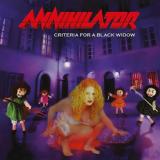
Criteria for a Black Widow was a love letter to old-school Annihilator fans. It hit record shops at the precise moment the delirium of the 90s cleared and metal was ready to get heavy again. From the pummeling attack of opener Bloodbath to the classic brawl of Back To The Palace and the album's searing title track – all festooned with Jeff's ability to fuse the finesse of six stringed virtuosity with the auditory effects of a hand grenade – this was more than a return to form; it was the sound of Annihilator coming full circle.

GENERATION RADIO return with "Take Two", the eagerly awaited follow-up to their acclaimed debut, delivering another masterclass in AOR/West Coast rock infused with just the right touch of the Nashville sound. Produced by founding members Jay DeMarcus (Rascal Flatts) and Jason Scheff (former Chicago), the band features an all-star lineup: Steve Ferrone (Tom Petty & the Heartbreakers, Average White Band) joins on drums, replacing the formidable Deen Castronovo (who returned to Journey as full-time member), while Tom Yankton (guitar, vocals) and Chris Rodriguez (guitar, vocals) round up the powerhouse ensemble. “Take Two” is rich with pristine harmonies, unforgettable hooks, and timeless songwriting—hallmarks of the genre delivered with class and authenticity.
Tracks like the widescreen, harmony-laden “Montana Sky,” the hook-filled “The Melody,” and the emotionally charged ballad “Hate This Heart” showcase the band’s signature blend of melodic precision and heartfelt performance. Adding depth to the album’s appeal, Generation Radio also offers reimagined versions of timeless classics that shine in their live sets: Whitesnake’s “Here I Go Again,” Chicago’s “You’re the Inspiration,” Kenny Loggins’ “I’m Alright,” and a rock version of Rascal Flatts’ classic “These Days.” With "Take Two," Generation Radio not only honors the legacy of AOR and West Coast rock—they elevate it, combining elite musicianship and genre-crossing influences into a record that’s as fresh as it is nostalgic.
Making his first appearance on Flat White Records, NYC’s Malik Hendricks arrives with Stretching, a four-track EP that leans comfortably into the grey space between Deep House and Techno. Across three original cuts, Hendricks delivers warm, hypnotic, and quietly confident sounds that are unmistakably his own.
Rounding out the release is a remix from London-based, Spain-born producer Beringei. Known for his broken-beat excursions, Beringei with a 4x4 workout that still carries his unmistakable percussive touch, proving that even when stepping outside his usual lane, his identity remains firmly intact.
With previous releases on respected imprints like Eglo, Darker Than Wax, and Phuture Shock Muzik, Hendricks arrives in trusted company, thus making it an easy call to hand him the reins for our 15th release.
Born in the ’80s and raised in the ’90s, Malik Hendricks is a product of transatlantic club culture, drawing inspiration from Detroit’s futurism, New York’s grit, and the UK’s rhythmic experimentation. A DJ for over a decade, he approaches music with an almost academic curiosity, seeing the dancefloor as a shared space for cultural exchange.
Recently, his work has caught the attention of heavyweights like Eli Escobar, Byron the Aquarius, James Bangura, and Roy Vision, all stepping in to remix his material. With Stretching, Hendricks continues to prove that subtlety, craft, and groove still go a very long way.
Early DJ Support from: Shy One, LDLDN, Louise Chen, Dam Swindle, LTJ Bukem, Christophe Salin, Franck Roger, Jazzanova, Mr Redley, Last Nubian, Glenn Davis, Seven Davis Jr, Stonie Blue, Stu Clark (WOLF), Adriatique, Marco Weibel, Mr Ties, Tereza, Cottam, Joyce Muniz + MORE

Tape[21,43 €]
Hailing from the birthplace of Hip-Hop, this 3-Man Crew (Natural Elements) have been a Staple in the NYC Hip-Hop scene for among those who seek authentic lyricism and organic flows given off by this amazing group. On their highly anticipated NEw album “ALIGNMENT” on the legendary Fat Beats they are continuing this tradition of sharp, thought-provoking bars and songs that their cult following (worldwide) has become accustomed to over the years. This 17 Song piece of art features robust production by their longtime original producer and founder of NE “(The Real) Charlemagne”, as well as UK producer “I.G Nexus”, Harlem producer ‘Le Grand Mohyay aka Bearfakts’ & producer ‘Real6’ on the title track. As a quote from one of their previous releases goes "Fat Beats, Lyrics and Skills Natural E is coming with it."

(2x12") Vinyl[31,89 €]
Hailing from the birthplace of Hip-Hop, this 3-Man Crew (Natural Elements) have been a Staple in the NYC Hip-Hop scene for among those who seek authentic lyricism and organic flows given off by this amazing group. On their highly anticipated NEw album “ALIGNMENT” on the legendary Fat Beats they are continuing this tradition of sharp, thought-provoking bars and songs that their cult following (worldwide) has become accustomed to over the years. This 17 Song piece of art features robust production by their longtime original producer and founder of NE “(The Real) Charlemagne”, as well as UK producer “I.G Nexus”, Harlem producer ‘Le Grand Mohyay aka Bearfakts’ & producer ‘Real6’ on the title track. As a quote from one of their previous releases goes "Fat Beats, Lyrics and Skills Natural E is coming with it."

Concert at Prades-le-Lez marks the origins of the Intercommunal Free Dance Music Orchestra. In 1974, François Tusques and his companions (Michel Marre, Jo Maka, Adolf Winkler and Guem), in the spirit of Don Cherry or Chris McGregor, playfully dismantle all borders and all styles of creative music.
On this second volume, the Intercommunal builds unprecedented soundscapes around a song of revolt, a dance tune, or a burst of dissonance. The journey is unforgettable, no question about it. On repeat listening, it even becomes… lunar!
“The music that we make is primarily meant to be listened to live,” warned a leaflet from the Intercommunal Free Dance Music Orchestra. This is precisely why the (restored!) reissue of the two volumes of Concert at Prades-le-Lez, recorded on January 25 and 26, 1974 by François Tusques and his comrades, is such an important event.
In 1971, after recording a series of albums that would leave a lasting mark on French jazz (Free Jazz, of course, with Michel Portal, François Jeanneau, Bernard Vitet, Beb Guérin and Charles Saudrais, but also Le Nouveau Jazz with Barney Wilen, or the solo Piano Dazibao), François Tusques founded the Intercommunal—a grouping whose very name called for the fraternization of the various communities making up the country: Our music will help, we hope, to resolve the contradictions that exist between workers be longing to different communities, by breaking down various forms of national chauvinism, and more particularly the chauvinism of certain French people toward the cultures of Third World countries… Long live the friendship between the peoples of the whole world!
Among the great records made by the Intercommunal Free Dance Music Orchestra, the two volumes of Concert at Prades-le-Lez come first, before L’Inter Communal, Vol. 4, Le Musichien, and Après la marée noire (four titles already reissued by Souffle Continu). François Tusques and his companions (Michel Marre and Jo Maka on saxophones, Adolf Winkler on trombone, and Guem on percussion) performed on January 25 and 26, 1974 at the Moulin de Prades-le-Lez, a few kilometers from Montpellier. It was thus in the southern region of Occitanie that the first echoes of this musical vision of a borderless brotherhood were recorded.
“We’re not among the Colonels,” the Intercommunal reassures us right away, performing a stride piano tune carried by African winds that the audience cannot resist for long. The energy is already striking and it never lets up throughout these two recordings, from start to finish: jazz, blues, traditional music, minimalism, even funk… The musicians of the Intercommunal have heard a lot of great music and now delight in reinventing it by mixing it all together.
“We want the song form to take its place as a weapon in the struggle against capitalist exploitation and all those who oppress us morally and materially,” declared an Intercommunal leaflet, quoting Jean-Baptiste Clément, author of the lyrics to “Le Temps des cerises.” The struggle was therefore serious—but it did not prevent François Tusques and his group from waging it in a festive spirit: each piece on Concert at Prades-le- Lez sends out a call for love and fraternity. Fifty years later, the message remains as relevant as ever—and once again, it is François Tusques who makes it heard.

2[23,95 €]
Concert at Prades-le-Lez marks the origins of the Intercommunal Free Dance Music Orchestra. In 1974, François Tusques and his companions (Michel Marre, Jo Maka, Adolf Winkler and Guem), in the spirit of Don Cherry or Chris McGregor, playfully dismantle all borders and all styles of creative music.
On this first volume, the Intercommunal takes its audience from New Orleans to Brittany and on to North Africa. The journey was bold, without a doubt—and its memory remains unforgettable.
“The music that we make is primarily meant to be listened to live,” warned a leaflet from the Intercommunal Free Dance Music Orchestra. This is precisely why the (restored!) reissue of the two volumes of Concert at Prades-le-Lez, recorded on January 25 and 26, 1974 by François Tusques and his comrades, is such an important event.
In 1971, after recording a series of albums that would leave a lasting mark on French jazz (Free Jazz, of course, with Michel Portal, François Jeanneau, Bernard Vitet, Beb Guérin and Charles Saudrais, but also Le Nouveau Jazz with Barney Wilen, or the solo Piano Dazibao), François Tusques founded the Intercommunal—a grouping whose very name called for the fraternization of the various communities making up the country: Our music will help, we hope, to resolve the contradictions that exist between workers be longing to different communities, by breaking down various forms of national chauvinism, and more particularly the chauvinism of certain French people toward the cultures of Third World countries… Long live the friendship between the peoples of the whole world!
Among the great records made by the Intercommunal Free Dance Music Orchestra, the two volumes of Concert at Prades-le-Lez come first, before L’Inter Communal, Vol. 4, Le Musichien, and Après la marée noire (four titles already reissued by Souffle Continu). François Tusques and his companions (Michel Marre and Jo Maka on saxophones, Adolf Winkler on trombone, and Guem on percussion) performed on January 25 and 26, 1974 at the Moulin de Prades-le-Lez, a few kilometers from Montpellier. It was thus in the southern region of Occitanie that the first echoes of this musical vision of a borderless brotherhood were recorded.
“We’re not among the Colonels,” the Intercommunal reassures us right away, performing a stride piano tune carried by African winds that the audience cannot resist for long. The energy is already striking and it never lets up throughout these two recordings, from start to finish: jazz, blues, traditional music, minimalism, even funk… The musicians of the Intercommunal have heard a lot of great music and now delight in reinventing it by mixing it all together.
“We want the song form to take its place as a weapon in the struggle against capitalist exploitation and all those who oppress us morally and materially,” declared an Intercommunal leaflet, quoting Jean-Baptiste Clément, author of the lyrics to “Le Temps des cerises.” The struggle was therefore serious—but it did not prevent François Tusques and his group from waging it in a festive spirit: each piece on Concert at Prades-le- Lez sends out a call for love and fraternity. Fifty years later, the message remains as relevant as ever—and once again, it is François Tusques who makes it heard.

April Records proudly presents the new album from Danish trombonist and composer Lis Wessberg. Her most personal album to date, In The Wake of Blue is a song-driven work exploring transience, love, and transformation. Expanding her writing while remaining rooted in her distinctive instrumental voice, Wessberg creates an intimate musical landscape where lyric, melody, and texture carry equal weight. Wessberg has established herself as a leading voice on the European jazz scene through her band Yellow Map and a series of acclaimed releases on April Records. Her previous album, Twain Walking (2024), marked her first step into English-language songwriting and earned a Danish Music Award nomination in 2025 for the track Behind the Walls. In The Wake of Blue develops this direction further. The album draws on images from nature - sea, tides, clouds, mist, and birds - used as emotional anchors rather than abstractions. These elements frame songs that move from uncertainty and loss toward openness, connection, and renewal. The title reflects this arc: "blue" as melancholy, depth, and memory, and what emerges in its wake. Vocalist Veronika Rud is central to the album"s sound, bringing vulnerability and clarity to the songs. Rather than a traditional singer-led project, the music unfolds as a dialogue between voice and trombone, with Wessberg"s warm, airy tone mirroring and extending each song"s emotional core. At times the two move in close unison; elsewhere, they diverge and reconnect. The core ensemble - Steen Rasmussen (piano and keys), Lennart Ginman (bass), and Jeppe Gram (drums) - provides a responsive, understated foundation, while string quartet Live Strings appear on two tracks, expanding the ensemble"s depth and resonce. In The Wake of Blue offers a quietly assured statement from an artist continuing to refine a voice that speaks as clearly through brass as it does through words.
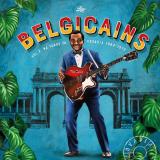
Following the sold-out first volume, the Belgian label Covadia presents a second chapter of Les Belgicains, focusing on the European rumba created by Congolese students in Belgium during the 1960s.
Volume 2 includes 11 rare tracks originally issued on 45 rpm singles or never released before. Highlights include the dancefloor favourite “Guaracha Fredo” by LOS NICKELOS and previously unreleased recordings by the orchestra EBUKA EBUKA, like the swinging “Merengue Soucouss” and the emotional “Mpenzi Niambiye”. The songs unmistakably express a longing for recognition and for a rightful place for a new nation.

Box Set[110,71 €]
Metaphon is pleased to present this première edition, which brings together a near-complete collection of the acousmatic works of Liliane Donskoy, recorded in the 1970s and 1980s.
Liliane Donskoy (*1933) is a French, classically trained pianist, music teacher, and composer of both instrumental and acousmatic music. She began her musical training at an early age, undertaking private piano studies with Yves Nat at the age of thirteen, shortly after the Second World War. During the 1960s and 1970s, she pursued advanced studies with prominent figures of twentieth-century music, including Darius Milhaud, Olivier Messiaen, Pierre Schaeffer, and Guy Reibel, and participated in courses led by Karlheinz Stockhausen, Luciano Berio, György Ligeti, and Iannis Xenakis.
Despite this extensive and diverse training, Donskoy encountered limited institutional and professional opportunities to fully realize her artistic vision. A decisive turning point occurred in 1977, when she gained access to the facilities of the Institute of Psychoacoustics and Electronic Music (IPEM) in Ghent. There, she realized and completed the majority of her acousmatic compositions.
Donskoy’s oeuvre is characterized by a high degree of structural complexity, precision, and expressive intensity. Her work reflects a pronounced and distinctive artistic temperament, manifested through a rigorous exploration of sound material and form. Notwithstanding its artistic significance, her music has remained largely unknown, as her compositions were neither widely circulated nor formally released, leading to their relative obscurity until the present publication.

slipcase edition[63,24 €]
Metaphon is pleased to present this première edition, which brings together a near-complete collection of the acousmatic works of Liliane Donskoy, recorded in the 1970s and 1980s.
Liliane Donskoy (*1933) is a French, classically trained pianist, music teacher, and composer of both instrumental and acousmatic music. She began her musical training at an early age, undertaking private piano studies with Yves Nat at the age of thirteen, shortly after the Second World War. During the 1960s and 1970s, she pursued advanced studies with prominent figures of twentieth-century music, including Darius Milhaud, Olivier Messiaen, Pierre Schaeffer, and Guy Reibel, and participated in courses led by Karlheinz Stockhausen, Luciano Berio, György Ligeti, and Iannis Xenakis.
Despite this extensive and diverse training, Donskoy encountered limited institutional and professional opportunities to fully realize her artistic vision. A decisive turning point occurred in 1977, when she gained access to the facilities of the Institute of Psychoacoustics and Electronic Music (IPEM) in Ghent. There, she realized and completed the majority of her acousmatic compositions.
Donskoy’s oeuvre is characterized by a high degree of structural complexity, precision, and expressive intensity. Her work reflects a pronounced and distinctive artistic temperament, manifested through a rigorous exploration of sound material and form. Notwithstanding its artistic significance, her music has remained largely unknown, as her compositions were neither widely circulated nor formally released, leading to their relative obscurity until the present publication.
Wired was an ephemeral improvisational music project formed by Michael Ranta, Karl-Heinz Böttner, and Mike Lewis. On 28 April 1970, the trio recorded an extended studio session of approximately 140 minutes, in collaboration with Conny Plank, who engineered and mixed the recording in real time, incorporating elements of live electronics. This session was subsequently edited to album length and released in 1974 as part of the Free Improvisation 3LP box set issued by Deutsche Grammophon, alongside recordings by Iskra and New Phonic Art.
Owing to its exploratory electric sound world and Plank’s distinctive spatial production techniques, the Wired recording acquired a degree of underground cult status, particularly among listeners associated with krautrock and psychedelic improvisation.
Shortly after the studio session, Ranta and Böttner travelled to Japan, where they spent approximately six months performing with Karlheinz Stockhausen at Expo ’70 in Osaka. In addition to these activities, they engaged in various independent musical projects and performances.
The present release, sourced from the personal archive of Michael Ranta, documents a live duo performance by Ranta and Böttner, recorded on 27 July 1970 in an outdoor setting in Kyoto (the exact location remains unknown), before an audience of approximately 200 music teachers. The recording exhibits sonic and aesthetic characteristics closely aligned with the previously recorded studio material, retaining the distinctive “Wired” sound while situating it within a live, site-specific context.
Michael Ranta: percussion, voice, home-made instruments, tapes, tape delay, effects Karl-Heinz Böttner: guitar, organ, ocarina, voice, effects

Phil Berg is back on the label, with his highly anticipated return. Four tracks that
continue to pave the way he laid in 2023 with his Raid EP.
Titled Iso, the EP is a study in reduction and discipline. Phil builds each track around a single guiding tension, rhythmic loops that breathe and shift injecting different emotions as each sound passes.
Phil Berg first appeared on SK11 in late 2023 with Raid, one of his biggest and most accomplished releases to date, an EP that made an immediate impression across techno fans worldwide. Iso's four productions here, each with their own identity, each showcasing the same commitment to craft and precision that defined his introduction to the label.
The EP is a statement of intent for Phil in 2026 and one of SK11's strongest releases of the year.
Drawn from the wider Microliths and Momentary Drifts project, this EP finds zak�, Ossa and ASC working in miniature form with signature restraint but real emotional resonance. Each piece functions as a fleeting vignette where tone and texture carry more weight than the structures. ‘Microlith 1’ opens with soft, cascading keys, while ‘Microlith 2’ drifts further into distant, spectral territory. By the time ‘Microlith 8’ arrives, its gentle fade into static leaves a quiet sense of unresolved possibility. It is a concise, thoughtful collection that will have you keen to hear the whole LP.
Cécille Records Welcomes Sambo with a Standout 5-Track EP
Cécille Records proudly continues its tradition of discovering and nurturing fresh talent, and we are excited to welcome Sambo to the family with an outstanding 5 track EP!
True to the label’s signature sound - rooted in timeless, classic house - Sambo delivers a release that feels both fresh and deeply connected to the essence of Cécille. Each track reflects a strong artistic identity, blending groove, emotion, and refined production into a cohesive body of work that stands out effortlessly.
This is a release we have been waiting to share for quite some time, and we couldn’t be more excited to finally present it to the world. Please join us in giving Sambo a warm welcome to the Cécille family.
Carve is the second full-length by Bay Area artist Kathryn Mohr. Written over the course of five years and recorded over several weeks in a rural singlewide in the Mojave Desert, the album centers on love experienced as a form of grief, not as an aftermath of loss, but as a condition of intimacy itself.
Mohr describes Carve as an album about how memory exists outside the body, embedded in places and landscapes. It is shaped by her first return to the American Southwest since a childhood road trip at age five, and by the experience of moving through terrain that holds emotional weight long after its origins fade. The record considers how intimacy feels after years of isolation, and what it takes to carve out a life that allows for trust, presence, and feeling rather than mere survival. The project took form after a difficult tour that ended in Joshua Tree. Mohr pointed her car into the desert and drove alone, crisscrossing the Mojave on dirt roads. Months later, she returned to record the album, working alone with an acoustic guitar, a field recorder, and limited supplies. Following that period, Mohr began to allow for intimacy and connection. The time she spent recording Carve in the desert did not create isolation so much as mirror it. Working alone out of an old, western-themed jail Airbnb, the physical enclosure reflected the emotional conditions under which much of the record had been written: distance, restraint, and long stretches of stillness. In that context, love was not experienced as escape, but as something inseparable from impermanence and the awareness of loss.
This tension between connection and inevitability sits at the center of Carve. Some of the album’s songs were written earlier, during a prolonged period marked by emotional distance and apathy. Over those four years, Mohr was working through unprocessed childhood memories and their long-term effects on her ability to connect with others. The work was slow and difficult, involving a fundamental reshaping of how she related to herself and to the world. Carve was mixed by Richard Chowenhill of Flenser labelmates Agriculture. Rather than offering resolution, the album documents the act of remaining present within tension. Carve is not about escaping grief, but about accepting it as inseparable from love itself. Kathryn Mohr’s previous effort “Waiting Room” received the coveted ‘Best New Music' designation and a score of 8.4 from Pitchfork.

Carve is the second full-length by Bay Area artist Kathryn Mohr. Written over the course of five years and recorded over several weeks in a rural singlewide in the Mojave Desert, the album centers on love experienced as a form of grief, not as an aftermath of loss, but as a condition of intimacy itself.
Mohr describes Carve as an album about how memory exists outside the body, embedded in places and landscapes. It is shaped by her first return to the American Southwest since a childhood road trip at age five, and by the experience of moving through terrain that holds emotional weight long after its origins fade. The record considers how intimacy feels after years of isolation, and what it takes to carve out a life that allows for trust, presence, and feeling rather than mere survival. The project took form after a difficult tour that ended in Joshua Tree. Mohr pointed her car into the desert and drove alone, crisscrossing the Mojave on dirt roads. Months later, she returned to record the album, working alone with an acoustic guitar, a field recorder, and limited supplies. Following that period, Mohr began to allow for intimacy and connection. The time she spent recording Carve in the desert did not create isolation so much as mirror it. Working alone out of an old, western-themed jail Airbnb, the physical enclosure reflected the emotional conditions under which much of the record had been written: distance, restraint, and long stretches of stillness. In that context, love was not experienced as escape, but as something inseparable from impermanence and the awareness of loss.
This tension between connection and inevitability sits at the center of Carve. Some of the album’s songs were written earlier, during a prolonged period marked by emotional distance and apathy. Over those four years, Mohr was working through unprocessed childhood memories and their long-term effects on her ability to connect with others. The work was slow and difficult, involving a fundamental reshaping of how she related to herself and to the world. Carve was mixed by Richard Chowenhill of Flenser labelmates Agriculture. Rather than offering resolution, the album documents the act of remaining present within tension. Carve is not about escaping grief, but about accepting it as inseparable from love itself. Kathryn Mohr’s previous effort “Waiting Room” received the coveted ‘Best New Music' designation and a score of 8.4 from Pitchfork.
Carve is the second full-length by Bay Area artist Kathryn Mohr. Written over the course of five years and recorded over several weeks in a rural singlewide in the Mojave Desert, the album centers on love experienced as a form of grief, not as an aftermath of loss, but as a condition of intimacy itself.
Mohr describes Carve as an album about how memory exists outside the body, embedded in places and landscapes. It is shaped by her first return to the American Southwest since a childhood road trip at age five, and by the experience of moving through terrain that holds emotional weight long after its origins fade. The record considers how intimacy feels after years of isolation, and what it takes to carve out a life that allows for trust, presence, and feeling rather than mere survival. The project took form after a difficult tour that ended in Joshua Tree. Mohr pointed her car into the desert and drove alone, crisscrossing the Mojave on dirt roads. Months later, she returned to record the album, working alone with an acoustic guitar, a field recorder, and limited supplies. Following that period, Mohr began to allow for intimacy and connection. The time she spent recording Carve in the desert did not create isolation so much as mirror it. Working alone out of an old, western-themed jail Airbnb, the physical enclosure reflected the emotional conditions under which much of the record had been written: distance, restraint, and long stretches of stillness. In that context, love was not experienced as escape, but as something inseparable from impermanence and the awareness of loss.
This tension between connection and inevitability sits at the center of Carve. Some of the album’s songs were written earlier, during a prolonged period marked by emotional distance and apathy. Over those four years, Mohr was working through unprocessed childhood memories and their long-term effects on her ability to connect with others. The work was slow and difficult, involving a fundamental reshaping of how she related to herself and to the world. Carve was mixed by Richard Chowenhill of Flenser labelmates Agriculture. Rather than offering resolution, the album documents the act of remaining present within tension. Carve is not about escaping grief, but about accepting it as inseparable from love itself. Kathryn Mohr’s previous effort “Waiting Room” received the coveted ‘Best New Music' designation and a score of 8.4 from Pitchfork.
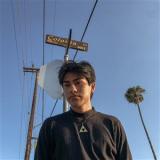
Early Days (2016-2019) is a new collection of previously unreleased songs from Mauri Tapia a.k.a Los Retros. From a young age, Tapia has been a prolific songwriter, spending his teenage years writing and recording song after song. Influenced by soft rock and left-field South American pop, Early Days (2016-2019) captures the sound of this formative era Streaming everywhere today, Early Days consisting of 15 tracks, recorded from Mauri's parents' living room using nothing more than an old four-track recorder, that only existed in low quality online, now mastered, sequenced, and physically released for the first time. It was during these sessions that Los Retros created the song "Someone to Spend Time With", now certified Gold. Early Days comes with a companion visual for "Without You", edited by close friend and collaborator Ross Harris from found footage of early Los Retros tour stops. Check out Los Retros proper debut "Odisea" released simultaneously too. FFO soul, bedroom pop, indie, modern jazz, downtempo, soft rock, Mac DeMarco, Thee Sacred Souls, Skinshape, Men I Trust, Too Slow To Disco

Originally released in 1993 on Big Beat/Atlantic, MC Thick’s The Show Ain’t Over Till the Fatman Swings followed his 1991 underground single “Marrero (What the Fellas Be Yellin)” and marked a defining moment for the Marrero, Louisiana rapper. While early ’90s New Orleans was dominated by bounce, MC Thick stood apart with gritty, street-level storytelling and a raw, unapologetic voice.
Featuring “T.H.I.C.K.” and production work involving T-Ray (Todd Ray), known for his work with Cypress Hill, the album remains an important piece of Southern rap history.
Fully remastered and pressed on black vinyl, this is the first vinyl availability in decades. Housed in a full-color jacket with a printed insert and is limited to 500 copies worldwide.
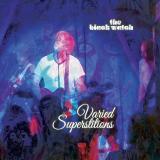
It is with some degree of surpriseand delight that we were contacted by John Andrew Fredrick, the founder and omnipresent member of Santa Barbara’s the black watch to see if Blue Matter would be interested in putting out their newest album. Of course we were. One listen was more than enough to convince us that it would fit perfectly on to the label. Perhaps a little more indie than other albums we’ve released, but sowhat? ‘Varied Superstitions’ is an intriguing collision of Cure-style indie and trippy psych which had us buzzing right away. the black watch (lower case intentional) wasformed in 1987 by John Andrew Fredrick in Santa Barbara, California, and he has been (and still is) it’s guiding light. They have released 25 albums over the last 38 years and show no sign of ageing. With a fantastic band behind him, John has presented us with a wonderful batch of songs ranging from mesmeric psych to indie/punk. In late 2025 John paid a brief visit to the UK to see friends and also to do a couple of live acoustic performances. The Bevis Frond was lucky enough to share the bill with John at London’s Betsey Trotwood for a wonderful evening of acoustic revelry. Not only is he a hugely talented musician/songsmith, but a thoroughly decent fellow. It’s a true privilege to be able to put out ‘Varied Superstitions’ on our label.
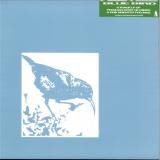
Following the critical success of last year’s ‘Cold Feet’ LP, producer, DJ, and multi-instrumentalist Alek Lee returns to Isle of Jura with his most introspective work to date, the ‘Blue Bird’ album. Across eight tracks, the Athens-based artist explores what he describes as a "Peculiar state of minds & Dub Orientated Feelings," blending his signature guerrilla style production with deep, organic soul.
The album’s centerpiece and title track, ‘Blue Bird’ features the haunting vocals of singer-songwriter Keren Ilan. It is a raw, heartfelt exploration of the aftermath of a breakup. The lyrics speak of a "desert heart" and a "loss that grows tall and loud," eventually finding a path toward healing as the "blue bird sings the dawn." Musically, the track is anchored by hazy, sun drenched guitars, a central instrument that weaves a consistent Balearic thread throughout the LP.
The journey through ‘Blue Bird’ is one of shifting shadows and unexpected textures. ‘Treasures’ is a standout instrumental, leaning into a grit-flecked, bluesy "twang" reminiscent of Duane Eddy, while ‘The Beach Road’ sees long time collaborator and ‘Shame On Us’ bandmate, Yovav, lending his magical bass and guitar work to a track that feels like a slow drive toward the horizon.
Side B shifts the energy toward the dancefloor and the sophisticated leftfield pop of the 80s. ‘First Rain’ is a subtle house leaning gem underpinned by a kick drum and lush, synth heavy emotive chord progression. ‘Thanks to Sade’ is a seductive downtempo groove with epic guitar lines shifting through, while ‘Remember the Good’ brings a subtle reggae skank and a French-influenced organ sound into the mix. The LP comes full circle with a smoked out Dub version of the title track ‘Blue Bird’.
A 180 gram pressing in a 3mm spine full colour sleeve and sticker designed by Bradley Pinkerton.

Anané’s colourful life in music has seen her do everything from singing at the famous pre-game show at Super Bowl XLI as part of the group Elements of Life, DJ at hotspots like Hi Ibiza, Pacha NYC and Ushuaïa to name a few, while also curating her own monthly residency Nulu Movement, now ten years strong at Le Bain NYC, release unique blends of Afro, house, and pop on labels like Vega Records, and head up her own imprints, Nulu Music and Nulu Electronic. The Cape Verdean-born DJ, producer, vocalist, and songwriter has had countless club hits and has released acclaimed albums like ‘Ananésworld’ and ‘Chapters Of Becoming’, often with a lush, live, and orchestrated style that is truly unique.
With this release, Anané steps forward with her first solo production to date. Here she serves up the sumptuous ‘It Looks Like Love’, a poised, elegant house sound with her own smoking, soulful vocals and classy strings bringing colour to an Afro groove packed with infectious bounce. Neat guitar riffs and silky synths all enrich this most sophisticated sound. The first mix sees Anané link up with veteran Italian Christian Mantini, who has hosted Sunset Ritual parties with Anané and Louie Vega since 2013. Their dub is rooted in warm, rubbery drums that are even deeper and more immersive than the original.
Manda Moor & Sirus Hood are a red-hot contemporary pair who run the Mood label and are defining the contemporary underground. Their remix is more driving, but it retains the soulful vibe with breezy pads and jazzy motifs drifting in and out above the swaggering groove.
Rotterdam-based Chicagoan Jamie 3:26 is a master at blending disco, soul, and house into timeless sounds, and here he delivers a loopy rework that pairs deep drive and sun-kissed vibes with funky, Chic-style bass guitar motifs.
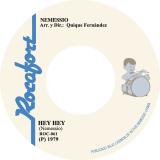
Un-dinked pressing
A hidden gem from the Colombian coast resurfaces! Originally released in 1979 on the legendary Sonolux label and long sought after by collectors, Nemessio's Hey Hey finally gets a proper reissue. A funky slice of tropical Afro-Latin fusion, the track captures a moment of seaside magic that inspired singer-songwriter Victor Nemesio Lerma, better known as Nemessio, to write this love letter to the rhythms of Colombia's Pacific coast.
Licensed directly from Nemessio himself, this edition also features a fresh disco-flavored rework by Barcelona's GarcyNoise, designed with DJs in mind: more drums, extended breaks, juicy guitar licks and a killer intro/outro for the dancefloor.
OG copies are almost impossible to find. Now's your chance!

Debut album by The Upsessions
20th anniversary edition on solid pink vinyl
Previous pressings by Moon Ska and Cherry Red Records have sold out


Part 2[13,66 €]
LS002 marks the first vinyl chapter of 20, Eitan Reiter's two-decade retrospective, distilled through key collaborations and remixes. Featuring Patrice Bäumel, Infected Mushroom, Shpongle, Red Axes, and Echo, this six-track release connects psychedelic heritage with contemporary indie dance and deep electronic aesthetics.
20 (Part 1) is a 12-inch vinyl edition featuring exclusive vinyl cuts, available only on this pressing. The selection reflects Reiter's ability to honor his roots while maintaining a distinctly modern sound,blending psychedelic foundations with cluboriented precision.
A1 - Eitan Reiter - Blue Planet (Remix) Vinyl Cut
The A-side opens with a spacious, atmospheric rework of Blue Planet, balancing restrained tension with melodic clarity.
A2 - Eitan Reiter - X-Vision feat. Echo Vinyl Cut
Echo's vocal performance anchors the track, presented here in a refined vinyl cut that enhances its emotional depth.
A3 - Eitan Reiter & A. Balter - E0E (Eitan Reiter Remix) Vinyl Cut
A driving, hypnotic groove where rhythmic focus meets evolving textures.
A4 - Infected Mushroom & Yahel - Electro Panic (Eitan Reiter Remix) [Vinyl Cut]
A confident reworking of a psytrance classic, reshaped into an 80s-leaning indie dance format.
B1 - Eitan Reiter - Eat You (Patrice Bäumel Remix)
Patrice Bäumel heightens the track's underlying tension with a slow-building, immersive reinterpretation.
B2 - Out of Orbit & Shpongle - No Disco (Red Axes Remix)
Red Axes flip the original into a dark disco framework, adding weight, swing, and late-night character.
LS002 presents a vinyl-focused snapshot of Eitan Reiter's collaborative output, with each track adapted for turntable playback.

The Fuga compilation returns to Token with its seventh installment by a fresh batch of artists emphasizing the cryptic sound of the Belgian record label. The V/A displays urgency as its focal point, expanding and contracting its acoustic space throughout to channel instability. With eight contributions, Fuga VII sifts through nail biting arpeggios, frenzied percussion, and obscure ambiance to recalibrate techno's current soundscape.
Opening the compilation is contemporary techno mainstay Rene Wise with his debut contribution to the record label 'Rough Rider'. In this A1, Wise plays to his strengths by blending deep techno influences with hyper-focused rhythmic work. With a hint of tribalism, he conjures up synthwork from far off to whip motion into heavy drum patterns. Following this first track, STIPP and Sandrien take control in presenting 'Corrie', a sequence-forward groover that slides through drum programing to streamline rhythm. A shrill pad comes in at the halfway mark, completely lifting the energy of 'Corrie' to strain the track's obscurity with an ethereal counterweight. The brief passage of these kinds of elements provides a lot of dynamic to what would otherwise be a powerfully straightforward piece. Diving deeper, Red Rooms unveils 'Limited Sensory' as the next chapter of the compilation. Always swift and exact, the German artist continues to push into the ultra immersive with a web of elements that whiz by for a peaktime lock in. Cold in attitude, Red Rooms tunnels through 'Limited Sensory' with quick drumsand far-off percussive hits that rumble through the track. Stepping up afterwards is Lindsey Herbert with 'Oscillations in Space' - an appropriately named recording that experiments with mania as a tool for the dancefloor. Fast and spiraling, Herbert keeps her hands on the arpeggio's filter to contain tension through thunderous reverb transitions, balancing panic with pace. AgainstMe then stretches out the followup with the commanding 'Phase Shift' to double down on weight. Textural intimidation and stomping percussion is given the space it needs to perform on heavy weight sound systems, making it an austere middle point for Fuga. MAL HOMBRE then guides the listener to more elastic sound design in 'Critical Velocity', in a most appropriate Token fashion. Snowballing in intensity halfway through, MAL HOMBRE pushes the cutoff of his melody and programs snare rolls for vintage craze through the second section. Bells clash with ringing hats to fly the track along its course without looking back or letting go. Conor Wall takes control with 'The Strategy' that focuses on pace rather than melody, weaponizing metallic texture for a deep dancefloor experience. The ambiance does a lot of story telling here, marking breaks and riding through drops to provide grit to an already substantial record. This leads us to the final contribution in Fuga VII - 'Ad Libitum'. Here, Porteix emphasizes the conclusion of the compilation with mystery. The synths slither around pulsating rhythm, creating uninterrupted motion throughout the track's entirety. Porteix draws the curtains on an inquisitive note, keeping the suspense high until the next Fuga compilation comes around.

2026 sees Robert Hood going back to his minimal techno roots and then flip things forward with remastered releases from his ground-breaking label, M-Plant. Throughout this year the Perpetual Masters series has been dropping one track per week, digitally, from Hood's extensive catalogue with remastering by legendary German producer, Thomas Heckmann. Now coming to vinyl are two of these remastered tracks.
Robert Hood's "Psychic / Pole Position" is a classic which features his stripped-back minimal techno style that helped define the sound in the late '90s. Both tracks are built around hypnotic rhythms and sparse, precise grooves characteristic of Hood's influential production ethos. Originally released in 1999, the EP reflects Hood's focus on minimalist electronic structures and dance floor functionality, and has remained a sought-after piece among fans of the genre.
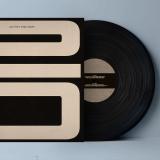
(Extrawelt Remix) The second vinyl installment of 20 shifts focus toward cinematic structure, melodic depth, and genre-crossing reinterpretations. Collaborations and remixes involving Extrawelt, Noga Erez, Perfect Stranger, PRZ, and A. Balter underline Eitan Reiter's refined and flexible production approach.
20 (Part 2) is a 12-inch vinyl release featuring exclusive vinyl cuts that are not available digitally, offering collectors insight into Reiter's evolving sonic language.
LS003 completes the vinyl-only snapshot of 20, presenting carefully selected collaborations adapted for the physical format.
