'Balconies' is an urgent, physical record shaped by momentum and heat. The album takes its title from a recurring metaphor: a balcony as a place of exposure and distance. Elevated, visible, yet removed from the action below. Throughout the record, Tin Fingers explore feelings of observation, displacement and restlessness, moving through places without fully belonging.
Musically, 'Balconies' marks a clear shift for the Antwerp band. Where earlier releases leaned into intimacy and melancholy, this album is louder, more direct and built for movement. Sharp, energetic songs are balanced by the band's continued attention to atmosphere and imagery.
The album was written instinctively over three months by frontman Felix Machtelinckx before being brought to the band, with arrangements coming together quickly thanks to years of shared experience. Recording took place over four hot summer days at The Old Carpet Factory on Hydra, Greece. The warmth, the sea and the island's isolation shaped both sound and mood, while limited time encouraged live recordings that capture the album's raw energy and immediacy. 'Balconies' was mixed by D. James Goodwin (The National, Kevin Morby, Whitney).
Following the release, Tin Fingers will present 'Balconies' live, with shows at De Roma (Antwerp), Mezz (Breda) and Supersonic (Paris).
Lo Recordings are very proud to announce the release of a beautiful collaborative project. A seamless sonic journey that guides us through the filmic landscape of a bygone era. Chiming in the past and resonating in the present.
Meg Morley and Haiku Salut combine their talents for the reimagining of a score for the 1930's silent film People on Sunday. Inspired by their live performance and screening of the classic at the Flatpack festival. The release was five years in the making as they set out to capture the compositions in the studio, blending Morley’s expressive piano with Haiku Salut’s textured electronics. The result has given rise to an album that belies its historic source with a fresh and clean sound and a complex ever moving series of compositions.. 'The Lost Score' is a vibrant contemporary album for our time.
Haiku Salut are an instrumental trio whose music blends electronica, neo-classical and folk into richly layered, cinematic soundscapes. Known for their enigmatic performances and live scores to silent films, they create immersive experiences that merge timeless visuals with modern experimental sound.
Meg Morley is a Melbourne-born London-based pianist, composer and improviser who pursues cross-cultural and interdisciplinary collaborations, focusing on storytelling. Her classically trained precision and jazz-inflected improvisations have brought her to prominence through her compositions for classical and jazz ensembles, accompaniment for dance companies (Pina Bausch, English National Ballet) and her internationally-acclaimed original scores for silent film.
Death Is Not The End present a further volume of Arja Kastinen's eerie amalgamations of 110 year old wax cylinders with her own meticulously transcribed takes, this time focussing in on Armas Otto Väisänen's field recordings of kantele player Iivana Mišukka (b. 1861 d.1919).
"Ivana Mišukka (1861–1919) was one of the Karelian kantele players recorded by the folk music researcher Armas Otto Väisänen on wax cylinders in 1916 and 1917. In the early 20th century, the remote areas of Border Karelia were undergoing the final phase of a transformation in musical culture, with the ancient runo song tradition giving way to newer forms of music. This transition is reflected in Mišukka's repertoire and choice of instrument. The ancient small kantele, hollowed out of a single piece of wood, was already rare at the turn of the century. Mišukka's kantele was a new type of instrument with 26 strings, constructed of several parts, but he played it using the traditional plucking technique. Like other Border Karelian kantele players, his repertoire consisted of music rooted in runosong culture, as well as newer dances and songs from the east and west. Most of the recorded material falls into the latter category.
Ivan Bogdanov Mišukka was born out of wedlock in Suursara village, Suistamo, on 1 May 1861. He began playing the kantele at the age of five or six, quickly mastering the instrument. In adulthood, he was considered one of the area's best master players. Mišukka was landless for most of his life and lived in different parts of the Suistamo parish. His first wife, Tekla Markintytär, died in 1897 at the age of 40, and his second wife, Jevdokia Filipintytär Jeminen, died in 1907 at the age of 50. Seven children were born from the first marriage, two of whom died young. The third wife, Maria Ignatintytär Gurnan (Kuurnanen), was a well-known master of lamentations. Together with Maria, Iivana Mišukka worked as a tenant farmer in the village of Suursara. Mišukka suffered from rheumatism, which prevented him from participating in physical work like Maria. This was apparently partly the reason why Iivana Mišukka went to earn extra money by playing the kantele on gig trips. He often had other traditional artists from Suistamo as his travelling companions, such as the runosingers Konstantin Kuokka and Iivana Onoila. Iivana Mišukka died in Leppäsyrjä village, Suistamo, on 18 May 1919 at the age of 58, and his kantele was donated to Teppana Jänis.
Mišukka only used 14 of the 26 strings on his kantele, playing the same tunes either a fourth higher or lower. He tuned his kantele to the major scale using fifths, except for a low seventh scale degree on the upper strings, but not below the fundamental. Since he did not use the seventh note of the scale on the upper strings at all, he could use the major scale both lower and a fourth higher with this tuning. According to Mišukka, the sound of higher, or 'finer', strings is 'more beautiful', while that of lower ones is 'greater'. Among runosingers, the size of the thirds varied, ranging from major to minor to neutral. A similar phenomenon can be observed in kantele tunings, where the third, sixth and seventh scale degrees vary in a comparable way.
During a meeting, Väisänen suggested that Mišukka play the smaller kantele belonging to Konstantin Kuokka. The idea was to bring it closer to the horn to improve the recording quality. However, the kantele was completely out of tune, and now Mišukka tuned it to the Lydian scale (track 18).
Using the old plucking technique, Mišukka placed his right middle finger on the fundamental tone, his right index finger on the second scale degree, his left middle finger on the third scale degree and his left index finger on the fourth scale degree, and his right thumb on the fifth. The thumb also played the notes above the fifth note of the scale. As Mišukka remarked to Väisänen: 'Peigaloll' tuloo enemb ruadoa' (the thumb has to do more work). However, he did not use the seventh note of the scale on the upper strings at all. Below the fundamental note, he played the seventh and sixth notes of the scale with his right middle finger of and the fifth note of the scale with his right ring finger. This fifth scale degree below the fundamental is almost always used as a drone. Sometimes, when the melody required it, Mišukka, like other players, also varied the fingering. He would also occasionally strike the same string with the side of his fingernail after plucking it.
The wax cylinder recordings of Karelian kantele players are kept in the archives of the Finnish Literature Society in Helsinki, Finland. Copies were made of them onto reel-to-reel tapes in both the 1960s and 1980s. The 1960s copies are mono and the 1980s copies are stereo. However, not all kantele recordings from these decades have survived.
The sound of the kantele is difficult to hear in wax cylinder recordings due to its low volume, and it occasionally becomes completely obscured by noise. During the copying process, the cylinder sometimes rotates unevenly, resulting in breaks or jumps in the music. Additionally, the rotation speed of the cylinder in the copies does not correspond to the performance speed of the original music, which alters the pitch. However, since Väisänen's precise notes are available in the archive, it is possible to deduce the melodies, their speed, and the tuning level of the kantele in the recordings. Of the copies of the original recordings from the 1960s and 1980s, I have selected the one that best met the requirements of this publication and adjusted the speed of the recording to align with Väisänen's notes. To enhance the listening experience, I have replayed the songs, which now partly overlap the old recordings on this release."
Death Is Not The End present a further volume of Arja Kastinen's eerie amalgamations of 110 year old wax cylinders with her own meticulously transcribed takes, this time focussing in on Armas Otto Väisänen's field recordings of kantele player Iivana Mišukka (b. 1861 d.1919).
"Ivana Mišukka (1861–1919) was one of the Karelian kantele players recorded by the folk music researcher Armas Otto Väisänen on wax cylinders in 1916 and 1917. In the early 20th century, the remote areas of Border Karelia were undergoing the final phase of a transformation in musical culture, with the ancient runo song tradition giving way to newer forms of music. This transition is reflected in Mišukka's repertoire and choice of instrument. The ancient small kantele, hollowed out of a single piece of wood, was already rare at the turn of the century. Mišukka's kantele was a new type of instrument with 26 strings, constructed of several parts, but he played it using the traditional plucking technique. Like other Border Karelian kantele players, his repertoire consisted of music rooted in runosong culture, as well as newer dances and songs from the east and west. Most of the recorded material falls into the latter category.
Ivan Bogdanov Mišukka was born out of wedlock in Suursara village, Suistamo, on 1 May 1861. He began playing the kantele at the age of five or six, quickly mastering the instrument. In adulthood, he was considered one of the area's best master players. Mišukka was landless for most of his life and lived in different parts of the Suistamo parish. His first wife, Tekla Markintytär, died in 1897 at the age of 40, and his second wife, Jevdokia Filipintytär Jeminen, died in 1907 at the age of 50. Seven children were born from the first marriage, two of whom died young. The third wife, Maria Ignatintytär Gurnan (Kuurnanen), was a well-known master of lamentations. Together with Maria, Iivana Mišukka worked as a tenant farmer in the village of Suursara. Mišukka suffered from rheumatism, which prevented him from participating in physical work like Maria. This was apparently partly the reason why Iivana Mišukka went to earn extra money by playing the kantele on gig trips. He often had other traditional artists from Suistamo as his travelling companions, such as the runosingers Konstantin Kuokka and Iivana Onoila. Iivana Mišukka died in Leppäsyrjä village, Suistamo, on 18 May 1919 at the age of 58, and his kantele was donated to Teppana Jänis.
Mišukka only used 14 of the 26 strings on his kantele, playing the same tunes either a fourth higher or lower. He tuned his kantele to the major scale using fifths, except for a low seventh scale degree on the upper strings, but not below the fundamental. Since he did not use the seventh note of the scale on the upper strings at all, he could use the major scale both lower and a fourth higher with this tuning. According to Mišukka, the sound of higher, or 'finer', strings is 'more beautiful', while that of lower ones is 'greater'. Among runosingers, the size of the thirds varied, ranging from major to minor to neutral. A similar phenomenon can be observed in kantele tunings, where the third, sixth and seventh scale degrees vary in a comparable way.
During a meeting, Väisänen suggested that Mišukka play the smaller kantele belonging to Konstantin Kuokka. The idea was to bring it closer to the horn to improve the recording quality. However, the kantele was completely out of tune, and now Mišukka tuned it to the Lydian scale (track 18).
Using the old plucking technique, Mišukka placed his right middle finger on the fundamental tone, his right index finger on the second scale degree, his left middle finger on the third scale degree and his left index finger on the fourth scale degree, and his right thumb on the fifth. The thumb also played the notes above the fifth note of the scale. As Mišukka remarked to Väisänen: 'Peigaloll' tuloo enemb ruadoa' (the thumb has to do more work). However, he did not use the seventh note of the scale on the upper strings at all. Below the fundamental note, he played the seventh and sixth notes of the scale with his right middle finger of and the fifth note of the scale with his right ring finger. This fifth scale degree below the fundamental is almost always used as a drone. Sometimes, when the melody required it, Mišukka, like other players, also varied the fingering. He would also occasionally strike the same string with the side of his fingernail after plucking it.
The wax cylinder recordings of Karelian kantele players are kept in the archives of the Finnish Literature Society in Helsinki, Finland. Copies were made of them onto reel-to-reel tapes in both the 1960s and 1980s. The 1960s copies are mono and the 1980s copies are stereo. However, not all kantele recordings from these decades have survived.
The sound of the kantele is difficult to hear in wax cylinder recordings due to its low volume, and it occasionally becomes completely obscured by noise. During the copying process, the cylinder sometimes rotates unevenly, resulting in breaks or jumps in the music. Additionally, the rotation speed of the cylinder in the copies does not correspond to the performance speed of the original music, which alters the pitch. However, since Väisänen's precise notes are available in the archive, it is possible to deduce the melodies, their speed, and the tuning level of the kantele in the recordings. Of the copies of the original recordings from the 1960s and 1980s, I have selected the one that best met the requirements of this publication and adjusted the speed of the recording to align with Väisänen's notes. To enhance the listening experience, I have replayed the songs, which now partly overlap the old recordings on this release."
Joff Bush and the Bluey Music team proudly present the brand-new Bluey album. Featuring 17 brand-new recordings including ‘Sleepytime’, ‘Flat Pack’, ‘Seesaw’, and the new ‘Bluey Theme Tune (Orchestral Version)’.
“This was our most ambitious album to date - so we wanted something extra special - something we’ve wanted to make for a long time."..."Hearing the music from episodes like ‘Sleepytime’ and ‘The Sign’ in all its orchestral splendour meant tissues needed to be on hand throughout the mixing process.”
“Fittingly, the theme of this album is ‘growing up’. Much of this music, like the episodes they derive from, explore what it means when kids start to discover their independence and venture out on their own. Whether that’s learning to sleep in their own bed or taking a spaceship to Mars. I hope you enjoy ‘Up Here’, as the opportunity I had to make this album is thanks to YOU!"
Blue Lake reveals his most ambitious album yet, which finds its visionary creator Jason Dungan harnessing the collective alchemy of his band, with ten spirited tracks that resonate with a powerful directness, evoking an ecological connection to the wider world.
The solo project (Blue Lake), now on its fifth album, found its name and inspiration via Don Cherry's 1974 live album, sparking a creative epiphany in Dungan, who set off on a path into his own untapped sonic world, guided by what he cited as the emotional potential found within non-lyrical composition. With a newly inspired ethos aimed toward creating direct and simple instrumental music imbued with a deep sense of feeling, Jason began combining an array of musical elements that gave rise to his highly revered album 'Sun Arcs' (2023), with its "ornate, zither-led lattices" (Pitchfork, Best New Music). Conceived in the blissful isolation of a Swedish cabin set in the woods, this was music that soundtracked spring in full bloom. Then, in contrast to the solitary approach of 'Sun Arcs', the highly lauded mini-album 'Weft' (2025) began to set the tone for a more band-oriented approach to delivering the Blue Lake sound. Jason had by this time experienced a special collective energy with his band during a swathe of live performances, which he then sought to harness and distill on 'The Animal', leading him to take the project into a traditional recording studio (The Village) and its limitless potential along with his gifted cohorts.
'The Animal' at its core vividly celebrates human collaboration and is deeply rooted in a sense of community and non-hierarchical connectivity. The group's creative alchemy transcends outwards and beyond the musicians performing together, to summon an inclusive, existential and ecological connection to the wider world and its inhabited spaces. The album contemplates the idea of the human as an animal as Dungan explains: "I'm quite fascinated in thinking about humans more as part of the animal environment and not as something that's so separated into a "human" realm, or sitting on top of a hierarchical pyramid. So the Animal is also me, or us - that we are just living, existing, in the same way as a piece of moss or a sparrow or a cow.
'The Animal' is a form of musical metamorphosis, still acoustic, yet more amplified, elevating it to new dimensions. The Blue Lake project takes on a new lease of life to encompass collaboration with Jason Dungan bound in a universal connectivity, resulting in his most ambitious album to date. A harmonious rejoicing that cements his reputation as a transformative presence in contemporary music.
MYRYRS3 presents a calculated compilation of cuts pulled from a variety of styles and backgrounds for their third and largest release to date. Having been quiet on the release front since 2023, this collection sets a calibrated tone for a label in its growth stage. Comprising present, esoteric, and regional techno expressions. Remaining grounded in their cultivation of a space where dancefloors and artistic endeavours share conversation, this release opens the room to an array of talent who approach the idea from varying angles of the dancefloor.
A Pandora's box of modern and daring ideas awaits inside MYRYRS3.
“If I never make it home, thank you for everything.” — “Ten Years” It’s hard to believe twenty years have passed since The Academy Is… released their breakthrough debut Almost Here, a record that quietly shaped an underground era. In the years since, the band grew up, lived full lives, and ultimately found their way back. Almost There serves as a conceptual companion to their debut, reexamining the past from the present with clarity, reflection, and experience. “Almost Here was about leaving home,” William Beckett reflects. “This album is about finding your way back.” The songs capture the bittersweet truth that time moves fast, carrying a quiet urgency to chase what matters before it slips away.
With „Darkness Is My Crown“, DEFACING GOD present their most personal and intense album to date. The Danish extreme metal visionaries once again fuse blackened death metal, symphonic darkness and occult atmosphere - this time with a strong focus on inner conflict, loss, transformation and resilience. The album stands as an unfiltered reflection of confronting darkness head-on and reshaping it into strength, identity and purpose. „Darkness Is My Crown“ is a powerful artistic statement, defined by authenticity, emotional depth and uncompromising vision, further solidifying DEFACING GOD’s place within the modern extreme metal landscape. The album will be released on March 27, 2026, and was mixed and mastered by Tue Madsen (Heaven Shall Burn, Babymetal, Belphegor …) at Antfarm Studios.
DYING VICTIMS PRODUCTIONS is proud to present the much-needed reissue of WITCHING HOUR’S debut album, Rise of the Desecrated, on vinyl LP format. This marks the beginning of vinyl reissues of all of the band’s albums, under license from Evil Spell Records. Originally released in 2009, as well as on tape through Dying Victims in 2011, this album has not lost any of its juvenile enthusiasm for raw and evil thrash metal. While the band developed a more complex style of blackened heavy thrash throughout the years, this debut album is pure and straightforward black thrashing madness. Clocking in at just over half an hour, the album perfectly represents the Teutonic (black) thrash revival of the mid-2000s
DYING VICTIMS PRODUCTIONS is proud to present MIDYRASI’S KULT’s highly anticipated debut album, Italian Dark Sound, on CD and vinyl LP formats. MIDRYASI'S KULT are revolutionary and uncompromised. Featuring veterans from such Italian doom stalwarts as Doomsword, Midryasi, Agarthi, and Fiurach, their unique blend of elements from the NWOBHM, doom metal, and early black metal – all fused in their distinctive national dark-sound tradition, which includes such cult legends as Black Hole and Death SS – results in an obscure, hypnotic, and exciting formula. In March 2025, after just one week on Bandcamp, MIDYRASI’S KULT were intercepted by Caligari Records, who released on cassette their debut demo, Mountain Devil. Featuring three songs in a concise 15 minutes, this demo reaped international acclaim for its originality and attitude. But that was but a foretaste of darker delights to come. Witness the first full-length of MIDRYASI’S KULT, Italian Dark Sound.
Truly titled, Italian Dark Sound is an intoxicating spelunk into catacombs both idiosyncratic and indefinable. Totaling 32 time-/mind-expanding minutes, the eight primary tracks here – the outro is titled “The Lost Son of Sylvester Anfang,” which should offer an obvious clue to the black-metal-minded out there – each offer something different from the next, and yet all add up into a shadowy experience that’s both rocking and atmospheric. In fact, if one were to single out an aspect between the demo and album, it’s that MIDYRASI’S KULT exude more energy on this full-length without sacrificing any of their occult aura. But, just like that demo, Italian Dark Sound features supremely pro production – gritty, earthy, and yet kaleidoscopic in texture – under the guidance of Gabry "The Way" Strada, head of RDF Studio and who’s now collaborating on the upcoming Doomsword new album. In the vein of an open artistic project, all the artwork is made by vocalist / bassist Geilt himself, and up to 11 musicians have been involved in these recordings
DYING VICTIMS PRODUCTIONS is proud to present AGGRESSIVE PERFECTOR’s highly anticipated second album, Come Creeping Fiends, on CD and vinyl LP formats. Released in 2019 via DYING VICTIMS, AGGRESSIVE PERFECTOR’s Havoc at the Midnight Hour debut album introduced this British power-trio with no small amount of sleazy, Satanic fanfare. While their background may jointly lie in black metal, the three un-gentlemen of AGGRESSIVE PERFECTOR held high heavy metal done the ancient way: classic Tank, early Raven, Warfare, and of course the almighty Venom as well as modern torchbearers like Midnight, Whipstriker, and Power From Hell. Unsurprisingly, the album garnered international acclaim. Eclipsing that feat is the band’s second album, Come Creeping Fiends.
Truly titled once again, Come Creeping Fiends comprises nine tracks of heavy metal for the insane, forged in the Manchester morgue. Raging like a ravenous beast, summoning ancient ones, and agonizing with morbid doom, AGGRESSIVE PERFECTOR cover a lot of ground here, but like the rotting undead that inspired it, this second album somehow holds together. The same black magic that made Havoc at the Midnight Hour a highlight six(-six-six) years ago is here again, only this time with a higher kill count and hit rate. Cleaner and crisper in execution but somehow darker and dirtier in its content, Come Creeping Fiends offers highlights at every crooked turn; tunes like “Strange Companion,” “Fiend in You,” and lead track “Dead Undead” will have all the witches dancing. Needless to say, fans of maniacal, EVIL heavy metal music and horror movies will find a lot to love. The wait for AGGRESSIVE PERFECTOR’s second album might have been long, but Come Creeping Fiends will prove to be worth it…
Following up their 2016 release Satan’s Heavy Metal, Aggressive Perfector’s debut full length, Havoc At The Midnight Hour, finds the English trio in resolutely evil form as they take a major step forward on their path of destruction. Embracing a wealth of haunted sounds and textures, this sepulchral slab of metal conjures an atmosphere rich in the romantic repugnance of horror’s past masters which it uses the setting for a 37 minute nightmare of nocturnal menace, occult fascination and bloody vengeance. Summoning the ghosts of Metal past – Tank, Slayer, Venom and Mercyful Fate all playing a part- Havoc… fixates on the nuclear fury of an apocalyptic future, from which it culls new ways to pervert the course of heavy metal in the present. Follow Aggressive Perfector into the nightmare when Havoc At The Midnight hour is released on November 1st.
April Records proudly presents the new album from Stockholm Stockholm-based bassist and composer Jon Henriksson - a confident and flexible statement that deepens his place within contemporary Scandinavian jazz. Following the success of his 2023 debut Harmonia which placed second in Orkesterjournalen s Golden Album " readers " poll, Henriksson returns with music that foregrounds collective interplay, shifting forms, and a strong compositional voice. Born in Gothenburg and now active across Sweden and Europe, Henriksson has collaborated and toured with artists including Lars Jansson, Hakan Broström, Erik Söderlind, Klas Lindquist, Jonas Kullhammar and Christina von Bülow. Alongside leading his own ensembles, he remains a soughtsought-after bassist in a wide range of projects, balancing a deep connection to the jazz tradition with a modern, exploratory approach. Shapeshifter is built around a core quartet of tenor saxophone, piano, double bass and drums, expanded with guitar on three tracks and trombone on two. The album moves fluidly between contrasting moods, from forceful and driving to reflective and restrained, with each piece shaped by the musicians " intuition and responsiveness. The title reflects Henriksson s compositional philosophy: allowing roles, textures, and forms to evolve as the music unfolds.The ensemble brings together long long-standing musical relationships. Pianist Rasmus Sorensen and Henriksson have collaborated since their studies at Skurups Folkhögskola (Henriksson is a longstanding member of Sorensen s own trio), while drummer Jonas Bäckman forms part of a well well-established rhythm section partnership with the bassist across numerous projects including the Britta Virves Trio. Saxophonist Karl Karl-Martin Almqvist, a member of the Danish Radio Big Band, completes the quartet, with guitarist Pelle von Bülow and trombonist Rasmus Holm joining the session shortly before recording to expand the album s sonic palette where the music called for it. Originally conceived as a quartet album, Shapeshifter took its final shape in the lead lead-up to recording as additional instrumental colours were introduced organically. The piece Toninho , a tribute to Brazilian guitarist and composer Toninho Horta, features acoustic guitar and subtle wordless vocals, reflecting melodic influences that sit naturally within the album s contemporary jazz framework. Across the record, space, pacing, and interaction remain central. Rather than forcing constant motion, the music allows ideas to develop with clarity and intent, resulting in an album that highlights Henriksson s growing assurance as a composer and bandleader, while keeping the collective at its core.
Celebrating the 30th anniversary of Enlace Funk magazine, they present the world's first Flamenco-Jazz compilation, featuring 16 tracks from between 1978 to 2025, released on vinyl for the first time. A musical dialogue between Flamenco and Jazz, unique in the world, a journey through some of the most important artists of this style, starting with the seminal work of the group Dolores in 1978, and continuing to examples of the current sound of this exciting fusion. Includes tracks never before released on vinyl by artists such as Jorge Pardo, Chano Dominguez, Pedro Ojesto, and Marc Miralta. The first volume of Flamenco-Jazz aims to showcase this unique style that has proven to be a bridge of communication and dialogue between flamenco and jazz musicians, creating an inimitable sound that is constantly evolving and transcending barriers. We take as our starting point a 1978 recording by Dolores, featuring Paco de Lucía, which later led to the formation of her legendary sextet with musicians who had participated in this recording. Of course, this first volume wouldn't be complete without other masters like Josemi Carmona, Pedro Ojesto, and Marc Miralta. And of course, a new generation of names that have elevated the genre to its current status, such as flautists Trinidad Jiménez and Sergio De Lope, Juanfe Pérez and Juan Pérez Rodríguez from Huelva, Pablo Martín Caminero from Vitoria, and Miquel Alvarez from Valencia. Not forgetting innovators like Antonio Lizana and Enriquito, who are crossing borders and sharing their unique style. Ltd ed.classic black vinyl double LP in gatefold sleeve
Double LP in matt-laminate gatefold sleeve with silver detail. We mark a decade since we first released COIL's landmark album 'Backwards', with a special 10 year anniversary vinyl reissue. After the ground-breaking release of 1990's "Love's Secret Domain" album, Coil were not dormant; the main project was "Backwards", which was started in 1992, updated considerably between 1993 and 1995, and transferred in 1996 to New Orleans, where it was finished in the magic of the Nothing studios of Trent Reznor (Nine Inch Nails). The album saw the fruition of Jhonn Balance's recent vocal coaching, producing haunting, passionate vocals, while reaching new heights. 23 years after its initiation, these tracks have been beautifully preserved by Danny Hyde and are finally available in highest quality audio. Differing substantially from the later, remixed incarnation, "The New Backwards" (2008), "Backwards" contains the original versions of Coil's much-loved tracks; 'A Cold Cell' and 'Fire Of The Mind', which have appeared on various compilations over the years, and are now presented as originally intended. his album is the essential bridge between "LSD" and the later "Musick To Play In The Dark" series. It is an essential conduit, to understand the journey that was taken. It was to be released... it should have been released... but because of issues with grey men it wasn't. It is now, so enjoy. (Danny Hyde).
We Jazz Magazine, Issue 18 / Spring 2026 "Space Time" for Shabaka. 128 pages, 170 x 240 mm in size and printed on 140g Edixion paper with laminated 300g Invercote covers. All articles presented in English. Shabaka by Tina Edwards, Booker Stardrum by Clifford Allen, Aurora Nealand by Bennett Kirschner, Jazz Now Jazz by Rui Miguel Abreu, The Space Book by Patrick Preziosi, XT by XT (Paul Abbott & Seymour Wright), Naïssam Jalal by Florent Servia, Craig Taborn by Bret Sjerven, the term "Free Jazz" by Pierre Crépon, Alexander Hawkins by Kevin Le Gendre Alan Braufman by Andy Beta, Discaholic column by Mats Gustafsson, album reviews, live reviews, Big Ears Festival photo essay & more.
As collaborative projects often do, 33 has in time found a more fixed form, a kind of structure that turned it from a loose collection of collaborators gravitating around founders Bill John Bultheel and Alexander Iezzi into something resembling more of a traditional band. Not that there is anything conventional in their creative process tho, nor in the music itself… Nontheless Tripolar - their second album and first for Haunter - seems to take them closer to song territory than ever before.
The (progressive) graduation of multi-instrumentalist Cem Dukkha and vocalist/clarinet player Ivan Cheng from collaborators to full-time members has brought 33 to a more refined awareness of their possibilities as a creative unit, although their compositional process has retained a high level of spontaneity and musical madness. Tripolar was in fact assembled by editing hours of improvisation that Bultheel, Iezzi and Dukkah recorded with no specific endgame in mind. The sessions saw them exchange a variety of acoustic, electronic and electric musical instruments: percussions, guitars, strings, piano, hurdy gurdy, synthesizers and even CDJs as a tool of live sampling manipulation.
By molding the pieces into what they are now, the band managed to concoct some beautiful vignettes of contradictory mental and emotional states, as sonically playful as a renaissance fair happening within a broken timestream. Cheng’s lyrical and vocal contributions helped them coalesce even further into proper songs, adding a melodic presence that’s at once seductive and uncanny. But vocal duties are often ceded to guests, namely Danish pop-neoclassicist Astrid Sonne, Kenyan metal guru Lord Spikeheart, Irish goth raconteur Olan Monk and Japanese body-poet Golin.The amount of different sounds arranged into each of the tracks produces a unique sense of awe and bewilderment, a testament to the incredible talent and craft the musicians have employed into putting together such a broad range of influences and approaches into a coherent and extremely effective musical journey.
An equally erratic thematic thread seems to run through all the tracks, one ultimately preoccupied with mental health and its ramifications. Without turning the project into a concept album, 33 and their collaborators have sprinkled it with references to personality disorders and mental conditions that are all too relevant to the contemporary age, reflecting on the lineage of human inner life. A wide display of lyrical and musical tools is employed to explore these themes, ranging from Sonne’s expressionist depiction of ADHD in the opener, to Cheng’s queer-themed reinvention of an Irish murder ballad in closing track ‘Babymusicc’. Tracing lateral trajectories for introspection, Tripolar is not only highly captivating, but it ultimately sounds esoteric in the best possible way: progressively revealing layer after layer of incredible aural magic, its true meaning living in the form and in its manic scope of energies.
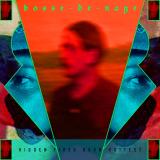
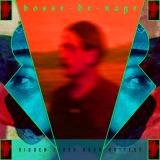
There's a tendency in metal to mistake aggression for honesty, volume for depth. To confuse the performance of darkness with its actual weight. Hidden Fires Burn Hottest, the new album from San Francisco-based post-black metal band Bosse-de-Nage, sidesteps this entirely. It’s the group’s most fully realized work yet, precisely because it refuses to be pinned down.
Bosse-de-Nage have been working with The Flenser for over fifteen years. They were one of the first bands the label ever partnered with and have the longest active relationship in the label's history. But unlike most bands who build momentum through constant touring and visibility, Bosse-de-Nage has largely existed apart from the music world's usual machinery. They've evolved on their own terms, in relative isolation, allowing the work to develop without outside pressure or influence. What began rooted in black metal anonymity has mutated into something that actively defies categorization. The aggression is still there, but it's no longer the point. Hidden Fires Burn Hottest finds the band treating emotions like physical objects, feelings with spatial properties. “No Such Place"" describes a space that can't exist but does anyway, somewhere between thought and location. ""Immortality Project"" examines infinite possibility not as promise but as problem, endless options collapsing under their own weight. These songs don't use metaphor to describe emotion. They make emotion into something you could theoretically touch.
Tracked by Jack Shirley (Deafheaven, Oathbreaker) at Atomic Garden East and mixed and mastered by Richard Chowenhill of Agriculture, Hidden Fires Burn Hottest was years in development, with some tracks beginning in 2018.
The long writing process offered time that most records don't get. Time to live with ideas, revise endlessly, to let structures settle. For the first time, lyricist Bryan Manning wrote everything in advance, creating a surplus to pull from rather than working under deadline pressure. The difference shows.
Coming off Further Still, an album built on constraint and economy, Bosse-de-Nage sought the opposite: sprawl, strangeness, fewer rules. Space for ideas to develop without rushing them. Dynamics that move through quiet as much as noise. Presence earned through atmosphere instead of volume. The record even includes ""Mementos,"" which might be considered the first love song the band has ever written.
Nothing here coheres into a theme. These are pieces pulled from low moments and private feelings made public through sound. The band has never been interested in positivity, in music that resolves cleanly or offers comfort. But bleakness doesn't mean humorlessness. There's something darkly funny running through much of it, even when it shouldn't be.
Hidden Fires Burn Hottest doesn't explain itself. It just insists: what you feel is as real as what you can see."
There's a tendency in metal to mistake aggression for honesty, volume for depth. To confuse the performance of darkness with its actual weight. Hidden Fires Burn Hottest, the new album from San Francisco-based post-black metal band Bosse-de-Nage, sidesteps this entirely. It’s the group’s most fully realized work yet, precisely because it refuses to be pinned down.
Bosse-de-Nage have been working with The Flenser for over fifteen years. They were one of the first bands the label ever partnered with and have the longest active relationship in the label's history. But unlike most bands who build momentum through constant touring and visibility, Bosse-de-Nage has largely existed apart from the music world's usual machinery. They've evolved on their own terms, in relative isolation, allowing the work to develop without outside pressure or influence. What began rooted in black metal anonymity has mutated into something that actively defies categorization. The aggression is still there, but it's no longer the point. Hidden Fires Burn Hottest finds the band treating emotions like physical objects, feelings with spatial properties. “No Such Place"" describes a space that can't exist but does anyway, somewhere between thought and location. ""Immortality Project"" examines infinite possibility not as promise but as problem, endless options collapsing under their own weight. These songs don't use metaphor to describe emotion. They make emotion into something you could theoretically touch.
Tracked by Jack Shirley (Deafheaven, Oathbreaker) at Atomic Garden East and mixed and mastered by Richard Chowenhill of Agriculture, Hidden Fires Burn Hottest was years in development, with some tracks beginning in 2018.
The long writing process offered time that most records don't get. Time to live with ideas, revise endlessly, to let structures settle. For the first time, lyricist Bryan Manning wrote everything in advance, creating a surplus to pull from rather than working under deadline pressure. The difference shows.
Coming off Further Still, an album built on constraint and economy, Bosse-de-Nage sought the opposite: sprawl, strangeness, fewer rules. Space for ideas to develop without rushing them. Dynamics that move through quiet as much as noise. Presence earned through atmosphere instead of volume. The record even includes ""Mementos,"" which might be considered the first love song the band has ever written.
Nothing here coheres into a theme. These are pieces pulled from low moments and private feelings made public through sound. The band has never been interested in positivity, in music that resolves cleanly or offers comfort. But bleakness doesn't mean humorlessness. There's something darkly funny running through much of it, even when it shouldn't be.
Hidden Fires Burn Hottest doesn't explain itself. It just insists: what you feel is as real as what you can see."
Special Friend have become the masters of weaving elegant and sophisticated pop musical webs while staying true to their low-fi indiepop roots. The French/American duo (Guillaume on guitar and vocals, Erica on drums and vocals) manage to create a sound like no other band. When they play live, audiences marvel at the huge, intricate structures the band construct, while falling in love with the crystal-clear vocal melodies that are threaded in between the shards of guitar and the rattle of the drums. How can a duo achieve so much? UK audiences will be able to ponder this question in March: Special Friend are coming over from France to do a substantial tour of the UK. These shows are highly recommended!
The new album is more diverse that the last, with the high-tempo indiepop of first single ‘Breakfast’, the majestic, Yo La Tengo-like dreampop of ‘Clipping’ and the country-ish, gentle, homesick melancholy of ‘Isolation’. Final track ‘OOO’ is a bold piece of Krautrock-inspired experimentation; ‘Mold’ is a beautiful slice of slowcore and opener ‘Paint A Picture’ is modern pop at its catchiest and most direct.
‘Clipping’, the album title, refers to the discipline of pruning growth back, removing dead wood to create a perfectly shaped tree with abundant blossoms: an accurate description of the album, and of the songs that hang from its elegant branches. The album artwork is by Erica: Special Friend are in control of every aspect of this elegant artefact.
‘Clipping’ was recorded in 2025 at Studio Claudio by Alexis Fugain and Margaux Bouchaudon. Set in an isolated rural environment conducive to immersion, the band had seven days in the studio—significantly more than for previous records—allowing for greater care in the recording process, particularly for vocals and arrangements. Several tracks feature synthesizers and organs, acoustic guitar, and even an electric bass on “Sanctuary,” a first for Special Friend. Overall, the record benefits from a more developed and detailed production while preserving the band’s direct approach and spontaneity.
The album was mixed by Syd Kemp, who has worked with artists such as Thurston Moore, Ulrika Spacek, Caroline, Crack Cloud, and Vanishing Twin.
Special Friend’s previous album on Skep Wax, ‘Wait Until The Flames Come Rushing In’ was an underground hit, with a significant amount of airplay in the UK and in the US.
‘Clipping’ is a co-release with Howlin Banana Records and Hidden Bay Records (both in France). Skep Wax is proud to present the album in the UK and in North America.
Rooted in modern blues but unafraid to stretch beyond tradition, the record crackles with grit, groove, and lived- in emotion, presenting an artist who isn't waiting for answers, he's moving forward without them. Across the album, Stillman digs deep into themes of self-reckoning, loss, pride, and renewal.
Songs wrestle openly with identity, shame, and hard- earned perspective, balancing moments of vulnerability with sharp wit and raw confidence. Whether confronting inner demons or finding humor in heartbreak, the writing feels honest and unfiltered, anchored by soulful vocals and muscular musicianship . What Happens Next? is an album about growth through motion-- accepting change, facing consequences, and choosing momentum over fear. High- energy, emotionally grounded, and deeply human, it marks a defining step forward for Gabe Stillman , capturing an artist fully stepping into his voice and daring the listener to do the same.
In 1983 Nana Vasconcelos came into contact with a group of young musicians from Quebec City, who combined their association with the avant-garde with a visceral love for Africa and the Far East. The entire album encompasses the musicians' multifaceted music experience infused by a sense of spirituality and mystery - immersed in an ocean of rhythm with one shore in Brazil and the other in Africa. Ntsano is now available on CD for the first time, plus 180g vinyl with cutting and pressing by Pallas Group, Germany. The limited edition LP is presented in a gatefold sleeve with booklet & each copy is hand numbered. The audio has been transfered from original analogue tapes.
Formed in Galway City, Ireland James McGregor (vocals/ guitar), Sean Connelly (guitar) and Damian Greaney (drums) went to school together there and met Tom Freeman (bass) on the music scene. Relocating to London in 2019, the quartet signed to Alan McGee's new record label 'Creation23' almost overnight. They have since impressed audiences across Europe with live performances at festivals including Rock Werchter, Eurosonic and Electric Picnic, performing to a huge crowd at Sefton Park in Liverpool in support of Kings of Leon, as well as a head- turning televised appearance on Sky 1's Soccer AM. Media have been quick to show their support too plus previous singles, taken from their 2023 debut "Exit Strategy" received praise on BBC Radio 1's Annie Mac on her "New Names" showcase, BBC 6 Music's Steve Lamacq on his 'Recommends' show, received day-time radio play on RTE 2FM, and impressed the legendary Rodney Bingenheimer on Sirius XM.
The four-piece are drawn together by not only a mutual appreciation of music past and present but also a love of films and books, notably the ones on the more 'noir' side of the spectrum. You could say Arctic Monkeys got them into a band, The Strokes showed them how tightly you could distil it and Radiohead showed them how wide you could take it. But these days there not afraid to also put Billie Eilish and Charlie XCX into that mixture and films from director Fellini to "Drive". What matters is that from starting out playing acoustic folk, that turned into 3 minute (post-)punkish songs, they now have expanded a lot from there, taking in all the experience they have now recording and touring. Pushing the emotion by being authentic and creating what you really want despite the noise and haste around you.
José González has delivered a new album, Against the Dying of the Light, a companion and further meditation on the themes of his critically acclaimed album, Local Valley. Where Local Valley turned inward toward place, language, and personal reflection, this new record widens its gaze, becoming an urgent call to preserve the light of humanity with all its flaws, at a moment when, technology increasingly shapes how we think, feel, and relate to one another.
While José has always embraced technological advancement, he questions the assumption that every new possibility must be pursued to its maximum potential, especially when progress comes at the expense of human flourishing, attention, and empathy.
Keeping in the tradition of folk music as protest, José’s new single — sharing its title with the forthcoming album — urges listeners to resist systems that dehumanize and divide: “Disconnect from every algorithm, every perverse incentive that drags you down. Let’s rebel against the replicators, against the dying of the light. Kill the codes that feed the hate, keep the codes that make you thrive, celebrate the **king fact that we’re alive.”
Across the album, González works within a deliberately minimal framework, pushing his familiar palette to new heights through subtle variation, restraint, and detail. Each song unfolds with its own distinct character, proving how much emotional and musical range can be achieved within self - imposed limitations. Written in English, Swedish, and Spanish, the record reflects his Swedish - Argentine roots and frames its humanist message as a global one rather than a purely personal or political statement.
José González is one of the most quietly influential artists of our generation. The Swedish - Argentine artist has built a singular musical world from hypnotic, minimal guitar work and his unmistakably gentle voice — a sound that has become deeply personal to millions of listeners worldwide. With billions of streams across platforms and hundreds of thousands of physical records sold, González’s songs often act as emotional landmarks. Ask almost anyone, and they can name at least one of his tracks tied to a defining moment in their lives.
Ruff Kutz presents 'Found Sound', a debut solo album by Pugilist.
At a time where art has become readily reproduced and seemingly disposable, I have made something longer-form to be enjoyed as a complete piece, rather than it's single elements.
Found Sound delves into my internal monologue, which I hope results in a personal and introspective listening experience. Building on my previous discography - you can expect versatile sounds and tempos, with a washy dub-wise feel, intoxicating atmospherics, all in a genre-free structure. The album is floaty, euphoric and perhaps a surprisingly light listen compared to my normal output, but with notably huge bass and intricate percussion throughout.
The album taps into nostalgic reference points without leaning on retrograde tropes. While sculpted by contemporary production and FX, the sound remains raw and not overly polished. The album is best described as a collage of sounds that I have steadily collected over the last decade, which have inspired me, some very cheeky sampling and many a late night working on my studio tan. It is a tribute to the music I grew up with and love the most, from past to the present. It is fitting that this release marks the 10 years since I started the Pugilist alias.
This wouldn't have been possible without Umeya, who the album is dedicated to.
out of Stock
Last delivered 3 months ago available to reorder, subject to availability
Transmitting from deep in the Finnish underground, Nazar sends out a signal of mysterious, synthetic auras and shadowy, skittering sequences. From smoky outsider techno to rainy-day electro abstraction, the label’s emphasis is on expression and intrigue as each release reaches across the energetic spectrum of moody machine music.
The first release on Nazar presents a cast of protagonists from the Helsinki scene who share precisely the kind of nocturnal tendencies the label is seeking out. Seasoned duo General Electrix open up the A side with ‘Redshifter’, a silken web of 606-powered electro and warmly haunted synth work that nods to the early years of Autechre. Making an early step out into the public domain, Asyx follows up swiftly with the exquisitely detailed machine funk of ‘kVelorum ‘, where a vivid tapestry of noise, squelch and bleep techno gets smartly woven between airy pad tones and a rock-solid rhythm section.
On the B side, Helsinki mainstay Kaiunta brings a dramatic flourish to mid tempo creeper ‘Phantasm’, matching a densely packed rumble of live drums with sweeps of nervy atmospherics and a murky inversion of the classic gated trance lead. 53X rounds out the Nazar mission towards broad BPMs and fresh ideas with a crunchy swerve towards sample-heavy downtempo laced with a generous dose of psychedelics and angular noise.
NAZAR001 is the kind of record that yields surprises and slots into unexpected moments depending on when and where the needle drops, providing versatile moments for adventurous selectors and continuing the fine tradition of outsider electro and techno from Finland.
out of Stock
Last delivered 4 months ago available to reorder, subject to availability
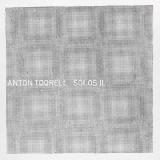
Anton Toorell’s second solo album, Solos II, deepens and intensifies the six-string language introduced on his 2022 debut, Solos. Rather than widening his scope, the Swedish guitarist, composer and producer sharpens his focus, homing in on the physical and sonic relationship between player, instrument and tuning. The result is three extended pieces of cascading tonality that feel disciplined yet light, their conceptual frameworks always secondary to the luminous sounds Toorell draws from two guitars.
Throughout Solos II, Toorell explores both the guitar’s potential for silvery, sometimes clashing textures and his own physical engagement with the instrument. Across ‘Volta’, ‘Cripta’ and ‘Scala’, he plays two guitars simultaneously: one fretted with the left hand using hammer-ons and pull-offs, while the right hand activates mostly open strings on a guitar resting in his lap. Despite the inherent complexity of this approach, the music never feels busy or demonstrative. Technique remains a quiet servant to Toorell’s compositional instincts and improvisational sensitivity.
The album leaves space for unplanned resonances and happy accidents, yet its structures are clear, resilient and finely balanced. The seventeen-minute ‘Volta’ unfolds as a shimmering continuum, its repeated figures gently reshaped through minute inflections, creating a sensation of constant motion. ‘Cripta’ spirals inward, cycling hypnotically in a way that recalls both Terry Riley’s iterative minimalism and the hallucinatory guitar loops of early Seefeel.
With the closing ‘Scala’, the recording environment comes fully into view. Captured in a 16th-century wine cellar at Palazzo Stabile in Piemonte, Italy, the room functions as a guiding presence and an implicit third instrument. Toorell tuned the guitars in response to the cellar’s reverberant character, seeking configurations that would open up the space itself.
We Jazz Magazine, Issue 19 / Summer 2026 "Milestones" for Miles Davis.
128 pages, 170 x 240 mm in size and printed on 140g Edixion paper with laminated 300g Invercote covers.
All articles presented in English. Miles Davis by Alex Coles, Phil Freeman, Tony Higgins, Ashley Kahn, Tadayuki Naitoh & Anton Spice, Spiritual Jazz by Pierre Crépon & Francis Gooding, Kadi Vija by Wif Stenger, Jonah Parzen-Johnson by Giulio Pecci, Emma Rawicz by Rob Garratt, Courtney Pine by Gareth Allen, Discaholic column by Mats Gustafsson, album reviews, live review & more.
DYING VICTIMS PRODUCTIONS is proud to present ZERRE’s highly anticipated second album, Rotting on a Golden Throne, on CD and vinyl LP formats. From the cellars of Würzburg, Germany, ZERRE have been keeping the torch of old-school thrash metal burning while carving their own vicious path. Their sound draws on the razor-sharp aggression of classic Metallica and Exodus and the stomping groove of early Faith No More: no frills, no mercy. Their third full-length, 2024’s Scorched Souls, tore through the scene and earned critical acclaim for its searing riffs and unflinching energy. Now, ZERRE take a decisive step forward with Rotting on a Golden Throne. Darker, more overtly political, and more aggressive than its predecessor, this fourth full-length dives headfirst into the rot of power, corruption, and human decay – a brutal soundtrack for a world teetering on the edge. Onstage, ZERRE embody the chaos of their music: riff-driven assaults, breakneck tempos, and a raw intensity that leaves no room to breathe. On record, while those influences still remain, but the DNA has been splintered into something more unique and definitely more powerful: thrashing, yes, but within a crossover framework that feels titanic. The production is razor-sharp, but with ominous atmosphere to spare; the execution is even sharper, as the drumming especially pulses like a dread locomotive; and vocals spit forth venom, raging against a machine fatted by suffering. As the throne collapses, ZERRE deliver the anthem of its fall. Keep on Rotting on a Golden Throne!
Vakula presents a new 4-track release: fully-formed electronic compositions built with weight, depth, and intention.These pieces aren’t just for the dancefloor — but under the right DJ, they can still shift the room.
out of Stock
Last delivered 59 days ago available to reorder, subject to availability
New bood red vinyl version! The master in scratch Dj T-Kut together Dj Yamal and Cut Sound Brothers have cooked this new battle vinyl ready to be to squeezed to the maximum, "Scratch Practice". Composed by 2 instrumental tracks and 8 tracks tools, each track is inspired in the classic tracks of the turntable worldwide that converts this record an indispensable piece for the fanatics. The cover is an art of the well-known graffiti artist Mast. Masterized in 126 Productions House. All tracks signed by Dj T-kut. This 2024 version comes as new limited version presented in blood red colour 7" format to enjoy in both ways of this wonderful single.
out of Stock
Last delivered 6 months ago available to reorder, subject to availability
Will Wood's very first LP displays a variety of genres, with a chaotic homemade anti-folk feel and an experimental edge. "Everything is a Lot" began its long production in 2014, when the singer-songwriter was still 20 years old and performing drunken alt-comedy at open mics. With no funding, Wood led a slapdash band into the studio to bring songs mainly from his teenage years to life, and the unstructured production process and youthful experimentation gave it a uniquely loose and chaotic feel. The debut LP's sound is defined by Wood's Jay Hawkins-esque vocal delivery, an out-of-tune old upright piano, wailing wind instruments, jangly guitar, high-powered yet loose drums, and sardonic overdriven kazoo solos. Delivering everything from swing jazz and twee indie pop to pseudo-mariachi and waltz, these sounds and their accompanying bizarre lyrics come together to match the existential title, "Everything is a Lot." Will Wood's early career can be primarily defined by his experimental vocal delivery, honky-tonk piano smashing, and darkly edgy songwriting. While his stylings have matured and taken on a more precise approach, his refusal to conform to expectations and constant shifts in the genre have continued to be hallmarks of his songwriting and production. In his "Will Wood and the Tapeworms" releases (Everything Is A Lot in 2015, SELF-iSH in 2016), audiences can see the first glimpses into what would eventually become his signature style, presented in a uniquely raw and chaotic state of potential.
out of Stock
Last delivered 6 months ago available to reorder, subject to availability
For Sofia Kourtesis, joy is a living practice. It"s evident in her effervescent stage presence and bombastic sets, which confidently traverse through house, electro-pop and melodic techno. The Peruvian DJ and producer has forged a vibrant and illustrious career that has taken her to all corners of the globe. Kourtesis"s debut DJ-Kicks mix is a potent blend of the beautiful, complex emotional soup that has made her connect so deeply with her fans.
out of Stock
Last delivered 6 months ago available to reorder, subject to availability
A Profound Non-Event, the debut album by Sydney-based three piece Daily Toll, comprises 11 songs traversing three years of forged friendships, collaborative experimentation and a shared love of growing through words and song.
Those attuned to the ever-vibrant Australian underground may already be well familiar with Daily Toll, their consistent live presence since their inception in 2021 embroidered by a handful of (mostly) home-recorded, (mostly) digital self-releases that have steadily accumulated an appreciative following. Initially the project of self taught musician, poet & artist Kata Szász-Komlós(they/them) and Jasper Craig-Adams(he/him), and expended to a three piece with the more recent addition of friend Tom Stephens(he/him), Daily Toll represents the union of three unique creative dispositions, of relationships blooming through the push and pull of creative practice. Mapping the band’s existence through their recorded output is to bear witness to the flux of three people learning to respond to one another and gently ossify into a collective vision that at once calls to mind folk song intimacy, post-punk dynamics and the artful poeticism of an adjacent Flying Nun legacy.
If those earlier recordings reflect a band imagining themselves into being in real time, A Profound Non-Event observes a clear shift in both conviction and approach. Recorded in just three days with Alex Bennett at the purely analogue Sound Recordings studio in Castlemaine and holing up at night in the century old cottage situated beside the studio, sheltering from the late-June wind and rain within walls littered with instruments and microphones, lighting fires to stay warm. Kata describes the experience as defined by “candle light and creative camaraderie”, an idyllic account of a collection of songs that glide with an undeniably warm, easy charm, evidenced in particular in the record’s second half as the tone turns increasingly introspective, the very sound of a cold evening’s drift into night. When contrasted with the moody swirl and sing-song bounce of the opening trio of tracks, there’s clear evidence of a band not simply in the process of becoming, but committed to finding their truth in that process.
Still, if Daily Toll display a reluctance to be wholly defined, then album centerpiece ‘Killincs‘ (positioned in the middle for a reason) might just be their Rosetta Stone. A verbose rumination on unsettled feelings of isolation and longing, exploring the challenges in making peace with one's decisions amidst the uncertainty of an often harsh world and the realisation that some things remain best unresolved - “I have the keys still, but I’ve buried the path”.
out of Stock
Last delivered 6 months ago available to reorder, subject to availability
Manfredi Romano, founder and A&R of Life and Death Records, has been a pivotal figure in electronic music for over two decades. This year marks an important milestone as he is invited to curate the upcoming fabric presents mix for fabric Records, a release that highlights his instinctive storytelling and the distinct musical identity he has cultivated throughout his career.
Manfredi’s journey began in Italy around the turn of the millennium, tour-managing punk bands and organizing left-field music events before completing his studies in computer science at the University of Pisa. He went on to form DAZE, Italy’s first booking agency dedicated exclusively to electronic music, laying the groundwork for what would become a globally influential presence in the scene.
In 2010, he shifted focus to his own artistic project, DJ Tennis, which quickly gained international recognition for its emotive blend of house, techno, and disco. Renowned for creating intimate atmospheres in even the largest spaces, DJ Tennis has performed at leading clubs such as Circoloco Ibiza, Fabric London, and Panorama Bar Berlin, and at major festivals including Sonar, Timewarp, Primavera Sound, and Coachella. His 2022 residency at Phonox in London further showcased his ability to shape dancefloors with nuance and depth. Since 2017, he has also co-founded and curated Rakastella, the celebrated Art Basel Miami festival created in partnership with Life and Death and Innervisions.
As a producer, DJ Tennis draws from early relationships with post-rock pioneers such as Godspeed You! Black Emperor, Tortoise, and Fugazi, channelling their influence into intricately layered electronic compositions. His work has appeared on respected labels including Kompakt, Rhythm Assault, Running Back, !K7, Cercle Records, Aus Music, and Circoloco Records, alongside frequent releases on Life and Death. His remix portfolio includes collaborations with Diplo, Boys Noize, Loco Dice, WhoMadeWho, and Acid Pauli, among many others. He has also previously contributed a DJ-Kicks mix, bringing his eclectic sensibilities to one of electronic music’s most beloved series.
After extended periods living in Miami, Berlin, and Barcelona, DJ Tennis now resides in Paris. Outside the studio and club environment, Manfredi is a passionate chef who has curated menus for charity events and collaborated with Beatport at ADE, Pioneer, and Resident Advisor. He is also an avid collector of bicycles, vintage action figures, and vinyl — his record collection now surpasses eleven thousand pieces.
With the forthcoming fabric presents DJ Tennis release, he offers a deeply personal, narrative-driven statement that reflects decades of crate-digging, boundary-pushing selections, and a lifelong devotion to sound. It marks a new chapter in his artistic evolution and stands as one of the year’s most anticipated entries in the iconic series.
The first single from DJ Tennis is a collaboration with long-time studio partner Ashee, and it immediately sets the tone for the mix: warm, seductive, rhythm-driven, and emotionally charged.
“I Wanna Know” is a sleek club track built around a pulsing groove and a steady, hypnotic rhythm. The low end is rounded and warm, giving the track a driving but understated momentum. Percussion is crisp and minimal, allowing the bassline and vocal elements to take center stage. The repeating, robotic earworm of a vocal hook, “I wanna know’ is the lynchpin to the track and will remain in your head long after the track has finished.
It’s the kind of record that warms up a room early in the night, sets the tone for a sunset beach set, or adds a lush, emotional peak during a more leftfield club moment.
out of Stock
Last delivered 3 months ago available to reorder, subject to availability
Artist, painter, curator Leo Vincent, is fired up off the back of supporting Soulwax, on their recent Paris and Netherlands shows. Proudly presenting two debut songs “Hello it’s me again” and “Loving isn’t easy”, co-produced with the brothers, David & Stephen Dewaele, of Soulwax/2manydjs.
Seven years ago, Leo Vincent bluffed his way into a video editing job at DEEWEE. Despite being told to not touch or ruin their gear, he later resurfaced with demos that sounded like he had anyway.
"Don’t know much about history”
"Don’t know much about biographies"
But we do know that by the time Leo Vincent arrives in your town, he will probably have destroyed two more Tascam 8-tracks.
Brussels-based, failed goalkeeper-turned-painter-turned-cameraman-turned-musician Leo, doesn’t seem to be afraid to leave his faders in the red zone for an unorthodox period of time while repairing the pitch knob. Some say it’s disco for night janitors. Some say it’s glam-rock for ravers. Others haven’t found the time to listen yet because they have real jobs.
But to fully grasp Leo Vincent's essence, imagine yourself sitting in the home cinema of the late Marc Bolan while watching a documentary on Scatman John, directed by Jacques Tati and scored by Ween, using only the instruments of Cabaret Voltaire.
out of Stock
Last delivered 6 months ago available to reorder, subject to availability
New “Inversions” of drone rock pioneers Earth’s debut release. A collaboration between Dylan Carlson and Black Noi$e (Armand Hammer, Danny Brown, Earl Sweatshirt) formed in mutual respect and appreciation for one another. Both artists were intrigued by the creation of vast musical landscapes and the connection of music, with its ability to transport the listener. The music of Earth was recognised and celebrated for moving at a glacial pace and yet this new collaboration surprisingly saw Black Noi$e slowing things down even further.
The debut, which originally came out in 1991, notably featured Kelly Canary and Kurt Cobain on vocals on the tracks “A Bureaucratic Desire for Revenge Part 2” and “Divine and Bright”. Black Noi$e reimagines the original recordings with his experimental sensibility and innovative multi-instrumental, cross genre exploration. Applying contemporary electronics to the heavy droning bass and guitars and languid rhythms, this inversion oscillates and reverberates with a different kind of energy whilst simultaneously highlighting the much loved low slow and distorted properties of the original.
‘Extra Capsular Extraction’ was the first music Dylan made with Earth and his first time in a recording studio, which he recalls at the time as being “terribly exciting”. It also marked the first time collaborating with others and seeing it reified into a tangible object or product, a spirit that Dylan has carried through to the present. The original album is a document of a specific period and Dylan’s creative development. These inversions of Extra Capsular Extraction are, to quote Dylan, “an exciting way to reintegrate them into the present time and with my more expanded conceptions of musical endeavours”.
"Doom-metal innovators" Pitchfork.
"With guitars ramped up to the nth degree, but tuned to gut-wrenchingly low frequencies, Earth carved out a veritable canyon of pure molten drone, one which would have a profound influence on modern metal music." The Quietus