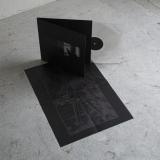
Orphx makes a striking comeback with a six-track EP on KR3, celebrating Rich & Christie's three-decade career in the industrial music scene.
Theikos EP - spans multiple eras and moods, merging raw, ancient production methods with modern interpretations. The result is a sonic landscape that bridges pulsing club rhythms with the intense energy of extreme electronics and death industrial. The title track, "Theikos," began in 1998 and was only finalized in 2024, years of evolution shaping it into a truly formidable piece.
This 12" release stands out as a deep and fully realized body of work, filled with personal insight and resonant echoes of a primordial world.
The standard edition comes in a sleek single-pocket gatefold sleeve, featuring a 1997 photograph taken in Toronto by Michael Nine, capturing the duo in their early years and visually anchoring the album to the roots of their sound. Limited and special editions include an exclusive booklet with archival photos of Orphx and a poster, along with a promotional videos featuring remastered and reimagined archival footage created especially for this release.
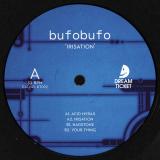
Lick a toad and who knows what might happen. Well, now our favourite amphibian BufoBufo is back on Dream Ticket, and in his little sticky toes he bears four joyous offerings of acid, breakbeat and IDM, primed for ready for your favourite pond rave. Now just lay down here on this lily pad with me and let's take a trip.
Jasmín returns to fabric Originals with the second instalment in her four-part series, Concrete Summer / Skeletal.
Following her debut release It’s Girls Night / Long Hair, the Dutch-Argentinian producer delivers two stripped-back, percussive techno cuts shaped by the architecture, tension and atmosphere of cities after dark.
Concrete Summer opens with a primordial pulse: saturated drums and feverish shaker rhythms lock into a raw, hypnotic groove. On the flip, Skeletal pushes deeper into the night, pairing a driving kick and syncopated percussion with distorted drones and mounting pressure.
Sparse, physical and deeply immersive, both tracks leave space for the dancer to complete the picture, continuing Jasmín’s singular exploration of stripped-back techno and the nocturnal worlds at the heart of her ongoing collaboration with fabric.
Compiled onto one vinyl album for the first time, Landlocked (Numbers, 2026) presents Hallucinator’s 1999 debut album originally released under Mark Ernestus and Moritz von Oswald’s label Chain Reaction. Writing much surrounding the culture of what would be later considered ‘Dub Techno’ and its’ primary distribution center, Hard Wax, leads one down roads of shifting primary sources and decades old overheard smoke break recollections. Maybe brevity primes the listener to the paralinguistic to approach the sound on its terms; focusing on how things are uttered and not what.
This theory will remain unconfirmed. Hallucinator original press release left us with three or so gestures to consider over the years since:
“A new act on CHAIN REACTION”s distinct productional thesis. HALLUCINATOR are 3 people from he UK/London and this their first release ever- that’s all what the artists want to let us know…. This record is dedidacted to the memory of Stephen Lawrence!”
The first gesture is one of personnel. Since ’99, we’ve gotten to learn a bit more about the artists behind the Hallucinator project. All London-based, all writers, composers, and sound-designers— Anna Piva, Edward George, Trevor Mathison. These three seem to flow between parameters as aesthetic tactic and tacit structure to the work itself. For example, other collaborative shapes have come from this lineup including Flow Motion (Piva, George and Mathison) as well as the now defunct Black Audio Film Collective of which George and Mathison are founding members.
The second gesture is in the second line of the previous press release, “distinct productional thesis.” Much of Landlocked’s affect and sequencing seems to suggest an emotional study of entropy at the level of sediment. Rhythms play with space and capacity through polyvalence. The production chose subtractive vertigo, often switching and bringing back in elements that vanished from the track 6 minutes ago. Dubbing out so much of a track, one begins to associate sound akin to memories held in the experience of running your hand across a concrete block as a child. Felt (re)memberance in lieu of narrative tale. Using textures that flicker between colour and percussion, Hallucinator’s 12-tracker of loudspeaker perception music might be a mediation on the psychic wake of the Cold War. Intermittent strata of ambience and groove convects an active margin rifting event underneath a scorched geology of power in Western Europe. Again, this is all grapevine hearsay.
But it’s silence that voices the third gesture. The album’s sparse application of the written word touches on the ennui paradox of being landlocked on an island. Stuck. Trapped in the psychosis of occidental hypercentricism. A looping silence of Black British tragedy: “to the memory of Stephen Lawrence”. 18 year-old Lawrence was stabbed to death at a bus stop in southeast London by six white men in 1993. The rift of grief and implicit reiteration of modern subordination left by this hate act went legally silent for almost two decades until Lawrence’s killers were ultimately sentenced to virtually life in jail in 2012. Only six years removed at the time of Hallucinator’s initial invocation of rememory, the mind-numbing accretion of what Black Studies Professor Denise Ferreira da Silva might call “unpayable debt”, finds demonic ground across Landlocked, forming an aural sense of what continues to be refused.
The album ventures through spaces of overactive non-happenings: ‘Red Angel’’s factory floor dub flashes between smokestack and jungle visions, or the halfway mark’s stilted breath of ‘Dusk’ lending its mood to the sort of sedated dreams built from daily life under colony rule for instance. That linked rhythm links us back to our linked fates across Black and Brown folk is real, thus the syncopated signals through this work behave on the level of transnational radiotelegraphy, sounding out its windswept tension of a body negotiating a meat-grinder schema of linear production and wage for others to know that unspeakable thing can be broadcast in every drum tongue.
As the silence continues to reverb, we return to the sort of meaning-making that cannot be told but felt. Soothing to some, disturbing to others. Landlocked, a Rorschach test for a crumbled empire.
PLEASURE ZONE PRESENTS ANOTHER TREASURE FROM THE PAST: IT'S PETER F. SPIESS - LUNAR SPECIMEN PART1 - ORIGINALLY RELEASED IN 1998 ON ALPHA! BACK IN SOLID BLACK VINYL END OF SEPTEMBER. DON'T MISS!
Esteemed soul crooner Sam Cooke achieved much in a short space of time, notching 29 top-40 singles in his seven-year solo career. On Night Beat, released in 1963, Rene Hall’s tasteful arrangements allow Cooke’s voice to shine, most notably on ‘Lost And Lookin’; jump blues standards ‘Shake Rattle And Roll’ and ‘Little Red Rooster’ are playfully rendered, with Billy Preston’s organ on the latter. Originals ‘Mean Old World’ and ‘Laughin’ And Clownin’ remind of his strong song-writing ability and his spirited take of ‘Nobody Knows The Trouble I’ve Seen’ recalled his days with the Soul Stirrers. A prime album for all Cooke fans!
Foil Jacket - Pink, White and Blue Merge with Splatter. Der sechste Teil von Relapses umfassender Wiederveröffentlichungskampagne des immens einflussreichen DEATH-Katalogs ist Leprosy, das gigantische zweite Album der Band. Ursprünglich 1988 veröffentlicht, war Leprosy ein bahnbrechendes Album, das auf dem Thrash-Sound von Metallica und Slayer aufbaute, aber eine bis dahin ungehörte Extremität hinzufügte. Das gesamte Album sowie das Bonusmaterial wurden von Alan Douches (Mastodon, Nile, etc.) akribisch remastert.
Often credited as the father of multi-media theatre, Alwin Nikolais (1910-1993) took complete creative control over his productions - including cutting-edge approaches to lighting and costume that transformed human bodies into shifting sculptural shapes, while also composing wildly innovative electro-acoustic and synth-based audio as accompaniment.
After initially experimenting with musique concrète and tape manipulation (as demonstrated on the 1959 LP Choreosonic Music of the New Dance Theatre of Alwin Nikolais) Nikolais became the first owner of Robert Moog's synthesizer at the Audio Engineering Society convention in New York in late 1964. Relying heavily on the Moog and later the Synclavier synth/sampler, these 21 tracks document Nikolais' highly-prescient compositions across the mid 1960s through to the late 1980s - existing not only as extensions of his other-worldly choreographic productions, but standalone pieces of foundational mid-century American electronic and experimental music.
"Born in Southington, Connecticut in 1910, Nikolais’s early years and early career were in acting, music and puppetry. It was not until the late 1930s that he began his work as dancer/choreographer in Hartford, Connecticut, where he was commissioned by the Avery Memorial Theatre, a part of the Wadsworth Atheneum, to create an evening-length work to the music of Ernst Krenek. Previously his work and study as a pianist-organist found him accompanying silent films. This sort of accompaniment required from the musician not only a playing skill but also a versatility in improvisation, matching movement to sound, and evoking mood to situation.
Nik was drawn initially to dance by his involvement with the percussion scores used by the illustrious early twentieth century German dancer Mary Wigman. In trying to learn more about percussion, he was lured into dance class and thus his career began. His development of music and dance occurred simultaneously. His introduction to the twelve-tone technique opened his mind to the expanding areas of atonal music, and his dealing with music as sound per se. In 1948, after being appointed director of the Henry Street Playhouse in New York, Nikolais formed the Playhouse Dance Company, later known as the Nikolais Dance Theater, and began his aesthetic orientation toward dance as a study of motion. By the 1950s, he had ceased creating literal dances and began his explorations and eventual milieu as an abstractionist.
Sound became an important part of his abstract theatre. For his first dances, which involved his new thinking of dance as both a visual and kinetic art, he used live percussion scores in which he directed his dancers to play instruments of all nature. There was a combination of children’s toy instruments as well as harsh and resonant automobile brake drums, and other pitched auto parts which he also used to accompany classes. Once he installed his own tape recording machines, he quickly used the limited range these instruments provided in a new way, slowing and increasing speed and reversing sound. He also made the sounds adhere to the choreographic structure (not the other way around), thereby giving the dance its independence from the musical phrasing. But the real need remained: the search for new sound. Nik made a sound library, recording noises and percussion and vocal sounds, which the French aptly called musique concrète. Needless to say, he became a master at splicing bits and pieces.
From 1956 to 1962 Nikolais composed eleven major scores for his theatre pieces using such techniques. In 1963, James Seawright, who at the time was assisting Nik in his productions and also working at the Columbia-Princeton Center for Electronic Music, recorded a sound bank for the production Imago (1963). With this material, Nikolais created his first synthesizer score. Imago won the Paris Grand Prix in 1968 and launched the Nikolais Dance Theatre towards its national and primarily international acclaim.
During the same period, Seawright came to Nik and told him of a young man who had invented and constructed a simplified synthesizer and insisted that Nik visit the electronic fair currently being held in New York. Nik did so and met Robert Moog. He was completely taken by the new machine and after making some suggestions to Moog, (which Moog made), Nik bought the inventor’s first machine with the aid of a Guggenheim Fellowship. Moog himself was astonished by what his machine could produce for Nik. This machine was later acquired by the Museum of Musical Instruments at the University of Michigan at Ann Arbor as the first Moog synthesizer. The Synclavier was Nik’s next source of sound and since the mid-1970s remained the major instrument in the Nikolais soundroom.
Alwin Nikolais has been honored and awarded throughout the world. He has received the French Legion of Honor, the Kennedy Center Honors, National Medal of the Arts, two Guggenheim Fellowships, as well as Mellon, Ford, and Rockefeller grants. He has been a recipient of NEA grants since 1966, been awarded five honorary doctorates, all for his remarkable achievements in Dance Theater. His genius has influenced several generations of artists."
—Murray Louis
A couple of years after his last outing on Constant Black, Rotterdam-based Fabio Santos is back with another precision -tooled tech house EP that mangles dub, tech, minimal and house. 'Slow Burner' isn't really - it's a full-flavour sound with a dubby undercurrent and weighty kicks. 'Fever Dreams' pulls back and zones out musically, but with another forceful and deep groove that burrows into the cosmos. 'Changes' is balmy tech house that marries an irresistible snap down low with nice swirling pads up top, perfect for smooth cruising in the club. There is a more playful vibe to 'Feeling It?' With its tribal percussion and wigged-out synth details, 'Dancing To The 00's' throws it back to prime tech house dons like Terry Francis. A very useful EP
Left-field Brooklyn soulful lounge from Numero’s Private Mind Garden. Seven lo-fi gospel meditations that bridge the gap between Shuggie Otis and Otis G . Johnson. Get lost in Lynn Marshall’s wavering falsetto and producer Norman Marcelle’s Lowery-brand organ and primordial drum machines. 1980 never
sounded so heavy.
On My Way is a forthcoming photo memoir that follows Larry Heard to over 30 countries across 40 years, performing in Fingers Inc, The It, Mr. Fingers, and Larry Heard Live. Published independently by Alleviated Records, this 380 page book draws from Mr. Heard's extensive archive of thousands of photographs, event flyers, and historical documents, many of which have never been seen before. On My Way contains excerpts from over 8 hours of interviews, but the journey is primarily visual: the photographs taken by Mr. Heard and his collaborators serve as a personal and artistic odyssey, documenting almost every single one of the over 350 gigs Mr. Heard has performed in his career. On My Way also presents a history of technology in the arts. We see music equipment evolve, become sleeker, sexier, the studios housing the gear more grandiose. Personal cameras transition from 35mm to digital, first declining in quality as the world embraced the freedom of lightweight yet low resolution lenses, eventually arriving at the contemporary DSLR. The designs of rave flyers begin with photocopied images and hand drawn text, evolving with the genre through the 90s and 00s to take on a futuristic, utopian quality. We watch trends in fashion and art become referential as the 21st century embraces nostalgia. Institutions rise up to support this scene, most notably Red Bull Music Academy, a significant patron of electronic music in the 2010s that sought to connect new musicians to their roots by hosting visionary global festivals and panel discussions. Along this journey we see familiar faces: singers, DJs, club kids, and music industry professionals, as well as the enigmatic gaze of the man whose work has inspired millions.
Since the release of DAMAGED in 2024, Michael Fiedler aka GHOST DUBS has been surfing intensifying waves of adulation, earning praise from such diverse underground legends as Justin Broadrick (Godflesh/Jesu), Regis, Stefan Betke (Pole) and Steve Von Till (Neurosis). With second album Oblique, his mastery of sculpting sound waves results in a spellbinding set of alien soundscapes: larger in scale, richer in tone and considerably more cinematic than its predecessor. Lower, deeper and moodier, its cloudy abstractions, shadowy pulsations and submerged rhythms find Fiedler reaching further into his own sonic void, crafting blurred melodies and addictive narco loops into something simultaneously heavyweight and hypnotic.
Lead single and album opener “Low Times” sets the atmospheric pressure to maximum, resembling a dream date between prime dirt-house era Andy Stott and Berlin dub-tech pioneers Basic Channel. From there, Oblique descends into a series of enchanting mood scenes: the furtive, balletic gyrations of “After All”, the haunting ambience and buried heartbeat throb of “Soft Collapse”, and the noirish atmospherics of “Blackout Dust”, which worms its way into the mind like some forgotten David Lynch scene. The spirit of reggae is more distanced here than on DAMAGED, but the ghost of Jamaican dub still permeates these foggy soundscapes, particularly on “Bombed Suburbs”, where Augustus Pablo-style melodicism is chopped, screwed and slowed into a magnetic lock groove.
Superficially minimal but maximal in its minute detail, Oblique is a record of contorted reflections, mesmeric echoes and tantalising audio mirages. By the vaporous mist of closing track “Almost a Structure”, obvious rhythm has been craftily filtered away, leaving a blurred and blunted residue full of mystery and implied narrative. Dense in the best possible sense and crushing when played loud yet equally potent played quiet, Oblique imagines dub techno burning its own rigid rulebook: sensual, funky and concussive rather than dry or alienating. Following Fiedler’s recent work scoring Sound of Falling, recognised at Cannes in 2025, Oblique finds Ghost Dubs shedding his influences and making it clear he has arrived at a sound entirely his own — essential deep listening and a bewitching dose of future shock.
Feeling both familiar and forward-looking, MBK004 expands its reach with an international lineup of
producers united by a shared appreciation for the New York underground sound.
Crafted by Tunisian producer Gringow, our first two tracks take listeners to the darker side of minimal.
Also owner of the HeardOf label, Gringow lends his talent to Minimal Brooklyn with 15 minutes of
hypnotic rhythms. “Black is the new color” gives chills, while “My K” triggers introspection.
Flipping the record will bring listeners to a brighter space. We begin with Chilean DJ/producer
Francisco Ruíz-Tagle and his original track “Primal Depths”. Francisco introduces textures that have
been cultivated throughout his life. His submission to Minimal Brooklyn holds nothing back, delivering
a multidimensional auditory experience to listeners.
MBK004 ends with “Bean Water”, an original track from Chicago-based producer Double Dipp. This
spell-casting production truly highlights the attraction of minimal. Dynamic instrumentals with clean
resolution. This is Double Dipp’s formula for timelessness.
Esoteric Ears is a new label from Barcelona’s Conor Brophy.
Its first release comes from an unsung hero of the early 00s: Julian Foddy. As Katakana, Foddy released a string of now sought-after EPs, with a signature, brooding sound in the sweet spot between progressive, breaks and tech house. EARS 01 represents Katakana’s first release in over two decades, archival tracks forgotten for 20 years but that sound like they could have been produced yesterday, perfectly tuned for contemporary dance floors and listeners.
Side-long A1 ‘Incline’ is a driving but patient percussive progressive groove: heavy but spacious. On side B the stabs and bass pressure of ‘Xii’ are primed for peak time play; B2 ‘Fear of the Unknown’ is more heads down and pensive, with gradually unfurling hopeful melodies, perfect for mornings and after hours.
For the third release on Earthbound, Mihail P steps into a slightly different frame of mind with Silent Mirrors — an EP that pulls his atmospheric, emotive sound toward the rougher edges of 90s tech house, breakbeat and electro.
While Mihail P has become known for spacious productions, warm pads and mellow melodic detail, Silent Mirrors is about merging that side of his sound with something more direct and club-focused. There is a clear nod here to the halcyon days of UK tech house and labels and artists such as Primitive Urges and Pure Science, but filtered through Mihail P’s own sensibility rather than treated as an exercise in nostalgia.
Do you know what time it is? It’s Prime Time, the new EP on Punctuality from mischievous French duo Pureblast . Marking the label’s twelfth release, the record serves as a bold statement of intent from the Parisian pair and demonstrates why they’re quickly earning a reputation as one of France’s most exciting live acts.
Across the EP’s five tracks, Pureblast weave together a broad spectrum of influences while remaining deeply rooted in the duo’s singular vision. Every cut is fat, pumping, gritty and playful, ready to turn heads and hips on the dancefloor.
Side-stepping easy genre classifications, Prime Time is modern rolling prog at its most energetic. Tightly wound low-end, pummelling drums and restless basslines drive each track forward with purpose, while sa+ga’s vocals are manipulated and distorted to humanoid perfection. The result is something distinctly personal beneath the machine funk: robotic yet seductive, gritty yet playful.
Deep listeners will spot nods to tranced up breakbeats, Ray of Light-era big beat, Detroit electro and contemporary UK techno with psy-fluenced synth swirls and texture. Far from pastiche, these influences are absorbed into the Pureblast machine and transformed into something entirely their own.
Gritty, pumping, sexy and playful. It’s Pureblast, it’s Prime Time.
credits
Layne & Chang might not be household names to everyone, but in the underground they’re long-established fixtures. Chang—who’s released music under a string of aliases over the years—was tipped by Urb magazine as one to watch back in the mid-’90s and has been embedded in dancefloor culture ever since. Alongside him, Layne Fox (formerly San Francisco, now back in Florida) brings deep disco credentials, having helmed the cult-loved Disco Dimensions label and recording as 40 Thieves—best known for the underground anthem Don’t Turn It Off. In short, the boogie lineage on this record runs deep.
And that’s before you even get to Dan Tyler. As one half of the Idjut Boys and co-founder of Noid Recordings, Tyler helped lay the groundwork for London’s edit culture long before it became a global phenomenon. His involvement here only strengthens the package.
“Shake Your Body” opens the release with a locked-in, funk-driven groove—swirling melodic lines, subtly acidic textures, warm vocoder touches, and tight, punchy drums all dialed for peak-time movement. On the A2, “In The Desert” shifts the mood into something more transportive: a hazy, late-night burner equally suited to open-air parties, after-hours sessions, or home listening with the lights low.
Flip to the B-side and Dan Tyler delivers two cosmic reworks that push things further out. Psychedelic, elastic, and built for serious systems, both cuts hit that sweet spot between heady and physical—already circulating among a handful of tastemaker DJs and primed for heavy rotation as festival season ramps up.
A strong, floor-ready release that sits comfortably in the Whiskey Disco catalogue—rooted in disco, but reaching well beyond it.
Nine-time GRAMMY® winner Anderson .Paak and GRAMMY®-nominated rapper Cordae have been operating on the same wavelength for years. What started as pure chemical reaction on 2019’s “RNP” slowly turned into one of hip-hop’s most natural, low-ego partnerships, fueled by back-and-forth gems like “Two Tens” and “Summer Drop” and a series of dynamic TV performances that felt more like two best friends hanging out than a polished routine. On their debut collaborative album, Heavy Is The Crown, that organic bond gets the full-length treatment it’s always deserved.
At its core, the project is a tightrope walk between serious real-life stakes and uncompromising fun. The title isn't just bravado—it speaks directly to the shared weight both artists carry as the primary providers and anchors for their families. But instead of letting that pressure crush the vibe, .Paak and Cordae lean into each other. Meeting as total equals, .Paak’s elastic, soul-drenched musicality anchors Cordae’s razor-sharp lyricism, allowing both to unpack the heavy reality of success and family responsibility without ever losing their spark.
That balance is what makes the album tick. To drive the point home, the album art pays homage to the cult comedy Step Brothers—a nod to the silly, irreverent friendship that birthed the music in the first place. Heavy Is The Crown doesn't feel like a forced corporate crossover or a calculated career move. It’s a record about brotherhood, family, and what happens when two masters of their craft step into the studio simply because nobody makes them laugh, rap, or create quite like the other.
Nine-time GRAMMY® winner Anderson .Paak and GRAMMY®-nominated rapper Cordae have been operating on the same wavelength for years. What started as pure chemical reaction on 2019’s “RNP” slowly turned into one of hip-hop’s most natural, low-ego partnerships, fueled by back-and-forth gems like “Two Tens” and “Summer Drop” and a series of dynamic TV performances that felt more like two best friends hanging out than a polished routine. On their debut collaborative album, Heavy Is The Crown, that organic bond gets the full-length treatment it’s always deserved.
At its core, the project is a tightrope walk between serious real-life stakes and uncompromising fun. The title isn't just bravado—it speaks directly to the shared weight both artists carry as the primary providers and anchors for their families. But instead of letting that pressure crush the vibe, .Paak and Cordae lean into each other. Meeting as total equals, .Paak’s elastic, soul-drenched musicality anchors Cordae’s razor-sharp lyricism, allowing both to unpack the heavy reality of success and family responsibility without ever losing their spark.
That balance is what makes the album tick. To drive the point home, the album art pays homage to the cult comedy Step Brothers—a nod to the silly, irreverent friendship that birthed the music in the first place. Heavy Is The Crown doesn't feel like a forced corporate crossover or a calculated career move. It’s a record about brotherhood, family, and what happens when two masters of their craft step into the studio simply because nobody makes them laugh, rap, or create quite like the other.