Lick a toad and who knows what might happen. Well, now our favourite amphibian BufoBufo is back on Dream Ticket, and in his little sticky toes he bears four joyous offerings of acid, breakbeat and IDM, primed for ready for your favourite pond rave. Now just lay down here on this lily pad with me and let's take a trip.
Komatssu se ha encargado de cocinar el primer lanzamiento de su sello Dramalax: cinco cortes con sonidos que recorren desde el electro afilado y potente hasta los breaks ácidos, pasando por sonidos que recuerdan al electroclash más pistero.
Paradoxia abre la referencia con un primer corte implacable, construido sobre kicks profundos y una cadencia mecánica que recuerda al pulso constante de una fábrica en funcionamiento. Un mundo robótico donde todo encaja como parte de una inmensa cadena de montaje.
Nanobot trae un ritmo electro bien marcado, una sensación de avance constante a través de un túnel donde atmósferas cálidas nos acompañan liberando la tensión, un tema perfecto para cambiar el color del set.
Recovering Faith, una herramienta perfecta para el club. Arpegios envolventes, sintetizadores de sabor noventero y una energía marcadamente eléctrica construyen una atmósfera perfecta para sumergirse en la pista de baile.
Alligator viene después, con un pulso firme marcado por una percusión potente, donde lásers y hits vocales se entrelazan con un bajo eléctrico y punzante, creando un ritmo macarra y pistero. Un track con mucho carácter.
Etainen le pone el lazo a este primer lanzamiento. Aquí, el sonido sintético y robótico del electro que hemos visto en ‘Nanobot’ y ‘Alligator’ se da la mano con un break de batería clásico, generando atmósferas tensas y ácidas. Un track divertido y pistero, perfecto para crear momentos de tensión en tus sets.
En conclusión, Komatssu presenta con esta referencia una declaración sonora de lo que Dramalax quiere traer a vuestras maletas: sonidos potentes y versátiles para los aficionados al electro y los breaks con sabor clásico, sin perder de vista el sonido de hoy.
Kelton Prima from Paris makes his debut on the label (more to come) with 2 great original tracks .
On the remix duty we find the legendary Ian Pooley and one of the most anticipated electronic artist from south Africa when it comes to deep house, Radic The Myth !
Prologue: Wearied by our endless travelling under a burning sun, we stopped by the margins of a tiny stream, embraced by a timid vegetation. The scorching heat made our throat parched and weak: yearning to quench our thirst, we immersed ourselves into the waters without any hesitation, drowning our dryness and our exhausted limbs. I pointed my face, revived by water, towards the sky and I lingered on, admiring it: a flock of birds gently floated, drawing in the sky some abstract shapes. I sat beneath a palm tree, motionlessly admiring the show, the shades of the night approaching. 'The true joy of a moonlit night is something we no longer understand. Only the men of old, when there were no lights, could understand the true joy of a moonlit night.' --
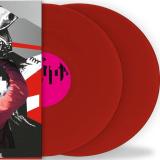
Der Soundtrack zur Prime-Originalserie Spider Noir erscheint auf opak-silbernem Vinyl. Die Doppel-LP kommt im Gatefold-Cover mit exklusivem Artwork und enthält ein Sammlerposter als Beigabe. Spider Noir basiert auf der Marvel-Comicfigur Spider-Man Noir und spielt im New York der 1930er Jahre. Im Mittelpunkt steht Ben Reilly (Nicolas Cage), ein abgekämpfter Privatdetektiv, der nach einer persönlichen Tragödie mit seiner Vergangenheit konfrontiert wird - und zugleich als Superheld der Stadt agiert. Der Soundtrack umfasst den Titelsong "Saving Grace" von KIRBY, die Originalmusik von Kris Bowers und Michael Dean Parsons sowie weitere in der Serie verwendete Stücke.
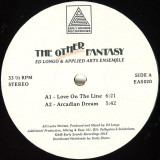
We Welcome Ed Longo And His Studio Project The Applied Arts Ensemble Debut On Early Sounds With the Other Fantasy', The Result Of Many Recording Sessions That Took Place In Different Places Around Europe.
Conceived With A Strong Jazz-funk, Fusion And Boogie Sound It Has Been Conceptualized Around The Idea That The Schizophrenia Of The Internet-age, The Visions Of Otherness (the Undiscovered Lands, The Primitive Happiness, The Impossible Love) Permeate The Collective Consciousness And The Idealized "other" Loses Any Correspondence With The Physical World.
Silk Cuts fresh drop of more ”nameless and shameless" goodness. Essential 7-inch mashups delivering floor-fillers lovingly crafted for all the party DJs, turntablists and heads. This time we’re deep into early 90s source, these are limited edition 7 inches, when they’re gone they’re gone. Highly recommended and available exclusively through prime distribution. More Silk adventures to follow……
What an unbelievable record. From the wild cover to the iconic breakbeats, Roots from Ian Carr’s Nucleus is one of the dopest albums we know. This is seriously thick, funky-prog jazz-rock heaven. Originally released on Vertigo in 1973, other than a couple of versions at the time for other territories, Roots was never re-pressed since so it’s gone on to become another one of those impossible to find records.
Maybe it was a little too out there for the time, but it’s aged very, very well indeed and this Be With re-issue, re-mastered from the original analogue tapes, shows off just why this deserves to be back in press.
Genius trumpeter and visionary composer Ian Carr was one of the most respected British musicians of his era. He was a true pioneer and saw the potential in fusing the worlds of jazz with rock, just as Miles Davis and The Tony Williams Lifetime did in the US. In late 1969, following the demise of the Rendell-Carr quintet, and tiring of British jazz, Carr assembled the legendary Nucleus. Regarding music as a continuous process, Nucleus refused to “recognise rigid boundaries” and worked on delivering what they saw as a “total musical experience”. We can get behind that.
Under bandleader Carr, Nucleus existed as a fluid line-up of inventive, skilled musicians. This constant evolution and revolution was all part of the continuous musical exploration and discovery that took jazz to new levels.
Working together with producer Fritz Fryer and engineer Roger Wake, the seven compositions by Carr, Brian Smith and Dave MacRae that make up Roots flirt with perfection, and Nucleus at that time made up of the cream of 1970s UK jazz with Brian Smith on tenor saxophones and flutes, Dave MacRae on piano and electric piano, Jocelyn Pitchen on guitar, Roger Sutton on bass, both Clive Thacker and Aureo De Souza on drums and percussion, Joy Yates delivering the vocals and of course Carr on trumpet.
The spellbinding title track immediately renders the album indispensable. Riding the illest of loping breakbeats, “Roots” is low-slung, doped-out heist-funk. An absolute monster. If it sounds familiar then that’s likely down to it being sampled by Madlib for Lootpack and Quasimoto’s “Loop Digga”, as well as by a whole host of beat manipulators. “Roots” conjures prime instrumental hip-hop / beat music, only 20 years ahead of its time. Truly, these are the roots. Through sinuous bass, twinkling keys and a hypnotic guitar riff, a smoky brass motif weaves its way into a gloriously deep haze around Carr’s solos. “Roots” is over 9 minutes long, but there’s not a single wasted second, not surprising given that this is a condensed version of an originally 40 minute long commissioned composition.
The soothing vocal fusion delight of “Images” follows. Meticulously constructed, with gorgeous flute work from Brian Smith, with Joy Yates’ silky vocals and Dave MacRae’s Rhodes never sounding better. The cool, driving “Caliban” closes out the first side. Originally the third movement in a four part commission to celebrate Shakespeare’s birthday it stands up on its own, all robust rhythms and blended brass. Keyboard colour and Carr’s trumpet are splashed across the funk drums and basslines (and there’s even some bamboo flute). This really is fusion: the elements of jazz and rock coming together in beautifully synthesis.
Side two opens in riotous fashion with the short, thrilling samba of “Wapatiti”. Next up, “Capricorn” forms a smoothed-out, jazzy constellation. Mellow and dreamy, its twinkling percussion and languid horns slowly build the vibe before head-nod drums and a killer bassline enter the fray. With a distinct heaviness that Black Sabbath would’ve envied, “Odokamona” is a venomous slice of riff-soaked jazz metal (yes, you read that right), elevated by Carr’s wah-wah horns.
The album closes with MacRae’s exceptionally cosmic “Southern Roots and Celebration”. Very much in conversation with Weather Report, it opens as a languorous, spiritual jazz of chiming keys and serene guitar that turns slowly, gorgeously into a mid-paced, brass-laced banger. It’s another sure-fire party starter and the sound of the band having a righteous blast, building an ecstatic chaos that ends with Yates screaming.
And of course we need to talk about Keith Davis’ cover for Roots. Perhaps the coolest record cover of all time? Certainly one of the most bonkers. Just your run-of-the-mill high-gloss, acid-tinged airbrush dystopian/utopian living-room party scene. Consider this your chemical flashback trigger warning.
Front-and-centre the hip-to-death green robot holds court with their giant ball of yellow barbwire wool, hooked up to… something(?) being teased out from under the stairs (probably best not to ask). A thoroughly zoned-out, long-legged Pop Art party-goer lounges half-plugged in to the painting behind her as a pair of legs flail into shot from the the top of the stairs opposite. We won’t even begin to guess what the chap’s up to in the middle, but the view out of the windows is rather nice, and someone’s already got the hoover out ready to tidy up. All of the Nucleus sleeves are something special, but this particular one? Crikey.
This Be With edition of Roots has been re-mastered from the original Vertigo master tapes, Simon Francis’ mastering working together with Pete Norman’s cut to weave their usual magic with these wonderful recordings. The crazy cover has been restored at Be With HQ as the finishing touch to this long overdue re-issue.
The sun sat high above the desert outside Joshua Tree on October 17, 2024, baking the rocks and shrubbery outside the Farrington Observatory as a small group of invited guests ventured up a steep path towards the telescope. Kyle Simon, the artist and printmaker who founded the Observatory, was standing outside the print studio sat below the towering cylindrical building, greeting friends alongside his wife Sarah and lifelong friend Brian Weitz, the musician widely known as Geologist of Animal Collective. Simon and Weitz had spent the previous day testing and retesting a system that would transform the light of the oncoming full moon captured by the gigantic telescope into a signal that would modulate the control voltage of Weitz’s modular synthesizer. As the sun dipped below the horizon line, the audience gathered on a small wooden patio surrounded by speakers while Weitz readied himself behind the array of patches and knobs. Simon addressed the group, presenting the history of The Sirens, the sonic exploration of the night sky’s mystical and scientific significance about to unfold.
The music conjured under the Hunter’s Moon that night is now documented on this first official release of The Sirens, which was conceived by Simon and Weitz as a recurring performance piece and sound installation. Over a decade ago, Simon began immersing himself in literature on humanity’s sonic relationship to the celestial realm, including Homer’s Odyssey, Plato’s “Spindle of Necessity, ” Kepler’s Harmonices Mundi, and the field of astroseismology. He fitted homemade telescopes with photodiodes and optical sensors to make the images audible, finding latent patterns in the noisy sonic signals he began receiving from the stars. With Weitz, the process expanded as the signal was routed through an analog amplifier and set to modulate the pitch, filter, and other elements of his synthesizer. Together they developed a system of improvisation, with Simon adjusting the telescope to change the intensity of the light based on its relationship with the moon’s position (imagine a theremin player moving their hands in subtle, meaningful motion), and Weitz responding to that input in real time: bending it, amplifying it, or letting it stand on its own. The duo debuted the piece at the Integretron in Joshua Tree in 2018, providing a crucial proof of concept for the performance at Farrington featured here.
The first thing the listener hears on The Sirens is the opening of Farrington Observatory, the cranking of motor and metal. As the lens of the telescope is exposed to the evening air, a wavering drone emerges from the synthesizer, flickering at the margins, the tuning of the oscillators adjusting to the rapidly cooling desert air. The piece progresses and the drone becomes a luminous, spherical constant, bathing the listener in pure tone as Weitz draws out harmonically ambiguous melodies that spiral upwards. Electronics crackle and convulse, coalescing into dense dissonance before widening out into an open octave. Just as the moon orbits the Earth and the stars shift as the planet rotates, so each sonic element appears in flux, interrelationships slowly forming and falling away. Divided into two parts, The Sirens flows as a continuous conversation between the artists and the starlight completing its thousand-year journey across the galaxy.
The Sirens belongs primarily to a lineage beyond music: of sea captains navigating by looking skyward, of astrophysicists studying the formation of the Milky Way, of the modern myths of werewolves, of the stories embedded in constellations. As Simon writes in the album’s extensive liner notes, “These stories and explorations reveal a collective yearning to become conscious of our connection to the universe, our deep-seated desire to understand how we fit into it all.” This music underscores the history of the night sky as the place where poetry and science find common ground, where exploration hinges on the imagination. Driven by curiosity and ingenuity, Weitz and Simon look up and wonder.
Jen Cardini & Shonky revive their 20 year old anthem August In Paris with remixes from Kasra V, Jennifer Loveless and Jump Source.
Originally released on Mobilee Records in 2006, Jen Cardini and Shonky’s record ‘August In Paris’ remains a defining statement from the minimal era. Ahead of its time upon release, the record distilled the genre to its essentials, bleeps, hypnotic grooves and impactful vocals, unfolding with the kind of restraint that continues to resonate two decades on.
To mark its 20th anniversary, ‘August In Paris’ returns with three distinctive reinterpretations from Kasra V, Jennifer Loveless and Jump Source plus a re-release of the original coming out on Jen Cardini’s formidable label Correspondant. As well as this Jen Cardini and Shonky will be playing an All Night Long set at Paris nightlife institution Rex Club on 29th August. Look out for merch on the night too.
Speaking about the project Jen Cardini discussed: “It is crazy to think this was two decades ago and that Shonky and I are still touring and sharing our love for music. For the anniversary, we decided to bring this special track to light again’.’
Each remix approaches the source material from a different perspective while preserving the essence of the original.
UK DJ and producer Kasra V leans further into the track’s skeletal framework, blending his signature sultry sonics into this hypnotic chunky groove to produce something entirely new but familiar.
Jennifer Loveless, an unearthed gem when it comes to production, strips things back even further, delivering a rough and tough uncompromising club version primed for sweaty dark dancefloors, it perfectly encapsulates the original without overshadowing it.
Closing the EP, Montreal duo Jump Source, Priori and Patrick Holland, take the record into more left of centre territory. Their version stretches the original into a warped, slow-burning electro excursion, perfectly suited to the blurred edges of the after-hours.
Kvrk makes a debut on Distant Gaze with Synthetic Memories, a four-track EP exploring shadowy electronics where organic textures and synthetic forms constantly blur into one another.
Opening with Pulsewidth, the EP begins as a slow burn – a restrained piece of synthwave shaped by drifting ambience, hypnotic sequences and a steady sense of tension.
The pace gradually lifts with Void Caller and title track Synthetic Memory, pushing deeper into prog sound. Straight, driving rhythms form the backbone, occasionally dissolving into broken-beat passages, while warped synths and psychedelic details keep everything in constant motion.
Beneath the electronic framework runs something more primal: forest-like soundscapes, mystic undertones and subtly shamanic motifs give the music an earthy, ritualistic dimension.
Closing the release, Blu:sh reworks Void Caller through his signature deep and trippy approach, stretching the original into a spacious late-night interpretation with a submerged, dreamlike pull.
TIM HECKER’s latest work approaches a form of secular musical transcendentalism from within the battered temple of spirituality.
Recorded in a church in Reykjavik, Iceland and using a pipe organ as the primary sound source, this new piece is essentially a live recording. In reality, it exists in a nether world between captured live performance and meticulous studio work, melding the two approaches to sonic artifice as a unity. It is in parts a document of air circulating within a wooden room, and also a pagan work of physical resonance within a space once reserved for the hallowed breath of the divine.
While the title of the piece “Hatred of Music” might be a clue, the album is also partly an attempt to confront a pervasive negativity surrounding music. Historical rituals of destroying pianos, mountains of pirated CDRs pushed by bulldozers in Eastern Europe, or the melancholy of the digital music era began as sideline motifs which quickly informed the work on this record. They also really didn't at all. Despite that the context is wide open in such a form of musical abstraction, the substance of these immersive compositions showcases Heckerʼs continued mastery of organizing sound into a visceral near entity. It is an almost physical presence that the listener feels as much as hears.
This work is a significant contribution to Hecker's oeuvre, one which spans over ten years of musical production. Ravedeath is an enigmatic document of beauty and force. The album was recorded mostly over the period of one day in July of 2010. Iceland-based musician Ben Frost assisted with the engineering and performs on this recording.
RECEIVED AN 8.6 BEST NEW MUSIC RATING FROM PITCHFORK.
4/5 REVIEW IN MOJO: “HEARTBEAT TONES DISSOLVE INTO BEAUTEOUS SHIMMER AND STELLAR SYNTH MEDITATIONS GIVE WAY TO CAREFULLY ORCHESTRATED ELECTRONICA.”
4/5 REVIEW IN UNCUT: “IT'S MASTERFUL, THOUGH IT WILL LEAVE YOU FEELING LIKE A SPECK OF GRAVEL IN A SELF-DESTRUCTING WORLD.”
NME - 8/10 review (w/c 14 October) "He’s mastered this stylistic skittishness and you’ll do well to find much dispute about his talent."
NARC - 5/5 review (October issue) "An immersive soundtrack to your own personal psychodrama."
WIRE - ONE PAGE REVIEW (October issue) "The sentiments it stirs to life are shadowed and ambiguous, simultaneously personal and impersonal. It is also fantastically immersive, dragging the listener into its turbulent undertows, then washing them back on dry land, intact but changed.’’
Virgins was recorded during three periods in 2012, mostly in Reykjavik, Montreal and Seattle, using ensembles in live performance.
While this album remains committed to a painterly form of musical abstraction, it is also a record of restrained composition recorded live primarily in intimate studio rooms. This record employs woodwinds, piano and synthesizers towards an effort at doing what digital music does not do naturally—making music that is out of time, out of tune and out of phase.
Some pieces go off the rails before forming into anything, others eschew crescendo
compositional structures or bombastic density while going sideways instead. It points to the ongoing development of Hecker's work. It suggests illusory memories of drug- hazed jams or communal music performance that may have never been performed or been heard.
It is an offering of music into the void, a gift of digital filler between distractions. Yet hopefully it also stands as a document of the enduring faith in the narcotic, enigmatic function of music as long-form expression.
Mixed by Valgeir Sigurðsson and Tim Hecker. Additional assistance by Randall Dunn and Ben Frost. Mastered by Mandy Parnell at Black Saloon Studios in London, UK.
Across four tracks of lean and potent workouts with his unmistakable sonic signature, Peverelist returns to Livity Sound with his first release of 2026. After three years shaping out the Pulse series, Pace The Wrecks EP finds Pev shifting focus in subtle ways while upholding his focus on impactful, sprightly club modernism.
It's clear there are fresh inputs into the Peverelist sound from the very first note of 'Wreck I', which opens on an ominous lower-register piano note leading into a brooding house-tempo cut laced with sci-fi synth licks. On 'Wreck II' the dial shifts towards a more rapid-fire, electro-informed rush before swerving towards the bass-heavy, bleep-loaded jack of 'Wreck III'. 'Wreck IV' closes the EP out on a more sparsely arranged broken beat tip primed for lighter moments in the mix.
True to Pev's singular sound while maintaining the consistently fresh, uplifting energy of his recent output, Pace The Wrecks opens up the next phase in his studio work with assured poise and a sustained commitment to keep pushing forwards.
David Norland is an Emmy-nominated English composer, known for his scores for drama and documentary, alongside his experimental choral and electronic music. Bringing stories to life through sound, he received critical acclaim for his debut solo album ‘Glam Tear Stain’ (2019) and is set to release follow-up album ‘La Source’ in June 2026 via Denovali Records.
Relocated back to his London home after many years in Los Angeles, and free from years of drug and alcohol problems, recent commissions for two choral works allowed Norland to return to the innocent origin of his musical world, and his experience as a parent prompted a lot of outward reflection. What kind of world are we leaving to our children?
Inspired by his score to the forthcoming silent black and white film ‘Carousel’ (2026), Norland found other music emerging that refused to be ignored. The film’s director opened the door to an entirely free scoring process – no temp music, no expectation, no guidelines, just pure intuitive expression. ‘La Source’ draws on this experience, alongside his childhood as a touring chorister, the honkytonk upright piano in the north-east London bedroom of his early 20s, his early recording experiments with a TASCAM 4-track cassette recorder, and his intense preoccupation with bells, flutes, stone architecture, and mysticism.
From the haunting, choral beauty of ‘E-Car Soul’ to the breezy album title track, Norland blends minimalist classical structures with electronics. A unified tapestry of blended voices, harmonies and textures, ‘La Source’ is a deeply emotional and melancholic journey for Norland. “In the end, I’m looking to find meaning through the music, like when I was a kid singing in choirs. But I get the most sense of meaning through transcendent experiences, rather than anything intellectual or dogmatic. I have to feel it, not think it. I’m trying to make work that’s luminous, wondrous, shimmering and strange, so I can keep having those experiences,” says Norland.
On his inspiration for the album, Norland adds, “I love making patterns in things and finding patterns. That’s why minimalism was so enticing to me, the patterns are so explicit. I love word play and anagrams. The big sadness coming through as I was making the record is this clarity over the future of my kids. Everything else is a complete distraction. This incredible nurturing planet and its ecosystem are being rapidly destroyed, and the forces destroying it are relentless and punitive. And they seem to be fine with consigning our children to live in an ever-more-hostile wasteland. You can’t pretend that’s not coming, if you do I think you’re lying to yourself. And perhaps eventually it will be the fact that people love their kids that will stir wider fear and action. It’s hard to think of anything more connected to the idea of spirit.” The result is the reflective, ecstatic, mystical and sad world of ‘La Source.’
Norland’s screen work includes the award-winning documentary Anvil! The Story Of Anvil (2008), directed by Sacha Gervasi, and since 2010, he has composed much of the music for US broadcasting giant ABC’s primetime news documentaries. His work for ABC is broadcast in the US and around the world on a daily basis.
In 2012, he was the music supervisor for Hitchcock (2012) featuring Anthony Hopkins, Helen Mirren & Scarlett Johansson and in 2017, he teamed up once again with Gervasi for the score to November Criminals starring Chloe Moretz and Ansel Elgort. The following year, he composed the score for the Emmy-nominated HBO film My Dinner With Herve, starring Peter Dinklage and Jamie Dornan.
Norland will be performing the score of Carousel later this year, and the score itself will be a forthcoming release on Denovali. 2026 will also see the release of documentary All Permits Secured, a valentine to the history of EDM, featuring Norland’s score.
SIGNUM REGIS was founded in 2007 and stands for finest melodic Power Metal with both progressive and symphonic elements. Their upcoming new and eighth studio album „Beyond Spacetime“ will be released on October 9th through Fireflash Records and will feature different vocalists. Among them their current singer Mayo Petranen, who just returned to the band, his successor Jota Fortinho as well as top class names, such as Ripper Owens (ex-JUDAS PRIEST), Matt Smith (THEOCRACY), Ralf Scheepers (PRIMAL FEAR), Johnny Gioeli (HARDLINE, AXEL RUDI PELL), Tasos Lazaris (STEEL ARCTUS, WHITE WIZZARD), David Åkesson (SYMPHONITY; QUANTICE), but also Victor Smolski (ALMANAC, ex-RAGE), with a guitar solo on the first single-release „Throne Of Gold“.
„We are so satisfied and proud of it! Even though the last 3 years were not easy for the band, this is definitely not just a ""next"" Signum Regis"" album, we are a band, we are always aiming to create something special - for us and for fans“, comments guitarist Filip Koluš, who also mixed and produced the album.
„Beyond Spacetime“ is rounded up by an excellent artwork from Uwe Jarling, known for his work for acts like HEAVEN’S GATE, GRAVE DIGGER or recently FRONT ROW WARRIORS. „The result is awesome! We are definitely a band that considers the artwork a very important part of our artistic vision. Over the years this approach has only grown stronger, so having a real cover artist has become an absolute must for us“, comments Tommy.
SIGNUM REGIS will celebrate their 20th anniversary next year. „Beyond Spacetime“ already feels like kind of a best-of journey through their past, present and future. „We grew up on the values of traditional melodic metal - this focus will most probably never change“, says Filip Koluš and explains: „At the same time, we are also a group of great friends, who have a common goal - to make the best quality metal music together.“
Produced by François Tétaz and Luke Howard and recorded primarily at Melbourne's Synth Temple, Tina Arena's Way Of The World reimagines “True Faith” (New Order), “Way of the World” (Max Q / Michael Hutchence), “Enjoy the Silence” (Depeche Mode), “Ordinary World” (Duran Duran), “Torno Bambina” (Ada Mori) and “Cayendo” (Frank Ocean) through stunning orchestral arrangements, prepared piano, analogue synthesis and electronic textures.
Rather than traditional cover versions, these are complete artistic reimaginings that reaffirm Tina Arena as one of Australia's most expressive and enduring vocalists. Of first single “True Faith”, Tina says: “Making the deliberate choice to focus on the lyric of true faith was musically revelatory for me. It presented a blank musical canvas with endless vulnerability and space for me to explore.”
François Tétaz, a Grammy and ARIA-winning producer known for his work with Gotye, Kimbra and Architecture in Helsinki, contributes synthesisers, Rhodes, prepared piano and drum machines throughout, while pianist and composer Luke Howard shapes the EP's restrained, cinematic language. The pair are joined by an ensemble including the Budapest Art Orchestra, Peter Knight, James Rushford, Mindy Meng Wang and orchestrator Felix Watson, giving the collection its rich, orchestral backbone.
The EP announcement lands amid a landmark 50-year career anniversary for Tina — one of Australia's highest-selling artists of all time, having sold more than 10 million albums worldwide.
The Lemonheads release a strictly limited edition 12” single on 21st September featuring three classic tracks on white vinyl. Lead cut is ‘Roky’, Evan Dando’s homage to the late, great outsider genius Roky Erickson (of garage psyche legends 13th Floor Elevator and much solo strangeness).
"If Roky Erickson had vanished from the face of the earth after The 13th Floor Elevators released their epochal debut single, ‘You're Gonna Miss Me’, in early 1966, in all likelihood he'd still be regarded as a legend among garage rock fanatics for his primal vocal wailing and feral harmonica work." AllMusic
‘Roky’ is Evan's incisive take on the songwriter’s struggles and features a searing guitar break from the song's co-writer Nick Saloman (The Bevis Frond)
The Bevis Frond toured with The Lemonheads in support of the latter’s much-praised ‘Love Chant’ album of 2025 from where ‘Roky’ originally comes. And, to complete this unique package, the Frond cover two Lemonheads’ songs, ‘The Great Big No’ and ‘My Drug Buddy’; both sounding like the kind of UK-based left field power pop that inspired Kurt Cobain in the formative days of grunge – indeed, they could have snook out on the original Rough Trade or 53rd & 3rd labels at any time.
Fact fans looking for Roky-styled curveball ley line between events, might note that The Lemonheads covered The Bevis Frond’s ‘Old Man Blank’ on 2019’s ‘Varshons II’, the same year that Roky sadly passed.
Stars & Quotes:
“One of the most distinctive voices of the ‘90s” The New York Times
“The Lemonheads are one of my favorite bands” Jimmy Fallon
“Gloriously euphoric melancholy” MOJO (on Roky)
Yesca is back on Shall Not Fade with ‘Paint on Walls’ 12” EP.
2024’s Yesca EP on SNF - “Mood Loops” - set a high bar, so when we say this record is something special you should take note. Of course if you already know Yesca’s music or have had the pleasure of a Yesca DJ set then you will have already this queued up.
Sweet Spot: Ben Sims, Deetron, Oliver Ho, Vince Watson, Grain (Artwork’s Techno alias). Planet-E, Primate Recordings, Paul Mac & Stimulus Recordings found the sweet spot.
According to the OED the first use of the phrase “Sweet Spot” was in 1976 in reference to tennis rackets and golf swings. It’s where everything hits just right. And that’s what this EP does, hits just right. What strikes me is how descriptive the phrase ‘Sweet Spot’ is. Given enough swings and some luck we all know what it feels like to hit the sweet spot in some regard. Finding the sweet spot regularly though takes time and skill. But being able to hit the sweet spot by design every time, well that’s something different. That’s what makes the greats great.
For us at SNF there’s a consensus that in the lineage of electronic music there have been many moments where artists & labels converged on a sweet spot. One such sweet spot for us is in Techno
around 2003 when at the tail end of Hardgroove tempos began to slow and a groovier more refined tech house infused goodness appeared in the racks from a group of killer techno labels & artists (some mentioned above) that moment before the fuller emergence of the 2nd wave of Tech House in the mid 00’s.
That sound, while often emulated, never quite hit the same for us at least – until Yesca came along. His music has everything that we love about that sweet spot. Raw driving groove, rolling basslines and hip shaking percussion. What’s different on ‘Paint on Walls’ is that Yesca stepped on - he had already found the sweet spot on 2024’s Mood Loop EP - now his sound (or swing) is natural. Repeatable, refined and seemingly effortless. To revisit the tennis and golf analogy, this is the start of a Grand Slam run from an artist ready to etch their name in dance music history. Tiger..... Serena......Yesca.
Run the Tracks:
‘How I Do It (They Wonder)’ - A masterclass in less is more, and a serious DJ tool. Full of groove - slow it down and it will light the touchpaper in a house set - speed it up and you’ve got techno weaponry. Forget gatekeeping, this will make you feel like you just found a 2004 techno white label from the likes of Grain or Ben Sims.
‘I Desire’ - House music that I reckon Deetron would be proud of... Blissed out machine funk, whispered vocals, slick jazzy chords and dubbed out techno stabs are all grounded by Yesca’s impeccable, loopy drum programming. The best tunes always end too soon.
‘Domination’ - The ever rising bass, err, dominates this track and this track will dominate on many a dancefloor, but Yesca's knack for dubbed out swinging synth lines has to get a shout out here too. He turns what would be melodic elements into what feels like part of the percussion. Double Threat. Hands Up and Heads Down business.
‘Paint on Walls’ - It would be a tough call to say Yesca’s saved the best til last with the EP’s eponymous track given what’s come before, but Paint On Walls works all the highlights from the rest of the EP into a latin techno/house infused anthem. Skittering percussion, a hint of Detroit goodness and a deep deep rolling bassline and THAT vocal. In every way hopeful yet resistant, and that is what techno is all about.
Orphx makes a striking comeback with a six-track EP on KR3, celebrating Rich & Christie's three-decade career in the industrial music scene.
Theikos EP - spans multiple eras and moods, merging raw, ancient production methods with modern interpretations. The result is a sonic landscape that bridges pulsing club rhythms with the intense energy of extreme electronics and death industrial. The title track, "Theikos," began in 1998 and was only finalized in 2024, years of evolution shaping it into a truly formidable piece.
This 12" release stands out as a deep and fully realized body of work, filled with personal insight and resonant echoes of a primordial world.
The standard edition comes in a sleek single-pocket gatefold sleeve, featuring a 1997 photograph taken in Toronto by Michael Nine, capturing the duo in their early years and visually anchoring the album to the roots of their sound. Limited and special editions include an exclusive booklet with archival photos of Orphx and a poster, along with a promotional videos featuring remastered and reimagined archival footage created especially for this release.
Jasmín returns to fabric Originals with the second instalment in her four-part series, Concrete Summer / Skeletal.
Following her debut release It’s Girls Night / Long Hair, the Dutch-Argentinian producer delivers two stripped-back, percussive techno cuts shaped by the architecture, tension and atmosphere of cities after dark.
Concrete Summer opens with a primordial pulse: saturated drums and feverish shaker rhythms lock into a raw, hypnotic groove. On the flip, Skeletal pushes deeper into the night, pairing a driving kick and syncopated percussion with distorted drones and mounting pressure.
Sparse, physical and deeply immersive, both tracks leave space for the dancer to complete the picture, continuing Jasmín’s singular exploration of stripped-back techno and the nocturnal worlds at the heart of her ongoing collaboration with fabric.
Since the release of DAMAGED in 2024, Michael Fiedler aka GHOST DUBS has been surfing intensifying waves of adulation, earning praise from such diverse underground legends as Justin Broadrick (Godflesh/Jesu), Regis, Stefan Betke (Pole) and Steve Von Till (Neurosis). With second album Oblique, his mastery of sculpting sound waves results in a spellbinding set of alien soundscapes: larger in scale, richer in tone and considerably more cinematic than its predecessor. Lower, deeper and moodier, its cloudy abstractions, shadowy pulsations and submerged rhythms find Fiedler reaching further into his own sonic void, crafting blurred melodies and addictive narco loops into something simultaneously heavyweight and hypnotic.
Lead single and album opener “Low Times” sets the atmospheric pressure to maximum, resembling a dream date between prime dirt-house era Andy Stott and Berlin dub-tech pioneers Basic Channel. From there, Oblique descends into a series of enchanting mood scenes: the furtive, balletic gyrations of “After All”, the haunting ambience and buried heartbeat throb of “Soft Collapse”, and the noirish atmospherics of “Blackout Dust”, which worms its way into the mind like some forgotten David Lynch scene. The spirit of reggae is more distanced here than on DAMAGED, but the ghost of Jamaican dub still permeates these foggy soundscapes, particularly on “Bombed Suburbs”, where Augustus Pablo-style melodicism is chopped, screwed and slowed into a magnetic lock groove.
Superficially minimal but maximal in its minute detail, Oblique is a record of contorted reflections, mesmeric echoes and tantalising audio mirages. By the vaporous mist of closing track “Almost a Structure”, obvious rhythm has been craftily filtered away, leaving a blurred and blunted residue full of mystery and implied narrative. Dense in the best possible sense and crushing when played loud yet equally potent played quiet, Oblique imagines dub techno burning its own rigid rulebook: sensual, funky and concussive rather than dry or alienating. Following Fiedler’s recent work scoring Sound of Falling, recognised at Cannes in 2025, Oblique finds Ghost Dubs shedding his influences and making it clear he has arrived at a sound entirely his own — essential deep listening and a bewitching dose of future shock.
Compiled onto one vinyl album for the first time, Landlocked (Numbers, 2026) presents Hallucinator’s 1999 debut album originally released under Mark Ernestus and Moritz von Oswald’s label Chain Reaction. Writing much surrounding the culture of what would be later considered ‘Dub Techno’ and its’ primary distribution center, Hard Wax, leads one down roads of shifting primary sources and decades old overheard smoke break recollections. Maybe brevity primes the listener to the paralinguistic to approach the sound on its terms; focusing on how things are uttered and not what.
This theory will remain unconfirmed. Hallucinator original press release left us with three or so gestures to consider over the years since:
“A new act on CHAIN REACTION”s distinct productional thesis. HALLUCINATOR are 3 people from he UK/London and this their first release ever- that’s all what the artists want to let us know…. This record is dedidacted to the memory of Stephen Lawrence!”
The first gesture is one of personnel. Since ’99, we’ve gotten to learn a bit more about the artists behind the Hallucinator project. All London-based, all writers, composers, and sound-designers— Anna Piva, Edward George, Trevor Mathison. These three seem to flow between parameters as aesthetic tactic and tacit structure to the work itself. For example, other collaborative shapes have come from this lineup including Flow Motion (Piva, George and Mathison) as well as the now defunct Black Audio Film Collective of which George and Mathison are founding members.
The second gesture is in the second line of the previous press release, “distinct productional thesis.” Much of Landlocked’s affect and sequencing seems to suggest an emotional study of entropy at the level of sediment. Rhythms play with space and capacity through polyvalence. The production chose subtractive vertigo, often switching and bringing back in elements that vanished from the track 6 minutes ago. Dubbing out so much of a track, one begins to associate sound akin to memories held in the experience of running your hand across a concrete block as a child. Felt (re)memberance in lieu of narrative tale. Using textures that flicker between colour and percussion, Hallucinator’s 12-tracker of loudspeaker perception music might be a mediation on the psychic wake of the Cold War. Intermittent strata of ambience and groove convects an active margin rifting event underneath a scorched geology of power in Western Europe. Again, this is all grapevine hearsay.
But it’s silence that voices the third gesture. The album’s sparse application of the written word touches on the ennui paradox of being landlocked on an island. Stuck. Trapped in the psychosis of occidental hypercentricism. A looping silence of Black British tragedy: “to the memory of Stephen Lawrence”. 18 year-old Lawrence was stabbed to death at a bus stop in southeast London by six white men in 1993. The rift of grief and implicit reiteration of modern subordination left by this hate act went legally silent for almost two decades until Lawrence’s killers were ultimately sentenced to virtually life in jail in 2012. Only six years removed at the time of Hallucinator’s initial invocation of rememory, the mind-numbing accretion of what Black Studies Professor Denise Ferreira da Silva might call “unpayable debt”, finds demonic ground across Landlocked, forming an aural sense of what continues to be refused.
The album ventures through spaces of overactive non-happenings: ‘Red Angel’’s factory floor dub flashes between smokestack and jungle visions, or the halfway mark’s stilted breath of ‘Dusk’ lending its mood to the sort of sedated dreams built from daily life under colony rule for instance. That linked rhythm links us back to our linked fates across Black and Brown folk is real, thus the syncopated signals through this work behave on the level of transnational radiotelegraphy, sounding out its windswept tension of a body negotiating a meat-grinder schema of linear production and wage for others to know that unspeakable thing can be broadcast in every drum tongue.
As the silence continues to reverb, we return to the sort of meaning-making that cannot be told but felt. Soothing to some, disturbing to others. Landlocked, a Rorschach test for a crumbled empire.
Feeling both familiar and forward-looking, MBK004 expands its reach with an international lineup of
producers united by a shared appreciation for the New York underground sound.
Crafted by Tunisian producer Gringow, our first two tracks take listeners to the darker side of minimal.
Also owner of the HeardOf label, Gringow lends his talent to Minimal Brooklyn with 15 minutes of
hypnotic rhythms. “Black is the new color” gives chills, while “My K” triggers introspection.
Flipping the record will bring listeners to a brighter space. We begin with Chilean DJ/producer
Francisco Ruíz-Tagle and his original track “Primal Depths”. Francisco introduces textures that have
been cultivated throughout his life. His submission to Minimal Brooklyn holds nothing back, delivering
a multidimensional auditory experience to listeners.
MBK004 ends with “Bean Water”, an original track from Chicago-based producer Double Dipp. This
spell-casting production truly highlights the attraction of minimal. Dynamic instrumentals with clean
resolution. This is Double Dipp’s formula for timelessness.
PLEASURE ZONE PRESENTS ANOTHER TREASURE FROM THE PAST: IT'S PETER F. SPIESS - LUNAR SPECIMEN PART1 - ORIGINALLY RELEASED IN 1998 ON ALPHA! BACK IN SOLID BLACK VINYL END OF SEPTEMBER. DON'T MISS!
Esteemed soul crooner Sam Cooke achieved much in a short space of time, notching 29 top-40 singles in his seven-year solo career. On Night Beat, released in 1963, Rene Hall’s tasteful arrangements allow Cooke’s voice to shine, most notably on ‘Lost And Lookin’; jump blues standards ‘Shake Rattle And Roll’ and ‘Little Red Rooster’ are playfully rendered, with Billy Preston’s organ on the latter. Originals ‘Mean Old World’ and ‘Laughin’ And Clownin’ remind of his strong song-writing ability and his spirited take of ‘Nobody Knows The Trouble I’ve Seen’ recalled his days with the Soul Stirrers. A prime album for all Cooke fans!
Foil Jacket - Pink, White and Blue Merge with Splatter. Der sechste Teil von Relapses umfassender Wiederveröffentlichungskampagne des immens einflussreichen DEATH-Katalogs ist Leprosy, das gigantische zweite Album der Band. Ursprünglich 1988 veröffentlicht, war Leprosy ein bahnbrechendes Album, das auf dem Thrash-Sound von Metallica und Slayer aufbaute, aber eine bis dahin ungehörte Extremität hinzufügte. Das gesamte Album sowie das Bonusmaterial wurden von Alan Douches (Mastodon, Nile, etc.) akribisch remastert.
Often credited as the father of multi-media theatre, Alwin Nikolais (1910-1993) took complete creative control over his productions - including cutting-edge approaches to lighting and costume that transformed human bodies into shifting sculptural shapes, while also composing wildly innovative electro-acoustic and synth-based audio as accompaniment.
After initially experimenting with musique concrète and tape manipulation (as demonstrated on the 1959 LP Choreosonic Music of the New Dance Theatre of Alwin Nikolais) Nikolais became the first owner of Robert Moog's synthesizer at the Audio Engineering Society convention in New York in late 1964. Relying heavily on the Moog and later the Synclavier synth/sampler, these 21 tracks document Nikolais' highly-prescient compositions across the mid 1960s through to the late 1980s - existing not only as extensions of his other-worldly choreographic productions, but standalone pieces of foundational mid-century American electronic and experimental music.
"Born in Southington, Connecticut in 1910, Nikolais’s early years and early career were in acting, music and puppetry. It was not until the late 1930s that he began his work as dancer/choreographer in Hartford, Connecticut, where he was commissioned by the Avery Memorial Theatre, a part of the Wadsworth Atheneum, to create an evening-length work to the music of Ernst Krenek. Previously his work and study as a pianist-organist found him accompanying silent films. This sort of accompaniment required from the musician not only a playing skill but also a versatility in improvisation, matching movement to sound, and evoking mood to situation.
Nik was drawn initially to dance by his involvement with the percussion scores used by the illustrious early twentieth century German dancer Mary Wigman. In trying to learn more about percussion, he was lured into dance class and thus his career began. His development of music and dance occurred simultaneously. His introduction to the twelve-tone technique opened his mind to the expanding areas of atonal music, and his dealing with music as sound per se. In 1948, after being appointed director of the Henry Street Playhouse in New York, Nikolais formed the Playhouse Dance Company, later known as the Nikolais Dance Theater, and began his aesthetic orientation toward dance as a study of motion. By the 1950s, he had ceased creating literal dances and began his explorations and eventual milieu as an abstractionist.
Sound became an important part of his abstract theatre. For his first dances, which involved his new thinking of dance as both a visual and kinetic art, he used live percussion scores in which he directed his dancers to play instruments of all nature. There was a combination of children’s toy instruments as well as harsh and resonant automobile brake drums, and other pitched auto parts which he also used to accompany classes. Once he installed his own tape recording machines, he quickly used the limited range these instruments provided in a new way, slowing and increasing speed and reversing sound. He also made the sounds adhere to the choreographic structure (not the other way around), thereby giving the dance its independence from the musical phrasing. But the real need remained: the search for new sound. Nik made a sound library, recording noises and percussion and vocal sounds, which the French aptly called musique concrète. Needless to say, he became a master at splicing bits and pieces.
From 1956 to 1962 Nikolais composed eleven major scores for his theatre pieces using such techniques. In 1963, James Seawright, who at the time was assisting Nik in his productions and also working at the Columbia-Princeton Center for Electronic Music, recorded a sound bank for the production Imago (1963). With this material, Nikolais created his first synthesizer score. Imago won the Paris Grand Prix in 1968 and launched the Nikolais Dance Theatre towards its national and primarily international acclaim.
During the same period, Seawright came to Nik and told him of a young man who had invented and constructed a simplified synthesizer and insisted that Nik visit the electronic fair currently being held in New York. Nik did so and met Robert Moog. He was completely taken by the new machine and after making some suggestions to Moog, (which Moog made), Nik bought the inventor’s first machine with the aid of a Guggenheim Fellowship. Moog himself was astonished by what his machine could produce for Nik. This machine was later acquired by the Museum of Musical Instruments at the University of Michigan at Ann Arbor as the first Moog synthesizer. The Synclavier was Nik’s next source of sound and since the mid-1970s remained the major instrument in the Nikolais soundroom.
Alwin Nikolais has been honored and awarded throughout the world. He has received the French Legion of Honor, the Kennedy Center Honors, National Medal of the Arts, two Guggenheim Fellowships, as well as Mellon, Ford, and Rockefeller grants. He has been a recipient of NEA grants since 1966, been awarded five honorary doctorates, all for his remarkable achievements in Dance Theater. His genius has influenced several generations of artists."
—Murray Louis
A couple of years after his last outing on Constant Black, Rotterdam-based Fabio Santos is back with another precision -tooled tech house EP that mangles dub, tech, minimal and house. 'Slow Burner' isn't really - it's a full-flavour sound with a dubby undercurrent and weighty kicks. 'Fever Dreams' pulls back and zones out musically, but with another forceful and deep groove that burrows into the cosmos. 'Changes' is balmy tech house that marries an irresistible snap down low with nice swirling pads up top, perfect for smooth cruising in the club. There is a more playful vibe to 'Feeling It?' With its tribal percussion and wigged-out synth details, 'Dancing To The 00's' throws it back to prime tech house dons like Terry Francis. A very useful EP
Left-field Brooklyn soulful lounge from Numero’s Private Mind Garden. Seven lo-fi gospel meditations that bridge the gap between Shuggie Otis and Otis G . Johnson. Get lost in Lynn Marshall’s wavering falsetto and producer Norman Marcelle’s Lowery-brand organ and primordial drum machines. 1980 never
sounded so heavy.
On My Way is a forthcoming photo memoir that follows Larry Heard to over 30 countries across 40 years, performing in Fingers Inc, The It, Mr. Fingers, and Larry Heard Live. Published independently by Alleviated Records, this 380 page book draws from Mr. Heard's extensive archive of thousands of photographs, event flyers, and historical documents, many of which have never been seen before. On My Way contains excerpts from over 8 hours of interviews, but the journey is primarily visual: the photographs taken by Mr. Heard and his collaborators serve as a personal and artistic odyssey, documenting almost every single one of the over 350 gigs Mr. Heard has performed in his career. On My Way also presents a history of technology in the arts. We see music equipment evolve, become sleeker, sexier, the studios housing the gear more grandiose. Personal cameras transition from 35mm to digital, first declining in quality as the world embraced the freedom of lightweight yet low resolution lenses, eventually arriving at the contemporary DSLR. The designs of rave flyers begin with photocopied images and hand drawn text, evolving with the genre through the 90s and 00s to take on a futuristic, utopian quality. We watch trends in fashion and art become referential as the 21st century embraces nostalgia. Institutions rise up to support this scene, most notably Red Bull Music Academy, a significant patron of electronic music in the 2010s that sought to connect new musicians to their roots by hosting visionary global festivals and panel discussions. Along this journey we see familiar faces: singers, DJs, club kids, and music industry professionals, as well as the enigmatic gaze of the man whose work has inspired millions.
Esoteric Ears is a new label from Barcelona’s Conor Brophy.
Its first release comes from an unsung hero of the early 00s: Julian Foddy. As Katakana, Foddy released a string of now sought-after EPs, with a signature, brooding sound in the sweet spot between progressive, breaks and tech house. EARS 01 represents Katakana’s first release in over two decades, archival tracks forgotten for 20 years but that sound like they could have been produced yesterday, perfectly tuned for contemporary dance floors and listeners.
Side-long A1 ‘Incline’ is a driving but patient percussive progressive groove: heavy but spacious. On side B the stabs and bass pressure of ‘Xii’ are primed for peak time play; B2 ‘Fear of the Unknown’ is more heads down and pensive, with gradually unfurling hopeful melodies, perfect for mornings and after hours.
For the third release on Earthbound, Mihail P steps into a slightly different frame of mind with Silent Mirrors — an EP that pulls his atmospheric, emotive sound toward the rougher edges of 90s tech house, breakbeat and electro.
While Mihail P has become known for spacious productions, warm pads and mellow melodic detail, Silent Mirrors is about merging that side of his sound with something more direct and club-focused. There is a clear nod here to the halcyon days of UK tech house and labels and artists such as Primitive Urges and Pure Science, but filtered through Mihail P’s own sensibility rather than treated as an exercise in nostalgia.
Do you know what time it is? It’s Prime Time, the new EP on Punctuality from mischievous French duo Pureblast . Marking the label’s twelfth release, the record serves as a bold statement of intent from the Parisian pair and demonstrates why they’re quickly earning a reputation as one of France’s most exciting live acts.
Across the EP’s five tracks, Pureblast weave together a broad spectrum of influences while remaining deeply rooted in the duo’s singular vision. Every cut is fat, pumping, gritty and playful, ready to turn heads and hips on the dancefloor.
Side-stepping easy genre classifications, Prime Time is modern rolling prog at its most energetic. Tightly wound low-end, pummelling drums and restless basslines drive each track forward with purpose, while sa+ga’s vocals are manipulated and distorted to humanoid perfection. The result is something distinctly personal beneath the machine funk: robotic yet seductive, gritty yet playful.
Deep listeners will spot nods to tranced up breakbeats, Ray of Light-era big beat, Detroit electro and contemporary UK techno with psy-fluenced synth swirls and texture. Far from pastiche, these influences are absorbed into the Pureblast machine and transformed into something entirely their own.
Gritty, pumping, sexy and playful. It’s Pureblast, it’s Prime Time.
credits
Layne & Chang might not be household names to everyone, but in the underground they’re long-established fixtures. Chang—who’s released music under a string of aliases over the years—was tipped by Urb magazine as one to watch back in the mid-’90s and has been embedded in dancefloor culture ever since. Alongside him, Layne Fox (formerly San Francisco, now back in Florida) brings deep disco credentials, having helmed the cult-loved Disco Dimensions label and recording as 40 Thieves—best known for the underground anthem Don’t Turn It Off. In short, the boogie lineage on this record runs deep.
And that’s before you even get to Dan Tyler. As one half of the Idjut Boys and co-founder of Noid Recordings, Tyler helped lay the groundwork for London’s edit culture long before it became a global phenomenon. His involvement here only strengthens the package.
“Shake Your Body” opens the release with a locked-in, funk-driven groove—swirling melodic lines, subtly acidic textures, warm vocoder touches, and tight, punchy drums all dialed for peak-time movement. On the A2, “In The Desert” shifts the mood into something more transportive: a hazy, late-night burner equally suited to open-air parties, after-hours sessions, or home listening with the lights low.
Flip to the B-side and Dan Tyler delivers two cosmic reworks that push things further out. Psychedelic, elastic, and built for serious systems, both cuts hit that sweet spot between heady and physical—already circulating among a handful of tastemaker DJs and primed for heavy rotation as festival season ramps up.
A strong, floor-ready release that sits comfortably in the Whiskey Disco catalogue—rooted in disco, but reaching well beyond it.
Nine-time GRAMMY® winner Anderson .Paak and GRAMMY®-nominated rapper Cordae have been operating on the same wavelength for years. What started as pure chemical reaction on 2019’s “RNP” slowly turned into one of hip-hop’s most natural, low-ego partnerships, fueled by back-and-forth gems like “Two Tens” and “Summer Drop” and a series of dynamic TV performances that felt more like two best friends hanging out than a polished routine. On their debut collaborative album, Heavy Is The Crown, that organic bond gets the full-length treatment it’s always deserved.
At its core, the project is a tightrope walk between serious real-life stakes and uncompromising fun. The title isn't just bravado—it speaks directly to the shared weight both artists carry as the primary providers and anchors for their families. But instead of letting that pressure crush the vibe, .Paak and Cordae lean into each other. Meeting as total equals, .Paak’s elastic, soul-drenched musicality anchors Cordae’s razor-sharp lyricism, allowing both to unpack the heavy reality of success and family responsibility without ever losing their spark.
That balance is what makes the album tick. To drive the point home, the album art pays homage to the cult comedy Step Brothers—a nod to the silly, irreverent friendship that birthed the music in the first place. Heavy Is The Crown doesn't feel like a forced corporate crossover or a calculated career move. It’s a record about brotherhood, family, and what happens when two masters of their craft step into the studio simply because nobody makes them laugh, rap, or create quite like the other.
Nine-time GRAMMY® winner Anderson .Paak and GRAMMY®-nominated rapper Cordae have been operating on the same wavelength for years. What started as pure chemical reaction on 2019’s “RNP” slowly turned into one of hip-hop’s most natural, low-ego partnerships, fueled by back-and-forth gems like “Two Tens” and “Summer Drop” and a series of dynamic TV performances that felt more like two best friends hanging out than a polished routine. On their debut collaborative album, Heavy Is The Crown, that organic bond gets the full-length treatment it’s always deserved.
At its core, the project is a tightrope walk between serious real-life stakes and uncompromising fun. The title isn't just bravado—it speaks directly to the shared weight both artists carry as the primary providers and anchors for their families. But instead of letting that pressure crush the vibe, .Paak and Cordae lean into each other. Meeting as total equals, .Paak’s elastic, soul-drenched musicality anchors Cordae’s razor-sharp lyricism, allowing both to unpack the heavy reality of success and family responsibility without ever losing their spark.
That balance is what makes the album tick. To drive the point home, the album art pays homage to the cult comedy Step Brothers—a nod to the silly, irreverent friendship that birthed the music in the first place. Heavy Is The Crown doesn't feel like a forced corporate crossover or a calculated career move. It’s a record about brotherhood, family, and what happens when two masters of their craft step into the studio simply because nobody makes them laugh, rap, or create quite like the other.