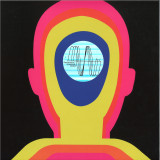
Indrajala comes sheathed in a limited edition full-color printed embossed and custom-cut hansaboard sleeve adorned by an artwork painted by @nieidda in collaboration with Rambadu.
Early support by Abstract Division, Ben Buitendijk, Brando Lupi, Forest Drive West, Svreca, Atomic Moog, Deepbass, Ness and Primal Code to name a few.
out of Stock
Last delivered 3 years ago available to reorder, subject to availability
She not only popularized fado throughout South America, she reinvented it; singing material that moved far beyond the traditional tales of failed romance to explore instead the deepest crises of the soul and spirit.
Limited edition audiophile pressing on 180gram premium vinyl.
Thanks to her, an internationally unknown folk music like Portuguese fado became a medium of universal expression known throughout the world. This collection includes some of her greatest hits, including such perennial classics as
"Uma Casa Portuguesa", "Ai Mouraria", and the unforgettable "Coimbra", also known as April in Portugal.
AMÁLIA RODRIGUES, vocals, with:
Jaime Santos - Portuguese guitar, Santos Moreira - Spanish classical guitar, Domingo Camarinha - Portuguese guitar, Castro Mota - Spanish classical guitar,Raul Nery - Portuguese guitar,José Nunes - Portuguese guitar. Orchestra conducted by Frederico Valério.
Sessions recorded between 1951 and 1962 in Lisbon Paris, and London.
Over the last half decade, the music collective Constant Smiles has produced a prolific output of acclaimed music, culminating in their forthcoming record Kenneth Anger, masterfully brought to life by engineer Jonathan Schenke (Parquet Courts, Liars, Dougie Pool). The group is known most recently for their much-praised debut album for Sacred Bones records, Paragons, an emotionally resonant offering of indie folk masterpieces that all confront the internal ways we process our struggles with intimacies, addiction and humanity produced by Ben Greenberg. Constant Smiles' primary singer/songwriter Ben Jones uses the creative process as a tool for working through deeply transformative periods in his life. The band's indie folk music lays bare this internal process, but on Kenneth Anger, the music shifts to synth pop and looks externally, examining creativity, community, ritual, and their place in the healing process. Ritual takes a primary role in the eponymous Kenneth Anger. Not only is auteur Kenneth Anger himself known for his sensorial depictions of ritual, Jones often used the films as a silent visual back drop during his song writing sessions, a ritual that grounded the creation of the album. And while the director's use of saturated color inspired the warm `80s synth style production, the director's trailblazing spirit of authenticity also pushed Jones through his most vulnerable expression to date. While the narrative undertones of the songs deal with fear and isolation and anxiety, the songs themselves were created through the healing process of ritual, and enriched with collaboration, community and trust. The resulting music produces a balm that can genuinely recalibrate the nervous system. The listener journeys through the depths of every track while being lifted and guided by the music's transformative, hypnotic power and this illustrates one of the foundational accomplishments of the album. Just as a Kenneth Anger film explores the underbelly of the unconscious through often soothing visuals, Kenneth Anger the album conjures the underworld into a series of synth pop classics.
American singer-songwriter, poet, and photographer Thomas Meluch, known musically as Benoît Pioulard, returns with his most structured and vocal release to date. Titled »Eidetic,« a word denoting the ability to recall mental images with extraordinarily rich precision, the album presents unprecedented clarity and vitality for Benoît Pioulard. To access its thematic ground, Meluch looked inward with an affinity towards the people he loves during a period marked by his move from Seattle to Brooklyn in 2019. The resulting work engages with the universe's unflinching mortality and, as he says, »the ways it has modified and improved my relationships, especially with family.« Embodied by the creek, leaves, and ferns of the cover photography — taken in Michigan’s Burchfield Park, where he and his dad used to hike and »muse on existence« — the music glistens and unfurls with the flow of life he’s come to know. »Eidetic« is the culmination of Meluch's craft both as a producer and writer. An evocative sonic vocabulary meets deft lyrical introspection, articulated with the nuance, vulnerability, and confidence of a longtime artist hitting a stride.
Meluch has continually refined, redefined, and adjusted the focus of his gentle pop project over the last 20 years. Recorded primarily with guitar, tapes, and voice — and spanning labels with albums for Kranky, Morr Music, Beacon Sound, and Past Inside the Present — his catalog flows seamlessly between ambient improvisation and pop composition. Much like the analog photos that often accompany his releases, songs can feel dreamily softened and distant, and others beautifully vivid and detailed. 2021 full-length »Bloodless« found Meluch deep in droning decay, expressive yet wordless. With »Eidetic,« he swings back to sharpened forms. Lush banks of treated guitar and synth brush against hushed percussion; there is mist in the distance, but everything up close is intricately constructed and radiant. Meluch's voice is notably forward in the mix — a warm and calming tenor, a harmonic coo more than a whisper — ever-observant and actively processing.
To record much of the album, Meluch filled a cabin in rural Maine with his usual setup of simple percussion, a couple of Fender electrics, and a parlor guitar made by his friend who does bespoke luthier work. The modest utility is what he knows best, and here he pushes the output to its most pristine potential.
»Eidetic« opens in a swirl of familiar haze; »Margaret Murie« eases listeners in, as lush and verdant as the landscapes conserved by its famed namesake. With the setting established, Meluch, the narrator, enters the foreground with »Crux,« a tender piece written about finding new motivations in a new city. »We covet this rare green hue / Here at the farthest point from home,« he sings above a reassuring pattern of strums and percussion. Meluch's prose shines on the swiftly-moving »Nameless,« inspired by the neurological effects that came with the antiquated practice of manufacturing mercury mirrors; »folks would slowly go insane while looking into their own reflections every day,« he adds. The idea informs a series of surreal abstractions before everything drops out in the final minute, and we are left free-floating in eerie nothingness.
Across the album, labyrinthine lyrical ponderings scatter with dazzling imagery, artfully blurring scenes from world history with Meluch's more personal, present-day. The propulsive and earnest »Thursday Night« catches his mind overly active and too stoned, riffing on black holes and songwriting itself. »Halve« references the splitting of the atom, what he considers »the beginning of man's downfall,« and the unrealized initiative proposed by the US government that would have created 'nuclear refuges' in its national parks. Meluch's loved ones weave throughout; »Tet« holds his father's experience in Vietnam and its lasting effects. »Lillian Isola« touches on his maternal grandmother's spinal curvature, and »Pastel Dust« navigates the wake of his cat, who died on New Year's Eve 2020.
At first blush, Meluch's atmospheric and melodic sensibilities resonate purely in their own right. Upon closer meditation, his ability to render stories — many of which surround human tragedy, misfortune, and understanding — through the prism of his poetry makes »Eidetic« even more rewarding.
“On this, their second LP, P16.D4 solicited tapes from several artists from Europe, England, the U.S., Canada, and Japan, and mixed that with their own material. Though in the current digital age collaborations from artists thousands of miles apart is quite normal, this was a quite radical approach back in 1982, when work on this LP began – an interesting concept that actually works quite well, since these artists, which include Bladder Flask, DDAA, the Haters, Merzbow, Nocturnal Emissions, Nurse With Wound, and several others – work in a similar free-ranging experimentalism as P16.D4, and their particular elements, usually just vocals or one instrument or noise implement, blend well without diluting P16.D4’s own peculiar brand of avant-garde post-industrialism, but merely give it another facet. One of the best tracks, “Aufmarsch, Heimlich,” consists of a choir submitted anonymously from Eastern Europe phasing in and out of static while a skronky alto sax bleats away. Most of the pieces exist somewhere just beyond the borders of free jazz, industrial, and even classical avant-garde, full of jarring noises and strange transitions and with a heavy overlay of electronics. What started out as an experiment yielded one of P16.D4’s best albums.” - Rolf Semprebon / AMG
“Distruct is organized around sounds provided by the cream of experimental musicians of the early ’80s, from Nurse With Wound to Nocturnal Emissions, via De Fabriek, Die Todliche Doris, The Haters, Merzbow, and others. Obviously, there is no question of remixing here, and at no time do P16.D4 seek to hide its sources, clearly identifying the contribution of each artist in the liner notes. It would be futile to try to find the paw of each artist, the trio operating vis-à-vis its collaborators the same methods as in their own work. Reworked, distorted by various effects, cut, edited, aggregated with other sounds, produced by P16.D4 themselves, reprocessed. Exchange, communication, two other data that will constantly recur in the work of P16.D4, rich in external contributions and encounters of all kinds. Musically, and despite the diversity of sources treated, Distruct escapes the heterogeneous character, which often marks this type of collaboration, to offer a coherent whole: fragments of opera, Soviet speeches, out-of-tune guitar, saxophone, tattered violins, overdriven and metallic noisy attacks, jackhammers, field recordings, battered choirs, and many other less identifiable sounds. In addition to the desired dialogue between the artists, Distruct also offers a real reflection on listening, and on the expectations of the listener.” - Dissolve
P16.D4 was a German electronic noise music collective, active primarily from 1980 to 1988. P16.D4 embraced tape cut-ups, musique concrète, endless recycling and transformation of previously published material, and many long-distance collaborations with like-minded artists such as DDAA, Vortex Campaign, Nurse With Wound, and Merzbow. Their active participation in the international industrial tape scene yielded collaborative output such as their release Distruct, where bands such as Nurse with Wound, Nocturnal Emissions, Die Tödliche Doris, and The Haters provided the source material. The longest-term collaboration was with the installation and conceptual artist Achim Wollscheid, who used P16.D4 sounds as the basis for LPs he recorded under the name SBOTHI. Ralf Wehowsky, the only constant member of the group, later released solo material under the alias RLW.
Members of P16.D4 were also involved with Selektion, a collective of people involved with sound as well as the visual arts. Selektion published LPs, CDs, books, visual art and design.
The collective worked in a strongly improvised, spontaneous and anti-professional way, using acoustic and electronic instruments, using existing sound fragments, duplicating and alienating them, using repetition, distortion, changes in speed and playing direction. For this they used not only sounds of other artists but also their own material from earlier productions. Late works of the collective are associated with musique concrete.
“This music is staggeringly original and innovative, and while it’s possible to locate it in a chain of circumstance that links it to ‘Industrial’ music, P16.D4 indulged in none of the empty cliches associated with the genre, worked incredibly hard, and seem to have been aiming at a form of sound art that was much more profound, varied, subversive, and potentially dangerous. Kuhe In 1/2 Trauer’s accompanying credits indicate their radical approach to making music: lots of improvisation, lots of live electronics, extensive use of tape-loops, some conventional instrumentation, and much that isn’t – like the milk churn on ‘Paris, Morgue’ or the use of baking tray and washing machine elsewhere. Even when guitars, drums or keyboards are used, they’re played very weirdly. It’s not even made clear who was doing what; the main credit is ‘Concept,’ which I assume means that one of the three devised the framework in which the noise would operate itself, and while RLW gets the lion’s share of these credits, a lot of the cuts are evenly divided among the team and I have no doubt that the group operated in a very democratic or libertarian manner. None of this prepares you for the insane and troubling sounds that reach your ears, composed with scant regard for conventional logic and following an exciting, absurdist path, especially in the matter of tape edits and juxtapositions of recordings.” - Ed Pinsent, The Sound Projector.
“Though this German group started out as a the new wave band P.D., by the time of Kuhe in 1/2 Trauer, their first LP under the P16.D4 name from 1984, they had developed far beyond into extremely experimental music similar to other post-industrial artists working with abstract avant-garde soundscapes. There’s a bleak industrial feel to the gritty, lo-fi electronics and tape loops, while the group throws in enough curve balls to keep it interesting. On some pieces, strange, looped choirs bubble out of throbbing pulses and drones of feedback, while others have clanging and clattering, and elements of musique concrète and improvisation blur the boundaries even further. The opening track, “Default Value,” is one of those disorienting pieces with noises flying everywhere, while “Paris Morgue” takes excerpts from one of their old P.D. tracks and messes it up with additional instruments, while the ungainly titled fourth track throws in a heavy texture of percussive noises to create an edgy ambience about to teeter off the edge, and the even darker and more ambient title track takes the tension even further. Arrhythmic and amorphous and capable at moments of becoming quite noisy and abrasive, while at others far more somber and quiet, Kuhe in 1/2 Trauer is quite a fascinating release.” - Rolf Semprebon / AMG
P16.D4 was a German electronic noise music collective, active primarily from 1980 to 1988. P16.D4 embraced tape cut-ups, musique concrète, endless recycling and transformation of previously published material, and many long-distance collaborations with like-minded artists such as DDAA, Vortex Campaign, Nurse With Wound, and Merzbow. Their active participation in the international industrial tape scene yielded collaborative output such as their release Distruct, where bands such as Nurse with Wound, Nocturnal Emissions, Die Tödliche Doris, and The Haters provided the source material. The longest-term collaboration was with the installation and conceptual artist Achim Wollscheid, who used P16.D4 sounds as the basis for LPs he recorded under the name SBOTHI. Ralf Wehowsky, the only constant member of the group, later released solo material under the alias RLW.
Members of P16.D4 were also involved with Selektion, a collective of people involved with sound as well as the visual arts. Selektion published LPs, CDs, books, visual art and design.
The collective worked in a strongly improvised, spontaneous and anti-professional way, using acoustic and electronic instruments, using existing sound fragments, duplicating and alienating them, using repetition, distortion, changes in speed and playing direction. For this they used not only sounds of other artists but also their own material from earlier productions. Late works of the collective are associated with musique concrete.
Since the late aughts, Helsinki-based multi-instrumentalist, linguist, and skateboarder Olli Aarni has released a steady stream of diverse and remarkably consistent recordings via labels such as Mappa, Longform Editions, Cotton Goods, Laaps and Superpang. “Koko maailma” constitutes a major new work in his discography, finding a fertile middle ground between what might be understood as his two primary compositional modes: organic/chaotic/aleatoric music and rule-based, longform works of minimalism. The source material for these compositions was recorded exclusively using the Serge system at EMS Stockholm, but the timbres that Aarni arrives at do not recall archetypal Serge music as most know it. Meticulous editing and processing of the material with an array of digital tools has resulted in music that preserves the erratic and cybernetic character of the Serge system but sounds totally unique unto itself. The first piece, “Ylhäällä,” has the sonic character of fireflies at dusk or ants in the dirt — mercurial, hypnotic, flittering, and scattering tones presented in the spirit of the best environmental music. “Alhaalla” functions almost like a zoomed out impression of what precedes it, with just intonation tuning applied to sine wave generators to create grid-like, harmonically rich, and surprisingly emotive drone music. Micro and macro — two pieces of music, two perspectives of a world.
out of Stock
Last delivered 3 years ago available to reorder, subject to availability
Initial LP copies pressed on opaque red vinyl! As its name suggested, the intimate and sultry Cuntry Covers Vol. 1 was always going to have a follow-up. Led by the brooding vocals of Bria Salmena, Cuntry Covers Vol. 2 is every bit as potent as its predecessor whose noir-inflected alternative country-rock stood in sharp contrast to the singer's commanding delivery as leader of post-punk revivalists FRIGS. Debuting the project in 2021, the languid, reverb-drenched Cuntry Covers Vol. 1 saw her artfully collaborating with multi-instrumentalist Duncan Hay Jennings and reimagining a carefully picked collection of Americana anthems. Vol. 2 pushes the envelope further and harder. Encompassing feverish takes on tracks by Gillian Welch, Paula Cole, Mary Margaret O'Hara, Robert Lester Folsom, Glenn Campbell - by way of Nick Cave - and the late, great Loretta Lynn, Bria's deliciously dark approach shimmers through these six startling songs. Created during a break from Salmena and Jennings' work in Orville Peck's world-conquering backing band, Vol. 2 was recorded directly after Peck's second album and Bria's US tour supporting Wolf Alice. Embracing contrast, the sunny circumstances in which Vol. 1 was made were flipped on their head. Instead of a bucolic barn in the Canadian countryside, they recorded the new tracks in chilly Toronto, huddled together in their tiny makeshift home studio, with Jennings at the controls. They enlisted the help of local Toronto musicians Lucas Savatti (FRIGS), Simone Baril (US Girls, The Highest Order, Darlene Shrugg, Partner), Andrew Manktelow, and frequent collaborator Jaime Rae McCuaig. While Vol. 1 was Bria's attempt at subverting country music's conservative roots and primarily white and heterosexual agenda, here the emphasis was on experimentation. While Vol. 2 might be less personal, it's just as idiosyncratic, with half of the reversions staying true to the originals and others taken to a different universe entirely. Building on the tried-and-true/bold-and-new duality of Cuntry Covers' first offering, Vol. 2 delivers a deeper dive into the duo's brilliant alchemy of traditional and contemporary reinterpretations. The added experimental flourishes, from dizzying electronica and pulsing bass to sax-driven soul, take Bria's new EP into previously uncharted territory, signalling a thrilling new step in Bria's adventurous evolution.
The title, nature morte, is the French term for still life paintings whose literal translation is "dead nature." BIG|BRAVE color the songs of nature morte with unease, creating an air of beauty in decay, chords suspended in contemplative stillness. Robin Wattie"s experiences structuring lyrics and song forms on The Body & BIG|BRAVE"s Leaving None But Small Birds informed her work on nature morte, creating stories that, like many folk tales, are at once specific and universal. Wattie"s voice manages to be commanding and vulnerable with impressive range and intimacy. Even her gasps carve their way through the tidal crash of Mathieu Ball"s distortion wail and the pummel of Tasy Hudson"s drums. The momentum of nature morte conjures the image of a beast collapsing beneath its own weight before resiliently staggering upright to thunder onward. BIG|BRAVE convey heft from silence as deftly as they do from swaths of feedback and distortion to cathartic ends. "Distortion is key," notes Ball The three members recorded primarily live over the course of a week at Machines with Magnets with Seth Manchester, pushing the potential of their instruments beyond expectations. For each song, the trio"s songwriting and attention to detail deliver its simple but devastating emotional power. Across the album"s six pieces BIG|BRAVE create a tension between immediacy and patience, invoking the essence of disquiet, while conveying anguish through inventive arrangements and nuanced performances. nature morte captures BIG|BRAVE at their heaviest and their mournful fury is at its zenith, an album where each moment is so immense and consuming that it possesses its own gravitational pull.
The title, nature morte, is the French term for still life paintings whose literal translation is "dead nature." BIG|BRAVE color the songs of nature morte with unease, creating an air of beauty in decay, chords suspended in contemplative stillness. Robin Wattie"s experiences structuring lyrics and song forms on The Body & BIG|BRAVE"s Leaving None But Small Birds informed her work on nature morte, creating stories that, like many folk tales, are at once specific and universal. Wattie"s voice manages to be commanding and vulnerable with impressive range and intimacy. Even her gasps carve their way through the tidal crash of Mathieu Ball"s distortion wail and the pummel of Tasy Hudson"s drums. The momentum of nature morte conjures the image of a beast collapsing beneath its own weight before resiliently staggering upright to thunder onward. BIG|BRAVE convey heft from silence as deftly as they do from swaths of feedback and distortion to cathartic ends. "Distortion is key," notes Ball The three members recorded primarily live over the course of a week at Machines with Magnets with Seth Manchester, pushing the potential of their instruments beyond expectations. For each song, the trio"s songwriting and attention to detail deliver its simple but devastating emotional power. Across the album"s six pieces BIG|BRAVE create a tension between immediacy and patience, invoking the essence of disquiet, while conveying anguish through inventive arrangements and nuanced performances. nature morte captures BIG|BRAVE at their heaviest and their mournful fury is at its zenith, an album where each moment is so immense and consuming that it possesses its own gravitational pull.
Canto Ostinato is the new volume of classical minimalism from musician and producer Erik Hall. Written for four pianos in 1979 by Dutch composer Simeon ten Holt, the piece is freshly framed as an intimate, hour-long solo performance consisting of multitracked grand pianos, electric piano, and organ. Modern yet warm, ethereal yet tangible, Hall's Canto Ostinato expertly bridges a revered piece of meditative concert repertoire with a tactile and highly personal studio setting. Chicago-born and Michigan-based, Erik Hall is known as a multi-instrumental pillar for the groups NOMO, Wild Belle, and his own songwriting moniker In Tall Buildings. He has composed music for feature films, and as a producer/engineer he has shaped records for Natalie Bergman and Western Vinyl labelmates Lean Year. In a 2020 creative pivot, he chose to reinvent composer Steve Reich's monumental contemporary classical masterpiece Music for 18 Musicians as a solo undertaking, applying the piece's score to the familiar keyboards, guitars, and synthesizers in his studio. "At the time I think I was working through my identity as a musician and an artist," Hall explains, "and on a level there was some sort of exorcism of a long held pop spirit." The album was celebrated for being "freshly thrilling" and "legible in history but assertive of the moment" (Pitchfork) and "beguiling, meditational, and magical" (Electronic Sound). It won the 2021 Libera Award for Best Classical Record, and it quickly joined the canon of the piece's quintessential recordings. "There is a pseudo-meditational benefit to working on a longform piece that's built on repetition," Hall says. "Every stage- from internalizing the music, to executing the performance, to editing and mixing the record- requires deep and sustained presence of mind. I've always been drawn to a hallucinatory combination of harmony and repetition, and I found the entire process addictive." An apt second chapter, Canto Ostinato is inherently vast, and its score gives great creative license to the performer. Comprising 106 sections, complete freedom is given to repeat each one as many or as few times as desired. Additional leeway is given with regard to dynamics, articulation, and even instrumentation. On the heels of his previous, rather maximal arrangement, Hall chose to limit this album's palette to three foundational keyboards of his studio: a 1962 Hammond M-101 organ, a 1978 Rhodes Mark I electric piano, and his family-heirloom 1910 Steinway grand piano. "This particular piece brought the added challenge of rekindling my dexterity as a pianist, something I haven't maintained in earnest since I was a teenager," he admits. The ensuing five-note rhythmic motif- the piece's primary building block- is steady and workmanlike, forgoing virtuosic flare for depth, texture, and resonance, and eventually giving way to the stunning gratification of a gorgeously lyrical left turn. As with Music for 18 Musicians, Hall employed no loops nor quantization nor any programmed or sequenced instruments of any kind. Every part was performed live in a room and captured with microphones, one at a time, each informed by, and reacting to the last. In this way the record breathes with interplay and an organic humanity, complete with flaws, noise, and the faint sound of turning pages. The recording quality is nonetheless toneful and saturated, characteristic of Hall's production style and straying from the usual transparency of classical albums by using gear with tubes, transformers, and various stages of compression in the signal path. Always there is unmistakable realism and the feeling of being present in the room, sitting among the keys, hammers, and tines. Ten Holt said: "Time, patience and discipline are the prerequisites for making a genetic code productive." His landmark composition provides Hall once again with a wondrous space in which to reverently embody this sentiment and deftly convey the elegant beauty of this music.
The 2LP Great Moments With documents the music of Pharoah Sanders from 1983 to 1990, showcasing both the raw energy and tender nature of his music. It contains 12 of his recordings, including “Africa”, “Naima”, “You’ve Got To Have Freedom” and also the previously unreleased version of “Central Park West”. Featured guest musicians are John Hicks, Idris Muhammad, Curtis Lundy, Benny Golson, Cedar Walton, Ron Carter and more jazz masters. For this compilation, Bret Primack has written new liner notes and Timeless Records founders Ria and Wim Wigt here share additional great moments from Sanders’ sublime work.
Great Moments With is available as a limited edition of 1500 individually numbered copies on translucent blue coloured vinyl, housed in a gatefold sleeve.
Dirty Mind, Prince's third studio album, originally released on Warner Bros in 1980 and now re-issued for the first time by Rhino with original content.
Produced, arranged, and composed primarily by Prince, it incorporates musical elements of funk, dance, and rock music. In 2003, the album was ranked number 204 on Rolling Stone magazine's list of the 500 greatest albums of all time.
out of Stock
Last delivered 2 years ago available to reorder, subject to availability
Musique Pour La Danse is proud to present the Donkey Kong Country 2 OST Recreated of the much appreciated and globally followed Donkey Kong Country OST recreation project led by NY-based composer and producer Jammin’ Sam Miller.
Using hex SPC data crudely converted to MIDI, Jammin' Sam Miller painstakingly recreated DKC's soundtrack note by note, by finding the original equipment used to create it, translating the MIDI into a modern studio context, adding in keyboard samples, and re-mixing the sounds with added effects and mastering. To find out more about his process watch an explanatory video here: cutt.ly/ulUHE6J
Remastered for vinyl, licensed, and presented in a limited edition green forest double LP.
out of Stock
Last delivered 2 years ago available to reorder, subject to availability
American dancehall vocalist Sluggy Ranks was part of a growing dancehall movement in the '90s which emphasized cultural roots and positive messages instead of "slack" artists' obsessions with sex and violence. Ranks was born in Kingston and grew up in its Ray Town section, attending the same primary school as Wayne Wonder. Ranks began his singing career in the mid- to late '80s, coming to the U.S. to record the beginning of a series of Jamaican hit singles that included "95% Black 5% White" and his signature song, "Ghetto Youth Bust." Ranks later re-recorded both songs for his full-length 1994 album, Ghetto Youth Bust, which was produced by King Jammy and issued in the U.S. on Profile Records. While the majority of Ranks' most significant output through the '90s was largely issued on singles (and thus not very accessible to most American listeners), he also cut albums like Just Call Sluggy and 1999's My Time.
There are two versions - 180g black vinyl and color vinyl version - limited to 100 copies and each vinyl has a different color. All versions has booklet inside with the special artwork dedicated to each track from teh album.
Things don't always go your way, especially when your plans involve space travel. In the case of Captain Harrison Focus's expedition, it started innocently, but no one was prepared for an emergency landing on the mysterious planet Carmin. Only then did the real fight for survival begin. This record tells the story of a dangerous expedition into space that began on February 6, 2023.
Twoosty Mayonez consists of Bartosz Wolert (drums) and Dominik Kaniewski (bass guitar and synthesizers). "Carmin" is their debut album, which is released primarily on vinyl by U Know Me Records.
Formed in 2007 in the Dolomite Alps region of Italy with a deep admiration for their native country’s hardcore punk luminaries in La Quiete and Raein, as well as eighties and nineties cult heroes in Negazione, Wretched and Indigesti. STORMO’s steady rise from unassuming beginnings has been one of consistently stirring song writing. Having amassed over 400 shows across Europe and the UK - including support slots to Converge, Full of Hell and La Dispute, as well as appearances at Fluff Fest - STORMO’s next chapter sees the band fully come of age. Lyrically, Endocannibalismo was written entirely in the band’s native tongue; partly as a byproduct of the albums nocturnal and instinctive writing process and partly in honour of their history as a band. Recorded and mixed by Giulio Favero (Zu) for mixing before being placed in the hands of Giovanni Versari at La Maesta for mastering, Endocannibalismo’s 11 tracks possess a crystalline clarity to service STORMO’s surging blastbeats, spiralling rhythms and noise punk cacophony, whilst staying true to the each songs deep seated primal nature. Seeking to tie together the whole process visually, STORMO took to artificial intelligence when creating Endocannibalismo’s art. Utilising specific prompts, the AI render was put through stages of mutation before culminating in its final form. A haunting graphic representation of living beings in a state of constant death and rebirth.
Originally Released in 1999, this much sought after package is back with new art and a suave ass gatefold jacket! Beginning their career as a Midwestern garage band, the Dwarves made an abrupt change once they moved to San Francisco, maintaining their recklessness, but getting faster and faster. Free Cocaine traces the arc of that development, collecting singles, demo tracks, and other sessions from that time period, beginning with the Lucifer's Crank EP, and progressing onward. Most early tracks betray tremendous musical inadequacies -- at this point, the Dwarves were hardly the polished pop-punkers they would become by the time they signed to Epitaph. Nonetheless, even this raw material has plenty of catchiness, playing ability issues aside. The album also collects compilation cuts like "Lesbian Nun" from the Amrep compilation Dope, Guns, and Fucking in the Streets and singles all the way up through the late '90s on Man's Ruin. Though known primarily for their hard-living, and reckless violence at shows, with most sets clocking in under 20 minutes, the Dwarves, at this juncture, were the best in the underground rock world at what they did: cooking up fast-as-hell, catchy, raunchy hardcore punk. (allmusic). Mixing Lucifer's Crank, Toolin' For a Warm Teabag and other early Dwarves singles, EPs and unreleased tracks this is the noise rock Dwarves at their most untamed. Zero production value, maximum profanity. Hits include Eat You To Survive, Fucking Life and Dead Brides in White.
Killer shit from Flore - Tip for fans of Simo Cell, Ploy, Metrist and Batu
After the widely acclaimed "Rituals" album released in April 2020, Flore is now back to the cherished area of banger engineering with a four packer of original compositions to be unleashed this spring 2022 on her own POLAAR imprint.
The project’s title itself shows clearly what her program is all about : "Legacy & Broken Pieces" has to be seen as a cruise into the anterior future rather than a trip down memory lane. Following this mantra, it’s more than clear that her music does not constitute a tribute to any previous club music history, but has to be seen as a true proposition of sonic innovation and moving paradigms.
"I'm tired of the nostalgia that can be found in electronic music nowadays. With everything that is going on right now, the world will never be the same. Then why should music has to be so ?" says Flore.
Thus, she offers to rework this legacy with her very own vision of sound wizardry, providing a wide range of sonic textures to fulfill this forward goal of breaking patterns within the electronic continuum. Yet another proof of Flore’s skills for always trying to innovate and never repeat herself.
“Disruption” echoes an aerial jungle of the former century while “Fiery Principle” rides Jamaican waves of bass soon dynamited by minced voice samples evoking a soul goddess from the 90’s. The upbeat intro of “The Switcher” leads us towards a choir of drums navigating various black rooted rhythm traditions, but tripping into a very refined and spatial production effort. The records ends with “Primary Mineral”. Its rough and matte sound seems to drill into a wall of fragmented beats racing towards an elusive end, suggesting another musical adventures to be revisited soon…
out of Stock
Last delivered 3 years ago available to reorder, subject to availability
WRWTFWW Records is proud to announce a brand new album by Irish producer Gareth Quinn Redmond, following his amazing Satoshi Ashikawa-Inspired Laistigh Den Ghleo released in 2019. Umcheol, his ambient-meets-Irish-traditional-music soundscape is available as a limited edition LP (500 copies worldwide) housed in a 350gsm gatefold sleeve with a superb triptych of paintings by Irish artist Conor Campbell. The album comes in digital format as well.
A splendid pairing of Irish folk instruments (harp, tin whistle, fiddle, harmonium) with synthesizers, Umcheol tells the tragic yet beautiful tale of two legendary figures of Irish mythology, Cú Chulainn and
Ferdiad. The 40+ minute ambient narrative is a subtle and touching alliance of past and present, tradition re-contextualized and retold with a modern approach.
Gareth Quinn Redmond explains: "For the longest time, I have desired to blend elements of both ambient and Irish traditional music. Umcheol - Cú Chulainn agus Ferdiad, is the first in a series of works that seeks to coalesce these two palettes of sound. The primary focus of this album was to begin using traditional instruments such as the harp, tin whistle, fiddle and even the harmonium, which in recent times has become commonly used in Irish folk music. By pairing these instruments with synthesizers, I hope to create a soundscape that gives new agency for the stories of my culture to be realized and retold."
Very personal and delicately visceral, Umcheol is a contemplative journey that will resonate with fans of Japanese environmental music, minimalism, folk experimentations, and mythological soundtracks.
Gareth Quinn Redmond’s previous album, Laistigh Den Ghleo, an ode to the work of Satoshi Ashikawa is still available on WRWTFWW Records - perfect time to re-visit!
out of Stock
Last delivered 3 years ago available to reorder, subject to availability
Following up on reissues of the 2000 compilation »Multila« and 2001’s »Anima,« Sasu Ripatti has thoroughly revisited the classic »Whistleblower« for its first ever vinyl issue on the German Keplar label. Ripatti created entirely new mixes of previously unheard-of alternative versions of the tracks that first appeared on CD through his own Huume imprint in early 2007. He thus shines a new, different light on a record that was as much an expression of reaching a turning point in his life as it also showcased a new, more direct and perhaps more abrasive side of his Vladislav Delay project. »Whistleblower« was marked by the insertion of more noise and disruptive elements into Ripatti’s slowly moving take on intricate electronic music that heavily leaned on dub techniques. Fittingly for an album written at the threshold between one life and the other, »Whisteblower« seems at once melancholic and forward-looking in both tone and style.
»Whisteblower« was the follow-up record to 2005’s »The Four Quarters« and produced in the German capital. »I had quite a hard time in Berlin towards the end and I'm sure the track titles and the music reflect some of that uneasiness,« Ripatti says 15 years later. Changes in his personal life had a profound impact on him when making the record. The fifth track, »Lumi,« was dedicated to his daughter who was born shortly after the album was finished. »I had to reconsider what my life had been,« he recalls this watershed moment in his biography. Having already previously embraced a sober lifestyle—hinted at with the last piece’s title, »Recovery IDea«—Ripatti started questioning his life choices more thoroughly. This is also expressed in »He Lived Deeply,« a track inspired by Miles Davis’s love for Duke Ellington whose title can be read as an implicit question that Ripatti nowadays paraphrases thusly: »Had I been living fully, or fully not living?«
The seven tracks also marked a musical turning point in Ripatti’s work as a producer, not only because it was the last one for which he primarily used analogue and vintage equipment. They are also more straightforward on a music level, more demanding and at times more concerned with subtle rhythms than with the thick textures that were so integral to his earlier work. »Whisteblower« represented the first step in a process of focusing less on sonic abstraction and more on direct (self-)expression. While Ripatti admits that he found working on the album difficult back then, he also points out that he was surprised to hear how »gentle and peaceful« it sounded when he started revisiting the original files he used as a basis for these newly mixed versions. »It probably proves how much more comfortable I had become with sound.«
out of Stock
Last delivered 4 months ago available to reorder, subject to availability
For Dancer Only ist die legendäre Clubnacht von Bill Kealey, dem ebenso trinkfesten wie umtriebigen Sammler und Jäger aus Dublin. Quasi jedes Wochenende ist er mit seinem 7"-Vinylkoffer unterwegs und beglückt die Massen. Da er das schon ein paar Jahrzehnte macht, gehört er zur absoluten Champions League derer, die sich mit Rhythm & Blues der 50er und all seinen Spielarten beschäftigen. Dies ist seine erste Compilation und wir behaupten, dass es eine der Besten ist, die Stag-O-Lee je veröffentlicht hat.
Somebody’s Child has quickly established himself as a voice at the forefront of the new music scene in Ireland. Early support slots in Dublin with the likes of Kodaline, Primal Scream, and Kaiser Chiefs, as well as national radio play and an appearance on the nation’s beloved Late Late Show all acted as vindication for Cian Godfrey holding back the unveiling of SC until the relatively late age of 23 - he had honed his craft and formulated a clear message ahead of time. Newly signed to cult label Frenchkiss Records, Godfrey now announces his self-titled debut album out 3rd February 2023 which has its roots in Godfrey’s formative years growing up in Dublin and the experiences that went with that. It was recorded at East London’s Hackney Road Studios with the producer Mikko Gordon (Arcade Fire, The Smile).
Brainwave research center is a new project from NYC-based house/techno producer, Chase Smith (W.T. Records, Apartment, is/Was), & documentary filmmaker, Christa Majoras (School of Visual Arts).
Conceived together over two years as musical thought experiments, brainwave research center’s debut album, figure 1, contains a genre-bending distillation of influences from experimental music (Steve Reich, Laurie Spiegel, Black Dice), 1990s ambient techno (The Orb, Pete Namlook/Fax Records), and Motorik/Kosmiche/Krautrock (Kraftwerk, Suicide, Manual Gottsching).
The songs embrace a raw, naive approach to sound design, instrumentation, and technical production to capture the feeling of experimentation of the works they are inspired by. Described by listeners as a mixture of Electronic, ambient, and kosmische/krautrock.
Recorded and produced in Greenpoint, Brooklyn in the back of Smith’s synthesizer/electronic repair shop, Specs Sales & Repair, Figure 1 is the first in a sequence of 4 works to be released.
Made primarily with TR-606, OB8, SH-101, MS-20, Fizmo, H3000, SDE-3000
out of Stock
Last delivered 3 years ago available to reorder, subject to availability
Meg Baird’s songs are rarely made up of tidy stories. In fact, for Meg, mystery itself is often the
medium. With ‘Furling’, Meg’s fourth album under her own name, she explores the breadth of
her musical fascinations and the environments around them - the edges of memory,
daydreams spanning years, loose ends, loss, divergent paths, and secret conversations under
stars. ‘Furling’ moves through these varied spaces with the slippery, misty cohesiveness of a
dream - guided by an ageless, stirring voice that remains singular and unmistakable.
Since co-founding the beguiling and beautiful Espers in the mid-aughts amid Philadelphia’s
fertile underground music community, Meg’s solo recordings have constituted just a fraction of
her work.
Her first solo LP, the disarmingly out-of-time ‘Dear Companion’ (2007), saw her carve a quiet,
sunlit space away from the flickering swirl of Espers. Since her last solo releases, ‘Seasons on
Earth’ (2011) and ‘Don’t Weigh Down the Light’ (2015), Meg has lent thunderous drumming,
lead vocal, and poetry to Heron Oblivion (Sub Pop) on an album that garnered praise from the
New York Times and made Mojo’s Top Ten Albums Of 2016 list. She collaborated with harpist
Mary Lattimore on the mesmerizingly hazy ‘Ghost Forests’ (2018). She’s played drums with
Philadelphia scuzz-punks Watery Love (In The Red, Richie Records) and explored her deep
familial folk roots in the Baird Sisters (Grapefruit Records). She also contributed her vocal
arrangements to albums from Sharon Van Etten, Kurt Vile, Will Oldham and Steve Gunn, and
toured with Angel Olson, Dinosaur Jr., Bill Callahan, Thurston Moore and Bert Jansch, among
others.
Yet ‘Furling’ is the album that most irreverently explores the span of her work and musical
touchstones. It showcases her natural tether to 1960s English folk traditions. But it also reveals
her deep love for soul balladry, the solitary musings of Flying Saucer Attack and Neil Young
shackled to his piano deep in the foggy pre-dawn, dubby Bristol atmospherics, the melancholy
memory collage of DJ Shadow’s ‘Endtroducing’, and the delicious, Saturday night promise of
St. Etienne.
‘Furling’ was primarily recorded at Louder Studios by Tim Green (Bikini Kill, Nation of Ulysses,
Melvins, Wooden Shjips). Additional piano and vocal recording were captured at Panoramic
Studios in Stinson Beach, CA with Jason Quever (Papercuts). It was mastered in Brooklyn by
Heba Kadry, who mixed Bjork’s ‘Utopia’ and mastered albums for Slowdive, Cass McCombs
and Beach House.
For all its adornments, ‘Furling’ remains deeply intimate. The entire album was performed by
Meg and her long-time collaborator, partner, and Heron Oblivion bandmate Charlie Saufley.
While her prior solo work hinted at more expansive horizons, ‘Furling’ explores the idea of Meg
Baird as a band much more freely. Venturing beyond the musical confines of fingerstyle guitar,
she plays drums, mellotron, organs, synths, and vibraphone over her piano and guitar
foundations. Her distinctive, simultaneously elegiac and uplifting vocals, meanwhile, connect
surreal dream montages, graft sunshine sonics to swooning mediations on romantic solidarity
in trying times, and weave odes to the simple gestures of friendship - and the loss of family and
friends.
This rich sound world makes the songs a varied bunch: ‘Twelve Saints’ mates Pacific sunset
ambience and Pink Floyd pastoral to a meditation on mortality and escape. The infectious and
kinetic ‘Will You Follow Me Home’ contemplates hope and longing through the looking glass of
a Jimmy Miller-era-Stones strut. And in the closing piece, ‘Wreathing Days’, language
disintegrates over tone clusters that feel somewhere between falling and flying.
‘Wreathing Days’ also reveals much about Meg’s mastery of contrast - situating the dear and
delicate adjacent to chaos. And while it’s true that some songs on ‘Furling’ grapple with
humanity’s existential unknowns in stark terms, they primarily revel in the mysteries that hide in
nature and humanity at their most ordinary. ‘Furling’ lives in the notion that whole universes of
experience, enlightenment, elation and ecstasy can bloom in these corners.
"We Belong Together" is one of the most iconic soul albums of all time, primarily thanks to the endurance of the timeless rare groove classic "Give Me The Sunshine". That song was composed by Johnny Simone at the time he was working with Stevie Wonder at Motown. Others in the group were Johnny Simone and Alvin Few, this trio all born under the Leo star sign. Kenny worked as a songwriter at Motown and lived in the same house as Marvin Gaye at the same time as "What's Going On". He co-wrote "Inner City Blues" but was only given a credit by Marvin some years later. Johnny Simone passed away before the album was fully complete which is why it's a mixture of fewer tracks but with additional versions. Alvin Few instigated the original released on Lyon's Records in 1978, the album later acquired by Expansion but not repressed for over a decade. This release restores the original label and is repressed on limited edition,
out of Stock
Last delivered 3 years ago available to reorder, subject to availability
Featuring Andre Innes, Martin Duffy & Darren Mooney of Primal Scream. “In 2018 after a particularly messy session involving Pacharan, a Spanish version of Pernod, the name and then there were four was bandied around as my fellow travellers fell by the wayside, sounded like a Spaghetti western…and the idea was hatched. We began recording in Artesonao studios in Malaga, myself and Ed Chapman, a renowned English artist, we were ably assisted by Rachel Hewitt on violin we recorded a dozen or so tunes in a week. We recruited the services of Darrin Mooney and Martin Duffy of Primal Scream on drums and keys, Andrew Innes of Primal Scream assisted on additional guitars, celeste and bells…lots of bells. Robert McGovern came out to Malaga to play on a few tracks also. We had the voice of Justine Petty – Burrows a Canadian chanteuse to be a foil to my less than acrobatic voice. The record was a return to my favourite music of my youth, soaking up Dylan, Scott Walker, Tim Buckley, Tim Rose, Tim Hardin and the soundtracks of Morricone, like an old compilation tape from 1986” – Sheer Taft 2022 Tracklist Side One 1.And then there were four 2.Everybody's been somebody's fool 3.Gypsy river 4.After midnight 5.The sun is ours 6.Mezcal dream 7.Four ride out Side Two 1.Enemigo de todos 2.Alegria 3.Chasing down a dream 4.The ghost 5.Time 6.Requiem for Pablo 7.(There goes) A friend of mine
out of Stock
Last delivered 3 years ago available to reorder, subject to availability
Factory Benelux presents a new 3 disc black vinyl edition of Harmony, the debut album by influential Scottish group The Wake. Originally released by Factory Records in December 1982, this new expanded edition marks the 40th anniversary of this landmark post-punk album.
The Wake formed in Glasgow in 1981 after singer/guitarist Caesar left Altered Images, and joined Factory the following year. Harmony was recorded at Strawberry Studios in Stockport with producer Chris Nagle (formerly Martin Hannett’s preferred engineer), by which time the group comprised Caesar (vocals, guitar), Carolyn Allen (keyboards), Steven Allen (drums) and Bobby Gillespie (bass). On release as Fact 60 the original 7 track mini album earned a 5 star review in Sounds magazine, hailed as the missing indiepop link between Factory and Postcard Records.
Bonus tracks on Disc 2 include The Wake’s dub-informed second single, Something Outside b/w Host, and also their John Peel session from July 1983 – the last recordings to feature Gillespie before his departure for The Jesus and Mary Chain and Primal Scream.
Disc 3 offers a desk recorded live set from Ayr Pavilion on 15 April 1983 during a tour with New Order. The concert includes several songs never recorded in the studio, including Recovery and Country of the Blind.
The enhanced trifold artwork for this new edition includes images of the band by noted photographer Paul Slattery, taken at the Mitchell Library in Glasgow, as well as new liner notes by Caesar. A 2xCD edition is also available (FBN 29 CD).
After releasing several further albums on Factory and Sarah Records during the 1980s and 1990s, The Wake returned to recording with A Light Far Out in 2012. A new studio album is expected in 2023.
Following an outing on celebrated Italian label Cosmic Garden, Dynamic duo XPRESSION ready their Low Battery debut with four expressive cuts of jungle laced magic, with deep roots in the quintessential era of rave.
'Nitebreak' moves effortlessly across five minutes of cosmic acid and contemplative rhythms; flickering street lamps lighting the nocturnal city as day turns to night. 'Quadranite' diverts to a steadier pace, its springy percussion, vocal samples and zero gravity grooves giving off the nostalgic energy of a homecoming
visit.
The B side opens with 'Sacred Sessions', a primal slice of breakbeat heaven. Ethereal pads spill out amongst earthy drums in a spiritual relationship between body and soul. 'Quiet Earth' gently brings us back around as the midnight fire slowly begins to dim.
out of Stock
Last delivered 3 years ago available to reorder, subject to availability
Melanie Martinez’s debut album “Cry Baby” has remarkably kept growing in stature since its 2015 release, now approaching its high-water mark of 1 BILLION global audio streams for the second consecutive year. The RIAA recently re-certified the record at 2x platinum, in large part due to TikTok trending moments for several of the album’s tracks. These trending moments, occurring over the course of 2020-1, most notably included the digital bonus cut “Play Date,” which became a TikTok phenomenon and is now Melanie’s most popular song with over 700M streams.
On this expanded deluxe edition, “Play Date” and 2 additional digital bonus tracks (“Teddy Bear” and “Cake”) are – for the first time – added to the original, standard vinyl album. These songs were only previously available on vinyl on the now out-of-print, limited edition Extra Clutter EP from 2016.
With an expanded booklet featuring 3 new illustrations for the 3 bonus tracks, this deluxe edition will be the one, primary Cry Baby vinyl product moving forward.
Experimental guitarist and composer Carlos Ferreira is inspired by how we listen to music and the singer between sound, space, time and memory. He's dropped ambient gems on the likes of Past Inside The Present and Modern Obscure but here serves up a superb cassette on Mystery Circles. Across eight pieces he concurs up a range of feelings from rose-tinted nostalgia on the beautifully tender opener 'The Light We Lost' to more uplifting feels on 'A Pile Of Thoughts' (feat Fu_k The Zeitgeist). 'Organism' has delicate vocal whispers from Patricia Wolf that make it all the more heavenly and a second appearance feature from Fu_k The Zeitgeist on 'Primal' is another standout.
Warped vision; the time spill is source of our distortia, in recognition we recalibrate. It neither predicts an age nor remembers an era, the function is the flow - not parallel but actual. The set points swim in a fever dream, a pink mist which echoes both signal and version. Detangled, decrypted, explained - it could be primal truth, except for endless reality...New message from the Mirror Zone, signals here cast by DJ Ungel who summons mystic breakbeat and shamanic acid from deep fractal wells of pan-consciousness. Charged mantras echo and gate amongst pulsating Megadog trance, whilst waves of ERP and Stinsonian electro roll into the ambient dub of Higher Intelligence Agency, Universal Egg, and other Artificial Intelligence like Banco De Gaia and Sandoz
out of Stock
Last delivered 18 days ago available to reorder, subject to availability
ONE SIDED BLACK VINYL.
First ever release of the scariest, most inappropriate and possibly most influential kids TV music of ALL TIME.
'A first-ever release to the series' alarmingly experimental soundtrack'
SHINDIG! Five Page Feature.
There is only 17 minutes of music throughout the series, so we have fitted it all onto a one sided LP. Artwork is by Julian House – legendary hauntologist (Belbury Poly etc) and the man behind some of the greatest spooky band artwork of all time- Stereolab, Broadcast, Primal Scream etc etc.
Sleevenotes by Stewart Lee and inner sleeve notes by Alan Gubby of Buried Treasure Records.
It all looks and sounds superb. Of course it does because it’s a Trunk Records release. AND REMEMBER THIS IS NOT A REISSUE!!! SO DON’T SAY IT IS WHEN YOU TRY AND SELL IT.
anyone who watched was scared shitless. The 7 part drama centred around disturbing happenings in a strange pagan village of very weird and unusually happy people, all set in the midst of the stone circle at Avebury – known as Milbury for the show.
The series shown across British TV (and USA TV in 1980) would scar, disturb and influence an entire generation. Without COTS it’s unlikely we’d have hauntology, spooky folk stuff, stone circle clubs, weird walks and a hunger for such pagan oddities everywhere. And COTS really is the key TV series in many of these modern movements, way before The Wicker Man. Even though The Wicker Man was released in 1973 it was an adult film only released to a few cinemas.
Very few people saw it and its influence really started in the late 1990s with the first release of the music. Whereas COTS on the other hand was shown at 5pm, on schooldays, to a whole nation of impressionable kids, who had never seen or heard anything quite like it. The power of COTS runs deep. So much so Stewart Lee made a whole documentary about it. The release of this long-awaited album will be a “Happy Day” for many.
THE MUSIC:
According to rumour the director of the show was listening to Penderecki as he first approached Avebury to scope out locations. Sidney Sager and The Ambrosian Singers produced an avant-garde and often quite oddly terrifying sequence of vocal drones and dramatic peaks based on ancient Icelandic singular word “Hadave”. And yes, it’s still scary.
Love And Rockets are the seminal groundbreaking trio of
Daniel Ash (vocals and guitar), David J (vocals and bass)
and Kevin Haskins (drums). They formed in 1985 after the
first split of their band, Bauhaus. Love and Rockets
provided a clean slate and an opportunity to plumb the
depths of imagination and influences.
The band’s 1985 debut album, ‘Seventh Dream of
Teenage Heaven’, was an unashamedly psychedelic
adventure, far removed from the dark, angular
soundscapes of Bauhaus. Yet they had to fight hard to
avoid being branded ‘goth’, citing Syd Barrett, Marc Bolan
and the later period Beatles as primary influences. This is
a single black LP with a gatefold sleeve.
Limited edition 180g audiophile vinyl pressing
The album presented here, originally issued as Walkin' (Prestige PRLP-7076), is a
key work in Miles Davis' discography. It contains the product of two rather
different sessions. The first date yielded just two tracks, although they were long
enough to fill up one side of an LP. The other session included Miles' classic
composition "Solar". Curiously, although it would become a jazz standard, Miles
never recorded it again.
"The undeniable strength and conviction present in Miles Davis' performances on
Walkin', underscore the urgency and passion with which he would rightfully
reclaim his status as a primary architect of bop. Walkin' is a thoroughly solid
effort." - ****1/2 Lindsay Planer, AllMusic
Repress of Kaitlyn's solo debut Euclid (primarily written on a Buchla Music Easel synthesizer), it was inspired by her love of mbira music, early electronic music pioneers like Laurie Spiegel, Oskar Sala, and Terry Riley, and euclidian geometry. Each of the first six songs on Euclid were initially structured using euclidian geometry, an idea which Smith explored while attending a class at the San Francisco Conservatory. As Smith explains, "We each chose a 3D shape and assigned our own guidelines to the different components that make up the shape. For example each point of the shape represents a different time signature, each line between the points represents a pitch, each shape within the closed lines represents a scale, etc. And then you play the shape." Despite their heady geometric origins, the songs have a playfulness and warmth that makes them inviting and memorable. In addition to the buoyant grooves of Smith's synthesizers, some of the songs feature wordless vocals, which energize the otherworldly songs, while grounding them with Smith's earthly presence. She slows things down for the second half of the record, which features a collection of twelve short pieces, Labyrinths I-XII. Originally composed as new soundtracks to old silent films she found online, Smith says the tranquil Labyrinth pieces are "intended to feel like one is walking through a holographic labyrinth and encountering different experiences such as hang gliding, viewing microbes under a microscope, ice fishing in Alaska, and watching glaciers collapse." Despite their brevity, most of these songs feel like mini odysseys, effortlessly casting a cinematic hue on the the listener's world. Throughout Euclid Kaitlyn Aurelia Smith consistently delivers sonic puzzles draped in a warm Pacific mist. At times these songs feel so alive like the musical analog to roots growing deeper and stronger, leaves on branches bending towards the light, or the sun peeking over the horizon, briefly igniting the air with a primordial swirl of warm and cool colors.
With its name indicative of the music's boundary-testing diversity and Southwestern inspiration, On the Border finds the Eagles leaving everything on the table and embracing a harder edge that takes the band out of more relaxed territory and establishes it as a group that knows how – and wants – to rock. Glenn Frey, Don Henley, new member Don Felder, and company immediately announce their intent on the defiant album-opening hit "Already Gone" and never look back, crafting a gem of a record that from start to finish is arguably their most consistent and balanced effort.
Limited to 10,000 numbered copies, pressed on dead-quiet MoFi SuperVinyl at RTI, and mastered from the original analogue master tapes, Mobile Fidelity's ultra-hi-fi UltraDisc One-Step 180g 45RPM 2LP collector's edition pays tribute to the record's significance and enhances the experience for generations to come. Playing with reference sonics that elevate an effort revered by audiophiles, it provides a lively, dynamic, transparent, and intimate view of a release whose contemporary importance continues to grow. The opportunity to zero in on the particulars of the Eagles' golden harmonies, distinct vocal timbres, and cohesive interplay has never been better.
Visually, the premium packaging and gorgeous presentation of the UD1S On the Border pressing befit its select status. Housed in a deluxe box, it features special foil-stamped jackets and faithful-to-the-original graphics that illuminate the splendor of the recording. No expense has been spared. From every angle, this UD1S reissue exists as a curatorial artefact meant to be preserved, touched, and examined. It is made for discerning listeners that prize sound quality and production, and who desire to fully immerse themselves in the art – and everything involved with the album, from the iconic Navajo cover painting to the meticulous finishes.
And with On the Border, there's plenty to take in and soak up. Declared by famed critic Robert Christgau as "the Eagles' best album," the 1974 set claims a rich backstory. Initially recorded amid tumultuous sessions with producer Glyn Johns in London shortly after the release of the group's sophomore Desperado set, On the Border took a new turn after the band elected to scrap most of the prior work, return to its native California, and team with producer Bill Szymczyk to give the material less of a smooth, polished sheen and more toughness. Szymczyk also afforded the Eagles more input and freedom in the arrangements, and suggested adding another guitarist to play on "Good Day in Hell." Felder got the call, and so won over the Eagles with his skills, he quickly became the fifth member of the band.
While the late-arriving Felder only plays on one other album cut, "Already Gone," his mates more than prove their muster on the remainder of a double-platinum affair that established the Eagles as a force whose range transcended the calmer country-leaning style it perfected on their first two LPs. Primarily written by Jackson Browne and shelved during the Desperado sessions due to its higher-energy nature, the throttle-twisting "James Dean" ricochets with barbed riffs and rebellious swagger. Listen without limits to how Szymczyk's raw production stamps the song with a leather-and-jeans cool befitting its protagonist. Similarly rugged, the slide-guitar-fueled "Good Day in Hell" boasts its own mean streak. And the funk-laced, boot-stomping title track cautions "don't you tell me 'bout your law and order." Throughout On the Border, the Eagles are in no mood to mess around.
Not that the band skirts sentimental territory. On one of the era's finest covers, the Eagles nail the bittersweet feelings and bring high-definition detail to the vivid scenery of Tom Waits' "Ol' '55," a song the group makes its own. The rustic ballad "My Man" serves as a tribute to the recently deceased Gram Parsons, with singer-guitarist Bernie Leadon taking the lead on the microphone as he pours his heart out to his former Flying Burrito Brothers mate. And when it comes to romance, is it possible to top "Best of My Love"? Graced with Henley's honey-dipped vocals, refined wordless group harmonies, brushed drums, and the gentle strum of acoustic guitars, the Johns-produced cut soared to Number One and set the stage for what would soon be the Eagles' reality: global dominance.
More About Mobile Fidelity UltraDisc One-Step and Why It Is Superior
Instead of utilizing the industry-standard three-step lacquer process, Mobile Fidelity Sound Lab's new UltraDisc One-Step (UD1S) uses only one step, bypassing two processes of generational loss. While three-step processing is designed for optimum yield and efficiency, UD1S is created for the ultimate in sound quality. Just as Mobile Fidelity pioneered the UHQR (Ultra High-Quality Record) with JVC in the 1980s, UD1S again represents another state-of-the-art advance in the record-manufacturing process. MFSL engineers begin with the original master recordings, painstakingly transfer them to DSD 256, and meticulously cut a set of lacquers. These lacquers are used to create a very fragile, pristine UD1S stamper called a "convert." Delicate "converts" are then formed into the actual record stampers, producing a final product that literally and figuratively brings you closer to the music. By skipping the additional steps of pulling another positive and an additional negative, as done in the three-step process used in standard pressings, UD1S produces a final LP with the lowest noise floor possible today. The removal of the additional two steps of generational loss in the plating process reveals tremendous amounts of extra musical detail and dynamics, which are otherwise lost due to the standard copying process. The exclusive nature of these very limited pressings guarantees that every UD1S pressing serves as an immaculate replica of the lacquer sourced directly from the original master recording. Every conceivable aspect of vinyl production is optimized to produce the most perfect record album available today.
Limited Repress! The album entitled "Lighght" (pronounced "Light") continues and expands the sound of his critically acclaimed debut, "151a" - which earned Kishi Bashi the *title* of "Best New Artist" by NPR. Since the profoundly successful release of "151a" two years ago, Kishi Bashi has toured relentlessly, captivating audiences across the globe with his loop-based live show, and fostering a groundswell of devotees. "151a" was crafted over a four-year period while Kishi Bashi was touring and recording with Regina Spektor, Sondre Lerche, and of Montreal (where he was a full-time member and co-producer). In late 2012, after the success of "151a", Kishi Bashi decided to focus solely on his own music and began composing the new material which has become "Lighght". "Lighght" takes its title from the one-word poem by minimalist poet Aram Saroyan. As Kishi Bashi explains, "The poem's blatant assault on literary convention and classical form was attractive to me." It is apparent that such an approach informed the new album, which has both broadened and redefined his classical foundations. "Though I have studied classical composition, I prefer to take an unconventional path when it comes to creating and thinking about music," says Kishi Bashi. Though violin remains his primary instrument and songwriting muse, Kishi Bashi has expanded his palette to include more diverse and nuanced instrumentation. Bright and soaring avant-pop songs are prevalent, as are Eastern-tinged arrangements, gentle ballads, Philip Glass inspired improvisations, and more than a few moments that flirt with 70s prog (in the tradition of ELO or Yes). If this sounds jarringly kaleidoscopic, that's because it is. But it works. Listen and see.
out of Stock
Last delivered 19 months ago available to reorder, subject to availability