Erik Satie als Inspirationsquelle für John Cage - Pianist Bertrand Chamayou mit seinem Album Letter(s) to Erik Satie
"Erik Satie und John Cage sind UFOs in der Musikwelt, denn sie betrachteten Musik durch ein vollkommen anderes Prisma", beschreibt Pianist Bertrand Chamayou seinen Eindruck. Und so widmet der Pianist sein Solo-Album Letter(s) to Erik Satie diesen beiden außergewöhnlichen Komponisten: "Sie sind Vorreiter, sie änderten die Vorstellung vieler Menschen, was Musik sein soll". Der Mitte des 19. Jahrhunderts geborene Franzose Erik Satie war dabei eine Inspirationsquelle für den US-Amerikaner John Cage.
"Satie ist wirklich ein besonderer Fall, ein eigentümlicher Musiker - anders als irgendeiner sonst", betont Bertrand Chamayou. Und so präsentiert der Pianist auf seinem Album vor allem dessen berühmte Klavierwerke, darunter die drei Stücke der Serie Gymnopédie und die sieben Miniaturen der Serie Gnossienne. Die letztere der beiden meditativ dahinfließenden Kompositions-Serien verzaubert seinen Hörer durch orientalisch anmutende Tonskalen.
Von John Cage wählte Chamayou Klavierwerke wie In a landscape, Dream und Swinging.
Die Einspielung realisierte der Pianist tief im Herzen der Provence im Château Miraval. Das legendäre Tonstudio der 70er hatte Brad Pitt in den vergangenen Jahren als Co-Gründer wiedereröffnet - mit Technik, die auf höchstem Niveau Vergangenheit und Gegenwart vereint.
Suche:pro tech
Dalmata Daniel welcomes Filmmaker and Petros Spatharos for the eighth part of their split series. This obscure 3-3 track vinyl is the debut of the Columbian music maker on the label. However, for the Athens-based producer it's a return after his participation on "Dalmata Daniel eats Lahmacun" compilation. But this project isn't their first collaboration, because Petros released his first album on Body Musick, Filmmaker's own imprint.
Filmmaker probably doesn't really need to be introduced to those who are comfortable with contemporary underground music. In less than five years he has composed and released a huge and relevant oeuvre by himself or on labels such as the UK-based Opal Tapes, Dutch Tartarus, Greek Phormix or the German Veyl, etc. To add Dalmata Daniel to this list is kind of a dream come true for the label, because they have been following his musical journey since the beginning. And no doubt, his side of the vinyl is another testament to his already perfected sound. What you recognise from the first moment of this noisy, industrial, sometimes dissonant ebm driven electro, infused with a film noir atmosphere and total darkness.
While on the flip side, Petros Spatharos keeps the obscurity going, which is the real link with his split partner's music. Only his sound is clean, not chaotic, but rather underworld techno with an extremely restrained tempo and some beyond-the-grave acid screams. That's how this inferno journey will be complete with full of dark emotional atmospheres and hypnotic textures.
Second album from the danish DJ & producer features 8 club tracks that explores pulse-racing, cartoonish and colourful atmospheres and textures.
On the album you will find classic disco references morphed into ultra vivid sound design and up to date dance bangers. You'll also find threefold narrative bliss boiled into a dance adventure and fresh takes on classic dub techno with clear spy trance references.
Once again Kasper shows his ability to take something well-known, combine it and create something new and fresh yet original with a clear artistic marque.
Freshly delivered by Axces Recordings for your dancing pleasure and next level club experiences.
- A1: Viers - The Club Is My House (Hardspace Mix)
- B1: Resist 101 - Impulse 101 (Hardspace Mix)
- B2: Viers - Some Weird Drum Shit (Hardspace Mix)
- C1: Perry & Rhodan - The Beat Just Goes Straight On And On (Hardspace Mix)
- D1: Helena Hauff - Rupture (Hardspace Mix)
- D2: Ectomorph - The Haunting (Hardspace Mix)
Len Faki recently put out his mammoth LP Fusion, but his new moniker Hardspace finds him harking back to his signature style of specifically editing tracks for his personal club usage.
Working on the album may have helped open him up creatively, but this new project has him investing countless hours and a lot of passion into building the most efficient club tracks imaginable.
Long-time fans of Faki know that he's always edited all of his sets' tracks to uniquely suit his personal mixing style, making his sets sound as tight and cohesive in a way that stands out from the rest. Decades of experience as a producer and DJ for the dancefloor have gone into these edits, re-arranging and re-mixing sometimes forgotten tracks for a new audience. Incorporating his singular understanding of frequencies and floor dynamics, Hardspace is meant to express this side of his musical personality, while Len Faki will continue to explore a more varied approach to producing.
Swapping a lot of weekends away busily touring for much more studio time, the result marks both a technical and also personal achievement for Faki. Improved production skills, tears and emotions all have been poured into Hardspace, which will see a slew of releases in the forthcoming months.
The first volume includes a total of six reworks, both previously unreleased tools of colleague Viers or Helena Hauff's modern acid chug, as well as some 90's classics from Perry & Rhodan, Resist 101 and Ectomorph. All of these tunes have been meticulously pieced together to keep the originals' flavor and ideas, but infuse them with the undeniable power and presence that all Faki produtions have come to hold.
- John Holt - Ali Baba
- The Jamaicans - Baba Boom
- The Melodians - You Don’t Need Me
- Alton Ellis - Rock Steady
- The Techniqyues - Queen Majesty
- Justin Hinds - Carry Go Bring Come
- Rolando Alphonso Baba Brooks Band - Nuclear Weapon
- Don Drummond & The Skatalites - Eastern Standard Time
- Eric Monty Morris - Penny Reel
- Starnger Cole & The Skatalites - Rough & Tough
- Phyllis Dillon - Perfidia
- Joya Landis - Angel Of The Morning
- U-Roy & The Pargons - Wear You To The Ball
- Dennis Alcapone - No Onestation (Aka Buttercup)
- U-Roy & The Melodians - Everybody Bawling
- The Paragons - The Tide Is High
Charly Records have done plenty of leg work here thatmeans you can save yourself lots of time and effort and immediately make yourself out to be a font of dub and reggae wisdom. Treasure Isle Solid Gold is a well curated selection of the most vital club hits produced by the legendary Jamaican label owner Arthur ‘Duke’ Reid. You will know plenty of the artists he worked with from the opener John Holt via Rolando Alphonso Baba Brooks Band, Don Drummond & The Skatalites and U-Roy & The Pargons.
The sounds are varied but never less than sensational across both sides of wax.
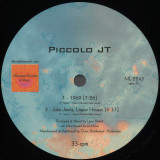
Alleviated Records is proud to present the Spoken-Word vibes of Sharpsburg, NC's PICCOLO JT and Chicago's RIO LOVE to some lush Larry Heard grooves. 1969: "recollections about the
NYC social & black music/party scenes on top of a driving afro-tribal groove.."
JUKE JOINTS - LIQUOR HOUSES: "insights on early Southern social & black music/party scenes flowing on a moody deep-soulful music-bed.."
MY COUNTRY: "social questions/observations on a slammin' deep Future-Tech flavored vibe.."
I'M NOT TOUGH BUT I'M TIRED: "social questions/observations on a slammin' deep Future-Ragga/Tech flavored vibe.."
Splatter Vinyl[13,66 €]
Rhythm Cult's unstoppable momentum continues after achieving consecutive number-one positions across online and physical platforms. RCM019, their most recent release, welcomes the incredibly gifted Chilian producer Dinky into the fold.
Dinky's hypnotic blend of deep house, strong techno, and precise minimalism has earned her a residency at the famed Panorama Bar, in Berlin confirming her position as a unique voice in the electronic industry.
The EP kicks off with the soulful and uplifting "Come Hold Me," a futuristic house anthem that effortlessly fuses tribal rhythms with intricate stuttering synth patterns.
Dinky provides the unmistakable and irresistible vocal hook that suggest this will be a summer anthem in the making. "She's Got Nowhere To Go" follows, riding on an insistent one-note bass line and yet more addictive vocal snips, complemented by disco stabs that complete the party vibe. Dinky's skilful use of stuttering glitches and inventive sample manipulation showcases her love for minimal detail and angular funk.
Finally, dOP turn in not one but two remixes of their unique and unconventional take on house and techno. First, their reinterpretation of "Come Hold Me" takes us on a journey to the deeper realms of house, riding on a low-slung acidic bass groove while enveloping the listener in waves of lush synths, perfect material for warming up dancefloors or setting the mood for the early hours. Then they wrap “She’s Got Nowhere To Go’ around an elastic bass and dosed with warped synth lines to create an irresistibly explosive dancefloor weapon.
The EP exudes sophistication, weaving intricate futuristic house sounds that are imprinted with the influences of Balearic, acid, and deep house. These heaters are undoubtedly set to light up dancefloors throughout the summer season. With this exciting collaboration, Rhythm Cult further cements its position as one of the industry's most cutting-edge labels, and Dinky's addition adds a distinctive dimension to their roster.
Prepare to find yourself absorbed by this exceptional release from two forces shaping the future of electronic music.
Artefacts is the second part of the diptych of 2 albums by Hihats In Trees, pseudonym for Belgian drummer, producer Lander Gyselinck
HHIT’s unprecedented experiments with rhythm and acoustic textures on its debut album ‘Disleksikon’, released in 2019, was well received. On Artefacts HHIT takes it a step further. A truly sensational sonic realm is explored.
Hihats In Trees’ obsession with singular physical objects, materials of wood, stone, metal evokes a dark dystopian sentiment and a recurring melancholy. A poetic expression of the solid object. In Artefacts, through this language with materials, the physical objects come to life sonically. The 10 compositions revolve around this peculiar vocabulary of texture and rhythm, balancing between the dance floor and a solitary ritual, reminiscing on HHIT’s major influences of gqom, detroit techno, hiphop and experimental ambient.
Fashion designer Dries Van Noten was fascinated by HHIT’s musical experiments, This resulted in a collaboration with photographer Viviane Sassen for his Spring Summer collection in 2021 with music by HHIT, partly from Disleksikon, partly tracks later to be released on Artefacts. Artefacts is released on the Brussels based label Maloca Records, run by dj, producer Le Motel.
Skream has become a shining example of the power of diversity, skillfully weaving together a variety of styles and influences in a way that makes sense.
Skreamizm Vol. 8 is a definitive release that represents an artist who is continuously evolving, while also driving the canon of electronic music forward effortlessly.
After a 10 year hiatus he revives his groundbreaking dubstep series Skreamizm and joins the dots between his house and techno releases, through to grime, dubstep and more.
Since the early days of electronic music, white label records have been inextricably linked to DJ culture and the ways in which underground music has been disseminated.
unknown - untitled draws on the white label concept, initially withholding details about the producers behind the tracks and leaving listeners to draw their own conclusions about what they’re hearing. The innovative concept record label is back with its eighth release, delivering an expansive six-track vinyl that pushes the limits of techno as we know it, offering a glimpse into the ever-evolving world of sound design and sonic landscapes. With online personas often eclipsing the focus on music itself, here lies a return to form.
About time ! As you can imagine, we’ve been fans of Hodge since… forever ?
A true force of nature and Bristol legend, we’ve fondly witnessed him display the kind of range we love here at Timedance, covering everything from bouncy House to mind-warping peak time Techno via kaleidoscopic declinations of the future facing Bristol bass sound.
This long overdue debut on the label displays three jaw dropping numbers. Harvested for maximum stroboscopic efficiency, this EP is packed with Hodge’s anthemic signature hooks, bass weight for days and a truly singular approach to a forward rave sound.
Summoning sirens from space, laser guided Grime-Tech and intoxicating explorations into peak time tempos, « Voice Crash » stands as the perfect sonic portrayal of a producer we have revered for years and Timedance’s very own mission statement.
After touring the world's Techno and Goths clubs intensively, Die Selektion are back with their unique blend of Synth- Pop and Electronic Body Music. Heavyhearted but hopeful trumpet melodies, German lyrics that make you question your past and future once again, synthesizer sounds in the great tradition of '80s Wave and Pop, combined with hard-hitting drum machines - this forms the base of their self- proclaimed Prosecco Wave world. Their new album "Zeuge aus Licht" features 9 hits to live, love and laugh to, and makes you forget your everyday worries.
Die Selektion sat down together in a new line-up consisting of all three founding members Gillian, Rief and Rieger, as well as Savenberg, who joined in 2013.
The outcome of this mesmerising gathering is a supersonic experience for body, heart and soul. The new songs expand the sound of the band with an almost casual, elegant diversity. Every single component shines and an understanding of what makes pop really pop comes through, adding ironic glitter to the black nihilism of Dark Wave. With "Zeuge aus Licht", Die Selektion opens a new door in their fluid band set- up. And we should all be excited to find out what's hiding behind it.
Matt Tolfrey’s Leftroom imprint makes a triumphant return here with a remix package featuring Mathew Jonson, Silverlining, Maher Daniel and Sakro, all reworking cuts from his 2020 ‘All Shapes And Different Sizes’ LP. Across the past two decades the UK’s Matt Tolfrey has been at the forefront of the underground House and Techno scene, releasing material on many seminal labels in the industry such as REKIDS, Cocoon, Music For Freaks, Crosstown Rebels, mix compilations for fabric and Classic, and of course his very own Leftroom which returns here following its last vinyl release back in 2020 from Detroit’s Norm Talley and Ataxia.
Up first on remix duties is Canadian machine maestro Mathew Jonson who remixes ‘How It’s Gonna Be’ featuring Tim Fuller, offering up his signature twitchy synth work, robust analogue drums and cinematic leads running alongside the original’s hooky vocal lines. Maher Daniel steps up next to remix ‘Feel The Same’, opting for an intricate electro tinged drum workout, wavey subs and hypnotic vocal chants.
London’s Silverlining then reworks ‘Fantasy’ featuring Shaun J. Wright next, diving deeper via a skippy, swinging drum groove, airy dubbed out chords, snaking bass groove and soulful, intricately processed vocal licks. Lastly to round things out, Sakro remixes ‘Under The Skin' featuring Lil Mark, the Mexican artist reshapes the original with his unique drum-led, groove driven style, fusing crisp snares and shuffled percussion, alongside an amalgamation of choppy bass hits, bleepy synths and sweeping atmospherics.
Repress!
As 2019 winds to a close, Polish producer Satl delivers a statement of intent with hisThe North Quarter debut release on Amsterdam boutique label. Consisting of 9 tracks his “Things We Can’t See” project draws from a varied palette of influences includingJazz, R&B and Dub Techno to stunning effect.
The Rotterdam resident possesses a refinement and depth beyond his years, making him one of the leading lights in a new generation of Drum & Bass producers and on “ThingsWe Can't See”, a coming of age of sorts, he truly manages to rise above himself. With work on a follow up already underway this is just the beginning of his relationship withThe North Quarter.
Repress!
Since his first Submorphics release on The North Quarter, the Detroit native has tenaciously developed his unique brand of lo-fi, deep drum & bass. With his new six-track EP ‘Verona Highway’, the Den Haag-based producer has created what he calls “a late night Detroit to Chicago road trip aesthetic”. Rooted in the underground, this project is an assemblage of techno, footwork and soulful house influences fused with his own signature earworm melodies, deep minor chords and the modern North Quarter drum & bass sound. The result is an EP that feels emotive and nostalgic while maintaining a modern atmosphere.
'Verona Highway’ marks the return of Submorphics to The North Quarter, just over a year after his critically acclaimed Newport Magnetic EP. Reminiscent of night time drives and peaceful after hours, the EP is a collection of warm, dreamy and sentimental music and is the ultimate soundtrack for serene summer nights.
George Coleman (born March 8, 1935) is an American jazz saxophonist best known for his work with Miles Davis and Herbie Hancock in the 1960s. Coleman was born in Memphis, Tennessee and learned to play the alto saxophone in his teens. After his work with Ray Charles, George started working with B.B. King in 1953 and switched to playing the tenor saxophone.
George Coleman was a member of legendary outfits such as Max Roach’s quintet, The Slide Hampton Octet, Miles Davis’ Quintet and The Chet Baker Quintet. The list of his collaborations is impressive to say the least, Mr. Coleman recorded and performed with greats such as Freddie Hubbard, Herbie Hancock, Charles Mingus, Ahmad Jamal, Idris Muhammad, Pharoah Sanders, Ornette Coleman, Melvin Sparks, ArtBlakey…and many others.
Coleman was named an NEA Jazz Master, was added to the Memphis Music Hall of Fame in 2015, and received a brass note on the Beale Street Brass Notes Walk of Fame. George Coleman’s performances were included on classic recordings released by prominent labels from the likes of Blue Note, Atlantic, Prestige, Strata-East, Muse, Verve and Impulse!
On the album we are proudly presenting you today: Amsterdam After Dark (Recorded in 1978 at the famous NY Sound Ideas Studio and released on Timeless Records in 1979) the listener is treated to six majestic tracks of the highest caliber and features a remarkable outing of advanced musicianship by jazz-giants in their prime, delivering an inspirational gem of an album.
The all-star line-up includes Sam Jones (Dizzy Gillespie, Duke Ellington, Ben Webster) on bass, Billy Higgins (Donald Byrd, Thelonious Monk, John Coltrane) on drums and Hilton Ruiz (Roy Brooks, Rashaan Roland Kirk, Sonny Rollins) on piano. Most players featured here were also part of the legendary ‘Eastern Rebellion’ collective responsible for releasing multiple ground-breaking albums over several decades.
Amsterdam After Dark shows off George Coleman’s mastery of the sax, his brilliant vintage techniques and deep soulful tones. Coleman plays from the heart and is on top of his game. Expect both original compositions as well as standards, beautiful ballads with elegant (yet fierce) solos alternating between the instruments, growling blues-oriented themes…this is a contemporary sounding Hard Bop & Post-bop crossover album and a must have for any self-respecting jazz fan or collector!
- A1: The Its Way
- A2: Mindful Solutionism
- A3: Infinity Fill Goose Down
- A4: Living Curfew (Feat Billy Woods)
- A5: Pigeonometry
- B1: Kyanite Toothpick (Feat Hanni El Khatib)
- B2: 100 Feet Tall
- B3: Salt And Pepper Squid
- B4: Time Moves Differently Here
- C1: Agressive Steven
- C2: Bermuda (Feat Lealani Teano)
- C3: By The River
- C4: All City Nerve Map
- D1: Forward Compatibility Engine (Feat Rob Sonic)
- D2: On Failure
- D3: Solid Gold
- D4: Vititus
- D5: Black Snow (Feat Nikki Jean)
A tech company's "senior spirit guide" finally comes to the defense of the "financially unsuccessful" Vincent van Gogh; wonders of the natural world are reimagined as "muster points for brainstorming innovators"; the "artificial char lines" on fast-food burgers are cited as if signs of the apocalypse. For the better part of three decades, Aesop Rock has used the syntax of the moment to pinpoint the fault lines in that moment's supposedly solid foundation. With his tenth album, Integrated Tech Solutions, Aes wields insidious corporatespeak as a tool to pry that parasitic worldview away from the parts of life that truly matter. A concept album about an organization offering "lifestyle- and industry-specific applications designed to curate a desired multi-experience," Integrated Tech Solutions picks apart the charlatan language that hears app inventors put themselves on continuums starting with cavemen and continuing through da Vinci. On "Mindful Solutionism," the wheel evolves seamlessly into modern agriculture - and then into atomic bombs, Agent Orange, cigarettes, and surveillance cameras. In a rare moment of transparency, the engineers Aes give voice to sum up this spiral in just a few words: "We cannot be trusted with the stuff that we come up with." Appropriately, the album sounds like the past and future at once. Largely self-produced, Integrated Tech Solutions catches Aes at his leanest and most innovative, leveraging "SolutionismÖs careening bounce against the wistful "By the River" or the slow creep of "Salt and Pepper Squid." The effect is a record that sounds itself like an organism growing, mutating, hurtling toward profitability - and then destruction. As fans have come to expect, Aes is cuttingly funny and slyly profound at once, whether recounting a childhood restaurant run-in with Mr. T ("100 Feet Tall") or quipping, on "Pigeonometry," that "white dove is a pigeon - you motherfuckers is bigots." At the same time, Integrated Tech Solutions is working on another parallel project: tracing the sprawl of modernity and cutting directly to its core. "I've been doing laps of the lost worlds," he raps on "All City Nerve Map," sounding at once wearied and reinvigorated. "I can draw a map to the raw nerve."
A tech company's "senior spirit guide" finally comes to the defense of the "financially unsuccessful" Vincent van Gogh; wonders of the natural world are reimagined as "muster points for brainstorming innovators"; the "artificial char lines" on fast-food burgers are cited as if signs of the apocalypse. For the better part of three decades, Aesop Rock has used the syntax of the moment to pinpoint the fault lines in that moment's supposedly solid foundation. With his tenth album, Integrated Tech Solutions, Aes wields insidious corporatespeak as a tool to pry that parasitic worldview away from the parts of life that truly matter.
A concept album about an organization offering "lifestyle- and industry-specific applications designed to curate a desired multi-experience," Integrated Tech Solutions picks apart the charlatan language that hears app inventors put themselves on continuums starting with cavemen and continuing through da Vinci. On "Mindful Solutionism," the wheel evolves seamlessly into modern agriculture—and then into atomic bombs, Agent Orange, cigarettes, and surveillance cameras. In a rare moment of transparency, the engineers Aes give voice to sum up this spiral in just a few words: "We cannot be trusted with the stuff that we come up with."
Appropriately, the album sounds like the past and future at once. Largely self-produced, Integrated Tech Solutions catches Aes at his leanest and most innovative, leveraging "Solutionism"'s careening bounce against the wistful "By the River" or the slow creep of "Salt and Pepper Squid." The effect is a record that sounds itself like an organism growing, mutating, hurtling toward profitability-and then destruction. As fans have come to expect, Aes is cuttingly funny and slyly profound at once, whether recounting a childhood restaurant run-in with Mr. T ("100 Feet Tall") or quipping, on "Pigeonome- try," that "white dove is a pigeon-you motherfuckers is bigots." At the same time, Integrated Tech Solutions is working on another parallel project: tracing the sprawl of modernity and cutting directly to its core. "I've been doing laps of the lost worlds," he raps on "All City Nerve Map," sounding at once wearied and reinvigorated. "I can draw a map to the raw nerve."
[f] Kyanite Toothpick [feat. Hanni El Khatib]
[k] Bermuda [feat. Lealani Teano]
[n] Forward Compatibility Engine [feat. Rob Sonic]
[r] Black Snow [feat. Nikki Jean]
In his “Pulse Music” compositions of the mid-1970s, composer John McGuire forged a unique interpretation of European serialism. A student of Karlheinz Stockhausen, Krzysztof Penderecki and Gottfried Michael Koenig, McGuire moved to Cologne, Germany in 1970, where he become associated with the world-leading Studio for Electronic Music at Westdeutscher Rundfunk (WDR) in Cologne. Like Stockhausen, McGuire found his musical imagination both constrained and inspired by the technology that was available to him.
A conversation with sculptor Hans Karl Burgeff led McGuire to think beyond the horizon and into limitless space. For “Vanishing Points” (1985–1988), McGuire used an entirely digital set-up for the first time: a digital sequencer, eight Yamaha DX-7 synthesizers and a Studer 24-track digital tape recorder. The piece was conceived as a “sequel” to the Pulse Music series, but also a step forward from it. Whereas the Pulse Music pieces had employed steady streams of pulses, with Vanishing Points McGuire employed pulse layers that accelerate or decelerate against one another, vastly increasing the resulting rhythmic complexity.
McGuire's exploration of music technology continued in “A Cappella” (1990–1997), written for his wife, the soprano Beth Griffith, known for her recording of Morton Feldman’s “Three Voices” made in 1983. Using samples, he created a four-voice choir of voice samples and arranged them into interacting parts. The composition faced challenges due to the organic nature of the human voice compared to the precision of synthesized sounds. This process involved extensive editing and a negotiation between the "material" and the "original conception". This sort of negotiation applies as much to the composition of a single piece as it does to the work of two decades.
"Fast Rate" blends echoes of nostalgia with futuristic innovation, crafting a sonic landscape. In the relentless rush of life's high-speed journey, it invites introspection, courageously urging listeners to delve into the intricate web of contemporary life.
This EP is inspired by deep reflections on the meaning of life in a fast-paced world filled with thoughts and emotions. It symbolizes a futuristic journey, mirroring the human struggle to gain an external perspective in our busy lives. Random Alias prompts users to contemplate their existence, offering a musical experience that transcends mere dance rhythms.
The 5 tracker showcases a wide array of sounds, from aggressive tones to captivating and atmospheric elements unveiling a new face of the label that keeps exploring the interconnection between human and technology.
The A side roars with high bpm and furious rhythms."Keep me high" express the need of escaping ordinary life, seeking something that keeps us "high" and allows to escape and reset.
Following up "Fast Rate" spans a variety of influences, blending the allure of old-school Detroit electro with futuristic sounds achieved through bold experimentation and advanced wave modeling. This fusion results in a diverse and innovative sonic aesthetic, ranging from nostalgic '80s/'90s vibes to experimental dimensions where tones morph and evolve.
"Solo in Space" and "Restless" on the filp side deliver direct, pulsating sounds and rhythms, embracing an impactful electro-techno vision. These tracks merge both worlds, combining the energy and drive of electro with the power and tension typical of techno, resulting in a sonic journey that blurs genre boundaries.
Completing the collection is a digital bonus track, "Galactic Power," which serves as a soulful embodiment of the EP's essence. With its otherworldly alien-style pitched vocals,The track intricately crafts a cosmic palette of bright pulses and ethereal FM synthesis.
This release represents a bold and progressive vision of electro, confirming and solidifying the eclectic direction and the concept of inter genre flexibility. Music can be an ever-evolving form of art, blending elements that transport listeners to distant cosmic realms.
Time shapes people, people shape technology, technology shapes music, music shapes time.