Fabio Caria is pleased to announce the launch of his new label, Hoops, a project designed to explore the intersection of house and techno through a minimalistic lens. The label's debut release, "Fabble Part One" (HOOPS001), sees Fabio collaborate with Hubble, a long-time friend and creative partner, under the moniker Fabble. This EP features three meticulously crafted tracks that fuse hypnotic rhythms and introspective textures, offering a bold sonic experience for the dancefloor, with a special guest appearance by Claudio PRC.
Catharsis (A1) opens the EP, centering a 3-note Rhodes piano atop a broken beat. Here, elements ebb and flow like a living organism, gradually filling the sonic space with psychedelic synthesizers and ominous sub-basses. Donald (A2) adopts a 4/4 framework, with a persistent kick driving the rhythm, complemented by somber pads and delicate, high-pitched pianos. Powerful sub-basses cut through the mix, establishing a groove with profound character. Persignis (feat. Claudio PRC) (B1) emerges as the EP's most dancefloor-friendly track. Its steady groove provides a foundation for a broad palette of heavily processed piano stabs, reverbed and echoed throughout the entire sonic space, evoking a profoundly emotional yet introspective atmosphere.
"Fabble Part One" establishes a compelling vision for Hoops, signalling the label's commitment to producing immersive music that resonates both on and off the dancefloor. Breaking down conventional boundaries, the release reflects the longstanding collaborative history of Fabio and Hubble, known for their ability to craft deep, atmospheric, and experimental soundscapes of timeless appeal.
Search:process
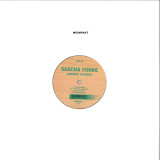
ascha Funke is creating a long overdue monument to an almost forgotten cultural artefact of the GDR: the ‘Germina Speeder’ was the only skateboard made in East Germany before reunification and was launched in 1986. It was produced by VEB Schokoladen-Verarbeitungsmaschinen (a state-owned chocolate processing machine factory) in Wernigerode and was therefore affectionately known as the ‘chocolate board’. However, it was hardly suitable for actual skateboarding due to technical inadequacies. It is not known whether Sascha himself owned such a board, but the tracks on the ‘Germina Speeder’ EP definitely roll better than the original. The opener ‘Blaupunkt’ breathes the euphoric spirit of the legendary Berlin club ‘E-Werk’, while the title track would have been more at home at the ‘Dubmission’ parties in the Turbine. Sascha leaves the 90s behind with radiant positivism; ‘Bo Knows’ sounds more like a 2000s open air at Café Schönbrunn. The EP closes with ‘Mastermind’, a high-octane psy-proghouse banger that, like all four tracks, quotes the past but still has both feet on today’s dance floors. Or rather, is dancing. 4:1 for love!
Sascha Funke setzt einem nahezu vergessenen Kulturgut der DDR ein längst überfälliges Denkmal: Der “Germina Speeder” war vor der Wende das einzige in Ostdeutschland hergestellte Skateboard und kam im Jahre 1986 auf den Markt. Es war ein Erzeugnis des VEB Schokoladen-Verarbeitungsmaschinen aus Wernigerode und wurde daher liebevoll auch als “Schoko-Board” bezeichnet. Zum eigentlichen Skateboardfahren war es allerdings aufgrund von technischen Unzulänglichkeiten kaum zu gebrauchen. Ob Sascha selbst ein solches Board besaß ist nicht überliefert, aber die Tracks auf der “Germina Speeder” EP rollen allemal besser als das Original. Der Opener “Blaupunkt” atmet den euphorischen Geist des legendären Berliner Clubs “E-Werk”, während der Titeltrack eher bei den “Dubmission” Parties in der Turbine gelaufen wäre. Mit strahlendem Positivismus verlässt Sascha die 90er; “Bo Knows” klingt eher nach einem 2000er Open Air am Café Schönbrunn im Volkspark Friedrichshain. Die EP schließt mit “Mastermind”, einem hochoktanigen Psy-Proghouse Knaller, der wie alle vier Tracks zwar das Vergangene zitiert, aber dennoch mit beiden Füßen auf den Tanzflächen von heute steht. Beziehungsweise tanzt. 4:1 für die Liebe!
“Sonically, the Swedish duo SHXCXCHCXSH distort the club context they work from by rendering functionality with an exceptionally refined and idiosyncratic palette. As logophiles, they contort the little descriptive context they afford audiences by imploding language into splintered and barely comprehensible character sequences. The impression is that each is the result of mutual process-driven experiments.
This is all true of '......t', their new album and debut recording for Northern Electronics.
However, working at this scale, SHXCXCHCXSH play with wider parameters and explore broader functions to produce their most comprehensive and focused work to date.
Across fifteen tracks, their bespoke dark matter is stacked with drone pyrotechnics, shredded vocals, and oblique, snatched sounds that eddy into frantic melodic storms. Sublime intensity is spiked with effervescent yet brooding intermissions throughout, staking '......t' as the most crucial volume of their catalogue as it gestures toward new references. ”
The album SATO was made by the Ukrainian Crimean Tatar pianist and composer Usein Bekirov.
SATO was created during the difficult wartime for Usein’s motherland Ukraine and for the author himself.
Despite circumstances, the compositions of SATO express the ideas of the beauty and revival of Ukrainian music, a part of which is Crimean Tatar folklore.
The uniqueness of the release is caused both by the concept of the album and by the performers' star crew.
The jazz sound of the compositions of SATO is directed to the stylistic course of ethno-jazz and world music.
Rhythms and melodies of colorful Crimean Tatar folk music became the main source of inspiration in the creation of the album.
We can find both Usein's original author's themes, skillfully stylized to the oriental sound,
and referenced to the classic jazz vocabulary in its juicy riffs and grooves with features of fusion and funk music.
The name of the album reflected the inheritance of generations through music.
Sato is not only a folk instrument but also the name of the first Crimean Tatar jazz band, which made the first jazz arrangements of Crimean Tatar songs.
The music of this band became the basic musical experience of Usein Bekirov, because one of the members of the group was his father Riza Bekirov, to whom the album is dedicated.
The author and producer of the album is Usein Bekirov - Ukrainian pianist, composer, arranger, sound producer, and author of music for a number of films and theater performances.
Usein Bekirov cooperates with both foreign and Ukrainian musicians of the highest rank.
This is evidenced by the participants of the album Sato: Dennis Chambers, Randy Brecker, James Genus, Mike Stern, Ada Rovatti (USA), Hadrien Feraud (France), and Cenk Erdogan (Turkey).
Each performer reinterprets the author's material of Usein Bekirov through the prism of his own experience, character, and manner of performance, which was expressed in the daring stylistic combinations within a jazz style.
A special role in the creation of the album was taken by the participants of the recordings, especially, legendary jazzmen Dennis Chambers, Randy Brecker, James Genus, Mike Stern.
Their ideological and creative support became an important part of the creativity process.
Musicians expressed their impressions in small addresses for the audience.
One of the reviews of the musicians:
"The process of recording compositions was really exciting! This music reflects Usein's national origin and sense of his native culture.
It is full of real emotions. Actually, this music is quite difficult, but it is very well written and produced!
I sincerely hope you will notice this album, which also took part in Dennis Chambers, James Genus, Mike Stern, Ada Rovatti, and others.
I think it's going to be a really special album, can't wait to hear the final version.
When you hear about the premiere, I highly recommend listening to this new album created by Usein Bekirov.
It will be great!" Randy Brecker
With an intrigue for a particular niche of old UK hardcore which takes cues from Sheffield bleep ambience, heady rave futurism and soft, almost new age synth pads, Blank Mind presents ‘Lost Paradise: Blissed Out Hardcore 91-94’. Though the records gathered for the compilation span a short three-year period and bridge the gap between scenes, the collection manages to find a sweet spot where the influence of Warp’s Artificial Intelligence, back room chill out sonics and the nascent jungle boom meet with elements of Italian piano house and slower breakbeat cuts.
Opting to focus on atmosphere to highlight shared connections; in this case the duality of often serene and calming soundscapes with frenzied breaks and bass (see Hedgehog Affair’s ‘Parameters’ and Luxury’s ‘Twirl’ respectively); Lost Paradise is a formidable collection of tracks plucked from a thriving time for British dance music experimentation. The general themes of ascension and escapism channelled through digital samplers are also inescapably linked to a turbulent time in politics, beginning in the post-Thatcher years and culminating in the year the harshest anti-rave Criminal Justice Act came into force.
Initially building the compilation around DJ Mayhem’s track ‘Inesse’, Blank Mind label founder Sam Purcell and Amsterdam based producer Tammo Hesselink began a process of swapping favourites and deep cuts to spread across this 2x12” doublepack. The compilation avoids any obvious centrepieces through masterful sequencing, allowing for moments of refrain and tempo changes in a way that helps add to their overall vision of what this music is and can be; “We wanted to frame hardcore in a different light, looking at this idea of ecstasy through the traditional meaning of the word and exploring that symbolism”. By drawing from what some might consider the softer edges of the movement, the pair offer a look into the relevance of these tracks in the contemporary era, where the past years have seen both an explosion in popularity of old ambient/new-age music and a certified jungle revival.
Born less than an hour from Chicago but now based in Detroit, Rick Wade cut his DJ teeth in Michigan's Nectarine Ballroom in the 80s and early 90s, at the same time as a certain Jeff Mills was also making giant strides at the venue. Wade's sound is more rooted in deep house but, as this four tracker demonstrates, there's a cosmic spirituality and otherworldliness to his music that it shares with the best of UR and other notable Detroit greats. We kick off with 'Groove Tool', powered by a beautifully pliable, funky bassline and embellished with floating chords and subtle bell sounds way up in the high frequency range. 'Pimp Prophecy' boasts a little more disco swagger, with its niggling guitar riff and some excellent bongo bashing. 'Jazzy Tears' revolves around a sturdy kick and a processed, timestretched vocal refrain, played off against jazzy guitar chords and strings ascending to the heavens. 'Ooo Ahh' is probably the catchiest of the lot, with a shuffling beat undercarriage and an infectious hook, all wrapped up - as all four tracks are - in some understated but still lush musicality. 'Deep Incantations' indeed.
- A1: The Strangler Of The Swamp - Animals
- A2: The Strangler Of The Swamp - Get Up (Ripley Sucks)
- A3: The Strangler Of The Swamp - Pu Sh T
- B1: The Strangler Of The Swamp - Inside
- B2: The Strangler Of The Swamp - Bloody Beach
- B3: The Strangler Of The Swamp - King Of Pain
- C1: The Swamp - Driver
- C2: The Swamp - Hard Core Bodys
- C3: The Swamp - Ground Ii
- C4: The Swamp - My Body Rip Up
- D1: Bande Berne Crematoire - Days Of Tears
- D2: Bande Berne Crematoire - Sex And Wars
- D3: Bande Berne Crematoire - Creepshow
- D4: Bande Berne Crematoire - Show Me The Pain
- E1: Bande Berne Crematoire - Rosa Bernet
- E2: Bande Berne Crematoire - Kranzø Røses
- E3: Bande Berne Crematoire - Ende
- F1: Bande Berne Crematoire - Devil
- F2: Bande Berne Crematoire - Maid To Be Laid
- F3: Bande Berne Crematoire - Example Of Bbc
- F4: Bande Berne Crematoire - Leaving Risk
- F5: Bande Berne Crematoire - The Electric Chair For Atomic Spies
Throughout the 1980s, Michael Antener, born and raised in Bern, Switzerland, initiated an array of sonic endeavours in the realm of industrial, dark, aggressive music. Of his times as a post-apocalyptic hunter, he says today: I found a musical niche where I could express myself, along with other people who were not afraid of dark themes. It would have been hard to sing about love in my music, so I included sounds and cries of pain taken from horror movies.
It was a fortunate coincidence to come across one of his self released records, the 1986 EP Strangler of the Swamp, which marked the beginning of our quest to find this all but forgotten musician whose work seemed nowhere to be found. Eventually, we got in touch with Michael, who is still living in Bern, and began the process of searching through all his surviving musical and visual material.
The triple vinyl release is all about documenting Michael Anteners adventures during that intense 1980s period. We tried our best to select the most interesting material from his two earliest projects, The Strangler of the Swamp and Bande Berne Crematoire, comprising materials from vinyl records, cassettes, and live recordings, some of it unreleased. The release also includes a deep dive into Michaels visual archive of posters, photos, and sleeve artworks.
The disjointed, tumultuous body of work presented here marks the testament of a fringe musician who was disruptive and confrontational, keen to shock and alarm people (much to our liking), and who could easily have been lost in oblivion.
Josh Johnson’s Unusual Object is a world of sound. His fantastically processed saxophone & subtle samples & grooves give this work a sort of cyberpunk ambient jazz feel that crosses into realms akin to classic Warp Records and Jon Hassell. These qualities serve to bring the listener closer to Johnson, to his breath, his sense of song. In 2023, Johnson was grammy-nominated for producing Meshell Ndegeocello’s The Omnichord Real Book (Blue Note).
"Unusual Object" by Josh Johnson includes the following tracks: "Telling You", "Deep Dark", "Reddish", "Local City of Industry" and more.
Reflex Blue, Kosh, Christopher Ledger, and Luca Attanasio come together for the fourth chapter of our Retro Future series. Expect top-notch music from some of the scene's best forward-thinking yet deeply rooted producers in the game.
This first Adam Beyer x Eli Brown collaborative release has been feverishly anticipated by fans keeping tabs on their growing friendship and further excited by the pair’s first official B2B at Lisbon’s Brunch Electronik in September. Now ‘Overdose of Bass’ EP is here, a power-packed techno two-tracker enriched by diverse elements, on Beyer’s Drumcode.
It also marks Eli Brown’s welcome return to the label after his massive collaboration this January ‘When I Push’ with Layton Giordani and OFFAIAH following Brown’s 2022 EP ‘Deep Down’. The EP ‘Overdose of Bass’ combines recent developments and past influences of both techno giants.
‘Overdose of Bass’: the title track has rattling snares and a breaksy beat ushering in a spoken vocal layering different levels of processing, for a half sensual, half robotic riff – ‘there it goes/ overdose/of bass’ – with the doppler siren builds, giving a spacey, mysterious call and response. Hypnotic, disturbing, and edgy.
‘Living In The Moment’: an urgent techno beat, a Moroder-esque bass synth, and a recurrent riff like a signal becoming ever more high and desperate, are counterpointed by an ethereal, quavering, sweet female vocal, strengthened by the melodic build in the huge central breakdown. Urgent, demanding, hyper, this is dancefloor heaven.
Two sought after artists, Deft and Manni Dee, combine their uniquely eclectic sounds on collaborative EP ‘Swamp Season’ arriving on Hooversound in March 2025.
Deft, a familiar favourite within the Hooversound family having released two EP’s on the label, is no stranger to breaking boundaries when it comes to sonic stereotypes. Enter: Manni Dee. Another equally exciting name on the London circuit who is an advocate for non-conformism. Between them they have released on Exit, 1985 Music, Critical and Fabric Originals - their style has been recognised globally and continues to grow. Both creatives bring something refreshingly new to the table, whether it’s with their amalgam style of music making, their esteemed record platforms (Silk + Steel, B4 Music) or their DJ sets - it makes perfect sense for the duo to unite on their vision.
Their latest offering combines their boundaryless artistic style of forward-thinking atmospheric production on an EP named ‘Swamp Season’. The two producers play with different elements of club music and hip hop by blurring genres and throwing the rule book out of the window. The end result highlights how Deft and Manni Dee have excelled once again across five bass-fuelled tracks which will expand your perspective on electronic music.
On their single, the duo said “‘Charged’ was the last track we wrote for the EP. Rooted in the simplicity of 00's hip hop instrumentals, on steroids, adapted with the wider electronic sphere in mind. Inspired by the past and present, facing the future.”
Deft and Manni Dee also explained how they came to collaborate; “We've always shared the same taste in hip hop and electronic music, and also share a studio together underneath FOLD in Canning Town, so it just made sense for us to make a record together. Our process was creatively free with no preconceptions, having worked together remotely and together across multiple studios around the world. The result has created a new and exciting avenue for us both, opening the floodgates to eliminate boundaries. It's Swamp Season.”
Scanning Backwards, Phase Fatale’s second full-length album originally released on Berghain’s in-house label Ostgut Ton in 2020 is now reissued via his label BITE on limited edition pink marble vinyl after being long sold out and sought after. Using the connection between weaponized sound and psychological manipulation as a conceptual foundation, Hayden Payne explores the ways in which music – and sub frequencies in particular – are used to influence thinking and to synchronize emotions and behavior: from military technology to sound systems and the physicality and sexuality of queer techno culture.
Known for his innovative post-punk takes of dance music as featured on EPs for unterton and Ostgut Ton, the Berghain resident draws on his background as both a guitarist and sound engineer to create a heady mix of broken rhythms, noise-, and shoegaze-inflected techno, often at slower tempos. The result is music with space and pace to expand, highlighting the intense rushes of frequencies found in both sonic warfare and functional dance music. Over eight tracks named after a combination of historical and fictional narratives from literature and science fiction, Payne’s rhythmic excursions explore different manifestations of sound as power – specifically within the context of seeing Berghain as an instrument itself. This is also reflected in the album artwork, taken from an early flyer for the SNAX party series and an obvious ode to the fetishization of power dynamics.
In his own words: “All tracks on the album, no matter the style, were tailored to sound a certain way in Berghain – something I figured out through years of dancing in the middle of the floor, DJing as a resident and investigating what frequencies really penetrate the body. This includes speech and high-frequency, brain-penetrating instrumentation and drilling textures that I had not utilized so often before, but which I think also have an effect on thought and memory. It’s especially true in a space where gay and fetish roots combine with music in unexpected ways, almost in a cultish manner. A musical and physical deprogramming and reprogramming, psychic driving and de-patterning, the erasing and replacing of memories.”
Ultimately, Scanning Backwards surveys not only the manipulative properties of electronic music (mantras, loops, subliminal messages) but also how rhythm facilitates both moving and thinking in synchrony; a pulse of coordinated sound- and brainwaves.
To celebrate the 10th anniversary of Biffy Cyro’s sixth studio album ‘Opposites’, the band are releasing the four EPs from the era ‘Black Chandelier/Biblical’ and ‘Opposite/Victory Over The Sun’ on vinyl for the very first time. These LPs will also be the first 12” to be pressed on sustainable ‘BioVinyl’ material globally by WMG. BioVinyl is an innovative product using bio-based PVC in the production process, without losing any of the acoustic quality of a conventional vinyl record. This release features the singles ‘Opposite’ and ‘Victory Over The Sun’.
‘Subtle Bodies’ is the new album by US-based sound artist and composer Francis Morning, released on Ltd. cassette via Lo Recordings, which contemplates the concept of the non-physical, energetic layers of a person that exist alongside the physical body. Being the next installment of Lo Recordings' ongoing SPACIOUSNESS series, the album features 15 tracks that embrace the theme through hints of electric piano melodies buried under layers of tape hiss, meandering sine wave bass notes, and expansive ambient textures.
The compositions on ‘Subtle Bodies’ are meditations on impermanence, imperfection, and the natural process of decay, approached without judgment. They arise from moments of introspection, often inspired by the contemplation of inner channels, energies, mindfulness, breath, and other Tibetan Buddhist practices. Deliberately recorded using minimal equipment, each piece explores and pushes against the thresholds in an attempt to strike a balance of texture and noise. About Francis Morning:
Francis Morning is a US-based sound artist, musician, and composer known for crafting gently textured sonic environments using a simplified palette of musical hardware, including analog tapes and cassettes, field recordings, synths, pedals, pianos, and acoustic and electric guitars. His work embraces imperfection, human quality and touch, and the transient nature of life. The music began to take shape as simple, personal daybreak rituals with no audience or expectations. Each piece was recorded live in single takes, with the original elements eventually discarded or recorded over, as a statement and exercise in impermanence and letting go.
Limited Edition White Vinyl
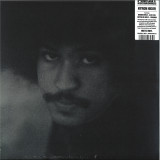
At the forefront of a rising wave of Brazilian artists captivating international audiences, Nyron Higor brings a quiet yet potent sense of wonder to his new self-titled album. Born in Maceió, Higor’s latest work is rooted in the traditions of Northeastern Brazilian music and golden-era MPB. Within the peaceful surroundings of his home, Higor weaves these roots together with global influences and contemporary production techniques, for a uniquely dreamlike vision of hope.
Following the success of his self-released debut Fio de Lâmina—an instrumental record of delicately balanced rhythmic and harmonic patterns, which earned support from tastemakers like Mr. Scruff, Gilles Peterson, and John Gomez—Higor’s new album is a move towards a more expansive, lyrical exploration of transcendence and triumph. As Higor explains, “This album is a test of resistance and a big event in my life as a young Black man from the Northeast and coming from a humble background, financially speaking, its context is political.”
Taking his demos and unfinished tracks to São Paulo, Higor worked alongside friends and collaborators from Brazil’s vibrant contemporary music scene—including fellow Maceioense artists Bruno Berle, Batata Boy, and New York-based Brazilian vocalist Alici Sol—assembling a rich musical landscape and a cutting edge development on the musical world from which he emerges.
For Higor, the process of recording and producing in close collaboration with Berle and Batata Boy allowed him to fully cultivate the emotive power of his compositions. Album opener "Ciranda" sets the tone with a slow frevo rhythm, as wistful trombone melodies and melancholic acoustic guitar harmonies create an atmosphere both intimate and grand. Lead single "São Só Palavras," featuring Alici Sol and Bruno Berle, captures both the lightness and depth of young love in an all too fleeting minute-and-a-half moment of soaring brilliance.
Building upon the instrumental sound of his debut, “Louro Cantador” with its playful organ, birdlike whistles and elegant acoustic guitar, emanates a kind of rare natural beauty, as each sound dances amidst the gentle pulse of Higor's bass—his main instrument.
Through ten carefully crafted tracks, Higor’s acuity for sound and silence draws listeners into a place that feels both deeply personal and universally resonant. “Above all, I value making music that brings me genuine satisfaction. I’m always looking for depth in the things I create.”
This album is a testament to the timeless themes that define Higor’s artistry, as well as his creative drive to overcome the obstacles he faces. Conveying his feelings of jubilance for his work, Higor notes, “This work is liberating, contemplative and victorious!” Each track invites the listener to experience the raw intimacy, the joy and longing, and the otherworldly ingenuity of Brazilian music, which seems to endlessly keep us coming back for more.
CREDITS
Ciranda (Nyron Higor)
Tico Lima: Trombone, Nyron Higor: Drums, Bass, Synthesizers, Electric Piano, Guitar, Molho de Jatobá, Ganzá, Caxixi, and Indigenous Whistle
Louro Cantador (Nyron Higor)
Nyron Higor: Drums, Bass, Keyboards, Guitar, Percussion, and Direct Sound
Demo Love (Nyron Higor)
Nyron Higor: Drums, Bass Synth, Keyboards, and Synthesizers
São Só Palavras feat. Alici, Bruno Berle (Nyron Higor, Batata Boy, Alici Sol, and Bruno Berle)
Alici Sol: Vocals, Bruno Berle: Vocals and Bass, Nyron Higor: Drums, Guitar, Keyboards, Synthesizers, and Whistles
Estou Pensando Em Você feat. Johanna (João Menezes, Rubens Adati)
Nyron Higor: Vocals, Johanna: Vocals. Bruno Berle: Vocals, Rubens Adati: Piano, Guitar, Programming, Stefan Costilhes: Bass, Batata Boy: Programming
Maravilhamento feat. Nathalia Grilo (Nyron Higor, Nathalia Grilo)
Nathalia Grilo: Vocals, Nyron Higor: Drums, Bass, Guitar, Keyboards, and Synthesizers
Som 24 (Nyron Higor)
Nyron Higor: Sampler, Keyboard, Bass Synth, Vocoder, and Steel Guitar
Pizzicato (Nyron Higor)
Nyron Higor: Double Bass and Keyboards
Eu Te Amo (João Menezes)
Nyron Higor: Vocals and Bass, João Menezes: Guitar, Batata Boy: Rhodes Piano, Bruno Berle: Xylophone
Me Vestir De Você feat. Johanna (Paulo Novaes and João Menezes)
Nyron Higor: Vocals, Johanna: Vocals, Bianca Godoi: Drums, Bruno Berle: Bass, Guitar, Percussion, and Rhodes Piano, Batata Boy: Rhodes Piano and Guitar
===================
Tracks 1, 2, 3, 4, 6, 7, and 8 were recorded by Nyron Higor in Maceió
Track 4: Bass and Synthesizers recorded by Ico dos Anjos. Vocals recorded by Batata Boy at Estúdio Rural
Track 5: Guitars, Bass, Programming, and Pianos recorded at Inhame Estúdio. Coproduced by Rubens Adati
Tracks 9 and 10 Recorded and Co produced by Ico dos Anjos
Mixed by Batata Boy, Ico dos Anjos, Bruno Berle, and Nyron Higor
Mastered by Batata Boy
Produced by Batata Boy, Bruno Berle, and Nyron Higor
Lacquer Cut by Caspar Sutton Jones @ Gearbox Records
Cover photo by Claudio Virginio
Vinyl centre label artwork by Tadáskía
Sleeve design by Alessandro Renaldin
Globetrotting Texan trio Khruangbin are set to release ‘Hasta El Cielo’, the band’s glorious dub version of their second album ‘Con Todo El Mundo’. The full album has been processed anew along with two bonus dubs by renowned Jamaican producer Scientist.
The band’s exotic, spacious, psychedelic funk aligns with the dub treatment particularly well. Indeed, keen fans won’t fnd this a surprising release. Dubs of tracks from their frst album ‘The Universe Smiles Upon You’ appeared on limited vinyl releases of ‘People Everywhere’ for Record Store Day 2016 and ‘Zionsville’ on the Boogie Futuro remix 12”. The especially eagle-eared willhave caught a dub of ‘Two Fish And An Elephant’ playing over the credits of the track’s celebrated video.
“For us, Dub has always felt like a prayer. Spacious, meditative, able to transport the listener to another realm. The frst dub albums we listened to were records mixed by Scientist featuring the music of the Rootsb Radics. Laura Lee learned to play bass by listening to Scientist Wins the World Cup. His unique mixing style, with the emphasis on space and texture, creates the feeling of frozen time; it was hugely influential to us as a band. To be able to work alongside Scientist, a legend in the history of dub, is an honor. This is our dub version of Con Todo El Mundo.”- Khruangbin.
Formed of Laura Lee on bass, Mark Speer on guitar, and Donald “DJ” Johnson on drums; Khruangbin’s sounds are rooted in the deepest waters of music from around the world, infused with classic soul, dub and psychedelia. Their 2015 debut album ‘The Universe Smiles Upon You’ was heavily influenced by 60’s and 70’s Thai cassettes the band listened to on their long car journeys to rehearsal in the Texan countryside. 2018’s follow up ‘Con Todo El Mundo’, which received hugely positive critical reactions and radio play around the world, took inspiration not just from South East Asia but similarly underdiscovered funk and soul of the Mediterranean and the Middle East, particularly Iran.
Since the album’s release, the band have continued their almost non-stop approach to touring, playing over 130 dates in 2018 alone. They return to the UK this summer for festival shows at Green Man, Latitude, Mostly Jazz, Funk & Soul Festival and Barclaycard British Summer Time.
KingCats are a German Show Band from West Germany, formed in 1972 first as AristoCats. They became KingCats in 1976. The lineup was Peter "Pit" Kurz and Norbert "Knox" Rieger on vocals and guitar, Theo Wild (and later, Hans-Jörg Koch) on keyboards and vocals, Eberhardt "Lupp" Krieg on bass and vocals, and Rolf Knauss on drums and vocals. French drummer/singer Patrick Buchmann, alias "Sdinganuff", joined the band in 1980 upon recommandation from Claus Backhaus (Studio 2000, Mannheim, Germany) and saxophone superstar Peter Drischel, alias « Pete Tex ». Before Buchmann’s departure to Los Angeles to study at Musicians Institute, he suggested they record an LP to document some of the band’s compositions which led to the original self titled "KingCats" album in January of 1983.
This rare album was recorded and mixed in Strasbourg, France at Omega Studio by sound engineer Francis Adam, the LP showcases a variety of 80’s unique compositions by Buchmann, Kurz and Rieger. The song "Down In California" gently made its way to the public ear since. Luckily, Francis Adam found the original 16 track, 1 inch tape in early 2024 and saved the original project from desintegration. This long awaited discovery led to this freshly edited, remixed and remastered 2024 version of "KingCats". Produced by Francis Adam, Patrick Buchmann and Peter Kurz, no instruments or vocals were added, and no animals or vegetables were harmed during this process. We hope you will like this new limited edition of "KingCats" !
ntroducing World of Rubber 4, a bold compilation featuring five cutting-edge tracks from trailblazing artists who push the boundaries of sound and embrace the label's signature non-conformity. This collection showcases a wide sonic spectrum, from experimental vocal pieces to club ready floor killers. With work of Indonesia's Senyawa, where vocalist Rully Shabara's electrifying range blends with Wukir Suryadi's processing of (handmade) instruments. Hailing From the UK, MAP 71 offers hypnotic poetry layered over pulsating electronics, driven by Lisa Jayne's surreal lyricism and Andy Pyne's ritualistic rhythms. Swedish experimental techno producer Peder Mannerfelt brings his raw energy and genre-defying sound. Dutch techno pioneer Unit Moebius Anonymous takes a second stab at Juzer, a project by Beau Wanzer and Dan Jugel, delivering heavy hitting industrial-tinged rhythms. Lastly, The Modern Institute brings their avant-garde, deconstructed take on techno, blending industrial noise and playful experimentation to create a truly unpredictable sonic experience. Cut by Simon - The Exchange, pressed on opaque white vinyl, Limited to 200 copies.
Samuel van Dijk steps forward as Multicast Dynamics to present his next full length of mesmerizing deepness on A Walking Contradiction. As ever, when van Dijk puts on his Multicast Dynamics disguise, he abducts his listeners to places where breathtaking soundscapes and pitch black ambience take over. When you are in these imaginary places he creates a compelling story that is both exhilarating and soothing at the same time. Soundtrack for Something That Does Not Exist is nothing less. It's a journey across dark scapes and icy glitches, richly detailed with topnotch sound design that creates a spacious flow throughout. The subtle rhythms that appear once in a while show some overlap with recent VC-118A productions, which makes this a very complete piece of work that shows the excellence of a producer that never stops improving himself.
- A1: Vajolet (Feat Lukas Lauermann, Wolfgang Pfistermüller & Flip Philipp)
- A2: Autostrada Del Brennero (Feat Diggory Kenrick)
- A3: Latzfonser Kreuz (Feat Mamadou Diabate & Hamidou Koita)
- A4: Lago Di Garda (Feat Roger Robinson)
- A5: Alfa Romeo 145 (Feat Kwame Yeboah)
- A6: Feltuner Hütte (Feat Osman Murat Ertel)
- A7: Avrupa Köprüsü (Feat Osman Murat Ertel)
- A8: Europabrücke (Feat Susanna Gartmayer)
- B1: Ancient Atoll (Feat Reinhilde Gamper, Martin Mallaun & Flip Philipp)
- B2: Latemar (Feat Reinhilde Gamper & Martin Mallaun)
- B3: Brennerautobahn (Feat Taka Noda)
- B4: Echoes Part I (Feat Flip Philipp)
- B5: Echoes Part Ii (Feat Flip Philipp)
- B6: Transit Tribe (Feat Didi Kern)
- B7: Latemar (Reprise)
12"[23,49 €]
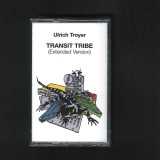
Ulrich Troyer has been producing music now solidly for over twenty years within a largely genre free framework, but whilst navigating forms such as avant-garde, techno, leftfield, field recording, electronica, glitch and ambient it is the aesthetics of dub that guide his creative direction. Not really recognisable in an orthodox form as remixed versions of roots reggae songs but in the way sonics are manipulated with space, the application and layering of delay, reverb and echo that fixes his output well within the scope of what might be called futurist dub.
The nearest comparisons to his new album TRANSIT TRIBE can only be established by a synthesis of some of the more adventurous explorations in modern music such as African Head Charge, Jon Hassell, Pole (Stefan Betke), Bill Laswell or even Miles Davis; featuring a diverse selection of artists and friends not only from Vienna and environs but also from around the world, sounds are not so much fused but allowed to float along the continuous flowing tide of warm waves of bass.
Rather than to allow the names of Ulrich Troyer's collaborators be merely listed in the album credits, what they bring to this joyful affair needs to be outlined, albeit briefly: Co-producer credits go to Osman Murat Ertel from Istanbul, who employed a variation on the old foolproof Nick Lowe method for checking out the impact quality of his own sound productions by playing tracks through his car sound system speakers!
Murat is a member of the electro-psych-folk group Baba Zula where he plays electric saz, oscillators and theremin and played a key part in the creative development of the album. Mamadou Diabate, the balafon master originally from Burkina Faso and now resident in Vienna, has developed his own unique technique of playing solos that replicate the sound of three instruments playing in unison; however the multi-talented Mamadou is engaged here on singing and playing the talking drum. From South Tyrol Reinhilde Gamper is a member of the experimental trio Greifer who are bringing the sound of the zither into the twenty-first century using new playing techniques and electronic gadgets. Susanna Gartmayer is an Austrian composer and bass clarinetist specialising in improv and multimedia sound research. Diggory Kenrick has been engaged with creating new dub fusions and also re-energising classic rocksteady and roots reggae classics, renowned for his interventions on flute. Didi Kern is an electronic dance musician and drummer from Vienna with a focus on free improvised music. Hamidou Koita, a singer and multi-instrumentalist, is from a traditional Griot family in Burkina Faso but now resident in Vienna and a regular musical partner of Mamadou Diabate playing drums and calabash. Austrian Lukas Lauermann is both a studio and live musician playing cello, also working on electronic sound design and writing string arrangements. He has recorded extensively and appeared on stage with both Mark Lanegan and Hans-Joachim Roedelius. Martin Mallaun is a Tyrol-born specialist in both the development of the zither in modern music and also as a researcher in the effects of climate change on the vegetation of Alpine ecosystems. Mystica Tribe is the musical alias of Tokyo-based dub/techno producer Taka (Takafumi) Noda. He collaborated with Vienna's own Vegetable Orchestra on 2020's "Transplants (Mystica Tribe Version)". After studying classical percussion Flip Philipp is now a jazz vibraphone player and member of the Vienna Symphony Orchestra. Wolfgang Pfistermüller is a member of the Vienna Trombone Quartet and the developer of the incredible bass-trombone Aurora with its uniquely warm and resonant sound. Roger Robinson is a renowned British poet, winner of many contemporary poetry prizes and member of the experimental music group King Midas Sound. Kwame Yeboah is a Ghanaian born UK based keyboard wizard who tours regularly with Yusuf / Cat Stevens, Ms. Dynamite and Pat Thomas.
So contained on the album is an astonishing mix of musicians and instruments: sounds of cowbells recorded in the South Tyrolean alps processed by modular synthesizers and heavy analogue bass synths combined with instruments such as zither, bass-zither, electro saz, flute, talking drum, trombone, cello, vibraphone, marimba, djembe, contra-alto clarinet, melodica, Farfisa - all bound together by organic live-drums and dub effects.
Liner notes by Steve Barker