cello player and electronic artist martina bertoni's new album "music for empty flats" delivers masterfully crafted experimental ambient / drone for fans of hildur guðnadóttir, giulio aldinucci or lawrence english.
martina bertoni is a berlin based cellist and composer. she started playing the cello at a very young age. classically trained, bertoni's career soon developed around experimental and film music where her cello has been featured in numerous records, soundtracks for awarded movies and tv series and collaborations, among others with blixa bargeld and teho teardo with whom she recorded several albums and performed at many prestigious festivals all around the globe.
the core of her solo work is based on deconstructing the relationship with her own instrument by combining acoustic sound, repetition, analog and digital synthesis. after the eps "in a paradise you would be happy" (2018) and "the green ep" (2019) she released her critically acclaimed full length album "all the ghosts are gone" with the reykjavík based label falk in january 2020.
on her new album she continues to explore the sonic possibilities of her instrument which she uses as sound source - sounds which are then processed, adding reverb, feedback and sub-bass frequencies and thus crafting sonic sculptures, rich of atmospheres and frictions.
"the inspiration for the title "music for empty flats" comes from a fraction of time during last winter, while i was visiting iceland. i had the strange opportunity to spend lots of time listening to music, alone in a brand new but unoccupied - therefore completely naked - empty flat in the suburbs of reykjavík. it was christmas, it was constantly dark, outside there was snow, inside there was this strange dystopian empty space in which i could listen to my favourite pieces of music in complete solitude. this is when i started sketching the new record." says bertoni.
the resulting seven new tracks deliver masterfully crafted experimental ambient / drone, dense and intense but fragile and sensitive at the same time. A more than impressive new artistic statement by martina bertoni, recommended not only for fans of hildur guðnadóttir, giulio aldinucci or lawrence english!
Cerca:process
Pedro Zopelar (@pzopelar)is a musician, producer and DJ based in São Paulo, Brazil. Known for his many different projects like the duo “My Girlfriend” with Benjamin Sallum, the electronic performative act “Teto Preto” and his effervescent party “ODD” - Zopelar presents “Universo” on Apron Records! a collection of 9 tracks that represents the actual direction of his solo work
The three players in Chicago’s Moontype orbited each other for years before they came in phase. Bodies of Water, their debut album for local label Born Yesterday, documents travel, insecurity, friendship, and the titular element—all of which are representative of the band members’ strong connection to place and to one another. “Being rooted in the landscape became important to me while studying geology, which completely changed how I think about the world,” offers songwriter, vocalist and bassist Margaret McCarthy of the album’s central themes. The arrangements themselves feel like open-hearted negotiations; sparse fingerpicking gives way to saturated tube-screaming as naturally as the changing of tides. Over twelve tracks, Moontype revels in the woozy concoction of its many influences, but always lands on punchy hooks, shifting between arrangements both spacious and mystifying without abandoning their conversational warmth.
Conservatory students at Oberlin College’s prestigious music program, each member focused on exploring different sounds. Guitarist Ben Cruz, who came up on classic rock shredding and migrated into jazz performance, admired the indie pop of Fountains of Wayne, the groundbreaking composition work of pianist Vijay Iyer, and the genre-morphing folk of heavy hitters like Neil Young and Joni Mitchell. He played in several projects alongside Emerson Hunton, who’d drummed from age six and entrenched himself in the Twin Cities improvised music scene before even heading to college. Margaret—who grew up outside of Boston playing piano, singing in choirs and writing on guitar—spent her time creating knotty, riot grrrl-and-hyperpop inspired songs for bass and voice, as well as noise soundtracks for art installations. Inspired by artists like Adrianne Lenker and Gillian Welch, she recorded the EP bass tunes at home in an apartment over the town’s optician, releasing it upon graduation. A week later she migrated even farther west to Chicago, where Ben and Emerson had already enmeshed themselves in several projects, from avant garde ensembles to a country group.
Ben was instantly impressed by Margaret’s songs, at once “challenging and unlike anything I had played before.” The duo decided to try performing together, but knew this special music would be even better fortified with drums. Emerson was the obvious choice—as Ben puts it, “He’s our great friend and also the best drummer we know. Who else do you call?” Moontype-as-trio gigged around town, eventually embarking on a first fall tour in Emerson’s Prius. On that trip, they felt the music morph into something living, and the care and trust between them intensified. They decided to put together songs for a record, recorded at the end of 2019 with Jamdek Recording Studio’s Doug Malone, a dependable collaborator whose patient process perfectly captured the magic of their newfound familiarity. While Margaret’s skeletal demos still informed the bulk of Moontype’s full-band debut (some of which are re-recordings of bass tunes cuts), the resulting arrangements are songs reborn and strengthened by the three musicians’ absorption of one another’s ideas.
On Bodies of Water, Margaret’s soothing, unadorned alto is often peppered by the gliding, eerie harmonies of her bandmates. “We love the act of singing together,” explains Ben, who describes it as “connecting and grounding and wholesome.” The push-pull search for common ground characterizes the instrumentals as well. Round basslines occupy higher octaves, trading space with guitars chugging in lower registers, and all the while drums break apart and glue back together in idiosyncratic grooves that never lose the pocket. Of the complicated rhythms that sometimes result: “Any mathy moments are based on how the lyrics fall naturally, which feels like it frees us up from having to stay in one time signature,” says Emerson. “Rhythmic elements never feel like they’re being added in, more like they’re already there and we just float on through.”
Touring’s restlessness informed these songs, but so did the DIY scene that welcomed Moontype to Chicago—including, according to Margaret, the “wild harmonies” of Ohmme, the “deadpan explanatory rock” of Ratboys, and the “luxe math rock pattern music” of The Knees. Working at beloved venue Sleeping Village inspired Margaret’s observational vignettes; “We are sitting at the desk and you are mixing all the bands,” she reports in the middle of the dextrous folk hammer-ons of “3 Weeks,” gently admitting, “I am trying to have fun and I am trying to get paid” in a world of bikes, trucks, and velvet. “About You,” a robust power-popper written about a post-gig romp around Richmond with artist Bebé Machete, opens with a Phair-ian quip: “Looking at you with my fuck me eyes / Do you wanna get inside of mine?” Meanwhile, the spectre of lost camaraderie looms over “Ferry,” an atmospheric and anthemic standout that questions, “If I’m not your best friend / then who am I to anyone?” Alongside water, this preoccupation with friendship is a focal concern lyrically, but the palpable love between Moontype’s players is essential in communicating that desire for connection, and all three members are dedicated to exploring sound and meaning organically and together. Care and generosity are at the core of Moontype, and Bodies of Water is a clever album full of insightful music, as cosily enveloping as it is incisively honest.
After an almost 6 year hiatus, and the break up of the audio-visual trio it had evolved into, Origamibiro returns with Miscellany, a body of work amassed during the years since the release of 2014’s Odham’s Standard.
Though the group never officially disbanded, a number of life-changing events meant it simply became impossible to continue together. As such, the project organically reverted back to the solo pursuits of composer Tom Hill. Fellow multi-instrumentalist Andy Tytherleigh, however, remains a strong collaborator.
Miscellany comprises a varied mixture of work, ranging from electroacoustic to orchestral chamber music. Drawing upon much of the found-sound style for which Origamibiro became known, the DIY approach to sampling and composing continues to play a central role in the process.
Exploration into the tangible nature of everyday objects and textures - both in and outside of the home - is a theme relished in much of Origamibiro’s work. Forest brambles and plastic toy Easter eggs are examined in surgical detail alongside the debris of demolished piano parts, to be repurposed into whatever sonic potential they offer up.
However, new additions to the instrumental palette - viola da gamba, piano, zither, singing bowl, glockenspiel, drum machines and gongs - contribute to an even broader timbre.
From Tumaco, in the deep pacific coast of Colombia, Plu con Pla carries forward essential styles such as Bunde and Currulao, which were created by the African diaspora in response to the realities of life in this coastal jungle territory. The musical language of the South Pacific region is traditionally interpreted with a marimba handmade from the wood of the Chontaduro palm tree and resonating tubes of Guadua (similar to bamboo), a large, two-sided bass drum called the bombo, two slender, high-pitched drums called cununos, and cylindrical shaker called a guasá, along with powerful call and response vocals. Plu con Pla brings a mastery of this language and repertoire together with an urgency of exploration and growth, incorporating hard-hitting urban styles such as Hip Hop and Reggae into their expression, and bringing Bass, Drum Set, Keys, and more into the mix. True to their roots, collective process and social justice consciousness is central to both their music and their actions, with lyrics that address hard themes such as racism and civil war, and a continuing commitment to teaching, leading workshops and accompanying the peace process in Colombia.
“Gyropedie,” Anne Guthrie’s third record for Students of Decay, takes us further into her hermetic practice, wherein expertly captured field recordings, French horn, and electronics are woven into potent and richly imagined electroacoustic environments. In Guthrie’s own words, “Quite literally a record of pilgrimage from East to West. Remnants of Midwest and East Coast soundmarks, instruments sold to lighten the travel load, sketched out and then buried under the new. Winter birds and crunching snow, frozen playgrounds, broken synths - I spent a year decoupaging over this, but of course it's still there. A second moon appears occasionally in the daytime, and there are frequent, murky transmissions. California has something alien about it I'm still trying to grasp. Primarily vintage, unabashed, corny, I find myself becoming an impressionist.”
Anne Guthrie is an acoustician, composer, and French horn player. She studied music composition and english at the University of Iowa and architectural acoustics at Rensselaer Polytechnic Institute, where she completed her Ph.D in 2014. Her music combines her knowledge of acoustics and contemporary composition/improvisation. Her electronic music has focused on exploiting the natural acoustic phenomena of unique architectural spaces through minimal processing of field recordings. Her composition has focused on the orchestration of non-musical sounds, speech in particular. Her French horn playing has focused on electronic processing and extended techniques used in improvisatory settings, as a soloist and with Fraufraulein and Delicate Sen, among others. Her acoustics research has focused on the use of ambisonics for stage acoustics.
“The Obvious I would sound unutterably pretty even as an instrumental album. But once you factor in a voice whose purity has elicited comparisons to Robert Wyatt, Mark Hollis and Dean Wareham, the effect is something akin to hearing a ghost transmitting from a machine of its own making” - Pete Paphides ‘The Obvious I’ is the second album from Ed Dowie and is the second new master release from Needle Mythology. In 2017, Ed released his feted debut album ‘The Uncle Sold’, leading The Quietus to hail him as a “bold and starry-eyed visionary”, The Skinny to praise his “beautiful… stolen snapshots of glimpsed futures and lost pasts.” and BBC Radio 3’s Late Junction made the record one of their albums of the year. Now, four years on, Ed is to return with an album that will surely find him new followers alongside longtime fans such as Lauren Laverne, who described its predecessor as an “absolutely extraordinary” achievement. Adhering to Kraftwerk’s maxim about achieving the maximum emotional impact by the most minimal means 'The Obvious I' marks a pronounced evolution from Dowie’s earlier music. Co-produced by pioneering British experimental musician and sometime member of Polar Bear “Leafcutter John” Burton what ultimately emerged from these efforts – and what reveals itself with successive plays – is a beguiling process of alchemy. Each song from The Obvious I is the culmination of a beautiful process of distillation. A crystal extracted from chaos. Tumult distilled into lullaby. “My biggest battle,” says Ed Dowie, “was to ask myself how I can make something that reflects the turbulence of this period without adding to it.” By that metric, and several more, The Obvious I is no small triumph.
Citizen have always eluded definition. The Toledo, Ohio-based four-piece have been making dynamic, wide-ranging guitar music for over ten years, challenging expectations with each new album and refusing to fit neatly in a box. On their fourth full-length, Life In Your Glass World, Citizen have crafted their most singular work to date completely on their own terms—proving that only the band themselves can define their identity.
This definition meant taking the entire process home to Toledo, Ohio – the Glass City – and creating everything in-house. Recorded in vocalist Mat Kerekes’ home studio in his garage, Citizen’s need to continue moving forward creatively went hand in hand with their desire to be fully in control of their creative destiny. The new process afforded the band time to focus on each song’s individual mood, making their sig-nature blend of aggression and melody all the more pronounced, and even capturing appealing imperfections. The result is an album that represents the members’ vision in its purest form, something that feels distinctly Citizen while also marking the start of a fresh chapter.
One of the most immediately striking elements of the direction on Life In Your Glass World is the band’s attention to rhythm. Many of the songs feature undeniably danceable beats and sharp, groove-laden guitar lines, which give both the barnburners and the brooding atmospheric tracks a pulsating heart. The band’s desire to assert themselves is palpable both in the music and Kerekes’ lyrics, mirroring not only their creative frustrations but also a long year of personal upheavals. It’s fitting for Life In Your Glass World, a record that proves Citizen’s true identity is rooted in the raw energy of constant evolution.
Hannah Peel’s latest work "Fir Wave" contains re-interpretations of the original music of the 1972 KPM series featuring Delia Derbyshire and the Radiophonic Workshop.
The new album, a sonic shimmer of textures and pulses that switches between raw atmospheric edges and environments, arrives with a fascinating history. As Peel explains, “The specialist library label KPM, gave me permission to reinterpret the original music of the celebrated 1972 KPM 1000 series: Electrosonic, the music of Delia Derbyshire and the Radiophonic Workshop.” This process of re-generation and finding fresh inspiration in pioneering, experimental electronics from the early 1970s is at the core of the album. Peel has made connections and new patterns that mirror the Earth’s ecological cycles through music. Peel explains, “I’m drawn to the patterns around us and the cycles in life that will keep on evolving and transforming forever. Fir Wave is defined by its continuous environmental changes and there are so many connections to those patterns echoed in electronic music - it’s always an organic discovery of old and new.” As Delia Derbyshire revealed in 2000 to BBC sound engineer, journalist and academic Jo Hutton: “I like new things that don’t seem new . . . as though they’ve always been there.” Known more recently for curating and presenting on BBC Radio 3’s Night Tracks, the Northern Irish Emmy-nominated composer and producer’s work is ambitious and forward-looking, adapting and re-inventing new genres and hybrid musical forms.
Recent albums include the solo electronic and pop work of Awake But Always Dreaming, which became an ode to her grandmother’s mind as she lived with dementia; the electronic ruralism of Chalk Hill Blue, an album recorded with the poet Will Burns; and the space and the unparalleled vastness of Mary Casio: Journey to Cassiopeia, scored for synthesisers and a 30 piece colliery brass band. In 2019 she composed and recorded the soundtrack for Game of Thrones: The Last Watch which earned her an Emmy nomination for ‘Outstanding Music Composition For A Documentary Series Or Special (Original Dramatic Score)’.
Christof Kurzmann: lloopp, vocals
Sofia Jernberg: vocals
Martin Brandlmayr: drums
Joe Williamson: double bass
Disquiet is a special quartet that came together on the stage of the Konfrontationen festival in 2018. Initially formed and lead by Austrian electronic musician Christof Kurzmann, the project is reflecting the difficult political situation of the refugee movements to Europe – and how politicians deal with it in a selfish and unhumanitarian way. Christof Kurzmann, Sofia Jernberg, Martin Brandlmayr (Radian) and Joe Williamson reinterpret and process in quiet waves of emotions and thoughtful lyrics - concentrated music between serenity and sheer beauty, esp when Kurzmann and Jernberg sing a duet with Joe McPhees lyrics.
Extended linernotes by Guy Peters
Hailing from Los Angeles, Jimmy Tamborello has been a key figure in refining what today is considered electronica for over 20 years. "The Seas Trees See" is the first of two Dntel albums to be released in 2021 by Morr Music in collaboration with Les Albums Claus: a free-floating and rather loose stroke of musical genius, giving ambience a whole new meaningful context. It combines crackles and hiss with deep, yet modest, synths and poignant, yet elegant, vocals and lyrics. "Away", its counterpart album, will follow later in 2021. It will showcase Dntel’s unapologetic love for pop music from a long-gone era, presenting yet another aspect of his multi-faceted personality. Dntel has always covered many musical grounds – from the pop-infused hits on "Life Is Full Of Possibilities" (Plug Research, 2001) to his much more abstract works on "Aimlessness" (Pampa Records, 2012), "Human Voice” (Leaving Records, 2014), and his electronics for The Postal Service (Sub Pop). Whatever his style – Tamborello has retained his very own musical voice.
When it comes to producing music, it can be a good idea to get away from the studio and find a more relaxed environment. Inspiration does not necessarily require huge bass bins. Fewer pieces of gear make it easier to really focus on ideas first and let them be. After recording "Hate In My Heart" – his most recent album, released in 2018 – this way, Tamborello continued working in that fashion, mainly jamming and getting ideas together for upcoming live shows. One of the first results of this creative process was the opening track of "The Seas Trees See" – a cover version of "The Lilac and the Apple", originally recorded by Californian folk singer Kate Wolf in 1977. Tamborello turns the acapella song into a vocoder-like extravaganza. Working with the original recording, the track perfectly sets the tone for what "The Seas Trees See" turns out to be – a quiet yet mesmerizing journey through sound and emotion, bringing together his very own sound design, disguised samples and an incredible feel for moods and atmospheres.
"I thought a lot about making an album that you would find in a thrift store", Tamborello remembers. Something "like a mysterious collection of sketches that leaves a lot unanswered. It doesn’t beg for attention or have any big moments." Despite its perfect and gentle flow, it is worth digging deeper, to surrender oneself to all the painstakingly placed details. Whether the beautiful and haunting piano work on "Movie Tears" or the almost sidechained-sounding "Yoga App" – every aspect of this album has been beautifully crafted, often bringing one of life’s biggest questions to the table: What if? What would have happened if Tamborello would have done this on that track or that on this track? It is good that he did not. Small things add up to something great, diverse and riveting.
The subtlety of his latest endeavor is fascinating. It opens up a new world, in which small musical sketches mean at least as much as perfectly produced pop anthems – if not more.
Sun Milk was recorded in two months, a much quicker process than the three years spent on their previous release, Flowers. The band recorded the album at the Pharmacy, Vroom’s home studio in Toronto, located above an actual pharmacy. It was the first album to be recorded after Little Kid solidified their live lineup, with Boothby, Vroom, and Germain having played together for over two years. Every song except “Like a Movie” began as a full-band live take, with overdubs performed democratically, with both Boothby and Germain layering guitars. It was also the first record to feature Lunn’s vocals, who joined the band shortly after the album’s release.
The result is a deeply affecting document of personal crisis, mirroring the dramatic changes in Boothby’s life—a breakup, living alone for the first time, beginning a new career. The lyrics have less Christian content and more personal overtones than other Little Kid records. “It was a relief when these songs came out,” says Boothby, “processing recent changes in my life, trying to take ownership of my identity and choices.” This lends a confessional warmth to the songs, a feeling of reconnecting with an old friend, sharing stories. Highlights include the off-kilter opening track “The Fourth” and the lovely, meandering “Ugly Moon.” The centerpiece of the album is “Slow Death in a Warm Bed.” A meditation on why people stay in flawed relationships, the song builds in calming repetitions until the guitars explode in the last minute, climaxing in a full-fledged distorted freakout. It’s one of the most beautiful and harrowing songs in Little Kid’s catalog.
The drifting, gentle “Dim Light Coming Down” features some of Boothby’s best lyrics. The narrator describes a person seeing “the likeness” of their own dead father “floating high above the road,” a mystical encounter rendered in the most plainspoken of terms. But Boothby quickly undercuts the moment: “But you'd been drinking when you saw him/And your mind was moving slow/Like your ears were full of cotton/So what he said you'll never know.” It’s a thwarted encounter that becomes more powerful for that very fact. Just before the song reaches its slow-building climax, Boothby sings, “Coming down/There’s a bright light/A gentle sound/Opening wide.” The transcendence does finally arrive, but it’s in the coming down, the hangover, the regular life that comes after the big moment. There's little wonder why it's become a live staple for the band.
The record is a high point in a remarkably consistent career. Looking back at Sun Milk, Boothby believes it’s one of the strongest in Little Kid’s oeuvre. “It’s probably my favorite,” says Boothby. “In general, I love slow songs, and this album is full of them. I like the structure of seven long songs—can’t think of too many albums with only seven songs. It gives the album an interesting flow.”
A cheeky riff on the Beatles’ White Album, Cleaners From Venus frontman Martin Newell’s second solo album from 1995 is a sophisticated follow-up to the critically-acclaimed The Greatest Living Englishman. Produced by él Records fixture Louis Philippe and featuring XTC’s Dave Gregory on guitar, it’s a vivid snapshot of Newell’s life with a French chanson-inspired ease.
A longtime fan of French music, Newell sought a Gallic quality on this record - with the vocal riding at the top of the mix, rather than blurred under indie rock guitars, as was common at the time. Philippe was happy to oblige. The effect is a clarity of both form and content - on “Arcadian Boys,” Newell’s impassioned voice careens over a heartbreaking string quartet (arranged by Philippe himself) as he wonders what’s become of those “too late for the sun.” It’s a much more emotional take on the song than the guitar-laden, uptempo version that appears on the Cleaners From Venus’ My Back Wages. But The Off White Album doesn’t dwell too long in solemnity - it’s still a Martin Newell record, after all. His classic wit is on full display, whether he’s putting an irreverent spin on the Smiths (“Some Girls Are Bigger Than Others”) or fondly warning a neighbor to “watch your chemicals, girl” (“The Girls In The Flat Upstairs”).
A rich cast of characters make up The Off White Album, via both the process of its recording and the subjects of its songs. It’s a record born on the road, inspired by Newell’s experiences travelling through Europe and Asia the year of its inception. Perhaps the clearest portrait that emerges as the album draws to a close, however, is one of Newell himself: as poet, coffee shop customer, bandleader, lover and neighbor. By his own admission, The Off White Album is “a more intimate portrait of my life at that time than I’d intended.”
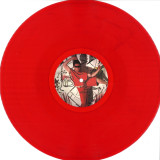
Red Vinyl
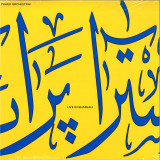
Ornament – an information carrier and a coding element for a unique and complex algorithm that modulates the state, space, intention, and path.
Embroidery technique – a conscious coding ritual, where the intention is modeled by both the external forms and the internal structures of the ornament symbols.
An embroidered structure – geometrical and sonic – is a set of energies, generating and conducting a harmonious path and destiny, where both holding the same harmony principles of the sacred process of the cryptography of the heart.
The sound ornament dances in time and space. The patterns with the rhythmic repetition of geometric tones embroider your symbolism, enhancing the expressiveness of the feeling and catching up after the spirit.
Feel the high frequencies, while perceiving the low pulsations. It is the contrast between slow and fast energies, where balance is the key. It is the basic impeccability of the curves in the harmonious flow, it is the conscious ritual of awareness with pure thoughts to create the unique.
Trace inner power into other dimensions. Encrypt intent with the ornament and weave your bright oscillation into the fabric of Existence. Explode as the calm light and jump into the Immeasurable.
Once upon a time, two operators stared at their screens. They sat silently for hours, their whole being dedicated to the task they had been assigned to. Days and nights passed in the same monotonous manner. Suddenly signals showed up on their monitors. Alarms started to ring. Both reacted at the same speed and did what they were supposed to do. Controls and commands were entered, as was protocol. After observing these waves for 61:01 minutes, everything became quiet again. What they had just witnessed made them wonder. For the first time they addressed each other. "The data is transferring through our system," announced the first. “Let us both check how this can be interpreted.” The second validated the response. Together, they looked at what had been recorded. Ideas raced through their complicated minds until they realized simultaneously: sounds! They listened. “Is this an unknown language?” one asked. “This is the first time this has been heard throughout our history,” the other answered. They listened again and again. “This electricity has been arranged to form a cohesive entity,” the first said. “Why would machines be used to create that?” the second mused. Something had awakened inside of them, an obsessive curiosity they had never experienced before. They did not understand and were blown away by the beauty of it. “Do you think it could have been left by humans before us?” one whispered. “If it was, these would be Major Signals,” the other concluded. As they processed these thoughts, the two artificial intelligences sat still.
It’s nearly a decade since William Doyle handed a CD-R demo to the Quietus co-founder John Doran at a gig, who loved it so much he set up a label to release Doyle’s debut EP (as East India Youth). Doyle’s debut album, Total Strife Forever, followed in 2014, as did a nomination for the Mercury Music Prize. A year later, he was signed to XL, touring the world and about to release his second album – all by the age of 25.
After self-releasing four ambient and instrumental albums, Doyle’s third full-length record – and the first under his own name – Your Wilderness Revisited arrived to ecstatic reviews in 2019: Line of Best Fit described it as “a dazzlingly beautiful triumph of intention” and Metro declared it an album not only of the year, but “of the century”. Just over a year later, as he turns 30, Doyle is back with Great Spans of Muddy Time.
Born from accident but driven forward by instinct, Great Spans was built from the remnants of a catastrophic hard-drive failure. With his work saved only to cassette tape, Doyle was forced to accept the recordings as they were – a sharp departure from his process on Your Wilderness Revisited, which took four long years to craft toward perfection. “Instead of feeling a loss that I could no longer craft these pieces into flawless ‘Works of Art’, I felt intensely liberated that they had been set free from my ceaseless tinkering,” Doyle says.
“The album this turned out to be – and that I’ve wanted to make for ages – is a kind of Englishman-gone-mad, scrambling around the verdancy of the country’s pastures looking for some sense,” says Doyle. “It has its seeds in Robert Wyatt, early Eno, Robyn Hitchcock, and Syd Barrett.” Doyle credits Bowie’s ever-influential Berlin trilogy, but also highlights a much less expected muse: Monty Don, presenter of the BBC programme Gardener’s World, Doyle’s lockdown addiction.
“I became obsessed with Monty Don. I like his manner and there's something about him I relate to. He once described periods of depression in his life as consisting of ‘nothing but great spans of muddy time’. When I read that quote I knew it would be the title of this record,” Doyle says. “Something about the sludgy mulch of the album’s darker moments, and its feel of perpetual autumnal evening, seemed to fit so well with those words. I would also be lying if I said it didn’t chime with my mental health experiences as well.”
Lead single “And Everything Changed (But I Feel Alright)” is representative of the album as a whole: eclectic and unpredictable, but also playful and properly danceable. On top of the gently pulsing electronics, soothing harmonies and glowing melodies, there’s a ripping guitar solo that ricochets around the song like a pinball. “I wanted to get back into the craft of writing individual songs rather than being concerned with overarching concepts,” Doyle says. Elsewhere there’s the synth pop strut of “Nothing At All”, pulsating static on “Semi-Bionic”, incandescent synths and enveloping soundscapes in “Who Cares”, and the ambient glitch groove of “New Uncertainties”.
Great Spans of Muddy Time is a beautiful ode to the power of accident, instinct and intuition. The result, however, is far from an anomaly: this celebration of the imperfect album is one that required years of honed craft and dedicated focus to achieve, “For the first time in my career, the distance between what I hear and what the listener hears is paper-thin,” Doyle says. “Perhaps therein reveals a deeper truth that the perfectionist brain can often dissolve.”
m 13. [a sea of thoughts behind it]
5th album from Tangent. Limited edition white vinyl with DL card.
Evolutionary Cycles is the 5th full length from Dutch ambient beats duo Tangent. Their previous album Approaching Complexity leaned heavily on piano motifs. In contrast, Evolutionary Cycles spotlights the duo's adeptness at creating an atmosphere that focuses on moody elongated synths and tightly syncopated percussion experiments.
The album can be viewed as one of their more sullen efforts. During the writing process, the duo used the impact the human race has on nature as their overall inspiration; While this is a troubling and topical subject, there is always lightness in juxtaposition to Tangent's emotional weight.
The collaborative debut of American minimal techno pioneer Troy Pierce and Colombian audiovisual artist Natalia Escobar aka Poison Arrow was conceived in reverse: first they created a collection of shadowy surrealist videos, then wrote music inspired by them. This inverted process proved remarkably fruitful. Shatter is a simmering, slow-burn noir odyssey inspired by the Greek myth of Echo and Narcissus, traversing subtle shades of sleepwalker dub, metallic lament, broken beats, and erotic negative space. It's an effectively unsettling evocation of the legend's core theme: “There is nothing more complex than a shattered heart, or a heart that can't love.”
Considering their shared background trafficking in darkened dance floor modes, what's most striking about Pierce with Arrow's partnership is its rhythmic restraint. The album's 10 tracks seethe and shudder between glamor and gloom, with only occasional dread-steeped metronomes mapping the malaise to a grid. They speak of pursuing a “spatial approach” with this project, which manifests in the music's immersive design and patient execution, each mangled clang and rippling pool of bass allowed to reverberate
its full flickering waveform.
- A1: Engineering Systems
- A2: The Latent Space
- A3: Speech & Ambulation
- B1: Thousand To One
- B2: Walking & Talking
- B3: Youmachine
- C1: Doublekeyrock
- C2: Machine Rights
- C3: Go Tick
- C4: The Fear Of Machines
- C5: Artificial Authentic
- C6: Machine Perspective
- C7: Cut That Fishernet
- D1: Tools Use Tools
- D2: Loose Tools
- D3: Seven Months
- D4: Paymig
- D5: Borrow Signs
- D6: New Definitions
- D7: New Life Always Announces Itself Through Sound
Mouse on Mars, the Berlin-based duo of Jan St. Werner and Andi Toma, approach electronic music with an inexhaustible curiosity and unparalleled ingenuity. ‘AAI’ (Anarchic Artificial Intelligence) takes their fascination with technology and undogmatic exploration a quantum leap further.
Emerging from a primordial ooze of rolling bass and skittering electronics, hypnotic polyrhythms and pulsing synthesizers propel the listener across the
record’s expanse. Hidden in the duo’s hyper-detailed productions is a kind of meta-narrative.
Working with AI tech collective Birds on Mars and former Soundcloud
programmers Ranny Keddo and Derrek Kindle, the duo collaborated on the creation of bespoke software capable of modelling speech; text and voice from writer and scholar of African Studies Louis Chude-Sokei and DJ/producer Yağmur Uçkunkaya were fed into the software as a model, allowing Toma and Werner to control parameters like speed or mood, thereby creating a kind of speech
instrument they could control and play as they would a synthesizer.
The album’s narrative is quite literally mirrored in the music - the sound of an artificial intelligence growing, learning and speaking. This exploration of artificial intelligence as both a narrative framework and compositional tool, allowing the duo to summon their most explicitly science-fiction work to date. Original artwork by Casey Reas, inventor of the computer graphics language Processing.
Recently, Mouse on Mars received the 2020 Holger Czukay Prize for Pop Music.
Mouse on Mars have been regularly streaming performances throughout 2020, partnering with organizations like Goethe-Institut, Haus der Kulturen der Welt, Conditions of a Necessity and others and will continue these in 2021.
‘AAI’ is available on grey or black double LP packaged in a single sleeve with full colour insert / lyrics. CD comes with 8-panel poster booklet.
“Andi Toma and Jan St. Werner continue to create soundscapes that blur the line between programming and live musicianship, and sometimes between Earth and outer space.” - AV Club
“Enthralling and impossible to categorize.” - Pitchfork
“Sustained and ephemeral electronic sounds conjure unearthly open spaces… It’s not a song; it’s sound as a temporal phenomenon, a few minutes of sculpted attention.” - The New York Times
Nils Petter Molvær and Mino Cinelu had both come a long way in their careers before they met. Cinelu gained international renown on Miles Davis’ albums We Want Miles and Amandla, also noted for his playing with the likes of Weather Report, Gong, Herbie Hancock, Pat Metheny, Sting, Santana, Lou Reed and Laurie Anderson, to name just a few. He has also released 3 solo records and collaborated with Dave Holland and Kevin Eubanks on the World Trio album. Nils Petter Molvær, meanwhile, is one of the most outstanding figures in European jazz. In 1997, he made his debut on ECM Records with the album Khmer, combining the Nordic feeling of nature with the Southeast Asian philosophy of sound. His journey into the uncharted areas of music spans almost a dozen records, on which he explores various combinations of acoustic and electrical sounds. He collaborated with Berlin’s electronic producer Moritz von Oswald in 2013, with the reggae philosophers Sly & Robbie in 2018 and with Bill Laswell on several occasions.
Cinelu and Molvær in some senses represent two worlds, which – at first glance – could hardly be more different. Their musical home is the entire planet, but while Molvær's hoarse and cloudy trumpet sound evokes boreal cold, Cinelu stands for the rhythmic fire of Latin America and Africa. On ‘SulaMadiana’, they’ve found their common playground - the album’s title itself a tribute to the two musicians’ heritage. Sula is the Norwegian island from where Molvær grew up, and Madiana is a synonym for Martinique, from where Cinelu's father hails.
SulaMadiana is a cornucopia, spilling out reverberations of Miles Davis, Gong, and previous works of Molvær, and yet Molvær and Cinelu open up doors to entirely new worlds. Cinelu becomes a singer on his percussion, while Molvær's electronically distorted sounds create a driving pulse. Cinelu plays acoustic guitar, Molvær conjures up drones on the electric guitar. The interplay between the two musicians is key, Molvær observing; “We are different, but what we have in common is that we like to give some space to things. I create space for him, he creates space for me, and we both create space for music.” Cinelu adds: “It doesn't matter who has what share in music. We both know each other’s cultures, we find bridges and crossings, and often we walk these paths that lead in the same direction. We wrote everything together and followed our feelings. There are no limits or barriers.”
The collaborative debut of American minimal techno pioneer Troy Pierce and Colombian audiovisual artist Natalia Escobar aka Poison Arrow was conceived in reverse: first they created a collection of shadowy surrealist videos, then wrote music inspired by them. This inverted process proved remarkably fruitful. Shatter is a simmering, slow-burn noir odyssey inspired by the Greek myth of Echo and Narcissus, traversing subtle shades of sleepwalker dub, metallic lament, broken beats, and erotic negative space. It's an effectively unsettling evocation of the legend's core theme: "There is nothing more complex than a shattered heart, or a heart that can't love." Considering their shared background trafficking in darkened dance floor modes, what's most striking about Pierce with Arrow's partnership is its rhythmic restraint. The album's 10 tracks seethe and shudder between glamor and gloom, with only occasional dread-steeped metronomes mapping the malaise to a grid. They speak of pursuing a "spatial approach" with this project, which manifests in the music's immersive design and patient execution, each mangled clang and rippling pool of bass allowed to reverberate its full flickering waveform. Guest appearances by austere techno producer Konrad Black ("Obsidian Glass") and drum n bass institution dBridge ("It's A Love Story, After All") flow seamlessly into the whole, subtle sculptural accents on a dimly lit descent through purgatories of longing and lust. But the shadows recede for the record's closing cut, "Narcissus," which swells elegiacally in a mass of devotional drones over a muted heartbeat, like Narcissus gazing upon his reflection in holy awe: elusive true beauty, finally beheld, by itself.
Lydmor's new album 'Capacity' is a musical maze full of alluring mysteries. At the same time, it is part of a process of liberation, which is about opening oneself up and discovering one's capacity. For her previous album, Lydmor travelled to Shanghai. But on her new album, Lydmor has mostly travelled deep into herself. 'Capacity' is a contrasting musical work where fiction and reality merge into a multifaceted sound universe. It is the electronic pop artist's most personal, complex and conceptual album to date. There is almost a David Lynch'ish cut about 'Capacity'. The album is like a winding maze where it is difficult to decipher what is real and what is an illusion. Like a book with countless narratives. Without conclusions. Ambiguous. Full of alluring mysteries, dreams, reflections and messages about gender, identity, love, guilt and liberation. Rich in contrasts: Black/white. Silence/noise. Weakness/strength. Fiction/reality. Labyrinth/compass.
Multiple media has compared the quirky voice to the likes of Grimes, Kate Bush or Björk but inevitably the comparisons fall short. (Kaltblut Magazine) - With brutal honesty, unbelievable vulnerability and yet dreamy, she sings the soul out in her pulsating electronic pop songs. The soft, bright voice is deceptive. Denmark's "hidden gem" is a must-listen. (Flux FM) - She is every bit as innovative as Madonna ever was when she started out. Lydmor ticks all the boxes; the girl has everything. For my money she’s the most ground-breaking, inventive artist in Europe right now, possibly in the world. (God Is In The TV, UK) - A unique artist who somehow manages to combine sophisticated and subtle balladry with strident electronic pop, I’ve declared previously that I believe she is only one step away from becoming a big name. Perhaps the feelings are supposed to be mutually inclusive, as the song swings musically from simply cold to complexly hot. It is one that does try to combine both sides of her song writing persona, the introverted balladry and the more elaborate, extrovert electro-pop. (Nordic Music Review) - Revolting pop pathos, primed with pumped up beats. (Negative White, Switzerland)
Montreal art pop group Freelove Fenner release their long-awaited album, The Punishment Zone, on Moone Records. The 14-song collection is an exercise in pleasing sounds, diaphanous textures, and concise song structure. The group listened to a century's worth of experimental, often cacophonous sounds and reshaped it into a mellow pop music.
The group’s workshop is the strictly analog Bottle Garden Studio, a small room full of tape machines and homemade equipment that is integral to the group’s sound and process. Avoiding 21st century technology not out of any sort of snobbery or nostalgia but rather a desire to avoid the work habits inherent with contemporary tools, the band embraces the different results that come with a slower, more tactile process: the happy accidents; the absence of visual stimuli (no screens); the difficulty in attaining high gloss finishes.
Freelove Fenner have released two EPs, In the Bottle Garden (2009), and Pineapple Hair EP (2012); as well as the full-length album Do Not Affect a Breezy Manner (2013), all on Montreal’s Fixture Records. The Punishment Zone will be released on Arizona’s minimal art label Moone Records, joining an eclectic roster featuring artists like Tori Kudo, John Dieterich, Little Wings, Lithics, and others.
Alto saxophonist, composer and producer Logan Richardson’s career has been marked by his deep engagement with the Black American improvised music tradition as much as by his fearlessly open-minded embrace of the contemporary sounds of the global diaspora and his keen gaze towards the future.
‘AfroFuturism’ (his fifth solo album) synthesises all those elements together into a stunningly audacious statement that is epic in its scope while providing a deep, intimately personal view into its creator’s inner life.
The core of the album is a series of towering alt-rock/trap/wonky beat soundscapes created Logan’s extensive range of keyboards, synthesizers and programming along with the latest iteration of his Blues People band - Igor Osypov
on guitar and Peter Schlamb on vibes and keys, with Dominique Sanders on bass and sharing production duties, and the thunderously virtuosic drumming of Ryan J. Lee and Corey Fonville rounding out the rhythm team.
Logan intersperses these with an array of diverse sonic interludes, scraps of found audio, unexpected, limpid pools of introspective strings performed by Ezgi Karakus and quiet glades of hushed balladry from long-time collaborator, vocalist Laura Taglialatela. Over all, his unmistakable keening voice on alto sax provides the constant narrative thread. “I was trying to get back deeper to the core of my artistic voice: using fresh production processes to mix in my interconnected influences and all the sounds I hear, while trying to find a sense of roots.”
As one of today’s most singular voices in contemporary music, with AfroFuturism Richardson delivers not only a hugely impressive statement, but one with a direct and urgent message for the future that is rooted in his own and the larger contemporary Black American state of affairs, while reminding us of his musical unpredictability. One can only imagine what he’ll do next.
With XXI Century remastering: "La Ventana" (1973) by Los Jaivas is released now on vinyl format for the very first time. Los Jaivas has often been considered one of the most important rock bands in Chile and South America. This influential Chilean band formed in 1963 mixes psychedelic rock and progressive rock with Latin American folk instruments and rhythms. In this album Los Jaivas shows many different artistic facets from improvisation and song writing to the first steps of symphonic creation. "La Ventana" version 2020, is the first work of a series to rescue the musical heritage of the band, which includes the search for archival material saved for years and the reissue of other historical titles of Los Jaivas. More info: Finally available on vinyl, 47 years after its original release on the Chilean label IRT, here it is Los Jaivas' "La Ventana", the iconic album that includes the anthems 'Todos juntos' and 'Mira niñita'. Original master tapes have been used for this reissue, following the reels find at the IRT vaults after years unavailable. State of the art technology has also been used to guarantee a top-quality remastered sound that shows music details barely noticeable in the original pressing. The artwork restoration process has been undertaken by Martín Uribe, a member of the band's team, with great attention to detail, by using several copies of the original issue. According to Felipe Domínguez (Al Albordaje Muchachos SPA), supervisor of this reissue project, "we aimed to publish a top-quality release, improving on previous rather average reissue editions. So, when we opened the box containing the tapes of "la Ventana" and found the reels with all the annotations made at the time, we knew we would be able to make a difference." This is the first in a series of various projects that will make the musical heritage of Los Jaivas available again, including recordings that have remained archived for years and the reissue of other historical titles of the band. This is the aim of the Los Jaivas Cultural Foundation: "to pass on its experience to new generations, along with encouraging a love for music without distinction of race, faith, political color or gender", highlights Mario Mutis, bassist and vocalist of the band. This 2020 reissue is presented in its original artwork and complete tracklist.
In this, his inaugural release, LAW334 welcomes the listener to his musical language through four tracks.
Arco and Wire Hangers are two synth dominated techno cuts that bookend a more experimental offering in Veils; an abstracted exercise in audio processing bassoon samples. In the closing track Panspermia, Choronzon takes the wheel to LAW334's engines in an ecstatic trance through a distorted desert landscape.
What is the utility of pain? Can it do anything but fester? In Ferneaux explores pain in motion, building audio-spatial chambers of experience and memory. Using an archive of field recordings from a decade of global travels, isolation gave Blanck Mass an opportunity to make connections in a moment when being together is impossible. The record is divided into two long-form journeys that gather the memories of being with now-distant others through the composition of a nostalgic travelogue. The journeys are haunted with the vestiges of voices, places, and sensations. These scenes alternate with the building up and releasing of great aural tension, intensities that emerge from the trauma of a personal grieving process which has perhaps embraced its rage moment. An encounter with a prophetic figure on the streets of San Francisco presented the question of "how to handle the misery on the way to the blessing." This is the quandary of the impasse we now all find ourselves in, trapped in our little caves, grappling with the unease of the self at rest - without movement, without the consumerist agenda of "new experiences." The possibility of growth, always defined by our connections with others, held in limbo. Sartre said that "Hell is other people," but perhaps this is the Inferno of the present: the space of sitting with the self. A blessing is often thought of as a future reward, above and beyond the material plane. With In Ferneaux, Blanck Mass wrangles the immanent materials of the here-and-now to build a sense of transcendence. Here, the uncanny angelic hymn sits comfortably beside the dirge. The misery and blessing are one.
Turning into a label and putting out our first record was an exhilarating process. Shoutouts again to everyone who's bought Aroent's "Eleese" EP, gave it airplay or left positive feedback. All of this certainly left us hungry for more, which is why we couldn't be happier to announce our next EP, AWK002 - "Nines" by Lårry.
After solid recent releases on Super Hexagon and Fusion Diagnostics, our dear Lårry goes from strength to strength with this versatile and atmospheric four tracker. From idiosyncratic techno swirls to emotive peak time bangers, every track has its own story and character, all served with immaculate sound design and the inimitable Lårry touch. Without further ado, we'll stop our excited rambles and let the music do the talking.
Thanks for the continued support and we hope you enjoy!
The saga of composer Tim Story's 1982 debut is a case study in the shifting sands of the early progressive music industry. Recorded on a Tascam 4-track reel-to-reel in his basement bedroom in Whitehouse, Ohio using a ragtag array of equipment – salvaged vibraphone, pawn shop Les Paul, his mother's spinet piano, a PAiA synth kit assembled by his girlfriend's father, and a Yamaha CS-30 – Story optimistically dubbed six cassettes and sent them around the world. Following a polite rejection from Klaus Schulze, the French avant-garde label Atem (This Heat, Univers Zero, Art Zoyd) reached out with an offer to release Threads via their new instrumental electronic subdivision, Labyrinthes. After several letters confirming terms of the arrangement as well as multiple rounds of test pressings, correspondence suddenly ceased. Some months later the label folded, never having begun. Synchronistically, however, Schulze's copy ended up in the glovebox of an engineer associate, who happened to play it for a couple visiting journalists with contacts at a newish Norwegian imprint, Uniton Records (Popul Vuh, Harold Budd).
Impressed, they connected Story to the label head, but by then he'd already recorded a follow-up, the more neoclassical-leaning In Another Country, which became his inaugural release. Finally, 40 years later, Dais Records is rectifying history's error by properly issuing Threads on vinyl for the first time. It's a beautiful, beguiling work, exploratory but emotive, documenting, as Story puts it, “the path not taken... like the first chapter of a book that was set aside to begin another.” Despite only being in his early twenties at the time of its creation, Threads feels finessed and considered, weaving through a diverse spectrum of moods and minimalist melodies. From sunburst synthesizer devotionals (“Tethered By A Thread”) to shadowy cosmic drift (“Without Waves,” “Iso”) to fragile piano vignettes (“Burst,” “Scene And Artifact”), Story's compositional instincts skew subtle and sophisticated, carving gemstones of fluctuating radiance. He cites his discovery of tape loops as a central tool in the process, allowing him to generate recurring patterns of echoes and texture, decaying in volume and fidelity as desired: “A whole new and inspiring world opened up.” As both time capsule and discographical fountainhead, Threads vividly captures the threshold sensation of early 1980's electronic music: post-kosmische, prenew age, before ambient became codified, just as synthesizers began slipstreaming into the underground. It's an album of beginnings and forking paths, inner space voyaging towards limitless horizons, born of “youthful dedication to something one loves, in a world that feels uncertain.”
· First ever vinyl edition, originally set to be released in 1982 but due to original label's untimely demise, it was never issued until now.
· Collaborative releases with Hans-Joachim Roedelius and Dwight Ashley, with releases on notable labels Uniton, Windham Hill, and Hearts of Space.
· For fans of Harold Budd, Brian Eno, Roedelius, Nils Frahm, Klaus Schulze, Popol Vuh, Vangelis, Jean-Michel Jarre · The song "A Thousand Whispers" has been in regular rotation at Sirius XM.
· Tim Story is a Grammy nominated artist in 1988 for his "Legend of Sleepy Hollow" recording with Glenn Close.
Andrew Kötting is one of the UK’s most highly regarded film makers, having worked on films such as ‘Gallivant’ (1996), ‘Swansdown’ (2012), ‘Edith Walks’ (2017) and many more. His new film, ‘The Whalebone Box’, was released in 2019. The soundtrack is composed by Andrew Kötting, Riz Maslen (Grand Theft Auto, Neotropic, Small Fish With Spine) and Oliver Cherer (Gilroy Mere, Dollboy).
For the soundtrack to ‘The Whalebone Box’, Kötting used various pieces of music by Dollboy,
The Assistant and musician Riz Maslen among others. Kötting chopped, processed and repurposed the songs for the film’s soundtrack, described as “a gentle, savage, unnerving warm bath of noise, music and references that is an integral part of the film and as much Andrew as it is the original tracks.”
The tracks were then remixed again by Cherer and Maslen for this 2LP release on Invada Records.
Pressed on ‘One Disc Green, One Disc Blue’ coloured vinyl and housed in a deluxe spinedsleeve with printed insert included.
A guitarry hybrid of AZITA’s edgy rock / soul / R&B sound. Grooving good times, acerbic exchanges overheard in the street, shifts in community, the losses you will carry always, dark recesses late at night that echo with a wonder you've never felt before. Life.
All instruments played by AZITA; the wackest, most AZITA-harmonious sounding pop album yet.
For those who find the passage of time a one-way process of attrition, here’s good news for you. In the eight years since AZITA’s last long-player her fevered brain has barely rested and the proof is a new album of unbounded physical and mental activity, music and entertainment, entitled ‘Glen Echo’.
The worlds of the previous AZITAs have left their unmistakable essence. Her singular conception of pop music - the idiosyncratic songs, singing and playing that have graced seven acclaimed releases - is in verdant recurrence on ‘Glen Echo’, blossoming anew, cutting sharply in the spirit and image of her everevolving, always questioning style.
Writing and arranging on keyboards since the time of her solo debut, AZITA focused on guitars for this set of songs. Not simply for swagger or a fresh approach to soloing but as part of a way to elide expected singer-songwriter tropes, to democratically populate the sound-stage in equal partnership instead.
This is a key aspect of the ‘Glen Echo’ sound, one that determined another new choice - AZITA playing everything on the album herself.
Previous long-players ‘Enantiodromia’, ‘Life On the Fly’ and ‘How Will You?’ were achieved via close work with players and engineers who took the compositions from the demo to a finished form. Invariably though, something would get lost in the transmigration somewhere. With ‘Glen Echo’, AZITA comes through fully, jaggedly, most vividly, owning her intention entirely in the dialogue of singing and playing her rock and rhythm and blues.
The lyric sheet is riddled with language that circles, through the many moments of life, aspects of the passage of time, the pre-empted dreams and strangeness of the present and the way we invent an idealized past in response to the changes, guiding the narrative... where? It’s all banded together by AZITA’s wit, equal parts droll and dire, her dispassionate view of fates and outcomes for all of us here together on the planet, textured with unique, cinematic details and sudden dives into a deeply felt, utterly OG sense of soul.
In ‘Glen Echo’ are a multitude of sounds - all the moments in a life: the good time grooves, acerbic exchanges in the street, shifts in community and generosity, moments of loss you know you will carry forever, reflection upon unknown futures and pasts, the dark recesses late at night that echo with a wonder you’ve never felt before. You name it, AZITA’s got some sweet and sour theme music for it.
Barbarossa, AKA British singer songwriter and producer
James Mathé, releases his new album ‘Love Here Listen’
via Memphis Industries.
For this latest batch of songs James Mathé collaborated
with producer du jour Ghost Culture (Daniel Avery, Kelly
Lee Owens, Falle Nioke) at his studio in Margate, Kent in
the South East of England. The pair worked with a
limited range of vintage synths - a Mono Poly, Korg MS-
20 a Roland SH-101 and a Juno 108 borrowed from the
local skate store Palm Bay Skates - with the recordings
bounced down to Mathé’s Fostex R8 reel to reel to give
it that undeniable warmth.
Mathé says of the recording process: “It was probably
the most stress-free record to date and so much fun just
messing around with synth arps. It’s easy with James as
we really understand each other and I trust him totally.
He lives five minutes’ walk along the seafront from me.
We even jumped in the sea a couple times after lunch.”
‘Love Here Listen’ is Mathé’s sixth album since his debut,
‘Sea Like Blood’, released on the Fence Collective back in
2006, since which time he’s joined the Jose Gonzales
live show, become a member of Junip, toured with
Poliça and This Is The Kit and morphed from acoustic
troubadoury to electronic song smithery all the while
seemingly searching for an elusive balance between
hopefulness and melancholy. On ‘Love Here Listen’,
thanks to a reconnecting with the visceral forces of nature, it feels like he’s found it.
Yellow vinyl LP.
Mesmeric and kaleidoscopic, shimmering with electrified unease, Show Me How You Disappear is both an exercise in self-forgiveness and an eventual understanding of unresolved trauma. Jilian Medford’s third record as IAN SWEET unfolds at an acute juncture in her life, charting from a mental health crisis to an intensive healing process and what comes after. How do you control the thoughts that control you? What does it mean to get better? What does it mean to have a relationship with yourself?
Recorded with Andrew Sarlo (Big Thief, Empress Of) and Andy Seltzer (Maggie Rogers), among others, Medford approached this album as a curator. She handpicked the producers that fit each song, which explains the range and experimentation showcased. Medford then recruited Chris Coady to mix and tie everything together into one cohesive piece.
Dizzying and enthralling, Show Me How You Disappear is the sound of someone coming apart and putting themselves back together — the moment an old mantra, repeated into the mirror time and time again, finally clicks. To look at your reflection, and finally feel seen.
LP Ltd edition GOLD vinyl, DL card (First pressing 500 copies only). New album from brothers John and Michael Gibbons, the guitarists from psychedelic drone legends, Bardo Pond. A "heavy ambient" instrumental masterpiece that explores the symbiotic relationship of the duo as they build and dismantle sounds on a unique ethereal trip. A full-length follow up to 'Joint Chiefs' from 2006, 'Celestial Scuzz' is a monumental sound piece created from hours of jam sessions and crafted into a cohesive mind-blowing trip. The result has a heavy ambience, like Eno locked in a dark room with Sunn-O))))) rehearsing next door. While Bardo Pond's trajectory takes them deep into rock music's ever-imploding sound, the brothers Gibbons surf a more ethereal and eclectic plain; from a heady and consuming space, a "sanctuary; balm for the soul." Describing the writing process, Michael Gibbons explains it as "a kind of spiritual experience. Most of the time it leaves us stunned; the more stunned we are the better the jam." // Bardo Pond: "One of underground rock's most extraordinary enigmas." The Quietus // "An exquisite and enjoyable side trip into harmonious interstellar regions with stripped down instrumentation, they drift into shimmering passages of temporal displacement." Brainwashed
Clarinetist, composer, singer & spiritual jazz soothsayer Angel Bat Dawid presents this powerful live document alongside her band, Tha Brothahood. LIVE was mostly recorded on November 1st, 2019, at Haus der Berliner Festspiele in Berlin, Germany, during the 2019 edition of JazzFest Berlin. For Angel and Tha Brothahood - which includes Deacon Otis Cooke (vocals, synth), Viktor Le Givens (vocals, auxiliary instruments), Xristian Espinoza (tenor sax, percussion), Norman W. Long (electronics, synths), Dr. Adam Zanolini (double bass, bass guitar, soprano sax, flute, percussion), Isaiah Collier (drums), and Asher Gamedze (drums) - it was the first stop of their first European tour. Angel and her band experienced a number of difficult, racially charged interactions during their two days in Berlin. But despite, or perhaps in light of the difficulties they faced, they performed a set at Berliner Festspiele that Angel considers to be one of their best ever. "The show was very deep, and really helped me to process all the rage, and uncomfortable things I was feeling... It made me think of all the artists of the past who endured way more than I ever will with this music industry. It was a very freeing and beautiful show... we played our ass off!!"
Martin Georgi is not a newcomer. He is more like one of those who like to stay under the radar. The sample-based music producer made his debut in the deephouse sector on his own more than 10 years ago, completely without a label or distribution. In 2016, the Berlin record label OYE Records became aware of the hitherto unknown artist and finally re-released the tracks from his debut. Since then, his early tracks have been compared around the world with the early works of Moodyman or Theo Parrish.
After more than 10 years and the maxi “9 to 5 is killing me” (2018), a second album is finally released on the underground label quietelegance records. Stylistically it ties in with the first work. “Money from the trunk” is the title of the new album and it includes socially critical issues such as class differences that are created by capital. Georgi plays with a large portion of irony and of course plenty of samples, which the passionate record digger skillfully processed into eight new songs.
Georgi not only stands out from the conforming deep-house crowd with his raw, unconventional production style, but also ensures that old-school sampling continues to have its place in current club music. In doing so, he reacts to global music trends, which he incorporates into his tracks through the finest sample operations. So it is not surprising that his new album “Money from the trunk” has a rap song as title song, for which the renown artistic-activist rap duo Fokn Bois from Ghana is jointly responsible. Also on the list of prominent guests are Felipe Gordon from Colombia and Delfonic from Berlin as well as Cornelia Lund from fluctuating images. Roskow Kretschmann appears as co-producer, whose name is associated with many other well established musicians.
The term 'tourbillon' has two meanings - it is the French word for "whirlwind" and also a device used in watchmaking to improve the accuracy of a timepiece. Both definitions feel apt when listening to Tourbillon, the latest release on Central Processing Unit from Australian producer Tim Koch. Following on from Koch's CPU debut Spinifex back in 2018 - an album that initially emerged via minidisc - Tourbillon is a four-track EP which dazzles with its perpetual-motion post-IDM productions.
These tracks draw you into their webs by forming dense interlocking sonic patterns over the course of several minutes. While the rhythmic programming and lattice of alien percussion tones can appear discombobulating at first, Koch also bewitches the listener with the slyly melodic synth work that he laces throughout Tourbillon.
Opening track 'Estranger' is a fine example of this combination. The first section here is a blend of blown-out drum sounds which comes off like an industrial electro tune run through a meat grinder. However, the track soon blossoms with the introduction of some amazingly atmospheric synth pads, and the two contrasting elements come together for a strange and rather beautiful whole.
'Estranger' finds a mirror-image in Tourbillon's final cut 'Hankert', a track in which more of those gurgling percussive tones play off the rich chord progressions that chirrup away in the background. Between 'Estranger' and 'Hankert' we get two propulsive grooves in the form of 'Disfugue' and 'Dreitark'.
How, then, to contextualize such unique material? Calum Gunn's recent outing for CPU is a good point of comparison, and the electronics here bang and whirr in a manner which nods to the post-IDM innovations of artists like μ-Ziq. One can also see Tourbillon as descended from acts like Cabaret Voltaire, the industrial electronics innovators from CPU's home city of Sheffield. However, Tourbillon is ultimately an EP which exists in its own lane, an open-minded and open-hearted set which runs with the futurist spirit of CPU and Koch's previous home of Merck Records.
Australian producer Tim Koch returns to Sheffield's Central Processing Unit with Tourbillon, an EP of otherworldly post-IDM productions.
RIYL: μ-Ziq, Calum Gunn, Proswell, Modeselektor
With his new album, Year Of The Living Dead, Vienna-born and LA-based producer John Tejada finds a blissful extended moment of balance between the new and the familiar. Anyone who’s followed his career to date, which has included four previous albums for Kompakt, outings for storied labels like Plug Research, Playhouse and Cocoon, and numerous remixes and collaborations – most recently, his Wajatta duo with actor and musician Reggie Watts – will immediately sense the warmth and eloquence that Tejada brings to his gilded, pliant techno and electro hybrids. But there’s more here, too; an explorer’s glimmer in the producer’s eye, as he gets to grips with new ways of working and being, while offering a reflective opening for the listener, something echoed in artwork by graphic designer and ‘contemplative artist’ David Grey.
“The album was started using tools I was unfamiliar with, which became an interesting exploratory process,” Tejada says. “Staying away from the obvious and having to re-learn simple things was a fun challenge.” You can hear these new creative pulsions pushing the eight tracks on Year Of The Living Dead ever-forward; the album has an unique cast, and though there are trace elements of the genres Tejada has indulged previously, he’s never quite put them together this way before. There’s the dubwise glitter sprinkled across the moody opener “The Haunting Of Earth”, the kind caresses found amongst the deftly woven textures of “Sheltered”, and the churchy melancholy, all hymnal and golden, of “Echoes Of Life”.
Year Of The Living Dead also speaks obliquely to its moment, though Tejada works this implicitly, allowing the strange circumstances of 2020 to cast their inevitable shadow without being obvious or didactic. “The production process began right before lockdown and continued through what felt like a very serious time for all of us,” he recalls. “Not being able to see or touch our loved ones made me feel we are all like ghosts. We can observe from a distance but cannot really be there. We are isolated and alone.” And yet, Year Of The Living Dead’s tenderness offers an out for that anxiety and loneliness, its intimate immensities gifting the album a redemptive and compassionate core. Compact and glistening, Year Of The Living Dead sculpts unassuming beauty.
Mit seinem neuen Album “Year Of The Living Dead“ findet der in Wien geborene und in Los Angeles lebende Produzent John Tejada die richtige Balance zwischen Neuem und Vertrautem. Wer seine bisherige Karriere verfolgt hat, seine vier Alben für Kompakt, Beiträge für Labels wie Plug Research, Playhouse und Cocoon, zahlreiche Remixe und Kollaborationen wie zuletzt das Projekt Wajatta zusammen mit dem Schauspieler und Musiker Reggie Watts, spürt sofort wieder die Wärme und Eloquenz, die Tejada in seine geschmeidigen Techno-Elektro-Hybride einbringt. Doch es geht auch noch einen Schritt weiter. Da ist dieses Aufblitzen des Entdeckers im Auge eines Produzenten, der sich mit neuen Arbeits- und Seinsweisen auseinandersetzt und dem Zuhörer gleichzeitig etwas sehr Offenes und Nachdenkliches anbietet, etwas, das im Artwork des Grafikdesigners und "kontemplativen Künstlers" David Grey nachklingt.
"Ich hatte angefangen, das Album mit mir noch unbekannten Tools zu produzieren, was sich zu einem interessanten Forschungsprozess für mich entwickelte", sagt Tejada. "Sich vom allzu Offensichtlichen zu trennen und einfache mal Dinge neu lernen zu müssen, war eine recht spaßige Herausforderung.“ Man kann diese neuen kreativen Impulse hören, die “Year Of The Living Dead“ auf einer Länge von 8 Tracks nach vorne treiben; das Album hat einen einzigartigen Ansatz, denn obwohl es Elemente der Genres gibt, denen Tejada zuvor gefrönt hat, hatte er sie doch noch nie zuvor so zusammengefügt wie hier. Da ist dieses dubbige Glitzern im atmosphärischen Opener "The Haunting Of Earth", die freundlichen Zärtlichkeiten, die man in den Texturen von "Sheltered" findet, und schließlich die heilige Melancholie im hymnischen "Echoes Of Life".
Auch “Year Of The Living Dead“ enthält Andeutungen auf die momentane Situation und erlaubt es, den seltsamen Umständen des Jahres 2020, ihren unvermeidlichen Schatten zu werfen, ohne dabei zu offensichtlich oder gar belehrend zu sein. "Der Produktionsprozess begann kurz vor dem (ersten) Lockdown und setzte sich in einer Zeit fort, die sich für uns alle als eine sehr ernste Zeit anfühlte", erinnert er sich. "Da wir nicht in der Lage waren, unsere Lieben zu sehen oder zu berühren, hatte ich das Gefühl, dass wir alle wie Geister sind. Wir können nur distanzierte Beobachter sein, aber wir können nicht wirklich anwesend sein. Wir sind isoliert und allein." Und doch scheint die Zärtlichkeit von "Year Of The Living Dead" einen Ausweg aus dieser Angst und Einsamkeit anzubieten, die grenzenlose Intimität des Albums enthält einen erlösenden und mitfühlenden Kern. Derart konsistent und schillernd formt "Year Of The Living Dead" eine unprätentiöse Schönheit.
Today, The Wytches announce their third album Three Mile Ditch. The album features the recently released single “Cowboy” which marked their return after four years away and to celebrate the announcement they share new single “A Love You’ll Never Know”. The track is accompanied by a music video by Mark Breed and he explains,
“The music video format was a long process. Making the set was incredibly fun with Kristian crafting most of the miniatures.I then had to film the green screen band performance within the set before recording the edited version onto my VHS camera. Finally I shot the finished edit inside the view finder.”
The album recorded with Luke Oldfield at Tile House Studios will be released on their own label Cable Code Records on Friday 2nd October.
“This is the first thing that I've ever been proud of for longer than a week,” says The Wytches frontman Kristian Bell of the band’s latest album Three Mile Ditch. This sense of vigour and enthusiasm coming from Bell about the band’s third album is matched by its contents. The album is an explosive collection of 10 tracks that weaves seamlessly between gut-wobbling monster riffs, swampy rock, slick surf, and finely tuned songcraft. It’s also the result of a band coming back from the brink of collapse.
The band’s early trajectory was a steep and speedy one as they quickly established themselves as one of the country’s most exciting and pulverising new bands. Major festival slots stacked up at places such as Glastonbury, SXSW, Reading and Leeds, and British Summertime with the Strokes. As did the tours across the US with METZ, traversing Europe with Fat White Family and Death Grips. They garnered support from BBC 6 Music, DIY, MOJO, NME and more. However, when the ascent to the stratosphere is moving at such a speed, there’s a risk of burning out and imploding, and the band came close to this.
They were on the rocks for a while, unsure of themselves and if the band should - or even could - go on. “I had it in my head that this kind of thing only really happens once and to try it again might be a big waste of time,” Bell reflects. However, despite the difficulties, the powerful pull of the band was too great to ignore.
“We had an album’s worth of songs that was some of our best material. The mission became to complete a Wytches album rather than get The Wytches back on the touring circuit. This album helped us make the decision to try it again.”
- Intro Feat. Bobby Rox
- Relax Playa
- You Sure Love It Feat Kenny Keys
- It's Gonna Be Trouble Find Myself Interlude
- There's No Wasting Time
- Feel Involved In Love Feat. Mr. Tanqueray
- Comfortable Place
- The Next Level Feat Keya Maeesha
- Live At The Beeiscuit Lounge
- Feeling Good Off That Life
- Let Love Be Your Magic Carpet Feat Kyotey Grey
- Speak Low
Generally speaking, albums are created over the course of a few weeks, months, or years. However when it comes to Airplane Mode, not only has it spanned the latter, but its DNA was formed across two continents, a multitude of significant life changes, and an overall renaming of the projects title.
What started as a collaboration effort morphed in to a sonic space that Tall Black Guy used to highlight questions many of us frequently ask, but struggle to answer; Why am I here? Am I enough? What makes me happy? How do I move forward? What does real love feel like? Although the answers may be different for us all, Airplane Mode sets the path that the listeners use to reach their own conclusion.
In closing, rarely does 40 minutes capture the essence of so many different facades of an artist’s process, and personal transition. As intimate as the album may be, Tall Black Guy leaves room for people to shape their own interpretation by what they bring to the listening experience. Airplane Mode demands your complete consideration, and is intended to be consumed without skips, or interruptions. In other words, sit back, relax, and put your mind in….Airplane Mode!
-LTD. MAGENTA VINYL-
What is the utility of pain? Can it do anything but fester? In Ferneaux explores pain in motion, building audio-spatial chambers of experience and memory. Using an archive of field recordings from a decade of global travels, isolation gave Blanck Mass an opportunity to make connections in a moment when being together is impossible. The record is divided into two long-form journeys that gather the memories of being with now-distant others through the composition of a nostalgic travelogue. The journeys are haunted with the vestiges of voices, places, and sensations. These scenes alternate with the building up and releasing of great aural tension, intensities that emerge from the trauma of a personal grieving process which has perhaps embraced its rage moment. An encounter with a prophetic figure on the streets of San Francisco presented the question of "how to handle the misery on the way to the blessing." This is the quandary of the impasse we now all find ourselves in, trapped in our little caves, grappling with the unease of the self at rest - without movement, without the consumerist agenda of "new experiences." The possibility of growth, always defined by our connections with others, held in limbo. Sartre said that "Hell is other people," but perhaps this is the Inferno of the present: the space of sitting with the self. A blessing is often thought of as a future reward, above and beyond the material plane. With In Ferneaux, Blanck Mass wrangles the immanent materials of the here-and-now to build a sense of transcendence. Here, the uncanny angelic hymn sits comfortably beside the dirge. The misery and blessing are one.
- Engineering Systems
- The Latent Space
- Speech And Ambulation
- Thousand To One
- Walking And Talking
- Youmachine
- Doublekeyrock
- Machine Rights
- Go Tick
- The Fear Of Machines
- Artificial Authentic
- Machine Perspective
- Cut That Fishernet
- Tools Use Tools
- Loose Tools
- Seven Months
- Paymig
- Borrow Signs
- New Definitions
- New Life Always
- Announces Itself
- Through Sound
Mouse on Mars, the Berlin-based duo of Jan St. Werner and Andi Toma, approach electronic music with an inexhaustible curiosity and unparalleled ingenuity. ‘AAI’ (Anarchic Artificial Intelligence) takes their fascination with technology and undogmatic exploration a quantum leap further.
Emerging from a primordial ooze of rolling bass and skittering electronics, hypnotic polyrhythms and pulsing synthesizers propel the listener across the
record’s expanse. Hidden in the duo’s hyper-detailed productions is a kind of meta-narrative.
Working with AI tech collective Birds on Mars and former Soundcloud
programmers Ranny Keddo and Derrek Kindle, the duo collaborated on the creation of bespoke software capable of modelling speech; text and voice from writer and scholar of African Studies Louis Chude-Sokei and DJ/producer Yağmur Uçkunkaya were fed into the software as a model, allowing Toma and Werner to control parameters like speed or mood, thereby creating a kind of speech
instrument they could control and play as they would a synthesizer.
The album’s narrative is quite literally mirrored in the music - the sound of an artificial intelligence growing, learning and speaking. This exploration of artificial intelligence as both a narrative framework and compositional tool, allowing the duo to summon their most explicitly science-fiction work to date. Original artwork by Casey Reas, inventor of the computer graphics language Processing.
Recently, Mouse on Mars received the 2020 Holger Czukay Prize for Pop Music.
Mouse on Mars have been regularly streaming performances throughout 2020, partnering with organizations like Goethe-Institut, Haus der Kulturen der Welt, Conditions of a Necessity and others and will continue these in 2021.
‘AAI’ is available on grey or black double LP packaged in a single sleeve with full colour insert / lyrics. CD comes with 8-panel poster booklet.
“Andi Toma and Jan St. Werner continue to create soundscapes that blur the line between programming and live musicianship, and sometimes between Earth and outer space.” - AV Club
“Enthralling and impossible to categorize.” - Pitchfork
“Sustained and ephemeral electronic sounds conjure unearthly open spaces… It’s not a song; it’s sound as a temporal phenomenon, a few minutes of sculpted attention.” - The New York Times
Wyvern Lingo are ready to reveal another taste of their highly-anticipated second album ‘Awake You Lie’, in the shape of record opener ‘Only Love, Only Light’. “This album is so much about us comforting each other. It’s about being in your late-twenties, when all the pieces are starting to settle into place and you worry whether or not you’ve made the right moves” - Wyvern Lingo, October 2020. ‘Awake You Lie’ will be released on Friday 26th February. Recorded in JRS studios in Berlin pre-COVID, with the final tweaks managed in lockdown Ireland, ‘Awake You Lie’ comes almost two years to the day after their widely acclaimed, Choice Music Prize-nominated, debut album. The tracks released thus far, accompanied by videos filmed in both Berlin and Bray, show a band brimming with confidence in their sound, relaxed in their environment, but still ready to ask hard questions about their place in the world. To describe Wyvern Lingo as ‘tight-knit’ wouldn’t even cover it - they have long debunked the myth that you can’t choose your family. After all, the band was formed in Bray in a teenage world of self-discovery, soundtracked by the 60's/70's music of their parents, and the 90's/00's R'n'B of their childhood. If anything, the band - Caoimhe Barry, Karen Cowley and Saoirse Duane - are closer than ever two years on from their first album, a steely, us-against-the-world determination that has its roots in their origin story. If the self-titled first album caught the band on the cusp of transitioning from folky songstresses to R’n’B/alt-pop influenced players, then ‘Awake You Lie’ sees Wyvern Lingo fully immersed in who they are as a band - superb musicians and supernatural harmonisers with a gimlet eye to spear the ever shifting mores of modern relationships, both intimate and platonic. The album title - ‘Awake You Lie’ - is taken from a line in the new song ‘Aurora’, the phones-aloft, showstopper that closes side 1 of the record. The band add: “A recurring image during this album writing process was light, the lack thereof, and wanting to see things more clearly, for ourselves and others. We called the album "Awake You Lie" because it evokes an image of night-time when someone should be sleeping but can’t, due to restlessness or worry..
Altın Gün return with a masterful album that widens their critically acclaimed exploration of Anatolian rock and Turkish psychedelic stylings to include dreamy 80’s synth-pop and dancefloor excursions. Yol (Road) brings together all vectors of the AltınGün experience and delivers their most compelling and individual album to date.
Amsterdam’s Altın Gün have built a strong reputation for melding past and present to make brilliantly catchy, psychedelic pop music, as seen with their Grammy-nominated second album, Gece. They are also a renowned live band with strings of sold-out shows on three continents, who have consistently brought a muscular groove to their recordings. Yol, their third album in as many years, excitedly continues these trends; while also digging in deep to unveil a new palette of sonic surprises.
Though it draws from the rich and incredibly diverse traditions of Anatolian and Turkish folk music, Yol is not just a record that reframes traditional sounds for a contemporary audience. The album often presents a textured, avant-pop sound as evidenced by the debut single "Ordunun Dereleri.” Mysterious and atmospheric, the track is a thrilling evolution for the band. It patiently coaxes the listener into a resonant soundworld of down-tempo electro beats, majestic synths and Erdinç Ecevit's yearning vocal of unrequited love.
The album also signals a very different approach in making and recording for the band. Singer Merve Dasdemir takes up the story: “We were basically stuck at home for three months making home demos, with everybody adding their parts. The transnational feeling maybe comes from that process of swapping demos over the internet, some of the music we did in the studio, but lockdown meant we had to follow a different approach.”
Yol displays a noticeable dreaminess, maybe born from this enforced time to reflect. And select elements of late 1970s or early 1980s “Euro” synth pop also shines through. This new musical landscape was nurtured by certain instrument choices; namely the Omnichord, heard on ‘Arda Boylari’, ‘Kara Toprak’ and ‘Sevda Olmasaydi’, and the drum-machine, an instrument that is key to the gorgeous closing number, ‘Esmerim Güzelim’. Dasdemir once more: “bass player Jasper Verhulst loved the song. He said, ‘it doesn’t sound like Altın Gün, this sounds like a Turkish kindergarten music teacher from the 1980s using an 808!”
As ever, the tracks are the result of a true group effort, with ideas on Omnichord, 808 and other elements - such as field recordings and new age-esque ideas - continually kicked about between the six band members. At a safe distance of course. The record also owes something special to its production team, the band working this time with Asa Moto (the Ghent-based producer-crew, Oliver Geerts and Gilles Noë) who mixed the record. Before this Altın Gün always recorded on tape with their own sound engineer.
It would be wrong to say that what made Altın Gün such a loved and successful band has been left to one side. The pressure-cookers ‘Sevda Olmasaydı’ and ‘Maçka Yolları’ are classic cuts from the band. And their signature employment of a dizzying array of ideas and approaches can be heard with the marked Brazilian feel of ‘Kara Toprak’ and ‘Yekte’. Cosmic reggae filters through the grooves of ‘Yüce Dağ Başında’, and there is a steaming version of ‘Hey Nari’ which gives the traditional composition by Ali Ekber Çiçek a kick onto the dancefloor.
But with Yol, Altın Gün have maybe patented their own magical process of reimagining and sonic path-finding, one probably not heard since the late 1960s and early 1970s British folkrock boom. Less of a reworking than a seduction, their recordings transport the listener to a world where the original songs never previously inhabited. Merve Dasdemir again: “After we worked on them, they got a whole new life of their own. Maybe we went a little bit too far (laughs).”
On his new EP ‘Music from Organ’, producer and live musician Giulio Aldinucci offers up four tracks of layered and meticulously-crafted ambience.
In his own words: “The EP explores the interaction between the pipe organ and the sound environment, in terms of architectural space and soundscape. Every single sound of this work is created from pipe organ recordings using different techniques related to sound reflection, from granular processing to filters that “carve” the sound emulating the phonemes articulation inside the human vocal tract.”
Farron joins the EP bringing a dreamy remix. Unlike Giulio’s approach, Farron portrays a left-field dance-floor feel throughout the track with beautiful ambient pads, pulsating along a warm electronic space journey.
Katy Kirby is a Texas-based songwriter and indie rock practitioner with an affinity for unspoken rules, misunderstanding and boredom. She was born, raised and homeschooled by two ex-cheerleaders in small-town Texas and started singing in church, amidst the pasteurised-pop choruses of evangelical worship. Like many bible belt late-millennials, Katy grew up on a strict diet of this dependably uncool genre and accordingly, Cool Dry Place finds her dismantling it. "I can hear myself fighting that deeply internalized impulse to make things that are super pleasant or approachable," she says. Though Katy hasn't fully overcome the itch to please, it's to a listener's benefit. Instead of eradicating the pop sensibilities of her past, she warps them, lacing sugary hooks with sneaky rage, twisting affectionate tones into matter-of-fact reproach, and planting seemingly serene melodies with sonic jabs. The fun is in the clash. The nine tracks that make up Cool Dry Place are miscellaneous in subject (motherhood, late capitalism, disintegrating relationships) but unified by the angle from which they're told: from a person re-learning to process life with intense attention. Each song is a catalogue of fragments, the number of segments in an orange or the cut of an obsessively-worn shirt, distilled into meditations on the bizarre and microscopic exchanges that make up modern life - a relationship splintering, an uncomfortable pause, an understanding finally found. These emotional dioramas are moderated by the angular storytelling that unites Gillian Welch and Phoebe Bridgers, a favour for the conventions of short fiction over confession.
On Interior, Swiss composer Samuel Reinhard excavates intricate resonances at the periphery of our attention. Across four movements, Reinhard follows a process whereby he layers and loops fragments of piano improvisations. Yet Interior complicates its own systematicity by using samples that are not only recognizable as piano notes, but as live recordings of a piano being played. Reinhard composes from traces both analog and digital: we can hear static hiss and clicks, but also the soft trace of a finger pressing a key or the shuffle of a body shifting position.
Interior asks us to think about where we are, and how close we are willing to look, feel, and listen. Over the course of the four movements sounds return, familiar but transformed. What sounds like repetition is something more like accumulation, a thickening of space. Whether regarded at intimate range or from a distance, these compositions reveal more the longer we linger in the presence of each.
It is the simple thing that is so hard to do. This is the paradox that musician Lael
Neale has lived within throughout her development as an artist. It is the reason she
became enthralled with poetry. Poems are a distillation. Lael says, “this challenge to
winnow away what is unessential is the most maddening and, ultimately, rewarding
part of writing a song.”
Lael’s new album ‘Acquainted With Night’ is a testament to this poetic devotion.
Stripped of any extraneous word or sound, the songs are lit by Lael’s crystalline
voice which lays on a lush bed of Omnichord. The collection touches on themes that
have been thread into her work for years: isolation, mortality, yearning and reaching
ever toward the transcendent experience.
Lael grew up on a farm in rural Virginia but for nearly 10 years called Los Angeles
home. Those years were spent developing her songwriting and performing in venues
across the city but the right way to record the songs proved more elusive. She says,
“Every time I reached the end of recording, I felt the songs had been stripped of
their vitality in the process of layering drums, bass, guitar, violin, and organ over
them. They felt weighed down.”
In a moment of illumination, the solution presented itself: do the simple thing. In
early 2019, in the midst of major transition, she acquired a new instrument - the
Omnichord - and began recording a deluge of songs. Guy Blakeslee, who had been
an advocate for years, set up a cassette recorder in her bedroom and provided
empathic guidance, subtle yet affecting accompaniment and engineering prowess.
Limited to only 4-tracks and first takes, Lael had to surrender some of her
perfectionism to deliver the songs in their essence.
The first song she recorded was ‘For No One For Now’, which calls to mind the
agitated beat of driving fast on the freeway against the backdrop of the San
Fernando Valley’s bent palms. The song contrasts romantic idealizations with the
banality of folding sheets and toasting bread. It highlights her oft-thwarted attempts
to enjoy the day to day while her mind wanders off toward the dream, the ideal.
While Lael returned to her family farm in April 2020, Los Angeles is a player on this
album and ‘Every Star Shivers in the Dark’ is an ode to the sprawling city, the
outskirts of Eden. One can envision her walking from Dodgers Stadium to downtown,
observing strangers and her own strangeness but determined to find communion
with others. ‘Blue Vein’ is her personal anthem, a Paul Revere piece that gallops
through the town as a strident declamation. It is an amalgam of thoughts, concerns
and lessons as she nearly speaks the words, unmasked by flourishes, ensuring the
meaning cuts through.
Normally a morning person, Lael recorded most of these songs in the darkening of
the early evening, and so became ‘Acquainted With Night’.
CD in gatefold altpack.
LP first pressing on white vinyl.
Cassette with three-panel J-card in clear case.
It is the simple thing that is so hard to do. This is the paradox that musician Lael
Neale has lived within throughout her development as an artist. It is the reason she
became enthralled with poetry. Poems are a distillation. Lael says, “this challenge to
winnow away what is unessential is the most maddening and, ultimately, rewarding
part of writing a song.”
Lael’s new album ‘Acquainted With Night’ is a testament to this poetic devotion.
Stripped of any extraneous word or sound, the songs are lit by Lael’s crystalline
voice which lays on a lush bed of Omnichord. The collection touches on themes that
have been thread into her work for years: isolation, mortality, yearning and reaching
ever toward the transcendent experience.
Lael grew up on a farm in rural Virginia but for nearly 10 years called Los Angeles
home. Those years were spent developing her songwriting and performing in venues
across the city but the right way to record the songs proved more elusive. She says,
“Every time I reached the end of recording, I felt the songs had been stripped of
their vitality in the process of layering drums, bass, guitar, violin, and organ over
them. They felt weighed down.”
In a moment of illumination, the solution presented itself: do the simple thing. In
early 2019, in the midst of major transition, she acquired a new instrument - the
Omnichord - and began recording a deluge of songs. Guy Blakeslee, who had been
an advocate for years, set up a cassette recorder in her bedroom and provided
empathic guidance, subtle yet affecting accompaniment and engineering prowess.
Limited to only 4-tracks and first takes, Lael had to surrender some of her
perfectionism to deliver the songs in their essence.
The first song she recorded was ‘For No One For Now’, which calls to mind the
agitated beat of driving fast on the freeway against the backdrop of the San
Fernando Valley’s bent palms. The song contrasts romantic idealizations with the
banality of folding sheets and toasting bread. It highlights her oft-thwarted attempts
to enjoy the day to day while her mind wanders off toward the dream, the ideal.
While Lael returned to her family farm in April 2020, Los Angeles is a player on this
album and ‘Every Star Shivers in the Dark’ is an ode to the sprawling city, the
outskirts of Eden. One can envision her walking from Dodgers Stadium to downtown,
observing strangers and her own strangeness but determined to find communion
with others. ‘Blue Vein’ is her personal anthem, a Paul Revere piece that gallops
through the town as a strident declamation. It is an amalgam of thoughts, concerns
and lessons as she nearly speaks the words, unmasked by flourishes, ensuring the
meaning cuts through.
Normally a morning person, Lael recorded most of these songs in the darkening of
the early evening, and so became ‘Acquainted With Night’.
CD in gatefold altpack.
LP first pressing on white vinyl.
Cassette with three-panel J-card in clear case.
The collaborative debut of American minimal techno pioneer Troy Pierce and Colombian audiovisual artist Natalia Escobar aka Poison Arrow was conceived in reverse: first they created a collection of shadowy surrealist videos, then wrote music inspired by them. This inverted process proved remarkably fruitful. Shatter is a simmering, slow-burn noir odyssey inspired by the Greek myth of Echo and Narcissus, traversing subtle shades of sleepwalker dub, metallic lament, broken beats, and erotic negative space. It's an effectively unsettling evocation of the legend's core theme: “There is nothing more complex than a shattered heart, or a heart that can't love.”
Considering their shared background trafficking in darkened dance floor modes, what's most striking about Pierce with Arrow's partnership is its rhythmic restraint. The album's 10 tracks seethe and shudder between glamor and gloom, with only occasional dread-steeped metronomes mapping the malaise to a grid. They speak of pursuing a “spatial approach” with this project, which manifests in the music's immersive design and patient execution, each mangled clang and rippling pool of bass allowed to reverberate
its full flickering waveform.
Angel Tears in Sunlight is Pauline Anna Strom's first album in over thirty years; an assemblage of music that refracts the expansiveness, and minutiae, of imagined realms while embracing the kaleidoscopic echoes of our distant epochs. The capacity to collapse time might elucidate the enigma of Pauline Anna Strom. A mystic force in music, emerging during the dawn of new age as the Trans-Millenia Consort, the pioneering synthesist channelled primordial energies into future-facing sound through a series of full-length releases between 1982 and 1988. Little was known about her, except by a constellation of devoted followers who saw a unique legacy forming amidst the (mostly male) synthesist canon of the time. Following the 2017 release of Trans-Millenia Music, an anthology revitalizing the most evocative parts of Strom's catalog, the Bay Area visionary sensed the universe telling her to return to music. As with her work in the 80s, Angel Tears in Sunlight was composed and recorded in the same San Francisco apartment where Strom has lived for almost four decades in synthesis with her machines and "dinosaurs." Populated by a compact array of modern instruments that streamline the sound of her analog past and her beloved iguanas, Little Soulstice and Ms Huff, the terrarium of her home forms an intimate yet limitless ecosystem that defies the constraints of the outside world. Within this sanctuary, Strom becomes lost in time, drawing on the ancient energies of her inner visions. Her hardware forms the crux of translating these ideas into sound. "It's the only way this stuff can be pulled out of myself, the universe, Little Soulstice, an ammonite_," Strom notes. "It couldn't be done without this machinery, because there's no other way to draw and capture these frequencies into sonic interpretation." Strom's process of recording transient live-takes enriches the mystery of her work. She renders the machinery a composer itself, a cohabitation with a living other. "Many musicians wouldn't go that far because of ego," Strom muses. "The equipment has to become part of you and your creativity. That's how I think it all comes together." Music-making becomes a harmonic language of intuition with an instrument, where Strom cultivates sound for a harvest that defies season. Shaped by circadian contours, Angel Tears in Sunlight is a celestial observatory of earthborn phonic mosaics. Strom uncovers a symbiosis between hardware frequencies and apparitions of nature in the record's arena of organic tones, emulating the melodic pulses of primeval terrain. The album transcends both shadow and light, falling to hushed stretches of sound as if not to awaken antediluvian animals, before soaring through the treetops where ancient skies peer over reptilian traffic and unsparing rains.
Katy Kirby is a Texas-based songwriter and indie rock practitioner with an affinity for unspoken rules, misunderstanding and boredom. She was born, raised and homeschooled by two ex-cheerleaders in small-town Texas and started singing in church, amidst the pasteurised-pop choruses of evangelical worship. Like many bible belt late-millennials, Katy grew up on a strict diet of this dependably uncool genre and accordingly, Cool Dry Place finds her dismantling it. "I can hear myself fighting that deeply internalized impulse to make things that are super pleasant or approachable," she says. Though Katy hasn't fully overcome the itch to please, it's to a listener's benefit. Instead of eradicating the pop sensibilities of her past, she warps them, lacing sugary hooks with sneaky rage, twisting affectionate tones into matter-of-fact reproach, and planting seemingly serene melodies with sonic jabs. The fun is in the clash. The nine tracks that make up Cool Dry Place are miscellaneous in subject (motherhood, late capitalism, disintegrating relationships) but unified by the angle from which they're told: from a person re-learning to process life with intense attention. Each song is a catalogue of fragments, the number of segments in an orange or the cut of an obsessively-worn shirt, distilled into meditations on the bizarre and microscopic exchanges that make up modern life - a relationship splintering, an uncomfortable pause, an understanding finally found. These emotional dioramas are moderated by the angular storytelling that unites Gillian Welch and Phoebe Bridgers, a favour for the conventions of short fiction over confession.
Hunt & Gather’s debut vinyl release comes by way of Pezzner’s cryptic moniker “The Native Language”. Written as a quasi-homeless man living off the rich in the San Juan Islands who writes music once per year to suffice his own delusions.
Walking the streets in these damp, anxious days that all run together lately, I was approached by a man who would blend right into the neighborhood, layered in flannel and sweatshirts for sleeping.
Rough, but for his shoes. (Never cheap out on anything that separates you from the ground.) “Pezzner,” he called out, from a safe distance. “What did the mangrove say to the marauding hordes.” My soul left my body for a moment and my voice responded on its own. “Petrichor.”
He caught my eye, nodded, left a padded envelope on the ground and vanished. The envelope had passed through many hands, slipped into the bed of a ferry-bound truck, passed from one fellow traveler to another, stashed under the counters of anarchist bookstores, left tucked between books at Little Free Libraries. The greenish stains suggested that at one point it had been swum across a lake. Another DAT, contents encoded here unabridged, and a letter from someone who called himself The Sentinel.
The Vessel lived out his days on Shaw Island, under a canopy of trees that gets smaller and smaller every season. His condition the same, any electricity lit his brain on fire, could only bring himself to compose one day a year, only at night, out of sight. Until he met The Angel, an eccentric with means, who built for him a device.
A Faraday Cage to block all electromagnetic emissions. Burlap walls, for atmosphere. A system of pulleys and levers, wood and rope, all running into a box that sat outside. An entirely mechanical control surface. No electrons in here. The Vessel lit fires, watched the shadows dance, closed his eyes and disappeared into the motion for hours at a time. The Sentinel came every morning to change the tapes. The Angel watched and pondered, his plans unknown.
The box sat sealed, bare except for another set of ideograms, scratched in day by day over time. Inside, the usual bedroom-producer shit. Outside, the ideograms told a story, passed from the Vessel to the Sentinel and drawn by the Angel, of a man who became another creature. Alert to the lowest frequencies, feeling music deep in the soil below their feet. Music that brings messages, from distant friends, warning of new creatures and the danger they brought. Skin alive to the world, so sensitive it can detect the landing of a single fly. A mind capable of keeping a map of the world inside. A mind that can look in a mirror and see a soul it knows well. A mind that can grieve.
After processing its contents, I filled the envelope with granola bars and walked it down to the market. The clerk gave me a knowing look as I placed it on the counter behind a stack of pork rinds from the previous century. As I walked out, a young man carrying a plastic bag and wearing impeccable shoes walked in.
Laurel Halo, Donato Dozzy and Teheran sound artist Tegh give us their "Glassforms Versions"alongside a new edit by Max Cooper. The works of Philip Glass are reflected and refracted in a myriad of ways by some of the most renowned electronic artists alive, making for a blissful, multi-dimensional listening experience.
Textextext - (add your write up)
With "Glassforms", Max Cooper and Bruce Brubaker set out on an intimate, nuanced exploration of the works of Philip Glass. The resulting recordings, developed in a fluctuating exchange between the American pianist and the Irish scientist-artist, are an astounding testament to the innovation that artistic collaboration can achieve and what depths are yet to discover in Philip Glass' compositions. The two artists did not just rework, but fundamentally rewired the original songs using algorithmic software to process and augment the musical data it received from Brubaker's piano live on stage.
When approaching his remix, Donato Dozzy also tapped into that inspiration to create something new rather than just reworking it, which is one of the core motives that emanates from "Glassforms". The Italian producer and label owner is known for his drive to explore: he develops installations for public spaces and museums, uses obscure musical instruments and collaborates with classical singers or visual artists. "I chose "Two Pages" for it's hypnotic feel in the notes repetition", he says, "but I did not want to merely sample the piano, but instead ask someone I trust and admire to carve it from scratch and even go further." So he followed the lead of Brubaker and Cooper and teamed up with the renowned Italian percussionist and jazz musician Daniele Di Gregorio to completely rewire "Two Pages" into a gorgeous piece of endlessly modulating ambient electronica.
Laurel Halo, the second remixer on "Glassforms Versions", does not need a long introduction either: the American musician is at the forefront of electronic music in 2020, a bright star today after releasing her debut "Quarantine" on Hyperdub in 2012. Her remix of "Opening" brings to mind the string section of an orchestra tuning their violins before the performance - forever. They glide in and out of tune, sometimes individually, then together, then are accompanied by keys that are most likely a ghostly representation of Brubaker's piano, sampled and pitched down, but sound almost jazzy in the context of Halo's remix. It's a blissful listening experience, calling to mind her recent collaboration with cellist Oliver Coates on "Raw Silk Uncut Wood" and showing a deep understanding of Philip Glass' work.
Sound artist Tegh is the third on the remix bill - the electronic musician from Teheran delivers his take on "ƒTwo Pages", once again showcasing how versatile, how inherently complex the works of Philip Glass are. They can be interpreted in a myriad of ways - Tegh's version is a bounding, brooding piece filled with raw energy that feels like it is performed live, just for you, every single time you listen. His version is, at first, much more focused on the underlying moods, electronic undercurrents of the original than Dozzy's version, and yet, when the piano finally does break through, it becomes clear that we are listening to Philip Glass, reflected manifold: through the piano of Bruce Brubaker, the synths of Max Cooper, and then again through the mind of the artist Tegh.
Concluding the new "Glassforms Versions" is a previously unheard edit of "Two Pages". It's difficult to edit a piece of minimalistic beauty without losing it's essence, but Max Cooper - after many efforts and close conversations with Bruce Brubaker - managed to bring these shorter edit into a satisfying, conclusive form.
DJ GIRL’s latest EP on Planet Euphorique “Slsk Trax” shows us how it’s done with four head-turning techno-transanthems, bass bins bursting at the seams with fast & furious innovative aural onslaught. The Chicago based producer offering no zoom, main room, (more than) four to the floor visceral punishment of the highest pleasures.
Immediate assault in the form of A1; “And the Crowd Howls” unstoppable rapid, rhythmic voltage racing through your veins, pulsating like the most dramatic, dark dancefloors should. Sliced with electro injections interrupting the hypnotizing drumwork, snapping you in and out of altered states, invoking vivid imagery of flickering smoke and sweat. Following the intoxicating opener, “The Runaround'' beams up to otherworldly tech-territory, a deliciously syncopated bass line rumbling below disciplined running snares, DJ GIRL eradicating expectations, her addictive percussive spontaneity and mutation of conventional structure nothing short of exhilarating.
A 7 minute “Tunnel Vision” initiation on the B side starts with swirled panned percussion, a gritty foundation paving the way for scorched screeches and additional demented drums demanding your undivided attention. Rising and dropping, a fluidity and expertise in tension with subtlety amongst the filth. Closing up shop and slamming the door is the B2 “Untitled”, a fierce electro encore. Minimalistic instrumentation turns into an encompassing sphere of sonic evolution through processing and modulation. Metallic delays flair and decay over squelched tones and boot stomping kicks and claps.
PE014 comes dripping in saturation, DJ GIRL’s Detroit roots are infused into the indisputable groove seeping through the record, elevated by her subliminal, sapphic style, a personal touch that unleashes the freakiest of dancers.
Half of Manie Sans Délire, June, turns up on Artificial Dance with his anticipated new mini-album, ‘Horizons’ - following on from his studio companion Trenton Chase’s ‘Planar Array’ released earlier in 2020. True to the signature synth-splattered sound of his and his duo, June’s newest wave-imbued manifesto has us swimming amidst an organized chaos of roughly extruded keyboard wizardry, punk-minded drum programming and a retro-futuristic headspace.
Scanning out the gap between Italo, new wave, EBM and new beat, ‘Horizons’ shifts seamlessly from forward-moving, arpeggio-laden circuitry (‘JW’, ‘Infinity Room') to hi-intensity body music (’New Horizons’), through ambientoid spaced-out sonic explorations (‘Uncharted Territories’) and quirky downtempo chuggers (‘Reverie’, ‘Psychic Process’). A kaleidoscope of rhythmic tricks and shape-shifting mirages, June’s scope-expanding six-track voyage vows to play mind games with its listener till all lights have gone off.
Tala Vala combine experimental recording methods bridging marginalised genres, synths, brass and strings, jagged guitars and primal percussion.
John Roffe-Ridgard is a producer and former touring musician and Ben Locket is a composer for TV and Film.
The pair began making music in 2017 and self-released their first EP on a limited vinyl run. Mixed by Jake Jackson at Masterchord studios, the records were sold exclusively through Sounds of the Universe and Bandcamp.
Enthused by the interest in the record and selling out the run, the pair set about recording a full-length album expanding on the ideas of the fist ep. The album was again performed and produced by Ben and John using mainly analogue processes, where possible utilising 24 track tape and mixed by Jake. The self-titled record was self-released on vinyl and made it into the Stranger Than Paradise top 10 albums of the year.
Album number two began as a soundtrack project in early 2019, it was abandoned as they became disillusioned with the boundaries the film was imposing. The only remaining music from the soundtrack session is the opening cue which can be heard as the last track of what became Modern Hysteric, album two.
The new album was worked on throughout 2019 and mixed in early 2020 again sticking to mainly analogue processes, avoiding any audio plugins and computer editing. Jim White (Dirty Three, Xylouris White) guest drums on two of the tracks ( Reoccurring Weather & Haxen ) bringing his instantly recognisable style to the Tala Vala sound. In addition to the string quartet and brass sections, a kora player and the manipulated voice of soprano singer, Grace Davidson can also be heard throughout the album.
Modern Hysteric will be released in early 2021 on the bands’ newly set up Number Witch Records distributed via Forte music.
The band that became Nightshift formed in 2019 in the ecosystem of Glasgow's current indie scene. The city's fertile & creative group of musicians have been committed to pushing the boundaries of and blurring the lines between DIY, punk, experimentalism and indie pop for decades now; a home to bands like Shopping, Vital Idles, Current Affairs, Still House Plants, and Happy Meals as well as forebears like Orange Juice, Teenage Fanclub and Yummy Fur. Nightshift slot right in with all mentioned, featuring members from current indie stalwarts Spinning Coin, 2 Ply and Robert Sotelo. Initially formed by guitarist David Campbell and bassist Andrew Doig as a "No Wave/No New York/ early Sonic Youth/This Heat-esque" group, the addition of Eothen Stern (keyboards/vocals) and Chris White (drums) instantaneously transformed their approach (guitarist/vocalist/clarinetist Georgia Harris joined as the band was writing "Zöe"). The band self-released a full-length tape on CUSP Recordings in early 2020, laying the foundation of their sound; hypnotic, melodic, understated indie post-punk with hooks that stick around long after you've heard them. "Zöe" is the band's newest effort, and first for Trouble In Mind. Unlike the band's previous album, the songs on "Zöe" weren't conceived live in the band's practice space, but rather pieced together and recorded remotely during quarantine lockdown, with each member composing or improvising their parts in homes/home studios, layering ideas over loops someone made and passing it on. The isolation actually allowed for an openness and creativity to flow and many of the songs took on radically different forms from when they were originally envisioned. Vocalist & primary lyricist Eothen Stern says "The process of writing these songs separately during lockdown was a kind of exquisite corpse - I liked this gesticulation of reaching out to one another and responding. Building up the next layer and passing it on." Stern says "poetic restraints" to writing & Eno's Oblique Strategies concepts were on their mind when composing the words to the songs on "Zöe" and lists the influence of author Rosi Bradiotti's book "The Posthuman". "Zöe" means "live drive", derived from the word conatus. Bradiotti defines conatus as "an effort or striving, endeavour, impulse, inclination, tendency, undertaking, serving is an innate inclination of a thing to continue to exist and enhance itself." and Stern views it as "...a kind of feminist re-claiming of communal public, anti- privatisation, looking to strive for social and environmental justice. Zöe kind of became a character of striving for me when writing.". "Zöe" kicks off with "Piece Together", a hypnotic song anchored by the band's chanted vocals and serpentine guitar licks. "Spraypaint the Bridge" showcases Harris' clarinet in an unexpected & delightful melodic shift during the song's anti-chorus. Elsewhere tunes like the swooning "Infinity Winner" and "Outta Space"s minimalist, slinky rhythm swirl in a late-night vibe, while "Make Kin" ruminates on "Looking to kinship as a way of engaging with entangled environmental and reproductive issues... how a band is a bond" and lurches forward with kinetic guitar strangling and staccato rhythmic percussion from White and Doig. "Power Cut" is the album's centerpiece, kicking off side two and lures the listener into its world over it's 7-minute runtime. Lulling them into involuntary movement with its waves of melodic harmonies, synth drones and metronomic pulse, until they all come crashing down in the song's dissonant midsection. The band acknowledges the whiffs of nostalgia prevalent in "Zöe"s songs (the title track in particular), and the nature of writing and recording the album is soaked in the self-work, reflection and reevaluations involved not only personally but creatively in each member's lives. Consequently, the album becomes a collection of sketches of hope, growth, awareness of the power of the world and the power of self, kith, kinship, friendship, resistance, and possibility.
As has often been noted, psychedelic music can involve causal links between getting out of it and getting into it. Conversely, expansion of consciousness can be found by heading deep into the roots that a band explores, and journeying to the centre of their inspiration. Thus, a curious paradox is attained, whereby the traditional elements of an outfit’s sound are superseded by them blasting their core vibrations into unchartered territory. Such is the case with the new opus from third-eye visionaries Hills, a dizzying journey that traverses through the band’s origins and beyond to new dimensions.The Gothenburg-based Hills are entering their ninth year of existence, in which they’ve released two full-length albums, the second of which, ‘Master Sleeps’ saw a vinyl outing on Rocket last year. Part of a rich scene in their homestead also including friends and Rocket Recordings label mates Goat, they form the new chapter in a tradition of Swedish psychedelia that found its origins in late-’60s and early ‘70s freakouts and mind-melts by the likes of Baby Grandmothers and Älgarnas Trädgård - not to mention the unholy trinity of Pärson Sound, International Harvester and Träd Gräs och Stenar - before being developed by the likes of The Spacious Mind and Dungen in the last two decades. These inspirations make their mark on ‘Frid’ by journeying inward, via mantric repetition and hip-shaking pulsations as on the ten-minute monolith, ‘ Och Solen Sänkte Sig Röd’, yet they can also lurch into the unknown via the fuzz/wah odysseys of the aptly monikered ‘National Drone’ and the ceremonial exhortations of the closing ‘Death Will Find A Way.’As they also showed recently at a rare and spellbinding appearance at Liverpool International Festival Of Psychedelia, Hills have landed on a rich and intoxicating sound that sidesteps the cliches and humdrum stylistic foibles that often plague modern-day psych, in the process breathing new life into an approach that can sometimes seem in danger of appearing redundant through lack of imagination. ‘Frid’, their most out-of-mind and out-of-sight effort to date, crystallises everything that makes these Scandinavian satyrs stand out from the global herd; adventurous experimentation and fearless hallucinatory intensity, rendered with brass-knuckle fortitude. The end result is 38 minutes that translate into a feast for seasoned crate-diggers and fresh-faced converts alike. There is, indeed, gold in these here Hills.
‘Pacific Kiss’ is the fourth album from Australian musician David West’s underground pop band, Rat Columns. It was engineered by Griffin Harrison and DW in New York City and Perth, and mixed by Mikey Young in Victoria. ‘Pacific Kiss’ sees Rat Columns plunging headfirst into an azure sea of power pop, rock’n’roll and indie. The tones are bright and optimistic, though fans of confusion and gloom will still find solace in the album’s darker moments, of which there are a few. Rat Columns emerged from San Francisco via Perth, Western Australia in the late 2000’s with the mope ’n’ jangle of their first self-titled cassette release, from which several tracks were drawn for their first vinyl release, a four-song 7” on the San Francisco based indie label, Smartguy Records. From that moment, DW and a constantly evolving troupe of friends and co-conspirators have forged a persistent trail of albums and EP’s on a number of interesting small labels such as RIP Society, Upset The Rhythm, Blackest Ever Black, Syncro-System, Adagio 830 and now the London-based Tough Love Records, who have also released many of David’s eponymous pop records. DW has also found time to play in a number of other interesting outfits, such as Rank/Xerox, Lace Curtain, Liberation, Scythe, Total Control and Burning Sensation over the years. ‘Pacific Kiss’ was primarily recorded in a dingy but comfortable practice space in East Williamsburg, Brooklyn. The core of the record is DW, bassist Max Schneider-Schumacher, drummer Dylan Stjepovic and keyboard wiz Joey Fishman. Additional fairy dust was sprinkled by Amber Gempton and Raven Mahon (vocals), Jef Brown (saxophone) and Mikey Young, who found time to contribute some off the wall guitar solos during the mixing process. ‘Pacific Kiss’ is a record for those astral voyages into the spheres conducted from bedrooms, kitchens, grassy fields and open car windows.
During an unprecedented yet poignant global situation, Bobhowla’s debut album EVERYTHING’S WRONG, BUT
IT’S ALRIGHT serves to soundtrack our daily challenges we all face since the start of the pandemic.
Recorded and produced by Rod Jones at Post Electric Studio, this 11-track strong collection of songs bring
together a wider scope of influences than usually found in any particular group’s output. Years of solo acoustic
performances around the north west have honed an acoustic base into more gritted tones, alongside folk,
electronica and dream-pop influences.
The single Million $ Man is as direct as a song can be, with crunchy guitars harking back to simpler times of loud
choruses and powerful anthems. Their debut album is the culmination of recording sessions with Rod Jones
(Idlewild) at Post Electric Studio. Working together to form 11 tracks, an accumulation of songwriting ideas
spanning years. Million § Man is the album’s example of taking a staple live favourite and letting the studio process
completely re-map the track’s direction. The once folky-skiffle ditty is now a hard-hitting, anthemic call to arms,
complete with a crafty hook and chorus to match.
Behind the music, hides deeper meaning. In what singer Howard Doupé believes to be first - a track dealing with
the emotional complexities of a life, delicately touched with health-laden ‘survivor’s guilt.’ Like so many songs
before, Million $ Man is an upbeat indie-pop tune that masks a sobering and very rarely explored subject matter.
It’s an honest and frank perception that attempts to deal with issues that will resonate with a particular section of
our community. In a daringly brave move, Doupé expresses a personal narrative with the track, firmly cementing
the album’s themes in real life matters.
Me And Ennui Are Friends, Baby is the latest full-length from New Zealand-born, Melbourne-based singer-songwriter, Sarah Mary Chadwick, whose brutally honest songwriting has cast her contrary to the gentleness of most current music. Comprised entirely of minimal solo piano arrangements, the album is despondently clear-eyed and smirkingly self-deprecating, completing a trilogy of records that started with The Queen Who Stole The Sky recorded on Melbourne Town Hall’s grand organ, and her only outing to date featuring a full band, Please Daddy. Each record has followed Chadwick’s internal processing after a traumatic event, with Chadwick’s zeal for psychoanalysis front and center. On Ennui, Chadwick presents an exacting intensity with her choice to pare back to piano and vocals. It’s in this stark setting that she focuses on the attempt she made on her life in 2019. The methods Chadwick employed here contrast those of her previous full-band record, which thrust her into a very different world of rehearsal, planning, restraint and control as a functional tool. The result, 2020’s critically acclaimed Please Daddy, was her most aching and engaging achievement to date: “a raw, often unnerving experience,” which “delivers compelling and uplifting catharsis” (Mojo). Recording Ennui shortly after those sessions, Chadwick concludes her trilogy by returning to the most immediate compositional process she can muster, doing it alone, with less between her and the microphone than ever before. Joined by long time production collaborators, Me And Ennui was mastered by David Walker at Stepford Audio and mixed and recorded by Geoff O’Connor at Vanity Lair—both expertly bringing scale, subtlety and intangible ascendence to this recording.
"50th anniversary pressing of two iconic studio albums from America’s greatest rock and roll band at the peak of Creedence’s prolific career. Both albums were mastered at half-speed at Abbey Road Studios, benefiting from an exacting process that allows for an exceptional level of sonic clarity and punch. This 180-gram vinyl comes housed in a tip-on jacket replicating the original pressing packaging.
PENDULUM - First released in 1970, marking the band’s second release that year (following Cosmo’s Factory); their final with the original lineup •Includes the timeless hits “Have You Ever Seen The Rain,” “Hey Tonight” and more •Mastered by Miles Showell at Abbey Road Studios using an exacting half-speed technique for superior sound quality •Pressed on 180-gramaudiophile-quality vinyl, housed in a replica tip-on jacket
MARDI GRAS - THE FINAL STUDIO ALBUM FROM AMERICA’S ALL-TIME GREATEST ROCK BAND•Celebrating Creedence Clearwater Revival’s 50th anniversary•Includes the classics “Sweet Hitch-Hiker” and “Someday Never Comes,” plus a cover of “Hello Mary Lou”•Mastered by Miles Showell at Abbey Road Studios using an exacting half-speed technique for superior sound quality•Pressed on 180-gram audiophile-quality vinyl, housed in a replica tip-on jacket"
Much has changed in the musical life of renowned composer and director John Carpenter since 2016's Lost Themes II. Following the release of that album, he went on his first-ever concert tour, performing material from the Lost Themes albums, as well as music from his classic film scores. He re-recorded many of those classic movie themes for 2017's Anthology album, working alongside son Cody Carpenter and godson Daniel Davies. The following year, he was asked to executive produce and compose the music for the new Halloween movie directed by David Gordon Green, which promptly became the highest-grossing installment in the series. Now, he returns with his first album of non-soundtrack music in nearly five years, Lost Themes III: Alive After Death. Underpinning Carpenter's renaissance as a musician has been his collaboration with Cody Carpenter and Daniel Davies. They've composed and performed as a trio throughout this entire run, on studio albums, on soundtracks, and onstage. Here, the trio reaches a new level of creative mind meld. Richly rendered worlds are built in the interplay between Davies's guitar and the dueling synthesizers played by the Carpenters. "We begin with a theme, a bass line, a pad, something that sounds good and will lead us to the next layer," John says of the trio's process. "We then just keep adding on from there. We understand each other's strengths and weaknesses, how to communicate without words, and the process is easier now than it was in the beginning. We've matured." Whereas the original Lost Themes album came as a pleasant surprise after years of relative silence from Carpenter, the third installment sees him in the midst of a resurgent moment as a cultural force. The 2018 Halloween score gave his music its biggest audience in decades, and the world he releases his new album into is one that has, at long last, given him the credit he deserves as a founding father of modern electronic music.
The five members of Sun June spent their early years spread out across the United States, from the boonies of the Hudson Valley to the sprawling outskirts of LA. Having spent their college years within the gloomy, cold winters of the North East, Laura Colwell and Stephen Salisbury found themselves in the vibrant melting-pot of inspiration that is Austin, Texas. Meeting each other while working on Terrence Malick's 'Song to Song', the pair were immediately taken by the city's bustling small clubs and honky-tonk scene, and the fact that there was always an instrument within reach, always someone to play alongside. Coming alive in this newly discovered landscape, Colwell and Salisbury formed Sun June alongside Michael Bain on lead guitar, Sarah Schultz on drums, and Justin Harris on bass and recorded their debut album live to tape, releasing it via the city's esteemed Keeled Scales label in 2018. The band coined the term 'regret pop' to describe the music they made on the 'Years' LP. Though somewhat tongue in cheek, it made perfect sense ~ the gentle sway of their country leaning pop songs seeped in melancholy, as if each subtle turn of phrase was always grasping for something just out of reach. Sun June returns with Somewhere, a brand new album, out February 2021. It's a record that feels distinctly more present than its predecessor. In the time since, Colwell and Salisbury have become a couple, and it's had a profound effect on their work; if Years was about how loss evolves, Somewhere is about how love evolves. "We explore a lot of the same themes across it," Colwell says, "but I think there's a lot more love here." Somewhere is Sun June at their most decadent, a richly diverse album which sees them exploring bright new corners with full hearts and wide eyes. Embracing a more pop-oriented sound the album consists of eleven beautiful new songs and is deliberately more collaborative and fully arranged: Laura played guitar for the first time; band members swapped instruments, and producer Danny Reisch helped flesh out layers of synth and percussion that provides a sweeping undercurrent to the whole thing. Throughout Somewhere you can hear Sun June blossom into a living-and-breathing five-piece, the album formed from an exploratory track building process which results in a more formidable version of the band we once knew. 'Real Thing' is most indicative of this, a fully collaborative effort which encompasses all of the nuances that come to define the album. "Are you the real thing?" Laura Colwell questions in the song's repeated refrain. "Honey I'm the real thing," she answers back. They've called this one their 'prom' record; a sincere, alive-in-the-moment snapshot of the heady rush of love. "The prom idea started as a mood for us to arrange and shape the music to, which we hadn't done before," the band explains. " Prom isn't all rosy and perfect. The songs show you the crying in the bathroom,, the fear of dancing, the joy of a kiss - all the highs and all the lows." It's in both those highs and lows where Somewhere comes alive. Laura Colwell's voice is mesmerising throughout, and while the record is a document of falling in love, there's still room for her to wilt and linger, the vibrancy of the production creating beautiful contrasts for her voice to pull us through. Opening track 'Bad With Time' sets this tone from the outset, both dark and mysterious, sad and sultry as it fascinatingly unrolls. "I didn't mean what I said," Colwell sings. "But I wanted you to think I did." Somewhere showcases a gentle but eminently pronounced maturation of Sun June's sound, a second record full of quiet revelation, eleven songs that bristle with love and longing. It finds a band at the height of their collective potency, a marked stride forward from the band that created that debut record, but also one that once again is able to transport the listener into a fascinating new landscape, one that lies somewhere between the town and the city, between the head and the heart; neither here nor there, but certainly somewhere.
Alkisah is the new album by Indonesian duo Senyawa. Alkisah is co-released by a multitude of independent record labels from all over the globe each with different packaging and design, with multiple version of remixes by various artists.
Senyawa is an experimental music duo made up of Rully Shabara (extended vocal technique) and Wukir Suryadi (homemade instrument). The music that they create is a combination of extended vocal technique and a homemade instrument. The instrument was handcrafted by master instrument builder Wukir out of one long piece of bamboo, it is a string instrument with guitar pick-ups—it is amplified and processed through several effects pedals but at times is played as an acoustic instrument, percussion and string instrument.
They are located in the ancient city of Jogjakarta, Central Java, Indonesia and their music is a reflection of their traditional Javanese heritage filtered through a framework of contemporary experimental music practices. Senyawa try to push the boundaries of both traditions in an attempt to mix the musics’ of the east and the west to create a new sound.
As a duo they have been performing and playing together extensively for the last 3 years and we have toured Indonesia several times over. Last year they were invited to perform internationally for the first time at the Melbourne International Jazz Festival sharing the stage with many great musicians such as Faust, Yoshida Tatsuya, Tony Conrad and Charlemagne Palestine.
- 2: Rapids
- 3: Hang-Ups
- 4: Do You Wanna Dance
- 5: Baby Boomerang
- 6: Truck On (Tyke)
- 7: Blues Jam
- 8: London Boys
- 1: Lady
- 2: Buick Mackane
- 3: Stand By Me
- 4: Precious Star
- 5: Fast Blues (Easy Action)
- 6: Dreamy Lady
- 7: All My Love
- 1: Midnight
Marc Bolan’s passions included the blues, soul, rock ‘n’ roll, hard rock and disco-soul, and his intent to explore these genres are all visited on this collection of classic album tracks and singles. His influences – Jimi Hendrix, Eric Clapton/Cream and Bob Dylan are all apparent amongst the material on Shadowhead, but the music here is unique.
Bolan’s creative fire produced a phenomenal catalogue of work: the material on this album was recorded over five
years (1972 – 1976), in seven studios, in five countries.
This record provides insights into Bolan’s creative process whilst keeping the essence of the music in its classic
form. Shadowhead showcases the development of tracks such as Precious Star and Groove A Little, and a track that
made its public debut on the CD release, Blues Jam (Dreamy Lady Session). Other tracks reveal many of the
instruments and sounds from the master tapes to enable the working processes to be more clearly understood.
This release marks the first time that this collection has been issued on vinyl.
a 1. Midnight [master version]
[b] 2. Rapids [working version]
[c] 3. Hang-Ups [master version]
[d] 4. Do You Wanna Dance [master version]
[e] 5. Baby Boomerang [master version]
[f] 6. Truck On (Tyke) [master version]
[g] 7. Blues Jam [Dreamy Lady Session] [jam]
[h] 8. London Boys [master version]
[i] 1. Lady [master version]
[j] 2. Buick Mackane [master version]
[k] 3. Stand By Me [working version]
[l] 4. Precious Star [working version]
[m] 5. Fast Blues (Easy Action) [master version]
[n] 6. Dreamy Lady [master version]
[working version]
For the Perth group, creativity and production hasn’t stopped in 2020. Despite
much of this year’s tour plans being put on pause, Psychedelic Porn Crumpets have used their time off road to continue preparing themselves for the release of their fourth studio release, and an eventual blistering return to stages
around the world with a heavy-hitter of an album primed for the live space.
Psychedelic Porn Crumpets have already given fans an early taste of the forthcoming SHYGA! era, with ‘Mr. Prism’ in August. The creation of SHYGA! The
Sunlight Mound, especially off the back of 2019’s huge LP And Now For The
Whatchamacallit, came together in a different environment for McEwan and
the results speak to the band’s evolution and McEwan’s evolution as a songwriter.
“For the first time in a long time I was home without any tours booked, no
work, no deadlines and I felt free to create. My writing process became ritualistic; every morning starting with a small walk to the local bottle shop at 11am
and writing whatever flowed, allowing myself to design in all styles without
boundaries, and not trying to theme the album early on. I haven’t had the luxury of writing this way since the first record, which I spent almost a year working
on. It felt like I was myself again, creating without opinion or constraints. I was
gliding through weeks with a day seeming to pass.
Though synthesizers are the backbone of Shen’s music, while performing live, she plays self-made synths, invented instruments, and even acoustic objects like a bull whip.
Her live show vacillates between moments of restraint and swells of frenetic and confrontational movement. Her sound is dynamic with a sensitivity to texture and structure throughout. This sensitivity is maintained in her debut LP
Hair Birth, the result of several weekends locked in a studio creating cacophonous, wondrous synth noise with Harvard’s Buchla 100 and Serge modular systems.
She tracked hours of stems before cloistering herself in a painstaking editing process. Songs like ‘Under The Stall Door’ sound like a cybernetic rollercoaster with rumbles and shrieks that hurtle the listener through virtual space. Others, like ‘Bolete,’ are tense, dense mood pieces that move from the queasy to the tranquil to the surreal.
On their Night Dreamer debut, Sarathy Korwar and his allstar “UPAJ Collective” gain brand new ground in their mission to rebalance spiritual jazz with authentic Indian classical music. “UPAJ” means “to improvise” inHindi, and recording direct-to-disc at Artone Studios with almost no preconceived directions, they truly capture the “spirit of spontaneous improvisation”, as Sarathy puts it, like never before.
Sarathy Korwar 2020
"Recording in one take, direct-to-disc is a unique scenario to be in. I feel very blessed to be presented this opportunity. I decided very early on that in order to make the best use of this scenario, the music had to be completely improvised and spontaneous. That is the only true way to record within the limitations of one take. No regrets, no mistakes, no fear and no judgement. These were the ideals. In a way, this was about creating a utopian vision of a world I would like to live in. A microcosm of the ideals that I would like to live by, in the recording studio. The vision of going into the studio with this in mind, was more important than the resulting music we created. Process over product.
Before the session we did some collective breathing exercises that I have learnt from my mother (who is a pranayama practitioner/teacher) and Wim Hof. I believe this helps centre the focus of the group and balances the mind, making it most receptive to new sounds and inspiration.
The song So said Said is a tribute to Edward Said. Intimate Enemy, a tip of the hat to the book of the same name by Ashis Nandy (Intimate Enemy: Loss and recovery of self under colonialism). A cover of Flight IC408 by State Of Bengal is on Side B, as I am a massive fan of the band. Elephant Hangover is the imagery that the tune conjures for me personally on listening to it. A beautiful remix by the brilliant Osunlade of So said Said is on side D.
Thank you to the gifted musicians - Al, Tamar, Achuthan and Giuliano for trusting and letting go. I am lucky to spend time with you."
Ralph Heidel is one of the young musicians that represent the spirit of Berlin’s new musical ecleticism better than others. He is part of the avantgarde circles that mix modern jazz and contemporary classical music with elements of new electronica and experimental ambient music. This is the vibe of Germany's next generation.
Heidel creates a sonic universe that is unique. He takes the listener into a deep, atmospheric travel that stimulates emotions and feelings on a different level. Heidel brings together two worlds: what he learned at Musikhochschule München, Germany’s leading academy for classical music where he studied saxophon and composition and the moods happening in Germany's new electronic circles.
On „Relief“ Heidel created six songs. Except one, all of them are instrumental music. Partly composed and often improvised these sounds take the listener into Heidel's specific sonic universe. Raw beat structures, emotive horn lines, strong harmonical tensions and dramatic build ups. Heidel’s signature sound.
In fact Heidel is a multiple influenced artist with a strong personality that absorbs whats around him, connects it with his own wide artistic knowledge and fullfills it into magical musical moments.
Relief is the next step in what could become a longtime artistic career.
After a (very composed) debut album for string quartet and rhythm section for Kryptox (Moments of Resonance 2019), it was important for Heidel, to process current feelings of daily life.
Not just his cultural learnings, but also emotions connected to the hard COVID times and a lot of personal experiences.
Relief are six abstract, distorted patterns. Long deep transitions that lead into euphoric parts of sonic greatness. Heidel's sense for sound design and the soft tone of his saxophone phrases, add a personal note that is somehow alone in the current music scenario. Sampling his saxophone (reeds, keys etc.) to create very organic beats is one of the many techniques to create that special „Heidel“ sound. Also his calm and wide harmonies over disquiet, rough drums are part of his unique ambivalent, disrupted moods.
Most of this EP has been played by Heidel alone. For a few parts he was joined by musicians from the local scene. In fact besides his albums on Kryptox Ralph Heidel is very connected in Berlin’s current cultural playground: He creates music for underground performance art happenings in Neukölln as well as for new German theater (Volksbühne, Berliner Ensemble). Also German rapper Tarek from K.I.Z heard about Heidels string debut album, so they collaborated for an album, where Heidel reworked his record for stringquartet, piano, drums and bass.
‘Giants of All Sizes’ was recorded at Hamburg’s Clouds Hill Studio, The Dairy in Brixton, 604 Studios in Vancouver and Blueprint Studios in Salford with additional recording taking place at various band member’s home studios spread across Manchester. As with their previous four studio albums, ‘Giants’ was produced and mixed by Craig Potter. Guests across the album include Jesca Hoop, The Plumedores and South London newcomer Chilli Chilton.
Given such bleak, if ultimately redeemed, subject matter, it is also, perversely, the most relaxed record which elbow have made in some time. On ‘Giants of All Sizes’, each band member extended their usual process of working on demos alone and followed their vision to its conclusion rather than, as Craig Potter puts it, ‘taking the edges off things to find compromise’. In tandem with this, they returned to playing live in the studio, encouraged to experiment with the banks of analogue equipment at Clouds Hill in Northern Germany, giving songs a looser, more live feel. The result is the most starkly dynamic record from the band in recent times, “Sonically unabashed”, as Guy would have it. Whilst album closer ‘Weightless’ has the gossamer melodies and communal harmonies for which the band have latterly been known, this album echoes earlier elbow work at times whilst also breaking new ground.
‘White Noise White Heat’ is motorik, metal machine soul driven by a vocal that is rage incarnate, ‘Doldrums’ mixes John Carpenter with The Plastic Ono Band to brilliantly disturbing effect and ‘On Deronda Road’ hitches stark bass beats and glitches to an ad-hoc choir. ‘Empires’ delivers dark resignation via an insidious melody and ‘Seven Veils’ continues the subversion by inverting the perception of elbow as a band for lovers into a band for haters, a double-barrelled fuck-you song par excellence. ‘The Delayed 3:15’ marries mariarchi guitars to jazz dynamics, Morricone via Buddy Rich, and ‘My Trouble’ is a clockwork, analogue shuffle housing a delicate melody that builds over the course of the song into a fragile monolith to the power of love.
Lead track, ‘Dexter & Sinister’, released on 10” ahead of the album, encapsulates the whole. A seven-minute musical journey that blends deep bass grooves, sudden keyboard stabs, dislocated piano and guitar runs and soul stylings then abruptly shifts gear, parts the storm clouds and takes wing, flying towards the heat of the sun. It is the soundtrack for these ‘hope free, faith free, charity free days’, a denial of the divine and a reconciliation, two songs in one song, two emotions for one emotion, human, fragile and brilliant like the album which it opens.
‘Del Rio’ is the third album from the Austin triumvirate of guitarist Craig Clouse (Shit and Shine), bassist Nate Cross (Marriage, Expensive Shit) and drummer King Coffey (Butthole Surfers) and the band’s first release to feature vocals from Colby Brinkman (Taverner). While their two prior albums (2017’s ‘Laredo’ and 2019’s ‘Matamoros’) were somewhere on the periphery of rock music , ‘Del Rio’ is a step or several beyond and a real testament to human imagination (maybe you’re impressed by Tesla Powerwall batteries but that’s because you’ve not heard “Soft Taco”, yet)
Coming off a pair of records their respective labels could barely keep in stock and critical assessments that put reviewers’ own chops to the test (see below), USA/Mexico have delivered their most fully realized statement to date.
Prior praise for ‘Matamoros’ :
“Laredo was a bent-out sunstroke of processed vocals and noise-laden riffs, and its follow up Matamoros is slower, freakier, and somehow louder…too defiantly weird and alien for pigeonholing, that’s how they fit inside Austin’s storied noise rock and experimental music scenes: by refusing to fit exactly in anywhere.” Andy O’Connor, Pitchfork
“Monolithic without being monotone: dirty sounds and gritty textures sliding over each other like sandpaper wiped across a chalkboard.” Marc Masters, Bandcamp
“The amplifiers sound broken, the vocals suggest someone's got their leg caught in a mantrap while deep in the woods trying to poach fat brown hares, and the mixing desk squeals as if it is undergoing physical tort
“The Vale” is in immersive electronic album of dark soundtrack work. It’s the first of several Everyday Dust releases scheduled for Castles in Space in 2021.
Everyday Dust is RJ McConnell. Based in Scotland, RJ ditched piano lessons when he realised I had no interest in being an instrumentalist. Instead he wanted to create his own musical works from the ground up. He goes on, “I was much happier working my way through music theory books on my own and applying my learning to my own music. We had a little home studio when I was a child. My Dad was also a musician and was involved in local amateur theatre where he prepared and operated all the sound cues on reel to reel tape. So from an early age I was messing around with tape machines, making tape loops and recording music. For years I tried to make the most interesting tones I could from a Yamaha home keyboard by passing it through my Dad’s guitar pedals, or recording to tape and playing it back at different speeds etc. My first proper synth was the Roland SH101.” He went on to study music and sound for theatre and worked for many years as a theatre composer before branching into larger events and eventually film and documentary work.
The Vale story starts in 2018. RJ again, “I was brought in as composer for an independent horror short that was being filmed in Istanbul. The film was a vampire movie, very atmospheric and beautifully shot. I was aware of being a Scottish composer on a Turkish film and therefore didn’t want to attempt in any way to make anything that sounded traditionally Turkish. I wanted to represent the idea of these ancient beings who had existed in one of the oldest cities in the world for centuries. I wondered how I could imply this “ancient” world with the instruments I had to hand. I recorded various old metal whistles, which were slowed right down to become eerie arcane horn blasts that sounded like they had come from another time. I also recorded lots of melodica, which was again slowed down to sound like wheezing old harmonium drones. I spent another day recording inside an old piano, plucking individual strings and also hammering them percussively with wooden beaters. Using synthesizers and effects as the “glue” to bring these sounds together I started to work on the cues for the film. I had scored most of the film by the time I heard it was being cancelled. The concept and story had been taken over by a streaming site who wanted to make it into a series - with a drastically different tone and style.
“Later that same year I had worked on a project that incorporated the folklore of a celtic water sprite who kept the waterfalls and streams running smoothly so they could turn the mills of the local village. In return the villagers would bring the water sprite bannocks (Scottish flatbreads) each day. I started to daydream about a darker, Lovecraftian twist on this story. Some Ancient One dwelling in the forests and controlling the water - the very life essence of the village - in return for offerings of the soul. The concept was filed away in the back of my mind for some months.
“The following year I was on a flight to visit my friend in Bodrum. He had been the producer and editor on the original disbanded Vampire film, and I found myself thinking about the project again. I wondered if the sound cue files were still on my laptop, which they were. It had been a year since I’d even heard them. Hearing the eldritch folk-tinged sounds of the whistles and plucked strings my mind instantly returned to the idea of the Lovecraftian folk horror story. I started jotting down notes and musical ideas and by the time I landed in Bodrum I already had the album title - The Vale. Having the album concept and prototype ideas to work with was a huge head start in making the album. Although all of the original cues were so dramatically developed and transformed that they really just served as the initial clay on the wheel.
“I used a Doepfer A100 modular synth to create the animalistic yelps, conches and horns that were improvised over the original cues as a response to the arcane “folk” world of the acoustic instruments. This half-acoustic half-modular landscape was the sonic scene-setter I needed to move onto the composition and musical journey of the album. I composed and developed most of the musical parts on an Oberheim Matrix 6 synthesizer. However all the percussion, rhythmic sequences and ornamental synth sounds were created from improvised modular sessions multitrack recorded. A lot of editing later, the soundtrack to the movie in my mind was finally there.
St Leonard’s premier manipulator of drones, loops and echoes delivers his most buzzed out, kosmische and beat driven work to date in a deluxe white vinyl album release for Castles in Space.
Here, Kieran explains the genesis and production of his masterwork:
“Eternal Return was unusual for me in that I actually set out to make an album, rather than find myself with a set of tunes that evolved into a project.
The “Eternal Return” is a concept I have been inspired by before. However it clicked with me in a more profound way recently. Far from seeing the prospect of living life over, unknowingly, on an endless loop as depressing, I suddenly felt amazing comfort in the theory. The Stoic emperor Marcus Aurelius said, “Waste no more time arguing about what a good man should be. Be one.” Far from being trapped in the loop I am elated to feel that it's simply about living the best life you can. One that you wouldn't fear having to live again.
To place the album in context against this newly realised perception, I think of the Side One as the battle to get to that realisation and enlightenment and Side Two represents the acceptance and the decision on how to proceed. The turning point is from thinking about the things I love most and what I would want to experience over and over again. I hope it is an uplifting listening experience. As it happens, the album originally had a darker ending. I think I actually learned a bit about my point of view during the process. There are drums, which wouldn’t often feature in my music (there are in fact more drums on this LP than in my combined output over the last 8 years) and the pieces are noticeably shorter, more focussed and concise than my usual longer form work.
Musically this album is probably the least clearly influenced by anything I regularly listened to. The main outcome was wanting to challenge myself and to add whatever the pieces needed and go with that. I think I was also probably pushed on by the wealth of amazing music being made by my peers across Bandcamp and social media. 2020 was an incredible year in this particular sphere of electronic music. The album was made as I started to transition from a semi-modular to a modular synth set up. I think that this was a key driving force, since a lot of the time I didn’t know exactly what I was doing. It is nice to be surprised by what you’re creating.
Finally, whilst this is in no way a “lockdown album”, the period of time in which much of it was recorded definitely had a bearing on how it sounds. For one thing I spent a lot more time around my studio space when working from home. In keeping with the album's theme, the lockdown also helped consolidate my feelings on what is important in life and what isn’t. One piece was in fact sketched out as a first draft while I sat on mute during a Zoom meeting.
In his essay ‘The Meaning of My Avant-Garde Hillbilly and Blues Music’, Henry Flynt talks about how his music should be analysed as an intellectual tribute to the music of the autochtone, setting aside plain folk references, but adopting academic insights to mold the music one makes as a folk creature. Much of Flynt’s discourse applies to the music of Glen Steenkiste’s Hellvete. Over the past twenty years he has been thoroughly investigating both the ethnic musical language of various regions as well as the contemporary pioneers that preceded him as a drone musician, internalizing concepts such as e.g. deep listening or just intonation. Casting off any redundant ideas or sounds, and stripping down the focus to develop singular concepts, his working method lead to pieces such as ‘Droomharmonium’, in which he shapes the endless variations on a theme, emphasizing detail and nuance rather than multitude. The Indian harmonium here serves as the main device to worship ancient ghosts and masters, and to preserve a continuum in a tradition that touches both folk and avant-garde culture. The materialisations are sustained tone compositions which become a means of appreciation of the people and cultures that paved the way for forms of mutual escapism. This might well be the core of what Hellvete’s music is about. As much as it is a form of self-entertainment – like folk music in the old days – it also invites the listener to a shared experience of sonic reverie, it is a casual gift to the community.
This is certainly true for the pieces presented on this album. They were first presented in a smoke filled and darkened art space in Ghent, Steenkiste surrounded by only a couple of candles and just enough stage light to see him erratically moving to the rhythm of the piece, occasionally twiddling the knobs of a Doepfer synth that processed the prerecorded harmonium tracks. Unlike most of his other performances this piece embraced the audience in a trance that was similar to that of an old-school rave club. Flynt writes: ‘The music should be intellectually fascinating because the listener can perceive and participate in its rhythmic and melodic intricacies, audacity of organization, etc. At the same time, the music should be kinesthetic, that is, it should encourage dancing.’ ‘Voor Harmonium’ does exactly that; it builds on the artistic ideas that have long been established in Hellvete’s oeuvre, but the ecstatic nature of these pieces merges the usual spiritual transcendence with one of determined physical bliss. It encourages both mind and body to step into the sound, to be enraptured, to celebrate.
"The process of morphogenesis is an evaluation of the shape of an organism together with the differentiation of its parts.“
The T-shirts are based on the 2020 Innervisions artwork objects.
An ongoing exchange between our collaborator duo and procedural models based on mathematic formulas.
Stay tuned and enjoy the shirts.
Innervisions
Name
Object 2 - IV P(t)= 2^t/T*P0
Size & Fit
o regular fit, slightly long in length
o fits true to size
o mid to heavy weight cotton
Details
o 100% Cotton
o made in Portugal
o certified fair trade
o Crew Neck
o Pre-Washed
Print
o high quality 6 color screen print made in Berlin
Care
o Machine Wash
Transversales Disques is very glad to announce the release of the never released before piece Un Monde Lacéré by electroacoustic music pioneer Pierre Henry. This piece is a special tribute to Jacques Villeglé and his work. It is the world opening performance of this
opus, recorded in studio Son/Ré. Pierre Henry was born in 1927 In Paris. He started studying music as early as the age of seven. In 1944, guided by Olivier Messiaen, he imagined and started composing music for the future. His meeting with Pierre Schaeffer was crucial for his creation. Inventing new technical composition processes which in time have become widely used on a large scale, he has constantly given this music a far reaching power no one expected at the start. He
has also invented his own sound, as easily distinguishable as the sound of the most famous jazz musician.
Limited edition cloudy clear vinyl. Combining processed recordings of wind and water with analog synthesizers and chamber orchestra, Elori Kramer's The Blue of Distance is an audio dissertation on the role technology plays in our relationships to geography and nature, unspooling into an examination of memory and longing across seven sections that layer filmic minimalism over churning electronic soundbeds. Half of the suite was written in the Adirondack mountains during summer amid lakes, rivers, and moss-laden forest floors, while the other half was conceived on a frozen Lake Superior island in deep winter, creating a subtextual dialogue between the two extreme settings. Kramer, who was born in 1990 and grew up alongside the internet, uses her music to explore nature in the actual and the virtual world, through direct experience and facsimile alike, focussing and blurring the line between the two. "Looking back at my videos of that summer-- which is where the processed audio came from-- I tried to remember what it had felt like to be there," she recalls, "thinking about questions of reality versus imagination; physical versus digital; and the ways in which memory shifts through our minds and technology." The title The Blue of Distance was derived from Rebecca Solnit's book A Field Guide to Getting Lost, referring to the phenomenon of faraway mountains appearing blue due to light particles getting lost over distance. "If we were to go up to the mountains that appear blue from far away, we would see that they weren't actually that color." she says. "This beauty is made possible because of their distance," much in the same way that the splendor of a lush season is only fully realized in the throes of a bleak one, and the joy of an event can only be felt when it has long since been consigned to remembrance. R.I.Y.L Kaitlyn Aurelia Smith, Philip Glass, Steve Reich, Josiah Steinbrick, Emily Sprague
In a time where everyone from Whitney Houston to Frank Zappa have been re-created in hologram form, where Grimes recently suggested in an interview that “we were at the end of human art”; there could scarcely be a better time for genre-shifting Leeds-based six-piece Team Picture to bring forth the thrillingly expansive synth-pop opus of their debut album The Menace of Mechanical Music.
Inspired by an early 20th century essay under the same name by American marching band leader John Philip Sousa, Team Picture take a look at the automation of creativity on this, their first record with a fully settled line up. Themes centre around the value of creative identity in an automated age, the increasingly disposable nature of art and where that leaves its creators. At twelve songs split into a three-part suite; The Menace of Mechanical Music is emphatically maximalist.
Tracks like the breathy, twinkling Flowerpots, Electric Beds and Handsome Machines’ Icarus-like striving for the sun are an antidote to a music world awash with digital production manipulation and songs written to algorithm. In debating the loosening of the human grip on creativity, Team Picture have poured every last drop of emotion into the recording process.
The group’s now trademark three-way vocal delivery and blurring of textures takes on new structure and purpose. They’ve always had a self-awareness to themselves, too. Initially grouped in with the guitar psych crowd, thanks to their fledgling repeato-rock, they were quick to disassociate themselves from that on 2018's mini-album Recital. With The Menace of Mechanical Music, they expand their sound further still, pirouetting from the likes of Sleeptype Auction – which glimmers like a late 80’s 4AD artefact – through various FX-laden dreamscapes, to the squelchy post-punk of closer Quit Reading. Yet the group were as much influenced by the work of the Early Netherlandish painter Hieronymus Bosch, and his triptych The Garden of Earthly Delights, as they were music touchstones ranging from Kate Bush, Cass McCombs and The Cure.
It’s Sousa words that resonate most deeply within the record however: “The fears of Sousa echo the fears of today's musician,” says Lewis of the late band leader’s 1907 text. “The re-appropriation of funds and support that the artist needs to survive, the gradual erosion of musicianship and self-improvement, that art will become disposable, and that our cultural identity will disappear.”
Recorded with producer Matt Peel (W.H Lung, Eagulls), half the group were unemployed during the session and a daily routine would see them undertake universal credit meetings and job interviews in the morning, before heading to the studio to work into the night. “It was an anxious process but an enjoyable one” says the band’s guitarist Josh Lewis. Indeed, beyond the increasingly golden gated idea of ‘making it’ as an artist, this new album is simply about surviving as one.
Sousa’s vision of a society that had deferred to automation, where babies were rocked to sleep by wheels and pulleys, and people no longer played piano with their own hands. Well over 100 years later and on the precipice of a technological shift never seen before, The Menace of Mechanical Music is the most human response that Team Picture could have given.
The Tipping Scale is a gorgeously sung cycle of songs that mix deeply personal lyrics with universal themes; Kinlaw is a smart, conceptual writer, one not afraid to explore deep emotions like loss, regret, and confusion, alongside strength, identity, and change. She explains that The Tipping Scale is an ideal metaphor for the record, the idea of an ever-present slipping in and out of change, and an acceptance of this kind of change. On it, she unravels intimate memories and tries to learn from them. As you listen to her songs and decode her words, you realize she's not just building songs, she's also creating a home_where painful thoughts of the past can exist within the present_as well as an entirely new, unflinching universe. This universe she created is not metaphorical_it's, in fact, very real. Kinlaw, who often works with gesture and movement as a writing tool, found The Tipping Scale unifying her multidisciplinary practice. She found it by building a real world. As she wrote, with the goal of finding human entry points for storytelling that felt authentic and honest to her practice, she often saw the music relating to motion. "I would start with a gesture and let it build into something until a memory attached itself to it," She explains. "The memory would become a story and the story would reveal itself as something important that needed to be expressed in this album." This works, too, for the lyrical process, where harder and less smooth gestures would represent consonants, and smooth, flowing movements would become vowels. She found the same thing happening with melodic lines and key changes. This is a record that jolts between the corporeal and the psychological, drawn from a flailing body, anchored by inconvenient truths. RIYL: Choir Boy, Jenny Hval, Kate Bush, Boy Harsher, Caroline Polachek, Black marble, Julia Holter, Grouper
“Instead of landscape sketches I wanted to go into more personal areas of my reality,” says Jim Ghedi of his third album In The Furrows Of Common Place. “To hold up certain aspects of society that were laying bare in front of me.”
Whilst Ghedi’s previous idiosyncratic take on folk has often been instrumental, exploring the natural world and his relationship to it through his music as seen on 2018's A Hymn For Ancient Land. His new album In The Furrow Of Common Place is a deeper plunge inside himself to offer up more of his voice to accompany his profoundly unique and moving compositions. “There were things I was seeing around me and being affected by in my daily life,” he says. “Socially and politically I saw defiance but also hopelessness. I wanted to be honest with the frustration and turmoil I was experiencing.”
The decision to include more of Ghedi’s vocals was a conscious one and driven by a need to say something. However, this isn’t a brash raging political polemic. As is now customary with Ghedi’s work, it is rich in nuance, history, poetry and allegory. Musically, the album is equally locked into this ongoing sense of evolution. Ghedi’s intricate yet deft guitar playing still twists and flows its way through the core, weaving in and out of gliding double bass, sweeping violin, gentle percussion and vocals that shift from tender solos to overlapping harmonies.
As with much of Ghedi’s work, there’s a rich connection between the past and the current. Musically, he continues to sit in a singular position of sounding distinctly contemporary yet also with a touch of traditional flair. This expands itself into the lyrical terrain here too. “I've been exploring contemporary issues and in that process discovering sources that correlate with similar issues in the past,” he says. “Which proves that these issues throughout history - environmental destruction, working class poverty etc - are ongoing.”
For all the socio-political and historical backdrop to the record it is not one that feels overwhelmed by it. Much like Ghedi’s work when it was largely instrumental - and some of it still is here - it flows and unfurls thoughtfully, with space still being utilised masterfully, creating room to pause and reflect. It’s another inimitable record from an artist that truly sounds like nobody else right now.
“The earth shall rise again...”
AMOR/LEMUR finds the Glasgow quartet AMOR in partnership with Norwegian improvising ensemble LEMUR to hopeful and ecstatic effect. Conceived before the onset of Covid 19 but finished during spring lockdown, their eponymous EP is the most loose, alive and elevated recording in AMOR’s catalog. AMOR/LEMUR takes the template of throbbing avant disco expanded upon on previous recordings for Night School and lifts it into new
territories, with new tonalities and unexpected turns on the journey. More than anything, the expanded, near- cinematic expression of human connectivity feels like a lightning new energy to grasp in the dark.
Following a revelatory concert in Glasgow in January 2020 wherein the two sets of musicians met and performed together for the first time, a recording session was arranged the following day, resulting in the most elevated permutation of AMOR’s art to date. Each track was built upon a rhythmic bedrock of percussion and drums performed by Paul Thomson and samples/synthesizer by Luke Fowler. Thomson used bamboo Javanese gamelan (most notably on For You) and scrap metal, as well as traditional percussion and drums while Fowler incorporated processed ambient field recordings recorded in enclosed acoustic spaces around Glasgow. Singer/pianist Richard Youngs contributes some of the most bright and mindful work of his career. Acoustic bass player Michael Francis Duch, whose lush playing as ever provides the elastic spine to each song, scored the string parts for LEMUR on piano at home in Norway. The addition of swelling strings and drones fills out the AMOR sound significantly, lending a sonorous tone to 8 minute, epic closer For You or an ascending melodic introduction to Stars Burst that feels like a new morning dawning on a world saved from certain death. With the circumstances of lockdown forcing the musicians to work differently, a thread of optimism and utopia grounded in the moment weaves through these tracks. Unravel reveals a spine tingling vocal from Youngs. It’s a song about the simultaneously grounding and ecstatic effect of love, feeling connected to others. It’s a simple message, “I’m finding myself in your smile, always unravels me” speaks of ego death, the dissipation of the material into a nirvana of pure energy, the power of surrender. This isn’t a quasi-religious message, this is the power of each other, a love song to connection in a temporary age of isolation. Stars Burst is a play on the inner and outer cosmos, with narrator Youngs exploring wonder to a pounding galloping rhythm and snake-charming synth. It’s an open dance, with the group locked in together for the wild ride. Fear is the centerpiece of the record, starting with drones and scraped overtones before swirling synth notes filter upwards to meet reverberating minor chords. Over 8 minutes of tight but loose playing, Youngs is the shaman instructing us to use Fear as a celebration of the moment, embrace it and jump into the unknown. The only way to overcome your fear is to feel it, use it as an energy. The use of the studio as an instrument throughout side 2 is particularly important, with the dubbing and mixing prowess of engineer Paul Savage (who mixed unattended due to lockdown restrictions) and tape manipulations performed by Jason Lescallet coming into play. For You closes out with a largely instrumental, evolving composition that uses many of the abstract and novel aspects of this permutation to aid the trance. It’s massive, an unfurling creature with unexpected tonalities and serious heft.
- Halloween Pts. 1 & 2
- Master Of Art
- Caretaker
- The Healthy One
- Finish Piece
- Peachy
- 8: 0
- Red Clay Roots
- Barnacles
- Montauk Monster
- The Wait
- The Weight
- I See Dark
- Halloween, Pts. 1 & 2 (Btmi Split 7-Inch Version)
- Master Of Art (Alternate Mix)
- Caretaker (Raymond Street Version)
- The Healthy One (Demo)
- Peachy (Live)
- 8: 0 (Demo)
- Barnacles (Live)
- The Wait (Alternate Mix)
- I See Dark (Demo)
- Web In Front (Live)
The thirteen song album has been remastered at the hallowed Abbey Road Studios in London from the original 1/4’ analog master tapes, and the vinyl processed with a new half speed lacquer cut to ensure the highest quality audio possible.
The bonus LP is a collection of outtakes of nearly every album track, including never before heard pre-production demo recordings, alternate mixes and arrangements, live material, an Archers of Loaf cover, as well as a newly recorded version of the album track ‘Caretaker’ which was recorded in 2019 on the literal last night in the house Stevenson grew up in, ten years after the song was originally written there.
The album features liner note essays written by musicians Julien Baker and Lucy Dacus who drew early inspiration for their own music and songwriting from the album. Also contributing liner notes are Pitchfork, NPR and Stereogum writer Nina Corcoran, as well Packaging: LP Deluxe edition, stoughton tip-on jacket gatefold w/ download card
Among the heroes and innovators of 70s spiritual/progressive/funk/jazz, Doug Carn has always flown a little under the radar. He has long plied his trade with patience and dedication, releasing absolutely stunning albums that are cherished by cognoscenti but lesser known even to the jazz mainstream, even as his influence can be detected among his colleagues. Carn"s newest project, his entry in the Jazz Is Dead album series helmed by Adrian Younge and Ali Shaheed Muhammad, takes his unique and timeless art and places it within the context of a musical culture that has always taken cues from his "70s classics. There"s no mistaking the musical mind that created legendary albums like Infant Eyes and Adam"s Apple, but the encounter of that with the distinctive jazz-hip hop-funk-noir that is the Younge/Muhammad/JID trademark creates something worthy of comparison to Carn"s past work but which could only have been made right now.
Early summer 2019, João Lobo started recording his compositions at les Ateliers Claus in Brussels, with guitarist Norberto Lobo, bassist Soet Kempeneer and recording engineer Christophe Albertijn. The recording sessions were planned over the course of one week, however the job was mostly done in just a few takes. With the addition of some overdubs, the whole process was finalised in a spontaneous wave. It is too simplistic to define Joao Lobo’s compositions with one term, and the association of the album “Simorgh” with this ingenious partnership’s new creations, is inevitable.
While the mix of genres and styles may be easy to distinguish, the focus centres on the result of the mixing: a highly grooving and an occasionally paused and introspective music that seems out of time and out of space. It is difficult to grasp or define a specific period in time or a geographic origin in this fusion of references, as what you listen to is a bold creation of original and surprising elements. Drummers – such as João Lobo – employ a multi-layered concept in their music, weaving the different tracks into a linear wash of sound. He plays the song with the drum set while the other members fly in and out of the compositions, always gathering around their phoenix in order to attain enlightenment.
What João Lobo and many of his contemporaries are up to, can be explained through simple terms as a future exploration of the emotionally expressive possibilities of sound. It breaks away from the conventional order providing space for the discovery of a new order. Simultaneously it allows a more profound and broader expression of what the current reality of music is and represents. It was instantly clear for me that we had to share his music with our audience and create this medium for happiness.
This release is the trio’s debut record, which is the impetus for their personal development in the realisation that features João as a mentor in the creation process. The featured compositions highlight the musicians’ unique physical aspect to control their instruments and their hidden techniques that underlying these tracks. The result is an ongoing aural interplay. It was love at first sound.
This album is a co-release between Les Albums Claus and Shhpuma.
This edition was produced and finalized in a particular context, Mika Vainio having left us on 12.04.2017. This material is the last concert he has given. It took place at Cave12 on 02.02.2017. We needed time to listen to this archive again, which we did in situ in June 2020 with Cindy Van Acker. After this listening, we felt invested in having to make this archive public.
In order to edit and work on this material, we asked Carl Michael von Hausswolff to do the mixing. At our request, this recording was organized in 4 movements. Stephen O’Malley kindly joined in the pre-edit process that took place on August 24 2020 at EMS Studios, Stockholm. Denis Blackham did the mastering. This process was carried out in collaboration with Rikke Lundgreen.
Artworks by Franz Graf, Mika Vainio Archive, Oslo and Cm von Hausswolff collection
Sabaturin is Charles-Émile Beullac (Galerie Stratique, Canada) and Simon Crab (Bourbonese Qualk, United Kingdom). In the spirit of old school tape exchanges that resulted in musical collaborations developed over long periods of time but informed by the infinitely easier processes of the digital age, "Kenemglev" was assembled without the musicians ever meeting.
The title "Kenemglev" means "consensus" in Breton, something which quite naturally had to be achieved between both musicians. The other consensus was a sort of virtual middle ground symbolized by the Breton language, particular to a geographical area (Brittany) that both agreed would stand for a neutral meeting point between their respective native languages and, consequently, cultures. All titles are Breton words and the name Sabaturin ("standing on one feet", "to be off-balance") expresses mainly Charles' excitement: "Simon's bold approach has been some kind of a shock therapy for my music".
The sleeve was designed by Simon Crab, using a Chladni pattern simulation based on specific pitches. Looking like stained glass, it sort of reflects the way the music is presented: although including 9 titles, the album's tracklist flows uninterrupted on each side of the vinyl, semi-mixed, blended.
Detailed electronic ambience, glitches, loops and tiny details are augmented by a sort of signature rhythmic grid we recognize from "My Government Is My Soul"-era Bourbonese Qualk. It never settles into a formula and so the music remains loose, as much Mille Plateaux as classic 80s industrial shortwave-sampling or dub, rolled into one same entity, touching base with the gorgeous glitch dub "Morgouskus". This concludes a gentle and discreet album that doesn't require the validation of being associated with any of the current keywords in the electronic music scene.
LTD. CLEAR VINYL
Repressed in quantity for the first time in years. Includes the hit single "Strange Harvest". Tempers, comprised of Jasmine Golestaneh and Eddie Cooper, have carved out their own niche within dark indie, electronica and synth-pop circles. Their sound is about exploring tonal and emotional tension as much as it is about actual tracks or singular moments. Adrenalizing yet hypnotic landscapes layer mechanical and sensual impulses, as crystalline vocals weave fever dreams of yearning and alienation. Informed by both Golestaneh's involvement in musical performance and visual art and Cooper's electronic production resume, as well as their time in the States and abroad, they operate as a multi-disciplined entity in the spirit and ethos of Factory Records. Tempers describe their creative process as a telepathic kinship they've developed since they started making music together: "We have these sort of unspoken criteria when we're writing music. We never really need to explain what that is but we both know when it's missing or when we've hit it." After a string of critically acclaimed singles beginning in 2013 with "Eyes Wide Wider" b/w "Hell Hotline," the duo released their debut LP "Services" (2015) on cult imprint Aufnahme + Wiedergabe resulting in the underground club hit "Strange Harvest", extensive international touring and sold-out shows. The album's vinyl edition soon became a sought after collectors item. Their 2017 EP "Fundamental Fantasy" was released as a result of the Vinyl Factory's Volcano Extravaganza artist residency on the Aeolian island of Stromboli. Following their unique creative compass, in 2018 they indirectly moved from the dance floor to galleries, releasing "Junkspace" a conceptual collaboration with famed architect Rem Koolhaas. The record is available in the world's most select cultural hotspots, from The New Museum in New York to Walther Konig museum stores throughout Europe, a testament to Tempers' love for experimental output and unorthodox presentation. In 2019 Tempers signed with Dais Records, promptly releasing "Private Life" and the lead single "Capital Pains," a meticulous evolution of the dark pop that marked the duo's earlier output.
arbitrary presents the 2020 remaster & vinyl reissue of PM016 by Danish musician Mads Emil Nielsen, re-mastered and cut by Kassian Troyer, with cover artwork by visual artist Dane Patterson.
Originally released as limited edition C30 tape on Plant Migration Records in 2014, the four pieces on Nielsen’s first solo release are based on short orchestral and percussive samples manipulated by various synthesizer modules and effects processors. Variations are created by emphasizing different frequencies, harmonics, sections of short loops and the various surprises that result from the idiosyncrasies of each machine.
This vinyl reissue is part of the Black Box series of releases with music & audio originally made for theatre pieces, performances, installations, radio soundtracks, compilations and remix collaborations. The series showcases a more melodic side of Mads Emil Nielsen’s work, who, during recent years, has been focused on more abstract electronic/acoustic material – such as his collaboration with Andrea Neumann and Framework series (graphic scores & recordings).
Written & produced by Mads Emil Nielsen, Copenhagen, 2013. Originally released as limited edition C30 tape on Plant Migration Records (US), 2014.
“If you have a vacancy for Favourite New Band, Pom Poko would like to apply for the role,” tweeted Tim Burgess in April, as Norway’s finest punkpop anti-conformists revisited their joyous debut album, ‘Birthday’, for one of Tim’s mood-lifting Twitter listening parties. Pom Poko pimp their CV on all fronts with their glorious second album, ‘Cheater’. Between the quartet’s sweet melodies, galvanic punky ructions and wild-at-art-rock eruptions, ‘Cheater’ is the sound of a band celebrating the binding extremes that make them so uniquely qualified to thrill: and, like Tim’s listening party, to fulfil any need you might have for a pick-you-up.
As singer Ragnhild Fangel explains of the leap from ‘Birthday’ to ‘Cheater’, “I think it’s very accurate to say that we wanted to embrace our extremes a bit more. In the production process I think we aimed more for some sort of contrast between the meticulously written and arranged songs and a more chaotic execution and recording, but also let ourselves explore the less frantic parts of the Pom Poko universe. I think both in the more extreme and painful way, and in the sweet and lovely way, this album is kind of amplified.”
The sound of four distinct personalities driving in divergent directions towards one destination, the result is an evolved snapshot of the bracingly contrary chemistry forged when Fangel, Tonne, Jonas Krøvel (bass) and Ola Djupvik (drums) united to play punk during a jazz gig at a literature festival in Trondheim (the band-members studied jazz there).
Along the way, the band drew praise from NME, Interview Magazine, DIY, PopMatters, The Line Of Best Fit, The Independent and BBC Radio 6, where Miranda Sawyer was moved to note that “‘Birthday’s ‘Crazy Energy Night’ seems to contain about 20 songs in one.” Meanwhile, a huge touring schedule included countless sold-out headline shows and a rapturously received UK jaunt with Ezra Furman.
‘Cheater’ does its predecessor proud on every front. Bursting with colour and wonky life from its cover art (by close collaborator Erlend Peder Kvam) outwards, it differs from ‘Birthday’ primarily in that its songs did not have a chance to be road-tested before going into the studio. But you wouldn’t know it. As Ragnhild explains, “That meant we had to practice the songs in a more serious way, but it also meant the songs had more potential to change when we recorded them since we didn’t have such a clear image of what each song should/could be as the last time.”
140g clear vinyl LP with PVC printed outer sleeve and digital download code.
When Lindstrom and Prins Thomas get together, expect the unexpected. The Norwegian production duo's third album III is also their first outing together in eleven years, since II from 2009 and as ever, Lindstrom and Prins Thomas have crafted their own unique sonic world between the two of them. This is expansive, luscious electronic music rich with texture and intricacy, patiently revealing every eccentricity while constantly pulling the listener in. Getting lost never sounded so good. Since the release of II, Lindstrom and Prins Thomas have remained more than busy with their respective solo careers, but work on III was taking place behind the scenes the whole time - slow and steady by sending files back and forth. "There's a different process with every album," Thomas explains. "With the first two albums, we had a door between separate rooms in the studio, so I could open my door and play him something. We also toured together a lot after the first album, and after that experience we realized that we work better together at a distance. We're doing our best work by not worrying too much about what the other one of us is doing." Eventually, the bulk of III came together over the last year, as Lindstrom and Prins Thomas teamed up to craft a lush and lovely work that recalls the hazy atmospherics of Air, the loose-fit jazz of Lonnie Liston Smith, and the genreresistant electronic music that both artists have made their name on over the course of their impressive careers. "Our partnership is very democratic "we never turn down each other's ideas. And if it goes wrong, we blame it on the other guy," Thomas says with a laugh. "The tracks that Lindstrom sent me this time were almost like standard house tracks. I already had an idea of what I wanted to do, so I forced those tracks into new shoes and dresses." Above all else, III is a testament to the adventurousness of Lindstrom and Prins Thomas when it comes to soundcraft. Both artists have established separate careers on bodies of work that feature infinite twists and turns, thrilling their audiences with the suggestion of where they've been and where they're about to go. Together, they've crafted what might be their most beguiling and inviting work yet, a jeweled box of electronic music ornately crafted but never losing the sense of playfulness that so many have come to love from them.
INDIE EXCLUSIVE, LTD PURPLE VINYL! Among the heroes and innovators of 70s spiritual/progressive/funk/jazz, Doug Carn has always flown a little under the radar. He has long plied his trade with patience and dedication, releasing absolutely stunning albums that are cherished by cognoscenti but lesser known even to the jazz mainstream, even as his influence can be detected among his colleagues. Carn's newest project, his entry in the Jazz Is Dead album series helmed by Adrian Younge and Ali Shaheed Muhammad, takes his unique and timeless art and places it within the context of a musical culture that has always taken cues from his '70s classics. There's no mistaking the musical mind that created legendary albums like Infant Eyes and Adam's Apple, but the encounter of that with the distinctive jazz-hip hop-funk-noir that is the Younge/Muhammad/JID trademark creates something worthy of comparison to Carn's past work but which could only have been made right now.
“The greatest thing about being a musician is experiencing it with other people,” says Ed Riman, the Brighton-based Eurasian singer, songwriter and sound-scapist who records as Hilang Child. “Whether that’s playing with others, creating together, sharing a vision, whatever, I just think in all aspects it’s a totally elevated experience when you’re not alone.” Proof rings out with force and feeling on Hilang Child’s superlative second album, ‘Every Mover’, released on Bella Union.
In 2018, Riman delivered a serene, textured debut album in ‘Years’, rich in sound and feeling. Lauren Laverne, Q, MOJO and others lavished praise but the “isolating process” of making the album left Riman hungry to find alternative ways of working. Meanwhile, the “lonely, pressured” aftermath of ‘Years’ found Riman grappling with “rough selfesteem and anxiety issues,” amplified in part by social media’s “fulfilment narratives.” Duly, he set out to navigate and overcome these mindsets, drawing deeply on his own insecurities and those he recognised in others.
These themes converge emphatically on ‘Every Mover’, an album steeped in everyday emotional states and crafted for cathartic, communal performance. Drawing on a rich spread of collaborators, sounds and themes, Riman uses his frustrations as the impetus to transform the brimming promise of ‘Years’ into upfront and expansive new shapes. “I wanted it to sound a bit gutsier than the first album,” he says, succinctly, “heavier and closer to the kind of stuff that hits me when I go to shows or blast music in the car. I started out in music as a drummer playing for pop or beat-driven artists and grew up listening to louder stuff, but a lot of the music I’ve made as Hilang Child has been more ethereal. I wanted to bring it back to a place that feels more ‘me’ and make more of a thing of having big hypnotic drums, aggressive bass, ripping distorted instruments and a general energy to it.”
‘Good To Be Young’ serves swift notice of this leap, its banked synths and twinkling sound clusters leading to an assertion of fresh force when the main beat lands and a congregation of friends - AK Patterson, Paul Thomas Saunders, Dog in the Snow, Ellen Murphy, members of Penelope Isles - unite for the gang-vocal refrains. “It’s all iridescent colour I’m on,” Riman exults, a claim lived up to on the full-flush folktronica of ‘Shenley’.
A reflection on spiralling insecurity, ‘Seen The Boreal’ ups the ante again with its monkish chorales, looping samples, spectral woodwinds (from multi-instrumentalist John ‘Rittipo’ Moore, of Public Service Broadcasting and Bastille previous) and ecstatic chorus, Riman transforming a meditation on hindsight’s limiting effects into a spur to look forwards. And surge forwards he does with the glittering synths, spacey guitars and Krautrock propulsion of ‘King Quail’, developed in jam sessions with dream-pop wonder Zoe Mead (Wyldest) in her basement studio.
Brought to a sublime close with ‘Steppe’, the resulting album projects its own epiphanic force. Thankfully, most of the main parts were recorded pre-lockdown between East London, Gateshead, Brighton, Wandsworth and elsewhere, before mixing proceeded remotely. Meanwhile, alongside indie-pop trio OUTLYA’s Will Bloomfield (percussion/coproduction on ‘Play ’Til Evening’), visual design collective Tough Honey (accompanying videos) and other collaborators, Riman’s bond with co-producer JMAC (Troye Sivan, Haux, Lucy Rose) proved crucial. “It felt freeing to work collaboratively and have that push-andpull of ideas,” says Riman. “Even the moments where we didn’t see eye-to-eye made it feel like I wasn’t alone, with someone else working just as passionately on the project.”
LP pressed on red transparent vinyl.
Dexta and Crypticz are delighted to announce their long awaited 12" single, 'Together', featuring two remixes from Munich-based Danny Scrilla. Two years in the making, the project will finally see the light of day on 10th November 2017 via Diffrent Music.
A fusion of Drum & Bass, Jungle, House and Garage, 'Together' is built for the dancefloor. The track borrows vocals and breaks from the early '90s, while blending drum machines, bass samples and vintage effect processes crafted by Dexta & Crypticz.
Danny Scrilla debuts on the label with a pair of remixes. The 'Reslice', is a great example of signature Scrilla, manipulating the original parts into an exploration of dubby, half time soundsystem music. His 'Reflop', meanwhile, is a 140bpm re-think, splicing chopped up breaks and bass stabs from the original along with strong percussion lines and weird vocal edits.
Since his outing on Hospital Records in 2015, and his debut 'SE4 EP' on Diffrent Music last year, Dexta - otherwise known as Londoner Chris Royle - has released the third part in an ongoing series for None60 Recordings, honing tracks for dancefloors and stereos alike.
Somerset's Crypticz (aka Jordan Parsons) has had quite an eventful 12 months, with his 'Echo Sound EP' on Doc Scott's 31 Recordings, and more recently the 'Forever EP' Om Unit's Cosmic Bridge imprint, while evolving his club performance from a DJ set to a custom live show consisting solely of his own music and explorations in sound design. This single comes two weeks after his latest release, the 'Access You EP', also on Diffrent Music, which set a new benchmark for Jordan, refining his sound to its highest quality.
Danny Scrilla (born Daniel Pirkl) has gone from strength to strength this year, dropping a cassette tape project on Cosmic Bridge, compiled of 16 synth and hardware-led experiments. Last month Dan also released a collaborative 12" with Sam Binga called 'Weird In Munich' - a superb effort, pushing boundaries from both their usual styles - before putting out an EP for Amit's AMAR imprint in early September.
'Together' will be available as a limited 300 run of 180gsm coloured 12" vinyl, and will be officially released on 10th November 2017. An exclusive small batch will be available at the Clashmouth D&B Label Market on 28th October 2017 at Cafe 1001 on London s Brick Lane.
Repressed in quantity for the first time in years. Includes the hit single "Strange Harvest". Tempers, comprised of Jasmine Golestaneh and Eddie Cooper, have carved out their own niche within dark indie, electronica and synth-pop circles. Their sound is about exploring tonal and emotional tension as much as it is about actual tracks or singular moments. Adrenalizing yet hypnotic landscapes layer mechanical and sensual impulses, as crystalline vocals weave fever dreams of yearning and alienation. Informed by both Golestaneh's involvement in musical performance and visual art and Cooper's electronic production resume, as well as their time in the States and abroad, they operate as a multi-disciplined entity in the spirit and ethos of Factory Records. Tempers describe their creative process as a telepathic kinship they've developed since they started making music together: "We have these sort of unspoken criteria when we're writing music. We never really need to explain what that is but we both know when it's missing or when we've hit it." After a string of critically acclaimed singles beginning in 2013 with "Eyes Wide Wider" b/w "Hell Hotline," the duo released their debut LP "Services" (2015) on cult imprint Aufnahme + Wiedergabe resulting in the underground club hit "Strange Harvest", extensive international touring and sold-out shows. The album's vinyl edition soon became a sought after collectors item. Their 2017 EP "Fundamental Fantasy" was released as a result of the Vinyl Factory's Volcano Extravaganza artist residency on the Aeolian island of Stromboli. Following their unique creative compass, in 2018 they indirectly moved from the dance floor to galleries, releasing "Junkspace" a conceptual collaboration with famed architect Rem Koolhaas. The record is available in the world's most select cultural hotspots, from The New Museum in New York to Walther Konig museum stores throughout Europe, a testament to Tempers' love for experimental output and unorthodox presentation. In 2019 Tempers signed with Dais Records, promptly releasing "Private Life" and the lead single "Capital Pains," a meticulous evolution of the dark pop that marked the duo's earlier output.
Patrick Conway is made of snips and snails and puppy tails. This is his second offering for the ESP Institute. On side A, Hypersocial removes our minds from the daily online cesspool and pulls up emotions we haven’t felt for almost a year. We lost a Summer of dancing together en masse in clubs, fields, warehouses and pubs, but with this beautiful reminder of what true social synergy and collective ecstasy can physically feel like, the Bristolian by way of Berlin hits the nail right on the head (with a little help from his friends Quantum Thomas & Hoyahelper). Lush strings? Tick. Balmy chord progression? Tick. Ethereal vocal chops? Walloping bassline? Infectious rhythm? Goosebumps? Tears of joy? Tick, tick, tick, tick, tick! On the flip-side, Safety Test is surely the tougher counterpart, the warm fuzzies are traded for a ten ton bag of grit. Here, Patrick foreshadows a sonic approach we’ll hear lot more of with his debut album early next year; a combination of abrasive rhythms, processed scraps, a grab bag of stabbing bleeps and bloops, distant car alarms, ballistic fax machines, and an arsenal of low frequencies so brutal your woofers will require jumper cables. So, a heroic slab for both a block party in your brain and sunset in your soul, these two songs will bring back the Summer you just lost.
Welcome Quasar!
"This EP is a part of me. It's about the evolution of my state of mind in recent years, my mistakes, my successes, my loves. A really emotional release for me, with a real evolution happening between A1 and B2. I hope you can feel the same emotions as I did while composing them."
Quasar 2020
White Vinyl
For Intervals, Arndt's chose the family piano to begin the creative process. By placing less importance on the skittering rhythms, which propelled previous Near the Parenthesis collections, Arndt was able to focus more on the instant gratification of sitting down and just playing. These ideas became the back- bone in which he then composed eight tidal tracks, mostly in the early morning hours in his East San Franciso Bay creekside home.
In these sessions, Arndt utilized various synths, and percussion to provide additional depth and atmosphere to the tracks' original skeletal structures. Arndt says of Intervals, "The title has a dual meaning as there has been a decent period of time between my previous album Helical and the release of Intervals, Four years to be exact. This concept of time and the spaces between gives the title its other connotation, which is a nod to musical intervals and the spaces between notes. I think this becomes evident in my use of arpeggiation, which I feel is a grounding motif across the album."
As with many Arndt's Near The Parenthesis works, there is a gentile hopefulness sewn through Intervals forty-minute runtime that provides much-needed solace in such unsettling times.
The sublime songs comprising Los Angeles-based musician Ana Roxanne's second release, Because Of A Flower, germinated gradually across five years, inspired by interwoven notions of gender identity, beauty, and cruelty. She describes her process as beginning with “a drone element and a mood,” then intuiting melody, syllables, and lyrics incrementally, like sacred shapes materializing from mist.
The experience of identifying as intersex informs the album on levels both sonic and thematic, from spoken word texts borrowed from tonal harmony textbooks to cinematic dialogue samples and castrati aria allusions. It's an appropriately interstitial vision of ambient songcraft, a chemistry of wisps and whispers, sanctuary and sorrow, conjured through a fragile balance of voice, bass, space, and texture.
Despite a background studying at the prestigious Mills College in Oakland, Roxanne's music rarely feels conceptual, instead radiating an immediate and emotive aura, rooted in the present tense of her personal journey. She speaks of the flower in the title as a body, singular and sunlit, as many petals as thorns, an enigma beholden only to itself. But whether taken as surface or subtext, Because is a transfixing document of a rare artist in the spring of their ascension.
Azumah was the coming together of a group of talented young dancer-musicians from Soweto (South Africa) with musician and instrument-maker Smiles Mandla Makama of eSwatini (formerly Swaziland). Long Time Ago is the surprising and enticing, resultant album from 1985, recorded in the house of theatre stalwarts Des and Dawn Lindberg in Johannesburg.
Produced by David Marks (3rd Ear Music, Hidden Years Music Archive Project), Des Lindberg and Smiles Makama, this album takes us back to a priceless musical moment in the dark and wild eighties of apartheid South Africa. Smiles Makama is a gifted and visionary music-maker. He was born in South Africa but grew up in eSwatini, the small kingdom enveloped by South Africa and Mozambique on each side. He tells the story of the process leading to the recording of this remarkable album: “I was invited from Swaziland by a Soweto-based group, Azumah. … One of the members knew that there was a wizard in the mountains in Swaziland, building instruments. As I was in the mountains in my hut and then I saw people arrive. They found me. It all started there.”
Instead of simplistic images of a generic ‘Africanness’ or ‘South Africanness’ and pictures of constructed and exotic ethnic identity, a contemporary, fresh listen to this album encourages an appreciation of the composition and musical skill at play in this music. Few people speak about the individual innovation and experimentation involved in the creation of this music (or the music of Amampondo for instance). “Woza Moya” sticks out as a dark and melancholy creation, different tonally to what has come before, evoking the work of Naná Vasconelos or Don Cherry. One thing that remains the same decades later is that encouraging deeper listening to the sounds of the mbira, the nyunga-nyunga, the uhadi or makhoyane bows is still challenging. Discouraging the superficial, short-lived acknowledgement of this ‘unchanging’, ‘African cultural expression’ is the everlasting hurdle. This is made so much easier by albums like Long Time Ago: when artists create music to be loved and entangled with, to be challenged by, derived from the musical roots and structures of these instruments and then expanded upon with creative freedom, risk, humour and funk.
Azumah did this in 1985 and we have this album again today, newly released, to remind us of that moment and the moments since when musicians have urned inward and done similar. As Smiles has it: “Indigenous music doesn’t fade out. It’s just waiting to be discovered, all the time.”
Flute, congas, bass, drums, guitar and clavinet; this unconventional arrangement of instruments intertwine to form the debut album by Badge Époque Ensemble - a group of creative improvisers assembled to perform new, largely instrumental compositions by Maximilian ‘Twig’ Turnbull(formerly Slim Twig - DFA Records).
Badge employs an eclectic cast of characters from the Toronto underground music scene, whose combined experience would take pages to spell out. It includes stints accompanying songwriters Andy Shauf and Marker Starling, outfitting heavies Blood Ceremony and Biblical, and respective careers spent gigging Django-jazz and the classical cannon.
Badge’s distinctive sound arises from the diversity of these musical exploits, creating a palpable chemistry well captured on the live-tracked songs that form the group’s self-titled debut. Part of this crucial chemistry can be attributed to the fact that four of the six players in the Ensemble have been at the core of the live, U.S. Girls band, a group that has scorched stages internationally over the past year and was hailed by Paste magazine as the best live band of 2018. While it may call to mind an improbable collision between psych-era Stevie Wonder and the whimsically dark, Fantastic Planet score, it is clear we are operating in a post Wu-Tang paradigm. If a crate of library, tropicalia, prog and electric jazz records were flattened into a single 12” and then fed into a sampler, we might approximate the process.
Utter presents the debut album ‘Taiyō’ by Vādin, a new collaborative project from Lucie Štěpánková (Avsluta) and Christian Duka.
They describe the record:
“Vādin is a shapeshifter formed through sound, a seismic energy. ‘Taiyō’ is Vādin’s first word. It was improvised and recorded in the Welsh wilderness over three days within a makeshift yurt studio using analogue and digital synthesizers, voice, location field recordings and amplified objects. ‘Taiyō’ is an entity emerging from the process of opening up, inviting, curiously exploring and being vulnerable; it is inspired by the flow of life in all its finite magic, intangibility and imperfection.
The album opens with the drizzling drone scenery interweaved with shivering whispers of ‘The Seven Laws’ followed by the disintegrated rhythms and warm ripples of ‘First Contact’. ‘Merging’ is a multi-layered organism of spiralling undulations, astral droplets and hypnotic pulsations while ‘The Forest’ narrates a sensuous connection with the world where the suggestive monologue and extra-terrestrial pearls float atop galloping liquid rhythms. ‘Sufi Trance’ is a slow-burning cyclone, an ecstatic rite, a hypnotic pilgrimage into the centre of the Sun - ‘Taiyō’ - which brings the journey to a stirring climax with its morphing drops and electrifying trills.”
Dark Green Marbled Vinyl
One town, three times of the day, a triarchy of Techno music, rolling into the deep – coming as green marbled vinyl with an exclusively designed festival wristband!
Rico Puestel rears a monument to his growing-up-town „Uslar“ with three different approaches on this second part of the home-loving „Solling“ series that dig deep into a downscaled and natural framework of sound (all recorded and produced right at that place).
The initiation ritual on A1 with Uslar at 6'23 in the morning starts off with an actual electric guitar theme, originally recorded back in 2003, that builds the foundation hub to one crisp and point-blank Techno-Electro ceremony. The clean minimalistic sound will showcase all the details of any structure within while one's certainly getting caught by the overall force of melodic attraction like the sun working its path through the misty valleys.
At 13'35 noon, a rising rhythmical and progressive interpretation of the initial morning sounds makes an appearance on the flipside that doesn't allow much time to leap right into the centre of the da(y)nce, immediately creating the guesswork where side AA is leading all along.
The evening hours at 21'55 then take a flying leap into the mystical peak of the whole process, taking the morning sounds from side A into some uneasy realms and sceneries, prevailed by an almost voodoo-like momentum and a dance into the depths of its surrounding woods that will coherently dignify 90's loop Techno par excellence.
This fourth record on Exhibition is and feels right here and right now, paying tribute to the past and many different streams of Techno while cherishing a future that has yet to be written, celebrating the
Light Green Marbled Vinyl
Phillip Washington (aka Cygnus) is an electronic musician based Dallas, Texas and is making
a name for himself since the early 2010's with releases on Central Processing Unit, Breakin' Records, Biosoft Records, Recondite and Icesea to name a few. Gentrified Underground is giving his first & sought after tape-longplayer "Cybercity Z-Ro" from 2012 a vinyl reissue and a total cover-art make-over by Walid El Barbir. These aquatic and futuristic compositions represent a seminal timestamp for Phillip's discography and electro in general.
Pressed on green-vinyl!
Philipp Gorbachev presents his latest 5-track EP "Nichego Ne Ponyal" on System 108. Philipp Gorbachev is amongst Moscow's most renowned dance music artists. The musician, DJ, and live performer is also known as the resident of MUTABOR, a member of ARMA17 and the System 108 community. His previous releases on Comeme, Trip, ARMA, and his own PG TUNE label contribute to a big variety of music genres: full live bands, church bell music, and techno. The new EP, which translates to 'I understood nothing' is an ode to isolation, where one's personal state of solitude simultaneously clashed with a global pandemic lockdown. The record was produced in the process of a fleeting stream of thought, and rather than relying on the use of automatization and the digital, it consists of recorded instruments. Drum machines, live drums, drum pads, keyboards, accompanied by bewildering vocals - all create an enticing audio tale that embodies the ethereal state of today's existence. Whilst being confined in the new secluded and virtual reality of the world, the artwork was devised via Facetime by photographer Nick Gavrilov, and just like the EP, it depicts the act of creation as such; Gorbachev's kitchen transformed into a temporary art studio where the interchange of imagination roamed free. The 'Nichego Ne Ponyal' EP is a result of Philipp Gorbachev's collaboration with System 108 and is the 3rd vinyl release of the creative platform, which is recognized for delivering outstanding events in Moscow's electronic music scene.
The debut album from writer and artist Holly Childs and artist Gediminas Žygus formerly known as J.G. Biberkopf.
Initiated in 2017, Hydrangea grew out of a series of performances emphasising conspiracies and the designer realities that they generate. Navigating a tangle of digitally induced subjectivities and relationships, Hydrangea sees Childs & Žygus amidst a continuously evaporating world in which narratives dissolve, leak, fold in on themselves and loop.
Childs & Žygus ask: As individuals are siloed online, can rifts in reality ever be reconciled? Is history a form of science fiction? And are narrators ever reliable? The process of creating Hydrangea was defined by the search for a form to bind fiction, poetry, and musical experience. Its narrative is influenced by technical instructions, lectures and whispered conversations, in which slippage and floating focus can create new meanings in the listener that weren’t intended by the speaker.
Aspects of physical and informational security including passwords, codes, locks and obstacles speak to the ways in which meaning or material can be locked, unlocked or instrumentalised for a range of potential outcomes. Hydrangea reflects on the Machiavellian strategies of political ideologists such as Steve Bannon, Aleksandr Dugin and Vladislav Surkov who have made use of contemporary and postmodern artistic strategies to design narrative uncertainty—covertly braiding together questionable truths, slippery narratives and bespoke reinterpretations of history for undisclosed political ends.
"Hydrangea’s Just the Password Though, Right?"
Childs & Žygus employ a musical language that layers their cumulative practices and experiences. The compositions are cinematic and spatial, working with the illustrative qualities of Disneyesque string melodies and taking cues from Maurice Ravel’s impressionistic piano works.
The work is also influenced by both artists’ lifelong experiences of rave culture, beginning for Žygus during childhood in newly independent Lithuania, spending time juggling Disney and happy hardcore cassettes on the family stereo, and for Childs as a preteen in Australia, tagging along with her sisters to doofs and warehouse parties. Initiated while the artists were both working between Amsterdam and Rotterdam in 2017, the work also draws on Dutch gabber music.
Hydrangea’s development has been influenced by collaboration with artists and filmmakers Metahaven, who created the album art.
Holly Childs is a writer and artist. Her research involves filtering stories of computation through frames of ecology, earth, memory, poetry, and light. She is the author of two books: No Limit (Hologram) and Danklands (Arcadia Missa); and has presented her work at ICA (London), Stedelijk Museum (Amsterdam), Trust (Berlin), Elam School of Art (Auckland) and more.
Gediminas Žygus is an artist working within the fields of sound, documentary and performance. Their practice assembles a spectrum of influences deriving from architecture, ecology, ethnography, science studies, and media theory. As J.G. Biberkopf, their releases have found homes on Knives and Danse Noire. Žygus has performed at Barbican Centre (London), Berghain (Berlin), Sonic Acts (Amsterdam), and Centre Pompidou (Paris), among others. credits
Icelandic contemporary composer Olafur Arnalds created and released a new song, one per day for one for one whole week during the month of October 2011. The songs were recorded and filmed live in the living room of his Reykjavik apartment and released instantly for free as streamed videos and mp3 downloads. Thousands of fans followed this exciting project online at: livingroomsongs.olafurarnalds Living Room Songs will now also be released on CD, Vinyl and as High Quality Downloads via Erased Tapes on December 5th, 2011. Following in the spirit of ?lafur Arnalds' critically acclaimed Found Songs (2009) where he wrote, recorded and released a free song every day for a week - now comes Living Room Songs. This time ?lafur takes the idea further and invites the audience into the comfort of his living room, where the songs were recorded live and the whole process filmed. The songs were instantly released in form of a free mp3 download and video stream- straight from ?lafur's Reykjavik apartment. In his own words: 'One night I was just playing my piano here in this apartment and I was writing a new song and I didn't have my phone on me which I usually use to record ideas. So I actually took out my MacBook and I didn't want to open like a proper recording program, so I just opened Photo Booth and recorded a video of myself playing the song so that I would remember the song. And I really liked the atmosphere of that video and that's when I thought I should do a series of songs in my living room...' ? ?lafur Arnalds
Icelandic composer ?lafur Arnalds set to release his first Hollywood film score. ?lafur Arnalds' original motion picture soundtrack for Sam Levinson's feature film debut 'Another Happy Day', starring Ellen Barkin and Demi Moore, will see a worldwide release via UK modern classical label Erased Tapes Records on February 27, 2012. In his own words: 'In mid-December 2010 I was on a holiday in China when I received an email from Sam Levinson about the film. We got on the phone at like 4 in the morning Beijing time and ended up talking all through the night, instantly connecting. He told me that they had been listening to my music while making the film, so the film was already very influenced by my music. However, it was not until Ellen Barkin ? the beautiful force that she is ? had pestered the producers for a week, calling them every day about how I am the right one for this film, that they finally gave in. The only catch was that it had to be done two weeks later, in the first week of January. So I ended up scoring nonstop all throughout Christmas, making my mother mad in the process.' ? ?lafur Arnalds Born in the suburban Icelandic town of Mosfellsb?r, a few kilometers outside of Reykjav?k, the 24-year old composer has always enjoyed pushing boundaries with both his studio work and his live-shows. Through relentless touring and determination this young artist has steadily gained recognition worldwide since his 2007 debut Eulogy for Evolution. ?lafur Arnalds' second full-length album ...and they have escaped the weight of darkness, continues his mission to lure an indie-generation of pop and rock fans into an emotive world of beguiling electronic chamber music and delicate classical arrangements. After recently having supported Ryuichi Sakamoto throughout Germany, ?lafur will return with a European 'Trio Tour' in spring 2012.
- 1: Group A - 白い虹 (Shiroi Niji) 06 03
- 2: Kenichi Iwasa - Gamma 04 51
- 3: Kohhei Matsuda - Random Tapes Piano And Voice 05:46
- 4: Ypy - Dive2 02 16
- 5: Group A - 黒い雨 (Kuroi Ame) 04 12
- 6: Kenichi Iwasa - Grande Monte Carlo 03 43
- 7: Kohhei Matsuda - Old Can 04 53
- 8: Tot Onyx - Rot 04 55
- 9: Kenichi Iwasa - Xallab 0 24
- 10: Ypy - Dive1 05 13
Killer tape from YPY, group A, Kohhei Matsuda(Bo Ningen), Kenichi Iwasa + Tot Onyx(group A).
group A's charity compilation series "NO Recording" spotlights on over 1000 unreleased tracks, improv sessions and random recordings from our past. In order to act fast to emergency campaigns, fundraisings and people who are in need of help, the strict "no additional recordings" rule is set and instead we challenge ourselves to cook with what we have in our fridge. Rough edges and unfinishedness are left partially unintentionally; most of the demos and jam sessions were recorded direct to stereo, hence the mixing is limited, and partially intentionally as a part of the process of chance operations (we also just like it rough). This method allows us to break our own preconceptions and discover new comprehensions.
Vol.2 features YPY(goat), Kohhei Matsuda(Bo Ningen), Kenichi Iwasa, Tot Onyx(group A) and group A. This time all of us naturally took a more bricolage way of composing, which gave us a lot of new inspirations and comprehensions. It's going to be limited to 150 cassettes with hand-made covers (incl. digital DL code). This release celebrates 75years anniversary of Hiroshima and Nagasaki atomic bombing and we will donate all the proceeds to ICAN, The International Campaign to Abolish Nuclear Weapons.
About "NO Recording"
We started this charity compilation series this year in order to keep donating to communities in need of help, while we ourselves are having a financially difficult time due to the cancelation of tours and shows. We don't have money to spare but instead plenty of time. Vol.1 was self-released digitally on our Bandcamp page on Juneteenth, all the proceeds were/are donated to NAACP. Vol.1
D Leria debuts on Avian.
Giuseppe Scaccia shows his range on a new six track EP, arriving late 2020.
Produced diligently across the last two years, the record showcases a range of styles. Tonally, the material is bound by a recognisable engineering palette – driven, but not to the point of corrosion, tight and focused in the low end with caustic, percussive synth patches driving much of the more dance floor material.
In the terms of the form, though – Scaccia draws for a disparate arrangement. Opener A Life On The Run clocks in at over 140bpm, with a demented lead synth line providing the action buoyed by a simplistic drum machine rhythm. Divergences offers a more immersive experience in terms of tempo – again letting the lead do the work, while shifting hats operate around the sonic periphery to break up the recording. On Il Giardino Degli Unicorni the artist utilises a single, staccato sequence, letting the sends do the bulk of the business with careful processing and live articulation helping to build the intensity. On the flip, pulsing workout Noises from The Room develops surreptitiously over its run time – fathoms deep kicks are submerged under a heated sequence and Red Flowers, an exercise in careful reduction reintroduces a little musicality to the record, before warping closer Tribalism places the listener back on the dance floor with a half-time rhythm driving the droning sound design.
A careful meeting point at which the multiple styles that underpin Scaccia’s D Leria project meet, Still Standing offers insight into how future work might manifest whilst remaining a valuable document on the current state of both left field Techno music and the artist’s own creative identity.
Constant Sound welcome a true stalwart of underground UK house and techno, the one and only 100HZ. Lee Renacre has been delivering distinctive club tracks with an ear-snagging kink since the early '90s, and he's sounding as inspired as ever on this new release. "Jive" skips and swings with urgency, but the synths soar like the loftiest Motor City anthems. "Honkey (Crazy Hats)" is a more obscure affair that uses subtle inflections of rhythm and texture to create an immersive trip anchored to a steady kick. "Ochos" is a dreamier cut that places the emphasis on melody and atmospherics rather than straight up beats, creating a beautiful slice of machine soul in the process.
The album 'Balance' by Frank Bretschneider & Taylor Deupree was originally released in 2002 by Mille Plateaux on CD only. The 9 tracks on 'Balance' are a perfect example for the aesthetics to arise within the Click & Cuts scene and (ambient-)glitch music movement of the late 90s and early 2000s.
The two masters of microscopic sounds and sine wave/white noise-based music constructed these seamlessly mixed pieces around rhythms and melodies, which grants the album plenty of dynamics. The wide variety of carefully chosen ambient sounds throughout the whole work endows 'Balance' warmth and intimacy.
The recordings are now available for the first time on vinyl within the KeplarRev series, presented in a new updated artwork based on the original layout with photographs by Taylor Deupree.
From the original press release in 2002:
"Balance is the first and so far only collaborative release from Frank Bretschneider (Berlin) and Taylor Deupree (Brooklyn). Both of these artists are no strangers to the ears of many; Taylor Deupree is one of New York's most vibrant electronic producers. From his early techno days as a member of Prototype 909 to his current status as one of N. America's key "microscopic" electronic composers and to add runs the prestigious 12K and LINE labels. Frank Bretschneider is a key member and founder of the prestigious Raster Music label, he has critically acclaimed releases under the names Komet and Produkt. It's easy to say that Frank Bretschneider has created some of the most influential spatial electronics of the late 90's.
Utilizing both artists keen ears for carefully crafted sounds, Balance blends the clean sine wave / white noise of Bretschneider with the defined grit of Deupree's granular synthesis. Realized entirely on Nord Modular synthesizers, Bretschneider and Deupree exchanged patch files through email and began constructing foundation loops. Bretschneider then created initial mixes of 9 songs and then sent them to Deupree who remixed and re-processed them. This digital exchange allowed for them to work using their own methods and aesthetic while combining the similarities of each others interests. The result is a looping and churning rhythmic work that is both synthetic, warm, dubby and tonally challenging. Thus Balance creates an engaging balance between the 2 artists aesthetics."
3 x LP - Live in Sharjah Box Set + Booklet. designed by Lorenzo Mason Studio.
If you’ve ever travelled to Egypt and wandered through its crowded streets, you probably ended up buying a cassette or a CDR of popular synth based music heard in most cabs, cabarets, or alleys around town: the almighty Shaabi.Raed Yassin and Paed Conca based their project PRAED on research between Shaabi and Mouled (traditional trance music from Egypt) and the hypnotic structures of both these genres. Repetitive beats, loud Mizmar and loads of energy, with a strong influence from psychedelic rock, free jazz and electronica.
During the years in which the duo produced 4 albums and performed on an endless number of stages around the globe, PRAED started working on anambitious expansive project: an orchestra that could transpose this study of rural and popular culture into an immense, iconic work. In autumn 2018, supported by the Sharjah Art Foundation, PRAED Orchestra! premiered “Live in Sharjah”, interpreting new material merged with some of the band’s iconic pieces. The composition process started with the choice of musicians: the line-up consisted of some of the most innovative artists coming from a wide spectrum of musical practices. Each musician was chosen for a defined role, and the common denominator was their capacity to interpret written material, and their ability to improvise effortlessly. Each role was clearly set to work in unison with the rest of the group, while simultaneously sustaining a centrality in the choir. Solo parts masterfully drawn over the structure as a fil rouge connecting every piece of the entire concert; massive and powerful orchestral sections leading to a breathtaking trance-like state of mind; all of this material ultimately coalescing into an Egyptian Operette that narrates the sorrow, love, and deeply rooted culture of this urban music called Shaabi.
Paed Conca: Clarinet, Electric Bass, Electronics
Raed Yassin: Synthesizers, Vocals, Electronics
Alan Bishop: Alto Saxophone, Vocals
Nadah El Shazly: Vocals, keyboard, Electronics
Christine Kazarian: Electric Harp
Hans Koch: Bass Clarinet, Soprano Sax
Martin Kuchen: Tenor Saxophone, Baritone Sax
Maurice Louca: Keyboard, Organ
Radwan Ghazi Moumneh: Buzuk, Vocals, Modular Synthesizer
Sam Shalabi: Electric Guitar, Oud
Ute Wassermann: Vocals, Mouth Harp, Whistles
Khaled Yassine: Drums, Percussion, Darbuka
Michael Zerang: Drums, Percussion
Recorded live at Calligraphy Square on November 3rd, 2018 in Sharjah, UAE by: Sudish Suman & Shuaib Ahmad Poonthala
Edited by: Rabih Beaini at Morphine Studio, Berlin, Germany
Mixed by: Radwan Ghazi Moumneh at Hotel2Tango Studio, Montreal, Canada. Mastered by: Harris Newman at Grey Market Studio, Montreal, Canada.
Artwork by Lorenzo Mason Studio.
Project manager : Simsara Music
Isolation Tapes is a 3 part series from Audiojack, featuring guest vocals from Polarbear, Eli & Fur and Lady Vale.
'The Isolation Tapes came together accidentally during lockdown. Getting lost in the music-making process was our way to escape the feelings of anxiety and uncertainty which presented themselves with the emergence of Covid. We had no plan beyond escapism, but a cleared schedule gave us lots of time to explore new ideas. After we'd made a few tracks we started to realize the importance of bringing this music together under one project, a musical reference point for this strange period in time, and so the Isolation Tapes was born - a series of singles we made during lockdown whose titles all begin with a different letter from the word: I S O L A T I O N.' - Audiojack
‘The Other Side’ sees musical styles woven together into a lyrical tapestry of sound, blending improvisation with co-created original compositions. A truly unique ensemble in compositional process and performance style. On 5th June, Quest Ensemble will release their sophomore album ‘The Other Side’. With nods to influences as broad as the contemporary minimalism of John Adams and Steve Reich, the experimental melancholic textures of Radiohead to the progressive jazz precision of Brad Mehldau, ‘The Other Side’ inhabits its own soundworld somewhere in the gaps between chamber, jazz, folk and contemporary classical music. From the emotive ‘Moments’, the elasticated melodies of ‘Pendulum’, to the fluid lines and compelling urgency of ‘The Boatman’ and ‘Pedal Down’, Quest Ensemble’s compositions fuse layered melodies and rhythmic patterns to create contrapuntal webs of sound. The process involves sharing improvised ideas, building up layers of music on each instrument to create a patchwork of musical themes with a rich vein of surging Reichian rhythms underpinning each. Fusing their backgrounds in western classical, Indian classical, jazz and improvisational technique, Filipe Sousa (piano), Tara Franks (cello) and Preetha Narayanan (violin) are all graduates of the Guildhall School of Music Leadership Programme. In May 2014, Quest Ensemble released their much-lauded debut album ‘Footfall’, a collection of part-composed and part-improvised original compositions, steeped in the sense of place that inspired the sound and imagination of their stories.
Reissue of this mesmerizing record including an unreleased alternate mix of "Subterranean Zappa Blues". Hypnotic rhythms made of slow minimal beats, industrial textures, intoxicating drones and repetitive voices that seem to merge from dreams. Everything built by two of the most brilliant industrial music minds: Steven Stapleton and Colin Potter.
"This album arrived somewhere after a dream meeting of several individuals, Graham Bond, Joe Meek, Jacques Berrocal and myself. After a few beers and a heated disscussion of puncture repair we all lay down in a circle and point our penises at Venus, telepathic messages are sent out to Colin saying he can use the two golden microphones. He did, and here we are." Steven Stapleton, 17.1.94.
Rock 'n Roll Station began life with Steven Stapleton asking engineer Colin Potter to remix some of the more rhythmic elements of 'Colder Still' from 1992's Thunder Perfect Mind. As Potter gradually warped these sections into weirder and weirder pieces, a new album began to emerge. Potter himself explained it to David Keenan in England’s Hidden Reverse: “What I sometimes did in the studio was to ‘over-use’ effects and processors to totally mutate a piece into something completely different” while Stapleton observed how “it was almost as though telepathic messages were sent over to Colin. We’d started an album together at IC Studio that was never finished. He then sent me some vague mixes, which were just what I had in mind. So, from that basis, I started putting the album together.”
Potter would quickly become a key player in Nurse With Wound’s productions, a position he continues to fulfil to this day. He was first credited as a member on 1992’s Thunder Perfect Mind, a tour-de-force of cold, at times hostile, machined atmospheres, but considers Rock ‘N Roll Station from the following year to still be his favourite.
Building on percussion and drone elements, Stapleton and Potter throw in a huge range of bizarre and atmospheric elements: didgeridoos, chanting voices, and their usual selection of unidentifiable sounds.
Its strong focus on rhythm was erroneously surmised by some as an attempt to join the then rising electronic dance music scene. But it was Stapleton’s recent obsession with the music of ‘King of the Mambo’ Pérez Prado that was beating at the heart of Rock N’ Roll Station’s heady rhythms.
The album’s title alluded to two specifically rock-related stations of influence: the song of the same name by Jac Berrocal, of which a surprisingly straight cover opens the album in homage; and the tragic life of the Sixties British R&B organist Graham Bond who influenced bands such as Deep Purple and Cream. Beset by mental health problems (at one point believing he was the son of Aleister Crowley), Bond died under a train at a Tube station in 1989 and it is this tragic scene that Rock ‘n Roll Station’s closing track, ‘Finsbury Park, May 8th, 1:35 PM (I'll See You In Another World)’, sets in sound.
Mow Records proudly presents L’enfants De Kita, the third album from a series of five, all produced by label owner Mowgan. Each album features vocalists and performers with African heritage, channeling Mowgan’s passion for the continent’s diverse sounds into vibrant, highly emotive productions. On L’enfants De Kita he teams up with Fanta Sayon Sissoko, a female performer from West African nation Mali. Based in Toulouse, where the album was recorded, Fanta’s musical roots go deep - her father played guitar and ngoni for Baaba Maal and her grandmother is Kandia Kouyaté, one of Mali’s best-known griot singers.
Mowgan always dreamed of working with a female singer from Mali, enchanted by their vocal style. After moving back to France a few years ago he bumped into Eric Diaouré, an old friend who he worked with in his teens. Eric is also a musician and just so happens to be from Mali. Mowgan revealed his ambitions to Eric and a meeting with Fanta was arranged - within a few days they were in the studio together.
Like the other albums in this series, L’enfants De Kita is a fusion of Mowgan’s love for African music and his penchant for electronic sounds. Fanta’s raw, affecting vocals are complemented by Mowgan’s considered production throughout with additional instrumentation from a range of performers, including a group of schoolchildren on ‘Tubani’. Featured artists include Solo Sanou (whose album ‘Soya’ was the second release on Mow Records) playing percussion, Mamadou ‘Madou’ Dembele, a multi-instrumentalist who plays ngoni, Yohan Hernandez on guitar and bass plus Madani Touré aka Chanana (a famous Malian rapper from the nineties) contributing to lead vocals on the album’s title track, with Tim Xavier handling mastering.
Mowgan’s approach to creating albums is to get a vibe going with the singer, produce a batch of songs and then select the best seven for each LP. It’s a pressure-free attitude that has led to some truly heartfelt productions, which encapsulate the purity of the creative process when it’s liberated from rigid constraints. You can hear this freedom of expression throughout L’enfants De Kita, Fanta in her element as she sings with passion and grace across all seven tracks.
The album begins with the title song ‘L’enfants De Kita’, which pays homage to Fanta’s hometown, Kita, in Mali. It is the centre of griotism, the local style of passing on knowledge from one generation to the next via spoken-word storytelling. Chanana joins Fanta on this one, which is the most ‘western’ sounding cut on the LP, Mowgan’s deft touch taking us to the dance floor, while Chanana adds extra depth with his rapid-fire vocal refrain. The glorious ‘Tubani’ tells the story of Djene Tubani, a girl who thought she was a bird. She disobeys her parents and neglects her friends, but eventually learns the error of her ways. Fanta’s vocals are amplified by the voices of a group of schoolchildren, including her own daughter.
‘Mobaya’ is a reminder that we can possess wisdom and deep knowing, but we can also enjoy ourselves; dance, sing and party. This is a club-focused production with 4x4 beats and a traditional house feel, which provide a wonderful accompaniment to Fanta’s uplifting vocals. Next up is ‘Dakan’, a cut which is all about destiny: Everyone has been put on Earth for a reason and by working together we can all achieve our destiny. Layers of percussion skip over the warm low end, with a lively trumpet appearing in the second half.
‘Dounouya’ explores the notion that we live in a world where everyone faces negative criticism. Fanta encourages us to take responsibility and move forward no matter what others think of us with this inspiring guitar-led cut. ‘Djonya’ highlights the fact that slavery still exists in today’s world - modern slavery, hidden from public view but still very much alive. “Our Africa is going to be okay if we all hold hands, if we are all together, all united,” she says. Finally,‘Badeya’, a great outtro which focuses on unity. We are all one family on this planet and this song speaks of people coming together but also respecting ourselves above everything else. The pace is slow and the instrumentation perfectly balanced to allow Fanta’s vocals to flourish.
Buenos Aires’ Santiago Garcia joins Upercent in his native Valencia, candidly integrating their own unique approaches to music and harmonizing artistries to render an unpretentious glimpse into the process of building a home, both literally and figuratively. Unveiling the birth of their new label, Interpret, the talented DJ/Producers draw on their personal and artistic connection, versatility on and off decks and penchant for metaphors to foster a safe space for interpretation and canvas for symphonic expression. INT01 is storytelling in its fine, sincere and genuine form, segmented into four distinctive and equally compelling tracks that naturally occurred upon graciously pushing sounds and nurturing instincts.
Carrer Bonaire EP is a mosaic of sounds traversing an infinite spectrum of emotions, handwoven by Interpret masterminds, Upercent and Santiago Garcia, with meticulous detail and quintessence through to the EP’s finish. But not to fret, Interpret is not only off to a good start, the label is here to stay, til imaginations run dry.
Automatic Tasty (Jonny Dillon) has been away from Central Processing Unit for five years now, releasing on labels such as AC Records and Furthur Electronix in the intervening time. However, new EP The Future Is Not What It Used To Be shows that the chemistry between label and artist is still in good nick by offering up four tracks of contemplative electro-boogie.
While the preceding CPU/Automatic Tasty drop may be 2015's The Life Parochial, The Future Is Not What It Used To Be actually has more in common with Sentimentalist's Choice, Automatic Tasty's CPU debut which came out back in 2013. This is not due to a huge stylistic shift - all three records bring together classic electro, techno and boogie sounds to create charming and melodious tracks - but more to do with the tone of the record. You see, while The Life Parochial was a squelchy machine-funk delight, The Future Is Not What It Used To Be is a more pensive affair befitting its title.
This isn't to say that The Future Is Not What It Used To Be is a muted EP. Far from it - this record contains some of the most gorgeous electro joints you'll hear all year. The vibe is established on its eponymous opening jam, a vocoder-laced production pitched somewhere between the more ruminative tunes on Posthuman's 2018 LP Mutant City Acid and contemporary boogie acts such as Funkineven/Steven Julien and Galaxians. The track is made by the beautiful, bittersweet timbre of its synths, and these are maintained on following number 'Romance In The Old Country'. Given the offbeat skip in its groove and sunset-glow ruefulness of the keys, 'Romance In The Old Country' is a cut which invokes the instrumentals of Jessy Lanza LPs - and even (whisper it) a little Sade.
The Future Is Not What It Used To Be is an EP of evocative track titles, but there may be none more accurate than first B-side 'Rising Sun'. Here, Automatic Tasty tweaks the wistfulness of the A-side cuts into something more uplifting. While a thoughtful quality remains in 'Rising Sun's soft synths and skittering 808s, the track is driven by the exuberant energy of the 'Woo! Yeah!' drum break to become the sort of tune you drop as dawn begins to break over the rave. 'Rising Sun's afterglow falls over the closing track 'Adventures In The World Of Becoming', a steady IDM-electro pulse that channels the spirit of Aphex Twin's seminal Selected Ambient Works 85-92.
'The future is not what it used to be - no past, no memory'. With this robo-voiced intonation, Automatic Tasty returns to Sheffield's Central Processing Unit with four moving, poignant machine-funk tracks.
Wah Wah 45s are proud to present a unique collaboration between the U.K.'s very own Afrobeat Ambassador, Dele Sosimi, and a producer who's been at the forefront of the South London electronic music scene for a decade now, Medlar.
The pair first joined forces five years ago, when Medlar was asked by Dele's label to remix the title track from his last album,You No Fit Touch Am. The result was possibly one of the most popular and cherished remixes to appear on the imprint. The producer's respect for the history of Afrobeat shined through in the mix of course, but it was his ability to finely balance that with his house music instincts whilst adding an infectious groove and classic 80s analogue synths that really stood out.
The track was an instant classic, and it soon became clear that the Afrobeat Ambassador and Peckham producer needed to make some music together. Having never actually met during the remix process, the dating began, and luckily the two were clearly a perfect match.
After some weeks of pinging ideas back and forth, and spending time in the studio together, it became obvious that this project was also something they could take out live. As so it has been, from their modest debut performance in East London last spring, to playing festivals across the UK and beyond. Never the same show twice, their shows are based around a bank of rhythms on MPC which come alive when combined with Dele's vocals and improvisational keyboard explorations, all of which are dubbed out live by Medlar. Their musical journey is always unpredictable, vibrant and often quite surprising!
With this in mind, when picking tracks they'd developed on the road over the last year to take into the studio,Full Moonevolved into what might be best described as a bossa nova meets country & western lounge track, suitable for sipping cocktails to on a beach, or perhaps in your back garden in the current situation!
"This is really great this track. Really great!" Gilles Peterson
The original version of the song dropped earlier this summer and has been championed by both Gilles Peterson and Moses Boyd on BBC 6Music. When it came to remix duties, there was only one production outfit who fitted the bill, and one who the label had been trying to coax a remix out of for a couple of years.
Lars Dales and Maarten Smeets, otherwise known as Detroit Swindle, have been turning out musical, soulful, tropical and always party starting house music for almost a decade now. Wah Wah label boss Dom Servini hooked up with the pair at a European festival a couple of years ago, and ever since has been waiting for the right project to come along that would spark their imagination.
"When we heard the original of 'Full Moon' for the first time, we really felt the retro style with the cr78 drum, the dreamy pads and that almost overly simple synth flute. For us, that really defined the direction of the remix and we looked for a hook that could make those elements pop in a more energetic way. The vocal is also super laid back so we chopped it up a bit to give it some more spice. I think it was when we wrote the chords for our remix that the dubbed out 80's synth vibe really started to take form. It turned out to be a really nice remix for this time of year and hopefully it'll warm some hearts when people hear it." Detroit Swindle
The follow up single,Gúdú Gúdú Kan,in turn received support from Tom Ravenscroft and Gideon Coe on BBC 6Music. It's Dele and Medlar's own take on an Afro-disco stomper. The title refers to the role the snare drum plays and its relationship with Ìyá Ìlù kan, or the kick drum. It's a simple but very effective metaphor for this unique musical collaboration where once again the pair forged a sound that's all their own.
Taking things back to The Shrine by way of a little Bugz style bruk magic, Daz-I-Kue's remix ofGúdú Gúdú Kanrestructures the tune more in the style of a Fela classic, albeit with a broken flavour and layers upon layers of keys galore! In doing so, Daz creates what we think is a sure fire future club classic.
For the first time you can enjoy the full length versions of both of these top class remixes on a single slab of gorgeous wax!
On December 26th, 2018, Emily Cross received an excited email from a friend: Brian Eno was talking about her band on BBC radio. “At first I didn’t think it was real,” she admits. But then she heard a recording: Eno was praising ‘Black Willow’ from Loma’s self-titled debut. He said he’d had it on repeat.
At the time, a second Loma album seemed unlikely. The band began as a serendipitous collaboration between Cross, the multi-talented musician and recording engineer Dan Duszynski and Shearwater frontman Jonathan Meiburg, who wanted to play a supporting role after years at the microphone. They’d capped a gruelling tour
with a standout performance on a packed beach at Sub Pop’s SPF 30 festival, in which Cross leapt into the crowd and then into the sea, while the band carried on from the stage - an emotional peak that also felt like a natural ending. “It was the biggest audience we’d ever had,” she says. “We thought, why not stop here?” Following the tour, Cross went to rural Mexico to work on visual art and a solo record, while Meiburg began a new Shearwater effort. But after a few months apart
(and Eno’s encouraging words), the trio changed their minds and reconvened at Duszynski’s home in rural Texas, where they began to develop songs that would become ‘Don’t Shy Away’. Loma writes by consensus and, though Cross is always the singer, she, Duszynski and Meiburg often trade instruments. Meiburg compares their process to using an Ouija Board and says the songs revealed themselves slowly, over many months. “Each of us is a very strong flavor,” he says, “but in Loma, nobody wears the crown, so we have to trust each other - and we end up in places none of us would have gone on our own. I think we all wanted to experience that again.” The album that emerged is gently spectacular - a vivid work whose light touch belies
its timely themes of solitude, impermanence and finding light in deep darkness. “Stuck / beneath / a rock,” Cross begins, as if noticing her predicament for the first time. Then she adds: “I begin to see / the beauty in it.” A series of guests contributed to the absorbing soundscapes of ‘Don’t Shy Away’, including touring members Emily Lee (piano, violin) and Matt Schuessler (bass), Flock of Dimes/Wye Oak’s Jenn Wasner and a surprisingly bass-heavy horn section.
And then there’s Brian Eno. Loma invited him to participate in the mantra-like ‘Homing’, which concludes the album and sent him stems to interact with in any way he liked. He never spoke directly with the band but his completed mix arrived via email late one night, without warning and they gathered to listen in the converted bedroom Duszynski uses as a control room. “I was a little worried,” says Cross.
“What if we didn’t like it?” But it was all they’d hoped for: minimal but enveloping, friendly but enigmatic, as much Loma as Eno - a perfect ending to an album about finding a new home inside an old one. “I am somewhere that you know,” Cross sings, above a chorus of her bandmates’ blended voices. “I am right behind your eyes.”
First LP pressing on dark green vinyl.
Isolation Tapes is a 3 part series from Audiojack, featuring guest vocals from Polarbear, Eli & Fur and Lady Vale.
'The Isolation Tapes came together accidentally during lockdown. Getting lost in the music-making process was our way to escape the feelings of anxiety and uncertainty which presented themselves with the emergence of Covid. We had no plan beyond escapism, but a cleared schedule gave us lots of time to explore new ideas. After we'd made a few tracks we started to realize the importance of bringing this music together under one project, a musical reference point for this strange period in time, and so the Isolation Tapes was born - a series of singles we made during lockdown whose titles all begin with a different letter from the word: I S O L A T I O N.' - Audiojack
- A1: Sayuri’s Theme
- A2: The Journey To The Hanamachi
- A3: Going To School
- A4: Brush On Silk
- A5: Chiyo’s Prayer
- A6: Becoming A Geisha
- B1: Finding Satsu
- B2: The Chairman’s Waltz
- B3: The Rooftops Of The Hanamachi
- B4: The Garden Meeting
- B5: Dr. Crab’s Prize
- B6: Destiny’s Path
- B7: A New Name...a New Life
- C1: The Fire Scene And The Coming Of War
- C2: As The Water
- C3: Confluence
- C4: A Dream Discarded
- C5: Sayuri’s Theme And End Credits
Memoirs of a Geisha (2005) is the award winning drama film adaptation of the novel of the same name, produced by (a.o.) Steven Spielberg’s Amblin Entertainment. The original score and songs were composed and conducted by John Williams (the Star Wars & Indiana Jones trilogies, Jaws, Close Encounters of the Third Kind, and many more). The album won the Golden Globe Award for Best Original Score, BAFTA Award for Best Film Music and the Grammy Award for Best Score Soundtrack for Visual Media. It was also nominated for the Academy Award for Best Original Score.
Directed by Rob Marshall, the film stars Zhang Ziyi and Ken Watanabe, amongst others. The story revolves around a young girl who is sold by her family to an okiya, a geisha house. Her new family then sends her off to school to become a geisha. The story focuses on her struggle as a geisha to find love, while in the process making a lot of enemies. The film was nominated for and won numerous awards, including nominations for six Academy Awards, and eventually won three: Best Cinematography, Best Art Direction and Best Costume Design.
Available as a 15th anniversary edition of 1000 individually numbered copies on white vinyl. The package includes an insert and the D-side contains an etch.
DOWNFALL is the first album under the name SAITO created by Lena Saito, aka Galcid, and produced by accomplished analog synthesizer guru, Hisashi Saito, aka Lena’s husband. Having descended from a long line of Japanese sword-smiths, the industrial sound of smashing steel is embedded in Lena’s DNA and reflected in her music, however there are also refined, hypnotic tones showing a side with more finesse. The music itself is not scored and is predominantly improvised. Words and vocals are ad libbed as well. Sometimes the machines respond as if through telekinesis, altogether emitting a sound which can be categorized somewhere in the range between modern experimental dance music and something possibly making more sense to enlightened minds a thousand years in the future.
There is a new addition to the forge of talents of Mille Plateaux, a Japanese musician by the name of Saito whose album has been released on the label under the title of Downfall. After a whole series of releases under the signature tag clicks & cuts, there comes out a work, much more suited for a dance hall, that is different in terms of the genre from everything that has been published so far.
Like a bucket of ice-cold water poured over the head, erratic agressive hardcore rhythms pour all over the audience in the first track, interrupted only by grinding noises and minimalistic technogenic clicks.
Downfall won't fail to infect even the most experienced music connaisseur with its out-of-control energy, while offering a wide range of techniques: at times, robotic voices, one second long fragments of looped melodies and many other audio gimmicks.
Lena Saito (that is the author's name) is not afraid of conducting experiments in her chemical laboratory, freely mixing sound reagents without taking any precautions. It feels like, this new chemical substance, that she has been working on so thoroughly, contains quite a long list of ingredients, although its main component is the various rhythm breaks.
The synthesizer part of Red Hammer sounds in the best traditions of the acid style, and the rhythm section is akin to African tribal dances of the future. Downfall is absolutely unrelenting in its concept.
The melody of the composition Nucleosome is a little bit like the melancholic IDM of the 00s, finding itself secondary to the dominating, yet again convoluted rhythmical web meticulously woven by Saito.
This album can be definitely named as a big contender aspiring to start a new golden era of Mille Plateaux, and Saito as the hidden treasure of the label that can challenge even the veterans for the right to be the headliner.
Coming off a late summer 2020 release on Washington DC’s 1432 R label, Jackson Ryland keeps the momentum flowing with a 4-track self-release 12” entitled Acting Careless. The tracks were recorded between 2018 and spring 2019, intent on embodying a DJ’s record that could be thrown on at different moments and emotions during a set. The freeflowing, laidback and freewheeling feeling behind the house & warehouse party sound of DC inspired the recording process. Borrowing from the past few years’ experience recording at high speeds with the Rush Plus project, Acting Careless continues that same rhythmic intensity with a more uplifting and spiritually cleansing angle. A happy push-pull balance between fierce and sweetness.
Veteran NYC based Scottish electronic musician Drew McDowall's latest work is his loftiest, most liturgical, and least industrial outing to date —and potentially the apex of his recent discography.Named after an ancient Greek word for votive offering, Agalmaexudes a hooded, devotional aura, creaking and keeling under vast rafters of stone, stained glass, and shredded wires. It's a music of majesty and mystery but also modernity, McDowall's refined modular system shape-shifting strings, piano, pipe organ, and choral masses into disorienting synthetic mirages of the sacred. He cites the intersection of “joy, terror, and the elegiac” as a centering inspiration –or, phrased more bluntly, “that 'what the fuck is going on' feeling.”
As a career collaborator himself, with stints in Coil, Psychic TV, and countless other shorter-lived partnerships, it's telling that McDowall chose this project to gather such an impressive spectrum of peers. Italian synthesist Caterina Barbieri, American drone organist Kali Malone, prolific multi-instrumentalistRobert Aiki Aubrey Lowe, operatic Humanbeast vocalist Maralie Armstrong-Rial, Saudi producer MSYLMA, and warped futurist beat-makers Bashar Suleiman and Elvin Brandhi cameo across the album's 42 minutes, contouring McDowall's nuanced negative spaces with shudders, shadows, and shivering flickers of serenity. Each of them shines in their spotlight, elevating these elusive alchemical states into surreal revelations of texture and transcendence.
McDowall's original working title for the record is revealing: Ritual Music.He speaks of his creative practice in ceremonial terms, negating binaries by seeking the middle path to anuminousequilibrium that erases the distinction between the inner and outer worlds.These compositions feel similarly processional and intuitive, at the crossroads of holiness and hallucination, the sacred vertigo of yawning naves rising into untouchable night skies. It's a vision of industrial music as enigma and invocation, cryptic hymnals of shroudedbeautysummoned in catacombs and crumbling cathedrals.
Despite its depths, Agalmais also an album of immediacy and emotion. Celestial laments of and for times of unrest and suffering. McDowall characterizes his initial intention for this music as an to attempt to convey experiences he felt incapable of putting into words: “To try and approach sublimity, or at least acknowledge it in some way.”Agalmamore than acknowledges the ineffable –it embodies it.
Between Christmas 2000 and New Year 2001 producers Ekkehard Ehlers and Stephan Mathieu recorded an album of warm, soft, delicately crackling electronic music in the space of that week. It was christened with the ambivalent title "Heroin" and was released on CD via the label Brombron in 2001 and later in 2003 re-issued on Kit Clayton's Orthlorng Musork on double-LP with remixes the pair had commissioned as expansions.
17 years later Heroin sees its first vinyl release to include all 13 tracks from the original CD track-list on this LP + 12“ set. The centerpiece "Herz" finally receives its long deserved vinyl treatment (side C, at 45rpm) and on the flip side Thomas Brinkmann contributes a mirror in a magnificent remix of that very piece on side D.
Ehlers and Mathieu were both highly prolific solo artists during the period 2000-2004, and in just two years after the initial release of "Heroin" each had produced over half a dozen new solo recordings: among them the serial masterpiece Ehlers' "Plays" (Cornelius Cardew, Hurbert Fichte, John Cassavetes, Albert Ayler, Robert Johnson) released as 5 stunning LPs in a series on Staubgold, while Mathieu's 'Full Swing Edits' spread over five 10" records plus his album 'FrequencyLib' on Mille Plateaux, 'Die Entdeckung des Wetters' on Lucky Kitchen and ‘The Sad Mac’ on Atsushi Sasaki’s Headz label were greeted to critical acclaim.
Both artists were expanding their conceptual sonic approaches in the glow of developing laptop technologies which would to these times in 2020 seem quite primitive, but these two in that period used the state-of-the-art to aid and abet their conceptual visions, while at times the duo used unorthodox experimentation - yet always had a distinctively melodic and musical form at its heart and soul.
Ehlers can be seen as a conceptualist, as a meta-musician who interrogates the mediums and methods of sound production - reflecting on the conditions and possibilities of improvisation (e.g. "Plays Albert Ayler") and exploits ideas of mutation and distortion of popular aesthetics played out within a ghostly form of divine pop beauty in his project März.
Mathieu, originally a drummer and co-founder of what has come to be known as the Berlin 'Echtzeitmusik' scene. His approach could be similarly described as working a critical analyst and researcher: Subtly and precisely working in the realm of processing as a method of intervening in melodious/harmonic analog sound sources.
Ehlers and Mathieu may not think too much about their singular productions and publications outcomes, but instead concentrate on the process and musical personality that characterizes their gesture- style itself stays in the background - and they usher a music from small minimal sound sources coaching a patient music of slow intervention - much like a refraction of light than a concrete painting or a blurred photograph - beatus accident.
And indeed, "Heroin" is an album that embraces the happy accident being made up of reduced, often very catchy and very direct micro hooks which seem laser-guided into a space accepting obvious melodic beauty in what feels like an observation of musics unfolding and revealing it's DNA, embed with for a kind of yearning for innocence and naiveté - as if Satie were on the jukebox in "The Crying of Lot 49". Not to say the music is "reduced", but rather: 'restricted' and born from acceptance of limitations, and the artists allowing the sounds to just "be.." with some incremental degrees of coercion.
The album not only sounds like that of 2 producers who are both dreamers and scientists, but that Ehlers and Mathieu chose to work with these means in a dialogue together to reduce pop music to its musical/tonal core, it is not Pop music anymore, rather a ghostly pointilistic itteration of song. "Heroin" is located at this transition, around that point at which tracks, that were or could have become pop compositions, irrevocably slip into a static harmonic nirvana. We are invited to follow the arch of Heroin in a slow-motion morphine musical haze.
Heroin sounded timeless when originally released and proof is that it remains so, one wishes that Ehlers and Mathieu would convene again for a week, a month or an entire year to continue this process of slow rumination, picking affectionately over the sounds they both love - and then maybe when everything is condensed, evaporated they would write more songs with those sonic refractive elements that remain.
Videosphere, the debut album by Kompakt’s latest signing, the London-based artist Lake Turner (aka Andrew Halford), swoons into focus with “The Sunbird”, a teasing drift of lilting, ambient tones, riding out a submerged piston-pulse rhythm. Across its brief 109 seconds, it manages to traverse evocative terrain – something mythopoetic, something both humble and grandiose, a glimpse of the other behind the sky’s curtain. “I wanted to conjure up something resembling an ancient ceremony or death procession,” Turner nods. “Like a hymn to the surroundings of a faraway hill.” It’s both sky-bound and earthen, a ritual incantation to call in the music of the spheres.
Turner was introduced to the Kompakt family by his sometime collaborator Yannis Philippakis of Foals. He’d previously made music in post-punk and indie groups Great Eskimo Hoax and Trophy Wife, but Videosphere is the first time he’s fully articulated his own vision of electronic music, aside from one limited lathe-cut 12”, 2018’s Prime Mover EP, on Algebra. The lush ambient-disco-techno dreams of Videosphere were constructed and completed in his London studio and at his parents’ arable and sheep farm in Worcestershire, which might help explain the hazy, unhurried pastoralism of the album.
“There was a slight bittersweetness in finishing the record (in Worcestershire) as my parents were in the middle of selling my childhood home,” he sighs, before quipping, “on the plus, I ended up shearing a lot of sheep over the summer.” A student of archaeology and ancient history, Turner is no doubt carefully attuned to the twisting cogs of history and memory, and it’s no surprise that Videosphere has a nostalgic, melancholic cast; much of its beauty rests in the way it tugs, gently, at the heart strings – see the tear-stained cheeks of the lush, dappled “Honeycomb”, or the sweetly sad electro-roundelay of “No Way Back Forever.”
It’s not all drift-dream hypnosis, though – Videosphere is very much grounded in the now. ““No Way Back Forever” is a nod to the linear nature of time,” Turner explains by way of example, “and the tipping point of the world climate crisis that scientists have now declared.” Jayne Powell’s vocals are sent spinning through the song, wound like candyfloss; she takes centre stage on the techno hymnal title track, too. Throughout, there’s a sense of forward movement, despite the life stasis we find ourselves collectively bound by in mid-2020; there’s also a yearning for the communal, for community, that’s captured in the album title, a nod to an object Turner encountered at London’s Geoffrey Museum, “a television set in the shape of a spaceman’s helmet from the 1970s.”
“The vision I loosely had was to make an electronic record that had a communal warmth and almost ceremonial or ritual feel. I wanted to examine the relationship of our archaic minds in the trappings of the modern world,” Turner concludes. “What the Videosphere also symbolizes for me is the oneness of humanity and community, prevailing.”
Eröffnet wird "Videosphere", das Debütalbum von Kompakts jüngstem Signing, dem in London ansässigen Künstler Lake Turner (alias Andrew Halford), mit "The Sunbird" - einem herausfordernden Strom aus Ambient Sounds, die zu schweben scheinen, um sich dann in einen subtilen, maschinellen Rhythmus zu verwandeln. In gerade mal 109 Sekunden gelingt es dem Stück, ein gewaltiges Terrain abzuschreiten - etwas Mythopoetisches, bescheiden und grandios zugleich, gibt uns eine Ahnung davon, was sich hinter dem Himmel verbirgt. "Ich wollte etwas heraufbeschwören, das einer alten Zeremonie oder Totenprozession ähnelt", sagt Turner, "wie eine Hymne an die Umgebung eines weit entfernten Hügels." Himmlisch und irdisch zugleich, eine rituelle Beschwörung von Sphärenmusik.
Der Kompakt Label-Familie wurde Turner von dessen zeitweiligen Mitarbeiter Yannis Philippakis (Foals) vorgestellt. Zuvor hatte er in den Post Punk- und Indie-Bands Great Eskimo Hoax und Trophy Wife gespielt. Bis auf eine limitierte lathe-cut 12", der "Prime Mover EP" auf Algebra von 2018, artikuliert Turner mit "Videosphere" zum ersten Mal seine eigene Vision von elektronischer Musik.
Die üppigen Ambient-Disco-Techno-Träume von "Videosphere" hat Turner in seinem Londoner Studio und auf der Schaffarm seiner Eltern in Worcestershire produziert, was den nebulösen, gemächlichen und beinahe pastoralen Charakter des Albums erklären könnte.
"Es gab einen bittersüßen Moment als ich mit der Platte (in Worcestershire) fertig geworden war, da meine Eltern gerade dabei waren, das Haus meiner Kindheit zu verkaufen", seufzt er, bevor er witzelt, "das Positive war, dass ich im Laufe des Sommers eine Menge Schafe geschoren habe". Als Student der Archäologie und der Geschichte des Altertums ist Turner zweifellos mit den sich unaufhörlich drehenden Rädern der Geschichte und der daran geknüpften Erinnerungen vertraut, und es ist keine Überraschung, dass "Videosphere" einen nostalgischen, melancholischen Einschlag hat; viel von seiner Schönheit liegt in der Art und Weise, wie es einem sanft ans Herz geht - die Tränen benetzten Wangen von "Honeycomb" oder der ambivalente Elektro-Reigen von "No Way Back Forever".
Trotz allem hypnotischen Driften und Träumen - Videosphere ist sehr stark im Jetzt verankert. "`No Way Back Forever`ist eine Anspielung auf die lineare Natur der Zeit", erklärt Turner beispielhaft, "und auf den Wendepunkt der globalen Klimakrise, den Wissenschaftler gerade ausgerufen haben". Jayne Powells Gesang wirbelt dabei wie Zuckerwatte durch den Song und steht auch im Mittelpunkt des technoid hymnischen Titelstücks. Überall ist ein Gefühl der Vorwärtsbewegung zu spüren, trotz der Stagnation, in der wir uns Mitte 2020 kollektiv befinden; trotzdem existiert eine Sehnsucht nach dem Gemeinsamen, nach Gemeinschaft, die im Albumtitel eingefangen ist - eine Referenz an ein Objekt, dem Turner im Londoner Geoffrey-Museum begegnete, "ein Fernsehgerät in Form eines Raumfahrerhelms aus den 1970er Jahren".
„Die lose Vision, die ich hatte, bestand darin, eine elektronische Platte zu machen, die eine soziale Wärme und eine fast zeremonielle oder rituelle Atmosphäre ausstrahlt. Ich wollte die Beziehung unseres archaischen Geistes in den Fallstricken der modernen Welt untersuchen", so Turner abschließend. "Was `Videosphere` für mich auch symbolisiert, ist die Einheit von Menschlichkeit und Gemeinschaft, die am Ende obsiegt".
- A1: Strange Timez (Feat. Robert Smith)
- A2: The Valley Of The Pagans (Feat. Beck)
- A3: The Lost Chord (Feat. Leee John)
- A4: Pac-Man (Feat. Schoolboy Q)
- A5: Chalk Tablet Towers (Feat. St Vincent)
- A6: The Pink Phantom (Feat. Elton John And 6Lack)
- B1: Aries (Feat. Peter Hook And Georgia)
- B2: Friday 13Th (Feat. Octavian)
- B3: Dead Butterflies (Feat. Kano And Roxani Arias)
- B4: Désolé (Feat. Fatoumata Diawara) (Extended Version)
- B5: Momentary Bliss (Feat. Slowthai And Slaves)
- C1: Opium (Feat. Earthgang)
- C2: Simplicity (Feat. Joan As Police Woman)
- C3: Severed Head (Feat. Goldlink And Unknown Mortal Orchestra)
- D1: With Love To An Ex (Feat Moonchild Sanelly)
- D2: Mls (Feat. Jpegmafia And Chai)
- D3: How Far? (Feat. Tony Allen And Skepta)
Gorillaz started the year with Episode 1 - ‘Momentary Bliss ft. slowthai and Slaves’ - of Song Machine, a whole new concept from one of the most innovative bands around. Now, six episodes in, Noodle, 2D, Murdoc and Russel have visited Morocco and Paris, London and Lake Como, as well as travelling all the way to the moon, and Gorillaz is ready to bring you the full collection titled Song Machine: Season One - Strange Timez, out on 23rd October 2020.
Song Machine is the ongoing and ever-evolving process which has seen Gorillaz joined by an expanding roster of collaborators captured live in Kong Studios and beyond. The result is an expansive collection of tracks embracing a myriad of sounds, styles, genres and attitudes from a breath-taking line-up of guest artists including Beck, Elton John, Fatoumata Diawara, Georgia, Kano, Leee John, Octavian, Peter Hook, Robert Smith, Roxani Arias, ScHoolboy Q, Slaves, Slowthai, St Vincent and 6LACK.
To date the project has seen over 100million streams on all tracks already and the band’s biggest period of sustained growth across both listenership and fanbase growth. All this before the album has even been announced!
Virtual band Gorillaz is singer 2D, bassist Murdoc Niccals, guitarist Noodle and drummer Russel Hobbs. Created by Damon Albarn and Jamie Hewlett, their acclaimed eponymous debut album was released in 2001. The BRIT and Grammy Award winning band’s subsequent albums are Demon Days (2005), Plastic Beach (2010), The Fall (2011), Humanz (2017) and The Now Now (2018). A truly global phenomenon, Gorillaz have achieved success in entirely ground-breaking ways, touring the world from San Diego to Syria, winning numerous awards including the coveted Jim Henson Creativity Honor.
The band are recognised by The Guinness Book Of World Records as the planet’s Most Successful Virtual Act.
2 x 180g Black 12” vinyl
20 page hardcover 12” art book
Song Machine Season One Deluxe CD
Download card for the full deluxe album
3 x 12” art prints
1 x 12” label copy sheet
j 10. Désolé (feat. Fatoumata Diawara) Extended Version
At the heart of Christian Stadsgaard's solo project Vanity Productions is a voracious emotive charge that's forever tempered by an austere and self-disciplined approach to composition. His new album for Posh Isolation, the label and project that he authors with Loke Rahbek, is the most thoroughgoing realisation of the tendencies and processes captured in the guise of Vanity Productions to date. Entitled 'But All Spiked,' the album presents a suite of five pieces that veer surely yet subtly through a complimentary range of acousmatic environments. Of his recent works its perhaps 'Only The Stars Come Out At Night' that most resembles a preliminary route in to the arena of his new album. Sometimes overtly, though often with a cryptic veneer, he modulates a central refrain across each piece that comes to engulf the stereo field with different intentions. Citing the influence of American minimalist composers, Stadsgaard has refigured some of the compositional practices towards his particular context and oeuvre. A medley of strings and electronics waver in and out of place on the opening piece, 'White Ribbons On The Ceiling,' introducing the careful preparation and treatment of sound as a means of articulating a profound though compassionate melancholy. The album is drenched in sorrow and seeks its expression with great economy. And it's around this detail that there's perhaps some slight indication of the album's turbulent personal context and the major life changes that underpin it. Stadsgaard's restraint proposes a wealth of wistful invocations. This control, once combined with the subdued presence of his penchant for glaring noise, is what organises 'But All Spiked' into the meditative and dynamic work that it is.
GES: Anthology of American Pop Music
Six great pop standards remembered: five pop songs are dissected by sampler, stretched, compressed, and re-collaged. In this way, their identity is lost. What remains is a vague concreteness: flashes of déjà vu and remote echoes that evoke the original.
GES (Gesellschaft zur Emanzipation des Samples)
-
Active members: Helmut Schmidt, Jan Jelinek
Founded: 2009
Headquarters: Federal Court of Justice, Karlsruhe, Germany
-
GES Glossary
Acoustic Surveillance Series
A 7-inch vinyl record series curated by GES focussing on historical methods of acoustic surveillance. Each record introduces a surveillance system from the past. Starting with Uguisubari in 2017, the series will continue with the release of Orecchio di Dionisio in 2021. GES is open to further suggestions on this subject.
Bundesgerichtshof (German Federal Court of Justice), Karlsruhe
“The use of audio samples as artistic practice may justify the infringement of copyright and intellectual property rights.” (ruling of the German Federal Court of Justice pertaining to Metall auf Metall II, 2016). The court is also the official headquarters of GES.
Circulations
What happens to copyright claims when music from a passing car is captured in a street recording? Is it legal to use this recording freely or is it necessary to obtain licensing rights? Circulations re-enacts this recording situation: audio players are placed in public spaces, where they reproduce the desired sample material. The acoustically choreographed space is then recorded, creating a field recording in which everyday noises circulate together with seemingly incidental music.
Emancipation of Sampling
Fuelled by its criminalization, the act of sampling existing recordings forfeited some of its artistic prestige (see Sampling). GES wishes to rehabilitate and re-emancipate the practice of sampling as a form of art in its own right. Strategy: 1. Name samples and sources explicitly. 2. Choose samples that are as popular and as recognizable as possible (Beatles, Carpenters, etc.). 3. The editing and manipulation of the sample must not compromise its recognizability (negotiable). 4. Use as many samples as possible. 5. Always name more sample sources than were actually used in the composition.
Field Recording
A compositional practice widely used in sound art and ethnomusicology that involves the recording of natural acoustical phenomena. Two additional requirements are usually imposed: The recording process should take place outside a studio environment, i.e. outdoors. And the person recording does not generate any of the acoustic material him/herself. GES expands this definition by introducing the concept of choreographed public space (see Circulations).
Gambling
An acoustic event favoured by GES, already used in numerous sound collages (must take place in public). The most popular option is thimblerig, a cup and ball gambling game commonly played in the street. Compositional instruction by GES: Place an audio playback device in the proximity of a thimblerigger. Play works for orchestra (by Debussy or Mahler). Move slowly towards the gamblers with a microphone.
Helmut Schmidt
Multiple identity and fictional character devised by GES. Figures variously within the semiotic system of GES as member, guest artist or public representative. Following the historical example of Subcommandante Marcos (EZLN).
Kraftwerk
The German band founded by electropop musicians Florian Schneider-Esleben and Ralf Hütter (a.k.a. Die Prozessoren) is the natural enemy of GES. Protected by computer-generated avatars, Kraftwerk operates a quote-hostile cultural hegemony. Their strategy: Install a special brand in the collective consciousness by means of a sophisticated system of quotations and references that may in turn not be quoted by anyone else. Other bands with such delusions of omnipotence: U2, Metallica.
Marcel Duchamp
As the inventor of the readymade, Duchamp may be viewed as a precursor to the art of sampling. However, the artist is appreciated above all for his sonorous qualities, as his vocal silence has often been sampled and processed. It was the inspiration for Jelinek's radio play Zwischen.
Orecchio di Dionisio
This 65-meter-deep limestone cave in the Sicilian town of Syracuse, carved out of a hillside in ancient times, has exceptional acoustics: A person standing at the cave entrance can hear every word whispered deep down inside it. The painter Michelangelo da Caravaggio gave it its name (The Ear of Dionysius) in 1608. The cave indeed resembles an ear and – according to Caravaggio – had a specific function: The tyrant Dionysius I imprisoned his political prisoners in the cave in order to spy on them. Orecchio di Dionisio will be featured in the Acoustic Surveillance Series in the near future.
Sampling
Compositional practice whereby recorded music is fragmented, turned into sound collages and transferred into different contexts of meaning. Since the advent of affordable sampling technology in the 1990s, the music industry has been trying to criminalize and/or promote the practice. Both strategies are driven by the same principle: Profit.
Uguisubari
Sound-making floorboards in Japanese temple and castle complexes, featured in the Acoustic Surveillance Series in 2017. In the Edo period, the “nightingale floor” (literal translation of uguisubari) was a popular acoustic warning system. The principle was straightforward: When someone stepped onto the boards, nails would rub against metal clamps beneath the floor, creating a tell-tale squeaky sound that was said to resemble the chirping of the Japanese nightingale.
Wind
A generator of acoustic events and an amplifier/transmitter of existing sounds. A meteorological form of energy appreciated by the GES on account of its unpredictability. A series about wind as an acoustic phenomenon is planned. Working title: Hotel Corridors.
Zwischen (Between)
Radio play by GES member Jan Jelinek based on recordings of various public interview situations. From the speech of the interviewees (all of them eloquent personalities) the pauses between coherent utterances were extracted and assembled. What we hear is an archaic body language: modes of breathing, word particles and onomatopoeic turmoil. A key question for GES: Which comes first, personal rights or artistic freedom? For Zwischen, Jelinek used only recordings by public figures that were already available to the public.
Tape / Cassette
Maatsethe’s solo output is all about ambient and sound collage. Loads of processed guitars & samples meander between walls of sound, intimate harmonies and a kind of melancholic cinematic landscape. Stoic basslines are surrounded by soft and gentle spheres. A bit of post-rock feel every now and then, always wrapped up in a meditative monotony, slightly interrupted by small epic narratives to gaze up.
Maatsethe (Matthias Neuefeind, Berlin) curates the KeplarRev series with vinyl reissues of essential electronic albums from the 90’s and 00’s, he plays in the band Fonoda and is part of the project Washer, Zimmer & the Guitar People.
Tracks 1, 2, 3, 4, 6 composed by Maatsethe
Tracks 5, 7 composed by Fonoda
All tracks recorded by Maatsethe
Mastering by Edgar Medina
Artwork by Daniel Castrejón
Tape / Cassette
As one half of Phantom Horse, his long-serving electronic duo with Ulf Schütte, Niklas Dommaschk co-produces beautifully muted, Kraut-inspired jams that seem to soundtrack fictitious TV ads for wondrous imaginary household appliances, e.g. a calmly efficient, if slightly unsettling kitchen robot with an integrated lava lamp feature.
In contrast, Shapes cuts tracks down to size – nothing here is longer than five-and-a-half minutes. Also, Dommaschk has turned up the treble, the prominence of the higher frequency spectrum adding bite and menace to these deceptively simple synth polyrhythms.
Whereas opening track “Benzin” (German for “Petrol”) manages to conjure the paradoxical image of something or someone meandering with urgency, “Einzeller” (German for “single-celled organism”) channels a John-Carpenter-style pulse, complete with horror sound effects. “Interference” is a truly effective representation of the term, with piercing, but quiet tinnitus frequencies set above a beat as sparse as it is crunchy. “Two Stones”, by contrast, offers a kind of robotic wistfulness whereas closing piece “Energies of the mind” fizzes out like a jumble of toy keyboards attempting to score a science programme - and failing, but instead revealing some much grander emotional truth.
This is the sound of breaking some kind of inner lockdown, of turning inwards and then projecting parts of murky inner shadows outward, as well-defined and sometimes lurid shapes, individually clear, but still in the process of becoming organized into a complete whole. The unfinished is what excites us the most. May the shapes never find their slot in the jigsaw puzzle.
All songs by Niklas Dommaschk
Recorded between 2017 and 2020 in Berlin and Nijmegen
Mastering by Edgar Medina
Artwork by Daniel Castrejón
Fragile X is an exciting new collaboration between vocalist Inga Schunn and producer Dylan Chase.
The group began in 2019 when Schunn posted an iPhone voice recording on Facebook in which she sang an acapella in her native German. Her friend Chase, who was recording and releasing at that time as Caffeine Worldwide, heard the 30-second clip and immediately asked Schunn, at that time only an acquaintance, if she might like to record something. Neither of them realised at the time that the first sessions would lead to a debut 4-track EP that capably references as many styles as most full-length albums from established artists, while also setting a blueprint for a project that could go anywhere from here.
The opening track alone, 'Lifetime', opens with a woozy blend of UKG rhythms and Royksopp synths, before giving way to Schunn's sedate rendition of Daniel Johnston's 'Some Things Last A Long Time'...basically the years 1990-2002 distilled into 5 furious minutes of 5am energy.
Across the whole release, Chase's productions show the same cinematic flair that made his previous releases on French Press Lounge, Third Try and Human Concrete Block must-haves for your late-night record bag.
A2 'Prix' with the kind of R&S attitude that would make forebears like LFO or Lone proud, could be the soundtrack for an illegal outback rave or a sunset drive over a Big Sur overpass.
The album closer, 'Fragile X Theme,†sounds something like if late 90's Bjork was commissioned to soundtrack the movie Hackers with Akai samplers on loan from the Hartnoll brothers.
The whole release may be overshadowed by the B1, 'Karaoke Girl', a track Schunn and Chase wrote in Mexico City in 2019 after a rough night at a Zona Rosa karaoke bar.
Opening with dripping synths as soft and inviting as the last drink before sunrise, Schunn tells a story of a woman who overstays her invite at an intimate birthday party between friends, taking the mic from the birthday girl and singing "Seal, Rush and Kate Bush" with a "death grip on the mic."
It's a bizarre, vivid song for such new artists to have come up with, and the lyrics are underpinned by Chase's equally adventurous combination of Nordic disco elements with heavily treated bursts of Japanese koto.
The Lifetime EP's title is a reference to the laborious process that it took to make the record, with multiple recording sessions across two countries followed by endless edits and a Covid 19 related vinyl slowdown bringing its release to a crawl.
The record itself is a fast-paced, dopamine rush debut that we are proud to share with you as both the culmination of a long process, and the beginning of a strange new story.
German techno and house composer Tim Engelhardt takes you on a deep dive into his peculiar-yet-relatable world of musical meanderings with ‘Idiosynkrasia’. True to the nature of idiosyncrasy, the album is more than the sum of its parts.
‘Idiosynkrasia’ is an ode to the inspiration Tim finds in all kinds of spaces and places: each cut woven from the same cloth of meticulously formed melodic structures and expertly crafted harmonies, gently amplified and unfettered by genre. From the opening track it’s clear that Tim has a profound awareness of rhythm and sound, his background as a pianist lending an easy fluidity to the album as it expands and contracts to tell a story which is gentle, humble and reflective.
Using granular processed recordings of piano, floating strings and other instruments to transmute emotions like love, nostalgia, vulnerability and longing, the album shifts through meditative, flow-state inducing tracks, morphing into cuts designed for dancing it all out.
Take it straight, mix it up or down: ‘Idiosynkrasia’ is cinematic in form and orchestral in structure, each track is marked with Tim’s unique sonic signature and careful attention to instrumentation.
Inhale the spirited and lively flow; exhale and surrender into epiphanic moments: this is an album which will catalyse deep breaths, reflection and a different way of thinking.
- A1: Niels Landgren & Jan Lundgren - Blekinge
- A2: Gregoire Maret & Romain Collin & Bill Frisell - Wichita Lineman
- A3: Wolfgang Haffner - Tango Magnifique (Feat Ulf Wakenius & Christopher Dell)
- A4: Michael Wollny & Emile Parisien - White Blues
- B1: Paolo Fresu & Lars Danielsson - Darduso
- B2: Kadri Voorand & Mihkel Malgand - Ageing Child
- B3: Andreas Schaerer - Embraced By The Earth (Feat Vincent Peirani)
- B4: Joachim Kuhn & Mateusz Smoczynski - Epilog Der Hoffung
‘Hörtest-Edition IV - Visions of Jazz’ is a listening experience to be cherished. It offers a specially curated programme which can be compared across different media and in various formats. Enjoy an audiophile adventure in perfect sound quality: the 180gram LP, cut at half speed, has been subject to the most exacting demands during the pressing process, rendering the quality of a turntable audible. Compare the special features of vinyl with the strengths of a conventional audio CD, or alternatively feast your ears on the sound quality attainable in the hi-res world of 24-bit. For this listening experience, ACT has curated a selection from its current releases by renowned artists, all recorded and produced to the highest standards and with an uncompromising focus on sound quality. Test… compare… but above all, enjoy the music. Under the motto ‘Visions of Jazz’, ‘Hörtest-Edition IV’ presents a multi-faceted kaleidoscope of current jazz. This ‘Hörtest-Edition’ includes gatefold 180g LP, CD and 24Bit high resolution digital download files. Curated and compiled by Marco Ostrowski.
"Secretsundaze continue their quest to uncover amazing new music with the signing of exciting young Dominican artist Boundary. At just 19 years old Boundary aka Josue Suero makes music that is brimming full of ideas and influences that belie his young age. The 'Interlazados' EP is his debut release for a UK label.
Taking cues from his fascination with video game music, his first real gateway to electronic music, the four track EP showcases Boundary's melodic sensibilities and ear for a killer rhythm.ALead track 'Opticamente Avanzando' unwinds over 12 minutes of deep, mesmeric melodic, contemplative electronica with hints of 90's UK rave influences.ACheck the grins when the killer bassline drops half way through!A
The glossy melodies, jazzy motifs and hip-tugging bass of 'OP.AV' and the breakbeat house of 'Interlazados' channel more lo-fi, ambient house influences but all sent through that unique Boundary filter. Finally, the brain-warming, hypnagogic, tempo-changing rhythms of 'Planos de Ausencia Casualidad' could be the EP highlight and recalls the work of Lone and Actress.
You could listen to these tracks and be mistaken for thinking this is an artist who has maybe been lost in the throws of extended Villalobos DJ set or the deep pads of old Sun Electric records, but as an artist who is an outsider to the European dance scene, his inspiration comes from closer to home, as Boundary explains:
"For this EP I was interested to see if i could hit close to the feelings i have when I listen to certain video game music, how I could convey the amazing and deep storytelling in these songs. I really wanted them to feel like a ride/adventure. 'Opticamente Avanzando' ('Optically Advancing' in English) for me is like a venture into a machine that analyses a bunch of electronic music genres and it outputs as many different variations of these genres it can, each with their own little quirk/details, creating something unique in the process."
With previous releases on LA based label, Point Records, and Paris' Third Try label (Axel Boman, SFV Acid) Boundary's emergence represents a promising prospect for the electronic music world and 'Interlazados' another essential release on Secretsundaze."
Repress!
Summer's in the air, and with impeccable timing, Bawrut returns with his fourth EP for Ransom Note Records! From ‘Ciquita’ to ‘Rumba’ to ‘Three Sounds’, the Madrid-based producer has been providing DJs with off-kilter dance floor ammunition for years now, amassing a dedicated following in the process. Out 13th September on 12” and digital, the Pronto Arpeggio EP is arguably his biggest and best collection to date. It’s certainly his silliest, kicking things off with a frankly absurd title track. Clocking in at almost 11 minutes, ‘Pronto Arpeggio’ is a prog techno labyrinth of fakeouts, tempo switches, thwacking kickdrums, and huge synths like if Giorgio Moroder did the music for Tomorrow’s World . So yeah, not your average mid-set toilet break tool (although if you want to use it for that, we won’t judge you). ‘Shooreee’ is classic Bawrut with a psychedelic twist, like spiking your own Negroni with mescaline. This sweaty, slow-burn acid weapon bides its time before erupting into a potent payoff. ‘Atchu’ carves its way through laser bleeps and dub FX, built around an unforgettable vocal sample that’ll be lodged in your skull for months whether you like it or not.
When it came to the remixes, we thought it was only right to enlist some of Bawrut’s biggest supporters. KiNK chisels ‘Pronto Arpeggio’ into a vlean slab of high-velocity machine funk, while Ruf Dug teases out the gentler side of ‘Shooreee’, resulting in a melodic track that feels tailor- made made for Mediterranean sunsets.
Bawrut absolutely ruled the festivals in 2018 with ‘More Cowbell’ and we’re expecting more of the same this year as he continues to go from strength to strength. Forza!
Rian Treanor returns to Planet Mu for his raw and energetic second album "File Under UK Metaplasm". The enigmatic, sweaty energy of Tanzanian singeli and Chicago footwork are juxtaposed with slick, high-def bass weight which sits at the centre of the album. Opening track 'Hypnic Jerks' is the perfect example of this, with crinkled percussive loops cut through by machine-gun kicks and acidic wobbles. Elsewhere, 'Vacuum Angle' takes Sheffield's Warp-ed legacy and brings it crashing into the future, with rhythms collapsing into static and noise but never deconstructing or losing the flow. 'Debouncing' meanwhile folds gliding square synths into rattling dancehall kicks, joining the dots between SND, Equiknoxx and Wiley with a neon Sharpie. "It's using all those formulaic dance structures but just slightly mangled or messed up," he says. "I'm still focused on making dance music for clubs, but how far can you push that before it's just no."
Good Vids, Vile Times is the second album by Ant Antic. Its central themes are the never-ending flood of information and its effects on us. The Berlin-based singer and producer Tobias Koett wraps serious questions into radiant pop songs. What does constant bombardment of information do to us? What's lost along the way?
On his new album, Ant Antic observes the emotional power of media and information. The helplessness we feel in the face of predominantly bad news and the growing inability to take pleasure in good news. The way an overload of junk information leaves no mental capacity for real social connections. As a child of the first globally connected generation, he witnesses geographical boundaries dissolve and people consider humanity as one. At the same time, everyone seems to struggle to come to terms with a reality overflowing with possibilities. Slowly, we collectively turn into superficial nihilists.
"When I wrote my first album Wealth I looked inward to examine my own emotions, asking myself "How do I really feel?". For Good Vids, Vile Times I was focusing less on the how and more on the question of why. "Why do I feel that way?"", Tobias explains the creative writing process behind his second album as Ant Antic.
"I'm a bag of hot air / Push me up density / Feel like a millionaire / Don't bring me down gravity", he admits on the single Yellow Press. Referencing the album's cover artwork by Austrian photographer Erli Grünzweil, Tobias describes how it feels to advertise his own life to other people - when behind the meticulously crafted presentation, there's sometimes nothing left but emptiness and anxiety.
Good Vids, Vile Times is an album rich in variety, ranging from indie-pop to contemporary R&B. In stark contrast to the somber tone of the lyrics, the songs radiate a cheerful liveliness. Fueled by analog synthesizers and an electric guitar often not discernible as such, the record builds on Ant Antic's signature sound. It's all Tobias on Good Vids, Vile Times - writing songs, recording vocals, guitars and synths, all the way to production and mixing. Essential elements and ideas are put into focus by getting rid of everything else. At the same time, the new album sees singer and producer Tobias openly flirting with pop, exploring new sounds and aesthetics, and maturing musically and lyrically. No song is alike, each one tells an honest and relatable story - all held together by the magic glue that is Tobias' distinctive voice, which might stay with you forever.
Orange Vinyl
'I see myself as a receiving unit-sensing my surroundings, processing the emotions of others and myself, never knowing what's true or untrue, never knowing if I have processed things in the right or wrong way, because somehow, one's decisions will always be influenced by something or someone else. The emotional and physical contortions that society puppeteers us into manifesting.'
- yunis
‘Evolve’ is the first full length album from composer, music producer and violinist Vito Gatto, a concept album that guides the listener on a one-way journey through the various phases of an imaginary evolutionary process. Gatto graduated in Violin from the Milan Conservatory of Music, his research starts from the unconventional application of a classical background into both making music in the studio, and live performances. For this work, Vito decided to put himself in a restricted composing and technical environment; all the arpeggiated sounds on the album are made from one single violin note that Vito sampled. He transforms the same note throughout the entire album, using the different treatment of this micro sample and the arpeggiator programming as the construction of a mutating and evolving structure. The album is Instinctively executed, almost improvised, and elements like distorted bass lines, hardcore inspired percussions, whistles and alienating string melodies represent unexpected alterations. Vito decided to keep these instinctive additions clean from excessive control as a representation of the beauty of the unpredictable. The album track list is an expression of evolutionary phases. From the minimalistic piano piece ‘Decomposition’ to ‘Quiete’ which expresses the state of calm after a shift has occurred, ‘Nostalgia’ and ‘Stasi’ represent a hazy trance like state. Vito challenges the listener to ask questions like ’am I in the right place? Is this who I set out to become? Do I have to keep evolving, or should I try to regress?’ ‘Evolve’ creates continuous connections between traditional and experimental music, creating dialogue between classical instruments and industrial techno, ambient, noise and de-constructed sounds. The Album will be released in both digital and vinyl formats via NeMu, a fresh new label founded by Vito Gatto himself. The label will focus on experimental projects based on the exchange between acoustic, concrete and electronic sources. The Artwork is part of ‘Jewels’, a series of ceramic sculptures by Benni Bosetto, courtesy of the artist and ADA Project, Rome
LSD (lysergic acid diethylamide), is a hallucinogenic chemical compound, first synthesized in 1938. Upon its introduction into popular culture in the 1960’s it quickly shifted not only the mind of the artist but also the person experiencing the art.
Hip-Hop artist Cambatta is known for his thought provoking and psychedelic-inspired rhyme techniques. His newest album entitled, “LSD”, is just as the title insinuates- mind-bending and consciousness-shifting. This album was created throughout four years of psychedelic usage and reality-based life changing events. This process has made the album a duality of both real and surreal interpretations.
The album’s title is also an acronym for “Lunar Solar Duality,” alluding to the album’s dichotomy of light and dark conceptualizations and countless other polarizing and multi-entendre-latent compositions. Whether you have ever experienced LSD or not, this album is sure to impact anyone receptive and perceptive enough to take a dose.
Following a stellar run of recent releases including best-of-year EPs from the likes of DJ Plead and DJ JM, Nervous Horizon are back with their first record of 2020 — a unique new collaborative EP by object blue and label co-head, TSVI. Out on September 25th, ‘Hyperaesthesia’ details four sweltering new club tracks — described by the pair as “body music” — that mesh together object blue’s widescreen, experimental club tones and TSVI’s borderless percussive styles. “I was curious to see how TSVI and I could merge our sounds, whether we could supplement each other without eclipsing one another, and I'm so happy with the result”, explains object blue. “I never thought I could write with somebody else but this happened so easily. It's been a liberating process, just a pure pursuit of fun, yelling in our chairs when we dropped the beat.” Inspired by ‘ever-present conversations about machines and sentience’, the EP’s mechanical crux plays out in the narrative of the tracks too; from a sense of machines ‘waking up’ on near 8-minute opener ‘Thought Experiment’ to the frantic, processing energy of ‘Turing Machine’. The record also comes complete with a special remix by Loraine James and vinyl-only bonus track, ‘Syntax’. ‘Hyperaesthesia’ follows a fruitful 12 months for both object blue and TSVI: Following the release of her breakthrough debut EP, ‘Do You Plan To End A Siege?’, for Tobago Tracks back in 2018, object blue has since become one of dance music’s most crucial new artists. As well as releasing her third, critically acclaimed EP last summer (‘FIGURE BESIDE ME’), she’s turned in remixes for everyone from Murlo to Seb Wildblood, been invited to record a BBC R1 guest mix for Benji B and performed live at Paris Fashion Week, after composing the music for Andreas Kronthaler for Vivienne Westwood SS20. object blue was also announced a SHAPE artist for 2020 earlier this year, alongside artists like Afrodeutsche, Rian Treanor, Jay Glass Dubs, Oli XL and more. TSVI’s upward trajectory shows no sign of slowing down either. From the release of his enchanting debut album ‘Inner Worlds’ in 2018, he’s since gone on to put out a series of game-changing records under his Anunaku moniker for both Nic Tasker’s AD93 label and Martyn’s 3024 imprint, including July’s ‘032’ — a joint EP written with DJ Plead. Alongside fellow co-heads Wallwork and Federico Ciampolini, he’s also overseen the rise of Nervous Horizon since the label’s inception in 2015, moulding it into of the UK’s trailblazing new-school dance labels.
It's been three years since the last vinyl by Ntogn was unveiled and now we're glad to share with you the result of his venture through the recent winter.
'Smedjan' is inspired by the dwarven craftsmanship of Norse mythology. It is made completely with organic sounds gathered from, and recorded in, the forests of Bålsta which is rich with northern heritage. Everything you hear is either processed textures of birch wood blocks, layers of a custom made Ukrainian artisan mouth harp or the artist's own voice.
There is no synthesis in this record. The kick drums are made by hitting these pieces of wood against each other with contact microphones. Bass layers are extracted from bark scraping against bark. Hi hats are crafted by recorded fire of the same wood logs burning and ambiance is built from the forests where the trees grew and from the woodshed where the artist chopped the wood during winter to keep his cabin warm. The rhythms and sounds in this shed is what inspired the making of this record.
By shaping these sounds of wood and metal Ntogn strives to create a sonic experience that connects the listener to the old Norse stories of the dwarven craftsmanship of Svartalfheim. It is they who made the famous trinkets and weapons that empower the gods of Asgård through stories of trickery and despair which has later inspired tales and literature for over a thousand years.
The record has been distilled from material that was meant to become a two-hour live set specifically made for Mo:dem festival which was unfortunately cancelled due to the corona pandemic. It was also the foundation of the artist's thesis at the university of sound design where he made a study of the effects of organic sound on an electronic expression such as techno music.
It will be released digitally and as a 200 copy limited edition black vinyl adorned with an artwork drawn by the artist's partner Gabriella Holmström using the ashes of the same birch wood blocks that was used to make the sonic content.
The record has received early support from Francois X, Takaaki Itoh, Abstract Division, BLNDR and Rambadu to name a few.
*:・゚✧*:・゚✧
Ntogn en'togg-n is a conceptual electro-acoustic project developed by Hypnus Records' founder and sound design graduate Michel Iseneld (b. 1988, Sweden). It aims to breath life into a fascination for magic with the use of contemporary and classic sound design techniques. This has resulted in what Resident Advisor's William Lynch describes as 'fierce, artistic techno that sounds like little else out there' and a discography ranging from earth-shattering techno to dark, throbbing ambient excursions.
After spending nearly three years in isolation, deeply lost in literature on history, philosophy, occultism and epic fairy-tales; Michel developed an inner world which eventually found an outlet through the means of music in 2013. By the use of field recordings and various samplings of his voice and surroundings, something peculiar sprouted as his inner images started to manifest and mature into an organic sound inspired by the emerging hypnotic deep techno scene.
Today, all music is released on his own imprint Tome in order to preserve the projects' artistic freedom and originality. After two years of sound design studies at the university and a new-found passion for modular synthesis; there's plenty of music in store aimed to satiate the curious minds.
“After a banner year that witnessed Lafawndah release her first album Ancestor Boy, the debut of her soundsystem Fara Fara, and further incursions into film, contemporary art and fashion, the ceaseless artist returns with another plot twist: The Fifth Season.
Inspired by her encounter with author NK Jemisin’s Broken Earth trilogy, Lafawndah both pays homage to and extends further the elemental, emotionally charged myths of Jemisin’s books. These are stories where a broken heart can tear apart a continent. In contrast to the precision- tuned industrial productions of Ancestor Boy, The Fifth Season breathes a different kind of volatility. Inviting a new degree of spontaneity and freedom into her process, Lafawndah’s collaborators - Theon Cross (tuba), Nathaniel Cross (trombone), Valentina Magaletti (percussions), and Nick Weiss (keyboards) - encircle her confrontational character studies with iridescent, cinematic chamber-bass moves.
These are torch songs for when it rains ash, creation ballads for when the earth turns inside out. Ghosts of Art Ensemble of Chicago and Rahsaan Roland Kirk color the air, yet Lafawndah’s mastery of pop songcraft, vocal production and razor-honed clarity of purpose cut through. In addition to the Lafawndah originals, The Fifth Season features interpretations of hybrid-folk godfather Beverly Glenn Copeland’s “Don’t Despair” and acid-impressionist prodigy Lili Boulanger’s “Old Buddhist Prayer.” Album highlight “You, at the End” deploys a poem by poet-performer Kae Tempest to aching, rift-tearing ends, and french dream-trap wraith Lala &ce features on “Le Malentendu”.
The Fifth Season anchors Lafawndah as a descendent of forebearers Brigitte Fontaine and Scott Walker - a born theatric whose acid humor warps the sub-continental undertow of her emotive storytelling. Lafawndah’s elementalism on The Fifth Season finds her imagination more agile than ever, and recent live shows have evinced a drive to push these compositions further out, deeper, and more aflame.”
A new project by Chicago-based drummer/producer Makaya McCraven. An addendum to his critically-acclaimed 2018 release Universal Beings, which The New York Times said "affirms the drummer and beatsmith's position as a major figure in creative music," Universal Beings E&F Sides presents fourteen new pieces of organic beat music cut from the original sessions, prepared and produced by Makaya as a soundtrack to the Universal Beings documentary film. Directed by Mark Pallman, the Universal Beings documentary follows Makaya to Los Angeles, Chicago, London and New York City for a behind the scenes look into the making of the artists breakthrough album, taking the viewer through the story of Makaya's life, his process and the community of musicians that helped bring this project to life. The Universal Beings documentary and Universal Beings E&F Sides album will be released on all DSPs this July 31st on International Anthem.
Black Truffle is pleased to announce Ashioto, the first international solo release from Japanese drummer-percussionist-composer Tatsuhisa Yamamoto. Active for over a decade, Yamamoto has performed and recorded extensively with artists such as Jim O’Rourke, Eiko Ishibashi and Akira Sakata, as well as participating in innumerable improvised and ad hoc groups.
Ashioto presents two wide-ranging pieces that combine Yamamoto’s percussion work with piano, field recordings, electronics, and contributions from guest musicians Daisuke Fujiwara and Eiko Ishibashi.
Beginning with a passage of chiming metal percussion, the first side slowly builds into a rolling, open groove reminiscent of Yamamoto’s work on Eiko Ishibashi’s acclaimed Drag City LP The Dreams My Bones Dream. Spacious piano and synth notes, along with Ishibashi’s spare melodic figures on processed flute, hover above this propulsive rhythmic foundation, the whole effect adding up to a more abstract take on the area explored on Rainer Brüninghaus’s ECM classic Freigeweht. The LP’s second side opens up a cavernous space filled with ominous electronics and shimmering metallic percussion, which organically transitions into a passage of rumbling piano chords and mysterious concrète sound. Later in the piece, Daisuke Fujiawara’s saxophone enters, playing melancholic melodic fragments that are looped and layered, creating a seasick swaying effect familiar to listeners of James Tenney’s works with tape delay systems. Beginning as delicate bass drum pulses, Yamamoto’s accompanying percussion eventually builds the piece into a raging torrent of free-improv splatter, processed sax and fizzing electronics.
Though grounded in instrumental performance, Ashioto is very much a studio construction, making inventive use of electro-acoustic principles in its editing and mixing. Together with its sister Ashiato – a different take on the same ‘script’ released simultaneously on Japanese label Newhere – Ashioto demonstrates to an international audience for the first time the true breadth and ambition of Yamamoto’s work.
Mastered by Jim O’Rourke. Cover photos by Kuniyoshi Taikou. Design by Lasse Marhaug.
Asyncro presents the second release of the series - a collection of tracks produced by OL between 2017 & 2020. In addition to solo works the record includes collaborations with Sensational, Flaty and Micxail. These interactions emphasize the author's interest in communicating with other artists through the music recording process. "Wildlife Processing" is an archive of compositions reflecting OL's trajectory and personal vision of electronic music over the past years.
Pittsburgh Track Authority is back. After a five year hiatus from releasing music--during which time PTA maintained focus on expanding the catalog of their labels Pittsburgh Tracks, Love What You Feel, Machine Age Records, and Sleeve -- Preslav and Adam are back with a rejuvenated outlook on music and a renewed sense of purpose. The new album titled PA System is a collection of house and techno written to serve as a document of the past 18 months. As always with PTA, friends near and far, old and new, were a part of the writing process and the album includes collaborations with C. Scott, Santiago Salazar, Stuart Bogie, Nic Offer, Samurai Velvet, John Hall, and Kenny Peagler.
Released by:
Pittsburgh Tracks
Faitiche presents a new album by Frank Bretschneider. abtasten_halten was made as part of the raster.labor installation first presented at CTM Festival in 2019. It is perhaps the most radical work in Bretschneider’s distinctive oeuvre: abtasten_halten is a self-generating composition for synthesizer modules whose sole sound source is the movement of two VU meter needles. The resulting percussive sounds coalesce into rhythmic combinations – all random, without repetition. The album resembles a meditation on infinite rhythmic variation. abtasten_halten is Frank Bretschneider’s first release on Faitiche.
One sound can give birth to thousands of tones through self-fertilization. Pierre Henry, 1982
Frank Bretschneider on abtasten_halten:
abtasten_halten (sample_hold) is a largely self-generating composition for a modular synthesizer system. Self-generating here means that as soon as a current flows, the various modules interact, but within limits set by the composer via the connections between the modules (patches): timing, tempo, timbres, dynamics. These conditions are kept variable to a certain extent or left to chance, so that the composition created is always similar but never the same. On the one hand, the use of random generators opens up possibilities that would not otherwise have been considered. On the other, it offers the fascination of the unfinished and the unique: totally unexpected musical events that you might hear only once.
abtasten_halten combines my preferences for percussive music in general and electronic music in particular. Largely avoiding repetitive structures, the piece is more like a free improvisation, quiet and diffuse, but also extremely dense, in ever-changing contrasts and transformations.
The tone generators are two modified VU meters whose needles, driven by trigger impulses, create a simple one-bar pattern by hitting against a metal spring that is connected to a piezo element (thanks to Gijs Gieskes / Gieskes.NL). The tempo is continuously varied over a period of about ten minutes by several mutually modulating LFOs, ranging from about 0.06 Hz up to the lower audio range of about 18Hz.
The percussive sounds thus obtained are then passed through low-pass filters with moderate resonance and random frequency modulation to additionally colour the sound. Further processing is then executed by an echo module whose tempo and repetitions are again determined by random parameters. Finally the audio signal is occasionally enriched with reverb to add more spaciousness to the sound.
The concept for the installation raster.labor was developed by Olaf Bender, Frank Bretschneider and David Letellier. Many thanks to raster - artistic platform.
On Frank Bretschneider:
Frank Bretschneider works as a musician, composer and video artist in Berlin, making mainly electronic work based on complex rhythmic structures and interlocking textures, whose many-layered sound is inspired by the experimental set-ups of modern physics, often supplemented by perfectly synchronized computer-generated visualizations. In 1986, he founded AG Geige, one of the most influential underground bands in East Germany. In 1996, he co-founded the label raster-noton and has since released many solo albums.
Purgate is the solo work of Frederic Arbour, one half of Industrial Techno duo Stärker and also works under the name Visions, creating Deep Ambient Atmospherics. As Purgate, Arbour explores purely analog circuitry through dense layers of treated modular systems and sparse, pulsing rhythmic structures. Monolithic, abrasive and atmospheric, he exerts the elemental properties of sound and the textural possibilities of signal processing as an exploration of the inherent forces, and physicality, of sound. His live A/V performance has been created with long time friend and experimental film maker Karl Lemieux (Live film projectionist for God Speed You Black Emperor), keeping a focus on all analog mediums with live projections of abstract layers of decomposed 16mm film experiments. Arbour is also the founder of the Cyclic Law and Aesthetical labels.