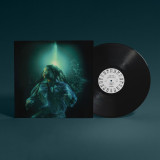
Die Vinyl-Ausgabe des 50th Anniversary Remaster von "Blues For Allah" wurde von dem GRAMMY®-prämierten Tontechniker David Glasser neu gemastert, wobei die Bandrestauration und Geschwindigkeitskorrektur mittels Plangent Processes erfolgte. Die Produktion für die Veröffentlichung stammt von David Lemieux.
Barcelona-based producer Ikari debuts on NIX with When It’s Over, a tightly constructed EP that brings together the weight of low-end pressure with crisp percussive detail. Built for the club but with a strong emotional pull, the release folds bass-rooted aesthetics into tightly wound techno frameworks, led by carefully sculpted sound design and a deep sense of mood.
Each track acts as a standalone world, but together they form a cohesive whole, driven by feeling rather than formula. There is a subtle melancholy running through the release, not overbearing, but present in the tonal shifts, textural tension and soft-release moments that flicker throughout. It is a record that sharpens Ikari’s already distinctive voice, pushing his technical process further without losing the raw edge that defines his work.
On When It’s Over EP, the focus isn’t on maximalism. Every choice feels deliberate: harmonic details, spatial effects, rhythmic structure. All of it is aimed at stirring something visceral in the listener. It is the sound of an artist locked into his own narrative, inviting us to step in.
Mitsubishi Fuso is the first single from Ikari’s debut EP for NIX, out on 4th of July. The full EP follows on the 18th of August as a limited stamped white label, mastered and cut by Tim Xavier at Manmade Mastering.
out of Stock
Last delivered 49 days ago available to reorder, subject to availability
In Guadeloupe, many people think that jazz and ka music are like a ring and a finger. To some extent, the same could be said about so called Latin music and the music played in the French West Indies.
Both aesthetics were born in the Caribbean and bear so many connections that they can easily be considered cousins. In constant dialogue, there are lots of examples of their fruitful alliance and have been for a while. The English country dance that used to be practiced in European lounges came to be called kadrille in Martinique and contradanza in Cuba. They both featured additional percussion instruments inherited from the transatlantic deportation. Drawing from shared feelings about the same traumatized identity – later to be creolized – it would be hard not to assume that they were meant to inspire each other. The golden age of the orchestras that graced the Pigalle nights during the interwar period further proves the point. As soon as the 1930s, Havana-born Don Barreto naturally mixed danzón and biguine music in a combo based at Melody's Bar. In the following decade, Félix Valvert, a conductor who was born and raised in Basse-Terre in Guadelupe, also worked wonders in Montparnasse with La Coupole, which was an orchestra made up of eclectic musicians. Afro- Caribbean performers of various origins were often hired on rhythm and brass sections in jazz bands, which used to enliven the typical French balls of the capital. In the 1930s and onwards, Rico’s Creole Band was one of them.
Martinican violinist-clarinettist Ernest Léardée, who would become the king of biguine music as well as the main figure of French Uncle Ben's TV commercials (a dark stigma of post-colonial stereotypes), had musicians from the whole Caribbean sphere play at his Bal Blomet – and they all enchanted "ces Zazous-là" (according the words of Léardée's biguine-calypso piece). In les Antilles (French for French West Indies), music history started to speed up in the 1950s, when trade expanded and radio stations grew bigger. The Guadelupean and Martiniquais youth tuned in their old galena radio sets to South American and Caribbean music. As for the women traders, les pacotilleuses, they bought and sold goods across different islands (the "passing of items through various hands" was thought to be most pleasurable) and brought back countless sounds in their luggage. Such was the case of Madame Balthazar, who once returned from Puerto Rico with the first 45rpm and 33rpm to ever enter Martinique.
Out of this adventure was created the famous Martinican label La Maison des Merengues, a music business she opened and undertook with her husband and which proved to be a major landmark. At the end of the 1950s, in Puerto Rico, Marius Cultier competed in the Piano International Contest playing a version of Monk's Round 'Midnight. He won the first prize and this distinction foreshadowed everything that was to come. Cultier, the heretic Monk of jazz, was quickly praised for writing superb melodies, always tinged with a twist that conferred a unique sound to his music. It didn't take long for the gifted self-taught musician to get to play with Los Cubanos, making a name for himself thanks to his impressive maestria on merengues.
The rest is history. Besides, in the late 1950s, Frantz Charles-Denis, born into the upper middle class in Saint-Pierre and better known by his first name Francisco, went back home after working at La Cabane Cubaine – a club located rue Fontaine where he had caught the Latin fever. Francisco's music was therefore heavily marked by his Cuban cousins' influence, which gave the combos he led a specific style and also led to renewal. Things were swinging hard in La Savane, located in the main square in Fort-de-France. He set up the Shango club close by and tested out the biguine lélé there, a new music formula spiced up with Latin rhythms. Soon afterwards, fate had him fly to Puerto Rico and Venezuela.
As for percussionist Henri Guédon (percussions were only a part of his many talents), he was born in Fort-de-France in May 22nd 1944, the day marking the celebration of the abolition of slavery. As an old man, he could remember that in " his father's Teppaz, a lot of hectic 6/8 music was constantly playing...". In the opening lines of his Lettre à Dizzy, a small illustrated collection of writings published by Del Arco, he highlighted the huge impact that cubop had on him as a teenage boy, around 1960. He eventually turned out to be the lider maximo in La Contesta, a big band steeped in Latin jazz. He was also the one who originated the word zouk to describe music which brought the sound of the New York barrio to Paris. It was the culmination of a journey that started in Sainte-Marie: "a mythical place for bélé, the equivalent of Cuban guaguancó". In the early 1960s, the tertiary economy developed to the detriment of agriculture. Yet rural life was where roots music emerged in Martinique and in Guadeloupe.
Record companies played a major part in the process of Latin versions sweeping across the islands – before reaching everywhere else. Producer Célini, boss of the great Aux Ondes label, and Marcel Mavounzy, both the head of Émeraude records - a firm which was founded in 1953 - as well as the brother of famous saxophonist Robert Mavounzy, were big names to bear in mind. Although there were many of them - all of whom are featured on this record - Henri Debs was definitely the major figure in the recording adventure. He proved to be so influential that he even got compared to Berry Gordy. In the mid 1950s, when he acquired his first Teppaz, he worked on his first compositions: a bolero and a chachacha. Then, he became the one man who made people discover Caribbean music, from calypso to merengue. He was among the first ones to rush out to San Juan, Puerto Rico, to buy records and distribute them through a store run by one of his brothers in Fort-de-France. He had members of the Fania All Star come and perform there, which he was madly proud about. He was also the first one to pay attention to Haitian music, such as compas direct and various other rhythms which would soon flood the market. As a result, many of the combos hitting his legendary studio would end up boosted by widespread "Afro-Latin" rhythms. However, he never denied his identity: gwo ka drums were given a major role, although they were instruments which had long been banned from the "official" music spheres. The present selection bears witness to such a creative swarming. Here are fourteen tracks of untimely yet unprecedented cross-fertilization: all types of music rooted in the Creole archipelago have found their way, whatsoever, to the tracklisting. Whether originating from the city or being more rural, they all go back to what Edouard Glissant, in an interview about the place of West Indian music in the Afro-American scope, called "the trace of singing, the one which got erased by slavery." "It is so in jazz, but also in reggae, calypso, biguine, salsa... This trace also manifests through the drums, whether Guadelupean, Dominican, Jamaican or Cuban... None of them being quite the same. They all point to the idea of a trace, seeking it out and connecting to each other through it. This is the hallmark of the African diaspora: its ability to create something new, in relation to itself, out of a trace. It may be the memory of a rhythm, the crafting of a drum, a means of expression which doesn't resort to an old language but to the modalities of it." The opening track features one of the emblematic orchestras of this aesthetic identity, criscrossing many music types from the archipelago. The 1974 Ray Barretto guajira – Ray Barretto was a major New York drummer influenced by Charlie Parker and Chano Pozzo – is magnificently performed by Malavoi, a legendary Fayolais group (i.e from Fort-de-France). Additionally, the compilation ends on a piece by Los Martiniqueños de Francisco. It symbolically closes the circle as it is a genuine potomitan of Martinique culture which also functions as a tireless campaigner for Afro-Caribbean music. Practicing the danmyé rounds (a kind of capoeiria) to the rhythm of the bèlè drum, it delivers a terrific Caterete, a kind of champeta of Afro- Colombian obedience which was originally composed by Colombian Fabián Ramón Veloz Fernández for the group Wgenda Kenya. The icing on the cake is Brazilian Marku Ribas, who found refuge in Martinique in the early 1970s, bringing his singing to the last trance-inducing track. These two "versions" convey the whole tone of a selection composed of rarities and classics of the tropicalized genre, swarming with tonic accents and convoluted rhythms. It is the sort of cocktail that the West Indians never failed to spice up with their own ingredients. For instance, the Los Caraïbes cover of Dónde, a famous Cuban theme composed by producer Ernesto Duarte Brito, has a typical violin and features renowned Martinique singer Joby Valente and his piquant voice.
The track used to be – or so we think – their only existing 45rpm. The meaningful Amor en chachachá by L'Ensemble Tropicana, a band which included Haitian musicians among whom was composer and leader Michel Desgrotte, also recalls how Latin music was pervasive in the tropics in the mid-1960s. They were the ones keeping people dancing at Le Cocoteraie in Guadelupe and La Bananeraie in Martinique. Around the same time, another "foreign" band, Congolese Freddy Mars N'Kounkou's Ryco Jazz, achieved some success on both islands by covering Latin jazz classics – such as their adaptation of Wachi Wara, a "soul sauce" by Dizzy Gillespie and Chano Pozo whose interweaving of strings and percussions can have anyone hit the dancefloor. How can you resist Dap Pinian indeed, a powerful guaguancó by Eugene Balthazar, performed by the Tropicana Orchestra and published by the Martinique-founded La Maison des Merengues? It also acts as a symbol of the maelstrom at work. Going by the name Paco et L'orchestre Cachunga, Roger Jaffory used to play guaguancó too: his Fania-inspired Oye mi consejo is one example of his style. Baila!!!!! Dancing was also one of the Kings' focus points. Oriza is a Puerto Rican bomba and a "classic" originally composed by Nuevayorquino trumpeter Ernie Agosto, which reserves major space for brasses, giving it a special sheen.
Emerging from the New York barrios crucible was also La Perfecta, a Martinique group originating from Trinidad, whose name directly references the totemic Eddie Palmieri figure as well as his own band, also called La Perfecta. Here they borrow Toumbadora from Colombian producer and composer Efraín Lancheros and interpret it by emphasizing percussions, which set fire to the track even more than the wind instruments. The same goes for Martinique's Super Jaguars, who use Tatalibaba – a composition by Cuban guitarist Florencio "Picolo" Santana which was made famous by Celia Cruz & La Sonora Matencera – as a pretext for sending their cadences into a frenzy. In a more typically salsa vein, the Super Combo, a famous Guadelupean orchestra from Pointe-Noire that was formed around the Desplan family and had Roger Plonquitte and Elie Bianay on board, adapt Serana, a theme by Roberto Angleró Pepín, a Puerto Rican composer, singer and musician also known for his song Soy Boricua. Here again, their vision comes close to surpassing the original. In the 1970s, L'Ensemble Abricot provided a handful of tracks of different syles, hence reaching the pinnacle of the art of achieving variety and giving pleasure. They played boleros, biguines, compas direct, guaguancó and even a good old boogaloo - the type they wanted to keep close to their hearts for ever, "pour toujours", as they sang along together in one of their songs. Léon Bertide's Martinican ensemble excelled at the boogaloo which had been composed by Puerto Rican saxophonist Hector Santos for the legendary El Gran Combo.
Three years later, in 1972, Henri Guédon, with the help of Paul Rosine on the vibraphone, tackled the Bilongo made famous by Eddie Palmieri. Such a classic!!!!! And so were the Aiglons, the band from Guadelupe: choosing to execute Pensando en tí, a composition by Dominican Aniceto Batista, on a cooler tempo than the original, they noticeably used a wonderfully (un)tuned keyboard in place of the accordion. On the high-value collectible single – the first one released by Les Aiglons under the Duli Disc label – there is a sticker classifying the track under the generic name "Afro". Now that is what we call a symbol. Jacques Denis
out of Stock
Last delivered 7 months ago available to reorder, subject to availability
Makhunik Records Presents: "Withdrawals" - A Bold New Vinyl Release by RAKANS Withdrawals, the highly anticipated follow-up to Emergence EP and Deep State (Midnight Stallion) EP, marks a bold new chapter in RAKANS's ever-evolving sonic journey.
Set for release on I Makhunik Records, Withdrawals explores the tension between desire and detachment, featuring five tracks that blur the lines between electronic, experimental, and club sounds. Available on vinyl, Withdrawals invites listeners to experience the raw and intimate emotions that inspired its creation. Following the success of Emergence EP (Gently Leftfield Techno from a Core Dresden Artist - Resident Advisor/Single Review by Andrew Ryce) and Deep State (Midnight Stallion) EP on Boudica, which gained recognition for their atmospheric intricacies and deep, immersive textures, Withdrawals delves deeper into personal and societal themes, paired with the artist's signature ethereal soundscapes and captivating beats. Each track carries a narrative, from late-night reflection to hedonistic encounters, with a pulsating intensity that mirrors the artist's own process of creative and emotional release. With Withdrawals, RAKANS continues to push boundaries, creating a profound listening experience that resonates both in its melancholy and its intensity.
Description of the Title: The title Withdrawals reflects a state of emotional and mental transition, where one is caught between the craving for connection and the unsettling effects of isolation. It symbolizes the artist's inner turmoil and process of reclaiming personal agency after experiences of burnout and separation. The tracks are an expression of that journey-tracking the highs and lows of life in a world that constantly demands more. Through these melodies, RAKANS has captured the intensity of longing and the aftermath of desire, inviting listeners to confront their own internal conflicts. The narrative is personal yet universally relatable, and the title speaks to the often painful but necessary process of letting go, detoxifying from past habits, and learning to be at peace with oneself. "With Withdrawals, He wanted to channel the emotions that often come from the struggle between desire and self-preservation, between the drive to connect and the need to retreat. he's journey, both as an artist and as an individual, has been filled with moments of intense reflection, self-discovery, and sometimes, disconnection.
These tracks are the culmination of that inner conflict, a raw exploration of what it means to both lose oneself and find a deeper, often painful, form of clarity. Like the music he's created before, the sound of Withdrawals speaks to the space between tension and release, the liminal space where truth is often revealed in its most vulnerable form. He's always believed that music is a mirror to the soul, and in this EP, He's tried to reflect that feeling of being both pulled in and out of something greater. It's a raw and intimate look at the way we navigate modern life, often feeling like we're running toward something that we can't quite reach, yet constantly pulled back into our own personal truths.
This EP is personal, but it's also for anyone who's ever felt caught between two worlds, the one they want and the one they need. I hope it resonates with listeners who are experiencing their own form of withdrawal, whether it's from people, places, or even from themselves.
out of Stock
Last delivered 13 months ago available to reorder, subject to availability
With his new album 'Cruise Control', Satin Jackets presents a perfect musical soundtrack for relaxed moments that take us away from the stresses of everyday life. The title of the album is meaningful: 'Cruise Control' stands for the feeling of switching on the autopilot, leaning back and enjoying the journey to the fullest - an atmosphere that the album unfolds.
The album is a collection of singles that have been released over the last few years and are all interwoven at their core. Because no matter where you listen to the songs, they work, images arise in your head and your feet rarely stay still. Satin Jackets remains true to himself with his album sound, as he repeatedly receives feedback from listeners who appreciate the positive mood in his songs and which always puts them in a good mood.
The songs are first created in the producer's head and then develop together with the features, who add their own touch. For Satin Jackets, 'the most important thing is this immediate feeling that it fits musically and atmospherically'. This can also come out of nowhere, as was the case with David Bay and Small Black, who got in touch with the producer and it was an instant fit.
'There are always those magical moments when a song comes out of nowhere. Once I had an idea for a chord sequence that I couldn't get out of my head, but somehow that certain something was still missing. I then spontaneously asked a bassist friend of mine if he would like to play something to it - ten minutes later we had a hook that carried the whole piece. It's these unexpected, spontaneous inspirations that make the process so exciting.'
'Cruise Control' is more than just another album from Satin Jackets. It is an invitation to enjoy the moment and surrender to the music - a soundtrack that creates a good mood and takes us on a relaxing journey. So just switch on the autopilot again, put on your headphones and let yourself go.
Ready for take off?
Satin Jackets präsentiert mit seinem neuen Album "Cruise Control" einen perfekten musikalischen Begleiter für entspannte Momente, die uns vom Alltagsstress befreien. Der Titel des Albums ist vielsagend: "Cruise Control" steht für das Gefühl, den Autopiloten einzuschalten, sich zurückzulehnen und die Reise in vollen Zügen zu genießen - eine Atmosphäre, die das Album entfaltet.
Das Album ist eine Sammlung der Singles, die über die letzten Jahre erschienen und im Kern alle miteinander verwoben sind. Denn egal, wo man die Songs hört, sie funktionieren, es entstehen Bilder im Kopf und die Füße bleiben selten still. Mit dem Albumsound bleibt Satin Jackets sich treu, denn immer wieder bekommt er die Rückmeldung von Hörer:innen, die die positive Stimmung in seinen Songs schätzen und die immer wieder für gute Laune sorgt.
So entstehen die Songs zuerst im Kopf des Produzenten und entwickeln sich im Anschluss gemeinsam mit den Features, die ihre eigene Note mit einbringen. Für Satin Jackets ist es "das Wichtigste dieses unmittelbare Gefühl, dass es musikalisch und atmosphärisch passt". Das kann auch aus dem Nichts kommen, so wie bei David Bay und Small Black, die sich bei dem Produzenten meldeten und es sofort passte.
"Es gibt immer wieder diese magischen Momente, in denen ein Song quasi aus dem Nichts entsteht. Einmal hatte ich eine Idee für eine Akkordfolge, die mir nicht aus dem Kopf ging, aber irgendwie fehlte noch das gewisse Etwas. Ich habe dann spontan einen befreundeten Bassisten gefragt, ob er etwas dazu spielen möchte - zehn Minuten später hatten wir einen Hook, der das ganze Stück getragen hat. Es sind diese unerwarteten, spontanen Eingebungen, die den Prozess so spannend machen."
"Cruise Control" ist mehr als nur ein weiteres Album von Satin Jackets. Es ist eine Einladung, den Moment zu genießen und sich der Musik hinzugeben - ein Soundtrack, der für gute Stimmung sorgt und uns auf eine entspannte Reise mitnimmt. Von daher einfach mal wieder den Autopiloten einschalten, , Kopfhörer aufsetzen und fallen lassen.
out of Stock
Last delivered 52 days ago available to reorder, subject to availability
It"s been six years since LA DISPUTE released their last album, Panorama. Since then, the Michigan post-hardcore band-made up of Jordan Dreyer on vocals, Brad Vander Lugt on drums, Chad Morgan-Sterenberg and Corey Stroffolino on guitar, and Adam Vass on bass-dealt with the stagnance of the pandemic, celebrated the ten-year anniversaries of Wildlife and Rooms Of The House, and began working on NO ONE WAS DRIVING THE CAR. The fifth studio LP is the first entirely produced by the group, and it came together in Grand Rapids and Detroit, the United Kingdom, Australia, and the Philippines: "I think the change in environment was really helpful to breathing new life into the process each time we came back to it," Dreyer says. Partly inspired by the 2017 psychological thriller First Reformed, NO ONE WAS DRIVING THE CAR reckons with malaise in the shadow of the looming apocalypse, which has noticeably been worsened by the advancement of tech. The title comes from a quote from a police officer Dreyer read in a news article about a lethal self-driving Tesla crash, an absurd event which raises questions about the amount of control we have in our own lives. In fourteen dynamic tracks, the band grapples with the existential topic and the human need to find comfort and a sense of security in an existence where we"re often thrust into chaos without permission.
Emerging from the shadows of a small apartment in Chicago’s South Side Pilsen neighborhood in 1999, Winterlight was produced and mixed by Daniel Thompson over the course of three years, from 1999 to 2002. It’s an intimate and evocative album that captures a pivotal chapter in Thompson’s life and echoes the spirit of a formative era in the underground music scene.
Thompson’s journey began in the heat of Houston, Texas, where his love for sound quickly became an obsession. By the late ’90s, he was among the first DJs in Houston to champion the sound of Chicago house, often driving long distances from Texas to Chicago in search of records, inspiration, and connection. These trips—equal parts pilgrimage and education—eventually led him to relocate to Chicago, where his artistic vision would fully take shape. Winterlight is the direct result of that move. Crafted over several years, the album embodies a raw, hands-on approach to production, built from analog synths, outboard gear, and hours of meticulous layering. Thompson leaned on tools like the Kurzweil K2000, SE-1, Juno-106, and classic processors such as the DP4 and TC Electronic units, shaping each track with
care and intention.
Blending atmospheric textures with hypnotic rhythm and subtle experimental flourishes, Winterlight captures the sound of an artist deeply engaged with his tools and surroundings. His extensive vinyl collection—over 3,000 records—served as both palette and inspiration, with carefully chosen samples lending further depth and narrative to the music. Now set for release across all digital platforms and as a limited double 12" vinyl edition through Berlin’s Word & Sound, Winterlight invites listeners into a soundscape that is both immersive and personal. More than just an album, it is a sonic document of a moment in time—rich in tone, memory, and intent. For those willing to listen deeply, Winterlight offers a rare window into the underground spirit of the early 2000s and the inner world of a producer finding his voice.
Japan’s SUDO return to Drumcode with ‘We Are Free’, following their landmark 2024 debut ‘Real World’ Last summer brothers Isao and Takashi aka SUDO gifted Drumcode one of the most inspiring releases we’ve heard in recent times with ‘Real World’. Inspired by Underworld’s incendiary ‘Rez’, the EP was the sound of two producers pouring all their passion and shared musical history into a work that’ll be remembered for years to come.
The release peaked at no.1 on Beatport’s Release Charts and saw a follow up collaboration with Bart Skils ‘Nexus’ out later that year on Drumcode. ‘We Are Free’ continues SUDO’s emotion-led and timeless approach to techno, crafting a four-tracker inspired by the concepts of “freedom, divinity, memory and transition”. The title track genre-hops between electro-edged techno, silky ambient textures and breakbeats. Isao says: “We wanted to express in a powerful and explosive way one of our purposes on the dancefloor – a time of celebration, and freedom from restrictions.”
‘Elysium’ is a transcendental slice of techno that juxtaposes tough industrial rhythms with a stunning break that was inspired by a children’s choir Isao heard one day at Berlin Cathedral. “It took a long time to producer with many patterns until we were satisfied,” Isao shares.
“It was a real process of immersing oneself in the hypnotic groove and finding divinity.” Initially inspired by watching Bart Skils play a NYE 2025 set in Argentina, ‘Lost in Paradise’ is led by a delicate Latin vocal and crisp sun-dappled beats, before stepping up the pace in the second half. “As the production progressed, we were led to a wonderful result with the track’s vocal, a tribute to one of our biggest influences – the untouched nature of Ibiza and the vibes of the light and beautiful people that flow there.” The EP winds down with ‘Horizon’, a simultaneously beautiful yet bittersweet hymn that signals the end of the party.
Gastr del Sol"s second album returns at last to the vinyl format - its first physical manifestation in well over a decade. Once again, a drop of the needle may ignite any number of queries, summed simply in one: What IS this music? Such is the potent energy of Crookt, Crackt, or Fly, retaining its otherworldly qualities some 32 years and countless musical movements since. Crookt, Crackt, or Fly expands upon The Serpentine Similar"s minimalist stance in unexpected ways, imposing further austerity in the soundscape but for an unpredictable expansive quantity periodically overflowing, waves of blood sluicing through the elevator doors. This is partially due to a change within the group dynamic: the departure of bassist Ken "Bundy" Brown and the arrival of a new partner for guitarist and singer David Grubbs - guitarist and sound fuckerer Jim O"Rourke. O"Rourke"s initial work with Gastr involved editing and recomposing recordings of the Grubbs-Brown-&-sometimes-John-McEntire lineup, producing an utterly outré collage of cut-ups and other types of tape processing. This became the "20 Songs Less" single, after which he was invited to play with the group. It was a time of flux; Brown recalls playing a Gastr show at the Metro around this time featuring himself, John McEntire, Grubbs and O"Rourke - and one of the pieces played was a Tortoise song! Throughout these shifts, Gastr del Sol"s music was never less than fully considered and composed, even in moments redolent with the suggestion of the random and the non-sequitur. Grubbs and O"Rourke made no attempt to replicate Serpentine"s arrangement of thick, scaly drones and hypnotic song-visions in their own partnership, finding Crookt, Crackt,"s sound instead in spiny, gamelan-like interactions between their (mostly acoustic) guitars, played precisely in and out of formation with bright, fleet-fingered abandon. O"Rourke"s fondness for field recordings and his capacity for tape manipulation intersected with Grubbs" sensibilities, edifying his evolving song style: written with increased sharpness and sly surreal humor, sung closer to silence. Halfway into "Work from Smoke", the sudden collapse of the sound-walls around us signals Crookt, Crackt"s major departure. From the thicket of guitars, a swell of drones and free-jazz squeals, made up of bass clarinet, vibraphone and organ, pulls the listener into an entirely other acoustic space. "Every Five Miles" derails in similarly tactile fashion: a guitar duet boils up thunderously, then fragments and spirals apart. As a free electric guitar part crops up, improbably holding the center, the acoustic space around it continues to disintegrate in ambient stereo. A wedding of folk music idioms to classical, improvised and modern compositional modes (including Gastr"s own formative post-punk mode), Crookt, Crackt, or Fly is a song-based reality steadily giving way to its alternative alchemies playing out within.
Russell Haswell and Florian Hecker have both a long history with Mego/Editions Mego. Individual releases have peppered the Mego catalogue since Haswell’s Live Salvage 1997->2000 cd release (MEGO 012) in 2001 and the debut Hecker release IT ISO161975 (MEGO 014) in 1998.
The individual exploration of sonic phenomena by these two practitioners has resulted in both being highly regarded for their uncompromising approach to sound as matter. Russell Haswell and Florian Hecker came together as a collaborative duo with the now-legendary record Blackest Ever Black, somewhat inexplicably, on the classical imprint of Warner Brothers.
In 2025, Hecker and Haswell return with a new album featuring the two-channel edit produced initially for their UPIC DIFFUSION SESSION #23, performed as a live diffusion across 8-channels at the X100 Festival, Berlin, 2023, celebrating the 100th anniversary of Xenakis' birth.
This record furthers the duo's exploration of Xenakis's UPIC system as the sole instrument. The UPIC is a computer music system that generates sound from visual input. The original intention of the system developed by Xenakis was to make a utopian tool for producing new sounds accessible to all, independent of formal training. One can locate footage of Xenakis and a group of children making drawings for the system in the 70's.
The duo set off experimenting with a diverse array of hand-drawn images to feed the UPIC system including news photographs of disasters and atrocities, "food porn" through to depictions of the natural world and microscopic images of molecular structures (including 'the blackest ever black'). The resulting eccentric audio from these images is claimed by the artists to heighten synaesthesia and is as mysterious as it is baffling.
Throughout UPIC DIFFUSION SESSION #23 frequency clusters move and morph in the most unusual manner, shifting and stretching into shapes that hint at some kind of magical process. What starts out deceptively simple soon unravels into a large array of sonic mayhem. Symbolic jet planes are shredded by a swarm of insects, a metal bowl howls into the void, a tiny tin toy crawls into a thicket with the resolute aura of a black hole. A burning geyser of laser forms liquid shrapnel. This is sound as an alchemical process, a constant chimerical flow into the netherworld and is the net result of the decades long radical investigations by the two artists involved. UPIC DIFFUSION SESSION #23 is a direct, rich and rewarding listen for those willing to invest time into the outer limits.
out of Stock
Last delivered 13 months ago available to reorder, subject to availability
Rivet’s new album for Editions Mego is an uplifting and joyous affair coming in the wake of tragedy and disenchantment. It is yet another rebirth from an artist willing to take a step back and reprise the current situation he is in. Mika Hallbäck has a long credible history in the Swedish underground. First recognised for his industrial techno works under the Grovskopa moniker he worked privately on more experimental works that eventually came out as On Feather and Wire, an album released on Editions Mego in 2020. After much acclaim for this bold new direction that blended electronic abstraction, pop and industrial forms into a heavy synthetic trip two tragedies struck. One was the passing of label boss Peter Rehberg and then the passing of his dog Lilo, who was as close as a companion one could have. These events led to the release of the more unsettling follow up L+P-2 (Lilo and Pita minus two) on Midnight Shift Records in 2023. Peck Glamour sees Rivet return to the reawakened Editions Mego with an album of optimism inspired by reconciliation with loss and further explorations of new mental/sonic realms.
Hallbäck defines his approach as not being married to any particular machine, instrument, process or genre. However he holds a particular affinity to sampling, of which, he says, provides the dirt and grit amongst what would otherwise be pristine, generic machine music. The contemporary crate digging method of scouring obscure download music bogs for unique sounds was his preferred research practice.
Peck Glamour is an album full of tracks brimming with the excitement of exploration. It's the results of a mind informed by punk, industrial, techno, dancefloor, disappointment, trauma and rebirth. Here the synthetic and authentic is viewed simply as the same means of human rationale and expression.
The opening, ‘Catch Up to Light’, sets the scene with ecstatic and odd fluorescent vocals sliding amongst crystalline likembe whilst synths swirl amongst the external festivities. ‘Orbiting Empty Cocoon’ is somewhat a homage to the alien sound worlds of The Orb, one which takes the listener deeper into a mind melting array of teased potential as visual elements are executed in a mask of audio wizardry and euphoric staccato rhythms, the later being a nod to Singeli music. ‘Patitur Butcher’ is more dance frontal utilising the Ghatam drum and a YouTube rip of a Chinese language lesson. ‘Plastic Bag Putain’ was made during the beginning of Russia's invasion of Ukraine and should be clear of its intent. ‘All that Heaven Allows’ is a marimba cover of an imaginary Love Parade anthem. 'Kyrie Geire’ potentially briefly fills the void left by the demise of Coil. The entire trip of Peck Glamour is sewn up with ‘We left before we came’ whereby extraneous recordings of double bass player Gregory Vartian-Foss (tuning/strumming/moving the bass) are superimposed with local field recordings to create a gorgeous bed of sounds acting as an exciting exit music to this sharp collection of cinematic ear excursions.
out of Stock
Last delivered 13 months ago available to reorder, subject to availability
Marja Ahti is a Swedish artist living in Turku, Finland. She works with found sounds, objects and electronics, creating auditory assemblages that reveal a profound sensitivity to sound’s tactile potential. This new record sees her palette expand to include more recognisable acoustic instrumentation, albeit working in collaboration with musicians who are already reconfiguring how those instruments can sound.
Touch This Fragrant Surface of Earth has its roots in a tape piece presented at Lampo in Chicago. Ahti then started working with Isak Hedtjärn (clarinet), Ryan Packard (percussion) and My Hellgren (cello) at the electronic music studios (EMS) in Stockholm. Incorporating recordings from those sessions, Ahti presented a new iteration of the work at the Seventh Edition Festival for Other Music in February 2024 with the trio performing live on stage whilst Ahti helmed the mixing desk, spatialising a specially made tape part through the INA GRM’s Acousmonium speaker orchestra. The piece has since gone through several further iterations before arriving at the version we have here on the LP's B-side where immense bass pressure and high frequency tones buffer restless amplified breath and scrape that folds over itself with extraordinary dynamics and subterranean activity before giving way to gorgeous resonant forms and passages of ritual purpose and sheer, unmistakeable beauty.
The A-side is Touch This Fragrant Surface of Earth’s gentle double. Still Life with Poppies, Mirror and Two Clouds offers a companion reconfiguration of Ahti’s resynthesised percussion sustain and the same recordings of Hedtjärn and Hellgren from EMS, but here they’re nestled in a sonic landscape of calm and restraint that gives them a wholly other character. Ahti also draws on older recordings she’d made of Sholto Dobie’s diy pipe organs and uses these to create repeating patterns and flourishes of sliding pitches that emerge unexpected out of cycling passages of Ahti’s clear struck metal, destabilising electronic interventions and minimal piano figures.
Marja Ahti: “I’ve been fascinated with the kind of elemental quality the sounds I'm using have such as airy sounds or earthy, wooden sounds. These qualities can also be found in wind instruments and percussion and the musicians I worked with on Touch This Fragrant Surface of Earth are really good at enhancing these qualities in their playing. I wanted to have this connection between found sounds, field recordings, or pre-recorded sounds, objects, and material, and see where these sounds might meet each other, and hopefully blend is a natural way without a divide between instrumental music, or acoustic music, or electronic music. But also, when you bring in people they come with their personalities and their ideas which is also energizing and brings surprising things into the collaboration that I couldn't come up with myself. I was really interested in making this a proper collaboration and not just coming up with the piece and giving it to them. We had the sessions at EMS where we could share ideas and Isak, Ryan and My could bring in their own ideas. Making recordings there gave me time to process these ideas and to also approach them in the same way that I would work with any other sound.”
out of Stock
Last delivered 13 months ago available to reorder, subject to availability
* These tracks were long-forgotten recordings, rediscovered purely by chance when one of us moved house.
In the process, an old Atari ST 1040 computer was unearthed from a box, and as we sifted through its stored files,
we stumbled upon this material—music recorded in our home studio years ago.
We've decided to release it as a testament to the power of creativity and the ability to produce music even with
modest equipment, proving that a professional studio isn't always a necessity.
* Stefano Curti
out of Stock
Last delivered 8 months ago available to reorder, subject to availability
System is a retro futuristic album that is inspired by that iconic sound of the 80s. It seamlessly merges deep machine-like tracks alternated with surprisingly humanised pop songs.
With an extended palette of pianos and synthesizers Shook’s work will take you along those vintage funk and synth-pop sounds, while keeping you connected with touchy vocals from both Jasper and his partner Juliet.
out of Stock
Last delivered 3 years ago available to reorder, subject to availability
Woo, formed in 1975 by brothers Mark and Clive Ives in London, is known for its experimental blend of folk, jazz, ambient, and electronic music. Their sound, characterised by the delicate integration of acoustic and electronic elements, has earned them recognition in ambient and healing music spheres. Over decades, the duo has produced over 1,500 tracks, evolving a unique style that evokes dream-like atmospheres and a meditative, soothing quality perfect for moments of reflection.
Dedicated to intertwining the serene beauty of music with the nurturing process of planting seeds when the first new signs of life emerge in the growing season. A carefully crafted collection of ambient & minimalist soundscapes, occasionally branching into the new age. A soundtrack for quiet moments of sowing, nurturing, & witnessing the slow reward of growth.
Each artist will release a recycled cassette and digital format. We plan to release one cassette each month from November through June, aligning our releases with the ideal growing period. Each physical release will precede its digital counterpart by a few months, allowing the music to be experienced in its intended form first, with the tangible connection of a cassette and seeds before becoming accessible to a broader audience in the online sphere. This staggered release allows listeners to engage with the music more profoundly and intentionally, akin to the patience and care required in gardening. Best get that portable cassette player on eBay!
Each release will serve as a soundtrack to quiet moments of sowing, nurturing, and witnessing the slow, rewarding growth process, both in plants and in the listeners' lives. Whether tending to a window sill garden or simply seeking a peaceful retreat in sound, "Music to Watch Seeds Grow By" is an invitation to pause, listen, and cultivate.
Early DJ support including Tom Ravenscroft, Deb Grant, Vladimir Ivkovic,Ruf Dug, Eva Geist, Domenic Cappello, Fergus Clarke & Sofie K.
'it’s his loosest, dreamiest dispatch yet, an enveloping and atmospheric collection that constantly comes together and breaks apart.'
Maxo releases his new album Mars Is Electric. Earlier this week, Maxo released a third haunting video, directed by Vincent Haycock, from the visual world of ‘Mars’ for the title track. Maxo previewed the album with the release of singles “Human?” and “Donahoo’s Chicken” this spring, which arrived with equally raw, inventive, and unnerving music videos.
Mars Is Electric is Maxo’s first official release since he dropped two critically acclaimed albums in 2023 with Even God Has A Sense of Humor and Debbie’s Son. His fifth full-length album finds the Southern Californian artist self-aware and mature. Having lived the last decade of his musical life intentionally creating specific bodies of work rooted in imagery, observation, and capturing moments, Maxo spent this previous year freely creating without a specific plan, relieved from all obligations and restrictions.
“This is the first time that I really didn’t care, I didn’t approach things so seriously,” the artist shrugs off, meaning that without expectations or specific goals, his creativity flourished. This opening finds the artist having conversations he’s been avoiding, having lived silently in the pain of those topics for the past few years. Exploring uncomfortable themes about personal life, relationships, and family fractures, life before and after the loss of innocence, and an abundance of existential spirals.
The exploration was not only thematic but also musical in nature. During the creation process, Maxo was immersed in a wide array of music from past to present - France Joli, $amaad, Steve Spacek, Cherelle, DJ Quik, Lisha G - influences that seeped their way into these songs. The album opens in a loose, dreamlike state—experimental and searching, mirroring the emotional fog of someone looking for something real to hold onto. But as it progresses, so does Maxo’s energy as he fiercely rides and weaves on songs with a contagious confidence, producing some of his most kinetic and lyrically impressive music to date.
As the work and vision coalesced into a body of work, Maxo found that he was unlocking a creative language with his collaborators that felt wholly new - a new understanding of why and how he was making art for this world. What emerged from this year-long process was a new musical journey and a future where Maxo refuses to be another bad example of what could be, refusing to mind the blueprint set down. Maxo is the sole voice on the album featuring production by lastnamedavid, Quelle Chris, Baird, Groove, and more.
Listen to Mars Is Electric above, see full album details below, and stay tuned for more from Maxo very soon.
Students of Decay presents The Dip, a new full-length recording by Berlin-based artist and composer Thomas Ankersmit, marking his debut with the label and sixth album to date. Comprised of two expansive, sidelong pieces composed entirely on the Serge Modular synthesizer, it signals a subtle yet significant shift in Ankersmit’s trajectory, imbuing the hyper-physical, psychoacoustic intensities of his live performances with introspective, atmospheric, and even melodic elements.
Primarily known for a site-responsive approach to sound, often realized in the moment of performance, Ankersmit’s turn toward the studio in the last few years has opened up a new dimension within his practice. It is in this quiet rupture that The Dip emerged, a study in internality and suspended states, rich with cinematic undercurrents and ghostly spatial suggestion. Here, electricity itself feels transfigured – becoming supple, even organic – within an environment shaped entirely by analog signals.
Over the past two decades, Ankersmit has established himself as one of the foremost practitioners of the Serge, the notoriously idiosyncratic and expressive instrument that has remained central to his work. On The Dip, he harnesses its potential not for brute force or disorientation, but for spaciousness, resonance, and lyrical abstraction. Without resorting to additional processing or effects, he draws out tones that feel simultaneously raw and refined, articulated and blurred – intricate structures that seem to breathe and evolve of their own volition.
The result is a kind of auditory hallucination, a “cinema for the ears,” wherein impressions, emotional arcs, and imagined topographies unfold. Each side of The Dip plays like a single gesture unfolding in time – a spatial narrative constructed through vibration, density, and the movement of air.
The Dip follows acclaimed works on PAN, Touch, and Shelter Press, and reaffirms Thomas Ankersmit’s position as one of the most focused and probing voices in contemporary experimental music. Quietly radical and meticulously constructed, it is less a departure than a deepening – a descent into a more private sonic world, where the boundaries between perception, memory, and pure signal dissolve.
Black Vinyl LP with insert (including the story behind the album and lyrics with English translation)
After their first LP, in 1987, Pedro gathered his usual band, Carlos Sousa on keyboard, Bulimundo on drums, Nuno Santos and Zézé on lead and rhythm guitars, Augusto Rasta on bass, Daló on sax and finally Dalú on percussions, for yet another project, one that carried both their names: Jacinta Sanches - Pedro Ramos. Eight days, no more, that’s all Pedro Ramos and Jacinta Sanches needed inside the Estúdios Musicorde. The process was natural, as with all their music, memories recollected and arranged by Pedro on café napkins, rehearsed and perfected at home with Jacinta. Together they imagined music where Cape Verdean saudade could dance together with Kingston’s skank, two island hearts beating inside European concrete.
His name is Pedro Correia Ramos Varela, born in Praia, Santiago, Cabo Verde on April 6th 1954; her name is Jacinta Lopes Veiga Varela, born in Cidade Velha, Santiago, Cabo Verde on January 22nd 1959. The two met in Praia, where a few exchanged words turned into long evening conversations; conversations into friendship; friendship into love; and love into six wonderful children. After the independence of Cabo Verde, they got married in 1978 and moved to Portugal, where Pedro started working as a welder for Lisnave and playing the guitar in a band in Ramada. Trading shipyard sparks by day for the after-hours pulse of Cova da Moura, his love for music proved harder than steel. And in 1982, after seeing Bob Marley and Peter Tosh in Rotterdam, he opened his own Dancing Bar just below their house, a pioneering space for the promotion of reggae music in Portugal.
Their Dancing Bar kept its doors open from 1982 to 1994, seeing the release of two albums and more singles. To this day, Pedro and Jacinta are still making music, one the inspiration of the other. They define themselves as simple people, living happy without prejudice, friends with the world.
Produced by Joe Barresi (Queens of the Stone Age, Tool), The Dissent of Man finds Bad Religion pushing the boundaries of their music as much today as they did in their formative years as a genre defining punk band. Over the course of making the album, primary songwriters Greg Graffin and Brett Gurewitz"s songwriting was informed by life changing events, with Graffin writing his forthcoming book "Anarchy Evolution" and Gurewitz embarking on parenthood again. The result is one of the band"s most forward thinking and musically varied albums ever. The Dissent of Man is not only a snapshot of the band"s personal experiences of the past years but also of their continued maturity in songwriting, capturing an array of styles ranging from blazing punk rock songs like the opener "The Day That the Earth Stalled" and "Meeting of the Minds" and classic rock-tinged cuts like "Cyanide" and "Turn Your Back on Me" to radio rock ready hits like the first single "The Devil in Stitches." The Dissent of Man is a testament to why Bad Religion has remained relevant for the better part of three decades. Already having cemented their place in history as a groundbreaking band who helped create a movement in Los Angeles with classic releases like How Could Hell Be Any Worse?, Suffer, Recipe for Hate, Stranger Than Fiction and Process of Belief, Bad Religion continue to inspire and create with a unique style that continues to cross boundaries and transcends genres."
Indonesian duo Kuntari make music that's so distinctive, they had to devise their own genre: primal-core. On Mutu Beton, multiinstrumentalist Tesla Manaf and percussionist Rio Abror dialog with both history and their tropical surroundings in Bandung, West Java's mountainous capital. Using the cornet and hulusi, a free reed instrument made from a bottle gourd and bamboo pipes, Manaf echoes the bellows of local elephants, orangutans and rhinos, grazing Abror's ancestral Indonesian rhythms with potent overdriven riffs and evocative microtonal chimes.
It's music that's profoundly atmospheric and simultaneously raw, recorded live to fully encapsulate the dynamic and deeply human interaction between the two seasoned players. There are elements of sludge metal, noise and post-hardcore, references to traditional folk music and jazz, and gestures towards sound art, 20th century minimalism and dark ambient, but what Kuntari do is completely idiosyncratic -- it's hardly surprising it needed a similarly unique categorization.
Manaf started Kuntari as a solo project, debuting in 2020 with Black Shirt Attracts More Feather and animating his nimble instrumental improvisations with bold electronic processes and booming synthetic drums. And by the time he recorded 2022's acclaimed Last Boy Picked, his approach had evolved significantly; prioritizing organic sounds, he played prepared cornet and piano, bringing in additional percussionists to help devise a ritualistic rhythm section. Abror was one of those performers, and ended up sticking around, playing on 2023's furious LARYNX/STRIDULA, the stylistic precursor for Mutu Beton. At this stage, the duo have racked up a litany of accolades and collaborated with a spectrum of like-minded artists, from noise deity Keiji Haino to fellow Indonesian free-thinker Rully Shabara, who's best known for his work with Senyawa and avant-garde supergroup Osmium. Mutu Beton plays like a lap of honor, showcasing their most kinetic and most feral recordings to date. Kuntari surpass their own high standards, folding history and geography in on itself and suggesting a trailblazing Indonesian cultural movement that's not restricted by highbrow Western conventions. It's not just automation and technology that drives progression, it's interaction and observation. And there's nothing more primal, or revolutionary, than that.
out of Stock
Last delivered 13 months ago available to reorder, subject to availability
Slowly yet firmly blooming into focus, An Unfinished Rose is the new album from Australian duo Troth.
This is their first since relocating to Hobart, Tasmania and their introduction to Night School Records. With a detailed web of past releases on labels A Colourful Storm, Mammas Mysteriska Jukebox, Knekelhuis and Bowman’s own Altered States Tapes imprint, An Unfinished Rose is the group’s most realised and composed work thus far. While still drawing on the improvisatory and DIY practices that informed Troth’s beginnings, it points to a new incarnation of the duo’s music; an intentional language emerging from the fog of obfuscation and mists of uncertainty.
Over these 9 meditations on change, acceptance, renewal and rebirth, An Unfinished Rose finds Amelia Besseny and Cooper Bowman peeling back some of the roughhewn architecture that defined their earlier releases to reveal a masterful - if auto-didactic - use of space and melody. Composition and improvisation compliment and feed each other throughout, with locked-loop earworms providing the springboard for lines of clarinet or synth melody, and the negative space between chord clusters giving ample room for Besseny’s most confident vocal performances to date. Shaving off a little of the defining dissonance and tape compression of old reveals Troth’s music in radiant daylight, humbly accepting of its place in the world while yearning for better, more sympathetic modes of living. Leaning more heavily on acoustic instrumentation and post-production processes than previously, the result is a transcendent body of work infused with an almost zen-like presence.
Troth’s music exists in the border between forming and becoming, its goal to project a kind of preternatural beauty, leaving interpretation open to the listener. Field recordings, happenstance and improvisation may provide seeds for the duo’s compositions, particularly on Side A, but there is a deft touch of songcraft on show. Loam Loom Leaf Litter opens An Unfinished Rose, directly referencing natural cycles of life, death and regeneration, before the blissed-out drum machine groove of Gold Plum continues a discussion concerning the totality of nature and one’s place in it. Besseny’s vocal, swelling like an ocean churn in duet with itself is adorned with synthesised harp and a revolving synth pattern, conjuring plumes of medieval smoke. Thistle’s rounded, bass-heavy drums, nodding to the vast echo of dub, is a relatively new terrain for Troth. It’s propulsive and thumping, pulsing with a meaning and symbolism consistent with Troth’s past work, referenced overtly in Bessey’s lyrics - “Say it too much and it loses its meaning…”. Similarly, the sprawling modern-classical suite, Tides Reflected In Her Eyes, is intentional in its lyrical themes while traversing new ground, revelling in layers of bowed cello and vocal intonations. Side B’s 4 tracks feel like Troth’s most thoroughly accessible and affecting music to date. Leaning into their own detoured version of Synth Pop, Cocoonist explores downtempoisms via a crunchy low frequency synth, and dream-like, fuzzy trip-hop modalities, not unlike Besseny and Bowman’s other group, Th Blisks. Following on, Myrtle Mystes is an open and searching DIY pop song, forged out of drum machine, bass guitar and cello. (An) Unfinished Rose’s title-track is a clear stand-out, built upon an evocative rhythm sample that appears to change emotional resonance with each undulating repetition. Its cascading waves of affect, interjected with a subtle breeze of synth, bowed instrumentation and soaring, densely-layered vocals.
An Unfinished Rose is enveloping, warm, forgiving. Difficult, yet retaining a unique beauty. Troth’s music aims to celebrate the duo;s shared experiences of being in the world, despite the complexity often surrounding us all. Theirs is a message of hope and perseverance, learning and patience.
out of Stock
Last delivered 13 months ago available to reorder, subject to availability
Opener “That’s Magic” features a magician talking us through a convoluted magic trick, to a mysterious synth theme that a celebrity conjurer might use to help the pyramids disappear. It’s probably one of the only pieces of music to draw influences from Paul Daniels. “Carpet Squares” is a hefty slab of squirming machine bass, acid squidges and clanking industrial drums, its samples extolling the virtues of fitting comfortable flooring, with a voiceover recorded on a Canadian golf course. “Vanja & Slavcho” tells the odd story of twins who have an extraordinary ability to a bustle of spiralling arpeggios and comedic sound effects, while “Tiktaalik” has a glam rock beat, guitar twangs, wild synth runs and dance music drum rolls that build to nowhere, plus processed dolphin noises and a vocal about evolution. Then there’s “Piccolo’s Travels”, a spellbinding mix of classical strings and... is that a malfunctioning Clanger?
“Album Titles” lists rejected names for the record to hilarious effect, with outlandish blips, accordion riffs and bubbling percussion setting the scene, “The 38th Parallel” is a wonky slab of electronica, while “Push It” has everything from rock guitar interjections to explosions and birdsong. If “Customer Services” imagines the bewildering experience of dealing with a sentient automated phone call, then the following “Nothing To Write Home About” is a waltz-time organ piece with a nostalgic, bittersweet air. “Ready?” lists practically every genre under the sun and gives you a burst of it, from drill to country & western, hardcore to Miami bass, and the final track, “The Void”, is an AutoTune-laced R&B track with a deep, emotional core.
That’s the genius of Wevie Stonder: their ability to make you laugh one minute, and the next transport you
to an atmospheric reverie.
Ash Ra Tempel is the eponymous debut studio album by the Krautrock band Ash Ra Tempel. It features guitarist Manuel Göttsching with drummer Klaus Schulze and bassist Hartmut Enke.
Engineered by Conny Plank it was recorded in March 1971 and released in June 1971 on Ohr Records.
This 50Th Anniversary Album will be Released in Memoriam of all the Musical Contributors to this Release and on Manuel Göttsching´s MG.ART label. It´s the fourth and headlining edition in this series and was finalised, carefully overseen by Manuel Göttsching himself in the late Autumn of 2022.
Much has been written about the record and band.
Having finished a first musical chapter with their Steeple Chase Bluesband and still at very young age of only 17 and 18 years old Manuel Göttsching and Hartmut Enke met Klaus Schulze. Together they started to write and and compose what, to many, became one the holy grails of Psychedelic Rock and early Electronic Music -
the German variant which was later also named "Krautrock":
Ash Ra Tempel´s self-titled first album "Ash Ra Tempel".
"The trio of Klaus Schulze, Manuel Göttsching and Hartmut Enke decided to abandon conventional composition and song writing, in favour of free-form improvising and developing a new musical language. As such, they became notorious for jams that could exceed 30 minutes." Says Discogs. "Some of these recordings can be found on Manuel Göttsching´s "The Private Tapes" releases", which will be re-released on MG.ART as well, following this edition.
"Krautrocksampler" author Julian Cope mentioned it to be "… one of the greatest rock 'n' roll LPs ever made." (Julian Cope Presents Head Heritage | Unsung | Reviews | Ash Ra Tempel - Ash Ra Tempel". 15 March 2000.)
AllMusic called the album "both astonishingly prescient and just flat out good, a logical extension of the space-jam-freakout ethos into rarified realms."
Here we would like the Band to be heard, for what can easily be said as the first time in 50+ years, with the exception of some early Journalists for whom the young Manuel Göttsching wrote a statement of intent (the original text can be found inside this edition) as following:
"Our musical concept is based on a combination of blues rock and delicate collages of electronic sound. These two elements should remain inseparable. And in their complex unity, the different musical philosophies of each musician find a common sweet spot. Our music is a permanently impulsive experience left to develop as it will, starting from a common fixed point of departure. This is where the difficulty of the music begins: No standardized formulation of our music can and should be possible. Only the constant reaction within the band can determine the musical result. And this requires constant listening with full concentration on the part of the creators. The idea of a particular musician will be - if flexible enough - absorbed by the others, transposed to their own instrument, and reflected back into the music as an individual contribution. This reciprocity within the band is then transferred over to the audience. And this process means that their reaction is not only a contribution to the end result; it actually makes them jointly responsible for the creation of the final musical product.
…
On our album, the track "Amboss" represents the first layer. Conventional instruments communicate familiar music which is in part expanded through electronic means. In the second track of the album - "Traummaschine" - the actual basic sound approach is dissolved into an electronic Nirvana which no longer allows the concrete identification of actual instruments. Innocent, virgin listening, free from any and every association, can finally begin - and the music can be absorbed and processed free from the limitations of categorization. That is the purpose of our music: To convey freedom without any predetermined criteria or traditions.
Thank you for your attention."
(Taken from the original A-R-T Bio 1970)
Hartmut Enke, Manuel Göttsching and Klaus Schulze aka. Ash Ra Tempel travelled to Hamburg in March 1971 to record their debut, with assistance of another Icon, legendary engineer Conny Plank.
The rest is history.
out of Stock
Last delivered 13 months ago available to reorder, subject to availability
Ash Ra Tempel is the eponymous debut studio album by the Krautrock band Ash Ra Tempel. It features guitarist Manuel Göttsching with drummer Klaus Schulze and bassist Hartmut Enke.
Engineered by Conny Plank it was recorded in March 1971 and released in June 1971 on Ohr Records.
This 50Th Anniversary Album will be Released in Memoriam of all the Musical Contributors to this Release and on Manuel Göttsching´s MG.ART label. It´s the fourth and headlining edition in this series and was finalised, carefully overseen by Manuel Göttsching himself in the late Autumn of 2022.
Much has been written about the record and band.
Having finished a first musical chapter with their Steeple Chase Bluesband and still at very young age of only 17 and 18 years old Manuel Göttsching and Hartmut Enke met Klaus Schulze. Together they started to write and and compose what, to many, became one the holy grails of Psychedelic Rock and early Electronic Music -
the German variant which was later also named "Krautrock":
Ash Ra Tempel´s self-titled first album "Ash Ra Tempel".
"The trio of Klaus Schulze, Manuel Göttsching and Hartmut Enke decided to abandon conventional composition and song writing, in favour of free-form improvising and developing a new musical language. As such, they became notorious for jams that could exceed 30 minutes." Says Discogs. "Some of these recordings can be found on Manuel Göttsching´s "The Private Tapes" releases", which will be re-released on MG.ART as well, following this edition.
"Krautrocksampler" author Julian Cope mentioned it to be "… one of the greatest rock 'n' roll LPs ever made." (Julian Cope Presents Head Heritage | Unsung | Reviews | Ash Ra Tempel - Ash Ra Tempel". 15 March 2000.)
AllMusic called the album "both astonishingly prescient and just flat out good, a logical extension of the space-jam-freakout ethos into rarified realms."
Here we would like the Band to be heard, for what can easily be said as the first time in 50+ years, with the exception of some early Journalists for whom the young Manuel Göttsching wrote a statement of intent (the original text can be found inside this edition) as following:
"Our musical concept is based on a combination of blues rock and delicate collages of electronic sound. These two elements should remain inseparable. And in their complex unity, the different musical philosophies of each musician find a common sweet spot. Our music is a permanently impulsive experience left to develop as it will, starting from a common fixed point of departure. This is where the difficulty of the music begins: No standardized formulation of our music can and should be possible. Only the constant reaction within the band can determine the musical result. And this requires constant listening with full concentration on the part of the creators. The idea of a particular musician will be - if flexible enough - absorbed by the others, transposed to their own instrument, and reflected back into the music as an individual contribution. This reciprocity within the band is then transferred over to the audience. And this process means that their reaction is not only a contribution to the end result; it actually makes them jointly responsible for the creation of the final musical product.
…
On our album, the track "Amboss" represents the first layer. Conventional instruments communicate familiar music which is in part expanded through electronic means. In the second track of the album - "Traummaschine" - the actual basic sound approach is dissolved into an electronic Nirvana which no longer allows the concrete identification of actual instruments. Innocent, virgin listening, free from any and every association, can finally begin - and the music can be absorbed and processed free from the limitations of categorization. That is the purpose of our music: To convey freedom without any predetermined criteria or traditions.
Thank you for your attention."
(Taken from the original A-R-T Bio 1970)
Hartmut Enke, Manuel Göttsching and Klaus Schulze aka. Ash Ra Tempel travelled to Hamburg in March 1971 to record their debut, with assistance of another Icon, legendary engineer Conny Plank.
The rest is history.
out of Stock
Last delivered 13 months ago available to reorder, subject to availability
Blaney describes A Room With A Door That Closes as “a love letter to her blue,” an emotional state that she defines as “a kinetic, intense, and dark energy that needs to be expressed as soon as it is felt.” The eleven songs on the album span radioactive kiss offs, sorrowful meditations on yearning, and gossamer reveries about self image.
The music has a fittingly tumultuous, intricate sound: 1960s soul samples melt into warm drum n bass percussion, blips of glitch ping pong against grating synth, and Blaney’s vocals range from searing punk exclamations to gentle, exploratory croons. It’s the sound of a singer peering deeply within herself and presenting the world with everything she finds, unadulterated, in real time. Blaney produced the new project along with a tight team of three producers: Emerson Fossett, Harlan Steed (Show Me The Body), and Alex Farrar (MJ Lenderman, Wednesday, Squirrel Flower, Snail Mail).
Blaney had just started playing guitar and producing around the time she began writing the songs that would become the album. Being new to both producing and guitar playing opened up a sense of exploration and freedom for her. She felt emboldened to employ more adventurous riffs and unconventional song arrangements when she was writing. A Room With A Door That Closes is a collection of songs that rigorously pursue honesty, that present feelings as they arise without rushing to categorise them or explain them away. In the process of understanding her rage or discomfort, Blaney often lands on a sense of pride and assurance, but that’s never the ultimate goal. She eschews the easy comfort of neat resolution for the excitement of ongoing discovery. The album is an exercise in unfiltered self-expression, and a celebration of life at its messiest.
* 140gm vinyl in charcoal black reverse-board disco bag, with red/ hot pink/ blue/ off-white patterned wraparound sticker, and embossed play:musik icon on front sleeve.
* Kuttin Edge arrives on p:m with (115), a musically adventurous set that draws from a range of influences - West African funk, UK and US electronics, Autonomic moods, minimal techno, and Brutalism; while a focus on analogue feel, overdubbing, and textural detail processes tie it together. An interesting, experimental, yet firmly dancefloor friendly EP.
* Tracklist:
A1. Onyeabor: a unique track full of vintage-sound synths, bright melodic lines, Moog-style arpeggios, and rhythms built on a CR78, layered with live drums, tambourines, and bass guitar. Disco funk samples and fx add texture, alongside heavy overdubbing. Inspired by early William Onyeabor aesthetics.
A2. Dark Horse: Dark Horse: an atmospheric arrangement of phase-y pads reminiscent of the peak Autonomic era, filtered through the abstract lens of artists like Actress or King Britt. The pacing and negative space give the tune a weighty but airy feel, punctuated by heavy toms and documentary-style foley. Soulfully cosmic.
B1. Loop Me: polyrhythmic arpeggios, swirling delays, unstable harmonic structure, and chromatic movement form a tense, shifting progression. Built around a single bell sample, the track is reshaped through layering, modulation, subtle changes in texture, and filtered transitions. A techno stepper.
B2. Geiger Scale: experiments with playful but controlled randomness, minimal structure and off-grid sequencing. The idea centres on a toy synth with loose notes and laidback groove formed of irregular, rhythmic patterns. Geiger Scale perfects restraint as the arrangement bubbles along with sparse melodies. Smokey and potent.
out of Stock
Last delivered 31 days ago available to reorder, subject to availability
The Fuse album was remastered at Abbey Road in 2023. The album includes an extra unheard track from the period called New Liberty. Artwork is by Chris Bigg of V23.
The second in a series of archive releases by Cranes, Fuse was recorded in Portsmouth, their home town by siblings Alison and Jim Shaw. It originally appeared as a cassette album in 1986 on the Bite Back! label. With an initial run of only 200 copies, over the years this album, with its distinctive purple cover has been highly sought after amongst fans, often exchanging hands for more than £100.
FUSE showcases a sparser, darker and more industrial, post punk sound. From the hypnotic allure and rhythmic intensity of the title track to the ferocious and challenging beats of Wrench, the songs are just as mesmerising as Cranes' later, critically acclaimed releases.
Recorded in a garage on a 4 track porta-studio, the band spent many months experimenting and became obsessed with the recording process. Jim Shaw used a very early sampling pedal to create the drum sounds, which were all individually triggered. The only and first ‘industry’ person to hear anything by Cranes at this time was Martin Hannett (legendary producer of Joy Division and New Order). He was looking for unsigned bands to appear on a new music TV show in Manchester and so Ian Binnington from Biteback! sent him a compilation tape of many Portsmouth bands. Hannett picked out ‘Fuse - original version” by Cranes and told Ian that the track was ‘fucking great’.
Following their sold out gigs in October 2023 in London and Portsmouth, Cranes will be playing the following shows in May, supported by deary*: Tue 30th April BRUSSELS, Botanique, L’orangerie (Sold-Out) Thu 9th May LEEDS, Brudenell Social Club* Sat 11th May LONDON, Islington Assembly Hall* Mon 27th May BARCELONA, Primavera @Apolo.
A“This album is about what it means to be human, and its creation is my offering. I attempt to tell a tale of the human experience in the reflection of my own.”
‘In the Andean mythology, condors are believed to be immortal. It is said that once they feel old, without energy, and useless, they climb to the highest peak and let themselves fall to death.’
The Allegorist is a visionary, enigmatic, transmedia, and boundary-pushing artist known for crafting deep, immersive dark sonic tales. Embracing a wide array of influences, weaving together the mysteries, art and spirituality, the art project defies categorisation, resonating with those who seek the unconventional.
From Birth Until Death is an introspective and immersive concept album that reflects on the essence of the human experience. Crafted over six years by The Allegorist (aka Anna Jordan), the album traces the arc of life—from its fragile beginnings to its inevitable end—using sound art to explore existential and philosophical terrain. Inspired by the Andean mythology of the condor – a symbol of immortality – the album blends electronic soundscapes with raw field recordings, evoking a deep sense of connection between the natural world and human existence.
The album’s progression mirrors the stages of life, starting with the birth of new beginnings and culminating in death, with each track offering a unique reflection on the moments in between. From the dynamic energy of Momentum, to the ethereal, illusionary world of Fata Morgana, the tracks guide the listener through emotions, perceptions, and experiences that shape the human condition.
A distinctive feature of From Birth Until Death is its intricate production. The album incorporates field recordings from Grunewald Forest, a distant roar of a jet, barking dogs, blending the sounds of nature – footsteps in the snow, birdsong, ocean waves – with layered synthesisers and electronic beats. The bass and ambient textures are crafted using an array of analog hardware, while all vocals, both lead and backing, are performed and recorded by Jordan. Some of the vocal takes were intentionally left raw, capturing the spontaneous energy of early recordings, while others were re-recorded to balance the album’s organic yet polished feel. Each element is meticulously crafted, revealing its deeper meaning as the album unfolds like a multidimensional, living sculpture.
At its core, From Birth Until Death is a meditation on the full spectrum of life. The album’s title track, From Birth Until Death, encapsulates this journey, reflecting on the passage of time and the unique experience of being human. The final track, Death, offers a melancholic yet beautiful exploration of endings, not as finalities, but as moments in the grand cycle of life. With its combination of evocative sound design and deeply personal themes, From Birth Until Death invites listeners to contemplate their own lives, offering a moving experience of reflection, growth, and transformation.
About From Birth Until Death
Words By Robin Rimbaud (Scanner)
From Birth Until Death is a deeply personal and reflective album and beautifully crafted. A detailed listen reveals that Jordan was in search of a profoundly human and authentic expression. In an era when so much around us seems defined by speed, Anna Jordan, aka The Allegorist, stands apart – aware that skimming the surface of life is neither sufficient nor rewarding. She reminds us of the value of deep, authentic listening.
The track Andean Condor seductively draws us into a smoky, blurred rhythmic soundscape, capturing the essence of the darkest Berlin nightclub, while Birth pulses with an almost shamanic transformation of sound, moving from the organic to the musical. It features a recording of Jordan’s footsteps in the snow in Grunewald Forest, Germany.
At times, the music feels almost sculptural in shape and tone – lifting, pushing, lilting, opening, and closing – where each piece is given room to fully develop. Many of the works blend synthetic sound with the natural, incorporating the human voice alongside environmental recordings: the wild waves of the ocean, a jet flying overhead, and barking dogs.
With From Birth Until Death, Jordan, like an alchemical architect revealing in the process of getting lost and relinquishing control, leaves us with a taut, immersive soundtrack in which to lose ourselves.
About the album ‘From Birth Until Death’
words by The Allegorist
“The album From Birth Until Death did not come easily to me. I started working on it in 2019, and it underwent many alterations over the years. I produced multiple versions of the tracks each year, but the album name, the track titles, and the album cover art stayed the same for 6 years. Not everything I did fit into the album’s final form, but I hope the heavy selection just made it better. I played this piece live in my techno live set between 2019 and 2020, and in the years after, I performed different art, ambient, and vocal versions of it, most notably the one at the church St. Marienkirche in Berlin in 2022. It just wanted to live and didn’t want to be finished. As I aged, this album aged with me. And now I’m ready to let it go.”
out of Stock
Last delivered 13 months ago available to reorder, subject to availability
fka boursin is a DJ and producer out of Bristol, UK.
Previously known as DJ Boursin, he is recognized for his deep, ambient-infused house music that explores political dimensions of clubs and identity politics.
Welcomed into the Scissor & Thread fold, fka boursin shares two cuts of deep and introspective
electronic music.
The original Listless Intertext is a hazy trip through ambient soundscapes, shuffling rhythms and half-caught conversations, drifting across a 12 minute run time that slowly evolves and shifts with time.
"Listless Intertext is a track centred around the "failed" employment of cheap vocoder software that attempted to process explicit words and phrases across 11 minutes." says fka boursin. "Instead, the vocoder output made any words indecipherable and I was left with thematic vagueness. The final text of the track is simply a submission to its own limitations with some french thrown in."
When label bosses Frank & Tony step up for their Housebeat Dub, they keep the essential mood but introduce a thick, fat groove that works just as well in conveying the mood.
"Our remix is a strictly dancefloor approach," says Frank, "an extended psychedelic beat rework perfect for late night, early morning vibes".
out of Stock
Last delivered 23 days ago available to reorder, subject to availability
CATCHY, MESMERIZINGLY BEAUTIFUL, DREAMY CHAMBER POP WITH A FOLKY TWIST
Music can have a multitude of emotional impacts and can create inner worlds out of voices, sounds, and moods.
If you open heart and ear to the mesmerizing, hauntingly beautiful soundscapes of AURI, you might find a beacon of light inside a sonic realm untouched by today’s often scary, grim realities; a dreamscape that can be profoundly uplifting.
On their third studio album, III - Candles & Beginnings’ the stars have aligned yet again. Propelled by the unique and celestial voice of Johanna Kurkela, the magical textures of Nightwish mastermind Tuomas Holopainen and the almost unlimited musical palette of Nigtwish multi-instrumentalist Troy Donockley, Auri have presented a world to be unlocked with the senses, blending folk, progressive and symphonic elements, world music, pop and avantgarde.
Right after completing Nightwish’s 2024 monument Yesterwynde, the songwriting for the third chapter in Auri’s musical adventures started in 2023, with Troy writing in Yorkshire and Tuomas and Johanna working their creative magic in Kitee, Finland. By Autumn 2024, a 10-song demo was complete, setting the stage for what would become another breathtaking Auri journey. The band and their trusted engineer Tero “Teecee” Kinnunen took the mixing process to sunny Spain, letting the Andalucian vibes infuse the music whereas in March 2025 mastering was wrapped up by Tim Oliver at the legendary Real World Studios - a ground-breaking recording complex started by Peter Gabriel in 1989.
The album is a tapestry of emotions - each song a world of its own, touching on childhood memories, vivid life experiences, and even a nod to one of the group’s most beloved places on Earth - The Lion Inn at Blakey Ridge, a historic spot nestled in the North York Moors and one of the most remote pubs you will ever find.
Visually, the cover artwork by Pete Voutilainen, layout and watercolors by Mikko Pankasalo plus calligraphy by Johanna Kurkela provide wonderful illustrations perfectly capturing Auri’s unique musical visions.
With guest musicians like Frank Van Essen (strings), Jonas Pap (cello), Juho Kanervo (basses), and the incredible drumming and percussion courtesy of Nightwish’s Kai Hahto, Auri III - Candles & Beginnings is as lush as it is atmospheric and provides astonishing dynamics.
Having been a studio endeavor in the past, Auri is finally going on tour with their first-ever live European trek kicking off in August 2025, followed by summer festivals in 2026, allowing you to hear, see and feel songs from their previous two albums, as well as brand new pieces from III - Candles & Beginnings.
"For the first time, A Rush of Blood to the Head by Coldplay will be manufactured on EcoRecord. EcoRecord sounds and looks as great as a traditional vinyl record, but it’s been manufactured using 100% recyclable PET, instead of PVC. EcoRecords are also produced using injection moulding technology, with energy savings of up to 85% compared to the traditional vinyl process.
A Rush of Blood to the Head includes the singles In My Place, Clocks, The Scientist and God Put a Smile Upon Your Face. Produced by Coldplay and Ken Nelson, the album earned the band three Grammy Awards, including Best Alternative Album and Record of the Year (for Clocks)."
Mutant is thrilled to partner with our friends at Neon and Filmtrax to release Edo Van Breemen’s score to Osgood Perkin’s latest horror hit The Monkey.
Based on the Stephen King short story produced by James Wan (The Conjuring, Saw), The Monkey is a new trip by Longlegs writer/director Osgood Perkins. When twin brothers find a mysterious wind-up monkey, a series of outrageous deaths tear their family apart. Twenty-five years later, the monkey begins a new killing spree, forcing the estranged brothers to confront the cursed toy.
The score is as playful as the movie itself, whimsical when it needs to be, but also managing to be terrifying and tense. We have pressed two versions of the score, one is a limited edition Lenticular edition strictly limited to 1000 copies pressed on multicolour Monkey splatter vinyl, and the other is an eco vinyl edition featuring a static sleeve. Both versions are housed in a printed outer O-Card. Composer Edo Van Breemen told us that when they were recording the score, "Mr. King’s Monkey haunted our process for the entire duration of post-production on this film while Mr. Perkins possessed us to mutilate sounds and arrangements in a manner beyond our control. We hope you enjoy this record, and if not... shit, man, that sucks.”
With Vermilion Hours, Melaine Dalibert offers a condensed rereading of his Musique pour le lever du jour, still exploring minimal variations and subtle piano resonances. This new version, enriched by David Sylvian's discreet electronic textures, retains the atmospheric magic of the original while offering a new density. Sylvian, best known as the singer of Japan, is also an important figure in ambient music, collaborating with Czukay, Hassell and Sakamoto. Their collaboration, born of a sincere artistic affinity, acts here as a transmission between generations. The two tracks on the album - Musique pour le lever du jour and Arabesque - evoke a soundscape where each note is reflected and diffracted infinitely. The electronic work acts like a halo, a vibrant aura. Dalibert speaks of a desire to humanize his theoretical processes, to touch through the organic. Like a Klee painting, each stratum of sound builds depth. This is, indeed, "landscape music," where, if you listen closely, you might hear birds singing in the background. And that is the true essence of these suspended harmonies, these vermilion hours-which transport us, as only the contemplation of nature can, into another space-time, a sonic bath that is also a renewal of the senses. Since his career with Japan began in 1974, David Sylvian has explored a wide range of musical territories, collaborating with the likes of Robert Fripp, Jon Hassell, Readymade FC and Ryuichi Sakamoto - venturing as far as ambient music, which he further develops here in tandem with Melaine Dalibert. While continuing to teach at the Rennes Conservatoire, Melaine Dalibert regularly releases albums on various labels and performs both his own works and those of other composers - most recently, a reworking of Keith Jarrett's Köln Concert. He also co-curates the Autres Mesures festival. The two pieces forming Vermilion Hours feel like transcending the generations. Between Melaine Dalibert (born in 1979) and David Sylvian (1958) lies the same generational gap as between Sylvian and Czukay (1938-2017) or Hassell (1937-2021). The CD versions adds two edit versions of both long tracks.
What happens when you combine SUMAC: a band that uses the volume, distortion, and guitar-centric approach of metal to make music that has the malleability of jazz and textural exploration of noise with Moor Mother: a poet and sound artist that has deconstructed hip hop to a point where it"s less about rhyme and rhythm (though obviously both are present in her work) and more about oratorical cadence and power.
The Film is an album that takes attributes of both artists" work and finds common ground in shifting musical patterns, and expressive force. The record is a musical thumbing of their noses at the more traditional approaches of their respective fields, an innovative, powerhouse of an album. The Film"s moniker speaks to the fact that it is conceived and delivered as a complete album, a full story or narrative. Moor Mother puts it best: "The idea is to create a moment outside of the convention. This is a work of art.
Thinking about the work as a Film, instead of an album or a collection of songs. This task is impossible in an industry that wants to force everything into a box of consumption. You won"t understand or get the full picture until the artwork is completed. This work is developing and is requesting more agency within the creative process." The Film is just such a work, a nebulitic collaboration between SUMAC and Moor Mother.
out of Stock
Last delivered 14 months ago available to reorder, subject to availability
The Vestige is the first fruit of a new intergenerational collaboration between Giuseppe Ielasi, a quietly prolific key contributor to the European experimental music scene for over twenty years, and Jack Sheen, a young composer-conductor-sound artist from Manchester whose recent projects have seen him moving seamlessly from enigmatic chamber music composition and installations to conducting the London Symphony Orchestra. Their materials and working methods differ significantly, with Ielasi having focussed for many years on electro-acoustic techniques alongside his ongoing commitment to the guitar, and Sheen primarily composing for traditional instruments. More important, though, is what they share: a fascination with what Sheen calls “mysterious, liminal musical material,” using irregular repetition and cyclical forms to create structures at once alive with activity and almost static, as well as a rigorous exploration of spatial diffusion and the interaction of sound event and environment. Working individually with a library of acoustic instrument sounds from Sheen’s recent projects and Ielasi’s guitar, the pair eventually met for several days at Ielasi’s home studio in Monza, sculpting the fourteen pieces that make up The Vestige. Like Ielasi and Sheen’s solo works, the record shows an exquisite attention to details of sequencing and pacing, the sound palette and compositional approach consistent throughout while each piece asserts its own identity. The twenty-five seconds of the opening piece serve as an entrée into the record’s distinctive world of sound: repeated chirps fluctuate in volume as they move across the stereo spectrum, woven between strangled snatches of string glissando against a backdrop of percussive ticks, long tones, and white noise. Across the remaining thirteen pieces, Ielasi and Sheen sketch further dimensions of the ambiguous space, where distinctions between pitch and noise, repetition and irregularity, electronic and acoustic remain pointedly unclear. As the record’s title suggests, the origins of the sounds we hear have become remote: while at moments we get flashes of timbres and attacks that could come from wind instruments, bowed strings, or prepared guitar, these remain vestigial traces, glimpsed through a veil of shifting white noise textures. These textures are themselves difficult to trace, suggesting artefacts of the recording process, electronic synthesis, amplified room sound, rubbed instruments or objects. The Vestige shows an unusual degree of attention to frequency range as a compositional tool, something it shares with the hyper-subtle variations of Ielasi’s electroacoustic works and the deliberately ‘unbalanced’ midrange-heavy ensemble of Sheen’s Sub. Here, movement between episodes is as much about adding or removing a frequency band as it is about changes in density, harmonic content, or instrumental texture. Tracks are marked by the sudden appearance of subbass or exaggeration of high frequencies in otherwise similar material, contributing to our sense that these fourteen pieces are like different views on a scene that we can never quite see clearly. While calling up a range of past music, from the early works of Rolf Julius to Simha Arom’s recordings of layered polyrhythms embedded in the background sounds of central African villages to the temporal distortions and layered hiss of DJ Screw, the alluring and disconcerting world of The Vestige is entirely its own.
out of Stock
Last delivered 14 months ago available to reorder, subject to availability
Slikback releases "Attrition" – a densely detailed, cinematic exploration of sound packed with intricate rhythms and gleaming textures.
Slikback’s "Attrition" marks his first full-length album for Planet Mu, delivering an immersive melding of cinema and game sound design with tough dance music. It's like a sci-fi film for the ears, exploring a chain of events with dark atmospheres and dramatic pacing; trapdoors and jump scares for your ears. These contrasts and the dense painterly colour of his sounds give it a beastly beauty.
The album came to life during a period of transition, while waiting for a visa after recently moving to Poland from Kenya, where he grew up. With this unexpected pause in travel, Slikback found himself working at a slower, more deliberate pace. Writing for a label instead of self-releasing also introduced new dynamics, like feedback and structured release schedules. Rather than feeling restricted, he saw this process as a blessing. In a happy and reflective headspace—newly married and welcoming a newborn child—he was able to fully develop his compositions. “I was finally able to explore ideas to a point where I didn’t feel the need to change anything,” he shares. "Attrition" is the result of that creative freedom. While "Attrition" nods to familiar genres, drawing on elements of Gqom, Dubstep, Tech-Step, and Hardcore Techno, it pushes them into new territory, shaping high-tech, intricate compositions. “I worked on the tracks back and forth, drastically transforming some from their original sketches,” Slikback explains. “I wanted to create a journey within each track, like something alien emerging from emptiness—beauty from chaos.” The album opens gently before diving into fast-paced 140bpm sounds, reminiscent of earlier Planet Mu releases. Midway through, "Taped" shifts the energy with a shimmering, 160bpm rolling bassline. As the album progresses, its intensity builds. The music grows darker, faster, and more unpredictable, culminating in a final track that bursts apart in a thrilling, chaotic climax. A standout moment in Slikback’s career, "Attrition" is a masterclass in sound design and vision. Strange yet beautiful, intense yet rewarding—it’s the most strikingly unique album you’ll hear all year.
out of Stock
Last delivered 8 months ago available to reorder, subject to availability
Laurie Torres is a Canadian musician and composer raised in Montréal, Québec by Haitian parents. Since 2008, she has been a trusted stage and studio performer for Julia Jacklin, Pomme, and Land of Talk, as well as being a founding member of Folly & The Hunter, with whom she recorded four studio albums and toured Canada, Europe and the UK.
In 2023, Laurie shifted focus to work on her own creations, a process of making time - the will and the need becoming omnipresent. Drawing creative inspiration from contemporary artists like Tirzah, Gia Margaret, Valentina Magaletti, Tara Clerkin Trio and ML Buch, 'Après coup' finds Torres intersecting at a pivotal moment where artists whose marginalized identities are at the forefront in creating a beautiful array of "other options".
"Being othered and tokenized as a woman who plays music, as well as a queer and black person, takes a toll, while also positively feeding a strong urge to push and be seen."
Centering around piano, drums and synthesizer with interweaving field recordings, 'Après coup' follows the precursor ep 'Correspondances' in the form of a sprawling 11-track album. Translating directly from French - afterwards, after the event - its title subliminally points at something deeper between the lines. Recorded in 2023 between tours in a small window of time where 'normal' life hadn't quite recommenced, Torres meticulously crafted her debut solo material in view of surrounding nature, all providing the perfect nourishment for long streams of improvisation. Built right up to the edge of a lake, Studio Wild in St-Zénon, Québec offered an unparalleled location and set up for her freeform creativity.
Instrumental music seemed like a natural response and evolution for Torres who had long basked in the world of "pop music" as she elaborates: "I had an urge to use creativity as a sort of resting place, a place where things can unfold slowly and take time to reveal themselves. In other worlds words, I felt the need to make something slower, more elusive"
The immediacy of Torres' recorded takes doubled with minimal overdubs create a fiercely direct, intimate and unpolished lo-fi beauty. 'Après coup' then is self-reflective, open and inclusive with Torres allowing herself to be fully seen. An album to be felt at close distance with unrivalled authenticity. This album stands as a testament to Laurie's artistic evolution and serves as a beacon, inspiring her to continue nurturing her own creative pursuits and finding exhilarating freedom.
out of Stock
Last delivered 14 months ago available to reorder, subject to availability
Last summer, after living across the country from each other for several years, the four members of Anamanaguchi decided to try something new. Their label Polyvinyl had rescued the famed American Football house from potential destruction, so the band took the opportunity to move in and write together. Over the course of a month, Anamanaguchi – pioneers of hyper-melodic 8-bit rock, whose extraordinary ascent has led them to topping charts with virtual pop star Hatsune Miku and scoring Scott Pilgrim vs. the World: The Game and Netflix’s Scott Pilgrim Takes Off – flipped their typically meticulous digital process on its head. Anyway, the result, is the most personal record of their career. And it's a rock record for the ages.
Recorded straight to tape by Grammy-winning rock producer Dave Fridmann (The Flaming Lips, MGMT, Sleater-Kinney), Anyway united the members around live instruments and lyrics sung by everybody in the band. As Anamanaguchi has always been an instrumental band, the decision to sing suddenly confronted them with the question of what the band’s voice would ultimately be. They explore this newfound power in every song, making it their most emotionally resonant work yet.
Anyway captures a band creatively and personally energized by the experience of four best friends reviving their connection in a disconnected world. On “Rage (Kitchen Sink),” the band confront loneliness and boredom, two epidemics of the digital age that seem to be humanity’s only common bond. The power-pop ballad “Darcie” finds inspiration in small gestures from a local unsung hero, who brightens their lives and allows unforeseen amounts of fun to happen. Taut and dynamic, “Buckwild” is a rock sing-along that serves as the album’s genesis story: a band making an effort to do something new, while accepting the risks that may bring.
USA, Anamanaguchi’s critically-acclaimed second album and debut for Polyvinyl, anticipated a crucial cultural shift in moving from escapist, nostalgic fantasy to a more introspective exploration of digital identity. Described by Pitchfork as the band’s “most emotionally grounded record,” USA laid the foundation for the openness and honesty that defines Anyway. Where USA made sense of life online, their third album Anywayventures into the world outside the front door.
“The hand knows best,” the painter Margaux Williamson says. “A shape produces itself, where I go toward what is intuitive, rather than logical.” The shapely, intuitive songs that comprise Ada Lea's third album, when i paint my masterpiece, are surprising, imagistic, tactile. They stand before us and we feel their brushstrokes. Alexandra Levy holds her guitar against the backdrop of a sea of her paintings on the album cover and it’s tempting to ask: is painting a metaphor here, for music or life? No! As ever, she resists tidy metaphors. She’s a master of this kind of thorny lowercase title that germinates and grows with time. In a real, profound way, music and painting go hand-in-hand as she unveils a new style of subversion and surrealism inspired by her transdisciplinarity.
Levy is a Renaissance woman, and Ada Lea’s albums have been swelling in scope alongside the evolution of her artistic life. Her recent turn toward pedagogy—teaching a songwriting course at Concordia University and co-facilitating a community-based group called The Songwriting Method—weaves another vivid thread into her multifaceted practice. Her debut LP, what we say in private, blurred the lines between interior and performative worlds. Her sophomore record, one hand on the steering wheel the other sewing a garden, featured vignettes centered on Montreal. On this sprawling and ambitious album, written over three years and whittled down from over 200 songs, she asks: what happens when you… pause? How can a life be held suspended in song? The album is a kaleidoscopic exploration of the transformations art can bring: the vision of an uncompromising artist dancing bravely and freely between registers and across mediums.
The album marks a reset—a quiet revolution. After years of relentless international touring, Levy felt an urgent need for community and renewal. Gruelling road schedules with very little support left her wondering: who am I really doing all this for? The system was uncaring and broken, and so it was that she came to envision a new healthy and healing mode of musical genesis. “For me, that looked like resting, extending my creative reach, going back to school, studying painting and poetry,” she explains. “Taking a step away from music as guided by industry expectations. Simplifying things. Getting a job, starting to teach. Engaging with the process rather than the product.” This need for a more deliberate creative renewal was rejected by her existing systems of support, so she began the search for an alternative.
In recent years, Blackploid has come to be one of Central Processing Unit's signature artists. The German producer has averaged more than a record a year for the Sheffield imprint since he first landed on CPU in 2021. This prolific run continues withCosmic Drama, Blackploid's second LP for the label. The album takes the baton from its predecessorEnter Universein style, delivering twelve tracks of top-quality machine-funk that draw down from electro's classic artists while also imbuing proceedings with a playfulness that very much gives things a signature Blackploid-ish flavour.
Cosmic Dramasets its stall out from the off. The opening run of 'Alien', 'World Construction' and 'Virtual State' all deliver piston-snapping beats which anchor pleasing melanges of B-movie synth lines. Alongside this, Blackploid adds little flourishes which add buoyancy to each joint - a syncopated bassline reminiscent of I-f's late-90s classic 'Space Invaders Are Smoking Grass', crackling robo-voiced commands, skittering synth chords which wash across the mix and so on. It's the work of someone completely at ease with their craft, comfortable enough to take risks without upsetting the apple cart of their sound's core appeal.
Blackploid's idiosyncratic approach to synth work is something which distinguishesCosmic Dramafrom the pack. Electro has long been a genre which prides itself on innovation on the keys, but few producers are willing to push their sonics as far as Blackploid does - take the seasick churn of pads and processors on 'Multiverse', for instance, or the way John Carpenter-esque single-note lines dovetail with gurgling synthetic pulses and eerie, spacious chords on 'The Lab', a highlight ofCosmic Drama's midsection.
Cosmic Dramaskips along at club tempo throughout - every one of these joints will get bodies moving in dark rooms across the galaxy. However, even when tracks maintain their single-minded pursuit of machine-funk perfection, they never forget to deliver on the hooks. Blackploid has lead lines (and counter-melodies) to burn here, and each track knots them together in ever-more intriguing ways as they plough onwards. Drexciyan heads will be thrilled by the sci-fi delights of 'Species', for instance, while Blackploid brings melodies as cold as they are catchy on the aptly-named 'Polar Dunes'. By the timeCosmic Dramahits upon the vroom-vrooming bassline line of closer 'Contact', you're fully enthralled to the album's combination of broken-beat heft and synthetic melodiousness.
Central Processing Unit mainstay Blackploid comes through with another delightful dozen of electro heaters for the Sheffield label.
RIYL:Drexciya, I-f, Cygnus, AFX
out of Stock
Last delivered 6 months ago available to reorder, subject to availability