SIGIR ist eine Melodic Death Metal Band aus Finnland.
Sie kommen aus den Wäldern und folgen dem Weg, den Bands wie Amorphis, Children Of Bodom und Opeth beschritten haben. Sie sind noch jung und kommen aus einer Gegend, von der selbst die Finnen nicht wissen, dass sie existiert, und gehören zu der jungen Generation mit phänomenalen Spielfähigkeiten. Mit Hilfe von Jakob Herrmann (Schlagzeugproduktion), Jake E (Gesangsproduktion) und Euge Valovirta (Produzent) und Petri Alanko (Programmierung, Orchester), haben sie ein atemberaubendes Debütalbum geschaffen.
Suche:programm 2
Teramo, Italy's Inutili, return with their fifth full-length album, "A Love Supreme." It's a departure from the band's last albums After a long lockdown, Inutili discovered the pure pleasure of playing music together. In their own words: The album was made simply and naturally through free and psychedelic jam sessions in the band's rehearsal room. A declaration of love for music, just a holy respect for music without schemes: A Love Supreme! Inutili is Alessandro Antinori (bass, guitar), Pietro Calvarese (guitar, vocals), Giancarlo Di Marco (guitar, bass) and Lorenzo Mazzaufo (drums, percussion, vocals). Special Guest: Francesco Gaspari (synthesizer, programming)
Rotterdam based Kessler returns from a hiatus with a new EP on his latest project, Elicit Records. The inaugural release, the Irish producer's first solo release in over a year, explores the realms of intricate drum & bass, futuristic IDM, and synth laden post-dubstep. Continuing on his sonic endeavour into high tempo, emotional driven music, 'Lunar' bridges the gap with anthemic melodies & cutthroat, meticulous breakbeat programming synonymous of Kessler's signature, garnished with flourishes of sombre tones & cinematic impacts, seamlessly tying together this body of work. October 2023 welcomes the birth of Elicit, co-founded alongside longtime friend & collaborator, Koboro.
- A1: String Quartet No. 5 I
- A2: String Quartet No. 5 Ii
- A3: String Quartet No. 5 Iii
- A4: String Quartet No. 5 Iv
- A5: String Quartet No. 5 V
- B1: String Quartet No. 4 (Buczak) I
- B2: String Quartet No. 4 (Buczak) Ii
- B3: String Quartet No. 4 (Buczak) Iii
- C1: String Quartet No. 2 (Company) I
- C2: String Quartet No. 2 (Company) Ii
- C3: String Quartet No. 2 (Company) Iii
- C4: String Quartet No. 2 (Company) Iv
- D1: String Quartet No. 3 (Mishima) 1957 – Award Montage
- D2: String Quartet No. 3 (Mishima) November 25 – Ichigaya
- D3: String Quartet No. 3 (Mishima) 1934 – Grandmother And Kimitake
- D4: String Quartet No. 3 (Mishima) 1962 – Body Building
- D5: String Quartet No. 3 (Mishima) Blood Oath
- D6: String Quartet No. 3 (Mishima) Mishima/Closing
When Kronos plays a piece, they become fellow composers, true collaborators. Without them, we wouldn’t have the kind of string quartet playing that we find around us today. There are two kinds of string quartet playing: the ‘Before Kronos’ and the ‘After Kronos’.” – Philip Glass
‘Kronos Quartet has broken the boundaries of what string quartets can do.’ – New York Times
Nonesuch releases Kronos Quartet’s acclaimed album Kronos Quartet Performs Philip Glass on vinyl for the first time to coincide with Kronos Quartet: Five Decades, a year-long celebration marking the quartet’s 50th anniversary. Originally released in 1995, the album features David Harrington (violin), John Sherba, (violin), Hank Dutt (viola) and Joan Jeanrenaud (cello) performing Quartet No. 2 (Company) (1983), No. 3 (Mishima) (1985), No. 4 (Buczak) (1990), and No. 5 (1991), the first piece Glass wrote especially for Kronos. Recorded at Skywalker Sound in California, the album was produced by Judith Sherman, Kurt Munkacsi and Philip Glass. The cover art features Francesco Clemente’s painting The Four Corners (1985). At the time of the album’s release, the New York Times said, ‘It contains some of Glass's best music since Koyaanisqatsi. His ear for sumptuous string sonorities is undeniable,’ while the Washington Post called it ‘An ideal combination of composer and performers.’ It was a top 10 hit on Billboard’s Top Classical Albums, and spent 12 weeks on Billboard’s Classical chart.
In his original liner note, critic Mark Swed wrote, ‘Glass’ string quartets may contain his most intimate music. They are works through which a very public composer, perhaps the most important opera reformer of our age and a longstanding collaborator in large-scale music theater, holds up a mirror to himself and his way of composing. “In an odd way,” Glass explains, “string quartets have always functioned like that for composers. I don’t really know why, but it’s almost impossible to get away from it. It’s the way composers of the past have thought and that’s no less true for me. It’s almost as if we say we’re going to write a string quartet, we take a deep breath, and we wade in to try to write the most serious, significant piece that we can.” Glass says that as he sat down to write String Quartet No. 5, he had discovered that perhaps not taking a serious tone might be the most serious way to deal with it. “I was thinking that I had really gone beyond the need to write a serious string quartet and that I could write a quartet that is about musicality, which in a certain way is the most serious subject.”’
Glass’ first numbered quartet was written in 1966; however, he did not return to the string quartet medium until 1983, when he provided incidental music for a dramatization of Samuel Beckett’s prose poem, Company. During those 17 years, Glass had formed an ensemble and developed his style in a series of increasingly elaborate pieces for it. String Quartet No. 3 is also adapted to dramatic music, this time from his score to the 1985 Paul Schrader film, Mishima. It was with the music of Mishima that Kronos became associated with Glass, recording the string quartet sections of the soundtrack and subsequently working extensively with the composer on all five of his numbered quartets. Kronos also gave the first concert performances of Company and Mishima. String Quartet No. 4 was composed in remembrance of the artist Brian Buczak, who died of AIDS in 1988.
As Kronos’ anniversary season continues with further concerts around the world, Nonesuch will reissue Black Angels on vinyl on February 16. First released in 1990, the award-winning album includes George Crumb’s title piece, which inspired David Harrington to found the quartet. Called ‘an unusually elevated and searing Vietnam War protest’ by the New York Times, it sets a dark, powerful tone for this collection, which addresses the political/physical/spiritual consequences of war. Also featured are works by Charles Ives, István Márta, Thomas Tallis, and Dmitri Shostakovich. ‘Stylishly packaged, intelligently programmed, superbly recorded and brilliantly performed,’ proclaimed Gramophone. ‘In short, very much the sort of disc we’ve come to expect from the talented and imaginative Kronos Quartet.’ The Evening Standard included it among its ‘100 Definitive Classical Albums of the 20th Century’.
Born in Baltimore, Maryland, in 1937, Philip Glass is a graduate of the University of Chicago and the Juilliard School. By 1974, he had created a large collection of music for The Philip Glass Ensemble. The period culminated in the landmark opera, Einstein on the Beach. Since Einstein, Glass’s repertoire has grown to include music for opera, dance, theatre, orchestra, and film. His scores have received Academy Award nominations (including Kundun and The Hours, as well as Notes on a Scandal) and a Golden Globe (The Truman Show). Recent works include his memoir, Words Without Music, his first Piano Sonata, opera Circus Days and Nights, and Symphony No. 14. Glass received the Praemium Imperiale in 2012, the US National Medal of the Arts from President Barack Obama in 2016, and 41st Kennedy Center Honors in 2018.
Nonesuch’s relationship with Glass began in 1985, with the release of the score for Paul Schrader’s Mishima featuring Kronos Quartet. Over the years other Glass works on Nonesuch have included Einstein on the Beach (1993), Kronos Quartet Performs Philip Glass (1995), Music in Twelve Parts (1996), Glass Box (2008), as well as the soundtracks for Powaqqatsi (1988), Kundun (1997), Koyaanisqatsi (1998), and The Hours (2002), amongst others.
For 50 years, San Francisco’s Kronos Quartet – David Harrington (violin), John Sherba (violin), Hank Dutt (viola), and Paul Wiancko (cello) – has challenged and reimagined what a string quartet can be. Founded at a time when the form was largely centred on long-established, Western European traditions, Kronos has been at the forefront of revolutionizing the string quartet into a living art form that responds to the people and issues of our time. In the process, Kronos has become one of the most celebrated and influential groups of our era, performing thousands of concerts worldwide, releasing more than 70 recordings of extraordinary breadth and creativity, and collaborating with many of the world’s most accomplished composers and performers. Through its nonprofit organization, Kronos Performing Arts Association, Kronos has commissioned more than 1,000 works and arrangements for string quartet – including the Kronos Fifty for the Future library of free, educational repertoire. Kronos has received more than 40 awards, including three Grammy Awards and the Polar Music, Avery Fisher, and Edison Klassiek Oeuvre Prizes.
Kronos is prolific and wide-ranging on recordings. The ensemble’s expansive discography on Nonesuch includes three Grammy-winning albums: Terry Riley’s Sun Rings (2019), Landfall with Laurie Anderson (2018), and Alban Berg’s Lyric Suite featuring soprano Dawn Upshaw (2003); the 40th-anniversary boxed set Kronos Explorer Series; Nuevo (2002), a Grammy- and Latin Grammy–nominated celebration of Mexican culture; Pieces of Africa (1992), a showcase of African-born composers that simultaneously topped Billboard’s Classical and World Music charts; and Folk Songs (2017), Nonesuch’s 50th album with Kronos, which featured Sam Amidon, Olivia Chaney, Rhiannon Giddens, and Natalie Merchant singing traditional folk songs.
"Alles ist nur Übergang": So heißt das neue Album Max Riegers. Man kann dies als künstlerisches Credo betrachten, als Selbstbeschreibung, als ästhetisches Programm. Bei Max Rieger war es schon immer so; es ist immer schon alles im Übergang gewesen: im Werden, im Fluss. Seit über einem Jahrzehnt gehört er zu den prägendsten Künstlern im deutschen Pop, wandlungs- und erfindungsreich wie kaum einer sonst. Mit seiner Gruppe Die Nerven hat er dem elektrisch verstärkten Gitarrenrock hierzulande eine neue Gestalt und neue Schärfe geschenkt. Fünf Alben haben Die Nerven seit 2012 herausgebracht, zuletzt 2022 ihr schwarzes Album, finstere, harte, zugleich nihilistische und ironische Musik, getragen von großer Weisheit und dem Wissen um die Weisheit des Primitiven. Max Rieger ist auch ein großer Klangschöpfer, er ist jemand, der Musik und Ideen zu veredeln versteht, der sich ebenso inspirieren lässt wie er inspiriert. Für eine ganze Generation junger Künstlerinnen und Künstler ist er zu einem wichtigen, prägenden Partner und Mentor geworden, als Produzent und als unterstützender Songwriter. Er hat für Casper 2022 das Album "Alles war schön und nichts tat weh" produziert, Mia Morgan, Stella Sommer, Ilgen-Nur, Jungstötter und Drangsal gearbeitet und zuletzt mit den legendären Noise-Pionieren Swans. Wer die wahre Größe Max Riegers ermessen will, der - freilich - muss seine Soloalben anhören, die er unter dem Namen All diese Gewalt veröffentlicht. "Kein Punkt wird mehr fixiert" hieß das Solo-Debüt 2014, seither sind zwei weitere Alben erschienen, das majestätisch-weiche "Welt in Klammern" 2016 und das kühle "Andere" von 2020. "Alles ist nur Übergang" ist nun sein viertes Werk als All diese Gewalt, es führt die großen Linien des Rieger"schen Schaffens fort und hebt seine Kunst doch auf eine neue Ebene: So organisch, so schwebend hat seine Musik noch nie geklungen, so scheinbar anstrengungslos dahingespielt und zugleich intensiv, mit einem unwahrscheinlichen Gespür für Dramaturgien, für das rechte Maß zwischen dem Treibenlassen der Klänge und dem plötzlich alles ändernden Break.
"Chapter Two" umfasst die Alben "The Final Chapter" (1997), "Hypocrisy" (1999) und "Into The Abyss" (2000). Diese Alben gelten als Meilensteine in der Karriere von HYPOCRISY, da Peter Tägtgren, Mikael Hedlund und Lars Szöke in dieser Zeit ein neues Niveau an Songwriting-Qualität erreichten und die Dynamik betonten. Sie schufen zusätzliche atmosphärische Ebenen und setzten gelegentlich Clean-Vocals ein, was zu eindringlich schönen, aber dennoch schweren und aggressiven Melodic-Death-Metal-Hymnen führte. Nun kehren diese atemberaubenden Alben in edlen Vinyl- und CD-Editionen zurück, während Tägtgrens Remaster von "Into The Abyss" auch digital veröffentlicht wird.
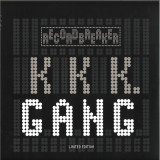
Giorgio Gordano and Giorgio Dolce originally produced ''KKK'' back in 1983, and the track was taken into the hearts of the blossoming Balearic scene hovering around DJ Alfredo at Amnesia. It's as gentle and sweet natured as Italo disco can be, and of course it makes perfect sense that Best Records would dig it out of the archives and give it the shiny new reissue it deserves. The ''Club Mix'' of ''KKK'' is a feast of simple, charming programmed melodies and crisp drum machine rhythms with the innocence of the early 80s in its heart. The ''Dub Mix'' and ''Bonus Beats'' on the flip are handy for the technical DJs out there, but the ''Club Mix'' is where it's at for the lovers.
Balmat co-founders Philip Sherburne and Albert Salinas have been fans of Shy Layers’ lilting, Balearic pop for years, so when Shy Layers’ JD Walsh asked us to listen to a set of demos he was working up with fellow Atlanta multi-instrumentalist Jeff Crompton, we jumped at the chance. And once we heard their work in progress, the decision was almost immediate: We have to release this.
Together, Walsh and Crompton are Anagrams, and their debut album together, Blue Voices, might initially seem like a departure from Balmat’s habitually electronic terrain. It’s not ambient music, but it’s also not not ambient music, at least to listeners in the right frame of mind. The two musicians, who met when Walsh moved from Brooklyn to Atlanta in 2016 and began collaborating a few years later, see the music in similarly ambiguous terms. “I like it because it’s not jazz,” jokes Crompton, a veteran and credentialed jazz player. “And JD likes it because it’s jazz.”
Crompton is a musician (and former high-school band teacher) with deep roots in Georgia’s improvised and experimental music scenes; his credits include shows with Eugene Chadbourne, a guest appearance with Godspeed You! Black Emperor, and a collaboration with Duet for Theremin and Lap Steel’s 12-hour drone performance at Knoxville’s Big Ears. On Blue Voices he plays alto and tenor saxophone, clarinet, electric piano, and organ. Walsh has been releasing music as Shy Layers since 2015, when he started self-releasing on Bandcamp; the following year, Germany’s Growing Bin packaged his first two EPs as a self-titled album, and in 2018, Tim Sweeney’s Beats in Space label put out Shy Layers’ sophomore album, Midnight Marker. Where those records channeled Walsh’s playful harmonic instincts into wistful songwriting with tropical overtones, on Blue Voices he lets his experimental tendencies take the lead. Playing acoustic and electric guitars, electric lap steel, bass, Moog Matriarch, modular synth, and programmed drums, he concentrates his energies on richly textural layers and abstract assemblages of tone color.
Across the album’s 11 tracks, there are faint echoes of familiar touchstones: the atmospheric twang of Daniel Lanois’ pedal steel on Apollo: Atmospheres and Soundtracks; the mercurial modal runs of Ethio- jazz; the late-summer calm of Fuubutsushi; the versatility of players and composers like Patrick Shiroishi and Sam Gendel, who are asking similar questions about where jazz ends and some other, nameless territory begins. Mostly, though, what Blue Voices captures is the quixotic sound of two restless musical imaginations making it up as they go along, two voices discovering a shared language in a hitherto unexplored shade of blue.
2023 Repress!
Les Disques du Crepuscule presents a new 180 gm vinyl edition of Fidelity, the 1996 studio album by cult Manchester ensemble The Durutti Column.
Limited to just 500 copies, this special double disc edition is pressed on heavyweight 180 gm vinyl and features cover artwork by Crepuscule design director Benoit Hennebert, based on a portrait by Vini Reilly of filmmaker Carol Morley.
Originally released by Crepuscule on CD only in April 1996, Fidelity featured 10 tracks written and performed by Vini Reilly, with occasional guest vocals by Eley Rudge. In addition to Vini’s trademark guitar stylings, the album showcased sleek electronic textures and programmed beats.
This 2019 vinyl re-master features two bonus tracks: My Only Love was originally released in 1995 on a covermount CD with a specialist guitar magazine, while experimental piece The New Fidelity was issued on a Portuguese compilation album from 1992 called Hare, Hunter, Field.
- 1: Rameau: Gavotte Et Six Doubles, Rct 5/7
- 2: Alkan: Barcarolle (Op. 65, No. 6)
- 3: Rameau: Les Sauvages, Rct 6/14
- 4: Noctuelles
- 5: Oiseaux Tristes
- 6: Une Barque Sur L'océan
- 7: Alborada Del Gracioso
- 8: La Vallée Des Cloches
- 9: Alkan: Le Festin D’ésope (Op. 3, No. 12)
- 10: Rameau: Les Tendres Plaintes--Rondeau, Rct 3/1
- 11: Les Cyclopes--Rondeau, Rct 3/8
- 12: Rameau: Nouvelles Suites De Pièces De Clavecin, Rct 6 (Menuet I+Ii)
- 13: Rameau: La Poule, Rct 6/12
For his first album as an exclusive Deutsche Grammophon artist, 2021 International Chopin Competition winner Bruce Liu – “a pianist with a captivating musical personality” (Financial Times) – has compiled an enthralling survey of 200 years of French keyboard music, from Baroque to modern. The phenomenal young Canadian pianist has subtly adjusted the action of his instrument to highlight the differing musical styles. Gramophone’s reviewer acclaimed DG’s release of Liu’s Warsaw competition performances as “one of the most distinguished Chopin recitals of recent years, full of maturity, character and purpose”. The album’s title Waves alludes not only to the nature theme that runs throughout the programme, but also to the sheer spontaneity of Liu’s music-making.
- San Francisco
- Mich Stört Kein Regen Und Kein Wind (Raindrops Keep
- Falling On My Head)
- Wunderbar Ist Die Welt (What A Wonderful World) *Mit Art
- Garfunkel
- Seit Ewigkeiten (Turn! Turn! Turn! To Everything There Is A
- Season)
- Blue Bayou
- Fremde In Der Nacht (Strangers In The Night)
- Ein Zug Fährt Durch Die Nacht (500 Miles) *Mit Art Garfunkel
- Unchained Melody
- Mr. Tambourine Man
- Sag Mir Wo Die Blumen Sind (Where Have All The Flowers
- Gone) *Mit Art Garfunkel
- Die Antwort Weiß Ganz Allein Der Wind (Blowing In The
- Wind)
- Weit So Weit (Can´t Help Fallig In Love With You) *Mit Art
- Garfunkel
Nach dem gefeierten Debütalbum "Wie Du - Hommage an meinen Vater" (bisher 29 Wochen in den deutschen Albumcharts) verneigt sich Art Garfunkel jr. nun mit seinem zweiten Longplayer vor weiteren
internationalen Klassikern und Welthits. Der Albumtitel ist Programm, denn auf EVERGREEN lässt er die große musikalische Ära der 1960er Jahre wieder aufleben. Vier Songs singt Art jr. sogar im Duett mit seinem berühmten Vater, der mit Simon & Garfunkel und als Solokünstler Musikgeschichte geschrieben hat. "Mein neues Album ist eine Art Klassentreffen der Lieblingsmelodien meines Vaters, die er schon immer gehört hat und mit denen ich auch aufgewachsen bin.", verrät der in New York geborene Sänger seine Intention.
The second self-titled album from Will Miller"s Resavoir interweaves modern-day soul-jazz with bedroom beats, synth serenades and twilight sonatas - an endlessly listenable, subtly radiant symphony suitable for both the composition-minded musician"s musician and the hook-seeking playlist populist. This album follows Resavoir"s 2019 self-titled debut album, a breakout success that landed in "Best of 2019" lists by NPR Music and BBC"s Gilles Peterson. Through his movement further into an expanded palette of synths, pianos, live and programmed drums in addition to his MIDI-augmented trumpet, Miller has developed a signature cinematic soul-jazz sound rooted in hip-hop structures. No surprise, then, that his profile as a producer has raised significantly since the Resavoir debut, and that the years since have seen him operating the controls and guiding the ship on tracks for Eryn Allen Kane, Whitney, Knox Fortune, and SZA"s recently-released album SOS (which spent 10 weeks as the #1 spot on the Billboard 200 chart).
Next up on Tofistock comes a MYKI release. tofistock home runner and producer energizing with 4 tracker dynamos programmed for a pure sense-floor bizz. Bringing up a rave thunderstorm A-side filled with rhythmic juggling work, crunchy stabs, and silky sneaky basslines. The elegantly rude B-side contains samples from the timeless UFO by ESG and his own reso master trademarks. This boutique toolpack is the essential firebone starter and the 1st in tofistock’s sense-floor new dance series.
"Intrinsic Rhythm is proud to welcome and release a new record by Westcoast Goddess. The enigmatic producer provides 4 r&b flecked sample led tracks which borrow and take influence from the classic machine soul from Chicago, Detroit and NY. The EP kicks off with the musically rich " Fallin' " which uses melody and emotive machine and sample programming to welcome you to a brilliantly unique record. The title track " Time 4 Change " takes a classic tactile Chicago groove and concocts a deep hybrid of strings, evocative synth and vocal sample programming to take the listener and dancefloor to a deeper level. " Change Is Comin' " is next and takes influence from classic Gospel house music and uses classic drum machine programming combined with a chord driven lead to create a mesmerising twist on machine soul. Finally "One O' These Days" uses Boogie. New Jack Swing and Deep House variations to bring the listener through a classic song structure which builds from beginning to end. IR005 contains 4 tracks brought through the unique lens of the Westcoast Goddess and is available on limited vinyl
Techno House Connoisseurs are back with another storming EP of various artists for dance floors worldwide. This V/A features some big hitters in Phoreski and Felix Dickinson as well as San Diego's Terry Jasinto, Seattle's Lock and Hammer and LA's Praus. Lots of ground covered here with unusual and unique stylings in the realm of acid and cosmic.
Phoreski's Kyoto Dawn leads the way with it's deep and euphoric vibe floating along leaning deep and etherial in all the right places.
Felix Dickinson follows up with his remix of Phoreski's track bringing the 303/acid into the forefront building it into a monster chugger complete with droning synths and 808 accents. Look for a sweaty frenzy at the climax of the track!
San Diego's Terry Jasinto makes his THC label debut with a tech house gem that pumps and weaves with it's dynamic drums and synth stabs. With several nice subtle layers of acid throughout, it is perfect for a high energy dancefloor.
LA's Praus continues to produce deep and complex tracks for THC records showing he has an ear for unique programming. His release, "Heedful" quickly gets your attention delivering haunting synths and beautiful acid lines in the cosmic fashion only Praus can deliver.
Seattle's own Lock and Hammer rounds out the EP with an unusual and quirky burner that intrigues and delights in a wealth of analog glory. Built for a warehouse, the artist has let loose a track that will glimmer on any loud system doing a number on your head/psyche in the early hours.
"Bring us the Head" ist unsere Liebeserklärung an das Kino der Achtziger und Neunziger, mit dem wir aufgewachsen sind", weiß Sänger Jens zu berichten.
"Während der Corona-Pandemie haben wir viele dieser Streifen "wiederentdeckt". Viele werden das nachvollziehen können - man saß zu Hause, hatte ungewohnt viel Freizeit, und dank der Streaming-Dienste kam trotzdem selten Langeweile auf.
Irgendwann sprachen wir im Scherz darüber, dass es doch cool wäre, eine Platte über unsere alten Lieblingsfilme zu machen... gesagt, getan."
Fans von Streifen wie "Terminator", "Conan", "Army of Darkness" oder "Escape from New York" werden somit ihre helle Freude an dem Album haben, für dessen detailverliebtes Cover-Artwork einmal mehr Besil Wrathbone verantwortlich zeichnet. Auch eine Cover-Version des Ramones-Klassikers "Pet Sematary" nahm die Band für "Bring us the Head" auf. Jens erklärt:
"Da wir den Song seit Jahren im Live-Programm haben, und er außerdem so wunderbar ins Konzept des Albums passt, lag die Idee förmlich auf der Hand."
Der neue Langspieler wird am 27. Oktober 2023 über Reaper Entertainment in den Plattenläden aufschlagen.
Die Aucklander Chillout-Soul-Elektronik-Band LEISURE enthüllt ihr exquisites viertes Studioalbum "LEISUREVISION". Das Album wurde in den letzten 2 Jahren in ihrer Heimat Neuseeland geschrieben und produziert.
Das Album erkundet die menschliche Erfahrung und all die Hoffnung, Freude, das Chaos und die Euphorie, die damit einhergehen, während es Themen wie Wachstum, Erneuerung und Wiedergeburt aufgreift und Balance, Frieden und Gelassenheit verkörpert. Es schöpft Inspiration aus verschiedenen Epochen - von der Geschmeidigkeit
des Blue-Eyed-Soul der Siebzigerjahre bis zur romantischen Energie des frühen Achtzigerjahre Post-Disco, kombiniert mit Drum-Programmierung des Hip-Hop der Mitte der Neunzigerjahre und verankert mit dem mittlerweile signifikanten, üppigen Gitarrensound von LEISURE, der sich durch ihre Diskografie zieht.
"LEISUREVISION" enthält die Single "All the Good Times Never Die", einen hoffnungsvollen, optimistischen Track, der in Zusammenarbeit mit der Londoner Gruppe Night Tapes entstand, sowie "Back In Love", einen souligen Track über die Herausforderungen und Freuden der Elternschaft und die Bedeutung, wieder Zeit füreinander zu finden.
Cleveland-based producer Tim Thornton makes music under the moniker Tiger Village. Thornton has carved out a niche in the American experimental underground through the wide-spanning releases of his own label Suite 309, as well as through his day job as a quality control supervisor at the Gotta Groove Records manufacturing plant — meaning that his ears serve as the finish line for a vast slate
of vinyl projects that hit the market every year. The Celebration, the fourth Tiger Village release on Hausu Mountain since 2014, joins a catalog that includes releases on Orange Milk, Patient Sounds,
and HausMo sublabel Blorpus Editions, along with a battery of music self-released through Suite 309.
Within the jittering IDM-adjacent networks of The Celebration, Thornton expands his craft on multiple concurrent trajectories, digging deeper into complex drum programming and labyrinthine synth arrangement while further exploring passages of vocal synthesis and non-recursive song structures that thrive on unpredictability and constant fluctuation. Thornton can’t help but bring a wide-eyed curiosity to anything he produces, as he rejects the dead-serious gun-metal intensity of many strains of contemporary electronic production in favor of bright tones and wonky rhythms.
Like fellow Hausu Mountain artists Wobbly and Moth Cock, Tiger Village revels in cheeky compositional about-faces and
carnivalesque synth lines. In all their staccato voices and peals of abstract texture, Thornton’s tracks blur the lines between harmonic electronic elements and drum patterns. The album morphs before our
ears every few seconds or so, allowing arrhythmic loops and alternating rhythmic grids to contrast against whatever might seem to be the bedrock of any given piece. By paying attention to the
trajectory of every dollop of sound, Tiger Village pulls off magic tricks in his pointillist arrangements in which nothing remains static — everything pushes towards a state of progressive complication.