Cerca:progress 1

Generi
Tutto
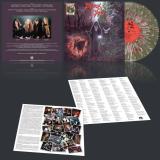
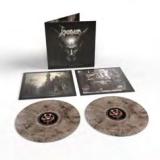
Venom - Into Oblivion LP 2x12"

Venom wurde 1979 in Newcastle upon Tyne gegründet. Gegen Ende der New Wave of British Heavy Metal
erlangten sie Bekanntheit. Ihre ersten beiden Alben – „Welcome to Hell“ (1981) und „Black Metal“ (1982)
– gelten als prägend für Thrash Metal und Extreme Metal im Allgemeinen. Das zweite Album war so
einflussreich, dass sein Titel als Name für das Extreme-Metal-Subgenre Black Metal verwendet wurde. Von
Bands wie Metallica, Behemoth, Celtic Frost und Mayhem oft als wichtige Einflüsse genannt, zählen sie zu
den meistverehrten Bands ihrer Generation.
„Into Oblivion“ ist Venoms sechzehntes Studioalbum und präsentiert die langjährige Besetzung mit Cronos
(Bass/Gesang und Gründungsmitglied), Rage (Gitarre) und Dante (Schlagzeug). Es sind ihre ersten neuen
Aufnahmen seit „Storm The Gates“ aus dem Jahr 2018. Ihr neues Album umfasst dreizehn Songs im
typischen Venom-Stil: heavy, düster und eingängig. Es vereint ihren klassischen 80er-Jahre-Sound mit
einem moderneren, progressiveren Ansatz, ohne dabei jedoch die alte Energie und den unbändigen Elan
einzubüßen.

pre-ordina ora01.05.2026

dovrebbe essere pubblicato su 01.05.2026

36,93
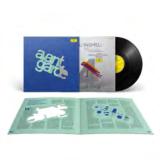
Boston Symphony Orchestra, Ensemble Tashi, Seiji Ozawa - Toru Takemitsu: Quatrain; A Flock Descends Into The Pentagonal Garden

Album #3 der brandneuen Vinyl-Serie mit zukunftsweisenden Aufnahmen der musikalischen Avantgarde.
Tōru Takemitsus Quatrain und A Flock Descends into the Pentagonal Garden sind Beispiele für seine
Synthese aus westlichen Avantgarde-Techniken und japanischer Ästhetik. In Quatrain evoziert Takemitsu
durch fließende Veränderungen von Klangfarbe und Atmosphäre das japanische Konzept von ma – dem
Raum zwischen den Dingen. Er verglich das Werk mit einem Emaki, einer Bildrolle, die Szene für Szene
entfaltet, wobei jede musikalische Idee unabhängig ist, aber dennoch miteinander verwoben ist.
A Flock Descends into the Pentagonal Garden erweitert diese Ideen zu einer zirkulären, nichtlinearen
Klangwelt. Sein „flock”-Motiv, das zuerst in der Oboe zu hören ist, taucht in ein schimmerndes harmonisches Feld ein, das von den Streichern geschaffen wird – den „garden”. Hier wird Takemitsus Zeit- und
Raumgefühl eher immersiv und zyklisch als progressiv.
Gemischt und geschnitten von den originalen analogen 1-Zoll-8-Spur-Masterbändern von Rainer Maillard
und Sidney Claire Meyer in den Emil Berliner Studios.
Limitierte und nummerierte Auflage mit Original-Artwork und einem neu gestalteten, wunderschön gearbeiteten Sammler-Cover mit neuen Liner Notes von Bradford Bailey, gepresst auf 180-g-Vinyl

pre-ordina ora01.05.2026

dovrebbe essere pubblicato su 01.05.2026

35,08
Various - Toolroom Sampler Vol. 14

Repress 2026

DJ Support from Danny Howard, Annie Mac, Mistajam, Pete Tong, Charlie Hedges, Kraak & Smaak, Maxinne, Todd Terry, Alex Preston, Full Intention, GW Harrison, DJ Rae, Rudimental, Alaia & Gallo, Illyus & Barrientos, Johan S, David Penn, Sam Divine, Riva Starr, Claptone, Nice7, Dario D’Attis, Mousse T, S-Man, Huxley, KC Lights, Friend Within, Dombresky, Gorgon City, Chris Lake, Format:B, Pirupa, TCTS, Alan Fitzpatrick, Low Steppa, Mat.Joe, Raumakustik, Eskuche

The next of Toolroom’s 4 track vinyl sampler series kicks off with a bang(er!). Welcoming CHANEY back onto the label with possible his finest release to date in the shape of ‘I Choose You’. On Toolroom alone he has amassed over 40m streams across leading streaming stores in just 3 years and can add massive imprints like Defected, Insomniac and Perfect Havoc to his list of musical successes. Everything in this record is 100% original and written by CHANEY himself from the self-played bass line, lush rhodes chords and distinctive, poignant vocals.

Next up is Gene Farris who has been a mainstay on Toolroom in recent years and is a regular artist at our label events all over the World. ‘In My Heart’ lands as an exciting collab with the Basura Boyz, a duo also hailing from Gene’s hometown of Chicago and the chemistry between the 3 of them is evident from the first beat! A super cool, stripped back vocal tech house track that sits in that sweet spot of club and specialist radio.

Kicking off the B-side is Deeper Purpose who returns to Toolroom alongside Jalja & Lazy Joe, after his debut club weapon ‘Stutter’ dropped on the label last year. He has had success across all the scene’s leading imprints over the past 12 months including Fisher’s Catch n Release, Experts Only and Repopulate Mars and this record is an anthem in the making! Jalja is on vocal duties, the vocalist that shot to fame after her huge ‘Hanging Tree’ record alongside Michael Bibi. She adds her trademark ethereal vibe to the record and delivers a typically killer hook - This is a real EAR WORM!!

Wrapping things up on Sampler 14 is a very exciting collaboration from 2 of the scene’s brightest shining new stars; Tony Romera and Crusy. Having been die-hard Toolroom fans for many years, this record came about during a conversation about old Toolroom records, and how they collectively wanted to emulate that slightly progressive tech house but bring it right up to date. And they have certainly done that! A real peak-time dance floor moment here with insane production and a unique, intense build up that is already causing maximum mayhem!

Countless radio plays on Radio 1 from Danny Howard, Sarah Storie, Pete Tong

Other notable radio plays – Kiss FM, Toolroom Radio, Sirius XM, Data Transmission Radio, Radio 1 Dance Anthems, Radio 1 Party Anthems, Rinse FM, Select Radio, Tomorrowland Radio

non in magazzino

Ordina ora e ordineremo l'articolo per te presso il nostro fornitore.

14,24

Last In: 47 days ago
Esbe - Sunset Girl

Esbe

Sunset Girl

7"-VinylCB145-7
Cold Busted
28.04.2026

Esbe returns to Cold Busted for a phenomenal new four-track EP, Sunset Girl. With previous releases on Dusted Wax Kingdom and Cult Classic, as well as his acclaimed Bloomsday and Late Night Headphones albums for Cold Busted, the Los Angeles-based multi-genre beat-maker is riding a wave. Sunset Girl is another exciting moment in Esbe's musical progression. The release starts quietly with the gentle, muted piano chords of "Special." A sparse hip-hop beat and subdued melodic layers round out the tune, cutting away to reveal a lonesome vocoder vocal. "Again" is as close as Esbe gets to a pop song, as a carefree male vocal and twinkling pianos ride over a crisp, solid rhythm track. More delights await on "Sunset Girl" with its simple piano line, reverby percussion hits, distant sax solo, and splashes of vocal collide in a sonic daydream. "I Want Love" closes things out on a vintage flavor, with echoes of a mid-century school dance reverberating into a modern day beat battle. Potent vibes all around.

non in magazzino

Ordina ora e ordineremo l'articolo per te presso il nostro fornitore.

14,50

Last In: 48 days ago
Mystic-Force - The Eternal Quest LP

Mystic Force was a progressive power metal band from Baltimore, Maryland. After releasing several demo tapes, they signed a contract with the German label Rising Sun Productions. This resulted in two albums, “The Eternal Quest” (1993) and “A Step Beyond” (1995). Their third album, “Man Vs. Machine,” followed in 2001 on Siegen Records. After Mystic Force broke up, drummer Chris Lembach and guitarist Rich Davis formed the group Shift and recorded two albums with them. Rich then started his own solo project (for which he played all the instruments and sang), before looking for suitable fellow musicians again and releasing the CD “Inside The Upside Down” in 2024. Mystic Force was originally formed in 1984 by guitarists Rich Davis and Marc Rouchard together with bassist Keith Menser. After numerous line-up changes in the early days, they finally found suitable bandmates in Chris Lembach (drums) and Bobby Hicks (vocals). In 1987, Mystic Force released their first 4-song demo, followed by “Blind Vision” a year later. After selling large quantities of self-produced cassettes (the first 4-track demo is said to have sold over 5,000 copies), it was time for their first vinyl release. In 1990, the album “Take Command” was released on the English label C.M.F.T. Records, which included the first demo and four brand new tracks: “Take Command,” “Awakened By The Dawn,” “Immortal Souls,” and “Silent But Deadly.” Later that year, the 12“ single ”Shipwrecked With The Wicked“/”Eternal Quest" was released in a limited and numbered edition by the band's own company, Pro-duction. The widespread distribution of Mystic Force's material (also via underground distributors such as Oliver Jung's “Demolition”) led to an increasing number of labels taking an interest in the band. Ultimately, the choice fell on Rising Sun Productions, who released the debut album “The Eternal Quest” in 1993, featuring tracks such as “Shipwrecked With The Wicked,” “Another World,” and “Answers Of The Mystery”—a forgotten gem of progressive power metal somewhere between Fates Warning and Hades.

pre-ordina ora24.04.2026

dovrebbe essere pubblicato su 24.04.2026

27,10
Vintage Culture - Promised Land LP 2x12"

Promised Land is the long-awaited debut album from contemporary showstopper Vintage Culture. Enlisting the help of peers NomBe, Maverick Sabre, The Temper Trap, and Elderbrook, the album marks the producer and DJ's seguing from progressive house to electro, evincing a globetrotting, jetsetting sound that hardly ever fails to hold back on emotion. Including prior single 'Come Come' alongside newer, angelic progressive cuts like 'Weak' with Sabre, this is a stark debut from the Brazilian creative force.

non in magazzino

Ordina ora e ordineremo l'articolo per te presso il nostro fornitore.

27,86

Last In: 39 days ago
EVIL GRAVE - DEATH FROM MALTA
  • 1: Machinery
  • 2: Optica
  • 3: Jam Session 1
  • 4: Screaming Streaks Of Light
  • 5: Satan's Death

Just when you thought you had heard it all.... Evil Grave were an exceptionally unique underground rock band from Malta that shook the islands with uncompromising attitude and dark imagery. In the early 1970s they ruled the Maltese scene and were voted best band in national polls. Heavily influenced by Black Sabbath and early progressive rock with a traditional Maltese flavour, Evil Grave never released any material during their existence. Several low budget demos were recorded at the time but, over the following years, the name Evil Grave simply vanished into obscurity. Until now! During a recent vacation to the islands, label owner Lee Dorrian became aware of the band and has spent the past three years tracking down as much information about them as he possibly could. With the blessing of original guitarist/songwriter John E Zammit Pace, we are excited to release this ungodly artefact upon the work for the very first time. Death From Malta, gathers together all known existing material from the band, the sound quality of which is decidedly lo-fi but, if anything, this only adds to the mysterious vibe of this simply enigmatic band.

pre-ordina ora24.04.2026

dovrebbe essere pubblicato su 24.04.2026

34,24
GREEN DESERT TREE - FIGHTING DRAGONS
  • 1: Overture
  • 2: The Storyteller
  • 3: Talk To Me
  • 4: Fighting Dragons
  • 5: High School Reunion
  • 6: The Broken Crown

Endlich ist es da, das lang erwartete zweite Album von GREEN DESERT TREE. Mit dem ersten Album "Progressive Worlds" hatte Green Desert Tree bereits 2019 bleibende Spuren in der Progwelt hinterlassen. Die Berliner Band um Mastermind Tim Sund (u.a. Keyboarder bei der Krautrock Legende Agitation Free) hatte bewiesen, dass sich aktueller Neoprog aus Deutschland in Sachen musikalischer Qualität und Originalität nicht hinter der internationalen Konkurrenz verstecken muss. Die Fachwelt hatte einen neuen Stern am Proghimmel wahrgenommen. Doch genau in dem Augenblick, als GDT im Begriff war die internationalen Festivalbühnen zu betreten, wurde der Band ein Strich durch die Rechnung gemacht: Corona. Diese unfreiwillige Unterbrechung aller Aktivitäten brachte dann auch ein paar personelle Veränderungen mit sich, so dass der bisherige Bassist Sascha Giebel zum Frontsänger avancierte und der italienische Bassist Francesco Beccaro neu zur Band hinzustieß. Das neue Album FIGHTING DRAGONS knüpft genau da an, wofür schon das Debüt so gefeiert wurde und besticht mit verpielt proggigen Keyboardintros, vertrackten Melodien, harten Gitarren, fantasievollem Storytelling, Satzgesang, symphonischer Größe, mikroskopischer Detailverliebtheit, klassisch anmutenden Passagen im Rockgewand und mitunter sehr druckvollen Parts. So handelt es sich bei den Songs des neuen Albums um eine Sammlung von Geschichten, die vom "Storyteller" erzählt werden. Dabei geht es zum Beispiel um eine Frau, die um ihren Bräutigam trauert, der am Vorabend der Hochzeit plötzlich spurlos verschwindet. Ein anderer Song handelt von einem computerspielsüchtigen Jugendlichen, der glaubt ein Ritter zu sein, der sein Königreich vor gefährlichen Drachen schützen muss. Was all diese Musik von GDT vereint, ist eine Qualität von Storytelling, die beispielsweise an Bands wie die frühen Genesis, Yes und Saga sowie an aktuelle Künstler wie Neal Morse und Steven Wilson erinnert, vereint mit einem Riesenspektrum an musikalischen Einflüssen und großer instrumentaler Virtuosität. Green Desert Tree wird nun zur Veröffentlichung des zweiten Albums "Fighting Dragons" endlich nachholen, was hätte schon längst passieren sollen, und zwar die deutschen Bühnen erobern und sich den Progfans in die Herzen spielen.

pre-ordina ora24.04.2026

dovrebbe essere pubblicato su 24.04.2026

23,11
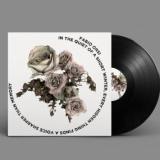
FABIO ORSI - IN A QUIET OF A SHORT WINTER, EVERY HIDDEN THING FINDS A VOICE SHARPER THAN MEMORY (SPS26114)

(DL code included)

Six touching tracks that, starting from quiet ambient atmospheres, initially soft, tenuous, and crepuscular, gradually seem to soar... ascending towards celestial spaces, revealing ever-wider and brighter landscapes below, ever-more distant horizons, ever-more infinite spaces...

Highly evocative progressions, guided by sober and delicate melodies and driving, pulsating bass lines, wonderfully deep (best enjoyed with a good stereo system to truly appreciate them), the kind that make your stomach churn before you even perceive the exact frequency and harmonic progression, often "set" in sober rhythmic patterns that mark the time, making a sonic journey even more dynamic and compelling.
If it doesn't surprise you, it's probably only because you've already had the opportunity to explore and "plumb" Fabio Orsi's most recent discography, and are already accustomed to the best of what this new wave of distinctly electronic but ambient-inspired music has to offer.

pre-ordina ora24.04.2026

dovrebbe essere pubblicato su 24.04.2026

25,84
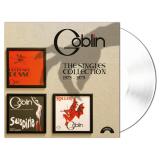
GOBLIN - The Singles Collection 1975-1979 LP
  • Profondo Rosso
  • Death Dies
  • Roller
  • Chi? - Parte Uno
  • Chi? - Parte Due
  • Suspiria
  • Blind Concert
  • Un Ragazzo D’argento
  • Opera Magnifica
  • Yell
  • Amo Non Amo
  • Funky Top

FOLLOWING THE SUCCESS OF “THE OTHER HELL”, GOBLIN ARE BACK FOR RECORD STORE DAY 2026 WITH AN EXCLUSIVE COMPILATION OF SINGLES RELEASED BETWEEN 1975 AND 1979!

For the very first time on vinyl, this compilation gathers together all the singles released by Goblin during their golden era between 1975 and 1979, a journey that begins with the explosive, legendary debut Profondo Rosso, a true chart phenomenon of its time, and reaches the rare Amo Non Amo, passing through unforgettable milestones of Italian film music and progressive rock.

The collection opens with Profondo Rosso and Death Dies, taken from the soundtrack of Dario Argento’s masterpiece that catapulted Goblin to fame, blending dark atmospheres, virtuosity, and a unique sense of cinematic tension. It continues with Roller and Snip Snap, drawn from the instrumental album Roller (1976), a record not tied to any film, yet considered a cult cornerstone of Italian progressive music for its intricate structures and expressive power.

Chi? and Chi? - Parte Seconda follow; two tracks originally composed as the theme for a 1976 RAI television show, which saw Goblin bring their unmistakable sound to a different medium, experimenting within a shorter, punchier format.

Next comes Suspiria with its haunting counterpart Blind Concert, from the soundtrack of Argento’s 1977 horror classic. This remains one of Goblin’s most iconic and unsettling works, where music becomes an active narrative force: hypnotic, percussive, and filled with eerie vocal layers that made it a cornerstone of horror soundtracks worldwide.

From Il Fantastico Viaggio del Bagarozzo Mark (1978) come Un Ragazzo d’Argento and Opera Magnifica, two tracks that highlight the band’s more conceptual and visionary side, a move away from cinema toward a self-contained narrative and progressive experimentation.

The single Yell stands as another late-decade gem. Originally composed as the opening theme for the RAI television series “Sette storie per non dormire” (1978), it captures Goblin’s ability to merge rock energy with electronic pulse, proving their versatility far beyond the horror realm.

The compilation closes with Amo Non Amo and Funky Top, taken from the soundtrack of the 1979 film Amo Non Amo, one of the group’s lesser-known but fascinating cinematic works.

Far more than a simple anthology, The Singles Collection 1975–1979 maps the evolution of Goblin’s sound, from the worldwide success of Profondo Rosso to their most mature and experimental phase. It finally restores to vinyl a body of work that had long been scattered across rare 45 rpm releases, offering fans and collectors a complete, vivid portrait of one of Italy’s most inventive and influential musical ensembles.

pre-ordina ora18.04.2026

dovrebbe essere pubblicato su 18.04.2026

36,93
FABIO FRIZZI - Amore Libero LP

FABIO FRIZZI

Amore Libero LP

12inchLPOST073
CELSON
18.04.2026
  • 1: Ibo Lele 3:57
  • 2: Seychelles Coconut :56
  • 3: Janine :0
  • 4: Full Moon Dance 2:19
  • 5: Mahea 3:08
  • 6: Ibo Lele (Reprise - Short Version) 2:31 *
  • 7: Janine (Orchestral Reprise) 1:54 *
  • 8: Mahea (Version With Organ) 4:15 *
  • 1: Kalù 4:46
  • 2: Coconut :5
  • 3: My Sweet Brown Sister 1:47
  • 4: Ibo Lele At Night 2:5
  • 5: Jungle Hevea 3:08
  • 6: Full Moon Dance (Wild Take) 3:30 *
  • 7: Kalù (String Version) 5:11 *
  • * Bonus Tracks

Amore Libero – Free Love marks the first film score composed by Fabio Frizzi, written in 1974 for the movie of the same name directed by Pier Ludovico Pavoni. Set against the exotic backdrop of the Seychelles, the film tells the story of Simo, a free-spirited young woman played by Laura Gemser in her cinematic debut, blending sensuality and the spirit of liberation so typical of the 1970s.

Frizzi’s score perfectly captures the film’s atmosphere, weaving together evocative melodies, funky grooves, and progressive textures — an elegant, psychedelic soundscape that reflects both the tropical setting and the film’s themes of freedom and desire. The recording features the Goblin in their classic line-up: Fabio Pignatelli (bass), Massimo Morante (guitar), Walter Martino (drums), and Claudio Simonetti (keyboards), with Vince Tempera handling arrangements and orchestral direction.

Long regarded as a true holy grail for collectors, now, for the first time ever, it is officially reissued on vinyl, bringing back to light a fundamental chapter in Italian film music and progressive sound. An essential record that merges Frizzi’s melodic genius with the visionary energy of the Goblin, Amore Libero – Free Love stands as a timeless document of an extraordinary era in Italian cinema and its music.

A Record Store Day 2026 exclusive / Pearly light blue vinyl edition / 30x30cm insert with extensive liner notes

pre-ordina ora18.04.2026

dovrebbe essere pubblicato su 18.04.2026

42,44
Various - Tchic Tchic: French Bossa Nova 1963-1974  Colored Edition LP 2x12"
  • A1: Les Masques - Il Faut Tenir (1969)
  • A2: Isabelle Aubret - Casa Forte (1971)
  • A3: Christianne Legrand - Hlm Et Ciné Roman (1972)
  • A4: Jean Constantin - Pas Tant D'chichi Ponpon (1972)
  • A5: Billy Nencioli & Baden Powell - Si Rien Ne Va (1969)
  • B1-: Marpessa Dawn - Le Petit Cuica (1963)
  • B2: Jean-Pierre Sabar - Vai Vai (1974)
  • B3: Sophia Loren - De Jour En Jour (1963)
  • B4: Isabelle - Jusqu’à La Tombée Du Jour (1969)
  • B5: Sylvia Fels - Corto Maltesse (1974)
  • C1: Frank Gérard - Comme Une Samba (1972)
  • C2: Ann Sorel - La Poupée Des Favellas (1971)
  • C3: Charles Level - Un Enfant Café Au Lait (1971)
  • C4: Andrea Parisy - Les Mains Qui Font Du Bien (1970)
  • C5: Audrey Arno - Quand Jean-Paul Rentrera (1969)
  • C6: Aldo Frank - T’as Vu Ce Printemps (1970)
  • D1: Christianne Legrand - Cent Mille Poissons Dans Ton Filet (1972)
  • D2: Clarinha - Lemenja (1970)
  • D3: Hit Parade Des Enfants - Aquarela (1976)
  • D4: Jean-Pierre Lang - Tendresse (1965)
  • D5: Magalie Noël - Une Énorme Samba (1970)
  • D6: Françoise Legrand - La Lune

Ever since the late 1950s bossa-nova revolution, Brazil’s influence on French music has been undeniable. Pierre Barouh, Georges Moustaki and a vast array of lesser known artists, all made the Musica Popular Brasileira (MPB) an axis of promotion at the service of a cool and metaphysical, modern and mixed Brazilian lifestyle. Some were seduced by the poetic languors of the bossa, some were looking for fun, and others just loved the American hybridization of jazz-bossa, jazz-samba.


What is bossa nova? One of its creators, Joao Gilberto said: "Its style, cadence, everything is samba. At the very start, we didn't call it bossa nova, we sang a little samba made up of a single note - Samba de uma nota so .... The discussion around the origins of bossa nova is therefore useless”. It is nevertheless useful to remember that these magnificent Brazilian songs, which the guitarist describes as samba, were shifted and balanced around improbable chords. "I like things that lean, the in-betweens that limp with grace," said Pierre Barrouh, quoting Jean Cocteau.


With emotion, arrangements for violin and supple guitar licks, bossa nova rapidly changed. A transformation that can be heard in the Tchic, tchic, French Bossa Nova 1963-1974 compilation, the result of a cultural reappropriation, which traveled through the United States and supplemented itself in France.

A musical revolution that has remained significant, bossa nova was born in Rio. From 1956 to 1961, Brazil lived through its golden years. In five years, the country had invented its modernist style. Elected president in 1956, Juscelino Kubitschek de Oliveira, an elegant man with a broad forehead, brandished a promising slogan: "Fifty years of progress in five years". He quickly got to work. Not worried about increasing debt, he launched the project for a new federal capital, Brasilia, designed by the communist architect Oscar Niemeyer. Volkswagen opened state-of-the-art factories and created the “fusquinha”, the Beetle. In Rio, the Vespa made its first appearance. The Arpoador Surf Club crew run into the “girl” from Ipanema, Helô Pinheiro - the tanned garota ("chick"), between a flower and mermaid, who at 17 walked by the Veloso bar, where the fiery author and composer, Tom Jobim and Vinicius de Moraes, were getting drunk on whiskey. From then on, bossa symbolized cool.

In 1958, Joao Gilberto recorded Chega de Saudade, which the directors of Philips denied, calling it "music for fagots". The marketing director, who believed in it, secretly pressed 3000 78-inch vinyls and distributed them at schools around Rio, creating a tidal wave.

American jazzmen then took over. In particular, trumpeter Dizzy Gillespie and guitarist Charlie Byrd. In November 1962, the Brazilian Ministry of Foreign Affairs funded a "Bossa-Nova" concert at Carnegie Hall in New York, inviting the genre’s pioneers. Unprepared, the show soon turned to disaster. But the troupe was invited to the White House by Jackie Kennedy. The first lady loved "the new beat" and in particular Maria Ninguem, a song by Carlos Lyra, later covered by Brigitte Bardot.

In Brazil, the 1964 military coup quickly ended this euphoria. The destructive atmosphere that ensued pushed many Brazilian musicians to leave, if not to exile. Thus, Tom Jobim, Sergio Mendes and Joao Gilberto arrived to the United States. In New York, Joao Gilberto met saxophonist Stan Getz. At the time, he was married to the Bahianese Astrud Weinert Gilberto, who had a German father. She had never sung before, but she knew how to speak English. Getz therefore asked her to replace her husband on The Girl From Ipanema. The Getz/Gilberto record with Tom Jobim on piano, was released in March 1964. Phil Ramone, the "pope of pop" was in charge of sound.

Bossa nova arrived in Paris through the classic “guitar-voice” channel (Pierre Barouh, Baden Powell, Moustaki…) But France loved jazz and Paris had already welcomed its American contributors. All these good people were to pass through Saint-Germain-des-Prés. The cabaret l'Escale became the Mecca of Latin American sound where one could find Pierre Barrouh and his friends, such as the Camara Trio, samba-jazz aces, whose only record was published by the Saravah label. With a band strangely called Les Masques (a band that included Nicole Croisille and Pierre Vassiliu, among others), the Camara Trio recorded an interesting Brazilian Sound, including the track Il faut tenir which is present on this tasty compilation of rarities.

Other enlightened musicians can also be found on the compilation, such as Jean-Pierre Sabar (songwriter for Hardy, Auffray, Leforestier ...) and the French pop rock organist Balthazar. In 1975, Sabar recorded Aurinkoinen Musiikkimatka on a Finnish label, which featured the crazy Vai, Vai, included on this record. We are now following the footsteps of Brazilian electronic musicians such as Sergio Mendes, Eumir Deodato or Marcos Valle who created funk and disco sounds on their keyboards and synthesizers. A style that influenced Véronique Sanson when she wrote Jusqu’à la Tombée de la nuit in 1969 for Isabelle de Funès, the niece of Louis and a great friend of Michel Berger - Sanson did end up singing this track on her 1992 Sans Regret record.


The pinnacle of exoticism and travel, Sylvia Fels’ Corto Maltese includes bongos, sea mist and ocean sounds. The title was taken from Jacky Chalard’s concept album written in 1974, Je suis vivant, mais j’ai peur (I am alive, but I am scared), based on Gilbert Deflez’s science fiction novel.


However, bossa nova extended the scope of popularity. "In the 1970s, I was a fan of Sergio Mendes, Getz / Gilberto. I fell in love with this music that I knew because I had been an orchestral singer, " explained Isabelle Aubret, who in 1971 delivered a composite record of covers by the very funky Jorge Ben, Orfeu Negro, Tom Jobim, Vinicius de Morais and Jean Ferrat. "I recorded this album for Meys Records in Paris, far from Brazil, with wonderful musicians, François Raubert, Roland Vincent, Alain Goraguer...". The latter wrote the arrangements for Casa Forte, a very percussive title borrowed from Edu Lobo, one of the initiators of the bossa who spent time in California. "Jazz and bossa came together and produced very rhythmic music. I love singing, it allows me to dream, to have fun, to feel a high on stage, and these songs brought me joy, made me swing, my singing felt like a dance.”


The world tours of French singers and their desire for the tropics, often brought them to Rio with its hills, forests, caipirinhas and tanned bodies. There are surprises though, like this Iemenja (Iemenja is the goddess of the sea in the Afro-Brazilian candomblé religion). Not unlike the composer and musician Jean-Pierre Lang, based in Sao Paulo, Claire Chevalier taught Brazil to Brazil. In 1970, the singer and painter published a 45-inch vinyl, Mon mari et mes amants (My husband and my lovers), under the improbable pseudonym of Clarinha (little Claire). She was then living in Rio, with her husband, Joël Leibovitz, who founded a band called Azimuth, and who owned a record label specialized in "sambas enredos" songs for samba school parades.


For its B side, she asked Pierre Perret to come up with lyrics for a song composed by Carlos Imperial: "Oh goddess of the sea, o goddess Iemenja, I bring a white rose to adorn your long hair ..." . "Perret came to see us, and we had fun, remembers Joël Leibovitz. We wrote Lemenja for fun, we recorded it at the Havaí studio, behind the Central do Brasil the central station. Erlon Chaves, the arranger who worked with Elis Regina, joined us" adding his share of Afro-Brazilian percussions and funky brass to the mix.

There is a common misunderstanding in Franco-Brazilian history: that bossa, admittedly hedonistic, is perceived as funny, even though the poets who wrote the texts are often philosophizing on the human condition. Its French interpreters pull it towards a carnival inspired universe, far removed from its fundamental essence. Thus, Jean Constantin covered the famous Samba da minha terra, an ode to the art of samba written by the classic Bahian composer Dorival Caymmi, renaming it with the enticing title of Pas tant de tchi tchi pompon: "On your pier there is no tchi tchi / when you arch your back, you know everything is alright ”(lyrics by Gérard Calvi). This expedited bossa aims for the absurd, but retains a certain elegance.

Indeed, Jean Constantin was not an idiot, the rather large man had a huge mustache and liked fantasy, (Les pantoufles à papa, Le pacha, inspired by cha-cha-cha-cha, salsa and jazz) but he was also the lyricist of Mon manège à moi interpreted by Edith Piaf, the composer of Mon Truc en plume by Zizi Jeanmaire and the soundtrack of François Truffaut’s 400 Blows. Le Poulpe, published in 1970, from which this bossa is extract, was arranged by Jean-Claude Vannier, an accomplice of Serge Gainsbourg’s Melody Nelson. In short: "There is enough of samba / By looking at the parasol / Because my poor cabeza / Is going to die in the sun".

Even the American actress Marpessa Down, who was at the heart of the bossa nova revolution with her role as Euridyce in Marcel Camus’ film Orfeu Negro, winner of the 1959 Cannes Palme d'or, fed the clichée with Je voudrais parler au petit cuica - "Tell me how you manage to always make people want to dance / It's true, I must admit that I cannot resist your magic" - in consequence, once can hear the cuica, a little drum inherited from the Bantu.


But bossa nova had many angles. Societal, of course, pushing actresses who were symbols of women's liberation like Brigitte Bardot, Jeanne Moreau, or Sophia Loren to engage in the exercise of accelerated bossa. In February of 1963, Sophia Loren made a record in French in Rome, Je ne t'aime plus, featuring the song De jour en jour, a bossa written by two Italians, Armando Trovajoli and Tino Fornai, which was released a little later by Barclay. Bossa accompanied the 1960s, a decade of moral liberation. Ann Sorel, who interpreted La Poupée des favellas, caused a sensation with L’amour à plusieurs, a provocative song written by Frédéric Bottom and Jean-Claude Vannier. As for the actress Andrea Parisy, she displayed her bourgeois cheekiness in Marcel Carné's Les Tricheurs before interpreting Les mains qui font du bien. And Magalie Noël, the friend of Boris Vian, who sung Johnny fais-moi mal, was hired to sing Une énorme Samba, composed by Alain Goraguer (arranger to Gainsbourg, Bobby Lapointe and Jean Ferrat) with lyrics by Frédéric Botton.

But in the end, of what wood is bossa nova made of? The answer is given by Christianne Legrand, daughter of Raymond the conductor, and sister to Michel the composer: "With me, with jà" - jà means "immediately" in Portuguese. In 1972, the singer, an expert in vocal jazz and a member of the Double Six, published Le Brésil de Christianne Legrand. Two songs included on the Tchic Tchic compilation that demonstrate how bossa, jazz, funk, rock, etc. work like a swiss army knife: the music is used to denounce broken systems, or miracles, HLM et ciné roman, Cent mille poissons dans ton filet, two songs from the O Cafona soundtrack, a successful telenovela broadcast, at the time in black and white, on TV Globo. The first was adapted in French by the fighter and friend of the Legrand tribe, Agnès Varda. The second is content with a play on words, jostling them into a summer fun.


Véronique Mortaigne
pre-ordina ora

Questo articolo non è stato ancora rilasciato. È possibile pre-ordinare il prodotto ora.

27,31
ORDH - BLIND IN ABYSSAL REALMS

ORDH

BLIND IN ABYSSAL REALMS

12inchASHLP222
PULVERISED
17.04.2026
  • 1: Apis Bull
  • 2: Moon Of Urd
  • 3: Phlegraean Fields
  • 4: Blind In Abyssal Realms
  • 5: Hierothesion

ORDH's debut, "Blind In Abyssal Realms", sets out to redefine what the term 'progressive death metal' truly means. But before ORDH, there was BARISHI. When their bass player threw in the towel to pursue other interests in life, guitarist and vocalist Graham Brooks, "looking for a fresh start", decided the time had come to finally dwell in his favorite genre: death metal. But not just any kind of death metal_ Having drafted BARISHI drummer Dylan Blake, with whom Graham has been playing since he was twelve years old, and Josh Smith from KIEFCATCHER on bass, the trio then spent a few gruelling years working on their debut, with Graham writing most of the music and ironing the songs out with Dylan and Josh. Having toured with COME TO GRIEF when BARISHI was still around, Graham and the latter's singer Jonathan Hébert had hit it off really well, so when the time came to find a vocalist, Jonathan was called upon, "right on time to jump straight into the recording and writing process, as most of the music was ready to go".

pre-ordina ora17.04.2026

dovrebbe essere pubblicato su 17.04.2026

28,53
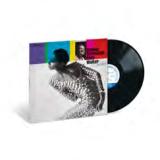
Stanley Turrentine - Easy Walker

Der Tenorsaxofonist Stanley Turrentine hatte sich in den frühen 1960er Jahren einen Namen als gefühlvoller Soul-Jazzer gemacht. Oft war er auf den Alben dieser Zeit gemeinsam mit seiner damaligen Frau, der
Hammond-Organistin Shirley Scott, zu hören. Mitte der 1960er Jahre öffnete sich Turrentine auf Alben wie
“Easy Walker” progressiveren Jazzklängen, ohne dabei seine Identität zu verlieren. Das abwechslungsreiche
Programm von umfasste hier sowohl hart groovende Nummern als auch sinnliche Balladen.

pre-ordina ora17.04.2026

dovrebbe essere pubblicato su 17.04.2026

25,63
Annihilator - Carnival Diablos (2x12")

Annihilator

Carnival Diablos (2x12")

2x12inch4029759175254
Ear Music
17.04.2026
  • A1: Denied
  • A2: Battered
  • A3: Hunter Killer
  • A4: Time Bomb
  • A5: Carnival Diablos
  • B1: The Perfect Virus
  • B2: The Rush
  • B3: Insomniac
  • B4: Epic Of War
  • B5: Liquid Oval
  • B6: Shallow Grave
  • B7: Chicken And Corn (Hidden Track)

Carnival Diablos is an album of red-blooded metal that connected Annihilator’s legacy to their present-day and re-established Jeff Waters’ place in the thrash pantheon. From the frenzied call-and-response of album opener ‘Denied’ to the progressively-edged mid-tempo sway of the title track, Carnival Diablos is a wholly satisfying offering of steak and potatoes heavy metal thrash – more heavy metal, less thrash, but 100% Annihilator at one of their many peaks.

pre-ordina ora17.04.2026

dovrebbe essere pubblicato su 17.04.2026

25,59
CHROMA - 25 Forever LP

CHROMA

25 Forever LP

12inchALCOPOP308X
Alcopop
17.04.2026
  • What!
  • Riverhouse
  • Lifehack
  • Straight Men
  • 25: Forever
  • Coalminer's Granddaughter
  • Matching Tattoos
  • Sometimes
  • People Pleaser
  • It's Stupid

"This album is everything that CHROMA is, and has always been to us, as a band and as individuals," enthuses Mather. "All of us are immensely proud of this record and feel that we've served our younger selves by creating it." "The album is dynamic in the sense that we think people might be surprised to see a different side of CHROMA, as you progress through the record. We can't wait to blend the tracks into the live show which will also now include more energy, some heavier riffs, but also some softer, more subtle songs.

pre-ordina ora17.04.2026

dovrebbe essere pubblicato su 17.04.2026

23,49
Diorama - Pacific Trak EP

Diorama

Pacific Trak EP

12inchDRMA001
Diorama Label
17.04.2026

A new duo and record label based in Madrid lands on the underground techno scene, led by Mike Gómez and José Castillo, the latter known for his aliases Milford and UHF, and also the owner of the electro label Gladio Operations.

Diorama is born with the intention of recovering the soul and essence lost in electronic music, which for some time has become practically homogeneous and predictable. With a timeless, fresh, and warm sound, Diorama produce rhythms close to dub and Detroit techno, mainly influenced by Juan Atkins, UR, and Basic Channel, among others.

This EP, titled Pacific Trak, begins with a nod to the old Scottish school, where they revive a forgotten track by British producer Anthony Scott, adding its imposing main chord to a true sea of melodic textures, bathed in exquisite acid. Spanish techno master Tadeo gives us his vision of Pacific Trak, exploring dub territories that remind us of past pieces released under the incomparable Maurizio label.

The B-side opens with Soul Memories, a manifesto of resistance that vibrates with detuned harmonies and raw bass lines, recalling the origins of Detroit’s primitive sound. The package closes with Polymorphic, a progression of relentless aquatic chords, set among careful and precise minimalist rhythms that oscillate between high-dynamics tech and dub.

non in magazzino

Ordina ora e ordineremo l'articolo per te presso il nostro fornitore.

14,08

Last In: 19 days ago
Protocolo SyseX - Geometria Virtual

Protocolo SysEx aka Fabio Vinuesa lanza este EP en su sello con cuatro pelotazos originales y dos remixes de Boris Divider y Heinrich Mueller.

GEOMETRÍA VIRTUAL documents a scenario in which mechanisms of control cease to function as external layers and instead become the very foundation of the system. The album does not propose a future dystopia, but rather a reality in which decision-making is automated and artificial intelligence is established as a structure of social control.Protocolo SysEx, a project by Fabio Vinuesa, is conceived as a narrative and sonic framework from which to examine the political and philosophical implications of a world governed by artificial intelligence. The release includes reinterpretations by Boris Divider and Heinrich Mueller and constitutes the first chapter of a trilogy focused on the progressive normalization of algorithmic control.

Geometría Virtual EP – Distrito 91 15

a A1 - Geometría Virtual Part I
b A2 - Geometría Virtual Part II

non in magazzino

Ordina ora e ordineremo l'articolo per te presso il nostro fornitore.

17,61

Last In: 59 days ago
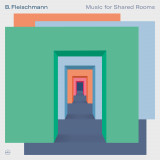
B. Fleischmann - Music for Shared Rooms LP 2x12"

»Music for Shared Rooms« is B. Fleischmann’s eleventh solo album and his first since 2018. It is also not an album, or at least not in the conventional sense of the word. These 16 instrumental pieces provide a kaleidoscopic glimpse of a forward-thinking musician at home in many different musical worlds, including experimental and abstract music, pop and more classically-minded compositional forms. These pieces were culled from an archive of roughly 600 compositions for theatre pieces and films written throughout the past twelve years. The Österreichischer Filmpreis-awarded composer, however, aimed for more than simply documenting his extensive work in and with different media. To do so, he edited and re-mixed the individual recordings for this release, taking them out of their contexts and reworking them for an audience who can experience them in a different setting. »Music for Shared Rooms« makes it possible for its listeners to engage with the sounds and to fill the spaces they open up with their own imagination.

Roughly speaking, music for theatre or film can serve two functions: it either takes the lead, or underscores what is happening on stage or screen. The marvelous thing about these pieces is that they manage to do both. Fleischmann’s work as a prolific producer has always drawn on contrasts, at times combining pop sentiment with rigid experimentation, the seemingly naive with the intricate and complex. This approach also marks the tracks collected here: bringing together acoustic elements and electronic sounds, at times working with conventional structures but always de- and re-contextualising them, Fleischmann constructs a vivid dramaturgy out of discrete singular compositions, letting them interact across the record.

Take, for example, the opener »Träumerei« and the following »Brenne«: after the soothing acoustic sounds of the former, the latter quickly picks up speed with hard-hitting drum machine rhythms. It’s a stark contrast sonically and stylistically, however both tracks are tied together by a certain harmonic sensibility. This sort of dramaturgical interconnectedness of varied musical materials is the thread that runs through »Music for Shared Rooms«. A droney piece for string instruments like »Sehnsucht« is followed by a trip-hop beat, before »Schock« lives up to its title with skittering beats and piercing high frequencies. The differences between the pieces may be striking, but the progression from one to the other is subtle. It goes on like this through different moods and tempos. There’s soothing-yet-eerie piano pieces like the »Für Elise«-inspired »Der Lärmkrieg«, gentle house grooves, joyful synthesizer excursions and, finally, »Die Erde ist mir fremd geworden«, a collage of abstract textures and concrete sounds.

All these pieces create distinct situations through the juxtaposition of diverse musical elements, but are also bound together by a single vision. Writing music for theatre pieces or film requires a composer and his pieces to engage with people and their movements in space, which is exactly what Fleischmann offers on this record. He breaks down the fourth wall and invites his listeners into his world, a wide-ranging musical panorama. »Music for Shared Rooms« is indeed not an album in the conventional sense of the word, but more like a photo album in which each page opens up a new space to get lost in; recreates different scenes in which you can immerse yourself. These are shared rooms indeed.

non in magazzino

Ordina ora e ordineremo l'articolo per te presso il nostro fornitore.

28,53

Last In: 60 days ago
Zé Ibarra - Afim

Zé Ibarra

Afim

12inchMRBLP324
Mr Bongo
13.04.2026

Mr Bongo proudly presents, ‘AFIM’, the second solo album by one of Brazil’s most exciting new talents, Zé Ibarra. You may be familiar with the hypnotic, entrancing tones of Ibarra’s vocals through his work with the Latin Grammy award-winning, four-piece, Bala Desejo and the band Dônica. He has also toured with the musical titan, Milton Nascimento, performing guitar and vocals, which is quite the honour and a testament to Ibarra's craft. As a solo artist, he has performed headline solo shows in Japan, Portugal and the US, as well as recently completing a support tour with the great, Seu Jorge.

‘AFIM’ is comprised of eight tracks, featuring Zé’s own compositions as well as cover versions of tracks by contemporaries and friends, Sophia Chablau, Tom Veloso, and Dora Morelenbaum. It combines elements of MPB, jazz, pop and progressive rock in a bold, authoritative style. The album represents the intersection between different facets of the artist, from the stripped-down, intimate, guitar singer-songwriter, to dense arrangements with sweeping strings sections. Writing this album allowed Ibarra "to explore sides of myself that had not yet been organized in an album: a certain darkness, a more cinematic musicality, a desire for new soundscapes.

The album features the single, 'Transe', a song with an instantly comforting tone reminiscent of classic Brazilian songs of the past (think Caetano Veloso). It is built on a rhythmic guitar that supports dynamic sound layers, opening space for Ibarra's intense interpretation. Cinematic atmospheres that lend an air of mystery come courtesy of string arrangements by Jaques Morelenbaum.

His unique cover version of Sophia Chablau's 'Segredo' is equally compelling, taking Sophia's punky-indie original in a different direction and making it feel like his own. 'Essa Confusão', a song celebrating the intensity of love and co-written by Dora Morelenbaum, is steered into epic, 70's AOR, singer-songwriter territory with wind arrangements by Ibarra, Jorge Continentino and strings by Jaques Morelenbaum.

The album is the result of the collaboration of experienced musicians and long-time partners of Ibarra. Fellow Bala Desejo and Dônica member Lucas Nunes co-produced the album. The core band featured on the record consists of Lucas Nunes on organs, Alberto Continentino on bass, Daniel Conceição and Thomas Harres on drums and percussion, Rodrigo Pacato on additional percussion, Chico Lira on Fender Rhodes and Guilherme Lírio on guitar.

The overall feel of the record is archetypically quintessential without slipping into retro mode. It is a stunning album from one of the finest musicians of his generation. A true star of Brazil’s blooming contemporary scene.

non in magazzino

Ordina ora e ordineremo l'articolo per te presso il nostro fornitore.

27,05

Last In: 66 days ago
Articoli per pagina:
N/ABPM
Vinyl