Spandau20, an imprint named after the Western Berlin district and focused on artists from the area, delivers techno in all diverse forms - from warehouse and electronic peak time beats to breaks and IDM, balancing the old and new school sounds flawlessly. With a focus on vinyl releases, for the collectors, Spandau20 has lately also focused on its label nights, with showcases at Fabric, Bassiani and many others. The label's 10th release features 10 tracks that epitomise the musical diversity of Spandau20 and the progressive musical mindset of its roster, calling on the label favourites and Spandau natives to deliver brand new and exciting music. This special release even features one track that all artists have worked on together: 'Come Closer', a swarming, slithering beginning featured as the VA's opener. Its barely coherent female vocal echoing amidst a cacophony of demon-like effects. The chilling ambience captured at the offset transcends into the first full length track by Elli Acula, 'Floating Eyes', a cur characterised by an authoritative, pounding bass featuring calculated percussive rolls and metallic overtones to make for a face-scrunching opener to this devilish collection of works. FJAAK follow for the first of twin cameo appearances, partnering up with fellow live supremo and hardware aficionado KiNK. On 'Overbridge' the trio deliver a cavernous, rolling number driven by a deep thrumming bass in addition to a razor-edged lead synth, and pulsating technopattern. Dajusch is known for incorporating his years of classical study in with his immersive musical style - and with his VA effort the Berlin native neatly showcases this. Easing the energy slightly, 'Move' escalates from its warm, melodic intro into rumbling goliath of a beat comprising a looping, slew of gassy harmonics. The momentum of the release shifts considerably with the introduction of acutely versatile producer, DJ and sound artist Claus. The artist from Spandau leans his track 'Bloomscroll' towards sparse, dubby sonics in which he intricately ties together to form churning, burgeoning soundscape. FJAAK jolt proceedings back into the techno groove with their signature blend of arresting sub-bass and reverberating rhythms, which come thick, fast and heavy on 'Jackfruit'. The abstract wonder of Anna Z's broken-beat like stylings is fully explored on 'Icy Liq'. It's outlandish and amorphous in its execution, causing a clattering percussive chaos that's choicely pieced together by the modular-extraordinaire. Nikk stealthy moves into breaks territory with his track 'Down In The Shadows', packing a trap-like snare with an acid-flecked melody and dawn-breaking, dream-like textures. The penultimate track on the VA is 'Tufted'. J.Manuel expertly employs a chorus of robot-like sonics that course through a short-circuiting low-end to produce a pacy, inescapable journey via a whirling, merciless beat. He is joined by the legendary producer Tobi Neumann for their menacingly ambient number titled 'Fennec.' In parts a nod to UK dubstep, the duo concocts a fierce admixture of styles bolstering tribal-like components with industrialised overtones and methodically crafted drum-fills.
Cerca:progress
- Dances Of Death Part 1: Introduction
- Dances Of Death Part 2: Eruption
- Dances Of Death Part 3: Beyond The Gates
- Dances Of Death Part 4: Outburst
- Dances Of Death Part 5: Days Of Betrayal
- Dances Of Death Part 6: Restless
- Dances Of Death Part 7: Sanctuary
- Dances Of Death Part 8: Finale
- Transgressor
- True Believers
- Night On A Bare Mountain
High Roller Records, 180g black vinyl, ltd 250, 425gsm heavy cardboard cover, insert, poster. Remastered by Patrick W. Engel at TEMPLE OF DISHARMONY in August 2024.
Ende der 1980er standen Mekong Delta ohne Gitarrist Frank Fricke (der ein Angebot von U.D.O. annahm) und Sänger Wolfgang Borgmann (der nichts mehr mit dem neuen Material anfangen konnte) da. Beide hatten die Identität der Band auf ihren ersten drei Alben mitgeprägt, doch mit dem amerikanischen Sänger Doug Lee und Uwe Baltrusch als verbliebenem Gitarristen gelang es den Gründungsmitgliedern Ralf Hubert und Jörg Michael, ein Album zu schaffen, das viele Fans für ihr Magnum Opus halten. Allein aufgrund seines achtteiligen, 20-minütigen Titeltracks kann man "Dances Of Death (And Other Walking Shadows)" - ursprünglich 1990 veröffentlicht - sogar zu den besten Progressive-Metal-Alben aller Zeiten zählen.
Lion_and the mean ecstasy of "You've Got A Woman," the B-side to their sole release_comprise a rare burst of psychedelic-Western soul from two names best known for Dutch progressive rock and new wave. Drummer Peter de Leeuwe, departing from the symphonic leanings of Dutch prog-fixtures Ekseption, penned it in 1975, layering syncopated explosions of hand-claps, vibraslap and slick drumwork with neutron-star density, with super-producer Hans van Hemert nearly bursting Glenn Robles' vocals through the fore. The "Shoes Subtle Edit" provides exactly that, gently teasing the organ- and requinto-hinted contours of the track to better suit the treasure within. Chicago-based septet Whitney have brought some attention to "You've Got A Woman" with a recent cover, and the faith with which they recreate much of the original instrumentation proves the extent of Lion's accomplishment.
PART 1/2[17,86 €]
"Petrol", one of Manu Kenton's most iconic tracks, makes its highly anticipated return in a limited edition that will appeal to both collectors and techno enthusiasts. This special version features not only the original track, but also exclusive remixes that reinterpret the piece from different angles, offering a diverse and exciting sonic palette.
Manu Kenton, staying true to his creative genius, revisits his own track by adding an energetic and catchy vocal, bringing a fresh new dynamic to the already electrifying atmosphere of the original.
The Gregor Size remix is a true powerhouse: dynamic, industrial, and powerful, it transforms "Petrol" into a heavy, punchy piece, with dark textures and irresistible rhythms that leave a lasting impression.
Greg Denbosa, on the other hand, delivers a progressive techno remix, with a dynamic and repetitive beat that builds tension, creating a hypnotic experience perfectly suited for the dancefloor.
Finally, Bestien offers a nervous, straight, and punchy version, ideal for the peak moments of a night. His explosive remix ramps up the intensity on the dancefloors, with raw energy and power that demands attention.
Visually, this vinyl stands out with its "Yolk" effect, a unique blend of white and white with luminous accents, creating a striking and modern design that will enhance any collection.
Français
"Petrol", l'un des morceaux les plus emblématiques de Manu Kenton, fait son grand retour dans une édition limitée qui séduira aussi bien les collectionneurs que les passionnés de techno. Cette version spéciale inclut non seulement la version originale du titre, mais aussi des remixes inédits qui réinterprètent le morceau sous des angles différents, offrant ainsi une palette sonore variée et excitante.
Manu Kenton, fidèle à son génie créatif, revisite son propre morceau en y ajoutant un vocal énergique et entraînant, donnant une nouvelle dynamique à l'atmosphère déjà électrisante de l'original.
Le remix de Gregor Size est un véritable tour de force : très dynamique, industriel et puissant, il transforme "Petrol" en une œuvre lourde et percutante, avec des textures sombres et des rythmes irrésistibles qui marquent les esprits.
Greg Denbosa, quant à lui, propose un remix techno progressif, avec un beat dynamique et répétitif qui crée une tension croissante, offrant une expérience hypnotique et parfaitement calibrée pour les sets dansants.
Enfin, Bestien livre une version nerveuse, droite et percutante, idéale pour les moments intenses d'une soirée. Son remix explosif fait monter l’intensité sur les dancefloors, avec une énergie brute et une puissance qui ne laisse personne indifférent.
Visuellement, ce vinyle se distingue par un effet "Yolk", un mélange unique de blanc et de rouge lumineux, créant un visuel frappant et moderne qui enrichira toute collection.
Breakbeat Downtempo very Electro and progressive, Hip Hop form sometime... Creative and powerfull. This is an excellent production from south of France that will please everybody !
- 01: Icarus Phase
- 02: The Last Picture I Took
- 03: Filter Coffee At The Heliopause
- 04: I Am The Furthest Thing
- 05: What Will They Say About Me?
- 06: Interstellar Disco
- 07: Focused Flight
- 08: Durutti Columns On The Astrobelt
- 09: And Then I Saw The Gas Giants
- 10: Super Infinite
- 11: Time Is The Simplest Thing
- 12: I Touched The Empyrion
Martin had been a surprise choice for the commission.
It was the Spring of 1977 and two Interstellar Mariners were to be sent hurtling into deep space. Glass was to provide weekly "sonologues" of their progress, audio diarist for a pair of mute mechanical adventurers.
Delivered with a near fanatical diligence over the course of nearly three decades, these stuttering musical biographies would soon bewilder those who had first asked for them.
Martin's work, they judged, had begun to plot its own eccentric orbit, charting more than just the ships' material progress, but rather their imagined psychogeography ("What will they say about me?" "I will never conserve my instruments" "Nobody has gone further").
With his sonic dispatches increasingly ignored and unheard, all funding for the project swiftly fell to dust.
The very best of these scores, chosen from a vast compendium of source material, are now assembled here for the first time. Their muses, two arthritic spacecrafts now nearly half a century old, limp on through deep space, forever onwards and onwards forever...
2025 Repress in Arctic Pearl Vinyl
Alles fließt, nichts bleibt wie es ist. Diese philosophische Erkenntnis gilt auch für das dritte Studioalbum der aufstrebenden niederländischen Rockband DOOL. Der treffende Titel "The Shape of Fluidity" zielt keineswegs nur auf die musikalische Innovation. Sondern das Album dreht sich um Themen wie persönlicher Wandel, physische Veränderung, psychologische Weiterentwicklung und die sich erneuernde Welt um uns herum. DOOL und insbesondere Sänger/in und Gitarrist/in Raven van Dorst stellen Fragen: Wie wirkt sich der Wandel auf uns aus? Wie bleiben wir uns selbst in einer Welt treu, die so unglaublich herausfordernd und aggressiv gegenüber dem Individuum ist? Wir müssen so fließend wie Wasser sein, um in diesem Ozean von Möglichkeiten und Ungewissheiten erfolgreich zu navigieren - und Frieden mit Chaos und Unbeständigkeit zu schließen. Musikalisch setzen DOOL den auf den beiden vorangegangenen Studioalben eingeschlagenen Weg fort, der emotionale Rockmusik mit Elementen aus dem Metal kombiniert. Dabei demonstrieren die Niederländer eine auffällige Reife und Kontrolle im Songwriting, die aus Jahren der Erfahrung gewachsen sind. "The Shape of Fluidity" zeigt eine eklektische, aber nahtlose Verschmelzung von Progressive und Post-Rock sowie Doom und Heavy Metal, die mit einer stets präsenten Eingängigkeit und hintergründigen Dynamik kombiniert sind. Es ist offenkundig, dass sich das Album thematisch mit dem Konzept der Identität vor dem Hintergrund einer sich ständig verändernden Welt befasst. Die Texte des Albums sind eng mit der Biografie von Leadsänger/in Raven verknüpft. Von Geburt an intersexuell, entschieden die Ärzte chirurgisch, dass der Säugling als Mädchen durchs Leben gehen solle. Dies führte zu einer Existenz auf der Suche nach der eigenen Seele, dem Kampf gegen Tabus und die Überschreitung von Grenzen, bis Raven vor kurzem beschloss, das zurückzufordern, was andere versuchten hatten, ihnen wegzunehmen - und ihre hermaphroditische Natur zu akzeptieren. Der Bandname DOOL leitet sich vom niederländischen Wort für "Wandern" ab. Bereits das im Jahr 2017 erschienene Debütalbum "Here Now, There Then" landete einen sofortigen Volltreffer. Der frisch-wilde Rock- und Metalsound aus den Niederlanden wurde von den renommierten deutschen Magazinen Metal Hammer und Rock Hard zum "Album des Monats" gekürt. Auch Vice (US), Aardschok (NL) und De Volkskrant (NL) überschütteten die junge Band mit Lob. Mit ihrem zweiten Album "Summerland", das 2020 erschien, übertrafen DOOL die ohnehin schon hochgesteckten Erwartungen. Es gab weitere "Album des Monats"-Auszeichnungen in den deutschen Magazinen Rock Hard (10/10) und Sonic Seducer sowie eine #2 Soundcheck-Position in Metal Hammer (DE) und Metal.de, und eine weitere #1 im polnischen Metal Hammer - mit einem Berg herausragender Kritiken auf beiden Seiten des Atlantiks. Mit "The Shape of Fluidity" bieten DOOL sehr viel mehr als nur verdammt coole Musik. Die zusätzlichen Dimensionen von Tiefe und Bedeutung sind Teil ihres einzigartigen Reizes und kommen auf dem neuen Album deutlich zum Vorschein. Mögen sich alle, die wandern, unter der fluiden Flagge von DOOL versammeln!
For Giammarco Orsini, music has always been about creating connections— between tracks, people, and moments in time. 'UNIT-Y 001' embodies this idea, with each track capturing a distinct moment in Giammarco Orsini’s life. The EP blends House, Electro, Progressive, and 80’s influences, while weaving together personal memories and experiences.
His long-awaited solo EP, 'UNITY-001,' will be released through the newly formed label UNIT-Y, created by the minds behind Partisan and Mood Waves. As a label, UNIT-Y celebrates friendship, collaboration, and the inspiration that emerges from shared artistic journeys. Giammarco Orsini’s longstanding friendship with both label’s founders made him the natural choice to be the first artist to debut on this new platform.
Patrick Conway crossed the threshold to find a new hope. This is his third offering for the ESP Institute. On side A, 'Loss' sets an overall melancholic tone for the record. A single repeating high note on the piano establishes a guiding element, which is eventually supported by a tear-jerking yet resolving chord progression, a trailing choir of angelic voices, and a filter-modulating synth that pads the widest zones of the mix with the occasional counter-melody. Robust in and of itself, Patrick’s melodic arrangement floats gracefully over an otherwise antagonistic rhythm section built from his signature corroded dancehall arsenal. This hornets nest of boxed live kick drums, piccolo snares, and high-pitched toms is held together by a dry veneer of saturation, sitting at safe distance from but in natural harmony with the bulbous low-frequency atmospherics. On the flip, 'Silencio' employs a similar statement at the top of each measure, this time an anthemic polyphonic synth stab as opposed to the singular piano note, however, unlike the layered melodies throughout 'Lost', here Patrick explores the narrative possibility of negative space—call and response, rhythmic dialogue, and the implied notes that leave the listener’s or dancer’s intuition to complete a phrase. In the game “musical chairs,” children run around manically until signaled to find a chair, at which point their diverse personalties must urgently synchronize, until set free to run again and repeat the process. Patrick's approach for 'Silencio' conjures said metaphor—his melody and rhythm are unleashed to meander and spasm within the confines of each respective bar, until that anticipated synth stab unifies everything “on the one”—controlling the chaos, calling on muscle memory and affirming logic. These two songs will be with you always as they always have been.
Bugge Wesseltoft has long been a shaper of his own jazz idioms, through his diverse solo albums, his group projects such as New Conception of Jazz, OKWorld! and RYMDEN, and collaborations with artists such as Sidsel Endresen, Henning Kraggerud or Henrik Schwarz.
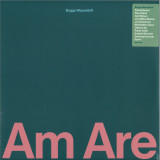
"Am Are" features special constellations of superb musicians that spans both generations and styles, and is an exploration of sonic textures, dynamic contrasts of mood and style, and ranges from sparse arrangements through to complex layers of dubs and loops and improvisational interplay.
The album begins with Bugge alone on "How?" with layers of undulating atmospheric synth, brought into focus by Bugge's piano at the forefront, creating a minimalist miniature that is both emotive and serene. For "Villrein" Bugge is joined by Elias Tafjord on drums, beginning with a santur-like synth figure, floating over ominous formant sci-fi bass synths bubbling and pulsing, and overlaid by phrenetic piano that only stops to lock into the santur figure before relaunching on its own journeys, all underpinned by Elias Tafjord's expressive drumming. "Is Anyone Listening?" demonstrate's Bugge's songcraft, layering muted percussive piano behind Rohey's distinctive and beautiful vocals punctuated by Martin Myhre Olsen's tenor saxophone, creating a soulful mood tinged with desperation.
"BAG" presents the first classic piano trio of the album - Bugge on piano and synths, Arild Andersen on bass, and Gard Nilssen on drums - announcing itself with an insistent riff, chattering drums, breaking into a progressive rock-style passage of bass and piano in unison. "Reel", the second track from this trio, is a mellow soundscape that evolves to become hazy urban downbeat jazz.
The second piano trio of Bugge (Rhodes and Korg MS20 synth), Sveinung Hovensjø (Electric Bass), and Jon Christensen (Drums and Bells) offers a completely different perspective. The first track "Render" features Bugge's Zawinul-esque Rhodes and monosynth leads, Sveinung's fuzz bass in something of a leading role, all carried with chattering gusto by Jon Christensen's dynamic drumming that brings texture and space as well as rhythm to the piece. "Vender" begins as an atmospheric piece, with reed organ-like synth washes, and octave-processed bass with a somewhat sitar-like tone, meandering until the track breaks down into drums and bass weaving around an insistent drum machine loop, dripping with synth pads and monosynth lead.
"JazzBasill" introduces the third piano trio - featuring Bugge (Piano), Jens Mikkel Madsen (Acoustic Bass) and Øyunn (Drums) - and offers a classic piano trio style with urban sophistication, that is lyrical, and interspersed with staccato cadences, giving a feeling of broken swing, slightly staggered yet driving forwards. The title track "AM ARE" is late night jazz, with baroque whispers, and distinctly melodic.
The final track, "Think Ahead" features the non-standard trio of Bugge (Piano/Organ), Oddrun Lilja (Guitar) and Sanskriti Shrestha (Tablas/Harp). Beginning with a minimalist piano figure, table, and sustained guitar, the track breaks down to a noise surge and ambient windscape, with guitar birds and abstract grinding, before returning to minimalist melodicism.
The shifting personnel across the album, as well as the three different studios in which it was recorded - Village Recording in Copenhagen, Rainbow Studios in Oslo, and his own Buggesroom Studio - creates a feeling of dynamic change and musical variety that is unified by Bugge's piano and keyboards. His playing moves between foreground, where he allows the music to elevate him, and background, where he move gently like a beneficent presence, tending to the demands of the spirit of the musical moments he has captured. It is an album powered by restless exploration and shaped by distinctive musical personalities; it is a journey through different moods, illuminated and brought into focus by Bugge's measured approach and guiding hand.
- A1: Montego Bay - Everything (Paradise Mix) 04 59
- A2: Atelier - Got To Live Together (Club Mix) 06 06
- A3: Golem - Music Sensations 04 56
- B1: The True Underground Sound Of Rome Feat. Stefano Di Carlo - Gladiators 05 26
- B2: Eagle Parade - I Believe 04 26
- C1: Dj Le Roi - Bocachica (Detroit Version) 05 28
- C2: Green Baize - Synthetic Rhythm 01 41
- C3: M.c.j. Feat. Sima - Sexitivity (Deep Mix) 05 30
- D1: Kwanzaa Posse Feat. Funk Master Sweat - Wicked Funk (Afro Ambient Mix) 06 31
- D2: Progetto Tribale - The Bird Of Paradise 06 29
- D3: Mbg - The Quite 06 59
Vol 1[28,99 €]
Googling “paradise house”, the first results to pop up are an endless list of European b&b’s with whitewashed lime façades, all of them promising “…an unmatched travel experience a few steps from the sea”. Next, a little further down, are the institutional websites of a few select semi-luxury retirement homes (no photos shown, but lots of stock images of smiling nurses with reassuring looks). To find the “paradise house” we’re after, we have to scroll even further down. Much further down.
It feels like yesterday, and at the same time it seems like a million years ago. The Eighties had just ended, and it was still unclear what to expect from the Nineties. Mobile phones that were not the size of a briefcase and did not cost as much as a car? A frightening economic crisis? The guitar-rock revival?! Certainly, the best place to observe that moment of transition was the dancefloor. Truly epochal transformations were happening there. From America, within a short distance one from the other, two revolutionary new musical styles had arrived: the first one sounded a bit like an “on a budget” version of the best Seventies disco-music – Philly sound made with a set of piano-bar keyboards! – the other was even more sparse, futuristic and extraterrestrial. It was a music with a quite distinct “physical” component, which at the same time, to be fully grasped, seemed to call for the knotty theories of certain French post-modern philosophers: Gilles Deleuze, Félix Guattari, Paul Virilio... Both those genres – we would learn shortly after – were born in the black communities of Chicago and Detroit, although listening to those vinyl 12” (often wrapped in generic white covers, and with little indication in the label) you could not easily guess whether behind them there was a black boy from somewhere in the Usa, or a girl from Berlin, or a pale kid from a Cornish coastal town.
Quickly, similar sounds began to show up from all corners of Europe. A thousand variations of the same intuition: leaner, less lean, happier, slightly less intoxicated, more broken, slower, faster, much faster... Boom! From the dancefloors – the London ones at least, whose chronicles we eagerly read every month in the pages of The Face and i-D – came tales of a new generation of clubbers who had completely stopped “dressing up” to go dancing; of hot tempered hooligans bursting into tears and hugging everyone under the strobe lights as the notes of Strings of Life rose up through the fumes of dry ice (certain “smiling” pills were also involved, sure). At this point, however, we must move on to Switzerland.
In Switzerland, in the quiet and diligent town of Lugano, between the 1980s and 1990s there was a club called “Morandi”. Its hot night was on Wednesdays, when the audience also came from Milan, Como, Varese and Zurich. Legend goes that, one night, none less than Prince and Sheila E were spotted hiding among the sofas, on a day-off of the Italian dates of the Nude Tour… The Wednesday resident and superstar was an Italian dj with an exotic name: Don Carlos. The soundtrack he devised was a mixture of Chicago, Detroit, the most progressive R&B and certain forgotten classics of old disco music: practically, what the Paradise Garage in New York might have sounded like had it not closed in 1987. In between, Don Carlos also managed to squeeze in some tracks he had worked on in his studio on Lago Maggiore. One in particular: a track that was rather slow compared to the BPM in fashion at the time, but which was a perfect bridge between house and R&B. The title was Alone: Don Carlos would explain years later that it had to be intended both in the English meaning of “by itself” and like the Italian word meaning “halo”. That wasn’t the only double entendre about the song, anyway. Its own very deep nature was, indeed, double. On the one hand, Alone was built around an angelic keyboard pattern and a romantic piano riff that took you straight to heaven; on the other, it showcased enough electronic squelches (plus a sax part that sounded like it had been dissolved by acid rain) to pigeonhole the tune into the “junk modernity” section, aka the hallmark of all the most innovative sounds of the time: music that sounded like it was hand-crafted from the scraps of glittering overground pop.
No one knows who was the first to call it “paradise house”, nor when it happened. Alternative definitions on the same topic one happened to hear included “ambient house”, “dream house”, “Mediterranean progressive”… but of course none were as good (and alluring) as “paradise house”. What is certain is that such inclination for sounds that were in equal measure angelic and neurotic, romantic and unaffective, quickly became the trademark of the second generation of Italian house. Music that seemed shyly equidistant from all the rhythmic and electronic revolutions that had happened up to that moment (“Music perfectly adept at going nowhere slowly” as noted by English journalist Craig McLean in a legendary field report for Blah Blah Blah magazine). Music that to a inattentive ear might have sounded as anonymous as a snapshot of a random group of passers-by at 10AM in the centre of any major city, but perfectly described the (slow) awakening in the real world after the universal love binge of the so-called Second Summer of Love.
For a brief but unforgettable season, in Italy “paradise house” was the official soundtrack of interminable weekends spent inside the car, darting from one club to another, cutting the peninsula from North to centre, from East to West coast in pursuit of the latest after-hours disco, trading kilometres per hour with beats per minute: practically, a new New Year’s Eve every Friday and Saturday night. This too was no small transformation, as well as a shock for an adult Italy that was encountering for the first time – thanks to its sons and daughters – the wild side of industrial modernity. The clubbers of the so-called “fuoriorario” scene were the balls gone mad in the pinball machine most feared by newspapers, magazines and TV pundits. What they did each and every weekend, apart from going crazy to the sound of the current white labels, was linking distant geographical points and non-places (thank you Marc Augé!) – old dance halls, farmhouses and business centres – transformed for one night into house music heaven. As Marco D’Eramo wrote in his 1995 essay on Chicago, Il maiale e il grattacielo: “Four-wheeled capitalism distorts our age-old image of the city, it allows the suburbs to be connected to each other, whereas before they were connected only by the centre (…) It makes possible a metropolitan area without a metropolis, without a city centre, without downtown. The periphery is no longer a periphery of any centre, but is self-centred”.
“Paradise house” perfectly understood all of this and turned it into a sort of cyber-blues that didn’t even need words, and unexpectedly brought back a drop of melancholic (post?)-humanity within a world that by then – as we would wholly realise in the decades to come – was fully inhuman and heartless. A world where we were all alone, and surrounded by a sinister yellowish halo, like a neon at the end of its life cycle. But, for one night at least, happy."
- A1: No Monkey's Paw (Objects Outlive Us 23 17) (2 01)
- A2: The Buddha Of The Modern Age (2 22)
- A3: Objects Meanwhile (3:03)
- A4: The Cicerones (3 13)
- A5: Ark (3 33)
- A6: Cosmic Sons Of Toil (2 46)
- A7: No Ghost On The Moor (1 55)
- A8: Heat Death Of The Universe (3 52)
- B1: Perspective (The Overview) (1 39)
- B2: A Beautiful Infinity I (2 17)
- B3: Borrowed Atoms (3 14)
- B4: A Beautiful Infinity Ii (2 39)
- B5: Infinity Measured In Moments (4 39)
- B6: Permanence (3 14)
Der weltweit gefeierte Musiker, Produzent und Songwriter Steven Wilson veröffentlicht sein achtes Studioalbum ”The Overview”. Das 42-minütige Werk, bestehend aus zwei epischen Tracks – ”Objects Outlive
Us” und ”The Overview” – ist inspiriert vom “Overview Effect”, einem transformativen Erlebnis, das Astronauten beim Blick auf die Erde aus dem Weltall erfahren.
Mit ”The Overview” kehrt Wilson zu seinen progressiven Wurzeln zurück, einem Genre, das er maßgeblich
mitgestaltet hat. Die beiden ambitionierten Stücke bestehen aus einzigartigen musikalischen Abschnitten, die nahtlos ineinander übergehen, und kombinieren klassische Prog-Elemente mit modernen Einflüssen
wie Elektronik und Post-Rock. Die Texte, teils von XTCs Andy Partridge, erzählen Geschichten über die
Schönheit und Herausforderungen des Lebens auf der Erde.
Das Album spiegelt 30 Jahre Wilsons Karriere wider, mit Anklängen an Porcupine Tree, The Raven That
Refused to Sing und The Future Bites. Wie immer liefert Wilson ein audiophiles Erlebnis: ”The Overview”
wird in Spatial Audio und als speziell gemastertes Half-Speed-Vinyl erhältlich sein.
”The Overview” ist ein einzigartiges Werk für 2025 – ein Erlebnis für offene Ohren und weite Gedanken.
- Love In Store
- Can’t Go Back
- That’s Alright
- Book Of Love
- Gypsy
- Only Over You
- Empire State
- Straight Back
- Hold Me
- Oh Diane
- Eyes Of The World
- Wish You Were Here
If every significant artist has an underrated gem in its catalog, then Mirage is that album for Fleetwood Mac. An obvious return to relative simplicity after the dramatic tension of Rumours and experimental ambitions of Tusk, the 1982 album finds the band re-grouping after a brief hiatus and again climbing to the top of the charts. Extremely well-crafted, well-produced, and well-performed, the double-platinum effort distills the group’s hallmark strengths into a filler-free set that never runs short of addictive pop hooks or daft accents.
Sourced from the original analog master tapes, pressed at Fidelity Record Pressing in California, and housed in a Stoughton jacket, Mobile Fidelity’s numbered-edition 180g 45RPM 2LP set presents Mirage in reference sound for the first time. The efforts co-producers/engineers Ken Caillat and Richard Dashut went to capture the splintered albeit formidable band can be heard with stunning accuracy, range, depth, and detail.
Though Rumours understandably gets a permanent spot in the audiophile hall of fame, the smooth, clear, and dynamic sonics on Mirage confirm that the record that stood as Fleetwood Mac’s last effort for five years deserves a place in the same vaunted arena. The presence and imaging of Mick Fleetwood’s percussion alone on this reissue might have you wondering how this slice of soft-rock bliss has gone under-noticed for decades. Other prized aural aspects — separation, definition, impact, tonal balance — are also here in spades.
Like much surrounding Fleetwood Mac in the 1980s, arriving at Mirage was not easy. Caillat searched for studios located outside of Los Angeles on a mission to change up the vibe of the band’s prior recording sessions. Everyone settled on Le Chateau in France, where relations between some members remained icy — and cooperation with the producers strained. Battles with exhaustion, bitterness, and addiction further informed the proceedings at the 18th century complex in the French countryside, where even communal meals were allegedly eaten in silence.
Inevitably, the feelings that co-producer Lindsey Buckingham, Stevie Nicks, Christine McVie, and company harbored — as well as the situations in which they found themselves — drifted into the songwriting. In its rapid ascent to rock-star royalty status, Fleetwood Mac drifted apart, embarked on solo pursuits, and found it was lonely at the top. Emptiness, the illusion of dreams, the longing for love, the want to escape to bygone times of innocence and happiness: Such themes inform a majority of the narratives. Even if the lyrics regularly take a back seat to easygoing arrangements that allow Mirage to come on like a refreshing breeze on a sunny summer afternoon.
Home to three Top 25 singles in the U.S. and having occupied the pole position of the Top 200 album charts for five weeks, Mirage rightfully resonated with the mainstream and attracted listeners on both sides of the pond. And how, via a smart blend of sugary melodies, warm harmonies, interlaced notes, nimble rhythms, taut structures, and passionate vocals. Not to mention the presence of what arguably remains Nicks’ signature song, the biographical “Gypsy,” a meditation on the loss of her close friend Robin Anderson that teems with majesty, mystery, and mysticism — and which gets an assist from Buckingham’s shaded tack piano and richly strummed guitar chords.
Its ranking as an all-time classic aside, that No. 12 hit has plenty of company when it comes to brilliant pop turns on Mirage. On the subject of Nicks, the raspy singer gets a little bit country on “That’s Alright.” Its clip-clopping pace and two-stepping progression complement subtle vocal swells that emerge during the final verse of a tune that is ostensibly about leaving but still conveys forgiveness and grace. And what would a Fleetwood Mac record be without Nicks drawing on the tools of the supernatural — cards, dreams, wolves, and the like — on the twirling “Straight Back.”
Despite the potency of Nicks’ primary contributions, Mirage seemingly unfolds as a tight competition between Buckingham and McVie — and one that ultimately ends in a draw. Buckingham’s salvos include the contagious “Can’t Go Back,” a yearning to time-travel back to the past that’s complete with hall-of-mirrors backing vocals; “Oh Diane,” out-of- left-field ear candy sweetened with hiccupped vocals and salt-and-pepper-shaken grooves; the chiming “Eyes of the World”; and “Empire State,” a delightfully fluttering track whose high-range vocals, lap harp notes, and ringing xylophones hint at the galaxies of sound that would erupt on Tango in the Night.
Then there’s McVie. As elegant, understated, and coolheaded as she’s ever been on record, she pours her heart out on cuts that revolve around her inevitable split with Beach Boy Dennis Wilson. In the process, she punctuates Mirage with a characteristic not always associated with catchy pop music: emotional weight, and the sense of dreaded acceptance in the face of dreams deferred.
“I wish you were here/Holding me tight,” McVie sings over a delicate melody on the album-closing piano ballad “Wish You Were Here.” Though they hoped otherwise, for the members Fleetwood Mac, distance and separation were always close at hand. Believing otherwise, inviting nostalgia, and pretending everything was fine only amounts to a mirage.
- Erotic (Rita)
- Erotica (Aguaturbia)
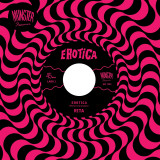
Two killer tracks of erotic psychedelia with a jazzy twist and touches of acid rock by the French cabaret star Rita and Chilean rock pioneers Aguaturbia. A perfect soundtrack to an imaginary sexploitation film, half-way between the classic sound of library records and a progressive and hypnotic musical journey driven by fuzzy guitars. French actress, model, dancer and singer Rita Cadillac, local star at well-known Parisian cabarets like Crazy Horse or Folies Bergère, recorded several 45s in the 1960s. In 1969, and most likely following the success of the Welsh band Man (from whom they "took inspiration" when recorded this 'Erotica'), released this song that could have easily worked as the perfect soundtrack for a sexploitation movie. Rita's sensual voice is wrapped in a piece of background music that could have been taken from a classic library record from the KPM, Chappell or Montparnasse 2000 catalogues. Hammond-driven prog jazzy passages, subtle fuzzy guitar solos and a contagious bassline all delivered by some anonymous studio band accompanied by Rita's provocative whispers and moans. This 7"-only rarity has been compiled many times over the years, but we thought it would be nice to have it reissued in its original format. What better than another song in a similar vein and identical title, 'Erotica' by Chilean rock pioneers Aguaturbia, to complete this single? Denise's alluring vocals dance harmoniously with Carlos' electrifying guitar loaded with fuzz and wah wah effects, building up a progressive and hypnotic musical journey. This song was included in their much sought-after debut LP and we present it here again as the perfect accompaniment to the sensual Rita.
Sicksense (Metalband aus Phoenix, Arizona) nimmt seine NuMetal-Einfl üsse und verwandelt sie in ein Hydra-Monster, in dem sich die Köpfe von Metalcore, Progressive Metal und Power Metal zu einem modernen, extrem gelungenen Experiment vereinen. Insbesondere das Wechselspiel der beiden Sänger*innen der Band Vicky Psarakis (ex-THE AGONIST) und Robby J. Fonts (STUCK MOJO) macht Spass und sorgt schnell für hohen Wiedererkennungswert. Das Debütalbum von Sicksense,
Toy Tonics Music Berlin presents "Para Mytho Disco". The 2nd "Kapote" album of label founder and creative director Mathias Modica.
Keyboarder, DJ, producer, music nerd, graphic designer, multi-instrumentalist, sub-culture impressario and artist (formerly known as Munk of Gomma records.)
Kapote & Toy Tonics
In the last years Kapote was in the spotlight mainly for building the Toy Tonics label with his friends. Developing a platform for new positive quality dance music with a human touch. Toy Tonics is the opposite of the dark, druggy Techno and Trance sounds of the last years.
The warm inclusive music of Toy Tonics represents a new vibe that a young generation of diverse, stylish and culturally intersted generation of dancers loves now. Kapote's Toy Tonics became the key label for that vibe. (In 2024 Toy Tonics made 150 Toy Tonics events in 18 countries. With more than 150.000 people dancing. 90 millions streams on their music.)
Toy Tonics is more than a music label: It's a audio - visual universe. A community, almost a movement.
Based on a new positive attitude and aesthetic diversity. Mixing musicianship with DJ culture, analogue music with electronic, ideas from the past with sounds from now. To create something new. Connecting dance music with graphic design, art and underground fashion.
Kapote and his gang release vinyl, posters, shirts, art fanzines and make exhibitions and partys.
Toy Tonics started in Berlin as a underground niche project. But now became the key label of the new house, wild style disco and organic dance music scene.
Probably one of Berlin's biggest electronic music phenomena along with Keinemusik and Live from Earth.
It went fast: 2020 Kapote's crew started to make small parties in Berlin's off spaces. The "Toy Tonics Jams". The parties became "talk of the town", and Berlin clubs like Griesmühle and Panorama Bar invited the crew. Then international clubs and festival called. Toy Tonics were invited to SONAR (playing the mainstage with Kaytranada and DJ Tennis), KALA festival, Montreux Jazz festival.
Now TT has a residency at Panorama Bar Berlin and sold out events in Europe leading clubs like Phonox in London, Rex Club in Paris, Tunnel in Milan.
Toy Tonics now is the reference brand of a new generation of music loving dancers. Similar to Gomma records, Kapote's former label (2003 - 2015) that was one of the key labels of the "indie dance" scene of the Y2K years (along with DFA and Output Records).
Kapote created a multi-cultural movement with graphic designers, photographers, illustrators from the Berlin scene.
They publish the Toy Tonics Pocket Poster magazine, posters and design shirts. They organize the Toy Tonics Pop Up Galleries mixing music and art. In underground venues in Berlin and in new gallery spaces and museums around Europe.
Toy Tonics has been invited by Palais de Tokio museum in Paris, Triennale Museum Berlin, Design week Milano to create events.
The new Kapote album
The 12 tracks have a very own style. Based on dance music, but going much further. "Para Mytho Disco' is a futuristic mix of sounds. It's far away from the dark monotone techno and trance music from Kapote's hometown Berlin. Instead, he creates warm friendly atmospheres full of sonic colours and little musical surprises.
Kapote's knowlege of music history and his backround as a jazz piano student and son of classic music composer is clearly inside this music. Before turning into a DJ and electronic music producer he has been playing in bands since he was 13 years old.
The album is full of emotional chord progressions played by Kapote on various keyboards. Sometimes reminding music from the past, without being retro at all. The basslines and melodies are inspired by jazz fusion from the 1970ies. And he programmed syncopated grooves that come from afro-american dance music. There are influences from Japanese electronic music (Yellow Magic Orchestra), from 1980s Synthwave and from 1990s electronica (like Squarepusher and Luke Vibert).
Kapote plays keys, bass, flutes and percussions, he plays synth solos and sings on a few tracks. The complexity of the arrangements makes this music never boring. Lot of melodies and solos that catch the listener. Colourful soundscapes that make you want to listen or dance to this album more, and discover details also after you heard it several times.
Kapote background
Before starting Toy Tonics, Kapote used to run a label called Gomma. He produced four albums under the name Munk and music for other artists.
He produced music with Peaches, Franz Ferdinand founder Nick McCarthy, with New York street art legend The Rammellzee, Italian actress Asia Argento, the first three albums of WhoMadeWho and worked with LCD Soundsystem (listen to "Kick out the chairs", the Munk song with James Murphy )
In those "Gomma days" Kapote aka Munk was also one of the main DJs for VICE magazine parties and made music for art projects and fashion brands (Margiela, Prada, Colette).
In 2015 he stopped Munk and Gomma and started Toy Tonics. He found young producers and helped to develop their sound (Coeo, Cody Currie, Gee Lane, Barbara Boeing, Sam Ruffillo). Later he founded the sublabel Kryptox to release music by Berlin based bands that make new forms of jazz or neo classical sounds.
Under the name Kapote Mathias didnt release much:
Only his Kapote debut album "What it is" (2019) and an EP called "Electric Slide" (2022) and a collabo EP with Italian producer Sam Ruffillo ("Robot Salsa").
An although his Munk and Kapote music was an underground phenomena his music has always been a favourite of many great people from the scene.
Supported by DJs like Harvey, Chromeo, Moodymann, Jennifer Cardini, Gerd Janson, MYD, Andrew Weatherall to Blessed Madonna, Justice and Laurent Garnier… to name just a few.
- Astral Prophecies
- Solar Winds
- Heart Of The Sun
- Andromeda Ascending ( A Fallen Star Rises)
Brand new studio album from rising British metal hopefuls Seven Sisters! Slowly but surely cultivating a reputation for captivating, progressive heavy metal topped with finesse and intelligence, Seven Sisters have positioned themselves as one of the most intriguing young bands in the metal scene, combining an ethereal edge with genuinely catchy hooks and melodies. Comprising of just four tracks, but with a running time of 40 minutes, 'Shadow of A Fallen Star Pt.2' is at once ambitious and accessible, whether utilizing classic heavy metal tropes on lead single 'Heart Of The Sun' or experimenting with emotive atmospheres and ambitious sound collages on the sprawling 20 minute centerpiece 'Andromeda Ascending (A Fallen Star Rises)'.
- Inferno
- Jemima
- Liebe Ist Nur Ein Wort
- Du Bist Der Eine Weg
- Engel Des Todes
- Böse Buben
- Vater Unser
- Folg Mir
- Montag
- Nach Einer Langen Nacht
- Der Sommer (Inklusiv Der Sturm)
War Drosselbart eine Krautrockband nur weil sie aus München kamen wie Amon Düül, deutsch sangen und 1971 bei einer großen Plattenfirma ihr erstes und einziges Album veröffentlichten? "Nein", meint Monika Vincent-Gunia aka Jemima, Sängerin von Drosselbart. "Wir waren die erste Punkband Deutschlands. Die Jungs von der Band konnten damals nur drei Akkorde, vielleicht auch vier, aber sie brannten vor Begeisterung." Doch mit dem Punk der Mitsiebziger Jahre hat dann Drosselbarts Musik auf dem gleichnamigen Album recht wenig zu tun. Die Jungs hatten anscheinend doch ein bisschen geübt und sich mehr als vier Akkorde draufgeschafft. So klingt das Ganze stark nach den 1960er Jahren, erinnert gelegentlich an härtere rockende, psychedelische US-Bands wie Iron Butterfly oder an die Musik britischer Bluesrocker wie z. B. Brian Auger und Julie Driscoll. Keyboarder Christian Trachsel steuert ein paar progressive Momente bei und Gastmusiker Ralf Nowy sorgt für klassisch angehauchte Hörerlebnisse. Gesungen wird, wie bereits erwähnt, in Deutsch, von Jemima und Peter Randl. Der bevorzugt einen eher aggressiven, agitativ-deklamierenden Stil, wie man ihn auch von diversen deutschen Politrockbands Anfang der 1970er kennt. Aufgenommen wurde in den Union Studios in München, wobei der Band ein junger Toningenieur namens Reinhold Mack zur Seite gestanden und für den Mix gesorgt haben soll. Unter dem Kürzel Mack machte dieser ab Mitte der 1970-er Karriere als Soundmixer und Produzent von Größen wie ELO, Sparks, Deep Purple und vor allem Queen.