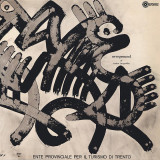
Outsider ambient soundscape by two musicians from the Paris alternative : Désiré Bonaventure & Zach.
An enchanted yet psychedelic dream-like ballad recorded in one take in an ephemeral delirium; borrowing from dub, drone, IDM & techno, reflecting singular inter-worlds and inviting us to join them.
--
Rue des Garderies is a distillate produced by the spontaneous collaboration of Désiré Bonaventure and Zach, two musicians evolving in the Parisian alternative scenes and so named in homage to a former local hotspot of other-music Rue des Gardes - now bygone - where this improvisation took place. Accustomed to exorcising time and space with the multidisciplinary collective †een▲ge g:-)d, Zach has also been evolving in various frequencies - beatmaking, mastering - for over 15 years. Désiré Bonaventure, on the other hand, is a member of the duo Euphonic Alliances Ltd. and R.A.F. Soundsystem.
Rue des Garderies was recorded in one take, using samplers and effects, amidst a tangle of cables, with eyes closed, as dawn approached, in anticipation for another moment of the present. Here, Désiré and Zach delve into the in-between worlds (musical, but not limited to), immersing themselves in their cracks, folds and emanations, attempting to narrate them to us.
From this material they shape a new alchemy lasting over 1h30, akin to a prolonged journey into psychedelia, drawing from various currents (such as ambient, drone, IDM, dub techno, and the English electronic scene of the 1990s), rich in organic and analogue textures that overlap, stretch, fold and expand.
The result is a grand and ethereal fresco, with shifting colours and textures, evoking astral projections and sporadic rhythms; a whole other world, populated by shapes, hues and new lives, forming a complex but enchanting sound essay.
Born of a fragile chaos, Rue des Garderies is an ephemeral harmony that accompanies moments of existence; a dance without tangible movement.
Search:psy
Prepare to be engulfed in the sonic maelstrom that is The Jonny Halifax Invocation as they unleash their blistering new single "Thank You”. Renowned for their mesmerising forays into extended sun-scorched psychedelic soundscapes on the critically acclaimed albums Açid Blüüs Räägs Vols.1 & 2, The Jonny Halifax Invocation now emerge with a thunderous new proposition in the form of their latest 7" single. A dynamic shift of gears in The Invocation’s sonic landscape, “Thank You” is a two minutes and thirty-seven second explosion of raw, primal energy, a revolutionary last call, an arrow shot of burning malcontent for this time. “Thank You” goes for the kill from the first beat of filthy amphetamine buzzsaw swagger cutting some heavy sonic rug with spiritual forefathers The Stooges and MC5. Cosmic free jazz saxophonic squawks soar, while the preacherman of the apocalypse invites the congregation to question the root of their original gratitude with life or death urgency. Meanwhile over on the flip side, "Gratitude Dub” slows the rumbling groove to a lurching, swaggering rollercoaster ride of hallucinogenic dub exotica just before the wheels fall off.
I was sent an unfinished version of Dose Your Dreams so that I might contribute string parts. I couldn’t stop listening to the rough mixes I received. A friend asked me how the record was. I replied, “My God, Fucked Up have made their Screamadelica.” And psych-rock-groove it is. The drums mixed wide, propensity for drones, for delay pedal, for repetition, groove. The politics and aesthetics of hardcore married to an “open format” approach to genre. Elements of doo-wop, krautrock, groove, digital hardcore. “None of Your Business Man” opens the album in familiar enough territory, a sax assisted exit from an office space. But things get psychedelic very quickly. By the time the title track arrives, Mike Haliechuk is whispering, wah pedals are in full effect, and we’re wearing oversized t-shirts and pinwheeling. “Accelerate,” the lyrical centrepiece of the album, storms in like Boredoms on a bullet train and dissolves into a digital nightmare. The album closer, “Joy Stops Time,” finds Fucked Up at their most Düsseldorfian, nearly eight minutes of blissful motorik. At the center of it all is Damian Abraham’s scream a man chained, a man tortured, a true protagonist. The effect is one of an epic, every chapter attempting its own narrative devices, its own genre hybridization and it works, it works so insanely well. The drama unfolds like a miniature world of many parts being explored, a map being illuminated, location by location. As with David Comes to Life, there is a story here. David who once came to life is now indentured to a desk job. David meets the elderly Joyce who closes his eyes, opens his mind, and sends him on a spiritual journey. David embarks on his own metaphysical odyssey. He sees a stage adaptation of his own life. He speaks to an angel in a lightbulb. He sees an infinite series of universes as simulations within simulations. Meanwhile, Lloyd Joyce’s lover was sent, decades ago, by Joyce on the same odyssey, but was lost in the void. Lloyd seeks to be found and reunited with his lover. Where will David end up? Will Joyce and Lloyd be reunited? Dose Your Dreams meaning: treat your dreams as you would a dream, allow yourself to be lost within them, allow them to open your heart and your mind, enjoy them as you would a drug. Reach out for my hand and pull me close. Owen Pallett.
- A1: Psycho Killer
- A2: Heaven
- A3: Thank You For Sending Me An Angel
- A4: Found A Job
- A5: Slippery People
- A6: Cities
- B1: Burning Down The House
- B2: Life During Wartime
- B3: Making Flippy Floppy
- B4: Swamp
- C1: What A Day That Was
- C2: This Must Be The Place (Naive Melody) (Naive Melody)
- C3: Once In A Lifetime
- C4: Big Business/I Zimbra
- D1: Genius Of Love
- D2: Girlfriend Is Better
- D3: Take Me To The River
- D4: Crosseyed & Painless
LOS ANGELES—To celebrate the 40th anniversary of the celebrated Talking Heads and Jonathan Demme’s concert film Stop Making Sense, the set will be re-released as a 2LP and 2CD/Blu-ray set this summer.
Released last year, the sold-out Deluxe Edition of the soundtrack will return as a 2-LP black vinyl on Rhino and 2-LP crystal clear vinyl at retail. Both variants feature a 12-page booklet with liner notes from all four band members –Tina Weymouth, David Byrne, Chris Frantz, and Jerry Harrison—and band photos. The 2CD/Blu-ray version includes the entire 28-page booklet from last year’s Deluxe Edition and a Dolby Atmos mix of the complete concert, mixed by Jerry Harrison and E.T. Thorngren, who also mixed the original release. Both will be available on July 26. Pre-order now.
The band appeared together for a sold-out screening and Q&A last night at the Pantages Theater, the same theater at which Stop Making Sense was recorded. They were joined by Blondshell, who performed “Thank You For Sending Me an Angel.” Another special screening with the band will occur in Brooklyn at the King’s Theater on June 13, with the Q&A hosted by Questlove and The Linda Linda’s performing “Found a Job.” The two events cap off a banner year of celebrations for what many consider to be the best concert film of all time.
The inspiration for Stop Making Sense came when director Jonathan Demme saw Talking Heads perform during the band’s 1983 tour for Speaking in Tongues. Afterward, he approached them with the idea of making the show into a concert film. They agreed and worked together over the next few months to finalize the details. Ultimately, Demme filmed three shows at Hollywood’s Pantages Theater in December 1983 to create Stop Making Sense.
The concert film presents a retrospective of the band up to that point, with a performance that weaves together songs from all six of its studio albums. The show progresses methodically, opening with Byrne onstage performing “Psycho Killer” alone with a drum machine. After each song, he’s joined by a new band member until Weymouth, Frantz, and Harrison are all on stage with him. The group continues to grow throughout the concert as members of the stellar touring band are added: keyboardist Bernie Worrell, percussionist Steve Scales, guitarist Alex Weir, and backup singers Lynn Mabry and Ednah Holt.
The band performs 18 songs in Stop Making Sense, including its recent single at the time, “Burning Down The House.” That summer, the song was in heavy rotation on radio and MTV, helping the song become the band’s first top 10 hit in America. It was, however, a different song from Speaking in Tongues that was destined to deliver one of the film’s signature moments. Talking Heads would perform “Girlfriend Is Better” wearing the now iconic, oversized suit inspired by costumes worn in traditional Japanese theater. For good measure, a picture of David Byrne in the suit also graces the album cover.
Stop Making Sense focuses mainly on music by Talking Heads but does include a few songs recorded outside the band: “Genius Of Love” by Tom Tom Club, “What A Day That Was” and “Big Business” from Byrne’s 1981 album, The Catherine Wheel. Limited edition vinyl versions of both of these albums, along with Harrison’s The Red And The Black, were released for this year’s Record Store Day.
When it arrived in September 1984, Stop Making Sense was an artistic and commercial triumph. The film had people dancing in theatre aisles, and the soundtrack sold over two million copies. Just last year, the Library of Congress added Stop Making Sense to the National Film Registry in recognition of its cultural, historical, and aesthetic significance.
Weymouth praises Demme as a collaborator: “…Jonathan was a very enthusiastic, highly adaptive, and imaginative guy who was just as good a listener as he was a talker and collaborator. From the get-go you just got the impression he was as flexible as he was disciplined. Being team players, that boded well for a great relationship and a great film!”
Harrison says the film still holds up today: “To me, Stop Making Sense has remained relevant because the staging and lighting techniques could have been created in a much earlier time period. For example, Vari-Lights, lights with motors to re-aim them, had just come into vogue. Had we used them, there would have been a timestamp on the film, and it eventually would have felt dated...The absence of interviews, combined with the elegant and timeless lighting, created a film that can be watched over and over.”
Byrne says it’s interesting that this album was – for many people – an introduction to Talking Heads. “We had done a live album before this, but coupled with the film, and with the improved mixes and sound quality, this record reached a whole new audience. As often happens, the songs got an added energy when we performed them live and were inspired by having an audience. In many ways, these versions are more exciting than the studio recordings, so maybe that’s why a lot of folks discovered us via this record.”
Frantz recalls the sheer joy surrounding the entire Stop Making Sense experience. “I’m talking about real, conscious, transcendent joy… I’m talking about what the Southern gospel people call ‘getting happy,’ which means ‘to be filled with the Spirit.’ That is what happened to us onstage every night, and from my seat behind the drums, I recognized that this was happening to the audience too. Joy was visible in front of me and all around me every night.”
The opening track to the Alan Parsons Project’s Eye in the Sky remains the most recognized instrumental in sports—fanfare inseparably tied with introducing NBA legend Michael Jordan and his six-time world-champion Chicago Bulls mates before games, and still used by many teams as an energy-raising prelude. Indeed, the subdued grandiosity, cosmic bluster, and lights-out wonder of “Sirius” sets the table for the band’s smash 1982 album, whose hallmark smoothness, lushness, and balance extend to the music’s exquisite song writing, dreamy emotions, and underlying orchestral scope. Credit for the record’s craft, cohesiveness, and accessibility also falls to Alan Parsons and creative partner Eric Woolfson’s knack for recruiting session pros that translate their visions with unquestioned feeling—particularly, vocalists who include former Zombie leader Colin Blunstone and soul singer Lenny Zakatek.
Mastered from the original master tapes, Mobile Fidelity’s RTI pressed 180g 45RPM 2LP version of Eye in the Sky features succulent warmth, magnificent balance, low-end heft, and see-through transparency that take you into the studio with Parsons at Abbey Road Studios. Each note seems perfectly placed, every sequence painstakingly considered. Boasting front-to- back depth, concert-hall-level separation, realistic presence, and bang-on accuracy. This release will test the capabilities of the world’s finest stereo systems. There’s more information, more texture, more nuance— more of everything to be experienced. British progressive rock would never again sound so sophisticated, suave, or steady.
Weniger als ein Jahr nach ihrem Album „Through and Through“ kehrt Baby Rose mit „Slow Burn“ zurück, einer Sammlung von Songs, die ihre Klangpalette von progressivem R&B zu einer raueren, reichhaltigeren und weitläufigeren Linse amerikanischer Musik erweitern. Hier behauptet sich Rose nicht nur als einmalige Sängerin, sondern auch als formidable Songwriterin, die die Punkte verbindet, an denen Muscle Shoals auf Psych trifft, Psych auf Jazz, Jazz auf Americana, und die richtigen Musiker bringen alles zusammen. Produziert von BADBADNOTGOOD, fanden Rose und die Band eine sofortige und scheinbar endlose Quelle der Inspiration; was als Einleitung begann, wurde zu einem Tag, zu einem Song, zu einer Nacht, zu „Slow Burn“. Baby Rose war bereits eine kraftvolle Performerin - sie kann die Bühne mit Robert Glasper teilen, ohne in Schweiß auszubrechen, oder einen epischen Film wie Creed III, für den sie den Abschlusssong sang, mit stählerner Zuversicht beenden. Als Rose sich das erste Mal mit BADBADNOTGOOD traf, war sofort eine Verbindung da, und gemeinsam nahmen sie die Leadsingle "One Last Dance" gleich bei diesem ersten Treffen auf. Es war Roses erster Freestyle-Song, und er brachte entscheidende Teile ihrer Vision auf den Punkt. "Ich wusste schon immer, dass es neue Räume und Sounds gibt, in die ich vordringen kann", erklärt Rose. "Ich war schon immer an verschiedenen Sounds interessiert, die diese raueren Texturen einbringen." Während die Geschwindigkeit ihrer Zusammenarbeit Rose begeisterte und überraschte, waren das Potenzial und die Endergebnisse es nicht. "Wir haben uns schnell bewegt", sagt sie, "und es war wirklich wie ein Wasserhahn. Sobald wir “One Last Dance“ hatten, wurde klar, dass alles fließen würde." Die Songs auf „Slow Burn“ wurden zum Teil von Roses Erfahrungen inspiriert, die sie auf den Fahrten zwischen den Wohnorten ihrer Familie machte: dem Lärm und Chaos von DC und der ruhigen Landschaft von Carolina. Rose drehte die Musik auf und ließ ihre Gedanken schweifen, um Raum für innere Monologe und imaginäre Dialoge zu schaffen, die man sonst vielleicht nicht zu hören wagt. Diese Momente haben etwas Verträumtes, und sie schwelen auf Slow Burn: Erinnerungen verlieren ihre Realität, Gefühle ersetzen Geschehnisse. Der Titeltrack zum Beispiel setzt sanfte, schlendernde Drums gegen Roses lyrische Wiederholungen, während sie diesen Erinnerungen - manche leben, manche fühlen - mit geduldigem, beharrlichem Verlangen nachspürt. Das herausragende "One Last Dance" kommt als Liebeslied getarnt daher, ist aber eigentlich eine Ode an eine verlorene Freundschaft und ein imaginärer Traum von einem weiteren Tag wie in alten Zeiten. Die Realität verschwimmt wieder mit dem Gefühl, der Gesang geht in ein Wiegenlied über, und BADBADNOTGOODs Bassist Chester Hansen bringt diese traumhafte Qualität in einen schleichenden, vorsichtigen, aber liebevollen Unterton. Tatsächlich haben die meisten Songs auf „Slow Burn“ dieses schleichende, schattenhafte Gefühl, als würden sie auf Zehenspitzen daherkommen: intim, aber ein wenig gefährlich, zärtlich, aber ein wenig geheimnisvoll. So vollständig und überzeugend dieses Werk auch ist, Slow Burn weist auf einen größeren, höheren Aufstieg in Baby Roses Zukunft hin.
Next up in Mr Bongo's Groove Merchant Records reissue series, sees an outing for a much-loved and heavily sampled funk/soul/blues album by Junior Parker. Originally issued under the title The Outside Man on Capitol Records in 1970 with an alternative cover, this reissue replicates the Groove Merchant release titled Love Ain't Nothin' But A Business Goin' On featuring the car cover released in 1971.
The Mississippi-born, Memphis-based blues singer, harmonica player and songwriter Junior Parker (aka Little Junior Parker) had a stellar career in music. Since the early 1950s he released records on labels such as Duke, Mercury, United Artists Records and more. Sadly though, Parker died at the young age of 39 during surgery on November 18, 1971.
Originally released under the alternate title a year before his untimely death, Love Ain't Nothin' But a Business Goin' On is drenched in Parker’s trademark buttery vocals and soulful grooves, swaggering between smokey blues, raw funk outings and orchestrated soul ballads (with sublime arrangements by Horace Ott).
The album also features three Beatles cover versions in the form of ‘Taxman’, ‘Lady Madonna’ and ‘Tomorrow Never Knows’. For 'Taxman', Parker completely reinterprets the song taking into a New Orleans funk realm, a sample of which was used as the main hook line on Cypress Hill's classic 'I Wanna Get High'. Elsewhere, 'Tomorrow Never Knows' is flipped into a tripped-out, psychedelic soul-swamp blues ballad, whilst 'Lady Madonna' is given a funky blues makeover.
As shown with Cypress Hill’s use of ‘Taxman’, since the ‘70s Parker’s legacy has been immortalised for future generations through the deep well of samples that his music has become a source of. Tracks from Love Ain't Nothin' But a Business Goin' On have been sampled by some of the biggest names out there, such as A Tribe Called Quest, DJ Shadow and De La Soul.
A seriously smooth album oozing with soul and emotion from a Blues Hall of Fame inductee, Junior Parker’s Love Ain't Nothin' But A Business Goin' On is a superb example of the early ‘70s crossover funk/soul sound.
As deep as it comes, two unwinding cuts of beautiful deep house..
Hand scrubbed textured record sleeve, with custom stamp by Ciaran Birch.
“Escape” from abusive family ties is almost a cliche in modern media. In practice, the threshold for self-informed decoupling from said abuse is often socially out of reach for those that have in fact been abused, both physically and/or psychologically.
We feel shame for even entertaining the idea of getting rid of people in our lives that are joined to us by blood. Instead of genuine mutually-assured connection, we feel duty-bound to them - no better than a minimum wage retail job without which we would become homeless. Had these people been anything other than family, we would have ditched them long ago. I encourage a decoupling from the family unit and giving up on any hope you had for improved relations.
This record has been mastered without compression in an attempt to counter the over saturation of three minute, brick-walled, max-energy production trends in contemporary dance music.
Pleasure Planet’s kaleidoscopic debut album has been a long time coming, but good things come to those who wait. Developed over years of late-night studio improvisations, ‘Pleasure Planet’ is an affectionate and colorful patchwork of the New York City-based trio’s knotted influences that’s suspended between the rave and the chill-out room, weaving glistening pads and chunky basslines into vocal earworms and warm, saturated rhythmic cycles. Bandmates Andrew Potter, Kim Ann Foxman and Brian Hersey enter into a lysergic dialog with their discrete personal musical histories, drawing inspiration from vintage EBM, ambient music and heady early ’90s West Coast rave sounds and launching these classic elements into a transcendent new sonic universe.
Celebrated DJ and producer Foxman was a lead singer of Hercules and Love Affair when she first ran into DC rave veteran Potter, and the two rapidly realized their musical interests overlapped. So when Potter was recording with his studiomate Hersey, a NYC underground club scene mainstay, and they needed to bring in a vocalist, the choice was simple. Working together was a refreshing, freeing experience for the three seasoned artists, and the more they experimented, the closer they became; Foxman ended up moving into the studio, and Pleasure Planet was manifested into existence. “We’re like family,” says Potter. “We’re always on the same page – we couldn’t make this music solo.”
For Foxman, the open-ended jam sessions provided her with a chance to try something new, a few steps from the dancefloor-forward DJ tracks she’s best known for producing. And as the trio pooled their adolescent rave memories, reflecting on them with more mature ears, they began to develop the signature sound that was first heard on the Throne Of Blood-released ‘Animals’ 12″. Pleasure Planet aren’t trying to re-capture the past, but suggest a poetic contemplation that layers their recollections and musical obsessions into a hypnotic sci-fi dream. Harnessing a self-described “Aladdin’s cave” of analog and digital gear that help galvanize the timeline, they bridge the gap between avant-pop and icy bleep techno, curving suggestive words through lattices of tightly-engineered electronics.
On ‘Endless’, Foxman’s voice is echoed into a glistening haze that hovers around ethereal pads and tense, electroid pulses. Slow-moving and evocative, it’s a track that capture the open endedness of post-rave euphoria, touching the afterparty but moving far beyond the material world. She’s more recognizable on ‘Alien’, the album’s most upfront track, singing in a glassy, upper-register coo over urgent bass bumps, taut guitars and florid electronic atmospheres. “Are you an alien, or are you an angel?” she asks, fractalizing the borders between genres. And the band’s sense of cosmic togetherness bubbles to the surface on ‘Saved by the Bells’, a meditative after-hours experiment that diminishes the pulsing beats for a moment to bring out a spectrum of interconnected, serpentine melodies.
Modular bleeps and echoing percussion anchor the swooning ‘Planet Love’, one of Pleasure Planet’s most recent compositions and one of the album’s most outwardly psychedelic cuts, while the urgent and anthemic ‘Go With Madness’ steps back towards the main stage, evaporating Foxman’s memorable calls into a thumping procession of analog drums and squelchy, acidic bass tweaks. But they save the best for last, tugging at the heartstrings with ‘Remember (In Dreams)’, a giddy spiral of blipping synth arpeggios and haunting, reverberated chorals. It’s the perfect way to conclude an album that cryptically gestures towards the vulnerability of friendship, celebrating the shared experiences that result in some of the most meaningful memories of all.
BALTHVS is THE premier eclectic & psychedelic world funk trio from Bogotá, Colombia, sparking a counterculture revolution in their home country.
Cause & Effect is BALTHVS's second record. An evolution from its initial chill psychedelic sounds portrayed in 2020's 'MACROCOSM'. Owing to its Colombian roots, the album has plenty of Latin American rhythms, as well as ventures into Deep House, Turkish Music, Vaporwave, Trip-Hop and Disco. Their signature psychedelic elements are always present, ready to engulf the listener in a hypnotic trip across time, space, cultures, and different eras.
The name of the album reflects an ancient hermetic axiom. Nothing is accidental, everything is invoked. Chance or fate are names for a cosmic law not comprehended. Everything you do, consciously or unconsciously will come back at you, nothing happens without reason.
"To change your mood or mental state - change your Vibration" A fragment from the Kyballion has deeply resonated with the band in recent years. Everything is mental, as Above so Below. BALTHVS deeply believes in these tenets, and their manifestation is through music. Melodies that try to resonate deep within and generate a different type of Vibration.
From the psychedelic experience arises a more balanced lifestyle, and from arduous and uncertain times arises the desire to have inner peace of mind. Music is medicine for the soul and the trio plays this music to wind down, relax, and be more present. It's music from the 21st century, a time when the world has deeply connected to one another via the digital realm, cultures are now free from geographic boundaries, they influence, mesh, and collide with one another. Turkish melodies meet Latin rhythms, from instrumental tunes to Spanish and English lyrics.
The band freely takes from all corners of the world, and it reflects on the global audience they have slowly amassed in the past 4 years. Third Vibration is a celebration of life; a deep respect for the power of music.
"To change your mood or mental state - change your Vibration" A fragment from the Kyballion has deeply resonated with the band in recent years. Everything is mental, as Above so Below. BALTHVS deeply believes in these tenets, and their manifestation is through music. Melodies that try to resonate deep within and generate a different type of Vibration.
From the psychedelic experience arises a more balanced lifestyle, and from arduous and uncertain times arises the desire to have inner peace of mind. Music is medicine for the soul and the trio plays this music to wind down, relax, and be more present. It's music from the 21st century, a time when the world has deeply connected to one another via the digital realm, cultures are now free from geographic boundaries, they influence, mesh, and collide with one another. Turkish melodies meet Latin rhythms, from instrumental tunes to Spanish and English lyrics.
The band freely takes from all corners of the world, and it reflects on the global audience they have slowly amassed in the past 4 years. Third Vibration is a celebration of life; a deep respect for the power of music.
Cardinal Fuzz / Feeding Tube Records in collaboration with Deep Water Acres and in tribute to Sunrise Ocean Bender Records bring to you: Elkhorn – ‘Other Worlds.’ Drew Gardner and Jesse Sheppard, the two-guitar duo of Elkhorn, share a musical brotherhood that spans several decades. From their nascent high school socialist-realist post-punk band Mayfirst, to teenage scavenger trips to the Princeton Record Exchange and City Gardens, the two came of age goofing along to the Dead Kennedys, the Butthole Surfers, and Sonic Youth in the dank Jersey/Philly-scene music holes. Elkhorn has long traversed the valleys between fried cosmic psychedelia and American Primitive, particularly the latter style’s reverence for a wide range of folk and blues idioms ranging from County Records compilations to the Mississippi Sheiks. While the pair is best known for their acoustic guitar explorations, ‘Other Worlds’ continues their recent experiments with other instrumental possibilities. For instance, on the previous Elkhorn release ‘On the Whole Universe in All Directions,’ Drew switched to vibraphone and drums, with Jesse playing 12-string guitar. ‘Other Worlds,’ on the other hand, finds them in a recognizable ‘rock trio’ format (in improvisational mode)—Drew is on electric guitar, with Jesse playing bass, and they are again joined by Ian McColm on drums, with the free-flowing groove he brings. On the opening track ‘Watching the Skies’ you can feel the forward propulsion this—dare I say—power trio sets up, a cosmic widescreen which Elkhorn proceed to rock and groove across the whole of ‘Other Worlds.’ Three flawless musicians in their own right, together they form a telepathic psychic link that taps into the otherworldly flow that is ‘Other Worlds,’ as the synergy created by Jesse and Ian leaves Drew plenty of space to take off on exhilarating and soaring flights of fuzzy haze fire that results in a musical journey toward transcendence. Elkhorn demonstrate again and again that there is no height they won't scale, no direction they won't travel. Have Elkhorn ever sounded as heavy or as on fire as the recordings laid down here? You be the judge. The trio is multitudes. The trio is one. Mastering - Chris Hardman Artwork - Brett Savage
Sonor Music Editions presents this restored issue of Maestro Sandro Brugnolini's Overground. This elusive masterpiece in library music captures the most impressive work, alongside Underground (1970), of the Italian composer and alto sax player.
Sandro Brugnolini was a prominent member of the Modern Jazz Gang, a famous Italian jazz group, during the 1950s and 60s, which also included Amedeo Tommasi, Cicci Santucci, and Enzo Scoppa. The group was active from 1956 to 1965 and produced some remarkable albums such as Miles Before And After (1960) and the original soundtrack from Gli Arcangeli (1962), which featured the renowned American jazz singer, Helen Merrill. Subsequently, he recorded many of the genre's most iconic releases, including Feelings (1974), albeit uncredited, and ventured into Psychedelic Lounge Funk and Progressive Jazz Beat tunes.
Overground was released on Sincro Edizioni Musicali in 1970 as the soundtrack to Enrico Moscatelli and Mario Rigoni's documentary Persuasione, commissioned by Ente Provinciale Per Il Turismo Di Trento, a local tourism board in Italy, with music composed by Sandro Brugnolini and Luigi Malatesta featuring some of the best musicians in Italy at the time like Angelo Baroncini and Silvano Chimento on guitars, Giorgio Carnini on piano and organ, Enzo Restuccia on drums, and Giovanni Tommaso on bass and effects. The music spans from underground Psychedelic Prog. Rock with swirling organs, trippy effects, and distorted fuzz guitars to sophisticated Lounge grooves with Avant-garde orchestrations.
The music has been transferred and remastered from the original master tapes. It has been lacquer cut in stereo by Jukka Sarapää at Timmion Cutting and packed in a thick cardboard sleeve featuring a fully restored painting by Umberto Mastroianni licensed by Centro Studi dell’Opera di Umberto Mastroianni
King Of None is a stoner rock group from Helsinki, Finland. Formed in 2013, their signature sound fuses heavy riffs and raspy vocals with progressive elements and psychedelic soundscapes. With three self-released ep’s, the group's sound has evolved from having a ‘90s desert stoner rock feel to include more wide-ranging psychedelic and progressive influences from their own musical pasts, while maintaining the same riff-worshipping attitude. They have received international attention in the underground stoner rock scenes and became known for their energetic and captivating live performances.
Originally released in 1969, “Poe Through The Glass Prism” was one of the first ever concept-based rock albums. This Scranton, PA band (the first rock group from the Northeast to perform on national television shows and obtain a major record label deal) adapted Edgar Allan Poe poems to psychedelic rock with stunning results: swirling organ, fuzz bursts, passionate vocals… the sound quality was exceptional as the album was engineered and produced by Les Paul (the legendary inventor of the electric guitar and many studio recording devices) at his recording studio in New York. The album and its single “The Raven” hit the Billboard, Cashbox and Record World charts in 1969 and remained on for several weeks.
We’re proud to offer the first ever band sanctioned LP reissue of this cult psychedelic classic.
*Sourced from the original master tapes
*Insert with liner notes by Plastic Crimewave and rare photos
“The Glass Prism were forerunners of the Goth movement. “The Raven” was the first true expression of Goth Rock.
Seit mehr als zwei Jahrzehnten verfolgen Dr. Dog ihre Hingabe an die Alchemie des Musikmachens. Als es an der Zeit war, ihr elftes Studioalbum aufzunehmen, wählte die aus Philadelphia stammende Band einen vielschichtigen Prozess aus, der eine tiefere Synergie zwischen den fünf Mitgliedern (Bassist Toby Leaman, Lead-Gitarrist Scott McMicken, Rhythmusgitarrist Frank McElroy, Keyboarder Zach Miller und Schlagzeuger Eric Slick) erforderte. Diese Reise begann mit einer gemeinsamen Session in einer Hütte in den Wäldern von Pennsylvania, von wo aus Dr. Dog sich nach und nach ihren Weg zu dem fröhlich-unbefangenen Psych-Rock ihrer neuen, selbstbetitelten LP bahnten. McMicken übernahm bei "Dr. Dog" zum ersten Mal in der Geschichte der ausgesprochen egalitären Band das Ruder als Produzent, abgemischt wurde das Album vom mehrfachen Grammy-Gewinner Matt Ross-Spang (Jason Isbell, Drive-By Truckers). Getreu dem eklektischen Geist, der die Band schon immer beseelt hat, wechseln die 11 Tracks auf "Dr. Dog" von Soul über Surf-Rock bis hin zu symphonischem Pop mit einer Ausgelassenheit, die durch die wiederbelebte kreative Energie beflügelt wurde. Ihr erstes komplettes Album seit "Critical Equation" von 2018 zeigt Dr. Dog als eine Band, die noch immer, nach über zwanzig Jahren ihrer Karriere, zusammenwächst und sich weiterentwickelt.
Die psychedelischen Hardrocker WORSHIPPER haben mit ihrem dritten Album "One Way Trip" ihren grandiosen Balanceakt zwischen klassischem Hardrock und Old School Heavy Metal perfektioniert, dem die Truppe aus Boston, Massachusetts durch eine gesunde Dosis Psychedelika zu einem rauschenden Höhenflug verhilft. Sowohl Rock als auch Metal drehen sich vor allem um die Hooks und Riffs der Gitarren, die das amerikanische Quartett als echte Leckerbissen in üppigen Portionen auftischt. Textlich werfen WORSHIPPER einen kaleidoskopischen Blick auf den menschlichen Zustand durch eine psychedelische Linse. Dabei wurde die Reihenfolge der Tracks durch den psychologischen Horror Thriller "Jacob's Ladder (In der Gewalt des Jenseits)" beeinflusst, in dem ein Veteran des Krieges in Vietnam von Flashbacks und monströsen Visionen geplagt wird, durch die das Album ein loses zirkuläres Konzept erhält. Als WORSHIPPER im Jahr 2014 gegründet wurden, war es für Sänger und Gitarrist John Brookhouse, Schlagzeuger Dave Jarvis, Bassist und Backgroundsänger Bob Maloney und Gitarrist Alejandro Necochea von Anfang an klar, dass sich ihre neue Band angesichts der hohen Konzentration gleichgesinnter und talentierter lokaler Kollegen deutlich abheben musste. Mit dem Ziel, etwas aufregend Neues auf den Tisch zu bringen, setzte die immer noch intakte Originalbesetzung auf makelloses, berauschendes und wuchtiges Material, mit einem Fokus auf das Schreiben von echten Songs mit eingängigen Melodien, unheimlichen Gesangsharmonien und Doppelgitarren-Großtaten. WORSHIPPERs Talent für eingängiges, episches Songwriting blieb nicht lange unbemerkt, und schnell hatten die Amerikaner einen Plattenvertrag in der Tasche. Es dauerte nur wenig länger, bis die universell gepriesenen Alben "Shadow Hymns" (2016) und "Light in the Wire" (2019) für weltweite Bekanntheit sorgten. Mit "One Way Trip" können WORSHIPPER nicht nur die hohen Erwartungen erfüllen, die an ihr drittes Album geknüpft waren, sondern die Bostoner haben hörbar Spaß daran, genau das zu tun, was sie am besten können: Großartige Songs für ein Album schreiben, das nur Volltreffer enthält!
My Own Company ist das zweite Album von Kiely Connell, das an ihr Debütalbum Calumet Queen anknüpft.
My Own Company spiegelt wider, wo sich ihr Leben mit 34 Jahren befindet, nachdem sie ein Jahrzehnt lang in Nashville gelebt hat. Psychische
Gesundheit ist das übergreifende Thema der 10 Songs des Albums. Das Album wurde von Tucker Martine (The Avett Brothers, Rosanne Cash, Aoife
O'Donovan, The Decemberists) produziert, der einen Country- und Americana-Sound mit Pop-Elementen eingefangen hat.