
pre-ordina ora15.07.2024
dovrebbe essere pubblicato su 15.07.2024
15,76 €
dovrebbe essere pubblicato su 15.07.2024

PUBLIC INTEREST can do no wrong in our eyes and they held the door open for you again. This LP is even denser and fuller than their previous Between 12". If you like dark post-punk, you might like this, as much as we do. Synthy post-punk that surprises with every track. ETT is proud to bring the 2nd vinyl from this project out of Oakland featuring (or maybe even consisting entirely of?) a member of Marbled Eye. Marbled Eye’s recent recordings showcased their ability to write catchy post-punk tunes and this 8-song LP from Public Interest is the same level. While you’ll hear plenty of those memorable guitar lines that made the Marbled Eye tracks so great, the songs here feel snappier, more concerned with generating a pop-inspired forward momentum than stretching things out and floating in mid-air. The angular synth lines and mechanical rhythms are a nice counterpoint to those fluid guitar lines, imbuing Between with an irresistible tension. This is utterly brilliant. I don't have a favourite track because this record is just good and coherent in its integrity. Guitars sound ace, drums and bass are on point and the vocals give some pop shades that are never annoying. Really great enjoyable LP.
dovrebbe essere pubblicato su 31.07.2023
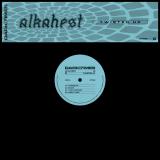
Hackney based Hidden Sounds Records launches – with support from Emotional Recordings – it’s Dark Times label by diving in the the music of Alkahest, a short-lived project from Canadian brother-production duo Lex and Rew MacCrimmon.
For the second EP, the Twisted Up release is re-examined, with a tweaked track list to represent the times and how their sound continues in relevance today. Released in 2 years (1994-1996), Alkahest was the darker side of the MacCrimmon’s productions and allowed them to focus on twisted, psychedelic electronics, away from their main Legion Of Green Men project.
Self-described music obsessives from a young age – lying under a home-made harpsichord, with their heads in the resonator box was an early indication of a love outside the norm. Experiments with forks and pencils on strings – totally unaware of the likes John Cage – highlighted an interest in sound from unusual places.
Anything with a synth notably grabbed their attention, going to the public library to take out BBC Sound Effects and Morton Subotnick albums, sat alongside contacting European mail order catalogues, to grow their knowledge and record collections.
As early productions formed, working under the sound production name of Incarnate, their love of art was just as influential as music. The likes of M.C. Escher, Salvador Dali, Bridget Riley and the Op Art movement, was all part of brothers in their progression to form the Post Contemporary label in 1992.
Following the DIY ethos of the music they had long been buying, their “indie ethic” influences all coalesced in the label, not conforming to one sound or tempo, placed them within the electronic music coming from Canada, but also, out on their own.
Twisted Up expands the Alkahest sound, the title cut a stomping anthem, it’s unrelenting drums and lifting strings a call to arms. The compelling Shake arrives, acid techno rewiring synapsis, dub static between the beats.
On the flip, Twisted Another is just that, a reversion excursion, pushing the psychedelic synthesis to the forefront, stabs call and respond. Closing the EP with the perfectly titled, Kiss My Acid, a journey of industrial bang, reflexed, Alkahest showing their sound is pulsating, widescreen overtures.
dovrebbe essere pubblicato su 05.10.2026

If art is to be exhibited, then Ulrika Spacek will ensure that their art is collective; that even as the world becomes inhospitable to community, their intentions are an act of resistance.
Whether it is Oysterland, the self-curated night the band have been Hosting for over ten years to platform artists of other disciplines in live music spaces, or Total Refreshment Centre, the East London studio Syd runs which connects the dots between the jazz scene and like-minded experimental artists of the capital and beyond, or their creative bleed as musicians and producers over the years with the likes of Crack Cloud, caroline, DIIV, Holy Wave and Slowdive, the band’s existence is inseparable from their community.
In a hyper-individual world, the band’s fourth album, ‘EXPO’, offers an antidote. It’s there, in the shared dream logic of the music, the off-kilter melodies, jagged guitars and cirrus cloud atmospherics. It’s there, in all the things that are said and unsaid between them; there in the writing, producing and mixing processes they share in. And even as each of their parts Moves toward a unified vision, it’s never more keenly felt than in the bigger Picture to which Ulrika Spacek belong.
Though their well-established foundations are in the art-rock world - and though they are inspired by electronic elements more than ever - Ulrika Spacek are interested in the glitch that exists between the two. Their Music reckons with human warmth and digital isolation, equal parts welcoming and altogether alienating. “Our music has always been a collage - a bit patchwork, sonically - but what makes this album a landmark for us is that we went one step further and made our own sample bank,” explains singer / guitarist Rhys. They create their own doppelgängers in a world of almostreal, where the band appear as if in a hall of mirrors. Digital drums are sampled layered upon real drums, and the effect is almost like birth in reverse - pulled from the ether and returned back to the tangible world.
“There’s a lot that can be said about writing when there is no aim, there is a freedom and a purity in it which opens a door to more music, and in this case, it set a mood for a new album, one that would be colder, darker and one that would embrace electronics and new instrumentation in a new terrain,” the band share. “The album’s greater theme is isolation and alienation in an online world where it seems everybody around you is constantly exhibiting themselves, living in public wanting to be seen and heard. The age of ‘individuality’ is lonely, it’s a room of concave mirrors, and with this in mind, we set upon making our most collective effort; ‘It’s back to strength in numbers, count in fives.”
For fans of Radiohead, Moin, DIIV, Astrel K, Slowdive.
LP presented on Crystal Clear vinyl.
Disponibile in Stock e pronto per la spedizione

Utter presents Marshall Jefferson's previously unreleased meditation opus 'Yellow Meditation For The Dance Generation' alongside two remixes from French production maestro Joakim.
Marshall Jefferson: Chicago House music pioneer, creator of the anthemic ‘Move My Body’, an original collaborator of Adonis, Ce Ce Rogers and Roy Davis Jr., production mastermind of countless dancefloor classics such as Phuture’s ‘Acid Tracks’, Sterling Void’s ’It’s All Right’, Hercules’ ‘7 Ways’… and the soothing voice behind a 36 minute healing meditation guide. Yes, really.
But let’s rewind, slightly.
In 2017, Marshall was approached and encouraged by Ian ‘Snowy’ Snowball to write his autobiography and the pair set about putting Marshall’s account of the history of House music together. The book, ‘Marshall Jefferson: Diary of a DJ’ was published in 2019.
Following the book’s release, Ian and Marshall's collaboration continued and during the pandemic an outlandish idea arose to create a piece of music combining Ian's interest in meditation (he runs Club Chi specialising in Shibashi Qigong - a form of Tai Chi Qigong - which is a gentle form of movement therapy/exercise) and Marshall's willingness to experiment musically to see what might be possible.
The result is ‘Yellow Meditation For The Dance Generation’, where Marshall vocalises Ian’s lyrics in his instantly recognisable voice. The keen-eared out there may also recognise aspects of the music itself as a stripped back, lengthened and far mellower version of Marshall’s 1985 obscurity ‘Vibe’:
“I would take tapes to the Music Box and Ron Hardy would play my music. ‘Vibe’ was one of those tracks. I recorded ‘Vibe’ in 1985, but it became one of my tracks that I just forgot about until some guy on Facebook sent me a recording of it that was taken from a club. The only person who I ever gave a recording of ‘Vibe’ to was Ron Hardy. The other people I know who had copies of the track were Gene Hunt and Emanuel Pippin (DJ Spookie).
"The original version of ‘Vibe’ was made using a Roland 707, Roland JX-8P keyboard and a Roland 727 drum machine. I was still working at the Post Office at the time, and this was pre-‘Move Your Body (The House Music Anthem)’. ‘Vibe’ has the building blocks for ‘Move Your Body’ because it was using the instruments on the track that I discovered what I could do with the bass sound, to make a track like ‘Move Your Body’.”
Still, Ian’s initial intention for ‘Yellow Meditation’ was function and it was designed to be a ‘Sequential Relaxation Exercise’ focusing on the Solar Plexus. Bearing this in mind, Marshall took a bare-bones and hypnotic approach to this particular re-recording of ‘Vibe’ so that the voice takes centre stage and listeners (hopefully) find themselves on a meditative journey. In fact, this long-form track was always intended as a private tool purely for meditation at Club Chi rather than released to the public - after all, Marshall had also created and released a more drum heavy, ’traditional’ club-focused 'Vibe Three' instrumental version for that very purpose - but a chance airing of the full 36 minute version changed its path.
Much like those 1985 ‘Vibe’ cassettes, Marshall had sent the track to a few close contacts, one of whom was Kieran at Phonica Records who aired it over the shop’s basement soundsystem. Its unorthodox nature caught the ear of colleague Alex (of Utter) and the seeds of a physical release were planted.
Eventually, with the full-version carefully whittled down to a vinyl friendly length of 24 minutes, full track parts in hand and a b-side to fill, Alex sought out one of his favourite producers to take up the remix reigns: Joakim. The Tigersushi co-founder and Crowdspacer boss has a long history of boundary-pushing remixes that straddle both dancefloor functionality and experimentation. This time the original material resulted in Joakim coming up with a number of ideas and he finally delivered two versions - one club focused (‘Vertical’), the other more introspective and meditative (‘Horizontal’), both of which appear on the final 12”.
The limited edition 12” also includes a download code giving buyers access to all of the vinyl tracks plus an 18 minute extended version of Joakim’s ‘Horizontal’ remix, its instrumental counterpart (for those who can live without Marshall's voice) and full 12 minute acapella (for those who can't!)
Alex
a A1. Yellow Meditation For The Dance Generation (Edit) 24:00
b B1. Yellow Meditation For The Dance Generation (Joakim's Vertical Remix) 9:09
9:05
Disponibile in Stock e pronto per la spedizione

- Channel Tres releases his debut album Head Rush via RCA Records.
The album, which features the previously-released singles "Berghain" featuring Barney Bones and "Cactus Water" is the culmination of Channel's steady ascent since he first broke through to public consciousness with his cult-classic debut single "Controller." Head Rush features all of the sounds that have come to be hallmarks of Channel Tres songs, but finds him incorporating musical influences not heard in his prior catalog, as evidenced by "Berghain" and other songs from the album including the Ty Dolla $ign-featuring “Holy Moly,” a visualizer for which is out now. The album arrives on the heels of two recent head-turning Channel Tres collaborations as well -- his contribution to KAYTRANADA's "Drip Sweat" and Jay Worthy, DāM FunK & ATrak's "105 West" alongside fellow LA legends Ty Dolla $ignand DJ Quik exemplify his versatility. Head Rush is a richly layered record, but one that feels totally intuitive, without a trace of doubt or self-consciousness.
The way “I’m Him” shimmers is balanced by the Estelle-featuring “We Hungry,” which nearly growls; the spare, percussion-forward Ravyn Lenaeduet “Need U 2 Know” (the stylization of its title a nod to Prince, one of Tres’s major influences) at delightful odds with the easy ride of “Gold Daytonas.” Head Rush shows the staggering array of styles Channel Tres can evoke. But that versatility is not the point in and of itself—the point is that all these component parts can be reassembled into something that feels uniquely personal, and honest. Through his career, Tres has blended recognizable genres, textures, and points of view into a truly singular form all his own. Longtime listeners will recognize in Head Rush the hallmarks of a Channel Tres record: a mastery of rhythm, the rare ability to make songs sinister and fluorescent at once.
But this LP also opens a new sonic world, one rife with unexpected terrain and hairpin turns—see the way “Type” takes what sounds at first to be a simple romantic boundary and stretches it out into an alien landscape. Or take “Berghain,” a song that nods to the kinetic live shows that became must-see events—a crescendo of interest that included his momentous Coachella 2022 performance and culminated, at least symbolically, with his early 2023 set at Berghain, the legendary Berlin club that has long been a musical hub of the Western world. “Berghain” is delirious but thumps almost impossibly hard, in line with the album as a whole—always molting, always ready to turn from the claustrophobic to the communal, as the pivot on “Joyful Noise” accomplishes so seamlessly. Head Rush also features some of Tres’s most deeply felt vocals to date, like the veritable bloodletting on “Two Ways.” And so the record, which also features Ty Dolla $ign, Thundercat, Teezo Touchdown, Watr, Barney Bones and Toro y Moi, marks a new era for Channel Tres, personally as well as artistically. “I’m older now, and the things that I’ve accomplished tell me I’m ready to do this,” he says. “You’ve worked your whole life for this, you’ve been able to do these shows and walk into these rooms and make these songs. There’s no reason you have to live by the same insecurity that you had to use in years past.” Shedding that baggage accomplished exactly what it was meant to—lightening the load so we’re free to get heavier than ever
Disponibile in Stock e pronto per la spedizione

Vol.2[28,78 €]
25 killer library music cuts by the German film music maestro on audiophile pressing in deluxe 2x10" set. Uberrare and never released before material from 1968-1976, sourced from Peter Thomas' personal reel-to-reel tape archive. Limited edition of 500 pieces.
From brassy big band funk, space jazz, krauty synth experiments to proto-hiphop, cosmic schlagers, heavy easy listening, soulful soundtrack moods and absurdly dreamy LSD ballads, this compilation encompasses the composer's most obscure and yet most transcendent work.
Peter Thomas is widely acknowledged as Germany's most inventive film music composer of the 1960s and 1970, best known for his iconic soundtrack work. He scored over 600 films and episodes, from the crime blockbusters of Jerry Cotton and Edgar Wallace to indie arthouse films like Playgirl, Bruce Lee's The Big Boss and the extraterrestrial Space Patrol and Chariot of the Gods.
His recordings for music libraries often provided an even more leftfield approach. Their visionary 'dope beats' appeal provoked a keen interest from vinyl aficionados, beatmakers and rare groove DJs alike. Unavailable for the public, the original "for professional usage only" albums are now sought-after collector's items that fetch astronomic prices on the 2ndhand market.
This double 10" album is the definite selection of Thomas' best library cues from the Golden Ring Records, KPM and DeWolfe catalogues, many of them available publicly for the first time - plus four recently unearthed "lost" tracks from Warner Chappell's CPM Archive series that have never been released on vinyl before. All music was carefully transferred from Peter Thomas' private master tapes and cut in full dynamics, housed in a beautiful fold-out cover with liner notes and private pictures. The compilation was realised in cooperation with Peter Thomas' son Philip who takes care of the Peter Thomas Sound Orchester catalogue after his father's death in 2020.
Disponibile in Stock e pronto per la spedizione

The official soundtrack of the 2021 'Rumba Rules, New genealogies' documentary movie by Congolese artist Sammy Baloji and Quebec filmmaker David Nadeau-Bernatchez. A deep dive into Kinshasa’s vibrant Rumba scene, including remastered classics by Brigade Sarbati, Werrason, Papa Wemba, Franco & le Tout Puissant O.K. Jazz
Rumba Rules, New genealogies is about contemporary rumba in Kinshasa, but this music has deep historical roots nevertheless. Born in the interstices of the colonial world and thriving during the three decades of the Mobutu era in Zaïre, Congolese rumba has been iconic and popular all over Africa for decades. The roots of Rumba are even deeper, and the many paths it evokes trigger the imagination. The story goes that this music came with the migration of the ‘Kumba’ drum and dance in previous centuries, African slaves having carried it all around the Americas and giving birth to Cuban ’Rumba’, Colombian ‘Kumbia’ and many others. With its varied rhythms, guitars and horns, through LPs and radio stations, Rumba came back to (re)conquer Africa throughout the 20th century, paving the way for new practices. One could say this music is a sort of palimpsest, a memory in itself of Atlantic migrations and histories.
Rumba is nowadays discussed all around the world, igniting many debates among the Congolese diaspora. Being the constant talk of the town sometimes overloads public debate, and many people get tired of this broken record. Thus, over the last decade, enterprising producers have worked hard to promote Kinshasa’s musical diversity and tried to emulate new sounds to reach worldwide attention. But Kin’ locals and urban dwellers will not be fooled : new shoots cannot hide the forest. Despite some difficulties to innovate, despite the pastoralist sermons and the diaspora fighters pushing for concert cancelations, rumba is still at the core of the Congo today. Talented artists such as Fally Ipupa, Ferré Gola, Brigade Sarbati and others are leading the fifth generation, and the religious world has also proven to be a nurturing environment for the cultural and economic dynamism of this music.
Focusing on the music of Brigade Sarbati and his Orchestra, this record offers a deep dive into Kinshasa’s rumba scene. Halfway between professional studios and Zoom H4 field recordings, the rumba herein is about today’s youth: dense, full of energy and breakdowns, insights and name-dropping. The cavacha rhythm, the solo and bass guitar’s playing style, the singing style and numerous dedications all resonate with the history of Rumba. In an era where digital sound is taking over, it is interesting to highlight the instrumental and live performance compositions of this music. Digital technology is indeed used during the recording and mixing phases, but Congolese rumba still relies strongly on instrumental playing. There is all that but also, many other things to hear on this record… It’s time to let it be. A big thanks to Étienne Tron for making it possible: it is on his initiative and through his patience that this album is in your hands today. (David Nadeau-Bernatchez, december 2021)
Disponibile in Stock e pronto per la spedizione
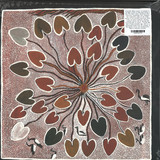
Efficient Space is honoured to share the little-heard recordings of three Yolngu songmen from Northeast Arnhem Land - Bobby Bunnungurr, Jimmy Djamunba and Peter Milaynga (d. 2007) - working in collaboration with Victorian musician Peter Mumme. Yolngu are the indigenous peoples of Arnhem Land in Northern Territory, Australia; their clans are the Marangu and Malabirr, the languages Djinang and Gannalbingu. Their songs are of instruction, story and ceremony.
A connection first initiated by Yolngu actor David Gulpilil, Waak Waak Djungi's mid-90s recordings were preceded by years of respectful sharing of culture. Mumme explains that 'the aim was to produce something that is new, not in the sense of a breakthrough, but what emerges from the combining of existing ideas'. What developed was sonically unique - sprawling vocal/electronic soundscapes and field recordings that reimagine the traditional songs of black crows and white cockatoos, sharing, creation spirits and of leaving and returning home to country. Spacious and patiently durational, the songs resound in a big land with a big story to tell.
On the 1997 Waak Waak Djungi album Crow Fire Music, these interpretations were assembled with traditional recordings and additional material from Sebastian Jörgensen and Sally Grice. Falling short of generating public interest, it became well known in the Yolngu homeland. Nearly two decades later, a CD copy filed away in the 3RRR FM library would prompt a three year investigation to meet the people behind the music.
Waak Waak ga Min Min (Black Crow, White Cockatoo) combines the previously unreleased Gandi Bawong with five contemporary versions from the original album, with a new cover painting by Bobby Bunnungurr. Tracing 1997 back to many millennia ago, this is a captivating window into the richness of Aboriginal culture and collaboration.
Disponibile in Stock e pronto per la spedizione
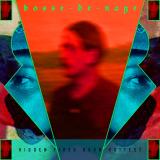
There's a tendency in metal to mistake aggression for honesty, volume for depth. To confuse the performance of darkness with its actual weight. Hidden Fires Burn Hottest, the new album from San Francisco-based post-black metal band Bosse-de-Nage, sidesteps this entirely. It’s the group’s most fully realized work yet, precisely because it refuses to be pinned down.
Bosse-de-Nage have been working with The Flenser for over fifteen years. They were one of the first bands the label ever partnered with and have the longest active relationship in the label's history. But unlike most bands who build momentum through constant touring and visibility, Bosse-de-Nage has largely existed apart from the music world's usual machinery. They've evolved on their own terms, in relative isolation, allowing the work to develop without outside pressure or influence. What began rooted in black metal anonymity has mutated into something that actively defies categorization. The aggression is still there, but it's no longer the point. Hidden Fires Burn Hottest finds the band treating emotions like physical objects, feelings with spatial properties. “No Such Place"" describes a space that can't exist but does anyway, somewhere between thought and location. ""Immortality Project"" examines infinite possibility not as promise but as problem, endless options collapsing under their own weight. These songs don't use metaphor to describe emotion. They make emotion into something you could theoretically touch.
Tracked by Jack Shirley (Deafheaven, Oathbreaker) at Atomic Garden East and mixed and mastered by Richard Chowenhill of Agriculture, Hidden Fires Burn Hottest was years in development, with some tracks beginning in 2018.
The long writing process offered time that most records don't get. Time to live with ideas, revise endlessly, to let structures settle. For the first time, lyricist Bryan Manning wrote everything in advance, creating a surplus to pull from rather than working under deadline pressure. The difference shows.
Coming off Further Still, an album built on constraint and economy, Bosse-de-Nage sought the opposite: sprawl, strangeness, fewer rules. Space for ideas to develop without rushing them. Dynamics that move through quiet as much as noise. Presence earned through atmosphere instead of volume. The record even includes ""Mementos,"" which might be considered the first love song the band has ever written.
Nothing here coheres into a theme. These are pieces pulled from low moments and private feelings made public through sound. The band has never been interested in positivity, in music that resolves cleanly or offers comfort. But bleakness doesn't mean humorlessness. There's something darkly funny running through much of it, even when it shouldn't be.
Hidden Fires Burn Hottest doesn't explain itself. It just insists: what you feel is as real as what you can see."
dovrebbe essere pubblicato su 03.08.2026
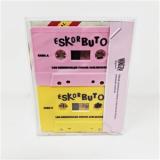
First time double-cassette reissue of 1987's double LP opera rock by Spain's legendary punk band Eskorbuto. "Los demenciales chicos acelerados" is a political satirical work against any kind of dictatorial regime. "Los demenciales chicos acelerados" is Eskorbuto's fourth studio album, originally released by Discos Suicidas in 1987. It was their most ambitious project, a double LP rock opera in the vein of "Quadrophenia" by their beloved The Who. It tells the story of an unscrupulous young man who wishes to achieve power at all costs, stepping over everyone and everything in order to do whatever he wants politically. In the end, he falls due to his ego and is betrayed by those around him. Hence lines such as "crowds are a nuisance", "I'll come unscathed out of the attacks planned by my image consultant" or "shouting in front of the scum". In 1988 band members Iosu and Juanma narrated the album's concept and story on a Radio Euskadi show, the Basque Country's public broadcaster. This satirical political plot also explains the controversial sleeve art, Eskorbuto were equalling the unprincipled politician of their rock opera with the Nazis and Franco's dictatorship. It's a conceptual record that attacks any kind of dictatorial political regime. The original sleeve caused some trouble, to say the least, with its combination of Nazi photos and the Spanish flag on the back accompanied by the words "Of national interest". lthough "Los demenciales..." came out on Discos Suicidas, in typical Eskorbuto fashion the band stole a copy of the master and sold it to the Twins label, which also released it a few months later with new cover art.The album contains new versions of a few previous tracks such as 'Ratas rabiosas' and 'Enterrado vivo' plus the studio version of 'Más allá del cementerio'. For the recording the band enrolled keyboardist Aitor Amezaga, who would also collaborate on their next album.
dovrebbe essere pubblicato su 10.07.2026
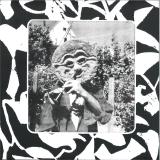
Even in these most turbulent of times, dub musician and fatigued onlooker Elijah Minnelli remains an inexplicable stalwart on the lower rungs of the Breadminster County Council.
His latest record ‘Clams As A Main Meal’ continues his astute siphoning of council funds, this time with help from the Breadminster Board of Abstinence. As a further mark of respect, the original head of the Board, Dr. K'houldoux, graces the cover art in his infamous ‘Looming Moon of Desire’ guise.*
As fine a backdrop as any for Minneli’s off-brand dub experiments, and ‘Clams...’ is the truest representation of his varied wheelhouse yet...
We find vocal appearances from dub goliath Dennis Bovell and Welsh-language singer Carwyn Ellis. A pair of tracks which build on 2024’s acclaimed ‘Perpetual Musket’, a collection of folk songs reworked alongside reggae vocalists, released by FatCat Records. It garnered glowing reviews, with nods from The Guardian and The Quietus concluding with prominent appearances on their respective yearly round-up lists.
Elsewhere, the album finds Minnelli in a more experimental mode, all wheezing contraptions and cockeyed bass, creaking with the weight of creation, a satisfying tactility laid seam-side up.
As well as ‘Perpetual Musket’, the new album follows years of sold out 7" singles, handmade and self-released. Online, the tracks have amassed global streams numbering in the millions. His tracks have found play across an eclectic range of radio mixes and dance floors, most notably the likes of Andrew Weatherall, Batu, Optimo and Zakia Sewell (BBC6Music).
It is perhaps worth mentioning that this everbuilding interest in his work is at great odds with the growing suspicions amongst his fellow townsfolk, who see his Breadminster County Council Music Initiative as nothing more than an empty cash-grab.
Further Reading on the Breadminster Board of Abstinence
In the late 70s, Breadminster was awash with the last vestiges of the hippy era. Though the flared silhouette of the lower leg remained, the utopian ideals that had once flowed merrily around the youth's shaded ankles had begun to wane. LSD and free love had led to a sharp spike in population and a generation of children raised by air-headed psychonauts unprepared for the bleary-eyed strictures of parenthood.
Aware of the crisis, the County Council entrusted Dr. Paulinque K'houldoux to spearhead a pushback, and it was his pro-abstinence movement - a mixture of education initiatives and radical renutrition campaigns - that came to impact Breadminster's census deep into the new millennium.
Being a pseudo-archipelago Breadminster has fundamentally limited resources, however deep-seated ties to distant coastal villages meant that oysters were a regular part of the local diet. K'houldoux pinpointed this as a factor in the town's overpopulation, and believed that simply replacing these with clams (a “lesser mollusk”) would help lower the erotic urges of the people. It was his “anti-aphrodesia” movement that first championed the idea of “Clams As A Main Meal,” and the slogan “Consider Abstinence” carried the message yet further.
The Breadminster Board of Abstinence soon became involved in all cultural happenings in the area, with K'houldoux MCing at prominent festivals and performances, sometimes dressed as the “Looming Moon of Desire” - an idea of his relating to the tide, seafood, menstrual cycles, and his privately held celestial predilections.
It was in 1981 that it was revealed Dr. K'houldoux had never fully qualified as a doctor and was seeking exile in Breadminster due to a series of botched bracelet heists in which he had previously been involved. K'houldoux was subsequently extradited to Basingstoke, where he served 3 of a 12-year sentence, owing to the lunar-oriented prisoner health campaigns he helped implement.
It has been a strange twist of bureaucratic fate that the Breadminster Board of Abstinence has never stopped receiving public funding, despite its lack of clear utility. And while its roots are tied to a rose-tinted past, the Board continues to sponsor cultural events and projects to this day.
An extract from: Eugeniq Schooner's article in Sydney Parishioner: “Clams, Breadminster and Countercultural Abstinence Trends” (2008)
Ordina ora e ordineremo l'articolo per te presso il nostro fornitore.

In 1979, the Soviet label Melodiya released a record that immediately stood apart from most Soviet jazz of its time and perhaps for that very reason never became widely known. Oriental Suite by Oleg Gotskosik Quintet is a rare example of jazz, Eastern musical tradition, and compositional thinking coming together not as an exotic stylization but as a fully formed artistic statement.
This is not “Oriental colour” used as decoration, nor folklore treated as an ornament. Oriental Suite grows from within another musical tradition, with its monody, modal logic, slow unfolding of form, and focus on inner states rather than outward effect. The music is calm and concentrated. It does not try to impress, but gradually draws the listener into its own space.
Oleg Gotskozik was born in Tashkent in 1951, a city where Eastern music was part of everyday life rather than something distant or exotic. That may explain why his engagement with traditional material sounds so natural. He does not quote or stylize; he thinks in the same musical categories. By temperament, he was closer to a composer than to a jazz musician in the conventional sense. For him, jazz was not a style but a way of working with form and improvisation.There is no standard “theme and solos” logic in Oriental Suite. Improvisation is woven into the fabric of the music itself and unfolds in the same way as in oral traditions, gradually, with rising tension and a clear sense of arrival. Individual sections refer to traditional Uzbek genres such as lullabies, lyrical songs, and funeral laments, but these are not genre sketches. They are states of being. The music unfolds slowly, avoiding familiar harmonic drama and relying instead on modal scales and subtle internal movement.
A special role is played by trumpeter Yuri Parfyonov. His approach, with delayed vibrato, micro-glissandi, and melismatic phrasing, sounded unexpected at the end of the 1970s and still feels remarkably fresh today. This is not expressive jazz virtuosity but a focused, almost meditative voice, where improvisation becomes a form of inner speech.
It is also important to note that the original recording was not without technical flaws. Like many Soviet jazz releases of the time, Oriental Suite was captured under far from ideal conditions, and the master contained audible imperfections that were never part of the music itself. For this edition, the restoration was approached with great care and respect, working through the recording moment by moment to remove unwanted artifacts while preserving the character and atmosphere of the original. The aim was simple: to make sure nothing stands in the way of fully experiencing the music.
In the early 1980s, Oleg Gotskozik left the Soviet Union, and after that his name virtually disappeared from Soviet music journalism and literature. There were no official bans or public statements. He was simply no longer mentioned. Oriental Suite continued to exist on its own, without an author and without context. The record never entered the canon, received no continuation, and was never officially reissued. It seemed to fall out of time.
The original vinyl pressing was released in a run of around 32,000 copies, but most of them remained within the republic and never reached wide circulation. Today, original copies are hard to find and have long become objects of interest for collectors. There have been no official reissues, only attempts that never went beyond test pressings.
Today, Oriental Suite sounds surprisingly contemporary. It is music that can be described as deep ethno-jazz and even, in a certain sense, spiritual jazz. There is no exoticism here, no decorative borrowing, only a complete immersion in another musical way of thinking. It does not require explanations and does not need to be justified by its time.
This is not a forgotten curiosity revived for collectors’ sake. It is music that simply waited for the moment when it could be heard without ideological filters or genre expectations. Now it is returning quietly, without noise or hype, but with the clear sense that this is not an artifact of an era, but a living and genuinely rare artistic statement.
dovrebbe essere pubblicato su 05.06.2026

Faitiche welcomes a new artist: Christina Kubisch belongs to the first generation of sound artists. Her practice ranges from performances, concerts, to works with video and visual art, but she is best known for her sound installations and electro-acoustic compositions.
TUNING brings together three pieces by Christina Kubisch from different periods of her oeuvre. What they have in common is the way they transform sound phenomena originally considered “non-music” into compositions.
Jan Jelinek: Gaming in Silence (2024) is the most recent work on this compilation. It’s a collage of electromagnetic waves, voice, and abstract sound textures. How did this combination come about?
Christina Kubisch: Gaming was commissioned as a fixed-media composition for the Sound Dome at ZKM Karlsruhe. Since Resonances: The Electromagnetic Bodies Project (2005), I’ve been making recordings in the old and new server rooms at the ZKM and in their permanent collection of historical computer games. Computer games like Asteroids (Atari, 1979) and Poly-Play (VEB Polytechnik, 1986) have specially generated analogue electromagnetic waves that interest me in particular on account of their density, rhythms and textures. I originally studied painting and to me the work of composition often feels like painting an abstract picture. I alter my source material as little as possible, layering and overlapping until a distinctive sound space emerges. In recent pieces, I sometimes combine magnetic waves with field recordings or live instruments. In Gaming it’s my recording of a Chinese song about silence.
JJ: Two persons walking through a street in Madrid (2004) is a recording from your Electrical Walks series. Here we should give a brief explanation of one of your best known works: participants in an Electrical Walk move through public spaces wearing prepared headphones that allow them to receive electromagnetic waves from their surroundings – for example from security gates, ATMs or neon signs. They discover a situation that normally is inaudible to the human ear and they can actively shape it by choreographing their movements. I really admire this piece, not least because there’s no clear dividing line between participants and artist. What exactly do we hear in Two persons walking through a street in Madrid (2004)?
CK: With this early work, I wanted to understand what is heard by people participating in an Electrical Walk in the same place but moving in different ways. The Spanish composer Miguel Alvarez-Fernàndez and I set off from opposite ends of a major shopping street in Madrid, met briefly in the middle, and then continued to the end. We both recorded our walks and I then layered them over one another. You might call it a work of electromagnetic conceptualism.
JJ: Diapason (2009 version) is an installation that plays a composition based on sounds from fifteen tuning forks. This setting is audible in the recording: there’s no dramatic arc, no beginning or end – instead, it recalls a piece of aleatoric music focussing on the decay phase. How did you come to make this work and could you tell us something about your compositional method?
CK: Diapason is part of a series of three pieces that deal with “non-instruments” or instruments that no longer exist: electrical mine bells used to send signals to the workers underground; a historical glass harmonica originally used for medicinal purposes; and tuning forks that were used by doctors to test people’s hearing. All of these methods are no longer in use. The sound of the tuning forks, audible only if held close to the ear, was recorded at the electronic studio at Berlin’s Technical University in such a way that even their decay remained audible. The frequencies range between 64 and 2048 Hertz and they can be adjusted at micro-intervals using small movable weights. The sequence and the duration of the pauses are dictated by chance and were not defined in advance. The 2009 version was created for an installation in the historic Holy Cross Church (Korskirken) in Bergen. Visitors could enter and leave the space at any time, deciding for themselves where and for how long they wished to listen to the sounds played back over an array of small loudspeakers placed on the floor of the apse.
Credits:
Gaming in Silence: commission of the ZKM/Hertzlab, Karlsruhe 2023
elektronic sound processing: Tom Thiel
sound engineering and mixing: Eckehard Güther
Diapason: produced at Elektronisches Studio of TU Berlin
rearrangement: Eckehard Güther
Christina Kubisch, published by Edition Christina Kubisch / Random Musick Publishing
image front: Transitionen 2021 by C. Kubisch, sonagrams of electronic waves (courtesy: Galerie Mazzoli Berlin)
image back: Diapason Tuning Fork, property of Folkmar Hein, Photo: Archiv Christina Kubisch
design by Tim Tetzner
mastered by Giuseppe Ielasi
Thanks to Miguel Álvarez-Fernández, Folkmar Hein, Dominik Kautz and Mario Mazzoli
dovrebbe essere pubblicato su 17.04.2026
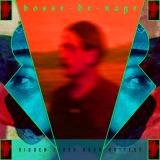
There's a tendency in metal to mistake aggression for honesty, volume for depth. To confuse the performance of darkness with its actual weight. Hidden Fires Burn Hottest, the new album from San Francisco-based post-black metal band Bosse-de-Nage, sidesteps this entirely. It’s the group’s most fully realized work yet, precisely because it refuses to be pinned down.
Bosse-de-Nage have been working with The Flenser for over fifteen years. They were one of the first bands the label ever partnered with and have the longest active relationship in the label's history. But unlike most bands who build momentum through constant touring and visibility, Bosse-de-Nage has largely existed apart from the music world's usual machinery. They've evolved on their own terms, in relative isolation, allowing the work to develop without outside pressure or influence. What began rooted in black metal anonymity has mutated into something that actively defies categorization. The aggression is still there, but it's no longer the point. Hidden Fires Burn Hottest finds the band treating emotions like physical objects, feelings with spatial properties. “No Such Place"" describes a space that can't exist but does anyway, somewhere between thought and location. ""Immortality Project"" examines infinite possibility not as promise but as problem, endless options collapsing under their own weight. These songs don't use metaphor to describe emotion. They make emotion into something you could theoretically touch.
Tracked by Jack Shirley (Deafheaven, Oathbreaker) at Atomic Garden East and mixed and mastered by Richard Chowenhill of Agriculture, Hidden Fires Burn Hottest was years in development, with some tracks beginning in 2018.
The long writing process offered time that most records don't get. Time to live with ideas, revise endlessly, to let structures settle. For the first time, lyricist Bryan Manning wrote everything in advance, creating a surplus to pull from rather than working under deadline pressure. The difference shows.
Coming off Further Still, an album built on constraint and economy, Bosse-de-Nage sought the opposite: sprawl, strangeness, fewer rules. Space for ideas to develop without rushing them. Dynamics that move through quiet as much as noise. Presence earned through atmosphere instead of volume. The record even includes ""Mementos,"" which might be considered the first love song the band has ever written.
Nothing here coheres into a theme. These are pieces pulled from low moments and private feelings made public through sound. The band has never been interested in positivity, in music that resolves cleanly or offers comfort. But bleakness doesn't mean humorlessness. There's something darkly funny running through much of it, even when it shouldn't be.
Hidden Fires Burn Hottest doesn't explain itself. It just insists: what you feel is as real as what you can see."
dovrebbe essere pubblicato su 27.03.2026
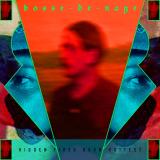
There's a tendency in metal to mistake aggression for honesty, volume for depth. To confuse the performance of darkness with its actual weight. Hidden Fires Burn Hottest, the new album from San Francisco-based post-black metal band Bosse-de-Nage, sidesteps this entirely. It’s the group’s most fully realized work yet, precisely because it refuses to be pinned down.
Bosse-de-Nage have been working with The Flenser for over fifteen years. They were one of the first bands the label ever partnered with and have the longest active relationship in the label's history. But unlike most bands who build momentum through constant touring and visibility, Bosse-de-Nage has largely existed apart from the music world's usual machinery. They've evolved on their own terms, in relative isolation, allowing the work to develop without outside pressure or influence. What began rooted in black metal anonymity has mutated into something that actively defies categorization. The aggression is still there, but it's no longer the point. Hidden Fires Burn Hottest finds the band treating emotions like physical objects, feelings with spatial properties. “No Such Place"" describes a space that can't exist but does anyway, somewhere between thought and location. ""Immortality Project"" examines infinite possibility not as promise but as problem, endless options collapsing under their own weight. These songs don't use metaphor to describe emotion. They make emotion into something you could theoretically touch.
Tracked by Jack Shirley (Deafheaven, Oathbreaker) at Atomic Garden East and mixed and mastered by Richard Chowenhill of Agriculture, Hidden Fires Burn Hottest was years in development, with some tracks beginning in 2018.
The long writing process offered time that most records don't get. Time to live with ideas, revise endlessly, to let structures settle. For the first time, lyricist Bryan Manning wrote everything in advance, creating a surplus to pull from rather than working under deadline pressure. The difference shows.
Coming off Further Still, an album built on constraint and economy, Bosse-de-Nage sought the opposite: sprawl, strangeness, fewer rules. Space for ideas to develop without rushing them. Dynamics that move through quiet as much as noise. Presence earned through atmosphere instead of volume. The record even includes ""Mementos,"" which might be considered the first love song the band has ever written.
Nothing here coheres into a theme. These are pieces pulled from low moments and private feelings made public through sound. The band has never been interested in positivity, in music that resolves cleanly or offers comfort. But bleakness doesn't mean humorlessness. There's something darkly funny running through much of it, even when it shouldn't be.
Hidden Fires Burn Hottest doesn't explain itself. It just insists: what you feel is as real as what you can see."
dovrebbe essere pubblicato su 27.03.2026
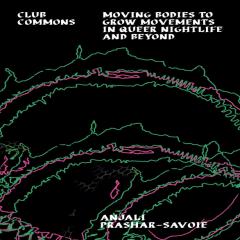
Queer communities have long transformed parties into something powerful: spaces where care flourishes, injustice gets challenged, and new worlds are danced into being. But today, DJs command huge fees while behind-the-scenes workers earn below minimum wage. Corporations profit from our culture while communities that created these spaces are displaced. As venues shut and workers burn out, it’s clear that something has gone deeply wrong.
Club Commons: Moving Bodies to Grow Movements in Queer Nightlife & Beyond by Anjali Prashar-Savoie takes you inside hidden stories of resistance and reinvention. We meet the people reshaping nightlife from below: abolitionist security teams creating safety without police, sober raves doubling as mental health support, radical childcare at parties, venues becoming worker cooperatives, and free party crews reclaiming public space. Through their work, we see how party-throwing skills build movements, how refusing to play changes everything, and why protecting queer nightlife means transforming who owns it.
Quotes
“When Anjali shines her perceptive light on dancefloor culture, everything is better illuminated. I can’t wait to read this book. It’s one we need.” Emma Warren (author of Dance Your Way Home/Up the Youth Club)
“Anjali’s one of the most exciting and insightful voices writing about dance music today, bringing fresh perspectives, intellectual rigour and emotive power to a conversation that’s too often homogenous, superficial or cynically commercial. Club Commons promises to be an essential and overdue book: a chance to reexamine the queer history of club culture, celebrate and critique its present, and map out radical possibilities for its future.” Ed Gillett (author of Party Lines)
“Beautifully written and unique, Anjali Prashar-Savoie’s behind-the-scenes journey through queer nightlife is as thorough as it is fascinating. Documenting a world that commercial interests are rapidly destroying, Club Commons is proof that queer culture holds the key to a better future for the dancefloor and beyond.” Professor Sam Parsley (author of Minor Keys, coach, DJ and founder of In the Key, a directory and platform championing the careers of women, trans and non-binary electronic music producers)
“Club Commons: Moving Bodies to Grow Movements in Queer Nightlife & Beyond is a vital reminder of how important the dance floor is to connect, unfurl and envision new futures. The text highlights the historic and existing care work entangled with the club space, particularly in providing temporary sites of refuge and embodied joy for Black and LGBTQIA+ communities. This is juxtaposed with research on the corporate and carceral commodification of nightlife in recent years, which exposes the false premise that club spaces are always radical. This book affirms my belief that the non-commercial nightlife ecosystem is an essential part of our social change infrastructure, rather than a luxury. Club Commons is a call to action to reclaim this space on our own terms and revive the underground.” Camille Sapara Barton, (author of Tending Grief: An Embodied Guide to Being with Grief Individually and in Community)
dovrebbe essere pubblicato su 12.01.2026

Classic Latin Tunes Became Sals Hits! Pablo Yglesias -aka DJ Bongohead- compiles Grosso Recordings an amazing serie with classics tunes from Caribbean music that became great successes of "Salsa". Some tracks have been remastered and restored, others are presented on vinyl again after many many years. "This is the four volume in our series on the Roots of Salsa...The main criterion was to pick tracks that sounded adequate for today's DJs to play at a gig or were sufficiently interesting (or enough of a surprise to fans of the later version) to merit inclusion. The other measuring stick was that they needed to come from the old-school, before the more modern era (from 1962 on) and all of its recording innovations and marketing strategies...for now, listen to these dozen gems and then go back to their more familiar cousins from recent times and compare and contrast, and we're sure you'll be enlightened and entertained." Liner notes by Pablo "Bongohead" Yglesias. Format and selection designed for DJs, collectors and general public.
dovrebbe essere pubblicato su 26.12.2025

Swedish trio Death And Vanilla follow their much-praised re-imagined soundtracks to `Vampyr' (2017) and `The Tenant' (2018) with their interpretation of the soundtrack to cult 1968 TV show `Whistle And I'll Come To You'. Ltd White Vinyl LP, Soundtrack / Electronic / Indie At a time when post-ambient electronica and bedevilled folk music are co-habiting, and the public's interest in Pagan rites and rituals has been sparked by a new generation of fans. The bizarre storyline of Whistle And I'll Come To You seems even more pertinent_ and strangely haunting. The Jonathan Miller-adapted 1968 ghost story was originally part of BBC's Omnibus series and featured Michael Horden as a fussy professor who discovers an ancient whistle which summons up the spirits. A black and white folkloric tale in the style of The Wicker Man, the original TV programme received rave reviews. The esoteric live score was recorded at the Hypnos Theatre in Malmö. The 42-minute soundtrack utilises stuttering tape loops on `Intro' before breathing new life into the primitive John Carpenter-like drum machine on `Supernatural Breakfast', while `Walk On The Beach 2' sounds like a hauntological rendition of a Broadcast classic. Indeed, that effect is amplified on `Nightmares', with its swirling wind and other-worldly choral effect, before the feeling of some supernatural presence is suggested on the penultimate cut `Evidence Of Spiritualism'.
dovrebbe essere pubblicato su 10.10.2025

I was aware of Submerse from a long time ago, mainly for when he was making hip-hop & footwork tunes but I had noticed that a few years ago, on his SoundCloud page, he was uploading jungle tunes that he had started making, which got me interested in keeping tabs on what he was doing.
But it wasn't until I met him in Tokyo where he's based, when I played after him at an event at Circus (venue in Osaka & Tokyo) and then met up with him again later on that week that I realised how much he had been making.
He sent me some of the stuff he'd been doing that wasn't available publicly yet and I was really impressed by how strong the melodies were and how much influence from video game soundtracks he had in his tunes, I knew I had to get him on Future Retro London for a release.
Big up to Submerse for allowing me to put out this EP of his on Future Retro London, look out for more music from him to come on Future Retro London and other labels!
Ordina ora e ordineremo l'articolo per te presso il nostro fornitore.

Released in 1972, Blue Öyster Cult’s eponymous debut failed to garner initial interest from the music-loving public upon release, but is now considered a must-have classic. The exceptional psychedelic hard rock album with stunning cover art, features songs such as "Cities On Flame With Rock And Roll", "Stairway to the Stars", and "Then Came the Last Days of May", all of which the band still plays regularly during its concerts. The band toured with artists such as The Byrds, Alice Cooper and the Mahavishnu Orchestra to support the album, which received a positive reaction from critics. The Village Voice called it "the tightest and most musical hard rock record since - dare I say it - Who's Next".
dovrebbe essere pubblicato su 29.08.2025

At a time when post-ambient electronica and bedevilled folk music are co-habiting, and the public’s interest in Pagan rites and rituals has been sparked by a new generation of fans. The bizarre storyline of Whistle And I’ll Come To You seems even more pertinent… and strangely haunting.
The Jonathan Miller-adapted 1968 ghost story was originally part of BBC’s Omnibus series and featured Michael Horden as a fussy professor who discovers an ancient whistle which summons up the spirits. A black and white folkloric tale in the style of The Wicker Man, the original TV programme received rave reviews.
The esoteric live score was recorded at the Hypnos Theatre in Malmö. The 42-minute soundtrack utilises stuttering tape loops on ‘Intro’ before breathing new life into the primitive John Carpenter-like drum machine on ‘Supernatural Breakfast’, while ‘Walk On The Beach 2’ sounds like a hauntological rendition of a Broadcast classic. Indeed, that effect is amplified on ‘Nightmares’, with its swirling wind and other-worldly choral effect, before the feeling of some supernatural presence is suggested on the penultimate cut ‘Evidence Of Spiritualism’
dovrebbe essere pubblicato su 23.05.2025

'Trá Pháidín are an Irish nine piece collective from Conamara, Galway, a wild coastal region of West Ireland where Gaeilge remains the first language. The group are currently lighting up Ireland's underground with their joyful noise, a unique and unpredictable blend of traditional Irish folk, post-rock, jazz, and Dadaist absurdity. The glorious album An 424 takes us on a psychogeographical journey along the 424 bus route which follows this remote stretch of coastline, introducing us to the landscapes and the characters who depend on the buses. Expect wild improvisational flights filled with brass, woodwinds, harp and fiddles alongside relentless grooves.
Here's what the band themselves have to say about the album:
Psychogeography is a funny aul term......the effect geography and landscape of a certain area has on the psychology, identity and nature of the local people...........I suppose
Notoriously, Conamara is famous place for psychogeoraphy due to the work of the great Tom Robinson. He walked every coastline in every area contemplating the geography, culture, history, Gaelic language, English language and folklore of the area while he was drawing it's best map with great depth and detail.
Right, so I've given context, a few buzzwords and some interesting names, now it's time for the absurd stuff....
"Bóthar Chois Fharraige" (the R336 and whatever anglicized name they call it) is well known by everyone in the South Conamara Gaeltacht (Gaeltacht is an area where Irish/Gaeilge is the dominant language, there aren't many because we were colonized by the British and our government doesn't care about its own language). The people of Conamara travel this road almost every day by car, by bike, on Peadar Óg's buses or of course, through the medium of the 424 (the bus service provided by Bus Éireann, Ireland's public-private bus company). From Bearna to Carna (maybe sometimes a detour in Casla going as far back as an Cheathrú Rua and/or Leitir Mealláin)
Every passenger is well versed of gorgeous views of the landscape that is on offer on this journey. Included are Cuan na Gaillimhe/Galway Bay, An Bhoirinn/the Burren, na hOileáin Árann/the Arann Islands,Aillte an Mhothair/the Cliffs of Moher, Portach Mhaigh Cuilinn/the bogs of Maigh Cuilinn, Bóthar Loch an Iolra/Eagle lake road, Cuan Casla/Casla Harbour, Cuan an Fhir Mhóir/Greatman's Bay, Cnoc Mordáin/Mordáin hill, Sléibhte Mhám Toirc/the Maamturk Mountains and Na Beanna Beola/the twelve pins. Passengers would also be well used the unique character of the bus. Depending on the day, you will get a unique perspective of the "complicated identity" of the Gaels as the bus travels from the Gaeltacht into anglophone Ireland, or maybe going the other way.
This is a topic you could write a PhD about (and maybe someone already has). But, if you are someone who grew up or lives in this region, you have a particular understanding at this stage of how complicated Gaelic psyche is and the kind of spectrum of identity along bóthar Choise Fharraige. With the landscape in mind, this bus journey is a great meditation of the various topics of life.
‘Bhfuil tionchar ag an mbus ar nádúr na ndaoine?
Nó an bhfuil tionchar ag na daoine ar nádúr an bhus?'
'Does the bus effect the nature of the people?
Or do the people affect the nature of the bus?'
Le gach dea-ghuí,
TP.
(translated from Gaeilge by Peadar-Tom Mercier)'
Ordina ora e ordineremo l'articolo per te presso il nostro fornitore.

Alternative Tentacles Records is thrilled to announce the first-ever vinyl release of two long-awaited tracks, previously available only in digital format. This highly anticipated split 7" features Jello Biafra & The Guantanamo School of Medicine and The November 3, with two explosive songs: "Blunder Blubber" and "IFAR." "Blunder Blubber," originally released as a digital single to mark Rush Limbaugh's passing and was recorded during the TEA PARTY REVENGE PORN recording sessions, highlights everything iconic about Jello Biafra & The Guantanamo School of Medicine. The song critiques the rise of right-wing extremism, tracing its roots back to Rush Limbaugh's influence and the repeal of the Fairness Doctrine under President Reagan in 1987—a policy change that allowed one-sided political commentary on public airwaves. Biafra argues that this set the stage for the toxic media landscape, fueling figures like Limbaugh and the current wave of ""MAGA"" rhetoric. Reflecting on the political climate, Biafra notes, "I wrote the song back when Clinton was president, seeing the writing on the wall. I was hoping never to use it, but we had no choice but to update and perform it now." On the flip side, The November 3 delivers "IFAR," a fiery debut track that first dropped during the 2020 Republican National Convention. Blending punk rock energy with raw political outrage, lead vocalist Billie O' Rights unleashes a bold, biting rant, backed by Tom Pain’s searing guitars. Pat Triotte and Justice Ferrall add their creative touches to this electrifying anthem, capturing the chaotic spirit of the times. "IFAR," is a raucous, tongue-in-cheek commentary on partisan divides, clocking in at just two minutes of catchy, irreverent fun. Interestingly, the song was reportedly conceived during a mundane moment: Pat Triotte was baking blueberry muffins one Saturday afternoon when the idea hit, and within hours, the track was recorded— and the muffins were supposedly amazing. Despite the humorous and often provocative tone of both songs, the core message of this release is clear: a call to action to vote. With this limited 7" vinyl, Alternative Tentacles Records urges everyone to make their voices heard in the 2024 election and beyond! Don't forget to VOTE!
dovrebbe essere pubblicato su 21.02.2025

While 1995's Washing Machine LP moniker was a thinly-veiled jab at the corporate aesthetic ("no, you cannot turn Sonic Youth into a household appliance brand", the band even considered changing its name to Washing Machine but settled on the album title instead), their major label relationship was indeed a curious buzzpoint of talk on the street after their intake to DGC in 1990. It wouldn't be fair to say that this state of existence propelled the band to reinforce its independent mindset by releasing a series of opaque-looking, French-language-dipping, highbrow-looking releases on their own that focused on the more abstract improv/compositional side of the band; in all truths they had been heavily steeped in self-releasing spillover material prior to that. But after a pressure pot of the early 90's indoctrination into a new operational mode for the band and its visibility, and the forces around it attempting to shape their direction, it seemed like a good time to create a strong show of radical concept.
The Anagrama EP became the first in a series of the SYR label's Perspective Musicales releases seemingly cementing Sonic Youth's connectivity to an increasing public awareness in experimental composers of the 20th century (French or otherwise). The irony was that many of those original avant composers being rediscovered by the indie audience (Partch, Neuhaus, Reich, Messaien) often found themselves on major labels anyway! So, perhaps this reverse approach was a necessary concept/comment given the music biz climate of the 90's. Regardless of how apples and oranges fell in Xenakian probability/theory, it was clear that both Sonic Youth's stature in progressive music, aided by now unlimited taperoll time thanks to a home base studio downtown established after their Lollapalooza stint, gave the band plenty of trailblazing time for their self examination of untraveled avenues.
"Anagrama" unfolds into nine minutes of delicate textures, starting with thick drone segueing into moments reminiscent of the post-crescendo flutter/comedown of "Marquee Moon's" trail-out; Thurston, Lee and Kim's guitars all circling round each other taking delicate pokes and stabs before drifting into some post-rock rhythmic moves tapered with delicate percussive guidance from Steve Shelley. "Improvisation Ajoutée" reaches further out into dissolve with whirring oscillations, guitars hissing and clanking radiator-style in a short blast format that continues into "Tremens" and a spooked-out landscape of gelatinous notes snaking up slowly. The sparseness of attack is colorful, textures emit and linger, silent spots shine, all flanked by tasteful drumming that provides the thread to all the abstraction. Shelley's approach here is interestingly sideways to any kind of usual rock action, it's tempered, mutant and metronomic simultaneously. The finale track "Mieux: De Corrosion" is a real pedal-palatte showcase. Here, Plutonian guitar wash flanges upwards to buoy a myriad of colorful eruptions of amp-spuzz, chopped up tone blasts and general confusion. Out of the blue, some metallic one-note choogle kicks in and threatens to explode into some Judas Priestly motion, before it all sputters into aural glass showers, clang, and finally a ferocious wave of more flange hiss that crashes down on a dime.
This initial foray into SY's Perspectives Musicales series continued onward with releases featuring other co-conspirators, peaking with the ambitious 2CD Goodbye 20th Century that finally connects the band into full-on interpretations of other composers' pieces (as well as displaying their own new ones). The whole series is not so much an outlet for another "side" of the band, but a run that went hand in hand building new approaches of songcraft onto their own, more overground direction which included Jim O'Rourke (who hopped on during SYR3), adding additional density to A Thousand Leaves and other LPs of his era. Fans of the '86 Spinhead Sessions as well as the recently-exhumed later jams of In/Out/In will take in the sounds of SYR1 with glee.
Ordina ora e ordineremo l'articolo per te presso il nostro fornitore.

The Equatoguinean Norberto de Nöah established in Madrid in the early 80s, where he became a firebrand of African culture in the vibrant Movida. In 1988 he self-released his first solo album, a blend of homeland sounds —modern and traditional— with new synth and drum machine touches. The vanished album finally gets its well-deserved reissue.
Edition of 500 albums on vinyl (Bandcamp download code included) - Original artwork with new 14 pages insert and poster
In the mid-1980s, the European media, music industry and public became increasingly interested in African music. This was a period of international success for King Sunny Adé, Salif Keita, Youssou N’Dour, Ray Lema, Touré Kunda, etc. Spain, with its own particular conditions, wasn’t oblivious to the phenomenon and the Equatoguinean Norberto de Nöah may be its best exponent.
Norberto moved in the early eighties from his hometown in the island Fernando Po (now known as Bioko) to its former colonial capital, Madrid. While studying dramatic arts, he created and led the band Nohkis, made up of African and Spanish musicians. In 1985 they released the maxi-single “Mujer española” / “África, ¿dónde está tu gloria?”, and the song “El loco”, was released on a compilation LP called Esto es increíble, both on the label Lollipop. According to the journalist Patricia Godes, they were first artists to record an African music record in Spain. It received positive reviews and a great impact on the most independent side of Madrid’s La Movida movement. Very soon afterwards, Nohkis’ band split up.
Afterwards, Norberto would concentrate on his solo career, and Norberto de Nöah and The Böhöbé Spirits Müsic was released in 1988, definitely a solo album. Norberto created his own label, Kilimandjaro Productions, and composed, arranged and produced all the songs of the LP. Moreover, he sang and played all the instruments: a vast selection of organic instruments, a Yamaha RX-5 drum machine and a Roland D-50 synthesizer.
In the album he exposed his deepest roots, updating the lexicon of traditional Bubi music, the musician’s ethnic group, a compendium of ceremonial melodies that ancient troubadours composed for the court. Doing so he showed new possibilities to one of the oldest ethnic groups in the world. Besides all this, he was also inspired by American music such as funk, R&B, Latin American music and also by a wide range of African and Caribbean rhythms.
Mixing the traditional and the avant-garde in a spontaneous and natural way, the music contained in the record’s grooves flows freely and takes you to places full of magic and mystery, while still transmitting new and exciting sensations. Even more, according to the Equatoguinean musician and writer Baron Ya Búk-Lu based in Madrid, the album’s sound was “the perfect combination of all characteristics that defined the Equatoguinean Afropop music made in Madrid during the 1980s”, a story that still needs to be told in all its depth and intensity!
Following the release of two LPs and several singles, the activity of Norberto de Nöah and Kilimandjaro Productions (and the subsequent Bananas Podridas) ceased. Nevertheless, Norberto’s links to music continued, as a promoter and DJ in Madrid’s nightlife.
Norberto de Nöah contributed greatly to changing Spain’s musical landscape, breaking barriers and mental frameworks. He was the first to make contemporary and popular Guinean music known to the Spanish public.
The repercussions in the African market of a Spanish (and Bube) speaking African musical project, where English and French dominate, was very difficult. In addition, the passage of time and changes in phonographic formats have diluted the memory of Norberto's legacy. Now it’s time to reverse the situation and break all the outdated frontiers!
Norberto de Nöah and The Böhöbé Spirits Müsic, as every important music piece, was at the same time part of a universal phenomenon of recognition of African music and a very personal project, based on the artist’s nostalgic and heartfelt need to show and homage his ethnic group, the Bubis. In this process he also refreshed his hometown music legacy, giving it a new air and opening the door to lots of other great Equatoguinean artists coming afterwards, as well as being an inspiration for many musicians in Spain.
dovrebbe essere pubblicato su 13.12.2024

Mischievous festa punk meets astral steppas, kalaedoscopic free ambient meets harsh noise, scattered amen breaks with IDM and free jazz trumpets meets the earthly plod of digidub. It can only be Felinto from Sao Paulo.
UTOPIA MILHÃO honors the life forces that allow us to transform the darkness where dreams reside. The album brings a new moment of intimacy for Felinto's musical expression flowing through dirty, raw, dense and brilliant dub fractals, ready to transform unexpectedly into a new shape then another, and another, and another... featuring collaborations with magical people: Sarine (Deafkids), Douglas Leal (Deafkids), Guizado (Afrobombas), Sandra X, Paula Rebellato (Rakta), Lorena Hollander, Yao Bobby, Kiko Dinucci, Paulo Papaleo, Cint Murphy, Rodrigo Lima.
Felinto is a political agitator and musician at the heart of the São Paulo underground - a movement that confronts the various effects of the capitalist system of racial, sexual, ,,,,, and 22222 lawand material oppression.
His provocations range from yoga for children and parenting studies (SACYOGA), theatre (PROJETO CRIOULOS and PROJETO JAMES BALDWIN), web series highlighting the black presence in electronic music in São Paulo (MODULAÇÃO PRETA), reflective groups on gender violence and masculinities, occupation of public spaces for political art q(Coletivo Sistema Negro), artistic curatorship (Residência SOMSOCOSMOS) and studies with sound as a tool in conflict mediation practices. Felinto composes for film, theatre and immersive installations such as MEGACITIES presented at the National Gallery of Victoria, Canada in 2023.
He is currently researching - as part of a masters project in clinical psychology - the collectivised dream realities of black people. A field of action that contemporary anthropology, psychoanalysis and psychology call ONIROPOLITICA.
His interest in affinity groups, autonomous networks of micro-political articulation and penal abolitionism led him to the questions: what do black people dream about within the permanent context of civil war and state violence (like the one in Brazil)? How does this experience create dreams and how does the dream affect the construction of identities beyond the boundaries established by the capitalist unconscious?
dovrebbe essere pubblicato su 06.12.2024

Just under a year after their acclaimed self-titled debut, dreampop duo deary release a brand new six-track EP – Aurelia – via Sonic Cathedral on November 1. It includes the singles ‘The Moth’, ‘Selene’ and ‘The Drift’ and features Slowdive drummer Simon Scott playing on three songs. It will be available on three different vinyl variants, a CD with three bonus tracks and digitally. It’s a stunning record, which displays a new-found maturity in terms of production as well as musically and lyrically. The band – singer Rebecca ‘Dottie’ Cockram and guitarist/producer Ben Easton – have had to grow up in public since the release of their debut single at the start of 2023, supporting legends such as Slowdive and Cranes and TikTok sensations like Wisp along the way. An aurelian is a rare old term for a lepidopterist – someone who studies and collects moths – derived from the Latin aurelia, meaning chrysalis. The perfect title for an EP which is based around the theme of metamorphosis and change. “It leans on the natural world, the human body, the earth and sky as well as human emotion,” says Ben of how the EP represents physical and metaphysical growth. “Change can be daunting but equally exciting, which is something we’ve come to learn.” “While writing the EP, I found a letter I had written to myself when I was 22,” adds Dottie. “I was fresh out of university and had moved back in with my parents as Covid was in full force. I was uninspired and lost and reaching out to my future self for some hope. It was a physical representation of what can happen in a few years; how much can change and how you never know what’s coming next. “I found it interesting that – at the age of 26 – here I was looking back to my younger self for hope or just some comfort in the fact that things will and do move on. It was important to me to bring both of these versions of myself into the new songs.” “Personally, I had noticed a change in myself; a new level of social anxiety, a strange disassociation to things that once brought me joy as well as negative repetitions in my daily life,” reveals Ben. “I began the year sober which allowed me to finish the writing process as a letter of care to my own mental health. There are motifs throughout the EP – for example the riffs in ‘The Moth’ and ‘The Drift’ being reminiscent of each other – which are like musical reflections of these repeated cycles.” It’s musically where the change deary have undergone is most obvious. ‘The Moth’ mixes howling guitars atop a strident breakbeat making it more Curve than Cocteaus; ‘Selene’ is a slow-building wall of noise; ‘The Drift’ combines a perfect pop melody with an incredible sense of urgency. These three singles are balanced by the brief but beautiful ‘Where You Are’ which leads into the Portishead-style trip-hop of ‘Dream Of Me’. The title track has been a staple of their live sets for about a year as ‘Can’t Sleep Tonight’, but its mix of The Cure circa Disintegration and Mezzanine Massive Attack has grown and evolved so much that they renamed it ‘Aurelia’ as the embodiment of the change they have been through. “We’ve allowed deary to naturally grow over the past year, we didn’t want to force it to take a certain shape or sound,” explains Dottie of the duo’s slow and steady approach. “A lot of the last EP was written by sending ideas back and forth over WhatsApp, but this time we were able to sit in the same room and I think that really shows. We know each other a lot better now as we have experienced this journey together and that benefits the writing process as we are more open with each other and can be vulnerable.” “Aurelia definitely feels a lot more collaborative, more personal and more fully realised than the first EP,” concludes Ben. “It feels like a real document of what has been a very important time in both of our lives. Ironically, the band has changed and matured even more since the recording, so we’re both excited to document the next stage
dovrebbe essere pubblicato su 01.11.2024

Rediscovered and compiled for release shortly before her death in November 2023, Further Selections from the Electric Harpsichord presents a never-before-heard recording of composer and artist Catherine Christer Hennix's early magnum opus. Originally debuted in 1976 at the festival Brouwer's Lattice at Stockholm's Moderna Museet, The Electric Harpsichord has steadily mystified fans and students of Western minimalist music for its implacable, transformative qualities, and the long-held, relative obscurity of its creator. Like the work of Hennix's close friend La Monte Young, the piece is set in just intonation and focuses on the transcendental potentials of precise tuning, inspired by their studies with Pandit Pran Nath. Composed of bursts of oscillating, synthetic tones using a carefully retuned synthesizer and a tape-based system for feedback delay, the sounds swirl, twinkle, and appear to bend time, space, and perception. Additional, sustained chords on the sheng, most likely played by her Deontic Miracle bandmate Hans Isgren, are present at the opening of the piece and reemerge towards the end of the recording. The release of Further Selections constitutes the most comprehensive original recording of this foundational work to date. Originally billed as The Well-Tuned Organ during its debut in Sweden, The Electric Harpsichord has developed a legendary reputation, predicated on a twenty-six minute fragment salvaged and circulated by Hennix's friend Henry Flynt. Promoting its importance on multiple occasions, Flynt aired the work on WBAI radio, organized a pair of tape concerts at New York alternative arts spaces in 1970s, and later penned a 1998 essay which served as the liner notes to its eventual CD release in 2010. For him, this work not only represented a sterling milestone in minimal sonic aesthetics, but also spawned a new genre that he dubbed "hallucinogenic/ecstatic sound environments (HESE)," which in turn inspired his own drone-like compositions. Gradually, interest in the recording led to a spate of archival projects, public performances, and new compositions by Hennix in the 2010s, in turn drawing into focus her multifarious practice, which includes serious contributions towards mathematics, poetry, sculpture, Noh drama, philosophy, and light art. Since 2018, Blank Forms has spearheaded a comprehensive publication effort in support of her work, including the writing collection Poësy Matters and Other Matters (2018); archival recordings like Selected Early Keyboard Works (2018) and The Deontic Miracle's Selections from 100 Models of Hegikan Roku (2019); and recent compositions such as Blues Alif Lam Mim (2021) and Solo for Tamburium (2023).
dovrebbe essere pubblicato su 25.10.2024

This isn't the only press release we're putting out for Keeley's second album, Beautiful Mysterious, but this one's from an entirely subjective position. Around the release of Keeley's debut, Floating Above Everything Else, there was a flurry of press which seemingly continued unabated for months and - to our mystification - seemed to offer no clues as to what, exactly, was going on with this artist or how or why any of it mattered. That album's label, Dimple Discs, has a roster of predominately Irish (and generally excellent) artists; I suppose in some unconscious way we wrote it off as "I suppose you've got to be Irish to get it". And then we were solicited Keeley's next album. Well, boy were we wrong! KEELEY is a band led by Keeley Moss, with musicians Lukey Foxtrot and Andrew Paresi, although it's a tight-knight group who propel the project and it makes no sense not to mention manager Nick Clift and studio genius Alan Maguire, who are also intrinsic members of this outfit. There's a conceit behind the band's work. Every song in the band's full repertoire shares a single subject - Inga Maria Hauser, a teenaged German backpacker found brutally assaulted and dead in a remote part of Ireland's Ballypatrick Forest in 1988. Moss's personal interest in the case caused her to create a blog, The Keeley Chronicles, which has reported on the case so doggedly that it's now viewed as the crucial source of public information on the case. And there's more to that story, of course. But our point is this: Beautiful Mysterious is that rarest of all jewels, the instant classic. Imagine going back in time to when you heard Fear Of Music, Colossal Youth or Forever Changes for the very first time, knowing what each would mean to you many years later. Don’t miss that chance with Keeley’s incredible Beautiful Mysterious. Well, here's your chance
dovrebbe essere pubblicato su 18.10.2024

It is summer dawn . . . and you are alone. Here is music for your strange mood. The piano starts the first track, slow tempo beat, a strict beat, a swinging beat. Lillemor—here minor harmonies give the tune a rural, romantic feeling of some place in Spain or France. The tempo changes to medium fast—the flute solos. Light phrasing contrasts beautifully to the earthy, swinging beat of the rhythm section and the repeating piano figures. The trombone adds a new color, a counterpoint of sound and phrasing, backed by the pulsating beat of this wonderful rhythm and the driving piano. Summer dawn . . . This music has more to offer, because it shows the personality of Sahib Shihab at its best. Sahib is a universal musician who reflects musical experiences in jazz since the end of the thirties. He lived through the important periods of modern jazz with his heart and mind wide open toward everything that was good music, regardless of being termed "Mainstream", "Bop", "Cool", "Westcoast", "Eastcoast", "Hard Bop'', et cetera. When you listen closely to his music, you will find traces of all these, but they are immersed in his deep musicianship and his true jazz personality. Sahib Shihab's background reads like the record of a master of advanced studies. Furthermore he played and collaborated with the coolest jazz musician of that period. Above all let's name Budd Johnson, Theolonius Monk, Tadd Dameron, Milt Jackson, Dizzy Gillespie, Illinois Jaquet, Elmer Snowden, Luther Henderson, Larry Noble, Fletcher Henderson, Roy Eldridge. In his early professional years, Sahib was heard mostly on alto sax; later, more often on baritone sax and flute. Today, his name is inseparably connected with these two instruments. The unity of his jazz performances is not alone bound up with the com¬positions and the arrangements of Sahib Shihab, though in their understated simplicity they have a melodic beauty that is seldom found in jazz of today. The rhythmical subtleties add to the overall qualities of being relaxed vehicles for free-blowing, but there is an immediacy that you hear and feel every moment when listening which defies analysis. The playing of the rhythm section helps greatly to promote the sense of flux and contrasting constant renewal that makes listening to this record so invigorating an experience. Well, this is no surprise, with Kenny Clarke as the nucleus of the rhythm group. Kenny 'Klook' Clarke is a major figure and contributor in jazz, one of the founders of modern jazz, and is ranked as one of the all-time great drummers. He influenced a whole generation of musicians with his playing, though living in Paris since the middle of the fifties somewhat dimmed his name to the general American public. Nevertheless, his name alone will assure a connoisseur to expect top class musical experiences. Talking of the rhythm section we have to name Jimmy Woode's bass, which together with Kenny's drumming, is the driving force for the group and the reliable harmonic anchor for the improvisors. By the way, Jimmy has been with the Duke quite a while, and this alone is an award for extraordinary craftsmanship and artistry. The good sounding rhythm with its full-bodied color is also a result of the added bongos of Joe Harris, who manages to stay out of the way of the players—a quality not often found with drummers—but his playing is felt through the set. There are two members of the group not yet mentioned. Two Europeans, pianist-composer-arranger Francy Boland from Belgium, and trombonist Ake Persson from Sweden. Francy Boland this time is a sideman, though normally he is a leader of recording sessions, both as composer-arranger and as musical director of the band. In the fifties he was in the States writing arrangements for different name-bands, such as Basie and Goodman. In Europe, he is famous for his swinging modern big band arrangements; and his inventiveness as a writer is reflected in his piano playing. He has the talent of using the right dynamic approach every moment, thus making his playing helpful to soloists and interesting for listeners as well. Ake Persson has been Scandinavia's out-standing trombone player for about ten years. There are only a few trombonists in Europe who might match his talents at times, but they lack the consistency of his playing. He is impressive, whether playing in a big band, or whether main soloist in his own small groups. American musicians love the sound of his slide trombone and his easily flowing romantic improvisations, so he often joins American name-bands as they travel in Europe. The music speaks alone . . . , we said it before. You have your soul to feel the beauty, to follow lines and structure, and to enjoy the spiritual excitement. Whether you enjoy the flowing, easy sounding theme of "Please Don't Leave Me", or the climaxing piano solo in the same piece—the bass solo in "Waltz For Seth" or the swinging baritone sax—listen to the first bars of this solo and pay attention to Kenny. Whether you listen to "Campi's Idea", (named after Gigi Campi, the well known Cologne jazz enthusiast who organized this recording) with the romantic flute solo of Sahib, the interesting tempo changes, the piano comping, the moving trombone solo; or to the up-tempo "Herr Fixit", with the cooking Kenny and humorous, driving flute solo, you know that these six musicians where in the right mood, in the right stimulating surroundings to feel what we all feel when it's: SUMMER DAWN.
dovrebbe essere pubblicato su 04.10.2024

Marking the follow-up to acclaimed 2023 EP ‘Empathy Lives In Outer Space’, the impressive quartet kick off their EP campaign with visceral lead track ‘Shapeshifting’, showcasing another unbridled display of powerful emotion and effortless vocals, powered by their phenomenal rhythmic instrumentation.
Hailed by The Sunday Times as “an intriguing musical concoction that doffs its cap to grunge, The Kinks, Iggy Pop and T.Rex”, and accompanied with press support from many highly recognised publications (DIY, Dork, Clash, The Line Of Best Fit, Rough Trade, The Forty-Five), the band have fast become mainstays on the BBC 6 Music (Steve Lamacq), Radio X (playlisted) and Sirius FM airwaves. With their biggest ever headline show announced for The Lexington, London this September to coincide with their EP release, Human Interest are primed to kick on in the summer months, with multiple festival appearances lined up to build on recent supports with the likes of English Teacher, Self Esteem and Hinds.
dovrebbe essere pubblicato su 13.09.2024

The agony of hard bop, the rise of jazz-rock, and the emergence of free jazz. The definitive live recording that captures the chaos and climax of jazz in Japan.
Japan's jazz scene around 1970 is very interesting. The agony of hard bop, the rise of jazz-rock, and the emergence of free jazz. New music and values were born one after another, and chaos was reached, and up-and-coming musicians ran at a speed that shook off the meter. This album "Sensational Jazz '70 Vol. 1/2" is famous as a live sound source that contains this appearance and enthusiasm. Shibuya Public Hall on April 30, 1970. The Three Musketeers of Jazz Rock such as Jiro Inagaki, Takeshi Inomata, and Akira Ishikawa have all stepped on the stage, free jazz musicians such as Mototeru Takagi and Itaru Oki have finally taken the stage, and musicians who support the mainstream such as Toshiyuki Miyama and Terumasa Hino have stepped "beyond". Led by the sound limited "Mustache", which is said to be the deadliest jazz rock live recording, there are hot performances that make smoke rise.
text by Yusuke Ogawa (UNIVERSOUNDS / DEEP JAZZ REALITY)
dovrebbe essere pubblicato su 06.09.2024

Indignation Meeting are punky rail fans from Leeds. 15-year-old Peter is the driver - he's the drummer and lead singer, writes most of the songs, and also plays bass and trumpet on the album. The rest of the crew is his dad Michael on guitar, Hugo on bass, and with Keith, Heather and Sally often along for the ride when they play out. Here at DGHQ we've been listening to their self-released debut album Trouble In The Shed since last year and finally spoke with the band and agreed to release it on vinyl for the first time. It was very good timing as they've just been in the studio to finish recording their second album, so we'll be releasing that later in 2024. Welcome on-board! We caught up with Peter to ask as few questions about the band_ Q: "In a week when the Labour Party promised to return the rail network to public ownership, we ask how did your fascination with trains begin?" A: "Honestly, I don't really know - I've just loved them ever since I can remember. It's not like with some people who had a family connection or watched Thomas the Tank Engine; I've just always loved them. I guess it's just a childhood obsession that never went away!" Q: "'Trouble In The Shed' is quickly becoming a firm office favourite here at DG. There's a touch of punk, indie and new wave about it. What would you say are the key influences that make up your musical DNA?" A: "My main influence when this album was released was Blyth Power. They'd been my favourite band for years when this was recorded, so everything on it was influenced by them in some way. They've had so many different musical styles over the years that they kind of conglomerated into this album, to create yet another eclectic mix of songs. The only real exception to that on this album is Electrification - no prizes for guessing the influence there! If you see us live, however, you may notice another influence pervading through our songs. That influence is the anarcho-hippy band 'The Astronauts,' whom I discovered midway through the recording process, and have quickly become one of my all-time favourite bands!" Q: "What's the story behind your song 'Hornby Horrors'?" A: "Hornby Horrors is an interesting one. People who haven't heard it may assume it's about some ill-fated model railway endeavour, but it's actually a tale of corruption in, of all places, the model train company Hornby! This song was the result of several minor scandals at Hornby HQ making their way to the modelling masses, the main ones of which were an ill-fated tier list, which placed retailers in three categories as to whether or not they received Hornby's products, with tier 3 retailers barely getting anything at all. Interestingly, the UK's former biggest retailer, Hatton's Model Railways, was a tier 3 retailer due to their 'competing products' (made by their own small brand Hatton's Originals') and has recently announced closure due to financial hardship. Now as we all know, correlation does not equal causation, but I wonder_" Q: "The album is being released on a specific shade of green vinyl. What's the significance?" A: "The shade of green on the vinyl is very similar to the shade worn by the locomotives from the Great Western Railway in the 1870s - 1940s. Due to this connection, we thought it was only proper we picked this colour, which we have dubbed 'Great Western Green!'" Q: "The album release coincides with an appearance at Rebellion Festival in Blackpool this August. Can you give the readers three reasons why they should come and see your performance?" A: "1 - We like to think we provide something different with our music - it is very obviously punk, but it's a bit more light-hearted than a lot of the political stuff, with nearly all the songs being about some sort of obscure steam loco engine. If you just want something light-hearted to enjoy, we might just be the band for you! 2 - We've got a rather interesting line up - instead of the usual line-ups you see, we've got a 15 year-old singing drummer with his dad on guitar, a newly-turned adult with a massive ginger afro playing the bass, the guitarist from the old anarcho band 'Dog On A Rope' playing some gnarly lead parts, and all topped off with some beautiful backing vocals from the drummer's sister and mother. As Attila the Stockbroker described us, Blyth Power meets the Partridge Family - not to be missed! 3 - Here's something you won't forget in a hurry - as well as his vocals, our 15-year-old frontman Peter plays drums and trumpet at the same time! If that's something you want to see, make sure you get down to see us!"
dovrebbe essere pubblicato su 02.08.2024

We’re glad to be back with the second installment of our new series of DJ and Artist curated 12” mini compilations: Melodies Record Club.
Ben UFO is up next for volume two, following Four Tet’s selection a few months back. Available early October in loud 12” format and digitally. Here we have two tracks which have been staples in Ben’s DJ sets at different times, but neither were originally produced with a club setting in mind, which is why they’ve never been available in this format before.
On one side, we have “Drums” from Laurie Spiegel’s 1980 experimental electronics album “The Expanding Universe”, a collection of tracks produced between 1974 and 1976 using a computer playing the actual sounds by controlling analog synthesis equipment under control of the GROOVE hybrid system developed by Max Matthews and F.R. Moore at Bell Labs. Drums is a percussive seven minute computer generated workout inspired by Laurie’s interest in African and Indian musics, and which brings to mind the most far out kosmiche music of the period to modern day techno. A connection Ben has tried to make explicit by including it in his first BBC essential mix back in 2013.
On the flip we have a track by Olof Dreijer from the Swedish band the Knife who’s work you might also be familiar with under the moniker Oni Ayhun. Back in 2009 his artist friend Adnan Yildiz curated an exhibition called “THERE IS NO AUDIENCE” in Montethermoso, dedicated to public imagination. Adnan commissioned a single piece from Olof called “Echoes from Mamori”, that played on loop during the exhibition and was subsequently released only on CD. A contemporary piece more clearly indebted to house music, Olof built the track around arpeggios generated using sounds of frogs he recorded in the Amazon and birds around Berlin, fed into a sampler.
Ordina ora e ordineremo l'articolo per te presso il nostro fornitore.

Look through any self respecting quality music publication or web site and peruse through a list of the most important and influential psychedelic albums of all time and you can be pretty sure to see KALEIDOSCOPE'S 'Tangerine Dream' ranked high up there, along with your 'Sgt Peppers', your 'Forever Changes' 'Satanic Majesties Request' 'Axis Bold As Love' 'Odyssey & Oracle' and 'The Psychedelic Sounds of the 13th Floor Elevators'........
This seminal album of quintessential English psychedelia is one of the most highly prized artifacts that define the psychedelic genre and like some of the most highly collected and prized albums from that time, mint copies can now go for way in excess of £1000.
Thus given the record`s rarity & collectability, matched to the recent explosive interest in all things psyche, garage & underground, you would be excused for thinking that this slice of perfect late 60's progressive underground pop would have been given the full reissue and remastering treatment already. Surprisingly though, you would very much be mistaken. But to those of you who know the checkered history of Kaleidoscope this will perhaps come as no surprise!!!
Thankfully after 3 years of painstaking detective work, chance encounters with Universal archivists, heavy negotiations with major label legal executives and some good fortune, we are delighted to announce that this record will finally not only get its first proper official reissue in over 5 decades, but thanks to a lot of pure persistence it can now be presented to its listeners in the manner in which it was supposed to have been heard, following the discovery of a batch of the original master tapes that were languishing in the vaults of Universal that have laid largely unheard for 50 years!
Furthermore following a couple of shared festival billings at Austin and Copenhagen Psyche Festival, with another legend of the scene, Mr Pete Kember aka SONIC BOOM of SPACEMEN 3 fame, Sonic has been holed up in his Lisbon studio, painstakingly remastering the album from the original ¼' tapes.
The remastering of these ¼' tapes though is only part of the story, as along with the discovery of these a significant number of ½' tapes and other material was also discovered which is penned for a future release when the band`s entire works will be presented in a definitive boxset of all four of their studio albums (including all their Fairfield Parlour recordings) plus BBC Sessions, live recordings, alternative takes, new mixes, unreleased tracks and material from the band`s own archive including pre-Kaleidoscope demos when they were known as both The Sidekicks and The Key.
For now though, this 50th Anniversary release comes with a flavor of what is to come, with the inclusion of two unreleased out-takes tracks from 1967 on a bonus 7' housed in a replica original paper thin Fontana sleeve which, includes an early version of the track that gave the band their name, the suitably titled: 'Kaleidoscope'. Whilst the flip presents an alternative earliest known recorded version of the album's follow-up single: Dream For Julie'.
The album itself, has been cut onto 180g heavyweight vinyl, housed in a deluxe high-end gatefold tip-on sleeve with the lyrics printed and new artwork. The first 1000 copies of the album will be hand numbered by the band & pressed on 'Tangerine' orange vinyl housed in an inner sleeve with attractive new artwork + download code.
dovrebbe essere pubblicato su 24.05.2024

In "A Dysfunctional Success" Eric Goulden writes with an acute eye for detail about growing up in the 60s and 70s in suburban South East England, discovering music and girls; life as an art student in the frozen north eastern town of Hull; the formation and dissolution of bands with desperate equipment, a homemade ethos and not much idea; his move to London in 1976 and subsequent recording debut on the newly formed Stiff Record label. This is an honest coming of age story from both sides of instant pop success: bands, squalid flats, menial jobs, making records, the rise to the point of fame and falling off into poverty and alcoholism in Thatcher"s Britain, where Goulden ultimately survived the 1980"s to achieve his own kind of success. Twenty-one years after its original publication, in a time when pop stars telling their own hard stories was a comparative rarity, A Dysfunctional Success rings truer than ever, reminding readers how we all come from somewhere, pay a high price for our dreams, and enjoy modest glories in return for staying the course. "I think I was hoping for insight into the early Stiff Records days, which I didn"t get. What I got was much better, and a great deal more interesting: a shambling, acutely observed, very funny-sad-true-sharp autobiography ..." Neil Gaiman Broschur Ca. 240 Seiten engl. Language
dovrebbe essere pubblicato su 17.05.2024

German Funk, Rare Groove and 1970s Disco music (e.g. the highly regarded Munich scene around Italian producer Giorgio Moroder) have been widely recognized and featured on numerous reissues and compilations. However, the Boogie-ish post-disco side of German music history until now has remained undiscovered. One of the reasons might be that a broader national scene in Germany (unlike the UK for example) never existed. Even though tracks by US bands such as Dazz or Midnight Star were popular in discotheks in Germany around that time, bigger labels showed little interest in promoting German groups playing this new style of Disco Funk, now primarily known as "Boogie", that brought in electronical instruments and often lacked the iconic "four-on-the-floor" beat. Additionally, the number of bands that continued to play funky and soulful music in the 1980s diminished as other styles like Synth Pop, Punk, New Wave and NDW (New German Wave) ascended in popularity. Still, though German Boogie may have never existed as a national movement, great things were happening rather locally and each group featured on our compilation brings with them a particularly unique style and story.
Now, finally, "Boogie on the Mainline" sheds some light on 11 little-known German Disco gems that were released on small or even private labels. The album contains tunes by Imagination, Squish, Upstairs, Bernie L., The Poptown Syndicate, Peter Patzer, Ca$h, Trust, Publicity as well as classic tracks by Ströer and John Davis. It was compiled by John Raincoatman aka DJ Scientist
Ordina ora e ordineremo l'articolo per te presso il nostro fornitore.

Danielle Boutet’s P »Pièces« is a mysterious artifact of Quebecois marginalia, self-released in 1985. Moving from languid ennui to high drama, »Pièces« is a dreamy gestalt, an album that borders Chanson, spoken-word, jazz noir, and minimalism, conjured from the chasm between acoustic and electronic realms. »Pièces« allows us a window into the highly intimate songcraft and compositional skill of an artist who longed to linger not in the public eye, but in relation with others and the world around her.
Born in Quebec City, Boutet studied music at the University of Montreal, where she focused on composition and percussion, before becoming involved in Montreal’s feminist and lesbian art scene. Primarily written, performed, and recorded by Boutet, with voice, guitar work, and technical assistance by Sylvie Gagnon, Pièces was created during a paradigm shift in home recording. Originally composed for the piano, Boutet and Gagnon utilized a consumer-friendly Tascam 4-track Portastudio and versatile Yamaha DX-7, alongside guitar, bass, marimba, and the human voice, to expand and contemporize the original composition’s scope.
Inspired by prog rock and British poet and musician Anne Clark, »Pièces« translates Boutet’s influence by moving between sunny, wistful fairytale and dark, wintry dirge. Filled with longing marimba, vertiginous, startling synth pads, and folk guitar, each track on Pièces offers a wholly unique proposition. Some are modal and rife with the ethereal psychological tension of a sci-fi soundtrack, while others are more like entering a smoke-laced lounge, the entertainer embodying seduction.
With the sprechgesang of artists like Serge Gainsbourg, there is an intense intimacy to Boutet’s delivery, sometimes as if she is performing for an audience of one. As one lyric goes, translated to English from French: “Like holograms/ Images from a world/ That inhales souls/ And exudes drama.” Another song contains an excerpt from The Tao of Physics: “The eastern sages specify clearly that they do not identify an ordinary void, but rather, a void having an infinite creative potential.”
To English-language audiences, the album’s title, »Pièces«, might seem to simply refer to the eleven different pieces. The title can also, of course, refer to parts of a larger whole, but Boutet is keen to point out that there is also another meaning: In French, a pièce is a room. On the cover of the original cassette, Boutet is seen sitting on a chair, alone in an empty apartment, a cable snaking at her feet. Listening to »Pièces« is like entering eleven different rooms: whether a study encased in shadow, a greenhouse left to wither in an eternal frost, or a divine nave.
Boutet sold a few dozen copies around Montreal, a scene mostly occupied by the new wave explosion de rigueur, but the inclusion of Pièces in the 1987 issue of Ladyslipper—the North Carolina-based mail order catalog that championed women musicians of all calibers and careers—led to more exposure throughout North America. “In the catalog,” Boutet says, “they included it in the New Age section, but I was, and still am, aware that this album is relatively unclassifiable.”
Boutet would release one more album, titled Musiques Urbaines, before getting pulled in the direction of interdisciplinary art and theory. “Although I never stopped making music, I lost all interest in public diffusion or performance,” Boutet says. Despite her departure from performance and publicly releasing music, she left behind a strange and enthralling document of Montreal’s 1980s feminist fringe, an aural document of the historic moment when self-recorded music and its practical potential became a prismatic reality.
Danielle Boutet’s Pièces arrives February 16, 2024 as part of uncommon¢ (“uncommon sense”), an open-ended, serialized endeavor from Freedom to Spend that provides new meaning for rarefied recordings from music’s outermost fringe.
dovrebbe essere pubblicato su 16.02.2024

All & Nothing has become one of the icons of Spanish underground rock of the 70s and their records are among the most sought-after pieces by collectors. With a short discography consisting of just two singles - one of them was even released in Argentina with an alternative cover- the band All & Nothing has become one of the icons of Spanish underground rock of the 70s and their records are among the most sought-after pieces by collectors. The group was really nothing more than a studio project, put together by journalist and record producer José Luis Alvarez, who never performed in public. Their goal was to record songs in the same style that the emerging Andalusian rock scene was already doing in the south of Spain under the influence of the latest international rock trends -imported through the US military bases- and the local musical idiosyncrasy. Although most of the recorded songs - some of whom remained unreleased for years- succeeded in reflecting the original goal, for this first single of All & Nothing their producer instructed the band to record something similar to Iron Butterfly's classic 'In-a-gadda-da-vida', and 'Underground Vibrations nº 2' seems to be a very accomplished effort. The record has become a very sought-after item for those collecting the lesser-known side of 70s Spanish underground rock. The stunning rhythm section on both sides of the single plus the overwhelming organ solos and firing wah-wah and fuzz guitars explain the high interest on this elusive 45, a must in the top DJs record boxes. We are happy to reissue this amazing All & Nothing debut 7" for the first time, remastered from the original tapes and featuring the 1970 sleeve artwork.
dovrebbe essere pubblicato su 09.02.2024
